Category Archives: Studio

Earl Kennett and Kennett Sound Studio, Kinderhook, NY

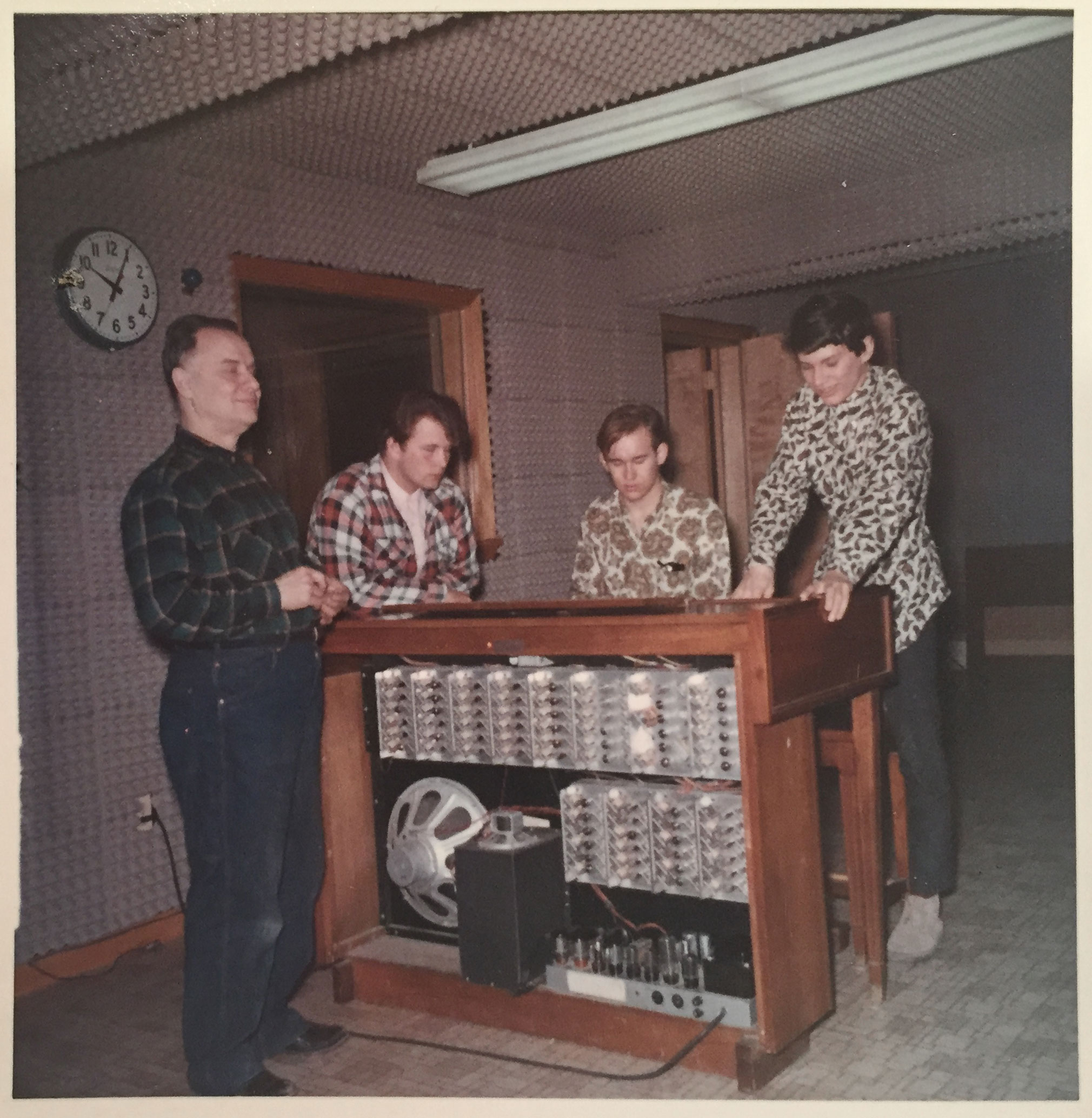
Earl Kennett, left with members of Love Minus Zero inside the Sunnyside studio, January 8, 1967. Photo courtesy of the Kennett family.
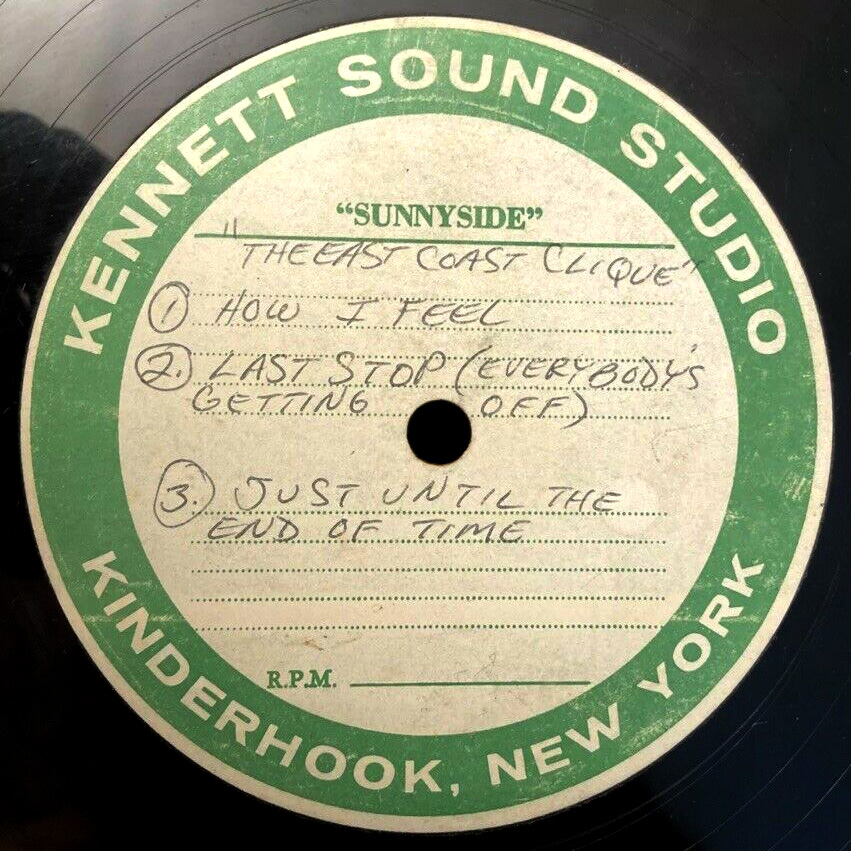
Kennett Sound Studio acetate of three songs by the East Coast Clique (previously known as the Cleaners), photo courtesy of Mike Dugo

Earl Kennett was born in 1912 in Augusta, Kansas. He attended the Kansas State Institute for the Blind and the Horner-Kansas City Conservatory of Music.

He established some reputation as a touring pianist in the 1940s, including at the Blue Note at 56 West Madison in Chicago, the Rainbow Room in Oklahoma City, and the Casablanca Supper Club at 101 May Avenue in, I believe, Oklahoma City.

On March 1, 1945 Down Beat published a review:

Jazz Concert Given in Minneapolis

From 3 to 5 Sunday afternoon, February 11, Doc Evans conducted the first in a series of jazz concerts held in station WCCO’s auditorium studio.

… on piano was Earl Kennett, a solo fixture at the Casablanca …

… Song Of The Wanderer, the final tune, developed into an all-out jam-session … Pianist Kennett drew a tremendous, spontaneous ovation from the audience with his three sensational choruses on this closing number.

In the 1960s he sometimes played with the Original Berkshireland Jazz Band in Williamstown, MA. I have not yet found any recordings with Earl prior to his own album Musical Themes of Composure: Earl Kennett’s Original Piano Improvisations of Restful Music from circa 1967.

Though blind, he received training in audio recording. A 1957 LP on ABC-Paramount, Vinnie Burke’s String Jazz Quartet credits Earl Kennett as recording engineer.
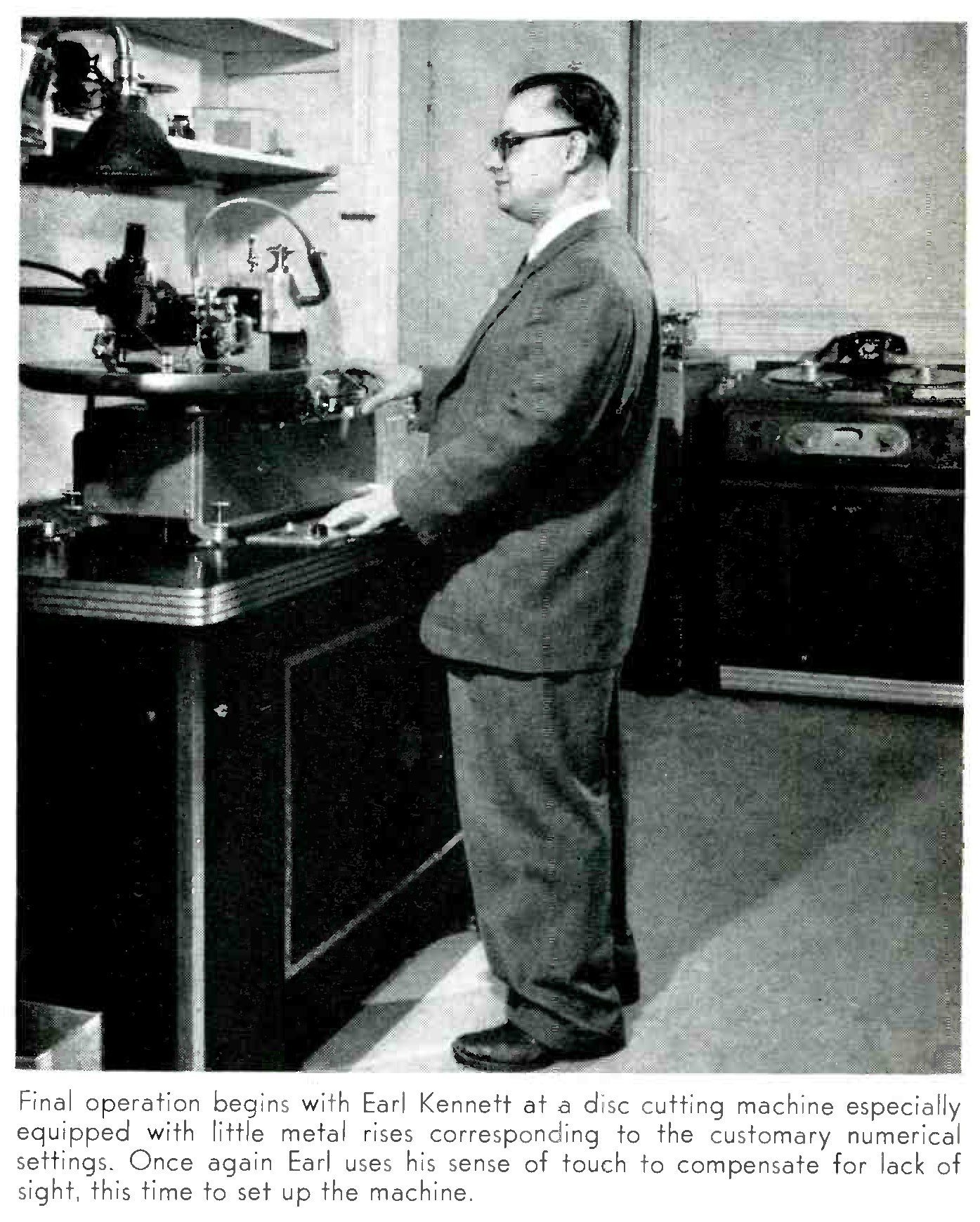
Earl Kennett in the Carnegie Hall studio, May 1959

I believe his first studio was located at 115 West 49th Street, New York City. In January 1958, he moved the studio to rented space in Carnegie Hall. The May 1959 issue of Broadcast Engineering had a three page feature on Earl with detailed information about the studio construction materials made by the Johns-Manville company, with a console built by Fred C. Roberts.

Facing Earl are saw-tooth-shaped Imperial Transitone movable walls for accurate sound reflection. Next to the piano not in use is an even-finish movable wall, also for sound reflection, and a sound-absorbing perforated Transite acoustical panel. The floor is covered with quiet-under-foot Terraflex vinyl asbestos tile and the ceiling with Permacoustic, a sound-absorbing fissured acoustical tile.

In early 1964 Earl moved his studio for a brief time to Mountain View Road in Nevis, a small town near Bard College in Tivoli.

In 1965, Earl and his wife bought Sunnyside farm in Kinderhook, New York, about 20 miles southeast of Albany. Earl converted an old dairy barn on the property into a recording studio, substituting egg cartons for the pricey asbestos baffles.

The first recording from his studio I can find is the Kynds single “So If Someone Sends You Flowers Babe” / “Find Me Gone”. Pressed through RCA in September, 1966, there is no indication of where it was recorded on the labels, but drummer Jerry Porreca recalled making the single at Kennett’s studio.
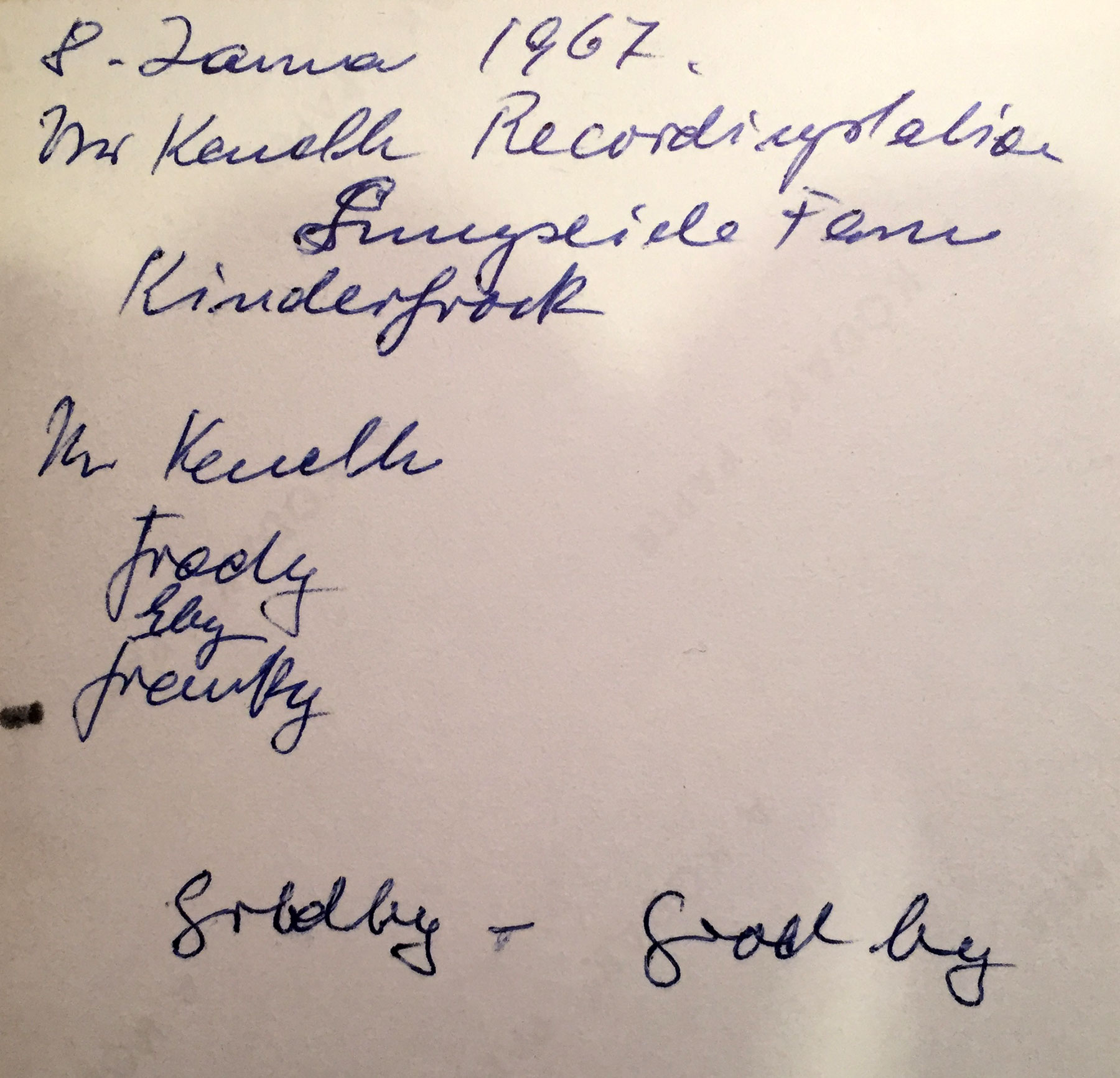
Back of Love Minus Zero photo at top. What are these names in the middle?
Freely, Freddy, Eby, Franky ??

On January 8, 1967, a group called Love Minus Zero did a session at the studio and sent a photo to Earl. The group came from Albany, and I may have their recordings on an unlabeled lacquer acetate. It’s difficult to make out the names of the group – but luckily I found a lineup in Al Quaglieri’s The Old Band Chronicle #4, a list of Capital District bands compiled in 1990.

Love Minus Zero were:

Gary Siegel – vocals
Eberhard Kobryn – guitar
Fred Everhart – bass
Frank Herec – drums

I believe Everhard Kobryn passed away in 2012. Later lineups added Jack Reilly on organ, replaced by Mark Rabinow. Eventually Fred Everhart was the only original member of the group, with Steve Fuld on guitar, Gary Gardner on vocals, and Stanley ? on drums.

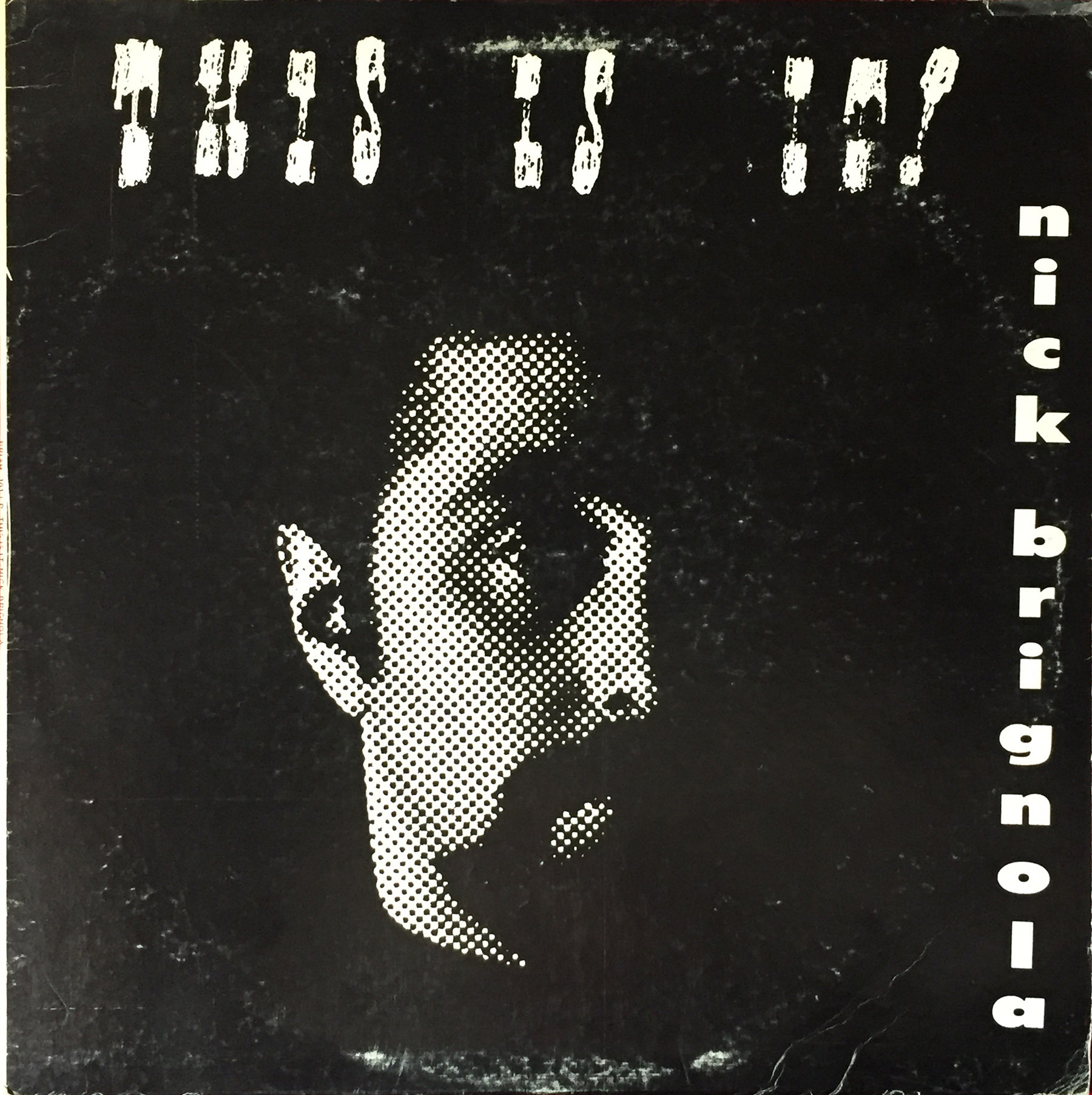
In 1967, Kennett engineered Nick Brignola’s first LP, This Is It! on Priam P-101M. Musicians were Nick Brignola, Reese Markewich, Glen Moore and Dick Berk, A&R by William Rezey, photography by Bob Mitchell.
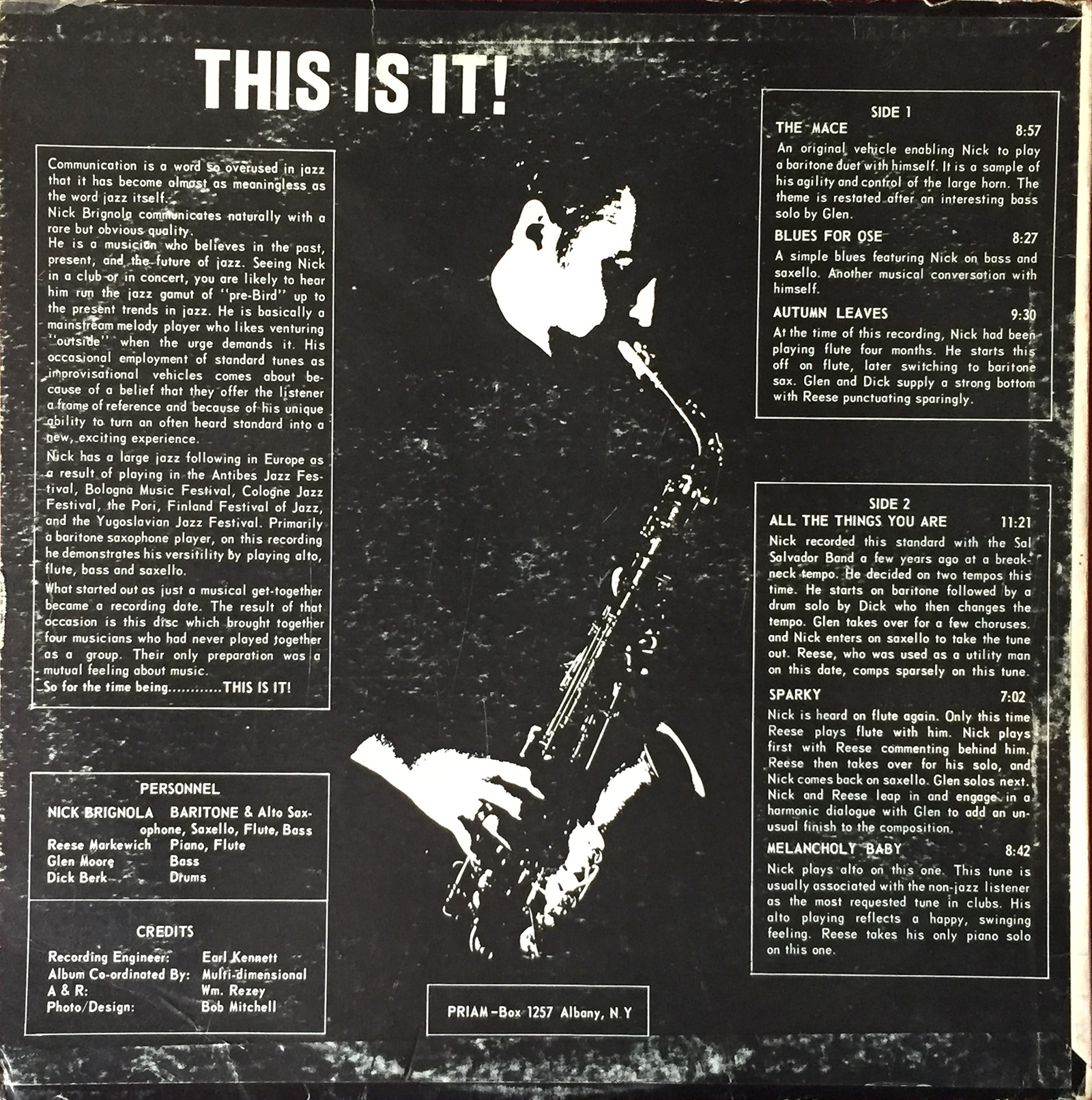
Nick Brignola Priam LP back cover

Nick Brignola Priam LP front cover

Another single I can confirm was recorded at Kennett is Riccardo and the 4 Most “There’s a Reason” (written and sung by Bill White) / “Bare Footin'” (featuring Ricardo Wright) Foremost Records U4KM-0937.
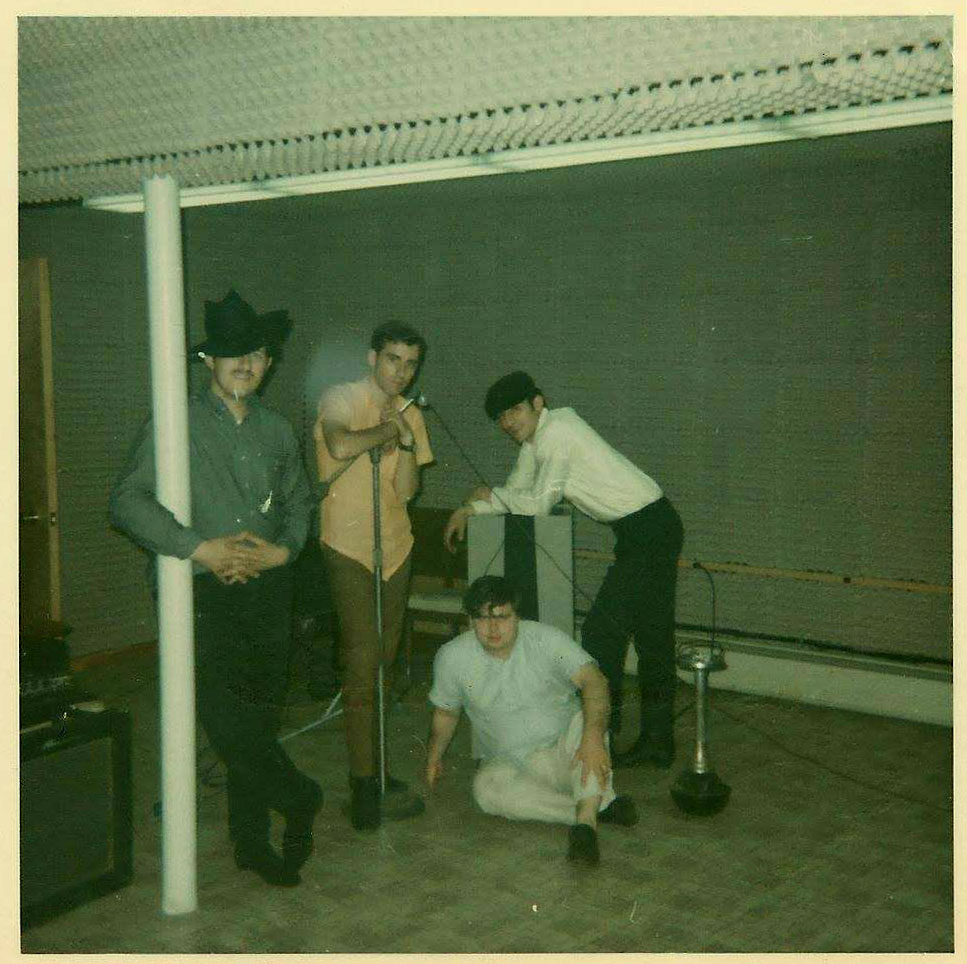
Jelly Bean Bandits Earl Kennett Sound Studio
The Jelly Bean Bandits at Kennett Sound Studios in Kinderhook, from left: Mike Raab, Jack Dougherty, Joe Scalfari and Billy Donald on the floor – photo taken by bass player Fred Buck.

The Jelly Bean Bandits made their first demo at Kennett Sound Studio, never released to my knowledge. Mike Raab wrote:

The Goodtimes had done some recording there and when we decided to lay down tracks Dave Kennedy suggested Earl’s place … We really didn’t know what we wanted to do or could do. We cut two demo songs: “Poor Precious Dreams” an original song that ushered us into the psychedelic music era; and “Hard, Hard Year” a beautiful b-side from The Hollies that we managed to brutalize.

I have found an acetate of this early version of “Poor Precious Dreams”. The duration is about thirty seconds longer than the version on their Mainstream album.
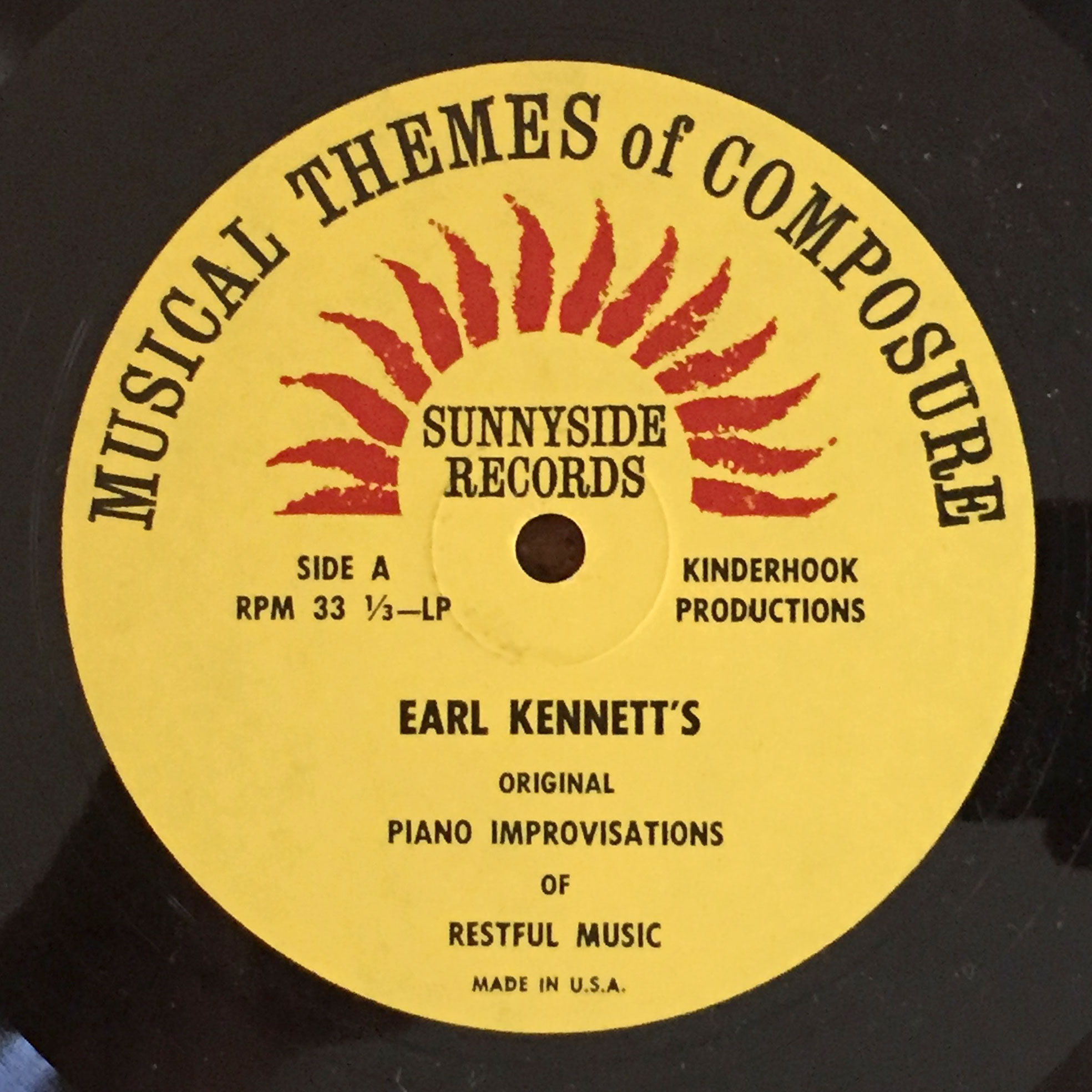
Earl Kennett's Original Piano Improvisations of Restful Music Side A

In 1967 Earl Kennett began offering pressing services through Decca’s plant in Gloversville. Some releases have “Kennett” at the bottom of the labels, but all have a distinctive four-digit release number, beginning with “00”.

There were at least twenty-three 45 rpm singles and one LP released through Kennett’s studio with this numbering system. The last release I can find dates to 1973.

In addition, I know of a number of unreleased lacquer acetates by the Cleaners, the Chain Reactions, and others:

If you or someone you know recorded at Kennett, please contact me.

If you don’t see your record listed below, please listen to these unknown and unlabeled demos!

—–

Discography of Kennett Sound Studio (possibly incomplete):

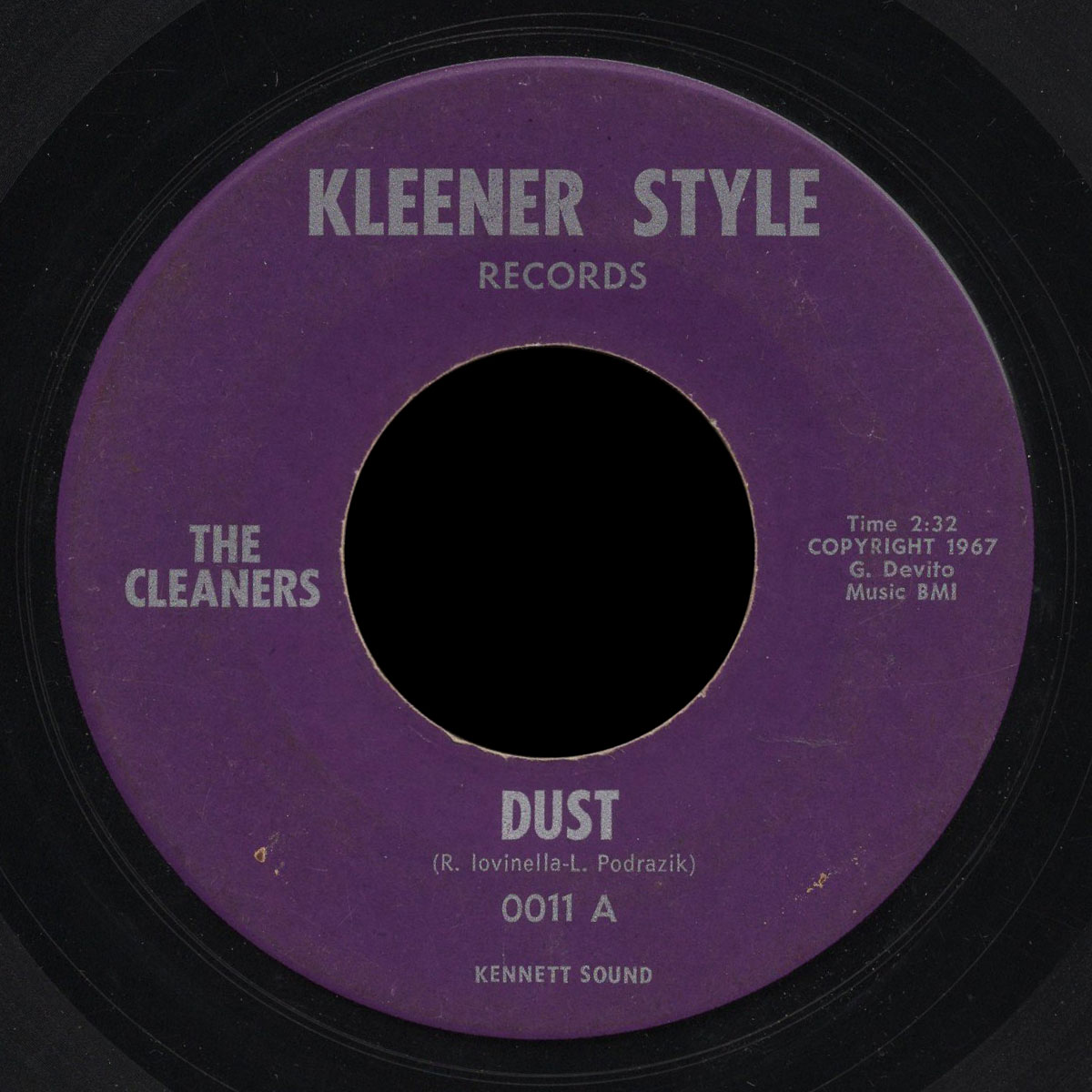
Kleener Style Records 0011 – The Cleaners – “Dust” / “Hold Me, Thrill Me, Kiss Me”

Sunnyside Records 0012 – Musical Themes of Composure: Earl Kennett’s Original Piano Improvisations of Restful Music (12″ album)

0013 – ?

Sunny-Side Records 0014 – Psychedelic Sound – “Sorry Baby = Goodbye” / “Stars Cease To Shine” produced by M. Rizzi. Tina was the drummer for the band, and (I believe) one of the vocalists.

0015 – ?

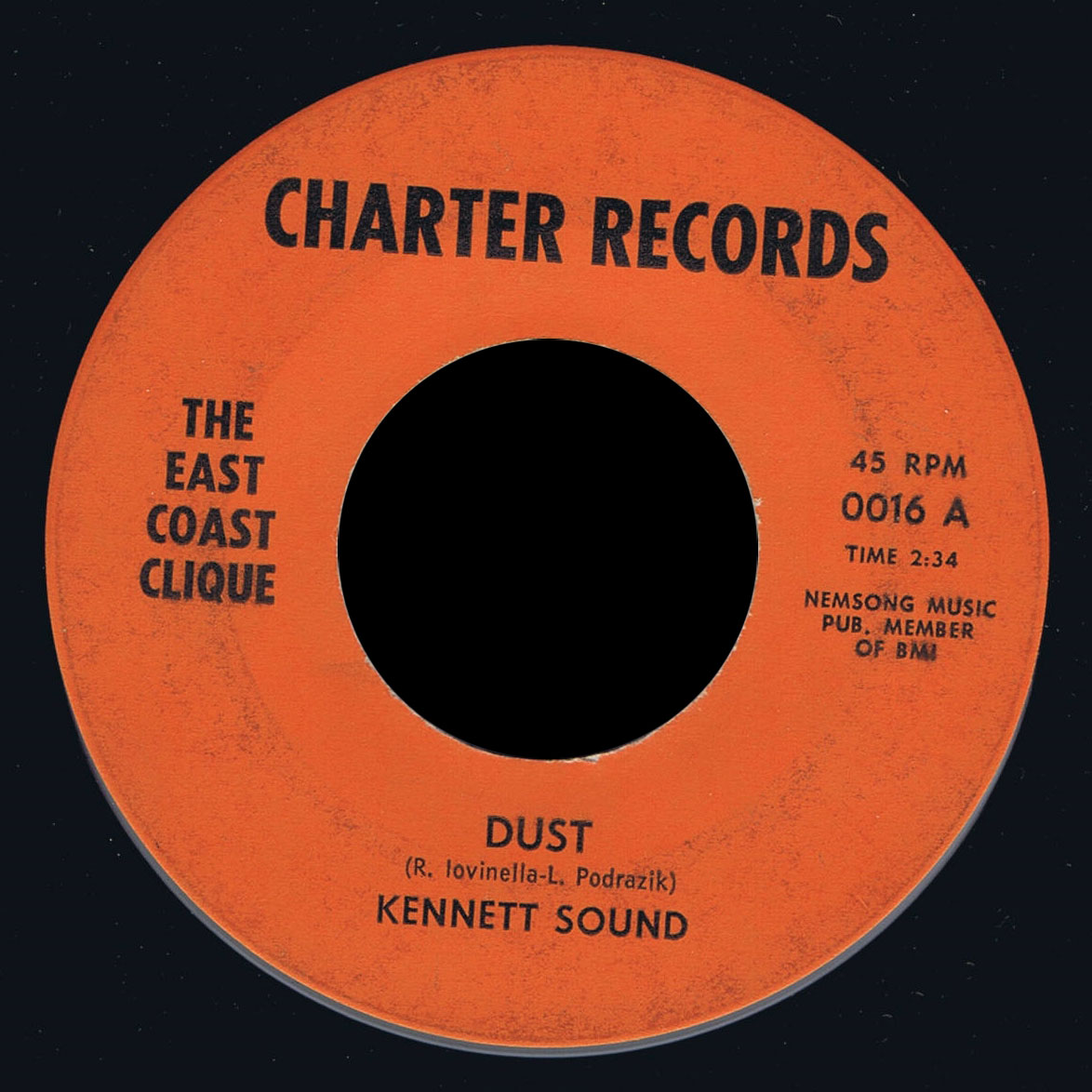
Charter Records 0016 – The East Coast Clique – “Dust” / “Last Stop (Everybody’s Getting Off)”
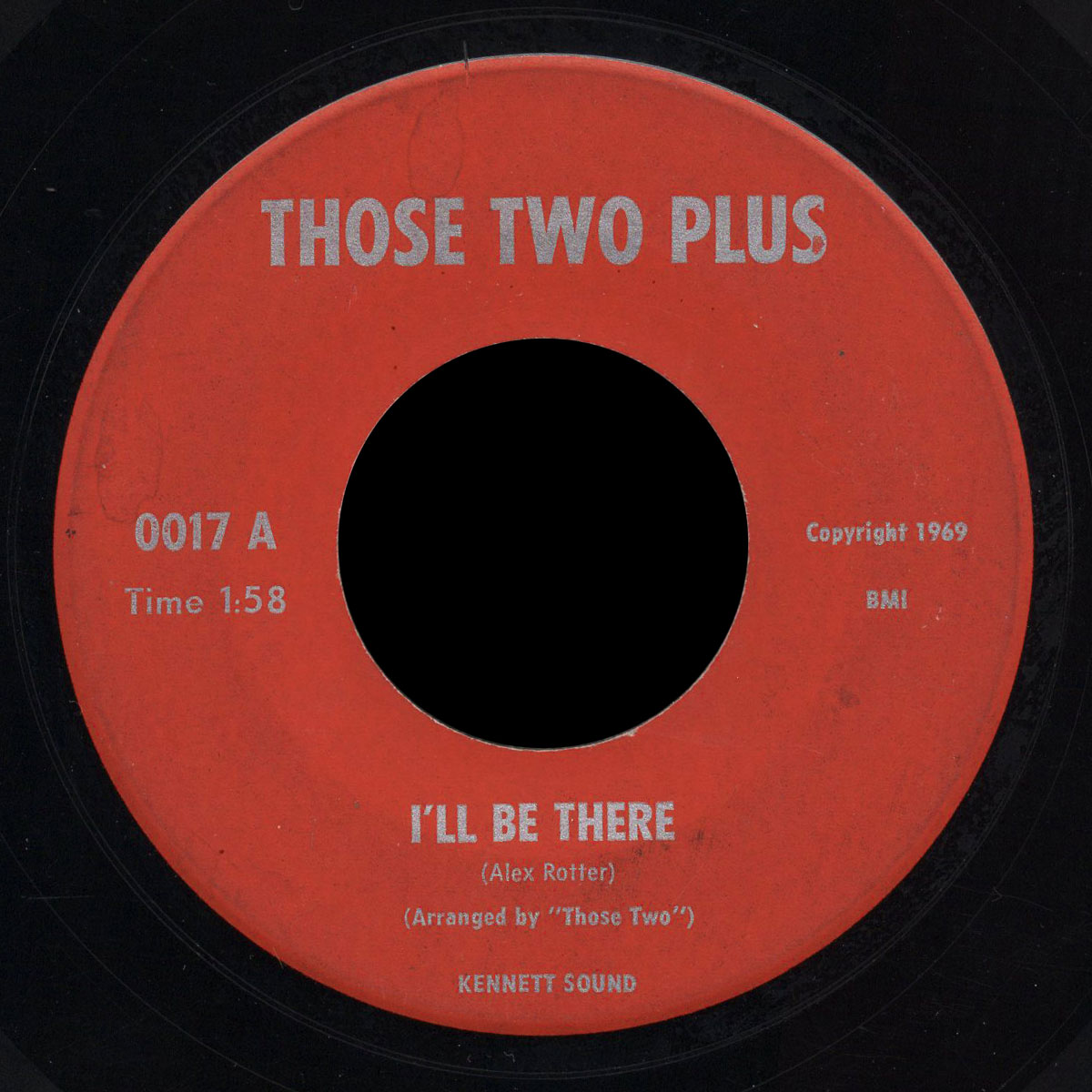
Those Two Plus Kennett 45 I'll Be There0017 – Those Two Plus – “I’ll Be There” / “It’s Rainin’ (Where I’m Bound)” (both by Alex Rotter, arranged by “Those Two”) Kennett Sound, 1969

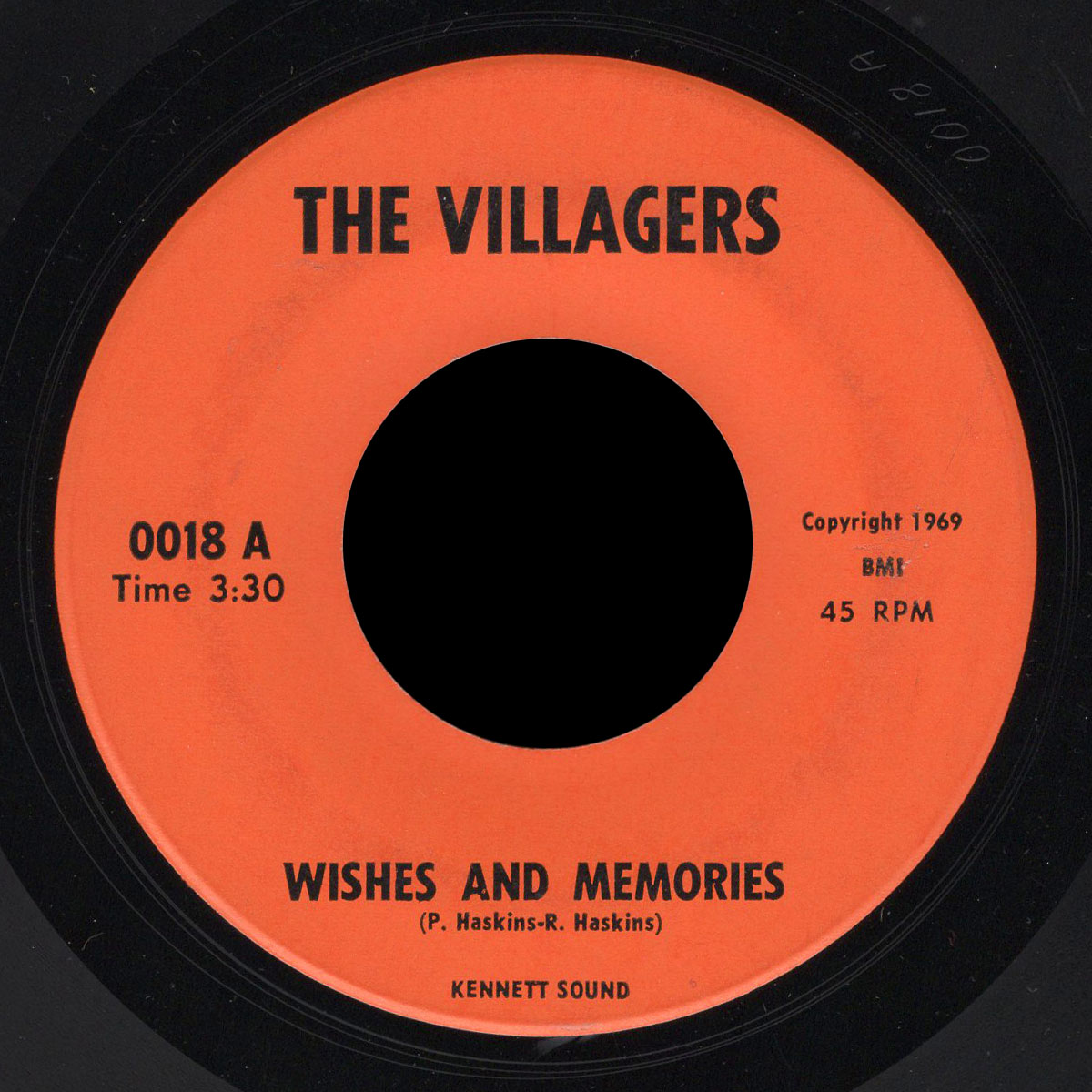
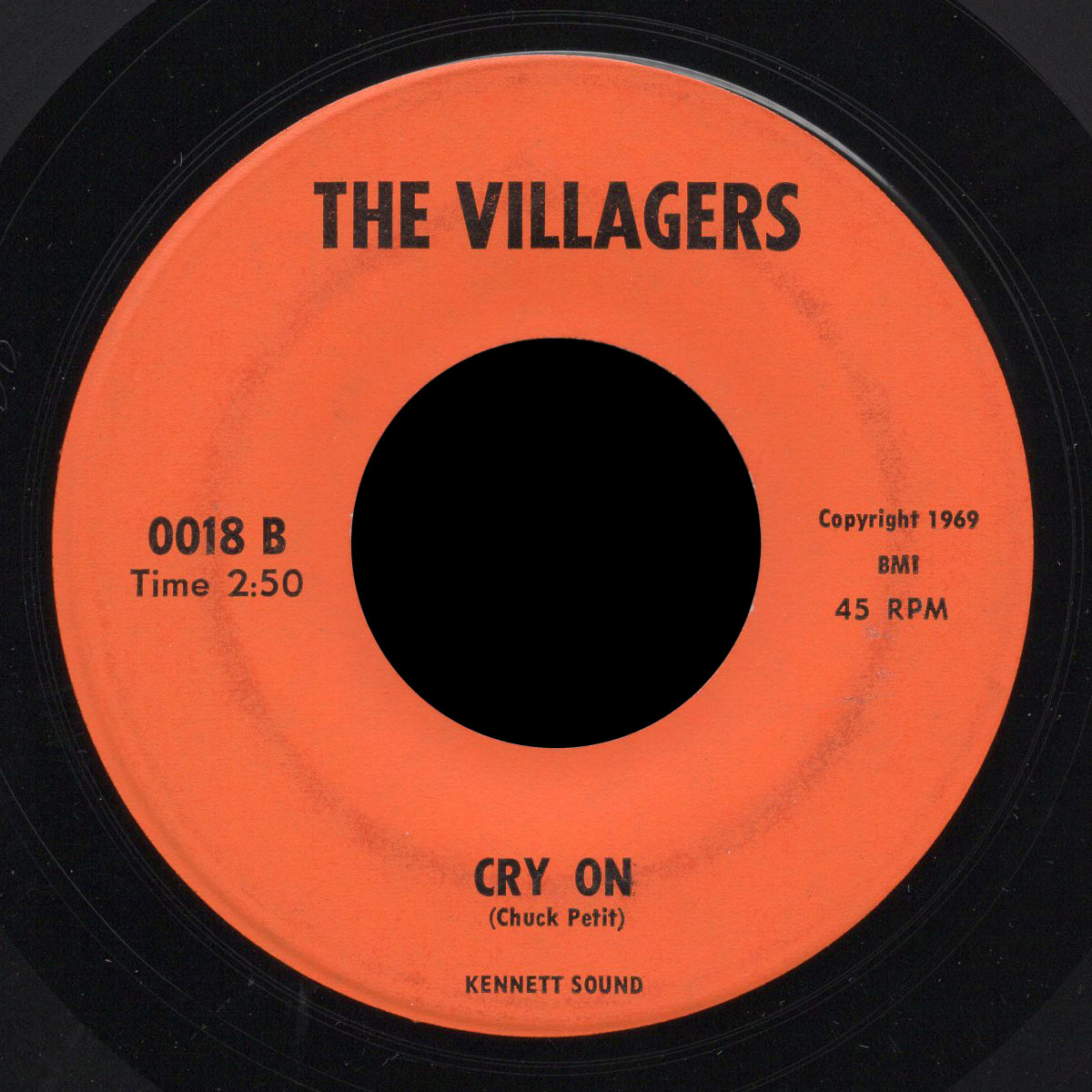
0018 – The Villagers ‎– “Wishes and Memories” / “Cry On” (Chuck Petit)
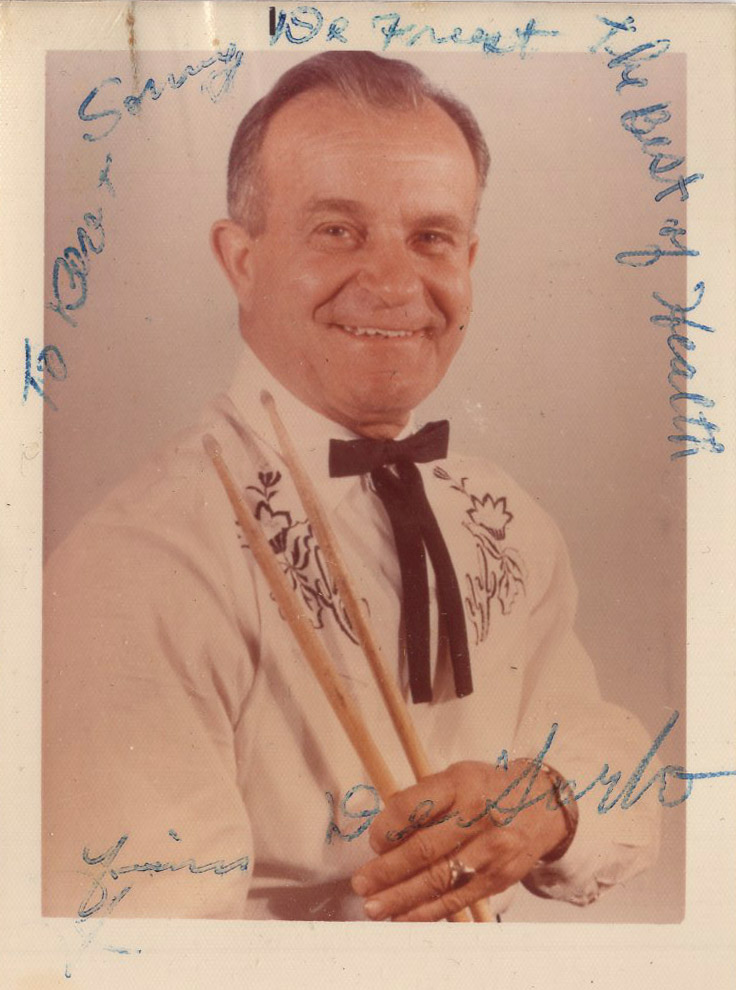
Jim De Sorbo photo found with his record
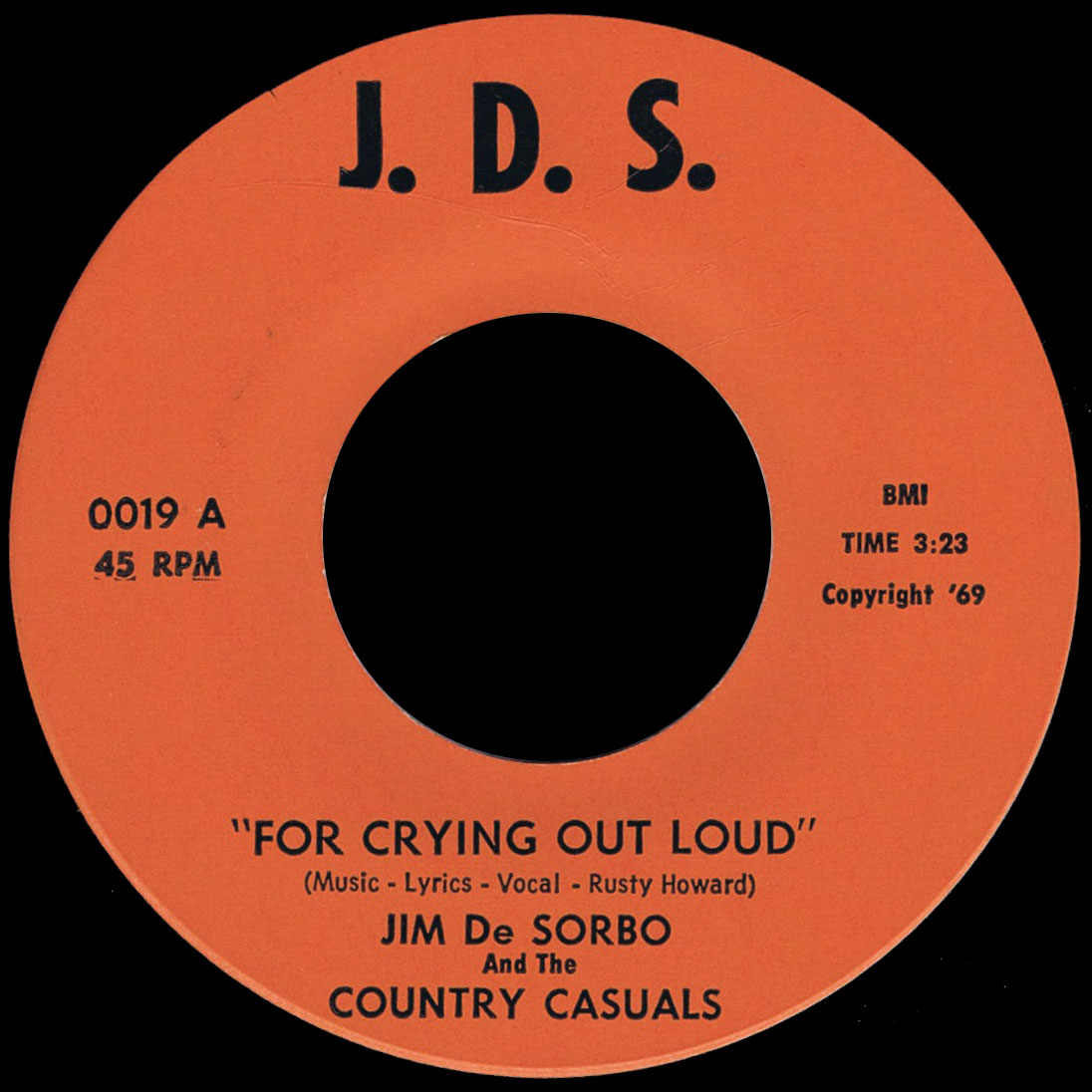
Jim De Sorbo and the Country Casuals JDS 45 For Crying Out Loud
Scan courtesy of Brian Kirschenbaum

J.D.S. 0019 – Jim DeSorbo and the Country Casuals – “For Crying Out Loud” (Music, lyrics, vocal – Rusty Howard) / “I’ve Had All I Can Take from You” copyright ’69 BMI

The Gallery 0020 – The Gallery / Peter Dean – “Forever Sunshine” (Sal Costanzo) / “Our Man Jack” (Edward Duggan), Kennett Sound, Mlester Pub. BMI. The Gallery – label name or group?

0021 – ?

S Bar S Records 0022 – Slim Skellett & the Slim Skellett Trio – “Ghost Riders in the Sky” / “Wanderers of the Wasteland” (Brad Husson guitar, banjo; Bob Skellett bass)

S Bar S Records 0023 – Slim Skellett & the Slim Skellett Trio – “Strawberry Roan” / “Billy Richardson’s Last Ride” (Brad Husson guitar, banjo; Bob Skellett bass)

King Town 0024 – Coming Generation – “Tell Me Now” (Jim Du Bois) / “This Troubled Life” (Ed Barnhart) copyright ’69

0025 – ?
0026 – ?

Third Wave 0027 – Morning After – “I Don’t Need You Today” / “Dream” (Tate, Talbott, Kearney) Copyright 70 Dyad Music BMI, Prod. by Lance Naylor, group from Lake Latrine area
Coachmen Casino 45 Green Green Grass Of Home0028 – ?
0029 – ?
0030 – ?
0031 – ?
0032 – ?

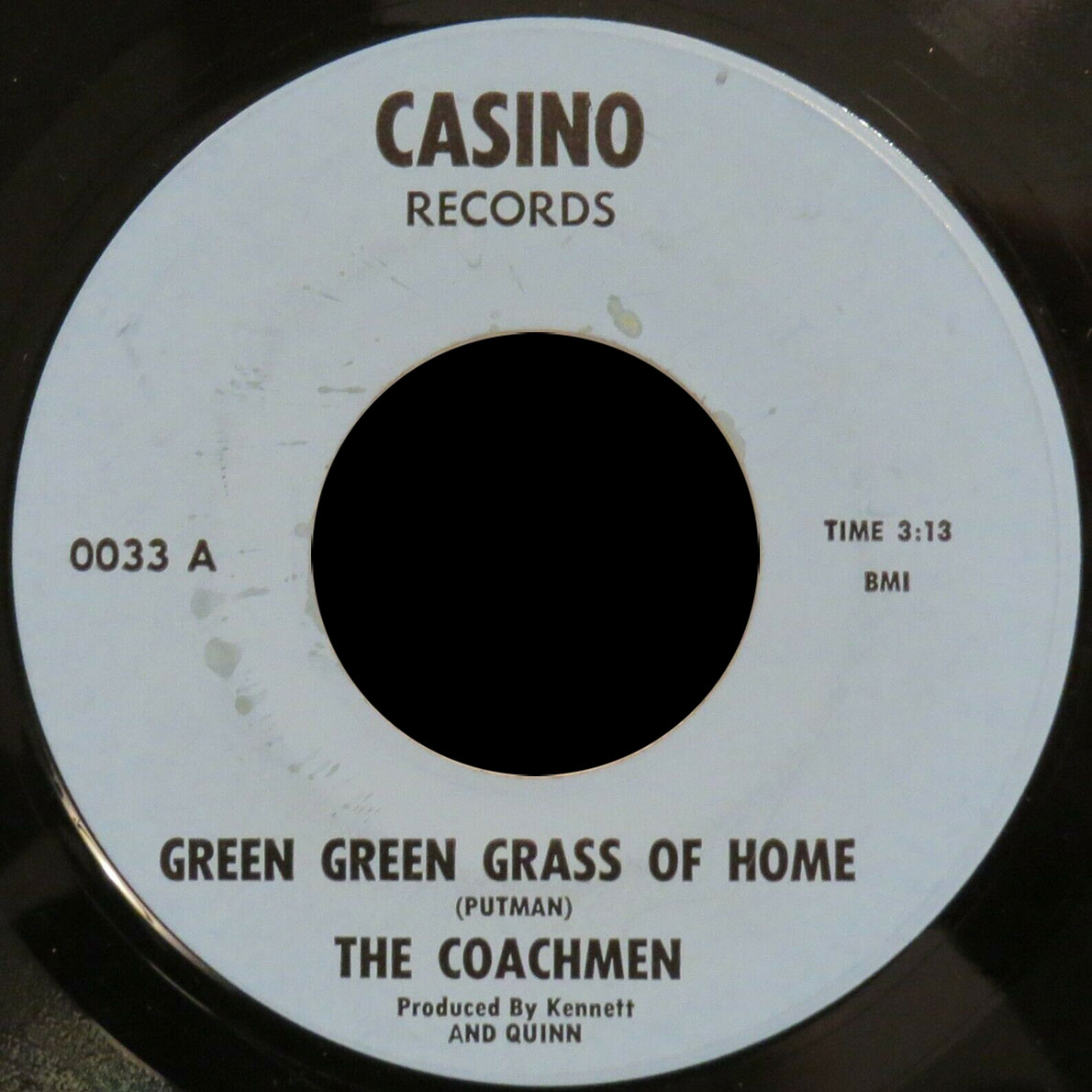
Casino 0033 – The Coachmen – “Green Green Grass of Home” / “Hang Up Your Rock and Roll Shoes”
Produced by Kennett AND QUINN
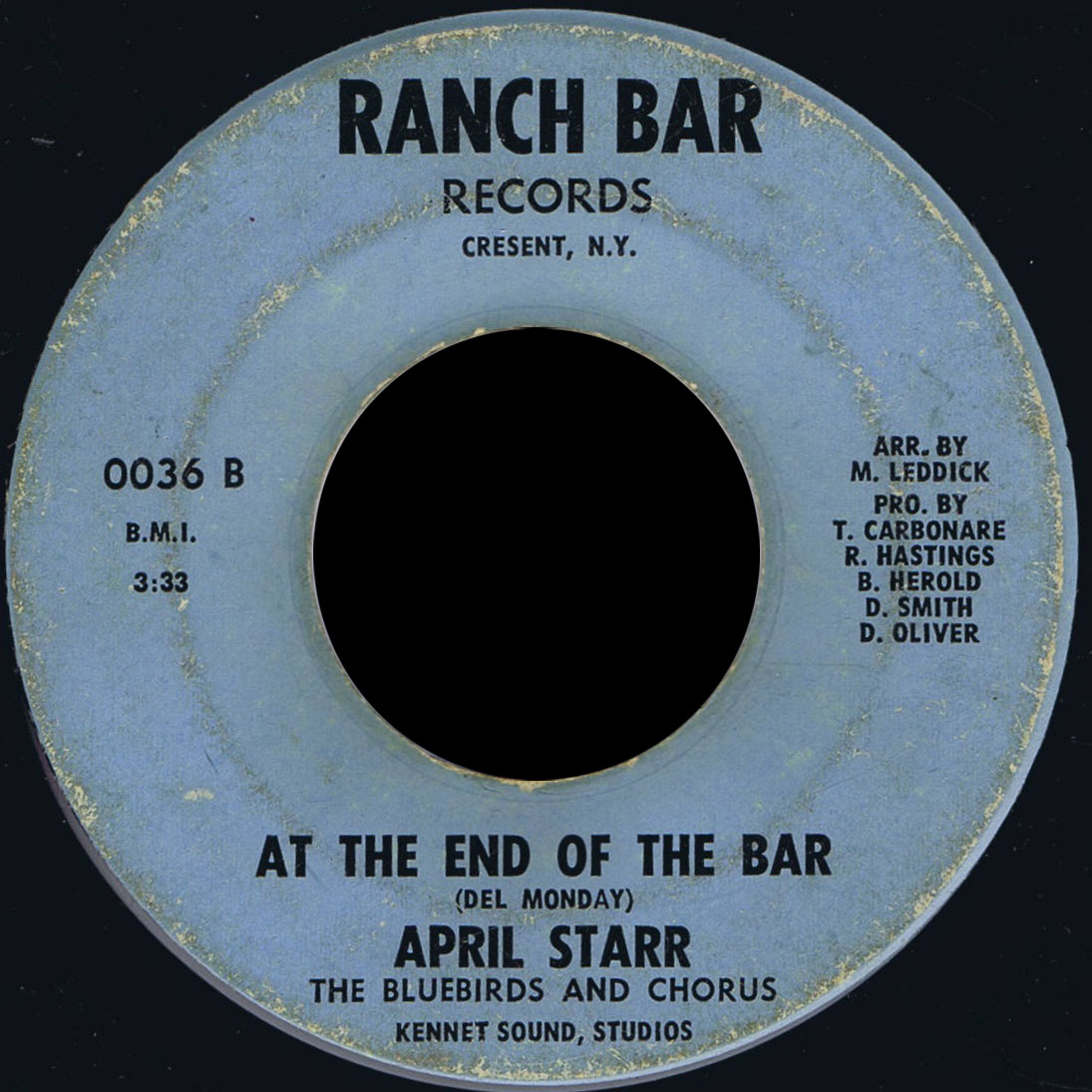
April Starr Ranch Bar 45 At the End of the Bar Kennett
from the collection of Brian Kirschenbaum

Ranch Bar Records 0034 – Billy D. Hunter with the Santa Fe Riders – “I Still Belong to You” (Grace Hamilton, Billy D. Hunter) / “Will You Remember Me” (Gorden Bainbridge, Billy D. Hunter) – Waterford, NY

Drift 0035 – Denny and the Drifters – “Mountain of Love” (Harold Dorman) / “It’s Only Make Believe” (Twitty – Nance)

Ranch Bar Records OO36 – April Starr the Bluebirds and Chorus – “Lonely Heart” / “At the End of the Bar” (Del Monday) – arranged by M. Leddick’ produced by T. Carbonare, R. Hastings, B. Herold, D. Smith, and D. Oliver, from Crescent, NY.

Drift 0037 – Denny and the Drifters – “Broken Hearted Dreamer” (Ted Craver and Denny Haughney) / “Why Do I Love You” (Kenny White, Paul Desroches) produced by Kennett
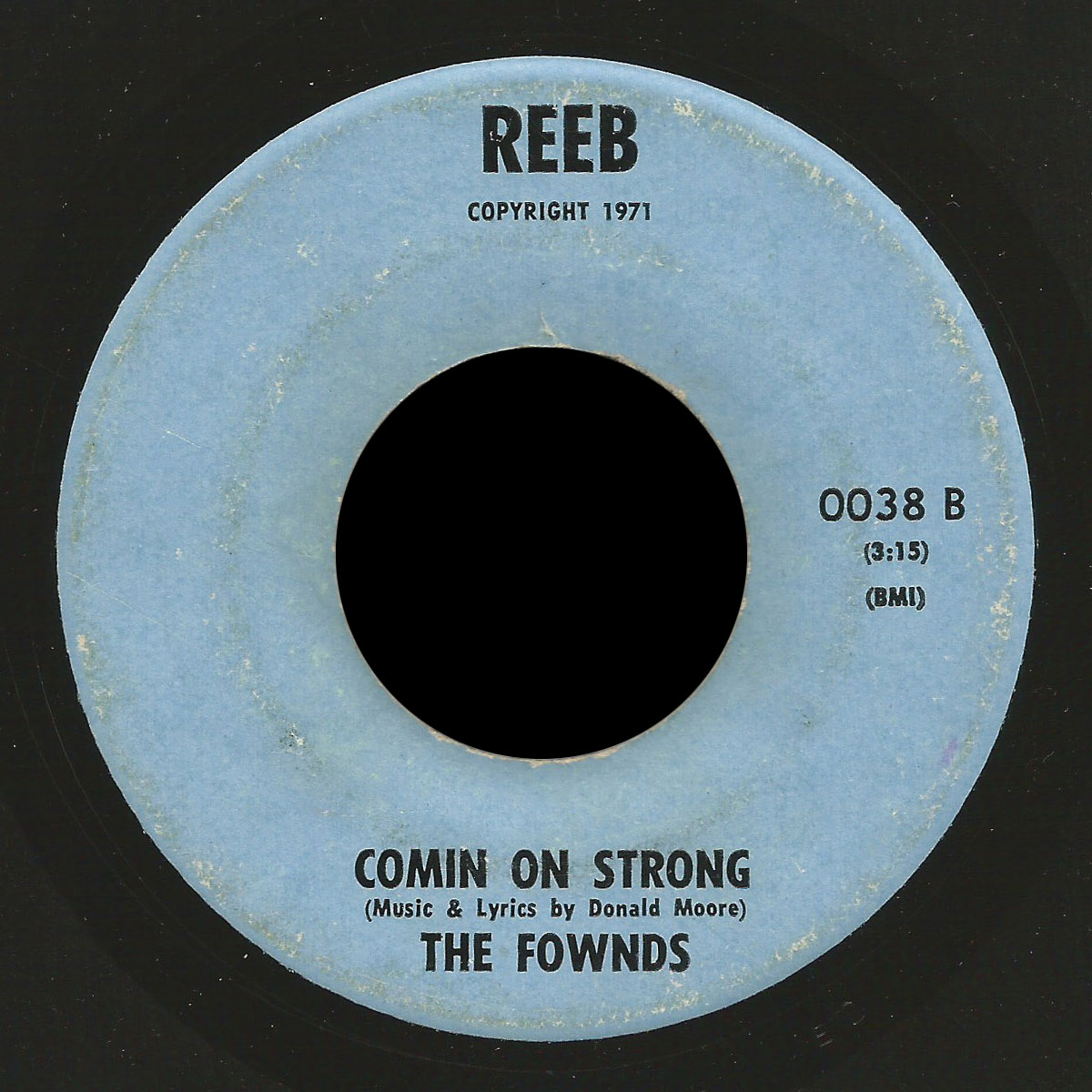
Fownds Reeb 45 Comin On StrongReeb 0038 – The Fownds – “Rosalin” (Sal Gambino) / “Comin On Strong” (Donald Moore) (1971)

0039 – ?
0040 – ?

Mojo 0041 – Exit 19 – “Angel of the Morning” / “To Be Alone” (written by Joe Cashara who also did lead vocal) produced by Lanse Dowdell, 1972

Quellthom 0042 – Bob Thomas – “It’s Just Not Fair” / “I’m Walkin’” / “Hello Mary Lou” (1973)

Parker 0043 – Country Express – “Trying to Quit” / “Ode to a $164 Plane Ticket” (both songs by D.B. Boucher, vocal by Frenchie La Shay) 1970

Reeb 0044 – The Founds – “Wheels” / “Remember” – vocal by Roy Jackson, both songs by Donald Moore, 1973
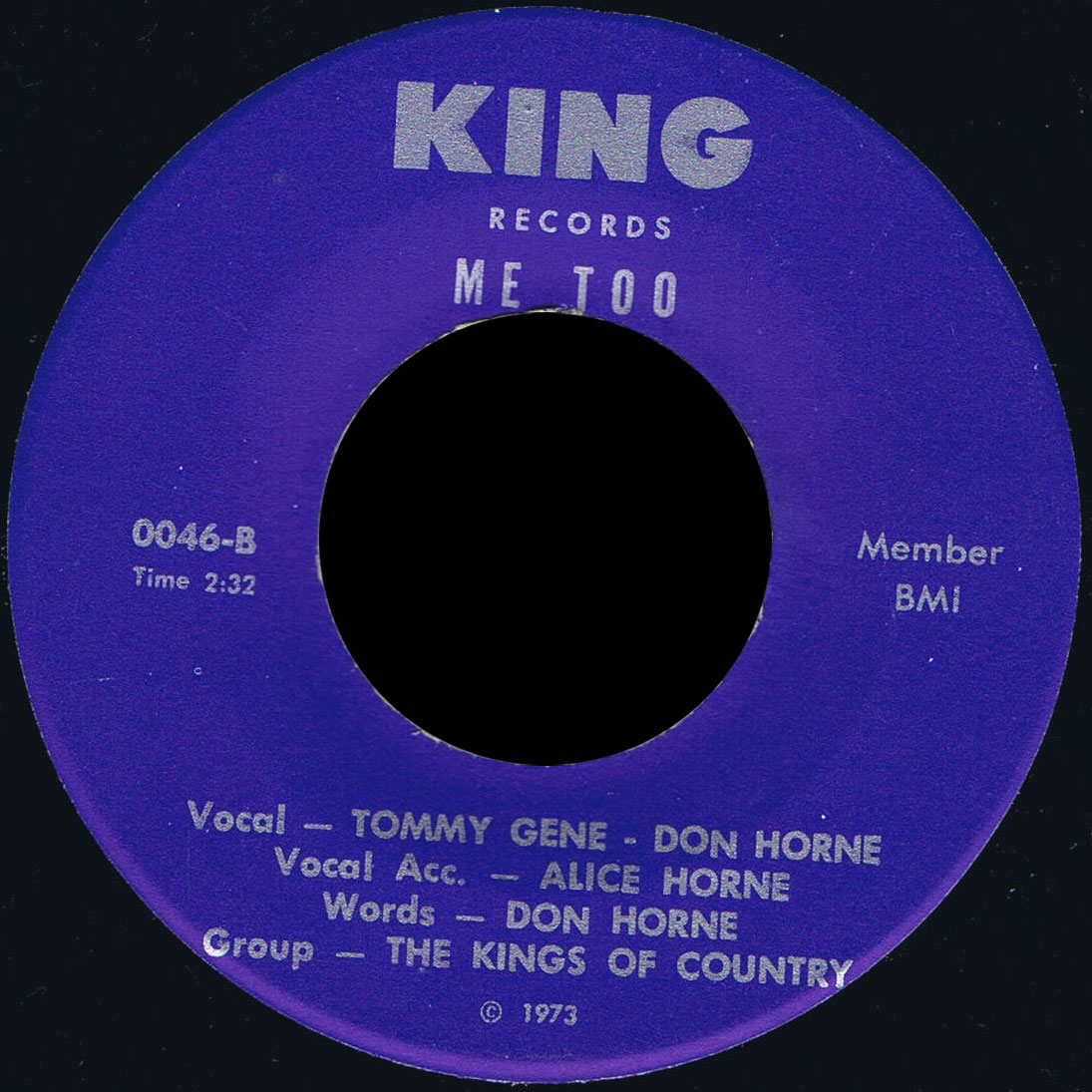
Tommy Gene, Don Horne & Kings of Country 45 Me Too Kennett StudioRanch Bar 0045 – Jimmy DeSorbo and the Country Casual’s ‎– “Listen to the Mocking Bird” / “Let the Rest of the World Go By” (Dolly McIntyre – producer)

King Records 0046 – Tommy Gene with the Kings of Country – “Somewhere U.S.A.” (words by Carol Curtis, music by Tommy Gene) / Tommy Gene and Don Horne – “Me Too” (accompanied by Alice Horn, words by Don Horne). A-side has 1968 copyright while B-side has 1973 copyright.

——————

Any help with additional releases, photos or memories of the Kennett Sound Studio would be appreciated.

The Gallery (formerly the Gayblades) included Sal Costanzo (organ), Peter Dean (drums, vocals), Holly Gregg, John Dean, Bob Dean, and Robbie Howard, though I am not sure exactly who played on their single “Forever Sunshine”.

The Gallery info from History of Syracuse Music.

Note: there was a Kennett Sound Studios operating out of Kennett, Missouri recording mostly country music, 1,100 miles away and unrelated to this studio.

Background on Earl Kennett from a National Park Service publication Plant Yourself in My Neighborhood (PDF file) by Cathy Stanton.

This article is being rewritten starting in August 2022.

Thank you to Brian Kirschenbaum and Mike Markesich for help with this article, and to Peter Aaron for lending the Those Two Plus 45.

Special thank you to Dorothy Kennett.
The Cleaners from Schenectady & the East Coast Clique

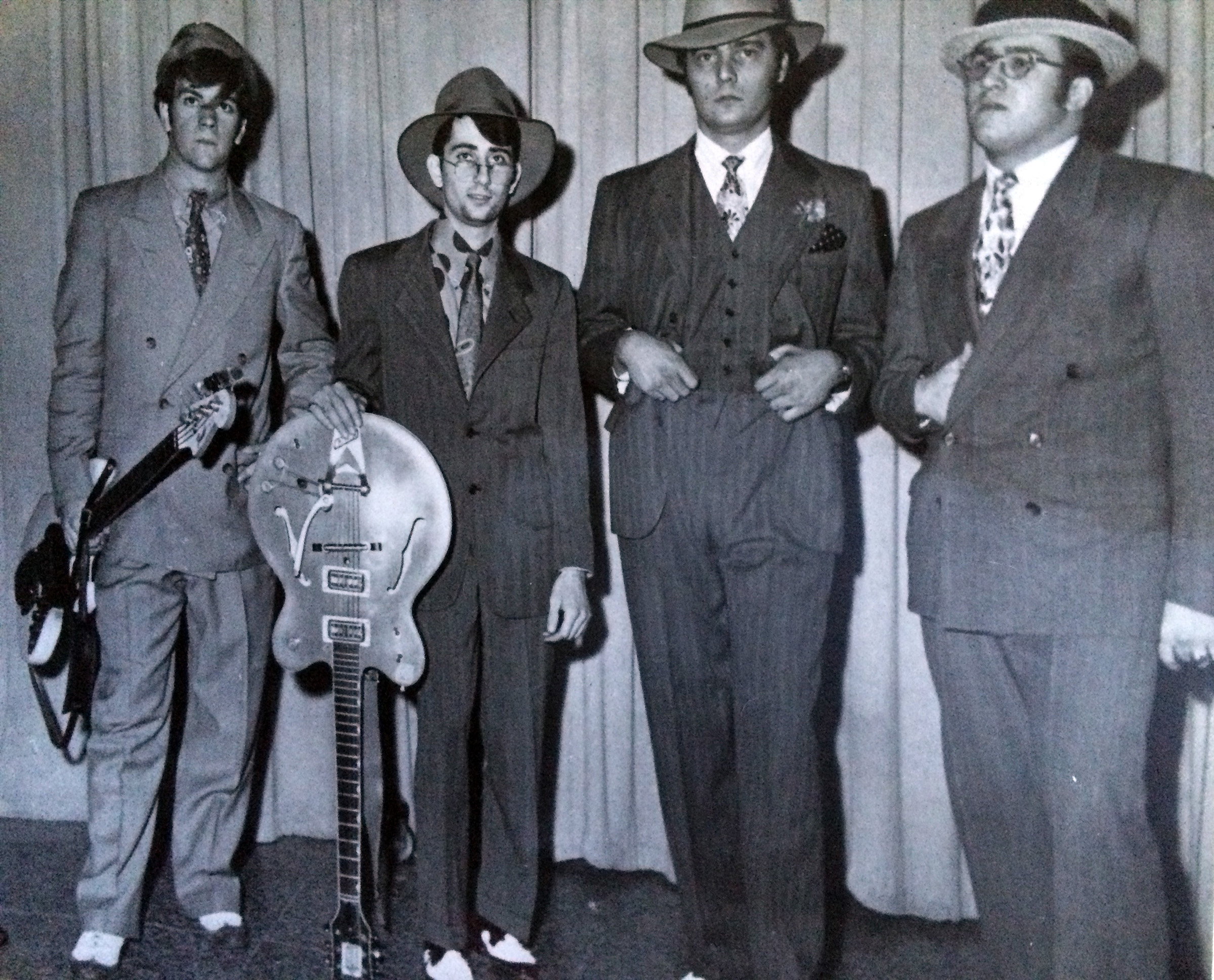
Cleaners band photo, Schenectady
Can anyone please ID who is who in this photo

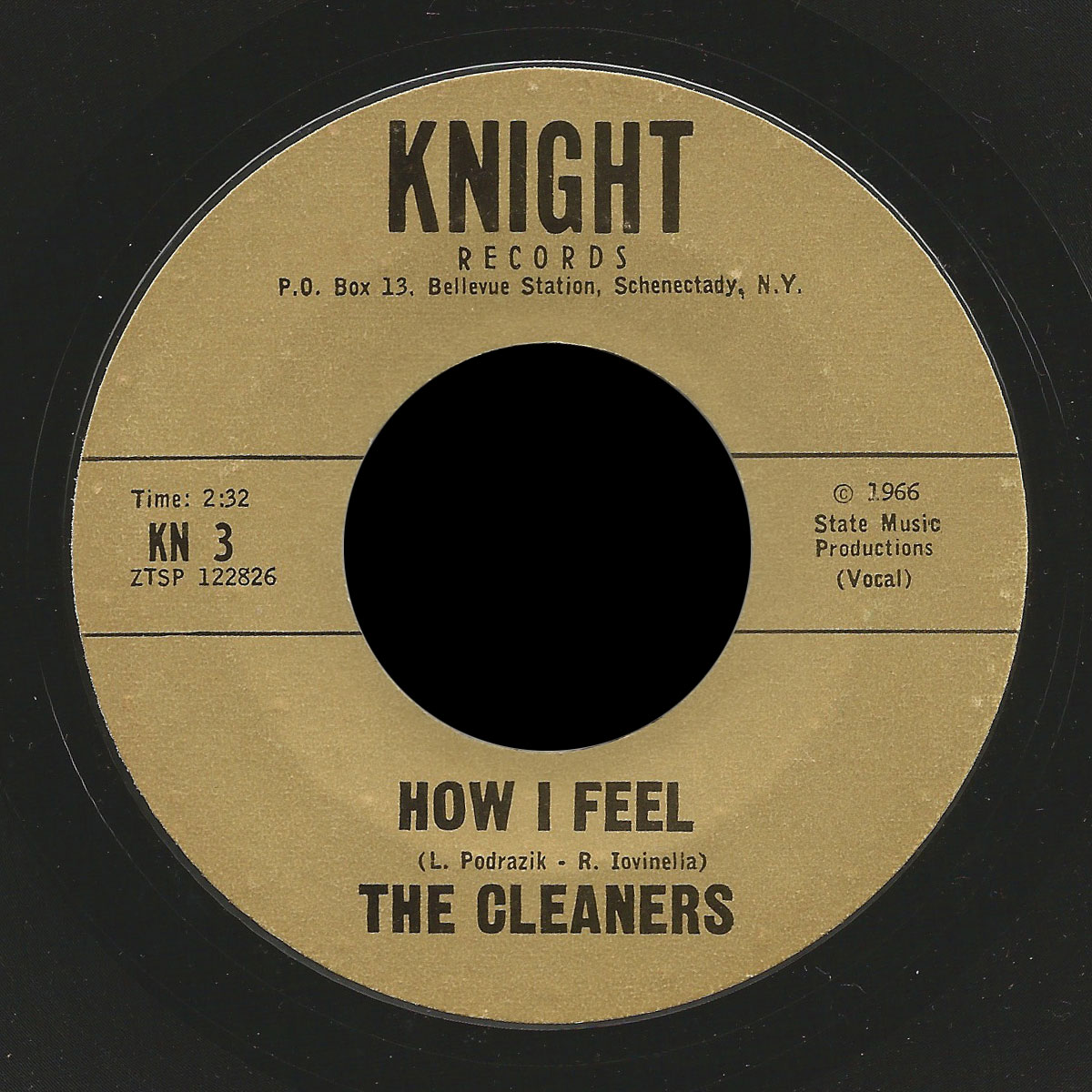
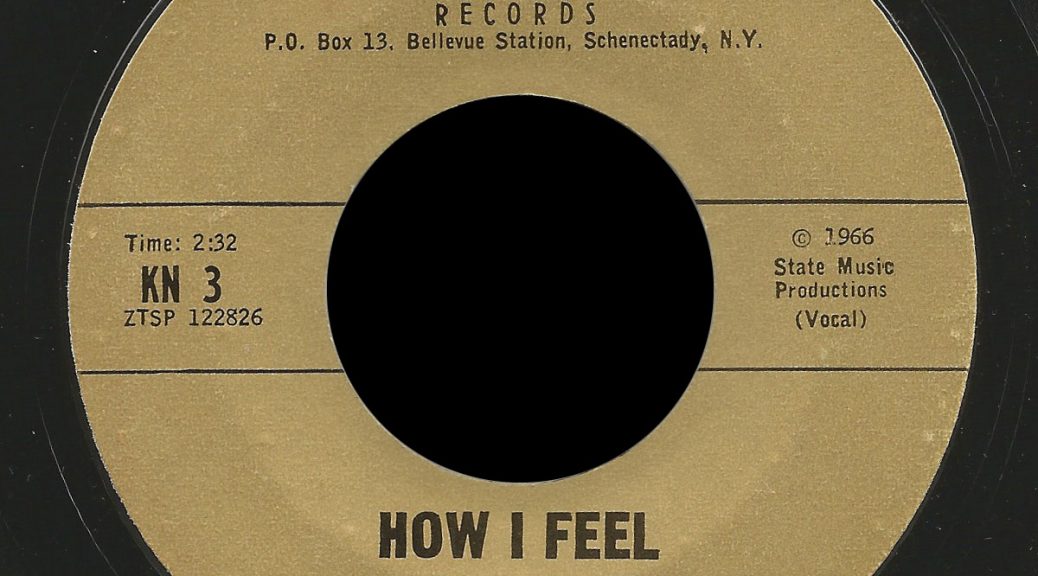
Cleaners Knight 45 How I FeelThe Cleaners came from Schenectady, New York, releasing two singles in 1966 and 1967.

Members included Larry Parks (listed in songwriting credits as Larry Podrazik), Bob Ives (Robert Iovinella), Bob Sands and Jay Camp.

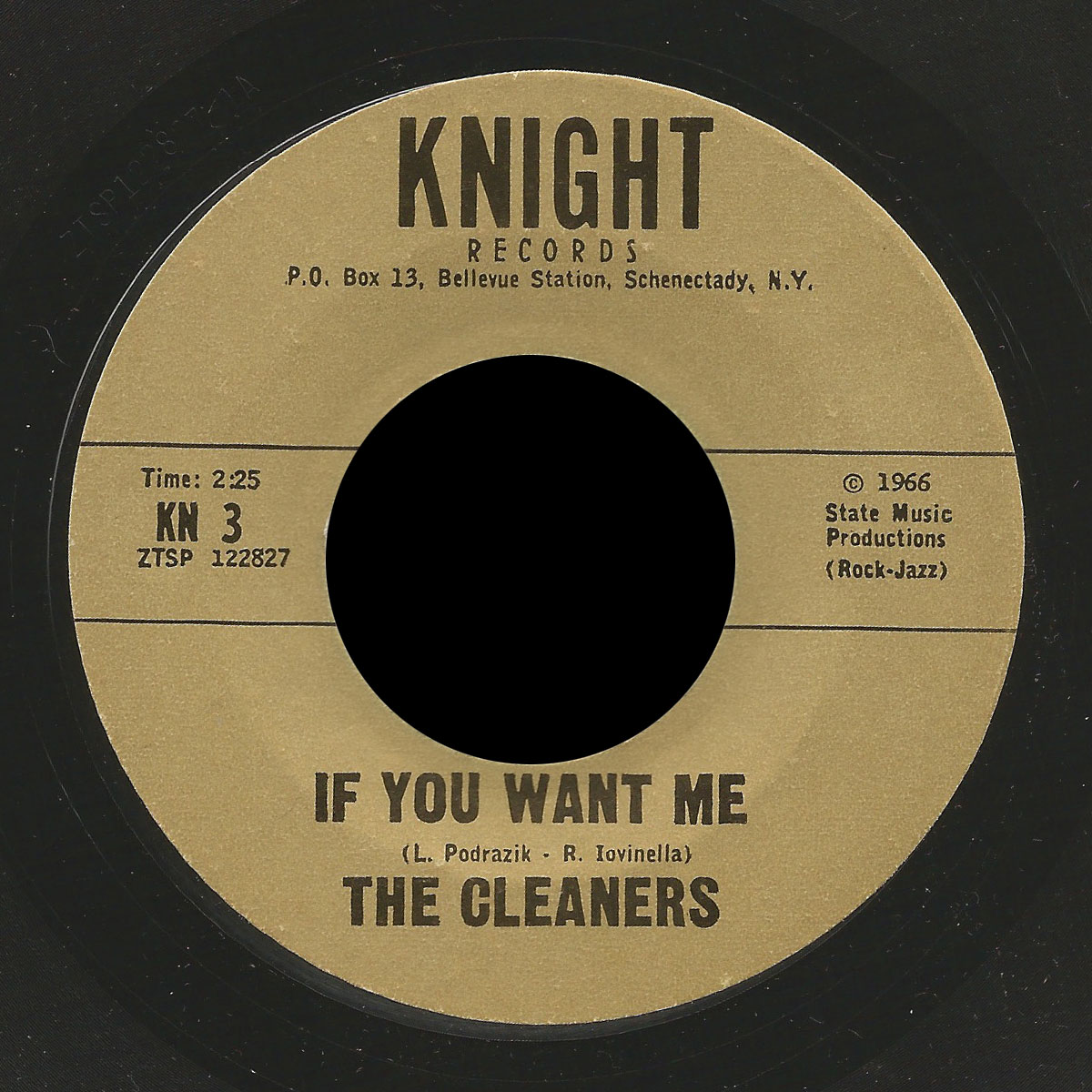
Cleaners Knight 45 If You Want Me

The Cleaners’ first single was the super-soulful “How I Feel” b/w “If You Want Me” (described on the label as Rock-Jazz), both originals by Podrazik and Iovinella. A comment below mentions booking manager George DeVito recording the songs in his home studio. However, I have a 8″ laquer acetate of both songs from Earl Kennett’s studio. The sound of the bass, and the echo of the hand claps on “If You Want Me” suggests Earl’s studio rather than a home recording.

It was issued on Knight Records KN 3, of Bellevue Station, Schenectady, with a State Music Productions credit; the ZTSP 122826/7 codes indicate a Columbia custom issue, a styrene 45.

Podrazik and Iovinella copyrighted the songs in April and May of 1966, along with another original, “Just Until the End of Time” that was not released but would remain part of their live set.

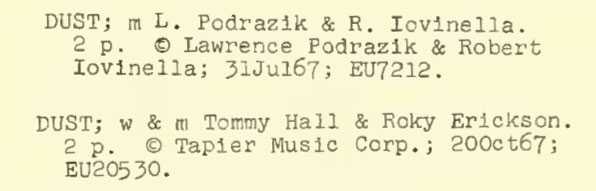
Cleaners Kleener Style 45 DustIn July of 1967 Podrazik and Iovinella registered another original song, “Dust”. The Cleaners cut it at Kennett Sound Studio in Kinderhook, NY, along with a cover of “Hold Me, Thrill Me, Kiss Me”, released on their own Kleener Style Records 0011.

These were among the earliest singles issued out of Earl Kennett’s studio, which would go on to record and release over twenty 45s into the 1970s.

From the 1967 index of copyright registration

Not long after, the East Coast Clique recorded “Dust” backed with another Podrazik/Iovinella original, “Last Stop (Everybody’s Getting Off)”, both with NemSong publishing. Released as Charter Records 0016, the Kennett Sound credit at the bottom indicates the studio, as does the 00 prefix on the release number 0016. The production on this version is fuller, with the drums more prominent and danceable.

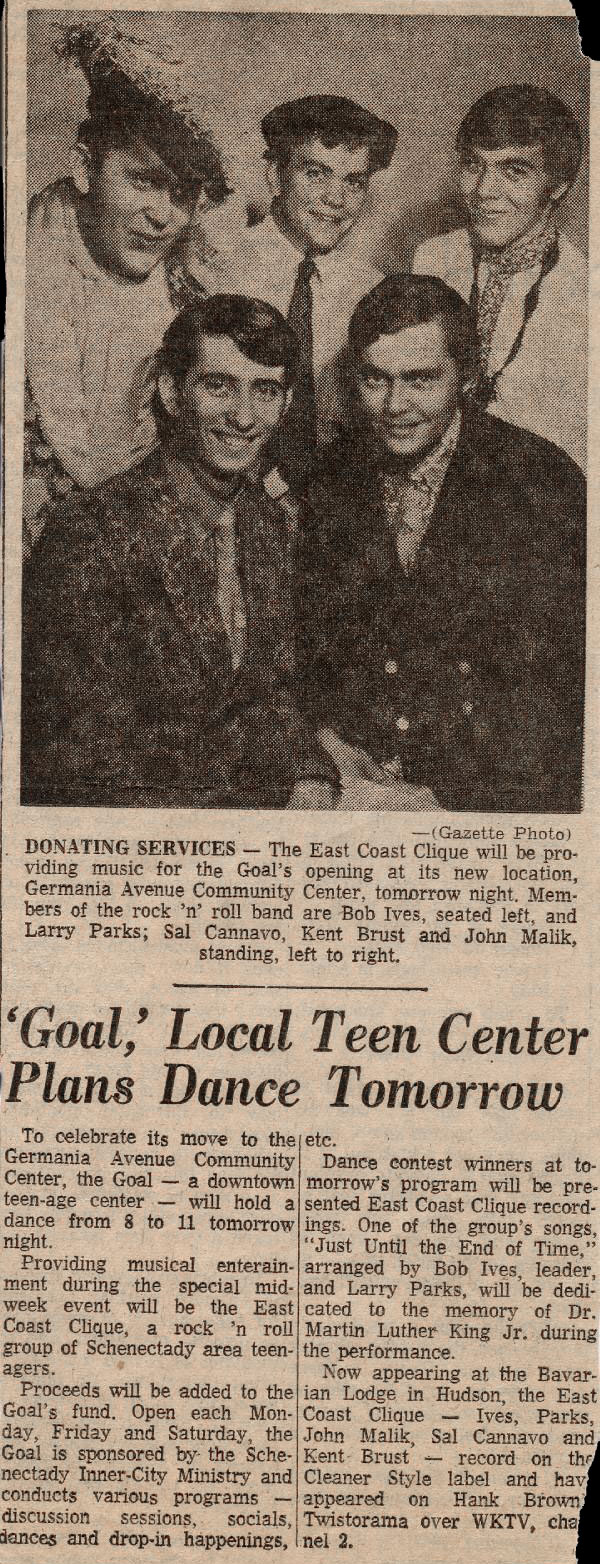
The East Coast Clique, including at least two members of the Cleaners

A Schenectady news clipping about the East Coast Clique mentions a single on the “Cleaner Style” label, so the Clique were a continuation of the Cleaners with a new band name, and some different members. Larry Parks and Bob Ives had been in the Cleaners, and the East Coast Clique’s other members included Sal Cannavo, Kent Brust and John Malik.

The article states:

One of the group’s songs, “Just Until the End of Time,” arranged by Bob Ives, leader, and Larry Parks, will be dedicated to the memory of Dr. Martin Luther King Jr. during the performance.

Now appearing at the Bavarian Lodge in Hudson, the East Coast Clique … record on the Cleaner Style label and have appeared on Hank Brown’s Twistorama over WKTV, channel 2.

There is an 12″ acetate from Kennett Sound Studio of three songs by the East Coast Clique: a later version of “How I Feel”, “Last Stop (Everybody’s Getting Off)” and “Just Until the End of Time”. The second song was issued as the B-side to their single on Charter Records, “Dust” but I am not sure if this is the same version.

Podrazik and Iovinella registered two additional songs in 1968: “Captain Miller’s Flying Circus”, and “Sleepy Boy” (this last one shows Earl Kennett contributing to the music arrangement).

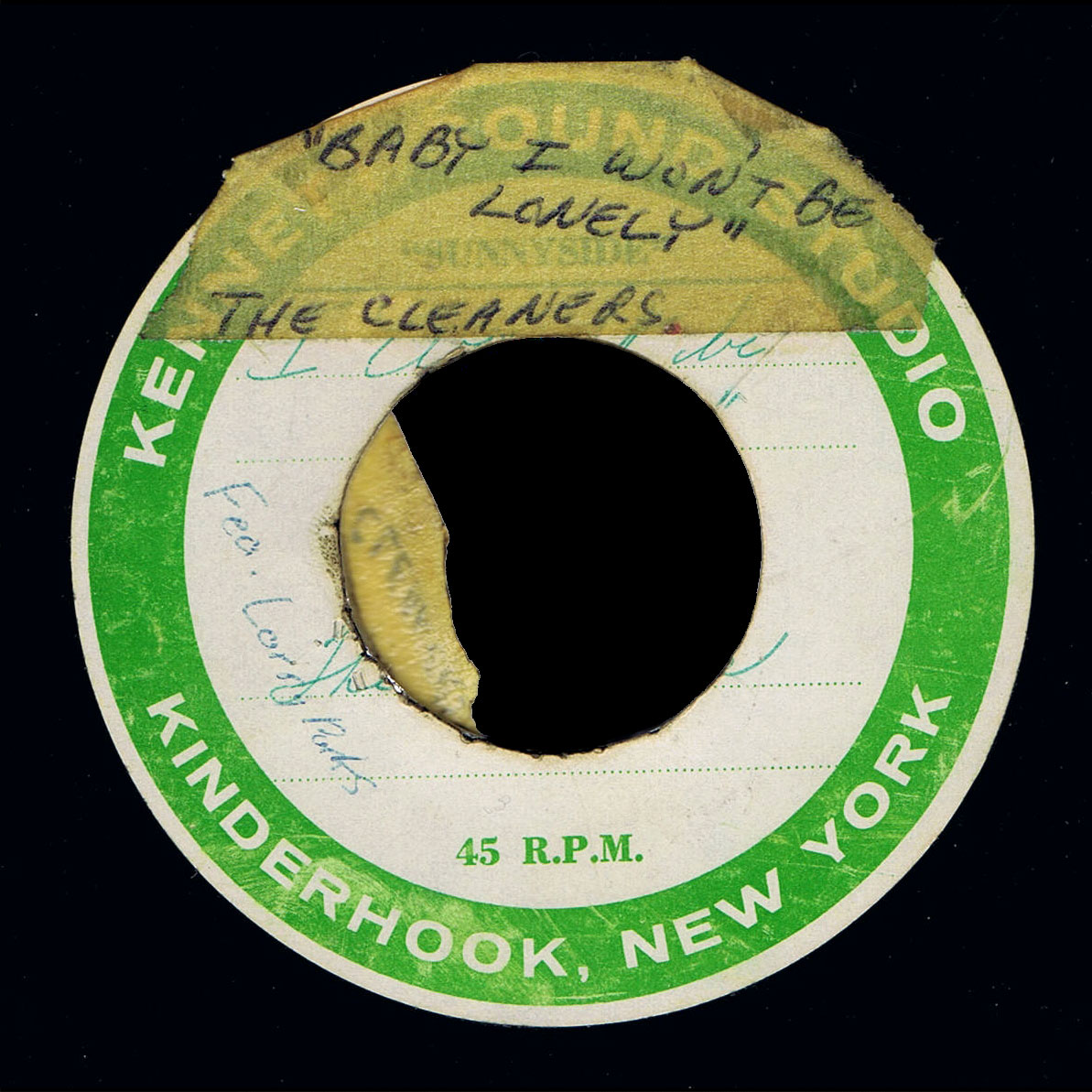
Cleaners Kennett Sound Studio Demo 45 Baby I Won't Be Lonely
Kennett Sound Studio acetate for the Cleaners “Baby I Won’t Be Lonely”, from 1969. Scan courtesy of Brian Kirschenbaum

In January 1969, they registered “Baby, I Won’t Be Lonely”, which exists on a Kennett demo acetate as by the Cleaners, so it may have been considered for release.

Later copyrights include “I’m So Happy” (October 1969, with words by Brummer).

Al Quaglieri wrote a profile of Bob Iovinella for the March 8-14, 1990 issue of Metroland. He describes how Iovinella and Larry Parks had a five-year publishing contract by Nat Weiss, but only two songs saw publication in that time.

In 1970, Larry Parks had a solo composition “Pay Day” (using the name Adam Parks) recorded by Sha Na Na.

Starting in 1980, Iovinella and Parks would work together again as partners in Hendi-Parksives Productions.

Thank you to Brian Kirschenbaum for scans of the East Coast Clique 45 and the Cleaners acetate. Thank you to Bobby Iovinella for the photo at top and to Mikael for the news clipping.

The Villagers “Wishes and Memories” / “Cry On” on Kennett Sound

Villagers Kennett Sound 45 Wishes and MemoriesThe Villagers included Phil Haskins, Rick Haskins and Charles Petit.

They cut their only single in very early 1969 at Kennett Sound Studio, located in a renovated barn just south of the village of Kinderhook, NY.

Phil Haskins wrote the words to the slow, lovely “Wishes and Memories” and co-wrote the music with Rick Haskins (Richard J. Haskins).

Charles R. Petit wrote the more soul-styled “Cry On”, copyright registered February, 1969.

There is no label name, but Kennett Sound appears on other singles by the Cleaners and East Coast Clique, and the 0018 release number is similar to others from that studio, usually four digits starting with 00.

Anyone have a photo of the group?

Villagers Kennett Sound 45 Cry On

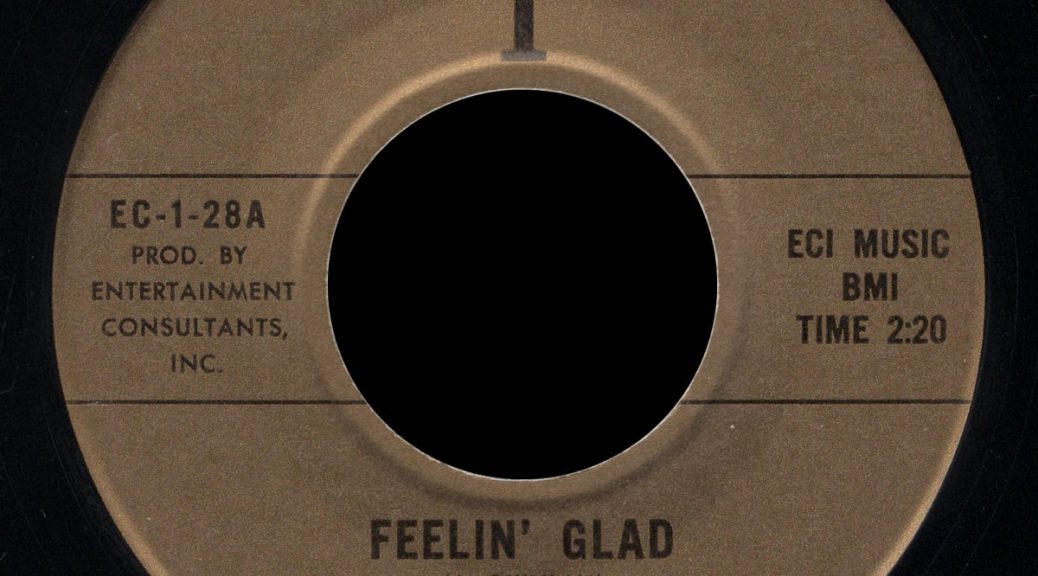
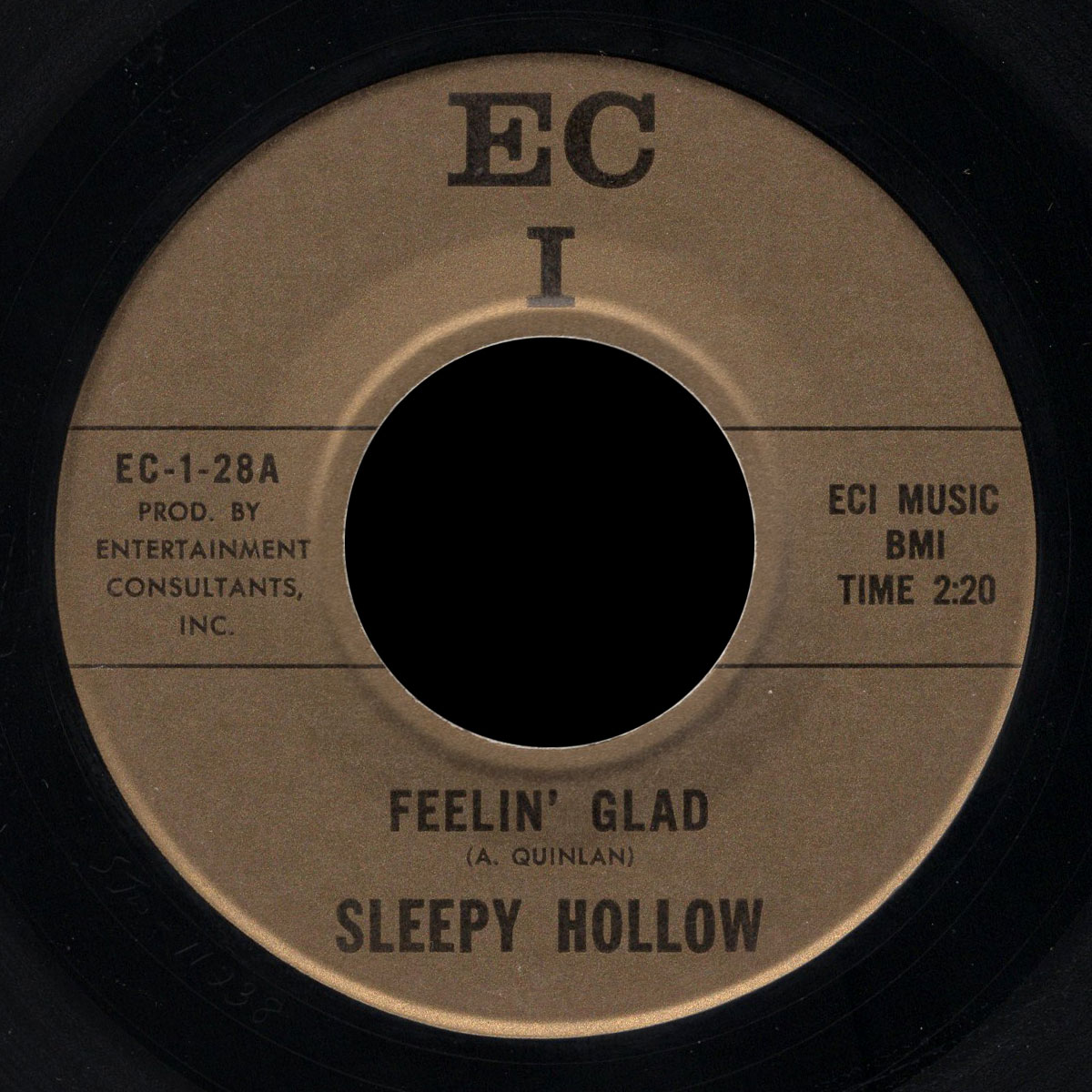
Sleepy Hollow “Feelin’ Glad” – Al Quinlan of Thackeray Rocke

Sleepy Hollow ECI 45 Feelin' Glad

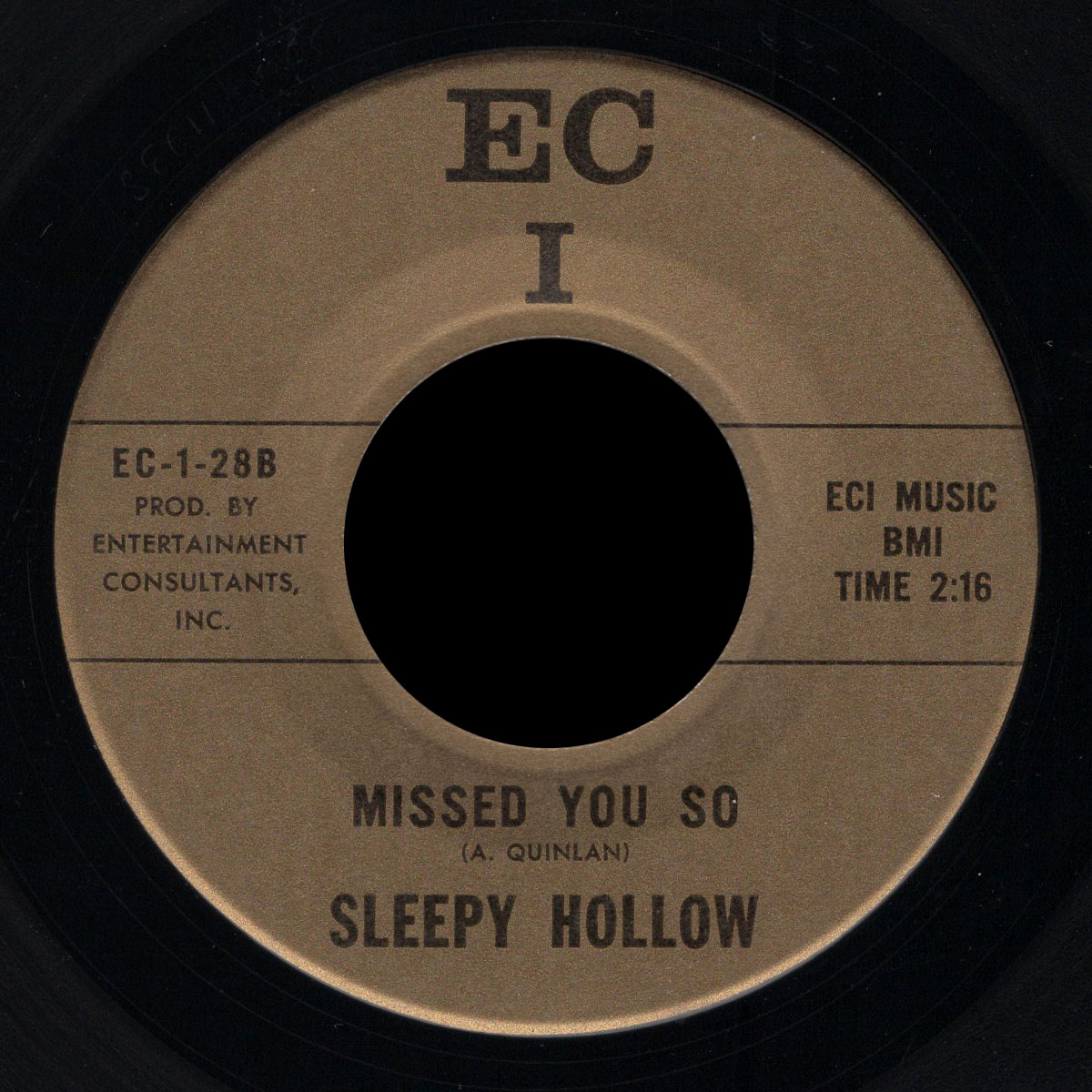
Sleepy Hollow released their only single on ECI (Entertainment Consultants Inc.), probably in 1969. “Feelin’ Glad” / “Missed You So” are originals by Alan Quinlan. Both sides are good rock performances with commercial pop touches.

The single is a Wakefield pressing, SJW-11238. Alan Quinlan registered these songs with the Library of Congress in February, 1969, using his full name, William Alan Quinlan.

Sleepy Hollow included at least one member of the Pheonix group Thackeray Rocke, bassist Al Quinlan.

Thackeray Rocke included:

Frank Lacey – lead vocals
Mike Kessler – lead guitar (spelled Keslar on copyright registration)
Sheldon Skinkle (aka Bunker Huddle/Jr. Ellis) – guitar
Al Quinlan – bass and vocals
Paul Buys – drums and vocals
Vince Welnick – keyboards

Sleepy Hollow ECI 45 Missed You SoQuinlan co-wrote “Bawling” with lead guitarist Michael Keslar, recorded by Thackeray Rocke on Castalia Productions ARA 10671, and “Can’t You See” with Paul Buys, released on Castalia Prod., ARA 268. Both of those were cut at Audio Recorders in Phoenix and produced by Michael Wood, and Renda Music, Inc shows up in the publishing.

I suppose Thackeray Rocke split and some of the members continued as Sleepy Hollow.

Alan Quinlan has a number of other registered copyrights. From May of 1969, there are “It’s Wonderful to Love Her”, “Miss Merriwether”, and “Puzzles”, then “Good John” registered in November. In October, 1970 he registered an album’s worth of songs, including “Bottle of Wine”, “Gilted Quean” (sic – also registered as “Jilted Queen (Have You Seen My Love?)”, “Merry-Go-Round” and “Seasons”, among other titles. As far as I can tell, none of these songs saw release; perhaps demos still exist.

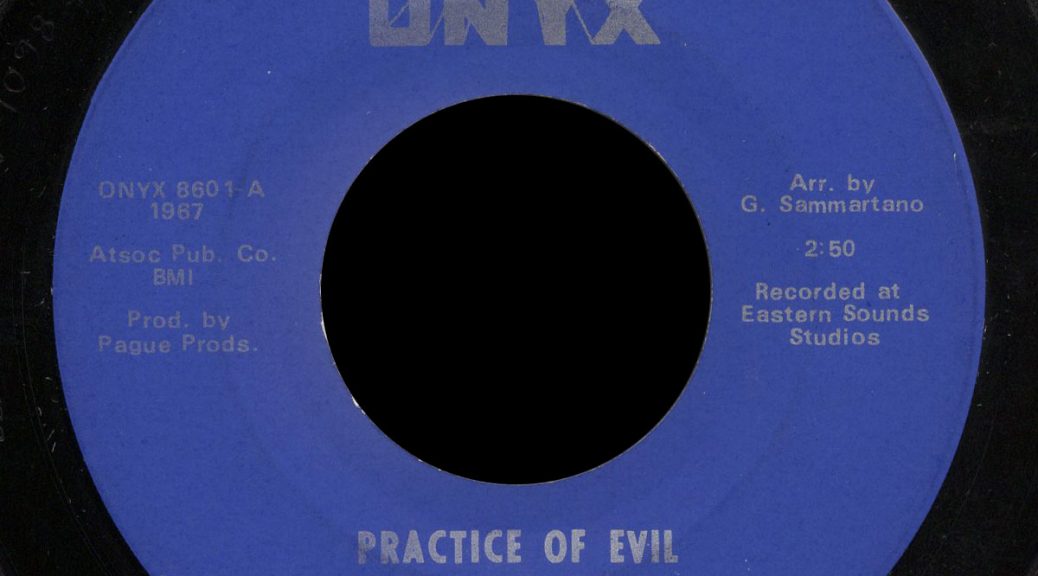
The Fabulous Frauleins on Onyx “Practice of Evil” / “Days Gone By”

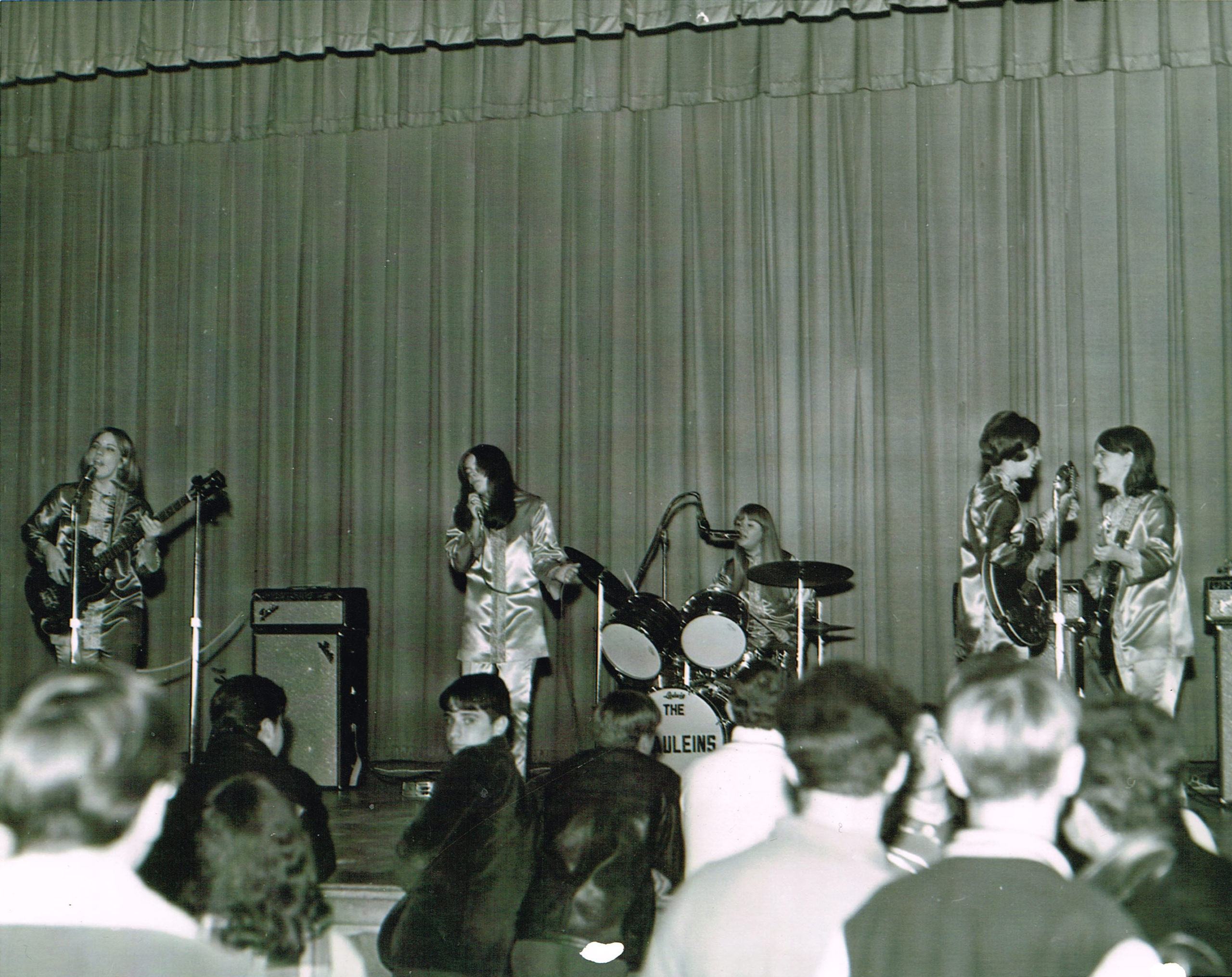
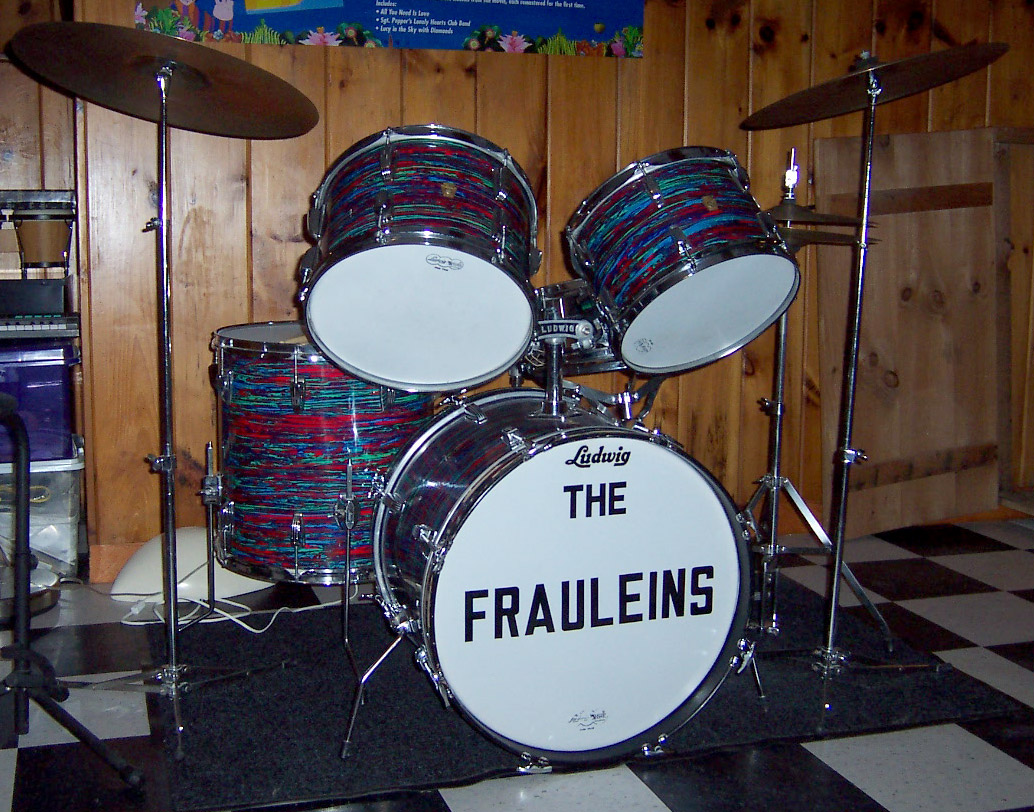
The Frauleins on stage, from left: Ann Duquette, Michelle Fereira, Lynda MacLeish, Linda Murphy and Linda Duquette

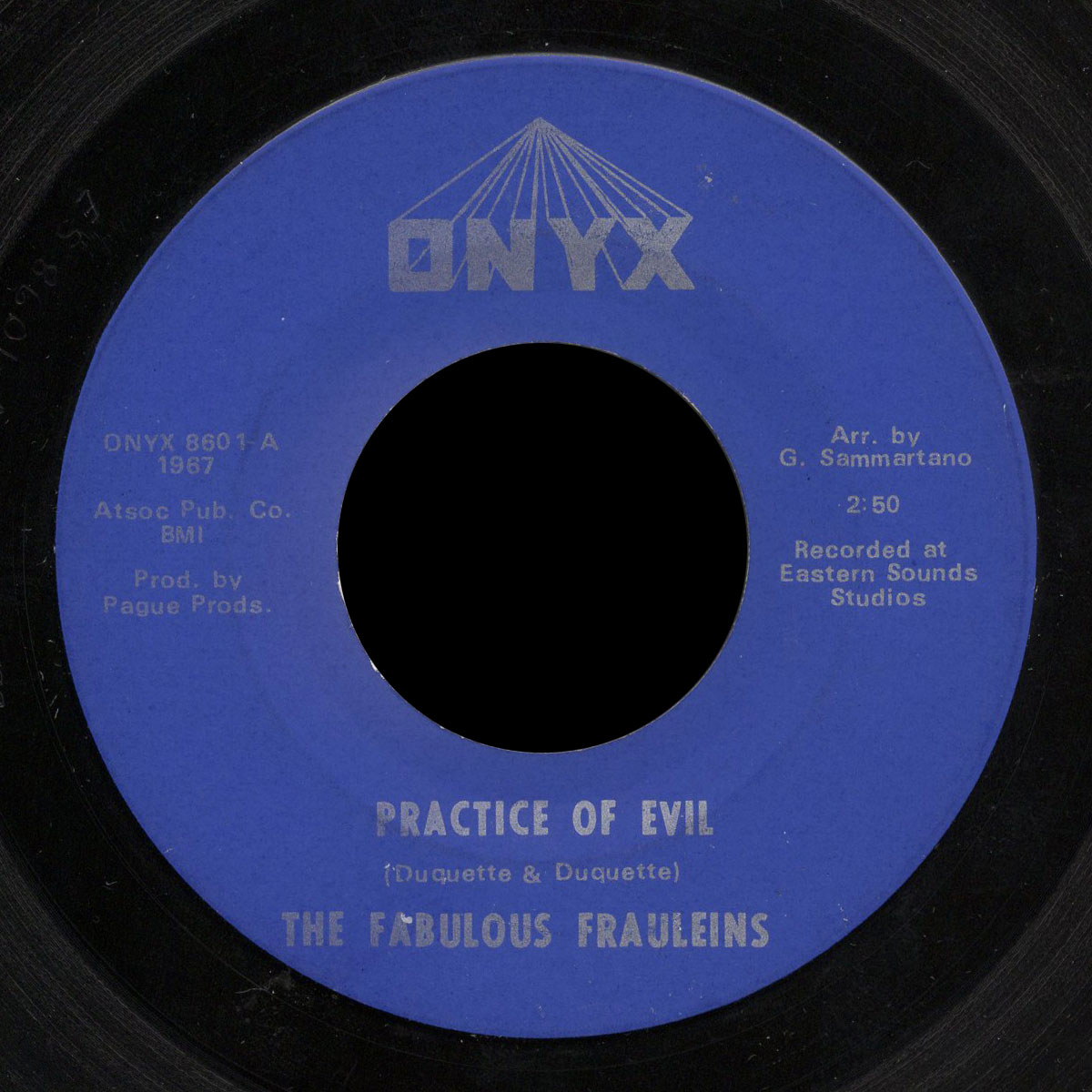
Fabulous Frauleins Onyx 45 Practice of Evil

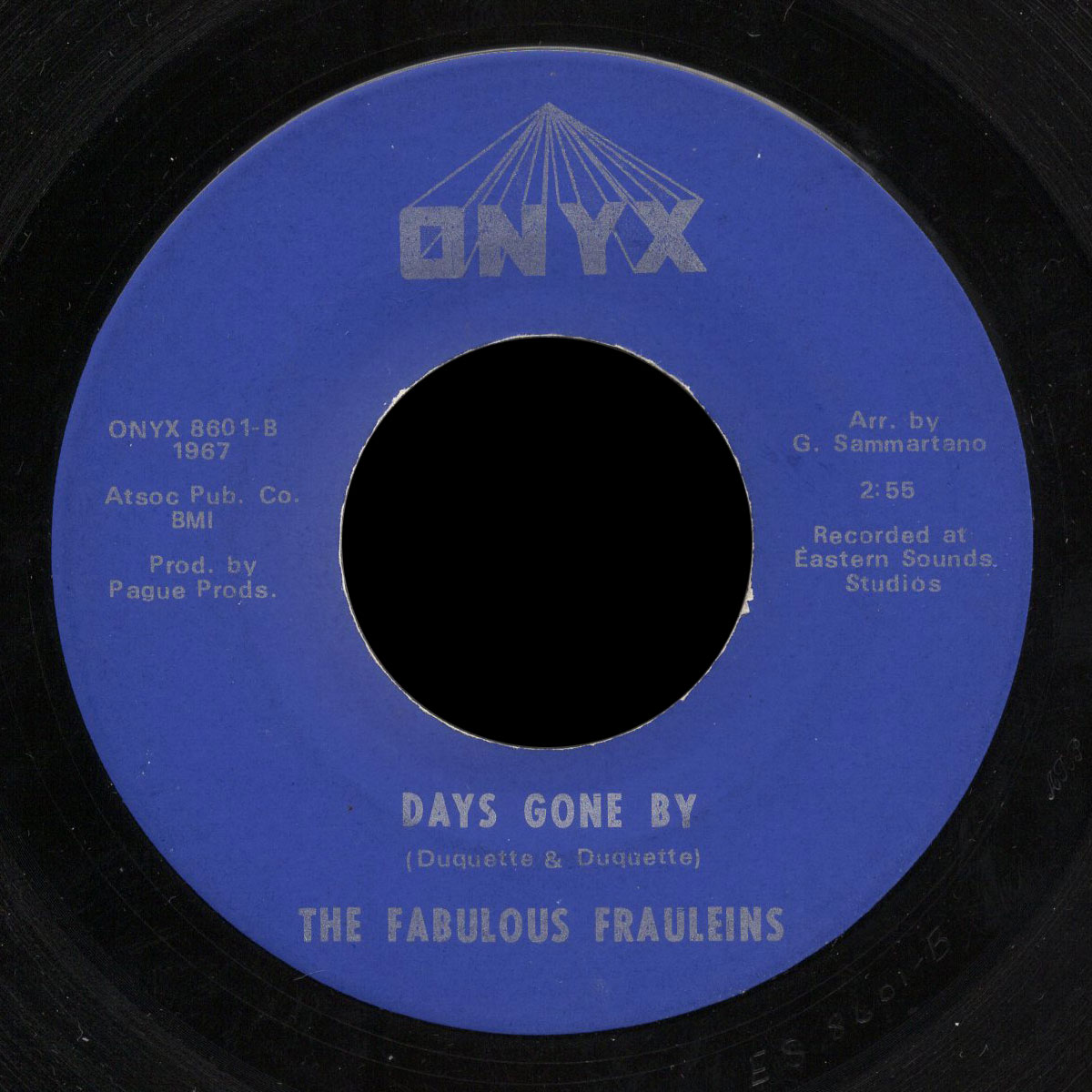
The Fabulous Frauleins only recorded this one single in 1967, “Practice of Evil” / “Days Gone By”. Both are original songs by Duquette and Duquette, two sisters who were members of the group.

Members were:

Michelle Fereira – lead vocals
Linda Duquette – guitar
Linda Murphy – guitar
Ann Duquette – bass
Lynda MacLeish – drums

Fabulous Frauleins Onyx 45 Days Gone By“Practice of Evil” concerns the Salem witch trials. Bill Borelli from WCCM 800 radio did the voice of the judge in the middle part of the song. “Days Gone By” is slower but also a very good original.

Lynda MacLeish was from Andover, MA where she attended Andover High School. I’m not sure where the other members of the group came from, but Andover or the Lawrence / Methuen / Salem area are likely.

The Frauleins recorded at Eastern Sound Studios in Metheun, Massachusetts. Onyx Studios at the time was located in the basement of the label owner’s home at 33 Taylor St.

Guy Sammartano arranged both sides, with production by Pague Prods. Other staff at Onyx at this time included Pat Costa, Rom Messina, Jim Manganno, Sally Giaquinta, Angela Blatti and Jim Minchello.

Publishing through Atsoc Pub. Co., but I can’t find any record of copyright registration or a listing in BMI’s database for the company or the songs. Someone named Lon Duquette copyrighted a song called “Back Bay Blue” in 1969, but I have no idea if he was connected to the Frauleins.

In 1968, “Practice of Evil” was chosen to be on a Pepsi flexi giveaway, with the band called simply “The Frauleins”. A live recording of the group may exist.

The Frauleins broke up after a final show in Derry, New Hampshire around 1968. Though they kept in contact through the years, the band never reunited on stage.

Michelle Fereira married and became Michelle Barrow.

Lynda Murphy at Beatlefest, 2005

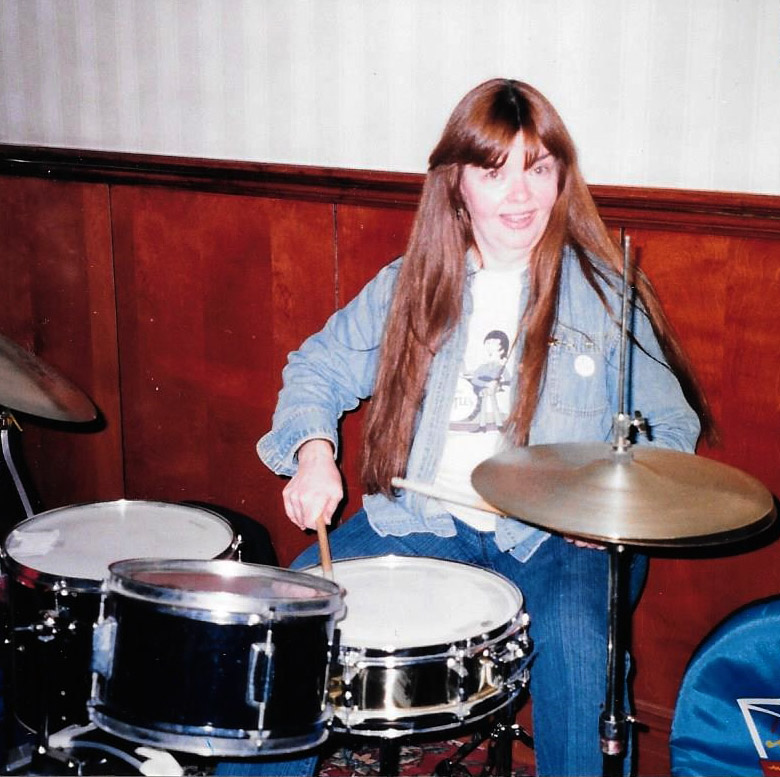
Lynda MacLeish married and became Lynda Murphy, not to be confused with Fraulein guitarist Linda Murphy! Lynda was a huge Beatles fan, having attended one of their US shows as a teen. She became a chapter president of the Rascals fan club, and long-time friend of Felix Cavaliere. Lynda never joined another group, but sat with other musicians including Pete Best, who was also a friend of hers. Lynda passed away on July 28, 2017.

Thank you to John Van Horn for the photos and information seen in this article. John and his wife were friends of Lynda Murphy (MacLeish).

Frauleins – Lynda MacLeish’s drum set

The Bobbies “(She) Put Me Down” and the In on Sonny Records

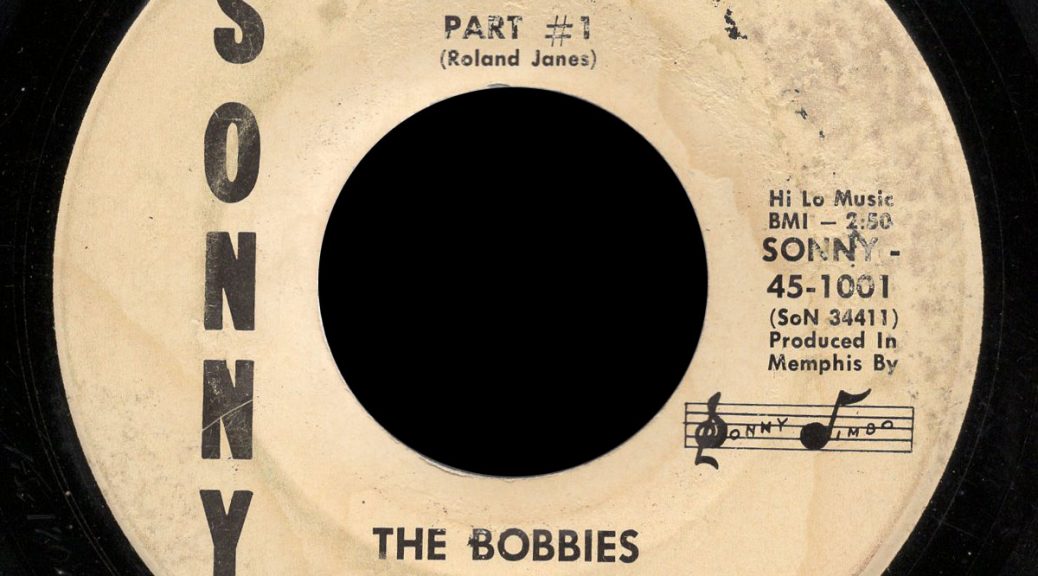
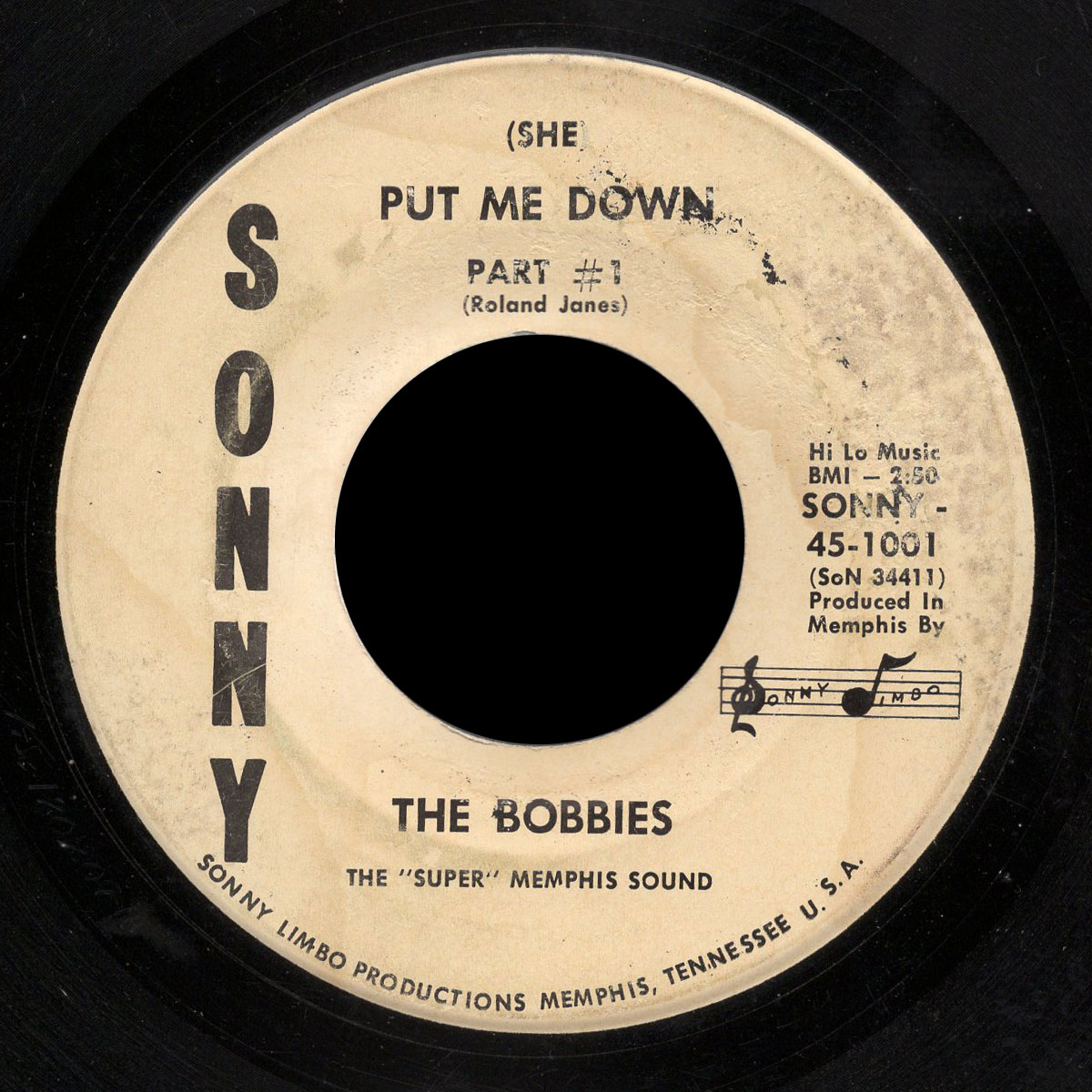
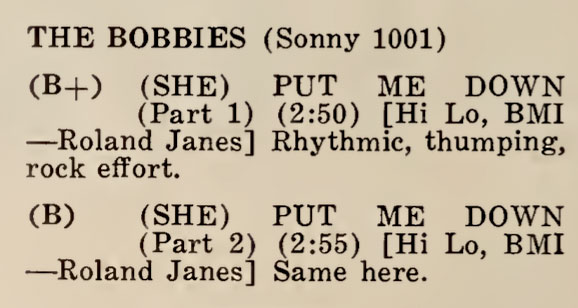
Bobbies Sonny 45 She Put Me Down Part 1The Bobbies came from Florence, Alabama, cutting this one fine single, “(She) Put Me Down” parts 1 and 2 in June, 1966. Members included:

Bobby Heathcoat – lead vocals (Bobby Heathcote ?)
Richard Hahn – organ
Glenn Hall – bass

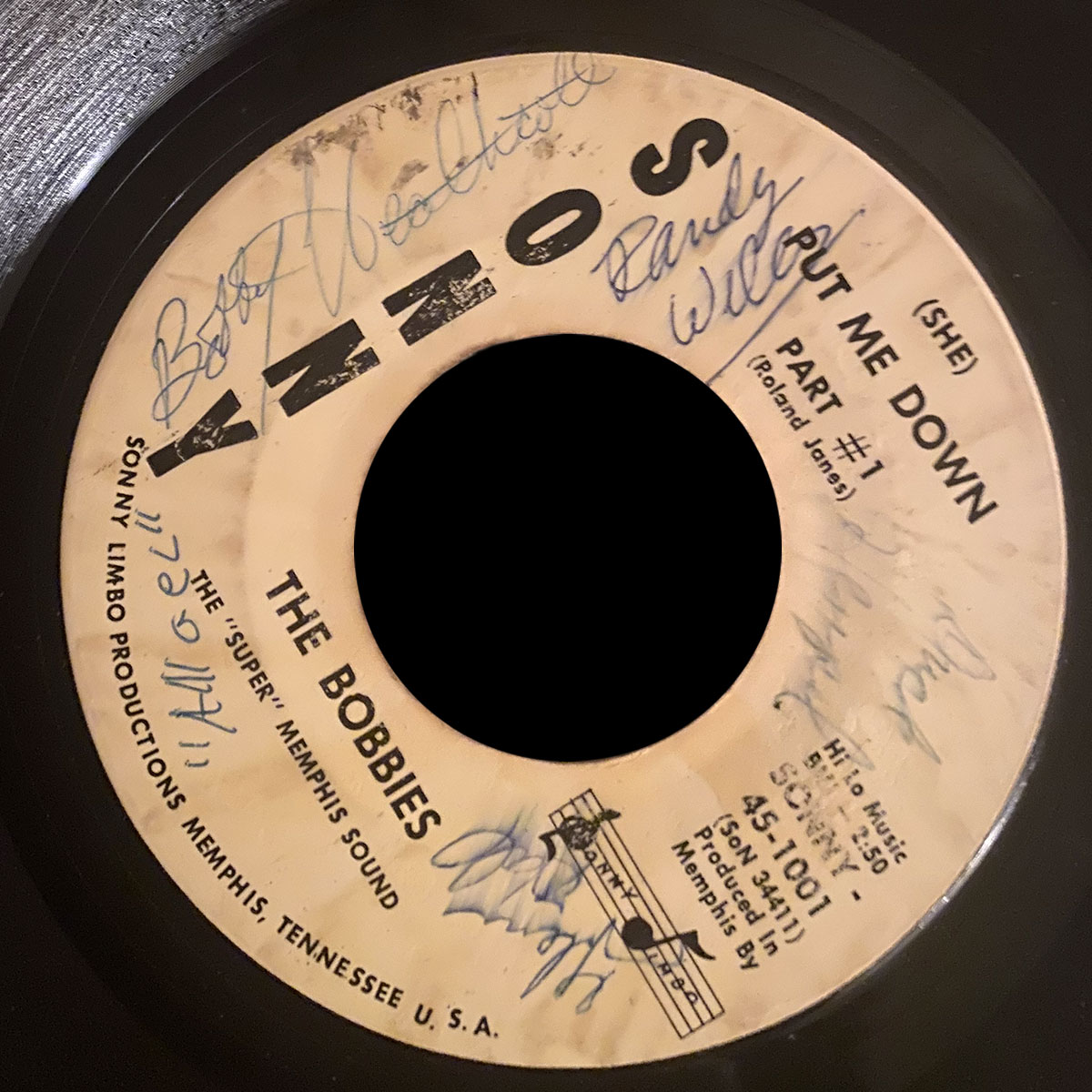
– but I don’t know the other names of the group. Scans of an autographed 45 include these names:

Duck Hempil or Henpil?
Randy Wills
“Angel”

Sonny Limbo (real name Robert Limbaugh, I believe) was a DJ at WAAY in Huntsville, Alabama, about 72 miles east of Florence. I am not sure how he found the Bobbies, but Sonny had been hipped to local Huntsville group the In. The In recorded a demo of “Just Give Me Time” at Bobby Land’s studio in Huntsville and asked Sonny to produce a finished version. Sonny brought both groups, the In and the Bobbies to Sonic Recording in Memphis to share a four hour session.

Autographed copy of the Bobbies 45, courtesy of Brandi Garrison.

The bands, who did not know each other before, became friendly and helped out on each other’s session. The Bobbies and their friends contributed to the crowd noise on the In’s version of “Midnight Hour”, plus Bobby Heathcoat contributed backing howls and Richard Hahn played organ on the song. Eddie Burton of the In added some lead guitar to the Bobbies recording.

The In’s session would lead to a national release on Hickory of “Just Give Me Time” / “In the Midnight Hour”. In an interesting twist on the usual sequence of local-to-national release, Hickory dropped the group (supposedly because their session was non-union), and Limbo released the songs locally on his own label, pairing “‘Live’ in the Midnight Hour” with “You’re So Fine” for Sonny 45-1002, and “Just Give Me Time” with Eddie Burton’s original “You’re Not Gonna Live Forever” for Sonny 45-1004.

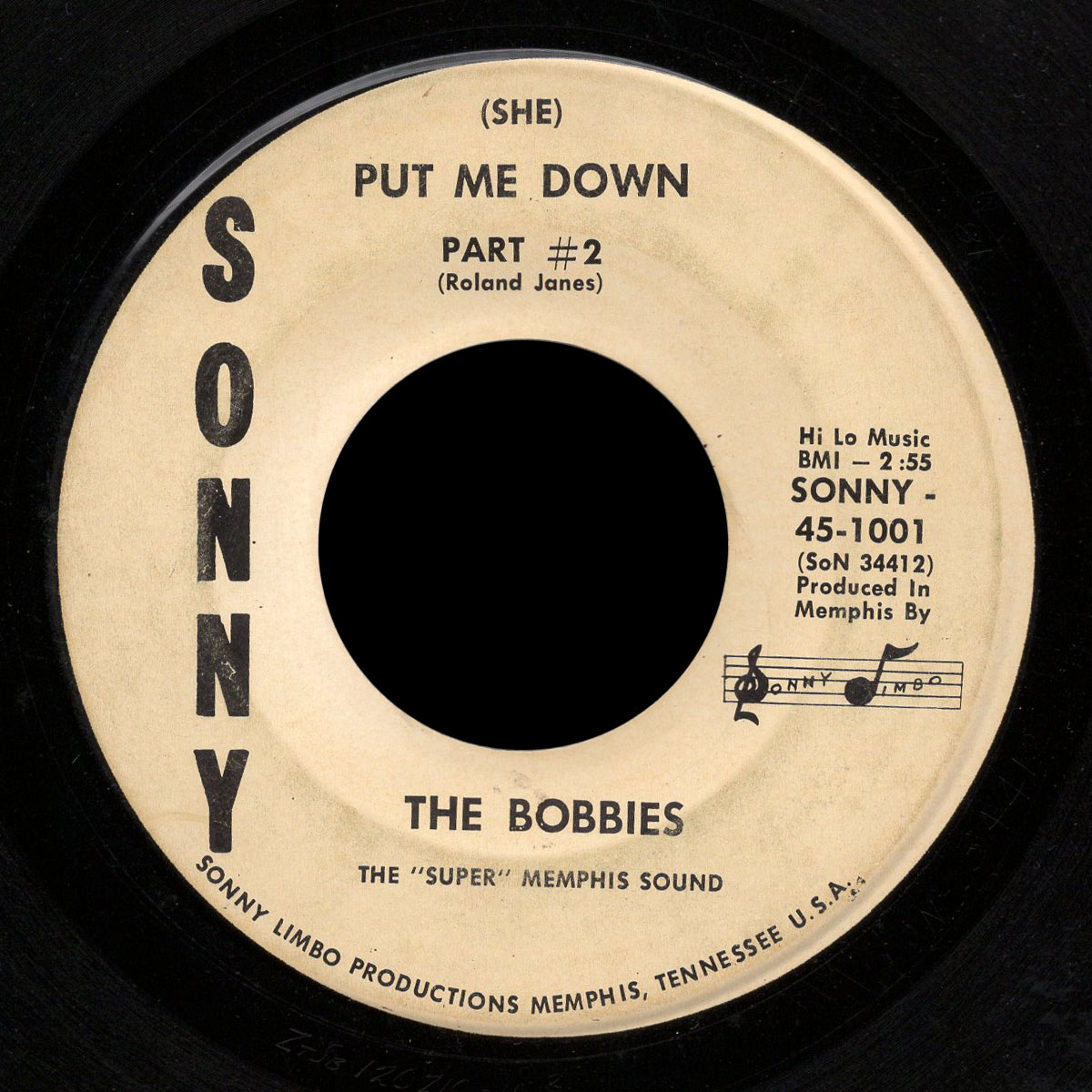
Limbo released the Bobbies single on Sonny Records 45-1001. I’m not sure what songs the Bobbies planned on recording when they went into the session, but Sonic Recording owner Roland Janes gets writing credit for “(She) Put Me Down”.

Bobbies She Put Me Down Cash Box July 30, 1966I expect there is a Sonny 45-1003 out there but if so, I haven’t seen it.

The A-side of the Bobbies received a B+ in the July 30, 1966 issue of Cash Box.

Richard Hahn would go on to join the In.

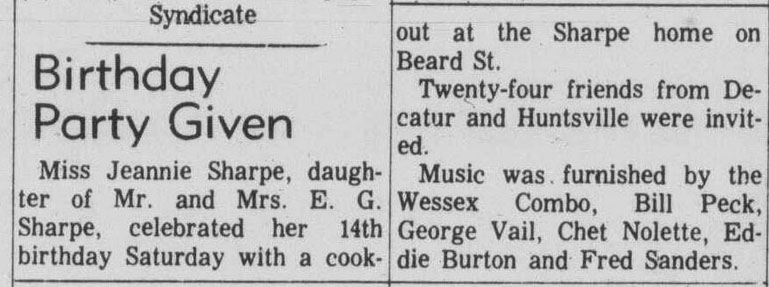
In Wessex Combo Decatur Daily April 28, 1965
The Wessex Combo (before the “In”), from the Decatur Daily April 28, 1965

I couldn’t find any news clippings for the Bobbies, but did turn up this interesting mention of an early version of the In, calling themselves the Wessex Combo for the 14th birthday party of Miss Jeannie Sharpe, the band featuring Bill Peck, George Vail, Chet Nolette, Eddie Burton and Fred Sanders. It was published in the Decatur Daily (Decatur Alabama that is), on April 28, 1965.

By the time of their Memphis recordings, Chet Nolette was out of the group and the In consisted of Bobbie Land – lead and backing vocals and organ, Eddie Burton – lead and backing vocals and lead guitar, Bill Peck – lead and backing vocals and rhythm guitar, Fred Sanders – lead and backing vocals and bass, and George Vail – drums. Later on Jackie Tiller of the Rocks would play bass for the group.

Anyone have a good photo of either group?

Info for this article comes from Jeff Jarema’s interviews with Eddie Burton of the In on the Sundazed and 60sgaragebands.com sites, both now defunct.

Bobbies Sonny 45 She Put Me DownPart2

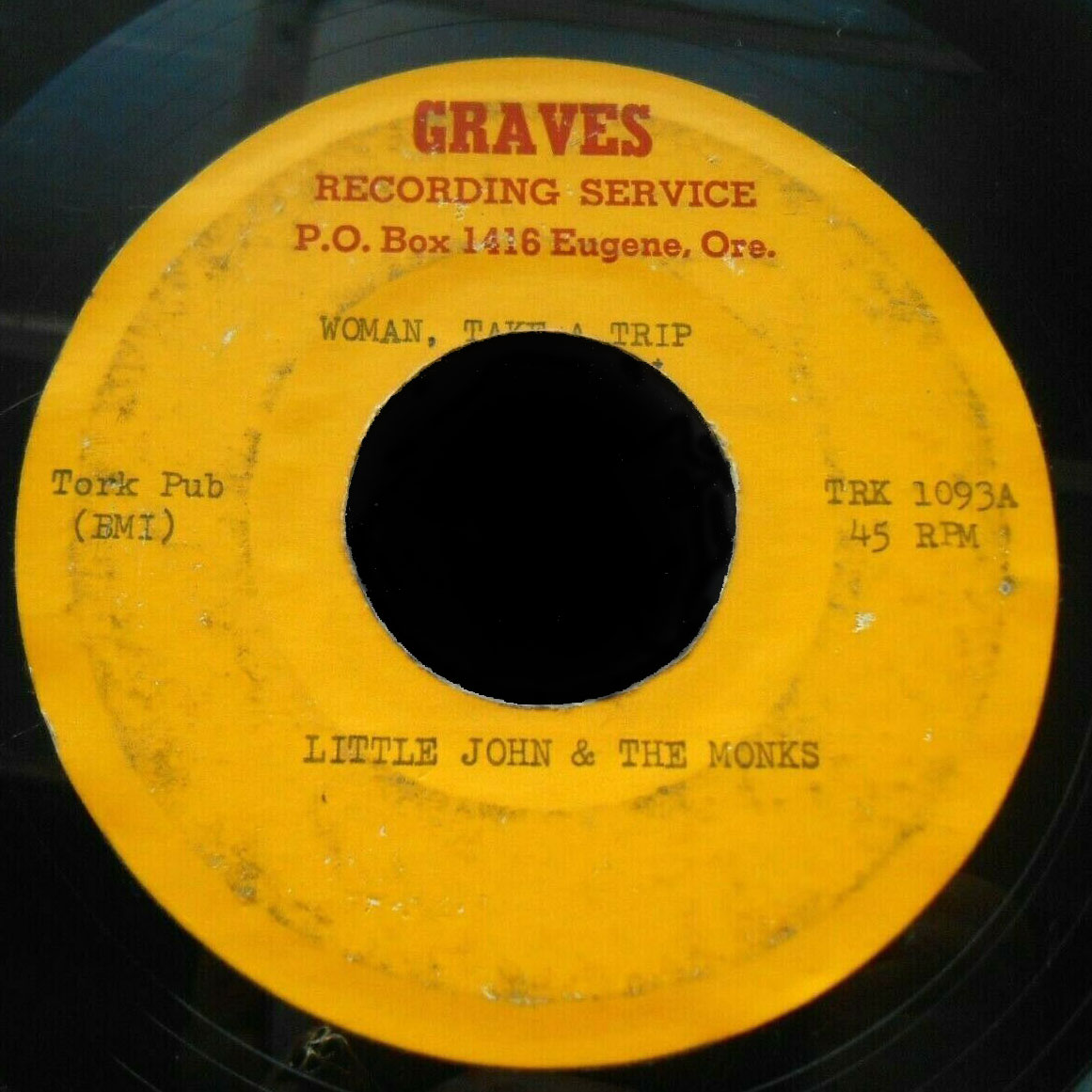
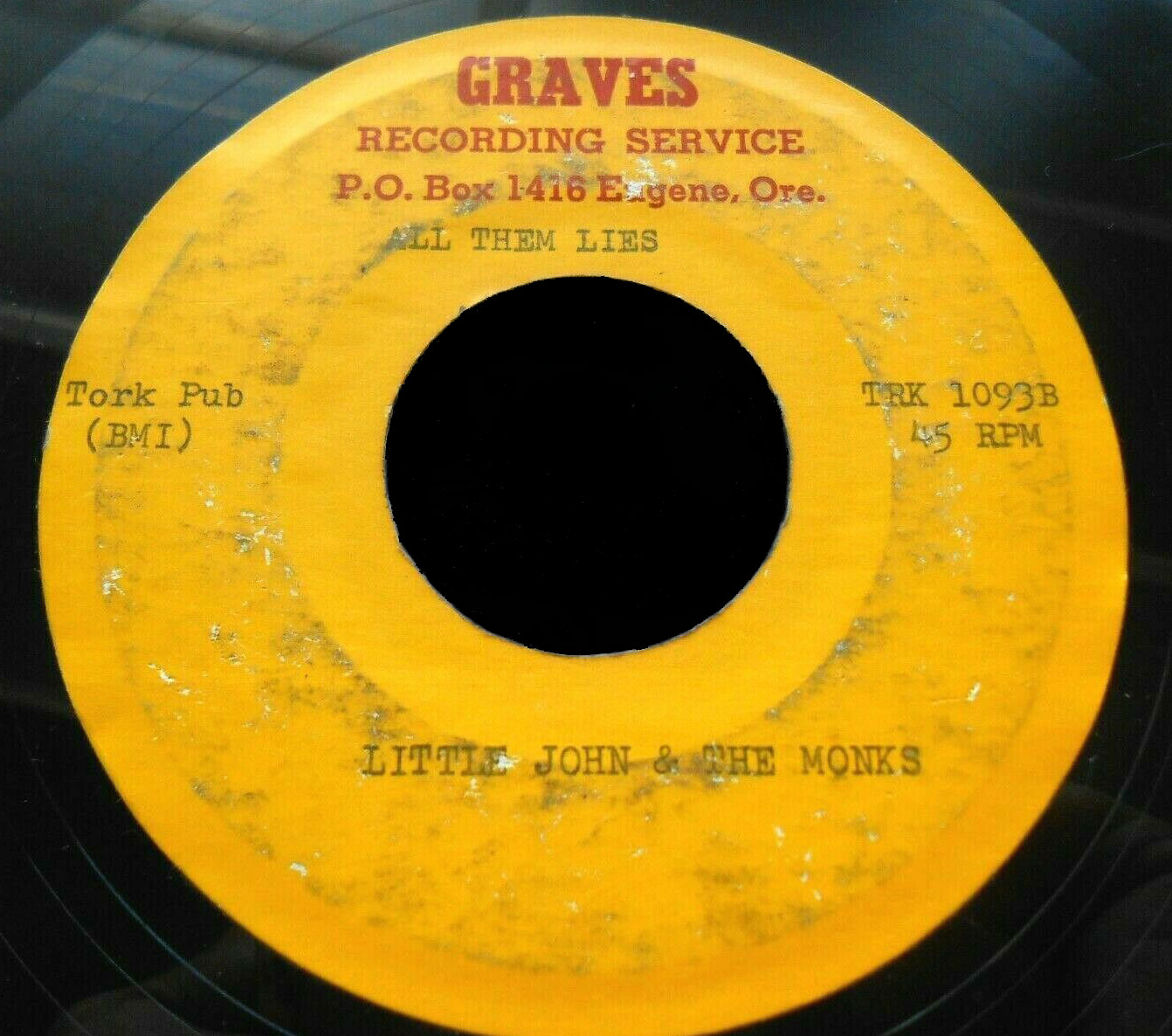
Little John and the Monks – “Woman Take a Trip” / “All Them Lies”

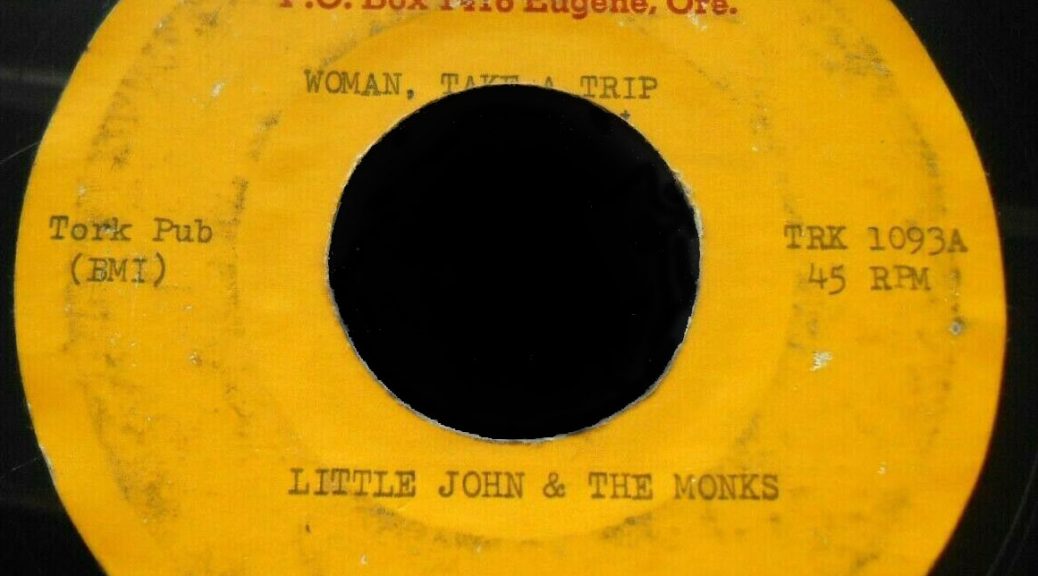
Little John and the Monks Graves 45 acetate Woman Take a Trip

Little John and the Monks came out of Klamath Falls, Oregon. Tom Davis, a singer from Scotland, founded the group as the Nomads and changed it to Little John and the Monks when they went to Eugene. The membership changed frequently in the few years the band lasted.

Members included:

Lloyd Barnhurst – ?
Tom Davis – vocals
Luis Weathers – bass guitar
Davy Jones – saxophone
Clark Lynch – drums
Stan Brawn – lead guitar
Bob DiMartino – keyboards
Larry Harding – lead guitar
Dennis Baldwin – ?
Lee Wilson – bass
Bob Martin – drums

In late 1965 the group cut Tom Davis’ original song “Black Winds” backed with a cover of “Needles and Pins” on Jerden 775. Many years later, an unreleased song, “Too Many People” appeared on Big Beat’s Northwest Battle of the Bands Volume 3 showing a tougher sound for the group.

Little John and the Monks Graves 45 acetate All Them Lies
In August 2020, an ebay auction featured a demo lacquer (acetate) by Little John & the Monks with two original songs recorded at Graves Recording Service in Eugene. “Woman Take a Trip” continues in the heavier northwest sound, and extends it with a frenzied rave-up of squealing sax, sustained guitar notes and sliding bass notes. The bass line drives the flip, “All Them Lies” with cool unison accents by guitar and sax and some bluesy organ.

Tork Publishing, perhaps meant for release on Tork, which did release the Moguls ‎– “Round Randy” / “Another Day”.

Anyone have good photos of the group? I’d also like to know who played on what recordings.

The Artistics and the Symphonics: Thank You for Choosing Me

Artistics GWHS 1970 (1) photo
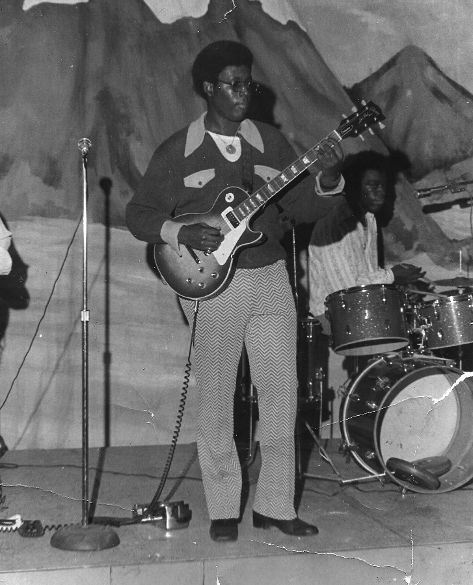
Artistics at the GWHS Spring Fling Concert, May 11, 1971, L-R: Joe Moore, Norman Brooks, Clyde McCoy, John Clark, Barry Price, Steve Eckles, Keith Wiley.

Think of the Artistics and you’ll probably recall the R&B vocal group who struck gold with “I’m Gonna Miss You” in 1966. But a lesser known group by the same name became the definitive soul band in Southside Virginia in the early 70s. Formed by neighbors and school friends, the Artistics got together in 1970 around the nucleus of guitarist Joe “Guitar Man” Moore, bassist Jonathan “J.D.” Oliver and vocalist, John Clark.

Artistics Joe & John
Joe Moore & John Clark of the Artistics on stage (undated)

Kathy Moore Cobbs, Joe’s sister, recalls Joe, John and J.D. rehearsing in her mother’s basement on several occasions and says they already sounded as good as the songs on the radio. Clark recalls that the trio “used to play a little bit, just jammin’ around” at Westmoreland School in their neighborhood. All attended George Washington High School in Danville and knew brothers Keith and Dale Wiley, who played drums and keyboards, respectively. The three had heard that the brothers wanted to form a band, so the five got together and moved the practice sessions to the Wiley’s garage. Shortly thereafter, the teens caught the attention of Langston Band Director Robert Hickson, who agreed to manage the as yet unnamed group.
Classmate Sharon Miller-Ranson remembers those early days well and standing on the corner of Cabell and Monument streets where “John Clark would start singing and we would have a concert in front of Cassidy’s Store.” Lula Dickerson said Joe Moore’s musical prowess was obvious from an early age and remembers his performance of “If I Had a Hammer” during the talent show at I.W. Taylor Elementary School.

The 17-year-old Clark was in 10th grade and recalls that they recruited three trumpet players: Clyde McCoy, Norman Brooks and Barry Price, all of whom played together in the high school band. Clark had just started playing drums but quickly became proficient on the instrument, allowing Keith Wiley to switch from percussion to organ. The move was necessitated by Dale Wiley’s departure to attend college.

Now with a complete rhythm and brass section, all they needed was a name. Rehearsals were moved to “a little place Hickson had” as they prepared for their first gig. They were to perform at the Top of the Stairs Club when a major snowstorm blanketed the city. The group members were riding around downtown trying to come up with a name just a few hours before they were due on stage. They rode down Union Street and passed Danville’s only licensed cosmetology school, Artistic Beauty College. Clark noticed the sign out front and said: “What about the Artistics?” Not knowing that there was already a professional band with the same moniker on Brunswick Records, the other band members agreed and the Artistics were born.

Artistics GWHS 1970 (1) photo
Artistics at the GWHS Spring Fling Concert, May 11, 1971, L-R: Joe Moore, Norman Brooks, Clyde McCoy, John Clark, Barry Price, Steve Eckles, Keith Wiley.
Artistics GWHS 1970 Concert Review
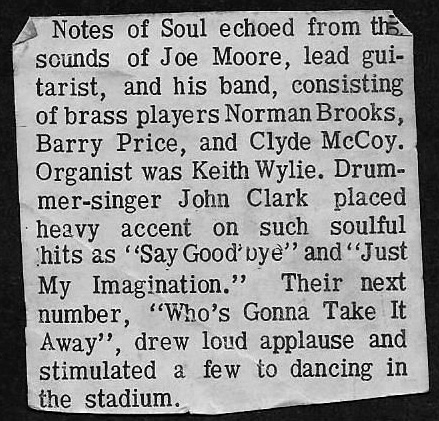
George Washington High School concert review

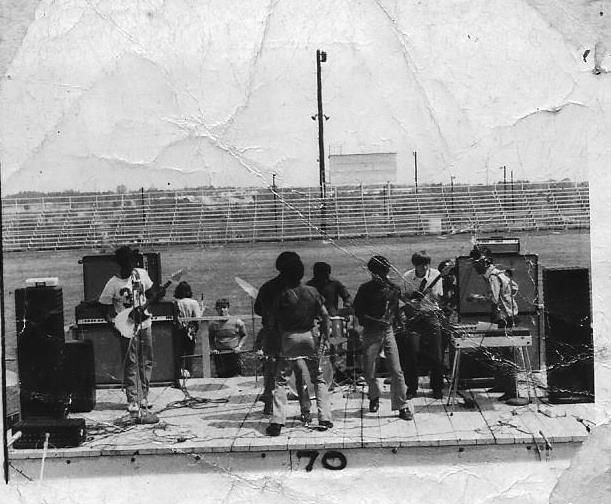
An early, memorable performance was in 1971 before hundreds of enthusiastic fans on the football field at their alma mater, George Washington High School. The seven-piece outfit included a trumpet section and Brooks, Price and McCoy choreographed their synchronized dance steps for the show. The trio also wore matching shirts and slacks. The brass section made a grand entrance, riding up to the stage in a convertible.

The Artistics were the only soul act on the bill and shared the stage with four rock bands. Clark recalls that their PA system was “lackluster” so all of the groups pooled their equipment and shared a set of drums.

A review of the performance noted that drummer-singer John Clark “placed heavy accents on such soulful hits as (the Jackson 5’s) ‘Never Can Say Goodbye’ and the Temptations’ ‘Just My Imagination.’” Their final number, Kool and the Gang’s “Who’s Gonna Take the Weight,” brought the crowd to their feet and had some dancing in the stadium.

J.D. was unavailable for the spring concert and guitarist Steve Eckles was recruited to fill-in on bass. Eckles was the only white member in the aggregation and the group would often rehearse at his parents Broad Street home. He was an excellent lead guitarist in his own right and was already a veteran of the local music scene, having played with many of the Artistics’ members in various bands at the El Dorado, a Black nightclub on the outskirts of town. Eckles also did arrangements for the band, allowing the brass to play string parts, adding depth to their live performances.

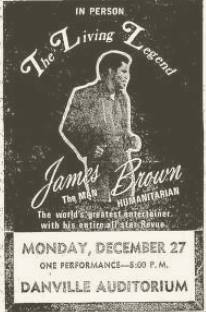
Artistics & James Brown ad (December 27, 1971)

The band continued to perform frequently at country clubs and on college campuses in Virginia and North Carolina and managed to secure a spot as the opening act for James Brown during his tour of small cities on the Chitlin’ Circuit in late 1971. Brown was booked to play the Danville City Auditorium on Monday, Dec. 27, 1971. Clark remembers that the Artistics were practicing one night when their manager stopped by and asked if they’d like to open for the Godfather of Soul. The band viewed it as a great opportunity for exposure and as a chance to make a little money. They were right on at least one count: The concert was well advertised but no cash changed hands. Clark said their manager informed the band members that this was their lucky break and that the show “was just gonna be for some publicity.”

This was the first time the Artistics had shared the stage with a professional act and Clark admits all were a little nervous, especially about their equipment. The roadies had refused their request to share his sound system; however, Brown overheard the discussion and told his crew to “let the guys use it.” They held their own and even got the attention of Brown’s backing band, the J.B.’s. The members rushed from backstage when they heard the Artistics covering Dennis Coffey’s instrumental hit “Scorpio,” note-for-note. While theirs was a small group with just three pieces of brass, Clark insists they “sounded just as good as Brown’s band.”

The show was on a Monday night and attendance didn’t meet expectations. Apparently sometime during the concert the top to Brown’s convertible was cut and he vowed never perform in Danville again. Clark doesn’t recall that incident but said Brown was disappointed with the turnout and announced from the stage that he would not be returning. Mr. Dynamite kept his promise.

The band entered the studio on at least one occasion, cutting a 45 at Triangle Recording Studios in North Carolina. The soul-tinged gospel tune, “The Handwriting is on the Wall,” was written by Keith Wiley. The Artistics traveled to Winston-Salem for the sessions. Clark plays on the track but doesn’t sing. The vocal chores were handled by Wiley, who would later enter the ministry. The single had a limited pressing on Triad Records, an independent label that specialized in gospel, bluegrass and country releases by local artists.


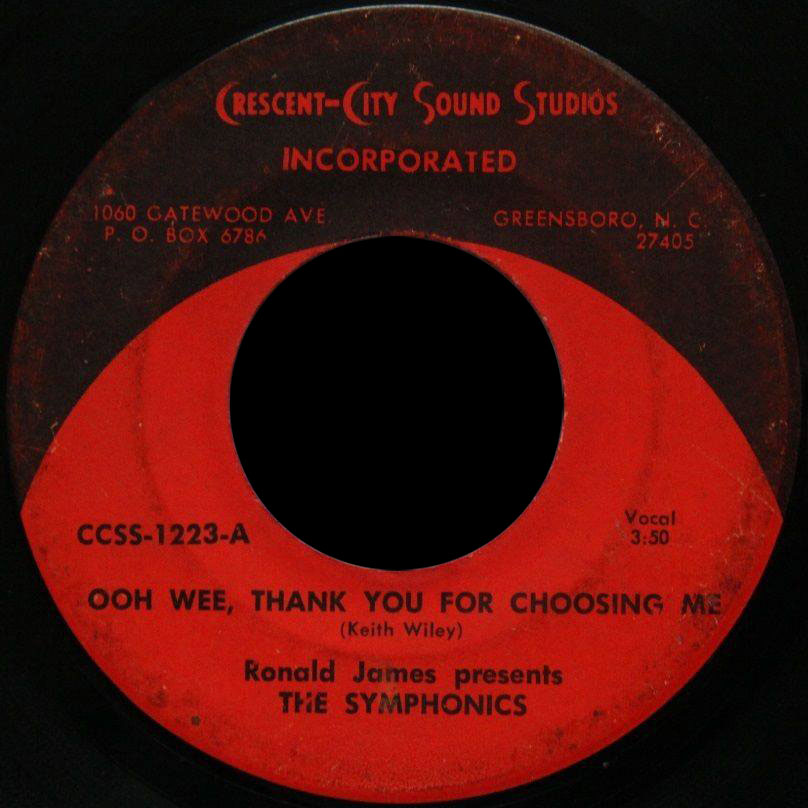
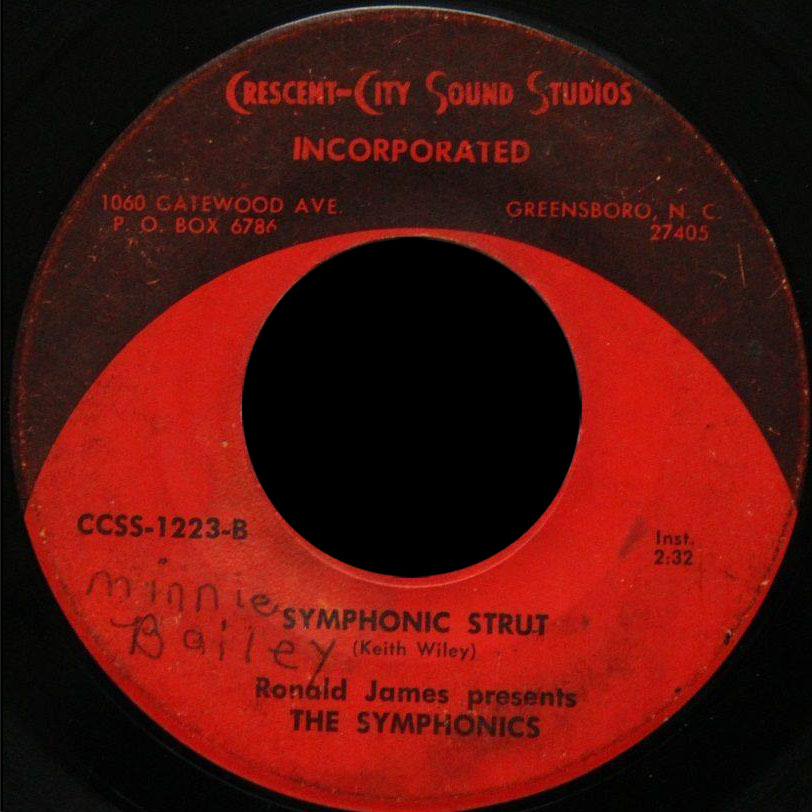
Equally rare is a 45 organist Keith Wiley wrote and recorded with the Symphonics in 1973 at Crescent City Sound Studios, Inc. in Greensboro, N.C. Crescent City was founded by Walt Copeland, who managed the studio and doubled as chief engineer. “Ooh Wee, Thank You for Choosing Me” (Crescent City Sound Studios – CCCSS 1223) is a soulful ballad featuring Ronald James and two male vocalists on a double lead falsetto reminiscent of the Delfonics and the Stylistics. The instrumental flip side, “Symphonic Strut,” includes some funky organ work from Wiley and James solid drumming.

The Symphonics were based in Yanceyville, N.C. and leader Ronald James played drums. Clark describes them as “a rival band,” that included a female bass player whose brother was also in the group. According to Clark, James later transferred to G.W. High School and went on to attend the Boston Conservatory of Music before returning to the area.

The record went nowhere but garnered local airplay on WILA, Danville’s R&B radio station. It was also a favorite on the cafeteria juke box at John M. Langston Junior High School, where Artistics’ manager Robert Hickson worked his day job as band director.

Most members of the Artistics were in the Class of 1973 and pursued other interests after high school. Wiley, Brooks, Price and McCoy all went on to college, while Oliver joined the Marines. Not ready to throw in the towel, Clark regrouped and enlisted brothers James and Grayling Covington on keyboards and bass. Grayling already knew the book, having followed the band to concerts and rehearsals. He also had a reputation as one of the finest bass players on the local scene. Joe Moore continued on guitar with Clark on drums and vocals.

The reformed band continued on the road but some of the members felt that a more “dynamic” name was needed. They decided on “Treachery.” Clark doesn’t recall the year Treachery called it quits but remembers the incident that led to their split. Treachery had landed a regular gig at a VFW Post in South Boston, Va., earning $900 a night. That was unheard of amount at the time and allowed the members to keep a little money and upgrade their equipment. All was well until the night a coat belonging to the wife of a prominent guest went missing. A girlfriend of a band member was accused of the theft. While she didn’t take the fur, the incident ended their residency and the band.

All of the members went on to successful careers, albeit not in the field of music.

Joe Moore, 2008

Joseph “Joe” Moore served for 20 years in the U.S. Navy. He lived in Norfolk and Hampton, Va., where he worked for the Navy Material Transportation Office until retirement in 1995. While living in the Tidewater area, Joe continued his musical indulgence. He organized gospel music groups, played guitar for Queen Street Baptist Church in Hampton and New Beech Grove Baptist Church in Newport News, Va. Moore returned to Danville and became a music instructor, giving lessons to young aspiring guitarists. He would sometimes play guitar during morning services at Pleasant Chapel Baptist Church in Sutherlin, Va. Moore died on Jan. 30, 2011.

Artistics reunion at Langston School, L-R: Carl Fitzgerald, unknown, Marvin Warner, Joe Moore.

Brothers Keith and Dale M. Wiley both enjoyed successful careers in separate fields. Dr. Keith B. Wiley became a minister and served as pastor of several churches before his death in November 2003 in Wilmington, Va. His brother, Dale, finished law school and returned to his hometown, where he worked as a defense attorney before being named Juvenile and Domestic Relations Court judge for the city of Danville. He is currently the presiding judge over the 22nd Judicial Circuit of Virginia.

Jonathan “J.D.” Oliver joined the Marines and attended Coastal Carolina Community College in Jacksonville. He now lives in Lexington Park, Maryland, where he works for Wyle Laboratories. John Clark is retired but continues to work driving a Yellow Cab. He and his wife have a home in Danville. Grayling Covington still lives in Danville, while his brother, James, moved to Burlington, N.C. At last report, Norman Brooks was living in Richmond, Va.

A high school reunion at Langston in 2015 brought some of the surviving members together again, 45 years after their first practice. Classmates still remembered the group and the music they created. That doesn’t surprise Clark, who says the members “were all perfectionists” and played for an audience who expected their music to sound “just like the record.” They succeeded.

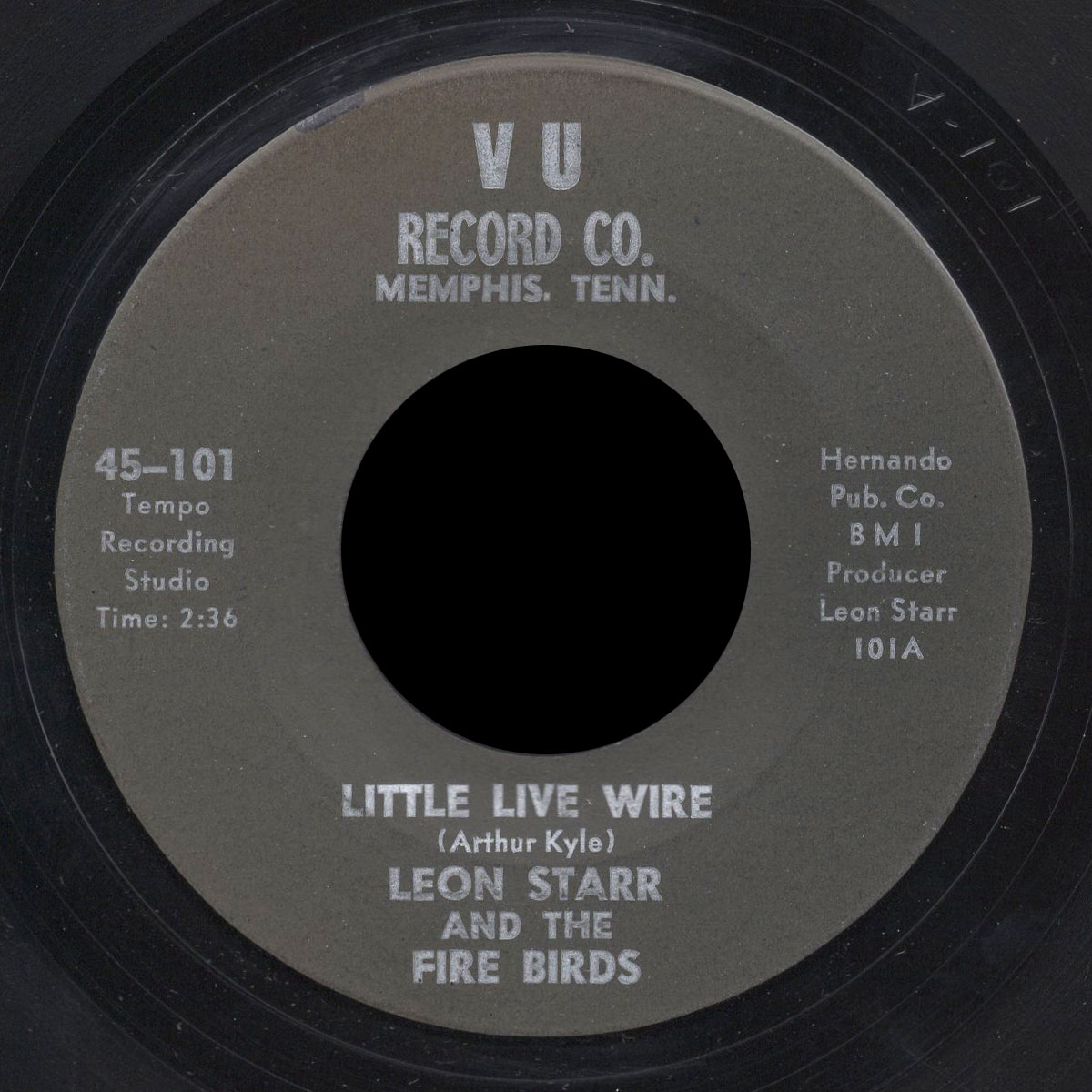
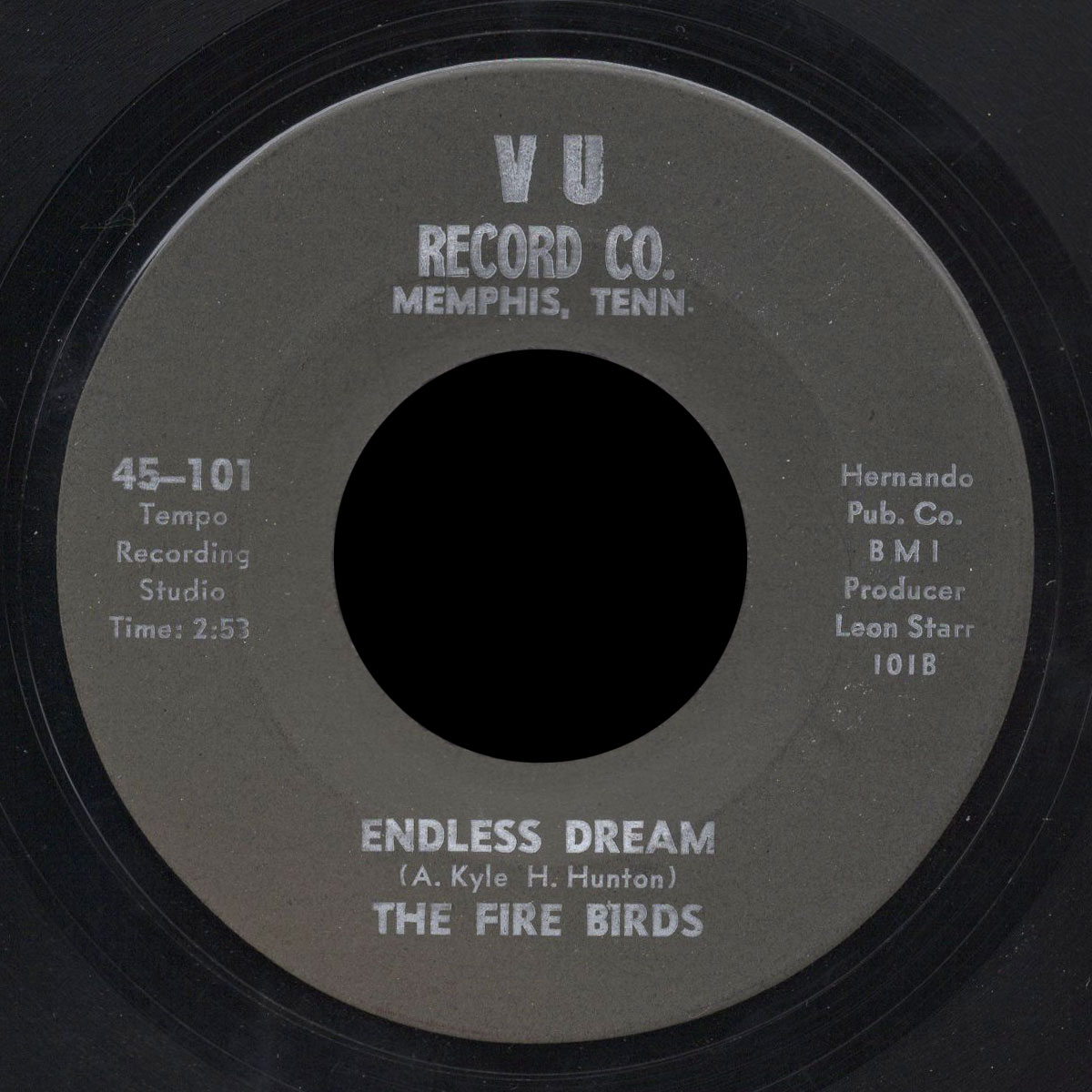
Leon Starr and the Fire Birds “Little Live Wire”

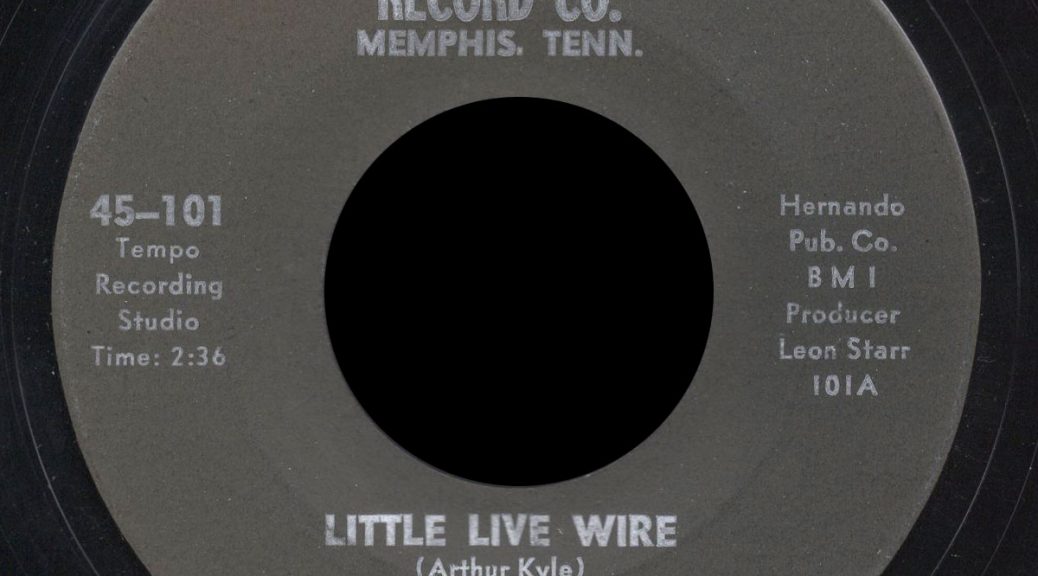
Leon Starr and the Fire Birds VU Recording 45 Little Live Wire

Leon Starr was a Memphis, Tennessee musician whose roots go back to rockabilly days. In 1966 he had a country single “Honey Chile”, written by G. Huskey (Bill Huskey) and Johnny Surber, b/w “Have I Wasted My Time” by Arthur Kyle and Richard Needham, released on Millionaire Record Co.

His next single may have been this one, Leon Starr and the Fire Birds “Little Live Wire”, which gets a good sound by combining fuzz guitar with organ and a throbbing beat. I’d like to know which musicians were the Fire Birds.

Leon Starr and the Fire Birds VU Recording 45 Endless DreamReleased on VU Record Co. 45-101, and recorded at Tempo Recording Studio in Memphis, as were all the singles on the VU label, I believe. Leon Starr produced both sides. VU Record Co. had at least five other singles, country and spiritual, by George Wilhite, Don Miller, Jerry Gillentine, and the Mellorettes.

Arthur Kyle wrote “Little Live Wire” (copyright registered in April, 1968) and co-wrote “Endless Dream” with Herchell Hunton (registered May, 1967).
Hernando Pub. Co. published both songs.

In 1970, Leon Starr also wrote a couple other songs with Arthur Kyle, “Go Ahead, Laugh” (with Marvin Griffith) and “Imitation of You”. I’m not sure if these were recorded.

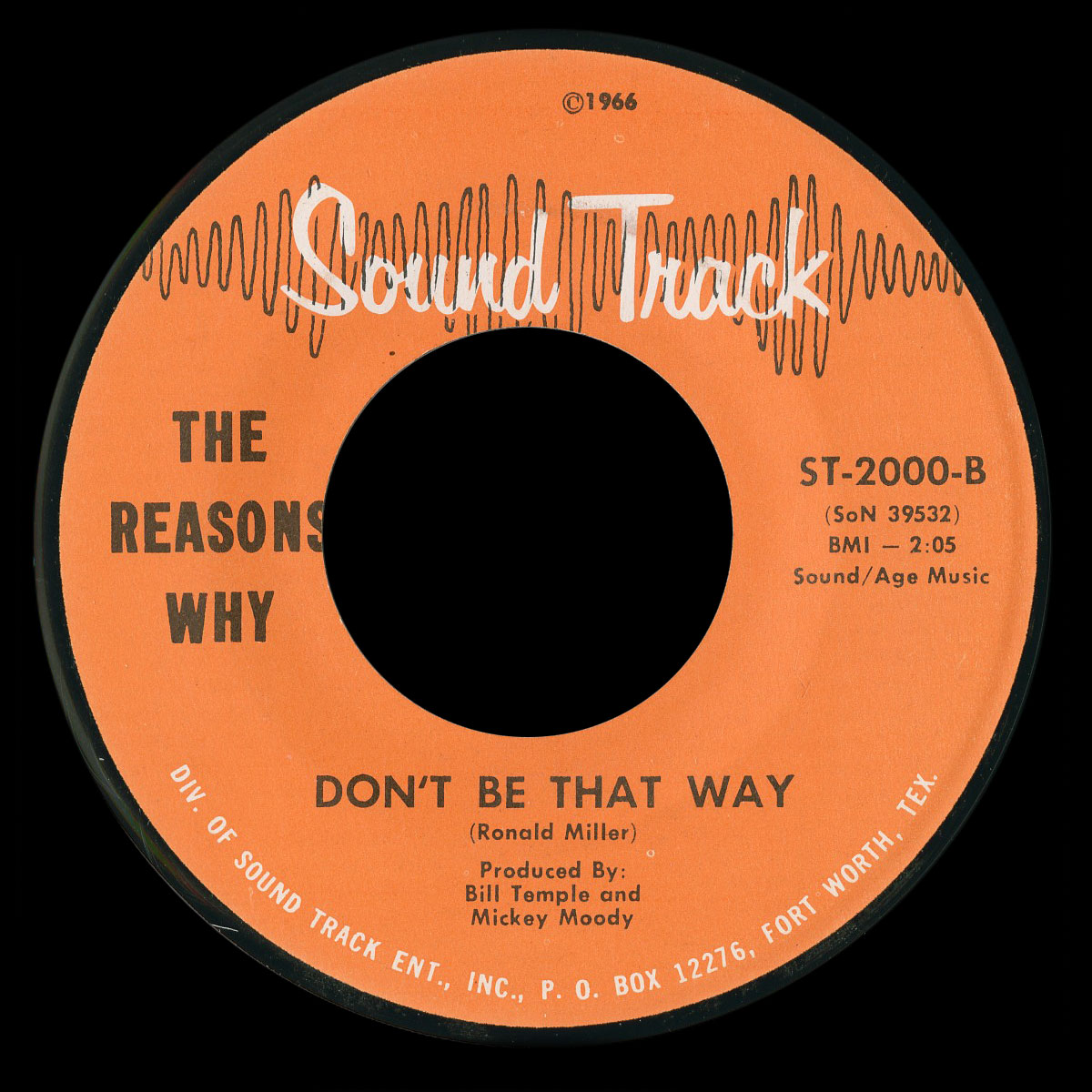
The Reasons Why “Don’t Be That Way” on Sound Track

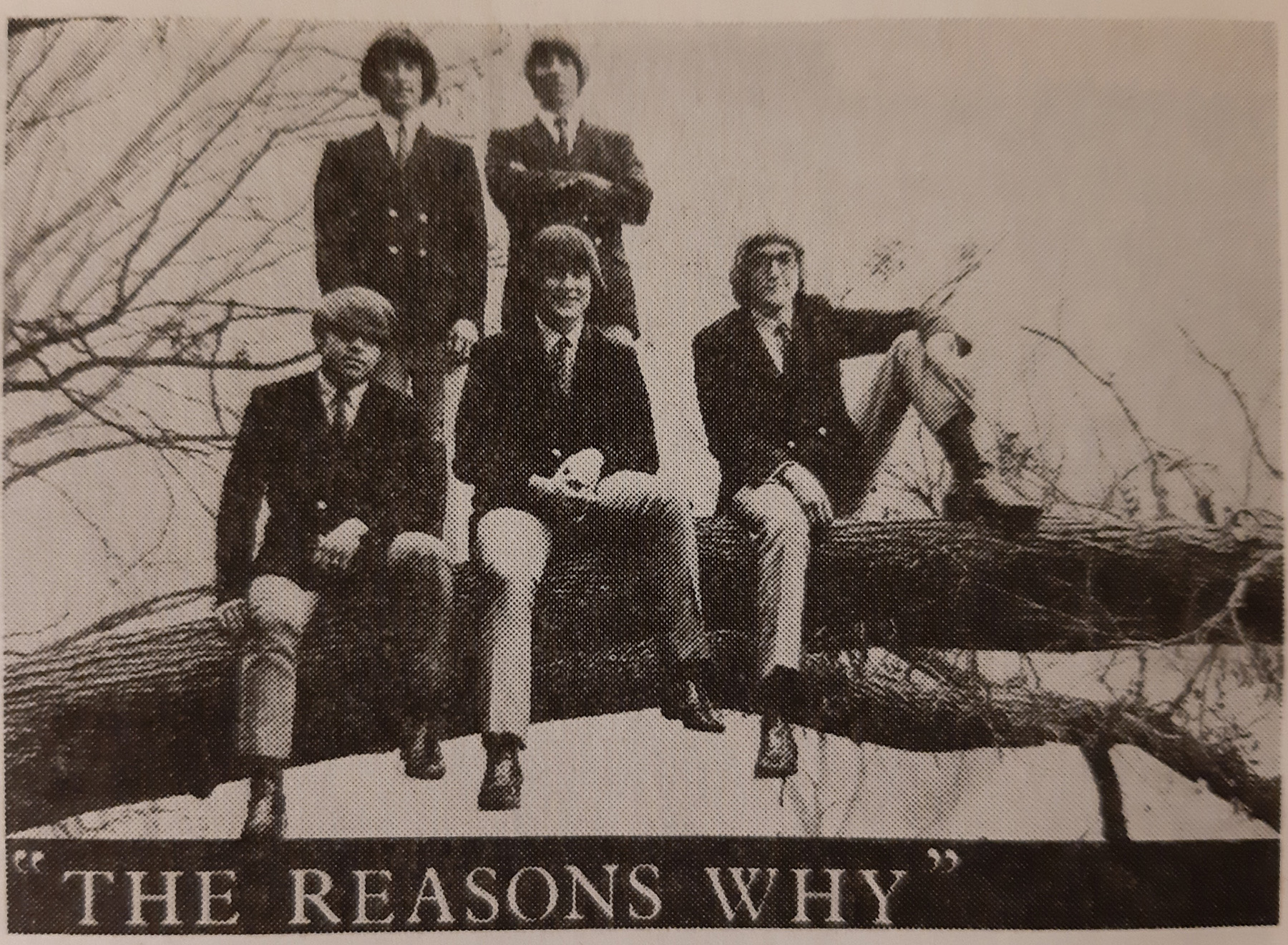
Reasons Why Waco-news-citizen-sep-03-1966-p-6
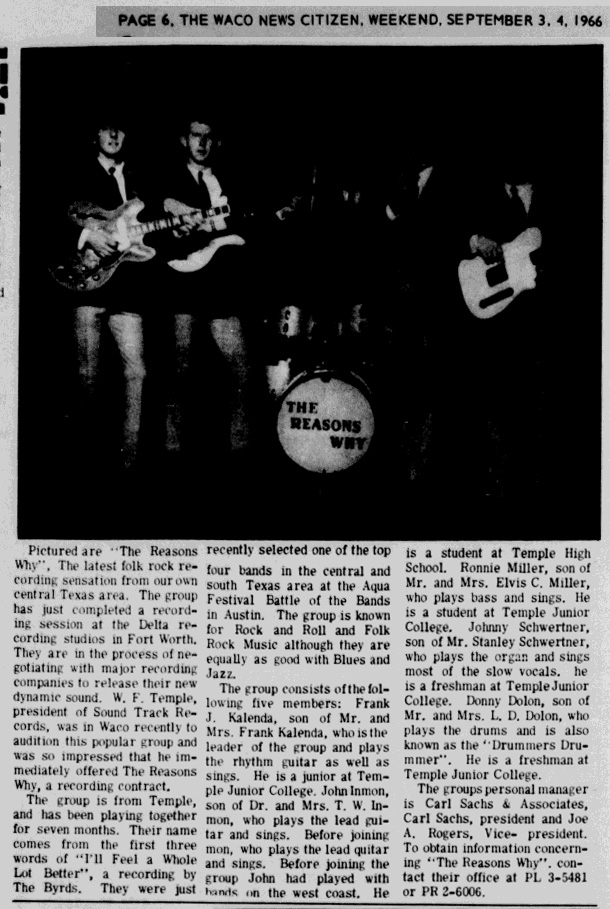
The Reasons Why in the Waco News-Citizen, September 3, 1966. Anyone have a better photo of the group?

Reasons Why Sound Track 45 Don't Be That WayThe Reasons Why cut one of the top Texas records in the ’60s, “Don’t Be That Way” on Sound Track ST-2000. I don’t own a copy, but I found this article on the group from the Waco, and since I don’t remember seeing this photo of the group before.

Members of the Reasons Why were:

Frank Kalenda – rhythm guitar and vocals
John Inmon – lead guitar and vocals
Johnny Schwertner – organ and vocals
Ronnie Miller – bass, vocals – replaced by Tommy Langford
Donny Dolon – drums and vocals

The article is very informative, noting “The group has just completed a session at the Delta recording studios in Fort Worth” [Delta Recording Center].

“W.F. Temple, president of Sound Track Records, was in Waco recently to audition this popular group and was so impressed that he immediately offered The Reasons Why, a recording contract.

The group is from Temple, and has been playing together for seven months. Their name comes from the first three words of “I’ll Feel a Whole Lot Better”, a recording by the Byrds.”

Most of the group attended Temple Junior College, except John Inmon: “Before joining the group John had played with bands on the west coast. He is a student at Temple High School.”

Carl Sachs managed the band and brought them to the Sound Track label. Bill Temple and Mickey Moody produced the single, released on Sound Track in late 1966 with a SoN 39531/2 mastering code.

“Melinda” was the A-side, written by Denis Jones who does not appear to have been a band member. Dennis Jones seems to have been a song-writer published through Sound-Age or Soundage, Bigtop and Le Bill Music. I suppose Bill Temple had publishing on “Melinda” and had the Reasons Why do the song. Luckily the Reasons Why were allowed to put their own song on the flip side.

Bassist and vocalist Ronald Miller wrote “Don’t Be That Way”. He seems to have left the group shortly after the single’s release, as most photos I’ve seen show Tommy Langford instead.

Top: Frank Kalenda, John Schwertner; bottom: Tom Langford, John Inmon, Donnie Dolan. Promo photo reproduced in Not Fade Away #3

Not Fade Away #3 had an interview with John Schwertner:

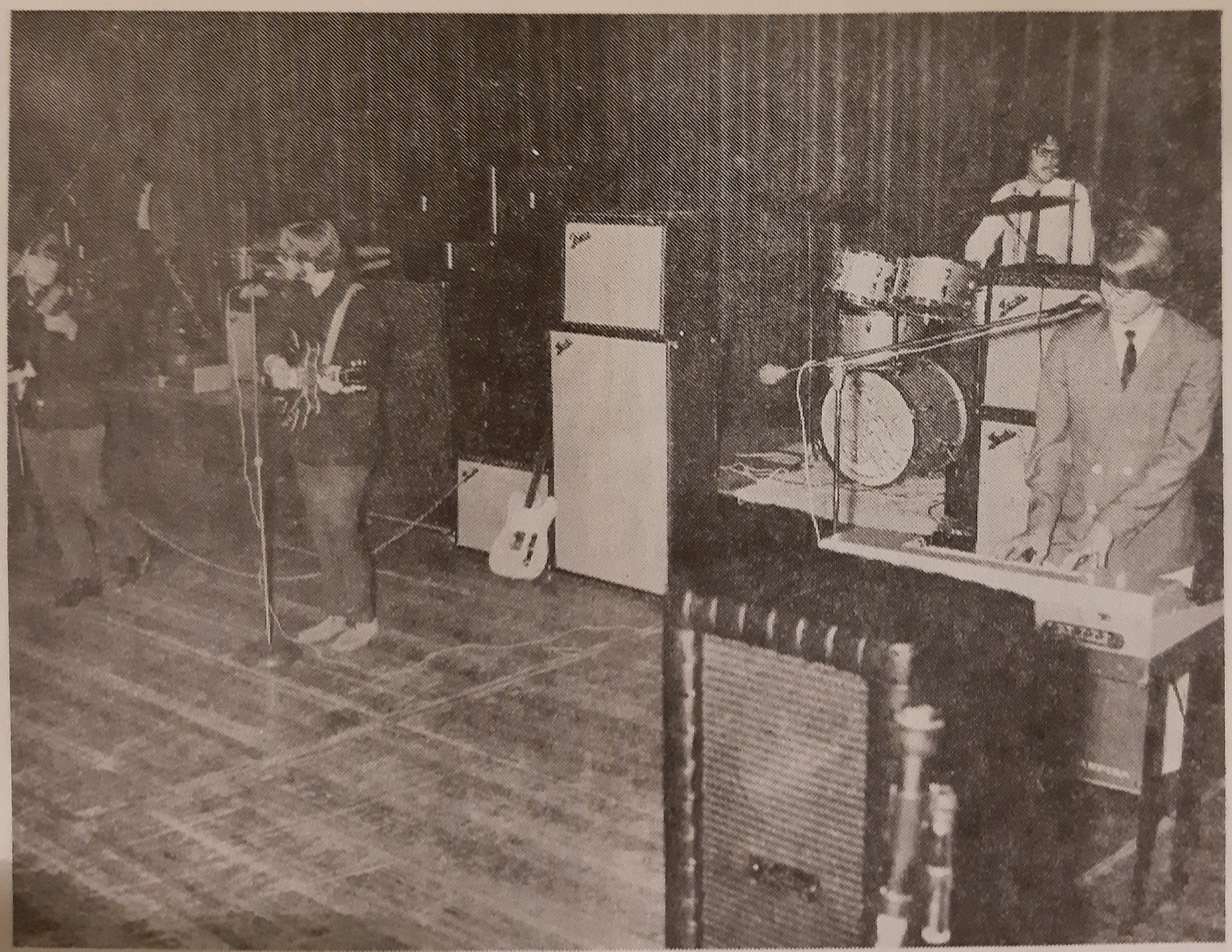
“The Reasons Why played … Fat City in Kilgore, Catacombs in Houston, LouAnn’s in Dallas, Pussy Cat a Go Go in San Antonio, and the New Orleans Club, Swingers a-Go-Go and Jade Room in Austin.”

John Schwertner is quoted:

The Beyersville SPJST was a great club, all the bands from Austin and Temple would play there: the Wig, Baby Cakes, Elevators … and all these kids from all the little towns in the area would pack the place.

John described the Baby Cakes:

We had always looked up to them ’cause they were the first band I remember to play English style rock and roll. A real scruffy looking band, sort of the Texas Rolling Stones I guess. They helped us get some bookings and they’d come to our shows and tell us how to improve our band, really helped us alot.

1967 recordings at Robin Hood Brian’s studio in Tyler have never been released.

In the fall of 1967 Frank Kalenda left the band and John Schwertner joined the Lavender Hill Express as vocalist. Other members of the Reasons Why changed their name to the Feast of Stephen. Not Fade Away states that others joined the South Canadian Overflow, a band I’ve found notices for as early as November, 1967.

Schwertner, Donnie Dolan and John Inmon would later form Plymouth Rock.

In the 1970s, Inmon joined the Lost Gonzo Band.

At the Austin Aqua Festival ’67 Battle of the Bands, from left: Tom Langford, John Inmon, Donnie Dolon and John Schwertner; photo reproduced in Not Fade Away #3

Sound/Age Music published both songs on their Sound Track single. The only other single I know of with Dennis Jones’ credit is the Industrial Image “Living in the Middle Ages” by D.A. Jones on Epic 5-10096, published by Bigtop Records & Soundage Music. The Industrial Age were from the Glen Rose, Texas area, and had been known as the Heartbeats. One member may have been Larry Witt.
Thank you to Matthew B. for helping me access the news clipping, and to Enrico Benassi for scans of the Not Fade Away article.