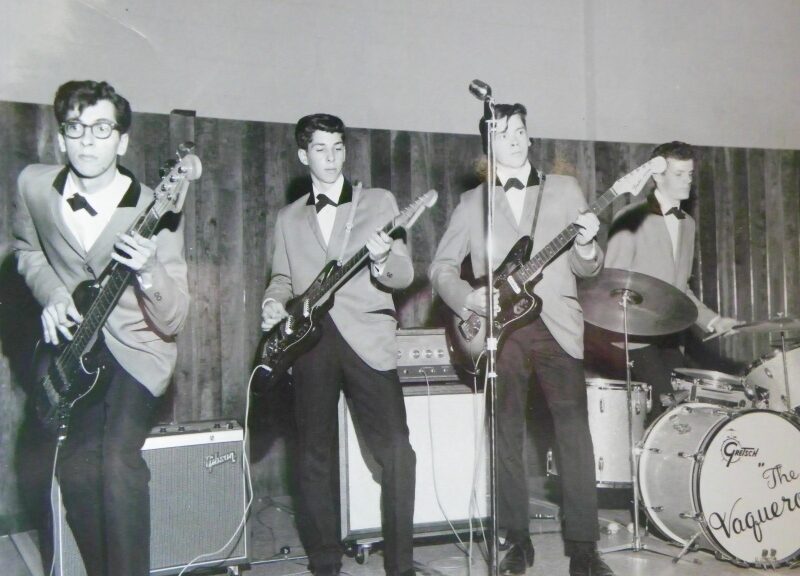
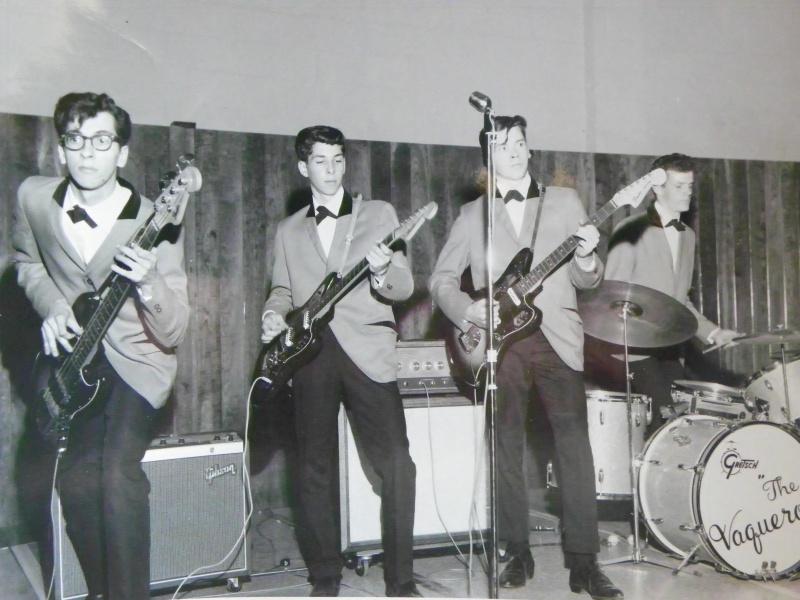
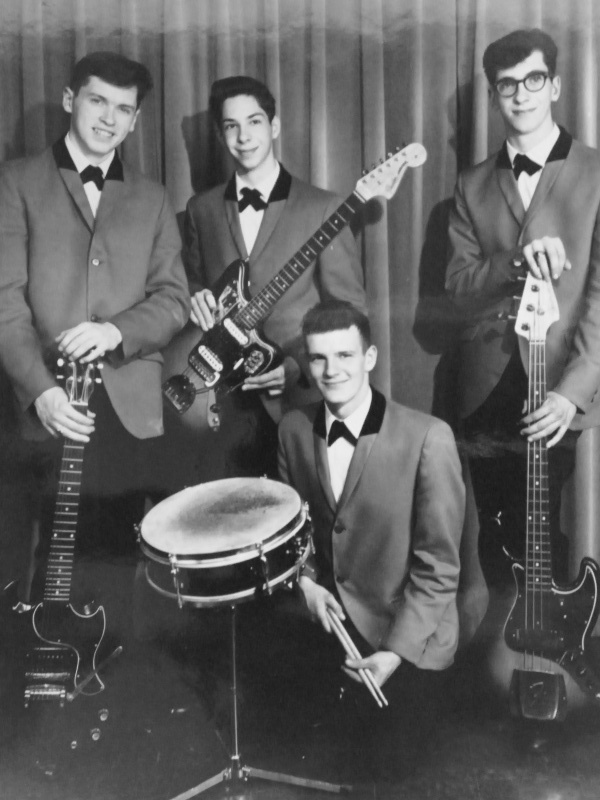
The Vaqueros, from left: Steve Corona, Tom Corona, Larry Weld and David Heath
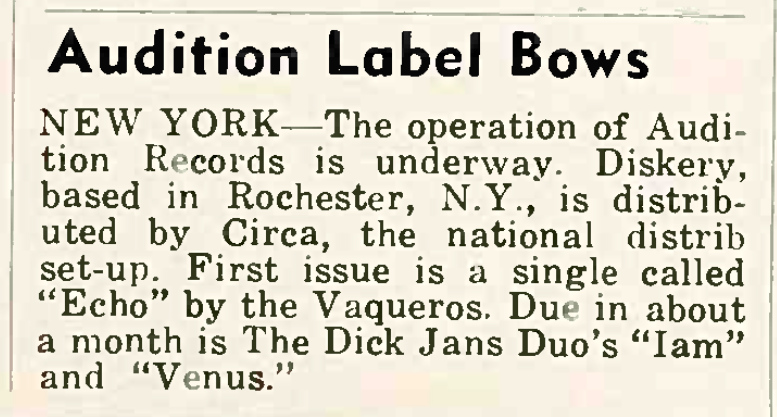
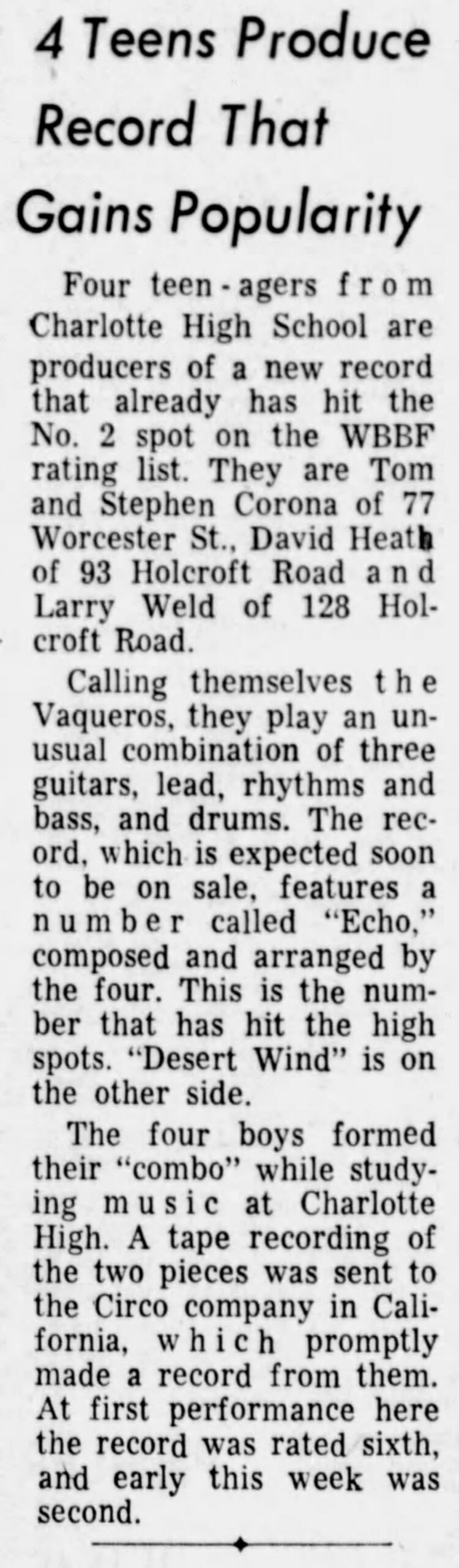
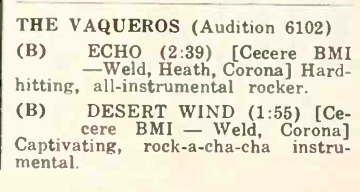
The Vaqueros had the first release on the Audition Recording label out of Rochester, New York, “Echo” / “Desert Wind”. It hit local charts in early June, 1964 and received a review in Cash Box on June 13, 1964.
Audition Label Bows with “Echo” by the Vaqueros, Cash Box, June 27, 1964
The group registered copyright for “Echo” on June 15, 1964, music by Larry Weld (Laurence R. Weld), David Heath & Tom Corona (Thomas J. Corona). I haven’t yet found a copyright registration for “Desert Wind”.
Band members were:
Larry Weld – lead guitar Tom Corona – rhythm guitar Steve Corona – bass David Heath – drums
The Vaqueros, from left: Larry Weld, Tom Corona, David Heath kneeling with drum sticks and Steve Corona with bassVaqueros in the Democrat And Chronicle, June 8, 1964
David Heath wrote a history of the band and provided the photos seen here.
In 1963 two 16 year old boys found an old guitar in the house attic in Rochester NY. Larry Weld, the older of the two, decided he would put strings on it and learn how to play. The other boy David Heath said he had a small pair of bongos, round metal tray mounted on a wood stand and a pair of drum sticks. Together they spent many hours trying to play songs they had heard on the radio.
One month later Larry had purchased his first electric guitar and Dave had purchased his first drum set and by this time both had learned several songs and were starting to make new songs of their own. Knowing they needed a rhythm background Dave and Larry asked another Charlotte High school student Tom Corona to join the group and decided on the name “The Vaqueros” for the band. About a month later we composed the song “Echo”. At this point we were starting to play at many parties and events.
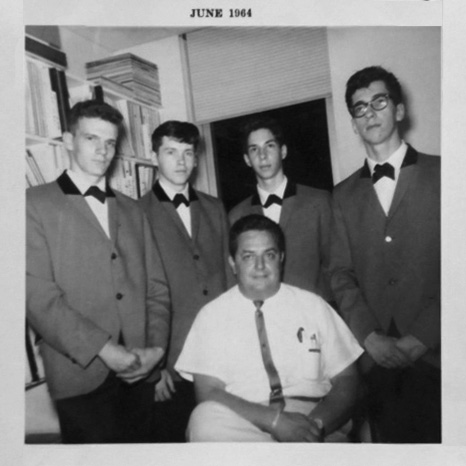
Record review in Cash Box, June 13, 1964Vaqueros with Al Cecere at WBBF Studio, June 25, 1964
Around 10 months after we first started playing we were asked to play for a Rochester business event and that was the first time we met Al Cecere who was just starting Audition Records. Al said he liked our band sound and said he would like us to make a record with his new company. We said we would and set up a date to record but we had two major problems to overcome.
1: We had no bass player in the band
2: We had no second side for the record
The first problem was resolved by asking Tom’s older brother Steve Corona to play bass. He agreed and he purchased a bass guitar. Then Tom and Larry showed him what notes to play so we could make the record. The second problem was resolved by rapidly (in one day) composing the song “Desert Wind”.
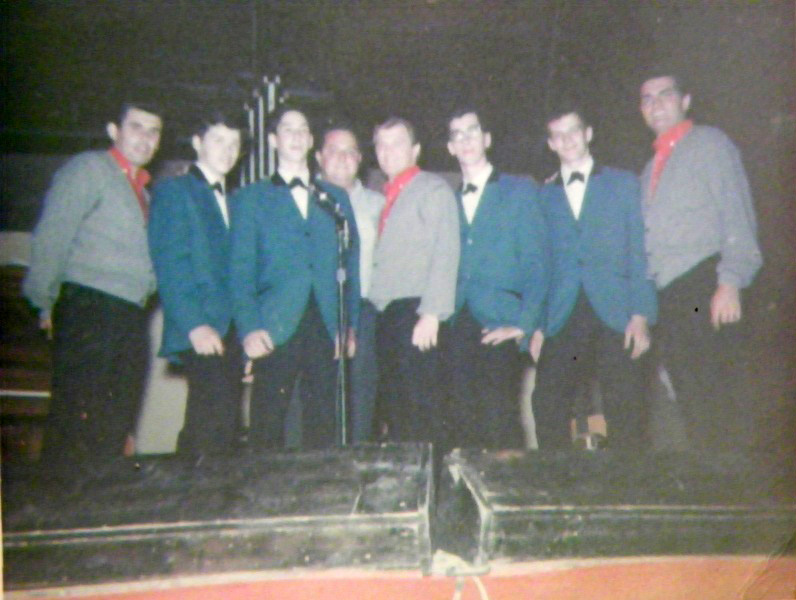
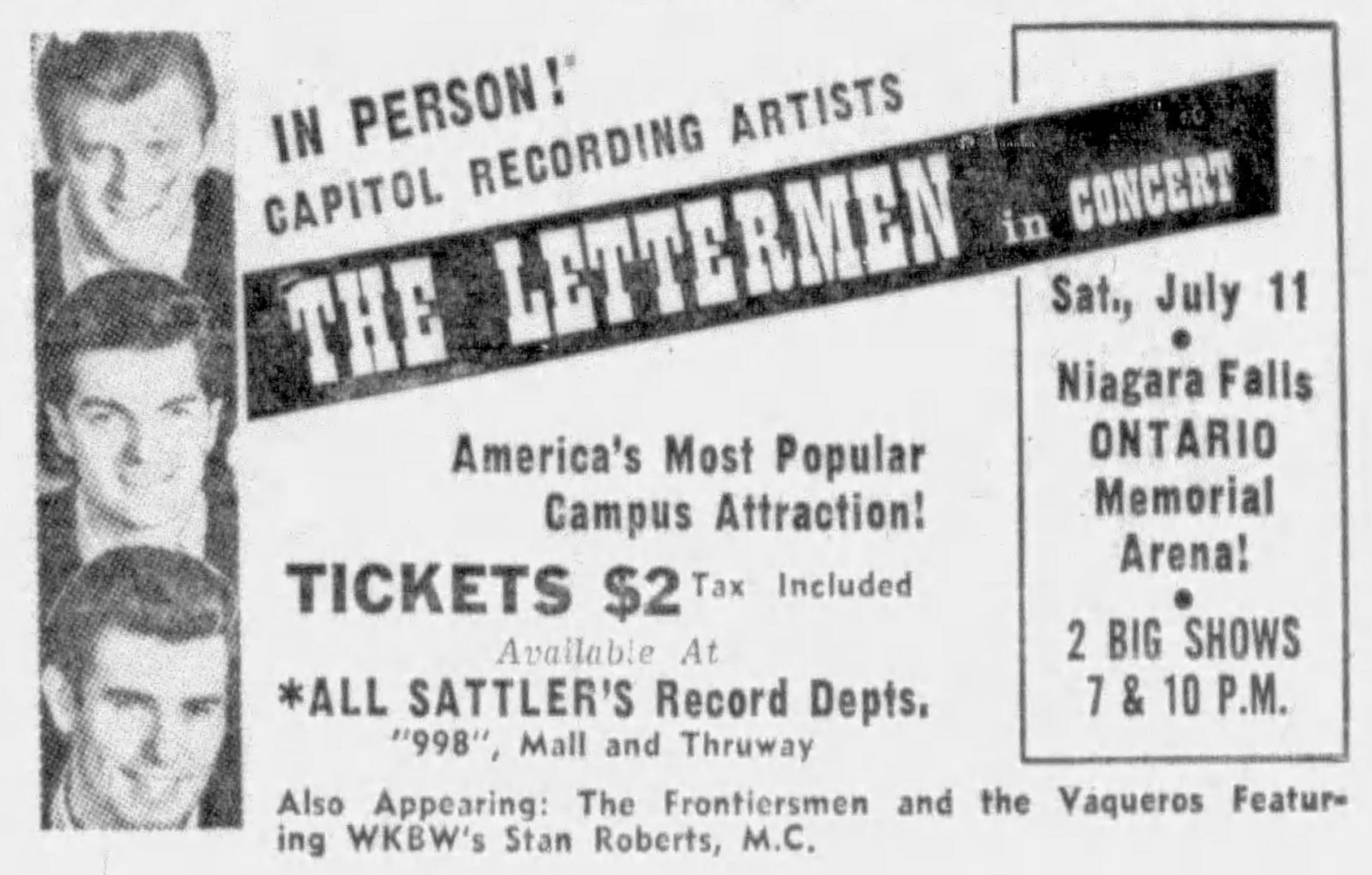
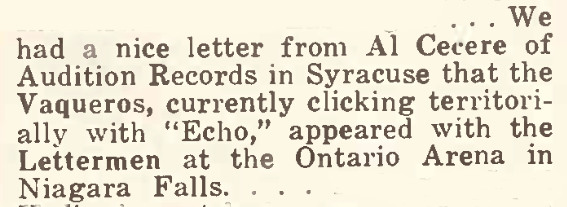
The Vaqueros (and Al Cecere in back) with the Letterman, NiagaraThe Vaqueros opened for the Lettermen at Niagara Falls Memorial Arena, July 11, 1964
The Vaqueros in Cash Box, July 18, 1964After the song was released and hit #1 on the Rochester and surrounding radio stations we had steady play dates in many venues. We had interviews on radio stations, band picture signing dates, photos and release info in Cashbox, and we were the opening act for The Lettermen in Niagara Falls Canada.Within the next month we wrote and (on acetate demo record) recorded our next two songs to be released “Whiplash” and “Our Lost Love”. Al Cecere was setting up for us to open for The Beach Boys.
Just as things were going very well for the Vaqueros the dark side of this business began to show its face. Al Cecere never informed the band of any record sales and stopped supporting us. He had moved on.
With communication with Al Cecere heading downhill, everything slowed and we were all around 18 years old at this point. Life took over and the band started to split. Larry, Dave and Steve went on to other Rochester bands and Tommy married and started a family. We never played together again but do remain friends. Tommy passed away in 2025.
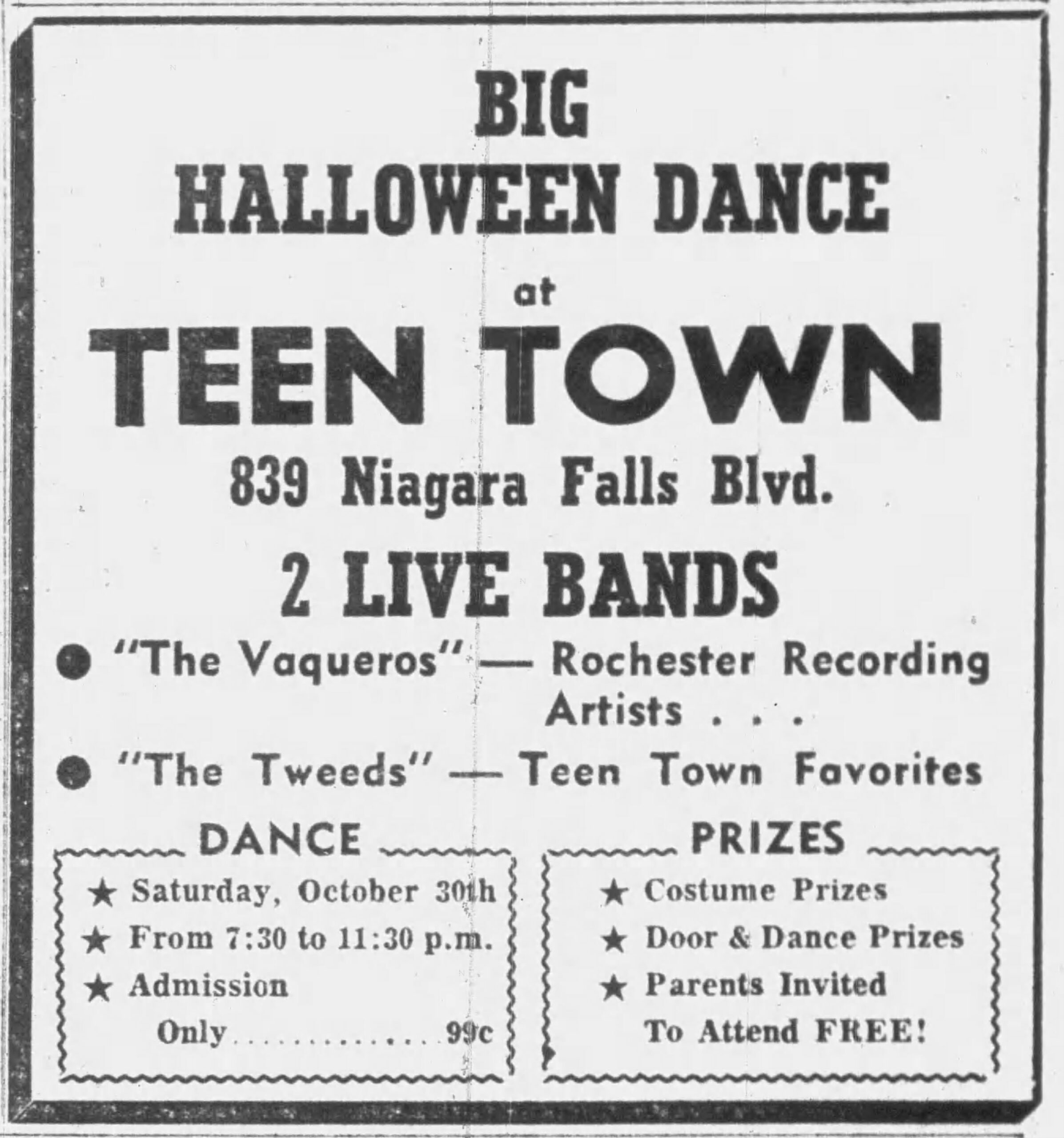
The Vaqueros and the Tweeds at Teen Town, Kenmore, NY, October 1965
The Vaqueros recorded other songs that went unreleased at the time that now exist on lacquer “acetate” or second-generation tape; a few very effective instrumentals that were ready for release and others that were in progress.
“Whiplash” has an excellent ‘wet’ surf sound I did not find a copyright registration for this one.
“Daybreak” is a spirited vamp with excellent lead guitar from Larry Weld and agile drum fills from David Heath. The group registered it as “Daybreaks” on February 25, 1965, with copyright to the full band including Steve Corona.
“Our Lost Love” is a slower ballad, registered on July 1, 1965 to the four members of the group.
Thank you to Dave Heath for his help with this article and for letting me hear the unreleased songs.
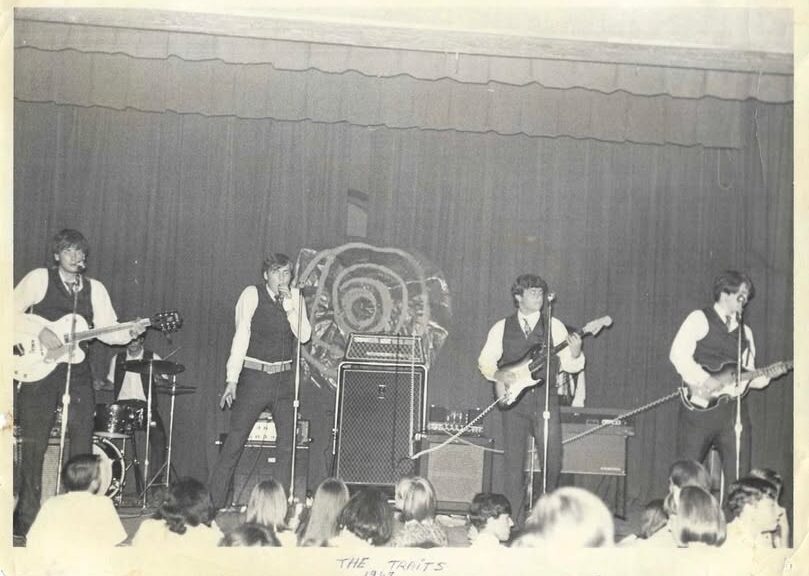
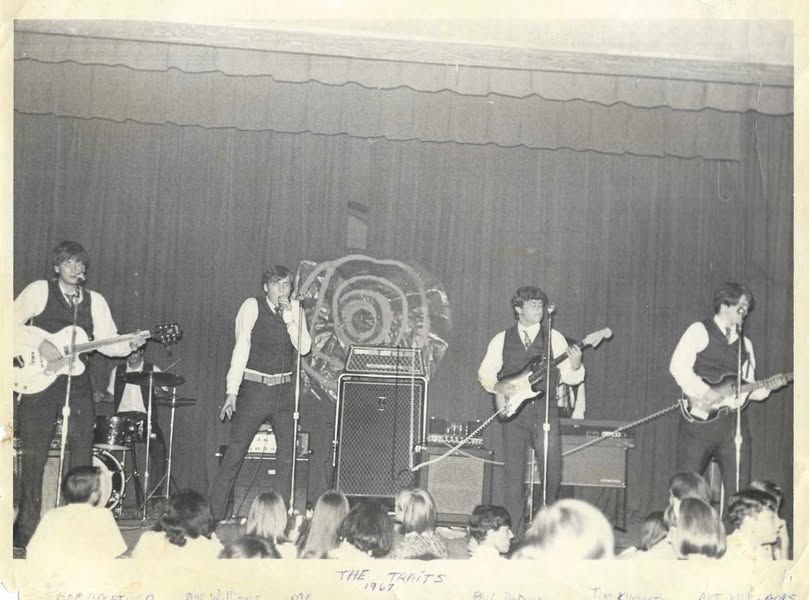
The Traits, 1967, from left: Bob Creaturo, Bobby Williams (on drums), Mike Carroll, Phil Daddona, Jim Klieforth (on keyboard, obscured) and Artie Williams. Photo from Mike Carroll, courtesy of his family.
I corresponded with Jim Klieforth of the Traits in 2009, about a year after writing about them in some detail in regard to the Ren-Vell Records Battle of the Bands LP. Below is our conversation from that time.
Jime Klieforth: My late brother [Charles Klieforth] was a bit of a wheeler-dealer who wasn’t musical but wanted to be in the rock business in some capacity, nurturing a fantasy of being an impresario. I’d been playing guitar and keyboards for a couple of years and our family home had an empty basement that was suitable for a group to rehearse in, so he sweet-talked me and the best musician-singers he knew into forming a group with him as manager. I’d never met any of these guys but was very impressed with the line-up’s talent and professionalism.
Back then, a group needed to have a couple of hours of material well rehearsed for public performances and we had enough musical common ground to pull that together within two weeks. My brother Chuck and his assistant, Don Reid, started aggressively pursuing work for the band and getting us publicity. Almost overnight, we were playing every local venue and from then on out, our rehearsals were jammed with our local contemporaries (mostly schoolgirls) eager to monitor our development. It was an odd and unexpected social change for all of us.
I wish I could say that we were friendly with other bands at that time but the truth is that we saw all of them as competition that needed to be vanquished. The Orphans, for example, who didn’t shine on the Renvell record, turned into a force to be reckoned with when Bobby Mayo (later of Peter Frampton fame) joined up.
We’d had a real advantage by starting out with a good rhythm section and an extraordinary guitarist (Dom Chicerchia, who left the band just before the Ted Mack show we did) but our competitors began acquiring skills at a pace that caused us to get very serious about playing well and refining all aspects of our performance. In an unfortunate reversal of what usually happens, the only recordings of the band were from very early on, before we really developed musically.
I was born in White Plains. Jimmy Carpenito of the Mystics told me Renvell’s studio was next to Gun Town on Central Ave, a store I vaguely remember from my childhood. Hard to believe there was a recording studio on Central Ave! I’m in Brooklyn, now, but my family’s still in White Plains and Yonkers.
As I recall it, Renvell was a second floor walkup, a big room that struck me, even then, as being quite low budget, a shoestring operation with cheap and/or antique equipment. Given how few records carry the Renvell label, I have to assume that most of their business was geared to commercial jingles for local businesses and radio play. I ran into the guy who ran it (I believe his name was Joe Renda) years later, when he owned Northlake Studios in White Plains.
I reminded him of the album and told him I’d been on it and he replied with a story that I thought at the time was an overblown fabrication. According to him, a couple of big DJ’s in England had fallen in love with the Battle of The Bands album and by repeatedly featuring it, had cultivated the development of the garage band sound there, setting the stage for punk. As he told it, the album was selling for $200.00 a pop there (in 1980 dollars) and “High On a Cloud” had received extensive airplay. It turned out that he’d been telling the truth, and the song became known well enough to end up being covered by the Pandoras. Since then it has been put on more compilations than I’ve been able to keep track of. In what is a common story about recordings of that era, no request for usage in these compilations has ever been requested from the band and no compensation has ever been forthcoming. Some of my former band mates are unhappy about this, but personally, I’m delighted that the recording has been archived and perpetuated as a minor archetype of the true garage band sound.
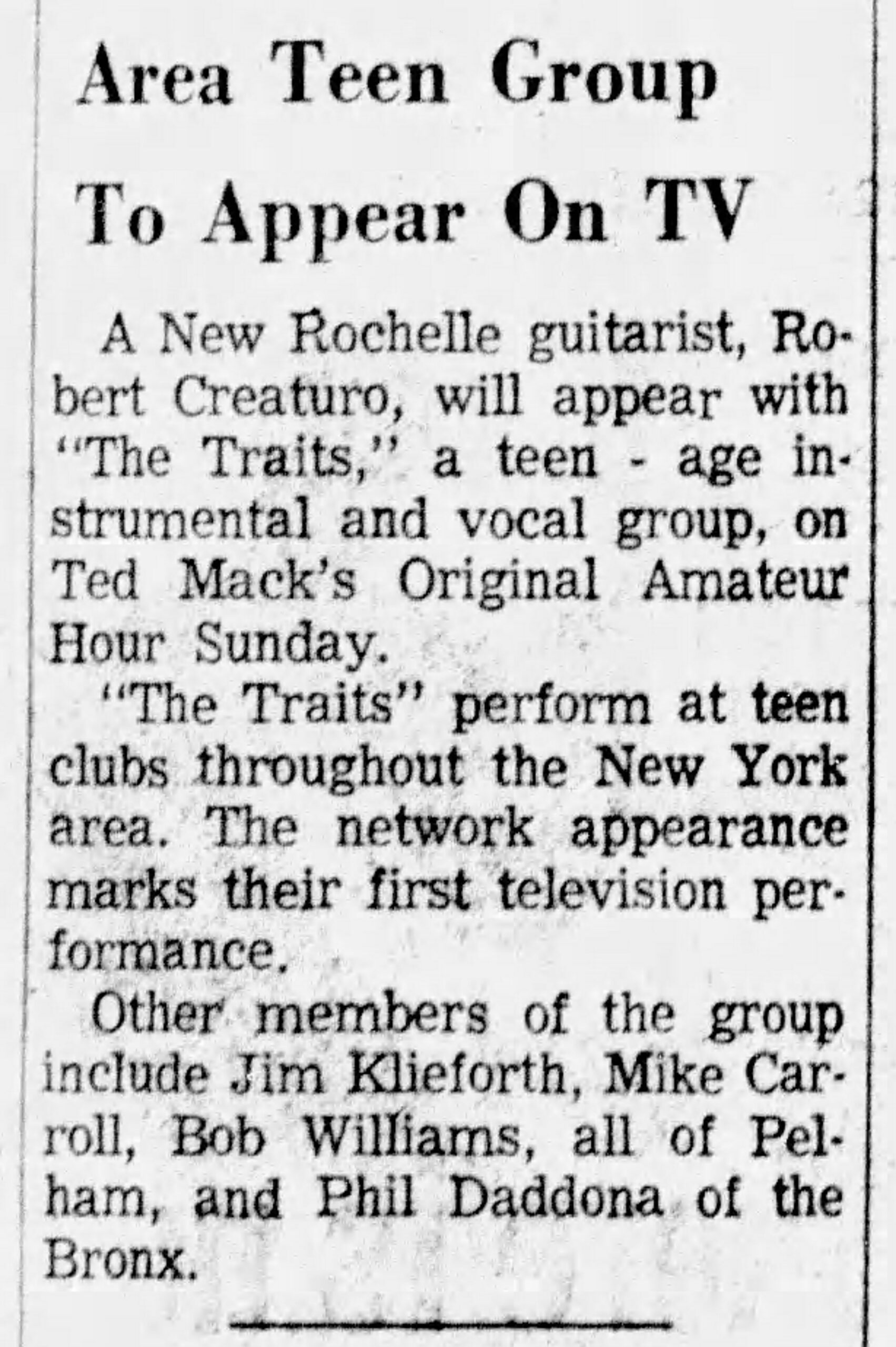
Traits to appear on Ted Mack’s Amateur Hour on Sunday, September 17, 1967
Q. When Dom left the band, who replaced him for the Ted Mack show, playing guitar behind his neck on the film?
That was Phil Daddona, who had to attempt to learn Dom’s “behind the neck” trick very quickly. As you can see from the film, he wasn’t particularly adept at it, whereas Dom had been the pre-Hendrix master of it.
Jim Klieforth (2009)
The Traits on “High on a Cloud”:
Mike Carroll – lead vocals Dom Chicherchia – lead guitar Jim Klieforth – keyboard Bob “Creature” Creaturo – guitar Bobby Williams – drums Unidentified bass player
The Traits on Ted Mack (July 31, 1967, aired Sept. 17, 1967):
Mike Carroll – lead vocals Phil Daddona – lead guitar Jim Klieforth – keyboard Bob “Creature” Creaturo – guitar Bobby Williams – drums Artie Williams – bass
The band seems to have slowly split up, as Mike Carroll was drafted in ’68, but must have come back at some point to be the lead vocalist on the Nobody Loves the Hulk release, from 1969.
Bobby Williams reportedly died some years ago, details are unknown. Three other Traits members have passed: Bob Creaturo on September 12, 2014, Mike Carroll on March 15, 2018, and Dom Chicherchia on August 24, 2021.
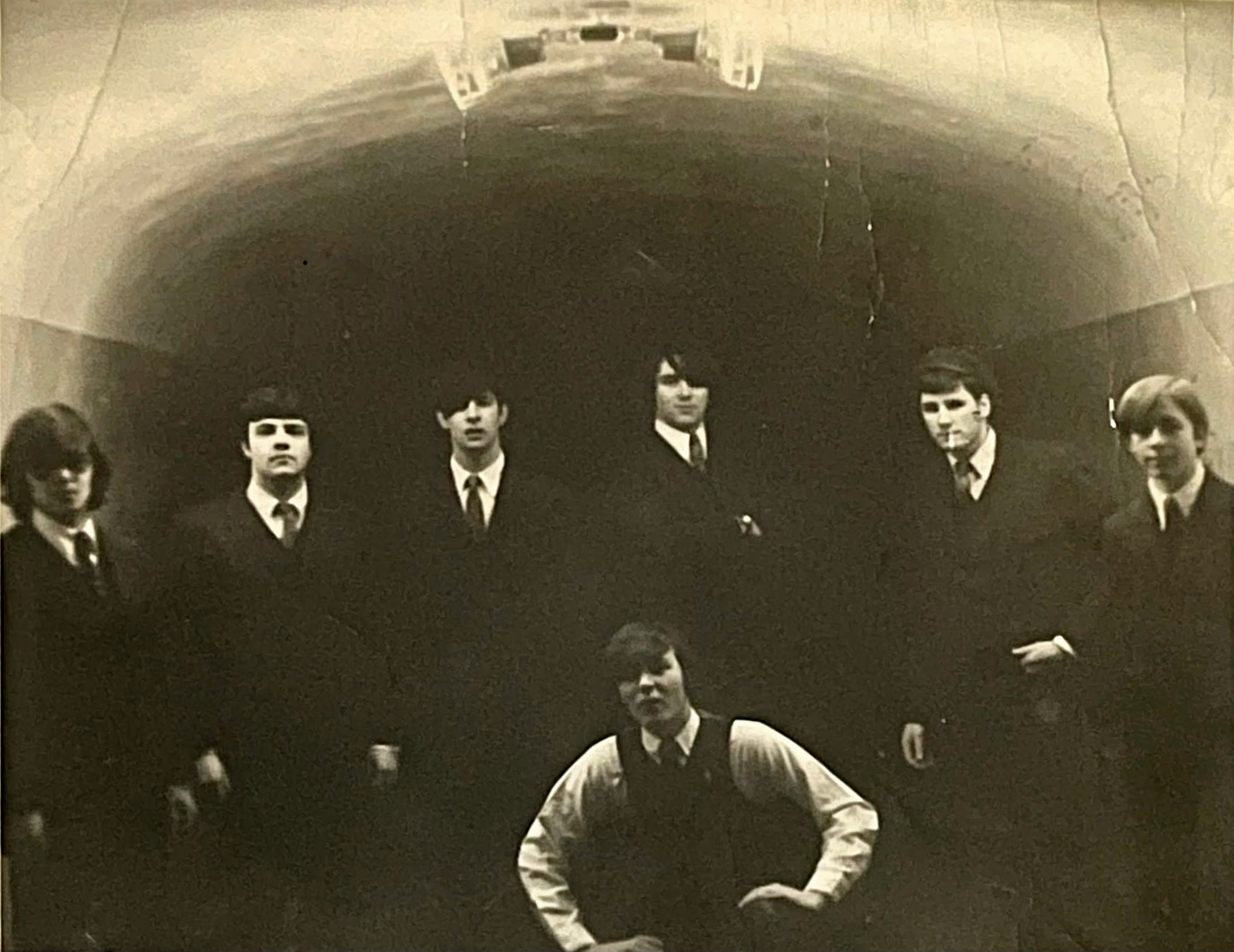
The Traits at the entrance to the Pelham Parkway IRT station (the 5 train)
More info can be found in the accompanying booklet to the Mojo-Bone release and Ugly Things #66.
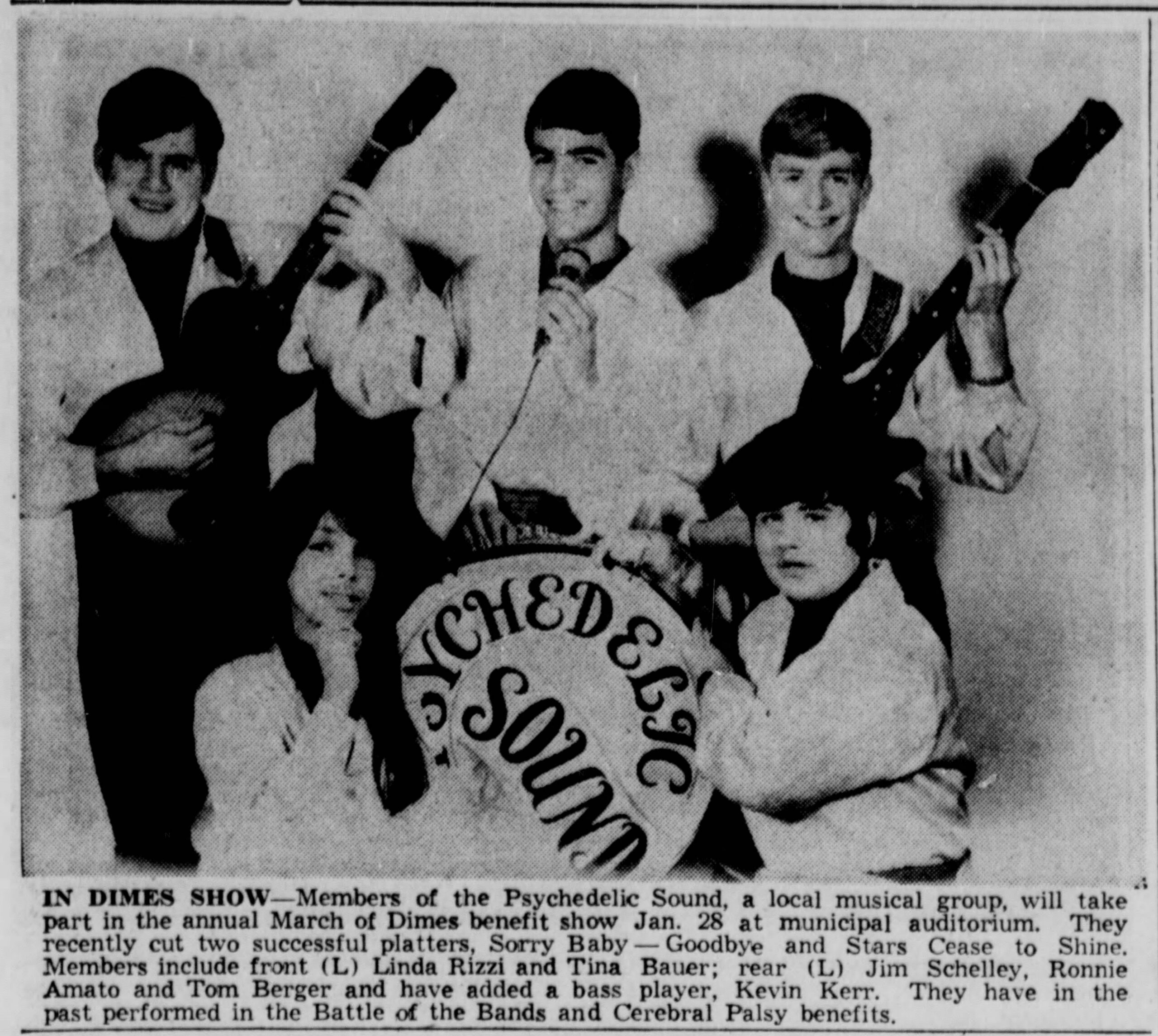
The Psychedelic Sound, January 1968, front left: Linda Lizzi and Tina Bauer, back from left: Jim Schelley, Ronnie Amato and Tom Berger. Not pictured: bassist Kevin Kerr.
The Psychedelic Sound were one of the bands who recorded at Earl Kennett’s studio in Kinderhook, New York.
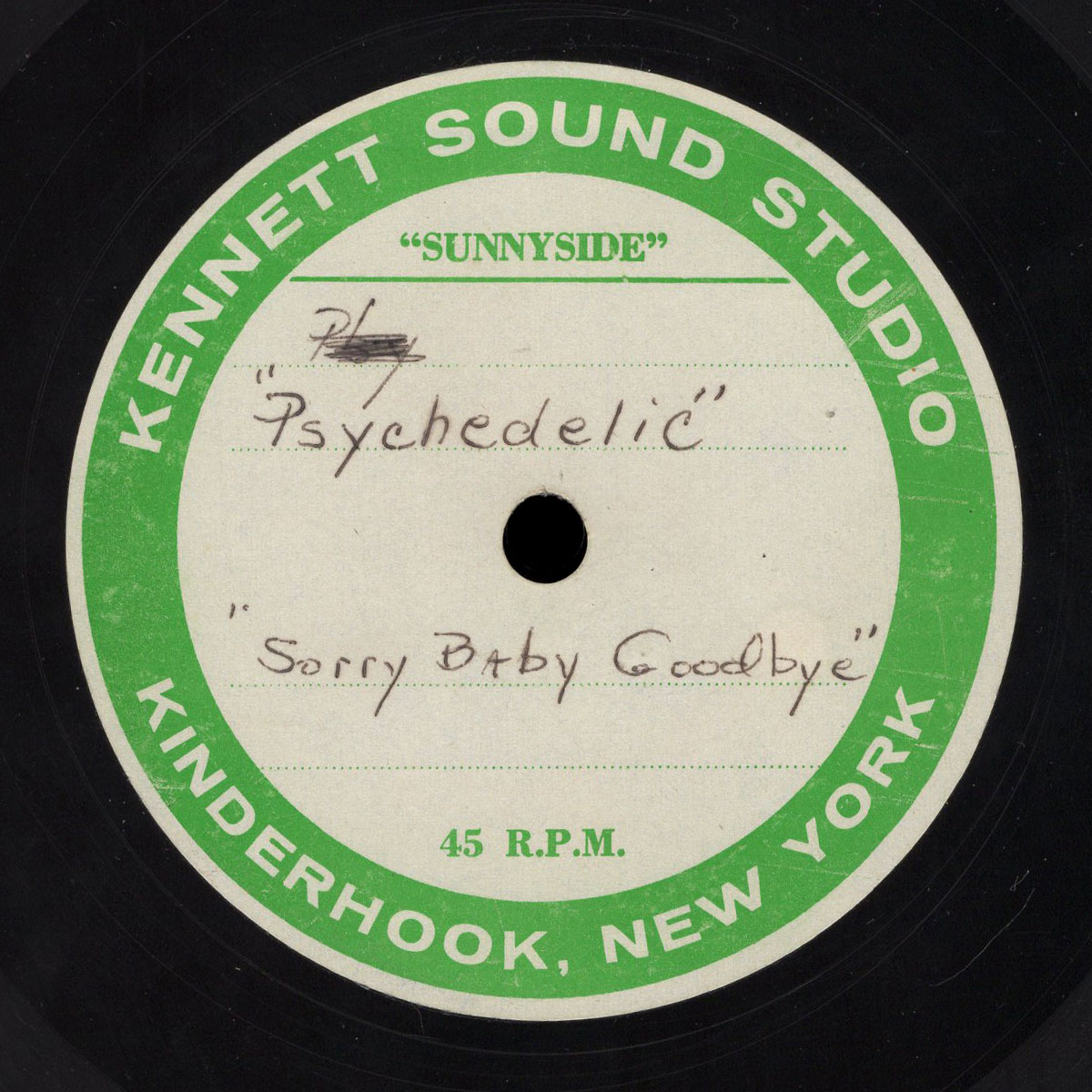
Lacquer with both songs of the Psychedelic Sound 45The band released two original songs, “Sorry Baby – Goodbye” / “Stars Cease to Shine” on Sunny-Side Records 0014, Sunnyside being the name of the Kennett family’s horse farm where the studio was located.
Members included:
Linda Rizzi – vocals Tina Bauer – drums Jim Schelley – guitar Ronnie Amato – vocals and keyboards(?) Tom Berger – guitar Kevin Kerr – bass
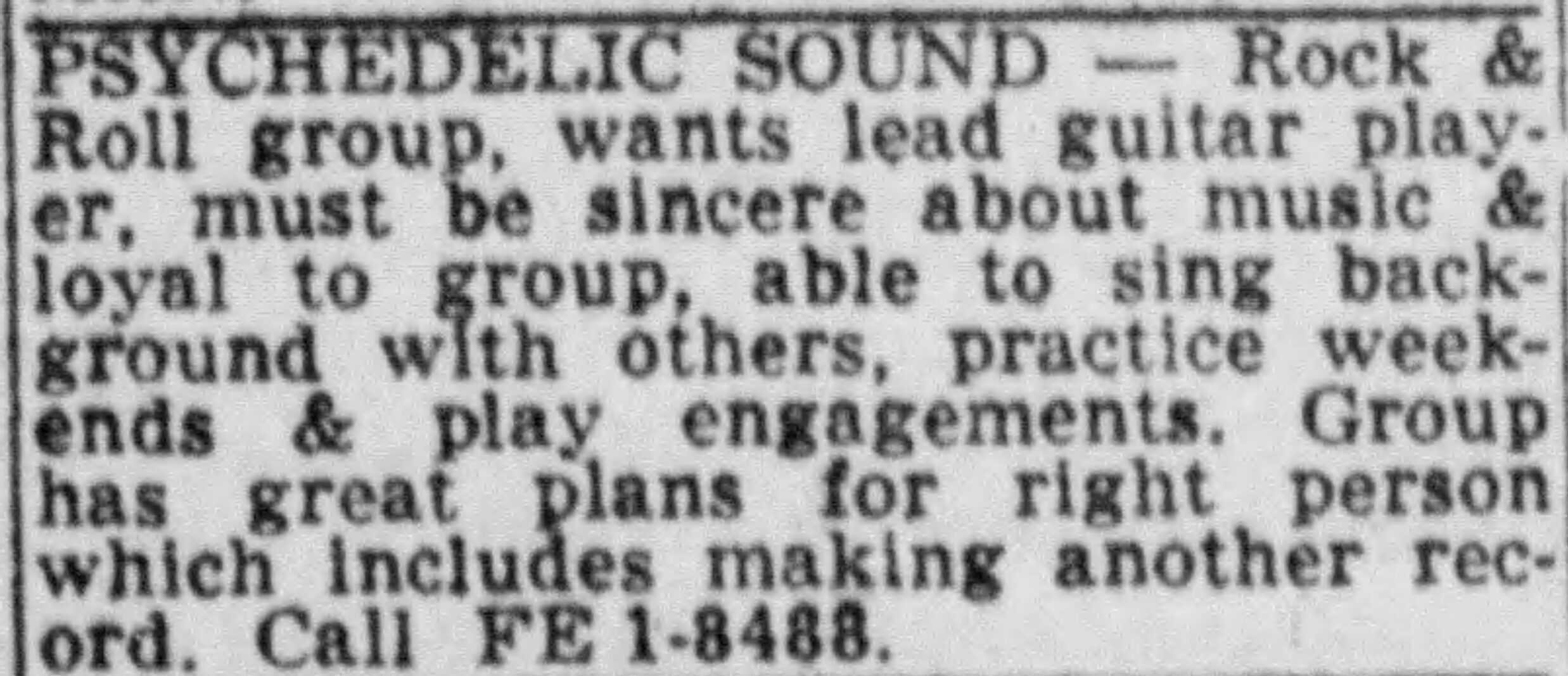
plans include making another recordThe Kingston Daily Freeman reported on January 22, 1968 that: “the Psychedelic Sound would take part in the annual March of Dimes benefit show Jan. 28 at municipal auditorium. They recently cut two successful platters, Sorry Baby – Goodbye and Stars Cease to Shine.”
A Daily Freeman notice from July, 1968 remarks:
The Psychedelic Sound, a five-piece musical group consisting of teenagers from Kingston and Lake Katrine, won the Battle of the Bands, sponsored by the Saugerties JayCees, which was held July 3 at Cantine Field.
The group has played for many benefits including the American Legion, Band Battles and Cerebral Palsy, and are under the direction of Mary Rizzi, Lake Katrine.
Mary Rizzi, presumably Linda’s mother, is also credited as producer of the 45, as M. Lizzi. The band probably broke up as Linda Rizzi and presumably others were attending college in the fall.
After the Psychedelic Sound, Kevin Kerr is mentioned as the bassist for the Contemporary Souls, in a photo that ran in the Daily Freeman showing guitarists Jim Kluepfel and Guy Walker with drummer Ted Blankschan for a YMCA/YWCA/Kingston Recreation dance on Dedrick Street in August, 1968.
Ronnie Amato played organ at the Cedar Grove Inn in Saugerties and Liguori’s Restaurant in Rosendale.
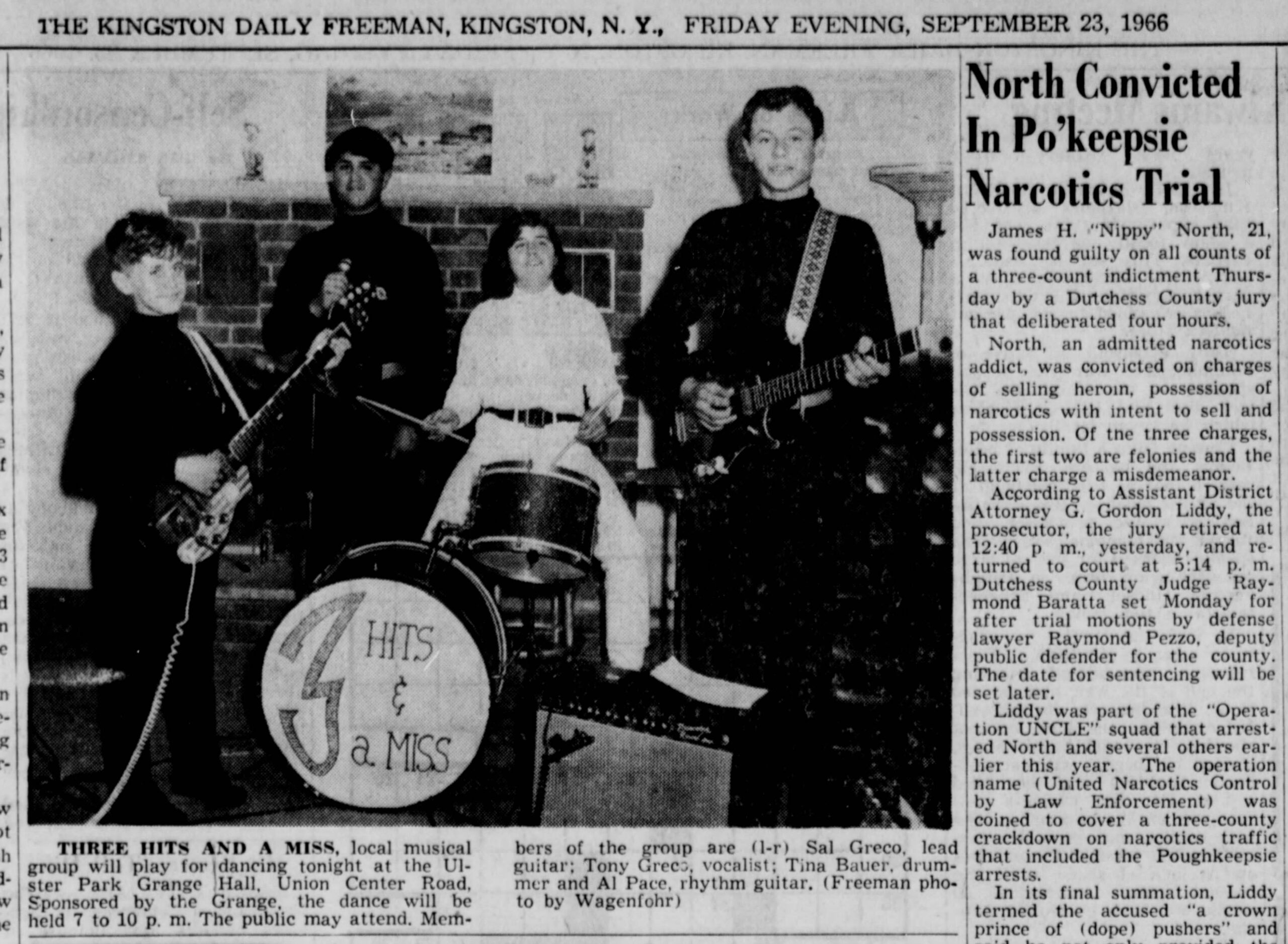
Tina Bauer had previously been in another local group called 3 Hits and a Miss with a photo that ran in the Daily Freeman in September, 1966 for a dance at Ulster Park Grange Hall.
3 Hits And A Miss, from left: Sal Greco, lead guitar; Tony Greco, vocalist, Tina Bauer, drummer and Al Pace, rhythm guitar
Thank you to Achille Brunet for tracking down the news clips seen here. Achille has his own site, Strange Lights to cover other bands of this period.
There used to be a dozen such blogs and sites going to cover ’60s ‘garage’ music, but the number of active ones has dwindled in recent years. I hope more start up, because there are too many bands from this era whose history is still undocumented.
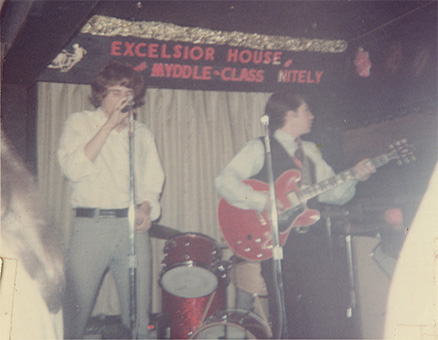
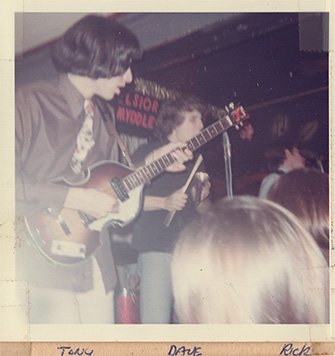
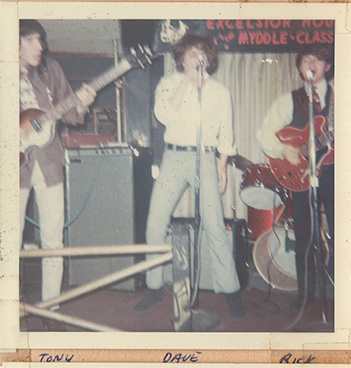
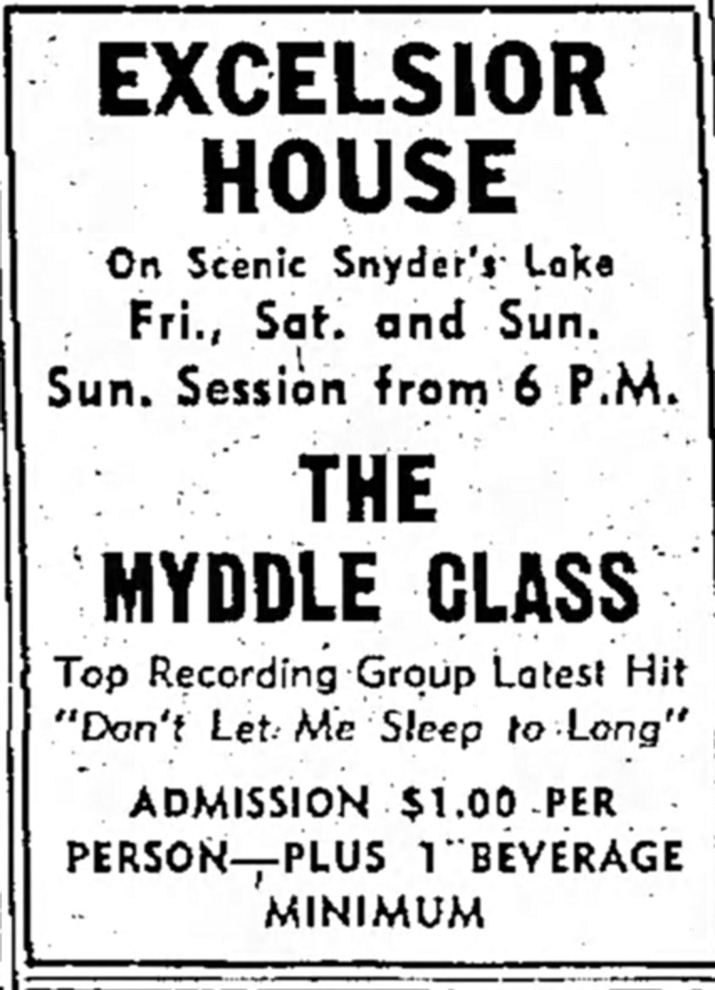
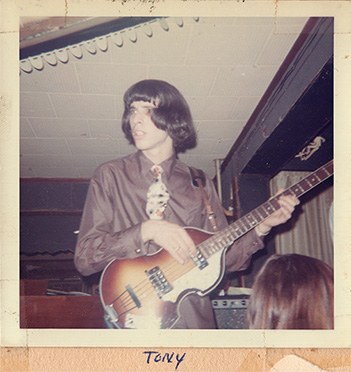
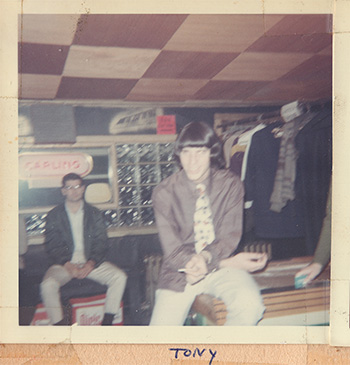
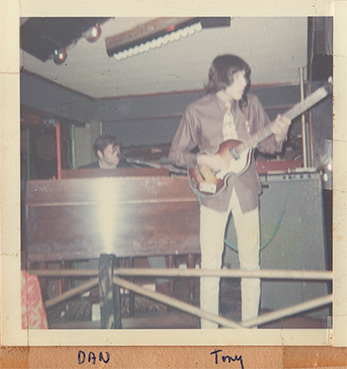
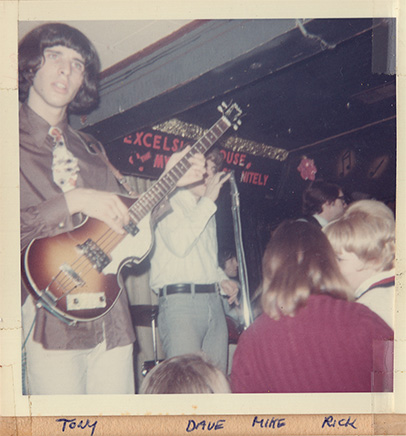
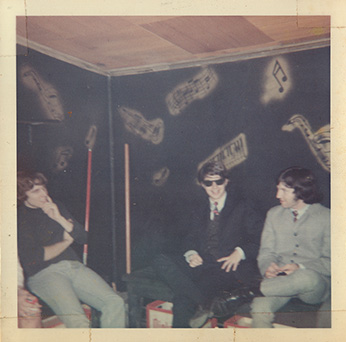
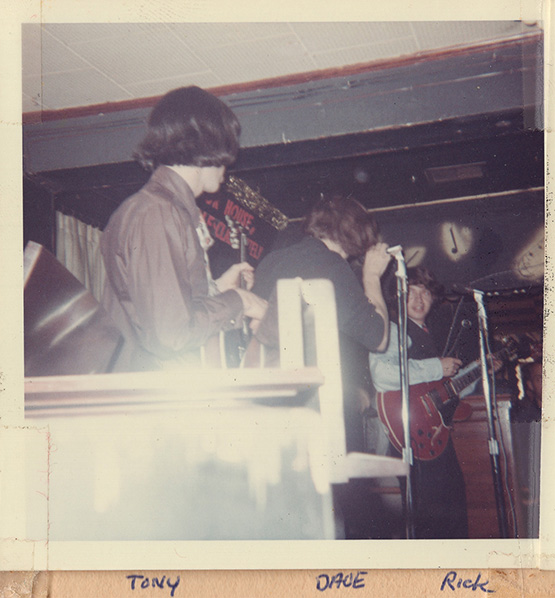
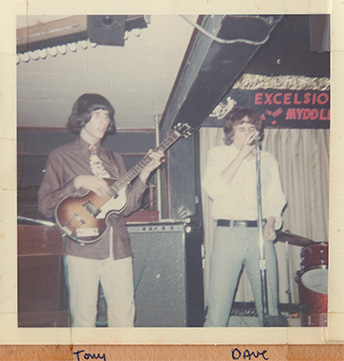
The Myddle Class at the Excelsior House, October 1966, from left: Charlie (“Tony”), Dave, and RickThe Myddle Class at the Excelsior House, October 1966, Charlie (“Tony”), Dave, and RickAd in the Troy Record, October 15, 1966
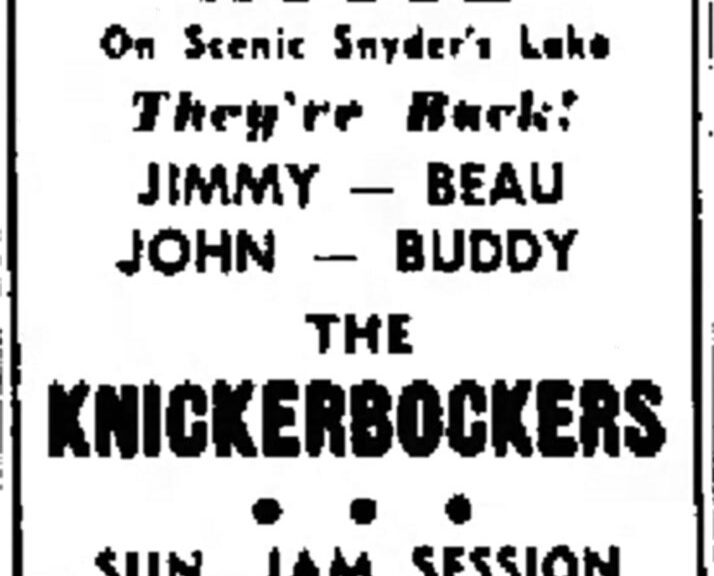
The Myddle Class traveled to Snyder’s Lake, near Troy, New York, to play two weekends, October 14, 15 & 16, and 21, 22 & 23 at the Excelsior House nightclub, which was then attracting college students and other young people (the drinking age was 18) four to five nights a week to see acts like the Critters, the Liverpool Set and the Knickerbockers.
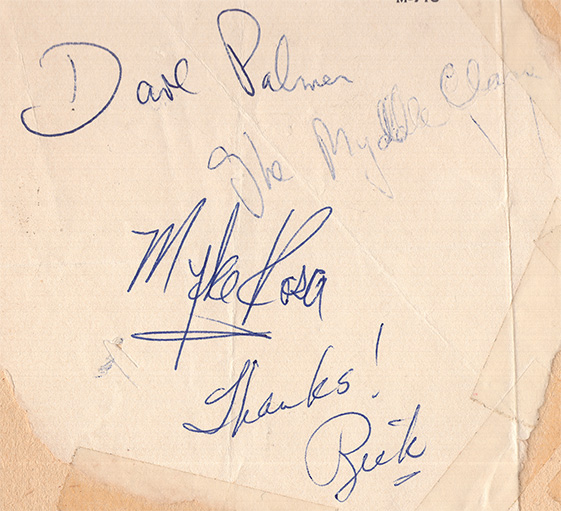
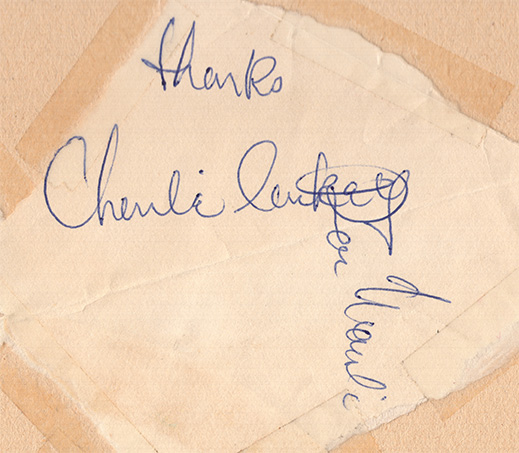
I was astonished to find 11 snapshots taken during their time at the club, along with autographs collected from each. Hilariously, Charles Larkey is noted as “Tony” on the album pages, though he signed his autograph correctly as Charlie Larkey.
The Excelsior House ran ads regularly for their shows. For the Myddle Class, some were spelled correctly, but a couple others billed them as the Middle Class.
Autographs of Dave Palmer, Myke Rosa and Rick Philp of the Myddle Class, from the Excelsior House, October 1966Autographs of Charlie Larkey and Dan Mansolino of the Myddle Class, from the Excelsior House, October 1966Charles Larkey (“Tony”) of the Myddle Class, at the Excelsior House, October 1966Charlie Larkey (“Tony”) of the Myddle Class with patron or friend, at the Excelsior House, October 1966The Myddle Class at the Excelsior House, October 1966, Dan Mansolino and Charlie (“Tony”) LarkeyThe Myddle Class at the Excelsior House, October 1966, from left: Charlie (“Tony”), Dave, Myke and RickThe Myddle Class at the Excelsior House, October 1966, from left: Dave Palmer, Rick Philp and Myke RosaThe Myddle Class at the Excelsior House, October 1966, from left: Charlie “Tony” Larkey, Dave Palmer and Rick PhilpThe Myddle Class at the Excelsior House, October 1966, Charlie Larkey and Dave PalmerThe Myddle Class at the Excelsior House, October 1966, Dave Palmer and Rick Philp
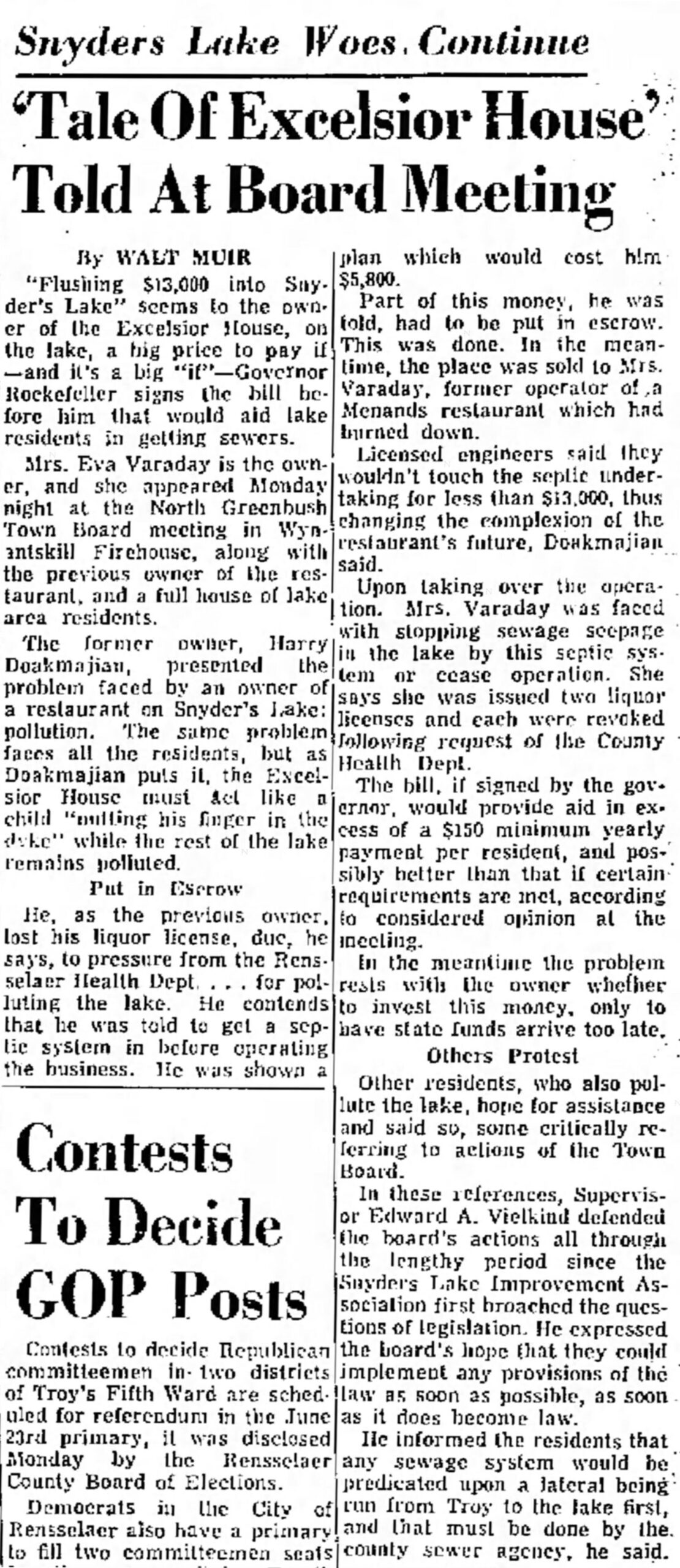
The Excelsior House, a 19th century house on tiny Snyder’s Lake, a short drive southeast of Troy, NY, had a history dating back to the 1930s as a rural nightclub and restaurant. It drew crowds from a wide geographic area with various forms of entertainment and events.
In 1964, a new owner, Harry Doakmajian, started bringing in rock and pop acts. Over the next four years the Excelsior House hosted a succession of notable house bands.
The Knickerbockers: Jimmy, Beau, John, Buddy, at the Excelsior House, The Troy Record, May 1, 1965
The Knickerbockers made the Excelsior House their second home, with frequent months-long bookings from August 1964 until December 1965, and occasional monthly residencies in 1966 and 1967. The booklet of the Sundazed CD The Great Lost Knickerbockers Album! includes photos of Buddy Randell and Beau Charles on stage at the Excelsior House in 1966.
The Sundowners, from Lake George, held down monthly gigs in 1965 into 1966, and the Good Times were regulars from April through July 1966 (billed early on as “Direct from Harlow’s in N.Y.C.”) and again in September and December 1966, and January 1967.
The Kynds and the Good Times, Excelsior House, The Troy Record, 1966, April 9
I am not certain if this is the Goodtimes from Providence, RI, who also recorded as the Tradewinds, or more likely the band from Newburgh who recorded two albums of pop on Meteor as the Goodtimes III. This group, comprised of Johnny Babb, Timmy Jones, Dave Kennedy and Bobby Lonie, among others, cut some good unreleased songs, possibly recorded at Earl Kennett’s studio, as Dave Kennedy recommended the studio to the Jelly Bean Bandits to make their first demos.
Below is a compendium of the acts that played, compiled mainly from ads in the Troy Record newspaper (which became the Times Record).
Bands were usually booked Friday and Saturday evenings. Over time, early Sunday shows were added, then Wednesdays and Thursdays as well.
1964:
February: Tino and the Revlons April 18: the James K4 June: Tino and the Revlons, the Act III July: the Capris (“direct from Miami Beach”), and the Continental Twisters August: the Act III and the James K4 August 3: Buddy Randell and the Knickerbockers August: the Mystics and the Continentals September through December: the Knickerbockers
1965:
Sundowners with Eddie Brick and Bobby Dickson, Excelsior House, The Troy Record, 1966, Nov 12
January: the Knickerbockers February: the Sundowners March: Tino and the Revlons (“Troy’s Own Beetles”), the Blue Counts and the Motions April: the Motions, the Vi-Cleefs April and May: the Knickerbockers
Nick Brignola and His Modern Jazz Quartet: Thursdays in June and July
July 31: Jay and the Americans plus the Knickerbockers July: the Knickerbockers August: the Knickerbockers September: Don Sohl and the Road Runners (Nebraska band who cut great sax & guitar instrumentals like “Voo Doo” on Palms and “Rampage” on Dreem). September: the Road-ents, the Progressions October: the 4 Synns
Cordels at the Excelsior House, The Troy Record. 1965, Oct 9
October 16: the Classics and the Chessmen November: the Cordels December 23: the Knickerbockers and the Sundowners December: Sundowners
1966:
The Chartbusters, the Sundowners, and the Big Bear Revue, the Troy Record, 1966, Feb. 12
By 1966 the Excelsior had two venues on the same compound: the main building with pop, rock and soul bands, and another called the Corral specializing in country music and square dancing, such as Rob Horton and the Friendly Travelers or Pete Williams and His Ranchers, but I have not compiled an extensive list of those c&w groups.
January – February: the Sundowners February 19, 20: the Big Bear Revue (“Big Bear” / “People” on Cuppy Records) February 25, 26: the Check Mates March: Snoopy’s Crew March 5: the Fugitives March 12: the “ever popular” Esquires March 25: the Fireballs April 3: the Group 4 April 9, 10: the Kynds April 14 had a special show, Jerry Lee Lewis and his Review!
May and June: Knickerbockers and Good Times
On July 29, the Souls Inc. “12 Man Group” took over through August, sometimes with Lord X and his X Chords August 27 (Saturday): Tim Rose Trio
The Critters and the Good Times, Excelsior House, The Troy Record, September 23, 1966
The Good Times resumed house band status for September but there were a number of interesting featured acts that month and October:
September 2, 3 and 4: the Younger Boys (I don’t know anything about this group) September 23: the Critters September 28, 29, 30, 31 & October 5, 6, 7, 8 and 9: the Liverpool Set
The Myddle Class, Excelsior House, The Troy Record, 1966, Oct 22
October 14, 15 and 16 and 21, 22 and 23: the Myddle Class (billed in some ads as the Middle Class)
Ricardo and the 4 Most, Excelsior House, The Troy Times Record, February 3, 1967The Cleaners, Excelsior House, The Troy Record, October 29, 1966Ricardo and the 4 Most, Excelsior House, The Times Record, Feb. 10, 1967
1967:
January: the Good Times February: Ricardo the the Fore Most (4 Most) March: the Sundowners and the O’Royals (the Fabulous Royals) March 26: Roger Freeman with the Spoiled Brats April 1: the Night Watch April: the Liverpool Set May: the Knickerbockers
1968:
February: the Shades of Brass, the Legends of Sound
Eva’s Towpath II, formerly Excelsior House, Imperials, The Troy Record, 1969, Nov 16
In September, 1969, the Excelsior House was taken over by Eva Varaday and renamed Eva’s Towpath II, but it only continued for a few months before it was shut down by the Rensselaer County Health Department for the same reason the previous owner lost his liquor license: the Excelsior House, like most of the other residences on the lake, had been sending raw sewage into Snyder’s Lake, which was only 1/8 of a square mile (approximately) in area! It did reopen in the mid-’70s for a short time as a meeting place, but I read there was a major fire in 2009.
If anyone has old photos of the Excelsior House, or a news clipping on the 2009 fire, please contact me!
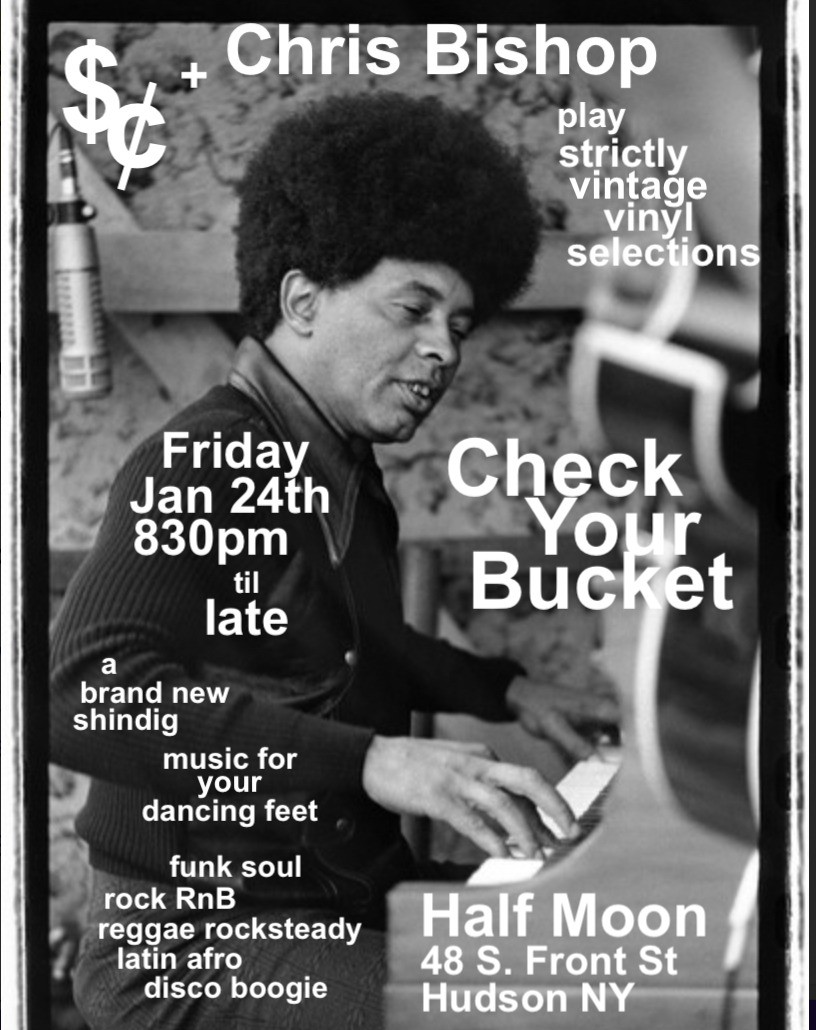
Happy to be kicking off the new vinyl DJ night of my old friend, DJ $mall ¢hange, at the Half Moon at 48 S. Front St. in Hudson, NY 12534 this Friday, Jan 24, 2025.
All kinds of (old) music, including garage. Come out and say hello.
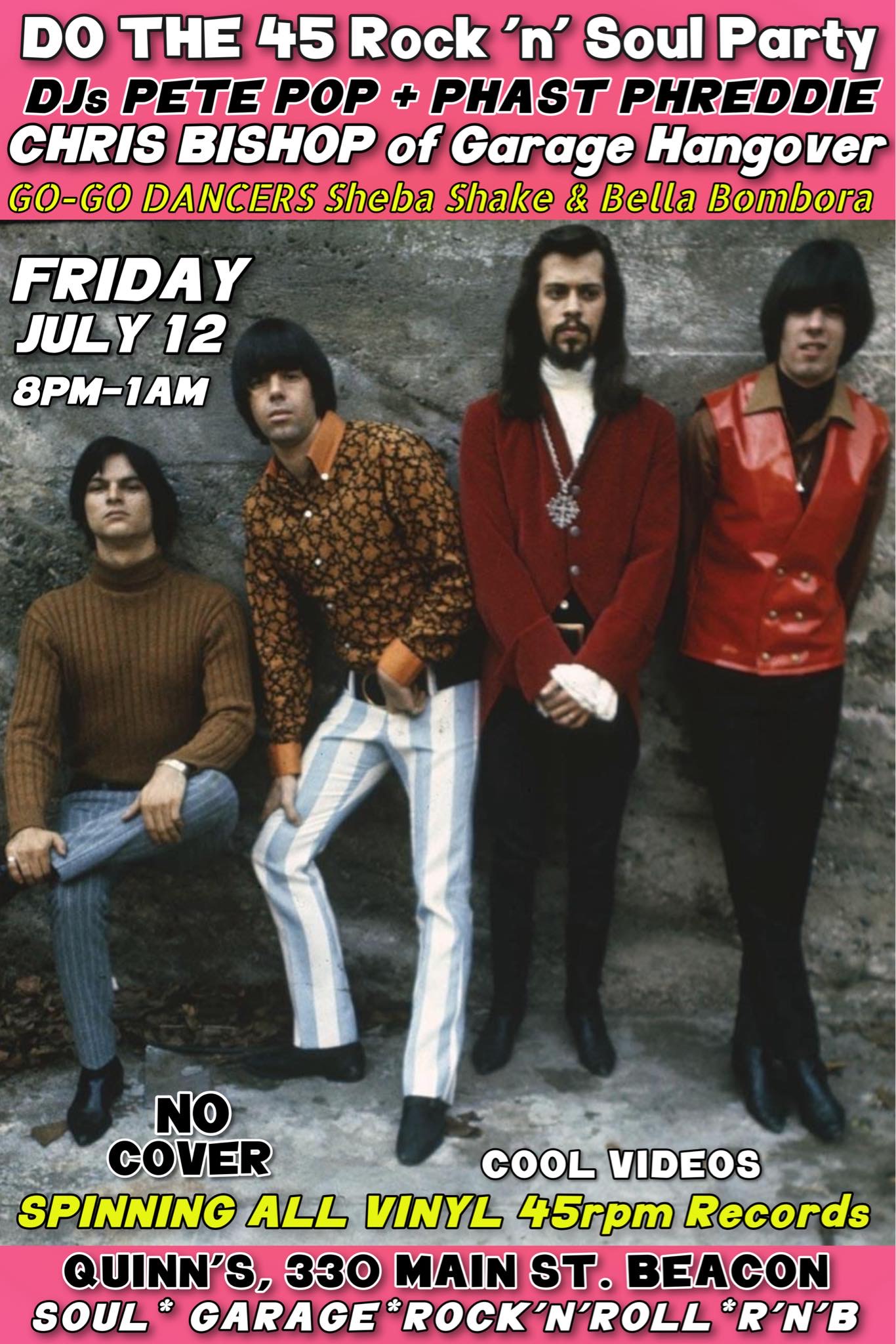
To celebrate 20 years of Garage Hangover I will be spinning some records at Do The 45 Rock ‘n’ Soul Party at Quinns in Beacon, NY on Friday, July 12, with old friends and fellow DJs Pete Pop (garage collector extraordinaire) and Phast Phreddie (who has known everyone cool in the music world since 1973).
Today I’m featuring two rockabilly artists, George Quarta Jr. and Bob Cribbie, who both grew up in Hudson, New York.
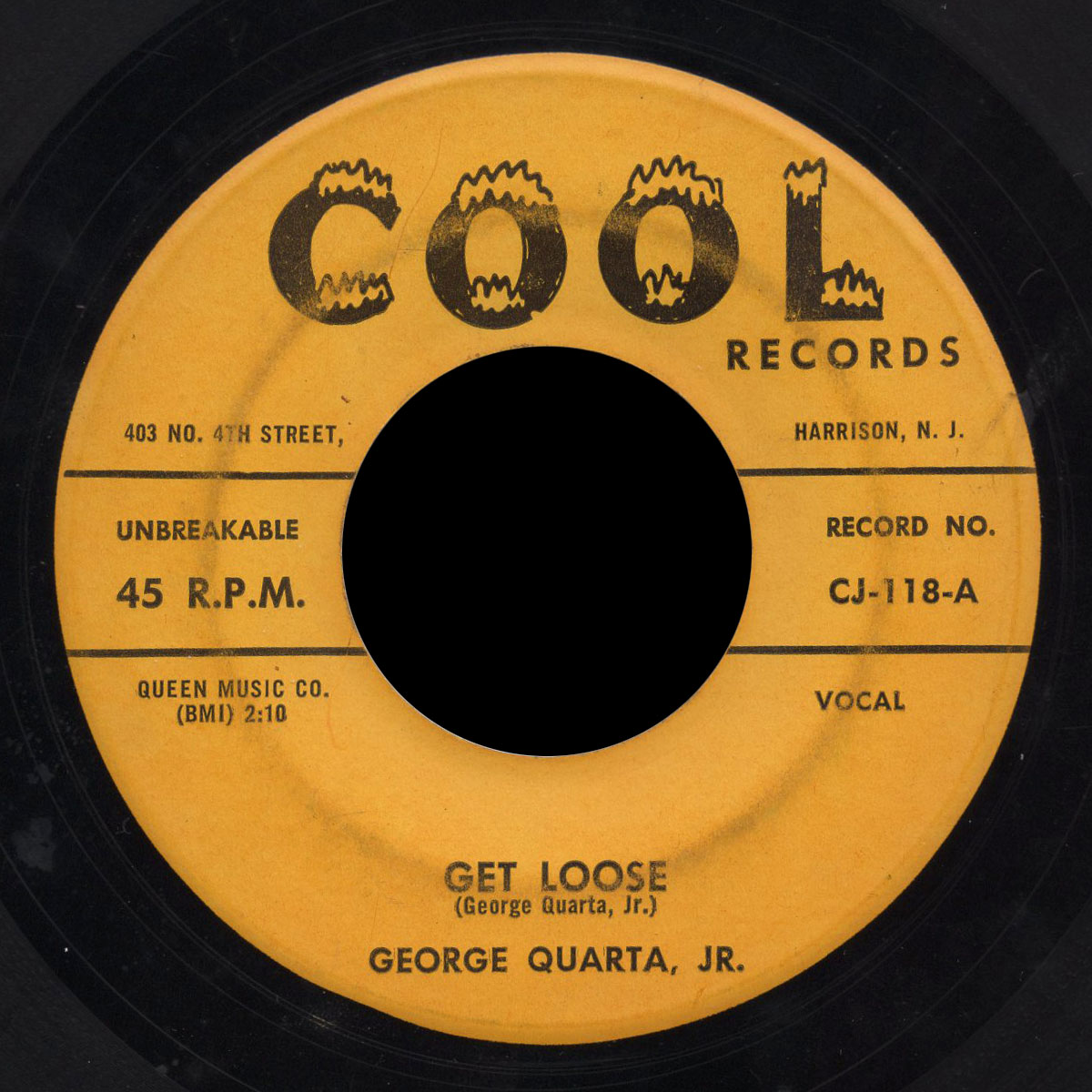
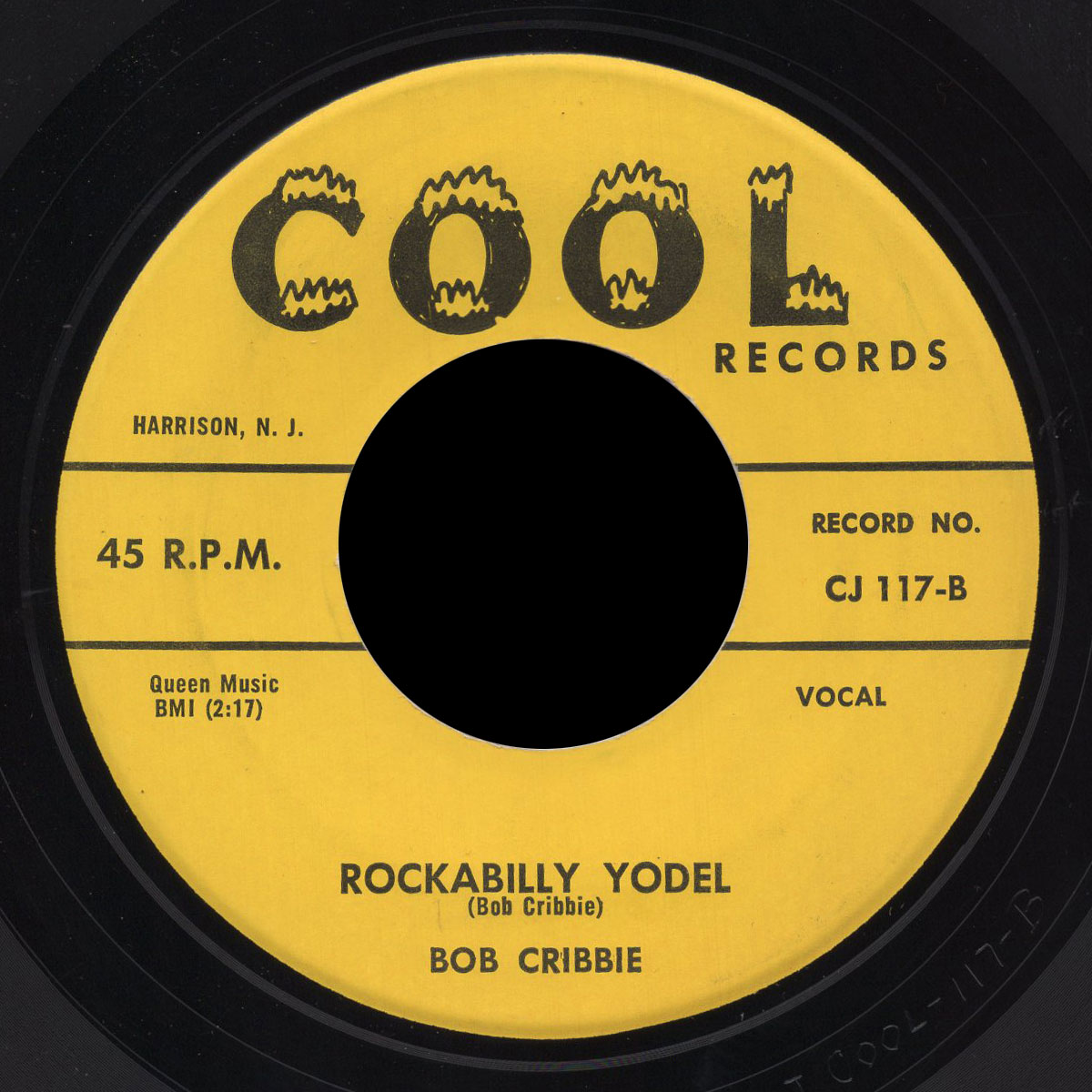
In 1959 they each released a 45 on the Cool Records label out of Harrison, New Jersey. George Quarta Jr. cut “Get Loose” / “Don’t Move”, and Bob Cribbie made “Vow of Love” / “Rockabilly Yodel”.
Cool Records attracted artists from Florida to Vermont. The Hudson connection might be coincidental. The records do not sound similar and may have been cut at different sessions or studios. What makes me think this could be more than coincidence is the 45s had successive release numbers: Bob Cribbie on Cool Records CJ-117, and George Quarta on Cool CJ-118.
George Quarta was born on December 21, 1931 and died on September 6, 2017. Quarta’s obituary states “He performed in the Hudson area including at the old Community Theatre where billboards of George lined the walls as the girls excitedly gathered to hear him sing and play his guitar.” The Community Theatre still stands, but has been disused for decades.
Bob Cribbie’s vocal on “Vow of Love” is straightforward, but his delivery on “Rockabilly Yodel” is very much “outsider” in nature; he certainly has an odd sense of timing! Bob became known as a idiosyncratic yodeler, appearing on radio and late night TV under his own name and then as Avalanche Bob.
Did George and Bob know each other? I have no idea. Nearly everyone involved in these records has passed away.
What was the connection that brought Hudson NY artists to record at Cool?
It was likely veteran talent scout Jim Small, of nearby Elizaville, NY.
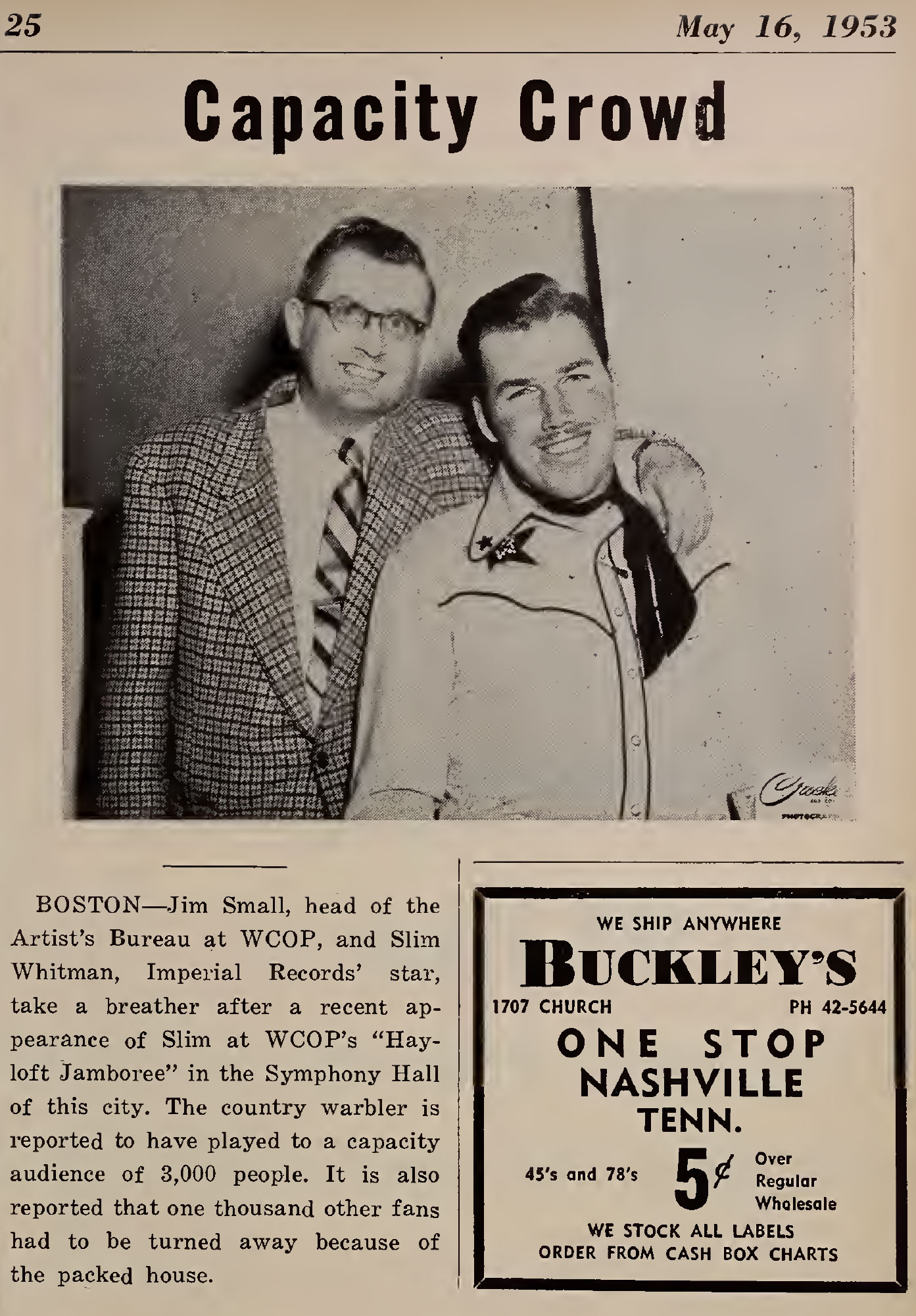
Jim Small and Slim Whitman after WCOP’s Hayloft Jamboree, Cash Box May 16, 1953
Jim Small’s ten years of mentions in trade publications hints at the tough life of a record A&R man.
In 1953 and 1954, Jim received mentions in Cash Box as manager of WCOP, Boston, and business manager of New England’s “Dude Ranch Jamboree” out of WJAR-TV, in Providence, RI.
Billboard, Sept. 29, 1958: Jim Small of Elizaville, N.Y. .. has accepted talent-scout duties with Johnny Dee’s Vitam Distribution Company, Harrison, N.J., and Johnny Ponz’s Ace Records, New York. Jim will cover Dee’s three labels, D, c.&w.; Vitam, pop, and Cool, rock ‘n’ roll. He’ll cover c.&w. and rock ‘n’ roll for the Pony label. Small, who was laid up most of last winter with pneumonia, says he’s good as new again.
Cash Box, October 11, 1958:
Jim Small … has been chosen by two record companies as a national talent scout. One is Vitam Distribs of Harrison, N.J., which has three labels: the strictly country “D” label, the pop Vitam, and the rock ‘n’ roll Cool label. Small will represent all three. The other outfit is Ace Records, New York, which will add country releases to its pop catalog.
(I am not familiar with a Harrison, NJ “D” label. It could be that it was not used because of Pappy Daly’s D label out of Houston which started earlier that year. I know of only one release on Vitam, Ray King and the Joe Derise Orchestra, “Can It Be Love” / “I’ll Always Love You.”)
Billboard, November 24, 1958 reported:
Visitors at the desk last Wednesday en route to the Nashville deejay festival, were promoter-manager Jim Small of Elizaville, N.Y. and a pair of his artists, Dick Sawyer of Stratford, N.Y. and Neil Swanson, who for the last four years has appeared on “Teen-Age Barn” TV show originating in Schenectady, N.Y … Sawyer’s initial release on Cool Records, “Sandy” b.w. “New Kind of Lovin’,” is due for early release.
The Glens Falls, NY Post-Star on August 6, 1959 mentions talent scout Jim Small in connection to Gerald Galusha, who made a record for Cool as Jerry Edwards, “Shedding Tears” / “Easy to Please” on Cool CJ-128.
Billboard August 3, 1959:
Jim Small, A&R man with Joe Flis’ Milo Recording Company, Harrison, NJ, has taken over the personal management of three Cool Records artists – Dave Osborn, Johnny White and Artie Davis. Small recently ushered Osborn to Wheeling, W.Va., for a guest shot on WJVA’s World’s Original Jamboree. White’s newest Cool release couples “Cryin’ Room” and “Rose in the Garden,” while Davis’ new one on that label is “Book of Love” b/w “Hawaiian Boogie.”
Billboard, April 4, 1960:
Jim Small, who has been associated with the c.&w. music field more than 25 years, has been named vice-president of Milo Recording Company, Harrison, N.J., by owner-manager Joe Flis. Jim has long served as talent scout for Milo and organized the firm’s c.&w. department with its Cool label. Small is presently in De Land, Fla., recuperating from an attack of ulcers which laid him low for several months. He is continuing with his scouting and auditioning during his Florida stay. With him is his right-hand man and assistant, Dave Osborn. Small’s home and office is in Elizaville, N.Y. [Dave Osborn came from nearby Hillsdale, NY, and made records on both Milo and Cool.]
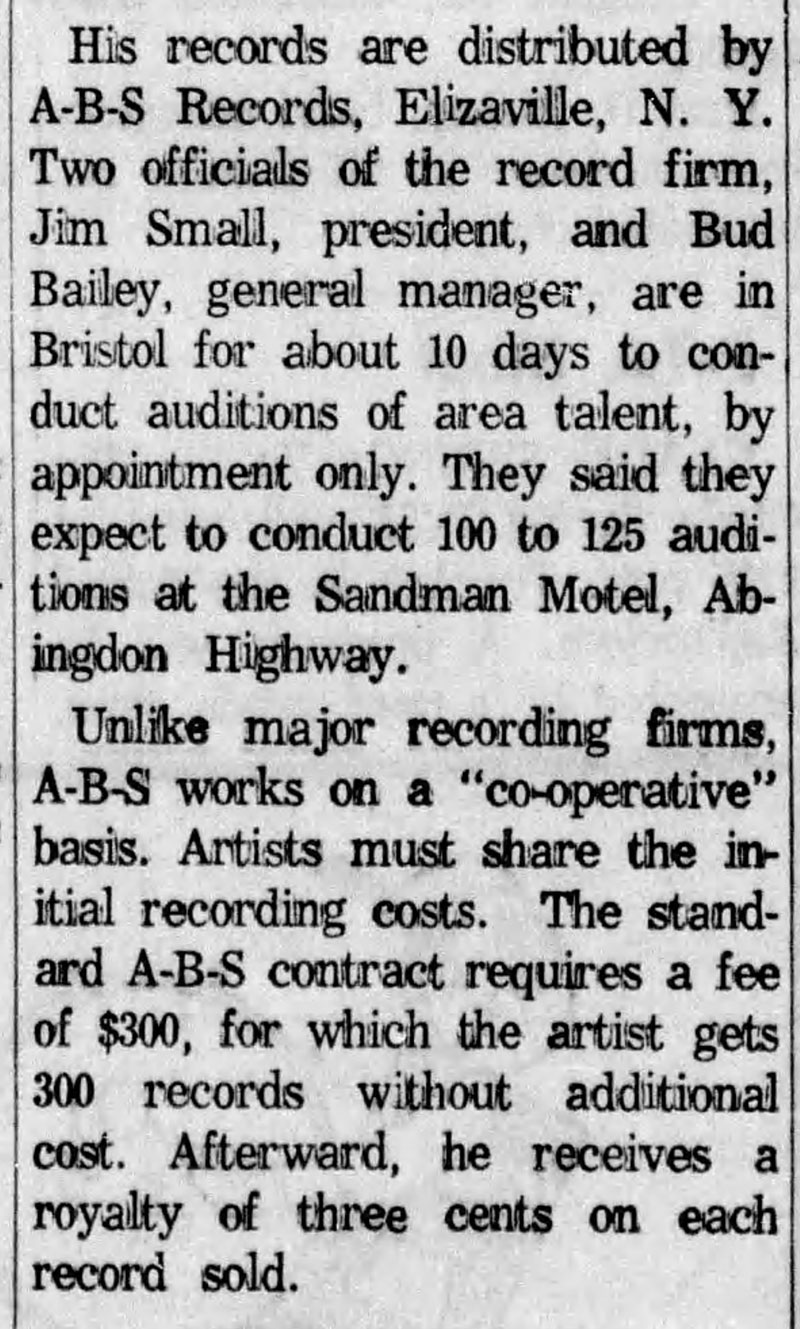
Jim Small’s A-B-S Records label in March 1963: the artist pays $300 for 300 records … future royalties uncertain. George Quarta and Bob Cribbie probably made a similar deal with Cool Records
Billboard, July 25, 1960:
Jim Small, Veepee of Milo Recording Company and Cool Records, Harrison, N.J. is currently on a talent-scouting expedition thru Pennsylvania. Touring with him are his assistants Bud Bailey and Bob Weiss. Dave Osborn, who worked with Small out of the Cool branch in DeLand, Fla. the past winter, is spending the summer with his band in his native New York State. He will return to Florida with Small in the late fall. Jim reports that he is amazed at the amount of solid c.&w. talent that has been overlooked in Pennsylvania.
Billboard April 13, 1963:
Jim Small, president of A-B-S Records, Inc., Elizaville, N.Y., is back in action after spending most of the last 10 months in the hospital. Small has named Bud Bailey as general manger of A-B-S. Firm last week released a new one by Mickey Barnett and His Wranglers, “Just a Memory” b.w. “I’m Sorry I Cheated on You,” both penned by Mickey himself. A new A-B-S religious release spots “I’ve Been With Jesus” and “When I Move” as done by the Missionaires Quartet of Miami.
The Wilmington, Delaware News-Journal March 10, 1964:
Howard Rash, a songwriter and singer of country and western ballads, has purchased ABS Records from Jim Small of Elizaville, N.Y., and DeLand, Fla.
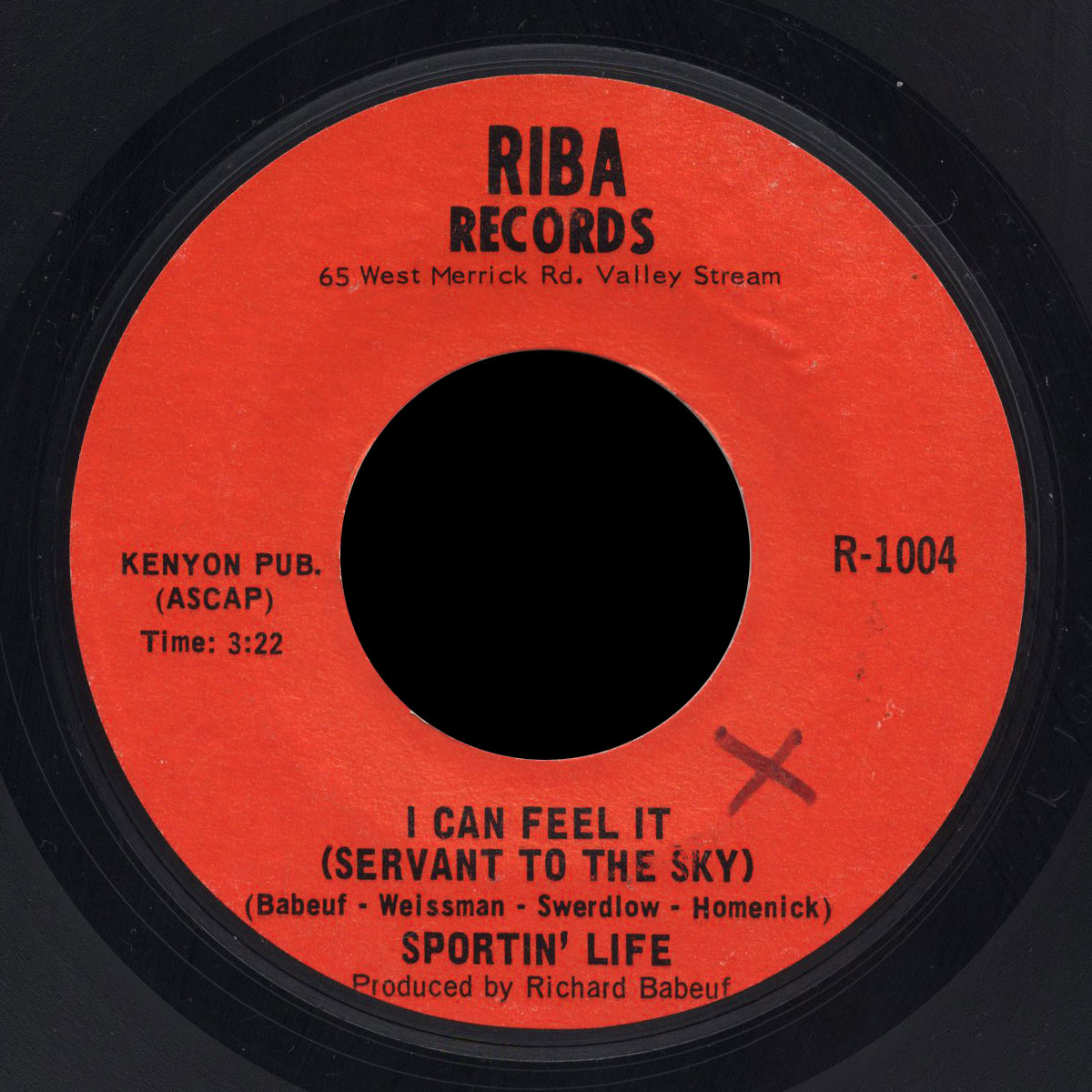
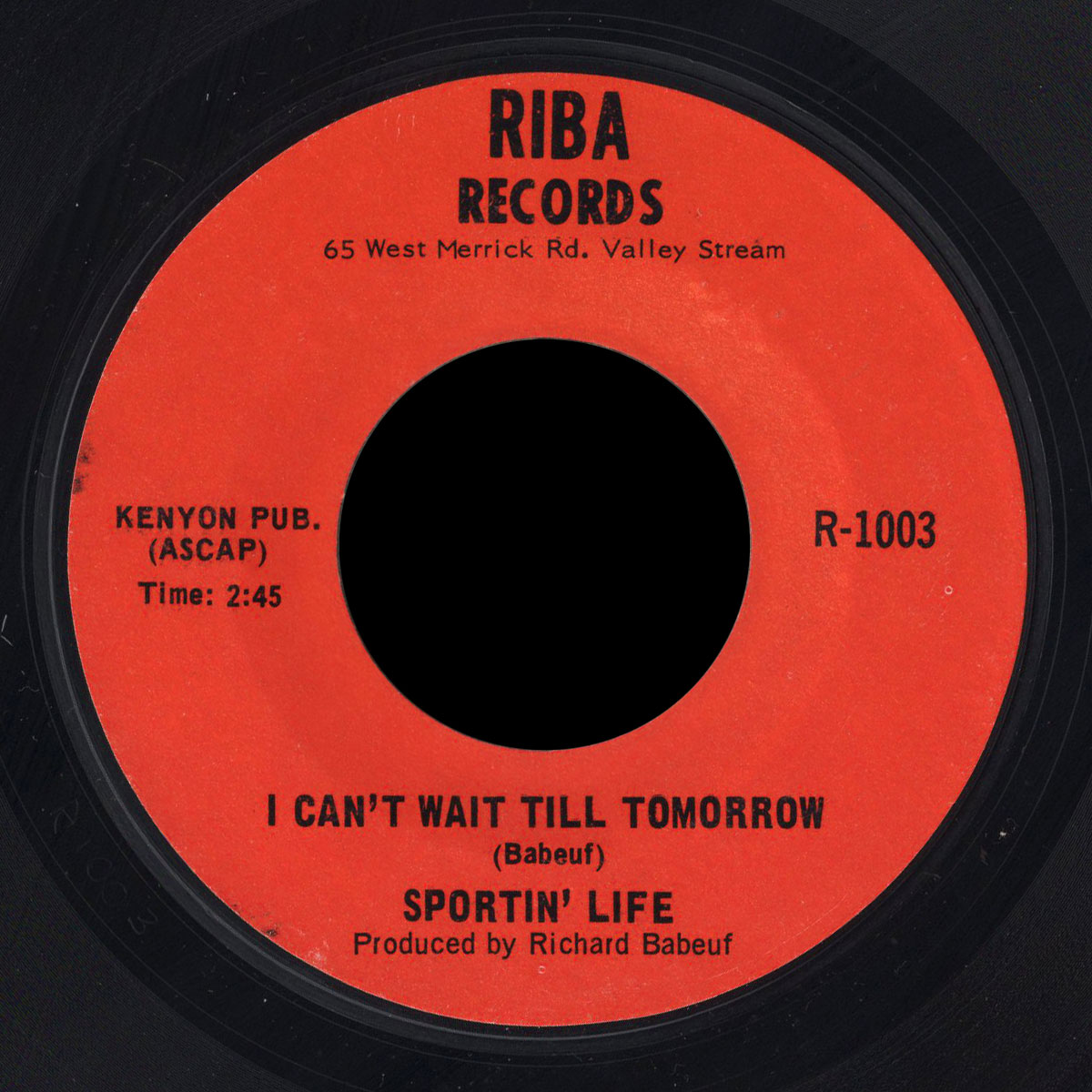
Sportin’ Life cut a great psychedelic 45 in the summer of 1968, “I Can Feel It (Servant to the Sky)” released on Riba Records R-1004/R-1003. I don’t know if Sportin’ Life was an actual group or a studio gathering. From writing credits on “I Can Feel It” members included Ronald Weissman, Michael Swerdlow, John Homenick, and possibly Richard Babeuf, who produced the record.
Babeuf also wrote the ostensible A-side, “I Can’t Wait Till Tomorrow)” and registered both songs with Kenyon Publications.
Babeuf owned Riba Records, with an address of 65 W. Merrick, Valley Stream, NY. Riba only had one other 45 I know of, the Renés “Shy Guy” / “You’re Wrong” on 45-10012 from 1965, also using Kenyon Pub.
I can’t find more info on Weissman, Swerdlow or Homenick, but Rick Babeuf had plenty of other credits in the music business.
One of the most notable is Gaslite Village “I Am Afraid” (written by Babeuf and Herbert Hilton) b/w “Up from the Underground” (Babeuf) on Murbo M-1029. Babeuf produced the record, which received a mention in the February 22, 1969 issue of Record World. Gaslite Village was probably a name made up for the record, the songs produced at different sessions, with copyright registered at different times (October ’68 and January ’69 respectively).
Babeuf was arranger on Jim Jackson “Welcome Me Home” / “Some Love with Soul” on Sandbag Records S102, produced by Mike Szymansky, who owned Sandbag and operated Omega Sound Studios in Rockville Center. Babeuf does not have any other credits on other Szymansky or Sandbag productions, but Sandbag released another good rock 45, the Epitome of Sound “You Don’t Love Me” / “Where Were You” on Sandbag S 101.
Babeuf and Frank Szelwach produced the Mauroks “Susan” / “Story of My Journey South” on De-Lite Records 517.
Babeuf produced and co-wrote (with Szelwach) the A-side of Frank Dean “My Son (This I Say To You)” / “If I Could Fly” on R & R Records R-102, also in 1969. I suppose Frank Dean was an alias of Frank Szelwach.
Cash Box August 9, 1969:
R&R Records Formed
R&R Records has been formed here at 1650 Broadway and 663 Fifth Ave. Heading up the operation, which also includes two publishing firms, Ren-Maur Music (BMI) and R.R. Music (ASCAP) are: Rena Romano, president, Steve Levy, business manager; and Richard Babeuf, general professional manager of the publishing units; Ric Drew, public relations director …
Billboard, August 8, 1970:
Riba Music Co. has just completed original music for 30″ and 60″ radio spots for Modern Sash and Aluminum Co., Inc. and Electro-Way of N.Y., Inc. Music was composed and arranged by Richard Babeuf.
Riba also did radio ads for Bick’s Family Restaurants and Hathaway’s Furniture Galleries.
Billboard September 12, 1970:
Richard Babeuf is also finishing up original material and charts for a new group called Labyrinth which will debut this fall with a new electro-visual presentation concept.
Billboard, October 17, 1970
Riba Music Co. will supervise all facets of the musical activity on the upcoming off Broadway play, “Iphegenia.” Richard Babeuf, general manager of Riba, will act as music director and conductor, and will supply all arrangements.
This may have referred to Wedding of Iphigenia and Iphigenia in Concert which ran at the Public Theater for a few months starting in December, 1971. However that production had music by Peter Link, performed by a group called Goatleg!
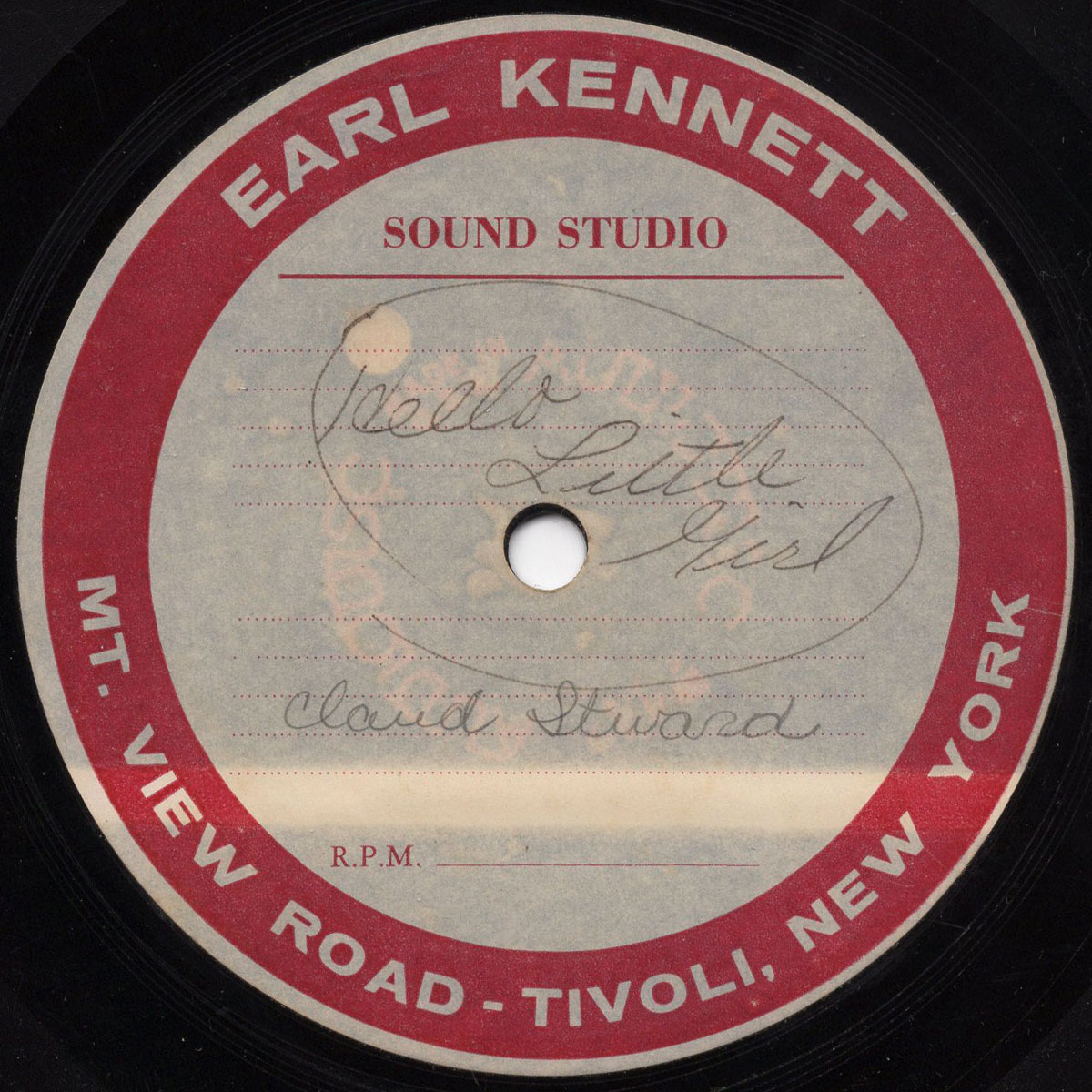
Claud Stuard [sic] – Claude Stewart, or Claude Steward?Bands and musicians from Schenectady, Albany, Poughkeepsie, and other areas traveled to Kinderhook to record at Earl Kennett’s studio.
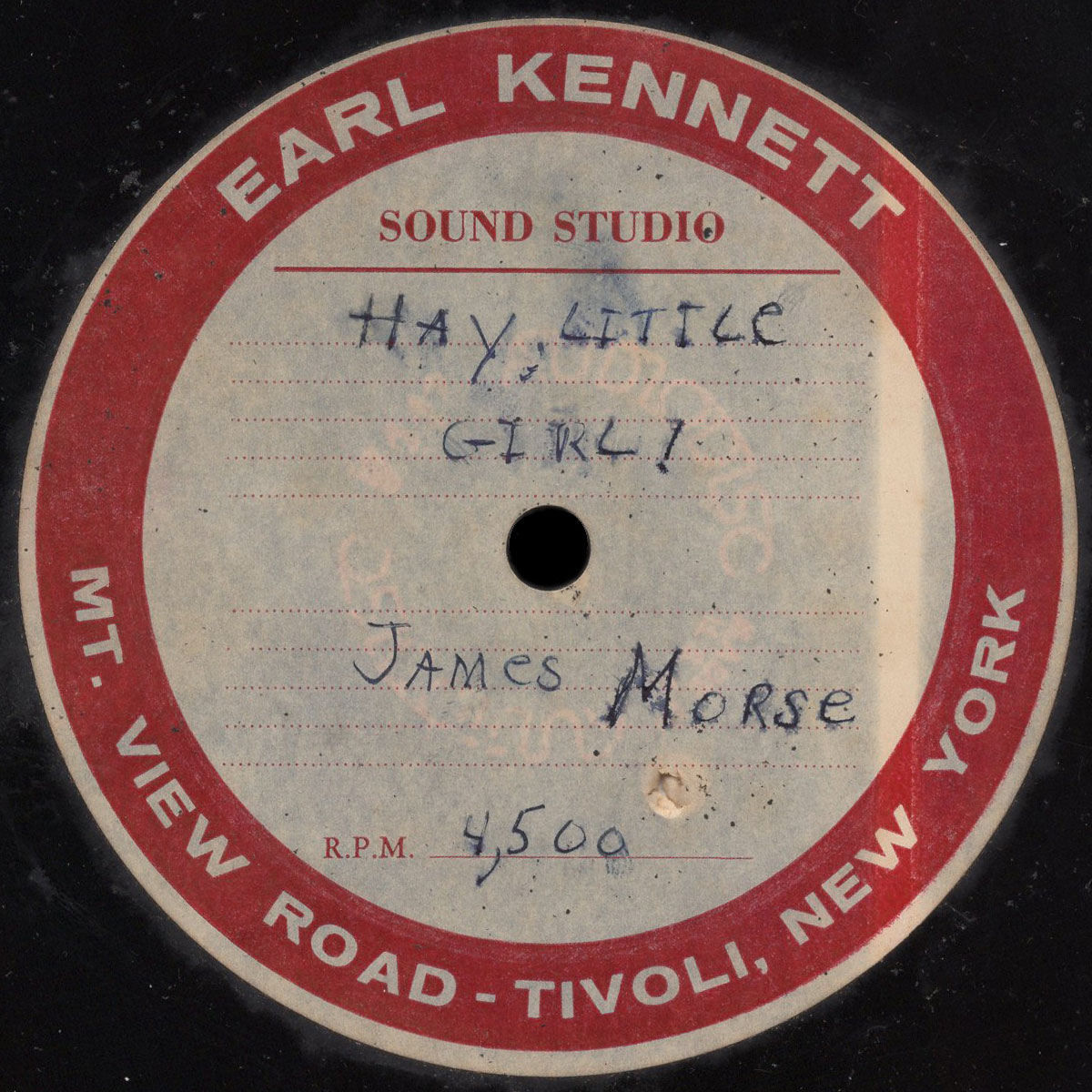
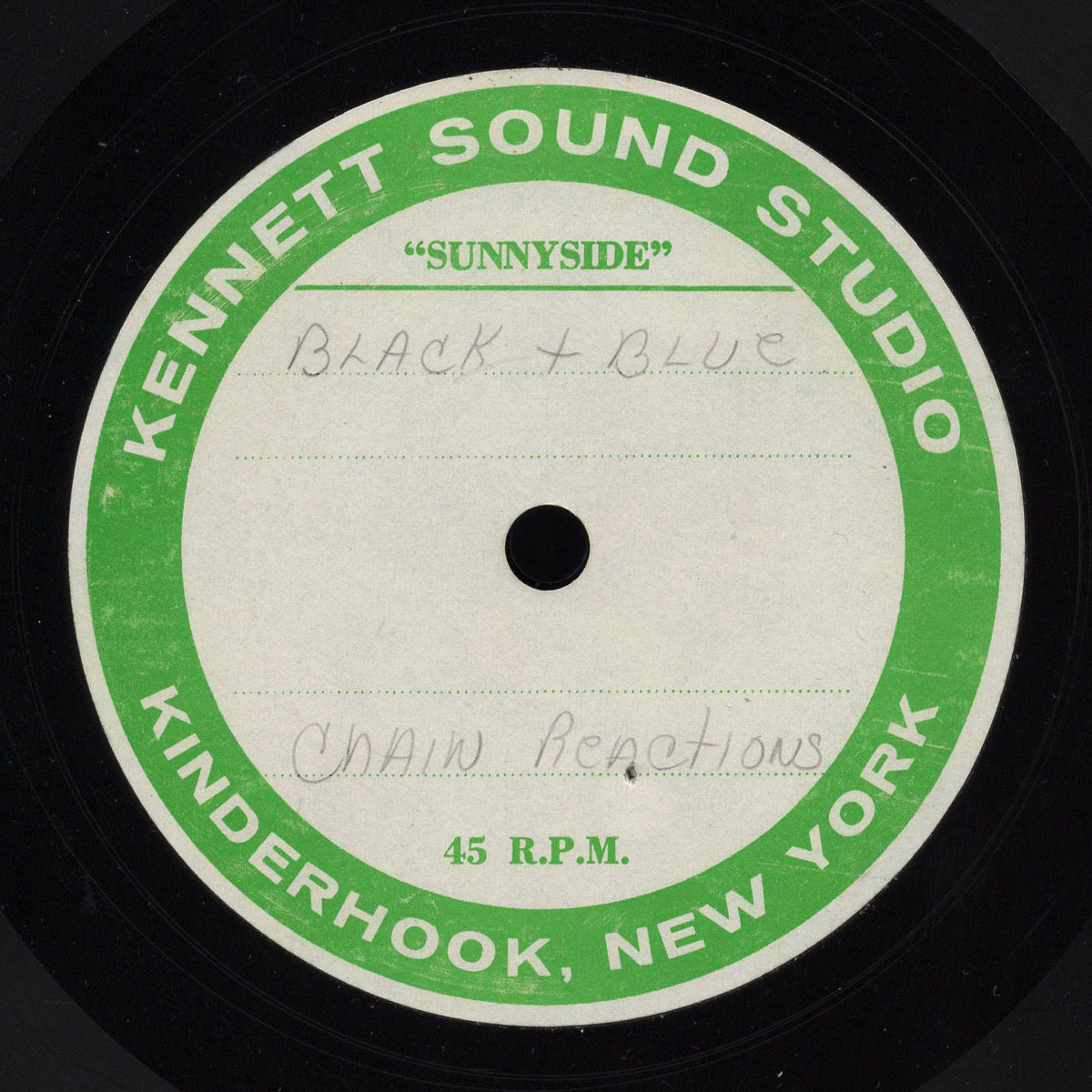
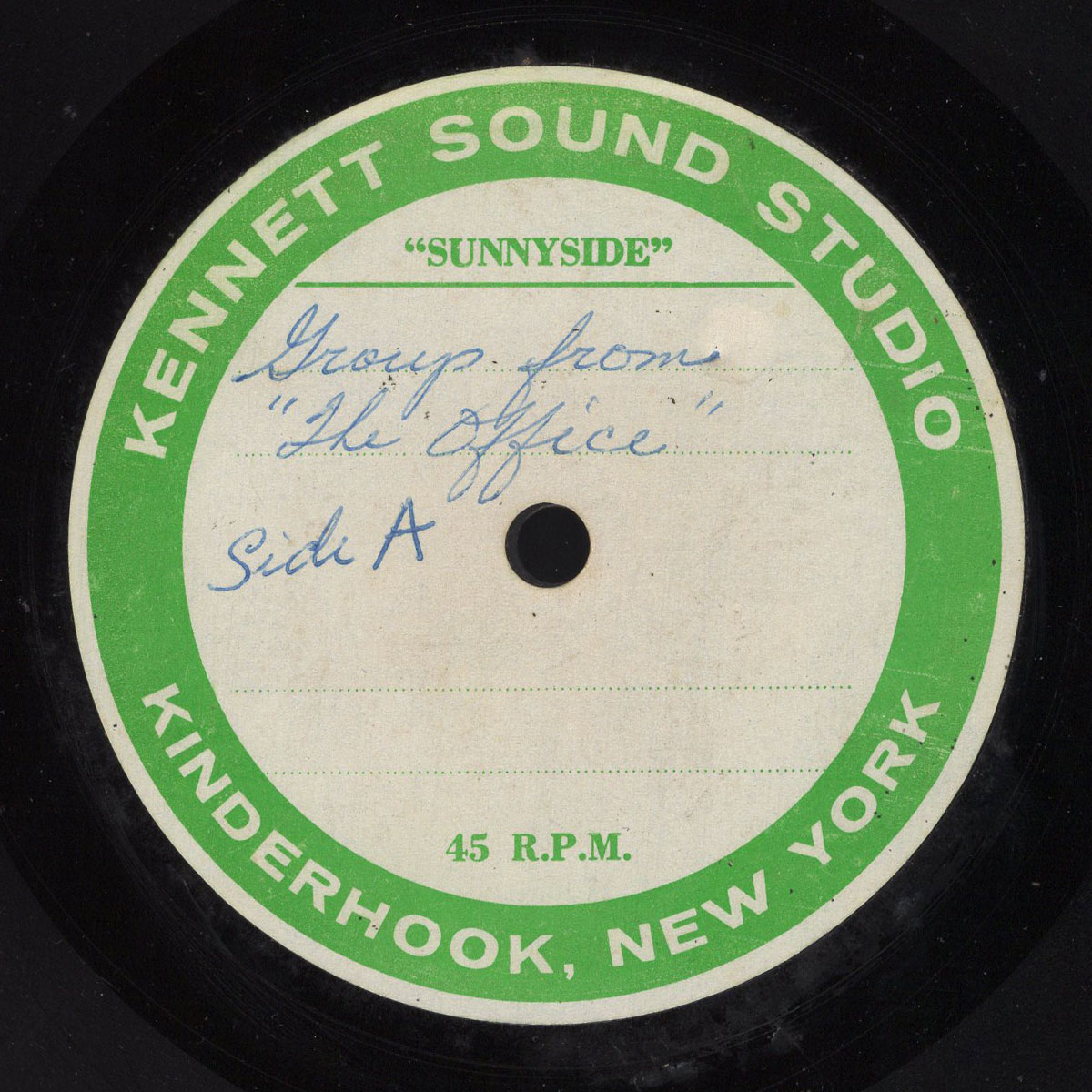
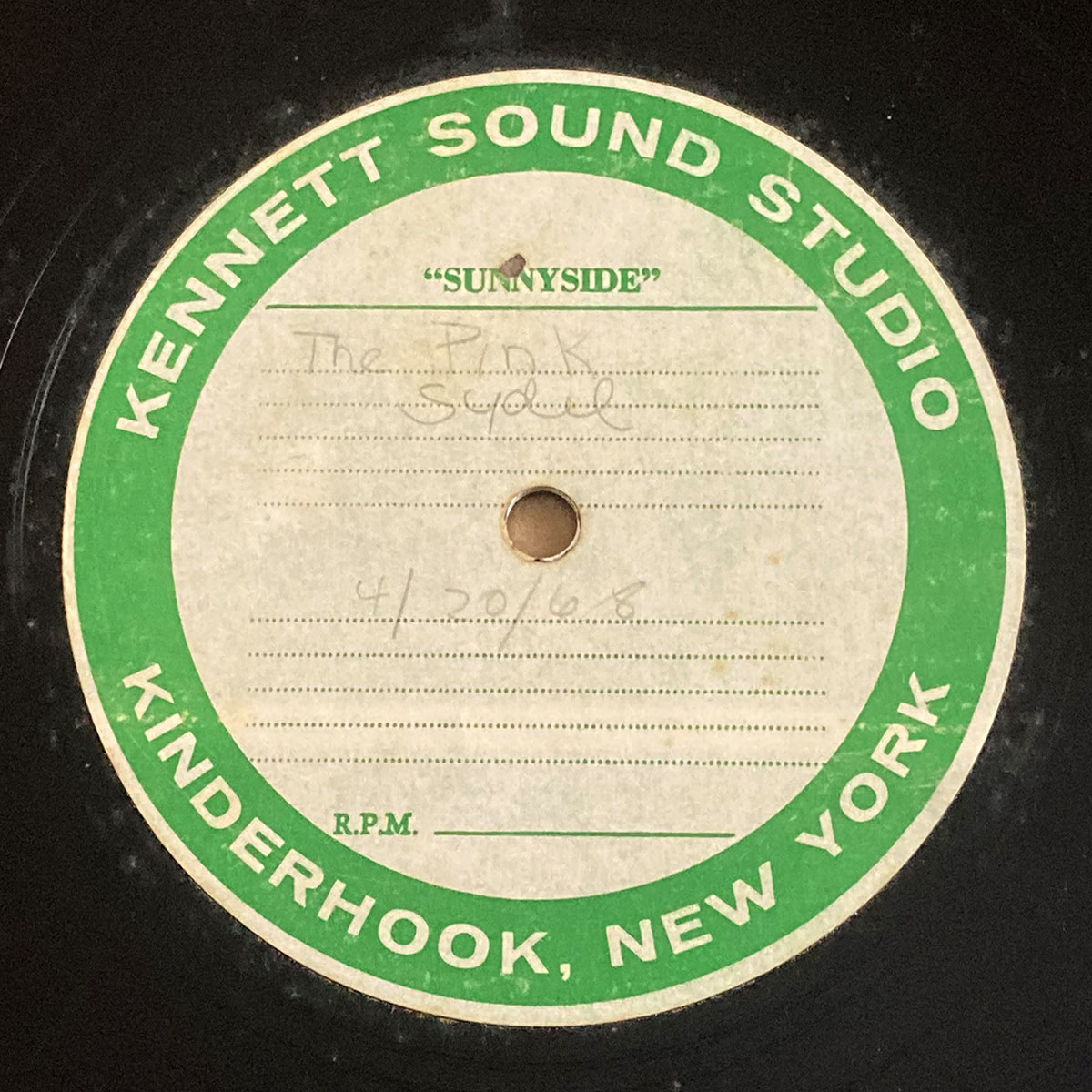
A number of lacquer demos (commonly called acetates) of various sizes remained when Kennett Sound Studio closed and the property sold. Many of these demos are of the Cleaners (later known as the East Coast Clique), the group Kennett worked with the most. Others duplicate the recordings that would be released on 45 rpm records.
Below is a list of demos by unknown artists, in approximate chronological order. Because Earl was blind, many were unlabeled, though Earl’s young daughters sometimes added names or titles. Many song titles below are my guesses based on the lyrics.
Please take a listen to the audio excerpts and contact me if you know any of these artists.
8″ acetate by James Morse, not the same song as the Claude Steward, above. Another 8″ acetate has his name as Jimmy Morse8″ lacquer acetates
Folk singer Greg (surname?), associated with Hudson River Clearwater Sloop, circa 1969. Five songs, may not have been recorded at Kennett as it sounds like a radio broadcast. Hear “My Dirty Stream” with discussion of Sloop restoration
This site is a work in progress on 1960s garage rock bands. All entries can be updated, corrected and expanded. If you have information on a band featured here, please let me know and I will update the site and credit you accordingly.
I am dedicated to making this site a center for research about '60s music scenes. Please consider donating archival materials such as photos, records, news clippings, scrapbooks or other material from the '60s. Please contact me at rchrisbishop@gmail.com if you can loan or donate original materials