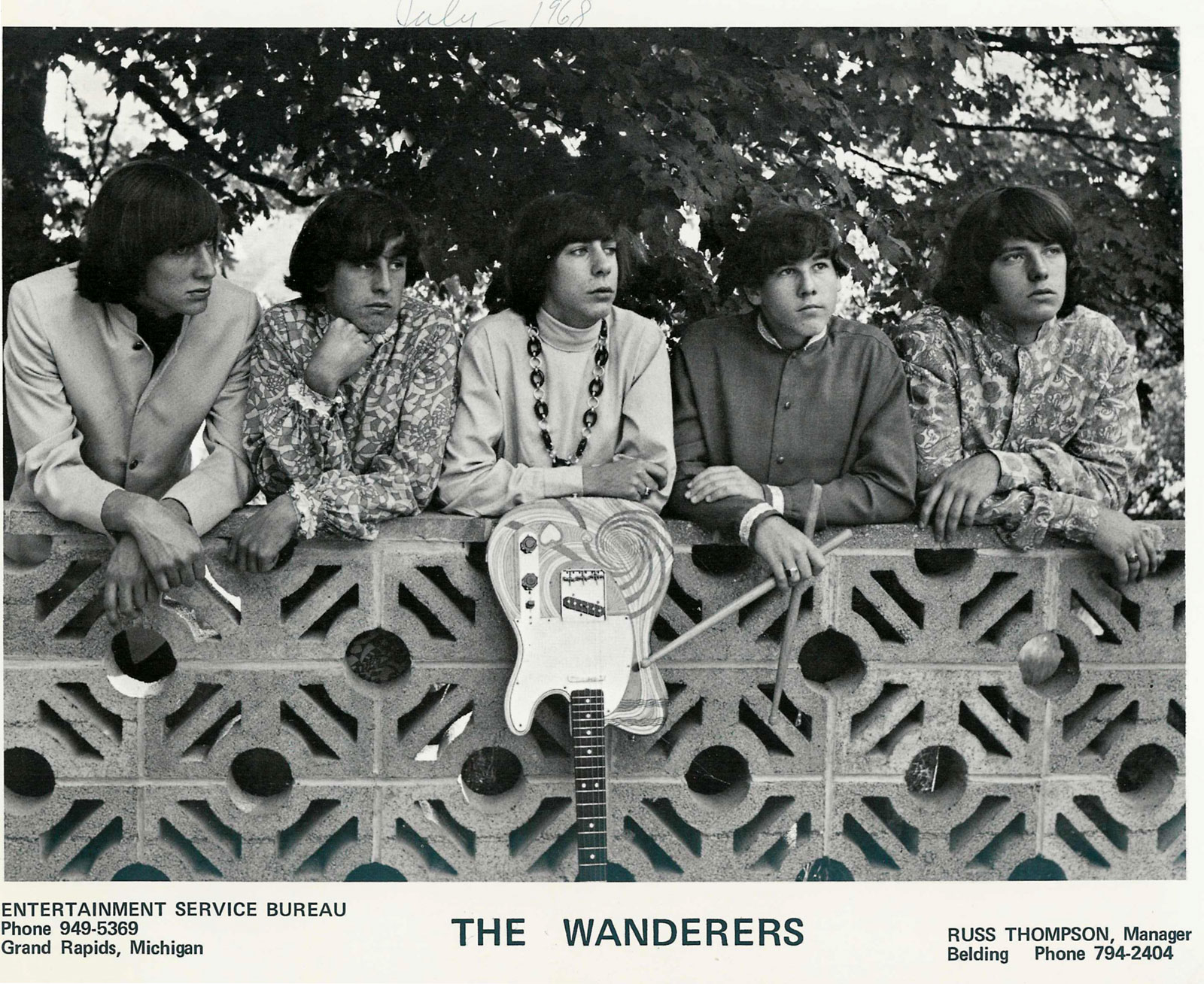
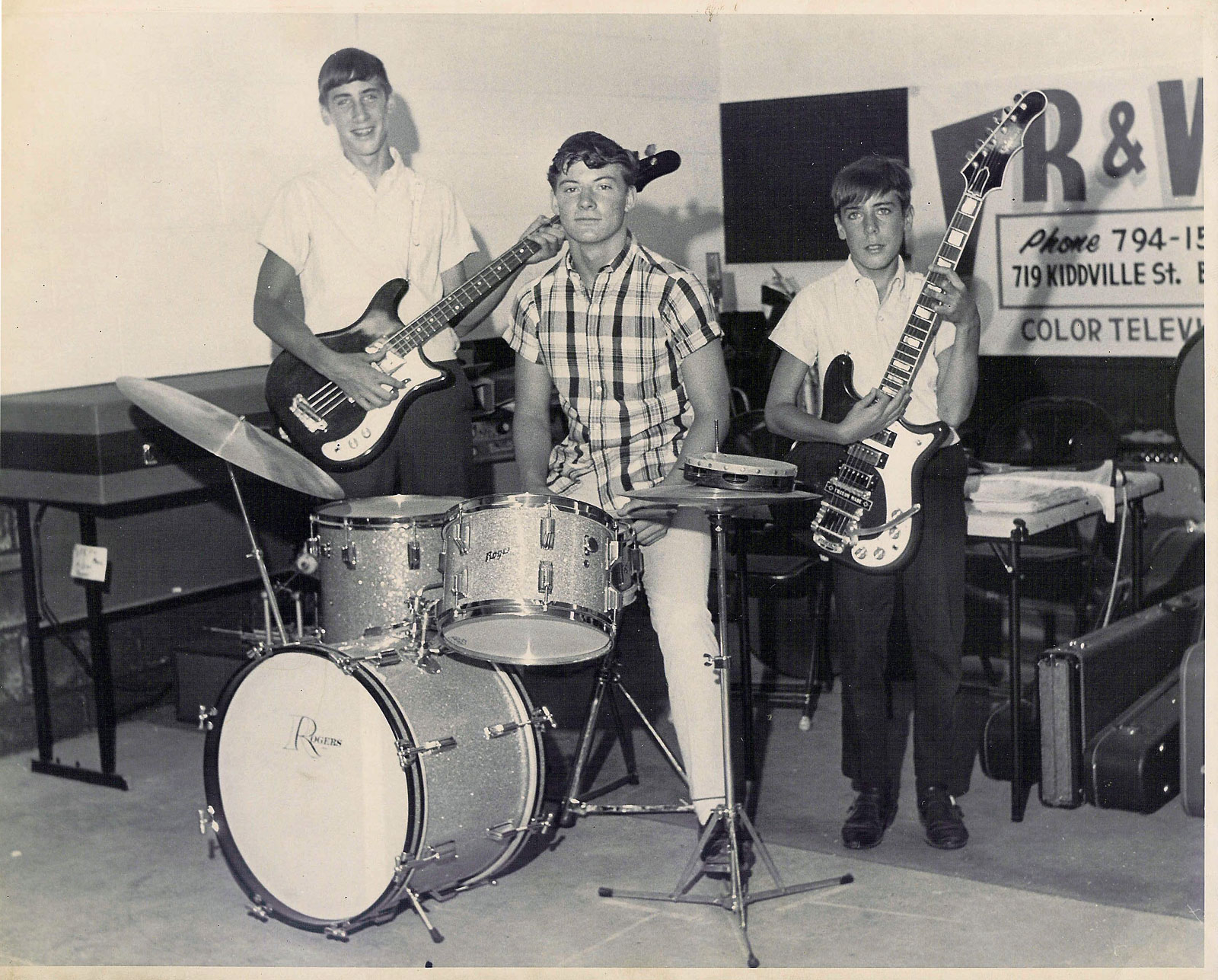
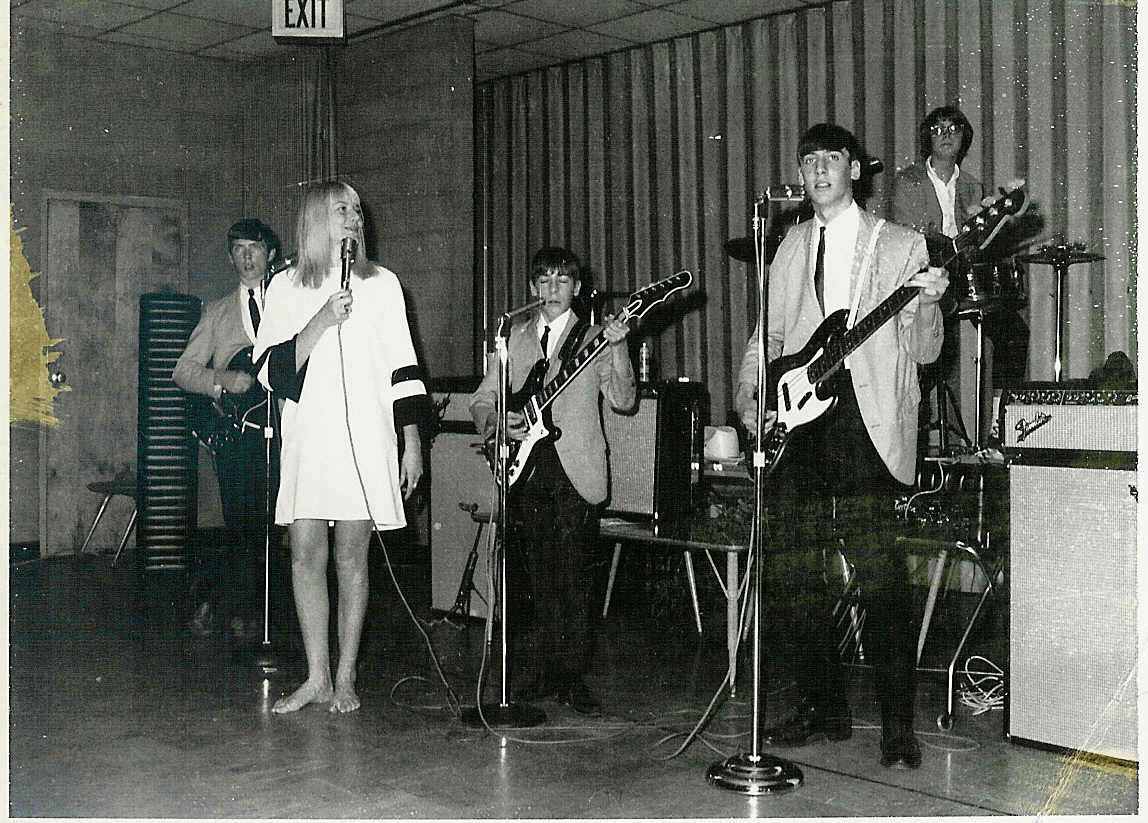
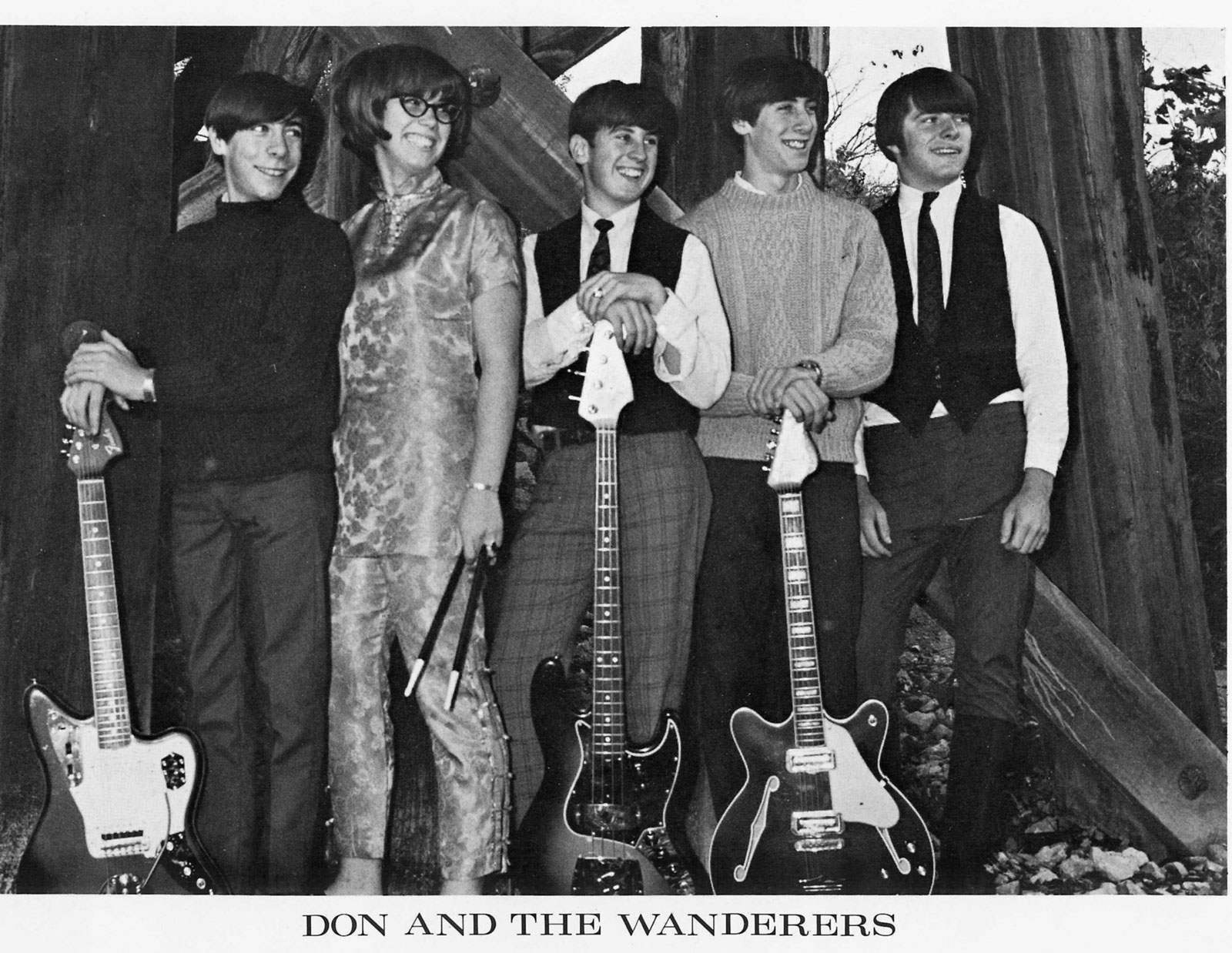
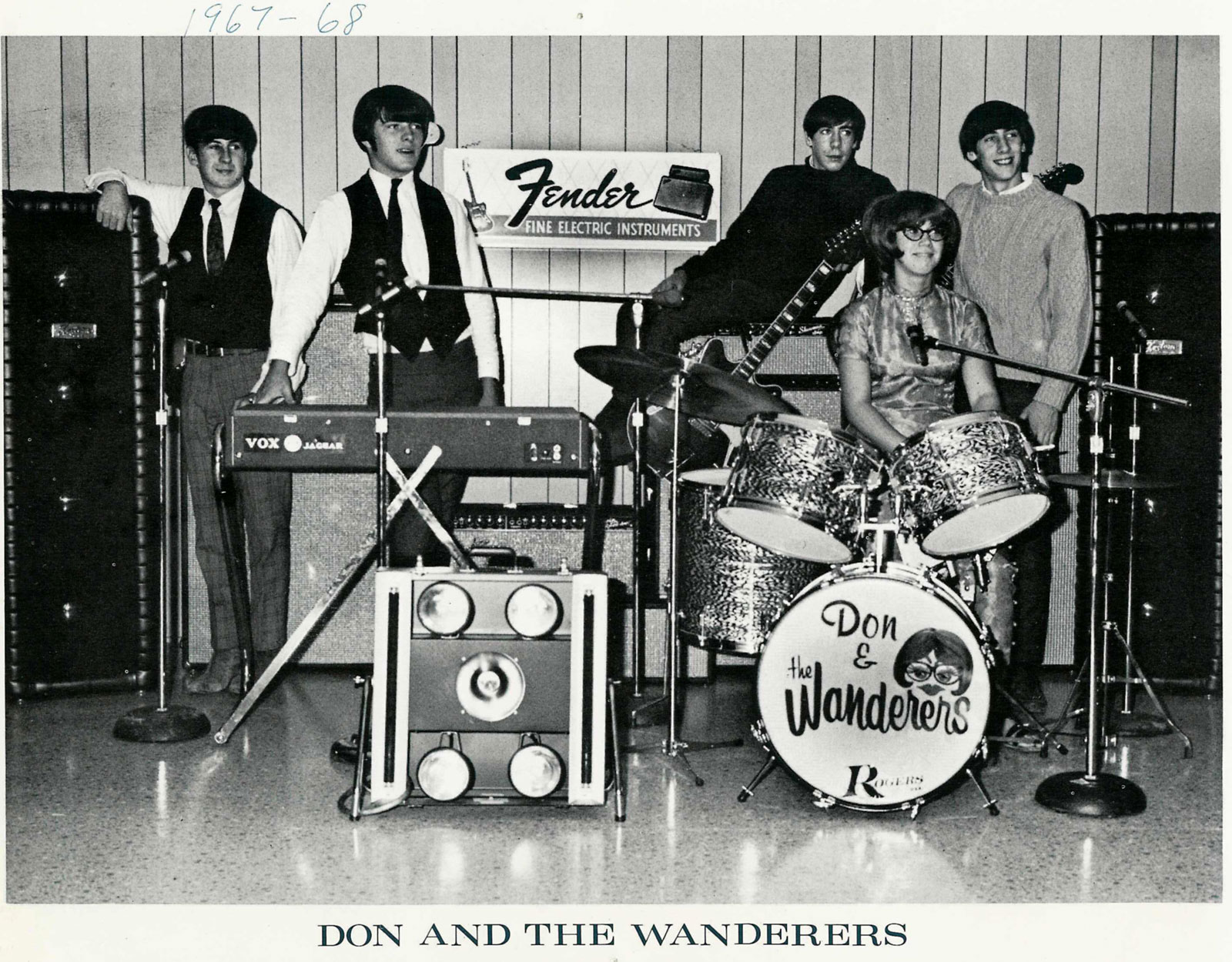
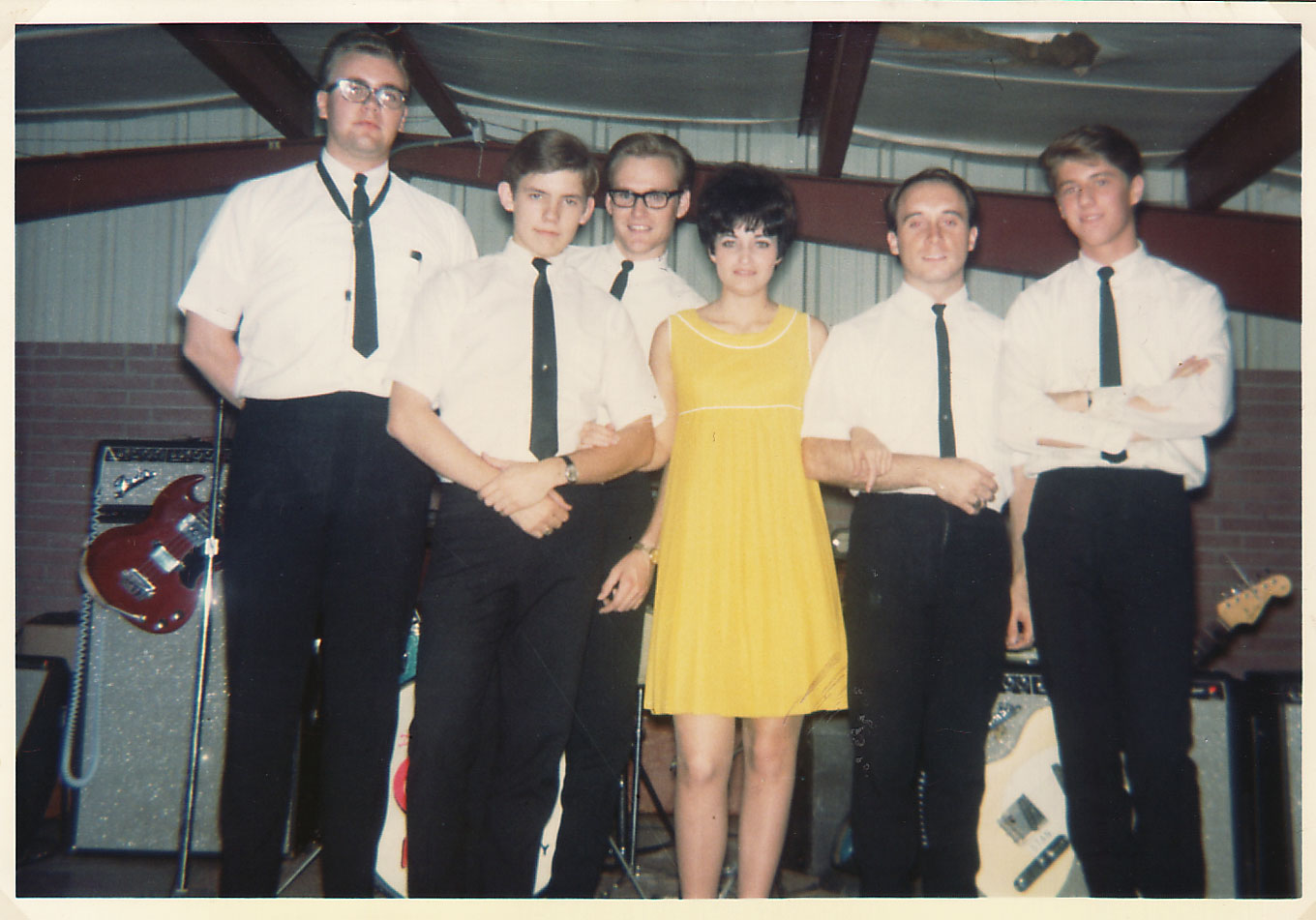
The Wanderers, 1968, left to right: Bob Thompson, Mike Bresnahan, Don Thompson, Jack Petersen, Dave O’Brian
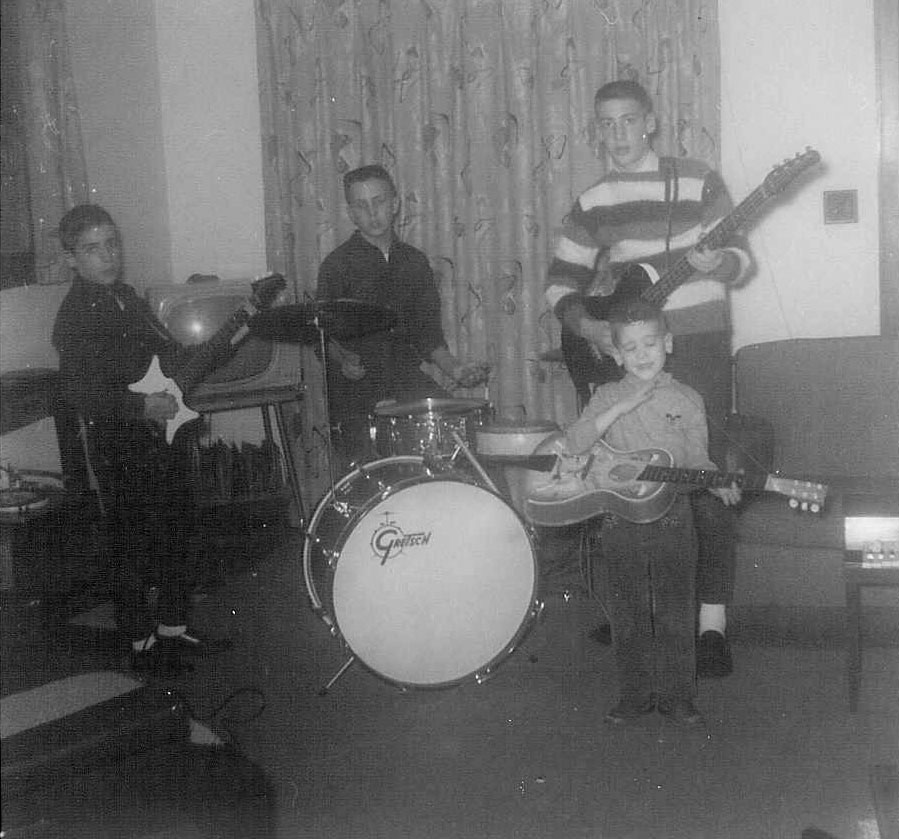
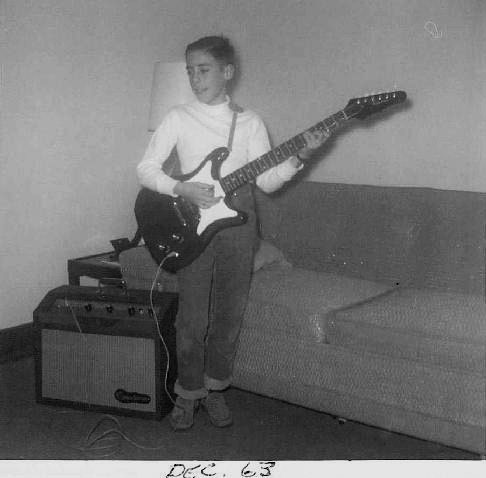
Don Thompson, December 19631964, from left: Robert Thompson, Tom Devers and Don Thompson
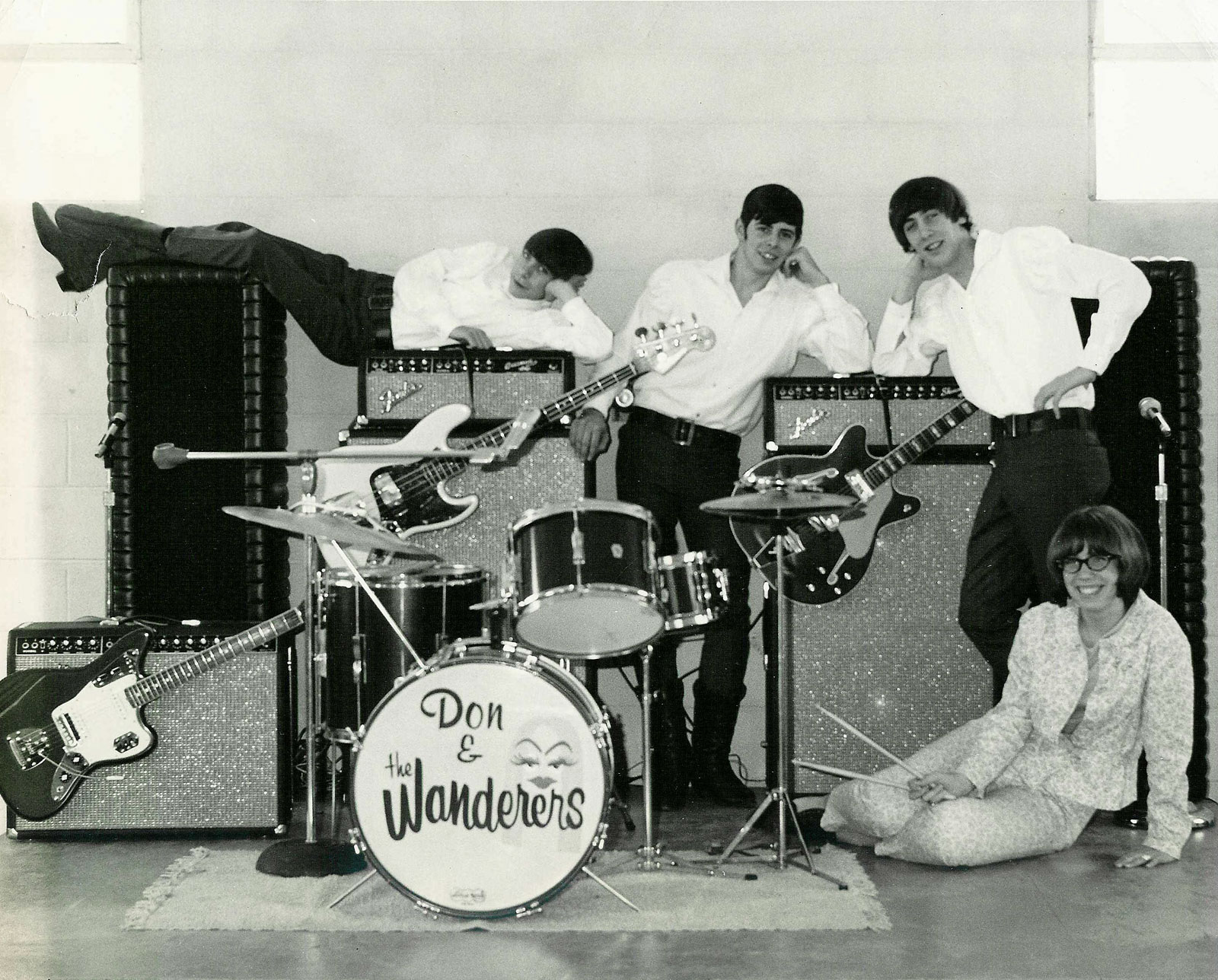
Don and the Wanderers were from Belding, Michigan, about 30 miles east northeast of Grand Rapids. Brothers Don Thompson and Robert Thompson founded the Flying Mustangs in 1963, with Don on guitar and his brother Robert on bass. They changed their name to Don and the Wanderers in 1964.For the next seven years the band would practice in the Thompson house. Their father Russ Thompson became their manager once they started taking paying jobs.
The band’s first drummers were Steve Whitford then Tom Devers. In 1965 the band added Jayne Traynor on vocals, and a rhythm guitar player. The following year Janet Sinclair became the drummer. In 1967, Jayne left the band and Dave O’Brien joined on keyboards. At this time Robert Thompson moved to rhythm guitar and Michael Bresnahan joined on bass. Bresnahan had been taking lessons from Robert, and his first group was Davy James and the In Men from Grattan.
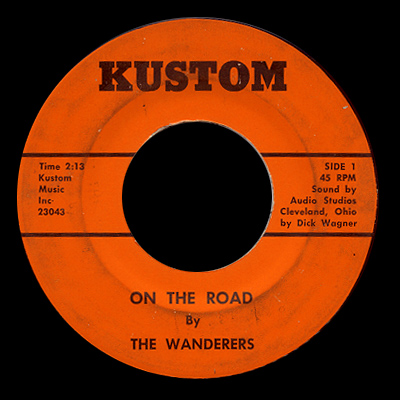
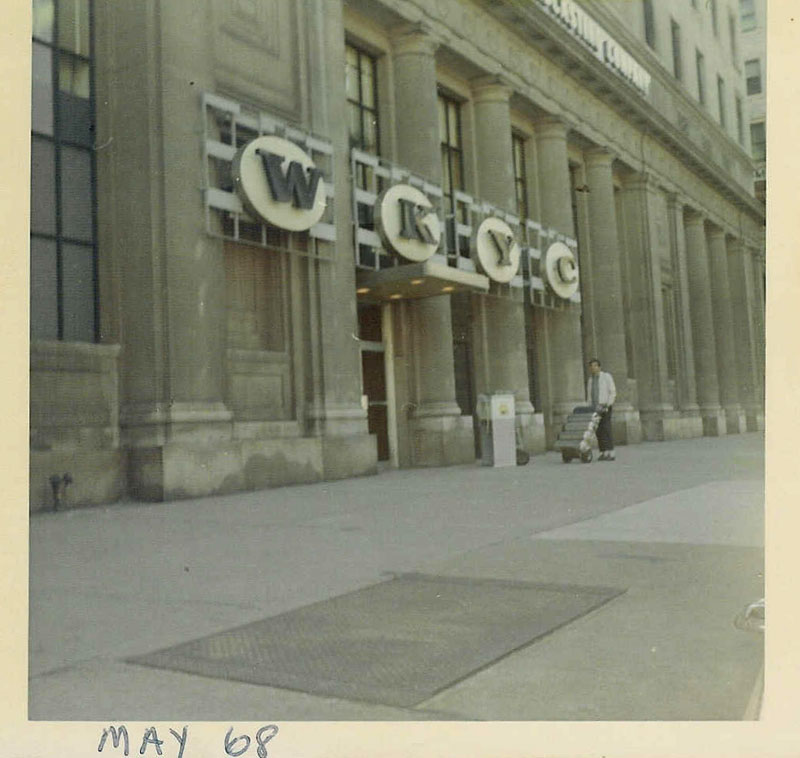
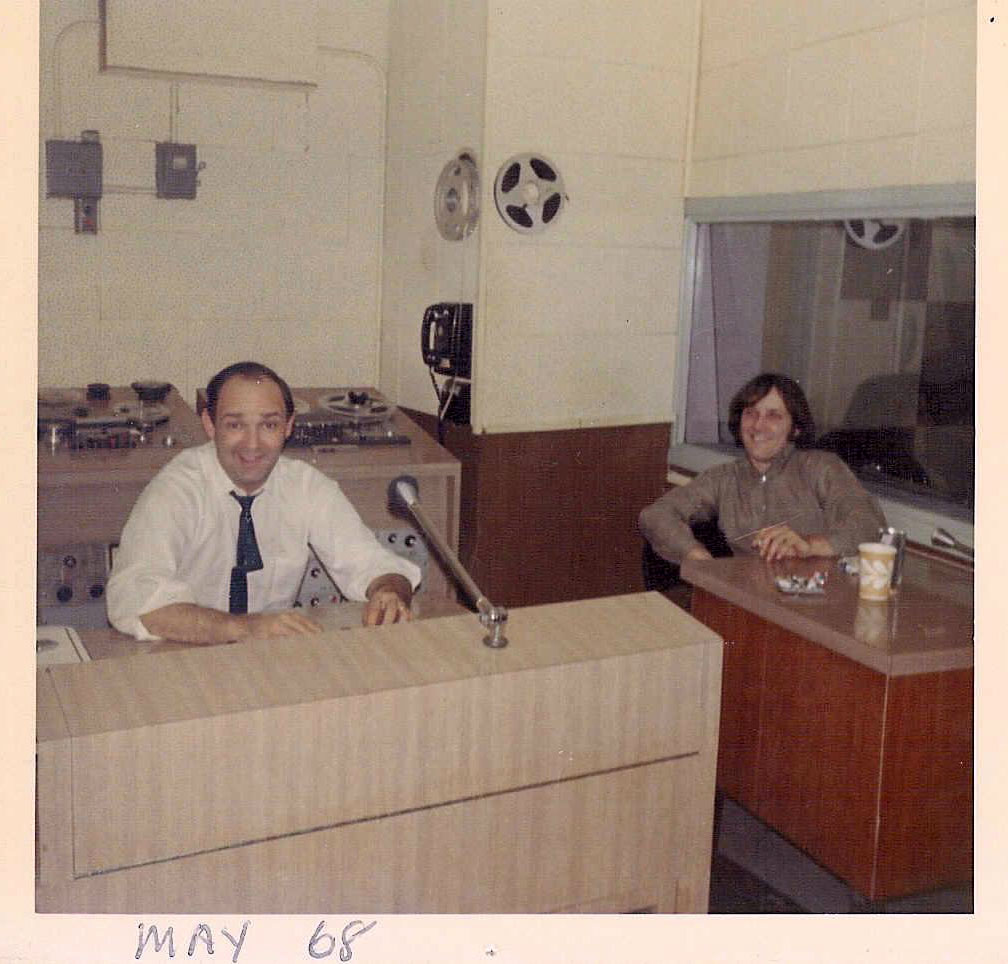
Their only 45 was recorded at Audio Studios downstairs from the WKYC station in Cleveland in Spring 1968, and released with an orange Kustom label.
Producer Dick Wagner had them cut his original song “On the Road” for the A-side, a song he had done with the Bossmen the year previously with little chart success. This version has a progressive style for early 1968, with elements of the heavier sounds that were coming over the next few years.
For the flip they cut a mid-tempo pop number, “Sleepin’ in the Sun”. If it’s a Dick Wagner song, it’s not included in his BMI listing. The transfer featured here has better sound than the 45, and is also about twelve seconds longer, as the 45 fades earlier. They pressed 500 copies, selling more than 400 of them.
The band continued until 1972, playing many of the same clubs as Ted Nugent, Bob Segar, and The Frost.
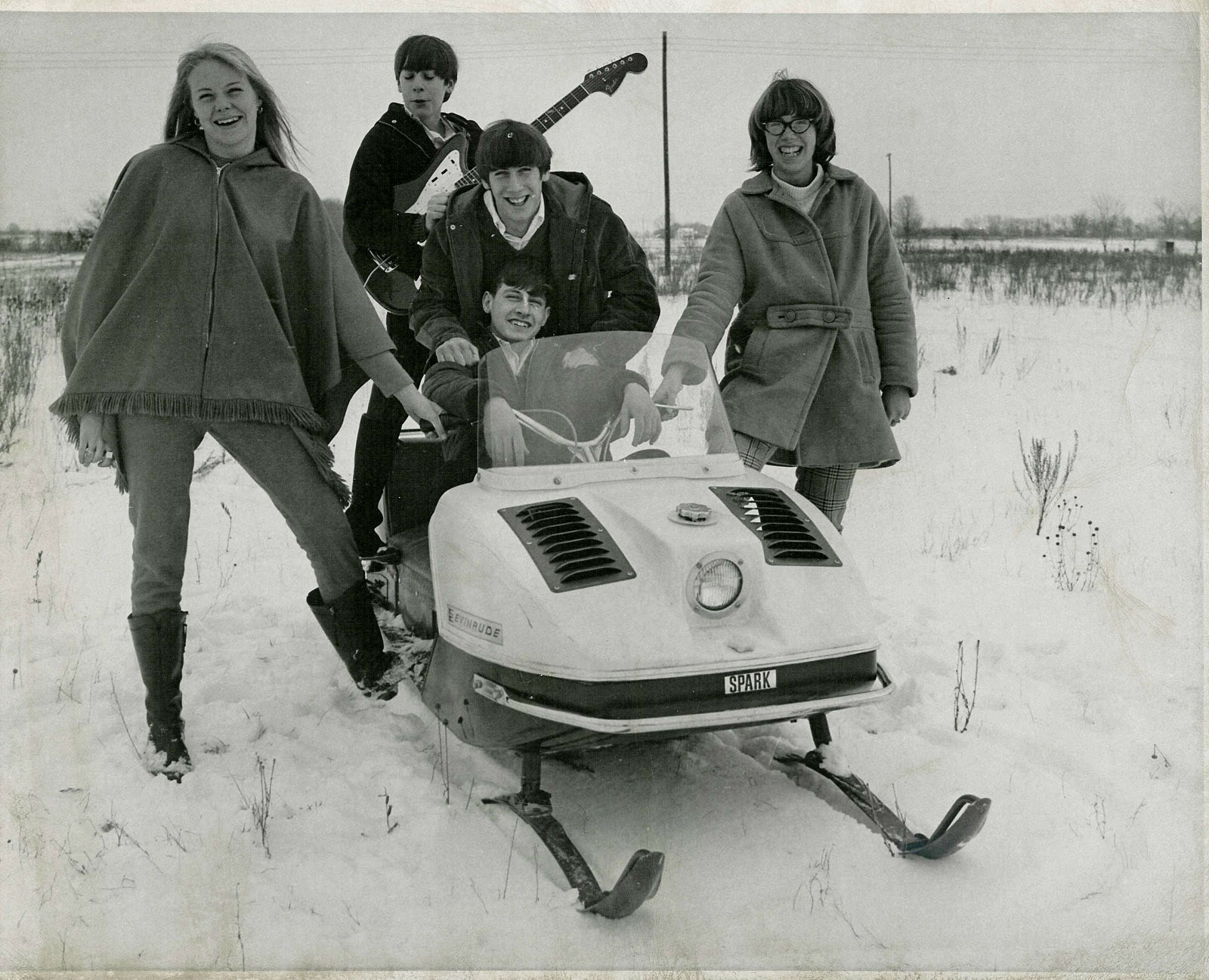
L-R: Bob Thompson, Jayne Traynor, Don Thompson, John Goodsell and Ted Trudell on drums.
Don Thompson told me more about the Wanderers:
I started playing guitar in August of ’63 at age 10. Been doing it ever since. The band started out with my brother on bass and me on lead guitar and we just added members as we went along. Starting with the Ventures and grew into top 40 and then to heavy metal if you could call it back then. Led Zeppelin, Hendrix, The Doors, SRC, Amboy Dukes towards the end.
1966: Jim Wilson on rhythm guitar, Jayne Traynor, Don Thompson, Bob Thompson and Janet Sinclair on drums.Left to right: Jayne Traynor, Don Thompson, Bob Thompson, Tim Harris on keyboards, and Janet Sinclair.As a quartet: Don Thompson, Steve Connor on bass, Bob Thompson now on rhythm guitar, and Janet Sinclair.Late 1967, with new members Michael Bresnahan and Dave O’Brien
My father managed the band, built our band trailers, drove us to gigs, handled everything about the band. He had a gift of listening to a song on the radio, and could predict what song was going to be a hit. He’d buy the 45 record, and made sure we had our parts down and ready for each practice, and by the time the song hit #1 we already had it in our song list. I remember dad as one who took a chance on a 10 year old kid wanting to play guitar. He didn’t know if I had any talent or if I would stick with it, but he bought the best guitar to make sure I had a chance to learn on.
He made sure we worked, got paid for what we did, and we used that money to invest in better equipment. He taught us to do our best. Dad was not just our manager, but wore many hats, driving sometimes for hours in snow storms to get us to gigs and then hours to get us home. All the old band members I keep in contact with, say he was their friend. Not many teenagers would say that about most adults.
In West Michigan in the ’66 to ’69 era there were The Quests, Lynn & the Invaders, and the Soul Benders that recorded 45’s. Another great band was the Rainmakers out of Traverse City. It was very competitive back then.
We were a working band, most years we would have at least 45 to 50 weeks booked somewhere. Back then, every high school sponsored after-game dances. There were teen clubs all over Michigan to play. We played all over Michigan, from the west shores, South Haven to Traverse City, Rose City, West Branch, Bad Axe, Lansing, Detroit, just about any town that had a teen center, we’ve played it.
In 1966 there was a huge teen center in Grand Rapids called “The Place”. We won some of their Battle Of The Bands and we opened for the Music Explosion at The Place. I think that was sometime in ’67.
In August 1969 we were the opening act for Alice Cooper, in Hastings, MI. The name of the club was The Cobra. We had a wall of Kustom 3×15 cabinets and PA. Alice and the band got there, and realized the club didn’t provide a PA for them to use. The club was set up with a stage at each end of the main room. We did our first set, and wheeled our PA to their stage for their first show. The management had sold tickets for two shows, so they cleared the building and we did our second show for the late crowd, and wheeled our PA back for their second show.
I remember was Alice was in a really good mood and started swinging his (our) mic and the connector came loose and Alice launched our mic across the room and it hit the wall. Needless to say it didn’t work after that.
We met Dick Wagner through our booking agent. It was really important at that time to do a record for local radio play, so we met Dick, and he sold us the two songs we did, and he produced them. “On the Road” was side one and “Sleeping in the Sun” was the flip side. I was 15 at the time, it was huge to actually be making a record.
We recorded the songs in Cleveland and at the time of the recording Janet Sinclair was our drummer. The lead guitar intro on “On the Road” was done using a Fender Telecaster, a Mosrite Fuzzrite and recorded at half speed and played back full speed to get that octave up. I guess it was not cutting edge for the time but was effective.
We recorded on half inch tape and then transferred to 1/4 inch tape. The studio didn’t transfer just the masters but transferred all the takes so when the record company got the tape, they had no idea which was the master and didn’t bother to call us to see which take was the master, so we ended up with 500 45 RPM records with volume drops and gains. The MP3’s I sent were the masters and my brother had them done just last year from the original tape.
The record did get some local airplay, as did most of the local bands, [though] not as much as the Grand Rapids bands. At least we had the experience of recording and being part of that era. That was our only recording, we never did try it again.
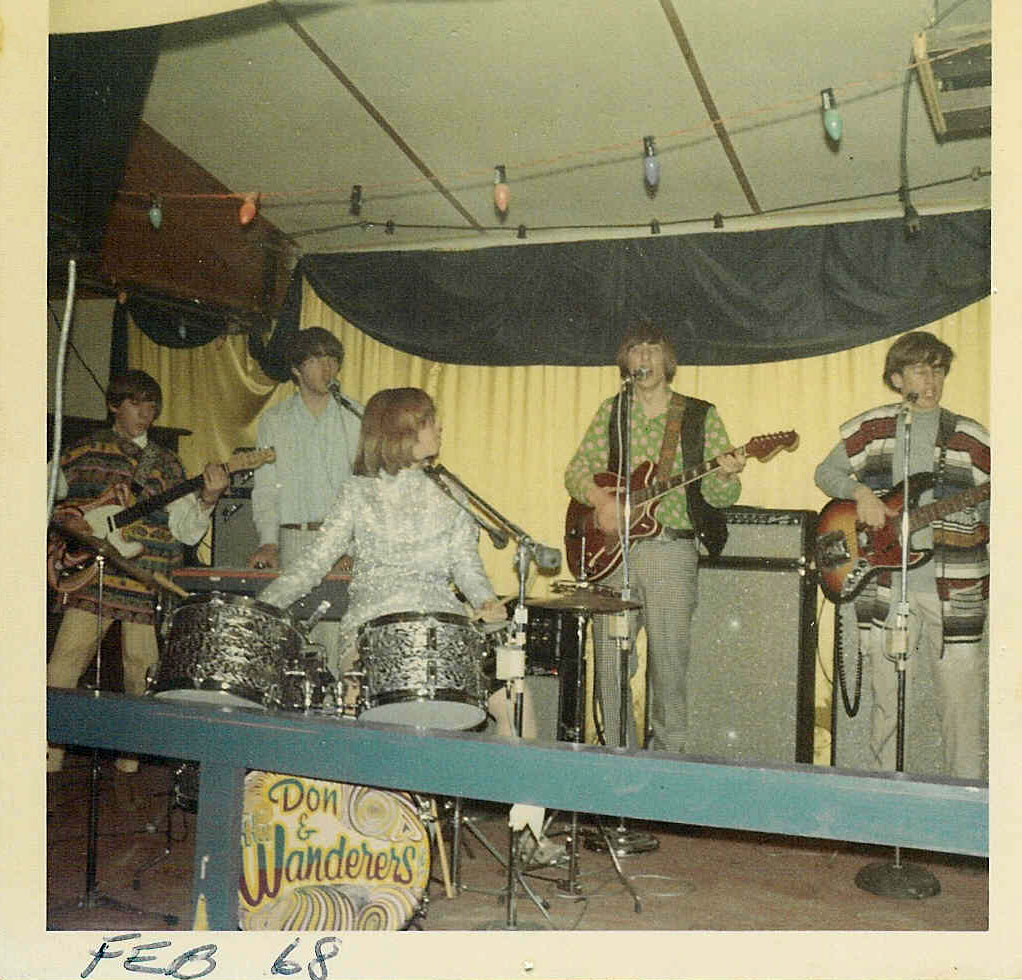
As the photos show there have been lots of members over the years, I guess you have to make changes when they want something different. Some stayed for a few years, some made it less than a year. I’ve have the pleasure of working with lots of talented people through the years, yet marked with a lot of tragedy. The keyboard player and his brother were killed in a car accident in 1971, our main bass player’s brother joined the band on guitar in 1970 and was killed years later in a crane accident. Jayne was killed in a car accident in 84, so I guess I’m the lucky one.
Janet left the band a month after the recording and we replaced her with Jack Petersen. Jack and I are still working together playing music 40 years later. The Wanderers photo and 45 record are displayed in our Belding Museum. Never thought I’d be displayed in a museum while I was still alive!
One of my last bands was called exit 69 and I had a female singer onboard on that project. We worked for seven years and she and her family just moved to Texas. There are six tunes on the site that we recorded in the bass player’s spare bedroom, one person at a time is all that would fit, but I think it turned out a good demo.
My newest project is called LoRyder, we concentrate on all the one hit wonders of the 60’s and some Beatles. It’s funny how we can play songs 40+ years old and people in their mid 20’s will be singing right along with the band.
As far as what we are doing today, Bob now works for Negri Bossi Injection Molding Machines in Michigan and surrounding states. Don is an Independent agent for Aflac and holds a patent and manufactures the Tremorbender B String Bender for electric guitars – www.tremorbender.com. Janet is married, lives in Florida and still drums, and has several grandchildren who are musicians. Mike is in Everett, Washington and is an electrician. Jack is now semi retired.
Don Thompson, November 2009
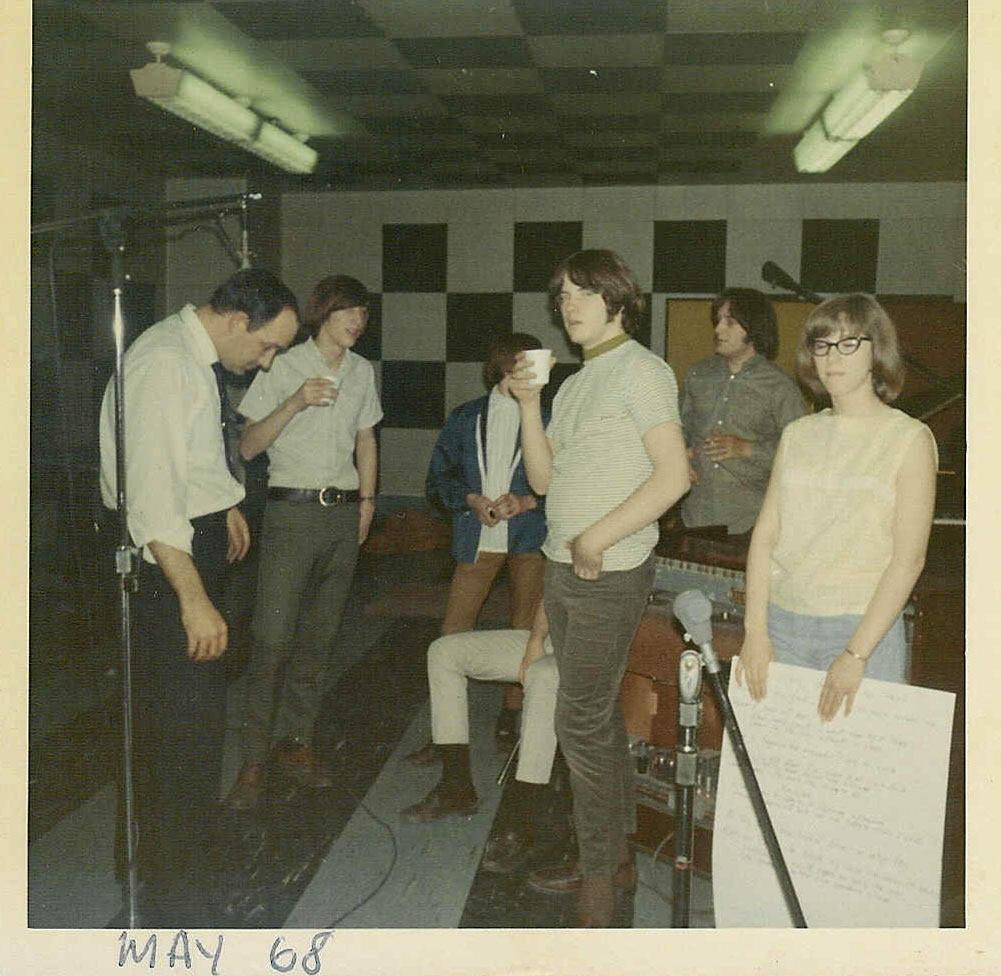
February, 1968, just before recording the 45WKYC in Cleveland, home of Audio StudiosAudio Recording, unidentified engineer and Dick WagnerIn the studio with Dick Wagner, second from right in back. Janet holds lyrics to one of the songs.
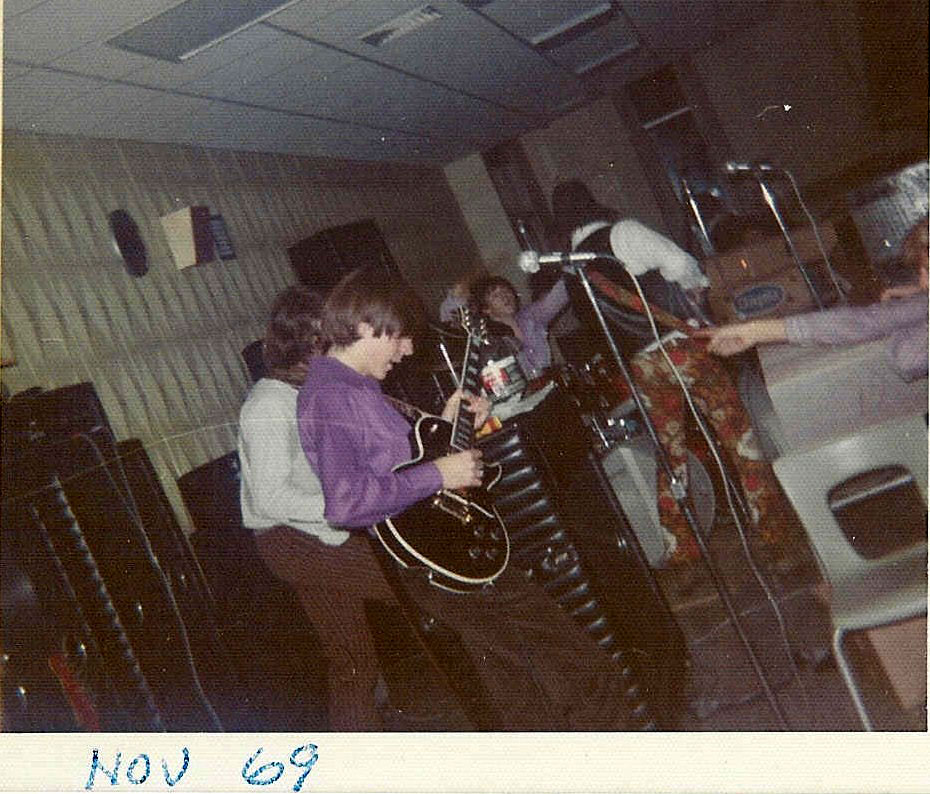
Don Thompson, 1969
In 2007 Don and the Wanderers featured in a local Daily News article.Thanks to Mike Markesich for the 45 scans, and special thanks to Don Thompson for sharing his photos and band history.
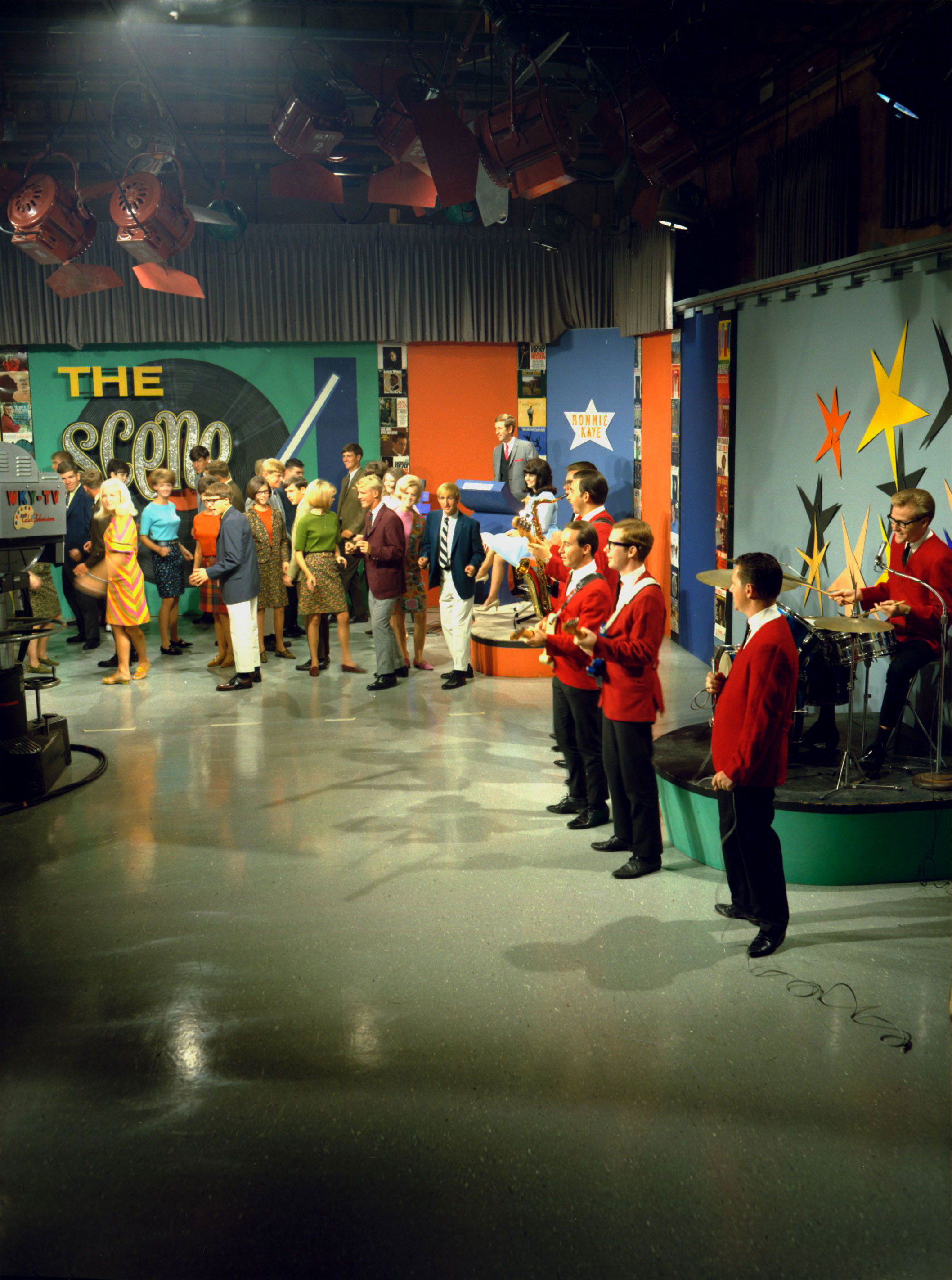
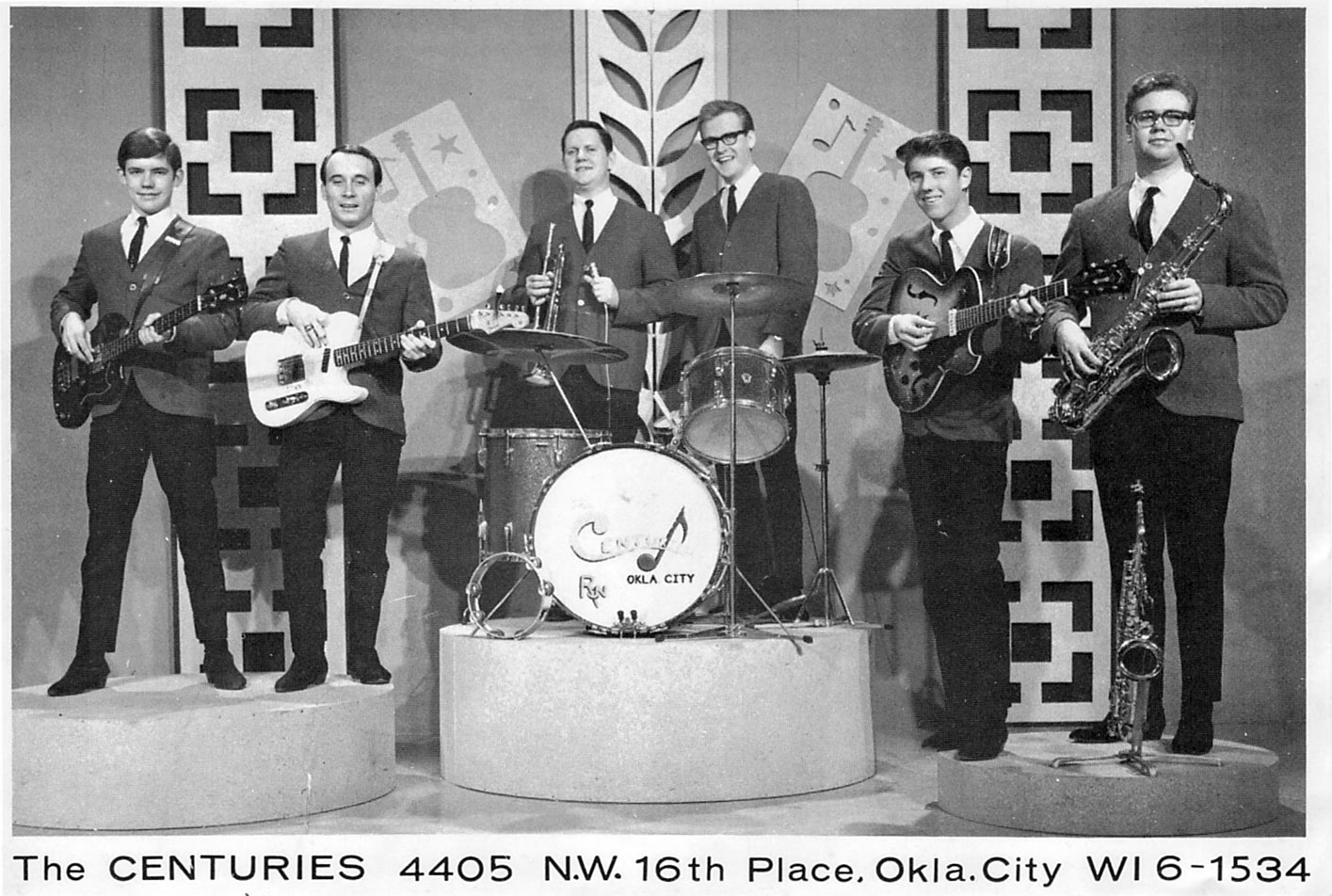
The Centuries, late summer 1966. Recording The Scene TV show, hosted by WKY deejay Ronnie Kaye.
The Centuries were a major group in the Oklahoma City area during the 1960’s, regularly appearing at local hops and clubs, opening for touring acts and guesting on a TV show, The Scene. Recordings taped for The Scene show exactly how well the band could cover songs of the day. They give “I’m a Believer” the light touch it should have, and really drive “Midnight Hour”, including a guitar solo that is definitely hot!
Though primarily covering songs as a live act, their two records feature all original songs by band members Irmon Gray and Alan Rush.
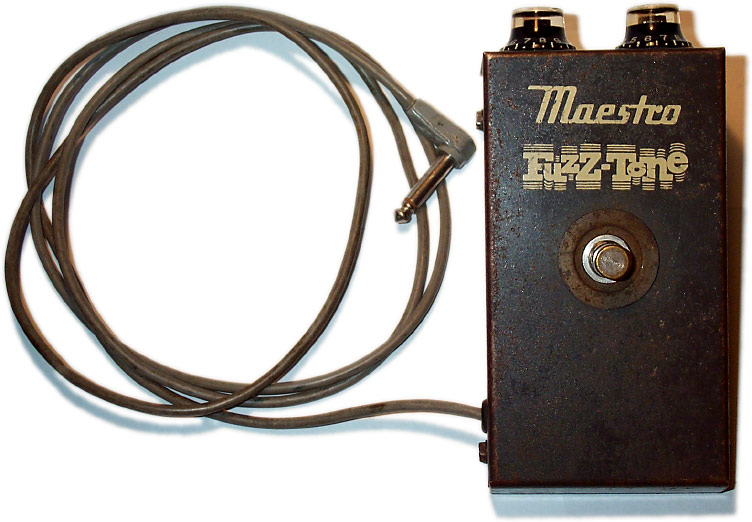
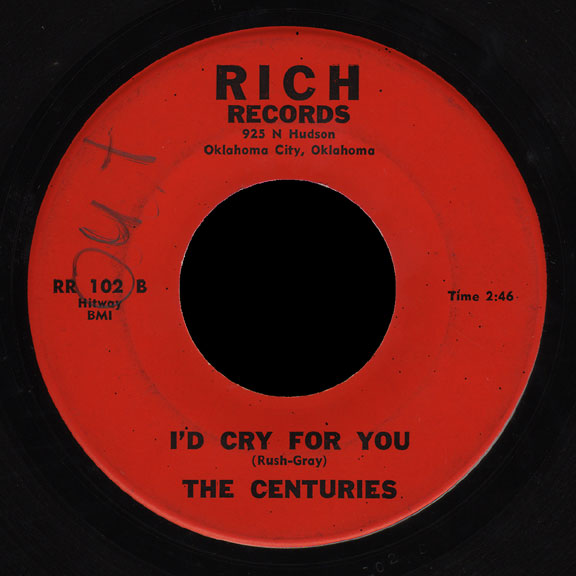
“I’d Cry for You”, the B-side of their first single uses a fuzztone on guitar to accent the relaxed vocals. This is one of the first recordings ever to use the Gibson Maestro fuzz tone pedal. Cut in October of 1963, not long after the Ventures used the Maestro on “The 2,000 Pound Bee”, the opening note bend is a wild sound for that time, though the song wasn’t released until 1965.
Lead guitarist Stan Stotts gives the history of the group:
Historical Perspective
Rock n’ Roll was born in the 50’s, but its formative “teen” years were the 60’s. In the Oklahoma City metro area alone there were probably two or three dozen active bands. The most popular musical instrument stores at that time (Sharps and Nichols, Woodmansee Abbot, Driver Music, etc.) saw the demand for electrical instruments increase dramatically, so much so that some had greater sales in supplying for rock bands than they had for school marching band instruments which had been their mainstay.
Teens were so desperate to dance they would settle on almost anything that resembled music. The IONE branch of the YWCA held a teen dance every Saturday evening to raise money for a new building. The first time I attended a dance they had only one guitarist named Farland Stanley (he would later play bass for the Road Runners) and a drummer who stood while he played his one snare drum. The duo performed basically the same three instrumental tunes every 45 minutes for three hours and nobody cared because the only criteria for music was, “Does it have a good beat?”
The YWCA didn’t have a bandstand so the musicians played on the floor. When The Centuries had the privilege of playing there, we “upgraded” by hauling three large wooden tables in my dad’s pickup to the IONE building and setting them up to form a temporary stage. I also remember that this was the first place I ever received applause for a song I played. It was “Rumble” by Link Ray and I can’t think of a song that was any simpler to play. The kids thought I was a great guitarist because I could play it just like the record.
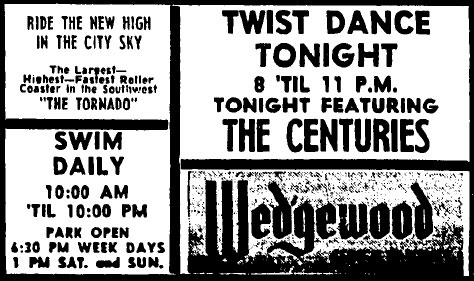
The first time I ever saw a live rock n’ roll band play a dance was in May, 1961, during an all night, city wide, Junior/Senior dance at Wedgewood Village Amusement Park. The two bands (The Road Runners and The Nightbeats) alternated playing from evening to the next morning inside the Bumper Car pavilion. This was the first time I heard Jim Edger and The Road Runners play and I’ll always remember their really cool rendition of the song “Little Egypt” by The Coasters.
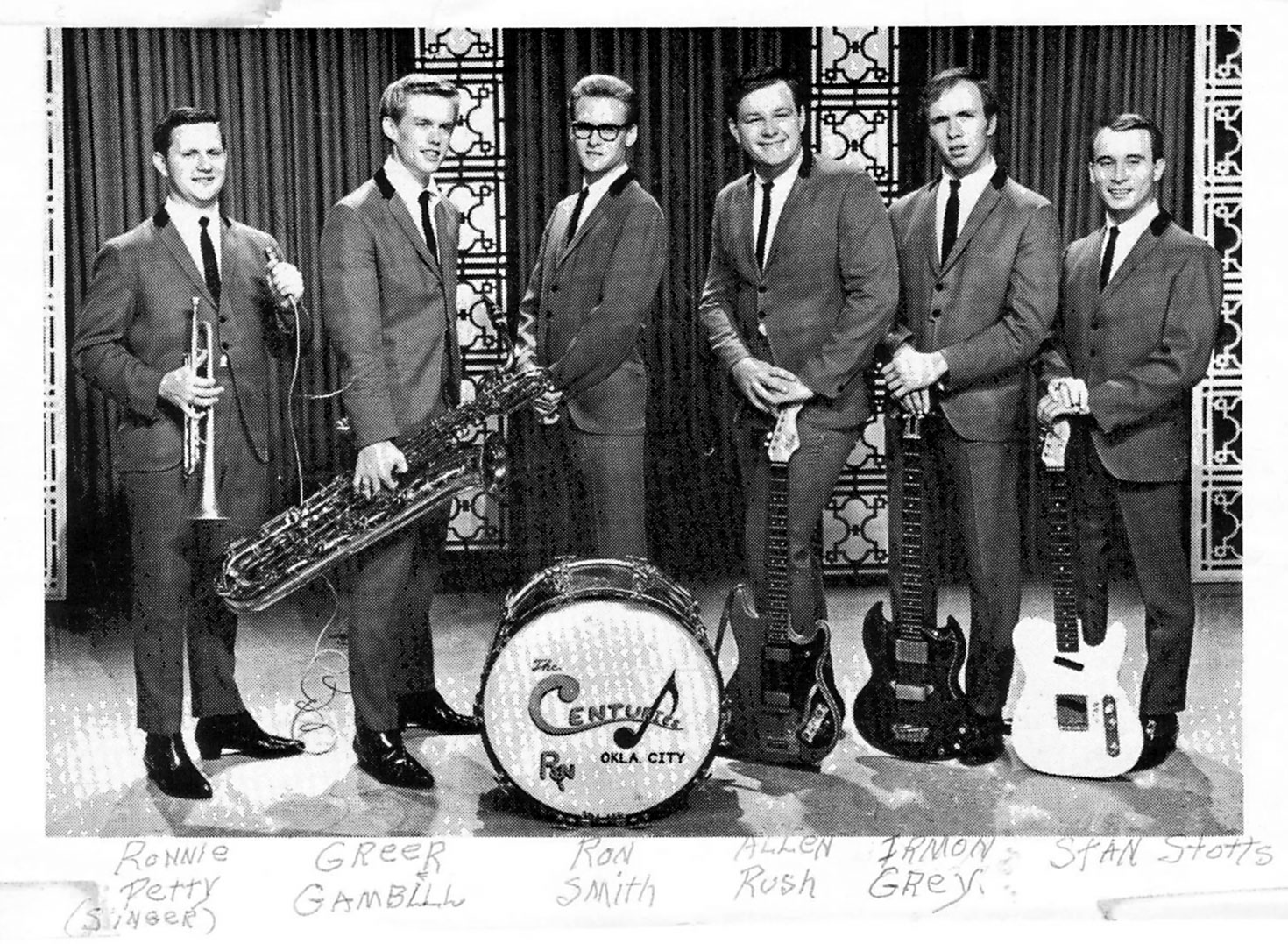
The Centuries, five-piece instrumental lineup, early 1963. From left to right: Irmon Gray, Stan Stotts, Ron Smith, Greer Gambill and Alan Rush.
The Centuries – Early Years as an Instrumental Band
The band originated in Oklahoma City, OK, and all members were from there. Ron Smith and Stan Stotts started the band in 1961 while in high school and remained until the end in October, 1969.
During Stan’s junior year (1960-1961) at Northwest Classen High School, he and a friend he had known since grade school got together and played guitars. The friend had a party at his parents’ house one weekend where he and several other “musicians” played while the others watched or danced. While at the party, Stan was introduced to a drummer named Ron Smith and the three of them decided to form a band. Ron knew of a car club named The Centuries and thought that would be a good name for a band and that was what the group would be called for the next nine years.
They only knew three or four songs, all instrumentals, and their only gig was a New Year’s Eve party for Ron’s girlfriend’s uncle where each was paid $5. The friend was not as interested in devoting the amount of time it would take to develop the band so the group eventually broke up.
During the summer of 1961 Stan worked at a Humpty Dumpty super market and while there met a Putnam City student named Alan Rush who also played the guitar. Alan invited Stan over to his house one night after work to listen to a group called The Ventures. Alan came from a family of musicians and was truly a natural talent. Stan was hooked on rock and roll and although he was not blessed with the level of talent that Alan had, he was able to learn a great deal from him since they got together several times a week to learn new songs.
Stan brought Alan and Ron together and they decided to form the second incarnation of The Centuries. Even though Ron and Stan had ability, Alan was the one who really knew music and how all the different instruments fit into the mix. For instance, when Alan suggested they needed a bass man to complete the group, Ron and Stan debated the need for another “guitar.” Fortunately, Alan won out. He thought a friend of his would be a good match for this position so Irmon Gray became the first bass player and thus, The Centuries became a true rock band. Since Alan had the musical prowess, he was instrumental in giving musical direction, but Ron, always the businessman, became the de facto “leader” of the band. The foursome played wherever they could and practiced continually. One of the highlights was being hired ($40) to play for a Northwest Classen assembly.
In early 1962 Alan mentioned he knew a really good sax player from Putnam City named Greer Gambill. So, they added a fifth member to the band. This added a new dimension to the band’s sound and immediately expanded their repertoire of songs. But how could a band that played nothing but instrumentals continue to be booked? First of all, Rock n’ Roll was really starting to snowball and the teens wanted more of it and would, quite literally, dance to just about anything that had a beat. Secondly, the dance craze was intensified due to the release of “The Twist” by Chubby Checker. Many other groups jumped on the Twist bandwagon causing the phenomenon to continue much longer than most fads do.
One such group was Joey Dee and the Starliters. Their house song, “Peppermint Twist (Part 1)”, became the number one song in the United States for three weeks in January 1962. Ron and Stan got to see The Starliters perform when they came to Oklahoma City on February 14, 1962. The point is, like most things, the ability for The Centuries to continue as a band while they grew and “honed” their musical skills in the early years was, in addition to a lot of hard work and steadfast determination, a matter of being in the right place at the right time.
The Centuries six-man lineup with Ron Petty, September 1965.
Adding Vocals – Ron Petty Joins
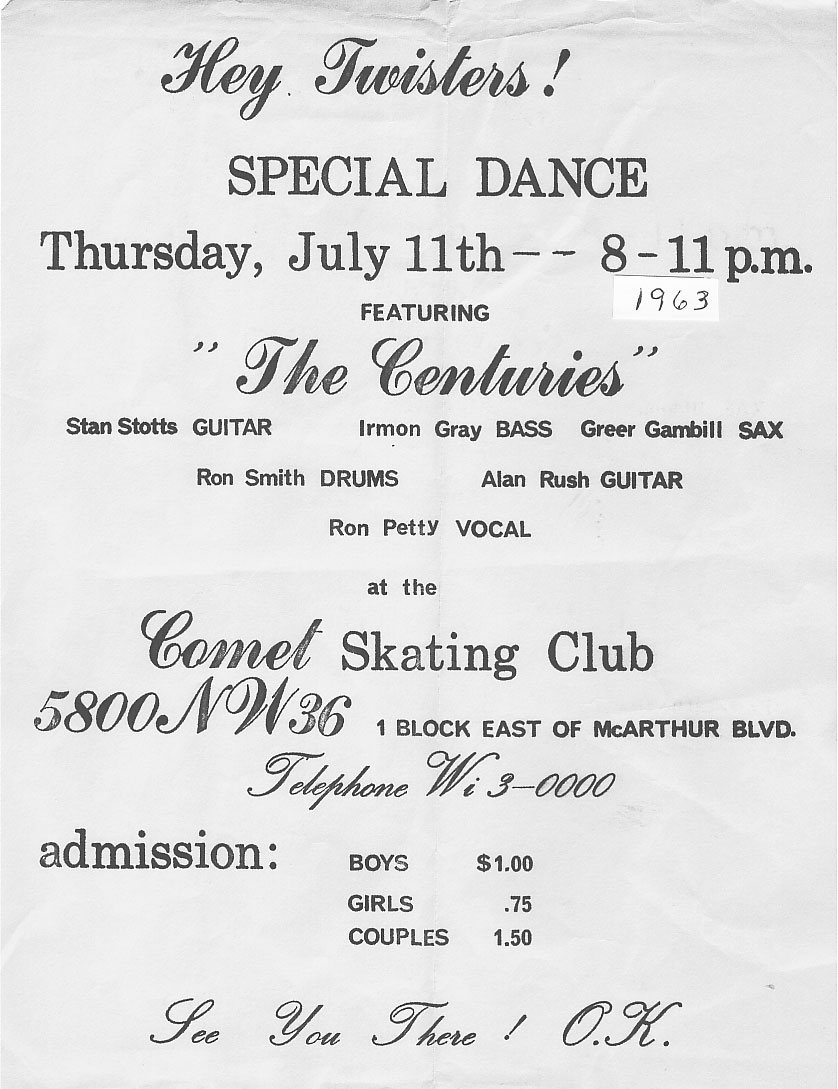
Ad for appearance at the Comet Skating Club, July 11, 1963.A band called the Catalinas had a lead singer named Ron Petty who could sing just like Elvis and Roy Orbison. They had released a recording called “Cha Cha Joe” / “Echo One”. The Catalinas were known for having a female guitar player, which was unique at the time, but they hired Wesley Reynolds to play the lead guitar and a local group called the Kimberley’s to supply background vocals during the recording session of “Echo One”.
Petty tried out for The Centuries and was immediately hired during the spring of 1963. This addition brought the band full circle because now they could play any song on the charts, not just instrumentals, and besides he had a sound system. The first new song they learned with Petty as the lead singer was “Rhythm of the Falling Rain” by The Cascades. Also, while “Cha Cha Joe” was still on the charts the band would play it at dances with Alan on drums and Ron Smith on the bongos.
With so many members and so much equipment, the band decided to get a vehicle and trailer to travel in. They bought a used, black 1954 Chrysler limousine from a local funeral home, had the band name painted in silver on the sides and purchased an enclosed trailer also painted silver. They didn’t know it at the time, but that rig became somewhat of an icon across the state since most of the other bands drove their personal vehicles to a dance.
Ron Smith could sing with the best of the soul music entertainers of the day and Alan, even though his voice was softer, could sing high harmony. Also, Petty could play the trumpet well enough to assist Greer when a “big band” sound was needed. This meant they could hold their own with any band in the state when it came to reproducing the sound of the Beatles, Orbison, most soul music, and especially the Righteous Brothers. By the way, the one thing that made The Centuries different than most bands was the intentional effort to mimic a song as closely as possible to the original. They had such a mix of talent it was possible to do so most of the time.
They needed a tune to play while announcing that they were going to take a break or that the gig was over. A song titled “Hold It” by Bill Doggett was chosen and it eventually became kind of a theme associated with the group.
The Centuries Play The Scene
The main events during this time, at least in Oklahoma, were the teen hops sponsored by WKY radio and their KOMA competitor. The Centuries played mostly for WKY hops hosted by various dee jays, but primarily with Don Wallace and Ronnie Kaye. Ronnie Kaye had a local version of American Bandstand called The Scene, produced at the WKY-TV studios. It was taped at 11:00 am on Saturday mornings and then aired that same day at 1:00 pm.
The Road Runners performed live on the first show; however, the sound engineer didn’t have a clue how to properly mike a rock n’ roll band. Consequently, the quality of the sound was less than adequate and that was a shame because they were one of the best, if not the best, hard rock band in the state. From that point on, most, if not all, bands pre-recorded their music and lip-synched.
The photo [at top] was taken from the control room thus showing the band, camera’s and teen dancers and the host. It’s a great representation of 1960’s Americana and shows our signature, collarless red blazers, black felt Beatle Boots and the clothing and hair styles of that period.
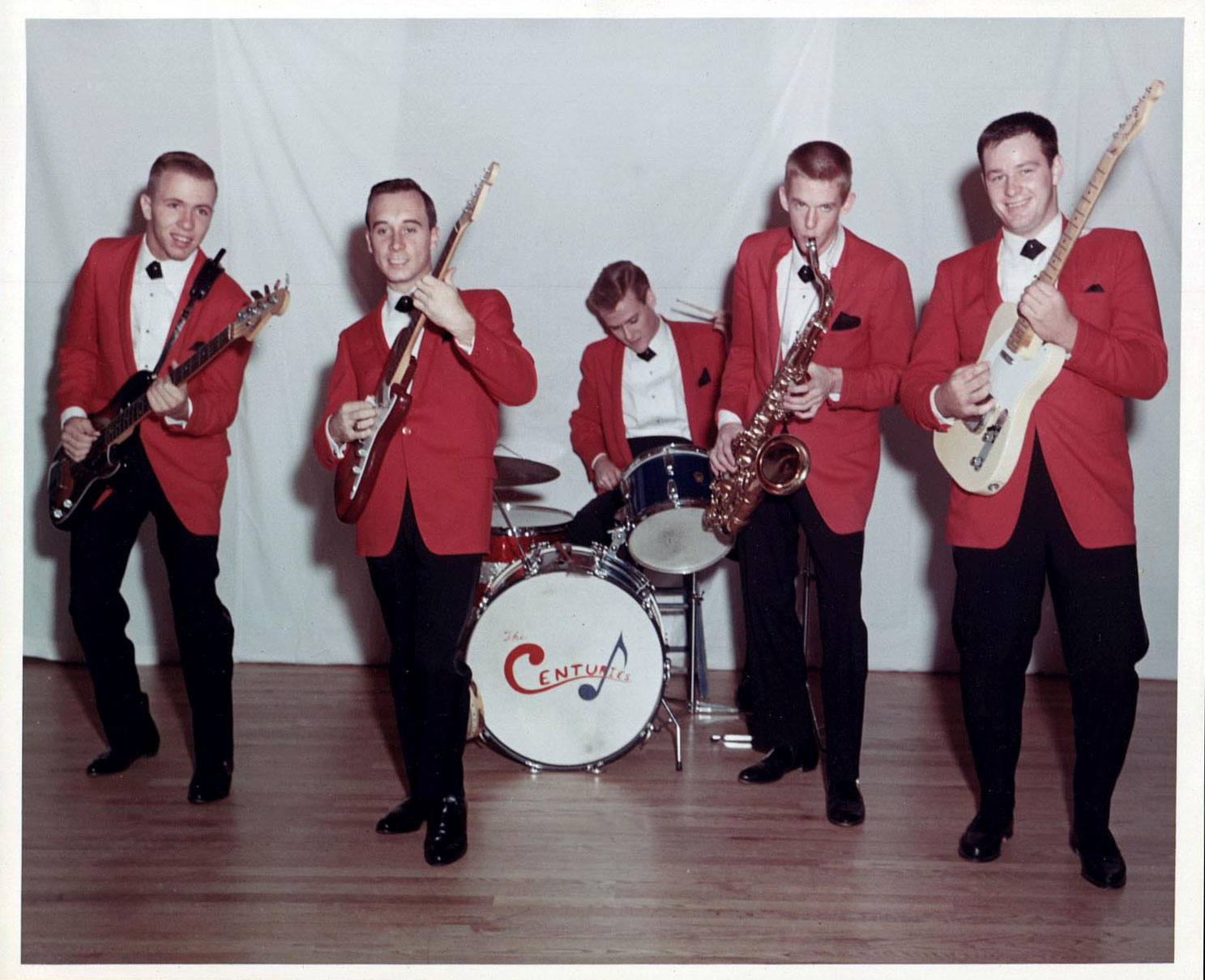
We are wearing our signature collarless red blazers, black suede “Beatles” boots and, as you will see, from the way the kids are dressed, its quintessential 1960’s. Also, in those days, the main attraction in Oklahoma were dee jay sponsored teen hops held in various towns across the state. By far, Oklahoma City based WKY was considered the best with the top dee jays being Ronnie Kaye and Don Wallace during the mid 60’s. We were fortunate to be one of the few bands that Ronnie, Don and the other dee jays used regularly.
Recorded at WKY radio station, Oklahoma City, 1963 to be used on The Scene:
Slippin’ and a Slidin’ – The WKY radio station recording studio was mainly used to record ads and promos. We were there was to record some tunes for Ronnie Kaye to be used as background and lead in music for his various promos. I guess we decided to take the opportunity to record some of our music as well. I do know that “Slippin’ and a Slidin'” was the first song I tried the Fuzz Tone.
Night Train – The only recording I know of that has Greer Gambill playing the sax.
A Fool Is What I Am – Our first attempt to record a song Alan and Irmon wrote. Although this was not a commercial sounding tune it’s what motivated us to seriously try to create tunes we could release which led to “Lonely Girl” / “I’d Cry For You”.
Even though The Scene was recorded, due to cost constraints Ronnie was forced to start reusing the tapes so, unfortunately, there are no videos available except for the last season or two which went into the early seventies. Ronnie Kaye is still a dee jay for our “oldies” station, KOMA. They had two reunions of all of the 60’s bands in 1994 and 1995 and that was the first thing I asked him about.
The Centuries, mid ’64
Our Look and Musical Equipment
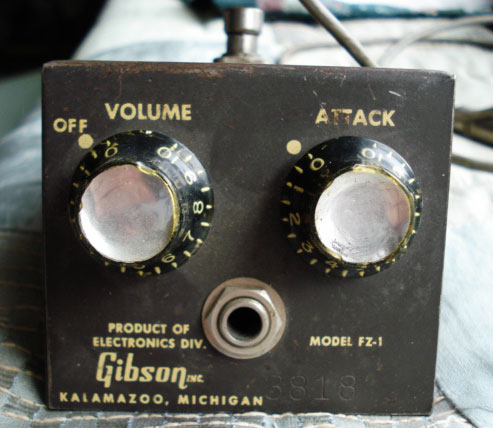
Gibson Maestro Fuzz-Tone
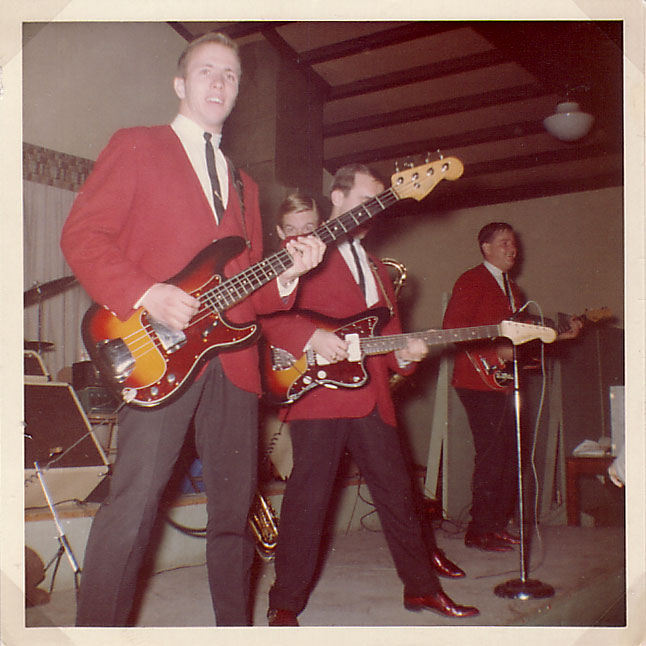
Our very first “uniforms” were white shirts that had “The Centuries” and our first name embroidered on the pocket. When we became a five-man group, we worked out a deal with Sir Knight Formal Wear to provide tuxedo pants, shirts and bright red coats. After that, we wore black pants, white shirt, black tie and collarless red blazers with candy-apple red patent leather shoes.
After the Beatles came out, we dropped the red shoes for black suede boots like they wore. We then got shiny green suits with black velvet collars like the Beatles and wore those until Alan and Irmon left. After that for the most part, we stayed with the white shirts, black tie, black pants and the collarless red blazer when it wasn’t too hot wear it. When the band ended, the Nehru jacket look was in so our final uniforms were yellow jackets with a Nehru collar and black pants.
Gibson Maestro Fuzz ToneAt one time all of the guitarists in the group had matching Fender Band-Master amplifiers and Fender guitars. However, after the Beatles came, Alan decided to try something different and got a Hofner guitar and Irmon purchased a Hofner bass exactly like the one Paul McCartney used. They got an okay sound, but the quality was much less than what a Fender or a Gibson could produce. Breaking a string while playing was simply a hazard of the business, but on occasion, Alan’s Hofner would appear to explode when one of his tuners (used to tighten a string) would come apart from the tension and parts would fly across the stage.
I, on the other hand, was a Fender man all the way. During the first years of the band I owned almost every model of guitar that Fender offered at the time except for my favorite, the Stratocaster. I don’t remember why I never bought one. I owned and played a Duosonic, JazzMaster, Jaguar and finally a Telecaster. My final guitar was the Telecaster which I eventually customized by reshaping the body to fit like a Stratocaster, changed the color from the standard cream to a metallic blue, replaced the standard chrome bass pickup with another Telecaster lead pickup, had a customized pick guard made with my name on it and replaced the standard Telecaster neck with a Jaguar neck that had a rosewood fret board. I used a Fender Band-Master amp with two 12” Jensen speakers for a while and then changed to a Fender Super Reverb with four 10” Jensen speakers. When it finally quit working, I upgraded to another Super Reverb with four 10” Lansing (silver cone) speakers.
As far as the other members are concerned, the only thing I know is that Ron Smith preferred Ludwig drums and Bob and Greer preferred Selmar saxophones.
I can only speak for myself, but the major influence for me, musically speaking, was Alan Rush. Although I had taken lessons for several years from a local guitarist (Julian Akins), if it had not been for Alan’s willingness to teach me how to really play the guitar, I doubt I would have ever touched it again. The artists that influenced my style the most were The Ventures, Freddy King and a local player named Wesley Reynolds. Wesley knew how to play a Fender Stratocaster to its fullest and had a style all his own that I admired and could immediately identify just by hearing. One of my favorite songs to play was Wesley’s “219 84th Street”, which, in case you didn’t know, was the home address at that time of the WKY Dee Jay Don Wallace.
The Centuries with Sandy Posey, 1967.
Live Highlights
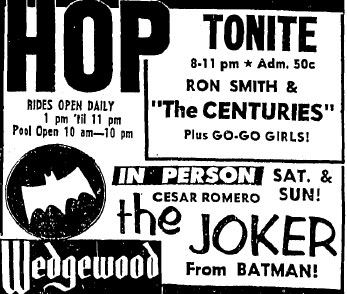
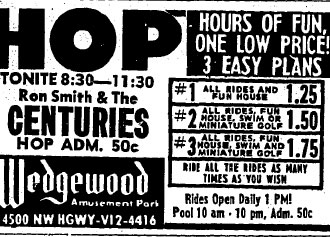
Ad for the Centuries at the Wedgewood, July 24, 1963Another venue was teen hops every weekend at Wedgewood Village Amusement Park on Northwest Highway. Many big named acts (Paul Revere and The Raiders, Hermans Hermits, Mitch Ryder and The Detroit Wheels, etc.) came there as well.
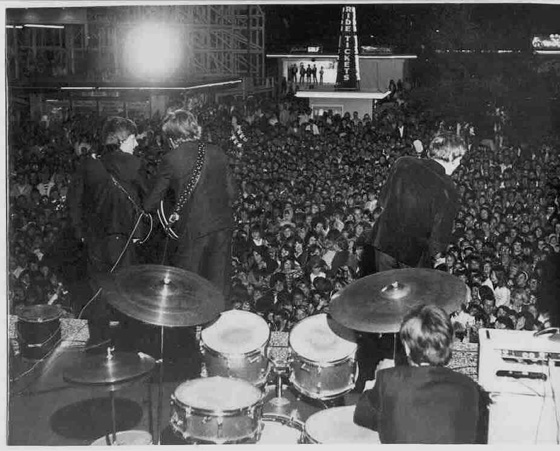
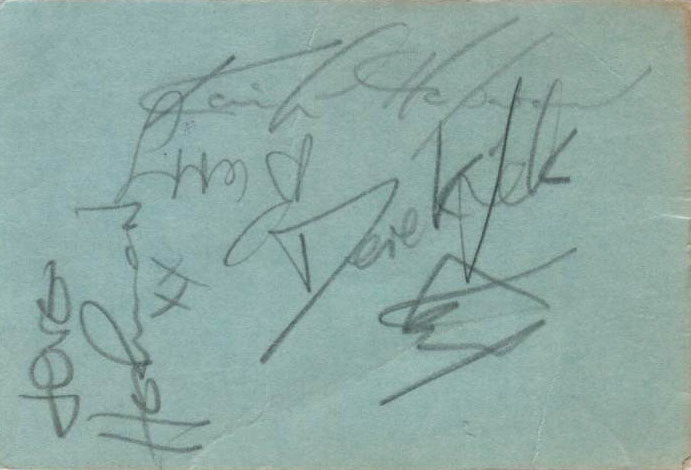
We were the lead-on band for Herman’s Hermits on April 27, 1965 at Wedgewood. It didn’t have a stage area that would accommodate the estimated 8,000 people who came to see the two shows (7:30 pm and 9:30 pm), so we were put on top of the swimming pool building, which looked down over the park. We were so far away and the sound was so bad it took the audience a few minutes to figure out we were not the Hermits. I still have the two tickets we were given to gain entrance to the park with the autographs of all the Hermits, including Peter Noone.
Herman’s Hermits playing on top of the pool building at Wedgewood, 1965At Wedgewood Village we backed up Del Shannon for his show on August 8-9, 1964 and for a new singer called Sandy Posey on June 9-11, 1967. Sandy was a real trial for me because it was the first time I had to go it alone working with a non-band member without Alan.
We were the lead-on group for Mitch Ryder and the Detroit Wheels when they performed at Wedgewood Village on July 22 1966. I must admit this was the first time I really felt intimidated because his guitarist (Jim McCarty) was so good that I was actually embarrassed to go back on stage after they played each set. Fortunately he was very gracious and actually complemented me on my guitar style. I knew he was just being nice but it helped regain my confidence just the same. Mitch Ryder was a class act the whole time he was there. For instance, his drummer used Ron’s drums and played so hard that he busted the snare drum head. When the concert was over Mitch told the drummer to pay Ron for the drum head and he said he would do it before they left. Mitch said “pay him now” knowing that otherwise the drummer would “forget” to do it.
The Centuries’ First Single
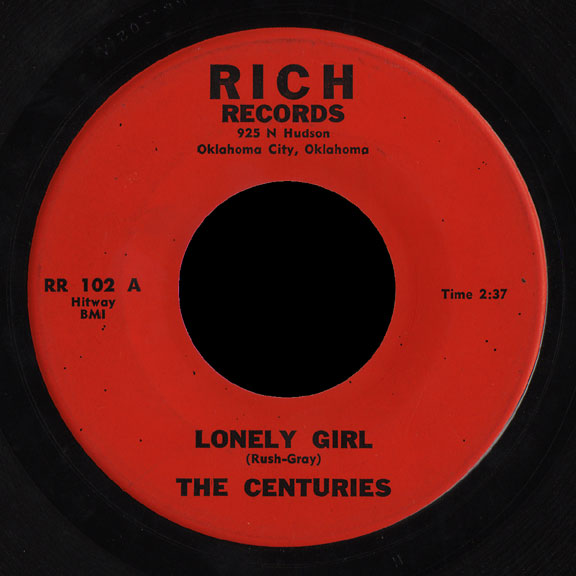
During the summer of 1963 Alan and Irmon started writing songs and the group decided to record some of them. They were not pleased with the recording facilities available in OKC and couldn’t afford the ones in Dallas so it was decided to record at an up and coming studio in Hot Springs, Arkansas called United Southern Recording Studio. In the Fall of 1963, the group recorded five songs co-written by Alan and Irmon and were working on releasing two of the tunes (“Lonely Girl” and “I’d Cry For You”) through the RICH record label sometime in late 1963 or early 1964.
However, the owner, Jack Rich, held back releasing it because he said “something bigger than Elvis was about to hit the music industry”. Ron Smith remembered thinking he was stalling for some other reason because “nothing could be bigger than Elvis”! The “something” turned out to be a group called the Beatles. It wasn’t until the summer of 1965, after the initial British Invasion had begun to subside, that it was decided to release the record.
The record did well in the local market, but the music scene had shifted greatly by this time and, although the song was well written and produced, it’s pre-Beatle doo-wap sound probably sounded a little dated thus there was no interest in releasing it nationally. The record may not have made it to number one but it probably would have been very successful if it could have been released nationally 3 to 4 months before the Beatles. How it happened we don’t know, but “I’d Cry For You”, the B side to “Lonely Girl”, made it to #42 in Flint, Michigan in 1965.
Recorded at United Southern Recording Studio, Hot Springs, Arkansas. Fall, 1963:
Lonely Girl – written by Alan Rush and Irmon Gray
Ron Petty – Lead vocal Alan Rush – Background vocal, rhythm guitar (acoustic) Ron Smith – Background vocal, Drums (Ludwig) Stan Stotts – Lead guitar (Fender Jazzmaster) Irmon Gray – Bass Bass (Fender Precision Bass) Greer Gambill – Sax (Selmer but not on recording)
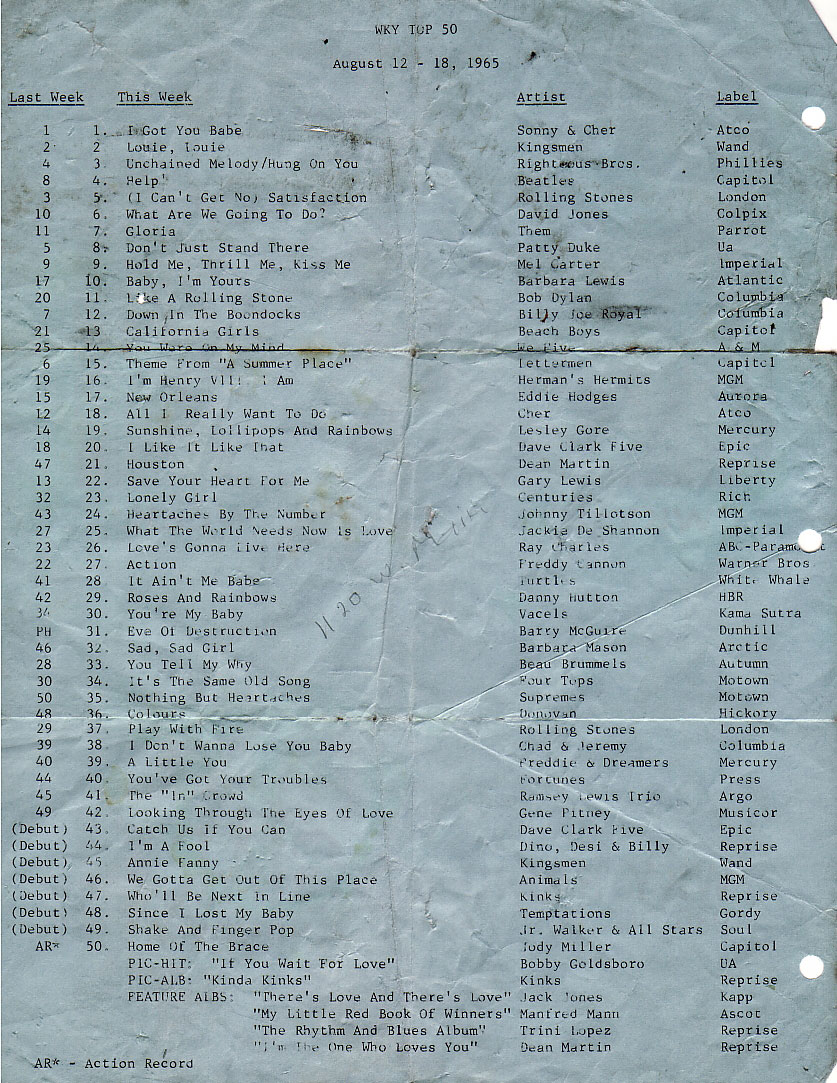
“Lonely Girl” reaches #23 on WKY’s Top 50, August 12, 1965I’d Cry For You – written by Alan Rush and Irmon Gray
Ron Petty – Lead vocal Alan Rush – Background vocal, rhythm guitar Ron Smith – Drums (Ludwig) Stan Stotts – Lead guitar (Fender Jazzmaster using a Maestro Fuzz-Tone) Irmon Gray – Bass (Fender Precision Bass) Greer Gambill – Sax (Selmer but not on recording)
Actually, over the years, many people who heard the record, whether they knew the group or not, usually said they preferred “I’d Cry For You”. It was a little unique since it was decided that Stan should use the new FuzzTone he had just purchased to give it more of an edgy sound. Although it will never be known for sure, perhaps, the wrong side was released.
But, on the bright side, as a local band, the arrival of The Beatles was a real boon for the group because they could mimic them and most of the other English groups to a tee. From that point on they played nearly every weekend during the school year and probably around 80% to 90% of the days during the summer breaks.
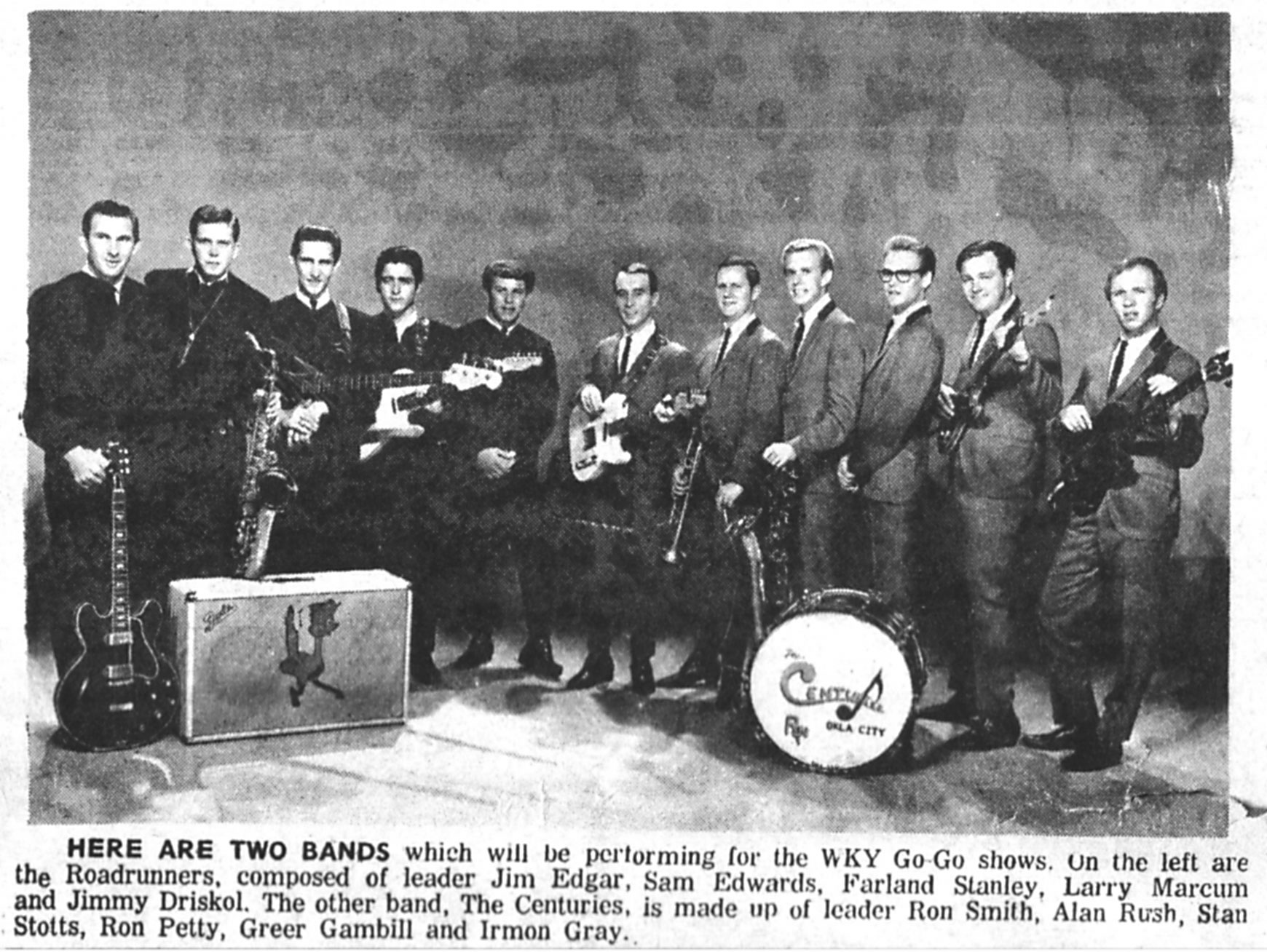
The Centuries with Jim Edgar and the Road Runners, WKY Go Go Show, September 1965
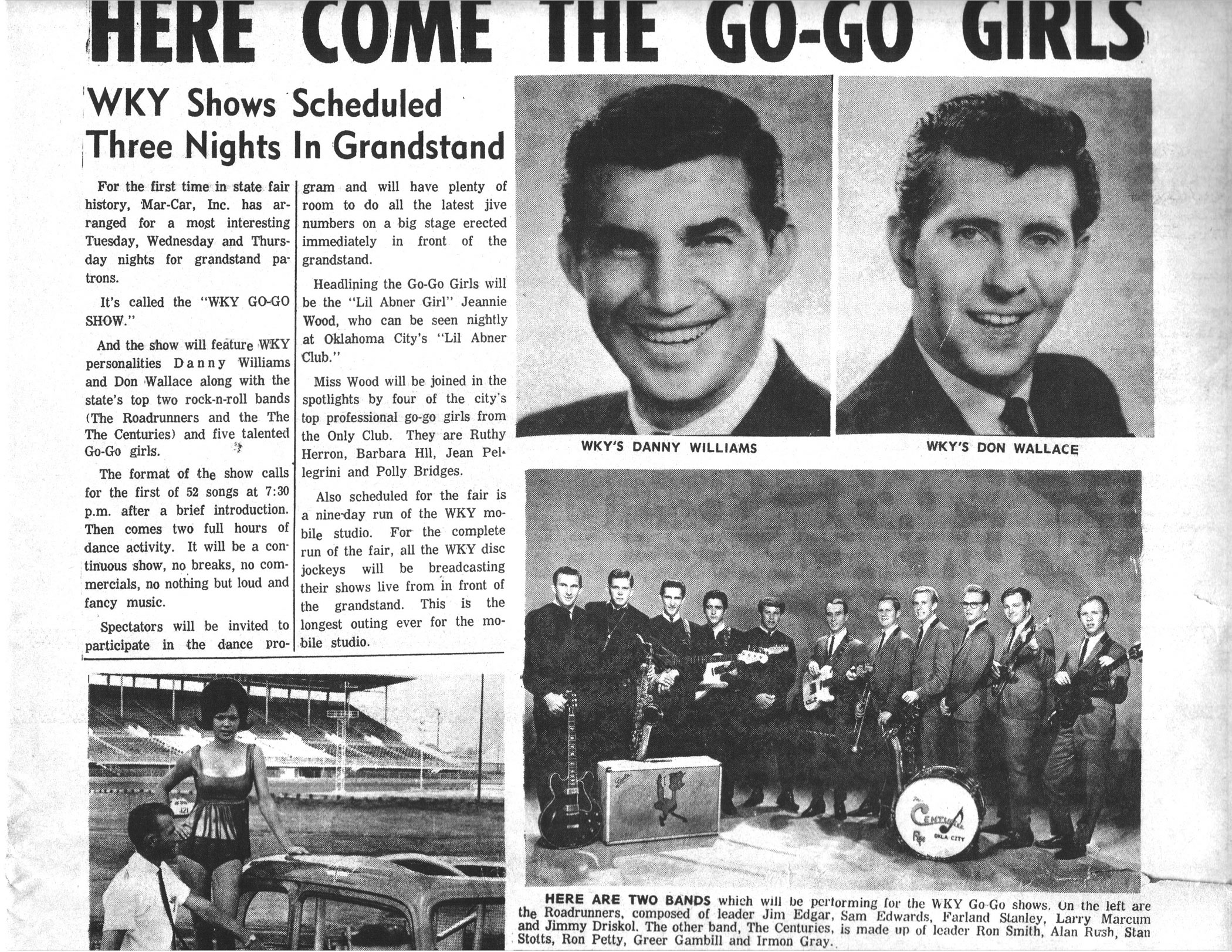
The only time I know of that the Roadrunners and The Centuries were on the same stage at the same time was for an event called the WKY Go-Go show held at the State Fairgrounds race track on September 28, 29 and 30th, 1965. The radio personalities emceeing the show were Danny Williams and Don Wallace. I remember one of the stunts performed during the show was to set fire to a rag put inside Greer’s sax just before he would take the lead in a song. I’m sure we said something “cool” like “that is really one hot sax” while he performed.
Greer Gambill had to leave for military service around the beginning of 1966 and was replaced by Bob Mills who was a music major at Southwestern State College in Weatherford, OK. Bob was a talented saxophonist and, as it was discovered later, pretty good on the piano as well. He was somewhat shy at first, but a hard worker and it didn’t take long at all for him to fit in.
ad for the WKY Go Go Show, September 1965
The Second 45
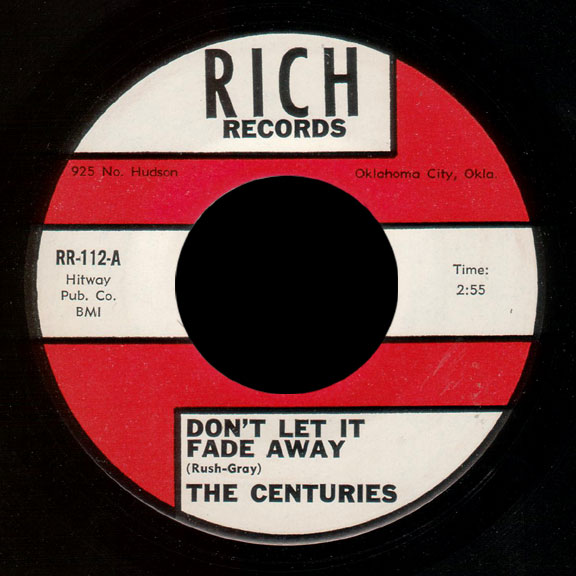
Alan and Irmon continued to write songs and became friends with a couple of guys in Del City who converted their garage into a fairly sophisticated recording studio (A&W Recording Studio) where the group recorded two more of their songs that had a commercial sound – “Don’t Let It Fade Away” and “Just Today”. We were much more of a rock band than our recordings show.
Recorded at A&W Recording Studio, Del City, OK. Spring, 1966:
Just Today – written by Alan Rush and Irmon Gray
Ron Petty – Lead vocal, Trumpet Alan Rush – Background vocal, Acoustic guitar Ron Smith – Drums (Ludwig) Stan Stotts – Acoustic guitar (Echo with an electric pickup) Irmon Gray – Bass Bob Mills – Sax (Selmer)
Don’t Let It Fade Away – Written by Alan Rush and Irmon Gray
Ron Petty – Lead vocal Alan Rush – Background vocal, acoustic guitar Ron Smith – Drums (Ludwig) Stan Stotts – Acoustic guitar Irmon Gray – Bass Bob Mills – Piano
1966 and After – New Members and Styles
Ad for the Wedgewood, June 1, 1966
After these recordings Alan and Irmon decided they wanted to go in a different direction than the other members. So, on June 11, 1966, Alan and Irmon played their last dance with The Centuries and soon after formed a band called “The AIR”. However, the two songs were released as a single right after they left, so it became a little awkward having a record being played on air but the people who wrote and played on it were no longer in the group.
This was a very stressful time for Stan because he was now the lead guitarist and primarily responsible for figuring out the chord progressions. He wasn’t sure he could do it but, fortunately, he had learned a lot more from Alan than he realized, thus he was usually able to produce when needed. Alan and Irmon were replaced by Clay Mangum (guitar) and Tom Killup (bass).
Ad for the Wedgewood, July 15, 1966Clay decided that attending college full time along with practicing and learning three to five new songs each week was too much so his last night with the band was October 3, 1966. John Whitehead replaced Clay and his first night was October 6, 1966. He was nicknamed “the kid” because the current members were in college and he was still in high school. John was a good rhythm guitarist and could sing some as well. After this point though, things started changing quickly and, in hindsight, it was evident that the band’s days were numbered.
Tom had to leave for military service, which meant that, once again, a replacement had to be found to play the bass. His last night was December 31, 1966. One of the people auditioned was Randy Jenkins who was playing for a group that Bob Mills had also played with called The Marauders. Randy was a pre-med student who was quiet, studious and just an all-around sharp guy. He eventually graduated and became a doctor. At the audition, Randy pulled a Gibson EBO bass out of his case. An EBO was considerably smaller than the Fenders Ron and Stan were used to hearing so they wondered if it could match the big sound of a Fender. It didn’t take Randy long to prove the Gibson could and then some. His first night was January 6, 1967 at a Ronnie Kaye teen hop in Seminole.
The primary recording studio in the 60’s was Gene Sullivan’s on Commerce (25th) Street in Capitol Hill. Three songs were recorded at Sullivan Recording Studio between 1/1/1967 and 3/15/1967:
Midnight Hour – Used during a performance on The Scene TV show and for possible release. This song is more representative of our rock roots and much more like what we played early on. When Petty left at the end of March and Bob at the end of August, we moved more toward the soul sound which what Smith was best at and we had a Hammond B3 organ by then.
Ron Smith – Lead Vocal, Drums Stan Stotts – Lead Guitar Randy Jenkins – Bass John Whitehead – Rhythm Guitar Bob Mills – Sax Ron Petty – Trumpet
I’m A Believer – Used during a performance on The Scene TV show. We chose this song because one it was number one the Billboard Hot 100 on December 31, 1966 and remained there for seven weeks.
Ron Smith – Background Vocal, Drums Stan Stotts – Lead Guitar Randy Jenkins – Bass John Whitehead – Background Vocal; Rhythm Guitar Bob Mills – Sax Ron Petty – Lead Vocal
Please Listen – The one and only song ever written by Stan Stotts had a gritty, catchy intro and a strong follow through. But, we never could find the 3 part harmony it needed in the bridge to sustain the overall sound, which caused it to lose “the sound” at that point. Otherwise, it would have been considered for release. Unfortunately, it was the last of these 3 songs being recorded that day and we ran out of time and recording money. So, we let it go with the intent to work on it later but Petty had to quit the band a few weeks later and it was never pursued again).
Ron Smith – Background Vocal, Drums Stan Stotts – Echo 12 string electric box guitar; customized Fender Telecaster through a Maestro Fuzz Tone Randy Jenkins – Bass John Whitehead – Background Vocal Bob Mills – Tambourine Ron Petty – Lead Vocal
Third generation of the Centuries, at the Scene, 1967
By 1967 Ron Petty was married and working a full time job at a local steel company and although he needed the extra money, the hours were wearing him down so his last night was March 25, 1967 at a Don Wallace teen hop in Kiowa, Kansas. Actually, this wasn’t as big a hit as the group thought it would be because the musical style was changing to more soul and this was right up Ron Smith’s alley. But it did impact the group’s versatility when it came to performing tunes requiring combined harmonies like the Righteous Brothers, Sam and Dave, The Mamas and The Papas, etc.John Whitehead was an avid flyer and wanted to make that his career. After playing his last dance at Southwestern State College in Weatherford, OK on June 20, 1967, he left to pursue his love of aviation. The last they heard he was a pilot for UPS.
To replace John the group decided to take a different path. Bob had made friends with another music student at Southwestern, a keyboardist, named Mark Schwartz. The group agreed that bringing in a keyboard player instead of another guitar was a good idea because, again, the music style was changing. His first night was at the Bandito Club in OKC on June 30, 1967. Mark was younger than the “old guys” and remembered attending several of The Centuries’ teen hops in his hometown of Watonga. It wasn’t too long before Mark purchased a Hammond B3 organ with two Leslie speakers. It was a real hassle transporting that monster but it was worth it because it totally redefined their music style and sound.
Bob left the group just before the Fall semester of 1967 to finish school resulting in The Centuries becoming what it had been in the beginning, a four member group.
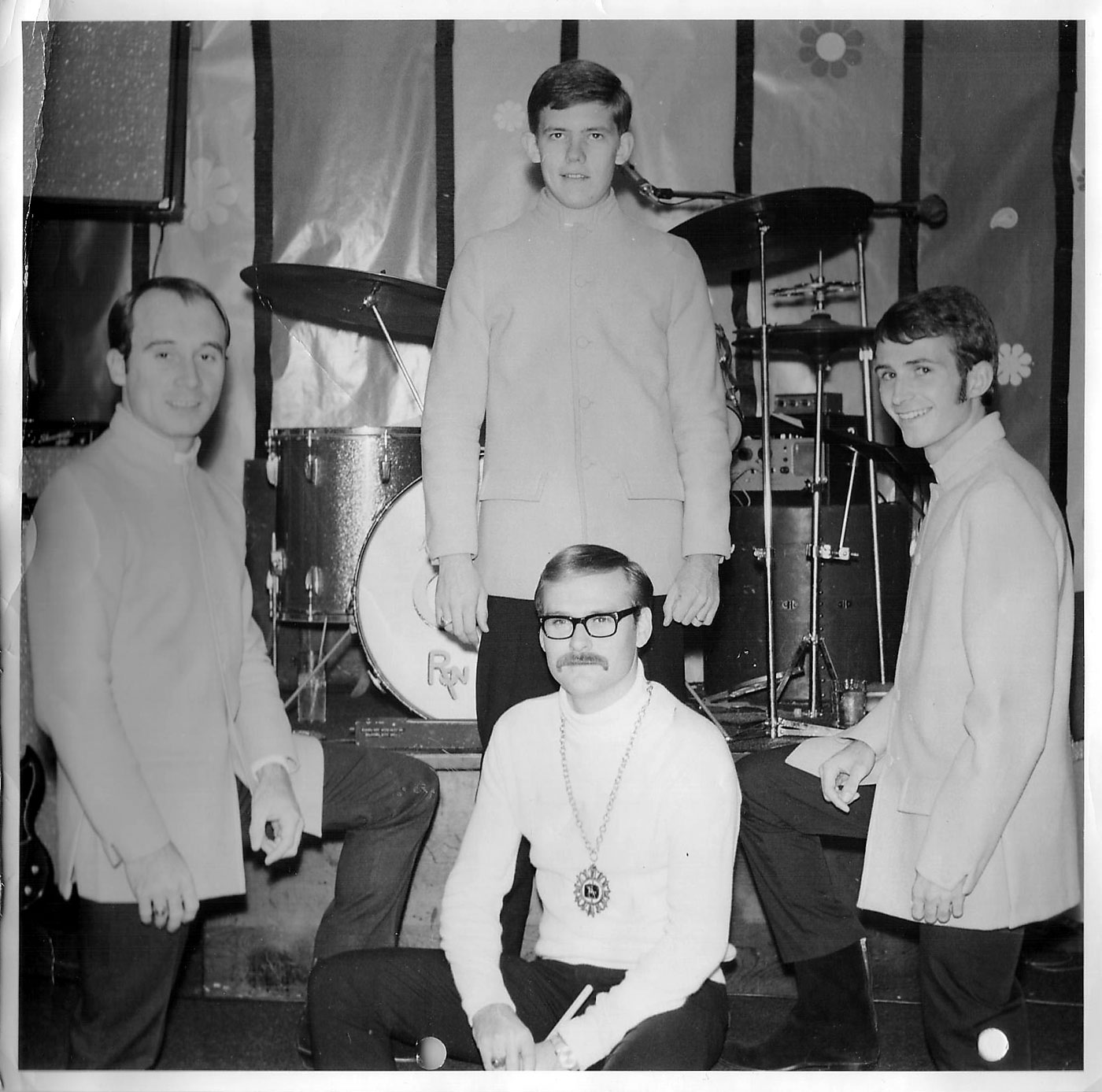
Final four lineup at the Take 5 Club, 1969
Nightclub Years, Breakup and Reunions
By the late 1960’s the teen hop scenario was starting to diminish. Getting jobs consistently was getting more difficult, so the group began considering the nightclub scene as a venue. However, getting into a good club was not that easy since most built their clientele by promoting one band. The group started playing on a semi-regular basis at a night club (more of a low end “fight club” actually) called the IWANA in Seminole, Oklahoma. Even though it could have been steady income this was not what the group wanted and they were tiring of the constant traveling and the setting up and taking down equipment every night. So in September, 1968 they accepted an offer to play every Thursday, Friday and Saturday as the house band at a relatively new club called the Take Five located on the N.E. corner of 10th & MacArthur in Oklahoma City, OK.
Although playing at the club was easy money, by the summer of 1969 it was becoming evident that the band was getting close to the end. Stan had gotten married and he and Ron were working full time jobs, plus they had been with the group since the beginning (8+ years) and playing was becoming more of a chore than the joy it used to be.
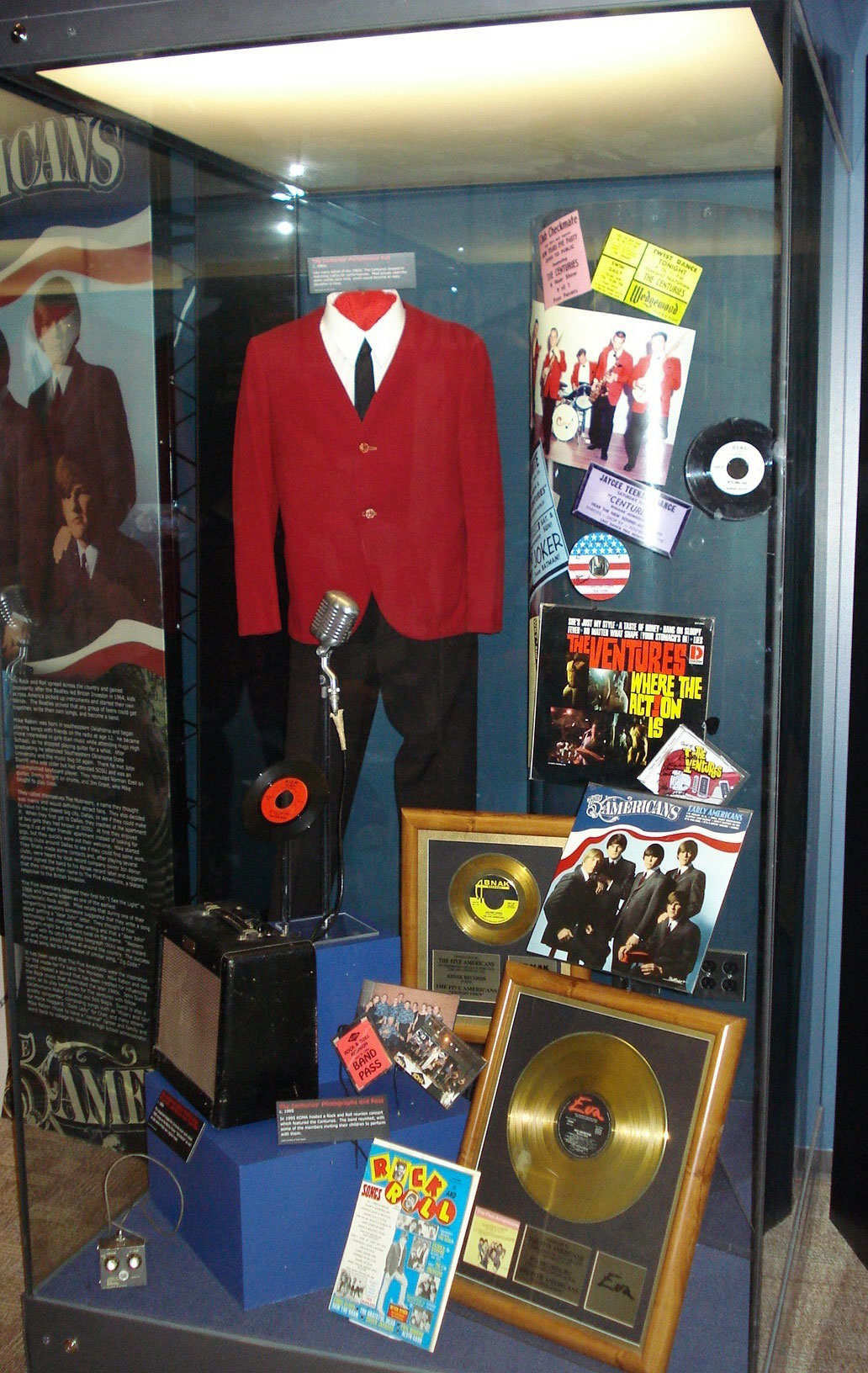
Oklahoma Historical Center exhibit featuring Centuries memorabiliaIn addition, Randy was married and working hard to get into medical school and Mark, who was just beginning his musical career, was eager to start his own group (he would eventually start a group called The Mark IV and then later one called Starflight). Thus, it was mutually agreed that the time had come to end the band. In August of 1969 they sold the Chrysler limousine that had served them so well over the years. So, on October 26, 1969, at the Take Five Club, The Centuries played their last job. In attendance were Ron Smith, Stan Stotts, Mark Schwartz, Randy Jenkins, Alan Rush, Irmon Gray, Bob Mills and Ron Petty. All participated at some time during The Centuries finale.
The next time they got together as a band was twenty-five years later for the KOMA Rock n’ Roll Reunion held at the State Fairgrounds, Made In Oklahoma building on August 13, 1994. Ron Smith, Stan Stotts, Mark Schwartz, Randy Jenkins, Bob Mills and Ron Petty participated plus they added a trumpet player and three female background singers, one of which was Ron Smith’s daughter. The last time they were together as a band was a year later for the KOMA Rock n’ Roll Reunion held June 10, 1995 at the State Fairgrounds arena as a benefit for the Murrah Building bombing victims. This was even more of a family affair since not only was Ron’s daughter a background singer, but so was Randy’s.
After leaving the Centuries, Alan, Irmon along with a very talented local musician named Randy Cullers (drummer) formed a group called “The AIR”. Eventually, Alan and Randy took the “big leap” and went to Nashville to pursue a truly professional music career.
Alan started working in the industry as a writer, studio/road musician and recording engineer and is still there today. Also, he, Randy and several other musician/songwriters formed a group (JUBAL) and released at least one album that I know of. Alan co-wrote “Till You Opened My Eyes” on John Denver’s Some Days Are Diamonds album released in 1981.
After the band days I started a semi-professional photography endeavor. My main niche, and the most fun, was taking promo photographs for local bands/performers. This all started when Mark Schwartz was displeased with the results he got of his group from local photo studios. They usually just lined the people up as if it was for a mug shot at the local police department. Since I came from a rock group I had good idea of what they were looking for.
The Oklahoma Historical Center started an exhibit in May, 2009, called “Another Hot Oklahoma Night”. I got involved with them early on and many of The Centuries artifacts got displayed. I think that makes us official museum relics. The photo from the exhibit shows our red jacket, a photo of when were a totally instrumental group and the Maestro Fuzz-Tone I used on “I’d Cry for You” and a few other songs.
Stan Stotts
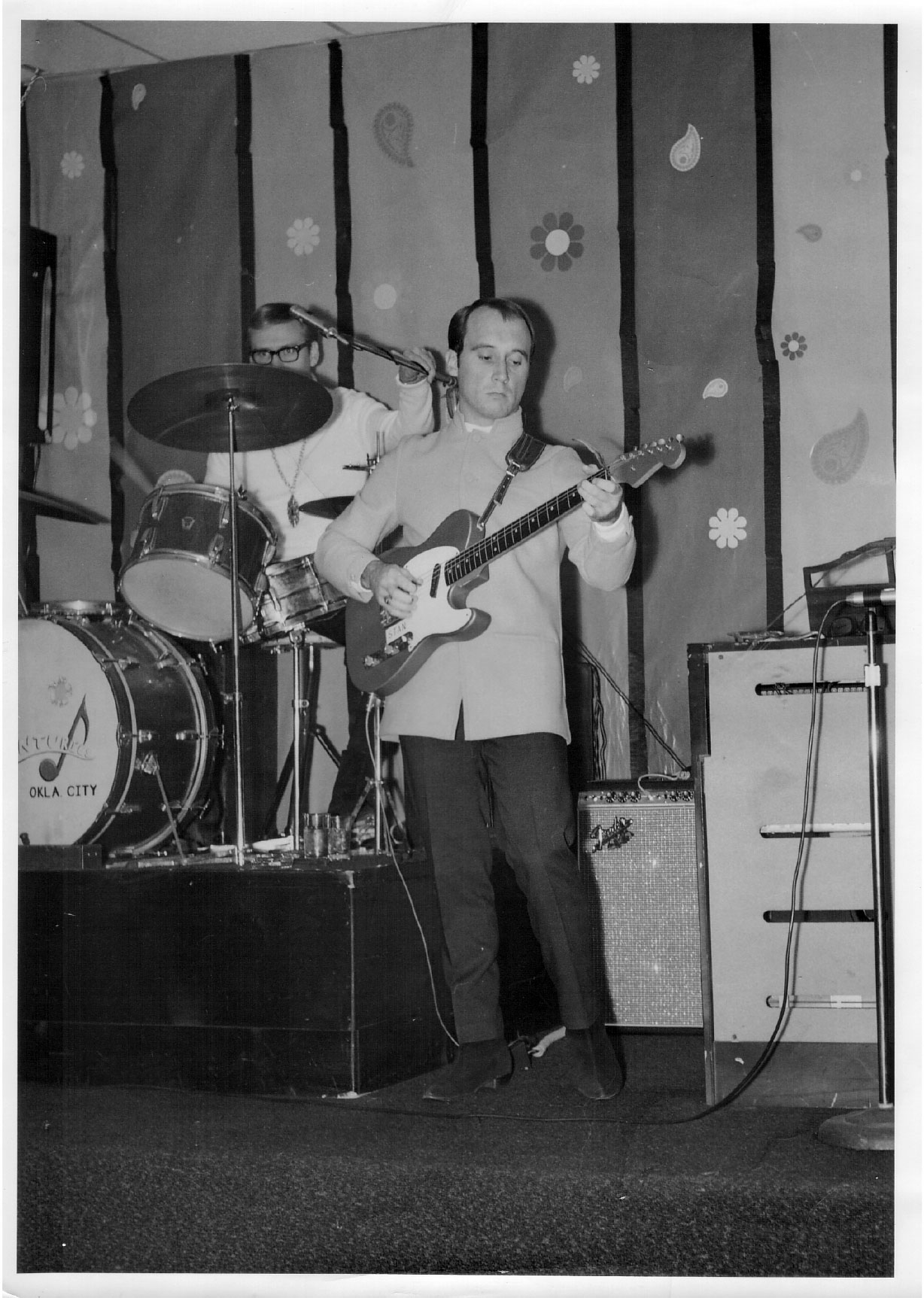
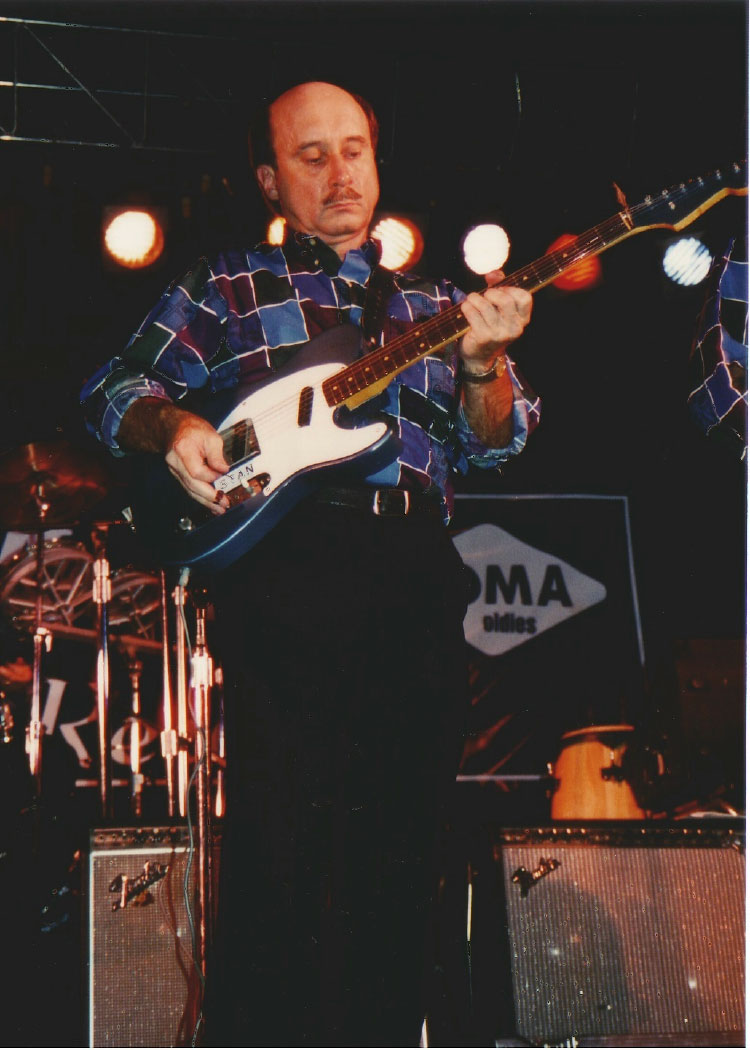
Stan Stotts at the Take 5 Club, 1969Stan Stotts at the KOMA Rock n’ Roll Reunion, State Fair Grounds, OKC 1994.
Both photos are of the same player, guitar and amplifier 25 years apart.
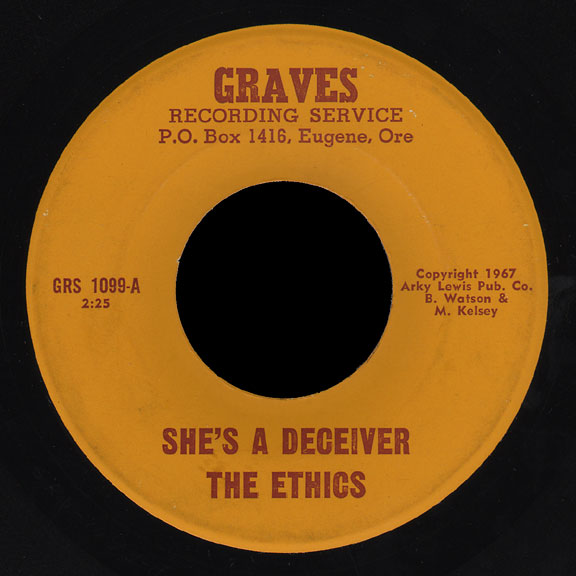
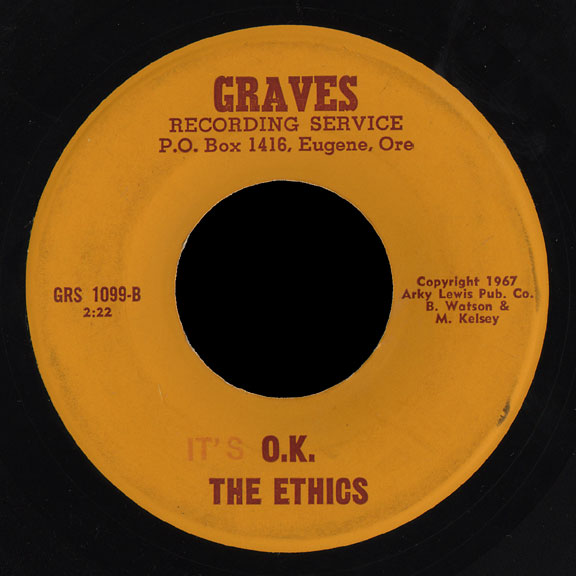
Another one on Graves, like the Sires I covered a couple weeks back. This group is more obscure, I don’t have any real info on them, other than that they were probably from southern Oregon: Ashland, Medford or Grants Pass possibly. Songwriting is listed to B. Watson and M. Kelsey. The publishing was listed under Arky Lewis.
Both original songs have fine arrangements, languid harmonies and excellent interaction between the two guitarists. “She’s a Deceiver” is slower and dreamier, while “It’s O.K.” is faster but still hypnotic with a raga-like guitar solo. The “It’s” of the title was left off the label and added back with a red stamp. The 45 would have benefited from clearer production.
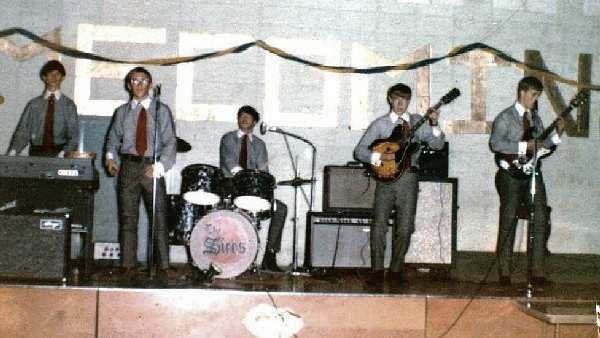
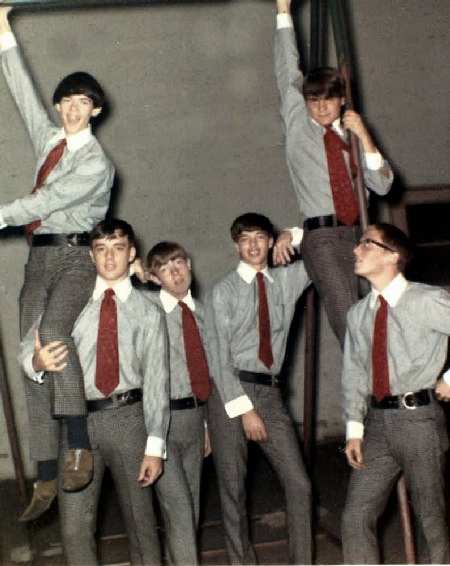
The Sires, 1965, from left: Rodger Koliece, Dean Loman, Robert Grebb, Ron Craig, Mike Briggs.
The Sires were teenagers from Eugene and nearby Springfield, Oregon, forming at Sheldon High School in 1964 and breaking up in 1969. Members were:
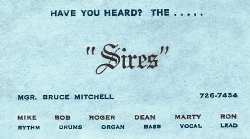
Marty Berg (vocals) Ron Craig (lead guitar) Mike Briggs (bass, rhythm guitar) Roger Koliece (keyboards) Dean Lowman (bass, vocals), replaced on bass by Warner (Doc) Swebke Robert Grebb (drums)
Ron Craig had been in the Tempters out of Springfield with Joe Crippen and Dave Rodakowski who were later in the Eugene-based group Truth. They played nightclubs in Florence, Oakridge and at a ballroom in Eugene. They won some battles of the bands and came in second to the Gentlemen Wild in a state-wide contest. Bruce Mitchell managed the band.
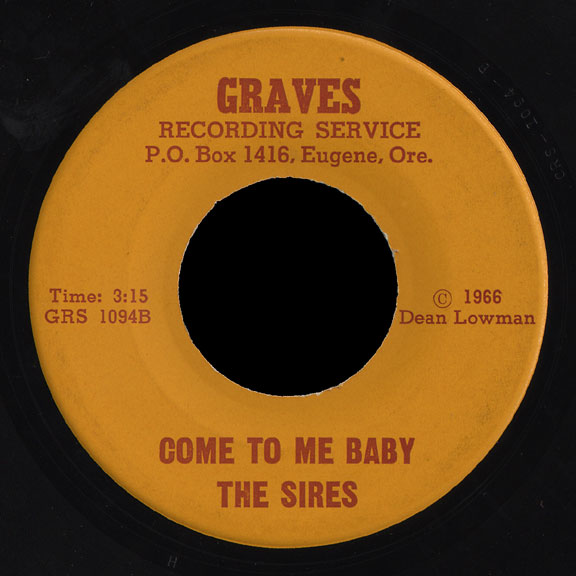
Bands like the Sires paid Alan Graves to record them in his basement home studio in Eugene, and he would have them pressed up on his own label. Alan was still cutting records here as of 2004.
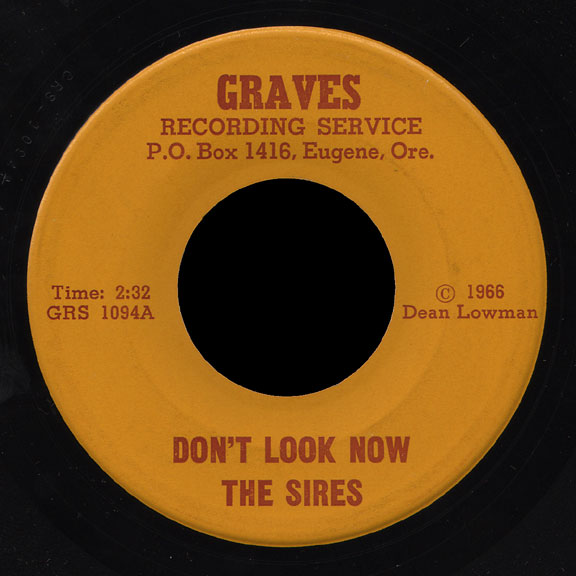
Their only 45 is definitely crude in recording quality and composition, and the sound is at odds with their neat image in their photos. Recorded in 1966, the members were about 15 years old at the time.
I really dig the A-side, “Don’t Look Now” for it’s menacing repetitiveness. Several members are singing in unison, which is unusual, and the lyrics are cool when you can make them out – “give back my ring, then I will see, just how it feels, to be alone and free”. The vocalists draw some lines out in a lower voice and then shout out the chorus for good dynamic effect.
“Come to Me Baby” has chord changes a la Louie Louie, and again the whole group shouts out the lyrics. Ron Craig plunks out a guitar solo lasting some 45 seconds, and there are some good shouts in the song.
Wild and primitive indeed, and hardly the kind of material that would win band competitions, which usually favored slicker pop songs. Dean Lowman is given copyright on both sides of the 45, so I assume he wrote both songs.
Sources include: photos and some info from the PNW Bands site.
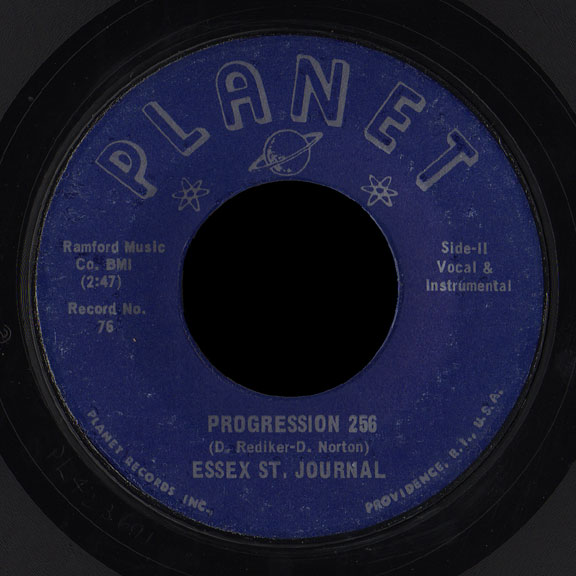
The Essex St. Journal were from Walpole, Massachusetts, a suburb of Boston but but this one 45 on the Planet label out of Providence, Rhode Island.
The A-side “Walk On” showcases a bleary vocal matched with the guitarist’s wah wah; it’s never been comped. I prefer the flip, “Progression 256” an adaption of “Money” with plenty of excellent sustained and occasionally out-of-tune lead guitar (not a bad thing in this case).
Both songs are by David Rediker and Dave Norton and published by Ramford Music (sic – I believe the company’s true name was Ranford Music).
I’ve read this is from 1967, but I’d say they recorded this in 1968, after many listens to Disraeli Gears and Wheels of Fire.
According to Barry Parquette in a comment below, other members included his brother Mark Parquette on lead guitar.
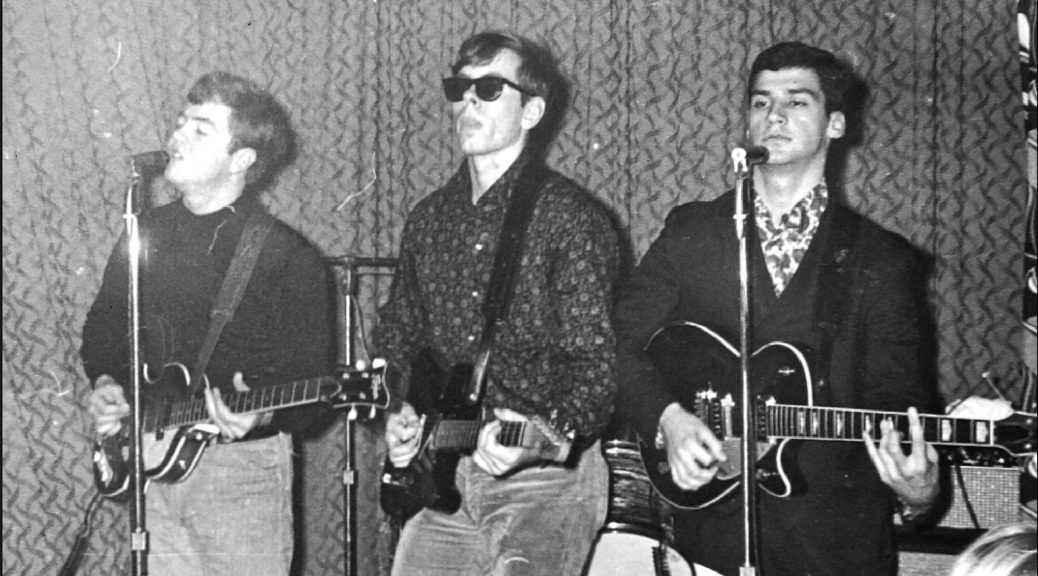
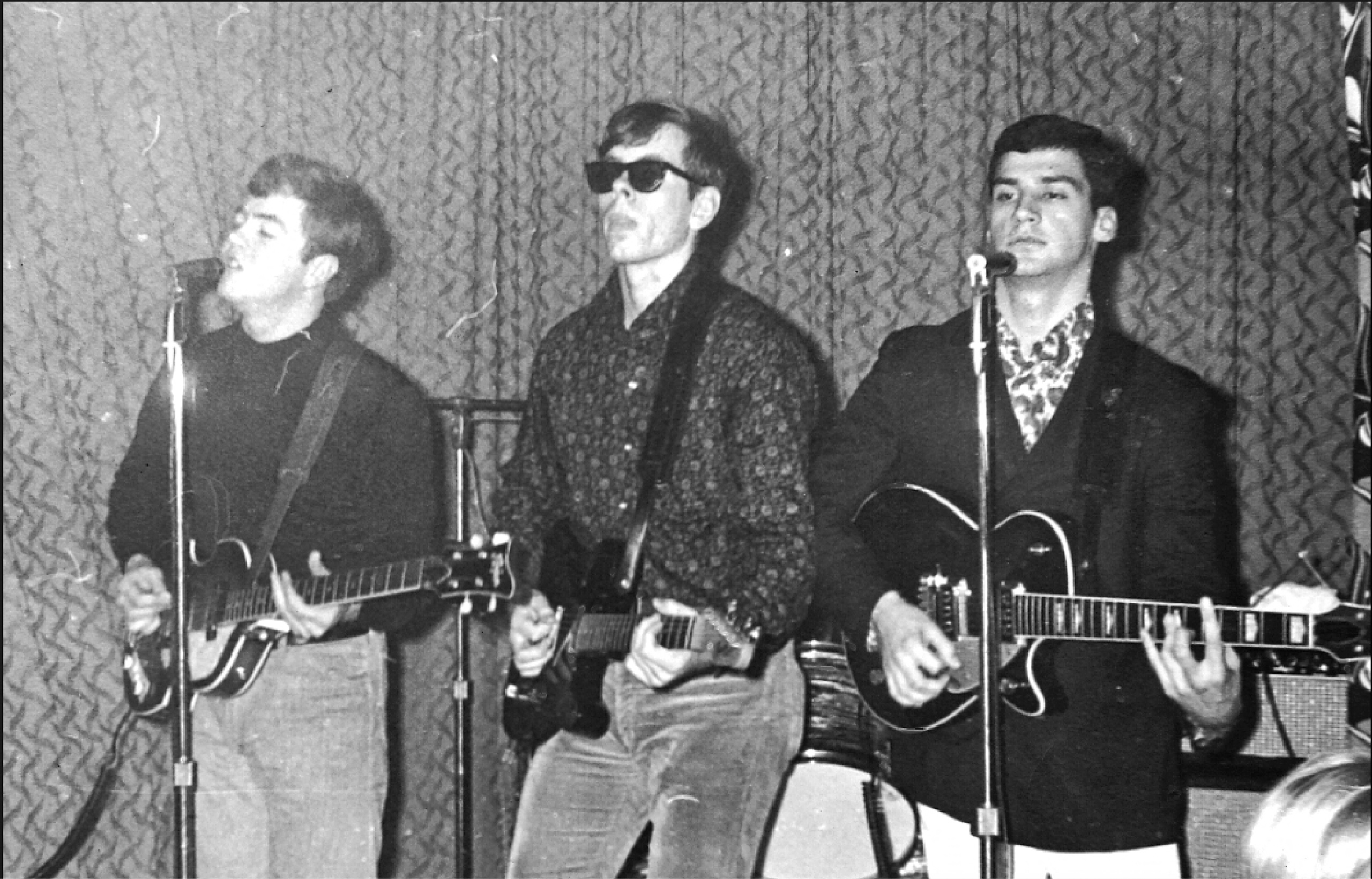
The Changing Tymes, from left: Tom Shapiro, Jimmy Mahoney, Ray Tilli, (not shown: Wayne Tort)
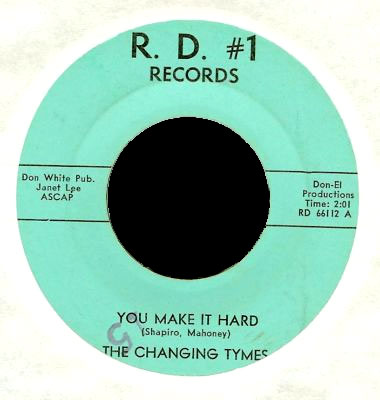
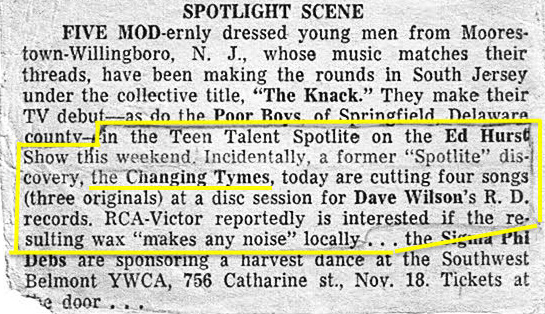
The Changing Tymes came from Philadelphia and cut a great single “You Make It Hard” / “Try a Whole Lot Harder” in 1966. I was struck by the similarity of the opening of the Changing Tyme’s “You Make It Hard” to the Quiet Jungle song “Everything”, but that seems to be a pure coincidence.
Thomas Shapiro and James Mahoney wrote both songs, released on the R.D. #1 label with Don White publishing registered in early December, 1966. It seems the group recorded two other songs at the same session, but these seem to be lost.
Ray Tilli commented below and in 2020 wrote to me with more info and the photos seen here:
My name is Ray Tilli and I was a founding member of “The Changing Tymes” from Philadelphia, PA. We started the band in 1965. The first iteration of the Changing Tymes were (as shown in the photos):
Tom Shapiro – lead vocals, guitar, bass (on live gigs) Jimmy Mahoney – lead guitar, vocals Ray Tilli – guitar, bass (on the record), vocals Wayne Tort – drums (not shown)
The Changing Tymes were founded by myself and Jimmy Mahoney in 1965. We were fortunate to have come of age at a time when we saw and experienced the birth of Rock and Roll, and we were deeply influenced by the greats of that early era. Then in 1964, the Beatles and the subsequent great bands from England and America invaded our brains! Every week there was some new artist, song or album to get really excited about, and to pour ourselves into and absorb. It was a time of great creativity, inspiration, and expression, and it drove us to practice, practice and practice more!
Our record was recorded at Impact Studio, located in Northeast Philadelphia, on or about September-October 1966, and released in November 1966. I lost track of the other two recordings. I don’t think they were put on vinyl.
When Jimmy Mahoney began to play lead, he used his big hollow body Gibson ES-175 guitar with the new Fuzz Tone pedal. It caused a type of feedback they had never heard before – but it was controlled feedback. There was a shout from the control room: “What’s that noise!.” Unfortunately, Jimmy had to switch to his backup guitar to get the sound they wanted. The recording would have been wilder if we recorded it the way we wanted!
The engineers in the recording booth were laughing so hard that they had trouble “slating” the tape for recording because they had to say the name of one of the tunes: “You Make It Hard”! We actually didn’t get the joke; talk about naive and clueless …
The meaning of the record label, R&D #1 Records: the “R” stands for Roy Howell who funded the production, and the “D” for Dave Wilson, our manager. We never heard of the band Quiet Jungle, nor did we ever hear their song “Everything”. The musical universe is huge, and once in a while, similar riffs or parts can occur.
The Changing Tymes, from left: Tom Shapiro, Jimmy Mahoney, Ray Tilli, (not shown: Wayne Tort)
We got pretty damn good, and quickly gained a reputation as being one of the best bands in the Tri-State area (Pennsylvania, New Jersey, Delaware). Word got around and we were asked to appear on all the regional music TV shows. American Bandstand had just moved from Philadelphia to Los Angeles in 1965, so we missed that opportunity. The next most popular TV show was called “Summer Time at the Pier with Ed Hurst”. The “Pier” was the world famous Steel Pier in Atlantic City, NJ.
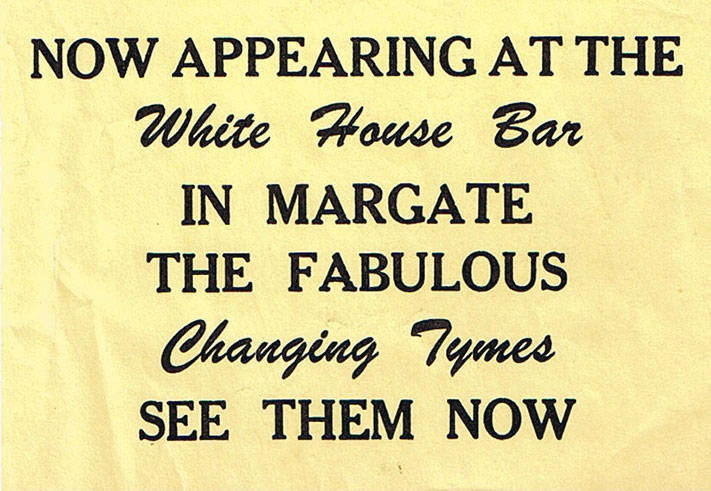
We appeared on the live broadcast of “Summer Time at the Pier with Ed Hurst” in the summer of 1966 along with Freddie and the Dreamers, and the Ramsey Lewis Trio. After playing the Pier gig, we drove about 20 minutes south to Margate, New Jersey to play our regular five-night-per-week gig at the White House – a club near the beach. During that summer we were the house band at the White House. All TVs in the club that day were showing our live appearance on Steel Pier, so when we arrived back at the club we were greeted with a rousing applause and back-slaps!
A similar occurrence happened when we played a live TV show in South Philadelphia, PA called “Aquarama”. The backdrop was a huge fish tank with hundreds of exotic species of marine life. After the show we had to immediately rush to our evening gig at Penn State University’s Ogontz Campus outside of Philly. The crowd was getting annoyed because we were late, but when we finally arrived we were greeted with cheers and applause! We made about a half dozen TV appearances on regional tri-state television that year.
A funny fact: our looks belied our music. Both Jimmy and I were in college at the time (I was also in the Army ROTC and Army Ranger ROTC training program), and the other guys had jobs that had dress and hair codes. We looked squeaky clean cut, but our sound was wild!
The first discotheque in Philadelphia was the “Underground Discotheque” in the basement of the (giant) Atlantic-Richfield building at Broad and Spruce Streets. It was the beginning of psychedelia – black lights, strobe lights, gel projections etc. We were playing that night with an excellent band called The Down Children. When both bands showed up for setup before the gig, we were thoroughly intimidated by the other band; they were older and looked like a bunch of Hell’s Angels – a look way ahead of any band we’d ever seen in 1966!
They looked like they could (and wanted to) kick our asses – they were scary! Fortunately, the setup went on without incident. When the gig started the Down Children [“I Can Tell” (Jimmy Rowland) / “Night Time Girl” on Philips] went on first. They were a really good band and looked badass tough and cool. When they finished they disappeared into the dressing room. Then it was our turn. Looking rather “preppy” the audience seemed to take little notice or interest when we took the stage. That was until we started playing. We won them over almost immediately – we played our hearts out! We couldn’t help but notice that the other band came out from their dressing room and watched us intently. We weren’t sure if that was good or bad – we wondered if they going to crush our heads after the gig!
After the first set (each band played 2 sets), a couple of the scary dudes from The Down Children came up to us and started asking questions: “Hey man, how did you get that tone?” “How did you get the sound on ….”, “You sounded EXACTLY like the record”! Man, were we relieved – they were impressed by us. Needless to say, we felt validated!
Another sticky situation was when our lead singer got arrested on stage during our stint at the White House. We were all too young to drink: 21 years of age was the minimum age in the tri-state area. We were 19 years old (and had to have special permits to play in the bars). Our lead singer, Tom, acquired a phony ID card to get into a different club the previous night to get some drinks. Somehow, the police were able to track him down to our club, and during our first set, a few cops arrived and came up on stage. They asked Tom his name, then put handcuffs on his wrists and hauled him off to jail.
So there we were, no lead singer who was also the bass player at the time, and the rest of the band still having to play 5 sets per night, 5 nights per week! His bail was set at $500 which neither he, nor any of us had. We improvised the best we could. Once we were finally paid, we took our full $500 cash pay to the courthouse and bailed him out.
There are too many stories of the Changing Tymes to relate here, like the time our cars crashed into each other on the way to a gig and we were 3 hours late! We played gigs at the University of Pennsylvania, Temple, Penn State, St. Joseph’s University and other various colleges and fraternities in the region. Also, many, many rock clubs and bars in the area.
I was fortunate to have had a relative in a high level executive position with RCA Records in New York City. After our record was released, and feeling a rush of confidence, we met in with my relative, John Rosica, head of promotions for RCA. He patiently and intently listened to our new record and said, “The best advice I can give you is to go back to collage and get a good education”!
We were shattered! He then said, you guys need to sound and play like full-time musicians – like these guys who we just signed, they’re called The Youngbloods. He put their new (yet unreleased) LP on the turntable and played “Grizzly Bear”. So we left NYC with our tails between our legs, demoralized, but not defeated.
The second iteration of The Changing Tymes were:
Ray Tilli – bass, vocals Jimmy Mahoney – lead guitar, vocals Nicky Indelicato – lead vocals Mike Laurence – guitar, vocals various drummers (unfortunately, no pictures)
This version of the Changing Tymes added more challenging songs to the repertoire. The nail in the coffin for the group breaking up was the successful recruitment of Nicky Indelicato to become the lead singer of a new group The American Dream. The group was the very first band to be produced by Todd Rundgren. They opened shows for The Doors, Hendrix and many others. They were an exceptional original band. We were sad to see him go, but happy for his success. Nicky passed away in March of 2020.
Jimmy Mahoney went on to do studio work and appeared on the Robert Palmer album, Double Fun. He also recorded at Sigma Sound for Philadelphia International Records. He played with band members from Stanley Clarke, Chick Corea and Larry Coryell. He was also a member of the band Medusa on Columbia records.
I also played with other bands including one with the former lead guitarist from the Bill Black Combo who had a few international hits. Later, I got into the business part of music as an agent, and then as a Manager/Road Manager with a band called Cats who were signed to Electra records. They toured and opened for Van Halen for the entire 1980 US summer tour.
After the Changing Tymes disbanded in 1968, most of us went on to other bands and careers. I became a Psychologist (now retired). Jimmy Mahoney passed away in January 2015. I miss him to this day. We remained close to the very end. He sent some of his memories to me about the band a few years back, and I have included some of them in this Changing Tymes history.
Ray Tilli
Note: this isn’t the same Changing Tymes as the Gate City, Virginia group who recorded cool songs like “Go Your Way” and “The Only Girl I Love” for the Moss label.
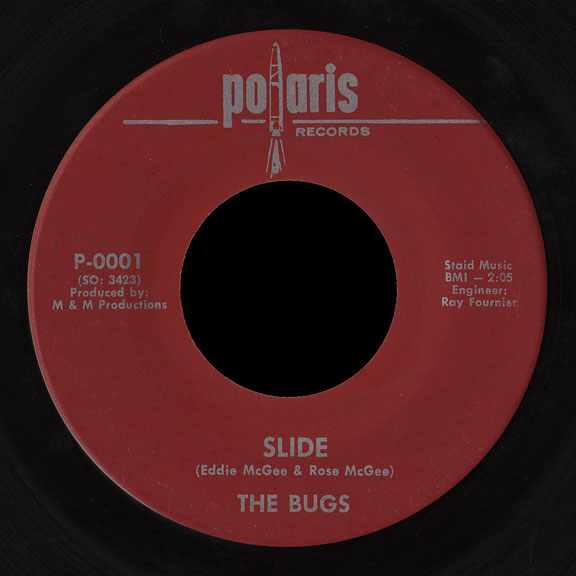
The Bugs had a reputation as jokers, but are solid professionals on their excellent first single. “Pretty Girl” is a fine British-influenced pop number that apparently hit the charts of local radio stations from Maine to Chicago to Florida. The flip is the raucous “Slide”, supposedly written in the studio but the band sounds too rehearsed for it to be a spontaneous performance. It must have been a staple of their live sets.
Both songs were written by Eddie and Rose McGee. I believe the drummer of the group was James McGee, another family member. This 45 was engineered by Ray Fournier.
From Erik Lindgren’s notes to The Polaris Story:
The Bugs were a quartet from Marlboro, MA that cut two singles for Astor records (Pretty Girl/Slide was also issued as Polaris 001) along with one unreleased track, ‘Gonna Find Me a Girl’. They were a ‘wacky’ group that included a female bass player by the name of Rose, who was in her early 40’s and married to guitarist Ed McGee. Polaris booked them throughout greater Boston and Rhode Island, including an appearance on Channel 12 in Providence.
‘Strangler in the Night’, originally credited to Albert De Salvo [the Boston Strangler], was actually written by a ghost writer, James Vaughn, who got drafted three weeks after the making of the single. The narration for ‘Strangler’ was done by Dick Leviatan, a well-known radio personality from New York City.
‘Pretty Girl’ and ‘Slide’ were recorded at Fleetwood Studios in Revere, MA., while ‘Strangler’, ‘Albert’ and ‘Gonna Find Me a Girl’ were recorded at Triple A [AAA Recording Studios] in Dorchester. The organ on the tracks done at the Triple A session was played by the engineer, whose name remains lost for posterity [actually it was Ray Fournier].
Producer Joe Melino dropped the Polaris label in the aftermath of the under-attended state-wide 1966 Battle of the Bands competition. The Astor label was named after the Astor Motor Inn, where Joe and his new partner had their office.
“Strangler in the Night” failed to get the hoped-for notoriety in the press. The single’s failure led to the end of a great run of 45s on the Polaris and Astor labels. Hear both sides of that novelty as well as the Bugs’ excellent unreleased track “Gonna Find Me a Girl” on The Polaris Story CD.
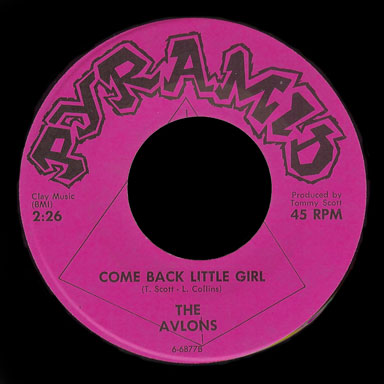
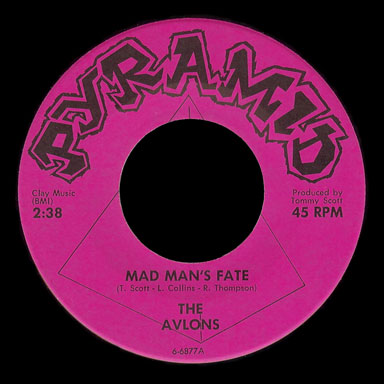
Sam Camp of the Avalons and later the Voxmen sent in this history of the band, who had a fine 45 on the Pyramid label, “Come Back Little Girl” / “Mad Man’s Fate”:
The Avalons was one of the first successful Rock and Roll bands from Toccoa, Georgia. The original members consisted of:
Some time after the band began performing, Tommy Owens, a studio drummer from Greenville, South Carolina, joined the band.
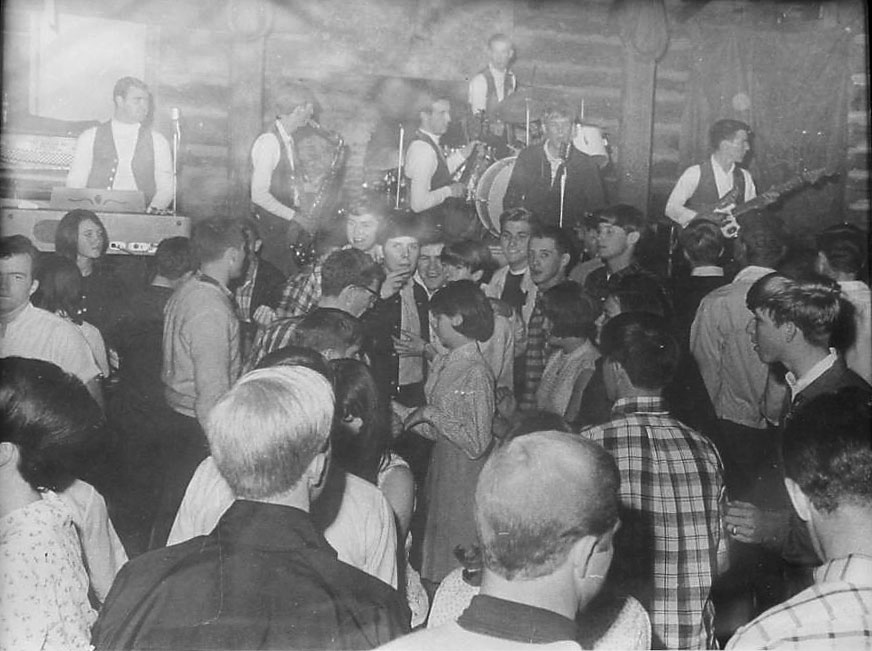
The group appeared roughly from 1963 thru 1967 in Georgia and South Carolina. The Avalons gained much popularity as the house band at a local teen club called The Chicken Shack located in Seneca, South Carolina. It was not uncommon to pack a thousand fans in on Saturday night where records and pictures were sold.
During the band’s popularity, we opened for several national acts including such names as The Swinging Medallions, Billy Joe Royal, Sam the Sham and the Pharohs, Keith, and The Impressions.
The Avalons recorded in the late sixties and the songs were composed by Collins and Thompson. The recordings were done at Arthur Smith studios in Charlotte, North Carolina and Mark V Studios in Greenville, South Carolina.
The two songs, “Come Back Little Girl” and “Mad Man’s Fate”, received airtime on many southeastern radio stations. “Mad Man’s Fate” got the most air time and was the song that was #1 at WHYZ, a local radio station in Greenville, South Carolina. The record also received recognition in the Billboard Top 100 magazine.
Our manager at the time was Tommy Scott. He is still living and is some character. He has a book out, ‘Snake Oil, Superstars and Tommy Scott”. There is a write-up about our band and a very good picture on page 400. Tommy Scott knew a lot of people at the time and got us in with Arthur Smith.
James Brown “The Godfather of Soul” made a personal visit to Toccoa, where he once lived, to discuss the purchase of one of the songs. There were talks of the Avalons touring with James Brown as his opening act, but this did not materialize.
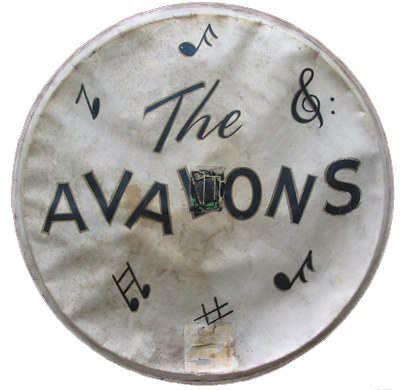
Q.: Why is the name on the record and photo the Avlons instead of the Avalons? Which name did you go by when you played live?
We went by The Avalons. There was another band out there called The Avalons. At the time of our recording, we may have not been able to spell it A.V.A.L.O.N.S, it might have been a legal thing.
Thank you to Sam Camp for sharing his history of the Avalons and for sending the photos seen here. Be sure to read about Sam’s next band, the Voxmen. Special thanks to Ben and Rich for label scans.
The Avalons at the Chicken ShackThe Avalons at the Chicken Shack
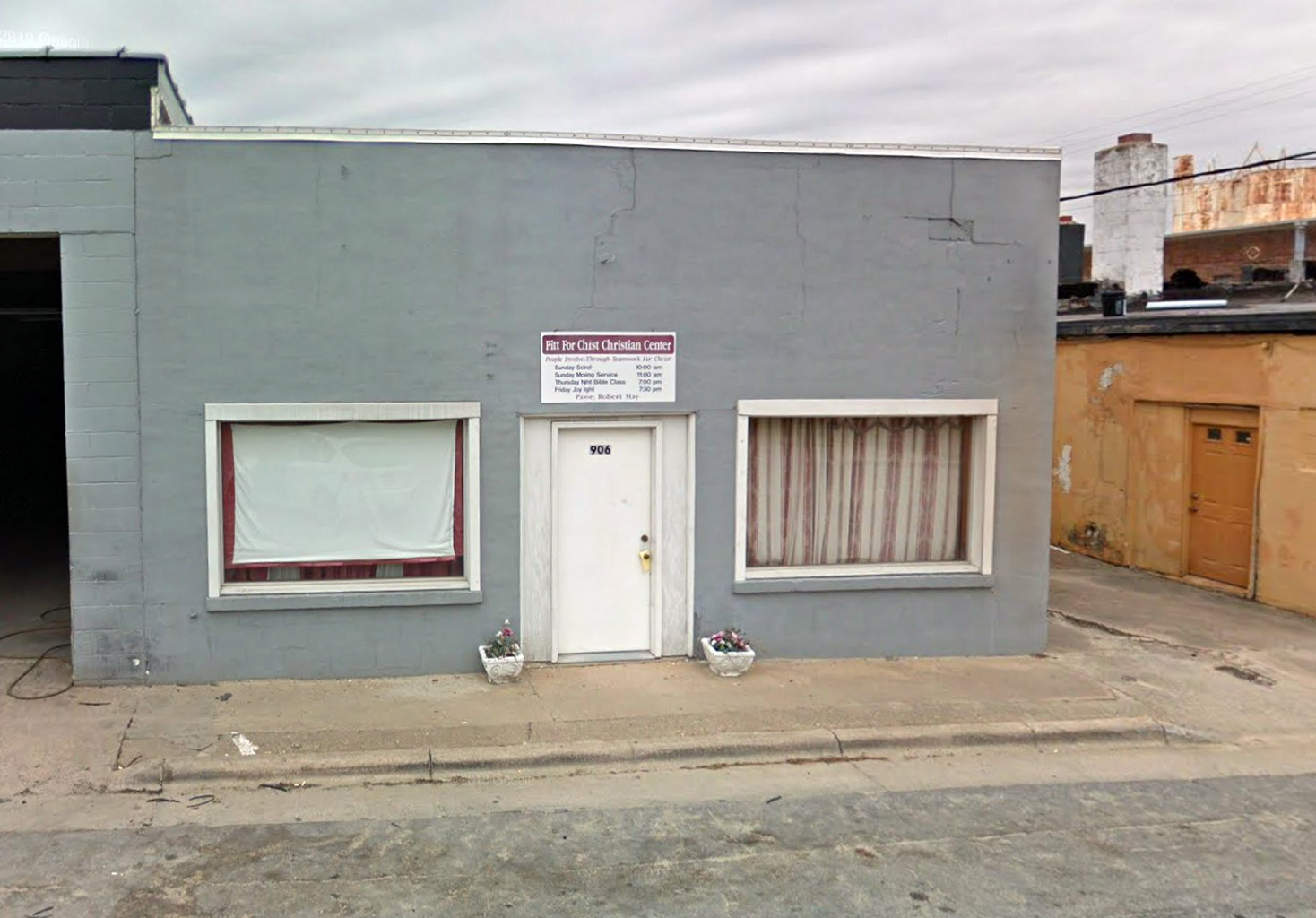
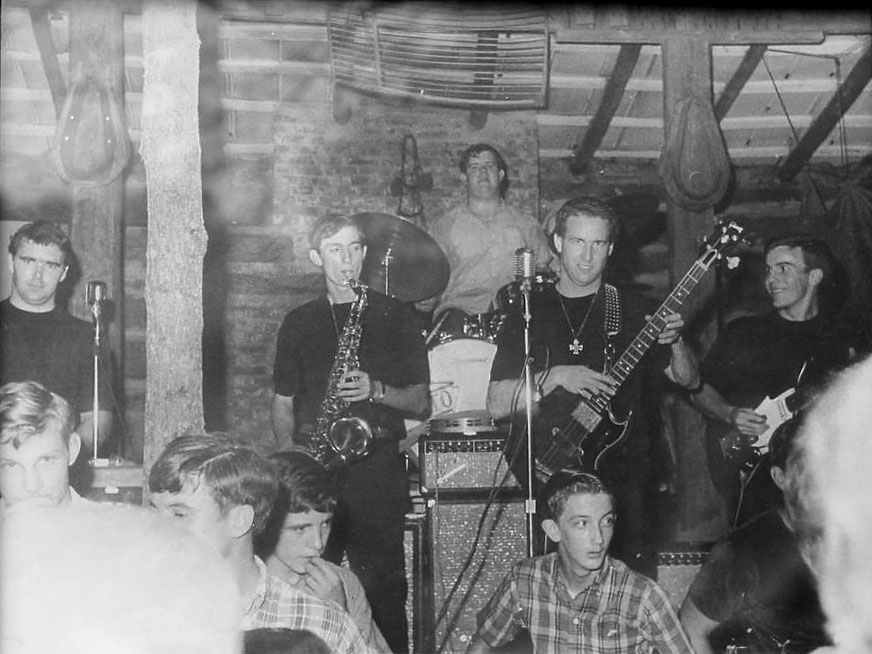
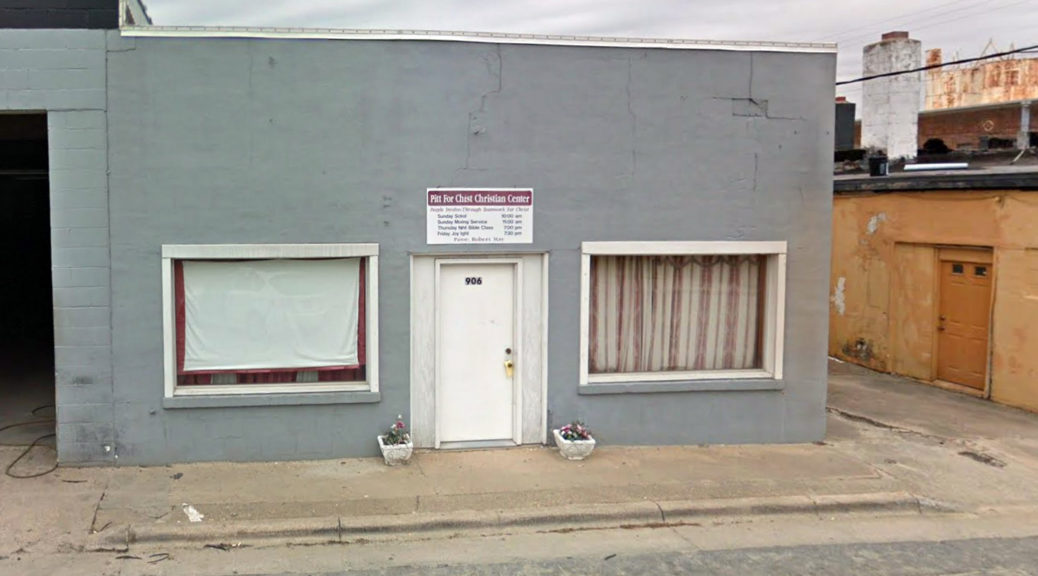
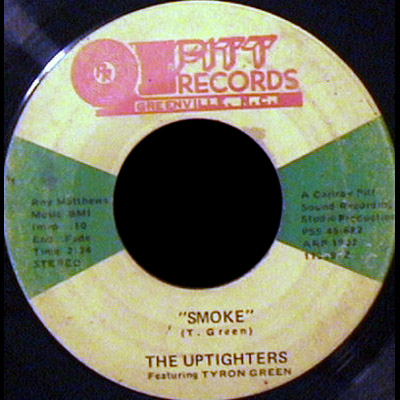
Pitt Records was one of the labels for Pitt Sound Studios, originally at 906 S. Washington Street in Greenville, North Carolina. The most notable song cut at Pitt Sound Studios was the O’Kaysions “Girl Watcher”, though the original label was North State.
Pitt Records had a number of gospel releases, a couple of country singles by Larry Anderson, and garage cuts by the Inspirations and the Empalas. I’d like to know more about the Royal Charmers, which I’ve read is garage.
Under different ownership the Pitt Sound Studio moved northwest of Greenville, on Highway 43 towards Falkland, where it was still in business as of 2008.
Romat Records was owned Roy Matthews, now deceased. He was a DJ and barber from Robersonville, north of Greenville. All of the Romat releases were recorded at Pitt Sound.
One source told me Roy sang on the 45 by the Forbes Brothers on Pitt, “Arkansas Jail” / “Idaho Red” which included members who went on to the Supergrit Cowboy Band. Roy’s daughter says that was incorrect, and the label seems to bear this out, with lead vocals by Ola Forbes, Jr. That 45, like most of the Pitt and Romat releases was produced by Carl Lineberger, with publishing by Roy Matthews Music.
Pitt discography: any help with this would be appreciated
Pitt 657 – Larry Anderson – “On The Losing End” / “After You Leave” Pitt 658 – Royal Charmers – “Hey Girl” (Greg Williamson) / “Midnight Hour” Pitt 659 – Summitts – “On My Knee’s” (David Erdman) / “Mercy, Mercy” Pitt 661 – The Singing Spiritual Heirs (Bill Harris and Lloyd Adams) – “A Higher Mansion” / “I Need A Blessing” / “One More Valley” / “Cast Your Cares Upon The Master” Pitt 662 – Forbes Brothers featuring Ola Forbes, Jr. – “Arkansas Jail” / “Idaho Red” Pitt 665 – Larry Anderson – “Memories of the Past” (Vernal Gaskins) / “Absent Without Leave” (produced by Patrick Woodard) Pitt 667 – The Inspirations – “Loving Man” / “I Had You Always” Pitt 669 – The Empalas – “Girls, Girls, Girls” / “Gentle On My Mind” Pitt 670 – Elder Lanier and the Zion Travelers – “Yes I Know” (N.L. Lanier) / “Christmas Gift” Pitt 675 – Terry Carraway – “Put Your Hand In The Hand” / Deborah Wooten – “Reach Out to Jesus” Pitt 678 – Robert Fuller and the Southern Spirituals – “It Won’t Be This Way (Always)” / “Thinking Of A Friend” (Andrew Herring) Pitt 680 – Waterside Male Chorus – “Wave On The Water” / “I Know The Lord Will Make A Way” Pitt 682 (?) – The Uptighters featuring Tyron Green – “Smoke” / “I Need Some Magic” Pitt 11197 – Dan Marshburn – “Disc Jockey’s Last Show” / “Round and Around”
Is the Summitts release the same group with the 45 from 1970, “I Can’t Get Over Losing You” (Joe Tate) on Dontee? That was supposed to be a DC group.
LP: PSS-LP 1006 – The Gospeletts – Hand in Hand, recorded at Pitt Sound Studio Greenville, NC; Roy Matthews Audio Engineer.
Romat discography:
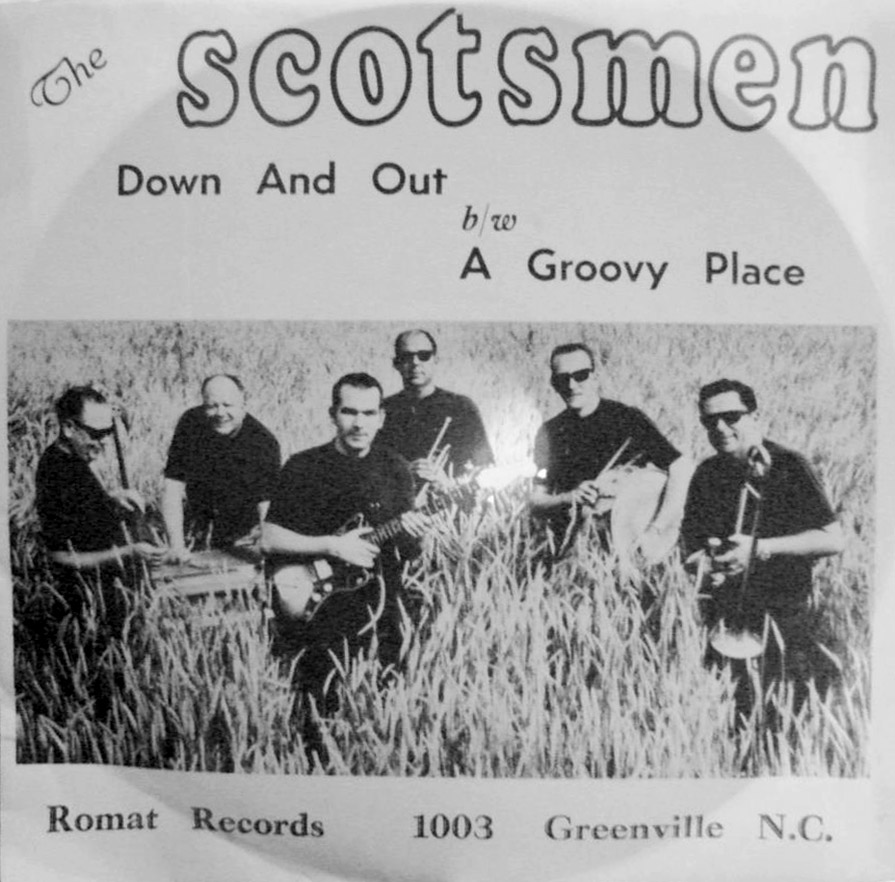
Romat 1001 – The Sound System – Take A Look At Yourself / Serenade Romat 1002 – The Soul Twisters – Swingin’ on a Grapevine / Soul Fever Romat 1003 – The Scotsmen – Down and Out / A Groovy Place Romat 1004 – The Soul Twisters – Doing Our Dance / If It Takes A Year Romat 1005 – Clear Blue Sky – Morning of Creation / Ugly Girl
Thanks to Doug Pickette for the sleeve to the Scotsmen 45, below. Doug tells me the lead guitarist was Harold Stephens, and the keyboardist was Wilbur Weeks (RIP), who ran a music store in Scotland Neck, NC.
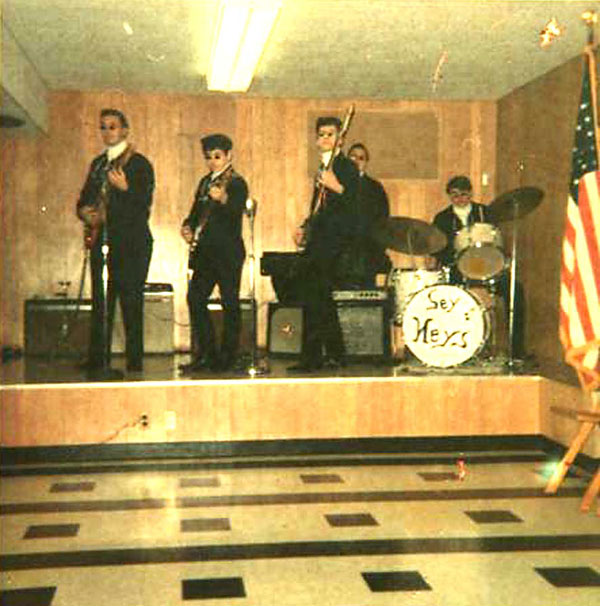
The Sey-Heys, l-r: Bob Baranowski, Steve Di Giovoni, Eddie Ferrick, Al Kuraz behind Eddie, and Lenny Hope on drums.
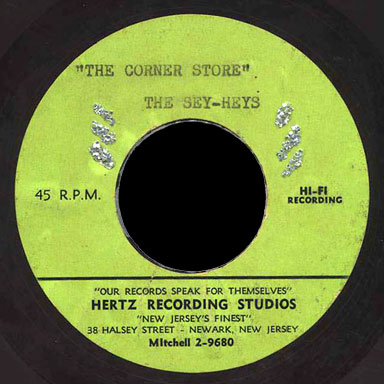
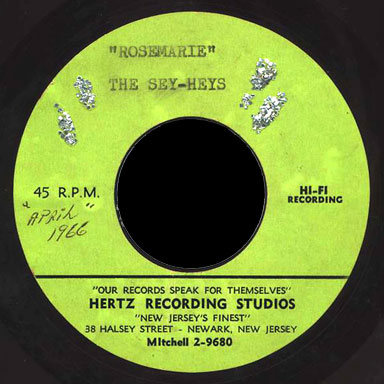
Here’s a song by the Sey Heys you may be able to relate to, about hanging out around the convenience store. Certainly did enough of that when I was a young teen. The audio quality on this acetate is rough but the performance is good, with both guitar and piano solos on “The Corner Store”.
Rhythm guitarist Bob Baranowski wrote a terse summary of the Sey Hey’s history (with name spelling corrections by Steve Giovenco):
Group organized in 1965-1967. Manager Mike Petro from Harrison, New Jersey.
Bob Baranowski – rhythm guitar (Harrison, NJ) Steve Giovenco – lead guitar (Clifton, NJ) Ed Ferrick – bass guitar, lead vocals (Harrison, NJ) Alan Kuraz – organ (Harrison, NJ) Lenny Dadone – drummer (Clifton, NJ)
Group played locally and at most colleges. Also played for Bank of Toyko at Waldorf in NY. Won competition on Zacherley TV show [Zacherley’s Disco Teen on Channel 47 WNJU-TV] in Newark NJ. Backed up the Duprees at the Cornet in Irvington NJ, 1966. Won several battle of the bands in NJ. Recorded first record “Rose Marie” and flip side “The Corner Store” in 1966. The group broke up in 1967.
Ed Ferrick was lead singer and composer of “Rosemarie”. He and Bob Baranowski wrote “The Corner Store” in fifteen minutes to fill the session. They cut the two tracks in two hours at the Hertz Recording Studio on Halsey Street in Newark, for a total of $90: $30 per hour for the time and $30 for demos for the band. Bob’s uncle was going to push the demo to RCA, where he worked as a patent attorney for RCA, but he died before he could make anything happen.
Their primary competition was The Caretakers from Harrsion, whose members included Artie Cuff on sax and Ritchie Ferollia on lead guitar. The Caretakers were mainly a cover band who had the distinction of touring Vietnam with Bob Hope.
Steve Di Giovanni went on to join the Clifton band the Brats. Bob Baranowski joined the Sidesteps, based in Newark.
Special thanks to Arnold Max for submitting the Sey Hey’s acetate, photo and story.
The Hertz Studio had some of the crudest acetates I’ve heard. Here’s a partial list – any additions would be welcome (thank you Mike Dugo for adding the Concepts).
Johnny Kriss & the Mark IV – “Rockin’ Baby” / “Please Baby Please”
Viscaines – “Wind Storm” (garage with harmony background vocals)
Creations – “The Outcast” / “I Don’t Care” Creations – “Bricks and Stones” / “Set Me Free” Creations – “Far Away / “Captain Dirtbomb”
This site is a work in progress on 1960s garage rock bands. All entries can be updated, corrected and expanded. If you have information on a band featured here, please let me know and I will update the site and credit you accordingly.
I am dedicated to making this site a center for research about '60s music scenes. Please consider donating archival materials such as photos, records, news clippings, scrapbooks or other material from the '60s. Please contact me at rchrisbishop@gmail.com if you can loan or donate original materials


My father managed the band, built our band trailers, drove us to gigs, handled everything about the band. He had a gift of listening to a song on the radio, and could predict what song was going to be a hit. He’d buy the 45 record, and made sure we had our parts down and ready for each practice, and by the time the song hit #1 we already had it in our song list. I remember dad as one who took a chance on a 10 year old kid wanting to play guitar. He didn’t know if I had any talent or if I would stick with it, but he bought the best guitar to make sure I had a chance to learn on.

 The Essex St. Journal were from Walpole, Massachusetts, a suburb of Boston but but this one 45 on the Planet label out of Providence, Rhode Island.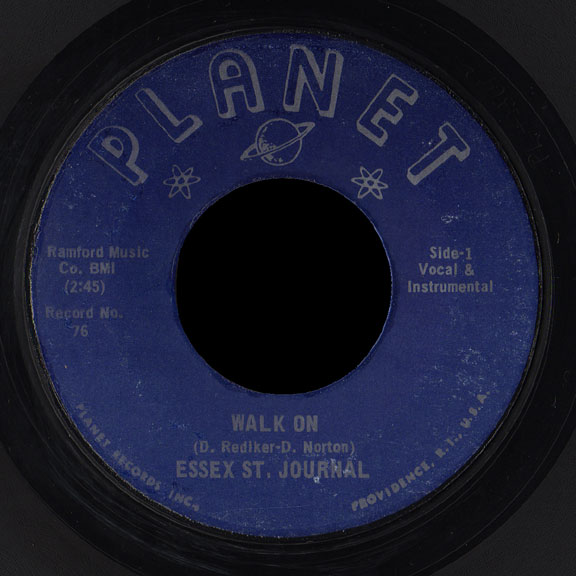
 The Changing Tymes came from Philadelphia and cut a great single “You Make It Hard” / “Try a Whole Lot Harder” in 1966. I was struck by the similarity of the opening of the Changing Tyme’s “You Make It Hard” to the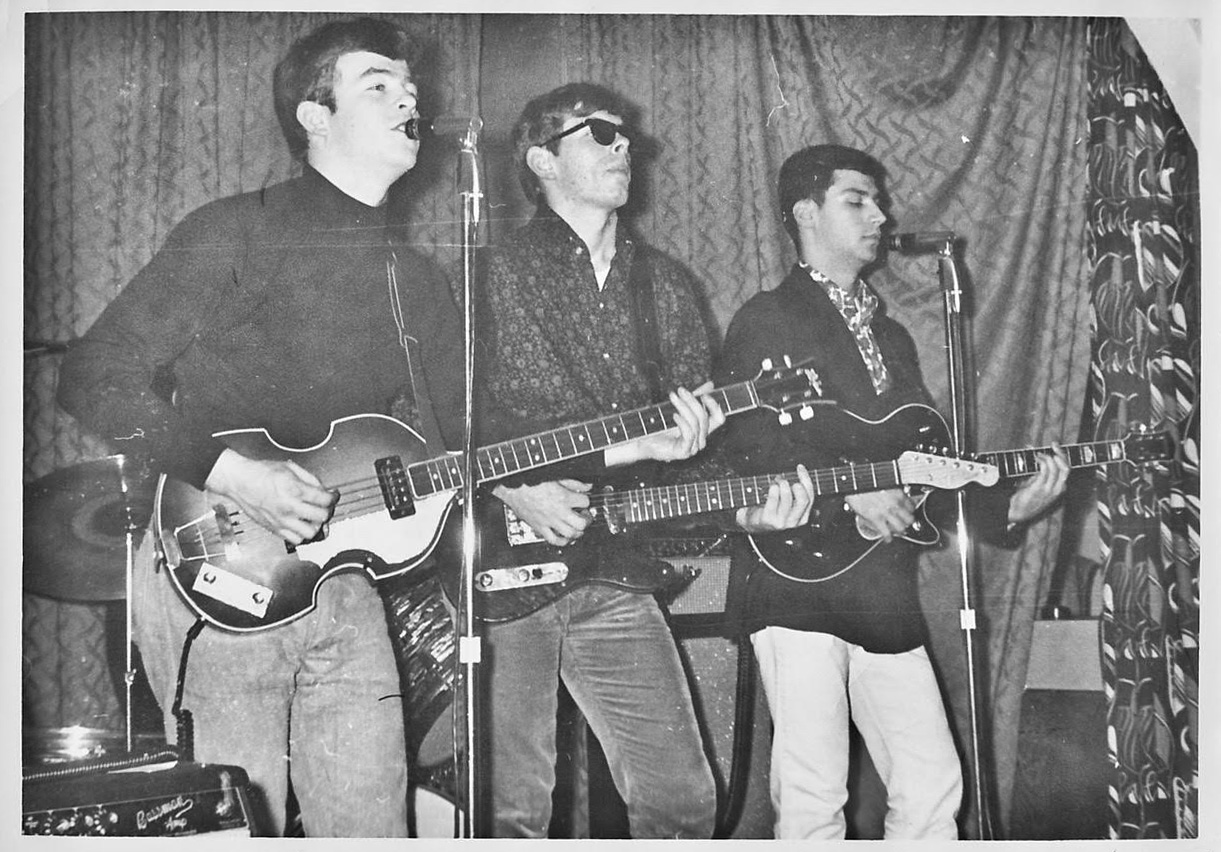
 The Bugs had a reputation as jokers, but are solid professionals on their excellent first single. “Pretty Girl” is a fine British-influenced pop number that apparently hit the charts of local radio stations from Maine to Chicago to Florida. The flip is the raucous “Slide”, supposedly written in the studio but the band sounds too rehearsed for it to be a spontaneous performance. It must have been a staple of their live sets.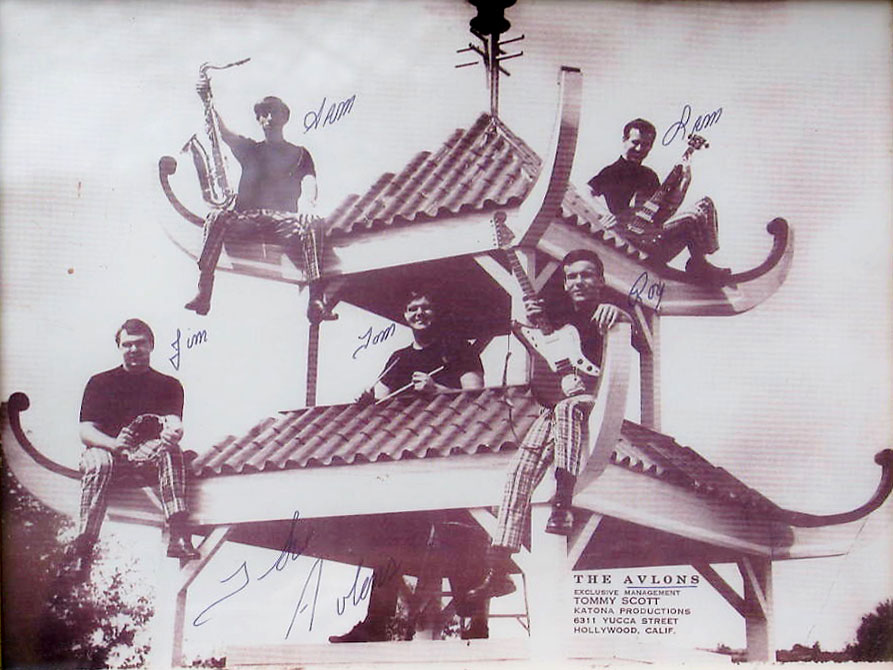
 Pitt Records was one of the labels for Pitt Sound Studios, originally at 906 S. Washington Street in Greenville, North Carolina. The most notable song cut at Pitt Sound Studios was the O’Kaysions “Girl Watcher”, though the original label was North State.