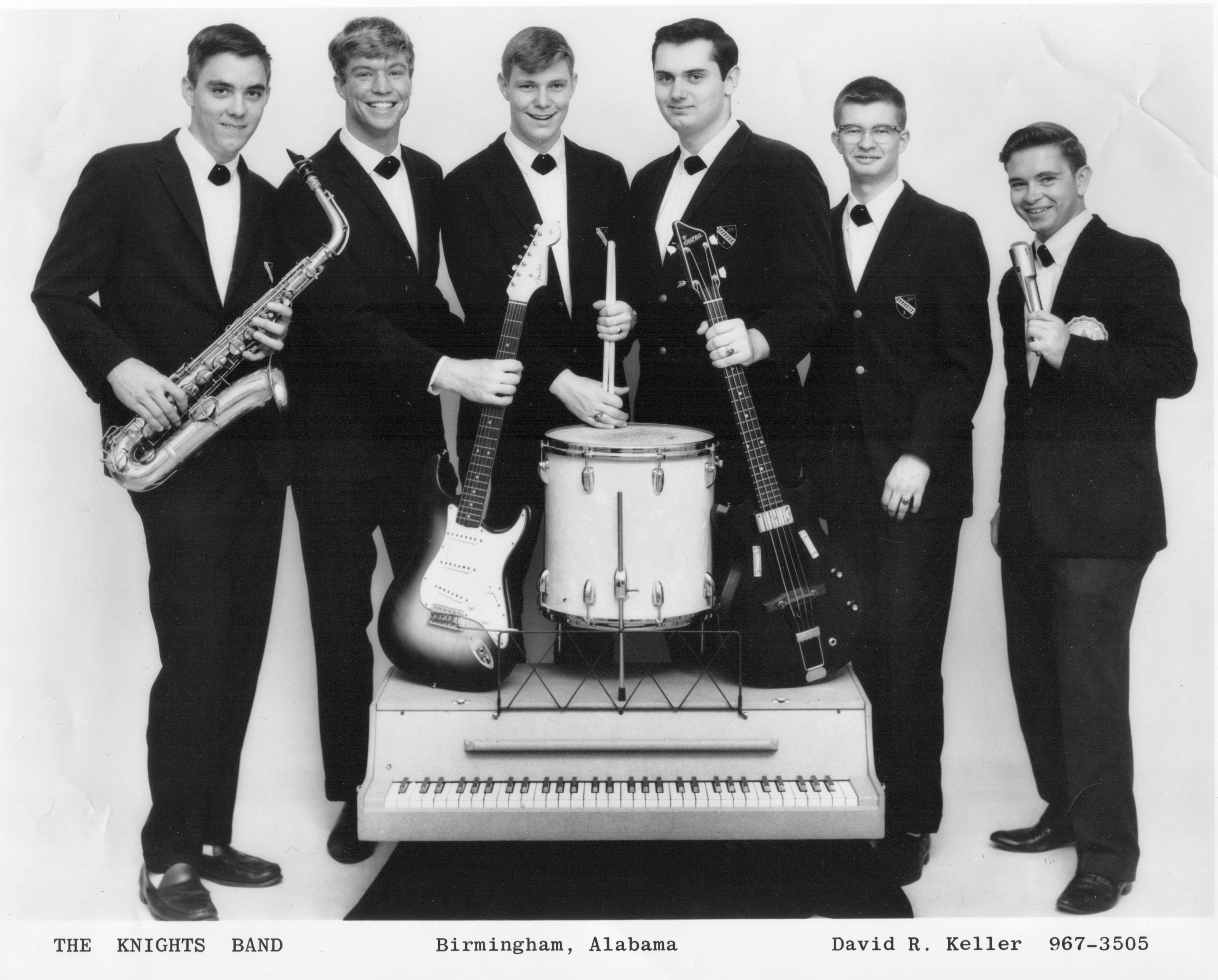
The Knights Band, from left: Bill Ashton, David Keller, Bick Mitchell, Carson Hood, Dudley Parker (?), and Ray Edwards
The Knights Band were Ray Edwards (vocals), Dudley Parker (keyboards), Carson Hood (bass), Bill Ashton (sax), Bick Mitchell (drums) and Dave Keller (lead guitar).Vocalist and DJ Ray Edwards sent in the early photo of David Keller’s first band, the Knights and gives some background, below.
The Preachers was David’s third band. In Shades Valley High School in Birmingham in the early 60’s, David played lead guitar for The Knights. I was the singer (little guy on the end) and “booking manager.” Other members were Bill Ashton (sax), Carson Hood (bass), Dudley Parker (keyboards), and Bic Mitchell (drums).
I graduated in 1963 and after a year at UAB in Birmingham headed to Tuscaloosa and a job 5 nights a week as a DJ at WJRD in Tuscaloosa. I was “invited” to drop out of the group. David took over lead vocals and sort of manager. They changed their name to The Original Knights and put out a 45 record to promote the band.
In the late 60’s I ran into David. He had just bought the convertible and told he he was making great money promoting bands. He said he had paid 21 $100 bills for the car. This was in Panama City where he had the club. The next thing I heard was that he was about to be drafted and had headed for Canada.
I have caught up with Bill Ashton, he is in sales and gets to Alabama from time to time. I met Dudley Parker at a wedding I was Djing for. (DJ company is Alabama Entertainment – alaentertainment.com) I talked with Bic who was filling in with a band playing at The Club. Carson died some time after we were in the band.
I have often wondered what happened to David. He was always “Crazy David” even when we had Saturday Morning band practice in his parents garage on Dolly Ridge Road in what became Vestavia Hills.
Ray Edwards
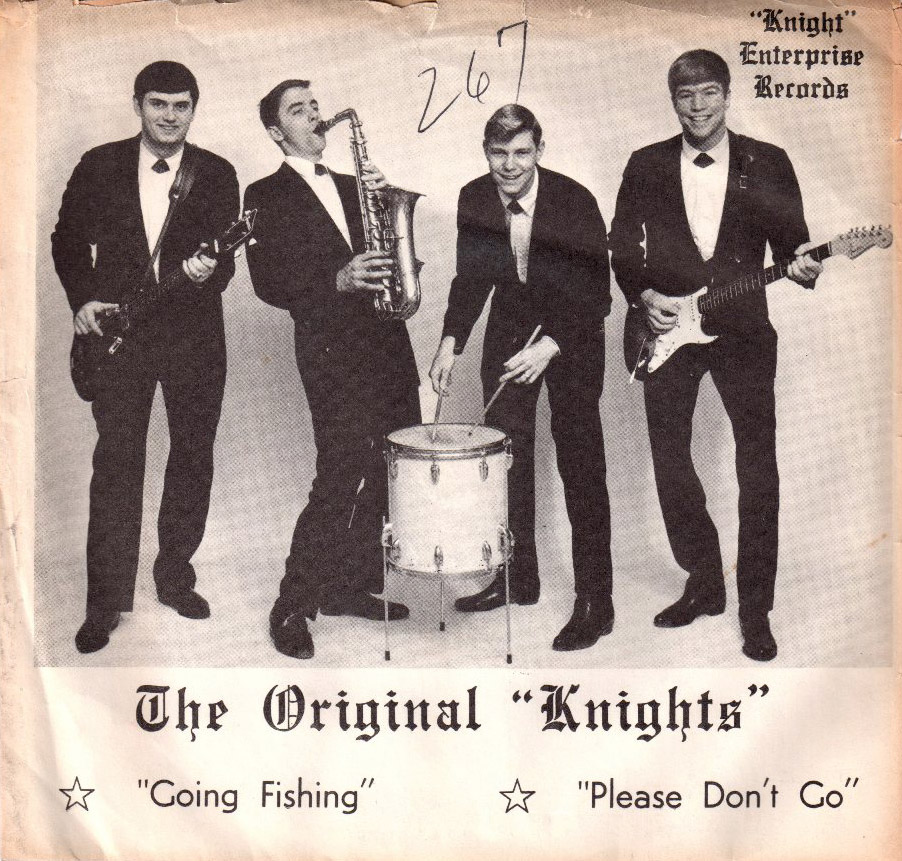
The Original Knights, from left: Carson Hood, Bill Ashton, Bick Mitchell and Dave Keller
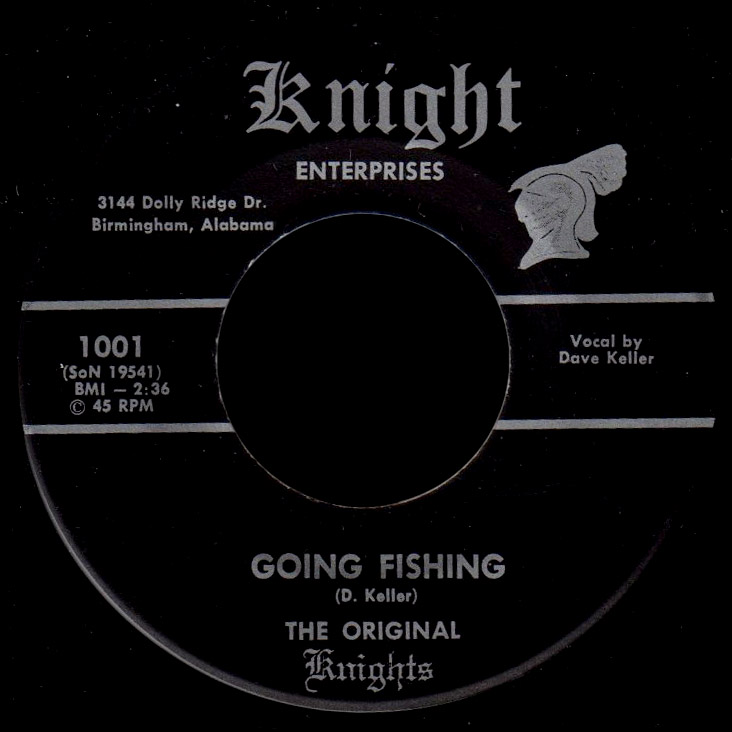
When Edwards and Parker left, the band became a quartet, now calling themselves the Original Knights. This group released one 45 on their own Knight Enterprise Records recorded at Boutwell Recording Studios in Birmingham. David Keller wrote both songs, “Going Fishing” and “Please Don’t Go”, which has vocals credited to Keller and Carson Hood.According to the sleeve, Keller attended University of Alabama in Birmingham while Hood and Mitchell were students at Walker Jr. College (now Bevill State I believe) in Sumiton, 25 miles to the northwest. Bill Ashton is listed as attending the more distant Auburn University.
For further info on David Keller, check out the page on the Preachers.
Thanks to Ray Edwards for the photo and info about the Knights Band, and also to Jeff Lemlich for the scans and transfers of the 45 as the Original “Knights”.
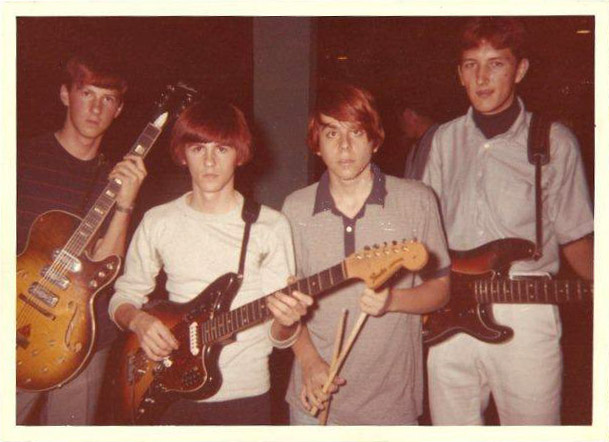
The Teen-Beets, from left: Ken McGee, John McGee, George Samaras and Paul Doby
The Teen-Beets of Winston-Salem, North Carolina released four fine records, the first three featuring original songs by vocalist and guitarist John McGee along with covers of Barbara Lynn’s “Oh Baby”.
George Samaras sent in these cool photos and clippings and told me about the group:
The band was formed in Winston-Salem, North Carolina at the end of 1964. The original line-up consisted of two brothers, John McGee (lead guitar & lead vocals) and Ken McKee (rhythm guitar & lead vocals). The two other band members were Paul Doby (bass guitar) and me – George Samaras (drums).
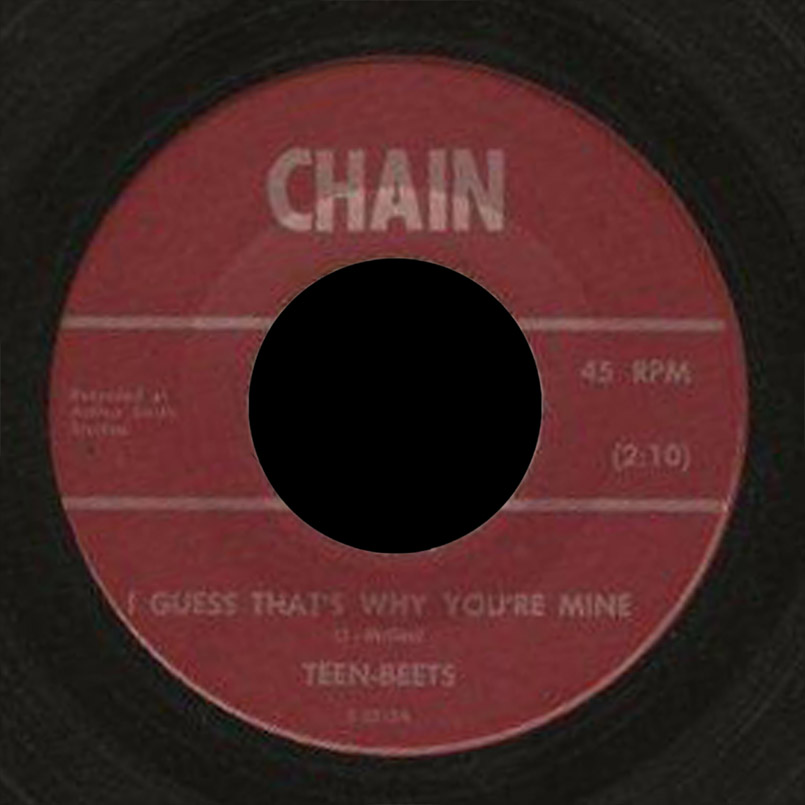
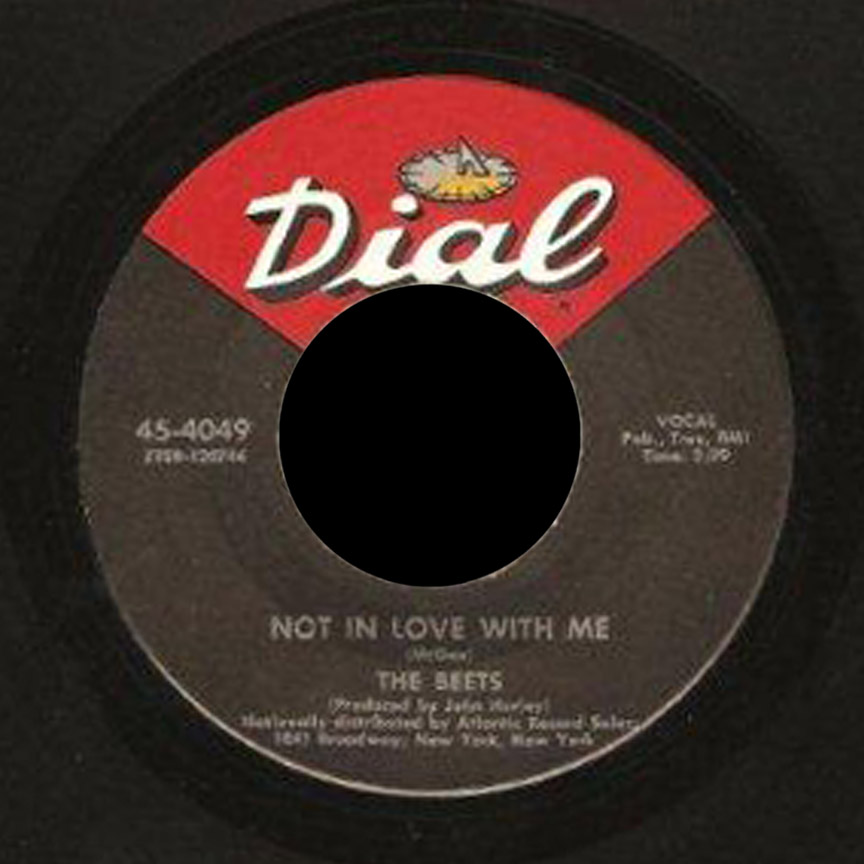
By the summer of ’65 we had recorded our first record at Arthur Smith’s studio in Charlotte, NC (“I Guess That’s Why You’re Mine” / “Not In Love With Me”) and released it on our own label, Chain Records. It received considerable local air play and reached #20 on one of the local radio stations top 40 list. Around this time we all dyed our hair bright red (as in Teen “Beets”) to attract attention. It worked!
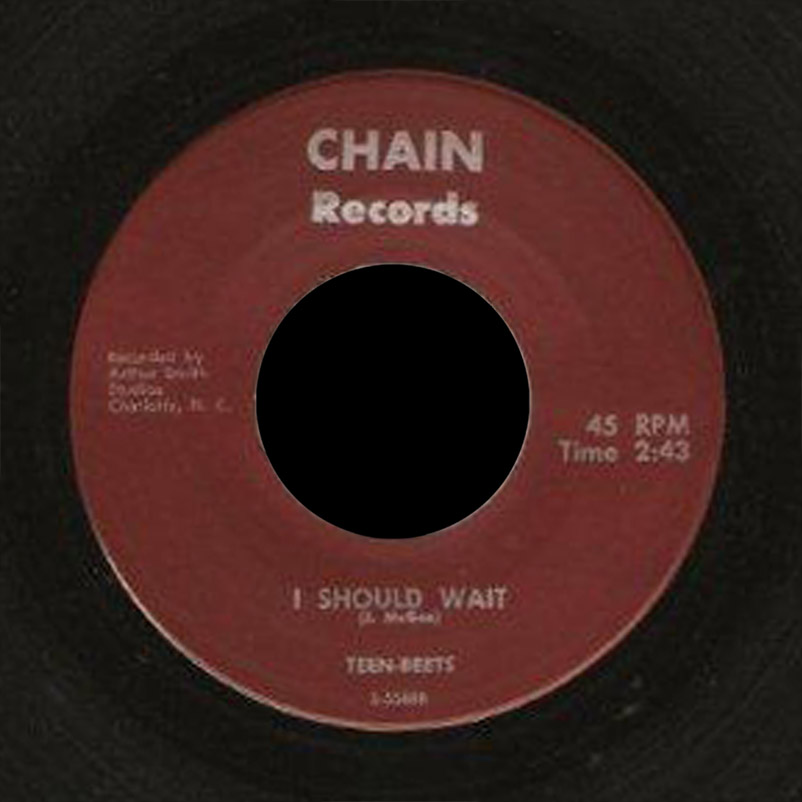
Our second local release (“I Should Wait” / “Oh Baby”) was also recorded at Arthur Smith’s studio and released on Chain Records. Although it received considerable local air play it did not chart.
Winston-Salem Journal, June 19, 1965, with hair stylist Bobby Todd
We stuck with the bright red hair and high energy stage shows achieving local notoriety. We also had a change in the band membership. Paul, our bass player, was replaced by Stan Ratcliffe.
In early ’66 we traveled to Nashville, Tenn. and re-recorded “Not In Love With Me” and “I Should Wait” in Fred Foster’s Sound Studio for Tree Publishing Company. It was released on Dial Records under the name the “Beets” but quickly faded into obscurity.
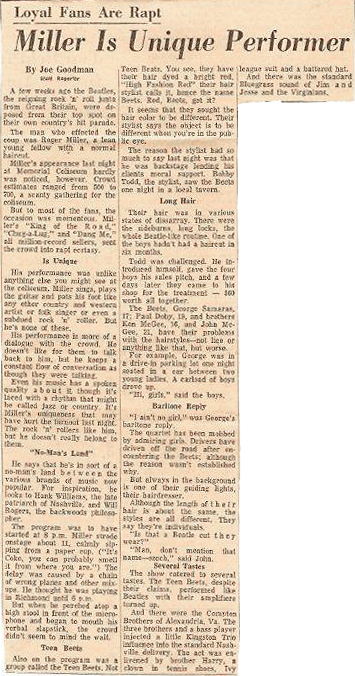
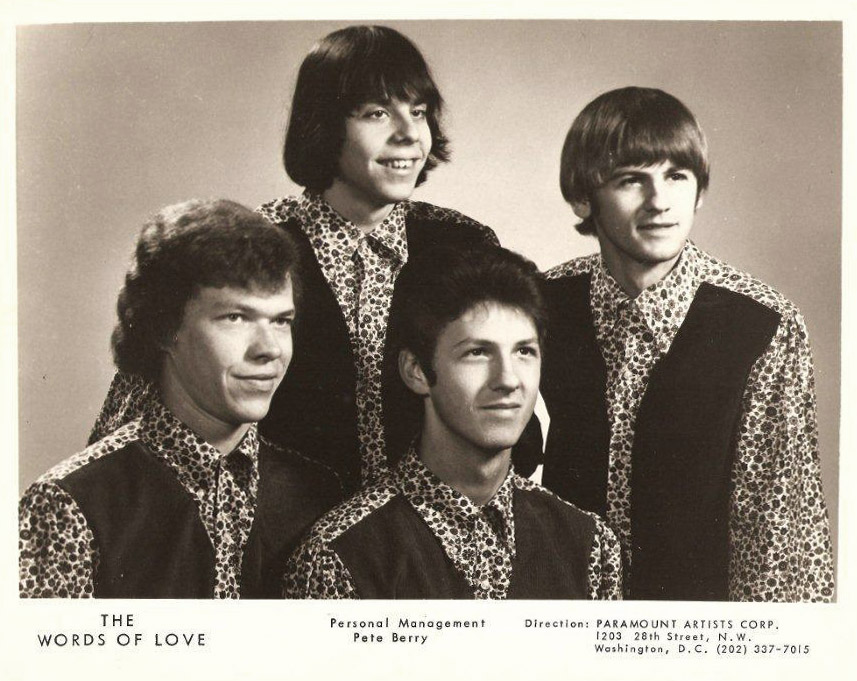
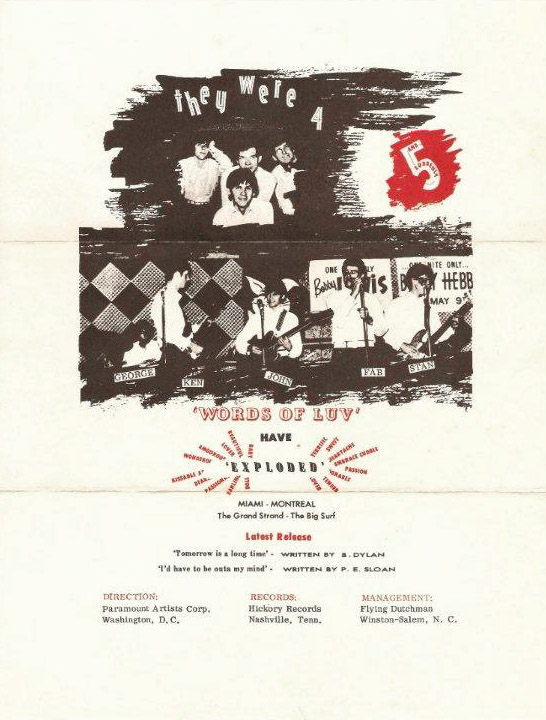
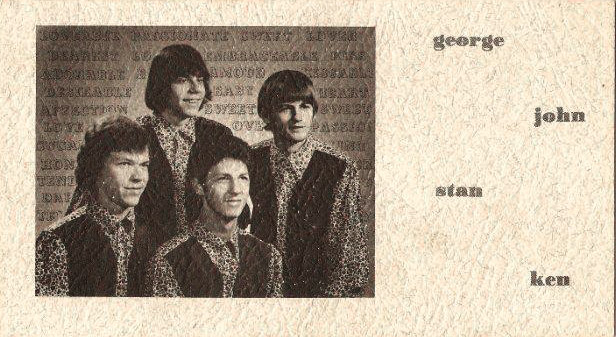
Opening for Roger Miller at Memorial ColiseumParamount booking Promo photo
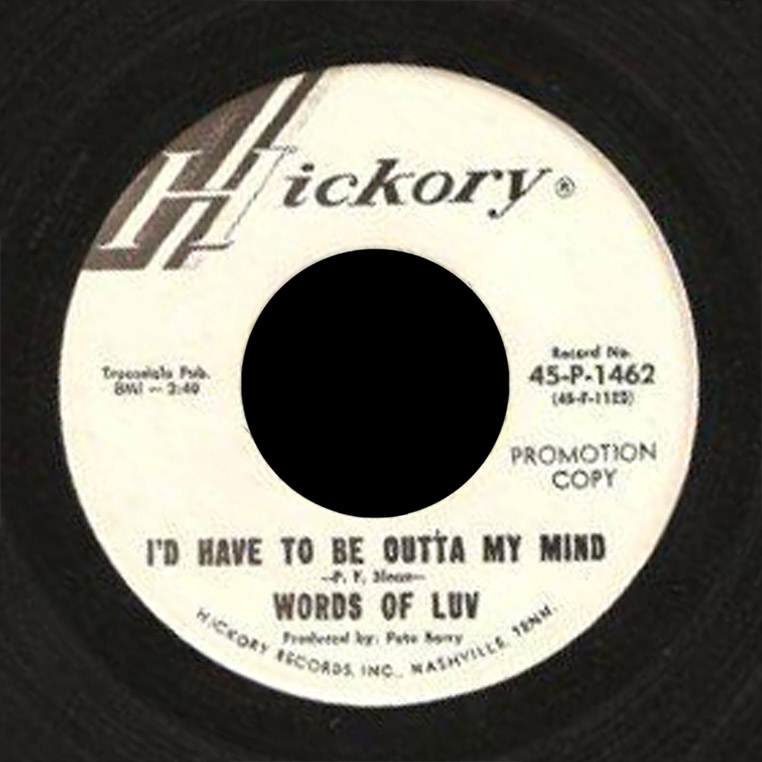
Soon afterwards, management of the group was taken over by Pete Berry – a local DJ and program director better known as the Flying Dutchman. Under Dutch’s guidance we got rid of the red hair and changed our name to the “Words of Luv” and returned to the studio to record “I’d Have To Be Outta My Mind” / Tomorrow’s A Long Time”.
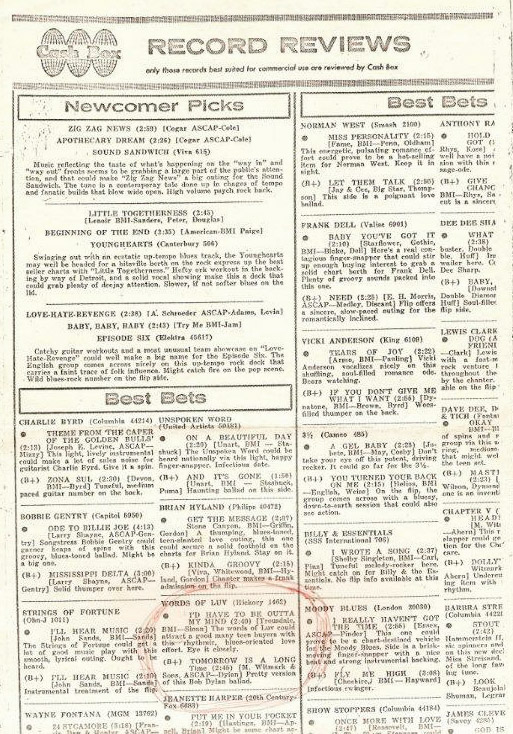
Dutch was able to get us signed with a booking agency in Washington, D.C. and also with Hickory Records for a four record deal. We went on the road playing up and down the east coast. Hickory Records released “I Have To Be Outta My Mind”. While the record received good reviews in Cashbox and Billboard magazines, it only received limited air play on the national scene.
In order to earn a living, Paramount kept us booked steady in real night clubs (usually a week or two at a time) which gave a break from doing one nighters all the time. Also, we would occasionally back up some of Paramount’s fading stars. We worked with Little Eva a few times, she had a national hit called “The Locomotion” about five years prior to that time. Whenever we were with her we were the Locomotives. Also, with Jimmy Jones a couple of times. Jimmy had two national hits a few years before that – “Handyman” was his first and then “Good Timing”. With Jimmy we were the Handymen.
The promotion picture of the “Words of Luv” has the name of the band misspelled – “Love” instead “Luv”. It was the printer’s mistake and Paramount Artists made them redo the entire order. Mistakes seemed to follow us around. When Hickory Records did the initial pressing of promotion copies for “I’d Have To Be Outta My Mind” they accidently put the plug side star on the flip side and starting sending it out to radio stations before they caught their mistake. Because of this, they had to do another promo pressing and start sending it out again.
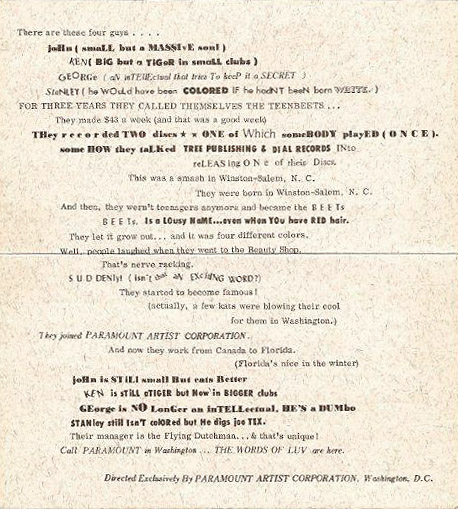
Promo sheet showing later member “Fab” Foltz
We didn’t get all the way up to Montreal. We only toured on the U.S. side of the border and the closest we played to Canada was upstate New York. As I recall, the very first gig booked through Paramount Artists was in Massena, New York (right on the Canadian border). We traveled extensively up and down the eastern seaboard (north and south), but only as far north as New York. I guess “Montreal to Miami” just sounded good to whoever wrote that promo sheet. However, we did go just about everywhere in-between.
We did a few TV shows: Some local shows in North Carolina, a show called ‘Wing Ding” in Washington, D.C. and a syndicated show (taped in Maryland) called the “Kirby Scott Show”. We also played a lot of teenage night clubs, dances and auditorium shows.
We had a fifth band member for a short period of time on the road. His name was Doug Foltz (nick name: Fab). Fab played electric piano and also sang lead.
By the early Fall of 1967 the road was taking its toll and the band broke-up. Although we had recorded a few more songs, due to the band’s break-up, they were never released. They were independently produced by Flying Dutchman Enterprises and I don’t know whether or not they were ever turned over to Hickory Records. I’m sure those master tapes are long gone by now.
“I’d Have To Be Outta My Mind” was re-mastered and put on Garage Beat ’66 Vol. 1 three or four years ago. It was a CD released by Sundazed Records. Our local releases were put on Tobacco a Go Go (Blue Mold Records) several years back.
Even though I later played in a few other road bands, and still occasionally play locally on weekends, my fondest memories will always be of the Teenbeets.
One more thing – I came across an interview that Ken Friedman of Tobacco A Go Go did a little while back. He was relating the story of the Teenbeets as one of his favorite garage band stories. In the interview Ken said he had met one of the former band members back in the 1980’s and that person was now a Moravian minister after finding religion on the battlefield in Viet Nam. Ken misidentified that person as the drummer. In actuality it was Paul (our original bass player).
George Samaras Review of Hickory 45 in Cash Box
Paramount booking cardback of Paramount booking card
“We kicked out the horn players and went psychedelic” – The Omen and Their Luv, 1967 Front: Don McGlamery and Jeff Neighbors, back: Bill McClain, Bruce Hopper and Tommy Stuart
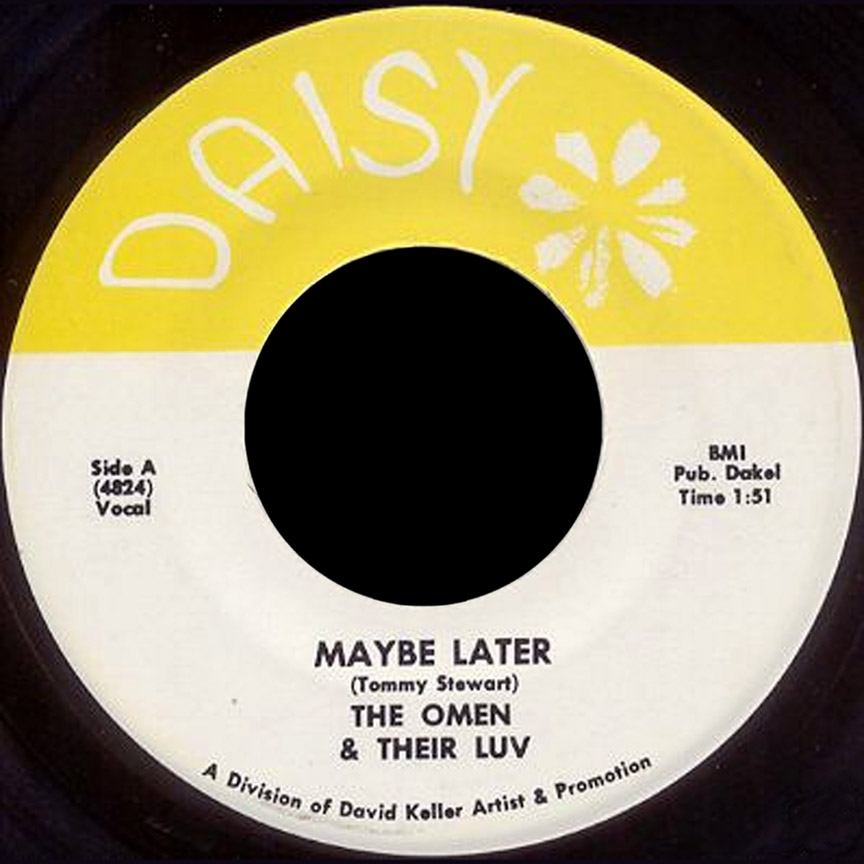
Omen and Their Luv released one of the best singles from Alabama during the ’60s. “Maybe Later” sounds fantastic – Tippy Armstrong’s buzzing guitar is all over the song while Tommy Stuart sings his too-cool-for-you lyrics. I especially dig the way he wails the end of each chorus:
Ain’t gonna get me in church You try all you like, but it ain’t gonna work. Not gonna go downtown I’m staying out here where no pictures around
Gotta know you better baby, And if I like you, well, maybe later!
Won’t thread the needle baby Don’t wear your shoes and I think you’re crazy Gonna be a cold day in June Leave me alone I’m going to finish my tune
Need to know you better baby, And if I like you, well, maybe later!
Need some time to think about it baby And if I think real hard, well, maybe later!
Won’t pick flowers in the rain Leave me alone and I’ll go back where I came, I see a lot of things I need And I need your love, but just as long as it’s free
Need some time to think about it baby And if I think real hard, well, maybe later!
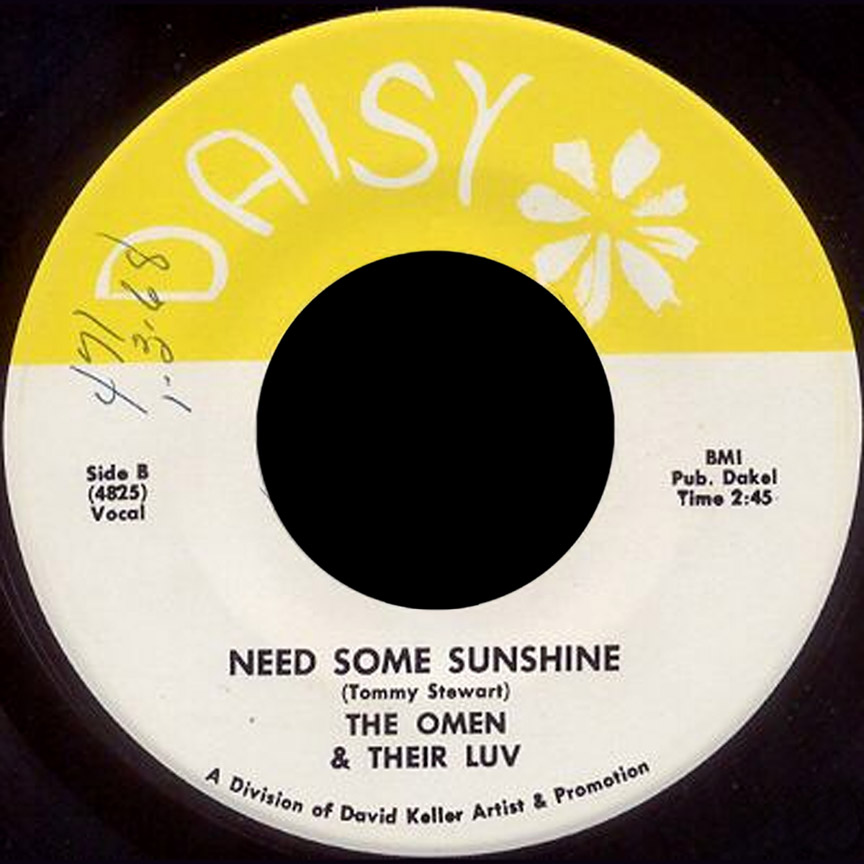
If “Need Some Sunshine” doesn’t catch you at first, wait until 1:22 into the song, when it shifts into a different time signature and, thanks to some eerie backing vocals, a whole other realm.
Bruce Hopper wrote to me about the group, and also sent some unreleased songs, including the fantastic “Another Girl” from the same sessions that produced “Maybe Later”. I’m including an excerpt of the songs here, in the hope that they can receive a proper release at some time in the near future.
I am the founder and former bass player for the Omen and Their Luv. I formed the O-men in 1966 with Fred Deloach. We were originally a 60’s white soul group with horns. The original lineup was myself on bass, Fred Deloach vocals and sax, Mike Hatchett on drums, David Popp on trumpet, Billy McClain on guitar and John Purdue on keyboards.
Labels spell Tommy’s name “Tommy Stewart”
We went into the studio in the fall of ’66 and cut a six song demo tape: “Hold on I’m Coming”, “Hungry”, “Steppin’ Stone”, “Wooly Bully” (we were the opening act for Sam the Sham when he played Tuscaloosa), also two originals, “You” and “Hurry on Back” written by me and Fred Deloach. This tape was done at Boutwell’s “church” studio with Ed Boutwell doing the engineering. Boutwell Studios located in Birmingham was the only decent studio in central Alabama that recorded rock’n’roll. This tape I presented to Duane Allman (who liked it) and to Steve Caldwell of the Swinging Medallions / Pieces of Eight, whose dad, Earl Caldwell owned several clubs in Panama City Beach, Fl. This demo landed us a gig in Panama City working for Earl.The O-men would play a jam session at the Beach Party every day from 2-4. We would then open for the “Pieces of Eight ” at 8pm and do a set. They did a set and we would come back on at 10 for a set. Then we had one hour off to get down beach to the Cork & Bottle Club (later renamed the Red Rooster) for our regular gig of playing from midnight to 5am! This was our work schedule seven days a week for two months straight.
We added Tommy Stuart right before we started this gig. He had just left the Rubber Band after they had a hit with “Let Love Come Between Us” that Johnny Wyker wrote (later with Sail Cat). Tommy played sax, sang and played keyboards. Due to band stress, Fred left the band half way through the summer.
When we got back to Tuscaloosa, Mike brought Jimi Hendrix’s first album to practice and that changed everything. We switched from white soul to psychedelic rock. David Popp left on trumpet.
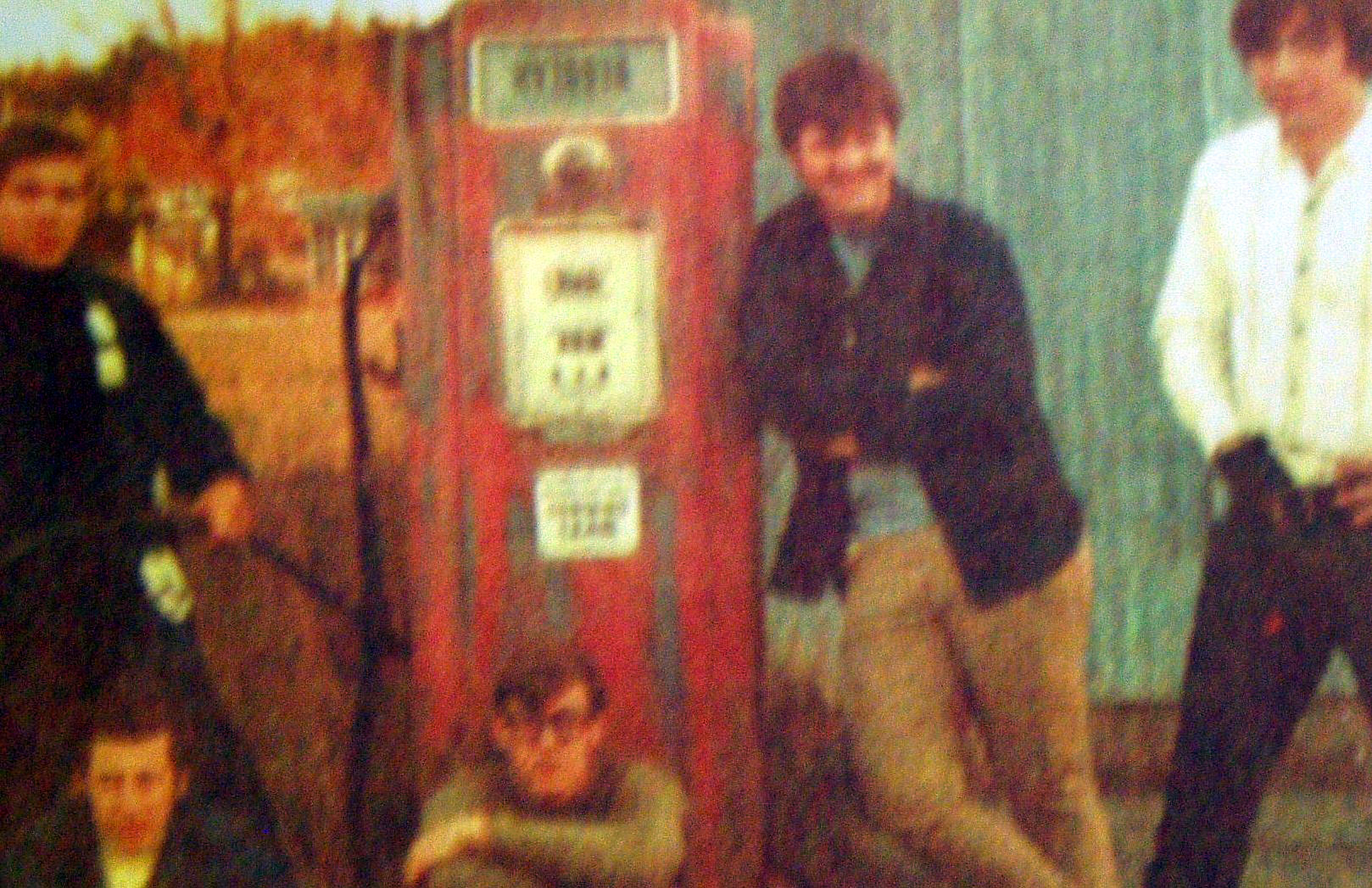
Because of the change to harder rock, we changed the name to The Omen and Their Luv. Hatchet moved to Atlanta and we brought in Jeff Neighbors on drums. We also added Don McGlamery on rhythm guitar and sax. This was the lineup in the pic by the gas pump.
We went into the studio in the fall of 1967 to record four of Tommy’s songs. Again we recorded at Boutwell’s Studio. Tommy Stuart wrote “Maybe Later” and sang lead vocals. We snuck some young girls in to sing backup, but their parents would never let them tour with us.
We brought in Tippy Armstong (later a studio musician in Muscle Shoals) to play lead guitar on all four songs. Since Tippy came to the session, Eddie Hinton (Muscle Shoals session man) showed up to visit and started telling Ed Boutwell how to mix. Boutwell got pissed and told Eddie to mix it. So “Maybe Later” ended up with some top notch studio guys helping us out.
I met David Keller when he was playing with The Preachers in 1967. After the Preachers, David had a booking agency that he ran out of Montevallo where he had attended college. He was wanting to expand into booking and producing and club ownership. He liked our tape and we were the first band he booked onto his Daisy label. “Maybe Later” was the A side and “Need Some Sunshine” was the B side. The record sales had minimal success, but the airplay led to great crowds at gigs promoted by Keller.
“Good Man” which was to be our next single, but it never happened under David Keller. “Another Girl” was to be the “B” side of our next release.
He had a group of bands that included the Omen, The Outer Mongolian Herd and W.C. Doan and Co. that he booked. For a short while he opened a recording studio on 15th St. in Tuscaloosa where some of his bands recorded. He also started a club in Panama City in June of 1968 called the Head Shop. We were the opening act. For two weeks we played as The Omen and Their Luv, then we would play for two weeks as the Preachers doing their hit song “Inspiration”. Fun times.
David countined to book us across the South for at least a year. He also had the Shingaling Club in Selma, AL. We played there every Saturday night for at least six months until one night we let some black musicians sit in with us. The next Saturday we showed up and the Sheriff had put a pad lock on the door with a sign reading “Closed until further notice by order of the Sheriff of Dallas County”. Selma 1968!
Omen and Their Luv, 1968, from left: Tommy Stuart, Mike Thornton, Jeff Neighbors and Bruce HopperThe Rubber Band 45 from 1970 featuring the last Omen lineup of Tommy Stuart, Mike Thornton, Bruce Hopper and Asa Gaston
Billy left and was replaced by Mike Thornton from the Shadows. By 1969 we were down to a 4 piece as shown in the other photo. Bill Stewart (Allman Brothers Band) replaced Jeff for about six months and then Asa Gaston (Locust Fork Band) came in on drums.
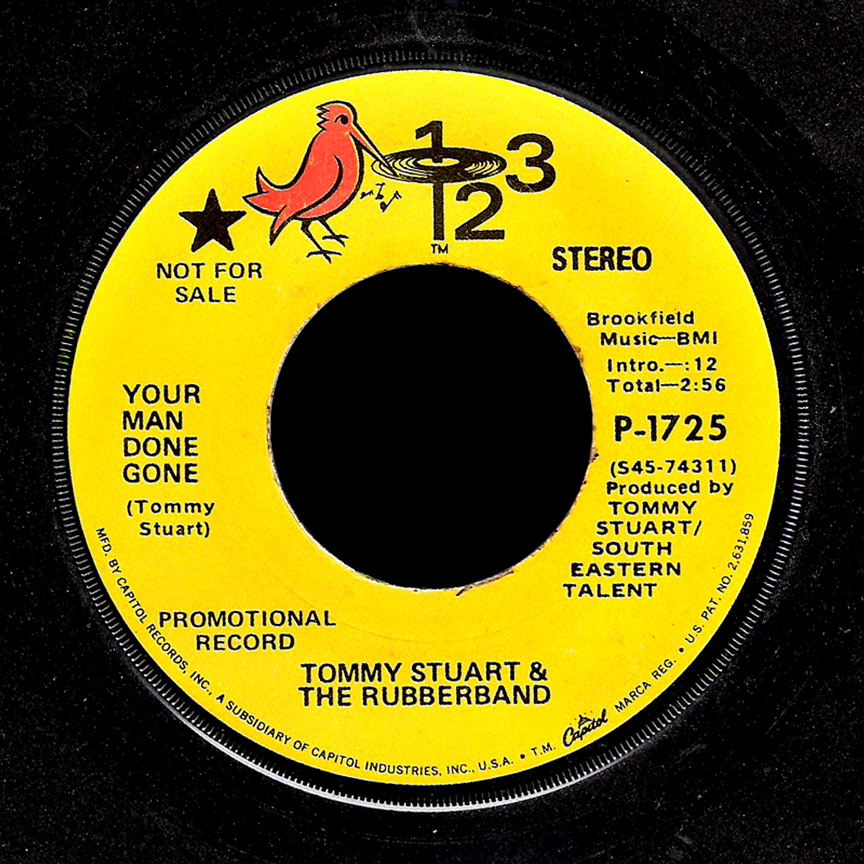
The four piece of Stuart, Hopper, Thornton, and Gaston went on to re-aquire the name Rubber Band which Stuart owned the copyright on (Tommy later sued and won a copy right infringement case against Bootsy’s Rubberband). We recorded on 1 2 3 Records [“Your Man Done Gone” / “Peeking Through Your Window”] with Tommy playing keyboards, flute, sax and doing the lead vocals. Unfortunately our song had the exact same rhythm and chord changes as “Spirit in the Sky” which was released one week before our song.
We did an east coast tour the summer of 1970. Things were falling apart by that time. Mike Thorton left and was replaced by Tommy Joe White. Asa didn’t want to do the tour because he just got married, so we added a session drummer from Colorado for the tour. I left the group after the tour.
Asa and I later formed another local band with Jim Coleman (check out his website) and Jimmy Butts. We were known as Mr. Wizard and recorded a one hour special for Alabama PBS. More bands in the 70’s. Owned the Chukker in Tuscaloosa in the 80’s and promoted music for years. Now I back up Carroline Shines, the daughter of blues legend Johnny Shines.
Mike Hatchett later went on to play with the Brick Wall out of Atlanta and worked as a roadie for Little Feat and George Jones and many others including Kiss, Ronnie Milsap, Blue Oyster Cult, etc. Billy McClain died of cancer after a succesful photography career. Don McGlamery later moved to Norway and was a succesful street muscian there. [ChasKit: Don passed away in January, 2006].
I have been listening to our body of work with the Omen, Omen & Their Luv and the Rubber Band and am going to talk with Tommy about doing a retrospective CD of all the material from the ’60’s and 1970.
Bruce Hopper
In a comment on the post about the Preachers, Tommy Stuart added:
We’d recorded it on our own but a disc jockey from Northport knew David & that’s how all of that happened. He had a big teen dance place in Panama City in about 1968 & we played there as The Preachers, & also a one nighter or two that way. It was a little weird but we learned their record “Hallowed Ground” & got up there & I sang it like it was mine. Later, I bought Dave’s screaming white Hammond M2 organ he’d used in the Preachers.
Tommy Stuart has a new group called O-Men and Their Luv, with a CD No Twin.
Thank you to Bruce Hopper for sending in the photos and song transfers and for patiently answering my questions.
On the Quad at the University of Alabama. From left: Tommy Stuart, Mike Thornton, Asa Gaston and Bruce Hopper.
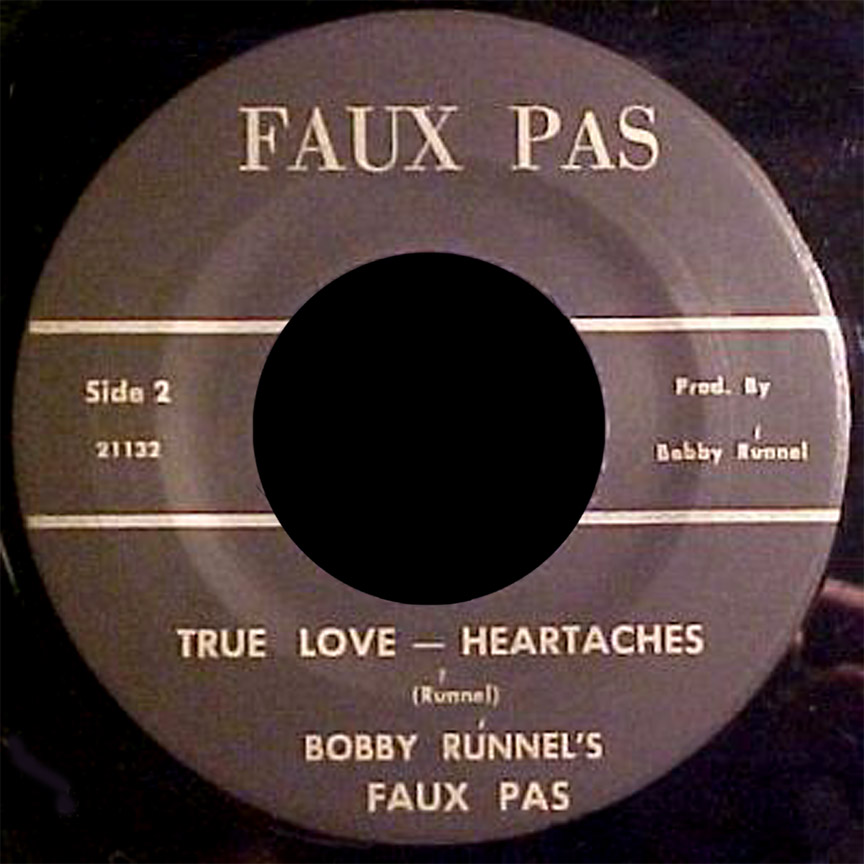
Given Bobby Runnel’s career as a lounge act during the mid-late ’60s, you’d think it unlikely that one of his songs could become something of a classic of mid-60s rock. His original song “True Love – Heartaches” has been a favorite of mine since hearing it on Teenage Shutdown vol. 11. He certainly must have believed in the song, as he recorded it three times in as many years.
Bobby Runnel was born Robert Wilson, the son of a Southern Baptist preacher, and raised in eastern Arkansas, a rural area now part of Little Rock. Across the river was Memphis, where he picked up some of the early rock ‘n roll styles of the ’50s. He moved to Miami and started the Faux Pas trio, touring the east coast and mid-west.
In Nashville he recorded “True Love – Heartaches – False Love” as the b-side of his first single, released in September 1965 on the Buccaneer label from Jackson, Mississippi. The A-side is what I’ve heard is a soul ballad featuring flute, “If Your So Mart”. The artist is listed as Bob Runnel’s Faux Pas III with John Sherwood and Ivano Comelli (sp? – Ivann Comelli?). He had a second 45 on Buccaneer (509) “For My Baby” / “Where’s Willie Walker” that I haven’t heard.
I recently heard a clip of this first version of “True Love – Heartaches – False Love” and it’s pretty cool, slower with piano as prominent as the guitar and good drumming. If anyone has sound transfers or label scans please email me.
In 1966 the band found long-term work in northern Ohio, based mainly in Akron at Ninos’ restaurant and lounge. The clientele was older and Runnel’s repertoire ranged to all kinds of pop styles from folk to mainstream pop. The Faux Pas trio changed personnel from time to time, but always with Runnel playing lead guitar and singing. The two records I’ve heard also feature piano, so at least in the studio they were more than a trio.
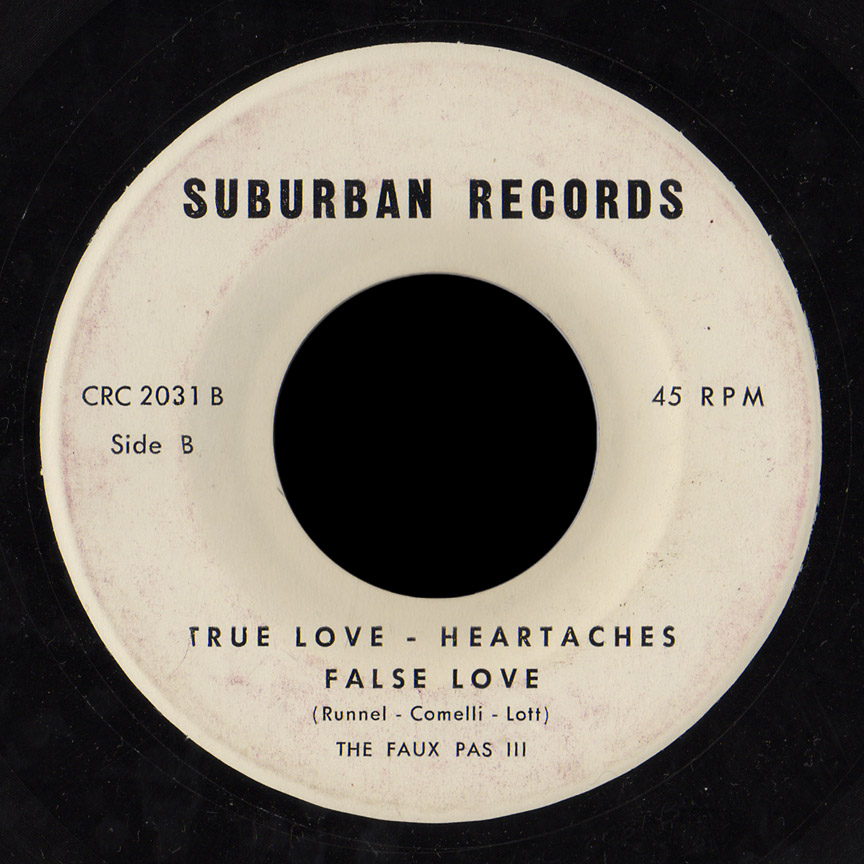
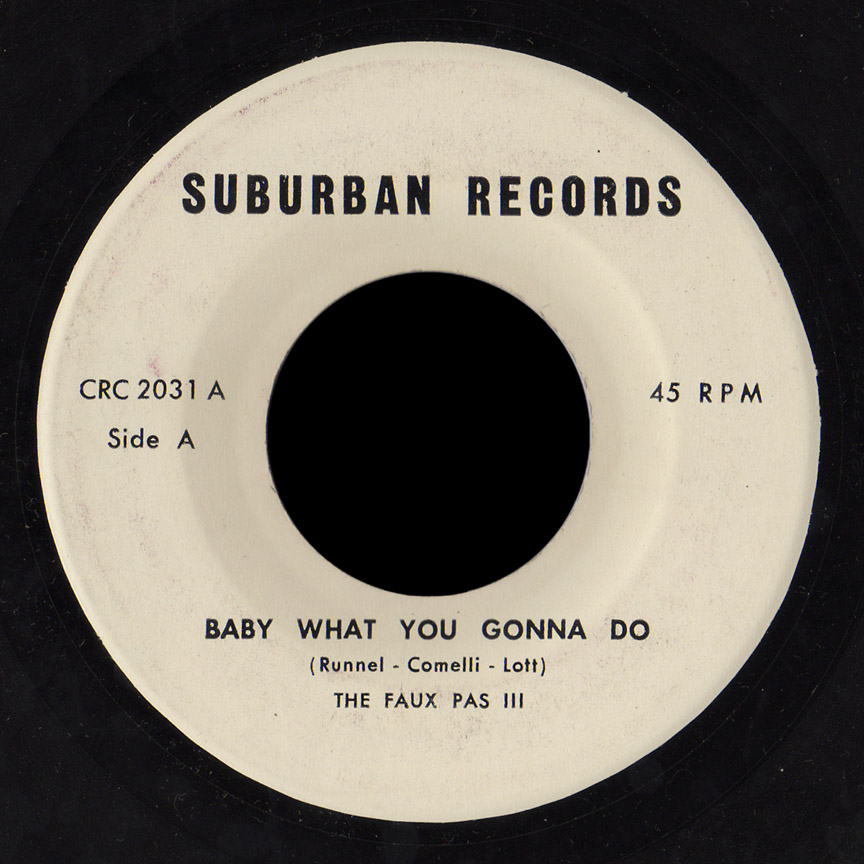
Runnel cut “True Love – Heartaches – False Love” for a second time at Cleveland Recording (not in Little Rock as noted elsewhere) in 1966, released on Suburban Records CRC 2031 (white labels). On this release the band is listed as simply the Faux Pas III. It was the b-side of “Baby What You Gonna Do”, a good New Orleans-type r&b.
Songwriting credits on both sides are listed as Runnel, Comelli and Lott. Also on Suburban is another single featuring the Faux Pas backing a Janet Stewart, “What Can I Do” / “Brand New Love”.
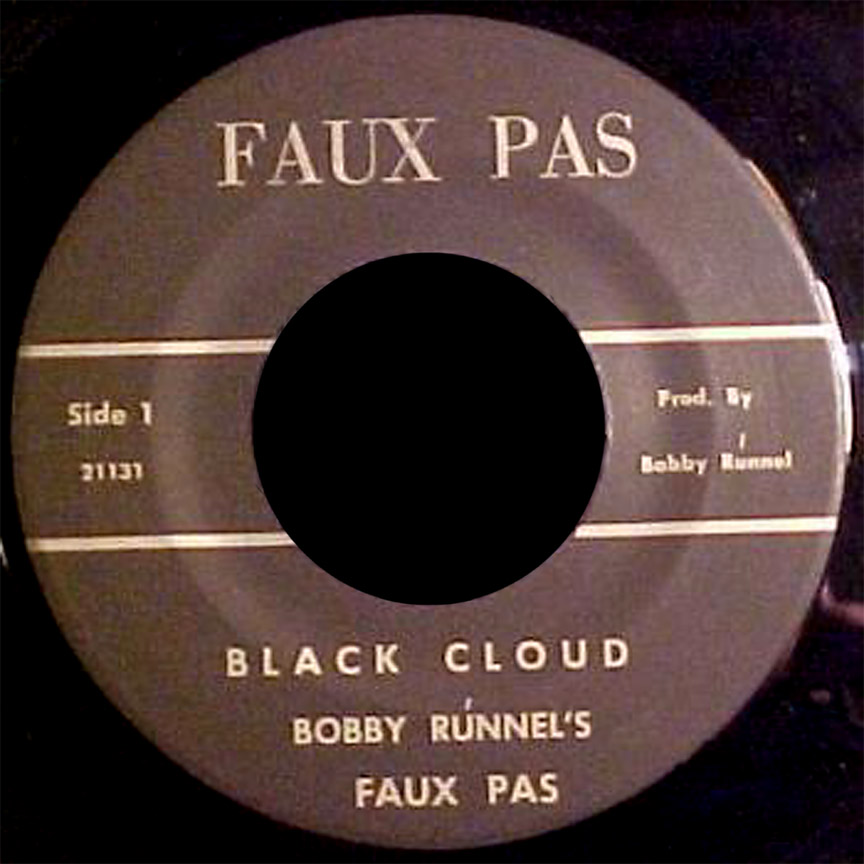
In January 1968 he released the third and best version of “True Love – Heartaches”, recorded at Akron Recording and released on his own Faux Pas label (a Rite pressing: 21131/21132 with black labels). The A-side this time was a cover of “Black Cloud”, a hit for Me and Dem Guys on Palmer from late 1966. It’s a song I’m not very fond of but the Faux Pas do a great job, especially the drummer who lays down a beat like a locomotive. Whatever the limitations of their lounge act, this band could rock when it wanted to.
On this 45 the band is credited as Bobby Rúnnel’s Faux Pas, with an accent over the “u” in Rúnnel. Rúnnel is also listed as sole song writer on “True Love – Heartaches”, as well as producer.
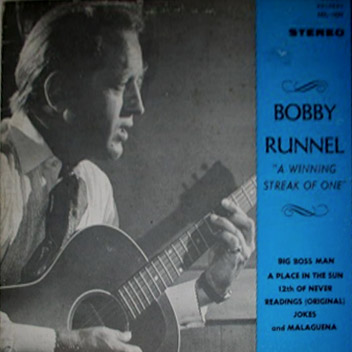
In 1969 they released a pop 45 as the Faux Pas that I haven’t heard, and also during the late ’60s Runnel had two LPs featuring his typical lounge repertoire and probably sold as souvenirs of his club act. Bobby Runnel, A Winning Streak Of One on the Hawk label features a photo of Bobby with an acoustic guitar, and lists some of the songs: “Big Boss Man”, “A Place in the Sun” and “Malaguena” along with original jokes!
In the early ’70s he broke up the Faux Pas and did well as a songwriter in Nashville.
All info cribbed from Buckeye Beat, with some 45 release info from Mop Top Mike.
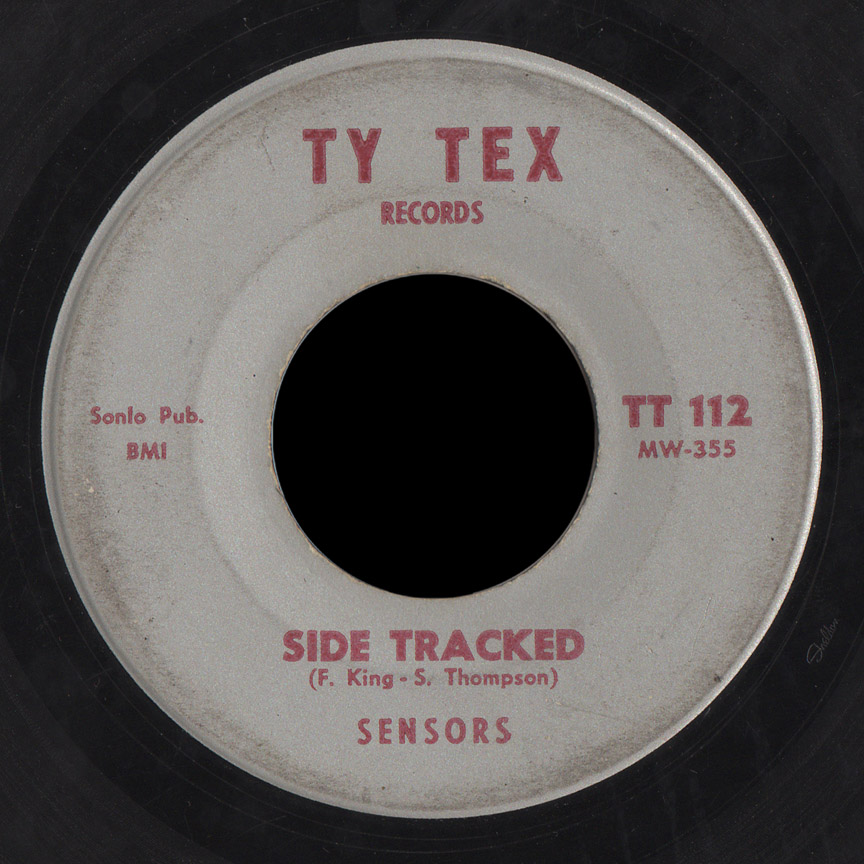
I’d been wondering if there were any great rock 45s on Ty Tex when I found The Sensors “Sen-Sa-Shun” / “Side Tracked” at Rex’s sidewalk sale this spring. As it turns out, the Sensors had four 45s on Ty Tex.
Buddy Henderson would come to be known as Bugs Henderson when he joined Mouse and the Traps. He started the Sensors in his hometown of Tyler, Texas when he was just 16.
On these two Freddy King songs, Buddy articulates every note, making these two of the better r&b instrumentals I’ve heard. “Side Tracked” has a good jazzy organ solo to boot.
Their version of “Rumble” is also cool, even if it doesn’t have the menace of Link Wray’s original. The organ provides an eerie background. Buddy gets a shimmering tone out of his guitar chords with a ferocious slicing sound towards the end of the song
I haven’t heard the flip side, a version of “Caravan”, but Not Fade Away #2 says guitarist on that side was Levi Garrett. I assume these were recorded at Robin Hood Brians’ studio in Tyler, but I could be mistaken.
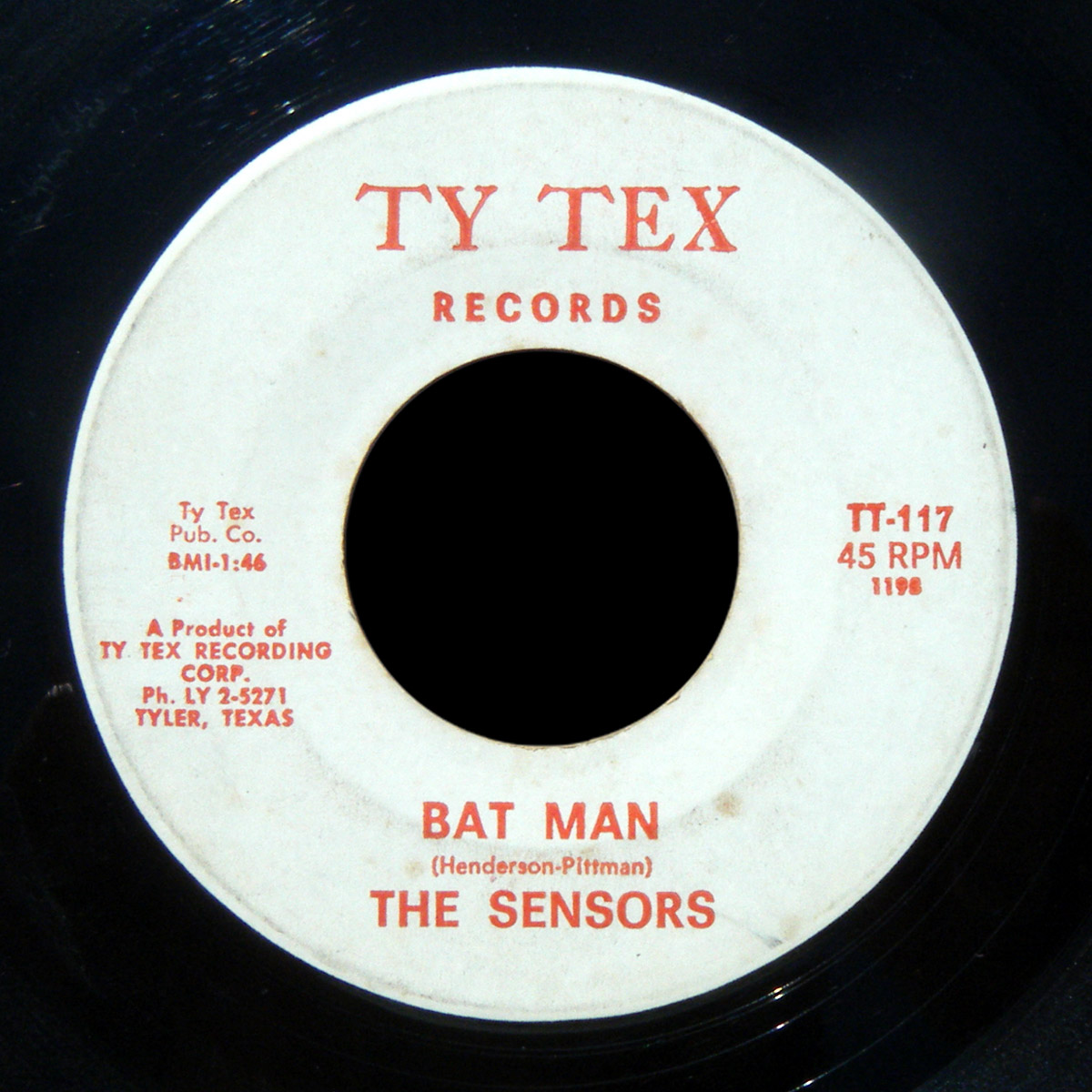
The A-side of their third single, “Bat Man” is credited to Henderson and Pittman. The flip is a cover of Jack McDuff’s “Light Blues”.
TT-112 – Sen-Sa-Shun / Side Tracked TT-115 – Rumble / Caravan TT-117 – Bat Man / Light Blues TT-120 – Honest I Do (vocal) / Honest I Do (instrumental)
Thanks to Rich for the transfer of “Rumble” and to Greg Reyes for the scan of “Bat Man”. Thank you to Martin Hancock for finding the scan of “Rumble”.
Any help with this discography would be appreciated:
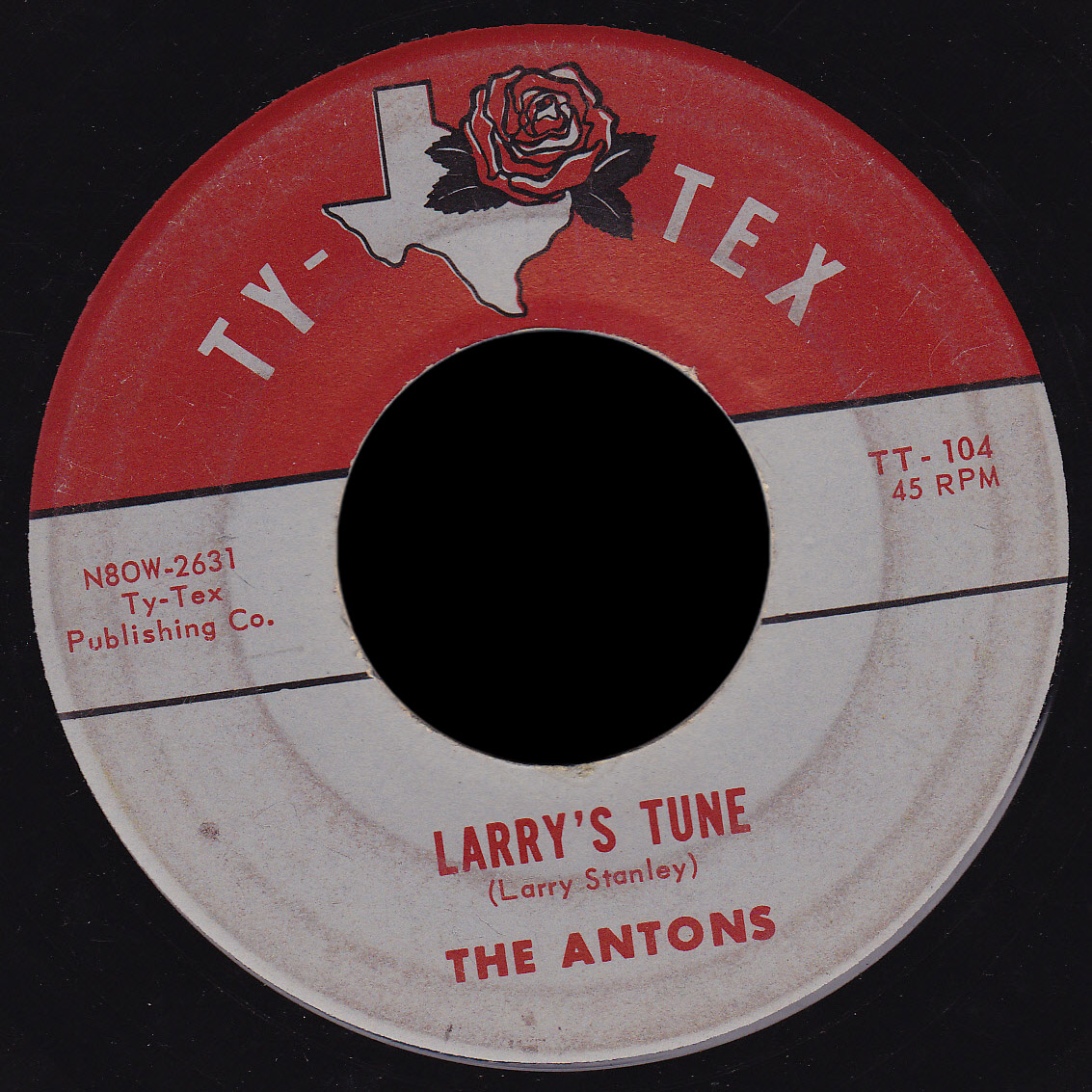
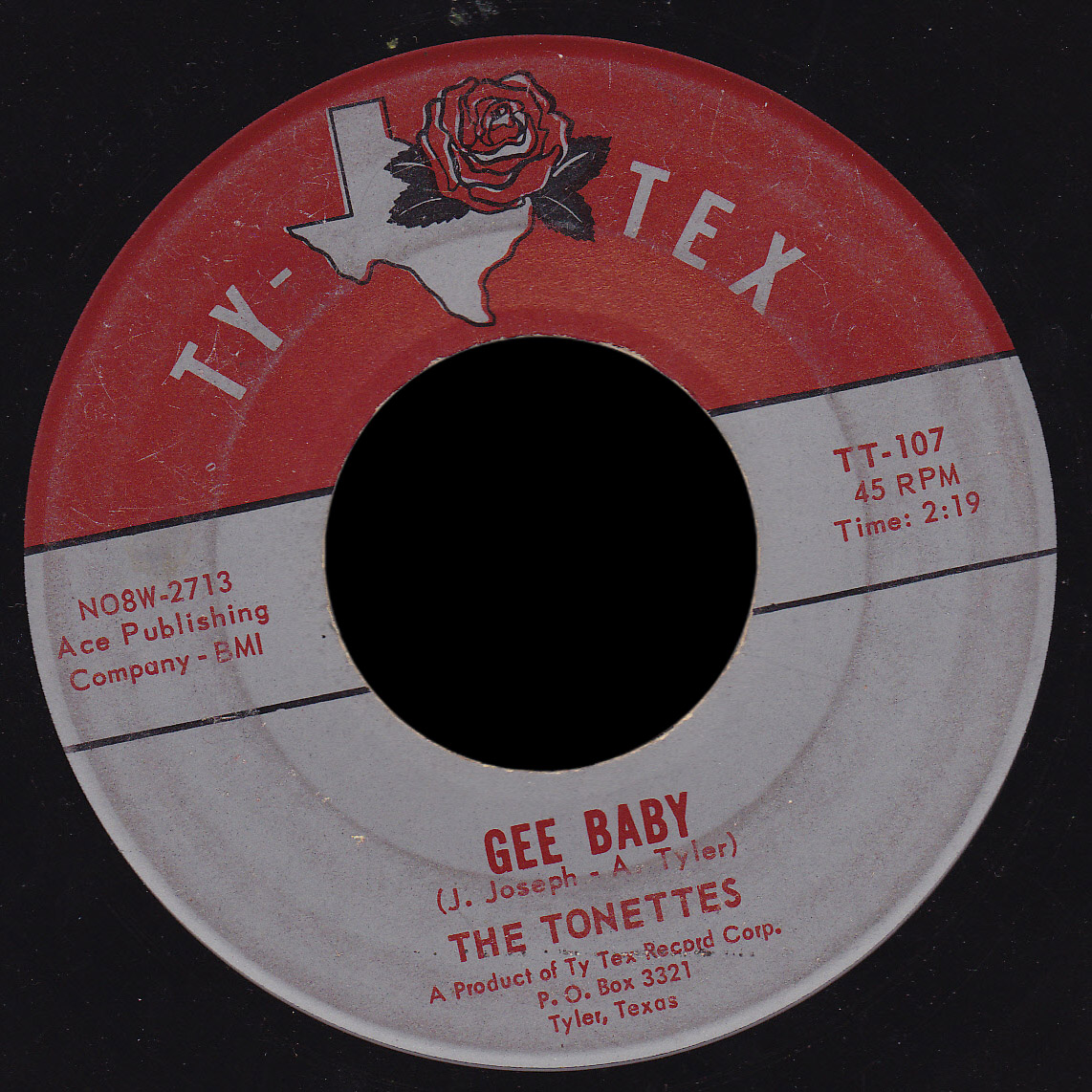
TT-100 – Ron Williams and the Customs – Sue Sue Baby / Empty Feeling (both by Ron Williams) TT-101 – Guy Goodwin – Roll Out the Red Carpet / Nobody Going Nowhere TT-102 – Ron Williams – I’ll Miss You So / I Guarantee You Baby (October 1961) TT-103 – ? TT-104 – The Antons – Larry’s Tune (Larry Stanley) / Green Eyes (1962) (N8OW-2631/2) TT-105 – Zeroes – Flossie Mae / Twisting With Crazee Babee TT-106 – Ron Williams – Wine, Wine, Wine / So Long, My Love (Ron Williams) TT-107 – The Tonettes – Gee Baby (J. Joseph, A. Tyler) / Friendship Ring (late 1962) (NO9W-2713/4) TT-108 – Guy Goodwin – Wheels a Hummin’ / You’re Right I Will TT-7599 – Ron Williams – If I Could Stay Away From You (Ron Williams) / On Top of Old Smokey (also released on Imperial 5729)
The above feature an early label design with outline of state of Texas and roses. See Rockin’ Country Style for more info.
Releases below have a simpler design with Ty Tex at the top:
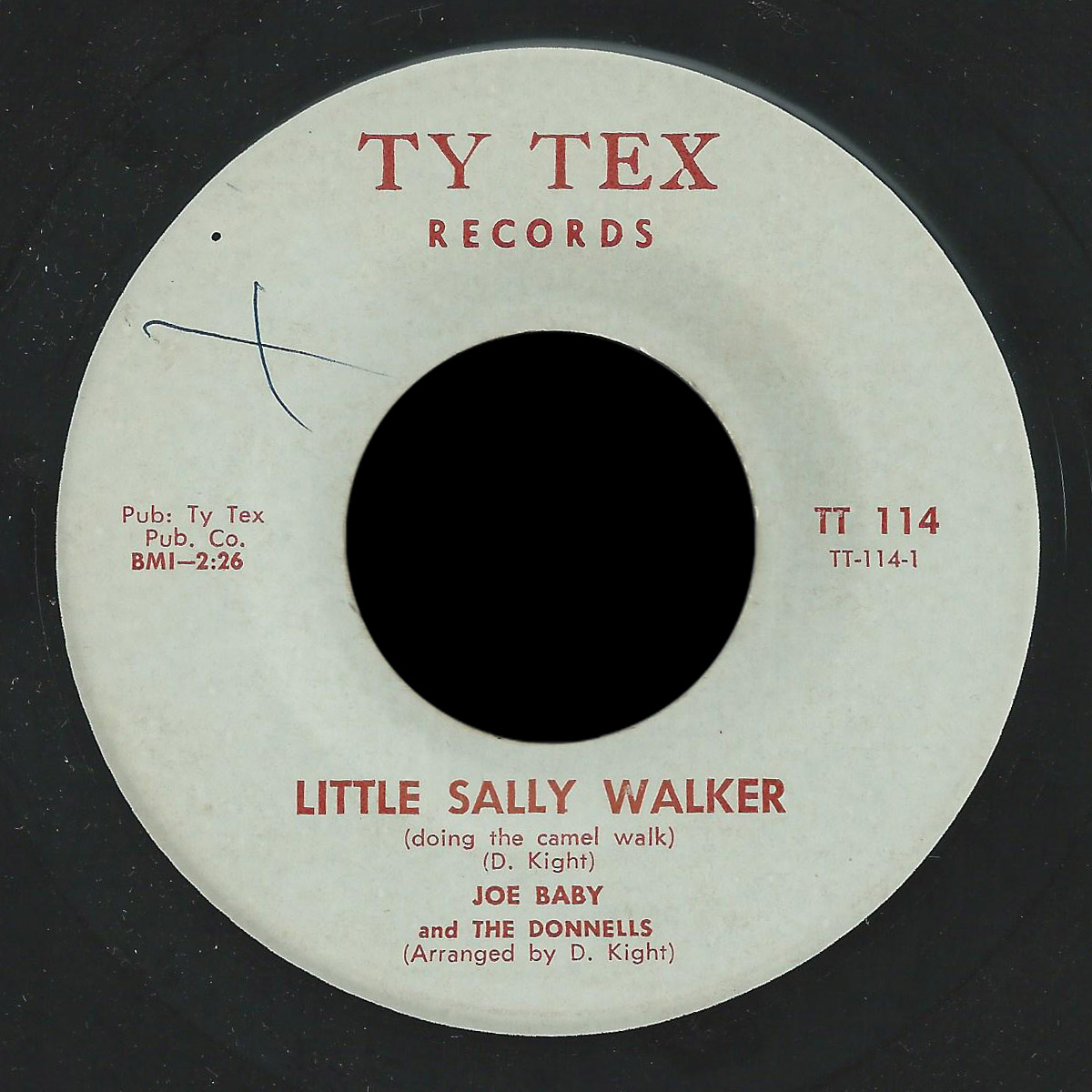
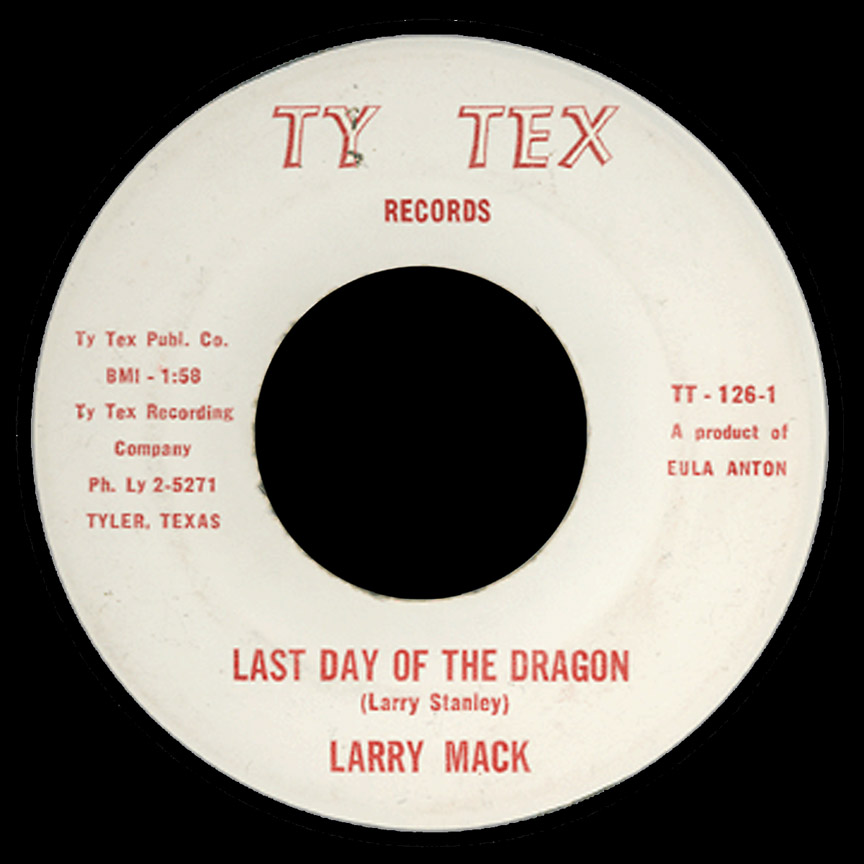
TT-110 – Donnie Carl – Love and Learn / Do the Wiggle Wobble (D. Kight) TT-111 – Guy Goodwin- Where Sweethearts Never Part / ? (1962) TT-112 – The Sensors featuring Buddy Henderson – Sen-Sa-Shun / The Sensors – Side Tracked TT-113 – Donnie Carl with the Donnells – It Happened to Me Parts 1 & 2 TT-114 – Joe Baby and the Donnells – Little Sally Walker (Doing the Camel Walk) (D. Kight) / I’m Gonna Move to the Outskirts of Town TT-115 – The Sensors – Rumble TT-116 – Guy Goodwin – A Taste Of Her Loving / ?? TT-117 – The Sensors – Bat Man – supposed to be scarce. TT-118 – Donnie Carl – You’ve Got It / Getting Over You (both by D. Kight, December 1964) TT-119 – Donnie Carl – Heart Attack / If You Want It That Way TT-120 – The Sensors – Honest I Do (vocal) / Honest I Do (instrumental) TT-121 – Linda Burns – And That Reminds Me / The Reason Why (October 1965) TT-122 – The Derbys – A Different Woman Every Day (Taylor-Gadson-Darnell) / The Crow TT-123 – Ron Williams and the Trebles – So Fine / Let’s Stop Wasting Time (Ron Williams) TT-124 – Ron Williams – Please Come Back / I’m Sending You A Pencil TT-125 – One Eyed Jacks – Hang It Up (Robert Leslie Allen) / Down On My Knees TT-126 – Larry Mack – Last Day of the Dragon (Larry Stanley) / Can’t You See Me Crying TT-127 – The Revolvers – Like Me / When You Were Mine TT-128 – The Revolvers – Good Lovin’ Woman / Land of 1,000 Dances (June 1967) TT-129 – Dana Black and the Revolvers – As Tears Go By b/w The Revolvers – Your Love’s for Me TT-130 – Floyd Jones – My Mother’s Prayer / Hero’s Welcome Home TT-131 – Stan Gorman and the Revolvers – I Love Lovin’ You / Green Unicycle
Many of the later releases show “A product of Eula Anton” on the label. At least some of these records were cut at Robin Hood Brians studio in Tyler.
Donnie Carl is Donnie Carlton Kight, a soul singer. He wrote most of his songs, sometimes with Mike Goodrich.
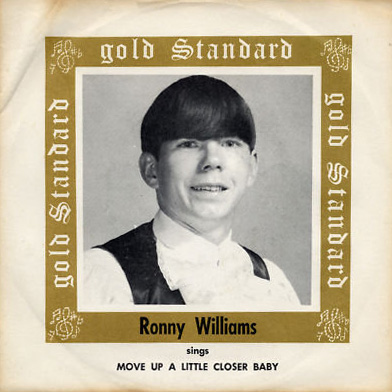
Ronny Williams’ Gold Standard sleeve could this be the same person recording for Ty Tex as far back as 1961?
Ron Williams
Ron Williams wrote most of the songs he recorded, here are some other 45s he cut:
Pastel 404, “Poor Little Lamb” / “Hey! Little Pearl” – the A-side is excellent garage. I don’t have the record, but have short clips of both sides here. Arvel Stricklin played lead guitar and Hammond organ on both tracks (source). Pastel Records owned by Maj. Bill Smith.
Vee Jay 675 “Angel Girl” / She Ran Away” (1965)
Austin A-321, “Big Boy Pete” / “Runaway” (despite its name, Austin Records was a Ft. Worth based label. I haven’t heard this one)
Le Cam LC 331 – Ron Williams with Major Bill’s Texans – “Lady Diana” / “Somewhere Between”
A release by Ronny Williams “Move Up a Little Closer Baby” on the Gold Standard label may also be his – but once I saw the photo of him on the sleeve I decided it’s not possible, do you agree? The flip is sung by his brother Larry Williams, “When You Grow Tired Of Him”.
Larry Mack
One of the best vocals that I’ve heard on the label is Larry Mack’s “Last Day of the Dragon”. Songwriting credit goes to Larry Stanley. This is a track I’d definitely like to know more about. I don’t own it yet and haven’t heard the flip.
Thanks to Martin Hancock, Steve Munger and DrunkenHobo for their additions to this discography and the scans seen here. Thank you to Janis Hellard for the scan of Ty Tex TT 114, Joe Baby and the Donnells.
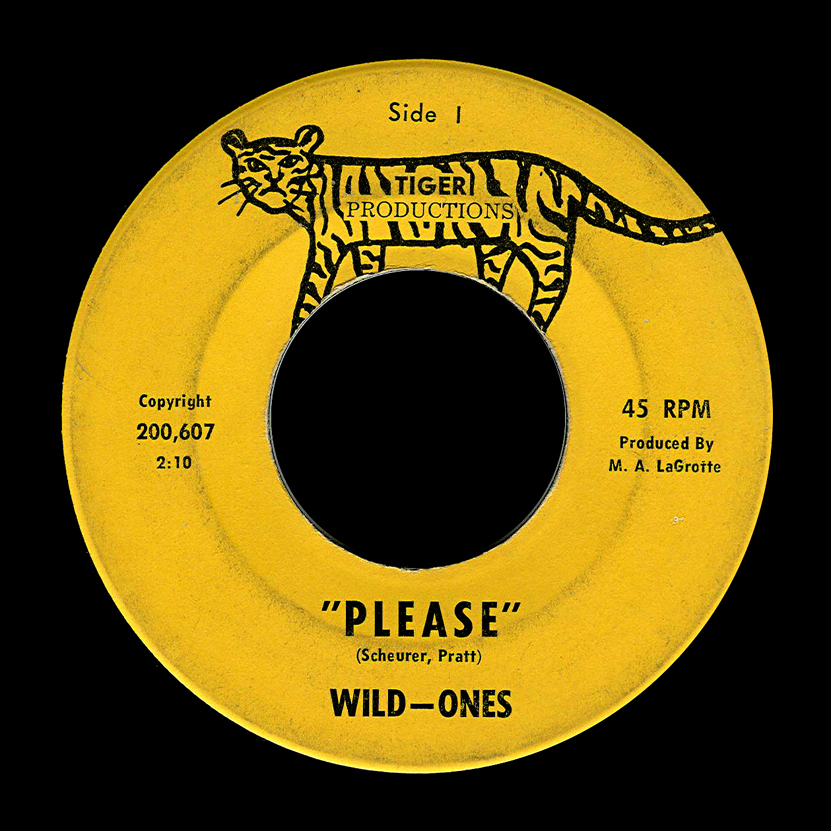
There were plenty of bands called the Wild Ones in the ’60s, but this group doesn’t seem to be related to any of them. A Massachusetts location is possible. The “200,608” number on the label refers to a Decca custom pressing, usually, but not always used by bands in New England. There was a group called the Wild Ones from Shrewsbury/Worchester MA with the single “Number One Girl” / “Surfin’ Time Again” on Camsul.
Mike Markesich wrote: “September, 1965 release. They are not related to the NYC discotheque performing group on United Artists & the Sears label, even tho I’ve seen that mentioned somewhere before. Nothing in copyright matches the titles, songwriters or producer name.”
The highlight is the A-side’s “Please”, a sharp rocker with a desperate singer and a very simple guitar break. “Just Me” is faster, with an even simpler, but effective guitar solo. Good, spare production with a booming sounds to the drums and clearly audible descending bass lines.
Both songs were written by Pratt and Scheurer, and produced by M.A. LaGrotte for the Tiger Productions label.
Info on the Camsul release from Till the Stroke of Dawn by Aram Heller. Thanks to Mike Markesich for the info and label scans, and to Davie Gordon for pointing out the connection to AAA in his comment below. Thanks also to the Eggman for bringing this subject up!
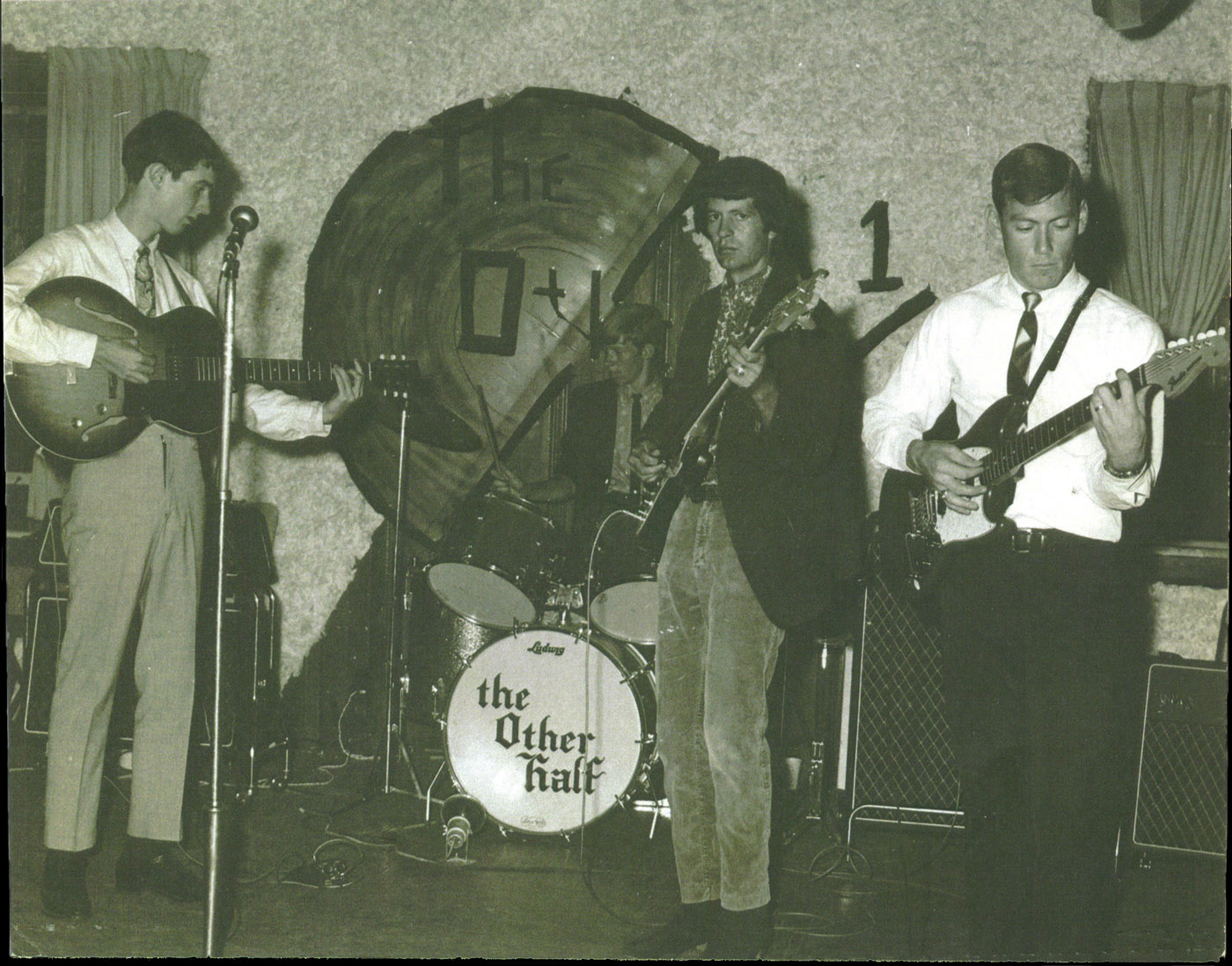
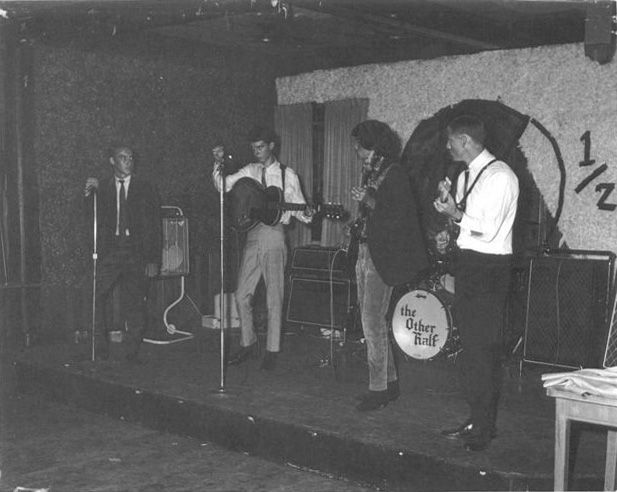
The Other Half at the Greenville Country Club, from left: David Heath, Alex Bauknight, T A Tredway and Carroll Grant. Not pictured: Phil Sudderth.
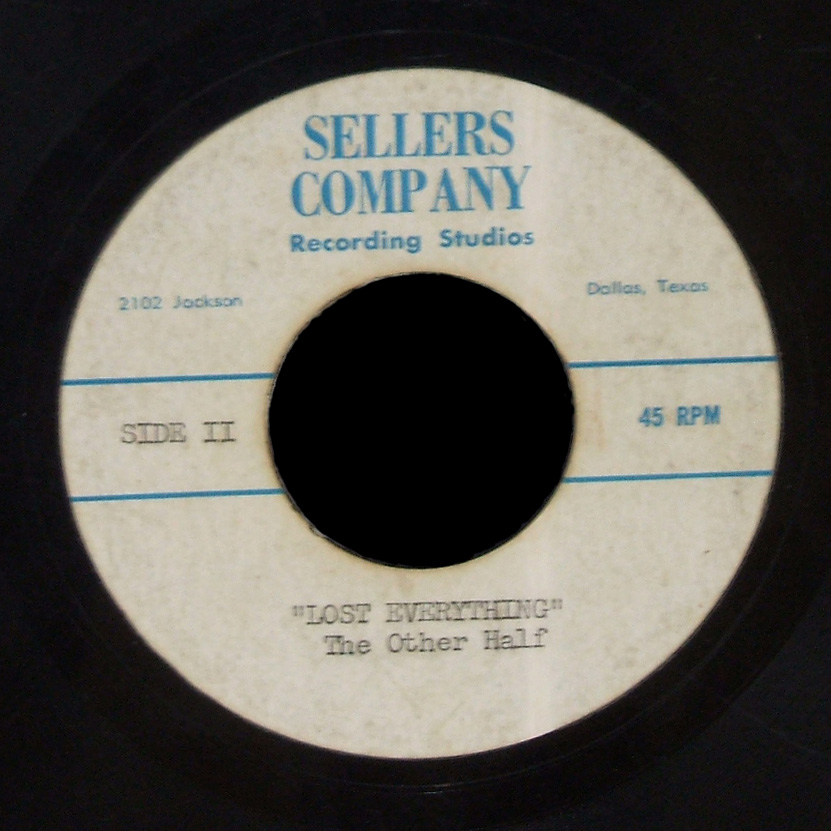
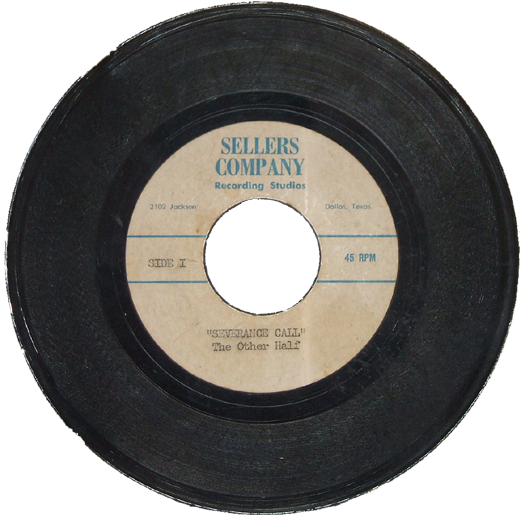
It’s not often I hear unreleased songs that catch my attention as these two by the Other Half, a quintet from Greenville, Texas, about fifty miles NE of Dallas. “Severance Call” has excellent harmonies over a solid rhythm, fast bass runs, and a good guitar break without effects. “Lost Everything” is even better, as Phil Sudderth sings in as rough and gravely a voice as I’ve ever heard over staccato guitar chords.
Bassist and vocalist T A Tredway sent in the photos, music and story of the band:
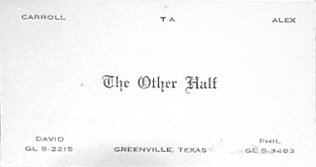
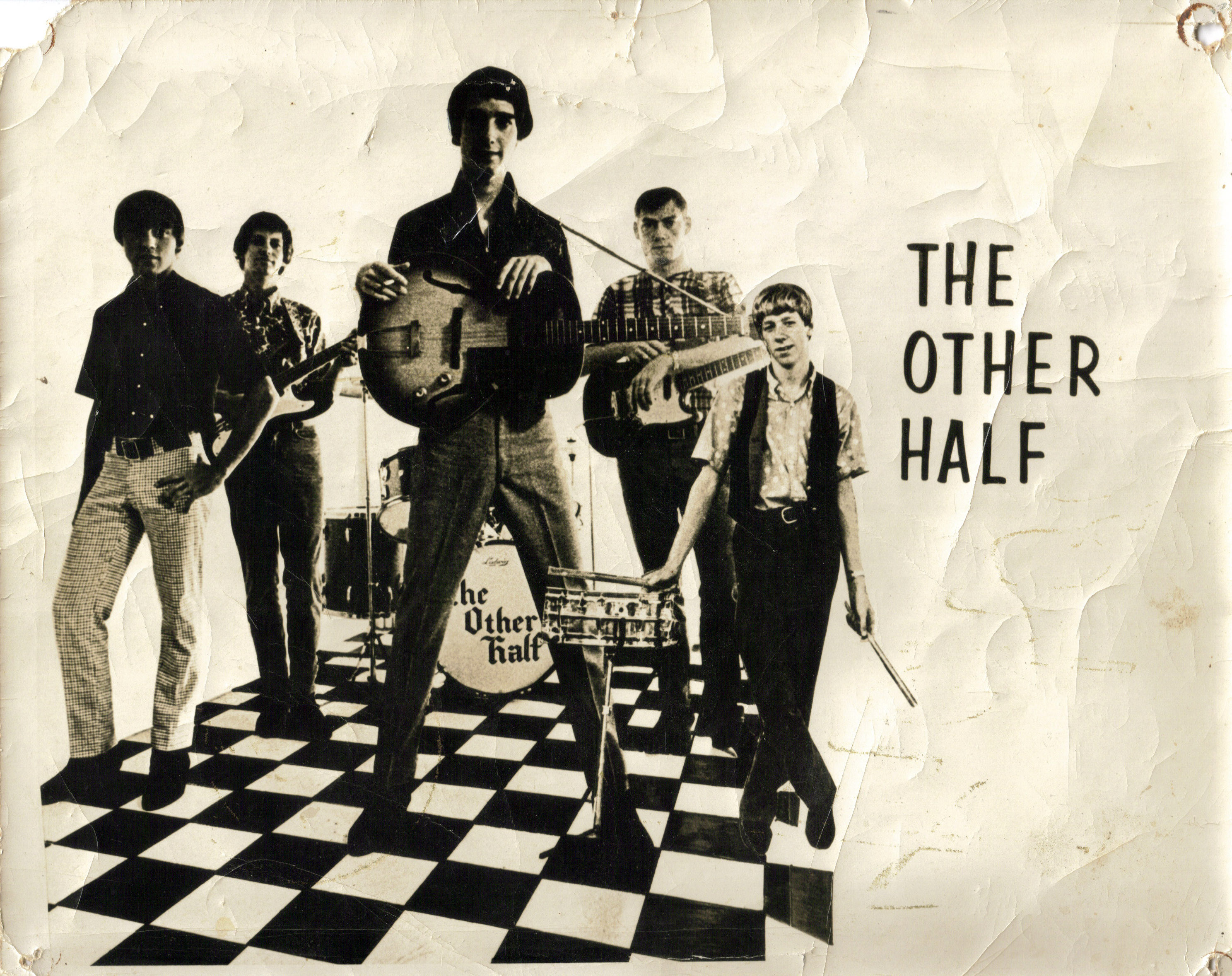
We started The Other Half in Greenville, TX in 1965. T A Tredway (bass guitar, vocals), David Heath (lead guitar, vocals), Carroll Grant (rhythm guitar, vocals), Phil Sudderth (lead vocals, tambourine) and Alex Bauknight on drums.
I had been to a band practice and really didn’t know anyone in the band (don’t think they ever played a gig). Started talking to some people in the band and was asked to come back to listen to the next practice session so I agreed. I was not a musician, just fooled around with a six string with a little folk music. Come to find out at the next practice the band decided to break up. I started talking with David and Phil and said why don’t we just start our own band, half kidding … but we started thinking seriously about it. I was 24 at the time.
David (age 17) was the drummer and Phil (age 18) sang but there was a young kid, Alex (age 14), who wanted to play drums so David decided he would play guitar and we would look for a lead guitar player. After a short time not being able to find a lead suited to what we wanted to do, David decided to play lead and we decided on Carroll (age 21) who had been to a couple of practices would fit right in.
David is the tall lanky kid playing the Gibson hollow body and Carroll is playing the Fender to the right in the pics. I was playing a metalic blue Mossrite Ventures bass all the time in the band. David and Carroll changed to a sunburst Gibson 335 and a Gibson cherry red 330E, respectfully, with Super Beatles and I had a Vox Bassman amp with two speaker cabinets. We had four Vox line speakers run through a 50 watt Bogen amp for our speaker system.
Phil Sudderth, David Heath, T A Tredway and Carroll Grant; hidden is drummer Alex Bauknight
We were really in to The Rolling Stones because Phil sounded just like Jagger. We all loved and performed almost every song on their first 3 albums, “Round and Round,” “Little Red Rooster,” “You Can’t Catch Me,” “Route 66” etc.
We started getting jobs playing sorority and fraternity parties from ETSU in Commerce, renting our own halls in Greenville, and playing any benefits when we could. Through word of mouth, sororities at SMU heard about us and we started getting offers to play for them.
I think while playing one of those parties some one recommended we check on this club at Lovers and Greenville called Louann’s. So we went there, auditioned and got to play there shortly after. Louann’s had been a big band venue and decided to change to rock and roll. Then she asked us if we would consider being the house band during the summer of ’66 and later asked if we would continue to be the house band in ’67 which we also agreed to do. It was a great experience. We played Buffalo Springfield, Yardbirds, Beatles, The Who, Mamas and Papas, The Byrds, Sam and Dave, just about anything during those years but the Stones music was our mainstay. More than one person told us that we sounded better in person than The Stones sounded in person.
In ’66 I think it was we recorded two sides at Robin Hood Brian’s in Tyler, TX. I wrote the songs along with Phil and David. They always got great response when we played them live. We had some acetates done at Seller’s studio in Dallas and I still have one of the 45s. They got a lot of play on KGVl in Greenvile and quite a bit of play by Ron Chapman at KLIF in Dallas.
In ’67 Phil joined the army under suspicious circumstances and we were left without a lead singer. We found another guy from Greenville, Matt Tapp who sang with us for a while but it never was the same. We broke up late in ’67 and I haven’t seen or heard from anyone since then until a few weeks ago I got an email from Carroll who now lives in Sandy, Utah. It sure has been great talking about the fun we had in the 60’s with The Other Half.
T A Tredway
Update, December 2010
T A sent in a live set by the Other Half, recorded on reel to reel during a dance at the Greenville Country Club during the mid-60s. The set leans heavily on the Rolling Stones: four originals plus “Around and Around” and “Cry to Me”, and the rest are by the Beatles, Kinks, Animals and Them, along with some US hits like “Little Latin Lupe Lu” and “Mustang Sally”. I’m including a few here:
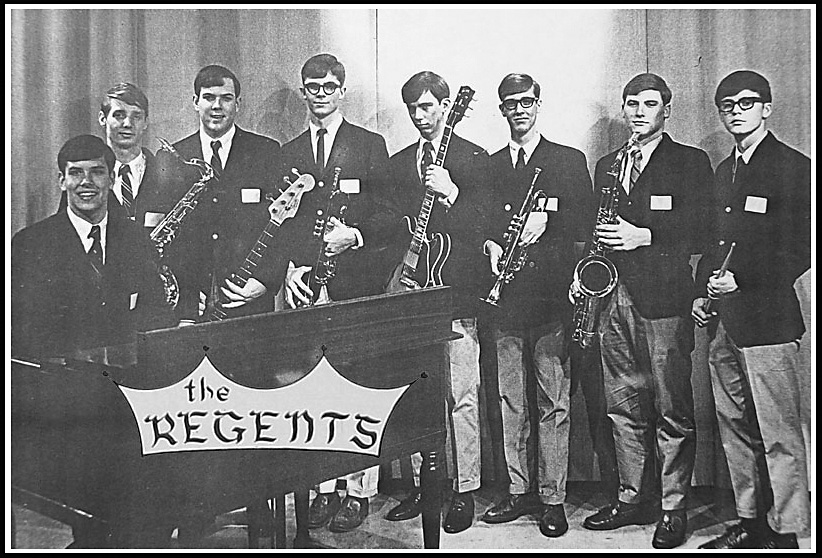
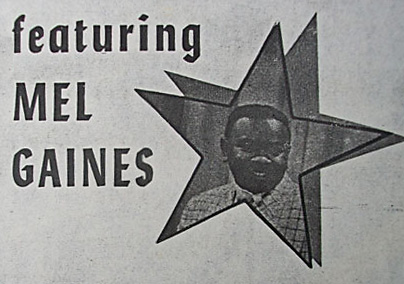
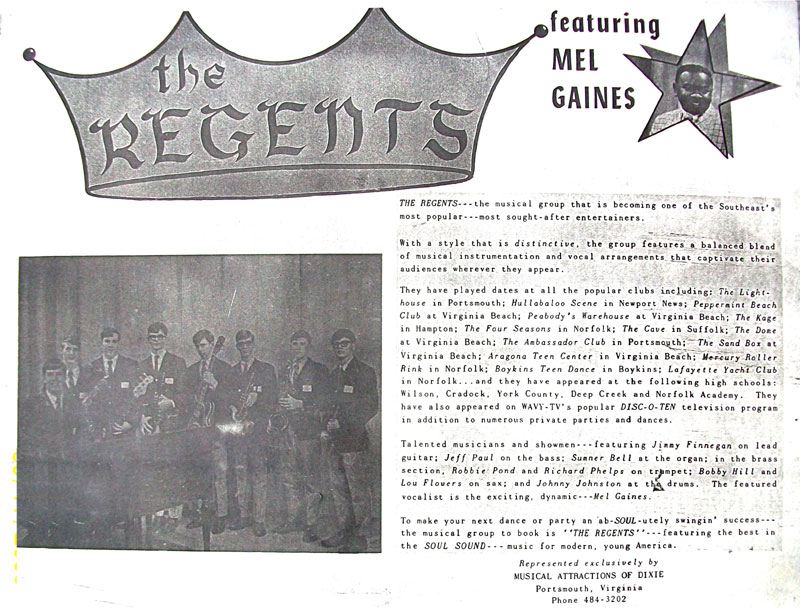
The Regents from left: Sumner Bell, Bobby Hill, Jeff Paul, Robbie Pond, Jimmy Finnegan, Richard Phelps, Lou Flowers and Johnny Johnston. Not pictured: lead vocalist Mel Gaines
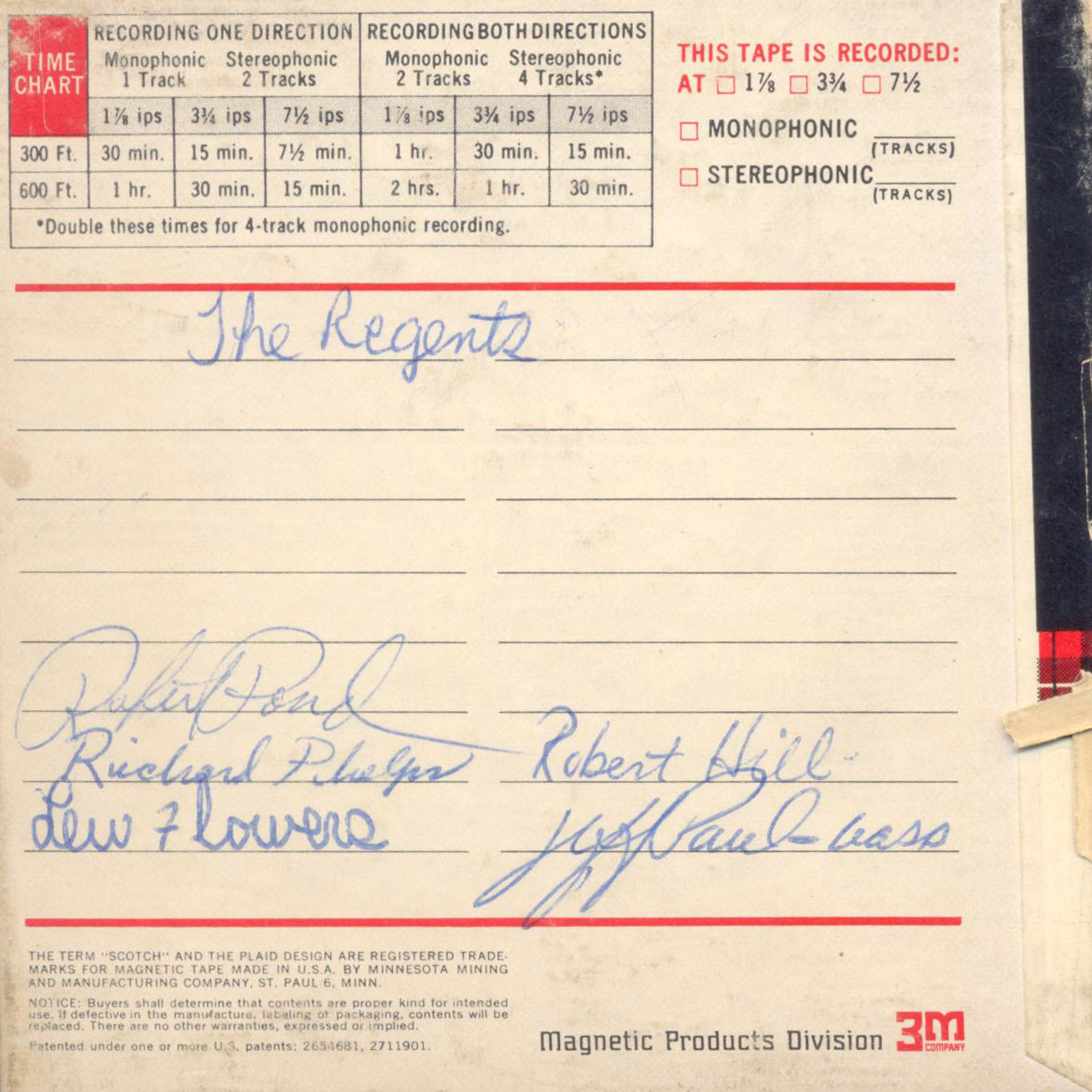
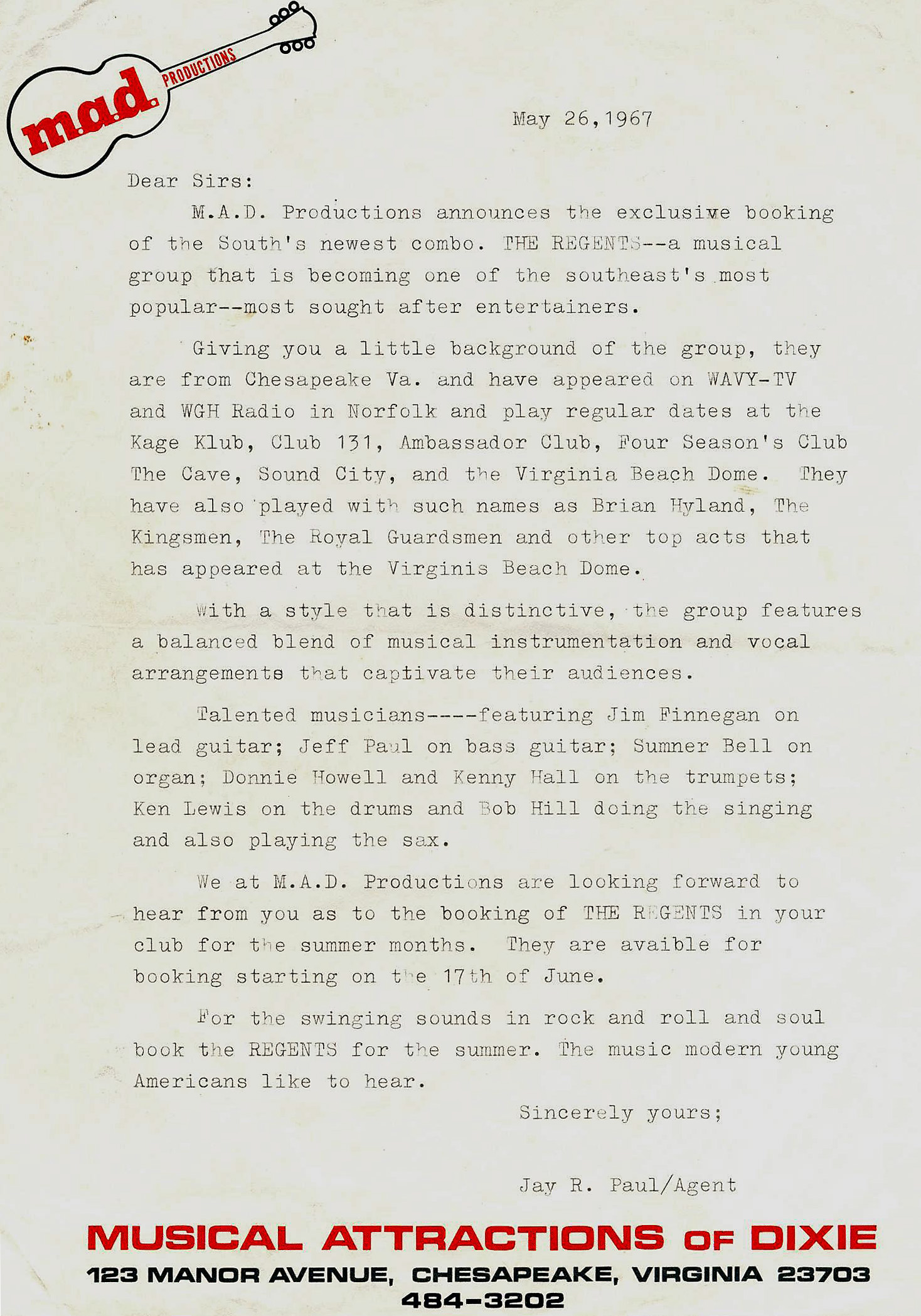
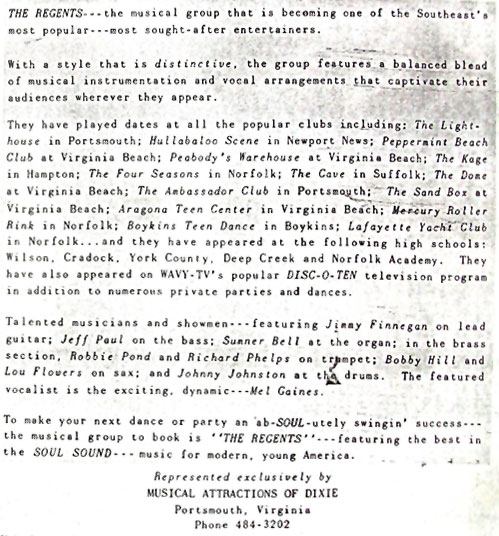
Mel Gaines – lead vocals Jimmy Finnegan – lead guitar Jeff Paul – bass guitar Sumner Bell – organ Robbie Pond – trumpet Richard Phelps – trumpet Bobby Hill – saxophone/lead Lou Flowers – saxophone Ken Lewis – drums Johnny Johnston – drums
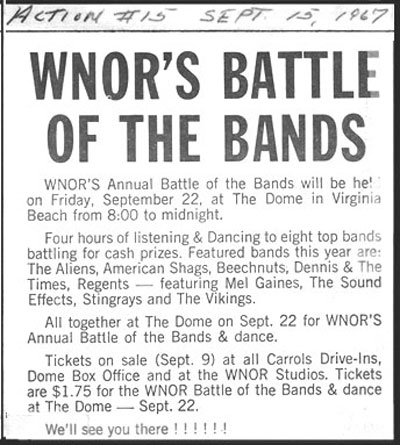
The Regents started in Portsmouth, VA in 1967. Looking for a vocalist, they met Mel Gaines in 1967, who was a co-worker of bassist Jeff Paul’s father at WAVY-TV 10. For a group of eight white high-school students to have a lead singer who was African-American and already 21 years old might seem an unlikely pairing, but the band found considerable live success.
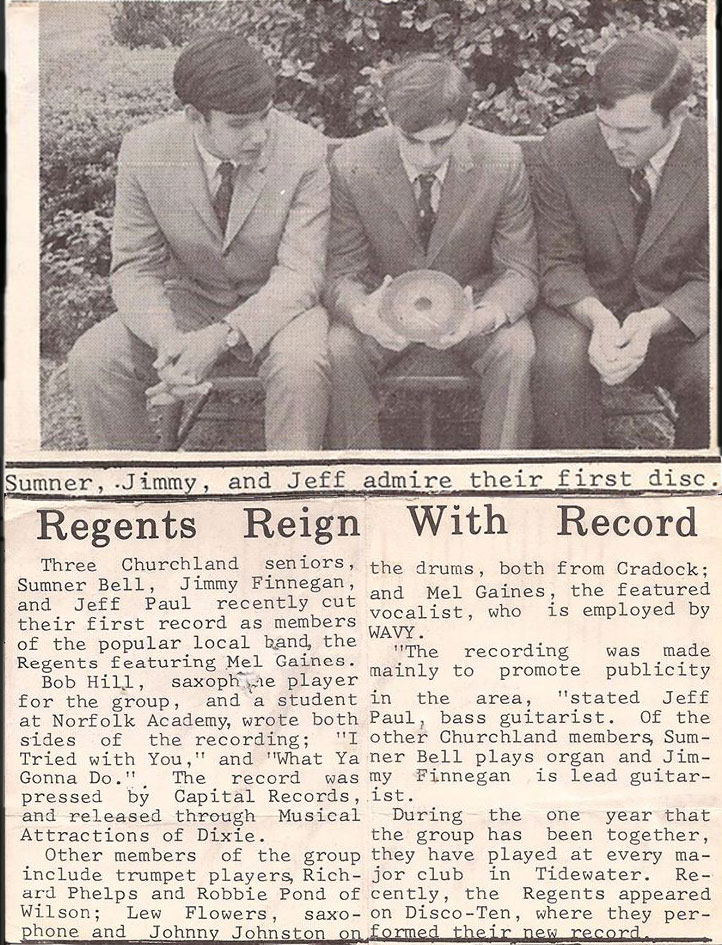
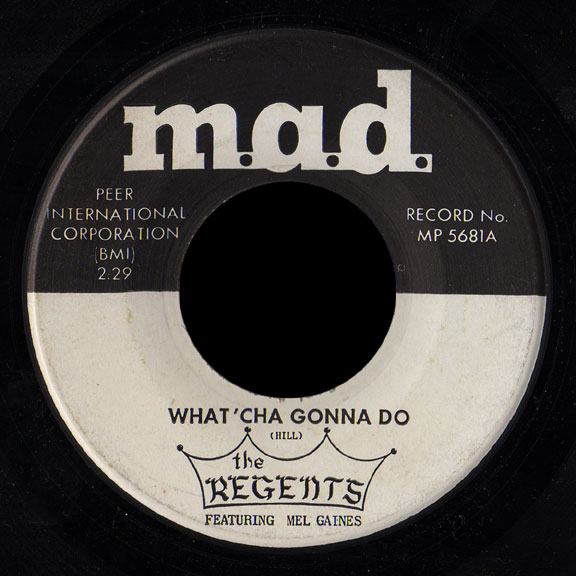
Their record on the Mad label shows the band working seamlessly with Mel, as each song features Jimmy Finnegan’s sharp rhythm on guitar, solid drumming from Johnny Johnston and memorable horn arrangements. “What’cha Gonna Do” has been a long-time favorite of mine. The band provides plenty of momentum and gritty backing vocals for Mel’s soaring voice.
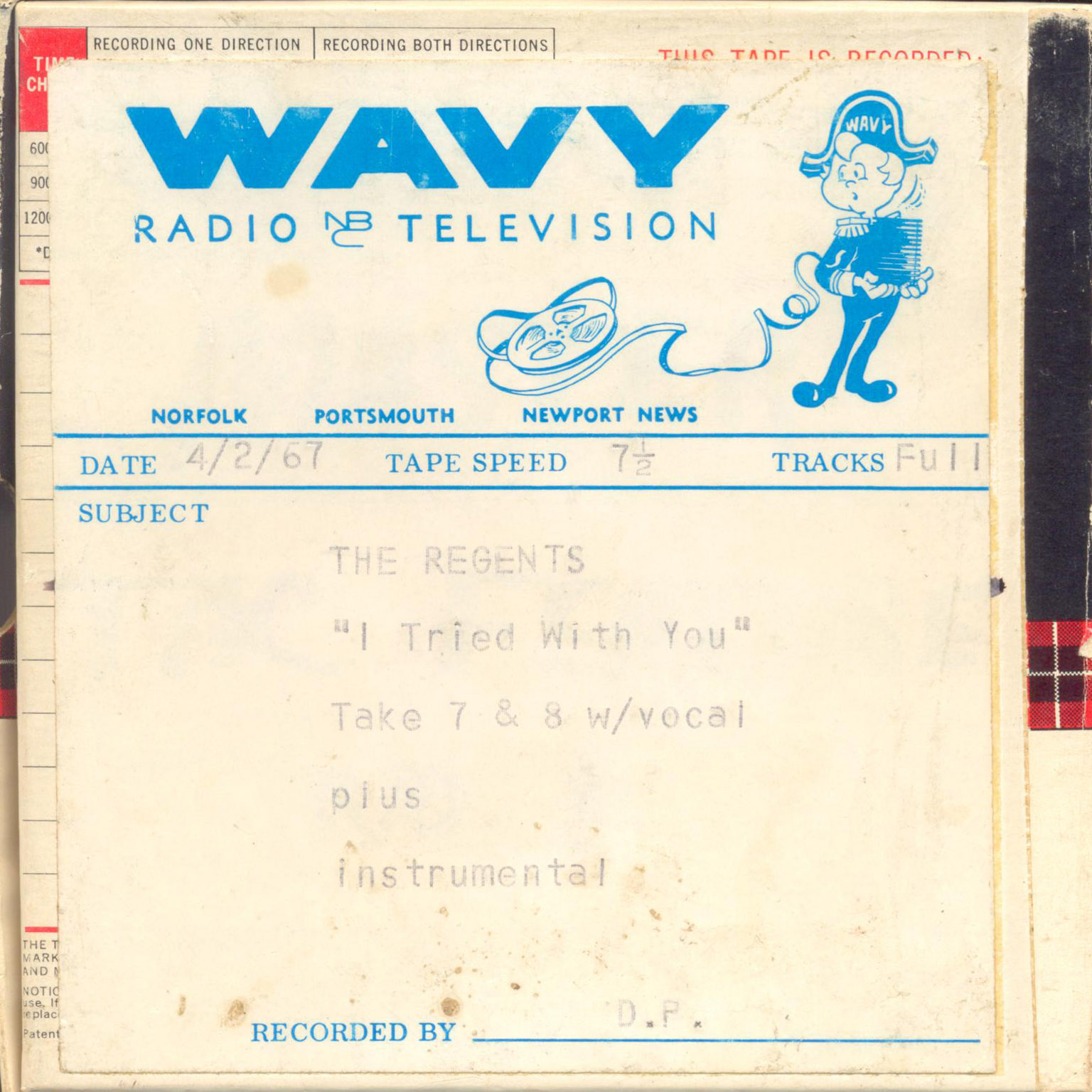
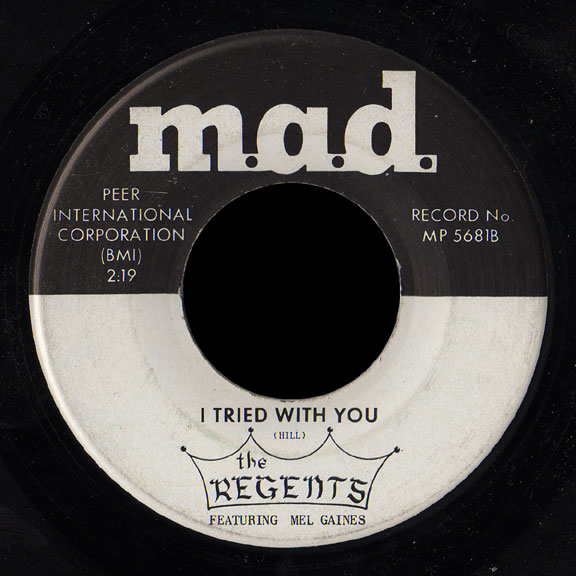
“I Tried With You” starts off solidly but really picks up in the second verse as staccato bursts from the horns precede Mel’s pleas, segueing to an smooth, affecting chorus. Bobby Hill wrote both sides of their only 45, recorded at Norfolk’s D’Arcy Studios in 1968.
Mel Gaines passed away on November 18, 2009, two days short of his 63rd birthday.
Below are the stories of drummer Johnny Johnston and organist Sumner Bell in their own words.
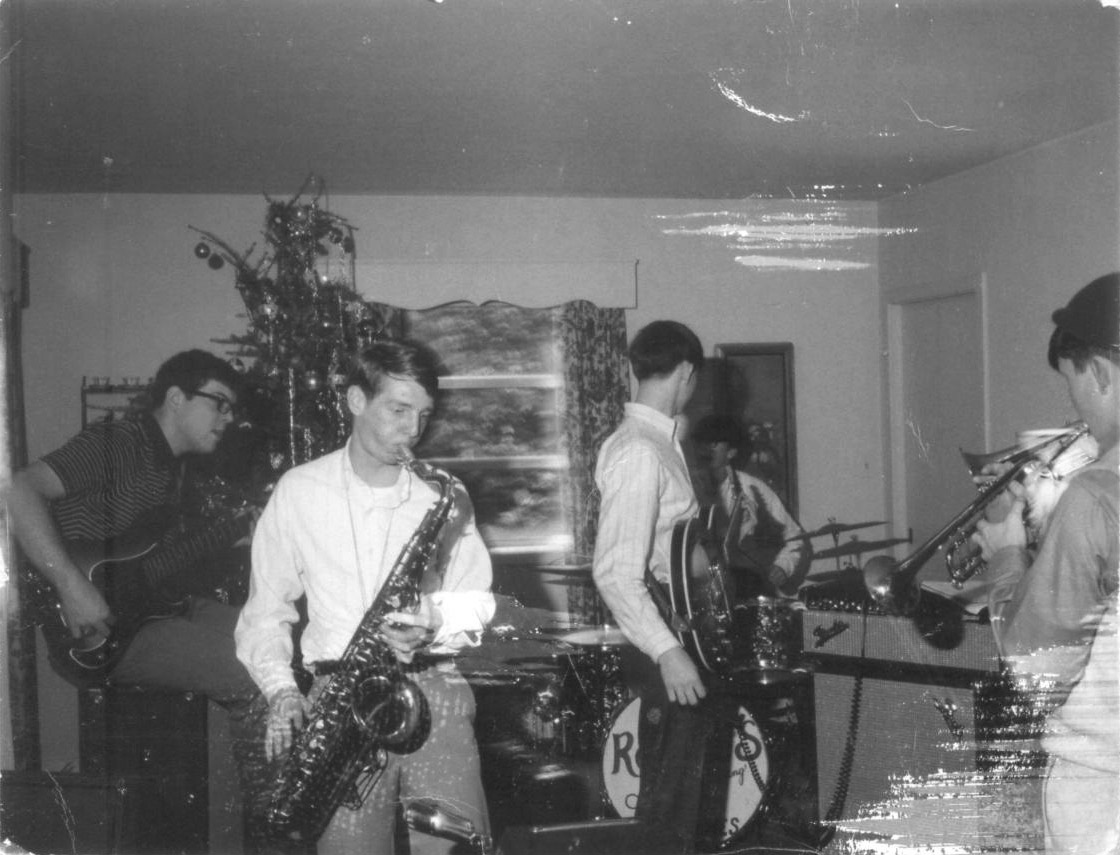
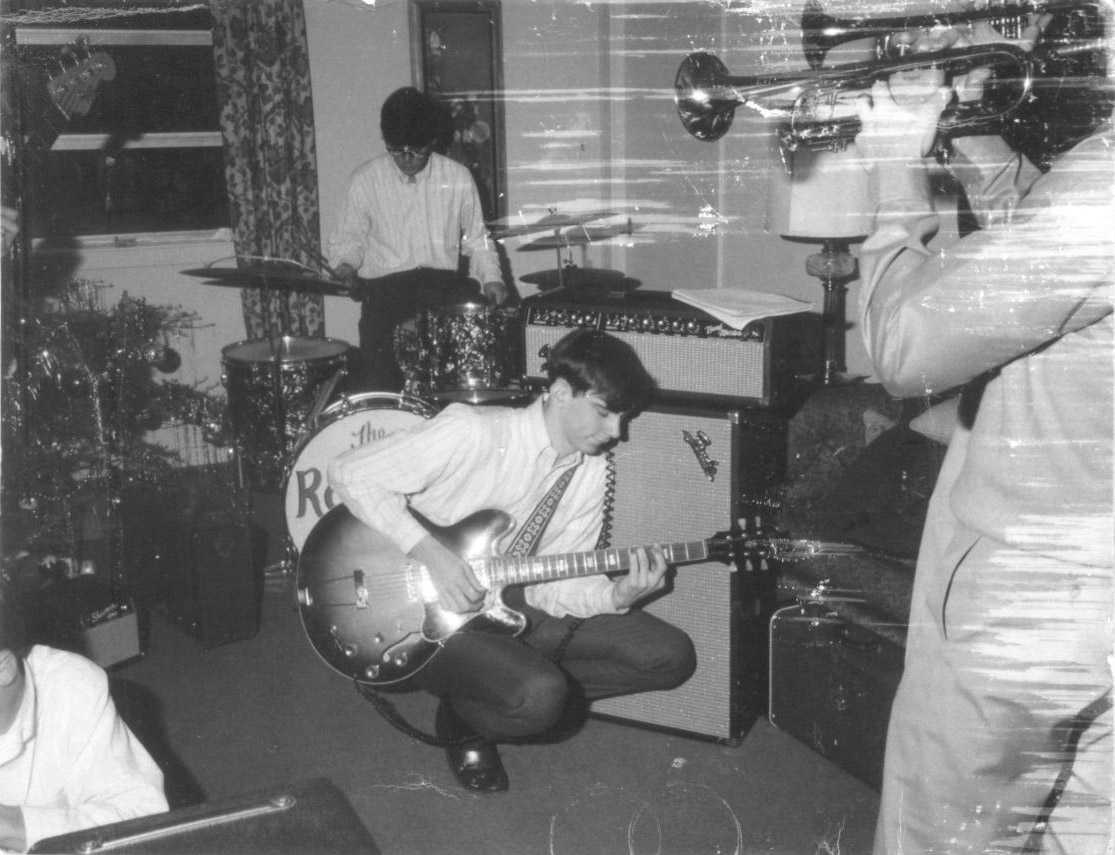
Practicing at Bobby Hill’s parents house around 1967. From left: Jeff Paul, Bobby Hill, Jimmy Finnegan and Johnny Johnson on drumsJimmy Finnegan on lead guitar and Johnny Johnson on drums
The Regents featuring Mel Gaines, 1967-1968 as remembered by Johnny Johnston
The Regents Featuring Mel Gaines was a popular soul band established in Portsmouth, Virginia around 1968. The first memory I have of the group is my audition for the band as a drummer in the spring of 1967.Rusty Gibbs, an old high school buddy of mine, told me the group was auditioning drummers at Jeff Paul’s house in the Churchland area of Portsmouth. Jeff played bass with the group and actually liked how I played, and to my surprise the group asked me to join them. I was a junior at Cradock High School in 1967 and was trying to determine if I should continue to play sports or follow my heart’s desire and become a drummer in a dance band.
I had taught myself how to play drums by watching all of the local bands. I especially studied and copied Fat Ammon of Bill Deal and the Rhondels and also The Swinging Machine’s Dickie Bocock. I loved their styles and really became accustomed to the beat and timing they both had. This was when dancing at teen clubs, dances halls, high school dances such as the Ambassadors Club (or AB Club as we called to it) and The Lighthouse in Portsmouth were both at their all time high.
The other band members were especially talented and we were blessed by having a great black singer by the name of Mel Gaines, who resided in Suffolk’s Pughesville area. Mel was a very talented and blessed singer of our group. He was the person our fan base came to see. I remember playing at a dance at Cradock High School in 1967 and when his name was announced the crowd exploded and rushed the stage to sing and dance as he sang.
Johnny Johnston
Soul music was the big sound of our day and we really had a powerful brass section. Robbie Pond and Richard Phelps were on trumpets, Bobby Hill and Lew Flowers on saxophones. Bobby Hill was the driving force of the horn section, and the great horn sound heard on our record. Jimmy Finnegan was the best lead guitar around, and is still playing guitar for a group called El Kabong in the Tidewater area. Jeff Paul was our outstanding bass player and mostly the one responsible for motivating us to perform at our top level of showmanship. I did not realize how good they all were until years later when listening again to our record. Our rhythm section was also capped off by Sumner Bell who played Hammond organ. During the high mark of our short career, all of our members were juniors or seniors in local high schools and on the brink of following college careers.
The short career of our band was topped off when we decided to go into the studio and record “What’cha Gonna Do” which was Side A and “I Tried with You”, was the B Side. As my memory would have me believe we recorded both songs at D’Arcy Studios in Norfolk in four hours. Of course our horn section was pretty tired after playing Side A about twenty five times in a row. At $25.00 per hour for studio time we wanted to get our money’s worth. We made about 300 copies and started selling them for a buck apiece. I think I made about twenty five dollars. We actually made it to the Billboard chart and made the playlist at local radio station WGH.
Just as with all the other local bands we played all the local places such as The Lighthouse in Portsmouth, Ambassador Club, Peabody’s Warehouse in Virginia Beach, The Peppermint Beach Club, The Kage in Hampton, The Four Seasons in Norfolk, The Dome in Virginia Beach, The Sand Box and local high schools such as Wilson, Cradock, Deep Creek and Norfolk Academy.
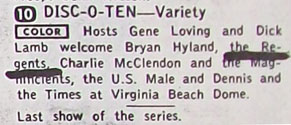
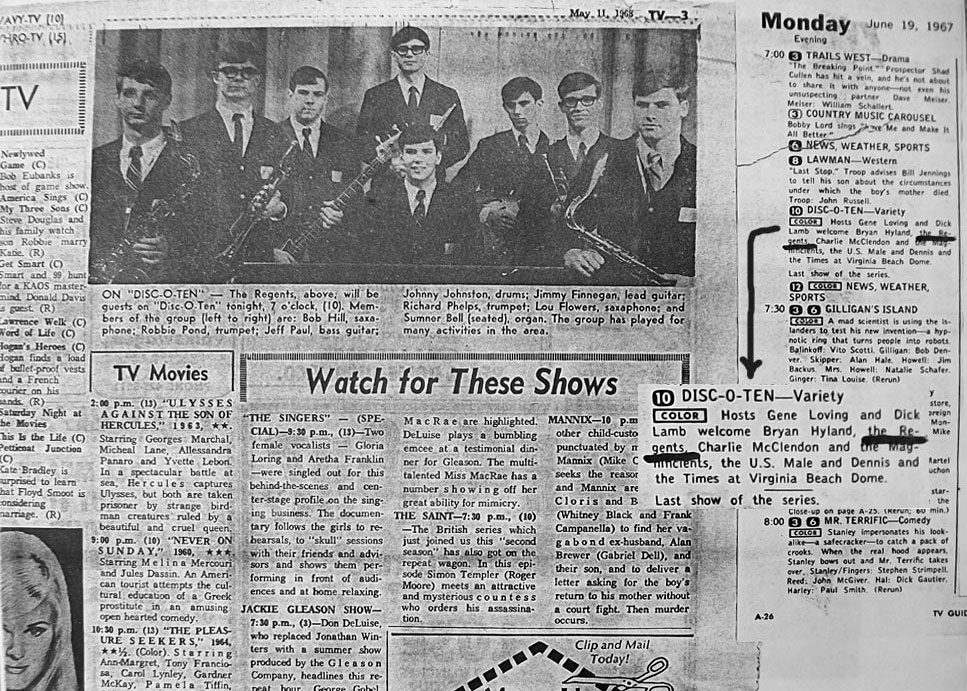
My favorite place to perform was the Glenshellah Woman’s Club in Portsmouth. It proved to be the best venue for live bands and we could get close to the dance floor. The next best place was the Knights of Columbus Hall in Portsmouth. The dance floor was on the second floor and I remember having a great time. All who attended these dances have fond memories of the music and the people we hung out with. We also appeared on the WAVY-TV DISCO-TEN television program, which highlighted local area high school dance scenes in addition to private parties and other local dances.
Just when we started to really get a following and some momentum, we had finished our senior years in high school and off to colleges we all went. One last ditch effort to try and stay in the music world was when we started a new group called Brave New World. That group was way ahead of its time though and never really caught on, due mostly to our impending college departures.
I am not sure where all the members have gone but I am trying to trace them and would like to see them again if at all possible. Members of our group moved on to other careers. I must say that all of them made my life much richer by playing a big part of my musical career. I still enjoy playing our record and remember all the places we played. Some of the clubs are still in existence after 40 years. And yes, I still have the fire to play thanks to them.
Many thanks to my “way back when” neighborhood friend Len Hamilton who encouraged me to play drums and was instrumental in getting me started in local bands.
Johnny Johnston Cradock High School, Class of 1968 Portsmouth VA
Announcement of Disc-O-Ten show, May 11, 1968, from left: Bob Hill, Robbie Pond, Jeff Paul, Johnny Johnston (with drumsticks), Sumner Bell (at the organ), Jimmy Finnegan, Richard Phelps and Lou Flowers.
The Regents Featuring Mel Gaines’ by Dr. Sumner Bell
Portsmouth, Virginia. AM Radio covers the hits. WRAP. Vinyl 45s. Segregated Schools. Protestant – Catholic. Camelot President. Black – White…..”The times they were a changin”Fast forward to the Fall of 2001: A road trip with my college aged son, Joe, on a Friday night jogged some memories. ‘Invisible Downtown’ packs up its gear in a car in Boston heading for a 9:30 pm gig at the Yale University Women’s Center. Unlike my early band days, the car is driven by the lead guitar player and not one of the fathers. But it seems just like old times, I am with the band in the back seat wondering what the first set will be.
But, times have changed. My son Joe, the rhythm guitar and song writer is riding shotgun. This is no cover band – only original stuff. I’m along for the ride in the back seat, trying to remember what it was that got me interested in bands. We unload and ‘Invisible Downtown’ plays the set. One thing catches my eye as I exit the Yale Women’s Center for the last time carrying an amp and snare drum to repack for the early am drive back to Boston, and it is not what I recall from my days as an XL or Regent — a basket of condoms by the door. Not one of those band members had a bulging wallet.
“Satisfaction” – times have changed, but small bands still ride together and pack their stuff in the trunk. It seemed that I was back where I had been 35 years before; my ears were ringing all the way back to Boston.
Jimmy Finnegan, Bobby Hill and I had been friends thru elementary school. My Dad and Jimmy’s father worked together and Bobby and I went to Monumental Methodist Church; Jimmy went to St. Paul’s. Our families interacted in a variety of settings and encouraged our socialization and many developmentally rich experiences together included after school sports, Boy Scouts, trick or treating, and church before deciding on music as a shared interest and experiment. Little did we or our parents know where our shared interests would lead the boys.
I can remember playing “rock music” in 1963 or ’64 sitting at a upright piano in Jimmy Finnegan’s living room with Jimmy on a guitar…not even sure if it was electrified. Perhaps this was the only time that the keys could be heard above the guitars and soon to be added bass and drums. I think Bobby Hill next came over and may have had a guitar that he reversed the strings on so he could play left handed. Jimmy’s mom Frankie was “quietly” encouraging us. We needed a bass guitar player and Bobby took on a project — to not only learn to play the bass, but also to make one. Ken Lewis (a fellow Trucker and Methodist) subsequently joined us on drums and Andy Copley (a student at Portsmouth Catholic and natural, fantastic musician and ear) took on the bass (something he continued as a professional career across the country).
But, Jimmy loved the music and was the driving force in getting us going as the XL’s. Jimmy’s musical flame has always burned brightest. Jimmy played the St Paul’s Catholic card and we were booked at the Knight’s of Columbus with a microphone stuck inside an upright piano and plugged into one of the first little Fender amps. After our first gig I received a letter from a female fan, a first (I was hooked) and last (what went wrong?)! Eventually, we went on to play “The AB – Ambassador’s Club”, Churchland Teenage at the VFW, and many private parties.
The XL’s were authentic, but an average white band. Jimmy had a Fuzz Tone and we could play “Satisfaction”, the words being distinct enough to be heard across the Elizabeth River by Bobby’s dad Stoney. All of us were too young to drive and when Dr. Hill picked us up in his Rambler Ambassador Station wagon from Portsmouth City Park he wanted to know what WE knew about satisfaction! Not much, but we all were interested in learning as quickly and often as possible. The amps got bigger, as the boys grew to young men, got driver’s licenses and hormones.
The drama that ended the XL’s is lost to me. I think Andy Copley went on to play with a “cooler”, bigger and better band. The bitterness spurred the survivors to retool ourselves. Bobby once again stepped up to learn how to play another new instrument, the saxophone! This time he didn’t make his new found instrument but purchased it.
Retail shoppers for musical instruments visited Portsmouth Music, we haunted the pawn shops on High Street. Jeff Paul came on as our new bass player and with him we enjoyed the contacts of his dad the general manager of TV 10 and his brother Jay who served as our booking agent. I think the addition of Jeff introduced modern marketing to the guys.
Bobby was very interested in the regal sounding name, The Regents, and after some discussion of alternatives the name stuck, usually to our blue blazers, the iconic adhesive pocket logo. R&B, soul music, and beach music were the popular dance bands in southeastern Virginia. So a very practical decision was made to play what the market wanted and would pay for. Jimmy packed away his Fuzz Tone, and saved up lots of musical ideas for his future. One minor weakness that had hampered the potential of the XL’s and subsequently, The Regents, was the lack of an exceptional singer. Mel Gaines filled that need and became the “featured act” of the ever so regal “The Regents, Featuring Mel Gaines”.
Ken Lewis was the first of the original band members to graduate from high school and leave the area for college. Ken was red headed, high energy, and enjoyed swirling those drum sticks between swats at the snare. Johnny Johnston’s transition to the band as our new drummer was seamless. What a quick study!
Johnny’s good nature, sleepy smile, and steady beat assured he fit right in and quickly proved to be a valuable asset. He brought new fans and exposure to the group. The Regents didn’t miss a beat.
Bobby organized the horns into a coalition of harmonies that were extraordinary. Robbie Pond and Richard Phelps were on trumpet and Bobby and Lou Flowers played sax. They swayed and stepped to the music usually prodded by Jeff Paul’s big “axe”.
As lead singer, Mel Gaines was a few years older than the high school instrumentalists, but what we lacked in maturity he covered ever so well. Mel had patience, talent and soul and propelled The Regents from gig to gig as we developed a reputation and following from the Virginia Beach oceanfront to Capron.
Mel Gaines took the stage in a humble way usually dressed in a suit that belied his coming performance. By the end of the second set, Mel had removed his suit coat, sweat was streaming from his face and soaking his shirt, damp handkerchief clutched in his hand and singing with an intensity that was matched by the enjoyment of the listeners and dancers whom he had whipped into a frenzy.
Mr. Gaines was an unassuming man who was always dependable, hard working and on key. Mel only asked for one thing that I recall and that was for “The Regents, Featuring Mel Gaines” to play at a small club in Pughsville that was owned or managed by his relative. Mel wanted to play for his family and friends in his neighborhood and so, we did.
A talented singer, interested and competent management, receptive audiences, and teenage swagger resulted in excellent music. We all came to understand the meaning of Satisfaction and the importance of music, organization, practice, and teamwork in our lives. And, hearing your own band on the radio with Mel’s amazing voice as you traveled home as a senior in high school was way cool! Almost as cool as going on a road trip band gig with my son.
Johnny, thanks for putting this together. It has been fun for me to reminisce.
Sumner
Special thanks to Johnny Johnston for his help with this page, to Jimmy Finnegan for the clipping about the record release, and to Jeff Paul for the video link.
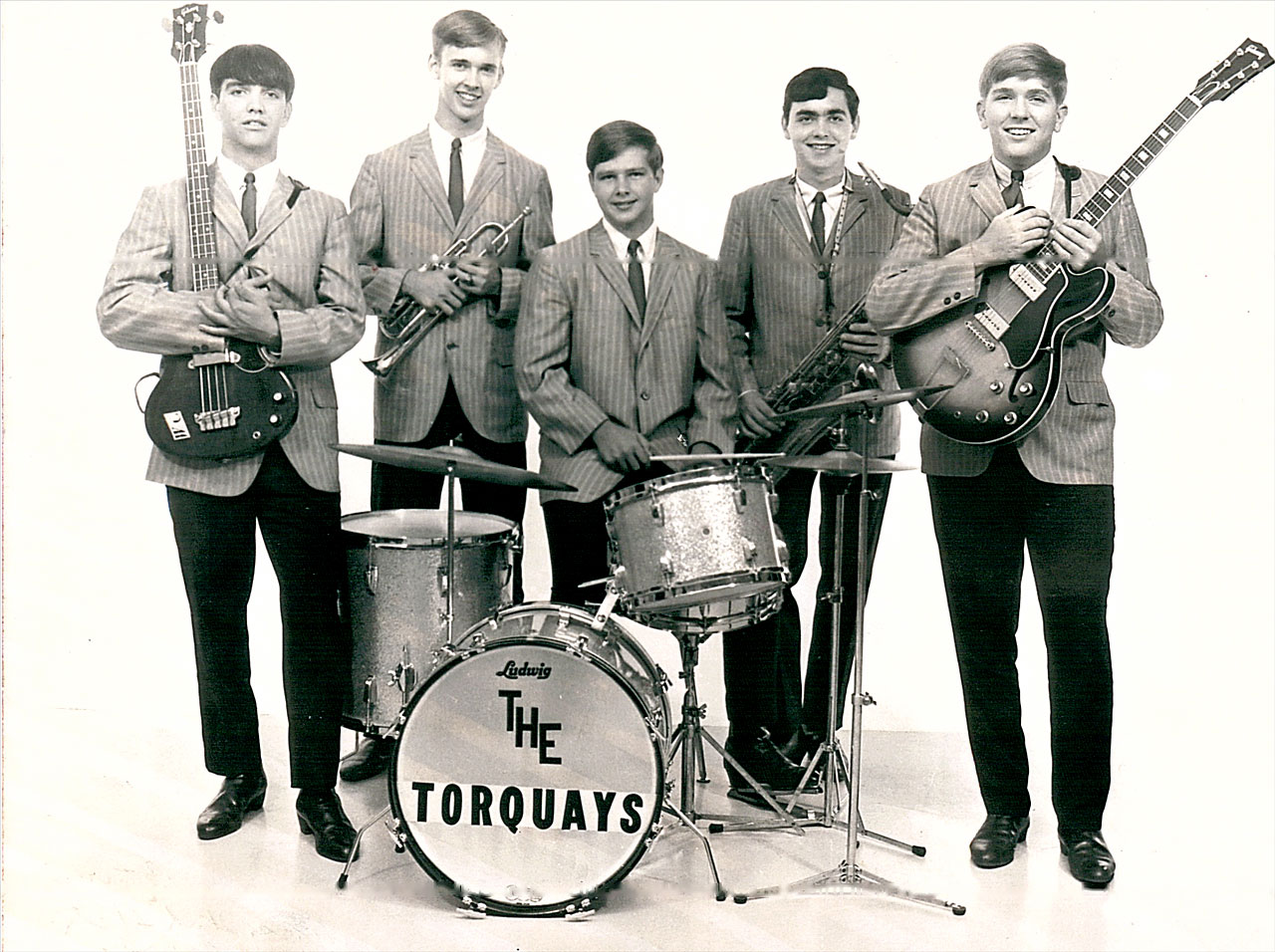
The Torquays, from left: Wendell Colbert, Barry Bicknell, Eugene Hayes, Steve Salord and Dale Aston
The Birmingham, Alabama based Torquays were formed in 1963 by two friends, Dale Aston and Wendell Colbert. Influenced by early rock and roll, Dale taught himself to play the guitar. Wendell also played guitar. They took the band’s name Torquays after a town in England and a song by The Ventures of that name. The initial band had several members, but eventually dwindled down to five, Dale on guitar and lead vocals, Wendell on bass, Barry Bicknell on trumpet, Eugene Hayes on drums and Steve Salord on sax.
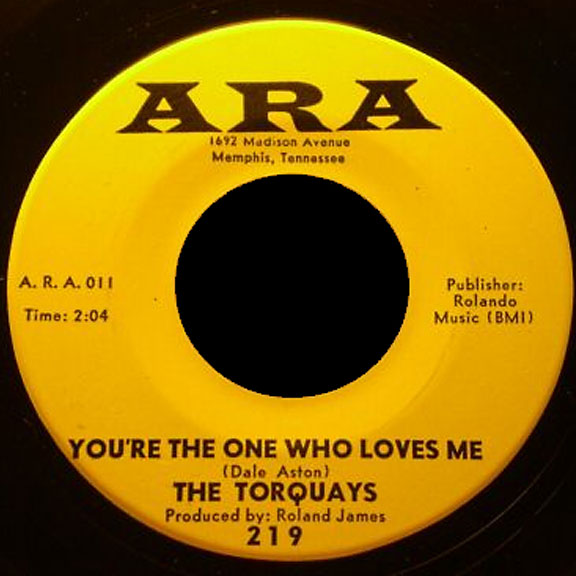
The Torquays made two records. The first, “While I’m Away” was written by Aston backed by a great doo wop sounding “Pineapple Moon”. These were recorded in Muscle Shoals at Fame Studios and released on the Holly label. Both sides got significant air play in the Birmingham area. The second record, “You’re The One Who Loves Me” (also written by Aston) was recorded in Memphis. They played steadily all throughout the southeast, but disbanded in 1968. Dale and Steve went on to play with the Distortions, another popular Birmingham band.
The introduction above is from the Alabama Record Collectors Association, who suggested I cover the Torquays and put me in touch with guitarist, lead vocalist and songwriter Dale Aston. It’s notable that the Ara 45 was produced by Roland Janes, probably recorded at his Sonic Sound studio where he also produced sides by Travis Wammack. Dale kindly answered my questions about the band:
Dale Aston and Wendell Colbert were 14 years old and their fathers worked at US Steel together in Birmingham. Both were starting to take guitar lessons and began practicing together. After a while they added a drummer (Eddie Rice) and bass player (Gary Quattlebaum). From there the band grew to a six piece dance group playing Motown and other R&B Top Forty hits of the day.
We played the Sock Hop circuit around Alabama which included National Guard Armories and Rec Centers in Birmingham, Sylacauga, Childersburg, Guntersville, Lanett, Huntsville, Montgomery and Columbus, GA. We played the Boutwell Auditorium in Birmingham, many fraternity and soroities at University of Alabama, Auburn, University of Georgia as well as private parties for large companies and organizations. Around Alabama we were a back up band for acts like Billie Joe Royal; Chuck Berry; Bobby Goldsboro; Freddie Cannon and Travis Wammack.
We were best friends with the Distortions and competed with all of Birminghams’ many local area bands like the Rockin Rebellions, The Counts, The Premiers and others.
Dale Aston wrote and produced the original material (“While I’m Away”; “The One Who Loves Me”) and the songs were recorded at Fame Studios in Muscle Shoals, Alabama and at studios in Memphis, TN. We also used Boutwell Studios in Birmingham.
We were introduced to Roland Janes by Travis Wammack. We had been backing Travis a number of times and we became friends. He had a tune or two he had written and wanted us to record so he invited us to Memphis and provided the studio time because we were recording his songs. This was just after the Boxtops hit #1 with “The Letter” and I think Roland and Travis were searching for new talent. They produced the record “You’re the One Who Loves Me” on ARA but I never knew how much distribution it received.
“While I’m Away” received good airplay in the Birmingham area and reach the #1 requested song on a radio station in Jacksonville, Florida. Our other records received some airplay in Birmingham due to our local fan following. In those days bands did not sell records at their live performances but through local record stores like Rumore Records in Birmingham. I guess we were too busy setting up, playing and loading the equipment for the next gig.
Once The Chartbusters came to Birmingham for a concert at WSGN radio for Dave Roddy. Their lead guitar player had to quit the tour unexpedtedly leaving the band without a guitarist for the remainder of the tour. Dave Roddy set up auditions for a few local guitarists for the job. I was offered the position but had to make a career decision since I had been accepted at the University of Alabama for the Fall semester whether to go on the road with The Chartbusters or go to college. I finally decided to go to college and have never regreted it. However, I often wonder what my life would have been like had I chosen to go on tour!
We became burned out after practicing and working together virtually every weekend for four years. Eugene Hayes (drummer) quit music. Barry Bicknell graduated with a degree in music from University of Alabama and became a high school band director. Steve Salord went to the University of North Texas and earned a Masters degree in music theory. Wendell Colbert continued palying with other bands and still palys today. I graduated from the University of Alabama with a BA in Commerce and Business Administration and went into the National Guard. After active duty I formed a small three piece group (The Brood) to play occasionally. I got married and started a career in Consumer Electronics sales and management.
I am still involved in music as a hobby at home and love to record on my PC. I use Sonar software. Here’s a link to some of my recordings.
This site is a work in progress on 1960s garage rock bands. All entries can be updated, corrected and expanded. If you have information on a band featured here, please let me know and I will update the site and credit you accordingly.
I am dedicated to making this site a center for research about '60s music scenes. Please consider donating archival materials such as photos, records, news clippings, scrapbooks or other material from the '60s. Please contact me at rchrisbishop@gmail.com if you can loan or donate original materials

 When Edwards and Parker left, the band became a quartet, now calling themselves the Original Knights. This group released one 45 on their own Knight Enterprise Records recorded at Boutwell Recording Studios in Birmingham. David Keller wrote both songs, “Going Fishing” and “Please Don’t Go”, which has vocals credited to Keller and Carson Hood.According to the sleeve, Keller attended University of Alabama in Birmingham while Hood and Mitchell were students at Walker Jr. College (now Bevill State I believe) in Sumiton, 25 miles to the northwest. Bill Ashton is listed as attending the more distant Auburn University.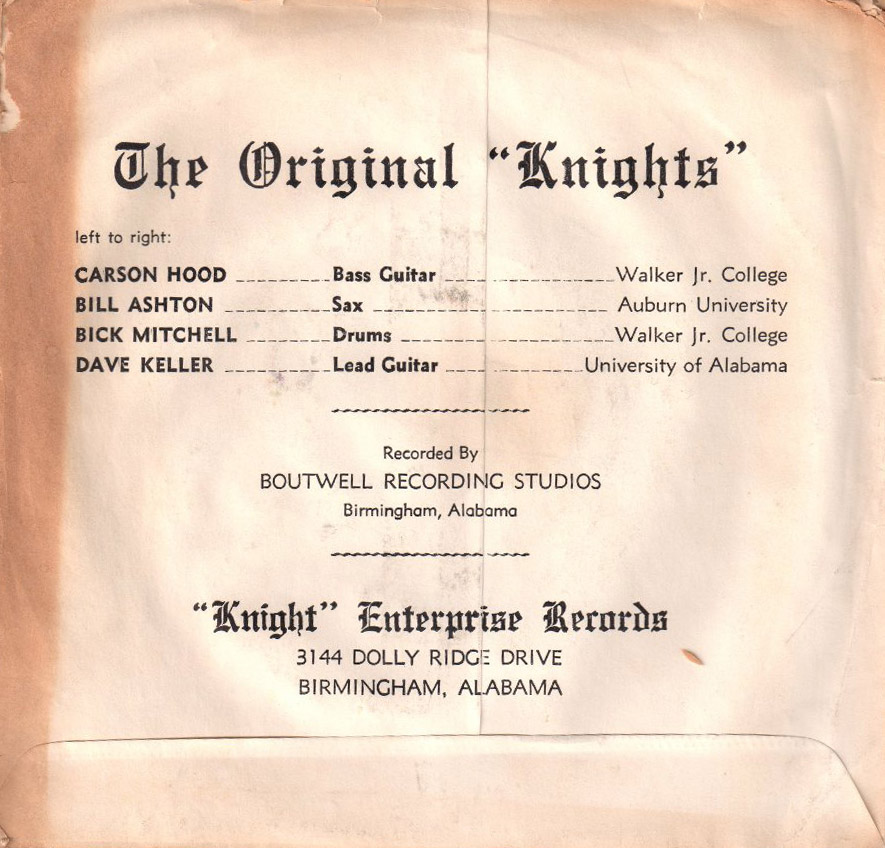
 The Teen-Beets of Winston-Salem, North Carolina released four fine records, the first three featuring original songs by vocalist and guitarist John McGee along with covers of Barbara Lynn’s “Oh Baby”.
 By the summer of ’65 we had recorded our first record at Arthur Smith’s studio in Charlotte, NC (“I Guess That’s Why You’re Mine” / “Not In Love With Me”) and released it on our own label, Chain Records. It received considerable local air play and reached #20 on one of the local radio stations top 40 list. Around this time we all dyed our hair bright red (as in Teen “Beets”) to attract attention. It worked!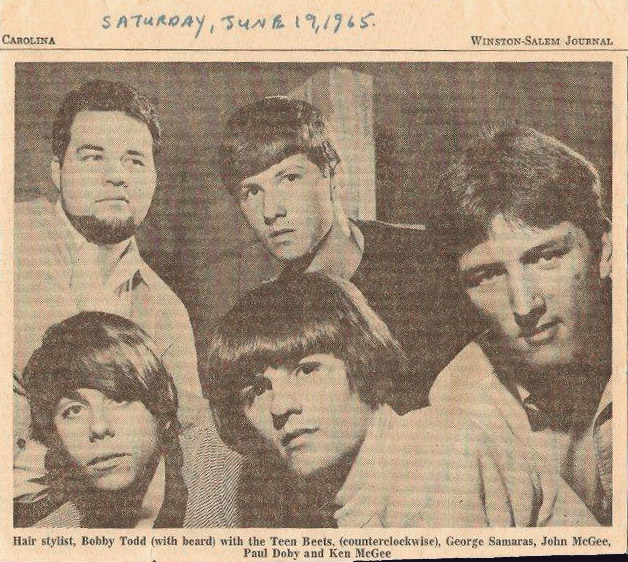
 Given Bobby Runnel’s career as a lounge act during the mid-late ’60s, you’d think it unlikely that one of his songs could become something of a classic of mid-60s rock. His original song “True Love – Heartaches” has been a favorite of mine since hearing it on Teenage Shutdown vol. 11. He certainly must have believed in the song, as he recorded it three times in as many years.
 I recently heard a clip of this first version of “True Love – Heartaches – False Love” and it’s pretty cool, slower with piano as prominent as the guitar and good drumming. If anyone has sound transfers or label scans please email me.
 In January 1968 he released the third and best version of “True Love – Heartaches”, recorded at Akron Recording and released on his own Faux Pas label (a Rite pressing: 21131/21132 with black labels). The A-side this time was a cover of “Black Cloud”, a hit for Me and Dem Guys on Palmer from late 1966. It’s a song I’m not very fond of but the Faux Pas do a great job, especially the drummer who lays down a beat like a locomotive. Whatever the limitations of their lounge act, this band could rock when it wanted to.
 I’d been wondering if there were any great rock 45s on Ty Tex when I found The Sensors “Sen-Sa-Shun” / “Side Tracked” at Rex’s sidewalk sale this spring. As it turns out, the Sensors had four 45s on Ty Tex.
 I haven’t heard the flip side, a version of “Caravan”, but Not Fade Away #2 says guitarist on that side was Levi Garrett. I assume these were recorded at Robin Hood Brians’ studio in Tyler, but I could be mistaken.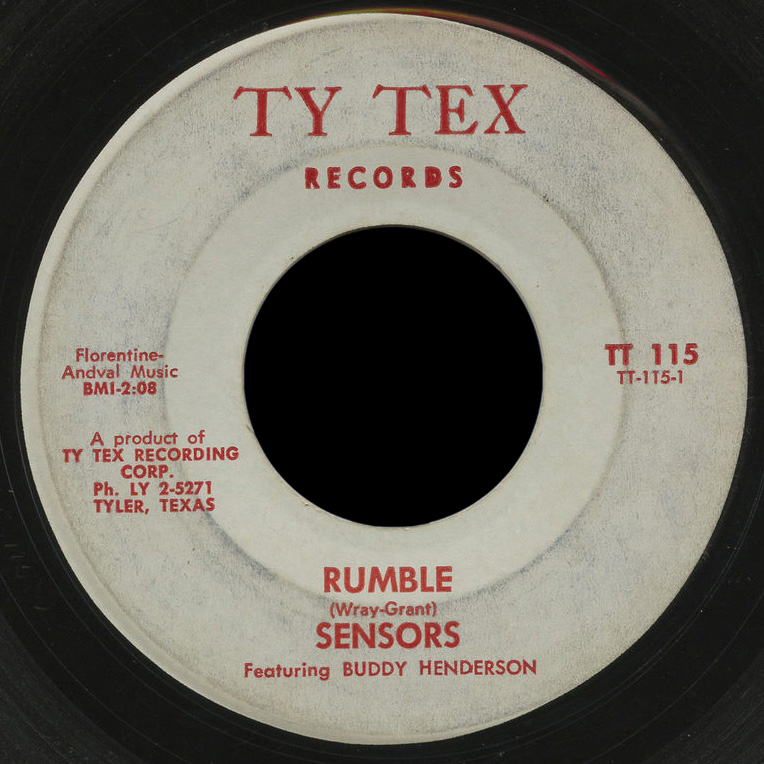

 There were plenty of bands called the Wild Ones in the ’60s, but this group doesn’t seem to be related to any of them. A Massachusetts location is possible. The “200,608” number on the label refers to a Decca custom pressing, usually, but not always used by bands in New England. There was a group called the Wild Ones from Shrewsbury/Worchester MA with the single “Number One Girl” / “Surfin’ Time Again” on Camsul.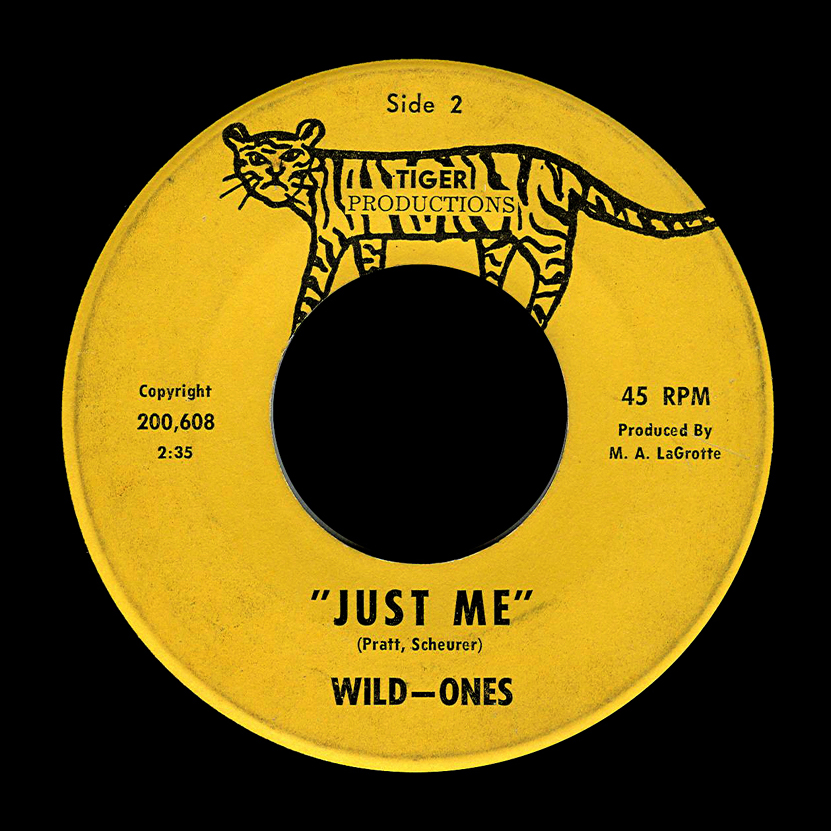
 The Regents Featuring Mel Gaines was a popular soul band established in Portsmouth, Virginia around 1968. The first memory I have of the group is my audition for the band as a drummer in the spring of 1967.Rusty Gibbs, an old high school buddy of mine, told me the group was auditioning drummers at Jeff Paul’s house in the Churchland area of Portsmouth. Jeff played bass with the group and actually liked how I played, and to my surprise the group asked me to join them. I was a junior at Cradock High School in 1967 and was trying to determine if I should continue to play sports or follow my heart’s desire and become a drummer in a dance band.
 I had taught myself how to play drums by watching all of the local bands. I especially studied and copied Fat Ammon of Bill Deal and the Rhondels and also The Swinging Machine’s Dickie Bocock. I loved their styles and really became accustomed to the beat and timing they both had. This was when dancing at teen clubs, dances halls, high school dances such as the Ambassadors Club (or AB Club as we called to it) and The Lighthouse in Portsmouth were both at their all time high.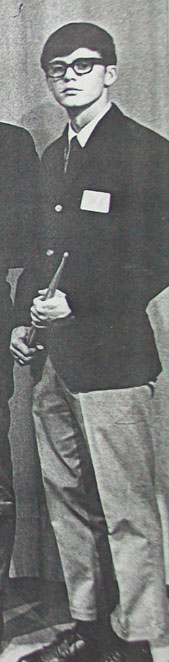
 Special thanks to Johnny Johnston for his help with this page, to Jimmy Finnegan for the clipping about the record release, and to Jeff Paul for the video link.