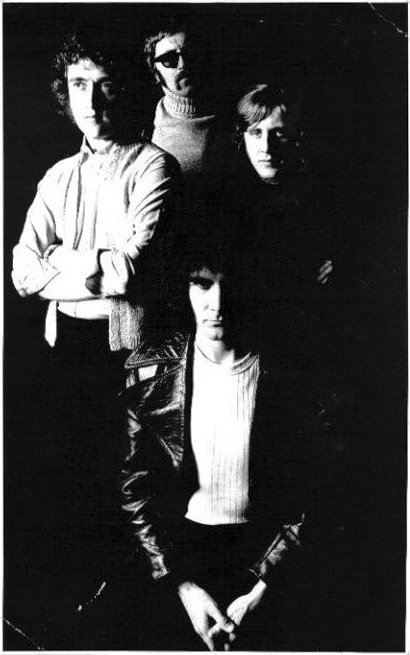
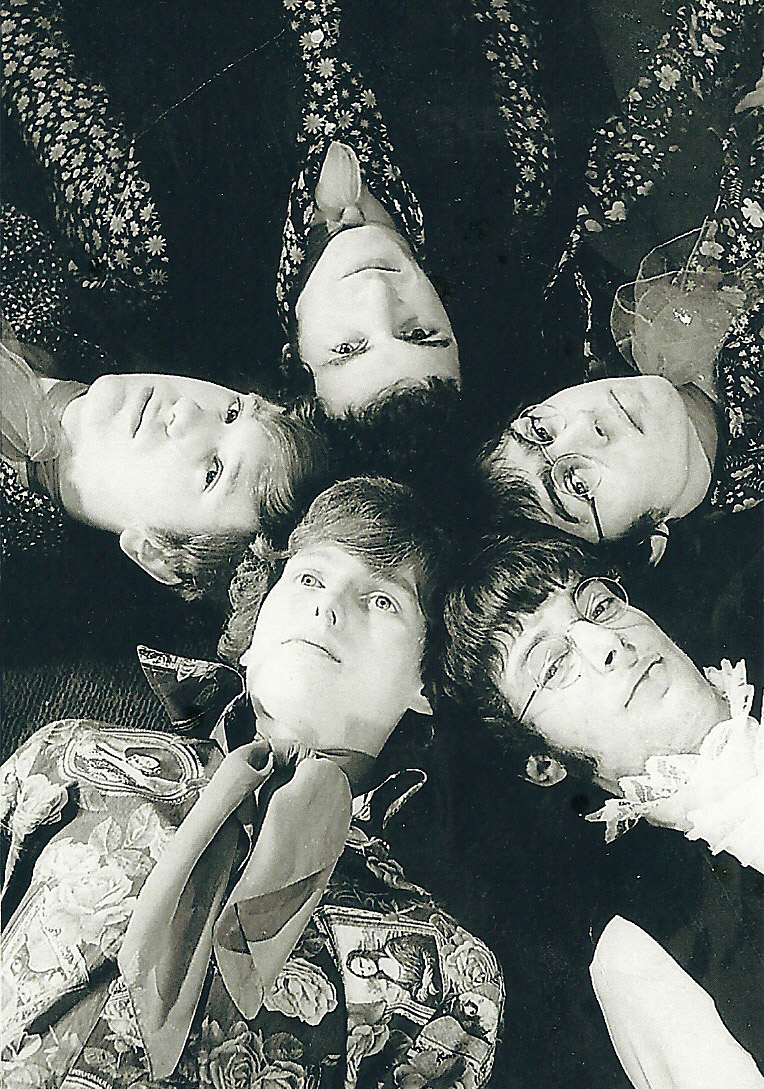
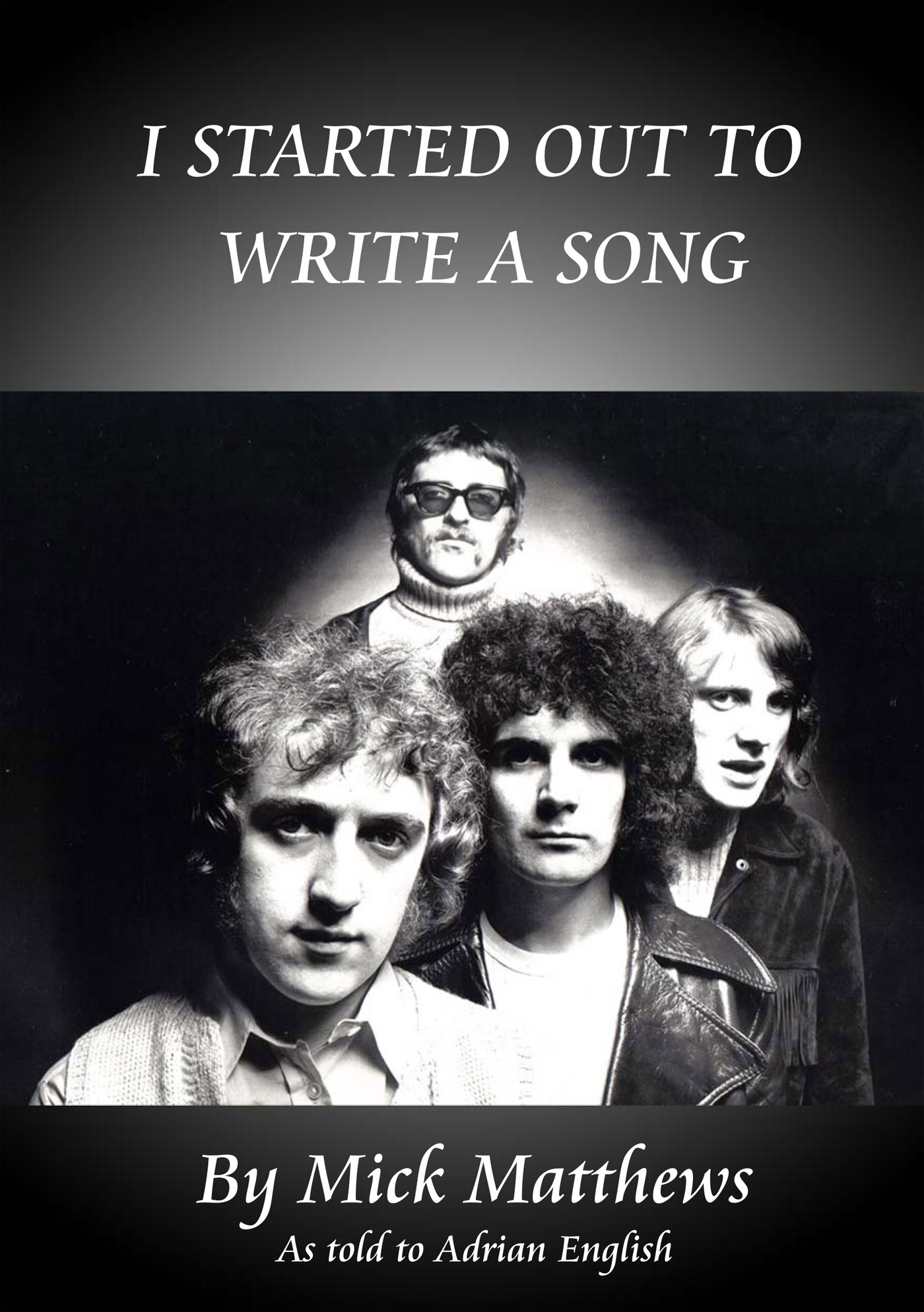
The Penny Peepshow in 1968, clockwise from centre: Martin Barre, Denny Alexander, Malcolm Tomlinson, Mike Ketley and Bryan Stevens
Denny Alexander (lead vocals) Martin Barre (lead guitar) Mick Ketley (keyboards, vocals) Bryan Stevens (bass) Malcolm Tomlinson (drums, vocals)
1967
August Having worked as The Motivation since November 1966, the latest line up returns from London to Bognor Regis to reinvent themselves. Eschewing their stax/soul sound and covers material, the band embraces the burgeoning psychedelic scene while singer Denny Alexander starts to write a batch of strong original material for the band. Initially, The Motivation work under the name The Penny Peepshow.
September (15-16) Having rehearsed the new material at the Shoreline Club in Bognor Regis, The Penny Peep Show begin to gig nationally. One of their first shows takes place at the Gala Ballroom in Norwich, Norfolk with Alex Wilson’s Sect and Chances of Life.
(17) The group travels across to the West Midlands for a concert at the Swan in Yardley with Jigsaw.
(23) The band plays at the Royal Ballrooms, Boscombe Royal Arcade, Boscombe, Dorset.
(25) The Penny Peep Show appear at the Belfry, Wishaw, West Midlands with Sight and Sound.
(29) The group plays at the Blue Powder Discotheque in Bilston Town Hall, Bilston, West Midlands.
October (7) The band returns to the Birmingham area to play a show at the Penthouse in the city centre with New Zealand band, The Human Instinct.
(14) The Penny Peep Show appears at the Flamingo Ballroom, Penzance in Cornwall with The Circuit Five.
(21) The group appears at the Steering Wheel in Weymouth, Dorset.
(22) The band plays at the Indigo Vat, Southsea, Hampshire.
(26) Billed as The Penny Peeps they play at the Concorde in the Basset Hotel, Southampton, Hampshire.
November (3) Returning to the West Midlands, they play at the Penthouse in Birmingham.
(4) The Penny Peep Show perform at the Ringway Club in Birmingham. Around this time they also play the freshers’ ball at Birmingham University where Bryan Stevens meets his future wife.
(9) The group appears at Carnival Hall, Basingstoke, Hampshire with The Wrong Direction.
(10) Originally booked to play at the Royal Ballrooms in the Boscombe Royal Arcade, Boscombe, Dorset, The Just Us is listed on the day the Bournemouth Evening Echo is printed. However, they may have played the day before after or before the Basingstoke gig.
(11) The group appears at St Nicholas Chamberlaine School in Bedworth, Warwickshire with The Matadors.
(19) Direct from London The Penny Peep Show appear at the Tudor Club, Mercers Arms in Coventry.
(24) One night at the 76 Club in Burton-on-Trent, Staffordshire.
December (1) The Penny Peep Show play at the Steering Wheel in Weymouth, Dorset.
(2) The band appears at Willenhall Baths Assembly Hall, Willenhall, West Midlands with The Bostons.
(3) The musicians return to the south coast and play at the Indigo Vat in Southsea, Hampshire.
(8) The Penny Peep Show play at the Boscombe Royal Arcade, Boscombe, Dorset.
(10) Another show takes place in the West Midlands with the band appearing at the Swan, Yardley with Magazine.
(20) The band performs at the Steering Wheel in Weymouth, Dorset. Around this time (most likely the 22 December), the group appears at the Pump Rooms in Leamington Spa, Warwickshire for the first time, returning in March 1968.
(23) The Penny Peep Show play at the Indigo Vat in Southsea, Hampshire.
(25) Through Pete Hockham, formely an agent at Bob Gaitley’s Beat Ballad and Blues Agency in Worthing and now working for the recently deceased Brian Epstein’s North End Music Stores (NEMS) agency, The Penny Peep Show sign to NEMS. They start to perform on the London scene with a show at the popular nightclub, Hatchettes on Piccadilly.
(30) The group appears at the Wellington Club in Dereham, Norfolk with The Special Offer.
1968
January The Penny Peep Show sign a deal with Liberty Records and begin recording over an album’s worth of original material, most of which comprise demos. Alexander has acquired a songwriting contract with Metric Music, which requires him to produce a certain amount of songs in a given period. The band are paid as session musicians to record the demos in a studio behind the Marquee in Wardour Street. A couple of Alexander’s strongest numbers – “Helen Doesn’t Care” and “Into My Life She Came”, the latter featuring Barre on flute, will surface decades later on Rev-Ola’s compilation CD Psychedelic Jumble Volume One in 2007.
(2) Billed as The Penny Peeps, the musicians appear at the Concorde in the Basset Hotel, Southampton, Hampshire.
(5) The band returns to play at the Royal Ballrooms, Boscombe Royal Arcade, Boscombe, Dorset.
(28) The Penny Peep Show play at the Castaways Discotheque in Birmingham with The Stretch Wilcox Limbo Dancers.
February (2) The Penny Peep Show appear at the Steering Wheel in Weymouth, Dorset. On the same day, the Bognor Regis Observer reports that the band will back The Scaffold in Brighton on page 5.
(8) Billed as The Penny Peeps, the band makes a notable appearance at the 100 Club on London’s Oxford Street with The Mike Stuart Span.
(9) Reverting back to The Penny Peep Show, they travel to Nottingham to play at the Nottingham Boat Club.
(11) The next day, the band appears at the Blue Ball Hotel in Risley, Derby.
(16) Liberty Records releases The Penny Peeps’ debut single, a cover of Les Reed and Barry Mason’s “Little Man With A Stick” backed by Alexander’s mod rocker “Model Village”, which becomes a cult classic and is picked up for various compilation albums over the years, most notably the Rubble CD Acid Drops, Spacedust and Flying Saucers. The band, however, is not happy about the decision to release “Little Man With A Stick”. The musicians had lobbied for “Model Village” to be the A-side, backed by another one of Alexander’s numbers, “Meet Me At The Fair”. The latter track remains unreleased until being picked up by Rev-Ola for Psychedelic Jumble Volume One. Tony Blackburn opens his Radio 1 show every morning with “Model Village” for a week but the single fails to chart.
(17) The Penny Peep Show appears at Framlingham Assembly Hall, Framlingham in Suffolk.
(22) Having changed name to The Penny Peeps, the band is invited to back The Scaffold and perform in its own right at the Dome in Brighton on a bill that also features The Bonzo Dog Doo-Dah Band.
(25) The band (billed as The Penny Peep Show) play at the Cellar Club, the County, in Blaby, Leicestershire.
(27) The Hartlepool Northern Daily Mail runs a short promotional piece on the band on page 5.
(28) Returning to London, the band appears at the Speakeasy on Margaret Street.
(29) The Penny Peeps appear at the Concorde in the Basset Hotel, Southampton.
March (1) The Bognor Regis Observer runs a great article and photo on the band in the issue today on page 4.
(8) The Penny Peeps perform at the Nottingham Boat Club.
The Pump Rooms’ show reviewed in the Leamington Spa Courier
(16) The group appears at the Pump Rooms in Leamington Spa, Warwickshire. They had previously played here just before Christmas.
(17) The Penny Peeps perform with the Way of Life at the Crown and Cushion Club in Birmingham.
(22) Billed as The Penny Peep Show, they play at the Fiesta Hall, Andover, Hampshire.
(23) The Penny Peeps return to Nottingham for a show at the Beachcomber Club.
(31) The band plays at the Linden Sports Club, Bournemouth, Dorset.
April (3) The Penny Peep Show appear at the Steering Wheel in Weymouth, Dorset.
(19) The Penny Peeps play at the Parlour at the Oasis Club, North End, Hants.
(20) The Penny Peeps play at the Cobweb, Marine Court, St Leonards, East Sussex, with Tony Rivers & the Castaways.
(21) The Penny Peeps perform at the Grove Club, Portsmouth, Hants with The EXP.
(25) Billed as The Penny Peep Show, the band appears at Hatchetts Playground in Piccadilly, central London.
May (3) Billed as The Penny Peeps, they perform at the Nottingham Boat Club.
(12) Billed as The Penny Peep Show, they appear at the Forty Thieves, Swinging Discotheque in Coventry.
(18) The Penny Peeps perform at the Walton Hop in Walton-on-Thames, Surrey
(31) The Penny Peep Show appear at the 400 Ballroom in Torquay, Devon
June(2) The Penny Peep Show play a series of shows in the West Midlands, starting with Albrighton Working Men’s Club in Albrighton, Shropshire.
(4) The group plays at Edward Street Working Men’s Club in Cannock.
(6) The group appears at the Summer House, the Portway, Kingswinford, West Midlands.
(8) The Penny Peep Show perform at Willenhall St Giles Youth Club, Willenhall Comprehensive Schools, Willenhall, West Midlands with Hari Kari.
(15) The Penny Peeps play at the Beachcomber Club in Nottingham.
(16) The band returns to Linden Sports Club, Bournemouth, Dorset.
(21) Liberty Records releases The Penny Peeps’ second single, coupling Alexander’s “I See The Morning” with “Curly, The Knight of The Road” but it fails to chart.
July(2) The Penny Peeps appear at the Concorde in the Basset Hotel, Southampton, Hampshire.
(13) Another show takes place at the Beachcomber Club.
(18) The Penny Peeps appear at Liberal Hall, Yeovil, Somerset with The Knock-Out.
(25) Billed as The Penny Peep Show, the band returns to London for a show at the Hatchetts Playground.
(27) Billed again as The Penny Peep Show, they appear at Leicester Rowing Club with The Trendmen.
(28) Reverting back to The Penny Peeps, they return to the Linden Sports Club in Bournemouth.
August (2) The group are billed to play at the Bag O’ Nails in Kingley Street, Soho, central London around this time (see below) but it’s not certain they appear.
(3) Billed again as The Penny Peep Show, the band appears at the Swan, Yardley, West Midlands with Gilt Edge. Soon after this gig, The Penny Peep Show are playing at a venue where their current set list meets an icy response. Alexander suggests that they play some blues, which goes down a storm. The band decides to move in a blues rock direction and changes name to Gethsemane. Within a week or so, Alexander opts to leave and Ketley and Tomlinson assume joint lead vocals. Alexander will retire from professional playing and try his hand as a trainee publican. Back in Liverpool, he gathers together some friends and records six tracks during 1972. The songs – “Don’t Let It Rain (Wedding Day)”, “Crossroads of Life”, “My Last Goodbye To You”, “I’d Like To Get To Know You Girl”, “Your Alive” and “Babe I Love You” remain unreleased to this day. He subsequently turns his back on the music industry and works in the financial services industry, retiring in the early 2000s.
(4) The Penny Peep Show play at the Walgrave, Coventry.
September (7) Billed as The Penny Peeps they perform (with St John’s Wood) at the Cobweb, Marine Court, St Leonards, East Sussex.
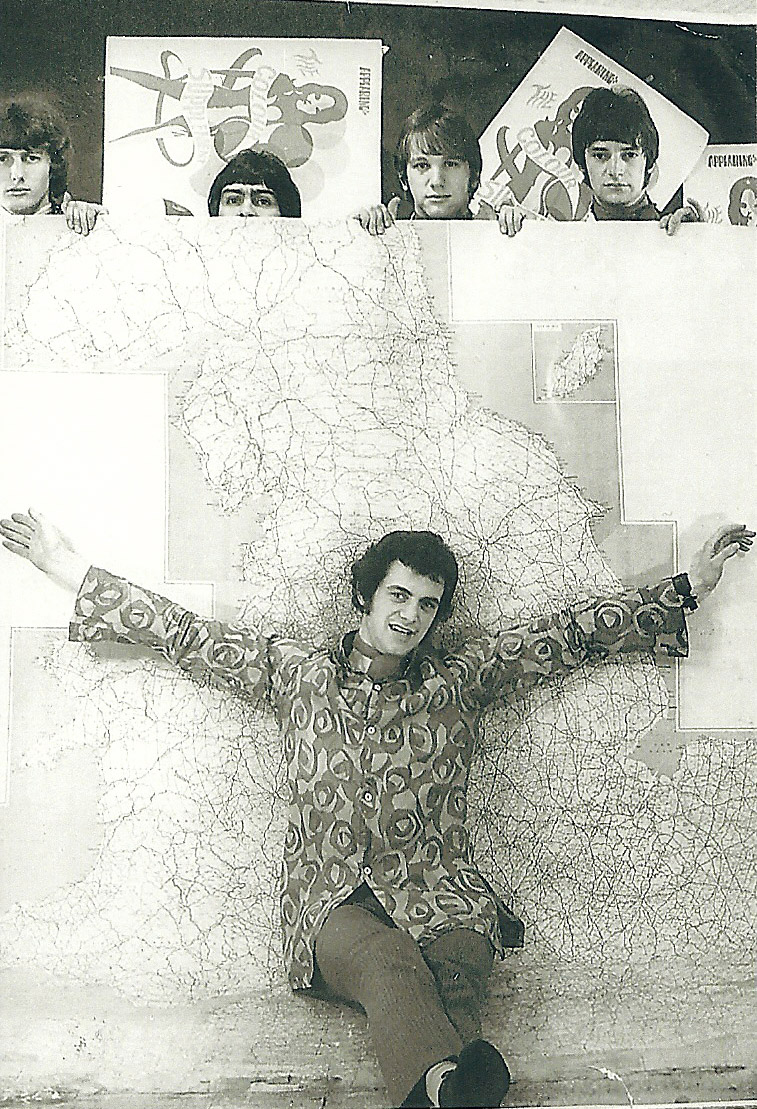
The Penny Peepshow in 1968, clockwise from bottom left: Martin Barre, Denny Alexander, Malcolm Tomlinson, Bryan Stevens and Mike Ketley
Sources: Flying Colours by Greg Russo, Crossfire Publications, 2009. The South Coast Beat Scene of the 1960s by Mike Read, Woodfield Publishing, 2001. The Tapestry of Delights Revisited by Vernon Joynson, Borderline Productions, 2006.
Many thanks to Bryan Stevens, Mick Ketley, Denny Alexander, Malcolm Tomlinson and Mick Capewell.
Disclaimer: Concert adverts have been sourced from a number of music magazines and regional newspapers listed below. They have been reproduced fairly for research purposes and are not to be copied for any other use.
Live dates sourced from various sources, including: Melody Maker, Nottingham Evening Post, Birmingham Evening Mail, Evening Argus (Brighton), Eastern Evening News (Norwich), Ipswich Evening Star. Other newspapers sources are listed in the comments below.
I have tried to ensure the accuracy of this article but I appreciate that there are likely to be errors and omissions. I would appreciate any feedback from anyone who can provide any additions or corrections. Email: Warchive@aol.com
In Isleworth – Martin Barre, Mike Ketley, Denny Alexander, Malcolm Tomlinson and Bryan StevensAbove, in Isleworth, left to right: Denny Alexander, Malcolm Tomlinson, Martin Barre (sitting), Bryan Stevens and Mick Ketley
The Motivation, 1967, left to right: Bryan Stevens, Malcolm Tomlinson, Jimmy Marsh, Mick Ketley, Chris Rodger and Martin Barre All photos of the band courtesy of Bryan Stevens
Jimmy Marsh (lead vocals) Martin Barre (lead guitar, saxophone) Mick Ketley (keyboards, backing vocals) Bryan Stevens (bass) Chris Rodger (saxophone, trumpet) Malcolm Tomlinson (drums, backing vocals)
1966
October The group evolves out of Bognor Regis group, The Noblemen, which was formed in late 1964 to back South African singer Beau Brummell (aka Mike Bush). Bass player Bryan Stevens (b. 14 November 1943, Laha Datu, North Borneo) and keyboard player Mick Ketley (b. 1 October 1947, Balham, London) have been with the band from the outset. After splitting from Brummell in April 1966, the Noblemen undergo a significant change in personnel when most of the members leave in June. The following month, Stevens and Ketley reorganise The Noblemen bringing in a new singer, Jimmy Marsh (b. 9 April 1941, Carmarthen, Wales). Marsh first met Stevens and Ketley in mid-1964 at the Top Hat in Littlehampton when they were playing with The Detours and he was fronting The Del Mar Trio.
When The Noblemen’s drummer Bernie Smith opts to take up a more regular job, Marsh suggests his former colleague Malcolm Tomlinson (b. 16 June 1946, Isleworth, Middlesex) as his replacement. Tomlinson has worked with Marsh in The Del Mar Trio and James Deane and The London Cats. Before that, he was a member of Jeff Curtis and The Flames. Stevens advertises for a new sax player in the 23 July issue of Melody Maker, which hits the newsstands on 16 July. Former Moonrakers members, Chris Rodger (b. 16 October 1946, Solihull, Warwickshire) and Martin Barre (b. 17 November 1946, Kings Heath, Birmingham) respond to the advert after missing out on a job with Screaming Lord Sutch. On 22 July, Barre buys a saxophone at Sound City in London’s Shaftsbury Avenue for the audition three days later. Both Rodger and Barre are hired for the new line up as sax players, with Rodger doubling up on trumpet and Barre doubling up on lead guitar. In September, the new Noblemen line up moves up to London and shares a flat in Chelsea (and later Gloucester Road). They sign to the Roy Tempest Agency and start backing up visiting US soul acts.
Motivation on Bognor Regis station, late 1966 – left to right: Bryan Stevens, Martin Barre, Mick Ketley, Malcolm Tomlinson, Chris Rodger and Jimmy MarshBognor Regis station, late 1966, left to right: Jimmy Marsh (white top), Martin Barre, Bryan Stevens, Mick Ketley, Chris Rodger and Malcolm Tomlinson
November (1-2) Having supported The Vibrations, The Drifters, Lee Dorsey, Edwin Starr and Alvin Robinson as The Noblemen during September-October, the group adopts the more ‘Mod’ sounding name Motivation (although they are sometimes still billed as The Noblemen, at least until early December). As The Motivations, the band plays with Alvin Robinson at the Club Cedar in Birmingham for two nights. Soon after, The Motivations back Robinson at Newcastle University (quite possibly 3 November).
Motivation, Hyde Park, late 1966
(4) Billed as The Noblemen, they begin backing The Coasters with a show at the King Mojo Club in Sheffield with Sonny Childe & The TNT. The Coasters will perform at the Starlite Ballroom in Greenford, west London on 11 November with The Mode but no support group is listed (unless it was The Mode).
(12) Having changed their name to (The) Motivation, they perform at the Oasis club in Manchester with The Coasters and Hari Kari.
(13) The Coasters are billed playing at Tiles on Oxford Street in central London (most likely with Motivation in support). Two days later, The Coasters appear at the Whisky A Go Go. It is around this time that Mike Ketley and Malcolm Tomlinson take up The Coasters’ offer to attend a party where Jimi Hendrix (who had previously played with The Coasters’ support band) is in attendance. The Jimi Hendrix Experience are launched to the British press on 25 November.
(20) After playing at the Cavern in Liverpool with The Coasters the previous day (where they are billed as The Noblemen), Motivation join the soul singers for two shows in Greater Manchester, starting with the Domino Club in Openshaw and culminating with a second gig at the Princess Theatre in Chorlton. A riot takes place at the second venue after disturbances between The Coasters and the rowdy crowd.
(25) Billed as The Noblemen, they support The Coasters at the New Yorker Discotheque in Swindon, Wiltshire. The previous day The Coasters performed at the Whisky A Go Go in Wardour Street, Soho, central London but no support band is listed.
(26) Motivation appear at the Starlight Room at the Boston Gliderdrome, Lincolnshire with The Coasters. Also on the bill are Ronnie Jones & The Blue Jays and Heart & Souls. On the same day, the group supports The Coasters at the Burlesque in Leicester.
(27) The Coasters perform at Kirklevington Country Club in Kirklevington, North Yorkshire. The advert doesn’t list Motivation but presumably they were the backing band.
Syon Park, early 1967
December (4) Having finished supporting soul acts for the Roy Tempest Agency, Motivation begin to work under their own name. On this day, they are advertised to perform at the Hotel Leofric in Coventry but a story in the Coventry Evening Telegraph notes they did not appear as their van broke down. Motivation are also billed to play at the Stoke Hotel in Guildford on this day with Whisker Davies. It’s not clear if this is the same group; it might have been the Norbury version, which split up in late 1966.
(9) The band appears at the New Yorker Discotheque in Swindon, Wiltshire.
(10) Billed as The Motivations, they play at the Gala Ballroom in Norwich.
Thanks to Peter Ellis for the scan and date
(16) Billed as Lee Dorsey’s backing band, the group appears at the Koo-Koo Byrd Discotheque, Cardiff, Wales.
(17) Motivation perform at the Britannia Rowing Club in Nottingham.
(20) The group appears at the Concorde at the Basset Hotel in Southampton, Hampshire.
(22) A band called The Motivation plays at the Co-Operative Hall in Nuneaton, Warwickshire with The Orange Pips. This may have been the same group as Warwickshire was Martin Barre’s home turf.
(24) The Motivation appear at the Lion Hotel in Warrington, Cheshire with The Fix and The Undertones.
(31) The group heads to Ashford, Kent to see how the year at the ‘2 ‘B’s’ Club with The Suspects.
1967
January (1) The Motivation start the new year with an appearance at the Tavern Club in Dereham, Norfolk.
(6) After playing a gig in Acton, west London on 2 January, The Motivation travel to the southwest and appear at the Winter Gardens Ballroom in Penzance, Cornwall with The Modesty Blues.
(7) Billed as Brian Stevens and The Motivation they appear at the Blue Lagoon in Newquay, Cornwall with The Accoustics.
(8) The band performs at the Bure Country Club in Mudeford in Dorset with The Tension and Lavina Lavells. Rodger says that the club closed after this evening’s show.
(9) The Motivation make an appearance at the New Spot in Thorngate Halls, Gosport, Hampshire. The next day, they play a venue in Portsmouth, most likely a naval base.
(14) They were listed as playing in Bradford, West Yorkshire the previous day, after which The Motivation move south to appear at the New Yorker Discotheque in Swindon, Wiltshire with supporting acts.
(20) The group appears at the Bromel Club in Bromley, Kent.
(21) Motivation travel to Norfolk and play a show at the Royal Links Pavilion in Cromer with Soul Concern.
(24) Having played a gig in the Bournemouth area on 22 January, the band performs a show at the Concorde at the Basset Hotel, Southampton, Hampshire. Before the end of the month, they appear at a club in Ashford, Kent.
February (3) Not listed in Bryan Stevens gig diary, The Motivation play at the Kingfisher Hall in Redditch, Worcestershire. This might have been another version of The Motivation but it’s close to Martin Barre’s home town.
(4) Another gig that is not listed in Stevens’ gig diary is a show at Maidstone Corn Exchange in Maidstone, Kent with The Blues System. However, on the same day the band does return to the ‘2 ‘B’s’ Club in Ashford, Kent so perhaps they played both on the same day as the towns are close together.
(5) The group travels back to Norfolk to play the Tavern Club in Dereham on a bill that also features The Barry Lee Show.
(6) The Motivation play their first show at the famous Marquee club, opening for The Herd.
(7) The band appears at Kodak Hall, Harrow, west London with The Beachcombers.
(9) The Motivation play at the New Central Ballroom, Aldershot, Hampshire with Ziggy Turner Combo.
(10) The group travels to the Birmingham area and performs at the Carlton Ballroom in Erdington, billed as The Fantastic Motivations. The next day, they head to the Southwest and play a venue (possibly the town hall) in Exeter, Devon.
(13) The band appears at the Steering Wheel in Weymouth, Dorset. The next day, The Motivation travel to Portsmouth and make an appearance at a venue in the city (possibly another naval gig).
(16) The Motivation head to Oxfordshire and perform for the Royal Air Force at RAF Benson.
(17) The day after, the band returns to London and appears at the Cooks Ferry Inn in Edmonton with John Evan Smash (who will morph in to Jethro Tull, a band that Barre will join in December 1968). There is a gap in the bookings until 25 February when The Motivation play an Oxford University college. The day after, they perform in Tunbridge Wells, Kent.
March (1) Not listed in Bryan Stevens’ gig diary, the group appears at the Royal Ballrooms, Boscombe Royal Arcade, Boscombe, Dorset, which is a venue they will return to a lot over the next year.
(4) The musicians return to London and perform at Tiles on Oxford Street with C Jam Blues and Malcolm Magaron. Earlier in the evening they are billed play a gig near York but this must have been cancelled as it would not have been possible to return to London in time for the Tiles gig which definitely happened.
(6) The Motivation head back to the Marquee for a second show supporting The Herd. On 8 March, the band leaves for Rome, Italy to hold down a four-week residency at the Piper Club. After driving for 60 hours, they arrive on 11 March and start that night. Gigs at the Imperial Club, Redditch, Worcestershire (as The Motivations) on 26 March and 9 April would have been cancelled. (Note: The Motivation that supports The Who at Wem Town Hall, Shropshire on 11 March is a different band)
(11) – April (13) The band plays at the Piper Club for four weeks. While playing at the club, Ray Charles’s dancers come in one evening and dance to the band’s set. Some of The Rolling Stones’ entourage visit the club while The Motivation are playing. The Rolling Stones are playing in Rome on 6 April and there is talk about getting the band on the Stones’ tour as a warm up act. No commitment comes from the discussions. Jimmy Marsh punctures his vocal chords and returns home. Marsh drops out of the music business, only resurfacing briefly in the early 1980s with the short-lived west London band, A Touch of Gold. Marsh died on 13 April 2020.
By the river near Syon Park, spring 1967, left to right: Chris Rodger, Martin Barre, Mick Ketley, Jimmy Marsh, Malcolm Tomlinson and Bryan Stevens
(14) With Ketley assuming lead vocals, they head for Livorno to play at the Piper Club there for three consecutive weekends. Various gigs advertised in England this month are cancelled, including the New Yorker Discotheque in Swindon or are performed by another band called (The) Motivation.
(15-16) The Motivation play at the Piper Club in Livorno this weekend.
(22-23) The band performs at the Piper Club in Livorno this weekend.
(29-30) The Motivation play at the Piper Club in Livorno this weekend.
May (1) The musicians return to Rome for further gigs. Numerous English gigs billed to The Motivation are subsequently cancelled while the group remains in Italy, including a show at Guildford Civic Hall on 6 May and gigs in Staffordshire and Cheshire (unless this is by another band with the same name).
(2-14) The Motivation appears at the Cabala Club in Rome. While there Lord Snowdon comes up to the stage one night and requests the band plays Sandie Shaw’s “Puppet on a String”.
(27) Having arrived back in England the previous week and taking a week off, The Motivation appear at the Playboy Club on Park Lane, central London. It is Rodger’s final gig and he leaves the band.
June Stevens and Ketley remember a talented singer from Liverpool band, The Clayton Squares, who had shared the stage with Beau Brummell & The Noblemen in West Germany in March 1966 – Denny Alexander (b. 10 March 1946, Liverpool). The Clayton Squares have recorded two brilliant singles for Decca before splitting in late 1966. Alexander, who has gone on to sing with The Thoughts, is invited to join The Motivation and fulfil outstanding dates. The group rehearses new material at the Shoreline Club in Bognor Regis.
(27) The new line-up appears at the Royal Ballrooms, Boscombe Royal Arcade, Boscombe, Dorset.
July(1) In what is one of their most high-profile shows, The Motivation support Cream at the Upper Cut in Forest Gate, east London.
(3) The group returns to the Royal Ballrooms, Boscombe Royal Arcade, Boscombe, Dorset.
(7) The Motivation plays at the Warwick Arms, Redditch, Worcestershire with Hedgehoppers Anonymous.
August (4) The group plays at Caesar’s Place, the Mulberry Tree in Stratford-upon-Avon, Warwickshire with The Agency.
(5) The Motivation travel to the Birmingham area and appear at the Carlton Ballroom in Erdington, which is followed by a second show on the same night at the Elbow Room in Aston.
(6) The group appears at the Casablanca Club in the Sportsman’s Arms, Allesley, Coventry.
(11) The band plays at the Beeches Barn Theatre in Cirencester, Gloucestershire.
(19) They return to the Royal Ballrooms, Boscombe Royal Arcade, Boscombe, Dorset.
(20) The next day, the band plays at the Indigo Vat in Southsea, Hampshire.
(25) The Motivation play at Chateau Ipney in Droitwich, Worcestershire. The band’s stax/soul sound is becoming increasingly outdated as the psychedelic scene blossoms. The Motivation return to Bognor Regis and rehearse a new act, introducing Alexander’s strong original material into the set and changing name to The Penny Peep Show.
Sources:
Flying Colours by Greg Russo, Crossfire Publications, 2009. The South Coast Beat Scene of the 1960s by Mike Read, Woodfield Publishing, 2001.
Many thanks to Bryan Stevens, Mick Ketley, Chris Rodger, Jimmy Marsh, Malcolm Tomlinson, Martin Barre, Denny Alexander, Dave Allen, Nigel Norman, Mick Capewell, Chris Bishop and Sylvia Stephen.
Thank you Bryan for The Motivation gig listing for January/February 1967 and Ian Green for some additional dates.
Disclaimer: Concert adverts have been sourced from a number of music magazines and regional newspapers listed below. They have been reproduced fairly for research purposes and are not to be copied for any other use.
Additional concert listings sourced from Melody Maker, Nottingham Evening Post, the Liverpool Echo, the Manchester Evening News, Birmingham Evening Mail, Bournemouth Evening Echo, Southern Evening Echo, Portsmouth Evening Argus, Portsmouth News, Sheffield Star, Coventry Evening Telegraph, Harrow Observer, Cornish Guardian, The Cornishman, the Lincolnshire Standard and Eastern Evening News. The comments section below also lists some additional gigs.
I have tried to ensure the accuracy of this article but I appreciate that there are likely to be errors and omissions. I would appreciate any feedback from anyone who can provide any additions or corrections. Email: Warchive@aol.com
Joey Newman (lead guitar, keyboards, vocals) Bob ‘B.J’ Jones (lead guitar, vocals) David Price (rhythm guitar, vocals) Randy Fuller (bass, guitar, vocals) Don Poncher (drums, vocals)
1968
September Price (b. September 23, 1944, Ballinger, Texas, US) and Poncher (b. July 29, 1947, Chicago, Illinois, US) are recruited by former Buffalo Springfield drummer/vocalist Dewey Martin for his new group named The New Buffalo Springfield, alongside horn player Jim Price, bass player Bob Apperson and lead guitarist Gary Rowles. Apperson, Poncher, Jim Price and Rowles have been playing together in a club in Arizona, which is where Martin spots them, while David Price has previously worked with Austin blues group, The Chelsea, done TV work with the Monkees and played one gig with the L.A based-band, Armadillo. The band rehearses at a diner in Boulder, Colorado and performs at the club with The Everly Brothers for a week. November(16) The group makes its official public debut at the HIC, Honolulu, Hawaii with The Turtles. Shortly afterwards, the band returns to the mainland and performs a date at the Exhibit Hall, the Community Concourse in San Diego. (23) Billed as The Buffalo Springfield, Martin’s group plays at the Sound Factory in Sacramento, California with Mad River and Sanpaku. (30) Once again billed as The Buffalo Springfield, the band performs at the Terrace Ballroom, Salt Lake City, Utah with The Sir Douglas Quintet. The set list includes a song by Spirit.
New Buffalo Springfield, late 1968, from left: Dave Price, Jim Price, Dewey Martin, Bob Apperson and Gary Rowles. Front: Don Poncher. Photo from Gary RowlesBuffalo Springfield, Portland, Dec. 22, 1968 Poster image thanks to Jerry Fuentes
December(6) They play at the Swing Auditorium, San Bernardino, California with Eric Burdon & The Animals. (7) Martin’s new version of The Buffalo Springfield appears at the Earl Warren Showgrounds, Santa Barbara, California with Three Dog Night. (14) The band travels to Texas for a show at the Midwestern State University in Wichita Falls. (20) Billed as The Buffalo Springfield they play at the Civic Center in Bakersfield, California with Gary Lewis & The Playboys. (21) Travelling up to the Northwest, they appear at the Pacific Coliseum in Vancouver, British Columbia, Canada with The Chambers Brothers and The Buddy Miles Express. (22) Billed as The Buffalo Springfield, they play at the Memorial Coliseum in Portland, Oregon with The Chambers Brothers and The Buddy Miles Express. (23) Martin’s band is supported by White Hearts at the Evergreen Ballroom in Olympia, Washington, where it is billed as The Buffalo Springfield. (26) Billed as New Buffalo Springfield, Martin’s band makes its Bay area debut at the Holiday Rock Festival, Cow Palace, San Francisco alongside Canned Heat, Steppenwolf, The Electric Prunes and others. (27) Martin’s band appears at San Joaquin County Fairgrounds in Stockton, California. Gary Lewis & The Playboys cancel due to illness.
Listing in Billboard for the Buffalo Springfield, November 1968Now listed in Billboard as the New Buffalo Springfield, December 1968Buffalo Springfield show at Mother Duck in Chicago, January 31, 1969 Thanks to Dean GuyBuffalo Springfield with Iron Butterfly, Albuquerque Civic Auditorium, February 8, 1969. Poster image thanks to Jerry Fuentes
1969
January(11) Martin’s band appears at the San Diego Sports Arena, San Diego, California billed as The Buffalo Springfield. (31) Billed again as The Buffalo Springfield, the band appears at the Mother Duck in Chicago with Hot Fudge in support. February(8) Martin’s version of The Buffalo Springfield plays at the Civic Auditorium in Albuquerque, New Mexico with Iron Butterfly and Lincoln Street Exit. (22)Billboard announces that an album is imminent on Atco but nothing transpires. Rowles leaves soon afterwards and takes some time out of playing before later in the year replacing Jay Donellan in Love, a position he was originally offered in September 1968. Apperson also departs for session work and is replaced by former Bobby Fuller Four member and solo artist Randy Fuller (b. January 29, 1944, Hobbs, New Mexico, US), while Jim Price quits to join Delaney & Bonnie. Don Poncher joins the exodus to do session work and Dewey Martin takes over the drum stool. Martin brings in lead guitarist Bob “B J” Jones (b. November 9, 1942, Woodbury, New Jersey) who has previously worked with Little Richard and the band Danny & The Saints. March The new line up records some tentative tracks in a Hollywood studio down the hall from Neil Young who is working with Crazy Horse, but they are never released. Producer Tom Dowd oversees one session. (31) – April(2) Martin returns with The New Buffalo Springfield name, and a line up now comprising Randy Fuller, Dave Price and Bob “B J” Jones is one of the headliners at the Teen Expo, Santa Clare Fairgrounds, San Jose with Santana, Iron Butterfly and others. The group then changes name briefly to Blue Buffalo. April(31) Martin’s group, billed as New Buffalo Springfield, plays at the Eureka Municipal Auditorium in Eureka, California with Mixed Company Coffee and Devine Madness. June The band is expanded with the addition of lead guitarist Joey Newman (b. Vern Kjellberg, August 29, 1947, Seattle, Washington), formerly a member of Don & The Goodtimes, The Liberty Party and Touch. (7) Billed as The Buffalo Springfield, they play at the Dunes in Westport in Washington. (21) Again billed as The Buffalo Springfield, the band appears at Chehalis Civic Auditorium, Chehalis, Washington with Slugg. (28) Billed as New Buffalo Springfield, they perform at Casey’s in Lewiston, Idaho. July(3) Billed as The Buffalo Springfield, they perform at the Armory in Astoria, Oregon. (5) Martin’s outfit appears at the Evergeen Ballroom, Olympia, Washington. (8-9) New Buffalo Springfield appear at the Seattle Center Arena with Paul Revere & The Raiders. (11) The band plays at the Breakthru, Tacoma, Washington. (19) The New Buffalo Springfield appear at the Happening, Seattle, Washington. While on the Northwest tour, the group drives along Highway 395 and comes across a town in Grant County, Oregon with a newspaper called The Blue Mountain Eagle. The band fires Dewey Martin and returns to Los Angeles to sign a deal with Atlantic Records subsidiary label, Atco Records. Ahmet Ertegun signs the band personally.
Buffalo Springfield at the Dunes, Westport, Washington, June 7, 1969. Poster image thanks to Jerry FuentesSpring 1969 lineup, clockwise from top: Dewey Martin, Bob Jones, Dave Price and Randy Fuller. Buffalo Springfield at the Astoria Armory, July 3, 1969. Poster image thanks to Jerry FuentesBlue Mountain Eagle, late 1969, from left: Dave Price, Randy Fuller, Bob Jones, Joey Newman and Don Poncher
August Back in Los Angeles, the group adds Don Poncher from the original New Buffalo Springfield line up on drums in place of Martin and takes on the name Blue Mountain Eagle after the newspaper the group has seen on the road. (24) Studio session logs suggest they record some demo tracks at Wally Heider’s studio in Los Angeles. The tracks include “Trivial Sum” (which the band will complete at a later date) and songs which may have been completed and later released under a different name. The tracks are: “Rock & Roll Please”, “Fourth Time Around”, “Road’s End”, “David’s Song”, “B.J. #1”, “¾ Thing” and “Joey’s Song”. September(13) Having debuted at the HIC in Honolulu (where it is billed by manager Mike Zalk as New Buffalo Springfield), Blue Mountain Eagle support Santana at the Memorial Auditorium in Sacramento, California. December(1) Blue Mountain Eagle record their debut album in one day at Wally Heider’s studio in Los Angeles. (27-29) The band appears at the Pozo, San Luis Obispo on a bill featuring The Byrds, Eric Mercury, Spirit, Vanilla Fudge and others.
Clockwise from top left: Bob Jones, Dave Johnson, Dave Price, Don Poncher and Joey Newman. Photo courtesy Henry Diltz
1970
February The group supports Love and Eric Burdon & War at the Ice Palace, Las Vegas. (3-8) Blue Mountain Eagle play at the Brass Ring, Sherman Oaks, California with Blue Rose. (10-15) They return to the Brass Ring for a second set of shows with Blue Rose. March(21) The band performs at the Salem Armory Auditorium, Salem, Oregon. (26-28) The group participates in the Southwest ’70 Peace Festival near Lubbock, Texas, with Vanilla Fudge, Muddy Waters, Canned Heat, The Flock, Truth, Joe Kelley’s Blues Band, Johnny Winter and many others.
with the Blue Rose Band at the Brass Ring in Sherman Oaks. Los Angeles Free Press, February 1970At the Salem Armory with Everyday Hudson (formerly the New Yorkers) and Fatt Twice TogetherLeft to right: Joey Newman, Bob Jones, Don Poncher, Dave Johnson and Dave Price. Photo dated March 4, 1970, but it might be laterwith Manfred Mann at the Whisky a Go Go, April, 1970Atco ad in the LA Free Press, April 1970
April(8-12) Blue Mountain Eagle support Manfred Mann Chapter 3 at West Hollywood’s Whisky A Go Go. Randy Fuller leaves and joins Dewey Martin & Medicine Ball, appearing on its lone album. He is replaced by Dave Johnson (b. October 21, 1945, Burbank, California, US), who has previously worked with Dr John and Alice & The Wonderland Band alongside singer Joanne Vent and future Redbone guitarist Tony Bellamy. The group write and arrange material for a second album over the next few months but none of the tracks are recorded. (24) The new line up plays at the Pusi-Kat, San Antonio, Texas. (26) Blue Mountain Eagle support Jimi Hendrix and The Buddy Miles Express at the ‘Cal Expo’, Sacramento, California.
at the Beach House in Santa Monica, May 1970
(28) – May(3) Blue Mountain Eagle plays at the Beach House, Cheetah Pier, Santa Monica. May Their eponymous debut album is released, highlighting a mixture of acoustic and hard rock styles that is reminiscent of The Buffalo Springfield. (2) Blue Mountain Eagle support Country Joe & The Fish and Spirit at San Diego Sports Arena, San Diego. (9) The band opens for Pink Floyd at the Terrace Ballroom, Salt Lake City, Utah. (15) Blue Mountain Eagle appear at Fresno Convention Hall, California with Canned Heat and Sweetwater. June(2-7) The group appears at the Beach House, Cheetah Pier, Santa Monica. (5) Billboard magazine reports that the band appears at the Olympic Auditorium in Los Angeles. (8) Blue Mountain Eagle record a lone track, a cover of Stephen Stills’s “Marianne”.
July (11) The band appears at Bullock’s Department Store in downtown L.A. with Poco, Blues Image and Southwind. (18) The group replaces Blue Cheer at Terrace Ballroom, Salt Lake City, Utah on a bill that also features Love and Fever Tree. August The band releases the double A-side single “Marianne”, which is given favourable reviews. Studio logs also suggest the group records a track called “Rest” but it is never released. October Blue Mountain Eagle’s final gig is at a ballroom in Dave Price’s hometown, San Antonio, Texas. NovemberPoncher leaves to join Love for live work and the band splinters. Johnson briefly works with Lee Michaels before reuniting with Jones in Sweathog, while Price does sessions for ex-Sir Douglas Quintet keyboard player Augie Meyer.
1972
January Sweathog’s eponymous debut album is released, but is not a success. Having appeared on sessions for a Love album that is eventually released in the 2000s by Sundazed as Love Lost, Poncher stays with Arthur Lee and his next project, Band Aid, helping him record the Vindicator album. Poncher then joins Blue Rose with Terry Furlong (who wrote songs for Blue Mountain Eagle) and ex-Illinois Speed Press member John Uribe. June Blue Rose’s sole eponymous album appears on Epic Records. Poncher continues to do session work throughout the ‘70s and ‘80s, working with people like Augie Meyer, Joe Cocker, Jim Price, Genya Raven and Chris Jagger. He currently plays with Balonius Bunk in the San Fernando Valley.
1975
September Newman emerges with new outfit, Bandit, who release an album for ABC Records. Having recorded a second album with Sweathog without Jones, Johnson puts together a new band with radio legend Jimmy Rabbit called Rabbit and Renegade, which records an album for Capitol Records, produced by Waylon Jennings.
1977
Newman forms Stepson, who release an album for ABC Records, before later recording two gospel albums. Newman later works with Michael Lloyd, the Osmonds, Bryan MacLean, Shaune Cassidy and with Jimmy Johnson on his Sheena Easton tour. Jones meanwhile, surfaces with The Demons, who issue an eponymous album on Mercury.
Sources:
Einarson, John and Furay, Richie. For What It’s Worth – The Story Of Buffalo Springfield, Quarry Press Inc, 1997, pages 279-280. Hounsome, Terry. Rock Record #6, Record Researchers Publications, 1994. Housden, David Peter. The Castle – Love #9, 1995, page86. Housden, David Peter. The Castle – Love #10, 1996, page 27. Joynson, Vernon. Fuzz, Acid & Flowers, Supplement, September 1997, page 419. Povey, Glen and Russell, Ian. Pink Floyd In The Flesh – A Complete Performance History, Bloomsbury, 1997, page 94. Ruppli, Michel. Atlantic Records – A Discgraphy, volume 2, Greenwood Press, 1979, pages 320 and 366 and volume 3, page 53. Shapiro, Harry and Glebbeek, Caesar. Electric Gypsy, Mandarin, 1995, page 738. Billboard, November 16, 1968, page 67; December 28, 1968, page 43; February 22, 1969, page 3 and August 15, 1970, page 28. Los Angeles Free Press, February 6, 1970; May 1, 1970; May 27, 1970 and June 5, 1970. Variety, August 19, 1970, page 46.
Thanks to Dave Price, Joey Newman, Bob Jones, Randy Fuller, Don Poncher and Dave Johnson for contributing to the band’s story. Thanks to Jerry Fuentes and Neil Skok for help with some of the New Buffalo Springfield dates. Huge thanks to Steve Finger at the LA Free Press for help with concert posters.
I have tried to ensure that this article is as accurate as possible, but some data is difficult to verify. If anyone is able to supply any additional information or correct any errors, please contact me at Warchive@aol.com
The Kool, late 1967, from left: Jet Hodges, Dave Carol, Ray Brown, Pete Burt and Jeff Curtis (aka David Myers), photo courtesy Ray Brown
The Kool #1 (August-December 1967)
Jeff Curtis – vocals Dave Carol – lead guitar, vocals Jet Hodges (aka Richard Hodgins) – keyboards, vocals Ray Brown – bass, vocals Pete Burt – drums
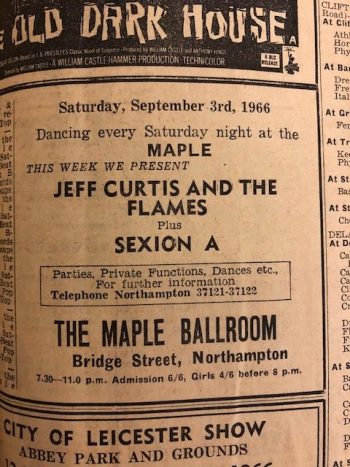
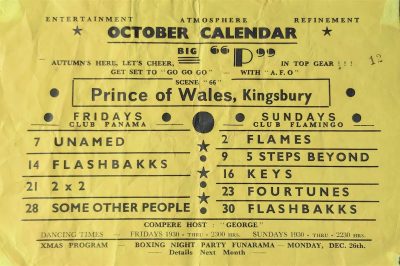
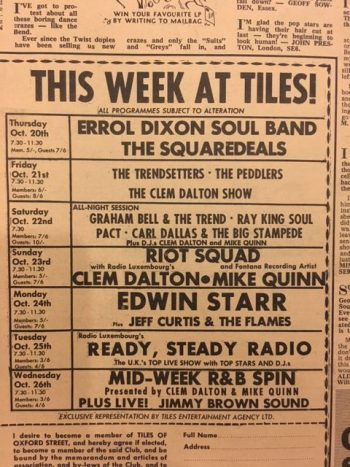
Originally known as Jeff Curtis & The Flames, their manager, rock promoter Mervyn Conn changed their name to The Kool around August 1967.
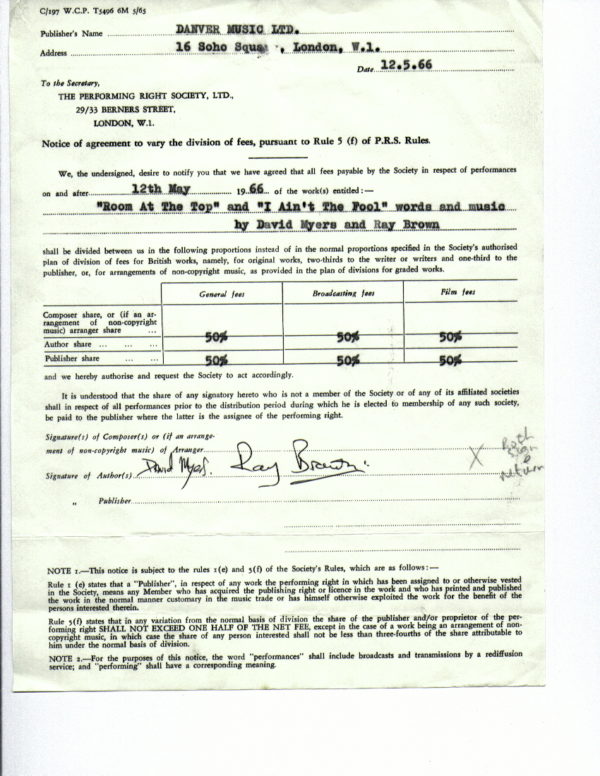
Signing the band to CBS Records, Conn used The Ivy League and session musicians, including drummer Clem Cattini, to record Tony Macauley and John MacLeod’s poppy “Look at Me, Look at Me”, which was backed by the soulful “Room at the Top” (credited to Curtis’s real name: David Myers but actually a co-write with Ray Brown and originally cut as a demo by Jeff Curtis & The Flames around May 1966).
The A-side only features Ray Brown from the band who provides the lead vocal and is surrounded by the massed vocals of The Ivy League. The B-side is notable for its use of horns and cello and has a soulful feel with Jeff Curtis’s gravelly voice to the fore.
Produced by Mervyn Conn and arranged by Keith Mansfield, the single was released on 12 October 1967 but did not chart despite being plugged by DJ Tony Blackburn on Radio 1.
During the same session, Conn used The Ivy League as singers on an excellent version of “Step Out of Your Mind”, previously recorded and released in the United States by The American Breed, and a cover of Ralph Murphy’s “Funny What a Fool Can Be”. Like the previous B-side, Jeff Curtis sang lead vocals on this track and the band members are featured on the recording.
The two tracks were coupled for a second single, issued, and then mysteriously withdrawn, in limited edition, around December 1967.
That same month, the band played at Coronation Hall in Kingston with PP Arnold, after which Ray Brown departed to reunite with Steve Reading and Mickey Baker from his 1950s band, The Sky Blue Skiffle Group, in a new outfit called Champagne. During 1968, Champagne shared the bill with The Kool at Kew Boathouse. In 1969, Brown joined The Magic Roundabout.
With Ray Brown out of the picture, The Kool carried on, bringing in new bass player Brian Hosking.
Notable gigs:
8 September 1967 – Boulevard, Tadcaster, North Yorkshire with Geno Washington & The Ram Jam Band (Yorkshire Evening Press)
Photo: Wakefield Express
9 September 1967 – Boogaloo, Castleford, West Yorkshire Billed as The Cool so may be another band but gig above suggests otherwise
Photo: Ampthill News & Flintwick Record
15 September 1967 – Cesar’s Club, Bedford with The 100w Carnation
1 December 1967 – Coronation Hall, Kingston Upon Thames, Surrey with PP Arnold (may have been later this month or first week in January)
The Kool, late 1967, from left: Ray Brown, Jeff Curtis (aka David Myers), Pete Burt, Dave Carol and Jet Hodges
The Kool #2 (January-August 1968)
Jeff Curtis – vocals Dave Carol – lead guitar, vocals Jet Hodges (aka Richard Hodgins) – keyboards, vocals Brian Hosking – bass Pete Burt – drums
Originally from Twickenham, Middlesex, Brian Hosking (b. 7 July 1947, Twickenham, Middlesex) was no stranger to the band having known Dave Carol from The Smokestacks in 1964. Hosking had first played bass with The Diplomats while at school and then joined The Feeet with guitarist Doug Ayris. During 1963, Hosking and Ayris formed The Legend with singer Nigel Kingswell and drummer John Sergeant.
In 1964, Hosking left to join The Smokestacks. Two years later, he helped form Twickenham band, The All Night Workers. However, after a few months, he departed to run a bar full-time in Heston and only returned to the live scene in October 1967 with a short-lived band called Deep Purple (no relation to their more famous namesake). When he joined The Kool, Hosking had given up the bar to sell car batteries in Slough and was living in Hounslow.
Kingston & Malden Borough News, 30 August 1968
In early 1968, The Kool appeared at London’s top nightclubs, the Cromwellian and the Pickwick. During the second part 1968, the band increasingly found work in the Kingston-Upon-Thames, Surrey area.
Notable gigs:
Photo: Swindon Advertiser
27 January 1968 – Locarno Ballroom, Swindon, Wiltshire with James Stuart Inspiration
4 May 1968 – West Clandon Youth Club, West Clandon Village Hall, Surrey
25 May 1968 – Beauty Queen competition at Hampton Hill Catholic Youth Club, St Francies Sales Church, Hampton Hill, Middlesex
Photo: Surrey Advertiser
15 June 1968 – West Clandon Youth Club, West Clandon Village, Surrey
22 June 1968 – Excel Bowl, Tolworth, Surrey
6 July 1968 – Excel Bowl, Tolworth, Surrey
Photo: Kingston & Malden Borough News
19 July 1968 – Apple Tree Club, Kingston Hotel, Kingston upon Thames, Surrey
The Kool #3 (August 1968-January 1969)
Jeff Curtis – vocals Dave Carol – lead guitar, vocals Jet Hodges (aka Richard Hodgins) – keyboards, vocals Brian Hosking – bass Steve Allen – drums
During late summer Pete Burt departed and joined up with keyboard player Bob Brittain for a tour of Germany. In 1969, Brittain offered Burt the drum position in his new band, Pickettywitch but the drummer declined the offer. The following year, he reunited with his old school friend from Roxeth Manor School – Rod Wharton and they formed the trio, Hogsnort Rupert. Burt subsequently retired from the music business and passed away on 20 March 2013.
Steve Allen, who was originally from Cornwall and had played in several West Country bands for five years before moving to Esher, Surrey, took over from Burt while working for the Inland Revenue in Richmond, Surrey during the day.
According to the Kingston and Malden Borough News, the new line up returned to the studios in early September 1968 to record three more sides, including two band originals, and two of the tracks recorded would be chosen for the band’s next single, due out around Christmas. The promised single never appeared.
The new Kool line-up, however, was short-lived because Allen did not like the band’s music and departed early on to join The Factory, led by singer Jack Brand.
Notable gigs:
16 August 1968 – Apple Tree Club, Kingston Hotel, Kingston upon Thames, Surrey
Photo: Kingston & Malden Borough News
24 August 1968 –Staines Town Hall, Staines, Middlesex
25 August 1968 – Apple Tree Club, White Lion, Putney, Southwest London
14 September 1968 – West Clandon Youth Club, West Clandon Village Hall, West Clandon, Surrey
18 November 1968 – Orange Grove, Grove Tavern, Kingston upon Thames, Surrey
6 December 1968 – Apple Tree Club, Kingston Hotel, Kingston upon Thames, Surrey
Photo: Melody Maker
The Kool #4 (January-May 1969)
Jeff Curtis – vocals Dave Carol – lead guitar, vocals Jet Hodges (aka Richard Hodgins) – keyboards, vocals Brian Hosking – bass Geoff Coxon – drums
Dave Carol enlisted his old friend from early 1960s band, The Drovers, Geoff Coxon, to replace the outgoing Steve Allen. Since splitting from Carol in 1964, Coxon had joined Hampton, Middlesex band, The Others, just in time to promote their lone single on Fontana, a raucous version of Bo Diddley’s “Oh Yeah”, coupled with the band original “I’m Taking Her Home”.
After The Others fell apart in October of that year, Coxon moved on to work with Colin Shane & The Shannons alongside guitarist Dave Mumford and bass player Dick Merritt. When this group split up in late 1965, the trio formed The Sugar Band with organist Malcolm Wainman, tenor sax player Pete Browning and baritone sax player Les Batt and worked the soul club circuit until late 1967.
The band’s agent then linked the musicians with Jamaican singer Delroy Williams and they became The Delroy Williams Show with The Sugar Band. By late 1968, the group had split from Williams and Coxon gigged around before joining The Kool.
Program for show in Caen, France in Feb. 1969. The photo shows the ’67 lineup before Brian Hosking and Geoff Coxon had joined. Program scan courtesy of Brian Hosking
The new line up travelled to France to play the Grand Ball at Caen University in early February. During that weekend, the new band members did a signing at a record shop for their forthcoming CBS single, which featured a photo of the original line up.
On 18 April 1969, CBS belatedly released The Kool’s second single, “Step Out of Your Mind” c/w “Funny What A Fool Can Be”, over a year after it was originally recorded. Despite a strong performance, the band’s moment had passed and the single failed to chart.
The single was reviewed in the Kingston and Malden Borough News’s 25 April 1969 edition, together with a photo of the original line up.
The current line up, however, signed to MCA and recorded a final single, issued in June 1969, coupling the poppy “Lovin’”, written by the song-writing team Capitanelli and O’Connor, backed by Dave Myers’ original, “Baby’s Out of Reach”. Produced by Phil Swern, arranged by Tom Parker, and with backing vocals by Sue and Sonny, the single had great potential but was another chart failure.
Before it was released both Jet Hodges and newcomer Geoff Coxon departed. Coxon joined Calum Bryce, reuniting with Dave Mumford. Coxon currently performs with a reformed The Others.
Calum Bryce, late 1969. Geoff Coxon at far left Photo courtesy of Geoff Coxon
Notable gigs:
15 January 1969 – Weybridge Hall, Weybridge, Surrey
Photo: Woking Herald
8 February 1969 – Grand Ball, Caen University, France
5 April 1969 – West Clandon Village Hall, West Clandon, Surrey (Surrey Advertiser)
Photo: Woking Herald
2 May 1969 – Addlestone Community Centre, Addlestone, Surrey
The Kool #5 (May-August 1969)
Jeff Curtis – vocals Dave Carol – lead guitar, vocals Ronnie Clayden – keyboards, vocals Brian Hosking – bass Jim Park – drums
Jim Park (b. 21 March 1947, Staines, Middlesex) was recruited via an advert that Hosking put in Melody Maker. The band received over 60 applications for the drum vacancy but Park knew Clive Burrows, who was singing in the latest version of Hosking’s former group The All Night Workers, which still contained Hosking’s former band mate from The Legend, Doug Ayris. Burrows also worked as a store man at a shop Hosking’s girlfriend managed.
August 1969
Barely 20 years old, Clayden (b. 2 April 1949, Lewisham, Kent) was living in Ascot, Berkshire at the time and had previously worked with Maidenhead band, The John Thomas Blues Band, which included lead guitarist Graham Marshall and drummer Chris Stevens.
The John Thomas Blues Band landed loads of support gigs opening for the likes of The Pretty Things, The Gun and Aynsley Dunbar’s Retaliation and had even spent a brief period backing American blues singer/pianist Champion Jack Dupree. The John Thomas Blues Band appeared at the Crown pub in Twickenham on 11 January 1969. Clayden finds out about the position in The Kool through Jim Park whose parents worked with his.
Sir Robert Peel, photo taken September 2011
The Kool, however, were nearing their end and during a run of shows at the Sir Robert Peel in Kingston Upon Thames, Surrey, longstanding front man Jeff Curtis quit the band and was replaced by singer Roger Semon, who’d previously fronted The In-Sekt Ltd and Coconut Ice.
Not long after newcomer Jim Park also departed and subsequently re-joined The All Night Workers. Alan Cottrell took his place on the drum stool.
After leaving the band he had led for nearly a decade, Jeff Curtis reverted to his real name, David Myers, and set up his own restaurant business. He died in tragic circumstances in the late 1990s.
Notable gigs:
12 July 1969 – Maidens’ Ball, Sandown Park, Esher, Surrey
19-20 July 1969 – Sir Robert Peel, Kingston upon Thames, Surrey
7 August 1969 – Sir Robert Peel, Kingston upon Thames, Surrey
9 August 1969 – Hog’s Back Hotel, Seale, near Farnham, Surrey
12 August 1969 – Sir Robert Peel, Kingston upon Thames, Surrey
The Kool, December 1970, from left: Brian Hosking, Alan Cottrell, Roger Semon, Dave Carol and (not pictured) Ronnie Clayden Photo courtesy of Brian Hosking
The Kool #6 (September 1969-December 1970)
Roger Semon – vocals Dave Carol – lead guitar, vocals Ronnie Clayden – keyboards, vocals Brian Hosking – bass Alan Cottrell – drums
Despite losing their longstanding frontman, The Kool continued into 1970 but did not record any more material. In early 1971, Hosking and Clayden both left.
Hosking later moved to the Guildford area where he worked with the band Bloodhound. Based on Bournemouth, he is currently working with a reformed version of The All Night Workers. Clayden, meanwhile, subsequently moved to the Camberley/Ascot area on the Surrey/Berkshire border and worked with the band, Snow Leopard. He later moved to the United States where he currently resides.
After bringing back Hosking’s predecessor Ray Brown from Magic Roundabout and carrying on without a keyboard player, the final line up continued as Easy Virtue throughout 1971. During that year, John Frost took over the drum stool from Alan Cottrell.
In 1972, Carol left and was replaced by lead guitarist Frank Torpey, who’d been in the original Sweet. The band then changed name to Crackers. However, in 1973, John Frost left to re-join Carol in a new version of Easy Virtue, which lasted into the mid-1970s. Carol subsequently left the music business and currently runs his own restaurant business in Southwest London.
Ray Brown meanwhile stayed in the music business until the mid-1980s. Crackers were studio winners on Opportunity Knocks in 1976 and recorded material at Abbey Road and Surrey Sound Studios. Three tracks featuring Roger Semon, Ray Brown and Frank Torpey were released under the name Horrorcomic on Lighting Records in 1977 and reached #28 in Melody Maker’s punk charts.
Two further singles were released in 1978 and 1979 with Roger Willis from Capability Brown on drums. All of the single releases, plus six previously unreleased recordings were issued in 2006 by Sanctuary Records on the CD England 77’. Brown later worked with comedy show group The Wallies and The Beasty Grandads before retiring from the music business in September 1988. He currently lives in Surrey.
Notable gigs:
10 September 1969 – Sir Robert Peel, Kingston upon Thames, Surrey
17 September 1969 – Sir Robert Peel, Kingston upon Thames, Surrey
27 September 1969 – Kingston College of Technology, Kingston upon Thames, Surrey with Bobby Kerr Whoopee Band and The Webb
Photo: Kingston & Malden Borough News
5 December 1969 – Excel Bowl, Tolworth, Surrey
22 December 1969 – Chessington Youth Club, Chessington, Surrey
Photo: Kingston & Malden Borough News
27 December 1969 – Kingston Rowing Club, Kingston upon Thames, Surrey
Photo: Kingston & Malden Borough News
20 February 1970 – Excel Bowl, Tolworth, Surrey
7 March 1970 – Kingston Rowing Club, Kingston upon Thames, Surrey
21 March 1970 – Hook Youth Club, Hook, Surrey
4 April 1970 – Claygate Village Hall, Claygate, Surrey
17 April 1970 – Excel Bowl, Tolworth, Surrey
24 April 1970 – Hook Youth Club, Hook, Surrey
Photo: Kingston & Malden Borough News
22 May 1970 – Excel Bowl, Tolworth, Surrey
Photo: Kingston & Malden Borough News
17 July 1970 – Excel Bowl, Tolworth, Surrey
Photo: Kingston & Malden Borough News
4 September 1970 – Excel Bowl, Tolworth, Surrey
Photo: Kingston & Malden Borough News
23 October 1970 – Excel Bowl, Tolworth, Surrey
A huge thanks goes to Dave Carol, Pete Burt, Brian Hosking, Geoff Coxon, Ronnie Clayden, Ray Brown, Rod Wharton and John Frost. The Kingston and Malden Borough News also proved useful. Many thanks to Brian Hosking, Ray Brown and Ronnie Clayden for providing some of the images. This is dedicated to Pete Burt.
45 releases:
Look at Me, Look at Me/Room at the Top (CBS 203003) 1967 Step Out of Your Mind/Funny (What a Fool a Can Be) (CBS 2865) April 18, 1969 Lovin’/Baby’s Out of Reach (MCA MU 1085) 1969
I have tried to ensure the accuracy of this article but I appreciate that there are likely to be errors and omissions. I would appreciate any feedback from anyone who can provide any additions or corrections. Email: Warchive@aol.com
The Noblemen, January 1965. Left to right: Mike Turnill, Bernie Smith, Bryan Stevens, Mick Ketley and Chuck Fryers
Chuck Fryers (guitar, vocals) Mick Ketley (keyboards, vocals) Bryan Stevens (bass) Bob Pettit (sax) Bernie Smith (drums)
1964
December The group evolves out of Bognor Regis group, The Detours, which was formed in early 1960 by bass player Bryan Stevens (b. 14 November 1943, Laha Datu, North Borneo). The Detours have gone through numerous personnel changes over the years with singer Johnny Devlin (real name: Johnny Hobbs, not the New Zealand singer) joining in early 1962. His arrival prompts a name change to Johnny Devlin & The Detours. Shortly afterwards, Stevens recruits former Soundtracks keyboard player Mick Ketley (b. 1 October 1947, Balham, London). Later that year, he also brings in former Cruisers guitarist Alan Paul “Chuck” Fryers (b. 24 May 1945, Bognor Regis, West Sussex) and adds sax player Bob Pettit from a Chichester abattoir. In 1963, Bernie Smith, another former Soundtracks member, takes over the drum stool. Johnny Devlin & The Detours sign to Pye in November and record two tracks – “Sometimes” and “If You Want Someone”, which are coupled for a single, released in January 1964. Despite a group appearance on TV show Thank Your Lucky Stars, the single fails to chart and Devlin leaves. Pete Townshend and John Entwistle see Devlin’s band on the TV show and decided to change their band’s name from The Detours to The High Numbers, which will subsequently become The Who. The group carries on with singer John Read and plays venues on the south coast like Littlehampton’s Top Hat and Worthing’s Mexican Hat. Bob Gaitley, who runs both clubs, invites The Detours to back a new singer, South African Mike Bush, who is launching himself as Beau Brummell. The group accepts and changes name to The Noblemen. EMI producer Bob Barrett signs Beau Brummell and The Noblemen and takes them into Abbey Road to record a single – Beau Brummell Esquire and His Noblemen’s “I Know, Know, Know” backed by a version of “Shopping Around” from Elvis’ film GI Blues.
1965
January Mike Turnill briefly joins on sax taking over from Pettit, who returns to work in an abattoir and plays with Johnny Devlin in Act IV.
Photo: Evening Argus, 9 January 1965
(4) The new line up appears on Granada Television in Manchester. Despite an appearance by Brummell on TV show Ready Steady Go, his debut single, released on Columbia, does not chart.
Brighton Crescent, spring 1965, from left: Bryan Stevens, Chuck Fryers, Mick Ketley, Bob Lomas, Malcolm Randall and Bernie Smith
February Bob Lomas replaces Turnill. The group also takes on a second sax player Malcolm Randall, who has placed an advert in Melody Maker after playing with Jeff Curtis & The Flames, and joins The Noblemen in time for a short trip to West Germany, where they play at the Storyville Jazz Club in Cologne before returning to the UK that spring. The Noblemen are photographed in Brighton wearing regency clothes.
March(7) Beau Brummell & The Noblemen play at Bognor Regis Youth Club, Beat Contest with Johnny Devlin & Act IV. The Bognor Regis Observer‘s 12 March issue, page 3, says they are off on a continental tour immediately afterwards, possibly playing in Stuttgart and Frankfurt.
April(9) Beau Brummell & The Noblemen travel up to Scotland for a short tour and appear at the Centre in Glasgow.
(10) The next day the group plays at Cragburn Pavilion in Gourock.
(15) Popping back over the border, they play at the Market Assembly Hall in Carlisle with Them Grimbles.
(16) Returning to Scotland the band performs in Peebles (possibly Drill Hall) with The Boston Dexters and The Original Chessmen.
(17) The next day, they appear at Haddington Corn Exchange, Haddington, Scotland with Castle Kings and Blue Checkers.
(25) Beau Brummell & The Noblemen perform at the Whitehall, East Grinstead, West Sussex with The Dagoes.
Bob Lomas and Malcolm Randall, West Germany, spring 1965
May(1) Beau Brummell and His Noblemen appear at the California Ballroom in Dunstable with The Downsiders and The Richochets.
(9) The band appears at the Majestic Ballroom in Luton, Bedfordshire with Randall’s former group, Jeff Curtis & The Flames.
(14) Beau Brummell is listed appearing at the Carlton Ballroom in Erdington, West Midlands with The Chucks.
(22) Beau Brummell & The Noblemen perform Malborough Hall, in Halifax, West Yorkshire.
(29) The band plays at the Assembly Hall, Mold, Flintshire, Wales with The Denims.
May (16) Billed as Beau Brummell with his Exclusive Noblemen Orchestra, the group appears at Cubiklub in Rochdale, Greater Manchester.
(21) The group performs at Hoveton Hall, Wroxham, Norfolk with The Trends.
June (13) Beau Brummell & His Exclusive Noblemen Orchestra appear at the Downs, Hassocks, West Sussex.
(19) The group appears at the New Cornish Riveria Lido in St Austell, Cornwall with The Guild.
July (2) Billed as Beau Brummell & The Nobles, they perform at the Guildhall, Axminster in Devon.
(3) Beau Brummell & His Exclusive Noblemen Orchestra appear at Torquay Town Hall, Torquay, Devon with Johnny Carr and The Cadilacs and The Vicarage Five. This same week, Beau Brummell opens a club in Shoreham, West Sussex, according to the Brighton Evening Argus.
(9-11) With a new sax player called John replacing Bob Lomas, Beau Brummell & The Noblemen play at the Star Club in Hamburg. Immediately afterwards, the band plays at the Storyville Jazz Club in Duisberg (most likely from 12-15 July) and Randall jumps ship to join The Manchester Playboys back in England.
(16) Beau Brummell & The Noblemen play a double-nighter in Greater Manchester, starting off with a show at the Domino Club in Openshaw with Lulu & The Luvvers and then the Princess Club, Chorlton with Julie Grant.
(19) The group plays at the Manor Lounge, Stockport, Greater Manchester. This may have been Randall’s final gig as The Manchester Playboys are performing in nearby Bolton this evening and are based in the Greater Manchester area.
(20) The musicians appear at the Marine Ballroom in Evesham, Worcestershire.
(24) The group, billed as The Beau Brummell Band, appears at Shefford Hardwicke in Bedfordshire.
(30) Billed as Beau Brummell & his exclusive Noblemen Orchestra, the musicians perform at the New Embassy Club, Stoke-on-Trent, Staffordshire.
August (14) The band appears at the New Cornish Riviera Lido, St Austell, Cornwall with The Road Runners. Immediately afterwards, John, the temporary sax player, also departs. The Noblemen take on new sax players Keith Gemmell (b. 15 February 1948, Hackney, London) and former Gene Vincent sideman, Jeremy “Jem” Field.
(19) The new line-up appears at the Regent Ballroom in Brighton, East Sussex.
(20) Beau Brummell and His Noblemen Orchestra appear at Cheltenham Town Hall in what is one of the first shows by the new formation.
(21) Beau Brummell and The Noble Men play at the Galaxy Club in Basingstoke, Hampshire.
(22) The band appears at the Mexican Hat in Worthing with The Beat Merchants.
(23) The group plays at the Majestic Ballroom, Newport, south Wales with The Cellar Set.
Oslo National Park, Norway, 1965: Chuck Fryers, Mick Ketley, Bryan Stevens, Bernie Smith, Keith Gemmell and Jem Field
September The band travels to Scandinavia to play some gigs in Norway and Sweden.
(18) Beau Brummell & The Noblemen arrive in Oslo. According to Norwegian newspaper Aftenposten, the band opens at the city’s Rondo Club, possibly for a week’s residency, with The Dukes, featuring singer Ingerid Marie.
Photo: Aftenposten. Thanks to Christopher Hjort for the photo
(26) Returning from Norway, The Noblemen join The Beat Merchants for another show at the Mexican Hat in Worthing. The Worthing Gazette advert notes that this is the band’s final British appearance for six weeks. Immediately afterwards, the band head to Rome, Italy to play at the Piper Club.
The Noblemen at the Piper Club, Rome in October 1965 Left to right: Chuck Fryers, Mick Ketley, Keith Gemmell and Jem Field
October(1) Beau Brummell and The Noblemen start working at the Piper club for a six-week stand, travelling through the city in an open carriage drawn by four white horses. During their stint at the club, the band meets actor Vincent Price and George Harrison’s parents who have won a holiday to Rome. While playing at the Piper club, the band is invited to play at the coming-out dance of the daughter of the millionaire, Prince Ruspoli. They also meet a female American singer called Kathy, who sets up a gig for the band at the Big Apple Club in Munich (where she lives) for the following May.
November After completing a six-week season, Beau Brummell and The Noblemen perform in Milan for 10 days and record four tracks in a studio that was formerly a church. These include the powerful sax-driven “Jezebel” and the Brummell composed, “I’m In Love”, a slow lilting number, neither of which are released. The group then heads south to Naples (and possibly Florence) to play further dates before returning to Rome where The Noblemen sans Brummell record the tracks “Jump Back Baby” and “Ecstasy” with Chuck Fryers on lead vocals. Columbia releases Brummell’s third single (and second with the band) – “A Better Man Than I”, a spoken number, backed by “Teardrops”, which is credited to Brummell’s “Noblemen Orchestra” but it does not chart.
December Beau Brummell and The Noblemen play in Ostend in Belgium before returning to the UK.
(12) The Noblemen appear at the Mexican Hat in Worthing with The Look.
(17) The group returns to the continent to play in Turin. An engagement in St. Moritz is announced but the band does not play there.
(25-31) Beau Brummell and The Noblemen play at a club in Turin through to the new year and share the bill with Mussolini’s son Romano who plays piano with his jazz group. During January 1966, Brummell briefly splits from The Noblemen to return to Rome and tries to get into the film industry.
The Noblemen, early 1966. Clockwise from centre: Bryan Stevens, Bernie Smith, Keith Gemmell, Jem Field, Chuck Fryers and Mick Ketley
1966
January Columbia releases a final Brummell single, a cover of Ray Donner’s “You Don’t Know What You’ve Got” backed by “Take Me Like I Am”, but it fails to chart.
Photo: Worthing Gazette
(7) Back in England, The Noblemen appear at the Top Hat in Littlehampton, West Sussex. The advert in the Worthing Gazette notes that they have just returned from Italy.
(8) Beau Brummell (with The Noblemen) play at the Shoreline Club in Bognor Regis, West Sussex with Force Four. Bognor Regis Observer’s 14 January 1966 issue, page 5, says the band returns to Italy this week but it looks like they travel to West Germany instead, performing at US Army bases near Stuttgart.
February(27) The Noblemen are a late addition to an all-nighter show at the original Cavern in Liverpool, which closes after tonight’s performance. Also included on the bill are Rory Storm and The Hurricanes and The Big Three among many others. The Cavern will officially reopen on 23 July.
March(5) Billed without Brummell, The Noblemen take part in an All Nite Rave at the Shoreline Club, Bognor Regis, Sussex with Dave Flack & His Muckabouts, Dave & The Diamonds, Alex Layne Group and The Legend Sect. Together with Brummell they then head to West Germany.
(7-10) Beau Brummell rejoins The Noblemen briefly to share a week-long residency at the Storyville Jazz Club in Cologne with The Clayton Squares. The Squares’ singer Denny Alexander will reunite with Ketley and Stevens in The Motivation in June 1967. While in Cologne (this may have been spring 1965 trip instead), the group meets English group The Loving Kind featuring guitarist Noel Redding, who will join The Jimi Hendrix Experience in September. After playing at the Storyville Jazz Club in Cologne, the band holds down a residency at Frankfurt’s Storyville Jazz Club with Rory Storm and The Hurricanes and Johnny Guitar Watson (note: this might be March 1965).
(11)Bognor Regis Observer reports on page 22 that Beau Brummell & The Noblemen have just returned from playing US Army bases in Stuttgart and the Storyville club in Cologne. Since 26 January, they have played every night and just returned to Bognor Regis for a short break. It also says they will record some tracks sans Brummell the following Thursday.
(19) The Noblemen appear at the Flamingo Ballroom in Redruth, Cornwall with The Misfits.
(25) According to the Bognor Regis Observer’s issue today, page 24, Beau Brummell & The Noblemen travelled to France on 23 March for two weeks of radio, press, club and ballroom appearances, then visit Rome again on 9 April for a second six-week residency. The French trip, if it happens, is only for a week or so as they return to England in late March.
April(2) The Noblemen play at the Shoreline Club, Bognor Regis, Sussex with The Untamed. The Bognor Regis Observer says they have just returned from a continental tour.
The Noblemen in Pisa, Italy, April 1966, left to right: Mick Ketley, Bryan Stevens, Jem Field, Keith Gemmell and Chuck Fryers
(7) The front page of the Bognor Regis Observer reports that Beau Brummell and The Noblemen are going their separate ways through mutual consent. Brummell subsequently returns to South Africa and records further singles (and later owns a naturist valley in the Northern Transvaal). The Noblemen accept a short residency at the Livorno Club in Pisa, Italy later this month.
May(20) Thanks to the American singer they met in Rome last October, the group opens for The Spencer Davis Group at the Big Apple Club in Munich and both performances are recorded for German TV. Fryers has to borrow Spencer Davis’s guitar as his own was stolen while playing in Italy.
with the Spencer Davis Group, Big Apple Club
(21) Field leaves the band and returns home by train. Stripped down to a quintet, The Noblemen play some US air bases in West Germany with singing group, The New Faces. Gemmell does not stay long and returns home with The New Faces a few weeks later. Gemmell will find success in the late 1960s/early 1970s with the progressive rock outfit, Audience and also plays with Sammy.
June On the way home, the remaining members back country and western singer/comedian Don Bowman, who invites Fryers to return to Nashville as his guitarist. The Noblemen then play at the Star Club in Hamburg before arriving back in the UK. Fryers, Ketley, Smith and Stevens decide to carry on as The Noblemen and bring in a new singer, Jimmy Marsh (b. 9 April 1941, Carmarthen, Wales). Marsh first met the group members in 1964 at the Top Hat in Littlehampton when they were The Detours and he was fronting The Del Mar Trio. When Bernie Smith opts to take up a more regular job, Marsh suggests his former colleague Malcolm Tomlinson (b. 16 June 1946, Isleworth, Middlesex) as drummer. Tomlinson has worked with Marsh since 1964 in The Del Mar Trio and James Deane and The London Cats. Before that, he was a member of Jeff Curtis and The Flames. Bernie Smith will later reunite with Mick Ketley in Bognor Regis group, The Concords in 1969.
July (3) The Noblemen are billed to play at the Royal Ballrooms in Boscombe, Dorset with Karl & The Rapiers. This might be one of the last gigs with Bernie Smith or one of the first with Jimmy Marsh and Malcolm Tomlinson.
(16) Stevens advertises for a new sax player in the 23 July issue of Melody Maker, which hits the newsstands on this day. Former Moonrakers members, Chris Rodger (b. 16 October 1946, Solihull, Warwickshire) and Martin Barre (b. 17 November 1946, Kings Heath, Birmingham) respond to the advert after Rodger misses out on a job with Screaming Lord Sutch. Rodger has joined Syndicate 1 in 1963 after leaving school in Dorset but meets Barre in Midlands band The Moonrakers in January 1965.
(22) Barre buys a saxophone at Sound City in London’s Shaftsbury Avenue for the audition three days later. On the same day, the band is billed to perform at the Cricketers Inn in Southend, Essex but it’s not clear if the current five-piece (sans saxes) perform.
(23) The Noblemen are advertised to appear at the Waterfront in Southampton, Hampshire for an evening show followed by a second gig at Le Disque A Go Go in Bournemouth, Dorset with a midnight performance leading into the 24th.
(24) Both Rodger and Barre are hired for the new line up as sax players, with Rodger doubling up on trumpet. Rodger recalls that their debut takes place at a US service club (most likely Douglas House) in Lancaster Gate at 4pm this afternoon. After the gig, they all return to Bognor Regis to rehearse at the Shoreline Club but Fryers leaves before the week is out.
After leaving The Noblemen in late July 1966, Fryers joins Bognor Regis group, The Warren J Five with Colin Madeley (trumpet) and Geoff Prior (bass), formerly of The Treatment. The new group is completed with former Untamed/John Lee’s Groundhogs’ drummer Terry Slade and singer John Read from The Hustlers. The Warren J Five travel to Hamburg, Germany and play at the Top Ten Club with singer Tony Sheridan. During 1967, The Warren J. 5 travel to Rome and perform regularly at the Piper club. The band records an album in Italy entitled Rhythm & Blues for the Vedette label and a single, “Sto Con Te (Tell It to the Rain)” c/w “Se Hai Qualcosa Da Dire (Tell Me)” before splitting with Read. After a brief period as The Reflections, Fryers and Prior return to the UK and join Coventry group, The Sorrows.
The Noblemen, Bognor Regis Beach, summer 1966. Left to right: Mick Ketley, Martin Barre, Jimmy Marsh, Chris Rodger, Malcolm Tomlinson, Bryan Stevens
(30) Without Fryers, The Noblemen are billed to play at the Lion Hotel in Warrington, Cheshire with The Atlantics and The Atlanta Roots.
August (5) The group travels to the southwest and performs at the Guildhall, Axminster, Devon with The Generation.
(6) The next day, they appear at Budleigh Salterton Public Hall, Budleigh Salterton, Devon.
(7) The Noblemen appear at the Royal Ballrooms, Boscombe, Dorset with Teak & The Smokey.
(13) The Noblemen start a weekly residency at the 400 Ballroom in Torquay, Devon.
(15-19) After taking the Sunday off, The Noblemen continue their weekly residency at the 400 Ballroom in Torquay, Devon.
(20) The group travels back to the southwest for a show at the Flamingo Ballroom, Redruth, Cornwall with The Blaizes.
(21) The next day, they play at the Park Ballroom’s Beat Centre in Plymouth, Devon.
(25) The Noblemen take part in the Big Beat Boat at Bournemouth, Dorset with The Mozzeletoft.
(27) Back in the southwest, they perform at the Blue Lagoon in Newquay, Cornwall with The Nite People.
(28) On the way up to London, The Noblemen perform at the Stoke Hole at the Stoke Hotel in Guidford, Surrey.
(29) The group appears to have seen out the month playing at the 2 ‘B’s’ Club in Ashford, Kent with The End.
September The new Noblemen move up to London and share a flat in Chelsea (and later Gloucester Road).
(2) The band appears at the Fiesta Hall in Andover, Hampshire.
(3) The Noblemen play at the Steering Wheel in Weymouth, Dorset. They sign to the Roy Tempest Agency and start backing up visiting US soul acts.
(10) The Noblemen back The Vibrations, debuting at the Starlight Room at the Boston Gliderdrome in Lincolnshire on a bill that also includes Zoot Money’s Big Roll Band and The Little People. Later the same evening, The Vibrations play an all-nighter at the King Mojo in Sheffield, South Yorkshire with Johnny O’Hara & The Playboys. Although The Noblemen are not listed, it is likely they were the backing group.
(11) The Vibrations (most likely supported by The Noblemen) appear at Toft’s in Folkestone, Kent.
(13) The Vibrations (most likely with The Noblemen backing) play at the Club Cedar in Birmingham.
(15) The Vibrations are booked to play at the Whisky A Go Go in Wardour Street, Soho, central London. However, it’s not clear whether The Noblemen are the backing band on this gig as Ketley doesn’t recall performing at this venue. It’s possible that another Tempest act provides support.
(16) The Vibrations appear at the Domino club in Openshaw and the Princess Theatre in Chorlton, Greater Manchester with seven other acts (most likely with The Noblemen backing them).
(17) The Vibrations play at the Dungeon, Nottingham. They billed to appear with The Senate, but Rodger has a photo with The Noblemen’s bass player Bryan Stevens, which confirms it was The Noblemen.
(17) The Noblemen back The Vibrations at the new Cavern club in Liverpool. Also on the bill are Sooner or Later, Intent and Purpose, The Klubs, The Signs, The Times, The Tremas, The Dark Ages and Jimmy James and The Vagabonds.
(18) The Vibrations appear at Kirklevington Country Club in Kirklevington, North Yorkshire (most likely with The Noblemen backing them).
(18-19) Around this time, The Vibrations (backed by The Noblemen) appear at the Scotch of St James in Mayfair, central London. American soul legend Otis Redding, who has been touring the UK for the first time, turns up as does Mick Jagger. (On 18 September, Redding played a show at the Ram Jam Club in Brixton, south London. He played at Tiles in Oxford Street on 16 September; his only West End show).
(20-22) The Vibrations are billed to return to the Club Cedar in Birmingham for three nights (most likely with The Noblemen) but the middle date may have been difficult with the Purley gig below.
(21) The Vibrations play at the Orchid Ballroom in Purley, Surrey but the support band is not listed.
(22) The Noblemen back The Vibrations at the Carlton Club in Erdington, West Midlands and also play another set at the Cedar Club. Later that evening, The Vibrations play at the Cue Club in Paddington (presumably with The Noblemen again).
(23) The group backs The Vibrations at Toft’s in Folkestone, Kent. Former Loving Kind guitarist Noel Redding joins the musicians backstage after the show. Little does he know but his future band leader Jimi Hendrix is flying out from the USA tonight on route for London. (Redding will audition unsuccessfully for The Animals on 29 September but is picked up by Chas Chandler for The Jimi Hendrix Experience the same day.)
(24) The Vibrations are booked to appear at the King Mojo in Sheffield for an All-nighter with London’s Ravers (who could well be The Noblemen). Also on the bill are The Amboy Dukes Big Band. The Sheffield Star reports the following week that The Vibrations didn’t appear the club.
(25) The Vibrations are advertised to play at the Club West Indies in Stonebridge Park, northwest London but no backing band is listed. The previous evening the soul singers appeared at the Twisted Wheel in Manchester but the support group wasn’t advertised.
October Around early October The Noblemen back The Drifters (possibly for a one-off gig in London). The most likely date is at Tiles in Oxford Street on 7 October.
(15) Billed as (The) Motivation (a name they will change to next month), The Noblemen are billed to play at the Orford Cellar in Norwich. However, Rodger recalls The Noblemen went to play US air bases in West Germany for a week, travelling on German railway and were away on his birthday on 16 October. This means this gig didn’t happen. It seems most likely they left for West Germany around Sunday, 9 October.
(16) Around this time, the group starts to work with Edwin Starr. They are advertised to back him at the Beachcomber club in Nottingham with John Mayall’s Bluesbreakers also on the bill. However, Alan Chamberlain, singer with The Guests, says it was his group that did the honours. Rodger confrims that the group played in West Germany on his birthday which is today.
(17) Rodger says that The Noblemen backed Lee Dorsey at Tiles on Oxford Street, central London. This is the date that Dorsey is advertised for that gig in Melody Maker. The group does work with Lee Dorsey around this time who also plays at the Saddle Room in London on 19 October. However, the advert does not list a support group for the Saddle Room date.
(21) The Noblemen play at De Montfort in Leicester backing Edwin Starr on a bill that also features The Ike & Tina Turner Revue, Alvin Robinson, Family and others. On the same day, Edwin Starr appears at Sleaford Mabern Club, Sleaford, Lincolnshire (backed by The Senate), Midnight City in Birmingham (with The Night People) and the New All-Star Club near Liverpool Street. However, it’s not clear if The Noblemen backed him at either of the latter two shows.
(22) Edwin Starr appears at Reading University but no backing group is listed. It is more likely that the group backs Alvin Robinson at the Blue Moon in Cheltenham as they start working with him around now.
(23) Edwin Starr is billed to play at the Starlite Ballroom in Greenford, west London. However, it’s not clear whether The Noblemen backed the singer. It’s possible they may have backed Lee Dorsey instead at the Club West Indies in northwest London today. Alvin Robinson appears at Kirklevington Country Club in Kirklevington, North Yorkshire on this date but he’s billed to appear with another band (The Ziggy Turner Combo). However, Tomlinson remembers backing Robinson at Newcastle University which is not far away so it’s possible The Noblemen did back him at Kirklevington.
(24) Alvin Robinson appears at the Whisky A Go Go in Wardour Street, Soho, central London but it’s unlikely The Noblemen provided support (see below).
(28) The Noblemen works with Alvin Robinson, performing with the singer at the Dungeon club in Nottingham. A review in the Nottingham Evening Post on 4 November lists the band under its new name The Motivation. (29) The Noblemen back Alvin Robinson at the Starlight Room at the Boston Gliderdrome in Lincolnshire on a bill that also features The Alan Bown Set, John McCoy’s Crawdaddies and Listen (with a young Robert Plant on vocals). On the same day Alvin Robinson performs at the Burlesque in Leicester (most likely with The Noblemen).
(30) Alvin Robinson plays at the Jigsaw in Manchester (possibly with The Noblemen).
(31) Robinson is billed to appear at the Whisky A Go Go in Wardour Street, Soho, central London. Ketley has no recollections of ever playing at the Whisky A Go Go and Pip Williams, guitarist with The Sovereigns, says his band backed Robinson so it’s most likely it is The Sovereigns who provide support on this date and the other Whisky date on 24 October. After backing Robinson for two nights at the Club Cedar in Birmingham as The Motivations on 1-2 November, the band starts to work with The Coasters. It’s likely that Robinson completes his British tour with another support band, although The Noblemen may have doubled up.
November (3) The Noblemen perform at the Regent Ballroom in Brighton, East Sussex before starting work with The Coasters.
(4) The Noblemen back The Coasters (and appear in their own right) at the King Mojo Club in Sheffield with Sonny Childe & The TNT.
(5) The Coasters (most likely backed by The Noblemen) appear at Rawmarsh Baths in Rawmarsh near Rotherham, West Yorkshire. Also on the bill are Brian Poole & The Tremeloes and The Dawley Crews Amblers. Around this time, they change name to The Motivation but are often billed as The Motivations (and sometimes still The Noblemen).
(9) Advertised as The Noblemen, the group supports The Coasters at the Mecca Ballroom on the Royal Pier, Southampton, Hampshire.
(10) Chris Rodger says the group supported Ben E King at the Twisted Wheel in Manchester, which took place today.
(17) The Coasters perform at the Starlight Ballroom in Crawley, West Sussex and The Noblemen are the most likely backing band.
(19) Billed as The Noblemen, the musicians back The Coasters at the Cavern in Liverpool. Also on the bill are The Hideaways, The Kids, The Love Trade and The Escorts. After an all-nighter show, The Coasters perform (presumably backed by The Noblemen) at the Twisted Wheel in Manchester.
(25) The Noblemen support The (Original) Coasters at the New Yorker Discotheque, Swindon. They continue as (The) Motivation throughout the rest of 1966 and into 1967 before evolving (through various line up changes) into The Penny Peep Show, The Penny Peeps and Gethsemane. Martin Barre will join Jethro Tull in December 1968. Malcolm Tomlinson will move to Canada in January/February 1969 and form Milkwood. Ketley will join The Concords on bass, reuniting with former Noblemen drummer Bernie Smith. Smith later opens a music shop and drum school in Chichester.
1968
Former Noblemen guitarist, Chuck Fryers records an album with The Sorrows in Italy entitled Old Songs New Songs for the Miura label. After a handful of singles on the Pye and Miura label, Fryers joins Electric Heart. In 1969, he marries his girlfriend in Chichester and returns to Italy. Over the next few years, he plays with Treves Blues Band. During the 1970s, Fryers performs with The Baker Street Band and then forms his own group, which records a CD Fryers and Friends First. He currently lives in Milan and has released a solo CD That’s It?
Sources:
Bognor Regis Post, 9 January 1965 and 18 December 1965. Flying Colours by Greg Russo, Crossfire Publications, 2009. Music Echo – Liverpool, week ending 12 March 1966. The Best of Cellars – The Story of The Cavern Club by Phil Thompson, Bluecoat Press, 2007. The South Coast Beat Scene of the 1960s by Mike Read, Woodfield Publishing, 2001. The Tapestry of Delights Revisited by Vernon Joynson, Borderline Productions, 2006.
Many thanks to Bryan Stevens, Chuck Fryers, Mick Ketley, Bernie Smith, Jim Marsh, Malcolm Tomlinson, Keith Gemmell, Chris Rodger, Nigel Norman and Sylvia Stephen.
Live dates sourced from Melody Maker, New Musical Express, Nottingham Evening Post, the Liverpool Echo, the Manchester Evening News, Sheffield Star. Other newspaper sources are listed in the comments below.
I have tried to ensure the accuracy of this article but I appreciate that there are likely to be errors and omissions. I would appreciate any feedback from anyone who can provide any additions or corrections. Email: Warchive@aol.com
Colour Supplement, early 1967, from left: George, Paul, Phil, Ricky and Pete
from left: George, Paul, Mike, Rick and PhilThe Colour Supplement were a Staffordshire, UK band formed around 1965/1966 as The System by keyboard player George Glover and bass player Paul Stevenson with guitarist Gerald Brooks and drummer Ricky Ballan. By early 1967, Pete Wainwright had succeeded Brooks and Phil Tunstall had come in on lead vocals.
In October 1967, Mike Nixon took over from Pete Wainwright on guitar. Nixon had previously been lead singer with The Gospel Truth, which also featured future Climax Blues Band members Colin Cooper, Peter Haycock, Arthur Wood and John Cuffley.
Within days of his joining, The Colour Supplement got the opportunity to tour Sweden on a 14-day tour and shared two shows with Hedgehoppers Anonymous before doing further dates with the Troggs.
Back in England, the band briefly gigged around the Stoke-on-Trent area before landing a three-week stint at the Star Club in Hamburg in November where they met Ritchie Blackmore, who sat in on several occasions.
The Colour Supplement then headed to Cologne for two weeks to play the Storyville Club, followed by another fortnight at the Frankfurt Storyville Club.
A second tour of Sweden in April-May 1968 was a disaster. In December, Tunstall was tempted away with an offer to join a new version of Hedgehoppers Anonymous.
The band continued briefly as a four-piece but then brought in a singer called Hutch (aka Bernard Hutchinson). The group underwent further changes in the 1970s and worked with singer/songwriter David Parton (aka Des Parton), who later achieved songwriting success with Sweet Sensation, penning the UK #1 with ‘Sad Sweet Dreamer’. He also had a UK top 5 hit with a cover of the Stevie Wonder song, ‘Isn’t She Lovely?’
Glover later joined The Climax Blues Band and still plays with them to this day.
Thank you to George Glover, Mike Nixon and Paul Stevenson for passing on details about The Colour Supplement and to Joe Toriati for the photos of this band.
Site of the Ealing Jazz Club, photo taken December 2010
The Ealing Jazz Club (or the Ealing Club as it was more commonly known) was one of London’s most historically important music venues during the 1960s. Situated below the ABC bakery, opposite Ealing Broadway station, in the leafy West London suburb of Ealing, the club became renowned as London’s first significant R&B venue when blues enthusiasts Alexis Korner and Cyril Davies’s band Blues Incorporated debuted in March 1962.
Nicknamed the “Moist Hoist” because of the condensation that used to drip down the walls, the club hosted many of London’s most distinguished R&B acts, and in April of that year provided the setting for the first meeting between Messrs.’ Jagger and Richard and Brian Jones, who formed the nucleus of The Rolling Stones, a club regular during 1962 and 1963.
A virtual who’s who of famous British R&B enthusiasts appeared on the club’s tiny stage over the next three years, most notably Blues Incorporated members Jack Bruce and Ginger Baker (who went on to Cream among others); Eric Clapton; Graham Bond; John Mayall; Long John Baldry; Eric Burdon; and Paul Jones, Manfred Mann’s lead singer, to mention just a few names.
Another of London’s top R&B acts The Who performed their first advertised show at the club in November 1964 and played regularly there during the early part of 1965. Jeff Beck’s band The Tridents also graced the club’s stage and, according to Melody Maker, appeared regularly on the Wednesday and Friday night slots during the summer of 1964.
And let’s not forget Dick Taylor, who left an early incarnation of The Rolling Stones to form his own pioneering R&B band, The Pretty Things. Incidentally, future Rolling Stone, Ron Wood was another famous musician who frequented the club with his band, the unforgettable Birds. His brother, the late Art Wood also appeared there, playing with Blues Incorporated and fronting his own band, The Artwoods.
As an R&B hotbed, the club became a magnet for London’s music crowd, drawing in the likes of Rod Stewart; future Jimi Hendrix drummer Mitch Mitchell; Don Craine and the rest of The Downliners Sect; future Faces keys man Ian McLagan, who was working with Twickenham band, The Muleskinners; and future Deep Purple founder Nick Simper, whose early Sixties outfit, The Delta Five were one of the many acts to appear.
Many of the British musicians that either played at the club or witnessed the burgeoning R&B scene emerging from it, took what they had learnt and/or seen to overseas markets as part of the British invasion.
Locals, the late Frank Kennington, who later managed Motorhead, and lead guitarist Mick Liber, whose band Frankie Reid and The Casuals (with future Episode Six drummer John Kerrison among others) had played at the Ealing Club, headed Down Under and formed one of Australia’s finest R&B groups, the original Python Lee Jackson.
Singer Andy Keiller caught many of the acts, including an embryonic Rolling Stones with Carlo Little on drums and Ricky Brown on bass and was so inspired that he headed off to South Africa and subsequently formed The Upsetters in late 1965.
Keiller’s soon-to-be collaborator, Irish guitarist Louis McKelvey and his friend, drummer Malcolm Tomlinson, meanwhile, had played with Jeff Curtis & The Flames, who frequently played at the Ealing Club during its formative years.
After their brief stint together in South Africa, Andy Keiller and Louis McKelvey amazingly reunited in Canada in the late 1960s, founding the experimental band, Influence.
McKelvey subsequently returned to the UK to pick up Malcolm Tomlinson, who’d been working with a pre-Jethro Tull Martin Barre and then headed back to Toronto to form Milkwood, authors of a soon-to-be released LP, recorded with the legendary Jerry Ragovoy at the NYC’s Hit Factory in summer of 1969.
Likewise, many other not so famous musicians who played the Ealing Club went on to produce fascinating music in the burgeoning psychedelic scene. Locals Chris Jackson and Tom Newman fronted R&B band The Tomcats (who also worked as The Thoughts) and later formed one of Britain’s more interesting psych ventures, July, after a stint in Spain.
Jon Field and Tony Duhig were also members of July and had earlier worked with another Ealing Club regular – The Second Thoughts, alongside future Thunderclap Newman, drummer/vocalist Speedy Keen and Patrick Campbell Lyons, who later formed the core of another top psych act, Nirvana.
Jimmy Royal, yet another local talent, was a club regular and fronted one of the area’s most respected bands, The Hawks, which featured former Cliff Bennett & The Rebel Rousers (the recently deceased) guitarist Mick King (real name Mick Borer) and drummer Terry Mabey among others.
And let’s not forget the many obscure bands that got to play at this prestigious club – groups like The Fairlanes, The Four Sounds, Johnnie Harris and The Shades and The Fantastic Soul Messengers.
With many of these great musicians already gone, Garagehangover would like to use this space to encourage musicians, club regulars, promoters and any others with any memories, memorabilia, photos and details of live dates to share this on the site in the comment box below.
Unless otherwise stated, the following (incomplete) gigs listing is from the Middlesex County Times & West Middlesex Gazette, which advertised who played at the Ealing Club in its “Coming Events” section towards the back.
The main exception is 1963 where Melody Maker was the main source for gigs unless otherwise noted.
Thanks to Paul Lucas for The Tridents’ gigs, taken from his diary.
January 1963 (only part of this month has listings)
Friday 11 – The London City Stompers (Harrow Observer & Gazette)
Friday 18 – The Ken Stuart Seven
Tuesday 22 – The Colne Valley Six
Saturday 26 – The Rolling Stones
February 1963 (only part of this month has listings)
Keith Gardiner, rhythm guitar player with Jeff Curtis & The Flames, says his band played the Ealing Club a few times during the early months of 1963
Tuesday 5 – The Rolling Stones
Friday 8 – Blue Cedar Jazzmen (Harrow Observer & Gazette)
Saturday 9 – The Rolling Stones
Friday 15 – Johnny Toogood’s Jazzband (Harrow Observer & Gazette)
Saturday 16 – The Rolling Stones
Friday 22 – Colne Valley Six (Harrow Observer & Gazette)
Saturday 23 – The Rolling Stones
March 1963 (only part of this month has listings)
Friday 1 – Eric Johnson’s Junction Jazz Band
Saturday 2 – The Rolling Stones
According to John Kerrison’s autobiography It Ain’t Rock ‘N’ Roll, The Rolling Stones had a regular Thursday night residency, which Kerrison’s band, Frankie Reid & The Casuals took over. Judging by the dates, it looks more likely that it was a Saturday rather than Thursday night residency.
Friday 8 – Kid Martyn’s Ragtime Band
Monday 11 – The Rockets (Harrow Observer & Gazette)
Saturday 16 – The Rolling Stones (Harrow Observer & Gazette)
Monday 18 – The Rocket Men (Harrow Observer & Gazette)
Friday 22 – Thames City Jazzmen
Saturday 23 – Blues By Six (Harrow Observer & Gazette)
Sunday 24 – Sonny Morris Veterans Jazz Band
Monday 25 – The Rocket Men (Harrow Observer & Gazette)
Friday 29 – Bob Woolley’s Jazz Band
Saturday 30 – The Rolling Stones (Harrow Observer & Gazette)
Sunday 31 – Micky Ashman’s Ragtime Jazz Band
April 1963 (only part of this month has listings)
Monday 1 – The Rocket Men (Harrow Observer & Gazette)
Saturday 13 – The Rolling Stones (Harrow Observer & Gazette)
Monday 15 – The Rocket Men (Harrow Observer & Gazette)
Thursday 18 – Jimmy Royal & The Hawks (Harrow Observer & Gazette)
Saturday 20 – The Rolling Stones (Harrow Observer & Gazette)
Monday 22 – The Rocket Men (Harrow Observer & Gazette)
Thursday 25 – Jimmy Royal & The Hawks (Harrow Observer & Gazette)
Friday 26 – Bob Woolley’s Jazzmen
Saturday 27 – The Rolling Stones (Harrow Observer & Gazette)
Sunday 28 – Mann-Hugg Blues Band (This was the first Ealing Club show by the band that became Manfred Mann)
Monday 29 – The Rocket Men (Harrow Observer & Gazette)
May 1963 (only part of this month has listings)
Friday 3 – The Sidewalk Six and The Phoenix Thumpers
Sunday 5 – The Mann-Hugg Blues Band
Thursday 9 – Jimmy Royal & The Hawks (Harrow Observer & Gazette)
Friday 10 – The Cardinal Jazzmen
Saturday 11 – The Rolling Stones (Harrow Observer & Gazette)
Sunday 12 – The Mann-Hugg Blues Band
Monday 13 – Rock ‘N’ Roll (Harrow Observer & Gazette)
Friday 17 – The Dauphine Street Six
Sunday 19 – The Mann-Hugg Blues Band
Thursday 23 – Frankie Reid & The Casuals (Harrow Observer & Gazette) (Members at this time went on to Python Lee Jackson and Episode Six)
Friday 24 – Douggie Richford’s Jazzmen
Saturday 25 – The Rolling Stones (Harrow Observer & Gazette)
Sunday 26 – The Mann-Hugg Blues Band
Monday 27 – The Running Gate (Harrow Observer & Gazette)
Friday 31 – The Dolphin Jazz Band
June 1963 (only part of this month has listings)
Sunday 2 – The Mann-Hugg Blues Band
Sunday 9 – The Mann-Hugg Blues Band
Tuesday 11 – The Boys and The Henchman (Harrow Observer) (The Boys became The Action; The Henchmen evolved into The Rockin’ Eccentrics – see below)
Thursday 13 – Frankie Reid & The Casuals and Jimmy Royal & The Hawks (Harrow Observer & Gazette)
Friday 14 – The Cardinal Jazzmen
Saturday 15 – Graham Bond (Harrow Observer & Gazette)
Sunday 16 – The Mann-Hugg Blues Band (Harrow Observer & Gazette has them billed as The Blues Brothers but also lists The Chinese Blues and Manhogs)
Monday 17 – The Boys and The Henchmen (Harrow Observer & Gazette)
Thursday 20 – Frankie Reid & The Casuals and Jimmy Royal & The Hawks (Harrow Observer)
Friday 21 – Charlie Gall’s Jazz Band
Saturday 22 – The Graham Bond Quartet
Sunday 23 – The Mann-Hugg Blues Band (Harrow Observer & Gazette bill them as fabulous Rolling Blues Brothers)
Monday 24 – The Henchmen (Harrow Observer & Gazette)
Friday 28 – Bob Wooley’s Jazz Band
Sunday 30 – The Mann-Hugg Blues Band
July 1963 (only part of this month has listings)
Friday 5 – The Renegades (Harrow Observer & Gazette has The Limelights)
Sunday 7 – The Mann-Hugg Blues Band (This was the final gig under this name before switching to Manfred Mann)
Wednesday 10 – The Soundsmen (Harrow Observer & Gazette)
Friday 12 – The Limelights (this band became The Legends)
Wednesday 17 – Mike Forde & The Fortunes (Drummer Lindsay Bex joined The Tridents in January 1964 but left soon after Jeff Beck joined)
Friday 19 – The Limelights
Wednesday 24 – The International Monarchs
August 1963 (only part of this month has listings)
Friday 2 – The Limelights
Wednesday 7 – Alexis Korner’s Blues Incorporated
Wednesday 28 – Blues by Six
September 1963 (only part of this month has listings)
Wednesday 4 – The Graham Bond Quartet
October 1963 (only part of this month has listings)
Saturday 5 – Manfred Mann (First Ealing gig under their new name)
Wednesday 16 – The Bluenotes
November 1963 (only part of this month has listings)
Saturday 9 – Manfred Mann
Saturday 30 – Manfred Mann
December 1963 (only part of this month has listings)
Sunday 1 – The Fantastic Soul Messengers (billed as every Sunday) (Mitch Mitchell played drums at the start alongside sax player Terry Marshall, who was Jim Marshall’s son)
Sunday 8 – The Fantastic Soul Messengers
Saturday 14 – Manfred Mann
Sunday 15 – The Fantastic Soul Messengers
Saturday 21 – Manfred Mann
Sunday 22 – The Fantastic Soul Messengers
Sunday 29 – The Fantastic Soul Messengers
January 1964 (only part of this month has listings)
Saturday 4 – John Mayall’s Bluesbreakers (billed as playing every Saturday)
Friday 10 – The Tridents (Guitarist Leslie Jones joined Four Plus One in August 1964 with former Tridents drummer Ken Lawrence; they became The In Crowd who subsequently morphed into Tomorrow)
Saturday 11 – Possibly John Mayall’s Bluesbreakers (needs confirmation)
Monday 13 – The Tridents
Saturday 18 – John Mayall’s Bluesbreakers
Monday 20 – Mitz Mitton New Orleans Jazz Band (billed as every Monday)
Wednesday 22 – The Tridents
Thursday 23 – Jimmy Royal & The Hawks (Harrow Observer & Gazette)
Saturday 25 – John Mayall’s Bluesbreakers
Sunday 26 – The Soul Messengers (Harrow Observer & Gazette)
Monday 27 – Mitz Mitton New Orleans Jazz Band
Wednesday 29 – The Tridents
Thursday 30 – The Chessmen (Harrow Observer & Gazette) (aka Tony Knight’s Chessmen)
February 1964 (only part of this month has listings)
Saturday 1 – The Soul Messengers (Harrow Observer & Gazette)
Saturday 8 – The Soul Messengers (Melody Maker however lists John Mayall’s Bluesbreakers)
Sunday 9 – Frankie Reid & The Casuals
Monday 10 – Mitz Mitton New Orleans Jazz Band
Wednesday 12 – The Tridents
Wednesday 19 – The Tridents
Wednesday 26 – The Tridents
March 1964 (only part of this month has listings)
Wednesday 4 – The Tridents
Friday 6 – R&B group
Photo: Harrow Observer & Gazette
Wednesday 11 – The Tridents
Friday 13 – R&B group
Wednesday 18 – The Tridents
Thursday 19 – Top West London groups (Harrow Observer & Gazette)
Saturday 21 – Jimmy Williamson Trio (Harrow Observer & Gazette)
Sunday 22 – The Soul Messengers (Harrow Observer & Gazette)
Monday 23 – Mitz Mitton New Orleans Jazz Band (Harrow Observer & Gazette)
Wednesday 25 – The Tridents
Thursday 26 – Jeff Curtis & The Flames (Ruislip & Northwood Gazette) (Members at this point went on to The Manchester Playboys, Influence and The Penny Peeps among others)
Friday 27 – The Tridents
Saturday 28 – John Mayall’s Bluesbreakers (Ruislip & Northwood Gazette)
Sunday 29 – The Soul Messengers (Ruislip & Northwood Gazette)
Monday 30 – Mitz Mitton New Orleans Jazz Band
April 1964
Wednesday 1 – The Tridents
Thursday 2 – Jeff Curtis & The Flames
Friday 3
Saturday 4 – John Mayall’s Bluesbreakers
Sunday 5 – The Soul Messengers
Monday 6
Tuesday 7
Wednesday 8 – The Tridents
Thursday 9 – Geoff Cortez & The Flame (This is Jeff Curtis & The Flames) (Harrow Observer & Gazette)
Friday 10 – R&B group
Saturday 11 – The Soul Messengers (Harrow Observer & Gazette)
Sunday 12 – The Second Thoughts (Harrow Observer & Gazette) (Members went on to Nirvana, Thunderclap Newman, July and Jade Warrior)
Monday 13 – Mitz Mitton New Orleans Jazz Band
Tuesday 14
Wednesday 15
Thursday 16 – Geoff Cortez & The Flame (sic) (this is Jeff Curtis & The Flames)
Friday 17
Saturday 18 – The Mark Leeman Five (Harrow Observer & Gazette) (Members went on to The Nice, Gass and Herbie Goins & The Night-Timers among others)
Sunday 19 – The Second Thoughts
Monday 20 – The Casuals (Most likely Frankie Reid & The Casuals) (Melody Maker lists Mitz Mitton New Orleans Jazz Band on Monday, 20 April)
Tuesday 21
Wednesday 22
Photo: Harrow Observer & Gazette
Thursday 23 – Jeff Curtis & The Flames (Harrow Observer & Gazette)
Friday 24
Saturday 25 – John Mayall’s Bluesbreakers (Harrow Observer & Gazette)
Sunday 26 – The Second Thoughts
Monday 27 – The Casuals (Most likely Frankie Reid & The Casuals)
Tuesday 28
Wednesday 29 – The Tridents
Thursday 30 – Jeff Curtis & The Flames
May 1964
Friday 1
Saturday 2 – John Mayall’s Bluesbreakers
Sunday 3 – The Fabulous Second Thoughts (This is The Second Thoughts)
Monday 4
Tuesday 5
Wednesday 6 – The Tridents
Thursday 7 – Jimmy Royal & The Hawks (aka James Royal & The Hawks)
Friday 8 – R&B group
Saturday 9 – The Mark Leemen Five
Sunday 10 – The Second Thoughts
Monday 11 – The Soul Messengers (Mitch Mitchell left before the band became The Next 5 in the summer. After playing a gig with The Rockin’ Eccentrics in Portsmouth, he formed The Riot Squad)
Tuesday 12
Wednesday 13 – The Tridents
Thursday 14 – Jimmy Royal & The Hawks (aka James Royal & The Hawks)
Friday 15
Saturday 16 – The Mark Leemen’s Five (aka Mark Leemen Five)
Sunday 17 – Fabulous Second Thoughts (This is The Second Thoughts)
Monday 18 – The Hobos
Tuesday 19
Wednesday 20
Thursday 21 – Jimmy Royal & The Hawks (aka James Royal & The Hawks)
Friday 22
Saturday 23 – The Mark Leemen Five
Sunday 24 – The Second Thoughts
Monday 25 – The Hobos
Tuesday 26
Wednesday 27
Thursday 28 – Jimmy Royal & The Hawks (aka James Royal & The Hawks
Friday 29 – The Tridents
Saturday 30 – The Mark Leemen Five
Sunday 31 – The Second Thoughts
June 1964
Monday 1 – The Hobos
Tuesday 2
Wednesday 3 – The Tridents
Thursday 4 – Manfred Mann
Friday 5 – The Tridents
Photo: Harrow Observer & Gazette
Saturday 6 – The Mark Leemen Five
Sunday 7 – The Second Thoughts
Monday 8 – The Hobos
Tuesday 9
Wednesday 10 – The Tridents
Thursday 11 – Manfred Mann (Harrow Observer & Gazette has Frankie Reid & The Casuals)
Friday 12 – The Preachers (Terry Clark and Andy Bown went on to original line up of The Herd)
Saturday 13 – The Mark Leemen Five (This might have been The Tridents; Harrow Observer & Gazette lists the latter)
Sunday 14 – The Second Thoughts
Monday 15 – The Hobos
Tuesday 16
Wednesday 17 – The Tridents
Thursday 18 – Frankie Reid & The Casuals (Members at this point went on to Python Lee Jackson and Episode Six among others)
Friday 19 – The Fairlanes
Saturday 20 – The Tridents (Harrow Observer & Gazette lists The Mark Leeman Five)
Sunday 21 – The Second Thoughts
Monday 22 – The Hobos
Tuesday 23
Wednesday 24 – The Tridents
Thursday 25 – Frankie Reid & The Casuals
Friday 26 – Gene & The Cossacks
Saturday 27– The Mark Leemen Five
Sunday 28 – The Second Thoughts
Monday 29 – The Hobos
Tuesday 30
July 1964
Wednesday 1 – The Tridents
Thursday 2 – Frankie Reid & The Casuals
Friday 3 – R&B group
Saturday 4 – The Mark Leemen Five
Sunday 5 – The Second Thoughts
Monday 6 – The Hobos
Tuesday 7
Wednesday 8
Thursday 9 – Frankie Reid & The Casuals
Friday 10 – The Tridents
Saturday 11 – Mark Lemon (sic) – (This is The Mark Leeman Five)
Sunday 12 – The Second Thoughts
Monday 13 – The Hobos
Tuesday 14
Wednesday 15 – The Tridents
Thursday 16 – Frankie Reid & The Casuals
Friday 17 – R&B
Saturday 18 – Mark Lemon (sic) – (This is The Mark Leemen Five) (Harrow Observer & Gazette has The Second Thoughts)
Sunday 19 – The Second Thoughts
Monday 20 – Gerry Hart & The Heartbeats (This group became The Eyes)
Tuesday 21
Wednesday 22
Thursday 23 – Frankie Reid & The Casuals
Friday 24
Saturday 25 – The Second Thoughts (Harrow Observer & Gazette has The Mark Leeman Five)
Photo: Harrow Observer & Gazette
Sunday 26 – The Second Thoughts (Harrow Observer & Gazette has The Macabre)
Monday 27 – The Hobos
Tuesday 28
Wednesday 29 – The Tridents
Thursday 30 – Frankie Reid & The Casuals
Friday 31 – R&B
August 1964
Saturday 1 – The Mark Leemen Five
Sunday 2 – The Macabre (Guitarist Peter Vernon-Kell had been a very early member of The Who when they were called The Detours. He would go to become an original member of The Hamilton Movement)
Monday 3 – R&B (possibly The Hobos)
Tuesday 4
Wednesday 5 – The Tridents
Thursday 6 – R&B
Friday 7 – Group Four
Saturday 8 – R&B (possibly The Mark Leemen Five)
Sunday 9 – R&B (possibly The Macabre)
Monday 10 – R&B (possibly The Hobos)
Tuesday 11
Wednesday 12 – The Tridents
Thursday 13 – R&B
Friday 14 – The Koalas
Saturday 15 – R&B (possibly The Mark Leemen Five)
Sunday 16 – R&B (possibly The Macabre)
Monday 17 – R&B (possibly The Hobos)
Tuesday 18
Wednesday 19 – The Tridents (Shortly after this gig, the band’s guitarist Leslie Jones left to join Four Plus One/The In Crowd and Mike Jopp covered until Jeff Beck joined in early September)
Thursday 20 – R&B
Friday 21 – The Preachers
Saturday 22 – R&B (possibly The Mark Leemen Five)
Sunday 23 – R&B (possibly The Macabre)
Monday 24 – R&B (possibly The Hobos)
Tuesday 25
Wednesday 26 – R&B
Thursday 27 – R&B
Friday 28 – R&B
Saturday 29 – R&B (possibly The Mark Leemen Five)
Sunday 30 – R&B (possibly The Macabre)
Monday 31 – R&B (possibly The Hobos)
September 1964
Tuesday 1
Wednesday 2 – R&B
Thursday 3 – R&B
Friday 4 – R&B
Saturday 5 – R&B (possibly The Mark Leemen Five)
Sunday 6 – R&B (possibly The Macabre)
Monday 7 – R&B (possibly The Hobos)
Tuesday 8
Wednesday 9 – R&B
Thursday 10 – Frankie Reid & The Casuals (guest star Jimmy Royal) (Harrow Observer & Gazette)
Friday 11 – R&B
Saturday 12 – The Mark Leemen Five (Saturdays)
Sunday 13 – The Macabre (Sundays)
Monday 14 – The Hobos (Mondays)
Tuesday 15
Wednesday 16 – Buddy Britten & The Regents (every Wednesday)
Thursday 17 – Frankie Reid & The Casuals (guest star Jimmy Royal)
Friday 18 – The Preachers
Photo: Ruislip & Northwood Gazette
Saturday 19 – The Mark Leemen Five
Sunday 20 – The Macabre
Monday 21 – The Hobos
Tuesday 22
Wednesday 23 – Buddy Britten & The Regents
Thursday 24 – Jimmy Royal & The Hawks and Frankie Reid & The Casuals
Friday 25 – The Vincents
Photo: Harrow Observer & Gazette
Saturday 26 – The Mark Leemen Five (Harrow Observer & Gazette)
Sunday 27 – John Mayall’s Bluesbreakers and The Mokes (Harrow Observer & Gazette)
Monday 28 – The Macabre (Harrow Observer & Gazette)
Thursday 31 – The Rockin’ Eccentrics and The South West Five
January 1965
Friday 1
Saturday 2 – The Who
Sunday 3 – The Hobos
Monday 4 – The Dee Lobs
Tuesday 5
Wednesday 6 – Alexis Korner
Thursday 7 – The Rockin’ Eccentrics (Ruislip & Northwood Gazette)
Friday 8 – The Heart & Souls (According to Ken Samuels, this was possibly with Flight One)
Saturday 9 – The Who
Sunday 10 – The Mark Leemen Five
Monday 11 – The Dee Lobs
Tuesday 12
Wednesday 13 – Alexis Korner
Thursday 14 – The Rockin’ Eccentrics
Friday 15 – Beau & The Odd Lot
Saturday 16 – The Ray Martin Group (Terry Marshall, Jim’s Marshall’s son was a member)
Sunday 17 – The Mark Leemen Five
Monday 18 – The Dee Lobs
Tuesday 19
Wednesday 20 – Alexis Korner
Thursday 21 – The Rockin’ Eccentrics
Friday 22 – Just Memphis
Saturday 23 – The Ray Martin Group
Sunday 24 – The Mark Leemen Five
Monday 25 – The Dee Lobs
Tuesday 26
Wednesday 27 – Alexis Korner
Thursday 28 – The Rockin’ Eccentrics
Friday 29 – The Nature Boys
Saturday 30 – The Who
Sunday 31 – The Ray Martin Group
February 1965
Monday 1 – The Dee Lobs
Tuesday 2
Wednesday 3
Thursday 4 – The Rockin’ Eccentrics (and Jimmy Royal & The Hawks?)
Friday 5 – Wainwright’s Gentlemen (Ian Gillan on lead vocals) and The Unit 5
Saturday 6 – The Ray Martin Group
Sunday 7 – Group Competition – 5 Top Groups!
Monday 8 – The Dee Lobs
Tuesday 9
Wednesday 10 – Unit 5 (Harrow Observer & Gazette)
Photo: Melody Maker
Thursday 11 – The Who (Billed as “The Who London 1965” for next four Thursdays)
Friday 12 – The Miston Tuac
Saturday 13
Sunday 14 – The Mark Leemen Five
Monday 15 – The Rockin’ Eccentrics
Tuesday 16
Wednesday 17 – The Blue Ravens
Photo: Melody Maker
Thursday 18 – The Who
Friday 19 – The Beaux Oddlot (aka Beau & The Odd Lot)
Saturday 20 – The Ray Martin Group
Sunday 21 – The Mark Leemen Five
Monday 22 – The Rockin’ Eccentrics
Tuesday 23
Wednesday 24 – The Blue Ravens
Photo: Harrow Observer & Gazette
Thursday 25 – The Who
Friday 26 – Just Memphis
Saturday 27 – The Ray Martin Group
Sunday 28 – The Mark Leemen Five
March 1965
Monday 1 – The Birds
Tuesday 2
Wednesday 3 – The Blue Ravens
Thursday 4 – The Who
Friday 5 – The Nature Boys
Saturday 6 – The Mark Leemen Five
Sunday 7 – The Ray Martin Group
Monday 8 – The Birds
Tuesday 9
Wednesday 10 – The Blue Ravens
Photo: Harrow Observer & Gazette
Thursday 11 – The Birds
Friday 12 – The Blue Ravens
Saturday 13 – The Ray Martin Group
Sunday 14 – The Fetish Crowd
Monday 15 – The Birds
Tuesday 16
Wednesday 17 – The Who
Thursday 18 – The Birds (Harrow Observer & Gazette) (Confirmed by Ron Woods’ book)
Friday 19 – The Clique
Saturday 20 – The Five Dimension (The Stormsville Shakers are also listed for this date)
Sunday 21 – The Mark Leemen Five
Monday 22 – The Just Four
Tuesday 23
Wednesday 24 – The Who
Thursday 25 – The Birds
Photo: Harrow Observer & Gazette
Friday 26 – The Who and The Fetish Crowd
Saturday 27 – The Ray Martin Group
Sunday 28 – The Mark Leemen Five
Monday 29 – The Just Four
Tuesday 30
Wednesday 31 – The Maroons (This band may have backed Wilson Pickett on a British tour)
April 1965
Thursday 1 – The Maroons (Harrow Observer & Gazette)
Friday 2 – The Clique
Saturday 3 – The Mark Leemen Five
Sunday 4 – The Ray Martin Group
Monday 5 – The Just Four
Tuesday 6
Wednesday 7 – The Fetish Crowd
Thursday 8 – The Maroons
Friday 9 – The Clique
Saturday 10 – The Mark Leemen Five
Sunday 11 – The Shondells
Monday 12 – The Dee Lobs and Mike Dee & The Prophets
Tuesday 13
Wednesday 14 – The Fetish Crowd
Thursday 15 – The Maroons
Friday 16 – The Clique
Saturday 17 – The Footprints
Sunday 18 – The Ray Martin Group
Monday 19 – The Rakes
Tuesday 20
Wednesday 21 – The Fetish Crowd
Thursday 22 – The Birds
Photo: Harrow Observer & Gazette
Friday 23 – The Clique
Saturday 24 – Mark Leemen Five
Sunday 25 – The Ray Martin Group
Monday 26 – The Tramps
Tuesday 27
Wednesday 28 – The Fetish Crowd
Photo: Harrow Observer & Gazette
Thursday 29 – The Birds
Friday 30 – The Eccentrics
May 1965
Saturday 1 – The Mark Leemen Five
Sunday 2 – The Tribe (Guitarist Frank Torpey became the original guitarist in The Sweet; bass player Dennis Cowan joined The Bonzo Dog Doo Dah Band)
Monday 3 – The Tramps
Tuesday 4
Wednesday 5 – The Fetish Crowd
Thursday 6
Friday 7 – The Maroons
Saturday 8 – The Ray Martin Group
Sunday 9 – The Rakes
Monday 10 – The Tramps
Tuesday 11
Wednesday 12 – The Fetish Crowd
Thursday 13 – The Tribe (Harrow Observer & Gazette has The Fetish Crowd)
Friday 14 – The Birds
Saturday 15 – The Ray Martin Group
Sunday 16 – The Rakes
Monday 17 – The Tramps
Tuesday 18
Wednesday 19 – The C C Riders
Thursday 20 – The Fetish Crowd
Friday 21 – The Eccentrics
Saturday 22 – The Ray Martin Group
Sunday 23 – The Tribe
Monday 24 – The Rakes
Tuesday 25
Wednesday 26 – The C C Riders
Thursday 27 – The Fetish Crowd
Friday 28 – The Birds
Photo: Harrow Observer & Gazette
Saturday 29 – The Ray Martin Group
Sunday 30 – The Initial Four
Monday 31 – The Tribe
June 1965 (only part of this month has listings)
Tuesday 1
Wednesday 2 – The C C Riders
Thursday 3 – The Fetish Crowd
Friday 4 – The Senate IV
Saturday 5 – The Ray Martin Group
Sunday 6 – The Initial Four
Monday 7 – The Blues Dynasty
Tuesday 8
Wednesday 9 – The C C Riders
Thursday 10 – The Fetish Crowd
Friday 11 – The Senate IV
Saturday 12 – The Ray Martin Group
Sunday 13 – The Initial Four
Monday 14 – The Blues Dynasty
Tuesday 15
Wednesday 16 – The C C Riders
Thursday 17 – The Fetish Crowd
Friday 18 – The Tramps
July 1965 (only part of this month has listings)
Thursday 1 – Jeff Curtis & The Flames
Sunday 4 – Initial 4
Saturday 10 – Initial 4
Friday 16 – Rock’ n Breckers (This is The Rick ‘n’ Beckers)
Saturday 17 – Initial 4
Saturday 24 – The Mark Leemen Five
Saturday 31 – The Ray Martin Group
August 1965 (only part of this month has listings)
Friday 6 – The Mark Leemen Five
Saturday 7 – The Ray Martin Group
Friday 13 – James Royal & The Hawks
Saturday 14 – The Ray Martin Group
Sunday 15 – The Rick ‘n’ Beckers (Sundays)
Friday 20 – James Royal & The Hawks
Saturday 21 – The Ray Martin Group
Sunday 22 – The Rick ‘n’ Beckers
Friday 27 – Ricken Beckers (This is The Rick ‘n’ Beckers)
Saturday 28 – The Fab 5
September 1965 (only part of this month has listings)
Friday 3 – The Rick ‘n’ Beckers
Friday 10 – The Rick ‘n’ Beckers
Saturday 11 – The Ray Martin Group
Harrow Observer & Gazette (16 September) says live music every night except Tuesdays
Friday 17 – The Rick ‘n’ Beckers
Saturday 18 – The Ray Martin Group
Harrow Observer & Gazette (23 September) says live music every night except Tuesdays
October 1965 (only part of this month has listings)
Photo: Melody Maker
Wednesday 27 – Brian Green & His Band
Thursday 28 – R&B
Friday 29 – Cabaret Showband
Saturday 30 – The Ray Martin Group
November 1965 (only part of this month has listings)
Wednesday 3 – Brian Green & His Band
Friday 19 – Cabaret Showband
Saturday 20 – The Ray Martin Group
Sunday 21 – Jazz Blues Big Band
Wednesday 24 – Brian Green & His Jazz Band
Thursday 25 – R&B Group
December 1965 (only part of this month has listings)
Photo: Melody Maker
Thursday 9 – The Tribe
Ruislip and Northwood Gazette (10 December) says live music six nights a week
Friday 10 – The Ray Martin Group
Saturday 11 – The Rick ‘n’ Beckers
Sunday 12 – 2/3 Left Jazz Blues
Monday 13 – The Mixed Feelings
Wednesday 15 – The Midnight Blues (or possibly John Hart Quartet)
Thursday 16 – Jeff Curtis & The Flames
Friday 17 – The Ray Martin Group
Photo: Melody Maker
Saturday 18 – The Rick ‘n’ Beckers
Sunday 19 – 2/3 Left Jazz Blues
Friday 24 – The Ray Martin Group
Saturday 25 – The Rick ‘n’ Beckers
Sunday 26 – 2/3 Left Jazz Blues
Friday 31 – The Ray Martin Group
Thank you to Andy Neill for some of the background information on the Ealing Club.
I have tried to ensure the accuracy of this article but I appreciate that there are likely to be errors and omissions. I would appreciate any feedback from anyone who can provide any additions or corrections. Email: Warchive@aol.com
Jeff Curtis & the Flames, circa spring 1963. From left to right: Malcolm Randall, Louis McKelvey, Dave Wigginton, Keith Gardiner, Malcolm Tomlinson and Jeff Curtis
Revised February 2018
Jeff Curtis & The Flames #1 (circa May 1961-May 1962)
Jeff Curtis – lead vocals
Mick Cartwright – lead guitar
Robin “Jesse” James – rhythm guitar
Gary Wheeler – bass
Derek “Dell” Saville – drums
Twickenham born insurance salesman Jeff Curtis (born David Myers; 20 June 1940) had ambitions to be a singer/performer and reportedly put together the original Flames around mid-1961 after singing in a choir.
Little is known about the early Flames. However, according to drummer Dell Saville, Curtis approached him to join a version with three Whitton musicians in mid-1961. These comprised lead guitarist Mick Cartwright, rhythm guitarist Robin “Jesse” James and bass player Gary Wheeler. Curtis ran a short-lived club, the JC Rock Club in the New British Legion Hall on Long Lane, Hillingdon Circus and the musicians played there often, debuting on 26 July 1961. Around May 1962, however, the musicians went their separate ways and Saville joined Ray Dell & The Rocking Deacons. James joined The Downliners briefly.
Advert in Uxbridge Post, 8 November 1961
Curtis started to piece together a new version of The Flames in late 1962/early 1963, starting with Hounslow-based bass player Dave Wigginton (b. 25 February 1943, Isleworth, Middlesex), who held a senior position at an import/export warehouse at London (later Heathrow) Airport during the day, and was working with Twickenham outfit, Johnny & The Pursuers, who played at the JC Rock Club. Thanks to Wigginton’s connections, the new Flames would use the warehouse to rehearse in the evenings. The bass player quickly recommended fellow Pursuers’ guitarist Louis McKelvey (b. 31 October 1943, Killorglin, County Kerry, Eire).
Born above a pub Louis McKelvey came from an artistic background; his mother and father worked in theatre. After boarding at Silverlands House in Chertsey, he attended school in Twickenham, Middlesex, where he was classmates with Don Craine, later of The Downliners Sect fame. McKelvey’s first band was local outfit Johnny & The Pursuers.
Soon after, Curtis recruited rhythm guitarist Keith Gardiner (b. September 1942). In late 1957, when he was 15 years old, Gardiner had befriended 10-year-old drummer John “Mitch” Mitchell at Tudor Rose Youth Club in Southall, Middlesex and had formed a rudimentary band together with guitarist Pete Ross, who subsequently went on to Ealing band, The Flexmen. At the time, Mitchell was attending Jim Marshall’s shop in Hanwell, Middlesex where he was taking drum lessons while Gardiner was taking guitar lessons from top session player, the late Big Jim Sullivan among others.
Wiggington recommended Malcolm Tomlinson (b. 16 June 1946, Isleworth, Middlesex) on drums around December 1962 after seeing him at a local youth club playing with The Panthers. Tomlinson was brought up in Cranford, near London Airport, where his parents worked for British Airways.
A talented musician, who later became a multi-instrumentalist, Tomlinson had attended Spring Grove Grammar School in Isleworth where he was classmates with fellow drummer Mick Underwood, who went on to work with The Outlaws with Ritchie Blackmore among others, and guitarist Tony Bramwell (see later entry). Initially a guitarist, Tomlinson started playing drums in late 1962 and soon proved his natural ability on the kit.
The new formation debuted at Curtis’s Hillingdon club but it soon closed down.
Keith Gardiner says the band opened for The Rolling Stones a couple of times at the Station Hotel in Richmond during February-March 1963 before the club was renamed the Crawdaddy. They also played at the Ealing Club during this period a few times.
Louis McKelvey, Dave Wigginton, Malcolm Tomlinson (partially obscured), Keith Gardiner and Jeff Curtis. Photo: Dave Wigginton
Around March 1963, the musicians completed the new formation with jazz enthusiast, Harrow-on-The-Hill-based sax player Malcolm Randall (b. October 1942, Hendon, Middlesex), who later earned the nickname C B (current bun). Randall’s debut was a gig in Brighton.
Competing with The Rolling Stones, another Ealing Club regular, for local area gigs, Curtis’s band started to travel further afield, including the Whisky A Go Go in Manchester.
During 1963, they backed singer Roly Daniels for a show in Catford in Southeast London.
Wigginton remembers playing a club on Jermyn Street in central London in the early days. He also says the band performed at Chiswick Polytechnic, Wandsworth Polytechnic and Chiswick Town Hall during this period.
After working with a manager who also looked after local group Pete Nelson & The Travellers, Jeff Curtis & The Flames signed to Bob Potter’s agency and started working around the Surrey/Hampshire area, including the Agincourt Ballroom in Camberley.
During this time, they opened for Freddie & The Dreamers at Botwell House in Hayes, Middlesex and Cliff Bennett & The Rebel Rousers at Kew Boathouse among others.
Jeff Curtis & The Flames #2 (Circa December 1962-December 1963)
Jeff Curtis – lead vocals
Louis McKelvey – lead guitar
Keith Gardiner – rhythm guitar, backing vocals
Malcolm Randall – saxophone (joined around March 1963)
Dave Wigginton – bass
Malcolm Tomlinson – drums/backing vocals
Jeff Curtis & The Flames, Walthamstow, north London, January 1963. Interestingly Jeff Curtis is playing the piano. This was before Malcolm Randall joined.
On 1 June 1963, Jeff Curtis & The Flames played their most high-profile gig to date, appearing with a number of local West London bands on the “Rock Twist Jive Channel Crossing”, a rock extravaganza that took place on-board the Channel ferry, the M V Royal Daffodil, which sailed from Southend, Essex to Boulogne. The billing included Tomlinson’s future band leader, Fulham-based singer Jimmy Marsh and his former Spring Grove class mate, Mick Underwood who was playing with The Outlaws and backing the show’s headline act, Jerry Lee Lewis.
Jeff Curtis & the Flames, 1963. Photo courtesy of Keith Gardiner. Left to right: Louis McKelvey, Keith Gardiner, Jeff Curtis, Malcolm Tomlinson, Dave Wigginton and Malcolm RandallJeff Curtis & the Flames, 1963. From left: Keith Gardiner, Louis McKelvey, Malcolm Tomlinson, Malcolm Randall, Dave Wigginton and Jeff Curtis (front)Poster for the Channel Crossing, 1 June 1963. Image courtesy of Keith Gardiner
On 4 October 1963, Jeff Curtis & The Flames were given the opportunity to record some demos. The band (minus Malcolm Randall) cut a four-track acetate at Lansdowne Recording Studios on Lansdowne Road in Holland Park, which comprised covers of Chuck Berry’s “Bye Bye Johnny” and “It Don’t Take But A Few Minutes” (with Lenny Hastings on drums); Robert Allen and Richard Adler’s “Everybody Loves a Lover”; and Bobby Troup’s “Route 66”.
Two tracks were allegedly readied for release as a single for HMV but when this did not happen, Gardiner departed and dropped out of the music scene, although he did briefly sub for Ken Lundgren in The Outlaws at a few gigs.
Years later he formed his own band The Keith Gardiner Band (KGB), which performed around the Shepperton, Middlesex area.
Acid Jazz Records subsequently used one of the recordings for its Rare Mod CD series.
Notable gigs:
Photo: Walthamstow GuardianPhoto: Dave Wigginton. The Flames at Walthamstow Assembly Hall, January 1963
19 January 1963 – Walthamstow Assembly Hall, Walthamstow with The Gallions and Paul & The Alpines (billed as The Flames)
9 March 1963 – Hillingdon Club, Sevenoaks, Kent
Photo: Harrow Observer
20 March 1963 – British Legion Hall, South Harrow, Middlesex
Photo: Surrey Comet
3 May 1963 – St Peter’s Hall, Kingston Upon Thames, Surrey with The Sinners (billed as The Flames) First time in Kingston
Photo: Woking Herald
10 May 1963 – Weybridge Hall, Weybridge, Surrey
1 June 1963 – Rock Twist Jive Channel Crossing with Jerry Lee Lewis & The Outlaws, The Four Whirlwinds, The Del-Lormes, Johnny Angel, Nero & The Gladiators, Dane Robert, Vicki Rowe, Ricky Valance, The Fabulous Fleerekkers, Colin Chapman and Jimmy Marsh
Photo: Surrey Comet
14 June 1963 – St Peter’s Hall, Kingston Upon Thames, Surrey with Tony Clayton & The Impalas (billed as The Fabulous Flames with saxophone backing)
20 July 1963 – Walton Hop, Walton-on-Thames, Surrey
At Silver Blades Ice Rink, The Streatham News, August 2, 1963
2-3 August 1963 – Silver Blades, Streatham, London
28 September 1963 – Agincourt Ballroom, Camberley, Surrey with Allen & The Blue Diamonds (billed as The Flames) According to Keith Gardiner who is in touch with the guitarist from Tommy Bruce’s band, The Flames actually played on 29 September as the opening act
Photo: Walthamstow Guardian
12 October 1963 – Walthamstow Assembly Hall, Walthamstow with Mel James & The Meltones and Jimmy Ritchie Combo (billed erroneously as Jess Curtis & The Flames)
30 November 1963 – Walton Hop, Walton-on-Thames, Surrey
Jeff Curtis & The Flames #3 (December 1963-July 1964)
Jeff Curtis – lead vocals
Louis McKelvey – lead guitar
Ray Soper – organ
Malcolm Randall – saxophone
Dave Wigginton – bass
Malcolm Tomlinson – drums/backing vocals
Jeff Curtis replaced Keith Gardiner with Putney, Surrey-based organist Ray Soper (b. 9 May 1941, Battersea, London), who would play with The Flames on several occasions over the next two years, venturing off to perform with various other local groups. Soper had gone to Sir Walter St John Grammar School in Battersea, south London and started playing classical piano at six years of age. In 1959, when he was 18 years old, Soper began working with local rock groups in the Chelsea area.
Around February 1964, the band did a demo session with Decca Records in West Hampstead but nothing came from it.
After leaving Bob Potter’s agency, Jeff Curtis & The Flames got work with the Roy Tempest agency. The new line up continued to gig widely but Tomlinson started to get bored.
In mid-summer the drummer took up an offer from former Fairlanes lead singer Jimmy Marsh, who he’d met on the cross Channel gig the previous summer, to join his new band, The Del Mar Trio. Tomlinson subsequently went on to play with The Noblemen, The Motivation, The Penny Peeps and Gethsemane before immigrating to Canada in January 1969 and continuing his musical career there. He subsequently worked with the likes of Bill King and Rick James among others and cut two solo albums in the late Seventies.
Notable gigs:
1 February 1964 – Hermitage Ballroom, Hitchin, Herts with The League of Gentlemen and The Dyaks
Photo: Walthamstow Guardian
29 February 1964 – Walthamstow Assembly Hall, Walthamstow with Pat McQueen Combo and The Preachers
Opening for the Rattles, March 14, 1964
14 March 1964 – Starlight Ballroom, Boston Gliderdrome, Lincolnshire with The Rattles (billed as Geoff Curtis & The Flames)
26 March 1964 – Ealing Club, Ealing, Middlesex
2 April 1964 – Ealing Club, Ealing, Middlesex
4 April 1964 – King’s Hall, Aberystwyth, Wales
5 April 1964 – Southall Community Centre, Southall, Middlesex with The Rattles
9 April 1964 – Ealing Club, Ealing, Middlesex
16 April 1964 – Ealing Club, Ealing, Middlesex
23 April 1964 – Ealing Club, Ealing, Middlesex
30 April 1964 – Ealing Club, Ealing, Middlesex
14 May 1964 – Rocky Rivers Top 20 Club, Conservative Club, Bedford
23 May 1964 – Palace Ballroom, Wolverton, Bucks with The Milestones
31 May 1964 – Silver Blades, Streatham, London
18 June 1964 – Majestic Ballroom, Luton, Beds with Peter’s Faces
Jeff Curtis & The Flames #4 (July 1964-January 1965)
Jeff Curtis – lead vocals
Louis McKelvey – lead guitar
Malcolm Randall – saxophone
Ray Soper – keyboards (left around September 1964)
Dave Wigginton – bass
Pete Burt – drums
+
Jeff Lake – saxophone (joined around September 1964)
The band’s new drummer was Pete Burt (b. 20 August 1946, Redhill, Surrey), younger brother of Mick Burt, sticks man with Cliff Bennett & The Rebel Rousers, who answered an advert in the music press. Brought up in South Harrow, Middlesex where he attended Roxeth Manor School, Burt had previously played with a non-professional band that started life at Botwell House, Hayes backing singer Robert (Bob) Chambers.
In an amazing twist of fate, the lead guitarist in the band was Tony Bramwell, Pete Burt’s predecessor Malcolm Tomlinson’s former class mate from Spring Grove Grammar School in Isleworth. The band played a couple of gigs before splitting up around mid-1964. Bramwell then went on to play with local bands, The Fantoms, The Fantom Creed, The Sheratons and The Hum Drum Band.
Sometime in August, the band auditioned for Joe Meek for the first time.
Clockwise from bottom left: Dave Wigginton (bass), Malcolm Randall (sax), Pete Burt (drums), Jeff Curtis (vocals), Jeff Lake (sax) and Louis McKelvey (guitar). Photo: Dave Wigginton
Around late September 1964, Ray Soper was sacked and Malcolm Randall introduced his friend, sax player Jeff Lake. Soper immediately found work with Buddy Britten & The Regents alongside future Deep Purple bass player Nick Simper. He would then work with Cyrano & The Bergeracs, where he reunited with Simper in 1965 but would remain on the fringes of The Flames.
Shortly after Jeff Lake’s arrival, the band returned to Lansdowne Recording Studios in October 1964 to record a two-track demo that included a cover of Solomon Burke and Bert Berns’ “Down In The Valley”.
McKelvey, however, was also growing restless and departed in early January 1965. On the afternoon of his wedding day (most likely in June 1965), he headed to Germany to reunite with former Jeff Curtis & The Flames drummer Malcolm Tomlinson, who was working with James Deane & The London Cats. The guitarist gigged with The London Cats for about a month before returning to London.
Then, around September 1965, McKelvey travelled to South Africa and ended up recording with The Upsetters and The A-Cads. In April 1966, The A-Cads moved to the UK to work with producer Mickie Most but when nothing happened, the guitarist moved to Montreal in September. Based in Canada, McKelvey recorded with Our Generation and Influence before returning to the UK in July 1968 briefly.
Back home he reunited with former Jeff Curtis & The Flames drummer Malcolm Tomlinson. The pair relocated to Toronto in January 1969 where they formed Milkwood and recorded an unreleased album with legendary producer, the late Jerry Ragavoy for Polydor Records. McKelvey would subsequently work with Toronto bands, Damage (alongside Tomlinson) and Powerhouse and record with Marble Hall. He currently lives in Toronto.
Notable gigs:
2 July 1964 – Majestic Ballroom, Luton, Beds with The All Stars
2 July 1964 – Winter Gardens Ballroom, Great Yarmouth, Norfolk with Malcolm & The Jetblacks
10 July 1964 – Berkhamsted Town Hall, Berkhamsted, Herts
11 July 1964 – Hermitage Ballroom, Hitchin, Herts with Clouds
18 July 1964 – Marcam Hall, March, Cambridgeshire
25 July 1964 – Majestic Ballroom, Wellington, Shropshire with The Bruisers featuring Lee Stirling
1 August 1964 – The Gaiety, Ramsey, Cambridgeshire with The Swinging Sounds
6 August 1964 – Rocky Rivers Top 20 Club, Conservative Club, Bedford, Bedfordshire
20 August 1964 – Winter Gardens Ballroom, Great Yarmouth, Norfolk with The E-Types
29 August 1964 – Hermitage Ballroom, Hitchin, Herts with Kit & The Saracens
8 October 1964 – Majestic Ballroom, Luton, Beds with The Roulettes
5 December 1964 – Hermitage Ballroom, Hitchin, Herts with The Midniters
8 December 1964 – Floral Hall, Gorleston-on-Sea, Norfolk
19 December 1964 – Ealing Club, Ealing, Middlesex with The Hobos
2 January 1965 – St George’s Hall, Exeter, Devon with Roger & The Sabres (billed as The Flames)
3 January 1965 – Majestic Ballroom, Luton, Beds with The Mojos
Jeff Curtis & the Flames, late ’64. From left: Louis McKelvey, Jeff Curtis, Dave Wigginton, Pete Burt (front on drums), Jeff Lake and Malcolm Randall.
Jeff Curtis & The Flames #5 (January-February 1965)
Jeff Curtis – lead vocals
Dave Caralambous (aka Dave Carol) – lead guitar
Jeff Lake – saxophone
Malcolm Randall – saxophone
Dave Wigginton – bass
Pete Burt – drums
Dave Marcus Theos Michael Caralambous aka Dave Carol (b. Dave Charalambous, 14 January 1949, Isleworth, Middlesex) was brought up in nearby Twickenham. His first band was The Drovers, which he joined around 1962 and also included rhythm guitarist Richard Allen and drummer Geoff Coxon, who would feature in The Flames’ history in later years when they changed name to The Kool.
In late 1963, The Drovers changed name to The Smokestacks after lead singer Mike Smith joined and Brian Hosking from Twickenham band, The Legend, joined on bass. The Smokestacks became resident band at the 51 Club in central London. In the summer of 1964, Carol joined Hounslow band, The Valkeries and remained with them until January 1965 when he joined The Flames. He was also in the same class at school as McKelvey’s younger sister. Carol says he made his debut at the Locarno Ballroom in Swindon.
The changes, however, didn’t end there. Sax player Malcolm Randall left in early February and subsequently joined Bognor Regis band Beau Brummell & The Noblemen for about six months. In July 1965, he jumped ship to join Manchester’s Playboys.
While with that band, Randall appeared on an excellent soul single for Fontana – “I Feel So Good” c/w “I Close My Eyes”. In an incredible twist of fate, during late 1966, Malcolm Randall was playing with Manchester’s Playboys at Liverpool’s Cavern Club when he saw the latest version of The Noblemen on stage and was amazed to see his former Jeff Curtis & The Flames compatriot Malcolm Tomlinson playing drums!
After leaving Manchester’s Playboys in mid-1968, Malcolm Randall moved to Cambridgeshire and ended up working with Red Express during the 1970s, which later morphed (after Randall had left) into Shakatak. He then worked with Sindy & The Action Men among others.
In need of a replacement, Jeff Lake introduced his friend from Harrow – George Russell.
Notable gigs:
11 January 1965 – Locarno Ballroom, Swindon, Wiltshire with Sonny Childe & The Elders Consolidated
22 January 1965 – Majestic Ballroom, Newcastle upon Tyne, Tyne & Wear
23 January 1965 – Marcam Hall, March, Cambridgeshire with The Fourmost
28 January 1965 – Majestic Ballroom, Luton, Bedfordshire with Johnny Thunder & The Thunderbirds
30 January 1965 – St George’s Ballroom, Hinckley, Leicestershire with The Martyns
13 February 1965 – Starlight Ballroom, Boston Gliderdrome, Lincolnshire with The Searchers and Rodgers Lodgers (possibly one of George Russell’s first gigs)
Jeff Curtis & the Flames listed as one of the Roy Tempest Organisation’s Top 20 for 1965
Jeff Curtis & The Flames #6 (February-April 1965)
Jeff Curtis – lead vocals
Dave Caralambous (aka Dave Carol) – lead guitar, vocals
Jeff Lake – saxophone
George Russell – saxophone
Dave Wigginton – bass
Pete Burt – drums
With two of the early band members gone, including his former band mate from Johnny & The Pursuers, Louis McKelvey, Dave Wigginton handed in his notice and agreed to work until mid-April. His replacement was Ray Brown (b. 1944, Hayes, Middlesex), who ended up buying Wigginton’s pink Fender Precision bass. Having rehearsed with Jeff Curtis’s band since January, Brown made his debut with Jeff Curtis & The Flames at Walthamstow Assembly Hall on 24 April.
Photo: Walthamstow Guardian
Brown started with the Sky Blue Skiffle Group in 1956 and two years later appeared on BBC TV’s Carol Levis Junior Discoveries. In 1961-1962, he worked with Hayes band The Preachers and also spent a brief period in a short-lived group with Nick Simper. Soon after joining The Flames, Brown and his school friend Steve Reading from the Sky Blue Skiffle Group wrote and sang backing vocals on “Heart Full of Sorrow” by Heinz, which was released on Columbia in November 1965.
Notable gigs:
28 February 1965 – Olympia, Cromer, Norfolk with Circuit Five
5-6 March 1965 – Boulevard, Tadcaster, North Yorkshire with The McCoys
27 March 1965 – Locarno Ballroom, Swindon, Wiltshire with Shane & The Shane Gang
At the Starlight Room, Boston, April 3, 1965 with the Barron Knights
3 April 1965 – Starlight Ballroom, Boston Gliderdrome, Lincolnshire with The Barron Knights
9 April 1965 – California Ballroom, Dunstable, Bedfordshire with The Escorts and Beaux Maverix (billed as Geoff Curtis & The Flames)
10 April 1965 – Floral Hall, Gorleston-on-Sea, Norfolk with Confessors
17 April 1965 – The Gaiety, Ramsey, Cambridgeshire with The Sons of Adam
Jeff Curtis & The Flames #7 (April-July 1965)
Jeff Curtis – lead vocals
Dave Caralambous (aka Dave Carol) – lead guitar, vocals
Jeff Lake – saxophone
George Russell – saxophone
Ray Brown – bass
Pete Burt – drums
The new line up gigged around the country and on 9 May appeared on the same bill as Beau Brummell & The Noblemen (featuring former member Malcolm Randall) at the Majestic Ballroom in Luton.
A few days after a gig at Clacton Town Hall with Cops ‘N’ Robbers in late June, Jeff Lake and George Russell took a holiday (a trip to Frankfurt to visit former member Malcolm Randall who was playing with Beau Brummell & The Noblemen), which didn’t go down well with singer Jeff Curtis.
Curtis had a band rule that the musicians all had to take a two-week summer holiday at the same time, usually in August. On their return in July, the two sax players were told their services were no longer needed.
Lake subsequently played with a number of local bands before reuniting with former Jeff Curtis & The Flames member Malcolm Randall as road manager for Manchester’s Playboys, which included their Swedish trip in September 1967. On his return, he joined Tommy Bishop & The Rock ‘N’ Roll Revival Show and appeared on the 1968 Decca single “Midnight Train” c/w “Oh Boy”.
Russell joined Hayes, Middlesex band, The Satellites in mid-1966, who changed name to The Army later that year. The band also included future Sweet bass player Steve Priest and cut two recordings in 1967 – covers of the Joe Tex hit “Sugar” and Sam & Dave’s “You Don’t Know Like I Know”. Russell remained with The Army until late 1968/early 1969. He subsequently gigged with Orange Rainbow before moving to Australia. He later returned to live in Hertfordshire.
Notable gigs:
Ray Brown’s first gig with the band, April 24, 1965
24 April 1965 – Walthamstow Assembly Hall, Walthamstow, London
29 April 1965 – Rocky Rivers Top 20 Club, Conservative Club, Bedford (back by demand)
1 May 1965 – Carfax Ballroom, Oxford with The Gangbusters
3 May 1965 – Radlett (most likely Radlett Centre), Hertfordshire
7-8 May 1965 – Silver Blades, Streatham, London
9 May 1965 – Majestic Ballroom, Luton with Beau Brummell & The Noblemen (former member Malcolm Randall on sax with The Noblemen)
15 May 1965 – Malvern Winter Gardens, Malvern, Worcestershire with Eric Benson & Orchestra
22 May 1965 – Manor Lounge, Stockport, Greater Manchester with The Thingumajigs (Stockport County Express) Gig cancelled
29 May 1965 – Starlight Ballroom, Boston Gliderdrome, Lincolnshire with The Hollies and The Red Squares
11 June 1965 – California Ballroom, Dunstable (replaced one of the billed acts)
12 June 1965 – Rivoli Ballroom, Brockley, London
18 June 1965 – USAF base, South Ruislip, London
25 June 1965 – USAF base, High Wycombe, Buckinghamshire
26 June 1965 – Clacton Town Hall, Clacton-on-Sea, Essex with Cops ‘N’ Robbers (last gig with Jeff Lake and George Russell)
1 July 1965 – Ealing Club, Ealing, London (reduced to four piece)
3 July 1965 – Hermitage Ballroom, Hitchin, Hertfordshire with Peter Fenton & The 3,000
4 July 1965 – Woodhall Community Centre, Welwyn Garden City, Hertfordshire
August 1965, from left: Jeff Curtis, Ray Soper, Dave Carol, Pete Burt and Ray Brown. Photo courtesy Ray SoperWhen they were just being billed as The Flames. Photo courtesy Ray Soper. From left: Ray Soper, Dave Carol, Pete Burt, Ray Brown and Jeff Curtis
Jeff Curtis & The Flames #8 (July 1965-May 1966)
Jeff Curtis – lead vocals
Dave Caralambous (aka Dave Carol) – lead guitar, vocals
Ray Soper – keyboards
Ray Brown – bass
Pete Burt – drums
On 5 July, Jeff Curtis auditioned two sax players to replace Jeff Lake and George Russell but decided against keeping the horns and instead invited former member Ray Soper to re-join the band on keyboards. Soper had been playing with future Deep Purple bass player Nick Simper in Cyrano & The Bergeracs for several months and then a group formed by the lead singer of The Gobbledegooks but had helped out at the auditions in January 1965, which had brought in Carol and Brown.
Ray Brown had a prearranged week’s holiday from 10-17 July and his predecessor Dave Wigginton returned to honour engagements in his absence, which included a gig at the Ticky Rick Club in Basingstoke, Hants on 17 July. With Brown back from his holiday, the five-piece rehearsed on 21 July before playing their first gig together at Luton’s Majestic Ballroom where there was a bomb scare.
Often billed as simply “The Flames”, the new line up lasted nearly a year (although Soper left in November briefly to work with a Casino band on the Isle of Man, which lasted a week before he returned).
Pete Burt, who worked as a window cleaner when The Flames weren’t gigging, got a window cleaning job with British rock ‘n’ roll legend, Johnny Kidd, who had split from his longstanding backing band, The Pirates on 19 April 1966. Kidd offered The Flames some work to fulfil his outstanding dates.
During late April/early May 1966, The Flames spent about a week backing the singer, including playing a gig at Chatham Dockyard Naval base (quite possibly the Pembroke Club on HMS Pembroke where Kidd had played the previous year with the original Pirates), but the arrangement did not suit either party.
Around this time, The Flames returned to Lansdowne Studios to cut two original recordings – the David Myers/Ray Brown collaborations, “Room at the Top” and “I Ain’t The Fool”. The former was later cut by the band’s new identity, The Kool, in the summer of 1967. They also did a second audition with Joe Meek.
After Ray Soper was ousted from The Flames in May, he decided to stick with Kidd and formed a new version of The Pirates. The New Pirates (as they were called) supported Johnny Kidd throughout the summer but Soper stopped playing with the band in August. Two months later, he joined Bristol band, The Denims who were playing US bases in France. After working in Strasbourg for two months as The Headline News, he returned to the UK in April 1967.
Three months later, Soper found work playing in a band on the Cunard Cruise liner Carmania, which travelled between Southampton and Montreal on a six-week passage. Marrying a Canadian, he subsequently immigrated to Canada in 1970 and until recently played with The Dusty Roads Band from his home in Ontario. He also works as a film extra.
Notable gigs:
17 July 1965 – Ricky Tick Club, Carnival Hall, Basingstoke, Hants (Dave Wigginton fills in for Ray Brown)
22 July 1965 – Majestic Ballroom, Luton, Bedfordshire (RayBrown returns and Ray Soper’s first gig back with the band)
24 July 1965 – Locarno Ballroom, Swindon, Wiltshire with The Rising Sons
Photo: Leicester Mercury
25 September 1965 – Il Rondo, Leicester
Photo: Windsor, Slough & Eton Express
2 October 1965 – Adelphi Ballroom, Slough, Berkshire
30 October 1965 – Woodhall Community Centre, Welwyn Garden City, Hertfordshire
Photo: Surrey Comet
11 November 1965 – Byron Hotel, Greenford, London with The Keystones (billed as The Flames)
Jeff Curtis & The Flames were featured in the Surrey Comet‘s 13 November 1965 issue but it was full of factual errors (above)
9 December 1965 – Byron Hotel, Greenford, London with the Harmonies
16 December 1965 – Ealing Club, Ealing, London
18 December 1965 – Adelphi Ballroom, Slough, Berkshire
24 December 1965 – Woodstock Roadhouse, North Cheam, London
1 January 1966 – Starlight Ballroom, Boston Gliderdrome, Lincolnshire with The Nashville Teens and The Game
13 January 1966 – Woodstock Roadhouse, North Cheam, London (billed as The Flames)
22 January 1966 – Locarno Ballroom, Swindon, Wiltshire with Plain and Fancy
12 February 1966 – California Ballroom, Dunstable, Bedfordshire with Goldie & Dave Antony’s Moods and The Game
17 February 1966 – Byron Roadhouse, Greenford, London with The Mode (billed as The Flames)
31 March 1966 – Byron Roadhouse, Greenford, London with The Legends (billed as The Flames)
Photo: Windsor, Slough & Eton Express
23 April 1966 – Adelphi Ballroom, Slough, Berkshire
7 May 1966 – Locarno Ballroom, Swindon, Wiltshire with The Ying Yongs and The Cotswold Stones (one of Ray Soper’s final gigs)
Publishing contract for “Room at the Top” and “I Aint the Fool”, May 1966 courtesy of Ray BrownHeadline News, circa late 1966. Ray Soper is second from left
Jeff Curtis & The Flames #9 (May 1966-August 1967)
Jeff Curtis – lead vocals
Dave Carol – lead guitar, vocals
Jet Hodges (aka Richard Hodgins) – keyboards, vocals
Ray Brown – bass
Pete Burt – drums
The remaining members brought in Richard Hodgins, a keyboard player from Shepperton, Surrey, who used the stage name, Jet Hodges. Originally a bass player, Hodges had taken up music full time after training to be an architect.
Increasingly, the band moved away from using the name, Jeff Curtis & The Flames for live shows and often went by the name, The Jeff Curtis Set or just The Flames. One of the highlights from this period was opening for Ike & Tina Turner when they played at the California Ballroom in Dunstable.
In late 1966, rock promoter and entrepreneur Mervyn Conn, started to represent the band. In December 1966, he added Jeff Curtis & The Flames to a Who concert in Sunderland and renamed the band The Kool for this one-off gig, although the group didn’t appear at the venue.
After signing to CBS Records, Conn decided that The Kool was more representative of the band’s evolving sound and renamed them as the band’s debut single hit the shops.
Notable gigs:
11 June 1966 – Corby Civic Centre, Corby, Northamptonshire with Two of Each (billed as The Flames)
20 August 1966 – Locarno Ballroom, Swindon, Wiltshire with The Showmen
Photo: Paul Quinton
2 September 1966 – Woodstock Roadhouse, North Cheam, London (billed as The Flames)
3 September 1966 – Maple Ballroom, Northampton with Sexion A (billed as The Flames)
18 September 1966 – White Lion, Edgware, London (billed as The Flames)
24 September 1966 – Drill Hall, North Cheam, London with The Fourtunes
Photo: Paul Quinton
2 October 1966 – Prince of Wales, Kinsbury, London
22 October 1966 – California Ballroom, Dunstable with Ike & Tina Turner Revue & The Ikettes (with others)
24 October 1966 – Tiles, Oxford Street, London with Edwin Starr
Photo: Paul Quinton
30 October 1966 – Woodstock Roadhouse, North Cheam, London (billed as The Flames)
5 November 1966 – Locarno Ballroom, Swindon, Wiltshire with The Undertakers and Some Other Guys. Billed as The London Flames (Jeff Curtis)
10 November 1966 – Byron Roadhouse, Greenford, London with The Boots (billed as The Flames)
Photo: Paul Quinton
12 November 1966 – Drill Hall, North Cheam, London with 5 Steps Beyond (billed as The Flames)
Photo: Windsor, Slough & Eton Express
13 November 1966 – Adelphi Ballroom, Slough, Berkshire
18 November 1966 – Woodstock Roadhouse, North Cheam, London (billed as The Flames)
10 December 1966 – Empire Theatre, Sunderland, County Durham with The Who, Dave Berry, She Trinity, The Slade Brothers and The Peddlers (billed as The Kool but band did not appear)
18 December 1966 – Woodstock Roadhouse, North Cheam, London (billed as The Flames)
15 January 1967 – White Lion, Edgware, London (billed as The Flames)
28 January 1967 – Queens Hall, Watton, Norfolk with The Eyes of Blond and The Bohemians
19 February 1967 – Kingsway Theatre, Hadleigh, Essex (billed as Flames)
9 March 1967 – Upper Cut, Forest Gate, Essex with The Style (billed as Jeff Curtis Set)
27 March 1967 – Woodstock, North Cheam, London with The Starfires (billed as The Flames)
9 June 1967 – California Ballroom, Dunstable, Bedfordshire with Allen Bown Set (billed as Geoff Curtis Set)
The Keith Gardiner Band, July 2011
Many thanks to Dave Wigginton, Keith Gardiner, Louis McKelvey, Malcolm Tomlinson, Pete Burt, Dave Carol, Malcolm Randall, Ray Soper, Jeff Lake, Ray Brown, George Russell, Jimmy Marsh, Ian Hannah, Brian Hosking, Richard Bennett and Tony Bramwell.
Concert adverts taken from a number of newspapers including the Ampthill News & Weekly Record, Bedfordshire Times & Independent, Lincolnshire Standard, the Luton News, the Streatham News, the Surrey Comet, Walthamstow Guardian, Exeter Express & Echo, Cambridgeshire Times, Yarmouth Mercury, Middlesex County Times and West Middlesex Gazette, Hertfordshire Express, Hants & Berkshire Gazette, Hounslow Post, NME, Sevenoaks Chronicle, Westerham Courier and Kentish Advertiser, Swindon Advertiser, Wolverton Express, Wellington Journal, Wolverhampton Express & Star and Melody Maker.
Huge thanks to Dave Wigginton, Keith Gardiner, Louis McKelvey, Malcolm Randall, Jeff Lake, Ray Brown and Ray Soper for photos.
I have tried to ensure the accuracy of this article but I appreciate that there are likely to be errors and omissions. I would appreciate any feedback from anyone who can provide any additions or corrections.
Page 3 of the Jerry Lee Lewis Channel Crossing ProgrammePage 6 of the Jerry Lee Lewis Channel Crossing ProgrammePage 7 of the Jerry Lee Lewis Channel Crossing Programme
Dr. John’s band at the Fillmore East, October 1969
A few years ago, I was fortunate enough to interview bass player Dave Johnson and guitarist Doug Hastings, both of whom played with Dr John in 1969 and spoke highly of their time working with him.
Johnson was an integral member of Dr John’s touring band throughout most of that year alongside drummer Richard Crooks. Together with conga player Didymus (aka Richard) Washington, guitarist Gary Carino and singers Eleanor Barooshian, Jeanette Jacobs and Sherry Graddie, they played all the high profile gigs that year, most notably the Atlantic, Detroit and Toronto Pop Festivals.
Later that autumn guitarist Doug Hastings (who had recently left Rhinoceros) joined Johnson and Crooks in a revised line up. Hastings told me that the band had been assembled in L.A specifically to record the album Remedies, which was later cut at Columbia Studios in New York on 19 and 21-23 October.
The new group debuted at the Whisky in A Go Go in West Hollywood on 23 September (playing six nights) in what Hastings said ‘amounted to a shake-down gig for the band’. Johnson told me that the cover for Remedies was taken at the club by his cousin Steve LaVere.
At the last minute, just before they set off on tour, Hastings’s former cohort from The Daily Flash Don MacAllister was added on electric mandolin for ‘breadth of sound and camaraderie’.
Dr. John at the Fillmore East, October 1969Hastings reckons, however, that Don’s real interest was the attraction to heroin that he had in common with Dr John. Sadly, MacAllister was ejected from the tour a few weeks before it ended. Hastings remembers walking in Manhattan with MacAllister the night he was fired and passing Unganos where Tony Williams’s Lifetime was playing. Miles Davis’s Ferrari GTO with bullet holes was parked outside!
When the guitarist got back to the West Coast, he discovered that MacAllister had overdosed. He was only 27 years old!
The photos are from the Fillmore East in mid-October. Johnson told me he doesn’t remember the name of the photographer but she was a girl he met in New York who sent him the 35 mm slides.
The group appeared at the Fillmore East on 10-11 October with Vanilla Fudge and AUM before playing four nights at Unganos from 12-15 October. The tour was wrapped up with two nights at the Fantasy East, running from 17-18 October. The sessions for Remedies took place after the tour but from what I gather only Hastings participated from the band.
Dr John put together a new road band in November but that wasn’t the end of his dealings with Johnson. Shortly after Dave Johnson replaced Randy Fuller in Blue Mountain Eagle (who had morphed out of Dewey Martin’s ill-fated New Buffalo Springfield) in April 1970, the group’s engineer Bill Halverson presented the musicians with a demo of Stephen Stills’s ‘Marianne’ and told them to cut a version.
The band’s lone album had sold poorly and despite having a stash of new songs, Atlantic would only allow them to cut a cover tune as a single before committing to a second album. The band didn’t feel Stills’s song fitted with the sound they wanted to project but begrudgingly cut a version at the Record Plant.
Johnson told me that he managed to get Dr John to come in and play some really funky piano on the song which really gave it a unique sound and feel. Halverson, however, was having none of it and forced the band to re-cut an identical version to the demo, which failed to chart on its release. It would be great to hear that version if it still exists.
Hedgehoppers in 1971, left to right: Alan Avon, Bill Honeyman, Colin Turner (and front) Mick Matthews
Tony Kaye (guitar, vocals) John Askey (bass) Dave Birkenhead (organ) Bill Honeyman (drums)
1967
October Original Hedgehoppers Anonymous lead singer Mick Tinsley and drummer Glenn Martin (who has joined after the top five success of “It’s Good News Week”) have participated in a swansong tour of Sweden and Lapland with bass player Howard Livett and guitarist Ian Atkinson.
(6)During their Scandinavian trip, the quartet play at the Cue Club in Gothenburg on a bill that also features Stoke-on-Trent band, The Colour Supplement. Singer Phil Tunstall will join a new version of Hedgehoppers Anonymous in December 1968. Comprised of guitarist Mick Nixon, bass player Paul Stevenson, drummer Ricky Ballan and future Climax Blues Band keyboard player George Glover, The Colour Supplement play another Swedish date with Hedgehoppers Anonymous, and further shows with The Troggs, before returning to the UK later in the month.
November On their return to England, Tinsley and Martin disband Hedgehoppers Anonymous. Tinsley establishes a solo career while Martin replaces Bill Honeyman in Sandie Shaw’s backing band, The Streamliners, which also comprises lead guitarist/singer Tony Kaye, organist Dave Birkenhead and bass player John Askey. Kaye, who began as a frontman with early 1960s Stoke-on-Trent band, The Huckleberries forms The Shandykins Four in October 1965. The following month, The Shandykins Four were chosen as Sandie Shaw’s permanent backing band and become The Streamliners. Askey and Birkenhead, who has previously played with Chris Ryan & The Crescents, The Scorpions and The Times, join The Streamliners in 1966. The group, however, will also use The Hedgehoppers Anonymous name for gigs.
NME, November 26, 1965
December Phil Tunstall’s band, The Colour Supplement had travelled to Germany during November and spent about a month playing at the Star Club in Hamburg where they meet Ritchie Blackmore (soon to return to the UK and form Roundabout, which morphs into Deep Purple). The band then plays the Storyville Clubs in Cologne and Frankfurt for about a month before returning to Britain.
(30)Hedgehoppers Anonymous perform at the Public Hall, Preston, Lancashire with The Atlantics, The Four Crestas and The Blue Notes.
The Colour Supplement, Phil Tunstall at topThe Colour Supplement, Phil Tunstall in front
1968
January Sandie Shaw & The Streamliners appear at the MIDEM Festival in Cannes, France.
February After Martin leaves Sandie Shaw’s band, The Streamliners, Tony Kaye brings in Roger Keay briefly before former member, Scots-born drummer Bill Honeyman rejoins. Honeyman is a veteran of popular Stoke-on-Trent R&B band, The Marauders having started out in Alan Avon & The Presidents with future Hedgehoppers’ singer Alan Avon, guitarist Peter Birch, bass player Brian Birch and sax player Tony Bennett.
(2) The band appears at Queens Rink Ballroom, Hartlepool with Mark Aynsley Big Beat Band.
March With the original Hedgehoppers Anonymous defunct, Kaye decides to take over the name and put together an entirely new version of the band. According to the Burton Daily Mail, the new version appears at the 76 Club, Burton upon Trent, Staffordshire on 10 March.
(3) Phil Tunstall’s band, The Colour Supplement appear at the Blue Ball, Risley, Staffordshire.
April(10) The Hedgehoppers Anonymous appears at the Bull’s Head, Hanford, Staffordshire.
(11)Hedgehoppers Anonymous play at the Crystal Ballroom in Stoke-on-Trent.
(12) The Colour Supplement begin a second Swedish tour.
Sandie Shaw & The Streamliners, 5 May 1968
May(12)After a disastrous tour, The Colour Supplement return to the UK and play their first show back on home soil at the Bull’s Head, Hanford.
(16)The Tony Kaye-led Hedgehoppers Anonymous appear at the Crystal Ballroom in Stoke-on-Trent.
(17)Hedgehoppers Anonymous play at the Freshwater East Club & Golden Sands Restaurant in Freshwater East, Pembrokeshire, west Wales.
(22) The Colour Supplement play at the Bull’s Head, Hanford.
(30) Hedgehoppers Anonymous perform at Longlands College, James Finegan Hall, Eston, Middlesbrough with The Lemon Tree and The Georgian Quintet.
June(1)After playing the Northern club scene for a few months, Hedgehoppers Anonymous are billed to appear at the Union Rowing Club in Nottingham but are replaced at the last minute by Legacy after it’s announced the band has split up. In reality, John Askey has left to join future Hedgehoppers’ singer Alan Avon’s new band, The Toyshop with Roger Jones and Tony Todd. Colin Turner from The King Pins (who have been working as The Ivy League’s backing band) takes over on bass. Turner joined the Manchester band in late 1966 prior to its relocation to the Stoke-on-Trent area and its signing with the Keith Fisher agency. He also appeared on the band’s final single for Columbia in 1967, “Summer’s Come and Gone” c/w “Another Tear Falls”.
The King Pins with Colin Turner, Star Club promo, Germany, late 1966.
(3) The Colour Supplement appear at the Basford Coronation Club in Basford, Staffordshire.
(12) Tunstall’s group return to the Bull’s Head, Hanford, Staffordshire.
(17) The Colour Supplement play at the Filleybrooke Hotel in Stone, Staffordshire.
(19)Phil Tunstall’s band The Colour Supplement appear at the Bull’s Head, Hanford, Staffordshire.
(21) The new Hedgehoppers Anonymous line up with Colin Turner appears at Bradford University with Fleetwood Mac, Blossom Toes and The Amboy Jukes.
(23) The Colour Supplement appear at the Clayton Lodge in Newcastle Under Lyme, Staffordshire.
July(24)Phil Tunstall’s band The Colour Supplement play at the Bull’s Head, Hanford.
August(7) Alan Avon (who will replace Tunstall in Hedgehoppers in 1970) makes an appearance at Bucknall Workingmen’s club in Bucknall, Staffordshire with his band Toyshop.
(14) The Toyshop play at the Bull’s Head, Hanford, Staffordshire.
This suggests the band spent some time in Portugal and Spain playing
(16) Hedgehoppers Anonymous appear at Victoria Hall, Selkirk, Scotland with Way in Soul Show.
(21)The Colour Supplement perform at the Bull’s Head, Hanford.
(29) Alan Avon’s band, The Toyshop appear at the Bull’s Head in Hanford.
September(6)Hedgehoppers Anonymous play at the Bull’s Head, Hanford, Staffordshire.
(18)Alan Avon’s band The Toyshop appear at the Bull’s Head, Hanford.
(26) The Toyshop perform at the Steelman’s club in Stoke-on-Trent.
(29)Hedgehoppers Anonymous play at Mr Smith’s in Hanley, Staffordshire.
October(4) Hedgehoppers Anonymous play at the Forest Folk Hotel in Blidworth, Nottinghamshire. Immediately afterwards, lead guitarist/singer Mick Matthews (b. 18 December 1946, Knutton, Staffordshire) joins the line up after impressing the band with his song “My Friend John Carter The Kind Magician”. Matthews, who started out in The Telstars, has been playing with Harvey’s Team with singer Ian Riley and bass player Graeme Bates. The new Hedgehoppers Anonymous line up embarks on a four-week Scottish tour with Dave Berry & The Cruisers.
(9)Phil Tunstall’s band The Colour Supplement travel to the Birmingham area and play at the Mackadown, Kitts Green, West Midlands with The Passion Forest.
(11) Future Hedgehoppers’ singer Alan Avon’s band, The Toyshop appear at the Harold Clowes Hall in Bucknall, Staffordshire.
(23)The Colour Supplement perform at the Chesterfield Club in Castle Bromwich, West Midlands.
South African sleeve from early 1969 showing a short-lived lineup, photo taken November 1968 Left to right: Bill Honeyman, Mick Matthews, Colin Turner and Dave Birkenhead
November Kaye, who wants to concentrate on a management role for the band, drops out and Matthews take over lead vocal duties briefly until Phil Tunstall joins from The Colour Supplement in December. Kaye’s sons will later write for Robbie Williams.
December Future Hedgehoppers’ singer Alan Avon’s band, The Toyshop record a lone single for Polydor Records – the Carter/Lewis penned “Say Goodbye To Yesterday” c/w guitarist Tony Todd’s “Send My Love To Lucy”. John Askey leaves after this recording and Maurice Cope takes over on bass.
(20)Hedgehoppers Anonymous with Phil Tunstall appear at Walker Tech College, Wellington, Shropshire with St Louis Union and Justin Martyr.
After arriving in South Africa, March, 1969 Article from the Natal Mercury
1969
January Hedgehoppers Anonymous are invited to play a three-month residency at Tiles nightclub in Durban, South Africa but Dave Birkenhead is unable to participate in the South African tour and stays behind to join The Look Twice Band.
February Decca re-releases Hedgehoppers Anonymous’ second single “Don’t Push Me” in South Africa with a picture sleeve featuring the short-lived line up from November 1968 depicting Honeyman, Matthews, Turner and Birkenhead.
(26) Remaining members – Phil Tunstall, Mick Matthews, Bill Honeyman and Colin Turner arrive in Durban to be feted as rock royalty.
March Hedgehoppers Anonymous start a three-month residency at Tiles nightclub. After playing a huge concert at the Kingsmead Cricket Stadium, they are invited to extend the Tiles residency until August.
August Following their resounding success at Tiles, Hedgehoppers Anonymous move on to Johannesburg where they hold down a residency at the 19th Level nightclub. Hedgehoppers Anonymous play at the club for three months before embarking on a short tour of Rhodesia where they appear at the Stork Club in Bulawayo and the city’s town hall.
December Hedgehoppers Anonymous return to Johannesburg to play another residency at the 19th Level nightclub before working at the Underground club below the Hotel Continental.
Left to right: Bill, Mick, Phil and Colin in 1970, shortly before Phil Tunstall’s tragic death. Photo by Barry Oliver
1970
January Hedgehoppers Anonymous sign a deal with the Highveld label to record three tracks.
March Linked with producer Tony Gibson, the group records Matthews’s “Mary Mary” backed by a beat version of Eric Morris’s “Humpty Dumpty”, which has been blended with an indigenous kwela sound, for their debut single. They also record the Matthews-Tunstall-Turner collaboration, “The Man Upstairs”.
April(10) Future Hedgehoppers’ singer Alan Avon’s band, The Toyshop play at the Cavern Club in Liverpool.
May(30)Hedgehoppers Anonymous are billed to appear at a huge rock festival to be held at Ellis Park Stadium in Johannesburg to mark Republic Day on Monday, 31 May alongside The Bats, Omega Limited, Sounds of Brass, The Rising Sons, The Peanut Butter Conspiracy, The First Acquaintance, Hawk and The Staccatos but Tunstall is killed in a road accident on the eve of the show.
June Devastated by their loss, Matthews, Honeyman and Turner return to the UK and go their separate ways. Over the next six months, Matthews works with a band in Germany before Honeyman contacts him about returning to South Africa where there is a demand for the band.
July In their absence, Highveld releases “Mary Mary” c/w “Humpty Dumpty” as a single, which peaks at #15 on the South African LM radio chart. Producer Tony Gibson has set up his own label Tojo with his wife Jo and in August issues “The Man Upstairs” backed by an instrumental version of the song entitled “The Man Downstairs” but it does not chart.
December The remaining members add singer Alan Dutton (aka Alan Avon), who has played with Honeyman during the early 1960s in Alan Avon & The Presidents and until recently was lead singer with Alan Avon & The Toyshop. Avon’s band has toured extensively throughout the UK and recorded the collectable single “These Are The Reasons” c/w “Night To Remember” for the Concord label.
1971, left to right: Mick, Colin, Alan and Bill1971, left to right: Mick Matthews, Colin Turner, Alan Avon and Bill Honeyman
1971
January To avoid any potential legal problems with Jonathan King who still owns the name, they drop the Anonymous tag and become Hedgehoppers.
February(27)Billboard magazine announces that Hedgehoppers have returned to South Africa after a spell in London. The revised line up resumes gigging at the Underground nightclub where they are booked for three months. Producer Tony Gibson’s Tojo label records a lone single combining two strong Matthews numbers – “A Song For Pete”, inspired by English guitarist Pete Clifford from The Bats (and one-time guitarist with Dusty Springfield’s band, The Echoes), and “Here’s To The Morning Sun”.
April The band opens Samantha’s, a new nightclub in Johannesburg. While there, Gibson negotiates a deal with CBS which allows the band to record an album mixing Matthews’ originals with covers of Buffalo Springfield’s “Rock ‘N’ Roll Woman” and George Gershwin’s “Summertime”. (4) “A Song For Pete” on Tojo peaks at #5 on the LM Radio hit parade.
June Having given the others notice that he’ll be returning to the UK after their six-month contract is up, Avon completes a nationwide tour taking in Durban, East London, Port Elizabeth, Kimberley, Cape Town, Upington and Windhoek.
July After Avon returns to the UK in late July, Hedgehoppers bring in new singer, the late Andy Ionnides from Suck, who joins the band for a three-month residency at the Coq D’Or in Salisbury, Rhodesia.
August(29) “Hey!” recorded with Avon on lead vocals, backed by the non-album “My Friend John Carter The King Magician”, featuring Matthews on lead vocals, hits #2 on the LM Radio hit parade and tops the Rhodesian charts.
September(17) “Hey” peaks at #9 on the Springbok Radio hit parade.
October(2)Billboard magazine reports that Hedgehoppers are touring Rhodesia. After the tour finishes this month, keyboard player and singer Rupert Mellor from The First Aquaintence takes over from Ionnides. Hedgehoppers return to Samantha’s and hold down a residency until the end of the year. While there, the band records three new Mick Matthews’s songs for Parlophone Records – “I’m On My Way Ma”, “Blue, Blue, Blue” and “Young Man On The Road”, all featuring Matthews on lead vocals.
November “Blue, Blue, Blue” backed by “I’m On My Way Ma” is released.
1972
March(4)Shortly after watching their beloved Stoke City beat Chelsea in the League Cup final at Wembley, Matthews leaves the band and returns to the UK. He later returns to South Africa and forms Ballyhoo, who will have significant success in the 1970s. Hedgehoppers carries on as a trio and back Wellington Count Judge on the Mojo single “Noma Kunjalo” c/w “Salani” as The Cool Cats. A few months later, Honeyman is killed in a road accident and the band splits with Turner returning to the UK.
From left: Alan Avon, Bill Honeyman (in back with glasses), Mick Matthews and Colin Turner. Photo by Gavin Furlonger
Sources:
I Started Out To Write A Song, by Mick Matthews and Adrian English (awaiting publication). Strange Brew – Eric Clapton & The British Blues Boom 1965-1970, by Christopher Hjort, Jawbone Press, 2007 Tapestry of Delights Revisited by Vernon Joynson, Borderline Productions, 2006.
Information on the King Pins from the Starclub Hamburg site. The photo montage is their copyright.
Live dates sourced from Melody Maker, Birmingham Evening Mail, The Evening Sentinel, Nottingham Evening Post, Middlesbrough Evening Gazette.
Many thanks to Mick Matthews, Alan Avon, George Glover, Tertius Louw, Marq Vas, Benjy Mudie and Gavin Furlonger. Thank you to George Glover, Mike Nixon and Paul Stevenson for passing on details about The Colour Supplement, to Joe Toriati for the photos of this band and to Marq Vas for 45 label scans.
Thank you to Mick Matthews and Benjy Mudie at Fresh for permission to use the Hedgehoppers’ tracks. Keep an eye on Fresh Music’s website for the forthcoming Hedgehoppers CD: www.freshmusic.co.za
Mick Matthews and Adrian English’s I Started Out To Write A Song is awaiting publication.
I have tried to ensure the accuracy of this article but I appreciate that there are likely to be errors and omissions. I would appreciate any feedback from anyone who can provide any additions or corrections. Email: Warchive@aol.com
This site is a work in progress on 1960s garage rock bands. All entries can be updated, corrected and expanded. If you have information on a band featured here, please let me know and I will update the site and credit you accordingly.
I am dedicated to making this site a center for research about '60s music scenes. Please consider donating archival materials such as photos, records, news clippings, scrapbooks or other material from the '60s. Please contact me at rchrisbishop@gmail.com if you can loan or donate original materials

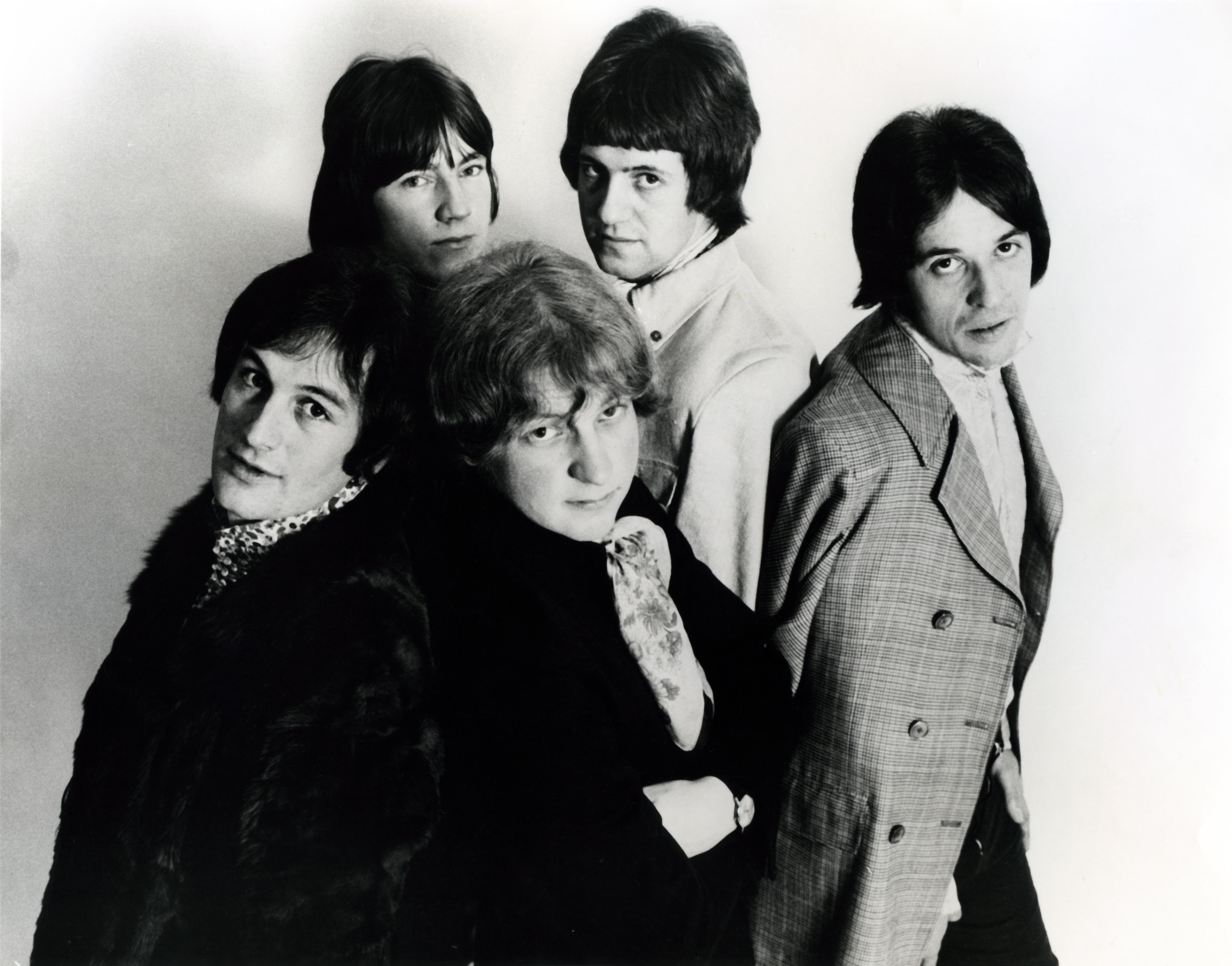
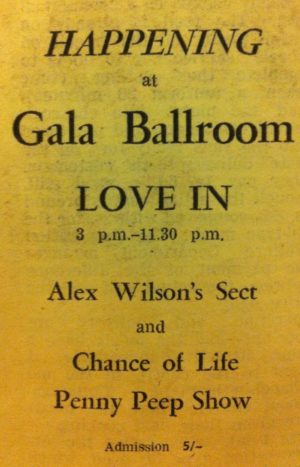
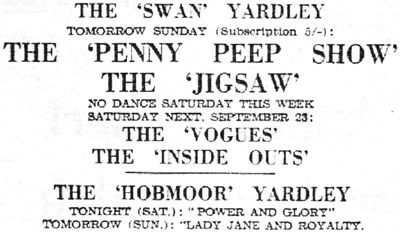
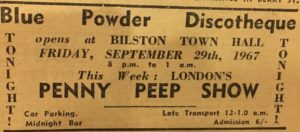
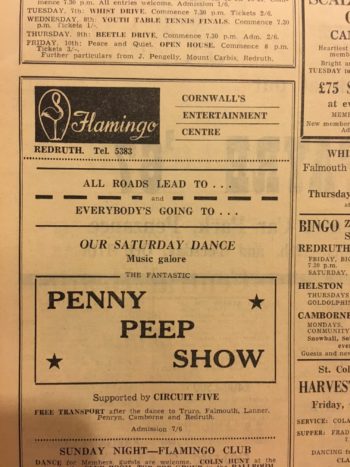
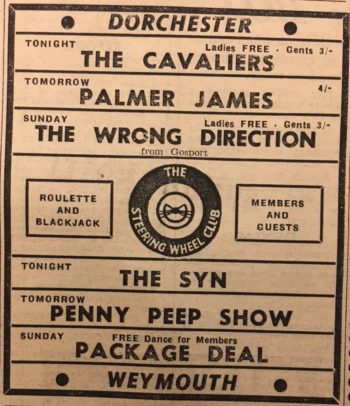
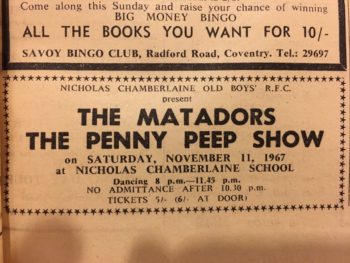
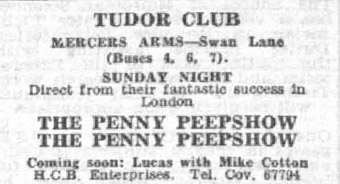
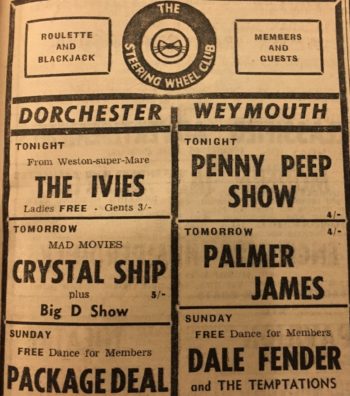
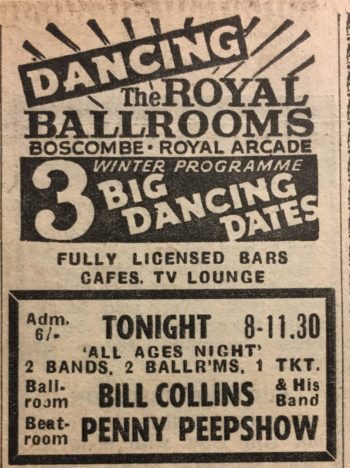
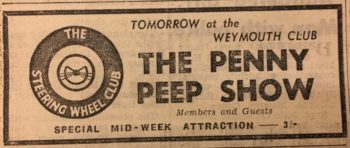
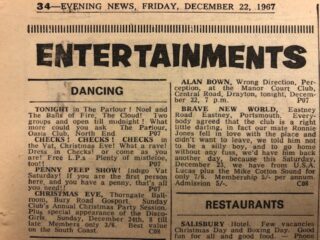
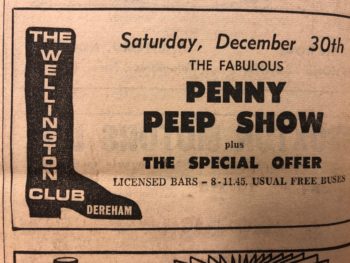
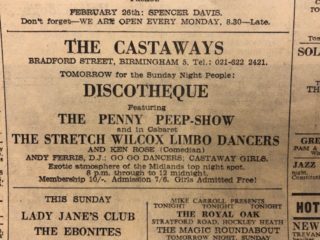
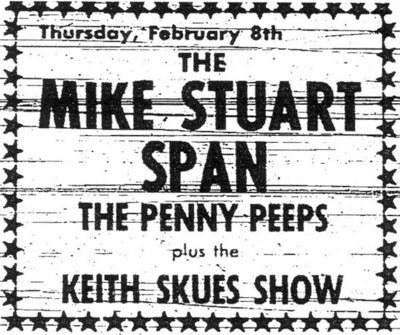
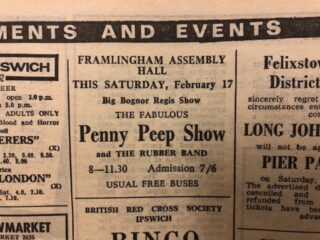
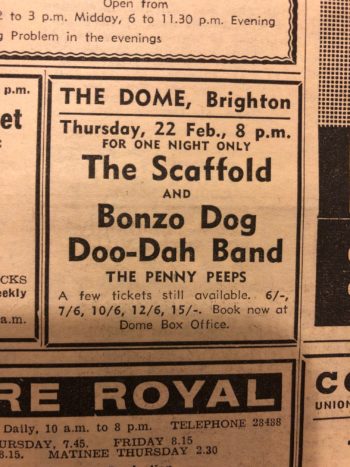

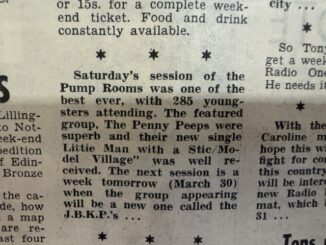
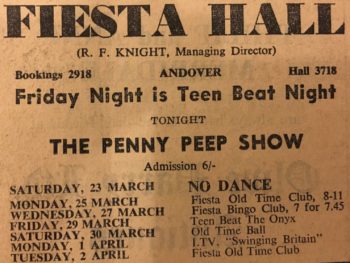
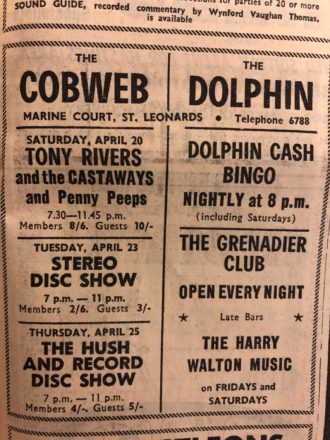
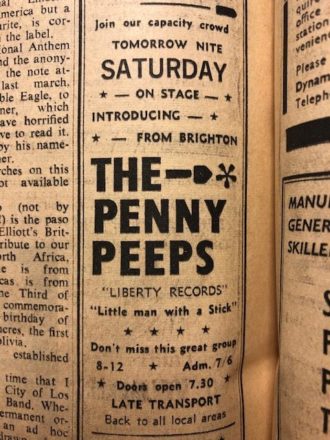
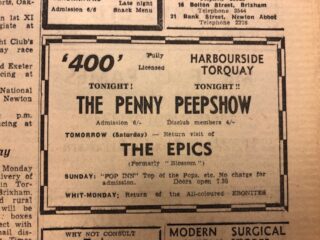
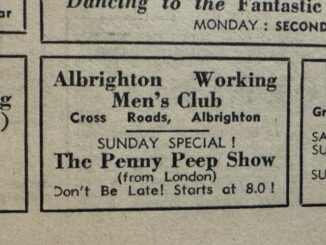
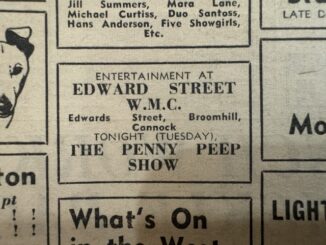
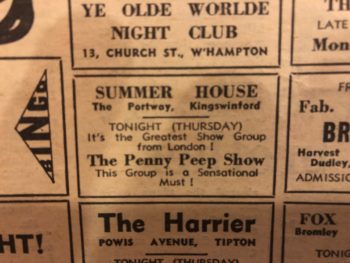
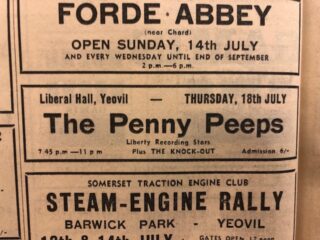
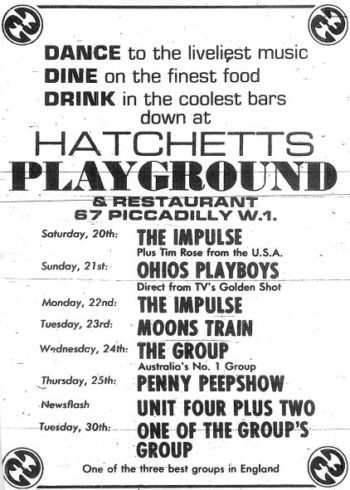
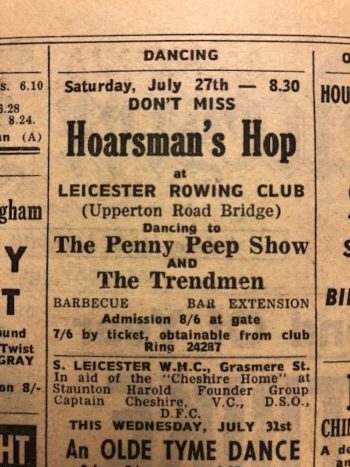
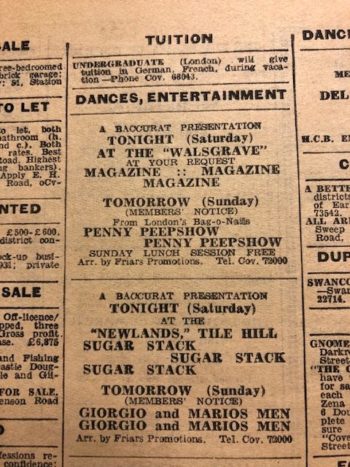
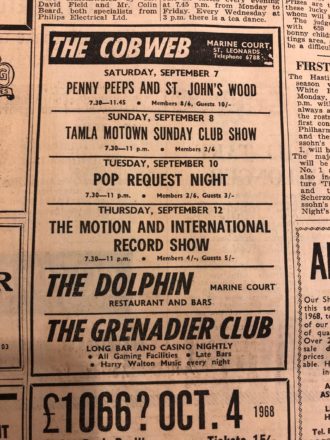
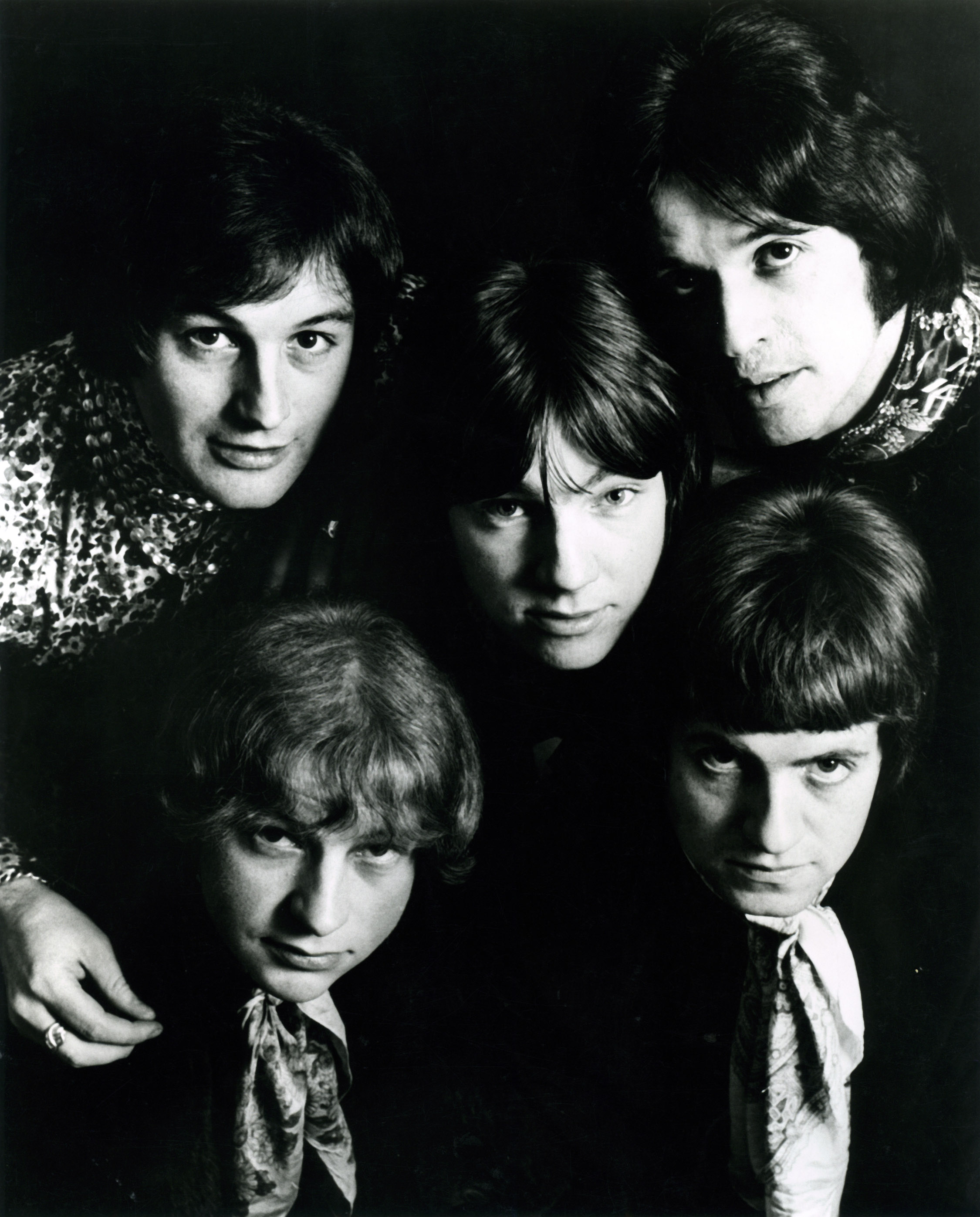
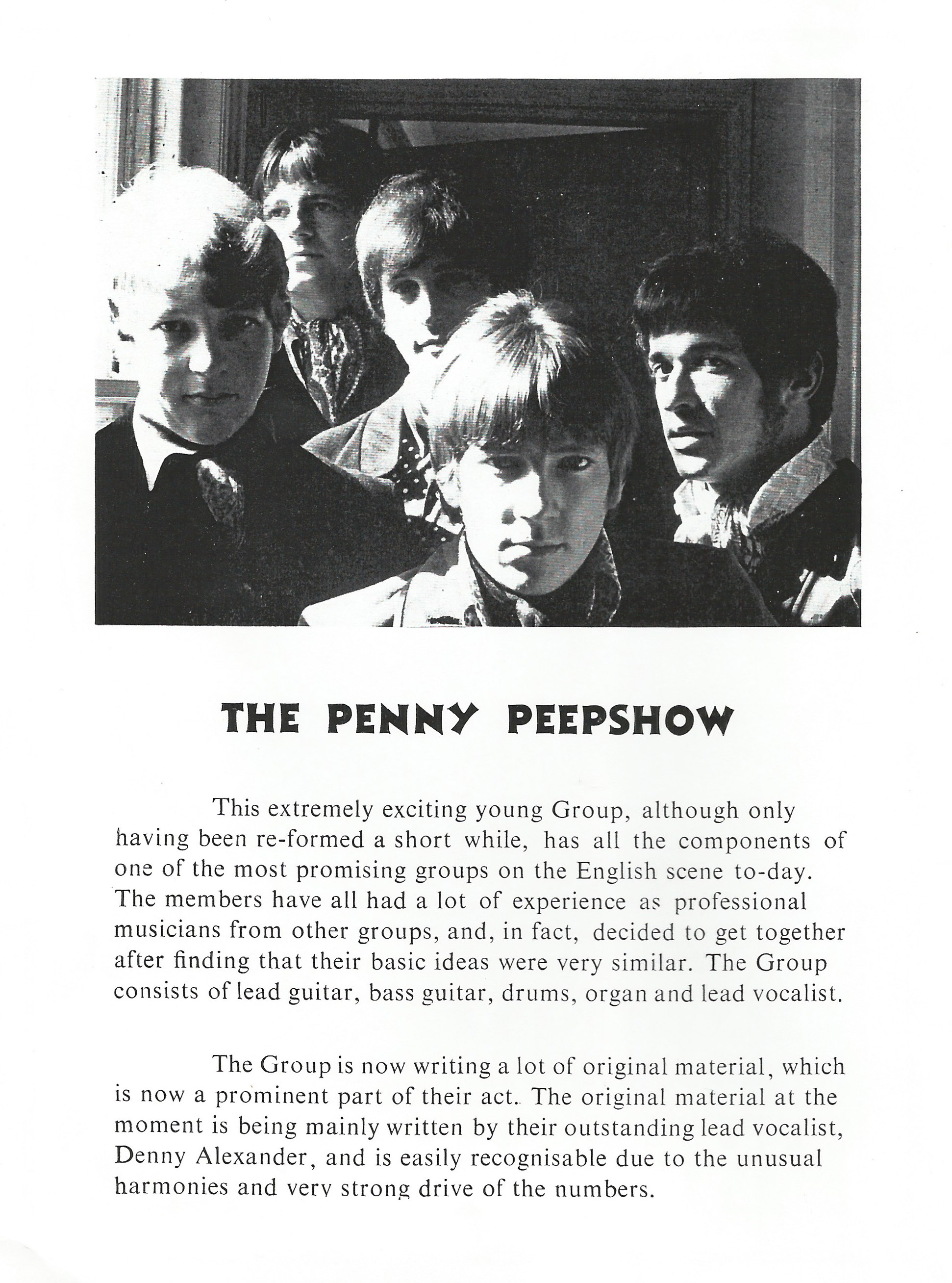

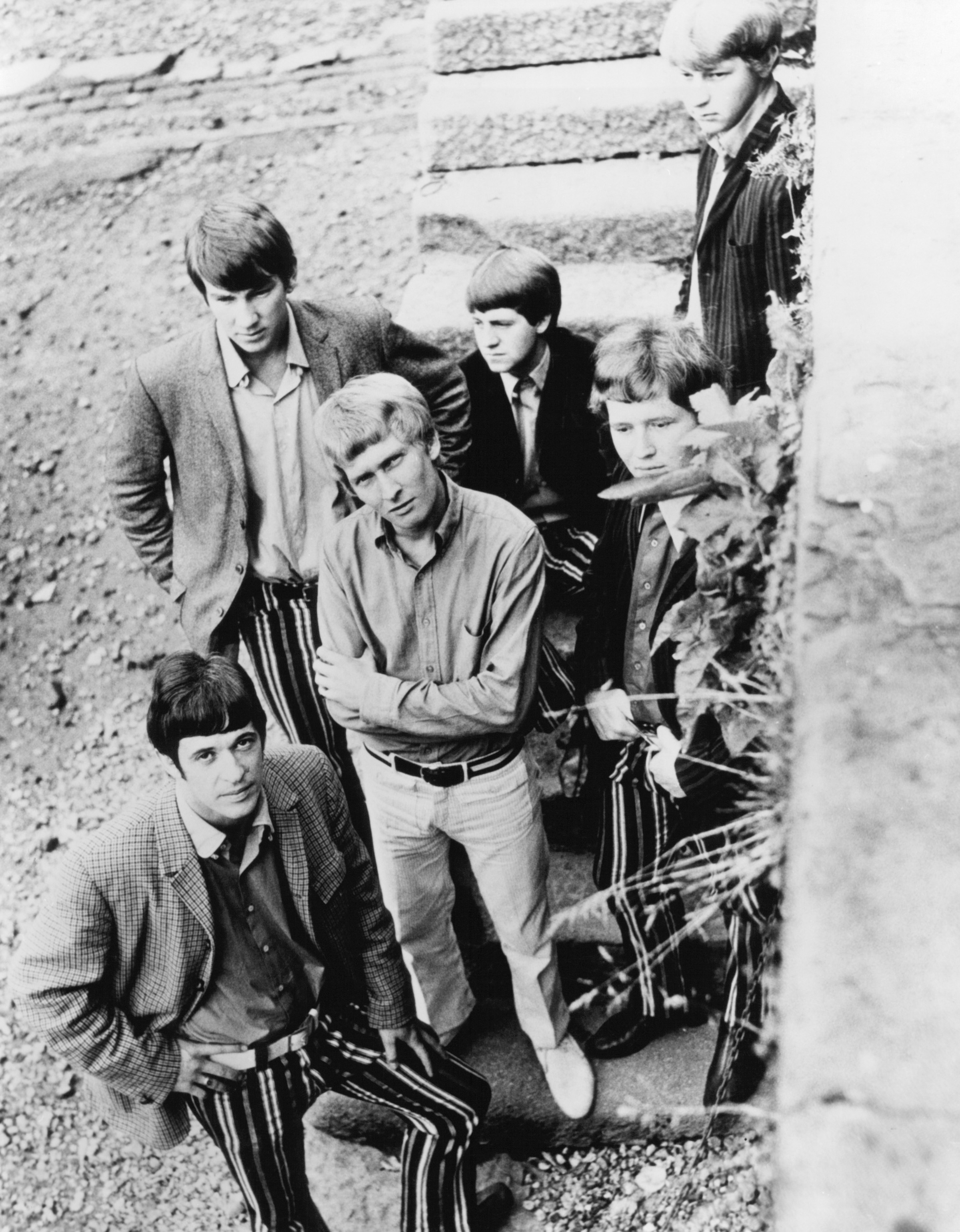
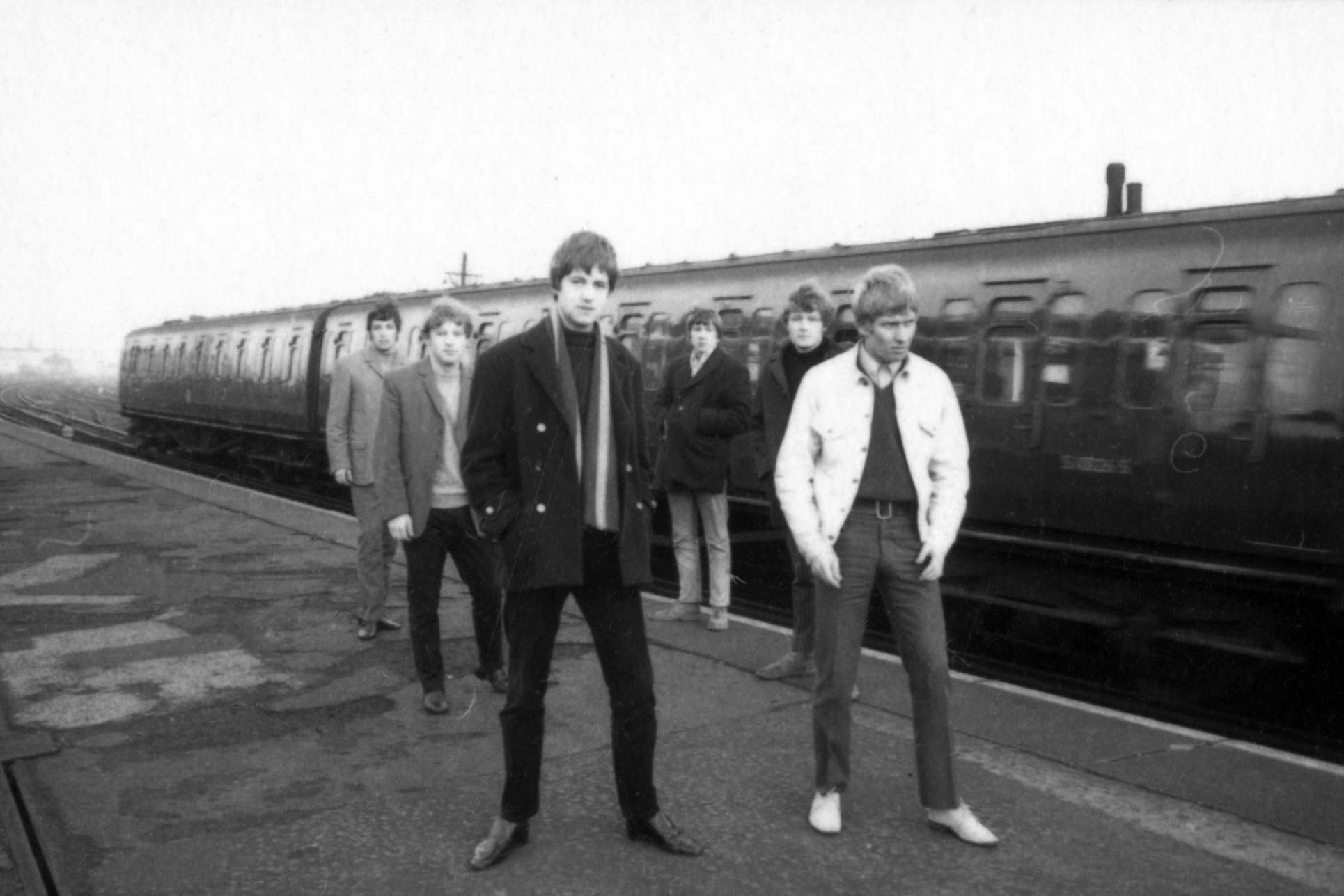
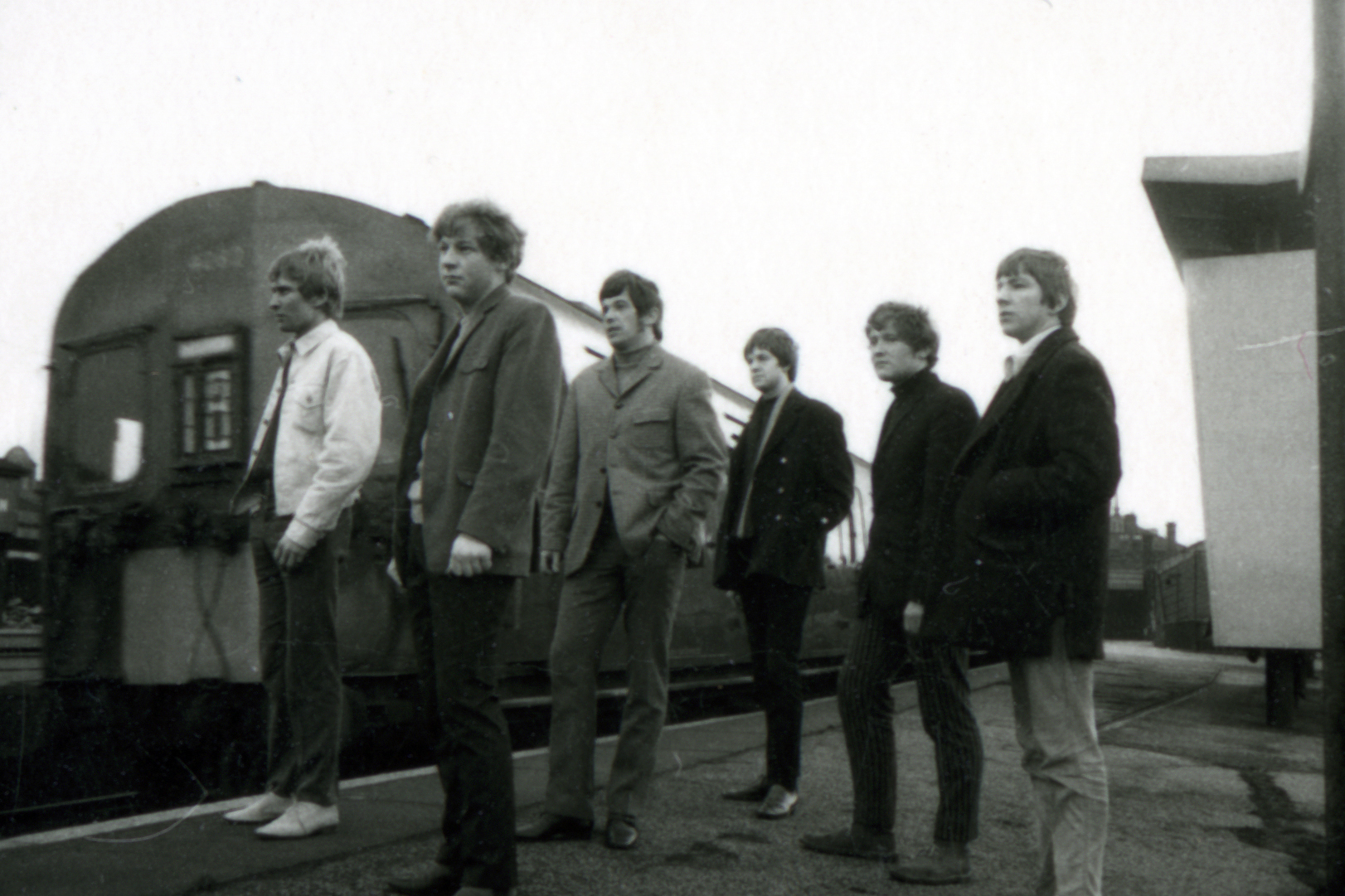
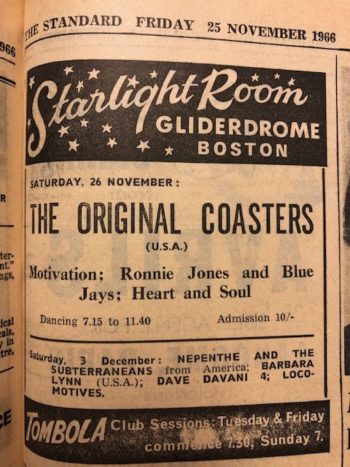
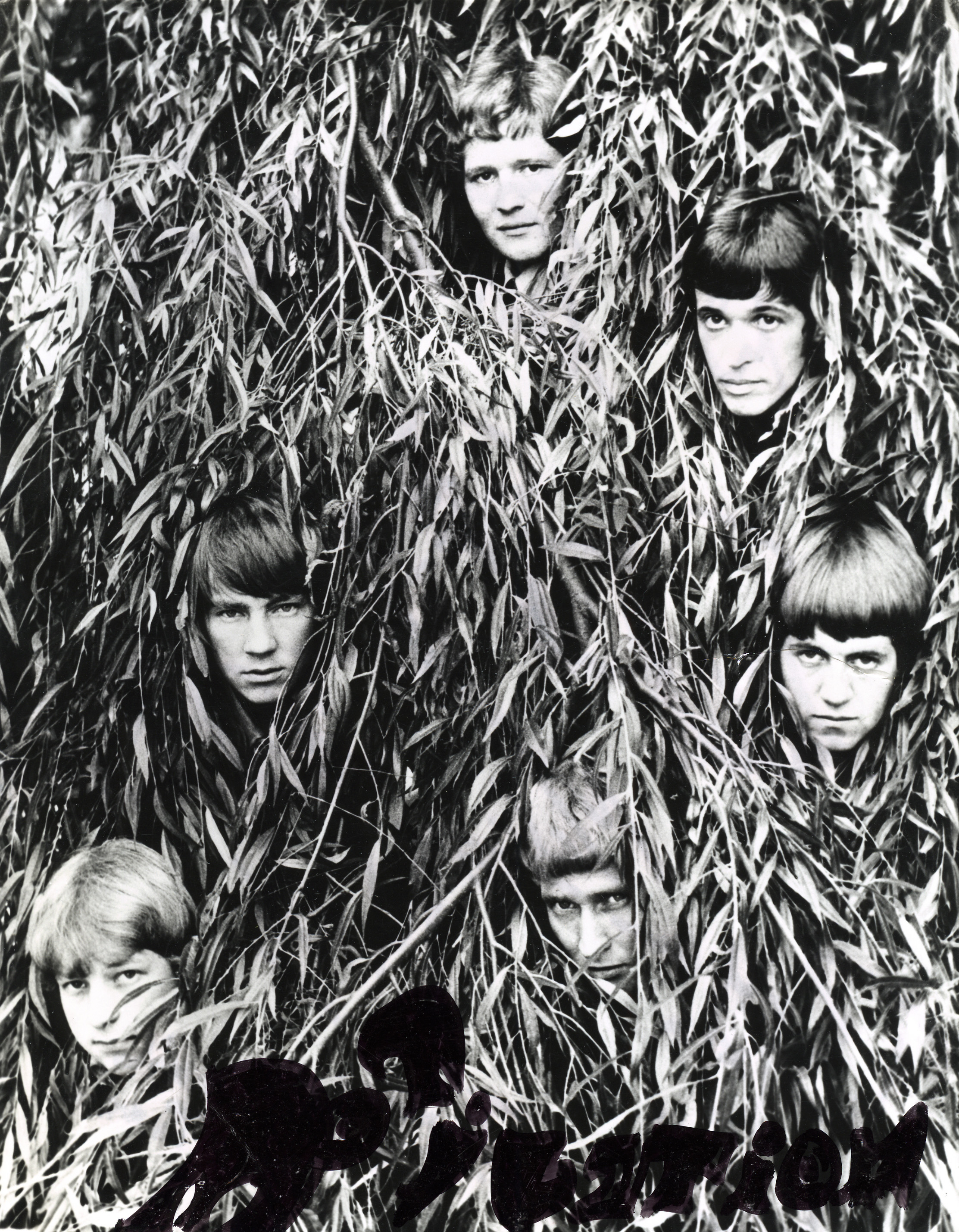
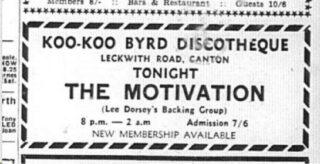
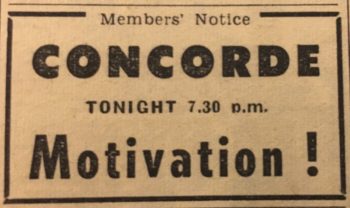
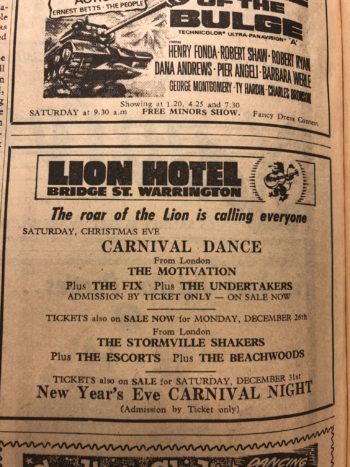
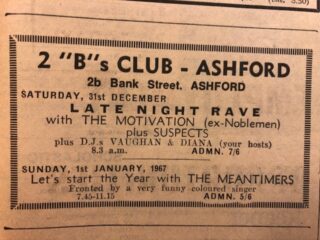

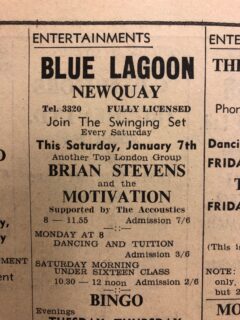
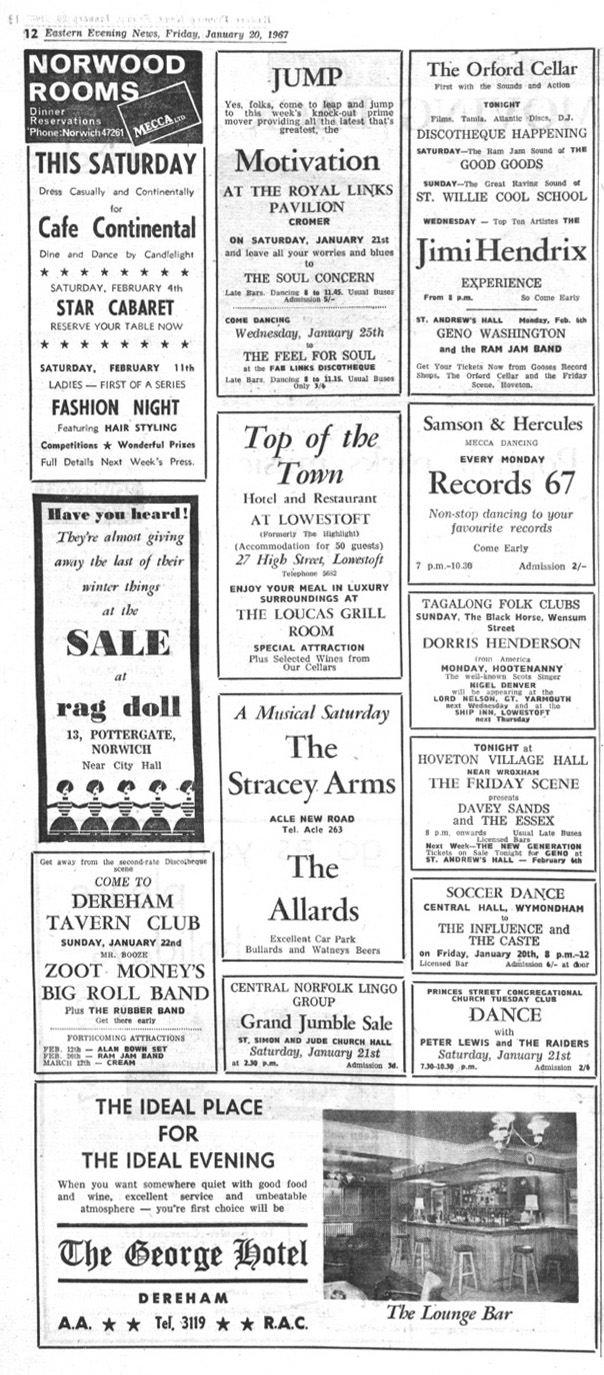
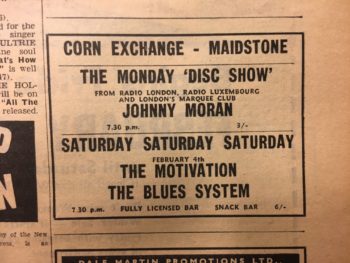
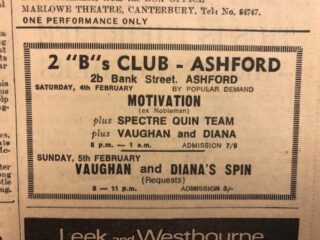
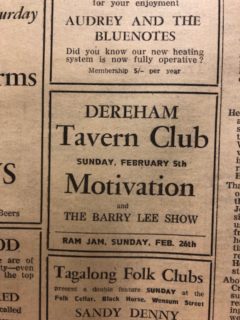
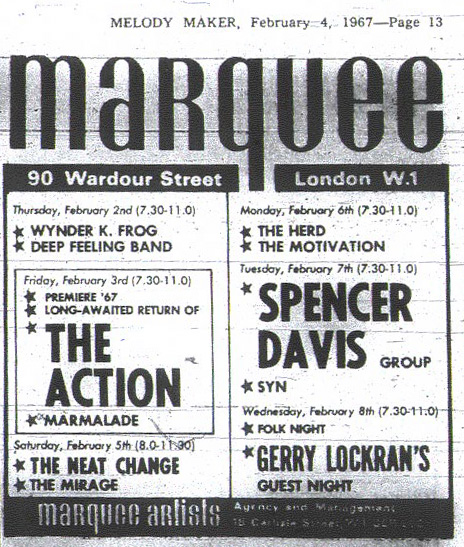
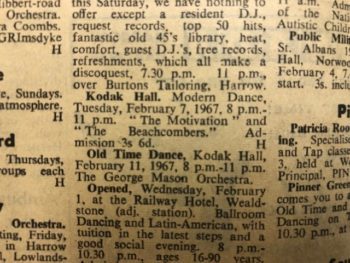
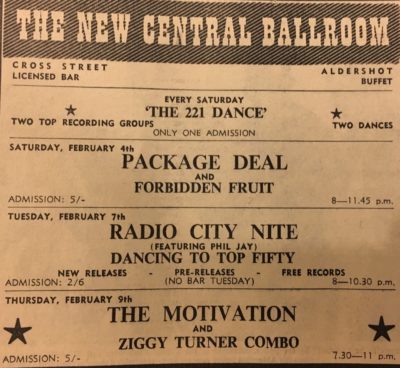
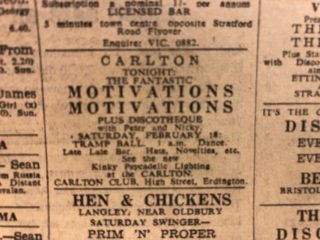
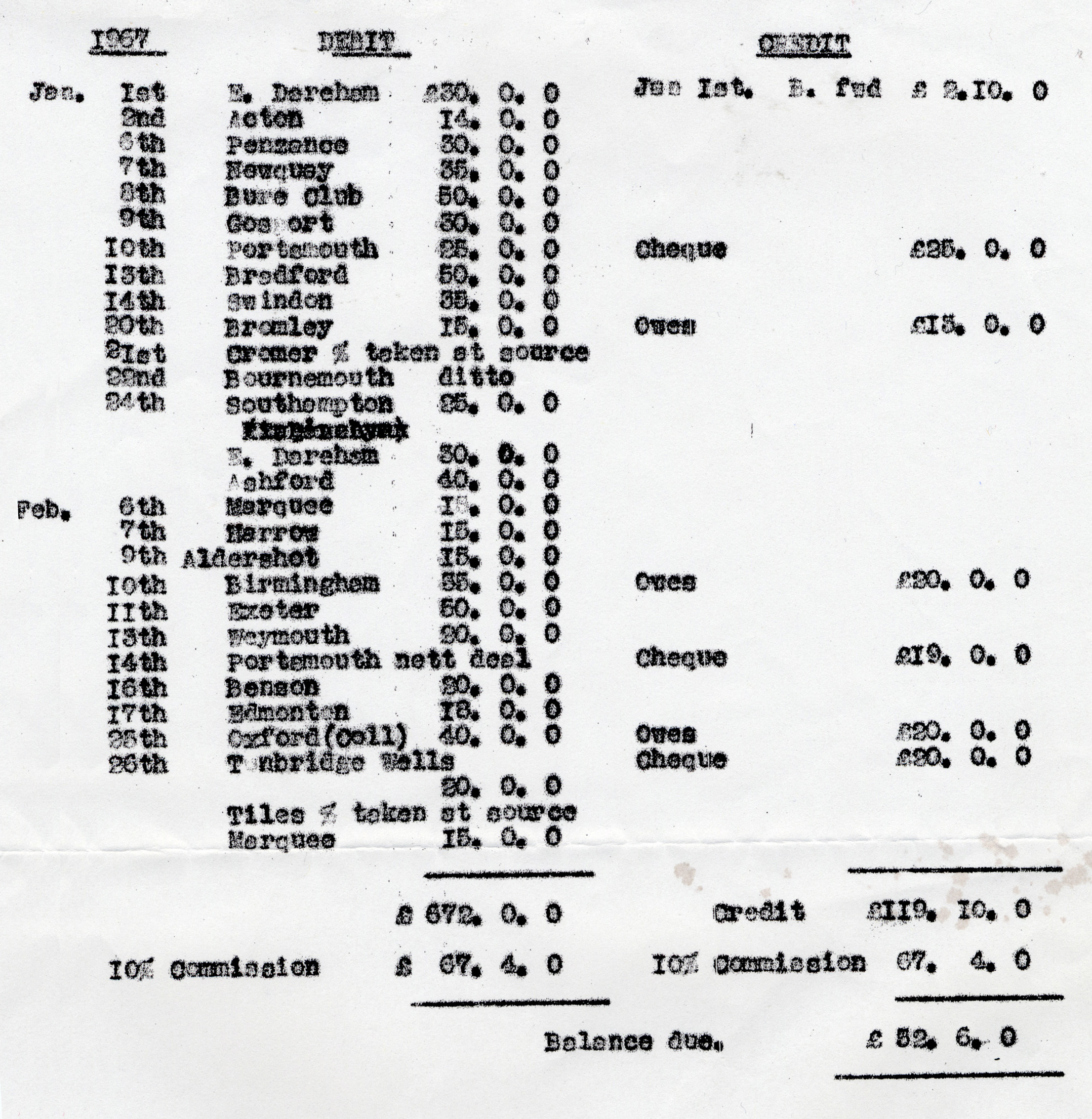
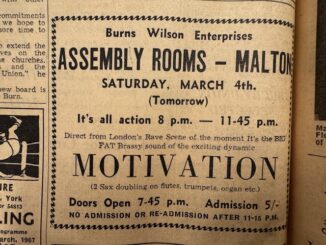
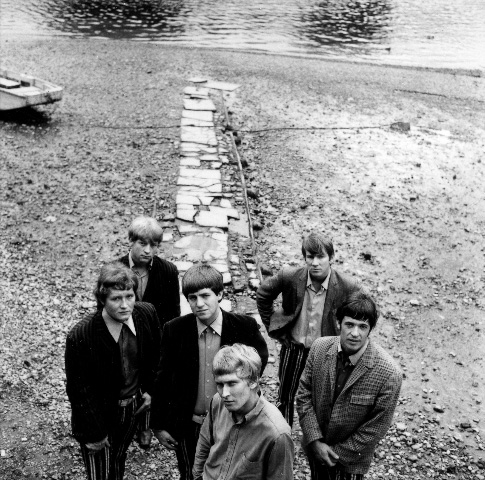
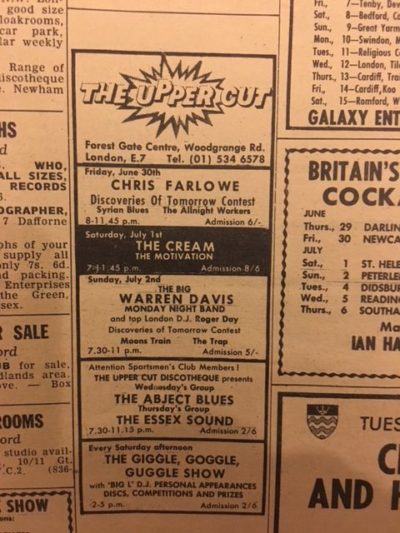
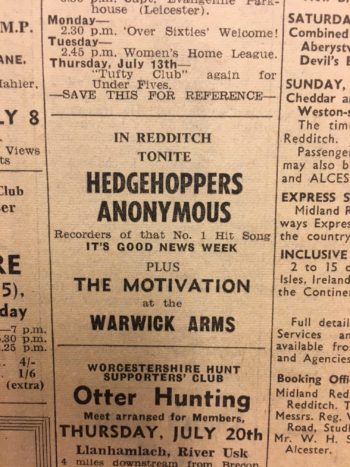
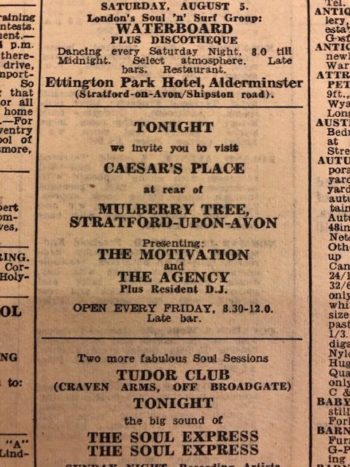
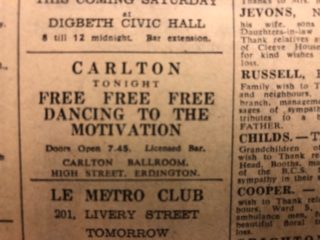
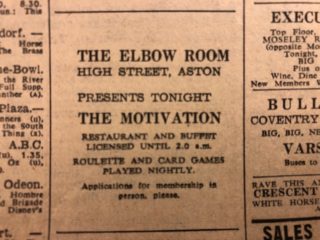
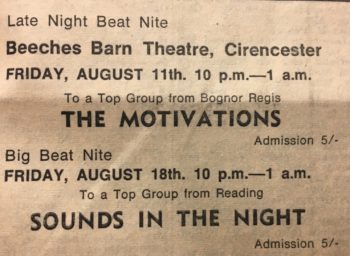
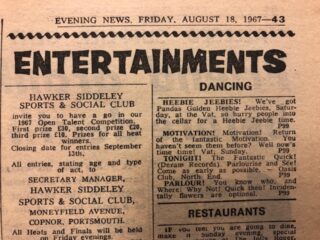
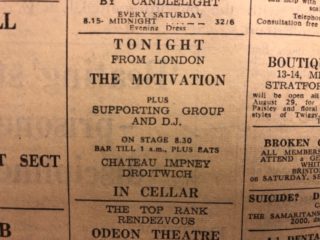
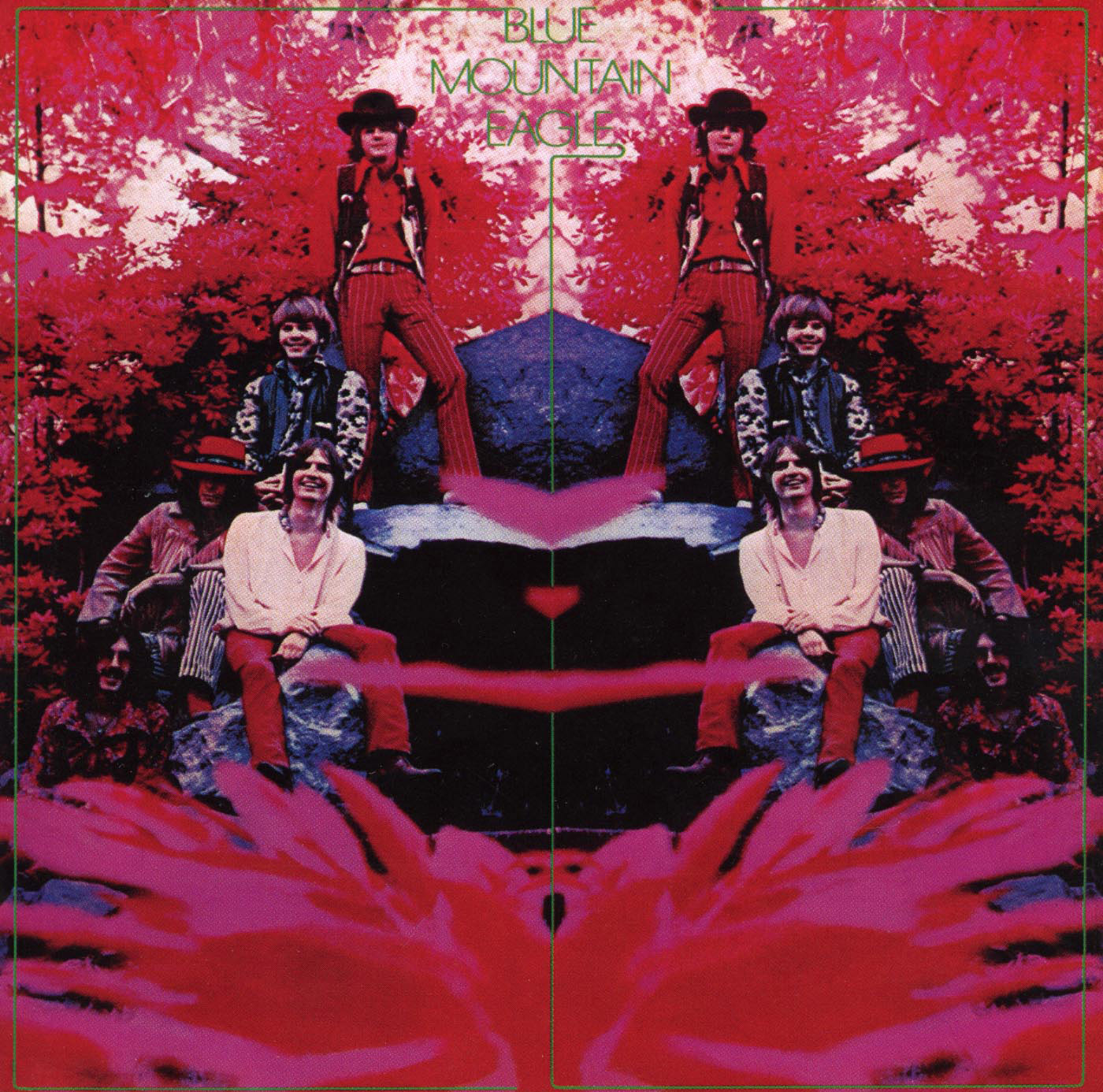
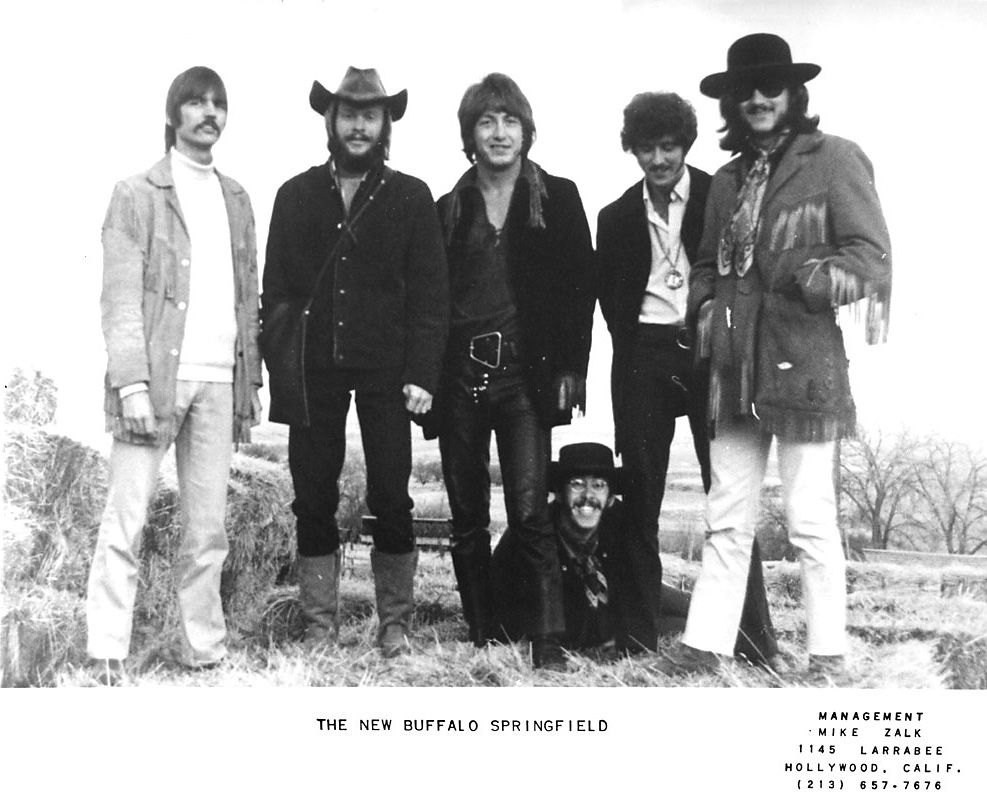
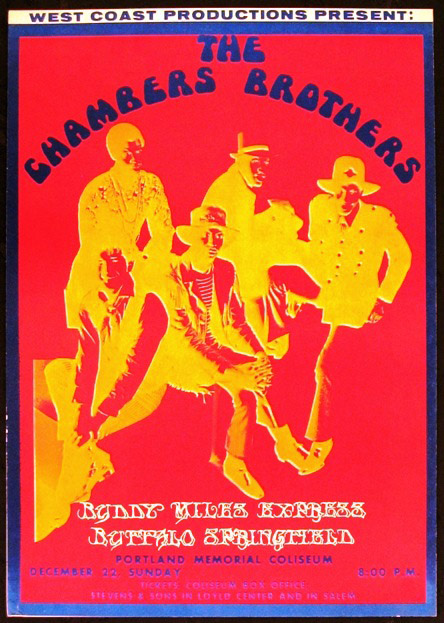
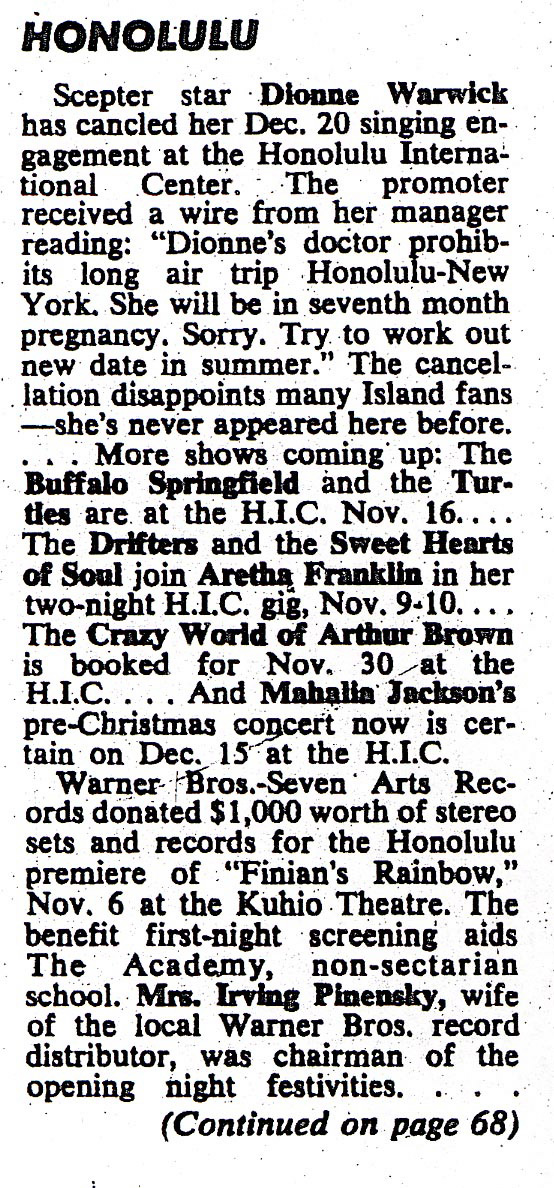
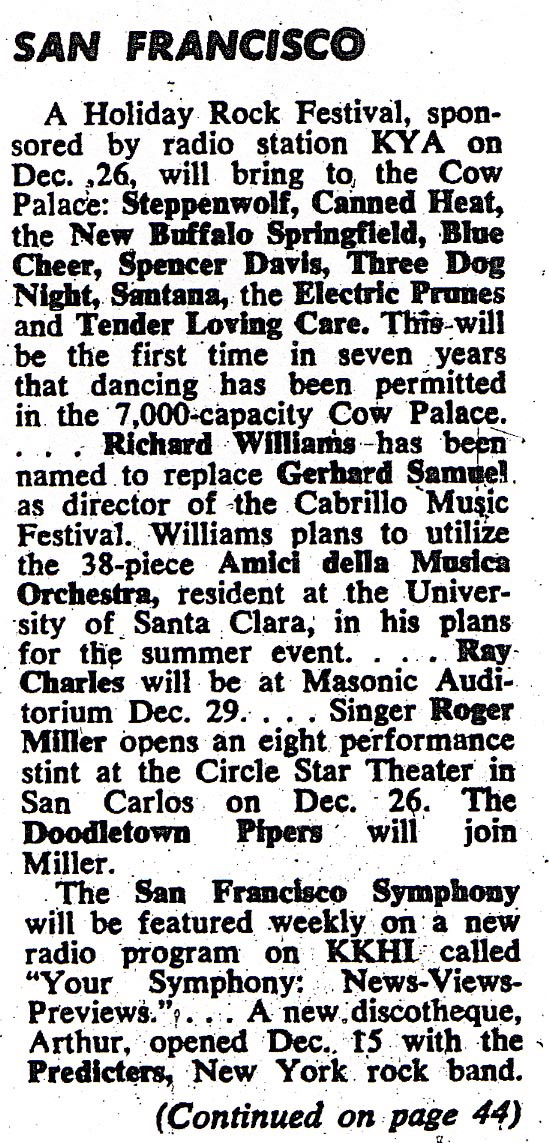
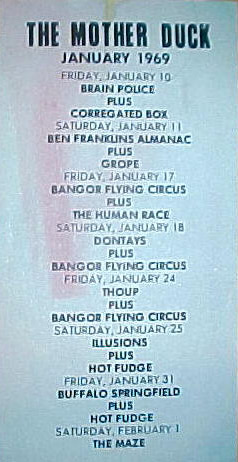
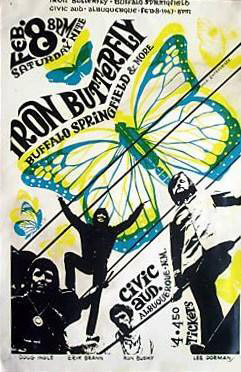
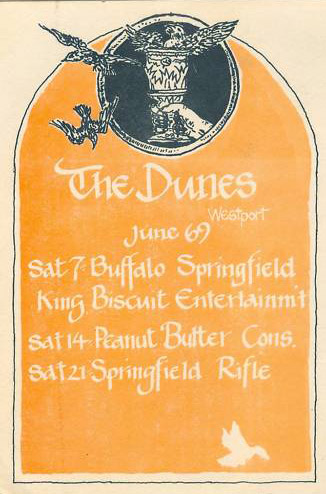
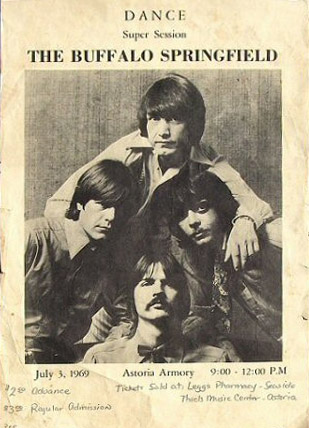
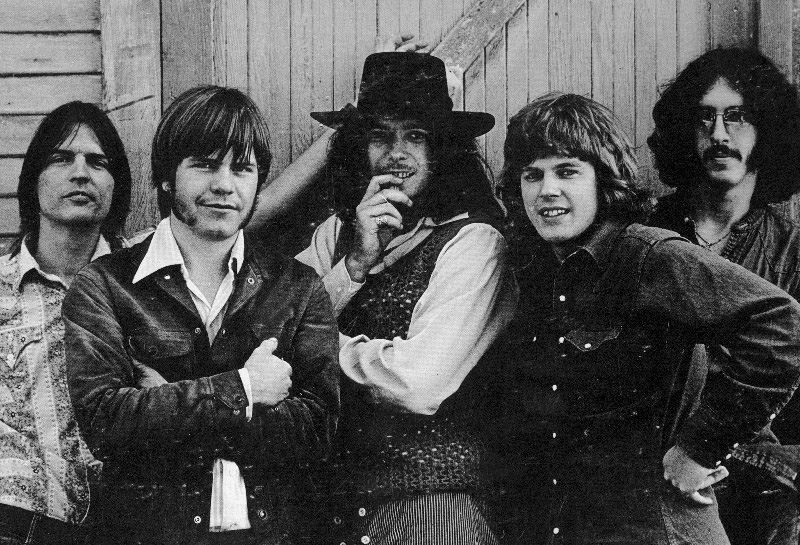
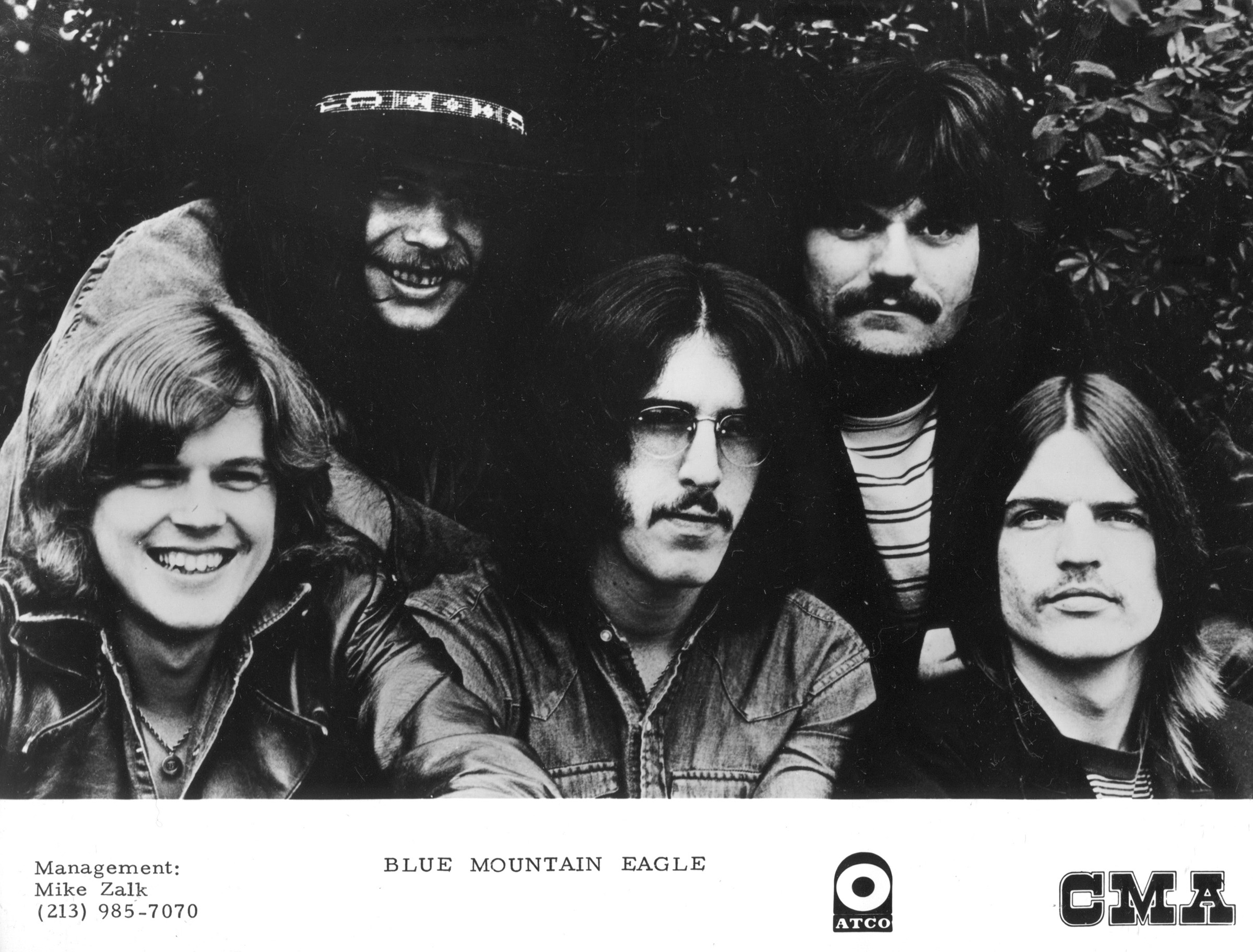
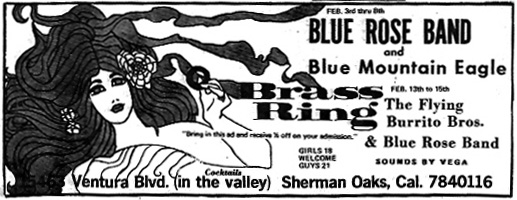
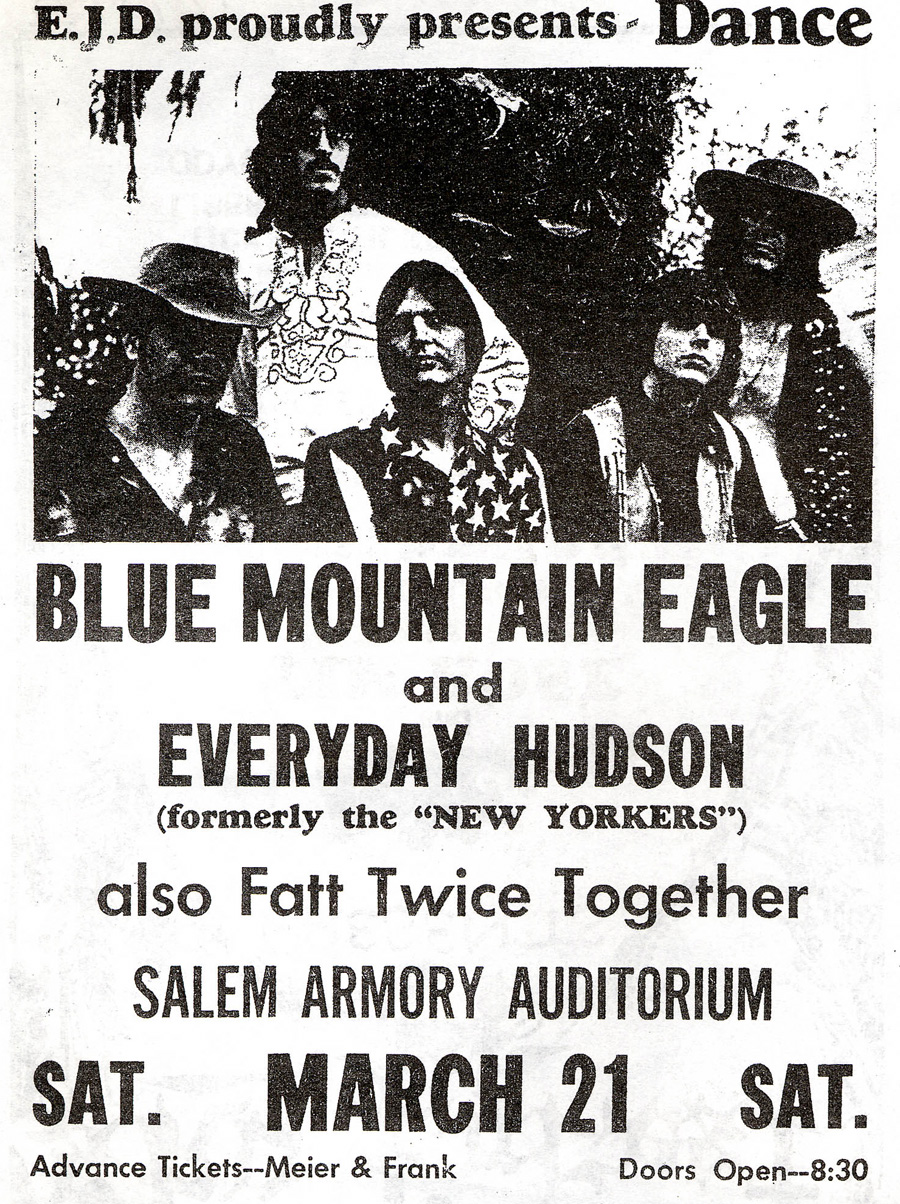
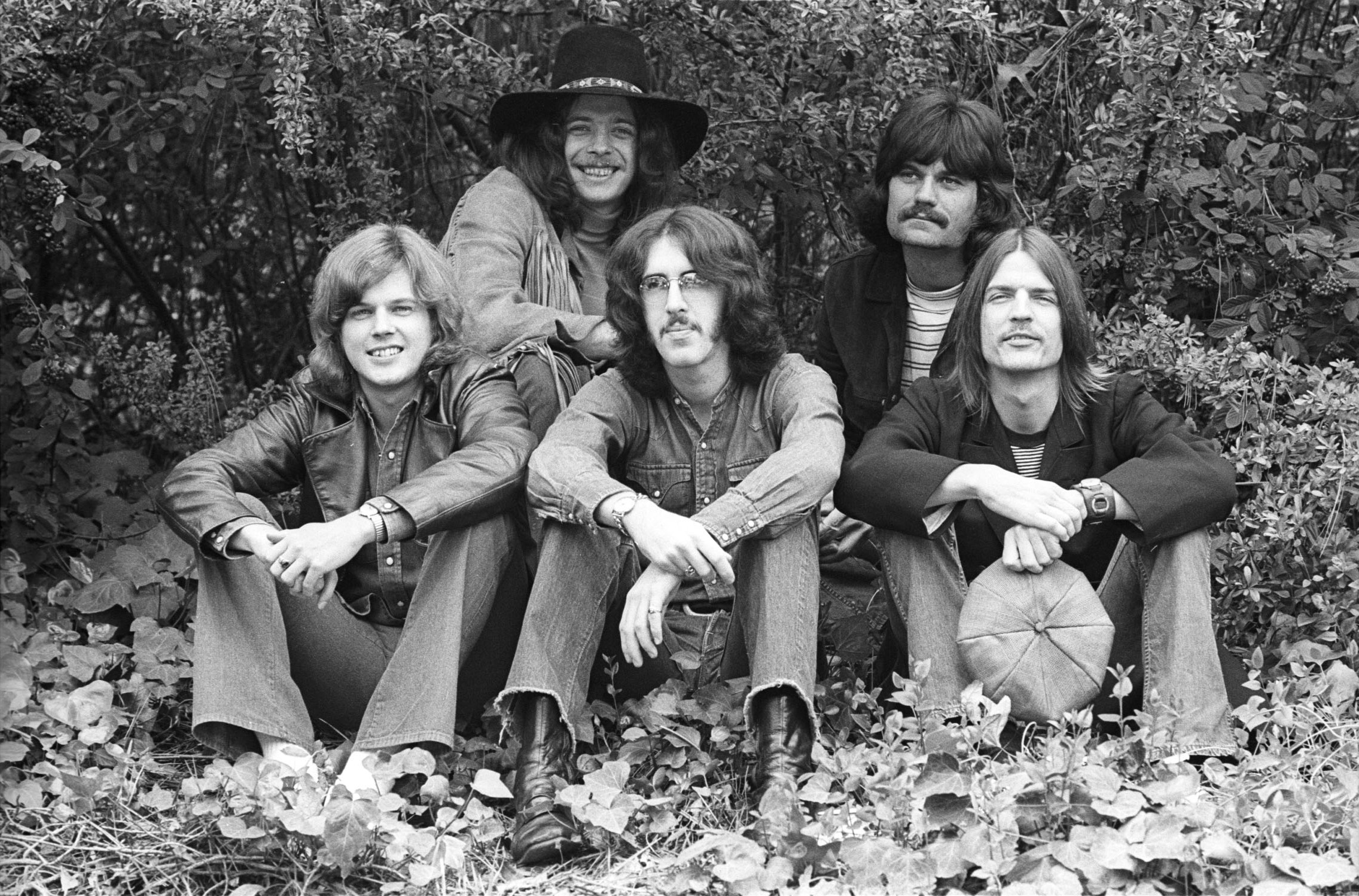
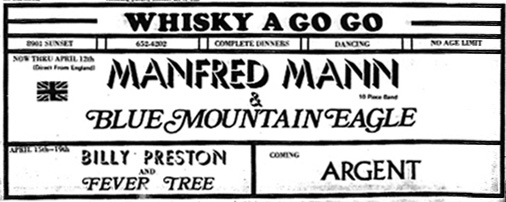
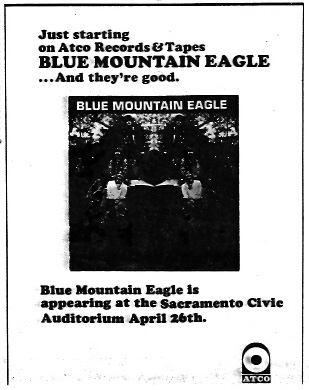
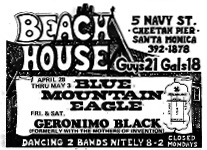
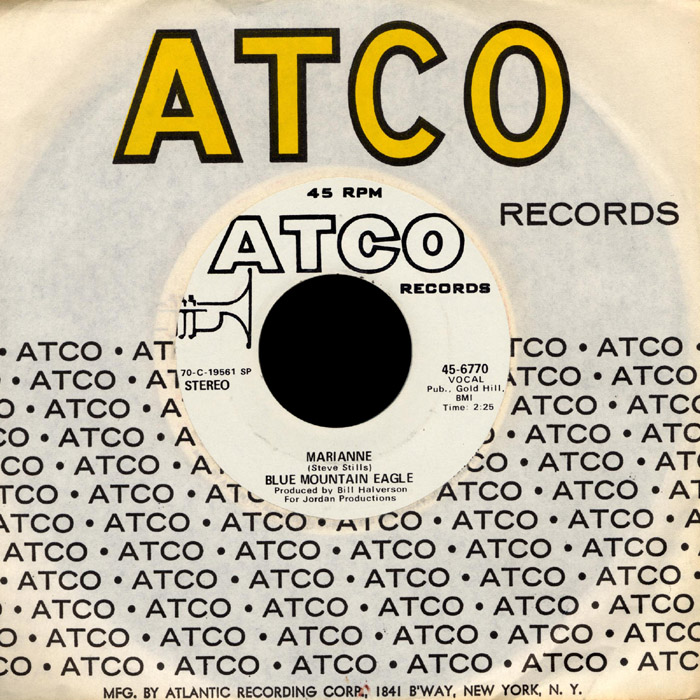
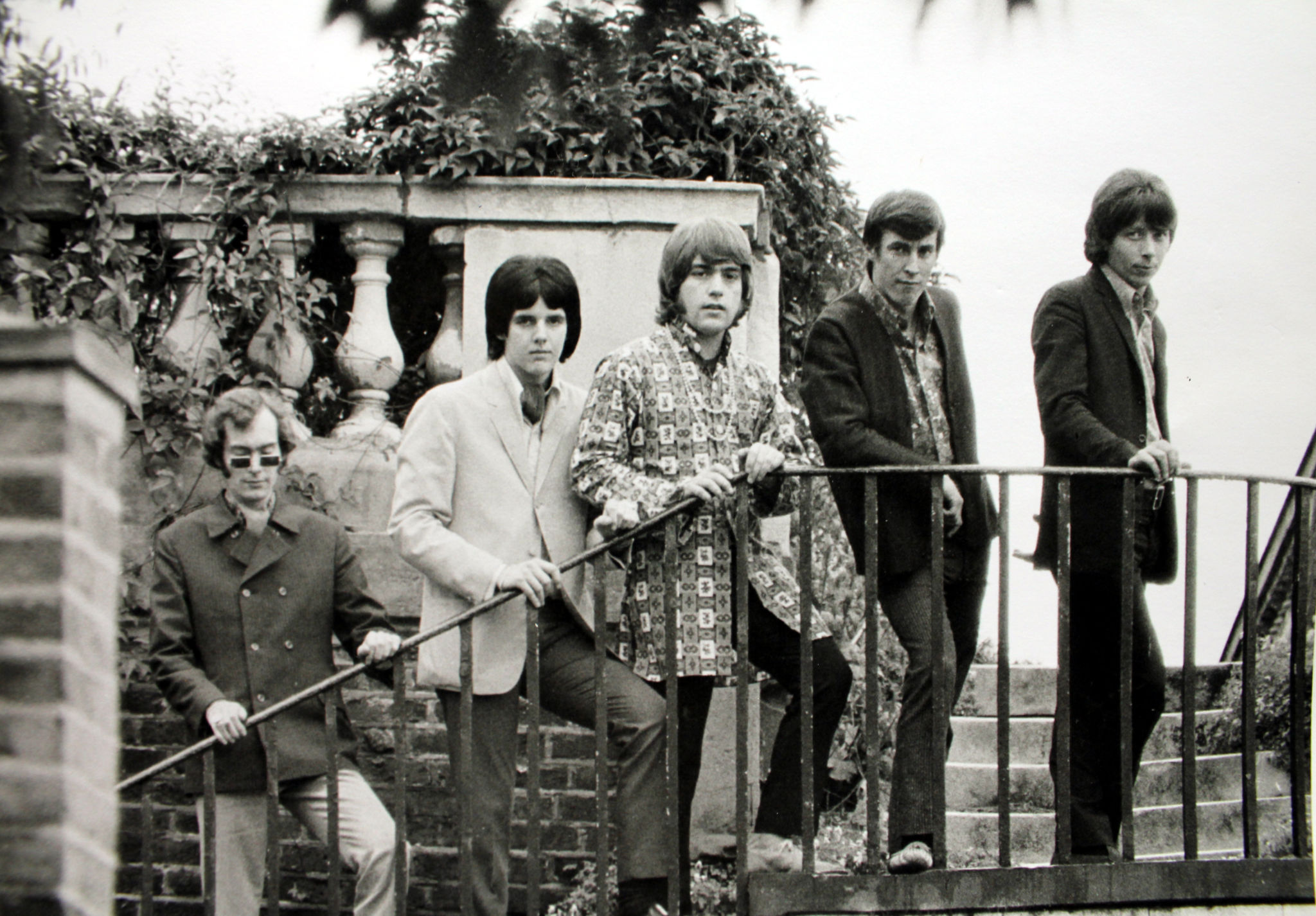
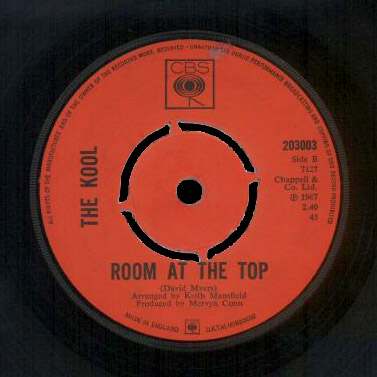
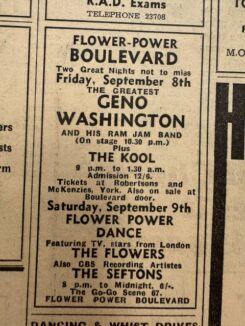
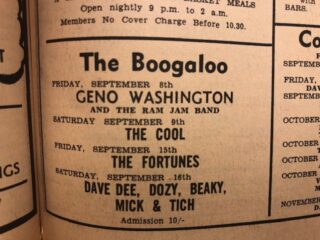
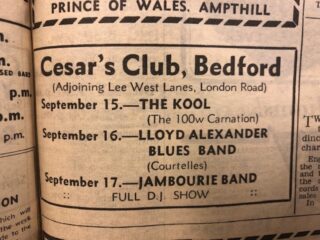
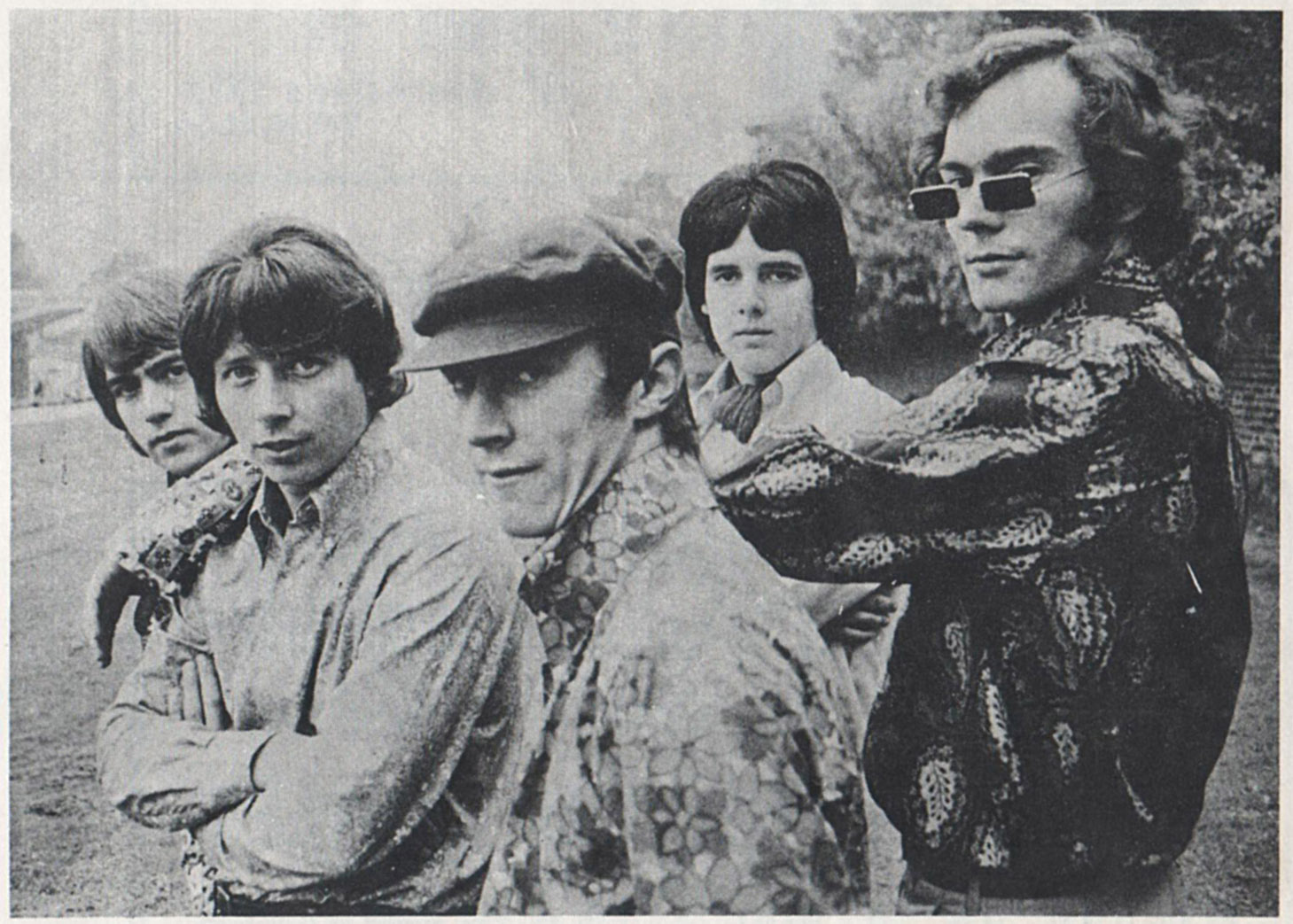

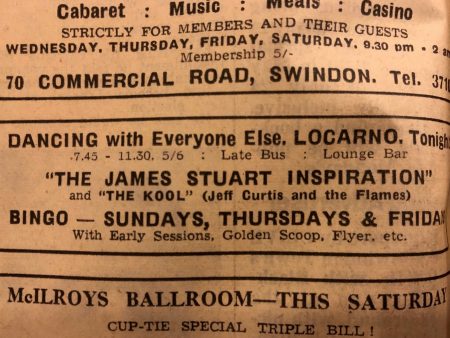
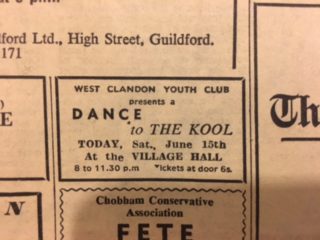
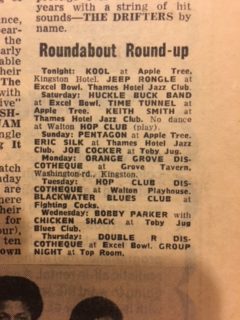
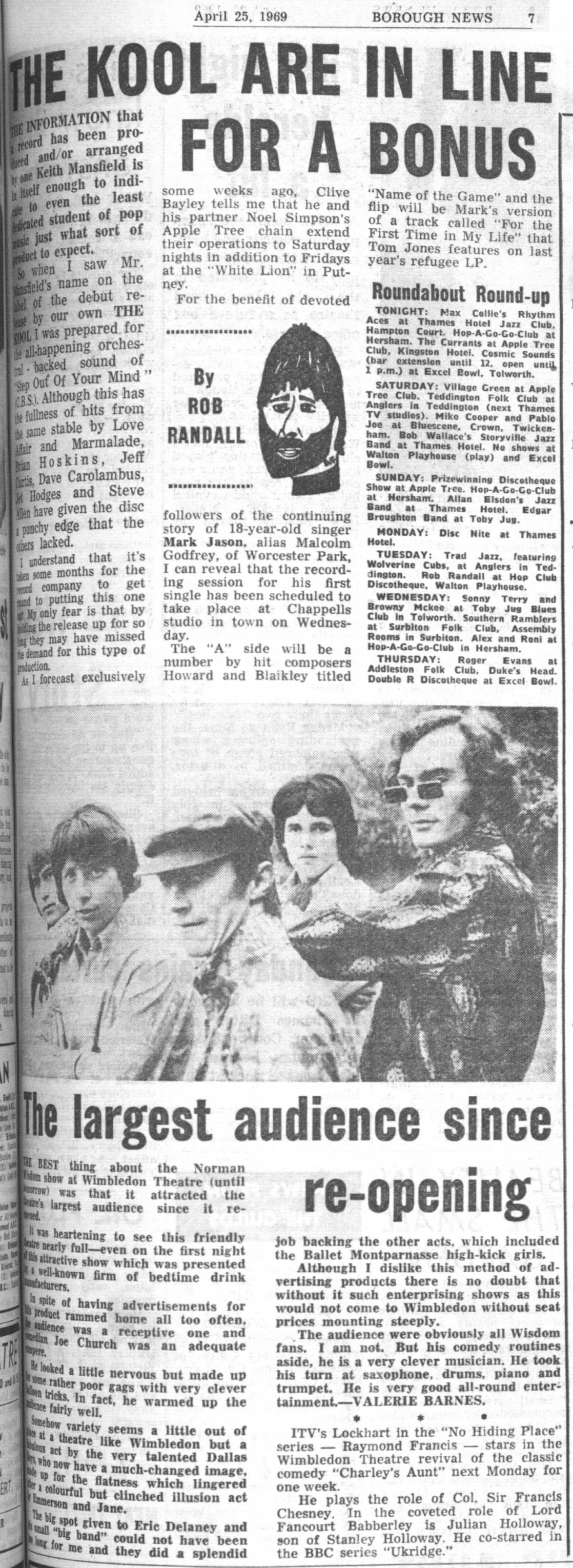
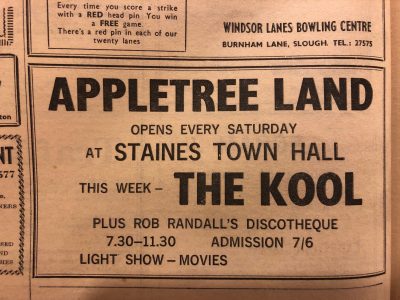
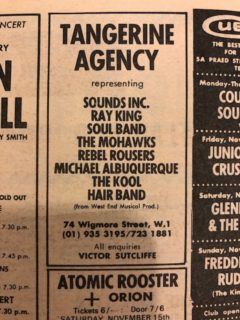
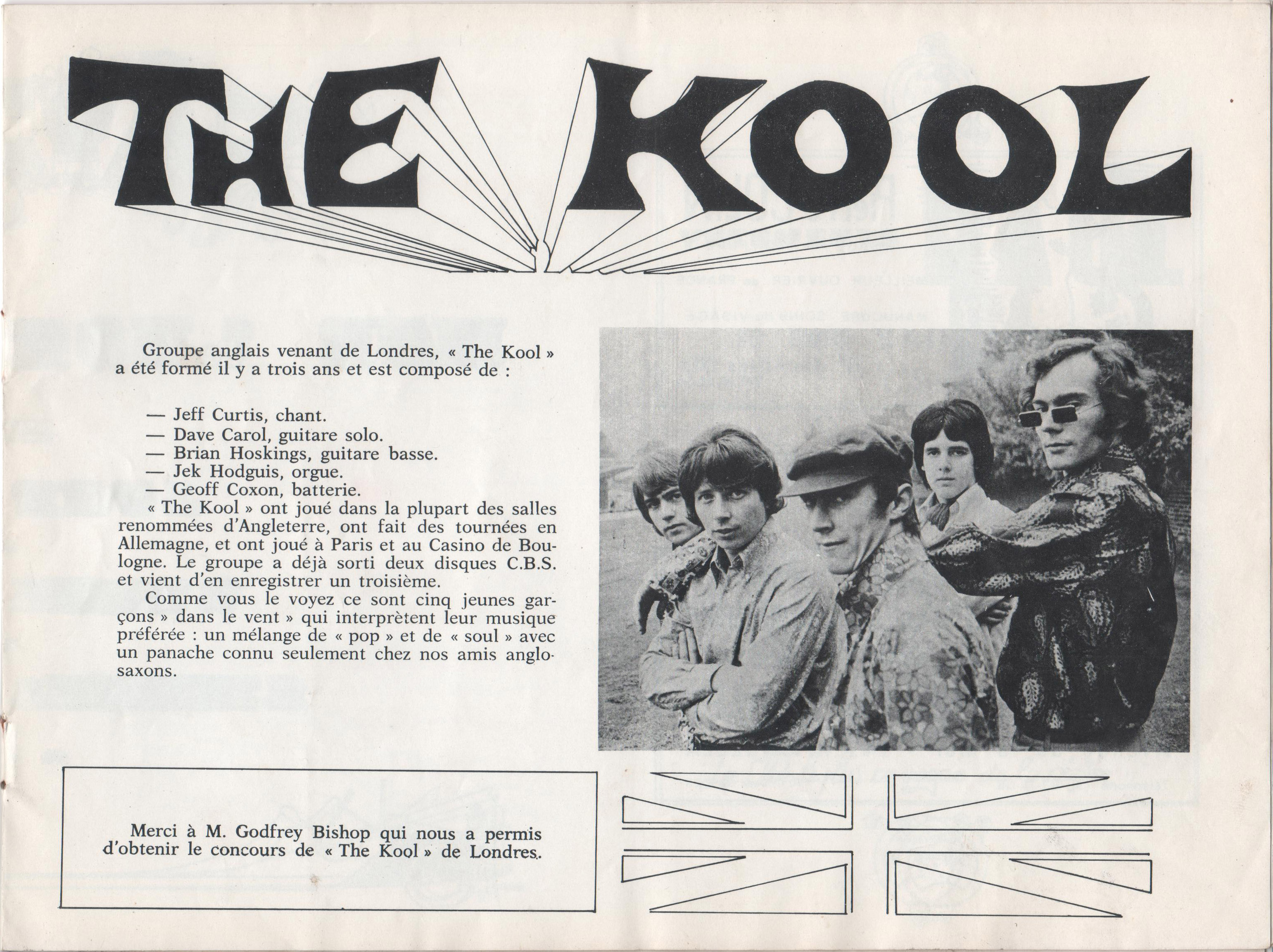
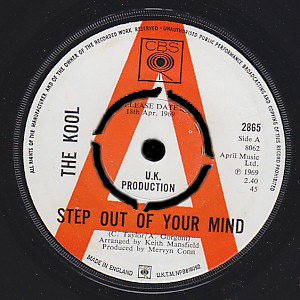
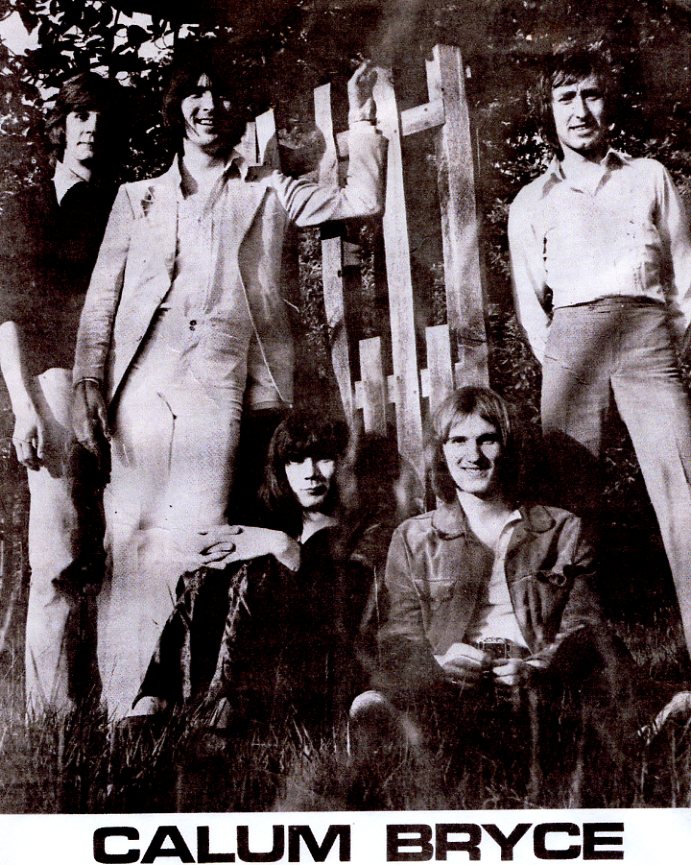
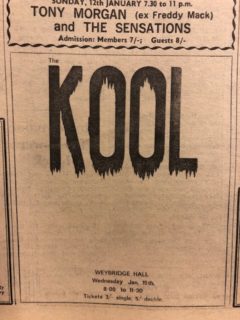
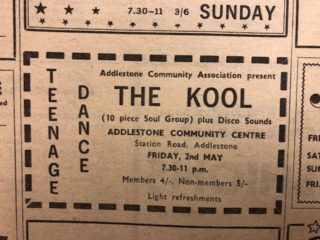
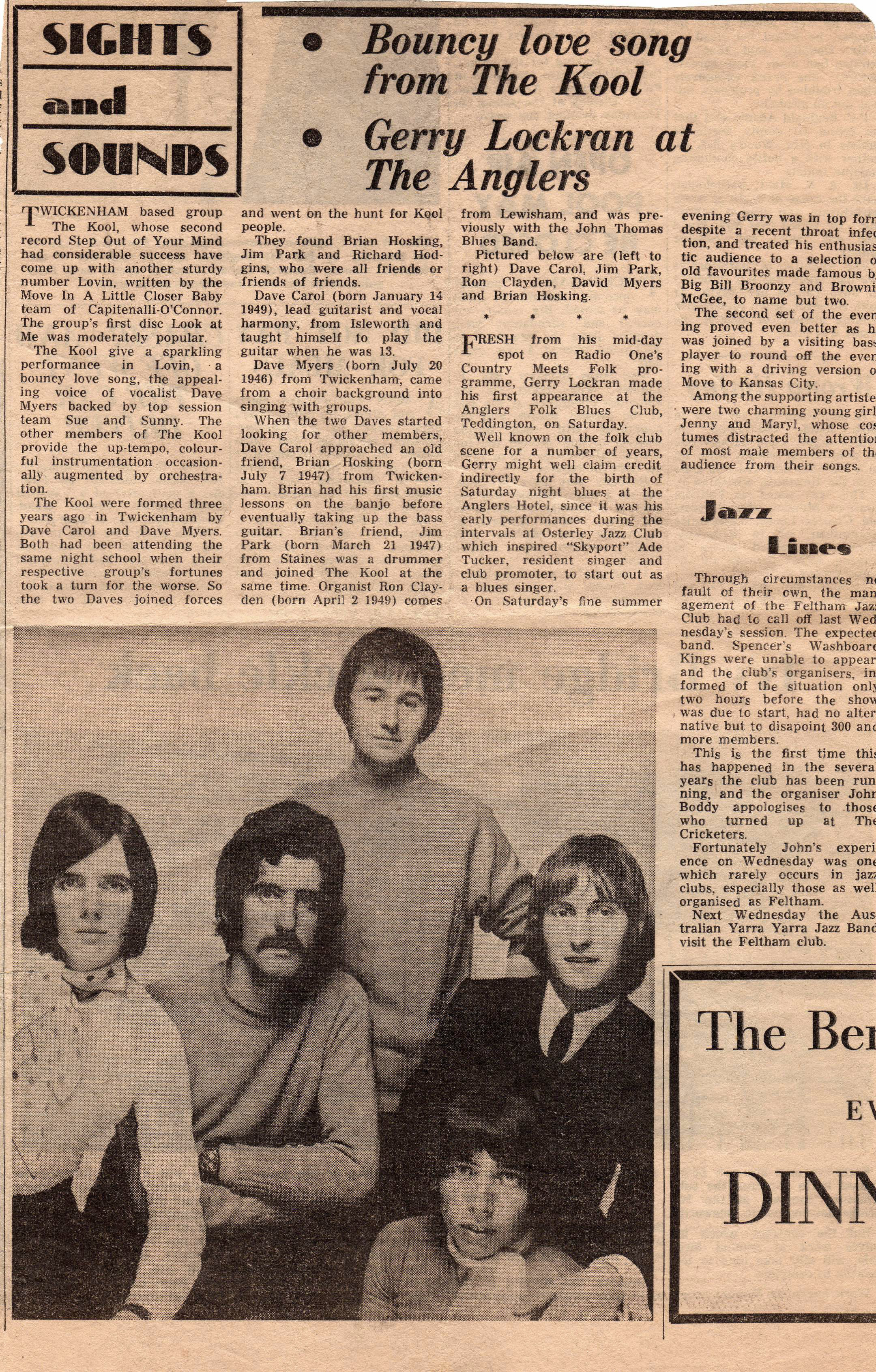
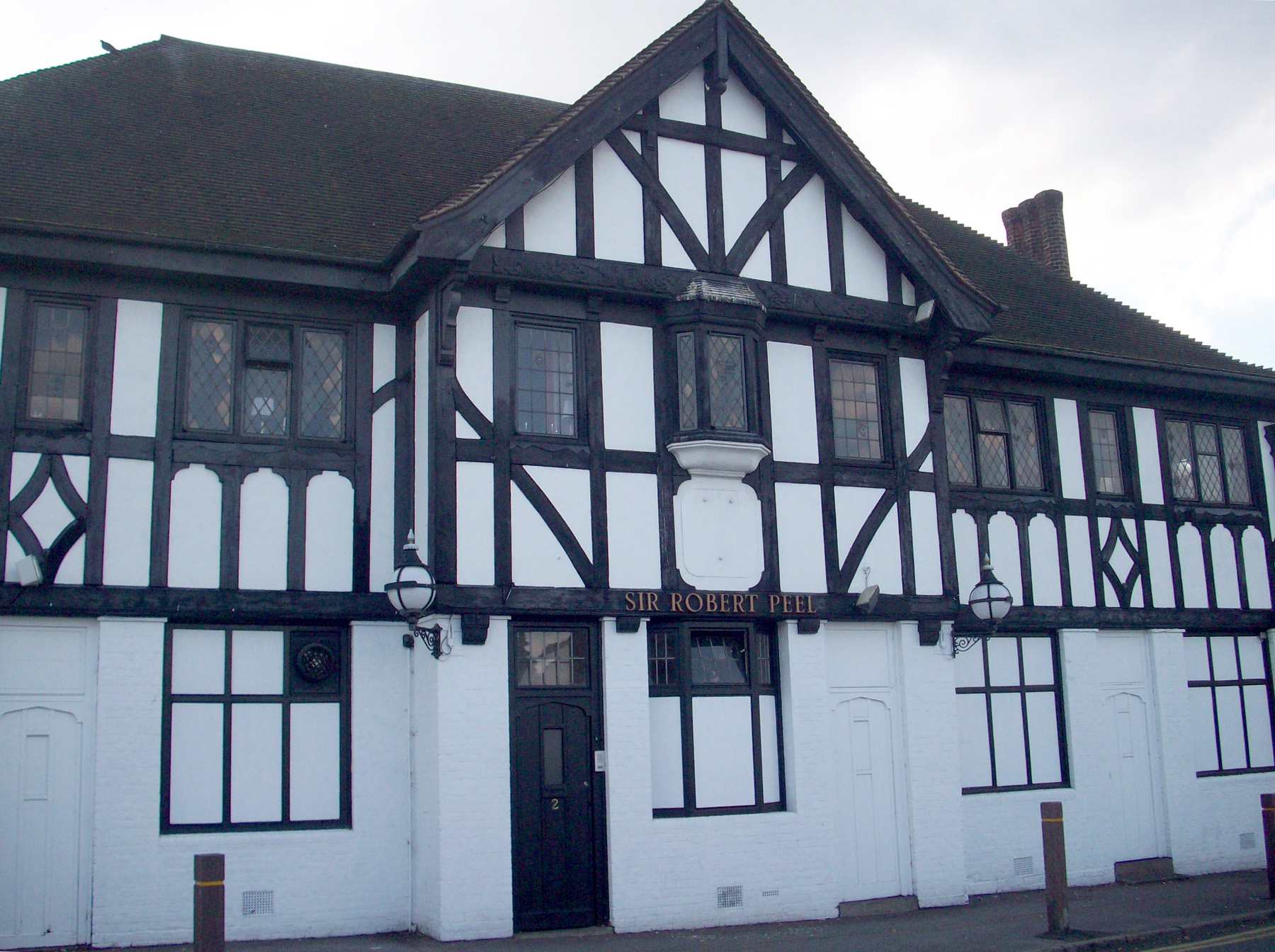
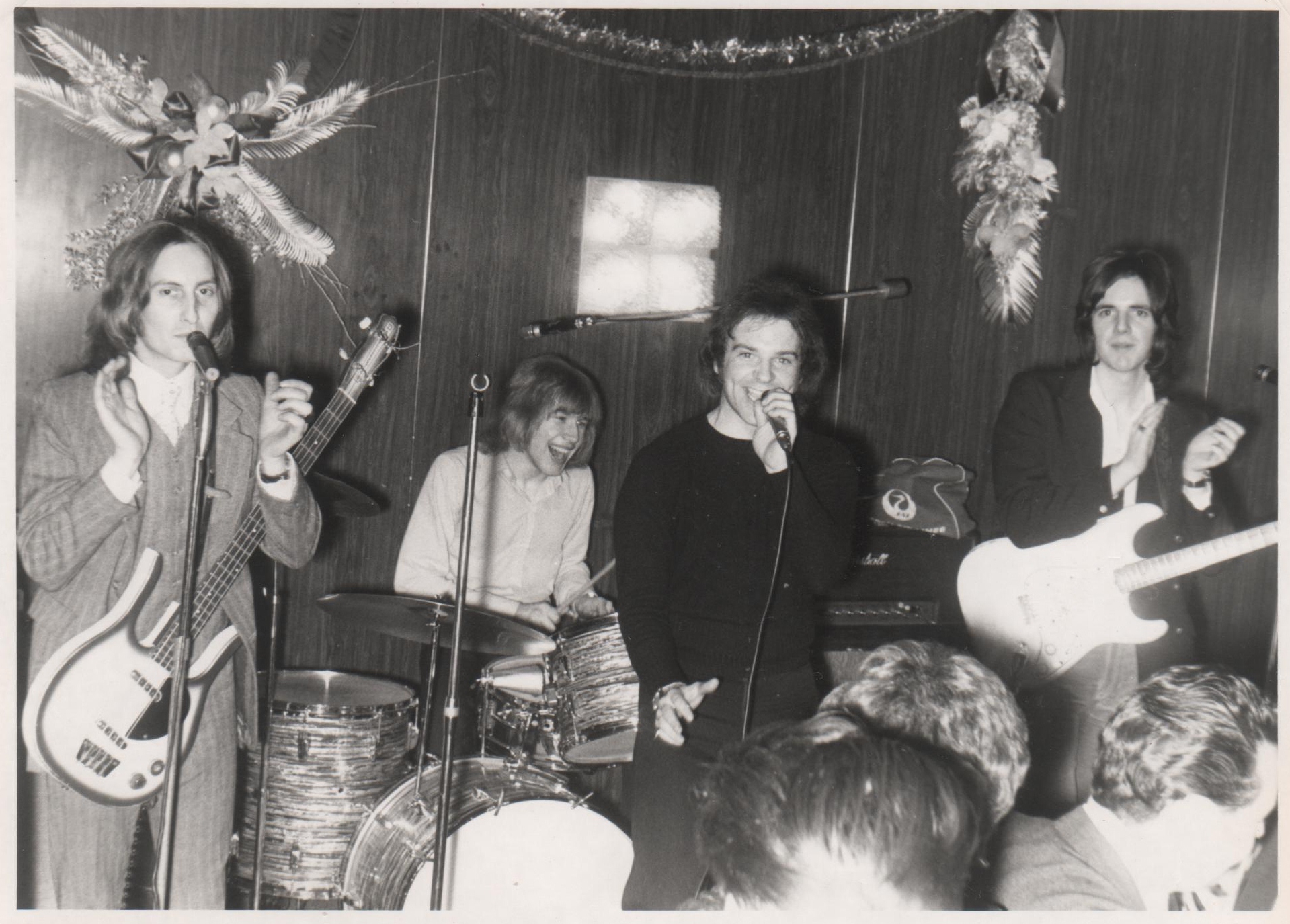
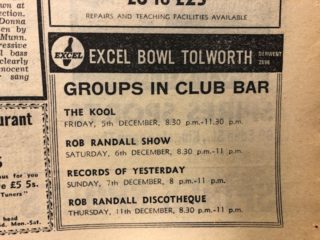
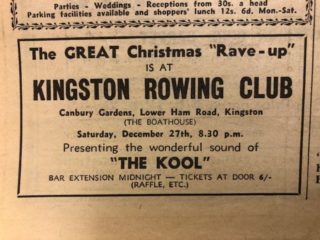
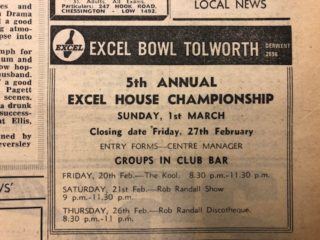
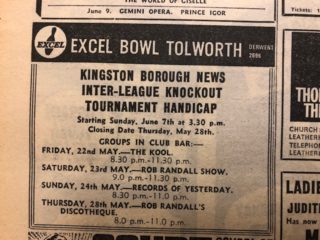
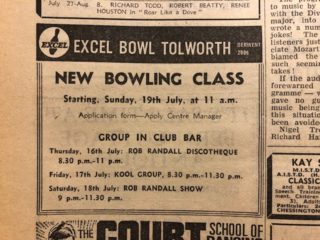
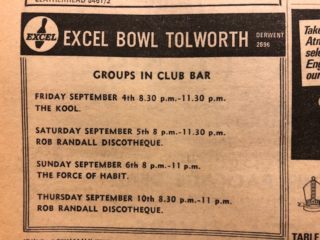
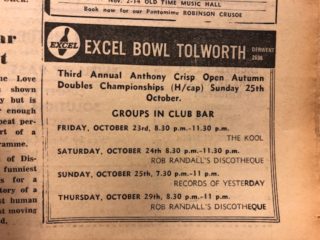
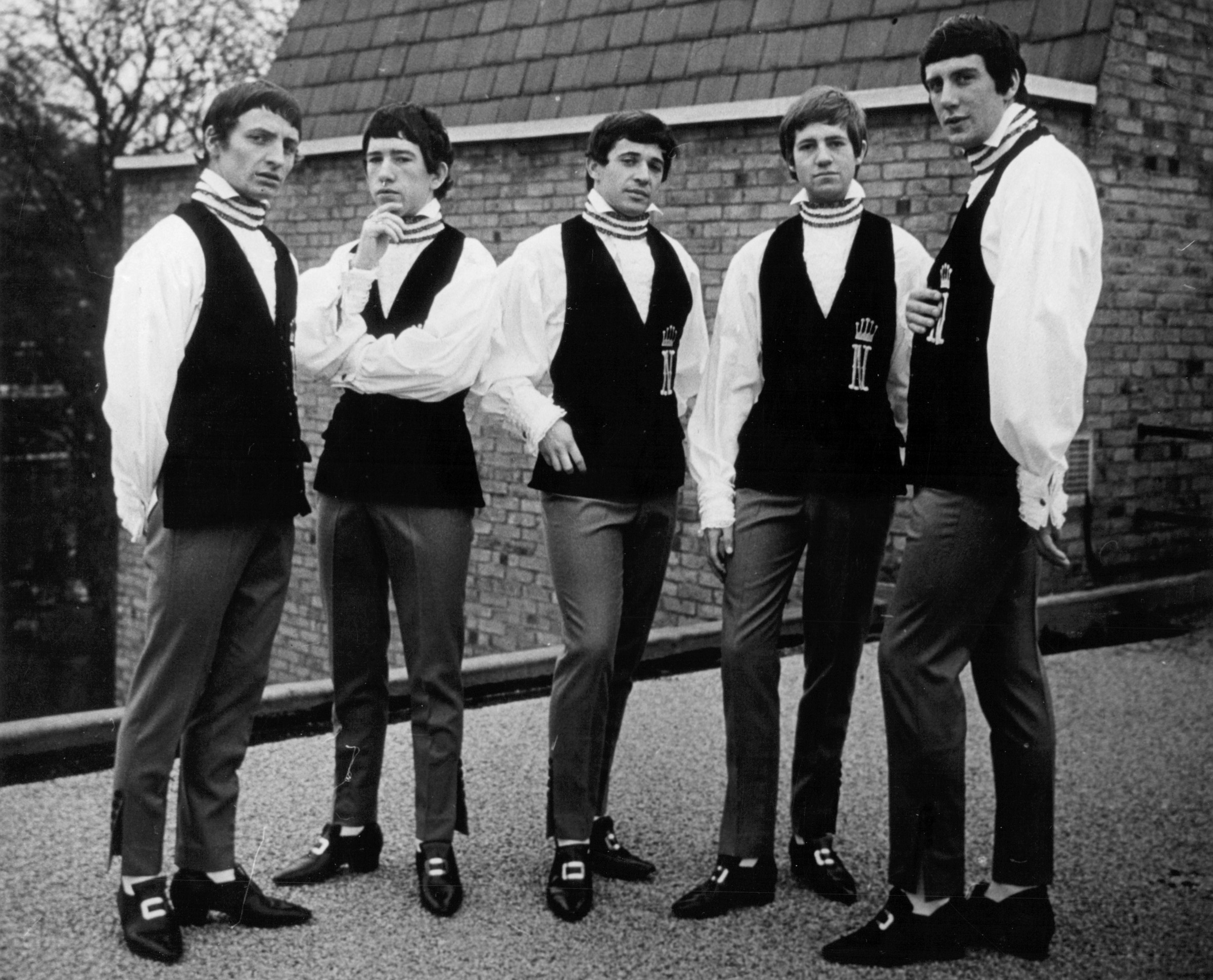
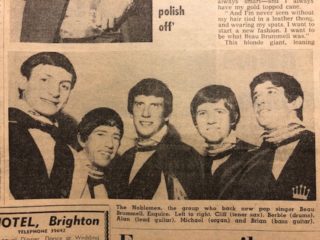
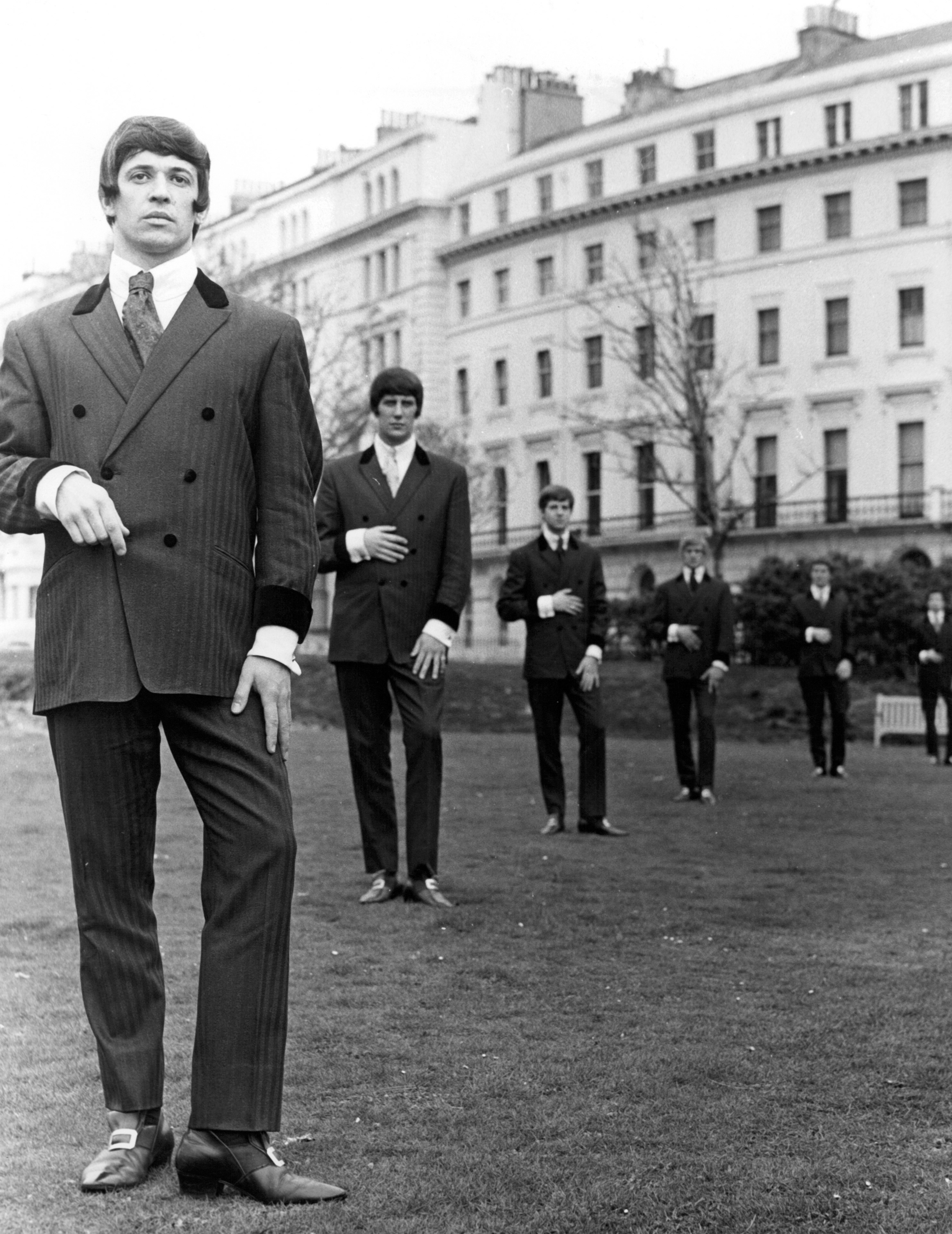
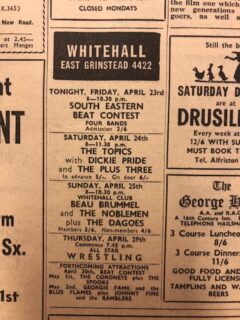
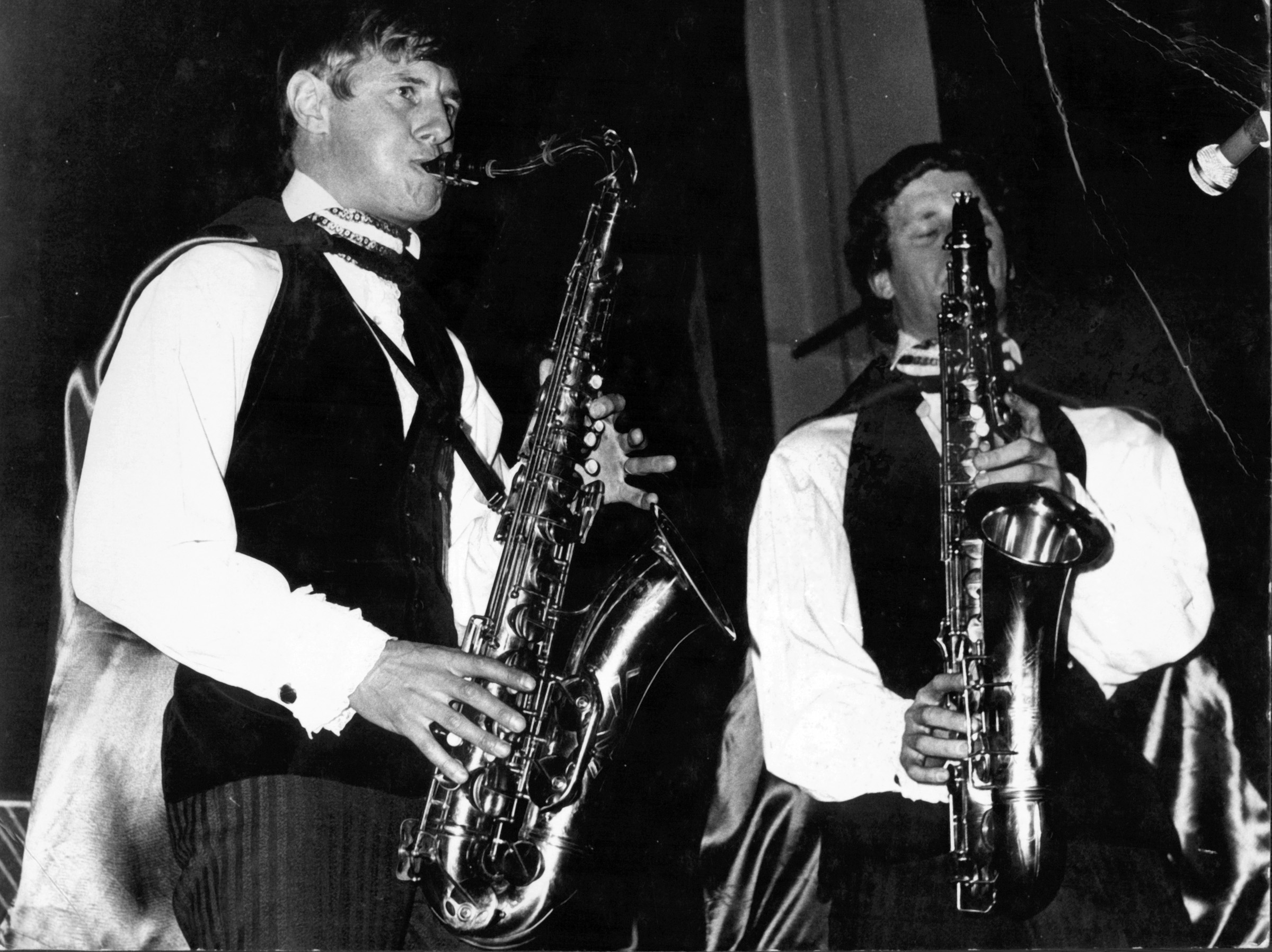
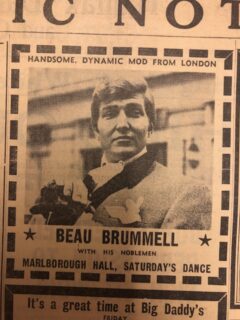
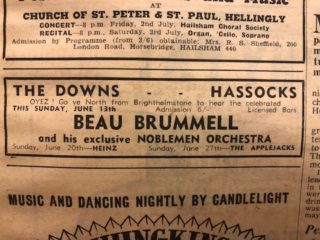
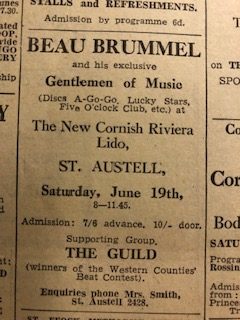
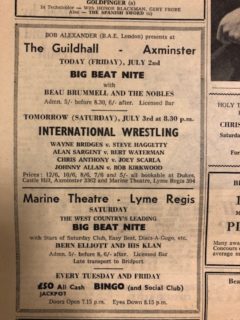
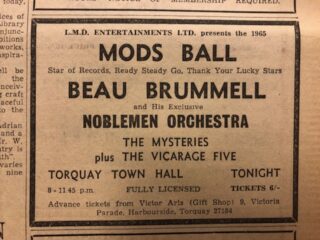
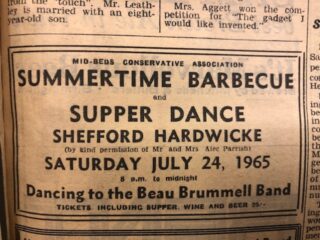
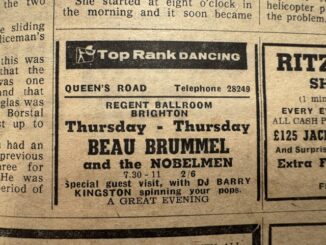
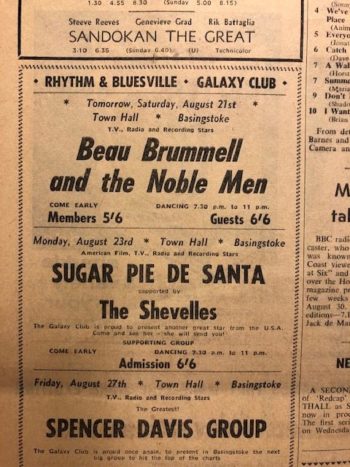
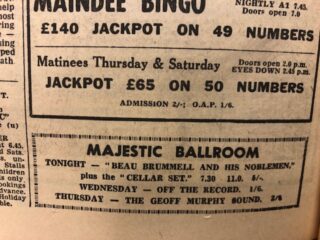
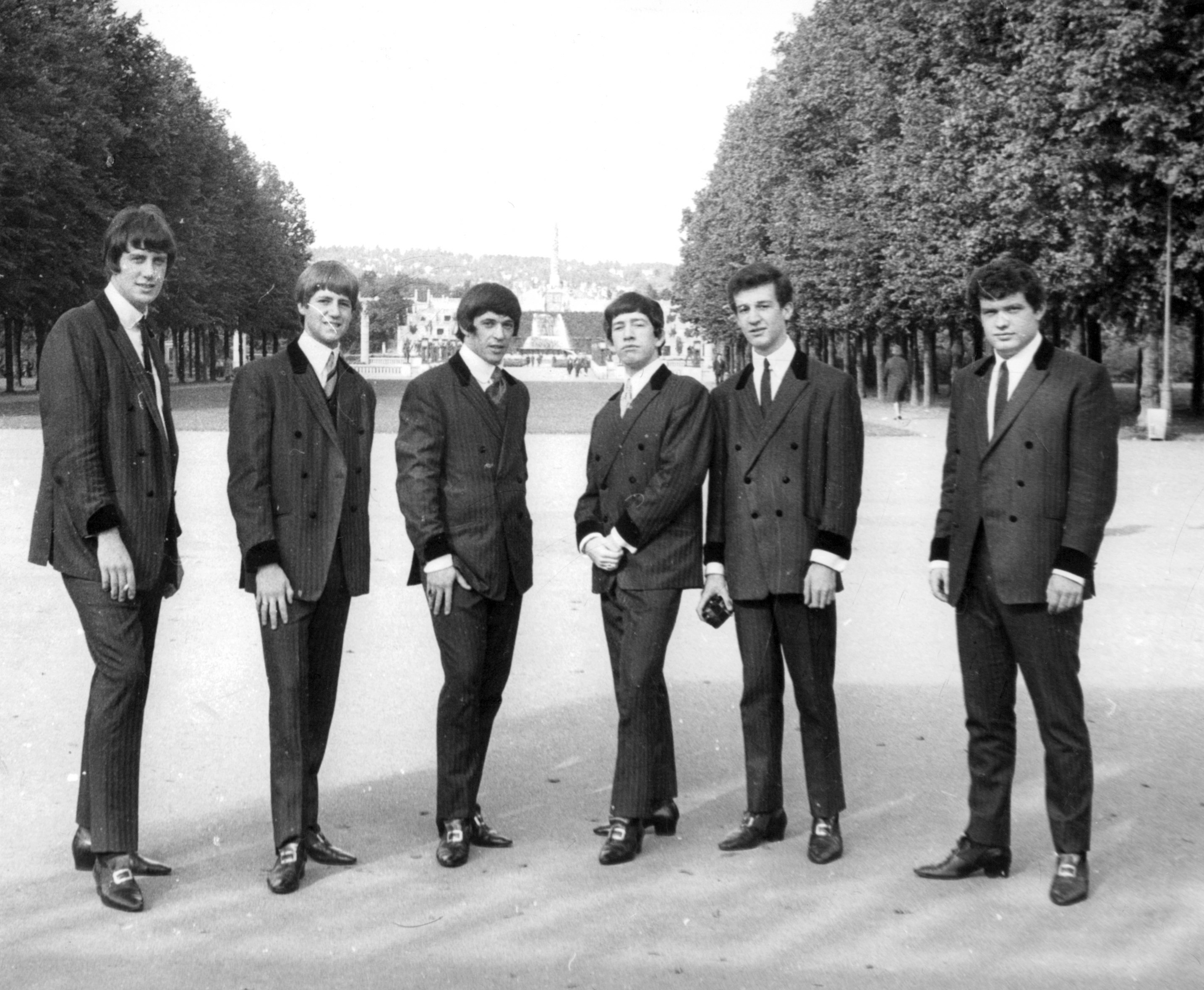
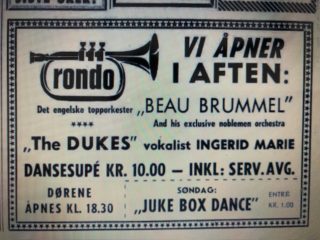
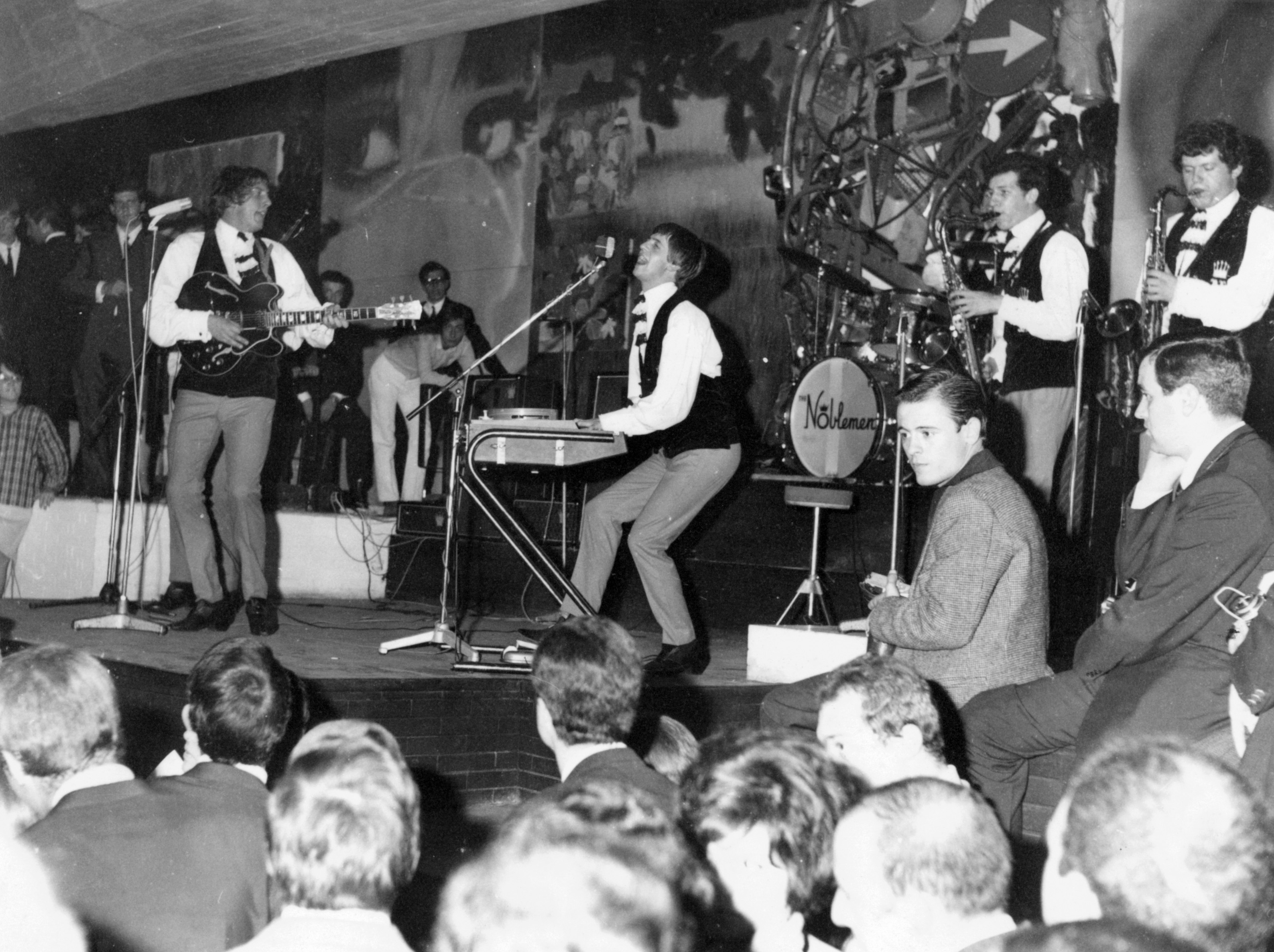
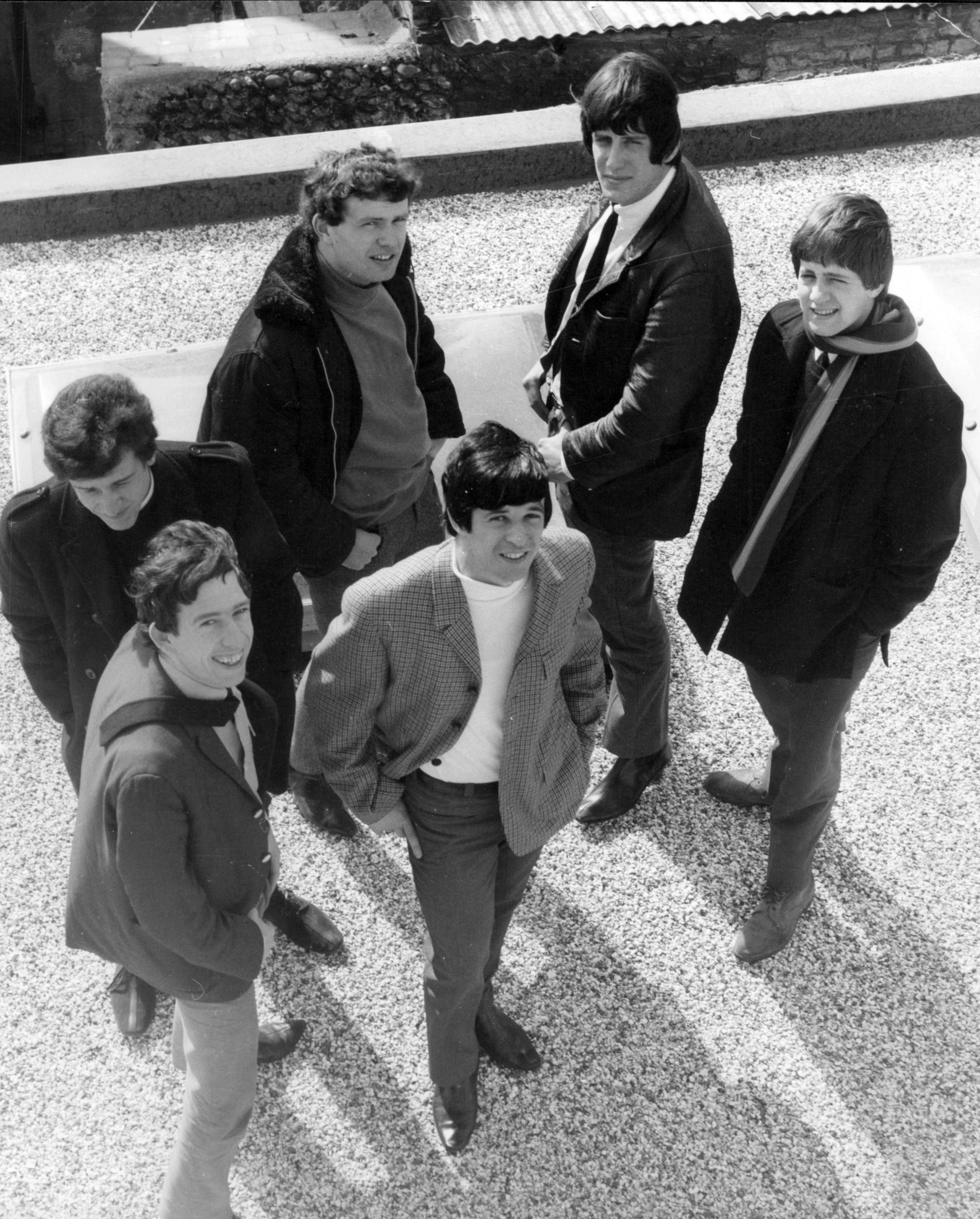
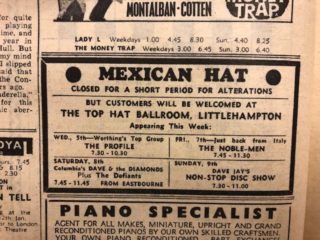
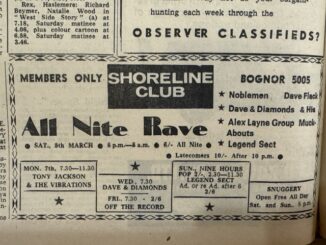
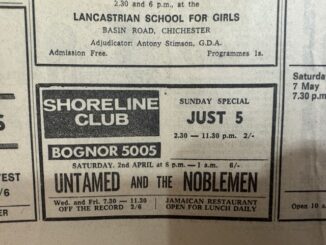
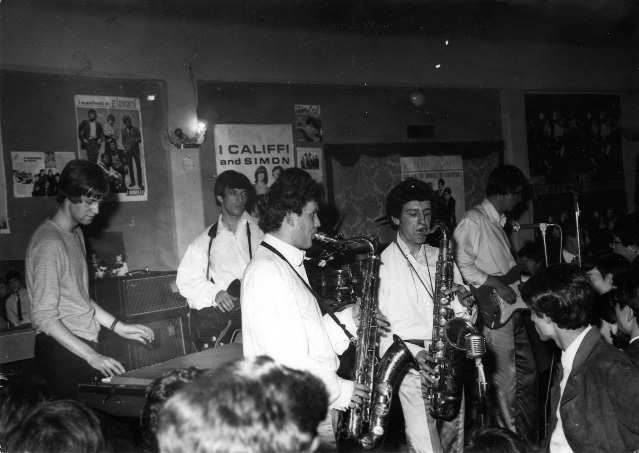
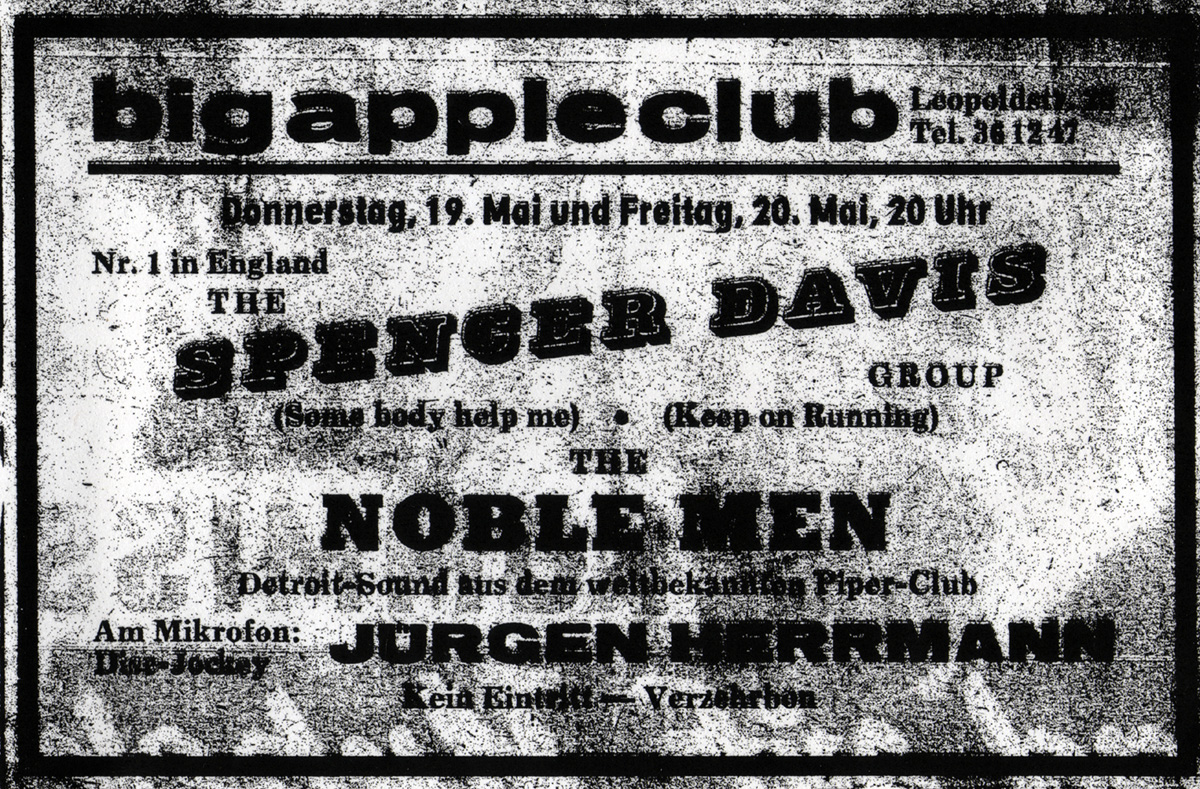
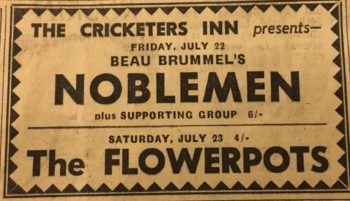
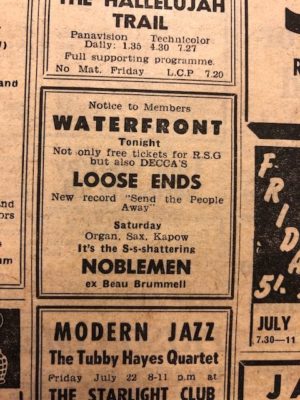
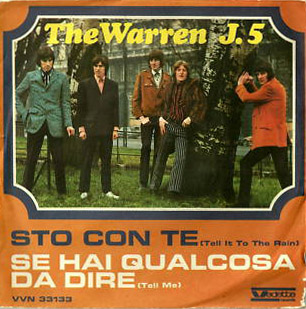
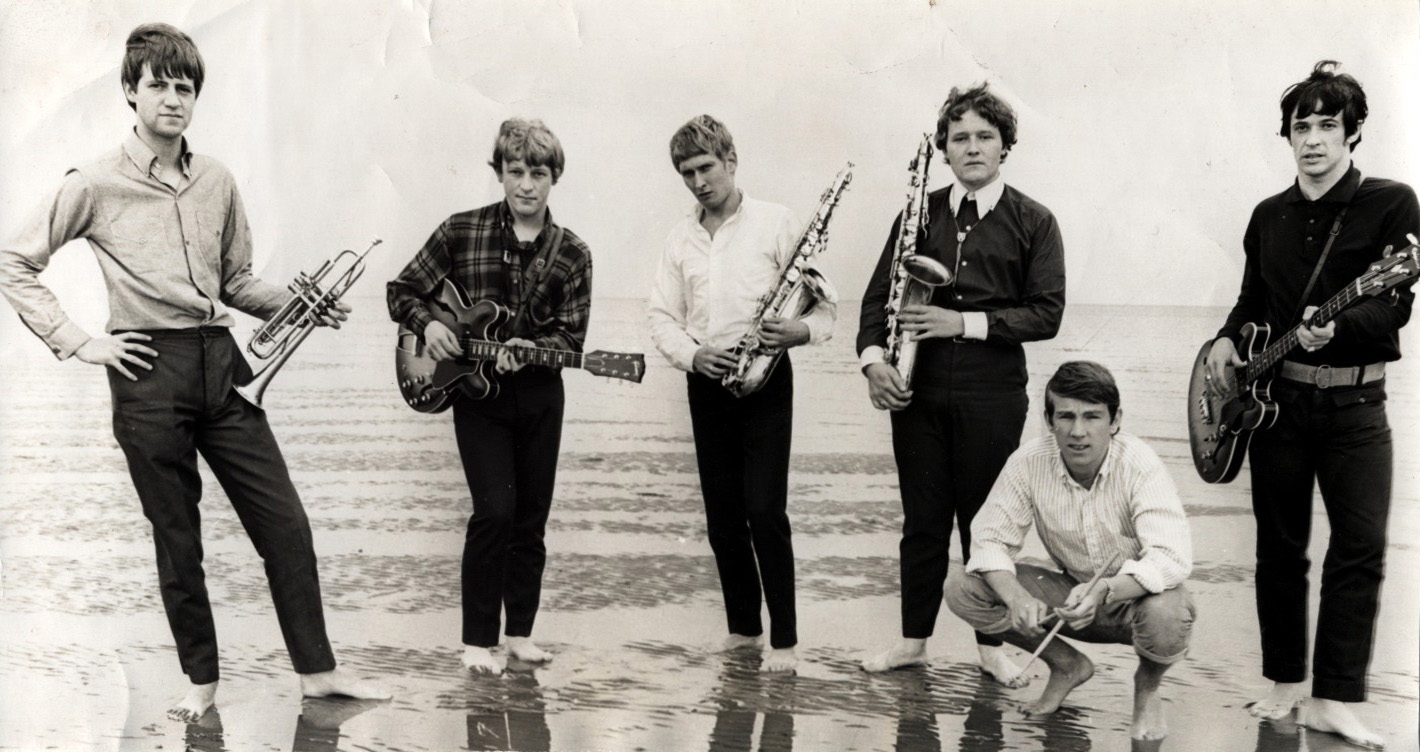
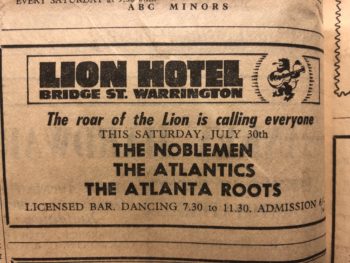
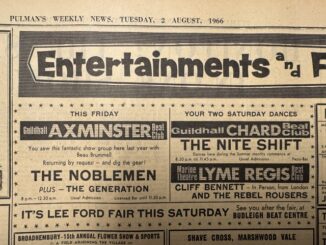
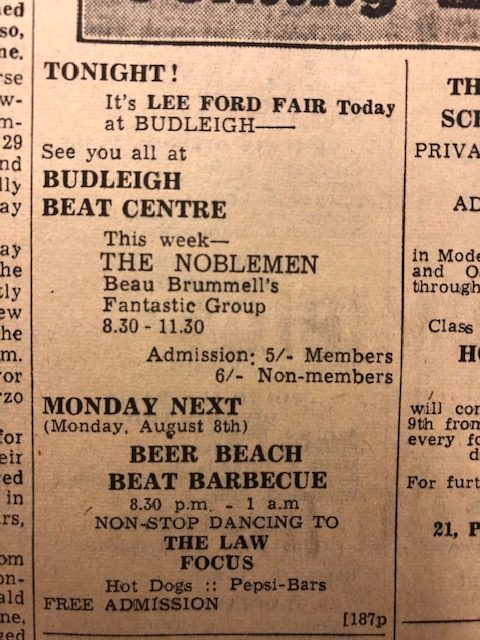
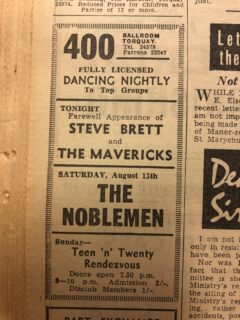
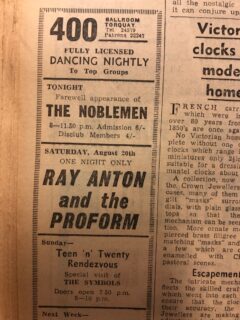
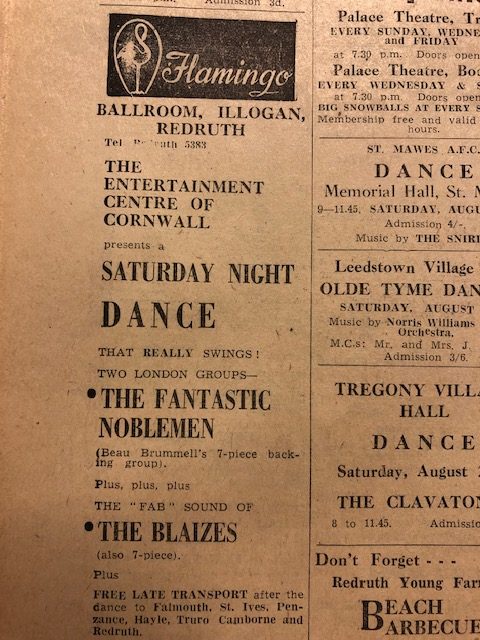
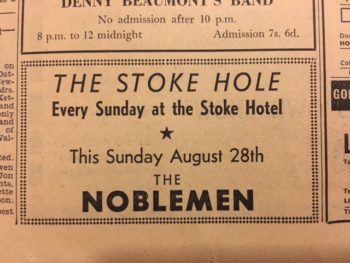
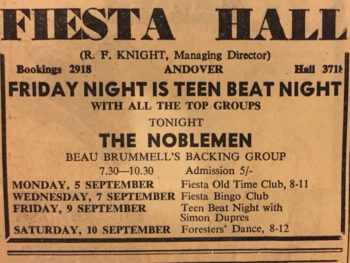
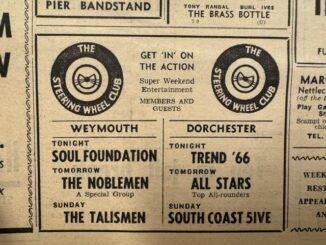
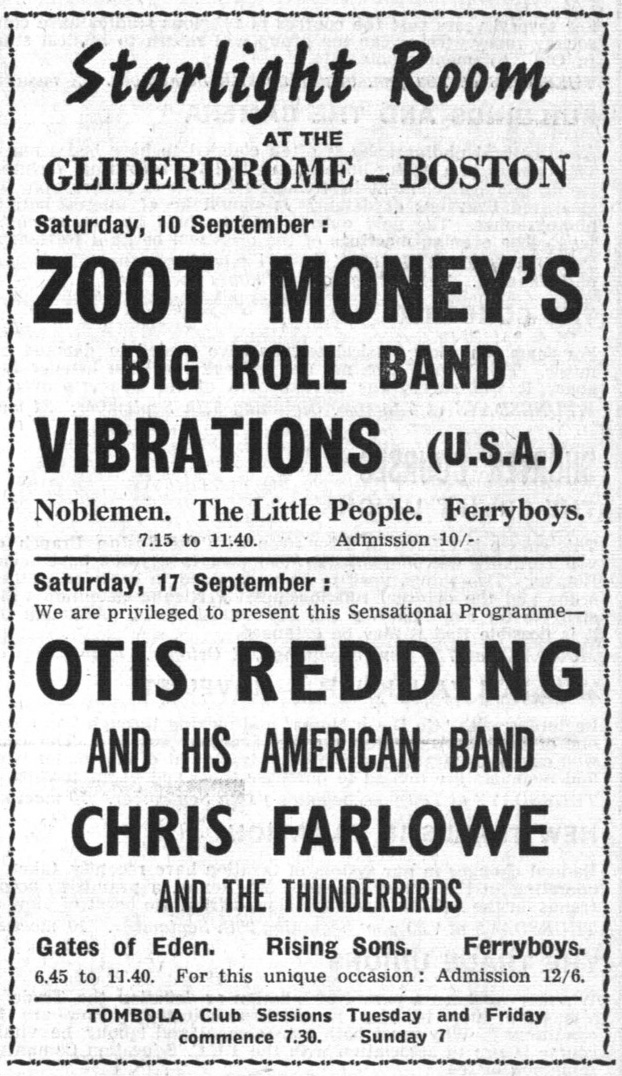
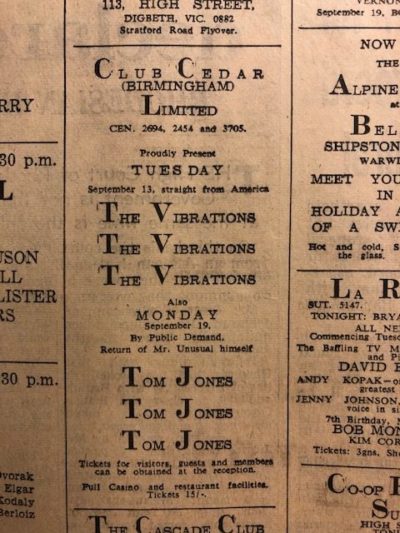
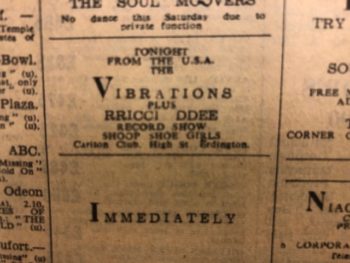
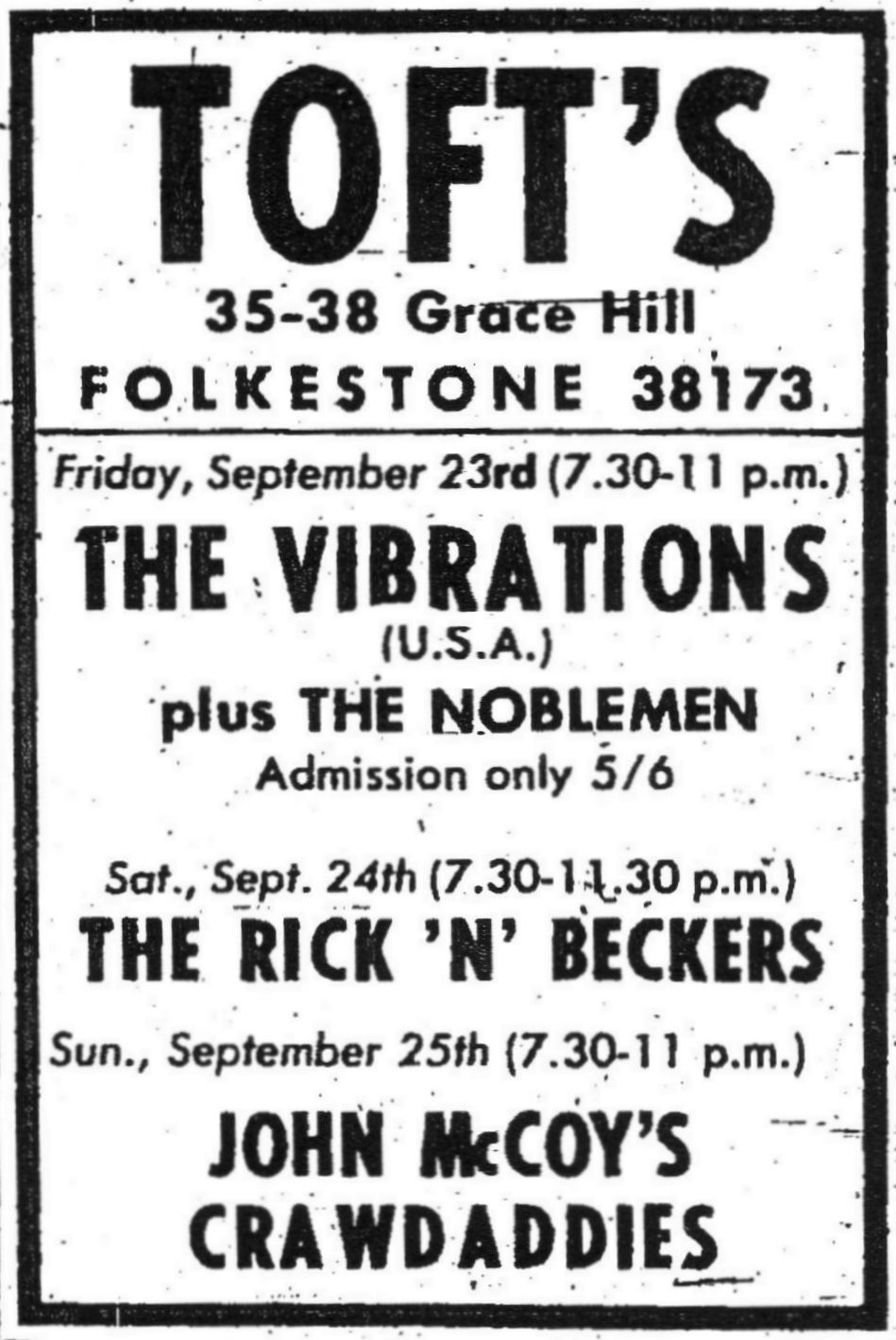
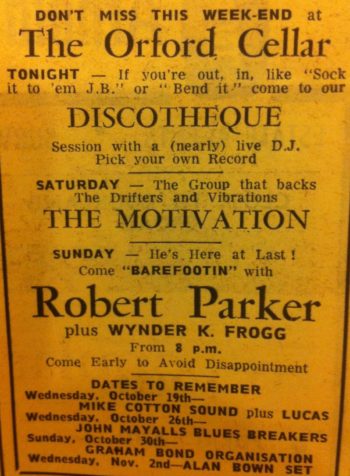
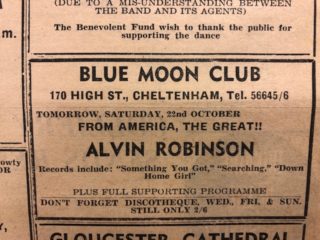
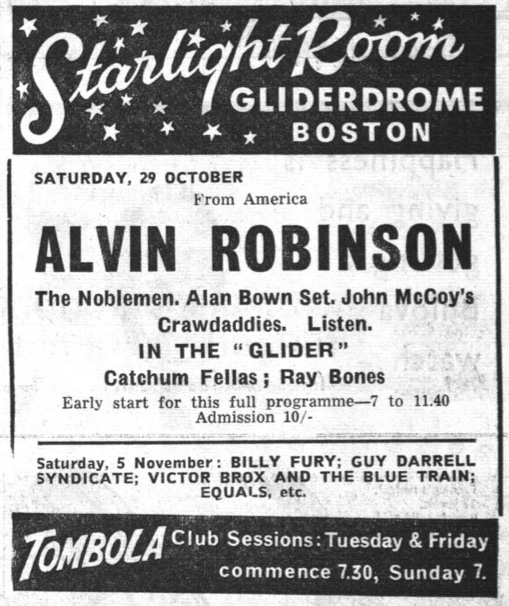
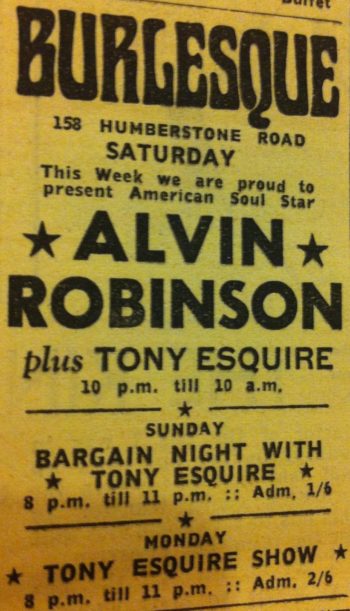
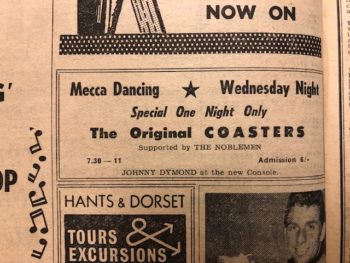
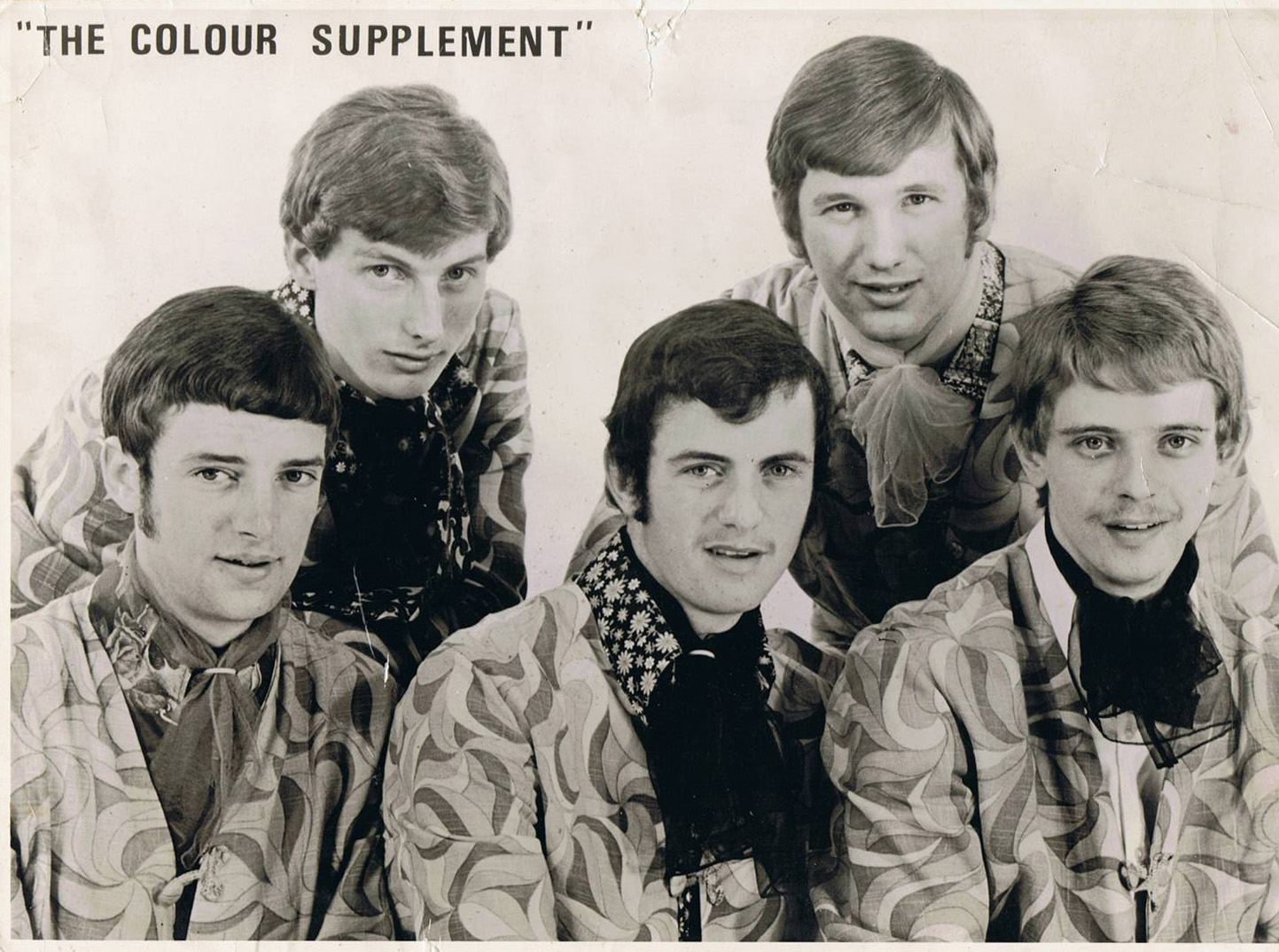
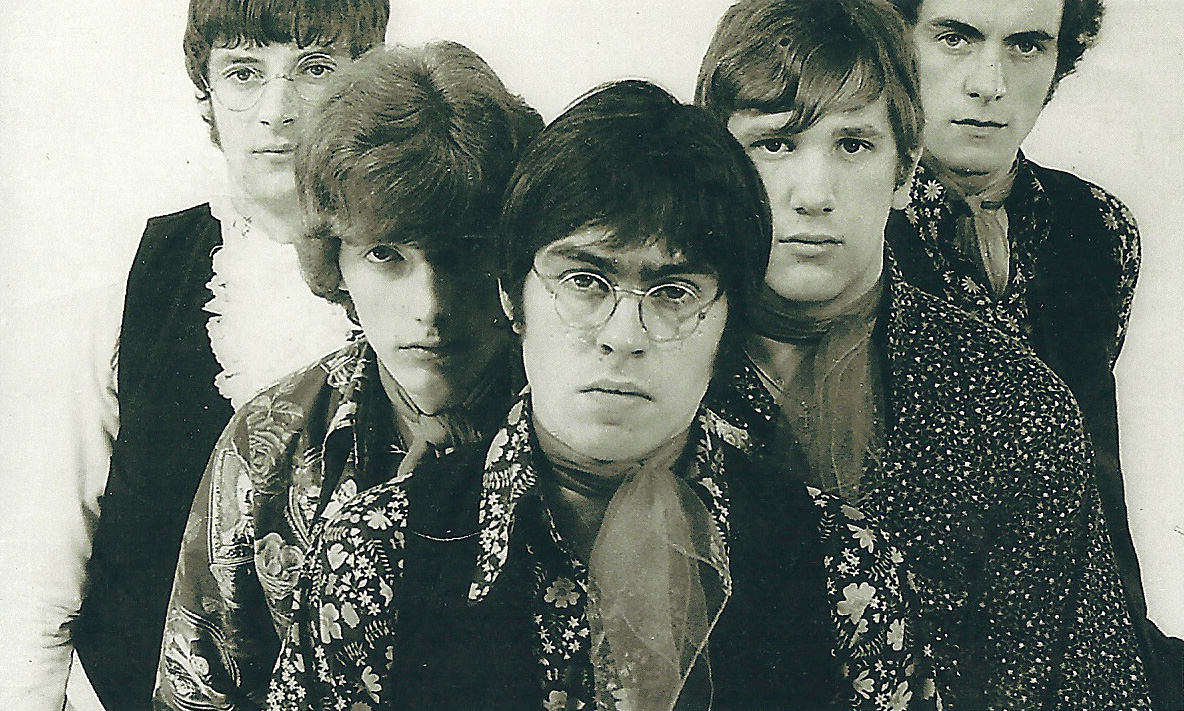
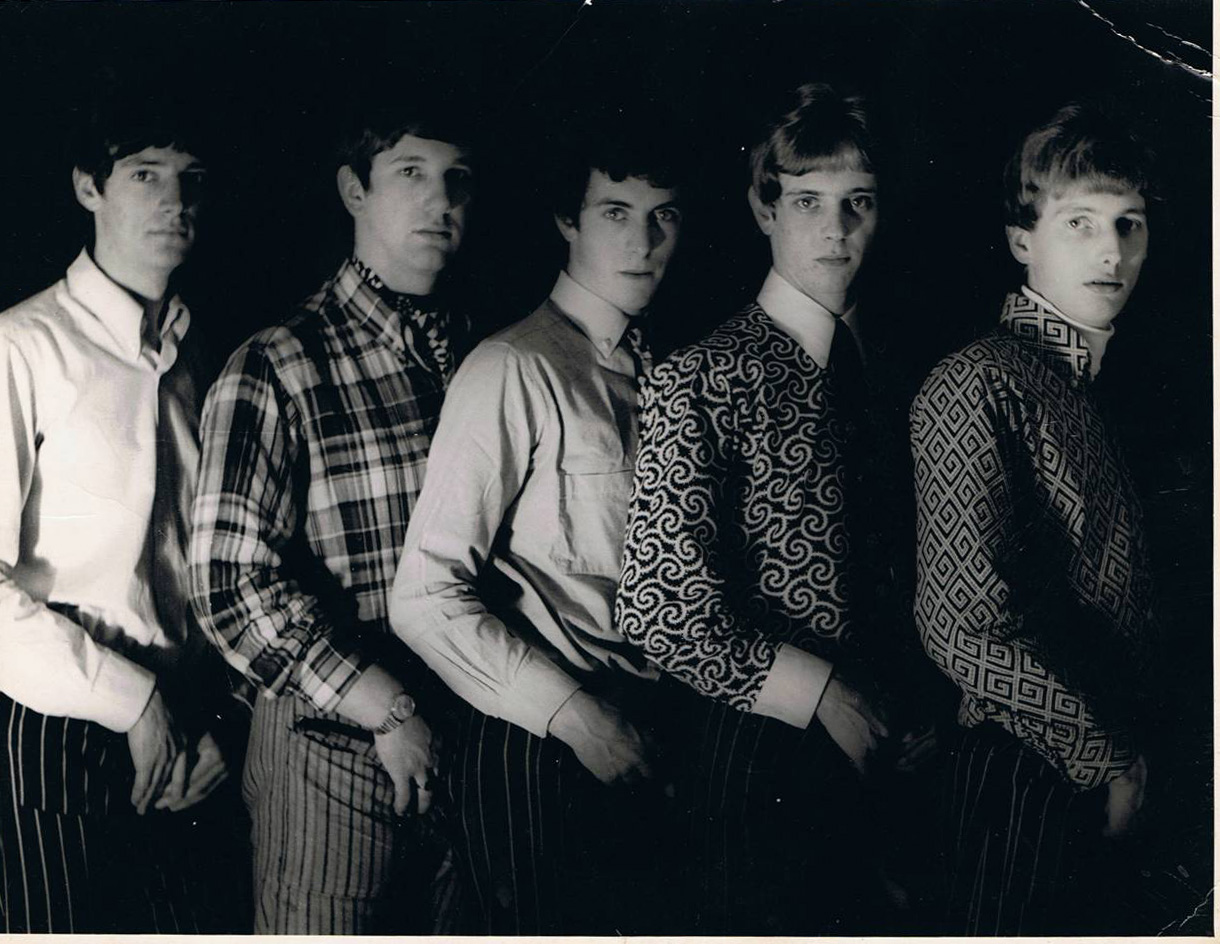
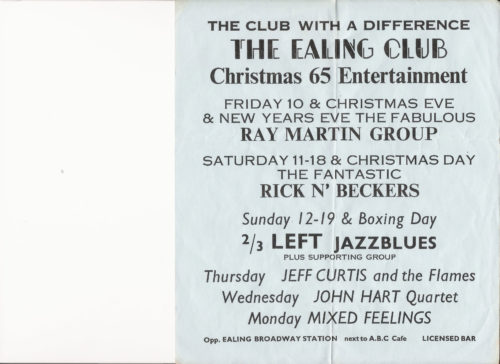 Likewise, many other not so famous musicians who played the Ealing Club went on to produce fascinating music in the burgeoning psychedelic scene. Locals Chris Jackson and Tom Newman fronted R&B band The Tomcats (who also worked as The Thoughts) and later formed one of Britain’s more interesting psych ventures, July, after a stint in Spain.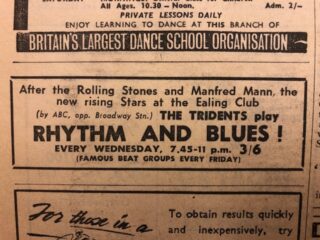
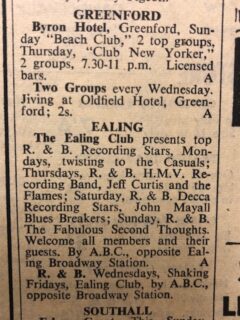
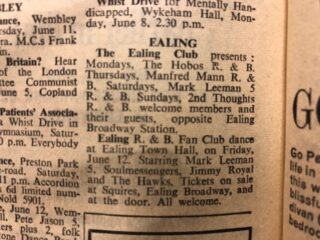
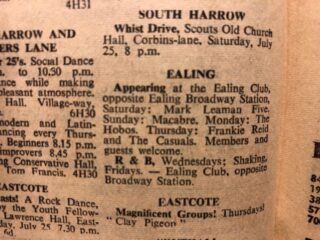
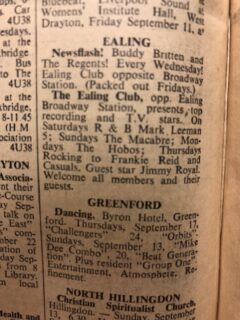
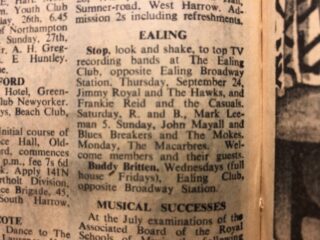
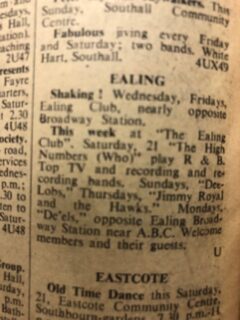
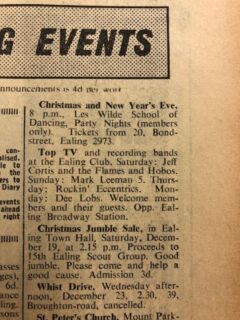
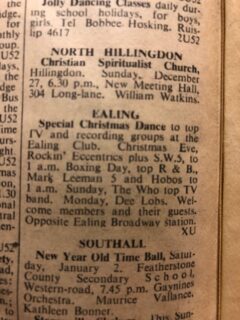
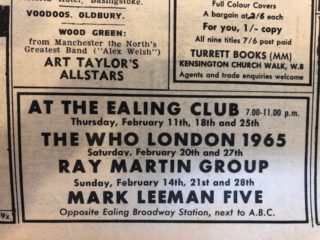
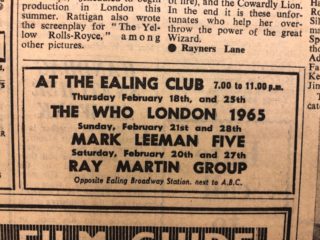
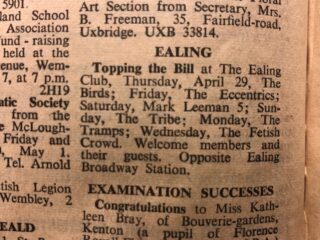
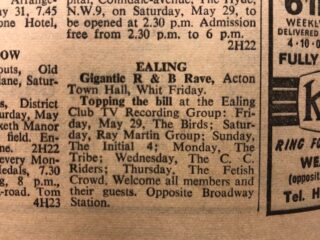
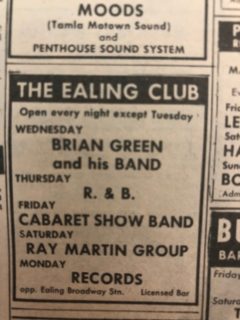
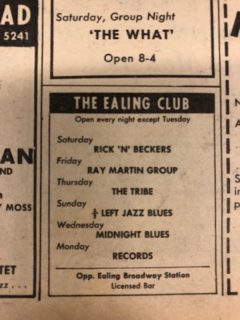
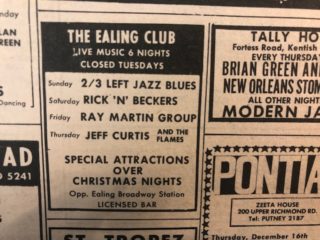
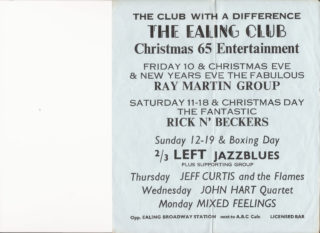
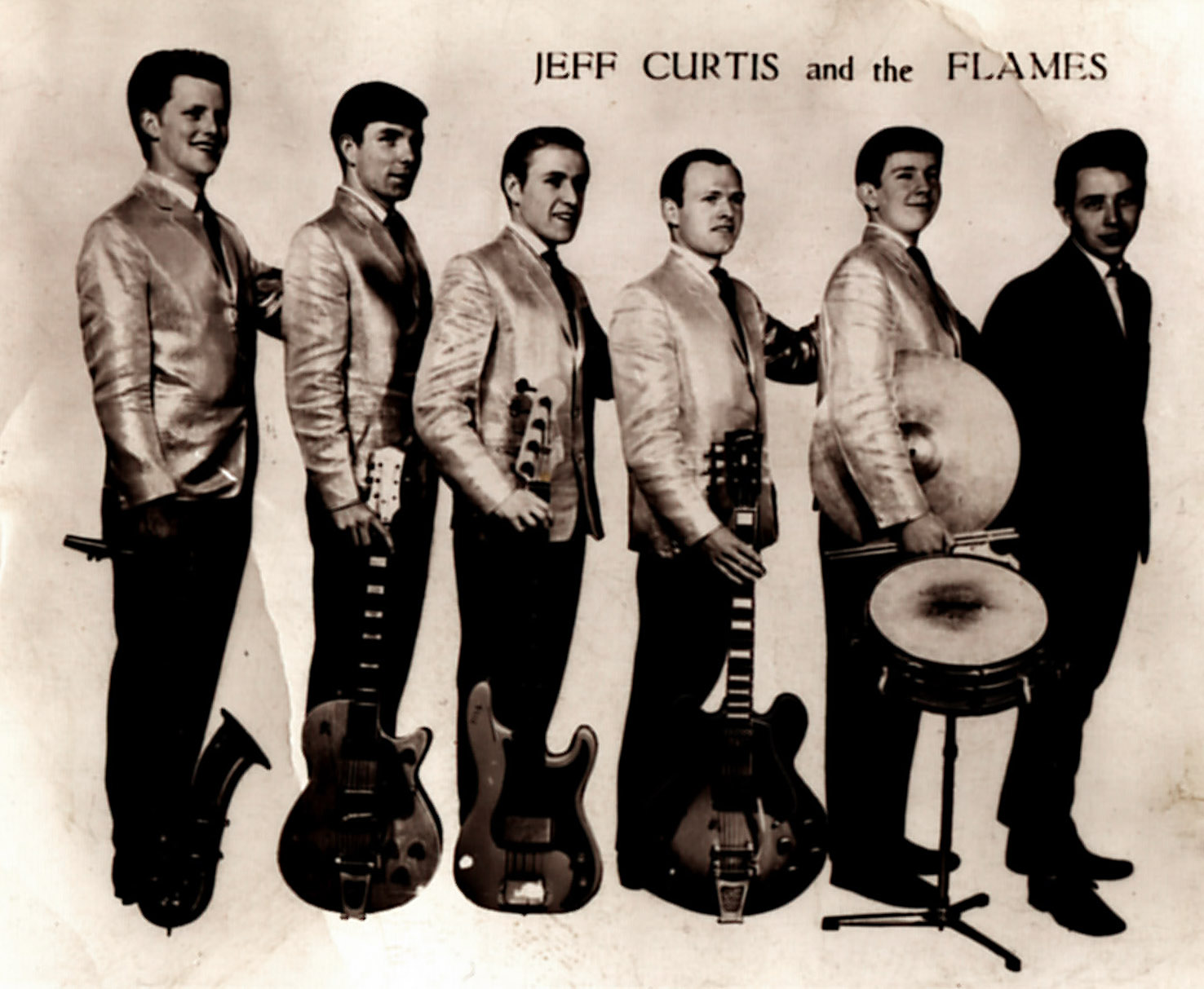
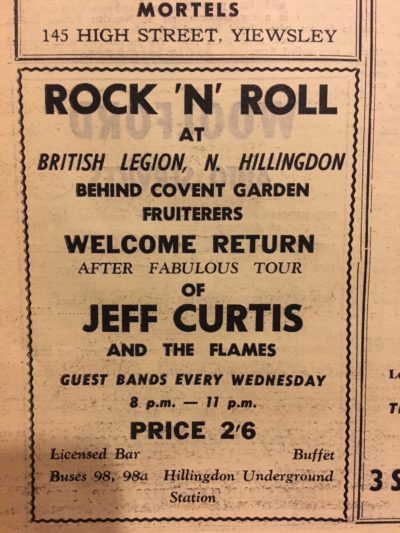
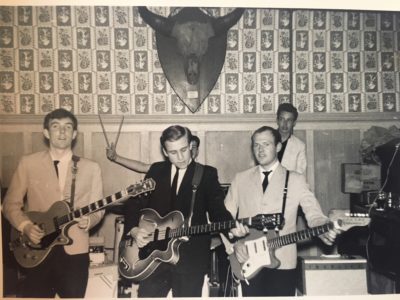
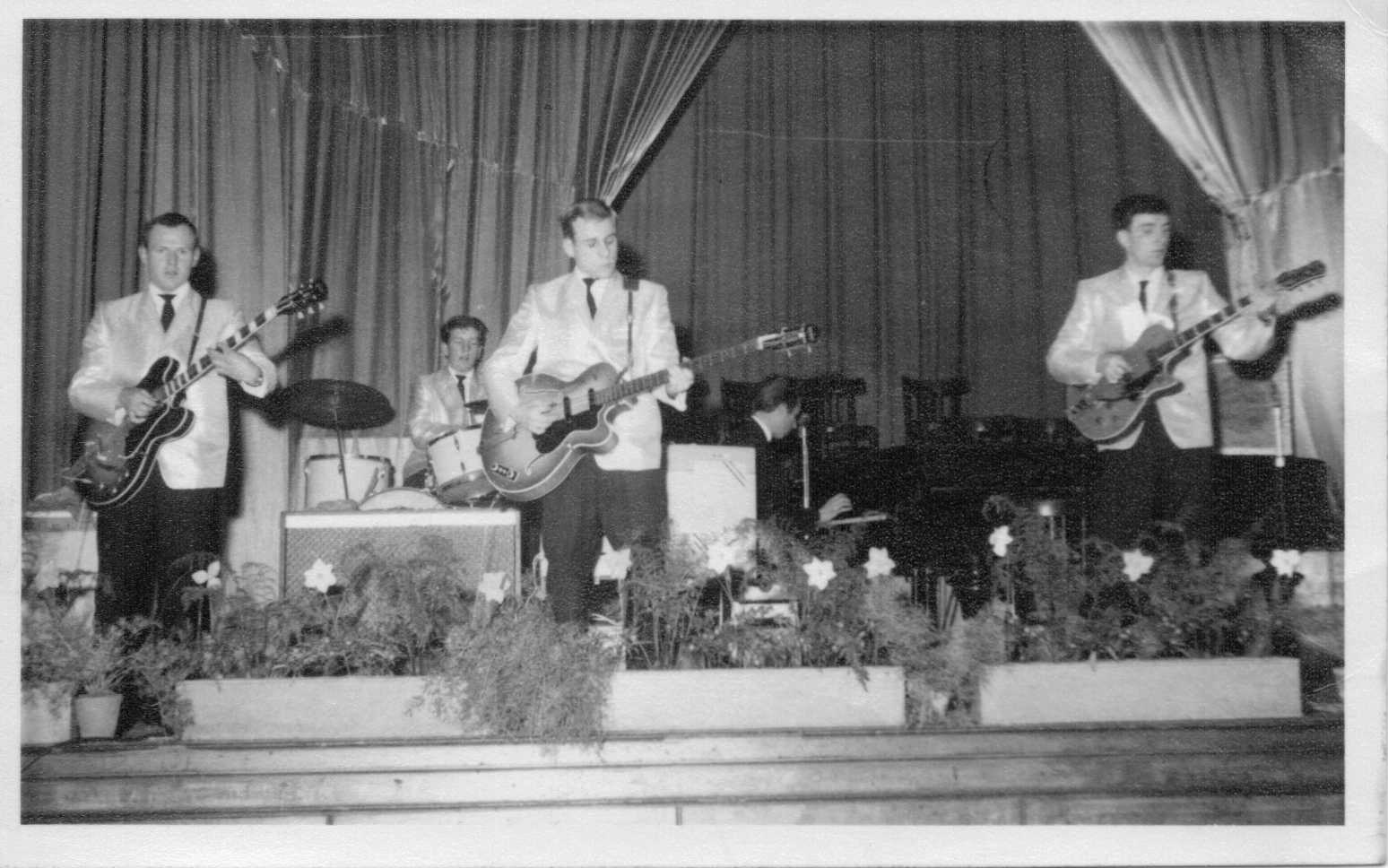
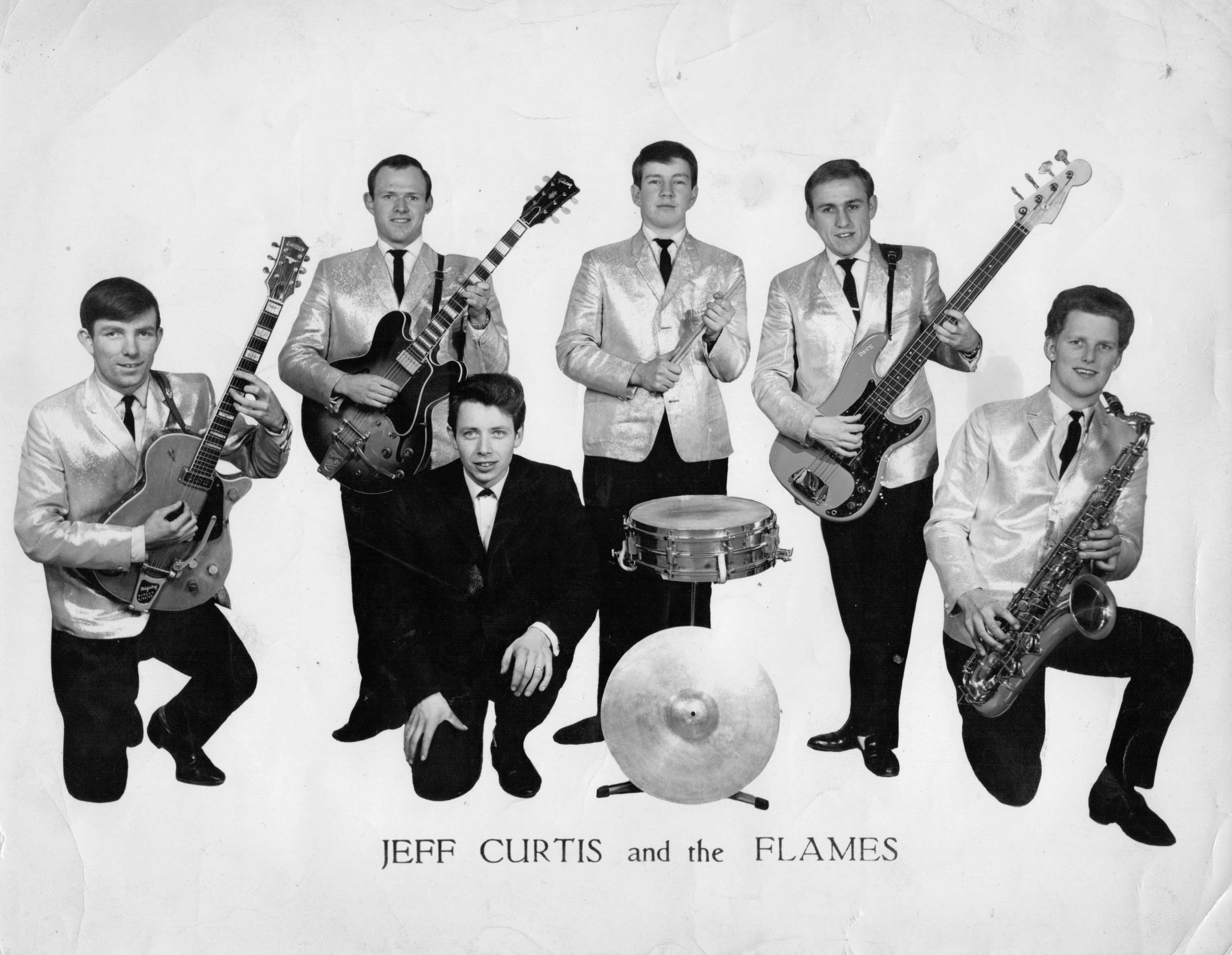
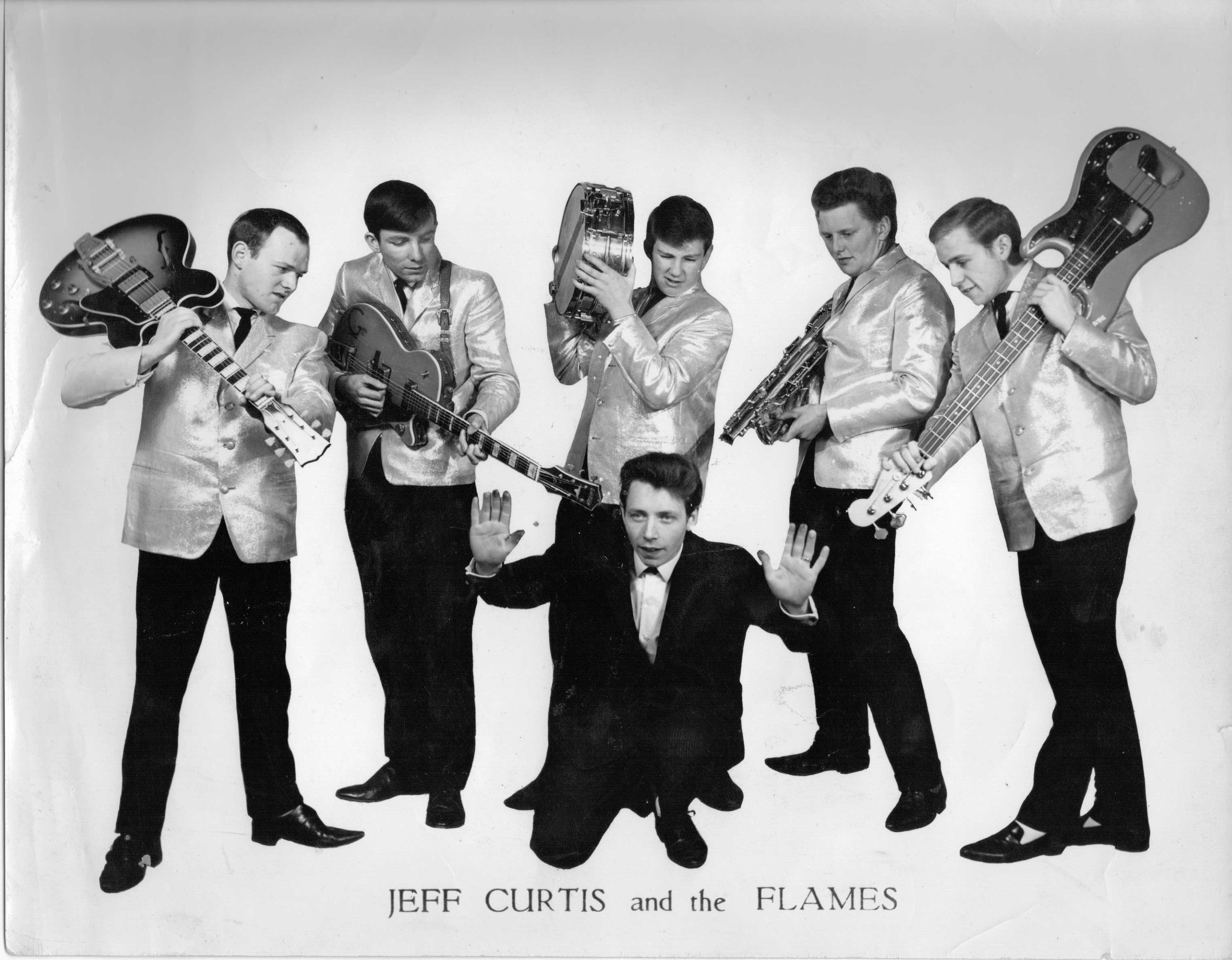
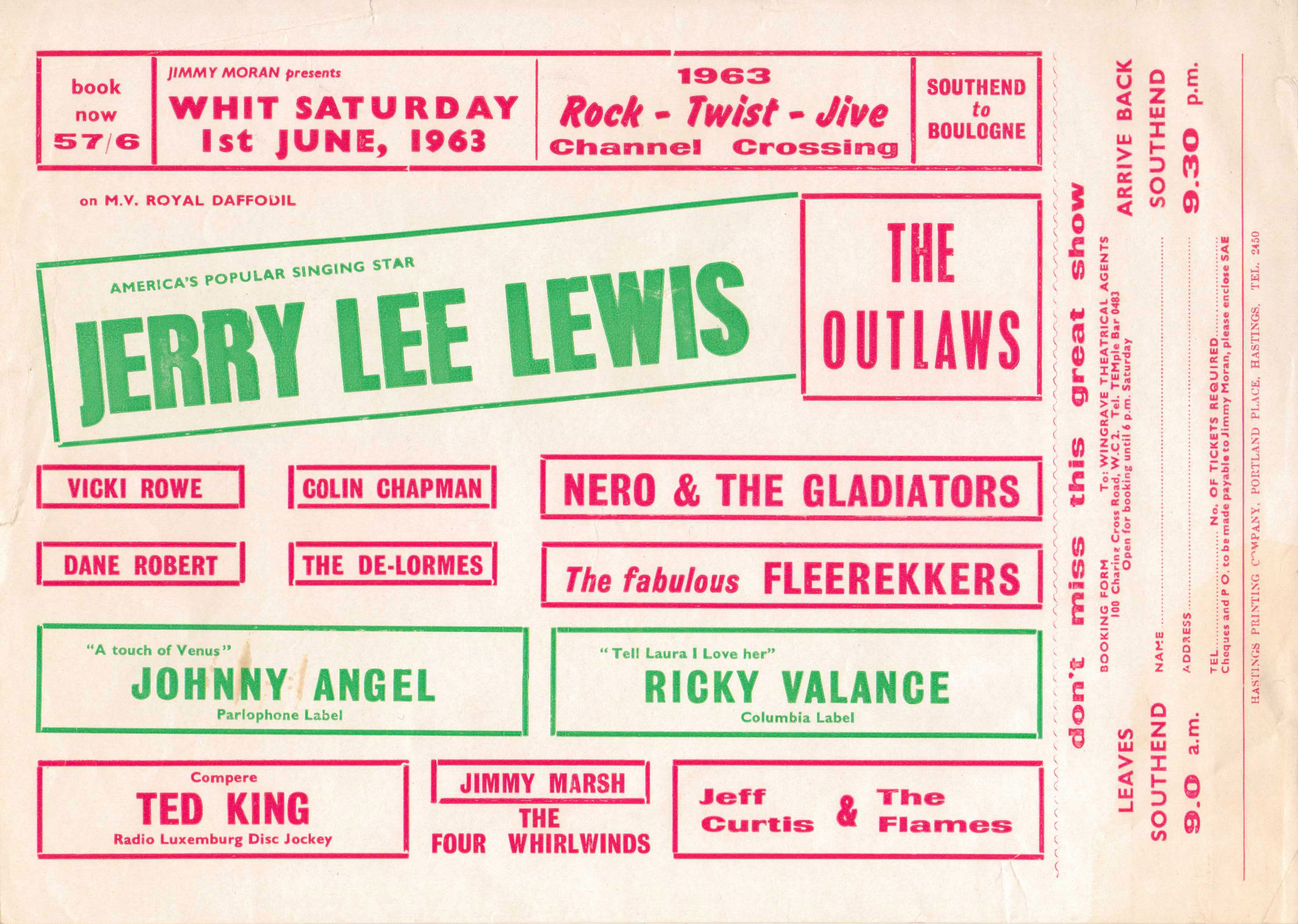
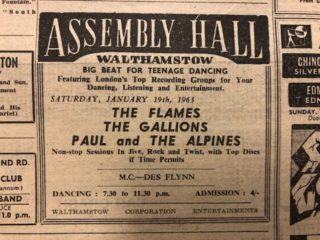
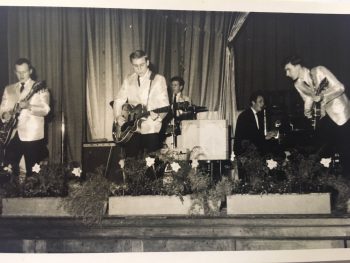
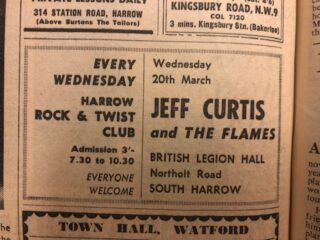
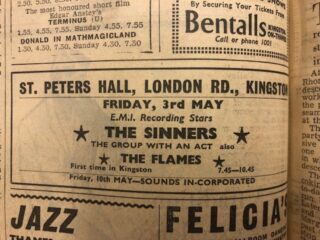
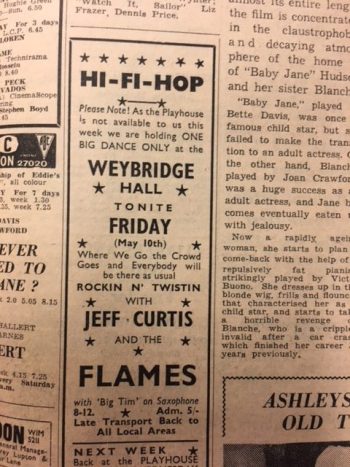
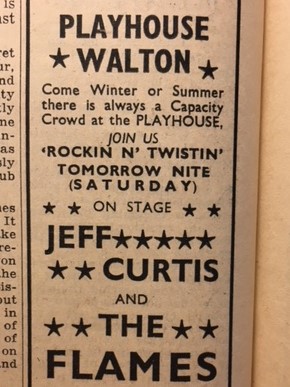
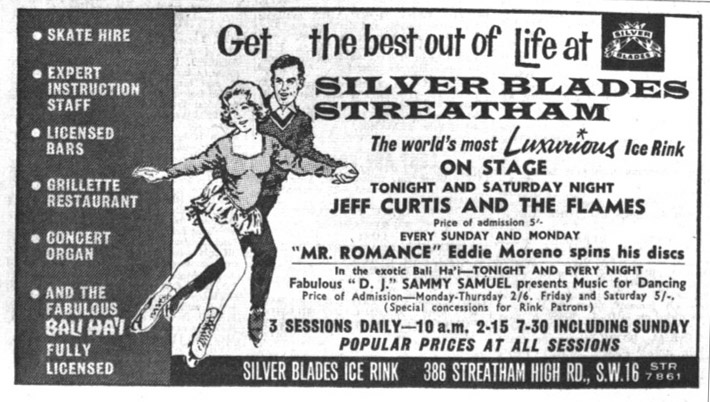
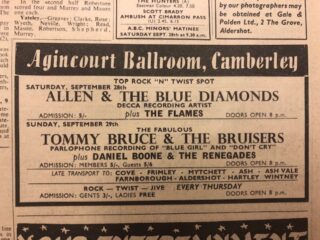
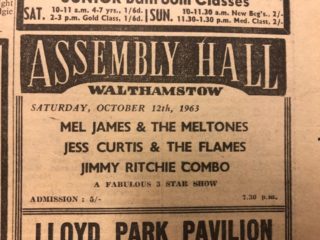
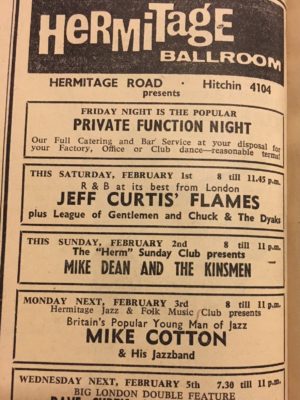
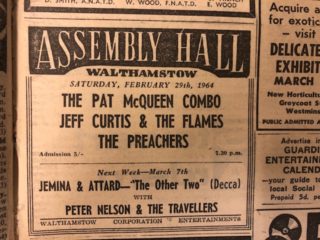

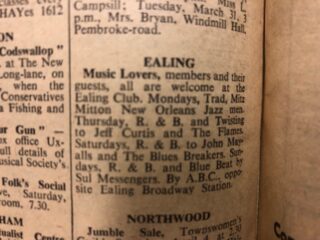
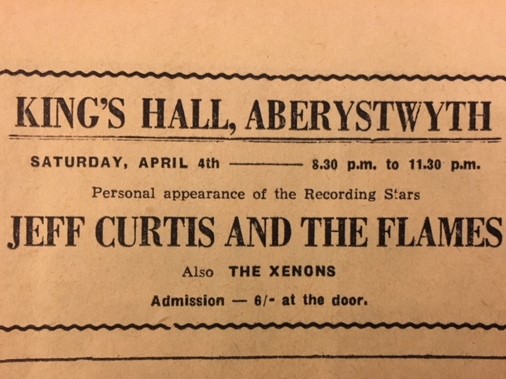
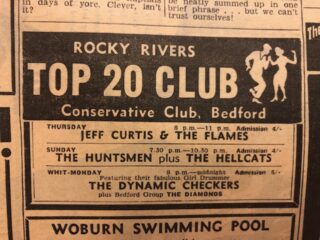
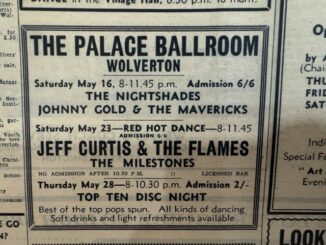
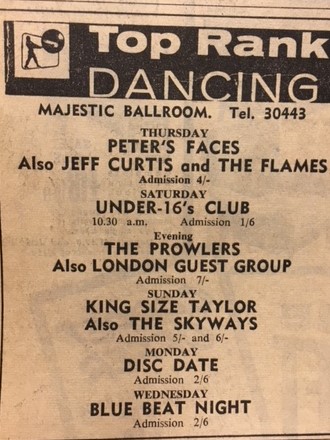
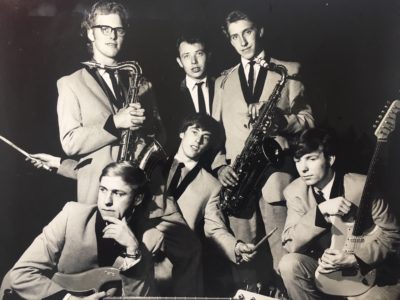
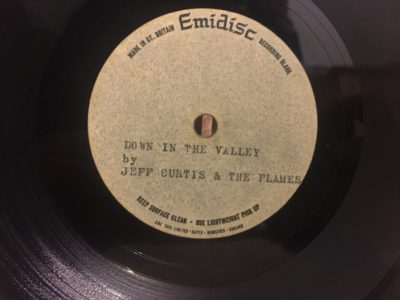
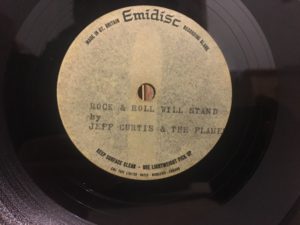
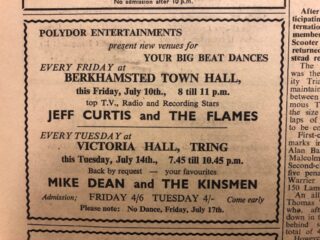
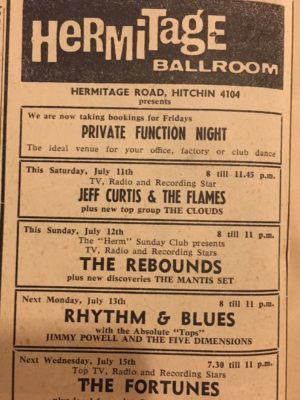
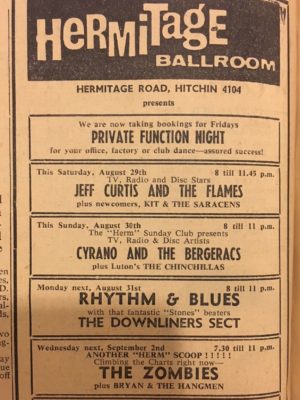
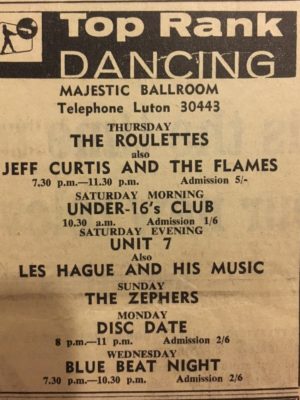
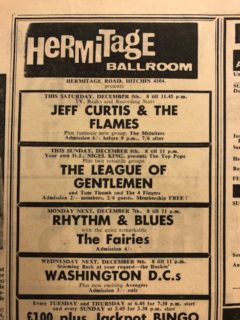
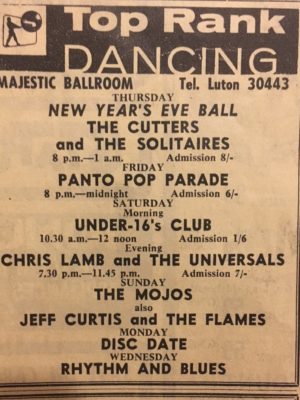
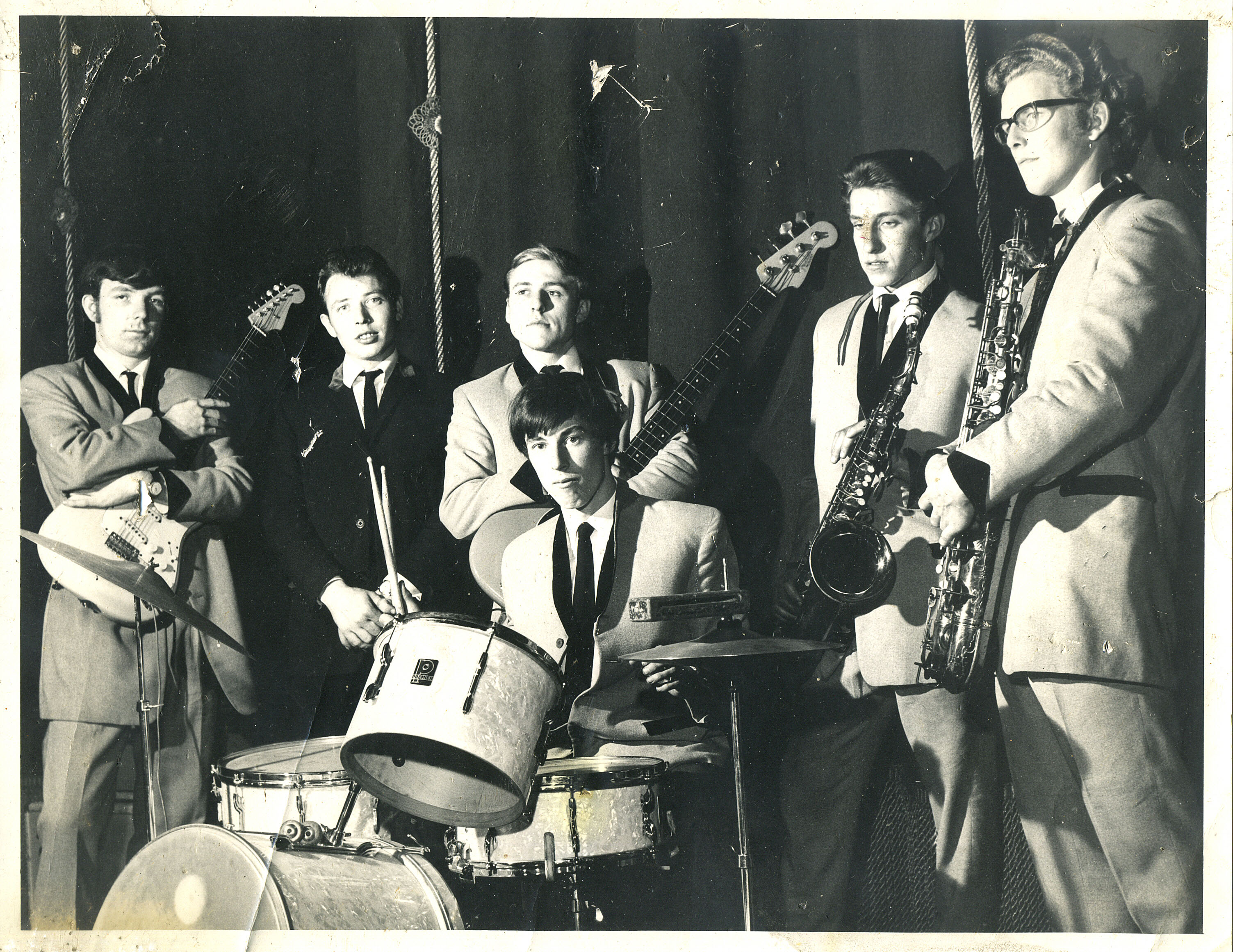
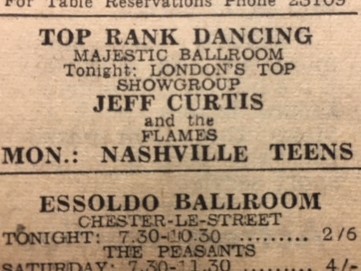
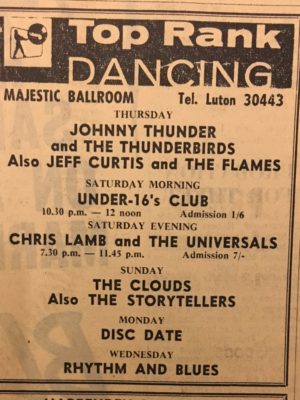
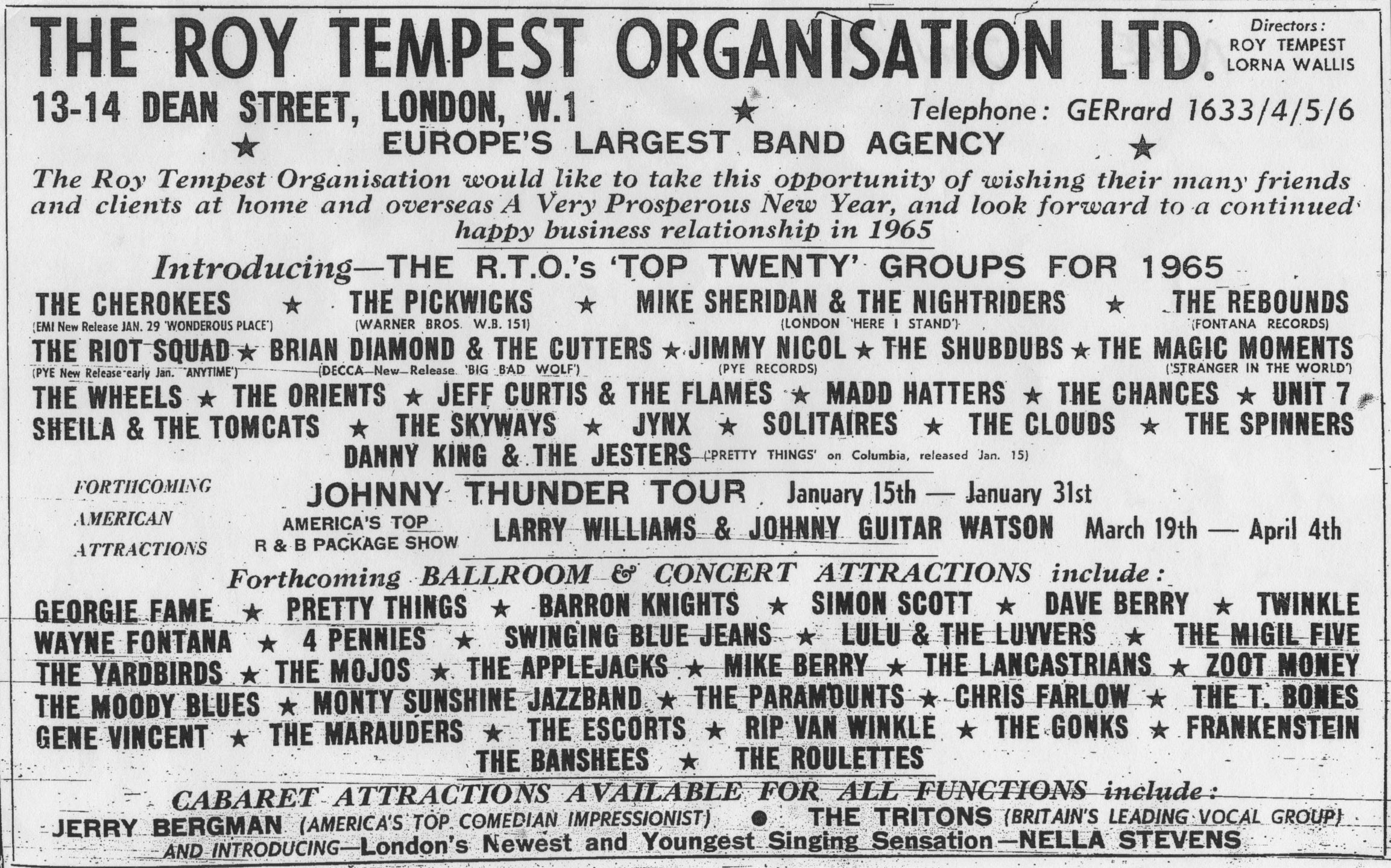
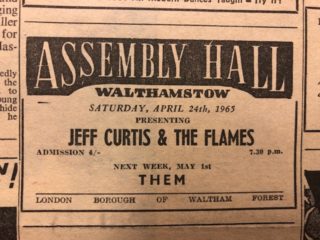
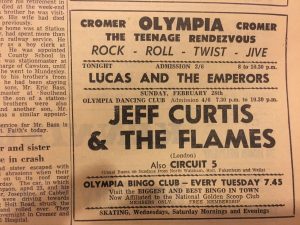
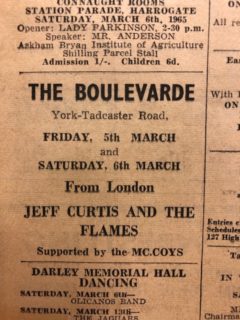
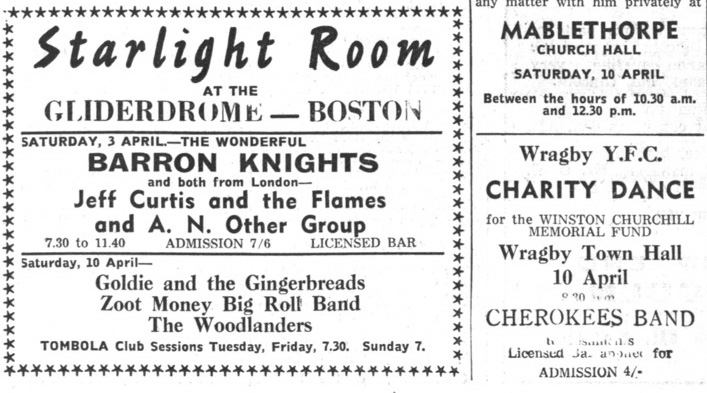
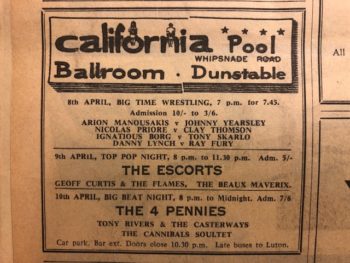
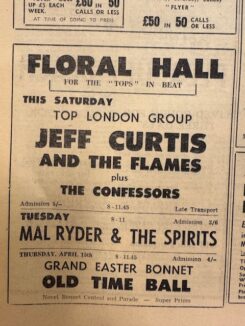
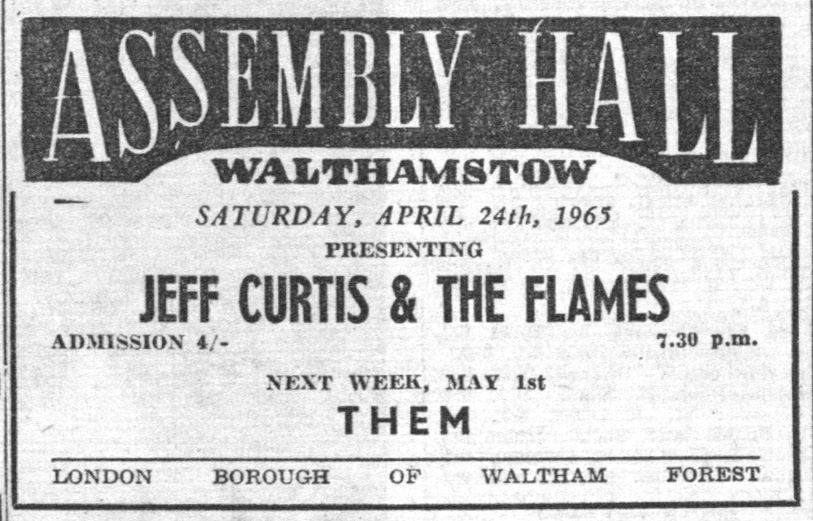
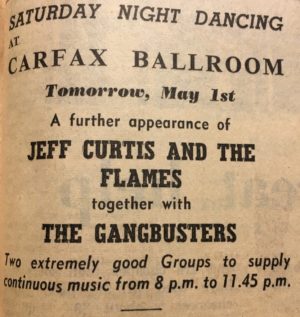
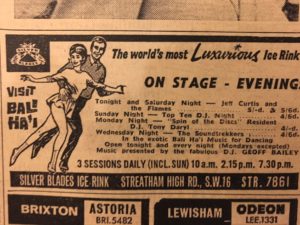
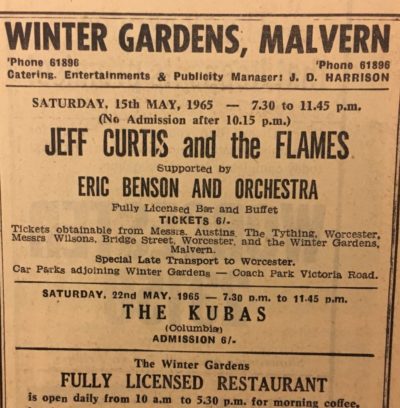
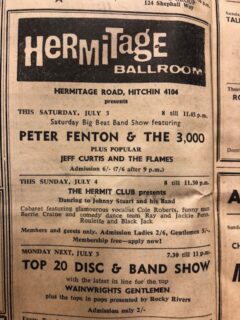
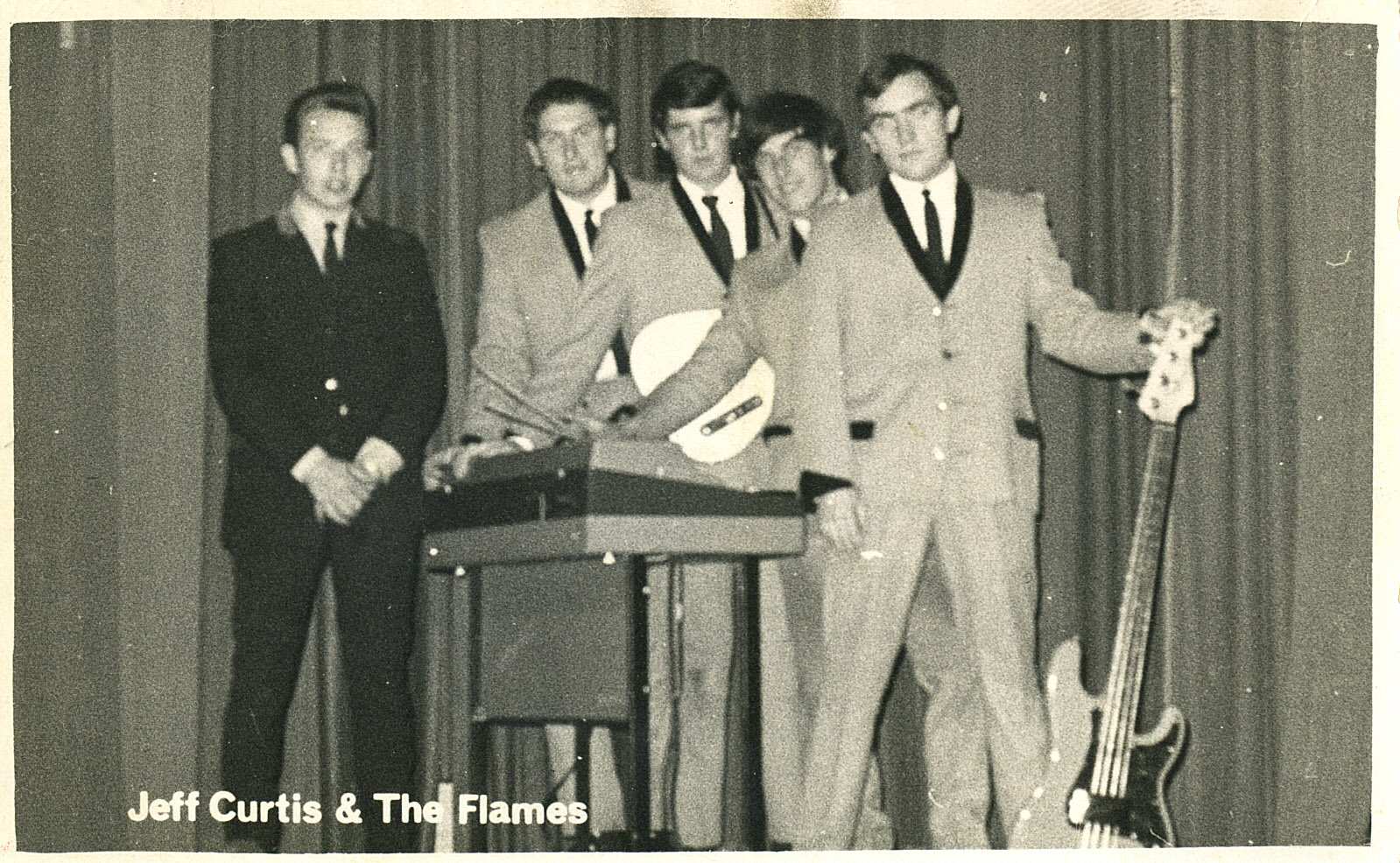
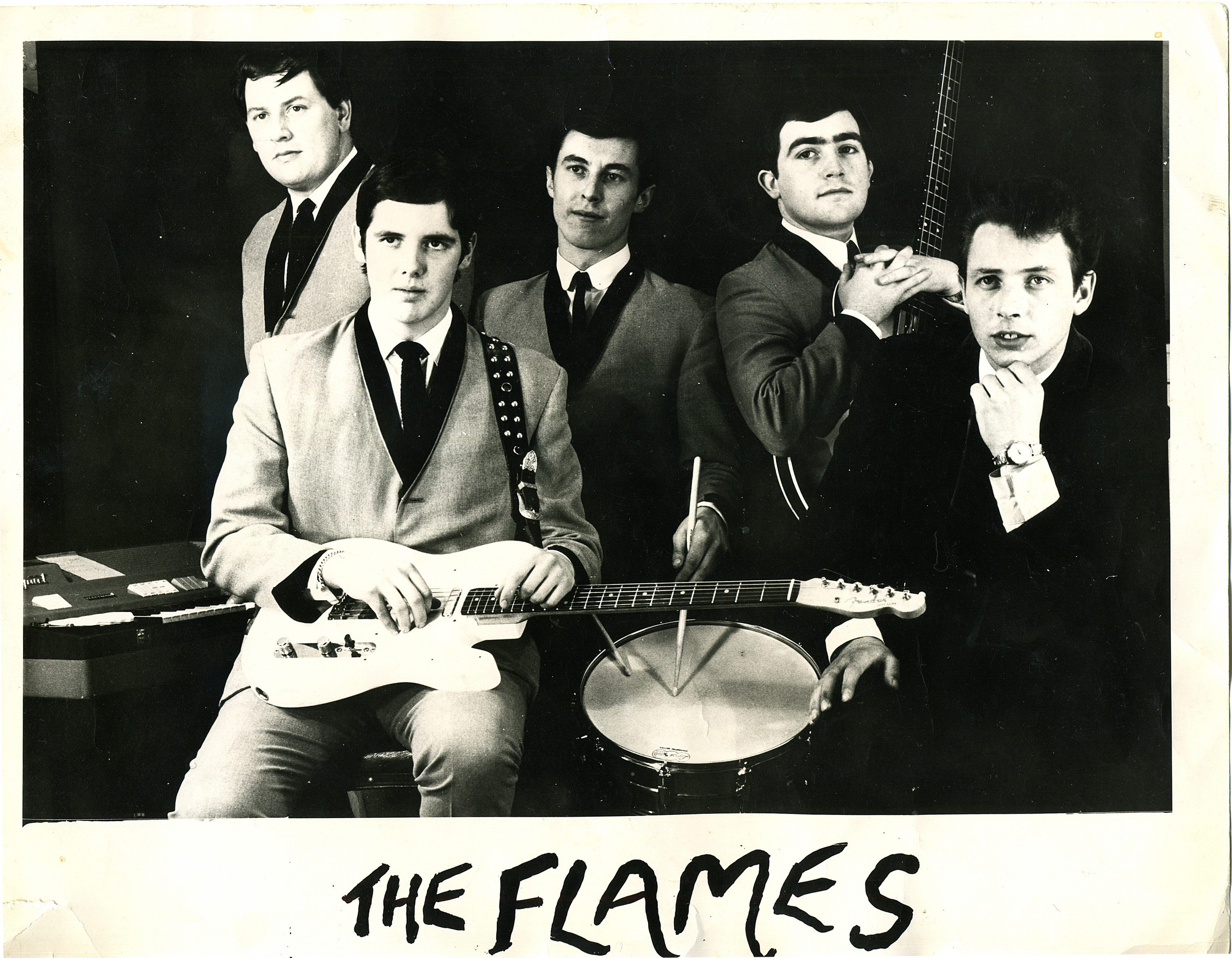
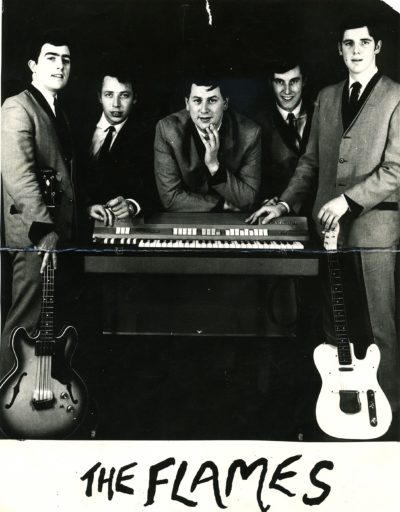
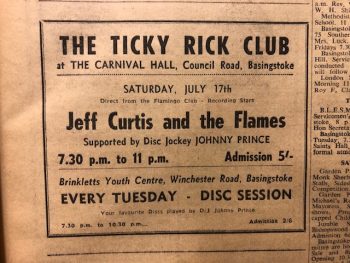
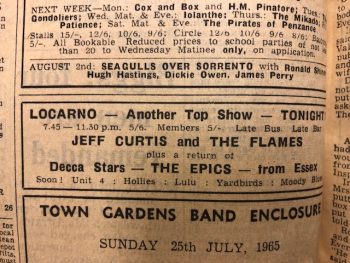
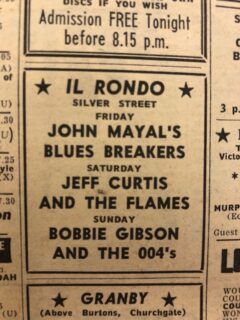
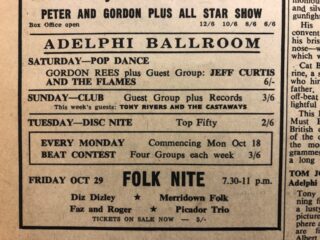
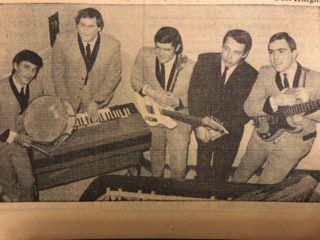
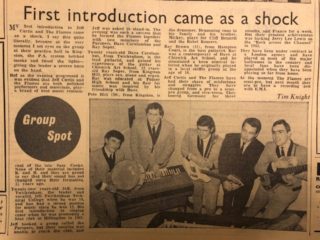
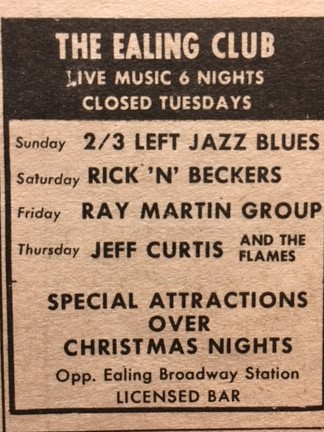 16 December 1965 – Ealing Club, Ealing, London