Jim Robertson (Vocals) (circa May 1966-circa July 1969)
Tim Forsythe (Keyboards, Harmonica) (circa May 1966-August 1967)
Domenic Angelicchio (Drums) (circa May 1966-circa July 1969)
Danny Barrucco (Bass) (circa May 1966-December 1966)
Dave Hanna (Guitar) (circa May 1966-July 1966)
Don Duncan (Guitar) (July 1966-September 1966, May 1967-August 1967)
Jean Pierre Lauzon (Guitar) (September 1966)
Richard Lasnier (Guitar) (circa October 1966)
Gary Marcus (Guitar) (circa October-December 1966)
Bob Burgess (Bass) (December 1966-May 1967)
Louis McKelvey (Guitar) (December 1966-May 1967)
Ken Duffy (Bass) (May 1967-circa July 1969)
Les Kozichinsky (Guitar)(August 1967-July 1968)
Don Hay (Keyboards)(August 1967-December 1967)
Jerry Carruthers (Keyboards)(December 1967-July 1968)
Dick Stenstrum (Keyboards)(July 1968-circa July 1969)
Roald Longhi (Guitar)(July 1968-circa July 1969)
The original band was formed in the summer of 1966 by former Haunted members Jim Robertson and Tim Forsythe. Robertson was originally from Edinburgh, Scotland where he’d played sax in a group during 1964 before moving to Montreal.
Based in Lachine, Quebec, the band made its debut at the local YMCA.
Hanna left soon after the band started playing live. However, the group went through a succession of lead guitarists, starting with Don Duncan, who left in September 1966, before McKelvey joined in December.
McKelvey’s arrival coincided with that of Bob Burgess from The Haunted. In between Duncan leaving and McKelvey joining, Our Generation featured temporary stopgap guitarists, J P Lauzon, who went on to The Jaybees, Richard Lasnier and Gary Marcus from Oven.
The line up with Duncan, however, was responsible for the first single, a cover of the Muddy Waters blues favourite ‘I’m a Man’, backed by Forsythe’s ‘Run Down Every Street’.
Irish-born and British raised guitarist Louis McKelvey, who had arrived in Montreal around October 1966 after playing with west London band Jeff Curtis & The Flames and later South African groups The Upsetters and The A-Cads, appeared on the band’s second single, before forming Influence in late May 1967.
Prior to joining Our Generation, McKelvey had played with Les Sinners for a few weeks and was later given co-production credit for The Haunted’s third single with fellow ex-A-Cads member Hank Squires.
This line up of Our Generation provided the soundtrack to the Canadian Film Board film, ‘It’s Not Jacques Cartier’s Fault’. McKelvey wrote ‘Cool Summer’ while Burgess composed the A-side, ‘Out to Get Light’.
Burgess left Canada in late 1967 to spend some time in the UK where he recorded, and then returned to form a new band Lilac. In the ‘70s he led Aean.
Angelicchio, Forsythe and Robertson kept the band going bringing back guitarist Don Duncan and adding new bass player Ken Duffy. This line-up lasted until August 1967 when Forsythe left to join Peter & The Pipers and Duncan moved on.
Angelicchio, Duffy and Robertson brought in keyboard player Don Hay and guitarist Les Kozichinsky for a few months. Then in December Jerry Carruthers took over keyboards from Hay.
This line-up settled and performed into the summer of 1968 before further changes.
Keyboard player Dick Stenstrum and guitarist Roald Longhi joined Jim Robertson, Dominic Angelicchio and Ken Duffy and also played Our Generation’s most significant concert date, the Summer Pop Festival held at The Autostade, Montreal on 17 July, which was headlined by The Who, The Troggs, Mitch Ryder & Detroit Wheels and The Ohio Express. The Haunted also appeared at the festival.
The band continued on for another year or so before splitting.
After The Jaybees, Lauzon went on to play with The Carnival Connection, Life, Mylon Le Fevre and ultimately The Wackers. Marcus joined The Haunted.
Recordings
45 I’m A Man/Run Down Every Street (Barry 3461) 1966 45 Cool Summer/Out To Get Light (Trans World 1678) 1967
Selected advertised gigs
February 17 1967 – West Hill High, Montreal February 18 1967 – Stanstead College, Montreal February 24 1967 – Malcolm Campbell High, St Laurent, Quebec February 25 1967 – The Barn (on Du Hamel)
March 3 1967 – Gig in Hudson (Quebec?) March 4 1967 – Salle Espangnola, St Therese, Quebec March 10 1967 – The Jail, Montreal March 11 1967 – Gig in Huntington, Quebec March 18 1967 – St Hubert Inn Club, St Hubert March 25 1967 – Caveman’s Hive, Montreal March 27 1967 – St Augustine’s NDG (Montreal?)
April 8 1967 – The Jail, Montreal April 14 1967 – St Willabroads School (Montreal?) April 22 1967 – St Bartholemew (Montreal?) April 28 1967 – The Barn, Ile Perrot April 29 1967 – Roxboro Chalet, Roxboro May 5 1967 – Hot Spot, Rosemere May 6 1967 – Town and Country, Cote de Liesse with Munks May 7 1967 – Town and Country, Cote de Liesse with The Jaybees
September 24-30 1967 – Garden of Stars, Montreal
Live dates taken from the Montreal Star newspaper.
Many thanks to Bill Munson, Carny Corbett, Louis McKelvey, Bob Burgess, Ken Duffy.
Scrugg live, left to right: Chris Demetriou, Jack Russell, Henry Spinetti (hidden) and John Kongos
Johnny Kongos news clip October 1966
Buried in the welter of superlative singles issued in September 1967 was an intriguing release by an Anglo-South African group with a suitably ‘flower power’ name, Floribunda Rose. A forgotten gem, ‘One Way Street’ c/w ‘Linda Loves Linda’, should have been a resounding hit but despite being plugged incessantly by several notable radio stations, it barely made a ripple. Floribunda Rose may have been lost to a bygone age but its lead singer and principal songwriter remains one of South Africa’s most successful exports and would years later become synonymous with one of Brit Pop’s most enduring anthems, The Happy Monday’s ‘He’s Gonna Step On You Again’.
Johnny Kongos
Born in Jo’burg on 6 August 1945 to Greek parents, aspiring singer/songwriter and guitarist Johnny Kongos had formed his first group, The Dukes, when he was 15 years old and began carving out a local following playing at his mother’s club, the Fireplace in Boksburg.
Joined by former Mickie Most & The Playboys guitarist Hank Squires in 1962, the group morphed into Johnny Kongos & The G-Men and over the next three years released nearly twenty singles and half a dozen albums for the Teal and RCA labels.
In late 1963, Kongos made his first exploratory visit to the UK but despite auditioning for a couple of major labels, and running into Hank Squires’s former band leader, Mickie Most, now a fledgling producer, Kongos failed to make an impact.
Empty handed, he returned to Jo’burg and reformed The G-Men. Plans to consolidate his earlier successes, however, were soon thrown in the air when the singer was called up for national defence training in late 1964.
Returning to civilian life six months later, Kongos picked up where he’d left off and recorded a final single with The G-Men, ‘Until It’s Time For You To Go’, which secured a release on Teal, the South African distributor for the Pye label.
Record Express, July 1966
Thanks to these connections, Kongos elected to return to the UK in April 1966, where he befriended Pye’s manager/producer John Schroeder. Sufficiently impressed by Kongos’s audition tape, Schroeder secured a solo deal with Pye’s subsidiary label, Piccadilly.
The fruits of the ensuing sessions turned up on the singer’s debut UK single – the folky, self penned ‘I Love Mary’, backed with the poppy Kongos/Leroy number, ‘Good Time Party Companion’, released that September. Credited to John T Kongos, the single was well received but did nothing chart-wise.
004 in Personality, November 1965
Chris Demetriou, 1967
004
Soon after the single’s release, Kongos was back in South Africa beginning work on a fresh clutch of songs with the intention of recording an album. One night in April 1967, he dropped into the 505 club in Jo’burg’s trendy Hillbrow district and caught British group, The 004 entertaining the crowds (see The 004 page for a closer inspection of this fascinating group). Suitably impressed, he approached the band members after they’d finished their set and asked them to help him cut the planned album as paid musicians.
A hugely popular live act, The 004 had arrived in South Africa by boat in July 1965 on the back of a contract offered to the group’s lead guitarist, Pete Clifford (b. 10 May 1943, Whetstone, London). A former member of Dusty Springfield’s backing group, The Echoes, Clifford had first visited South Africa during 1964 and participated in the singer’s infamous tour where she was deported for refusing to play to segregated audiences.
While the tour had been a PR disaster, Clifford had been promised some lucrative work by Trevor Boswell, husband of South African 1950s star, Eve Boswell, and co-owner of the Keleti Artist Agency, if he could return from London with a new group.
Clifford sought around for suitable musicians and quickly recruited Welsh rhythm guitarist and singer Brian Gibson from The Laurie Jay Combo, who in turn recommended fellow countryman, bass player and singer Jack Russell (b. 29 April 1944, Caerleon, Wales).
Gibson and Russell had known each other for years, having first worked together in The Victors, resident band at the Latin Quarter, one of London’s top theatre restaurants.
“I had a call on the Monday from Brian,” remembers Russell, who was working as a manager for Vox in Dartford at the time. “He asked me if I fancied joining him in a band that was going to South Africa. I said, ‘Yes’ and asked, ‘When do we go?’ He said, ‘Thursday!’”
With Londoner Peter Stember (today a successful US-based photographer) completing the line up on drums, The 004 sailed for Durban and soon shot to local fame as one of the top groups working the clubs, so much so that they landed jobs supporting Gene Vincent and The Ivy League.
During 1966, the band released a handful of singles for CBS, including ‘The In Crowd’ and a decent album, It’s Alright, before Stember returned to the UK in August.
In his place, The 004s recruited Dutch-born, South African raised drummer Nick ‘Doc’ Dokter (b. 24 July 1945, Kampen, Overijsel, The Netherlands), who possessed an impressive musical CV, including a stint with The Leemen Limited alongside South African guitar legend, the late Ken E Henson.
Originally a bass player, Dokter moved to drums early his career after the sticksman in the garage band he was playing in gave up music for a regular job. Working with future A-Cads singer Sammy Evans in a factory making boilers, the pair struck up a friendship and in an interesting turn of events both ended up joining Johnny Kongos’ group The G-Men after the singer was called up for military service.
“We all went and played at John’s place, the Fireplace,” recalls Dokter. “From there I met Kenny Henson, who needed a drummer, so I moved to Durban to join Leemen Limited.”
After two rare singles on the Continental label, including a great version of ‘In The Midnight Hour’ backed by John Mayall’s ‘Heartaches’, it was time to move on again.
“I was just hanging around and Pete Clifford approached me. Peter Stember was leaving The 004 and he just said, ‘Why don’t you just come out and play with us?’ I was really a young kid and I had no experience of playing big clubs. They kinda took me under their wing.”
With Dokter filling the vacant drum stool, The 004 spent the remainder of 1966 consolidating their live reputation. When Gibson handed in his notice in early 1967 (later joining progressive rock band, Abstract Truth, alongside Henson), The 004 briefly recruited guitarist Barry Mitchell from rival band, The In Crowd, but the line up never gelled and when Kongos dropped into the 505, the group had been stripped to a trio.
“John originally offered a job to Jack and Pete,” says Dokter. “I wasn’t included in this. Eve Boswell’s son was originally going to be the drummer. He did some demos with Pete and Jack but it didn’t work out. I happened to be in one of the sessions and just took over.”
As Kongos recalls, he always intended to employ a Farfisa organ sound on his album so when Clifford, Dokter and Russell took up the offer to record with him, they were joined in the studio by a fifth member, Chris Demetriou (more commonly known as Chris Dee).
Chris Demetriou
Former keyboard player with Johannesburg’s finest R&B group, John E Sharpe & The Squires (see the Chris Demetriou interview page for more information on this band), Cyprus-born Demetriou had appeared on all of The Squires’ classic singles, including covers of The Kinks’ ‘Stop Your Sobbing’ and Paul Simon’s ‘I Am A Rock’, as well as the highly sought after Maybelline album.
“John located me through the Jo’burg Greek club,” remembers Demetriou. “I was invited to his house and the next thing I knew we were planning to leave the country and seek fame and fortune in London.”
As Kongos relates, his plan had always been to return to the UK with a band as soon as possible and use the recordings to secure further work. Looking back on the sessions, he dismisses most of the material as forgettable.
“I had written a bunch of songs and I basically wanted to do demos. I went into the studio with all of the guys and wound up taking that ‘album’ of demos to the UK.”
As events panned out, the band got half way through the recording when Kongos made a proposition: rather than pay the musicians for the sessions, he would cover everyone’s fares to UK.
The as-yet unnamed Floribunda Rose in Jo’burg, May 1967. Left to right: Pete Clifford, Jack Russell, John Kongos, Chris Demetriou and Nick Dokter
Floribunda Rose
According to Russell, it made sense to return home and crack the British market, especially when Kongos had connections in the music industry. “He would have been a fool not to do that,” he says. “He had a contract in his back pocket with Pye and a contract with Maurice King who ran the Walker Brothers among others; it was a stable worth getting into.”
Before setting off by boat in May 1967, the newly formed group posed for some publicity photos in Kongos’s Jo’burg house. Then, a few days’ later, set sail for England, writing and rehearsing material, including the Kongos-Russell collaboration, ‘Linda Loves Linda’, in preparing for the assault on the British market.
Throughout the long journey the group struggled to come up with a suitable name. “I wanted to call it Kongos’s Magic Dragon but [John] wouldn’t have it,” says Russell.
In fact, as the bass player explains, the musicians only agreed on Floribunda Rose on the way to their first gig! Having arrived at Maurice King’s office during their first week in London, the manager calmly informed the musicians that they had a gig the next day and studio time booked a few weeks later.
A second hand camper van was hastily purchased in Earl’s Court and the band set off for its debut gig – a small club in Castleford, West Yorkshire on 14 July, stopping off in central London on route to pick the elusive name.
“John and I walked across the street in Baker Street to a book shop, desperate to find a name for the band,” recalls Russell. “Flower power was at its zenith, so we plumped for Floribunda Rose. A bloody daft name but that was where people were at.”
After a handful of gigs in the north and the midlands, including shows in Tadcaster, Burnley and Tamworth, Floribunda Rose made their London debut at Tiles on Oxford Street on 19 August.
Around this time, the group also cut its debut single under Schroeder’s watchful eye – the poppy ‘Linda Loves Linda’ – supposedly a tale of female narcissism, backed by Kongos’s infectious, and rather Beatlesque, ‘One Way Street’. The plug side, with its ‘Everyone is Loving Everywhere’ lyric, ‘fairground’ organ and free-form ending, chimes perfectly with the ‘peace, love vibe’.
Released in September 1967 on Pye’s Piccadilly subsidiary and the same week that Radio 1 aired, ‘Linda Loves Linda’ benefited from its publicity and was heavily plugged by Tony Blackburn and Pete Murray.
“We were very lucky,” says Russell. “Maurice King was an operator. He knew his stuff and employed a plugger who would go round the BBC with new releases.”
“In those days you had to get on the BBC play-list. We were on the first week of Radio 1. Only three singles a week out of the 80 releases used to get on that, which was fantastic.”
To coincide with the station’s launch, the group recorded a BBC Radio 1 session with Brian Matthews on 25 September for a show that was replacing Saturday Club, cutting new versions of ‘Linda Loves Linda’ and ‘One Way Street’, along with covers of Paul Simon’s ‘Bright Green Pleasure Machine’ and ‘59th Bridge Street Song’. None of the tracks have been released and remain buried somewhere in the BBC archive.
Yet despite getting on to the new play list, recording a live session and having a Juke Box Jury appearance as ‘mystery band’ (on 8 September) and being voted a hit, the single stiffed.
The group returned to the daily grind of touring, often travelling hundreds of miles to play small clubs and sharing the bill with the likes of The Zombies, Dave Berry and Lonnie Donegan to name a few.
“Most of our gigs were up and down the M1 at less prestigious venues,” recalls Demetriou. “We did play some university events and supported more well known acts.”
“There are lots of little funny things that happened with Floribunda Rose,” adds Kongos. “It was really corny actually – attempting to jump on the ‘Flower Power’ bandwagon. We did dumb things like throw out flowers to the crowd at the end of a the gig [which] went down really well in Workingmen’s clubs (not!)
“I think the best thing about the band was that we did really intricate medleys of known songs – a little like Vanilla Fudge, in the sense that the versions were very different.”
Book-ending the year, Floribunda Rose spent a month playing at the Top Ten in Hamburg, grafting for six hours a night to a largely unappreciative crowd. While there, Dokter remembers rubbing shoulders with the musicians that would later go on to form the nucleus of heavy rock band, Deep Purple.
Exhausted, the group drove home non-stop, heading straight for the Scottish Highlands in the first week of January where the first cracks in the band’s precarious line up surfaced.
“We did one [10-day] tour of Scotland [and] that was the last thing I did with them,” remembers Clifford, who left after the final gig on 14 January. “I then flew out from the freezing cold to the humid heat of Durban and nearly died. I had a pair of leather jack boots and a Scottish hiking jacket!”
Pete Clifford returns to South Africa and joins the Bats
Back in South Africa, the guitarist joined The Bats, appearing on the highly sought after Image album (which includes the superb ‘Money Ain’t Worth a Dang’) and also playing numerous sessions, most notably providing bouzouki on Freedom Children’s debut album, Battle Hymn of The Broken Hearted Horde. During the late 1960s and 1970s, he became one of South Africa’s most respected guitarists and continues to tour with The Bats.
“[Pete] and John just butted like rams,” explains Russell on the guitarist’s dramatic exit. “Pete was very experienced. He had worked with some major people. He knew his stuff and was a good guitar player but basically John didn’t want a lead guitarist.”
“Pete Clifford was an incredible guitar player and so was John,” adds Dokter. “They were both very talented. It was good for Pete to actually go on his own and work with The Bats and John had the freedom to do what he wanted to do.”
Kongos has the last word: “Pete was not satisfied with the lack of progress in the band – it wasn’t easy travelling hundreds of miles to little gigs and winding up almost out of pocket at the end of the day. Musically too, it was not satisfying for us because we had different ideas. We got on each others’ nerves and could have been the model for Spinal Tap if we’d made it.”
Nick Dokter departs
With Clifford gone and Kongos assuming lead guitar duties, it wasn’t long before Dokter also bailed. “Nick was married and his wife was getting bored with the difficulties of not making money,” explains Kongos on the drummer’s departure in late February after a 10-day stand at the Nova club in Kensington, West London.
A qualified boilermaker, Dokter briefly returned to South Africa where he worked a day job while playing with various local groups. In the late 1960s, he moved to his country of birth, Holland, and returned to school to study engineering. Turning down an offer to join The Golden Earring, he subsequently emigrated to Canada in 1969.
During the early 1970s, he got back into playing and recorded an unreleased album with 5 Man Cargo, which later morphed in Cross Town Bus. Through this group he met promoter Bruce Allan and ended up working for his agency for nearly two decades, although Dokter did make occasion trips back to South Africa where he played with his old buddy Kenny Henson in his duo, Finch & Henson among other projects.
“Needless to say, being on the road for 20 years, six-to-nine months at a time, took its toll and I became a studio/session drummer,” says Dokter, who retired from playing full-time in 1989 and currently lives in Vancouver. In the summer of 2009, he plans to visit the UK and catch up with Jack Russell, who he hasn’t seen since early 1968.
Scrugg, 1968, left to right: Jack Russell, Chris Demetriou, John Kongos and Henry Spinetti
Scrugg
With Dokter out of the picture, the remaining members returned to London where Russell and Demetriou found themselves caught up in a police raid at their shared flat. “Unbeknown to us, while we were away in Germany and Scotland our road manager had been renting our rooms out,” says Russell, recalling the tragic event.
“People had been using our place as a doss house and these guys had been dealing. We hadn’t a clue the police had been watching the place and we arrived back the morning they hit the place. We were fitted up and forced to plead guilty. We were fined £50 and got front page of The Sun.” (Ed. the incident was reported the Marylebone & Paddington Mercury on its 9 February 1968 issue, page 11).
Putting the loss of Dokter behind them, Russell returned to the Welsh valleys and brought back 16-year-old wonder kid, Henry Spinetti (b. 31 March 1951, Cwm, Wales), younger brother of Victor Spinetti and today Katie Melua’s drummer.
With two weeks’ work lined up at the Top Ten in Hamburg, kicking off on 1 March, the group headed for the continent bearing a new name – Scrugg. “I chose the name because we wanted a more earthy image and I was a fan of Earl Scruggs the banjo player,” admits Russell.
“That was a suggestion that we all made,” chips in Clifford, who believes the name was discussed while he was still a member. “We were all trying to think of a new image and I think I left on the verge of Scrugg because I’ve got a picture of Floribunda Rose and then in brackets it says ‘Scrugg’.”
Under its new guise, Scrugg returned to the studios with John Schroeder to work on the first of three classic singles, which, as David Wells rightly points out in the liners for the John Kongos’s compilation album, Lavender Popcorn, “remain exquisite examples of the psychedelic pop sound.”
Scrugg’s debut outing, released on Pye in April 1968, coupled two John Kongos numbers – ‘Everyone Can See’ backed with ‘I Wish I Was Five’. The latter is undoubtedly the stronger of the two and is notable for Lew Warburton’s stirring string arrangement (based directly on Russell’s bass line) and Demetriou’s moody organ playing, which heightens the tension, building to a dramatic climax. A yearning for the innocence and honesty of youth, ‘I Wish I Was Five’ should have been the side to plug and perhaps not surprisingly the single went nowhere.
Two months later, Pye rushed out a follow up, a cover of Scott English’s poppy ‘Lavender Popcorn’, backed by the Kongos penned ‘Sandwich Board Man’, which the singer says was inspired by said character who he used to see regularly on Oxford Street.
A noted songwriter, English, had serious pop credentials and had scored hits with covers of ‘Hi Ho Silver Lining’ and ‘Bend Me Shape Me’, but the group was uncomfortable recording such a blatant teeny-bopper, bubblegum track. The band’s producer, however, overruled any objections and even contributed to the recording by playing piano with a plectrum! “John Schroeder said, ‘You’re doing it’,” remembers Russell. “‘You’ve had two of your own and you’re doing one of mine now, so shut up!’”
Tailor-made for the pop market, ‘Lavender Popcorn’ should have been Scrugg’s commercial breakthrough but like its predecessors faded into obscurity.
Scrugg on stage, left to right: Chris, Henry (hidden on drums), Jack and John
Forced to make a living on the road, Scrugg resumed their busy touring schedule travelling the length and breadth of the country and taking in towns as far as field as Newcastle, Birmingham and Penzance. Debuting on 3 August 1968, the band also became regulars at London’s renowned nightclub, Scotch of St James, returning again for shows on 7 and 14 September and culminating with a two-night stand on 27-28 September. During this hectic period of touring, Scrugg participated in a historic moment in rock history, opening for a “mystery” band of superstars at a show at Sheffield University on 23 November.
“We opened for them and then watched their show,” says Kongos. “We all agreed that these guys would probably not make it because ‘who needed another Cream?’ so we gave them the thumbs down. They were called Led Zeppelin!”
With Zeppelin’s star in the ascent and Scrugg’s future looking bleak, the end was in sight.
John Kongos and Jack Russell on tour in ScotlandClockwise from top left: John Kongos, Henry Spinetti, Chris Demetriou and Jack Russell
In early January, Scrugg’s final single was released and coupled the Kongos’s rave up, ‘Will The Real Geraldine Please Stand Up and Be Counted’ (a song originally recorded for the album session in Jo’burg in 1967), with the singer’s ‘Only George’, a kitchen sink tale about break-up and divorce, introduced by Russell’s freakily distorted vocal.DJ John Peel remained a huge fan and opened his show numerous times during its first week of release but despite the publicity, it failed to chart. Dispirited, the musicians decided to call it a day, bowing out with a two-night stand in Margate, Kent on 18-19 January.
In the aftermath of Scrugg’s split, Kongos went on to establish a successful solo career in the early Seventies, scoring hits with ‘He’s Gonna Step On You Again’ (co-written with Demetriou) and ‘Tokoloshe Man’. He currently resides in Arizona and is preparing material for a new album.
The others meanwhile maintained a less visible, albeit rewarding careers. Spinetti became a top session drummer, working with the likes of Roger Chapman, Bill Wyman and Eric Clapton while Demetriou co-wrote several songs for Kongos’s debut album, Confusions of a Goldfish, and later oversaw recordings for Mike D’Abo and Cat Stevens among others. He currently lives in Esher, Surrey and is a pastor in a local church.
Russell, who gave up playing music in 1969, later ran a successful specialist advertising agency before retiring in 2005. Aside from a brief reunion with Pete Clifford and Brian Gibson where they played at a theatre in Hampton Hill, Middlesex to celebrate Russell’s 6oth birthday, he currently plays solo sets at the Rising Sun pub in Twickenham.
Aficionados can expect to pay hefty prices for Floribunda Rose and Scrugg singles. Mercifully, Castle compiled an excellent CD in 2001 called Lavender Popcorn, pulling together all of the recordings, including the previously unreleased Scrugg track, ‘Patriotic’, although regrettably the BBC radio sessions were omitted.
Despite that small oversight, the CD is recommended to anyone who feels the urge to savour some of the most exquisitely recorded British psychedelic pop.
A huge thanks goes to Jack Russell for his generous assistance in pulling the story together and for offering the use of his private photo collection and live gig list. Thanks also to John Kongos for his insights into the group, Chris Demetriou, Nick Dokter, Pete Clifford and David Wells.
Floribunda Rose: Linda Loves Linda / One Way Street, Picadilly 7N.35408
Scrugg: Everyone Can See / I Wish I Was Five, Pye 7N.17492 Lavender Popcorn / Sandwichboard Man, Pye 7N.17551 Will the Real Geraldine Please Stand Up and Be Counted / Only George, Pye 7N.17656
Floribunda Rose gigs (thanks to Jack Russell for diary dates):
14 July 1967 – Crystal Ballroom, Castleford , West Yorkshire
15 July 1967 – Boulevard, Tadcaster, North Yorkshire
18 July 1967 – Burnley, Lancashire (no venue listed)
22 July 1967 – Brierfield, Lancashire (no venue listed)
4 August 1967 – Crow’s Nest, Tamworth, Staffordshire
19 August 1967 – Tiles, Oxford Street, London
26 August 1967 – The Boogaloo, Crystal Ballroom, Castleford, West Yorkshire (according to the Sheffield Star and Wakefield Express this was with The Magic Lanterns)
29 August 1967 – Luton, Bedfordshire (no venue listed)
2 September 1967 – The Rover, Solihull, Warwickshire
3 September 1967 – Cromer, Norfolk (most likely Olympia Ballroom)
8 September 1967 – Clouds, Derby, Derbyshire
9 September 1967 – Cesar’s Club, Bedford, Bedfordshire (according to the Bedfordshire Times)
15 September 1967 – Tiles, Oxford Street, central London with Simon Dupree & The Big Sound
22 September 1967 – Crystal Ballroom, Castleford, West Yorkshire
23 September 1967 – Majestic Ballroom, Wellington, Shropshire with The Opp Art (Shropshire Journal)
24 September 1967 – Cosmo, Carlisle, Cumbria with Root and Jenny Jackson and The Hightimers
25 September 1967 – Radio 1 recording
29 September 1967 – Wigton Rugby Club, Wigton, Cumbria with Zora Floy’s Machine (Cumberland News)
30 September 1967 – Boulevard, Tadcaster, North Yorkshire (according to the Yorkshire Evening Post and Yorkshire Evening Press, this was with The Flowerpot Men)
1 October 1967 – Clayton Lodge Hotel, Newcastle-under-Lyme, Staffordshire with The Pink Variety
7 October 1967 – Cleveland Arms, Wolverhampton, West Midlands (according to Express & Star)
12 October 1967 – Penny Farthing, Hanley, Staffordshire
12 October 1967 – Crystal Ballroom, Newcastle Under Lyme, Staffordshire
13 October 1967 – St Helens, Lancashire (possibly The Co-Op)
14 October 1967 – Leicester University, Leicester, Leicestershire
20 October 1967 – Kendall Town Hall, Kendall, Cumbria
21 October 1967 – Royal Ballroom, Ripley, North Yorkshire
22 October 1967 – Cofton Country Club, Birmingham (listed in Fabulous 208 but not in Jack’s gig list)
28 October 1967 – Public Hall, Barrow, Cumbria (The Mail – Millom and South Copeland ed)
29 October 1967 – New Tredegar, Wales (no venue listed)
2 November 1967 – Nottingham (no venue listed)
5 November 1967 – Sutton in Ashfield, Nottinghamshire (possibly The Revolution)
7-13 November 1967 – Birmingham, West Midlands area gigs (booked through the Astra Agency) (see below)
9 November 1967 – Kingfisher Country Club, Wall Health, West Midlands with The Californians and The Barmy Barry Show (according to Express & Star)
10 November 1967 – Waggon and Horses, Wall Health, West Midlands (according to Express & Star)
15 November 1967 – Hucknall, Nottinghamshire (no venue listed)
18 November 1967 – Walton Playhouse, Walton-on-Thames, Surrey
December 1967 – Month in Hamburg, West Germany (Top Ten Club on Reeperbahn)
5-14 January 1968 – Ten-day trip to Scotland (see below)
5 January 1968 – Longmore Hall, Keith, Scotland with The Rebel Sounds (Banffshire Herald)
6 January 1968 – Tain Town Hall, Tain, Scotland (Ross-Shire Journal & General Advertiser)
8 January 1968 – Two Red Shoes Ballroom, Elgin, Scotland with My Dear Watson (Banffshire Herald)
12 January 1968 – Ballerina Ballroom, Nairn, Scotland with The Rebel Sounds
13 January 1968 – Victoria Hotel, Forres, Scotland (Forres Elgin & Nairn Gazette) This is missing from Jack Russell’s gigs
Peter Clifford left Floribunda Rose in Scotland after the final gig and flew to Durban, South Africa to join The Bats
27 January 1968 – Dreamland Ballroom, Margate, Kent with The Amboy Dukes (Russell has this as 20 January but must be mistake)
28 January 1968 – Rendezvous Club, Margate, Kent (Thanet Times) This is missing from Russell’s diary
3 February 1968 – Barrow Public Hall, Barrow, Cumbria with 4th Coming
16-25 February 1968 – Nova Club, Kensington, London
Nick Dokter left immediately afterwards and the musicians brought in Henry Spinetti. At some point the group changed name to Scrugg but did also continue to be billed as Floribunda Rose for some shows.
1-15 March 1968 – Top Ten, Hamburg, Germany
31 March 1968 – Sunderland, Tyne & Wear (no venue listed)
1-6 April 1968 – Sunderland, Tyne & Wear (possibly gigs at various clubs in the area)
7-13 April 1968 – Wolverhampton, West Midlands area gigs (see below)
The following are confirmed from the Express & Star newspaper (and billed as Floribunda Rose):
7 April 1968 – Albrighton WMC, Albrighton, West Midlands
8 April 1968 – Civic Hall, Wolverhampton, West Midlands with The News
11 April 1968 – Essington WMC, Essington, West Midlands
12 April 1968 – Oasis Club, Wolverhampton, West Midlands with The Dunes
13 April 1968 – 3 Men in a Boat, Walsall, West Midlands
20 April 1968 – Mr Smith’s Club, Winsford, Cheshire with T Bunkum Band and The Hideaways (billed as Floribunda Rose)
21 April 1968 – Coventry (no venue listed)
Around about now, they change name to Scrugg
3 May 1968 – ‘Tik Tok’ Discotheque, Grimsby (billed as Floribunda Rose) (according to Grimsby Evening Telegraph) There is another listing in this paper from 10 May that has the group returning to this venue on 12 July, which is missing from Russell’s diary
4 May 1968 – Dorothy Ballroom, Cambridge with Bob Kidman & His Band, The Break Thro’, Jubilee & The Sacremento “B”, Mildenberg Jazz Band (billed as Floribunda Rose)
10-19 May 1968 –Elgin area gigs in Scotland (see below)
11 May 1968 – Tain Town Hall, Tain, Scotland (Ross-Shire Journal & General Advertiser)
13 May 1968 – Two Red Shoes Ballroom, Elgin, Scotland (Northern Scot, Moray & Nairn Express)
24 May 1968 – Victoria Hall, Selkirk, Scotland with Catch 22 (Border Telegraph Galashiels)
25 May 1968 – Miners Wallace Institute, Kirkonnell, Scotland
27 May 1968 – Wall City Jazz Club, Quaintways, Chester, Cheshire with Peter & The Alphabet, The Morockans and The Wall City Jazzmen (Chester Chronicle) This is not in Russell’s gig list
31 May 1968 – Ringway, Birmingham, West Midlands
1 June 1968 – Sheffield, South Yorkshire (no venue listed)
2 June 1968 – Club Cedar, Birmingham, West Midlands
14 June 1968 – Milnthorpe, Cumbria (no venue listed)
15 June 1968 – 400 Ballroom, Torquay, Devon (Herald Express)
16 June 1968 – Jack’s diary says Birmingham 6 Ways but confirmed as Queen’s Beat Club, Six Ways, Erdington, West Midlands (billed as Floribunda Rose; see below too)
21 June 1968 – Eastbourne, East Sussex (no venue listed)
25 June 1968 – Oxford (no venue listed)
29 June 1968 – Queen’s Beat Club, Six Ways, Erdington, West Midlands (billed as Floribunda Rose)
3 July 1968 – Olympia, Scarborough, North Yorkshire with The Minority Soul Sound and The Urge
26 July 1968 – Sunderland, Tyne & Wear (not sure this happened as I have found Scrugg billed to play Steering Wheel, Weymouth on this day)
27 July 1968 – Newcastle (no venue listed)
1 August 1968 – Cromwellian Club, Bolton, Lancashire (Bolton News)
2 August 1968 – Reading, Berkshire (no venue listed)
3 August 1968 – Scotch of St James, Mayfair, London
5 August 1968 – Club Cedar, Birmingham (Birmingham Evening Mail)
10 August 1968 – Sibyllas, Swallow Street, London
11 August 1968 – Abercarn, Wales (no venue listed)
16 August 1968 – Lon Crom (most likely Cromwellian, South Kensington, London)
17 August 1968 – 6 Ways (most likely Queen’s Beat Club, Erdington, West Midlands)
18 August 1968 – Sutton in Ashfield, Nottinghamshire (no venue listed)
24 August 1968 – Crom Lon (most likely Cromwellian, South Kensington, London)
7 September 1968 – Scotch of St James, Mayfair, London
8 September 1968 – Ilford, London (possibly The Angel)
14 September 1968 – Scotch of St James, Mayfair, London
15 September 1968 – Playboy, Hyde Park Corner, London
16-18 September 1968 – Wales gigs TBA
21 September 1968 – King’s Hall, Aberystwyth, Wales with The Shakedown Sounds (this is missing from Jack’s gigs and comes from the Cambrian Times but may not be the same band)
26 September 1968 – Cromwellian Club, Bolton, Lancashire with Barbed Wire Soup (Bolton News)
27-28 September 1968 – Scotch of St James, Mayfair, London
29-30 September 1968 – Wales gigs
1-4 October 1968 – Wales gigs
5 October 1968 – Sutton in Ashfield, Nottinghamshire (no venue listed)
10 October 1968 – Commall Hebton (not sure this is correct)
11 October 1968 – Penzance, Cornwall (possibly Winter Gardens)
12 October 1968 – 400 Ballroom, Torquay, Devon (Herald Express) It is missing from Jack’s diary but they also play here on 19 October
21 October 1968 – Quaintways, Chester, Cheshire with The Pearlettes, The Elastic Band and Wall City Jazz Men
2 November 1968 – Ilford, London (possibly The Angel)
4 November 1968 – Sibs London (most likely Sibyllas, Swallow Street)
15-17 November 1968 – Scotland dates
23 November 1968 – Sheffield University, Sheffield, South Yorkshire with Led Zeppelin
7 December 1968 – Ilford, London (possibly The Angel)
14 December 1968 – Rotherham (no venue listed)
28 December 1968 – Stage Club, Oxford
18-19 January 1969 – Margate, Kent (most likely the Dreamland Ballroom)
The gig list cuts off here so not sure if there are any others
Grant Smith & The Power, spring 1967, shortly after their formation. Left to right: Brian Ayres, Val Stevens, Charlie Miller, Ralph Miller, Jim Pauley, Mike Harrison, Wayne Stone and Grant Smith
Grant Smith (Vocals) all line ups
Val Stevens (B-3 Organ) line up ABCDEHI
Jim Pauley (Guitar) line up AB
Mike Harrison (Bass) line up ABCDE
Wayne “Stoney” Stone (Drums) line up ABCDEF
Charlie Miller (Drums) line up A
Ralph Miller (Trumpet) line up ABCDEFGH
Brian “Otis” Ayres (Saxophone) all line ups
Jon Palma (Guitar) line up CD
Steve Kennedy (Saxophone, Harmonica) line up DEF
Kenny Marco (Guitar) line up EF
William “Smitty” Smith (Organ) line up F
Sonnie “Jiggs” Bernardi (Drums) line up GHI
Gord Baxter (Guitar) – line up GH
Rick Berkett (Bass) – line up GH
Wulf Stelling (B-3 Organ) – line up G
Ted Stack (Trumpet) – line up GH
Bert Hermiston (Saxophone/flute) – line up GHI
Josef Chirowski (Keyboards)
Frank De Felice (Drums)
Joe Agnello (Bass)
Terry Aubertin (Guitar)
Pedro Cortez (Keyboards)
Pierre Galipeau (Trumpet)
Former Weepers member Val Stevens together with Mike Harrison and the Miller Brothers had been playing with Toronto band Eddie Spencer & The Power when a decision was made on 1 January 1967 to shake up the band.
New lead singer (and former drummer with The Missing Links) Ellis Grant Smith (b. London, Ontario), together with guitarist Jim Pauley from his previous band, E G Smith & The Express and sax player Brian Ayres, who’d previously played bass guitar with Brantford, Ontario groups, The Galaxies, The Marque-Royals and The Beau Keys were brought in.
Two weeks later, another former Express member and second drummer, Wayne Stone joined. Stone had also previously played with London, Ontario band The Sticks and Stones with bass player Jim Laramie before the pair joined Grant Smith in E G Smith & The Express with Jim Pauley and keyboard player Vernon Pickell, who went on to briefly record with the mid-1967 version of The Mynah Birds at Motown before reuniting with Laramie in Natural Gas (with former Mandala singer George Olliver).
The first line-up remained together until mid-1967 and initially gigged as E G Smith and The Power before adopting the better known, Grant Smith & The Power.
Canadian music publication RPM Music Weekly featured a short article and photo of the group in its 10 June 1967 issue on the front page. The article notes the group first started playing at the In Crowd in Toronto’s Yorkville Village.
RPM Weekly article in June 1967
After Charlie Miller’s departure in June, the group went to the United States, now working with only one drummer, and played on the Atlantic Seaboard, including playing at the Number 3 Lounge in Boston.
After returning to Canada, Jim Pauley quit and was replaced by Jon Palma in September. Palma had previously played in The Weepers alongside Val Stevens and Charlie Miller.
The band’s debut 45, a soul version of The Spencer Davis Group’s ‘Keep on Running’ coupled with Smith and Stevens’s ‘Her Own Life’, came out in January 1968 and featured line up C.
Both singles were recorded (with Steve Kennedy on the sessions) at Toronto music mogul, Art Snider’s Sound Canada studios in Toronto. Kennedy, a former member of Diane Brooks, Eric Mercury and The Soul Searchers, joined the group as its musical director in January 1968.
RPM Music Weekly’s 20 January issue notes that the group opened their second US tour in Revere, Massachusetts on 15 January, with follow up appearances in Boston, Baltimore, Philadelphia, New York and Chicago. The first half of the tour was due to end on 9 March and then they returned to Toronto.
The band, spring 1968. Left to right: Mike Harrison (missing), Jon Palma, Wayne Stone, Val Stevens, Ralph Miller, Grant Smith (front), Steve Kennedy and Brian Ayres. Photo used for front cover of their LP.
While in New York in May 1968, Palma left to join Mary Ann Brown & The Good Things and guitarist Kenny Marco, who had played alongside Brian Ayres in The Galaxies, The Marque-Royals and The Beau Keys joined.
Grant Smith & The Power, summer 1968, shortly after Kenny Marco (second left) joined and before Mike Harrison (second right) and Val Stevens (far right) departed
With Marco on-board the group recorded their second single, ‘Thinkin’ About You’ c/w ‘You Got What You Want’ at Art Snider’s Sound Canada studios in Toronto. The tracks were picked up by MGM and released that autumn. (Ed. Stone thinks Jon Palma was the guitarist on these two tracks and not Marco).
In October 1968, Harrison left to join McKenna Mendelson Mainline.
Stevens also left at this point and William Smith, who’d previously worked with The Soul Searchers came in, covering bass on Hammond organ.
November 1968, left to right: Brian Ayres, Kenny Marco, Wayne Stone, Grant Smith, Steve Kennedy, Ralph Miller and William Smith. Photo used for back cover of their LP
Line up F was responsible for recording the bulk of the group’s album on Boo in November 1968, which also included the band’s debut single and a few tracks recorded by earlier line ups.
However, Marco, Kennedy, Smith and Stone weren’t happy with the recording and its reliance on cover material and left in mid-January 1969 to form Motherlode.
Four members of Franklin Sheppard & The Good Sheppards took their place. Gordon Baxter had started out with Kitchener, Ontario group The Counts Royale.
In mid-1966, however, Wulf Stelling, who had played alongside Brian Ayres in The Marque-Royals in the early 1960s, invited the guitarist to join a new band he was forming in Brantford, Ontario that also featured former Jay’s Rayders members Rick Berkett (aka Ric Barker) and sax player Glen Higgins.
After rehearsing for several months with another singer (Larry Lewellan), Stelling’s group was picked up by Franklin Sheppard in October; Sheppard had broken up the original Sheppards following dates in Vancouver the previous month. In August 1967 Sonnie Bernardi joined from Mary Ann Brown & The Good Things and The Sheppards toured the US before splitting in mid-1968.
Franklin Sheppard & The Good Sheppards, August 1967. Left to right: Chuck Slater, Rick Berkett, Glen Higgins, Frank Sheppard, Wulf Stelling, Gordon Baxter and Sonnie Bernardi. Photo: Gord Baxter
Baxter had started to put together a new R&B group in Kitchener when Stelling called him to join Grant Smith in January 1969 alongside Bernardi and Berkett. At the same time, Smith added two more horn players, Ted Stack on second trumpet alongside Ralph Miller and Bert Hermiston on second sax and flute.
Following several weeks of rehearsals at the Hawk’s Nest in Toronto and playing some local gigs, line-up G headed to the Boston area in the first week of May 1969.
Sonnie Bernardi next to gig sign for 30 June to 6 July 1969 at Mill Hill Club, West Yarmouth, Cape Cod. Photo: Gord Baxter
However, Grant Smith soon clashed with Stelling and Val Stevens was brought back into the group around July.
Left to right: Rick Berkett, Ralph Miller, Val Stevens and Gordon Baxter. Photo: Gord Baxter
The revised line-up continued to gig around Boston and the Cape Cod areas before returning to Toronto in August 1969. Smith then briefly disbanded The Power because he wanted a break. Baxter then reunited with Wulf Stelling in The Wulf Pack.
The Wulf Pack, 1970. Clockwise from left: Blake Barrett, Wulf Stelling, Gordon Baxter and Stacy. Photo: Gord Baxter
When Smith reformed The Power as a sextet in September 1969, he retained Brian Ayres, Bert Hermiston, Sonnie Bernadi and Val Stevens. However, the line-up remained fluid throughout 1970 and Smith expanded the line-up again to an 11-piece.
Former member Kenny Marco re-joined during this period as well after Motherlode split up and the group played in Las Vegas at Caesar’s Palace.
Grant Smith & The Power, 1970. Left to right: Brian Ayres, Bert Hermiston, unknown musician, unknown musician, Sonnie Bernardi, unknown musician, unknown musician, unknown musician, Val Stevens and (front) Grant Smith.
During 1970 Bernardi left and subsequently worked with Ronnie Hawkins, King Biscuit and then Crowbar. Hermiston did sessions with Heaven and Earth among others while Stevens formed his own trio before travelling to England in late 1970 and played with Clown, Tucky Buzzard and Steve Hillage’s Khan.
Marco subsequently joined former member William Smith in Los Angeles backing David Clayton-Thomas.
At some point (most likely late 1969/early 1970), keyboardist Josef Chirowski, who’d previously played with The Mandala and The Power Project worked with Grant Smith & The Power briefly. Also, another former Franklin Sheppard & The Good Sheppards member Frank De Felice was a brief member before forming Jericho.
Grant Smith continued to front various line-ups of The Power throughout the 1970s and beyond.
Former Leigh Ashford bass player Joe Agnello recalls playing with Grant Smith & The Power around 1971-1972 before he formed Fullerton, Little and Agnello Group (Flag). He says that former Power member Wayne Stone was on drums alongside guitarist Terry Aubertin and organist Pedro Cortez. He also remembers two trumpet players Pierre Galipeau and a guy called Benoit.
Stone subsequently worked with Johnny Otis in Los Angeles in the early 1970s and then returned to Toronto to play with Dr. Music, a band that had previously featured Kenny Marco and also included Steve Kennedy.
In the mid-1970s, former members Kenny Marco, Wayne Stone and Val Stevens (after he had returned from England) returned to play with Grant Smith in a line-up that also featured sax player Leo Sullivan.
Recordings
45 Keep On Running/Her Own Life (BOO 681) 1968
45 Thinkin’ About You/You Got What I Want (MGM 13979) 1968
LP Grant Smith & The Power (BOO 6802) 1968
RPM, 28 October 1969RPM, 17 March 1969
Selected advertised gigs
5 February 1967 – The Syndicate Club, Toronto, Ontario (formerly Club Isabella) (billed as E G Smith & The Power)
11 February1967 – The Hawk’s Nest, Toronto, Ontario (billed as E G Smith & The Power)
18 February 1967 – Gogue Inn, Toronto, Ontario with Franklin Sheppard & The Good Sheppards and The Wyldfyre (billed as E G Smith & The Power)
4 March 1967 – The Hawk’s Nest, Toronto, Ontario (billed as E G Smith & The Power)
10 March 1967 – Gogue Inn, Toronto, Ontario with The Five Good Reasons, Dana and Sunny & Peter
24 March 1967 – Avenue Road Club, Toronto, Ontario
26 March 1967 – Avenue Road Club, Toronto, Ontario
9 April 1967 – Crang Plaza, Downsview, Ontario with R K & The Associates (billed as E G Smith & The Power)
14 April 1967 – Club 888, Toronto, Ontario (billed as E G Smith & The Power)
29 April 1967 – The Hawk’s Nest, Toronto, Ontario (billed as E G Smith & The Power)
6 May 1967 – Broom and Stone, Scarborough, Ontario with Luv-Lites and The Tiaras and The Syndicate Five (billed as E G Smith & The Power)
13 May 1967 – Whitby Arena, Whitby, Ontario with Shawne Jackson, Jay Jackson & The Majestics, Bobby Kris & The Imperials, The Last Words, Jack Hardin & The Silhouettes, The Tripp, The Ugly Ducklings, Roy Kenner & The Associates and others (billed as E G Smith & The Power)
2 June 1967 – The Hawk’s Nest, Toronto, Ontario
2 June 1967 – Annadale Country Club, Pickering, Ontario (billed as E G Smith & The Power)
9 June 1967 – Don Mills Curling Club, Toronto, Ontario with The One Eyed Jacks
16 June 1967 – Whitby Arena, Whitby, Ontario with James and Bobby Purify, Shawne Jackson, Jay Jackson & The Majestics, Jack Hardin and Stitch In Tyme (billed as E G Smith & The Power)
27 June 1967 – Broom and Stone, Scarborough, Ontario with The One Eyed Jacks and Who & The Blazers
The band travelled to the United States for the summer
6 September 1967 – The Hawk’s Nest, Toronto, Ontario
23 September 1967 – Club 42, Stratford, Ontario (billed as E G Smith & The Power)
29 September 1967 – Jubilee Auditorium, Oshawa, Ontario (billed as E G Smith & The Power)
30 September 1967 – Broom and Stone, Scarborough, Ontario (billed as E G Smith & The Power)
Grant Smith and the Power RPM 2 October 1967
14 October 1967 – The Hawk’s Nest, Toronto, Ontario
21 October 1967 – York University, Toronto, Ontario (billed as E G Smith & The Power)
22 October 1967 – Teddy Bear Club, Toronto, Ontario
10 November 1967 – Club Boogaloo, Chandelier, near Wentworth, Hamilton, Ontario (Hamilton Spectator)
11 November 1967 – Broom and Stone, Scarborough, Ontario with The Taxi
17 November 1967 – Club Shade Blue, Hamilton, Ontario (Hamilton Spectator)
18 November 1967 – The Hawk’s Nest, Toronto, Ontario
1 December 1967 – Club Shade Blue, Hamilton, Ontario (Hamilton Spectator)
8 December 1967 – Jubilee Auditorium, Oshawa, Ontario (billed as E G Smith & The Power)
15 December 1967 – Club Trocadero, Toronto, Ontario
22 December 1967 – Club Boogaloo, Chandelier, near Wentworth, Hamilton, Ontario (Hamilton Spectator)
23 December 1967 – Bunny Bin, Toronto, Ontario with Christopher Edward Campaign and The Village Stop
26 December 1967 – Hidden Valley, Huntsville, Ontario
31 December 1967 – The Hawk’s Nest, Toronto, Ontario
6 January 1968 – The Hawk’s Nest, Toronto, Ontario
12 January 1968 – Jubilee Auditorium, Oshawa, Ontario
The band’s second US tour begins on 15 January and concludes on 9 March, according to RPM Music Weekly’s 20 January issue. It also says they will record most of their Boo LP from 11-23 March.
22-26 January 1968 – Buttercup Hill Club, Lunenburg, Massachusetts (Fitchburg Sentinel)
28 January 1968 – Buttercup Hill Club, Lunenburg, Massachusetts (Fitchburg Sentinel)
29 January-2 February 1968 – Buttercup Hill Club, Lunenburg, Massachusetts (Fitchburg Sentinel)
4 February 1968 – Buttercup Hill Club, Lunenburg, Massachusetts (Fitchburg Sentinel)
8 March 1968 – Jubilee Auditorium, Oshawa, Ontario (may not have happened if US dates correct above)
10 March 1968 – Teddy Bear Club, Toronto, Ontario (billed as E G Smith & The Power)
17 March 1968 – O’Keefe Centre, Toronto, Ontario with The Hollies and Spanky & The Gang (billed as E G Smith & The Power)
19 March 1968 – Club Riviera, Norval, Ontario with Stitch In Tyme and The Lords of London
20 March 1968 – Civic Centre Auditorium, Brantford, Ontario (The Expositor) Advert says they are leaving for Los Angeles next week but this seems unlikely
23 March 1968 – London Arena, London, Ontario with The Entertainer
24 March 1968 – The Hawk’s Nest, Toronto, Ontario
29 March 1968 – Jubilee Auditorium, Oshawa, Ontario
30 March 1968 – Neil McNeil Student Council, Toronto, Ontario (billed as E G Smith & The Power)
31 March 1968 – Intersection, Windsor, Ontario with The Amboy Dukes (Windsor Star)
RPM Music Weekly’s 20 January 1968 issue says the second half of their second US tour starts on 25 March and ends on 15 June. It looks like the start date may have been pushed back though to early April.
Mid-May 1968 – Trudy Heller’s, New York, USA (Toronto Daily Star)
14 June 1968 – Memorial Centre, Kingston, Ontario with The Varmints and Paper Dream (Kingston Whig-Standard)
16 June 1968 – Broom and Stone, Scarborough, Ontario (billed as E G Smith & The Power and says just back from US tour)
20 June 1968 – Huron Park Recreation Centre, Cooksville, Ontario with The Lords of London, The Five Shy and The Cat (billed as E G Smith & The Power)
21 June 1968 – Jubilee Auditorium, Oshawa, Ontario
22 June 1968 – Club Commodore, Kawarthas, Ontario
23 June 1968 – Summer Garden, Port Dover, Ontario
25 June 1968 – London Arena, London, Ontario with The Entertainer with The Soul Agents and The Grass Company
29 June 1968 – Balm Beach Danceland, Balm Beach, Ontario
2 July 1968 – The Hawk’s Nest, Toronto, Ontario
5 July 1968 – BCI, Brantford, Ontario (billed as EG Smith & The Power) (The Expositor)
6 July 1968 – The Cove, Long Beach, St Catherine’s, Ontario (The Standard)
12-13 July 1968 – Sauble Beach Pavilion, Sauble Beach, Ontario (Sun Times from Owen Sound)
14 July 1968 – Summer Garden, Port Dover, Ontario
29 July 1968-18 August 1968 – Tony Marts Somers Point, Ocean City, New Jersey, US with The Shades and The Shadettes, The Aerodrome and The Pop Explosions (Courier-Post/Press of Atlantic City)
24 August 1968 – The Hawk’s Nest, Toronto, Ontario
25 August 1968 – Summer Garden, Port Dover, Ontario with The Federation (The Expositor)
28 August 1968 – The Glenbriar, Waterloo, Ontario with George Olliver & His Children and The Web & Dover Street (Waterloo Region Record)
1 September 1968 – Hidden Valley, Huntsville, Ontario with The Private Collection
10 January 1970 – Pillar Square, Hamilton, Ontario (Hamilton Spectator)
Early February 1970 – Lakeview Manor Hotel, Centennial Room, Kingston, Ontario (Kingston Whig-Standard) Week-long residency; advert says it’s a six-piece
13 February 1970 – Jubilee Auditorium, Oshawa, Ontario
3 April 1970 – Town & Country Palace, Toronto, Ontario (Toronto Daily Star)
13 April 1970 – Town & Country Palace, Toronto, Ontario (Toronto Daily Star) Advert suggests longer residency. Last Canadian appearance before opening at Caesar’s Palace, Las Vegas
30 May 1970 – Grange Tavern, Hamilton, Ontario (Hamilton Spectator) Advert suggests long residency
6 June 1970 – Grange Tavern, Hamilton, Ontario (Hamilton Spectator) Advert suggests long residency
13 June 1970 – Grange Tavern, Hamilton, Ontario (Hamilton Spectator) Advert suggests long residency
22 June 1970 – Town & Country Palace, Toronto, Ontario (Toronto Daily Star)
25 June 1970 – Town & Country Palace, Toronto, Ontario (Toronto Daily Star) Advert says it’s an 11-piece
23 October 1970 – Town & Country Palace, Toronto, Ontario (Toronto Daily Star)
Early November 1970 – Choo Choo Stop, Guelph, Ontario (Waterloo Region Record)
21 December 1970 – Grange Tavern, Hamilton, Ontario (Hamilton Spectator) According to article in Hamilton Spectator, 22 December, p36, this is the start of three-week stand
Thanks to Carny Corbett, Mike Harrison, Sonnie Bernardi, Craig Webb, Gordon Baxter, Joe Agnello, Wayne Stone and Grant Smith for their help. Thanks to Grant for some band photos and gig posters.
The source for most of the live dates listed here was the “After Four” section, published in the Toronto Telegram and RPM Music Weekly unless otherwise noted. RPM images courtesy of Ivan Amirault. I’d also like to credit John Mars’s article on Kenny Marco in Blitz magazine, published in 1982.
Left to right: Louis McKelvey, Les Goode, Sam Evans, Hank Squires, Dick Laws and Rob Kearney
Mid-1960s beat merchants The A-Cads heralded an exciting new age in South African rock music and were promoted by the local press at the time as a super group of sorts.
The band’s leading figure, rhythm guitarist/singer Hank Squires (b. Henry Stephen Smitsdorff, 20 May 1941, Johannesburg, South Africa) was well-established in South African musical circles, having previously worked with British expat Mickie Most, then a popular singer in South Africa and later one of rock’s most successful producers.
Hank Squires’ early career
Squires’s career began in the late 1950s when he made his debut on the city’s fledging rock ‘n’ roll scene playing with the popular rock ‘n’ roll outfit, The Playboys.
Training to become an electrical engineer, Squires soon abandoned Johannesburg Technical College after witnessing a concert by English émigré, the late Mickie Most (real name: Michael Hayes), a singer of modest talent who had moved to Johannesburg in 1958 to marry his South African fiancée. Impressed by the singer’s performance, Squires approached Most for guitar lessons and after a few months joined his original backing group, The Playboys.
Most’s move to the colonies proved to be extremely fortuitous – his British solo recordings (as well as singles recorded with future producer Alex Murray as The Most Brothers) had all met with widespread indifference back home.
However, after changing his name, Most and his newly formed group quickly established themselves as one of, if not, the most successful band(s) in South Africa, scoring six consecutive South African hits over the next three years (including one with Jackie Frisco). And although Most would subsequently return home during 1962 to try his hand at production, he would continue to maintain contact with Squires, seeing him as one of the few musicians in South Africa that he thought had the potential to go on to greater things.
Squires, meanwhile, had already left The Playboys prior to Most’s departure for the UK and formed a new band, The Silhouettes. This short-lived outfit also featured another ex-Playboys member, Leon Booysen (bass), alongside the late George Hill (drums) and the late Archie Van der Ploeg (lead guitar).
During The Silhouettes’ short lifespan, the group supported singer June Dyer on her number one single “Whirlpool of Love”. Squires moved on soon afterwards and joined another local group, The Giants, who scored a number one hit in late 1961 with “Dark and Lonely Street” and also recorded a rare album entitled Meet The Giants. The Giants subsequently changed their name to the Rebels and became June Dyer’s backing group.
While his old friend Mickie Most struck gold in the UK as a producer for The Animals and Lulu, among others, Squires kept busy performing and recording with Johnny Kongos and The G-Men. This exciting band was arguably one of the best outfits to emerge in South Africa during the early-mid 1960s and included some of the city’s most accomplished musicians.
The group’s potential, however, was cut short when the band’s singer (and future solo artist) John Kongos (best known for penning the international hit “He’s Gonna Step On You Again”, made famous by indie revellers The Happy Mondays in the 1990s) left to do national service.
Johnny Kongos & the G-men, 1964, l-r: Jesse Sumares, Johnny Kongos, Ed Burns (with bass), Rob Kearney (drums) and Hank Squires
Kongos later enjoyed moderate success with his solo work and his UK bands Floribunda Rose and Scrugg. The former also featured English expat Pete Clifford, who had toured South Africa with Dusty Springfield and worked with Tom Jones before forming The 004 and later joining South African rock-comedy group, The Bats.
Kongos’ replacement in The G-Men was another expat, singer Sam Evans (b. 1947, Glasgow, Scotland), a short, burly man with a rough-edged voice, who had arrived in South Africa in early 1964 after fronting a number of now long forgotten bands back home. Evans would ultimately become Squires’ first choice as the singer in what would become The A-Cads. Another former G-man, drummer Robbie Kearney (b. South Africa), fresh from a nine-month army stint at Simons Town naval base, joined him soon afterwards.
The Falling Leaves, 1965: Leib Brews, George McCauley (on chair), Hank (standing) and Arthur Fisher (high chair)
Before such a project could materialise, however, Squires left The G-Men during December 1964 to pursue a short-lived solo career. Spotted playing in a club by Mickie Most (on a flying visit to South Africa), Squires was subsequently offered a recording contract and a single, a cover of Fats Domino’s “I’ve Been Around”, produced by Most, was issued in spring 1965. A follow up single, “Stand By Me”, produced this time by Squires, also failed to attract much attention and the singer began to look around for fresh adventures.
The G-Men, l-r: Jesse Sumares, Leib Brews, Hank Squires and John E Sharpe
After brief stints with The Falling Leaves and a short-lived line up of The G-men featuring John E Sharpe, Squires started to put together a new group that would storm the South African charts.
l-r: Jesse Sumares, John E Sharpe, Hank Squires and Leib Brews
The A-Cads form
Formed during October 1965, The A-Cads were essentially the brainchild of English émigré Peter Rimmer, a former support musician for the likes of Marty Wilde and The Tempests, who had decided to try his hand at management following his move to South Africa in 1963. By the time that Rimmer ran into Squires, he had become the manager of the Rand Academy of Music, and it was probably this experience that inspired him to form what would essentially be the first South African super group.
Squires immediately recruited Evans and Kearney for the new project. He was also instrumental in bringing in the band’s remaining members, lead guitarist Dick Laws (b. 15 May 1946, London, England) and bass player Les Goode (b. 10 September 1946, Surrey, England). Both musicians had impressive pedigrees and were first-rate musicians.
Londoner Dick Laws had first visited Johannesburg in early 1963 when his band, Bill Kimber & The Couriers, got work in the city through local-born businessman Frank Fenter who had seen them play in his London coffee bar and raved about them to friends back home. Like many British artists who ventured to the colonies during this period, the group arrived to be greeted like visiting royalty.
Over the next year or so, Bill Kimber & The Couriers scored a string of South African hits for the Renown label, including covers of The Beatles’ “I Want To Hold Your Hand” and Booker T & The MG’s “Green Onions”. They had a starring role in South Africa’s first rock movie, Africa Shakes, where they also backed local singer Sharon Tandy on various songs, including the well-known R&B hit, “I’m Movin’ On”.
The Couriers eventually returned home, but Squires was convinced that Laws was key to his new group’s success, and with Rimmer’s support, managed to coax him back to join The A-Cads. Laws brought with him a unique guitar style and, perhaps more importantly, an in-depth knowledge of the UK rock scene, as well as choice material to cover.
Les Goode (real name: Les Gutfreund), meanwhile, had emigrated from England in 1952 and played with Shadows tribute band, Les Beats, which morphed into The Nitwits, before working with The Deans, formed in 1963 with the late singer/guitarist John E Sharpe. Coinciding with the arrival of The Beatles and The Rolling Stones, The Deans subsequently adopted the more progressive name John E Sharpe and The Squires and quickly became Johannesburg’s top R&B attraction.
The A-Cads’ unusual name appears to have been, according to press releases from that period, a compromise between Rimmer and the band. Apparently Rimmer was keen to name the group after the Rand Academy, while the group members’ preferred choice was The Cads, the result being The A-Cads.
After weeks of intensive rehearsals, Rimmer duly launched The A-Cads at a cocktail party at Ciros in Johannesburg, hosted by A G J McGrall, a managing director of a well-known record company. The event attracted a great deal of publicity and made the front cover of the South African music rag, Record Express.
Soon afterwards, the band signed a recording deal with Teal Records (with distribution by RCA Victor) and, on the recommendation of Laws, recorded a stunning version of Johnny Kidd & The Pirates’ “Hungry For Love”, which reached #1 on the South African chart in January 1966. The South African music press was quick to praise the band’s debut disc, with one review quoted as saying “an excellent disc by an excellent group, backings are great, and vocal beautifully handled, this is about the best record ever produced in South Africa…”
Laws’ piercing guitar work on the single’s B-side, a storming version of Bo Diddley’s “Roadrunner” meanwhile, provided a more accurate insight into the group’s musical abilities and hinted at its potential to develop into a formidable force. In addition, the track featured some amazing throat shredding vocals from Sam Evans. However, as the next few months would prove, the band would never capitalise on this early success.
Review in Pop Gear, May 1966
During December, The A-Cads began work on an album, and while in the process recorded a cover version of The Small Faces’ “Sha-La-La-La-Lee”, which for some inexplicable reason was later omitted from the album when it was issued the following spring. To add to the confusion, the track was finally issued as a single following the album’s release and after the band had relocated to London in April 1966.
Pop Gear discusses the breakup, February 1966
Unfortunately during the recording process, the band started to unravel as Laws increasingly voiced his objections over the choice of material being presented to the group.
As he later recalled: “A lot of stuff we did was just floating around in memory (Chuck Berry, Rufus Thomas etc.), old favourites, that sort of thing. But some of it was producer Derek Hannan playing us things in his office that he thought would be good for us. I never agreed with his choices, but then I had a distinct vision of what the group should be. I always thought that it would have been better if Teal had just let us loose in the studio to get on with it ourselves (as we did initially with “Hungry For Love”). I think the band would have lasted a lot longer and surprised a few people.”
Louis McKelvey, Andy Keiller and the Upsetters
At this critical juncture, Squires decided to introduce a second lead guitarist Louis McKelvey (b. 31 October 1943, Killorglin, County Kerry, Republic of Ireland), as Laws looked increasingly to be on the verge of splitting. McKelvey, whose family had moved to Twickenham during his adolescence, was already a seasoned player on the West London club scene.
His earliest musical venture had been local group Johnny & The Pursuers, but he quickly jacked this in to become the lead guitarist in R&B outfit Jeff Curtis & The Flames, regulars at the famous Ealing Jazz club. Though no recordings ever emerged from this period, The Flames did record a four-track acetate in October 1963 and two further tracks in late 1964. The band’s main claim to fame was appearing on a cross-channel ferry with headline act Jerry Lee Lewis.
After the band’s drummer Malcolm Tomlinson quit the band to play with The Del Mar Trio, McKelvey eventually grew restless and took off for South Africa with his newly wedded bride (not before joining Tomlinson’s band in Germany for about a month’s worth of gigs).
McKelvey’s parents had run a theatre production company in Leicester Square and on their travels had been struck by Cape Town’s beauty. McKelvey’s dad was briefly director of theatre in South Africa and the guitarist had spent part of his childhood in the country. On the look out for fresh musical adventures, he decided to follow their advice and return to South Africa for a few months.
Arriving in Johannesburg around September 1965, McKelvey quickly fell in with another expat, singer Andrew Keiller. Though relatively new to the music business, Keiller had nevertheless, witnessed first-hand many of the hotbeds of the early London rock scene (including a brief incarnation of The Rolling Stones featuring Carlo Little and Rick Brown), before moving to South Africa in March 1964 and recording a single for Continental Records, “Find My Baby” c/w “Elaine”. This was followed by an album, Round About Midnight, which was held back for release until mid-1966 when it was given a write up in Teenage Personality in its 12 May issue.
Within a short space of time, Keiller and McKelvey established one of Johannesburg’s finest beat groups, The Upsetters, with former Playboys member Leon Booysen (bass) and future Freedom’s Children member Colin Pratley (drums), who soon made way for George Hill.
Thanks to Booysen’s contacts at Trutone Records, the band (with George’s brother Frank on the skins) recorded a single for the label, “Daddy Rolling Stone” c/w “Pain In My Heart”, at EMI studios in Johannesburg. The single’s a-side, which was brought to Keiller’s attention when he heard The Who cover it, is an arresting R&B tune written by Derek Martin and features some fiery guitar work from McKelvey. The flip meanwhile is more restrained and is the same Otis Redding song that had recently been made popular in the UK by The Rolling Stones.
The group’s name appears to have been McKelvey’s idea – The Upsetters being his idol, Little Richard’s original support band. The Upsetters proved to be particularly apt as it was also a fashion at the time to insult the audience and, according to sources close to the band, Keiller was keen to emulate what The Who were doing back in London.
Shortly after the single’s release, the band underwent a number of personnel changes as Leon Booysen and George Hill both left to be succeeded by 18-year-old drummer Gregory Allen Plotz and former Johnny Kongos & The G-Men bass player Jesse Sumares.
The new Upsetters line-up ventured back into the studio to record further material for a follow up single – “Down Home Girl”, “Boom Boom” and “High Heel Sneakers”, but for some inexplicable reason, the tracks were subsequently left in the can. Perhaps it was this disappointment that led to the group’s collapse later that autumn.
Whatever the reason, Keiller decided to return to London in late November and the others drifted apart after a short Bloemfontein tour with the A-Cads the following month, during which Sam Evans handled vocals for both bands. It was shortly after the final tour that Squires approached McKelvey about joining The A-Cads.
Dick Laws and Sam Evans depart the A-Cads
As mentioned earlier, McKelvey’s primary role appears to have been to take over from Dick Laws, who had increasingly come to blows over the band’s musical direction.
As Laws later admitted: “The band was moving in a super-commercial direction, recording puff pieces like “Fool, Fool, Fool”. I was interested in keeping the heavier sound of “Hungry For Love”. Also, there were too many people involved in the band’s management – three managers actually. It felt like no one was interested in the music itself. Producer Derek Hannan was coming up with these hits (which I suppose was his job). Yet the success of “Hungry For Love” should have proved that a song doesn’t have to have an infantile hook to top the charts, but no one was listening.”
Within weeks of McKelvey’s arrival, Laws abandoned the group, initially to work on a solo rock instrumental album for Teal Records, but he soon lost interest and the project was shelved. Over the next few years, Laws would maintain a relatively low profile, working occasionally with The Derick Warren Sound in South Africa during 1969.
However, that same year he joined Tommy Roe’s visiting support band and subsequently moved to the US. During the early 1970s, Laws contributed to Tommy Roe’s critically acclaimed albums We Can Make Music and Beginnings, but has kept a low profile since then, although he is still active musically in Los Angeles where he resides.
Sam Evans during his time with This Generation in mid 1966
Laws was quickly followed by Sam Evans, who was keen to go solo and wisely used the success of the group’s debut single to launch his career. After a brief stint with local beat group This Generation, Evans debuted with a revival of Dean Martin’s “Memories Are Made of This” on the Pye label, and later that same year scored with Roy Hammond’s composition, “Shotgun Wedding”.
Incidentally, the song was at #10 in the South African charts on 12 August 1966 when the Beatles’ hit “Paperback Writer” was removed from the Springbok charts as a result of a SABC Board decision that no Beatles songs may be played on any government-sponsored radio station. They took the decision in response to Lennon’s apparent remark about the Beatles being more popular than Jesus.
Later, Evans would go on to record a string of singles throughout the late 1960s and early 1970s for the WRC, Parlophone and Nitty Gritty labels. He enjoyed further chart success with his singles, “Ain’t Love A Funny Thing”, “Goodbye Girl” and “Goodbye Guitarman”. Evans also issued a solo album in 1970 for Parlophone entitled “Ain’t Love A Funny Thing”, but sadly passed away in Johannesburg on 23 December 2004.
The A-Cads, meanwhile, briefly split up for a few weeks, but soon reformed with Hank Squires handling the vocal duties and McKelvey covering the lead guitar. “Evans and Laws were responsible for the group’s break up,” explains Squires. “Evans conspired to have me kicked out, Laws backed him. Their whole scheme backfired when Les and Robbie joined with me, giving us the majority to carry on as The A-Cads. McKelvey was in the right place at the right time, so I replaced Laws with him.”
The new line-up quickly emerged with a follow up single, “Fool Fool Fool” c/w “Zip-A-Dee Doh Dah” (the b-side in fact had been recorded before Evans’ departure) and, in a rather unusual move, also toured the Garden Route by train with the Boswell-Wilkie circus during the school holiday. One of the most memorable dates during this period was appearing at the Vaal Festival where the band played to 3,000 screaming fans. Soon afterwards, the new line up toured Mozambique.
Hungry for Love
Amid all this activity, RCA Victor issued the band’s album, which credited McKelvey for lead guitar and Dick Laws for bass (Les Goode wasn’t mentioned at all in the sleeve notes!). Curiously, the label also chose to use a rare picture of the short-lived Laws-McKelvey line-up for the album’s front cover with the group pictured on the back of a lorry. The true extent of McKelvey’s involvement in the sessions, however, is a matter of contention.
According to Dick Laws, McKelvey wasn’t around in the studio when he was recording with the group, and Laws is almost certain that he played lead on all the album tracks and three of the singles. Other sources close to the band, most notably Hank Squires, support his claim although McKelvey insists he played on some tracks.
Pop Gear, June 1966
One possible explanation is that both guitarists recorded material for the album and RCA Victor handpicked the best cuts when choosing on a final track listing. That might explain the delay in the album’s release and may also explain why the group’s second single, as well as earlier recordings with Laws – “Roadrunner” and “Sha-La-La-La-Lee” were subsequently excluded.
Whatever the reason, the media was unaware of any musical differences, and its response was overwhelmingly positive. Record Express gave the album a beaming write up in the April 1966 issue: “This tremendous, versatile, local group have followed up their hit single with this terrific album of bluesy R&B type numbers.”
Though no long lost classic, the album, named after the group’s debut single, does show The A-Cads in fine form with the band tearing its way through covers of R&B favourites like “In The Midnight Hour” and “Got My Mojo Working”. If any criticism could be levelled at the record, it would have to be the absence of any original material. Even The A-Cads’ British contemporaries, Them, The Rolling Stones and The Animals were writing their own songs, and The A-Cads’ dependence on such well-trodden material would probably not have helped the group’s cause over the long-term.
The album’s appearance also coincided with the belated release of the non-album track “Sha-La-La-La-Lee”, which as mentioned earlier, had been recorded while Laws was still in the band. Despite the changes in personnel and fresh developments in the group’s career, which will be discussed in a moment, the media continued to sing the group’s praises.
Record Express’ Cordy Gunn enthusiastically told readers in that month’s issue: “’Sha-La-La-La-Lee’ is the A-Cads’ best since ‘Hungry For Love’ …I predict that this new single will immediately leap to the top.” Though it never quite matched the success of the band’s debut single, “Sha-La-La-La-Lee” did indeed become a sizeable hit that spring, but by then the band was no longer in the country to promote it.
Departure to London
With Squires’ old mate Mickie Most now acting as the group’s agent in London, the group’s fortunes appeared to be on the up, and plans were made to launch the group overseas. Record Express was quoted as saying in the April issue, that “Louis McKelvey has left South Africa on the Edinburgh Castle bound for London where he’ll meet the other members of the group in a month’s time”.
Pop Gear, May 1966
Squires and Goode (joined by former member Dick Laws) sailed on the Windsor Castle during May 1966, and the trio ended up renting a flat in Notting Hill Gate where McKelvey occasionally dropped by.
Robbie Kearney meanwhile decided against the move as he had recently married the leading dancer from the Boswell-Wilkie circus. He would maintain a profile of sorts, reportedly playing briefly with The Falling Leaves and recording with Birds of A Feather in late 1968. Later qualifying as an artist, he went on to design the cover of the Ancient Mariner album, which featured Les Goode on bass! Today, he is a successful artist.
Hank Squires in London clipping, July 1966
However, plans to get The A-Cads’ singles issued in Europe remained just that, and though a recording company in Amsterdam was reportedly interested, Most’s attempts to negotiate a deal quickly floundered. The Bournemouth Evening Echo interestingly has Hank Squires & The A-Cads playing at the Pavilion Ballroom on 12 July 1966.
Hank Squires & The A-Cads billed to play in Bournemouth, England in mid-July 1966
When the opportunity to play some dates in Hamburg also failed to materialise, and tentative plans to move to India to play at a major festival fell through, Goode returned somewhat despondently to South Africa in September 1966. (Incidentally, Teenage Personality reported in its 21 July issue that Squires was in Hamburg, so perhaps he did play there as a solo artist?)
Re-establishing ties with John E Sharpe, Les Goode became a member of The John Sharpe Set. Goode continued to work with the guitarist and was also a member of his next outfit, Impulse, which was formed in September 1967 with John Elliot (sax), Albert Rossi (drums) and Nic Martens (keyboards). Impulse recorded a lone 45 for Scepter Records, which coupled Booker T’s “Green Onions” with Herbie Hancock’s “Watermelon Man”.
Impulse changed its name to The Board of Directors in August 1968 and recorded two tracks for a lone 45: “Way Down Yonder in New Orleans” and “Legend of A Big Toe”, before Sharpe and Goode left in November to put together The Crystal Drive alongside South African guitar legend Julian Laxton from Freedom’s Children. Goode also briefly played with The Derick Warren Sound during this period, recording two singles with the group for the Continental label: “Lingering On” and “Every Other Saturday”.
Pop Gear, September 1966
Since then, he has become one of South Africa’s most highly regarded bass players and has appeared on records by (or played with) such notable outfits as Dickory, Backtrax, Morocko, Foxy and 909. Goode also worked with future Yes member and fellow South African Trevor Rabin’s support group when he toured England in 1979, and during the 1970s was also a member of Hawk. He is currently A&R and owner/director of Great Value Music in Johannesburg, a successful wholesale/distribution budget record company.
After the A-Cads: Hank Squires and Louis McKelvey in Canada Back in England Hank Squires’ decided to trade in a career as a performer. His decision may primarily have been influenced by The A-Cads’ recent demise, but it is likely that other factors played a part.
During the summer, the South African division of Columbia Records had released Squires’ solo album Strange Effect, but neither it nor two singles – “Don’t Come Knockin’” and “Strange Effect” had been commercially successful. Nevertheless, the album, recorded in late 1965/early 1966 (largely with the original A-Cads in support, although McKelvey appears on a couple of tracks), did receive a positive write up in the South African music press.
Tony Hamilton writing in Teenage Personality that summer said: “[The album] carries 13 carefully chosen numbers including “It Only Took A Minute”, “Concrete and Clay”, “Up On The Roof” and “My Girl”. Hank has lots of talent and deserves a break. He is now in England, and this new LP may help him over there.”
Unfortunately, it didn’t and after recording a number of demos with American producer Steve Rowland, South African songwriter Hugh Patterson and his mentor Mickie Most, Squires was forced to leave the country. “Due to the politics practised in South Africa I wasn’t able to secure a work permit and had no choice but to leave the UK, so I immigrated to Canada,” recalls Squires.
According to Teenage Personality in its 22 December 1966 issue, Squires recorded a rare single in Europe and then headed to Canada for a three-month engagement after he couldn’t get a work permit to perform in England. Arriving in Montreal in December 1966, he hooked up with McKelvey who’d made the crossing months earlier.
Like Les Goode, Louis McKelvey decided that England was not the ideal place to pursue his musical ambitions and around September 1966 he took the boat to Montreal with only $10 in his pocket. However, after only a few weeks in the city playing with the French-speaking Les Sinners, during which time he performed at the Paul Sauve Arena sporting a Union Jack jacket (an extremely daring move considering the political climate in Quebec), he took off for a cross-country jaunt to Vancouver. Returning to Montreal that December, he hooked up with Our Generation.
Hank Squires in the studio, 1969
Reunited with Hank Squires, McKelvey helped his former A-Cads band member find work with (arguably) Montreal’s finest garage band, The Haunted, who had recently scored a sizeable Canadian hit with “1-2-5”. Squires would work with the band and be given co-production credit on their lone album, which has since become a popular collector’s item.
McKelvey was also briefly involved with The Haunted. He was given co-production credit for the single “Searching For My Baby” c/w “A Message To Pretty” with Squires and, according to band member Jurgen Peter, was responsible for suggesting the ‘A’ side’s gutsy guitar intro. In an interesting side note, The Haunted single was given a South African release on the Continental label during early 1968 and was given a positive write up by Tony Hamilton in Teenage Personality.
A short while later, Hank Squires became a talent scout for Johannesburg-based label Highveld and through Jurgen Peter produced a single for Montreal singer, Andrew Storm (real name: Andrew Lacroix). Storm’s single, “Tic-Tac-Toe” c/w “I’d Love To Love You Again”, which features McKelvey on guitar, was later given a South African release on Highveld in 1970. Squires sadly died on July 13, 2009.
McKelvey meanwhile had thrown in his lot with Our Generation – a Haunted spin-off featuring former members Bob Burgess, Tim Forsythe and Jim Robertson. Our Generation already had one single to their credit, “I’m a Man”” c/w “Run Down Every Street”, issued on the Transworld label, but McKelvey’s arrival gave the band a “shot in the arm”. His fiery lead guitar work is immediately distinguishable on the group’s second (and arguably best) single, “Cool Summer” c/w “Out To Get Light”, which was issued in May 1967 and was produced by Squires.
By the time it reached the shops, McKelvey had moved on and pieced together a new musical project, Influence alongside Andy Keiller from The Upsetters. Keiller had arrived in Montreal in April 1966 and spotted McKelvey playing on TV with Our Generation. Influence subsequently recorded an album for ABC in late 1967 before splitting late the following year. McKelvey then worked with the short-lived groups Milkwood, Damage and Powerhouse.
During the early 1970s, McKelvey briefly re-united with Hank Squires, working as a songwriter and session guitarist for Squires’ short-lived studio group Marble Hall, which featured singer Brian Redmond. McKelvey contributed to the group’s lone single, “Marble Hall” (originally recorded as a demo with Influence).
Hank Squires in Montreal, 1970
Following his work with Andy Storm, Hank Squires released one more solo recording that year – “Ecstasy”, which appeared on a compilation album called Command Performance. Squires later produced a number of recordings in the early 1970s for a singer known as Martin Martin. Based in Victoria, British Columbia, he is preparing an album of new material, which will be released under the name, SmityBoy.
Interest in The A-Cads has grown meanwhile and an Italian label, Crystal Emporium, brought out a CD of The A-Cads album in 1998 complete with bonus tracks featuring some rare Hank Squires solo material, taken from an unreleased EP recorded in 1966.
Many thanks to the following for generously helping to piece the story together: Hank Squires, Les Goode, Dick Laws, Louis McKelvey, Andy Keiller, Tertius Louw, Jurgen Peter, Ian Hannah, Mike Paxman, Garth Chilvers, Tom Jasiukowicz, Gregory Plotz and Leon Booysen.
Strange Effect LP photos courtesy of Ivan Amirault.
This single was a Hank Squires production and featured Montreal singer Brian Redmond on lead vocals. The A-side of the single features ex-Influence member, Irishman Louis McKelvey (see entry on this website), who had played with Squires in South African group The A-Cads in early 1966.
McKelvey co-wrote the A-side with Englishman Roger Gomes, who had joined McKelvey in Canada after working as a DJ and as American singer Millie’s road manager. The track in fact had originally been recorded in demo form by Influence in 1967.
Issued in June 1970, the single was reportedly a minor hit, and is a fascinating piece of music.
The B-side was composed by a certain Martin Martin, who later composed a single for Brian Redmond, also produced by Squires. The track features Brian Redmond and his group Soundbox, who had previously recorded a single (see www.marcdenis.com/ckgm-soundbox.html).
Recordings: 45 Marble Hall/Get Your Things Together (Aquarius 5003) 1970
Many thanks to Hank Squires for his input. Marble Hall sleeve and CFCF scans courtesy of Ivan Amirault.
Copyright (C) Nick Warburton, 2009, All Rights Reserved
From CFCF’s weekly for February 14, 1970From CFCF’s weekly for February 27, 1970
Original lineup, l-r: Brian Hughes, Bob Ablack, Neil Lillie, Ed Roth and Bill Ross
Neil Lillie (Vocals, Bass) line up A-D
Bill Ross (Guitar) line up A-B
Brian Hughes (Bass) line up A-B
Ed Roth (Keyboards) line up A-D
Bob Ablack (Drums) line up A, C-D
Al Morrison (Drums) line up B
Wayne Davis (Bass) line up C
Jimmy Livingston (Vocals) line up C-D
Stan Endersby (Guitar, Vocals) line up C-D
Ed Roth (b. February 16, 1947, Toronto, Canada), Bob Ablack, Bill Ross (b. Bel Air, California, US) and Brian Hughes started out playing rock instrumentals in a suburban Toronto band known as The XLs, which became Gary & The Reflections with the addition of singer Gary Muir in 1964.
In early 1965, singer Bobby Neilson (b. Robert Neilson Lillie, December 27, 1945, Winnipeg, Manitoba, Canada) joined and the group parted with Muir. The new line up changed name to The Ookpiks (after a native-designed stuffed toy owl called Ookpik that was being promoted by the Canadian government). As another group was already using the name, the band briefly worked as The Sikusis, after another stuffed toy, but were unable to get permission from the Canadian government to use the name without compensation and settled on The Just Us.
Amid all of this confusion, the group recorded a lone single on Quality, which was issued under the names The Ookpiks, The Just Us and The Sikusis. Soon afterwards, Al Morrison replaced Bob Ablack on drums but the new line up was short-lived. In early 1966, Hughes left to dedicate his full time to school, and Ross and Morrison joined The Bossmen, who subsequently backed singer David-Clayton-Thomas.
Neilson, who now went by the name Neil Lillie, befriended ex-Mynah Birds singer Jimmy Livingston (b. February 28, 1938, Toronto, Canada) in Long and McQuade’s music store where he worked in the backroom as an amp and guitar repairman. At the time, Livingston was singing with a group called The Muddy Yorks but he left when Lillie asked him to join a new line up of The Just Us. To complete the new line up, the band picked up former C. J. Feeney & The Spellbinders members Stan Endersby (b. July 17, 1947, Lachine, Quebec) and Wayne Davis (b. April 28, 1946, Toronto) and convinced Ablack to rejoin.
An album’s worth of material was recorded at Arc Sound during in early 1966, but disappeared with the band’s manager. The Just Us were one of the few bands that could play the clubs on Yonge Street, Toronto high schools and the Yorkville village scene.
In June 1966, Davis left to play with Bobby Kris & The Imperials and Lillie learnt bass in two weeks to fill the spot. Around this time, an American duo with the same name appeared on the charts and the group was forced to adopt a new name, The Group Therapy for one show (opening for The Byrds on June 22). Another local group laid claim to the name, so the band took on a new moniker, The Tripp, in September.
Recordings
45 I Don’t Love You/I Can Tell (Quality 1738) 1965
Opening for the Byrds as Group Therapy
Advertised gigs
September 6 1965 – Devil’s Den, Toronto September 10 1965 – Mimacombo’s, Mimacombo, Ontario
November 12 1965 – Club 888, Toronto
December 3 1965 – Gogue Inn, Toronto with Little Caesar & The Consult and Jeff & The Continentals
January 1 1966 – Gogue Inn, Toronto with The Lively Set and Ronnie Lane & The Disciples
February 11 1966 – Gogue Inn, Toronto with Shawne Jackson and The Majestics and The Lively Set February 12 1966 – The Hawk’s Nest, Toronto February 25 1966 – Gogue Inn, Toronto with Jack Hardin and The Secrets
March 3 1966 – The Hawk’s Nest, Toronto
April 8-9 1966 – Avenue Road Club, Toronto April 22 1966 – The Hawk’s Nest, Toronto April 30 1966 – The Avenue Road Club (billed as The Just Us Group)
May 21 1966 – The Hawk’s Nest, Toronto
June 4 1966 – Avenue Road Club, Toronto June 22 1966 – Varsity Arena, Toronto with The Byrds (as Group Therapy)
July 8 1966 – Boris’, Toronto July 16 1966 – The Hawk’s Nest, Toronto July 20 1966 – North York Veterans Hall, Toronto July 28 1966 – Don Mills Curling Club, Don Mills, Ontario with The Ugly Ducklings, The London Set and The Del Tones
August 6 1966 – The Hawk’s Nest, Toronto August 19 1966 – The Hawk’s Nest, Toronto August 20-21 1966 – El Patio, Toronto August 28 1966 – Broom and Stone, Scarborough, Ontario with Jon and Lee & The Checkmates and The All Five August 31 1966 – Don Mills Curling Club, Don Mills, Ontario with The Twilights, A Passing Fancy and Little Diane & The Jades
September 3 1966 – The Hawk’s Nest, Toronto September 10 1966 – El Patio, Toronto (may be last show before becoming The Tripp)
Many thanks to Stan Endersby, Neil Lillie (aka Neil Merryweather), Ed Roth, Bill Munson, Carny Corbett and Craig Webb.
Thank you Stan for the great photos. The live dates are taken from the “After Four” section in the Toronto Telegram. Label scans courtesy of Ivan Amirault and Wyld Canada.
L-R: Andy, Louis and WalterAndrew Keiller, Bob Parkins and Jack Geisinger on stage
Influence:
Louis McKelvey (Guitar, Vocals) line up A-D Andy Keiller (Vocals) line up A-C Dave Wynne (Drums) line up A-B Jack Geisinger (Bass, Vocals) all line ups Walter Rossi (Guitar, Vocals) line up B-E Bob Parkins (aka Bobo Island) (Keyboards, Vocals) line up B-E Frank LoRusso (Drums) line up C-E
The Influence was one of the most fascinating bands to emerge from Canada during the ‘60s. The group’s rich diversity of styles was a result of the group members’ wide range of musical backgrounds and geographical origins.
The band’s driving force was Louis Campbell McKelvey (b. October 31, 1943, Killorglin, County Kerry, Eire), who had spent the early ‘60s playing with London bands, The Persuaders and Jeff Curtis & The Flames (frequent residents at the Ealing Jazz club).
After travelling to South Africa in the summer of 1965, he met singer Andy Keiller (b. August 16, 1941, Bodmin, Cornwall, England), who had already recorded a solo single, ‘Find My Baby/Elaine (Continental PD7-8936), and an album entitled ‘Round About Midnight’ after moving to South Africa in March 1964. Together they formed The Who-inspired band The Upsetters, named by McKelvey after Little Richard’s first support group. The Upsetters recorded a lone single, ‘Daddy Rolling Stone/Pain In My Heart’ (Continental PD7-9012), issued by the small Trutone label later that year. When Keiller left to return to London in November, McKelvey subsequently joined The A-Cads.
McKelvey was only a member of The A-Cads for a few months, but did appear on the single ‘Fool, Fool, Fool/Zip-A-Dee-Doo-Dah’ (RCA Victor 41-827) and helped finish off the band’s lone album. The A-Cads spent the early part of 1966 travelling with the Boswell-Wilkie circus before splitting up in April. Together with former A-Cads, Hank Squires and Les Goode, McKelvey returned to England and together they hatched plans to move to India. The project, however, never materialised and McKelvey (later joined by Squires) moved to Montreal in October 1966.
McKelvey played with Les Sinners for a few weeks then joined Our Generation in time to appear on their second single.
During his time with the latter band, he co-produced (with Hank Squires) The Haunted’s single ‘Searching For My Baby’ and through the group met former member Wynne (b. May 17, 1947, Stockport, England). McKelvey subsequently invited him to join the new group he was planning.
Around the same time, McKelvey met bass player Geisinger (b. Jakob August Geisinger, March 1945, Czechoslovakia), who had recently been playing with The Buddy Miles Quartet and before that The Soul Mates.
When Buddy Miles and the group’s guitarist and organist, Rossi (b. Rossignuoli Rossi, May 29, 1947, Naples, Italy) and Island (b. Bob Parkins, Montreal, Canada), were picked up by Wilson Pickett for a US tour, Geisinger accepted McKelvey’s offer to join the new group.
Shortly afterwards, McKelvey spotted an ad in the paper by Keiller (who had moved out to Montreal the previous spring and had tried to contact McKelvey after seeing him playing with Our Generation on TV), and invited him to join as the band’s lead singer.
Formed in late May, the quartet, named The Influence, immediately made its presence felt and became regulars at Montreal’s Barrel during the summer of 1967. In June, Rossi and Island returned to Montreal and, after catching the band’s set, joined the line-up. The new line-up became more musically adventurous, adopting a style that was influenced by jazz musicians Sonny Murray and Archie Shepp, and with Island adding a second lead voice. After tightening up their act, The Influence moved to Toronto and became a regular sight at Boris’ Red Gas Room throughout September-December.
On stage in Toronto, 1967.
Andy Keiller singing and Dave Wynne on drumsIn October 1967, the band sent demos to ABC Records in New York and with producer Dennis Minogue recorded a lone album on 4-track that was issued in January 1968.
The record is a startling piece of music and clearly shows how unique the band was. However, it didn’t sell well and is now something of a collector’s item. The highlights are the chanson styled ‘I Don’t Know Why’, composed by Rossi and Island, and heavier pieces like McKelvey’s ‘Natural Impulse’ and ‘Pieces of Me’, co-written with Andy Keiller.
Shortly after the album’s release, former Soul Mates’ drummer Frank LoRusso (aka Yum Yum) replaced Wynne. The new line-up toured extensively in the US Midwest and the New York area throughout the first half of 1968. A live album, captured in Chicago on a bill with Steppenwolf, was recorded on a rough tape during May but immediately afterwards, Keiller left to return to Montreal (he eventually returned to the UK briefly before emigrating to Australia).
The band continued but internal differences led to McKelvey’s departure in September 1968. The remaining members carried on as a heavy rock, blues band into 1969, but broke up when Rossi joined The Buddy Miles Express and Geisinger left for McKelvey’s new group Milkwood. LoRusso later rejoined McKelvey in Damage. McKelvey lives in Toronto and plays with his own band.
Island was subsequently killed in a highway accident in late 1969. Wynne joined the diplomatic service and is working in Singapore, while Keiller currently runs a fibreglass business making racing cars in Melbourne. Rossi has established a successful solo career and lives in Quebec while Geisinger was last heard of living in Montreal.
8 September 1967 – Boris’ Red Gas Room, Toronto with The Sky
10 September 1967 – Boris’ Red Gas Room, Toronto with The Sky
15 September 1967 – Boris’ Red Gas Room, Toronto
16 September 1967 – Boris’ Red Gas Room, Toronto with The Sky
22 September 1967 – Boris’ Red Gas Room, Toronto
23 September 1967 – Boris’ Red Gas Room, Toronto with The Sky
29 September 1967 – Boris’ Red Gas Room, Toronto
30 September 1967 – Boris’ Red Gas Room, Toronto with The Fringe
7-9 October 1967 – Boris’ Red Gas Room, Toronto
15 October 1967 – Boris’ Red Gas Room, Toronto
22 October 1967 – Boris’ Red Gas Room, Toronto
27 October 1967 – Boris’ Red Gas Room, Toronto
2-3 December 1967 – Boris’, Toronto
9 December 1967 – Boris’, Toronto
15 December 1967 – Boris’, Toronto
25-31 December 1967 – Steve Paul’s The Scene, New York with Blood, Sweat & Tears
17-18 February 1968 – Boris’, Toronto
2 March 1968 – Boris, Toronto
4-9 March 1968 – Penny Farthing, Toronto
15 March 1968 – Boris’, Toronto
22 March 1968 – Boris’, Toronto
29-30 March 1968 – Boris’, Toronto
5-7 April 1968 – The Static Journey, Toronto
13 April 1968 – Boris’, Toronto
20 April 1968 – CNE Hall, Toronto with The Doors, Earth Opera and City Muffin Boys
10-12 May 1968 – Chessmate, Detroit
17-19 May 1968 – Grande Ballroom, Detroit with Procol Harum, Nirvana, The Nickle Pulte Express, The Soul Remains and Muff
24-26 May 1968 – Electric Ballroom, Chicago with Steppenwolf
31 August-1 September 1968 – El Patio, Toronto
Live dates are largely taken from the Toronto Telegram’s “After Four” section. Thanks also to Andy Keiller for some concert details.
Thanks to Louis McKelvey, Walter Rossi, Andy Keiller, Dave Wynne and Jack Geisinger. Grande Ballroom concert poster from Walter Rossi’s site. LP front cover scan courtesy of Ivan Amirault.
Neil Sheppard (Producer) line up AB Michael Ship (Keyboards, Vocals) line up AB Marty Simon (Drums, Keyboards, Vocals) line up AB Danny Zimmerman (Bass) line up AB Jean Pierre Lauzon (Guitar) line up AB Barry Albert (Guitar) line up AB
Clockwise from top: Danny Zimmerman, Marty Simon, Mike Ship and Barry Albert
Neil Sheppard (real name Neil Ship) was a Brill Building songwriter who was trying to get his songs promoted with a group. Sheppard wrote all of the songs and produced Life’s lone album, released in spring 1970.In the early 1960s, Simon and Zimmerman had worked together in Montreal group, Marty Simon and The Capris and The Humdingers before forming The Scene.
Formed from the ashes of The Scene, the original line up was completed with Sheppard’s brother Michael Ship on keyboards and lead vocals, guitarist J P Lauzon (ex-Carnival Connection) and former Bartholomew Plus Three guitarist Barry Albert. Lauzon and Albert alternated lead guitar and rhythm on the band’s recordings.
The group’s debut single, a cover of The Beatles’ “Strawberry Fields Forever”, with an arrangement by Marty Simon, was a fascinating record with jazzy feel and featured Lauzon’s exquisite flamenco guitar solo. However, it did not do much chart wise (entered RPM on May 9, 1970, reached number 83 and charted for 5 weeks). Its follow up, “Hands of The Clock”, featuring Albert’s lead guitar intro, was the band’s only hit, reaching #19 on the RPM chart in August 1969, and charted for 12 weeks.
Life played at the First Montreal Bi-Cultural Pop Festival in June 1969, which was held at the Montreal Forum and featured Triangle, Robert Charlebois and headliner Steppenwolf.
The group’s lone album, which features contributions from Englishman Malcolm Tomlinson on flute from Milkwood, was recorded on four-track and then transferred to the first eight track in Canada by Andre Perry.
Towards the end of 1969, Simon left Life and moved to Los Angeles to work with a new group. The rest of the band carried on as After Life but split up in early 1970.
Simon and Lauzon reunited in Mylon Le Fevre. Simon later moved to the UK and formed Sharks with former Free bass player Andy Fraser.
Recordings 45 Strawberry Fields Forever/Come Into My Life (Polydor 540-005) 1969 45 Hands of The Clock/Ain’t I Told You Before (Polydor 540-009) 1969 45 Sweet Lovin’/Desire (Polydor 540-013) 1970 45 Needing You/Loving Time (Polydor 540-017) 1970 LP Life (Polydor 2424-001) 1970
RPM, April 14, 1969RPM, April 21, 1969RPM, May 5, 1969CFCF, April 25, 1969CFCF, May 9, 1969CFCF, July 4, 1969CFCF, July 11, 1969Life on the cover of RPM, July 14, 1969CFCF, August 8, 1969CFCF, November 7, 1969RPM, November 29, 1969
Together with Jon and Lee & The Checkmates, Mandala spearheaded a vibrant R&B scene in Toronto during the mid-1960s. Helmed by the late Domenic Troiano, the band recorded a string of stunning singles and a noteworthy album before morphing in to the funk blues group, Bush in late 1969.
Although Mandala’s jazz-inspired soul-rock was too experimental for the mainstream rock market, interest in the band’s recorded output has been rekindled in recent years and a comprehensive CD detailing its entire work is long overdue.
Originally known as The Rogues, the group first came to prominence during the summer of 1964, working as the house band at the club Bluenote, supporting visiting US soul artists like The Supremes. Keyboard player Josef Chirowski (b. 2 March 1947, Germany), bass player Don Elliott (b. 8 December 1944, Toronto, Canada) and drummer Whitey Glan (b. Finland) had previously worked together in Whitey & The Roulettes (alongside future Luke & The Apostles guitarist Mike McKenna) and The Belltones.
During early 1965, former Belltones and original Roulettes singer George Olliver (b. 25 January 1946, Toronto, Canada) and ex-Robbie Lane & The Disciples and Ronnie Hawkins guitarist Domenic Troiano (b. Michaele Antonio, 17 January 1946, Mondugno, Italy, naturalised Canadian in 1955, d. 25 May 2005) completed the “classic” Mandala line up.
The Rogues, l-r: Don Elliot, Whitey Glan, Joey Davis, Don Troy (Troiano) and George Olliver, and (inset in lower right) David Clayton-Thomas
With Olliver and Troiano in place, The Rogues began playing extensively on the local scene, appearing regularly at clubs like the Devil’s Den, Club 888 and the Hawk’s Nest. For a brief period, the band took on a second lead singer – future Blood, Sweat & Tears front man David Clayton-Thomas but reverted to a five-piece in early 1966.
Following Clayton-Thomas’ departure, the band’s name was modified and, as The Five Rogues, they recorded two rare tracks – “I Can’t Hold Out No Longer” and “I’ll Make It Up To You” as rough demos.
Throughout 1966, the group consolidated its local standing by landing some important support slots, most notably opening for Wilson Pickett at the Gogue Inn on 25 May, and The McCoys at the North Toronto Memorial Arena on 9 August. In September 1966, however, the band decided to reinvent itself and emerged with a new name and image – Mandala.
Mandala is a symbol (a circle within a circle within a circle) used by Buddhist monks as an aid to contemplation and was chosen by the band’s manager, Rafael Markowitz (aka Randy Martin), a former TV clown. Markowitz envisioned the band as being a channel for the audience to release its emotions and the newly named outfit returned to the Toronto scene with its “Soul Crusade”, which was met with mass hysteria.
In its new guise, Mandala also made a visual impact with their pinstripe, gangster-style suits and were apparently among the first Canadian bands to use strobe lights at their concerts. Markowitz proved to be a master at manipulating the media and made sure that the band was one of the best paid on the local circuit.
The US market soon beckoned and in late November, Mandala travelled to Los Angeles to play (initially) a weekend show at the Hullabaloo and four nights at the famous Whisky A Go Go in West Hollywood. Kicking off with a performance at the Hullabaloo on 26 November, Mandala’s stage show caused quite a stir and the following weekend a huge crowd turned up, curious to see what all the fuss was about.
In “Los Angeles ‘Sun-set’ raves over The Mandala”, an article for the Toronto Star published on 12 December, the Hullabaloo’s manager Gary Bockasta spoke about the band’s immediate impact on the scene. “They have built up an impetus since their first day,” he said. “They drew 1,000 people billed as co-headliners with a local group. The next Saturday night we had 1,400, which is a capacity crowd for us, and they were our only attraction.
“Almost all of this rush comes from word-of-mouth, since we do almost no paid advertising. I think you could say that, for the money we are paying them, they have been our most successful act so far.”
According to the newspaper report, the band had to cut its finale short at its final weekend show as teenyboppers thronged the stage clutching at Olliver and dragging Glan off his drum stool. What’s more The Monkees, who reportedly were interested in signing the band for a US tour with them, had to flee the club when the excited fans rushed the stage, fearing their own safety.
Thanks to their dynamic stage act, Mandala had won a recording deal with the KR label in the US and, on their return to Canada, recorded their debut single, Troiano’s “Opportunity” c/w Olliver’s “Lost Love” at Chess studios in Chicago with The Dells providing backing vocals. Released back home at the tail end of January 1967, the group’s debut single stormed into the Toronto top 10, peaking at #3 on the CHUM chart on 20 February.
“Opportunity” is arguably one of the best recordings to emerge from the Canadian rock scene during the 1960s. Propelled by Olliver’s soulful voice and The Dells’ massed vocals, the track’s infectious rhythm and Troiano’s gutsy guitar solo is totally absorbing. It’s just a shame that the single never broke into the US national charts or attracted a wider audience.
Opportunity at #19 on CHUM’s Hit Parade, Feb. 6, 1967- it would reach #3 two weeks later.
In March 1967, the band travelled to New York to perform at Steve Paul’s The Scene for an extended engagement, running from 6 March through to 2 April. While in the Big Apple, Mandala took part in Murray “the K’s” famous “Music in the Fifth Dimension” held at the RKO Theater from 25 March to 2 April. The show featured a number of artists, including Wilson Pickett and The Blues Project as well as British bands Cream and The Who, both making their debut US appearances. The group returned to Steve Paul’s The Scene for a second run from 25 April through to 4 May.
While all this was going on, the group’s second single, Victor Chambers’s “Give and Take” c/w band collaboration, “From Toronto ‘67” was released but didn’t fare as well as its predecessor, only peaking at #21 on Toronto’s CHUM chart on 22 May.
In mid-June, Mandala returned to the New York area to play two shows at the Farm at Monroe County Fairgrounds, followed by a welcome back tour, kicking off with a one-nighter at the Bonaventure in Montreal on 22 June. Then, shortly after a show at the Broom and Stone in Scarborough, Ontario with Livingstone’s Tripp on 9 July, Mandala headed back to New York to play at Steve Paul’s The Scene on 18 July. Later that month, the group participated in the highly publicised Garden of Stars show in Montreal.
Returning to Toronto the musicians began work on an album, but creative differences resulted in the sessions being abandoned and after another show at Steve Paul’s The Scene in New York on 27 September, Olliver quit the group in frustration. After a brief respite, where he spent three weeks in the north country wondering what to do next, he formed his own band, the 10-piece soul outfit, George Olliver & His (Soul) Children, which featured several musicians who would end up playing with Mandala in later years.
Speaking to Ralph Thomas in the Toronto Daily Star on 2 December, the day before his new group debuted at Marsaryk Hall in Toronto, Olliver confessed that one of the reasons why he left Mandala was because each member of the group had been on a mere $40-a-week salaries. “It’s true that our weekly salary was $40, but Randy [Martin, the group’s manger and part-owner] used to fine us $1-a-minute if we were late for rehearsals or appointments,” he says.
Olliver explained to Ralph Thomas that he found it hard to be on time in the first year because he was in a state of almost complete exhaustion from overwork. It particularly became a problem when Mandala played at the Murray the K Show from 10am to 10pm, followed by late evenings playing at Steve Paul’s The Scene, where the group worked from 11pm to 4am. “That left us about five hours of sleep a night,” he says. “If we got to the job late the next morning, there would be Randy with his little black book. I averaged about $20-a-week after fines.”
Despite gigging incessantly on the Toronto scene from December 1967-January 1969, and opening for The Hollies in Ottawa during March 1968, Olliver’s new group never recorded and in mid-1969, he emerged with a new outfit, Natural Gas, who recorded an album for Firebird Records in 1969 (the long player, incidentally, includes an Olliver-Chirowski instrumental from the Mandala repertoire, “Tribute to Rubber Boots”).
When the band broke up in late 1970 following a US tour, Olliver subsequently recorded two singles, “I May Never Get To See You Again” c/w “Shine” for Much Records and “Don’t Let The Green Grass Fool You” c/w “If I Can Just Be Strong Enough” for the Corner Stone label (with George Olliver and Friends) before playing and recording with Toronto band The Royals in the mid-’70s. He continues to perform regularly on the local circuit.
Olliver’s departure prompted keyboard player Chirowski to also leave in September 1967. At first Chirowski found work for Canadian Pacific Railways, but soon returned to the live scene with The Power Project. When that band folded, he became a member of the highly-rated rock band, Crowbar. During the ‘70s, Chirowksi worked with Alice Cooper and briefly toured with Lou Reed. In later years, he did session work for Peter Gabriel among others.
Mandala meanwhile recruited singer Roy Kenner (b. 14 January 1948, Toronto, Canada) and keyboard player Henry Babraj from local outfit Roy Kenner & The Associates, who’d made the obscure recording “Without My Sweet Baby”.The new line up debuted at the Roost in Ottawa on 8 October 1967 and the following month kicked off their fourth US tour with a show at the Cheetah in Hollywood.
While playing on the West Coast, Mandala supported Buffalo Springfield at the Swing Auditorium in San Bernardino, California on 3 November.The new personnel signaled a change in the group’s fortunes. After Atlantic chief Ahmet Ertegun acted on a tip from producer Phil Spector and bought the group’s contract from KR, Mandala returned to the studios to record their Soul Crusade album.
The band reportedly recorded six tracks at Atlantic Studios, New York in February 1968 with Arif Mardin, including the new single, the Scales/Jacobs written “Love Itis” c/w Troiano’s “Mellow Carmello Pallumbo”, which was another huge Toronto hit, peaking at #9 on the CHUM chart on 8 July 1968. The band completed the sessions for its long-awaited album, and while in New York, played a show at the Action House with The Fallen Angeles on 17 April.
After further shows on the West Coast, this time at the famed Troubadour in West Hollywood in May, Mandala returned to Toronto where keyboard player Barry Hutt was brought in to replace Babraj after an audition on Parliament Street. (Hutt, incidentally, later played in George Olliver and Friends.)
The new line-up continued to be a popular local draw but Barry Hutt did not stay long and was replaced by Hugh Sullivan from local group, Mr Paul and The Blues Council. Sullivan, who’d once been a member of George Olliver’s band, was later credited on the album’s sleeve for keyboards (along with Babraj). With Sullivan on board, the band made a prestigious appearance at the Philadelphia Music Festival on 24 July 1968.
Bad luck, however, dogged the band; Mandala had intended to tour Canada to promote Soul Crusade but Elliot was involved in a car accident and the tour was delayed until October.
Despite the setbacks, Soul Crusade received positive reviews in Canada. The album features some choice cuts, including “Every Single Day” co-written by Troiano with Kensington Market singer Keith McKie (when he was with The Vendettas) and Troiano’s “World of Love” and “Come on Home”. Local R&B singers Jimmy Livingstone, Diane Brooks, Eric Mercury and Shawn Jackson are among the cast of supporting players.
Mandala’s final single, the non-album tracks and Kenner-Troiano penned “You Got Me” backed by “Help Me”, was only given limited release in December and the group began to fall apart. Despite the positive reviews, the album failed to attract the sales the group had expected (some sources suggest that Ertegun felt artistic differences with Markowitz and Atlantic did not push the album).
During early 1969, the band made several visits to Michigan. On 7 April, Mandala played at the Detroit Pop Festival, held at the Olympia Stadium, alongside the MC5, SRC, Amboy Dukes and others, and then on the following day, performed at another festival, the Grand Rapids Pop Festival, held at the city’s Civic Auditorium, again with the same artists billed.
The end, however, was in sight. Returning to Ontario to play a string of dates, Mandala performed its final show on 1 June at the Hawk’s Nest in Toronto.
Following the group’s demise, Elliot went on to play with Leigh Ashford and Milestone while Sullivan moved to Los Angeles to briefly work with Toronto bass player/singer Neil Merryweather, before later doing sessions for former Steppenwolf frontman John Kay (alongside Glan).
Kenner, Troiano and Glan meanwhile brought in local bass player Prakash John and made a lone album as Bush (the live segment also features Sullivan) before splitting in 1971.
Glan and John subsequently became top session players, working for the likes of Lou Reed and Alice Cooper among others while Kenner and Troiano joined The James Gang after guitarist Joe Walsh left for a solo career. Troiano, who later joined The Guess Who and established a moderately successful solo career, sadly died in May 2005 after a long battle with cancer.
Kenner is currently doing jingles and voice-overs and working with a band in Toronto.While the group’s individual members have continued to plough successful careers as performers, Mandala’s recorded legacy remains largely undiscovered by the wider record buying public. The fact that the band’s Soul Crusade album and the non-album singles have yet to be picked up for a comprehensive CD collection probably doesn’t help, although there are murmurings that one collectors label may be set to put the record straight.
Many thanks to Carny Corbett, Bill Munson, Martin Melhuish, Nicholas Jennings, Brian Hunt, Elliott Prentice, Daniel Sneddon and Craig Webb for their help in piecing the Mandala story together. Special thanks to Craig Webb for the photos and transfers of Oppurtunity and the Rogues’ I Can’t Hold Out Much Longer. Hit Parader, Village Voice and Canadian Teen magazine also proved invaluable sources. Thank you to Ivan Amirault for the RPM scan.
To contact the author with further information or corrections, please email nick_warburton@hotmail.com
Mandala Promotional Bio (scans courtesy Ivan Amirault) Page 1 Page 2 Page 3
Advertised gigs
October 9 1966 – Club Kingsway, Toronto with Shawne & Jay Jackson, The Majestics, The Secrets and The Tripp
November 26 1966 – Hullabaloo, West Hollywood
December 3 1966 – Hullabaloo, West Hollywood
December 1966 – Whisky A Go Go, West Hollywood with Fever Tree (four nights)
December 10 1966 – Hullabaloo, West Hollywood
December 16 1966 – Michael Power High School, Toronto
December 17 1966 – George Harvey High School, Toronto
December 26 1966 – The Hawk’s Nest, Toronto
December 29 1966 – Avenue Road Club, Toronto
January 7 1967 – The Hawk’s Nest, Toronto
January 12 1967 – Ryerson Winter Carnival, Ryerson Theatre, Toronto with Dee & The Yeomen, The Creeps and Dianne Brooks, Eric Mercury and The Soul Searchers
February 3 1967 – Hawk’s Nest, Toronto
February 11 1967 – Orange Hall, Brampton, Ontario
February 11 1967 – Clarke Hall, Port Credit, Ontario
February 12 1967 – Syndicate Club, Toronto (formerly Club Isabella) with The Syndicate Five
March 6-April 2 1967 – Steve Paul’s The Scene, New York with Eric Anderson
March 25-April 4 1967 – Murray the K’s Easter Rock Extravaganza, RKO Theater, Manhattan, New York with The Blues Project, Cream, Wilson Pickett, Jim & Jean, Chicago Loop, Mitch Ryder and others
April 8 1967 – YMHA, Toronto (first show back from US trip)
April 15 1967 – Oshawa Civic Auditorium, Oshawa, Ontario with The Tripp, Shawne Jackson, Jay Jackson & The Majestics, Jack Hardin & The Silhouettes, The Midnites and others
April 16 1967 – Crang Plaza, Downsview, Ontario
April 25-May 4 1967 – Steve Paul’s The Scene, New York
June 16-17 1967 – The Farm, Monroe County Fairgrounds, New York state
June 22 1967 – Bonaventure, Montreal (welcome back tour)
June 23 1967 – Kin-Oak Arena, Oakville, Ontario
June 24 1967 – Milton Arena, Milton, Ontario
June 27 1967 – The Hawk’s Nest, Toronto
June 30 1967 – North York Centennial Centre, Toronto with The Power Project, The Spirit and Livingstone’s Tripp
July 1 1967 – Orange Hall, Brampton, Ontario
July 9 1967 – Broom and Stone, Scarborough, Ontario with Livingstone’s Tripp
July 18 1967 – Steve Paul’s The Scene, New York
July 23-24 1967 – Le Hibou, Ottawa
July 30-August 5 1967 – Garden of Stars, Montreal
August 14 1967 – Laporte County Fair, Laporte, Indiana with The Detroit Wheels
August 14 1967 – Laporte County Fair, Laporte, Indiana with Every Mother’s Son
August 14 1967 – Laporte County Fair, Laporte, Indiana with Every Mother’s Son and The Grass Roots
September 27 1967 – Steve Paul’s The Scene, New York (probably George Olliver’s final show)
October 8 1967 – The Roost, Ottawa (probably Roy Kenner’s first show)
October 27-29 1967 – Cheetah, Hollywood, California (fourth US tour)
November 3 1967 – Swing Auditorium, San Bernardino, California with Buffalo Springfield and Yellow Payges
December 27-28 1967 – Mad Hatter, Allentown, Pennsylvania
April 17 1968 – Action House, New York with Fallen Angels
May 10-12 1968 – Troubadour, West Hollywood
June 27 1968 – North Toronto Memorial Arena, Toronto
June 30 1968 – Port Carling Surf Club, Port Carling
July 6 1968 – Balm Beach Danceland, Balm Beach, Ontario
July 13 1968 – Jubilee Auditorium, Oshawa, Ontario
July 20 1968 – Biquin Island Hotel, Bracebridge, Ontario
July 24 1968 – Philadelphia Music Festival, Philadelphia with The Who, The Troggs, Pink Floyd and others
August 3 1968 – Kee-to-Bala, Bala, Ontario with Rifkin
August 4 1968 – Pav-Orillia, Orillia, Ontario with Scarboro Fair
August 5 1968 – Nelson Arena, Burlington, Ontario with The Dana
Photo: Ron Dey
August 13 1968 – The Hawk’s Nest, Toronto
August 17 1968 – Balm Beach Danceland, Balm Beach, Ontario with Mornington Drive
August 24 1968 – Dorval Arena with the Raja
September 14 1968 – Broom and Stone, Scarborough, Ontario
September 21 1968 – Neil McNeil’s High School, Toronto
October 6-20 1968 – Canadian tour accident – Elliott drops out and others play as quartet with Sullivan covering bass on keyboards
KRLA Beat, Nov. 4, 1967KRLA Beat, April 22, 1967
January 24 1969 – Village Pub, Detroit with Electric Blues Band
April 7 1969 – Detroit Pop Festival, Olympia Stadium, Detroit with MC5, SRC, Amboy Dukes and others
April 8 1969 – Grand Rapids Pop Festival, Civic Auditorium, Grand Rapids, Michigan with MC5, SRC, Amboy Dukes and others
May 17 1969 – Whitby Arena, Whitby with The Bedtime Story
May 24 1969 – Pavilion, Orillia, Ontario
June 1 1969 – Hawks Nest, Toronto
Sources: Ottawa Citizen, Montreal Star and “After Four” section in Toronto Telegram.
Mandala with the Raja at Dorval Arena, August 24, 1968
The 004 were a mid-1960s R&B group put together at the suggestion of Trevor Boswell, a partner in the Hugo Keleti agency, after Dusty Springfield’s disastrous expulsion from South Africa in late 1964. (Hugo Keleti was the father of Eve Boswell, the South African 1950s star, and Trevor was her husband.) The band comprised of expatriate Britons, who recorded a string of singles and a lone album for the CBS label.Lead guitarist Pete Clifford (b. 10 May 1943, Whetstone, London) had first played with The Jesters and then briefly worked with Georgie Fame in London before visiting South Africa for the first time in 1964 with Dusty Springfield as a member of her backing group, The Echoes. Following the fateful trip, Clifford played with Tom Jones on a UK tour and then formed The 004 to return to South Africa, sailing on the Capetown Castle on 10 June 1965 where the band got its set list together.
Bass player/singer Jack Russell (b. 29 April 1944, Caerleon, South Wales) and rhythm guitarist/singer Brian Gibson (b. 17 March 1942, Newport, South Wales) had first met in Wales as members of The Victors, who had a residency at the Latin Quarter in London’s West End. When the band broke up in June 1964, Russell toured the Costa Del Sol and Morocco with French pop singer Teddy Raye while Brian Gibson joined The Laurie Jay combo where he met and socialised with Pete Clifford. In March 1965, after the failed continental tour, Russell got a job as production manager with Vox in Dartford. When Clifford had the call from Boswell and was asked to form a band to return to South Africa that summer, he recruited Gibson, who in turn recommended Russell. The band added Londoner Peter Stember on drums to complete the line up.
with Gene Vincent and Jackie Frisco, Daily News, December 3, 1965
After arriving in Durban by boat on 30 June 1965, the group began playing at the Al Fresco Night Club in a hotel on 1 July. The band signed to CBS and recorded a string of singles for CBS, kicking off with “The In Crowd” in November 1965. The following month, the band backed Gene Vincent in Durban for three months.Prior to the release of the group’s debut single, The 004 had briefly relocated to Johannesburg and worked the 505 Club in Kotze Street, Hillbrow. Back in Durban in early 1966, The 004 opened Tiles club, playing with The Ivy League in May. The following month, the band’s lone album It’s Alright was released and contained Gibson’s promising originals, “She’s Going Back Home Today”, “I’ve Found Her” and “Beverley” alongside covers of Curtis Mayfield’s title track and Mann, Weil and Stoller’s “On Broadway”. The album had been recorded in CBS studios in Johannesburg in late 1965 on an old two-track machine with overdubbing rather than the four-track Studer equipment widely available in Europe. During this time, Clifford and Russell did lots of studio work as session musicians recording with Eve Boswell, The Dream Merchants, The Sandpipers (the South African version), Johnny Collini and many others.
In August 1966, Nick ‘Doc’ Dokter (b. 24 July 1945, Kampen, Overijsel, Holland) was recruited from The Leemen Limited to replace Stember, who returned to the UK and later became an internationally renowned photographer, based in California.
Two months later, The 004 returned to Durban to play at Tiles and on 24 December joined a number of acts, including The Gonks, The Difference and The Dream Merchants to play a Christmas Eve show at Durban City Hall.
In March 1967 Gibson also left and Barry Mitchell from The In Crowd briefly took his place. Gibson later played with progressive rock band, Abstract Truth and lives in South Africa. Two months later, the band met John Kongos who invited the musicians, by then down to trio without Mitchell, to the UK to record that summer.
Clifford, Dokter and Russell recorded with John Kongos as a group called Floribunda Rose in London during mid-late 1967 before Clifford left to return to South Africa to join The Bats. Dokter also moved back to South Africa, albeit briefly, working as a boilermaker. He soon moved to Holland before emigrating to Canada where he played with Five Man Cargo, a UK band who later morphed in Cross Town Bus. In later years, he did session work for the Bruce Allan Agency and currently lives in Vancouver.
Russell meanwhile stuck with John Kongos until 1969 and recorded a string of singles in London as Scrugg before moving in to an advertising agency. He currently lives near Hampton Court.
Article by Nick Warburton
Pop Gear article, May 1966August, 1966, clockwise from top left: Brian Gibson, Jack Russell, Pete Clifford and Nick DokterArticle in the Natal Mercury, November 26, 1966.Final group photo, 1967
List of releases: 45: The In Crowd/Without You (CBS SSC 599) 1965 LP: It’s Alright (CBS ALD 8911) 1966 45: Goin’ Out Of My Head/Little Miss Trouble (CBS SSC 677) 1966 45: Happening Humpty/Lah To The Power of 6 (Continental PD 9198) 1966
Many thanks to Jack Russell, Nick Dokter, Pete Clifford, Vernon Joynson and Tertius Louw
Ed: The oddball single “Happening Humpty” was recorded in order to get Matt Mann to release The 004 from the CBS contract. The band felt suppressed by Mann who offered them no material. Mann refused to release the idiosyncratic and oddball trumpet work by one of South Africa’s top trumpeters. The idiotic inclusion of “out of time” bum notes was deliberate. Mann released the band. Graham Beggs then released the single under the Continental label. It has since become a collector’s item.
May, 1966, l-r: Pete Stember (foreground), Brian Gibson, Jack Russell and Pete Clifford
This site is a work in progress on 1960s garage rock bands. All entries can be updated, corrected and expanded. If you have information on a band featured here, please let me know and I will update the site and credit you accordingly.
I am dedicated to making this site a center for research about '60s music scenes. Please consider donating archival materials such as photos, records, news clippings, scrapbooks or other material from the '60s. Please contact me at rchrisbishop@gmail.com if you can loan or donate original materials

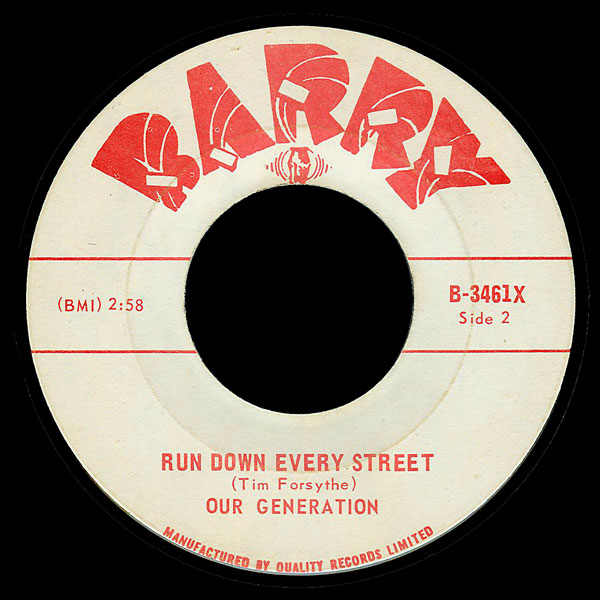
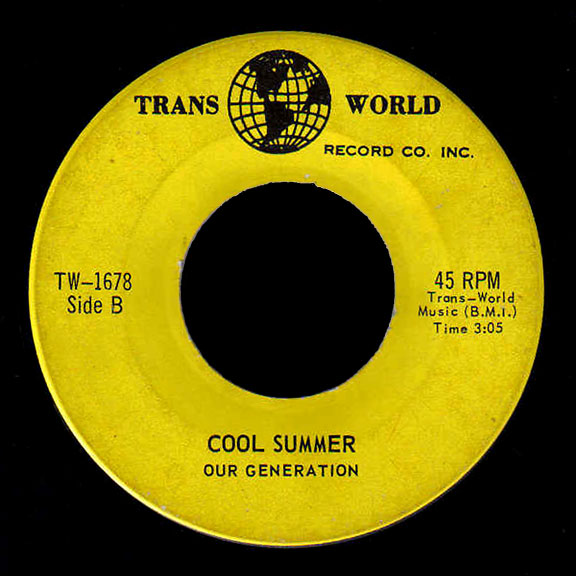
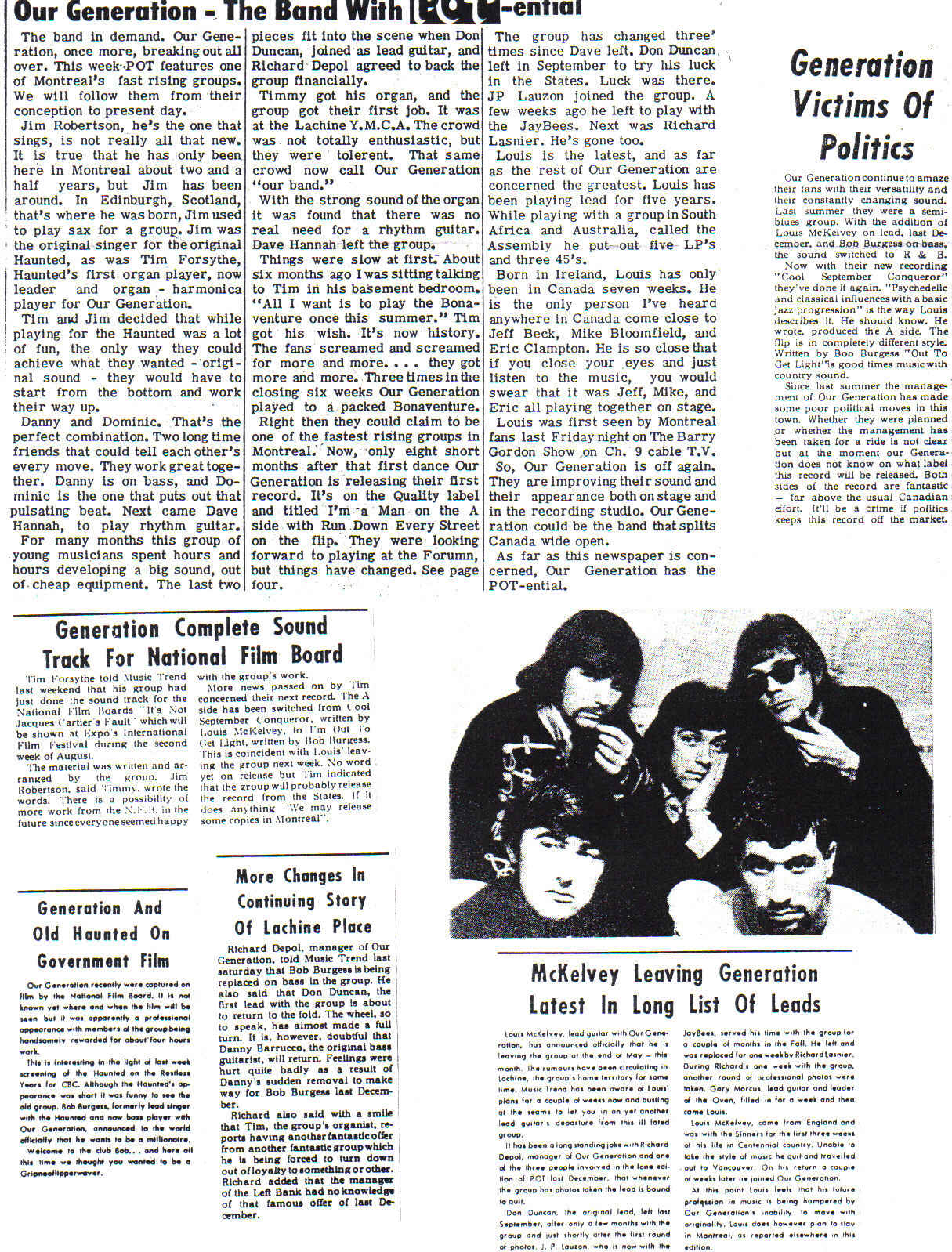
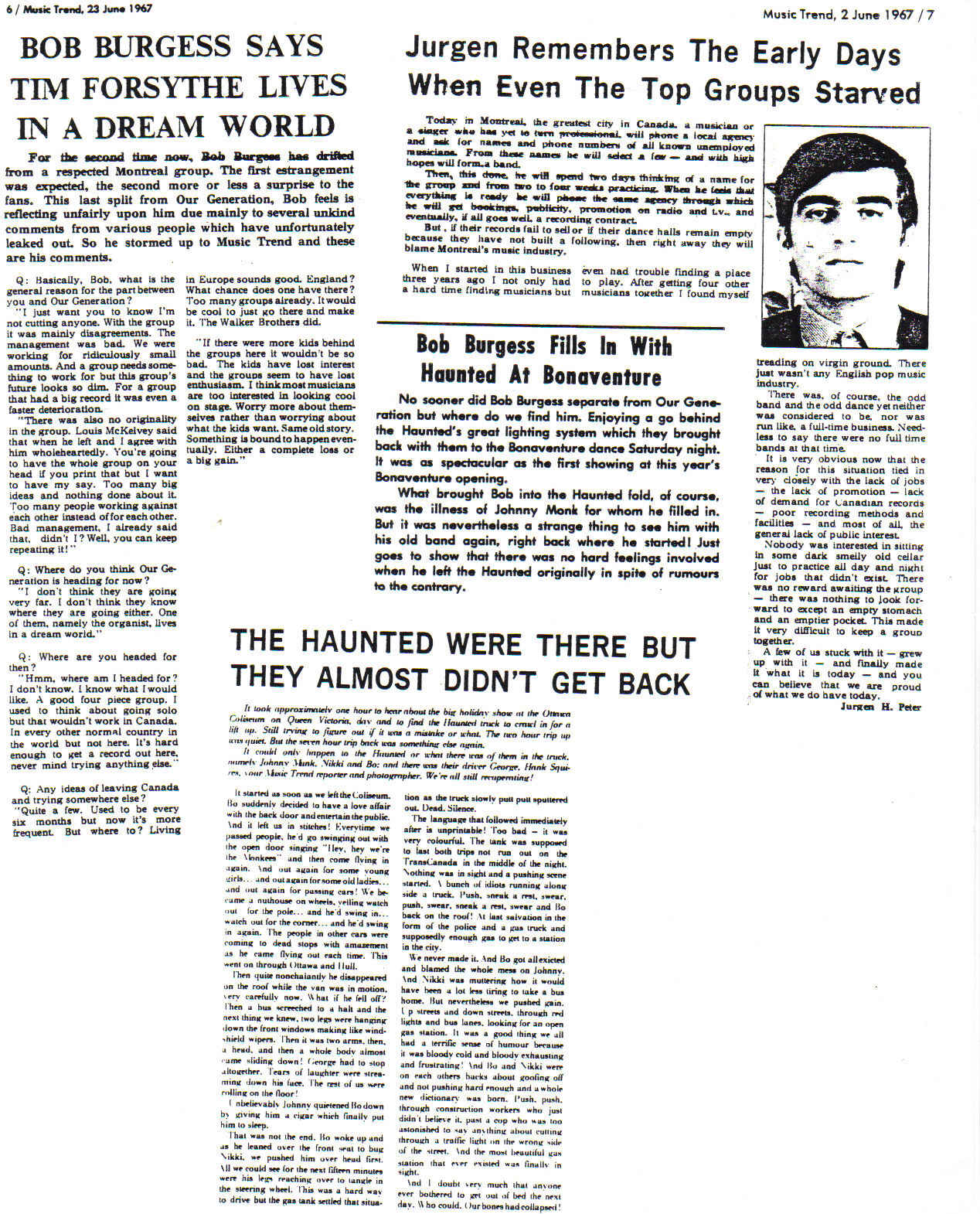
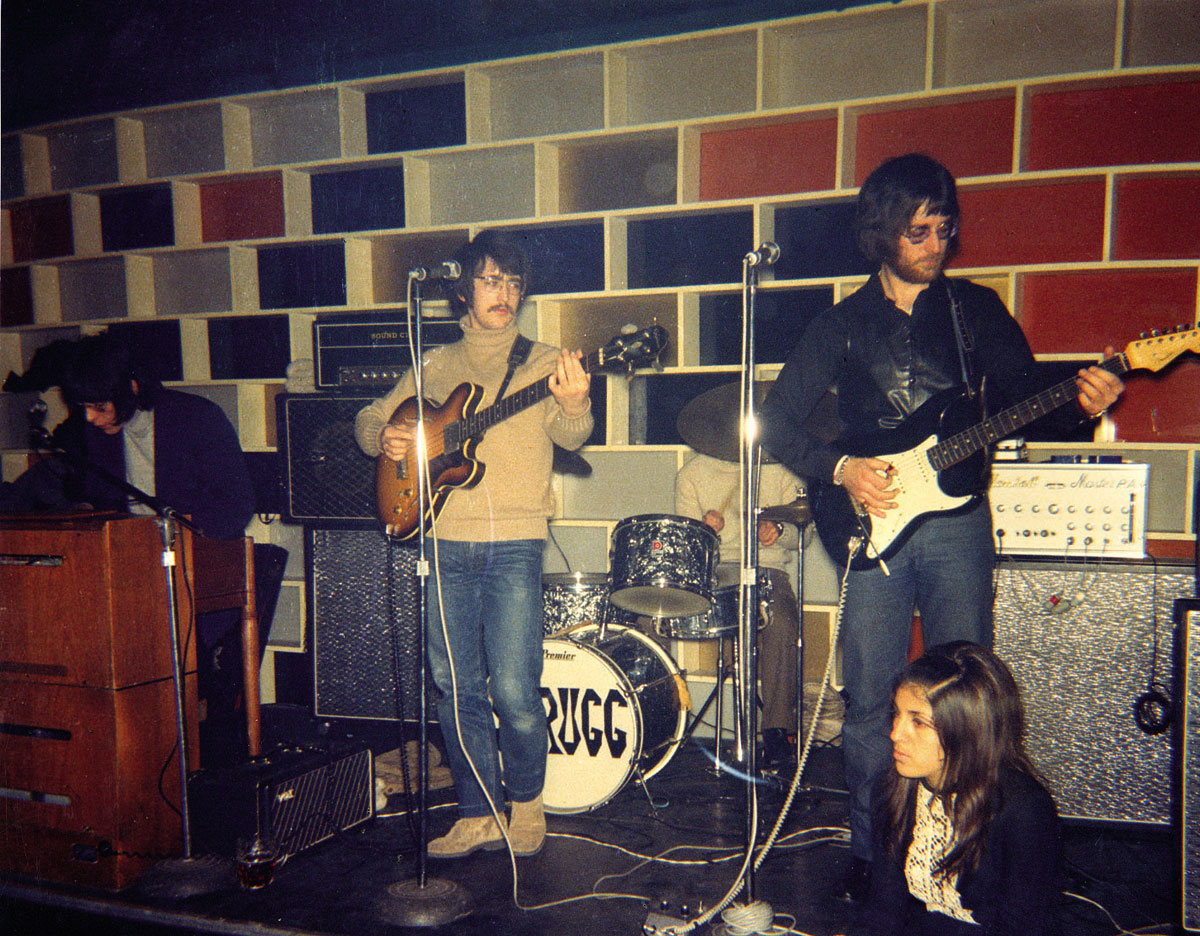
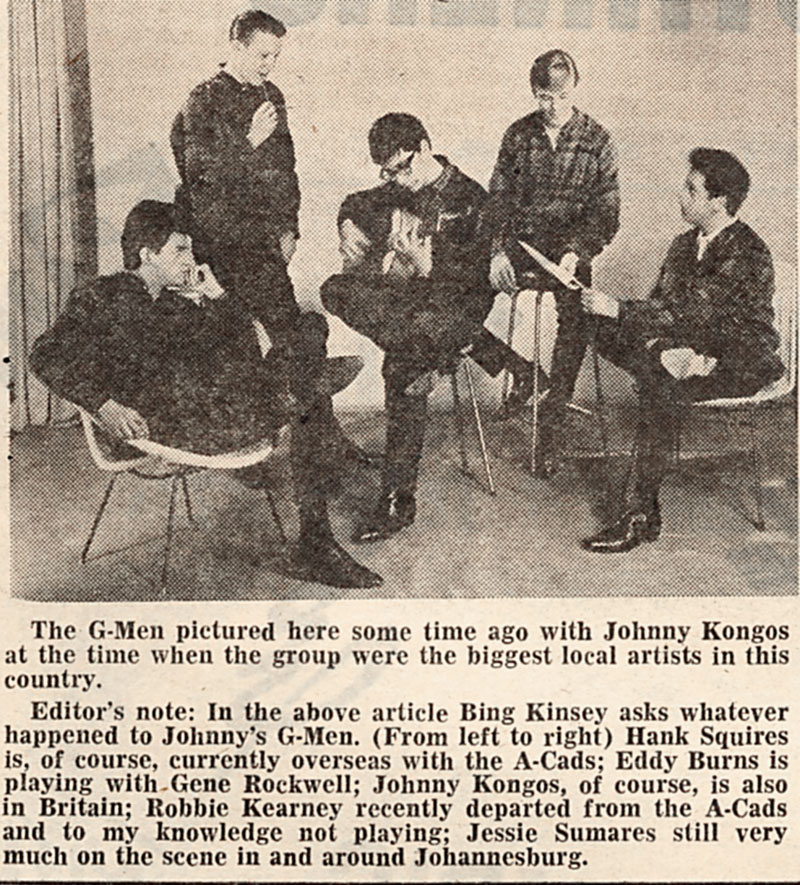
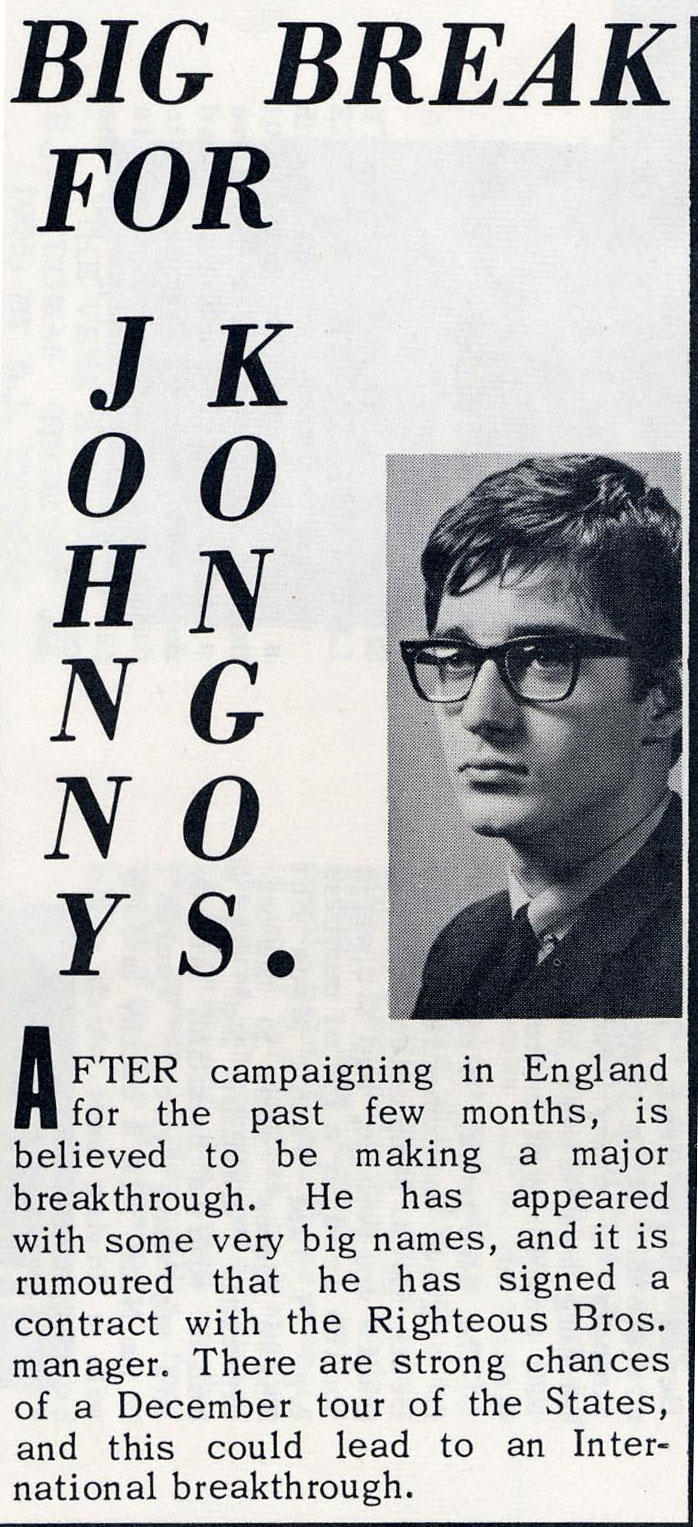
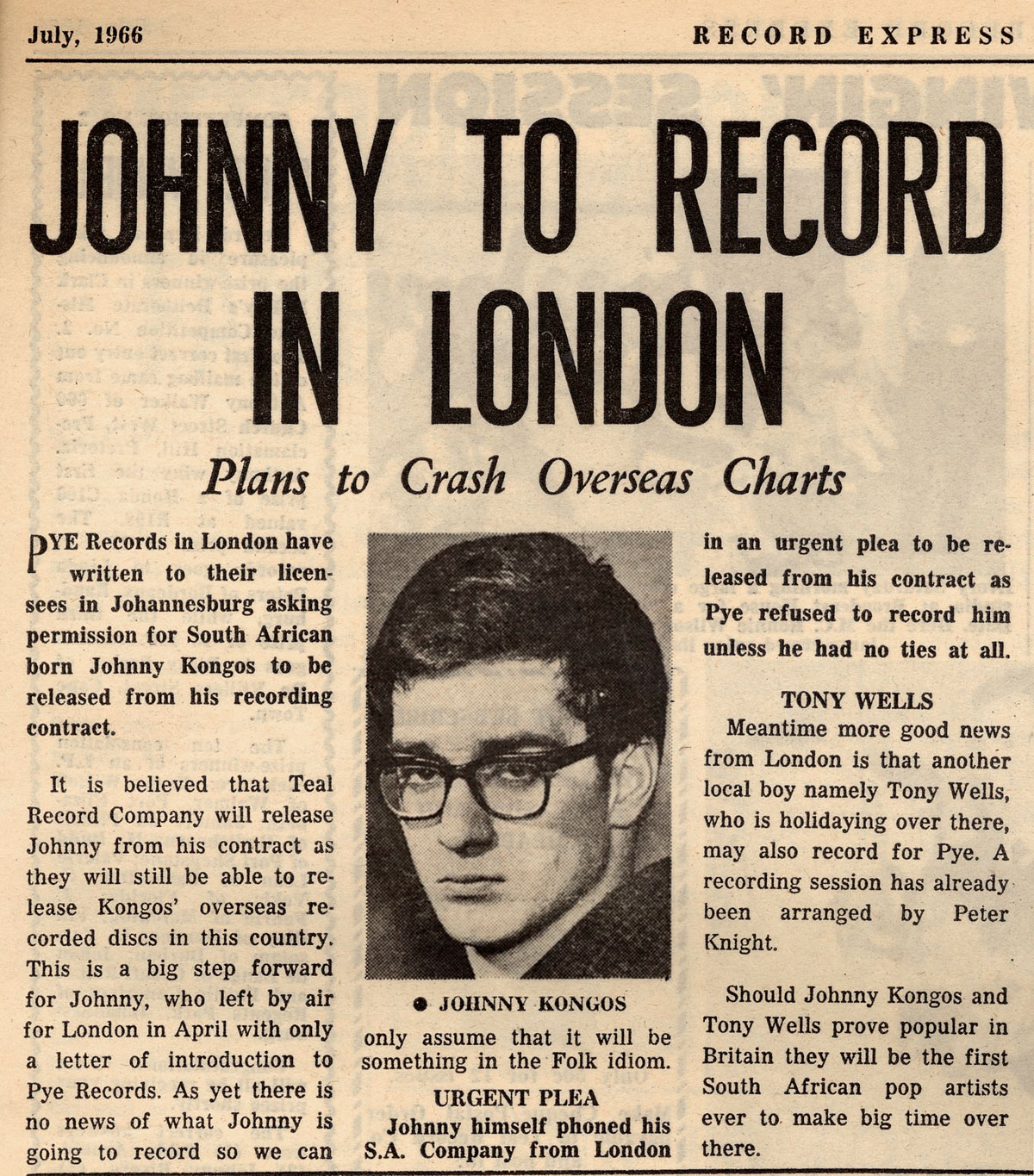
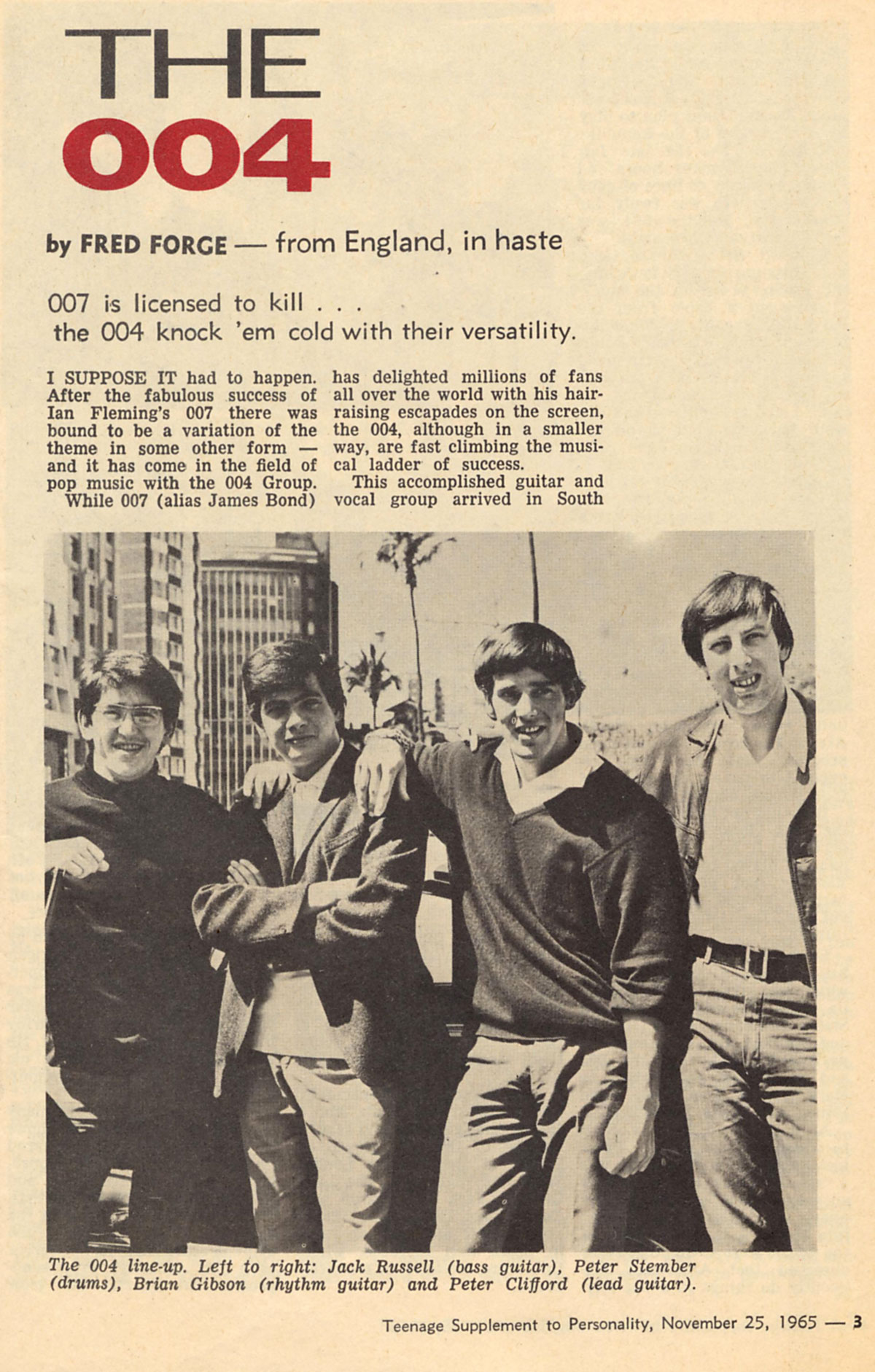
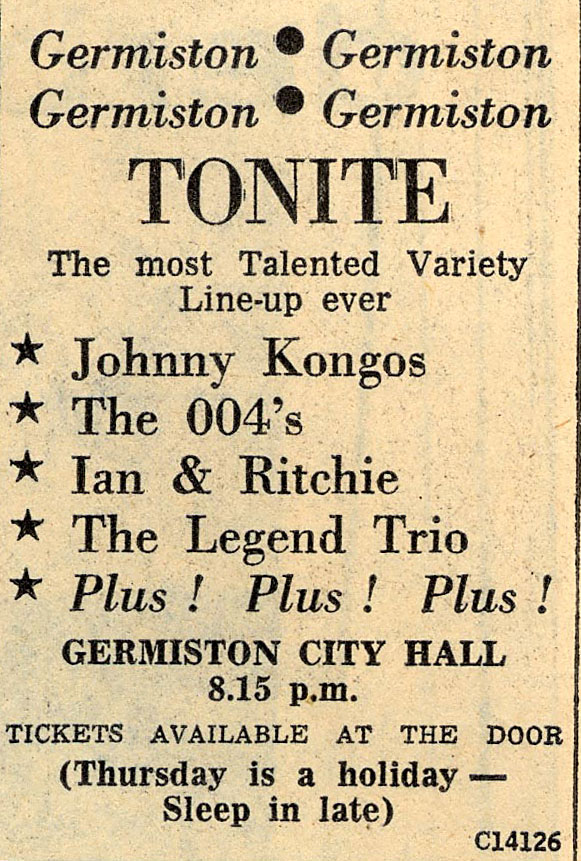
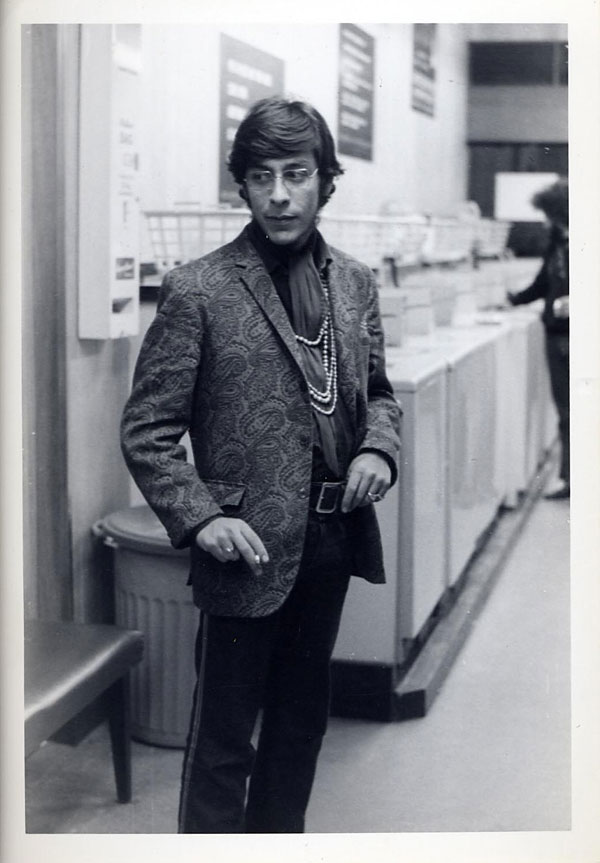
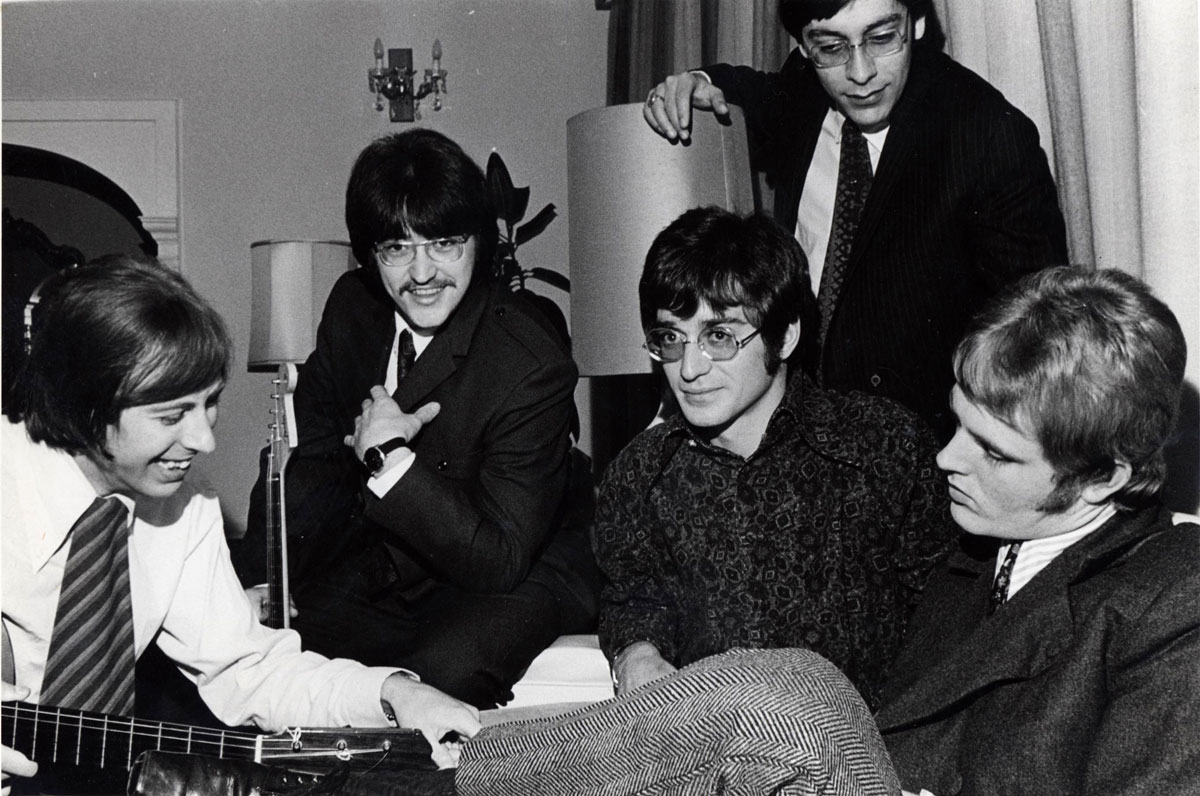
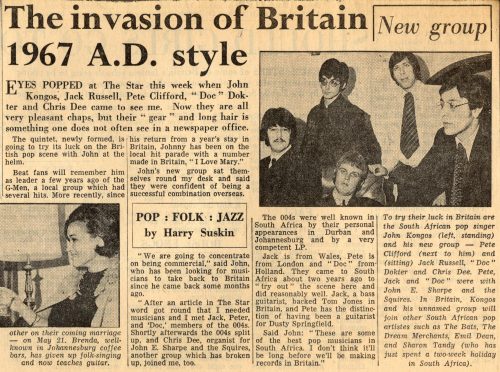
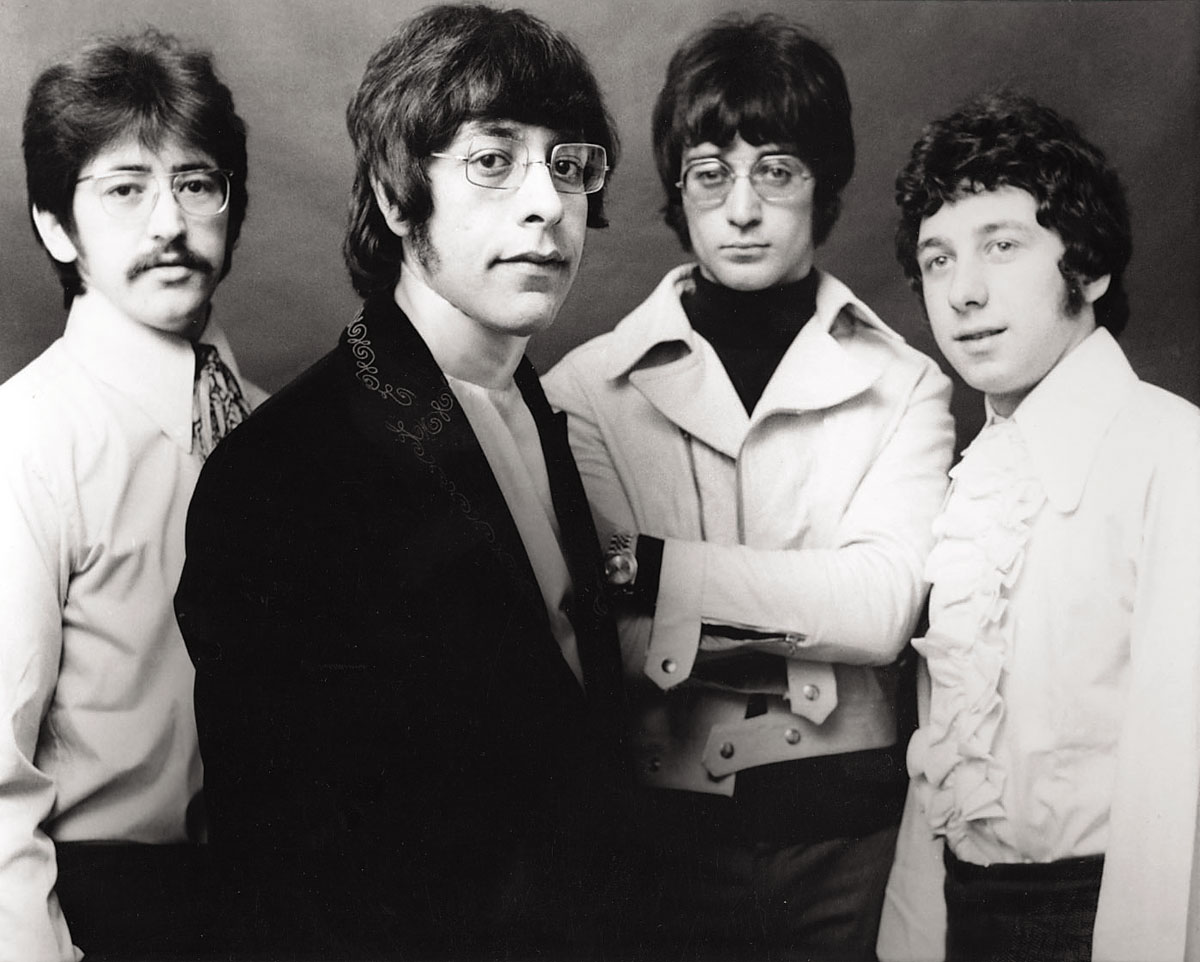
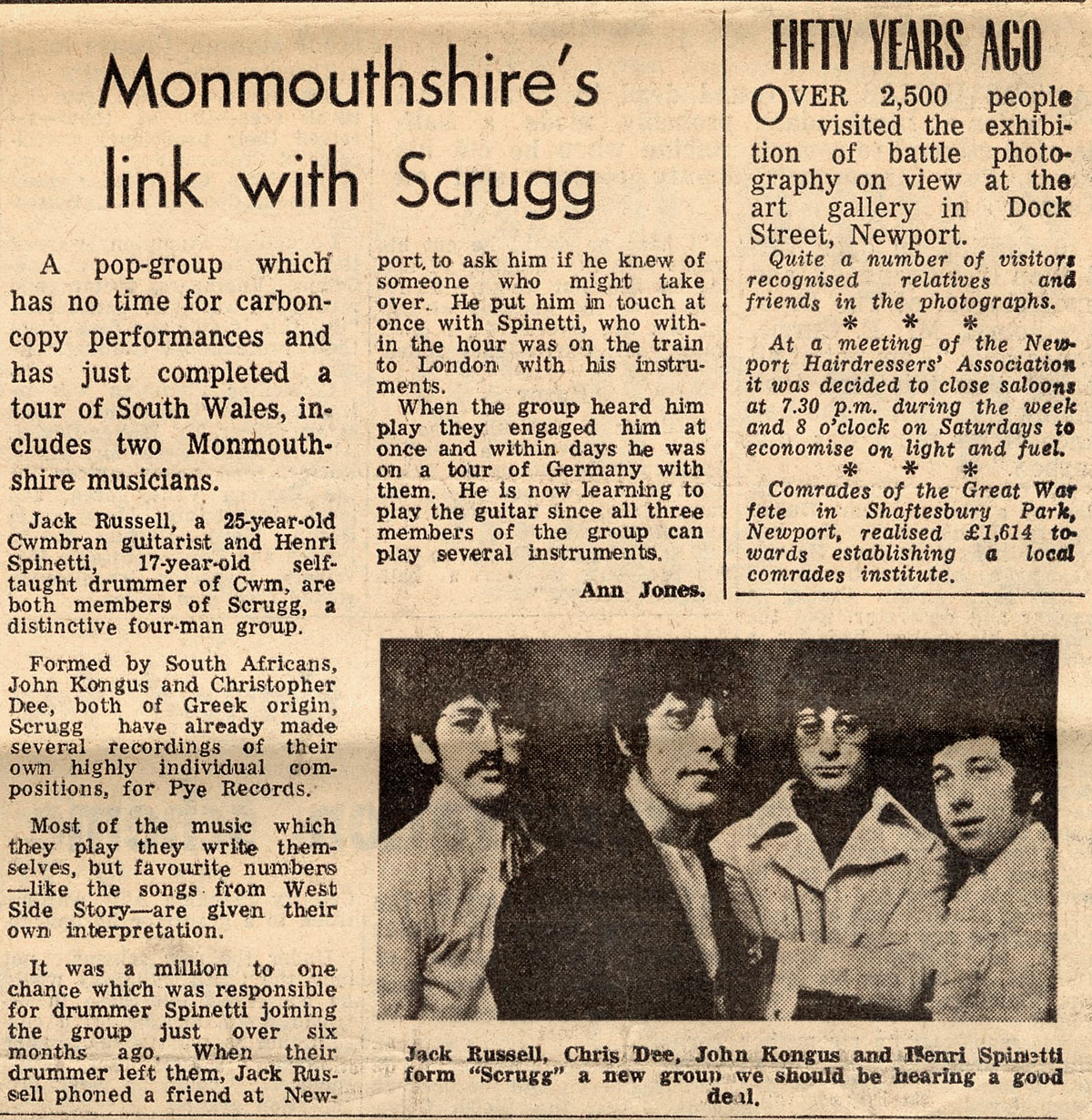
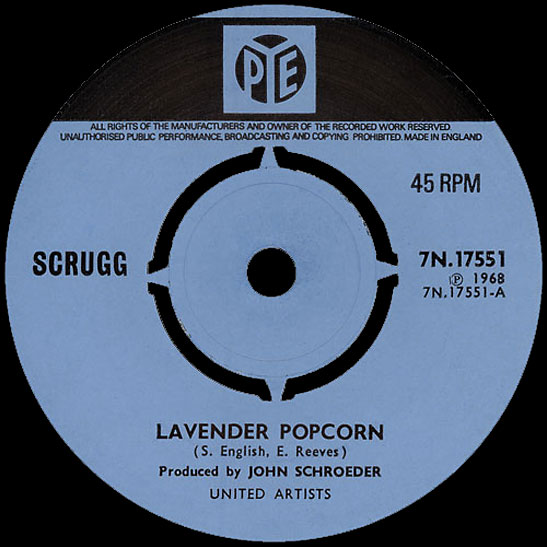
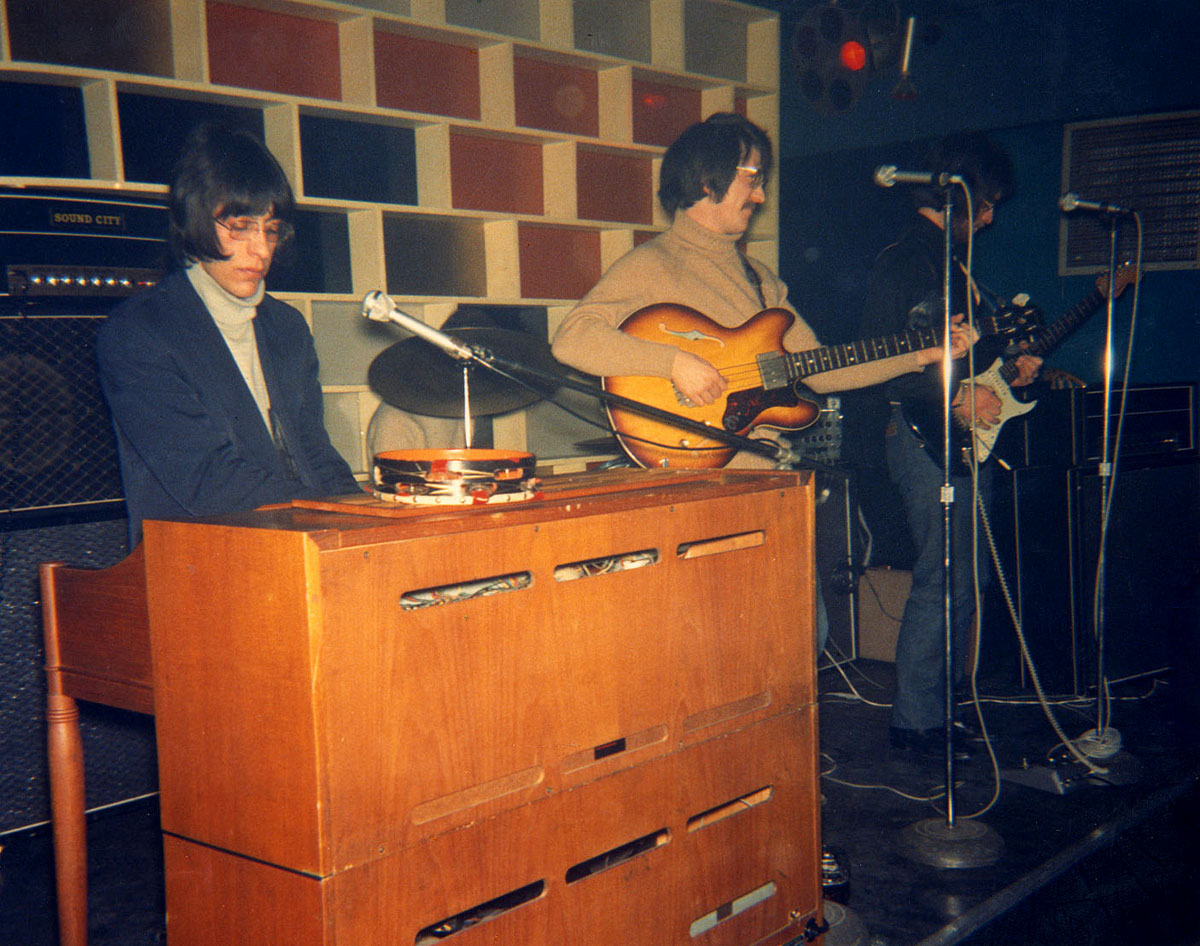
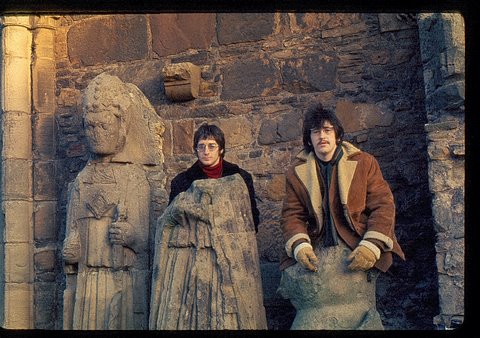
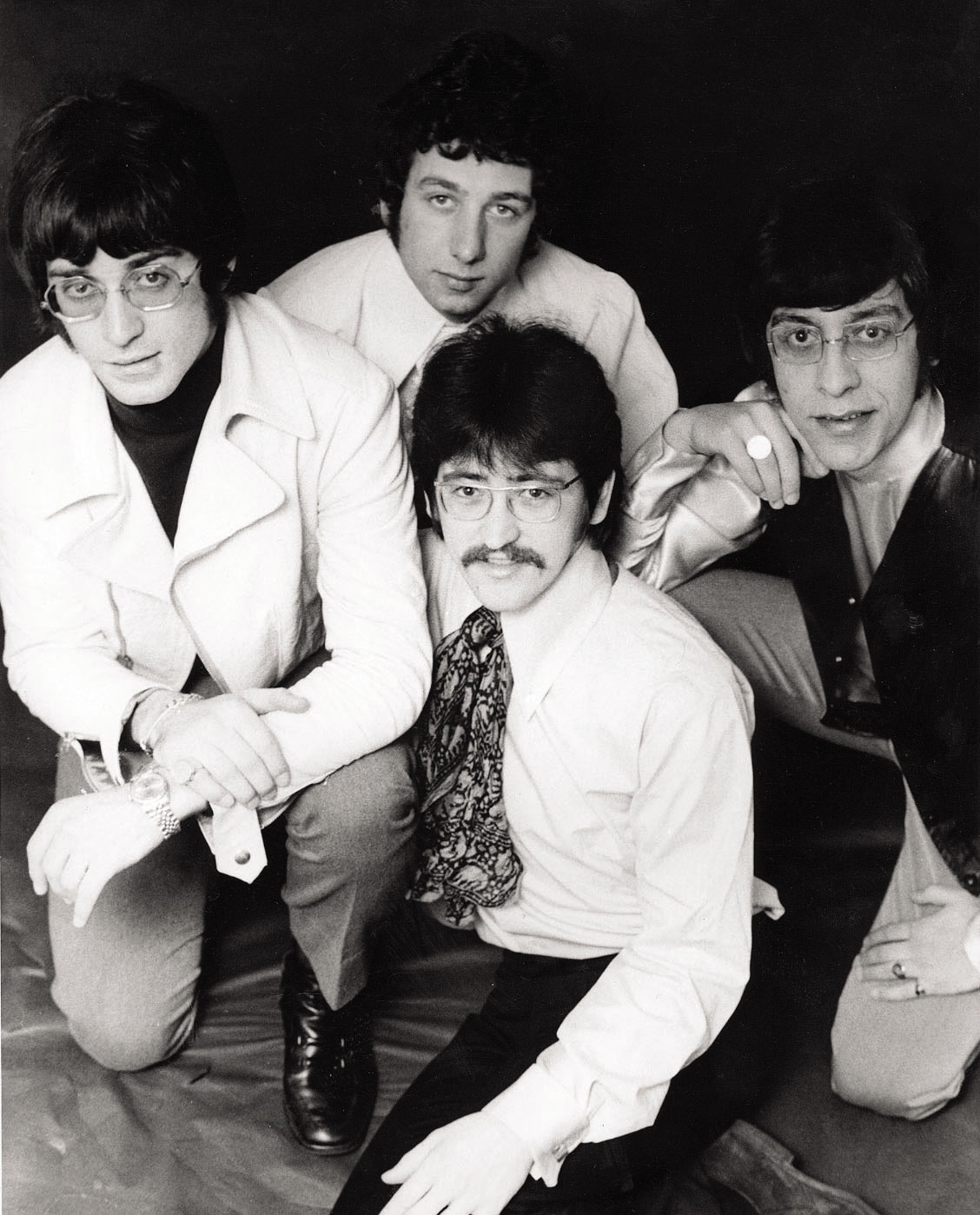
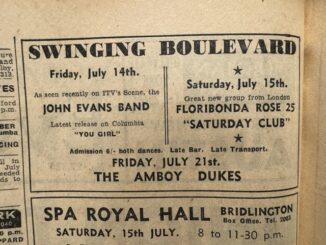
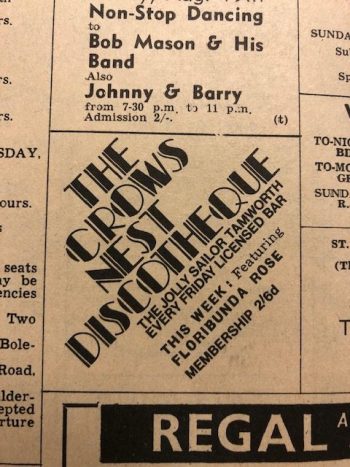
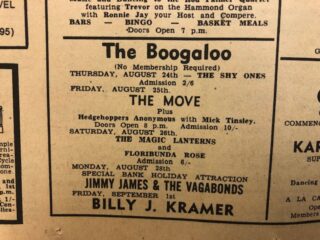
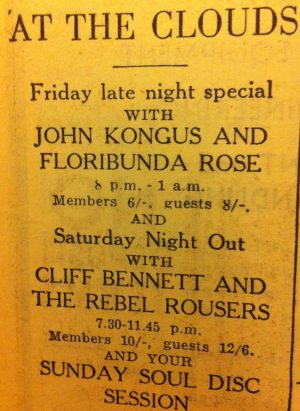
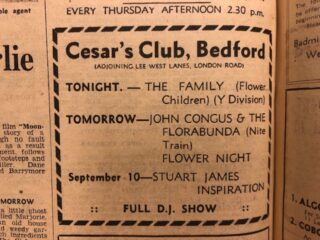
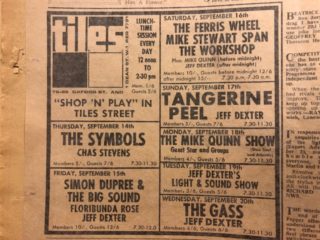
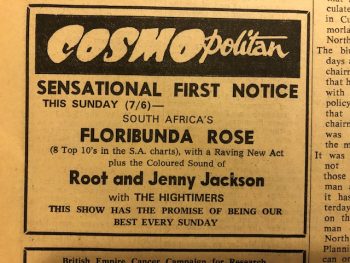
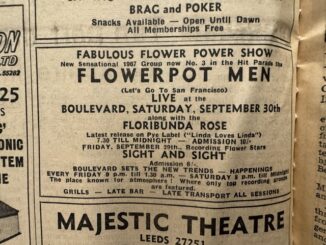
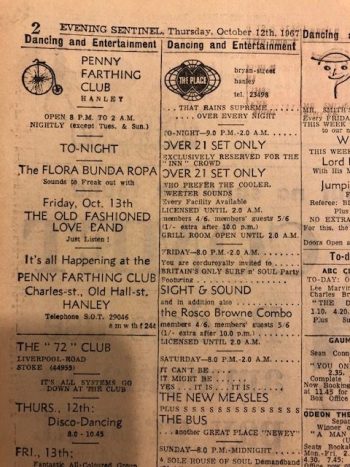
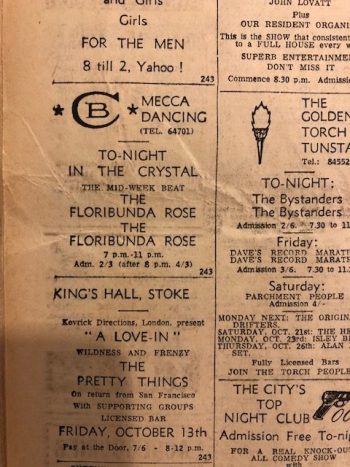
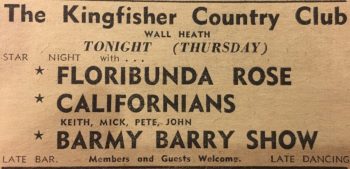
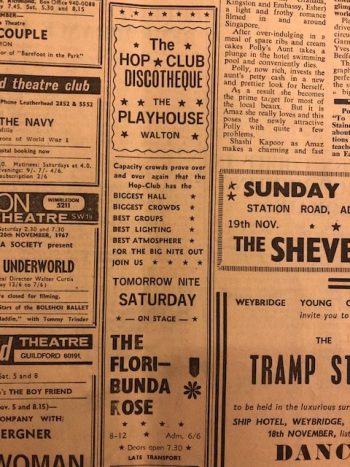
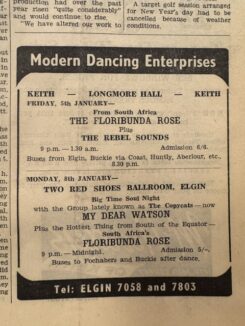
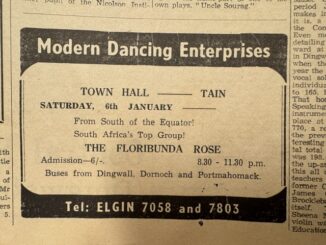
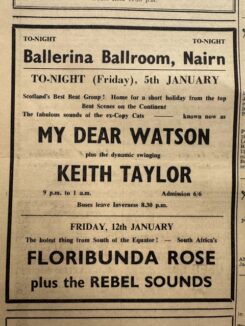
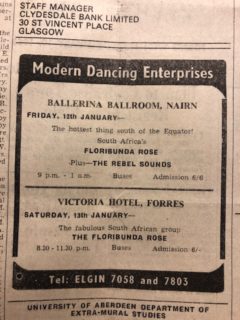
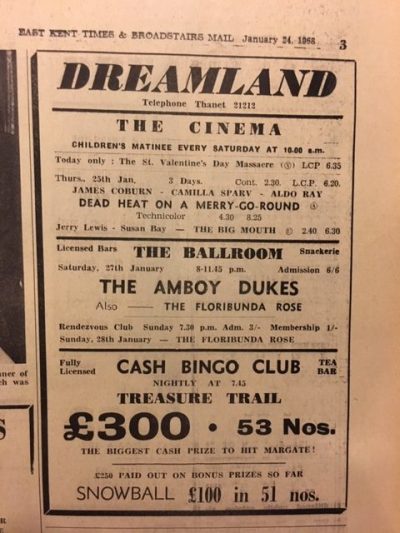
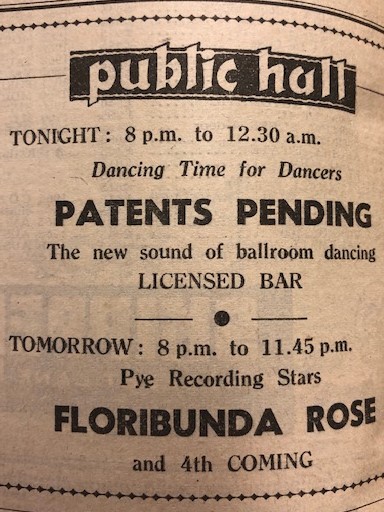
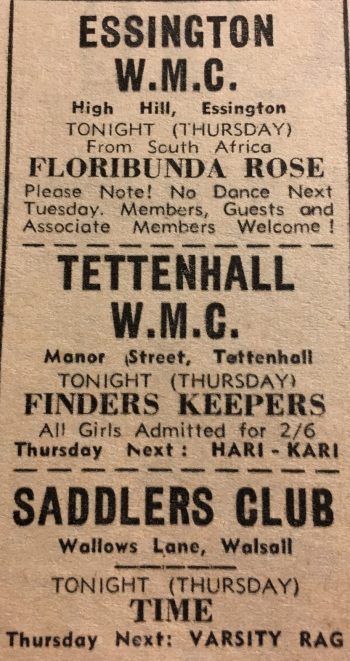
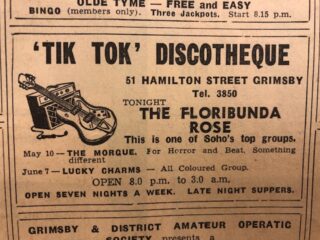
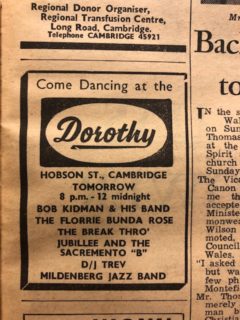
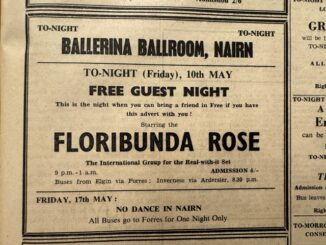
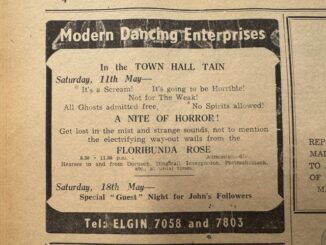
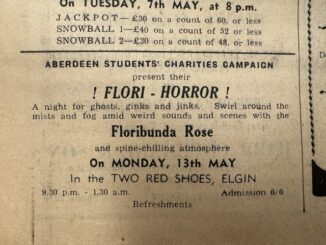
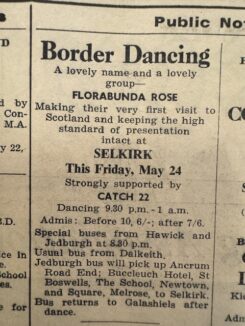
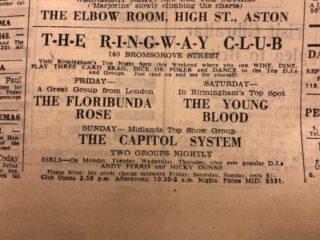
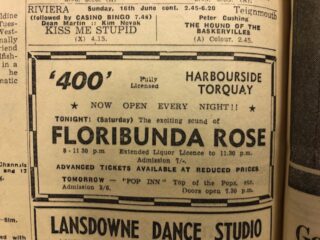
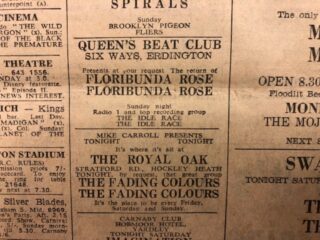
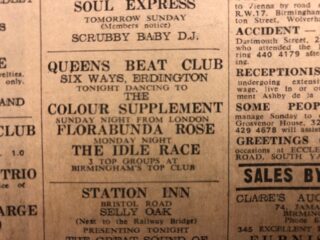
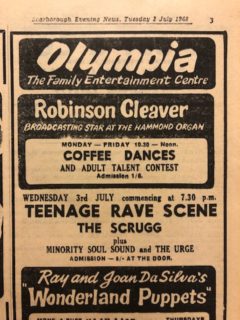
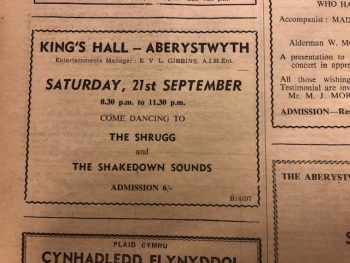
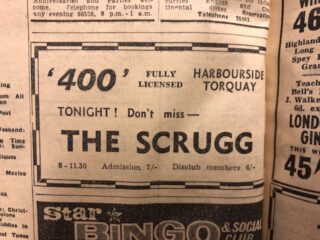
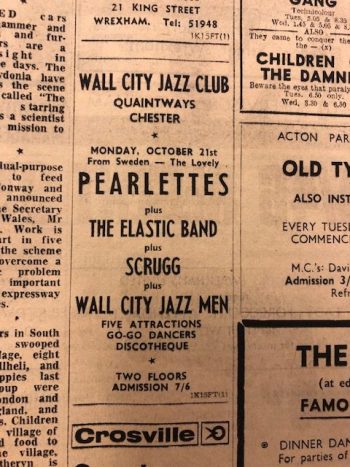
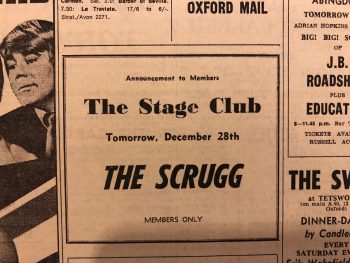
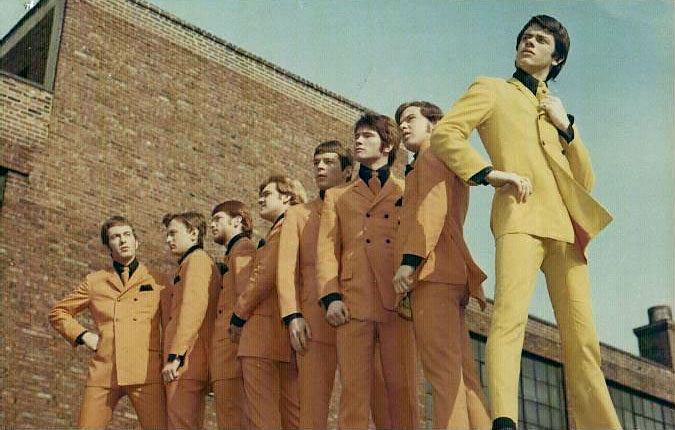
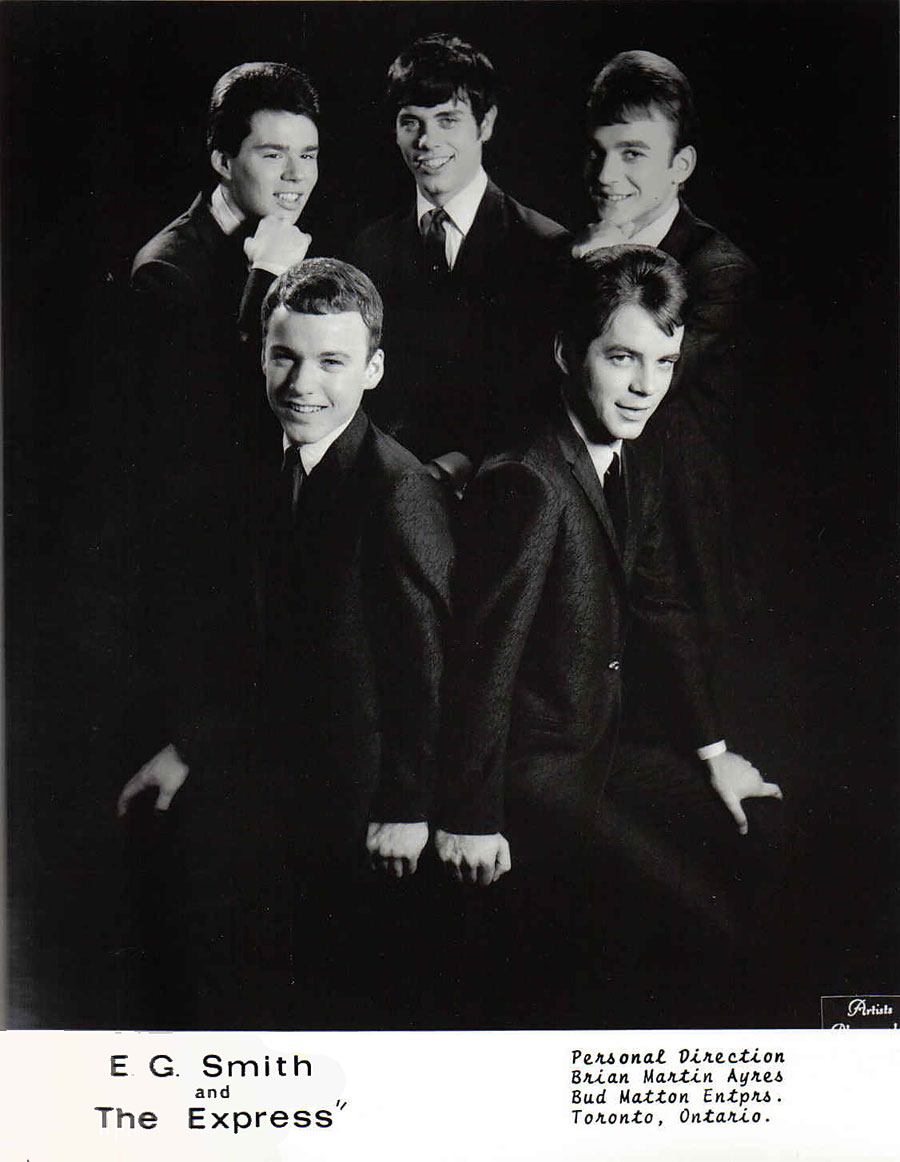
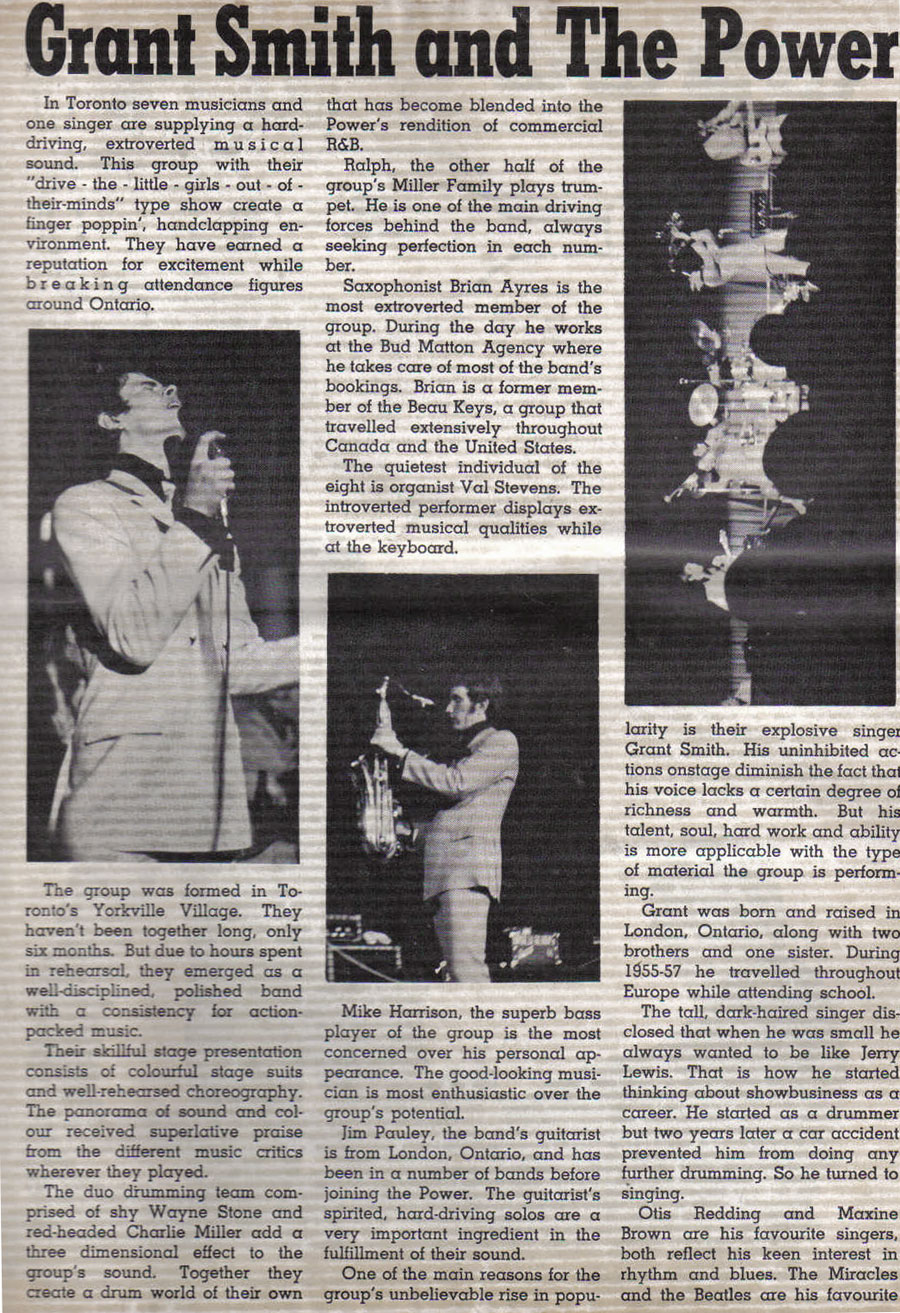

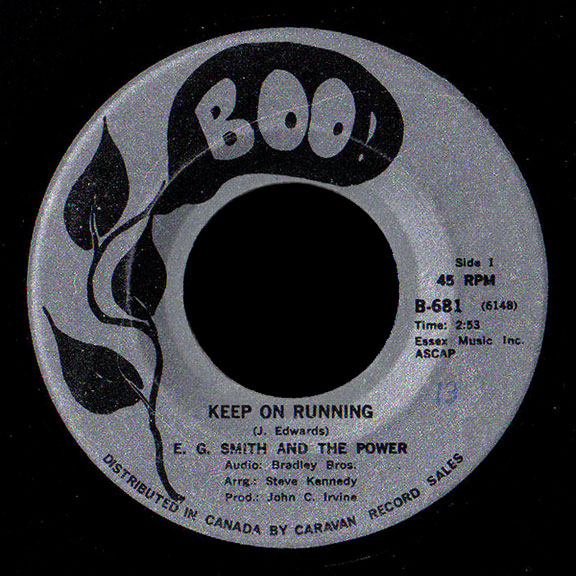
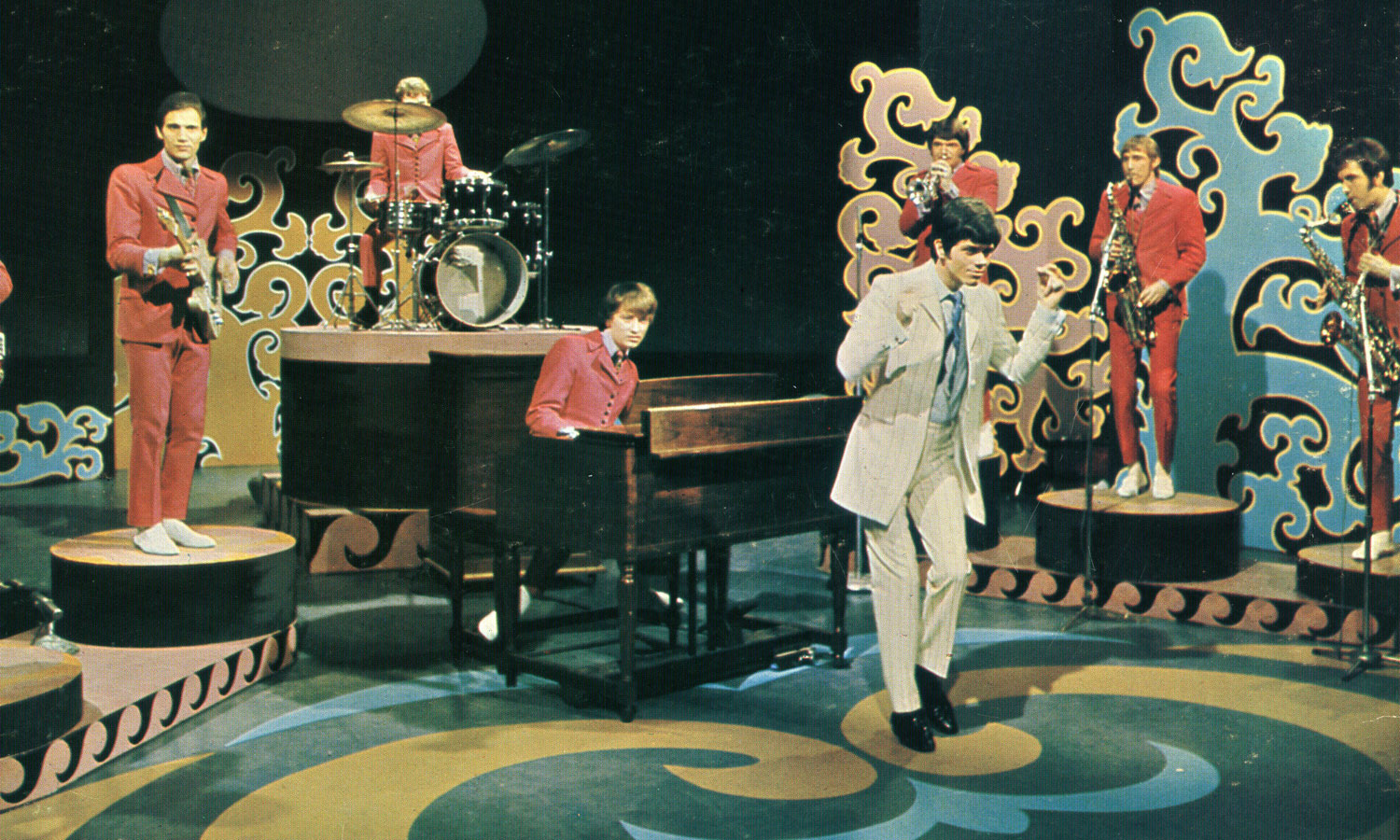
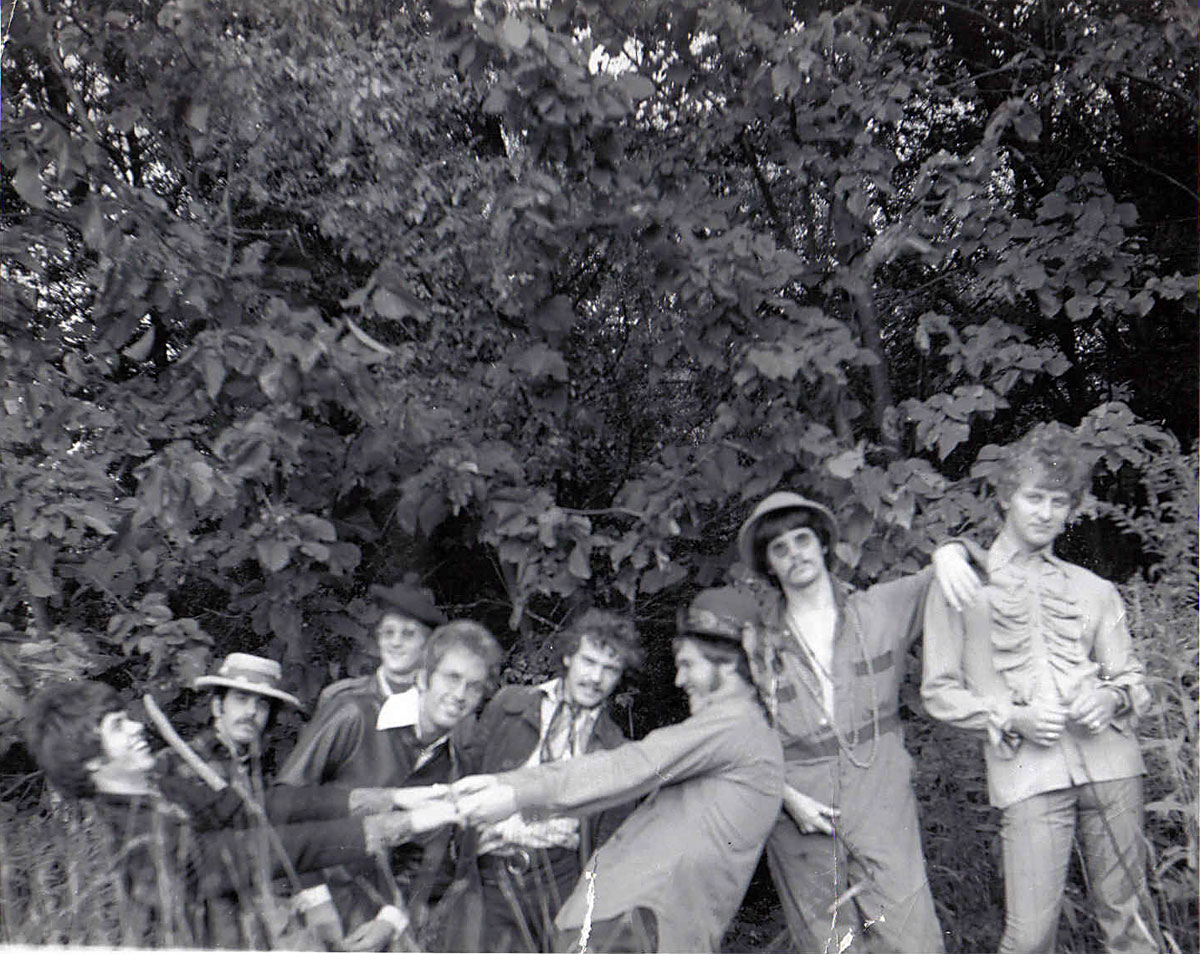
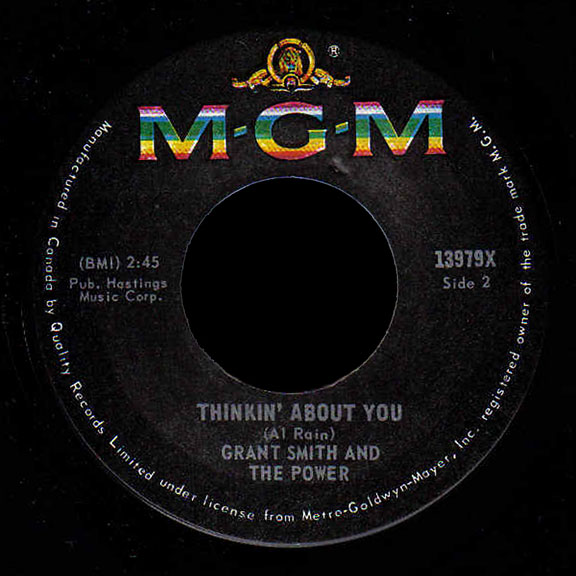
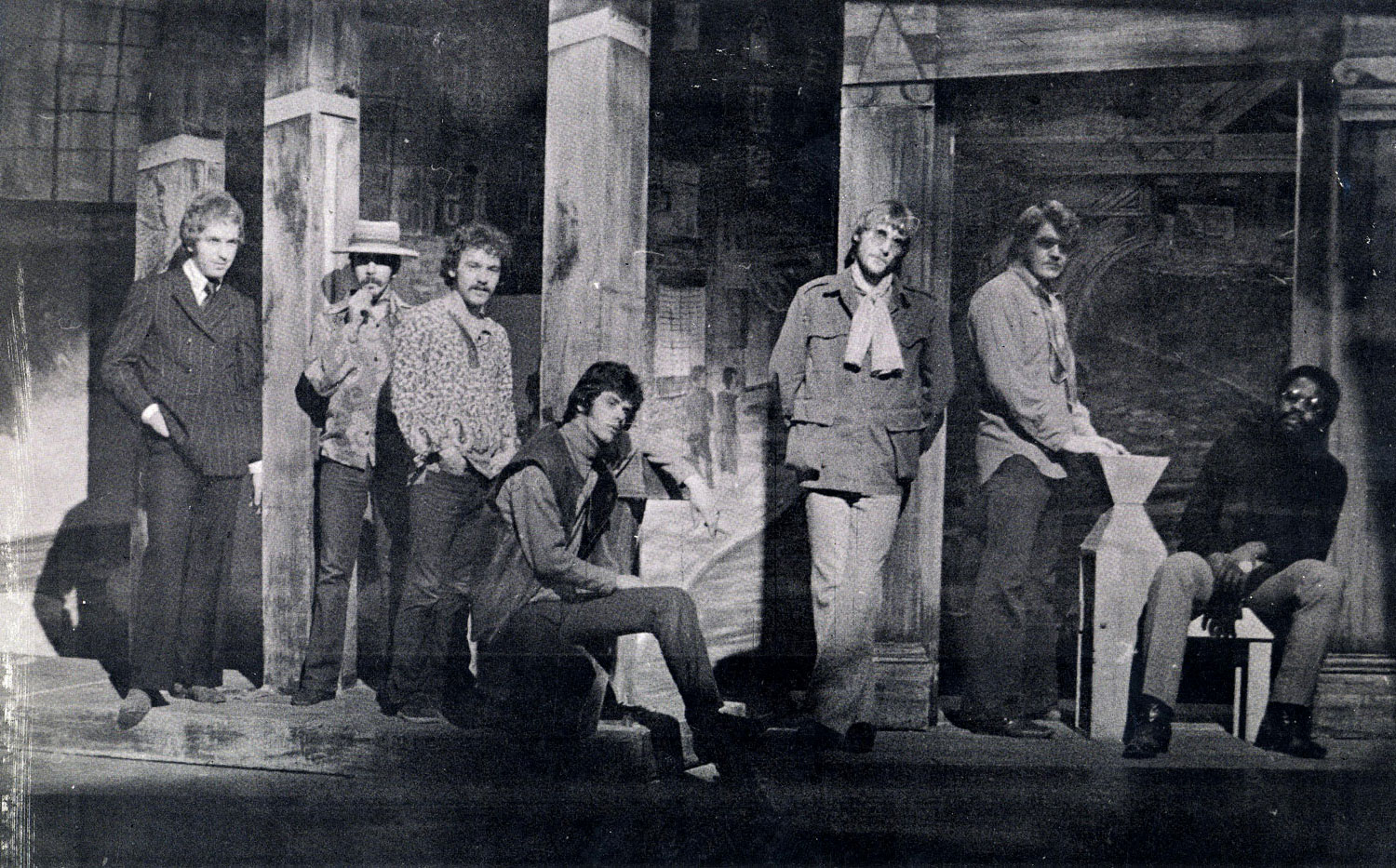
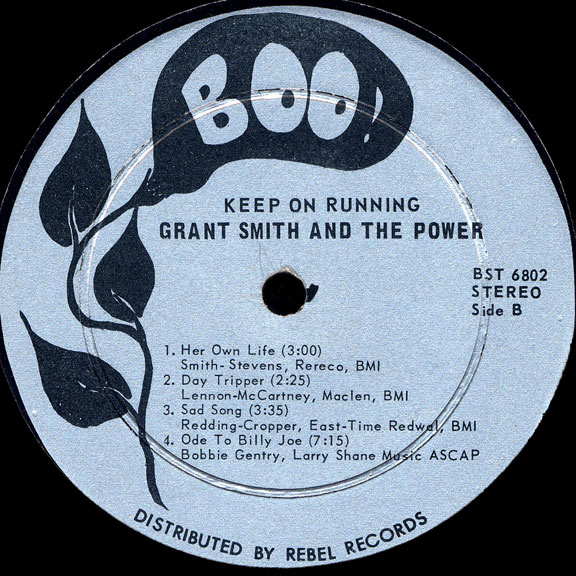
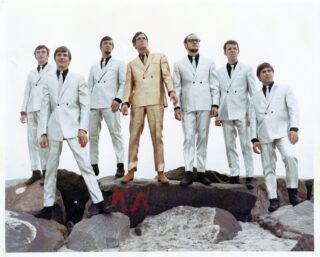
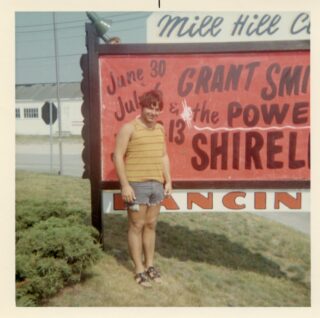
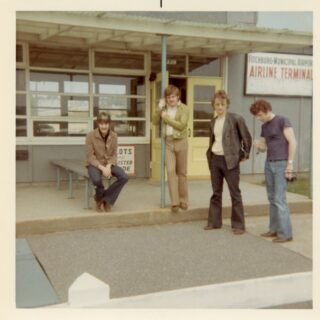
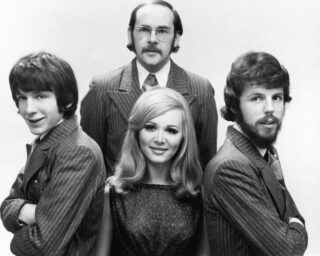
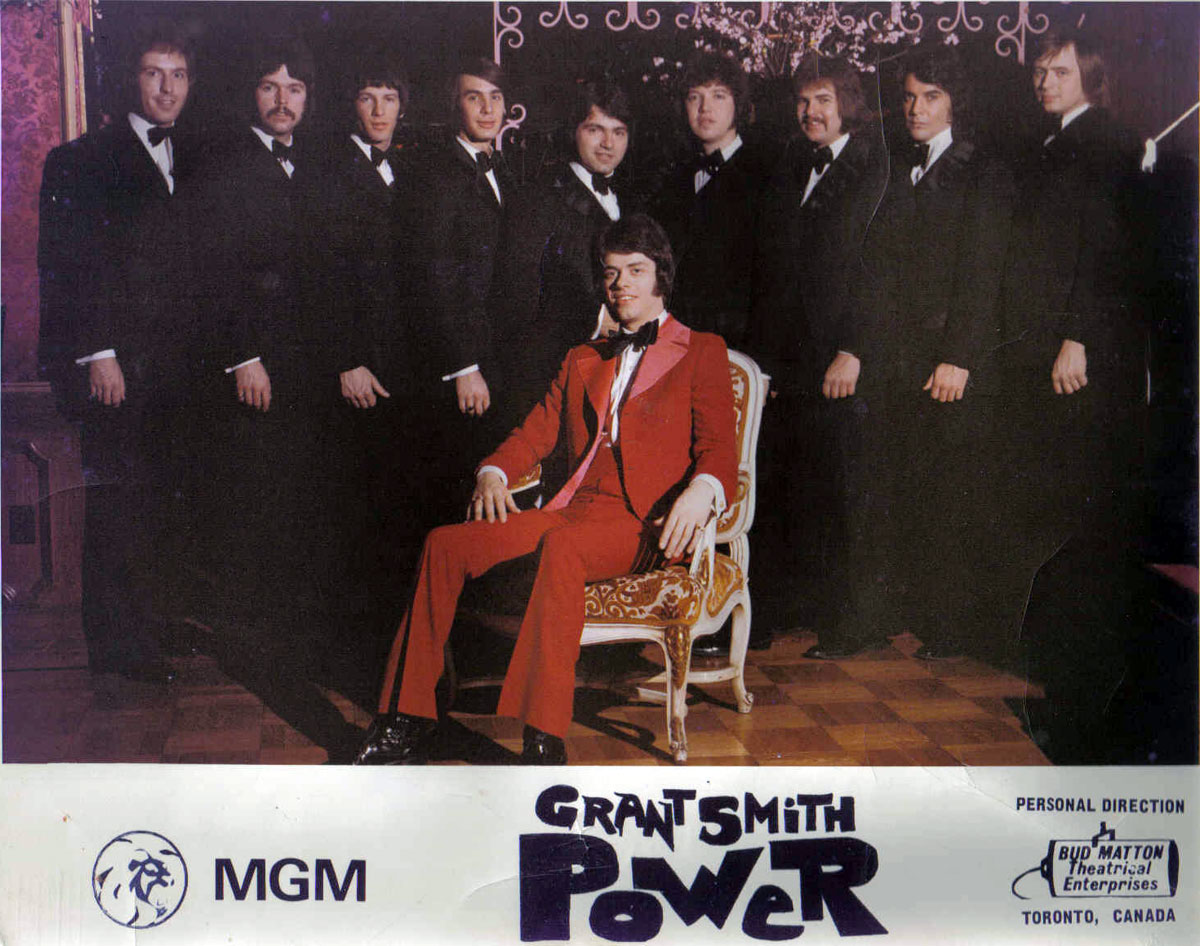
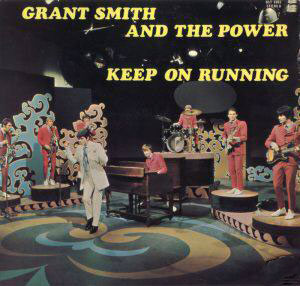
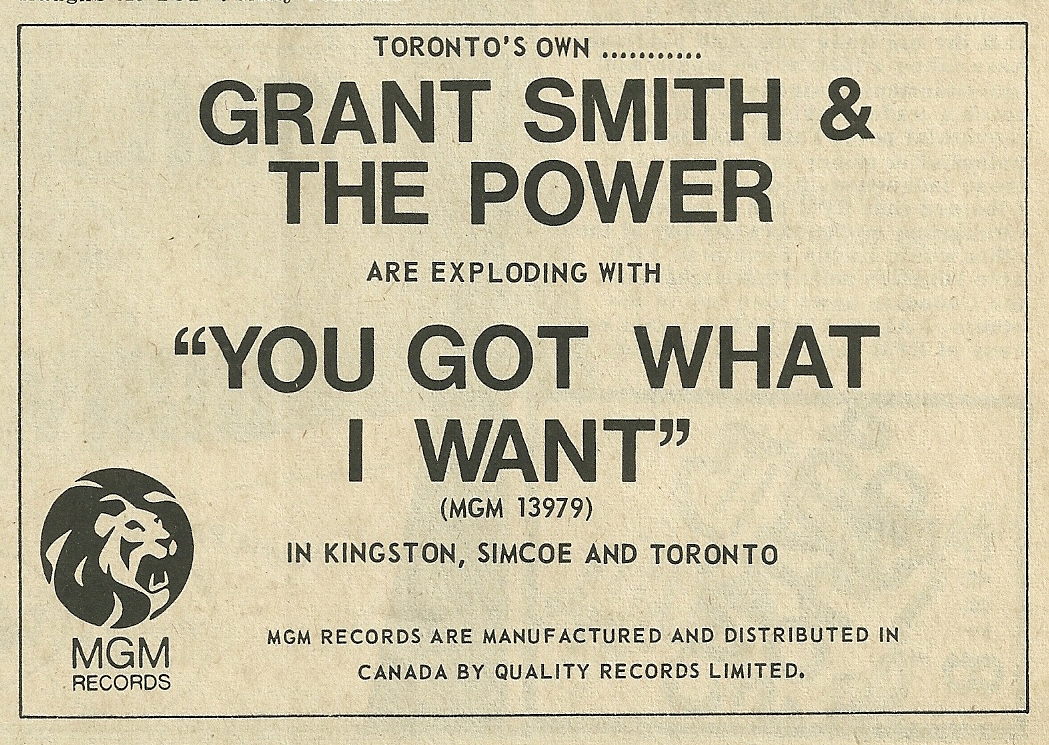
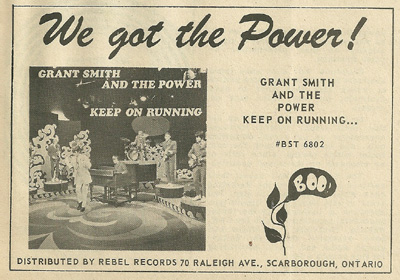
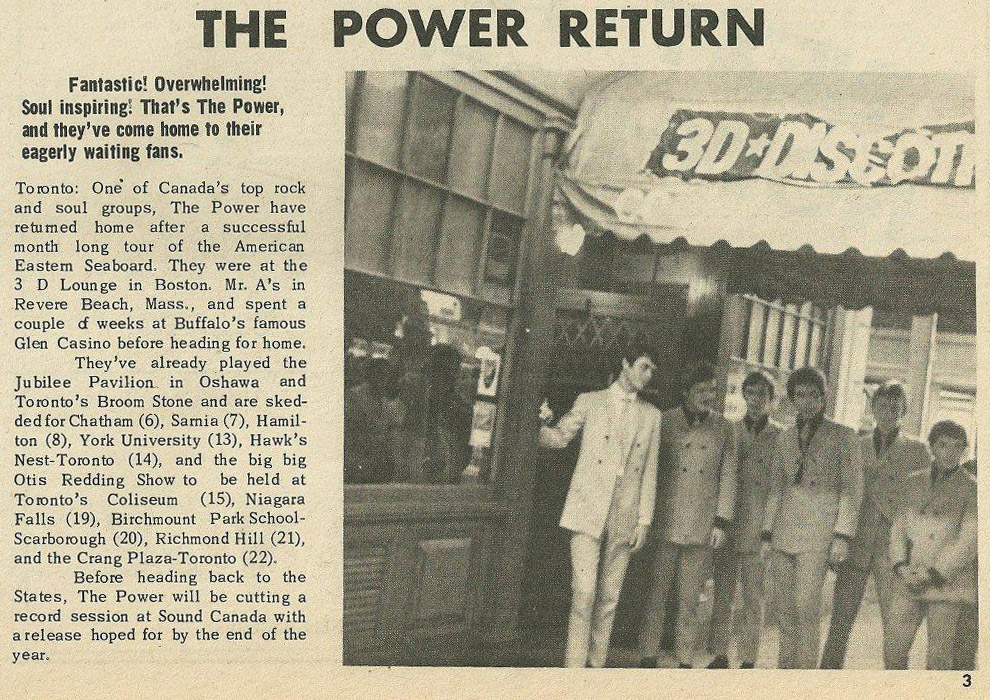
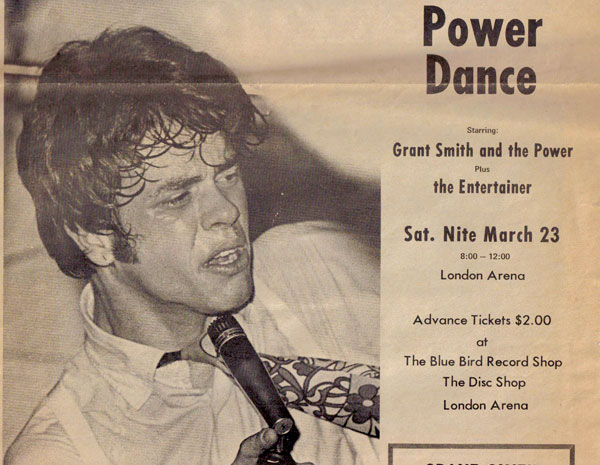
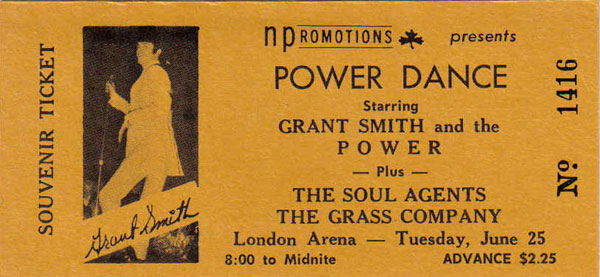
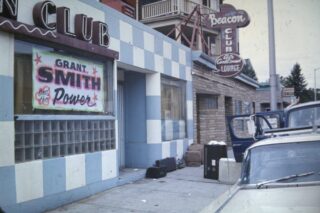
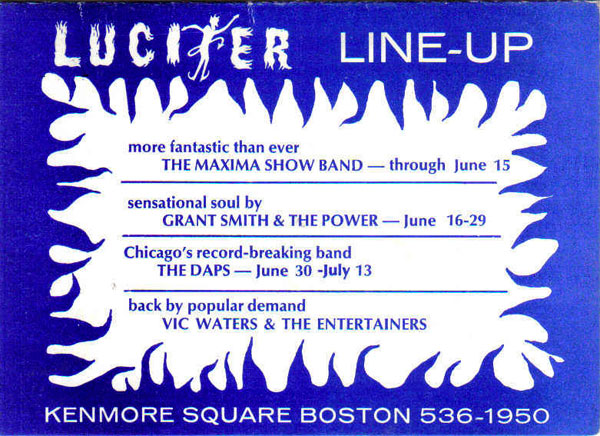
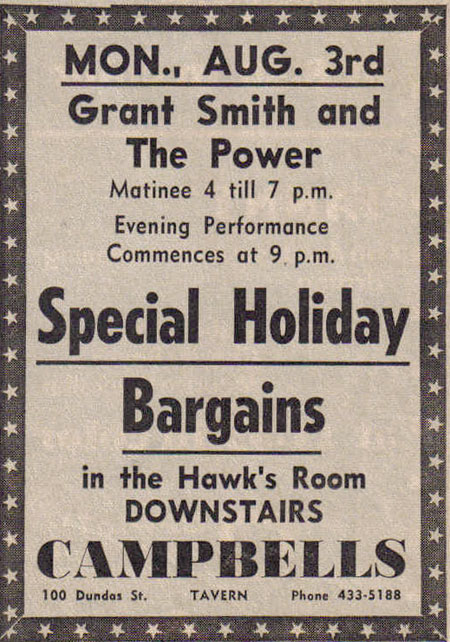
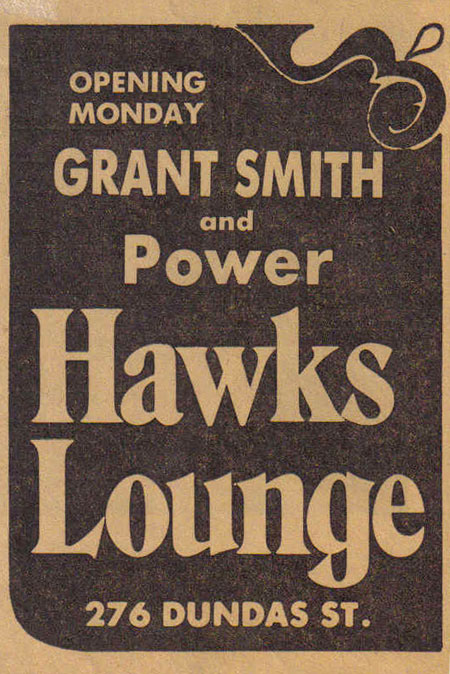
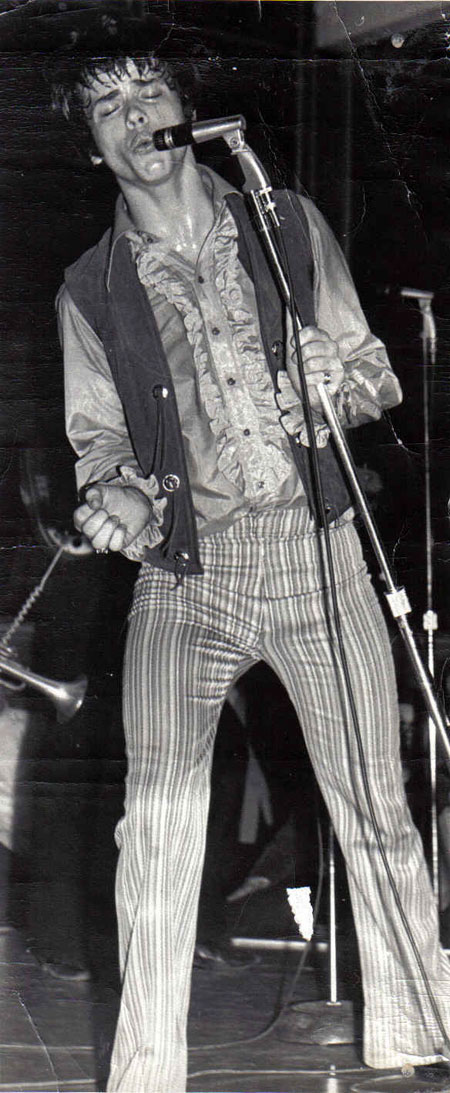
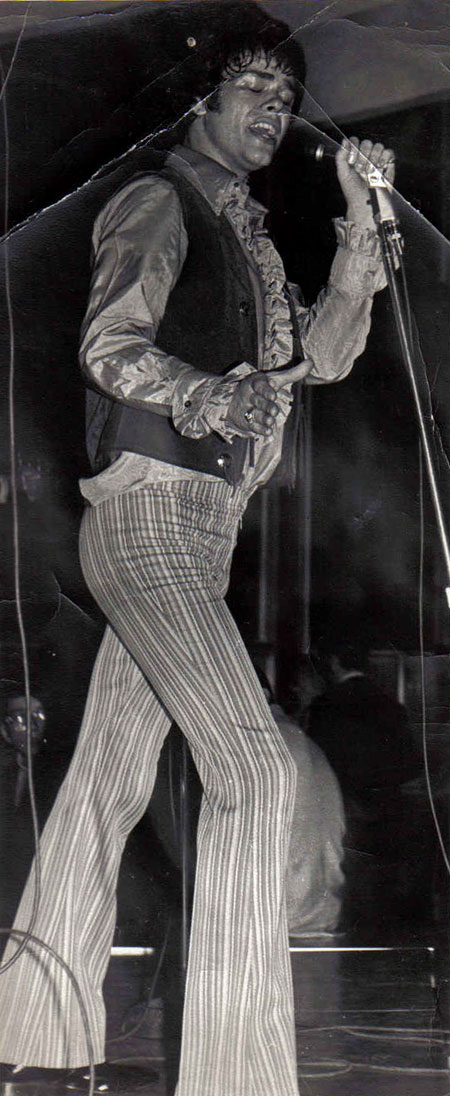
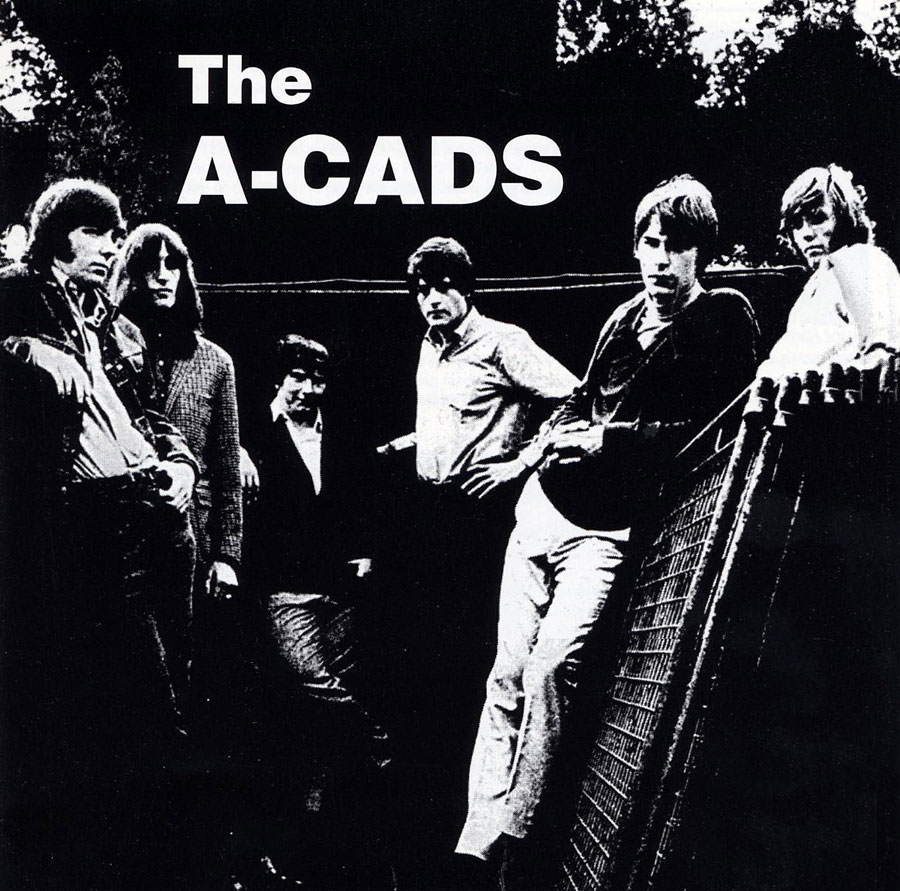
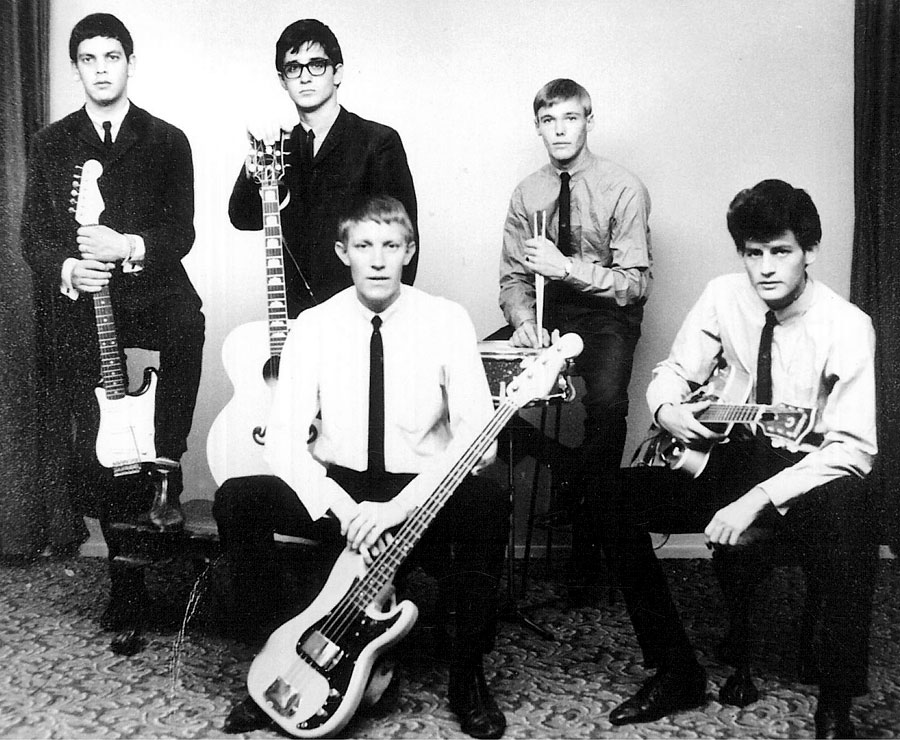
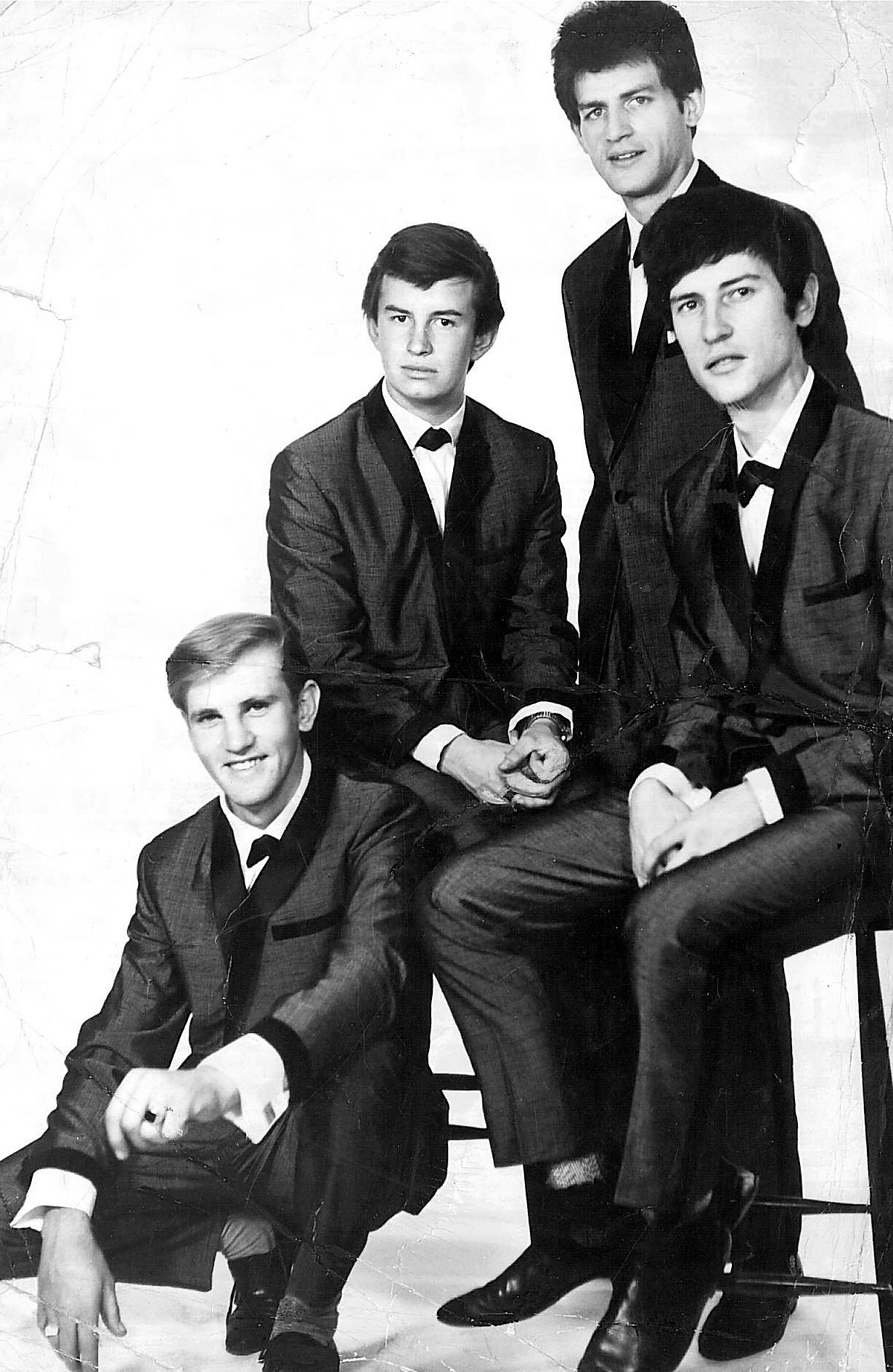
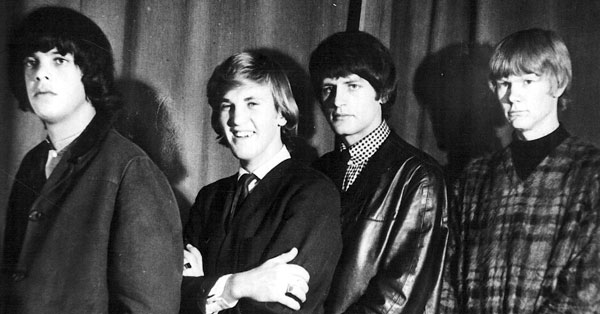
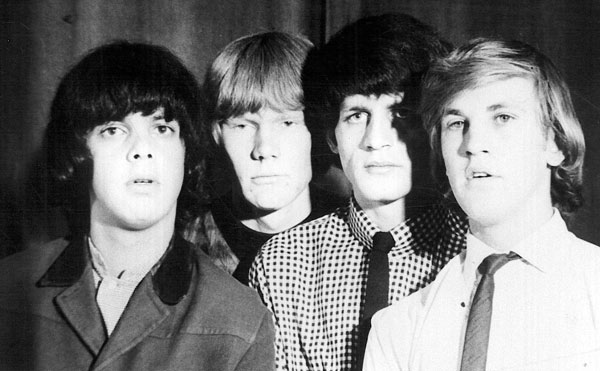
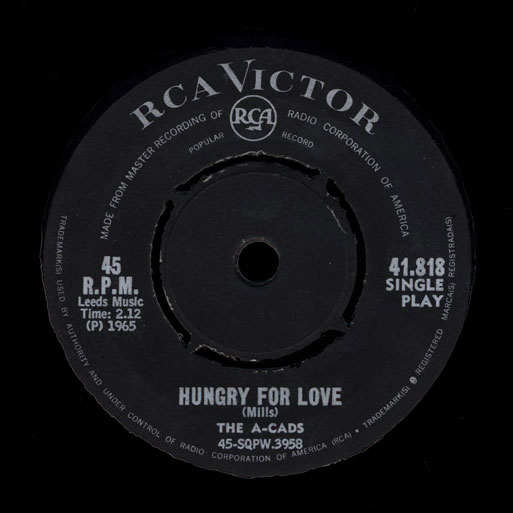
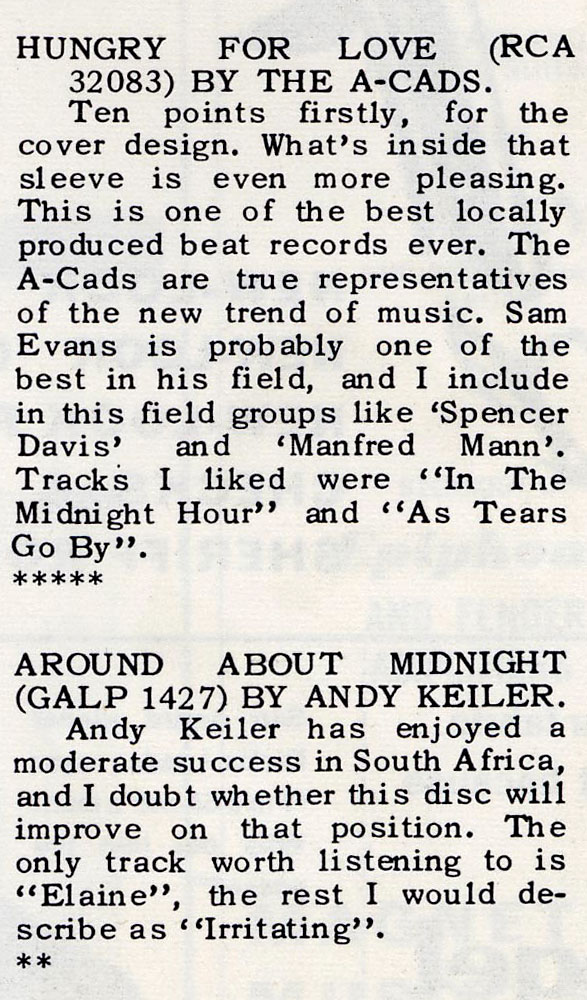
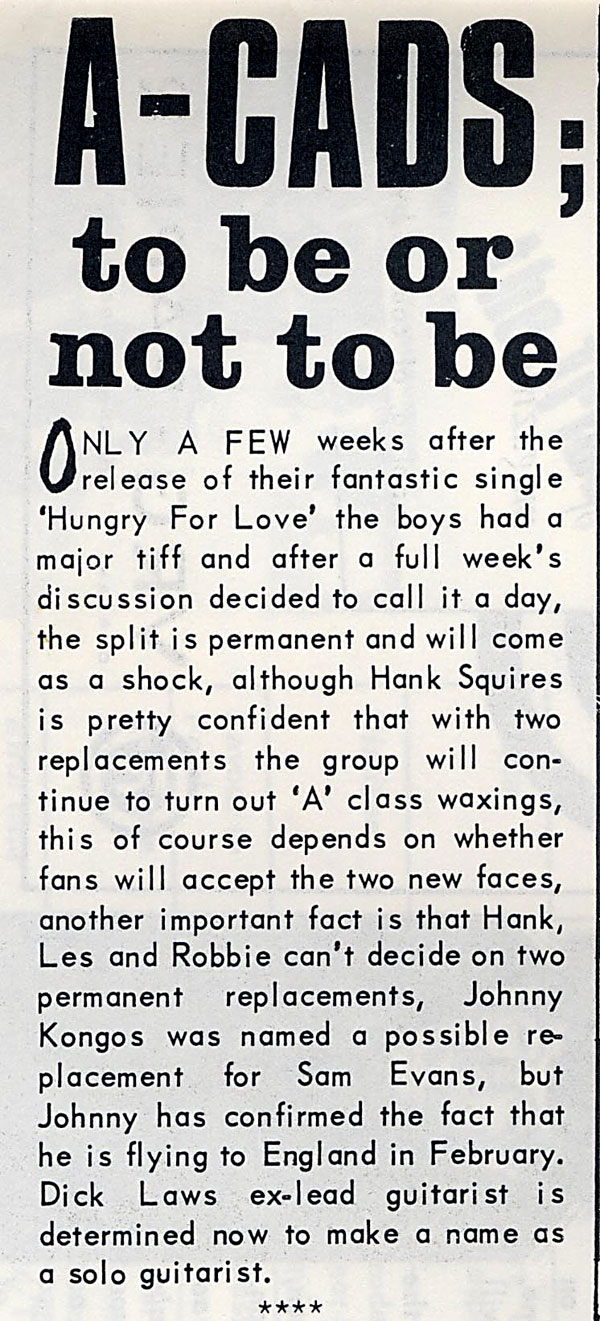
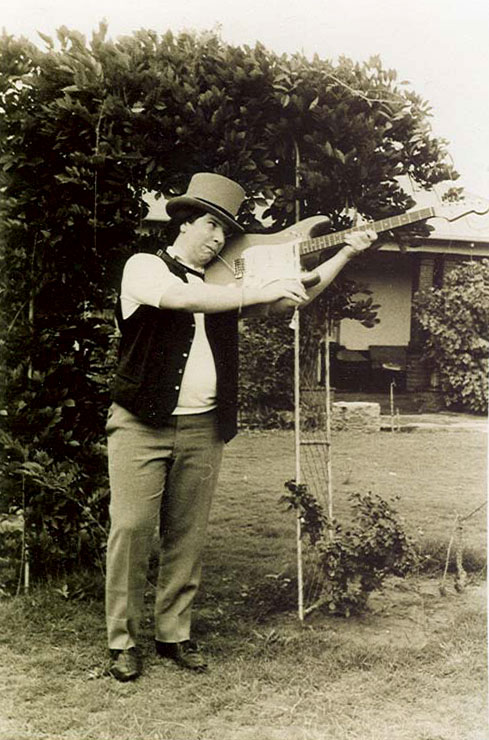
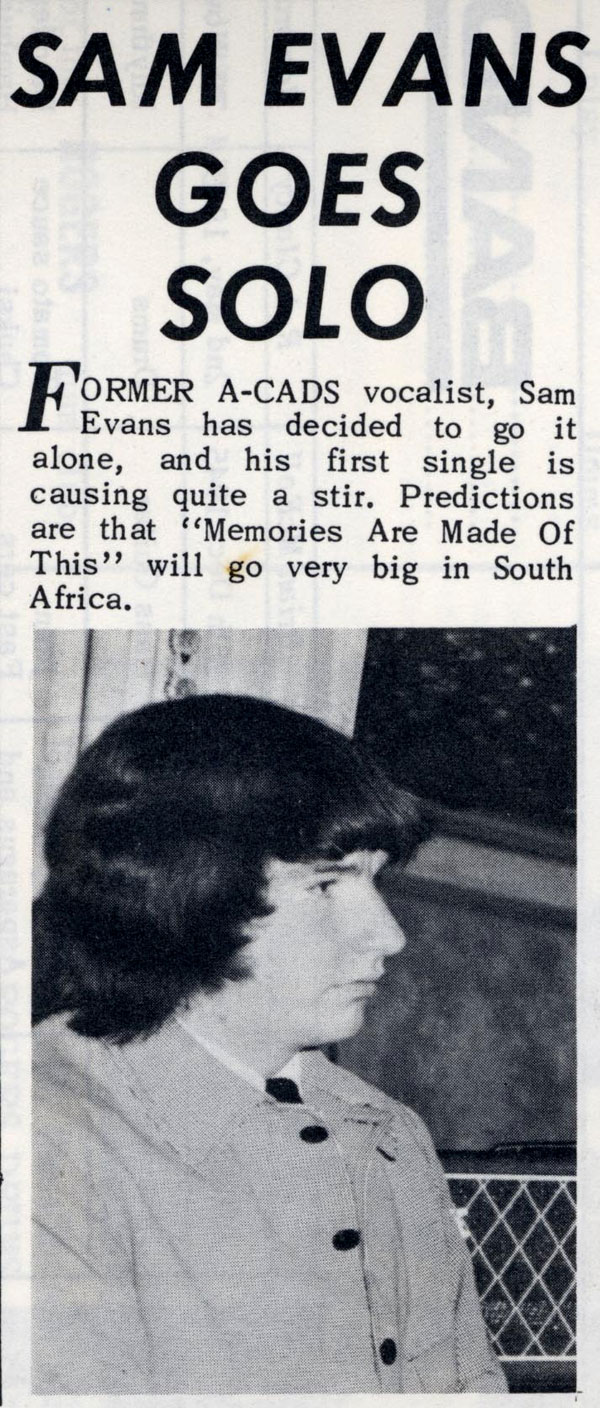
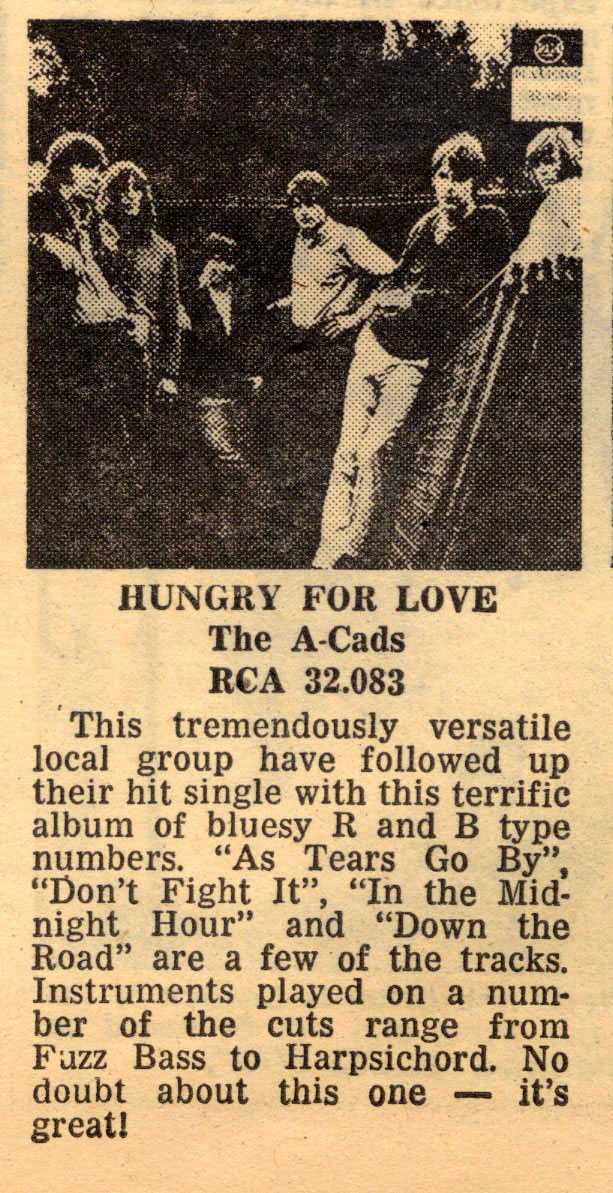
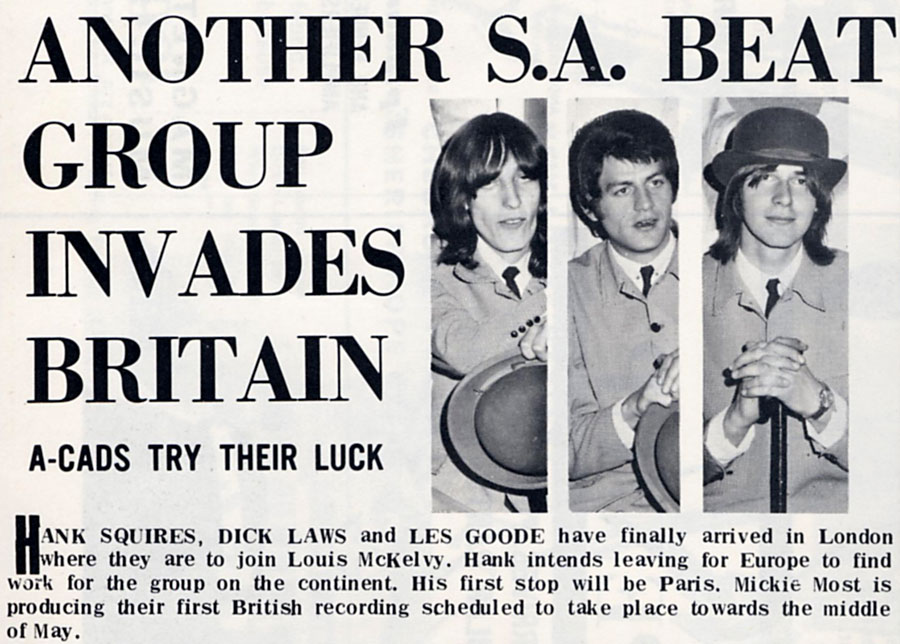
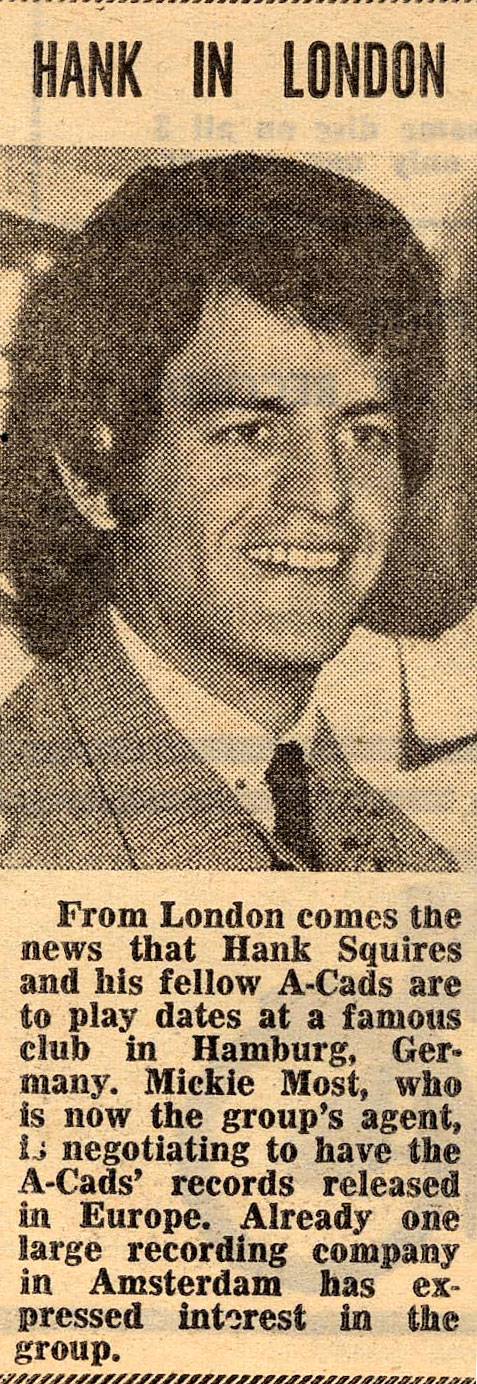
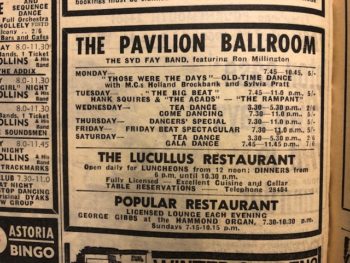
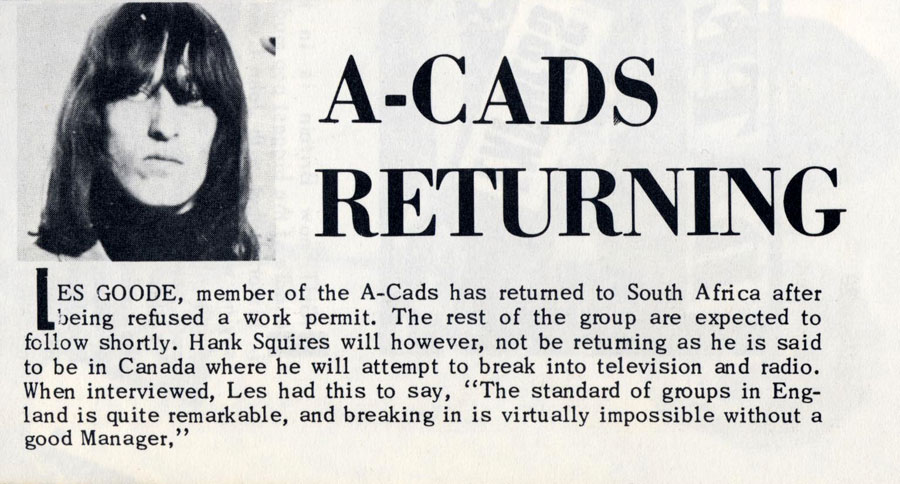
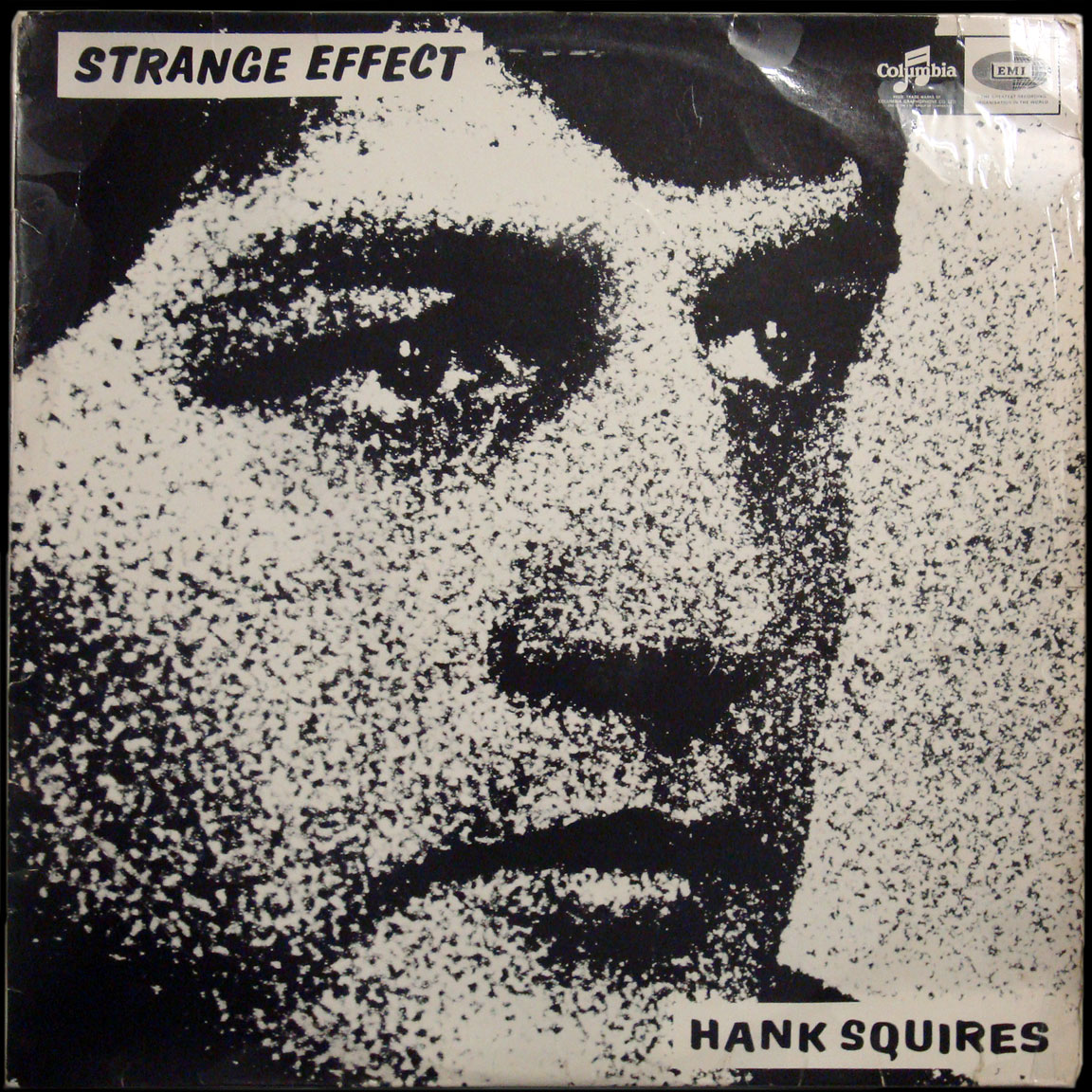
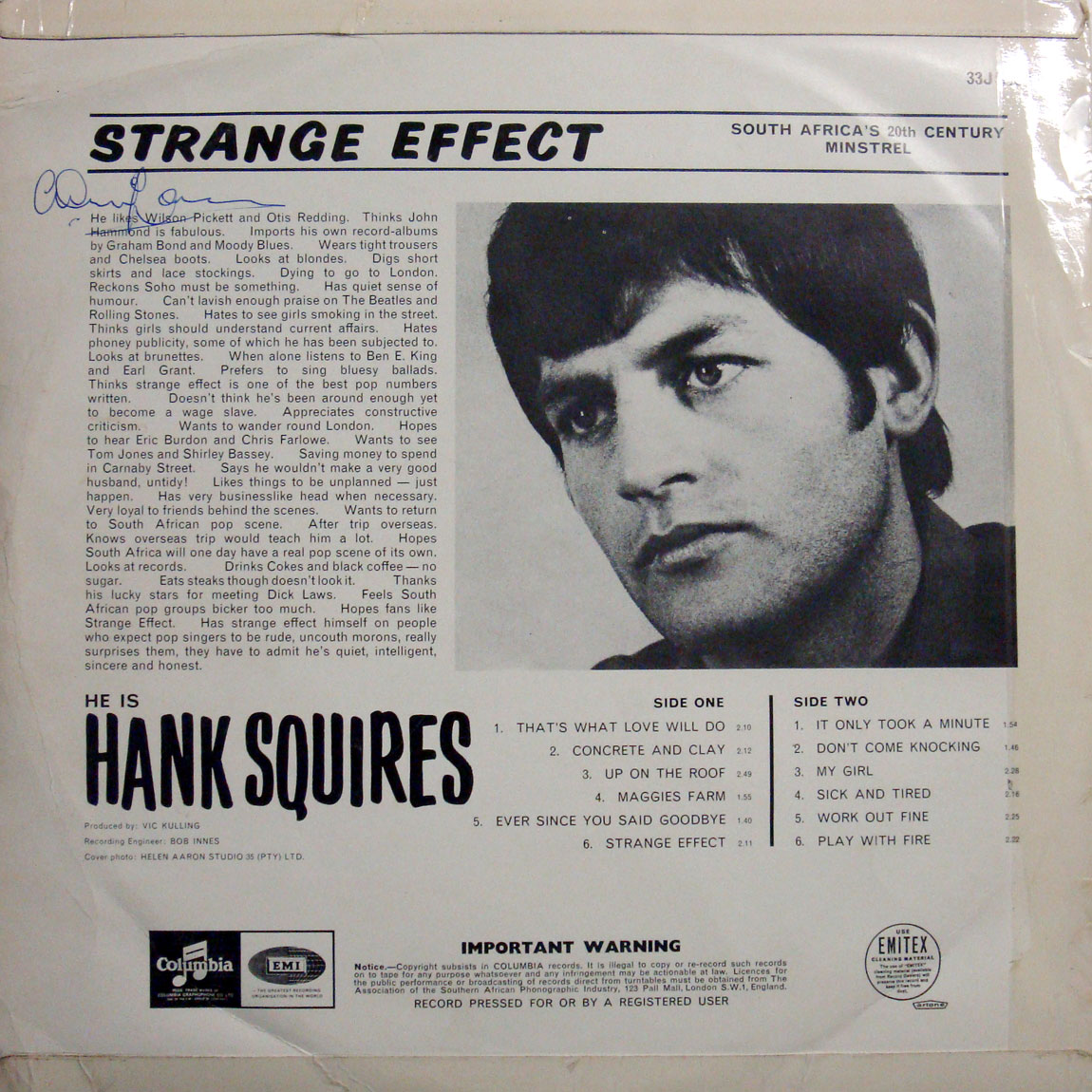
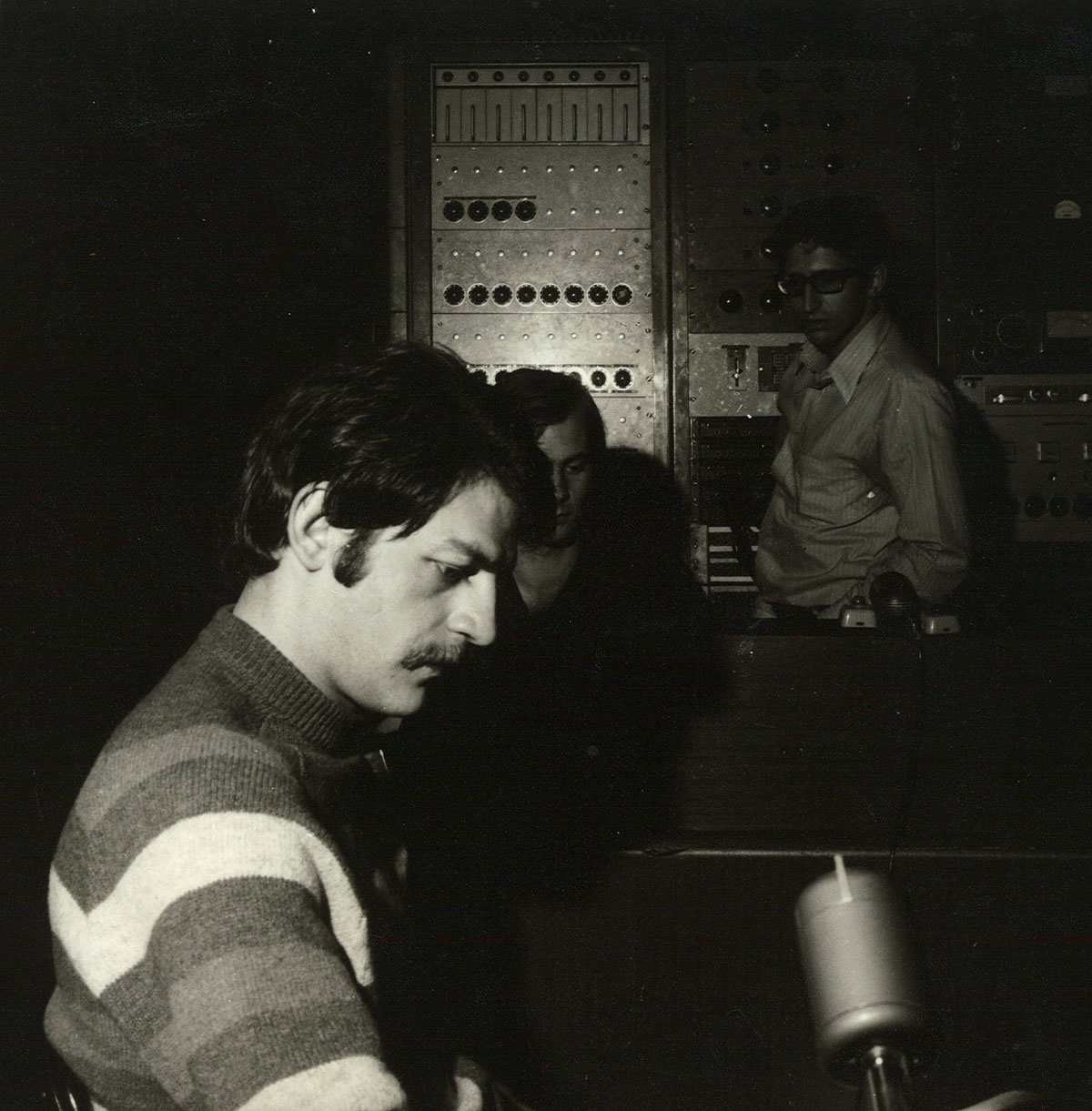
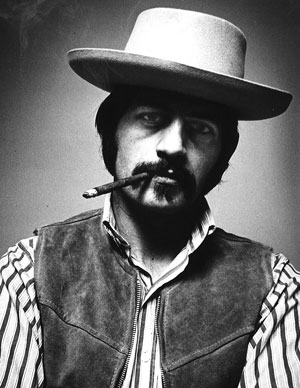
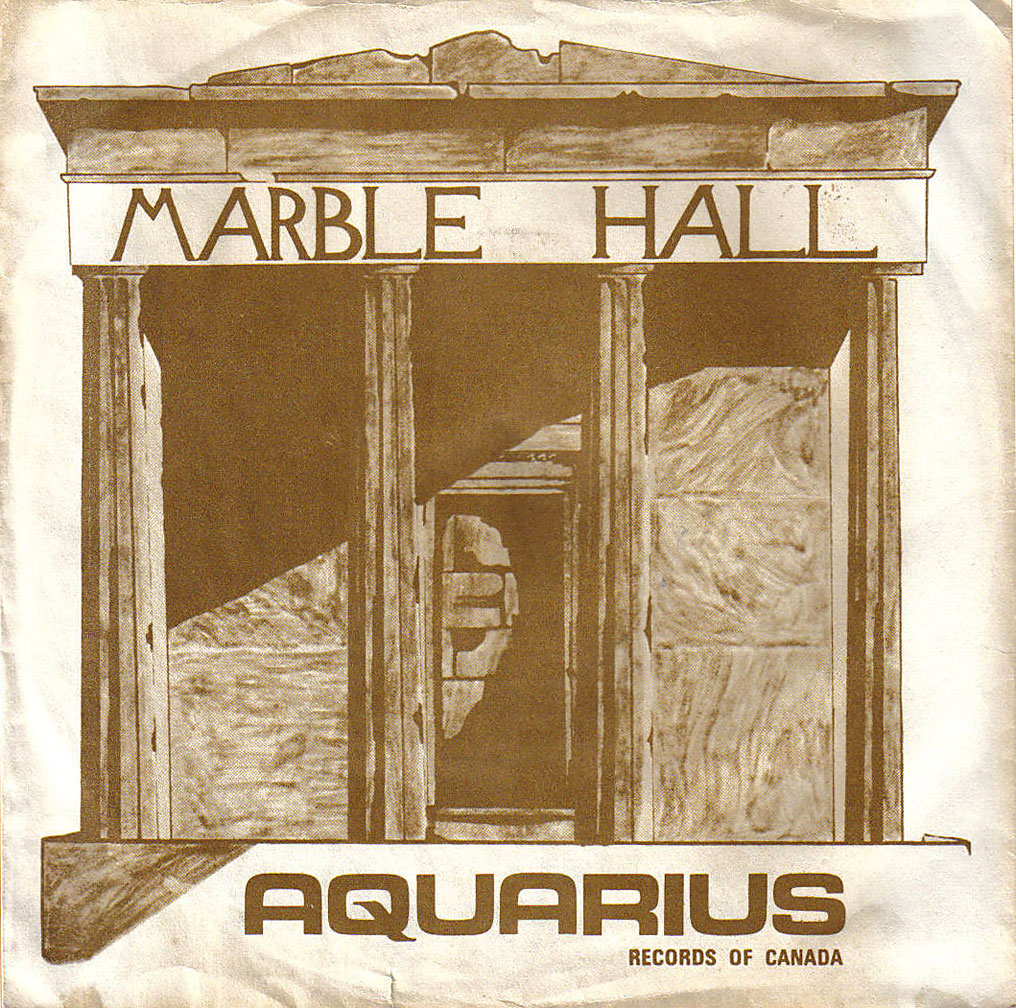
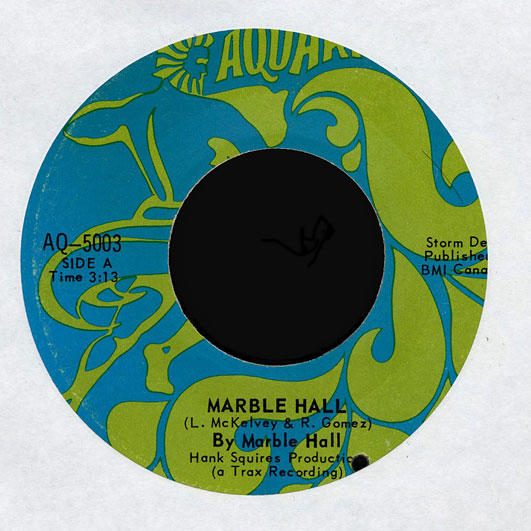
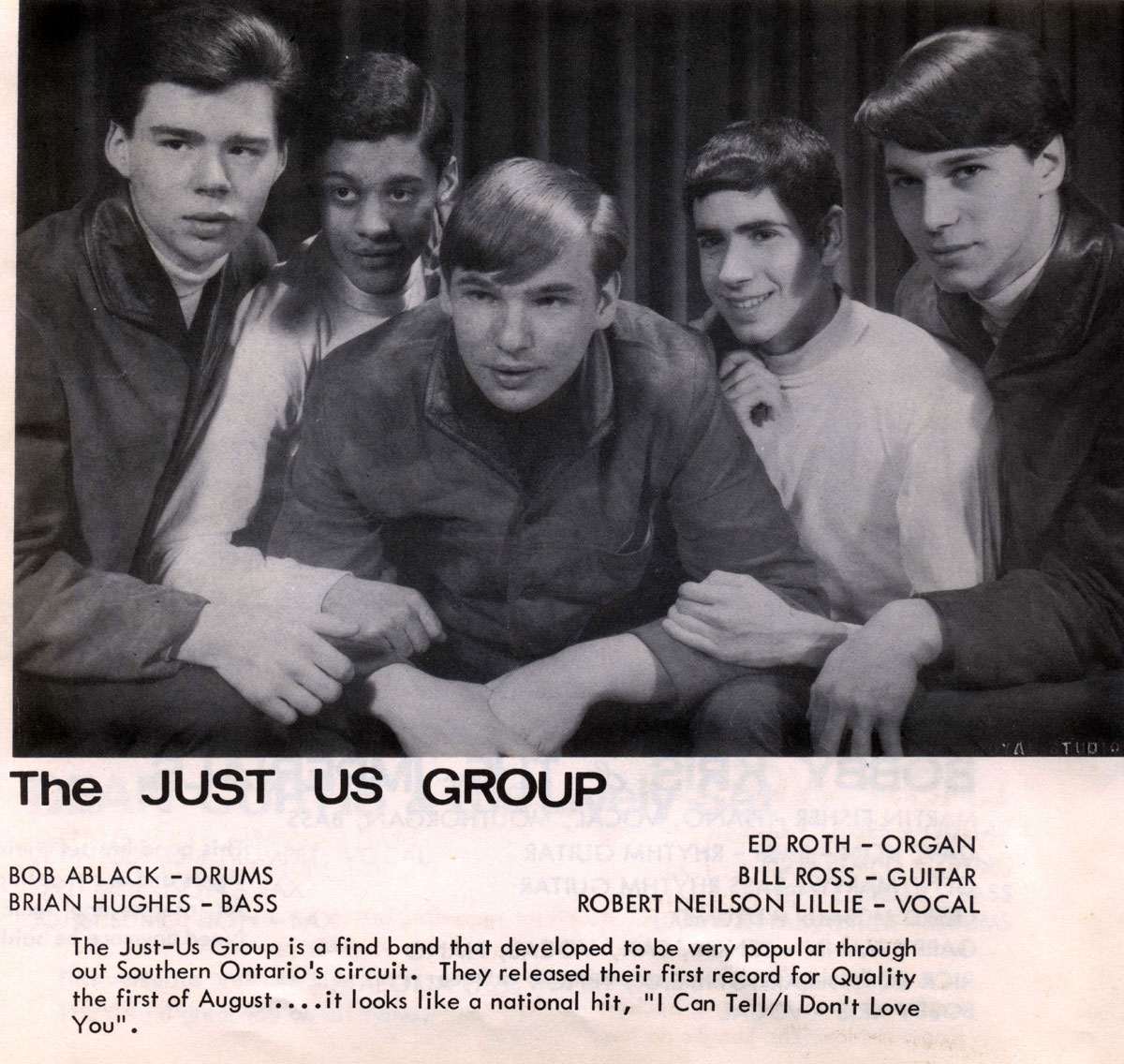
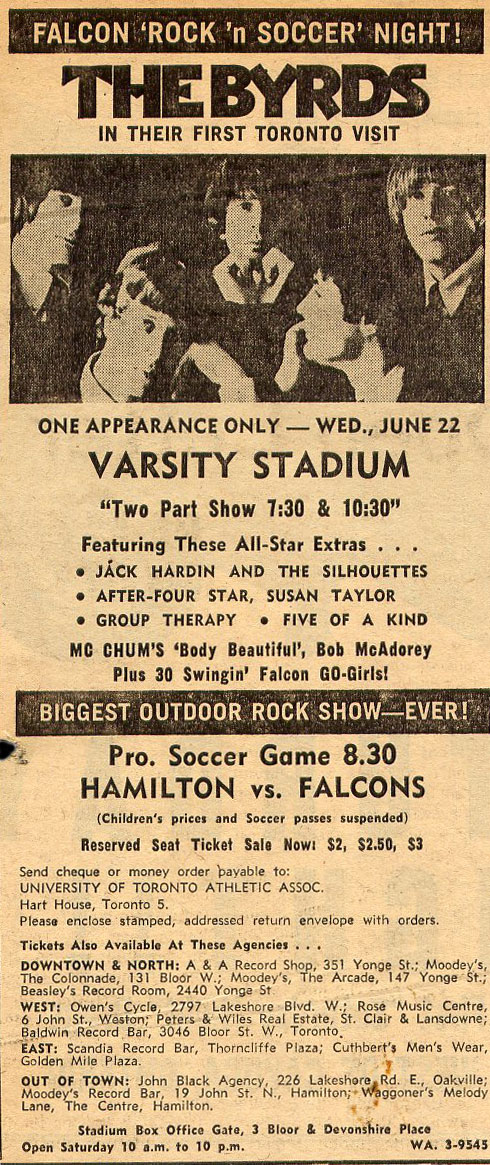
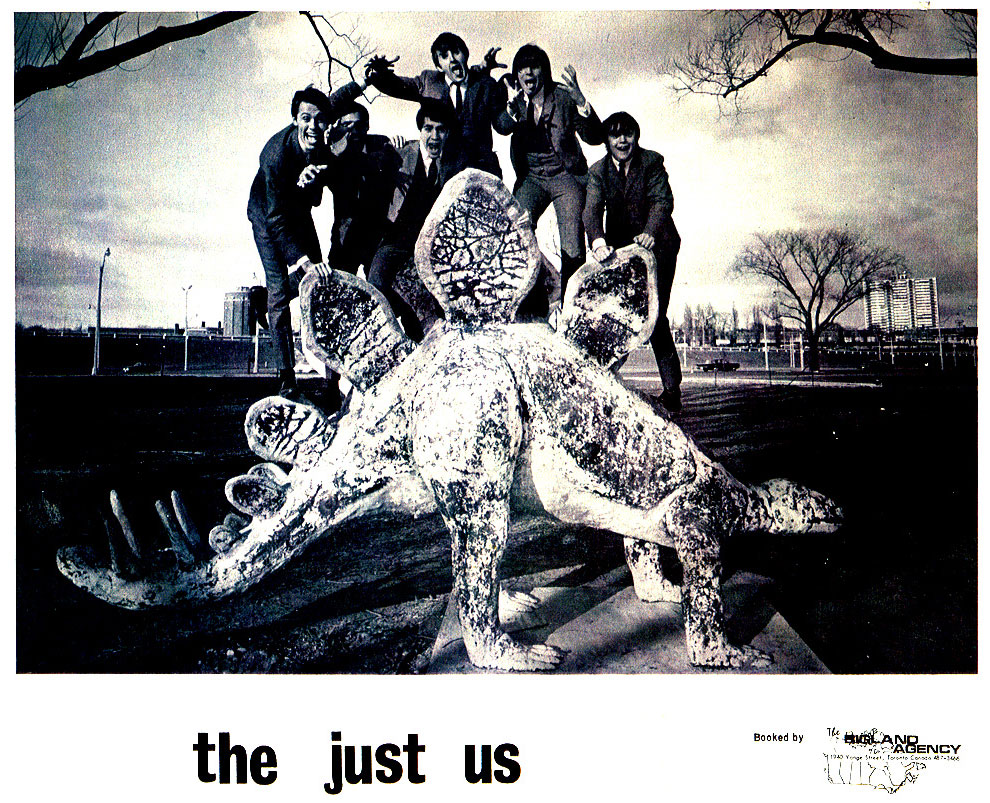


 Despite gigging incessantly on the Toronto scene from December 1967-January 1969, and opening for The Hollies in Ottawa during March 1968, Olliver’s new group never recorded and in mid-1969, he emerged with a new outfit, Natural Gas, who recorded an album for Firebird Records in 1969 (the long player, incidentally, includes an Olliver-Chirowski instrumental from the Mandala repertoire, “Tribute to Rubber Boots”).


