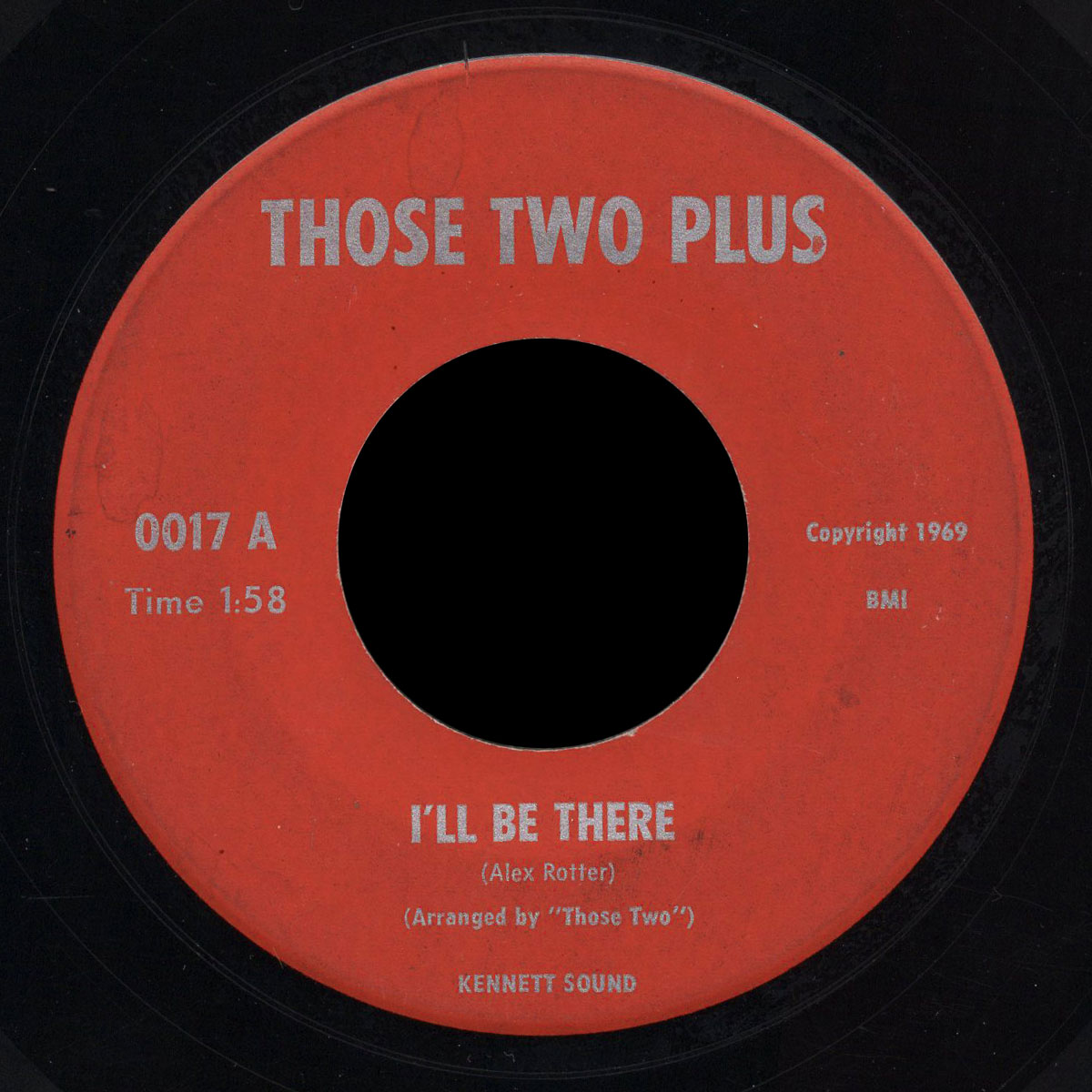
Those Two Plus – “I’ll Be There” / “It’s Rainin’ (Where I’m Bound)” (both by Alex Rotter, arranged by “Those Two”) Kennett Sound 0017, 1969.
Alex Rotter and Dawn Mickle performed as simply “Those Two” in a couple news reports. The Oneonta Star noted on August 10, 1968 that the duo took second place in the Folk Music Contest at the Otsego County Fair.
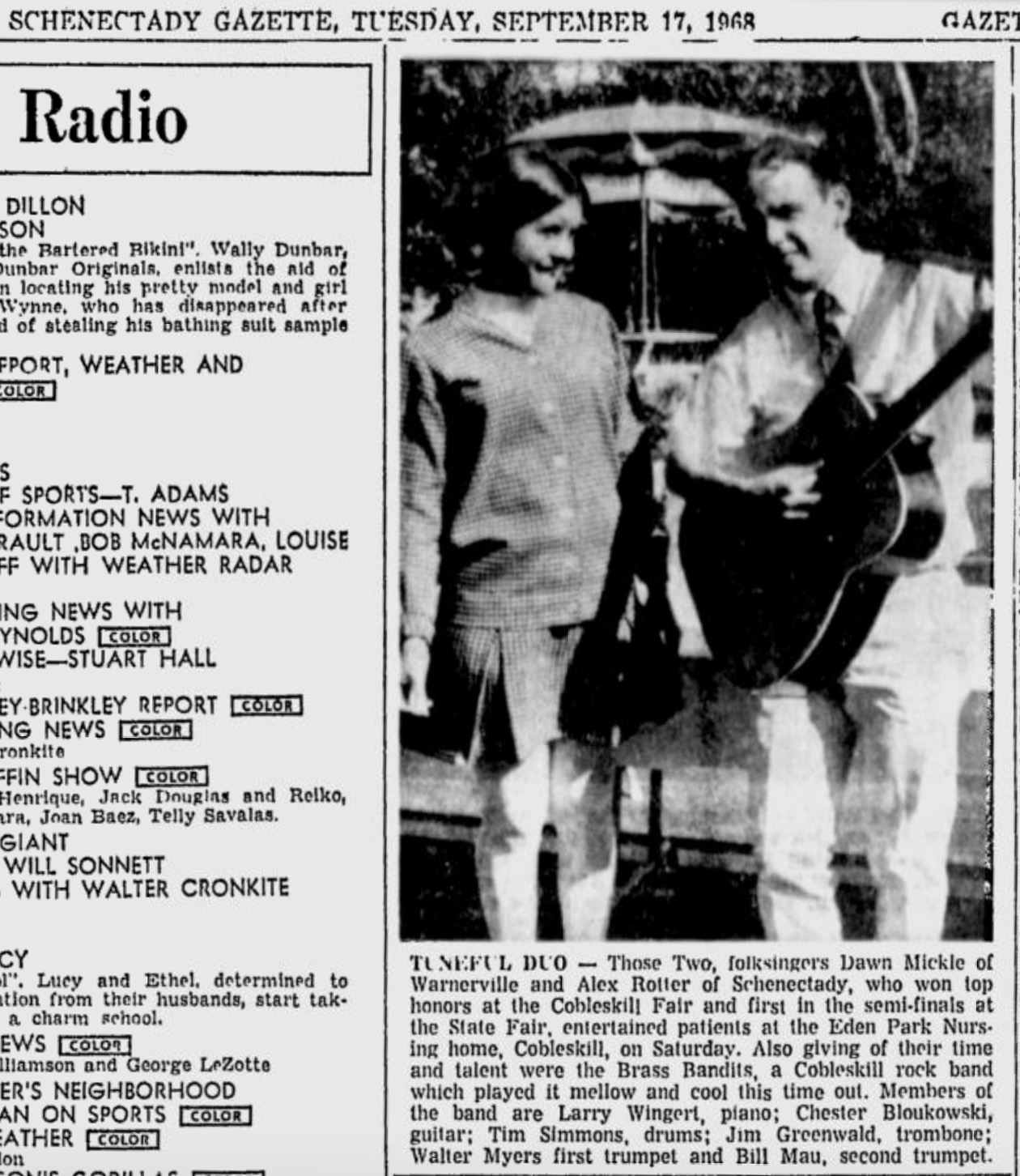
The Schenectady Gazette ran a photo of the duo on September 17, 1968:
Those Two, folksingers Dawn Mickle of Warnerville and Alex Rotter of Schenectady, who won top honors at the Cobleskill Fair and first in the semi-finals of the State Fair, entertained patients at the Eden Park Nursing home …
I have a 12″ acetate from the Kennett Sound Studio that includes both songs from the single. Another 12″ acetate contains five songs performed by Alex and Dawn which were not released.
From listening, I believe four of these to be original songs: “If I Were Free”, “Take Me to the Land of Lovin'”, “I Can Tell”, and “I Know What You Mean to Say” (titles are based on the lyrics), along with a version of Fred Neil’s “The Other Side of this Life”:
The Kennett Studio labels are blank.
Thank you to Peter Aaron for loan of the Those Two Plus single, and for finding the Gazette article on the duo.
Update: I’m pleased to say I was able to send the 12″ acetate of five unreleased songs to Alex Rotter’s family. Thank you to Sherry Rotter for contacting me.
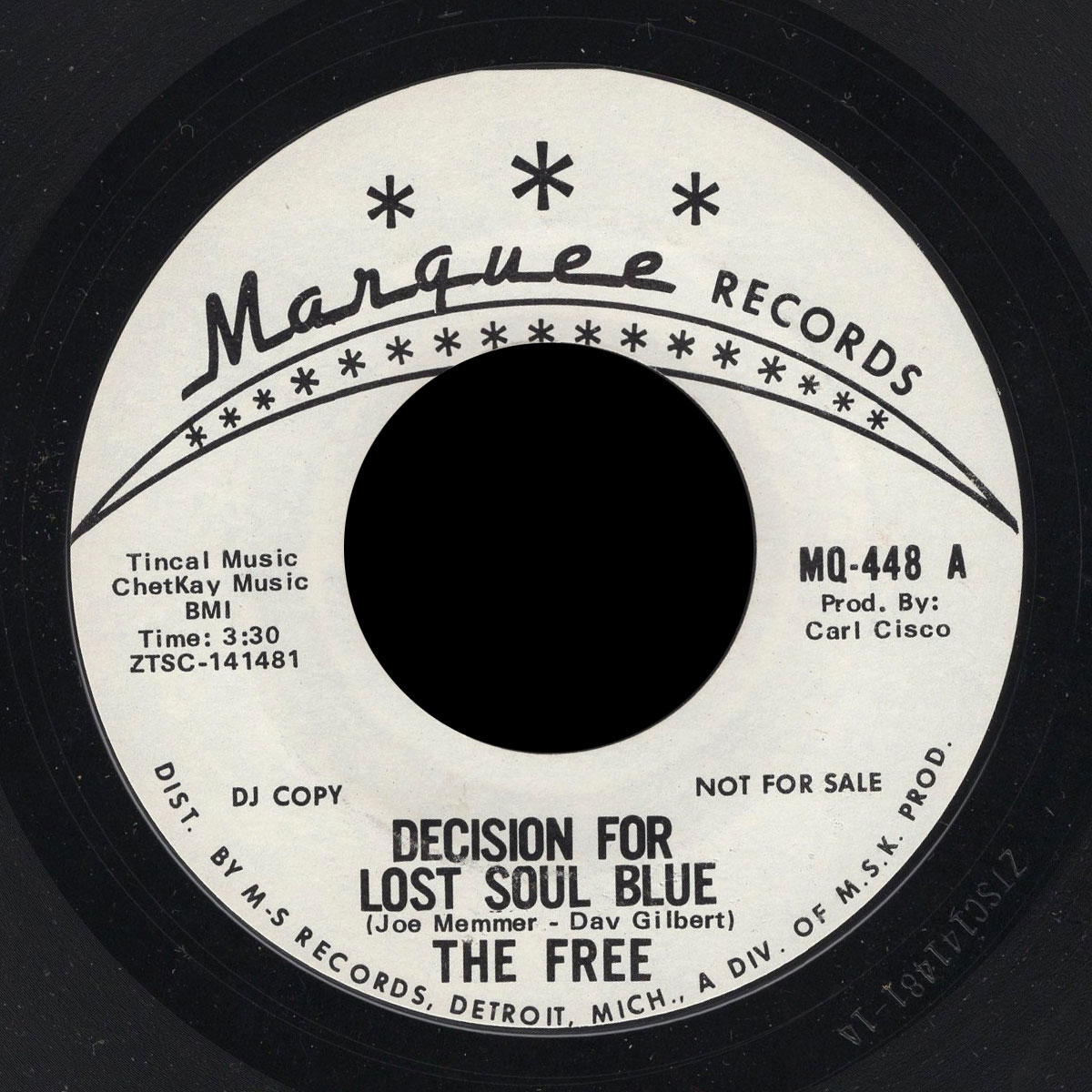
According to guitarist Joe Memmer, this psych-driven single, which features Dave Gilbert on lead vocals, was recorded in 1968 at Ralph Terrana and Al Sherman’s Tera Shirma Studios. The band paid for the sessions, themselves. Carl Cisco, who managed the career of CKLW DJ Tom Shannon, earned his production credit on the single as result of his bringing in Motown’s horn section for the sessions. Shannon, in partnership with Carl Cisco and Nick Ameno—both of the Antiques, the Buena Vistas, and the LaSalles—operated the Detroit-based Marquee Records.
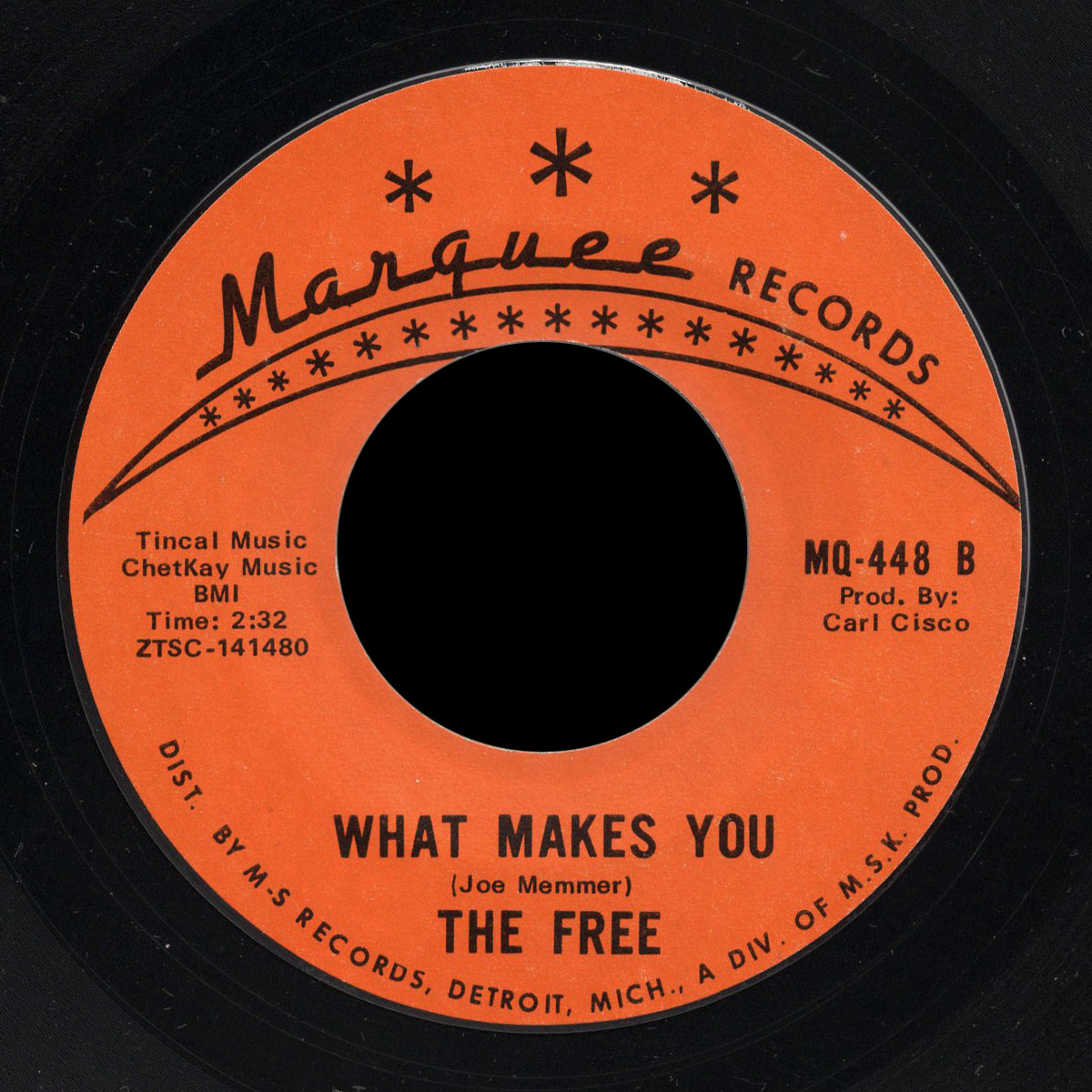
Carl Cisco’s production assistance resulted in “Decision for Lost Soul Blue” being issued on the Marquee label around December of 1968, with the B-side, “What Makes You.” Making the regional sales charts via airplay on CKLW Toronto and WKNR Detroit, the single went on to have a three-week run as the “Pick of the Week” on CKLW. Impressed with the sales and airplay, Atco/Atlantic picked up the record for national distribution, issuing the single in March 1969. (The label variations of the Atco version are result of different pressing plants manufacturing the record. On those releases, the A-Side title was expanded to “(Day of) Decision for Lost Soul Blue.”)
The Free remained together for about a year, until Dave Gilbert left to become the lead vocalist for Ted Nugent in January 1971. While he doesn’t appear on the album, Gilbert toured Nugent and the Dukes’ fifth release, Survival of the Fittest (1971). According to Memmer, Dave’s hard partying lifestyle conflicted with Nugent’s anti-drug stance (which caused him to dissolve the Amboy Dukes in the first place); that, in addition to Dave’s desire to start a band proper with his brother Marc, resulted in Gilbert’s departure.
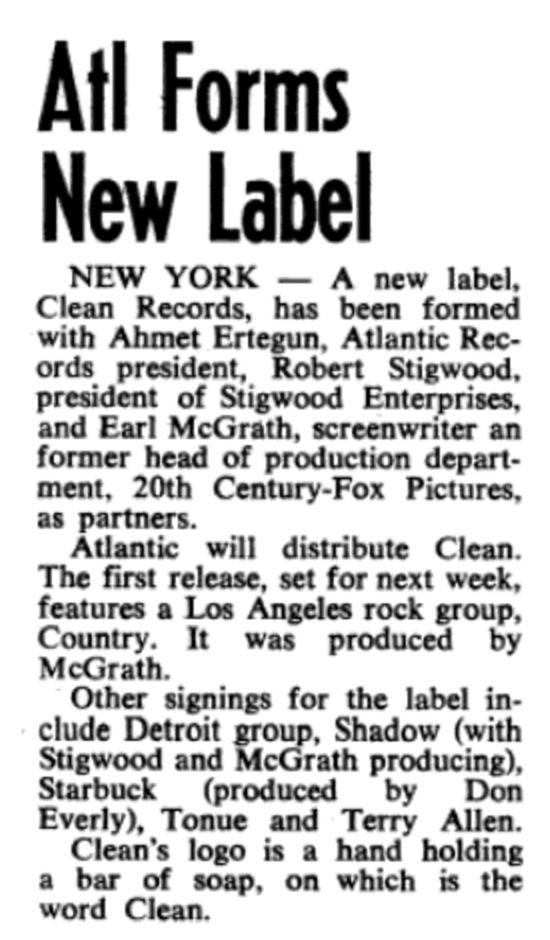
Shadow signing announced in Billboard, October 9, 1971
Joe Memmer and Dave Gilbert starting writing songs again and, along with Gilbert’s brother, Marc, formed Shadow. The band recorded a pair of singles in 1972 for Clean Records, an Atlantic subsidiary operated by Robert Stigwood and Rolling Stone Records’ Earl McGrath; the label’s other signings were the commercially-successful soft-rockers America and Starbuck. According to Memmer, Gilbert’s drug use, compounded with his reluctance to work with Stigwood’s suggestions for the band (adding string orchestrations; remembering Stigwood managed-produced the Bee Gees at the time), soured the deal.
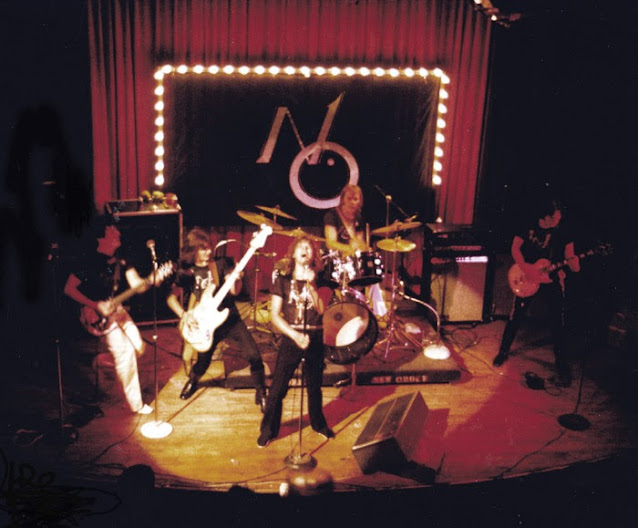
New Order with Dave Gilbert at the mic
By 1974, Gilbert moved to Los Angeles and joined the Stooges’ guitarist Ron Asheton and MC5’s drummer Dennis Thompson in New Order; the band also included KJ Knight from the Amboy Dukes. Marc Gilbert’s next band, the hard-rocking Adrenalin formed in 1977, recorded two albums issued through MCA Records in the early-to-mid ‘80s.
Joe Memmer became a non-recording member of Detroit’s Pendragon from 1977 to 1981; Pendragon eventually recorded two 7” singles with Rick “The Lion” Stahl, formerly with the Wilson Mower Pursuit and Sincerely Yours.
The late Dave Gilbert achieved national success as the frontman for the Rockets, which he joined in late 1975. Comprised of ex-members of Mitch Ryder and the Detroit Wheels, the Rockets’ biggest hit was their cover of the early Fleetwood Mac tune, “Oh, Well.”
Today, Joe Memmer serves as the lead guitarist for the nationally, critically-acclaimed Doors tribute band, the Detroit Doors.
There are more photos to be discovered of all of Dave Gilbert’s bands—including rare images of Shadow (but none from the Free)—on The Rockets Singer Dave Gilbert Facebook.
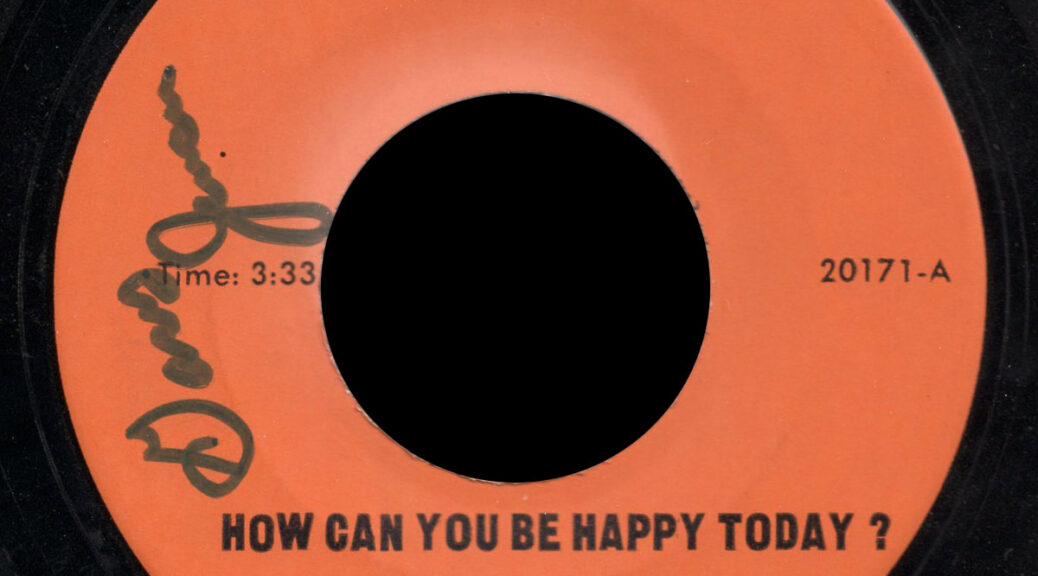
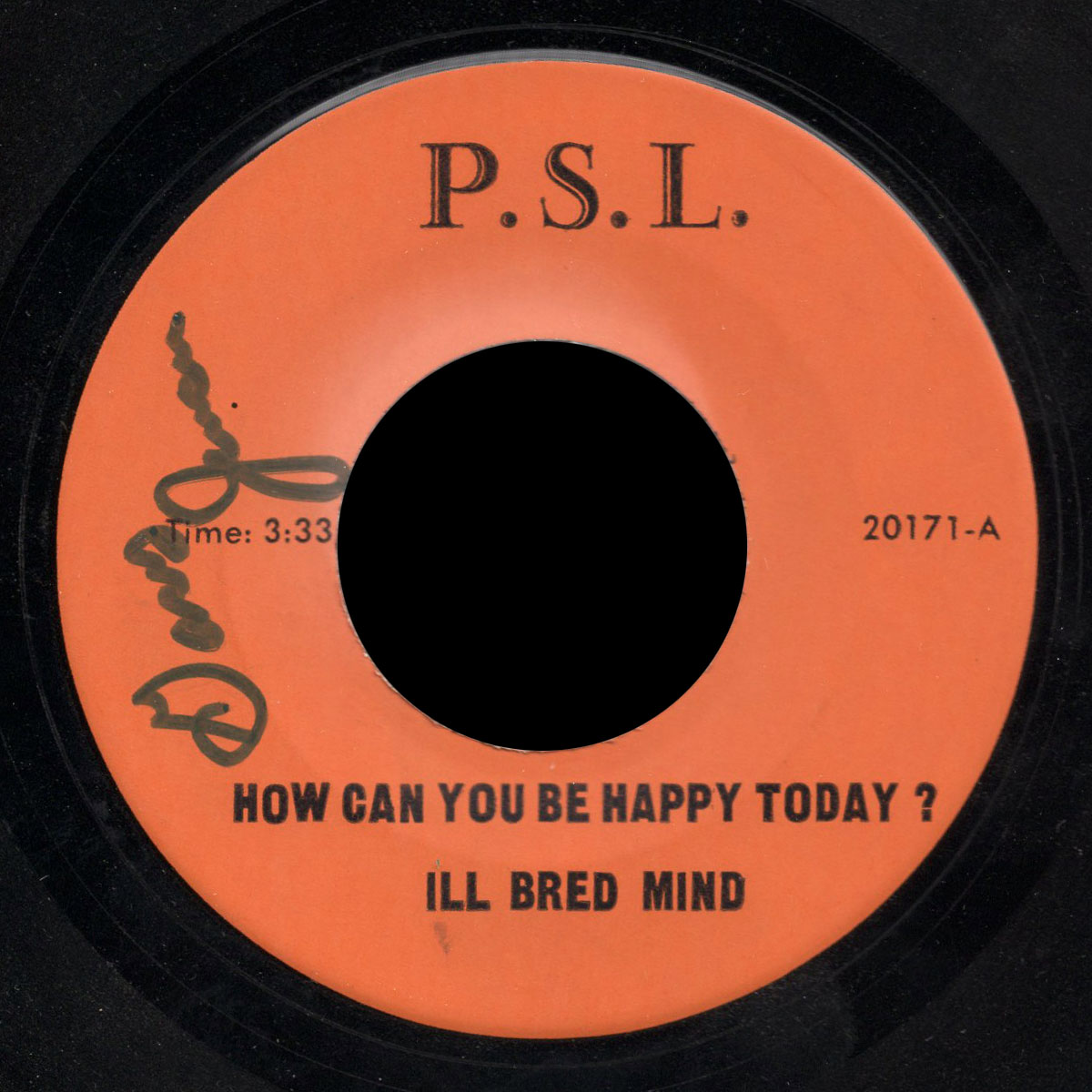
The Ill Bred Mind were high school students from Sayreville, New Jersey, making their only single in 1969. There are no credits on the label, but I believe “How Can You Be Happy Today?” is an original song. The flip is a fine version of “Walk on By”.
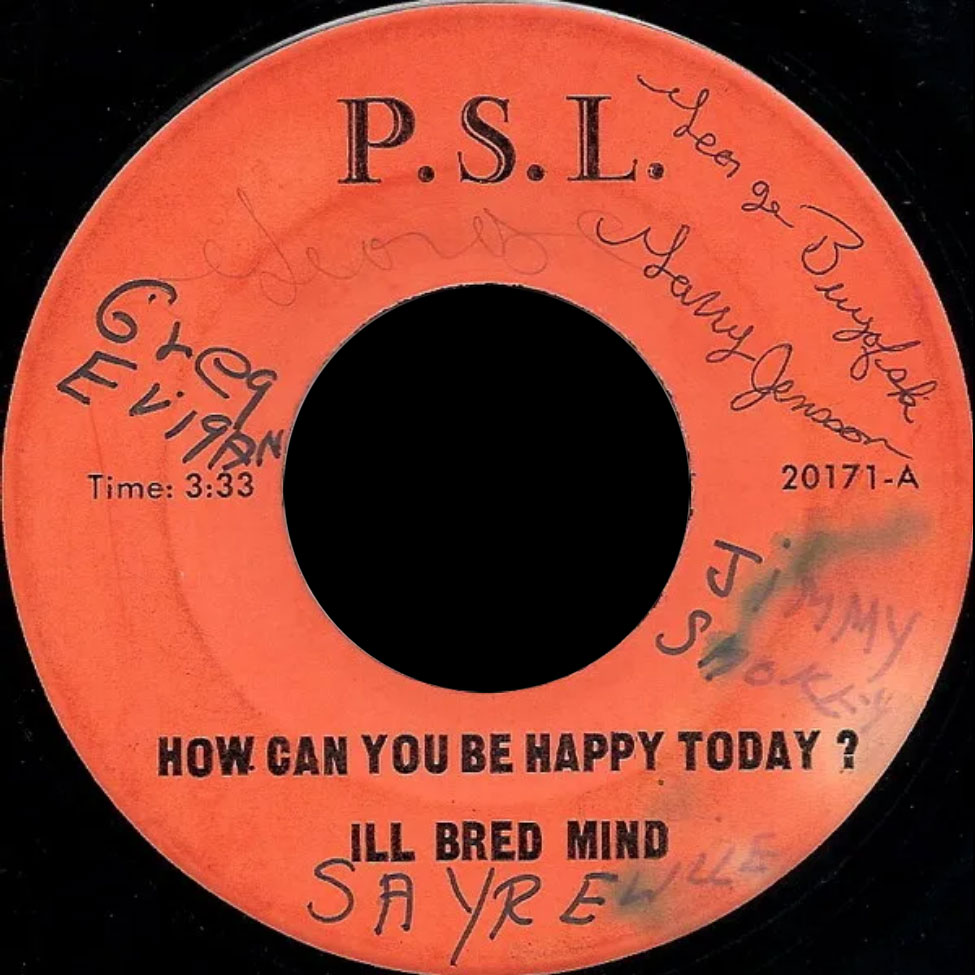
My copy is autographed by another member, possibly Gary Jensen. Another copy (see below) has other names & spellings: including Greg Evigan (who became a well-known actor), Garry Jenssen, George B (?), Jimmy Smokey (?). I would appreciate help with deciphering the names. Youtube comments lead me to the name of another possible member: Bruce Elacqua.
The Ill Bred Mind recorded at Photo Sonics Laboratories at 236 Walnut St. in nearby South Amboy, releasing it on P.S.L. 20171.
Marty Ruszala owned or operated PhotoSonics Laboratories, also known as Triple A studio, where he engineered the Jerry Rivera “Lovin’ Man” single on Kim, and Brian O’Connor “How Was I To Know” / “Missing You” on Sayne Records 20168.
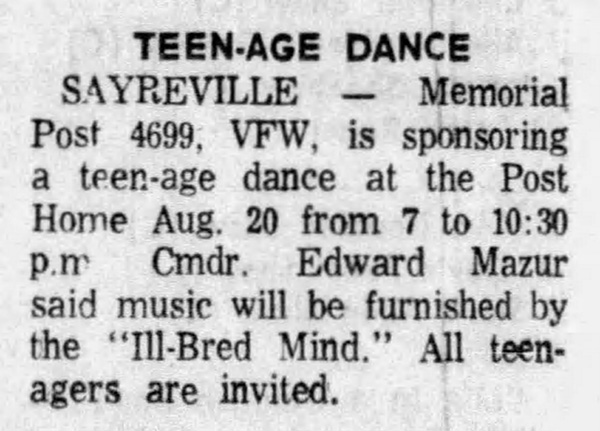
I can find two notices for live shows from the Home News, on August 1, 1969 at the Emma L. Arleth School, and at the Sayreville VFW Post 4699 on August 20.
Anyone have a photo of the Ill Bred Mind?
can you help decipher George and Jimmy’s surnames on this single?
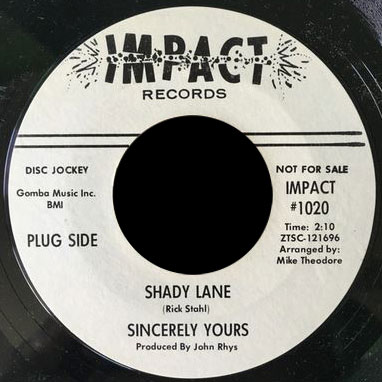
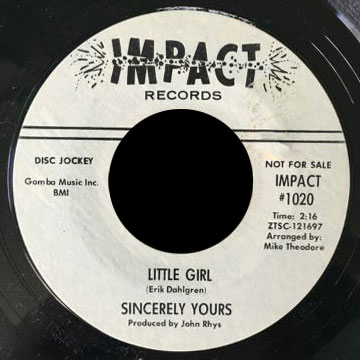
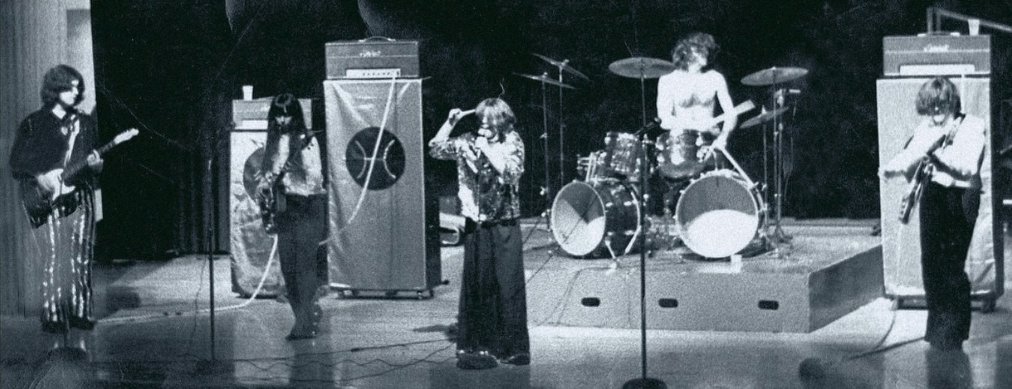
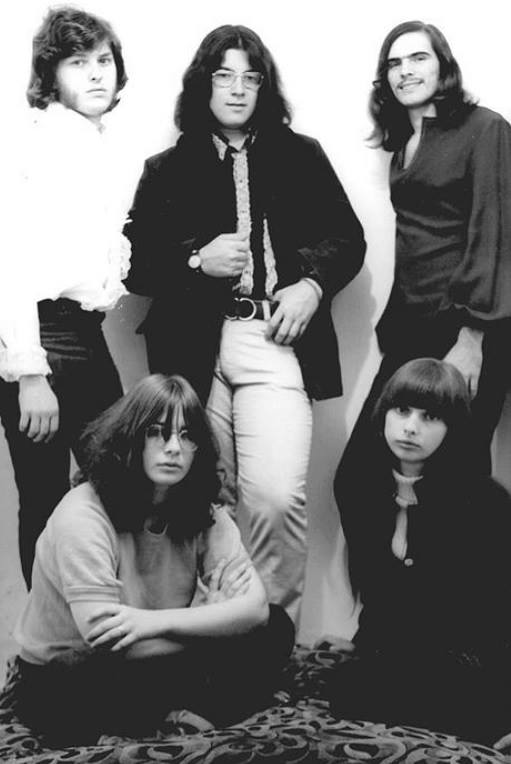
The Sincerely Yours was a short-lived studio band hailing from Detroit comprised of Rick Stahl and Erik Dahlgren. The duo never played out live, as the project was intended to establish each as songwriters. As typical of the time—and with all of the artists on the Impact label—studio musicians and arrangers cut the tracks, with the writer-singers themselves regulated to only performing the vocals. By the time of the single’s release, Rick Stahl co-founded his next band, a harder-edged concern known as Wilson Mower Pursuit.
According to singer-guitarist Rick Stahl, the writer of the A-Side/”Plug Side,” the single reached #18 on the Detroit radio charts. The B-Side, “Little Girl,” features the lead vocals of Erik Dahlgren, with Rick Stahl on background vocals.
Issued in January 1967, the single was recorded on October 18, 1966, at Tera Shirma Studios founded by Ralph Terrana and Al Sherman; their chief engineer was Milan Bogdan. The studio is best known for its work with Issac Hayes. The label of issue, Impact Records, was founded by Harry Balk, known for his work with Edwin Starr, as well as co-producing the million-selling single “Runaway” by Del Shannon. (Web repositories place the release of Impact #1020 at either December 1966 and April 1967; we defer to Rick Stahl’s date-of-issue of January 1967. You’ll note the single was issued in both white and red labels; the white-labels were the promotional copies; consumer copies were issued in red.)
John Rhys, who produced both sides, went on to work as an engineer at the world famous Hollywood Sound Studios, which hosted the likes of Earth, Wind and Fire, Jackson Browne, and many others. His own band, John Rhys and the Lively Set, also record a single at Tera Shirma issued by Impact. The singles by Sincerely Yours and the Lively Set appear on The Best of Impact Records compilation issued on compact disc in 1997.
The Sincerely Yours featured:
Vocals — Rick Stahl Vocals — Erik Dahlgren Whistling — John Rhys (on “Shady Lane”) Bob Babbitt — bass Uriel Jones — drums Joe Hunter — piano Ron Koss — lead guitar Dennis Coffey — guitars
Babbitt, Jones and Hunter were known for their work with Motown’s the Funk Brothers. Ron Koss—known for his Motown session work—recorded two albums for Reprise with Savage Grace. He was a one-time member of Detroit’s the Lazy Eggs.
Dennis Coffey culminated his Funk Brothers-era session work on numerous Motown-cut R&B and soul recordings with the instrumental “Scorpio” by Dennis Coffey and the Detroit Guitar Band. Featuring ex-Funk Brother Bob Babbitt on bass, the Gold-selling single landed in the U.S. Top 10 in 1971.
Wilson Mower Pursuit, with Rick Stahl at left
Rick Stahl’s next band, Wilson Mower Pursuit, is remembered in Detroit for its many live appearances at the Grande Ballroom, as well as for their opening shows for the MC5, the Stooges, and Ted Nugent’s Amboy Dukes. After failed offers from Capitol and Kit Lambert’s Track Records, Wilson Mower Pursuit independently recorded their lone album, Last Night Out: Live at the Silverbell. The band’s final live show in the fall of 1968; it was captured-on-tape by Bill Julius, one of the band’s roadies (the album has since been reissued on compact disc). WMP’s Shawn Murphy joined the cast of Hair alongside Meatloaf, formerly with Detroit’s Popcorn Blizzard. Together, they formed the duo Stoney and Mealoaf in 1971.
Wilson Mower Pursuit, with Rick Stahl, center
Concentrating on a songwriting career and retiring from live performances, Rick Stahl returned to Detroit stages in 1981 with Pendragon. After releasing two, private-press 45s in 1983, Pendragon disbanded. A live version of one of their songs, “Queen of Air,” appears on the radio promotional album Live at Hart Plaza issued by WRIF radio. Rick Stahl then retired to Colorado Springs, where he produced music and designed album art for local indie artists.
You can enjoy more of the music of Rick Stahl with this You Tube playlist.
The Heathens, from left: Mike Scheer, Steve Petticrew, Mike Delario, Laddie Stahl and Larry Hooker. Bass player Paul Marquez wasn’t around for the photo.
The Heathens came from Schenectady, NY and cut one of the greatest singles of the area “The Other Way Around” / “Problems” on Vibra L-104. The Heathens recorded at Vibra Sound Recording Studio, but the cavernous sound does not diminish the energy of the group.
Michael Dellario wrote both songs and sang lead vocals. The labels credit Hooker, Stahl, Petticrew, Sheer & Marquez for arrangement.
Michael Dellario – lead vocals Laddie Stahl – guitar Steve Petticrew – guitar Larry Hooker – keyboards Paul Marquez – bass Mike Sheer – drums
Steve Rosen wrote a profile on the band in Kicks #2, but the article had a number of typos in the names, such as Steve Pedicrue, Paul Marques, and Mike Sherer.
The article gives some interesting information about Vibra Sound studio:
The Heathens were the first to record at Schenectday’s first studio, Vibra Sound, which at the time was located in the home of proprietor Nate Schwartz. As Mike Dellario remembers it, conditions were primitive: “At the time, the studio was his garage and the engineering booth was his basement. I remember there was no eye contact at all. All the talking was through the microphone. Everything was done basically in just one shot, no concept of tracking.”
The Heathens broke up when the members graduated high school in June, 1967. The article states that Dellerio stuck it out with several subsequent bands and eventually cut some demos for Warner Brothers … He hopes to work with local bands on a producer/arranger level.
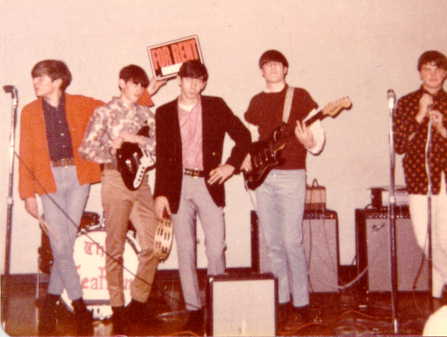
The Sensations, from left: unidentified on accordion, Dave Marinucci with pompadour on guitar, Michael Dellario on drums, Larry Hooker with the tambourine, and George Supreneault on guitar in the white shirt.
Walter Phelps (who was lead guitarist for the Ravens, also managed by Marty Wade) sent in this photo of the Sensations, which had two members who would go into the Heathens.
Mike Dellario changed his name to Michael Dellaira and became an orchestral composer.
Michael Dellaira told me he auditioned to sing for the Heathens, and brought Larry Hooker with him into the band on keyboards. Thank you to Michael for the info and the photo at top.
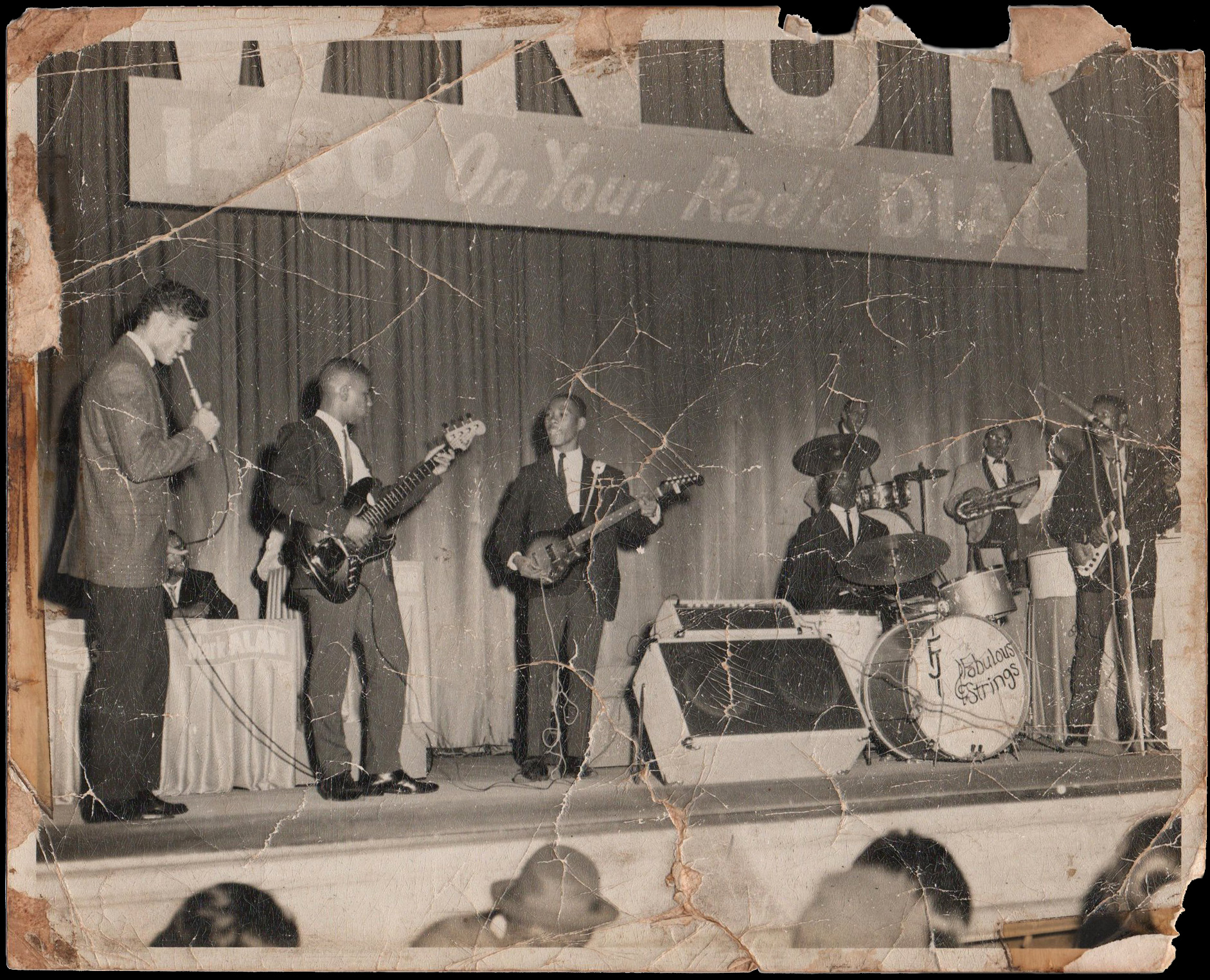
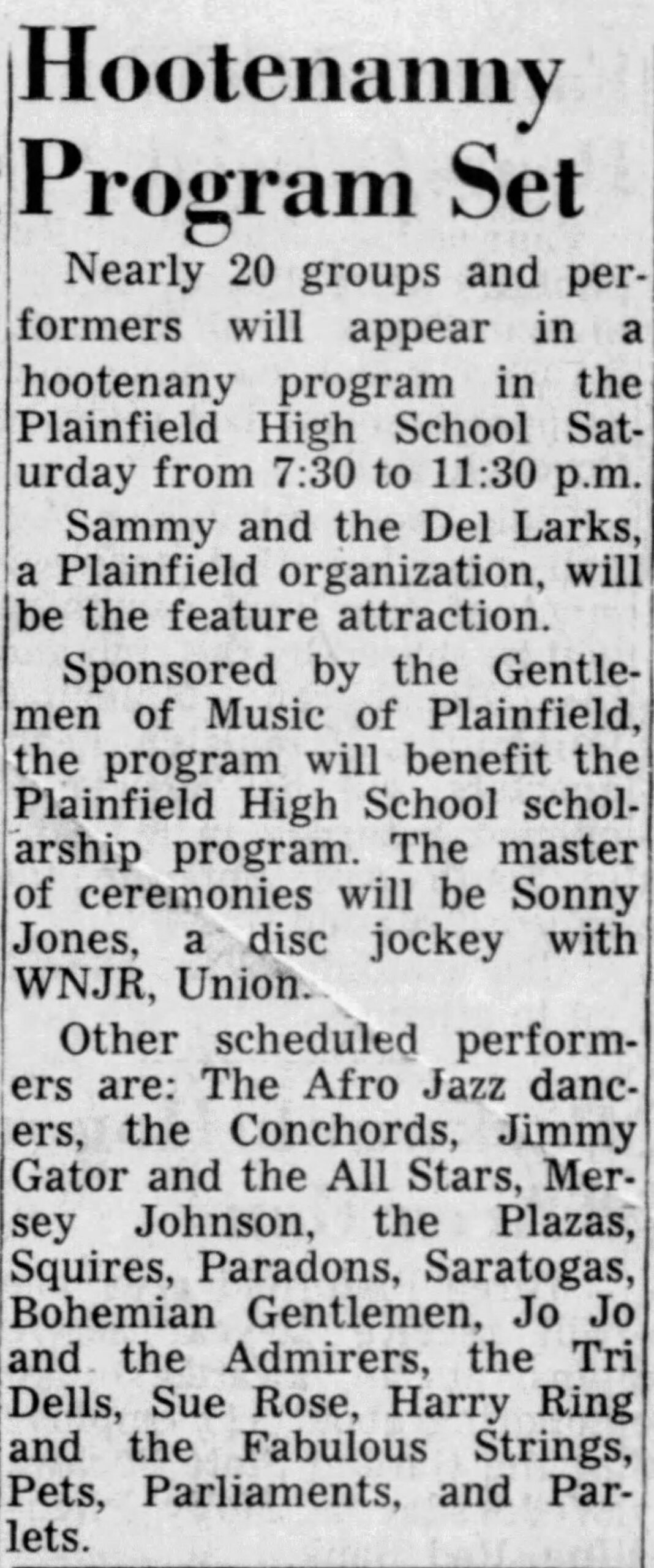
notice in the Courier-News, Thu, Sep 24, 1964Frank Jones was born in Plainfield, New Jersey and joined the Fabulous Strings at age 15. Frank wrote to me:
My band the Fabulous Strings won a talent show in Newark NJ and recorded two demos at Hertz Studio 38 Halsey Street, Newark, New Jersey. The tunes were “How High the Moon”, “Slow Hold It”, “Movin’ Up” and “Vibrating”. I would like to listen to them again.
Charlie Morton – lead guitar C.B. Hill – rhythm guitar R.D. Cunningham – bass guitar Frank Jones – drums
The Bridgewater Courier-News announced a benefit concert at Plainfield High School on Saturday, September 26, 1964 with 20 acts including Sammy and the Del Larks, the Conchords, Jimmy Gator, Mersey Johnson, the Plazas, Paradons, Jo Jo and the Admirers, the Tri Dells, Harry Ring and the Fabulous Strings, Parliaments and Parlets.
If anyone comes across any Hertz Recording Studio lacquer demos of the Fabulous Strings, please contact me.
Frank Jones has kept active in music, and can be found on facebook.
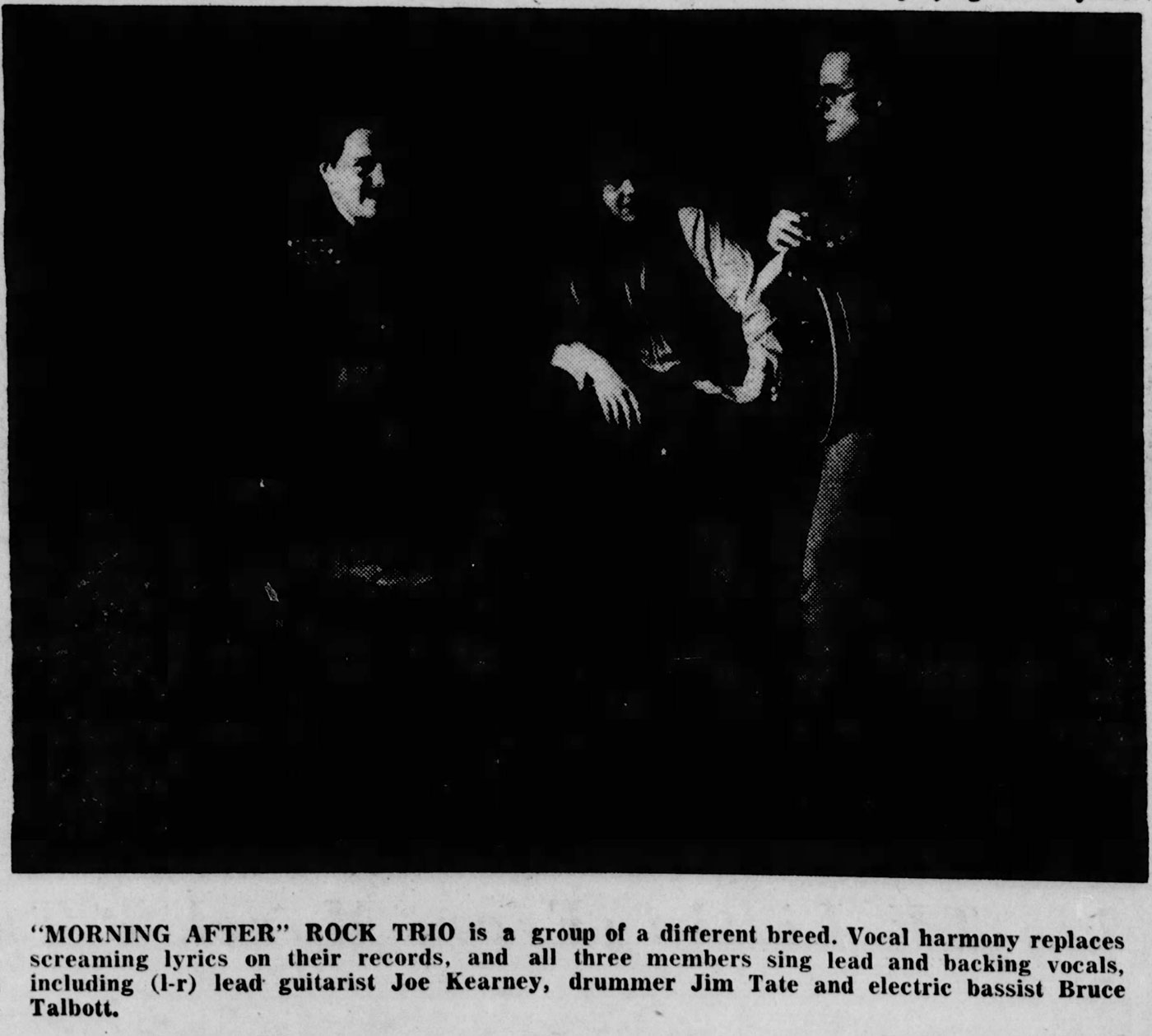
Morning After released one record in 1970, “I Don’t Need You Today” / “Dream” on Third Wave 0027.
Members were:
Joe Kearney – lead guitar and vocals Bruce Talbott – bass guitar and vocals Jim Tate – drums and vocals
Although all three have song writing credit on the labels, copyright registration from March, 1970 shows Bruce E. Talbott wrote words and music to “I Don’t Need You Today”, and Talbott and Joseph Kearney co-wrote “Dream”. Dyad Music published the songs, but I don’t see them in BMI’s database.
According to an article in the Kingston Daily Freeman from March 7, 1970, the group met in New Paltz but were based in Kingston, NY. The group were in their early 20s, so they may have had previous band experience.
For Them, Rock’s the Mother Tongue
Morning After is not much interested in talking up a revolution. Its three clean-cut, suede-jacketed-and-vested members prefer to sing songs that are rhythmic with vocal harmony rather than rife with social movement … forsaking screaming lyrics and fire-eating antics for music with a straight-ahead sound.
Relying on the powerful, bluesy, lean sounds of Wallkill drummer Jim Tate, Kingston lead guitarist Joe Kearney, and bass guitarist Bruce Talbott of Walden … Their impeccable instrumental style and express-track delivery has brought them bookings at The Creamery in West Park, the Thunderbird in Saugerties, the Blue Eagle in New Paltz, and the Trade Wind and Coral Reef in Newburgh …
Talbott … tied in with the other two members of the group during a jam session while he was a student at New Paltz State University College.
The new disc, produced by Lance Naylor for Third Wave Records, was recorded at Kennett Sound Studios in Kinderhook: is currently available at Caldor’s Abrams and Britts.
(T.G.)
I don’t know if Talbott, Kearney or Tate continued in music after Morning After. Their record is one of the few singles from Kennett Sound studio that I don’t have in my collection.
Lance Naylor had a previous mention in the Daily Freeman, from March 25, 1969:
Theft of musical instruments valued at $1,000 from the Pleasure Yacht Tavern here, was under investigation …
Lance Naylor … manager of The Spurs, a musical group, reported the theft on Monday to authorities. He said the missing articles included three amplifiers and other musical equipment.
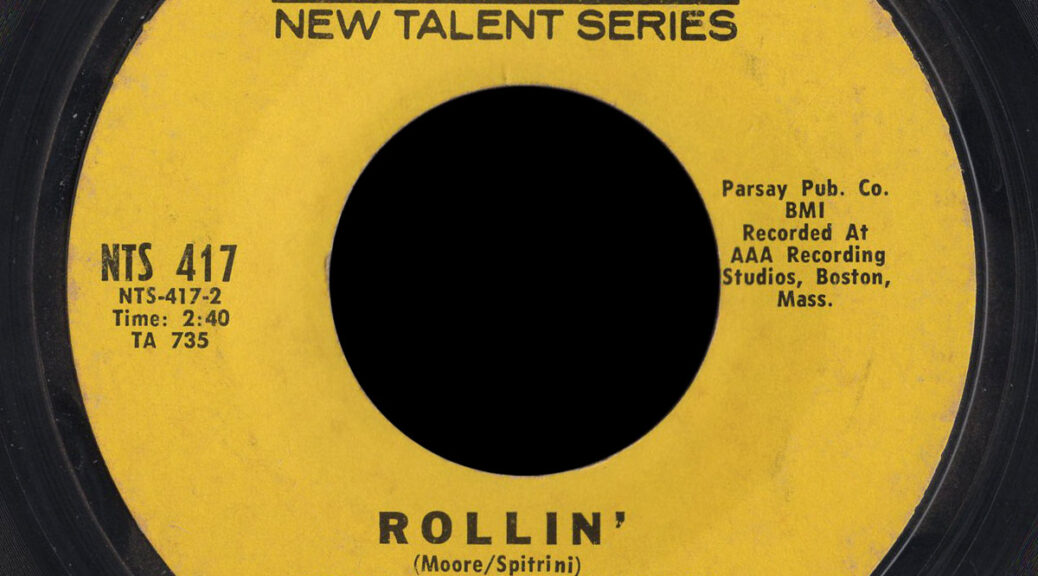
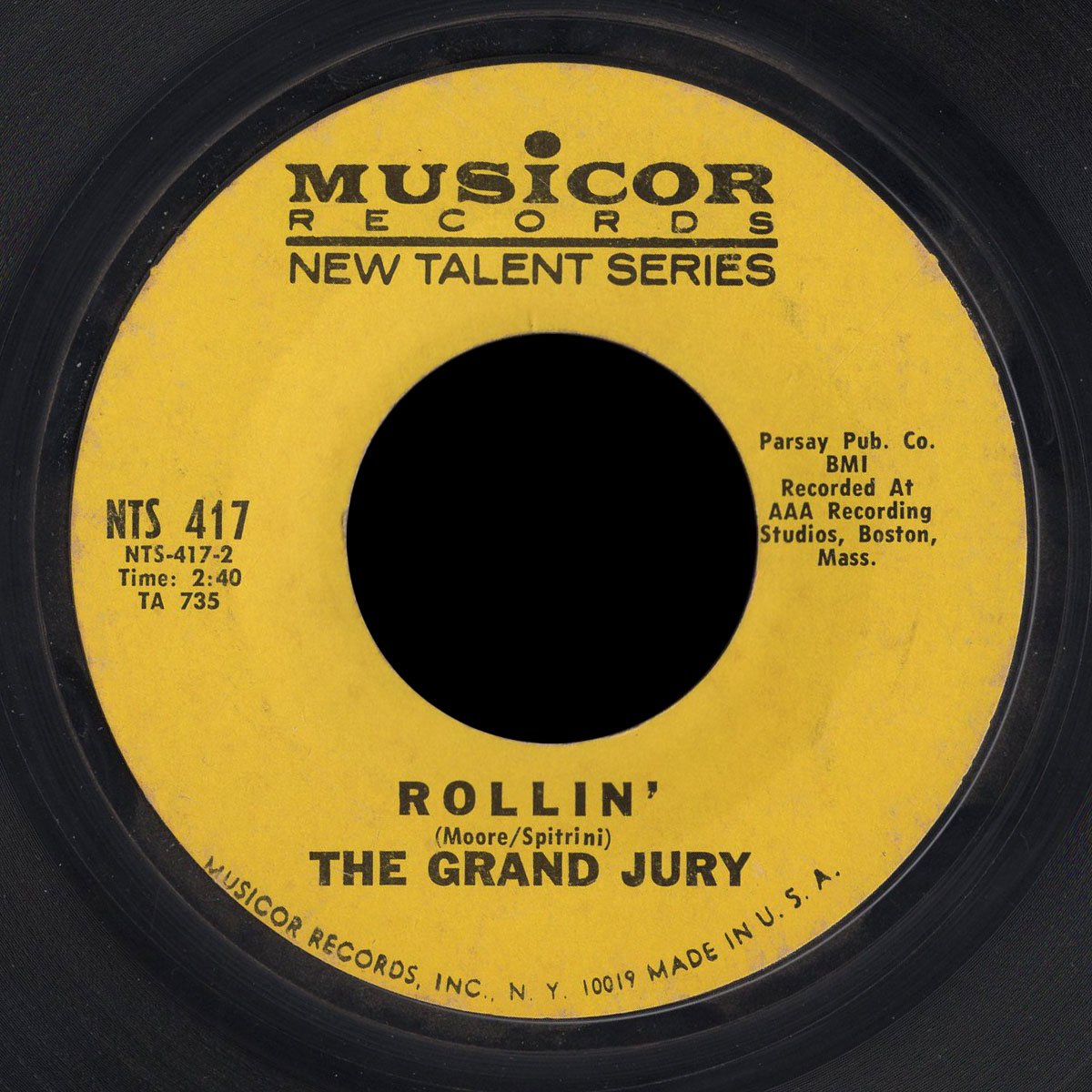
The Grand Jury made one single, “Lovely Lady” / “Rollin” on Musicor Records’s New Talent Series NTS 417. The New Talent Series is an interesting set of records, including some experimental singles that I haven’t covered before, like the Lemon and Lime.
The Grand Jury single is not as adventurous, but both are original songs by Moore and Spitrini. Of the two, I prefer the B-side, “Rollin'”. Like others in the series, it is a styrene 45 that can easily get worn from play.
I can not find information on the group, but the grandson of Frank Spetrini wrote to me with the correct spelling of the name from the song writing credits, locating the band in Boston, MA. Francis Spetrini graduated from Roslindale High School in 1969.
Joe Saia owned AAA Recording Studio and Parsay Pub. Co. Parsay appears on many New Talent Series 45s like the Lemon and Lime, the Lost Souls, and LSD, as well as other AAA productions like the Collage’s “Best Friend” / “Girl Don’t Tell Me”.
However, most of these songs do not appear in BMI’s database, or in the Library of Congress list of registrations.
I’d appreciate any further info on the Grand Jury or other acts that recorded at AAA.
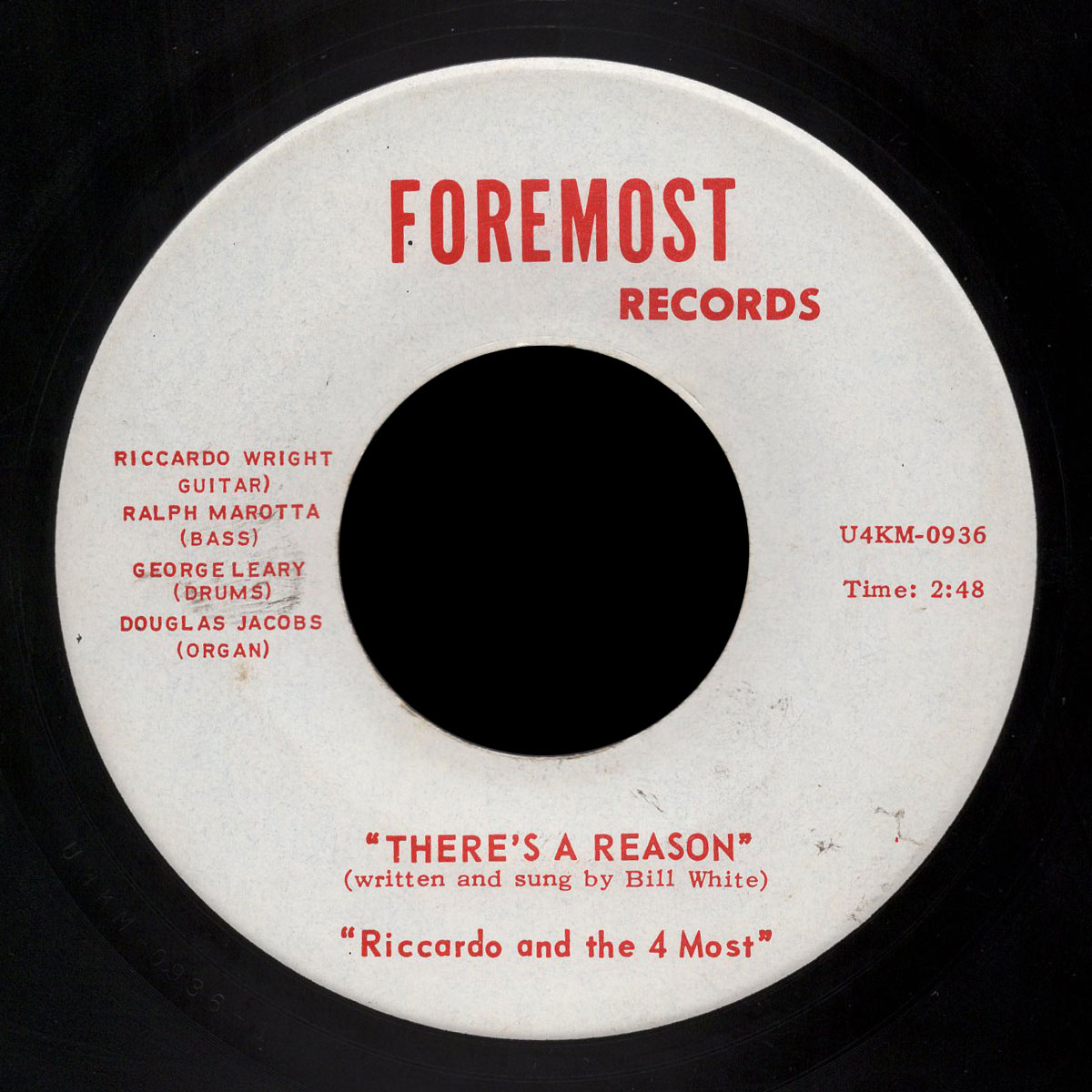
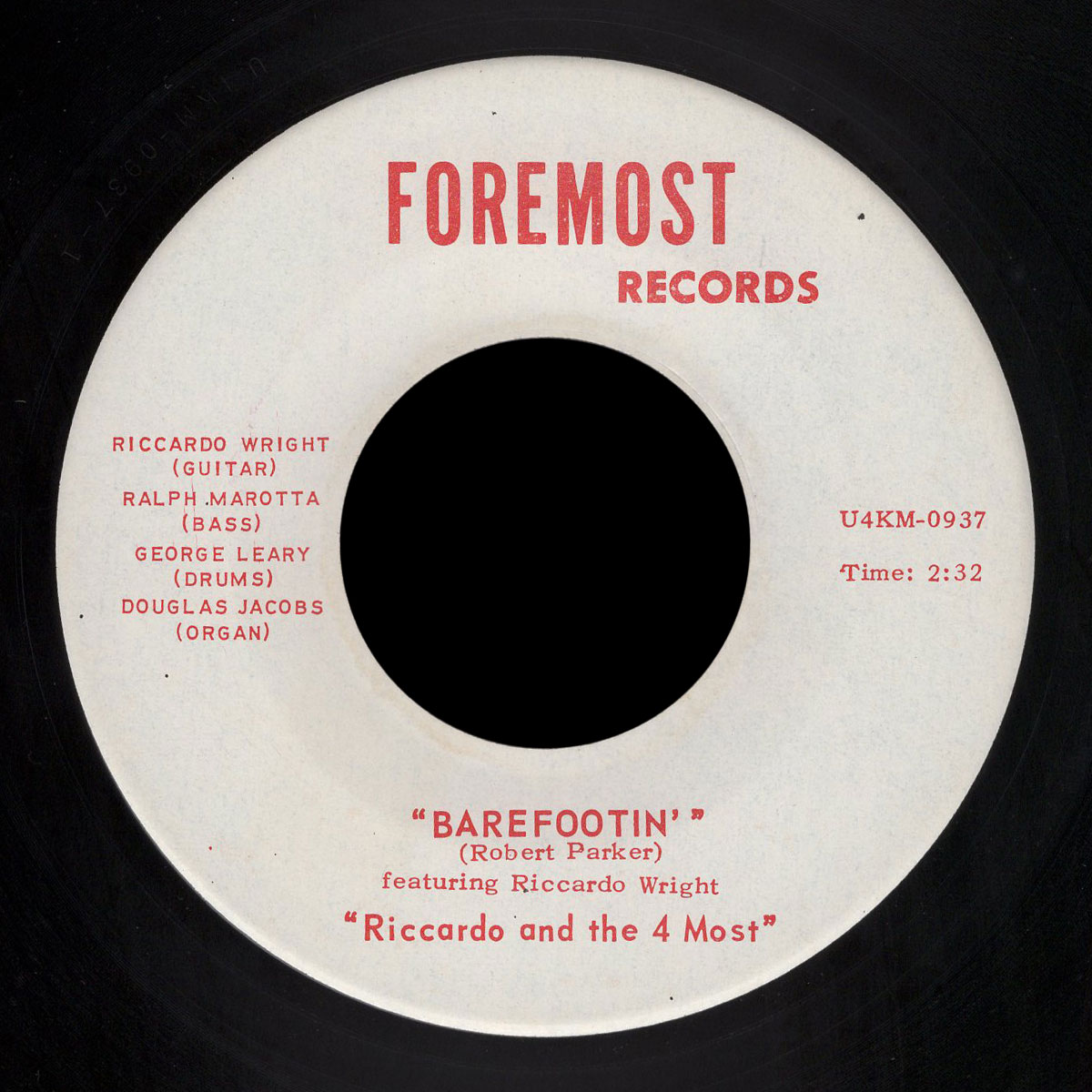
Riccardo and the 4 Most made one single, the great ballad “There’s a Reason” backed with a good version of “Barefootin'”, released in 1967 on Foremost Records.
The band is listed on the label: Riccardo Wright (guitar), Ralph Marotta (bass), George Leary (drums), and Douglas Jacobs (organ). Bill White wrote and sung lead on “There’s a Reason”.
“Bare Footin'” features Ricardo Wright on lead vocals. Someone is playing trumpet on both songs, uncredited.
Later members included Joe Lattanzio (trumpet) and Tommy Watson (bass). In 1969, with an expanded horn section including Ron Rucker on trombone and Gene Hilstro on sax, the group became a nonet called the Blues Busters.
If any of the members of the band are out there, I’d like to hear from them.
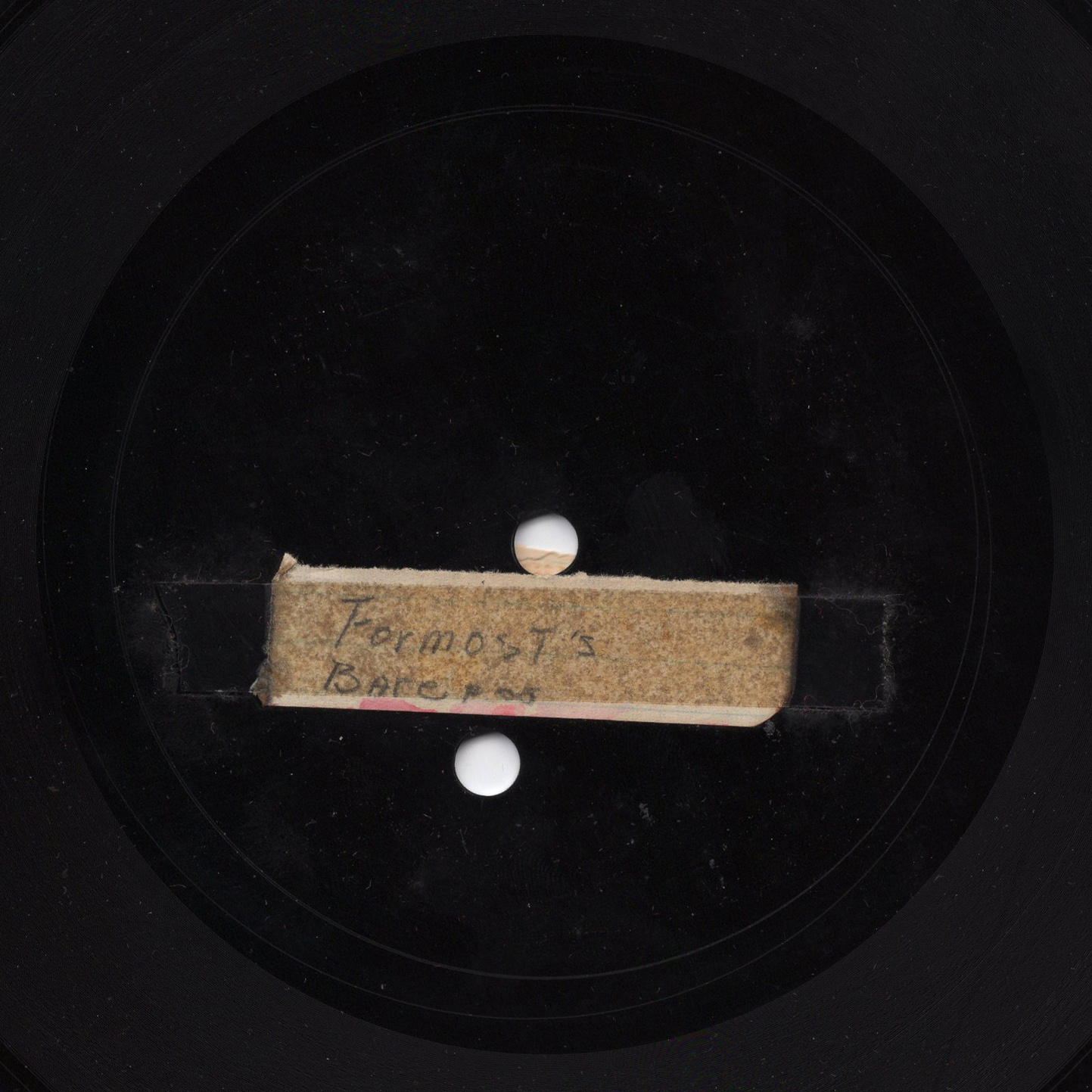
The single was recorded at Kennett Sound Studio in Kinderhook. I found an acetate lacquer of both sides among a stack of Kennett demos. The Foremost Records release code U4KM-0937 indicates a 1967 RCA pressing.
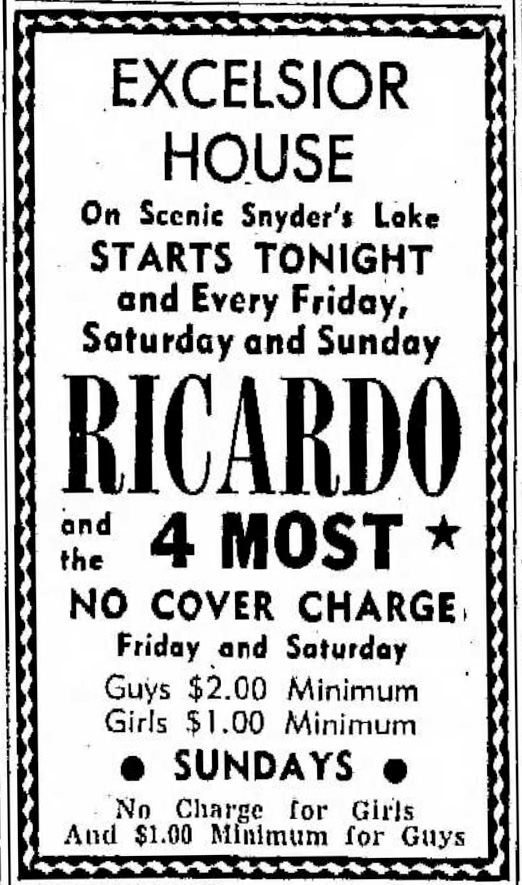
ad from February 11, 1967
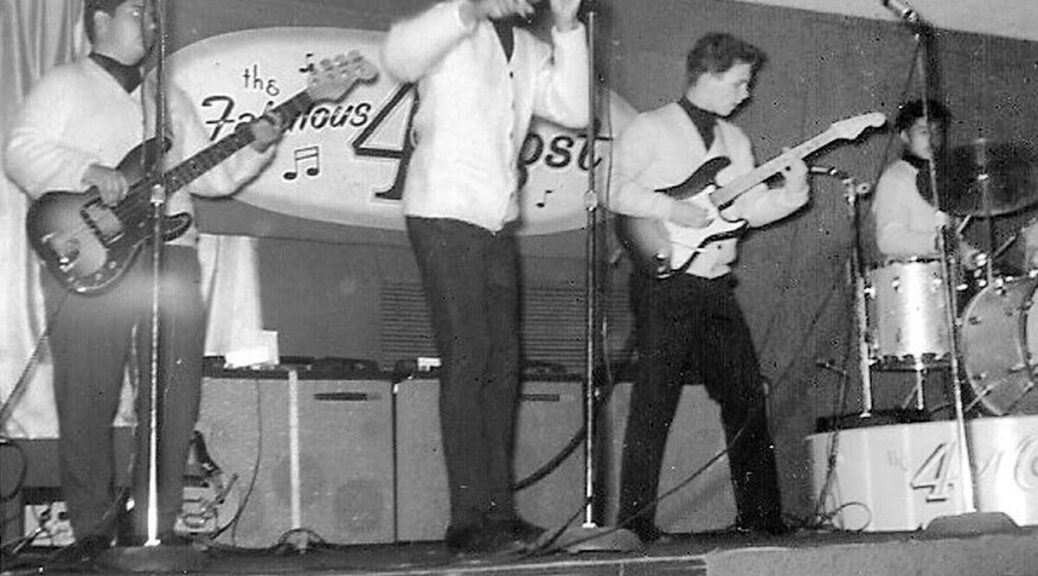
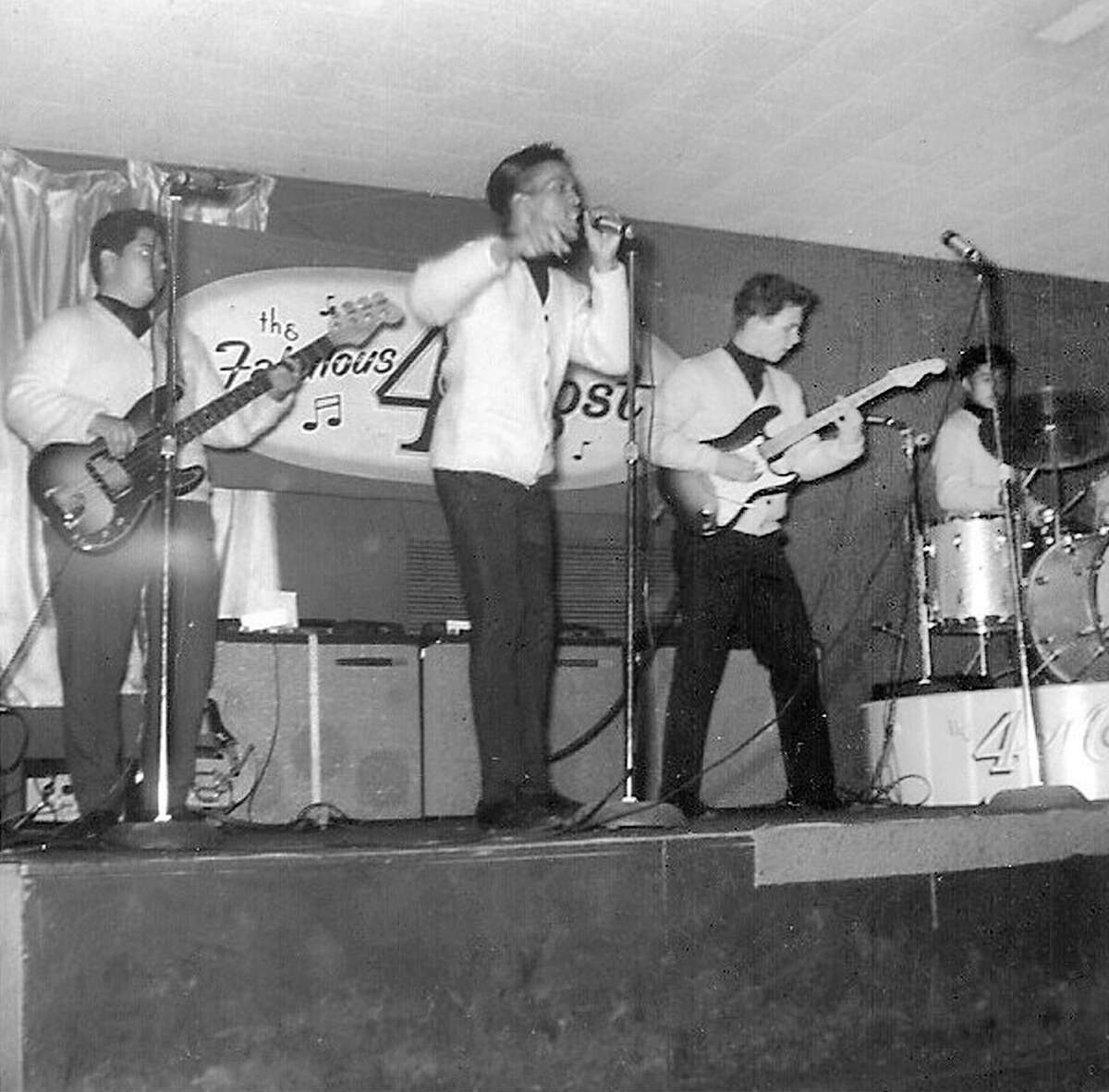
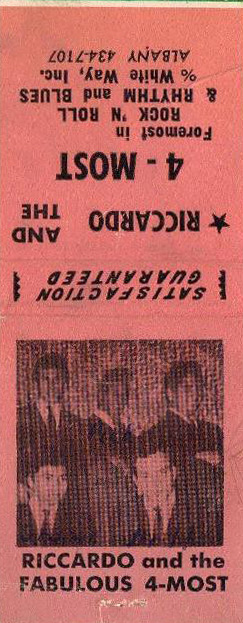
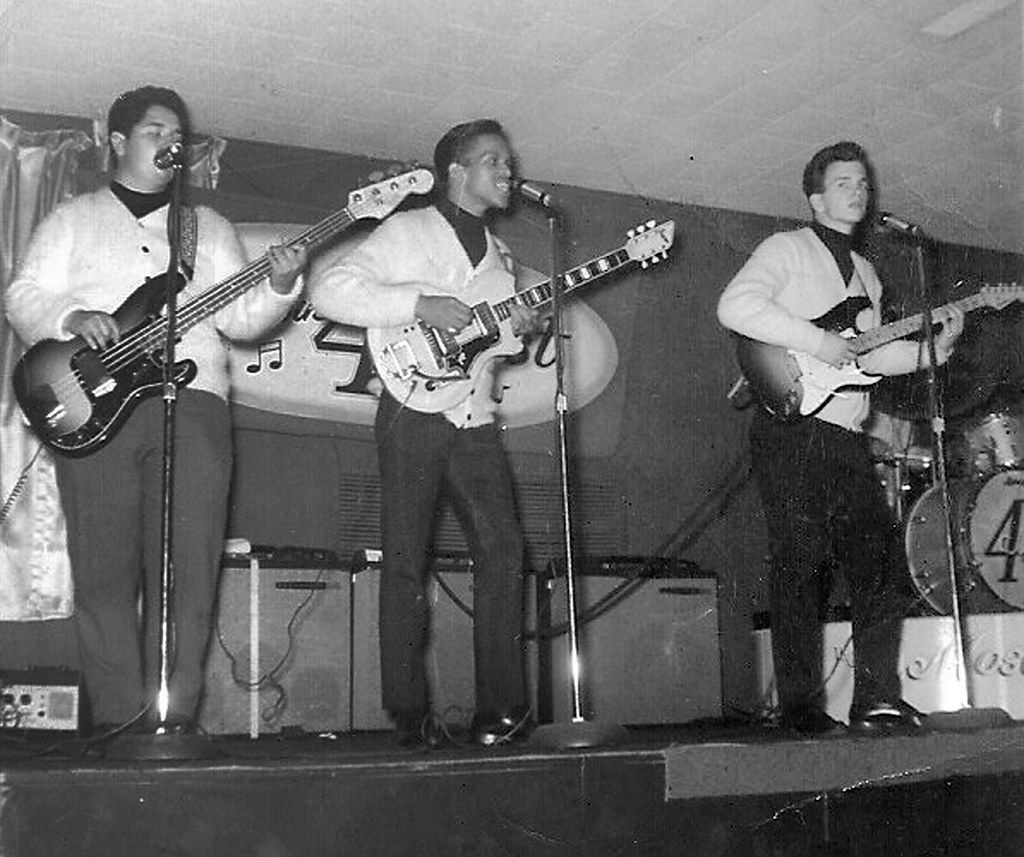
It’s a little difficult to search for the band, as listings for the group in newspapers include variations such as Riccardo & the Fourmost, Ricardo and the 4 Most, Ricardo and the Foremosts, etc. The sign behind the band on stage in two photos reads “The Fabulous 4 Most”.
The earliest ad I can find for the group is from the Troy Record on February 11, 1967, noting that Ricardo and the 4 Most would be playing the Excelsior House on Snyders Lake in North Greenbush “every Friday, Saturday and Sunday”. Another ad on August 19, 1967 noted the group would play the Excelsior “every Thurs. thru Sun.
The Times Record of Troy mentioned the group playing Shaker High School in Latham twice, once on January 15, 1968, then again on May 29, 1968 in a benefit for a Shaker school in Vadawal, India. The group also played the University Twist Palace in Albany.
Another ad lists Ricardo and the Foremosts at Corkey’s on 18 Clifton St. in Waterford, April 5-7, 1968.
Riccardo and the Fabulous 4-Most
A clipping from January 25, 1969 (I don’t know the paper) describes their transformation into Ricardo and his Blues Busters:
Riccardo and The Fourmosts, as you younger people know, has enlarged from four to nine. The new nonet is called the Blues Busters and features rhythm & blues and soul music, much of it original words and music by Riccardo, the leader, and some arrangements by Al Friedman.
The Blues Busters are a living example of interracial harmony, personally and musically. They play to an enthusiastic gathering at The Royal Mousetrap from 9:30 to 3 Friday, Saturday and Sunday. The Mousetrap is on New Karner Road (Route 155) just off Central Avenue [in Colonie].
The Troy Record noted a Youth On Unity (Y.O.U.) benefit dance on May 29 at St. Joseph’s Church Hall in Rensselaer with the Blues Busters (“formerly known as ‘Riccardo and the foremost’ from Albany” with the Souls from Pittsfield and the Multi-colored Projections. The Youth On Unity group chairman was Ronald Rucker, trombone player in the Blues Busters.
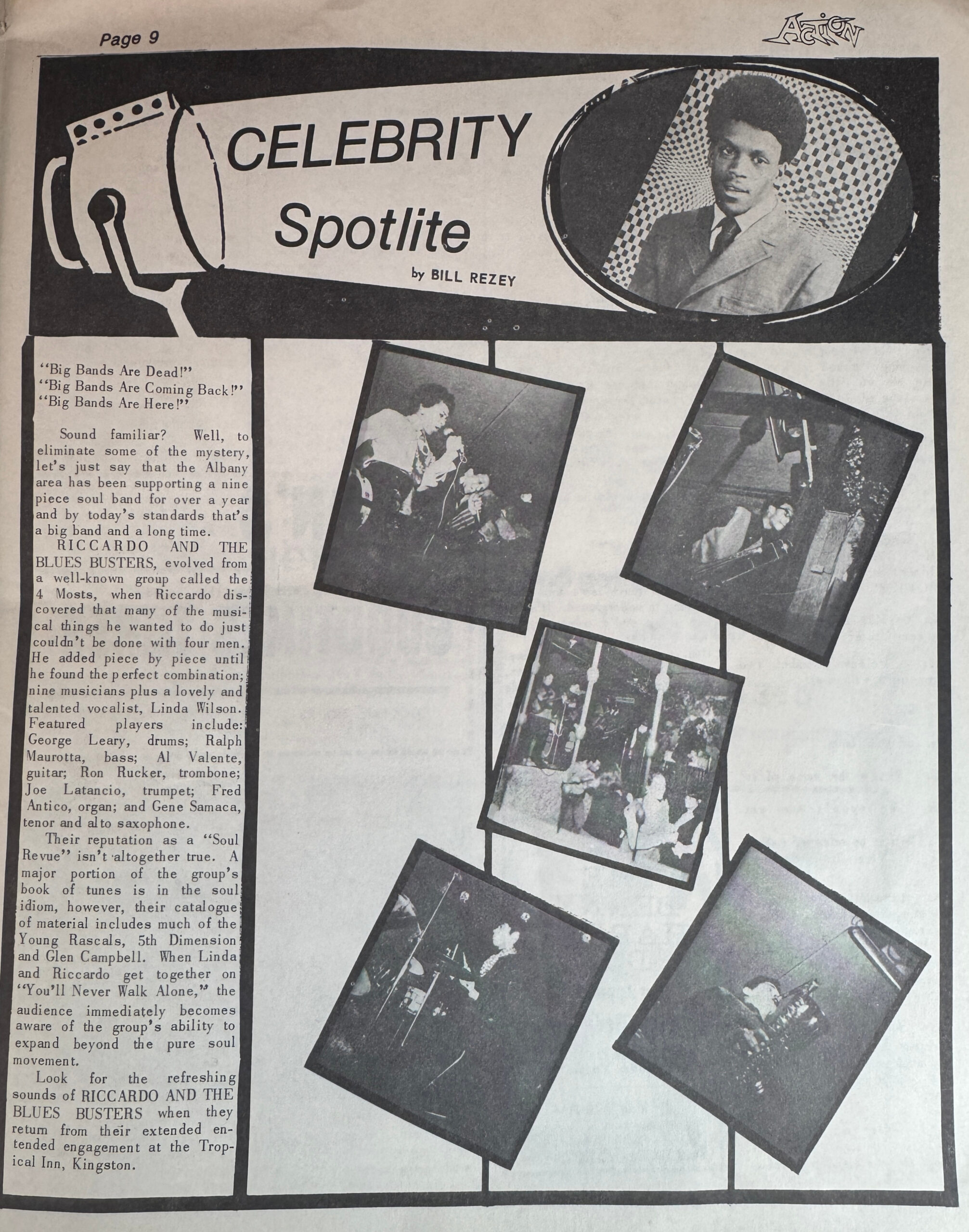
Riccardo and the Blues Busters featured in Bill Rezey’s column in Where the Action Is, June 2, 1969
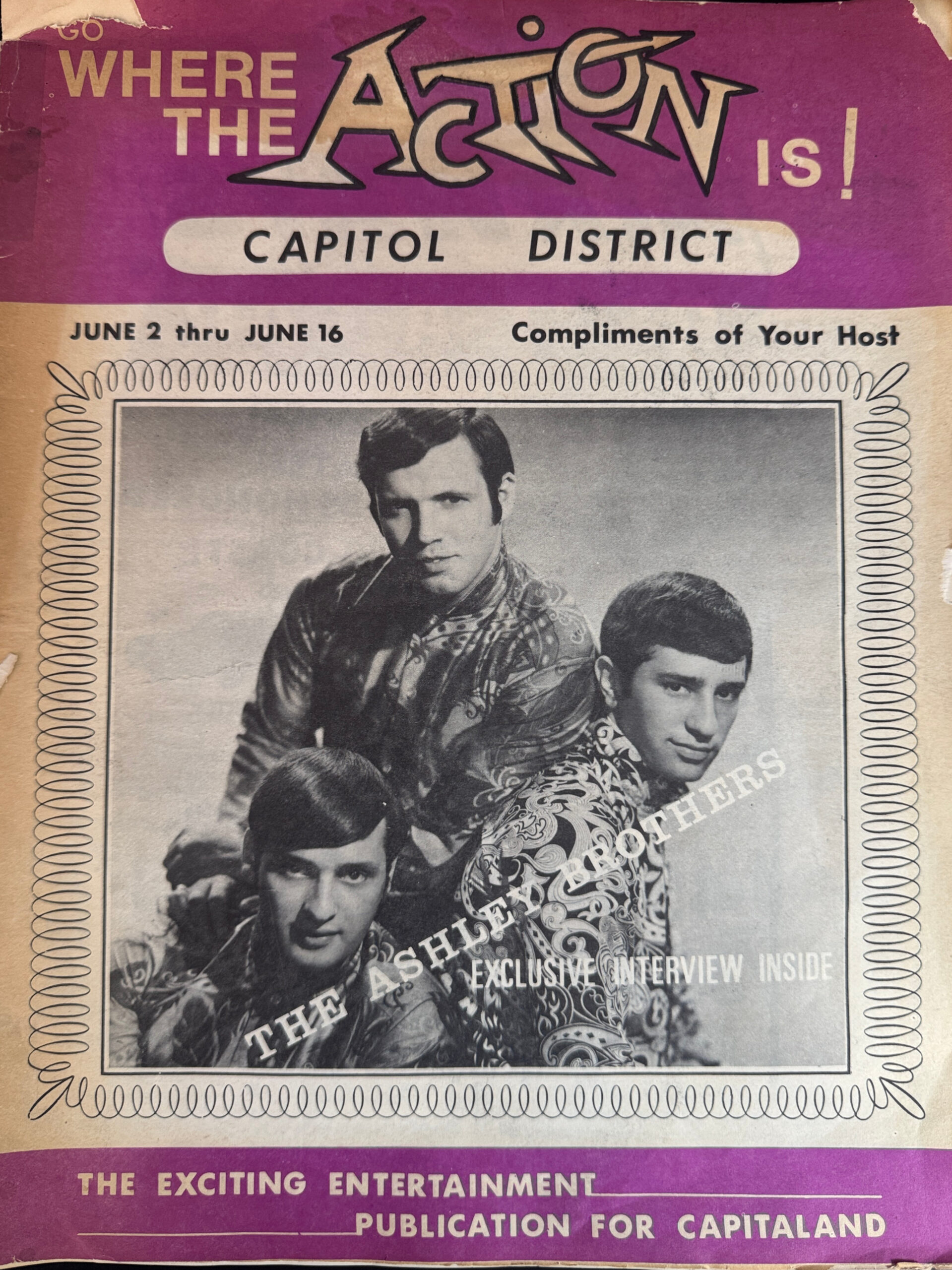
Bill Rezey wrote in his Celebrity Spotlite page in the June 2-16 issue of Where the Action Is, Capital District :
Where the Action Is, Capitol District, June 2-16, 1969. Thank you to Chas for sending this in.
… the Albany area has been supporting a nine piece soul band for over a year and by today’s standards, that’s a big band and a long time.
RICCARDO AND THE BLUES BUSTERS, evolved from a well-known group called the 4 Mosts, when Riccardo discovered that many of the musical things he wanted to do just couldn’t be done with four men. He added piece by piece until he found the perfect combination: nine musicians plus a lovely and talented vocalist, Linda Wilson.
Featured players include: George Leary, drums Ralph Maurotta, bass Al Valente, guitar Ron Rucker, trombone Joe Latancio [sic], trumpet Fred Antico, organ Gene Samaca, tenor and alto saxophone
… a major portion of the group’s book of tunes is in the soul idiom, however, their catalogue of material includes much of the Young Rascals, 5th Dimension and Glen Campbell. When Linda and Riccardo get together on “You’ll Never Walk Alone,” the audience immediately becomes aware of the group’s ability to expand beyond the pure soul movement.
Look for the refreshing sounds of RICCARDO AND THE BLUES BUSTERS when they return from their extended [intended] engagement at the Tropical Inn, Kingston.
The two photos and some of the info came from the Albany Group Archive. Thank you to Al Quaglieri and Joe Lattanzio for their help with this article. Thank you to Chas for sending in the Where the Action Is issue photos.
This post is dedicated to the memory of Max Waller, my fellow music researcher who helped me with many articles over the years, for which I am grateful.
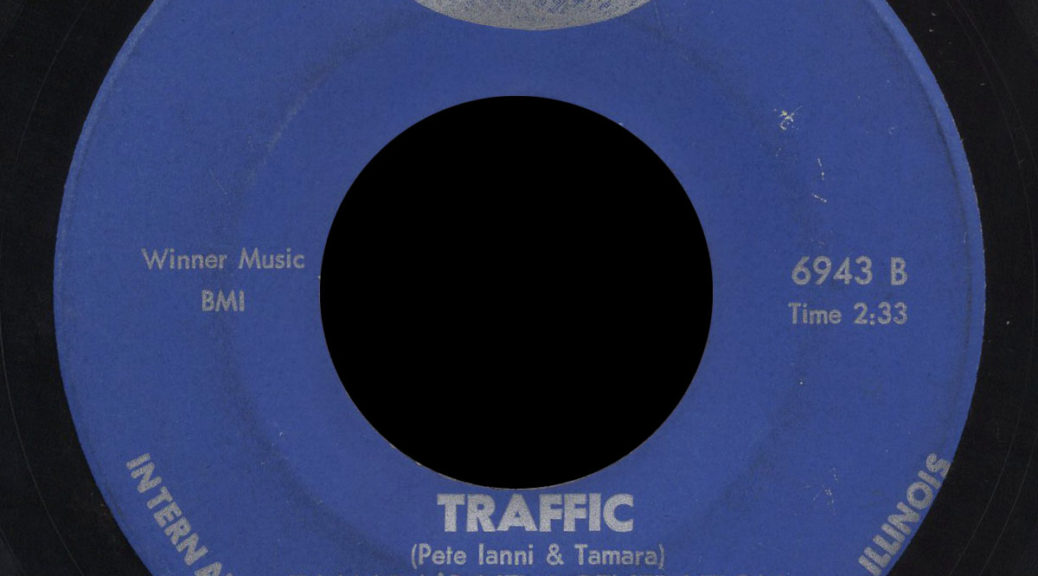
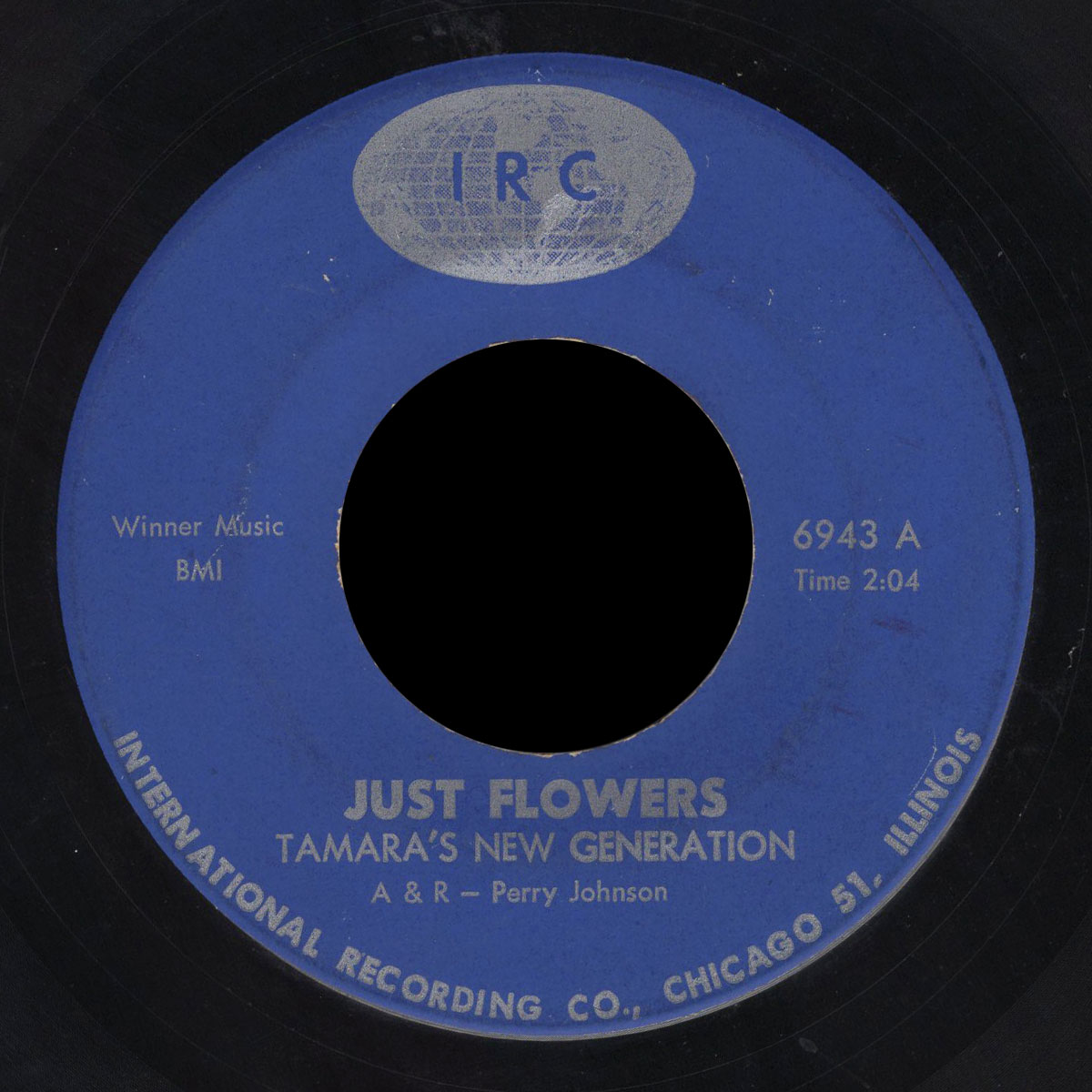
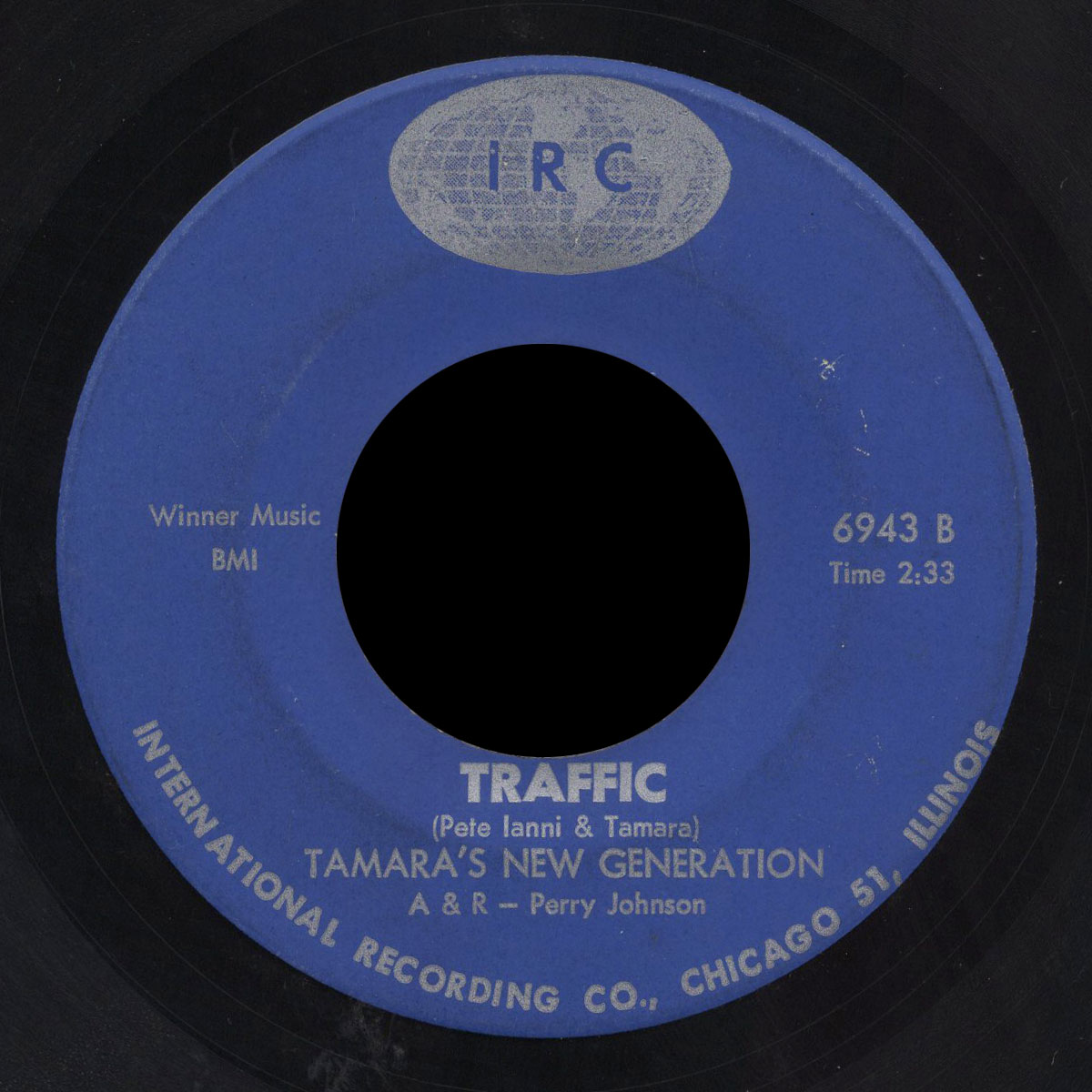
Tamara’s New Generation is an obscure Chicago-area group with just one single to their name, released on IRC 6943. The A-side “Just Flowers” is a Gabor Szabo style number with flute, a two-note keyboard line, and some fine raga guitar work.
I prefer the flip, “Traffic” with it’s pulsating bass line, beatnik vibe, and crashing end. Interestingly, the dead wax codes reverse the A & B sides, which makes more sense to me.
Members included:
Tamara – lead vocals Pete Ianni – ? Tom Miller – bass Ollie – ? Denny – ? Brian – ? Paul – ?
Although this may be the only International Recording Company credit for Perry Johnson, he did writing and arrangement for related labels like Royal Blue (the Paniks “Look Twice”, the Wild “Monkees”, Lou Capri “Love and Kisses”) and Redd Robb (Edges of Wisdom “Past”, Holocaust “Savage Affection”).
This is the first time I’ve covered a band from the IRC (International Recording Co.) label, which released a number of great 45s by the Little Boy Blues, Danny’s Reasons and others; and was the studio for the Crees 4 acetate “Misunderstanding” / “Looking at Your Picture”, released in 2021 by Mojo-Bone.
This site is a work in progress on 1960s garage rock bands. All entries can be updated, corrected and expanded. If you have information on a band featured here, please let me know and I will update the site and credit you accordingly.
I am dedicated to making this site a center for research about '60s music scenes. Please consider donating archival materials such as photos, records, news clippings, scrapbooks or other material from the '60s. Please contact me at rchrisbishop@gmail.com if you can loan or donate original materials