I found a very interesting batch of photo negatives by an amateur photographer working in New York City in the 1960’s and very early ’70s. I don’t know the photographer’s name, unfortunately, but I believe these are all unpublished. Since first posting these, I have confirmed with Getty Images that the photographer is neither Don Paulsen nor Chuck Stewart.
My negative scans aren’t professional quality, but they’ll do for checking these out.
Besides the ones below there are many others, especially of street scenes, street musicians and more at the Apollo – Ben E. King, Miriam Makeba, Cal Tjader, Dionne Warwick, Roberta Flack and others, and also of Machito at Town Hall.
I’ve had help in identifying most of the musicians in these photos, but there are still a couple I don’t have IDs for and I’d appreciate any help you can give. Please do not reproduce any of these.
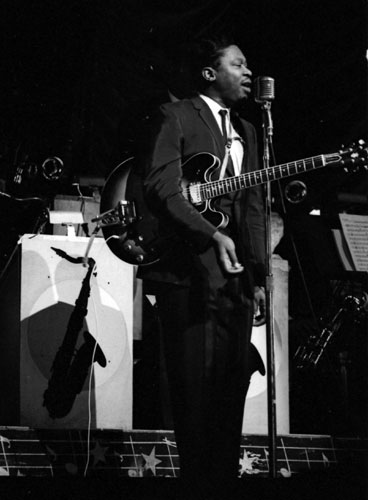
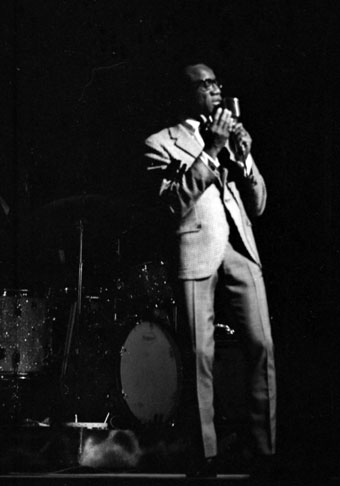
B.B. King at the Apollo, March 1963
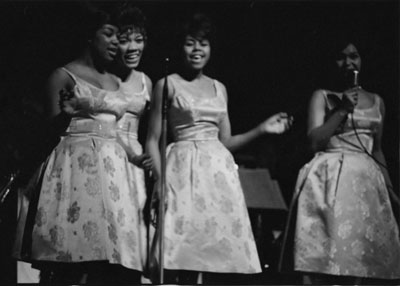
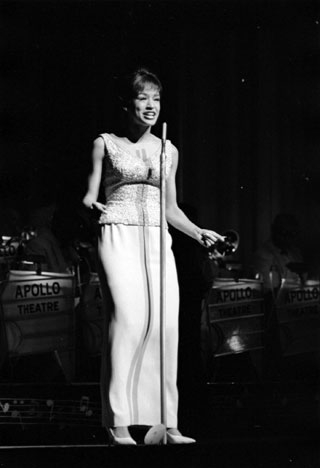
The Shirelles at the Apollo, March 1963 from left: Micki Harris, Doris Coley (Kenner-Jackson), Beverly Lee, Shirley Owens (Alston-Reeves)
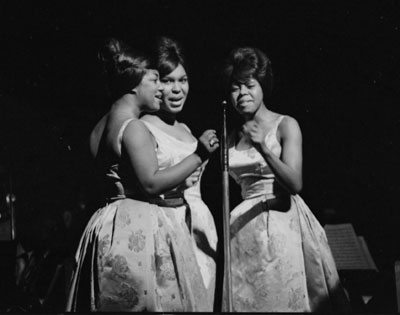
The Shirelles at the Apollo, March 1963 from left: Micki, Shirley, Beverly
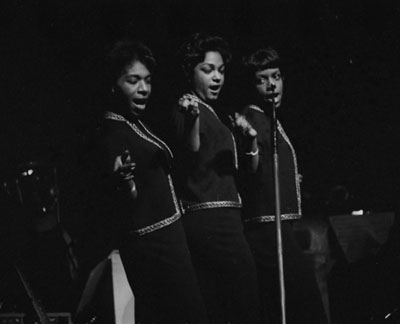
The Cookies, with Earl Jean, the Apollo, March 1963.
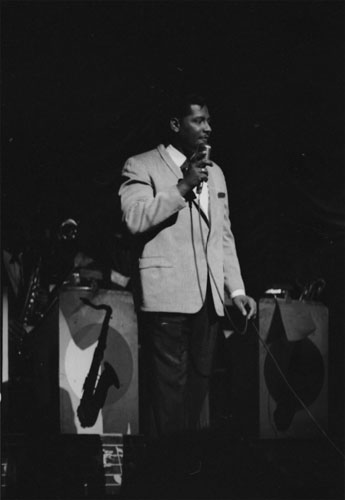
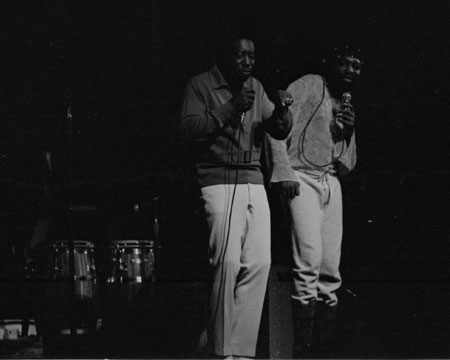
Unknown singer or emcee at the Apollo, March 1963
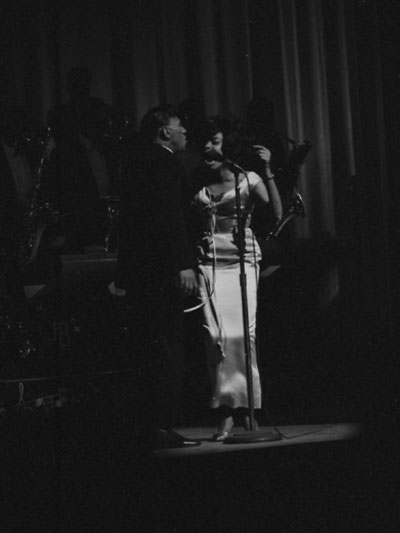
Bobby Byrd and Anna King with James Brown’s group at the Apollo, early-mid 1960s.
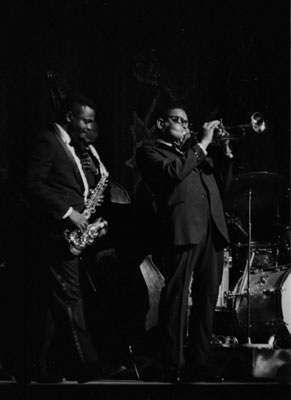
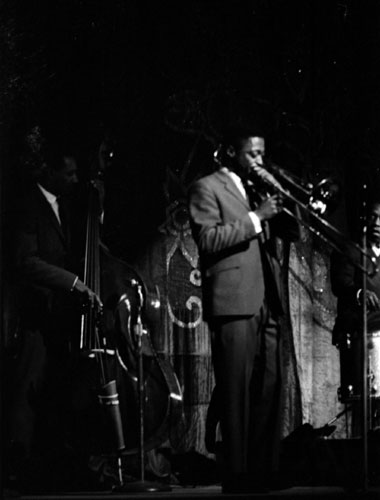
Leo Wright and Dizzy Gillespie at the Apollo, during the week of April 27- May 3, 1962.
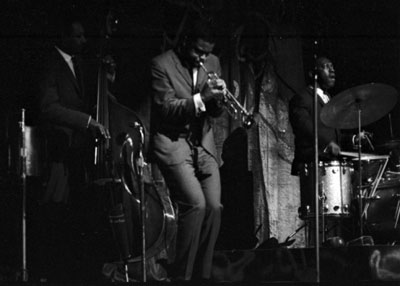
Art Blakey’s Jazz Messengers with Larry Ridley, bass (probably subbing for Jymie Merritt), Freddie Hubbard on trumpet and Blakey on drums, same show as above
The Jazz Messengers with Larry Ridley on bass and Curtis Fuller, trombone, same show as above.
MC or speaker at the show with Gillespie and the Messengers
I was able to date the photos of the show with Dizzy Gillespie and Art Blakey to 1961 or 1962 by the overlap between Freddie Hubbard joining the Jazz Messengers in 1961 and Leo Wright’s tenure with Gillespie ending in 1962. There are also photos of Cal Tjader from this show.
According to the online Chronology of Art Blakey, the Messengers with Hubbard played at the Apollo for some dates in beginning September 14, 1961, as well as a benefit show on September 13, 1962.
Chris Sheridan informs me that Leo Wright only played with Gillespie at the Apollo during the week of April 27 – May 3, 1962. An ad in the Amsterdam News includes both Gillespie and the Messengers on the bill for this week of shows.
Freda Payne at the Apollo, date unknown
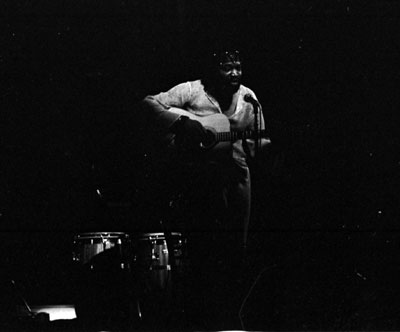
Unidentified singer/guitarist at the Apollo, sometime in 1971
Unidentified duo at the Apollo, sometime in 1971
Many thanks to all who have helped with IDs including John Clemente.
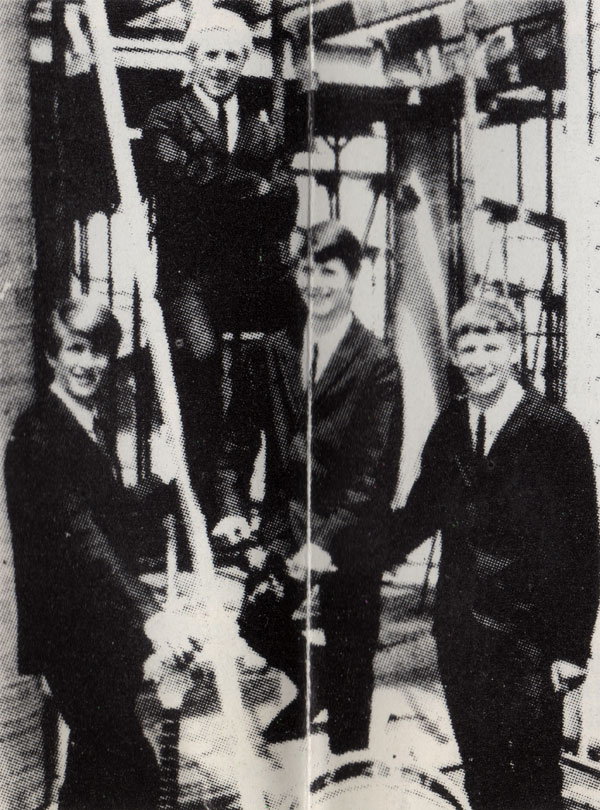
The Cresendos, from left: Graham Johnston, Ian Irvine, Max Johnston and Bryan Stewart
The Cresendos (sic) consisted of Graham Johnston lead guitar, Max Johnston rhythm guitar, Ian Irvine bass guitar, and Bryan Stewart drums. The band began in 1965 in the small coastal city of Wanganui on the north island, about halfway between Wellington to the south and New Plymouth to the north.
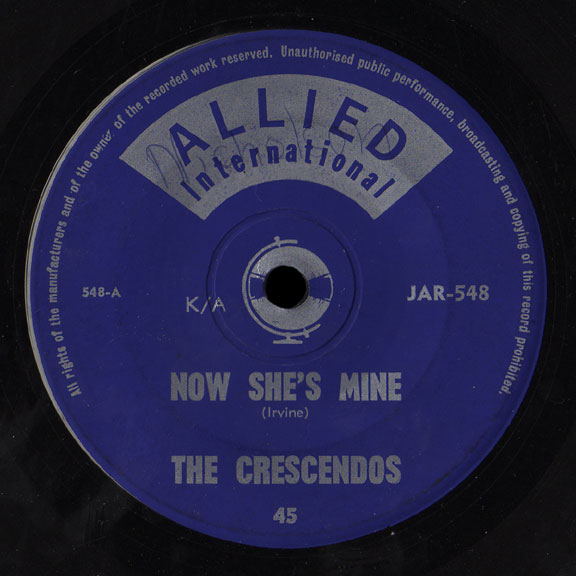
In 1966 Allied International A&R man Fred Noad saw them at a talent contest. Supposedly they recorded their only 45 in a local warehouse. The label released it at the start of 1967 with their name misspelled on the label as the Crescendos – except their name was misspelled in the first place and you could say the label got it right.
“Now She’s Mine” is a great original by Ian Irvine. The vocals and lyrics are excellent and Graham Johnston really helps distinguish the song with the variety of sounds he lays over it. The neat buzzy tone comes from a home-made fuzz pedal created by someone from the local post office.
“I Want Your Love” is a ballad with a cool echo effect on the opening chords. It was written by Johnston – Irvine – Berryman.
Photo and most of the info from the liner notes to Wild Things vol. 1.
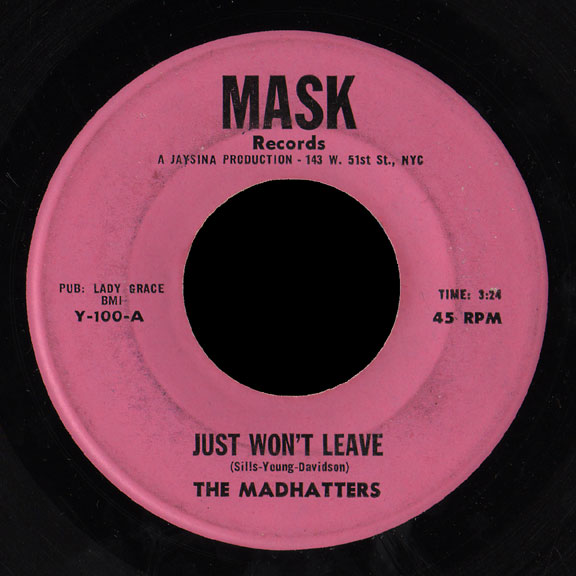
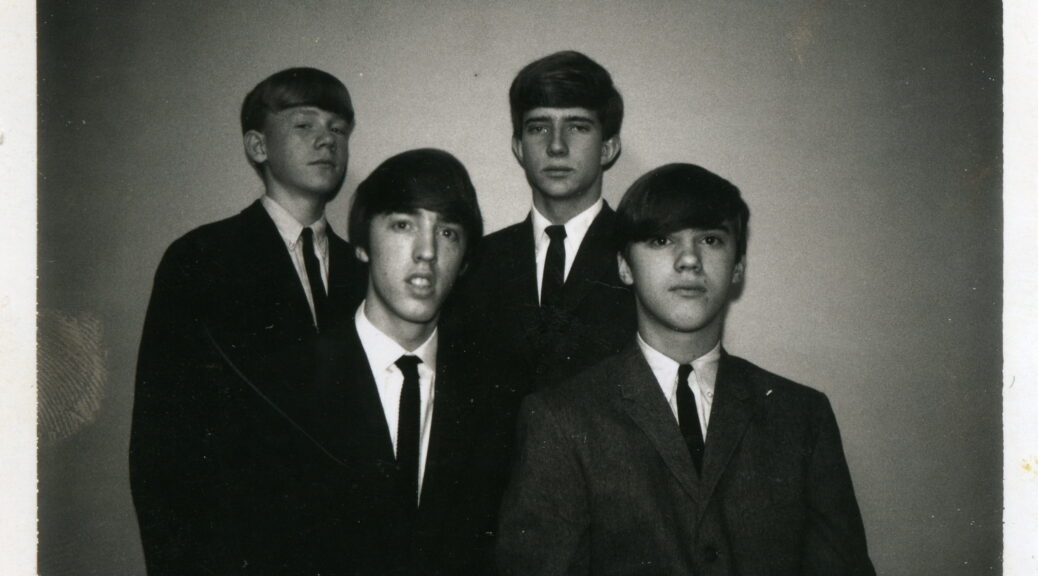
I know very little about this 45, other than these Madhatters were a group of high schoolers from Stamford, CT who traveled to New York City to record their only 45 in late February of 1966. They broke up soon after, with most members going to college that fall. I’ve also seen the band’s name given as two words, the Mad Hatters.
The Madhatters’ cool original “Just Won’t Leave” has credits to Sills, Young and Davidson. Copyright registration from April 28, 1966 shows words by John Sills, words and music by David Young and arrangement by John Davidson.
John Davidson was the Madhatters lead guitarist, Jim Cantor played bass, and they had a drummer named Eddie (surname?)
For the flip they do a better than average cover of Mike Hugg’s “Mister You’re a Better Man Than I”.
Released on Mask Records (a Jaysina Production, 143 W. 51st St., NY), with Lady Grace publishing. The only other productions I can attribute to Jaysina Enterprises are two 45s by Tommy Walters on Bardell and an Otis Rush session co-produced with Funtown and sold to Gamble.
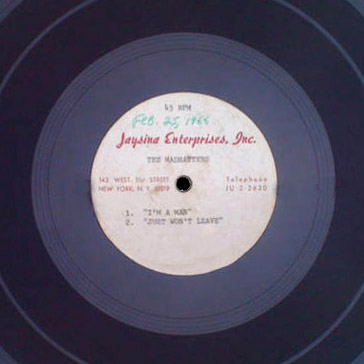
A 10″ three-song acetate surfaced that contained the two songs from the single plus a version of “I’m a Man”, produced by Jaysina Enterprises, Inc. I haven’t heard the Madhatters’ version of “I’m a Man” yet.
There’s no connection to the Mad Hatters from Annapolis, Maryland (45s on Ascot and Fontana) or Minnesota (two 45s on Cardinal).
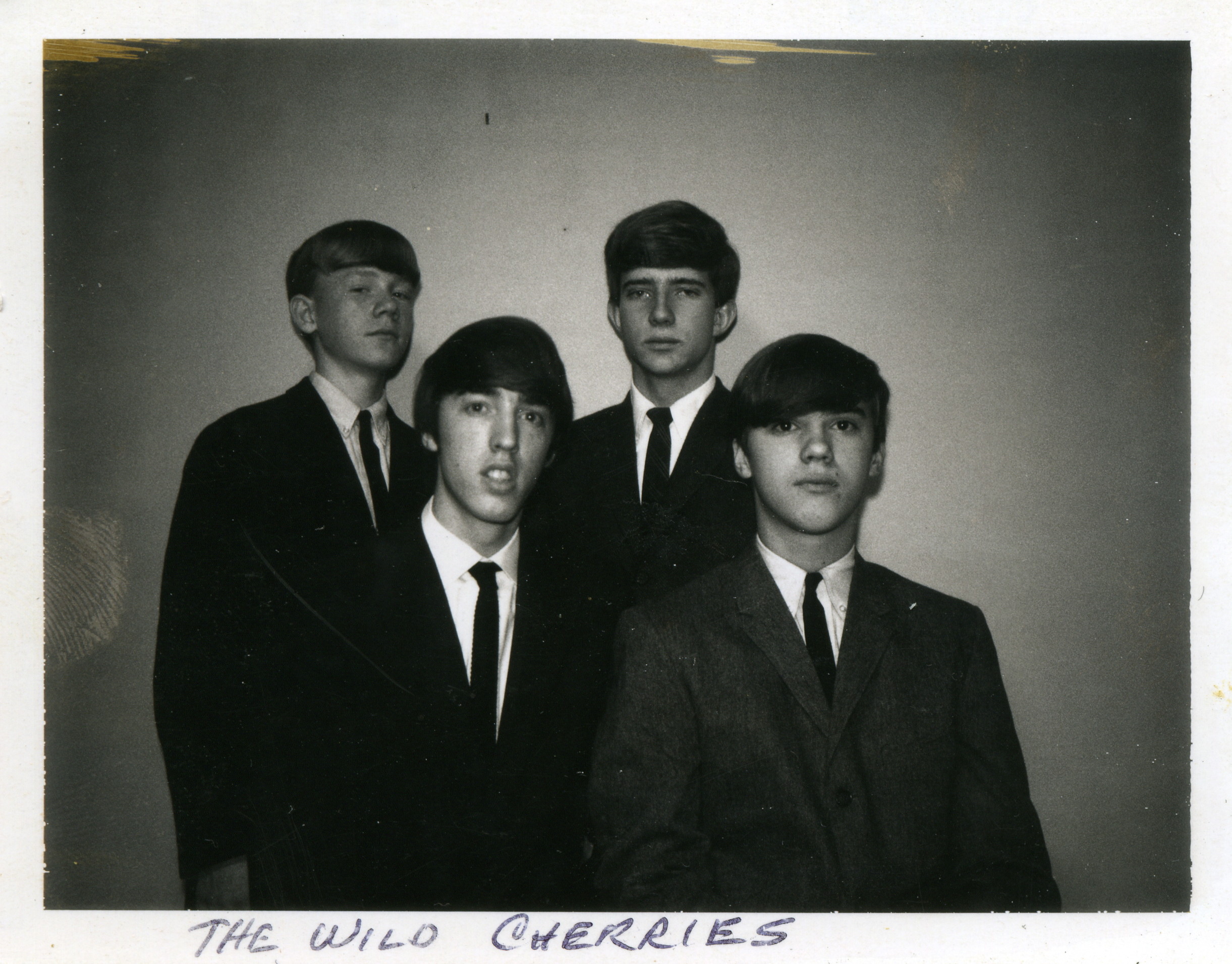
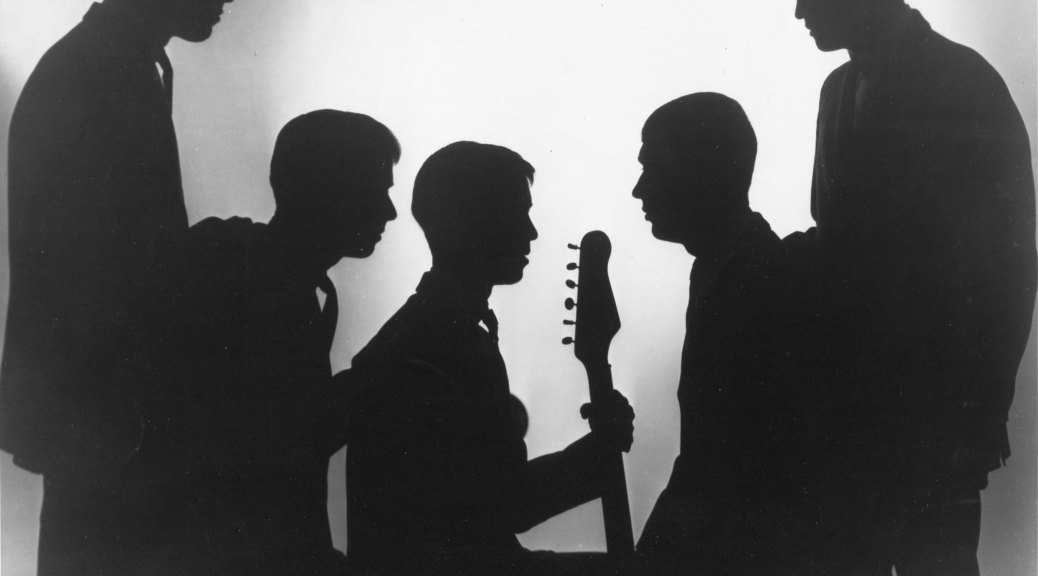
The Wild Cherries, from left: Dennis Jenkins, Harold Souders, Carl Moore and Wayne Dale. Photo courtesy of Carl Moore
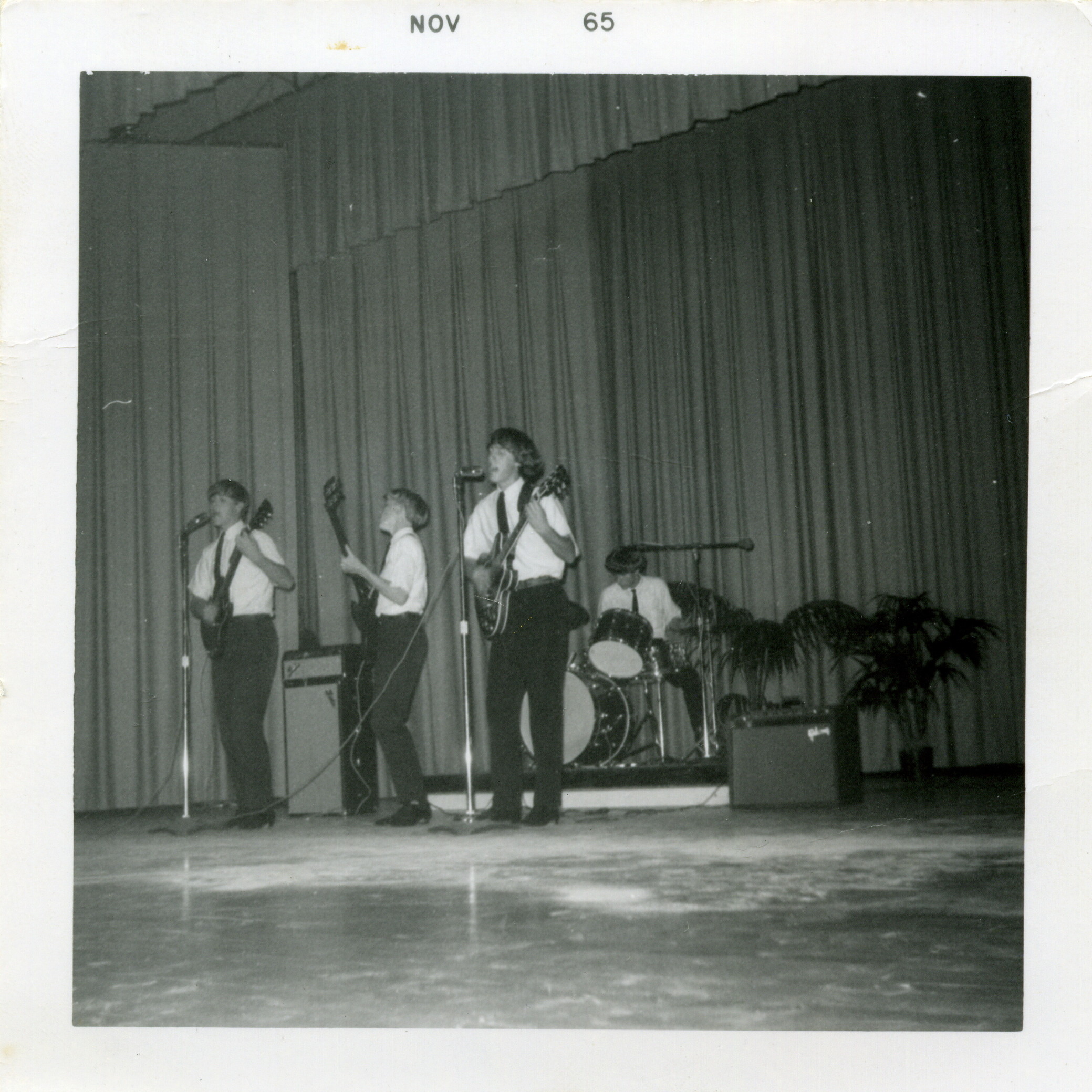
These Wild Cherries were a Hampton, VA band known for their ability to cover Beatles songs.
Members were:
Harold Souders (vocals, lead guitar, electric piano) Carl Moore (vocals, guitar) Dennis Jenkins (bass) Wayne Dale (drums)
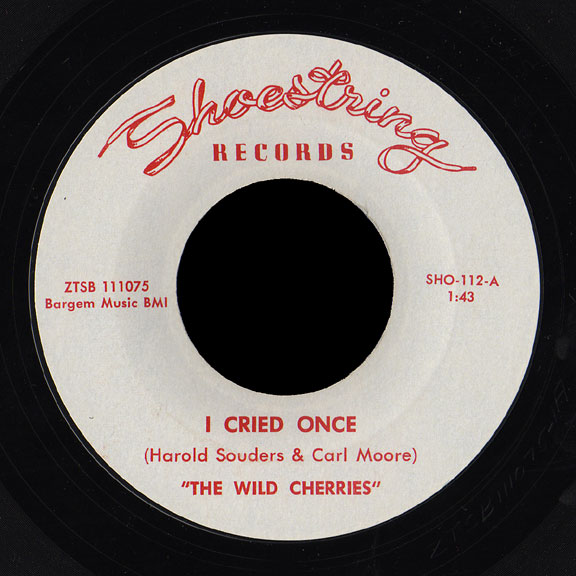
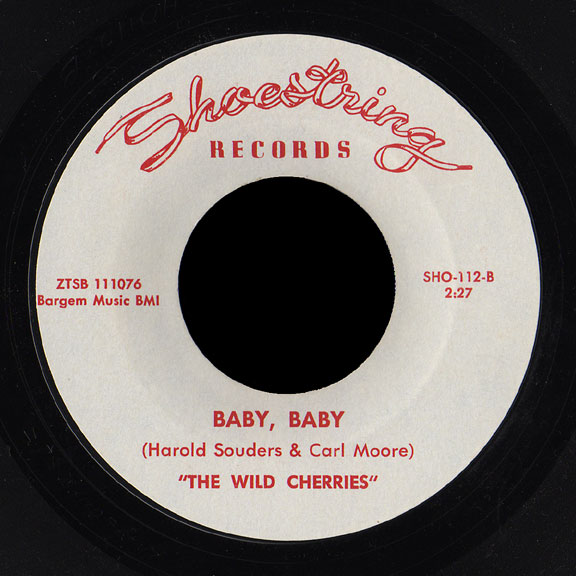
Hal Souders and Carl Moore were cousins, and composed both songs on this 45. In December of ’65 the band went to Richmond Sound Stages to cut their only recording, “I Cried Once” / “Baby Baby”.
“I Cried Once” begins with jarring guitar chords, and continues at an urgent pace through verse and chorus and a beautiful and very brief reverbed guitar solo until the ringing chords at the finish. Hal Souders’ syncopated piano overdub is a nice touch.
The tender “Baby, Baby” on the flip begins with nicely articulated notes cutting to a drum and bass break before the verse begins. The singer confesses “all the lies I told to you, not a one was true.”
To me this is one of the most successful of all teen 45s of the ’60s, sincere original songs flawlessly performed and superbly recorded. The upbeat “I Cried Once” balances the sedate “Baby, Baby”. The instruments and harmonies create an atmosphere akin to the Dovers great recordings.
The band released the songs on the Richmond based Shoestring label, which also had 45s by the Fugitives and Panics. Publishing was by Bargem Music.
The record had some play on WGH 1310 AM in Newport News, though it didn’t make any charts that I know of. The band broke up by the time Hal Souders started college in the fall of ’66.
Thank you for Carl Moore for the photos seen here.
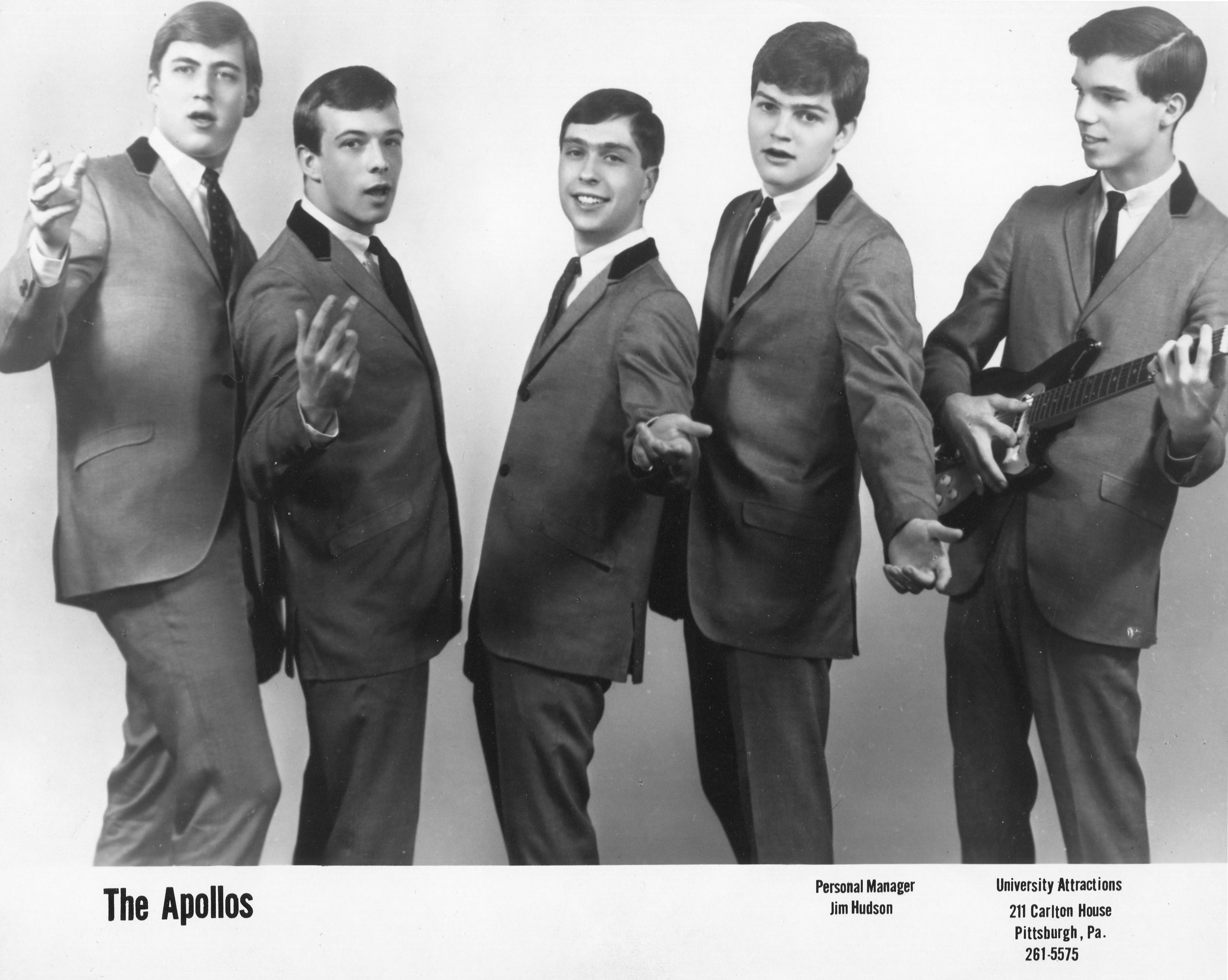
The Apollos, c. 1965, from left: lead singer Paul Speck, Lanny Orner, Eddie Zebert, George McCormick, lead guitar Al Naugle.
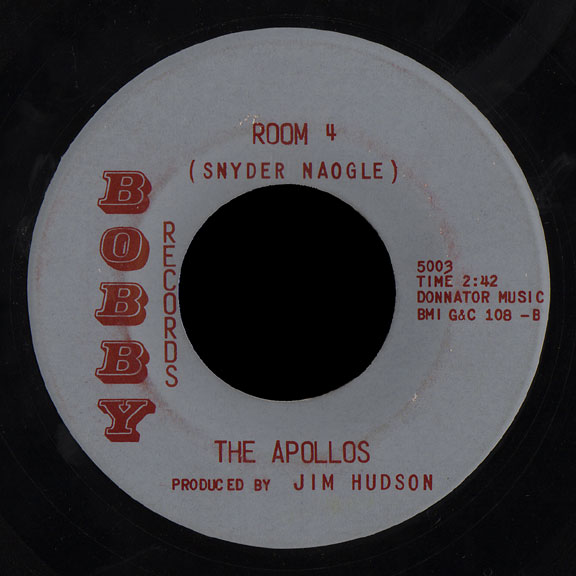
The Apollos came from Pleasant Hills, a suburb south of Pittsburgh. The top side of their only 45 is “I Know Your Mind” a doo-wop influenced ballad. The flip is an instrumental, “Room 4”, marred by the guitarist being out of tune.
Top side was written by Speck-Snyder, flip by Snyder-Naogle. Produced by Jim Hudson for Bobby Records and Dominator Music.
Phil Haines sent in the photos of the band seen here and added these comments:
The Apollos graduated from Thomas Jefferson High School, Jefferson Hills, PA in 1964, except Eddie Zebert, 1963.
The Apollos had four singers: lead singer Paul Speck, Lanny Orner, Eddie Zebert and George McCormick. The singers didn’t play any instruments.
Instrumentalists in the original group: lead guitar Al Naugle, rhythm guitar Dave Ferguson, and drums Dave Bruggeman. This was the makeup of the group 1964 – 1966.
George asked me, at home in Pleasant Hills, to borrow my bass amp for the record. They piled into a car and went into town (Pittsburgh) for the recording. When George brought the amp back, he said something about it didn’t work with the studio equipment, so they plugged directly into the board. My guess is that the rhythm guitarist Dave Ferguson (?), who played low notes on a 6-string, sounded better in the board than through a bass amp, if indeed this was the personnel on the record.
There was a line “I Know Your Mind” in the Bobby Marchan song, “There Is Something On Your Mind.” Don’t know if they borrowed it consciously from the record or not. I always took the record as being ahead of its time, the first of introspective songs to come later in the sixties. They were a great band. The first to come out of “the drugstore,” local hangout “Sun Drug.”
They also put on a heck of a show. They acted out “Big Boy Pete,” by the Olympics. They also performed Eugene Fox’s “Sinner’s Dream.” They may have also, in this earlier period, acted “Along Came Jones,” by the Coasters. When I played bass for them in 1967, we sang the song, but no acting. They had a huge following in Pittsburgh.
The Apollos, c. 1965, from left: Paul Speck, Lanny Orner, Al Naugle, Eddie Zebert and George McCormick.
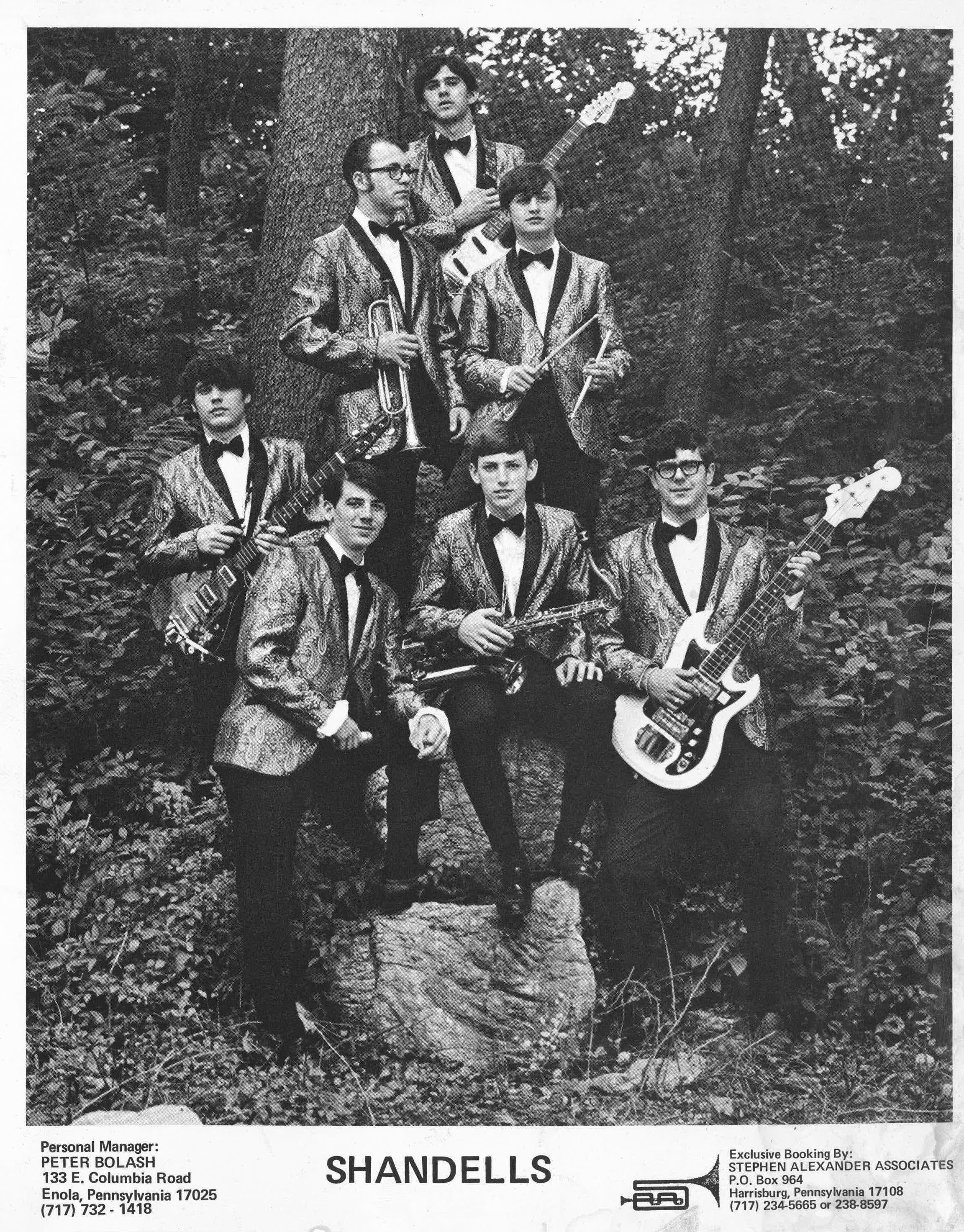
Later photo of the Shan-Dells, after they added horns At top is Kenny Branoff (lead guitar), below him Dave Troutman (keyboard, trumpet) and Dave “Gino” Giorgini (drums) In front, left to right: Bob Bolash (rhythm guitar), Chuck Jones (vocals), Jeff Bowen (sax) and Harry Brewbaker (bass)
Updated July 2011
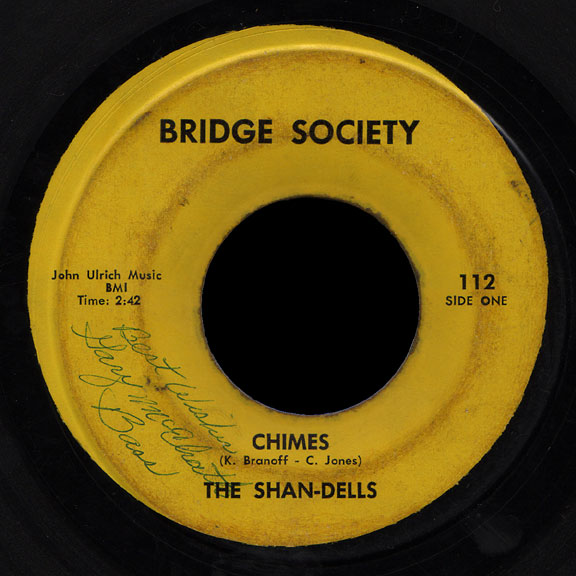
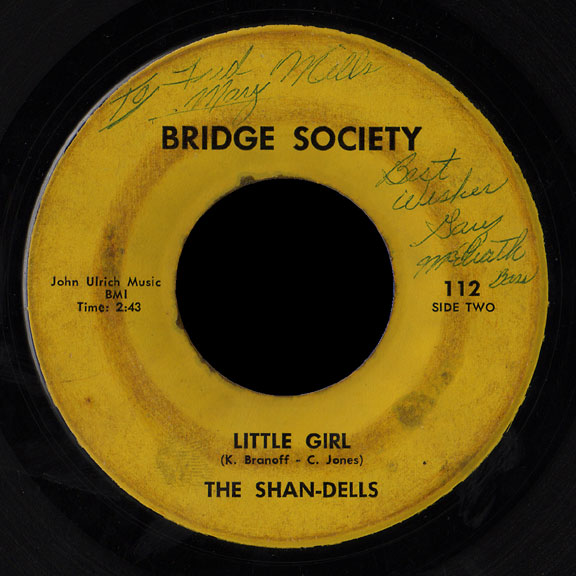
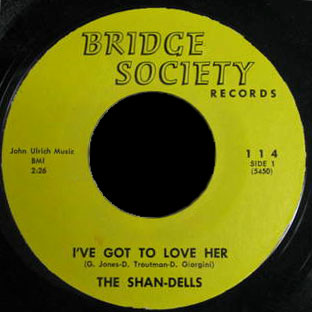
The Shan-Dells came from Enola, PA, across the Susquehanna River from Harrisburg and Middletown. They had two 45s on the Bridge Society label. The band covers a lot of ground between these releases, from psychedelia to pop to upbeat blue-eyed soul.
Their first 45 has the slow trippy psychedelia of “Chimes”, with droning organ and repetitive sharp guitar lines inspired by “Eight Miles High”. The solo break is excellent raga-rock!
The B-side is the much lighter and less essential pop dittty, “Little Girl”. Both sides were written by Ken Branoff and Charles Jones and published by John Ulrich Music. My copy is signed by bass player Gary McElrath, if I’m reading that correctly.
Their second 45 has a northern soul classic, “I’ve Got to Love Her”. With full horn charts and falsetto vocal it’s a much different sound from their first, and the record trades for more money as well. I haven’t heard the flip, “Idle Excursion”. Chuck Jones, David Troutman and David Giorgini wrote “I’ve Got to Love Her”.
I couldn’t find much info on the group until rhythm guitarist Bob Bolash contacted me. Below is info from the comment that he left below along with some more info he sent to me by email:
I was one of the original Shan-Dells, we started out as the Wonders with Chuck Jones lead singer, Jim Wyman on drums, Gary Wyman on bass, Kenny Branoff on lead gutiar, myself on rhythm guitar. Jim was a little older and when he left the band David (Gino) Giorgini joined as the drummer. We then changed our name to the Shan-Dells. Dave Toutman was added about a year later.
Our first paying gig was at the Midway firehall in Enola with DJ Ben Barber. We got paid $28.00 that night. Our record “Chimes” went to #14 in the Harrisburg area, at the time WFEC rated the songs by how many you sold at Caplain’s in Harrisburg. We did the Kirby Scott show at WBAL TV in Maryland. We played everywhere, there were so many places to play back in the day.
Kenny stayed in the house a lot a was very dedicated to his guitar. I think he just wrote some music and Chuck added some words.
We recorded them at Virtue Studios in Philadelphia. Actually “Chimes” and “Little Girl” should have been on two separate 45s with a dummy song on the B side like we did with “I’ve Got to Love Her”. But we were just learning and I still wonder how swift our promoter was, we ran out of records.
We added some horns a little later and mixed some soul with our rock, that’s why “I’ve Got to Love Her” sounds that way.
Chuck then got drafted Dave left and Gary moved away and Gino’s older brother Rob joined us, he played organ and sang. He played with Frank Fabian’s Fabulous Fugitives, a very good band. We changed throughout the years, from the Shan-Dells to the Collection (we have an unreleased song that we went a different direction with, it has alot of harmony, “Feelin’ a Dream”).
Then it was Mystic Revelation, and then Dry Mud. Kenny, little Gino and myself were all in those bands. Later when Chuck came back we started a band with Neil Harvey, Dave Bennet and Dave Troutman called Green Apple Quick Step. Later I joined Dick Styles in a group called the 7th Sun, That was fun, we remodeled a school bus and had some fun in that. My last stop was mid 70’s with a band we started called the Bizzare Brothers Band. Bob Souders guitar, Buzz Deuscth drums, Darwin Oakes organ, then Jim Krall replaced him, Harry Brewbaker on bass and me on guitar and crazy Tom Gamble singing. Seriously this was the most talented band I ever played in, but we did toooo much partying.
Bob Bolash
In July, 2011 Jeff Bowen sent me the photo at top and wrote about his time with the band:
I was the sax player and eventually bass player with the Shan-Dells in Harrisburg Pa. from just after the release of “I’ve Got to Love Her” in ’68 or ‘69 till the band dissolved in early 1971. I wasn’t the sax player on the records though, that was Scott Zahn (not sure I spelled his last name right) who I ended up playing with during the summer and fall of 1971 after the band (Shan-Dells, Mystic Revelation, Dry Mud) broke up.
Dave Troutman and I went to Redland High school together and were in the high school’s band. “I’ve Got to Love Her” had a sax and trumpet in the background so they needed to find a sax player to do the live shows. That’s when Dave asked me to join the band since Scott Zahn was already playing with another band at that time. I’m so sorry to hear that Dave passed away. After the band broke up, I hadn’t really heard anything about him until I stumbled onto Garage Hangover a few days ago and read the comments from his son.
Both records were recorded before I got into the band, so I can’t take any credit for them. I did do a recording around that same time but I’m not sure it was with the Shan-Dells or not. I do know it never made it from tape to 45 and I don’t know what happened to the tapes.
I still have both the 45’s and the promo photo of the band that was taken just before we went on the Kirby Scott show in Baltimore. I remember we went to Eddy’s Mod shop in downtown Harrisburg and bought the matching paisley tuxedos for that show.
Soon after I joined, Chuck Jones got drafted and left, followed by Harry Brewbaker getting drafted too. That’s when I bought Harry’s bass and amp and took over as bass player for the band till we broke up and went our separate ways.
I got drafted in November 1971, which pretty much ended my musical career. I jammed on bass with a few people after I got out of the army but never actually got into another real band. By that time DJs had taken over all the places that used to have live bands.
Who knows what would have happened if Chuck and Harry hadn’t had to leave the band to serve in the army. I’m glad they both served and came back OK. I don’t remember for sure if they went to Viet Nam or not but I don’t think they did. When I got drafted in Nov. 1971, I ended up serving a year in Korea instead of Viet Nam.
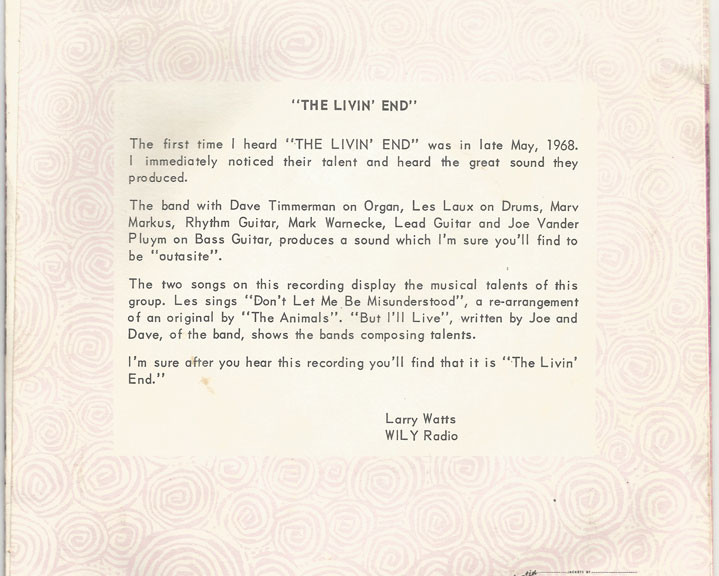
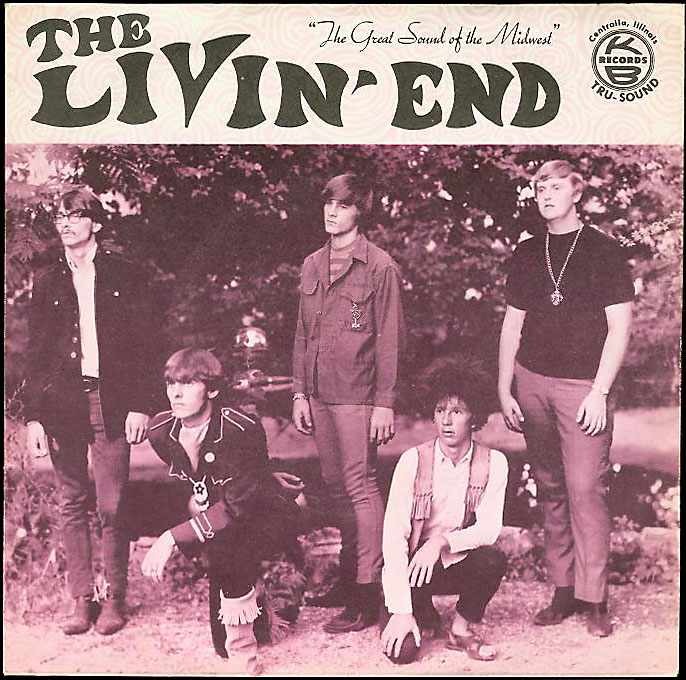
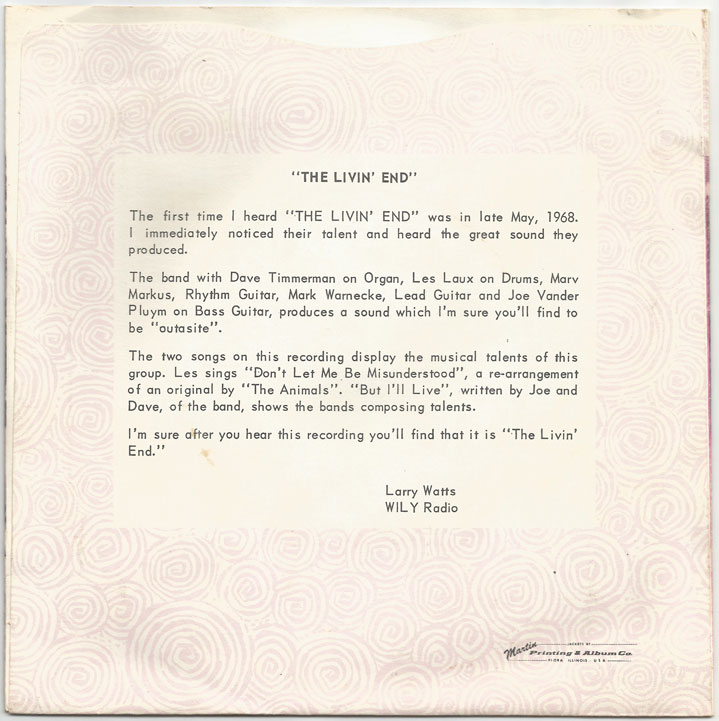
Centralia, Illinois, about 70 miles east of St. Louis was the base for KB Records. The label usually released country and show-band records. I’m not sure if the Livin’ End was also from that town, but the back of the sleeve has a blurb written by Larry Watts at AM station WILY, also in Centralia, and lists the band members as:
Dave Timmerman (organ) Mark Warnecke (lead guitar) Marv Markus (rhythm guitar) Joe Vander Pluym (bass) Les Loux (drums)
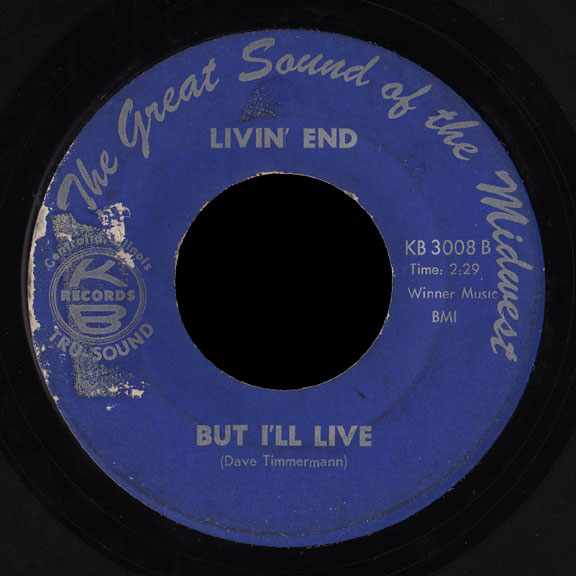
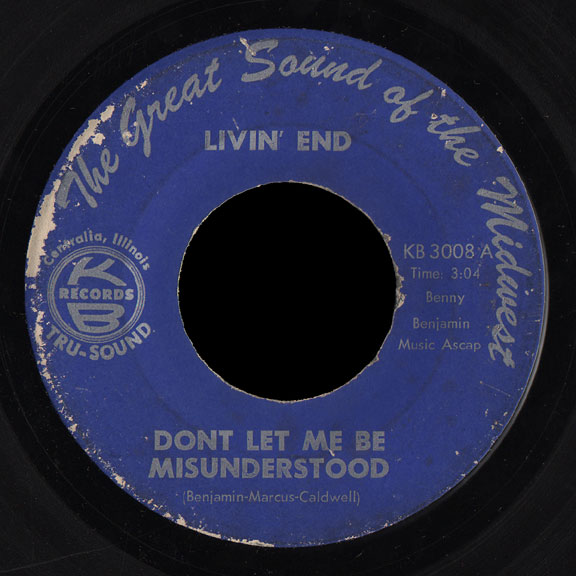
The A-side has a slow, sludgy cover of the Animals “Don’t Let Me Be Misunderstood”. Luckily the flip is a great original song, “But I’ll Live”.
The sound is sparse at first with drums in the background and a chugging bass line, while the organ carries the melody. I don’t hear any rhythm guitar on the track, but the lead guitar is fantastic, breaking in after verses with bluesy licks in a wailing, sustained sound. “But I’ll Live” is credited on the label to Dave Timmermann (sic), but the sleeve notes also say Joe Vander Pluym had a hand in it.
I have a copy of the record which is scarce enough, but the picture sleeve seems to be almost non-existent. Release date came after May, 1968.
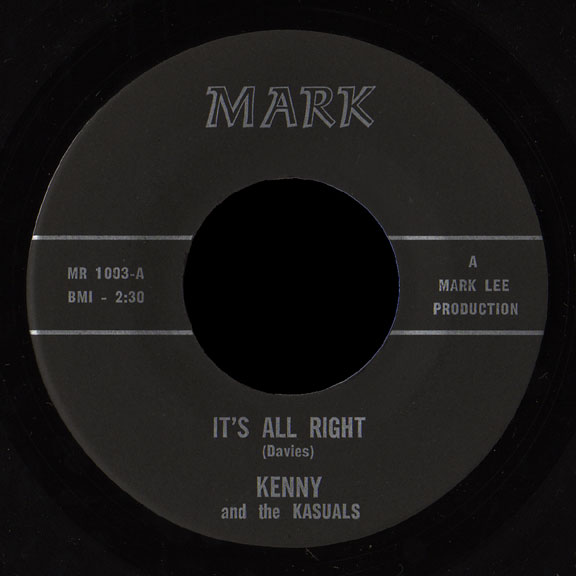
Kenny and the Kasuals – a great band from Dallas with a long and complicated history I won’t try to tell here. Instead I’m featuring one of their lesser-known releases, but well worth a listen. This is their third 45 on Mark Lee’s ‘Mark’ label, “It’s All Right”, from 1966. It features what I believe is the original group:
Kenny Daniel (vocals and guitar) Jerry Smith (lead guitar) Tommy Nichols (harmonica) Paul Roach (keyboards) Lee Lightfoot (bass) David Blackley (drums)
Richard Parker corrects this lineup in his comment below, which I’ll repeat here:
The first recording group (there were earlier members not featured on any recordings) was Kenny Daniel, Tommy Nichols (lead guitar) Paul Roach, David Blachley (with an “h” not a “k”) and Lee Lightfoot. The later recordings feature Jerry Smith on guitar, after Tommy Nichols went into the navy. I don’t think that Jerry is on this recording.
The top side is a hopped-up nugget of r&b, revving the Kinks song up a couple notches. With the early use of a fuzztone and Kenny’s accented vocals, you could say they Stones-ify the song. Backing it is the Zombies tune “You Make Me Feel Good”.
Like their first two records, this one wouldn’t make much headway on local charts, but their next two 45s, “Raindrops to Teardrops” and “Journey to Tyme” would change that.
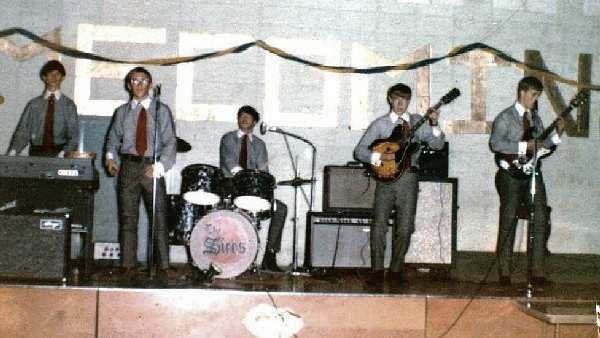
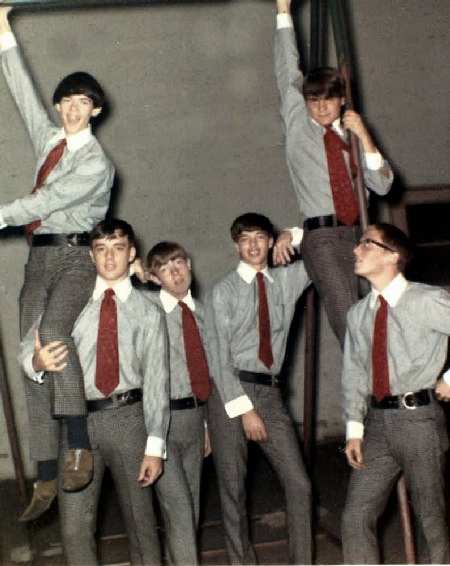
The Sires, 1965, from left: Rodger Koliece, Dean Loman, Robert Grebb, Ron Craig, Mike Briggs.
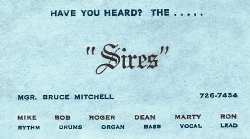
The Sires were teenagers from Eugene and nearby Springfield, Oregon, forming at Sheldon High School in 1964 and breaking up in 1969. Members were:
Marty Berg (vocals) Ron Craig (lead guitar) Mike Briggs (bass, rhythm guitar) Roger Koliece (keyboards) Dean Lowman (bass, vocals), replaced on bass by Warner (Doc) Swebke Robert Grebb (drums)
Ron Craig had been in the Tempters out of Springfield with Joe Crippen and Dave Rodakowski who were later in the Eugene-based group Truth. They played nightclubs in Florence, Oakridge and at a ballroom in Eugene. They won some battles of the bands and came in second to the Gentlemen Wild in a state-wide contest. Bruce Mitchell managed the band.
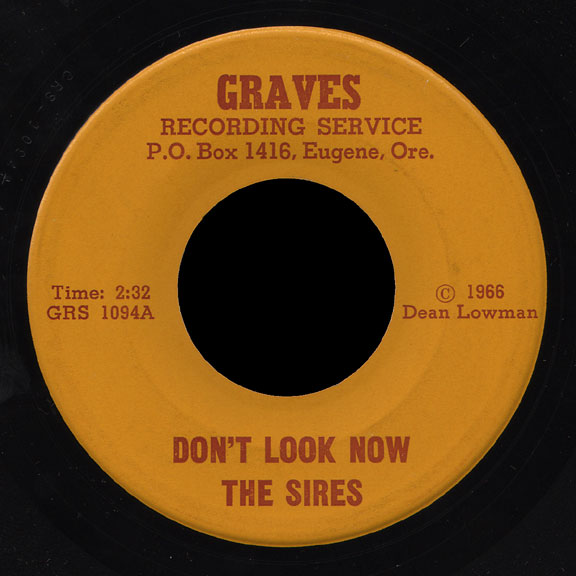
Bands like the Sires paid Alan Graves to record them in his basement home studio in Eugene, and he would have them pressed up on his own label. Alan was still cutting records here as of 2004.
Their only 45 is definitely crude in recording quality and composition, and the sound is at odds with their neat image in their photos. Recorded in 1966, the members were about 15 years old at the time.
I really dig the A-side, “Don’t Look Now” for it’s menacing repetitiveness. Several members are singing in unison, which is unusual, and the lyrics are cool when you can make them out – “give back my ring, then I will see, just how it feels, to be alone and free”. The vocalists draw some lines out in a lower voice and then shout out the chorus for good dynamic effect.
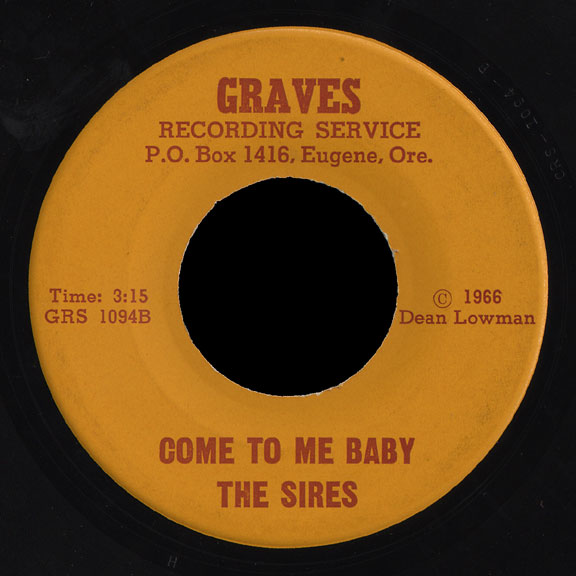
“Come to Me Baby” has chord changes a la Louie Louie, and again the whole group shouts out the lyrics. Ron Craig plunks out a guitar solo lasting some 45 seconds, and there are some good shouts in the song.
Wild and primitive indeed, and hardly the kind of material that would win band competitions, which usually favored slicker pop songs. Dean Lowman is given copyright on both sides of the 45, so I assume he wrote both songs.
Sources include: photos and some info from the PNW Bands site.
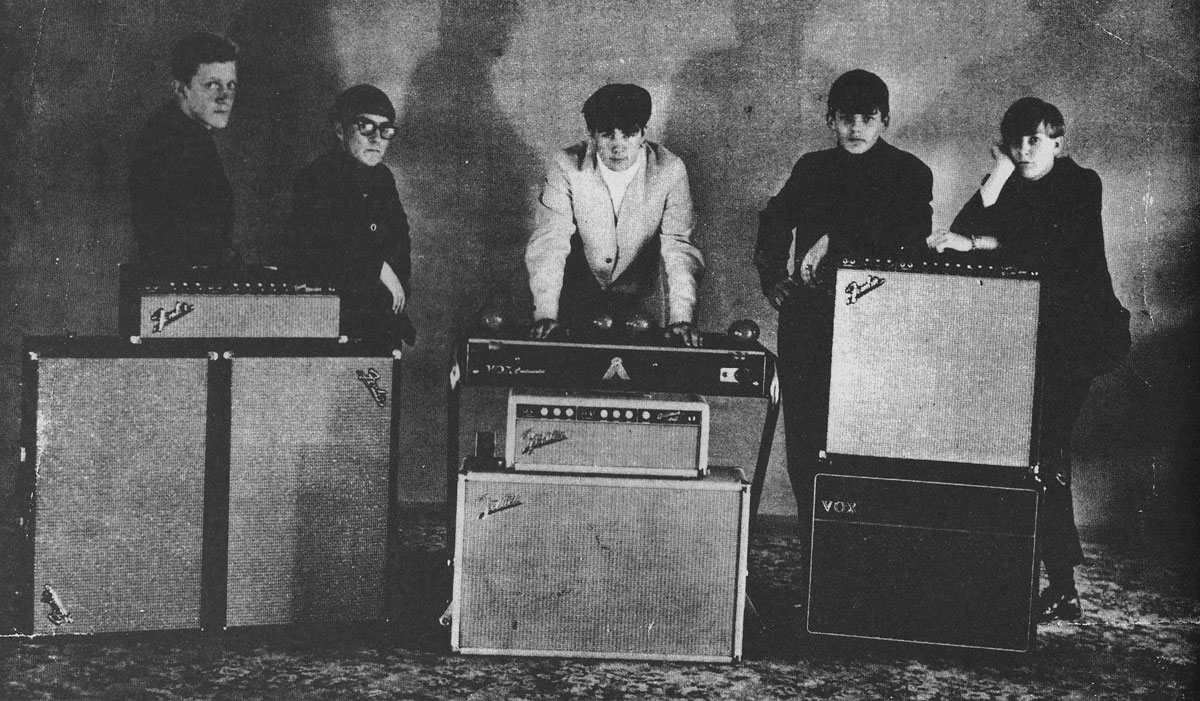
The Journeymen, 1966, from left: Gary Clark, Rick Fonder, Bob Van Calster, Mike Bogart and Mark Paulick. None of these guys were in the band by the time of the 45!
Out of Green Bay, Wisconsin, this band went through many lineup changes before settling on the quintet that recorded their great 45 on Tee Pee Records.
The Journeymen came from the Misty Shadows, who formed in 1965 with a lineup of:
Steve Van Pay (lead vocals) Mark Paulick (lead guitar) Tobin Kraft (bass, rhythm guitar) Dan Gallagher (drums)
By 1966 the lineup had changed to the one pictured in the photo above, with only Mark Paulick remaining from the original group. This lineup changed the band name from the Misty Shadows to the Journeymen.
Mike Bogart (lead vocals) Mark Paulick (lead guitar) Rick Fonder (organ) Bob Van Calster (bass) Gary Clark (drums)
However, Paulick soon left to join first the Society for only one month and then the Invaders, who released several 45s on Cuca, USA and Capitol. Paulick recommended his friend Tom Halfpap, and within six months the lineup had completely changed to the group on the record:
Dennis Pharis (lead vocals) Tom Halfpap (lead guitar) Tobin Kraft (bass) Buzz Eastman (drums) Mike Giese (keyboards)
Toby Kraft’s father Bob started handle bookings for the band, namely at Premontre High School and the Prom Ballroom.
In the spring of ’68 the Journeymen won a battle of the bands sponsored by Henri’s Music, the prize being five hours of recording time at Appleton’s Target Studios. As usual with these kinds of “prizes”, the recording would be free but the band would be hit for the expense of mastering and pressing the records!
They went into the studio in June to cut their cover of the Yardbirds “You’re a Better Man Than I” for the A-side of their 45. They spent over four and a half hours getting that song down. Engineer Tom Gebheim overlapped Tom Halfpap’s two takes on the fuzzy lead to create a cool echo effect.
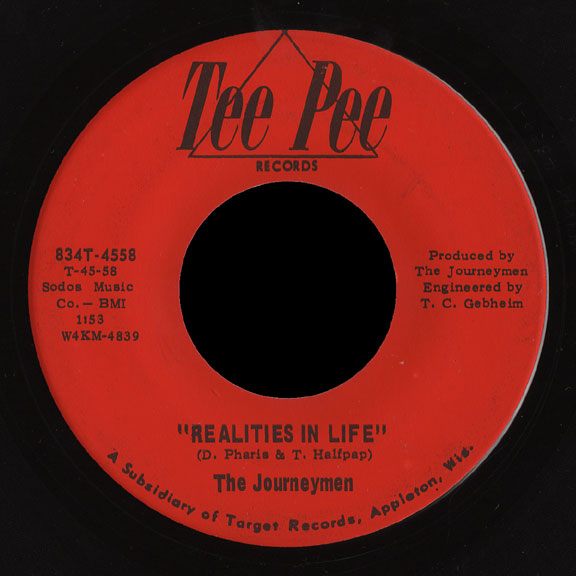
With the remaining twenty minutes they cut one take of “Realities in Life”, a song Tom Halfpap and Dennis Pharis sketched out during the ride from Green Bay. Lyrics for the final verse were provided by engineer Gebheim. “Realities in Life” blasts out with an unworldly guitar sound that seems to be shredding the tape it’s recorded on. Vibrant and spontaneous, it’s a rocking winner for all two minutes run time.
As it turned out local radio station WDUZ AM picked up the B-side original for play, so the band added “Realities in Life” to their set list. Most of the copies of the record were sold at gigs. However, Dennis Pharis refused to contribute towards the pressing costs, so Halfpap destroyed Pharis’ share of the 45s in his yard one night, contributing to the present-day rarity of this record!
That summer of ’68, Chicago’s USA Records approached the band about making an album – but the offer required the band to raise the money to cover recording costs, which they were unable to do.
Dale Evans filled in on drums when Buzz Eastman couldn’t make a show, including a few battle-of-the-bands, and joined the group full time when the Marines drafted Buzz after the record was out.
In 1969, Mike Cygan took over on drums. He wrote to me:
I was the last drummer for the Journeymen. I attended East High with Tobin Kraft, Bob Vancalster and Doug Cayer and they approached me in the fall of 1969. Buzz Eastman was still in the service and they really wanted someone who had the similar beat as Buzz. I was already in a band called the Backward Community and was a little hesitant at first but after a bit of prodding from Tobin agreed to step in. The band consisted of Tobin on lead, Bob on bass and Doug Cayer on the Wurlitzer with twin Leslies.
I remember we were playing in Sheboygan and it was one of those Friday & Saturday gigs so we were on our way home early Saturday morning and we were involved in a head on crash that nearly wiped us out. Luckily we swerved and only caused damage to the driver’s side. I think we got home at about 7:00 a.m.
We played for a couple years into the early part of ’71 and then I got drafted and left the band. Ironically when I got out, Doug called me and asked if I wanted to play with him and Tobin and go by the name of; Cayer, Kraft and Merlin. We played for nearly a year but then I got a job as a police officer with the Green Bay Police Department. As a matter of fact, Doug is still playing with a band he started after I left by the name of Rocker. I hope this helps in the story of the Journeymen, one of Green Bay’s finest.
Tom Halfpap left the group in early ’69 and was replaced by Jeff Hermice, but the Journeymen broke up that fall.
Source: Band photo and most of the info cribbed from Lost and Found #2.
This site is a work in progress on 1960s garage rock bands. All entries can be updated, corrected and expanded. If you have information on a band featured here, please let me know and I will update the site and credit you accordingly.
I am dedicated to making this site a center for research about '60s music scenes. Please consider donating archival materials such as photos, records, news clippings, scrapbooks or other material from the '60s. Please contact me at rchrisbishop@gmail.com if you can loan or donate original materials

 The Cresendos (sic) consisted of Graham Johnston lead guitar, Max Johnston rhythm guitar, Ian Irvine bass guitar, and Bryan Stewart drums. The band began in 1965 in the small coastal city of Wanganui on the north island, about halfway between Wellington to the south and New Plymouth to the north.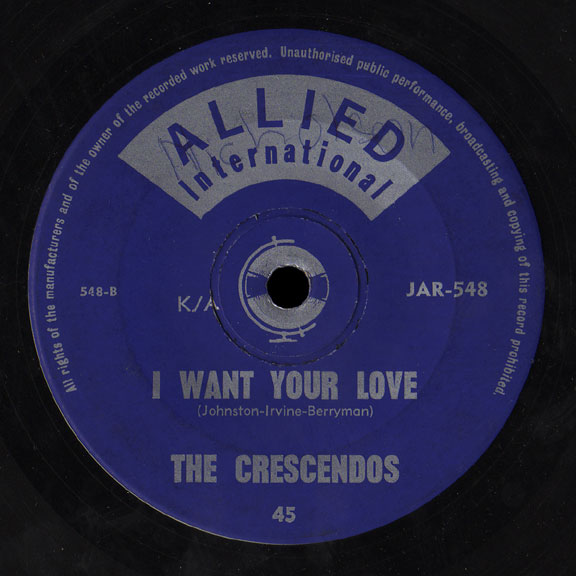
 The Apollos came from Pleasant Hills, a suburb south of Pittsburgh. The top side of their only 45 is “I Know Your Mind” a doo-wop influenced ballad. The flip is an instrumental, “Room 4”, marred by the guitarist being out of tune.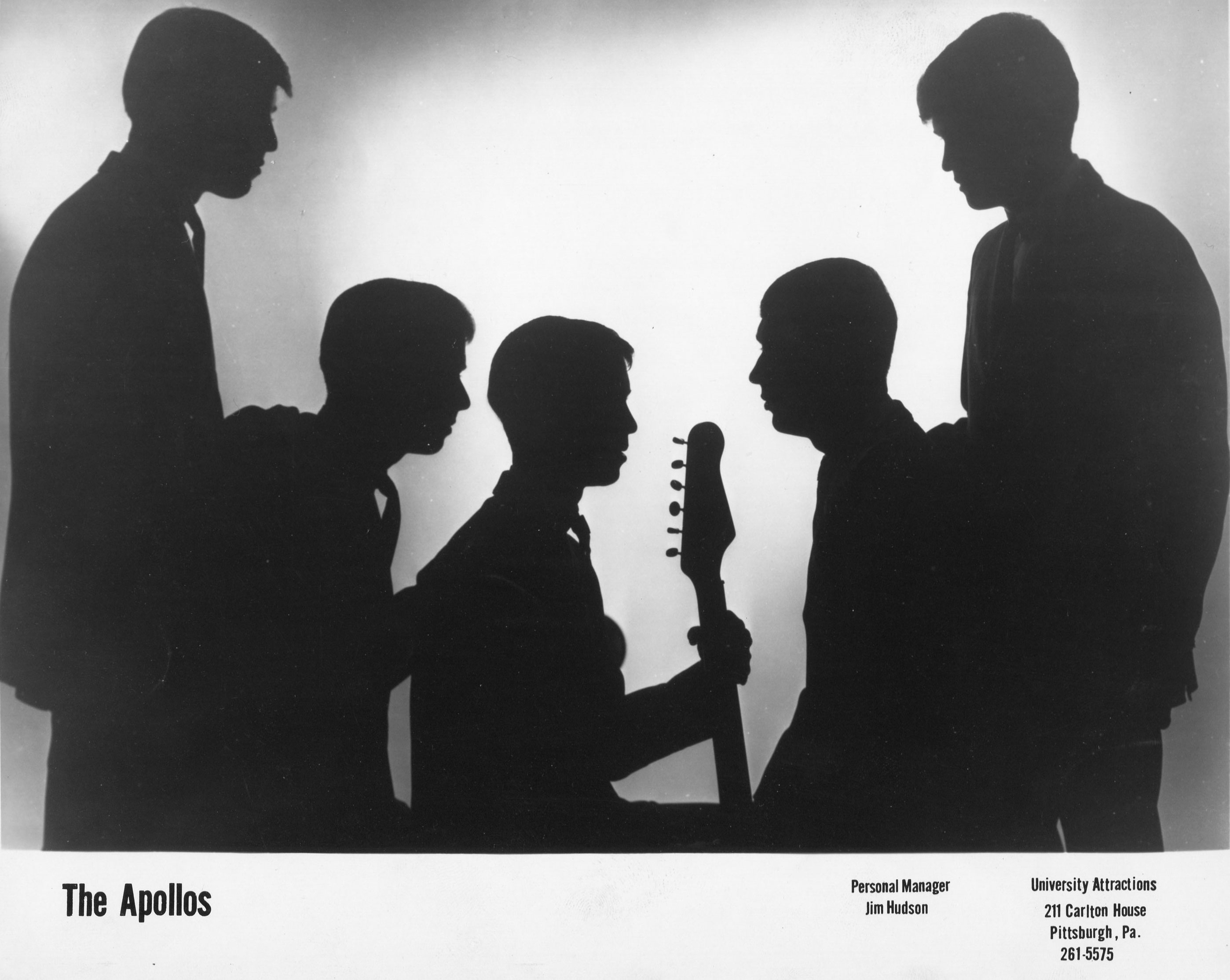
 However, Paulick soon left to join first the Society for only one month and then the Invaders, who released several 45s on Cuca, USA and Capitol. Paulick recommended his friend Tom Halfpap, and within six months the lineup had completely changed to the group on the record:
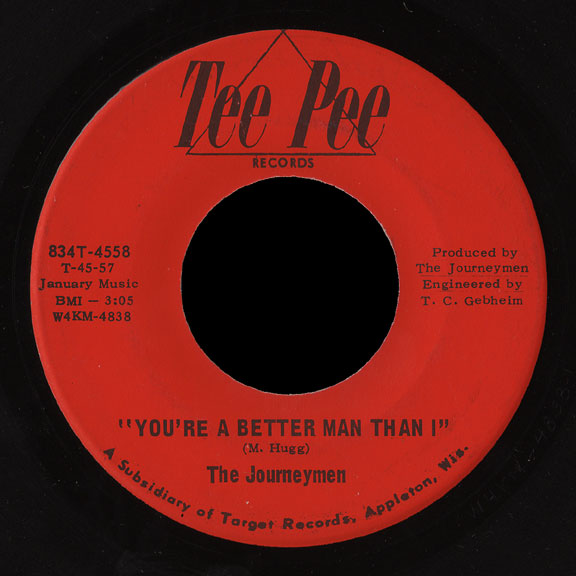 With the remaining twenty minutes they cut one take of “Realities in Life”, a song Tom Halfpap and Dennis Pharis sketched out during the ride from Green Bay. Lyrics for the final verse were provided by engineer Gebheim. “Realities in Life” blasts out with an unworldly guitar sound that seems to be shredding the tape it’s recorded on. Vibrant and spontaneous, it’s a rocking winner for all two minutes run time.