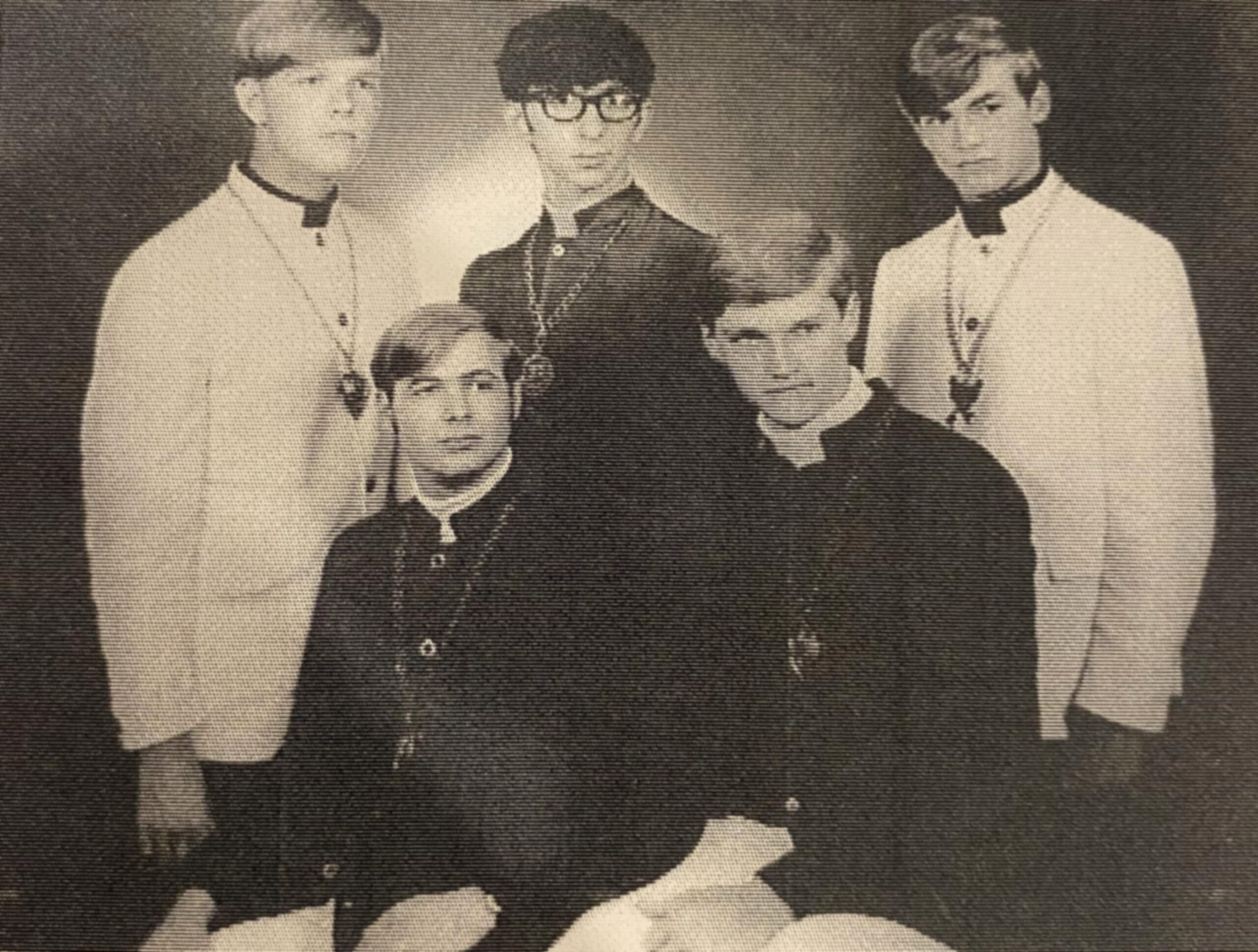
The Chevrons, Jerry Vanderwal Wal at front leftThe Chevrons V came from Grand Rapids, Michigan.
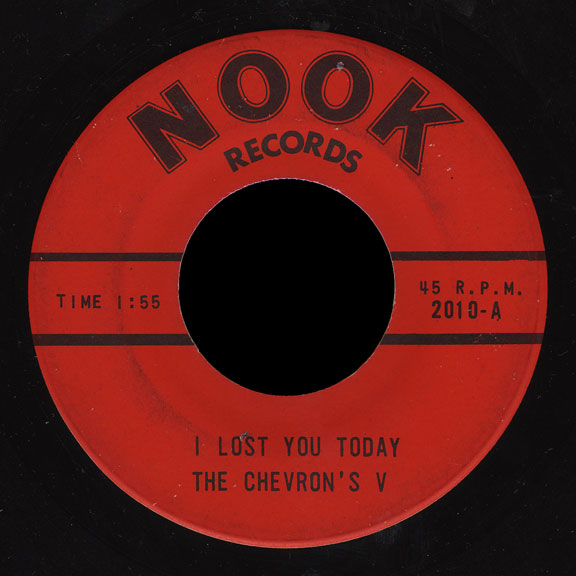
Their first 45 from January 1966 has a sharp bluesy lament, “I Lost You Today” on one side and the nonsensical chant “Niat Pac Lavram” (read it backwards) on the flip. Total time for both songs clocks in at a succinct 3:40! Bands today should consider that approach to recording.
It was considered a rare 45 until 2008 when fourteen or more copies turned up. No song writing or production credits on the label, but the same band released a later 45 as simply ‘The Chevrons’ on Fenton, “Hey Little Teaser” / “What Everyone Wants”.
There’s also another single as the Chevrons on the Dawn label, “Seeing You” (B. Goote, pub. by Nigel Music) / “My Mind’s Made Up”, produced by Goote and J. Williams, product of Midwestern Sound Productions, engineer Denny Cuson, “label by John Stevens”.
Patrick Strong wrote to me that he played guitar on “What Everyone Wants”. I’m not sure if he was in the group for the first 45.
I knew almost nothing about the band until Bob Goote commented below that I’ll repeat here:
I was a founding member of the Chevrons. The members of the band were:
Bob Goote (keyboards/lead vocals), Pat Strong (lead guitar), Bob Vandenberg (guitar/vocals), Steve Vanderark (bass/vocals), and the great Jerry Vanderwal on drums.
I wrote “I Lost You Today”. “Niat Pac Lvram” (Captain Marvel spelled in reverse) was a collaboration with the whole band, I wrote the music. I also wrote the songs “What Everyone Wants”, “Hey Little Teaser”, “Seeing You”, and “My Mind’s Made Up”.
Our record “Hey Little Teaser” / “What Everyone Wants” made it to #5 on the radio music charts in Grand Rapids.
We had a great time playing gigs while in High school at East Christian High in Grand Grand Rapids (65-68). After high school in 1968 we all sort of went are own ways and the band broke up. After the group retired I wrote and recorded a song called “Somewhere (Someone Is Waiting)” on the Coventry label. It also got some air play in the Grand Rapids market.
Bob Goote
Thank you to Chip for sending in the photo of his uncle’s band and correcting the name to Jerry Vanderwal Wal. If anyone has more photos of the band please contact me
Update, January 2020:
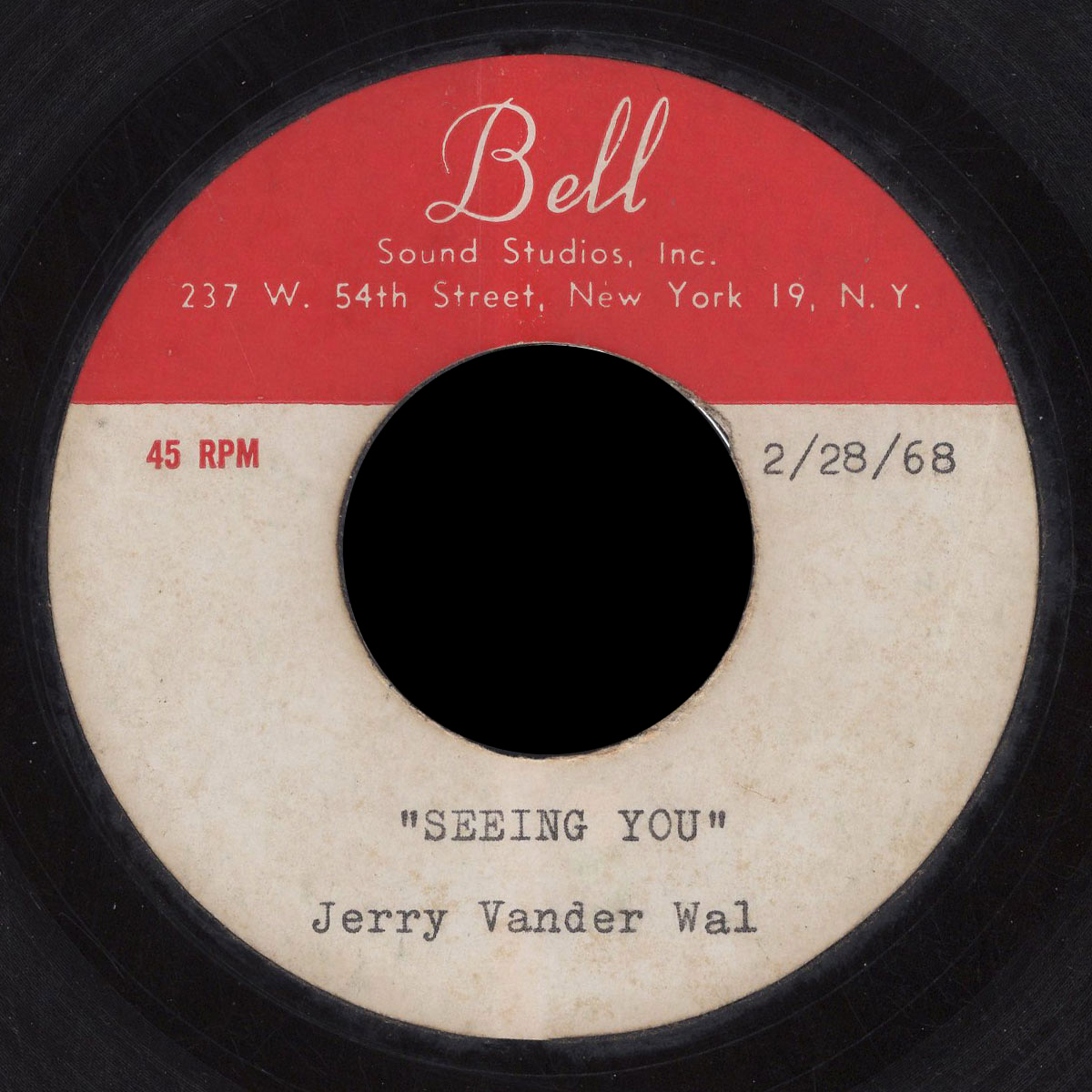
I found this demo lacquer 45 of “Seeing You” / “My Mind’s Made Up” credited to Jerry Vander Wal instead of the entire band, and dated 2/28/68. Interestingly the labels read Bell Sound Studios in New York City, though I don’t believe it was recorded there!
Harry Vanda, guitar and vocals George Young, guitar and vocals George Alexander, guitar Ian Campbell, bass and vocals Freddie Smith, drumsWhen The Easybeats broke up in late 1969, following a final Australian tour, songwriters Harry Vanda and George Young returned to the UK to join forces with Young’s older brother Alex (who had changed his name to George Alexander as leader of Grapefruit) and they recorded under various aliases, including Paintbox, Moondance and Tramp.
While it cannot be said with any certainty who else was involved in the recordings issued under the names Paintbox, Moondance and Tramp, it is likely that Scottish bass player and singer Ian Campbell and Scottish drummer Freddie Smith, both of whom had worked with George Alexander in Tony Sheridan & The Big Six in the mid-1960s, were the remaining musicians involved. Both definitely played on later recordings, released under other aliases, including Grapefruit, Haffy’s Whisky Sour and Marcus Hook Roll Band. Freddie Smith also recorded on some post-Shel Talmy Easybeats recordings in 1967.
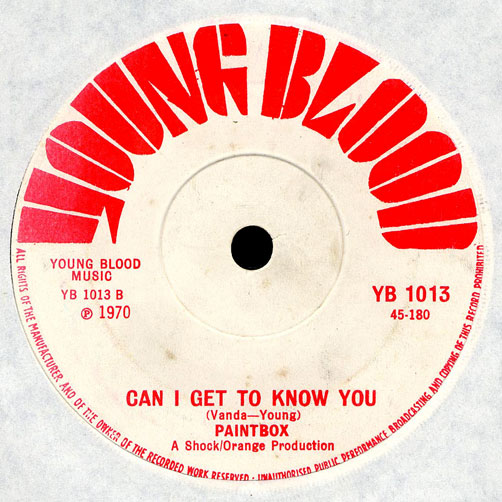
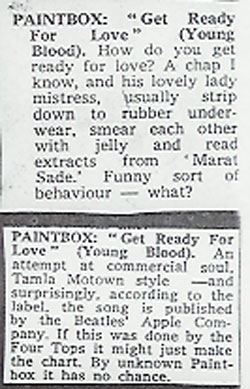
Paintbox’s lone single, released in June 1970, was a Miki Dallon production and was a typical British commercial soul number. The ‘A’ side was written by George Alexander while Harry Vanda and George Young composed the ‘B’ side. Interestingly, some copies came in a picture sleeve depicting five black musicians.
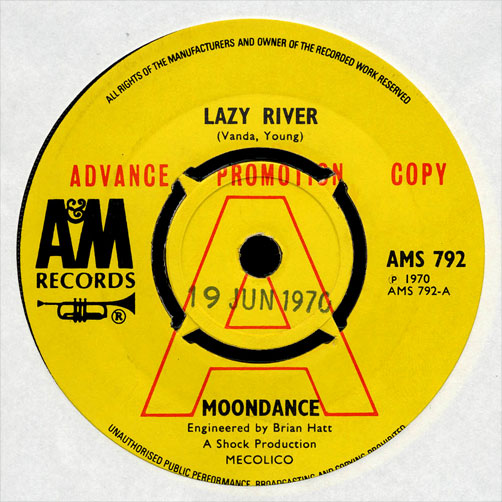
The same week the Paintbox 45 came out on Young Blood, A&M Records released a second single by the group under the name Moondance. “Lazy River” is a catchy Vanda and Young song while “Anna St Claire” is by George Alexander. In Germany, the single came in a picture sleeve, depicting two men, who bare no resemblance to the band members! In 1971 ”Lazy River” was released in Australia under the name Vanda and Young for Albert Productions with a different ‘B’ side titled ”Free And Easy”, also written by Vanda and Young.
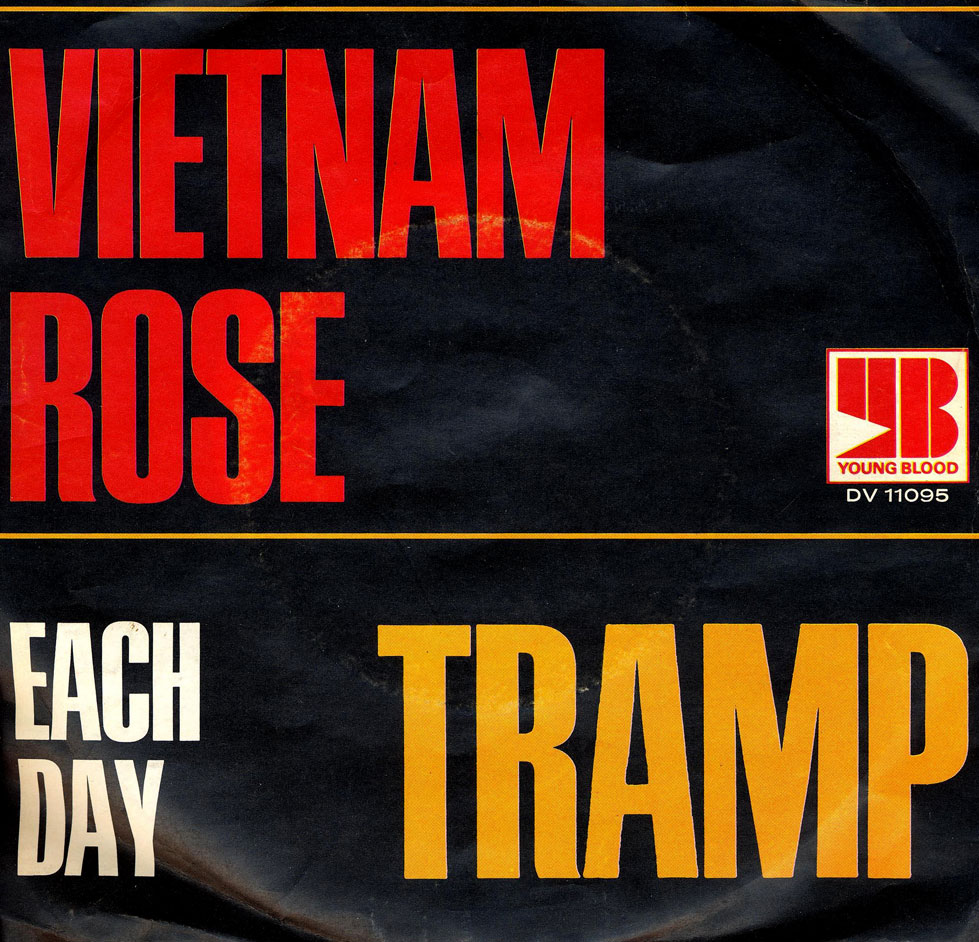
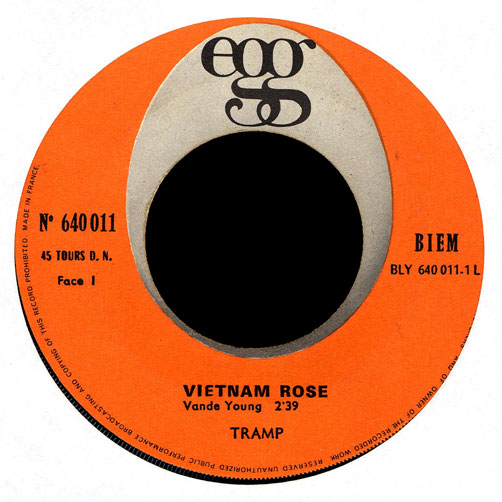
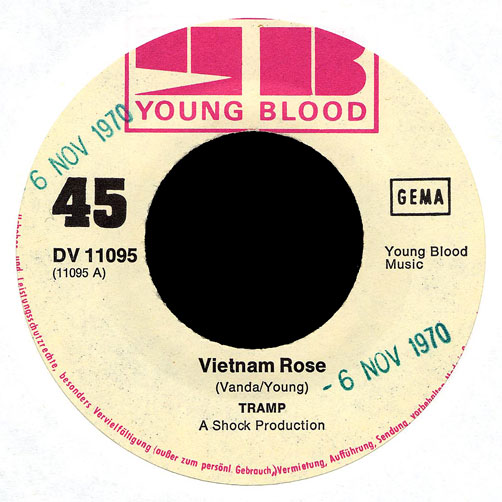
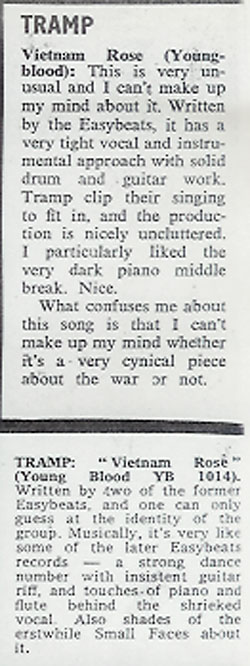
In July, a second Young Blood single came out under the name Tramp. “Vietnam Rose” is a Vanda and Young composition while “Each Day” is by George Alexander. The single was also released in Germany and France. After this release, the group left Young Blood and signed to Deram, releasing two singles under the Haffy’s Whisky Sour and Grapefruit aliases. The Paintbox single was re-released in 1971 with “Get Ready For Love” having a slightly longer intro.
Paintbox 45s: Get Ready For Love/Can I Get To Know You (Young Blood YB 1015) 1970 Get Ready For Love/Can I Get To Know You (Young Blood YB 1029) 1971
Moondance 45: Lazy River/Anna St Claire (A&M AMS 792) 1970
Tramp 45: Vietnam Rose/Each Day (Young Blood 1014) 1970
Lonnie Lee and the Big Beats, circa late 1960, from left: Dale Roark (bass), Lonnie Lee Edens (guitar), Jerry Woods (drums), and Archie Barnes (guitar). “I had just turned 17 when this picture was taken. I believe Archie was 14! It was taken at the Starlite club in Bartlesville, Oklahoma.” – Dale Roark
Dale Roark of the Escapades sent these songs and recollections of his start in music in the town of Bartlesville, forty miles north of Tulsa:
These recordings chronicle three musicians from Bartlesville, Oklahoma from 1961 until 1966.
The area around Tulsa in the late 50’s and early 60’s was a hotbed of musicians. David Gates (later ‘Bread’), Johnny Cale (later J.J. Cale), Tommy Crook (local guitar legend that stayed put), Leon Russell plus traveling Arkansas bands such a Ronnie Hawkins and the Hawks (later ‘The Band’), Charlie Daniels and the Jaguars (yes, that Charlie Daniels), and the McClellan brothers (The Five Emcees) out of Okmulgee, Oklahoma, all put their mark on the local music community. The Paradise Club in particular was a venue where musicians would casually approach the bandstand with “hey man, can I sit in?”. It was always fun but occasionally Tommy Crook, Roy Clark, or some of the other professionals would just blow you away. Any musician could request and it was understood that you would let them. It was competitive but also an inspiration.
Dale Roark (bass), Archie Barnes (guitar), and Denny “Zoot” Freeman (drums) formed a group called The Ravens in late 1959 and played local YMCA and high-school gigs for about a year. I was a high school junior. Archie and Denny were both in the 8th grade. A year later we joined up with Lonnie Lee Edens and formed Lonnie Lee and the Big Beats. We played the local night-clubs and did pretty well for a bunch of high schoolers.
Dale Smith’s pick-up band – Bartlesville, OK, April, 1961. L-R: Doug Cade, Dale Roark, unidentified, Archie Barnes (with his brand-new Rickenbacker), and Doug Lorenz. Photo courtesy of Doug Lorenz.
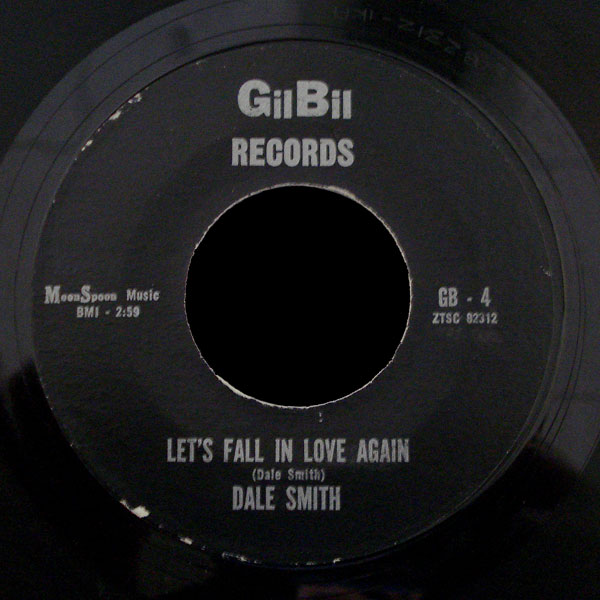
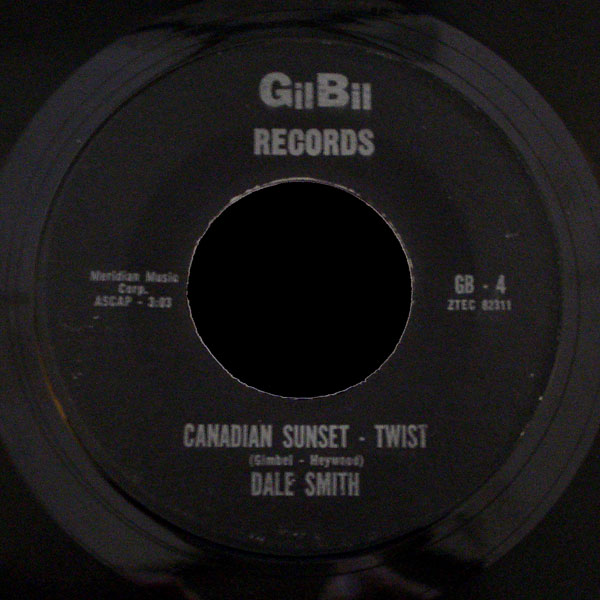
During my senior year Dale Smith, my high school choir director, approached the group about backing him up on an original song he had written. As you will see, he had a beautiful Perry Como-type voice. He rented time a Tulsa TV station studio and me, Archie, and Denny plus Richie Dickerson (9th grade – piano) backed him up. When you listen to Archie’s solos, keep in mind that he was in the 9th grade! Let’s Fall In Love (Mr. Smith’s original) and Canadian Sunset Twist were the result.
I went off to Oklahoma State University and wasn’t active in music my freshman year but right before the end of the winter semester I was approached by Kent Washburn to join the “Shadow Lake 8” for the summer gig in Noel, Missouri. The band had been a staple at OSU for years with graduating members being replaced by new, younger talent. They also needed a guitarist so I introduced him to Archie and his mother agreed to let the young sixteen year old join the band. The drummer quit the first week there and Denny was contacted and drove out the next day.
The band at that point consisted of:
Kent Washburn – Tenor Sax and Band Leader Amos Ming – Alto and Baritone Sax plus flute Terry Mead – Trumpet and Valve Trombone Bing Vasser – Trumpet Bill Schooler – Piano Archie Barnes – Guitar Denny Freeman – Drums Dale Roark – Electric bass
During the winter of 1963, Kent’s younger brother, Gary, replaced the piano player with his brand new Hammond B-3 organ and the dynamics of the group started to change. A demo tape was made at the Tulsa University ballroom. Single mike, no mixing, direct to tape and later cut as a demo. It is 45 years old and has a lot of pops and scratches so I only included a couple of snippets to help contrast with later recordings.The last 30 seconds of “Splankie” show Denny’s mastery of big band jazz. The last two minutes of “From the Heart” (a Ray Charles number from his “Genius Plus Soul = Jazz” album) show off Archie and Denny’s 10th grade musician skills. Denny was a huge jazz fan and his talents are present in his kicks and comping abilities. Archie shows a sophistication that few rock and roll musicians could conceive at such a young age. It also allows comparison between Gary’s “All Skate” tone to the later recordings as he finally mastered the tone controls of his B-3. He was also in high-school at the time.
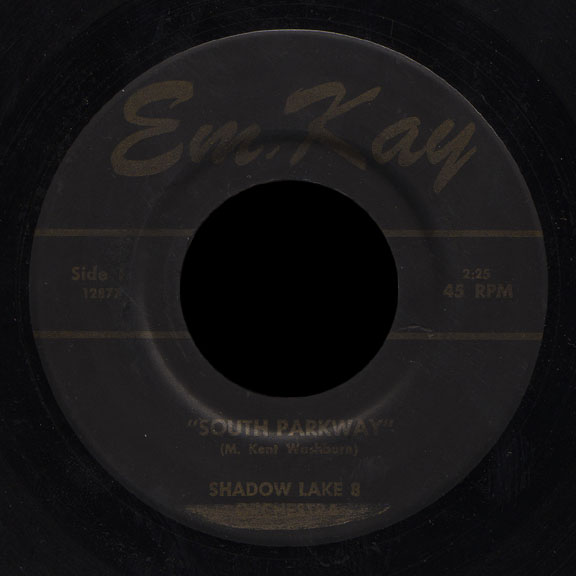
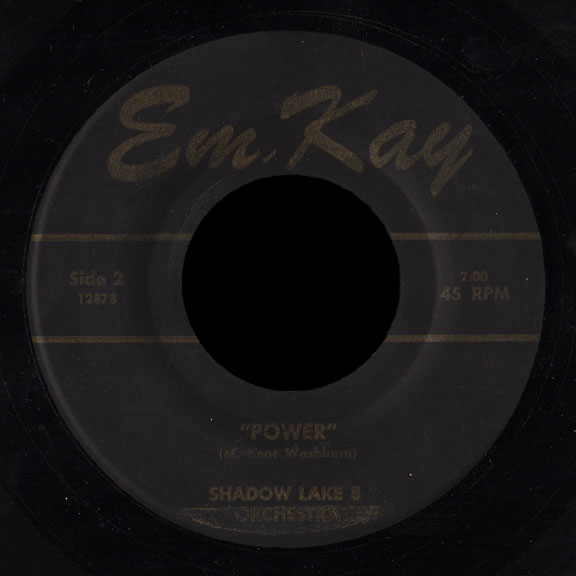
Both songs by M. Kent Washburn. Rite Pressing #12877/12878 which dates it to 1964.
That next summer we played at Rockaway Beach, Missouri. It is a resort town of about a hundred people just a few miles from Branson. It predated the Branson we know now and was the “in” place for college kids from Kansas City, Springfield, Memphis, Saint Louis etc. to go. The club was huge by that day’s standard and probably held a couple of thousand people. The group tightened up quite a bit but I quit the following fall for personal reasons. I was replaced by Bill Hieronymus and the following summer they toured the Florida night club circuit as “The Jades”.
I believe it is the only released record the Shadow Lake 8 / Jades ever cut. These two sides were made after I left the band. “South Parkway” was a major street in Tulsa at the time so that’s what they called the first cut. I am pretty sure that was Amos speaking “g’wan to South Parkway” at the start and Archie counting then Kent speaking on “Power”.
Kent gave me a copy and I took it into Stax records and played it for Steve Cropper the very week I moved to Memphis but Steve wasn’t interested in either the record or the group because of their own in-house musicians. I lost my copy somewhere between Memphis and a half dozen other places over the past 45 years.
I don’t hear any trumpets so I guess it is:
Kent – Tenor Sax Amos – up front and center on Baritone Sax Gary – Organ and Piano Archie – Guitar Bill – Bass Zoot (Denny) – Drums
Maybe one of the guys can acknowledge or correct me. Archie’s solos are typical of Tulsa area guitarists at that time . . . speed, speed, speed . . . It wasn’t the most melodic but the dancers loved it!
The band pretty much stayed together for several more years. I had moved to Memphis and was the leader of a group called The Escapades. We were under contract with Sun records and Kent contacted me during the summer of 1966 about cutting a record at Sun. The following four Jades tunes were the result:
Rainbow Riot – A Bill Doggett tune the band used as their theme song High Heel Sneakers – Kent and Archie doing the vocals I Got a Woman – Gary Washburn rockin’ on his B-3 including the bass pedals Come and Take Me Baby – An original with Archie Barnes vocal and local Memphis back up singers
Bing Vasser had left the band prior to this but the rest of the musicians were together. I substituted on bass for Bill who couldn’t make the session. The group stayed together a little while longer but then went their separate ways. To the best of my recollection, with some help from Bing Vasser:
Amos Ming– became an accountant in Nashville with Brenda Lee as one of his clientsKent Washburn – moved to the West Coast and became a Christian Record Producer
Gary Washburn – became a music professor at the University of Hawaii
Bing Vasser – obtained a Masters degree in music from Tulsa University and taught music in Idaho Falls, Idaho. He then returned to Tulsa University to graduate with a Masters degree in mathematics and music computation. His computer music programs were used to produce synthesized music in one of the early computer music conferences held in Tulsa featuring Aaron Copeland.
Dale Roark – formed The Escapades in Memphis, was drafted into the Army, then earned a degree in Computer Science and had a 30 year high-tech career. He now lives in Eagle Mountain, Utah within 1 mile of his 4 children and 6 grandchildren.
Terry Mead – joined Brenda Lee’s back-up band then moved to Nashville for a successful music career. He played on the live TV show “Nashville Now” for several years until ill health caused his retirement. Terry died May 13, 2007.
Archie Barnes – joined Brenda Lee’s back-up band then moved to Toronto
Denny (Zoot) Freeman – joined Brenda Lee’s back-up band then moved to California. He passed away in 2000.
Bill Hieronymus – went back to school and earned a degree in geophysics from the University of Houston. He became a consultant with several major oil companies and was well respected for his analytical expertise. He was also cited by Downbeat Magazine as one of the premier jazz bass players in America. He died on Thanksgiving day, 2008.
Dale Roark, April 2009 (Original Text) Bing Vasser, (Update and corrections)
Dale and Ken Washburn have created their own website for the Shadow Lake 8 at ShadowLake8.com with more information and photographs.
Here’s an obscure 45 by a band out of North Carolina.
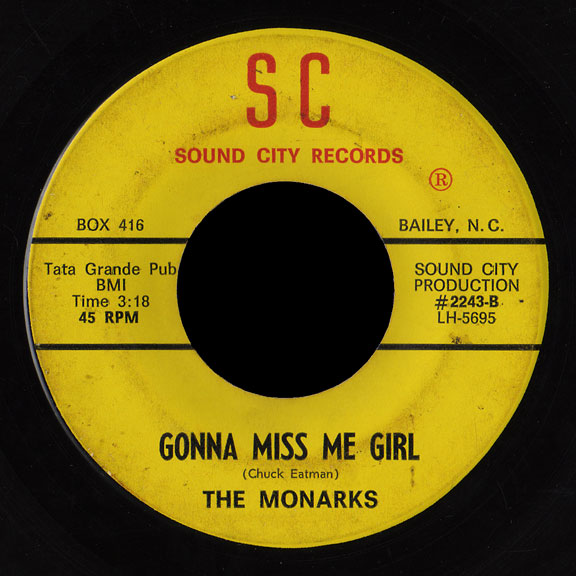
“Gonna Miss Me Girl” has a cool, dense garage sound and a crude guitar solo. The original a-side, “I’m Gonna Be Glad” is kind of a blue-eyed soul number. Chuck Eatmon wrote both songs, though his name is spelled Chuck Eatman on the labels. I believe Chuck is still active in music with his own band in Greenville.
A lyric sheet for copyright registration has a handwritten note, “Tripp Walls, pianist and back up singer”.
The Monarks recorded at Sound City Studios in Bailey, North Carolina, about 10 miles west of Wilson. This is the same studio that the Challengers would record “Moon Send My Baby” a few years later, and also where the Kallabash Corp recorded their LP.
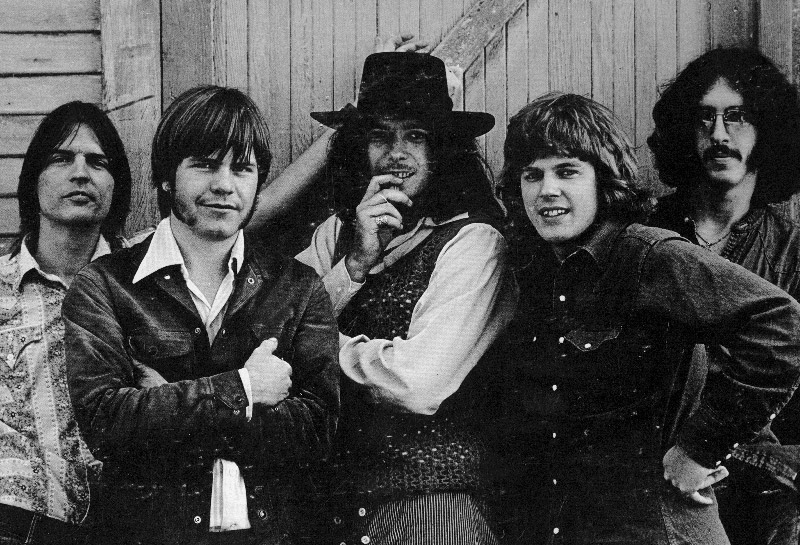
Randy Fuller with New Buffalo Springfield, Spring 1969. Clockwise from top: Dewey Martin, Bob Jones, David Price and Randy FullerWhen Texan rock legend Bobby Fuller was found dead in his car on 18 July 1966 in suspicious circumstances, those nearest and dearest were devastated, not least his younger brother Randy, who had also been bass player in the aptly named, Bobby Fuller Four. From the early 1960s up until his brother’s untimely, and yet to be solved, death, Randy Fuller was Bobby’s closest collaborator and during those frenetic years of recording and touring witness to his brother’s extensive talents as a singer/songwriter, guitarist and skilled engineer and producer.
In the first few months following his brother’s death, Randy Fuller came close to jacking in the music career he had so cherished when Bobby was alive. “I came home to El Paso with no idea what I was going to do with my life,” says Fuller. “I felt like I was going to go insane because my mother was having such a hard time over Bobby.”
Later that autumn, however, Randy received a phone call from Bobby Fuller Four member DeWayne Bryant (aka Quirico) and Bob Keane, who ran Del-Fi studios, to return to Hollywood and form a new group with some musicians that Quirico had been playing gigs with in the intervening months. “Keane said that if I came back he could get us back in PJ’s nightclub,” remembers Fuller.
To stimulate some local interest in the new group, prior to it playing live, Keane financed some studio time to record a handful of tracks in late 1966. For these recordings, the studio band consisted of Randy Fuller on bass, rhythm guitar and lead vocals; DeWayne Quirico on drums; Howard Steele on bass; and Mike Ciccarelli on lead guitar and vocals.
“The musicians on all the songs were from El Paso, Texas but [they] never stayed together long enough to promote them [the singles],” explains Fuller, who points out the recordings were all laid down in the final days of the studio’s existence.
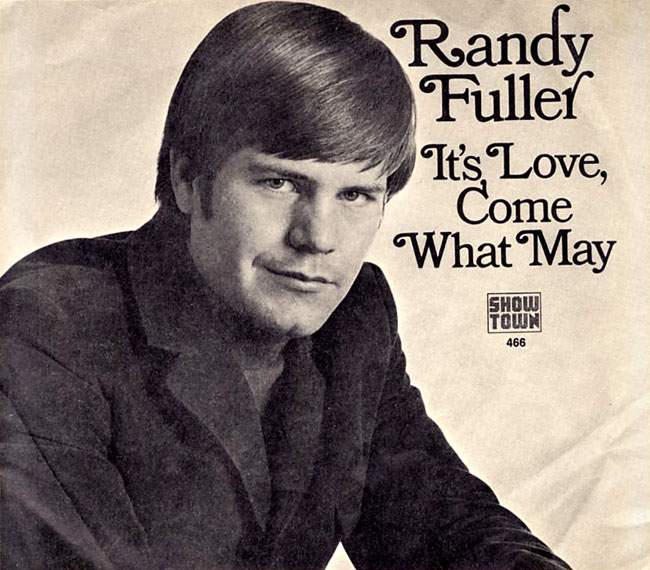
The first single to be released (under Randy’s name only on the obscure Mustang label) was the catchy “It’s Love, Come What May”. “[That] is the original track from Bobby Fuller Four recorded at Del-Fi,” says Fuller. “Bob Keane and I recorded my voice on a separate track and remixed it a little louder than Bobby’s in the final mix.”
An infectious folk-rocker, “It’s Love, Come What May” should have been a smash hit but mysteriously did not attract many sales. Unperturbed, Keane prepared a second single coupling Randy Fuller and Johnny Daniel’s “The Things You Do” with another collaboration “Now She’s Gone” but it appears the Mustang release never hit the shops.
Interestingly, Randy Fuller reveals that two of soul music’s heavy weights had a hand in the creative process. “[On] ‘The Things You Do’, Barry White and Dionne Warwick threw in a line or two.”
Events meanwhile were about to take a dark turn. When Del-Fi was forced to close in early 1967, Keane, unbeknown to Fuller, began to issue the recordings through the Show Town and President labels. “Del-Fi went under and Bob kept the masters in a vault,” explains Fuller. “I [later] found out he had been selling these [singles] over in the UK for years!”
Perhaps the most fascinating of these releases are the trippy, Buffalo Springfield-influenced, “1,000 Miles Into Space”, which features some tasty lead guitar work and superb lead vocal by Randy, and “Revelation”.
While Keane was busy releasing the tracks on the sly, Fuller and Quirico began working back at PJ’s joined by guitarists Jim Fonseca and Jimmy Smith. The line up played at the club for nearly two years and according to Fuller, “We probably would have had a hit or two, but as usual ego destroyed the band.”
Left without a band, Randy hooked up with Dewey Martin’s New Buffalo Springfield in February 1969 and toured with this group for the best part of the year, before it morphed into Blue Mountain Eagle. Fuller’s new band recorded an excellent album for Atco Records in 1970 with the bass player’s “Sweet Mama” providing one of the highlights.
Unlike Blue Mountain Eagle’s album, which has been released on CD, very few of The Randy Fuller Four recordings have reached a wider audience via compilation CDs. Perhaps now is the time to rediscover the magic of this material, especially “It’s Love, Come What May” and “1,000 Miles In Space”.
Blue Mountain Eagle, December 1969, Randy Fuller second from left.
Solo releases:
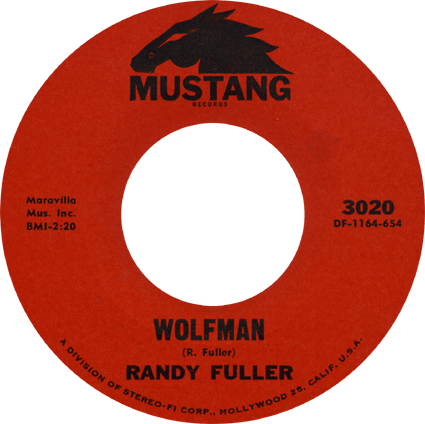
It’s Love, Come What May (actually Bobby Fuller Four with Randy’s overdubbed vocals) c/w Wolfman (Mustang 3020) 1966 US (credited to Randy Fuller) The Things You Do c/w Now She’s Gone (Mustang 3023) 1966 US (credited to Randy Fuller Four but not released) It’s Love, Come What May c/w Revelation (Show Town 466) 1967 US (credited to Randy Fuller) It’s Love, Come What May c/w The Things You Do (President PT 111) 1967 UK (credited to Randy Fuller) 1,000 Miles In Space c/w 1,000 Miles In Space (Show Town 482) 1967 US (credited to Randy Fuller)
Many thanks to Randy Fuller for his invaluable input into this story.
Transfer and scan of “1,000 Miles in Space” courtesy of Colin (Expo67), transfer of “Revelation” courtesy of Bård H., scan courtesy of Freddy Fortune. “Wolfman” scan and transfer courtesy of JP Coumans.
The great b-side “Wolfman”, a Bobby Fuller Four recording originally released as by the Shindigs on the flip of “Thunder Reef”, Mustang 3003 and used again on Randy Fuller’s first 45.
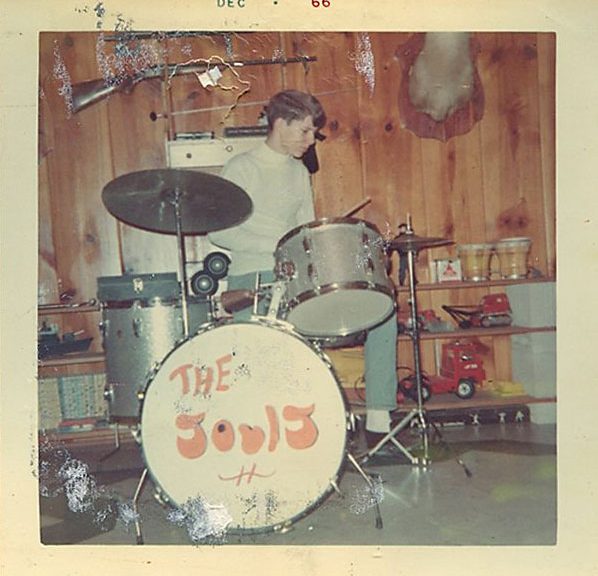
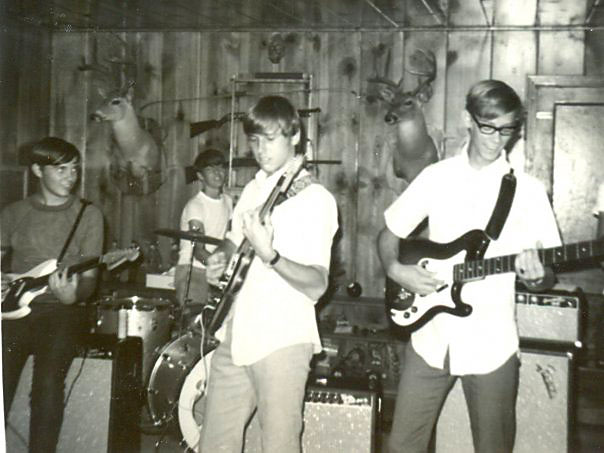
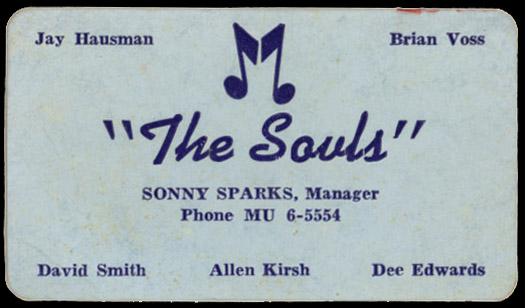
The Souls, 1966 l-r: David Smith, David C. Lott, Jay Hausman, Jerry Ebensberger. Not pictured: lead vocalist Allen KirshSouls business card with first lineup and manager Sonny Sparks listed
David C. Lott wrote this history of his band the Souls, known for their 45 on the Pharaoh label as Christopher & the Souls. David also contributed all the photos and newspaper scans included in this article.
Music has a strange way sometimes of transcending time and boundaries. It can seemingly take on a life of its own.
Such is the case of a young garage band from McAllen, Texas during the swingin’ mid-sixties. Nestled about as far down in south Texas as one can get — down in the Rio Grande Valley, right above the Mexican border – was a teen scene that produced some great rockin’ groups like The Headstones, The Cavaliers, The Playboys of Edinburgh and Arturo & Pat and The Invaders.
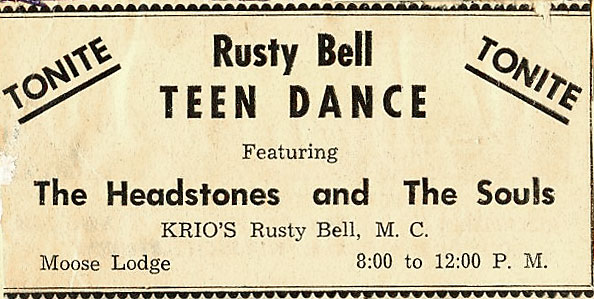
Souls and the Headstones at the Moose Lodge
In Andrew Brown’s “Brown Paper Sack – Music & Commentary No.1”, from the mid-90’s, he states “but not one of ’em can match the intense dementia of Christopher and the Souls’ “Diamonds, Rats, and Gum”, which is not only the wildest records ever made in the Texas Valley, but also very likely the ultimate antithesis of every sorry-ass love ballad that’s ever dribbled down the proverbial pike.”
A single copy of the 45 recently sold on e-bay for a whopping $1225.
The story of The Souls really begins back in late 1964 when Jay Hausman, a young student at McAllen High School, and classmate David Smith began a collaborative effort. Jay was teaching David new bar chords and David showing him some of the well-known guitar licks of the day (ie: surf music & early Beatles and Stones). David was only a year older than Jay, but had been playing the guitar for several years and was acknowledged as one of the more talented guitar players in town. Jay eventually began feeling confident enough as a guitarist to start making his way onto the local music scene. Jay met Allen Kirsh, who didn’t play an instrument but could sing a pretty good tune and perhaps maybe a little better most. After hearing Allen a couple of times, Jay began visualizing a rock ‘n’ roll band.
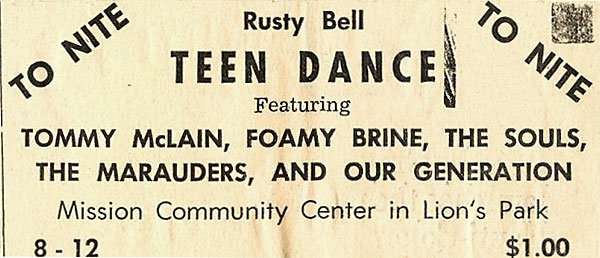
The Souls with Tommy McLain, Foamy Brine (featuring W. R. “Dub” Lynch), the Marauders and Our Generation at the Mission Community Center in Lion’s Park, 1966
Brian Voss, another one of Jay’s high school chums and his neighbor could play the bass and had a great voice, and Dee Edwards, a senior at McAllen High had a decent set of drums. Jay enlisted David Smith, his mentor, to join the band as lead guitarist. After a couple of months of practice during the early spring of 1965, the quintet had it down well enough to be thought of as a band. Somebody, nobody remembers quite who, christened the band as The Souls. The name “Souls” was probably a take-off on “Rubber Soul” by the Beatles.
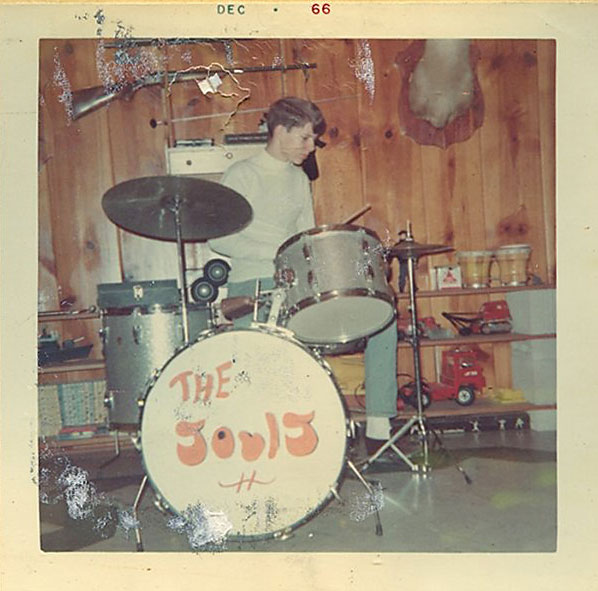
The line-up lasted about six months. Brian Voss left the band for personal reasons. Dee Edwards graduated from high school that year and moved on. Jay, Allen, and David Smith stuck together and in late 1965 added two more classmates at McAllen High – Jerry Ebensberger on bass and David Lott on drums.
David Lott of the Souls
Lott and Ebensberger had been playing for a few months in a little trio along with a young eight grade guitar “prodigy-to-be” Mitch Watkins in a band they called “The Madhatters.” David Lott recalls Mitch having a $35 Silvertone guitar that had its amplifier in the guitar case – but that the guy was amazing. He could pick up most any musical instrument from piano to saxophone and within minutes have it almost mastered. (note: Mitch Watkins, now based in Austin, is still one the finest guitar players in the country www.mitchwatkins.com). The revamped Souls by the spring of ’66 were gigging frequently at church dances, private parties, the Hide-A-Way Club in Harlingen, the National Guard Armory in McAllen, the Moose Lodge and Valley Bowl & Skating Rink in Mission.
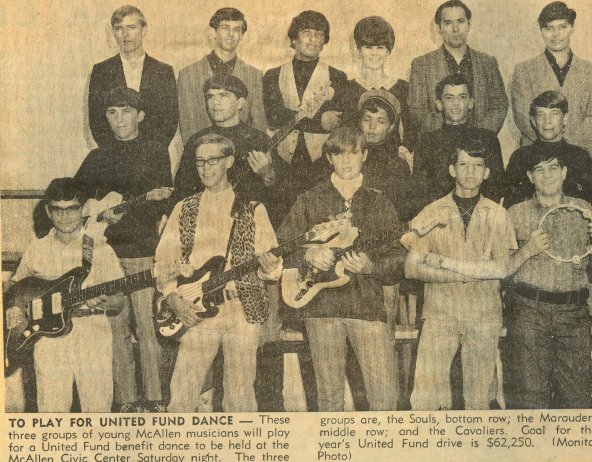
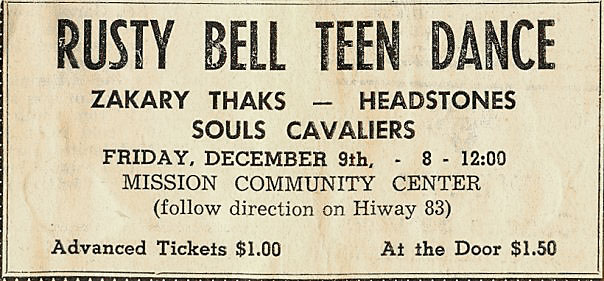
Three legendary Texas bands! The United Fund benefit dance in McAllen, 1965 Top row – The Cavaliers, l-r: Mike Dunn, Gary Vandiver, Javier Rios, Jenny Hatfield [Jeanne Hatfield?], (can’t remember), Richard Mancilla Middle row – l-r: The Marauders, with Mitch Watkins on lead guitar at left, Phil Veale, Eric Mancilla, Jimmy Parker, Lloyd Allen. Bottom row – The Souls, l-r: Murray Schlesinger, Jerry Ebensberger, David Smith, David Lott and Allen Kirsh.Surely one of the greatest show lineups of 1966 – The Zakary Thaks, Headstones, Souls and Cavaliers all for $1!
There were several “ages” of bands in the McAllen area music scene hierarchy. At the top end of the spectrum were the Playboys of Edinburg, who recorded several quality tunes, and a great little group who never recorded called The Invaders. Then the next level would’ve been The Headstones, and The Cavaliers – guys in their late teens or early twenties. And then the next age group down would’ve been The Souls, and a band called the Marauders. All ages 14, 15 and 16 years old.
Even though The Souls were like most of the other garage bands of the day – doin’ cover tunes – they felt like they were on the cutting edge of something. They just didn’t know exactly what – but they knew there was something special in the air with the music of ’65 and ’66. One has to remember, this was less than two years after the Beatles had hit America and the British Invasion lit a fire storm of musical creativity with the youth. Everything they did and tried was new and hadn’t been done before. The music of the mid-60’s was taking on a life of its own.
About the time the band was starting to take off – Jay Hausman’s family moved to Nashville, and unfortunately Jay had to go with them. It was hard for the fellas in the band to say “adios” to the guy who’d been the band’s main motivator. However, they soon found a good substitute for Jay in a very talented young kid named Murray Schlesinger, who had been playing rhythm guitar for the Marauders.
About the same time Murray came into the fold, a guy named Chris Voss felt the sudden inspiration to have a couple of song-poems he’d written set to music and committed to vinyl. His younger brother Brian had been the band’s first bass player.
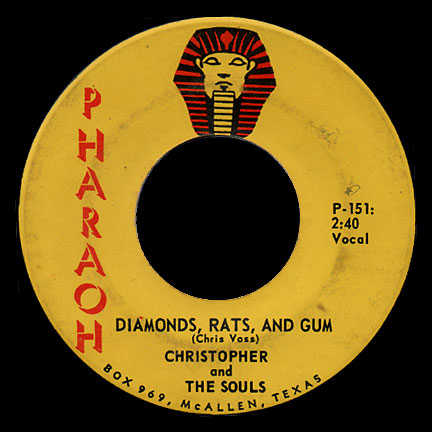
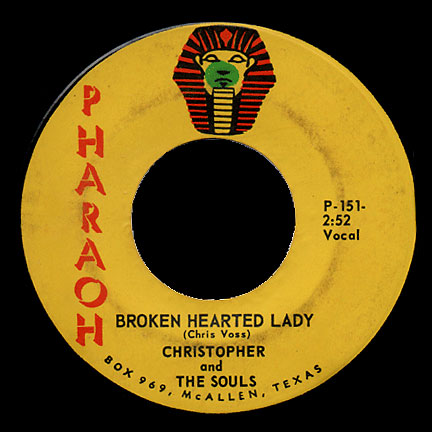
The two song-poems Chris had penned were titled “Diamonds, Rats, and Gum” and “Broken Hearted Lady”. He took them to David Smith and played the basic songs for him on acoustic guitar. David added the fuzztone riffs to “Diamonds, Rats, and Gum”, in the style of George Harrison’s “Think For Yourself” (from Rubber Soul). You can hear some similarities in the downward fuzz-bass progression playing between the verse & chorus. A few days later, David and Chris brought the songs to the band’s practice session at Allen’s house. Chris proposed that the band learn the songs and that they cut a record.
So, the band listened intently as Voss read his lyrics and David tried to get a handle on a melody. After a few hours, the basis of the song started to come together. Each young musician developing their role. A few weeks went by with the band honing and refining the songs in practice sessions until they felt they had it down and was as they all envisioned it.
The Souls showed up at the now legendary Jimmy Nicholls’ Pharaoh Studio one night in September of 1966. Nicholls’ studio had a quarter-inch tape, Ampex machine straight to two-track — mind you — live to two track, no overdubbing.
The band cut the two songs in less than two hours. Allen, the Souls’ regular lead singer, was not singing on the record, but was present for the session and moral support. He later said “If it hadn’t of been for Chris Voss, the Souls would’ve never recorded.”
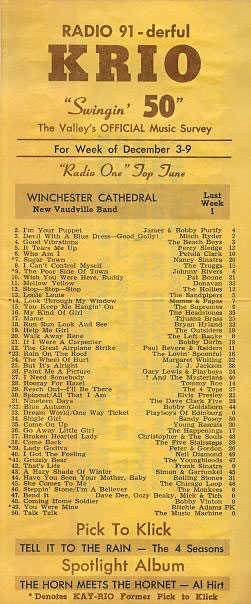
David Lott: “KRIO Radio, McAllen’s ‘Swingin’ 50′ of December 3 – 9, 1966. The Souls ‘B’ side song ‘Broken Hearted Lady’ was #37 on the chart – rising from #48 the week before. Our song hovered in the low 30’s for 5 weeks on the charts.” Note the Headstones at #16.
Andrew Brown in his “Brown Paper Sack – Music & Commentary No.1” said “Written, sung, and played in a style aggressively defiant to easily digestible pop music clichés, ‘Diamonds, Rats, and Gum’ is one of the most savage parodies of Top 40 idealism ever made, and while it certainly wasn’t intended to be that, just what the song was intended to be remains a mystery to all involved!” By contrast, the “Broken Hearted Lady” flip side is a serious take done as slow sappy ballad.
“Diamonds, Rats, and Gum” is bizarre and fantastic with lines like “I’ll give you rats and five pieces of gum and then you’ll know I’m not a bum”, whimpered over a grinding slurry of fiercely demented fuzz guitar, bass and drums.
Brown goes on to say “Chris Voss’ neurotic nursery rhyme about giving the object of his affections disease-ridden rodents and a prescribed amount of chewing gum as proof of his undying love, is sung in a slurred whine above the staggeringly PRIMAL accompaniment of four teenage punks only slightly taller than their guitars. It is the loudest, greatest insult to the stomach-churning moanings of ‘lite rock’ pigs like Elton and Phil (and their countless bastard offspring choking up the airwaves) ever recorded.”
He continues with “And for this, my friends, we owe the Souls nothing less than our eternal, everlasting gratitude.”
The record was released in a limited custom pressing the following month as a 45 under the Pharaoh label. “Diamonds, Rats, and Gum” as it turns out some 40+ years later is one of the rarest of the rare on a very rare label.
Oddly enough “Diamonds, Rats, and Gum” had been the song the band had intended to promote. However, local KIRO deejay Rusty Bell wanted to push the ballad “Broken Hearted Lady”, and it got a lot of local airplay due to Bell’s friendship with the band.
Sales allowed the record to enter on KRIO’s “Swingin’ 50” at #48 the first week it was out in late November ’66. It then climbed to #37, #35 then #32 by December 16th, 1966. The song ended up at #23 sometime in January 1967. Nobody in the band remembers now-a-days if the song climbed the charts a bit more or if it fell. None-the-less, the song had made the charts.
A few examples of other hits on the charts during those weeks were “Winchester Cathedral” by New Vaudeville Band at #1, “Devil With A Blue Dress” by Mitch Ryder, “96 Tears” by Question Mark and The Mysterians, ” Come on Up” by The Young Rascals, “Steppin’ Stone” by The Monkees, “Mellow Yellow” by Donovan, and “Have You Seen Your Mother Baby” by the Rolling Stones.
Chris Voss made an appearance with the Souls at an Edinburg High School pep rally shortly afterward … and wasn’t heard on stage again. Chris ended up going to college and becoming a successful businessman in McAllen.
KIRO deejay Rusty Bell continued to promote the band through his Teen Dances at the Mission Community Center in Mission, Texas. The Souls appeared frequently on the billing with The Headstones, The Cavaliers, The Playboys of Edinburgh, The Zachary Thaks from Corpus Christi and others and often served as “opening act” for notable groups routed through the area. Such groups were The Classics IV from Florida (with their hit “Spooky), The Five Americans from Dallas (with their hit “Western Union”), Tommy McClain from Louisiana (with his hit “Sweet Dreams of You”) and others.
Early in 1967, Jay Hausman moved back to McAllen and back to The Souls. Murray obliged by leaving and rejoining the Marauders. Unfortunately, Jay’s presence wasn’t enough to keep the band as enthused as they were the year before. The “psychedelic” music trend was in full bloom and the band just couldn’t get enthused. After one last show, opening for the Five Americans and the Cavaliers at the Mission Community Center, the Souls came to a quiet halt. There would be no revivals, no reunions.
Andrew Brown states: “yet the music they’d managed to preserve on vinyl will echo on far longer than they’d ever expected it to, or even wanted it to.”
In September of 2008, a single copy of Christopher and The Souls 45 that featured “Diamonds, Rats, and Gum” and “Broken Hearted Lady” (Pharaoh P-151) listed on the site as “a Texas Garage Band killer” sold on e-bay for a whopping $1225. Only a few copies of the record are known to exist. However, David Lott states that he still has a copy in excellent condition and so does David Smith.
As stated earlier – music “can sometimes seemingly take on a life of its own.”
The line-up and where are they now: (2009)
• David Smith – lead guitarist 1965 – 1967, is a software programmer living in Austin, Texas. He frequently plays guitar in a band called “33 1/3”.
• Murray Schlesinger – guitarist 1966 has an insurance agency in McAllen, Texas and frequently plays guitar in a band called “The Retrorockers” (www.retrorockers.com )
• Allen Kirsch – singer 1965 – 1967 owns Music Makers in Austin, Texas serving Texas musicians since 1988 (www.musicmakersaustin.com)
• David Lott – drummer 1965 – 1967 resides in Medicine Park, Oklahoma and is a freelance graphic designer, website developer, publisher, entrepreneur and concert promoter (www.lawtonka.com) and occasionally sits in during local jam sessions.
• Jerry Ebensberger – bass 1965 – 1967. Jerry owned/managed a newspaper in Mansfield, Texas for many years, and then a restaurant in Victoria, Texas. He and his wife (high school sweetheart) Beverly reside again McAllen, Texas
• Jay Hausman resides somewhere in Los Angeles, CA
• Chris Voss resides in Mission, Texas and is a pastor of Central Christian Church, in McAllen, Texas.
• Slaiman “Chunky” Showery, (equipment and road manager for Souls) resides in McAllen and was a successful car/home stereo entrepreneur in 70’s, 80’s 90’s. Now takes life easy. Works at Rio Radio, a historical audio and radio store in South Texas, the first to sell car stereos in the Valley.
– 2009, David C. Lott – dlott@lawtonka.com
with excerpts from Andrew Brown’s “Brown Paper Sack – Music & Commentary No.1”
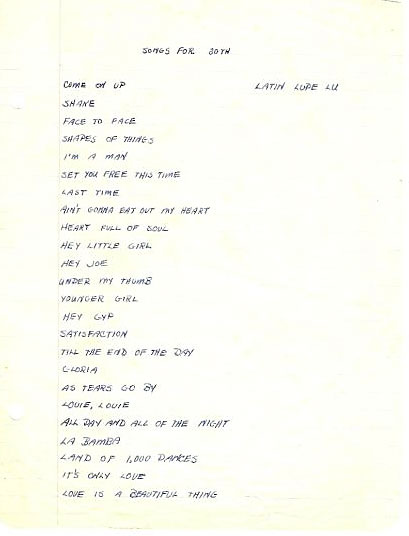
Set list from The Souls performance at Padre Island Pavilion for Easter Weekend
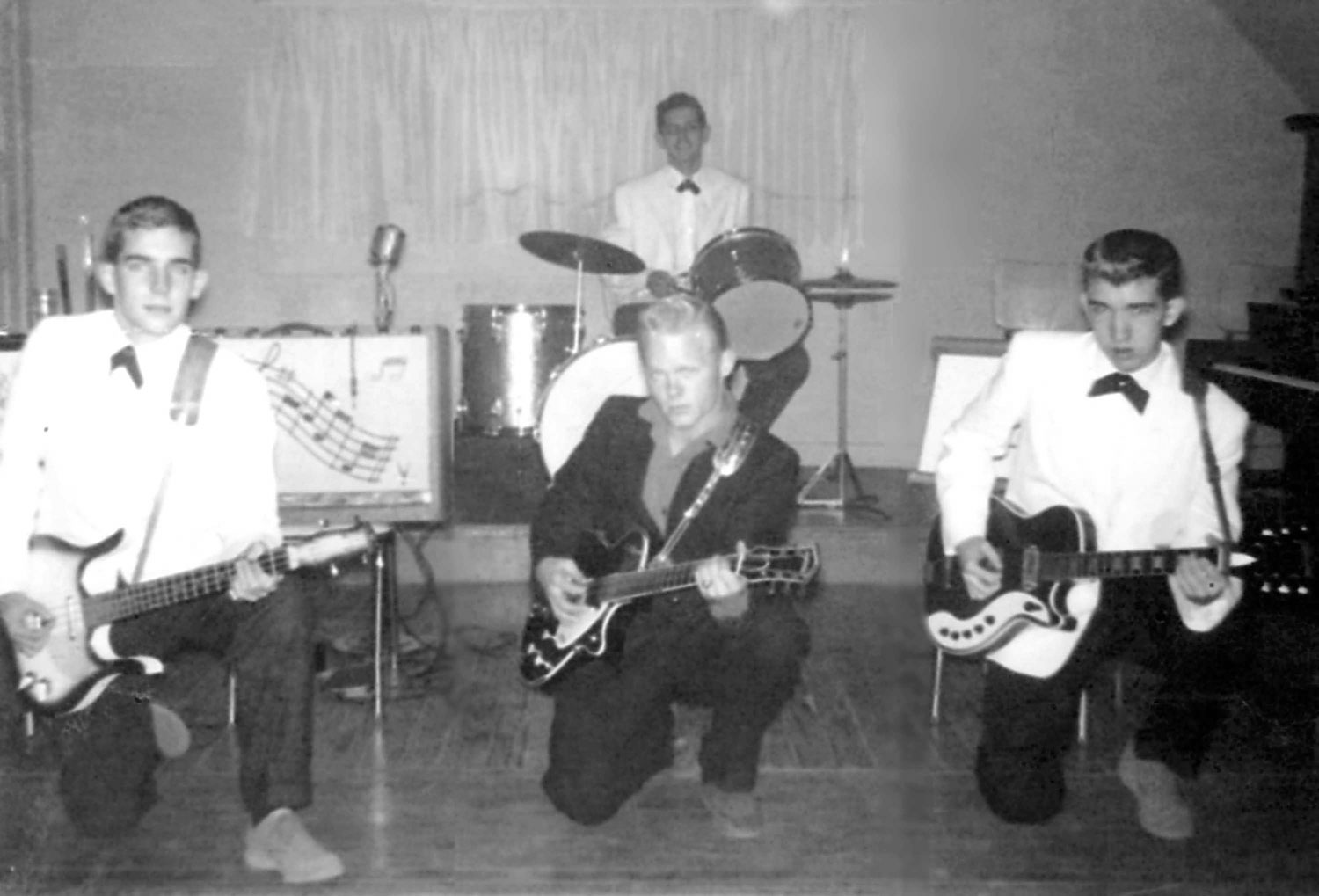
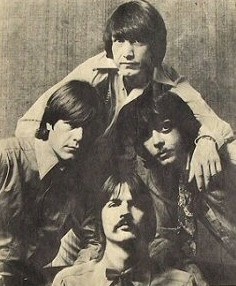
One of the most common band names of the ’60s was the Rogues. This particular group attended prep school at Mercersburg Academy, located southwest of Harrisburg, close to the Maryland state line.
I’d be interested in knowing how a band in Pennsylvania came to release their 45 on a label in Roanoke, Virginia, 240 miles away down Interstate 81. Maybe one of the band’s members came from that area.
The only name I can associate with the group is David Anthony, who wrote both songs here, the thumping put-down “Don’t Follow Me” and the sedate “Mr Sandman” on the flip. “Don’t Follow Me” lacks a guitar solo during the break, but the drummer provides excellent fills throughout the song.
Jim Robertson (Vocals) (circa May 1966-circa July 1969)
Tim Forsythe (Keyboards, Harmonica) (circa May 1966-August 1967)
Domenic Angelicchio (Drums) (circa May 1966-circa July 1969)
Danny Barrucco (Bass) (circa May 1966-December 1966)
Dave Hanna (Guitar) (circa May 1966-July 1966)
Don Duncan (Guitar) (July 1966-September 1966, May 1967-August 1967)
Jean Pierre Lauzon (Guitar) (September 1966)
Richard Lasnier (Guitar) (circa October 1966)
Gary Marcus (Guitar) (circa October-December 1966)
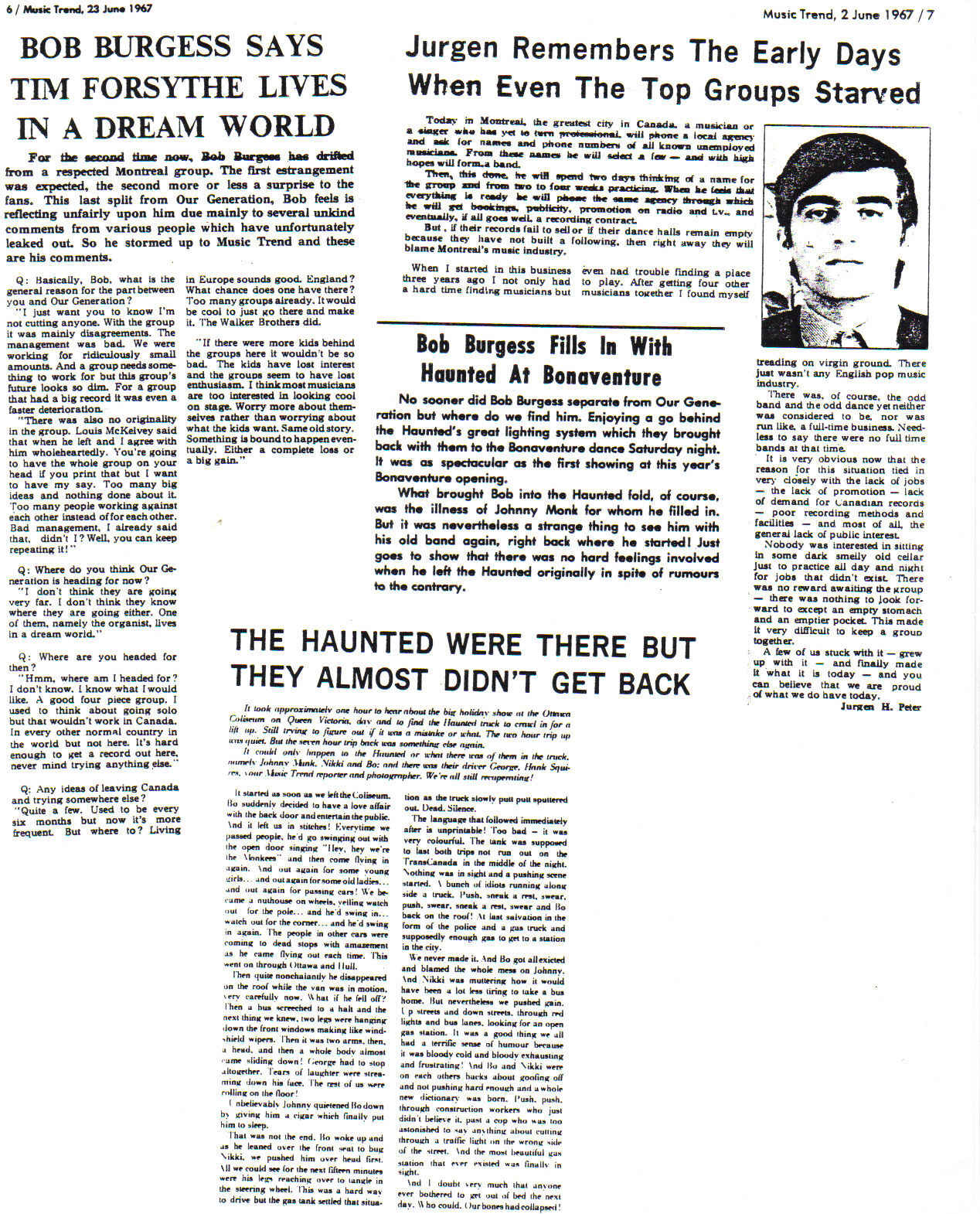
Bob Burgess (Bass) (December 1966-May 1967)
Louis McKelvey (Guitar) (December 1966-May 1967)
Ken Duffy (Bass) (May 1967-circa July 1969)
Les Kozichinsky (Guitar)(August 1967-July 1968)
Don Hay (Keyboards)(August 1967-December 1967)
Jerry Carruthers (Keyboards)(December 1967-July 1968)
Dick Stenstrum (Keyboards)(July 1968-circa July 1969)
Roald Longhi (Guitar)(July 1968-circa July 1969)
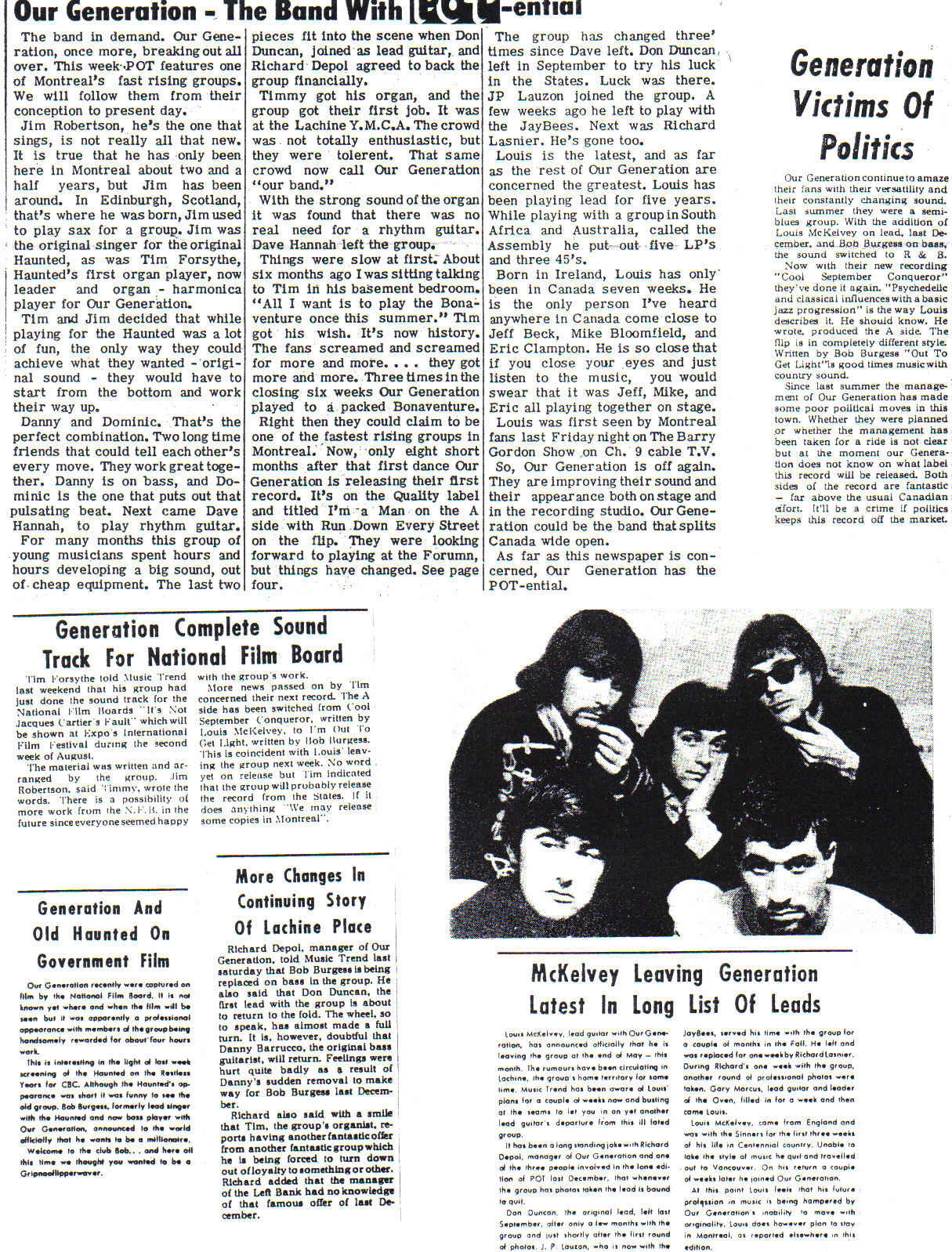
The original band was formed in the summer of 1966 by former Haunted members Jim Robertson and Tim Forsythe. Robertson was originally from Edinburgh, Scotland where he’d played sax in a group during 1964 before moving to Montreal.
Based in Lachine, Quebec, the band made its debut at the local YMCA.
Hanna left soon after the band started playing live. However, the group went through a succession of lead guitarists, starting with Don Duncan, who left in September 1966, before McKelvey joined in December.
McKelvey’s arrival coincided with that of Bob Burgess from The Haunted. In between Duncan leaving and McKelvey joining, Our Generation featured temporary stopgap guitarists, J P Lauzon, who went on to The Jaybees, Richard Lasnier and Gary Marcus from Oven.
The line up with Duncan, however, was responsible for the first single, a cover of the Muddy Waters blues favourite ‘I’m a Man’, backed by Forsythe’s ‘Run Down Every Street’.
Irish-born and British raised guitarist Louis McKelvey, who had arrived in Montreal around October 1966 after playing with west London band Jeff Curtis & The Flames and later South African groups The Upsetters and The A-Cads, appeared on the band’s second single, before forming Influence in late May 1967.
Prior to joining Our Generation, McKelvey had played with Les Sinners for a few weeks and was later given co-production credit for The Haunted’s third single with fellow ex-A-Cads member Hank Squires.
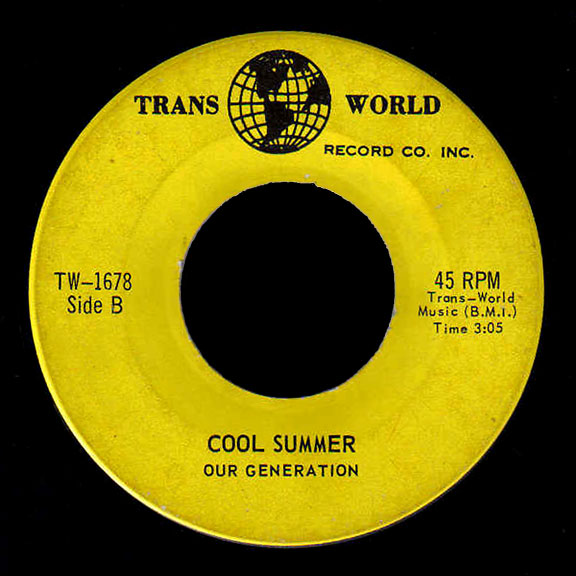
This line up of Our Generation provided the soundtrack to the Canadian Film Board film, ‘It’s Not Jacques Cartier’s Fault’. McKelvey wrote ‘Cool Summer’ while Burgess composed the A-side, ‘Out to Get Light’.
Burgess left Canada in late 1967 to spend some time in the UK where he recorded, and then returned to form a new band Lilac. In the ‘70s he led Aean.
Angelicchio, Forsythe and Robertson kept the band going bringing back guitarist Don Duncan and adding new bass player Ken Duffy. This line-up lasted until August 1967 when Forsythe left to join Peter & The Pipers and Duncan moved on.
Angelicchio, Duffy and Robertson brought in keyboard player Don Hay and guitarist Les Kozichinsky for a few months. Then in December Jerry Carruthers took over keyboards from Hay.
This line-up settled and performed into the summer of 1968 before further changes.
Keyboard player Dick Stenstrum and guitarist Roald Longhi joined Jim Robertson, Dominic Angelicchio and Ken Duffy and also played Our Generation’s most significant concert date, the Summer Pop Festival held at The Autostade, Montreal on 17 July, which was headlined by The Who, The Troggs, Mitch Ryder & Detroit Wheels and The Ohio Express. The Haunted also appeared at the festival.
The band continued on for another year or so before splitting.
After The Jaybees, Lauzon went on to play with The Carnival Connection, Life, Mylon Le Fevre and ultimately The Wackers. Marcus joined The Haunted.
Recordings
45 I’m A Man/Run Down Every Street (Barry 3461) 1966 45 Cool Summer/Out To Get Light (Trans World 1678) 1967
Selected advertised gigs
February 17 1967 – West Hill High, Montreal February 18 1967 – Stanstead College, Montreal February 24 1967 – Malcolm Campbell High, St Laurent, Quebec February 25 1967 – The Barn (on Du Hamel)
March 3 1967 – Gig in Hudson (Quebec?) March 4 1967 – Salle Espangnola, St Therese, Quebec March 10 1967 – The Jail, Montreal March 11 1967 – Gig in Huntington, Quebec March 18 1967 – St Hubert Inn Club, St Hubert March 25 1967 – Caveman’s Hive, Montreal March 27 1967 – St Augustine’s NDG (Montreal?)
April 8 1967 – The Jail, Montreal April 14 1967 – St Willabroads School (Montreal?) April 22 1967 – St Bartholemew (Montreal?) April 28 1967 – The Barn, Ile Perrot April 29 1967 – Roxboro Chalet, Roxboro May 5 1967 – Hot Spot, Rosemere May 6 1967 – Town and Country, Cote de Liesse with Munks May 7 1967 – Town and Country, Cote de Liesse with The Jaybees
September 24-30 1967 – Garden of Stars, Montreal
Live dates taken from the Montreal Star newspaper.
Many thanks to Bill Munson, Carny Corbett, Louis McKelvey, Bob Burgess, Ken Duffy.
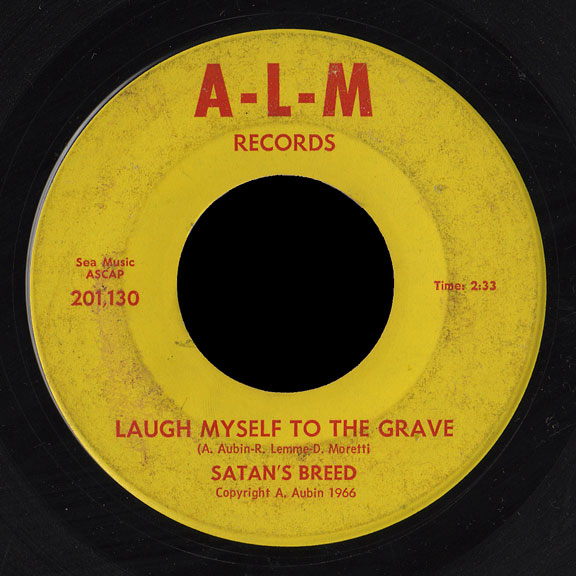
This Rhode Island group cut the demented, organ-driven “Laugh Myself to the Grave” in 1966. The flip is the doo-wop like “Little Girl”. Both sides written by Albert Aubin, R. Lemme, D. Moretti, and thus the label name: ALM.
Satan’s Breed made another 45 as the Angids (or Angi-Ds), “I Like Girls” / “C’mere Woman”. This one is even cruder than “Laugh Myself to the Grave”. No organ this time, just guitars, drums and some bleating saxophone. There’s inane whistling on “I Like Girls”, while “C’mere Woman” has the vocalist delivering some unsavory lines in his a voice akin to the Novas’ “The Crusher”.
The 201 prefix on the labels indicates a Decca custom pressing.
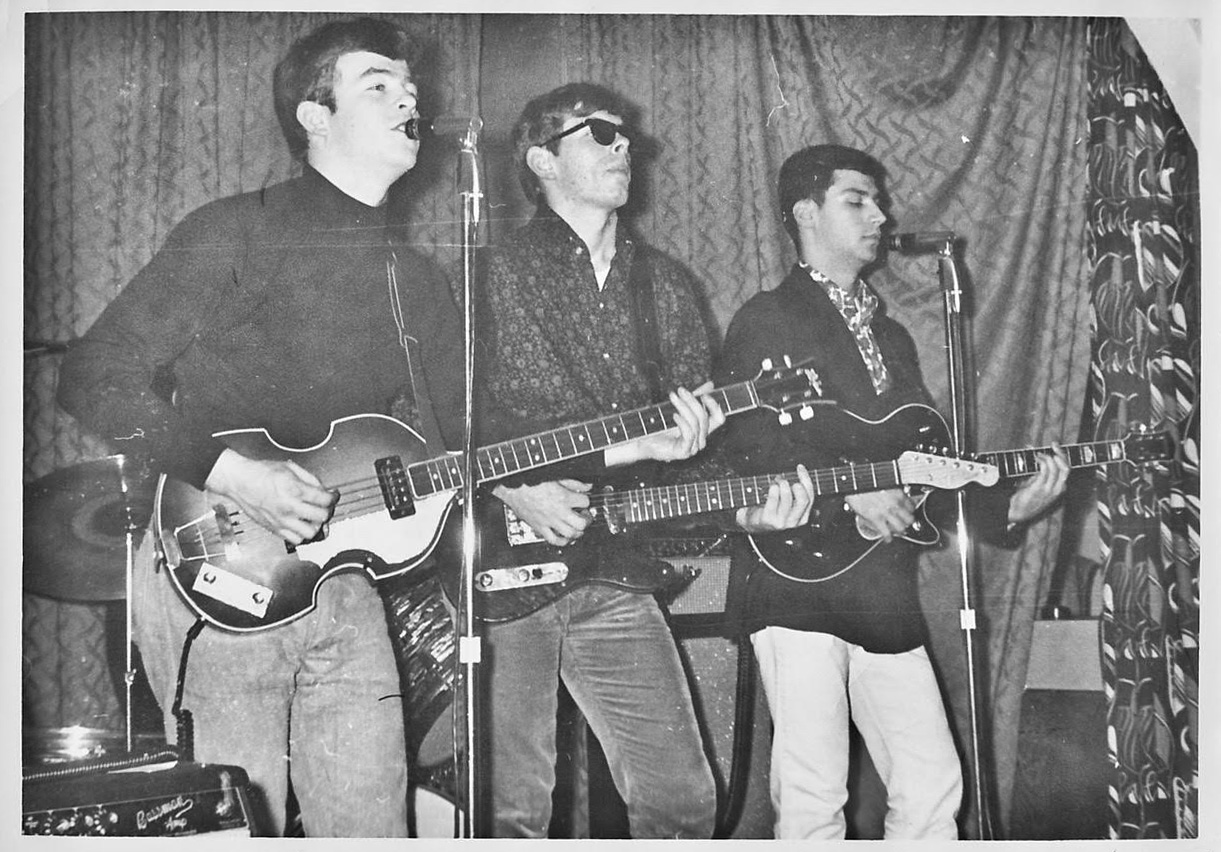
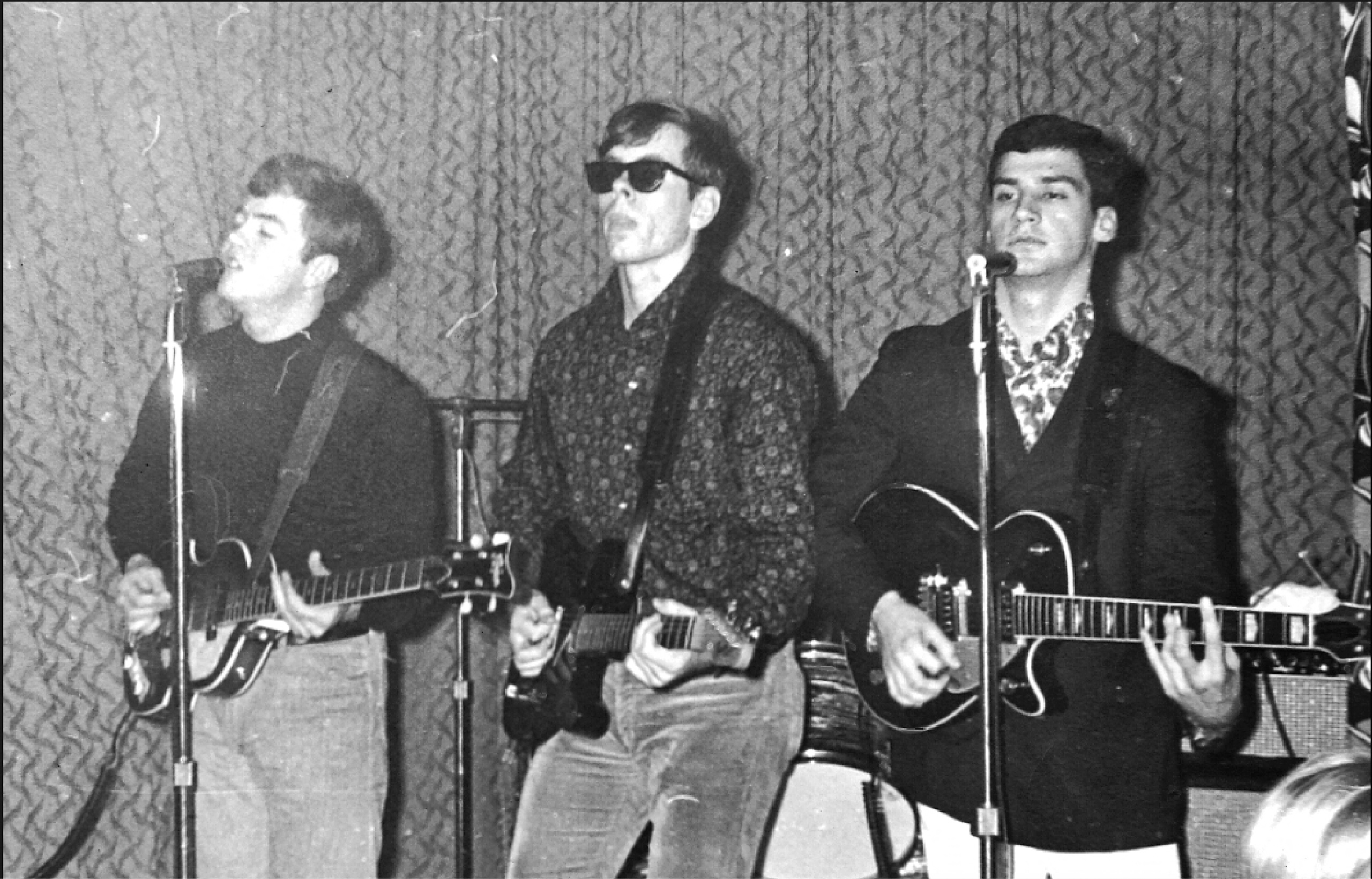
The Changing Tymes, from left: Tom Shapiro, Jimmy Mahoney, Ray Tilli, (not shown: Wayne Tort)
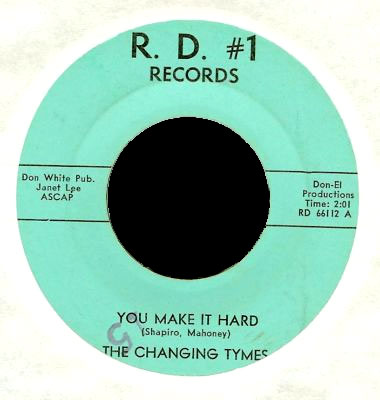
The Changing Tymes came from Philadelphia and cut a great single “You Make It Hard” / “Try a Whole Lot Harder” in 1966. I was struck by the similarity of the opening of the Changing Tyme’s “You Make It Hard” to the Quiet Jungle song “Everything”, but that seems to be a pure coincidence.
Thomas Shapiro and James Mahoney wrote both songs, released on the R.D. #1 label with Don White publishing registered in early December, 1966. It seems the group recorded two other songs at the same session, but these seem to be lost.
Ray Tilli commented below and in 2020 wrote to me with more info and the photos seen here:
My name is Ray Tilli and I was a founding member of “The Changing Tymes” from Philadelphia, PA. We started the band in 1965. The first iteration of the Changing Tymes were (as shown in the photos):
Tom Shapiro – lead vocals, guitar, bass (on live gigs) Jimmy Mahoney – lead guitar, vocals Ray Tilli – guitar, bass (on the record), vocals Wayne Tort – drums (not shown)
The Changing Tymes were founded by myself and Jimmy Mahoney in 1965. We were fortunate to have come of age at a time when we saw and experienced the birth of Rock and Roll, and we were deeply influenced by the greats of that early era. Then in 1964, the Beatles and the subsequent great bands from England and America invaded our brains! Every week there was some new artist, song or album to get really excited about, and to pour ourselves into and absorb. It was a time of great creativity, inspiration, and expression, and it drove us to practice, practice and practice more!
Our record was recorded at Impact Studio, located in Northeast Philadelphia, on or about September-October 1966, and released in November 1966. I lost track of the other two recordings. I don’t think they were put on vinyl.
When Jimmy Mahoney began to play lead, he used his big hollow body Gibson ES-175 guitar with the new Fuzz Tone pedal. It caused a type of feedback they had never heard before – but it was controlled feedback. There was a shout from the control room: “What’s that noise!.” Unfortunately, Jimmy had to switch to his backup guitar to get the sound they wanted. The recording would have been wilder if we recorded it the way we wanted!
The engineers in the recording booth were laughing so hard that they had trouble “slating” the tape for recording because they had to say the name of one of the tunes: “You Make It Hard”! We actually didn’t get the joke; talk about naive and clueless …
The meaning of the record label, R&D #1 Records: the “R” stands for Roy Howell who funded the production, and the “D” for Dave Wilson, our manager. We never heard of the band Quiet Jungle, nor did we ever hear their song “Everything”. The musical universe is huge, and once in a while, similar riffs or parts can occur.
The Changing Tymes, from left: Tom Shapiro, Jimmy Mahoney, Ray Tilli, (not shown: Wayne Tort)
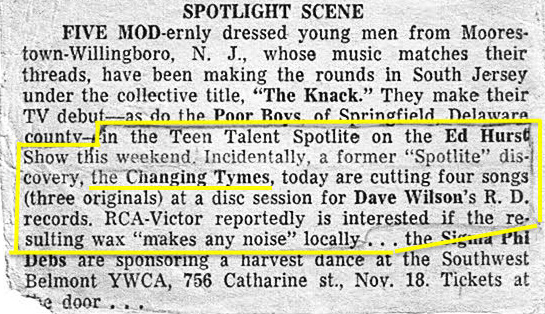
We got pretty damn good, and quickly gained a reputation as being one of the best bands in the Tri-State area (Pennsylvania, New Jersey, Delaware). Word got around and we were asked to appear on all the regional music TV shows. American Bandstand had just moved from Philadelphia to Los Angeles in 1965, so we missed that opportunity. The next most popular TV show was called “Summer Time at the Pier with Ed Hurst”. The “Pier” was the world famous Steel Pier in Atlantic City, NJ.
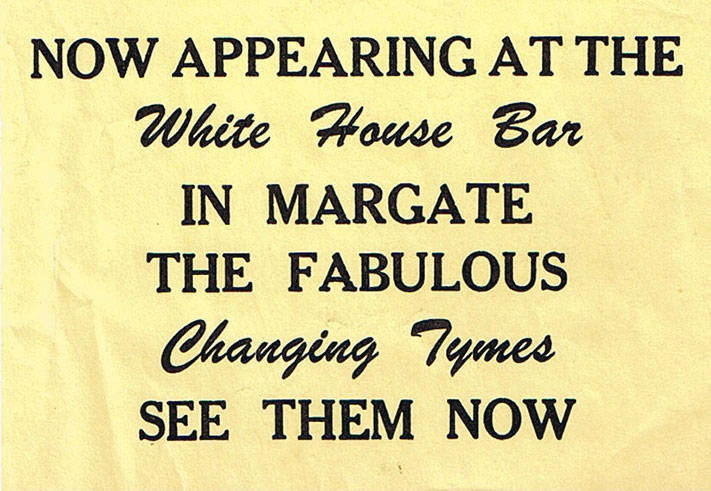
We appeared on the live broadcast of “Summer Time at the Pier with Ed Hurst” in the summer of 1966 along with Freddie and the Dreamers, and the Ramsey Lewis Trio. After playing the Pier gig, we drove about 20 minutes south to Margate, New Jersey to play our regular five-night-per-week gig at the White House – a club near the beach. During that summer we were the house band at the White House. All TVs in the club that day were showing our live appearance on Steel Pier, so when we arrived back at the club we were greeted with a rousing applause and back-slaps!
A similar occurrence happened when we played a live TV show in South Philadelphia, PA called “Aquarama”. The backdrop was a huge fish tank with hundreds of exotic species of marine life. After the show we had to immediately rush to our evening gig at Penn State University’s Ogontz Campus outside of Philly. The crowd was getting annoyed because we were late, but when we finally arrived we were greeted with cheers and applause! We made about a half dozen TV appearances on regional tri-state television that year.
A funny fact: our looks belied our music. Both Jimmy and I were in college at the time (I was also in the Army ROTC and Army Ranger ROTC training program), and the other guys had jobs that had dress and hair codes. We looked squeaky clean cut, but our sound was wild!
The first discotheque in Philadelphia was the “Underground Discotheque” in the basement of the (giant) Atlantic-Richfield building at Broad and Spruce Streets. It was the beginning of psychedelia – black lights, strobe lights, gel projections etc. We were playing that night with an excellent band called The Down Children. When both bands showed up for setup before the gig, we were thoroughly intimidated by the other band; they were older and looked like a bunch of Hell’s Angels – a look way ahead of any band we’d ever seen in 1966!
They looked like they could (and wanted to) kick our asses – they were scary! Fortunately, the setup went on without incident. When the gig started the Down Children [“I Can Tell” (Jimmy Rowland) / “Night Time Girl” on Philips] went on first. They were a really good band and looked badass tough and cool. When they finished they disappeared into the dressing room. Then it was our turn. Looking rather “preppy” the audience seemed to take little notice or interest when we took the stage. That was until we started playing. We won them over almost immediately – we played our hearts out! We couldn’t help but notice that the other band came out from their dressing room and watched us intently. We weren’t sure if that was good or bad – we wondered if they going to crush our heads after the gig!
After the first set (each band played 2 sets), a couple of the scary dudes from The Down Children came up to us and started asking questions: “Hey man, how did you get that tone?” “How did you get the sound on ….”, “You sounded EXACTLY like the record”! Man, were we relieved – they were impressed by us. Needless to say, we felt validated!
Another sticky situation was when our lead singer got arrested on stage during our stint at the White House. We were all too young to drink: 21 years of age was the minimum age in the tri-state area. We were 19 years old (and had to have special permits to play in the bars). Our lead singer, Tom, acquired a phony ID card to get into a different club the previous night to get some drinks. Somehow, the police were able to track him down to our club, and during our first set, a few cops arrived and came up on stage. They asked Tom his name, then put handcuffs on his wrists and hauled him off to jail.
So there we were, no lead singer who was also the bass player at the time, and the rest of the band still having to play 5 sets per night, 5 nights per week! His bail was set at $500 which neither he, nor any of us had. We improvised the best we could. Once we were finally paid, we took our full $500 cash pay to the courthouse and bailed him out.
There are too many stories of the Changing Tymes to relate here, like the time our cars crashed into each other on the way to a gig and we were 3 hours late! We played gigs at the University of Pennsylvania, Temple, Penn State, St. Joseph’s University and other various colleges and fraternities in the region. Also, many, many rock clubs and bars in the area.
I was fortunate to have had a relative in a high level executive position with RCA Records in New York City. After our record was released, and feeling a rush of confidence, we met in with my relative, John Rosica, head of promotions for RCA. He patiently and intently listened to our new record and said, “The best advice I can give you is to go back to collage and get a good education”!
We were shattered! He then said, you guys need to sound and play like full-time musicians – like these guys who we just signed, they’re called The Youngbloods. He put their new (yet unreleased) LP on the turntable and played “Grizzly Bear”. So we left NYC with our tails between our legs, demoralized, but not defeated.
The second iteration of The Changing Tymes were:
Ray Tilli – bass, vocals Jimmy Mahoney – lead guitar, vocals Nicky Indelicato – lead vocals Mike Laurence – guitar, vocals various drummers (unfortunately, no pictures)
This version of the Changing Tymes added more challenging songs to the repertoire. The nail in the coffin for the group breaking up was the successful recruitment of Nicky Indelicato to become the lead singer of a new group The American Dream. The group was the very first band to be produced by Todd Rundgren. They opened shows for The Doors, Hendrix and many others. They were an exceptional original band. We were sad to see him go, but happy for his success. Nicky passed away in March of 2020.
Jimmy Mahoney went on to do studio work and appeared on the Robert Palmer album, Double Fun. He also recorded at Sigma Sound for Philadelphia International Records. He played with band members from Stanley Clarke, Chick Corea and Larry Coryell. He was also a member of the band Medusa on Columbia records.
I also played with other bands including one with the former lead guitarist from the Bill Black Combo who had a few international hits. Later, I got into the business part of music as an agent, and then as a Manager/Road Manager with a band called Cats who were signed to Electra records. They toured and opened for Van Halen for the entire 1980 US summer tour.
After the Changing Tymes disbanded in 1968, most of us went on to other bands and careers. I became a Psychologist (now retired). Jimmy Mahoney passed away in January 2015. I miss him to this day. We remained close to the very end. He sent some of his memories to me about the band a few years back, and I have included some of them in this Changing Tymes history.
Ray Tilli
Note: this isn’t the same Changing Tymes as the Gate City, Virginia group who recorded cool songs like “Go Your Way” and “The Only Girl I Love” for the Moss label.
This site is a work in progress on 1960s garage rock bands. All entries can be updated, corrected and expanded. If you have information on a band featured here, please let me know and I will update the site and credit you accordingly.
I am dedicated to making this site a center for research about '60s music scenes. Please consider donating archival materials such as photos, records, news clippings, scrapbooks or other material from the '60s. Please contact me at rchrisbishop@gmail.com if you can loan or donate original materials

 The Chevrons V came from Grand Rapids, Michigan.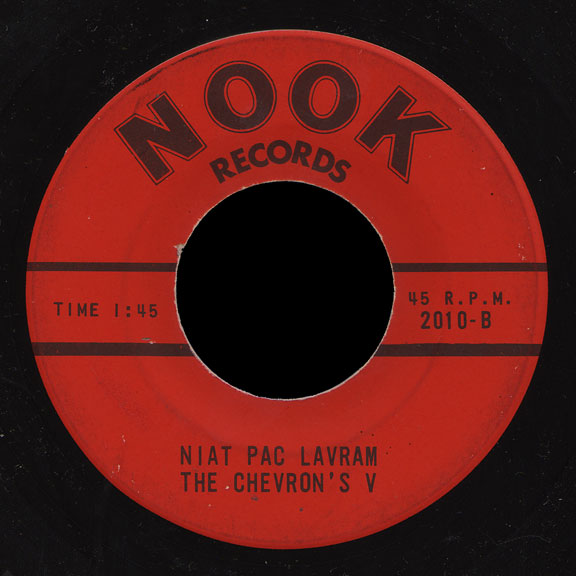
 Update, January 2020: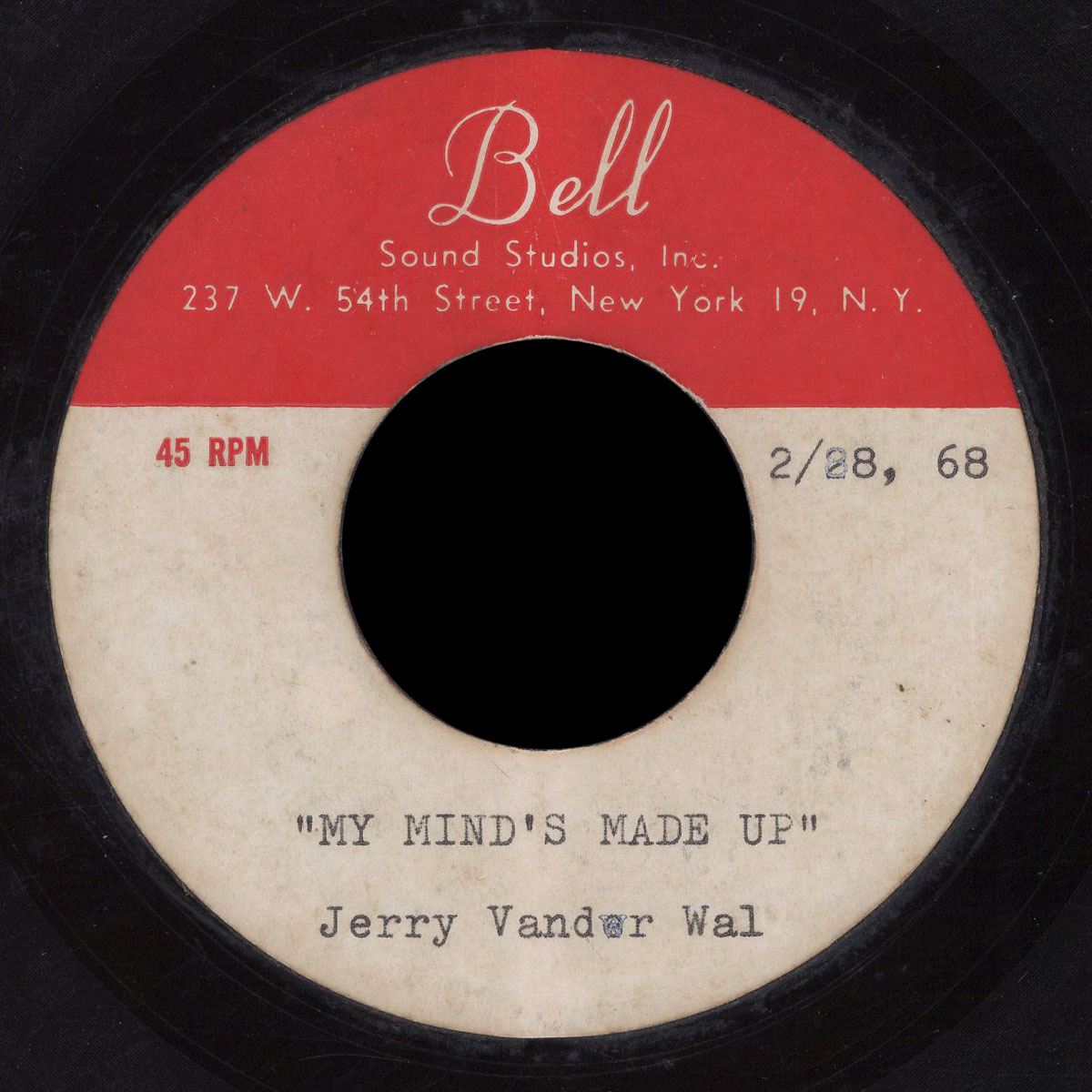
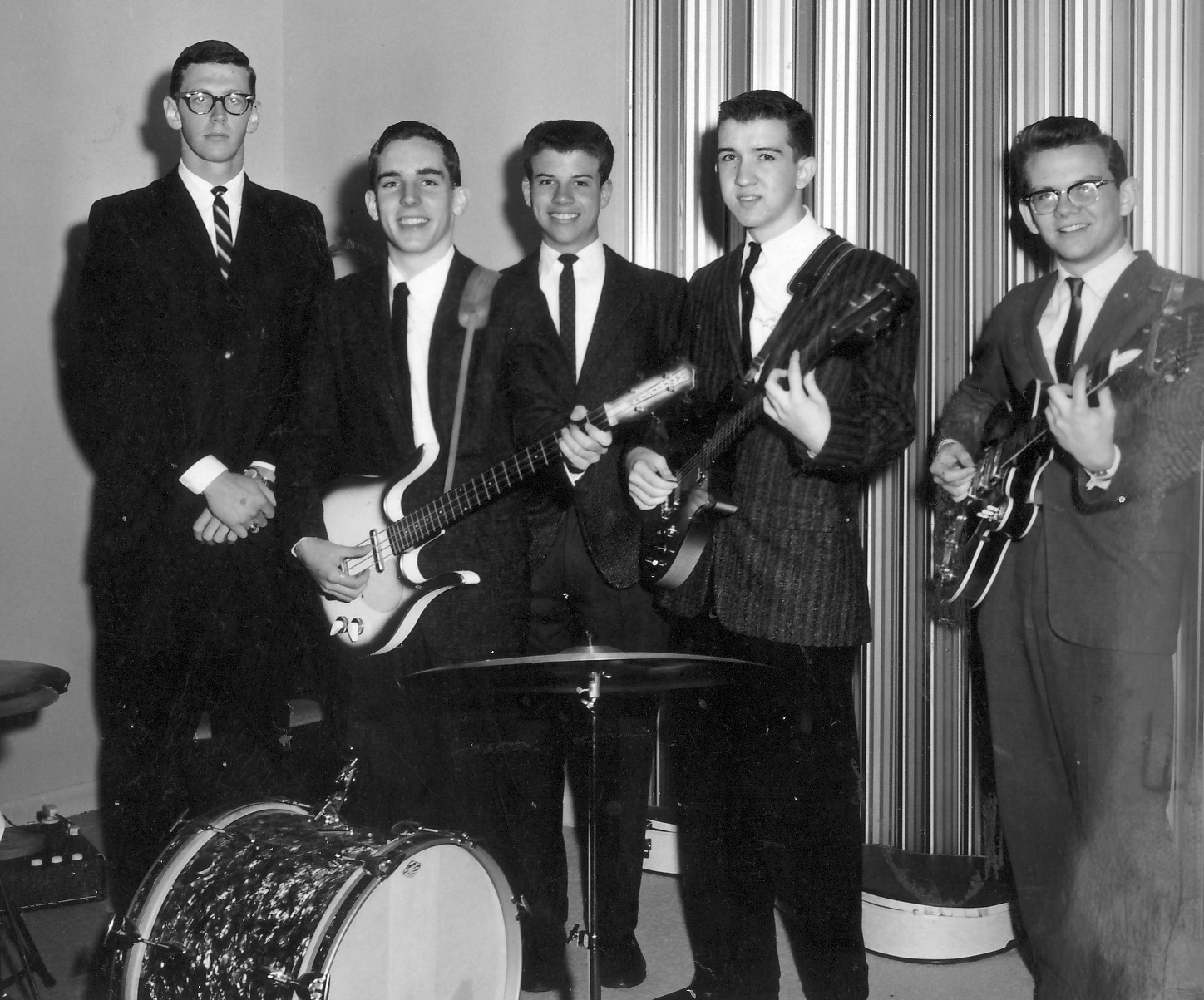


 One of the most common band names of the ’60s was the Rogues. This particular group attended prep school at Mercersburg Academy, located southwest of Harrisburg, close to the Maryland state line.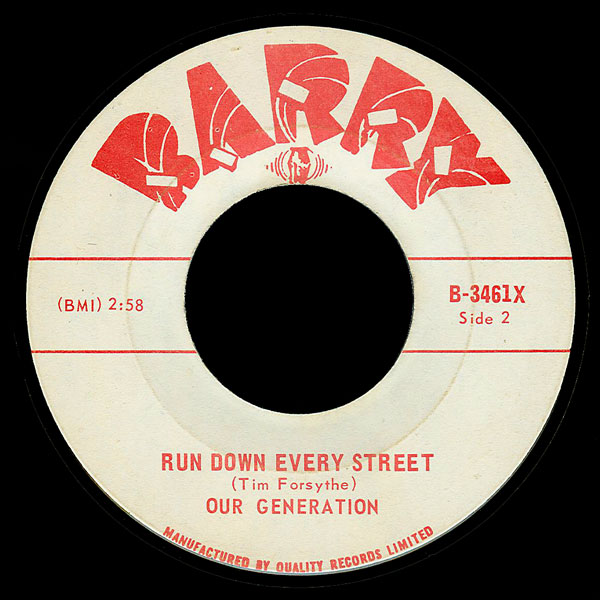
 The Changing Tymes came from Philadelphia and cut a great single “You Make It Hard” / “Try a Whole Lot Harder” in 1966. I was struck by the similarity of the opening of the Changing Tyme’s “You Make It Hard” to the