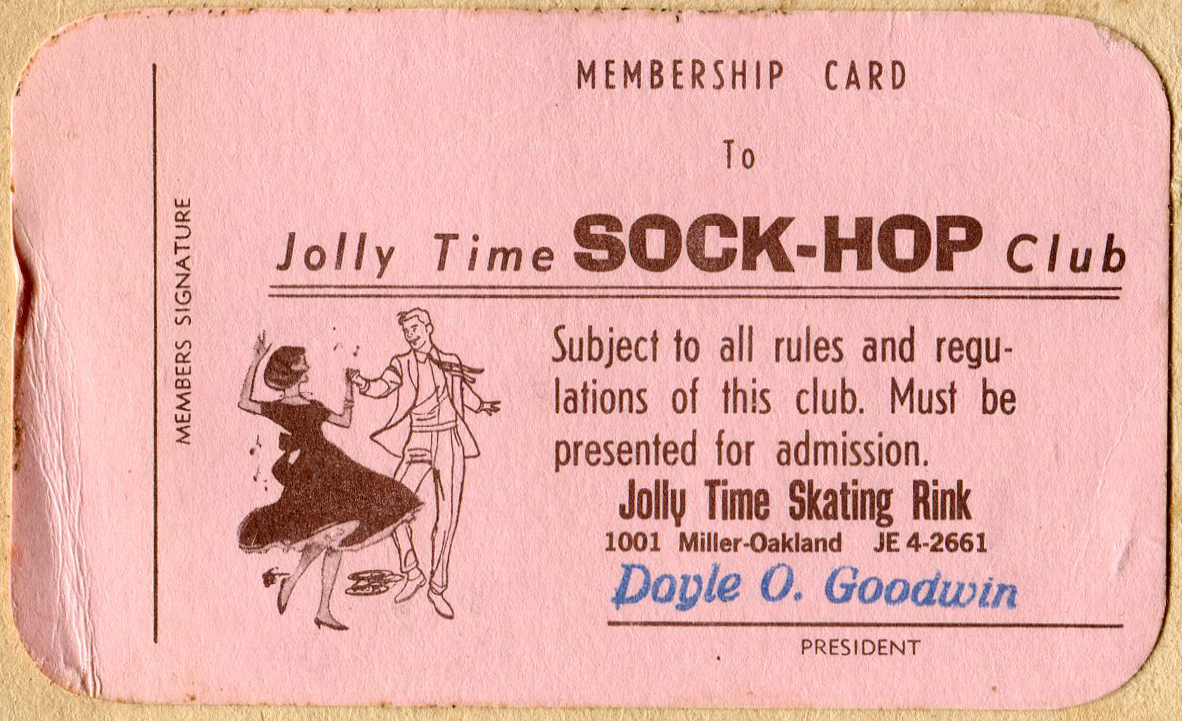
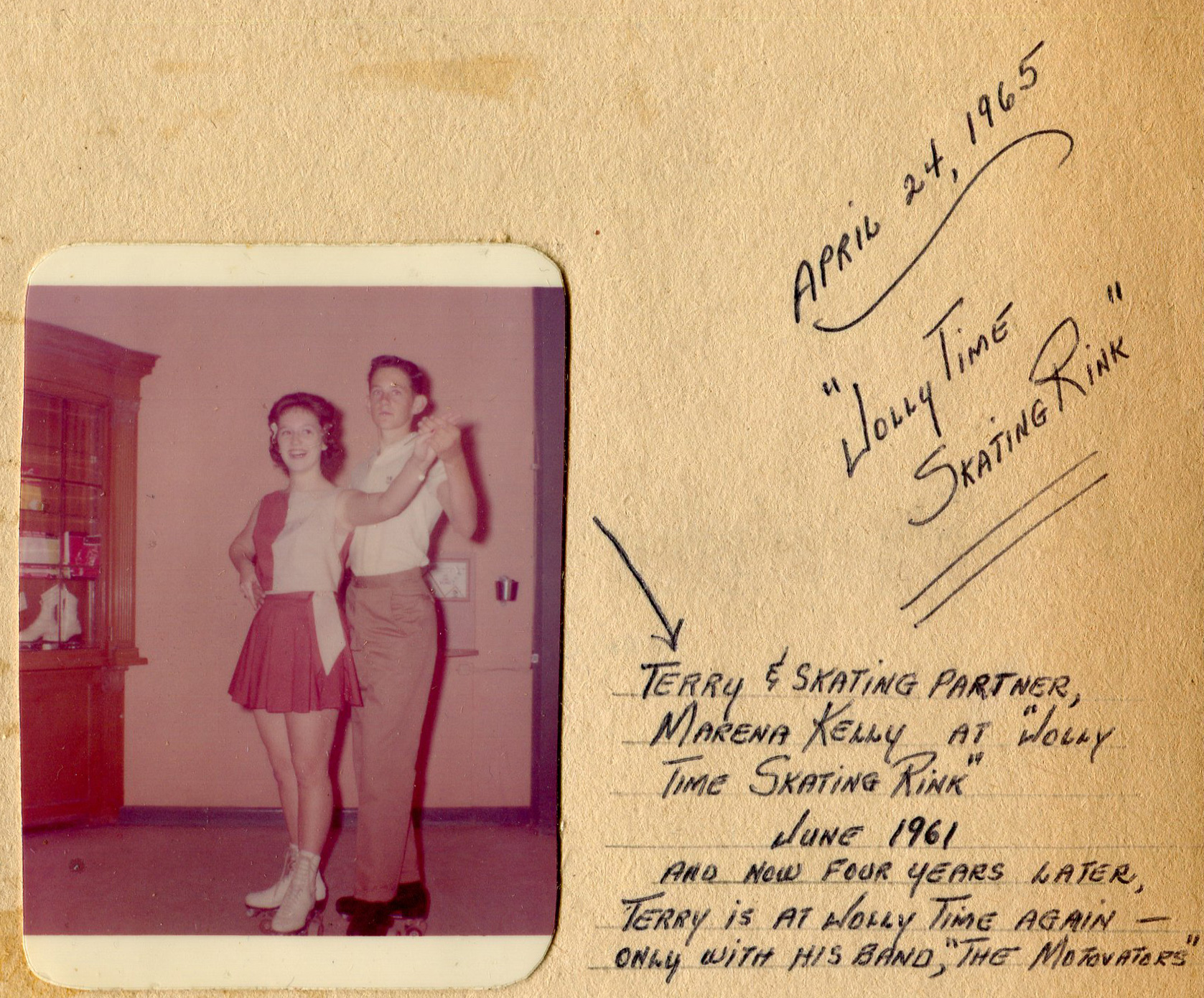
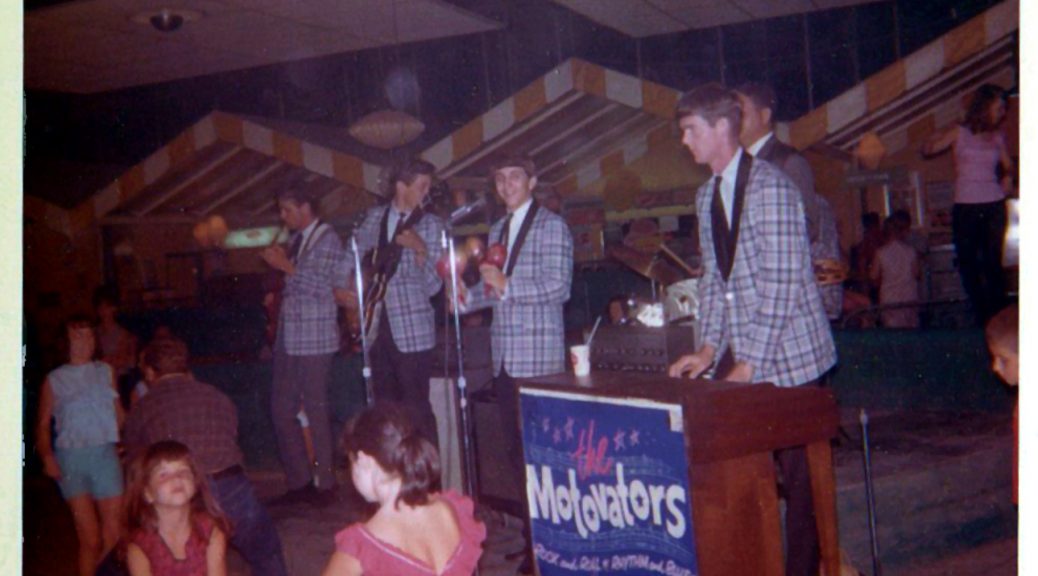
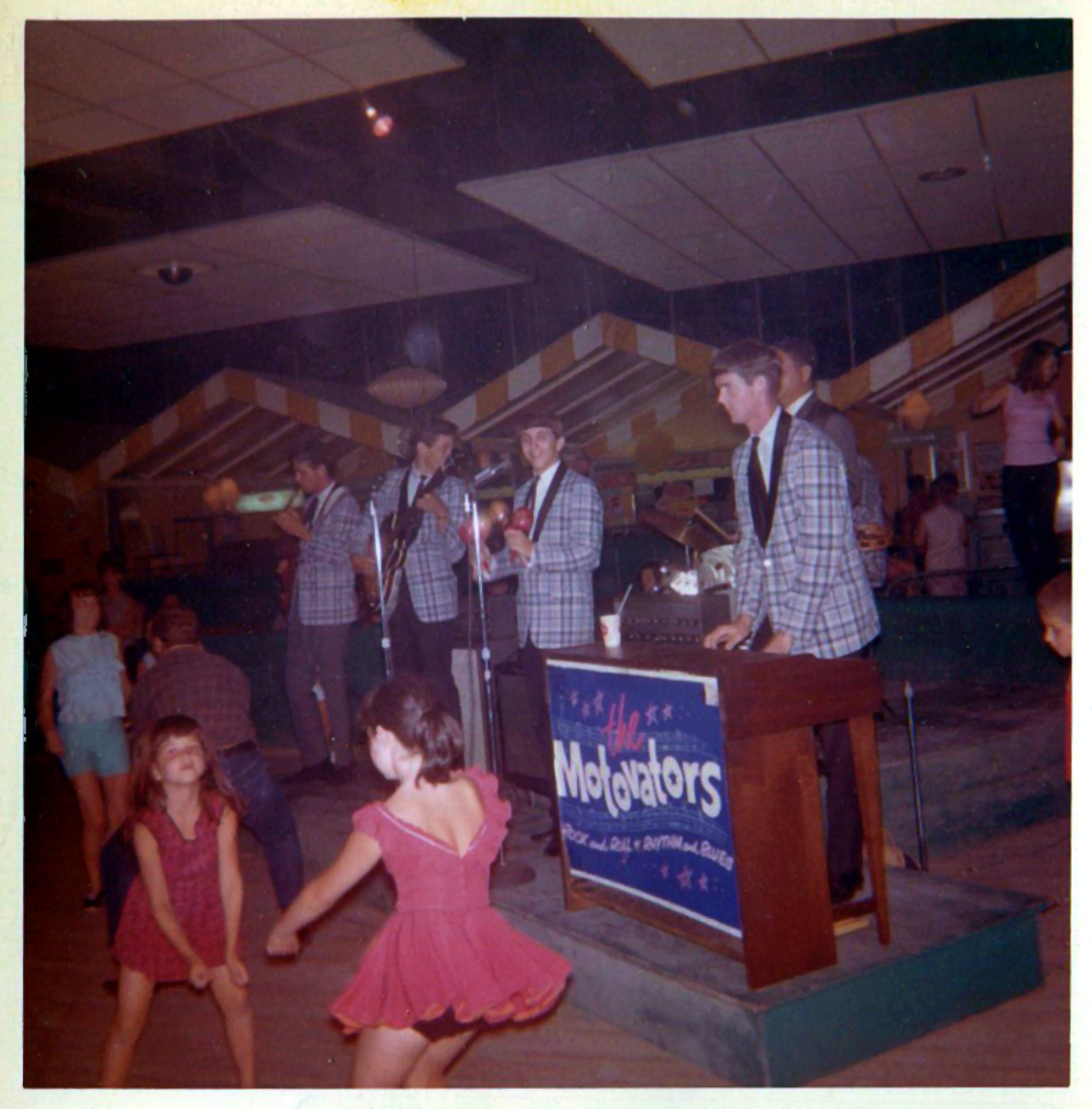
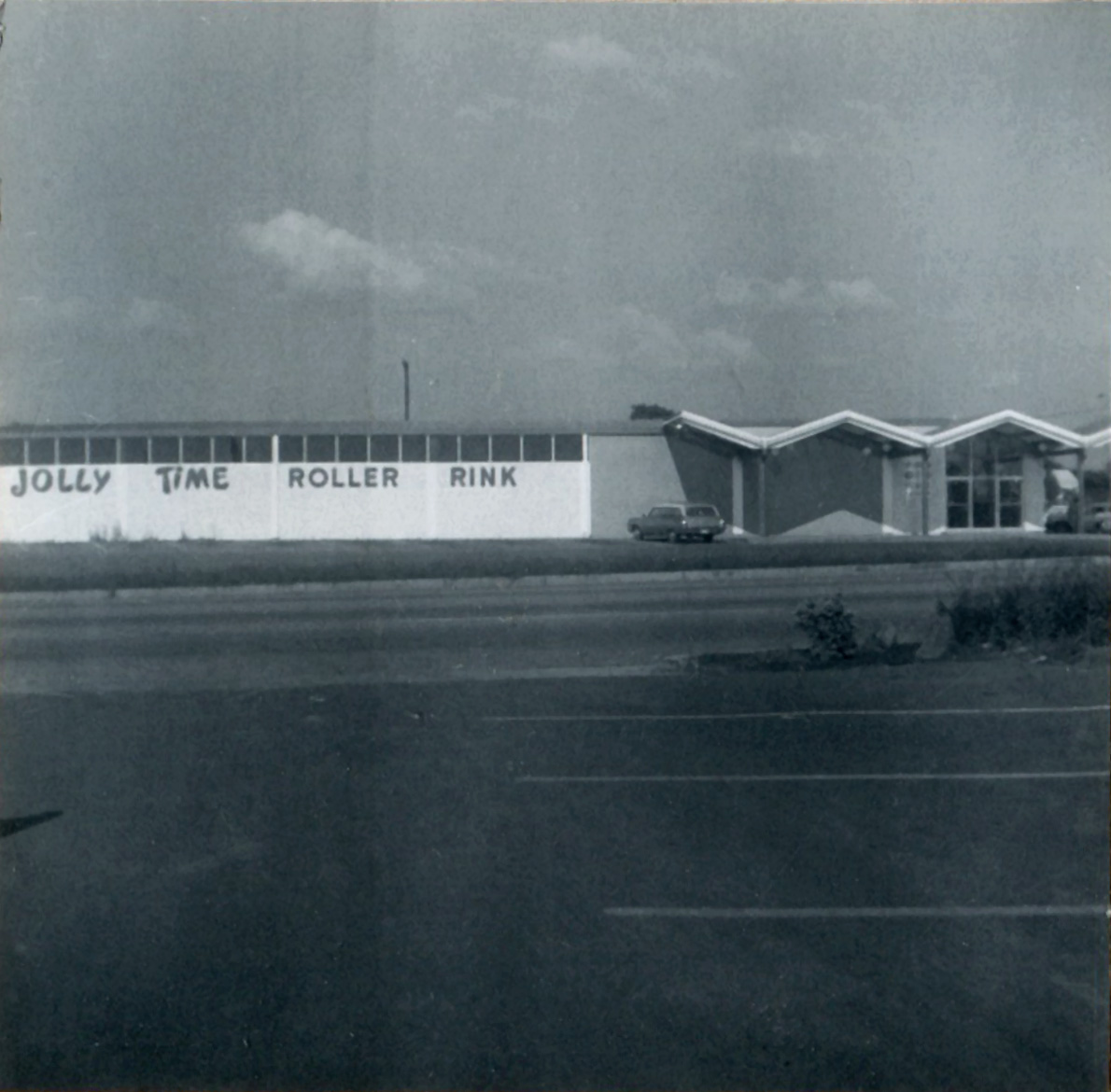
The Jolly Time Skating Rink was located at 1001 Miller on the east side of Fort Worth. A scrapbook kept by Terry Hungerford’s mother shows the Motovators would play at the rink at least nine times between February 27 and July 31, 1965.
The Barons, the Kasuals, and the Coachmen appeared with the Motovators on certain dates. Other than her scrapbook, I can find almost no documentation of other shows at the rink. Jim Jones and the Chauntays also played there according to an interview Jim Jones did with 60sgaragebands.com.
February 20, 1965 the Motovators auditioned with KXOL DJ Bob Allen and rink manager Doyle Goodwin
February 27, 1965 – First Motovators show at the Jolly Time Skating Rink, with the Barons
March 13, 1965 – with the Kasuals. The Motovators played an original by Terry Lee Hungerford, “She’s Gone” that they had recorded earlier that month. This was Phil Reece’s last show with band, the following Monday he announced his departure to Bobby Crown’s band.
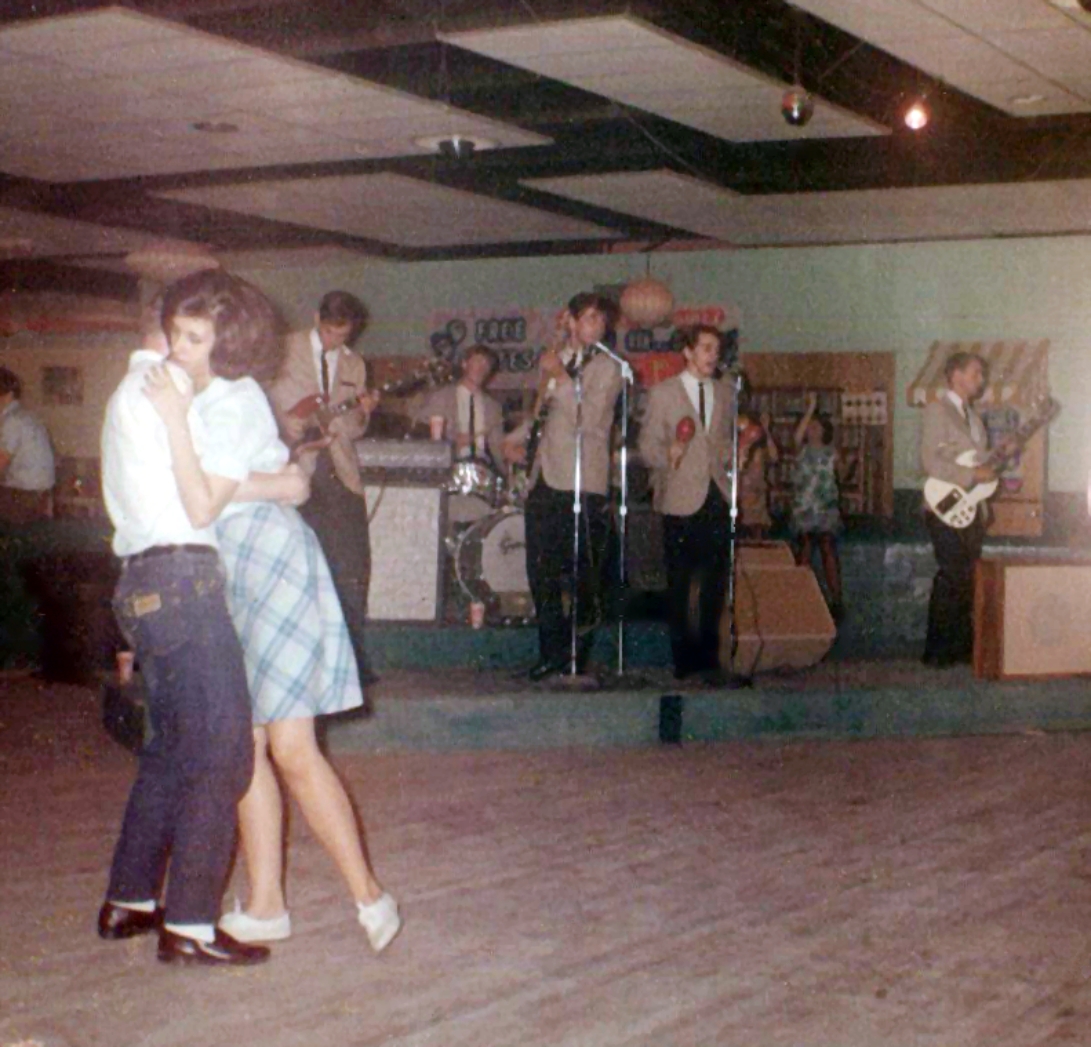
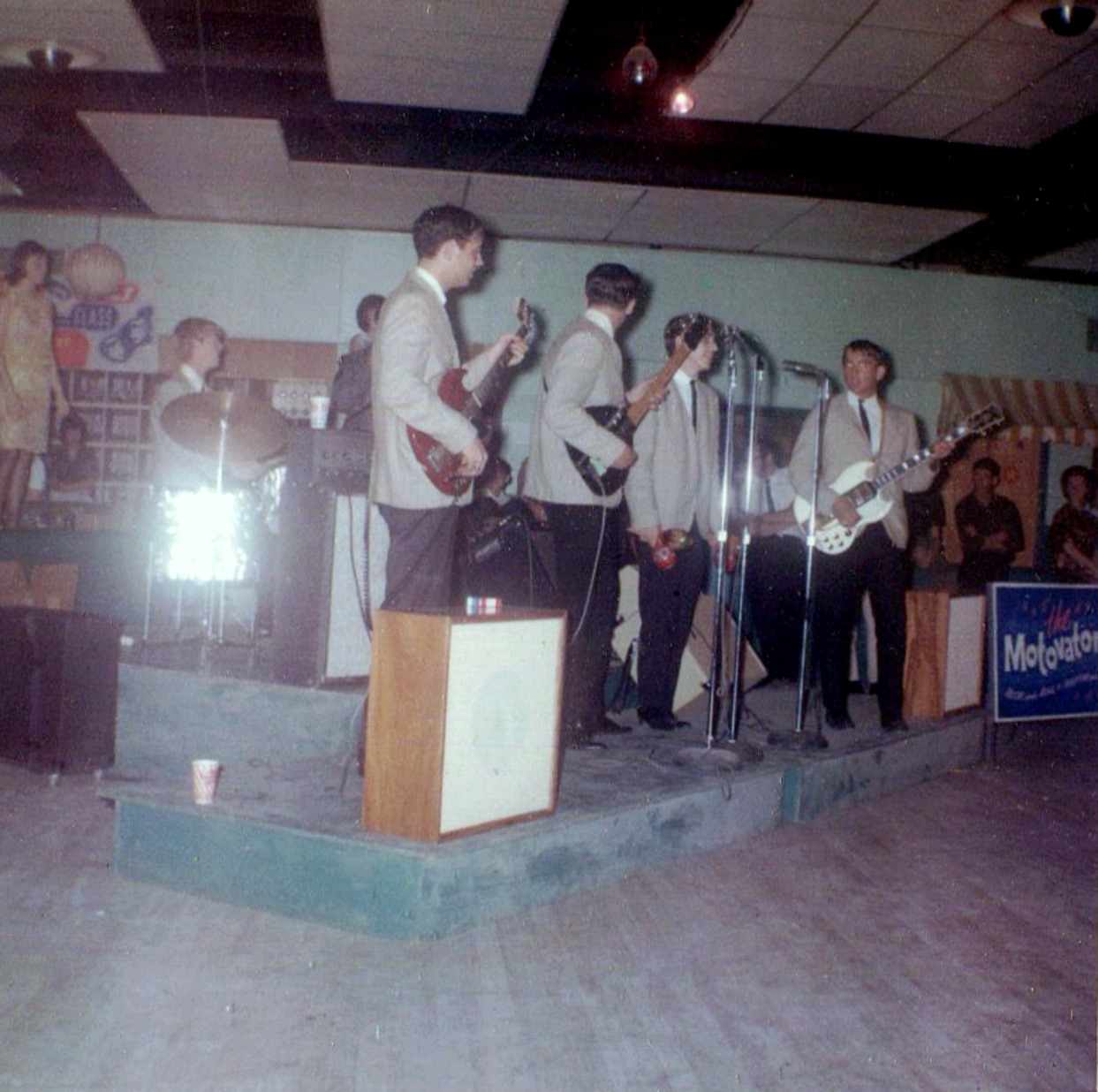
The Motovators at Jolly Time Roller Rink, April 24, 1965
April 24, 1965 – “one band, 10 to 12, $8 per man”
May 15, 1965 – with the Coachmen (“one of the Coachmen played as 5th member of Motovators”)
May 29, 1965
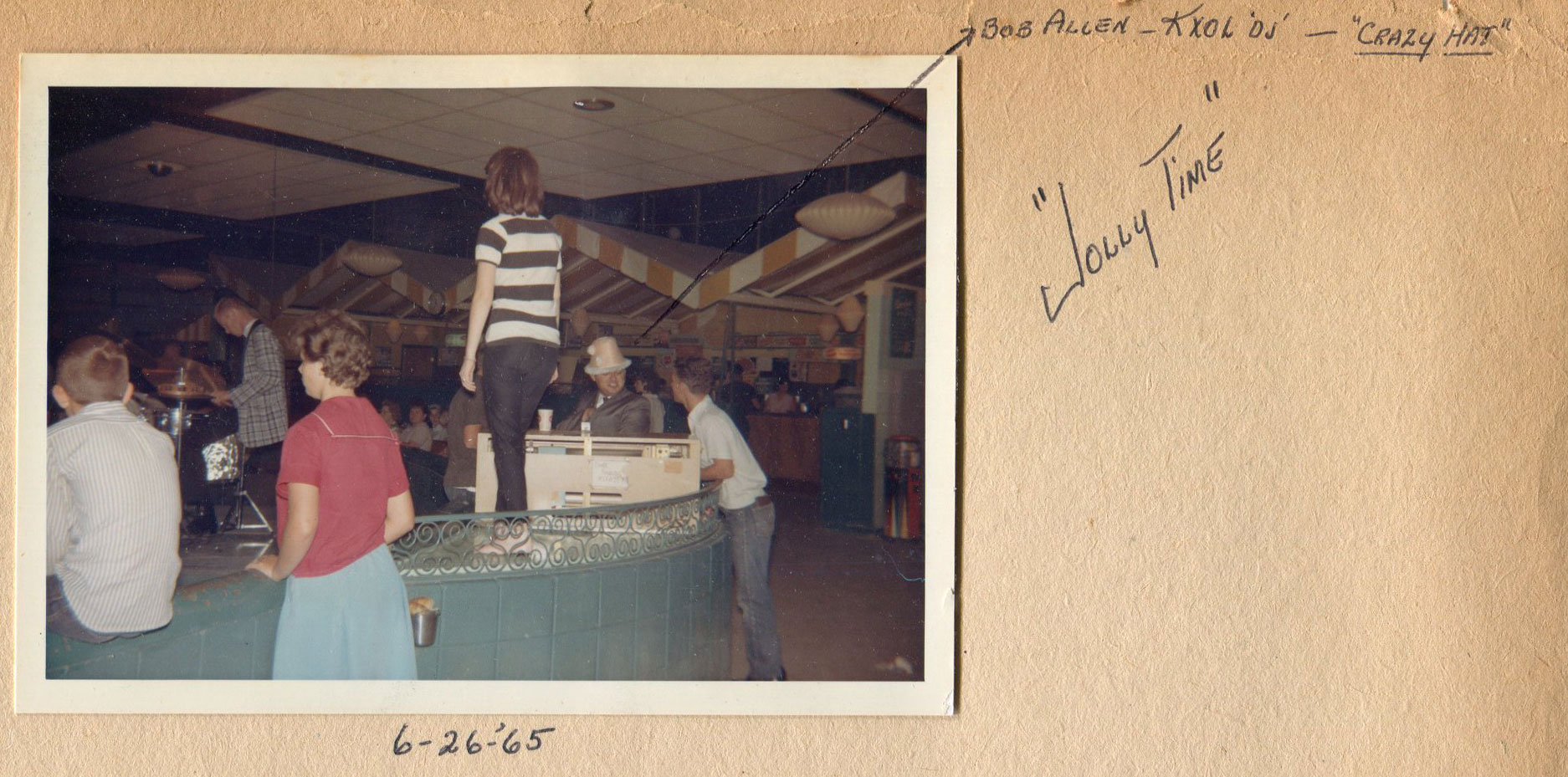
The Motovators and Bob Allen from KXOL at Jolly Time Roller Rink June 26, 1965
June 26, 1965 – after the show Terry, Roger and Donnie left to Villa Acuna, Mexico at 4:15 AM, returning home later than they expected on Monday causing some trouble on what was Terry’s 18th birthday.
July 9, 1965
July 17, 1965
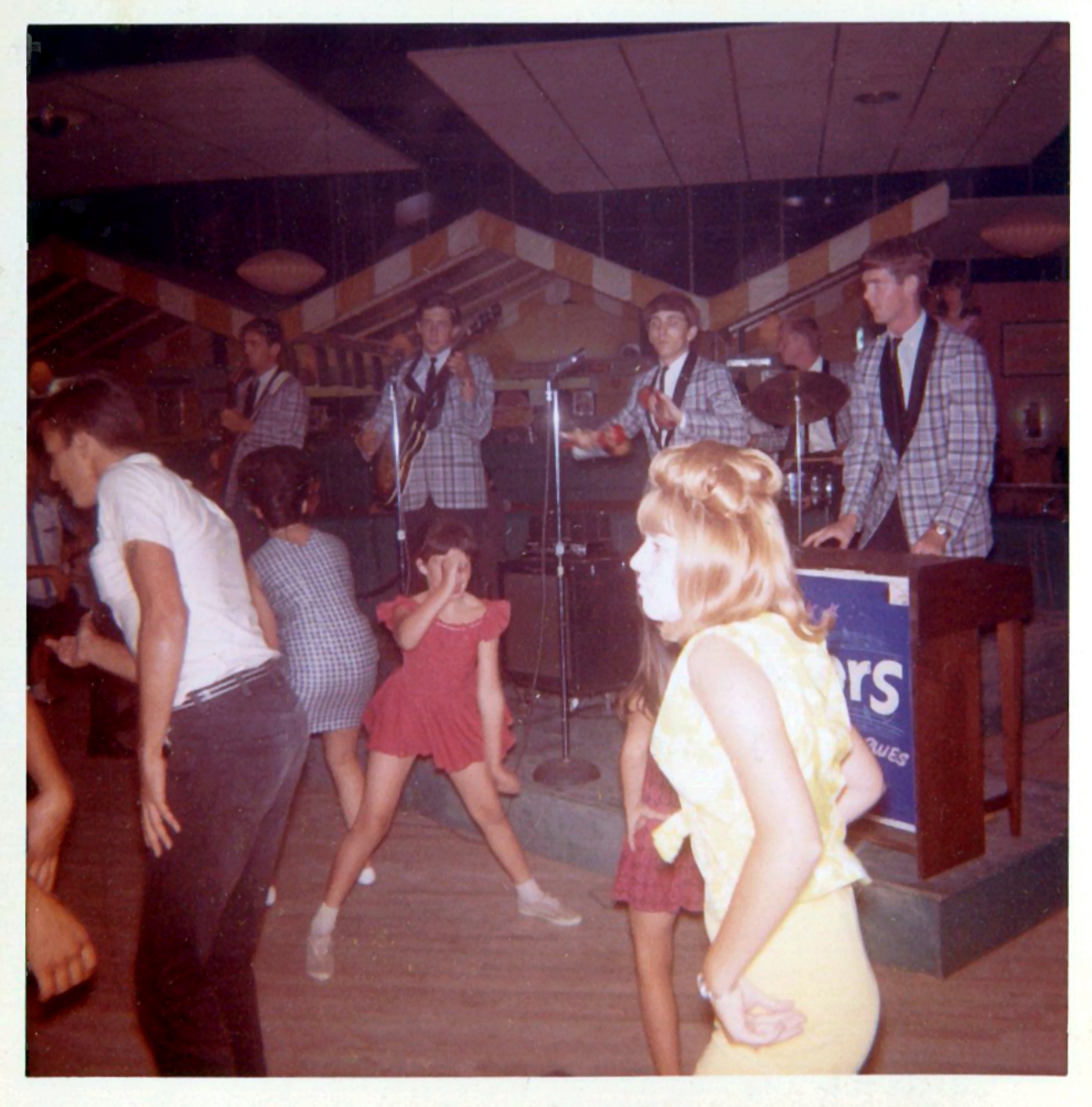
July 31, 1965 – last Motovators show at the Jolly Time
The Motovators at Jolly Time A Go Go, July 1965
Terry Lee Hungerford would join Jerry Williams & the Epics in 1966. Starting in the 1970s he would be part of several bands including Ripe Chops, the Freedom Band, the Other Brothers Band, No Respect, Road Crew, and the Terry Hungerford Blues Band. He worked for Pacific Bell and even opened his own BBQ restaurant, Hungerford’s Finest in Watsonville.
Terry passed away on February 20, 2019.
Thank you to Wm. Lewis Wms. and Andellyn Purvis-Hungerford for sharing Terry’s photos and band history.
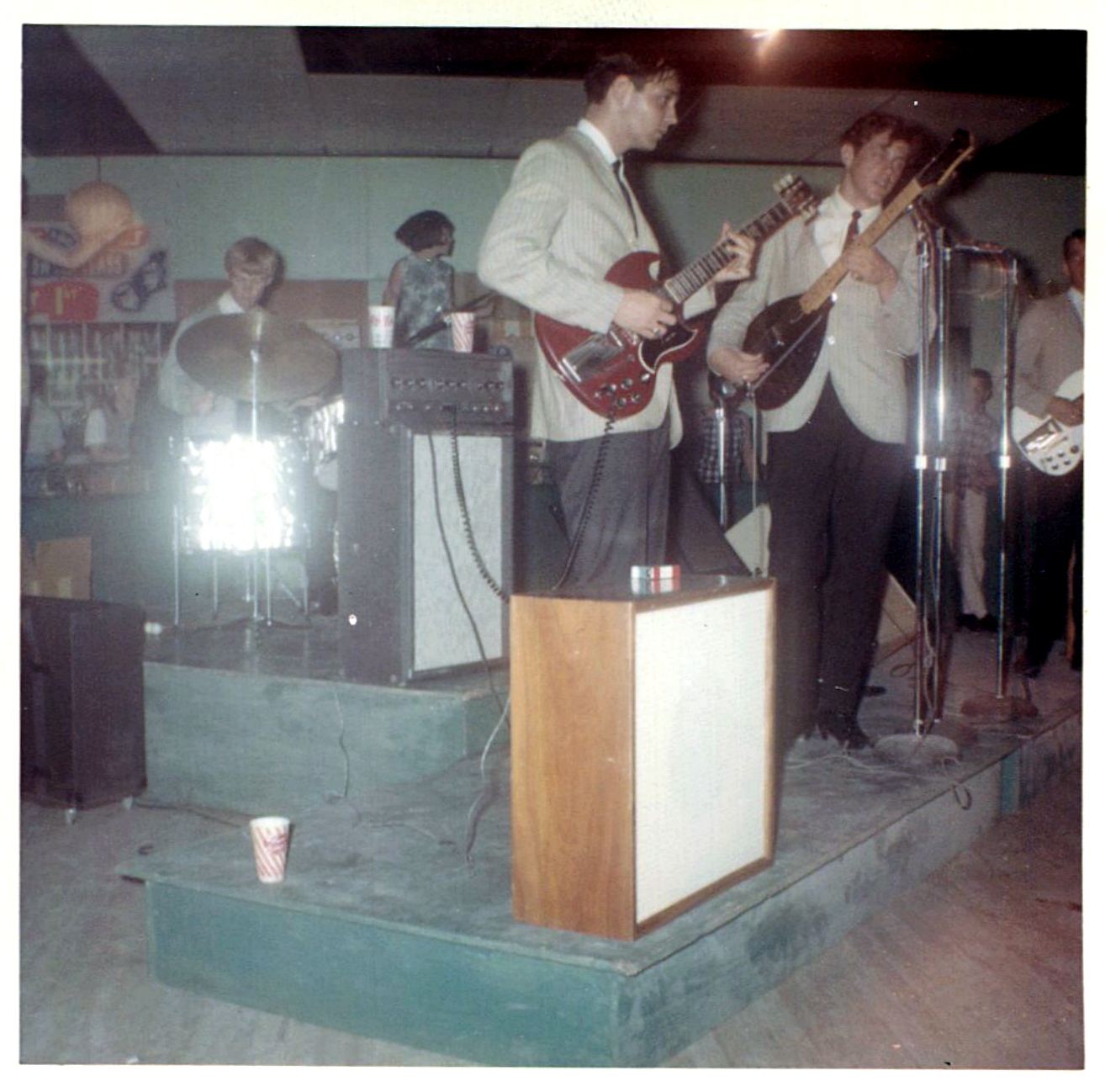
Another shot of the Motovators at Jolly Time Roller Rink, April 24, 1965The Motovators at Jolly Time Roller Rink, April 24, 1965. Note what appears to be Terry Lee’s Gretsch “bikini” bass with a teardrop body.
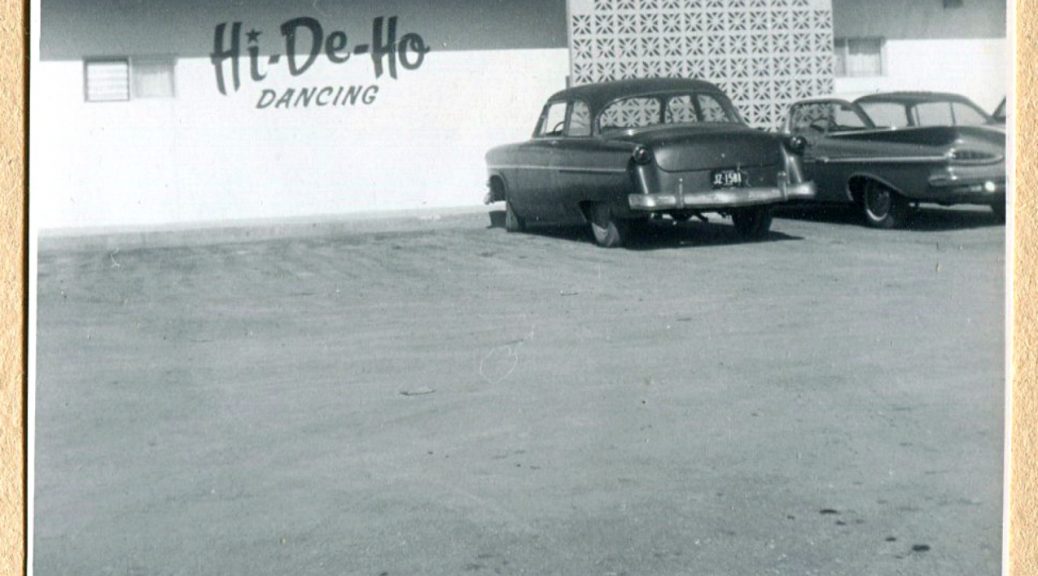
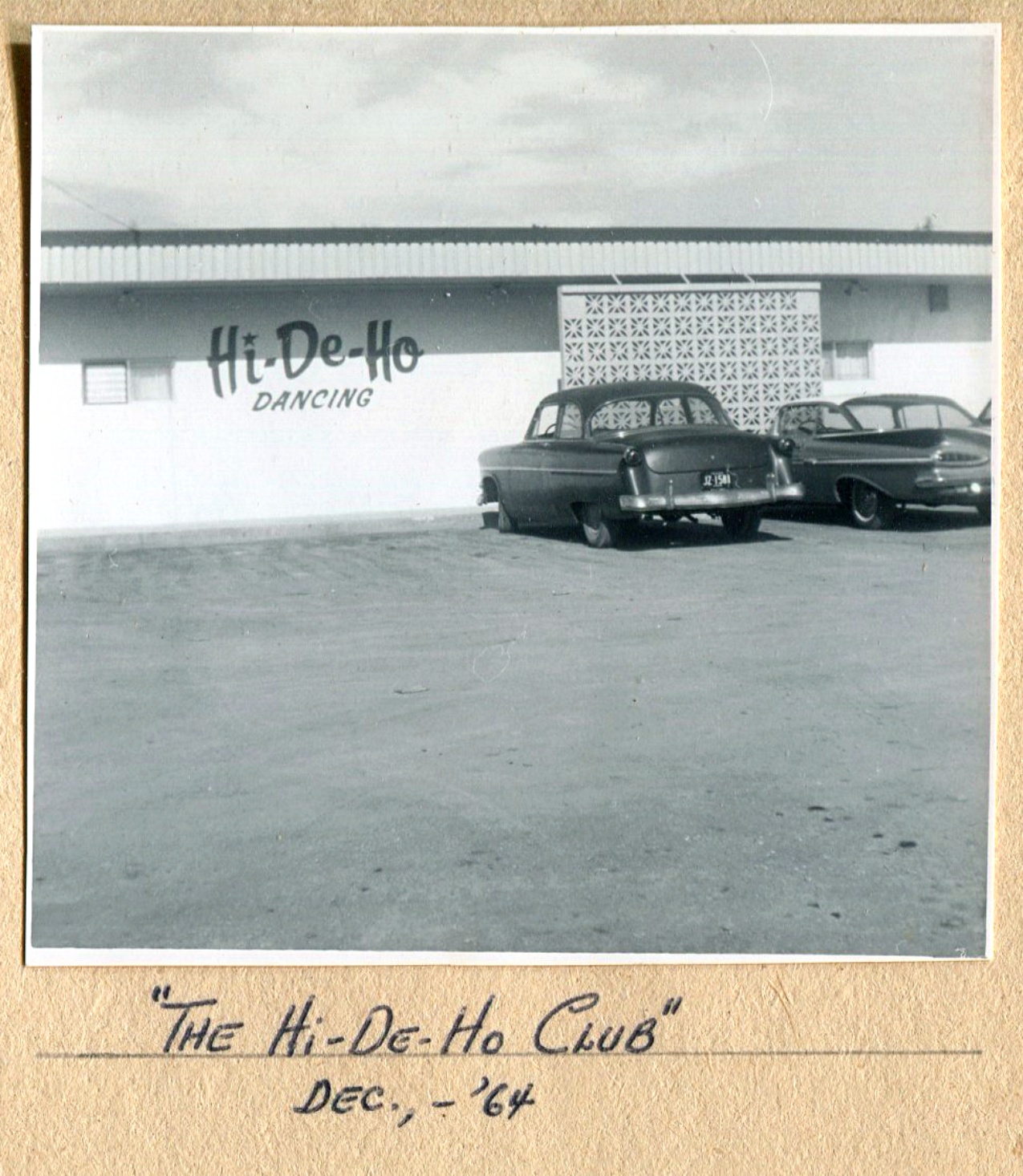
There’s not much information on the Hi-De-Ho Dancing night club, also known as the Hi-De-Ho Lounge. It was located at 3406 Azle Ave in Fort Worth, and as of 2020, the building still exists as the Rodeo Tavern.
The Motovators auditioned with manager Andy Anderson on December 4, 1964, then played ten shows at the Hi-De-Ho Lounge between December 5, 1964 and January 1, 1965. They received $10 per person except for New Year’s Eve, at $25 each.
On December 24, Jimmy Moore left the Motovators, and Dale Morgan joined on lead guitar. Terry Fagan moved to rhythm guitar.
I have no photos of the interior. An ad to sell the business appeared on July 27, 1965 in the Star-Telegram.
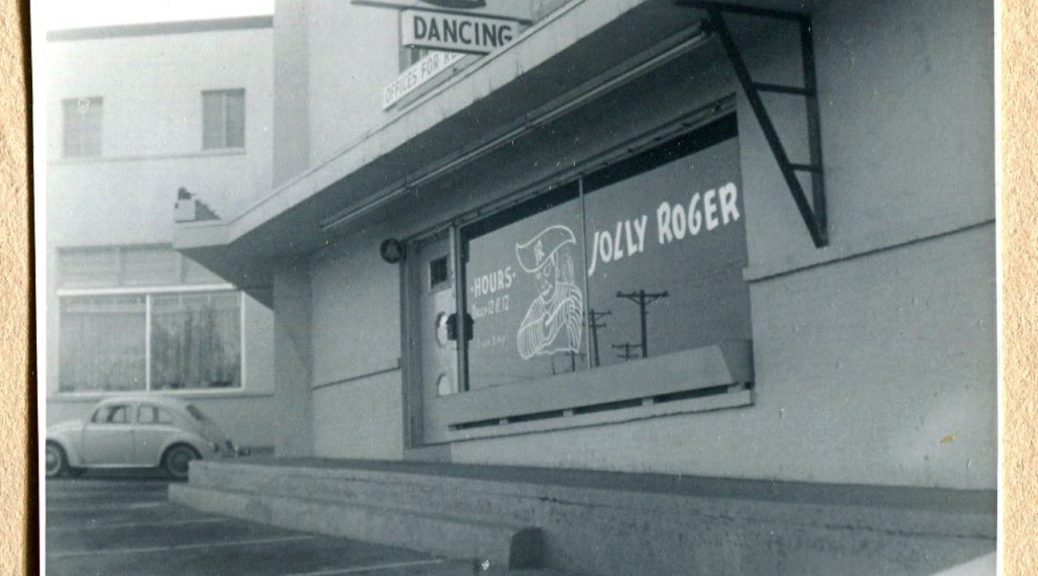
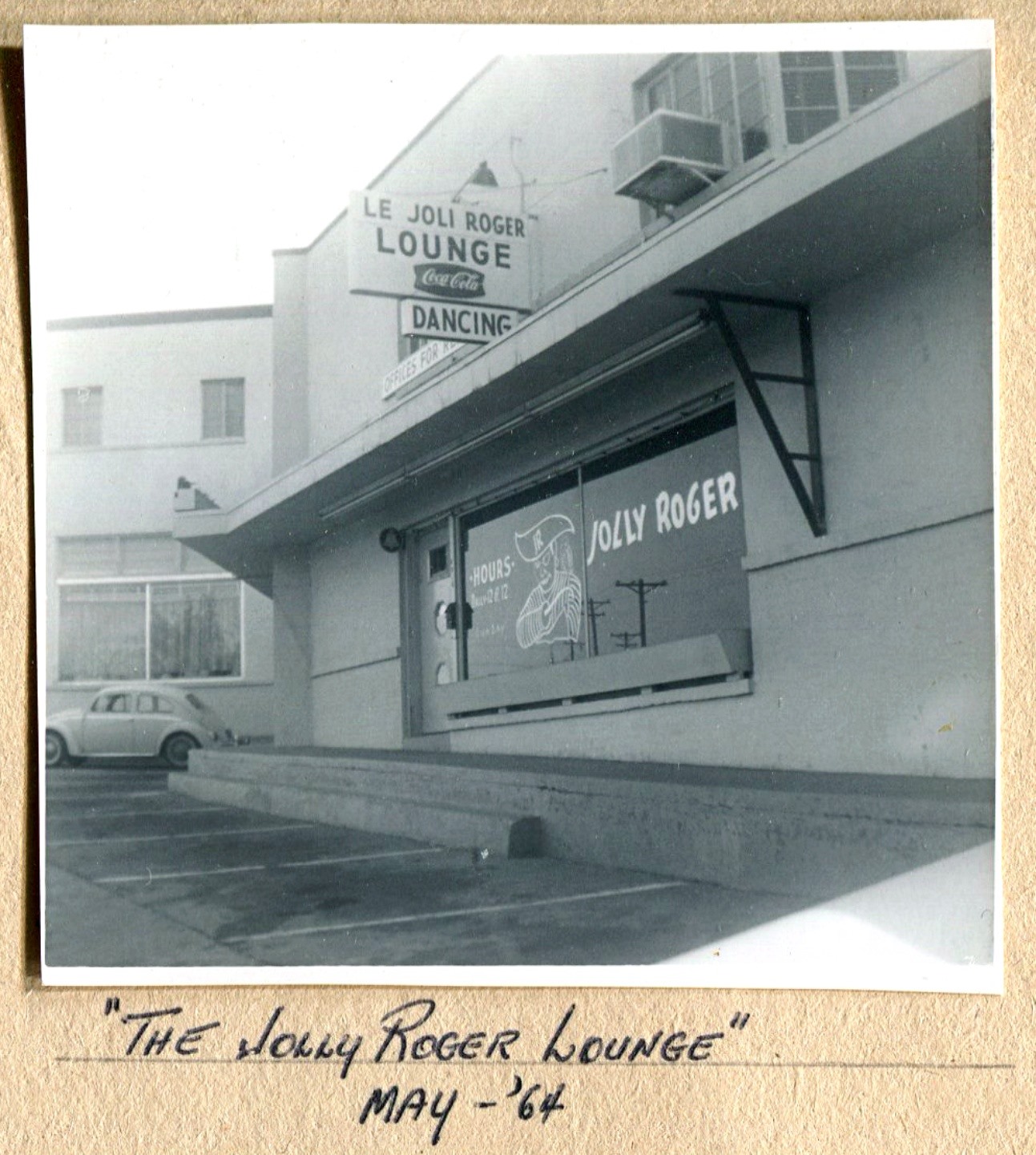
Le Joli Roger Lounge, also known as the Jolly Roger, Fort Worth
The Motovators played the Jolly Roger Lounge on May 29, 1964. It was one of the band’s first live shows, with the original lineup of Terry Lee Hungerford, Roger Young, Terry Fagan, and Jimmy Nobles.
The sign in the photo reads Le Joli Roger Lounge, but one ad I’ve seen lists it as the Jolly Roger, located at 4016 White Settlement Road on the west side of Fort Worth. I believe it has since been demolished.
A December 25, 1964 classified ad to sell the business.
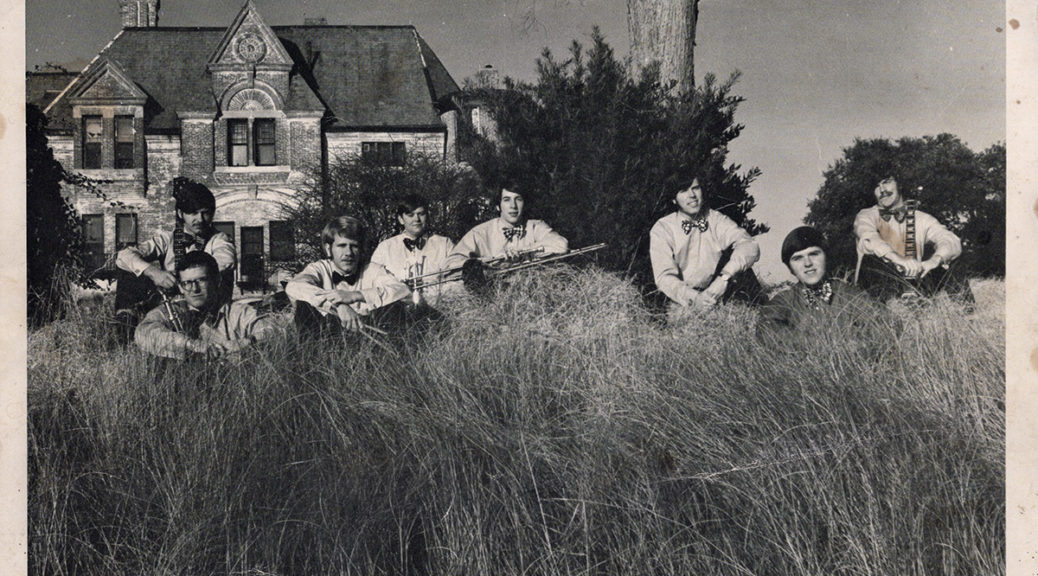
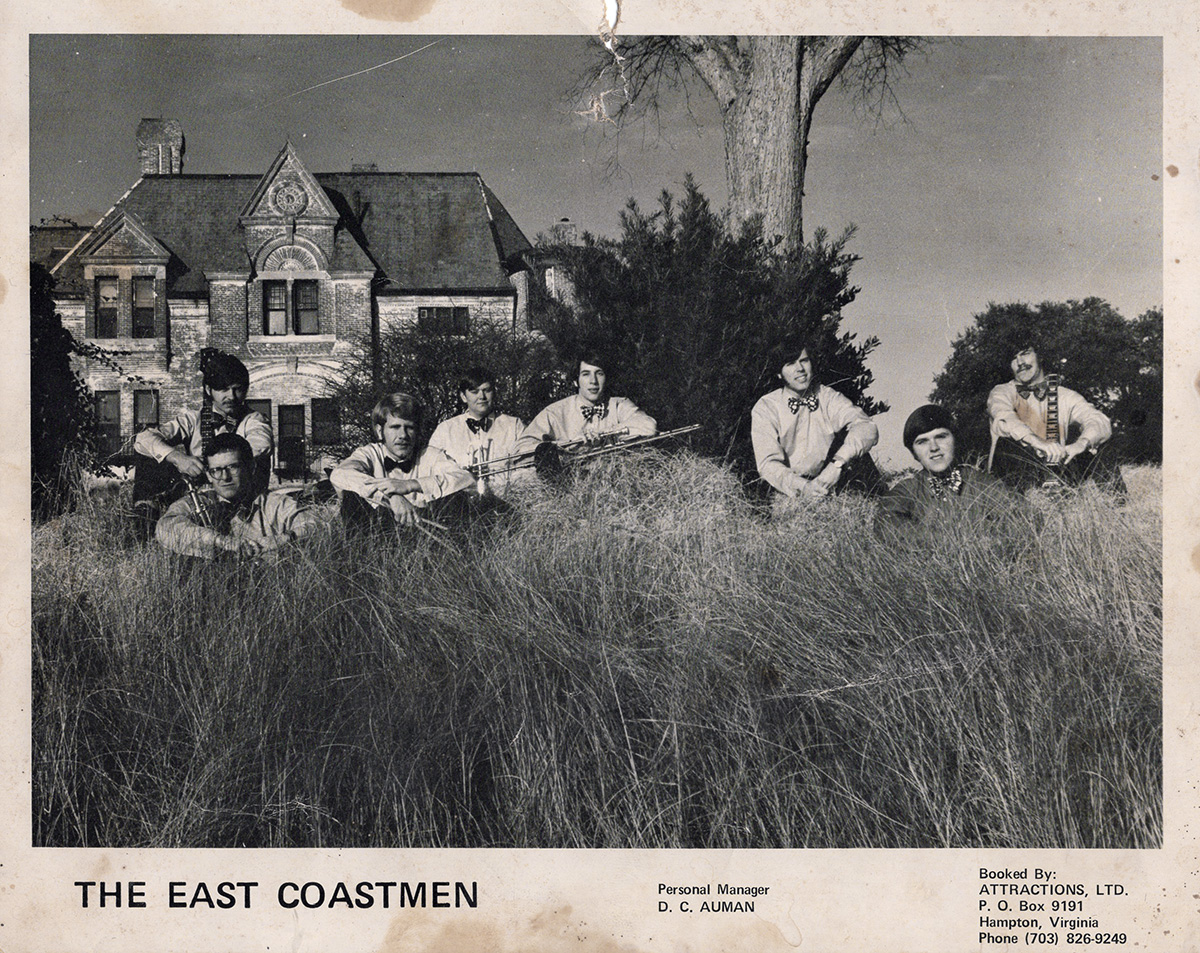
The East Coastmen, from left: Don Newsome, Mike (surname unknown), Alan Partin, Spiller Anderson, Charlie Harbrook, Thom Clement, Dave Herndon, and Bob Kerwin. Photo submitted by the estate of Joanne Tluchak, Virginia Beach
The East Coastmen were not a garage band, but a revue or pop group with horns, listed in Billboard’s Campus Attractions issue of 1971.
Don Newsome commented with the names of the members, so I’ll add them here:
Don Newsome – Bass Mike (surname unknown) – Sax Alan Partin – Drums Spiller Anderson – Trumpet Charlie Harbrook – Trombone Thom Clement – Keyboards Dave Herndon – Frontman, lead singer Bob Kerwin – Lead guitar Gary Ricks – Trumpet, trombone
Personal Manager was D.C. Auman. They were booked by Attractions Ltd in Hampton.
Bob Kerwin sent in songs cut on a two track machine at D’Arcy Studios on 21st St in Norfolk, version of Ollie & The Nightingales “Girl You Make My Heart Sing” and Robert Parker’s “Barefootin’.
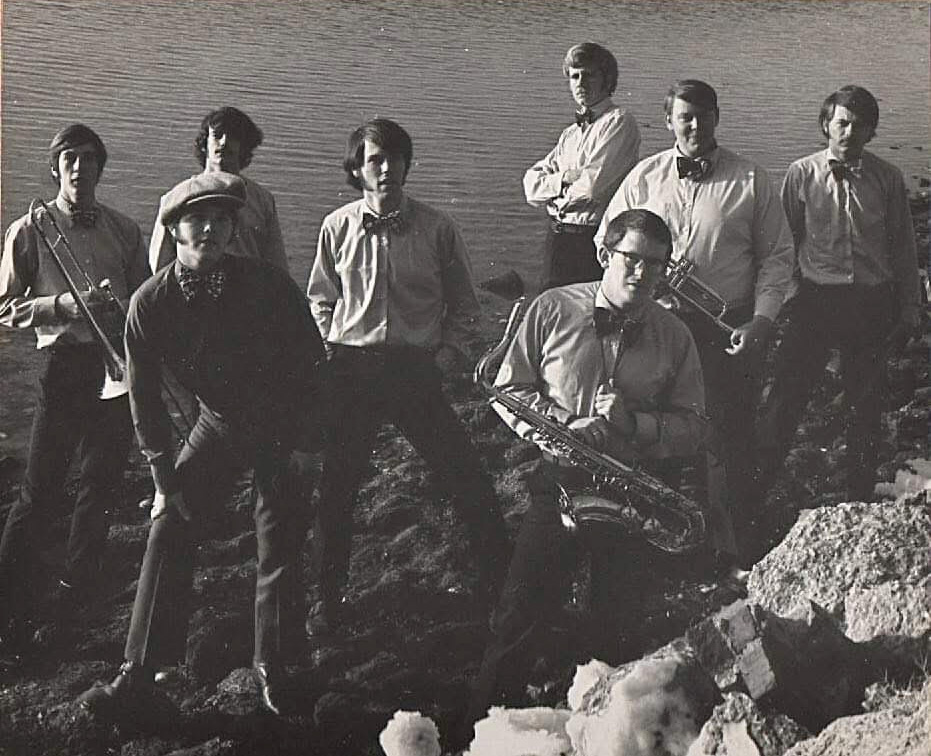
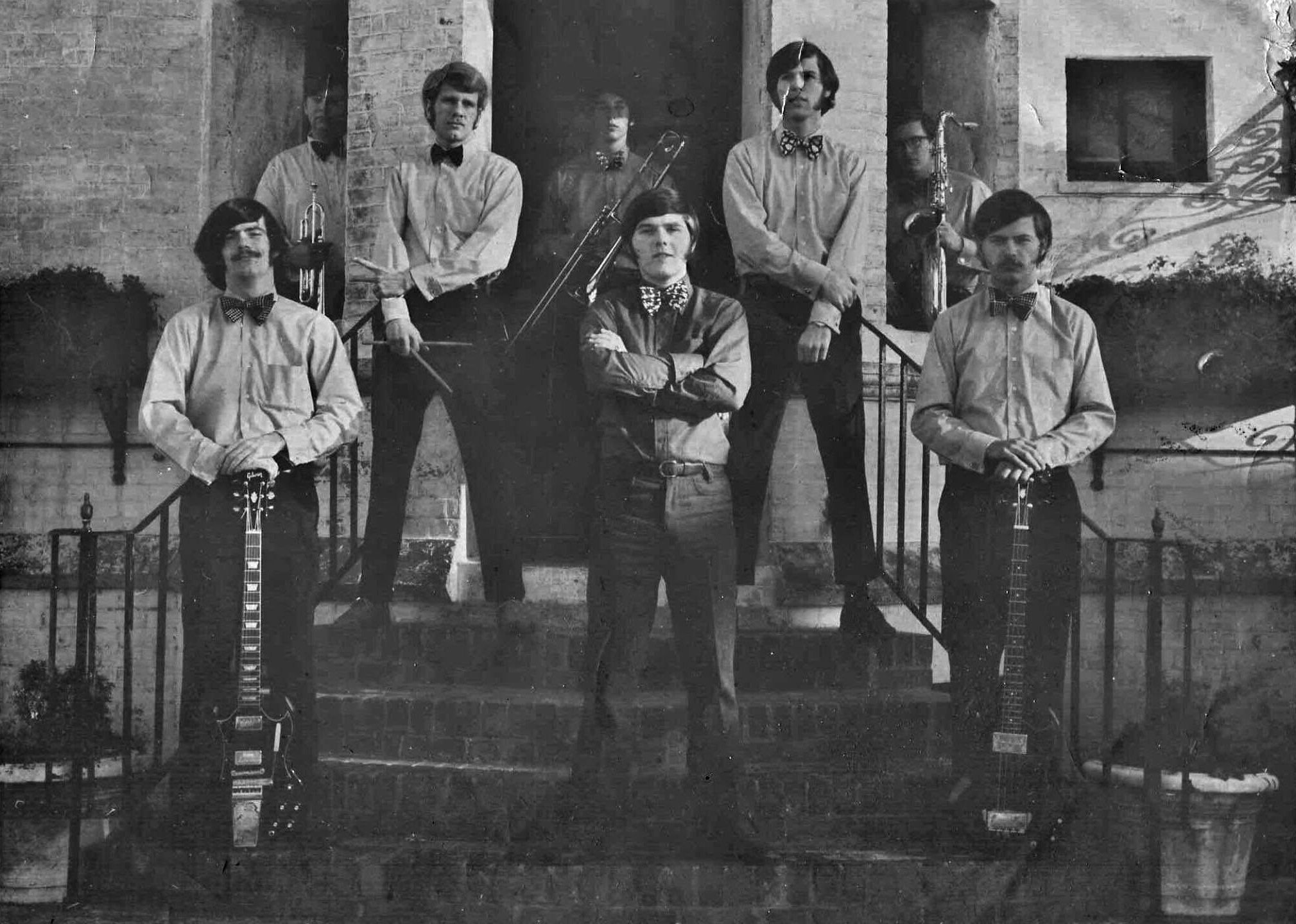
The East Coastmen, from left: Charlie Harbrook, Dave Herdon (wearing hat), Bob Kerwin, Thom Clement, Alan Partin, Mike (unknown last name), Spiller Anderson, and Don Newsome. Missing is Gary Ricks, trumpetThe East Coastmen, from left: Bob Kerwin, Spiller Anderson, Alan Partin, Charlie Harbrook, Dave Herdon, Thom Clement, Mike (unknown last name), and Don Newsome. Missing is Gary Ricks, trumpet
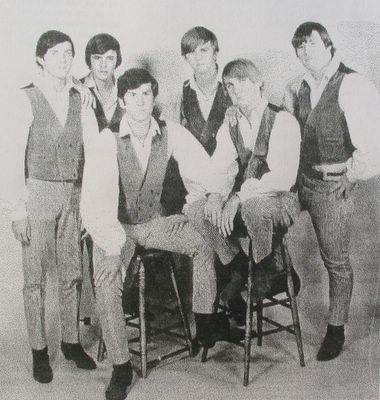
Rockin’ Gibralters, from left: Rusty Crumpton, Ronnie Monroe, Sonny Grier (seated), Ed Sanford, Bobby DuPree and Keith Brewer
The Rockin’ Gibralters came out of Montgomery, Alabama, making four singles between 1966 and 1968.
Members were:
Sonny Grier – vocals Rusty Crumpton – lead guitar Ed Sanford – keyboards Keith Brewer – bass guitar Bobby DuPree – drums Ronnie Monroe – trumpet (and roadie?)
I haven’t been able to find details about their history yet.
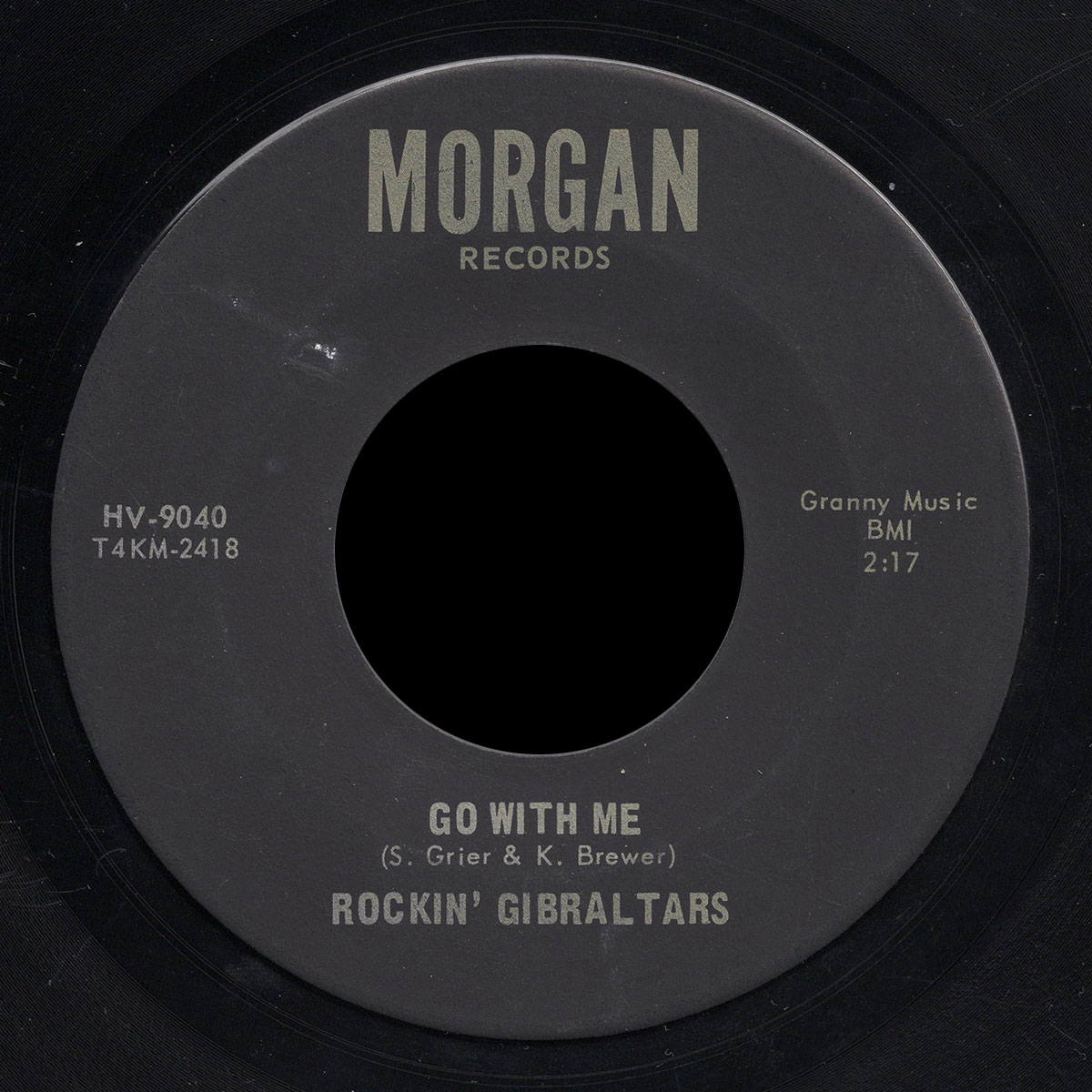
I’m not sure which was their first single but it may have been “Go With Me” / “Signed, Sealed and Delivered” on Morgan HV-9040 from 1966. Sonny Grier and Keith Brewer wrote “Go With Me”, with publishing by Granny Music. The band’s name is spelled Rockin’ Gibraltars on the labels.
This is their most “garage” single, with harmonica but no trumpet, and some great screams from Sonny Grier on “Signed, Sealed and Delivered”.
The Rockin’ Gibralters next single was probably “It Will Stand” / “I Can’t Help Myself (For Loving You)” on Empire 447. The B-side is another original by Brewer and Grier, which I haven’t heard yet.
The Gibralters released their next two singles on their own RG Records label, fashioning a fine soul sound on each. The different label designs and numbering suggest different studios or pressing plants.
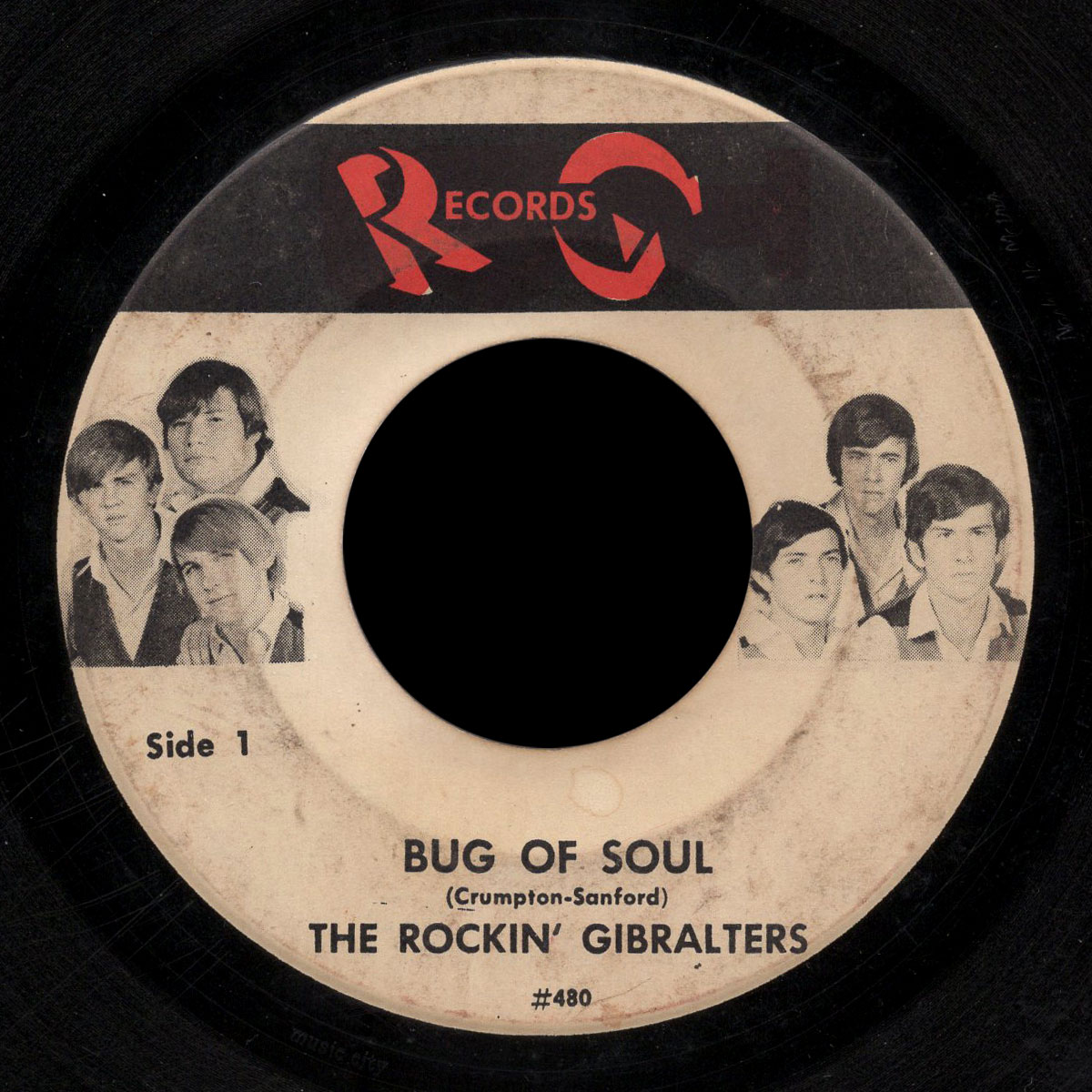
“Bug of Soul” is an original by Rusty Crumpton and Ed Sanford, on RG Records 480. The trumpet plays an important part in the sound of the band by this time. I’m not sure if “It Will Stand” is the same version as the Empire single or a new take. Release date was about November 1966.
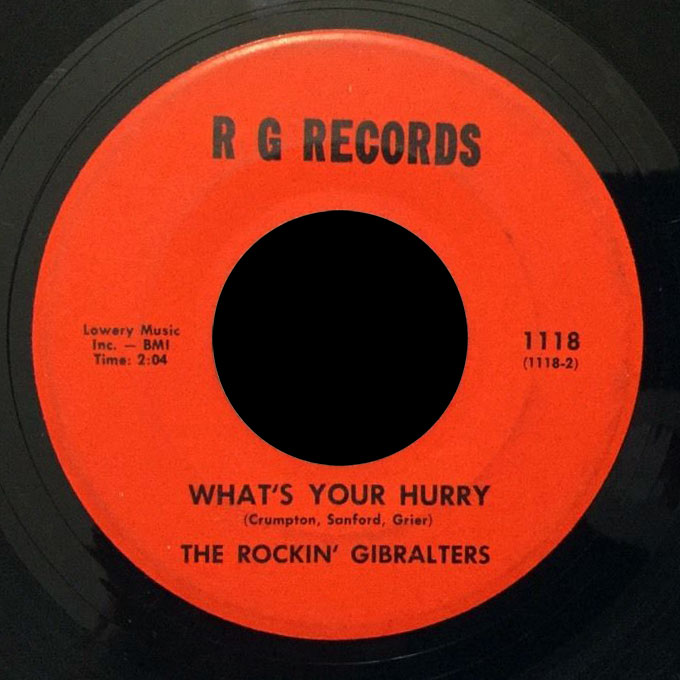
“What’s Your Hurry” is their most produced single, with what sounds like vibraphone as well as piano. Crumpton, Sanford, and Grier wrote that side, while Crumpton, Sanford and Brewer wrote “The Bare Essential”, the ostensible A-side, though I haven’t yet heard it. Lowery Music Inc. published both songs. Release was December, 1968.
In 1968, Ed Sanford, Keith Brewer and Bobby DuPree would form a group called Heart, with Johnny Townsend and Tippy Armstrong of Tuscaloosa’s Magnificent Seven / Rubber Band. Heart would play the Whisky a Go-Go in Los Angeles and cut one single on Reprise Records 0772, “The Train” (J. Townsend) / “Heartbeat” (Brewer-Sanford-Townsend-Dupree-Crumpton), both Hollytex Music Co. and produced by Bob Hinkle.
I’m not sure what Sonny Grier, Rusty Crumpton or Ronnie Monroe did after the breakup of the Rockin’ Gibralters.
Rockin’ Gibralters discography:
Morgan HV-9040 – “Go With Me” (S. Grier, K. Brewer) / “Signed, Sealed and Delivered” (TK4M-2418/9) 1966
Empire 447 – “It Will Stand” / “I Can’t Help Myself (For Loving You)” (Brewer, Grier, pub Fame Pub. Co BMI) SO 3338/9
RG Records 480 – “Bug of Soul” (Crumpton, Sanford) / “It Will Stand” November 1966
RG Records 1118 – “The Bare Essential” (Crumpton, Sanford, Brewer) / “What’s Your Hurry” (Crumpton, Sanford, Grier) both Lowery Music Inc., BMI
The photo at top came from the very interesting Tuscaloosa Beach Music site which is now unfortunately defunct but available, in part, on the Internet Archive.
The Hey Baby Days site has a few more photos of the Rockin’ Gibralters, including on stage at the City Auditorium.
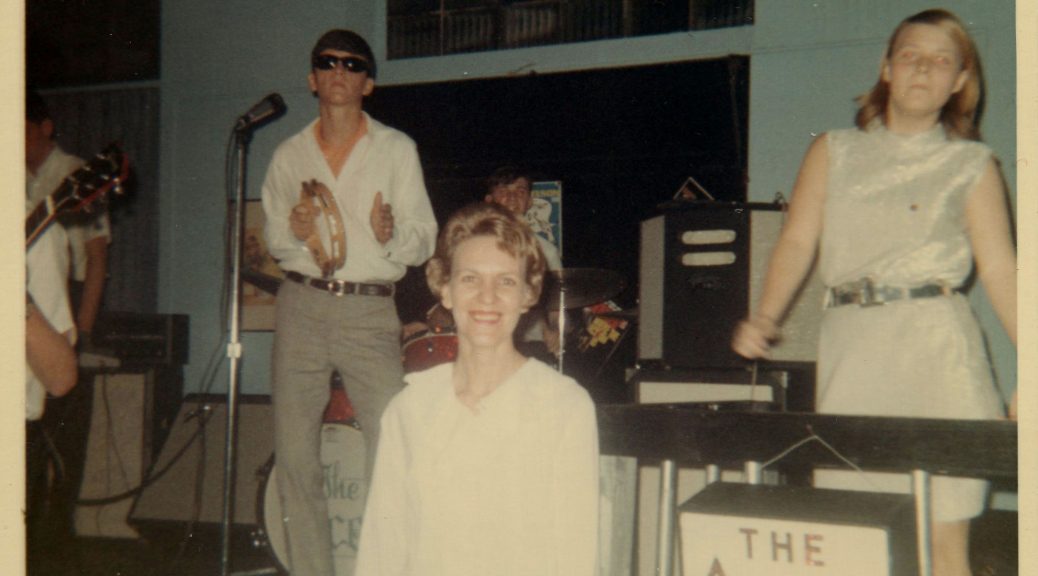
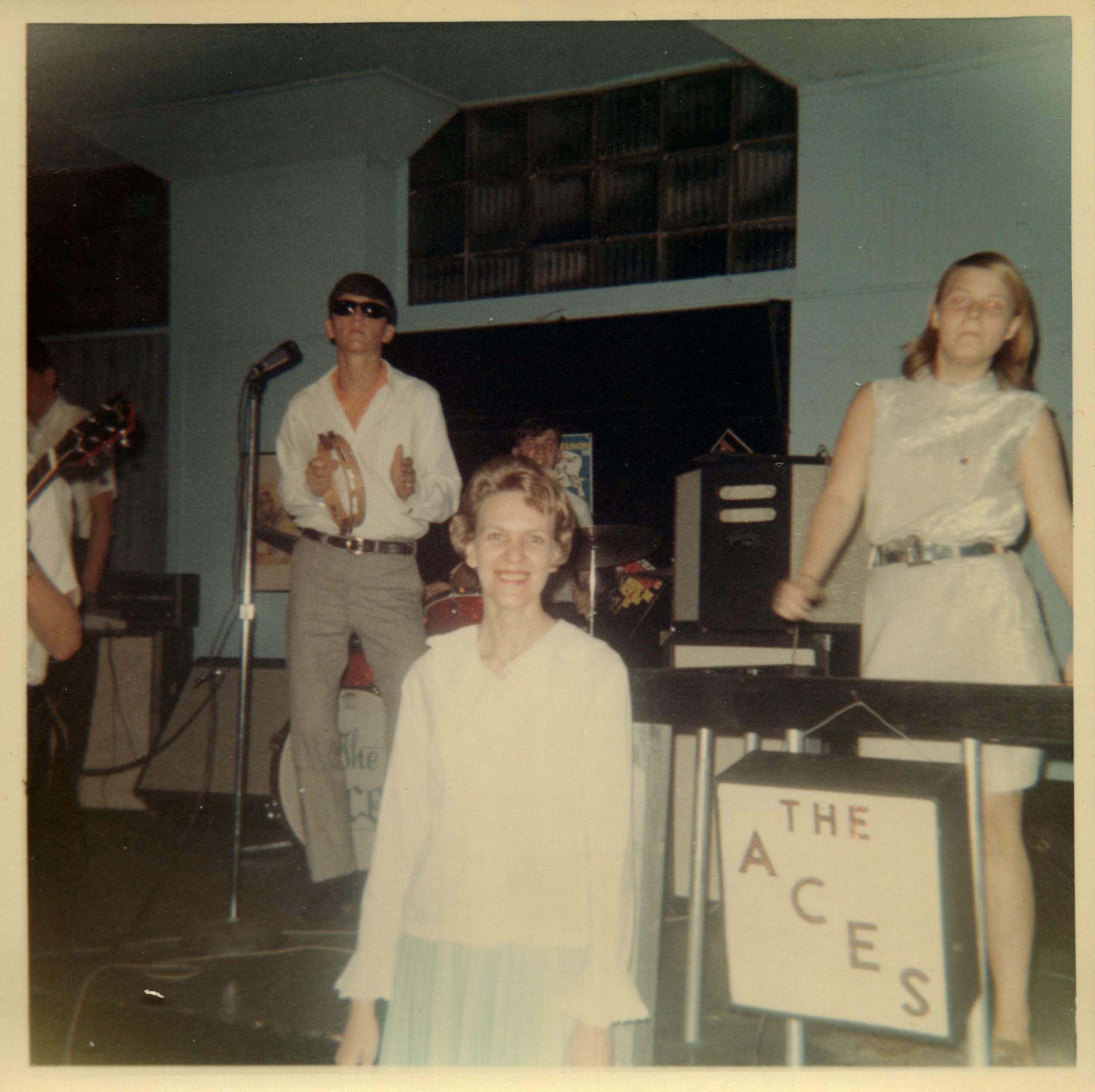
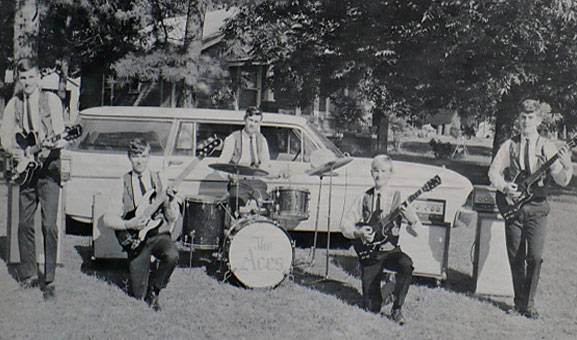
The Aces with go-go dancer and friend. Dig the Sandy Nelson albums behind the drummer!
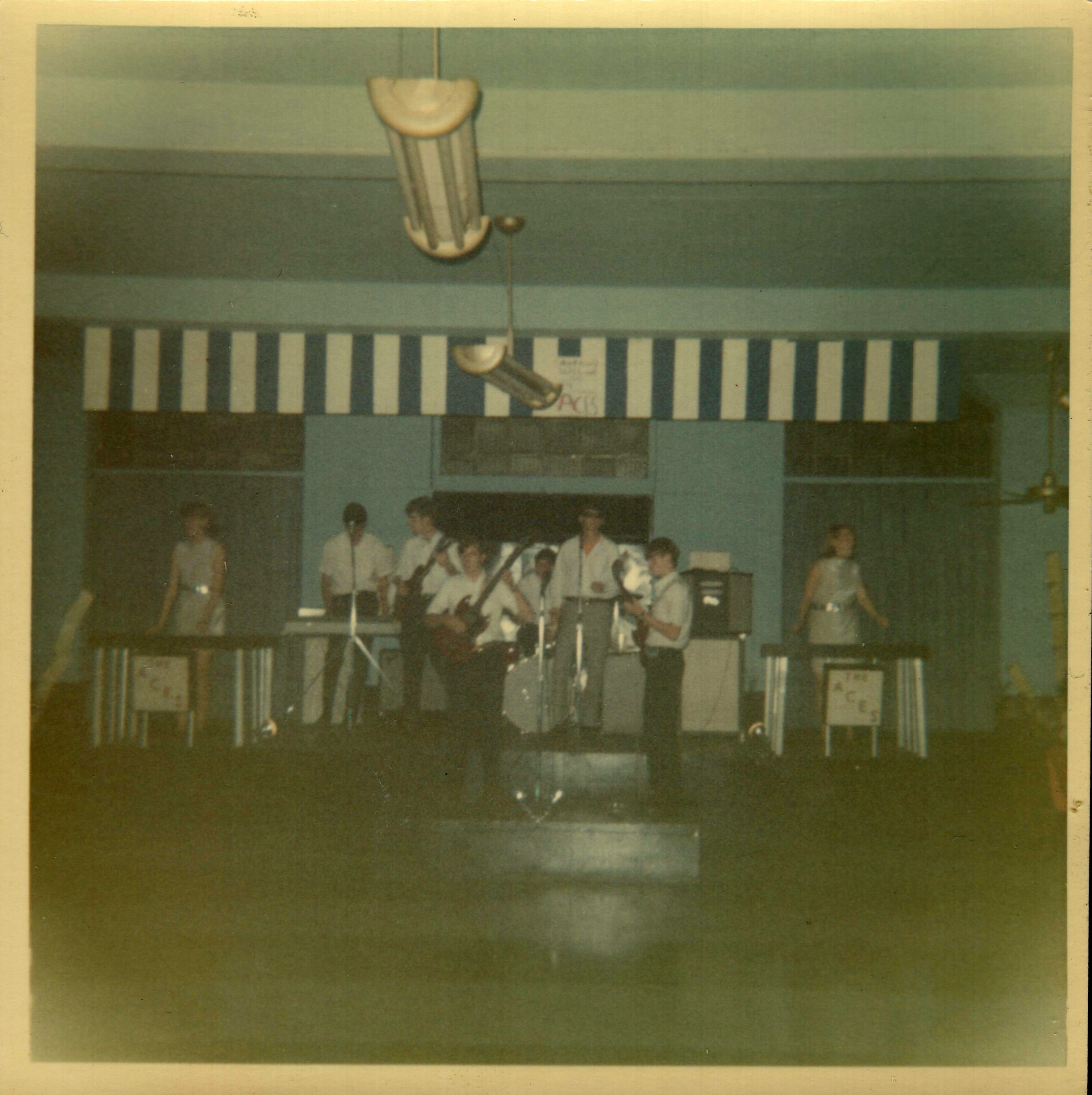
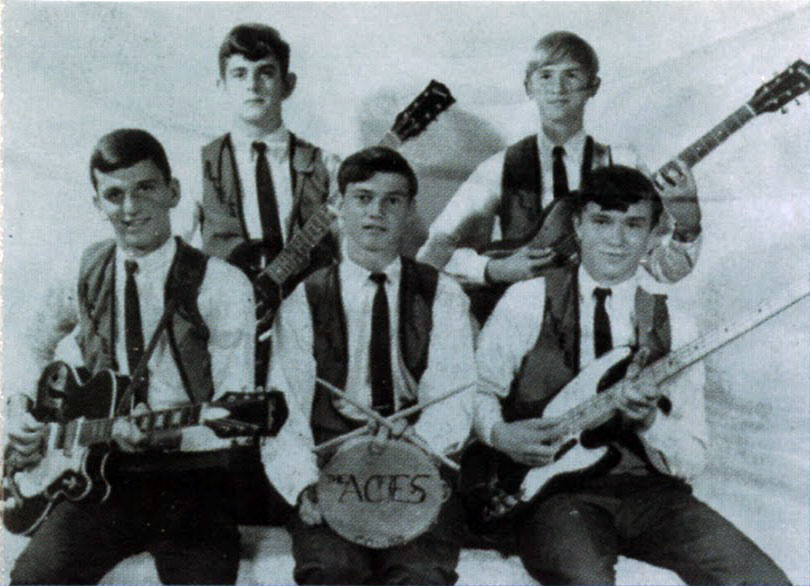
I found five color snapshots of the Aces from Salisbury, North Carolina, as well as a news clipping from Statesville. Introducing the Aces Combo is one of the better LPs on the Justice label of Winston, North Carolina, or at least, one of the more consistent.
Salisbury is located about 40 miles southwest of Winston-Salem, on the way to Charlotte. Members included:
Tim Ervin – lead guitar, vocals Johnny Yarbrough – rhythm guitar, vocals Johnny Nance – rhythm guitar Michael Earnhardt – bass, vocals, tambourine Howard Caywood – drums and management
In the color photos the band has a keyboard player, who is not listed in the album credits. Some other personnel may also be different.
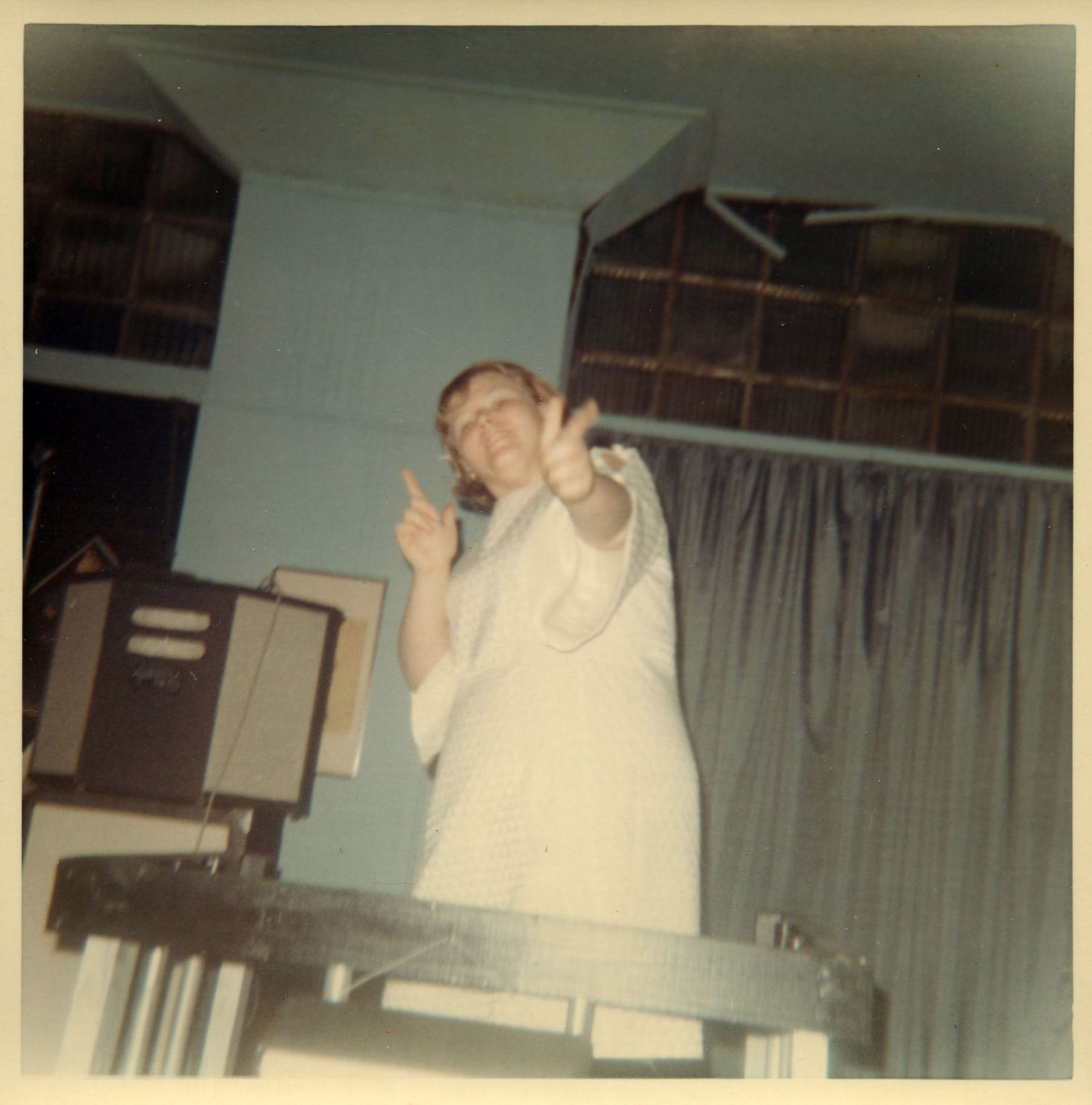
The go-go dancers in waist-high cages are a cool addition, as are the signs reading The Aces.
Go-go dancer for the Aces
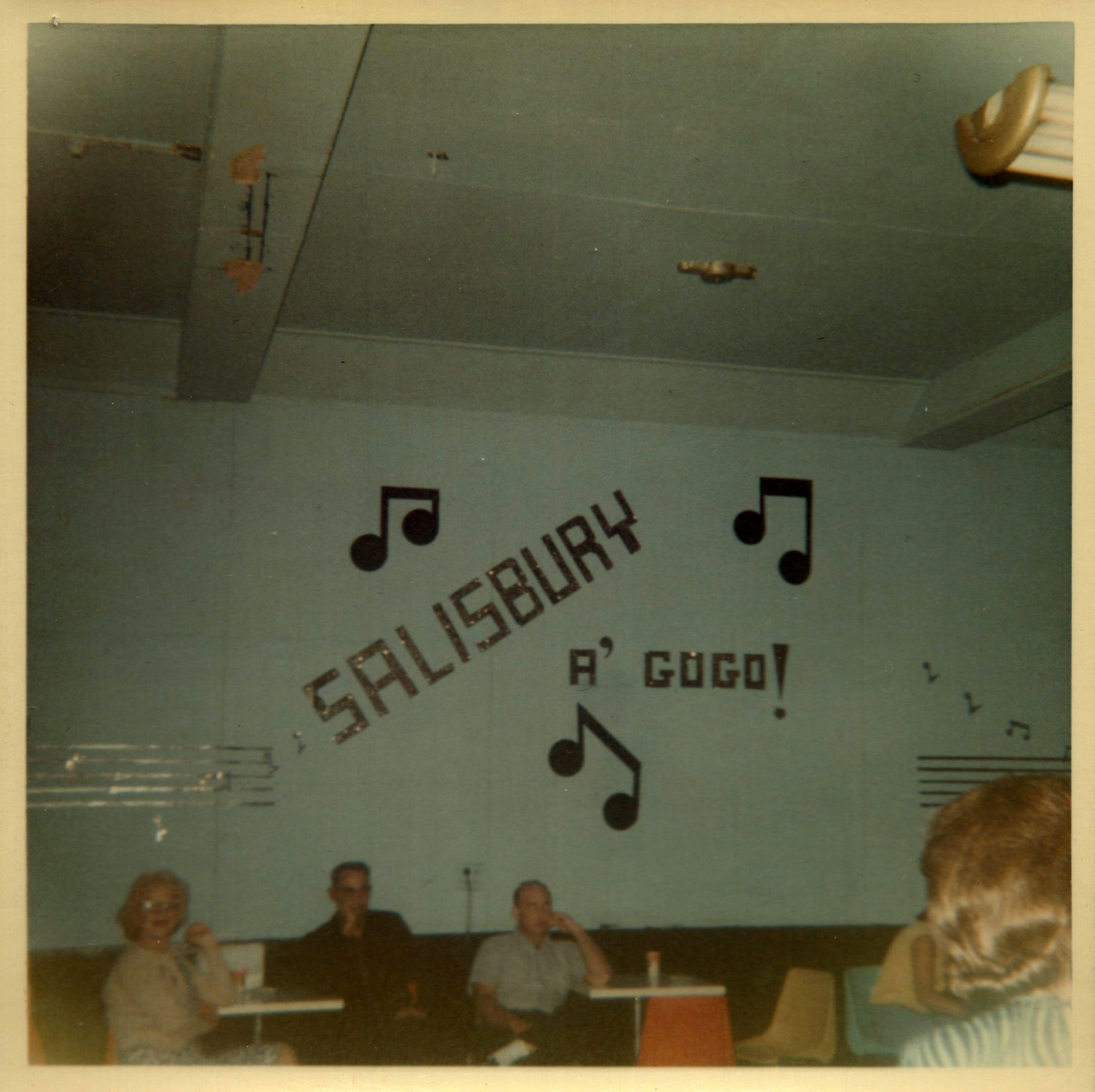
Salisbury a Go Go – what building was this?
Photo from the front of the Justice LP, Introducing the Aces ComboThe Aces in the Statesville Record And Landmark, January 15, 1966Another photo from the Justice LP
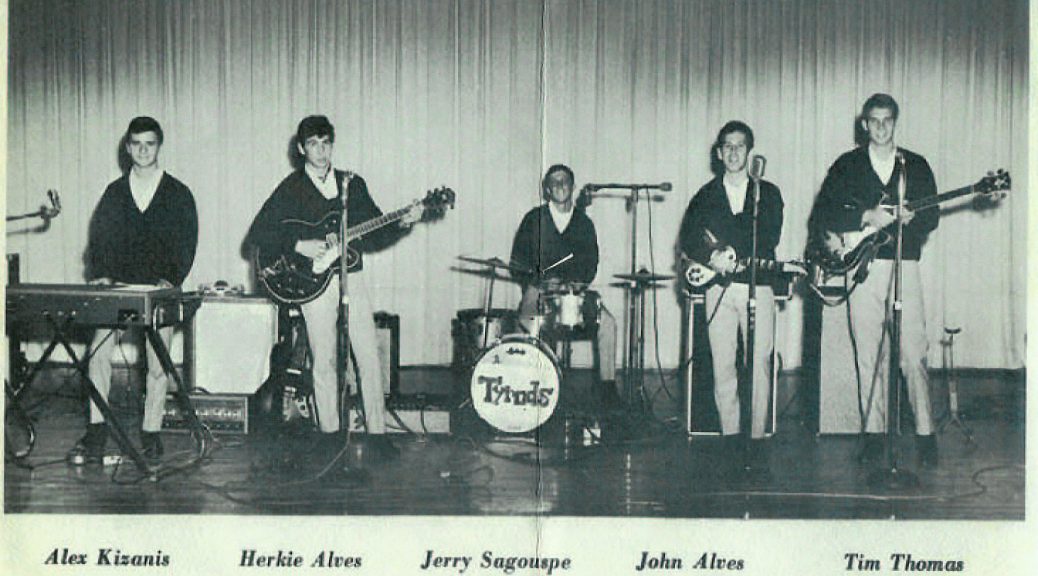
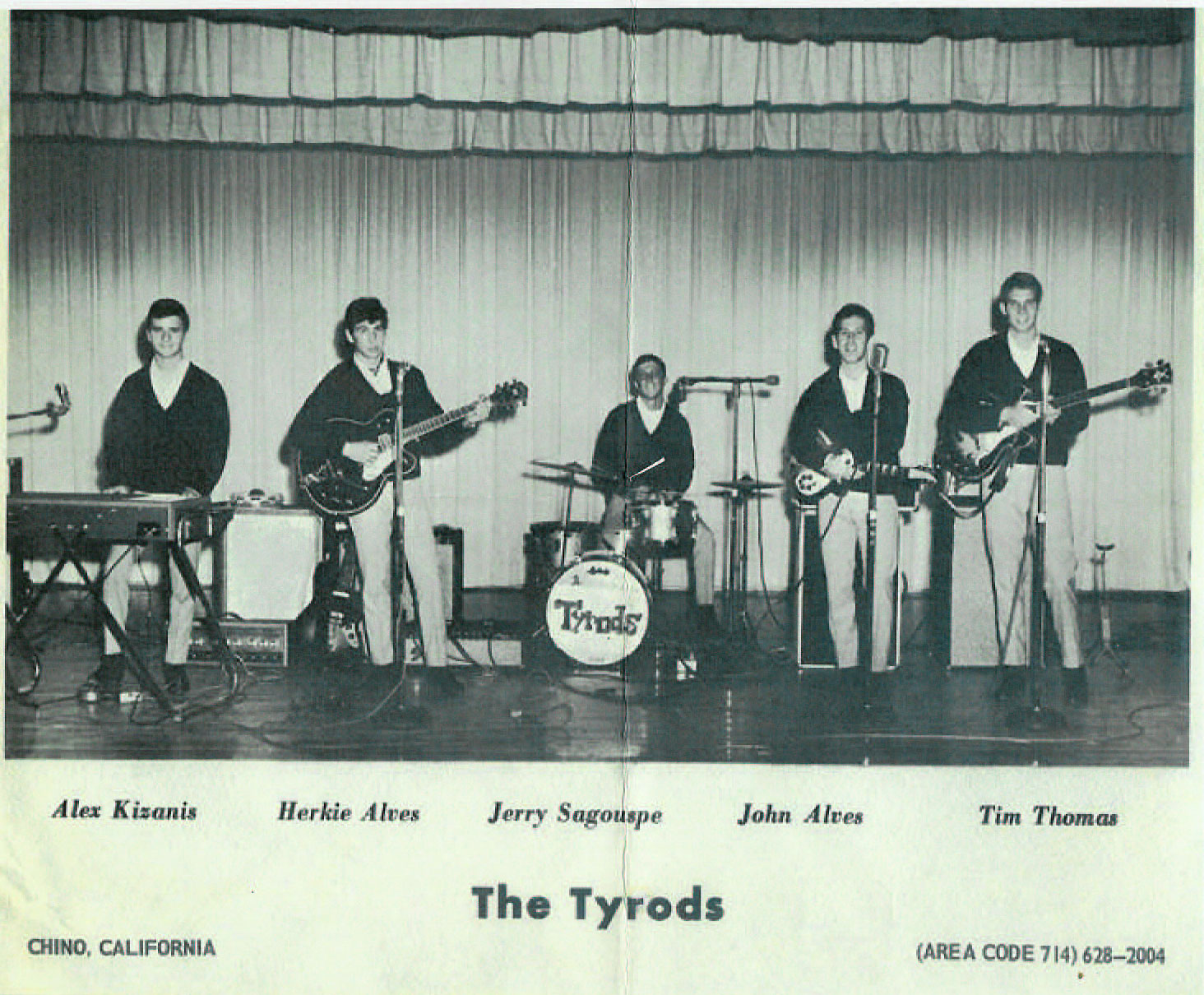
The Tyrods formed in high school in Chino, California in 1965. Chino is in San Bernadino County, just east of Los Angeles.
Members were:
Herkie Alves – guitar John Alves – guitar Alex Kizanis – keyboards Tim Thomas – bass Jerry Sagouspe – drums
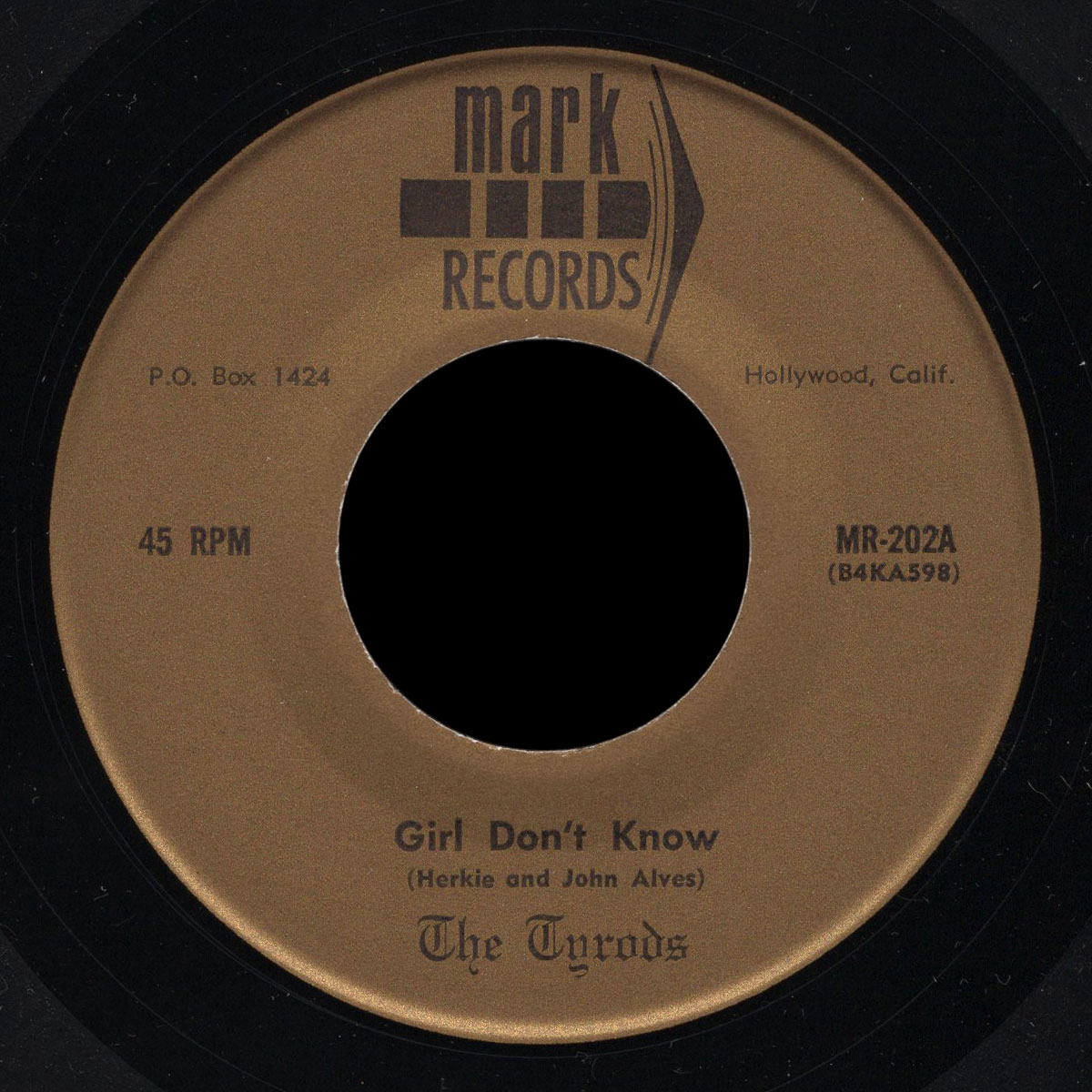
Winning a battle of the bands at the Hollywood Palladium in 1967, earned them recording time to produce a single on Mark Records MR-202.
Brothers John and Herkie Alves wrote both sides of the single. “She Said, He Said” has lyrics worth puzzling out:
She said he said it’s all wrong, But I don’t believe her at all. She said he said it’s all wrong But I said …. (?)
She says that I look like I’m dead, ’cause I never smile any more. I say that I can’t …. (?) There’s so many things in my head.
There’s so many things in my head. Everything around I can’t see. Head’s to the sky, Eyes to the floor.
(?) …. all that riches and fame.
“Girl Don’t Know” includes harmonies that the group would develop in their later recordings.
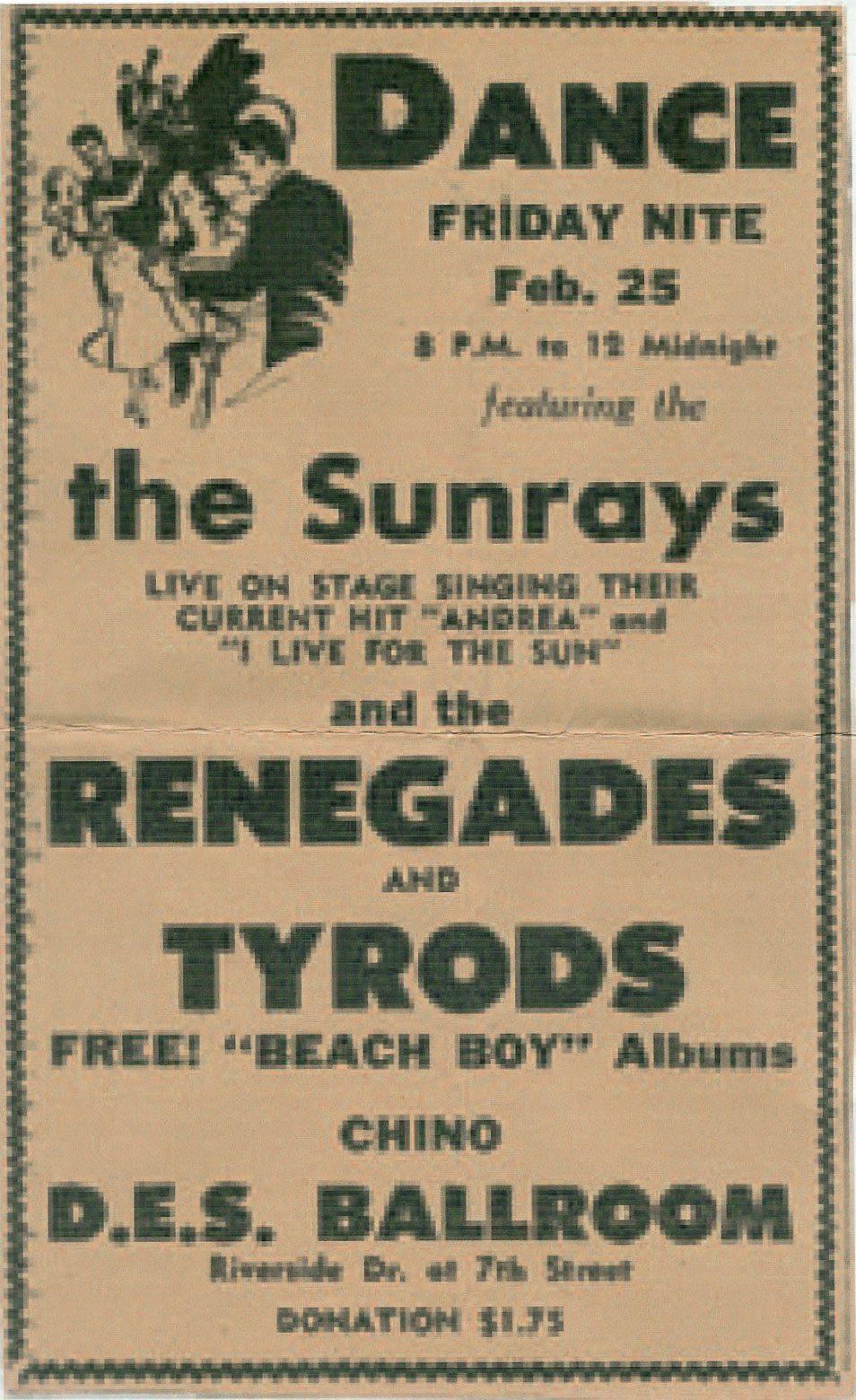
Sunrays, Renegades and Tyrods at the D.E.S. Ballroom in Chino, February 25, 1966
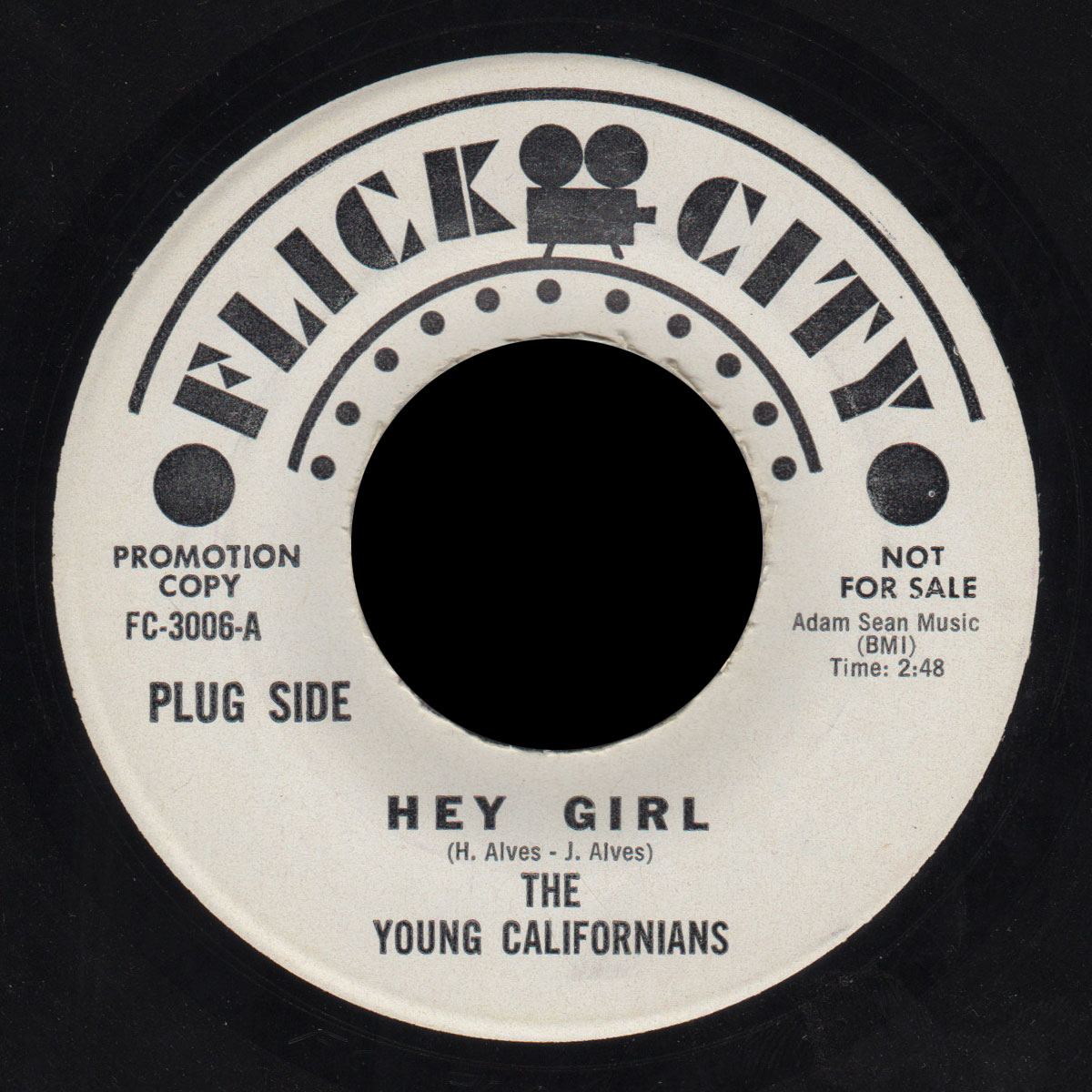
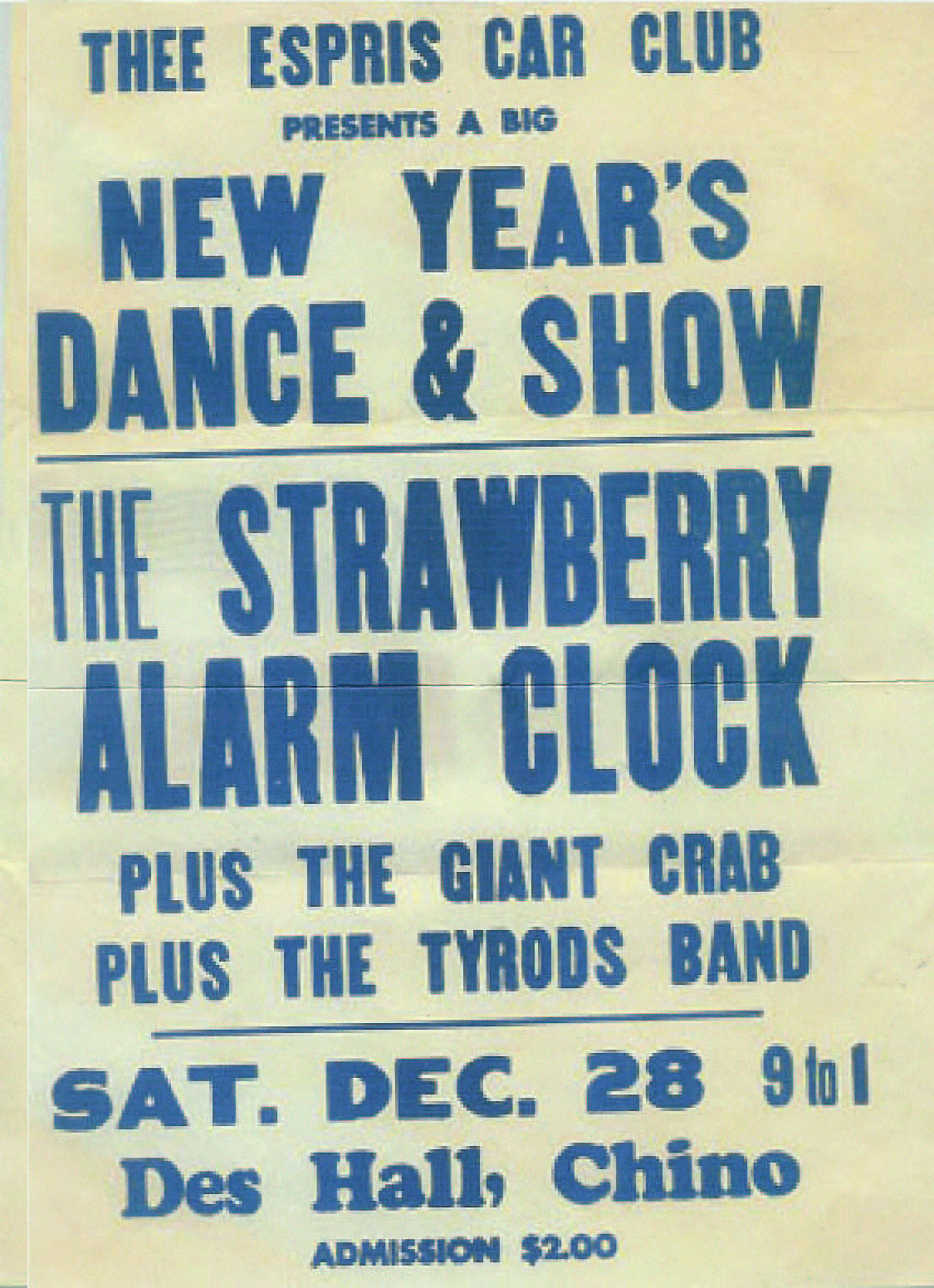
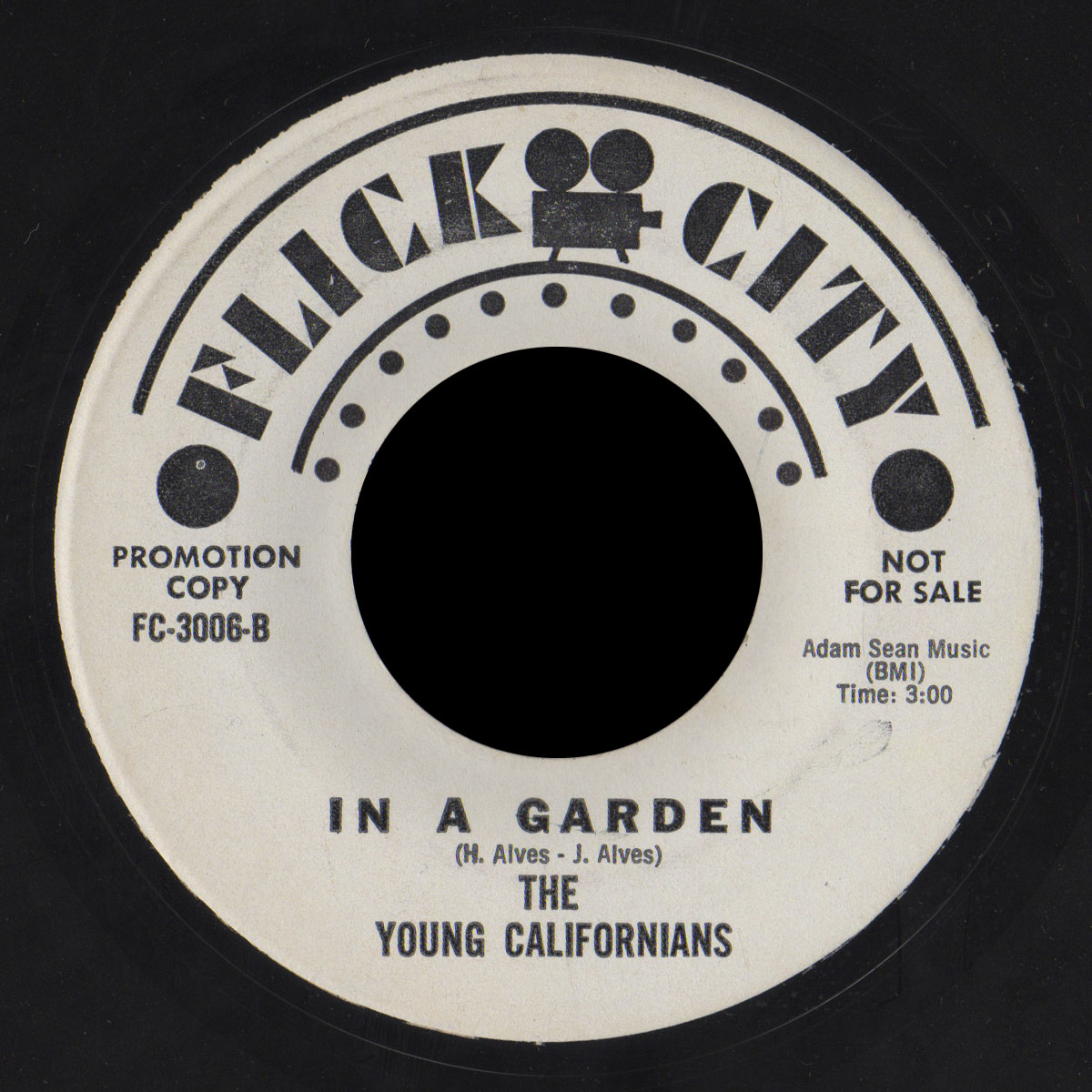
About the beginning of 1969 the band made a second single, “Hey Girl” / “In a Garden” this time on Flick City. The label changed the band’s name on the single to the Young Californians, but for live shows they continued to use the Tyrods name, as seen on posters opening for the Strawberry Alarm Clock, Giant Crab, and the Sunrays.
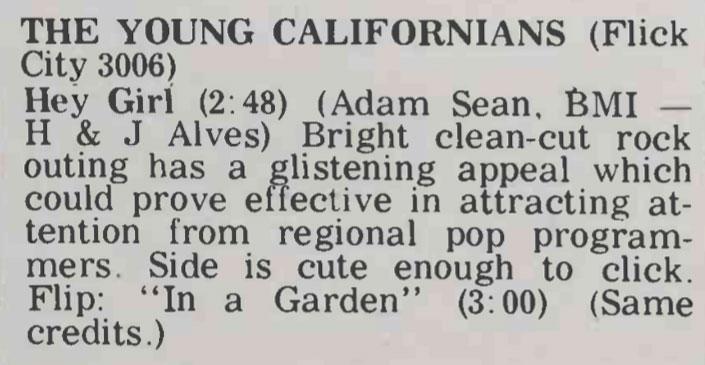
Once again Herkie and John Alves wrote both songs. Released in February, 1969 on Flick City FC-3006, the record did not hit, despite a very favorable review from Cash Box on February 22. The band had developed their sound, and both sides are well-made songs.
Adam Sean Music, BMI published both songs. The brothers registered another song with Adam Sean Music in November, 1968, “Everyone Loves a Sunday Morning”, which has not been released to my knowledge.
The litigious side of the record businessDavid Rolnick owned both Adam Sean Music and Flick City, as well as Take 6, which was known for packaging hits into albums for local radio stations. In 1967, Take 6 had a number of interesting releases by the Nervous Breakdown (Rusty Evans), the Giant Sunflower and others. Rolnick may have started Flick City to distinguish original releases from the repackaged Take 6 product.
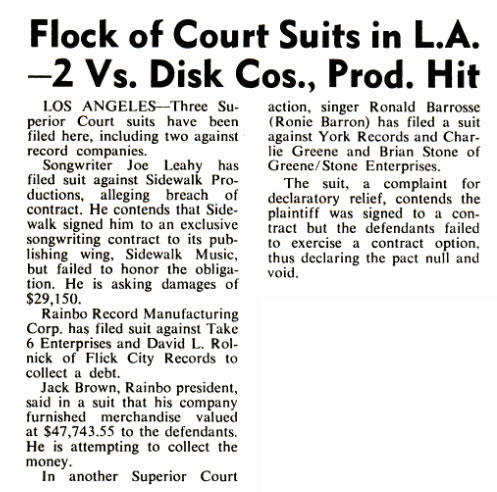
A Billboard article from April 1969, shows Rolnick being sued for over $47,700 by Rainbo Record Manufacturing.
I’ve seen mention that Creed Bratton, guitarist with the Grass Roots, was in this group, but I believe that must have been a different Young Californians.
The Tyrods Band opening for the Strawberry Alarm Clock and Giant Crab at Espris Car Club New Years Dance at the Des Hall, December 28, 1968
In 1969 they had their last single, this time as Buffalo Nickel on Dome Records 507. The sound is even more polished than the Young Californians single, but this time they didn’t use their original songs.
Tony Powers and George Fischoff wrote “Hard to Be Without You”, and this may be the original version, as copyright registration shows February 1969. The more well-known versions are by the Book of Matches on Bell in June, 1969, and by Joey Powers Flower on RCA in December.
Jack Nitzsche and Greg Dempsey wrote “I Could Be So Good to You”, which was originally done (I think) by Don & the Goodtimes in 1967. Don McGinnis arranged the songs and Kingstreet Productions has a credit on the label.
I believe the group broke up shortly after this release.
Jerry Sagouspe would join Merrell Fankhauser, appearing on a number of albums beginning in the 1990s.
There was a Johnny Alves who was in Manuel & the Renegades with Manuel Rodriguez, Corky Ballinger, Roger Anderson and Mike Le Doux but I don’t believe this is the same person as the John Alves in the Tyrods.
Info & images on the group forwarded to me, originally from Jerry Sagouspe.
Info on Take 6 from Billboard and also Lisa Wheeler’s Radio Use Only.
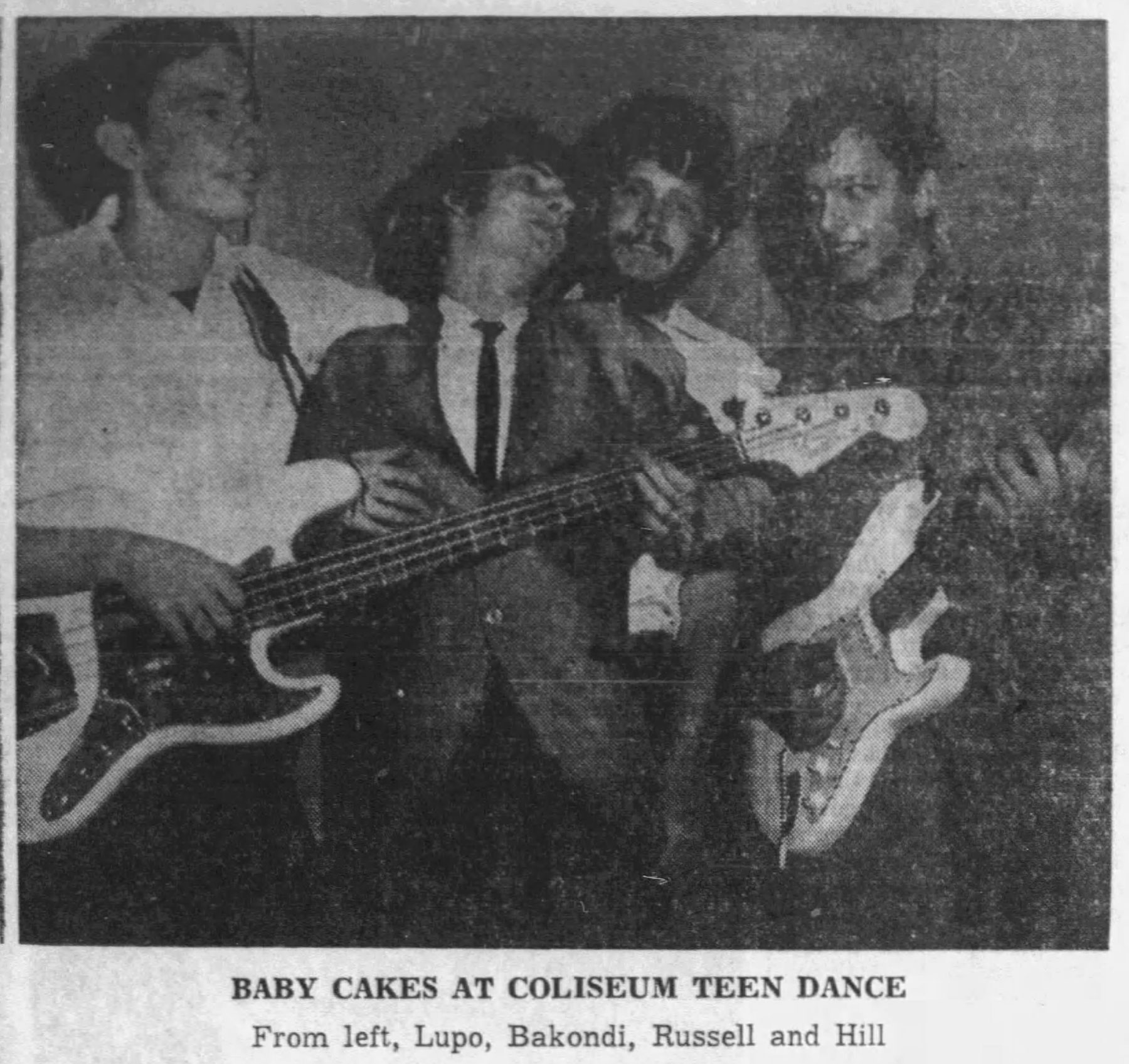
The Baby Cakes, July, 1965. From left: Don Lupo, Chuck Bakondi, Pat Russell and Tommy Hill
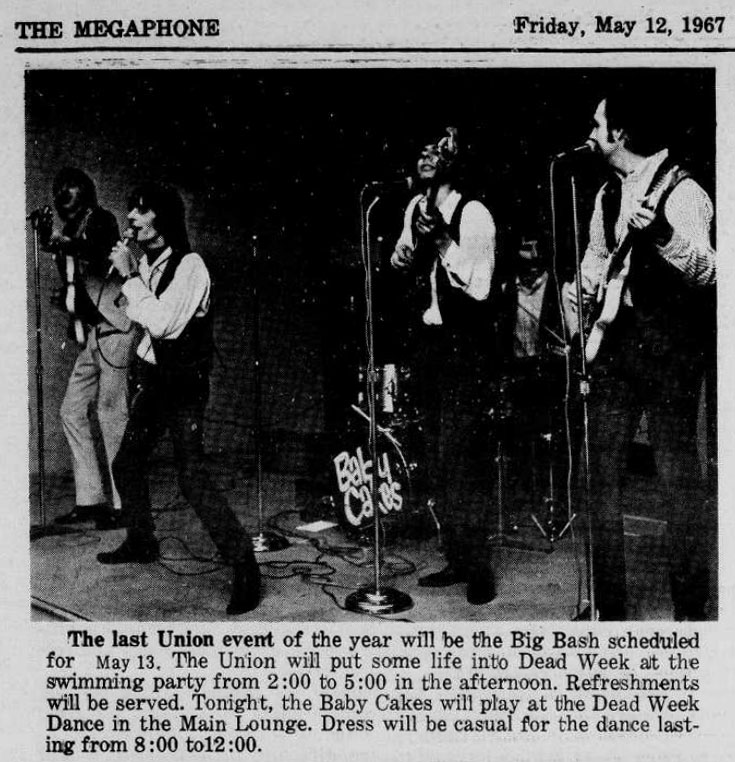
The Baby Cakes were a legendary Austin band that lasted from 1965 until August, 1967. The Baby Cakes never recorded under that name, but they may have been the first Austin group with long hair, they won the first Aqua Festival Battle of the Bands, and they were a big influence on later groups. Two of their members would go on to form the Lavender Hill Express.
John Schwertner of the Reasons Why told Not Fade Away about the Baby Cakes:
We had always looked up to them ’cause they were the first band I remember to play English style rock and roll. A real scruffy looking band, sort of the Texas Rolling Stones I guess. They helped us get some bookings and they’d come to our shows and tell us how to improve our band, really helped us alot.
Early lineups included:
Chuck Bakondi – vocals Leonard Arnold – lead guitar Tommy Hill – rhythm guitar, 12-string guitar Don Lupo – bass Pat Russell – drums
At some point Layton DePenning joined on guitar and vocals.
After drawing crowds of University of Texas students to their rehearsal space, a woman named Paula started booking the group for parties. Michael Lucas would become their promotions and business manager.
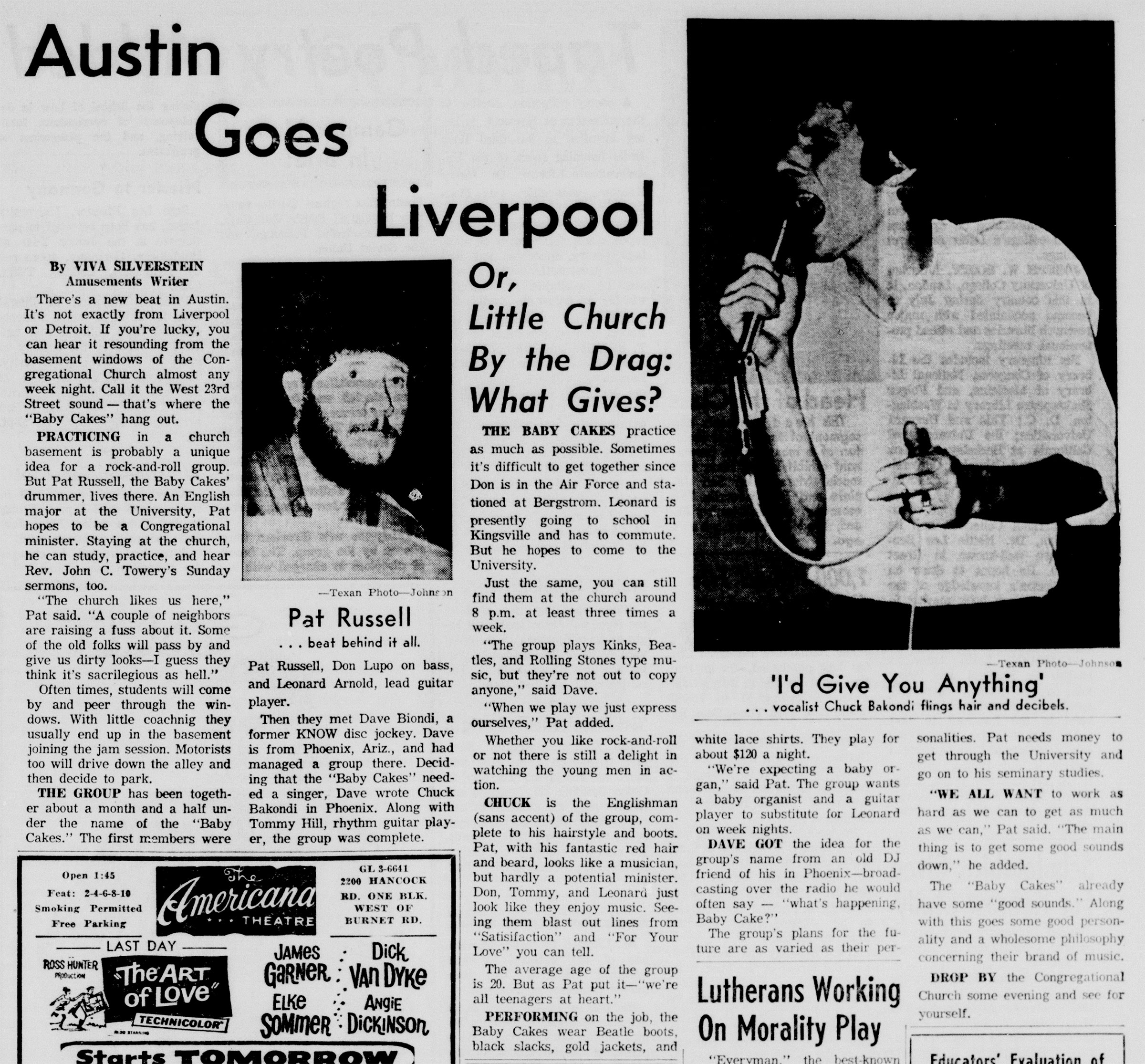
The Austin Daily Texan ran a feature on the group on July 27, 1965:
Austin Goes Liverpool Or, Little Church by the Drag: What Gives?
There’s a new beat in Austin … you can hear it resounding from the basement windows of the Congregational Church almost any week night. Call it the West 23rd Street sound — that’s where the “Baby Cakes” hang out.
Practicing in a church basement is probably a unique idea for a rock-and-roll group. But Pat Russell, the Baby Cakes’ drummer, lives there. An English major at the University, Pat hopes to be a Congregational minister …
The group has been together about a month and a half under the name of the “Baby Cakes.” The first members were Pat Russell, Don Lupo on bass, and Leonard Arnold, lead guitar player.
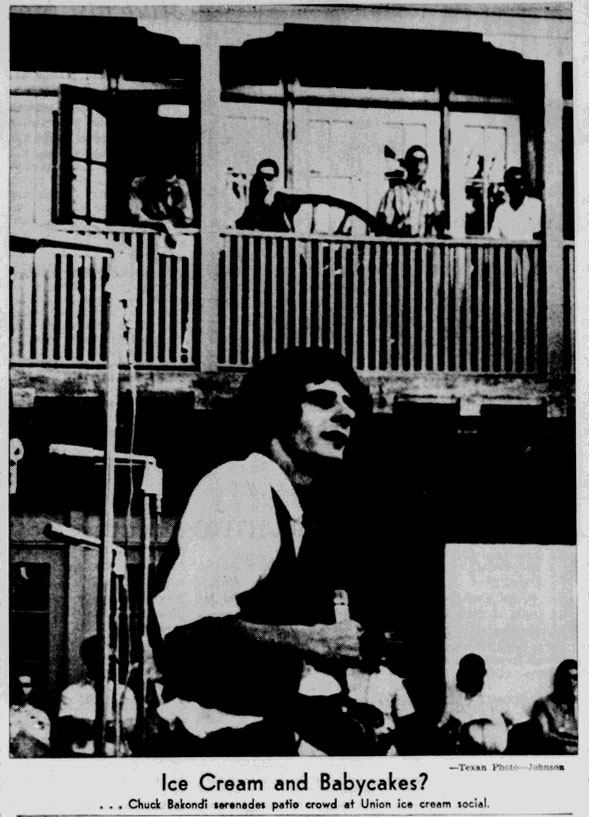
Chuck Bakondi of the Baby Cakes at the Union, September 1965
Then they met Dave Biondi a former KNOW disc jockey. Dave is from Phoenix, Ariz. and had managed a group there. Deciding that the “Baby Cakes” needed a singer, Dave wrote Chuck Bakondi in Phoenix. Along with Tommy Hill, rhythm guitar player, the group was complete …
Sometimes it’s difficult to get together since Don is in the Air Force and stationed at Bergstrom, Leonard is presently going to school in Kingsville and has to commute …
Chuck is the Englishman (sans accent) of the group, complete to his hairstyle and boots. Pat, with his fantastic red hair and beard, looks like a musician, but hardly a potential minister. don, Tommy, and Leonard just look like they enjoy music. Seeing them blast out lines from “Satisfaction” and “For Your Love” you can tell.
The average age of the group is 20. But as Pat put it – “we’re all teenagers at heart.”
Performing on the job, the Baby Cakes wear Beatle boots, black shirts, gold jackets and white lace shirts. They play for about $120 a night.
“We’re expecting a baby organ,” said Pat. The group wants a baby organist and a guitar player to substitute for Leonard on week nights.
Dave got the idea for the group’s name from an old DJ friend of his in Phoenix – broadcasting over the radio he would often say – “what’s happening, Baby Cake?”
The Austin American wrote on July 29, 1965:
“‘Way Outers’ ‘Baby Cakes’ Booked for City Teen Dance”
The Baby Cakes – a newly organized rock-and-roll group of the “way out” variety – will provide half the dance music Friday night at the Parks and Recreation Department’s first annual City-Wide Teen Dance in the City Coliseum …
The second band scheduled for the evening is the popular Imperials group led by Frank Nunez and featuring vocalist Little Joe Castillo. The Imperials are known for their vibrant pop-Latin style and their recordings on the Valmon label …
A special guest appearance by the Petites – sisters Suzanne and Janice Dillingham of Brownwood – will be another highlight …
The Petites recorded the recent “Baby Blue Mustangs” hit for Troy Records, and have another current poll climber – “Baby Heartbreak”.
Frank Nuñez and the Imperials made eight Spanish-language singles for Valmon. I’ve heard an early version of the Baby Cakes backed Ronnie Cells on a single for Valmon: “My Love Is Haunted” / “Chicken” as Ronnie Cells and His Continentals on Valmon VN-1-067, issued circa May 1965.
Ronnie Cells had been performing in Austin since 1967, and used the Continentals name for his backing band from 1962 until 1970, when he changed to Ronnie Cells and the Fidels! Members of the Baby Cakes may have been part of the Continentals for a time, but if so, they struck out on their own by summer of ’65, even as Ronnie continued with a group called the Continentals for years to come.
The Austin Statesman reported on September 8, 1965:
KHFI cameras and tape recorders will be on the prowl this weekend to pick up the sounds at local fraternity houses. The taping, headed by Mike Ginn, is in preparation for a special program called Talent in Central Texas to be aired probably the following weekend.
Local Rock ‘n’ roll groups scheduled for recording include The Babycakes … a college group known as the Cavaliers, and a high school group called the Pack.
The Austin American on December 16, 1965 names their early manager: “Booked Friday at the Circleville Hoedown Club in Taylor – the Baby Cakes, a popular Austin rock band. Manager Leroy Ponkoney says the band returns by ‘popular demand'”.
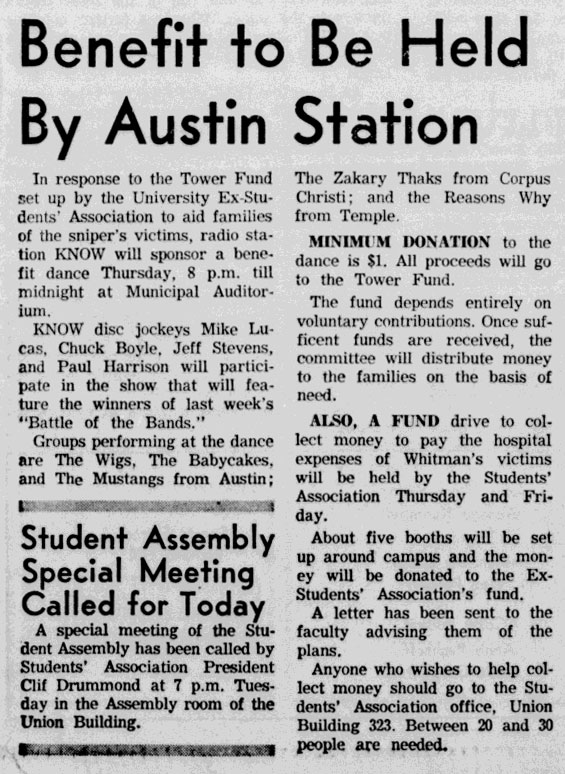
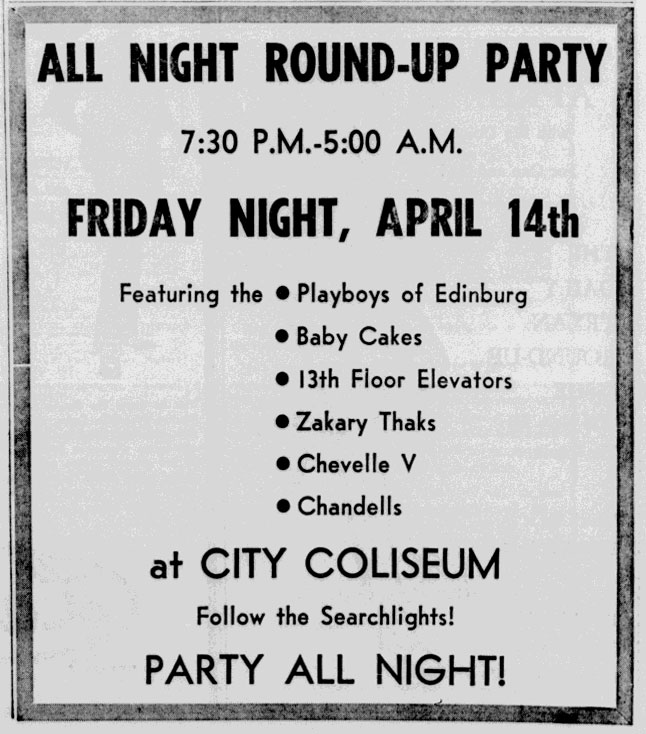
Tower Fund benefit with bands including the Baby Cakes and the Wig.Wow! April 14, 1967: Baby Cakes with the Playboys of Edinburg, 13th Floor Elevators, Zakary Thaks, Chevelle V and Chandells for the All-night Round Up Party at the City Coliseum
On March 4, 1966, the Austin American wrote:
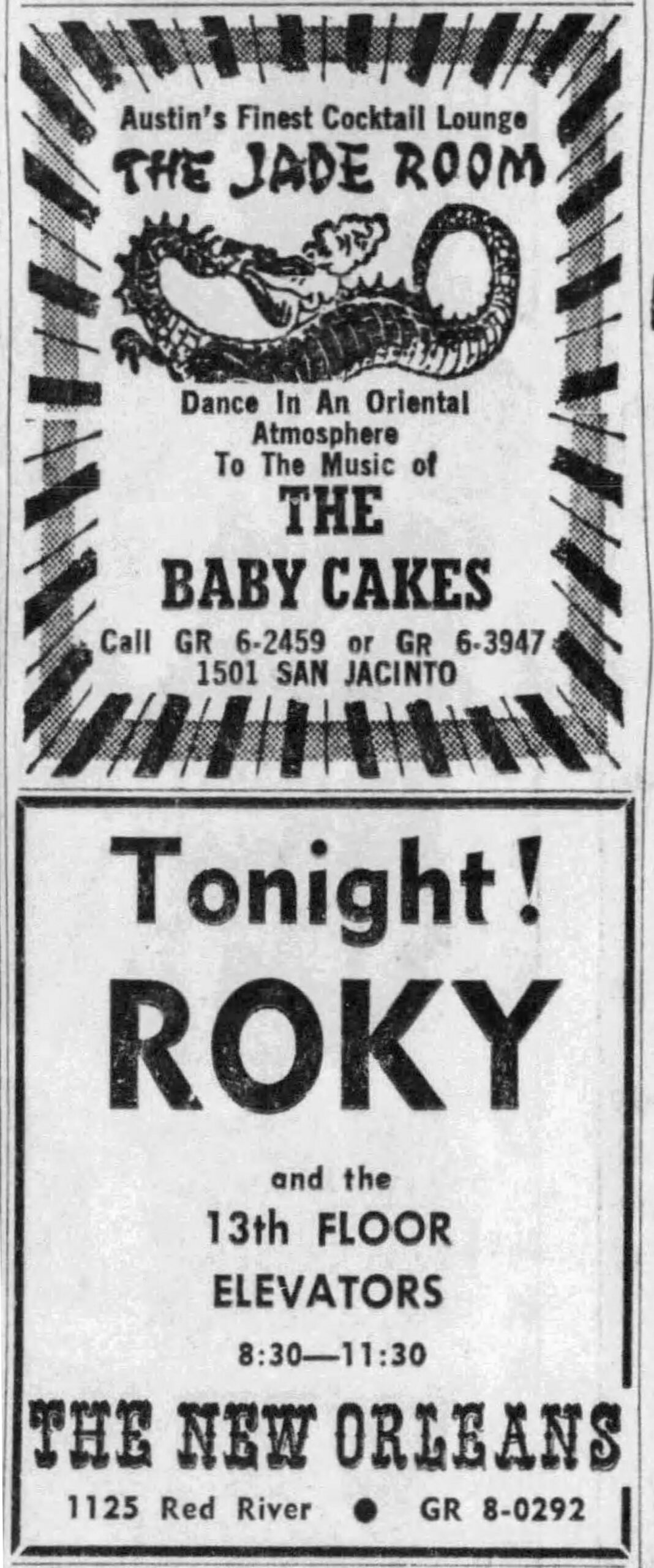
New feature at the Jade Room on Tuesday and Wednesdays is a big dance contest. With the Baby Cakes supplying the music, couples vie for free movie passes and record albums. This week, KNOW program director, Chuck Boyle, who also manages the Baby Cakes, was on hand along with staffer Richard Moore to judge the event. When asked how he managed to pick his winners from all the high-stepping young girls on the dance floor, Doyle confessed: “I watch the boys.” Oh well, to each his own, Chuck.
In August, 1966, the Baby Cakes participated in a benefit for the Tower Fund, to aid families of the victims of the University of Texas tower sniper. KNOW DJs hosted the event, and other bands included the Wig, the Mustangs, the Zakary Thaks and the Reasons Why.
The Austin American reported on August 4, 1966 “they are scheduled to being a European tour this fall, and are now negotiating the release of a new recording.
1967 photo of the Baby Cakes, a few months before their split
The Austin American on April 6, 1967 reported:
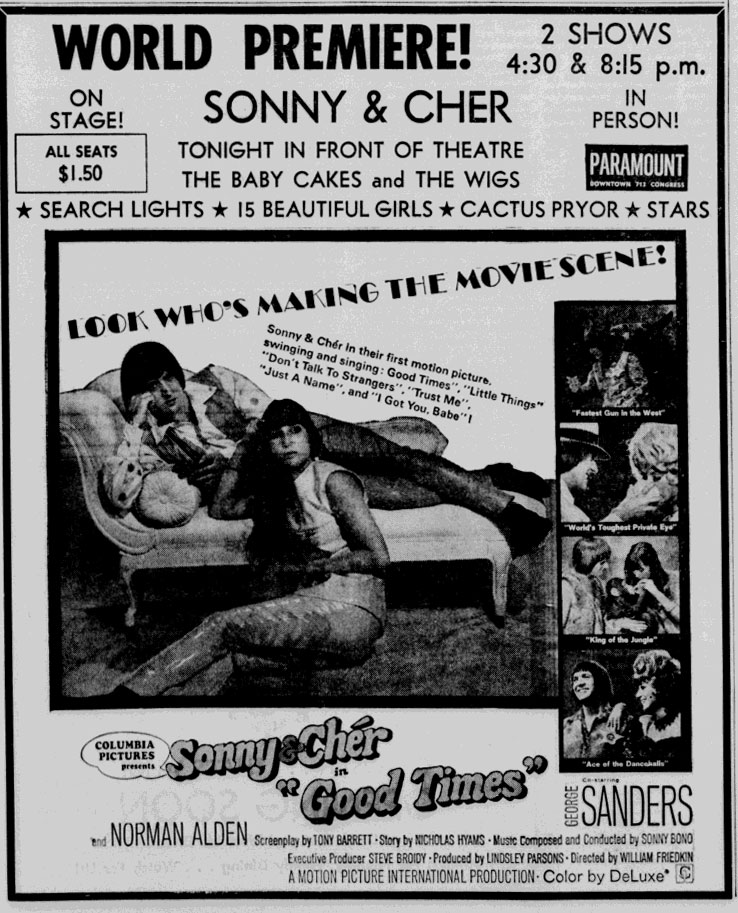
The Baby Cakes … will be back in town to perform (along with The Wig) outside the Paramount Theater Wednesday night for the world premier of “Good Times” …
And starting Thursday night, the group will be appearing weekly at the New Orleans Club. Lately, however, the Baby Cakes have been all over the place – at Texas Tech in Lubbock, at clubs in Dallas and Abilene, at the Catacombs in Houston … in Corpus Christi and at Texas A&I College in Kingsville. They’ll also be sharing the bill with the Playboys of Edinburgh at a Friday night bash in City Coliseum.
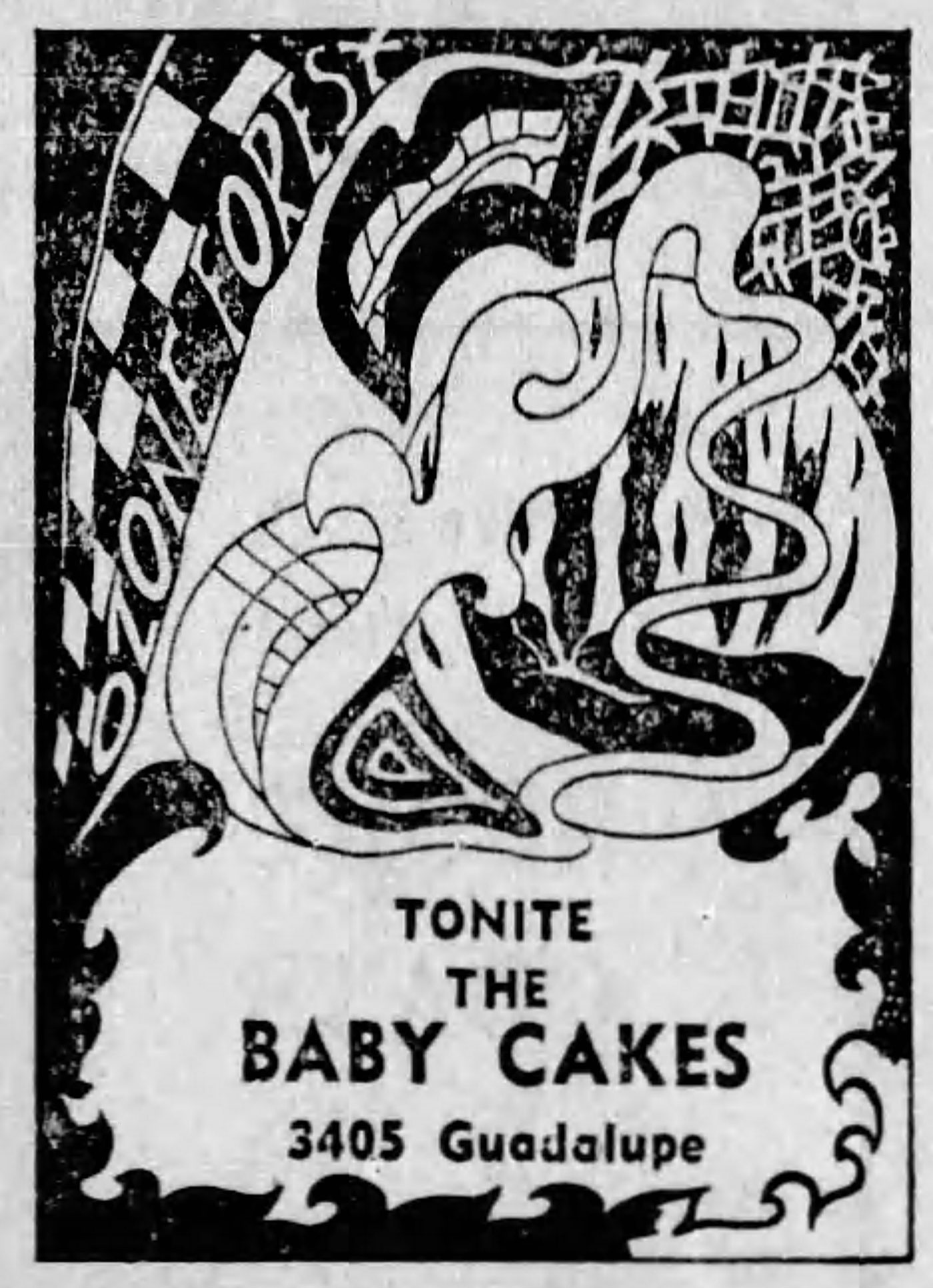
The last notice I can find for the Baby Cakes is from August 2, 1967, and ad stating they would be playing at Ozone Forest on 3405 Guadalupe “each and every Wed.”
On September 3, 1967, the Austin American announced a September 9 benefit for KMFA-FM, Austin’s classical music station … “making its debut will be South Canadian Overflow with former Wig [sic] Chuck Bakondi, Baby Cakes ex [sic] Johnny Richardson, and former Reasons Why John Inman, Tommy Langford and Dennie Dolan.”
At some point in 1967, Leonard Arnold and Layton DePenning formed the Lavender Hill Express with John Schwertner of the Reasons Why and two members from the Wig, Jess Yaryan and Rusty Weir. Baby Cakes manager Michael Lucas would continue with the Lavender Hill Express.
The first Lavender Hill Express notice I’ve found is from the Jade Room on November 7, 1967.
Don Lupo would go on to play with the Georgetown Medical Band, Liquid Glass with Bill Campbell and Virgil Harris (lamingo Lounge at 3709 Lake Austin Blvd on April 1, 1968) and other groups before moving to Tucson in 1971 and continuing in music.
Tommy Hill moved to Nashville but returned to Austin to form Tommy Hill and the Country Music Revue (also covered on Sonobeat).
1st notice I can find for the Baby Cakes, with the Outcasts and the Greenmen, KNOW show at the Municipal Auditorium, July 9, 1965
Partial list of live shows:
1965:
July 9: KNOW show with the Outcasts of San Antonio, and the Greenmen at the Municipal Auditorium.
July 18: Cimmaron at 4900 S. Congress
July 30: City-Wide Teen Dance at City Coliseum with the Imperials
August 10: Austin Aqua Festival Battle-of-the-bands with Rob London & the Rogues, the Outcasts, the Emerals, the Pack and the Spades.
September 19: Union Week Ice Cream social
November 6: The Adolphus Hotel in Dallas for a North Texas State College fraternity party
December 18: TCU Fraternity party at the Hotel Texas in Fort Worth
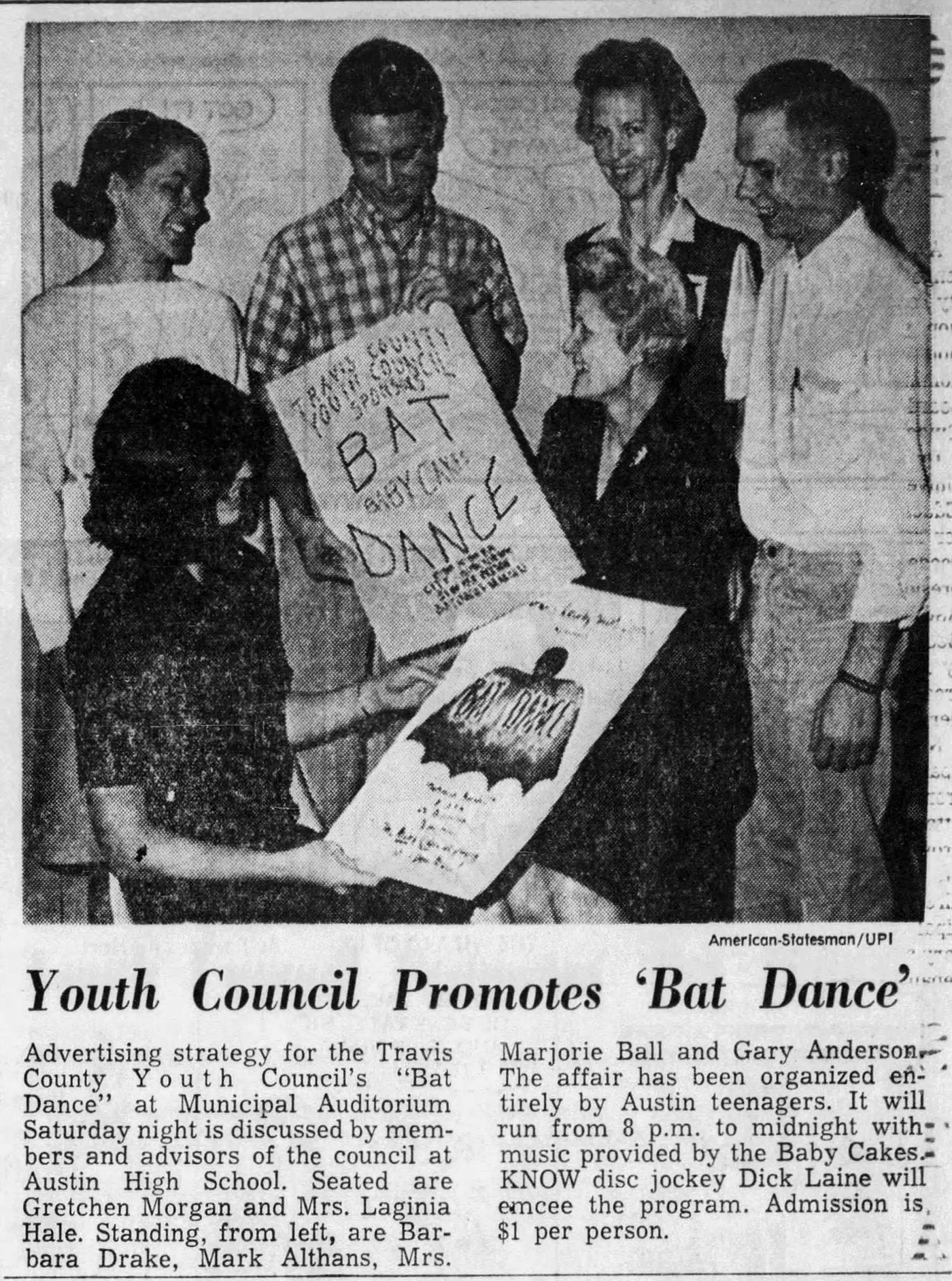
Baby Cakes play the Bat Dance, March 12, 1966February 22, 1966: The Baby Cakes at the Jade Room, while upstarts Roky and the 13th Floor Elevators are at the New Orleans Club
1966:
January 16: The Circleville Hoedown Night Club
January 22: Austin High School senior party at A.L.A. Hall
March 6: opening for Sonny & Cher, with the Outcasts and Scotty McKay, at the Municipal Auditorium
March 12: “Bat Dance” at the Municipal Auditorium
March 14: at the New Orleans Club
March 19: Gunsmoke a Go-Go at ALA Hall March 20: Austin Livestock Show
April 7: at the New Orleans Club
April 27: at the New Orleans Club
April 29: Club Westerner Teenage Dance, Victoria, TX
May 2 and May 5: at the New Orleans Club
June 1: at the New Orleans Club June 1: with the Nomads at a midnight screening of Hold On!
June 10: Club Westerner Teenage Dance, Victoria, TX
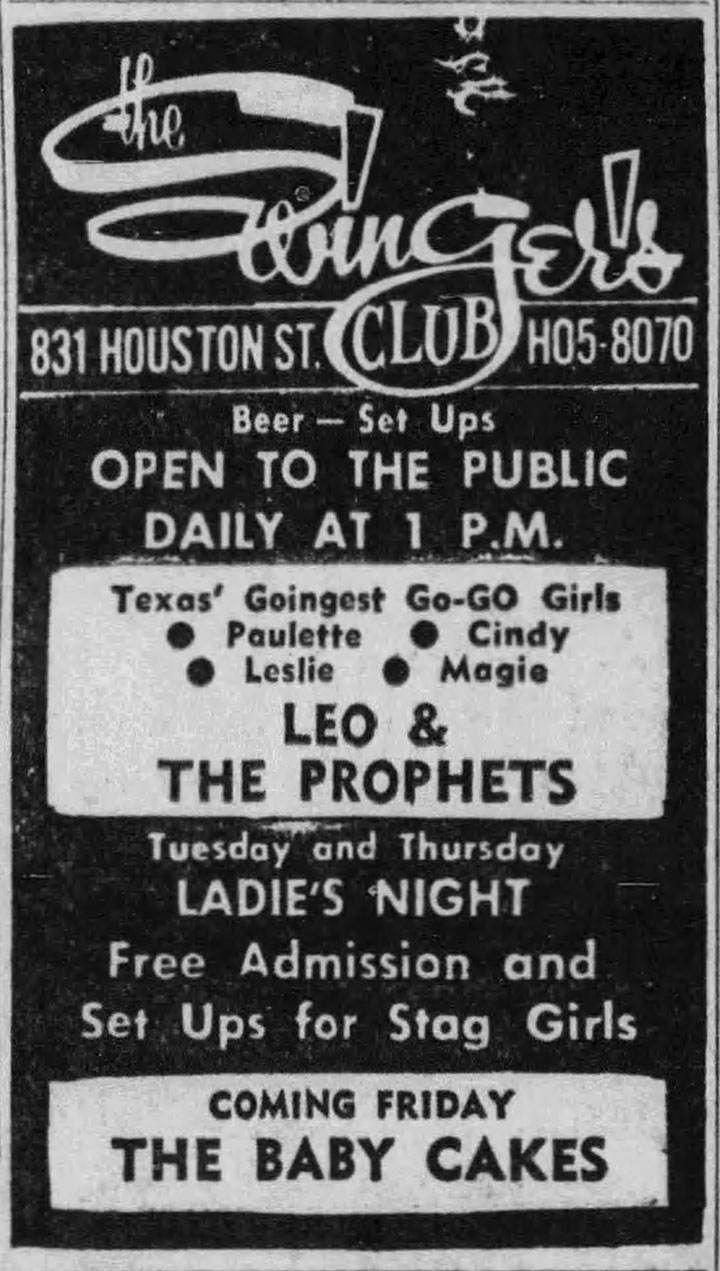
June 19: Swinger’s Club Sunday Jam Session
June 29: Swinger’s Club
July 6: The Swingers Club “with go-go girls Leslie and Maggie”
July 18: Club Westerner, Victoria
August 4: Starlight Revue series at Zilker Hillside Theater
August 11: Austin Aqua Festival at the Municipal Auditorium: “Last year’s winner, ‘The Babycakes,’ will be back this year as the house band hosting the visiting bands.”
August 19: The Circleville Hoedown Nite Club in Rockdale, followed by Ronnie and the Farrells the next night
The Swingers Club, after Leo & the Prophets, October 1966
October 7: The Swingers Club
October 24: Texas Federation of the Blind variety show in Town Hall at Hancock Center
October 30: Lanier High gym
November 12: The Same Place (managed by Burt Womack)
December 9: The Catacombs in Houston
December 30: The Swingers Club
Baby Cakes and the Wig opening the premier of Sonny & Cher’s “Good Times” at the Paramount, April 12, 1967
1967:
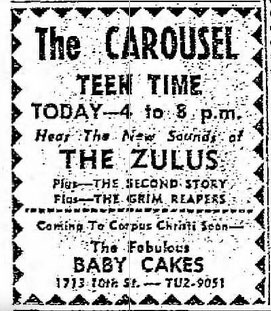
At the Carousel on May 11, 1967 preceded on May 7 by the Zulus, the Second Story and the Grim Reapers
January 27 The Catacombs in Houston with The Cyrkle and Deuces Wild
February 10: Rockdale Teen Club (American Legion Hall)
April 7: The New Orleans Club
April 12: Baby Cakes and the Wig at the premier of Sonny & Cher’s “Good Times” at the Paramount. April 13: The New Orleans Club April 14: Baby Cakes with the Playboys of Edinburg, 13th Floor Elevators, Zakary Thaks, Chevelle V and Chandells for the All-night Round Up Party at the City Coliseum
April 27: The New Orleans Club
May 4: The New Orleans Club
May 11 and 12: The Carousel, Corpus Christi
May 19: Richard King High School senior dance at the Corpus Christi Country Club with Kit and the Outlaws
June 6-11: The Pusi-Kat, San Antonio, with Joe Thomas
June 17: at the New Orleans Club
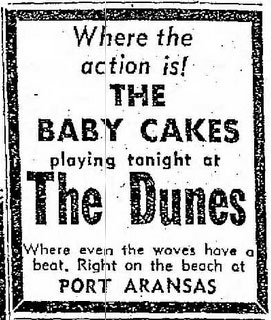
July 2: The Dunes, Port Aransas
July 5: The New Orleans Club
July 18-23: The Pusi-Kat, San Antonio
August 2: The Ozone Forest on 3405 Guadalupe “each and every Wed.”
August 9: The Ozone Forest
One of their last advertized shows, at Ozone Forest, Wednesday, August 9, 1967
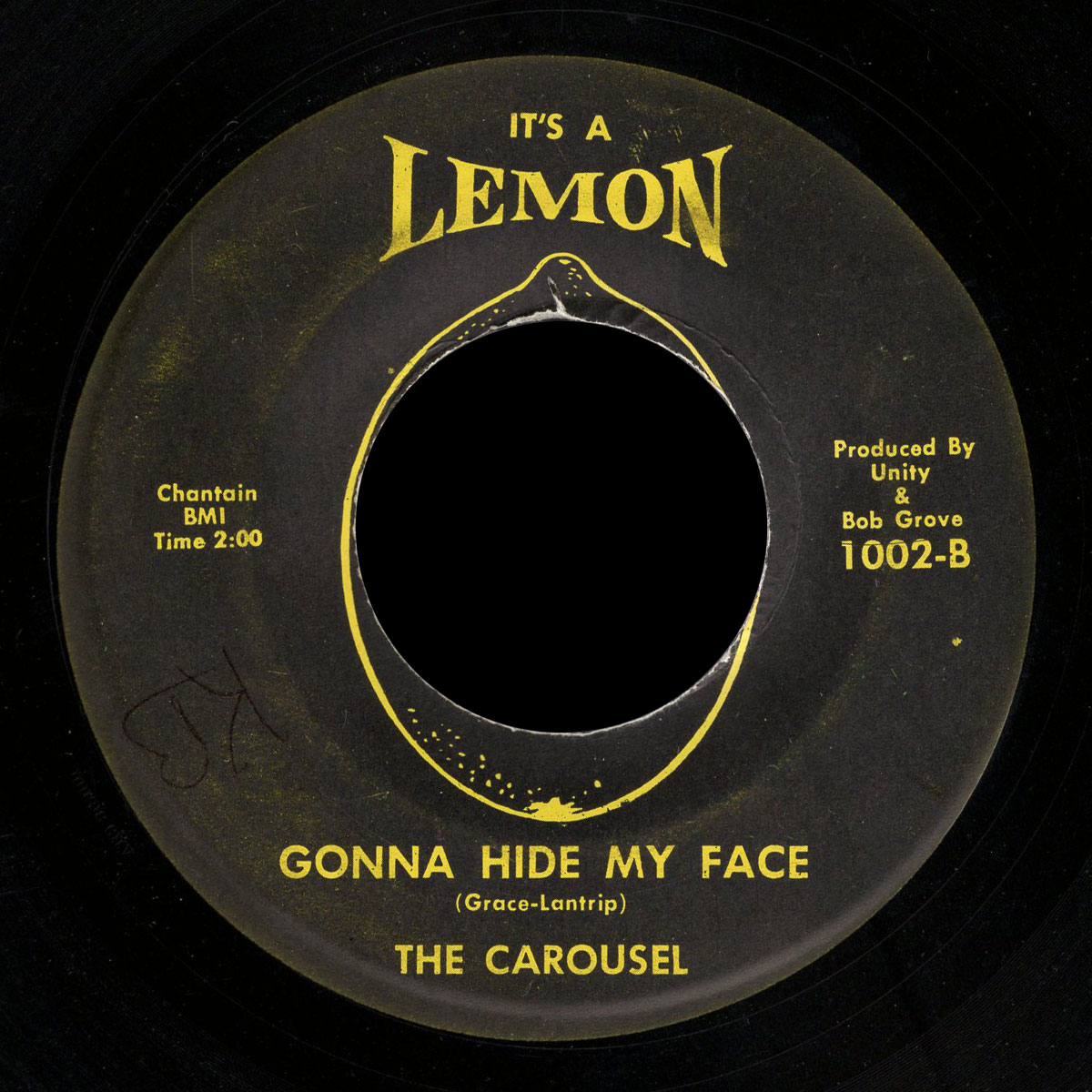
The Carousel recorded in Birmingham, Alabama in 1969. Members were:
Carl Williams – lead vocals Richard Studdard – vocals, keyboards Ronald Naramore – vocals, guitar Donny Grace – vocals, bass Mike Patton – vocals, drums
“Girl Maybe You” and “Gonna Hide My Face” are fast-paced pop originals by Donny Grace. Bob Grove and Unity produced for It’s a Lemon 1002.
Bob Grove ran Prestige Recording Studio in Birmingham, where he had recorded artists for his own Unity Record Company label with its beautiful logo of black and white fists with a dove.
I know of two releases on Unity, Candy Stanton’s “Now You’ve Got the Upper Hand” / “You Can’t Stop Me” (both written by Bo Fowler and produced by Bob Grove and Richard Dingler), and Underground Euphoria featuring Keisa Brown “What Can I Do About You” / “Let’s Go Back (To Our Little World)”.
The Carousel single came a couple years after these. I assume it was also recorded at Prestige. The Carousel 45 was preceded on the It’s a Lemon label by a hard rock single by The Brood “Virginia Neal” / “The Roach”. The Brood was Dale Aston of the Torquays along with Steve Salord, George Landman and Bobby Marlin.
I suppose there’s another release on It’s a Lemon between the Brood and the Carousel, but so far I haven’t found it.
Anyone have a copy of the It’s a Lemon singles, or a photo of The Brood?
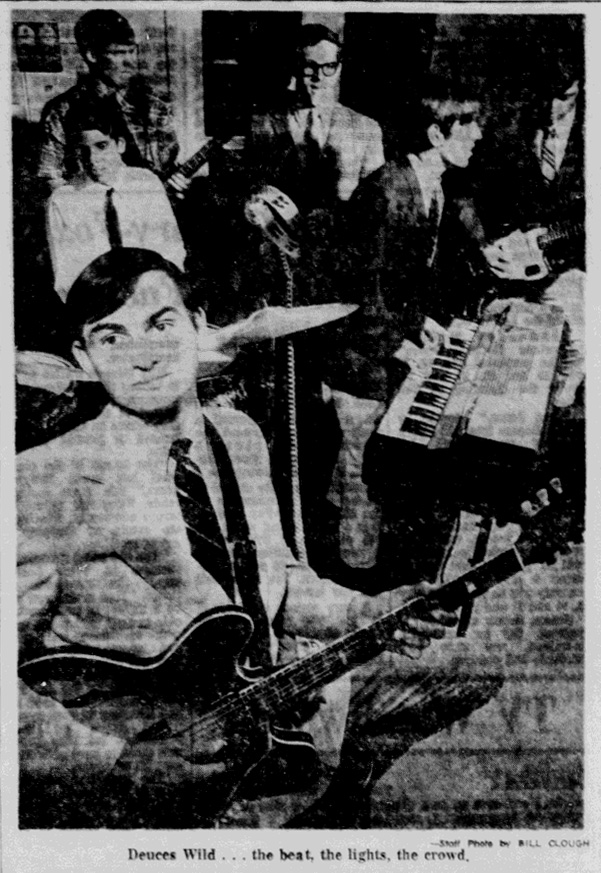
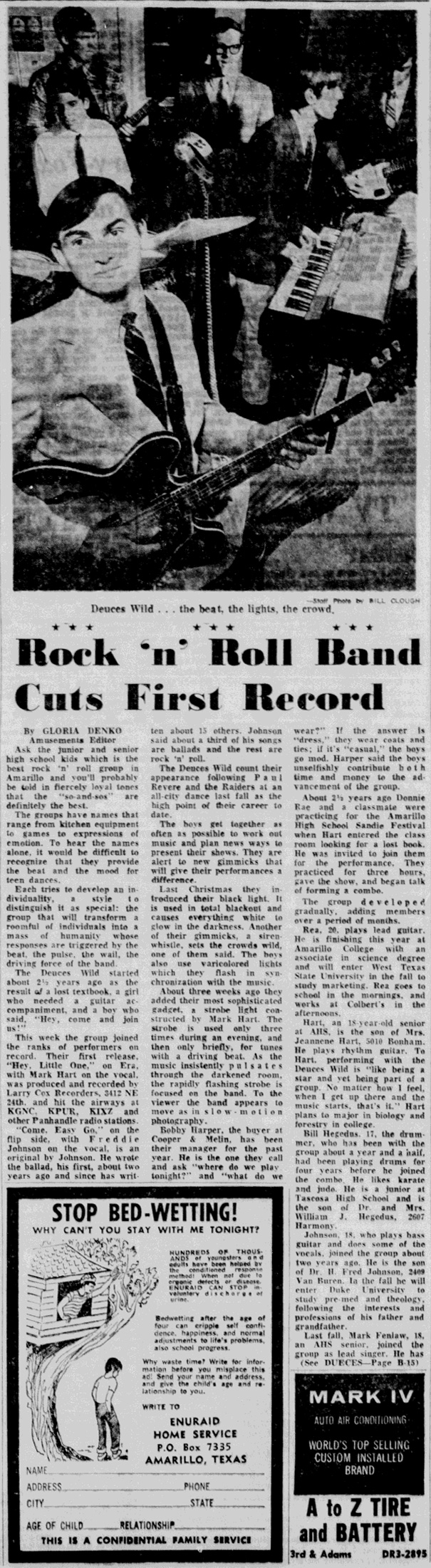
Dueces Wild featured in the Amarillo Sunday News-Globe on May 28, 1967
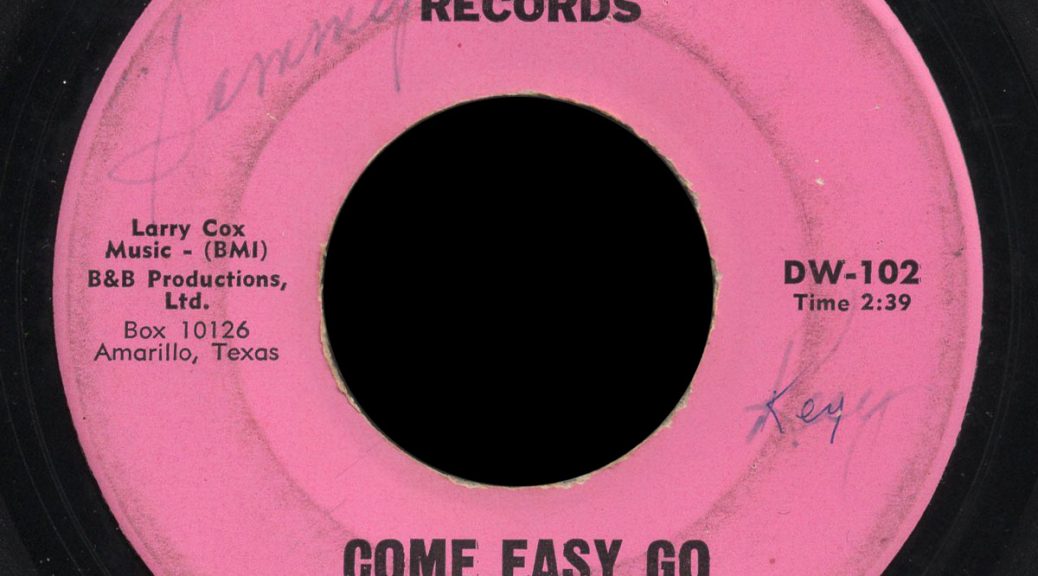
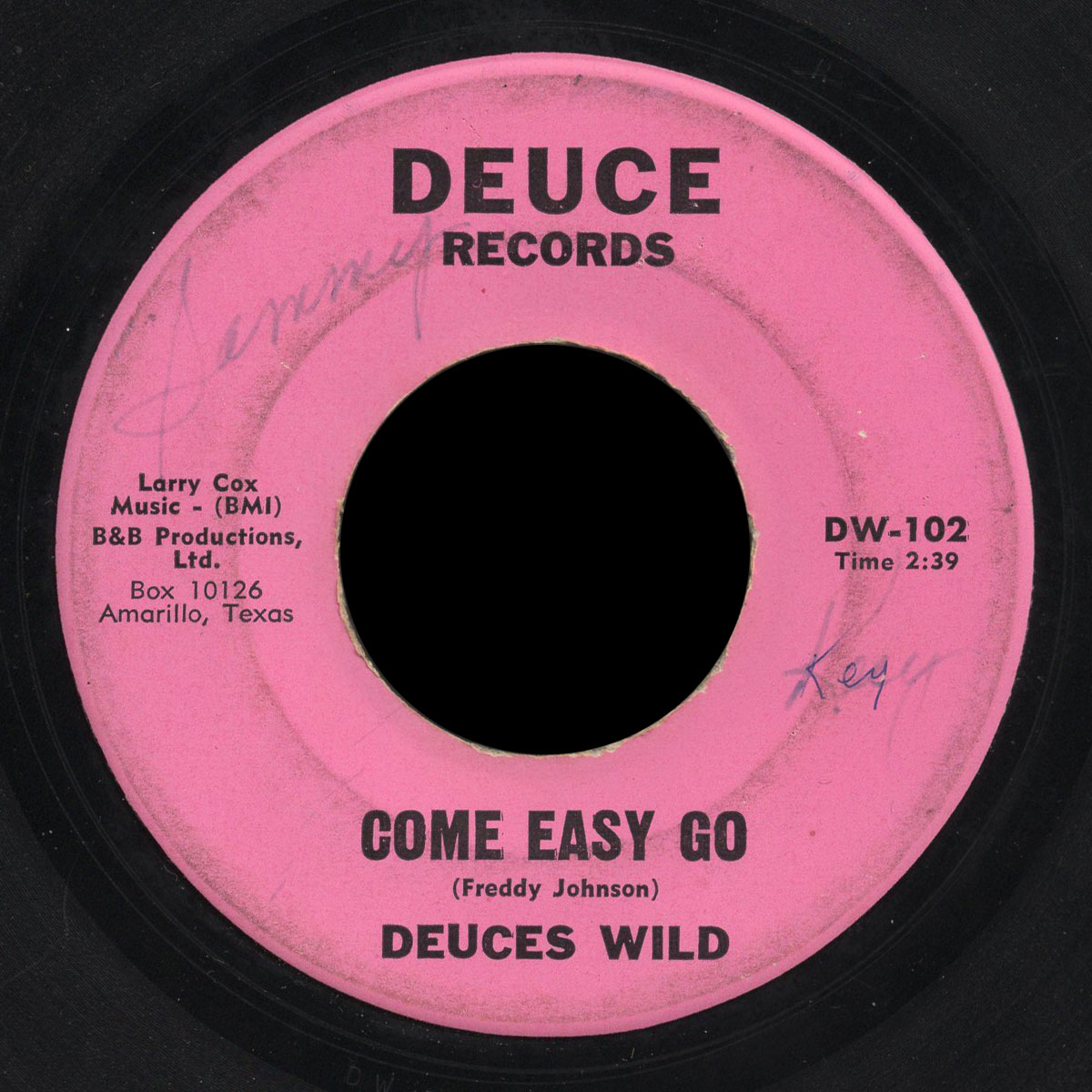
The Deuces Wild formed in high school in Amarillo, Texas in 1965. They continued at least through 1967 and cut one 45 on their own Deuce Records label, “Hey Little One” / “Come Easy Go”.
Members were:
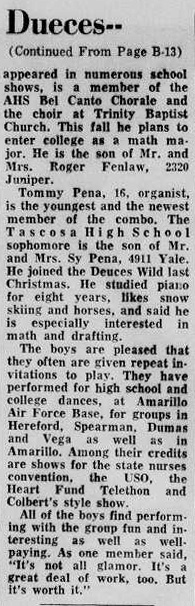
Mark Fenlaw – lead vocals Freddy Johnson – bass and vocals Donnie Rae – lead guitar Mark Hart – rhythm guitar Tommy Pena – organ Bill Hegedus – drums
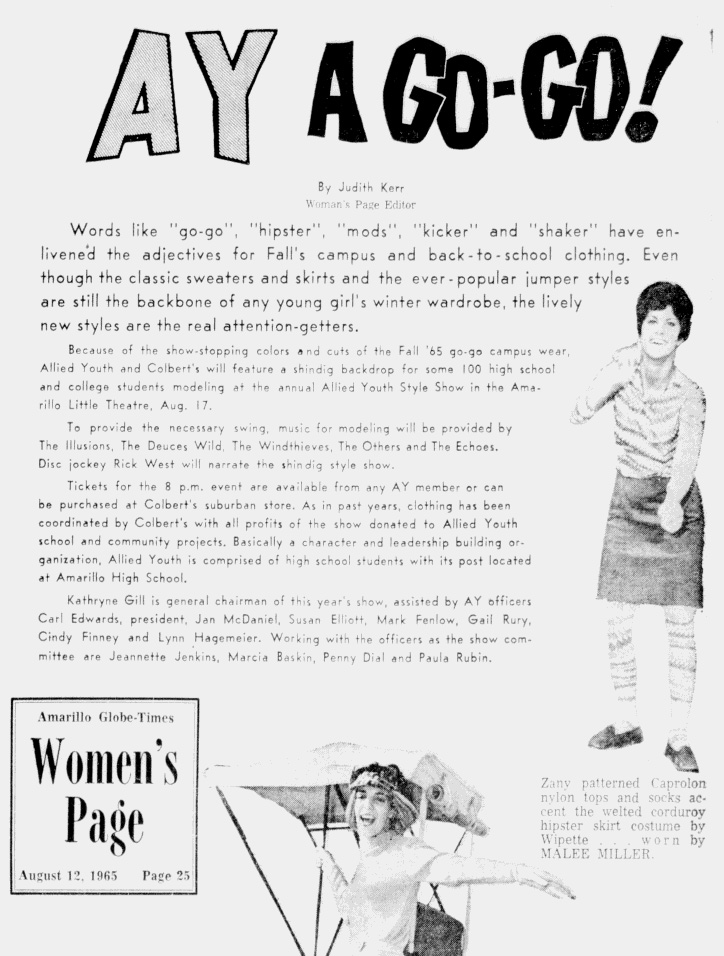
AY a Go Go: DJ Rick West emceed, and local youngsters were featured in fashion photos by Lonnie Sutherland. Models included Malee Miller, Sally Lewis, Suzanne Thompson, Dennis Coyne, Jane Pangburn, Lynn Hagemeier, David Spooner, Melissa Cox and Susan Elliott.
First mention I can find for the band comes from August 12, 1965, announcing their participation in the Allied Youth’s AY a Go Go at the Amarillo Little Theatre, along with the Illusions, the Windthieves, the Others and the Echoes. I haven’t heard of these other bands.
The group’s ages ranged from 16 to 20 at the time of their 45 release. “Hey Little One” is the Dorsey Burnette song. Freddy Johnson wrote and sang the B-side, “Come Easy Go”. The songs were recorded at Larry Cox Studio on N.E. 24th Street, formerly Ray Ruff’s Checkmate Studio.
On May 28, 1967, the Amarillo Sunday News-Globe ran a feature on the band by Gloria Denko:
Rock ‘n’ Roll Band Cuts First Record
The Deuces Wild started about 2 1/2 years ago …
This week the group joined the ranks of performers on record. Their first release, “Hey, Little One,” on Era, with Mark Hart on the vocal, was produced and reocrded by Larry Cox Recorders, 3412 NE 24th, and hit the airways at KGNC, KPUR, KIXZ and other Panhandle radio stations.
“Come, Easy Go” on the flip side, with Freddie Johnson on the vocal, is an original by Johnson. He wrote the ballad, his first, about two years ago and since has written about 15 others. Johnson said about a third of his songs are ballads and the rest are rock ‘n’ roll.
The Deuces Wild count their appearance following Paul Revere and the Raiders at an all-city dance last fall as the high point of their career to date…
Bobby Harper, the buyer at Cooper & Melin, has been their manager for the past year …
They have performed … at Amarillo Air Force Base, for groups in Hereford, Spearman, Dumas and Vega, as well as in Amarillo.
The Dueces Wild had a stage show that included black light, a siren-whistle, flashing lights in time with music and a strobe.
This site is a work in progress on 1960s garage rock bands. All entries can be updated, corrected and expanded. If you have information on a band featured here, please let me know and I will update the site and credit you accordingly.
I am dedicated to making this site a center for research about '60s music scenes. Please consider donating archival materials such as photos, records, news clippings, scrapbooks or other material from the '60s. Please contact me at rchrisbishop@gmail.com if you can loan or donate original materials

 The Jolly Time Skating Rink was located at 1001 Miller on the east side of Fort Worth. A scrapbook kept by Terry Hungerford’s mother shows the Motovators would play at the rink at least nine times between February 27 and July 31, 1965.