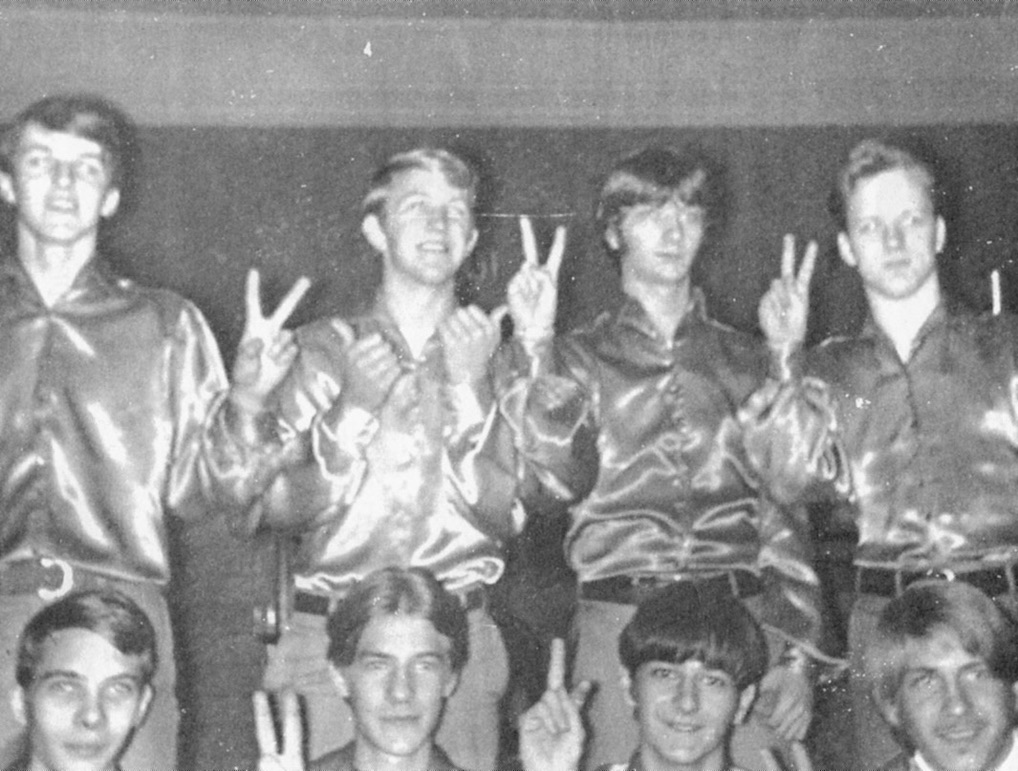
The New Diablos, circa 1967, from left at top: Tim Cech, unknown vocalist (Bub Deskin?), Wayne Smith, Bill Bell; bottom: Norman Snyder, Bobby Peters, David Smith, and George DobashThe New Diablos came from East Baltimore, Maryland, making two excellent psychedelic singles during their time together.
The band started as the Diablos, practicing at the Victory Villa Community Center and became the New Diablos by 1967, going through many lineup changes.
The first mention of the band I can find was on August 3, 1967, when the Aegis of Bel Air, Maryland reported:
The band consisted of George Dobash, drummer; Rusty Fisher, singer; Bill Bell, lead guitar; David Smith, organist; Wayne Smith, bass guitar; Norm Snyder, lead sax and Tim Check, sax.
By February, 1968, Rusty Fisher had left and Bob Peters had joined on guitar.
The Aegis continued reporting on the bands at the Havre de Grace Teen Center with members:
Bill Bell – lead guitar and lead vocals Bobby Peter – rhythm guitar Wayne Smith – bass George Dobash Jr. – drums Dave Smith – keyboards Norm Snyder – saxophone Tim Cech (spelled Ceck once) – saxophone
The New Diablos appeared on the Kirby Scott Show (WBAL-TV) in August 1967 or 1968.
At some point in 1968, Bub Deskin joined as lead vocalist. Their first single contained vocal and instrumental versions of “Land of Love”, song writing credits to Serpents Inc., Edw. E. Medcaff (or Ed Metcalffe). It seems Bob Deskin brought this song with him from his prior band, the Serpents. Saxophones are absent from both their singles, but this one has flute to accompany the lead vocal.
The New Diablos released “Land of Love” on Littlefields Records RI 2759, with Alfred L. Cullen credited for production and publishing “at White Marsh, MD”. George Dobash, Sr at 823 Lannerton Road in Baltimore has arrangement credit., and also managed the band.
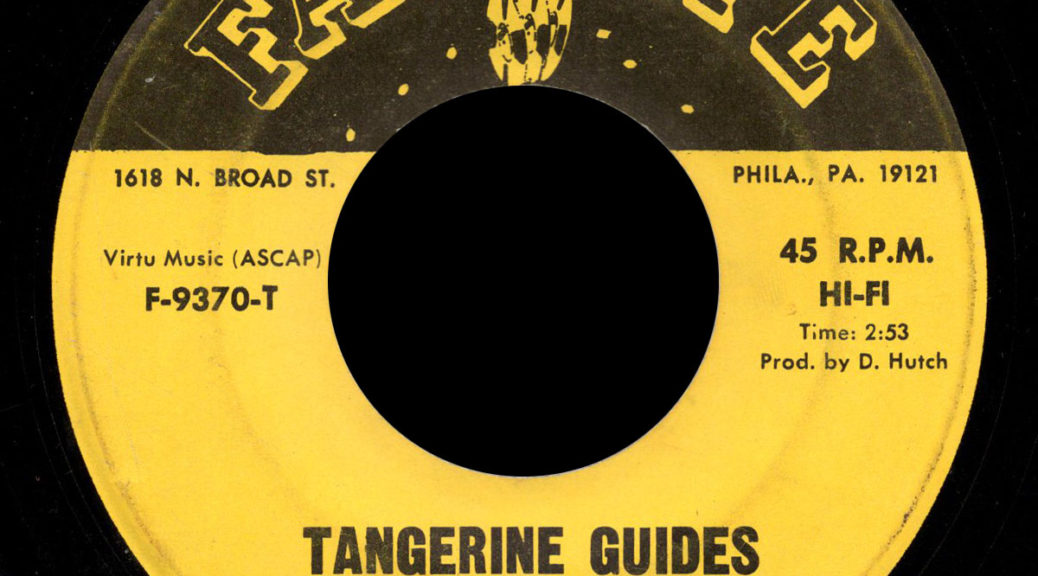
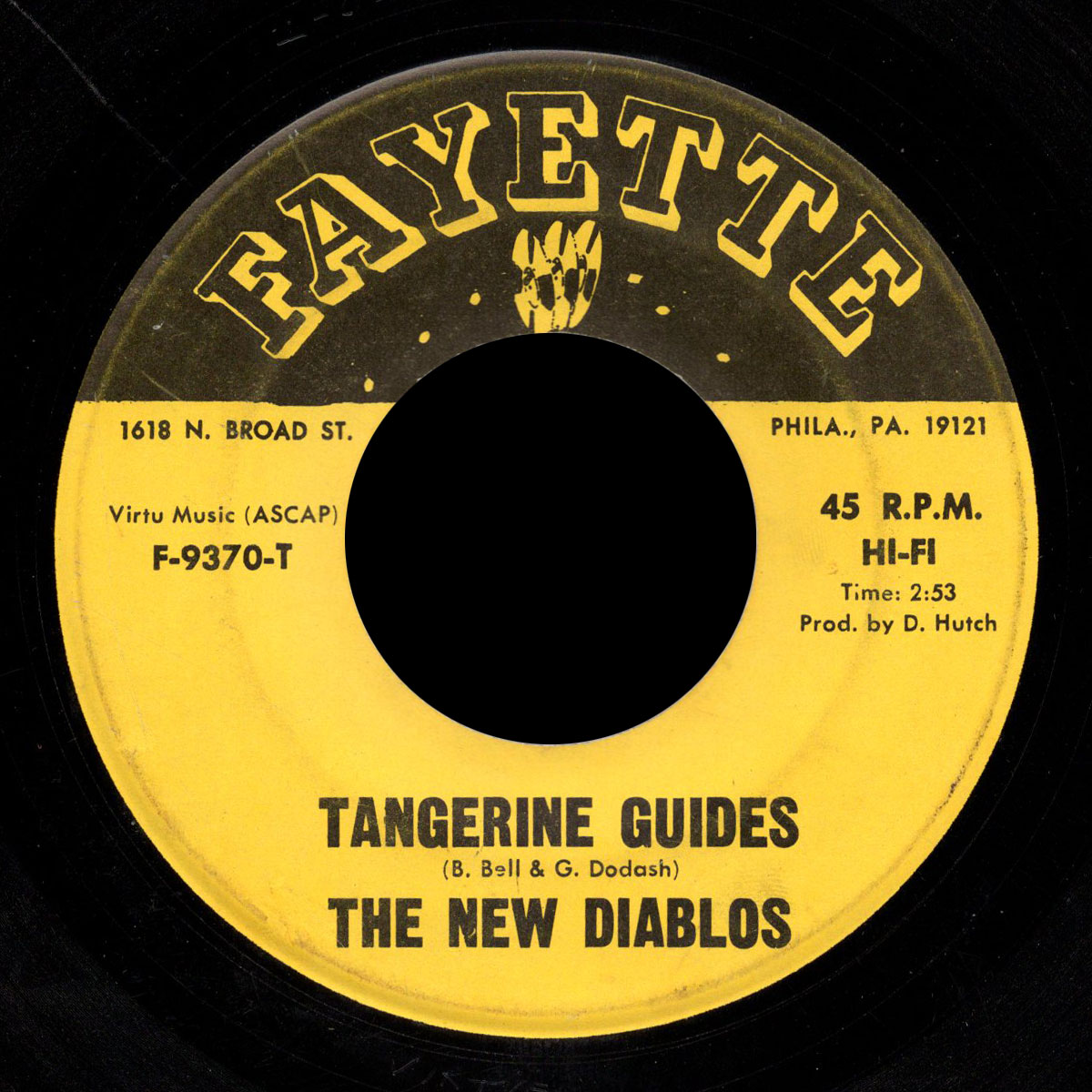
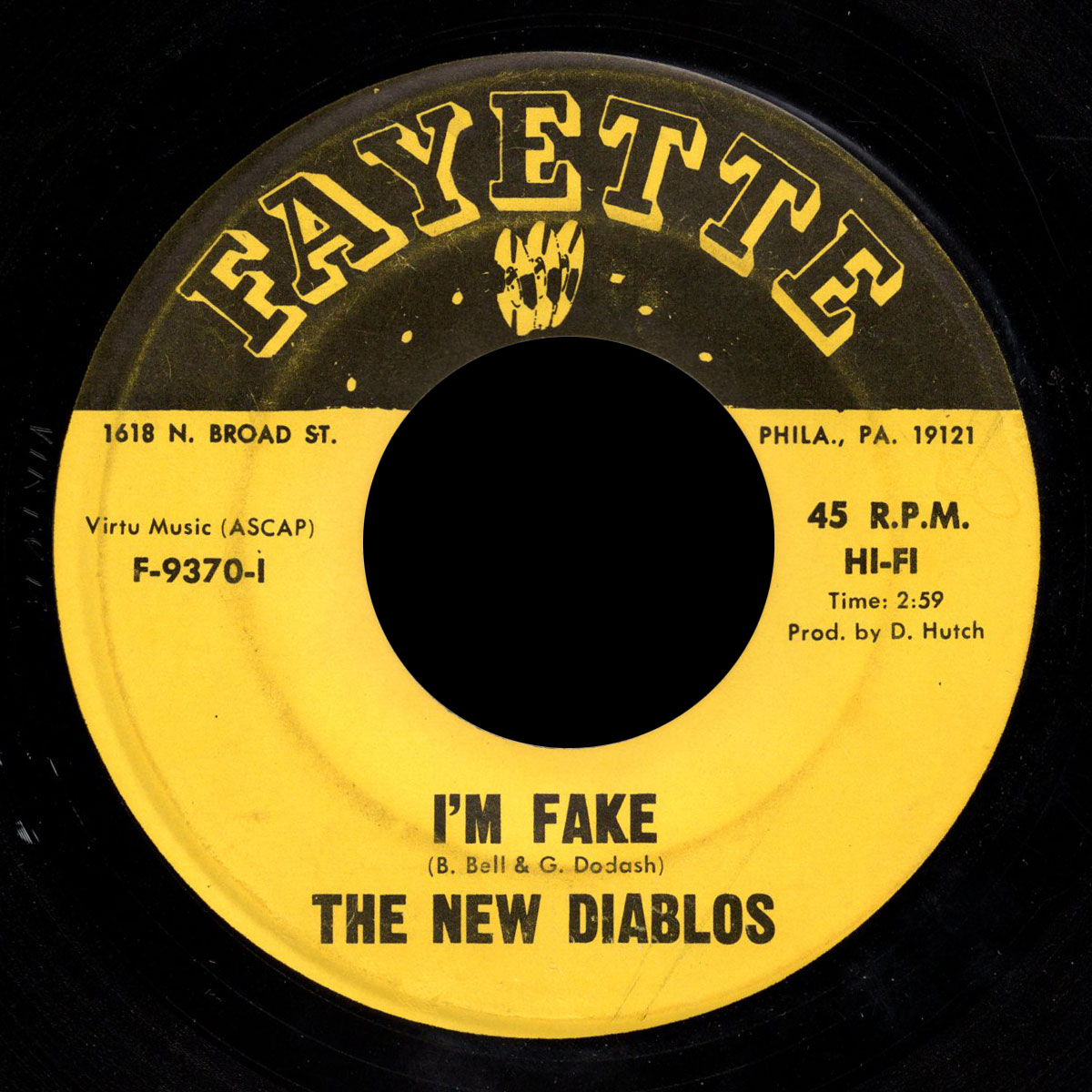
Their next single may have come as late as 1970. “Tangerine Guides” and “I’m Fake” have touches of psychedelia and soul. Bill Bell and George Dobash wrote both songs (Dodash on the label is a typo). I’m still trying to puzzle out the lyrics to “I’m Fake”.
It was recorded at Virtue Recording Studios at 1618 N. Broad St., Philadelphia and released on Frank Virtue’s Fayette label, F-9370. D. Hutch gets producer credit.
In 1970 Collins replaced Deskin.
Versions of the band continued into 1982 with more lineup changes, including Kenny Carter and Dawn Down on vocals, Skip (surname?) on bass, and Ed Parker on keys.
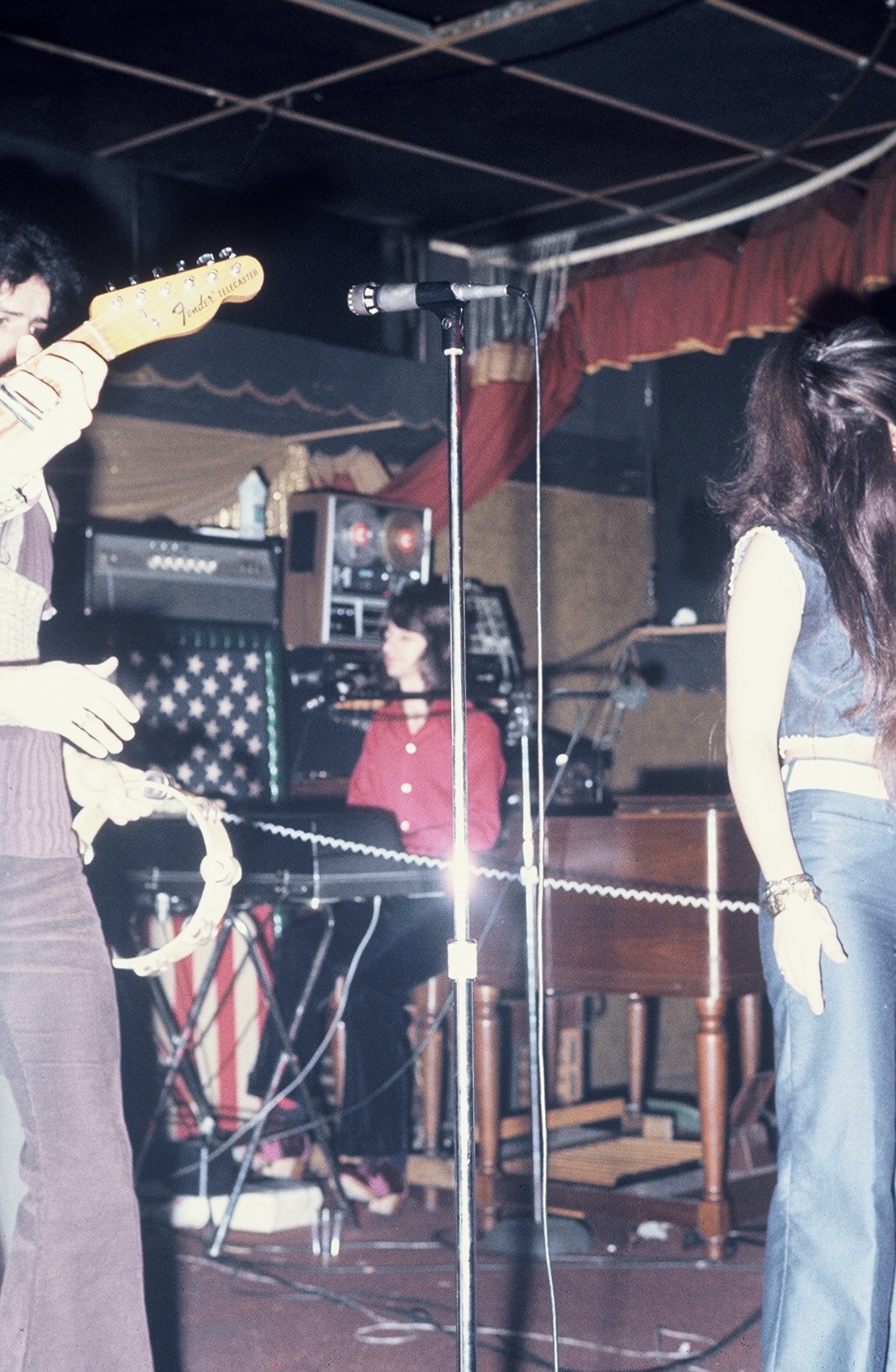
Dave “Smitty” Smith sent in the photos seen here.
The New Diablos at Club Venus off Perring Parkway, with David Smith at the keyboard, and Dawn Down, at right
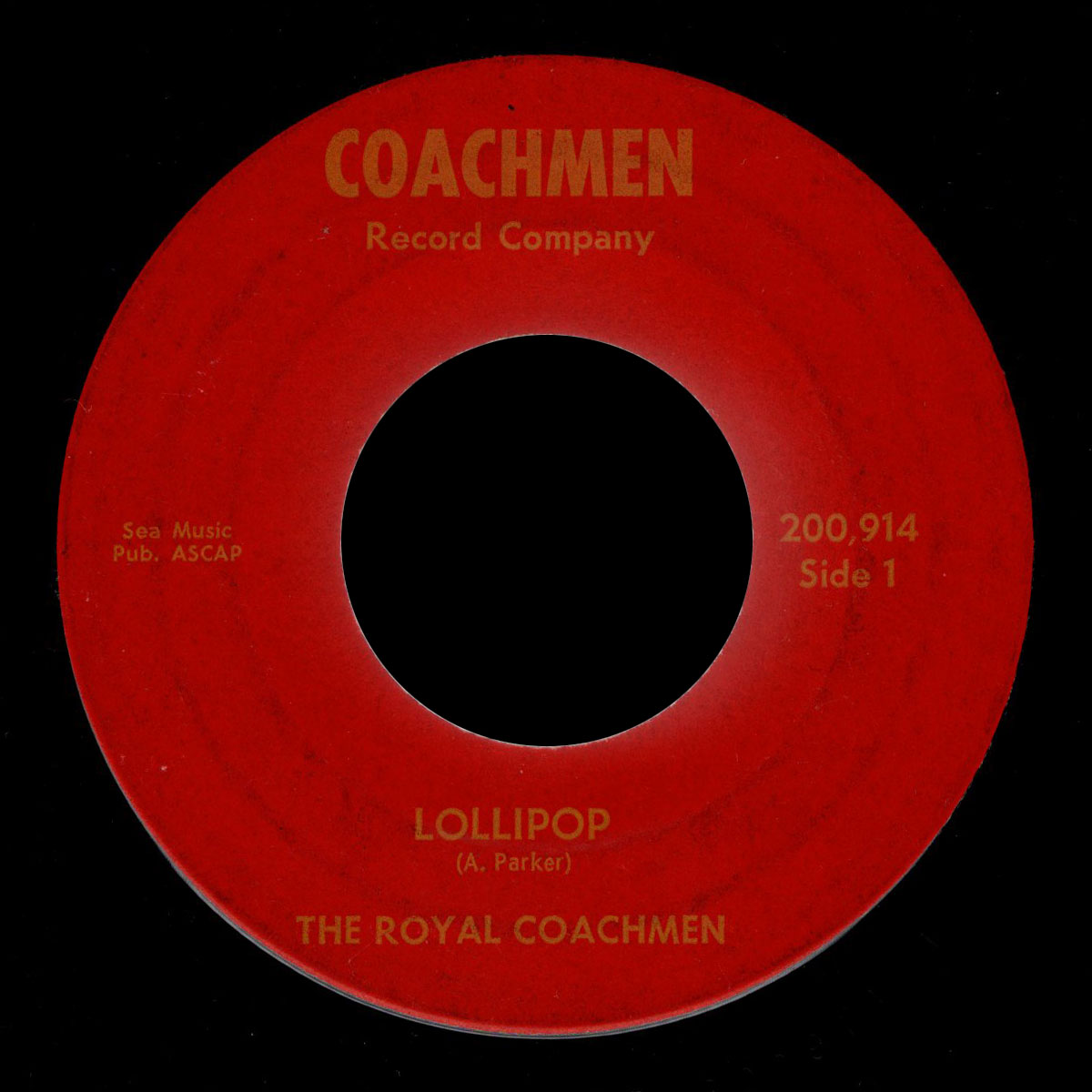
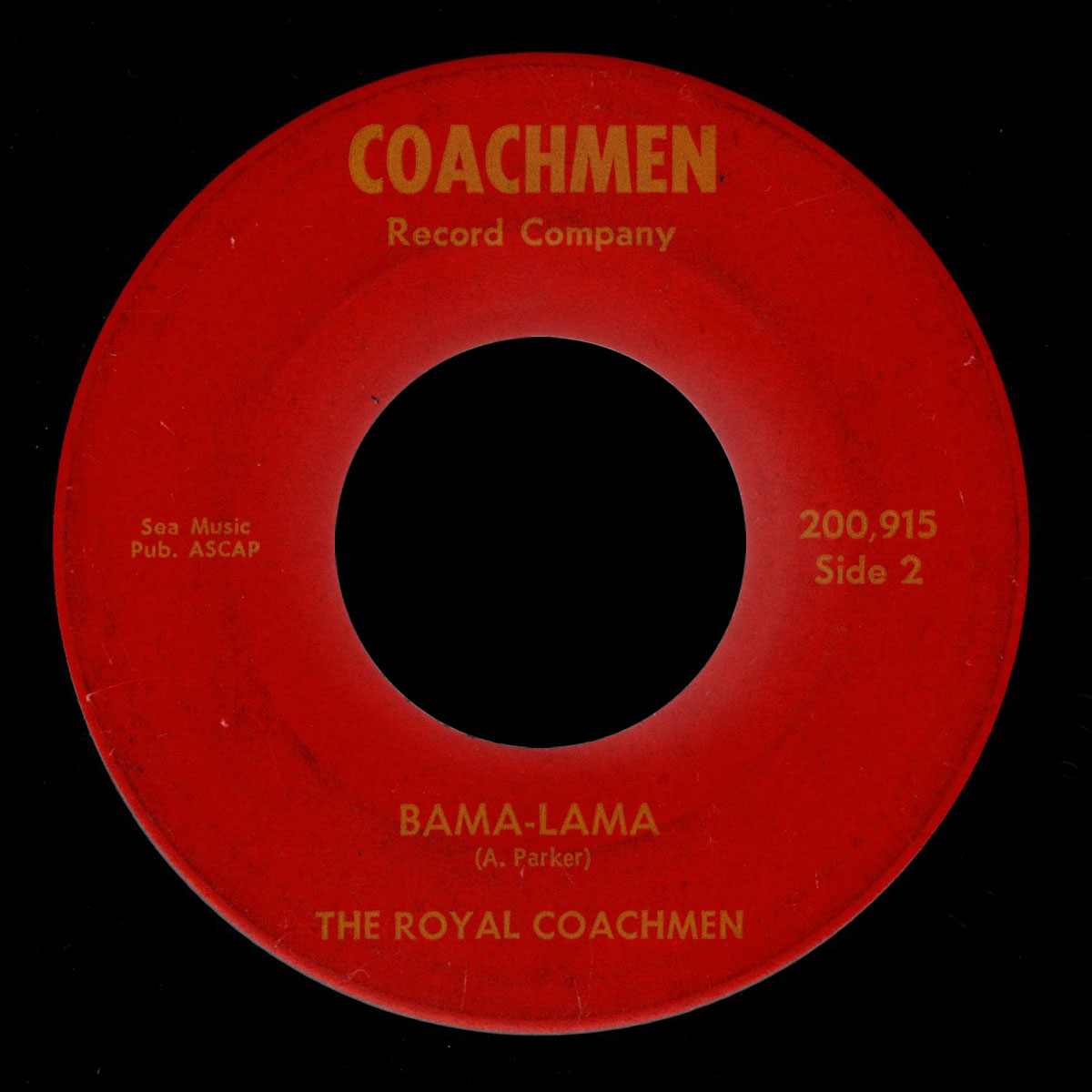
The Royal Coachmen cut two fine, fratty rockers for their own Coachmen label in June of 1966. “Lollipop” sounds like it could be an original, while “Bama-Lama” is a rewrite of Little Richard’s “Bama Lama Bama Loo”.
A friend of the band commented on social media that Joe Labontee sang and played rhythm guitar, Alan Parker played bass, and John “Pudgy” Alosa played drums. They were students at Bishop Brady High School, class of 1967, in Concord, New Hampshire. He added that “the lead guitar player on those recordings was a hired gun named Dick Clark, I believe”.
A. Parker is credited for both songs. ASCAP has both songs listed in their database, but mixed in with the compositions of British soundtrack composer Alan Frederick Parker.
The numbers 200,914 and 200,915 on the labels refer to the Decca custom pressing code, often used for New England records, but there were pressings for groups from Pennsylvania and beyond. The Sea Music Pub. (ASCAP) was located at 1 Boylston Place in Boston, MA.
1 Boylston Place was also address of Ace Recording Studios, owned by Milton and Herbert Yakus, with William F. Ferruzzi chief engineer.
Thank you to Jim M. for forwarding info on the group to me.
The Incrowd came from Hillsboro, Ohio, close to 60 miles east of Cincinnati. Members were:
Larry Zuggs – vocals Randy Applegate – guitar Paul “Bud” Long – guitar Charles Murphy – organ Mike Waddell – bass Jay Cooper – drums
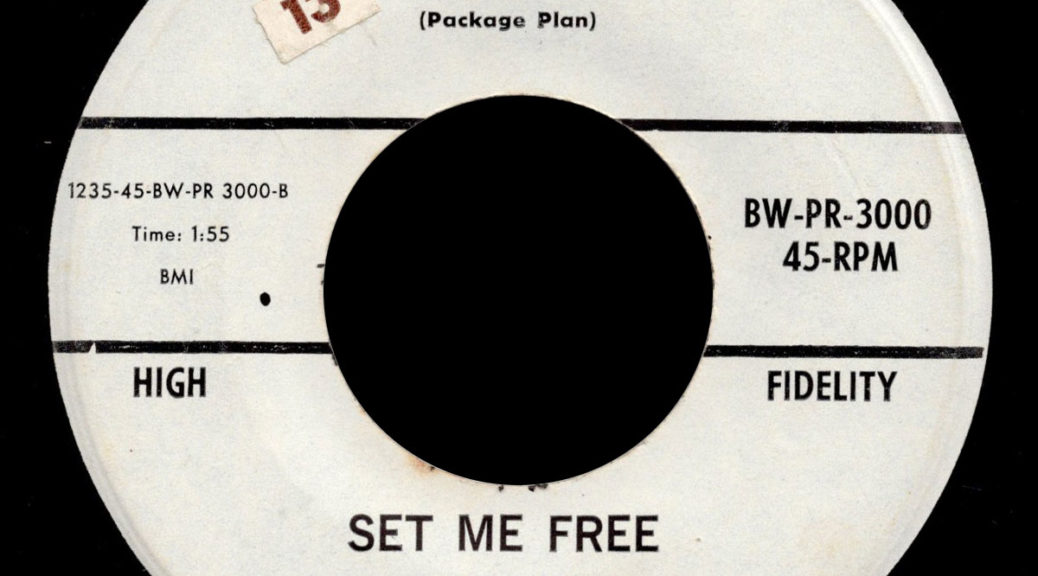
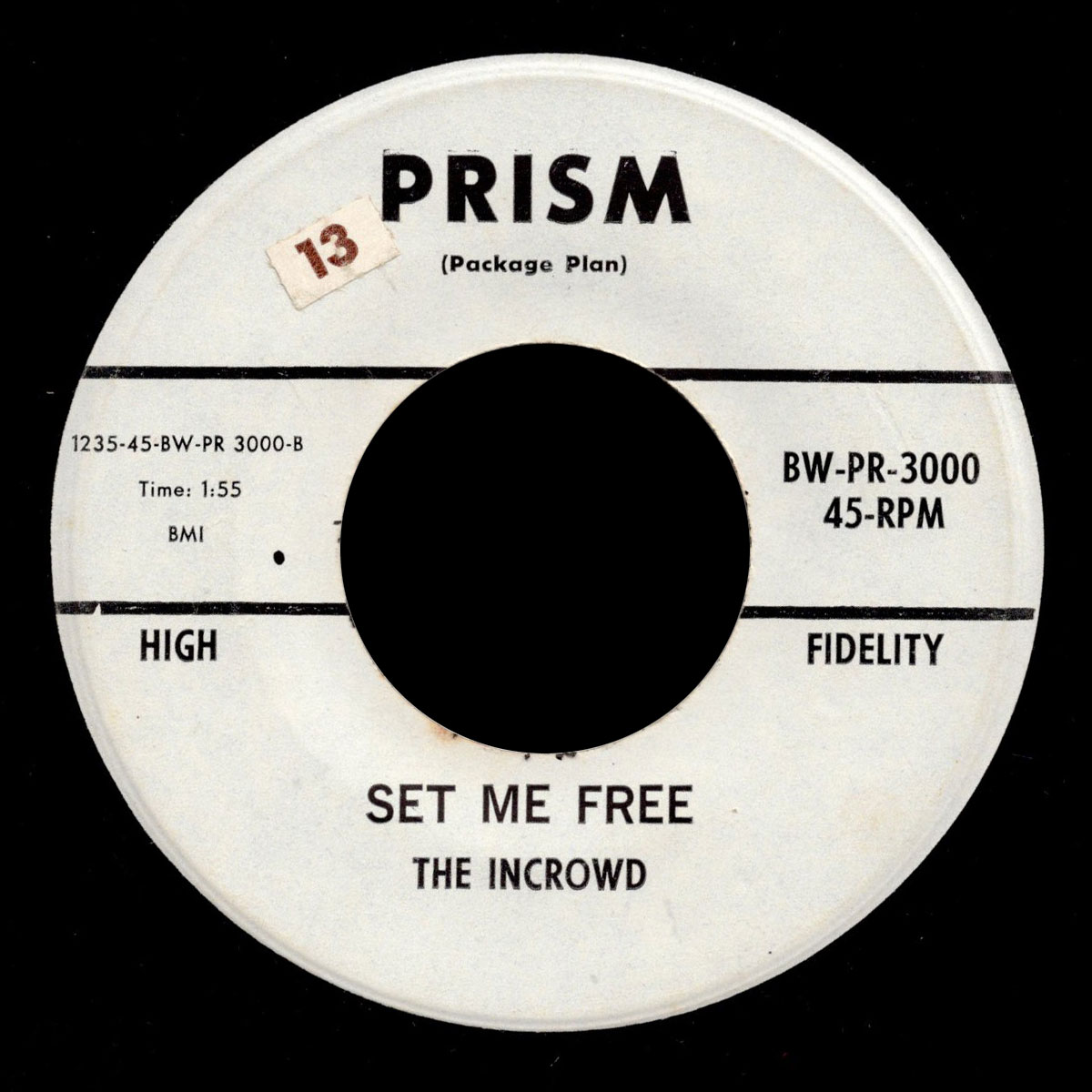
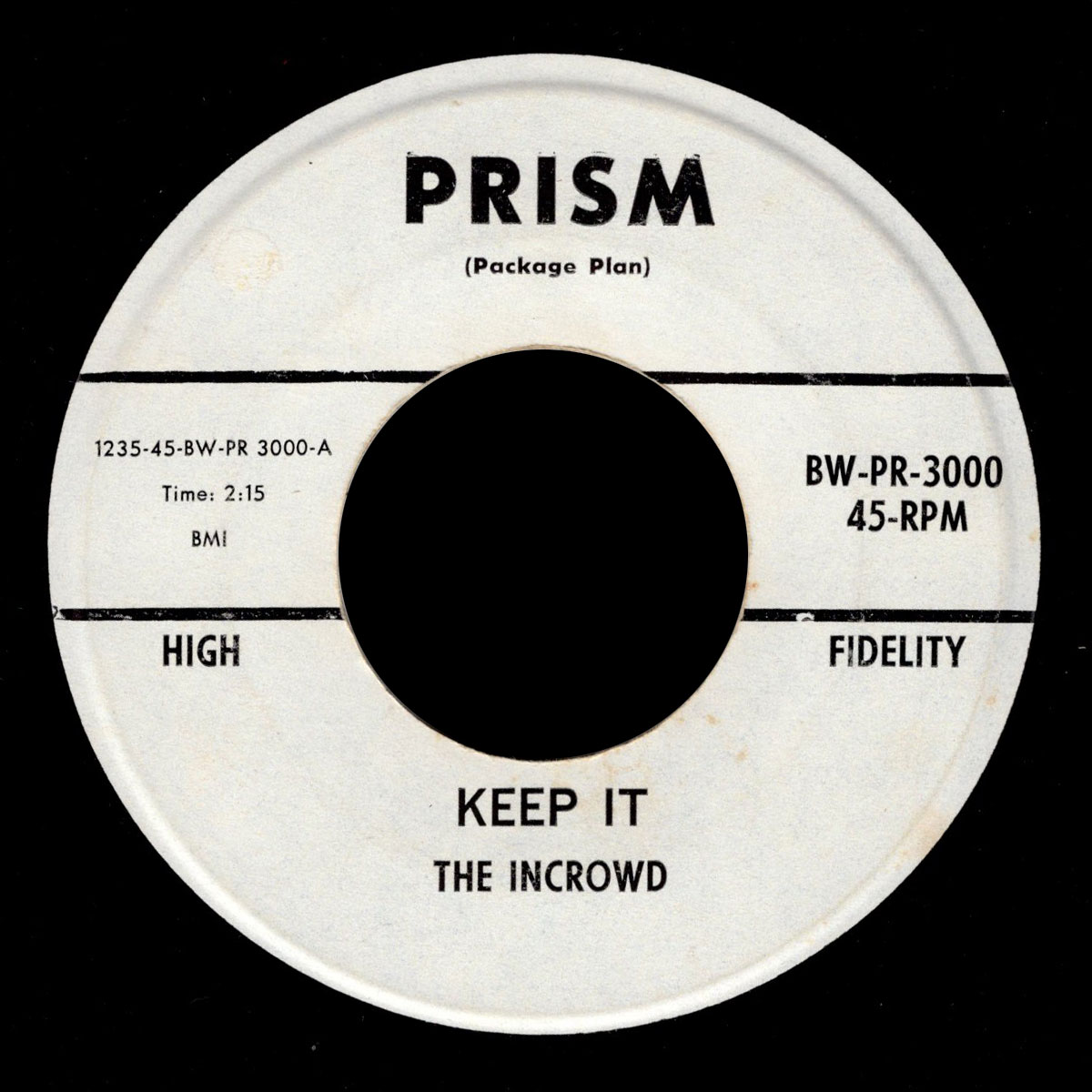
Circa 1965 they traveled to Dayton’s Mega Sound Studio (distinct from Mega-City Studio) to record their only single, featuring an intensely wrought soul ballad “Keep It” on the A-side. On the flip is the frantic and distorted “Set Me Free”. Both songs were supposedly written at the recording session!
Instead of release on Mega Sound’s standard Prism label, they were given the plain b&w Prism package plan for their pressing of 500 copies. Other bands on this 3000 custom series included the Senators and the Warbucks.
Anyone have a photo of the band?
Info from Buckeye Beat, with help from Matthew Baker in distinguishing Mega Sound and Mega-City studios.
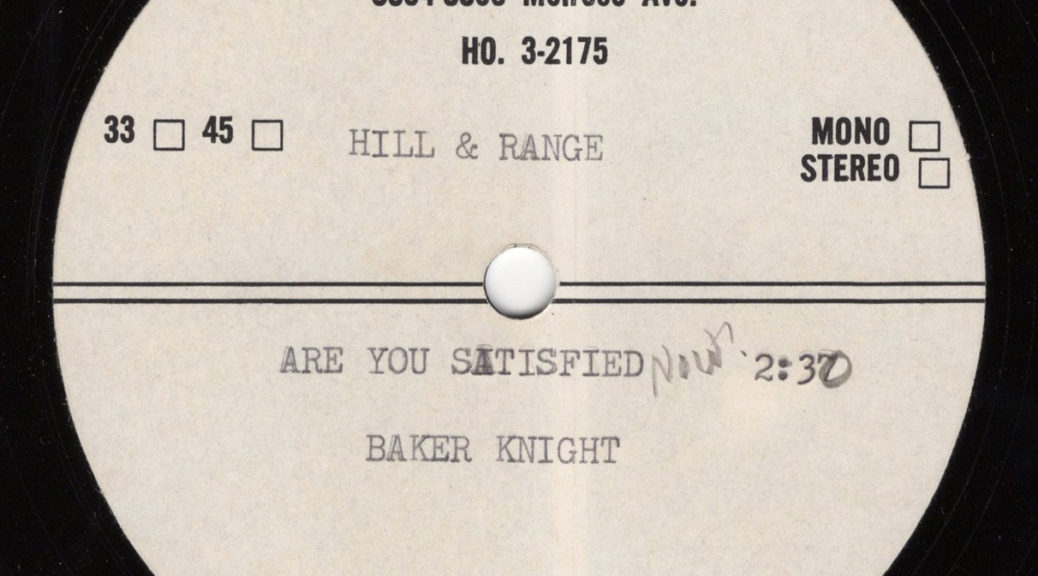
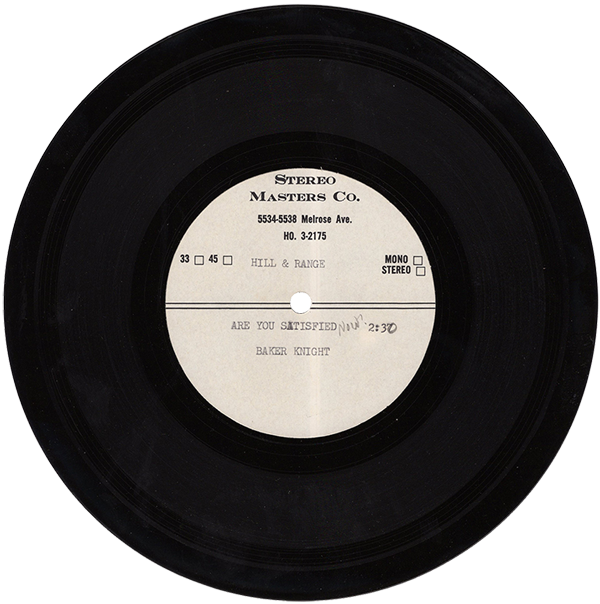
Here’s an excerpt of an alternate version of Baker Knight’s original “Are You Satisfied Now”.
The Reprise single version of “Are You Satisfied Now” has horns, a female chorus, a completely different band and a smoother vocal from Baker. It was the b-side of “The Verge Of Success”, Knight’s seventh and last release on Reprise Records from April, 1968. That version was produced by Jimmy Bowen.
This demo definitely comes from an earlier session, I’d guess around 1966 given the folk-rock backing and grittier vocal. Although this demo lists Hill & Range publishing, by the time Knight registered the song in 1968 that had changed to Smooth Music / Noma Music as it is on the single. In fact I don’t find any evidence of Baker publishing through Hill & Range during the mid-60s.
I only wish Knight would stop singing long enough for a guitar break, but he had plenty of lyrics to get through.
This 8″ lacquer was cut at Stereo Masters Co. on Melrose.
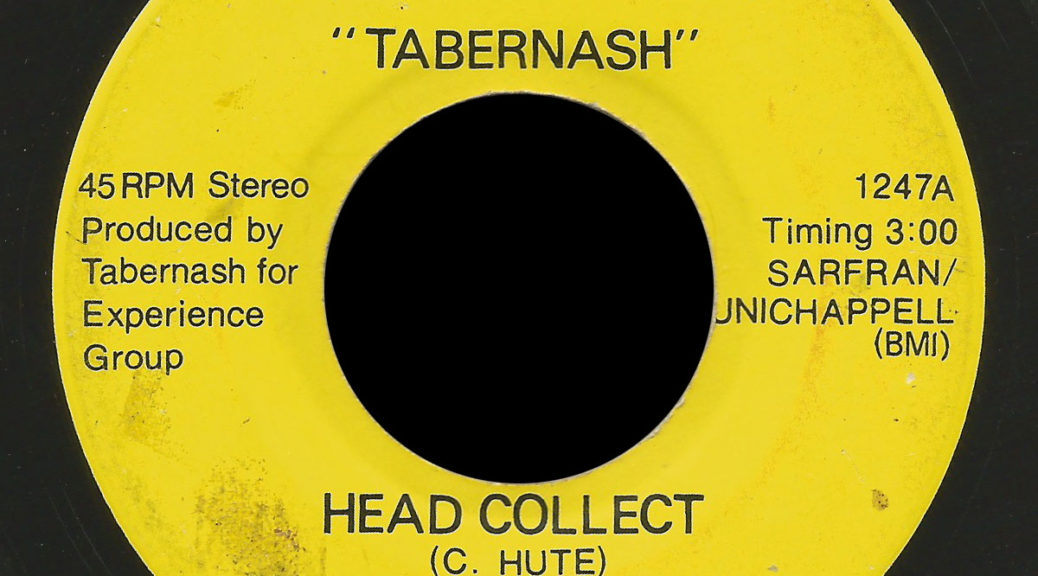
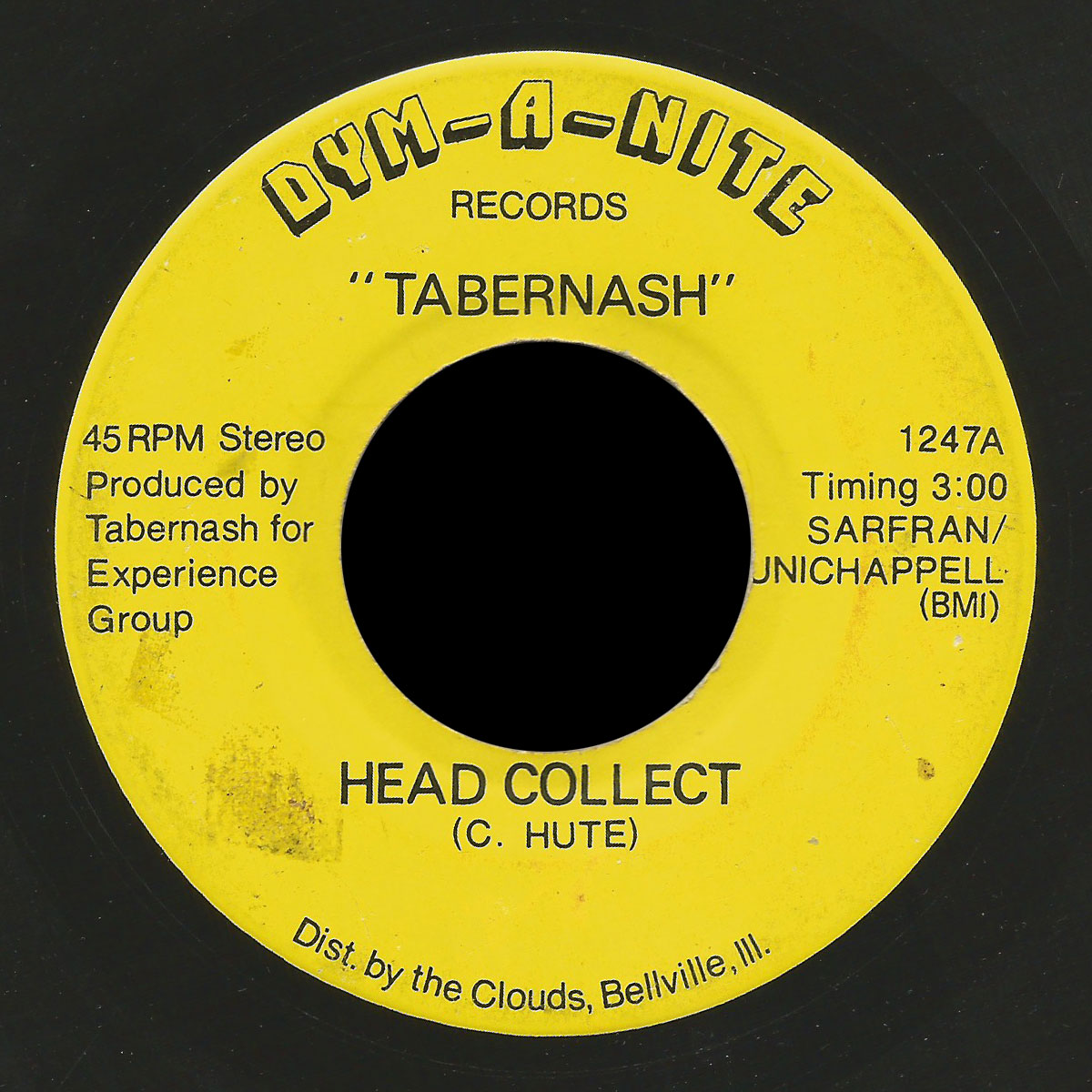
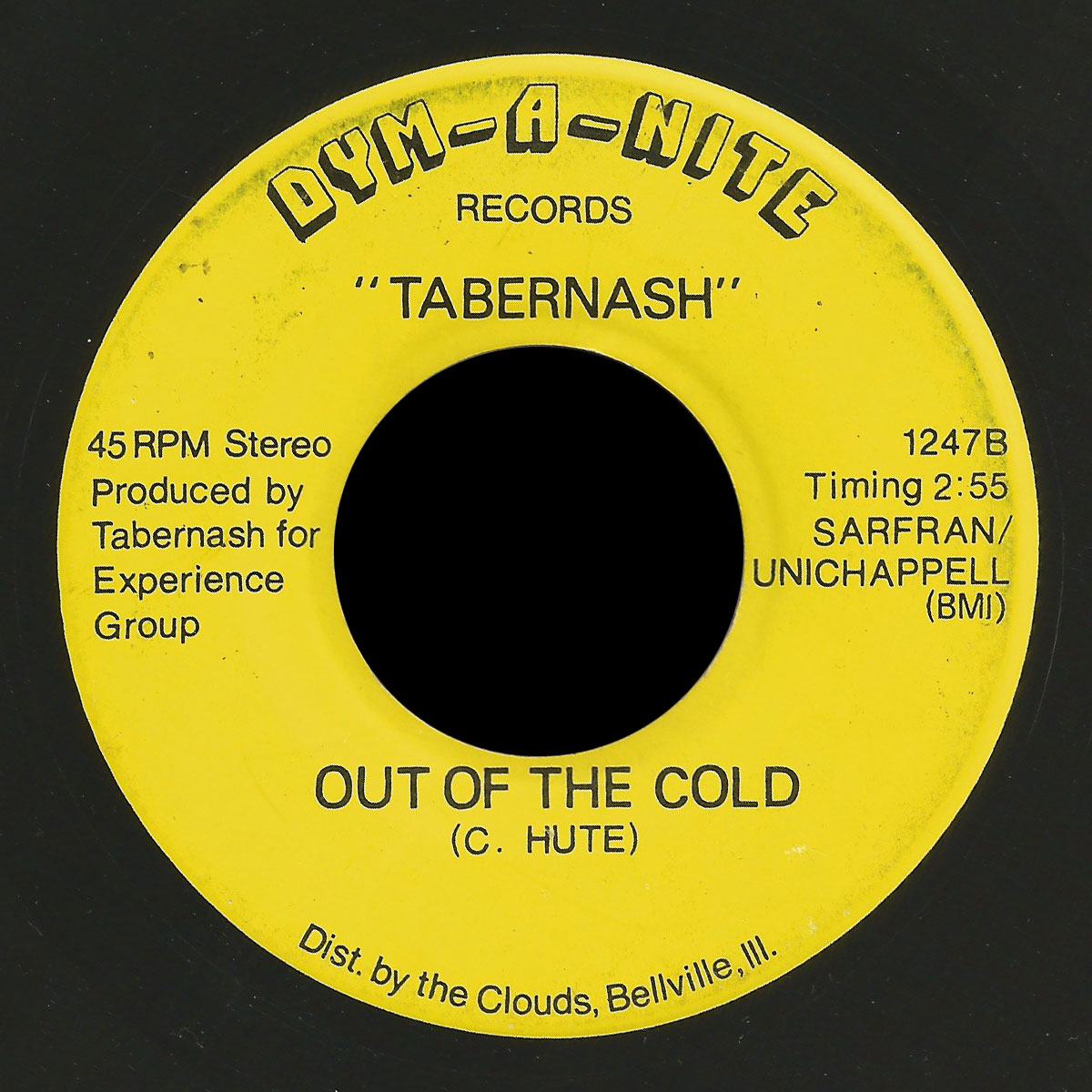
The Contents Are continued until around 1972, when they changed their name to Tabernash and moved from Davenport, Iowa to Westminster, Colorado, just northwest of Denver. Prior to their move, they made this one single on Dym-a-Nite, the only release they would have under the Tabernash name.
The members of Tabernash were Craig Hute, Dave Neumann, Paul Staack and Mick Orton.
“Head Collect” is an excellent rocker written by Craig Hute. The song dates back to 1969, when a demo was recorded at Columbia studios in Chicago. The single is 44 seconds shorter, quicker in tempo, with a drier sound than the Columbia studio demo, but both are excellent performances.
“Out of the Cold” is another original by Craig Hute, again dating back a couple years, this time to a demo session at Golden Voice Recording Studio in Pekin, Illinois from 1969 or 1970. The Dym-a-Nite 45 is more sparse and plain in production than the Golden Voice demo, and is also 90 seconds shorter. Songs from that session will be released by Alona’s Dream Records in 2017.
The deadwax contains a “tulip” marking that indicates Wakefield in Arizona pressed the single, with a five digit code dating it to February 1972. Both sides have publishing by Sarfran / Unichappel BMI, and “Produced by Tabernash for Experience Group” and “Dist. by the Clouds, Bellville, Ill”.
When I sent scans and audio of the Dym-a-Nite single to Mick Orton, he didn’t recall it. After speaking to Craig Hute, he reported back that one of their managers, Spence Stein owned the Dym-a-Nite label and worked with someone at Unichappel to release the single. The band didn’t hear it until they had made the move to Westminster, but they disliked the quality of the pressing.
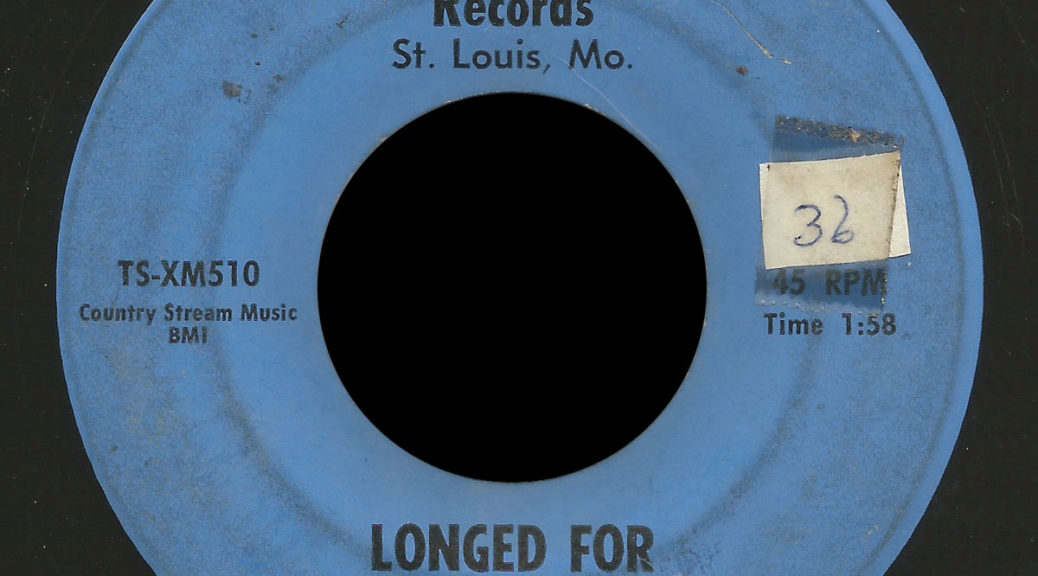
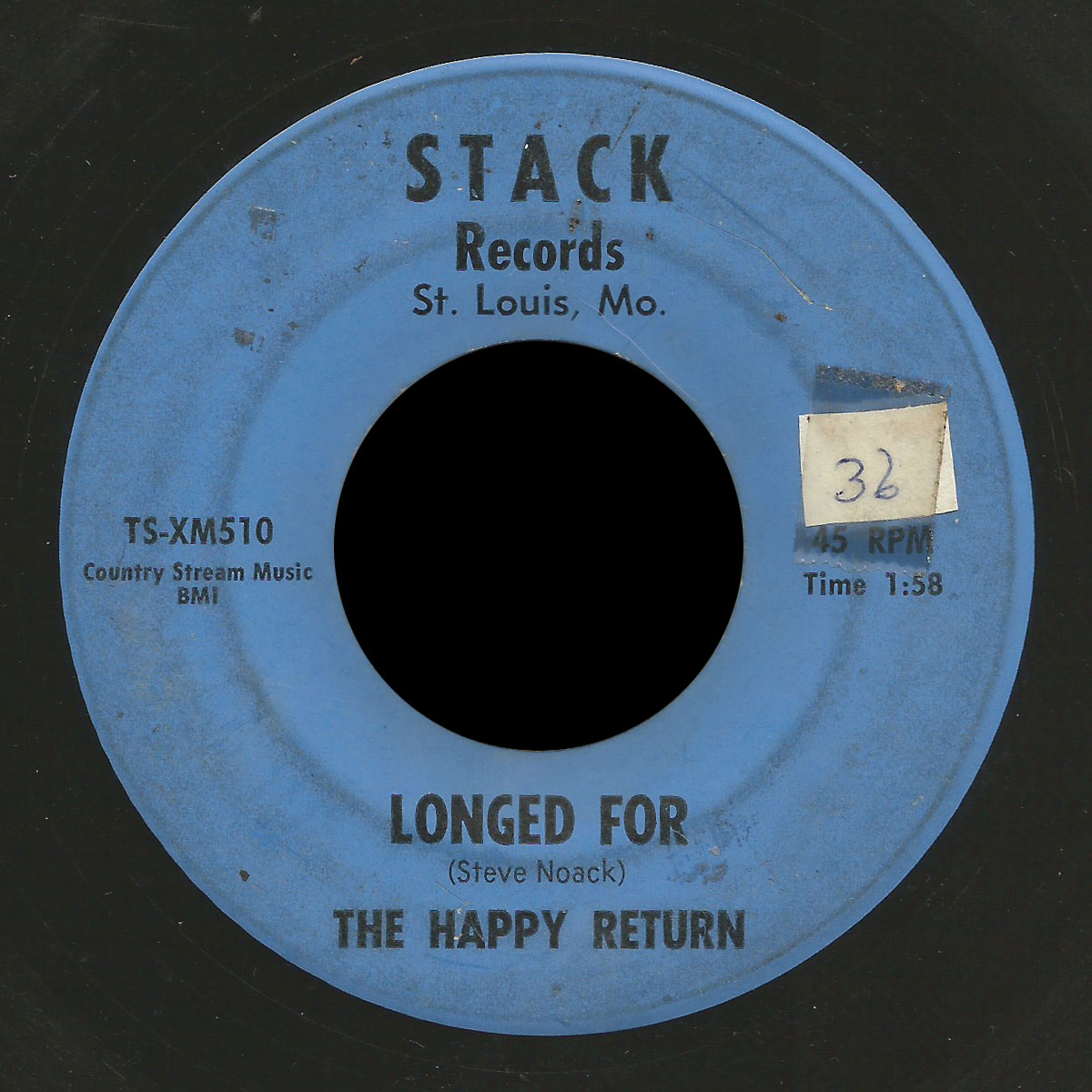
The Happy Return came from St. Louis, Missouri, releasing two very different 45s in the space of a couple years.
Members at the time of the Cadet single were:
Steve Noack – vocals, lead guitar Tom Noack – rhythm guitar Jim Cunningham – organ Jimmy Albright – bass Rich Carrell – drums
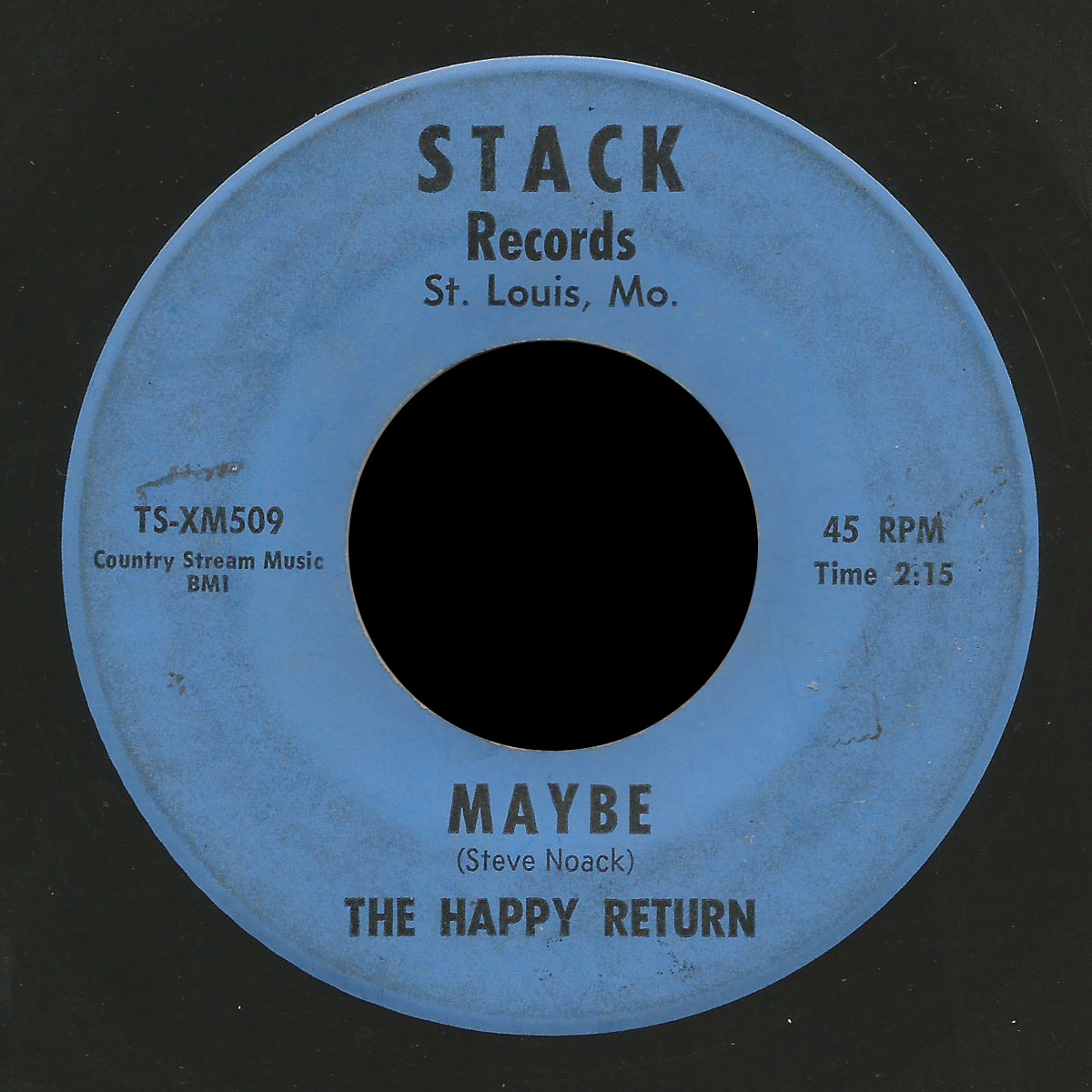
In November 1967 the Happy Return released a very good Steve Noack original in the Beatles style, “Longed For”, backed with another original “Maybe”, and issued Steve’s own Stack Records TS-XM510. The publisher, Country Stream Music BMI mainly handled country and gospel songs.
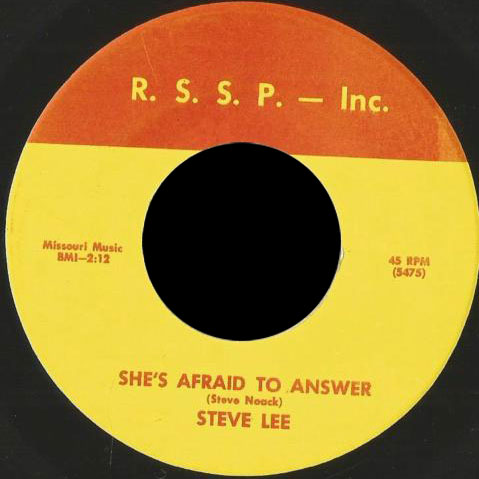
In July of 1968 Steve Noack had a light pop single as Steve Lee on the R.S.S.P. Inc label featuring his original “She’s Afraid to Answer” as the b-side to “Baby” (by G. Tomsco, B. Tomsco).
Missouri Music BMI published “She’s Afraid to Answer”. Missouri Music’s biggest copyrights seem to be on the Norman label, including “Rockin’ Little Egypt” by the Egyptian Combo and “Jerkin’ Time” by Bob Kuban with vocalist Little Walter.
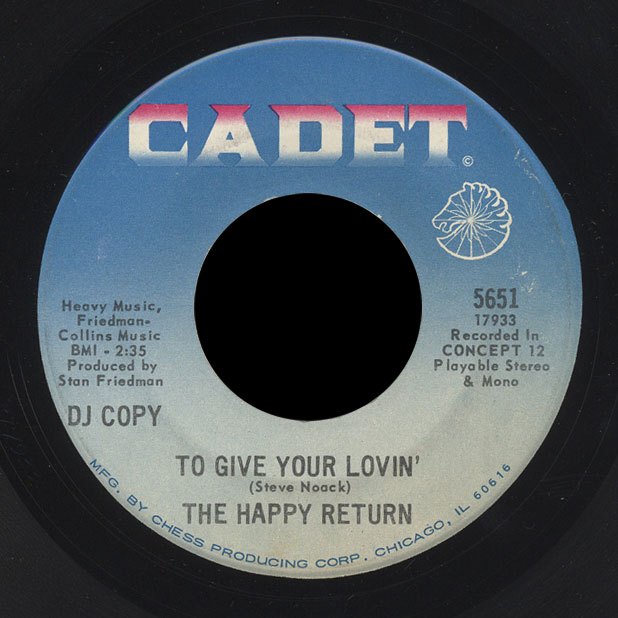
The Happy Return next appear in June 1969 on the Cadet label with a great double-sided single featuring two more Steve Noack originals with great production by Norman Petty at his Clovis, NM studio. The plug side at the time was “I Thought I Loved Her”, a gentle ballad with keyboards making harpsichord and flute sounds. The Library of Congress registration for “I Thought I Loved Her” in April 1969 shows words by Rich Carrell and music by Steve Noack.
The flip is the very different and hard-rockin’ “To Give Your Lovin’”, full of crunching guitar and heavy drumming. Both songs list Steve Noack as writer and Heavy Music, Friedman-Collins Music BMI as publisher.
“I Thought I Loved Her” showed up as a “hitbound sound” in a weekly chart of Saint Charles, Missouri’s KIRL 1460 AM that August, but otherwise seems to have missed all radio charts despite being on Cadet. The band broke up the following year.
On the Cadet labels, the band’s manager Stan Friedman is listed as producer of the single. He was a booking agent in St. Louis with a University City address.
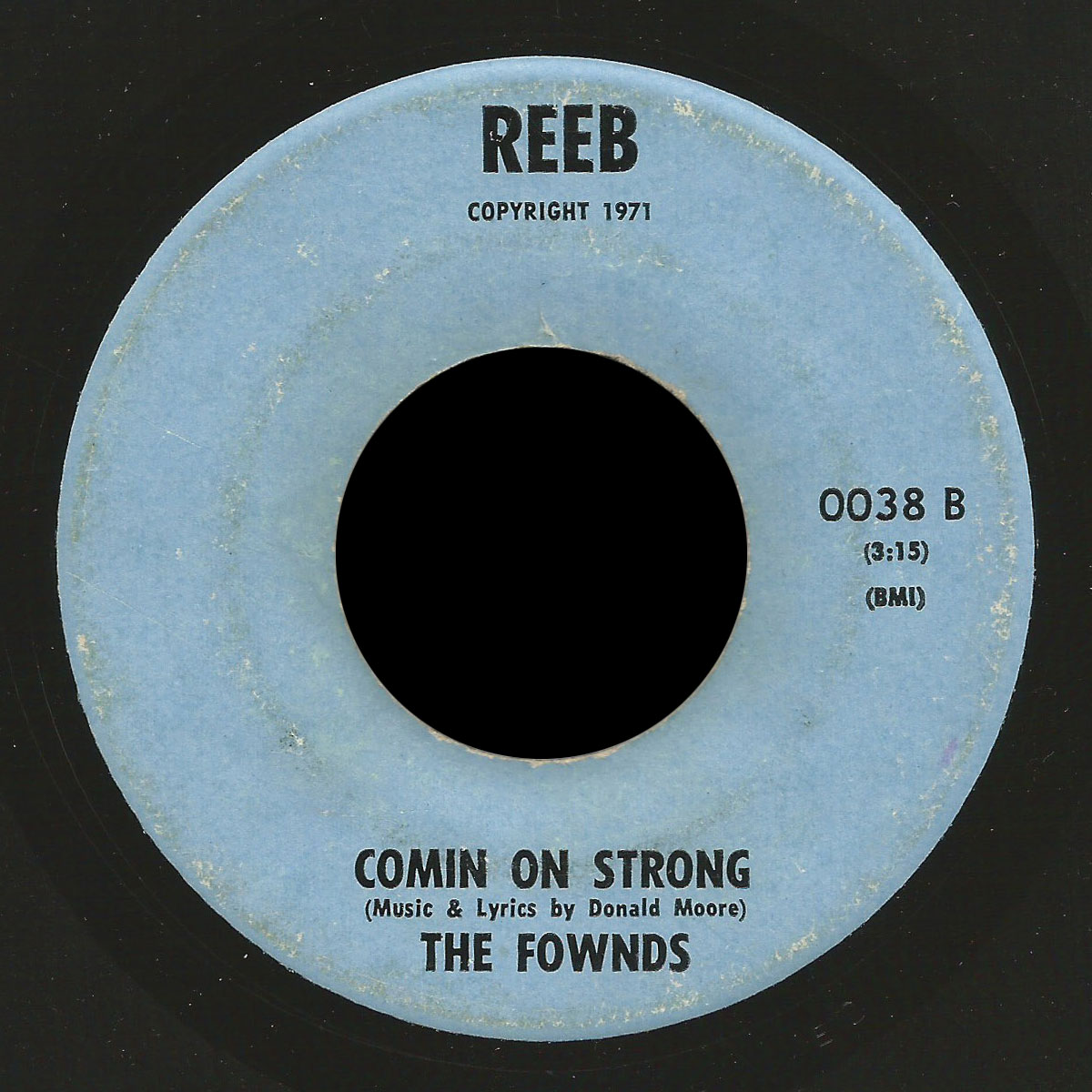
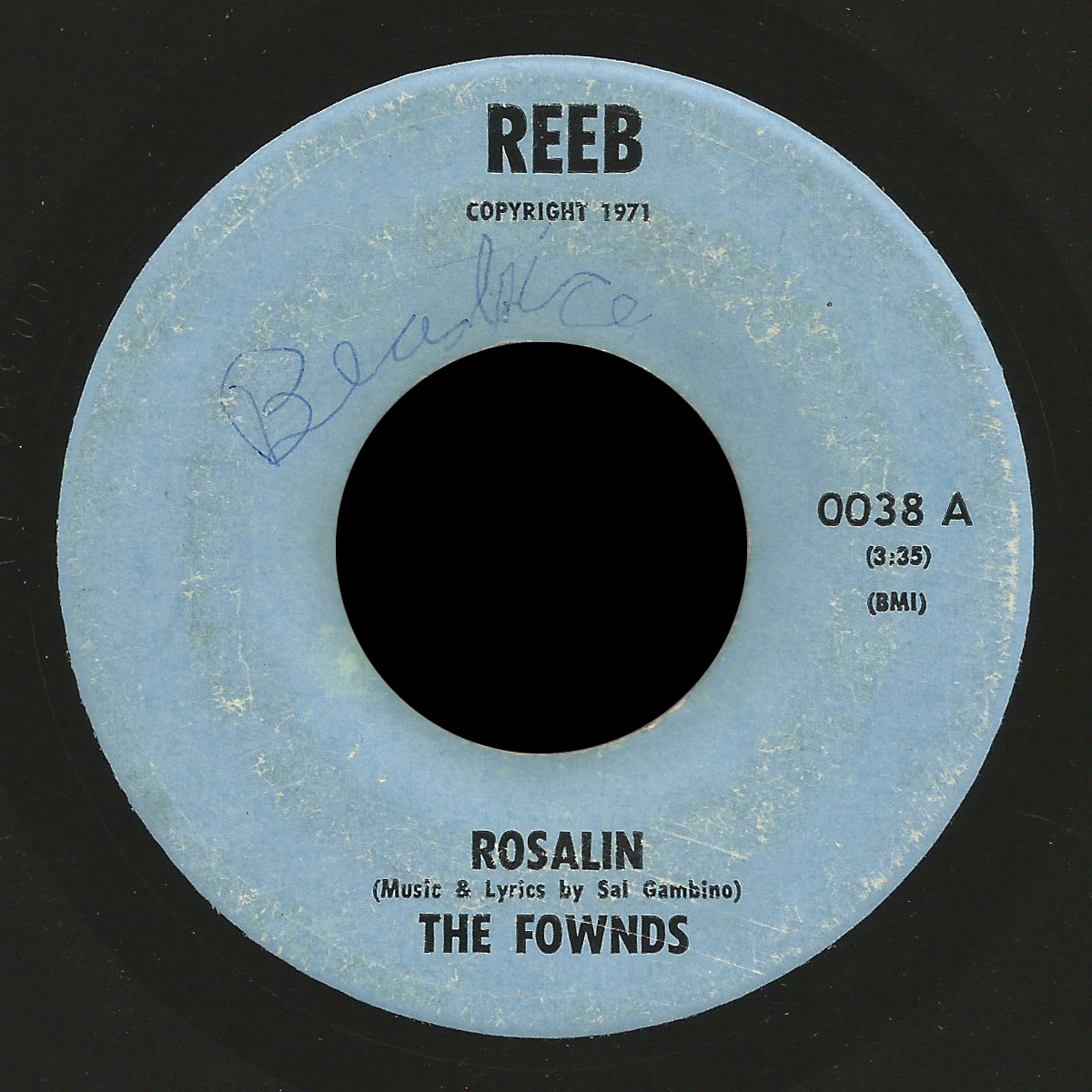
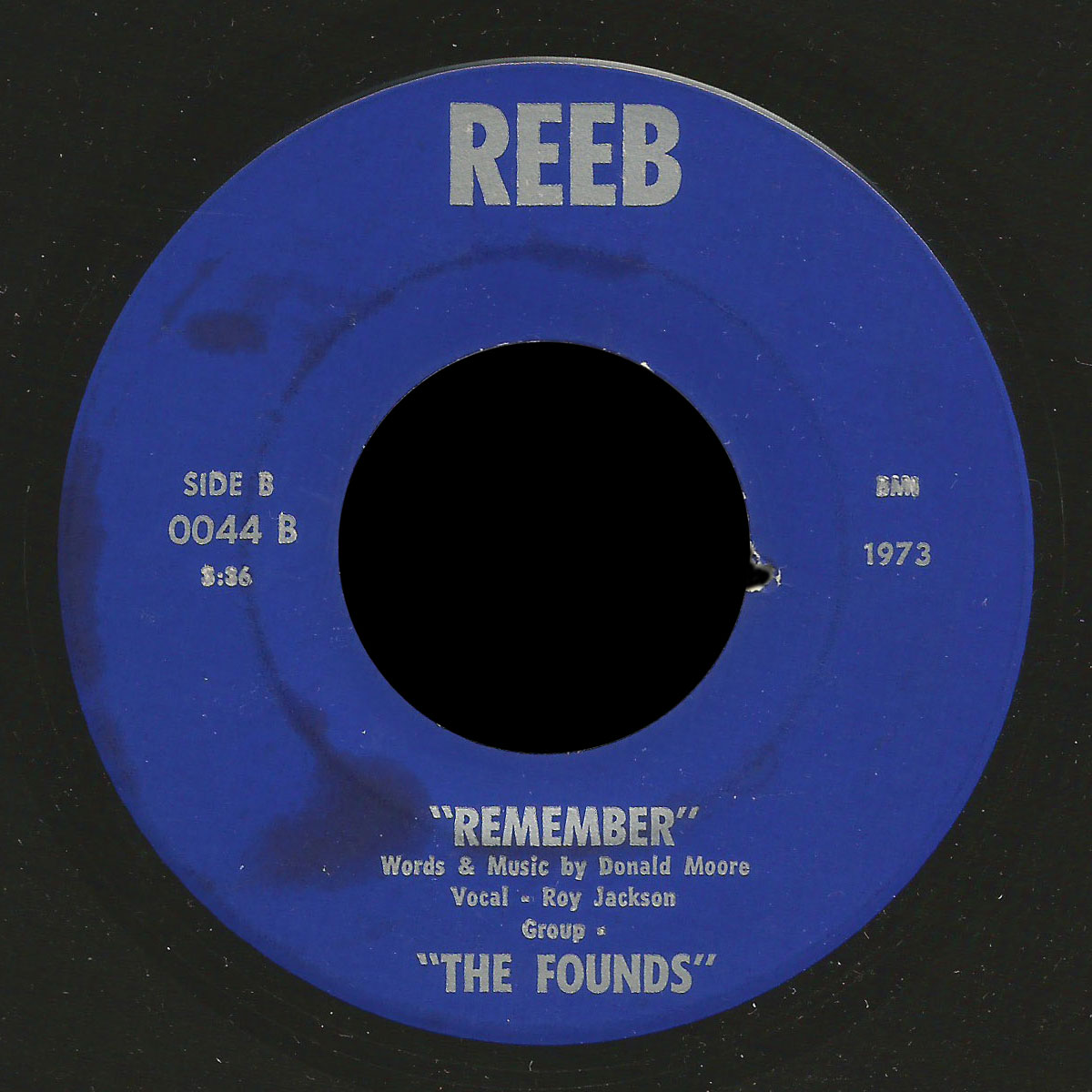
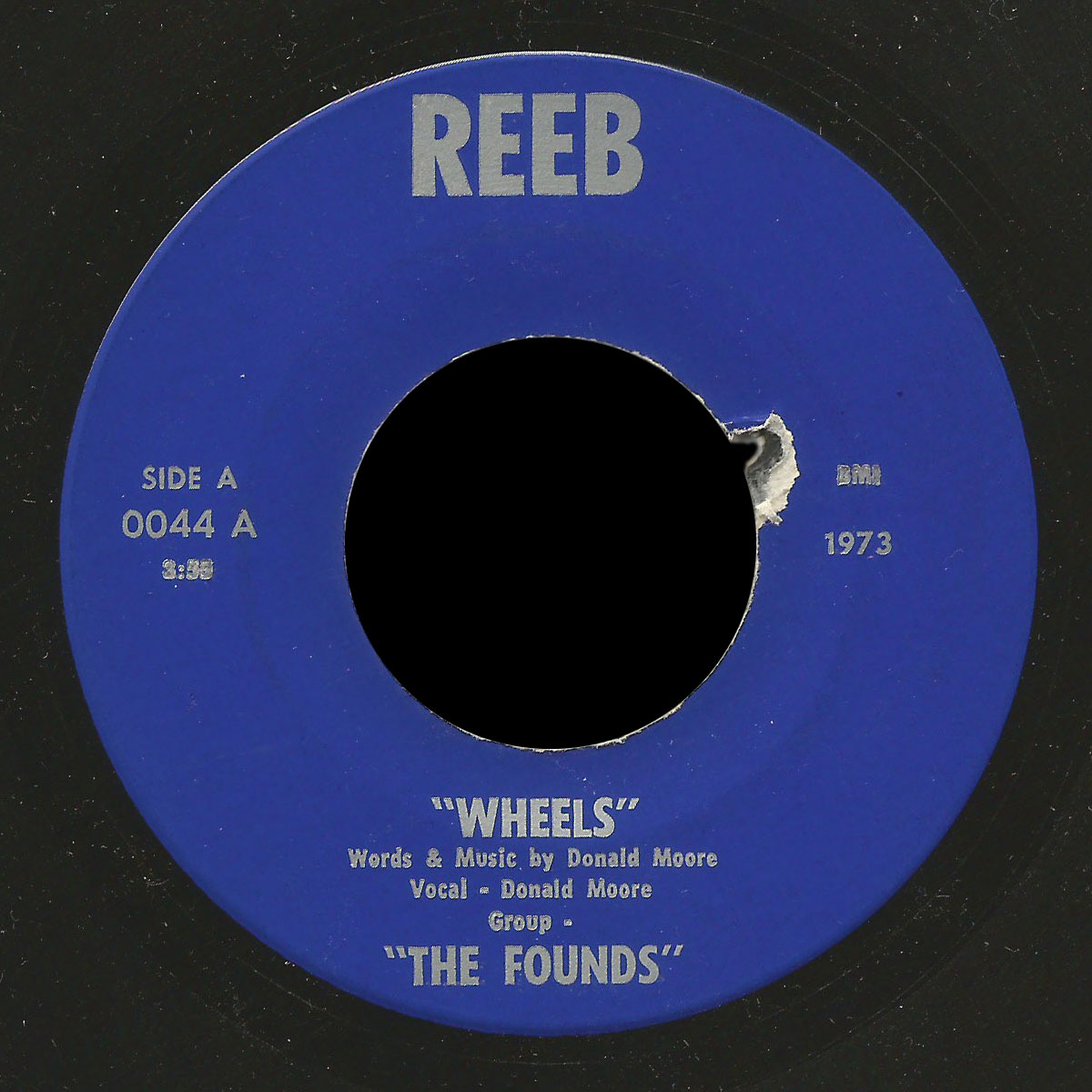
The Fownds came from Hudson, New York. They had two singles, first the thumping rocker “Comin On Strong” b/w the doo-wop influenced “Rosalin” in 1971, and then the moody “Remember” b/w a hot rod parody “Wheels” (the band name changed to the Founds on this release).
Both singles have a sound like something from the early-mid ’60s despite the release dates.
Donald Moore wrote most of the songs and did some lead vocals. Sal Gambino wrote “Rosalin”, and Roy Jackson sang lead on the moody “Remember”.
The Fownds released both singles on their own Reeb label (“beer” spelled backwards), a custom label through Earl Kennett’s studio in Kinderhook.
Don Moore had a later band called Confusion, I believe he passed away in 2013.
Billy Sandlin came from Ocala, Florida, starting his recording career in 1959 with the tough-sounding “She’s Mean” b/w “Don’t Let Me Down”, released first on Vim Records then on Gala. From the start he showed an ability to sing a wide range of styles, from uptempo rock to melancholy ballads.
In 1961, Sandlin had a second single on Gala, “Teenager’s Dream” in a slow doo-wop style b/w the latin-ish “Cha Cha Bop”. Around 1962 he left for Germany, presumably for military service.
Overseas he cut a neat rocker called “My Little Twisting Baby” with a local group known as the King-Tones, but it wasn’t issued until he returned to the U.S. in 1963, as Billy Sandlin with the Strangers and the Bluetones on Strike Records.
Next came a single on Viking Records, “You’ll Always Have Someone”, produced by Larry Montague and still very much in a teen style, released circa 1964, though I could use confirmation of that date.
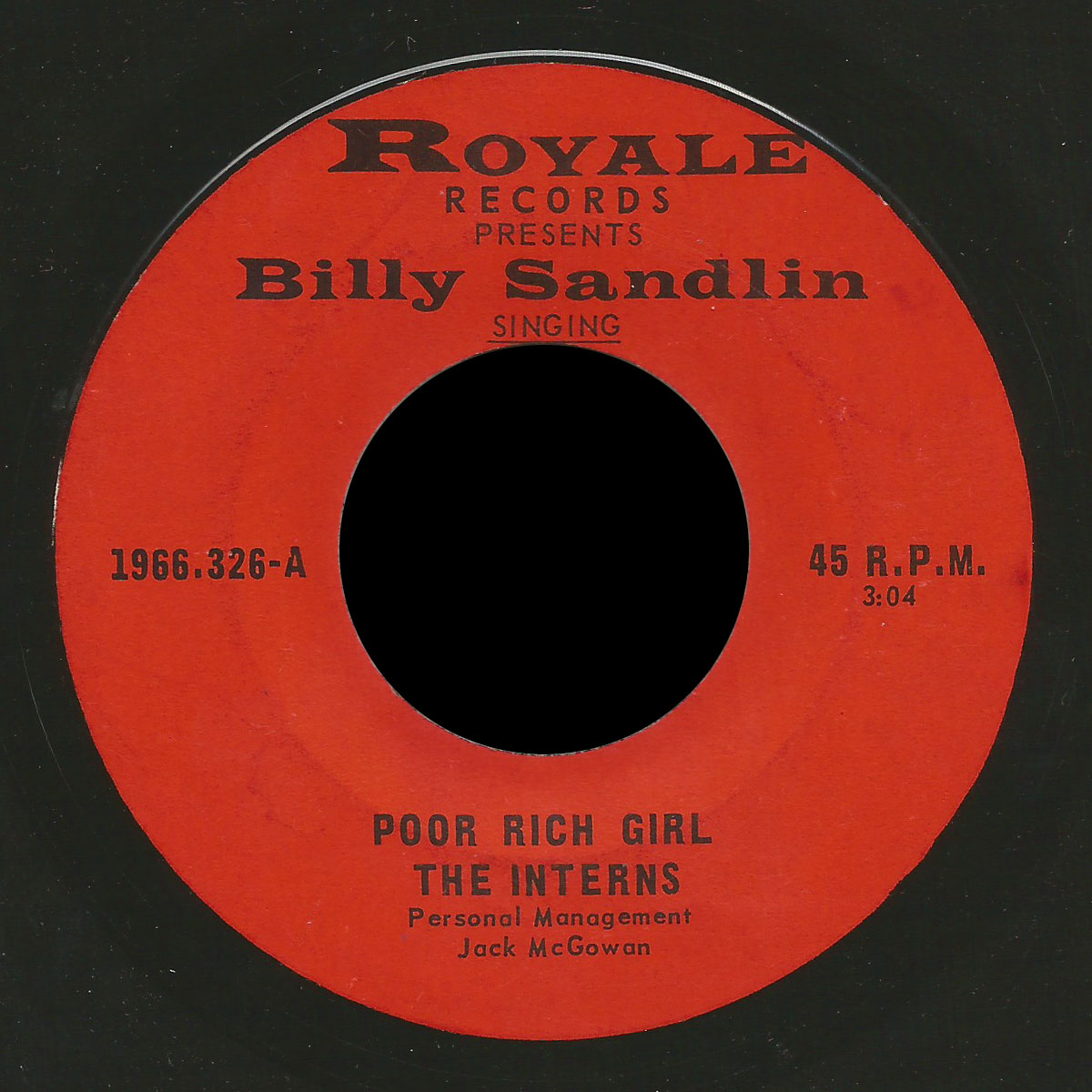
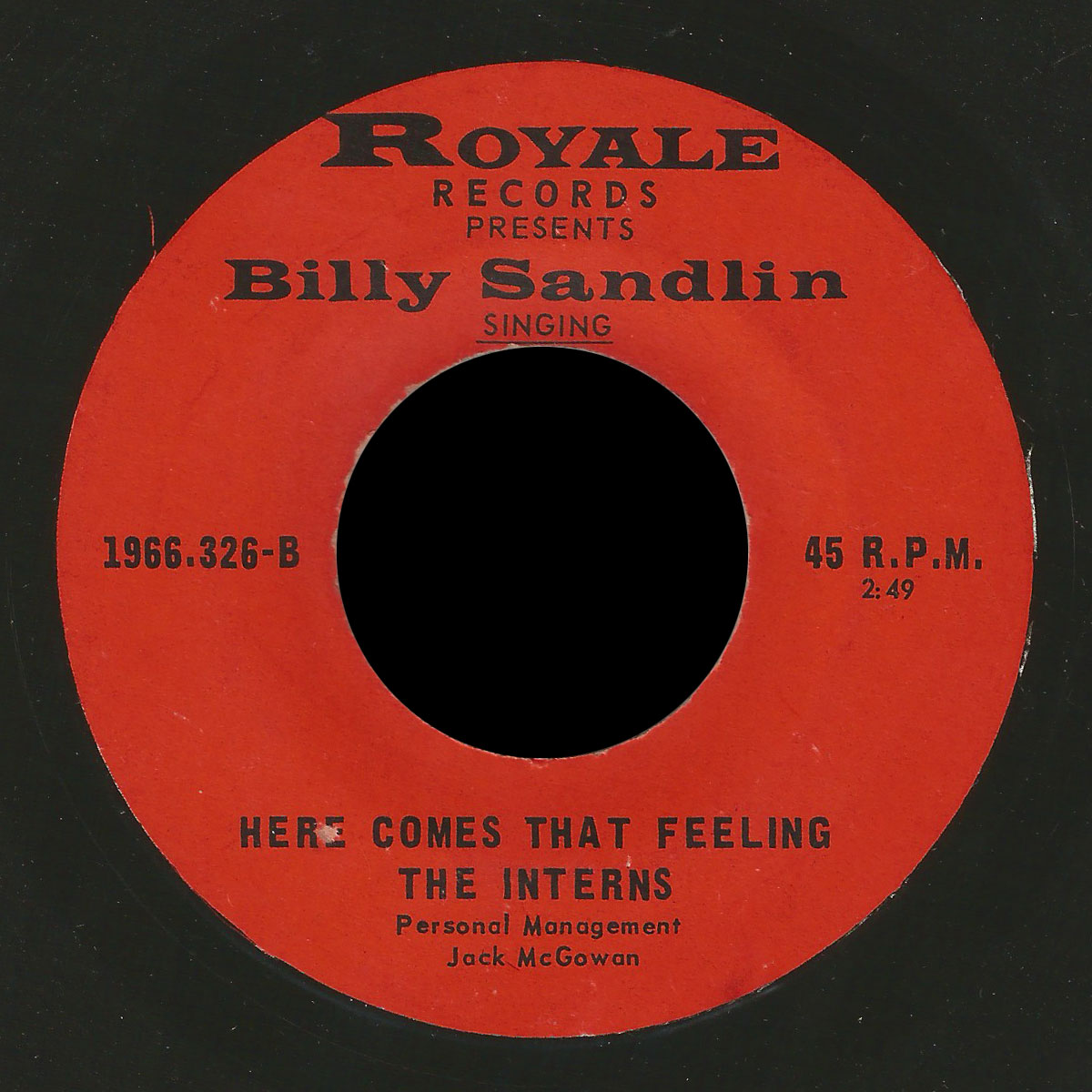
In 1966 he found a tougher accompaniment by the Interns for the fine “Poor Rich Girl”, especially in the repetitive guitar line, and Sandlin’s voice really suits this hard r&b style. The b-side “Here Comes That Feeling” is very good downer garage. My copy is on Royale 1966.326, but others exist with the label name changed to Royala, which would match his next single.
Later that year came Royala 1966.329, “I Kept On Walking” written and sung by Billy Sandlin with ‘the Interns Orchestra’, b/w “Sweet Loving”, sung by Ace Perryman and written by Stewart and Perryman. I haven’t heard either song yet. “I Kept On Walking” was also the b-side of Sandlin’s single on Viking. This single and “Poor Rich Girl” both credit Jack McGowan for management.
Jack McGowan owned the Teen Time Club in Ocala, according to a short article in the Ocala Star-Banner from 1967, and I think Royala/Royale was his label. I believe he is the same Jack McGowan who produced the The Great Masquerade, also known as The AC/DC Caper, filmed in Miami in 1973.
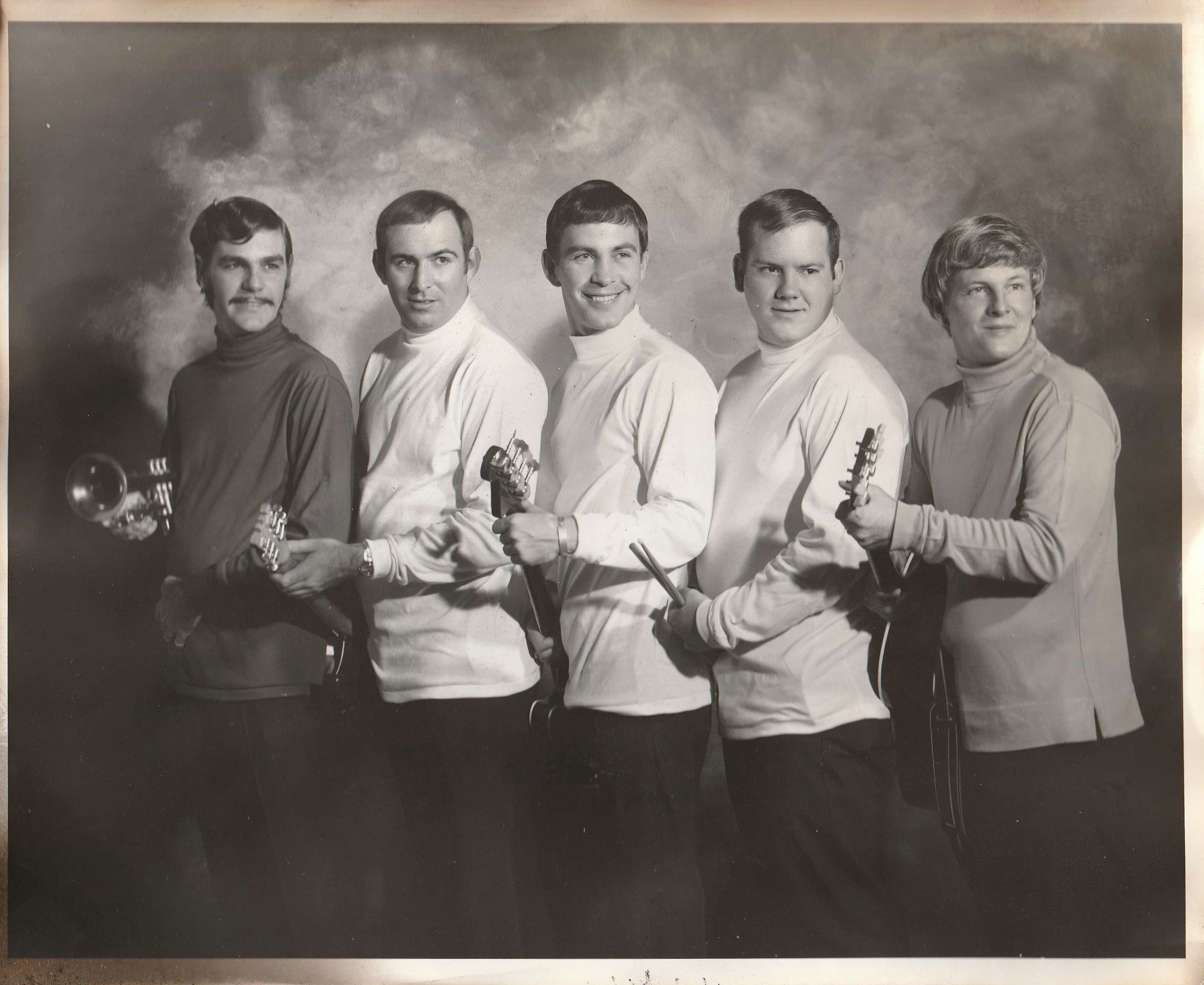
The Sounds of Sandlin, from left: Henry Rawls, John Tabor, Andy Facundus, J.W. Howell, and Billy Sandlin
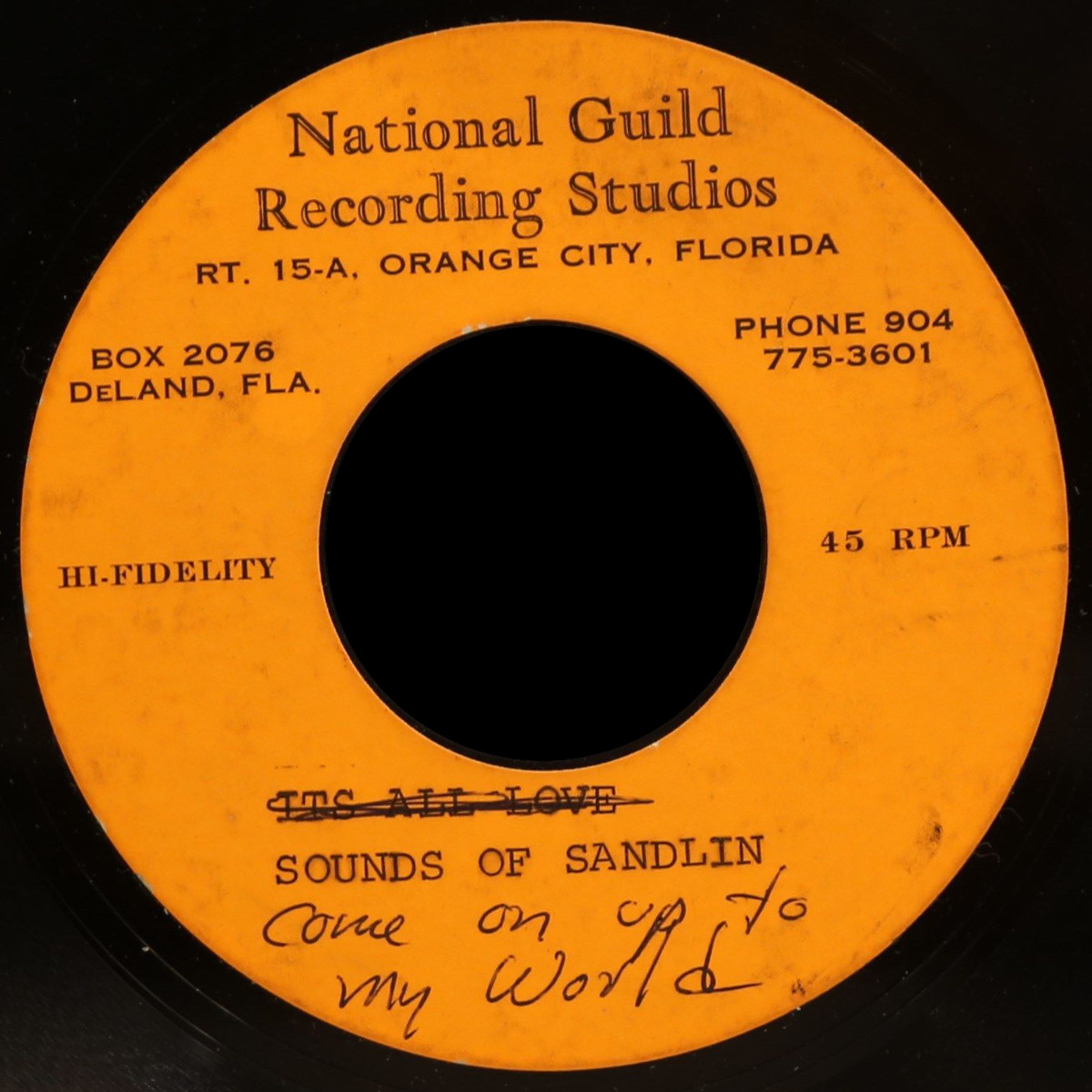
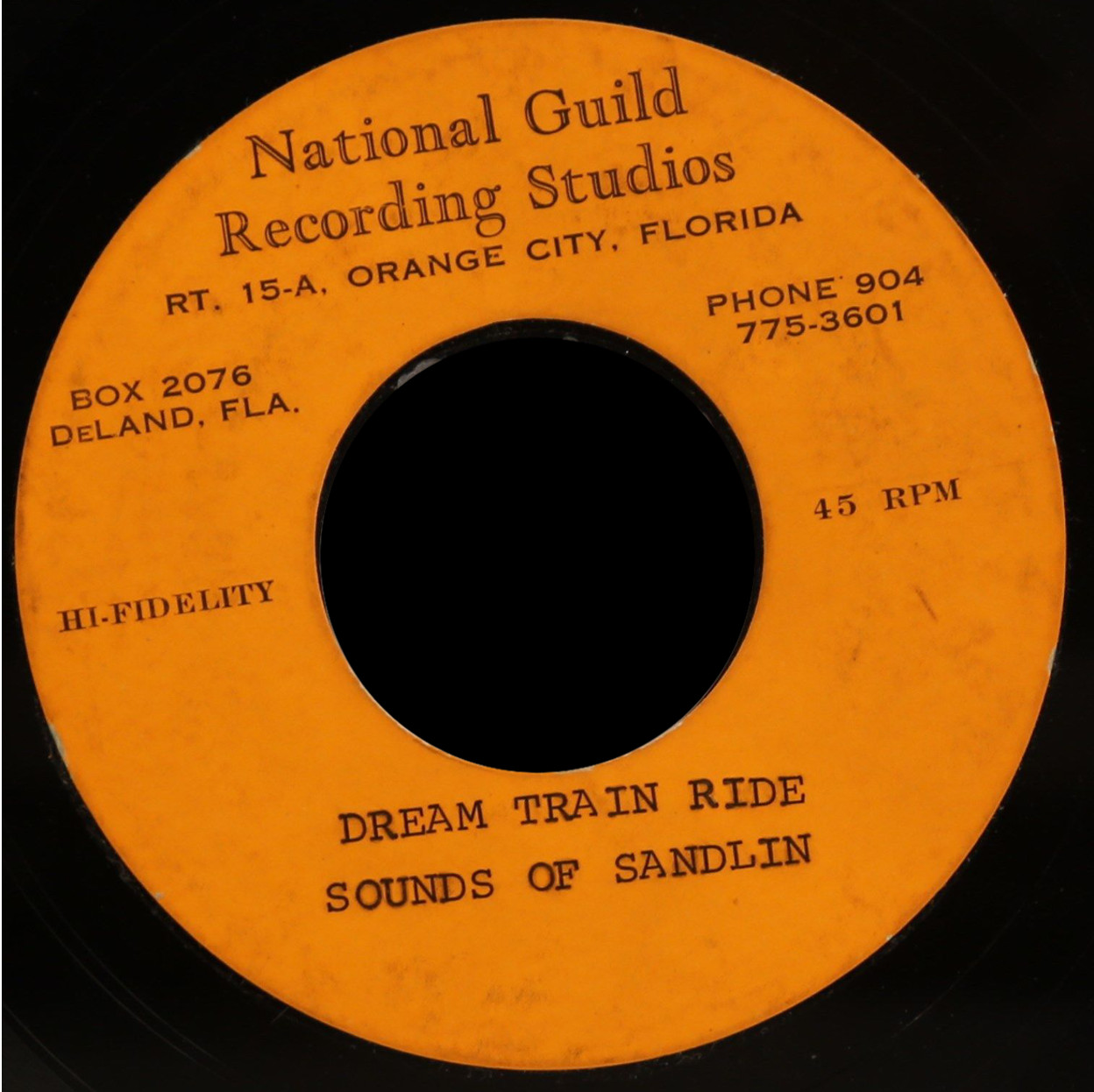
Circa 1969, Billy Sandlin was the singer on two demo acetates recorded at National Guild Recording Studios as Sounds of Sandlin.
John Tabor sent in the photo seen here and gave the lineup of the group:
Henry Rawls – vocals & trumpet John Tabor – vocals & lead guitar Andy Facundus – bass guitar J.W. Howell – drums Billy Sandlin – vocals & rhythm guitar
“Come on Up to My World” and “Dream Train Ride” are solid psychedelic numbers, while “Sunshine” is a quiet ballad in a folk or country-rock style, and “I Need You” has fuzz guitar but is more of a pop song. All four songs feature two vocalists singing each line of verse.
National Guild Studios were located in Orange City about an hour and a half east-southeast of Ocala. I’ve heard clips of both thanks to Jameson Sweiger, who took the photos of the acetates seen here and gave me some background on them.
The acetates came from Larry Montague, who produced Billy’s single on Viking.
Jameson wrote: “Larry had a full album from the sessions of these 45s that was to be released but shelved after his death and never released. Larry had the original reel to reels when I met him. Sandlin apparently was in movies or working on movies at the time of these 45s.”
Sandlin next joined with Barry Winslow of the Royal Guardsmen for a single on Mega, “Have You Seen a Rainbow Lately” / “Peace Time” that got a good mention in Billboard in November, 1971.
Billy Sandlin also recorded two songs I haven’t heard, “Turn Me On” / “Country In The City” that exist on a Capitol custom 8″ demo, I’m not sure of the year.
Tragically, Billy and his wife Melinda were killed when their car was hit by a drunk driver fleeing the police in Ocala in February, 1973.
Billy Sandlin discography:
Vim Records 1006 – Billy Sandlin – “She’s Mean” (Sandlin, pub. by ThreeWay BMI) / “Don’t Let Me Down” (1959)
Gala Records 45-110 – Billy Sandlin – “She’s Mean” / “Don’t Let Me Down” (1959)
Gala Records 45-115 – Billy Sandlin – “Teenager’s Dream”/ “Cha Cha Bop” (Sandlin) (1960)
Strike Records S-103/4 – Billy Sandlin with the Strangers and the Bluetones – “My Little Twisting Baby” (Sandlin) / Billy Sandlin and the Strangers – “My Little Star” (P4KM-5346), recorded in Germany with a group also known as the King-Beats, but issued in the U.S. circa 1963.
Viking Records 1001/2 – Billy Sandlin and the Embers – “You’ll Always Have Someone” / “I Kept on Walking” (Sandlin, pub. by Montague Music), produced by Larry E. Montague
Royale 1966.326 – Billy Sandlin with the Interns – “Poor Rich Girl” / “Here Comes That Feeling” (1966) prod. by Jack McGowan
Royala 1966.329 – Billy Sandlin with the Interns Orchestra – “I Kept On Walking” / “Sweet Loving” (sung by Ace Perryman), 1966
Mega 615-0044 – Winslow & Sandlin – “Have You Seen a Rainbow Lately” (Barry Winslow-Barry Sandlin) / same (1971)
Unreleased demos:
Sounds of Sandlin – “Come on Up to My World” / “Sunshine” (National Guild Recording Studios demo, late ’60s) Sounds of Sandlin – “Dream Train Ride” / “I Need You Girl” (National Guild Recording Studios demo, late ’60s) Billy Sandlin – “Turn Me On” / “Country In The City” (Capitol Custom 8″ acetate disc, date unknown)
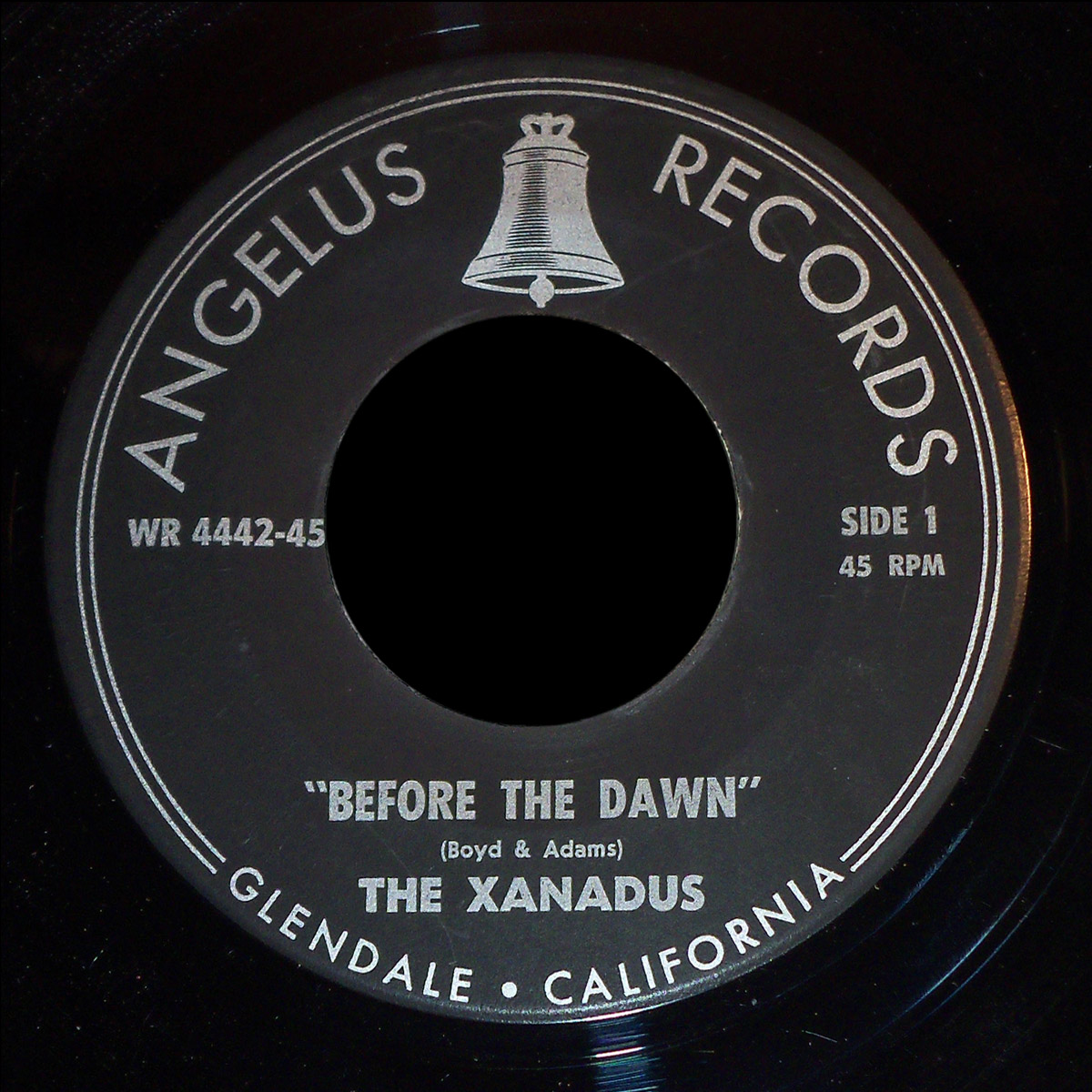
I mentioned the Xanadus when I wrote about Angelus Records, a label for Christian music based out of Lorin Whitney’s studio in Glendale. The Xanadus first single was on Angelus, even though it was not a religious record. On hearing their second single recently, I decided the Xanadus deserve their own entry.
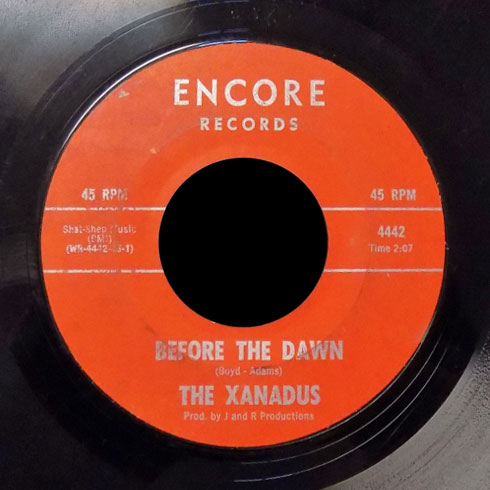
Their first single, “Before the Dawn” features a basic ensemble of lightly-amplified guitars, tambourine and harmony singing. “Little Girl” is a ballad, even more low-key than the A-side. Both songs are on youtube but not in great sound quality. It came out on Angelus WR-4442, and then the band reissued it on their own Encore label with the same catalog # 4442.
There are only a few instrumental or pop releases on Angelus. The Xanadus single is more pop in style and subject matter, but it’s so light and innocuous it doesn’t clash with the typical Angelus subject matter.
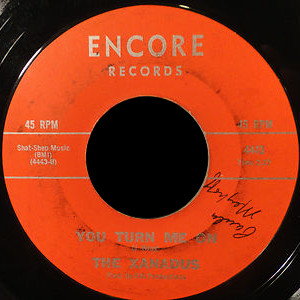
However, there’s no way Angelus would allow the band to use the label for their second 45, the salacious and amazing “You Turn Me On” / “Bankrupt Bothered & Bewildered”, released on Encore 4443. These are sharp, cutting rockers, with good guitar breaks. “Bankrupt Bothered & Bewildered” sounds like it was recorded live, shouting and hooting in the background.
Photos in the videos are different bands.
Angelus WR-4442 – “Before the Dawn” (Boyd & Adams) / “Little Girl” (Wray) produced by J & R Productions Encore 4442 – Xanadus – “Before the Dawn” (Boyd & Adams) / “Little Girl” (Wray) (WR-4442-45) released Feb. 1965 Encore 4443 – “You Turn Me On” / “Bankrupt, Bothered & Bewildered” released April 1965
Both Encore releases have publishing by Shat-Shep Music BMI.
At this time I know nothing about the band.
The Shat-Shep Music credit shows up on at least a couple other singles of the period. One is Gail Da Corsi – “I’ve Lost In Life” / “Touch Of Yesterday” on Dolton 314. The other is the Universals “I’m In Love” / “A Love Only You Can Give” on Shepherd SR 2200, a doo-wop style 45 from 1962.
Another Shepherd release, though without the Shat-Shep credit is Ritchie Marsh “They Say” (Pat Vegas, R. Marsh, pub. by Debutante Music) / “Darling I Swear That It’s True” on Shepherd SR-2203. Ritchie Marsh is better known as Sky Saxon.
The Shepherd label came out of Hollywood.
Thank you to Dan Peterson for the scan of the Angelus 45. If you have better scans of the second Encore single, please contact me.
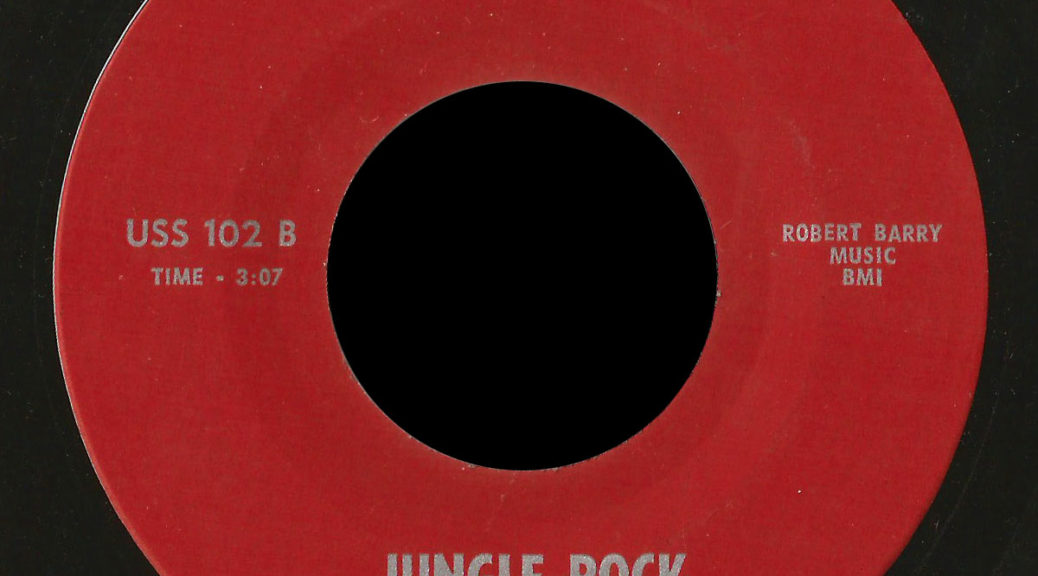
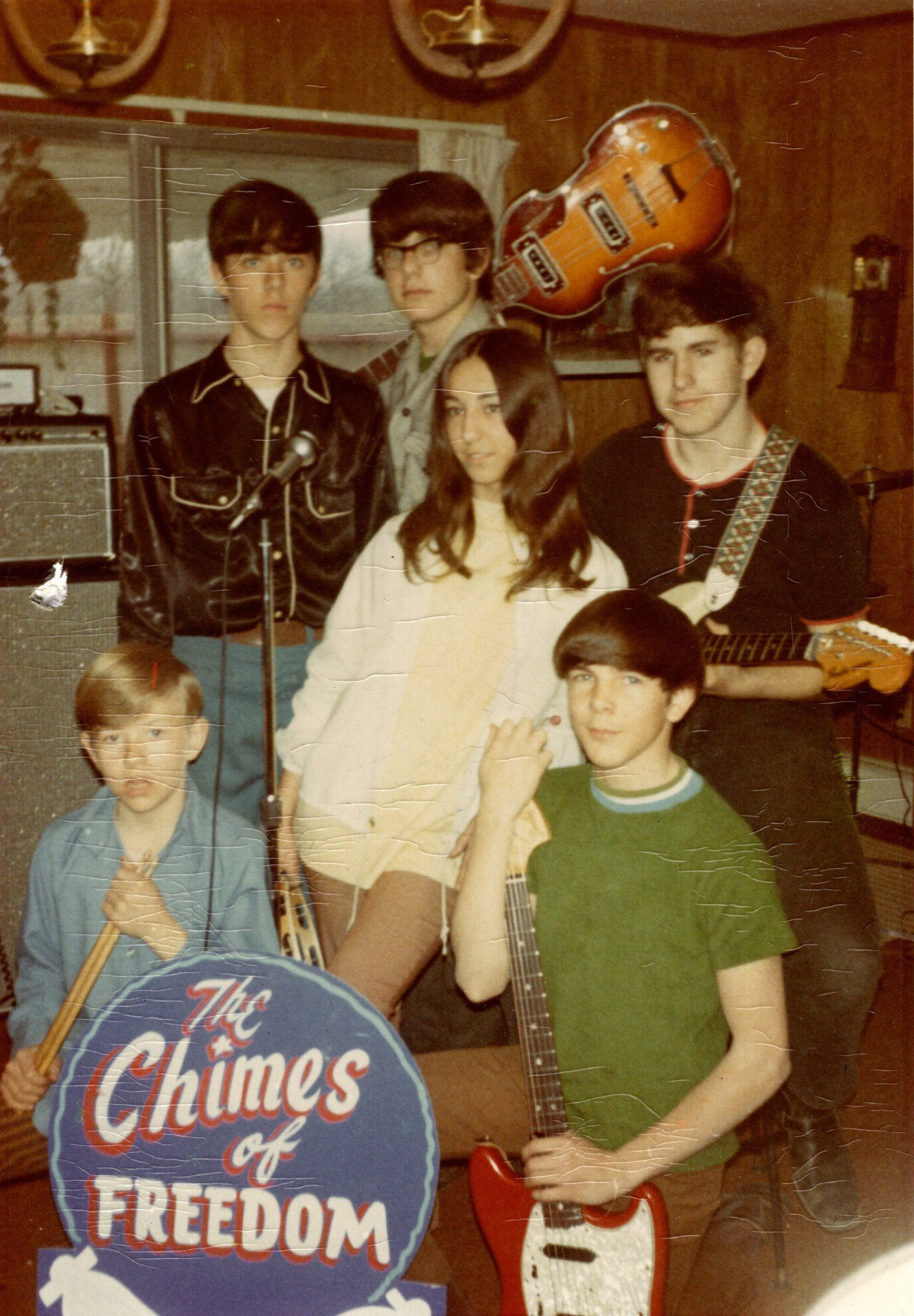
The Chimes of Freedom, clockwise from bottom left: (please comment if any IDs incorrect): Darrell Francis on drums, Chip Vedder, Jeff Austin with bass, Mari Salato vocals, Bill Pytlovany with white Fender guitar and Paul Hamilton with red Fender. Photo courtesy of Paul Hamilton, all rights reserved.The Chimes of Freedom came from Scotia, New York, near Schenectady and Albany. “Jungle Rock” is known from Girls in the Garage, but this was not an all-girl group. Members were:
Mari Salato – vocals Chip Vedder – vocals Bill Pytlovany – lead guitar Paul Hamilton – rhythm guitar Jeff Austin – bass guitar Darrell Francis – drums
Bonnie Carbin Kruger commented below that she played keyboards on this record.
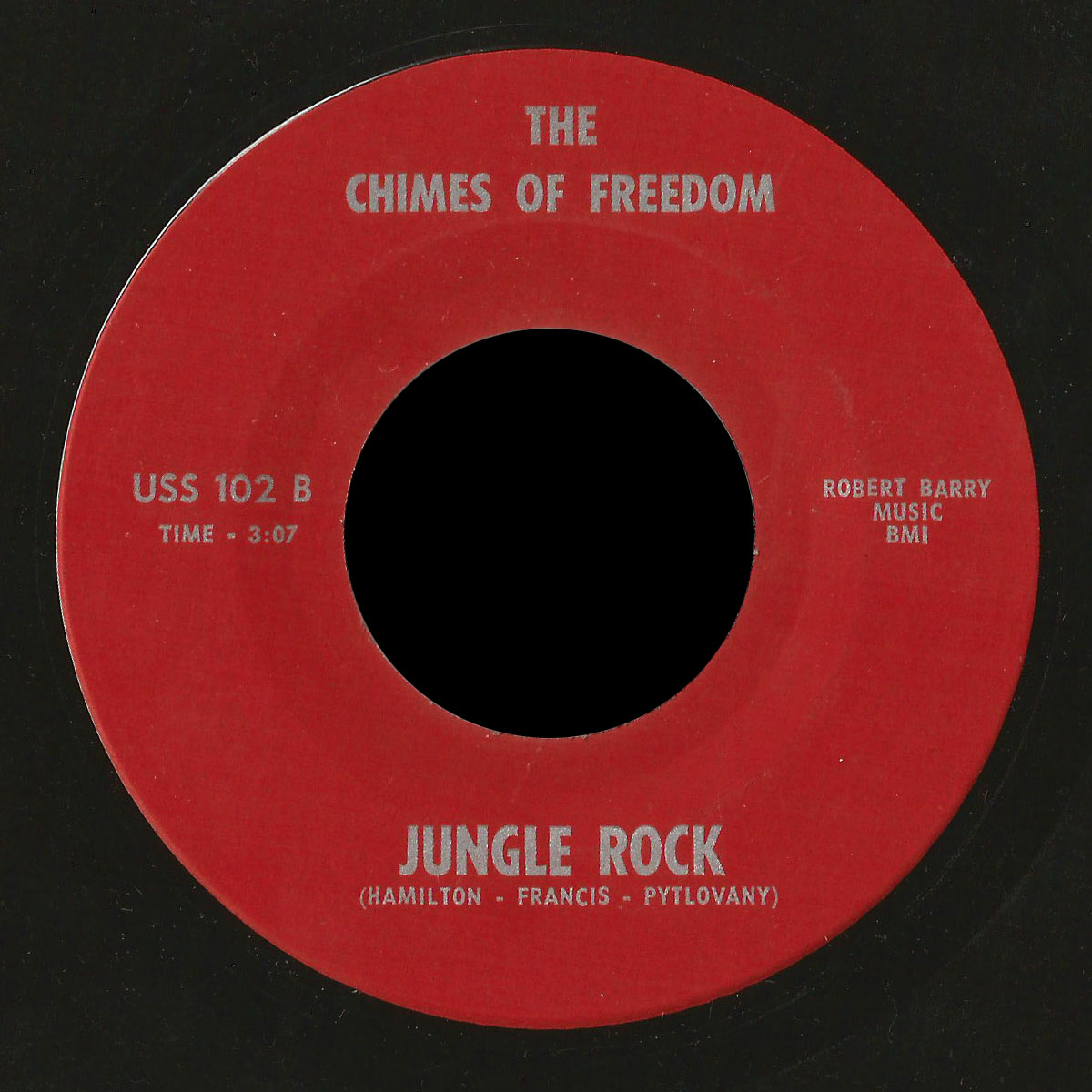
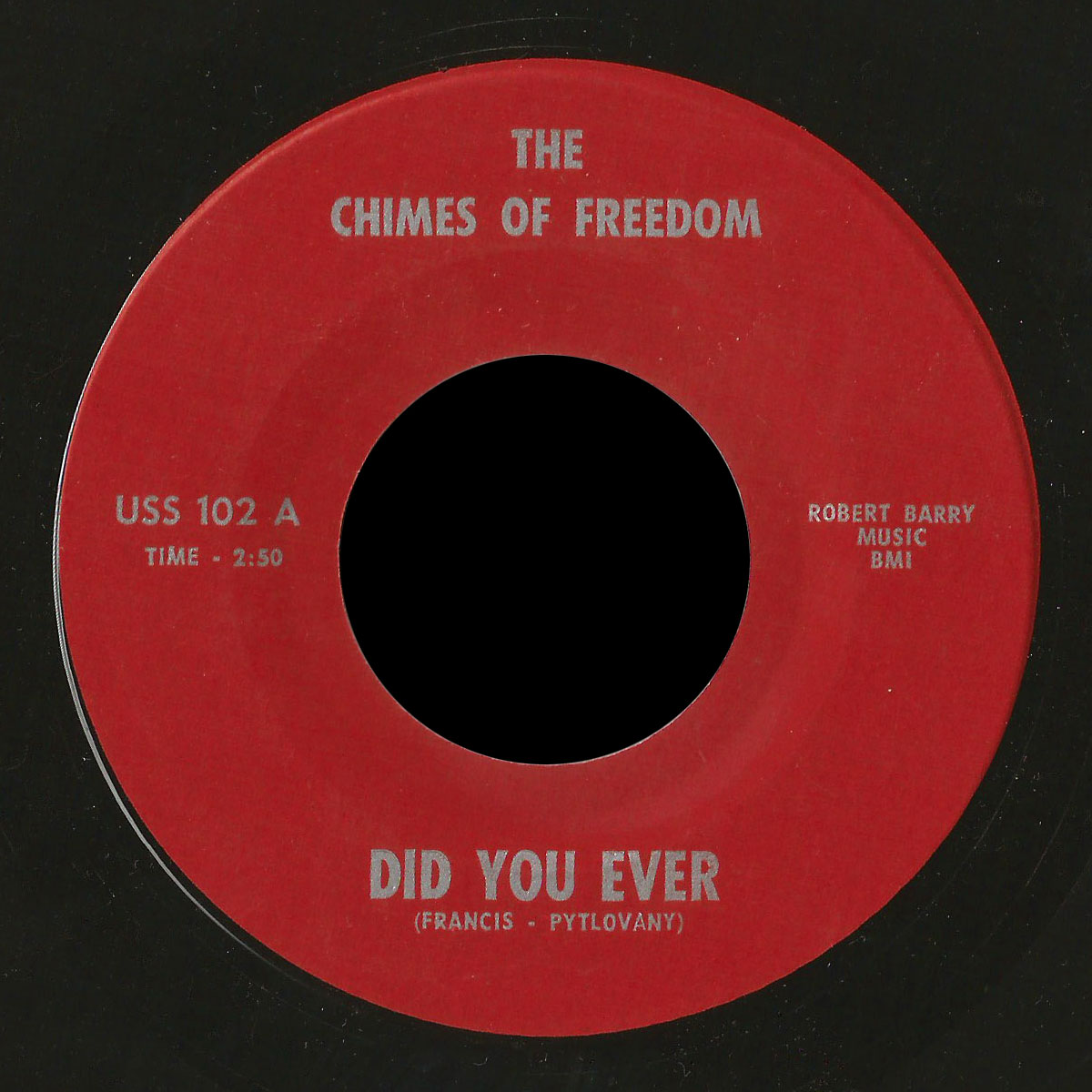
Paul Hamilton, Darrell Francis and William Pytlovany wrote “Jungle Rock”, while the original A-side was “Did You Ever”, a ballad by Francis and Pytlovany.
This is a hard single to date, I don’t see anything in the dead wax other than stamped 102A/B, and the label code USS 102 is also obscure. The Robert Barry Music credit helps connect this to the Vibra-Sound Recording Studio in Schenectady.
The Times Record reported on June 4, 1970 that the Chimes of Freedom would participate in a Battle of the Bands at the Colonie Coliseum Summer Theater against three Colonie bands: Iron Image, Reverend Blackbird, and Three Steps in the Mill, plus a group called Horton Strong from SUNY Albany.
On September 11, 1970, the Troy Record reported the Chimes of Freedom would play a cafeteria dance for the Shenendehowa Festival on September 26.
This site is a work in progress on 1960s garage rock bands. All entries can be updated, corrected and expanded. If you have information on a band featured here, please let me know and I will update the site and credit you accordingly.
I am dedicated to making this site a center for research about '60s music scenes. Please consider donating archival materials such as photos, records, news clippings, scrapbooks or other material from the '60s. Please contact me at rchrisbishop@gmail.com if you can loan or donate original materials

 The New Diablos came from East Baltimore, Maryland, making two excellent psychedelic singles during their time together.
 Their next single may have come as late as 1970. “Tangerine Guides” and “I’m Fake” have touches of psychedelia and soul. Bill Bell and George Dobash wrote both songs (Dodash on the label is a typo). I’m still trying to puzzle out the lyrics to “I’m Fake”.