Colin Young – lead vocals
Oscar Knight – lead guitar
Calvin ‘Fuzzy’ Samuel – bass
Ken Cumberbatch – keyboards
Tony Bauman – saxophone
Denis Overton – saxophone
Conrad Isidore – drums
London-based West Indian soul outfit, Joe E Young & The Toniks recorded a superb, ultra-rare, and highly collectable, LP called Soul Buster! for Vicki Wickham’s small Toast label during 1968 before splintering when singer Colin Young joined British chart toppers The Foundations, subsequently singing lead on the UK #2 hit, “Build Me Up A Buttercup” and UK #8 hit, “In The Bad Bad Old Days (Before You Loved Me)”.
The band’s career is shrouded in mystery and very little is known about its tangled history, not to mention its origins. What we do know, however, is that Colin Young was born in Barbados on 12 September 1944 (although some sources suggest the United States) and first came to London for a holiday with his father in the mid-Sixties (possibly in late 1965).
It seems likely that the original Toniks were formed around the Stoke Newington area as that was a hotbed for musicians from the Caribbean, who had moved to London.
Colin Young formed the group with guitarist Oscar Knight; sax player Anthony Barman (aka Bauman); bass player Sam Southwell; and drummer John Seally.
However, at some point in late 1966/early 1967 Calvin ‘Fuzzy’ Samuel (aka Samuels) took over from Sam Southwell; Conrad Isidore replaced John Seally; and keyboard player Ken Cumberbatch and second sax player Denis Overton joined. Samuel and Cumberbatch knew sax player Anthony Bauman from playing together in The Blue-Ace-Unit.
Antigua-born London-raised Calvin Samuel’s first musical outfit appears to have been The Cool Shades alongside fellow Antiguan, lead guitarist Wendell (Dell) Richardson, who’d grown up in Tottenham after moving to the UK at the age of 11, and two other musicians called Philip and Ronald.
Next he joined The Blue-Ace-Unit, formed around early 1965 by future Bob Marley sideman, Junior Marvin, who at the time used the name Junior Kerr. Apparently, it was Kerr who coined Samuel’s nickname ‘Fuzzy’ after the musician used a fuzz box on his bass while playing a gig in Hornsey. Samuel says he stole the fuzz box from a music shop, which, he adds, was the same one Keith Richard used on “Satisfaction” but applied it to his bass.
Samuel replaced the original bass player in The Blue-Ace-Unit around the same time that Ken Cumberbatch joined Kerr’s group on keyboards.

In mid-1966, Samuel briefly joined The Rick ‘N’ Beckers before hooking up with The Skatalites, a band that Richardson also worked with briefly, albeit in early 1967.
After working with The Skatalites, Samuel reunited with Cumberbatch in the new version of The Toniks. Samuel says he knew his predecessor Sam Southwell, who was from Stoke Newington, and that Colin Young and Oscar Knight lived with him.
Also on-board was Dominica-born Conrad Isidore, who had arrived in the UK in 1958 when he was 15 years old. After studying music in Finland, Isidore returned to the UK to work with The Grenades for a few years. He then played with The Links, during which time he met John Maxwell, who used to work for Ken Edwards, the owner of the New All-Star Club near Liverpool Street. It was Maxwell who recommended him for the job with The Toniks when Seally left. Isidore says that Wendell Richardson also played guitar with The Toniks very briefly.
Around the same time, a second sax player, Denis Overton also joined. Overton is most likely the same South African-born musician who had previously played with John O’Hara & His New Playboys during 1965-1966 and then briefly worked with Liverpool band, The Roadrunners.
Incidentally, Samuel was also close friends with The Equals and apparently Eddy Grant used Calvin ‘Fuzzy’ Samuel as a session bass player on many of The Equals’ recordings, including “Viva Bobby Joe”, “Softly Softly” and “I Get So Excited”. Grant would later produce and pen material for Samuel’s post-Toniks band, The Sundae Times.
Billed as either The Toniks or The Tonicks, the sextet quickly found work gigging across the north London club scene in venues that catered for the city’s burgeoning West Indian population.
The New All-Star Club near Liverpool Street railway station became a favourite haunt. According to Samuel, the club’s owner Ken Edwards used The Equals as the house band but brought The Toniks in as a replacement.
The Toniks also became regulars at Count Suckle’s Cue Club in Paddington and the Roaring 20’s in Carnaby Street, Soho.
According to Geno Washington & The Ram Jam Band guitarist Pete Gage, who would work with the band in late 1967, it was Colin Young’s manager Ken Edwards, who [also] owned the Cue Club who renamed the singer Joe E Young.
Some of the gigs below (particularly the early ones) didn’t list Joe E Young, but Colin Young was there from start to finish.
British music magazine, Melody Maker, lists the following gigs for the band (unless otherwise noted). Some of the earlier gigs from 1966 were probably by the original formation.
Selected gigs:
7 September 1966 – Tiles, Oxford Street, central London
11 September 1966 – New All-Star Club, 9a Artillery Passage, east London with The Pilgrims
2 October 1966 – Toft’s, Folkestone, Kent (Folkestone, Hythe & District Herald)
5 October 1966 – Zebra Club, W1, central London
8 October 1966 – Club West Indies, Stonebridge Park, northwest London
9 October 1966 – New All-Star Club, 9a Artillery Passage, east London
17 November 1966 – Starlite, Greenford, northwest London
17 November 1966 – Whisky A Go Go, Wardour Street, Soho, central London
3 December 1966 – New All-Star Club, 9a Artillery Passage, east London
9 December 1966 – Beachcomber Club, Nottingham (Nottingham Evening Post)
17 December 1966 – New All-Star Club, 9a Artillery Passage, east London
25 December 1966 – New All-Star Club, 9a Artillery Passage, east London
26 December 1966 – New All-Star Club, 9a Artillery Passage, east London with The Sugar Simone Show
8 January 1967 – New All-Star Club, 9a Artillery Passage, east London
27 January 1967 – Starlite, Greenford, northwest London with Inez and Charlie Foxx
28 January 1967 – New All-Star Club, 9a Artillery Passage, east London
28 January 1967 – California Ballroom, Dunstable, Bedfordshire with Dave Berry & The Crusiers and The Crestas (website: www.california-ballroom.info/gigs/)
28 January 1967 – Chalk Farm, north London with The Vaudeville Band, The Soft Machine and The Hectic Poets (Billed as the band only)
3 February 1967 – El Grotto, Ilford, east London (Redbridge & Ilford Recorder) (Billed as The Tonics)
4 February 1967 – Ricky Tick, Hounslow, west London (Poster) (Billed as The Tonicks featuring Joey Young)
5 February 1967 – Cue Club, Paddington, west London (Billed as Joey Young & The Tonicks Band)
11 February 1967 – Birdcage, Eastney, Hampshire (Dave Allen research)
11 February 1967 – New All-Star Club, 9a Artillery Passage, east London
17 February 1967 – New All-Star Club, 9a Artillery Passage, east London
17 February 1967 – Roaring 20’s, Carnaby Street, Soho, central London
19 February 1967 – Cue Club, Paddington, west London (Billed as Tonicks Band)
24 February 1967 – Cue Club, Paddington, west London (Billed as Tonicks Band)
25 February 1967 – New All-Star Club, 9a Artillery Passage, east London
25 February 1967 – Roaring 20’s, Carnaby Street, Soho, central London

4 March 1967 – Harvest Moon Club, Guildford, Surrey (Aldershot News)
4 March 1967 – Roaring 20’s, Carnaby Street, Soho, central London
5 March 1967 – El Grotto, Ilford, east London (Redbridge & Ilford Recorder) (Billed as The Tonics)
5 March 1967 – Cue Club, Paddington, west London (Billed as Tonicks Band)
7 March 1967 – The Place, Hanley, Staffordshire (Poster)
10 March 1967 – El Grotto, Ilford, east London (Redbridge & Ilford Recorder) (Billed as The Tonics)
16 March 1967 – Roaring 20’s, Carnaby Street, Soho, central London
18 March 1967 – New All-Star Club, 9a Artillery Passage, east London
23 March 1967 – Roaring 20’s, Carnaby Street, Soho, central London
23 March 1967 – Klooks Kleek, West Hampstead, north London (Geoff Williams research: Decca Studios and Klooks Kleek book)
24 March 1967 – Cue Club, Paddington, west London (Billed as Tonicks Band)
25 March 1967 – New All-Star Club, 9a Artillery Passage, east London
27 March 1967 – New All-Star Club, 9a Artillery Passage, east London
30 March 1967 – Golden Torch, Tunstall, Staffordshire with The Drifters, The Senate and Jimmy Cliff (Evening Sentinel)
31 March 1967 – New All-Star Club, 9a Artillery Passage, east London
7 April 1967 – The Place, Hanley, Staffordshire with Les Fleur De Lys (Evening Sentinel)

8 April 1967 – Bluesville, St Thomas’ Hall, Brentwood, Essex (Essex Chronicle)
9 April 1967 – Cue Club, Paddington, west London (Billed as Tonicks Band)
9 April 1967 – Flamingo, Soho, central London

15 April 1967 – Dreamland Ballroom, Margate, Kent with The Tribe (Folkestone, Hythe & District Herald)
16 April 1967 – New All-Star Club, 9a Artillery Passage, east London
21 April 1967 – Mr McCoys, Middlesbrough (Middlesbrough Evening Gazette) Billed as The Tonicks
29 April 1967 – Tabernacle, Stockport, Greater Manchester (Manchester Evening News & Chronicle)
14 May 1967 – Cue Club, Paddington, west London (Billed as Tonicks Band)

21 May 1967 – The Place, Hanley, Staffordshire (Evening Sentinel)
22 May 1967 – Queen’s Ballroom, Wolverhampton, West Midlands (Express & Star)
26 May 1967 – Assembly Rooms, York, North Yorkshire (Yorkshire Gazette)
29 May 1967 – New All-Star Club, 9a Artillery Passage, east London with Nyla Rose
2 June 1967 – Golden Torch, Tunstall, Staffordshire (Evening Sentinel)
2 June 1967 – New All-Star Club, 9a Artillery Passage, east London
17 June 1967 – Gaiety Ballroom, Ramsey, Cambridgeshire with The Kinsmen (Cambridgeshire Times) (Billed as the band only)
17 June 1967 – New All-Star Club, 9a Artillery Passage, east London (Billed as John Lee Hooker & The Tonicks)
24 June 1967 – New All-Star Club, 9a Artillery Passage, east London with The Toys (Billed as the band only)
22 July 1967 – Nite Owl, Leicester (Disc & Music Echo)
The Nite Owl gig may not have happened as it took place during the period that the band played at Snoopy’s (aka The Windmill) in Palma, Majorca which was from around late June to late August 1967.

9 September 1967 – New All-Star Club, 9a Artillery Passage, east London
9 September 1967 – Cue Club, Paddington, west London (Billed as Tonicks Band)
15 September 1967 – New All-Star Club, 9a Artillery Passage, east London

23 September 1967 – Royal Links Pavilion, Cromer, Norfolk with Soul Concern (North Norfolk News)
24 September 1967 – New All-Star Club, 9a Artillery Passage, east London
28 September 1967 – Klooks Kleek, West Hampstead, north London
7 October 1967 – Tinned Chicken, Folk Hall, New Earswick, York, North Yorkshire with Barabbas (Yorkshire Evening Press)
13 October 1967 – Cue Club, Paddington, west London (Billed as The Tonicks Band)

From late October-mid-November 1967, Melody Maker reports that Joe E Young & The Toniks were resident band at the New All-Star Club but did not say if this was every night. In early November, Ruby James & The Stax were also residents.
20 October 1967 – Rendevous Club, Margate, Kent with The Coloured Raisins (East Kent Times & Mail)
21 October 1967 – Royal York Hotel, Ryde, Isle of Wight with supporting London band (Isle of Wight County Press)
21 October 1967 – Cue Club, Paddington, west London (Billed as The Tonicks with Joey Young)
21 October 1967 – Ram Jam, Brixton, south London

22 October 1967 – Kettering Working Men’s Club, Kettering, Northamptonshire with Lloyd Alexander Blues Band (Northamptonshire Evening Telegraph)

27 October 1967 – Railway Hotel, Wealdstone, Harrow, northwest London
28 October 1967 – Leeds International Club, Leeds, West Yorkshire
31 October 1967 – Adelphi Ballroom, Slough, Berkshire

3 November 1967 – Deers Leap, Penhill, Wiltshire (possibly Swindon Advertiser)
4 November 1967 – Dreamland Ballroom, Margate, Kent with The Vogues (East Kent Times & Mail)
Sometime around early-to-mid November 1967, Calvin ‘Fuzzy’ Samuel departed to form The Sundae Times with guitarist Wendell Richardson. The Sundae Times later landed a record deal with President Records thanks to their friendship with Eddy Grant. Conrad Isidore continued to play with Joe E Young & The Toniks while Samuel and Richardson wrote material but jumped ship to join them once they got the record deal.
Ken Cumberbatch left around the same time and moved into session work, including working with Junior Marvin. Oscar Knight also departed at the same time.
Trinidad and Tobago-born siblings Kelvin Bullen (lead guitar) and Hugh Bullen (bass), who had started out with Reading, Berkshire band, The Soul Trinity, took Knight and Samuel’s places. Richard London came in from south London bands The Heads and The Stax for Ken Cumberbatch.

Colin Young – lead vocals
Kelvin Bullen – lead guitar
Hugh Bullen – bass
Richard London – keyboards
Tony Bauman – saxophone
Denis Overton – saxophone
Conrad Isidore – drums
Sometime in November, Joe E Young & The Toniks landed a recording deal with Vicki Wickham’s Toast label. Paired with former Ram Jam Band guitarist Pete Gage as an arranger, the band started to record material for an LP with producer Tommy Scott, which appears to have been cut over several sessions, starting in late 1967 and culminating with a final session in mid-1968.

According to Gage, it was Vicki Wickham (Dusty Springfield’s manager) who approached him via Rik Gunnell to arrange and produce Joe E Young & The Toniks. Gage believes that session players, which possibly included keyboard player Tim Hinkley and guitarist Ivan Zagni, who’d previously played with Mike Patto in The Chicago Blues Line and worked with his girlfriend Elkie Brooks in early 1968, may have been employed on some tracks. He also thinks that Colin Young’s friend Jimmy Chambers and Trinidad-born singer Ebony Keyes may have contributed vocals to the sessions.
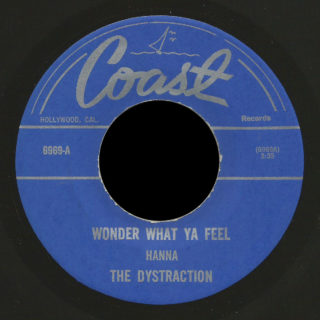
Two of the earliest tracks to be recorded were two Pete Gage songs, co-written with Ebony Keyes (aka Kenrick Pitt), “Lifetime of Lovin’” c/w “Flower In My Hand”. Paired as a single, the tracks were issued on Toast in January 1968 but did not chart. Incidentally, the single also saw a South African release on the Continental label.

Selected gigs:
23 November 1967 – Klooks Kleek, West Hampstead, north London

8 December 1967 – Burton Constable Stately Home, Hull, Humberside with The Amboy Dukes, Ferris Wheel, Roger Bloom’s Hammer, Gospel Garden and The Mandrakes (Hull Daily Mail)
9 December 1967 – Enfield Technical College, Enfield, north London with Ten Years After (Poster)
9 December 1967 – New All-Star Club, 9a Artillery Passage, east London
10 December 1967 – Ram Jam Club, Brixton, south London

11 December 1967 – Hull University Union at the Skyline Ballroom, Hull, Humberside with The Moody Blues and The Gods (Hull Daily Mail)

16 December 1967 – Royal Links Pavilion, Cromer, Norfolk with The Rubber Band (North Norfolk News)

23 December 1967 – Royal Lido, Prestatyn, Clwyd, Wales (Rhyl & Prestayn Gazette)

24 December 1967 – Sunday club, Addlestone, Surrey with Art Movement (Woking Herald)
25 December 1967 – Cue Club, Paddington, west London with Ronnie Jones, Owen Grey, The Youth and Herbie Goins
26 December 1967 – Shelimar Club, Huddersfield, West Yorkshire
30 December 1967 – Israeli Student Association, West Hampstead, north London
30 December 1967 – Cue Club, Paddington, west London
31 December 1967 – “Big C”, 1 Camp Road, Farnborough, Hampshire
31 December 1967 – New All-Star Club, 9a Artillery Passage, east London
6 January 1968 – Dorothy Ballroom, Cambridge with The Reformation and The Apricot Jazz Band (Cambridge News)
13 January 1968 – Cue Club, Paddington, west London (Billed as Tonicks Band)

21 January 1968 – Alvaston Hall Hotel, Middlewich Road, Nantwich, Cheshire (Northwich Chronicle)
3 February 1968 – Boulevard, Tadcaster, North Yorkshire with Milton James & The Harlem Knockout (Yorkshire Evening Press)
3 February 1968 – Cosmo, Carlisle, Cumbria with The Gallavanters (Cumberland News)
4 February 1968 – Cosmo, Carlisle, Cumbria with Freddie Mack and The Mack Sound (Cumberland News)
9 February 1968 – New All-Star Club, 9a Artillery Page, east London with James and Bobby Purify
10 February 1968 – Club A Go Go, Newcastle upon Tyne, Tyne and Wear with Hylton Ks (http://www.readysteadygone.co.uk/club-agogo-newcastle-2/)
24 February 1968 – Tinned Chicken Club, Crystal Bowl, Castleford, West Yorkshire with Max Baer & The Chicago Setback (Sheffield Star/Yorkshire Evening Press)
24 February 1968 – Speakeasy, Folk Hall, New Earswick Hall, York, North Yorkshire with Adamil Bard (Yorkshire Evening Press)

2 March 1968 – Burton’s, Uxbridge, London (Harrow Weekly Post)
2 March 1968 – New All-Star Club, 9a Artillery Passage, east London
8 March 1968 – Drill Hall, Stratford-upon-Avon, Warwickshire (Stratford upon Avon Herald)
15 March 1968 – Camberwell Rag Ball, Camberwell, southeast London with George Bean & The Runners and The James Stewart Dance Band (South East London Mercury)
24 March 1968 – Downbeat Club, the Swan, Maldon, Essex (Essex Chronicle)
30 March 1968 – New All-Star Club, 9a Artillery Passage, east London
31 March 1968 – Cue Club, Paddington, west London with Count Suckle Sound System (Billed as Tonicks Band)

2 April 1968 – Ready Steady Go Club, Pier Pavilion, Felixstowe, Suffolk with Tony Jackson & The Vibrations (Ipswich Evening Star)

5 April 1968 – Il Rondo, Leicester (Leicester Mercury)
12 April 1968 – New All-Star Club, 9a Artillery Passage, east London

20 April 1968 – Princes Theatre & Ballroom, Yeovil, Somerset with Satan’s Chase and The Pandas (Western Gazette)
21 April 1968 – Cue Club, Paddington, west London (Billed as Tonicks Band)
22-25 April 1968 – Cue Club, Paddington, west London with Count Suckle Sound System

25 April 1968 – James Finegan Hall, Eston, Teesside with The Engine and Chelfont Line (Middlesbrough Evening Gazette)
26 April 1968 – New All-Star Club, 9a Artillery Passage, east London
27 April 1968 – Marine Ballroom, Central Pier, Morecambe, Lancashire with Top Katz (Morecambe Visitor)
30 April 1968 – Falcon Hotel, Eltham, southeast London (South East London Mercury)
Soon after Joe E Young & The Toniks participated in a tour supporting American soul legend Aretha Franklin. Also on the bill were Johnnie Walker, Robert Knight and Lucas with The Mike Cotton Sound. One of the highlights was a show at what later became the Hammersmith Odeon in May 1968.
4 May 1968 – Cue Club, Paddington, west London (Billed as Tonicks Band)

10 May 1968 – El Grotto, Ilford, east London (Redbridge & Ilford Recorder)
11 May 1968 – Eastbourne Suite, Eastbourne, East Sussex (Brighton Evening Argus)
17 June 1968 – Barn Club, Bishop’s Stortford, Herts (Steve Ingless book: The Day Before Yesterday)

22 June 1968 – Gaiety Ballroom, Ramsey, Cambridgeshire with The Soul Mates (Cambridgeshire Times)
22 June 1968 – Cue Club, Paddington, west London

6-7 July 1968 – Cosmo, Carlisle, Cumbria (Cumberland News)
14 July 1968 – Kirklevington Country Club, Kirklevington, North Yorkshire (Middlesbrough Evening Gazette)
20 July 1968 – Club LaBamba, Tunbridge Wells, Kent (Kent & Sussex Courier)

27 July 1968 – Dreamland Ballroom, Margate, Kent with Magic Roundabout (East Kent Times & Mail)
27 July 1968 – Cue Club, Paddington, west London (Billed as Joey Young & The Tonicks Band)
10 August 1968 – Wem Town Hall, Wem, Shropshire with Syndicate Union (North Shropshire Journal)

17 August 1968 – Nags Head, Motown Club, Wollaston, Northamptonshire (Northamptsonshire Evening Telegraph)
18 August 1968 – Railway Hotel, Wealdstone, northwest London
Melody Maker lists some gigs under the name The New Toniks, which may or may not be the same band. The ‘new’ prefix suggests that a new formation was put together and this writer would welcome any further information.
Selected gigs (New Toniks):
22 August 1968 – White Hart, London
23-25 August 1968 – Scotland
25-26 August 1968 – Manchester
27-28 August 1968 – Recording

According to Melody Maker, Colin Young joined The Foundations in late September and made his debut at Aberdeen University on 4 October 1968. By this point, Conrad Isidore had already jumped ship to commit to The Sundae Times full-time. With the band splitting, the Bullen siblings ended up joining Herbie Goins & The Night-Timers.
With the album ready to release, Toast quickly shipped a second single in November 1968, pairing the soul classic, “Sixty Minutes of Your Love” with Lennon & McCartney’s “Good Day Sunshine”.
Around the same time, the label also belatedly issued the Soul Buster! LP, highlights of which include one of the best covers of Darrell Banks’ “Open The Door To Your Heart”. Sadly, it was all too little, too late. With few copies pressed and scant promotion, the LP slipped out unnoticed. In subsequent years, however, it became a highly prized collector’s item, not least due to the band’s personnel and individual members’ post-Toniks career.
In a final, last gasp, Toast paired “Good Day Sunshine” with the year old “Lifetime of Lovin’” for a final single, issued on 31 January 1969, but it also failed to dent the charts.
Besides Colin Young’s chart success with The Foundations, Calvin ‘Fuzzy’ Samuel and Conrad Isidore also went on to greater things.
During his time with The Sundae Times, Isidore also played and recorded with Alan Marshall’s band One, who released a rare eponymous LP for Fontana. After a stint with Manfred Mann Chapter 3 during 1970, he became a noted session player, working with the likes of Joe Cocker, Linda Lewis, Terry Reid, Vinegar Joe and Eddy Grant to name a few. He also later played with Junior Marvin in his band Hanson and with Hummingbird.
Samuel appeared on Stephen Stills’ first two solo albums, thanks to his connections with Conrad Isidore, who landed the gig after Stephen Stills caught the drummer playing at the Speakeasy in March 1970.
The bass player was hired for Crosby, Stills, Nash & Young, appearing on the single, “Ohio” and subsequently worked in Stephen Stills’s Manassas before also finding work as a session player, including with Graham Nash, Rita Coolidge and Taj Mahal. Samuel later wrote and recorded songs with Marianne Faithfull and Stevie Winwood and worked with The Alvin Lee Band and Tumbling Dice with Mick Taylor and Nicky Hopkins. In 1999, he self-released two CDs, This Train Still Runs and Love Don’t Taste Like Chicken.
Latter day member Kelvin Bullen went on to work with Swiss rock band, Toad, while his brother Hugh found success with the highly revered British funk band, Gonzalez after a spell in Italy with Herbie Goins. Hugh Bullen also cut an Italian solo LP, Feeling, in 1978.
Colin Young meanwhile went solo and recorded for Pye Records. He later joined UK group Mercy, Mercy who had a hit with “It Must Be Heaven” in the 1980s. Since then he has participated in various Foundations reunions.
Many thanks to Pete Gage for his recollections. I would be particularly interested to hear from anyone who can add or correct any of the information here.
Thanks also to Conrad Isidore and Fuzzy Samuel for providing information.
Copyright © Nick Warburton. All Rights Reserved. No part of this article may be reproduced or transmitted in any from or by any means, without prior permission from the author.
Wendell Richardson – guitar/vocals
With The Sundae Times starting to pick up gigs and with further hits potentially in the pipeline, Conrad Isidore left The Toniks around September 1968 to commit to the project full-time. In retrospect, it was a sensible move as singer Colin Young quit The Toniks soon after to join British hit-makers, The Foundations.
The three musicians also collaborated on three other tracks on the LP, “Take Me Back Again”, “Psychedelic Dream” and “Do You Know What Love Is”. Samuel meanwhile penned two tracks, “On The Run” and “Live Today”, which belatedly headed up The Sundae Times’ final single outing (issued on 13 March 1970), and was coupled with Eddy Grant’s “Take Me Higher Baby”.


In July 1967, Polydor Records had issued Linda Lewis’ debut solo single, “You Turned My Bitter Into Sweet” but it had not been a chart success.
Managed by Ian Samwell (Lewis’ manager) and Laurie O’Leary who managed the Speakeasy, the group played a month’s residency in Biarritz, the south of France, at the Canasta Club. Then, in the early months of 1968, White Rabbit toured Italy and France, but after their return (around late March), Kerr decided to leave.


The original version of White Rabbit was completed with two additional musicians, rhythm guitarist/singer Brian Henderson, who’d recently been part of Nirvana’s backing band and was previously in The Soul Mates and Liza Strike & The Jet Set, and bass player Ralph Richardson, who’d worked with Henderson in The Jet Set.


Around August/September 1968, however, Rod Goodway and Linda Lewis both left, the latter to embark on a successful solo career after fronting Ferris Wheel where she played alongside future Foreigner drummer Dennis Elliott.