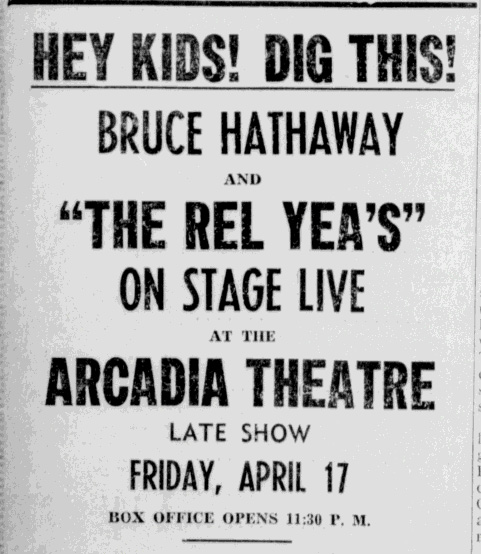
The Rel Yea’s on stage live at the Arcadia Theatre, in Kerrville, April 17, 1964The Rel-Yea’s came from San Antonio, Texas. Members included:
Jimmie Bolado – guitar Zeke Green – guitar Jim Bisset – bass, sax Mickey Drumm – drums (also Eddie Guererro – drums)
Jim Frizzell also was a member on guitar and keyboards before he joined the Chayns.
The Rel-Yea’s were young kids when they recorded their first two 45s on Wildcat Records in 1960.
Their second Wildcat single credits the band as “The Relyea’s From ‘The Ricci Ware Show’. Ricci Ware was a popular San Antonio DJ. Johnny Ware played sax with the group at times, I’m not sure if he was related to Ricci Ware. “Round Rock Boogie” includes someone named Ware as co-composer, but the Library of Congress registration only lists Zeke Green.
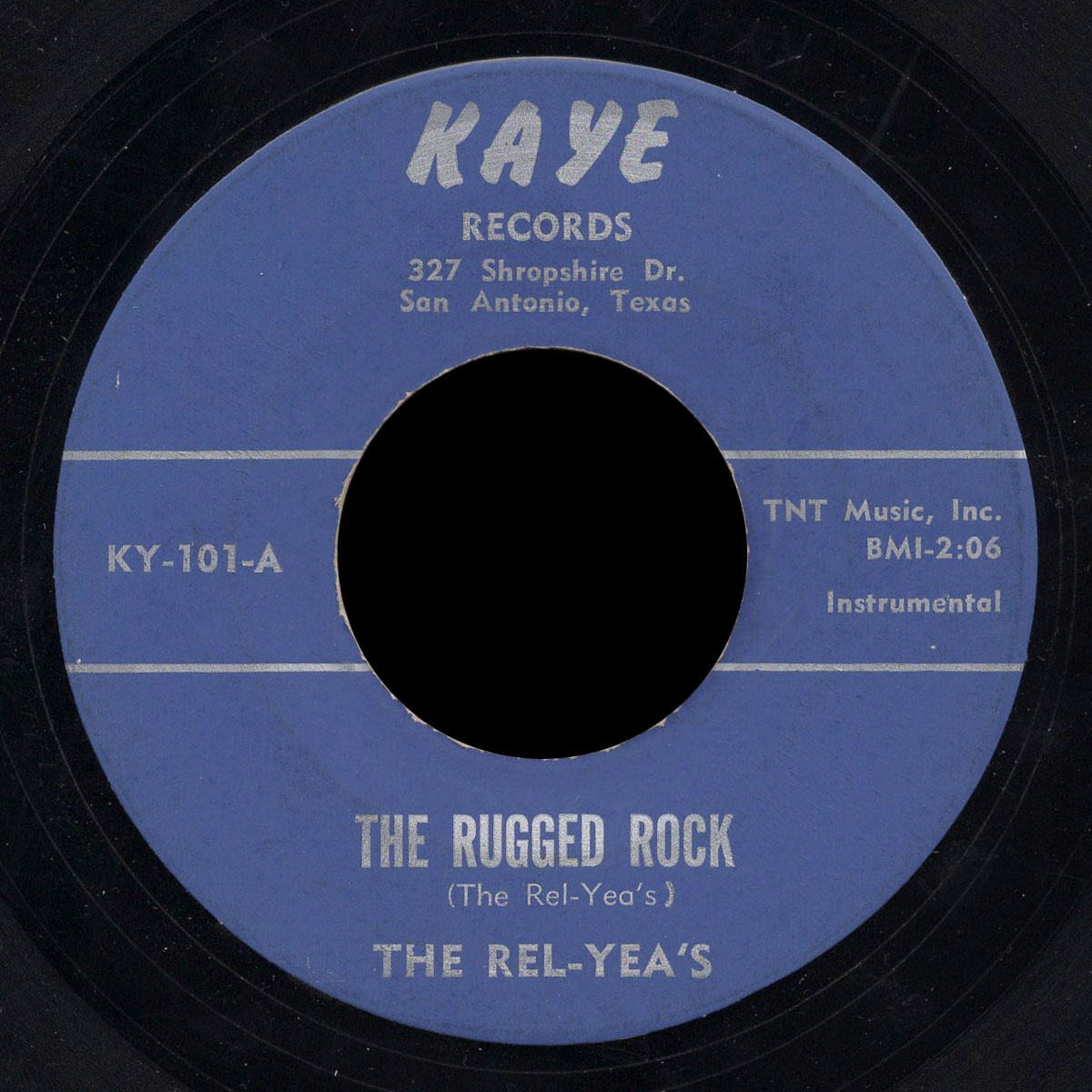
Beginning in 1963 the Rel-Yea’s released three singles on Kaye Records, which seems to have been their own label, located at 327 Shropshire Drive in San Antonio. The first of these is a fast instrumental by the band, “The Rugged Rock” b/w a version of “Good, Good Lovin'”.
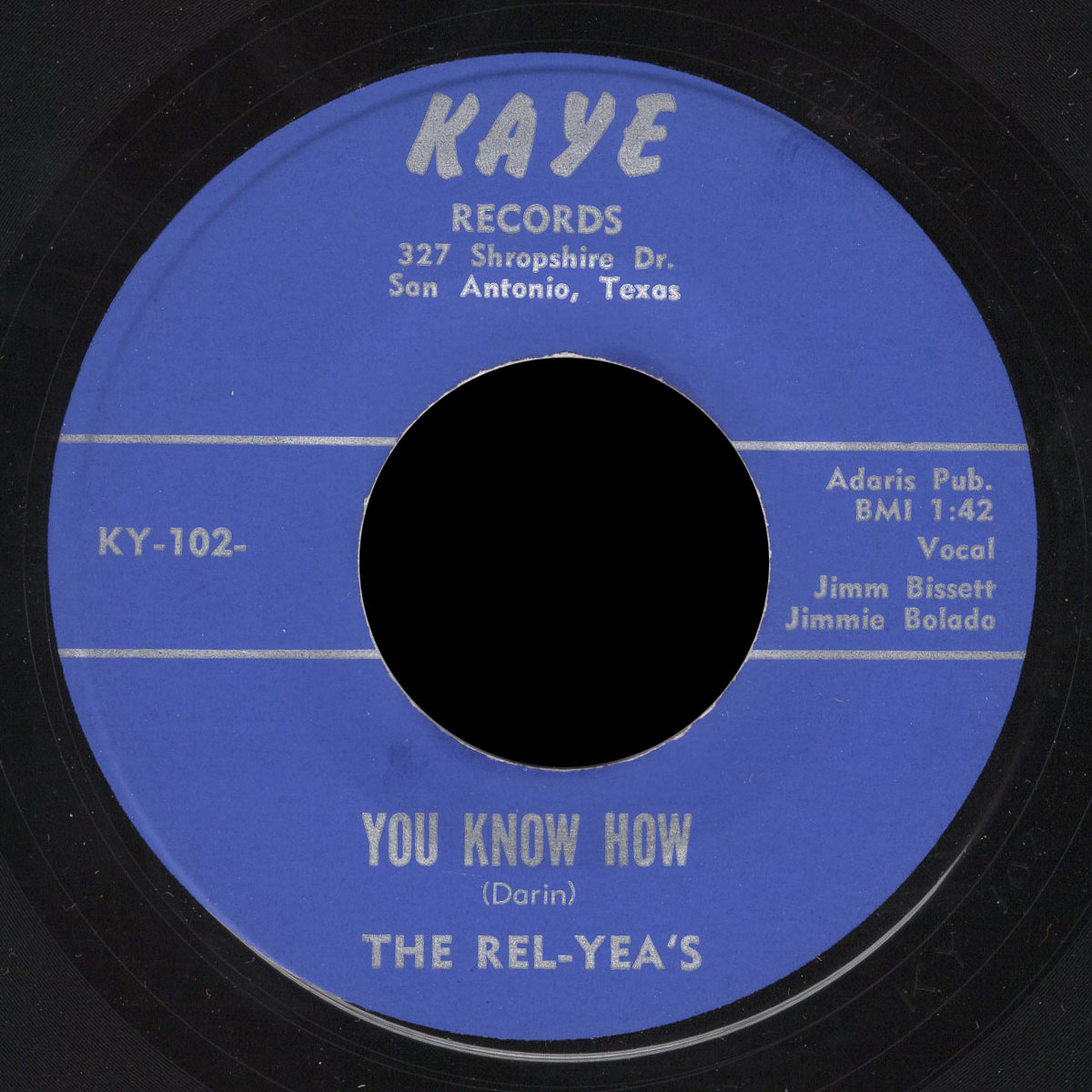
“You Know How” is the second of their Kaye Records singles. Jim Bissett and Jimmie Bolado sang lead vocals.
I found a notice for the Rel-Yea’s playing at the Arcadia Theatre in Kerrville on April 17, 1964. Bruce Hathaway, DJ at KTSA in San Antonio is also on the notice. The Arcardia was the primary movie theater in Kerrville, but this is the only live band notice I’ve found so far. The former Rialto Theatre hosted a number of live events in 1967.
A full discography for the Rel-Yea’s is at Rockin’ Country Style, and you can see a few photos of the group at Mean Gene’s Bull Session blog. Jimmie Bolado’s Facebook page has a number of photos of the group, including many with famous country & pop stars of the day, including George Jones and Roy Orbison.
I’d like to know more about the group. The Rel-Yea’s continued into the mid and late ’60s but the recordings stopped around 1964.
The Casket held weekend teen dances from June to November, 1967. The Casket had been the Rialto Theatre, which was built in 1938 on Water Street in Kerrville, Texas. Around 1957 it stopped showing movies, and for the next ten years was used for infrequent events like bingo games.
On June 7, 1967, the Kerrville Mountain Sun gave an introduction to the club by Edith Jennings:
Several young people with the assistance of the Kerrville Jaycees are renovating the building for use as a dance hall. The exterior has been painted a shocking wild pinkish-purple, and inside the theatre, the old seats have been stacked in the rear or lined against the walls. The theatre renamed “The Casket” has an ideal location for teenage dances and the added effects of the somewhat sloping floor (not too steep for dancing) and the murals, contributed by artist Ben Gebhardt, make it a place where teenagers feel they can really have a “blast!”
Friday, two weeks ago, the kick-off dance was held, another on Tuesday when a nationally famous band performed with the “Chapter 16” group… admission $1.25 stag and $2.50 drag. Dance times are eight to midnight…
A June 25, 1967 profile of the club by Frank Stevenson headlined “Teenagers ‘Rock’ In Jaycee Project’ is worth quoting in detail:
As you arrive at the door, you pay your money and your hand is stamped, apparently by a stamp which makes no mark. Then, when you pass through the lobby into where the band is playing, an area which appears to be a theatre with the seats removed, the place on your hand where you were stamped does indeed bear a mark, a mark which glows slightly.
Many other things are glowing too, and they are glowing a great deal more than slightly. Your clothes glow if they are the right color, as well as specks of lint unnoticed before, and the strange designs on the wall. Radium watch dials go crazy, glowing ten times brighter than they have ever shown before. And meanwhile the rock ‘n’ roll band plays on and the teenagers all around you dance and appear to be generally enjoying themselves…
The Casket, so named as a result of the contest held to rename the Rialto building, is the final product in the Jaycees project which began in May with a dance held at the National Guard Armory in co-operation with San Antonio radio station KTSA [Jim Jones & the Chaunteys according to the Daily Times on April 30, 1967]…
… the average attendance at the Casket dances runs more than 300, and has been up to 410 at one of the dances.
Working through Devine attorney Brock Huffman, who runs an establishment similar to the Casket called the Shaft in Devine, and who acts as agent for the Kerrville Jaycees, is contracting bands, the Jaycees are able to provide music by rock ‘n’ roll bands such as the Playboys of Edinburg and the Chayns.
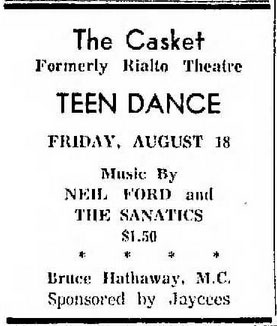
Neal Ford and the Fanatics on August 18, 1967 – band name rendered as Neil Ford and the Sanatics!Serving as emcee for the dances is Bruce Hathaway, KTSA disc jockey, who gives out free albums during the dances, and occasionally passes out even bigger prizes, such as the free tickets to the Jefferson Airplane performance in San Antonio several weeks ago…
Jim DeSha and Joe Schmerber … head up the operation…
What [parents] will find is a large number of teenagers having the right kind of fun in a wholesome atmosphere. The only thing to watch out for are the occasional strobe light shows, which although harmless, make walking difficult during the shows.
Some legendary Texas bands played the Casket in those five months.
Three members of the Thirteenth Floor Elevators came from Kerrville, but the band didn’t play any live shows in Kerrville to my knowledge, until a partial reunion in 1977.
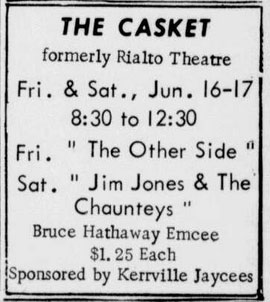
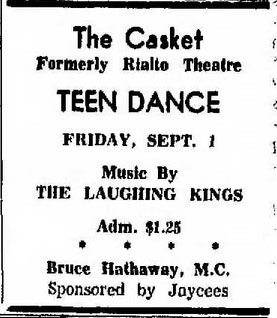
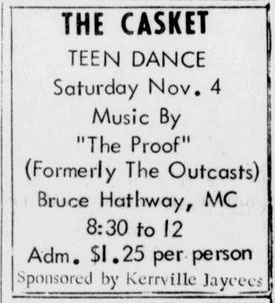
Below is a list of show advertisements I have found from the Daily Times and the Mountain Sun:
1967:
Friday, June 9 – Chayns
Friday, June 16 – The Other Side
Saturday, June 17 – Jim Jones & the Chaunteys
Friday, June 23 – Zakary Thaks and Back Row Majority
The Laughing Kings – possibly the Laughing Kind featuring Max Range, September 1, 1967Friday, September 1 – The Laughing Kings (The Laughing Kind?)
Saturday, September 9 – The Grim Reaper
Saturday, September 16 – The Outcasts
Saturday, September 23 – Translucent Umbrellas
Saturday, September 30 – The Chayns
Saturday, October 7 – The Absentees
Saturday, October 14 – The Extremes
Saturday, October 21 – Wink Kelso & the Kaleidoscopes
Saturday, October 28 – The Spiedels
The Proof – formerly the Outcasts – is this the San Antonio band with Galen Niles?Saturday, November 4 – The Proof (formerly The Outcasts)
Saturday, November 11 – The South Canadian Overflow
Saturday, November 18 – Madison Review
Last show at the Casket? The Union Jacks, from San AntonioAn article in the San Antonio Express and News on December 16, 1967 mentioned Billy Joe Royal would be playing the Casket as well as the Shaft in Devine, but I don’t believe the concert occurred.
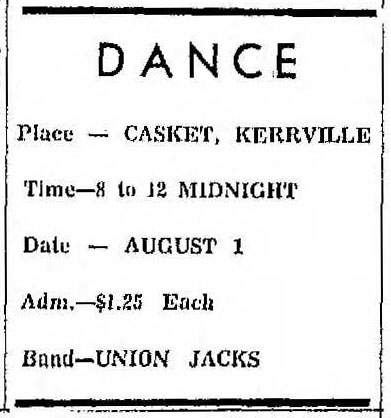
The Casket was used for one further show, on August 1, 1969 with the Union Jacks (“Notre Dame Youth Dance … Music by ‘Untion Jacks’ from San Antonio”), a band I’m not familiar with.
Rialto Theatre, Kerrville, seats for sale, August 1967
The Casket name may have been appropriate for the club. Joe Herring wrote in a 2018 post on the Rialto, “We neighborhood children found a way to get inside the place and explore; it was dark and spooky in there.”
The Rialto Theatre was torn down in 1974 and the space is still empty as of 2020.
In July, 1969, Jim DeSha organized a live show at Louise Hays Park with two bands, the Green Fog and Blue Cherry, according to the Kerrville Daily Times on July 3, 1969.
Does anyone have photos of the Casket or the Rialto at that time, or of any bands that played Kerrville during the mid-late ’60s?
Here’s a mystery outfit, possibly a studio creation, from the Los Angeles area. With folk and pop strains, neither of their two singles is garage or rock, but each has some interesting moments.
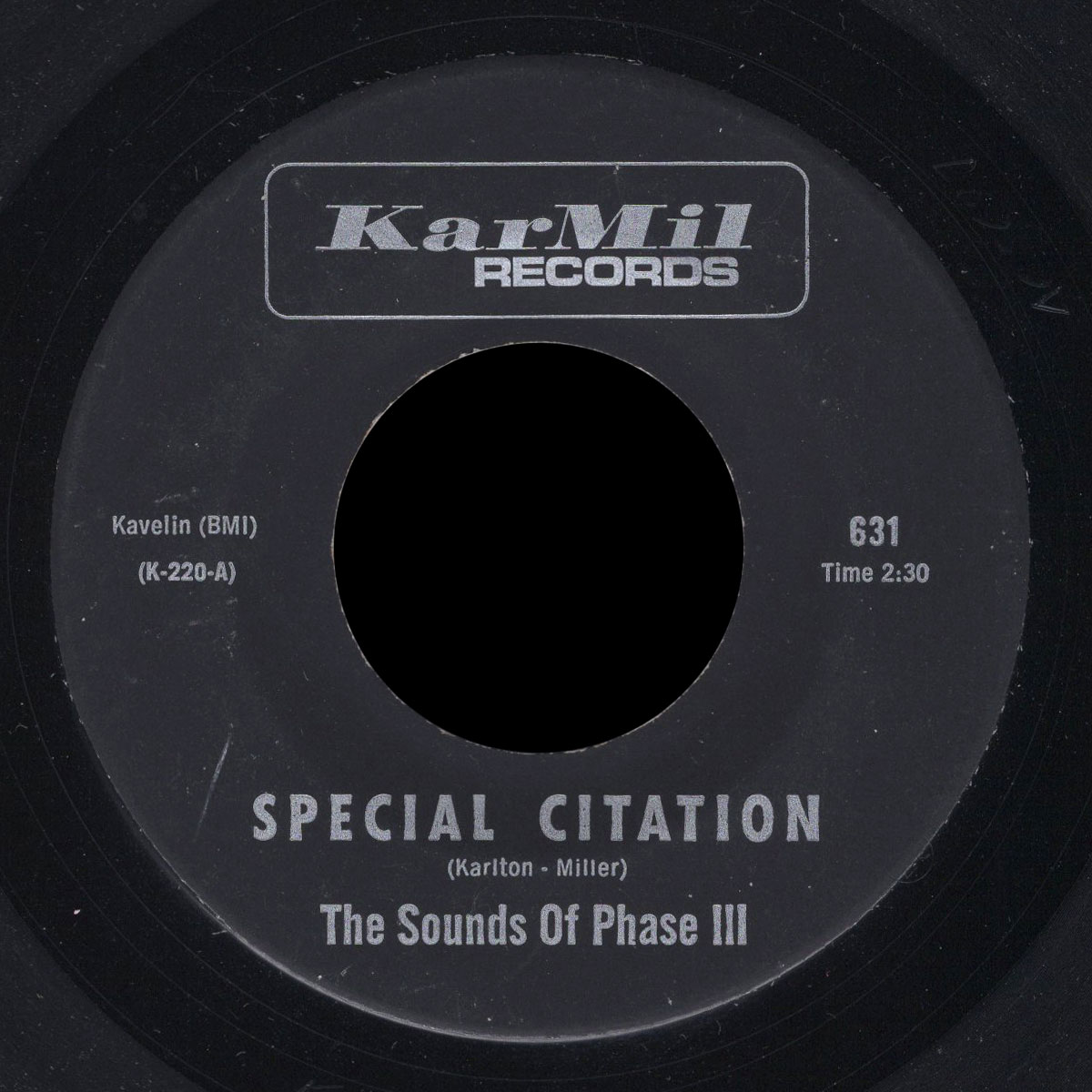
I’m not sure of the order of release, but I have The Sounds of Phase III doing “Special Citation” and “La Bamba” on KarMil Records 631. Δ65687 in the runout dates it to February or March, 1967. The flip is “La Bamba”, arranged by Karlton, Miller and del Carmen, which interestingly has a Kavelin publishing credit.
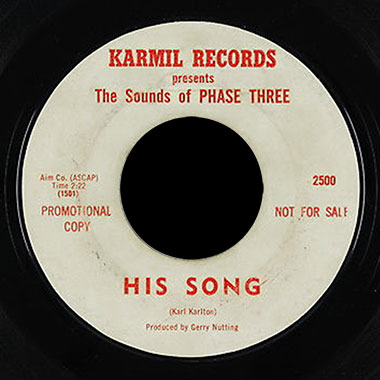
I prefer “His Song” on their other single, Karmil Records presents The Sounds of PHASE THREE. Karl Karlton wrote “His Song”, backed with one I haven’t heard, “Lissy” (by Gooding-Nutting) produced by Gerry Nutting, on Karmil 2500. Publishing by Aim Co.
There is also a one-sided acetate I haven’t heard, The Sounds of Phase III from HR Recording Studios in Hollywood, with three songs, “Jamestown”, “Bill Bailey”, “So Fine”.
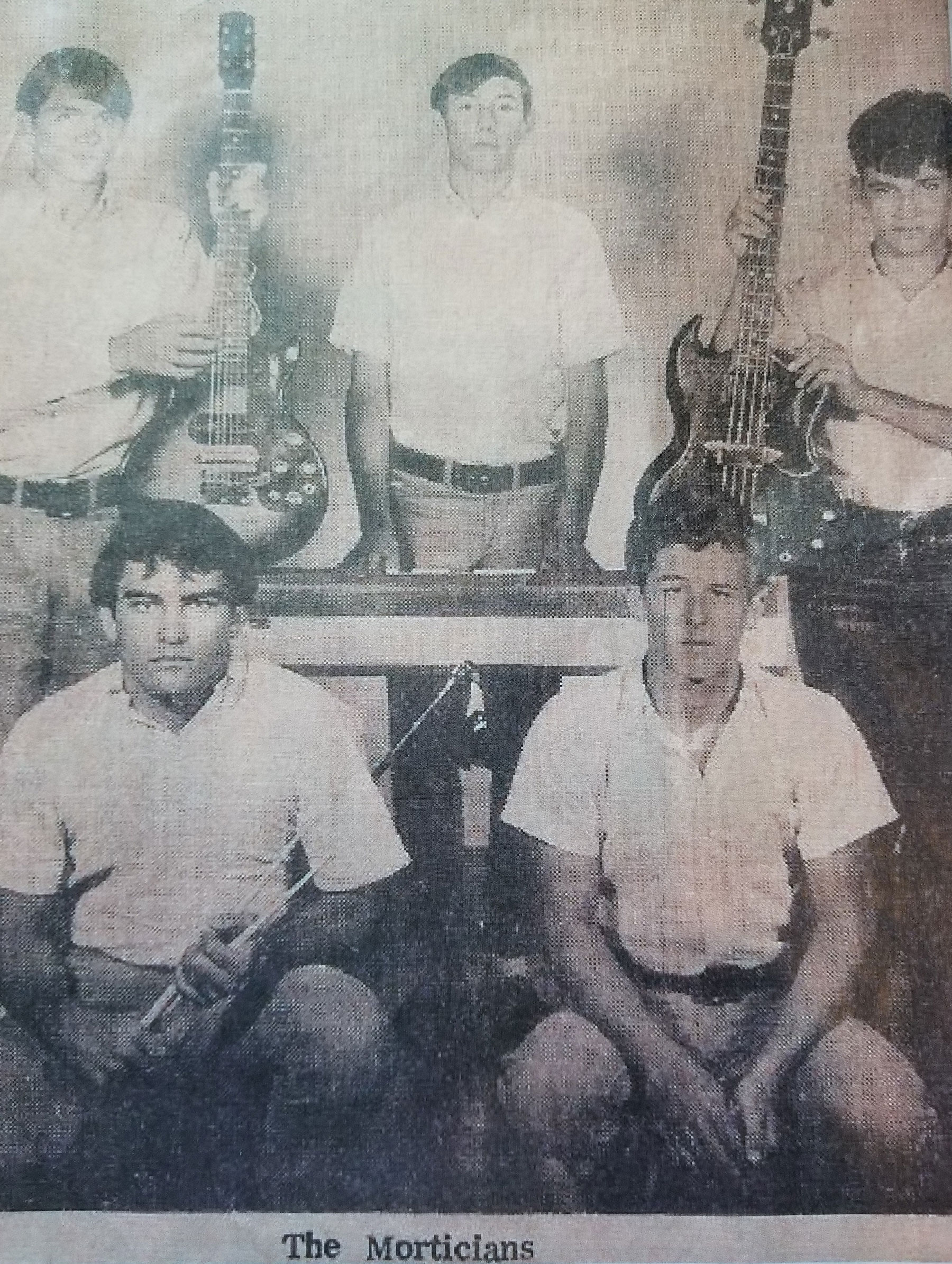
Morticians photo circa 1965, top row l-r: Bubba Rowell lead guitar, Donny Guess keyboards and Steve Smith bass guitar. Bottom row l-r: Royce Sisk drums and Donnie Humphreys vocals
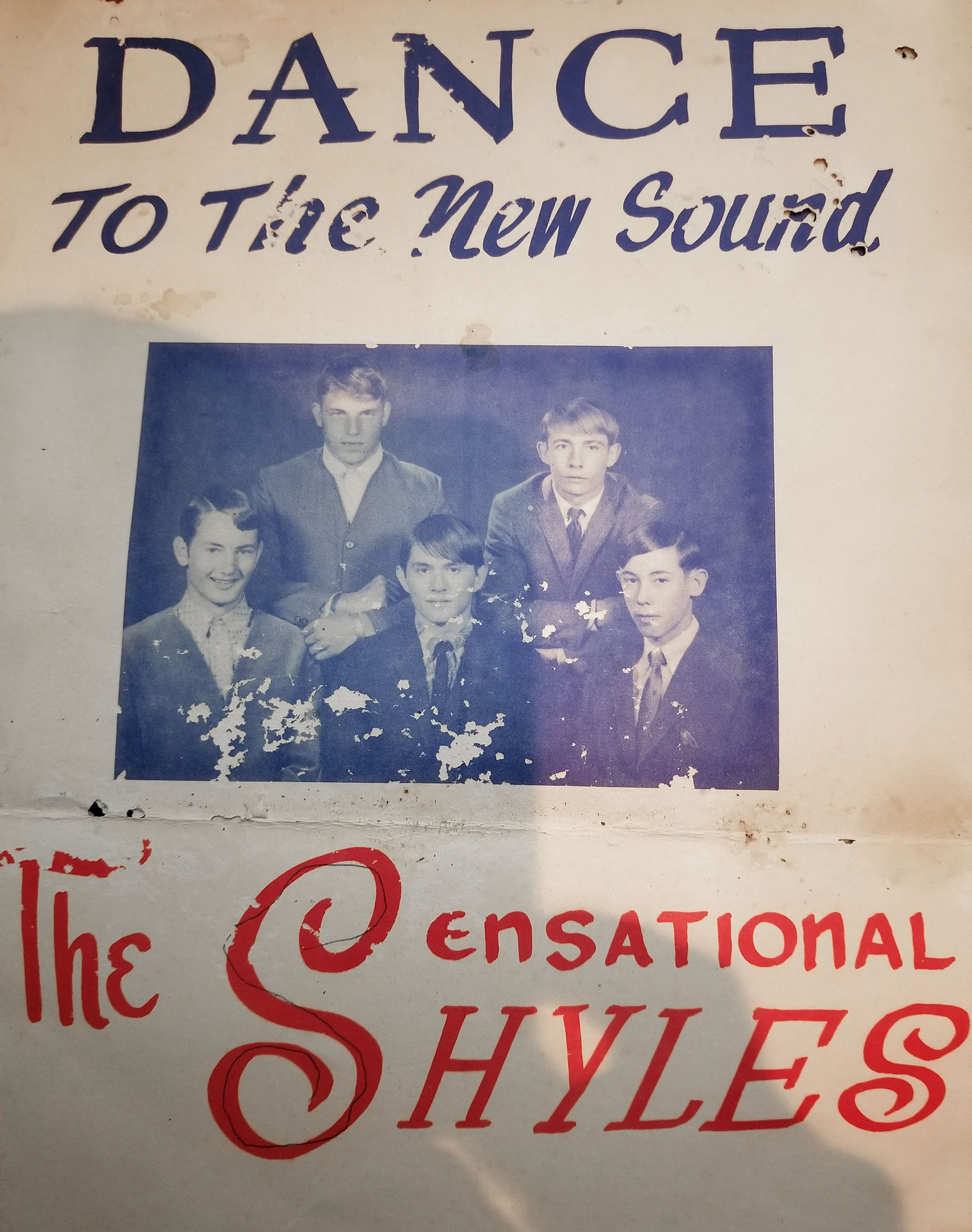
Donny Guess sent in these photos of two bands from Levelland, Texas, just west of Lubbock. The Morticians would become the Shyles with different lineups over the years. I first encountered the Shyles name in a news clipping about a battle-of-the-bands in Brownfield, which featured a photo of the Charvonnes.
Donny writes:
The Shyles, a garage band from Levelland played venues in west Texas and eastern New Mexico from May 1965 to August 1968.
Their first gig was late May 1965 in Brownfield, TX, at a end of school year battle of the bands dance. At that time they didn’t have a name so the organizer for the youth center suggested the The Morticians, since the other band was the Undertakers. The youth director then suggested that both band members ride in the back of a pickup through town with a borrowed casket to promote the dance.
The Shyles, top row l-r: Brad Billingsley drums, Loyd Summers vocals, bottom row l-r: Gary Butner bass guitar, Bubba Rowell lead guitar, Donny Guess keyboards.
We did not record a record as the Shyles. One band member, who left the Shyles in late 1966 did record with another group, no details available though. As the Shyles we did make a trip to Norman Petty studios in Clovis to visit about cutting a record but were unable to raise the money to produce it.
We played mainly youth centers, ballrooms and National Guard armories.
Other members of the Shyles not in the photo include:
Ronnie Stoughton – guitar Jan Pharis – drums
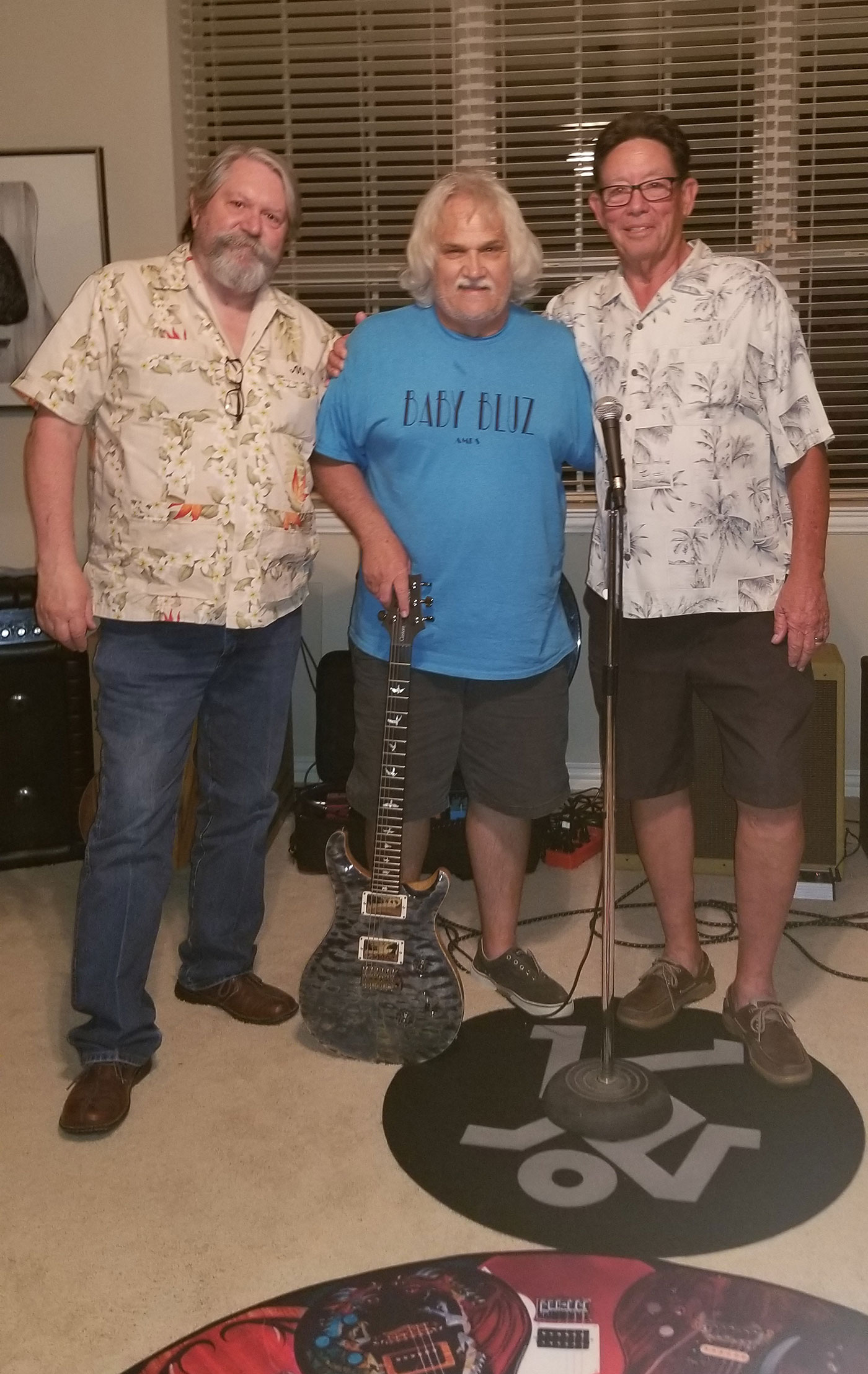
Shyles reunion, June 2020: Steve Smith, Bubba Rowell and Donny Guess reunited in Garland, Texas.
Leon Starr was a Memphis, Tennessee musician whose roots go back to rockabilly days. In 1966 he had a country single “Honey Chile”, written by G. Huskey (Bill Huskey) and Johnny Surber, b/w “Have I Wasted My Time” by Arthur Kyle and Richard Needham, released on Millionaire Record Co.
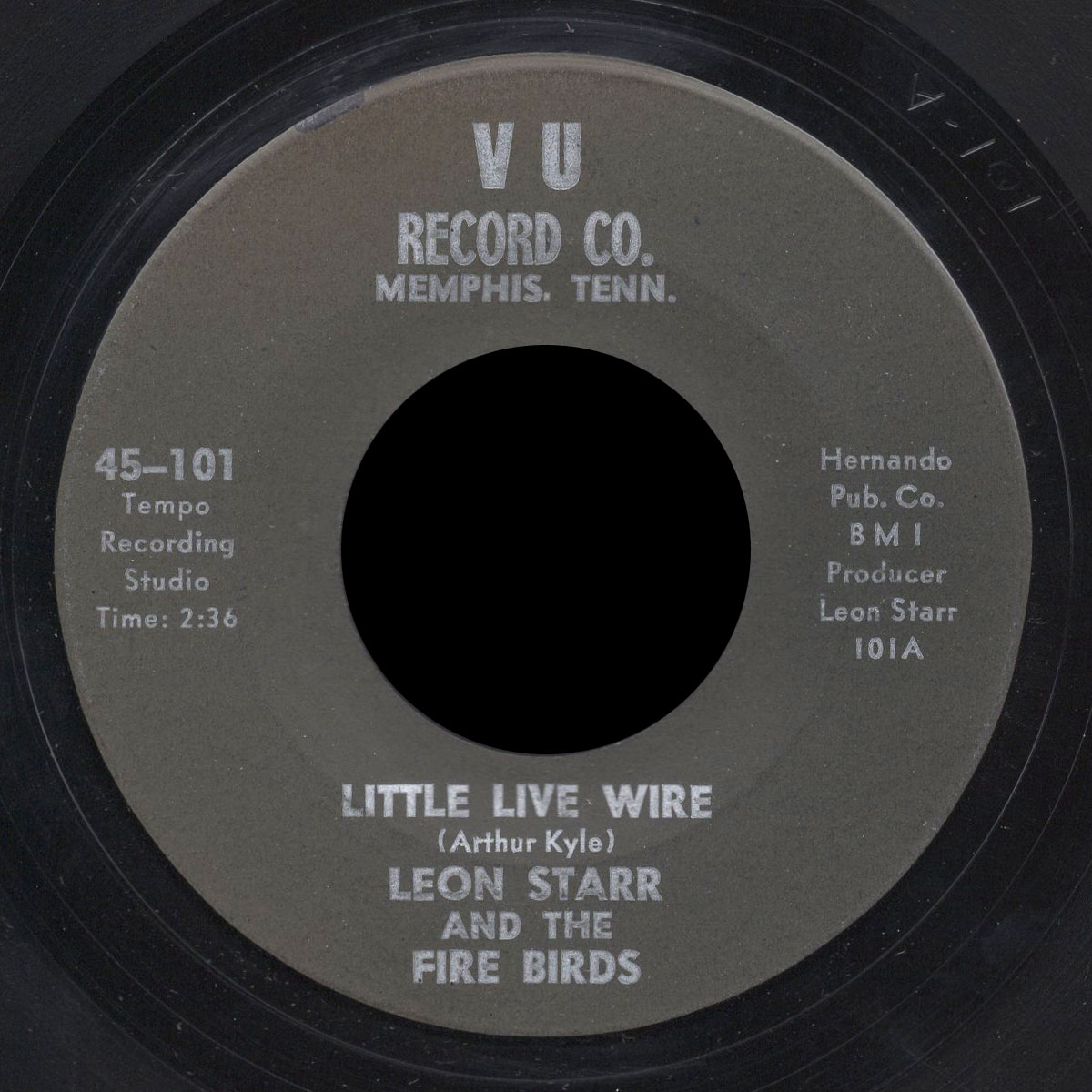
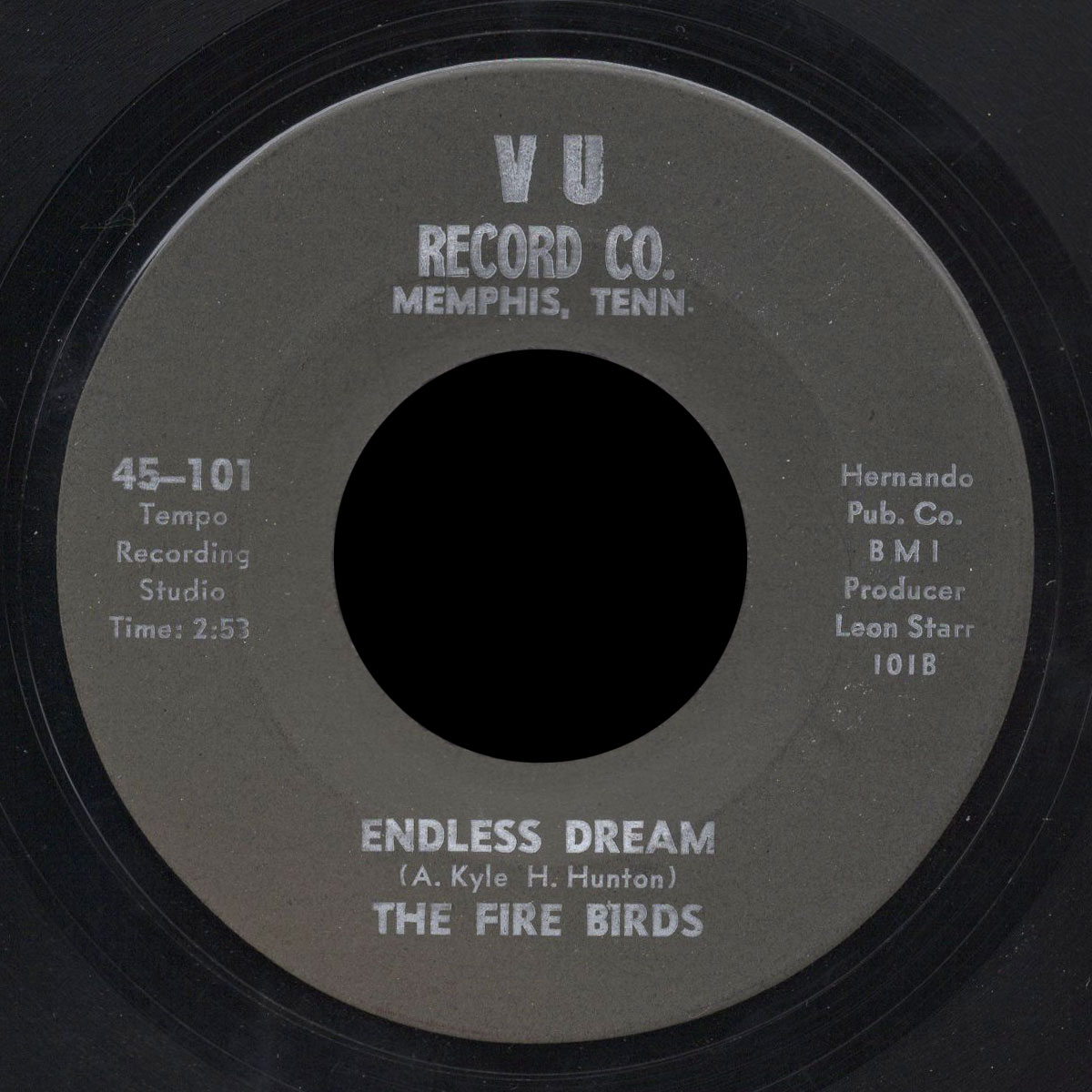
His next single may have been this one, Leon Starr and the Fire Birds “Little Live Wire”, which gets a good sound by combining fuzz guitar with organ and a throbbing beat. I’d like to know which musicians were the Fire Birds.
Released on VU Record Co. 45-101, and recorded at Tempo Recording Studio in Memphis, as were all the singles on the VU label, I believe. Leon Starr produced both sides. VU Record Co. had at least five other singles, country and spiritual, by George Wilhite, Don Miller, Jerry Gillentine, and the Mellorettes.
Arthur Kyle wrote “Little Live Wire” (copyright registered in April, 1968) and co-wrote “Endless Dream” with Herchell Hunton (registered May, 1967). Hernando Pub. Co. published both songs.
In 1970, Leon Starr also wrote a couple other songs with Arthur Kyle, “Go Ahead, Laugh” (with Marvin Griffith) and “Imitation of You”. I’m not sure if these were recorded.
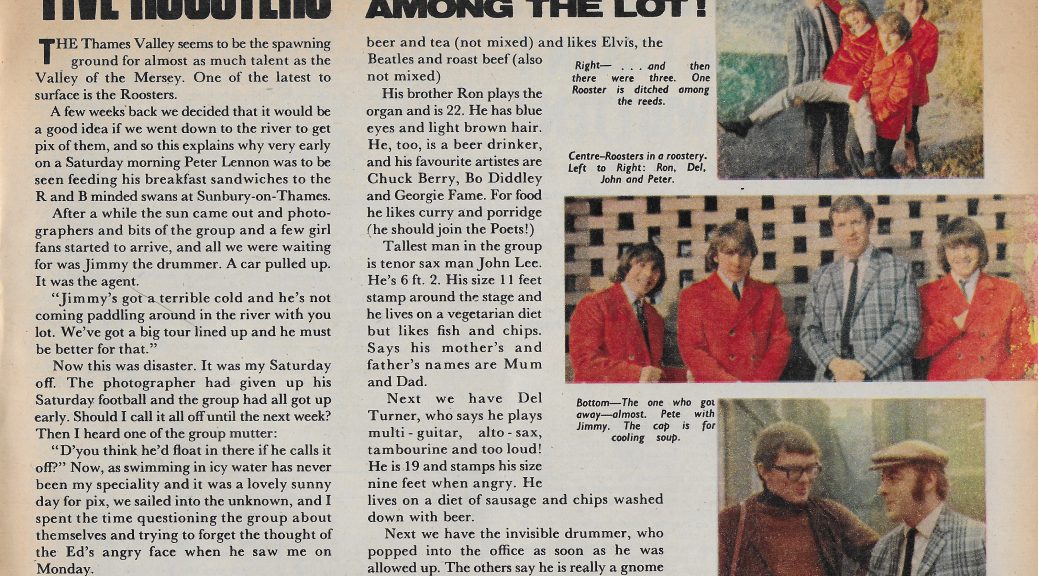
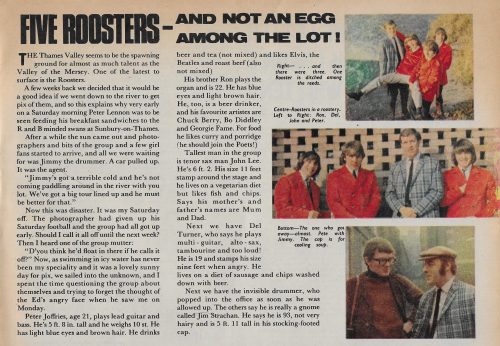
The Roosters featured in Jackie magazine. Thanks to Nigel Lees for providing
Pete Jeffries (lead guitar)
Del Turner (rhythm guitar)
John Lee (sax)
Ron Jeffries (bass)
Jim Strachan (drums)
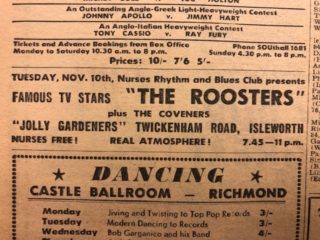
Not to be confused with another southwest London band of the same name, which at one point featured both Eric Clapton and future Manfred Mann guitarist Tom McGuiness, this early 1960s band comprised the above line up.
This version of The Roosters were profiled in both Jackie magazine (see above) and Surrey Comet newspaper in its 7 March 1964 issue (page 7).
According to Nigel Lees, who has included one of the band’s tracks on the new LP 17 from Morden, this version of The Roosters recorded three tracks for BBC’s Beat Room in October 1964. They also recorded five acetates for Oak at R G Jones in Morden.
The Roosters also played regularly at the Cellar Club in Kingston upon Thames, the Attic in Hounslow and other venues in the area.
However, there is very little information about the musicians so please get in touch if you can provide more details.
Big thanks to Nigel Lees for providing some info on the band.
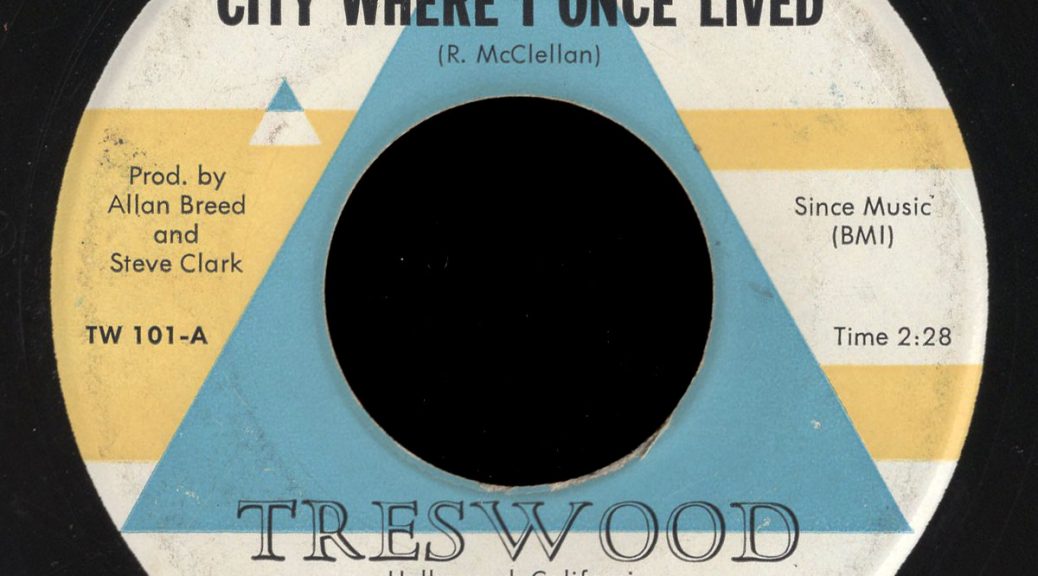
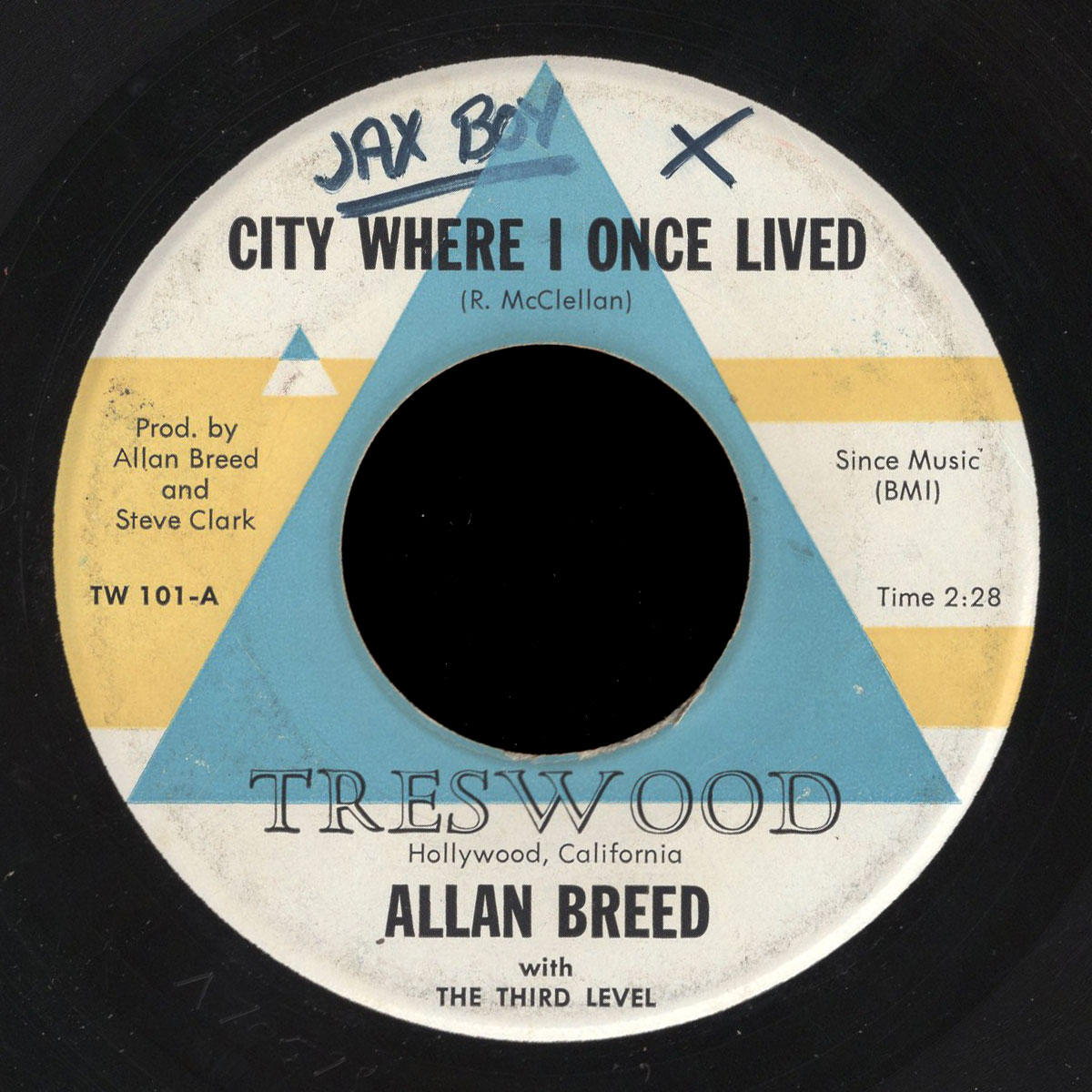
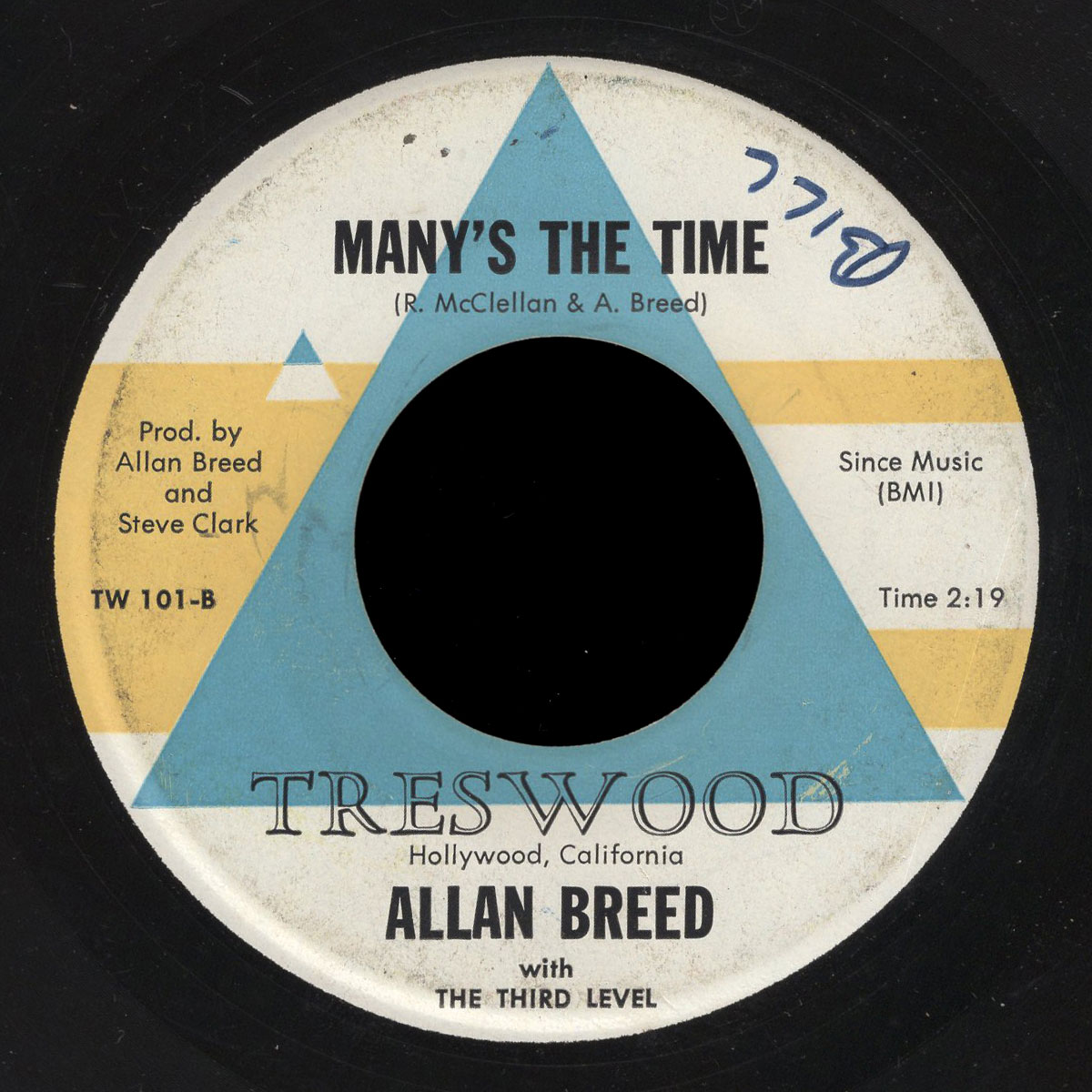
Allan Breed with the Third Level had only one release, “City Where I Once Lived” / “Many’s the Time”, both full pop productions with light psychedelic touches. By accident, some of the lyrics on “City Where I Once Lived” are incredibly apt to our situation in 2020:
Well here I am, in the city where I once lived, But no one bothers to speak, Attitude is simply oblique, It’s not the same anymore.
Love once surrounded me here, In the city where I once lived, But the love I once knew is gone, Only faces of misery drawn, Puts the blame of it all.
Where are the people who once smiled and said hello, Where did they go?
Have I stayed away too long or is there really something really wrong?
So as I walk, through the city where I once lived, And see this disease I’ve seen, That destroys the reasons for being, I can’t understand.
Allan Breed notably co-wrote “Frozen Sunshine” with Rick McClellan, which in recent years has become a well-known hit with retro club DJs, especially in Europe. Breed and McClellan collaborated on a number of songs, not all of which seem to have been released. The first may have been “Goodbye My Friend”, registered in 1966.
In May of 1968 they registered copyright on “City Where I Once Lived” and “Many’s the Time”. Allan Breed produced the songs with Steve Clark for release on their own label Treswood TW 101.
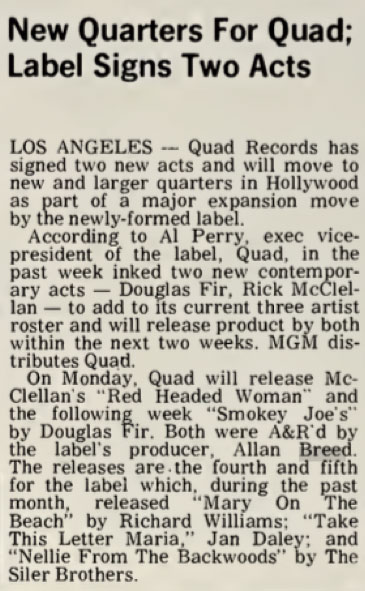
The following year, Lawrence Allen Breed and Rick McClellan wrote “Frozen Sunshine”, copyright registered in May of 1969. Breed and Mike Henderson (for Treswood Productions) produced that single on Ranwood R-849, and also his follow-up, “Redheaded Woman” / “2:30 in the Morning” for Quad Records QU 105, where Allan Breed was head of A&R.
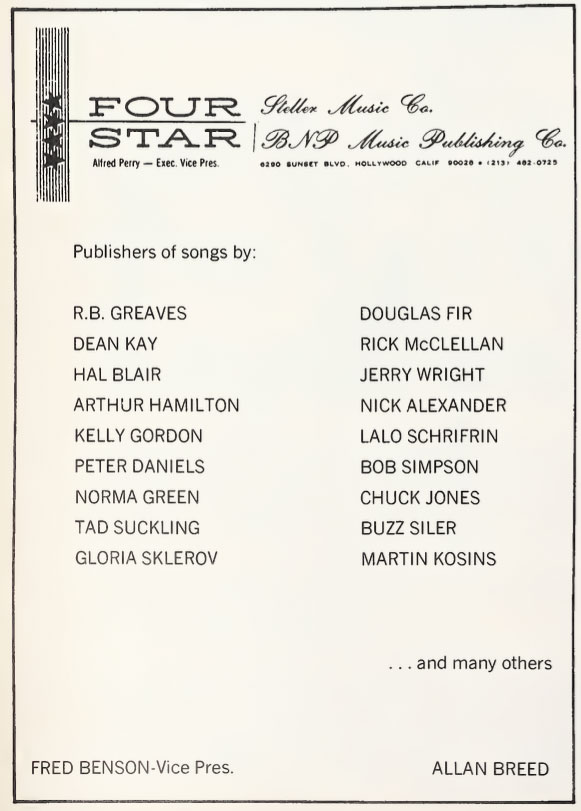
Quad Records also reissued “Frozen Sunshine”, without the violins, and with a different B-side, “Julie Makes It Right”. A Cash Box notice from July, 1970 lists some other Quad releases and notes Al Perry was executive vice-president of Quad. An ad in Cash Box from the same month for Four Star / Stellar Music / BNP Music Publishing lists Alfred Perry and Fred Benson as VP, and has Allan Breeds name but without title.
Later copyrights by Breed and McClellan include “By the Light in Your Eyes”, “Here Comes the Sun” and “Who Taught You”. I’m not sure if these were recorded or released.
Allan Breed would go on to produce a few more records with Mike Henderson, including two singles of Sandy & Dick St. John on Congress, and two by CaShears on pbm Records. Also on pbm Records Breed produced Sidro’s Armada’s “Little Girl from Greenwood, Georgia”.
Steve Clark is likely the same person who partnered with Curt Boettcher in Our Productions (thanks for the tip Max Waller). Clark and Mike Henderson both worked on some Tommy Roe productions from this period.
July 1970 publishing ad including writers R.B. Greaves, Dean Kay, Hal Blair, Arthur Hamilton, Kelly Gordon, Peter Daniels, Norma Green, Tad Suckling, Gloria Sklerov, Douglas Fir, Rick McClellan, Jerry Wright, Nick Alexander, Lala Schrifrin, Bob Simpson, Chuck Jones, Buzz Siler and Martin Kosins
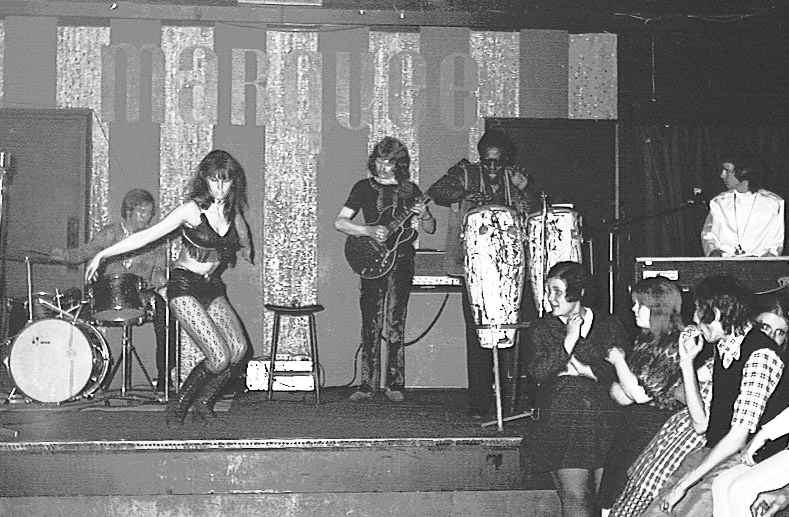
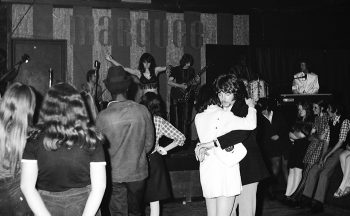
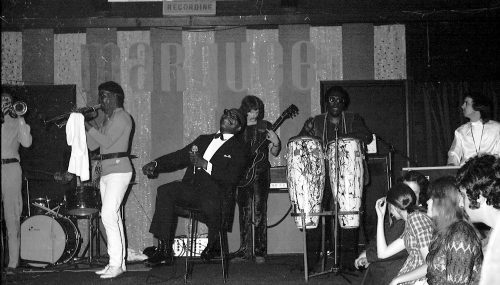
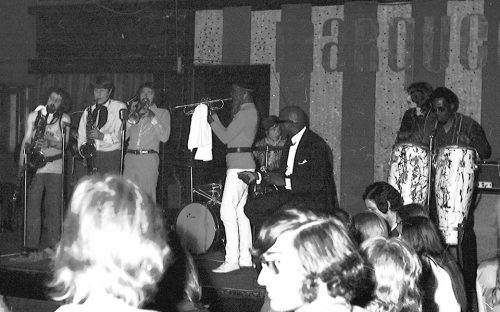
Guitarist Mick Clarke worked with Freddie Mack around mid-late 1970. This photo shows the group at the Marquee in Wardour Street, Soho, London. Thanks to Pete Clarke for the photo.
Unlike the earlier versions, I have found very little information on Freddie Mack’s groups post-February/March 1969 when he split with the previous version. I would love to hear from anyone who can fill in the blanks.
Billed mainly as ‘The Freddie Mac Extravanganza’, an entirely new version debuted on 11 April 1969 at the New Market Hotel in Bristol. A few weeks later, they played at the New Rainbow Suite Co-op in Birmingham on 24 April.
According to the Nantwich Chronicle, the 13-piece band performed at the Civic Hall, Nantwich, Cheshire with Rubber Soul on 26 April.
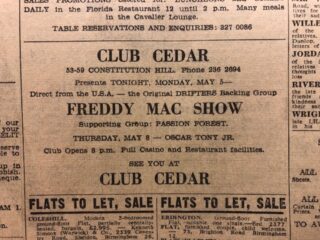
The Freddie Mac Road Show played at the Royal Hotel, Walsall on 4 May 1969, according to the Walsall Observer and South Staffordshire Chronicle. The Birmingham Evening Mail lists the band playing at Club Cedar with Passion Forest the next day.
Photo: Birmingham Evening Mail
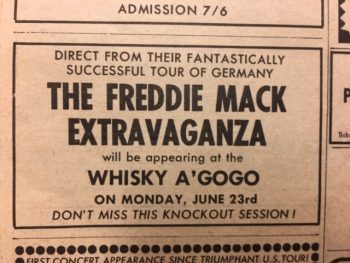
According to Melody Maker, the new line up then toured West Germany in June.
Drummer Maurice McElroy remembers playing in a seven-nine piece band with Freddie Mack called the Freddie Mac Extravaganza II, which featured a female singer, a male singer, a female dancer plus two other dancers. However, it only lasted a few months.
McElroy confirms that his version played from late June (just after the West German tour above) but he himself left around October 1969.
McElroy says that the band’s roadie Roy Truman left soon after joining Freddie Mack to form a band called Swegas (alongside trumpet player Chris Dawe who worked with Mack in 1967-1968) in which he played bass.
Swegas appears to have been formed in mid-1969 and McElroy joined them later that year. Noel Norris appears to have played with Freddie Mack again in 1970 (see later line up below).
The drummer remembers the following musicians in Mack’s band:
Terry Jenkins – lead guitar
Buddy Bounds – trumpet (replaced by Noel Norris)
Nick Judd – keyboards
Maurice McElroy – drums have found the following gigs, which would cover McElroy’s time with the group:
23 June 1969 – Whisky A Go Go, Wardour Street, Soho, central London
14 July 1969 – Quaintways, Chester, Cheshire with Shady Lane and Wall City Jazzmen
19 July 1969 – Raven Club, RAF Waddington, Lincolnshire with Stonewall Jackson and Dusk Soul featuring Clive Bond (billed as Freddie Mack Show)
21 July 1969 – Thomas A Beckett, Old Kent Road, south London (pictures of the group playing here on this date can be found at Getty) The same photo appeared in the Evening Standard, 22 July 1969, page 30
28 July 1969 – Whisky A Go Go, Wardour Street, Soho, central London
9 August 1969 – California Ballroom, Dunstable, Bedfordshire with Heatwave
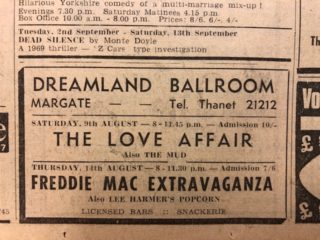
14 August 1969 – Dreamland Ballroom, Margate, Kent with Lee Harmer’s Popcorn (billed as Freddie Mac Extravaganza)
25 August 1969 – Whisky A Go Go, Wardour Street, Soho, central London (billed as Freddie Mac Extravaganza)
30 August 1969 – Kent Pop Festival with Deep Purple
5 September 1969 – The Factory, Birmingham
20 September 1969 – California Ballroom, Dunstable, Bedfordshire with First Back from Heaven and Respect (billed as Freddie Mack Extravaganza)
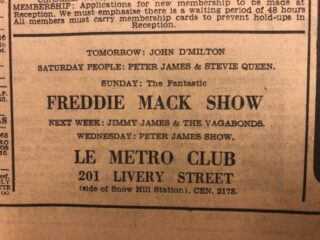
26 October 1969 – Le Metro, Birmingham
According to singer Bob Mundy (see comments section below), his group, The International Road Show from Southend-on-Sea joined Freddie Mack around November 1969.
Bob Mundy – vocals
Erline ? – vocals
Yudell Anderson – vocals
Steve Sallis – guitar
Brian Williams – bass
John Walsh – Hammond organ
Pat Green – drums
Jeff Bridges – tenor sax
Phil Presland – baritone sax
+
Kenny Baxter – saxophone
Digby Fairweather – trumpet
I have found the following gigs for this formation:
13 December 1969 – Cue Club, Paddington, London (billed as Freddie Mack & The Mack Sound)
24 December 1969 – California Ballroom, Dunstable, Bedfordshire with Jimmy James & The Vagabonds and Lloyd Williams Soul Caravan
27 December 1969 – Chatham Town Hall, Chatham, Kent
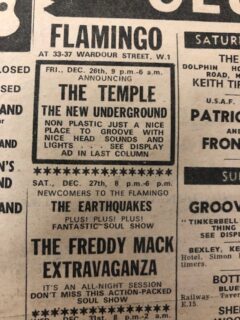
27 December 1969 – Flamingo, Wardour Street, Soho, central London with The Earthquakes (billed as Freddie Mack Extravaganza)
21-22 March 1970 – Tamla Village, D’Arblay Street, London with Freddie Notes & The Rudies and The Tonics
Photo: Pete Clarke. His brother Mick Clarke playing with Freddie Mack at the Marquee, 1970
Lead guitarist Mick Clarke played with Freddie Mack from around mid-to-late 1970 (and possibly in the April-May 1969 line up too). Clarke was with a band called Hunter when he met Mack and this same band recorded under the name Orang-utan after he left the singer in late 1970.
Clarke says that the band was fluid, in as much as it would have different horn players on each gig. However, the rhythm section was pretty stable. The guitarist adds that the typical line-up would feature Freddie Mack, a go-go-dancer, lead guitar, bass, drums, organ and three to five horn players (but sometimes nine).
Noel Norris, who had played with an earlier line up, left in October 1970 to form the band Marriage. Norris and Geoff Peach both went on to play with Pacific Gas & Electric in the United States. They then reunited again in a version of The Foundations in the early 1970s.
Clarke also says that singer Carl Douglas sat with the band at times, which would have been after September 1970 when he returned from Spain.
Freddie Mack, 1970, Marquee with Eddie Thornton (trumpet) and Mick Clarke (guitar). Photo: Pete Clarke
Mick Clarke lists the following musicians who played alongside him:
Mick Clarke – lead guitar
Jeffrey Jai Seopardi – drums
Steve Humphries – bass
Eddie Thornton – trumpet
Noel Norris – trumpet
Geoff Peach – saxophone
Photo from Pete Clarke. Playing at the Marquee, 1970
Around 1971/1972, former members of the band Sonority joined forces with Freddie Mack. Bobby Morris got in touch and I’ve included his email details in the comments section below.
I have found the following gigs which may cover different line-ups:
25 April 1970 – Baths Hall, Scunthorpe, Lincolnshire with Cloud Nine, Freddie Notes & The Dynamic Rudies and Maggie & Sharon
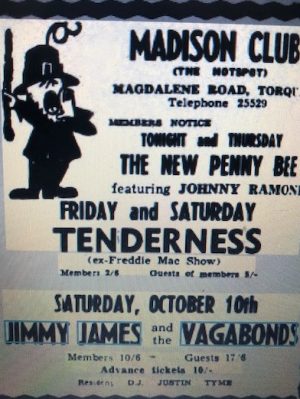
The Torbay Express & South Devon Echo lists a group called Tenderness (ex-Freddie Mac Show) performing at the Madison Club in Torquay on 2-3 October 1970, which suggests this band backed Freddie Mac at some point in 1970.
21 November 1970 – California Ballroom, Dunstable, Bedfordshire with The Carl Edwards Roadshow
25 October 1971 – Wall City, Quaintways, Chester Cheshire with Aquarius (billed as Freddie Mack Sounds)
28 October 1971 – Beau Brummell Club, Royal Hotel, Crewe, Cheshire (billed as Freddie Mack Road Show)
6 November 1971 – Aquarius Club, Lincoln, Lincolnshire (billed as Freddie Mack Sounds)
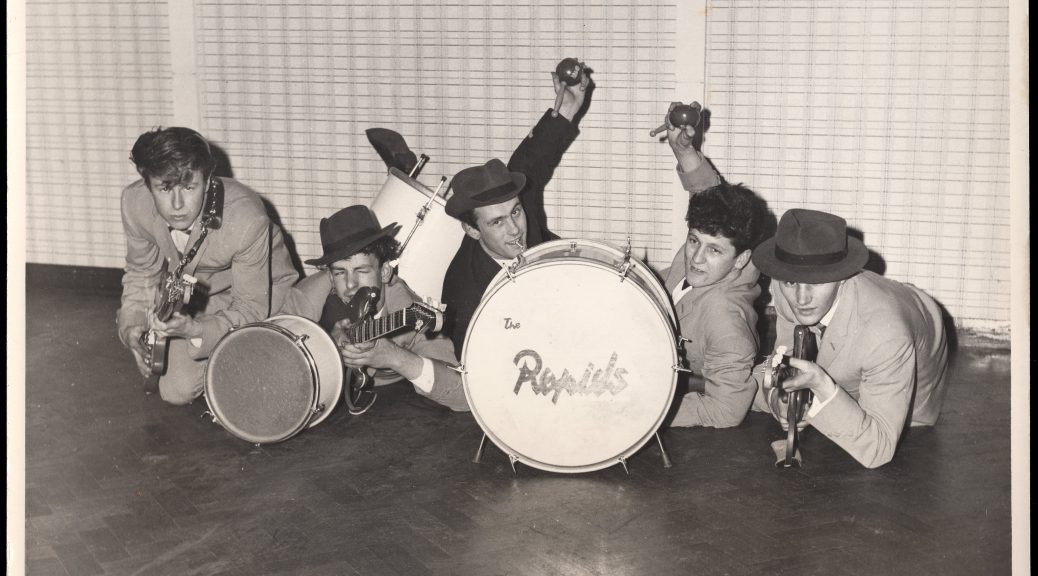
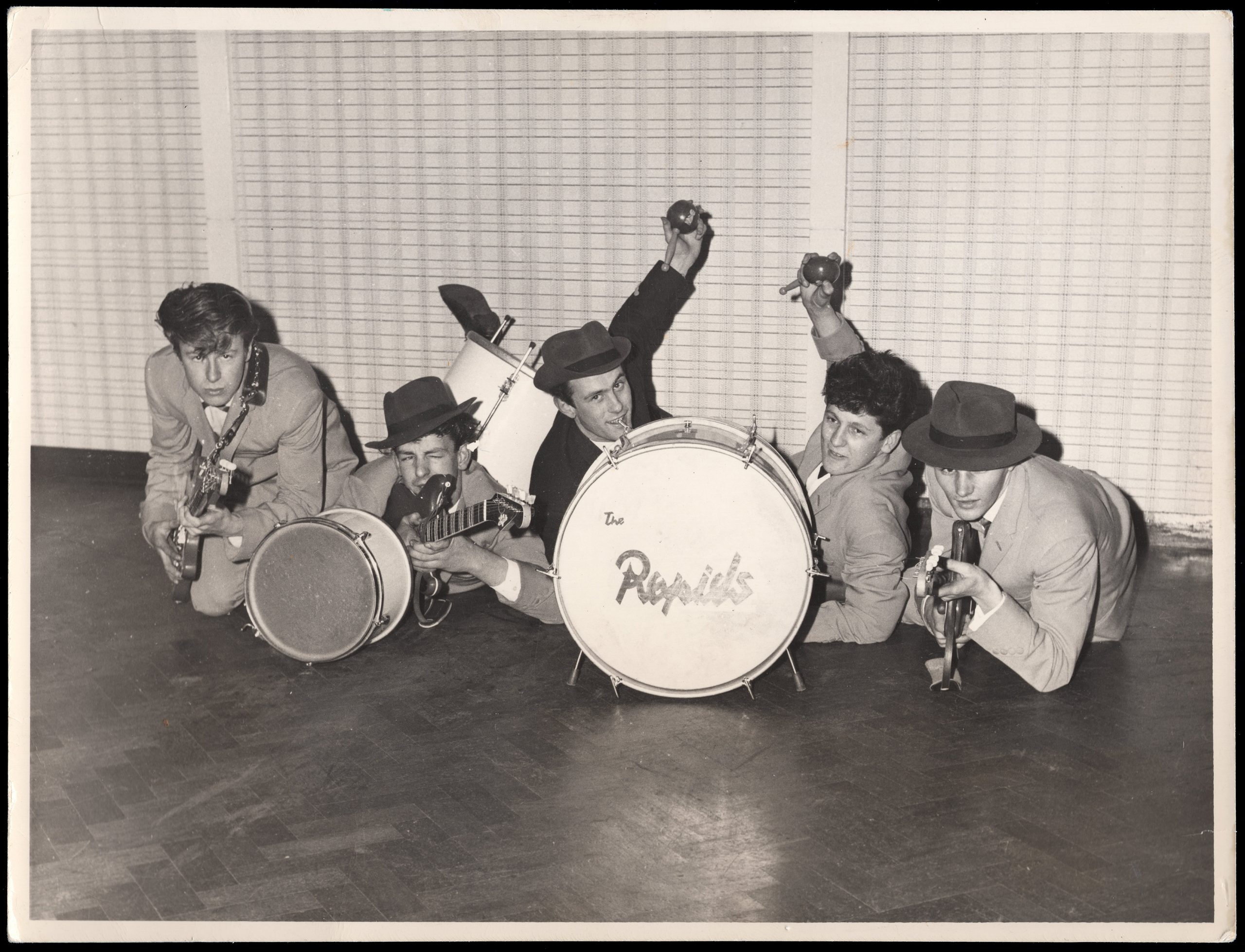
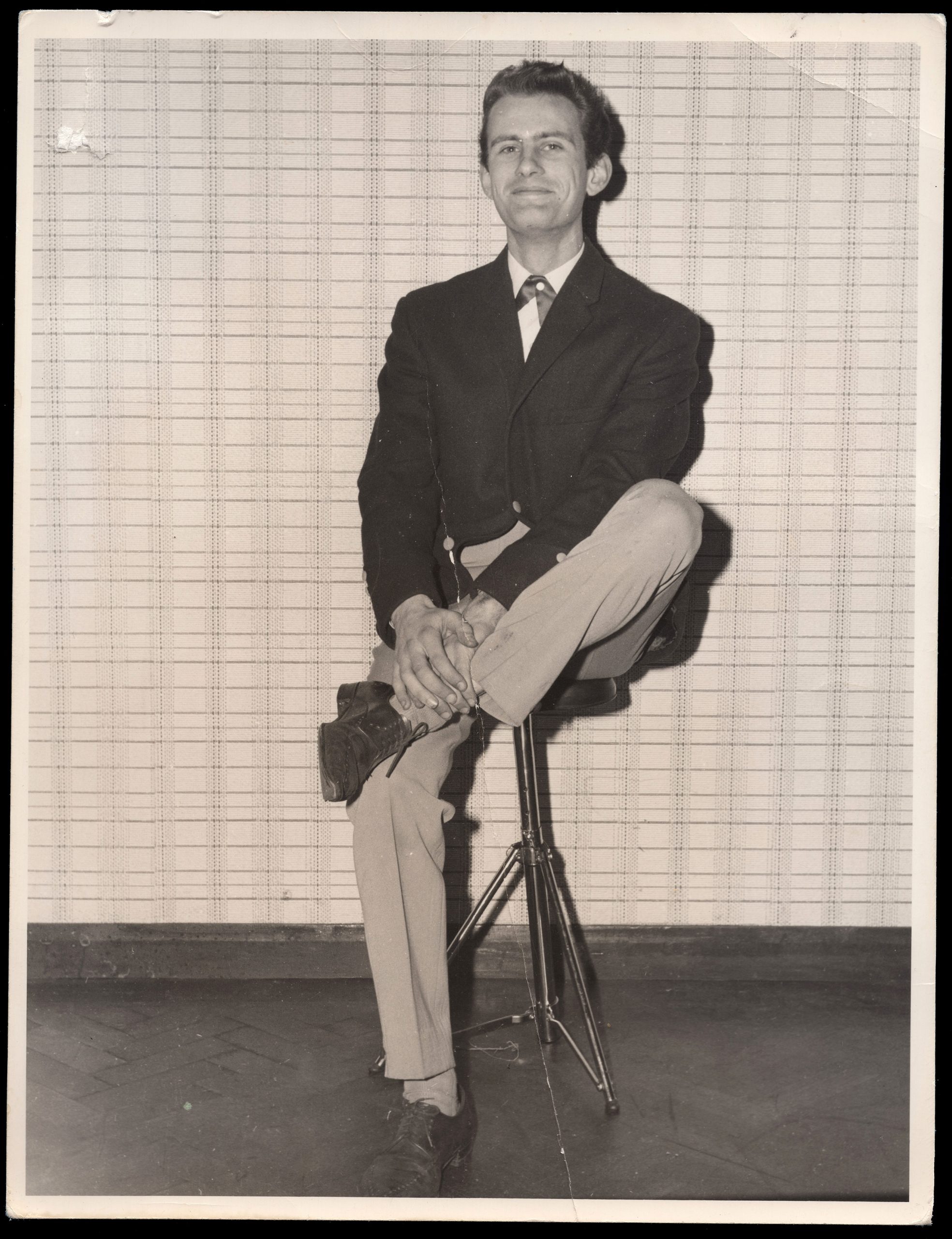
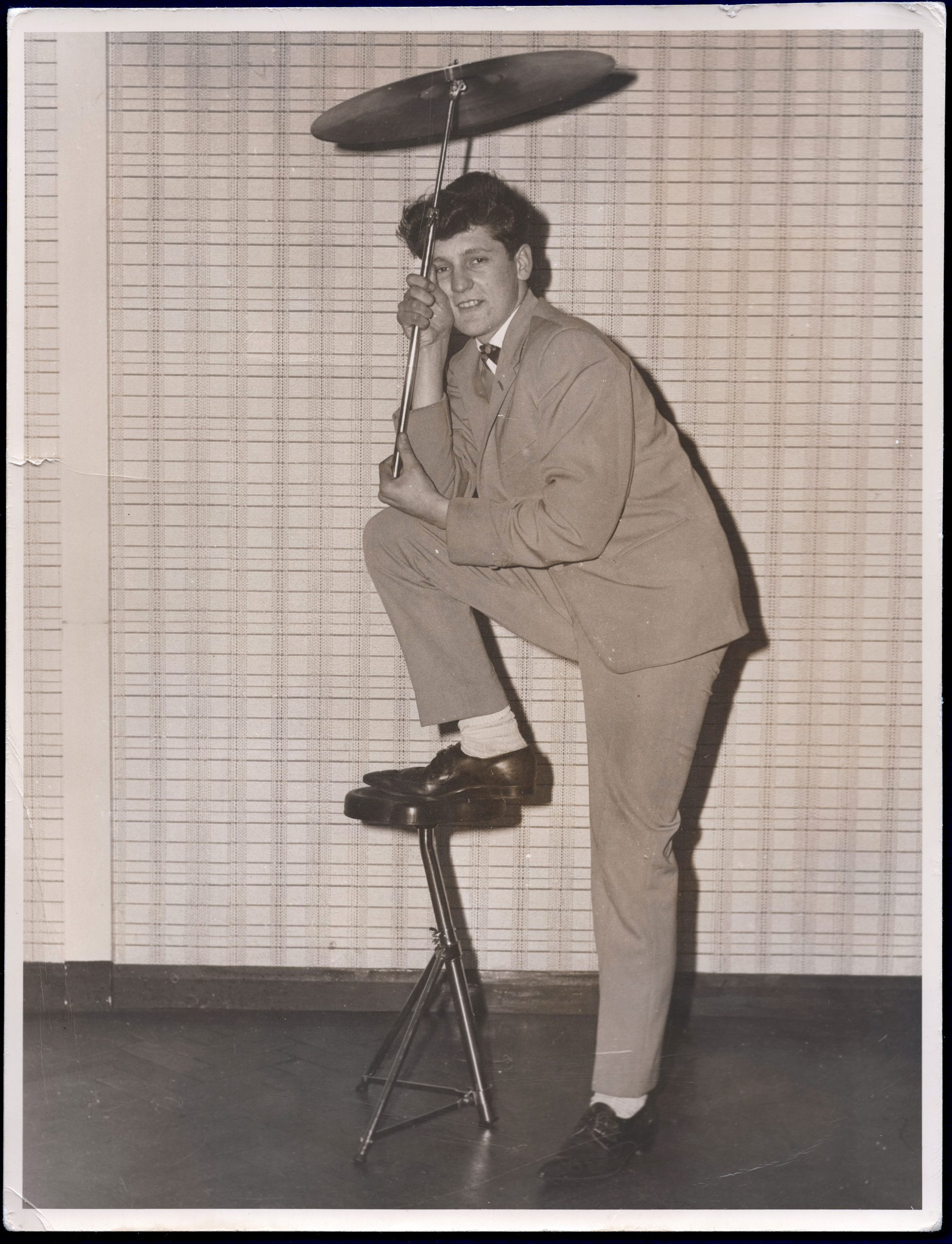
The Rapids – a quintet from possibly Ontario, Canada. I bought these photos from a seller in Williamsford, but the group could have come from anywhere in the Toronto or Hamilton area, or beyond.
It would be nice if one could read the headstocks on the guitars. One looks to be a Höfner 173, according to G45 member ShyC, which would date to about 1963 or 1964. I don’t know of any Canadian groups called the Rapids that recorded.
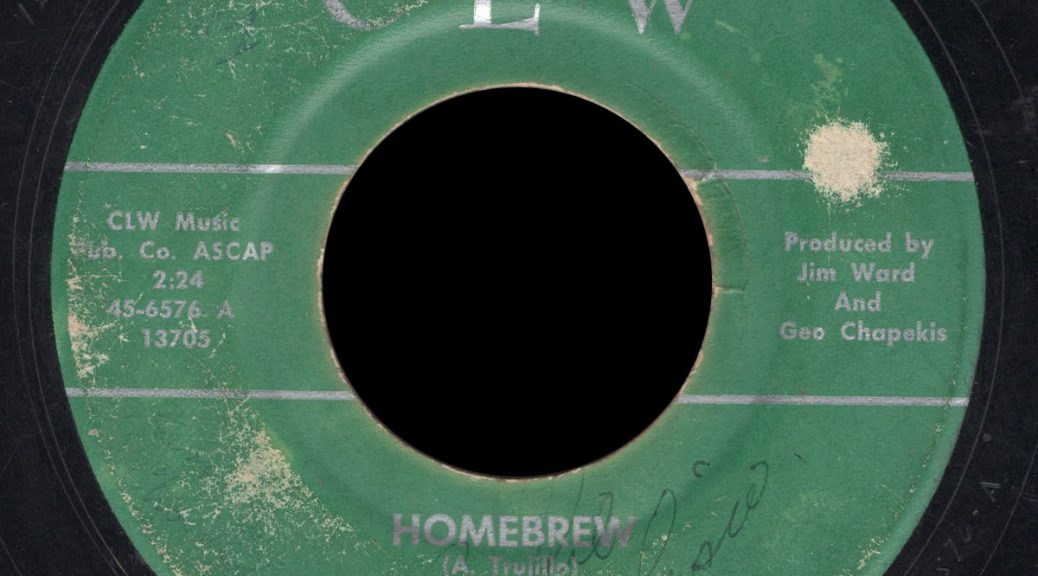
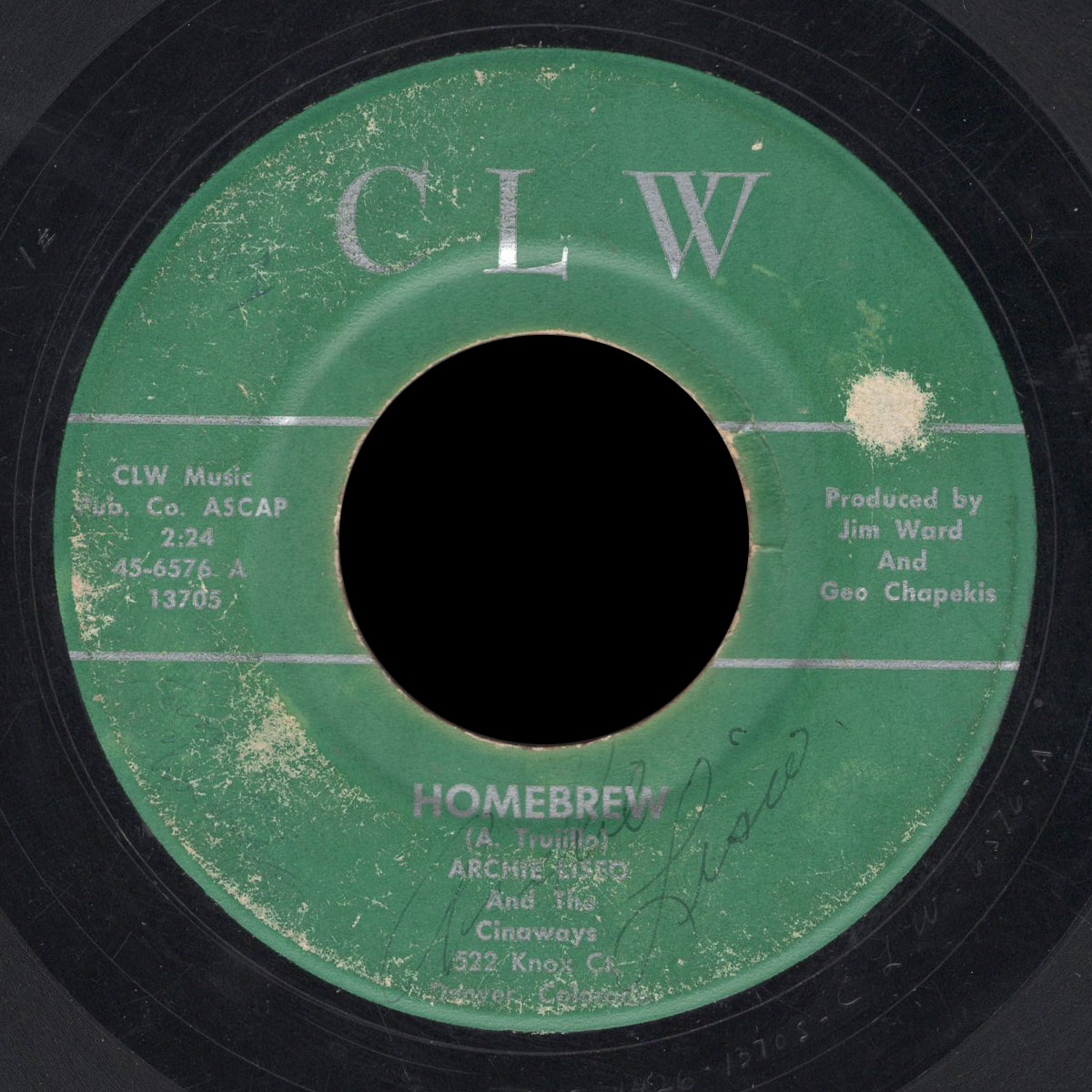
“Homebrew” is a storming instrumental, with a foreboding rhythm guitar and bass behind sharp lead guitar work, excellent drumming and rockin’ piano.
I can’t find much about Archie Liseo other than an odd news item from December, 1965, where an Archie Liseo “is resigning from the Denver Young Democrats in protest against what he described as ‘filth’ in the organization’s newspaper. Liseo said he objected to the review of a play in the December issue of the paper The Vanguard. He said the paper had been read by his children before he arrived home Thursday.”
I suppose that could be a different person, considering this group titled their record “Homebrew”.
“Homebrew” has a writing credit of A. Trujillo, which could be another name for Archie Liseo. This may be the only record he ever made. The band is so good I hope there are more recordings somewhere.
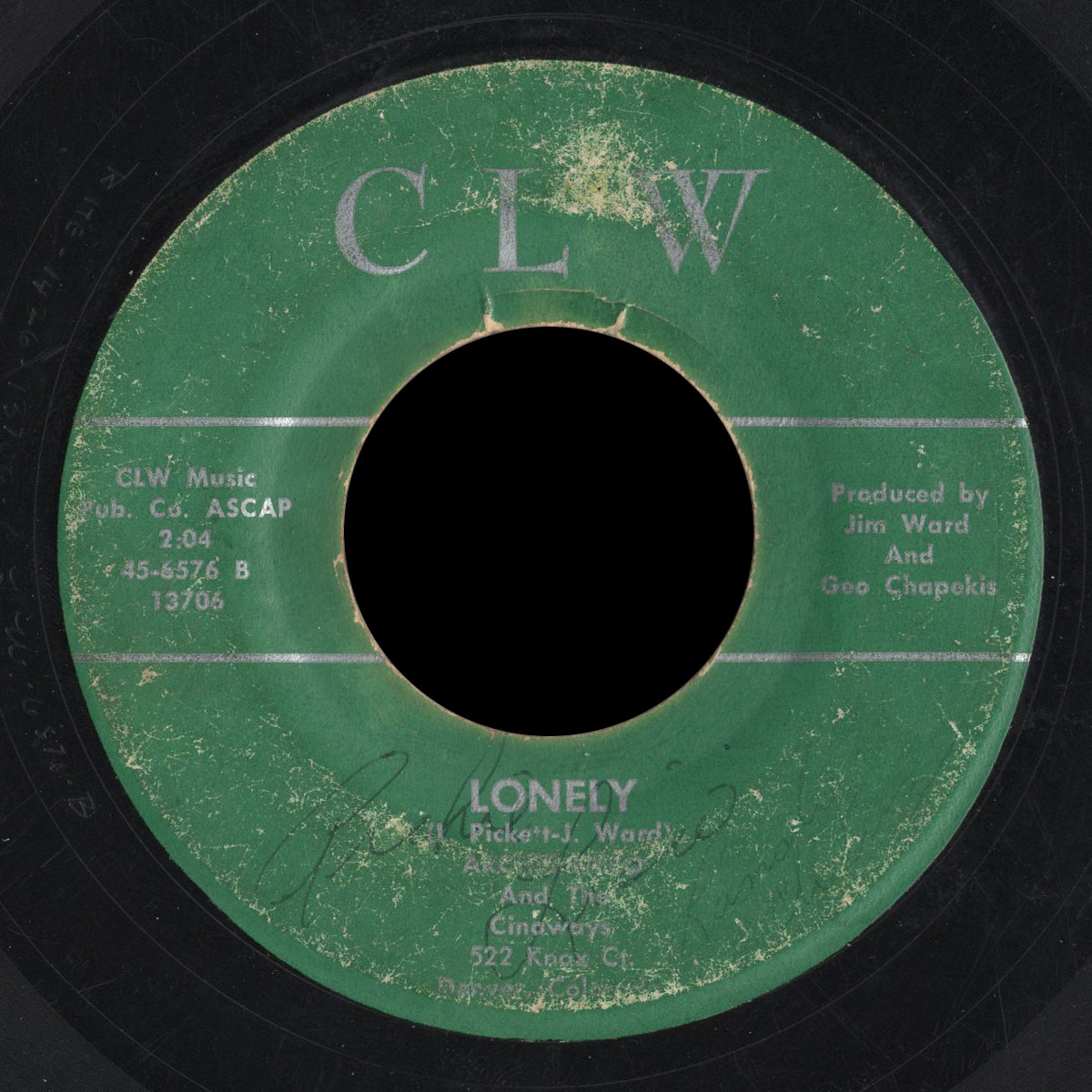
The ballad A-side, “Lonely” was written by L. Pickett and J. Ward. CLW Music Pub published both songs.
Released on CLW 45-6576, this is a Rite pressing, 13705/6 from 1965. CLW owner Jim Ward produced the single with Geo Chapekis. The address for CLW is given as 522 Knox Ct., Denver.
This site is a work in progress on 1960s garage rock bands. All entries can be updated, corrected and expanded. If you have information on a band featured here, please let me know and I will update the site and credit you accordingly.
I am dedicated to making this site a center for research about '60s music scenes. Please consider donating archival materials such as photos, records, news clippings, scrapbooks or other material from the '60s. Please contact me at rchrisbishop@gmail.com if you can loan or donate original materials

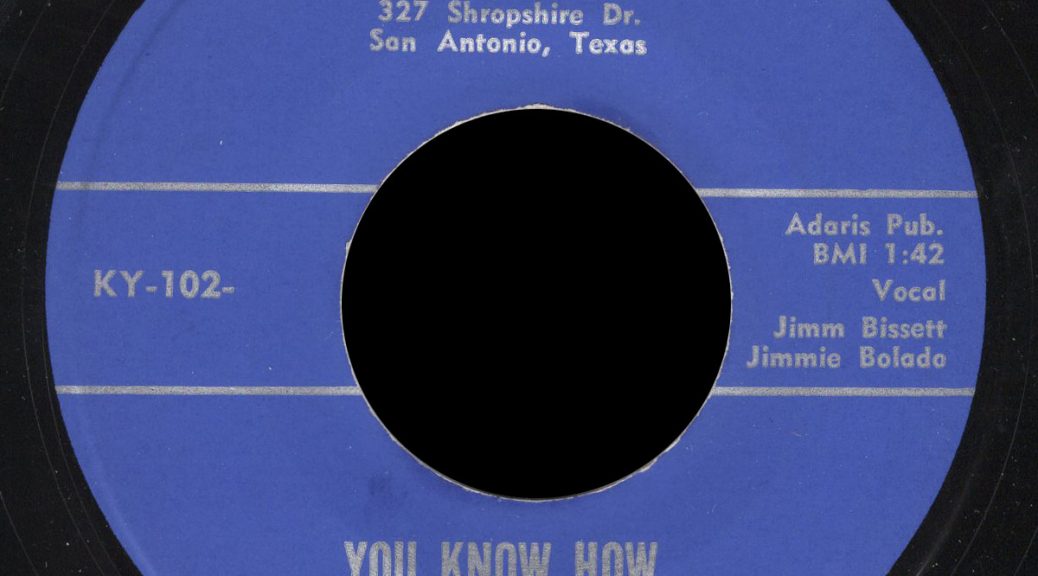
 Beginning in 1963 the Rel-Yea’s released three singles on Kaye Records, which seems to have been their own label, located at 327 Shropshire Drive in San Antonio. The first of these is a fast instrumental by the band, “The Rugged Rock” b/w a version of “Good, Good Lovin'”.
 I found a notice for the Rel-Yea’s playing at the Arcadia Theatre in Kerrville on April 17, 1964. Bruce Hathaway, DJ at KTSA in San Antonio is also on the notice. The Arcardia was the primary movie theater in Kerrville, but this is the only live band notice I’ve found so far. The former Rialto Theatre hosted a number of live events in 1967.