Updated October 2011
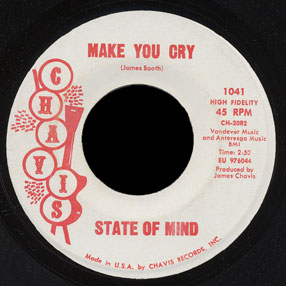 The State of Mind were from Wilmington, Delaware. “Move”, the first of their two 45s on the Chavis label, is their best, though “Make You Cry” isn’t far behind. Both have good guitar breaks, but while the solo on “Move” uses lots of echo, “Make You Cry” has a tougher attack. They sound almost like different bands, and I guessed the two 45s were recorded at least a year apart. “Goin’ Away” is a mellower song with good vocal harmonies.
“Move” was written by B. Sayers and James Booth, its flip “If He Comes Back” was written by Paul Murtagh, who played guitar, keyboards and did vocals for the group. “Goin’ Away” and “Make You Cry” were both written by James Booth. Both 45s were produced by James Chavis who owned the Chavis, Candi and Barvis labels.
If anyone has photos, please contact me at chas_kit@hotmail.com
I didn’t know much of anything about the band until Paul Murtagh contacted me:
The original band was formed in 1965 by Paul Murtagh (rhythm guitar, keyboards and vocals), Jim Booth (lead guitar and vocals), Bill Smallbrook (drums) and Al Borgnis (bass guitar). All of them were sophomores at William Penn High School in New Castle, Delaware. During that first year of their existence, they played only a few venues including the 1965 Talent show at Wm. Penn and a couple of dances.
In 1966, they replaced Al Borgnis with Bill Sayers on bass and Bill became the new lead singer as well. Al continued to support the group as a sort of manager, equipment support, etc for several years and remained always a good friend to the group. With the addition of Sayers, the band’s sound began to mature and we began to write their own songs. They also started playing other venues, school functions, local dances, Battle of the Bands, etc.
In the summer of 1966, the groups then business manager, Jim Booth’s mother, placed a call to a local Wilmington record company, Chavis Records and its president, James Chavis, agreed to audition the band based on a poor quality tape submitted to him. He called a few days later and asked if he could hear the band live so he was invited to one of their practices, held in the drummer’s basement. Chavis was impressed and several weeks later the State of Mind signed a contract to record 6 record sides over a 2 year period.
The band recorded its first single at Virtue Studios on Broad Street in Philadelphia. The A side, “Move”, was credited as written by Jim Booth but it was truly a group effort with everyone contributing something to the song. The flip side, “If He Comes Back”, was written by Paul Murtagh – his homage to the Byrds. The band’s key musical influences at the time were the Beatles, Stones, Kinks and other “British Invasion” groups. The Kinks and Beatles influence is very obvious on “Move”.
The first week following the record’s release in Wilmington, the main local rock station, WAMS, picked “Move” as the “WAMS Wax to Watch”. Over the next 10 weeks, the record slowly climbed the WAMS Top 40 charts topping out at number 10. In addition to WAMS, the record also got play on WIBG and WFIL in Philadelphia.
The success of the first record opened up numerous opportunities for the group. In addition to the WAMS promotional concerts held weekly at local Wilmington area fire halls (Elsmere, Prices Corner, Minquidale, etc.), the band also played larger venue concerts, one in particular where a number of national acts also played, Bunny Sigler, Tim Rose and others. This was also the era of large dance venues such as the weekly affair at the Wilmington Manor Lion’s Club where literally hundreds of kids attended – these venues also helped to get the band’s name around. In June of 1967, the band was the featured opening act at the new Brown Derby Night Club in Chadd’s Ford, PA, along with the Five Penny’s, a well-known local R&B group.
In the fall of 1967, the State of Mind returned to Virtue Studios to cut their second record. Both the A and B sides of this record were written by Jim Booth. For this record, the band added some more complex harmonies and a piano part, played by Murtagh. The band was very excited about the A side of this record, “Make You Cry”, feeling that, musically, it was superior to “Move” and should prove to be an even bigger seller. Even the B side, “Goin’ Away”, was a strong piece. Unfortunately, the band was destined not to see the success they hoped for on the release of this second record. WAMS continued to provide very strong support to the band and invited them to premiere the new song at the next concert at the Elsmere Fire Hall.
One of the band’s on-going struggles internally was how each member perceived their individual futures and the future of the group. Three of the four members planned to attend college upon graduation but Sayers was committed to remaining a professional musician and was concerned about his future once the band members graduated from Wm. Penn. About a week before the Elsmere concert, Sayers announce to the group that he was leaving to join the Phabulous Pharaohs, another local band on the rise. Without the band’s lead singer and bass player, a shuffling of personnel took place and another local musician Bob McCall was invited to join the band for the Elsmere gig. Unfortunately, the band was unable to reproduce the sound of their second record live for the concert so had to lip-synch the record. Following this concert, the band essentially broke up and, unable to play additional promotional events, record sales were not strong and so the second record did not get the attention that the band thought it should have gotten.
In 1968, Murtagh, Booth, Smallbrook and Borgnis all enrolled at the University of Delaware and, although they remained friends, the group never got together again. Other than Sayers, who, as of a number of years later, was still performing, the remaining members of the band went on to careers outside the music industry. Sadly, Jim Booth passed away several years ago – a huge talent, gone way too soon.
Paul R. Murtagh, October 2011
Paul added in an email to me:
As I relate all of this from memory, it seemed like our musical career lasted for many years but, in reality, it was less than 2 years, start to finish. I still compose and play in my basement studio, often with my brother in law and nephews, all talented musicians, but rarely does anyone but family hear me play anymore. I do enjoy your website and reading about other local Delaware bands from that era. I haven’t heard any mention yet of another band from New Castle called the A-rabs. This band was around at the same time as the State of Mind and were very good (great at covering Beatles songs) although don’t believe they ever recorded anything. Band members were (as I recall), Jerry Mills, Bob Schrundalo (sp?), Jim Lynch and Warren Pratt. We also knew and were friendly competitors of Johnny Neal and the Shapes of Soul and The Enfields. Keep up the good work – I hope to see more from Delawareans who lived through that era and remember more about the music scene.

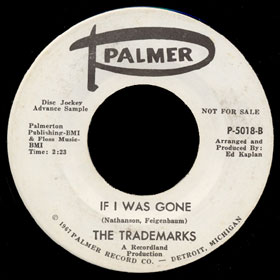 I knew little about the Trademarks until drummer Jerry Warren’s son Zack commented below.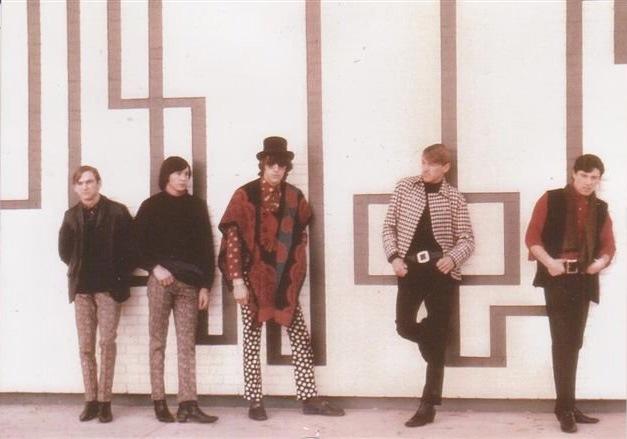
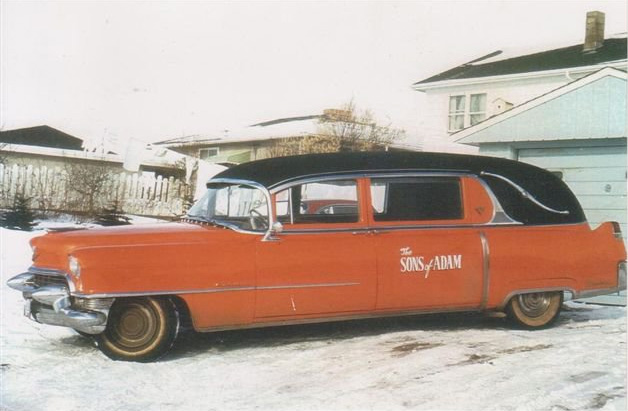
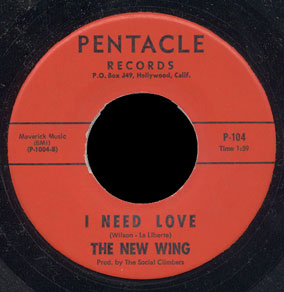 The New Wing was a singer by the name of Davy Peters backed by members of a group from Edmonton, Alberta, called the Sons of Adam.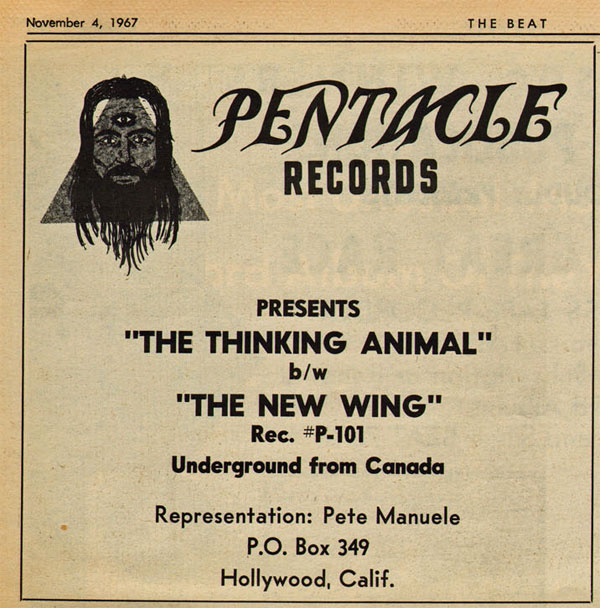
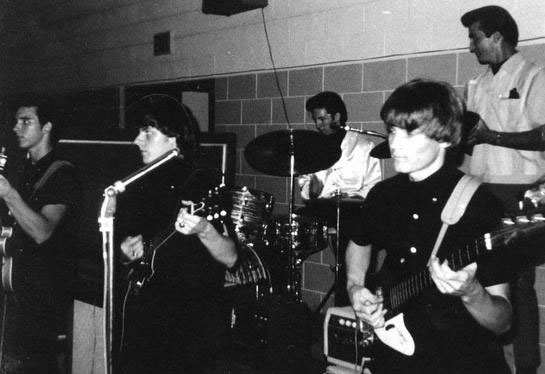
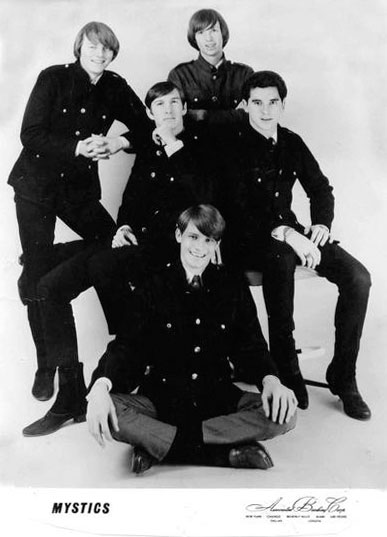
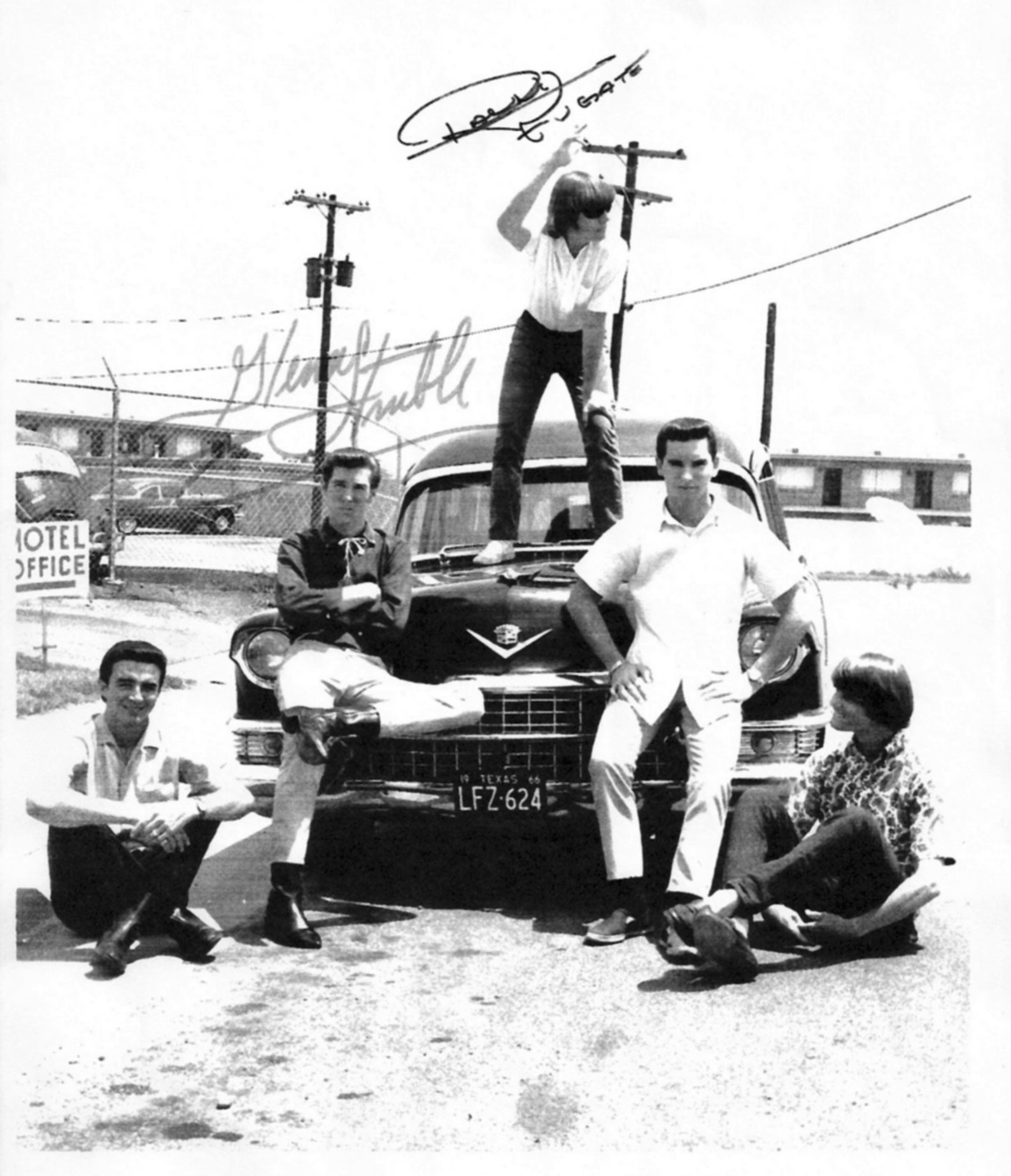
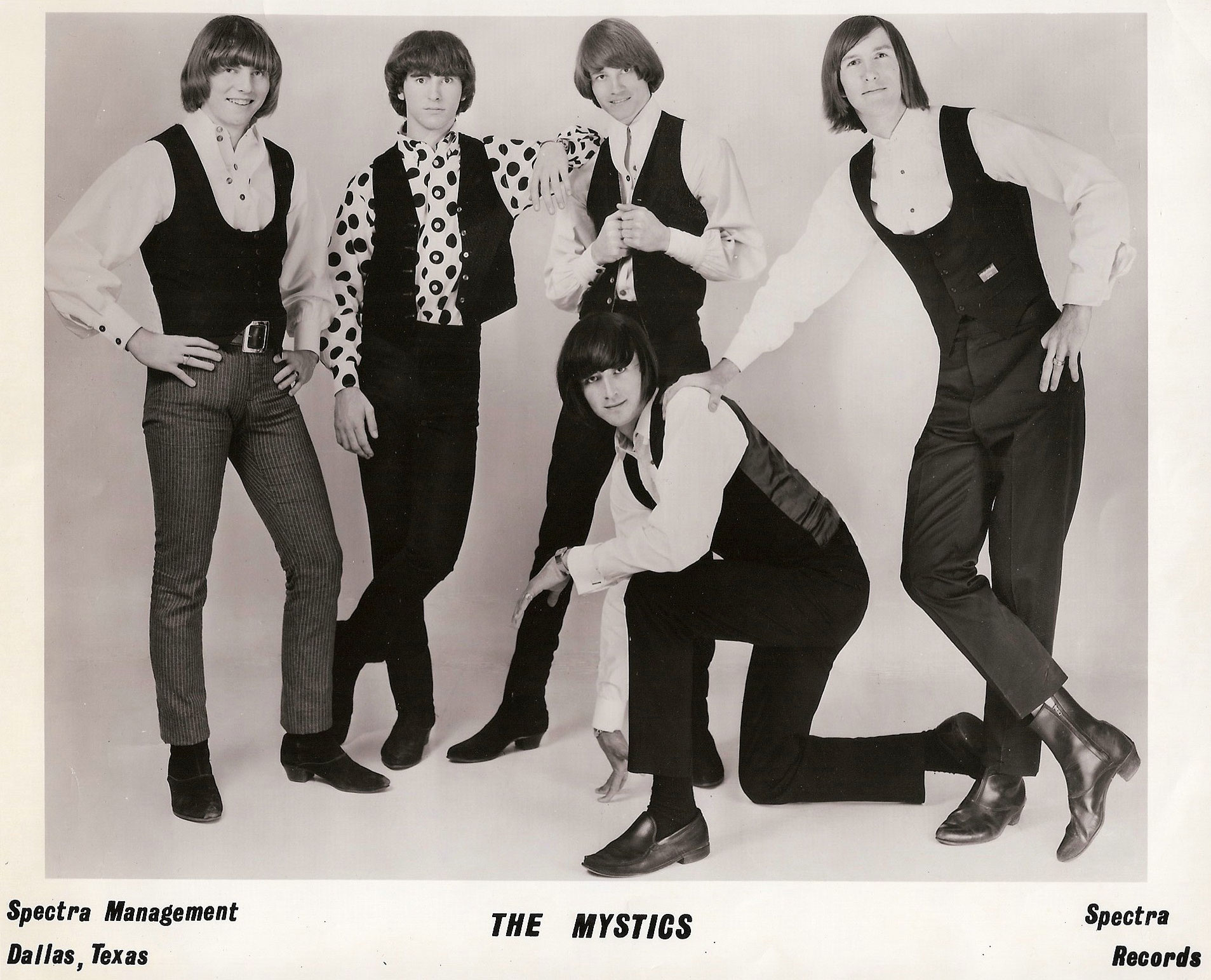
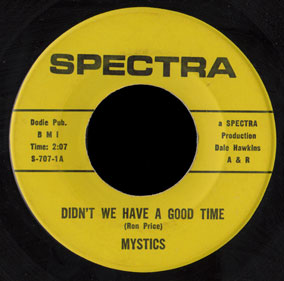 The Mystics came out of the Oak Cliff neighborhood of Dallas, Texas. Members were Ron Jobe vocals, David Mitchell bass, Robert Farris and Danny Fugate on guitars, and Glenn Struble on drums. Their original name was the Glorytones, and they often played the Heights Theater.
 The 45 reached #1 on Dallas stations KLIF, KBOX (see survey
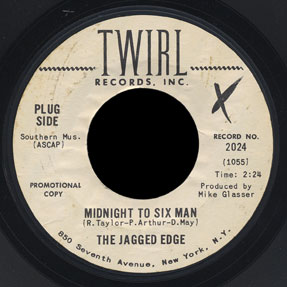 Supposedly recorded in California, but released on a NY label, with the band maybe from Ohio? That’s how different versions of the story go, which has to make the Jagged Edge one of the best ’60’s bands whose history was a mystery until recently.
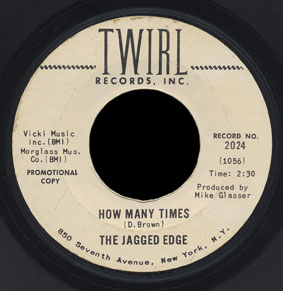 As Alan points out in a comment below, the Twirl label was started in Detroit. Harry Balk had formed Twirl and the publishing company Vicki Music and had a business partner, Irving Micahnik. They released about twenty singles on Twirl before Balk sold his share in Twirl and Vicki to Irving and formed the Impact label, which released some great 45s by the Human Beings and others. It seems that Irving Micahnik relocated the Twirl label to New York, where he resided, in 1965.
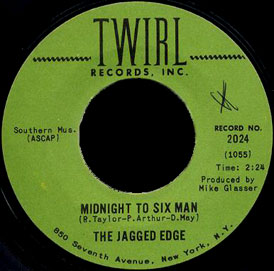 To make clear another confusing matter, this band was not the Jagged Edge from Brooklyn that released “You Can’t Keep a Good Man Down” / “How She’s Hurting Me” on Gallant in April of ’66, and then became the Off-Set, recording “Xanthia (Lisa)” for Jubilee in July of ’66. That band also did a version of “A Change Is Gonna Come” that went unreleased at the time.