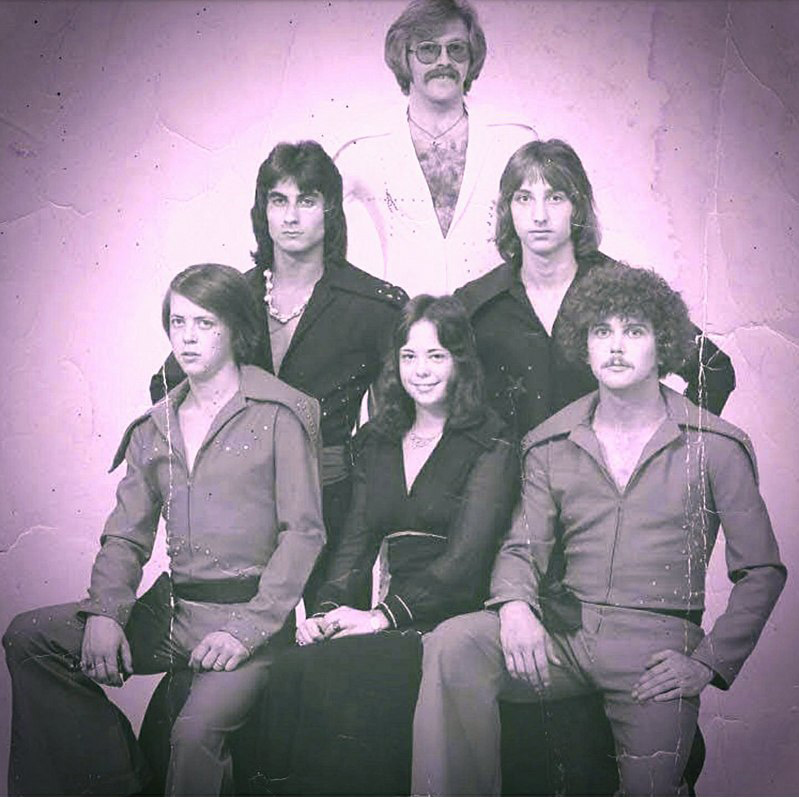
From Union City, Tennessee, close to the Kentucky border, this band recorded an early 45 as the Viscounts with Sherrill Parks Sr. handling vocals on ’50s rockers, while his son Sherrill Jr. played sax.
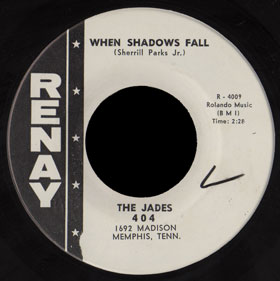
They reformed without Sherrill Sr. as the Jades: Sherrill Parks Jr. on vocals, Jim Hutchcraft guitar, Terry Hailey keyboards, Horace Phoebus bass and Ray Dement on drums. The Jades recorded two 45s for the Memphis label Renay. The first is a rockin’ cover of “I Ain’t Got You” with saxophone but no fuzz guitar backed with an instumental called “Rough House”. I hope to track this one down soon.
The second is a fine original, “When Shadows Fall”, as up-to-date a sound as you could wish for in 1966. Jim Hutchcraft’s great tremolo fuzz sound and Terry Hailey’s organ lay the basis while the drums and vocals syncopate, and the band takes off nicely during the chorus. Very different is the flip, a much older-styled instrumental, “Blue Nocturne”, probably something they had to play at local dances.
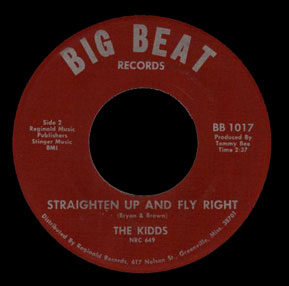
I know little about this group. Their one 45 was produced by Tommy Bee, who had been based in Albuquerque, New Mexico, while the Big Beat label shows a Greenville, Mississippi address at 617 Nelson St.
The band actually came from Beaumont, Texas, Kelly High School to be exact. Their guitarist Joey Patrizi commented below. John Schmidt played bass, to be replaced by Glen Moyer.
A good rocker, “Straighten Up And Fly Right” was written by Bryan and Brown. On the flip there’s a ballad, “See What My Love Means”. This 45 is not rare and can be picked up cheaply.
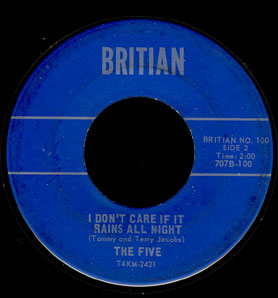
The Five seem to have come from Arlington, Texas. I couldn’t find any definite info on them until a friend of the band, Michael, commented below.
They sound like they were very young when they recorded this great double-sided 45 on the Britian (sic) label, the pounding “She Doesn’t Love Me Anymore” b/w a fine jangler, “I Don’t Care If It Rains All Night”. Tommy Jacobs and Terry Jacobs are the songwriters.
I’ll repeat most of Michael’s comment from below:
I knew these guys very well back in Junior High in Arlington, Texas (closer to Ft. Worth than Dallas).
Their original last name was Bryant, but changed to Jacobs after being adopted by their step-father. Tommy was about 2 years older than me and Terry was a year younger. Terry was the lead guitarist and lead singer while Tommy was was rhythm and back-up. Their drummer’s name was Bill Smith and can’t recall the bass player’s name, but he was a college guy and I always remembered that he played an Epiphone bass.
Terry always said that he wrote both songs for my sister, since he had such a big crush on her. The Five (one of many names they had gone by) were constant winners at local battle of the bands contests. And Terry could sing a mean falsetto “You Really Got Me.” Ha!! I think the single was made in ’66, but could have been early ’67, since I moved to Colorado in mid-’67. I saw them one more time, in’68, when we bumped into each other at Six Flags Over Texas. I heard that they moved to the San Francisco area shortly after that but no word on whether they kept up the music. The Britian label came about when the producer asked them what they wanted to name their label. They told him “Britain” but he misspelled it.
Thanks to Joe from the Ugly Beats for bringing the Five to my attention.
I’d love to hear from Terry Bryant, Tommy Bryant, or Bill Smith if they’re out there. Anyone have a photo of the group?
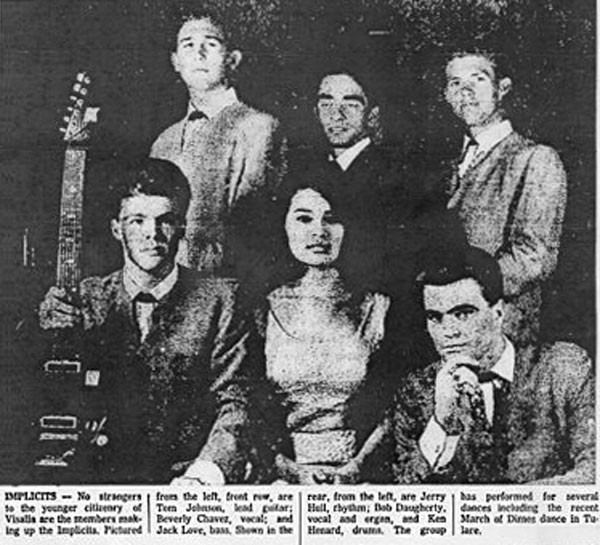
The Implicits, March 1965. From left, bottom row: Tom Johnston, Beverly Chavez, Jack Love; top row Jerry Hull, Bob Daugherty (Duarte) and Ken Henard.
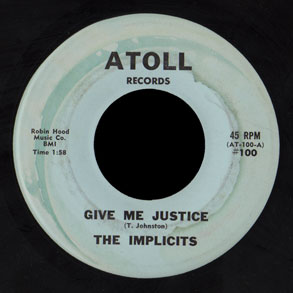
From Visalia, California come the Implicits. Both sides of their May ’65 release were written by Tom Johnston. “Give Me Justice” is a very catchy slice of garage pop, while “She’s Alright” is a good danceable song.
A&M label picked this up for a July of ’65 release on their Almo subsidiary. Johnston later went on to the Doobie Brothers.
Jerry Hull contacted me about the group:
I was the rhythm guitar for the Implicits at the time the record was recorded. The original Implicits were Tom Johnston, lead guitar and vocal, Jerry Hull, rhythm guitar and vocal, Jack Love, base guitar and vocal, Bobby Duarte, keyboard and vocal, and Kenny Henard, drums.
Our group met through a mutual friend from high school, who was a drummer. Tom Johnston, Jack Love, and Kenny Henard went to Mt. Whitney High School and I went to Redwood High School; the two schools were just a few blocks apart. We were all 14 or 15 years old at the time. Bobby Duarte was a friend of one of the guys and was older than the rest of the group. We played at private parties, and some of the high school after-game dances at Mt. Whitney. We played at events at Woodlake, Hanford, and a March of Dimes sponsored dance in Tulare, which was our largest event at the time. We later added a female singer, Beverly Chavez, to the group.
We were approached by Shelly Martin (who became our manager), about recording a record. We signed an agreement on March 31, 1965, and recorded in Hollywood. I left the group later that year, however, Tom, Jack and Kenny kept the group going for some time, before changing the name.
I still have a picture from the Visalia Times Delta newspaper when we were going to Hollywood to record. I currently live in Henderson, Nevada.
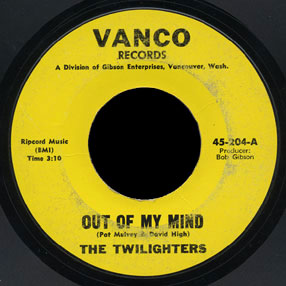
Some of the Twilighters may have attended the Washington State School for the Blind in Vancouver, Washington, not far from Portland, Oregon. Their records are often found with braile lettering on the covers or labels. They released at least this 45 and two LPs on Vanco.
Members were Dave High on guitar, Pat Mulvey – tenor sax, Mike Mulvey, Darrel Deck on organ, Larry Huston on guitar and bass, and William Webber on drums. According to the liner notes of their LP Both Sides of the Twilighters, Dave High was the only sighted member of the group.
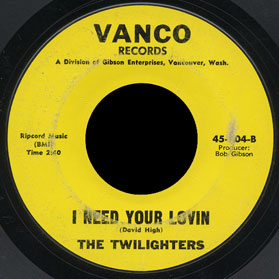
From the track list of the first LP Sides of the Twilighters (“Winchester Cathedral”, “Hello Dolly”, “Liechtensteiner Polka”, “Truck Driving Man”, “Fiesta in Acapulco”, “Kansas City”, “Elmer’s Tune”, “My Heart Is an Open Book” plus both sides of this single) and the title of the second (Country Our Way), it’s likely this 45 is as “garage” as they ever sounded.
Given their obvious songwriting talent – “Out of My Mind” was written by Pat Mulvey and David High; “I Need Your Lovin” by David High – I wonder why they didn’t make more records in this style. “Out of My Mind” is particularly strong, though it does sound like the singer renders the lyric “so painfully clear” as “so plainfully clear”!
Like the 45 by the Bystanders this was released on Vanco, the label owned by Bob Gibson. Another 45 on Vanco is #208: “Sorry For Tryin'” / “Happy Springtime”, by The Fire, two songs firmly on the pop side of psychedelic, from about 1968.
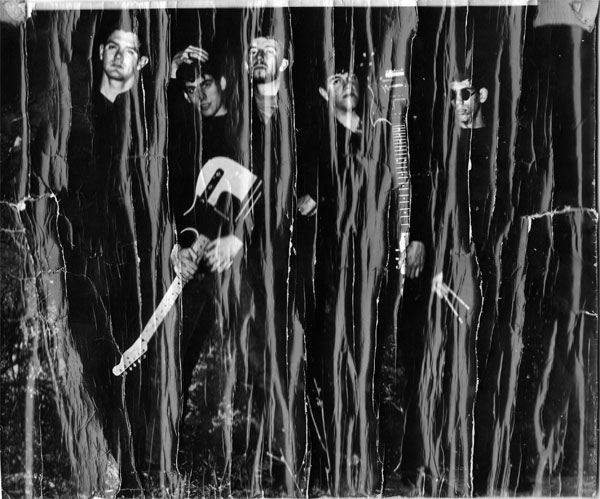
Earliest known pic of the original Hangmen with (from left) first bass player Mike (Walters) West, George Daly, Dave Ottley, Tom Guernsey and Bob Berberich
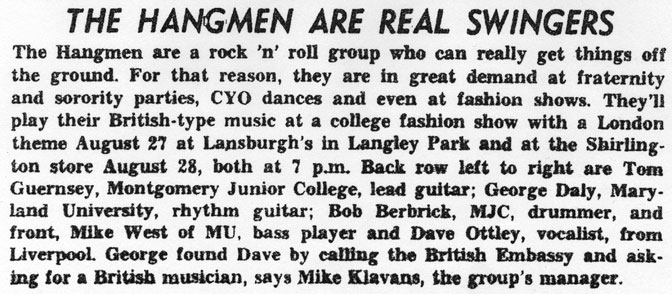
The Hangmen formed at Montgomery Junior College, and included bassist Mike West and rhythm guitarist George Daly. They were joined by fellow students Tom Guernsey and Bob Berberich, whose previous group the Reekers, dispersed when other members went away to college.
Looking for a vocalist, George Daly called the British Embassy asking for someone who was British and could sing! The person he talked to referred him to a girl who could sing, who in turn recommended Dave Ottley, a hairdresser for Vincent Hair Stylists who had been in the U.S. for two years at that time. Variously reported in articles about the Hangmen as being from Liverpool or London, Ottley was actually from Glasgow, Scotland.
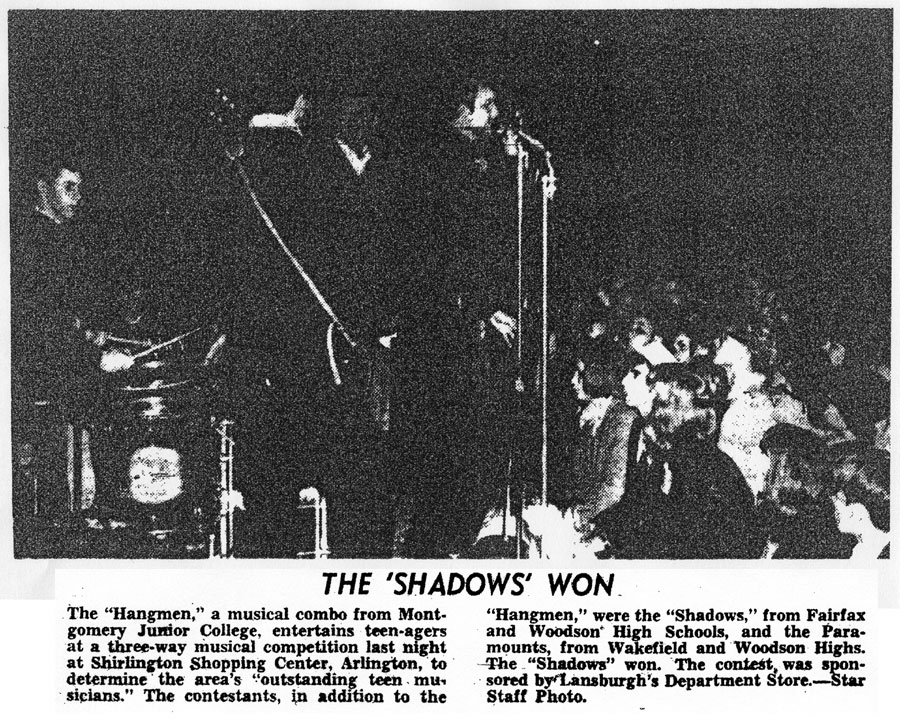
First press on the group, from the Washington Evening Star of April 3, 1965. The Hangmen lose a battle of the bands at the Shirlington Shopping Center to the Shadows.
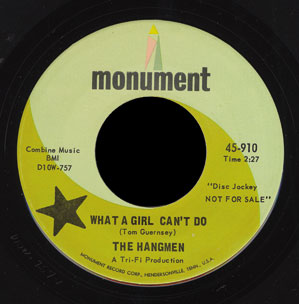
In early summer of ’65, the band’s managers Larry Sealfon and Mike Klavens played “What a Girl Can’t Do” for Fred Foster of Monument Records. Lillian Claiborne graciously released Tom from his contract with her and Foster signed him – only Tom as he was the songwriter and leader of the Reekers.
Since Joe Triplett and Mike Henley were committed to college, Tom decided, against his own preferences, to work with the Hangmen as his band. Monument then released the Reekers’ recordings of “What a Girl Can’t Do” and “The Girl Who Faded Away” under the Hangmen’s name, even though only Tom and Bob Berberich had played on them.
Some sources report that the Hangmen rerecorded the “The Girl Who Faded Away” for the Monument 45. A close listen shows that the Hangmen’s Monument 45 version uses the same instrumental backing as the Reekers’ original Edgewood acetate. The vocal track does not match the demo, with different lyrics, but the lead vocalist is the same (Triplett I think). The acetate also runs about 24 seconds longer than the Monument 45.
Confusion also exists about “What A Girl Can’t Do”, but there should be no doubt, the Monument 45 version released under the Hangmen’s name is actually the Reekers. In 1966 the Hangmen recorded their own version of the song for their LP, which sounds very different.
Arnold Stahl, a lawyer, and Mike Klavans of WTTG formed 427 Enterprises to promote the band. Their connections landed gigs for the Hangmen in embassies and a mention in Newsweek. One memorable event was playing a party for Robert Kennedy’s family and getting drunk in their kitchen!
Despite these connections, the Hangmen were still primarily a suburban band, playing for kids at parties and shopping malls but not getting into the clubs like the big DC acts like the British Walkers and the Chartbusters. This would change as the Monument 45 of “What a Girl Can’t Do” started gaining momentum locally.
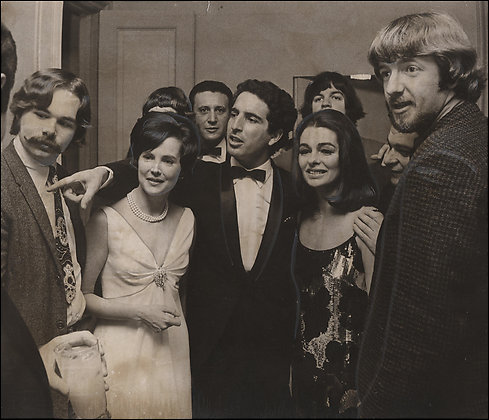
Algerian Ambassador and Cherif Guellal (in tux) and former Miss America Yolande Fox to his left, with Dave Ottley on the far right and Tom Guernsey behind Yolande, 1966. Photo by Frank Hoy.
Billboard, 2/19/66: Hangmen Cause ‘Swingalong’
FALLS CHURCH, Va. — Jack Shaver, owner of Giant Record Shop, said last week a mob of teen-agers turned out to hear The Hangmen (4) and when police cleared the store because the crowd created a fire hazard a near-riot ensued.
Shaver said browser bins and display cases were smashed and two girls and a boy fainted during the chaos. He said damage was estimated at $500.
Shaver said The Hangmen are from the nearby Washington area and are local favorites. He said he had sold about 2,500 copies of their single, ‘”What a Girl Can’t Do”‘, on Monument, and it was No. 1 on local charts.
He said school was out that day because of snow and the store began filling up at noon for the 4 p.m. show. He estimated 400 ‘were jammed and packed’ inside and some 1,500 were outside.
Shaver said traffic was snarled, police came, declared the gathering a fire hazard and began clearing the store. He said The Hangmen had been playing 15 minutes at the time and it took half an hour to disperse the crowd.
Shaver said he had had record stars perform at his store before, including Johnny Rivers, Johnny Tillotson, Peter and Gordon, and Ramsey Lewis, ‘but they never created anything like this.’
He said he did not have insurance to cover the loss.
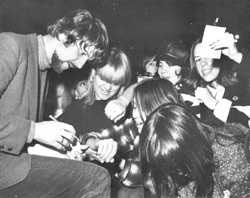
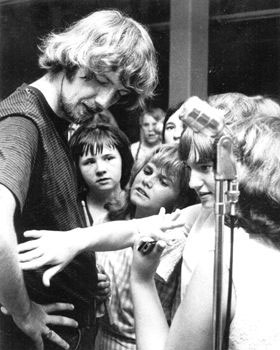
The Hangmen, May 1966.Dave Ottley signing for fans
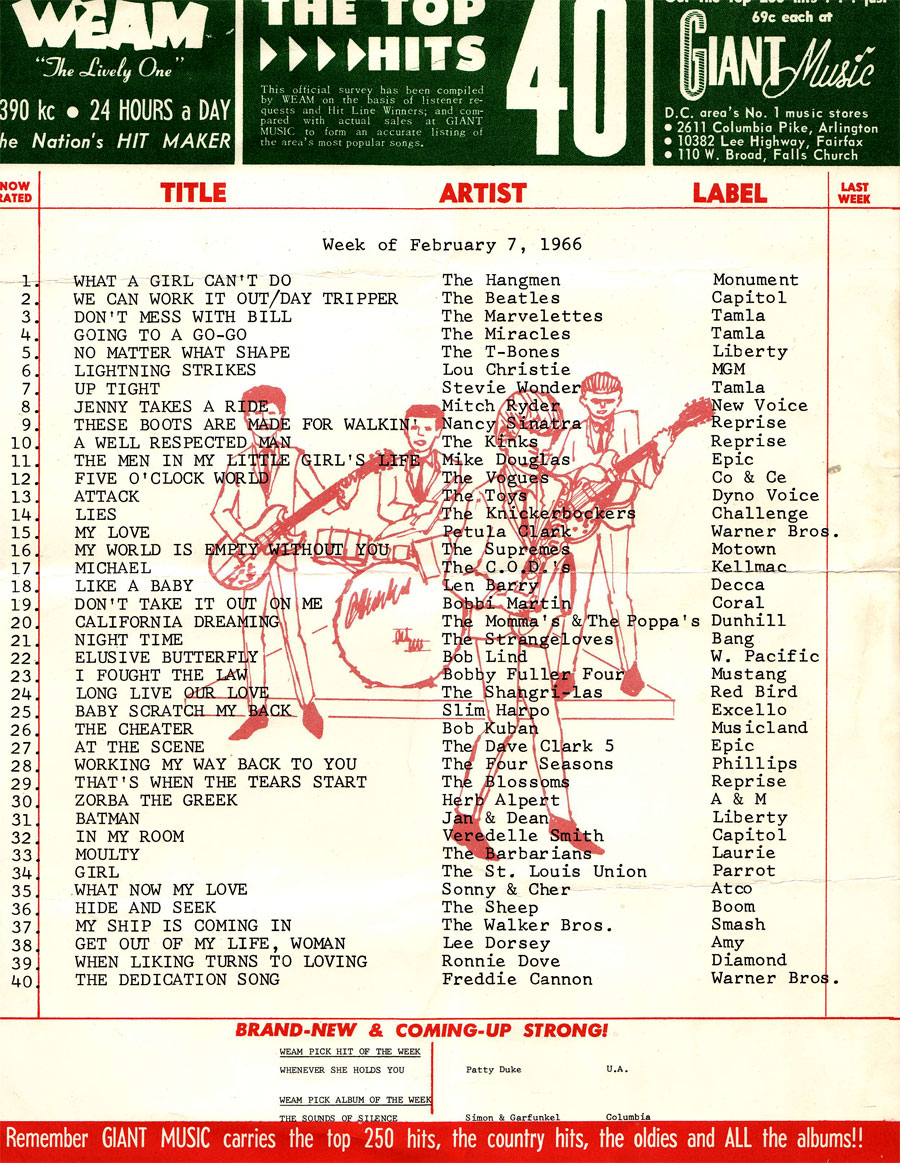
“What a Girl Can’t Do” knocked the Beatles’ We Can Work It Out/Day Tripper out of the top spot of the charts for Arlington radio station WEAM on Feb. 7, 1966. On a national level, though, Monument wasn’t doing enough to promote the 45. “What a Girl Can’t Do” remained only a local hit. Their best opportunity had been wasted, but from their perspective as the top band in the D.C. area, success seemed certain.
Tom chose to quit college when an offer to play the Jerry Blavat TV show coincided with his final exams in late 1966. On the show, the Hangmen played “What a Girl Can’t Do” then backed the Impressions on a version of “Money”. (If anyone has a copy of this, please get in touch!) The Hangmen played all along the east coast from New York down to Florida, doing shows with the Animals, Martha Reeves, the Yardbirds, the Count Five, the Dave Clark Five and the Shangri-Las among others. Tom remembers Link Wray coming up on stage during a Hangmen show, borrowing a guitar and launching into a long version of Jack the Ripper. Link played solo after solo while Tom’s arm nearly fell off trying to keep up the rhythm!
Profile of the Hangmen in the May 8, 1966 Sunday magazine of the Washington Evening Star:
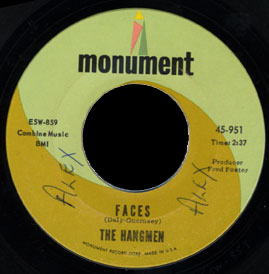
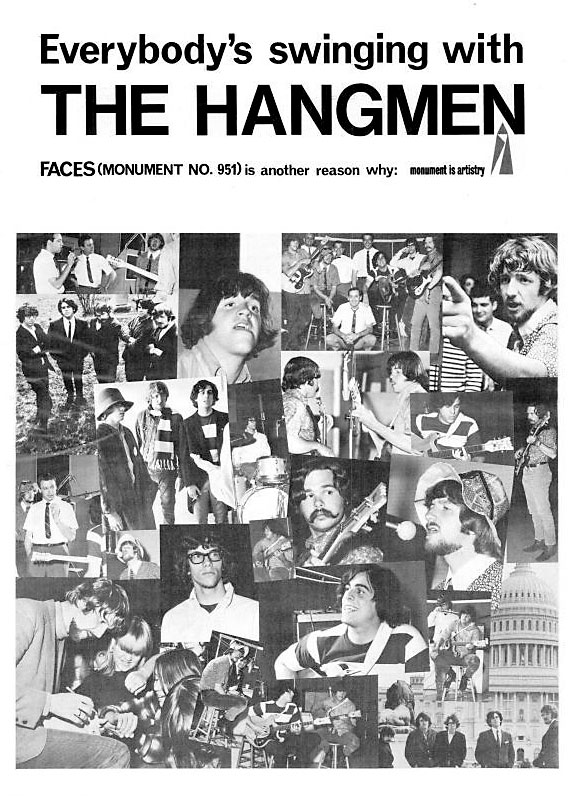
The Hangmen recorded a fine follow up, “Faces”, and this time Monument put some money into promotion, taking out a full page ad in the trade magazines. Propelled by fuzz guitar and a heavy bass line, “Faces” is a tough garage number with a fine vocal by Ottley. Tom points out that the song finishes quite a bit faster than it starts, making it difficult for those on the dance floor to keep up! The flip is another Guernsey/Daly original, “Bad Goodbye”, which features studio musician Charlie McCoy on harmonica.
By this time Mike West had left the band and Paul Dowell plays bass on “Faces”. After its release, Ottley moved to London and was replaced by Tony Taylor, formerly of the Roaches. The Hangmen went into Monument Studios in Nashville to record their album Bitter Sweet. Remakes of “What a Girl Can’t Do” and “Faces” on the album fall flat compared to the 45 versions. Monument pushed the band into recording a version of “Dream Baby”, produced by Buzz Cason and released as the A-side of their last 45. The band does a good job with a slamming beat and catchy guitar and sitar sounds, but I can’t help but feel it’s not the right song for the band.
Dave Ottley
I prefer some of the other album tracks, like their extended psychedelic version of “Gloria”, the tough sounds of “Isn’t That Liz” and “Terrible Tonight”, the delicate “Everytime I Fall in Love”, and “I Want to Get to Know You”, which sounds something like the Lovin’ Spoonful.
An announcement in the May 17, 1967 edition of the Star Ledger said that the Hangmen had changed their name to The Button to pursue further psychedelic stylings. Paul Dowell and George Daly were already out of the group and replaced by Alan Flower, who had been bassist for the Mad Hatters, and George Strunz. By June Tom Guernsey had left the band to be replaced by John Sears, and the group were being billed as “The Button, formerly The Hangmen.”
Relocating to New York, the Button cut an unreleased session for RCA and played at Steve Paul’s The Scene on West 46th St. and at the Cafe Au Go Go on Bleeker. Berberich left the band leaving Tony Taylor as the only one of the Hangmen still in the group. They band changed its name to Graffiti, recording for ABC.
Meanwhile, Tom Guernsey produced a legendary 45 for the D.C. band the Piece Kor, “All I Want Is My Baby” / “Words of the Raven”. He also wrote, produced and played on a great 45 by another Montgomery County band, the Omegas, “I Can’t Believe”. For the Omegas’ session, Tom played guitar and piano, Leroy Otis drums, and Joe Triplett sang, with backing vocals by the Jewels.
Bob Berberich briefly drummed with The Puzzle then joined George Daly and Paul Dowell in Dolphin a group that featured the young Nils Lofgrin. Berberich stayed with Lofgrin through Grin, while Paul Dowell of Hangmen became equipment manager for the Jefferson Airplane, and George Daly went on to A&R with Elektra Records.
Tom Guernsey deserves a special word of thanks for giving his time to answer my many questions, and also for loaning me the Evening Star magazine.
List of original releases by the Hangmen:
45s: What a Girl Can’t Do / The Girl Who Faded Away – Monument 910, released Nov. 1965 Faces / Bad Goodbye – Monument 951, released June 1966 Dream Baby / Let It Be Me – Monument 983, released 1966
LP: Bittersweet – Monument SLP 18077, released 1966
Update
Tom Guernsey passed away on October 3, 2012 in Portland, Oregon, followed less than two months later by David Ottley, on November 27, 2012.
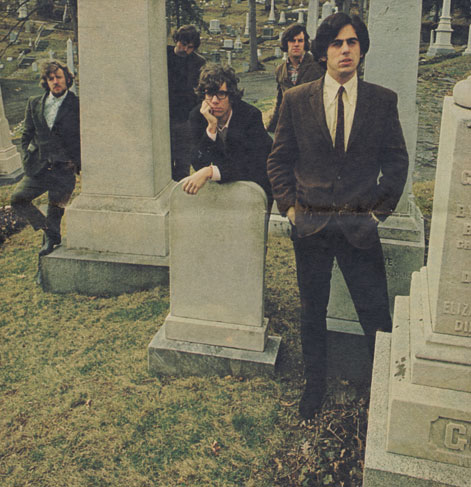
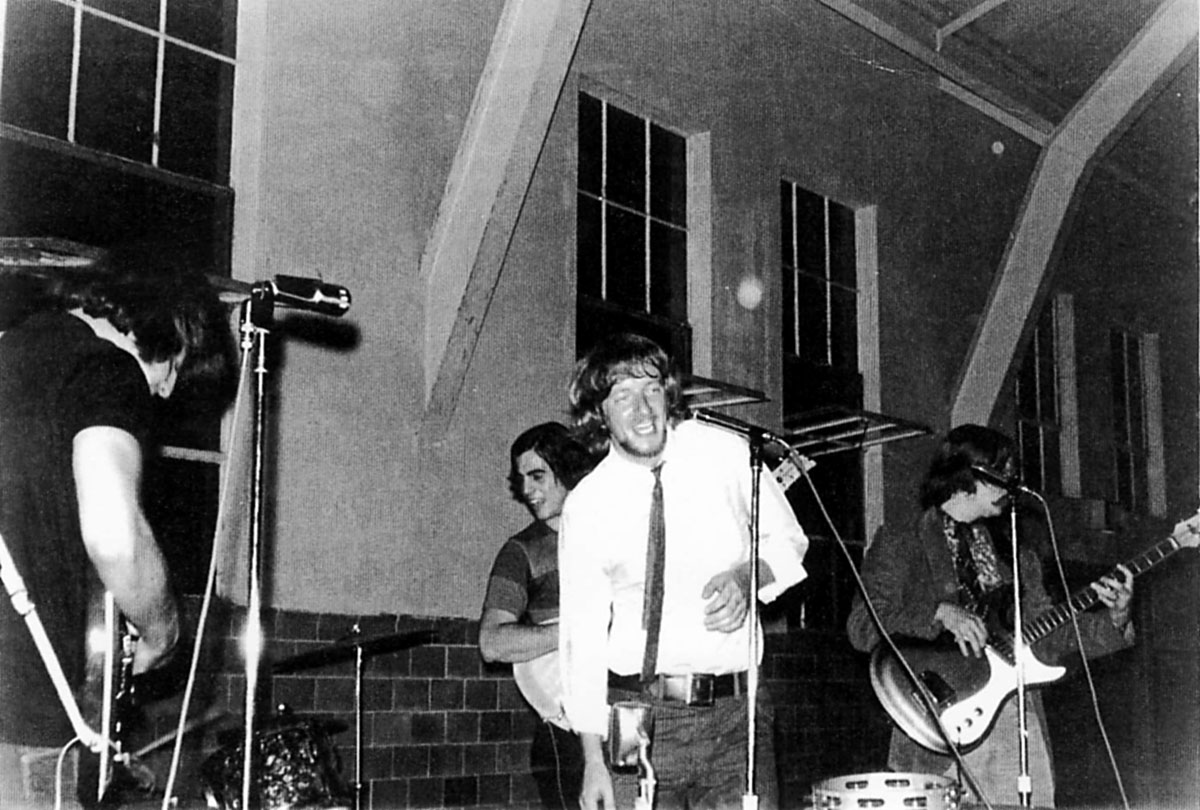
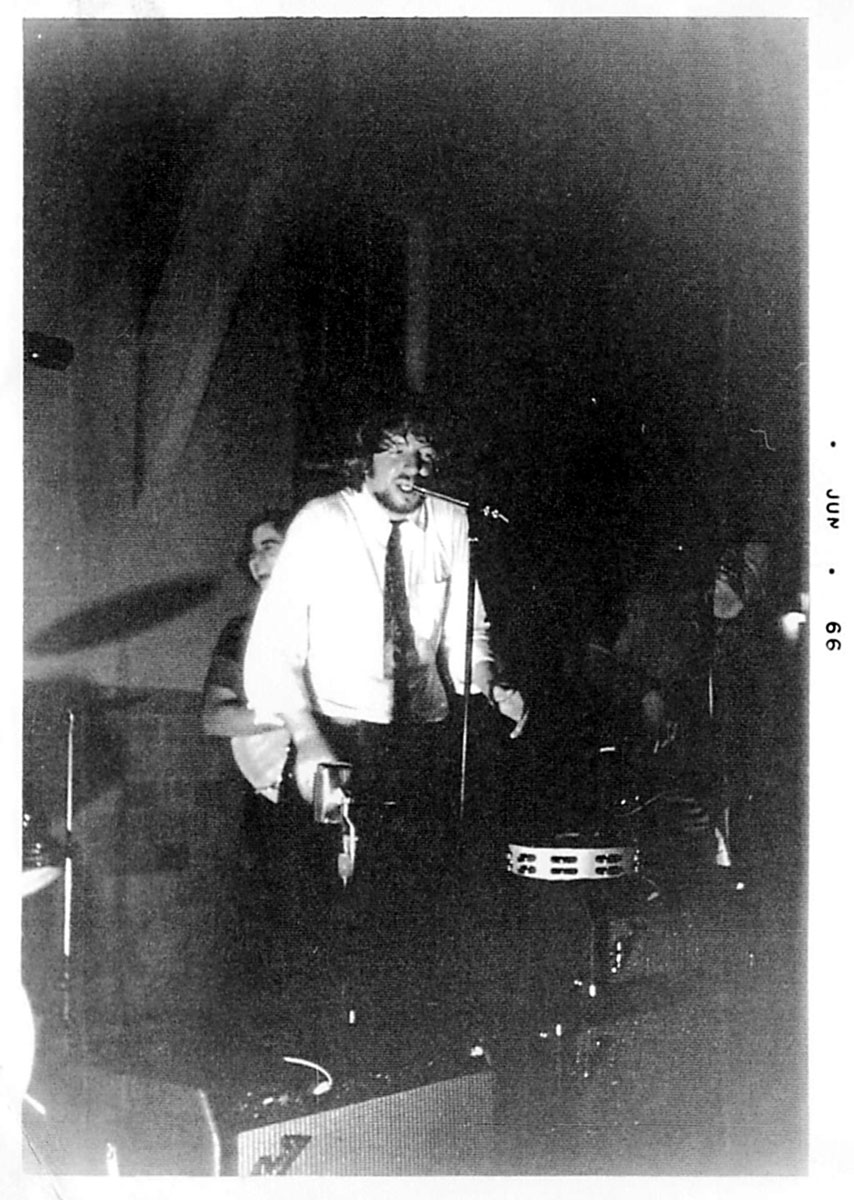
from left: Tom Guernsey, George Daly, Dave Ottley (center with white shirt), and Paul DowellHangmen with Dave Ottley on vocalsWhat a Girl Can’t Do at #1 on WEAM Top 40 hits February 7, 1966Billboard, July 9, 1966
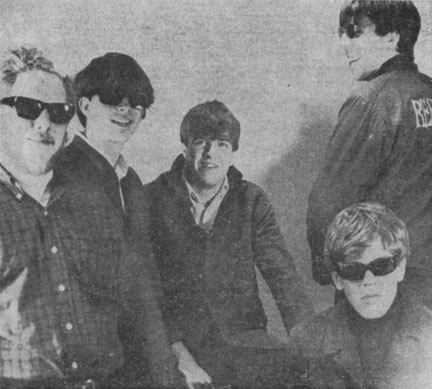
Three members of the Reekers with friends from left: Mike Henley, Mack McCune, Tom Guernsey, John Guernsey (bottom right) and John Hall. Mack McCune and John Hall were friends of the band standing-in for absent Reekers.
Tom Guernsey formed the Reekers in late 1963 with his brother John Guernsey and friends from Garrett Park, MD, a small town outside of Bethesda and a short distance from Washington D.C. Bass players and drummers would change over time, but the core of the band was always Tom Guernsey on guitar, Joe Triplett on vocals and Mike Henley on piano.
While playing the beach resorts at Ocean City in the summer of ’64, rich friend Toby Mason became interested in the band and offered to pay for studio session time. The Reekers first session didn’t go well, but then they went into Edgewood Recording Studio on K Street in downtown D.C. Engineer and owner Ed Green asked Tom whether they wanted to record in one track or two. When Tom asked what was the difference, Green said one track is $10 an hour, two would be $20 an hour! The Reekers went with one track, no overdubs, to record two original instrumentals that would make Link Wray proud.
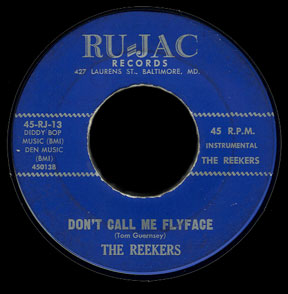
Tom’s lead guitar and Joe Triplett’s screams combine with Jim Daniels’ ferocious take on surf drumming for “Don’t Call Me Fly Face” (named for the Dick Tracy villian). On “Grindin'”, Richard Solo makes incredible bass runs behind a bluesy guitar workout from Tom, accompanied by Henley’s keyboards and Triplett’s interjections (‘keep grindin’, ‘look good to me now’, ‘keep walkin’ boy’!)
Tom brought an acetate of the session to Lillian Claiborne, a legendary D.C. record producer. Claiborne had been Patsy Cline’s manager early on in her career, and was responsible for recording and supporting many local acts, especially soul and r&b artists. She released some records on her own DC label and leased other masters to labels around the country.
Claiborne signed Tom to a production contract and sent the Reekers to Rufus Mitchell, owner of Baltimore’s Ru-Jac Records, a label usually known for soul music. With Claiborne’s assurance of airplay on WWDC, Mitchell released the Reekers 45. The small first pressing lists Tom as sole writer of both songs. When that sold out, Ru-Jac ran a second press, this time correcting the songwriting credits on “Grindin'” to give John Guernsey co-credit.
The Reekers never saw any money from this record, but it garnered them some attention. Local teen maven Ronnie Oberman profiled the band in the Washington Evening Star on April 17, 1965. About this time they went back to Edgewood to record a beautiful ballad, “The Girl Who Faded Away”. For this session Mike Griffin played bass and Bob Berberich replaced Daniels on the drums. This song shows some considerable development in the band, from Tom Guernsey’s songwriting to the harmony vocals and the band’s delicate handling of the arrangement. The band took a demo to the WWDC program director who had pushed “Flyface”. Not only did he pass on it, but his remark that they should stay an instrumental band disappointed vocalist Joe Triplett.
For his next song, Tom worked out a riff on piano loosely based on an instrumental he heard on the radio. The song he wrote around that riff, “What a Girl Can’t Do”, would change the fortunes of him and the rest of the Reekers.
The band went to Rodel Studio in Georgetown, a larger studio than Edgewood, but with a less competent staff. By sheer accident the engineer captured an echo-laden drum sound that gave the song an instant hook. Tom took all but two strings off his guitar so he could play the riff cleanly. Joe Triplett delivered the lyrics with sneering satisfaction, his voice perfectly suited to the lyrics. Though the words were a Stones-like put-down, musically the song shows little influence of the British Invasion. This was the first time the band had tried overdubs, including Joe on the harmonica solo and Tom’s repeating high guitar notes that take the song out.
Guernsey received some instant feedback on whether this song had a chance at a hit: Mike Griffin, hired as bass player for the session, had been offered either $20 or a percentage of the record. Initially he wanted the $20, but on hearing the playback in the studio he changed his mind and asked for the percentage!
Just as the Reekers were getting attention around DC with “Don’t Call Me Flyface”, the band dispersed, with Mike Henley and Joe Triplett going away to college. Tom and Bob Berberich joined another band, the Hangmen, with bassist Mike West and rhythm guitarist George Daly, fellow students at Montgomery Junior College.
Fate would strike in the early summer of ’65, when Hangmen manager Larry Sealfon played “What a Girl Can’t Do” for Fred Foster of Monument Records. Lillian Claiborne graciously released Tom from his contract with her and Foster signed him – only Tom as he was the songwriter and leader of the Reekers. Since Joe Triplett and Mike Henley were committed to college, Tom decided, against his own preferences, to work with the Hangmen as his band. Monument then released the Reekers’ recording of “What a Girl Can’t Do” under the Hangmen’s name, even though the only Hangmen that had played on it were Tom and Bob Berberich.
Some sources report that the Hangmen rerecorded the “The Girl Who Faded Away” for the Monument 45. A close listen shows that the Hangmen’s Monument 45 version uses the same instrumental backing as the Reekers’ original Edgewood acetate. The vocal track does not match the demo, with different lyrics, but the lead vocalist is the same (Triplett I think). The acetate also runs about 24 seconds longer than the Monument 45.
Confusion also exists about “What A Girl Can’t Do”, but there should be no doubt, the Monument 45 version released under the Hangmen’s name is actually the Reekers. In 1966 the Hangmen recorded their own version of the song for their LP, which sounds very different.
Though the Hangmen spelled the end of the Reekers, Tom now considers a number of his later projects with Joe Triplet (and often with Mike Henley, Sam Goodall and Bob Berberich) to be extensions of the Reekers, including a 45 released as the Omegas, and later recordings like 1972’s “Night Time of My Lifetime” and “Streakin’ U.S.A.”.Bob Berberich stayed with the Hangmen after Guernsey left the group, and would go on to join Dolphin with George Daly and Paul Dowell of the Hangmen and Nils Lofgrin, and then join Lofgrin’s own group, Grin.
Joe Triplett and Mike Henley joined a group called Claude Jones, John Guernsey joined the group soon after and became one of their primary songwriters. Joe Triplett later formed the Rosslyn Mountain Boys.
Meet The Reekers, a 20-track CD including the originals of Don’t Call Me Flyface and Grindin’, the Omegas’ I Can’t Believe and five ccver versions of What a Girl Can’t Do, is available at CD Baby, which also has Tom’s instrumental album, Same Place, Different Time.
Tom is working on a film inspired by the Reekers story called “The Girl From California”. He asked me to include this clip from the film:
The Canadian Squires evolved from Ronnie Hawkins’ backing band the Hawks. Hawkins and his drummer Levon Helm were from Arkansas, but finding huge success in Ontario, they started recruiting local musicians as original members of the Hawks returned to the U.S.
After leaving Hawkins in 1964, the group toured on their own, usually billed as Levon and the Hawks. Personnel changed periodically, but by the time of this recording, all the members of the group that would go on to become the Band was in place, four of the five from southern Ontario.
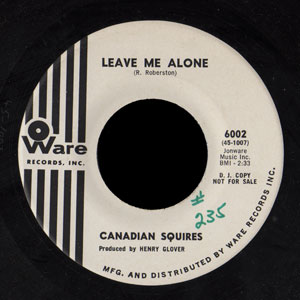
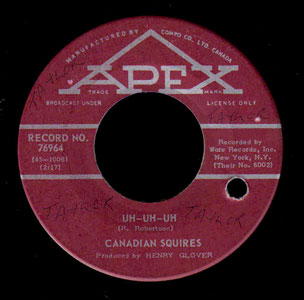
Hawkins’ producer at Roulette, the legendary Henry Glover brought them into Bell Studios in New York to record two fine Robbie Robertson originals, “Leave Me Alone” and “Uh Uh Uh”, in the spring of 1965. Glover released these on the Ware label in the U.S., and on Apex in Canada.
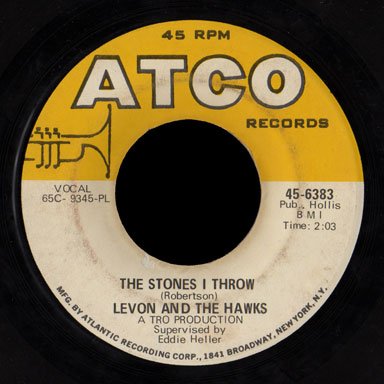
In September they recorded two further Robertson originals, the soulful “He Don’t Love You” and “The Stones I Throw” that made it to the Atco label, but all this was overshadowed by their meeting Dylan in late summer of ’65. In late 1968, Atco dug up one further song, “Go Go Liza Jane”, recycling “He Don’t Love You” for the flip.
Thanks to Ivan for the scan of the Apex 45.
45 releases:
Ware 6002: Canadian Squires – Leave Me Alone / Uh Uh Uh (1965) Apex 76964: Canadian Squires – Leave Me Alone / Uh Uh Uh (1965) Atco 6383: Levon and the Hawks – He Don’t Love You / The Stones I Throw (1965) Atco 6625: Levon and the Hawks – He Don’t Love You / Go Go Liza Jane (1968)
from left: Mamoru Manu, Kenneth Ito, Dave Hirao, Louis Kabe, and Eddie Ban
Original members:
Tokimune ‘Dave’ Hirao – vocals Eddie Ban – lead guitar, vocals Kenneth Ito – guitar, vocals Masayoshi ‘Louis Louis’ Kabe – bass Mamoru Manu – drums, vocals
Golden Cups’ singer and founder Dave Hirao had played in an earlier combo called the Sphinx in Yokohama, an important city for music in Japan because of the influence of american military bases in the vicinity. He met lead guitarist Eddie Ban who, like Dave, had travelled to the U.S. to hear rock in person. Eddie had brought back a fuzz box with him from his travels, a sound which would be lavished on much of their early work.
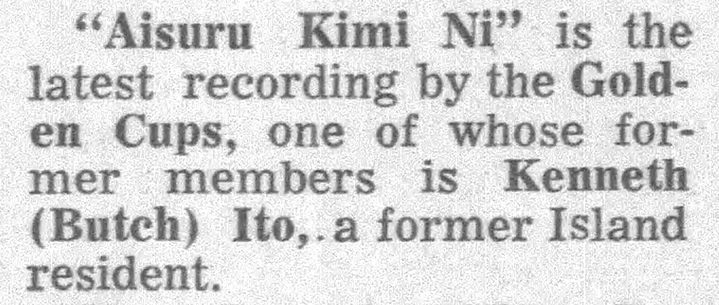
Kenneth “Butch” Ito gets a mention in the Honolulu Star-Bulletin, January 7, 1969Joining Dave and Eddie were Kennith Ito on guitar and vocals, Masayoshi Kabe on bass and Mamoru Manu on drums. Kenneth Ito had grown up in Hawaii and his English vocals on the tougher rock songs gave them an edge over most other Japanese acts of the time. Initially calling themselves the Group and I, they renamed themselves after the Golden Cup nightclub near the Honmoku army base when they became the house band there in 1966. An appearance on the NHK-TV Young 720 show gave them national exposure and led to a contract with Capitol.
Their recordings vary greatly, with lesser tracks ranging from sacharrine ballads written by industry hacks to unspectacular versions of popular soul songs, and later on to sludgy blues covers. Still, almost every 45 and lp release has something to recommend it and a few are really superb. Like most Japanese productions of the period these are all in stereo, and the band makes good use of it.
Playing at jazz kissas such as Tokyo’s La Seine, the boys would go for total burn up, but compromise totally at concert halls, playing the dull overly arranged ballads, even accompanied by an orchestra.
“Hiwa Mata Noboru” is the b-side to their first 45, “Itoshi No Jezebel” from June of 1967, and has many of the hallmarks of their sound – prominent bass playing, cymbals crashing, fuzz guitar, and Dave Hirao’s surly lead vocals.
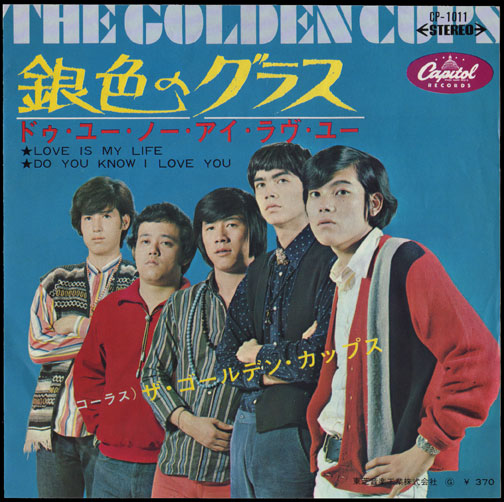
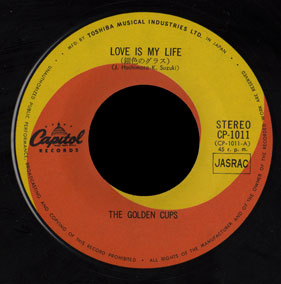
Their second 45 “Love Is My Life” has it all – fuzz, screams, and incredible bass runs by Kabe. I recommend the flip, “Do You Know I Love You” (written by Ito and Ban) to real fans of the Japanese pop sound. Released on November 15, 1967.
The Golden Cups issued their first album in March of 1968, including their take on “Hey Joe”, surely one of the best versions of this song ever cut. The band takes it at an incredibly fast speed, with more amazing bass playing from Kabe, piercing fuzz leads, Kenneth Ito’s lead vocals and a full three minutes of feedback laden freak-out during the middle of the song!
The rest of the LP is a disappointment. Besides the singles tracks it’s chock full of cover songs whose very titles are enough to make a true rock fan cringe: “Whiter Shade of Pale”, “Unchained Melody”, “I’m Your Puppet” and “My Girl”. The promisingly-titled “LSD Blues” is just a slow, harmonica-wailing blues of no special distinction, and a couple r&b tunes “I Got My Mojo Workin’” and “I Feel Good” are good without being remarkable.
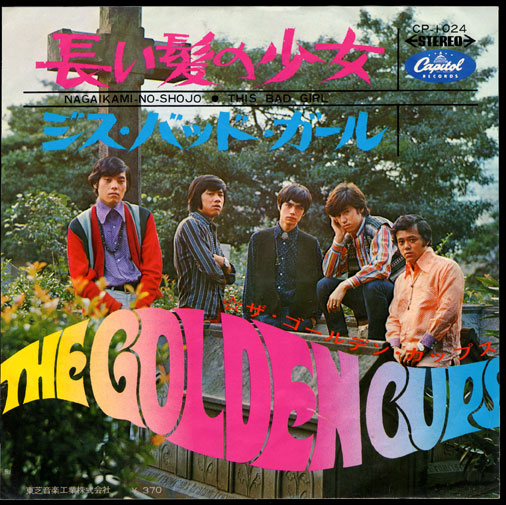
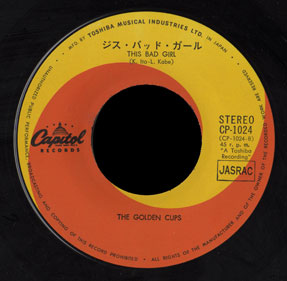
No other Group Sounds recording comes close to matching “This Bad Girl” for pure garage sound.
Again, it’s Kenneth Ito’s lead vocals that help put the song across. It’s probably their very best. It was the flip of their biggest hit from April of 1968, “Nagaikami No Shojo (Girl With Long Hair)”, a dismal song promoted by an idiotic Girl With Long Hair contest.
In the summer of 1968 the band lost Kenneth Ito when he returned to Hawaii to renew his visa (he was half-American) and was denied reentry to Japan because of his draft eligiblity. His replacement was a sixteen-year-old keyboardist, Mickey Yoshino. Ito would rejoin from time to time and sang “Take Three” on their third LP, Blues Message.
They did a good film clip promoting their next 45, “My Love Only for You”, but it’s currently unavailable on youtube.
A good example of what the band sounded like in late 1968, covering Cream’s “I’m So Glad”.
The pop singles continued (“My Love Only for You”, “Goodbye My Love”) and a second LP released in September of 1968. Although it lacks any stellar songs like “Hey Joe”, I’d say this one isn’t as bad as the first. The cover songs tend to be soul standards like “Shotgun”, “Hold On I’m Comin'”, “In the Midnight Hour” and even “Spooky”, but Eddie Ban’s generous helpings of fuzztone keep them from being terminally boring.
The LP contained only one new song of note, “Happening at 3 O’Clock A.M”, where a speeded-up excerpt from the Electric Prunes’ Vox Wah Wah ad segues into a psychedelic spaghetti-western style trip. It features Louis Kabe’s only lead vocal, if you can call it that, with the Cups. This song was also put on the flip-side of their fifth 45 in December of 1968. Jean-Pierre sent it in and insisted I post it!
Eddie Ban left in April of 1969, followed by more personnel changes and a shift to a blues and standard rock repertoire.
Julian Cope writes:
Each release sounded more and more like a cruise ship entertainment than a heavyweight outfit, and it was something of a mercy killing when, on New Year’s Eve 1972, the Okinawa discotheque in which they were playing burned to the ground, taking all of The Cups’ possessions and equipment with it.
Kenneth Ito died in the 1980’s. Dave Hirao later ran a club called “Bold” in Roppongi, he passed away on November 10, 2008. Eddie Ban opened a famous Chinese restaurant in Yokohama but is again playing music. Before Dave passed away, there was a documentary on the group One More Time that led to a reunion, and Mamoru Manu also led a reunion in 2007.
Much more info is at japrocksampler.com, and thanks again to Buis for his informative comments on the original article – I’ve incorporated some of that info into this revised piece (10/2009).
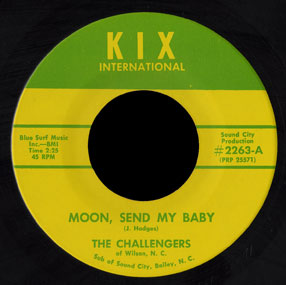
A group of teens from the town of Wilson, east of Raleigh, North Carolina, recorded this raver at Sound City studios in nearby Bailey.
“Moon, Send My Baby” was written by J. Hodges, and the flip, a 50’s type pop number called “Dream” (written by M. Holland). It was released on the Kix label in 1971.
I didn’t know who was in the group until Phillip Bunn commented below:
The first line-up consisted of guitarist Earl Daniels, drummer Bruce Pittman, bassist Billy Bradshaw, keyboards – Johnny Allen and lead singer J.A. Cooper. The last line-up consisted of guitarist Bobby Denton, guitarist Phil Bunn, bassist Charlie Williams, keyboards – Johnny Allen, drummers – Jimmy Renfrow, later replaced by Danny Hayes.
Phillip also wrote that original guitarist Earl Daniels died of cancer in the early ’70s.
Update, April 2018:
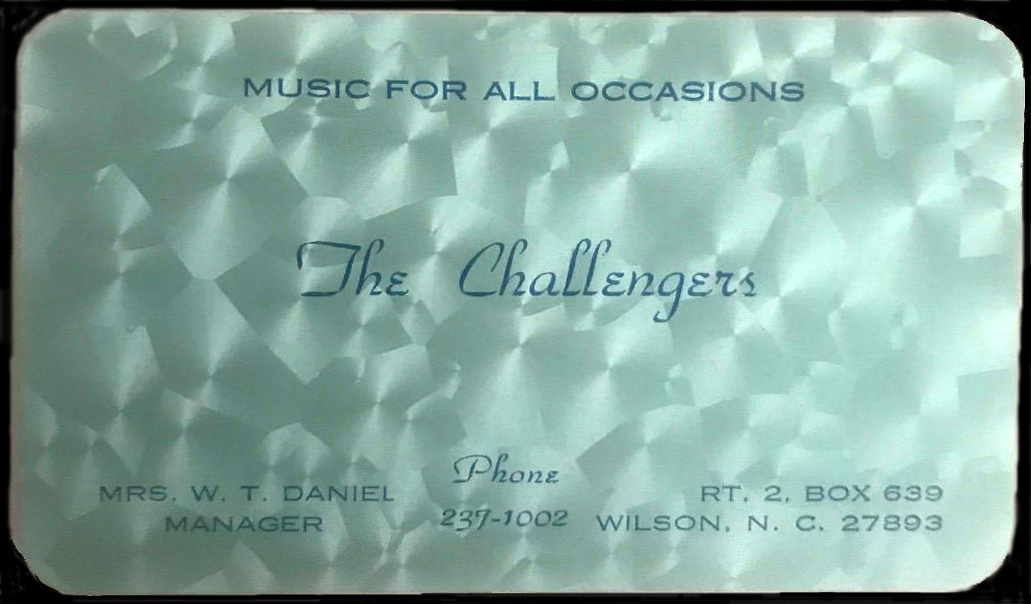
Johnny Corbett sent in the photo and business card and wrote:
This is the last line up in The Challengers Band from Wilson, N.C. The members were J.A.Cooper, the original singer; Johnny Corbett, lead guitarist; Steve Odom, drummer; Tommy Balance, bassist; Gail Daniel, keyboards; Randy Boykin, rhythm guitarist.
The band was active until 1976, Wilma Daniel was the manager & did bookings along with Joe Steinbach who was a local DJ and music store owner.
Last line up of The Challengers Band from Wilson, including J.A.Cooper, Johnny Corbett, Steve Odom, Tommy Balance, Gail Daniel,and Randy Boykin.
This site is a work in progress on 1960s garage rock bands. All entries can be updated, corrected and expanded. If you have information on a band featured here, please let me know and I will update the site and credit you accordingly.
I am dedicated to making this site a center for research about '60s music scenes. Please consider donating archival materials such as photos, records, news clippings, scrapbooks or other material from the '60s. Please contact me at rchrisbishop@gmail.com if you can loan or donate original materials


 The Reekers never saw any money from this record, but it garnered them some attention. Local teen maven Ronnie Oberman profiled the band in the Washington Evening Star on April 17, 1965. About this time they went back to Edgewood to record a beautiful ballad, “The Girl Who Faded Away”. For this session Mike Griffin played bass and Bob Berberich replaced Daniels on the drums. This song shows some considerable development in the band, from Tom Guernsey’s songwriting to the harmony vocals and the band’s delicate handling of the arrangement. The band took a demo to the WWDC program director who had pushed “Flyface”. Not only did he pass on it, but his remark that they should stay an instrumental band disappointed vocalist Joe Triplett.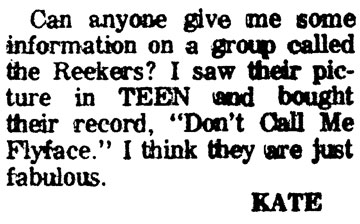
 Their recordings vary greatly, with lesser tracks ranging from sacharrine ballads written by industry hacks to unspectacular versions of popular soul songs, and later on to sludgy blues covers. Still, almost every 45 and lp release has something to recommend it and a few are really superb. Like most Japanese productions of the period these are all in stereo, and the band makes good use of it.