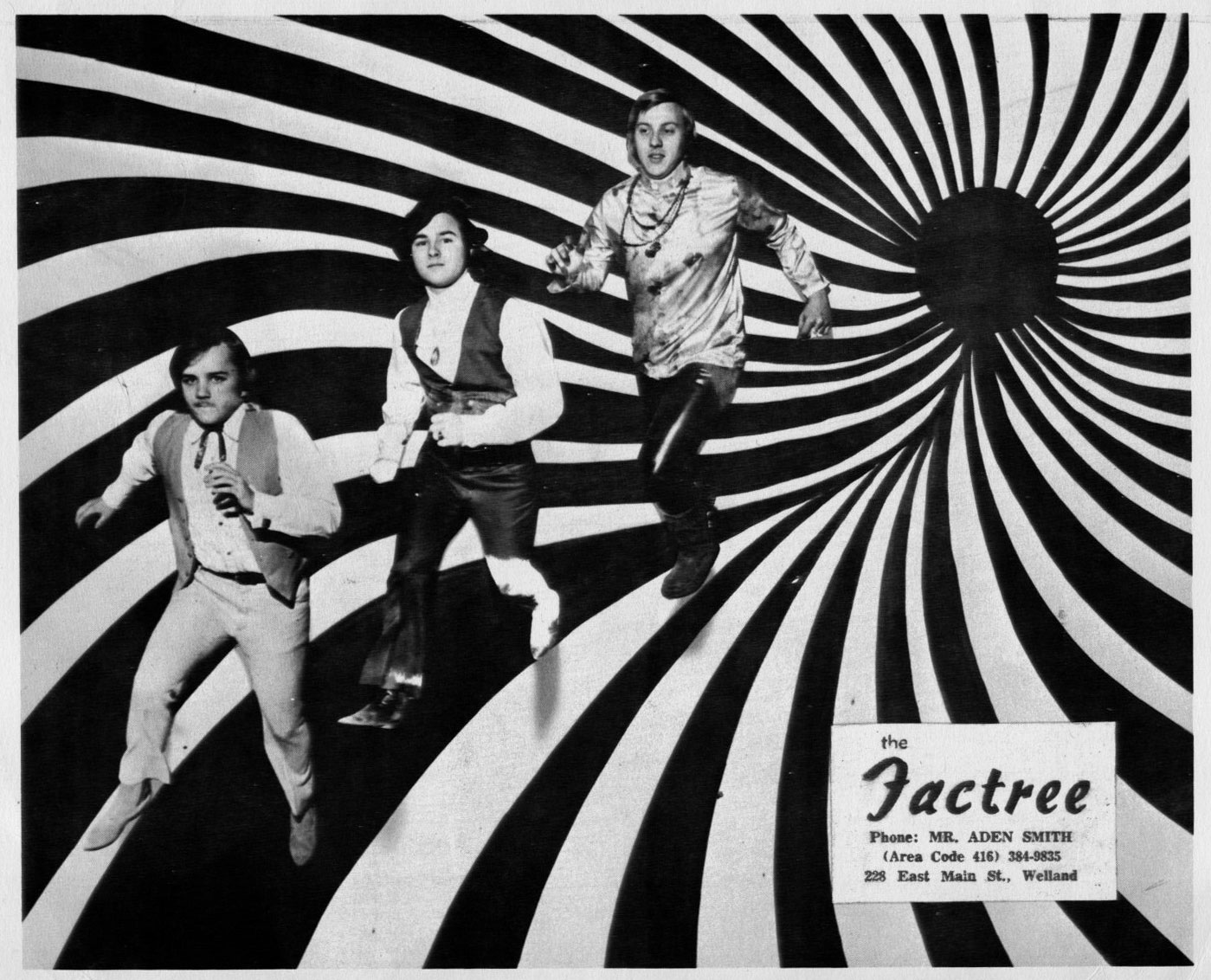
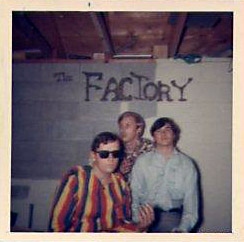
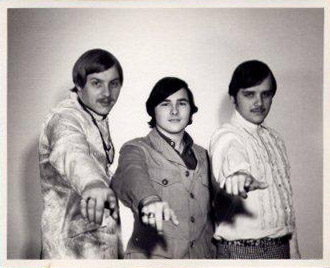
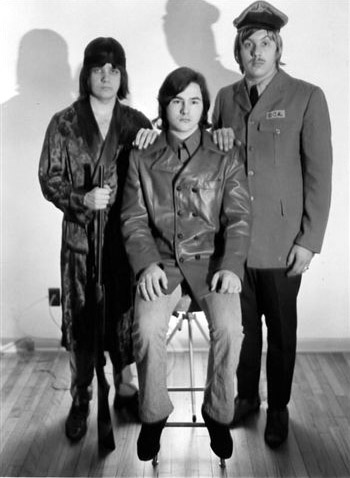
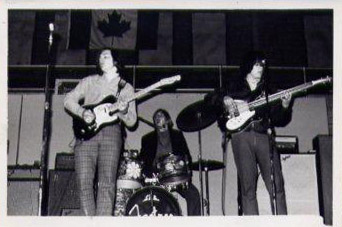
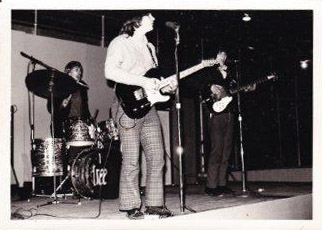
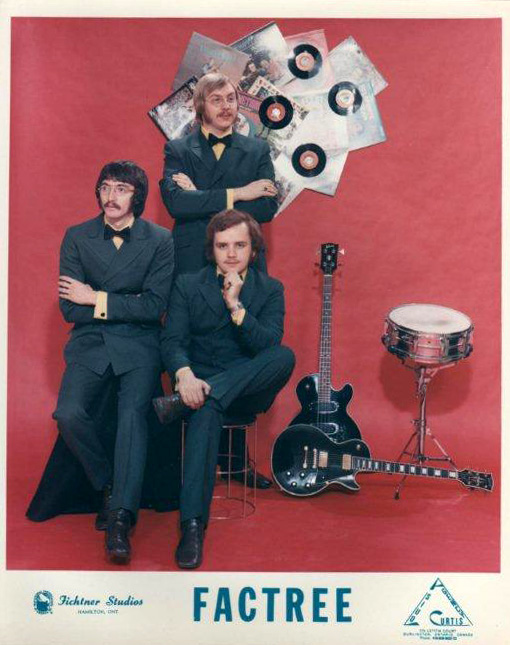
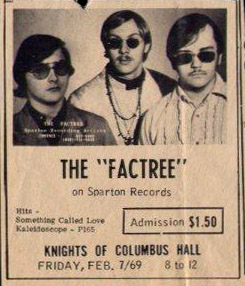
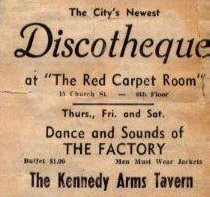
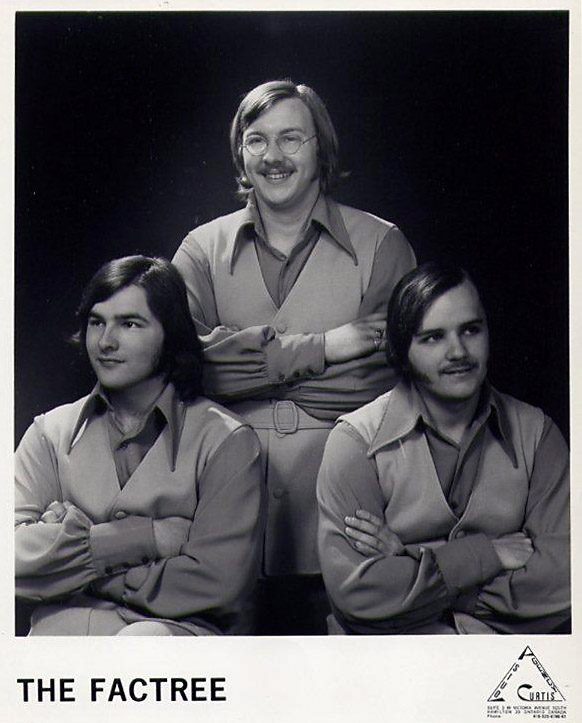
The Factree, from left: Rick Gauthier, Chris Smith and Mike WeaverAs the Factory, 1967
Like the Sinners who I profiled last week, the Factree came from the Niagara region of southern Ontario.
Guitarist Chris Smith spoke to me about the group and shared his incredible collection of photos and memorabilia along with a CD collecting the band’s music.
There are some great unreleased songs. The early “Who I Am” was written by bassist Rick Gauthier and drummer Mike Weaver and recorded in Chris Smith’s garage. Chris lets loose three incredible buzzing guitar passages, one after each chorus. Rick’s bass lines lock in with Mike’s drumming for a solid backing rhythm. It must have been a great sound to hear live.
Another self-recorded song was Chris’s original “Blue Shades”. The vocals boom from a distance over rolling drums and a repetitive guitar and bass vamp to give an eerie effect. Chris provides another cutting solo.
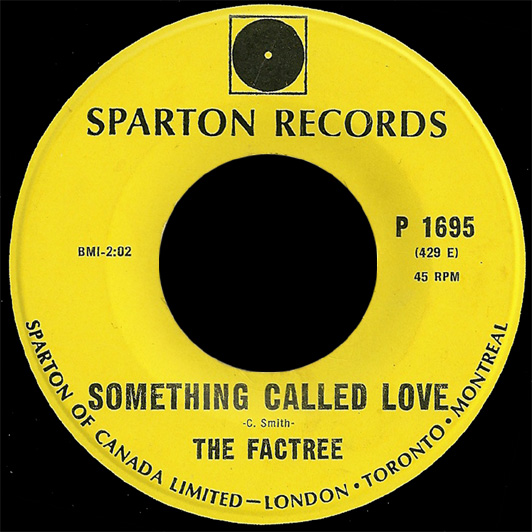
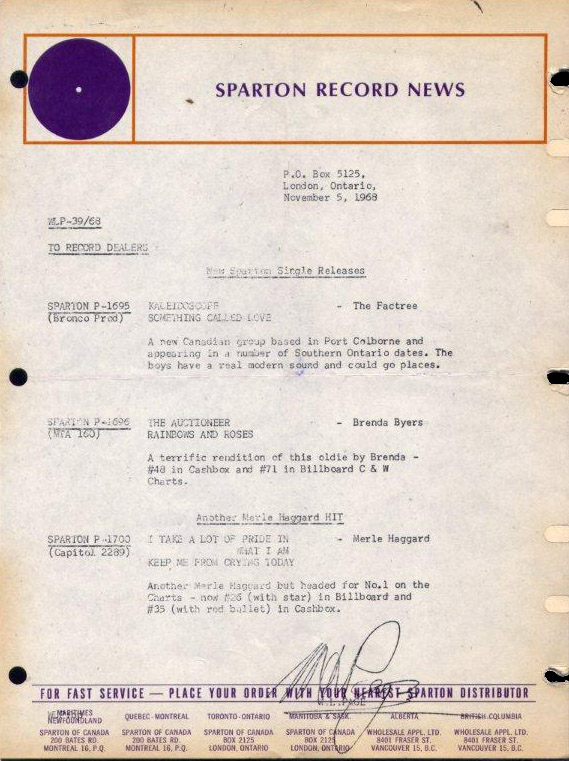
There are two versions of another Chris Smith original, “Something Called Love”, and they make for a good comparison. The demo recorded at a Timmins, Ontario radio station has a cool bizarre ending not used on the Sparton 45 version, which is tighter and has good use of echo.
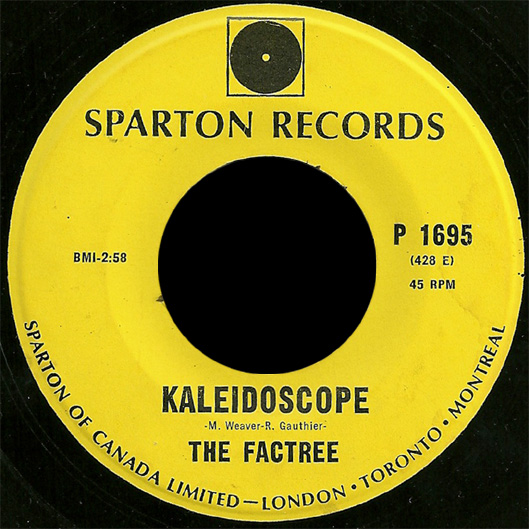
Mike Weaver and Rick Gauthier wrote the other side of the Sparton 45, “Kaleidoscope” which may be the culmination of their heavy sound, from Chris’ dissonant opening riff to the psychedelic lyrics and trippy middle section. After a great sludgy solo, Rick’s bass slows to a final Hendrix-inspired lick enveloped in echo. More than any Canadian or U.S. music of the time, “Kaleidoscope” reminds me of the hard-driving rock being cut by English groups like Tomorrow and the Pretty Things.
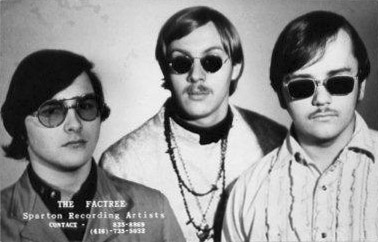
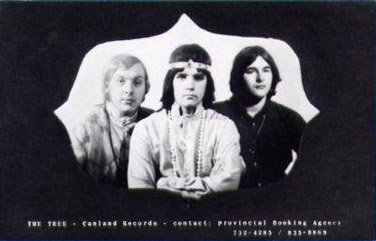
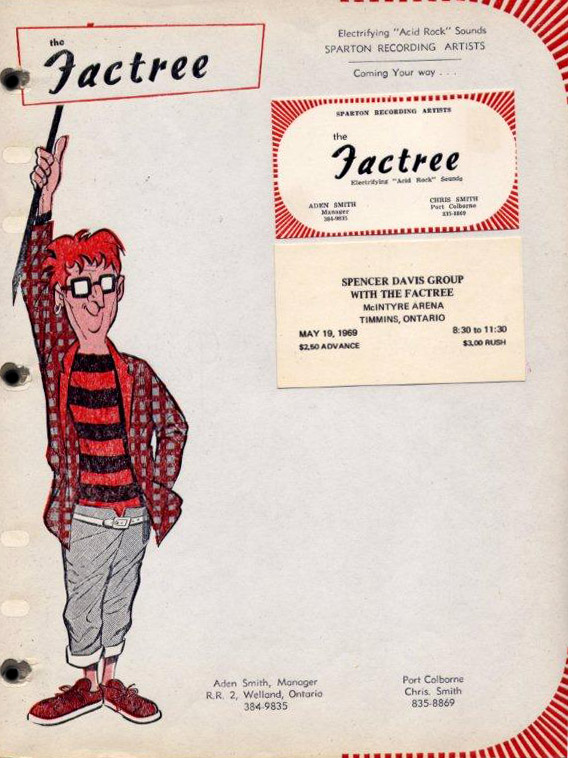
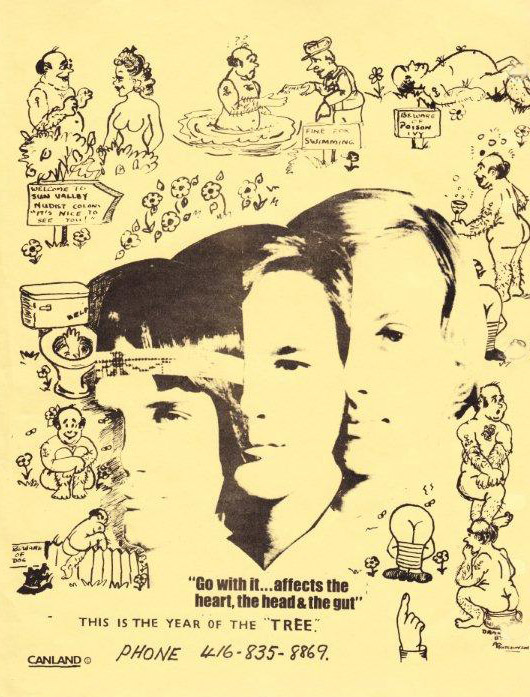
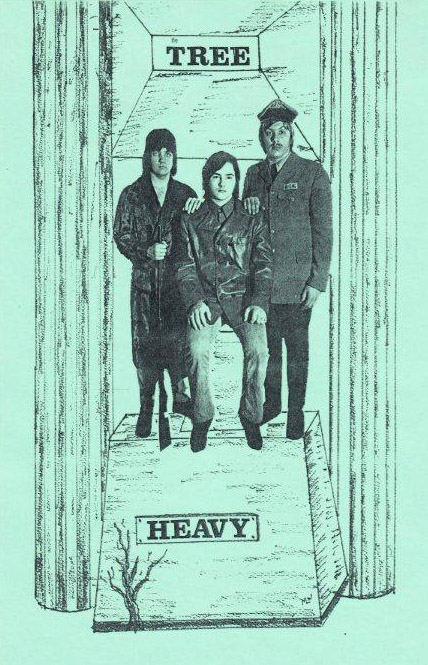
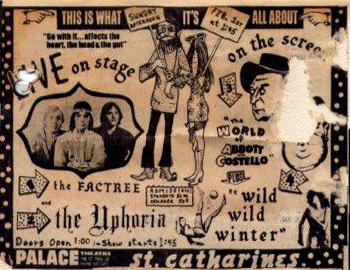
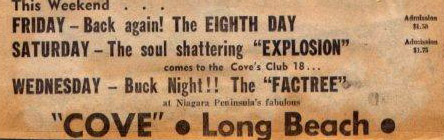
The Factree postcardThe Tree postcard
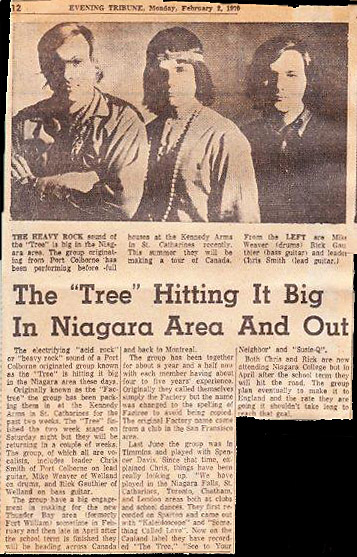
By 1969 the band was going by an abbreviated name, the Tree, and cut one last 45 for Michael Addario’s Canland Records label, a loose, catchy version of the Electric Flag’s “See to Your Neighbor” with Mike Weaver’s drums and the rough vocals standing out. It was backed with a Creedence-style version of Suzie Q.
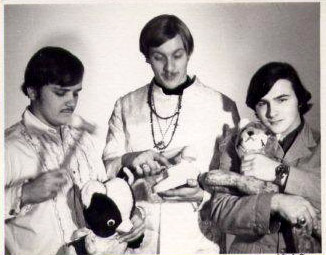
Left to right: Rick Gauthier, Chris Smith and Mike Weaverfrom left: Mike, Chris and Rick
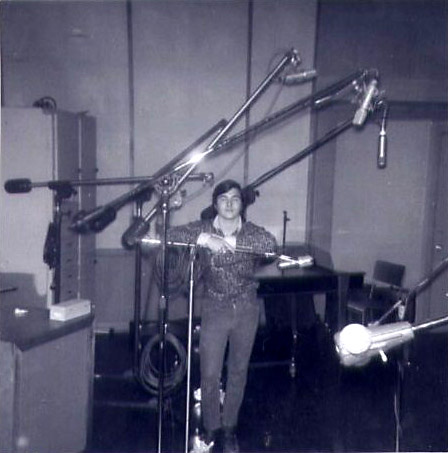
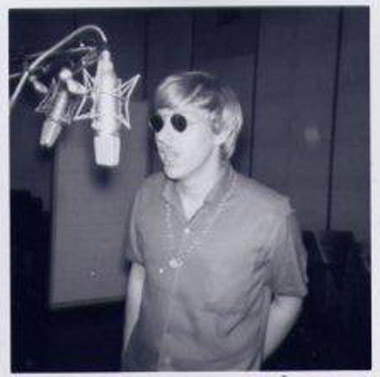
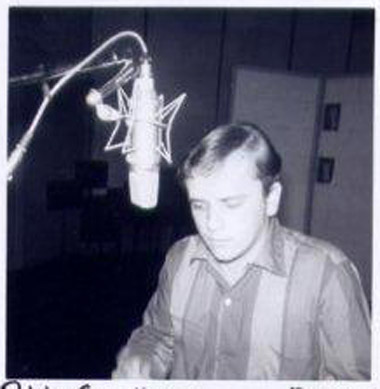
Chris Smith, RCA Studios, 1968Mike Weaver, RCA Studios, 1968Rick Gauthier, RCA Studios, 1968from left: Rick, Chris and Mike
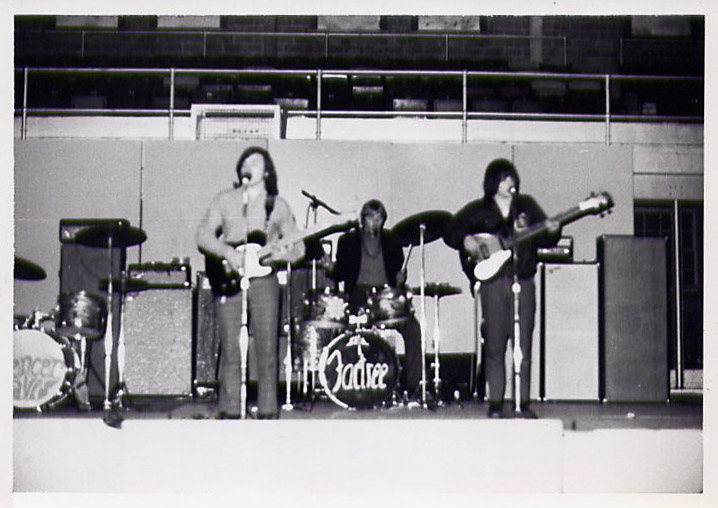
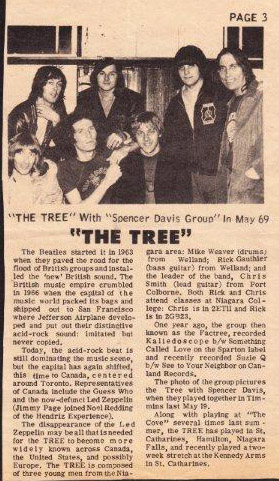
McIntyre Arena, May 19, 1969
Chris Smith answered some of my questions about the group:
I started playing guitar at age 14 like most my age after seeing the Beatles, we figured that’s cool. There were several groups before the Factory. – the Mercy Beats (’64/’65 – there might have been a bigger band with this name, we were just kids in my garage singing Beatles songs); the Spyders (’65/’66 – British rock); the Executioners and the Silencers (’66 – both pop rock); the Moddels (’66/’67 all the cool mod songs and blues); & the 13th Floor (’67 – Doors, Vanilla Fudge etc).
Q. When you joined the Factree they were still known as the Sinners, is that correct? Or was it started as a completely new band?
The Sinners had nothing to do with Factory. Mike and Rick were playing with the Mood – they broke up. I was playing with the 13th Floor. We were looking for a singer and got ahold of Rick to jam. Rick came out but was really only interested in me as a guitar player and wanted to stay with his drummer Mike, so he asked me to jam on our own. This was around ’66 / ’67 – Hendrix, Cream, etc, three man was in, so we wanted to go in that direction.
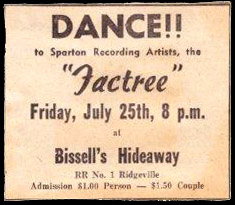
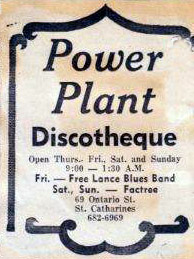
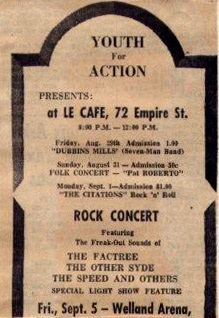
We came up with the name The Factory. We later changed it to Factree, later our fans kinda shortened to the Tree. The joke was we decided to Fac off. We were about half original, the rest Cream, Hendrix, usual acid rock stuff of the era. We were friends with the Spartons, The Sinners, The Night Walkers, many others, also friendly rivals of everyone – that’s just the way it was.
I wrote “Something Called Love”. We were messing with our garage recordings on a bunch of stuff. The garage recordings were done using two Phillips stereo recorders, Shure PE58 mics one on bass amp, one on guitar, overhead and snare and kick mikes. Run through a Shure mixer, vocals added on during mix. The reverb is the hallway that led to my basement, no processors at that time. I ran 100 feet of cable from the garage, we sang into the PA in the garage, sent it to a speaker in the hall, mike at the other end back to the recorders in the garage. With such long cables no low impedance, no balanced feeds back then, it’s a wonder the noise isn’t too bad considering. That was my start as a engineer for sure.
Pete Borbolli was the DJ friend of the Mood who recorded them on their 45, “Who Do You Love” and “Train’s Late”. He moved to Timmins and asked us to come up. The radio station was old school had real nice full studio for big band era stuff. We recorded “Something Called Love” and some other stuff there. We played a couple of large dance concerts up there hosted by the radio station.
Pete really flogged the music and it was on the playlist and did #1 in the Top Ten. We had a loyal following there and lots of promo and hype to boot. The demo did lead to the RCA contract.
The RCA sessions were a big thing for us small town boys in a real big studio in the big city Toronto. Everything was done in a few hours, we got there around noon and the studio closed at 5:00 so out the door we went. We managed to get it down, so all was good.
The RCA Sparton 45 was promoted by the company and did get considerable airplay at the time so we were happy. The first single on Sparton was to be followed by the second two songs we recorded that day – yeah we did four. It was unfortunate the masters were damaged before the second release was pressed.
We had a falling out with the producer so we decided to [go with] Canland, a friend who had a small music store and some recording gear in a back room. The Canland recording was more home brew and didn’t get the distribution of the RCA 45. It did keep us current and we had product to promote so the live scene was very successful for us.
Q. Regarding the vocals, were you singing lead on your songs and Rick and Mike singing together on ‘Who I Am’ and ‘Kaleidoscope’? How about ‘See to Your Neighbor’, which sounds very different than any other vocal by the band?
Yes, you are right about the vocals. I mainly sing lead on my own and the same for them. “See to Your Neighbour” was sung by Mike.
Q. Can you recall your setup as far as your guitar sound on the recordings and for live shows? You get a great variety of distorted tones on your leads – were there particular combinations of pedals and amps that you preferred?
The Timmins set up was a ’64 Gibson SG and Kimberly Fuzz made in Rochester, NY plugged directly into an Ampex tube mixer then direct to recorder. The garage stuff was Telecaster/SG and Kimberly through a Bandmaster. My set up at RCA was a ’61 Telecaster and ’66 Bandmaster, Dallas Arbiter Fuzz Face. The Canland Tree stuff was Ace Tone Wah, Fuzz Face and Marshall Plexi.
Live, my main Factory/Factree/Tree set up was the Ace Tone Wah, Fuzz Face gradually discontinued in lieu of straight over-driven guitar through the Marshall. For the arena rock and halls I used a Marshall and Bandmaster with Sykes cabinets and a Traynor Roto Master Leslie (“I’m a Man” kinda sound). The guitars ’61 Telecaster, ’64 Gibson SG, later ’66 Burns Nu Sonic, ’67 Rickenbacker. The fuzzes evolved from the Kimberly, Zonk [John Hornby Skewes’ Zonk Machine], Fuzz Face, to none. The Ace Tone Wah most of the way in fact I still have it but haven’t used it in years.
Q. Did the group end with Mike Weaver’s sudden death?
Mike was from the club era and wanted to go more commercial away from acid rock, high school & dance concert stuff, so by 1970 we started play more hotel circuit stuff. I wanted to carry on my concert style and didn’t like the club scene on the road – too many nights in the same spot doing stuff I didn’t like. So I left the band.
They continued for a few months when Mike had his first heart attack. He was off a few months then back at it, he became ill again and died a few months later. Either way that was end of the band. Rick finished with another drummer and guitarist but it was over quick.
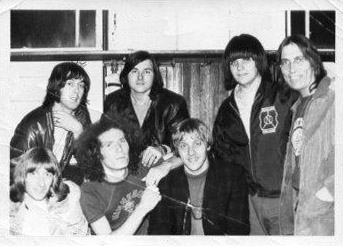
With the Spencer Davis Group at the McIntyre Arena in Timmins, May 19, 1969. Back row: Spencer Davis, Chris Smith, Rick Gauthier, unidentified. Front: unidentified, Ray Fenwick (?), Mike Weaver. Can anyone help ID the other members of the Spencer Davis Group at this time? Are these still Pete York and Eddie Hardin, or Dee Murray and Nigel Olssen?
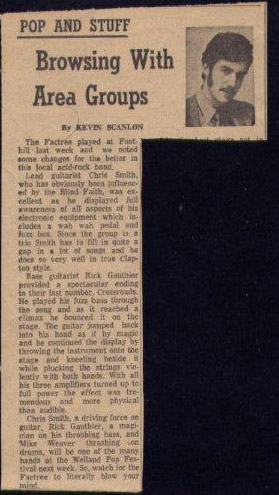
Q. In one of the clippings by Kevin Scanlon he writes that there was a deal with Island Records in the works – what happened with that?
The Island thing never went much beyond the rumor. Spencer Davis was talking about trying to set something up but they were pretty much defunct after our couple of gigs. We were hopeful to go to England and pursue the mission, but our own problems and lifestyles, change in direction and factors I discussed before – well it just didn’t happen. As a recap this inability to keep moving toward larger venues ultimately led me to leave my own group.
When I moved on I allowed Mike and Rick to continue as Factree again. Since the begining I was the leader and as such was paid double and had 50% control of any vote issues as well. Just because I was unhappy with direction, I felt I would let them carry on.
Q. What was your next project?
I was playing my thing with Padlok (heavy ’70s rock, half original) – see my web site www.kingoftheattic.com for details, samples and photos.
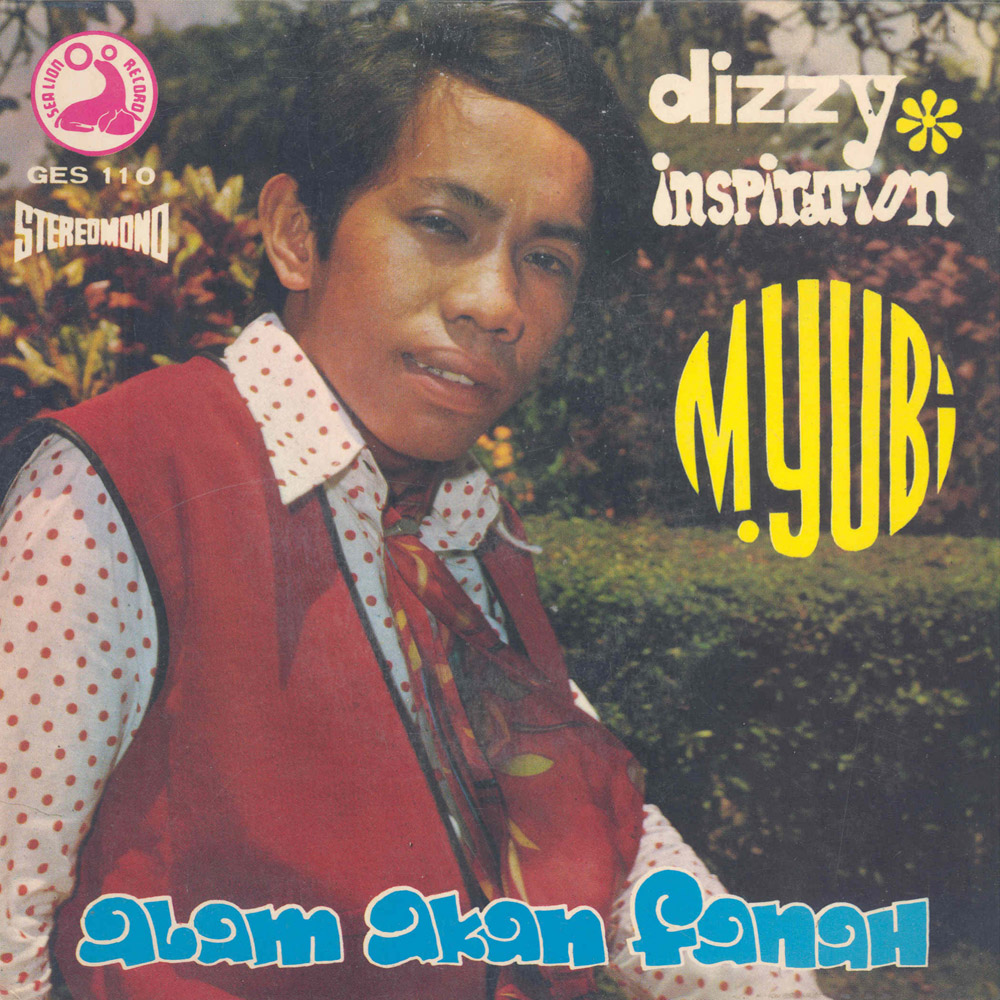
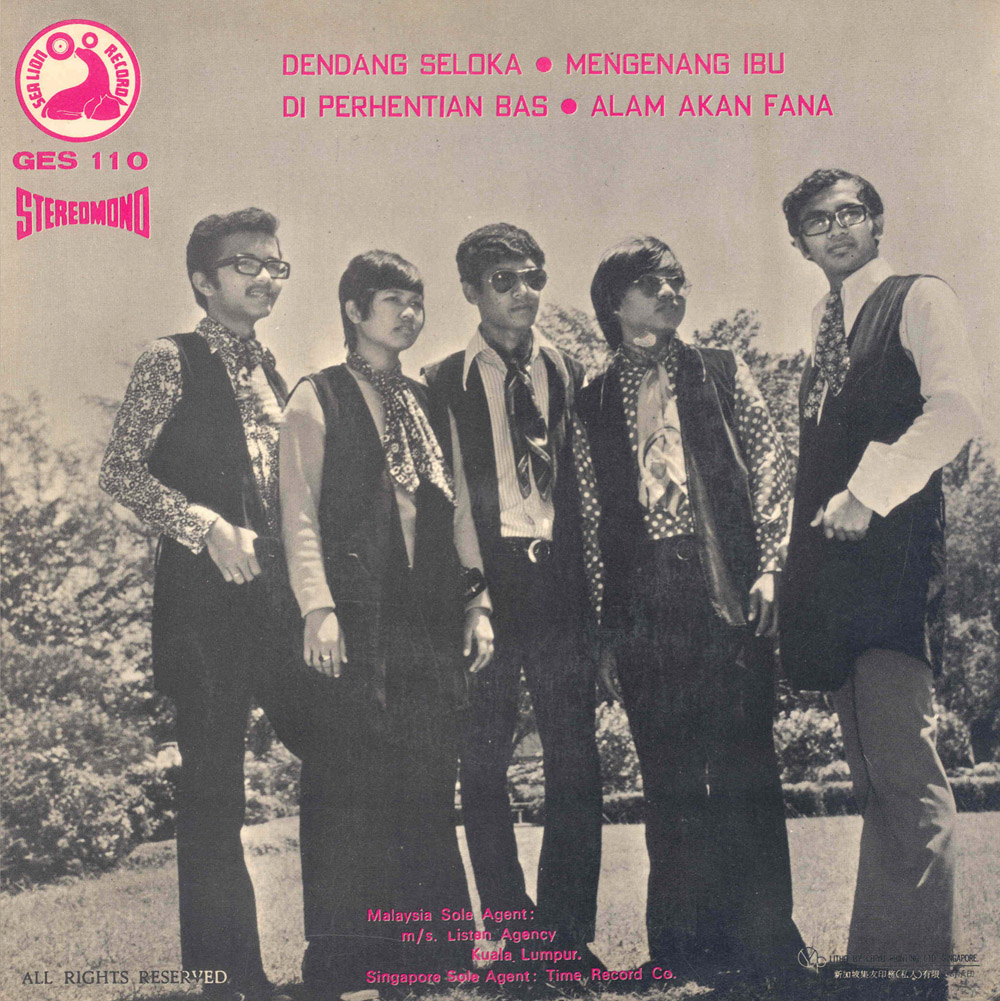
I haven’t got much to say about M. Yubi & Dizzy Inspiration because I don’t know much. By the look of the chaps on the cover I would say that this was recorded in the late 1960s.
The song “Dendang Seloka” invites all young men and women to dance and be happy and not worry about things too much, otherwise they will just bring themselves pain. The other songs on the EP are ballads.
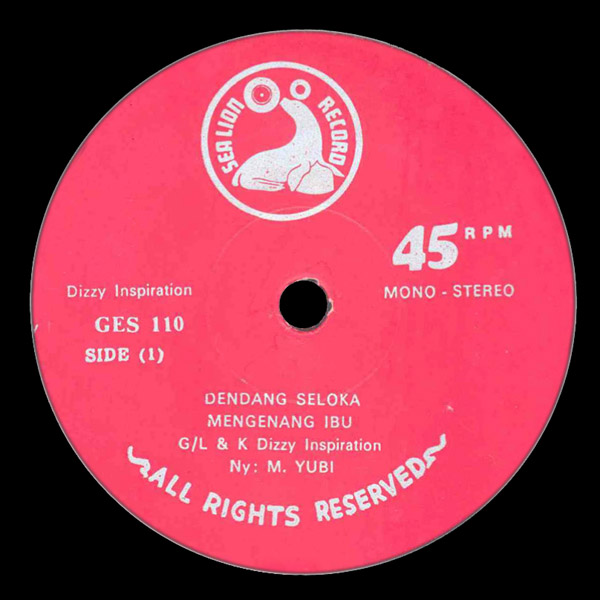
“Dendang Seloka” is credited on the label for composition and lyrics to Dizzy Inspiration. I have no doubt that they wrote the words, but the music has more than a passing similarity to the Standell’s “Sometimes Good Guys Don’t Wear White”. Female Malaysian singer Kamsiah M. Ali also recorded a song titled “Dendang Seloka”, but it is totally different lyrically and musically.
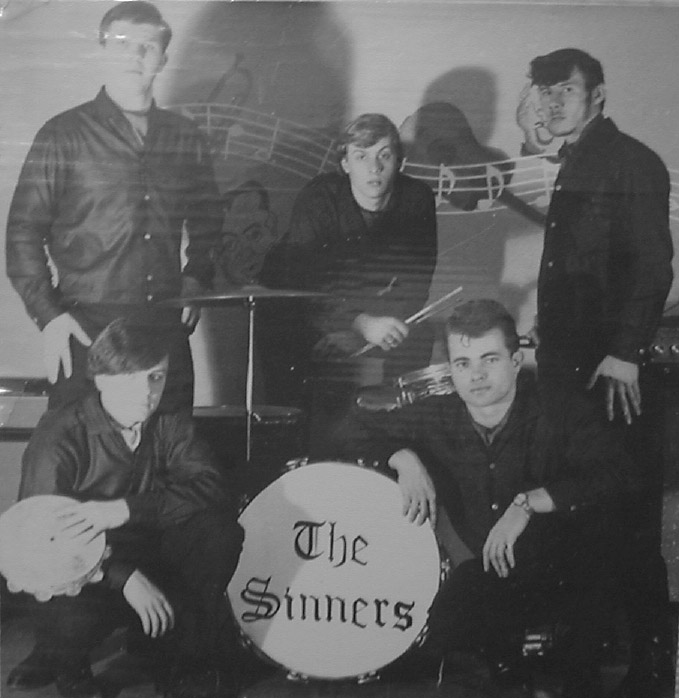
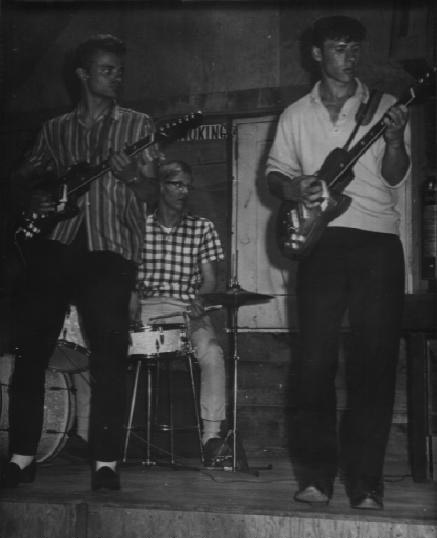
The Sinners, clockwise from top left: Al Bartok, Mike Weaver, André Germain, Jack Schaefer and Ritchie Gauthier
André Germain writes about his bands from Welland, Ontario, a short distance from Buffalo: The Sinners, Evan Hunt and the Capris and The Penny Illusion. Demos he recorded with the Sinners now seem to be lost, unfortunately. The Sinners evolved into the Mood, who cut a tough version of “Who Do You Love” for the Cove label after André had left the band.
The Sinners (1965-1966)
Ritchie Gauthier (aka Ritchie Stringer): vocals/rhythm guitar Mike Weaver: drums/back-up vocals Al Bartok: bass (later replaced by Glen Boscei) Jack Schaefer: keyboards André Germain: lead/rhythm guitar (later replaced by Dave Pine)
Jack Schaefer and I playing our Kents at Davis Hall (Fonthill) for a frat dance, 1965. (John Whittaker on drums)
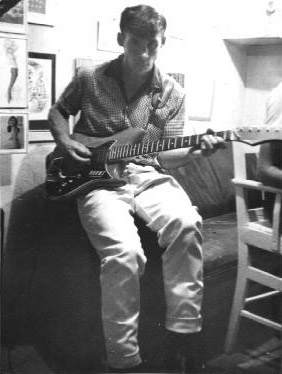
In 1964, one of my younger frat brothers was taking guitar lessons and he could chord along when we’d have a drinking party and get to singing songs such as “Lemon Tree”, “Tom Dooley” etc., as long as he had a music book with the chords and notes in front of him. Unfortunately he had a “tin ear” and could not even tune his guitar properly. Already 22 years old, I bought a cheap $20 Kent plywood acoustic guitar with “shotgun stringing” (really high and tough action) with the intention of learning a few basic chords so I could tell him the chord changes as we sang. Didn’t take long for me to get hooked on the guitar. Blisters on the fingers of my left hand, blood on the fretboard, until finally I developed thick calluses.
I borrowed my friend’s Kent solid-body electric guitar and his Paul amp when the frat rented a cottage for a couple of weeks in the summer of 1964. As luck would have it, we got “raided” by a rival frat from Pt. Colborne. These guys came in and smashed everything including the Kent and the Paul amp. One of my frat brothers got his nose broken when struck by a tire iron and another had a wicked bruise on his shoulder when another guy hit him with a small crowbar.
Fortunately, my friend’s parents’ home insurance replaced his guitar so I got to keep the broken Kent. I bought a piece of mahogany and carved another body for it, fitted the neck and the pickguard with its electronics to it and ended up with a decent playable guitar. I bought Ventures and Shadows and other guitar-based records and wore the grooves off of them trying to learn instrumentals such as “Apache”, “Walk, Don’t Run”, “Sleepwalk”, etc. This guitar played a lot easier than my cheap flat-top. Another one of my frat brothers who was into electronics added an input jack to our old Westinghouse (5-watt all tube) hi-fi so I could play the guitar through it. Nothing fancy but it worked.
I took to hanging out at the Melody Shop, a neighbourhood music store owned and operated by Tom Wright. Tom, in his late 40’s, let me take various guitars off the wall and play them through whatever amps he had in store. Sure was nice to have such access to pro equipment for free…
The Sinners
One fine day in the spring of 1965, a couple of weeks after having been laid off from Atlas Steels, as I was sitting in the living room of our family’s apartment playing my Kent, two young guys showed up at the door. They introduced themselves as Ritchie Gauthier and Mike Weaver, musicians whose band had just broke up and who were looking for a lead guitarist for a new band. Tom Wright had given them my name. They told me that they were planning on doing Top 40 material such as the Beatles and Rolling Stones, etc. They invited me to a practice at Mike Weaver’s mother’s house if I were interested. When I told them I didn’t even have an amp, they told me they’d have one for me to use. So, I agreed.
A couple of days later, I grabbed the Kent and off I went walking across town to Mike’s house. When I got there, they introduced me to Al Bartok, the bass player. Played a Fender P-bass through one of those Ampeg flip-top all-tube amps with a 15″ speaker. Ritchie Gauthier was the lead vocalist/rhythm guitarist and Mike Weaver was the drummer/back-up vocalist. These guys were all a few years younger then me, in their late teens.
Mike and Ritchie played some 45’s on a portable record-player and explained what parts they expected me to play on any given song. Graced with a decent “musical ear”, I had no trouble picking up on the simple chord patterns and the lead fills of most of the pop songs of that era. Most were 3 or 4 chord structures in C, D, E, G or A. And so I was drafted into the band.
My Burns Nu-Sonic, 1965
Of course, one of the toughest things a band back then was faced with was coming up with a good catchy name. We bandied a few monikers around and finally settled on one I suggested, “The Sinners”. We then reworked an old gospel tune, “Sinner Man”, giving it a rock beat, and made it our theme song. “Sinner man, where you gonna run to, sinner man, where you gonna run to, sinner man, where you gonna run to, all on that day?!!”
It took two or three weeks of practice to work out enough songs to be able to play a gig. Our song list included such hits as the Rolling Stones’ “Time Is On My Side”, “Walking The Dog” and “Get Off Of My Cloud”, Fontella Bass’ “Rescue Me” which Ritchie sang in a high falsetto, the Beatles’ “I Saw Her Standing There”, Sam the Sham’s “Wooly Bully” and Sonny and Cher’s “Everyone’s Gone To The Moon”. Ritchie and Mike let me take the 45s home so I could work on the guitar riffs and everything was coming together really well.
That’s when I decided I needed to get a “real” guitar and amp. I went to the Melody Shop and asked Tom what kind of a deal he could do me. He’d just gotten a sunburst Gibson ES-330 in trade and offered it to me for $250 with HS case but at the time, that wasn’t my idea of a R&R guitar. Hate to think what that guitar would be worth today! Tom then pulled out a glossy folder advertising a line of guitars out of England. Well, the UK was big news back then with the British Invasion just taking off in N. America! The guitars were the Burns of London line. Already a big fan of the Shadows, how could I resist? I had Tom order me a transparent orange/red NU Sonic. It listed for $325 but Tom sold it to me for $250 with faux alligator case thrown in. I also bought a new Harmony H-306 all-tube amp off of him. 12AX7 pre-amp tubes and push-pull 6V6’s for the power section, footswitchable “Normal” and “Tremolo” channels, single 12″ Jensen speaker, putting out a hefty 15 WRMS. So, in the immortal words of the Bard’s Julius Caesar, the die was cast.
We played a few high school and teen dances and were going over pretty good. There were a lot of high school frats and sororities around at the time and they often held dances to raise funds. A lot of these dances took place at the Knights of Columbus Hall on Lincoln St. W. in Welland. We played there quite a few times. The Rose Festival Committee of Welland hired us to play a big dance at the Welland Arena where two stages were set up, one at each end. The Spartans, another local band, occupied one stage and we the other. We alternated sets.
One of the highlights for me was when Rick Hales who was president of the Welland High & Vocational School Dance Committee hired us to play a Valentine’s Dance in February 1966 at WH&VS, my old alma mater. At another high school dance (Eastdale Secondary School) Al broke a string on his bass during the first set and had no replacement. He made do with the remaining 3 strings but as soon as the set was over (about 9:40 pm) we phoned Bill Nitranski, owner of Central Music. Bill had been building up his music store business over the previous few years and was one of those really nice guys who trusted everybody. He’d rent out equipment such as P.A. systems just on your promise to pay when you brought the stuff back. When we described our plight to Bill, he jumped in his car, drove back to his store which had closed at 9 pm., got a replacement string and delivered it to the high school auditorium where we were performing, all this within 15 minutes! By the time we were to go back onstage, Al’s bass had the new string on it.
After a few weeks Ritchie and Mike suggested we should add keyboards to the band. Right off, I suggested my good friend Jack Schaefer. Jack had taken accordion lessons for 10 years, classically trained, and won 1st. place in one of those kids’ talent shows that were popular on TV back in the late 50’s. The guys agreed to give him an audition. I called Jack and explained to him he’d have to buy an electric organ and an amp if he were to make it into the band. He said that wasn’t a problem. He immediately went out and bought himself a Hohner organ and a huge Gibson Atlas amp with 15″ driver. Jack had an excellent ear and picked up on our songs in no time. Fit right in. Only trouble was that he liked to play everything flat out full volume. Wasn’t long before I had to upgrade my amp just to be heard. Tom Wright at the Melody Shop told me his friend Grant Carson of The Country Diamonds, a local C&W band, was trading in his ’63 Fender Bandmaster for a Fender Dual Showman so I got the Bandmaster at a good price.
On the Road
Two members of the Inferno 5+1 in front of Club 23, Cornwall, Ontario
Neil Peart, the famous drummer for Rush, describes in his book “Road Music” how he spent a lot of time in his youth at the Lincoln Curling Center grooving to live bands. There’s a good chance we were one of those bands because we played there a few times in 1965. Around this time, we were approached by Mike Addario, the bass player for The Marquis, another local band. Turns out Mike was trying his hand at being a booking agent/manager as well as a recording engineer. He soon got us a full-week gig at a teen club in Cornwall, Ontario. This caused a big shuffle in the band. Al’s mother wouldn’t let him go with us to Cornwall for that gig. We got Glen Boscei to take his place on bass. Jack Schaefer had just gotten a job as a teller at the CIBC in Welland and wasn’t about to jeopardise a burgeoning banking carreer so he opted out of the band then too.
So off we went on a hot August Sunday morning, Ritchie, Mike, Glen and I, with all our gear in a rented U-Haul trailer hitched to the back of Ritchie’s father’s car, to the bus station in St. Catharines. After waiting 4 hours for our bus, we ended up missing it because, having been given wrong info, we were on the wrong loading platform. The Greyhound company ended up having to re-route an Express to Montreal through Cornwall to accommodate us. That was a long day. We’d gotten to the bus station at 8 a.m and didn’t get to Cornwall until 1 am that night. The owner of the club where we were to play had been notified of the bus change and had patiently awaited our arrival. He helped us load our gear aboard a taxi and sent us off to a motel room he’d booked for us. I still have a very vivid memory of stepping off the bus and gagging as the rotten cabbage smell of the town’s air hit my nose. Cornwall’s main industry at the time was a pulp and paper mill and anybody who has ever been in the vicinity of one of those will know what I’m talking about here…
After a bad night’s sleep and a greasy restaurant brunch, we loaded our gear aboard a taxi and went to Club 23 to set up. We were to play from Monday through Saturday, 8 p.m. until midnight and also a matinee from 3 p.m. until 5 p.m. on the Saturday where we shared the stage with Wee Five, the band that would be playing there the following week. This was mid-August and Cornwall was in the midst of a heat wave. The club had no A/C so it got hot in there when the local teens filled the place. Ritchie kept tossing back cold drinks in spite of my warnings and by Thursday evening, lost his voice! All that was coming out of him was a croak. Good thing Mike and Glen were able to take up the slack or we’d have been sunk. Between sets, Ritchie helped Mike write out the words to the songs he and Glen would be doing and that got us through the rest of the week. Meanwhile I developed some kind of intestinal infection and suffered bad stomach cramps most of the week and lost about 10 pounds by the time Saturday night came along.
So, that was my introduction to “the road”, and it was enough to convince me this was not the life I wanted, as much as I liked playing music. Our agent, Mike Addario, was supposed to call us and tell us where we’d be going from there, what gig would be next, but by the week’s end we still hadn’t heard from him. Finally, on the Sunday, we phoned him and he told us we could stay put there at the motel (at our cost!) and he’d be sure to find us another gig. Well, I told the guys I was heading back to Welland while I still had change in my pocket. They had a confab and decided that was the smart thing to do so we packed our gear and took the next Greyhound home.
Recording and leaving the band
Mike Addario had set up a rudimentary recording studio in his parents house’s basement and called his company “Canland Recording”. There, we recorded two songs, our original version of “Sinner Man” and “Ten Dollar Woman”, a tune penned by Glen our bass player. Mike did a decent job of the recording with what little he had to work with and the finished result sounded pretty good. Unfortunately, when he tried to register the songs with ASCAP, the B side, “Ten Dollar Woman” was turned down because its content was considered too risqué. The song was about a prostitute who was too expensive for a cheap would-be client (a five-dollar man). I asked Mike Addario if perchance he still had the master tapes of the Sinners songs we recorded but he said they got lost a long time ago, more’s the pity.
It was around this time that I was really getting into the acoustic guitar and folk music, spending all my time trying to learn Tom Rush and Gord Lightfoot tunes. This pissed off my fellow bandmates who were getting ready to go back to Mike’s studio to record another song for the B-side of our record. One day a friend of mine came along and told me he’d just gone by Glen’s house, heard the band practicing and wondered why I wasn’t there. I walked over to Glen’s and sure enough, I could hear the band but nobody’d told me about a practice… I knocked at the door but nobody answered (probably couldn’t hear me over the instruments) so finally I just walked in. Mike, Ritchie and Glen looked mighty sheepish when I appeared. They had a guy playing lead guitar so it was obvious I was being replaced. Mike and Ritchie mumbled excuses about me bing a “folkie” and not fitting in with the band anymore. So that was that! The new lead guitarist introduced himself as Dave Pine. I’d heard of him and knew he was good on his instrument as well as being a fine vocalist, so I wished the guys well and walked out of there.
Some months later I heard that the Sinners, now called “The Mood”, had gone back into Mike’s Canland Studio and recorded the B-side with Dave Pine singing a rendition of “Who Do You Love” [Released b/w “Train’s Late” on Cove Records, produced by Pete Borbely]. And then, the next thing I heard was that Dave had left the group and headed to Toronto to seek his fortune. Over the years, he headed a couple of jazz/R&B groups up there and managed to make a decent living with his music. Then late one night after a gig, he wrapped his car around a tree and suffered some major injuries. He was in a coma for a while, touch and go, and never fully recovered from the accident. He spent the remainder of his life in a wheelchair and died a broken man a few years back. Tragic!
After Dave left the Sinners, Glen soon was out of the picture as well. Ritchie switched over to bass guitar and Chris Smith, a young guitarist out of Port Colborne, took over as lead guitar. The trio changed their name to Factree and later, Tree. They played locally and released a couple of singles. And then another tragedy. Around 1971, the newly-wed Mike Weaver collapsed on stage in the middle of a gig. His doctor recommended at least a month of rest but Mike was back at his drumming within a week. Shortly thereafter he collapsed again but this time, it was fatal. He left behind a young wife and a baby. Sad…
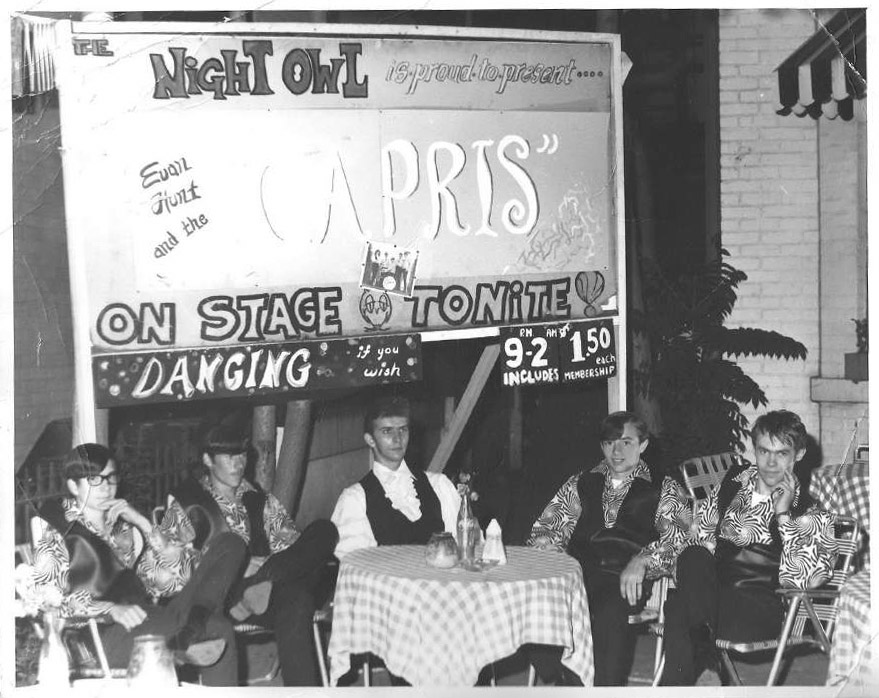
Evan Hunt and the Capris between sets at the Night Owl, from left: Bob Lightheart, Andre Germain, Evan Hunt, Ron Bovine and John Lane. Photo courtesy Ron Bovine
Evan Hunt and the Capris (1967-1968)
Evan Hunt: vocals John Lane: drums Bob Vida: bass (soon replaced by Ron Bovine: bass/back-up vocals) Bob Lightheart: keyboards/back-up vocals André Germain: lead/rhythm guitar/back-up vocals
Meanwhile, about a year after losing my job with The Sinners, another knock at my door. The man introduced himself as Mr. John Lane, manager and agent of a local band, The Capris. He explained the band had just hired Evan Hunt as singer/frontman. Evan had been vocalist for The Liverpool Set, a Canadian “British Invasion” band which had had fair success in the States doing Beatles and Byrds tunes as well as some original compositions. Mr. Lane said he was ready to do anything it might take to make the Capris a successful band. Tom Wright from the Melody Shop had again recommended me. I explained that I’d sold all my gear. Mr. Lane said that was ok, that I could use his son’s gear. Turns out he was firing his one son who had been playing lead/rhythm guitar for the group because he wasn’t cutting it. His other son John Jr. was the drummer for the band. I asked him to give me a couple of days to think it over.
The next day, Evan Hunt and John Lane Jr. both showed up at my door and begged me to come and try out for the band. So, that’s what I did. I used Mr. Lane’s son’s Gibson Firebird and his Ampeg amp for the audition. Right off, after a couple of songs, one of which was Buffalo Springfield’s “For What It’s Worth”, the guys in the band wanted me to join. I said OK and that was that.
As luck would have it, the very next day, as I was contemplating going to Tom’s music store to purchase a guitar, I got a call from the guy who’d bought my Burns after I left the Sinners. He explained that his band had just broken up and he needed money so wondered if I was interested in buying the Burns back. Of course I jumped at the chance, especially since he was giving it back to me at half the price for which I’d sold it to him!
Up until the time Evan and I joined the band, The Capris had been a pretty “square” band, not hip at all, the guys wearing these preppie dress pants and off-yellow cardigans over white shirt and tie. Mr. Lane explained how he wanted “his boys” to be neat and professional looking. Well, Evan and I told him that just didn’t cut it in 1967! Ok for a polka band maybe, but definitely not for a Rock band!. The “Hippie Revolution” was in full swing and all the wild psychedelic clothing was de rigueur for any would-be hip band. Even The Beatles had forsaken their mod suits, grown their hair long and were wearing sandals and beads. Finally, Mr. Lane caved to our arguments and off we went shopping for wild outfits. Mrs. Lane asked us to pick out material, took our measurements and fashioned us each a pair of groovy bell bottoms. Black slip-over leatherette vests completed the outfits. Evan was the only one in the band with shoulder-length hair, however…
While all this was going on, we were rehearsing almost daily, striving to learn enough top 40 material to play a gig. Songs by The Beatles, Paul Revere and The Raiders, Tommy James and the Shondells, Jefferson Airplane, etc. Soon, Bob Vida, the bass player, decided this was not his trip and wanted out so we got Ron Bovine to take over on bass. Ron worked right in and the band, now called “Evan Hunt and the Capris”, came together and clicked.
Mr. Lane was holding up his part of the bargain and got us some gigs, highschool dances, teen dance clubs etc. in the Niagara penninsula. Evan was the consummate showman on stage and knew how to work the audience and we soon built up a following. When we played the Niagara Falls Youth Center, there were at least 800 teens in the audience and some of the girls, screaming in frenzy, were actually trying to get up on stage to get at Evan. So this was the bigtime (even if the money was still smalltime…)!
And then one day Mr. Lane announced he’d booked us into The Night Owl in Toronto! This club was THE happening place. It was the venue where the Loving Spoonful played when they came to Toronto. In fact, John Sebastian of the Spoonful had composed a harmonica tune, the B side of one of their 45’s, entitled “Night Owl Blues”, named after that club. This place was famous. We were to play 3 nights there, Thursday through Saturday. We rented strobe lights and extra electric gear, a couple of amps etc., to round out our stage gear so that we’d appear pro enough to fit into that venue. We couldn’t afford to rent a place to stay in Toronto for the 3 days so we travelled to Toronto and back, 90 miles each way, in Evan’s ’65 fastback Mustang and John Lane Sr.’s Crown Vic, before and after each gig, getting home at 3:30 a.m. after playing until 1 a.m. We had good crowds all 3 nights at the Night Owl and the audience responded well to our performances. It was starting to look like our careers as musicians, as a band, were about to take off…
Then reality set in.. After we finished up on Saturday night, packed all our gear in the rental U-Haul trailer and headed back to Welland, when came time to get paid, John Lane told us we each owed him $10! Say what???!!! We’d just played a prestigious club for 3 nights, played our hearts out, spent hours travelling back and forth between Welland and Toronto, to find out we’d done this for nothing? No, worse than nothing! All that work and effort and we were each in the hole $10! At the time, music, the band, was my only livelihood. Typically I expected to earn at least $100 to $150 for a 3-night gig. Evan, Bob and Ron were just as taken aback as I was at the news we’d just worked for nothing. John Lane explained that he’d booked us in the Night Owl for next to nothing in order to “open doors to greater things”. Well, possibly it was a good business move but we felt we should have been privy to this decision as it directly affected us. Had we been consulted with the facts, we might have agreed to the terms although I doubt that would have happened because, especially in Evan’s and my case, we were relying on the money from our gigs to live on. We had no other source of income. John Lane owned a motel and was financially secure. His son John Jr. lived at home with his parents and didn’t have to worry about starving. So, for that matter, did Bob and Ron. I didn’t have the $10 to give John and neither did Evan. Mr. Lane told us he would take it out of the money from the next gig but Evan and I conferred and then told him to go to hell! We told John Jr., Ron and Bob that we were leaving and would form our own band. Bob and Ron decided to stick with us and that’s when we found another drummer, Jeff Burgess, to replace John.
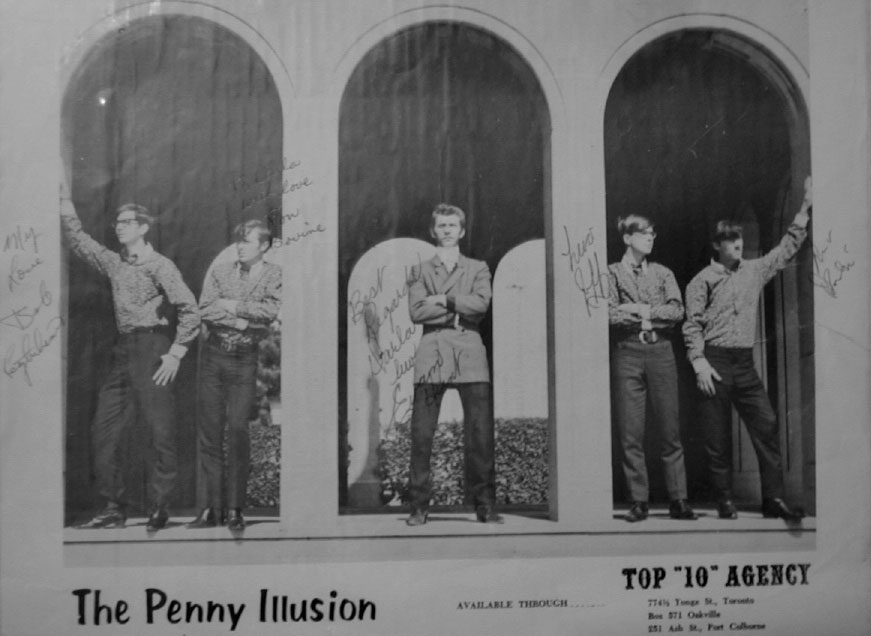
The Penny Illusion, from left: Bob Lightheart, Ron Bovine, Evan Hunt, Jeff Burgess, André Germain
The Penny Illusion (1968)
Evan Hunt: vocals Jeff Burgess: drums/back-up vocals Ron Bovine: bass/back-up vocals Bob Lightheart: keyboards/back-up vocals André Germain: lead/rhythm guitar/back-up vocals
We changed our name to “Penny Illusion” (I came up with that name out of disillusionment after being cheated out of our fair pay for that Night Owl gig). We managed to find a few decent paying gigs over the next couple of months but it was tough trying to keep things together, being our own agents/managers/bookers. We somehow got hooked up with a smooth talker, a rep from Top 10 Agencies in Toronto who lived in Pt. Colborne. He promised us the world and delivered nothing. The Penny Illusion never recoded anything, we weren’t together long enough to get that together.
Bob Lightheart and Ron Bovine had both graduated from highschool and were faced with tough career choices. Their parents were pressuring them to get into further education, college or university. The music business, after all, was very chancy at best. Come the fall of 1968, both of them wisely chose to go on to university and that was the end of that band. I’d managed to get hired as a casual worker for Canada Post in late 1967 and in October 1969 became a full-time employee and gave up the music business.
Evan went on to sing for a couple of other local bands while getting work driving a delivery van for a local bakery to support his wife and newborn son, Evan Jr. A while later, another son came along but by then I’d pretty well lost track of what was going on with the lives of the ex band members.
Al Bartok, the Sinners’ original bass player, to the best of my knowledge never played in another band after leaving the Sinners. He came down with meningitis in 1991 and was being treated at St. Joseph’s Hospital in Hamilton at the same time that Jack Schaefer, the ex-keyboardist for the Sinners who had pursued a successful career in banking, working his way up to Manager of a business branch of the CIBC in Hamilton, was being operated on for a brain tumour. Al died at the age of 44 on the day Jack was released from the hospital. Then later the same year, after having undergone painful radiation and chemothereapy, Jack also gave up the ghost at the age of 47, leaving behind a wife and two teen-aged children.
Glen Boscei, the bass player, had always had some “issues”. He was later diagnosed as suffering from schizophrenia. He lived his life on meds which helped control the disease but at times, when he “went off the meds”, he was not a pleasant person to be around. Finally, a couple of years ago, he allegedly knifed a man in Welland, was thrown in jail and died mysteriously “of unknown causes” there in his cell a couple of days later.
Ritchie Gauthier played in a few bands in the 1970’s and later started his own roofing company, I believe. He retired a few years ago and moved to North Bay.
Evan Hunt died in British Columbia at the age of 59 in 2005. Ron Bovine completed university and became a pharmacist. I have no idea what happened to Jeff Burgess and Bob Lightheart although I suspect that Bob may have taken over his family’s dry-cleaning business.
In the early 70’s some friends and I got together and formed a folk group, “Tobacco Rudy.” We played on weekends at local coffeehouses for a couple of years until the other guys in the band decided to change the format to rock and go off on the road.
I had gotten married in 1971, planned on starting a family and was still working for Canada Post so no way I was going off chasing rainbows. So, I was out of a gig again. I took a hiatus from performing for a few years. I quit Canada Post in 1979 because of an old back injury which came back to plague me. After an ill-fated canoe manufacturing venture, I put the word out and managed to get work playing lead and bass in various local country, country-rock and classic rock groups from 1982 until 1995. Since then, I’ve gotten back into folk music and perform at local coffeehouses periodically. I also get together and jam with a couple of old friends once in a while.
Early September, 2009, the members of Tobacco Rudy had a re-union here at my house along the lake. The only one not present was our drummer, Jim Acursi.
Of the original Sinners, Ritchie Gauthier and I are the sole survivors.
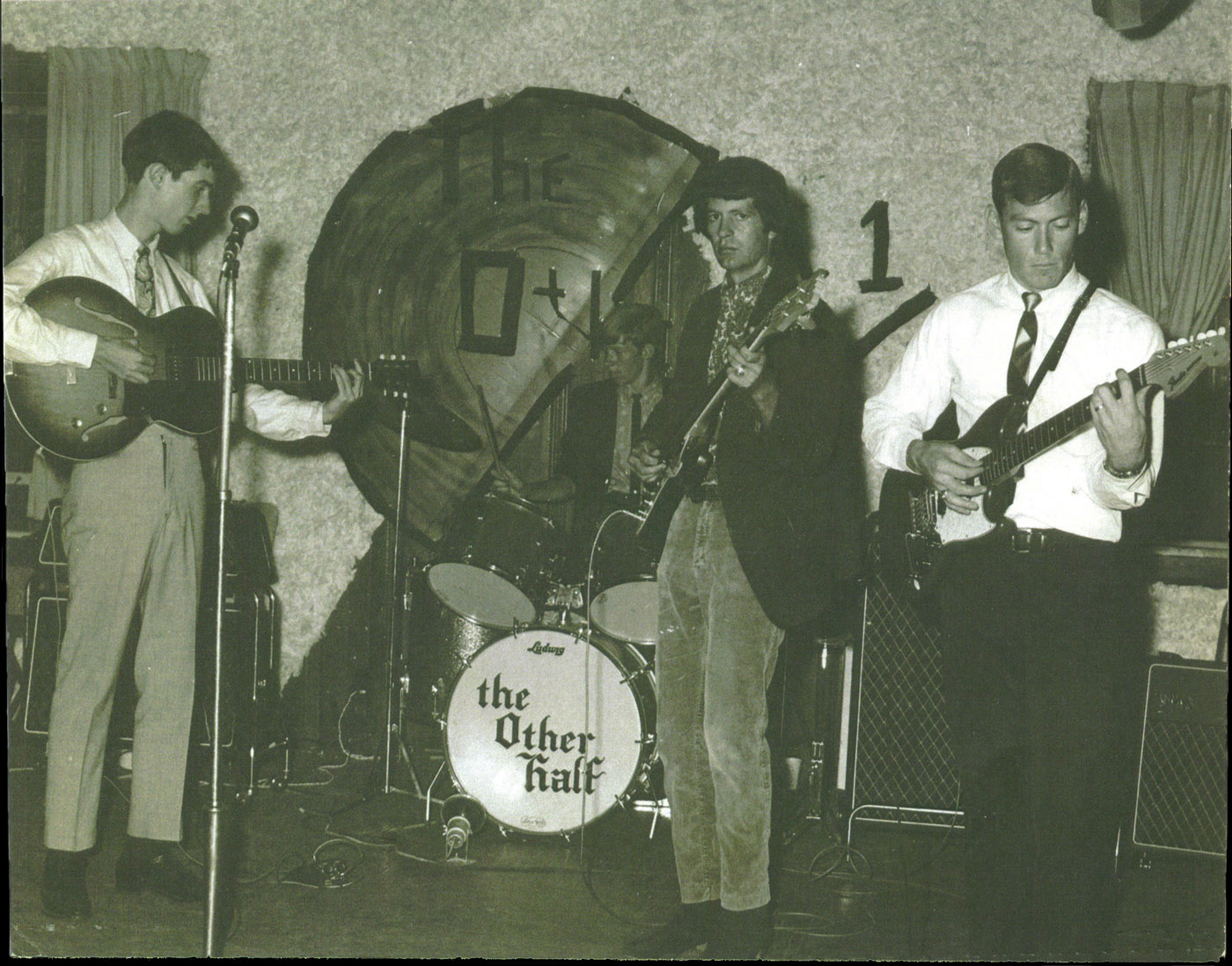
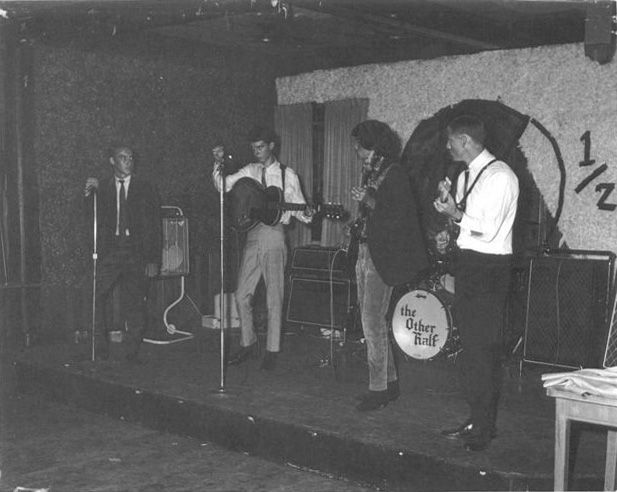
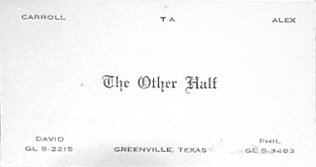
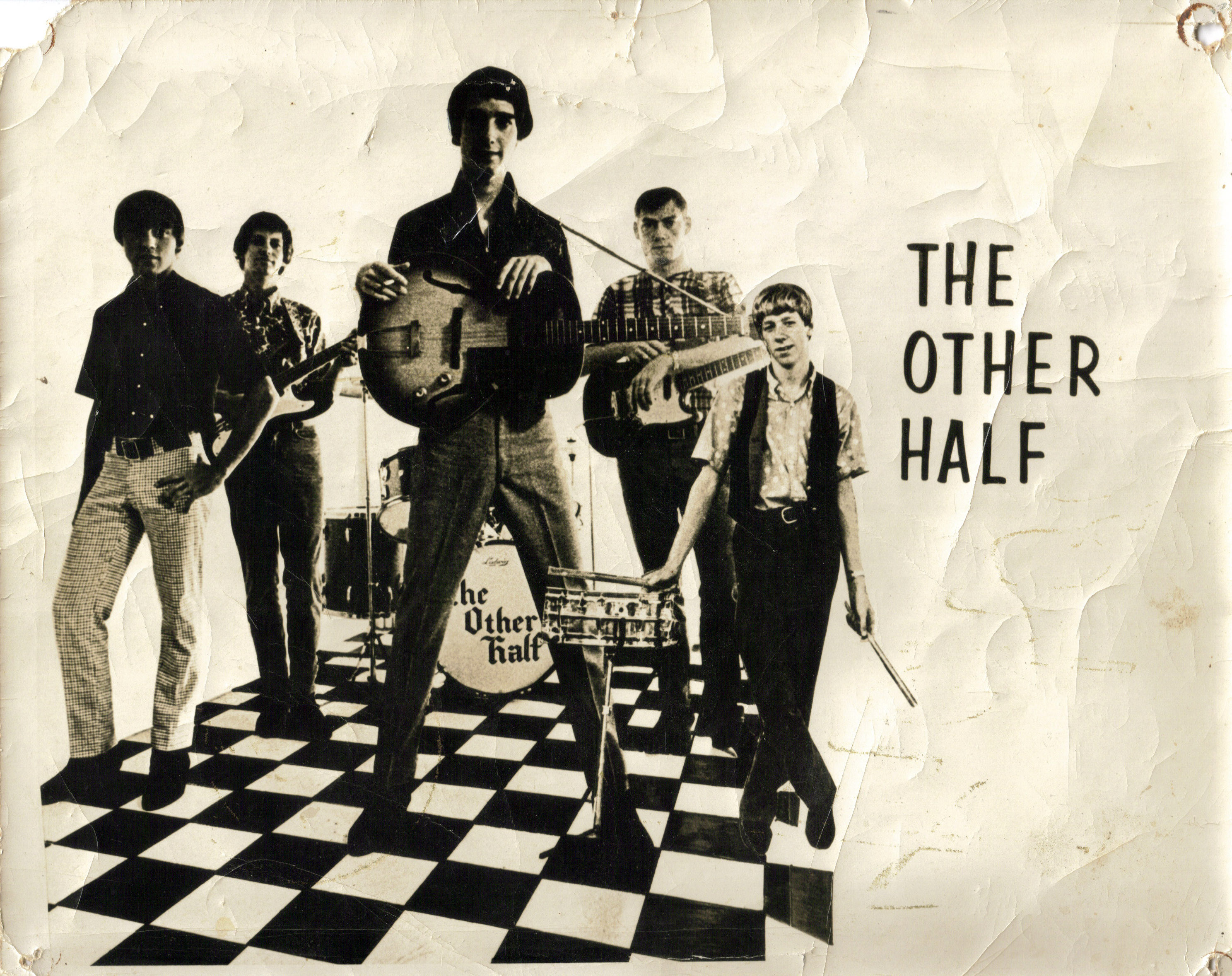
The Other Half at the Greenville Country Club, from left: David Heath, Alex Bauknight, T A Tredway and Carroll Grant. Not pictured: Phil Sudderth.
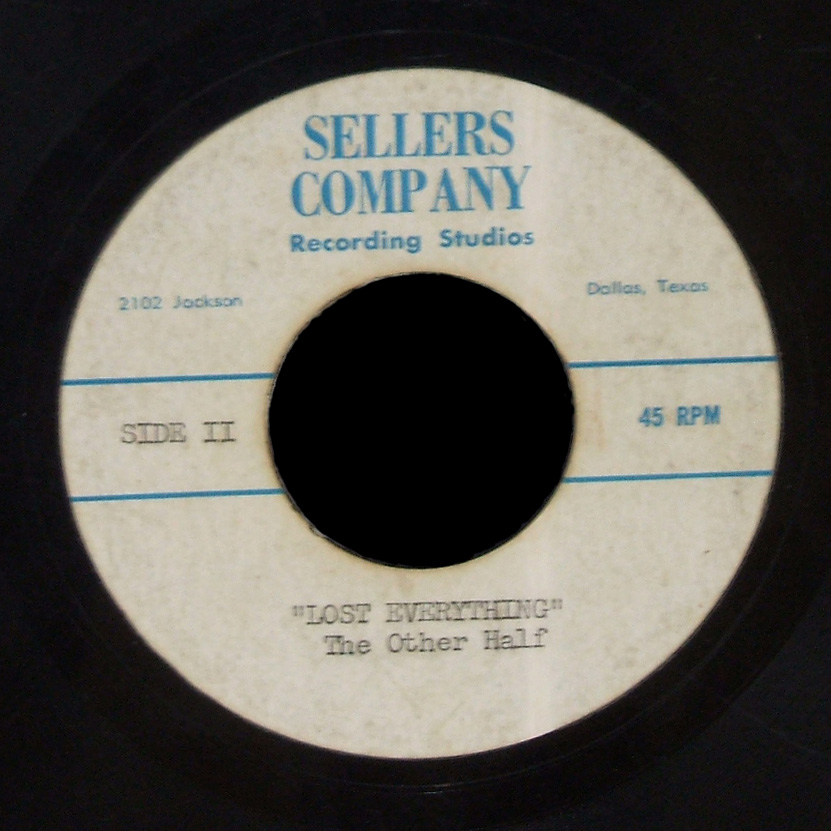
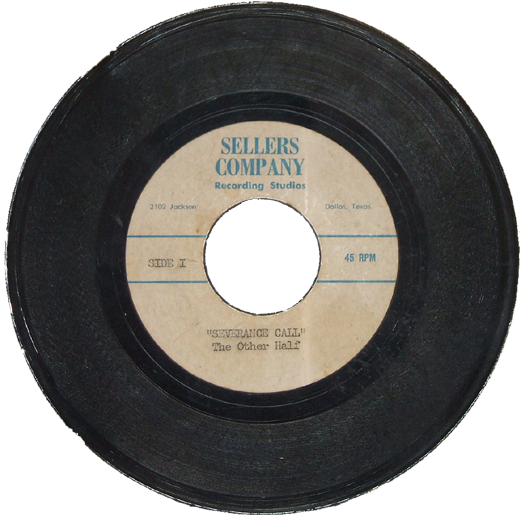
It’s not often I hear unreleased songs that catch my attention as these two by the Other Half, a quintet from Greenville, Texas, about fifty miles NE of Dallas. “Severance Call” has excellent harmonies over a solid rhythm, fast bass runs, and a good guitar break without effects. “Lost Everything” is even better, as Phil Sudderth sings in as rough and gravely a voice as I’ve ever heard over staccato guitar chords.
Bassist and vocalist T A Tredway sent in the photos, music and story of the band:
We started The Other Half in Greenville, TX in 1965. T A Tredway (bass guitar, vocals), David Heath (lead guitar, vocals), Carroll Grant (rhythm guitar, vocals), Phil Sudderth (lead vocals, tambourine) and Alex Bauknight on drums.
I had been to a band practice and really didn’t know anyone in the band (don’t think they ever played a gig). Started talking to some people in the band and was asked to come back to listen to the next practice session so I agreed. I was not a musician, just fooled around with a six string with a little folk music. Come to find out at the next practice the band decided to break up. I started talking with David and Phil and said why don’t we just start our own band, half kidding … but we started thinking seriously about it. I was 24 at the time.
David (age 17) was the drummer and Phil (age 18) sang but there was a young kid, Alex (age 14), who wanted to play drums so David decided he would play guitar and we would look for a lead guitar player. After a short time not being able to find a lead suited to what we wanted to do, David decided to play lead and we decided on Carroll (age 21) who had been to a couple of practices would fit right in.
David is the tall lanky kid playing the Gibson hollow body and Carroll is playing the Fender to the right in the pics. I was playing a metalic blue Mossrite Ventures bass all the time in the band. David and Carroll changed to a sunburst Gibson 335 and a Gibson cherry red 330E, respectfully, with Super Beatles and I had a Vox Bassman amp with two speaker cabinets. We had four Vox line speakers run through a 50 watt Bogen amp for our speaker system.
Phil Sudderth, David Heath, T A Tredway and Carroll Grant; hidden is drummer Alex Bauknight
We were really in to The Rolling Stones because Phil sounded just like Jagger. We all loved and performed almost every song on their first 3 albums, “Round and Round,” “Little Red Rooster,” “You Can’t Catch Me,” “Route 66” etc.
We started getting jobs playing sorority and fraternity parties from ETSU in Commerce, renting our own halls in Greenville, and playing any benefits when we could. Through word of mouth, sororities at SMU heard about us and we started getting offers to play for them.
I think while playing one of those parties some one recommended we check on this club at Lovers and Greenville called Louann’s. So we went there, auditioned and got to play there shortly after. Louann’s had been a big band venue and decided to change to rock and roll. Then she asked us if we would consider being the house band during the summer of ’66 and later asked if we would continue to be the house band in ’67 which we also agreed to do. It was a great experience. We played Buffalo Springfield, Yardbirds, Beatles, The Who, Mamas and Papas, The Byrds, Sam and Dave, just about anything during those years but the Stones music was our mainstay. More than one person told us that we sounded better in person than The Stones sounded in person.
In ’66 I think it was we recorded two sides at Robin Hood Brian’s in Tyler, TX. I wrote the songs along with Phil and David. They always got great response when we played them live. We had some acetates done at Seller’s studio in Dallas and I still have one of the 45s. They got a lot of play on KGVl in Greenvile and quite a bit of play by Ron Chapman at KLIF in Dallas.
In ’67 Phil joined the army under suspicious circumstances and we were left without a lead singer. We found another guy from Greenville, Matt Tapp who sang with us for a while but it never was the same. We broke up late in ’67 and I haven’t seen or heard from anyone since then until a few weeks ago I got an email from Carroll who now lives in Sandy, Utah. It sure has been great talking about the fun we had in the 60’s with The Other Half.
T A Tredway
Update, December 2010
T A sent in a live set by the Other Half, recorded on reel to reel during a dance at the Greenville Country Club during the mid-60s. The set leans heavily on the Rolling Stones: four originals plus “Around and Around” and “Cry to Me”, and the rest are by the Beatles, Kinks, Animals and Them, along with some US hits like “Little Latin Lupe Lu” and “Mustang Sally”. I’m including a few here:
Here’s a fantastic EP featuring some otherworldly music from Vancouver, Canada. There’s a a sweet innocence to the best songs on this record, and a melancholic feel at times.
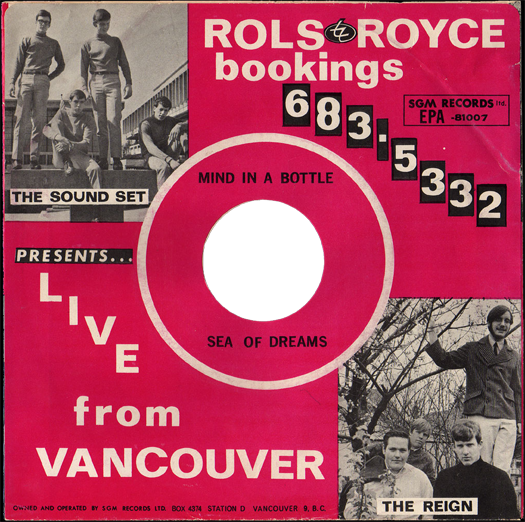
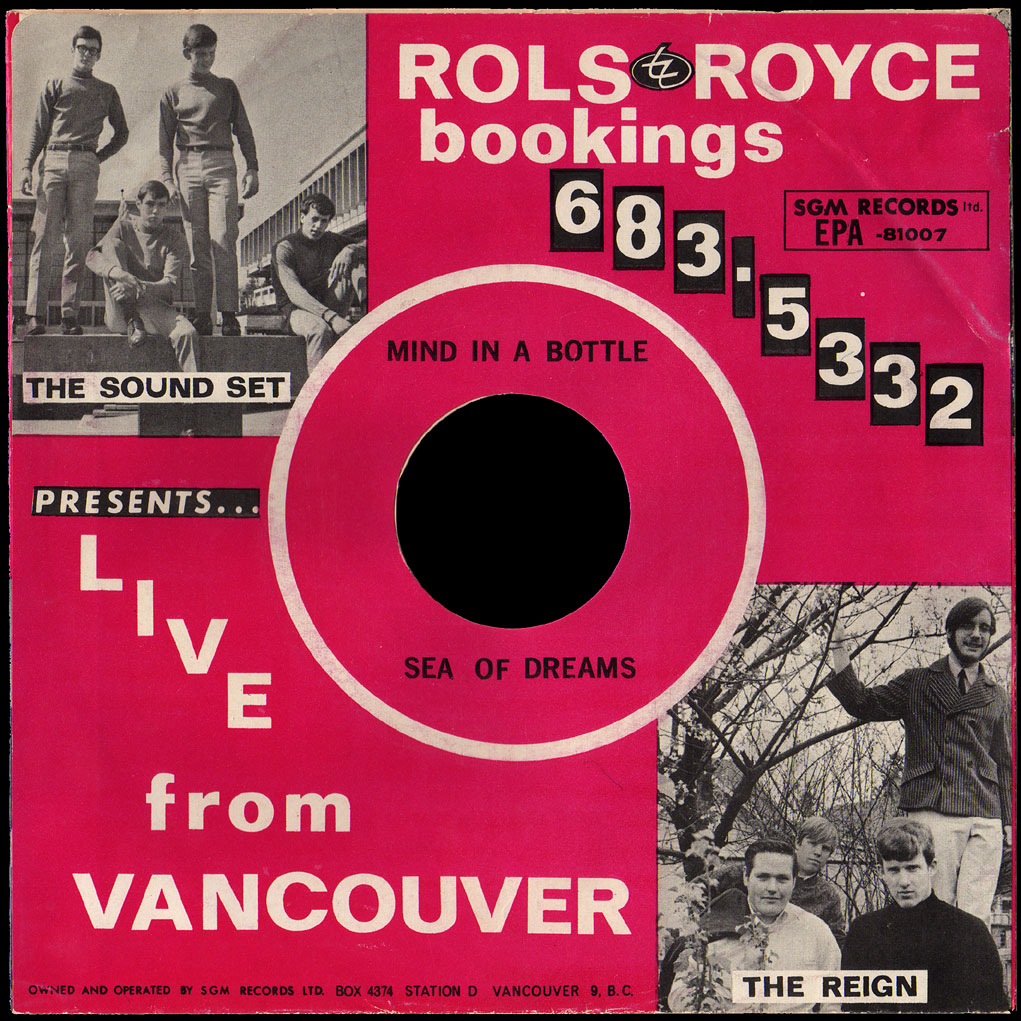
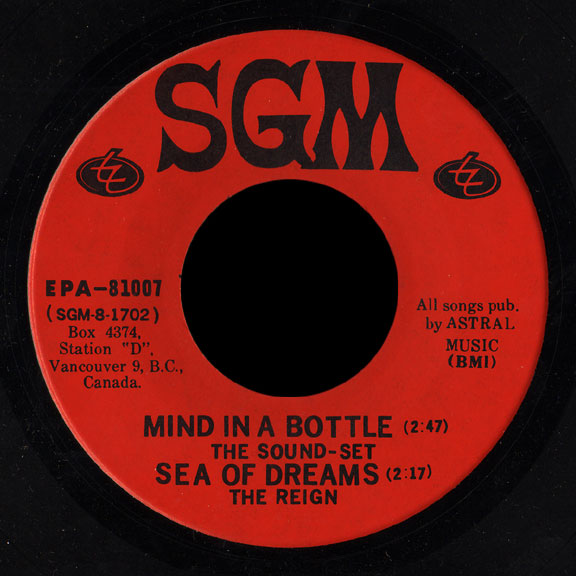
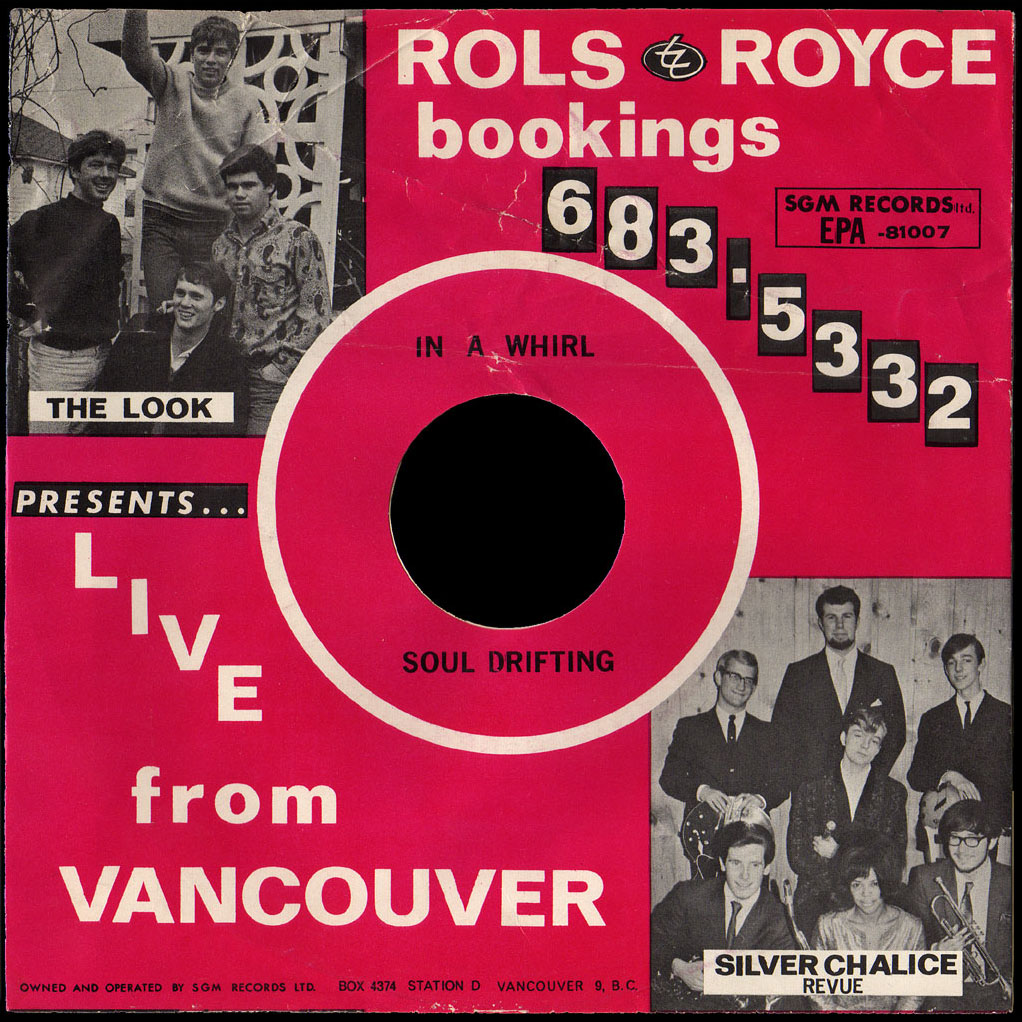
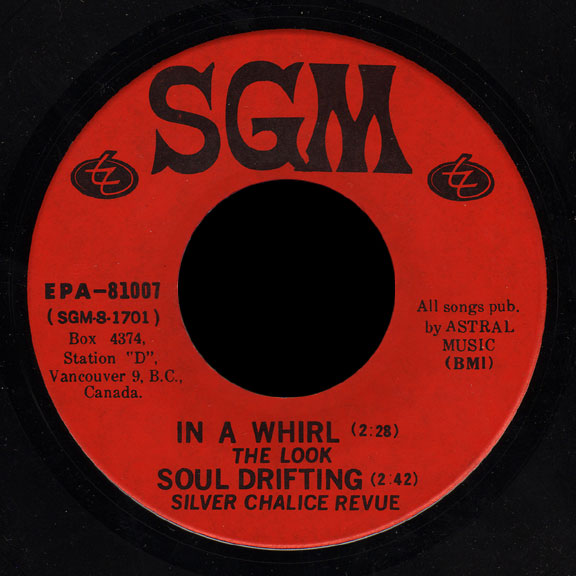
Both sides of the sleeve read “Rols Royce Bookings 683-5332 Presents … Live from Vancouver”, obviously intended to promote bookings for the bands, but none of the songs were cut live. The label, SGM Records was located at Station “D”, Vancouver 9. All songs published by Astral Music BMI.
The Sound Set
The Sound Set’s “Mind in a Bottle” is one of the highlights of the EP. The influence of the Beatles is apparent, but the song comes together beautifully, with cool guitar and organ sounds, great harmonies and an interesting song structure. Robert Turner and Ken Dedrick wrote “Mind in a Bottle”.
The members of The Sound Set:
Rob Turner – organ and vocals Ken Dedrick – bass and vocals Gerry Tomey – drums Murray Raymond – guitar
Rob Turner wrote to me:
The Soundset was originally formed by Ken Dedrick and myself in South Burnaby, Gerry Tolmey on drums and Murray Rayment on guitar. We played at Gassy Jacks Disco in Richmond a lot and had an ongoing Sunday evening gig at the HMCS Discovery naval base in Vancouver Harbour. We also did a lot of casual gigs in the Vancouver area. Unfortunately I don’t have any photos.
We recorded another song after Don joined called “Everyone’s Born Under the Same Old Sun” at Psi Chord but it was never released. We also recorded several original songs for a CBC radio show, produced by Ray McGuire of Trooper, with Derek Solby on drums. I remember a song called “Someone in the Shadows”. Unfortunately the tapes from both those sessions got lost.
The band had by this time (1968-69) changed its name to Ichabod Crane and we were playing gigs in the interior of BC and on Vancouver Island as well.
The Reign
The Reign
The Reign’s “Sea of Dreams” is another standout, the lead guitarist bouncing licks through an Echoplex while the singer quietly intones the lyrics. Following a drum break there’s a brief impassioned section over a distorted lead.
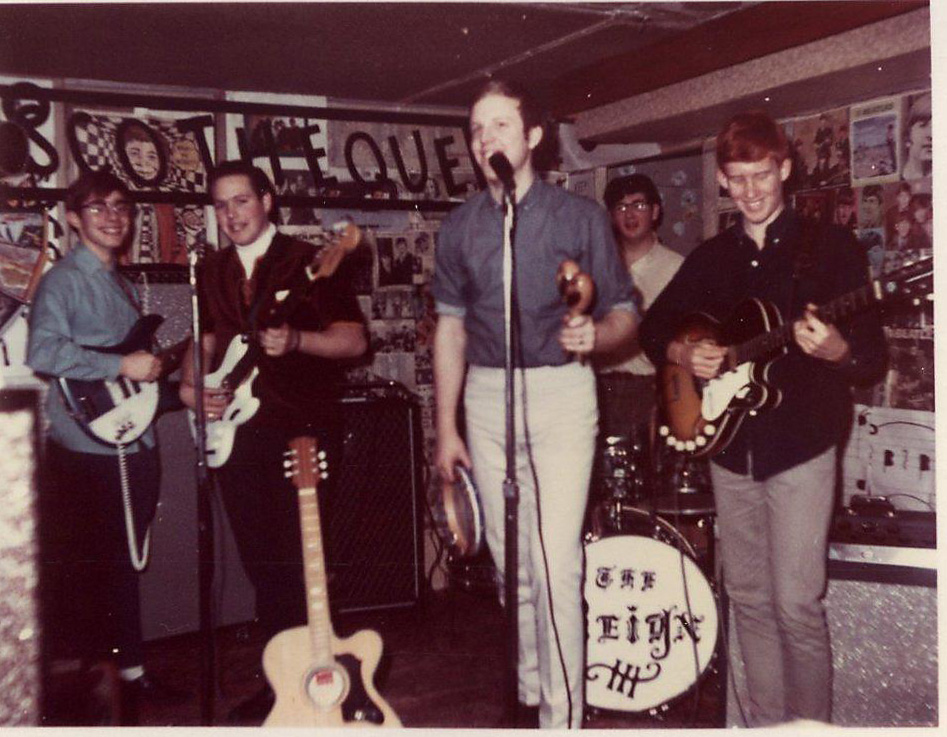
The Reign were together from 1965-1968. Their members were:
Steve Nordin – lead vocals Don Geppert – guitar Russ Sankey – guitar Bob Douglas – bass and vocals and four drummers: Jack Matches, Frank Gigliotti, Graham Walker and Ken Erickson.
Don Geppert gave me some background on the Reign and sent in the fantastic photos of the group:
Here are a few shots of “The Reign” with then drummer Frank Gigliotti. The first shot is in my basement where it all began.
Stan Cayer was the owner of “Rols-Royce Bookings” and our manager. The record came about totally through Stan who put up the $ and used it to promote his bands at the time. It was recorded at Psi-Chord by Robin Spurgeon in 1968. I still have the contract we signed with Stan.
We believe the drummer on “Sea Of Dreams” (who was absent from the photo) is Jack Matches.
We were very young at the time so the record was exciting. Unfortunately we weren’t rocketed to the top of the charts with it.
After The Reign fizzled out, Rob, Ken, Gerry (Sound Set) and I formed a band called Icabod Crane and played around the Vancouver scene. No recordings.
Bob Douglas was later in Soul Unlimited / Mantra after Carl Graves left the band, and Five Man Cargo (see comments on that page). Don Geppert is now a recording engineer in British Columbia. Russ Sankey passed away in 2008.
Thanks also to Don for filling me in on some of the members of the Sound Set.
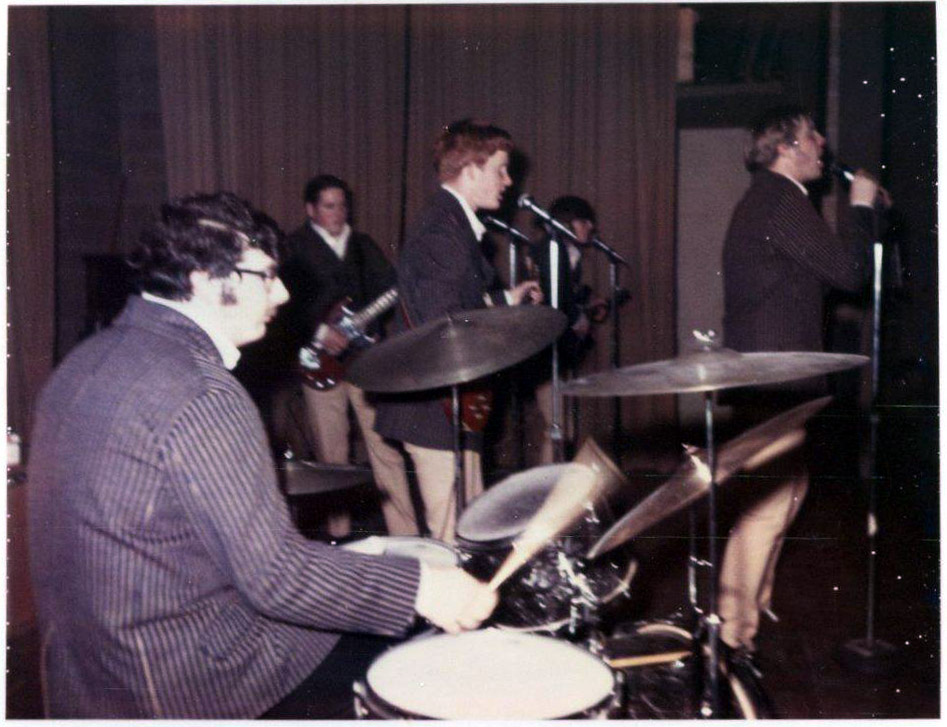
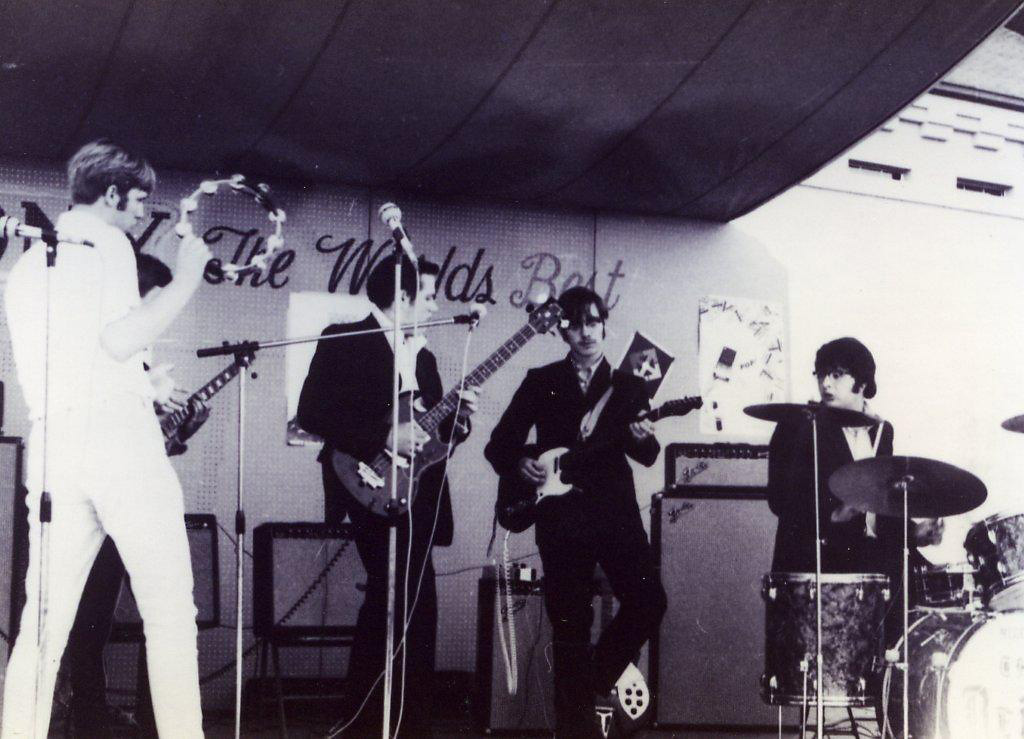
The Reign live on stageThe Reign live on stage
The Look
The Look from Vancouver originally consisted of:
Bob Warden – lead guitar and vocals Dave Boucher – guitar Barry Warden – bass and vocals Jack Willander – drums
Bob Warden wrote “In a Whirl”, another gentle song with good harmonies and a nice balance between the rhythm guitar and the drums. I believe after this release Bob Rowden and Barry Rowden joined from the Painted Ship.
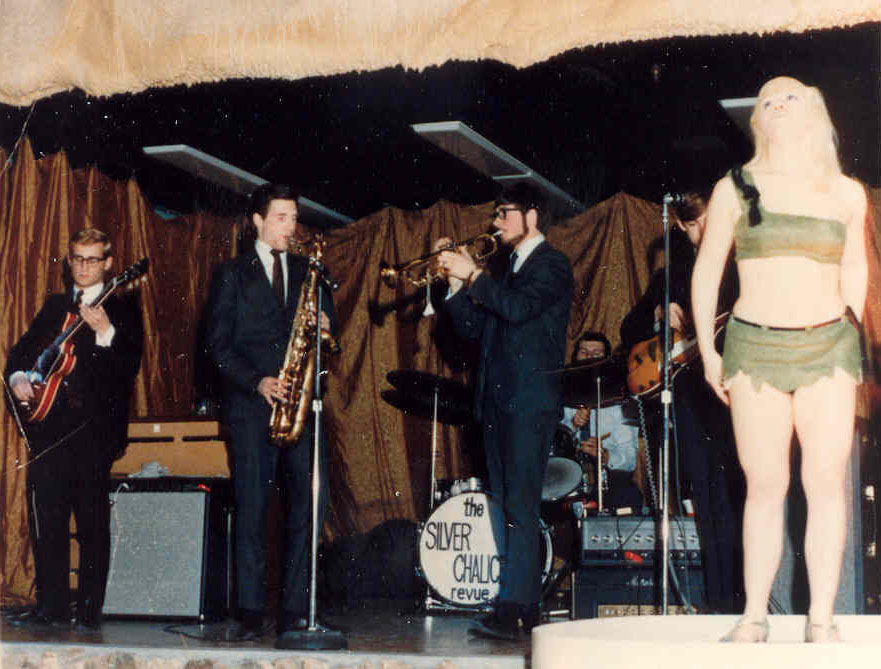
The Silver Chalice Revue
The Silver Chalice Revue
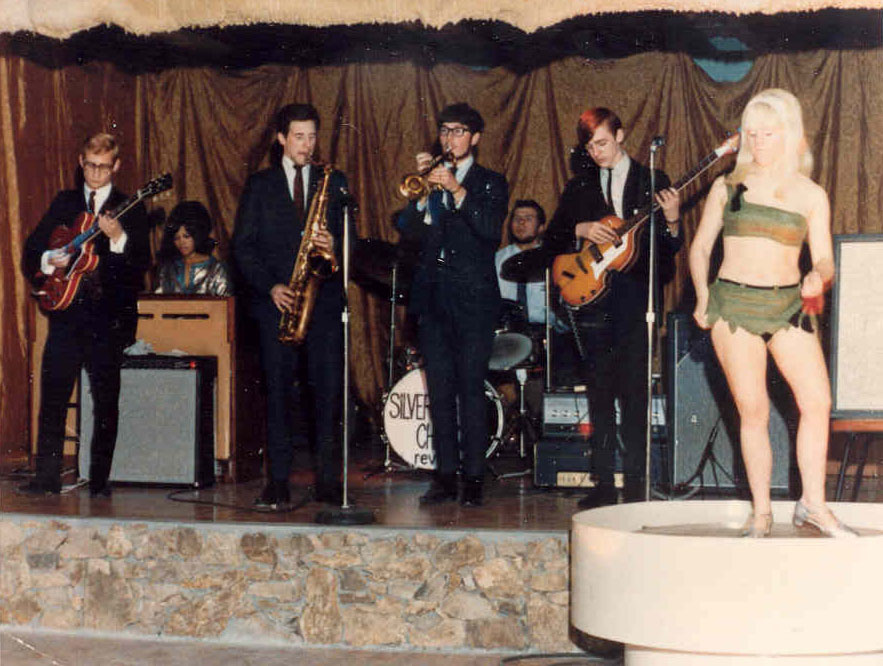
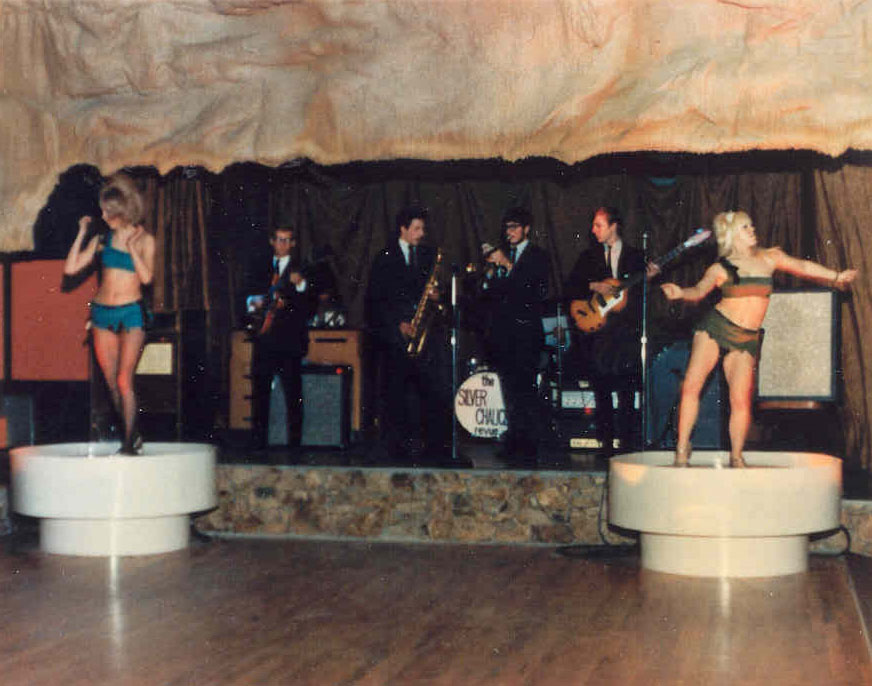
With heavy drumming and a horn section “Soul Drifting” by the Silver Chalice Revue sounds a little out of place next to the other three cuts of psychedelic pop balladry on the EP. It’s a strong track, though, and there’s an edgy sound to the guitarist and the lyrics.
Members of the Silver Chalice Revue were originally in a group called the Squires. Silver Chalice played around Vancouver from ’67-’69. Guitarist Daniel Orlando wrote “Soul Drifting”.
Billy Regan (Billy Ostendorp) – vocals Danny Orlando – guitar Charlie Howard (Charlene Howard) – keyboards Brian Linnit – sax Terry Linnet – trumpet Bobby Regan (Bob Ostendorp) – bass Tom Watson – drums
The Silver Chalice RevueThe Silver Chalice Revue
Stan Cayer owned both Rols Royce Booking and the SGM label. He had his own 45s on the label, from the fine rocker “3 Wild Women” and the ballad “Crying on My Pillow” in the early ’60s to a release in the early ’70s, “My My Gemini!” plus an LP I haven’t seen.
The only other releases on SGM that I know of come from a group called Long Time Comin’ (formerly the Shags and the Shapes o’ Things) with “Paper Rose” / “Downhill Slope” on SGM 5-S from 1970 and “Part of the Season” on SGM 12-S from 1972. “Paper Rose” was written by Gary Webstad and produced by Stan GM Cayer. Long Time Comin’ also released one 45 on London Records of Canada in 1971, “Magic World”, written by Mike Bosley and produced by Stan Cayer. All of these are published by Astral Music as well. You can see a few photos of Long Time Comin’ on the PNW Bands site. Other members included Jerry Lipinski and Howie Atherton.Thanks to Ed for the photos of the Silver Chalice Revue.
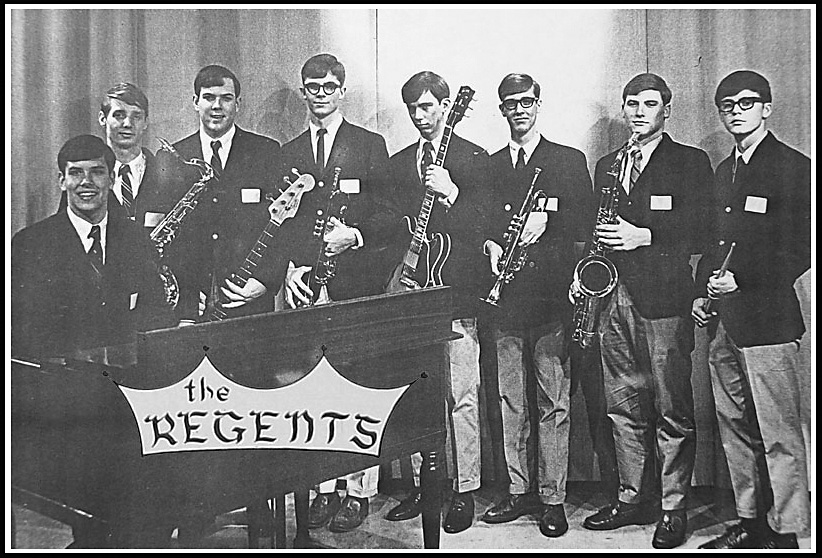
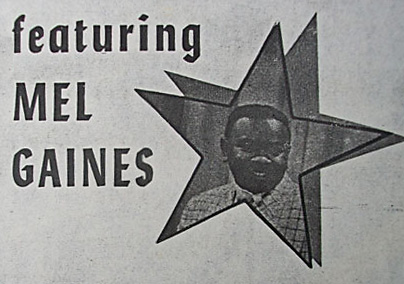
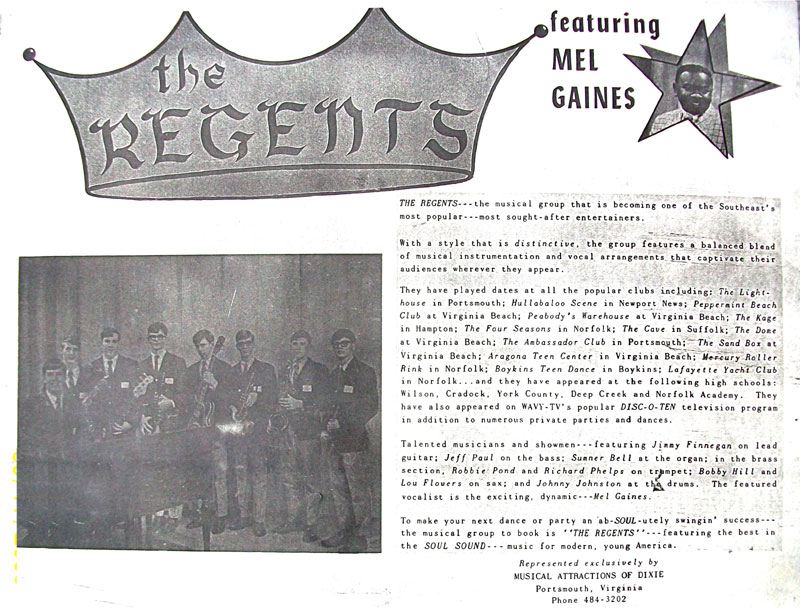
The Regents from left: Sumner Bell, Bobby Hill, Jeff Paul, Robbie Pond, Jimmy Finnegan, Richard Phelps, Lou Flowers and Johnny Johnston. Not pictured: lead vocalist Mel Gaines
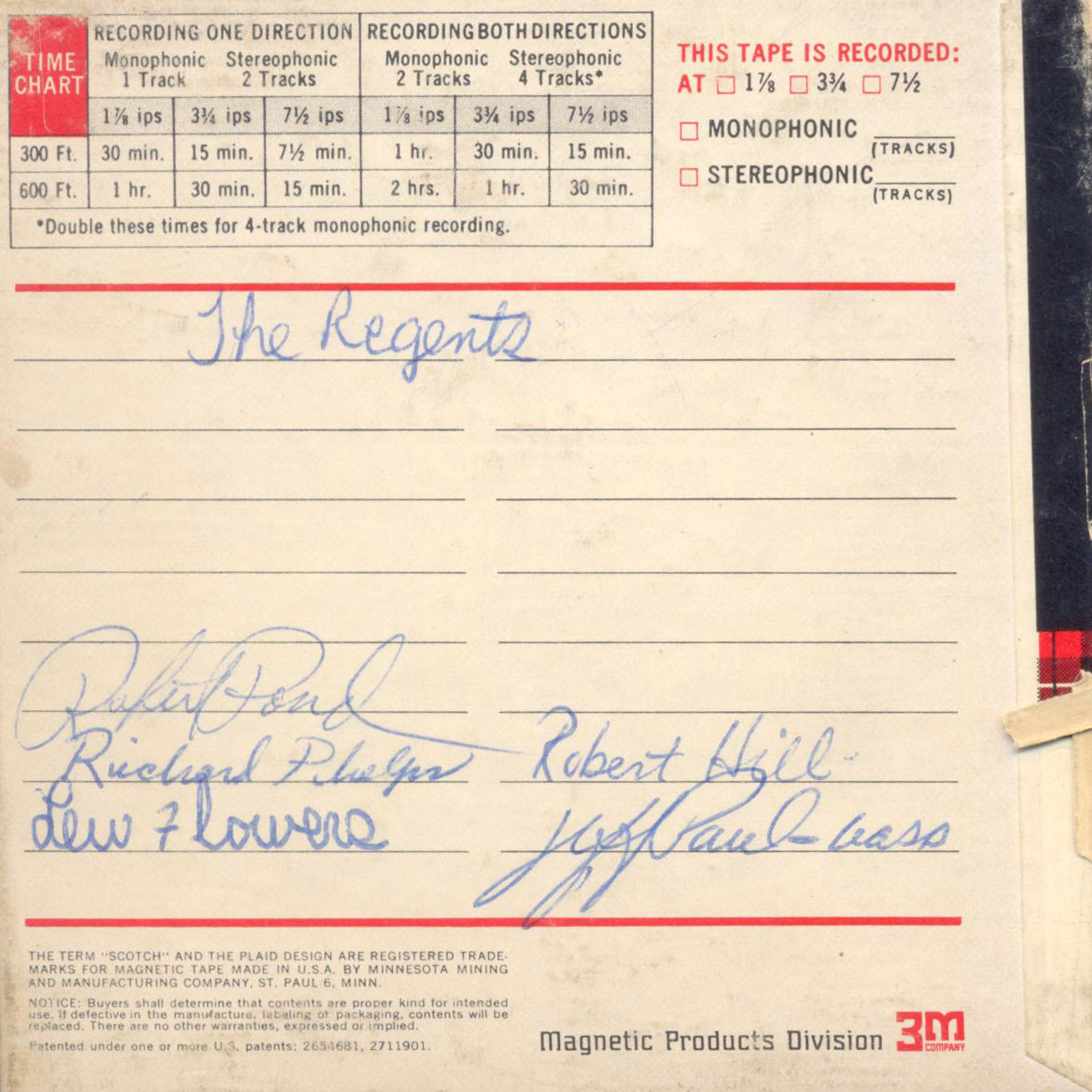
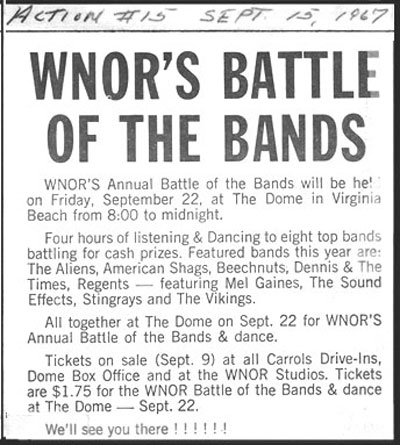
Mel Gaines – lead vocals Jimmy Finnegan – lead guitar Jeff Paul – bass guitar Sumner Bell – organ Robbie Pond – trumpet Richard Phelps – trumpet Bobby Hill – saxophone/lead Lou Flowers – saxophone Ken Lewis – drums Johnny Johnston – drums
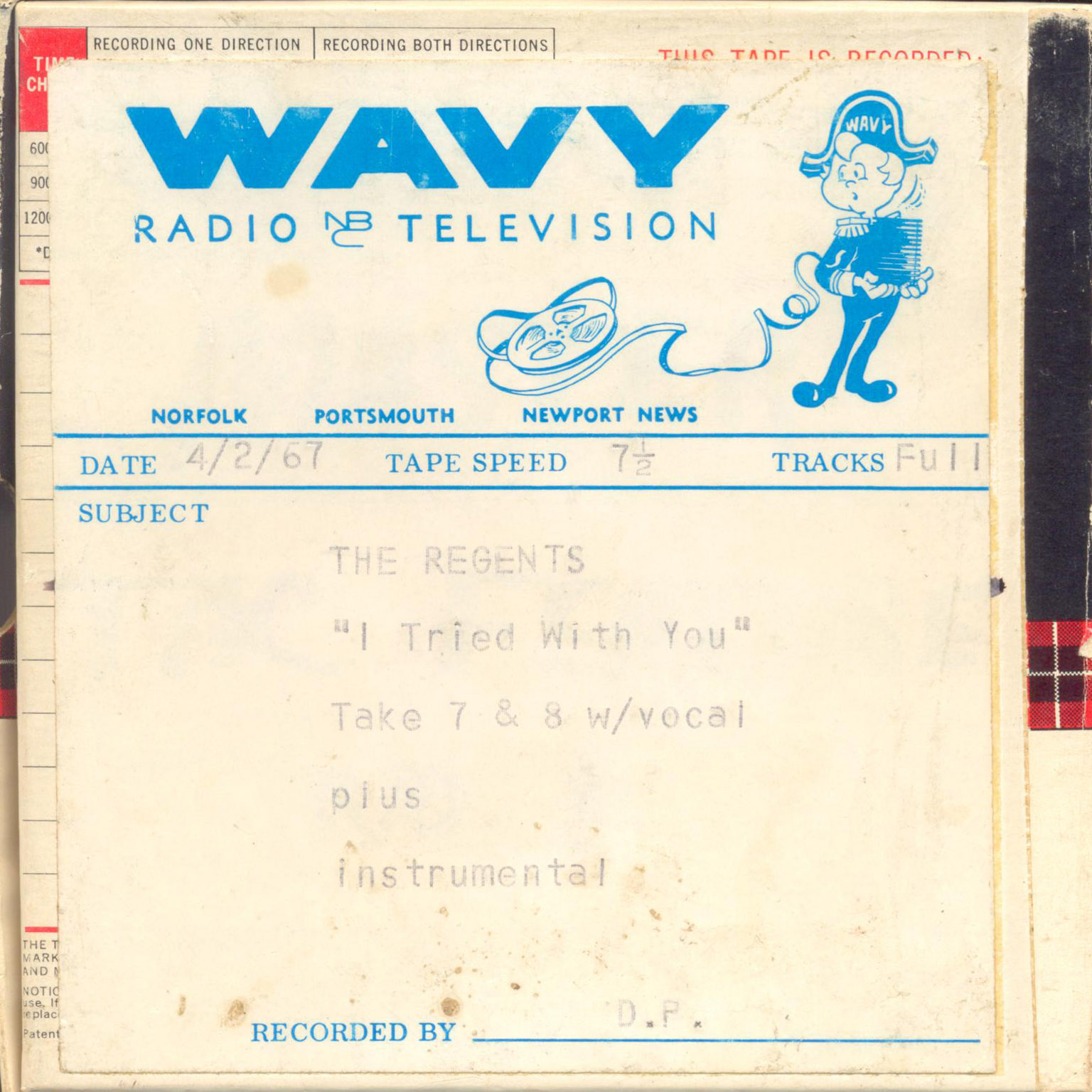
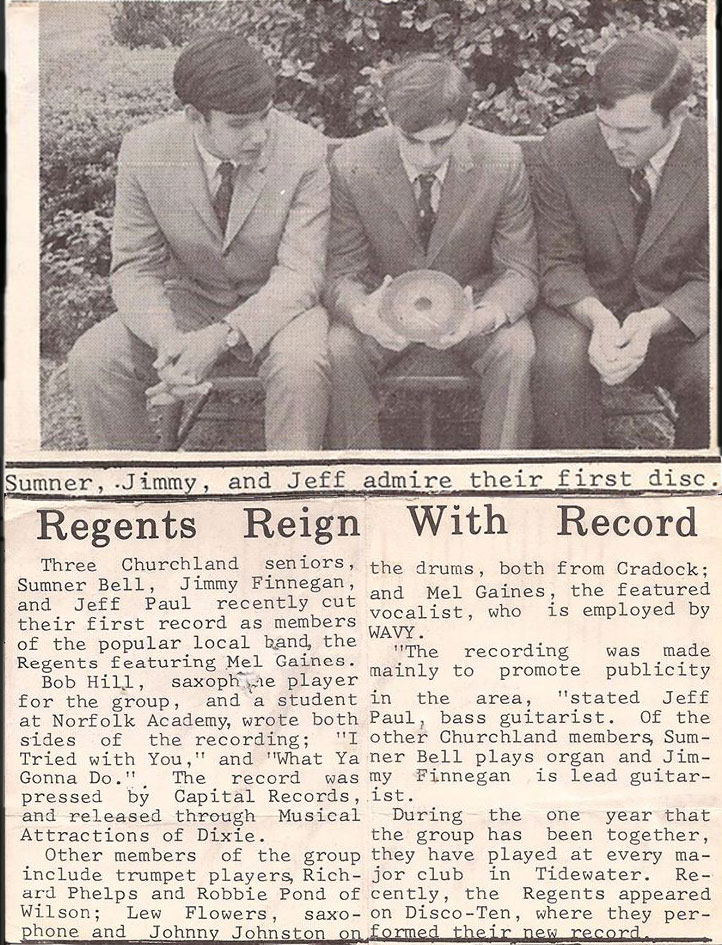
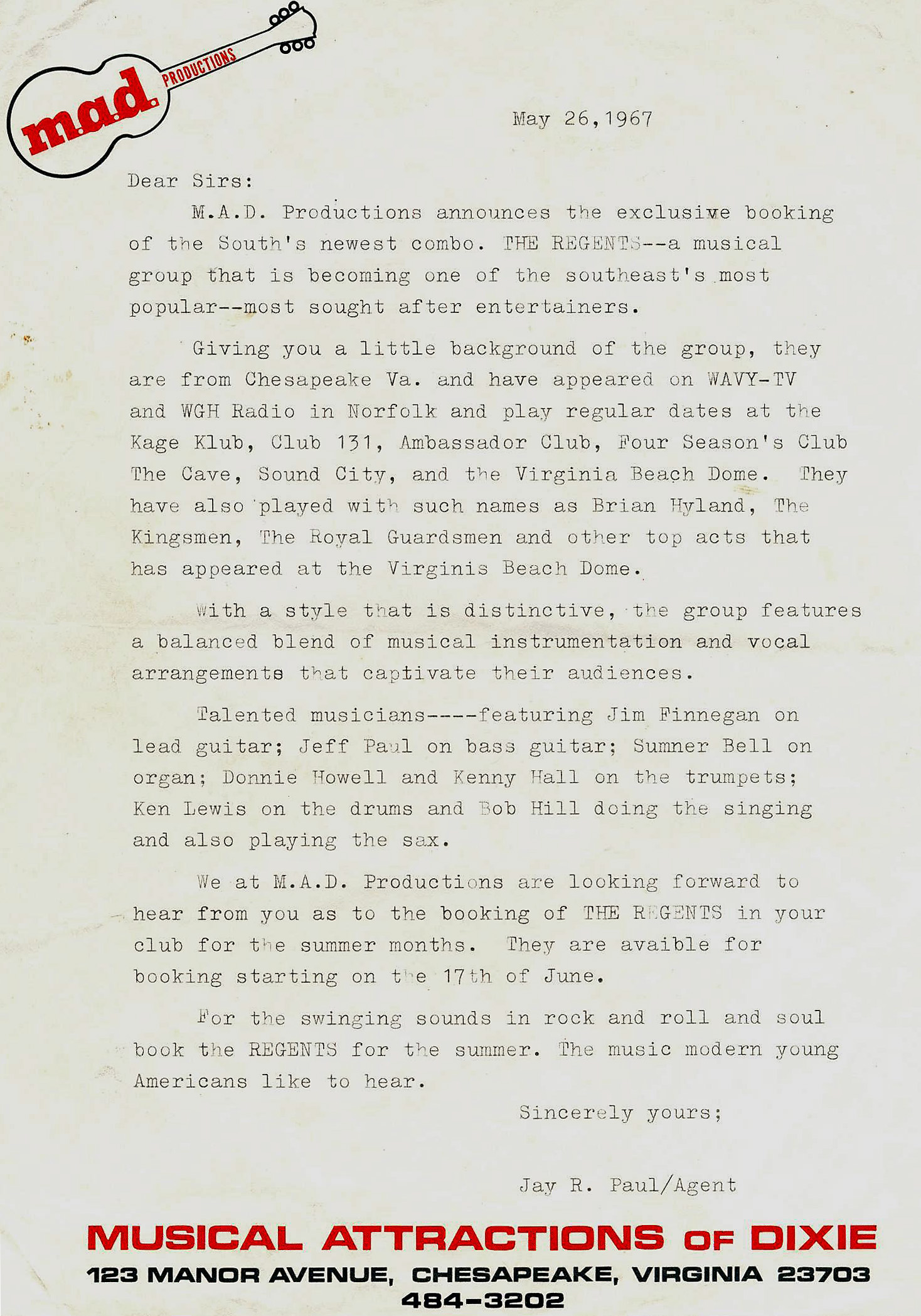
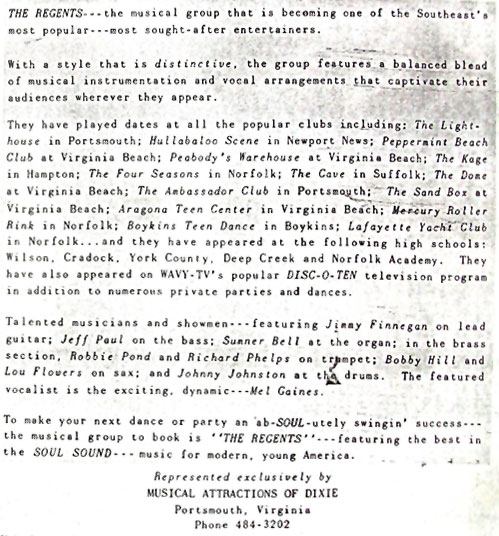
The Regents started in Portsmouth, VA in 1967. Looking for a vocalist, they met Mel Gaines in 1967, who was a co-worker of bassist Jeff Paul’s father at WAVY-TV 10. For a group of eight white high-school students to have a lead singer who was African-American and already 21 years old might seem an unlikely pairing, but the band found considerable live success.
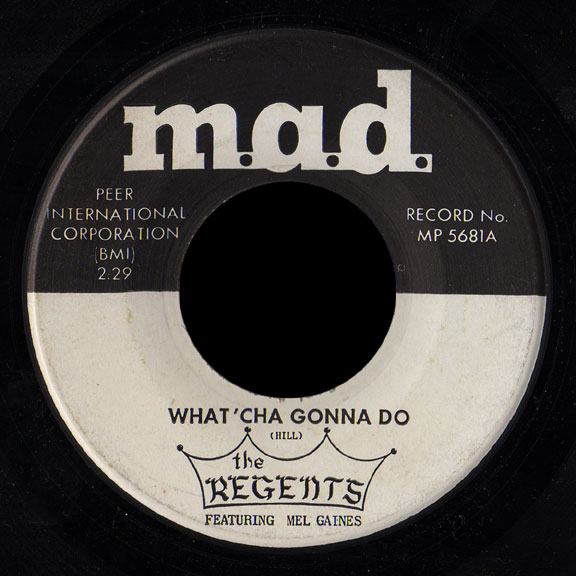
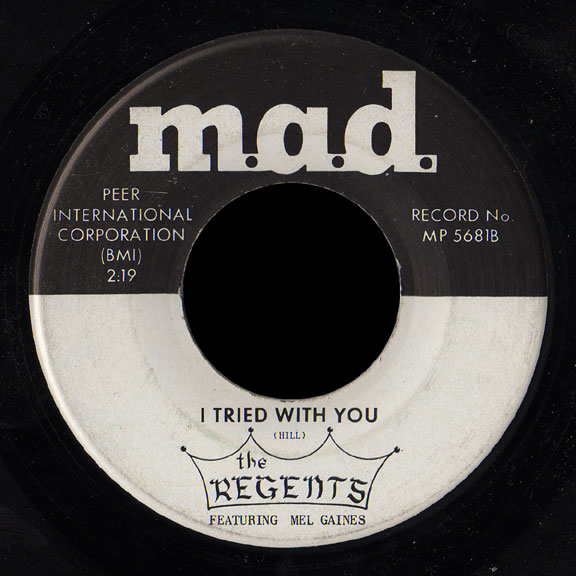
Their record on the Mad label shows the band working seamlessly with Mel, as each song features Jimmy Finnegan’s sharp rhythm on guitar, solid drumming from Johnny Johnston and memorable horn arrangements. “What’cha Gonna Do” has been a long-time favorite of mine. The band provides plenty of momentum and gritty backing vocals for Mel’s soaring voice.
“I Tried With You” starts off solidly but really picks up in the second verse as staccato bursts from the horns precede Mel’s pleas, segueing to an smooth, affecting chorus. Bobby Hill wrote both sides of their only 45, recorded at Norfolk’s D’Arcy Studios in 1968.
Mel Gaines passed away on November 18, 2009, two days short of his 63rd birthday.
Below are the stories of drummer Johnny Johnston and organist Sumner Bell in their own words.
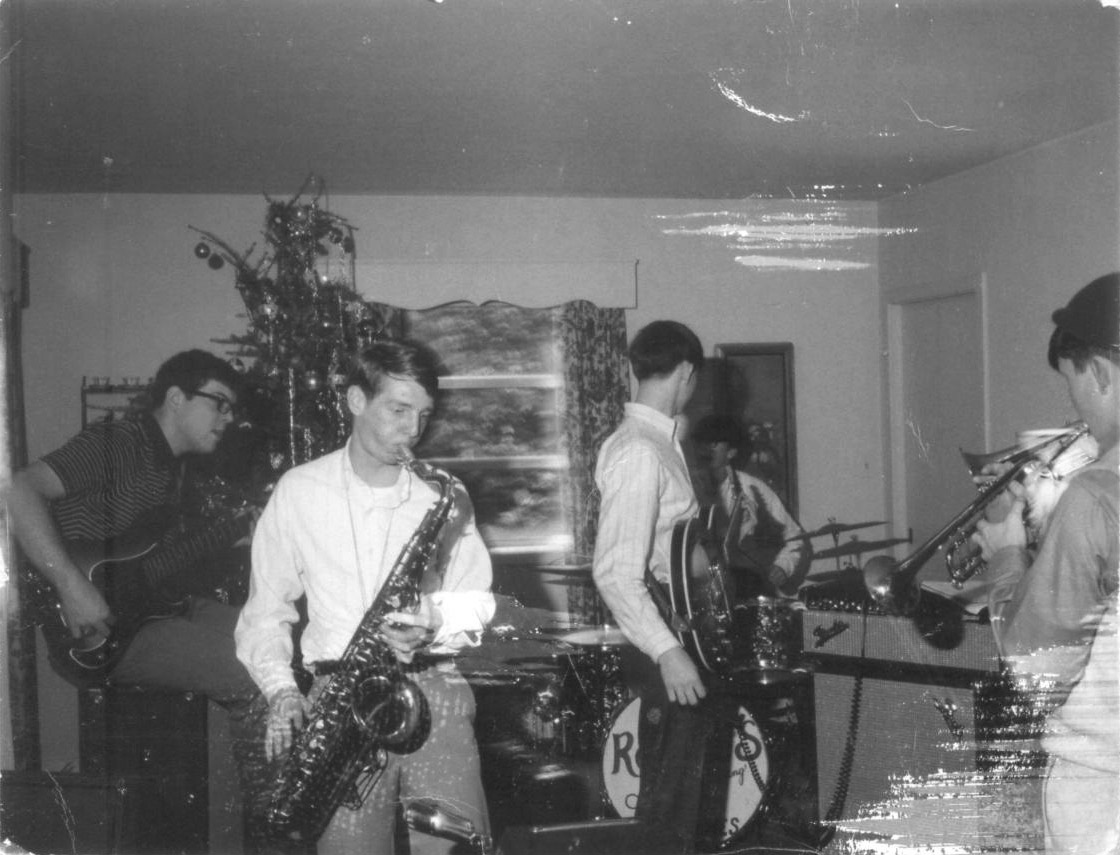
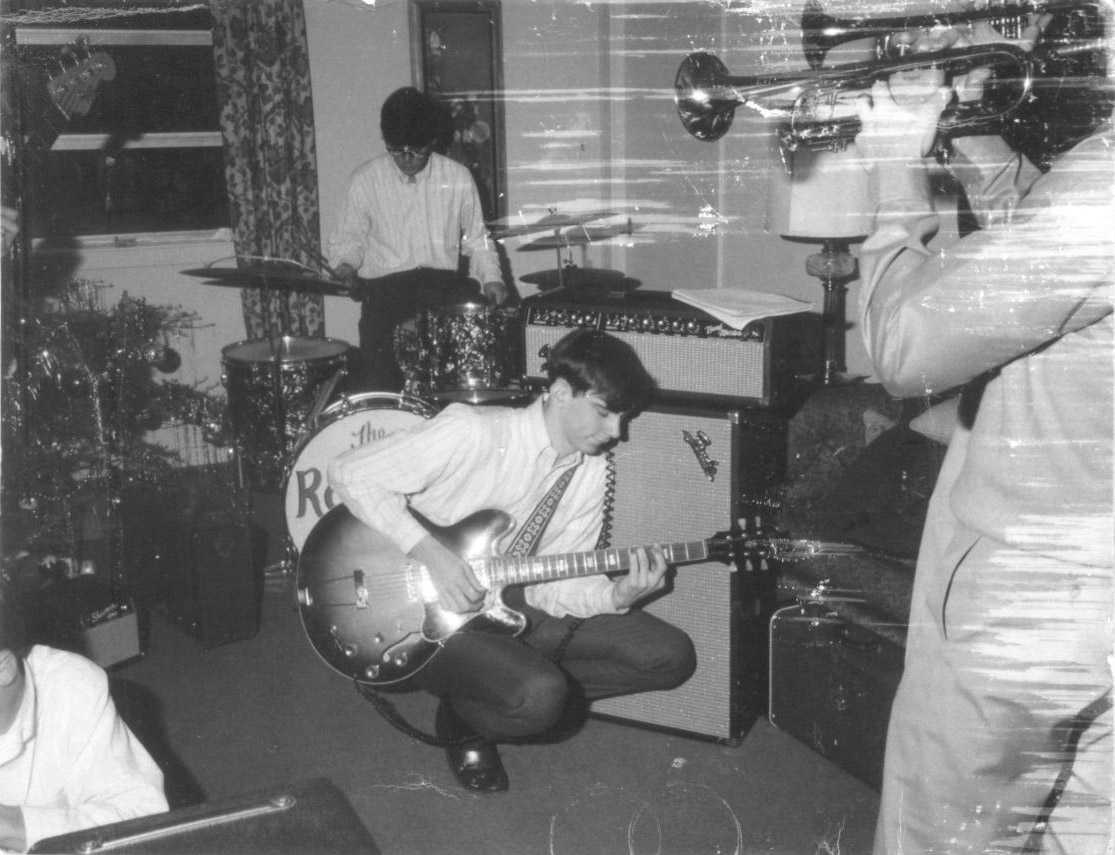
Practicing at Bobby Hill’s parents house around 1967. From left: Jeff Paul, Bobby Hill, Jimmy Finnegan and Johnny Johnson on drumsJimmy Finnegan on lead guitar and Johnny Johnson on drums
The Regents featuring Mel Gaines, 1967-1968 as remembered by Johnny Johnston
The Regents Featuring Mel Gaines was a popular soul band established in Portsmouth, Virginia around 1968. The first memory I have of the group is my audition for the band as a drummer in the spring of 1967.Rusty Gibbs, an old high school buddy of mine, told me the group was auditioning drummers at Jeff Paul’s house in the Churchland area of Portsmouth. Jeff played bass with the group and actually liked how I played, and to my surprise the group asked me to join them. I was a junior at Cradock High School in 1967 and was trying to determine if I should continue to play sports or follow my heart’s desire and become a drummer in a dance band.
I had taught myself how to play drums by watching all of the local bands. I especially studied and copied Fat Ammon of Bill Deal and the Rhondels and also The Swinging Machine’s Dickie Bocock. I loved their styles and really became accustomed to the beat and timing they both had. This was when dancing at teen clubs, dances halls, high school dances such as the Ambassadors Club (or AB Club as we called to it) and The Lighthouse in Portsmouth were both at their all time high.
The other band members were especially talented and we were blessed by having a great black singer by the name of Mel Gaines, who resided in Suffolk’s Pughesville area. Mel was a very talented and blessed singer of our group. He was the person our fan base came to see. I remember playing at a dance at Cradock High School in 1967 and when his name was announced the crowd exploded and rushed the stage to sing and dance as he sang.
Johnny Johnston
Soul music was the big sound of our day and we really had a powerful brass section. Robbie Pond and Richard Phelps were on trumpets, Bobby Hill and Lew Flowers on saxophones. Bobby Hill was the driving force of the horn section, and the great horn sound heard on our record. Jimmy Finnegan was the best lead guitar around, and is still playing guitar for a group called El Kabong in the Tidewater area. Jeff Paul was our outstanding bass player and mostly the one responsible for motivating us to perform at our top level of showmanship. I did not realize how good they all were until years later when listening again to our record. Our rhythm section was also capped off by Sumner Bell who played Hammond organ. During the high mark of our short career, all of our members were juniors or seniors in local high schools and on the brink of following college careers.
The short career of our band was topped off when we decided to go into the studio and record “What’cha Gonna Do” which was Side A and “I Tried with You”, was the B Side. As my memory would have me believe we recorded both songs at D’Arcy Studios in Norfolk in four hours. Of course our horn section was pretty tired after playing Side A about twenty five times in a row. At $25.00 per hour for studio time we wanted to get our money’s worth. We made about 300 copies and started selling them for a buck apiece. I think I made about twenty five dollars. We actually made it to the Billboard chart and made the playlist at local radio station WGH.
Just as with all the other local bands we played all the local places such as The Lighthouse in Portsmouth, Ambassador Club, Peabody’s Warehouse in Virginia Beach, The Peppermint Beach Club, The Kage in Hampton, The Four Seasons in Norfolk, The Dome in Virginia Beach, The Sand Box and local high schools such as Wilson, Cradock, Deep Creek and Norfolk Academy.
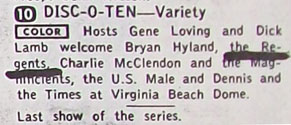
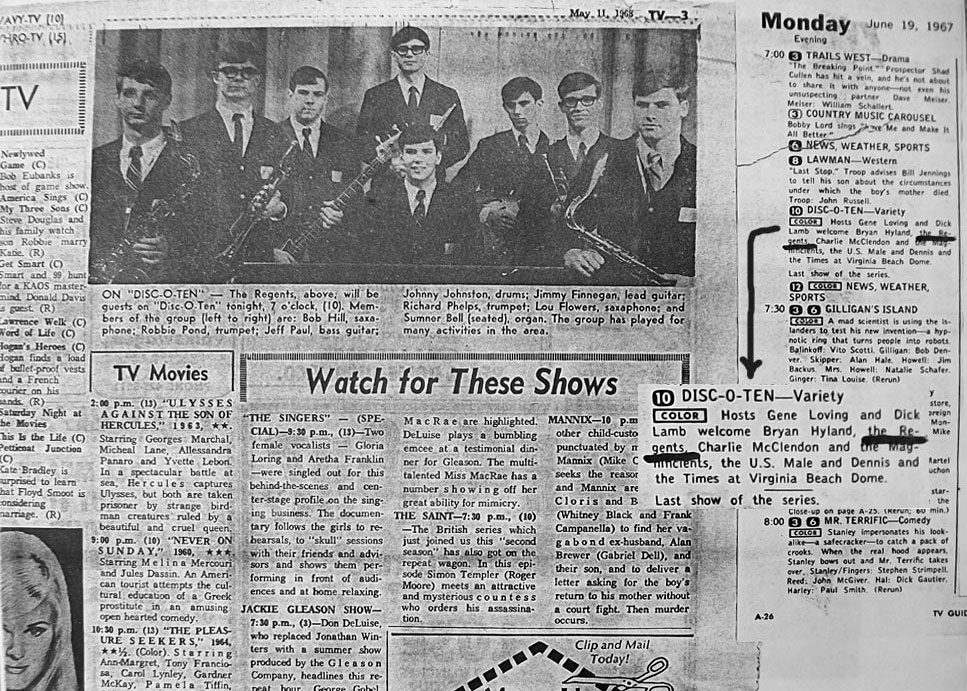
My favorite place to perform was the Glenshellah Woman’s Club in Portsmouth. It proved to be the best venue for live bands and we could get close to the dance floor. The next best place was the Knights of Columbus Hall in Portsmouth. The dance floor was on the second floor and I remember having a great time. All who attended these dances have fond memories of the music and the people we hung out with. We also appeared on the WAVY-TV DISCO-TEN television program, which highlighted local area high school dance scenes in addition to private parties and other local dances.
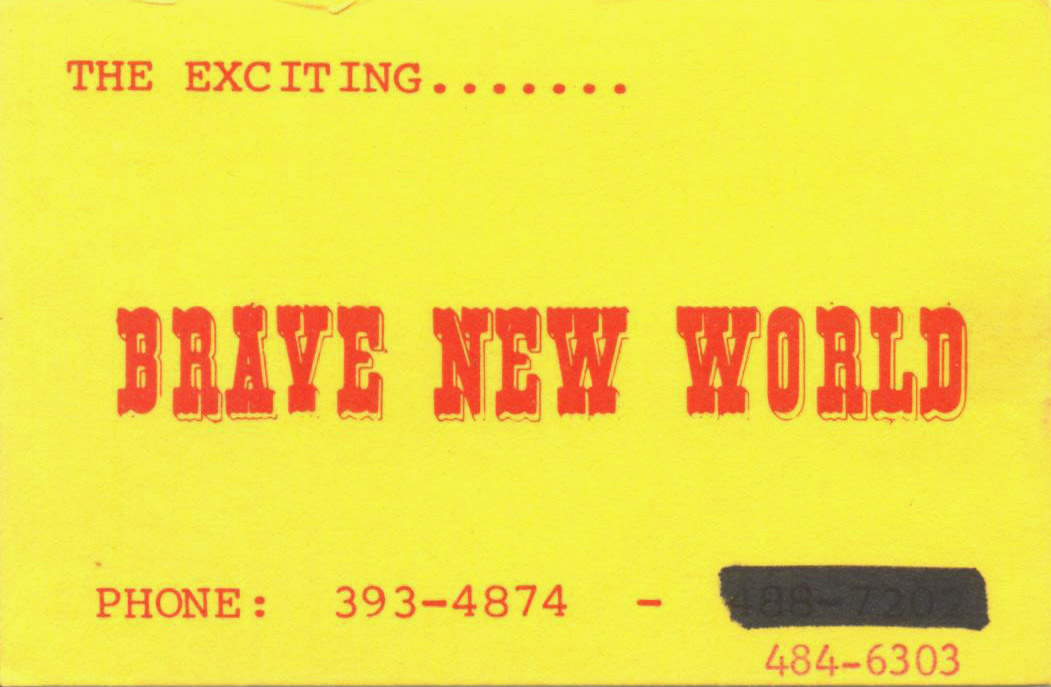
Just when we started to really get a following and some momentum, we had finished our senior years in high school and off to colleges we all went. One last ditch effort to try and stay in the music world was when we started a new group called Brave New World. That group was way ahead of its time though and never really caught on, due mostly to our impending college departures.
I am not sure where all the members have gone but I am trying to trace them and would like to see them again if at all possible. Members of our group moved on to other careers. I must say that all of them made my life much richer by playing a big part of my musical career. I still enjoy playing our record and remember all the places we played. Some of the clubs are still in existence after 40 years. And yes, I still have the fire to play thanks to them.
Many thanks to my “way back when” neighborhood friend Len Hamilton who encouraged me to play drums and was instrumental in getting me started in local bands.
Johnny Johnston Cradock High School, Class of 1968 Portsmouth VA
Announcement of Disc-O-Ten show, May 11, 1968, from left: Bob Hill, Robbie Pond, Jeff Paul, Johnny Johnston (with drumsticks), Sumner Bell (at the organ), Jimmy Finnegan, Richard Phelps and Lou Flowers.
The Regents Featuring Mel Gaines’ by Dr. Sumner Bell
Portsmouth, Virginia. AM Radio covers the hits. WRAP. Vinyl 45s. Segregated Schools. Protestant – Catholic. Camelot President. Black – White…..”The times they were a changin”Fast forward to the Fall of 2001: A road trip with my college aged son, Joe, on a Friday night jogged some memories. ‘Invisible Downtown’ packs up its gear in a car in Boston heading for a 9:30 pm gig at the Yale University Women’s Center. Unlike my early band days, the car is driven by the lead guitar player and not one of the fathers. But it seems just like old times, I am with the band in the back seat wondering what the first set will be.
But, times have changed. My son Joe, the rhythm guitar and song writer is riding shotgun. This is no cover band – only original stuff. I’m along for the ride in the back seat, trying to remember what it was that got me interested in bands. We unload and ‘Invisible Downtown’ plays the set. One thing catches my eye as I exit the Yale Women’s Center for the last time carrying an amp and snare drum to repack for the early am drive back to Boston, and it is not what I recall from my days as an XL or Regent — a basket of condoms by the door. Not one of those band members had a bulging wallet.
“Satisfaction” – times have changed, but small bands still ride together and pack their stuff in the trunk. It seemed that I was back where I had been 35 years before; my ears were ringing all the way back to Boston.
Jimmy Finnegan, Bobby Hill and I had been friends thru elementary school. My Dad and Jimmy’s father worked together and Bobby and I went to Monumental Methodist Church; Jimmy went to St. Paul’s. Our families interacted in a variety of settings and encouraged our socialization and many developmentally rich experiences together included after school sports, Boy Scouts, trick or treating, and church before deciding on music as a shared interest and experiment. Little did we or our parents know where our shared interests would lead the boys.
I can remember playing “rock music” in 1963 or ’64 sitting at a upright piano in Jimmy Finnegan’s living room with Jimmy on a guitar…not even sure if it was electrified. Perhaps this was the only time that the keys could be heard above the guitars and soon to be added bass and drums. I think Bobby Hill next came over and may have had a guitar that he reversed the strings on so he could play left handed. Jimmy’s mom Frankie was “quietly” encouraging us. We needed a bass guitar player and Bobby took on a project — to not only learn to play the bass, but also to make one. Ken Lewis (a fellow Trucker and Methodist) subsequently joined us on drums and Andy Copley (a student at Portsmouth Catholic and natural, fantastic musician and ear) took on the bass (something he continued as a professional career across the country).
But, Jimmy loved the music and was the driving force in getting us going as the XL’s. Jimmy’s musical flame has always burned brightest. Jimmy played the St Paul’s Catholic card and we were booked at the Knight’s of Columbus with a microphone stuck inside an upright piano and plugged into one of the first little Fender amps. After our first gig I received a letter from a female fan, a first (I was hooked) and last (what went wrong?)! Eventually, we went on to play “The AB – Ambassador’s Club”, Churchland Teenage at the VFW, and many private parties.
The XL’s were authentic, but an average white band. Jimmy had a Fuzz Tone and we could play “Satisfaction”, the words being distinct enough to be heard across the Elizabeth River by Bobby’s dad Stoney. All of us were too young to drive and when Dr. Hill picked us up in his Rambler Ambassador Station wagon from Portsmouth City Park he wanted to know what WE knew about satisfaction! Not much, but we all were interested in learning as quickly and often as possible. The amps got bigger, as the boys grew to young men, got driver’s licenses and hormones.
The drama that ended the XL’s is lost to me. I think Andy Copley went on to play with a “cooler”, bigger and better band. The bitterness spurred the survivors to retool ourselves. Bobby once again stepped up to learn how to play another new instrument, the saxophone! This time he didn’t make his new found instrument but purchased it.
Retail shoppers for musical instruments visited Portsmouth Music, we haunted the pawn shops on High Street. Jeff Paul came on as our new bass player and with him we enjoyed the contacts of his dad the general manager of TV 10 and his brother Jay who served as our booking agent. I think the addition of Jeff introduced modern marketing to the guys.
Bobby was very interested in the regal sounding name, The Regents, and after some discussion of alternatives the name stuck, usually to our blue blazers, the iconic adhesive pocket logo. R&B, soul music, and beach music were the popular dance bands in southeastern Virginia. So a very practical decision was made to play what the market wanted and would pay for. Jimmy packed away his Fuzz Tone, and saved up lots of musical ideas for his future. One minor weakness that had hampered the potential of the XL’s and subsequently, The Regents, was the lack of an exceptional singer. Mel Gaines filled that need and became the “featured act” of the ever so regal “The Regents, Featuring Mel Gaines”.
Ken Lewis was the first of the original band members to graduate from high school and leave the area for college. Ken was red headed, high energy, and enjoyed swirling those drum sticks between swats at the snare. Johnny Johnston’s transition to the band as our new drummer was seamless. What a quick study!
Johnny’s good nature, sleepy smile, and steady beat assured he fit right in and quickly proved to be a valuable asset. He brought new fans and exposure to the group. The Regents didn’t miss a beat.
Bobby organized the horns into a coalition of harmonies that were extraordinary. Robbie Pond and Richard Phelps were on trumpet and Bobby and Lou Flowers played sax. They swayed and stepped to the music usually prodded by Jeff Paul’s big “axe”.
As lead singer, Mel Gaines was a few years older than the high school instrumentalists, but what we lacked in maturity he covered ever so well. Mel had patience, talent and soul and propelled The Regents from gig to gig as we developed a reputation and following from the Virginia Beach oceanfront to Capron.
Mel Gaines took the stage in a humble way usually dressed in a suit that belied his coming performance. By the end of the second set, Mel had removed his suit coat, sweat was streaming from his face and soaking his shirt, damp handkerchief clutched in his hand and singing with an intensity that was matched by the enjoyment of the listeners and dancers whom he had whipped into a frenzy.
Mr. Gaines was an unassuming man who was always dependable, hard working and on key. Mel only asked for one thing that I recall and that was for “The Regents, Featuring Mel Gaines” to play at a small club in Pughsville that was owned or managed by his relative. Mel wanted to play for his family and friends in his neighborhood and so, we did.
A talented singer, interested and competent management, receptive audiences, and teenage swagger resulted in excellent music. We all came to understand the meaning of Satisfaction and the importance of music, organization, practice, and teamwork in our lives. And, hearing your own band on the radio with Mel’s amazing voice as you traveled home as a senior in high school was way cool! Almost as cool as going on a road trip band gig with my son.
Johnny, thanks for putting this together. It has been fun for me to reminisce.
Sumner
Special thanks to Johnny Johnston for his help with this page, to Jimmy Finnegan for the clipping about the record release, and to Jeff Paul for the video link.
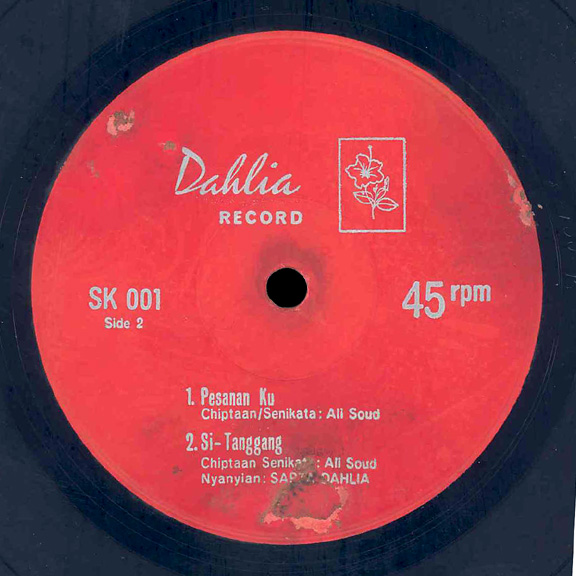
The EP these songs are taken from feature singer S. Jamelah backed by Sapta Dahlia on side one, but I prefer side two, which is the band by itself playing two very cool organ-driven rockers.
“Pesanan Ku” (My Message) is the band’s message to young men and woman to make the right choices in their lives and to not leave it until it’s too late.
“Si Tanggang” tells the legendary story of Tanggang, the son of a poor family who gets a job on a trading ship and eventually becomes a wealthy trader himself and marries a sultan’s daughter. One day, with his wife aboard, his ship comes alongside his old village and his mother comes out to trade with the ship. She recognises her son, but he is ashamed of her poverty and refuses to acknowledge her. She then calls on God to make her son recognise her and a great storm breaks loose and Tanggang, his wife and their ship are all turned to stone. This legend, or variants of it, are popular in many coastal areas of Malaysia and Indonesia and are used to explain the existence of many offshore rock formations.
Sapta Dahlia could be translated as The Dahlia Seven. The liner notes say the band was formed on 29 April 1967 with Wahab Hamid on lead guitar, Ali Soud on organ, Wahid Hamid on drums and Rahman Hamid on bass. The band leader was Rahim Ghani, but it is unclear what role he actually played in the band.
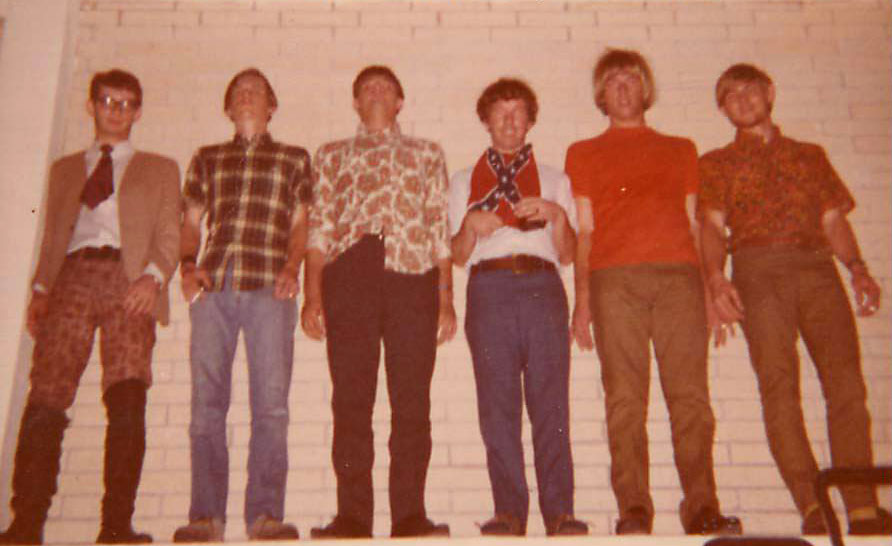
Basic Things from left: Herman Bennett, Gerald Pierce, Charles Jayroe, Larry Quinn, Ronnie Cooper and David Neel. Taken by the Holiday Inn, Beaumont, April 1967, for a KA fraternity Old South Dance
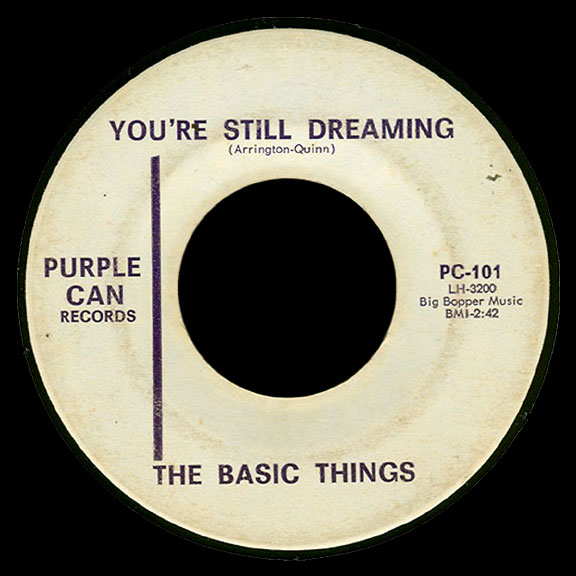
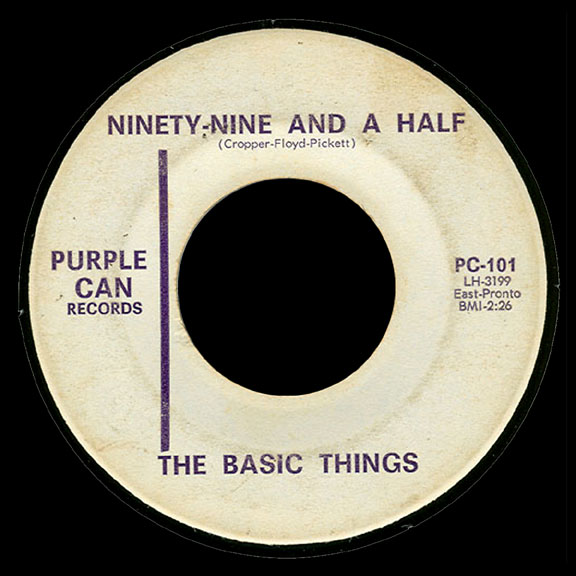
Port Arthur, Texas group the Basic Things made their only 45 at Jones Recording in Houston. The A-side is a good version of “Ninety-Nine and a Half”, but the original on the flip, “You’re Still Dreaming”, gets more attention nowadays. The group puts in a great performance with a marching rhythm, sharp guitar solo, organ flourishes and strong bass runs towards the end of the song.
Vocalist Herman Bennett describes his role as “screaming in public”! Herman sent me his CD Pay Attention, which included both Basic Things songs transferred from the original master tape!
My band, The Basic Things, was locally popular in the late ’60s in Port Arthur and the Golden Triangle. The Basic Things were: Tom Arrington on rhythm guitar (later David Neel would replace Tom), Charles Jayroe on lead guitar, Larry Quinn on Farfisa organ, Gerald Pierce on Hofner bass, Ronnie Cooper on drums, and me trying to sound as British as a Jewish Texan can.
We cut a 45 in 1967 at Jones Recording Studio in Houston, a cover of Wilson Pickett’s “99 ½” b/w an original “You’re Still Dreaming”. Recording at Jones was funny, more than remarkable in any way — we showed up late, not realizing that (duh) they charge by the hour and had a schedule for a reason, we weren’t even prepared to do both sides. The guy was forgiving and precise — I remember he buzzed in on the first take and said, “Guitar player, your fourth string is out of tune” and, because I was screaming a lot in those days, positioned Gerald (our bass player) to keep me away from the mic with an extended hand in front of me. He made a move as if to karate chop me in the Adam’s apple, made me sort of laugh, and we decided to keep that take because it was an inside joke.
“99 ½ (Won’t Do)” was The Basic Things piece ‘de resistance. We were pretty sure that this song would put us on the map because of the reaction it got at gigs. I guess we ignored the fact that you can’t do the song too badly because it’s so wonderful and every band of that era had it on their playlist.
Tom and Larry wrote “You’re Still Dreaming” on the spot in the recording studio because it hadn’t occurred to us that we’d do more than one song that day. But, the engineer pointed out, “If you are going to release a record, you’ll probably want something on the other side.” It’s a pretty good snapshot of what we were doing. I was screaming in public and they were playing excellent garage band rock and roll.
The whole thing cost us less than $200 bucks, I think, including pressing 100 copies, maybe more. Purple Can, if memory serves, was sort of a play on the notion that red might, but purple can … following the Moby Grape and Strawberry Alarm Clock model … thought provoking, but ultimately meaningless.
I think we sold all of ten records but somehow the rest of them disappeared over the years. Fortunately, Tom Arrington had the 1/4 inch master tape and thirty five years later a friend of mine discovered that there was actually a tape recorder in town that was the same model as the one the song was originally recorded on. I had it dubbed into a digital format for posterity. Neither song is exactly remastered but the sound is enhanced by virtue of the fact that the original 45 release version of “99 ½” was ramped down to shorten the song for radio play – too bad we didn’t get any – and “Wish That You Were Here” [“You’re Still Dreaming”] had some sort of tape anomaly on it at the very beginning that, for some reason, now sounds like it not only belongs there but leads you back, back, back in time.
I’d like to thank Ruth Hall, my friend gone but not forgotten, for ponying up the entire $180 to record and press those records.
Herman Bennett
Herman’s site has much more information on the Basic Things and his music career, check it out at hermanbennett.com. Gerald Pierce has two other photos of the band and more at www.unclestick.com/music (site defunct).
Five musicians from Madrid formed Los Buitres (The Vultures) in July 1964:
Enrique Martinez (Quique) – lead vocals Juan (Jeannot) – lead guitar and vocals Santiago Villaseñor – rhythm guitar, harmonica and vocals Michel Minguez – bass guitar and vocals Antonio Casado – drums
The band landed a contract with Columbia in November and cut four songs released in February of 1965. The EP included two fine original songs: the excellent “Sensacion” and more formulaic “Ritmo y movimiento”, but failed to sell. The band was disappointed with the sound of the EP, which they though lacked proper reverb, as well as the lack of promotion on Columbia’s part.
They lost their singer Quique to Los Continentales and for a time Santiago took over on lead vocals. By coincidence, they were soon able to recruit the former lead singer of Los Continentales, Boris (Salvador Benzo), who was born in Ceuta, the tip of North Africa across from Gibraltar. Calling themselves Boris y Los Buitres, they entered a band competition in León. They didn’t make the finals, but Boris was a sensation due to his shoulder-length hair. Boris soon went solo and the group broke up, members scattering to other bands.
At the end of 1968, Santiago Villaseñor formed a new version of Los Buitres with the drummer Pancho from Los Comperos, but, according to the liner notes to a 1985 Spanish LP Historia de la musica pop española no. 32 on Alligator Records soon they dropped the name “Los Buitres” and had a working name of the “New Group”. Bassist Ramón Morán provided many photos and a history of the group, so I have moved that part of this article to its own page.
Thanks to Bård for the transfers of “Sensacion” and “Ritmo y moviemiento” and for pointing me to viejopickup.blogspot.com for a scan of the EP cover. Special thanks to Borja for turning me on to these songs by giving me a copy of the Cefe y Los Gigantes / Los Buitres split LP. This article is based on the liner notes to that LP – if anyone has more information or corrections please contact me.
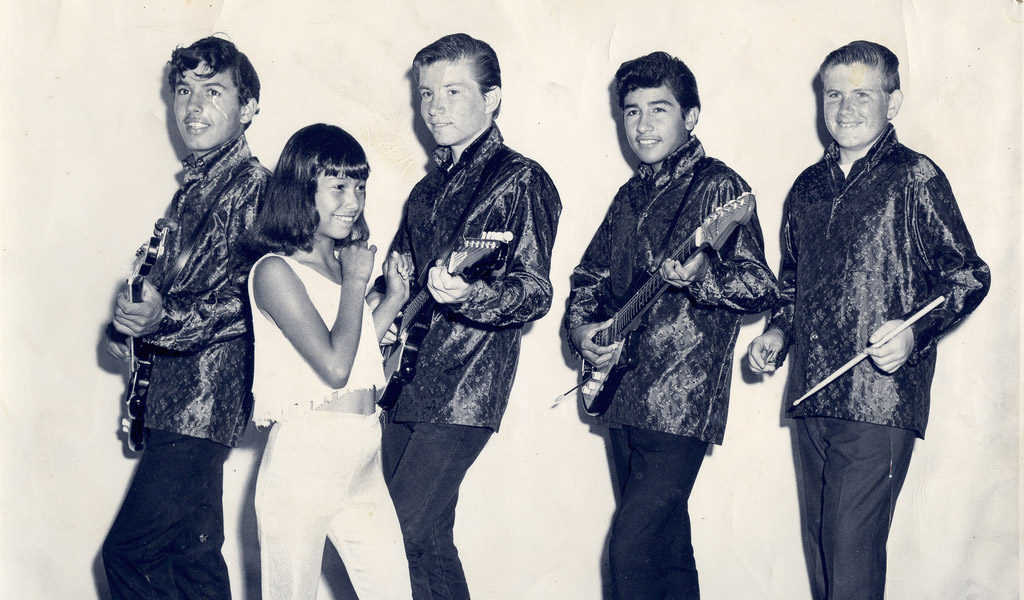
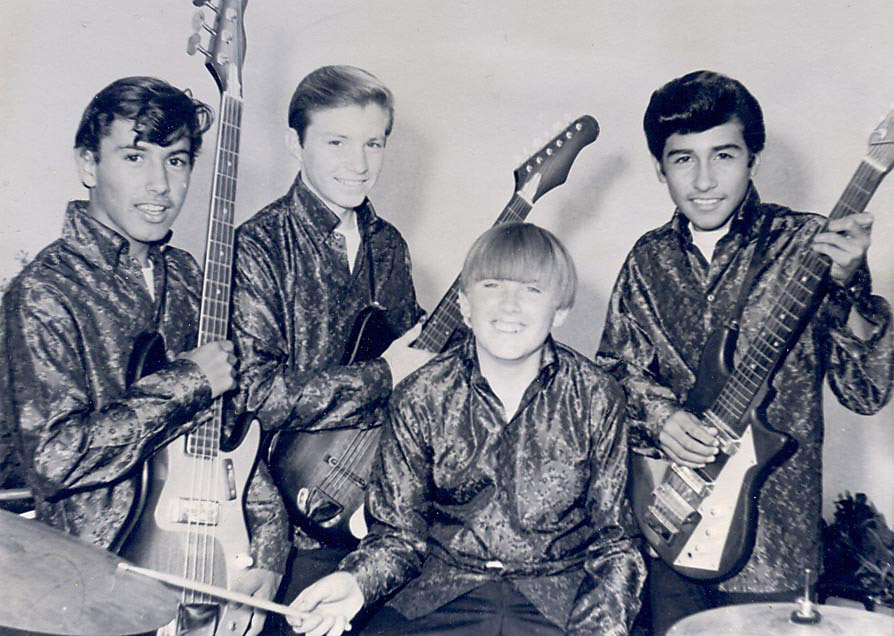
The Nite Walkers, 1965. From left: Rich Hernandez, Joe Stoddard, Ray Almonza and Robert Stoddard, with go-go dancer Linda Hernandez
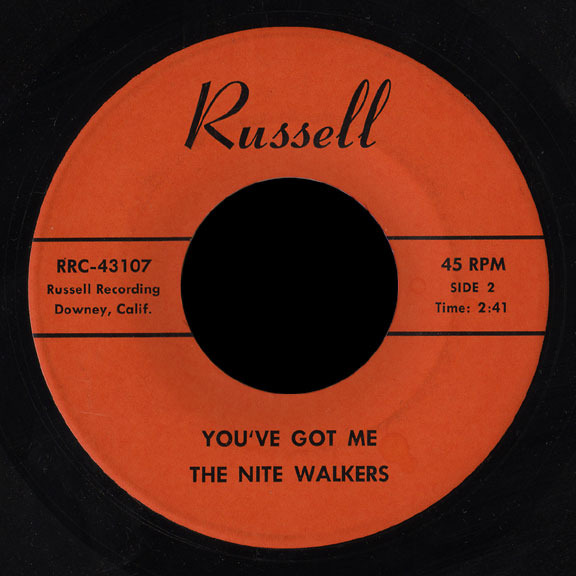
The Nite Walkers cut two 45s at Russell Recording, a studio located (according to the liner notes to Teenage Shutdown vol. 6) above an air conditioning store in Downey, CA. Mop Top Mike tells me the studio basically disappeared when the owner skipped out without paying back rent.
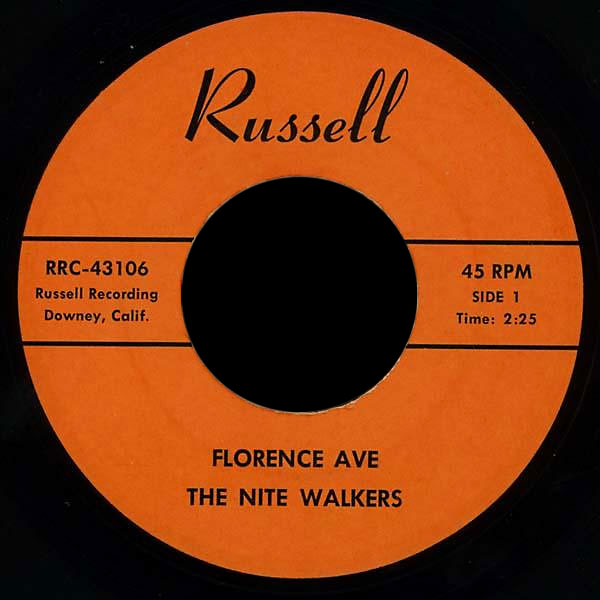
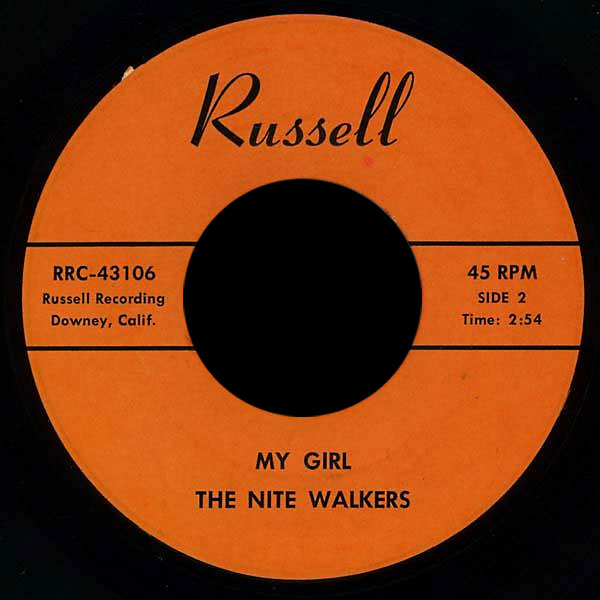
All four songs they released are originals. Their first 45 has a cool guitar instrumental on the A-side, “Florence Ave”. The group yells an intro “Let’s meet at Al’s on Florence Avenue!”. It was backed with a dirge-like ballad “My Girl” (not the Miracles song by a long shot).
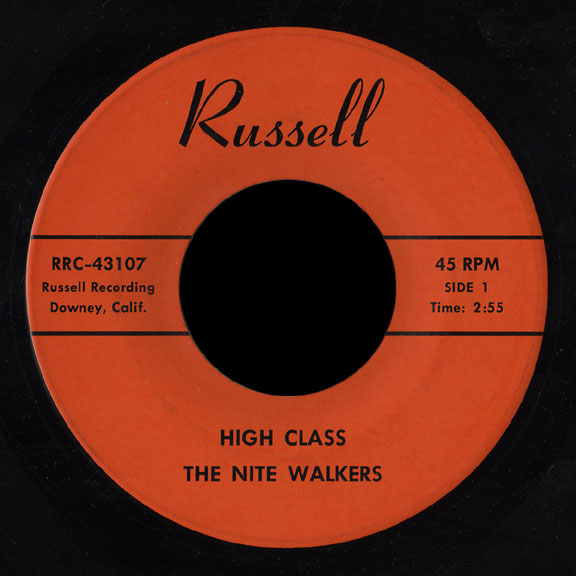
The second 45 has “High Class”, the singer alternates between a menacing spoken mumble and an intense shouting, sometimes within the same line of verse. The band creates a gloomy background through a droning riff and rolling drums for most of the song’s three minutes. The backing vocals are straight out of “Gloria” but the verse seems to have some awareness of “You’re Gonna Miss Me”, with the line “you’re gonna wake up one morning, you’re gonna start to cry, you’re gonna wonder why”.
The flip “You’ve Got Me” is another moody number, something similar to “My Girl” but it works better. I spent a lot of time with audio software taking out clicks from a bad scratch on the 45, but the result is excellent.
With no names or publishing on the label, it was nearly impossible to trace these guys so I thought we may never know the story of this group until Robert Stoddard contacted me:
The band was formed in 1964 I believe. Members are Richard Hernandez (bass), Ray Almonza (rhythm guitar), Joe Stoddard (lead guitar), and Robert Stoddard (drums). We were indeed from Bell Gardens and all songs are originals. What made this band unique at the time was their ages. I was 12 and the other three were 13.
My drumming was a direct result of the music scene of the time. I beat on couch pillows with sticks for two years to “Pretty Woman” and Beatle tunes. Christmas of ’64 brought me a cocktail drum and Joe a cheap electric guitar and super small amp. Richard and Ray were aquaintances of Joe’s from Bell Gardens Junior High.
The slicked back look in the hair was Mom’s idea, you know how Moms are. The mop cut was about a year later with the British Invasion in full swing and all. The girl in the one pic is Richard’s little sister, she was our occasional go-go dancer, her name was Linda.
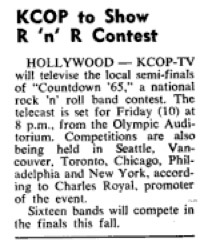
We played mostly for school assemblies, grand openings of businesses, weddings. We used to play at a place in Hollywood called Pandora’s Box on Sunset and La Brea. Made a TV commercial in a topless bar. Came in 2nd place in the famous “Countdown ’65” battle of the bands at the Olympic Auditorium which was televised. It was sponsored by “the Royals” a British family of con artists who just ripped everybody off and never had any intention of awarding any prizes.
Other bands were the Cosmictones and the Velvetones. The Cosmictones tried to compete. The velvetones were a surf band and they were older and really good. their drummer Al Stigler taught me alot. Lead guitarist Gary Stovall went on to make a name for himself in the biz.
There was definitely a music scene in town. we played at the City Parks Dept. dances often, and every summer there was a Battle of the Bands at the yearly amusement park also held at the Parks Department.
The songs were written basically by all of us, we used to rehearse in the Toler Ave. garage next to my house.
Both [records] were done at the same time. Don’t remember much about the studio but I know I was behind a glass wall, no plexiglass yet. Music tracks were done first and vocals were done second with all of us circling one auditorium type microphone.
Russell recording I believe was affiliated somehow with Downey Music Center where we purchased all our equipment. I remember the man’s name was Nate. They were pressed somewhere on Melrose in West Hollywood, I remember because we all went there in the band car, a 1948 Cadillac candy apple red hearse. I believe we got it because the Monkees had a candy apple red dune buggy kind a thing.
I don’t really know much about those transactions, my Dad handled all that stuff. But I do know that only 300 copies were pressed due to the cost at the time. My Dad sent them everywhere, radio stations, etc, but to no avail.
Q. Is it Joe who yells “Let’s meet at Al’s on Florence Avenue”?
It was indeed Joe who yelled but he was just closest to the mike, we all had a hand in that. To this day I still think that was cheesy. Al’s however was a real place we used to hang out at. It was like a really good Greek hamburger stand built on the lot on the north west corner of Florence Ave. and Garfield. It was kitty corner from Toler Ave where we were based. I believe it’s a donut shop now, I don’t know.
I had to quit due to the war in Vietnam. Joe stayed in music and is still performing, check him out at joestoddardshow.com. Richard lives up north somewhere, and I haven’t heard from Ray since the 60’s. I returned to playing live and touring with several bands from ’76 through the 80’s and still occaisionally dabble in it.
Robert Stoddard
Russell RRC-43106: Florence Ave / My Girl Russell RRC-43107: High Class / You’ve Got Me
The Nite Walkers, 1966. From left: Rich Hernandez, Joe Stoddard, Rob Stoddard and Ray Almonza
This site is a work in progress on 1960s garage rock bands. All entries can be updated, corrected and expanded. If you have information on a band featured here, please let me know and I will update the site and credit you accordingly.
I am dedicated to making this site a center for research about '60s music scenes. Please consider donating archival materials such as photos, records, news clippings, scrapbooks or other material from the '60s. Please contact me at rchrisbishop@gmail.com if you can loan or donate original materials

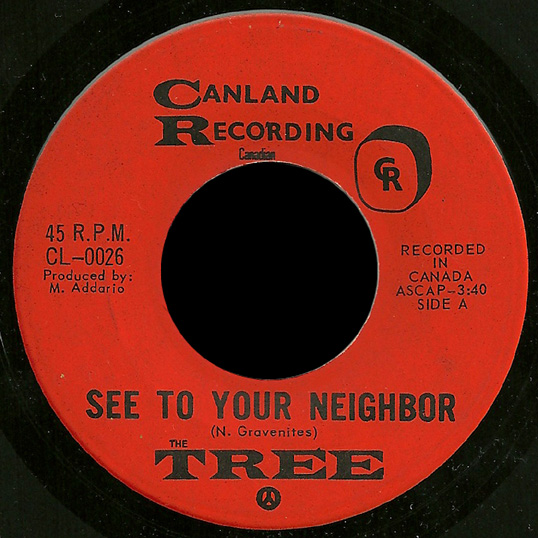 By 1969 the band was going by an abbreviated name, the Tree, and cut one last 45 for Michael Addario’s Canland Records label, a loose, catchy version of the Electric Flag’s “See to Your Neighbor” with Mike Weaver’s drums and the rough vocals standing out. It was backed with a Creedence-style version of Suzie Q.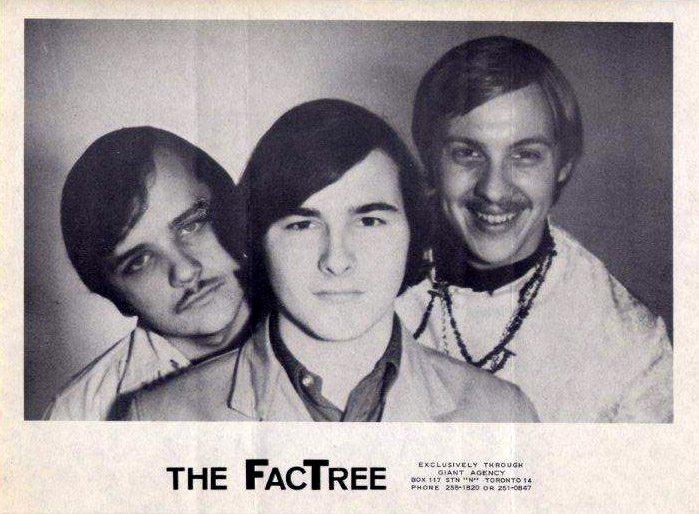

 The Regents Featuring Mel Gaines was a popular soul band established in Portsmouth, Virginia around 1968. The first memory I have of the group is my audition for the band as a drummer in the spring of 1967.Rusty Gibbs, an old high school buddy of mine, told me the group was auditioning drummers at Jeff Paul’s house in the Churchland area of Portsmouth. Jeff played bass with the group and actually liked how I played, and to my surprise the group asked me to join them. I was a junior at Cradock High School in 1967 and was trying to determine if I should continue to play sports or follow my heart’s desire and become a drummer in a dance band.
 I had taught myself how to play drums by watching all of the local bands. I especially studied and copied Fat Ammon of Bill Deal and the Rhondels and also The Swinging Machine’s Dickie Bocock. I loved their styles and really became accustomed to the beat and timing they both had. This was when dancing at teen clubs, dances halls, high school dances such as the Ambassadors Club (or AB Club as we called to it) and The Lighthouse in Portsmouth were both at their all time high.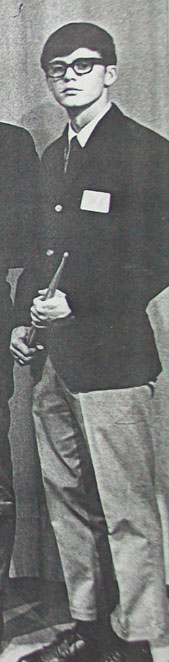
 Special thanks to Johnny Johnston for his help with this page, to Jimmy Finnegan for the clipping about the record release, and to Jeff Paul for the video link.