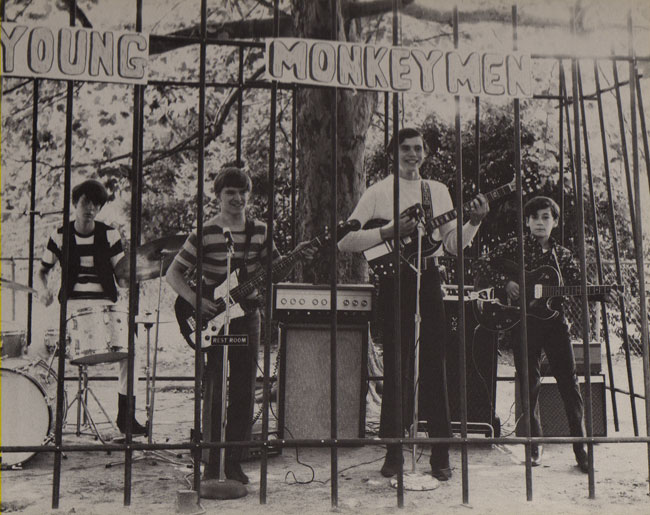
The Young Monkeymen were Trenton, New Jersey’s top band in the mid-60’s. Members were Al Dyott, James Markley, Eugene Patricella on lead guitar and Dean Wilcox.
Eugene was only a young teenager when he played the solos on “I Believed You” and “Bald Headed Woman”. These two songs were their first 45, recorded at Frankford-Wayne Recording Labs in Philadelphia.
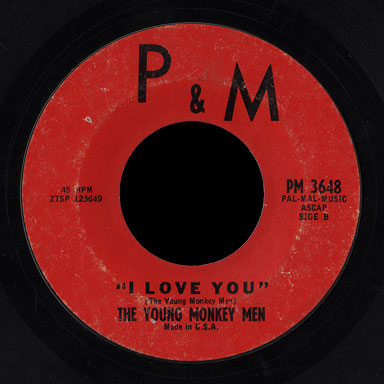
Their second record, “I’m Waitin’ For the Letter” was written by Phil and Mary Ann Lombardo and released on their P & M label. The flip is a good original credited to the group, “I Love You”, with a catchy guitar riff and nice bass playing.
Joe Patricella is listed as their manager on the promotional material. I’ve read the band broke up from the draft. They have a later 45 on the P & M label I haven’t heard yet, “They’re Not Forgetting You” b/w an instrumental version of the same song.
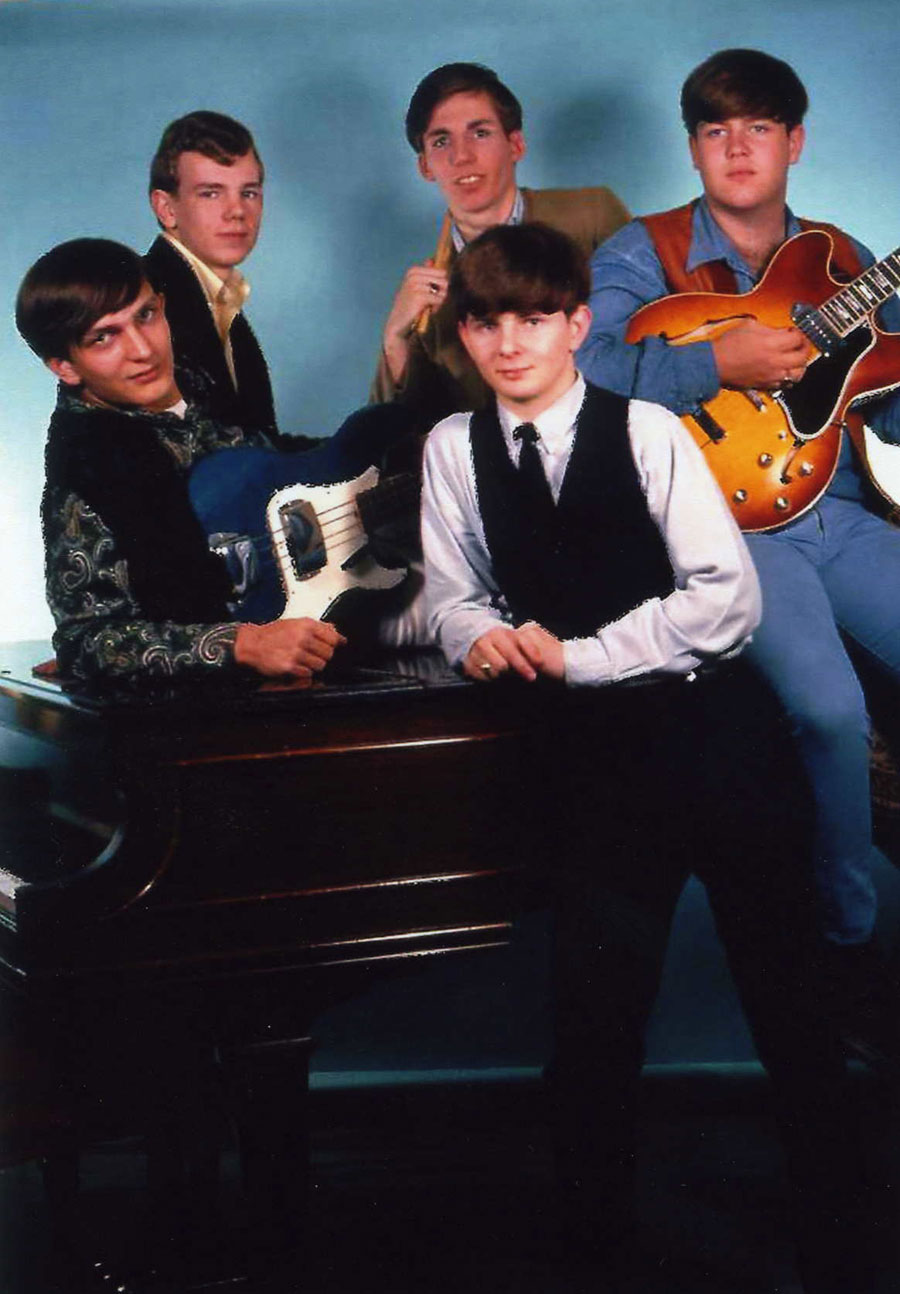
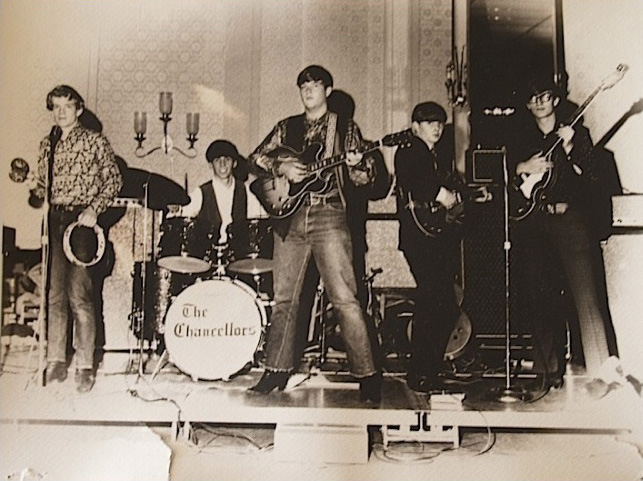
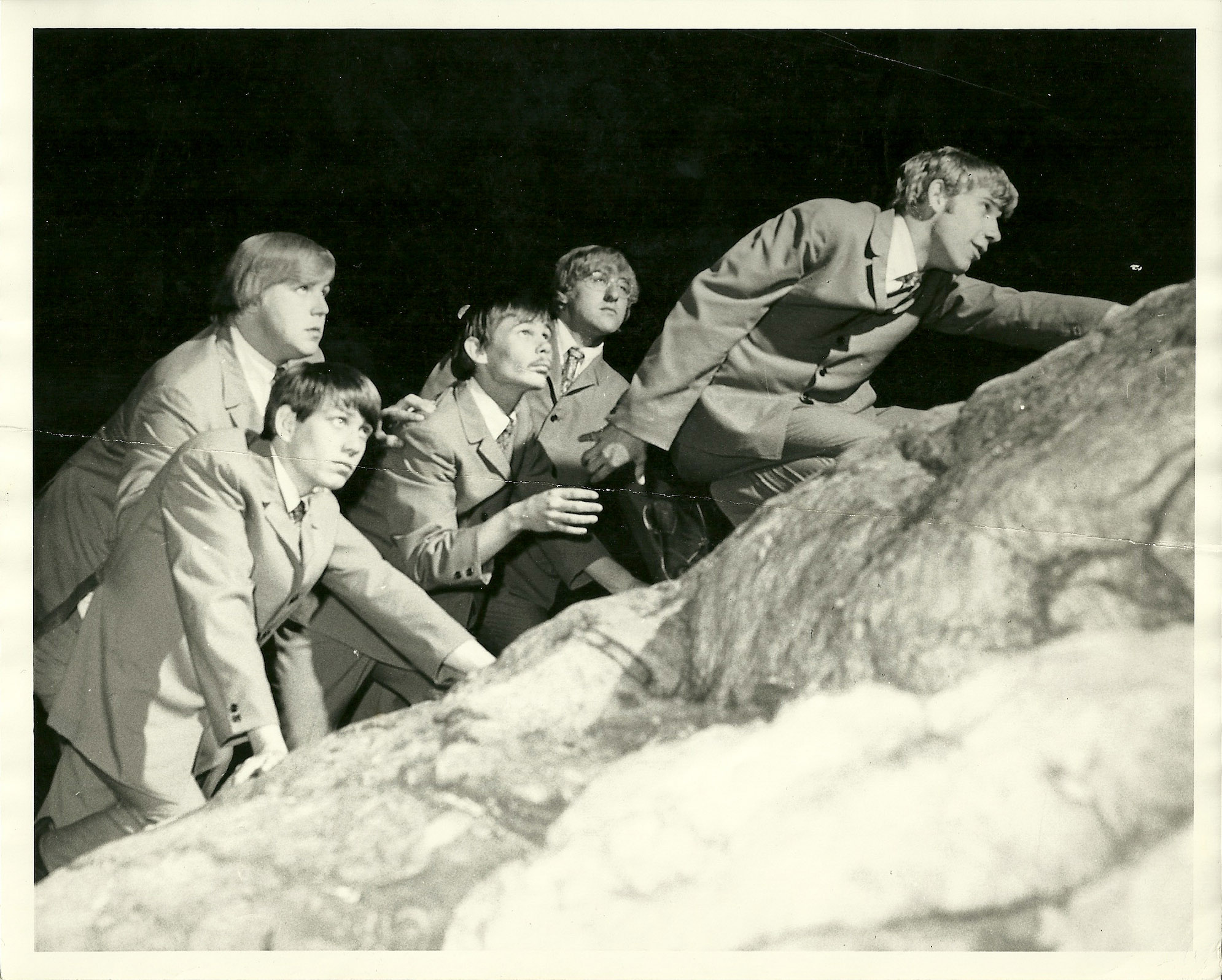
Back row: Jim Ovaitt (keyboards), Rick Garfield (drums), Rick Blomstrom (lead guitar). Second row Mike Gilliam (bass guitar), Bruce Reinoehl (rhythm guitar). The Chancellors were a quintet from Lansing, Michigan with two 45s on the great Fenton label. Since my original post I’ve been in touch with Chancellors rhythm guitarist Bruce Reinoehl, who wrote up a short history of the band:
The Chancellors was a mid-Michigan band which was active between mid 1965 and late 1967. The band formed around the direction of keyboard man and lead singer Jim Ovaitt. During the summer of 1965, the group underwent several personnel changes before its final composition of Jim Ovaitt, keyboards and lead singer, Rick Garfield drums, Rick Blomstrom lead guitar and vocals, Mike Gilliam bass guitar and vocals and Bruce Reinoehl rhythm guitar and vocals. At the time we were all high school students in East Lansing and Okemos, Michigan.
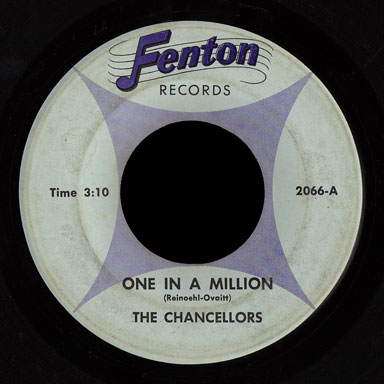
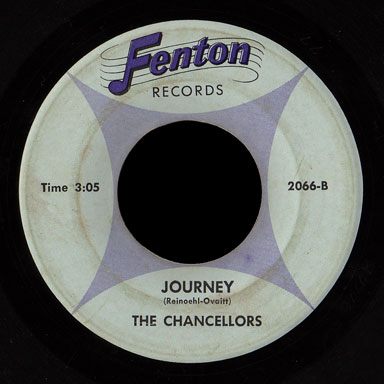
Our first jobs consisted mainly of high school dances. As we continued to improve we moved up to Michigan State University fraternity parties and local night clubs. In early 1966, we cut our first record. This was the “Journey” / “One in a Million” record of which only a few hundred were pressed. Today that record is quite scarce. I can remember the fairly primitive by today’s standards studio which at that time did not have the ability to double track recordings. That meant everyone had to play all parts of both songs well enough to make a record. That sounds easy especially with all of the rehearsing we had done before going to the recording studio. As with anything one makes, the builder is the one who knows where the blemishes are. There always seemed to be something that just was not good enough. By the time we were finished, I never wanted to play or hear either of those songs again. That changed when I heard “Journey”, an instrumental, used by one of the local radio stations as a lead up to one of their news broadcasts.
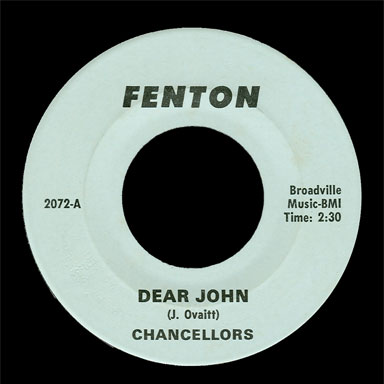
By late 1966, the Chancellors were becoming fairly well known in the mid Michigan area. We were playing jobs in Saginaw, Bay City, Jackson and as far away as Harbor Springs. We played at nightclubs where the Byrds and Beach Boys had played a week or two previously. We also cut out second and final record around this time. This was the “Dear John” / “5 minus 3” record.
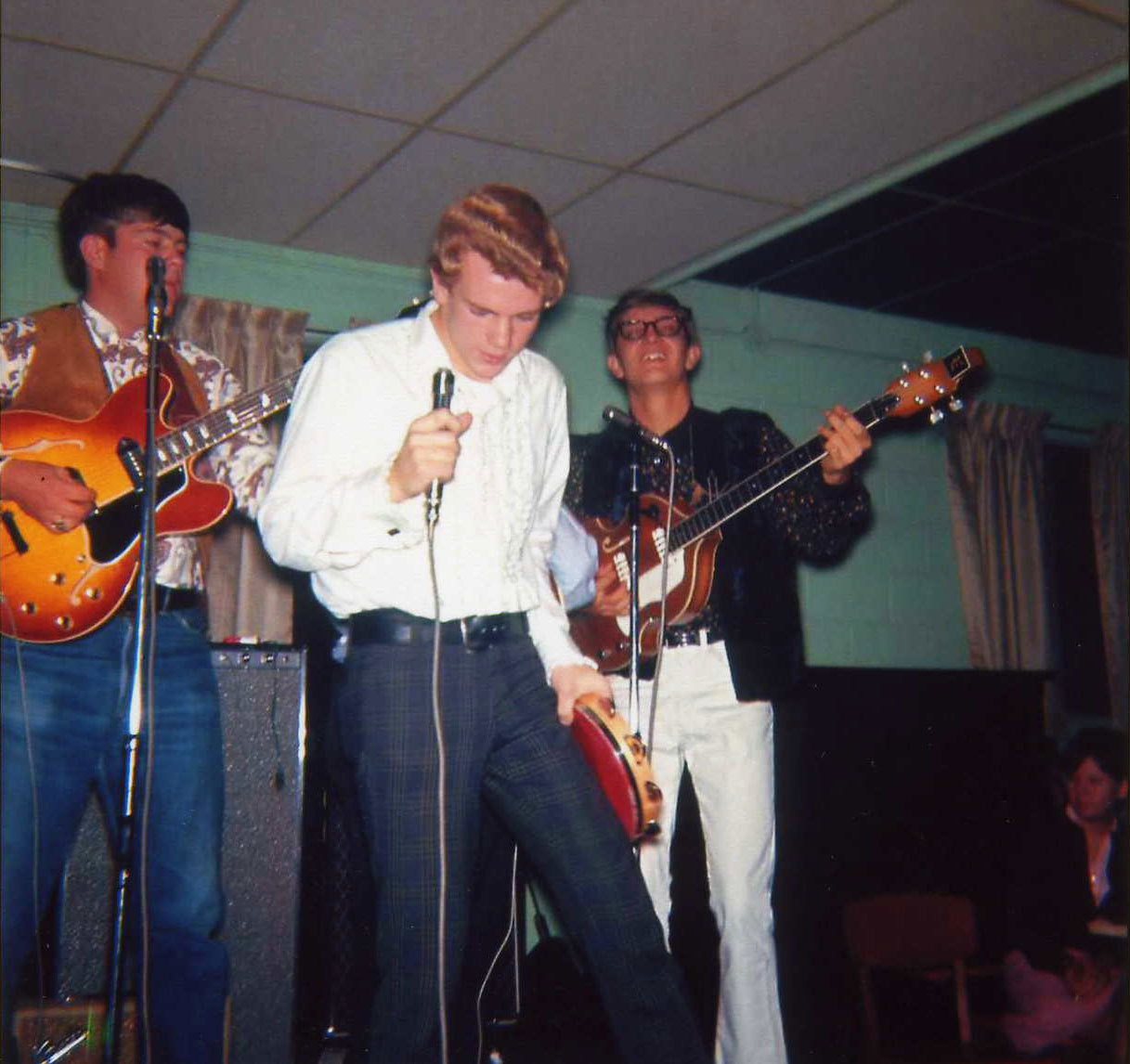
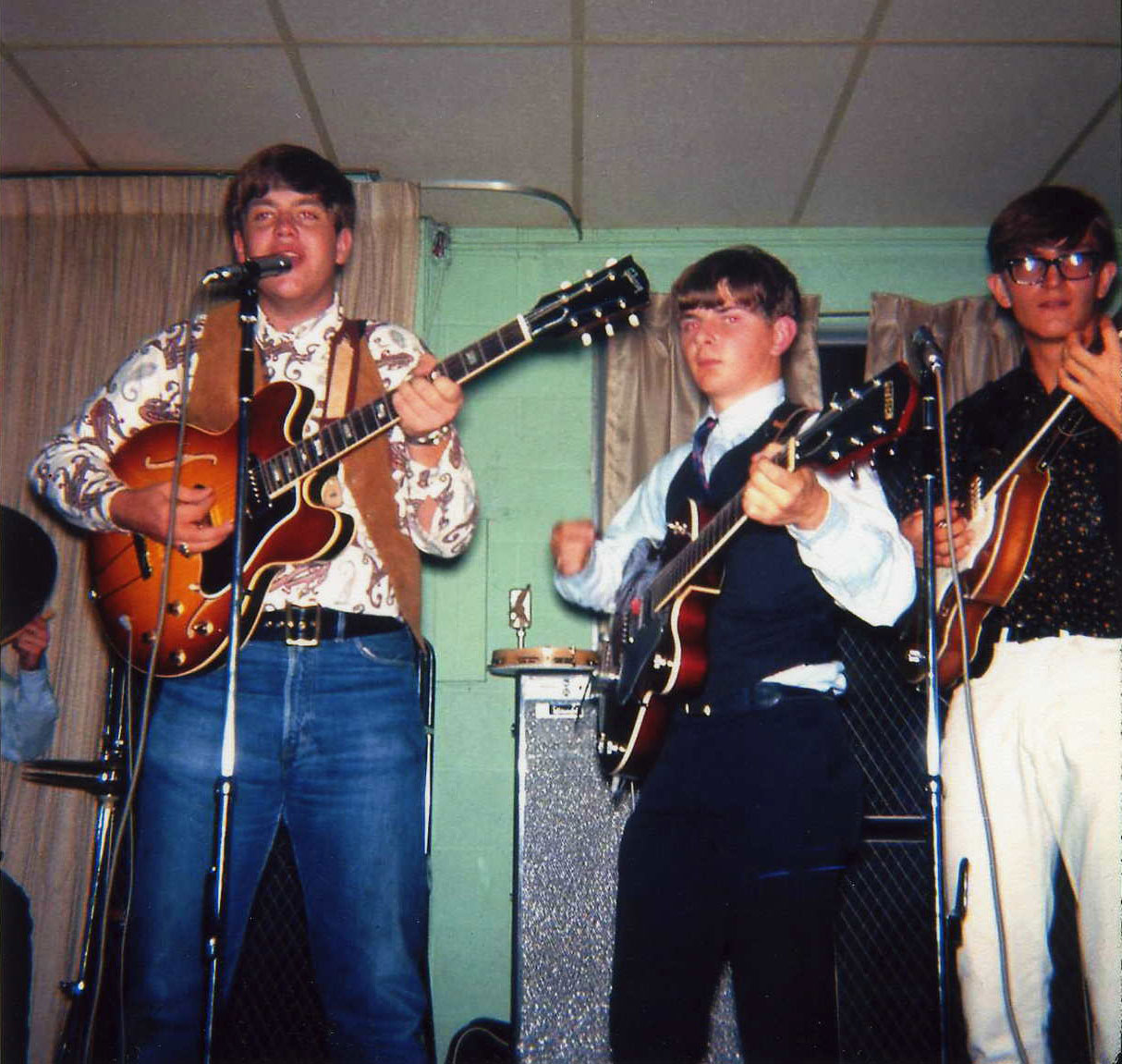
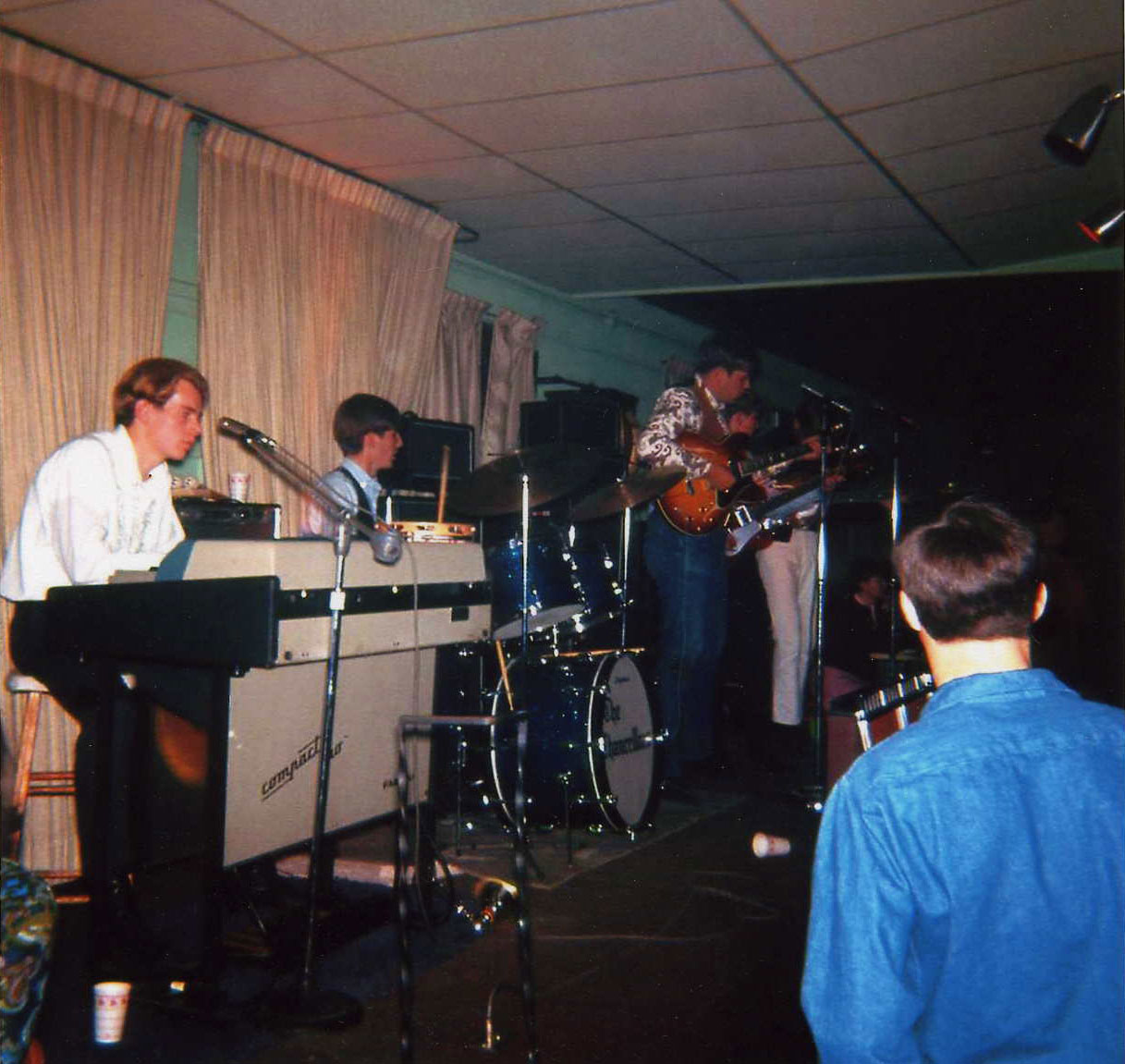
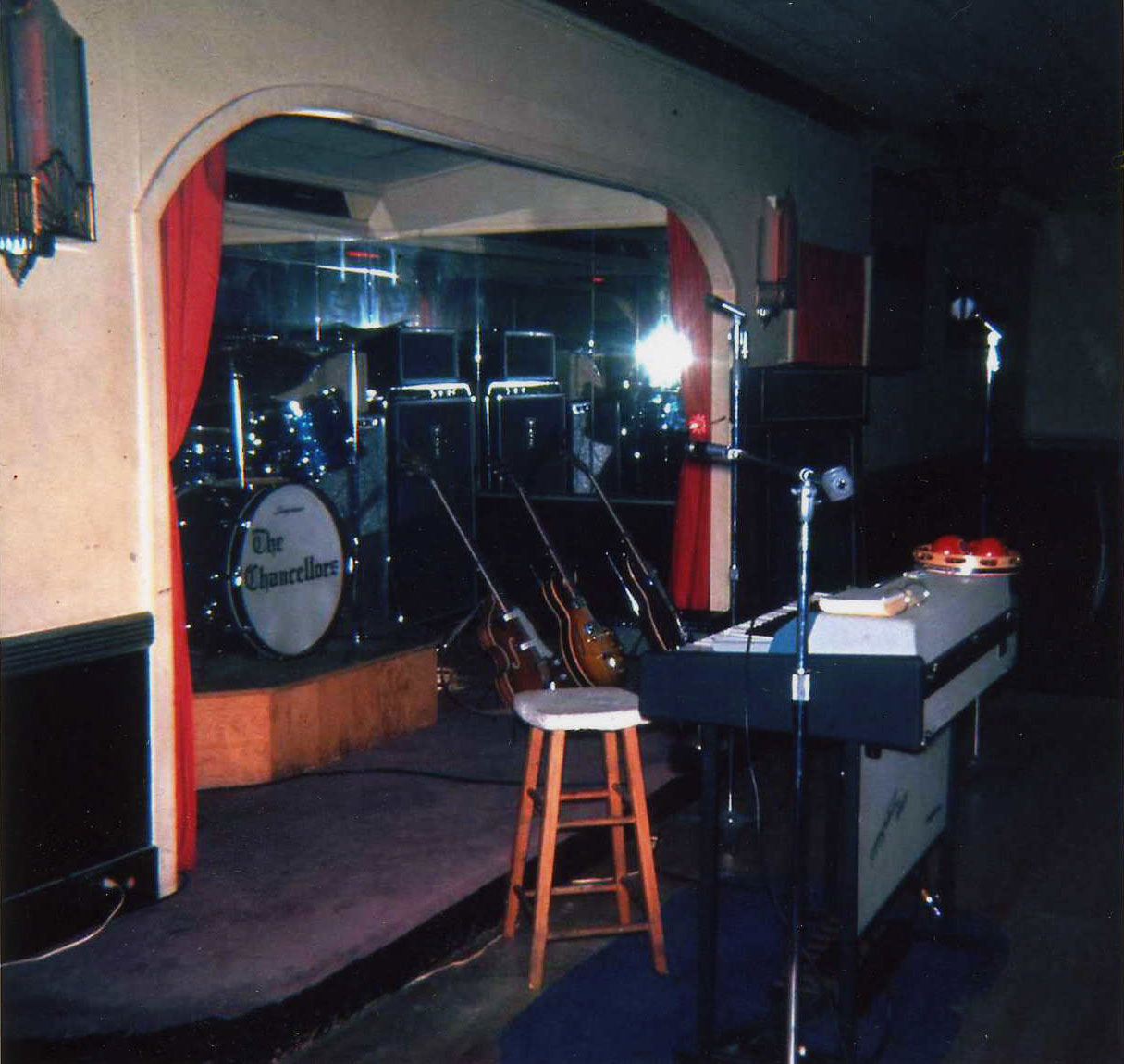
The picture which was staged on the piano was taken in at the studio of Jim Ovaitt’s piano teacher. The on stage pictures taken while playing were taken at the Band Canyon a nightclub in Bay City, Michigan. Among other bands playing there were the Byrds. The pictures of the equipment were taken at Club Ponytail in Harbor Springs, MI. The Beach Boys also played that club. The motel photos were taken in Harbor Springs. Neither club is still standing.
Playing with the Chancellors was a great experience but it was also obvious that we were not cut out to be professional musicians. All of the members of the band ended up going into professions other than music. In looking back, it was a lot of work but also a lot of fun. I treasure the friendships and memories that have resulted from my experiences with the Chancellors.
Bruce Reinoehl
Bruce Reinoehl and Jim Ovaitt co-wrote both songs on the first 45, “One in a Milliion” and “Journey”. “Journey” and “5 Minus 3” feature Jim Ovaitt’s organ playing, but “5 Minus 3” is especially interesting for being a raucous duet by just Ovaitt and drummer Garfield.
The organ also dominates their first vocal song, “One in a Million”. “Dear John” gives the guitarist and vocalist more room and succeeds as a pop song.
Thank you to Paul Reinoehl for helping me get in touch with his brother and for sending in these great photos, and to Bruce Reinoehl for his history of the band.
Note: one source lists this group as cutting a third 45 on Chamus: “Places We Once Knew” / “Something for Sure”. However, this was a different Chancellors band out of Lincoln, Nebraska featuring Keith Goins and Max Carl Gronenthal. That band had another release on El Cid: “Everbody’s Got To Lose Someone Sometime” / “It Was A Very Good Year”, both singles are good blue-eyed soul with horns. Tip of the hat to Martin Hancock for pointing out this was a different band.
The Chancellors at the Band Canyon in Bay City, MIThe Chancellors at the Band Canyon in Bay City, MIThe Chancellors at the Band Canyon in Bay City, MIAt the Club Ponytail in Harbor Springs, MI
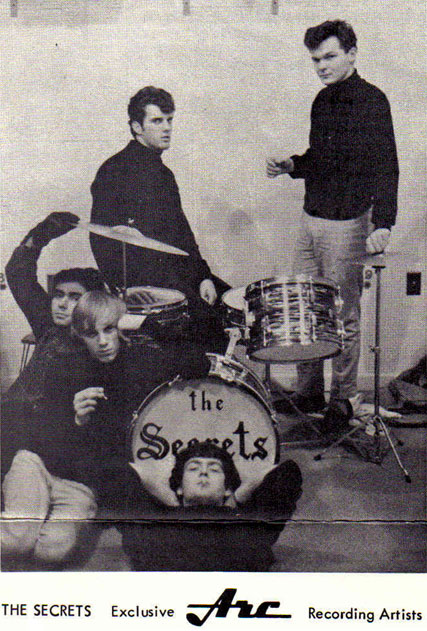
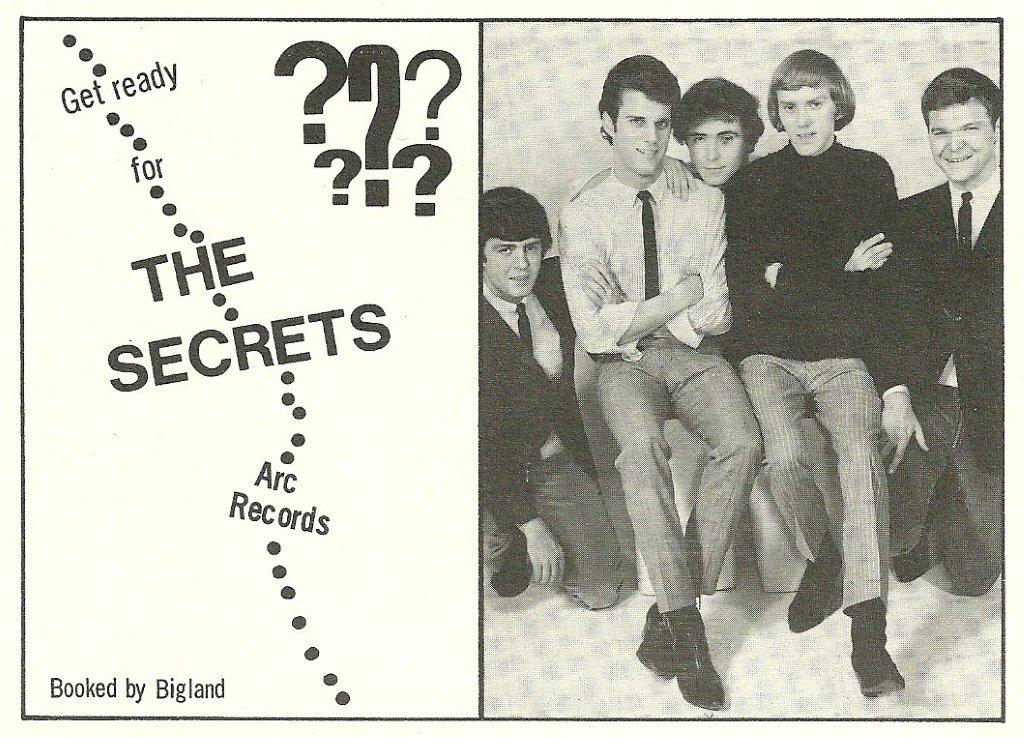
Promotional card for the Secrets – click here to see back
Updated March 27, 2008, to include comments by Doug Rankine.
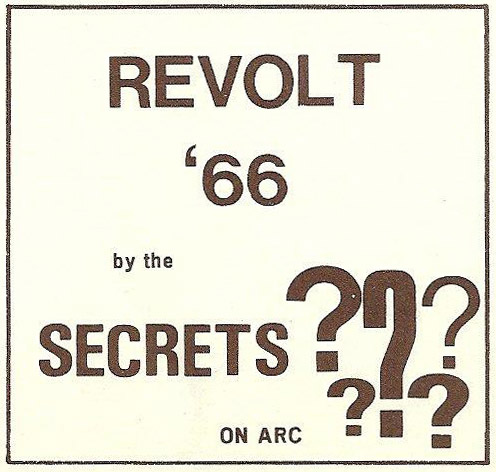
Click here to see promotional sleeve.
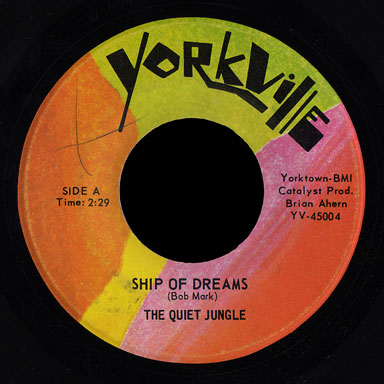
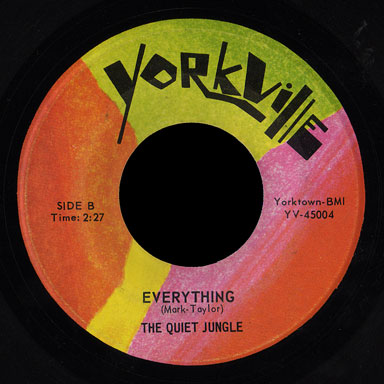
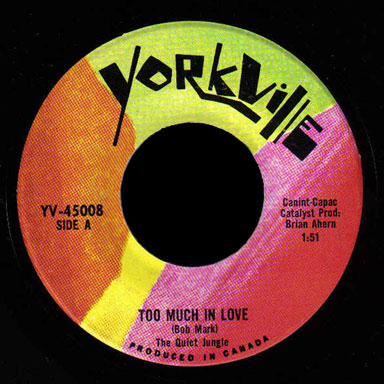
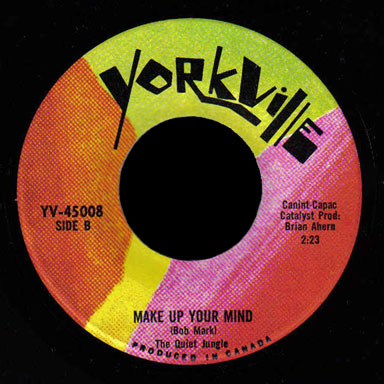
The Quiet Jungle, one of the best bands to come out of Toronto in the ’60s. They only had two 45s, “Ship of Dreams” / “Everything”, and “Make Up Your Mind” / “Too Much In Love”.
I couldn’t find out much about them until Ivan Amirault set the record straight:
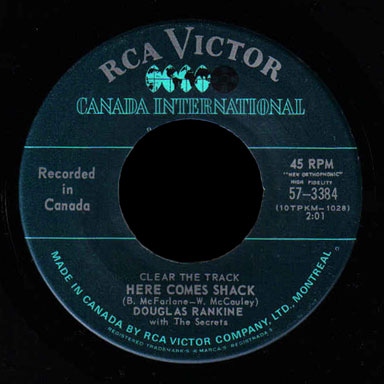
“Quiet Jungle started life as The Secrets. Same band as ‘Cryin’ Over Her’ fame on ARC Records. First they recorded a novelty pop tune called ‘Clear The Track Here Comes Shack’. A tune about a Toronto Maple Leaf hockey player from right here in Sudbury, Ontario! The tune made it to number one on CHUM radio in Toronto for two weeks starting February 28, 1966. It charted for nine weeks.”
The Secrets were Doug Rankine on vocals and guitar, Bob Mark lead guitar, Henry S. on electric piano, Mike Woodruff on bass and Rick Felstead on drums.
“Clear the Track Here Comes Shack” and the flip, “Warming the Bench” are pure novelty songs. Eddie Shack spoke fondly of the song in an interview on www.riredsdvd.com (site now defunct). While successful, it hardly demonstrates the talents of the band.
RPM, May 23, 1966
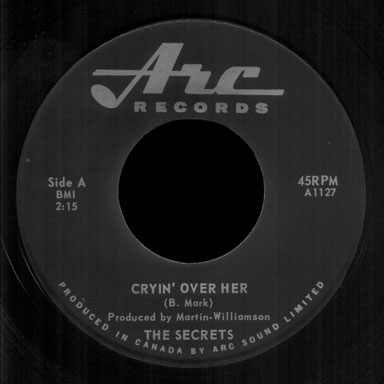
Much better is their release on Arc Records, “Cryin’ Over Her”, featuring a solid beat, fluid guitar work and good contrast between the taut verse and melodic chorus. Bob Mark wrote “Cryin’ Over Her”, and would go on to write or co-write all four of the Quiet Jungle’s released sides.
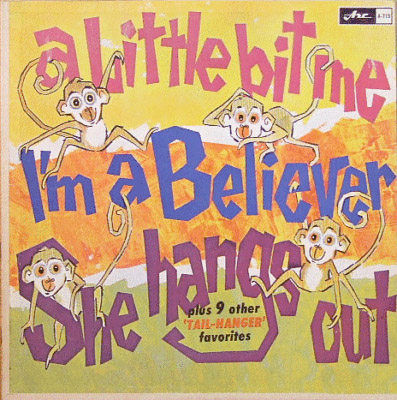
In the interim, though, their association with Arc would lead to their recording a whole album of Monkees songs for the label, released anonymously with the title A Little Bit Me, I’m a Believer, She Hangs Out plus 9 other ‘Tail-Hanger’ Favorites. Their version of “Mary Mary” is as good as any track from the Monkees record.
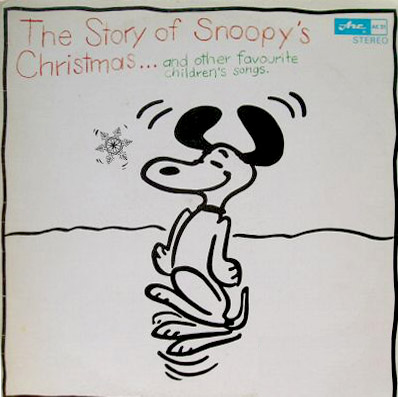
Monkees covers LP cut anonymously by the Secrets Anyone have a better scan of this cover, or the back?Licensed Snoopy LP, label credits Quiet Jungle Anyone have a better scan of this cover, or the back?
There’s also the The Story of Snoopy’s Christmas LP that credits them by name, now changed to Quiet Jungle. The credits for this record list Doug Rankine, Bob Mark and Rick Felstead, as well as Henry Taylor on percussion, while Henry S. and the bassist Mike Woodruff aren’t named. Henry Taylor was also known as Henry Thaler. According to a comment below, his full name was Henry Schwartzenthaler.
A Rolling Stones cover lp called Let’s Spend The Night Together was long rumored to be the Quiet Jungle playing anonymously, but Doug Rankine says the band wasn’t involved (see below).
“Ship of Dreams”, their first 45 as Quiet Jungle is a particular kind of 60’s song about bringing the girl who thinks she’s so hip back down to earth. There were more of these type of songs than you’d imagine!
The May, ’67 issue of Canadian Teen magazine gave “Ship of Dreams” the following review: “Good material with some weird sound effects but it lacks the professional touches and sound to make it a hit.” Take this with a grain of salt, the record the reviewer raves about on the same page is by Gordon Lightfoot!
Typically, it’s the b-side where a monster of a track hides, “Everything”, written by Bob Mark and Henry Taylor. The bass lays down the melody, a ferocious fuzz guitar dupes the riff, and the organ plays the changes in perfect textbook garage style. A minute and a half in, they repeat the break with the drums slamming away, the singer reaching his peak, and for a short while it’s as intense as this music gets.
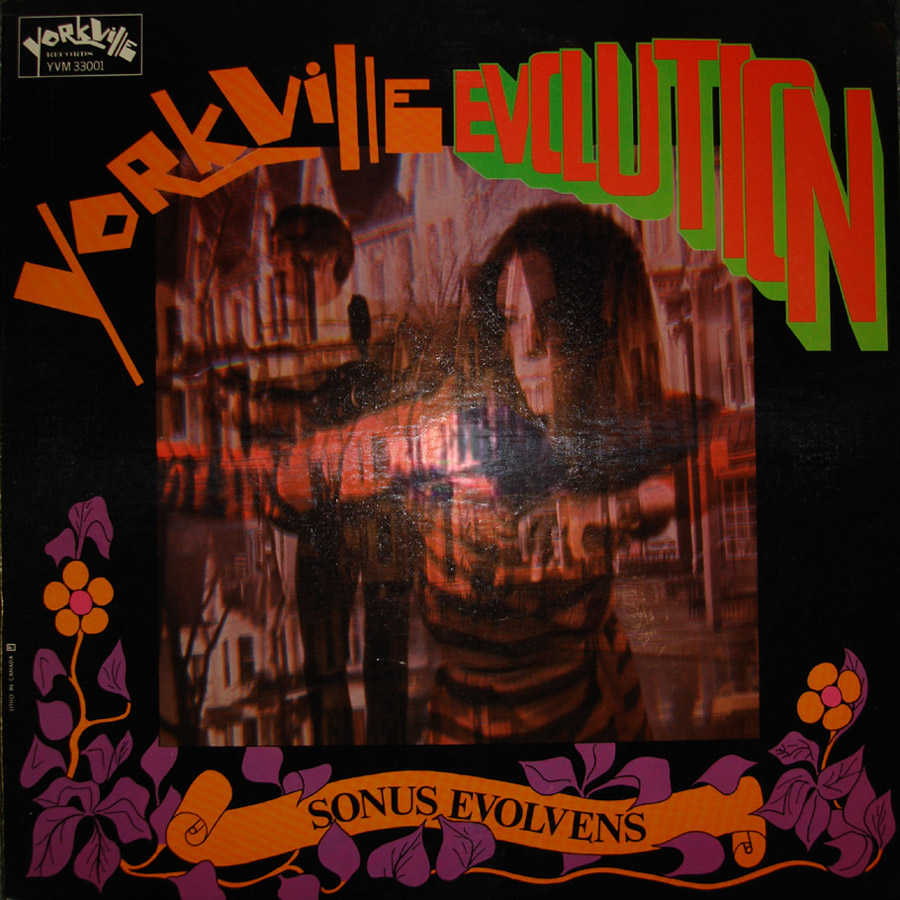
Released in early 1967, “Ship of Dreams” reached as high as #31 in February, charting for five weeks on CHUM. The song was also featured on a compilation of Yorkville singles with a great cover called Yorkville Evolution
Their second 45, “Too Much In Love” / “Make Up Your Mind” is also first-rate work, and again the b-side is tougher. Ivan writes: “The ‘Too Much In Love’ single didn’t chart, and is much harder to find than the ‘Ship Of Dreams’ 45.”
There are possibly more tapes in the vaults at Arc, but who knows when those will come to light.
Compilation LP featuring the Quiet Jungle doing “Ship of Dreams” Click to see back coverRPM, June 6, 1966
Vocalist Doug Rankine has been in touch, and kindly gave these detailed answers to my questions:
As the Secrets, we had recorded a couple of singles, “Cryin Over Her” the most notable. While playing at the Toronto Pressmen’s club, Brian MacFarland introduced himself to us and asked if we would record a song he had written for his friend Eddie Shack. At that time, we were under the impression he wanted it just for Shack. We didn’t know it was going to be released as a single and played across the entire country. Once it was released, we thought (or hoped) it would just disappear into the night and nobody would care about it. As fate would have it, it didn’t disappear. For some reason people loved it.
We were very young and like 100’s of bands playing the local scene at the time, we had our sights set on “Stardom”. Clearly, we needed a way to distance ourselves from a “novelty song” such as Shack. The most logical solution in the eyes of the execs at Yorkville records was to change the name and get a couple of singles into the marketplace under our new name “The Quiet Jungle” as soon as possible. We released our first single “Ship Of Dreams” on the Yorkville label and things seemed to have turned the corner.
Our bookings increased and we were playing right across Canada. Everyone booking us however, wanted the “Secrets” to play “Clear The Track Here Comes Shack” and not the group that just released “Ship Of Dreams”. I was 17 at the time and the money being offered was pretty good, so we decided to take the bookings and pocket the money!
The major influences for the Quiet Jungle were the Rascals, Animals and believe it or not the Mamas & Papas. I want to clarify one point. While we did cover a “Monkees Album” and “Snoopy’s Christmas Album” for Arc Records, we did not cover any songs listed in the “Let’s Spend the Night Together” album. I was only used for the picture of the album cover.
Q. Did the Quiet Jungle have anything to do with the Flower Power album released on Arc by ‘The Okey Pokey Band and Singers’?
No we had nothing to do with the “Flower Power” album. There were a couple of TV shows at that time called After Four and High Time that were on CTV. We were on those shows varily often. There was an album produced at the time called “After Four”. There are some great tracks on that album from the Ugly Duckings, Big Town Boys and Stitch In Tyme to name a few. At the time of the album we recorded a song entitled “Four In the Morning”. Without going into a lot of detail, we recorded it under the name of the Scarlet Ribbon.
There were a few reasons the band broke up. After four years (having the time of my life), I came to the realization that “I personally” was not a good enough singer to hit the big time. While traveling the country, I got to hear bands and singers that were 10 times better than I was and realized that even they would not make it. We were playing the “Red River Exhibition” in Winnipeg one summer when I got to hear a young guy by the name of Burton Cummings sing. As soon as he opened his mouth, I knew I was in the wrong business. There was no mistaking, he had a voice from the Gods and was truly destined for stardom.
Bob Mark and Henry Taylor were the true talent of our band. Both were extremely accomplished, Bob on the creative side (writing original material) and Henry as the musical side (arranging). Both Rick and Mike were very solid on drums and bass but it was Bob and Henry who carried the band.
Mike left the band and we continued for about a year as a four member group. I left after a year. If I remember correctly, Bob, Henry and Rick got a new singer (I’m sorry I forget his name) and added Ron Canning from the Rising Sons and continued to play for another year or so.
Bob retired some years ago and lives somewhere up North. Rick lives in the Durham area. I believe Mike is somewhere in Toronto. Henry is in Toronto and is still active in the music business playing part time with a Doors tribute band.
Thank you to Ivan for the info, scans of promotion material on the Secrets, and most of the mp3s featured here, and special thanks to Doug Rankine for his detailed story about the band. Thanks to David for the tip about the Eddie Shack interview.
If anyone has goods scan or photo of the various LPs mentioned in this article, esp. the Flower Power, CTV After Four or Let’s Spend the Night Together LPs please contact me.
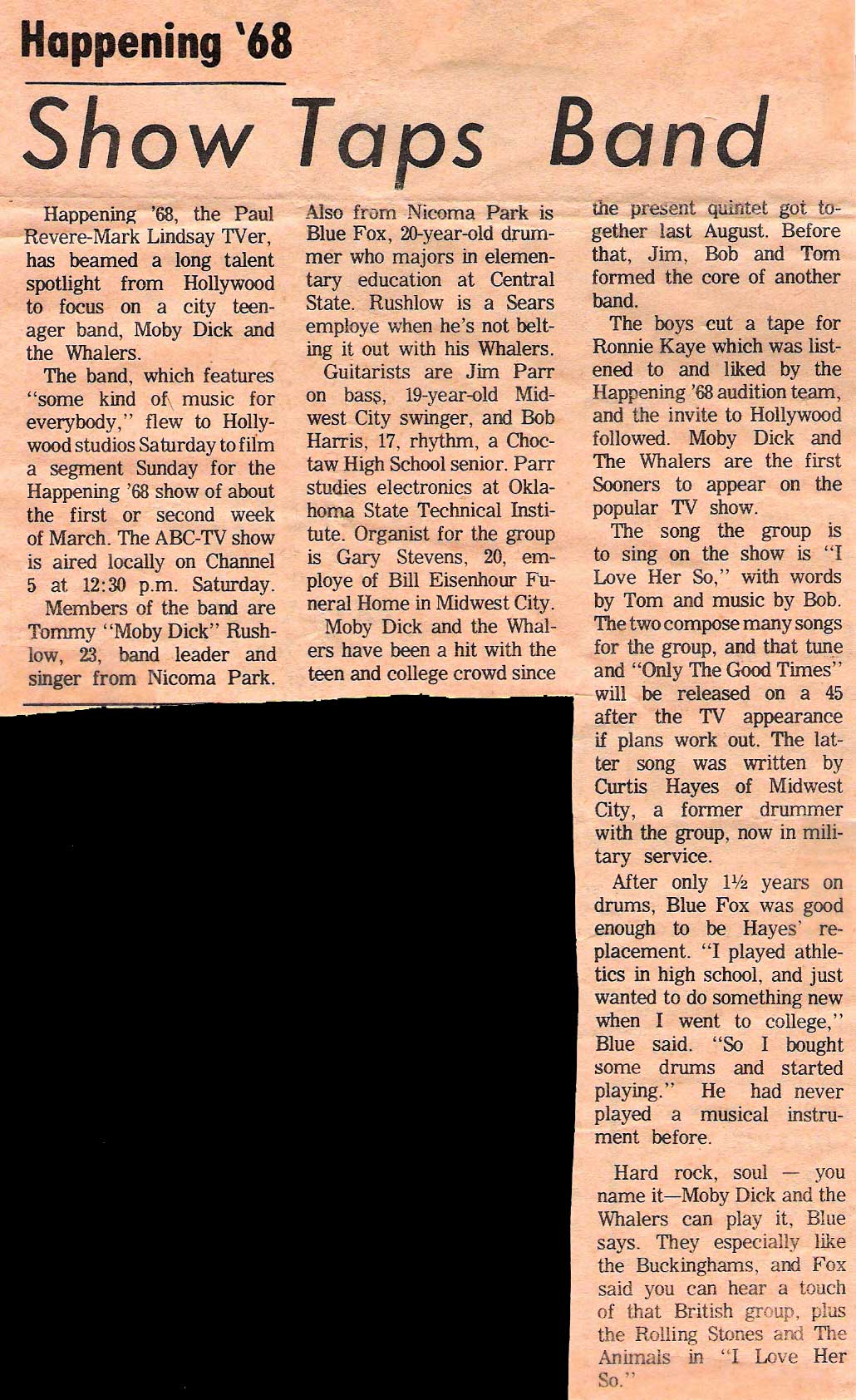
Once rumored to be from Wichita, Kansas, Moby Dick and the Whalers were actually based in Midwest City, just outside of Oklahoma City. Members were Tom Rushlow on vocals, Bobby Harris rhythm guitar, Jim Parr on bass, Gary Stevens on organ and Blue Fox on drums. As a quintet they had been playing since August ’67, though Tom Rushlow, Bobby Harris and Jim Parr had been in earlier groups together.
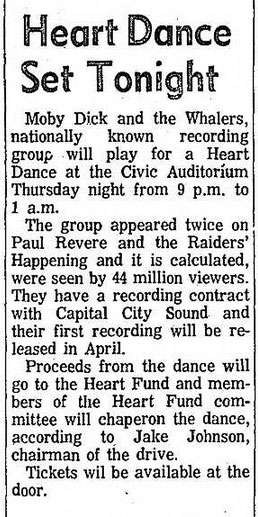
They participated in a nationally-televised band competition, the Paul Revere & Mark Lindsay hosted show, Happening ’68. In the contest, two bands would lip sync one of their recordings (original or cover song) in front of a panel of three judges and studio audience, with the winner going on to the next round. The judges varied from show to show, but at the time of the Moby Dick and the Whalers broadcast, may have been Jackie DeShannon, Tommy Roe and Jay North (Dennis the Menace).
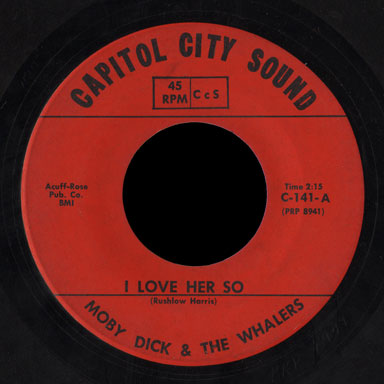
The song Moby Dick and the Whalers did for the show was “I Love Her So”, an excellent organ-driven rocker, written by Tom Rushlow and Bobby Harris. From the few episodes I’ve seen (and I haven’t seen theirs yet), I would say “I Love Her So” must have been one of the better original songs featured on Happening ’68.
The flip side is the mellower “Only the Good Times,” written by Curtis Hays, the former drummer of the group. According to the article, the 45 was released just after the appearance on Happening ’68.
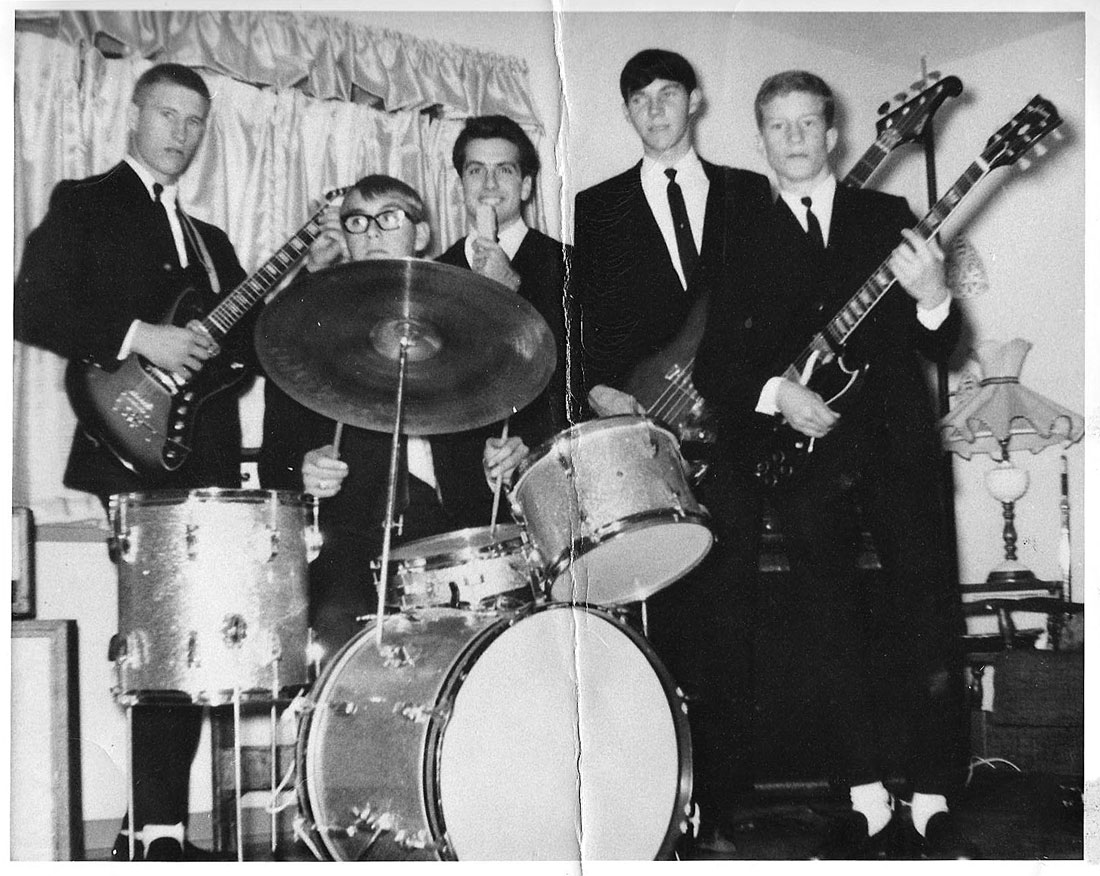
The original lineup, 1966, l-r: Franklin Harris, George Feree, Tom Rushlow, Jim Parr and Bobby Harris.
Bassist Jim Parr sent in the photo and article from the Oklahoma Journal, and provided some history of the band:
The lead singer and manager was Tom Rushlow, who was stationed at Tinker Air Force Base near OK city when the band was first beginning to form. I met Tom through Bobby Harris, who invited me to a jam session. Tom Rushlow, Bobby Harris – and Bobby’s brothers – William Harris and Franklin Harris – were all extremely talented musicians. We all lived in or around the OK City area at the time.
After a few jam sessions and practices, I was very excited and proud to be invited to become the bass player for the group. If I remember correctly, Tom Rushlow came up with the name for the group.
Thus, the original ‘Moby Dick & The Whalers’ band was born and was composed of – Tom Rushlow, lead singer – Bobby Harris, rhythm guitar – Franklin Harris, lead guitar – George Feree, drummer – & Jim Parr, bass guitar. This was sometime around the year ’66, give or take a year.
After the original drummer, there was Curtis Hayes – who is credited with the song ‘Only The Good Times’ on the flip side of the 45. Next came Blue Fox, who played the drums with the group during the time the record was made and was with the group during the invitation to Hollywood. William Harris, drummer, was with the band from time to time, and eventually was with the band full time.
One very popular member of the group that deserves mention was Joe Sawyer, organist, who replaced Gary Stevens.
Notice from the Ardmore Daily Ardmoreite, March 6, 1969, describing an April release for their 45During the time frame of the recording and release of the record, in ’68 and ’69, the group was composed of Tom Rushlow, lead singer – Bobby Harris, guitarist – Gary Stevens, organist – Blue Fox, drummer – and Jim Parr, bass guitar. The master tape for the 45 was recorded by this group at a studio in Tyler, Texas.
The group performed numerous times on local OK City television shows, one of which was a popular show titled ‘The Scene’, hosted by a very popular DJ – Ronnie Kaye. The group was also invited to appear in Hollywood, on a television show titled ‘Happening ‘68’. This show was a Dick Clark production and was hosted by Paul Revere and Mark Lindsay, of ‘Paul Revere & The Raiders’.
Tom Rushlow’s son Tim played with Little Texas and is now a solo country artist. Tim’s online biography mentions a later version of his father’s band:
After getting out of the military, Tom Rushlow moved his family to Arlington, Texas, where he joined his wife Patricia’s three brothers in a band called Moby Dick and the Whalers.
“The Whalers were one of those good regional acts that opened for stars like Mitch Ryder and James Brown,” remembers the proud son. “They put out their own records, and even came close to appearing on ‘American Bandstand.’ They got real close to making it.”
Update:
I’m very sorry to report that Jim Parr passed away on February 10, 2009. His son Robert wrote to me, “He was a very talented artist and a great father – I couldn’t ask for a better life. He loved music and played a lot at home for the family.”
It was an honor for me to correspond with Jim about his music, my deepest condolences to his family.
The Marke 5 were high schoolers from Fayetteville, near Raleigh. Members were Donnie Wofford on vocals, Bill Muffet lead guitar, Pete Sanchez guitar, Steve Kellburg bass and Eddy Truman on drums.
“Pay” has a lot going for it: unusual staccato guitar work, a solo heavy on reverb, sharp drumming and good lead and harmony vocals. Great bass work stands out on “The Leader”, a solid shout-along tune. Both songs are credited to Donnie Wolford and Bill Muffett.
Ed Truman later played with a version of Minnesota band the Castaways (of “Liar Liar” fame) when Castaways’ guitarist Bob Folschow was stationed in Fayetteville while in the military.
Jimmy Capps was a very popular DJ on WPTF in Raleigh and started the JCP label in early 1965. He released records by dozens of groups including the Unknown IV,the Counts IV,the Symbols, the Vigilantes, the Nightwalkers, Davy Butler, and the Vibra-Sonics, recording in his studio behind the McDonald’s on Hillsborough Street. Jimmy Capps died in 1967 at age 47, and the label soon folded, ending a remarkable run at documenting the local Raleigh-Durham scene.
Sources include: Tobacco-A-Go Go vol. 2, and Fuzz, Acid and Flowers.
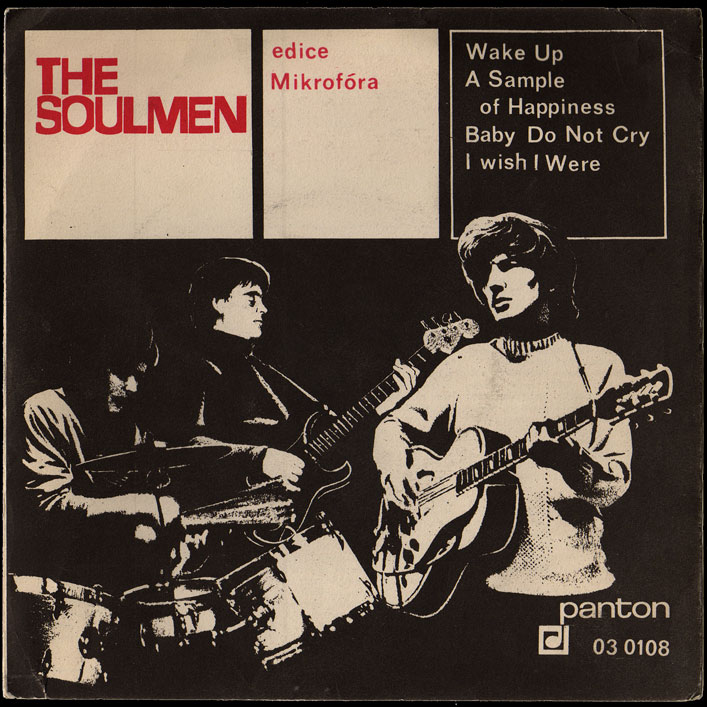
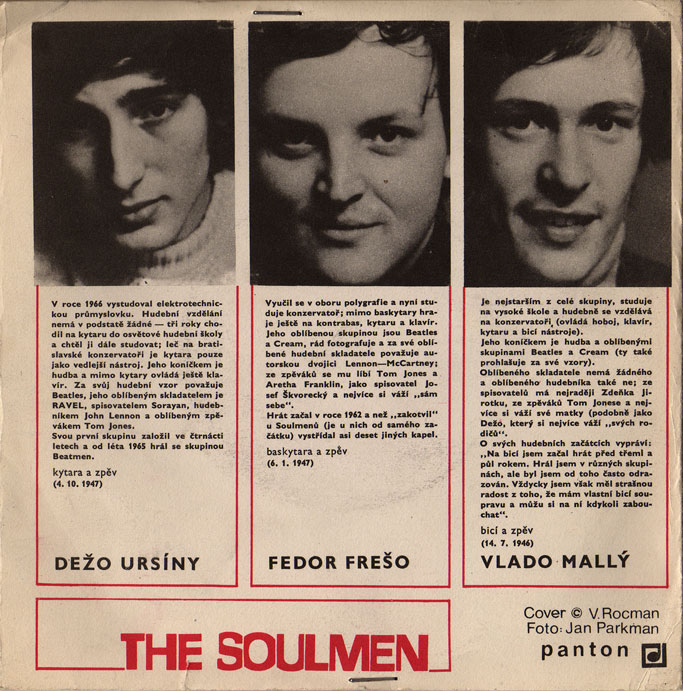
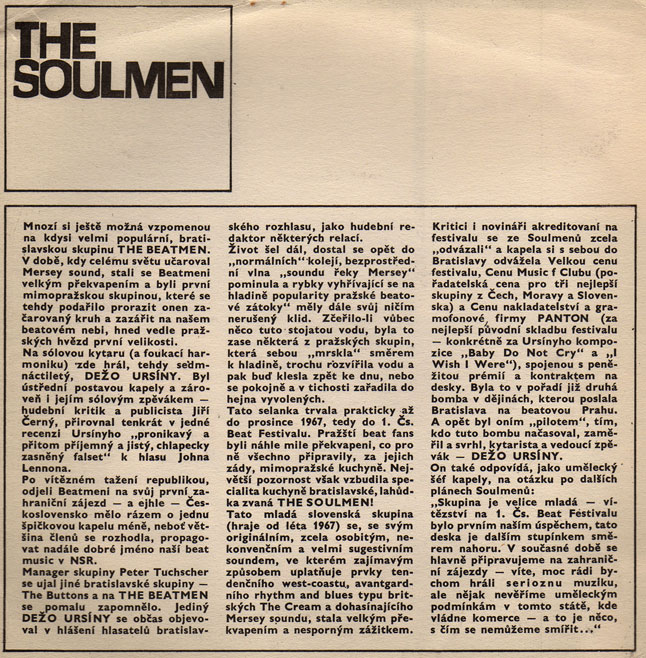
After leaving the Beatmen in 1967, Dežo Ursiny formed the Soulmen with Vlado Mally and Fedor Freso. The group didn’t stay together long, but in December they won the first beat festival competition in Prague, and recorded this excellent EP before splitting up in 1968.
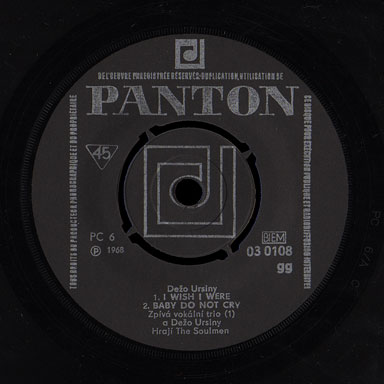
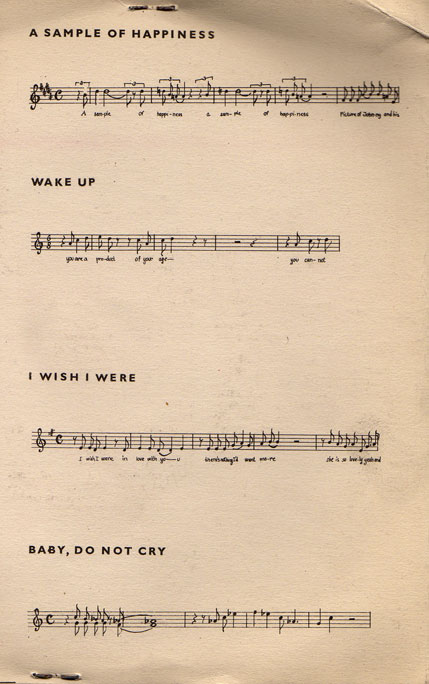
“I Wish I Were” is my favorite track from their one EP, an original and exciting song with a great beat, vocals and a fine guitar solo. Their other songs, “Baby Do Not Cry”, “Wake Up!”, and “A Sample of Happiness” show a heavy influence by Cream, but are still well-crafted.
I’m sure there’s more information about them on the back of the EP sleeve, if someone can translate the essentials.
After the Soulmen, Ursiny started again with the New Soulmen, showing a change in his style towards progressive rock and jazz that would continue into the 70’s and 80’s. He died from cancer on May 2, 1995, in Bratislava.
Either a late version of the Inferno 5 Plus 1 or an early one of East African Fair from left: Dave Powers (front), Rick Panas, John Bell, Domenic Fragomeni and Randy Larocque.
East African Fair included some of the Inferno 5 Plus 1. Members were Randy Larocque (guitar and vocals), Dave Powers (keyboards and vocals), Dominic Fragomini (bass) and Rick Panas (drums and vocals). It seems John Bell was also a member for a time, as I think he appears in the photo above.
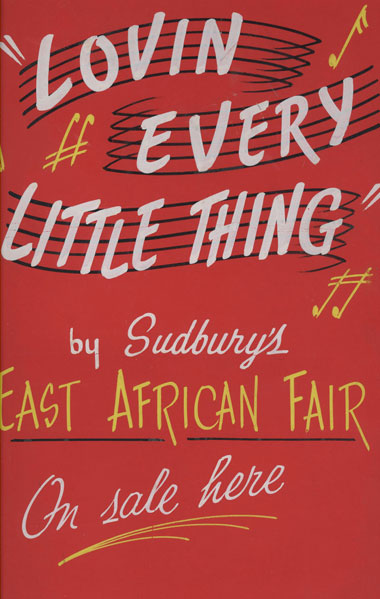
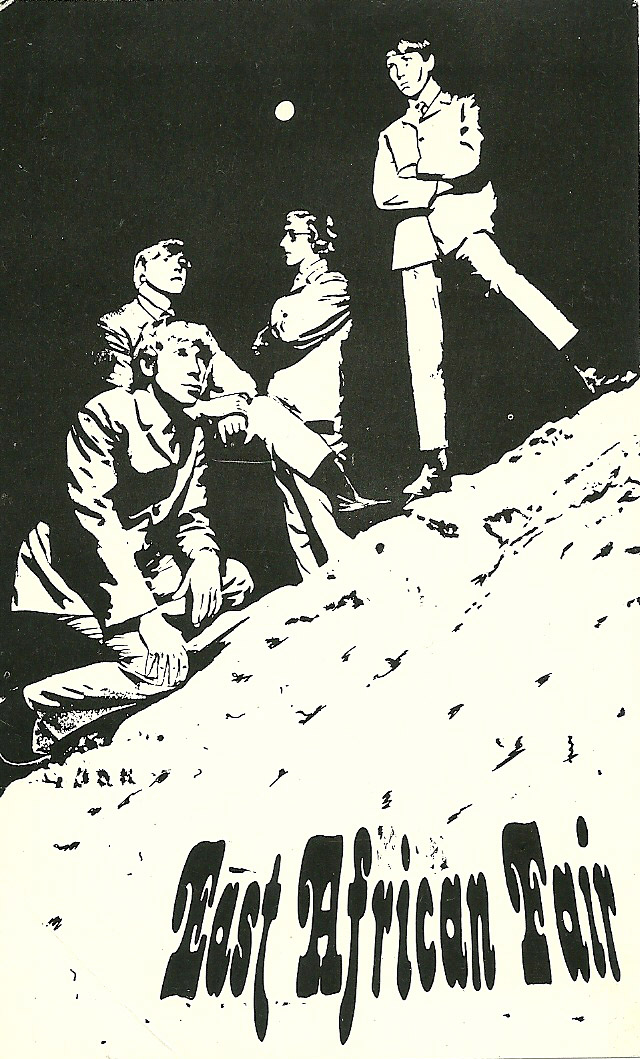
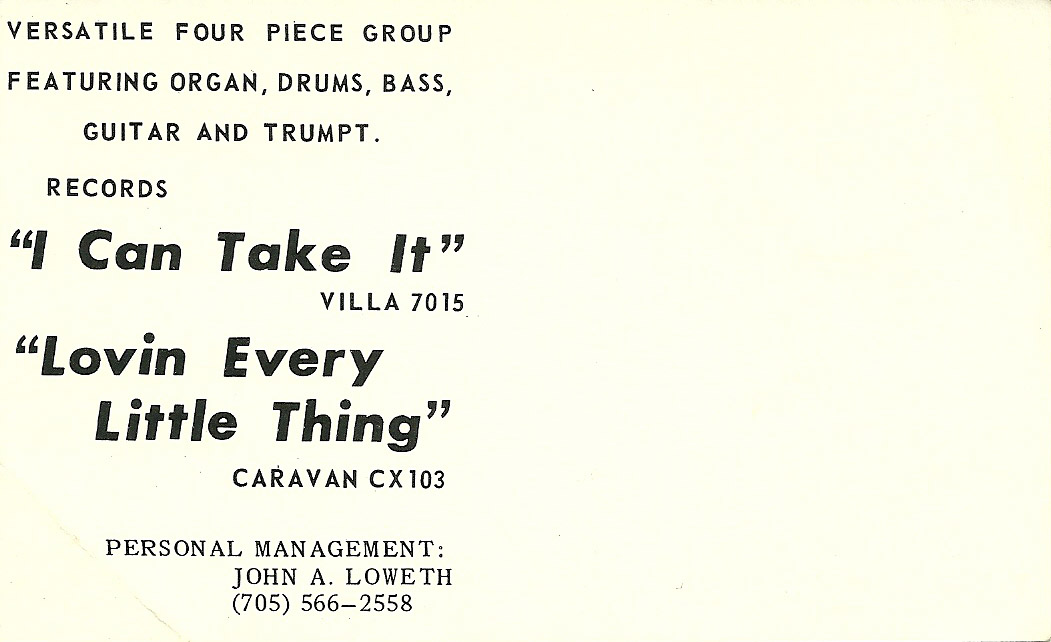
Their manager John Loweth sent me the 45 and scans of the neat poster and card of the band. He considers East African Fair to be a continuation of the Inferno 5 Plus 1, though their sound is quite different:
We changed the name to East African Fair and did pretty well with our second record, “Lovin’ Every Little Thing You Do Girl” which was a totally different style (more Hermans Hermits) than the Stones style of the first [Inferno 5 Plus 1] release.
Then we moved to the big city of Toronto. We did lots of auditions and things and played in trendy Yorkville where you just had to be if you wanted to be anywhere in Canada at that time of 1967.
The national CTV show ‘After Four’ was interested in replacing the current group Robbie Lane and Deciples and said they woud use us as the featured band next season, they suggested a name change and the remainder of the group now lead by Randy LaRocque became ‘York Lane’.
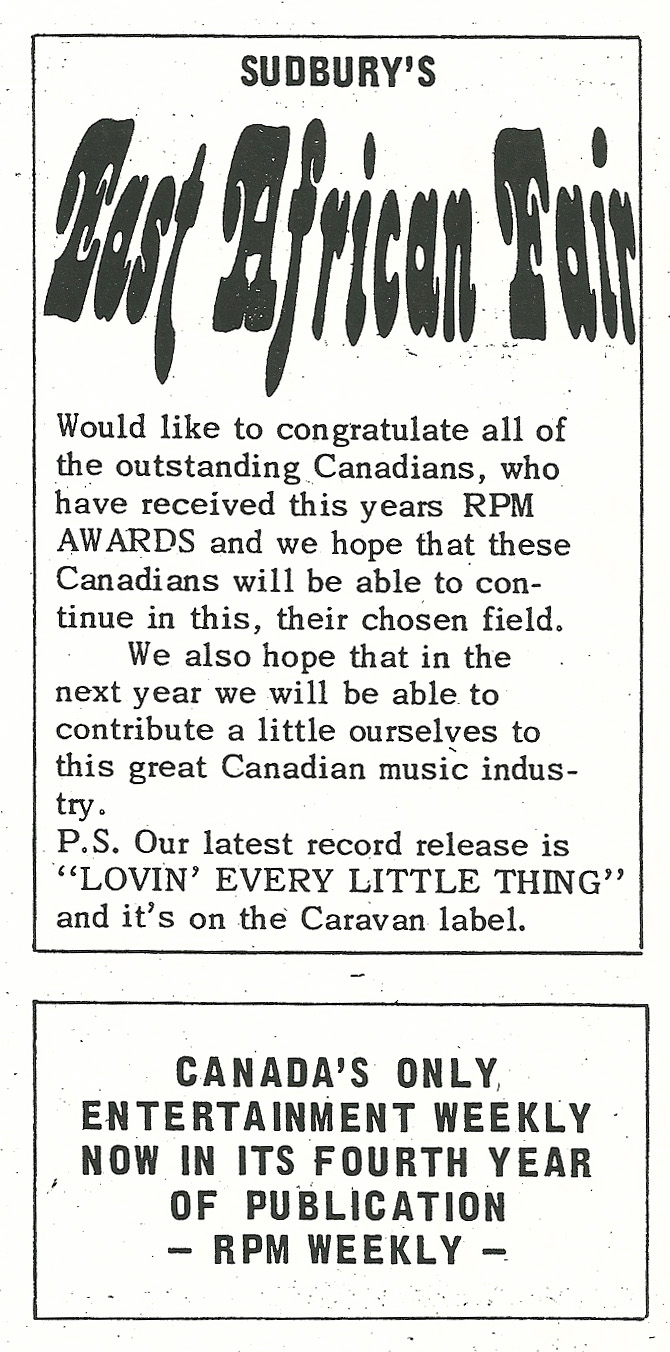
RPM Weekly, February 17, 1968A major booking agent booked the group in southern Ontario and upper New York state, but unfortunately several band members became homesick and discouraged due to lack of money, and went home, leaving just Randy and myself. I think we were just inches away from stardom.
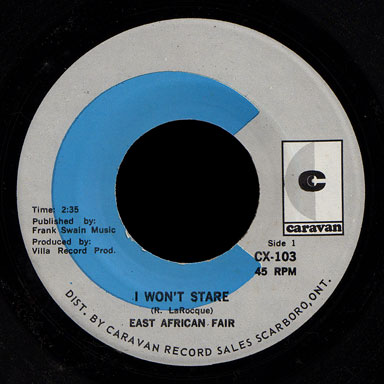
As John states, “Lovin’ Every Little Thing You Do” is a pop single like the Herman’s Hermits, though the eerie organ gives it a darker, carnival-like quality. “I Won’t Stare” is a truly original side, slow, with a nice blend of organ and guitars and obsessive lyrics. Randy LaRocque wrote both songs on this record.
After the single was released in 1968, Bill Battersby replaced Dominic Fragomini and an unknown drummer replaced Rick Panas, and the band’s name changed to York Lane. Some recordings by this lineup done at Sound Canada in late 1968 are now lost.
Update: I’m sorry to report that John Loweth passed away on April 4, 2009. John produced the Inferno 5 + 1 and continued managing the group when they changed to East African Fair. He generously shared his recollections and memorabilia to help document the story of this band.
In February 2011 I added the photo at top, the news clips from the Sudbury Star and RPM Weekly and better scans of the promotional card, all courtesy of Ivan Amirault. Thank you to Lauraine Friskey for providing IDs for the top photo.
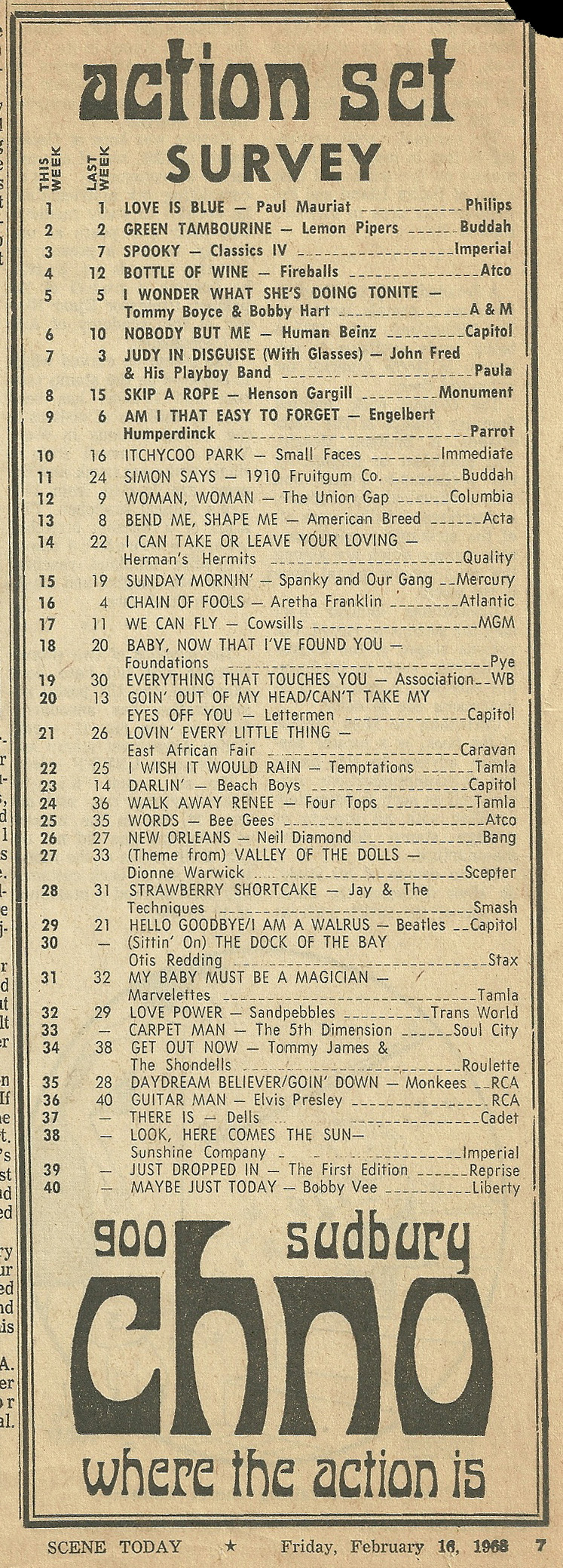
East African Fair reaches #21 on CHNO’s Top 45 The Sudbury Star, Feb. 16, 1968
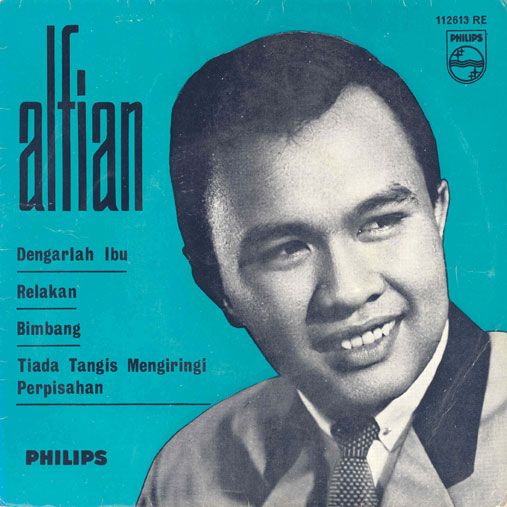
The vibrating deep baritone of Alfian Harahap (aka Nasution) was one of the most distinguishable voices in Indonesian pop music of the 1960s. His greatest hit was Semalam di Cianjur (A Night in Cianjur) recorded about 1965 for Remaco.
The song was reportedly written spontaneously by Alfian in the studio and concerns the singer remembering the wonderful night he spent in the East Java town of Cianjur and his promise to return some day. One explanation of the song I have heard is that Cianjur at the time was a transit stop for travellers through Java who would overnight there and continue their journey the next day. So the song could be about a romantic encounter in a travellers’ hotel.
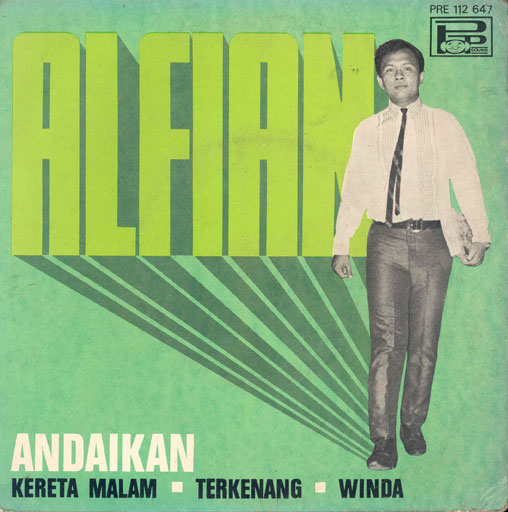
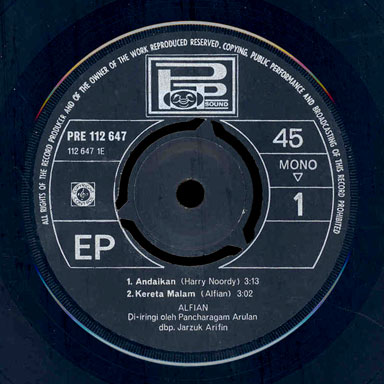
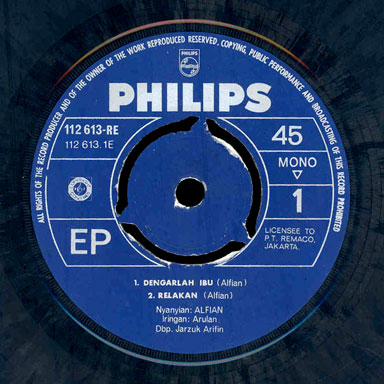
Following the success of Semalam di Cianjur Alfian’s subsequent Remaco recordings were released in Singapore by Philips under license. I feature two songs of Alfian’s from that period, Relakan (Acquiesce), from a Philips EP, and Andaikan (Suppose), on a record with the Pop Sounds label, which appears to have been a Malaysian subsidiary of Philips. On both EPs Alfian is backed by the band Arulan led by Jarzuk Arifin. I would say these recordings were made in 1966. These two songs contain some good guitar work; the other songs on the two EPs are more subdued.
Alfian remained a popular singer until the early 1970s when the Indonesian music scene began to be dominated by bands and solo singers were out of fashion. Alfian chose to retire from the music industry and spent several years working in a warehouse on the Jakarta waterfront. In 1978, however, he was involved in a traffic accident and spent two years recovering.
In 1980 he returned to the music industry working for a record company as a coordinator and supervisor of new singers. He also re-recorded a number of old hits. In 1992 he passed away as a result of diabetes and heart problems. His son Tonny, who is said to have a similar voice, has recorded a number of songs made popular by his father.
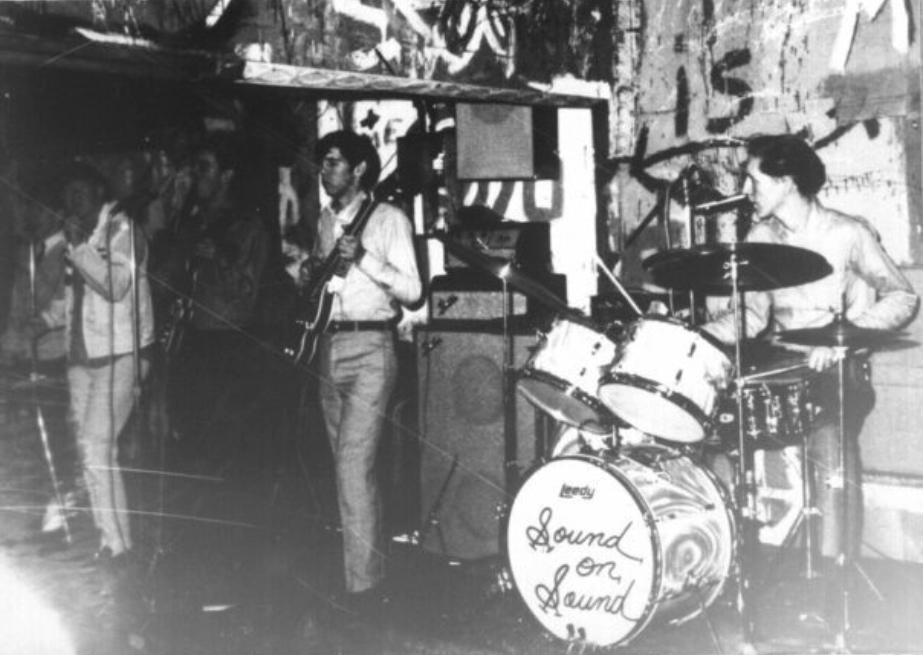
Sound on Sound at the Time Tunnel, circa 1967, from left: Stony Ratliff on keyboards (tie and jacket – barely visible), Chris Shortridge, singer (white pants and jacket), Dan Rose on guitar (dark pants and shirt), Larry Lester on bass, and Terry Long on drums. Eddy Dixon usually stood between Larry and Terry, but was taking this pic.Sound On Sound were from Grundy in the western part of Virginia, close to a three hour drive to any large city like Roanoke or Johnson City, Tennessee.
The original group consisted of Ed Dixon lead guitar, Curtis Shortridge guitar, Stoney Ratliff organ, Larry Lester bass and Terry Long on drums. Looking for a singer they found Oakwood’s Danny Rose of the Kool Kuzzins, who had cut an excellent 45 on Spot in 1967, “Love Can Be True” / “Hey Little Girl”.
Sound On Sound played back country gigs until they opened their own club, the Time Tunnel, in Garden Creek, about 10 miles from Grundy.
From the Virginia Mountaineer:
These young men performed at a nice, wholesome hangout in 1967 at Young’s Branch for the young people in our community. The teens danced and had lots of fun!
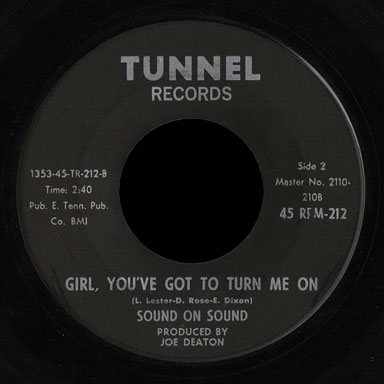
In 1968, at a radio station in Big Stone Gap they recorded their only 45, produced by Joe Deaton. The A-side was the sleepy “My Little Girl”, but on the flip is the much more electric “Girl, You’ve Got to Turn Me On”. Dominated by Stoney Ratliff’s organ style, Ed Dixon’s guitar buzzes in around the vocals while Terry Long smacks the kit and Larry Lester plays runs on the bass, making a great single all in all!
In the 1970s, Curtis Shortridge played bass and sang backup with a group called Phoenix, with Danny Perkins, Lonnie Perkins, Kenny Hale, Randy Long, Ken Jordan and others. Phoenix lasted into the 1980s, and released a single “Loving You” on Transworld Records, recorded at Tandem Recording Studio in Bristol, VA, engineered by Joe Deaton.
Thank you to Selena Long for sending in the photo at top.
Sources include: The Virginia Mountaineer, and liner notes to Aliens, Psychos and Wild Things vol. 2.
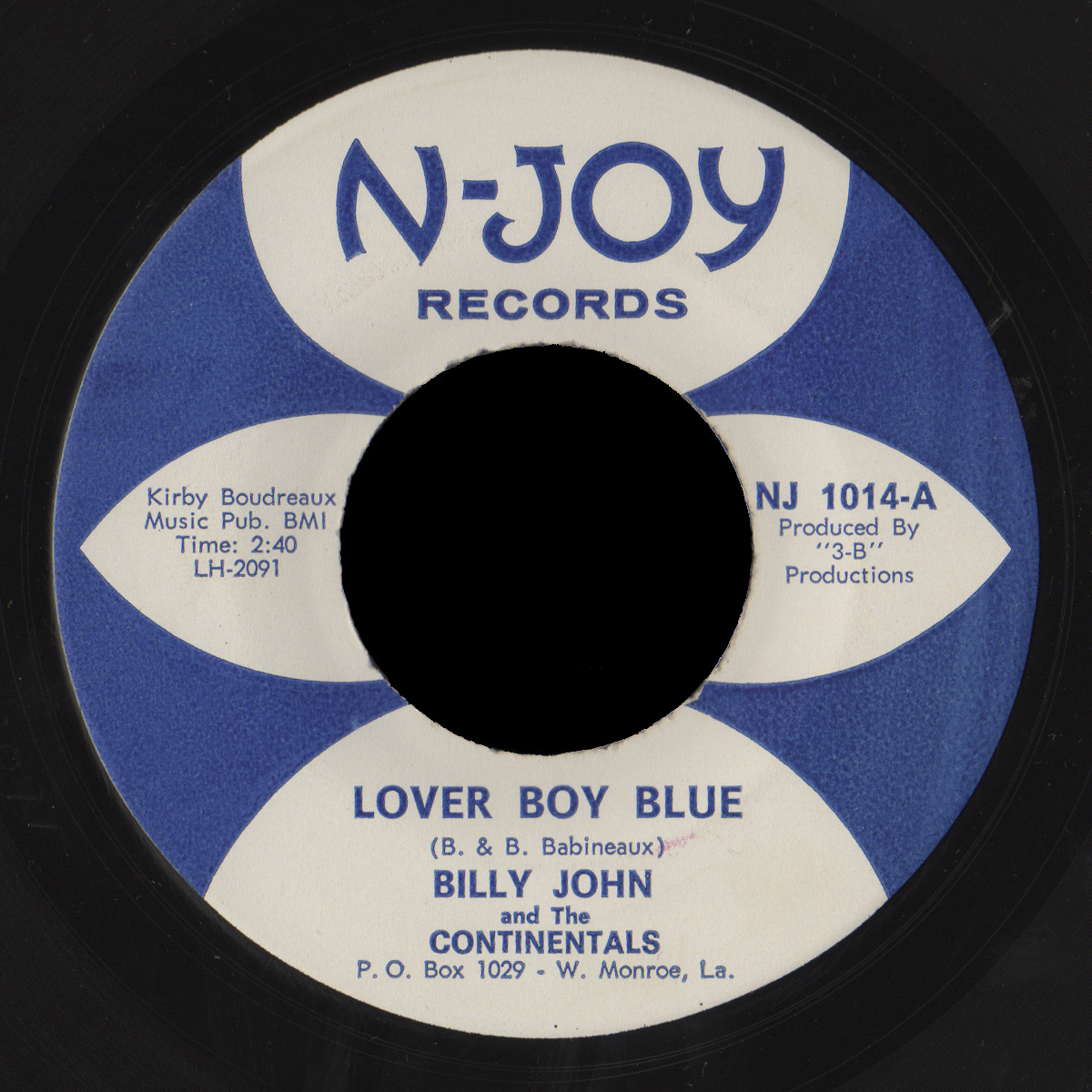
Billy John and the Continentals are most famous for a couple 45s on Floyd Soileau’s Jin label in Ville Platte, “The Alligator”/”All Over Again” (Jin 203) and “Slap It To Me”/”Shooting Squirrels” (Jin 214). (Thanks to Boursin for this info – see his comment below correcting my original post regarding “Po Boy”.)
Billy John was Billy John Babineaux, and I believe he passed away in 2002. I’m not sure who was in the Continentals, but Kirby Boudreaux is a possibility.
They also released two 45s on Roland “Rocky” Robin’s N-Joy label in a more conventional r&b style. The first is this fine cover of Jessie Hill’s “Ooh Pooh Pah Doo” with the ballad “Does Someone Care (for Me)” on the flip.
The second N-Joy release has two more Billy Babineaux originals, the rockin’ “Lover Boy Blue” and the horn-driven r&b “Put the Hurt on You”.
This site is a work in progress on 1960s garage rock bands. All entries can be updated, corrected and expanded. If you have information on a band featured here, please let me know and I will update the site and credit you accordingly.
I am dedicated to making this site a center for research about '60s music scenes. Please consider donating archival materials such as photos, records, news clippings, scrapbooks or other material from the '60s. Please contact me at rchrisbishop@gmail.com if you can loan or donate original materials


 No we had nothing to do with the “Flower Power” album. There were a couple of TV shows at that time called After Four and High Time that were on CTV. We were on those shows varily often. There was an album produced at the time called “After Four”. There are some great tracks on that album from the Ugly Duckings, Big Town Boys and Stitch In Tyme to name a few. At the time of the album we recorded a song entitled “Four In the Morning”. Without going into a lot of detail, we recorded it under the name of the Scarlet Ribbon.
 There were a few reasons the band broke up. After four years (having the time of my life), I came to the realization that “I personally” was not a good enough singer to hit the big time. While traveling the country, I got to hear bands and singers that were 10 times better than I was and realized that even they would not make it. We were playing the “Red River Exhibition” in Winnipeg one summer when I got to hear a young guy by the name of Burton Cummings sing. As soon as he opened his mouth, I knew I was in the wrong business. There was no mistaking, he had a voice from the Gods and was truly destined for stardom.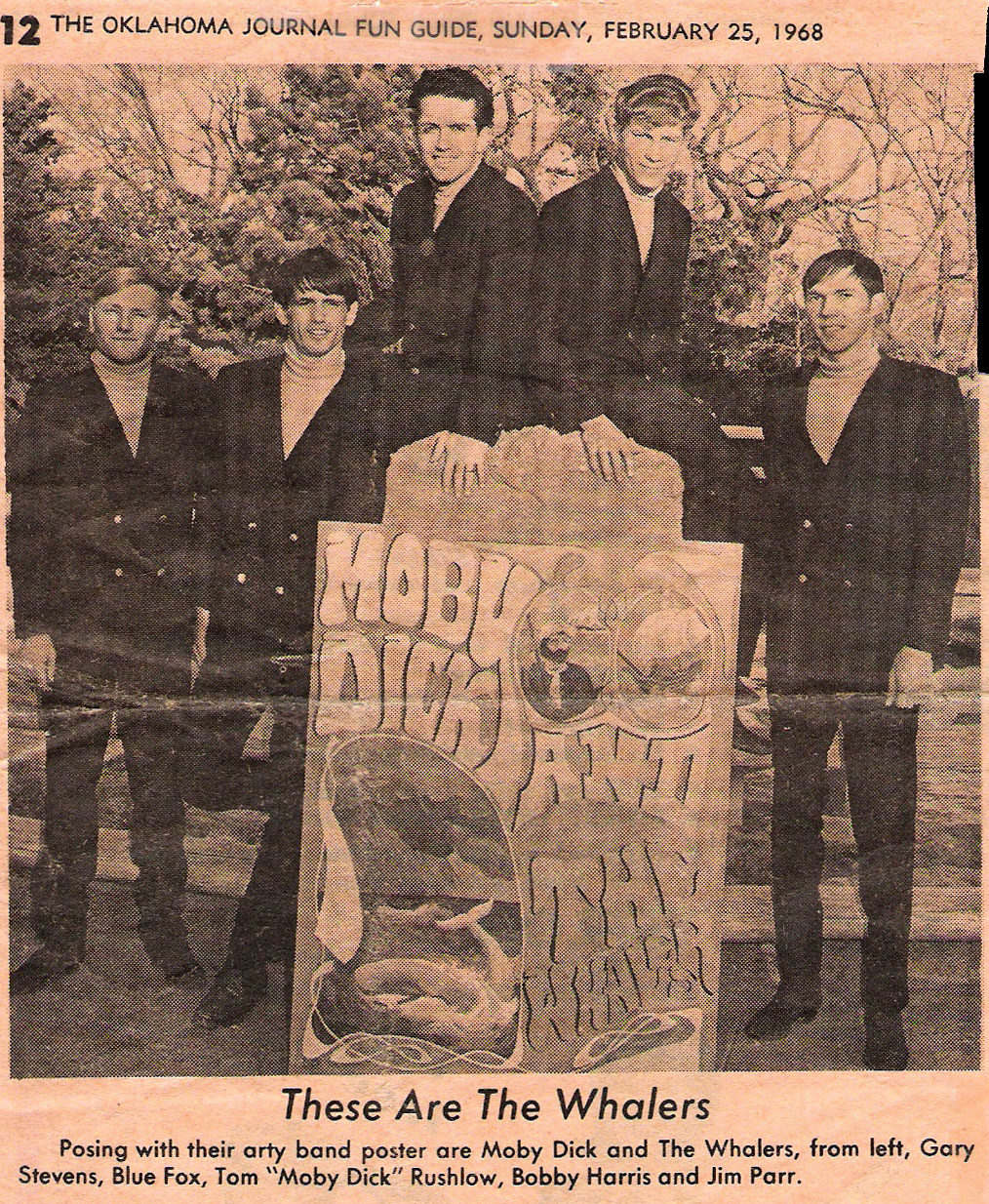

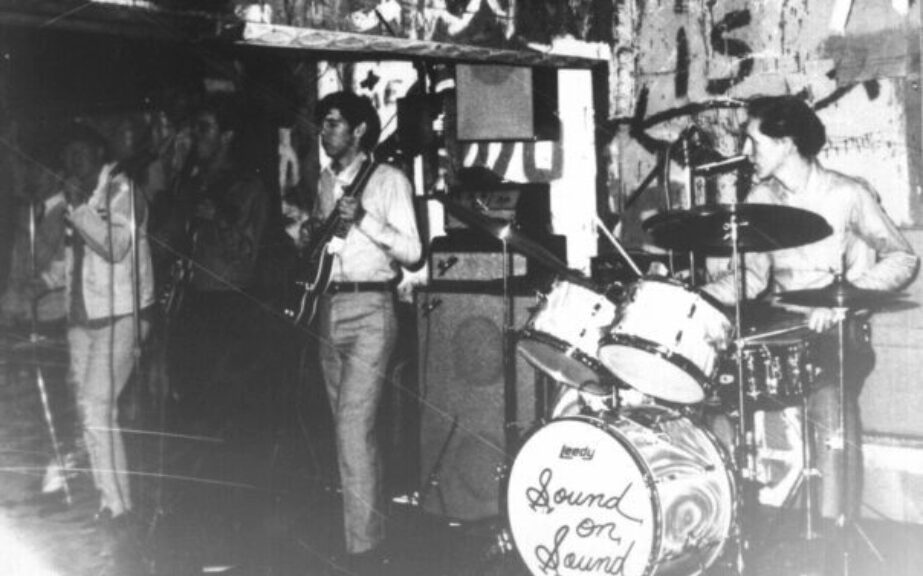
 Sound On Sound were from Grundy in the western part of Virginia, close to a three hour drive to any large city like Roanoke or Johnson City, Tennessee.