Category Archives: Label

In Search of the Lost Soul

The Lost Soul, Vox Promotional Photo, Hillsville Armory 1967
The Lost Soul, Vox promotional photo at the Hillsville Armory, ca. 1967. (l to r) Randy Conley, Donny Fields, Steve Cook & Steve Calfee

Article by Jack Garrett

While the Lost Soul is all but forgotten in their home state of Virginia, legions of fans in the UK regard their records as classics. Little has been written about the band, whose members came together in 11th grade. All but one attended Graham High School in Bluefield, Va., performing for about 18 months as The Prussians before changing their name to Lost Soul.
 The group featured songwriters Steve Calfee and Randy Conley on guitar, organ and vocals; Steve Cook on bass and vocals; and drummer Donnie Fields.

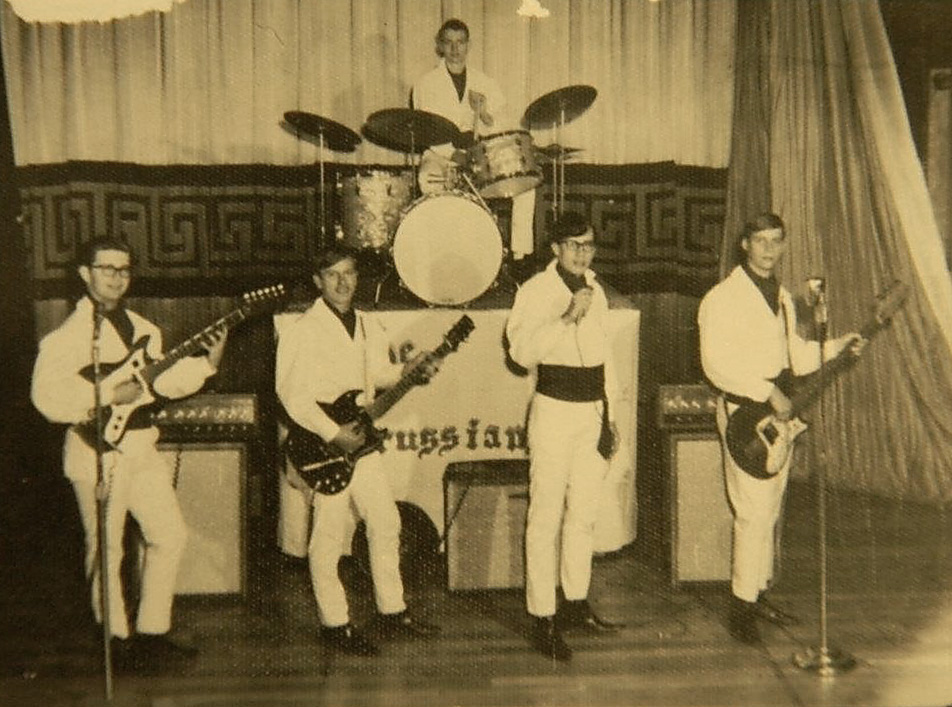
The Prussians, 1965
Early shot of the Prussians, ca. late 1965. (l to r) Steve Calfee, Randy Conley, Donnie Fields, Jimmy Johnson & Steve Cook

Calfee explains that hard rock was just coming to the fore. And while Lost Soul was responsible for the psychedelic gem “Minds Expressway,” Calfee says they were more into Motown and the R&B Memphis-type sound. The band felt “some of the music that was coming out on the hard rock side of it as not having the soul that we liked… we were gonna try and put the lost soul back into the rock and roll. Whether we actually did that or not I don’t know, but we gave it a shot.”

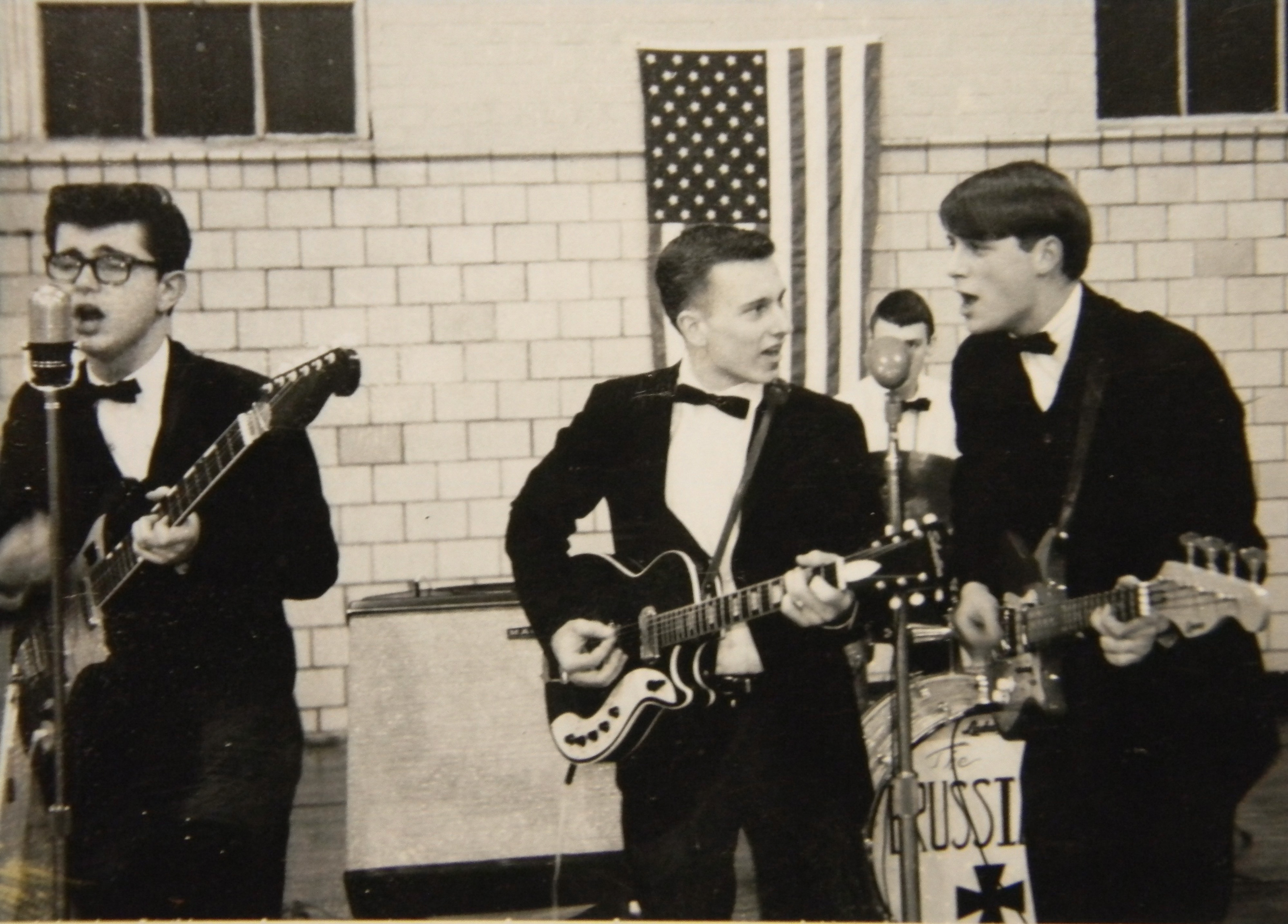
The Prussians, circa 1966
The Prussians, ca. 1966. (l to r) Steve Calfee, Randy Conley, Donnie Fields & Steve Cook.

With the name change, the band began looking for studio to record some original compositions.

The group did a lot of promotional dances and during one DJ Charlie Duff put them together with Gene and the Team Beats of Martinsville. That group was already recording for Raven Records in Danville and suggested that manager John Cook (the bassist’s dad) talk to Frank Koger, who owned and operated the small recording studio on the Piney Forest Road. Cook met with Koger and the band traveled to Danville in 1967 to commit two songs to wax: “A Secret of Mine” b/w “Minds Expressway”.

By all accounts, John Cook was a savvy businessman. He was a salesman for Caterpillar and taught the boys how to publicize and promote their shows and dances, how to collect fees, and even how to dress, although the dark green checked suits he bought for a job at the Fincastle Country Club bombed with the band. It was John who secured their bookings and traveled with the group, and who ultimately brought them to Danville in early 1967. Vox was just making inroads into the U.S. and he arranged for the group to receive free amplifiers and a PA system.

Calfee and Conley were the group’s two guitarists but were forced to make some last minute adjustments just prior to the recording session. Three months before they cut their first record, lead vocalist Jimmy Johnson quit for no apparent reason. About the same time, keyboard player Charlie Bassett married and left the band to attend engineering school. Rather than add a new member, the guitarists simply split the keyboard duties, although Calfee bought Bassett’s Acetone organ and plays keys and sings lead on all four Raven sides.

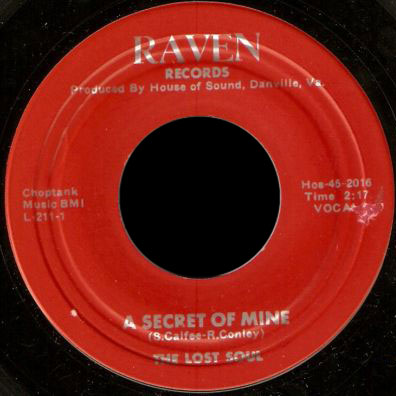
The Lost Soul Raven 45 A Secret of MineCalfee remembers the House of Sound studios as a small converted ice house, complete with loading dock. The control room was no larger than 6×6 with a glass window and a hole cut for a window unit. This proved a problem on their second session in the summer. The air conditioner was so noisy that it could only be turned on between takes, leaving members praying for a flub so they could get some relief from the heat. The songs were recorded directly to a two-track recorder, requiring multiple takes before an acceptable master was delivered.

A mistake on the end of the flip side was caught on tape and was incorporated into the song. If you listen to Minds Expressway, there’s a “pa-ping” sound on the cymbal. Calfee says they’d gotten “to the very end of a take and it was an accident that he did and as soon as we ended the take (producers) Ernie (Dickens) and Frank actually came out of the booth and said, ‘What was that?”

Drummer Donnie Fields took the stick and did a ping off the bell of the cymbal and Koger said, “Well that’s fantastic; it actually makes the record.” He asked Fields if he could do that every time, so the band spent “the next two hours doing take after take of him trying to do that pa-ping sound through the entire cut ’til we finally got it.”

To promote the disc, their new manager landed the band a slot on Dick Bennick’s Dance Party, a popular Bandstand-based broadcast on WGHP 8 in High Point, NC. The band arrived to light snowfall around mid-day, set up their equipment and were prepared to play when they were told they would be lip-syncing the songs. That was a first and it took the group “forever to get it right.” Whenever the cameras would roll, the director would stop the band, telling Calfee his lips weren’t moving with the music and it looked “like a Japanese movie.” Compounding the problem was the drum intro on “A Secret of Mine”. Without a count leading in to the song, it was impossible to synchronize the video, so the cameraman did a crossfade from a vine-covered trellis on the set to Fields’ drums.

They finally finished about 1:00 a.m. and left the studios to find three-feet of snow on the ground. It took them eight hours to reach their next gig, forcing the band to miss their television debut.

Each member was given two boxes of 45s and Calfee says they gave away as many copies as they sold. Koger distributed discs to radio stations and the band followed up with promotional appearances. “A Secret of Mine” was the pick of Top 40 radio, while “Mind Expressway” was played by college stations in the FM market. Along the way, Lost Soul followed or shared bills with ? and the Mysterians, the Hombres and the Fantastic Johnny C.

The Lost Soul Fincastle Country Club, Bluefield, VA
The Lost Soul live in 1967 at the Fincastle Country Club in Bluefield, Va.
(l to r) Steve Calfee, Donnie Fields, Randy Conley, Steve Cook.

Some of the largest crowds Lost Soul played for were at the Coke plant in Danville. Workmen would use fork-lifts to clear out the warehouse and set up the stage. Local radio stations and the high school newspaper promoted the dances, which attracted thousands.

Their manager brought a Webcor reel-to-reel to record one college job. Calfee says the band decided to have a few drinks to loosen up and thought they “were just kickin’ butt and takin’ names” on the bandstand. The next day he “played the recording back for us and it was the worst crap you’ve ever heard in your life.” Calfee says it was so bad that “it literally sobered us up.” From that day forward, no one took a drink on a job.

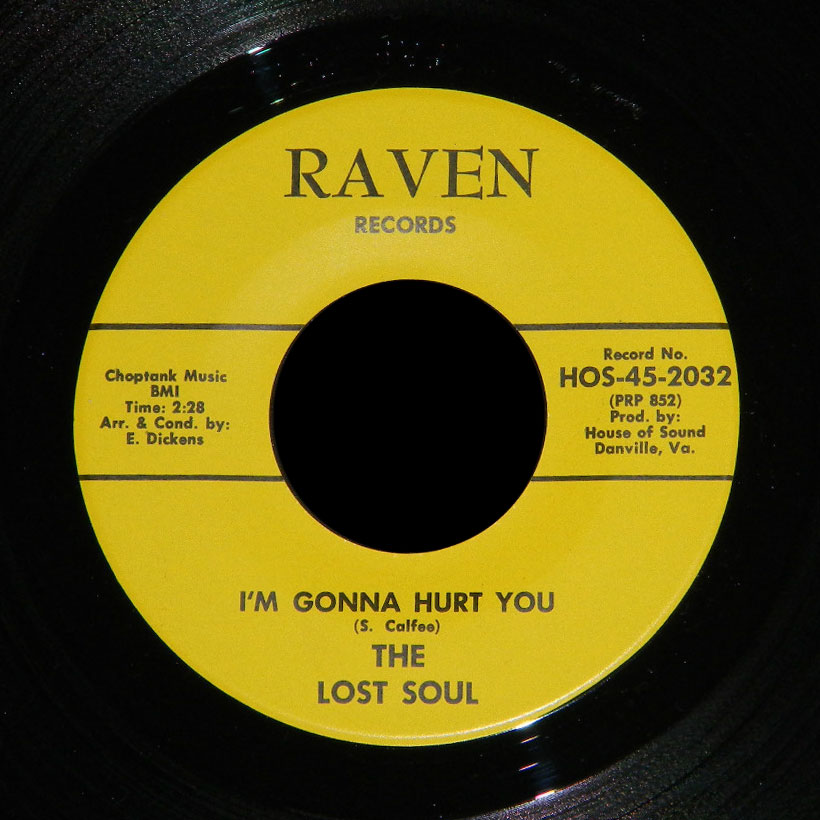
The Lost Soul Raven 45 I'm Gonna Hurt YouSix months later, Lost Soul was back at Raven to record a second 45 and a demo tape for distribution to major labels. They now shared management with Archie Bell and the Drells and their new manager signed a deal with PM Distributors in Pittsburgh to press thousands of copies of “I’m Gonna Hurt You” b/w “For You”. Calfee says the company had a promotions man who got the 45 to rack jobbers and radio stations. The effort paid off, as Calfee was told the song made it to the lower reaches of Billboard’s Hot 100. (Perhaps it was the Cashbox chart, as Billboard’s Top Pop Singles 1955-1996 lists no entries by Lost Soul.) As many as 20,000 copies were pressed but the group never received any royalties and requests for an accounting were ignored. Once the record started to break nationally, Lost Soul moved from playing country clubs and frat houses to armories and auditoriums.

Several labels were interested in the band, but Calfee says they had an image problem. It seems the major labels couldn’t decide how to market a group that played both psychedelic rock and funky soul. “We didn’t know any better,” says Calfee, adding, “We didn’t know that you were not supposed to mix the genres.” Elektra liked the tapes, which included a soulful arrangement of “Day Tripper”. Their manager secured a $25,000 advance with an agreement to record two more 45s and the promise of an album, if the singles charted.

But it was not to be. About this time, the band started to implode. It was 1968 and the height of the Vietnam War. Cook was drafted, Calfee decided to go back to school, Conley left to attend trade school and Fields got married. The band went through a period of about six months with pick-up drummers and even a saxophone player before calling it a day.

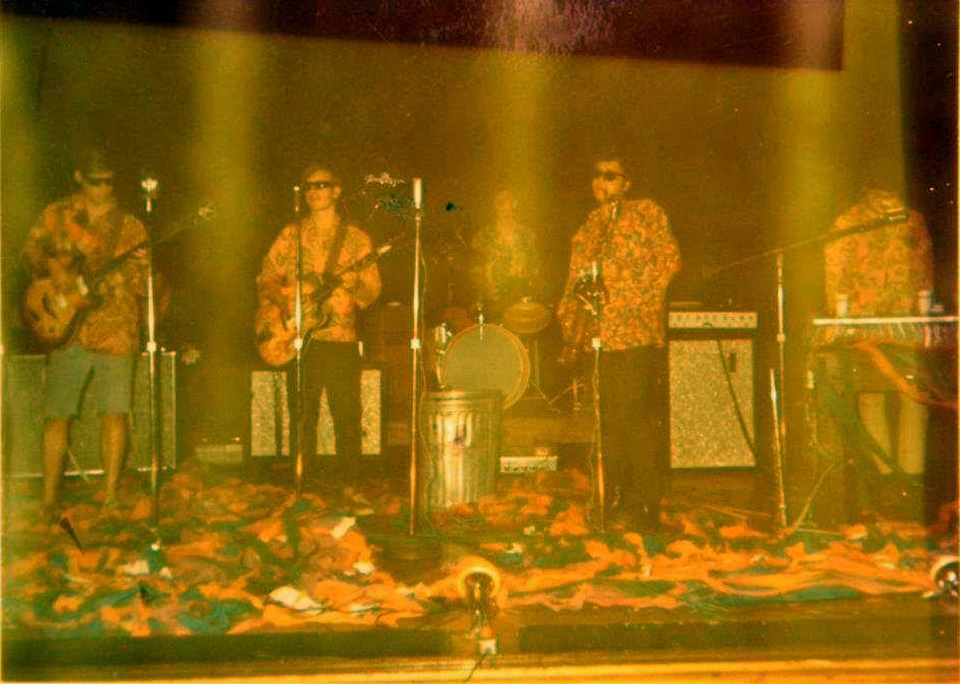
The Lost Soul, Live 1968
Faded Polaroid of the Lost Soul performing live in 1968.
(l to r) Steve Cook, Randy Conley, Lance Yost, Joe Simoncini & Steve Calfee

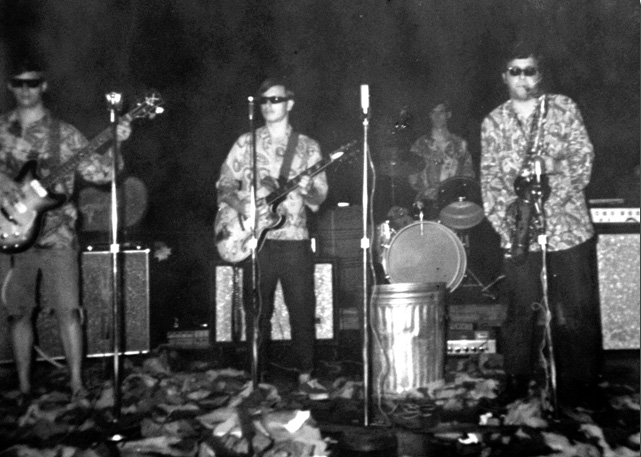
The later band delved further into psychedelia. The group dropped their matching suits in favor of multi-colored shirts and sunglasses and would scatter the stage with streamers. Borrowing from the Mothers of Invention, a metal trash can was also incorporated into the stage act. Calfee explains that “if you dropped a live mic inside with lots of reverb and delay, then banged on the can it created quite a bizarre sound.” The Fool had just painted Cream’s guitars in psychedelic colors, so Conley and Calfee did the same with their guitar and organ.

While national success eluded them, Calfee believes that was probably a good thing, adding, “If we had signed, as young as we were at the time and as crazy as the business was, I doubt seriously if any of us would have survived.”

Calfee later returned to music. He still plays and books entertainment for a cruise line in Little River, SC. Conley also returned to the stage, performing as E.R. Conley. And while their paths crossed occasionally on the road, Calfee lost touch will his co-writer eight years ago. Cook died about a year ago, while Fields left music and went to work for the railroad in Roanoke.

The band was all but forgotten until some Northern Soul fans in the UK discovered “A Secret of Mine”. Calfee was unaware of the renewed interest until he received a letter from an English musician he had worked with in the 80s. He learned the song was a favorite on the club scene and that their first 45 was selling for huge sums in England.

Two of the group’s songs were recently reissued on compact disc (Aliens, Psychos & Wild Things, Vol. 3) and videos of the band draw thousands of views on Youtube. But Calfee has yet to capitalize on the new audience and has received no songwriting royalties. While Calfee is “amazed” by the band’s resurgence in popularity, Cook recognized their potential. Shortly before his death, he told Calfee: “We never realized how good we were and what a great opportunity we had.” And while he won’t rule out a reunion, Calfee says it hasn’t happened yet and believes things worked out for the best, adding, “We were just trying to make music and have a good time.”
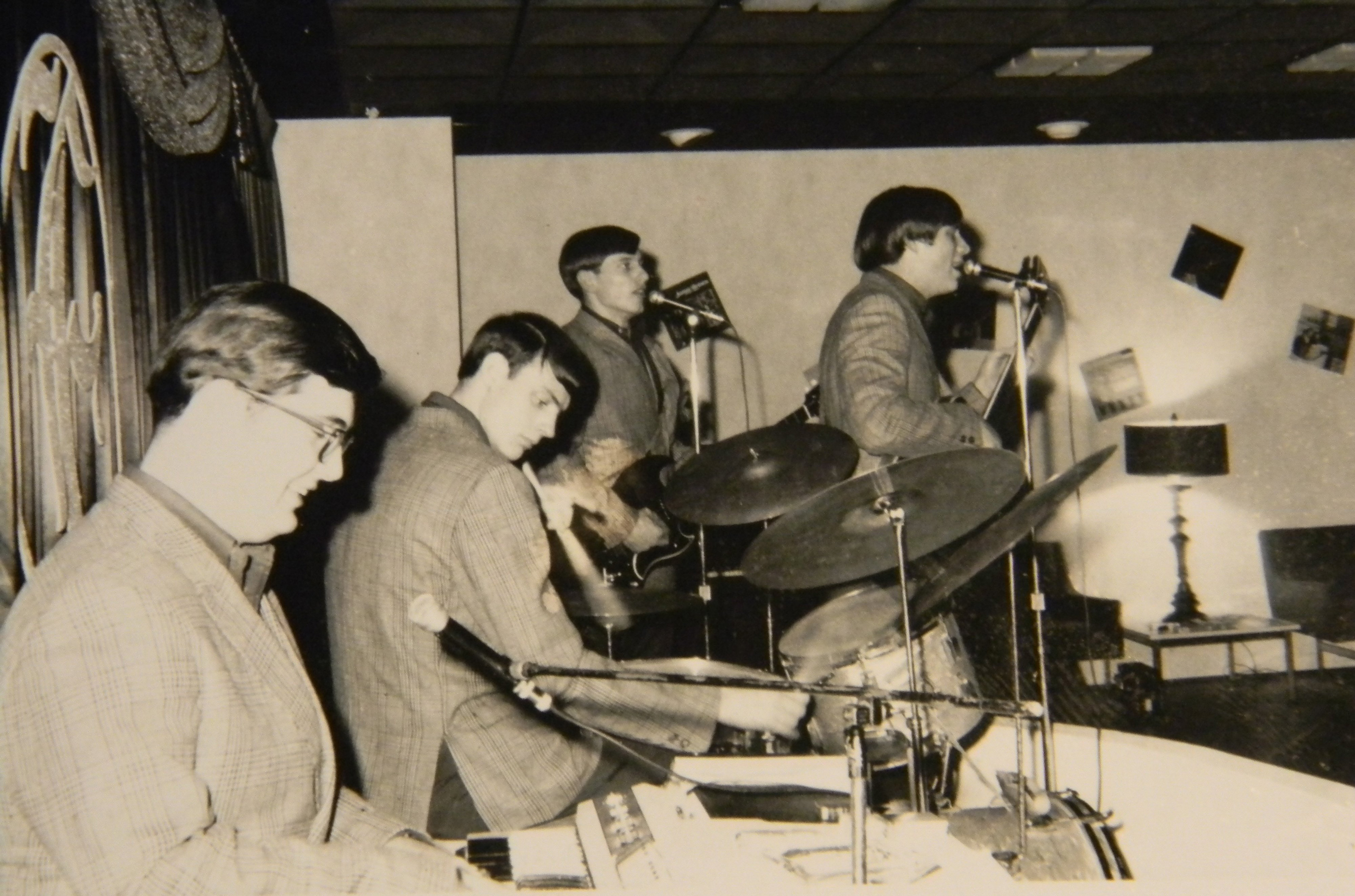
The Lost Soul, 1968
The last line-up, ca. 1968. (l to r) Steve Cook, Randy Conley, Lance Yost, Joe Simoncini. Steve Calfee is out of the camera frame.

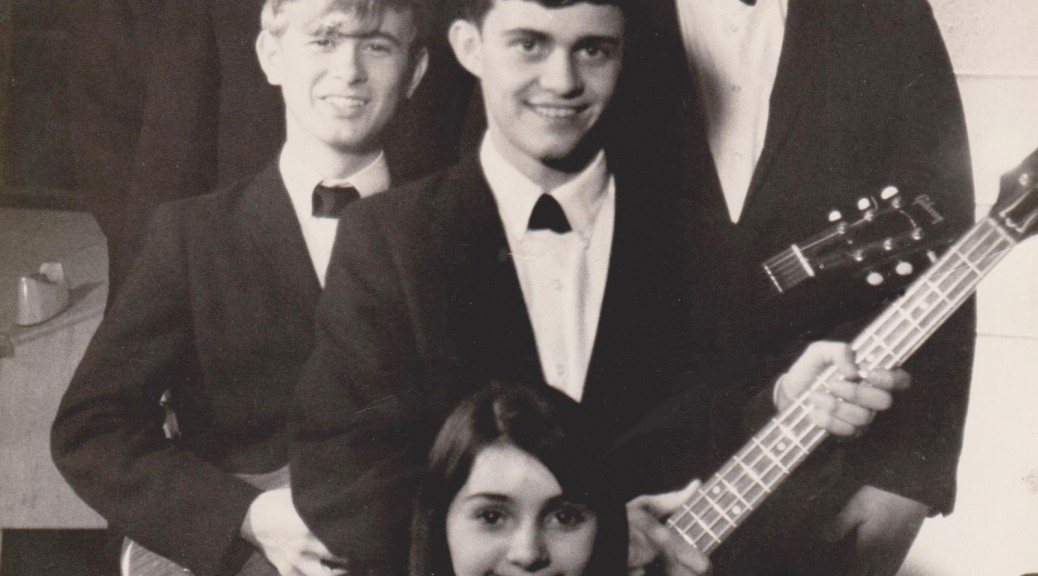
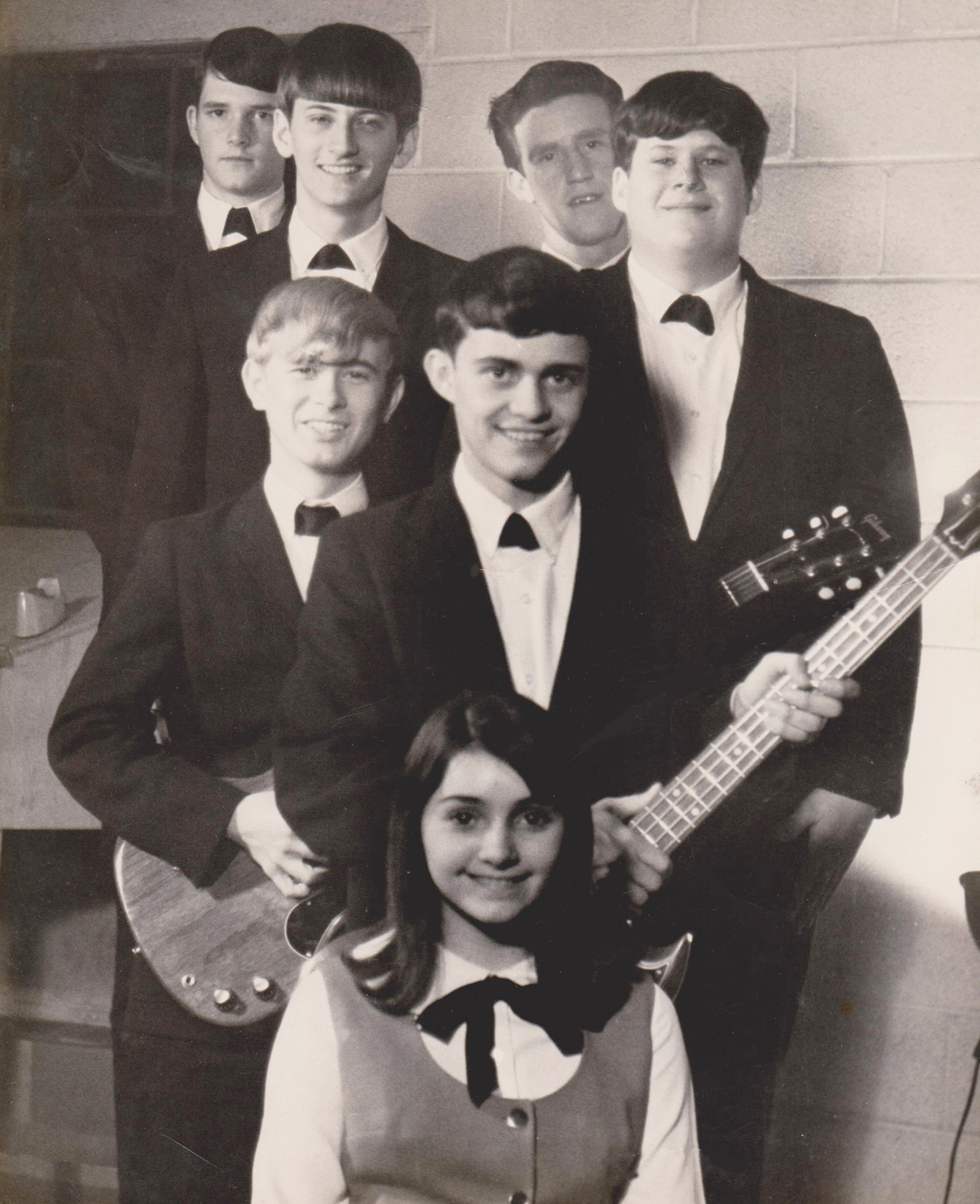
Planned Obsolescense

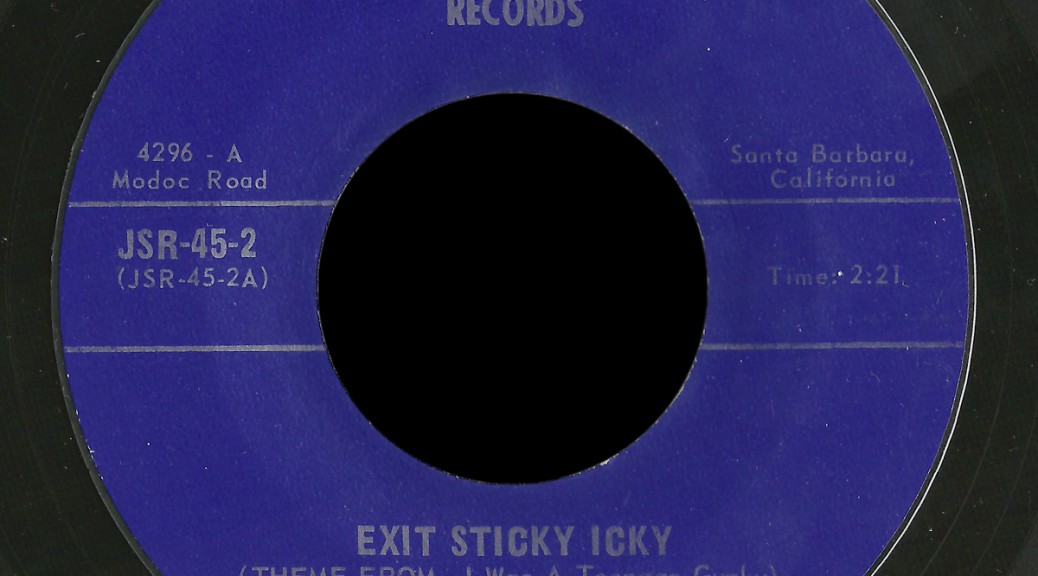
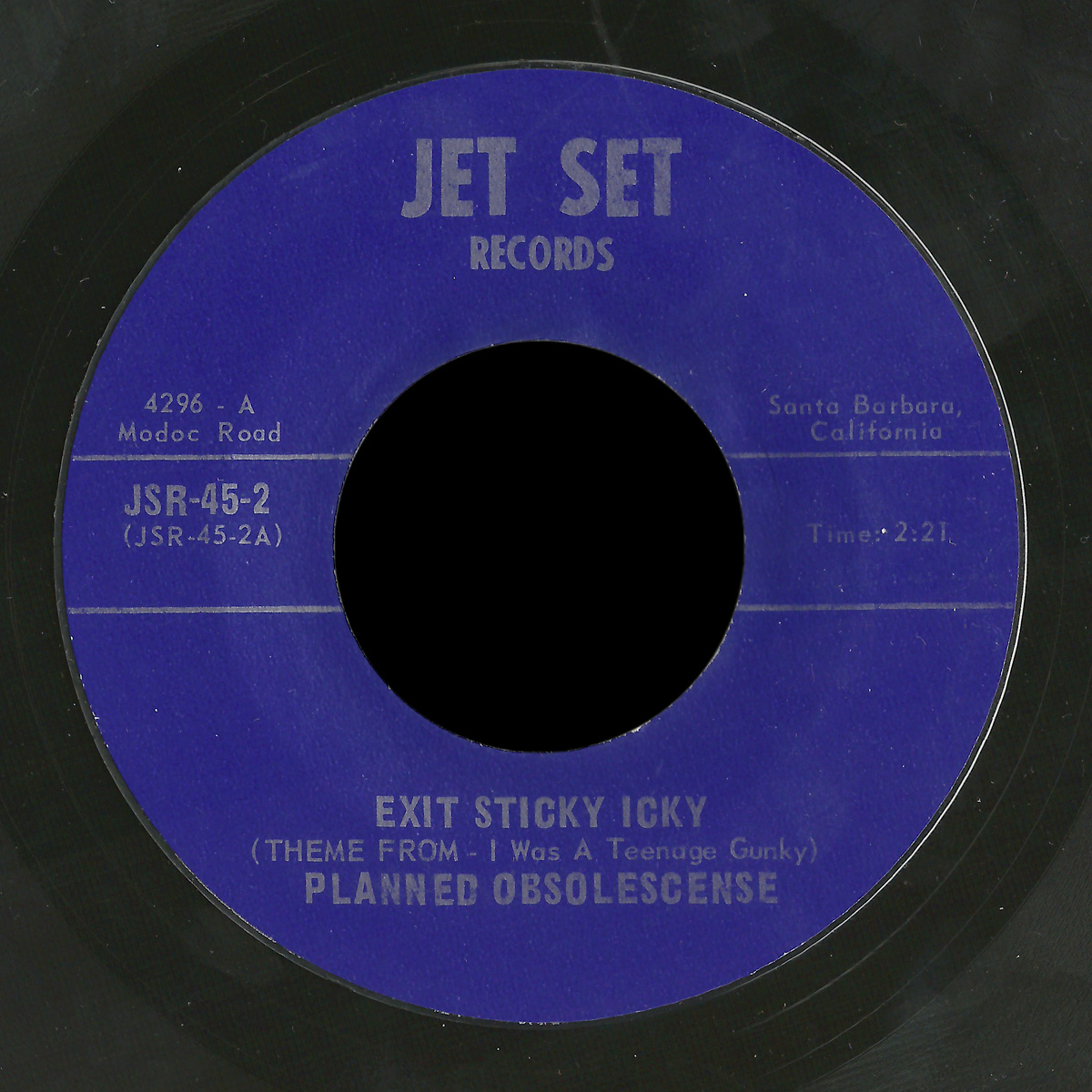
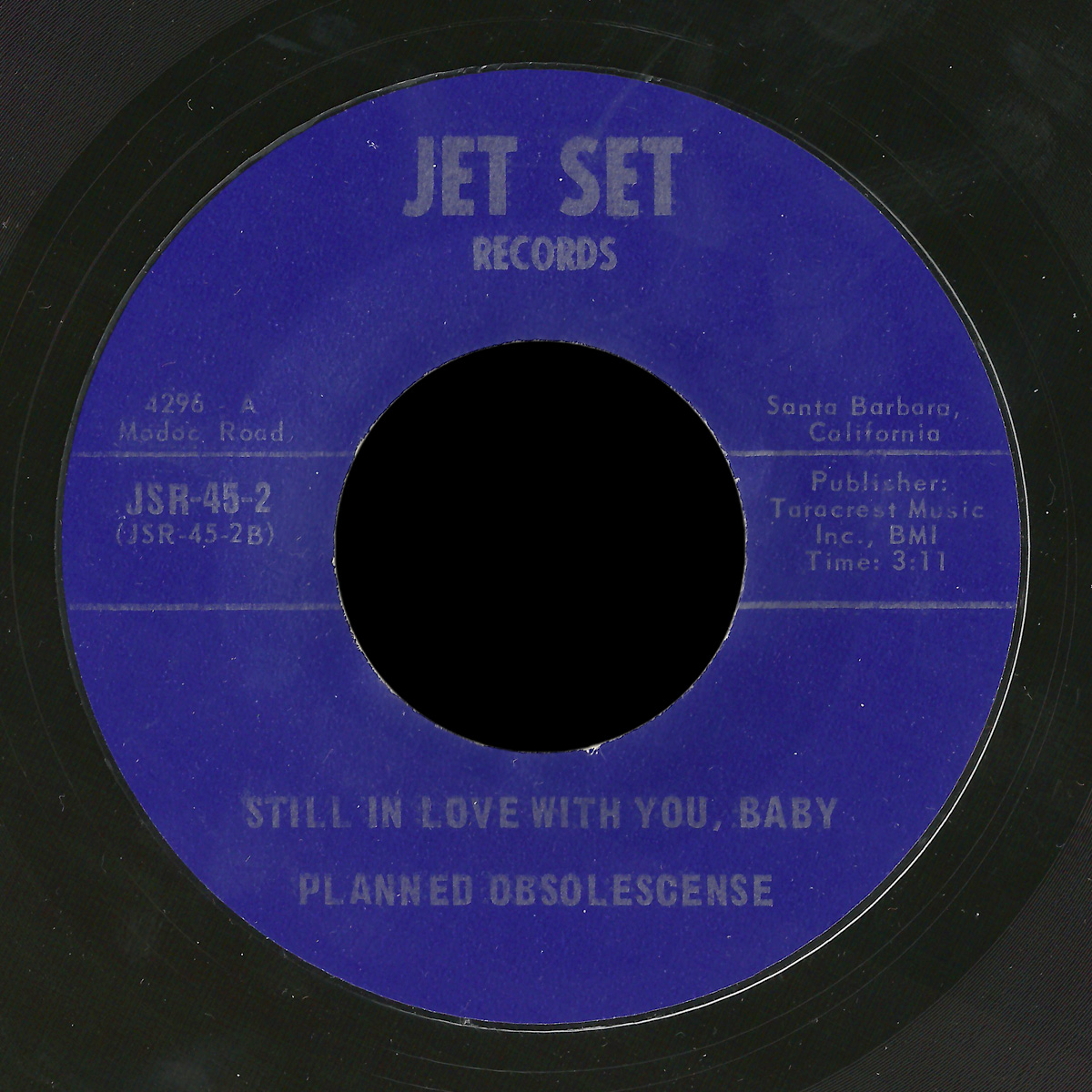
Planned Obsolescense Jet Set 45 Exit Sticky IckyPlanned Obsolescense  comes from a scene I haven’t written about on this site before, the area around Santa Barbara, CA. The band had this one 45: “Exit Sticky Icky” starts out something like Creedence, then shifts to a quicker pace. The flip is a cover of the Beau Brummels’ “Still in Love With You Baby”.

Note the band’s name is Planned Obsolescense, not Planned Obsolescence – whether intentional or not I don’t know. There are no credits on the labels, but a comment by Tom Dinning, below, lists the correct lineup of the group:

Bill Lipscombe, lead guitar, vocals
Terry McLaughlin, rhythm guitar, vocals
Tom Messerve, vocals
Kurt Graffy, bass, vocals
Tom Dinning, drums, vocals

Bill Lipscombe was out of town for the session, so Joe Rodriquez stepped in on lead guitar. The other names listed are incorrect.

The incorrect names Tom is referring to come from a now-defunct website California Gold Coast Dreamin’ (www.skwaller.com/cgcd/band-pages/plannedobsolescence.html)
which seems to have confused label owner Doug McGuire with two of the musicians and adds a keyboard player. There is organ audible on their version of “Still in Love With You Baby”:

Members:

Bill Lipscombe – guitar, vocals
Joe Rodriguez – bass
Doug McGuinn – drums
Harold Irving – keyboards
Tom McGuire – vocals

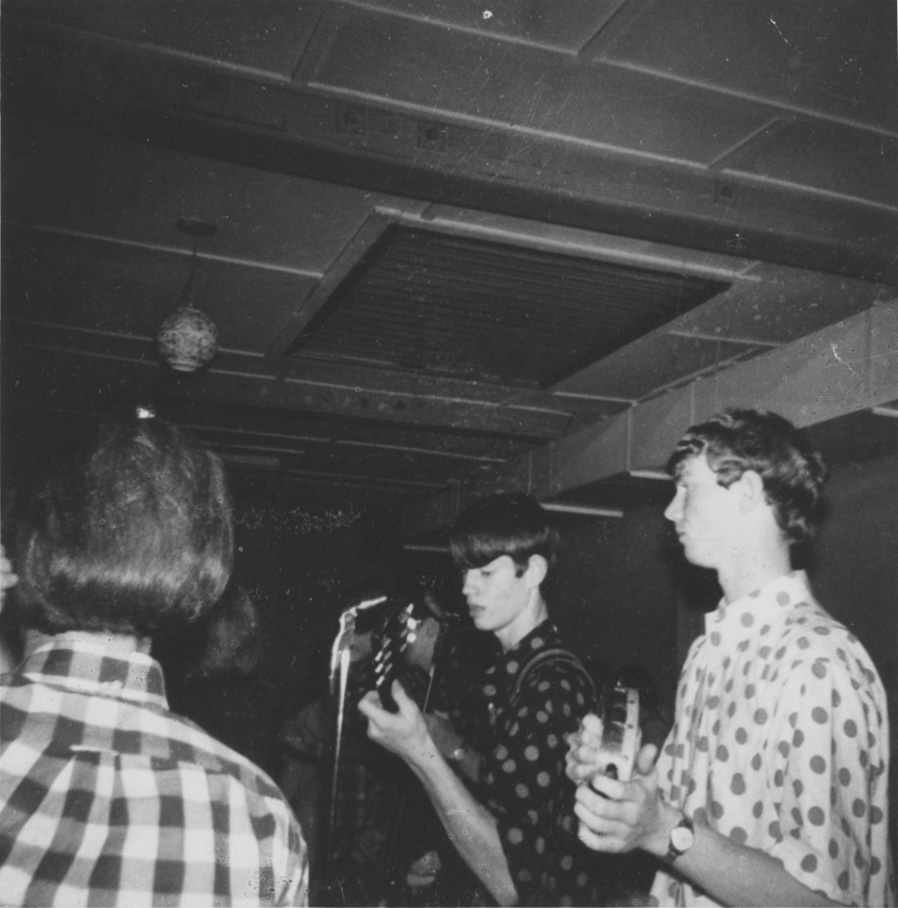
This band met while attending high school in Santa Barbara and played local battle of the bands shows, dances, and club dates, eventually attracting the attention of The Sufaris’ management team.

The b-side of their sole 45, “Exit Sticky Icky”, was originally written as an advertisement for a soft rubber toy (the toy manufacturing company eventually backed out of the idea). To promote the 45 the band spent a couple of months touring Southern California. Their gimmick was playing with bags over their heads, and black capes.

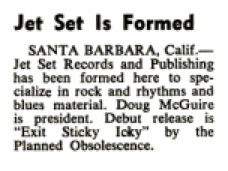
Jet Set announced in Billboard, Sept. 16, 1967

At a concert at UCSB they played the world’s longest song, literally hour after hour of Exit Sticky Icky, with members of Giant Crab and other friends helping out.

A notice announcing the formation of Jet Set Records and Publishing (ASCAP) in Billboard dates to September 16, 1967, and lists Doug McGuire as president.

The Jet Set label would have two more releases that I’m aware of, one of my favorite ’60s singles, “I’ll Take It Back” / “Ryan 5” by the Calliope on Jet Set JSR-45-3 from February of 1968 and the Blue Wood doing “Turn Around” / “Happy Jack Mine”. Calliope recorded their single at Whitney Studios in Glendale with Tom Lubin as producer and Frank Kejmar as engineer. Frank engineered many of the hundreds of Christian records recorded at Whitney and released on the Angelus label.Planned Obsolescense Jet Set 45 Still In Love With You Baby

Calliope’s release on Jet Set would be picked up for national release by Epic in July of ’68, listing Doug McGuire as Executive Producer. The Calliope would have two more releases on Shamley in 1969. Flower Bomb Songs has an excellent interview with Calliope songwriter Jim Andron.

The Jet Set release of the Calliope’s “I’ll Take It Back” runs a full 2:42, as noted on the label, while the Epic release cuts about 10 seconds of the ending, despite listing 2:43! A great song with a beautiful, mystical ending, I savor the extra 10 seconds on the Jet Set release.

No connection to the Jet Set label from Washington, DC that released soul records.

If anyone has a photo of the group or more info on them or the Jet Set label, please write to me.

The Barons (Ozark, Alabama) – “I’m The One Who Cares” / “I Needed You” on Red Wave

The Coachmen at Grannys Teen Club, Opp, Alabama, 1965
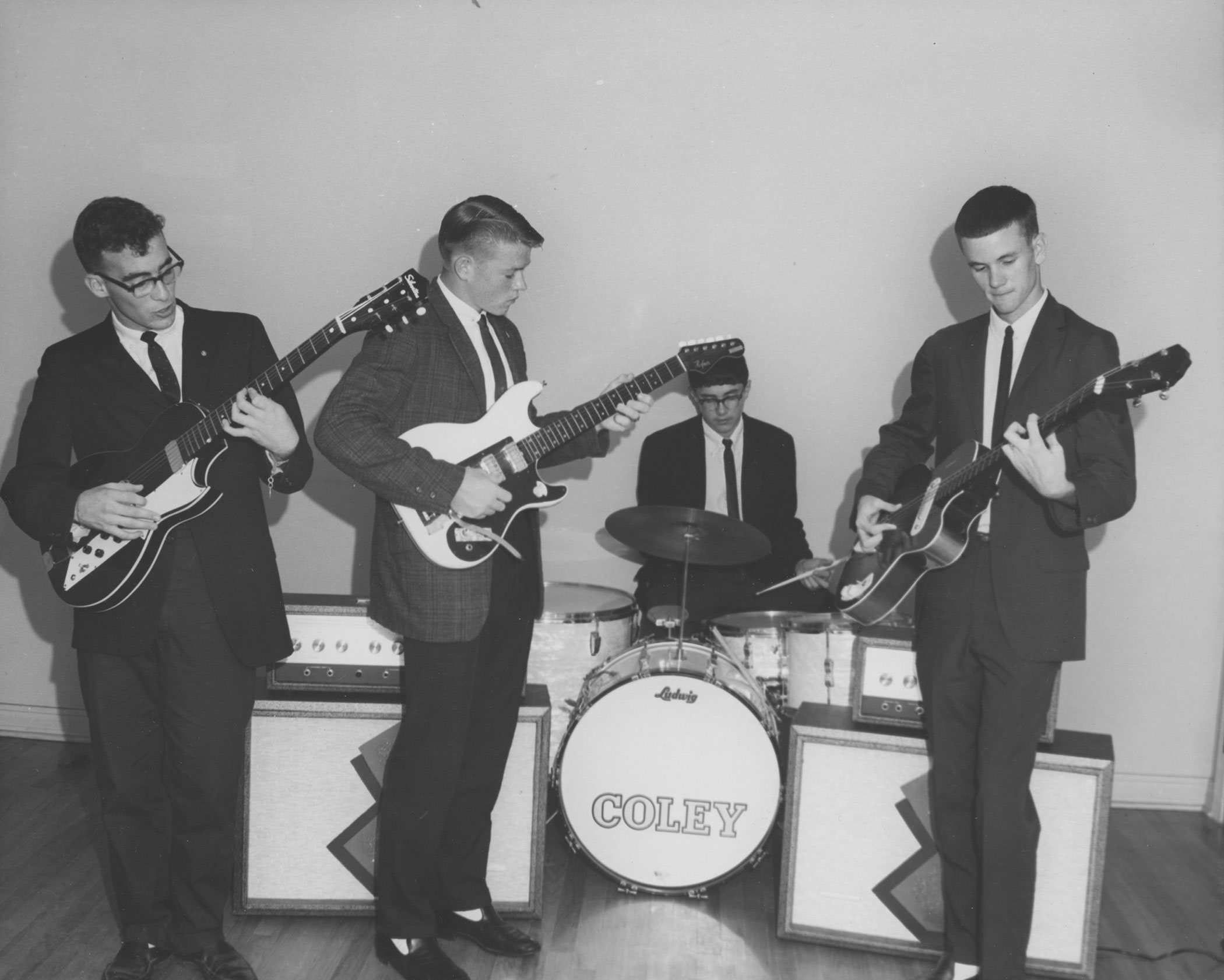
The Coachmen at Grannys Teen Club, Opp, Alabama, 1965. L-R: Steve Folmar, Paul Williams, Gordon Dodson & Ron Sims
The Coachmen - Grannys Teen Club, Opp, Alabama 1965
The Coachmen at Grannys Teen Club, Opp, Alabama 1965, L-R: Ron Sims, Gordon Dodson, Bill Saunders & Steve Folmar

Rodney Dodson – lead vocals / rhythm guitar
Gordon Dodson – lead guitar / vocals
Bill Saunders – bass guitar / vocals
Coley Sullivan – drums
John Runkle – organ
Billy Scott – lead vocals

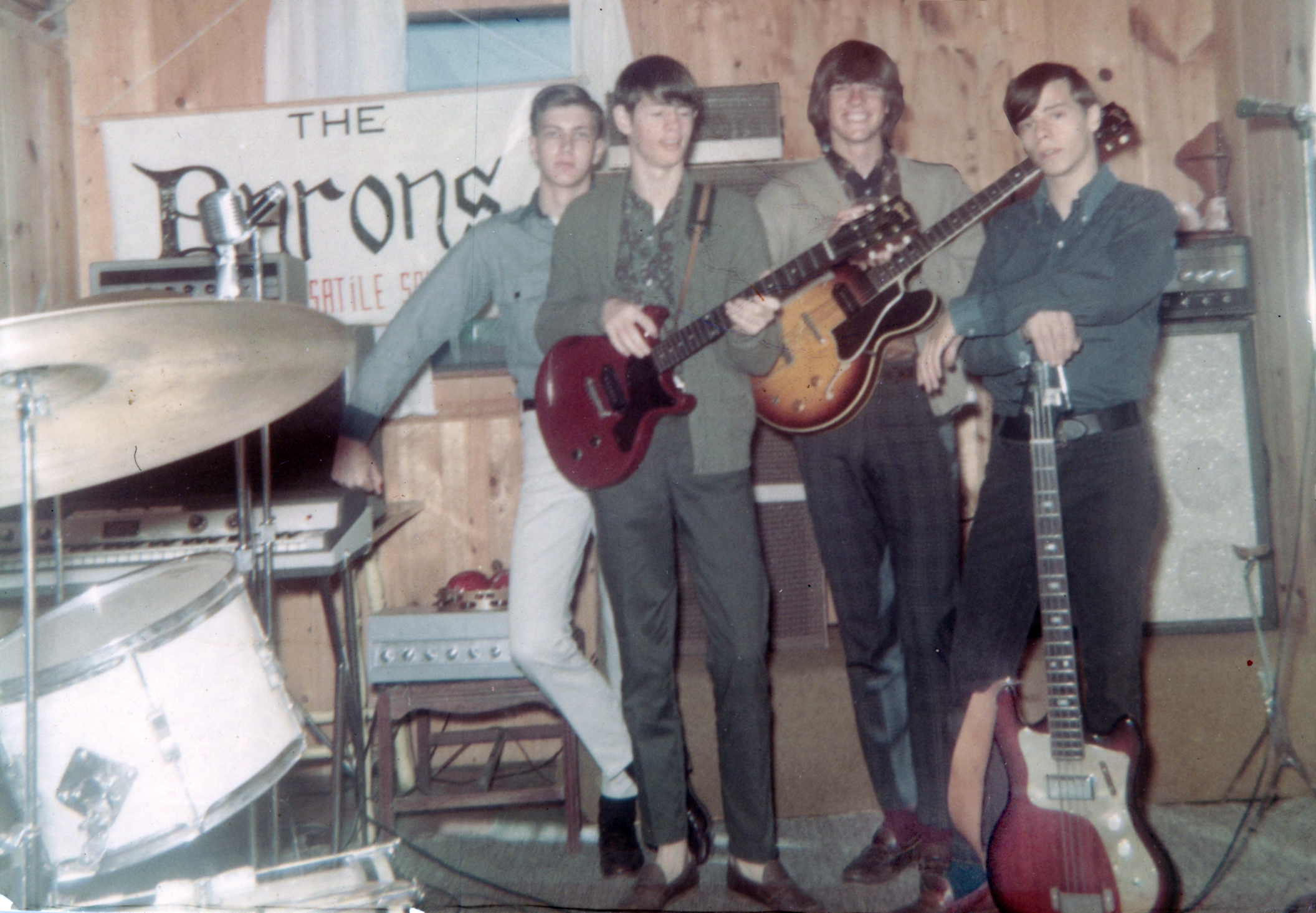
The Barons, formerly The Coachmen, from Ozark, Alabama, were formed in 1964 by guitarist Gordon Dodson and bassist Bill Saunders. The Coachmen soon added school friends guitarist Ron Sims, vocalist Paul Williams, and drummer, Steve Folmar.

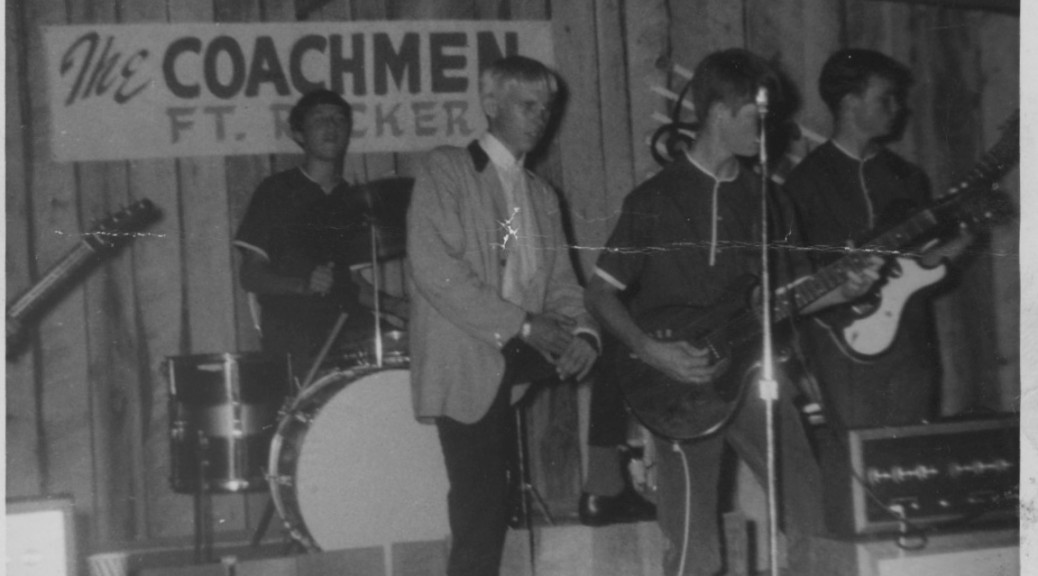
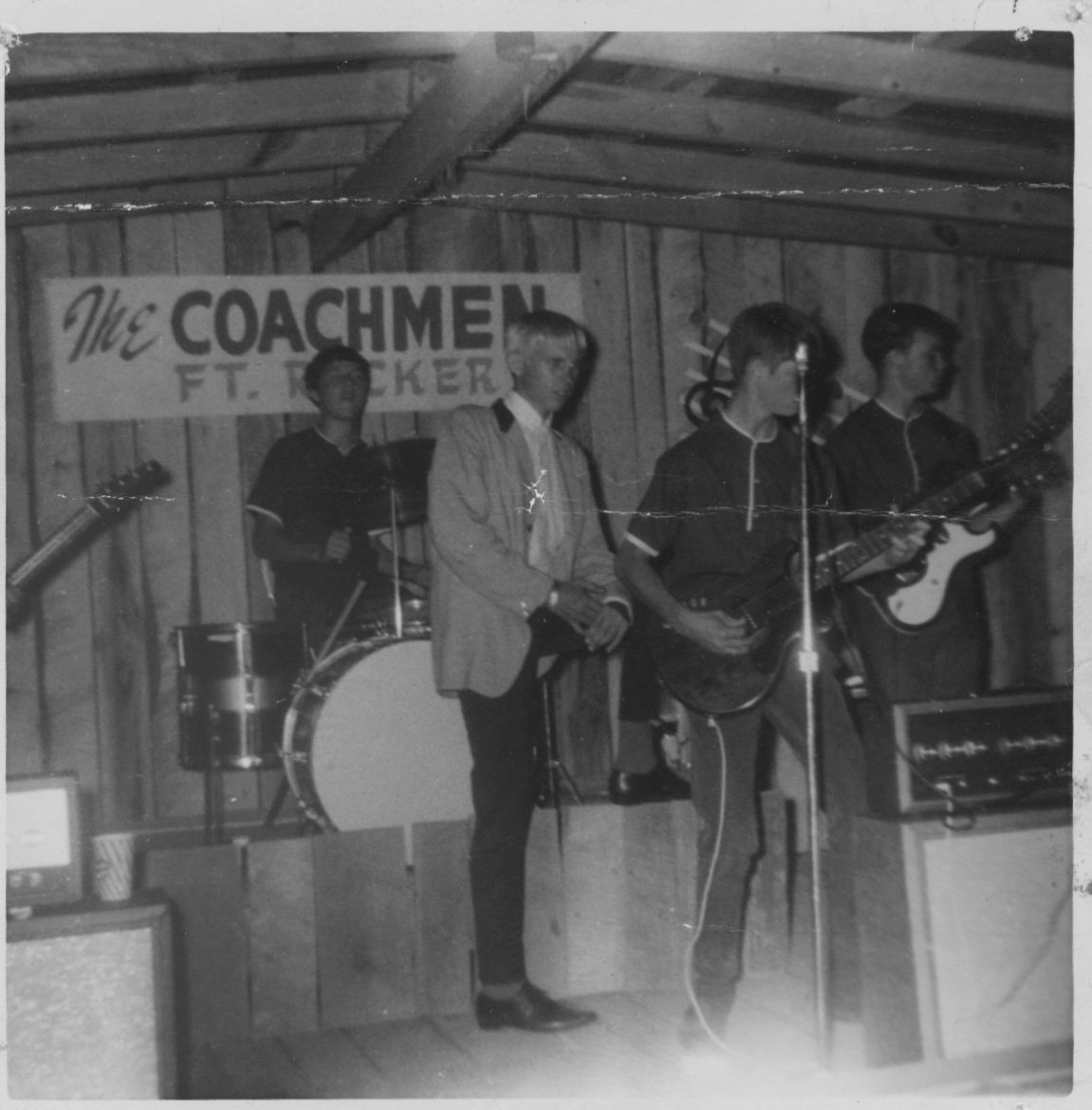
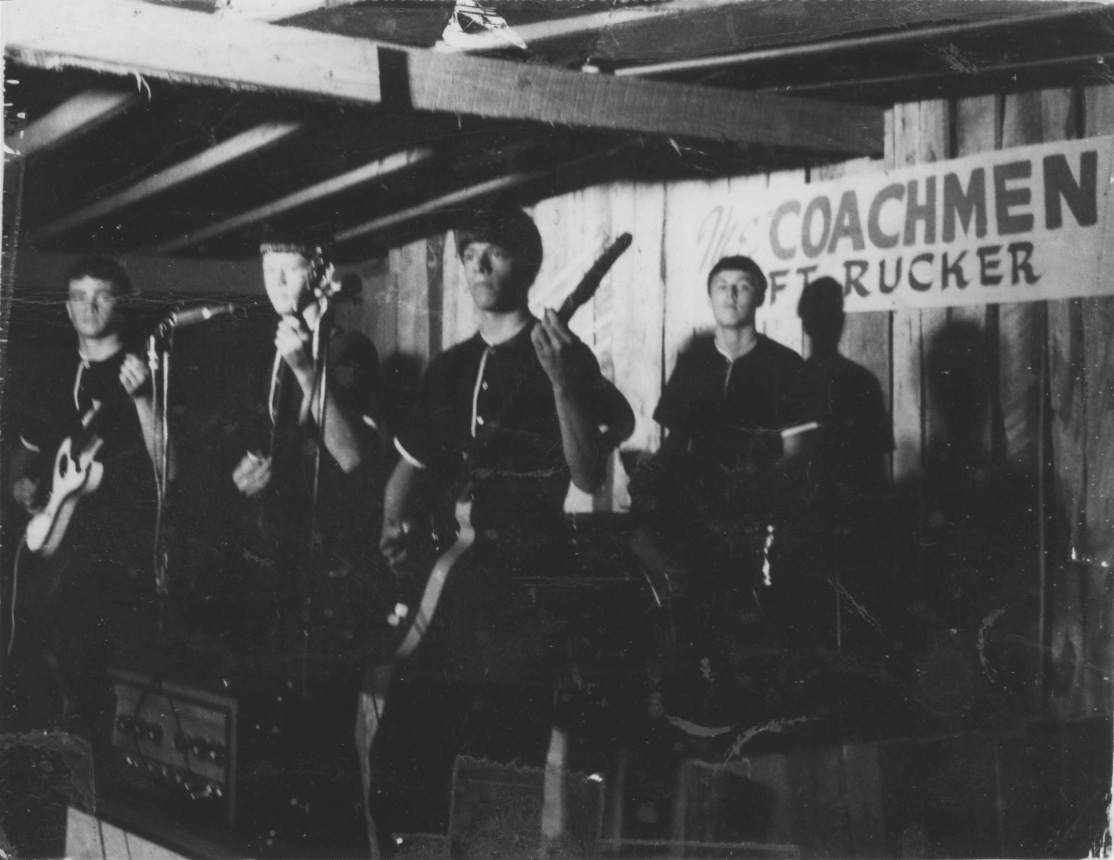
Gordon Dodson & Billy Scott of The Coachmen, Fort Rucker, Alabama, 1965

By early 1965, The Coachmen were playing the popular Opp, Alabama Teen Club known as Granny’s and the Ft. Rucker, Alabama Teen Club. 1965 also saw the first change of band members.  James Childers replaced Steve Folmar on drums and Billy Scott replaced Paul Williams on vocals.

1966 saw additional member changes as Coley Sullivan replaced drummer James Childers. Rodney Dodson, Gordon’s brother, replaced guitarist Ron Sims. John Runkle was added as the organist.

The Coachmen were renamed The Barons. The Barons played local teen clubs and recreation centers, as well as the Officers and Enlisted Clubs at Fort Rucker, Alabama and several fraternity parties at Troy State University.

Barons Ozark Photo 1
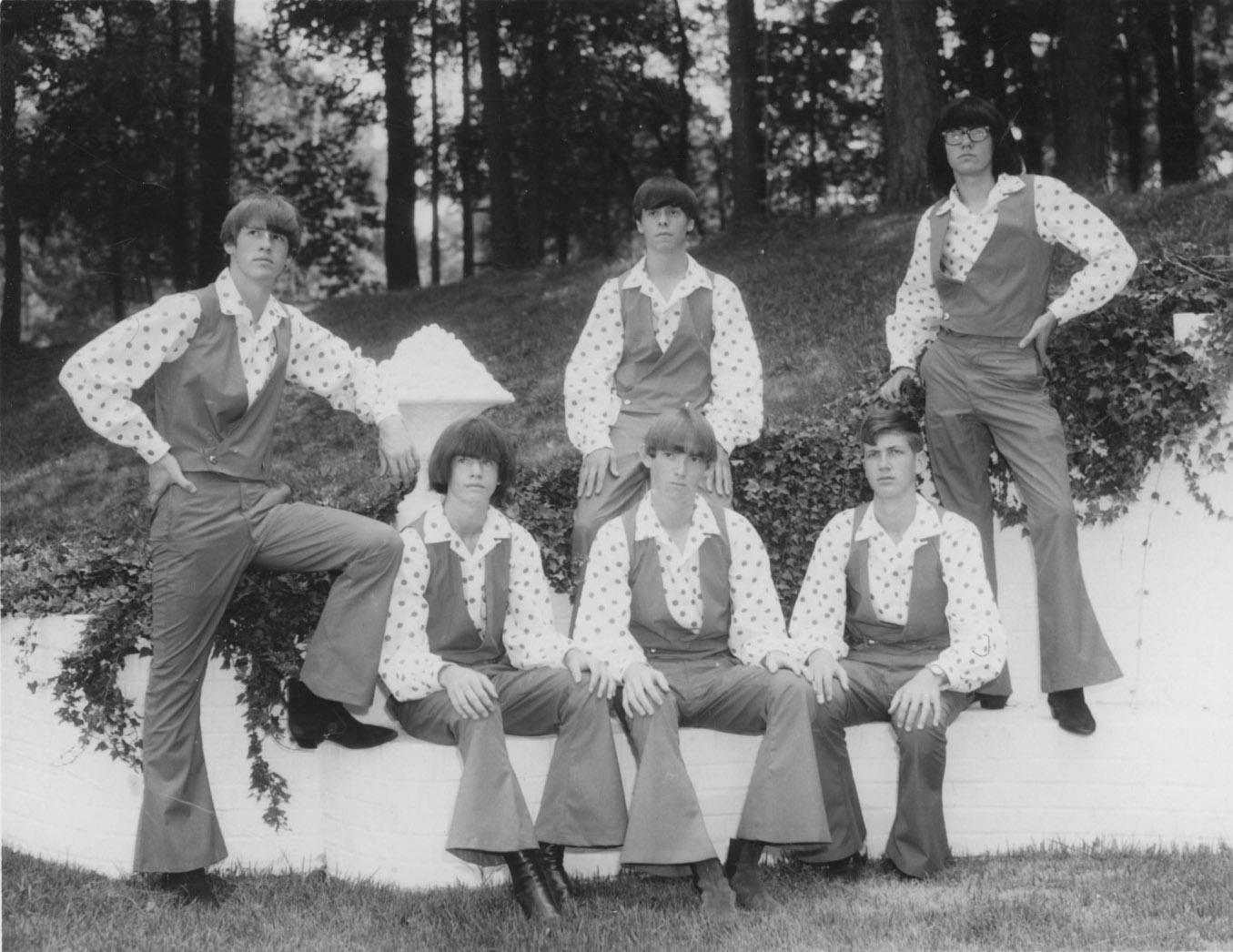
The Barons L-R: John Runkle, Gordon Dodson, Rodney Dodson & Bill Saunders. Coley Sullivan and Billy Scott are not shown.

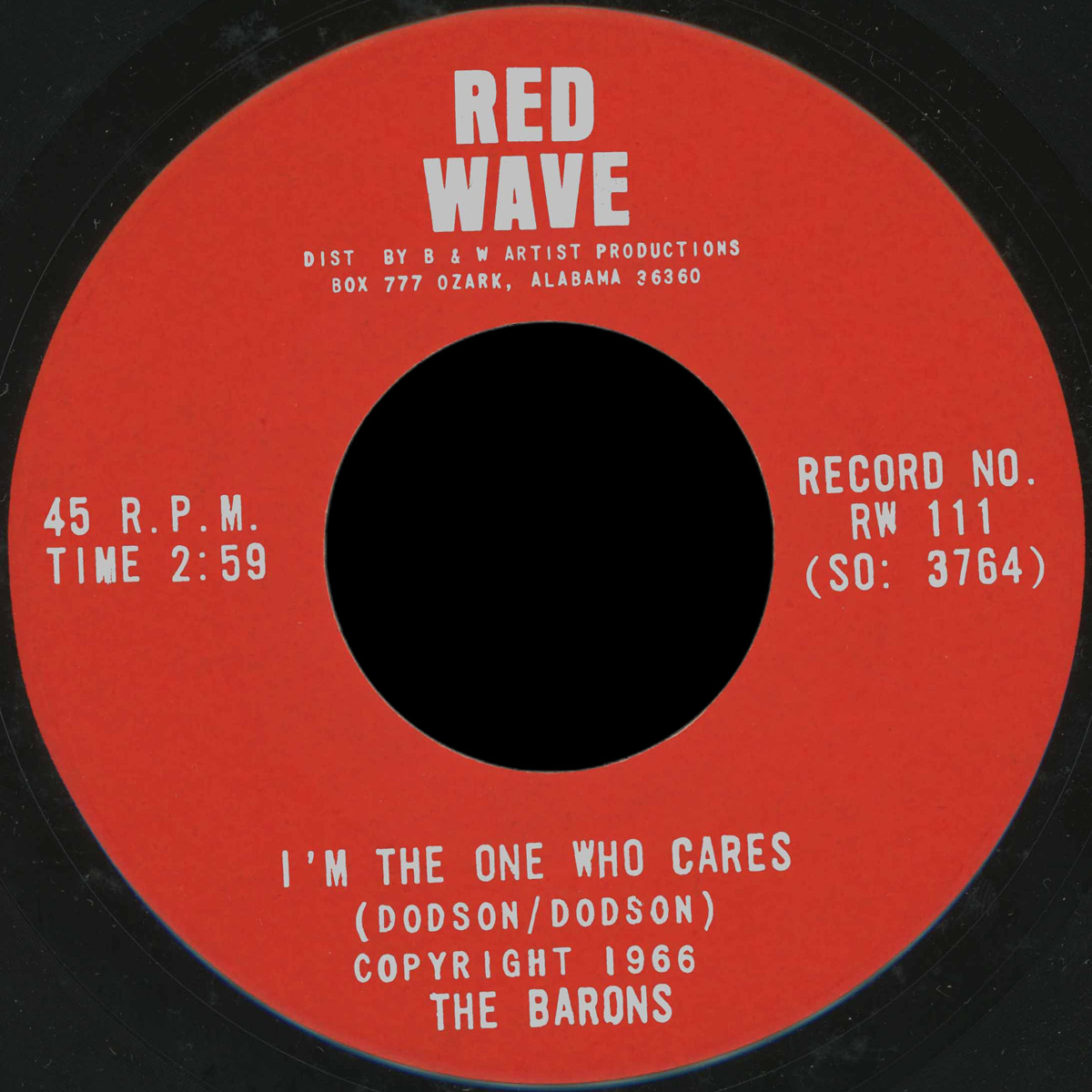
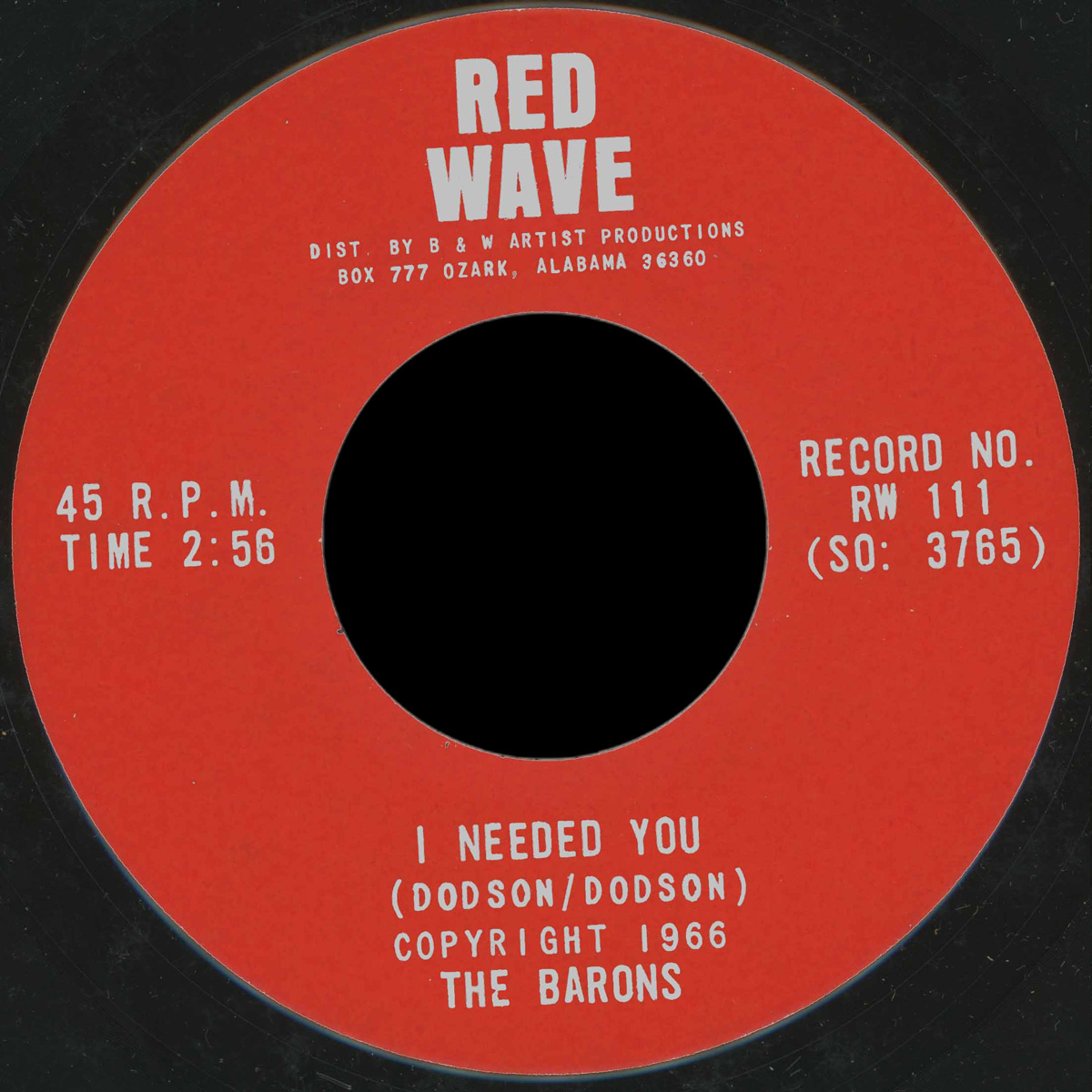
The Barons Red Wave 45 I'm the One Who CaresDuring the summer of 1966, The Barons recorded their only single 45rpm record at WOOF Radio Station in Dothan, Alabama. “I’m The One Who Cares” and “I Needed You”, were written and sung by The Barons’ lead singer, Rodney Dodson with his brother Gordon singing harmony. Bassist Bill Saunders, composed the keyboard introduction and lead break on “I’m The One Who Cares”.

The recording was done with one microphone hanging in the center of a sound proof room using a two track reel to reel recorder; no overdubs. The recording “engineer” unfortunately kept the recording level in the red, distorting the overall sound quality. The high volume playbacks sounded good in the studio, so the master tape was sent to the pressing company. Because of limited funds, only 250 records were pressed. The label name, Red Wave, was taken from the local Troy State University Trojans football team, which was known at that time as, The Red Wave. The record sleeve was a stock light brown paper.

John Runkle Barons Ozark Photo
John Runkle
John Belcher and Jerry Williams of Ozark distributed the record through John’s dad’s appliance and record store.  The record was also placed on a few local jukeboxes.  Although the record received a fair amount of play from the jukebox distribution, it was seldom heard on radio due to the poor sound quality. The Barons disband near the end of 1967 due to the Vietnam war. All Baron members served in the military with three serving in Vietnam. The remaining boxes of records, were unfortunately, used as clay pigeon substitutes during an afternoon of target practice by the two Dodson brothers and their older brother, Claude.

The Barons of Ozark, Alabama
The Barons of Ozark, Alabama. Standing L-R: Rodney Dodson, Bill Saunders, Coley Sullivan. Seated L-R: Gordon Dodson, Billy Scott, John Runkle

Baron members known to have stayed musically active are:

Rodney Dodson was the founding member of the popular 1980’s southeast Alabama band, The Fairlanes.  A school teacher by trade, Rodney once invited his friend and fellow musician, Sara Evans, to perform at his school.  Rodney put together a small group of musicians, including himself, brother Gordon, and sister Celia to accompany Sara.  Sara went on to become the 2005 Academy of Country Music’s Female Vocalist of the Year.Barons Red Wave 45 I Needed You

Gordon Dodson played guitar with the late 1970’s southeast Alabama band, Kingfish, which included notable saxophonist, Jay Scott.  (Jay played the saxophone on Lynard Skynard’s recording of “What’s Your Name”, as well as Alicia Bridges, “I Like The Night Life”.)  Gordon is listed in the Alabama Steel Guitar Hall of Fame as the 2010 recipient of the Bill Simmons Horizon Award.  Gordon taught guitar in the southeast Alabama Junior College system for many years.

Coley Sullivan played drums with the early 1960’s instrumental combo, The Ecstatics, one of Ozark, Alabama’s first rock and roll bands. The Ecstatics, also included lead guitar player, Ron Hilburn, who eventually became the lead guitarist for the 1960’s band, The Chains, referred to as, The Beatles of El Paso.  The Chains are known for their version of “I Ain’t Gonna Eat My Heart Out Any More”.  Coley also played briefly in the 1960’s popular southeast Alabama bands, The Webs, The Puppets, The K- Otics and The Disciples of Blue from Panama City, Florida.

The Ecstatics, Ozark, Alabama
The Ecstatics, Ozark, Alabama, L-R: Pete Bonnasso (rhythm guitar), Ron Hilburn (lead guitar), Coley Sullivan (drums) and Frank Kingsley (bass)

Johnny Christian, friend and fellow musician, though not a member of the Barons, played the woodblocks on “I’m The One Who Cares”.  Johnny retired as Band Director from Dothan, Alabama’s, Northview High School. His son, Wynn Christian, guitarist and vocalist of the popular blues band, Spoonful James, composed “Seven Mile Breakdown”, recorded by the 2006 American Idol Winner, Taylor Hicks.

Gordon Dodson
2014

The Barons, Doug Tew Recreation Center, Dothan, Alabama
The Barons, Doug Tew Recreation Center, Dothan, AL. From left: Rodney Dodson, Billy Scott, Gordon Dodson, Coley Sullivan, Bill Saunders & John Runkle
James Childers, drummer for the Coachmen of Ozark, AL
The Coachmen, Fort Rucker, Alabama, 1965
The Coachmen, Fort Rucker, Alabama, 1965, L-R: Ron Sims, Billy Scott, Gordon Dodson & Bill Saunders

The IV Pak or the VI Pak, Whatzit Gonna Be?


The IV Pak photos
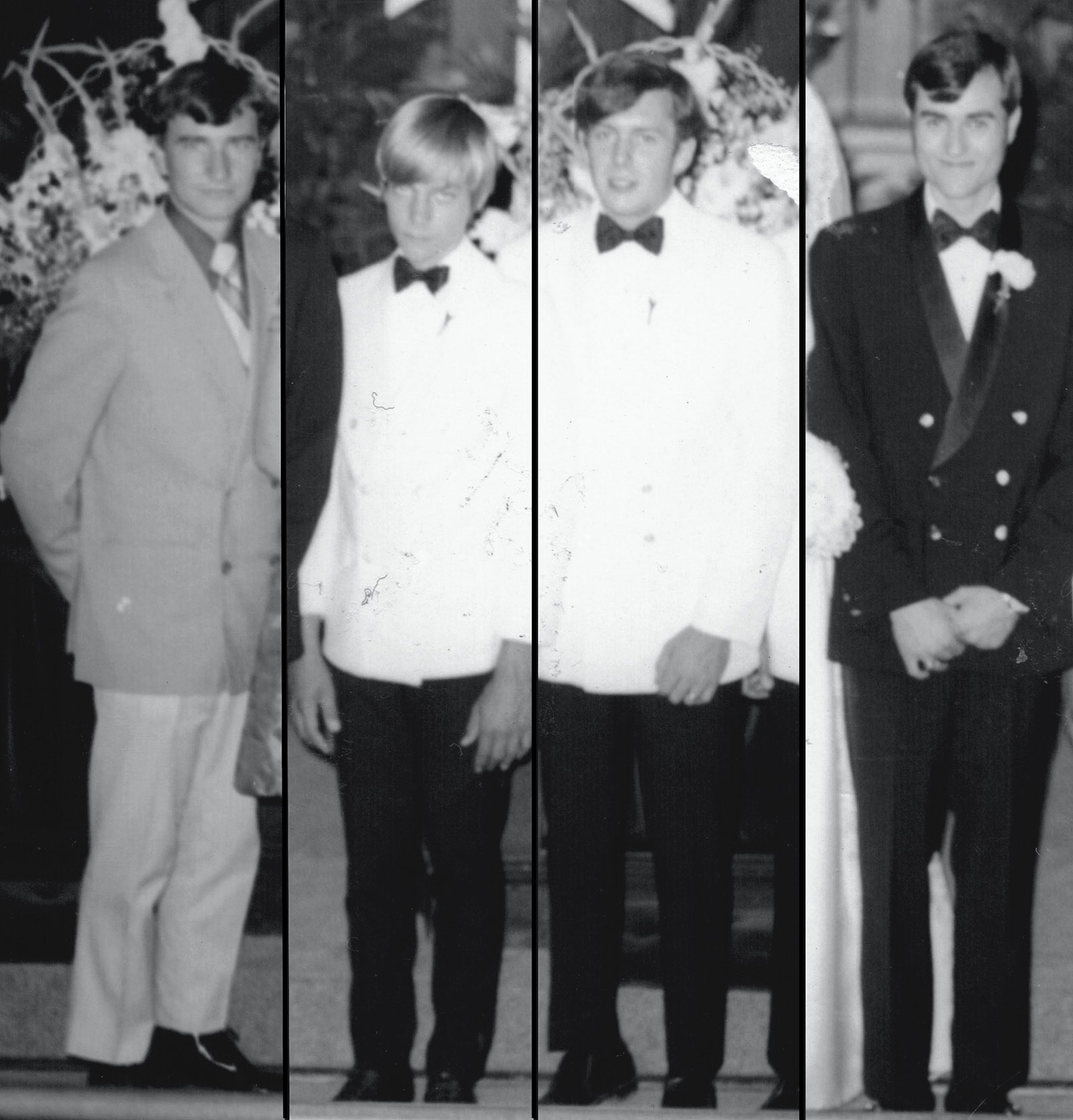
The IV Pak, from left: Frank Carter, Brandon Cardwell, Anthony Hodges & Mike Carter

Jack Garrett unveils the story behind the mystery group from North Carolina:

Have you ever been to Ruffin, N.C.? Probably not, but if you traveled there around 1967, you just might have heard the sounds of a psychedelic/soul band that managed to play together with the same personnel for 6 years.

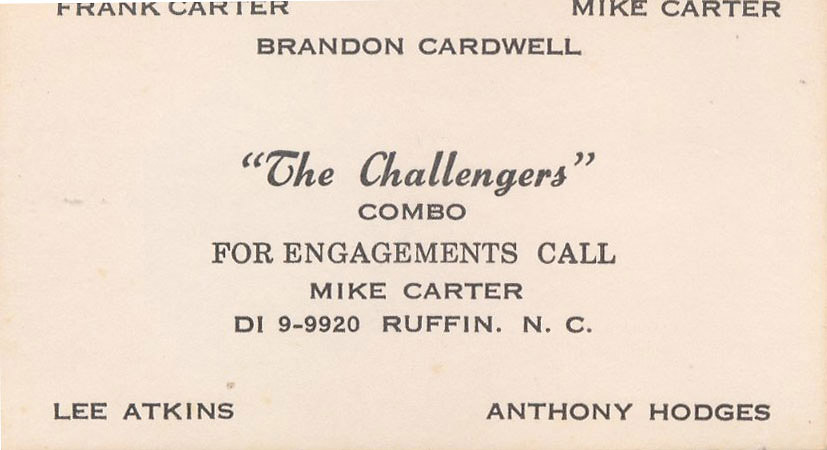
Challengers Business Card
Challengers business card

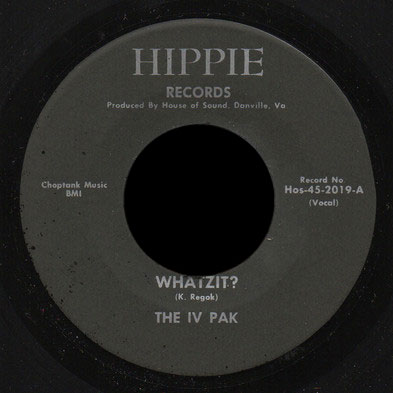
The band is remembered today as the IV Pak and the mystery surrounding the elusive group begins with their name. The group, whose psychedelic rave-up “Whatzit?” appears on numerous garage comps (Signed DC, Teenage Shutdown #8, Aliens, Psychos & Wild Things #3), has gone under the radar screen for decades because they never performed under that name. A label misprint on their lone 45 mistakenly lists the artists as the IV Pak, instead of the VI Pak. Bassist Anthony Hodges explains that the four-piece group had recently expanded to include trumpet and sax players and the members decided they would “just be the VI Pack, like a six pack of beer.”

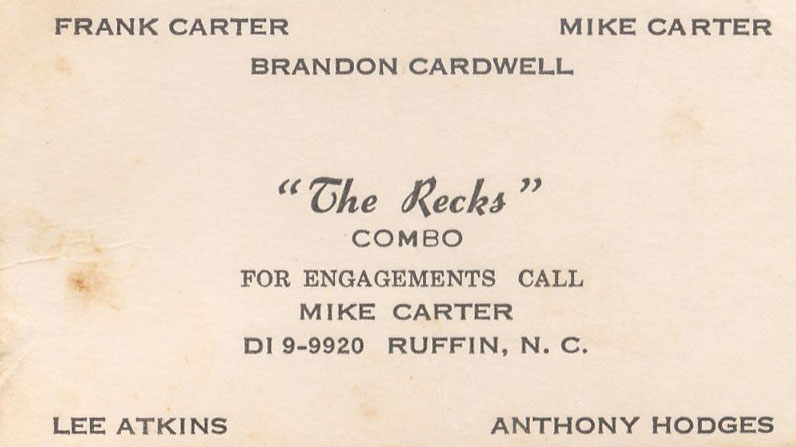
IV Pak - The Recks Combo Business Card
The Recks Combo business card

The group started in 1965 as the Challengers and included Mike Carter on guitar, first-cousin Frank Carter on keyboards, bassist Anthony Hodges and drummer, Brandon Cardwell. The quartet performed for two years as the Challengers, then briefly as the Recks before adding sax man Lonnie Bowes and trumpet player Sidney Vernon and christening themselves as the VI Pak. They were based on the borders of Caswell and Rockingham Counties in North Carolina, with half the members at Bartlett-Yancey High School in Yanceyville and the others attending Ruffin High School.

Brandon lived nearby but was much younger than the others. He joined the Challengers at age 10, but was already an accomplished drummer.

IV Pak - Lonnie Bowes Photo
Lonnie Bowes

Sax man Lonnie Bowes recalls that the school band had just started a year or so prior to the group’s formation and the members all knew each other through school. He explains that “Mike had a good ear for music and Frank could read music real well (so) we just all fell together pretty good.”

Mike and Frank were the unofficial leaders. The cousins both started on guitar and a shared Silvertone amp purchased at Haynes Pawn Shop in Danville for $70. Frank quickly gravitated to keyboards and his dad bought him an inexpensive Italian organ. Anthony and Brandon were recruited and the line-up was set. The four shared a love for the Animals, Stones and the Beatles, although Brandon admits vocals were a chore, since “we didn’t have anybody (who) could sing like John or Paul.”

After learning “Wooly Bully” and “House of the Rising Sun”, the Challengers performed live for the first time in Oct. of ’65 for a dance at the Casville Volunteer Fire Department in Caswell County, N.C. More gigs followed at parties, pizza parlors, church socials, VFW posts and the local Moose and Elk’s lodges. Within months, the band competed in a battle of the bands at Williamsburg Elementary School in Reidsville, losing out to the better-equipped Checkmates.

The bass player’s father ran the local music store and provided their Fender Showman amps.
Another early performance was in the tiny town of Quick, where the Challengers played for Pam Hodges’ 15th birthday party. Hodges would go on to marry legendary bluegrass guitarist Tony Rice.

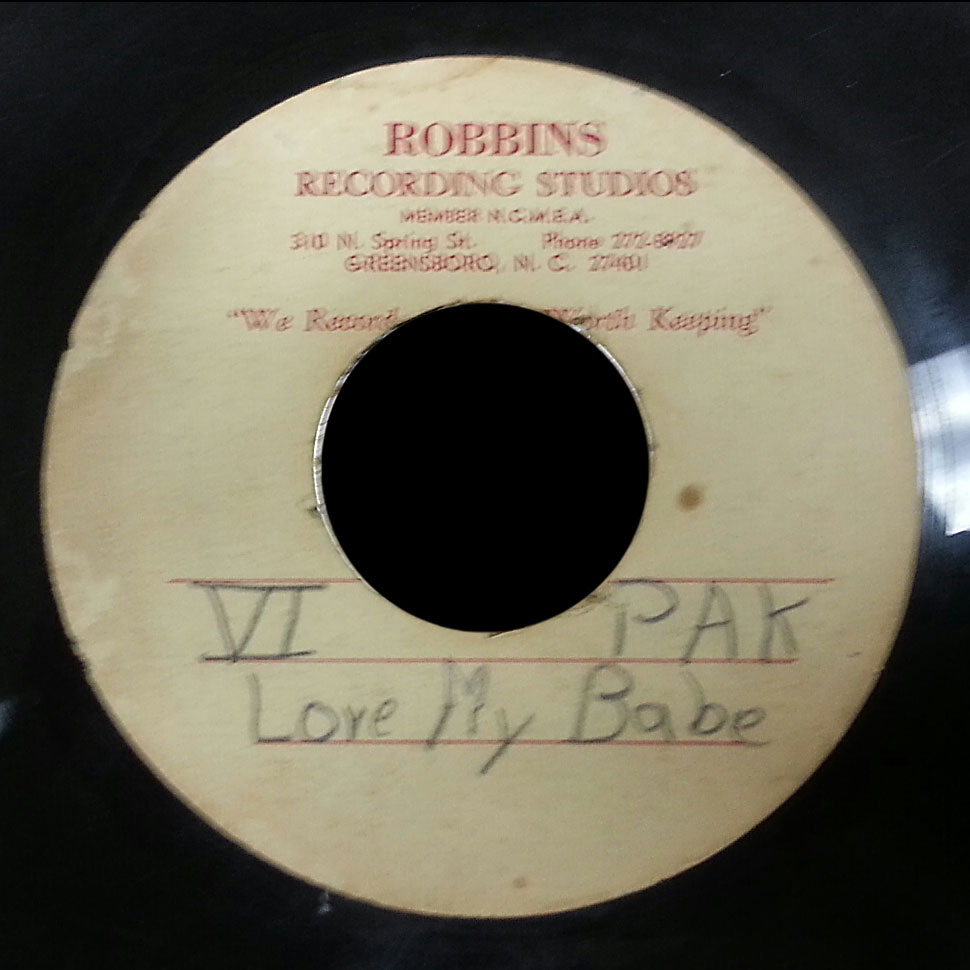
VI Pak Robbins Recording Acetate Love My Babe
VI Pak – Robbins Recording Acetate, Love My Babe

The group played once in Danville as the Recks before adding horns and becoming the VI Pak. The addition allowed the band to play a mixture of rock and soul, opening doors on the North Carolina beach circuit.

It was 1966 and the members of the VI Pak were anxious to get into the studio and record. Anthony had written a mid-tempo rocker, “Love My Babe,” and a crude recording was made at Danville’s House of Sound Studios after the bassist and guitarist approached producer Frank Koger at the local K-Mart, where he worked his day job running the electronics department. A half-dozen copies of an acetate were pressed featuring the original song and the band’s theme, an instrumental which borrowed heavily from “Wipe Out” and “Batman.” It was their first time in the studio and Brandon was nervous, kicking the song off at breakneck speed. The band kept pace, with Mike serving up a blistering guitar solo and Brandon bashing away on the drums.

The demo was played a couple of times on the local Top 40 station, but it would be the following year before the VI Pak would get the break they needed to actually press a record.


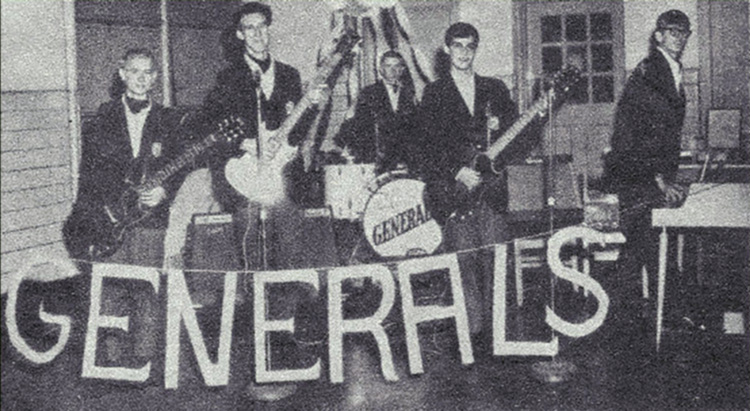
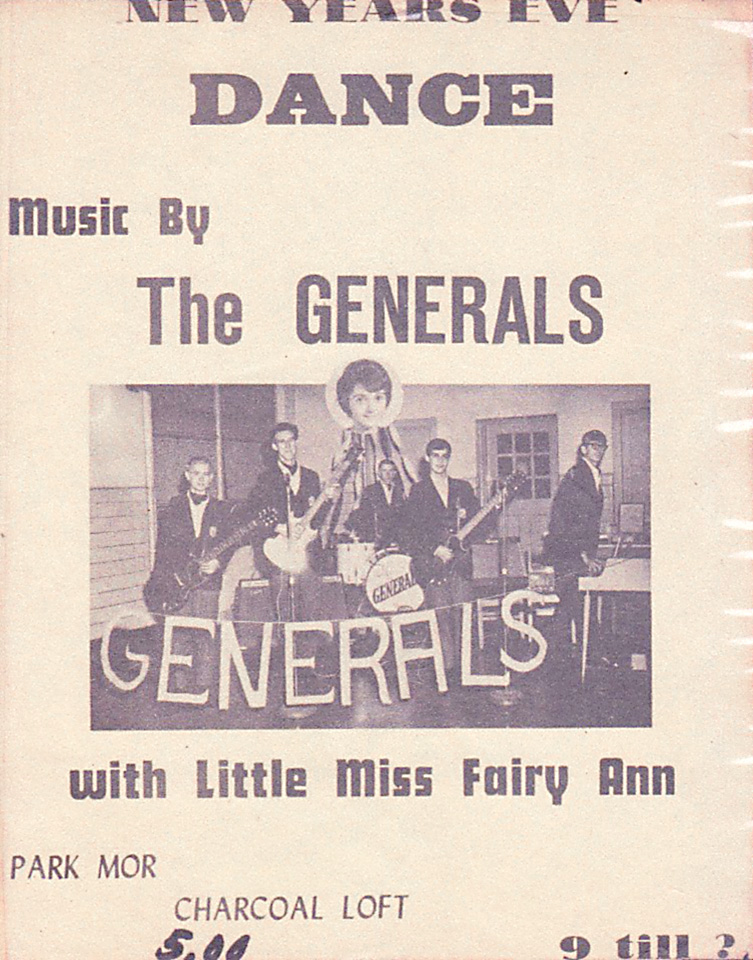
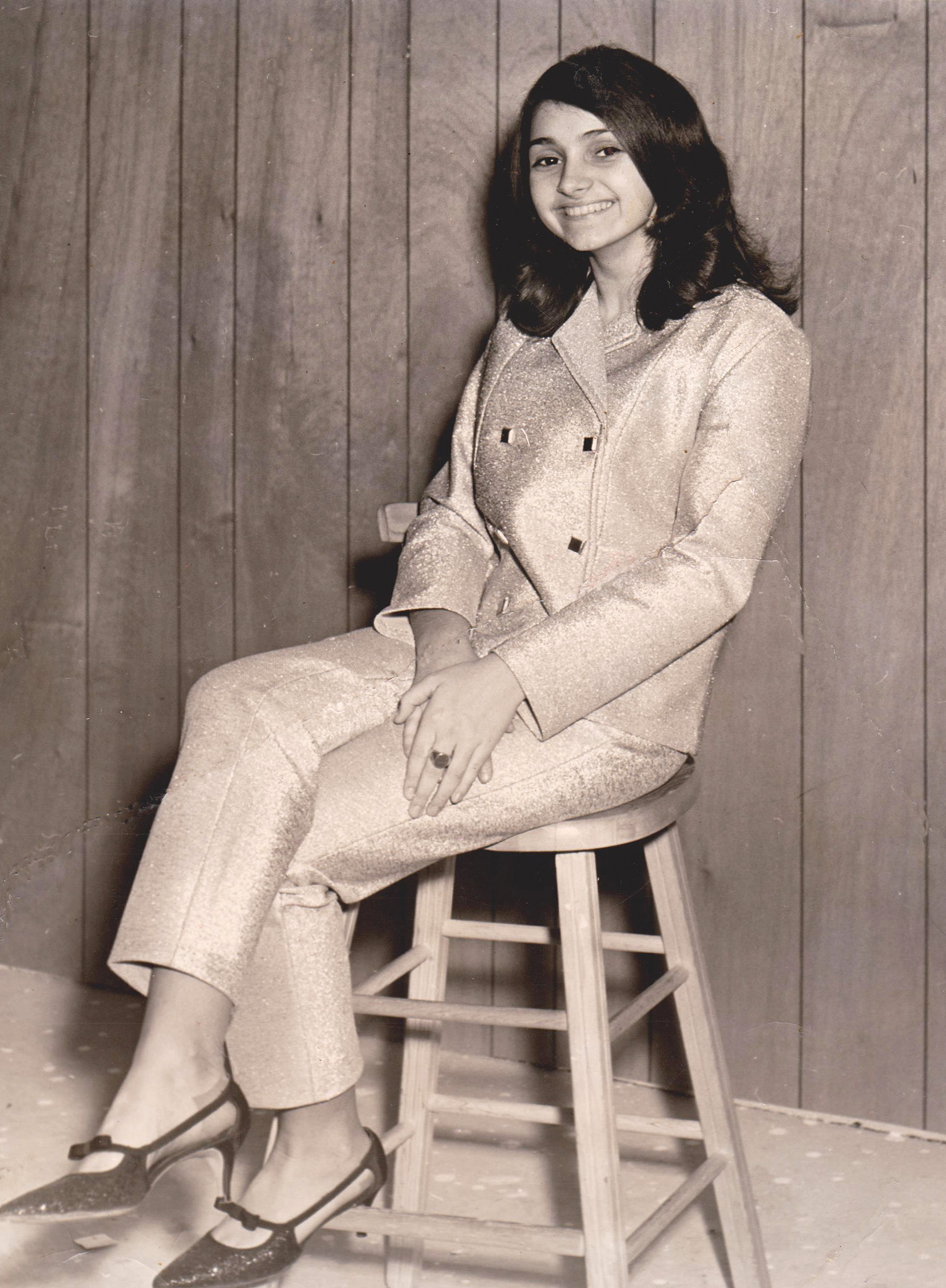
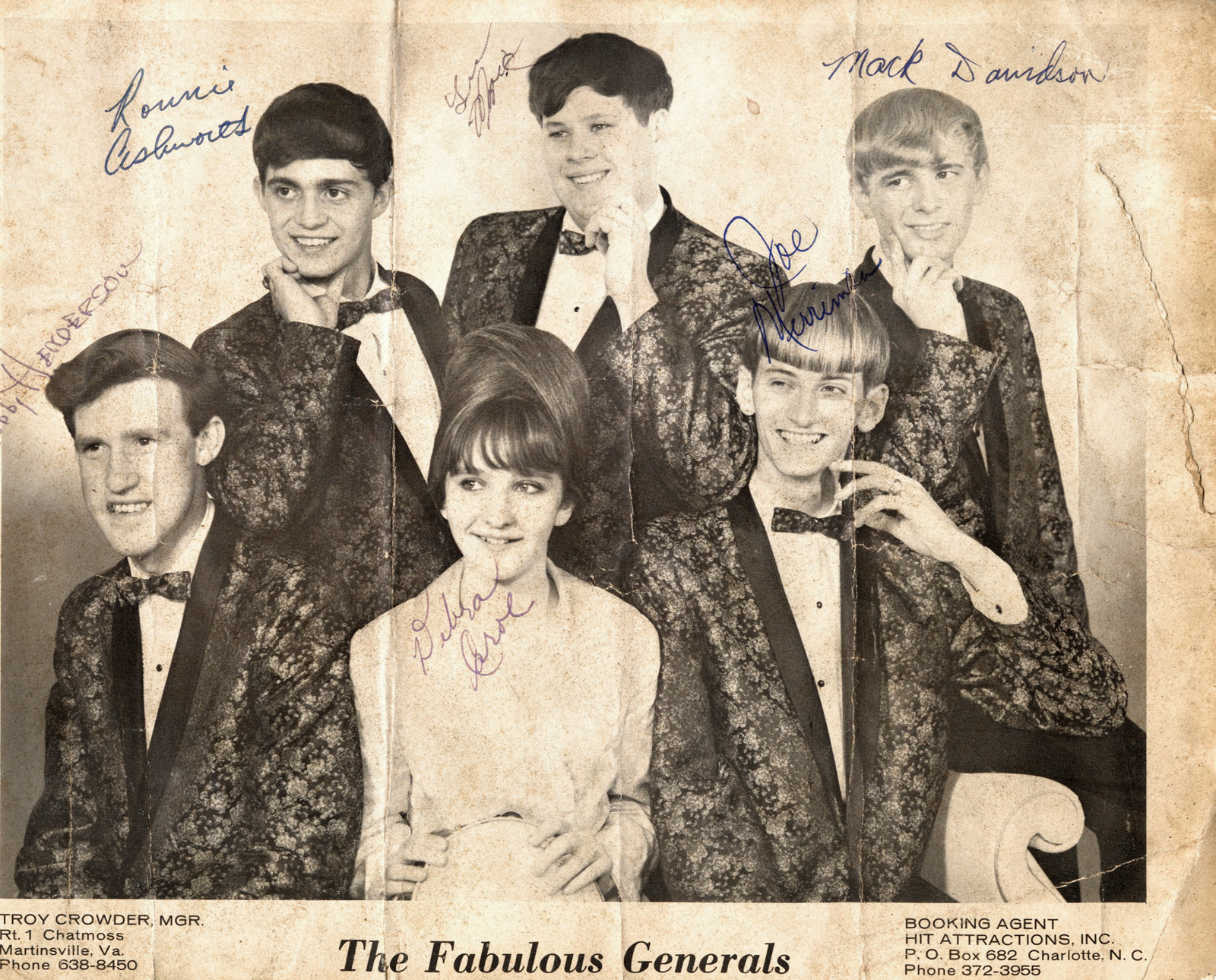
That break came in the summer of ’67 during a two-day battle of the bands at Ballou Park Shopping Center in Danville. Hosted by popular deejay Glenn Scott, some of the best bands in the region competed on three flatbed trucks in the shopping center’s parking lot. At the end of the first day’s competition, the VI Pak had won the preliminary round and a free recording session at Koger’s Raven Records. The grand prize went to the Fabulous Generals of Martinsville, Va., who wore matching suits and were fronted by a pretty (and talented) female vocalist, Debra Carol Crowder.

IV Pak - Mike Carter
Mike Carter

At 17, Frank Carter was the oldest member of the band and remembers selecting a Booker T. and the MG’s song, “Boot-Leg,” to record because it featured the brass and “had a neat little organ part in the center of it, that Booker T. did.” It also helped that the band knew the soul song and performed it regularly. Frank recalls that the band had originally planned to record at Robin’s Records in Greensboro, “but they wanted more money over there.”

The House of Sound studio was located on Piney Forest Road in Danville, in the same building that Mike’s uncle — E.C. Gerringer — owned and used for a piano and furniture company.

The guys crammed all of their instruments and amps into the trunk of Frank’s ’63 Chevy and headed for the studio. Frank remembers it as a “pretty neat little studio (with) multi-tracking and cubicles so “that each one of us had our own little box to play in. It wasn’t like playing in one big room, everything was sort of sectioned off for the drummer and for the guitarist and the horns and myself.”

IV Pak - Brandon Cardwell
Brandon Cardwell

“Boot-Leg” was knocked out in short order, but the band wasn’t prepared when Koger said:

“Well, what are you gonna put on the other side of this?”

The band decided to record another cover as the flip and had attempted several takes before Koger threw up his hands in frustration and called for a different number. Brandon explains that the band “did ‘Boot-Leg’ and we knew that was gonna be the A-side and that turned out really decent and we had planned on putting ‘Ferry Across the Mersey’ by Gerry and the Pacemakers on the B-side.” Brandon says the band “did it as good as we’d ever done it and I don’t know what happened but right near the end of the song our trumpet player — who was playing the lead in it — hit a sour note. And we were doing it instrumental… and he hit a sour note, so we were just blown away. Not that we didn’t have any more studio time, but we just messed around with ‘Whatzit?,’ which was a takeoff on ‘Psychotic Reaction,’ of course, and we just wound up putting that on the record instead.”

Frank recalls that the band hadn’t played “Psychotic Reaction” more than a couple of times, but Koger suggested that they rework it for the session.

Anthony, who sings the lead vocal, sat down and penned a couple of quick verses before the tape started rolling.

She had a cute mini-skirt with a little bit o’ tease, you can see six inches above her knees.
I’m just like a man, can’t stand the attraction. She leaves me with a psychotic reaction.
Looks so good I’d like to eat her, psychotic reaction every time I meet her.
Five-foot-two and built for action, 98 pounds of psychotic reaction.


Frank explains that, like Psychotic Reaction, “we had to do something in middle of this thing. So, that’s when we just put this organ sound in the center of it and I was using an old Sears Silvertone amplifier with a Doric organ. And the (effect) on it was just sort of cheap reverb I guess you’d say. Anyway, it sounded very sort of outer space. So we put that in it.”

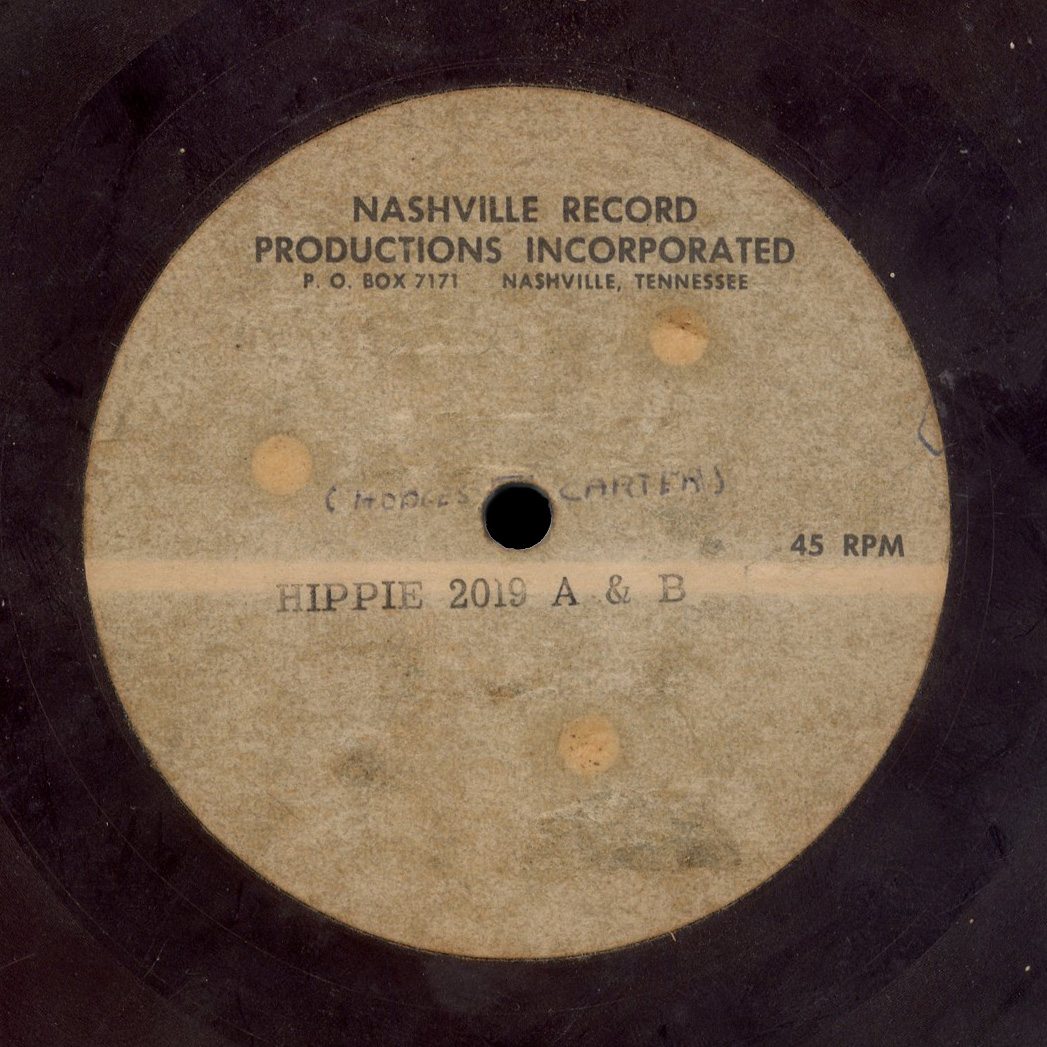
IV Pak - Nashville Record Productions Acetate for Hippie 2019 (detail)
IV Pak – Nashville Record Productions Acetate for Hippie 2019, crediting Anthony and Mike as composers instead of Frank Koger. Flip side contains the Individuals songs for their Raven 45.

Brandon dropped a beat as he was coming back from the break but recovered, although Frank says he “had to do a little bit of catching up.” He believes Koger “had to edit out maybe a drum beat or so in the process, but anyway that turned out to the song that people played.”

The drummer’s recollection is a little different. He wanted to re-record “Whatzit?” because “there was a major mess up on my part about middle ways into the song… it was just a real bad off time thing I did and luckily I stumbled right back into beat. I really didn’t like that cut because of that.” In retrospect, he doesn’t know why the band didn’t just stop and take it from the top. And when they listened to the playback, Brandon says he couldn’t understand “why we even kept it on the tape, because Frank Koger would back it up and record over the same tape usually… didn’t do it that time.” He says the consensus was that the song was only a B-side and no one would ever hear it.

With the song in the can, a title was needed. The band had just composed it and had no idea what to call the tune. After a short discussion between the band and Koger in the control room and after listening to the tape together, Koger said: “I don’t know what it is, so why don’t we just call it ‘Whatzit!'”

Anthony believes his vocal part was double-tracked by Koger, although Mike insists he sang in unison with the bass player. Either way, the snarling vocal makes the record. Both sides were recorded in about two hours.


Now that the sessions were complete, Koger approached the band about a label. Frank remembers the producer wanted an extra $20 to release it on Raven Records, explaining that the Soulmasters were riding high on the success of their first single, “I’ll Be Waiting Here.” The members were listening to the playback in the control room and “between us we might’ve had 10 bucks that night, because we really hadn’t planned on doing anything extra and we were scared to death we might not come out with anything” after paying Koger their $50 in prize money. The band balked and insisted on their own label, choosing Hippie Records because, as Anthony explains, “We all wanted to be hippies back then (and) grow our hair long.”IV Pak Hippie 45 Whatzit?

The master tapes were sent off for pressing and the band was in for another surprise when their records arrived. Somewhere along the way, the Roman numerals had been inverted and the VI Pak had become the IV Pak. With 500 mislabeled copies, the band began distributing the 45. Mike went by the studios to retrieve the records and recalls that “each box had 20 or 25 records and I believe each one of us received about four boxes. We would just take those and try and sell them individually. And if we knew of anybody at a radio station we could take them to, we’d do that, but I don’t remember anywhere I distributed them to except at school and relatives.”

The band’s name wasn’t the only bone of contention. Rather than credit Anthony Hodges as lyricist, Koger listed himself as songwriter, although he spelled his name backwards. Anthony remains unhappy about the slight to this day, but rationalizes that “it didn’t go anywhere, so he didn’t get much money from it.”

Frank recalls hearing the song played in Reidsville and on WYPR and WBTM in Danville and believes there may have been a second pressing.

The record’s release led to more bookings but also confusion about how the band should bill itself. Most promoters knew the band as the VI Pak, but the attention generated by the record resulted in more requests for the IV Pak to play parties, The Black Horse Cellar and Torch clubs, and even the coveted Coke plant dance in Danville, which attracted hundreds of teens every weekend.

The group soldiered on as the VI Pak another three years, performing throughout their home state and Southside Virginia and expanding their repertoire to include numbers by Eric Clapton, Vanilla Fudge and the Rolling Stones. Performances were more sporadic after 1968, with Frank, Sidney, Anthony and Lonnie away at college. The group parted ways in ’71 when Anthony joined the Air Force and several of the members married.

IV Pak Photo, 1973
The only group photo of the IV Pak, from 1973, left to right: Mike Carter, Brandon Cardwell, Frank Carter & Anthony Hodges

A brief reunion followed in 1989, when the band came together for a one-off performance at Ruffin’s Whistlestop Jubilee in late November. As fate would have it, it snowed that morning and the concert was cancelled.

Trumpeter Sidney Vernon died in 2008 at the age of 59. After graduating from high school, he attended Western Carolina University and discovered pottery. Sid and his wife later moved to Virginia Beach, where he taught ceramics and started Vernon Pottery, making 1/12th scale reproductions of 19th century salt-glazed stoneware. He was acknowledged by the International Guild of Miniature Artisans for his skill as a potter and awarded “Fellow” status. His work has been featured in numerous magazines and found its way to collectors around the world.

IV Pak Frank Carter and Anthony Carter, 1973
Frank Carter and Anthony Hodges, 1973

While in the Air Force, Mike Carter played in the Hands of Time, then joined the Ed Irvin Band and Patchwork. He spent eight years as guitarist for the Atlantis Band, where he wrote the song “Shagging By The Seaside,” which the group recorded for Pyramid Records in Charlotte in 1986. He took an 18-year hiatus before returning to music in 2006 with the Not Dead Yet Blues Band. He currently performs with bassist “Wild” Bill Moore in A Cup of Blues.

Lonnie Bowes played in several bands after the VI Pak but is semi-retired and hasn’t touched his horn in years. He now runs a small DMV office in Yanceyville, N.C.

After the VI Pak, Anthony Hodges did a tour of duty in Vietnam. On his return stateside, he went to work for the N.C. Department of Corrections. He has since retired from prison work and music, although he sings in his church choir and still lives in Ruffin.

IV Pak - Lonnie Bowes
Lonnie Bowes

Brandon Cardwell is still active in music and plays classic rock and country every weekend in the house band at the Barn Dance in Julian, N.C. His drumming is also featured on 80’s albums by The Paul Roberts Band and Lady and the Gamblers. He then played with Kerry Michaels and the Mitch Snow bands through the mid-90s, followed by a stint with Bob Collins and the Fabulous Five. His day job was at Burlington Industries.
Frank Carter traded his Doric organ for a Vox, which he still has today. He likes to record on his Korg M3 and is currently working on a musical on Judas Iscariot and the plot to kill Jesus. He worked for a number of years in television and as a public school teacher before earning his Master’s and teaching photography and communications at Alamance and Cape Fear Community Colleges. Frank retired as chairman of the Humanities and Fine Arts Department at the Wilmington college in May of 2012. His wife is a doctor and a drummer.
The surviving members all live in North Carolina and still keep in touch. They reunited in Spring, 2013 and Mike hopes to record the band in his home studio.

IV Pak Reunion Photo
IV Pak reunion, 2013, from left: Anthony Hodges, Brandon Cardwell, Frank Carter, Lonnie Bowes & Mike Carter

The Four on Clark Records

The 4 Photo
The 4, from left: George Parks, Greg McCarley, Larry Rains and Paul Crider

Here’s an obscure one that isn’t in Teen Beat Mayhem, though it certainly deserves to be. I didn’t know anything about the group, called simply, The Four, but then I found their photo in Ron Hall’s The Memphis Garage Rock Yearbook, 1960-1975.The Four Clark 45 Now Is the Time

The band were:

George Parks – guitar
Greg McCarley – guitar
Paul Crider – bass
Larry Rains – drums

“Now Is the Time” is a good mid-tempo song with harmonies and Beatles-type changes. It was written by George Parks.
“Lonely Surfer Boy” is an original by Paul Crider and Greg McCarley. As comments state below, the group came from Brownsville, Tennessee, about 60 miles northeast of Memphis.

SoN 15101/15102 indicates it was mastered by Sound of Nashville, while the ZTSB 99962-A / 99963-A in the deadwax indicates it was pressed at the Columbia Records plant in Nashville. I’m not sure the date on this one but early 1965 seems about right.The Four Clark 45 Lonely Surfer Boy

Both songs were published by Lonzo & Oscar Music, BMI and produced by Jack Logan, who was A&R director of Nugget Records of Goodlettsville, Tennessee which also seemed to own the Clark label.

In late 2013 two acetates surfaced of a group called “The 4” from Sam Phillips Recording of Memphis, “69” / “I Gotta Go” and “When Ever Your Down” (sic) / “Midnight Hour”.

“69” opens with one of the most intense screams ever committed to vinyl, and it is now on the shortlist for Back From the Grave vol 9! it was backed with an uptempo pop number “I Gotta Go”. It’s such a different sound that I thought it must be a different group, but both songs were written by George Parks. I haven’t heard “When Ever Your Down” yet, but it was written by Greg McCarley.The 4 Sam Philips Studios Acetate "69"

The Memphis Garage Rock Yearbook notes The Four “cut three singles, all in Nashville in the late ’60’s. After they broke up, Greg McCarley released two singles on the local Klondike label as ‘Beau Sybin.’ George Parks had a release on Epic that he cut in New York and was also a staff writer at Stax.”

A late ’60s release by the Four on the Nashville North label is likely by another group. “Good Thing Going” (B. Carlton, H. Adams, D. Johnson) / “Cy’s Been Drinking Cider” was produced by Vern Terry and Len Shafitz, out of Massillon, Ohio, just west of Canton. Teen Beat Mayhem lists that band as from Elyria, Ohio. They cut a later 45 on Epic as the Sunny Four “Why Not (Be My Baby) / “Goodie Goodie Ice Cream Man”.

The Clark label had two other garage releases that I know of. On Clark CR-235 is the Ebb TIdes “Little Women” (by Donald Kyre, Michael Wheeler, Michael Whited, and Waldron), which sounds something like the Beatles “You Can’t Do That”. The Ebb Tides came from Columbus, Ohio. Their Clark 45 may have come about as part of a deal to do a summer tour of the Ohio Valley area. The flip is “What I Say”, by Gene McKay & the Ebb Tides. McKay was another singer on the tour and though the Ebb Tides backed him on the cover of Ray Charles’ “What’d I Say”, they did not otherwise work together.

The Ebb Tides had a second 45, the spooky novelty “Seance” (Benny Van, M. Wheeler) b/w a mystical spoken vocal, “Spirits Ride the Wind” (Benny Van) that I really like. This 45 was produced by Rudy Varju on Jar 106 from early 1967. Benny Van of the Ebb Tides became J.D. Blackfoot.

The other is the Jades “You Have to Walk” / “Island of Love”, both written by Paul Helms and released on Clark CR-262 from May of ’67. That group was from Herrin, Illinois, a small city southeast of St. Louis and almost 200 miles northwest of Nashville, but the publishing is also Lonzo & Oscar, and the label states that it was produced and distributed by Nugget Sound Studios, Goodlettsville.Jades Clark 45 You Have to Walk

Other songs on the Clark label seem to be country, such as CR-266, Charlie Haggard’s “Throw Me Out the Door”.

Lonzo & Oscar were Johnny and Rollin Sullivan, whose family had started the Nugget Record company in Tampa, Florida in 1959, but Lonzo & Oscar Music Publishing had a Nashville base from the start. They bought or built Nugget Sound Studios in Goodlettsville, just north of Nashville. Most releases they recorded are on the Nugget label, and most are country.

History of the Nugget label from 45-sleeves.com. Thank you to Buckeye Beat for the info on the Ebb Tides 45.

Calcutta-16

Calcutta-16 HMV NE 1003 Ballad of the Purple InnAs far as I can tell, Calcutta-16 only released this one 45, but what a record it is. Ed Nadorozny has the record and provided the music and scans here. When I heard Calcutta-16’s “Ballad of the Purple Inn” I asked Ed if I could cover it on Garage Hangover and he kindly said yesCalcutta-16 HMV 45 Ballad of the Purple Inn  

I love everything about the song: Brinnand’s insolent delivery of the lyrics, the full bass line, the excellent sounds they get out of the guitars and echo, the drumming, all of it.

The flip “One Eyed Woman” has a great break halfway through with a pounding snare drum that just gets louder, war whoops, and a solo the segues so nicely back into the song. The bassist and the sound of the group in general remind me somewhat of the Great Society.

The band were:

John Brinnand – lead vocals (spelled John Brinand on the labels)
Peter Yeti – lead guitar
Romit Bhattaharya – rhythm guitar
Devdan Sen – bass guitar
Nondon Bagchi – drums

Devdan Sen and John Brinand “wrote the lyrics and composed and arranged the music” according to the notes on the back cover.Calcutta-16 HMV 45 One Eyed Woman

Dubby Bhagat of the Junior Statesmen produced the record and wrote the notes, and J.P. Sen engineered it. The record was released on His Master’s Voice NE. 1003 in 1969.

Dubby’s notes on the back also thank the band’s manager Jimmy Chaudhuri and “Colonel Bose of the ‘Living Sound’ Studio and his daughters Rita and Mita, who first recorded the group. Jack Dantes who christened the group. Sumit Bhattacharya and Rangam Mitra who gave time and equipment aplenty. The Surayas for their quiet but wholehearted support. Mr. Rafiq and Mr. A.C. Sen of H.M.V., who gave the boys this chance. Desmond Doig of the Junior Statesmen who encouraged the project. And Ananda Mitter and Jonathan Mason without who the group would never have got to Dum Dum for the recording!”

Next up from Ed will be a couple tracks from a very rare early EP by the Savages, better known for their Black Scorpio LP.

Calcutta-16 HMV NE 1003 Ballad of the Purple Inn

Tomorrow’s Love

Tomorrow's Love Photo

From Hamilton, New Zealand, Tomorrow’s Love is known now for an excellent version of Love’s “7 And 7 Is” on their only 45. Guitarist Ron Jenkins contacted me and told me about the group and sent the scans of the record seen here. He also sent me a transfer of “What Shall I Do”, which the band learned from the Artwoods, though the original version was the very fine “I’ve Got The Blues (What Shall I Do)” written and sung by Marvin Jenkins and released on Palormar 2208. I am one of the few to have heard Tomorrow’s Love version in almost 50 years!

I formed Tomorrow’s Love a long time ago. Max Fletcher was the bass player from Timaru. I arranged for Kevin [Toneycliffe] and Max to come to Hamilton and join a group with me and an organ player [Derek Allan].Tomorrow's Love Allied International 45 7 And 7 Is

New Zealand was a strange country back in the sixties with import and currency regulations. Foreign exchange was what we thought impossible to get other than in 50P British Postal notes available one per person a day. So on Friday nights we used to get into my car and rush around as many post offices as we could running into a post office and buying a 50P postal note each. We used these Postal Notes to buy packages of records that we thought would not be available here in New Zealand from a British Record Shop. We chose these via a Britsh music publication Melody Maker, and one record we chose was Love’s version of “7 And 7 Is”.

I recall another record we got was The Sparrow, “Tomorrows Ship”, so we just used Tomorrow’s Love as our name.

When we first heard “7 And 7 Is” we thought it was unique and bound to create interest. Of course we never ever anticipated the New Zeland Broadcasting Corporation banning the record and that is what really killed it. We had the New Zealand Broadcasting Corporation’s #1 disk jockey running our dances and we know we would have got a fair go with airplay BUT he played it once and was jumped upon and that’s when we found out it was banned. It never entered our minds that the lyrics were drug related.

I believe there were two pressings with “7 And 7 Is” being the A side in the first pressing and then they made “What Shall I Do” the A side on the second pressing. I should have bought more than one copy. I do not think any of us got a cent in royalties. I have a first pressing which I was told there were 500 (but I had no way of verifying that). If correct it indicates the record sold over 500 copies.

I actually hated the fuzz box on “7 and 7 Is” but after listening to some other versions in later years I have grown to like our version. To be honest going by memory, I do not think it went over live, I mean “Ha Ha Said the Clown” was probably more acceptable!

The guitar was double tracked on “What Shall I Do”. I never knew that there was an original prior to the Artwoods. Looking back I wish we had tried to change the arrangements instead of just a copy of the originals.Tomorrow's Love Allied International 45 What Shall I Do

I recall Keith Ashton (a disk jockey in Hamilton who ran the dances) refusing to call the Saturday dance off like we wanted as the Starlight Ballroom had the Avengers or some Wellington band that had a record at the top of the charts playing there. He said he would get a second band from Rotorua (who incidently never turned up). Anyway we played and by 10 o’clock the Old Folks Hall was packed and friends of the group were telling us that nobody was at the Starlight! I understand they pulled the pin about 11pm. The Old Folks Hall had amazing acoustics, no matter how the band was performing it always sounded good.

One of our last gigs was in Auckland at Hauraki Radio’s nightspot. We never went down well until we played The Creations “Making Time” which we had hoped to record. We played it last because the guitar riff was played using a violin bow and because of the resin my guitar had to be properly cleaned up. It went down well and I can recall a comment from one of the people there that they had never heard an “outside” group being clapped as we were! Of course it could have been because it was our last number? but maybe not as they never knew it was …

When we broke up the drummer/vocalist (Kevin) of Tomorrows Love joined a group The Chapta. He was the vocalist for them on “Say a Prayer” which reached #1 on the NZ hit parade. I got a shock a few years ago to find that Kevin had died in Australia of a heart attack.

I think Max and myself realised that Tomorrow’s Love had done its dash at about the same time. I was trying to arrange gigs, etc and it simply wore me down, plus it was my car and my money that was keeping things going. Looking back it was stupidity, we never got the money from our dances, I think $60 was topline split between four. It never covered costs. Since the group broke up I have had no contact with any of them.

Ron Jenkins

The Salesian High School Rock ‘n Roll Show LPs

Salesian High School Rock n Roll Show Volume 2Bishop Mora Salesian High is a Catholic school at the intersection of Whittier Boulevard and South Soto Street in the Boyle Heights neighborhood of Los Angeles. In 1964, the school’s band director W.A. Taggart began producing concerts at East Los Angeles City College, where the auditorium would hold over 2,500 attendees, and at least three of these were recorded and released through Century Custom Recording Service in 1964 and ’65..

The Salesian High School Rock ‘n Roll Show LPs are little known outside of collectors of Los Angeles r&b and rock’n’roll. I’ve seen three volumes, one each from concerts on April 19, 1964,  October 18, 1964 and May 16, 1965 at the auditorium of East Los Angeles City College (ELACC) in Monterey Park. I’ve read there is a fourth volume, but haven’t seen it yet. I only own Volume 2, so if anyone has the music from Volume 3 please get in contact with me.

Volume 1 (Century Custom 19070, recorded April 19, 1964):

Bobbie and the Esquires – “You’ll Lose A Good Thing”
John Gamboa Sextet – “Down at The Chicken Shack”, “Moody’s Mood For Love”
Sal Padilla and the Leggeriors – “Night Train”
Thee Midnighters – “Chinese Checkers”, “For Your Love”
The Vesuvians – “The Fugitive,” “Hand Clapping”
Blue Satins – “Summertime”, “Love Lights”, “My First Love”
The Salesian Mustang Swing Band – “Theme For Rock ‘n Roll”

Salesian High School Rock n Roll Show Volume 2 side 1Volume 2 (Century Custom 20069, recorded October 18, 1964):

Art and the Nite Liters – “Tuff Talk”
The Velvetones – “Tenderly”
Ronnie and the Casuals – “20.75”
The Rhythm Playboys – “This Is My Prayer”, “One Degree North”
Thee Midniters with Li’l Willie G. vocalist – “And I Love Her”, “So Far Away”, “I Need Someone”, “Darling Forever”, “Sad Girl”
The Blue Satins – “Help Yourself”, “Oh-Pu-Pi-Do” (featuring The Sisters Trio), “The Bounce”

Notes by George L. Pineda.

Volume 3 (Century Custom 21995, recorded May 16, 1965):

The Goofy Six Plus One – “I Need Someone”
The Relations – “I Do Love You”
The Invaders – “Sad Girl”, “Darling Forever”
The Etalons – “Out Of Sight”
The Little Heartbreakers – “Cradle Rock”
The Enchanters – “Try Me”
The Parley Brothers – “Uncle Sam’s Men”
The Emeralds – “Wooly Bully”
The Precisions – “I Been Trying”
The Counts – “Girl of My Dreams”
Clarence Playa – “I Wake Up Crying”
The Velvetones – “Gloria”
The Progressions – “Twine Time”
Li’l Ray – “Oooh Baby Baby”
The Ambertones – “Ebb Tide”

Produced by W.A. Taggart, directed by Gilbert Pineda, photography by R. Ruiz.

Salesian Rock 'n Roll Show Vol. 4 Century Custom LP Side 1Volume 4 (Century Custom 22972, recorded Oct. 10, 1965 at East Los Angeles City College)

Thee Vandells – “Get Down With It”
The Entertainers – “Double 00 Soul”
The Fabulons – “I’ll Go Crazy”
The Four J’s – “My Girl Sloppy”
The Executives – “High Heel Sneakers”
The Relations – “Heat Wave”
The Impalas (Thee Impalas) – “Treat Her Right”
The V.I.P.’s – “Davids Mood”
Frankie Valens – “Gee Whiz”
The Emeralds – “So Far Away”
The Enchanters – “Midnight Hour”
The Enchantments – “Try Me”
The Etalons – “Ask Me Why”
The Noblemen – “To Be Loved”
The Ambertones – “I Need Someone/My Prayer”
The Four By Fours – “Roll Over Beethoven”

The first volume is less than half an hour long, consisting mostly of r&b covers, instrumentals and ballads. It includes Thee Midniters first recordings, a cover of Booker T & the MGs “Chinese Checkers” and “For Your Love” (a ballad, not the Yardbirds song). Larry Rendon and Romeo Prado of Thee Midniters were students of Bill Taggart.

Dominic Priore gives a concise early history of the group in the liner notes to the Norton Records compilation In Thee Midnite Hour!:

“Ex-Gentiles Little Willie G and Larry Rendon had first clicked with Benny Ceballos as Benny & the Midniters. This early lineup was know for wearing Lone Ranger style masks, which they would throw into the audience, driving the girls wild. The usual band lineup swaps (including a period with two lead singers, Little Willie G and Little Ray Jimenez) resulted in the solid recording band Thee Midniters, Willie, together with George Dominguez (lead guitar), Roy Marquez (rhythm guitar), Ronny Figueroa (organ), Larry Rendon (tenor sax), and trombone blaster Romeo Prado formed the core of the group with the drummer George Salazar and bass player Benny Lopez being succeeded by Danny La Mont and Jimmy Espinoza, respectively, Jimmy coming to the group via the Vesuvians and the Crowns, led by local legend Johnny Gamboa. Romeo too had entered the Midniters fold via the Crowns.”

Another notable performance is the Blue Satins, who do a rockin’ extended version of “Turn on Your Love Light”. The Blue Satins included Mike Gomez (vocals), Louie Lopez (vocals), Pete Ventura, Raul Suarez (lead guitar), Frank Estrella, Frank Mezquita (bass guitar), Bobby Loya (trumpet), Charles Lueras (sax), Robert Perez (sax), John Betancourt (drums). They had one 45 single, “You Don’t Know Me” / “My Wife Can’t Cook on Scarlet 501. More info on the Blue Satins is at the excellent site, You Found That Eastside Sound.

You can hear the album in its entirety at East LA Revue Radio, where Steven Chavez writes “the concert admission price was $1.25 and only $1 if you were a high school student with a valid school ID. I was one of the 2,000 in attendance that Sunday afternoon. It was initially sold at the high school book store for a hefty $3.25. This is the first concert record produced by ‘The Prof’ Bill Taggart’s team at the Boyle Heights parochial school for boys. Another person that was instrumental in the production and recording of this event is Tony Garcia.”

The October 18, 1964 concert is especially interesting to me because part of it was released as Thee Midniters’ first single, “Land of a Thousand Dances” (parts 1 & 2) on Chattahoochee 666. The rest of their performance from that concert is on “Rock ‘n Roll Show Volume 2”, including a version of the Beatles “And I Love Her” and Hank Jacobs’ “So Far Away” along with a few ballads.

Thee Midniters were supposed to be backing Cannibal & the Headhunters who were known locally for their version of Chris Kenner’s “Land Of A Thousand Dances.” But with Cannibal & the Headhunters stuck in Fresno with bad weather, Thee Midniters had the starring spot and did their own version of the song. Richie Unterberger recounts the story in more depth in “Urban Spacemen and Wayfaring Strangers”.Thee Midniters Chattahoochee 45 Land of 1,000 Dances

The obvious appeal of their performance somehow led concert producer W.A. Taggart to let the group bring the recording to Ruth Contes of Chattahoochee Records in Hollywood, who quickly released it in the month following the concert. In fact, it seems Thee Midniters released their version within weeks of Cannibal & the Headhunters cutting their own, recorded live at the Rhythm Room. In an interview, Headhunters member Richard “Scar” Lopez said their Rampart single was released in May, 1964 but this date is too early, as it wouldn’t have taken nine months to start showing up on local charts. Thee Midniters’s single turns up in radio station playlists beginning in December of ’64, then goes head to head in competition with Cannibal & the Headhunters’ single beginning in mid-January of ’65. The Headhunters’ Rampart single has a Monarch pressing # of 54957, indicating a November, 1964 mastering and pressing date. I would guess Cannibal & the Headhunters saw Thee Midniters were about to make a hit out of their signature song and rushed their own version out.Salesian High School Rock n Roll Show Volume 2 side 2

No one seems to dispute the legend that Headhunter lead vocalist Frankie Garcia came up with the “Na, Na Na Na Na…” hook spontaneously during a performance when he forgot a verse, though Thee Midniters include the Na Na Na Na hook in their version at the concert. In any case, Cannibal & the Headhunters won out in the national charts and the song is now associated with them, while Thee Midniters went on to record many great singles.

Other highlights on Volume 2 are the Blue Satins again who do a great trio of “Help Yourself”, “Oh-Pu-Pi-Do” (featuring The Sisters Trio) & “The Bounce”. Ronnie & the Casuals get only one song, the fine “20-75”; they had many releases on Donna and Mustang as Ronnie & the Pomona Casuals, including a version of “Land of a Thousand Dances” on their LP Everybody Jerk. The Rhythm Playboys had been Frankie Garcia’s group before joining Cannibal & the Headhunters. Their instrumental “One Degree North” is one of the best cuts on the LP.

Salesian High School Rock n Roll Show Volume 2 back coverVolume 1 and 2 have similar front covers, with band photos on the back, while Volume 3 has band and audience photos on both front and back covers (unfortunately without identifying which band is which).Salesian High School Rock n Roll Show Vol 3

Volume 3 has an expanded lineup with all new acts except the Velvetones, each receiving one song on the album with the exception of the Invaders. Many Eastside legends show up on this LP, including the Invaders (likely Mickey Aversa & the Invaders), the Heartbreakers (brothers Benny & Joe Rodriguez, with several singles on Donna, Brent and Linda labels), The Counts aka Thee Counts: Johnny Joe Ramos, bass; Bobby Gurrola, guitar; Bobby Rodriguez, trumpet; Don Viray, guitar; Charlie Montijo, lead singer; Albert Barron, sax; Ronnie Wheat, drums; Arnold Serafin, keyboards; and Joe Vasquez, sax; with a great single on Highland, “Someday I’m Gonna Get You” / “So Far Away”), and the Ambertones, who I’ve covered on this site. Clarence Playa was in the Progressions, who are probably backing Li’l Ray on “Oooh Baby Baby” on the Volume 3 LP, as they were his backing for a single on Donna as Little Ray, “I Who Have Nothing” / “I Been Trying”.

Salesian continued producing shows for decades, but no others were released to my knowledge. If anyone has scans of the cover or music from the reputed Volume 4 release, please contact me!

Thank you to Van Bryan for the track list and label scans of the very rare Volume 4.
Salesian Rock 'n Roll Show Vol. 4 Century Custom LP Side 2

The Legends

The Legends Uxbridge Chronicle 1967 JulyA
Click photo to see full article

Peter Watkinson – lead vocals
Kevin Sparkes – rhythm guitar, organ
Keith Kendall – lead guitar
Rick Eagles – bass
Tony Watkinson – drums, vocals

Hayes, Middlesex-based brothers Peter and Tony Watkinson had formed the band in the early 1960s as The Limelites and were joined at some point by rhythm guitarist Kevin Sparkes.

In 1963, Rick Eagles, who’d previously played rhythm guitar with Wembley, Middlesex band The Delta 5 alongside future Deep Purple bass player Nick Simper, joined the Limelites on bass. Soon after, they became resident Sunday night band at the Clay Pigeon in Eastcote, Middlesex.

During mid-1964, Peter Watkinson caught another Hayes band, Brian & The Fantoms playing at the Seagull Hotel in Southall and was impressed by The Fantoms’ lead guitarist Keith Kendall, whose father was Watkinson’s manager at EMI Electronics.

Hillingdon Mirror 29 September 1964 page 5

Not long after, Watkinson changed the group’s name to the Legends and secured a recording deal with Pye Records.

Paired with legendary producer Joe Meek, the band cut a lone single, Peter Watkinson’s “Looking For Her” c/w “I’m Coming Home”, which was issued as The First Impressions in March 1965 to avoid confusion with Twickenham, Middlesex group, The Legend.

However, when the US soul band, The Impressions threatened a law suit, the musicians were forced to revert back to The Legends for a second single on Pye – Peter Watkinson’s “I’ve Found Her” c/w “Something’s Gonna Happen” in July 1965.

When the two singles failed to dent the charts, Keith Kendall departed in late 1965/early 1966 and re-joined Brian & The Fantoms for a few months before subsequently joining Hayes group, Four Point Five, which also worked as The Soul System. In the late 1960s/early 1970s, Kendall hooked up with The All Night Workers.

Kendall’s initial replacement was a lead guitarist called Ron, who was joined soon after by second lead player Ian Hollands. Hollands had previously worked with Ealing, Middlesex group, Frankie Reid & The Casuals between 1962-1963 and then a Teddington, Middlesex band (possibly Unit 4).

Towards the end of 1966, the band underwent further changes as both Rick Eagles (who hooked up with Tony Knight’s Chessmen) and the lead guitarist called Ron departed to make way for siblings Terry Williams on trumpet/vocals and Ian Williams on bass. By November, Kevin Sparkes, who’d moved on to Hammond C3, had also left to make way for Russ Pinder.

The Hillingdon Mirror ran article and photo on the new formation in its 28 March 1967 issue, page 24.

That same month, The Legends finally returned with a second single on the Parlophone label – a cover of Boyce & Hart’s “Tomorrow’s Gonna Be Another Day” backed by Peter Watkinson’s “Nobody Laughs Anymore”.

The Hillingdon Mirror ran another article and photos of the band in its 11 July 1967 issue, page 32 (see above).

That same month, The Legends released their final single on Parlophone – Peter Watkinson’s “Under The Sky” c/w “Twenty Four Hours A Day”.

When the band broke up in late 1967, Hollands played guitar on some demos that Peter Watkinson recorded in his home studio before going on to work with Hayes, west London group, The Magic Roundabout.

Thanks to Keith Kendall and Ian Hollands for providing background information on the band.

Copyright © Nick Warburton. All Rights Reserved. No part of this article may be reproduced or transmitted in any from or by any means, without prior permission from the author.

I have tried to ensure the accuracy of this article but I appreciate that there are likely to be errors and omissions. I would appreciate any feedback from anyone who can provide any additions or corrections. Email: Warchive@aol.com

The Legends (Trend Magazine)


Selected gigs (also see comments below):

30 January 1965 – Carfax Ballroom, Oxford with The Puppets (Oxford Mail)


5 June 1965 – Carfax Ballroom, Oxford with The Pressmen (Oxford Mail)


14 August 1965 – Orchid Room, Oxford with The Beat Merchants (Oxford Mail)


21 September 1965 – Kodak Hall, Wealdstone, northwest London Paul Dean & The Savages (Harrow Observer & Gazette)


26 October 1965 – Kodak Hall, Wealdstone, northwest London with The Creed (Harrow Observer & Gazette)


16 November 1965 – Kodak Hall, Wealdstone, northwest London with The Creed (Harrow Observer & Gazette)


17 December 1965 – Kodak Hall, Wealdstone, northwest London Paul Dean & The Savages (Harrow Observer & Gazette)


16 August 1967 – Town Hall Park, Hayes, west London (Hillingdon Mirror)

The Pentad

Pentad Woking Herald 1965 June 11
The Pentad featured in the Woking Herald and News, June 11, 1965

Terry Crowe – lead vocals
Mike Fitzpatrick – lead guitar
Roger Hanks – piano, organ
Mick Dunford – bass
Peter Garland-Jones – drums

A Woking, Surrey band that was formed around April 1965 from the ashes of The Plebs, The Pentad was led by singer Terry Crowe, who together with Mick Dunford, had been an original member of The Nashville Teens.

The band’s debut single “Silver Dagger” c/w “Nothing But Love” came out on Parlophone in June 1965. The group recorded a second single, “Don’t Throw It All Away” c/w “Too Many Ways”, which was released later that year.

Pentad’s third and final release, “Something Other People Call Love” c/w “It Better Be Me”, was issued in March 1966. Dunford later became a member of Renaissance.

The Woking Herald provided good source material.

Notable gigs

11 June 1965 – Walton Hop, Walton Playhouse, Walton-on-Thames, Surrey (Woking Herald)

Unit 4 and Pentad

15 June 1965 – Gala Ballroom, Norwich, Norfolk with Unit 4 + 2 (Eastern Evening News)

20 June 1965 – Orford Cellar, Norwich, Norfolk (Eastern Evening News)

27 June 1965 – Sunset Ballroom, The Sandringham, Hunstanton, Norfolk (Lynn News)


16 July 1965 – Orford Cellar, Norwich, Norfolk (Eastern Evening News)

17 July 1965 – Orchid Room, Oxford with The Vibros (Oxford Mail)


19 August 1965 – Victoria Ballroom, Cambridge (Cambridge News) Billed as The Pentab
Them and Pentad

31 August 1965 – Gala Ballroom, Norwich, Norfolk with Them (Eastern Evening News)

31 August 1965 – Witham Public Hall, Witham, Essex with Stu James & The Mojos (Essex County Times)


1 September 1965 – Dorothy Ballroom, Cambridge with Bob Kidman & The Dorothy Orchestra and The Dawnbreakers (Cambridge News)

15 September 1965 – Orford Cellar, Norwich, Norfolk (Eastern Evening News)

24 September 1965 – Locarno Ballroom, Basildon, Essex with The Paramounts and The Transatlantics (Southend Standard)


2 October 1965 – Victoria Ballroom, Cambridge (Cambridge News)


9 November 1965 – Gala Ballroom, Norwich, Norfolk (Eastern Evening News)


22 January 1966 – King’s Lynn Corn Exchange, King’s Lynn, Norfolk with James King & The Farinas (Lynn News)

29 January 1966 – Corby Civic Centre, Corby, Northants with The Brumbeats (Wellingborough News)


5 February 1966 – Esquire Club, Sheffield, South Yorkshire (Sheffield Star)

12 February 1966 – Blue Lagoon, Newquay, Cornwall with The Other Five (West Briton & Royal Cornwall Gazette)

13 February 1966 – Sunday Club, Addlestone, Surrey (Woking Herald)

The Pentad, Woking News and Mail, 29 May 1965
Woking News and Mail, 29 May 1965

Copyright © Nick Warburton. All Rights Reserved. No part of this article may be reproduced or transmitted in any from or by any means, without prior permission from the author.

I have tried to ensure the accuracy of this article but I appreciate that there are likely to be errors and omissions. I would appreciate any feedback from anyone who can provide any additions or corrections. Email: Warchive@aol.com