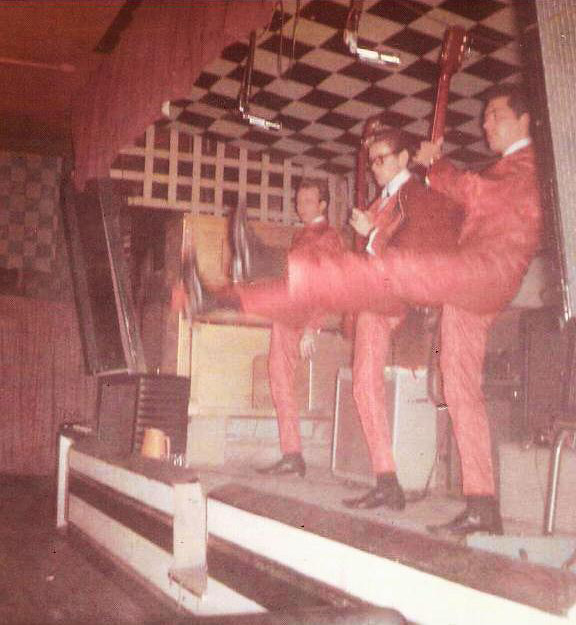
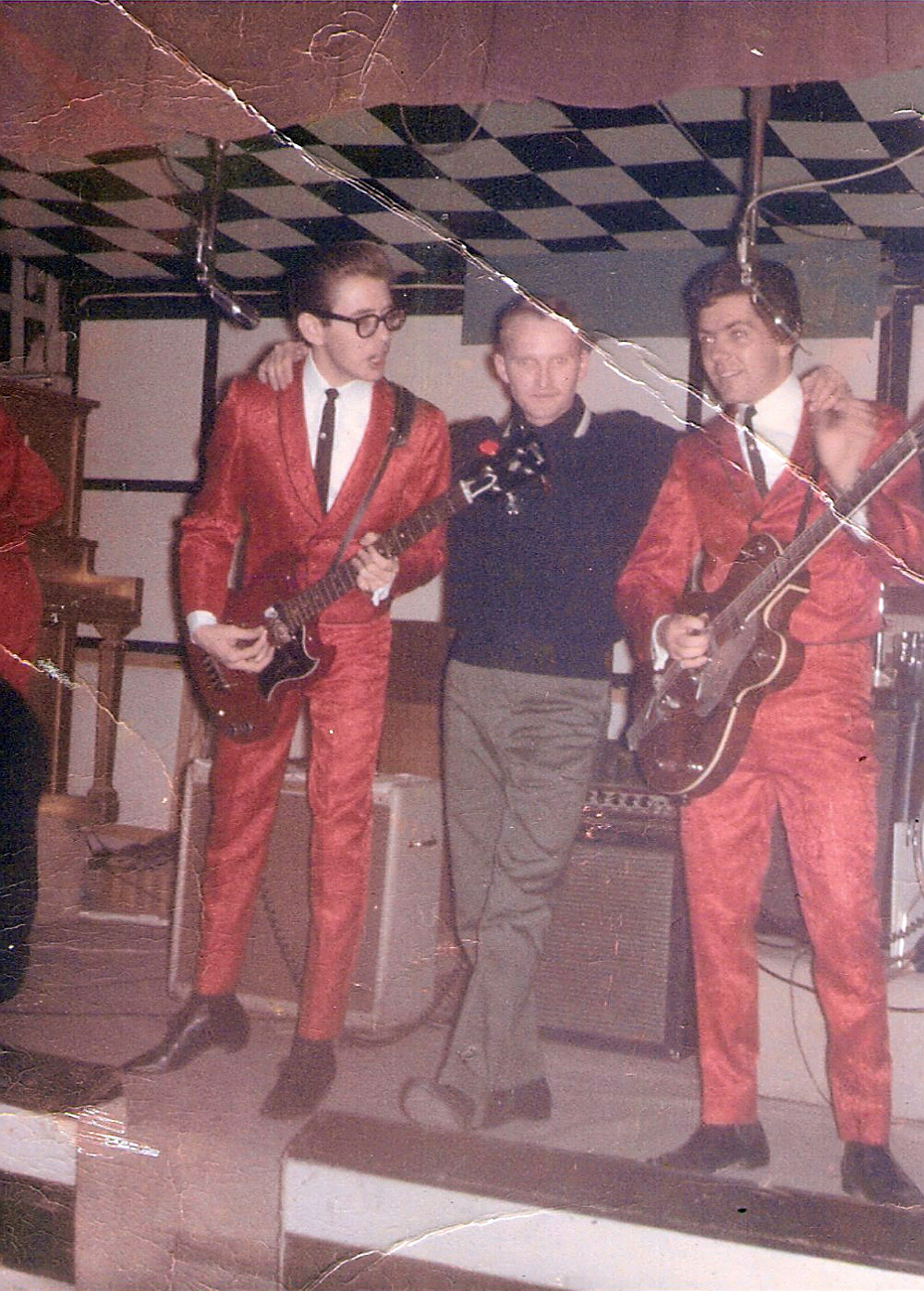
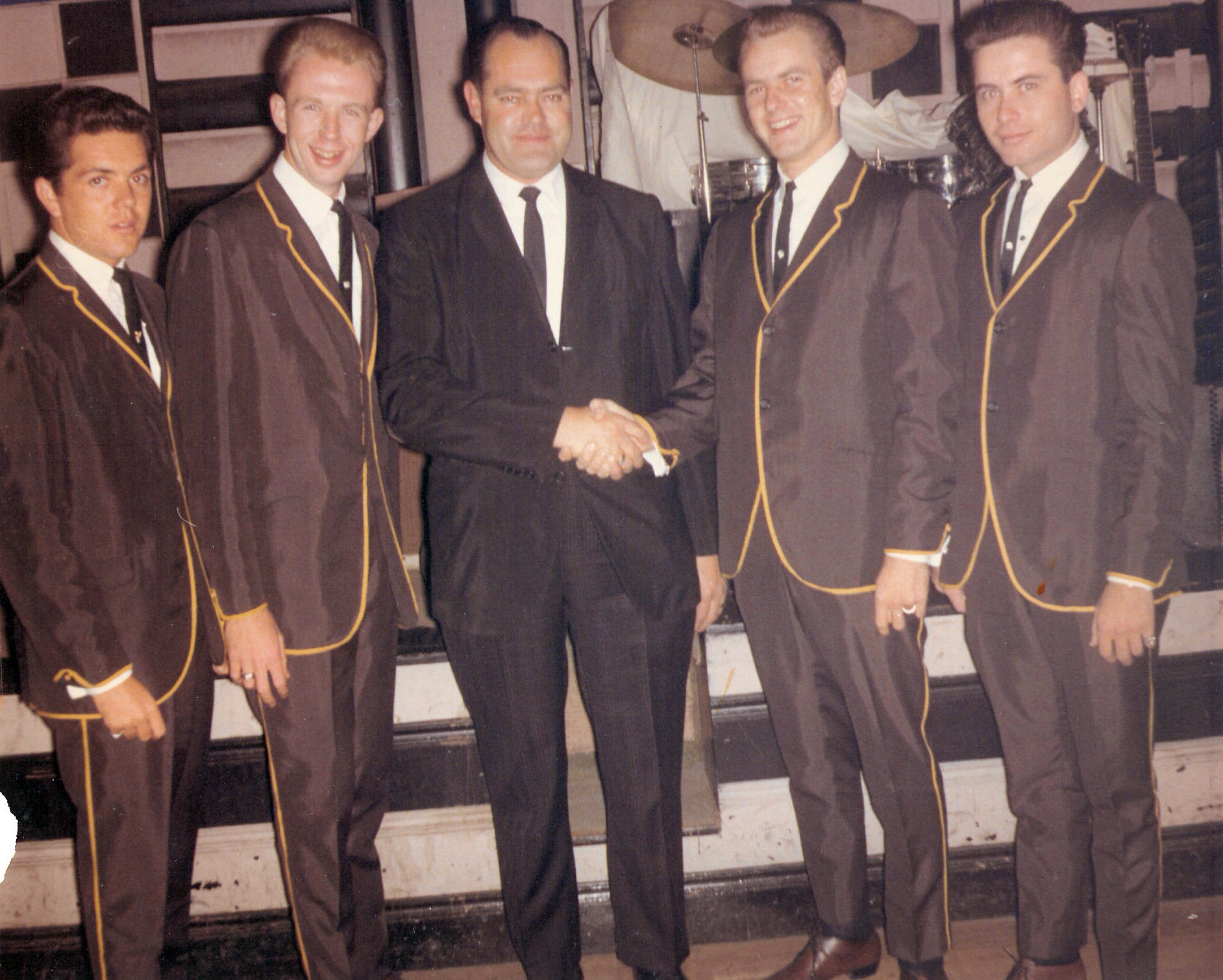
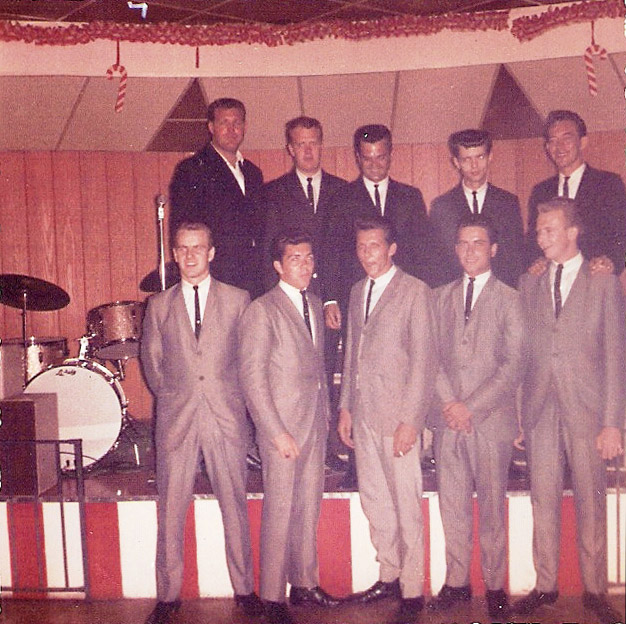
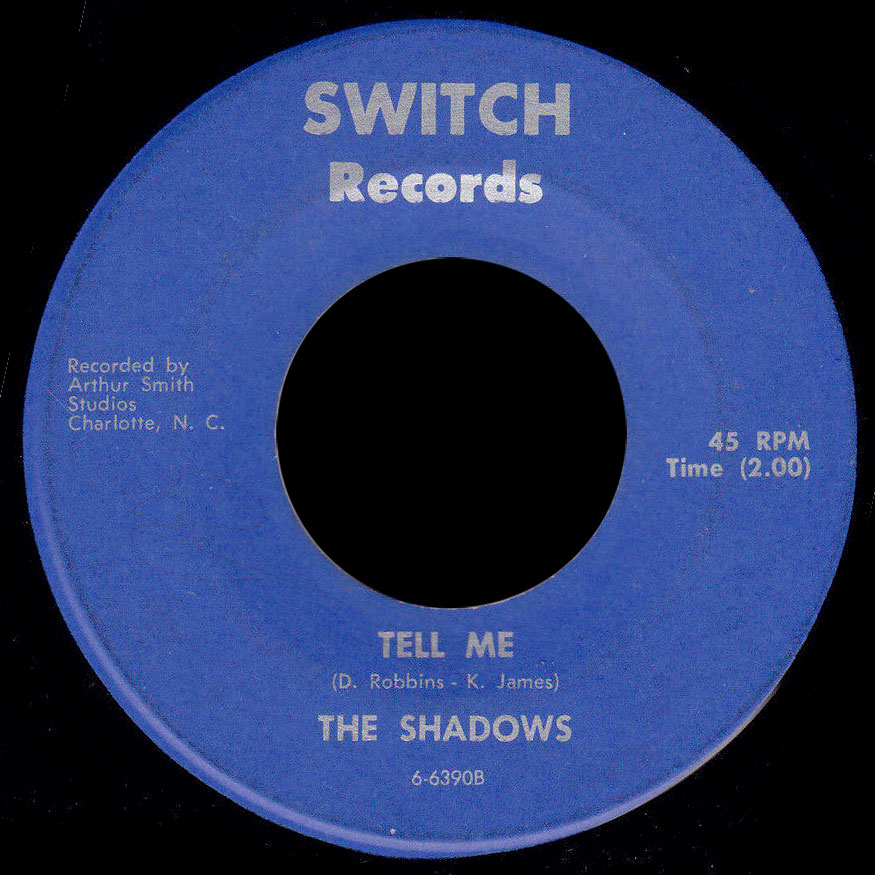
The Shadows came from Hazelwood, North Carolina, a small town about 30 miles west of Asheville. Members included Dennis Robbins and Ken James.
The band traveled 150 miles east to Charlotte to record at Arthur Smith Studios, releasing their single on Switch Records in April, 1966. “Tell Me” is a good original by Robbins and James, a tight performance with an excellent guitar break. The flip is a version of Brubeck’s “Take Five” that gives the guitarist more room to stretch out. Switch seems to have been their own label, I haven’t seen anything else on it.
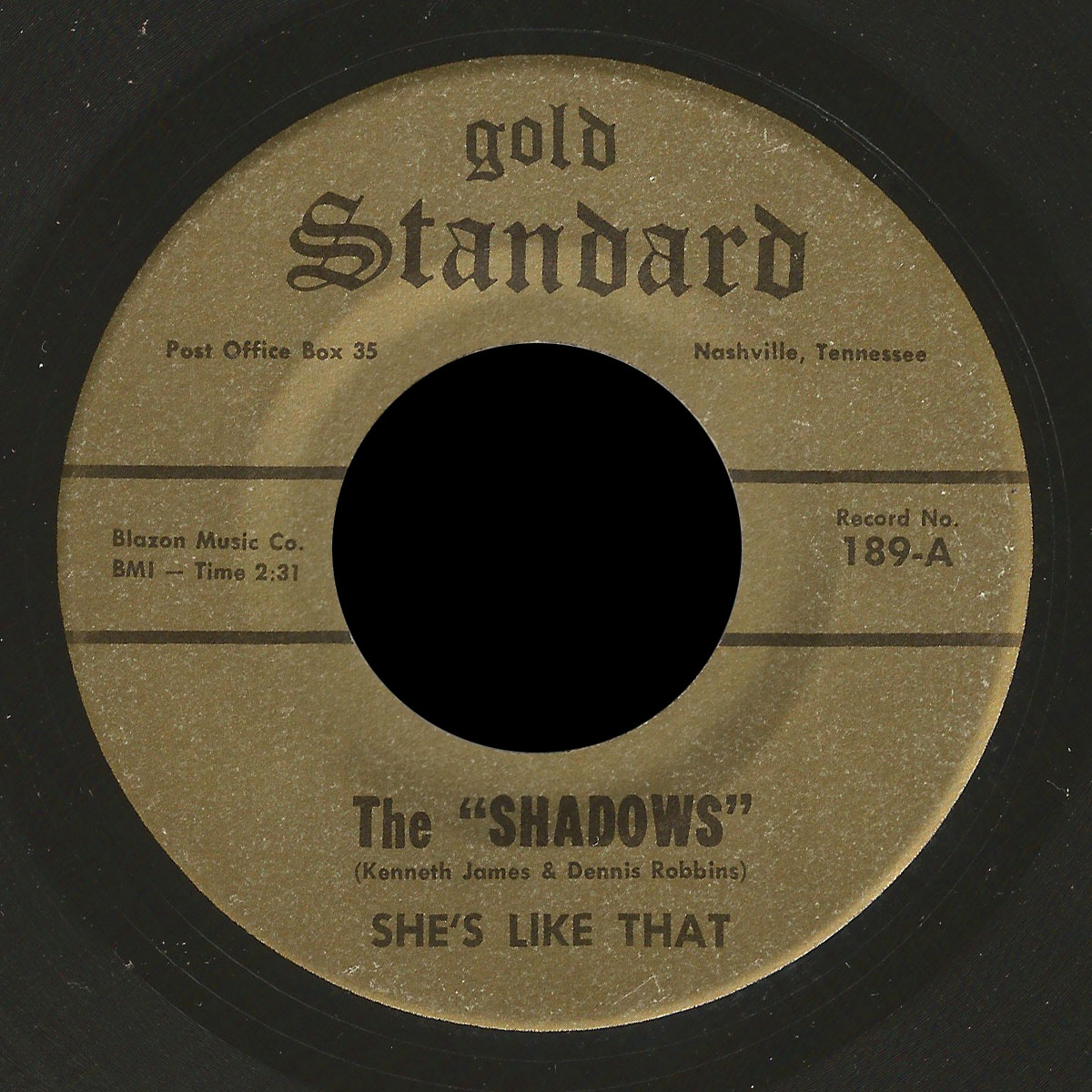
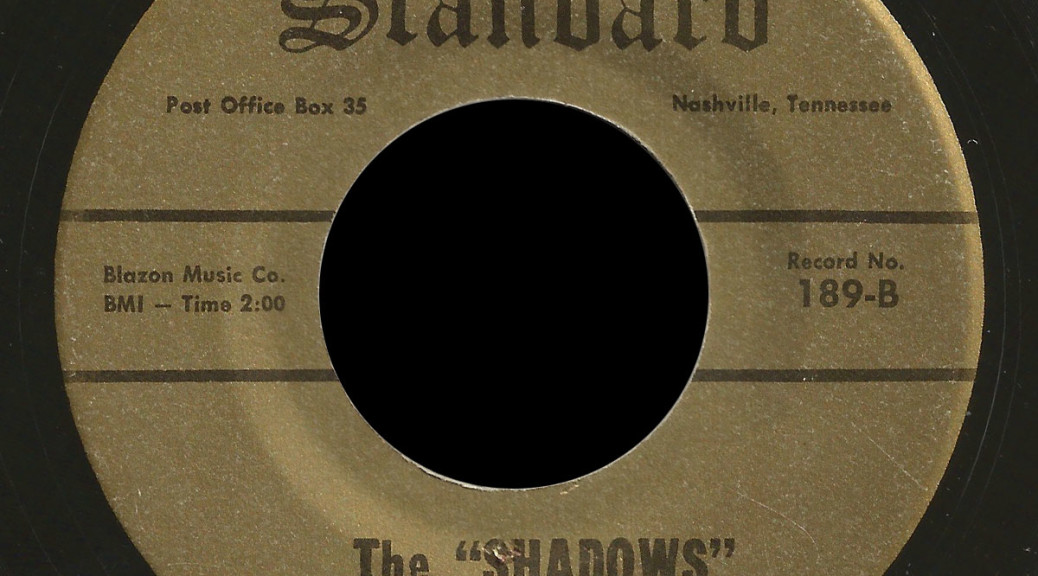
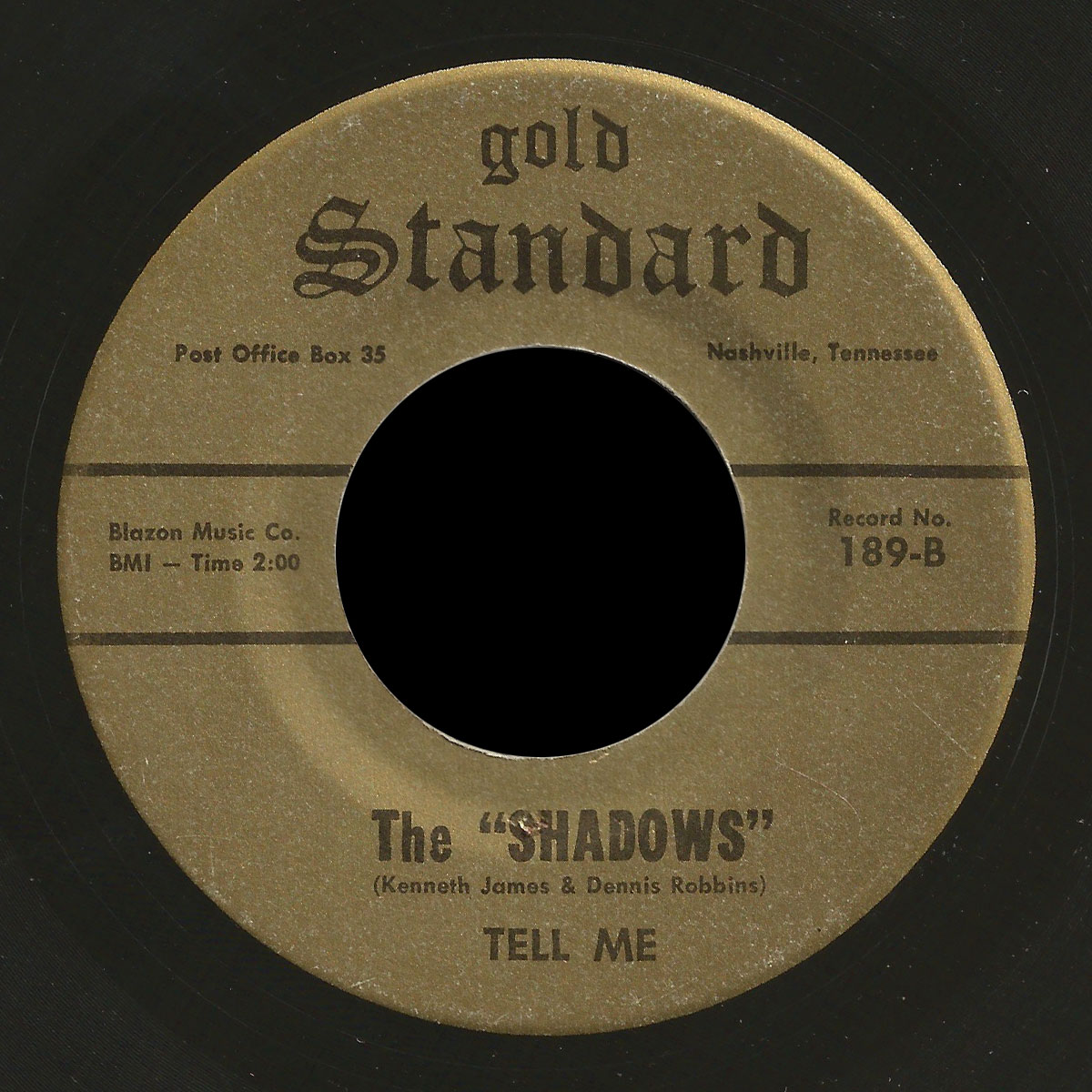
Two months later the band drove 280 miles in the other direction, west to Nashville, where they recorded another original, “She’s Like That” for release on Zeke Clements’ Gold Standard Records. “Tell Me” was reused for the flip side, though without all the heavy echo on the original Switch version. I believe it is the same take of the song, not a re-recording, and I prefer it without the echo.
Dennis Robbins and Kenneth James copyrighted both songs with Clements’ Blazon Music Co, BMI on June 21, 1966.
Gold Standard released over 200 singles during the ’60s. There are a handful of garage or teen-beat records, which I’ll list below, though some of them I haven’t heard and I’m not positive they fit here. While some artists were local to Nashville, it wasn’t unusual for Gold Standard to feature artists from around the country. The Cavemen came from Birmingham, Alabama and had an earlier single as J.C. & Cavemen. The Incidentals were from Montgomery, Alabama.
112 – The Cavemen (vocal by J.C. Raynor) – “Just One You For Me” (Hoyt Johnson) / “Tell Her One More Time For Me”
114 – The Incidentals – “Baby Shake” / “Till the Ending of Time” (both songs by James Segrest and Herbert Phelps, released Dec. ’64)
155 – The Coachmen (vocal by Tommy Burnett) – “I’ll Never Leave You” / “Possibility”
174 – Steve Stephens – “Lonely Me” (Ricky Ryan) / ‘When You Grow Tired Of Him”
204 – Ricky Ryan & Jerry Lee McKee – “My Baby’s Coming Home” / “Ask Me Baby”
209 – The Vee-Jay’s (lead singer Bill Boone) – “Give Your Heart to Me” (Ray D’ahrouge”) / ?
237 – Ronny Williams – “Move Up a Little Closer” (James Hendrix, Elijah & Geraldine Murray) / Larry Williams – “When You Grow Tired of Him”
262 – Five Emprees – “Little Miss Sad” / “Nobody Cares” (1967, re-recording with horns of their Freeport single from 1965)
286 – Paper Menagerie – “Left Up To You” (E. Macon) / “Love Again” (E. Macon & B.G. Gillespie) both pub. by Junellin Music BMI, prod. by Dick Sell Anyone have a photo of the Shadows? I’d like to know more about the Shadows or any of these other groups, especially the Paper Menagerie..
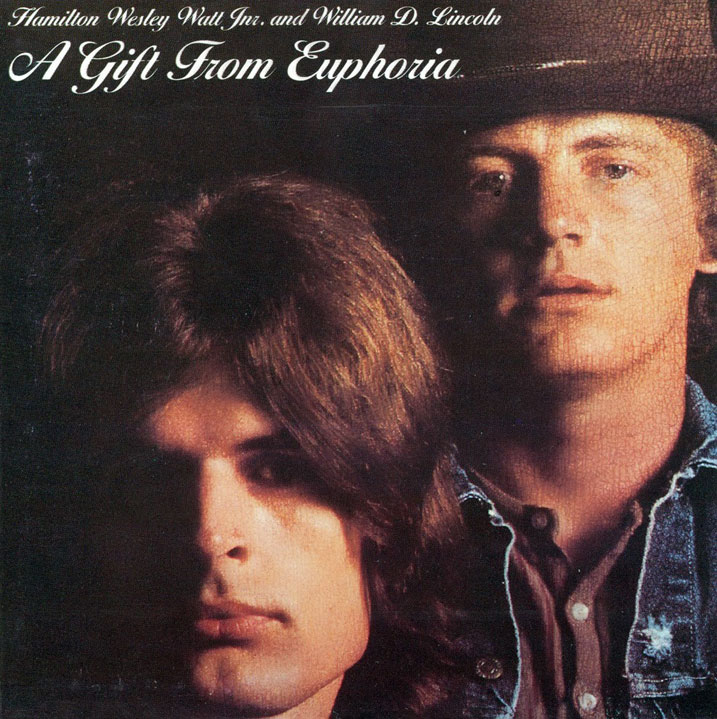
Much has been written about Euphoria’s legendary album A Gift from Euphoria. This article focuses instead on the various releases the band members did prior to the LP and the connections to other bands I’ve covered on this site.
Euphoria had its start as a Cleveland band with David Potter and Wesley Watt called the Bushmen. Although it was thought that the Bushmen was a separate group from Wesley Watt’s projects prior to Euphoria, David Potter’s bio states:
After playing drums at the club [the Clinton Bar in Cleveland, OH] for three months, Wesley Watt, a guitar player came in looking for a drummer for a group he wanted to put together, The Bushman [sic]. When he heard David he knew he was the one. David turned sixteen in January and in May, David, Wesley, Paul Armstrong, and Carl Johnson left for Los Angeles to make their mark. On arriving in L.A. they immediately became the house band for the club, Guys and Dolls.
After only eight weeks they signed a contract with Colpix records, also signing with Buck Ram, the manager of the Platters. Their first single was “Baby” with “What I Have I’ll Give to You” on the flip side.
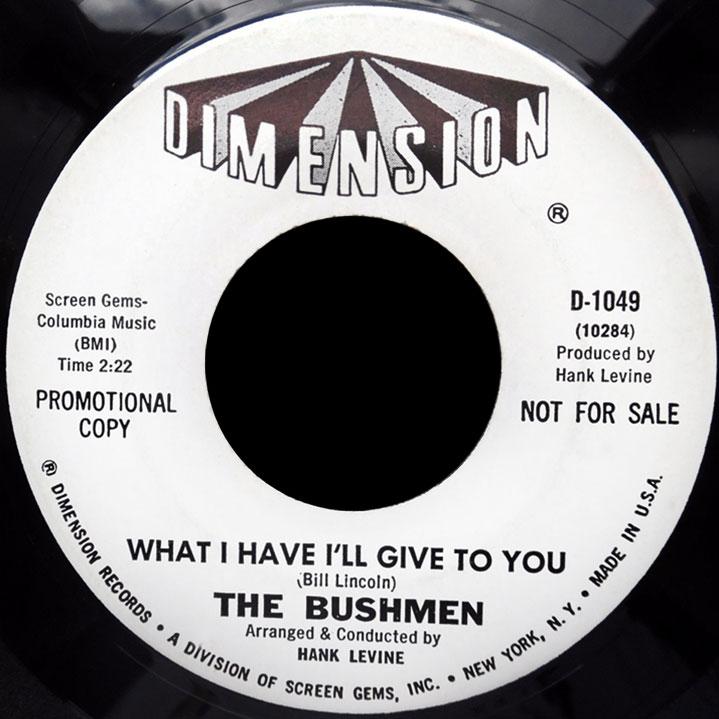
The Bushmen had one release “Baby” / “What I Have I’ll Give to You” on Dimension 1049 in June of ’65. Dimension Records was part of the Columbia Pictures / Colpix company at this time.
Bill Lincoln had relocated from Seattle to Los Angeles. He must have been in the group at this point as he is the composer of “What I Have I’ll Give to You”.
Bill Lincoln and Mike Dood are credited with writing “Walk on the Surf Side” by the Nova-Tones, released on Rosco 417 circa 1963, and backed with “Lost Love”. I’m not positive it’s the same Bill Lincoln, but it seems likely as the time and place are right. I haven’t heard either song, so if you have the 45 or sound files, please contact me.
Potter’s bio continues:
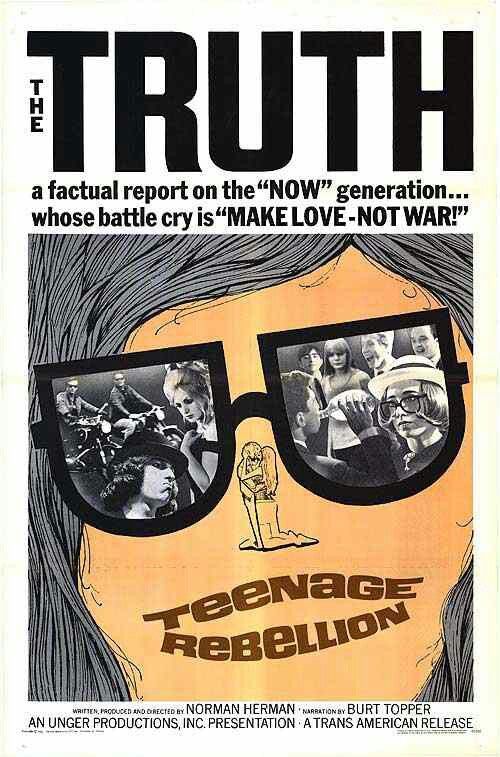
The Bushman [sic] were getting a lot of notoriety and attention from all over, including film producer David L. Wolper. He was looking for bands for a documentary about to start filming, Teenage Revolution. They approached Buck Ram about The Bushman being the premiere band for the documentary. Wolper wanted to show what bands went through while traveling around the country from gig to gig. (Along with The Bushman being were about four other bands, one being The Lovin’ Spoonful.) About a month later Buck set up a live gig in Lancaster CA where they filmed their part of Teenage Revolution.
A portion of Mondo Teeno aka The Teenage Revolution is online. I hear music that may be the Bushmen, but haven’t seen any footage of the band.
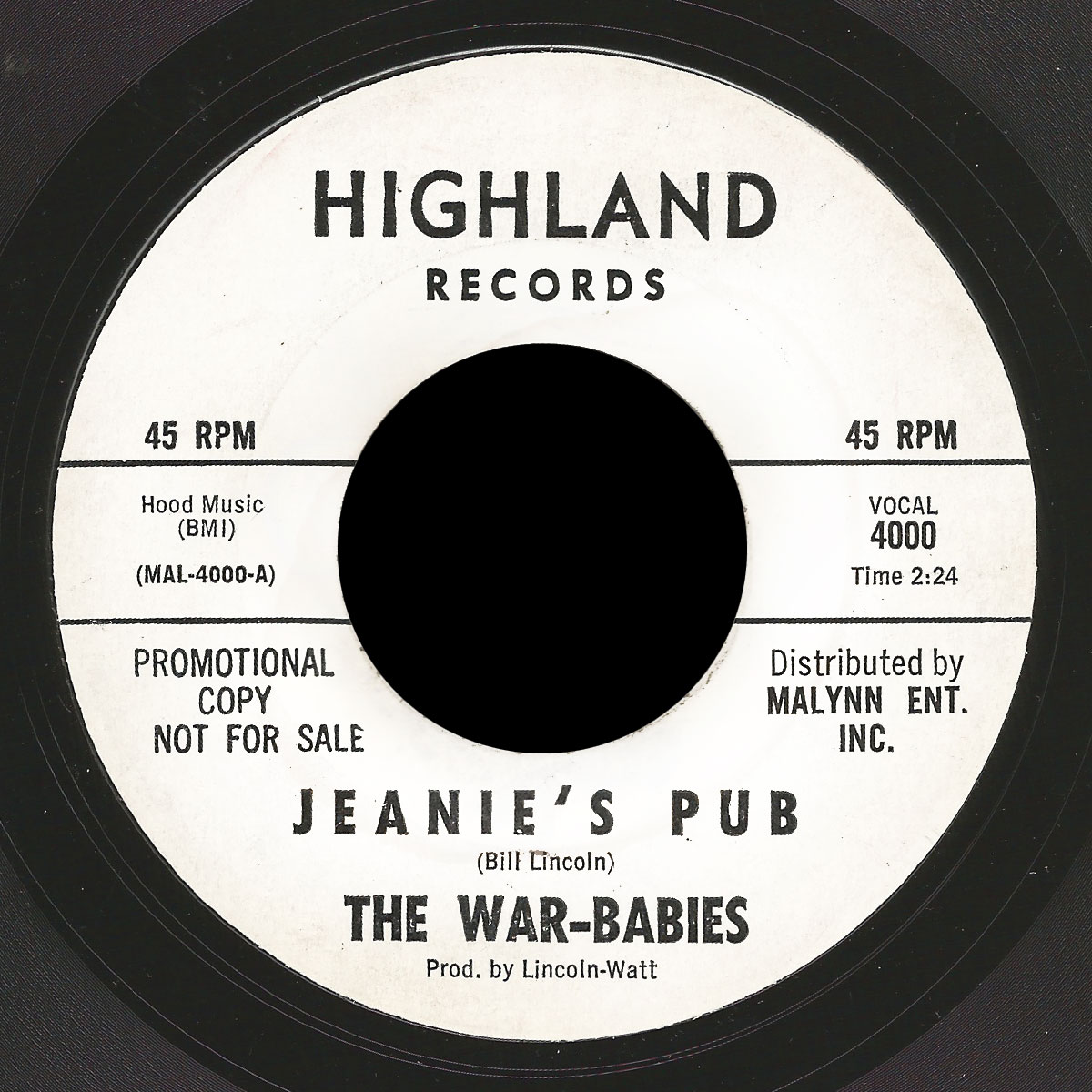
In addition to the Bushmen single, Watt and Lincoln recorded their original songs as the War-Babies “Jeanie’s Pub” / “Love Is Love” (Highland 4000, August 1965).
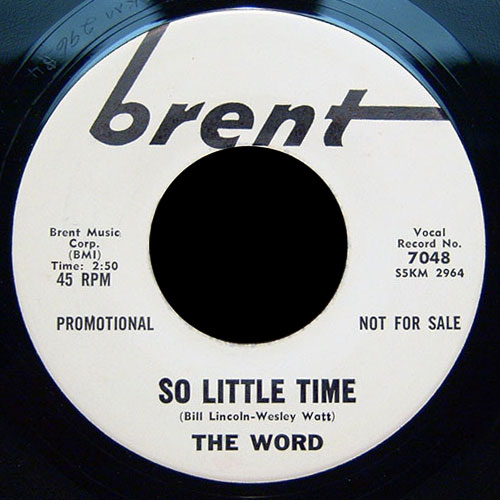
The War-Babies recorded another two songs, “Now It’s Over” / “So Little Time” but these came out under the name The Word on Brent 704.
Although I’ve read that the Bushmen came after the War-Babies and Word singles, release dates suggest the Bushmen single came first.
Potter’s bio continues:
After filming the documentary, David, Wesley, and Bill Lincoln wanted to do their own thing. Now seasoned professionals and highly respected musicians they wanted to play and record their own music. With the chance so did their name, to Euphoria. The newly named group spent all their time playing, touring, and recording material that would lead to two of the groups albums. During a successful tour in Texas, their single. “Baby”, released when they were The Bushman [sic], went to #7 on the charts, staying there for seven weeks.
The newly-named Euphoria added Pat Connolly of the Surfaris on bass by the time they traveled Texas in 1966. Bill Lincoln married and moved to England, and left the group before they went to Texas. However, he would rejoin Wesley Watt within a year or two for the sessions for Euphoria’s 1969 album on Capitol.
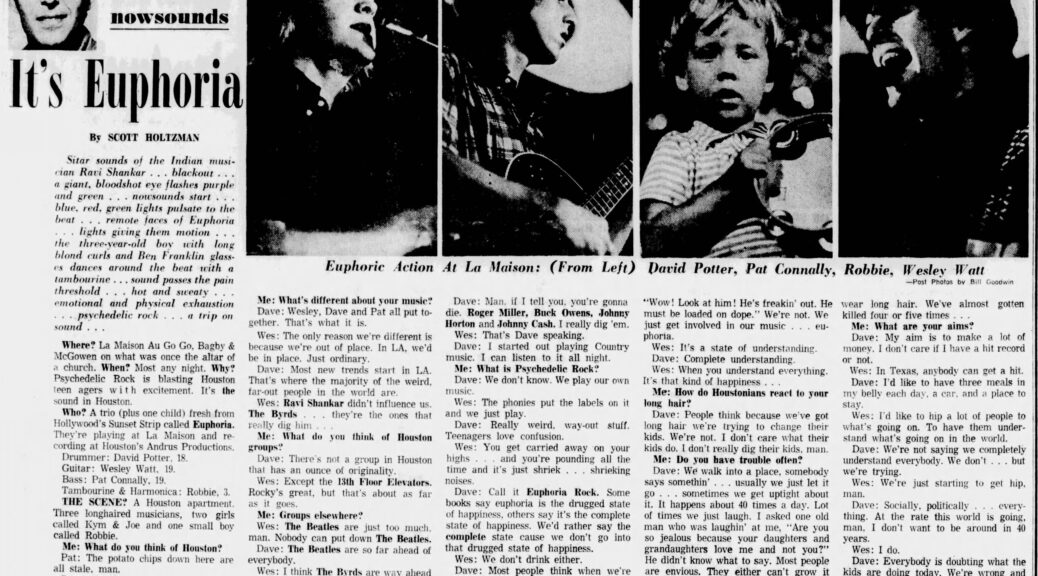
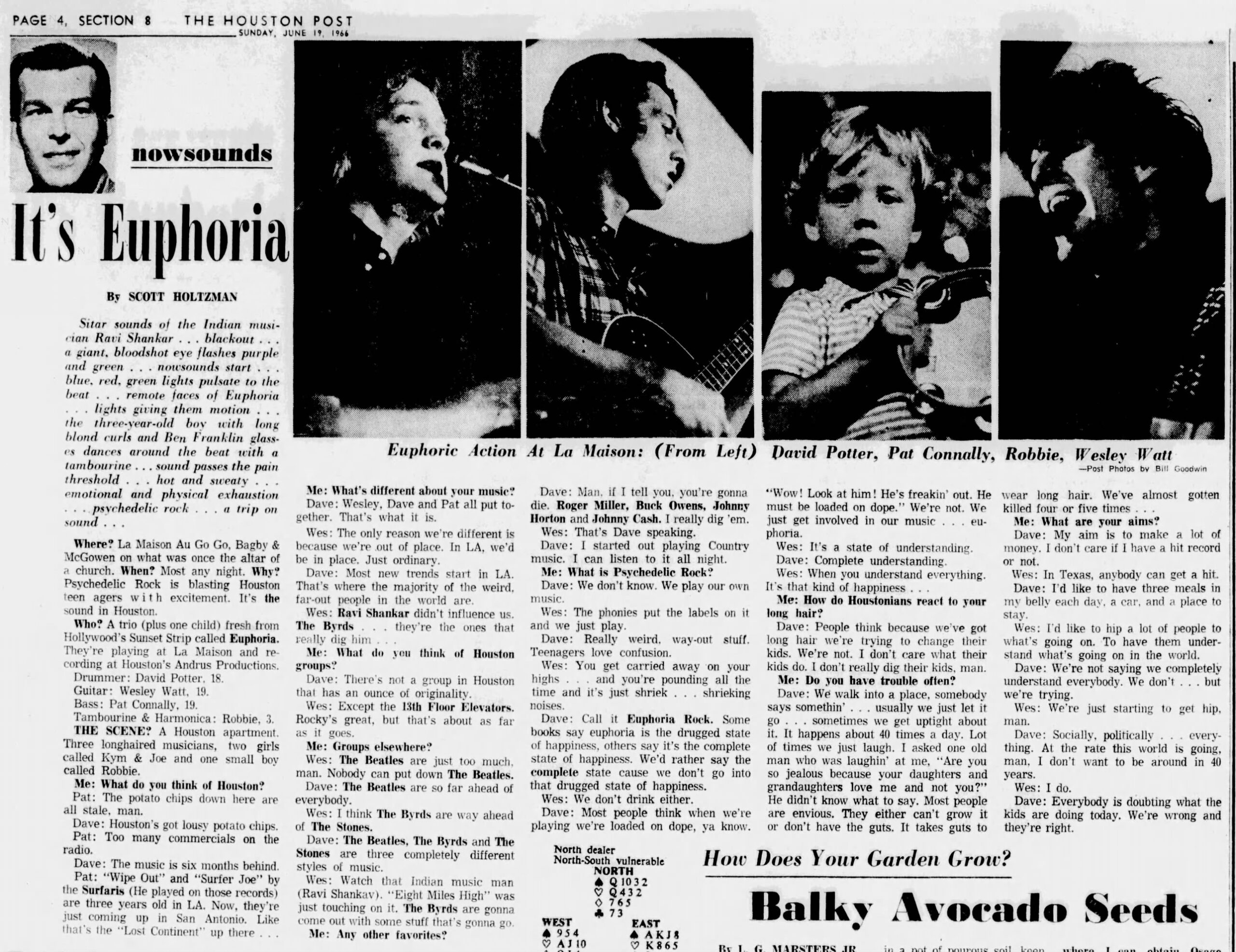
Euphoria featured in Scott Holtzman’s nowsounds column, Houston_Post, June 19, 1966
Euphoria arrived in Houston in the spring of 1966. Scott Holtzman saw them at La Maison and featured them in his June 19, 1966 nowsounds column.
A trio (plus one child) fresh from Hollywood’s Sunset Strip called Euphoria. They’re playing at La Maison and recording at Houston’s Andrus Productions.
Drummer: David Potter, 18. Guitar: Wesley Watt, 19. Bass: Pat Connally, 19. Tambourine and Harmonica: Robbie, 3.
The Scene? A Houston apartment. Three longhaired musicians, two girls called Kym and Joe and one small boy called Robbie.
Wes: “The only reason we’re different is because we’re out of place. In LA, we’d be in place. Just ordinary.”
What is Psychedelic Rock? Dave: We don’t know. We play our own music. Wes: The phonies put the labels on it and we just play. Dave: Really weird, way-out stuff. Teenagers love confusion. Wes: You get carried away on your highs .. and you’re pounding all the time and it’s just shriek … shrieking noises. Dave: Most people think when we’re playing we’re loaded on dope, ya know. We’re not. We just get involved in our music … euphoria.
They don’t like Houston groups except the 13th Floor Elevators.
This group recorded some tracks at Andrus Productions in Houston, including “Pick It Up”, “In Time”, “Walking The Dog” and “Oh Dear, You Look Like a Dog”, none of which surfaced until Texas Archive Recordings released the LP Houston Hallucinations in 1982. The band had other unreleased Texas recordings which await reissue, including “People You and Me” which has some similarity to Da Capo era Love.
In a later column by Scott Holtzman titled What is Psychedelic? he wrote:
Houston has had some of the leading exponents of this kind of music, but the most pure form of it I have personally heard live was a group called Euphoria, which has since disbanded. I’ve heard unreleased tapes and spent time around these guys and I’m truly sorry they couldn’t stick together, because there were strong leaders of the trend.
By July 24, 1966, they had left Texas as Holtzman wrote in his column that week: “Wesley Watt of Euphoria called Frank Davis from LA and asked him to come out there and engineer and play and sing on their sessions. Frank would rather stay at Andrus Productions though.”
Pat Connolly left the band either in Texas or when they returned to California. Watts and Potter returned to California, taking Misfits members James Harrell on guitar and Peter Black on bass with them.
Houston artist and band manager George Banks wrote to me:
Euphoria did come into Houston about high times for the Elevators and others of the IA time frame. They were a sizzlin’ three piece group. Wesley Watt, David Potter, drums and Pat on bass … Euphoria and the guys from the Misfits got along quite well and … through some differences .. all together left for LA, minus [Misfits lead guitarist] Frost, who having married early on and was with their first child, did not travel to CA with everyone else.
We played around out there, got a recording contract. I brought the first release [Euphoria’s “Hungry Woman” / “No Me Tomorrow” 45 on the Mainstream label] back to Houston and presented it to Larry Kane. It didn’t really take off, Euphoria hadn’t stuck around town long enough to really develop any notoriety, or following.
The band in LA went through a lot of emotional changes in part due to the fact that Wesley and David were married (and drugs). The times got tough, to even feed ourselves. James, Pete and I headed back to Houston.
Euphoria mentioned in nowsounds, Houston Post, October 9, 1966
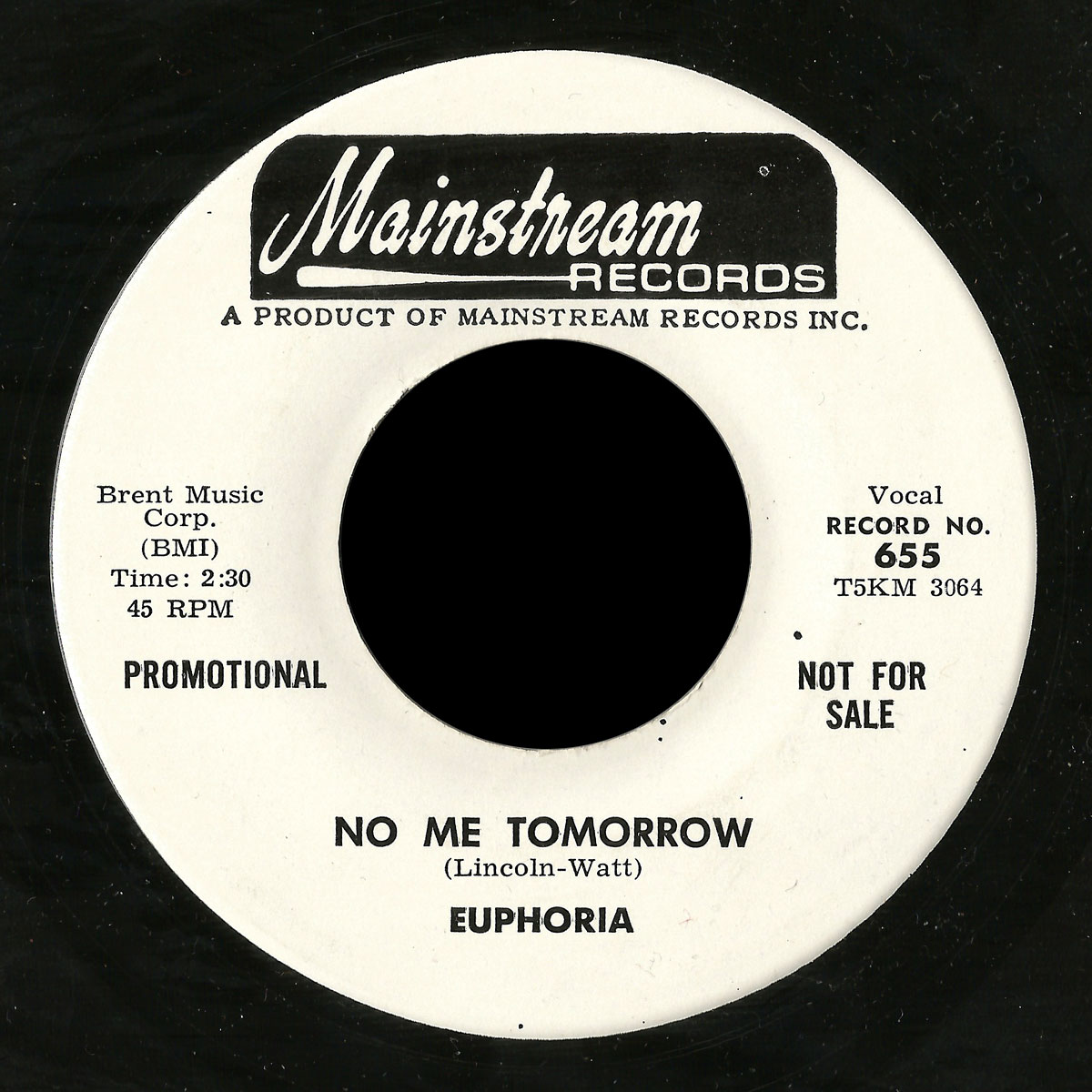
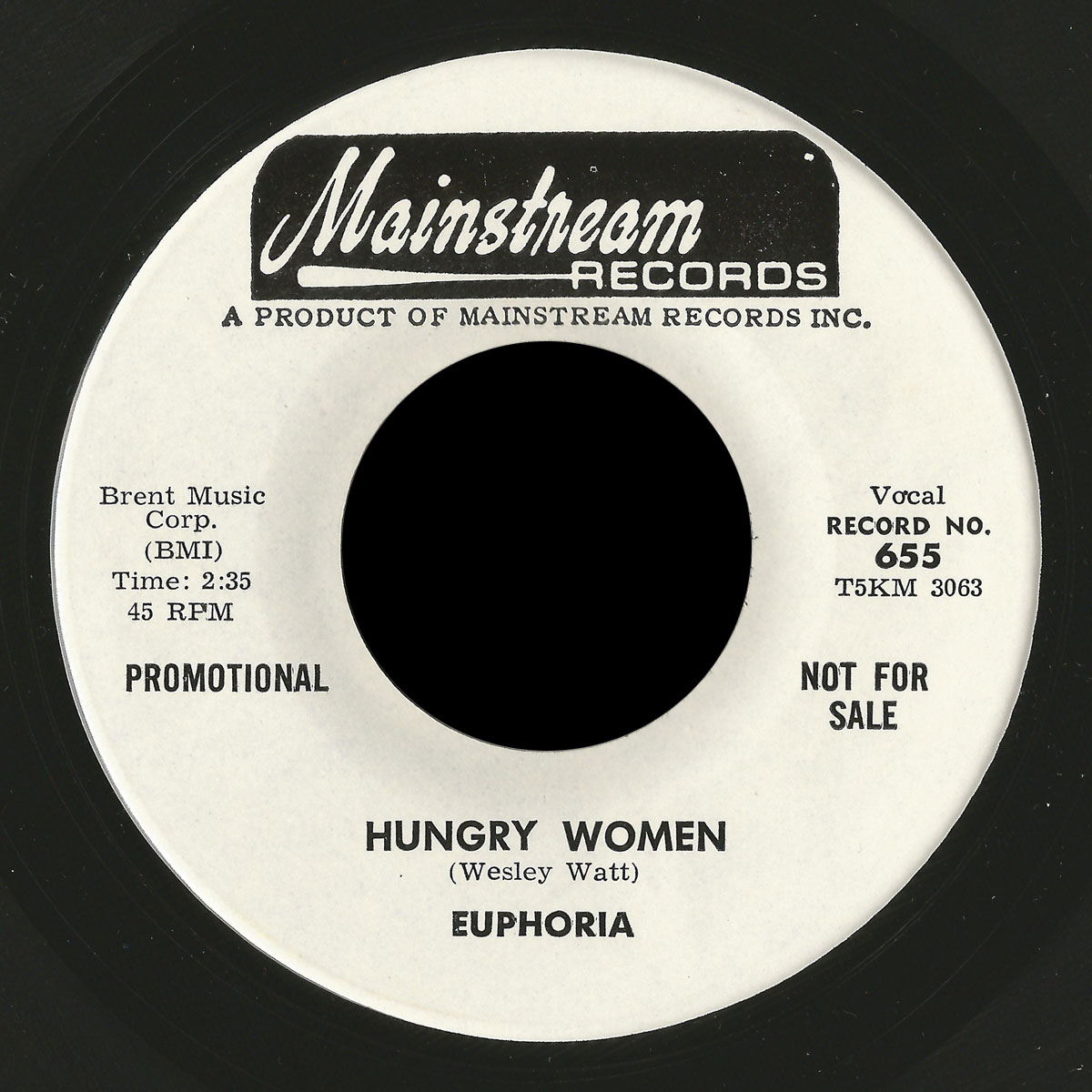
In L.A., Bob Shad of Brent & Mainstream Records brought the group into United Studios in Hollywood to record four songs in one session. Shad issued two of these (with vocals re-recorded at additional sessions), “Hungry Women” and “No Me Tomorrow” on Mainstream 655,
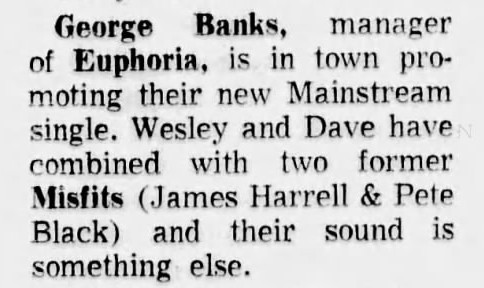
In his October 9, 1966 nowsounds column, Scott Holtzman wrote: “George Banks, manager of Euphoria, is in town promoting their new Mainstream single. Wesley and Dave have combined with two former Misfits, (James Harrell and Pete Black) and their sound is something else.”
At these sessions Euphoria cut two originals by James Harrell, “I Realize” and “It Could Do Us No Wrong”, but these were left unreleased and eventually lost.
Despite a good push from Bob Shad, the single didn’t make much of an impact. Back in Houston, Scott Holtzman wrote in his November 6, 1966 nowsounds column: “Euphoria broke up for good. George Banks is building a new group from the old Misfits into Lost & Found.”
In 1967, Potter and Watt joined Lee Michaels band where they played on Michaels’ album Carnival of Life with Gary Davis and John Keski, released in January 1968.
In his February 25, 1968 nowsounds column, Scott Holtzman wrote “[In Los Angeles] I ran into Wesley Watt, who you’ll remember as lead guitarist with Euphoria about a year ago in Houston. Wesley was all strung out back in Houston, but you should see him now. He is really into the meditation and has even become a vegetarian.”
Potter joined the East Side Kids in time to play on their 1968 album The Tiger and the Lamb, which featured one of his original songs as well as two by Wesley Watt, “Heavy Love” and “Can’t Feel Love”.
Bill Lincoln had returned by this time. He and Watt worked for almost two years on what would become their album A Gift from Euphoria on Capitol in 1969, produced by Nick Venet. According to his bio, Potter also played on the album. Guitarist Doug Delain is also listed in credits for the LP.
After recording the East Side KidsThe Tiger and the Lamb album, Potter moved to Houston and joined with Endle St. Cloud (Alan Mellinger) for his album on International Artists, which also included Pete Black and James Harrell of the Lost & Found. They moved back to LA to for the Potter St. Cloud LP on Mediarts in 1971.
David Potter passed away in 2011, but there was a detailed biography about him at his website, davidpottermusician.com (now defunct but viewable on the Internet Archive).
Watt and Lincoln co-produced and played on Bernie Schwartz’s solo album The Wheel, released on MGM in late 1969, which features a version of their song “Sunshine Woman” that had been on Euphoria’s Capitol LP.
Potter, Watt and Lincoln all continued in music into the early ’70s. For example, Potter and Watt played on Daniel Moore’s 1971 ABC album, and Watt played guitar on Dory Previn’s 1971 Mediarts album Mythical Kings and Iguanas.
Hamilton Wesley Watt, Jr. passed away on February 20, 2015 in Sheboygan, Wisconsin.
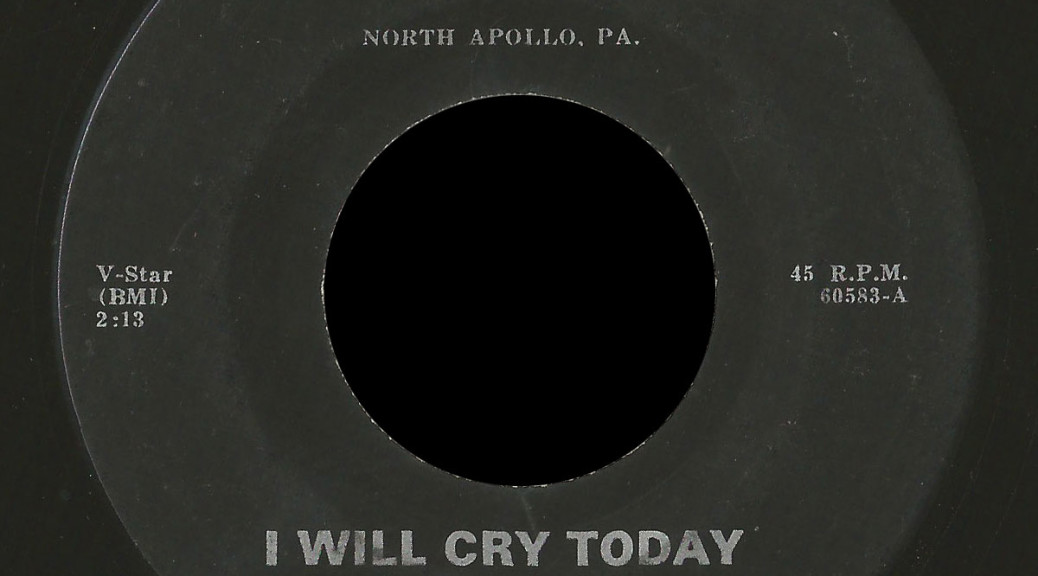
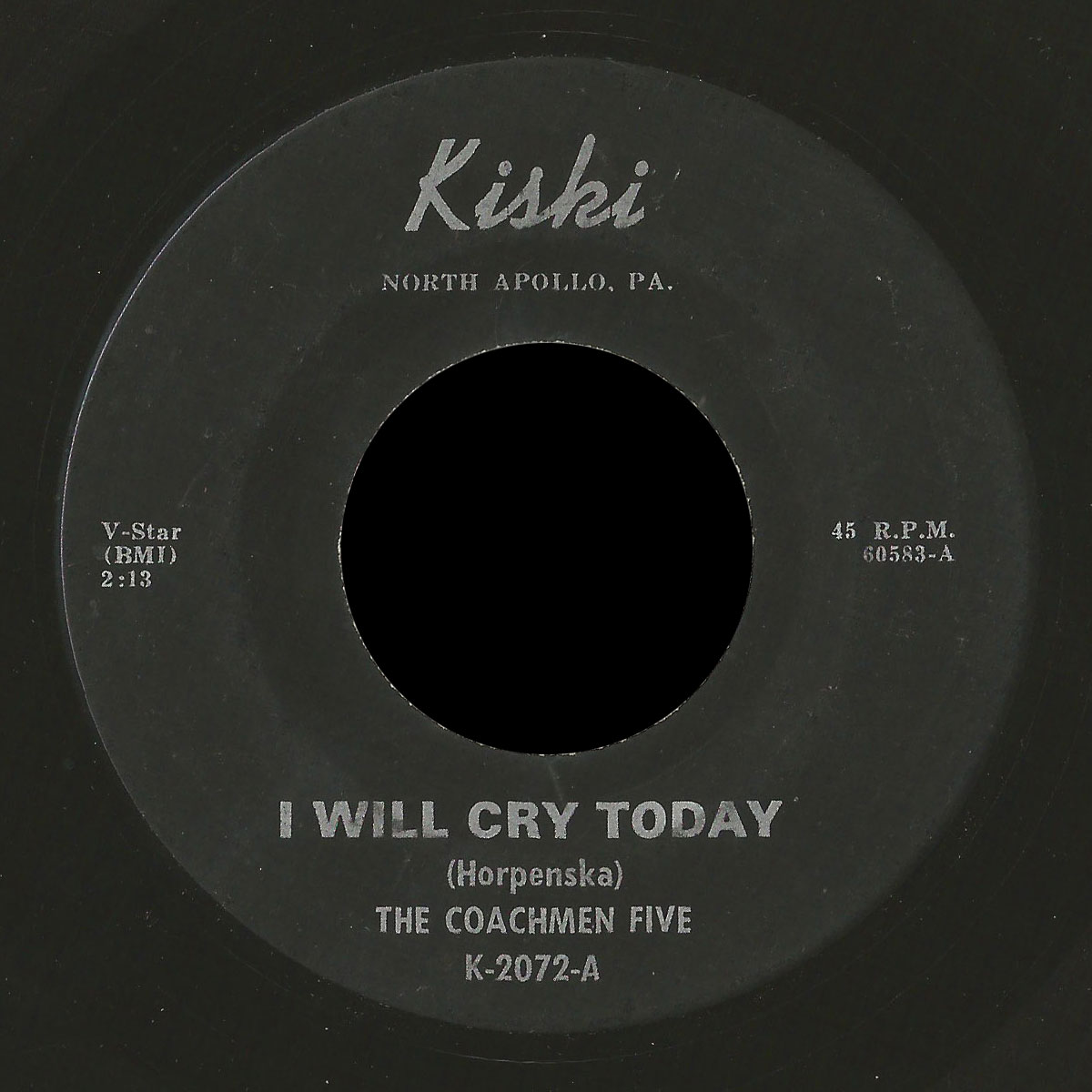
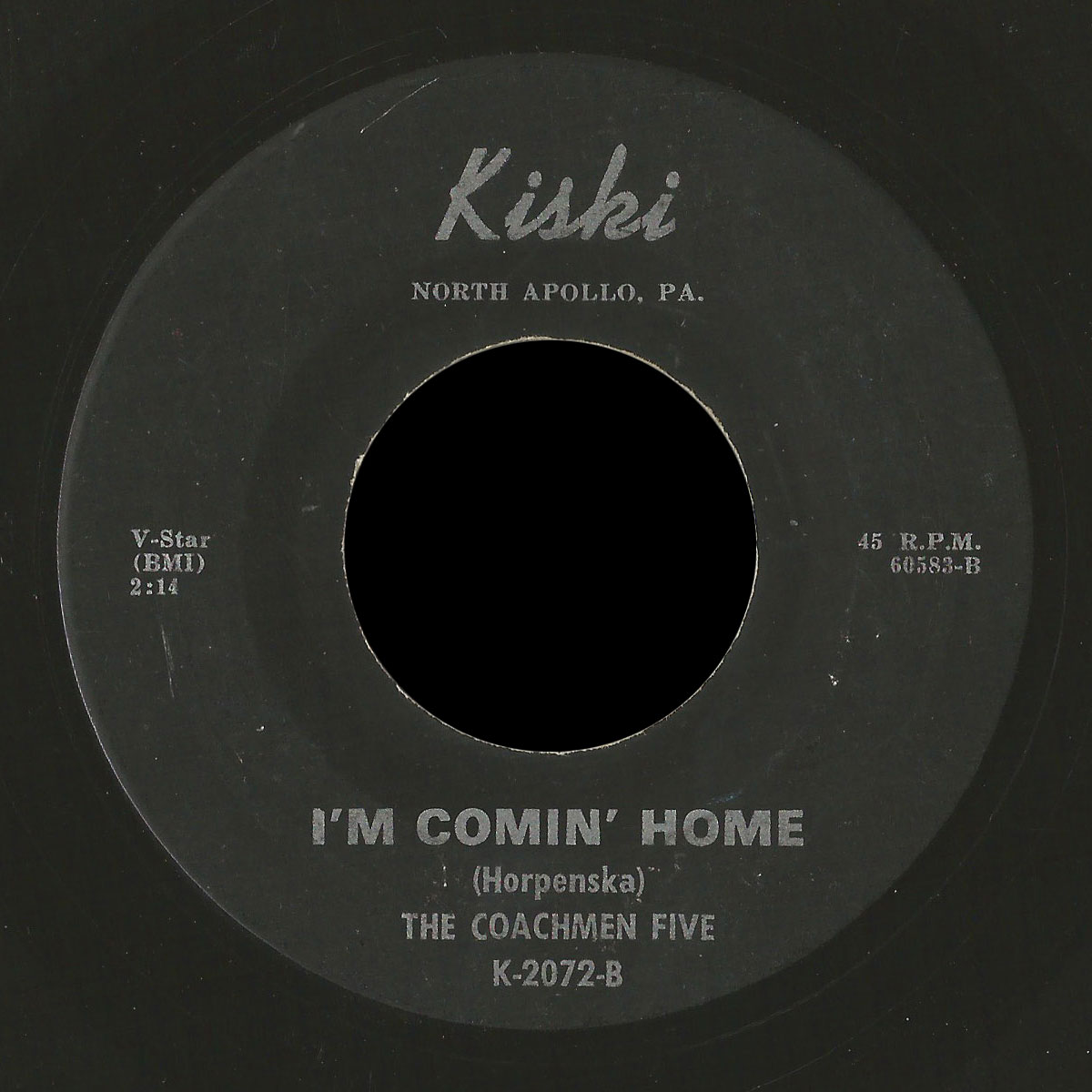
The Coachmen Five have this one obscure release from May of 1966 on the Kiski label. The band was from Oakdale, Pennsylvania, a small town about 20 minutes west of Pittsburgh. The Kiski label was located in North Apollo, PA, an even smaller town about 45 minutes drive northeast of Pittsburgh.
The singing is somewhat eccentric, but the band ably rocks out on both songs, originals written by Horpenska. A comment below lists members of the band as including Joe Horpenska on vocals, Jeff Thomas on bass and Denny Singer on drums.
I can find almost no info about the band, but this seems to be one of the later releases on the Kiski label, at least of the 20xx series. Kiski had over a dozen 45 releases in the early ’60s ranging from country to religious to soul to garage. Kiski started with Vandergrift, PA listed on the labels, then Freeport, PA, then New Apollo, PA.
Any help with this discography would be appreciated.
Kiski 2050 – Jacklads (arr. Dick & Jack Tody, sax Dick Tody) – “Alouette” / “Hot Toddy” Kiski 2051 – Men From Mars – “I’ve Been With Jesus”, “Lord Build Me a Cabin” / “Previous Memories”, “The Fourth Man” Kiski 2052 – Faulkner Bros., Gary & Dick – “In The Chapel In The Moonlight” / Gary & Dick Faulkner – “Guitar Boogie” 1961 Kiski 2053 – Jack Cartwright & the String Kings – “I’ve Lost You Forever” / “Actions Speak Louder Than Words” Kiski 2054 – ? Kiski 2055 – Barnes Brothers – “All Mixed Up Inside” / “Don’t Blame Me” Kiski 2056 – The Alma-Keys (vocals) with the Citations – “Please Come Back To Me” (Roland Hayden) / “Jumpin’ Twist” Kiski 2057 – Tawni Simms – “Will You Please Be Mine” / “Goodbye My Love”
Kiski 2063 – Ed “Tex” Belin & the Bel-Marts – “I Can’t Help It (If I’m Still In Love With You)” / “I Overlooked An Orchid” 1963 Kiski 2064 – The Renditions – “That’s When I Cried” (David M. Wells) / “Time Goes By” (Thomas B. Kennie & David M. Wells) 1964 Kiski 2065 – The Chevrons – “Who Does He Cry To” / “Jones Girl” Kiski 2066 – The Thundermen – “Thunderbeat” / “Conjagua” Kiski 2067 – The Marauders – “Slidin’ In” (Ronald Misejka) / “Kosta Rica” Kiski 2067 – The Royal Rebels – “Drive In” / “Mojo Workout” Kiski 2068 – The Kruisers – “C’mon Sweet Baby” (James Robeson) / “Karen” Kiski 2069 – The Four Dimensions – “Moe’s Cast” / “I’m In Heaven”
Kiski 2072 – The Coachmen Five – “I Will Cry Today” / “I’m Comin’ Home”
Possibly DJ Bob Livorio of WKPA in New Kensington had something to do with the label.
The Royal Rebels came all the way from Cortland, Ohio, and had another recording as the Rhythm Rebels on Sunburst, “The Things You Do” / “Littlest Hobo”.
The Kruisers came from the towns of Sarver and Butler, PA, about 40 miles to the northwest of North Apollo. The Kruiser had another single on the Process label “It’s the Way She …” / “Panther Walk” in December of 1965, and another as the Lost Ones “I Can’t Believe You” / “I Wanna Know” on Mersey 002 in 1966.
In addition there are at least two LPs on Kiski, the Kiski Area High School Second Annual Choral Spring Concert and the Men From Mars Music From Out Of This World. Kiski also released at least one LP and single of polka and Slovakian music by Eddie Mack & His Orchestra, but with a different numbering system than the singles above.
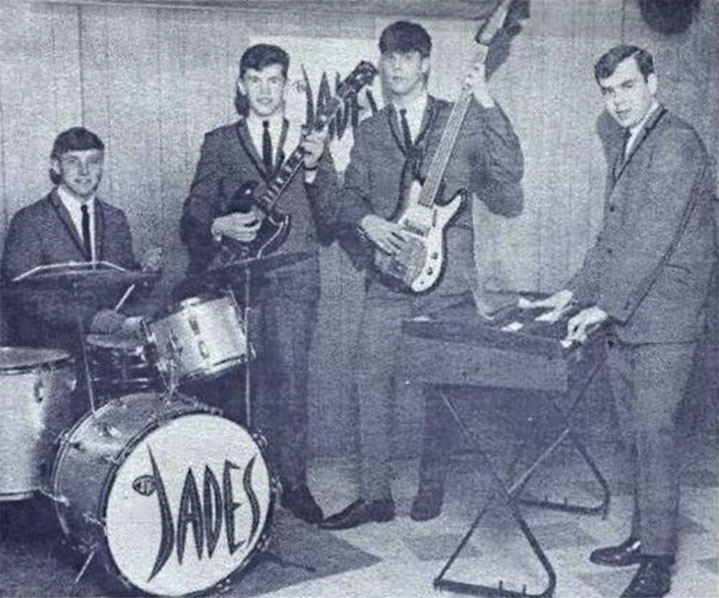
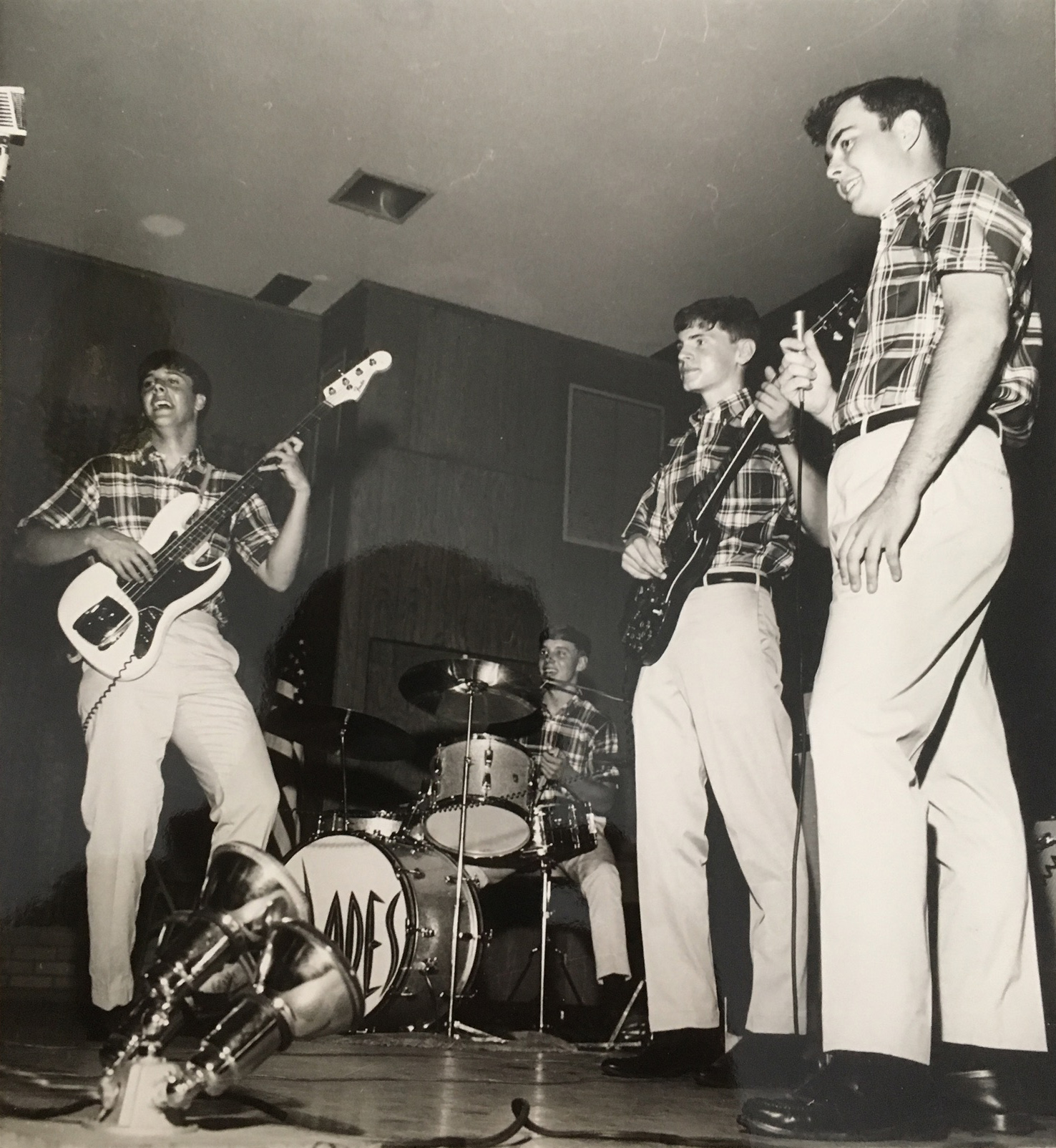
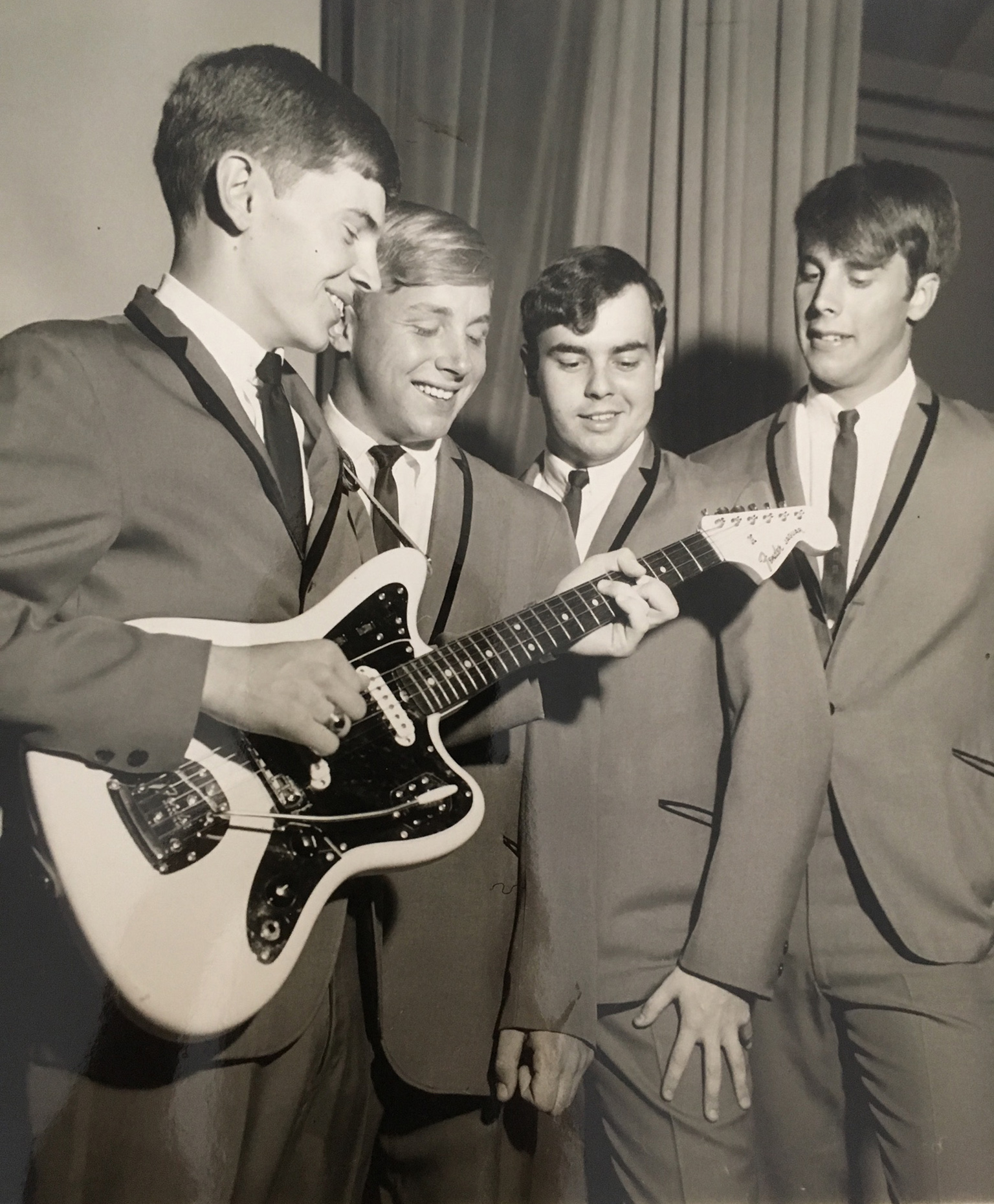
The Jades of Muncie, from left: David Smith, Gary Royer, John Terhune, and Greg Hood
The Jades came from Muncie, Indiana, a college town about 60 miles northeast of Indianapolis. Kathy Knecht sent in the photo above asking for more information about the Jades.
Members were:
Gary Royer – lead guitar John Terhune – bass Greg Hood – organ David Smith – drums
The Jades had two singles, both with excellent original songs.
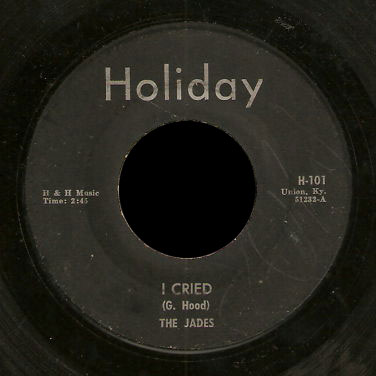
The first was “I Cried” / ” Once Upon a Time” in December 1965 on Holiday, a label from Union, Kentucky, just southwest of Cincinnati.
The second was “Come Back” (Greg Hood) / “Change My Ways” (Gary Royer) on the Denim label, release #1078 in March of 1967. Denim Records would go on to release four singles by the Chosen Few and one that I haven’t heard by the Affectionate Armpit.
Greg Hood sent in the two photos seen below and commented:
We all were singers. Gary and I wrote the songs we recorded but the whole band had input on the final product. The greatest thing about this band is that we were such good friends.
Greg would go on to join the December’s Children, who recorded “Keep on Runnin'” and “99 and A Half” on the Classic Records label.
The Jades, from left: Gary Royer, David Smith, Greg Hood and John Terhune
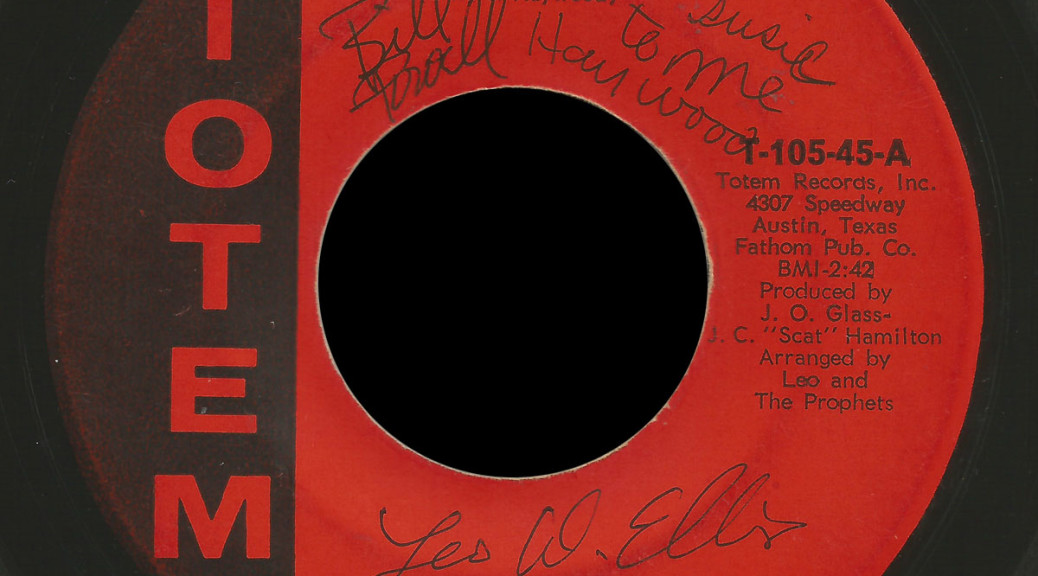
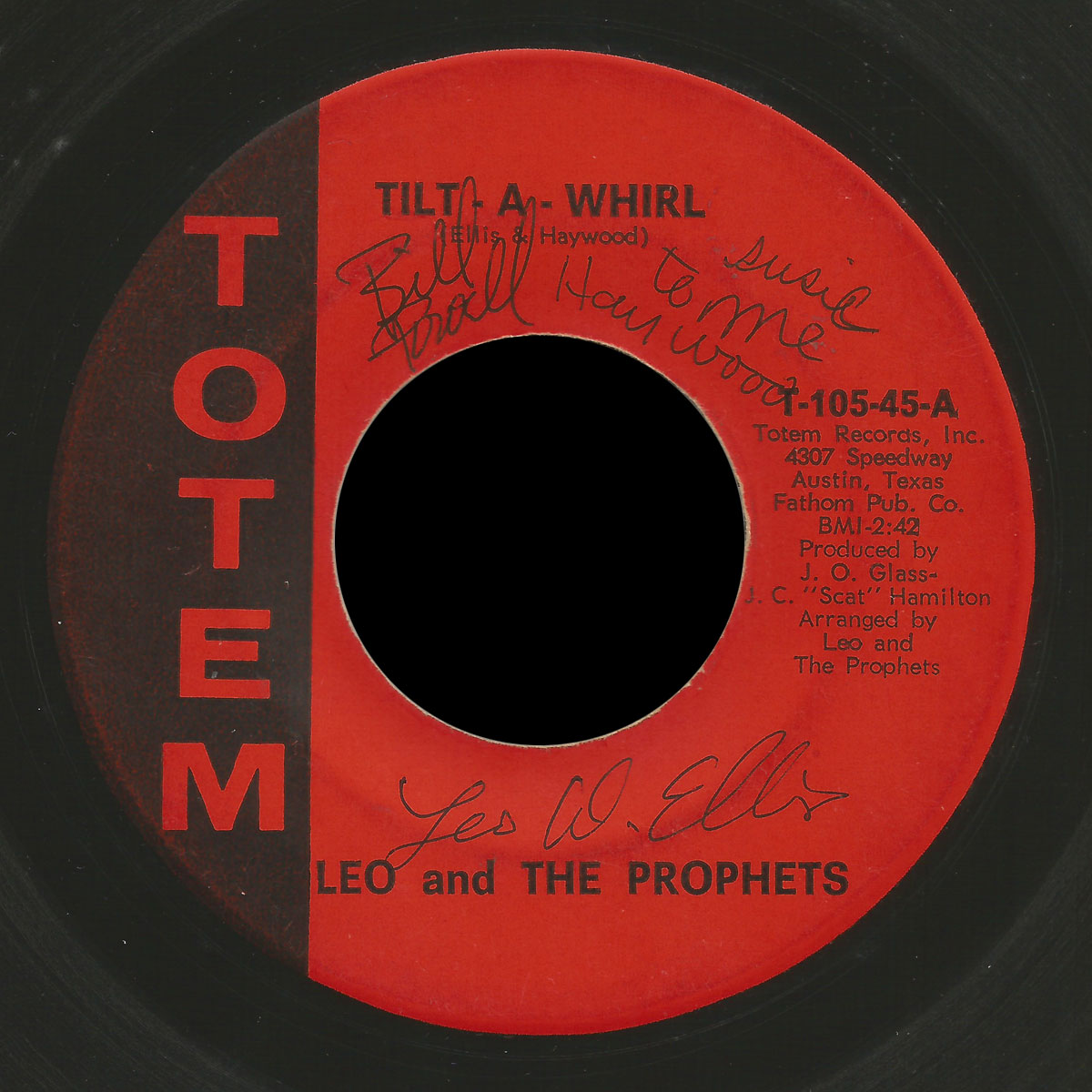
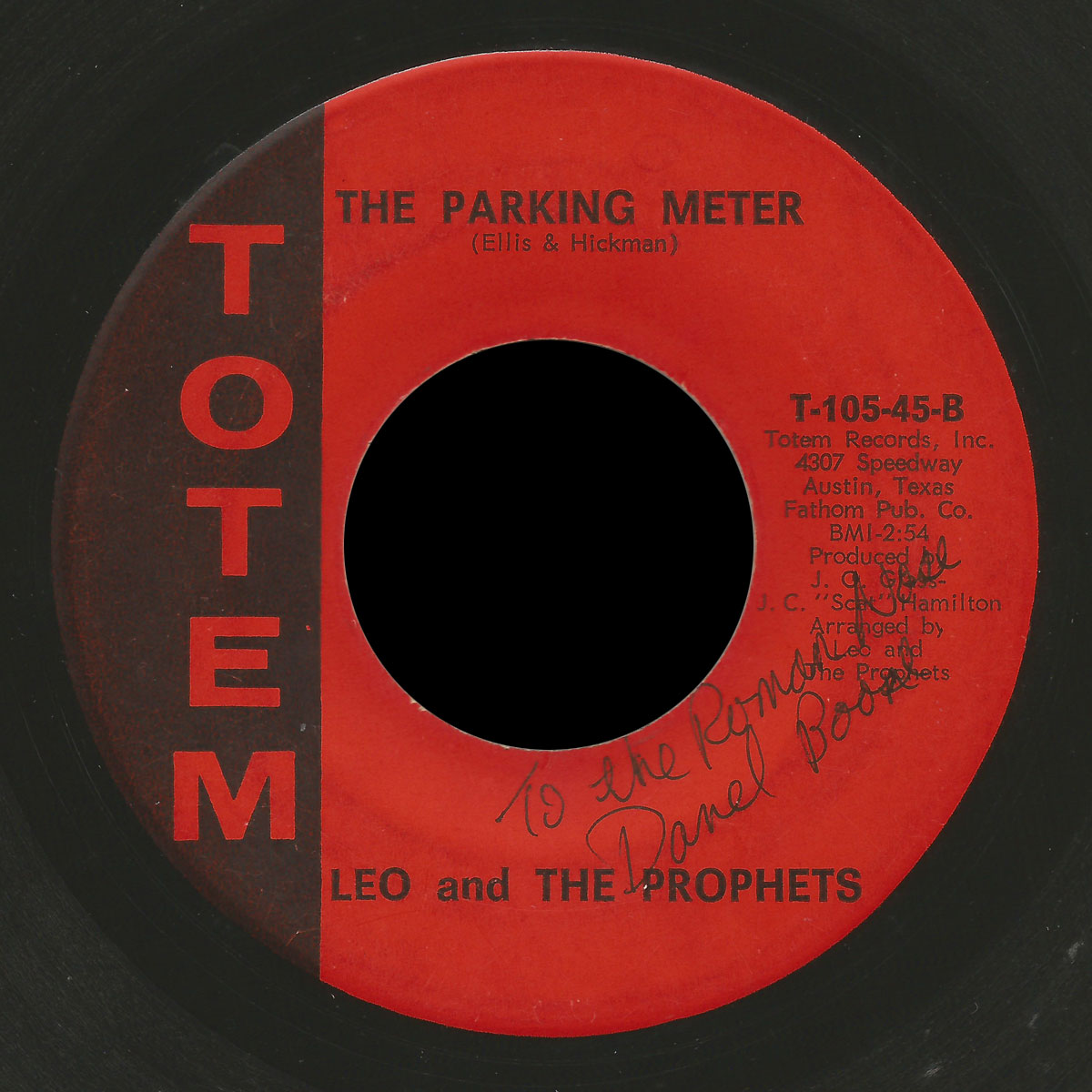
Leo and the Prophets cut one of the legendary Austin singles of the ’60s, “Tilt-A-Whirl” b/w “The Parking Meter” on Totem Records T-105 in April, 1967.
The band members were:
Leo Ellis – vocals and lead guitar Travis Ellis – tambourine Dan Hickman – rhythm guitar Rod Haywood – bass Bill Powell – drums
In January or February of 1967 they recorded their first songs with Sonobeat’s Bill Josey Sr. and Rim Kelley, resulting in a finished vocal, “Flowers on the Hill” and two instrumentals “Ozone Forest” and “Prophecy of Love”. Unfortunately none of which were ever released, but you can hear about half of “Flowers on the Hill” at the impressive Sonobeat website. Thirty seconds of “Ozone Forest” used to be on the old Sonobeat site but I can’t find it now. It’s a pity these songs weren’t finished and released, but at the time Bill Josey and the band felt there was too much distortion in the recording.
Andrew Brown published interviews with Dan Hickman, Rod Haywood and Bill Powell on his site 1966: Texas Music in the Sixties, which makes the best history of the band. I don’t have much to add to that.
My copy of the single is signed by Leo W. Ellis, Bill Powell, Haywood and “To the Roman Nose … Danel Boone” which I believe is Daniel Hickman as he signed the copy on the 1966 site in the same manner.
A possibly complete discography of Totem Records:
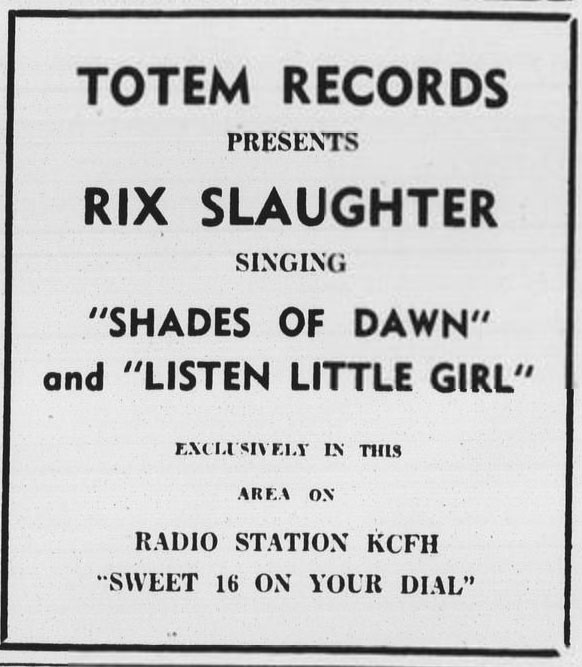
Totem T-101 – Rix Slaughter “Listen Little Girl” (Rix Dale Slaughter and James O. Glass)/ “Shades of Dawn” (Slaughter), November 1964 Totem T-102 – Rix Slaughter “Bright Lights” / “Everybody’s Fallin’ In Love” Totem T-103 – Damon Meredith & the Western Caravan “Don’t Interfere With Love” / “(I Know That) You’re Trying to Forget Me” (WAM-45-66126, copyright reg. May 1966) Totem T-103 – Cecil Moore & The Diamondbacks “Wind It Up” / “Stuff” (WAM-45-66125, copyright reg. June, 1966) Totem T-105 – Leo & the Prophets – “Tilt-A-Whirl” (Ellis, Haywood) / “The Parking Meter” (Ellis, Hickman), April, 1967
Totem Records and KCFH advertisement in the Cuero, Texas paper in November, 1964J.O. Glass (James Otto Glass) and J.C. “Scat” Hamilton produced all the singles.
Totem advertised Rix Slaughter’s first single in conjunction with KCFH in the Cuero Record on November 3, 1964.
The Meredith and Cecil Moore singles have a code I’m not familiar with, WAM, the Moore reading WAM-45-66125, while the Damon Meredith notes WAM-45-66126. Both singles share catalog number Totem T-103.
The singles list Totem Records at 4307 Speedway, Austin, with publishing by Fathom Pub. Co.
James Otto Glass copyrighted other songs in 1963 and ’64 that may not have been recorded, including “Halfway to Heaven (I Can’t Believe In You)”, “Window In My Heart”, “Fleeting Love”, “Just a Tear Away” and “What Doesn’t Show (I’ll Feel in My Heart)”.
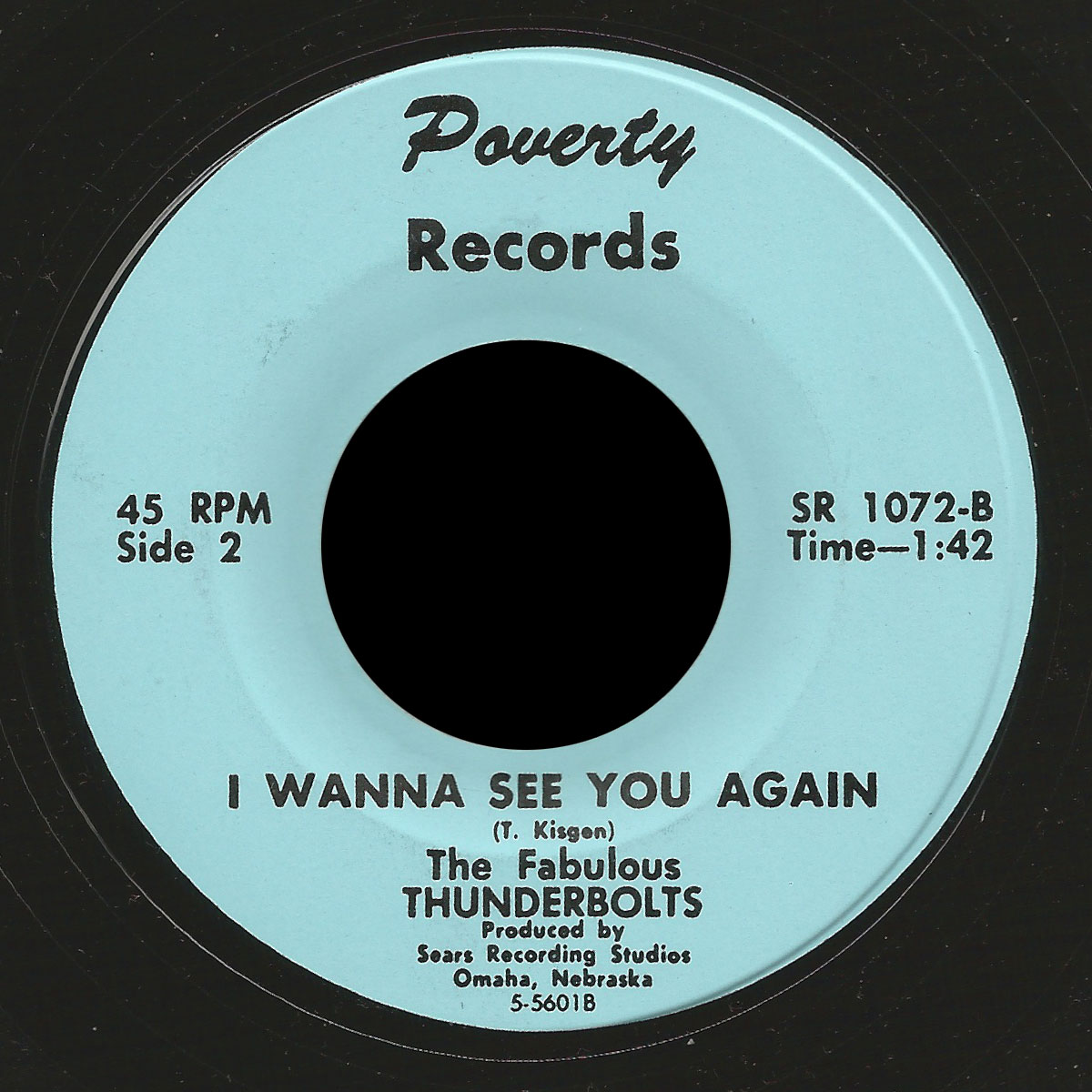
The Fabulous Thunderbolts started as a quartet at Kuemper Catholic High School in Carroll, Iowa. Carroll is situated about 90 miles drive NE of Omaha, Nebraska, or 90 miles NW of Des Moines.
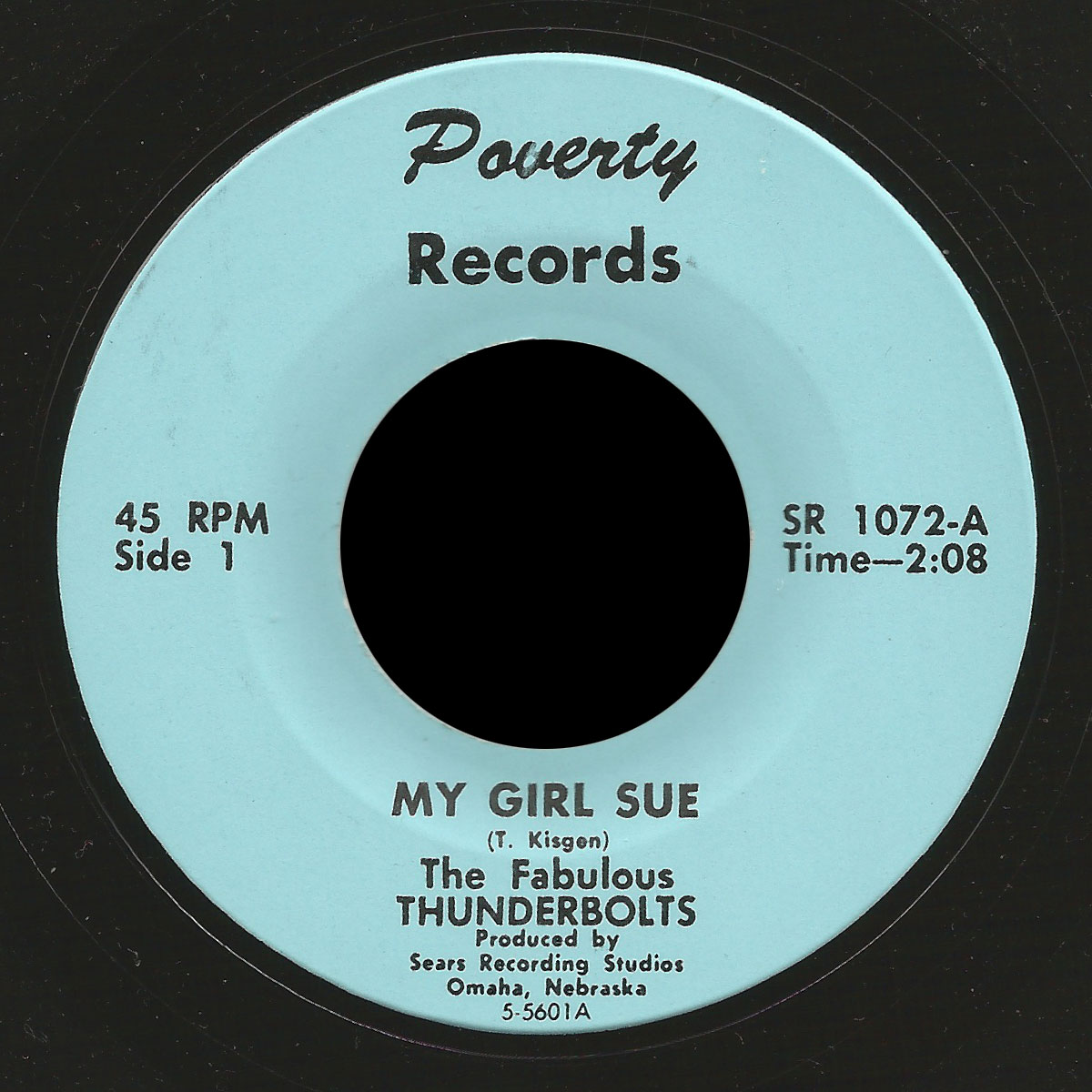
The Thunderbolts traveled to Sears Recording Studios in Omaha to cut their only single, “My Girl Sue”/”I Want to See You Again” released in August 1965. Ted Kisgen wrote both sides and copyrighted both under his own name in April, 1965.
“My Girl Sue” is a sharp two-minute rocker. The entire band is solid, but one can’t help but notice the blazing lead guitar, the excellent lead vocals, and the sax solo.
Members included:
Jerry Hauser – lead vocals Rich Danner – lead guitar Ted Kisgen – drums, lead vocals on “My Girl Sue” Gene Wycoff – saxophone Mike Kisgen Ron Hauser Harold Powell
They seem to have been a quintet for much of their existence. On their single I hear lead guitar, bass guitar, saxophone, drums and lead vocal. The Iowa Rock n’ Roll Music Association Hall of Fame inducted the group in 2000 and has a tiny photo of the group as a quintet on their inductee page.
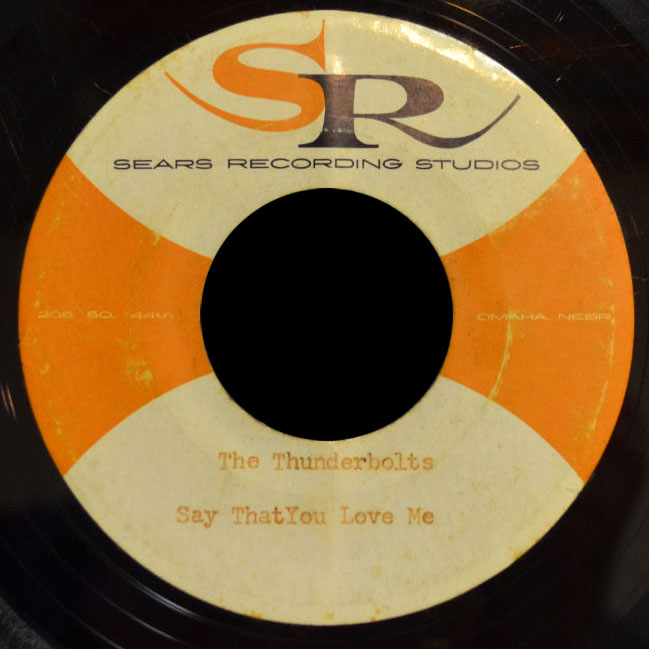
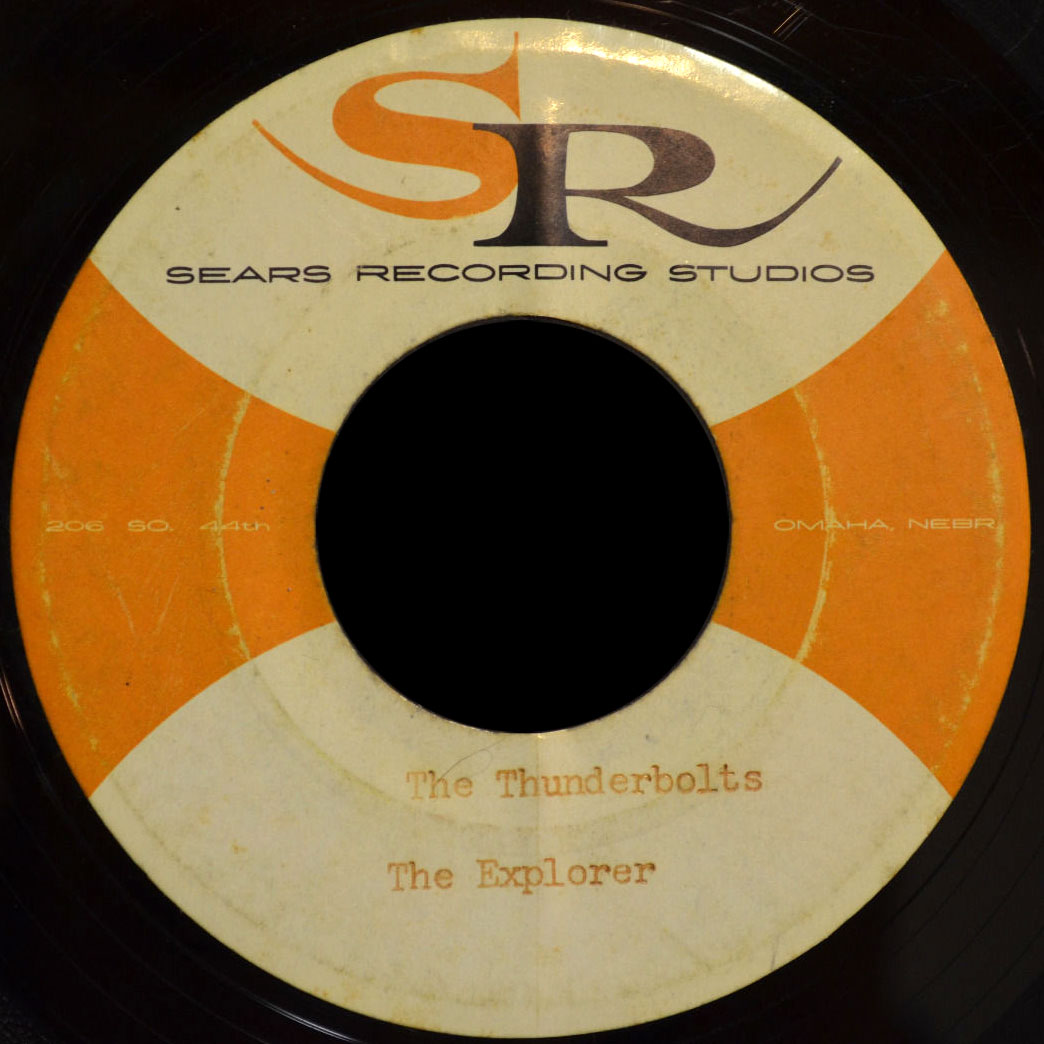
The band also recorded a couple of acetate demos at Sears that I haven’t heard, the uptempo “Say That You Love Me” and an instrumental, “The Explorer” that seem to predate the Poverty release.
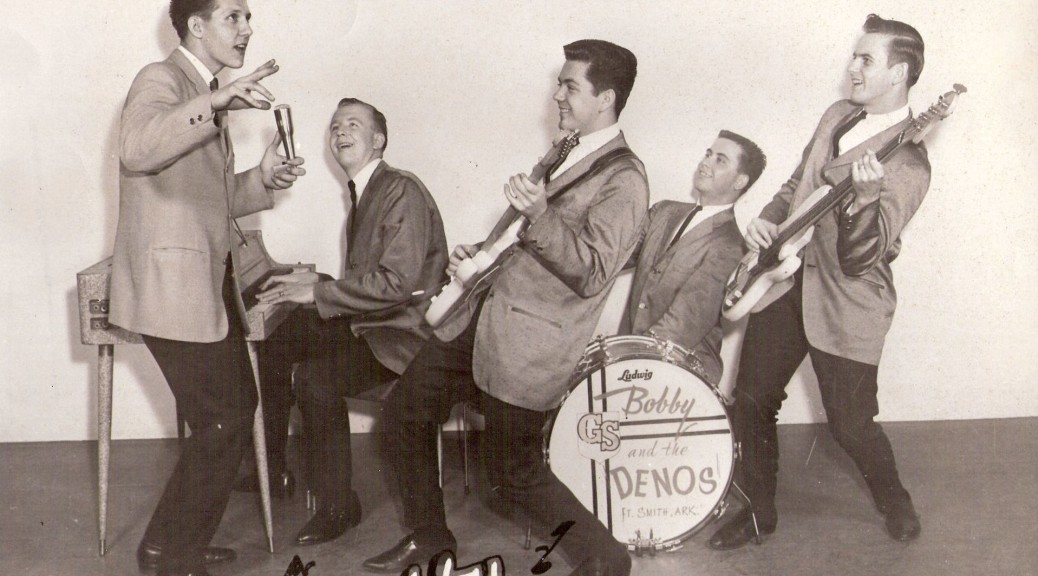
I had a photo at the top of the page from an ebay auction of this demo, but a comment below correctly pointed out the photo was of a different group, the Thunderbolts from Plattsburgh, NY.
Ted Kisgen joined a later version of the Green Giants, originally from the southern Iowa towns of Shenandoah and Bedford. They had one single on Round & Round Records 4501, “Pity Me” / “You’re Going to Lose That Girl” in November 1966.
Many singles were cut at Sears Recording Studio, including the Last Chapter on Skip, the Shags “You’re a Loser” on Rocky (and Jo Jo), the Cellophane Spectacle on Spectacular, and probably everything released on Dad’s Records out of Omaha, including the Fabulous Impacts, the Sundae Funnies, the Rumbles, and the Great Imposters. I haven’t seen a comprehensive list. The Echos V from Des Moines recorded a five-song demo there that has not been released.
I haven’t seen any other releases on a Poverty Records from Omaha.
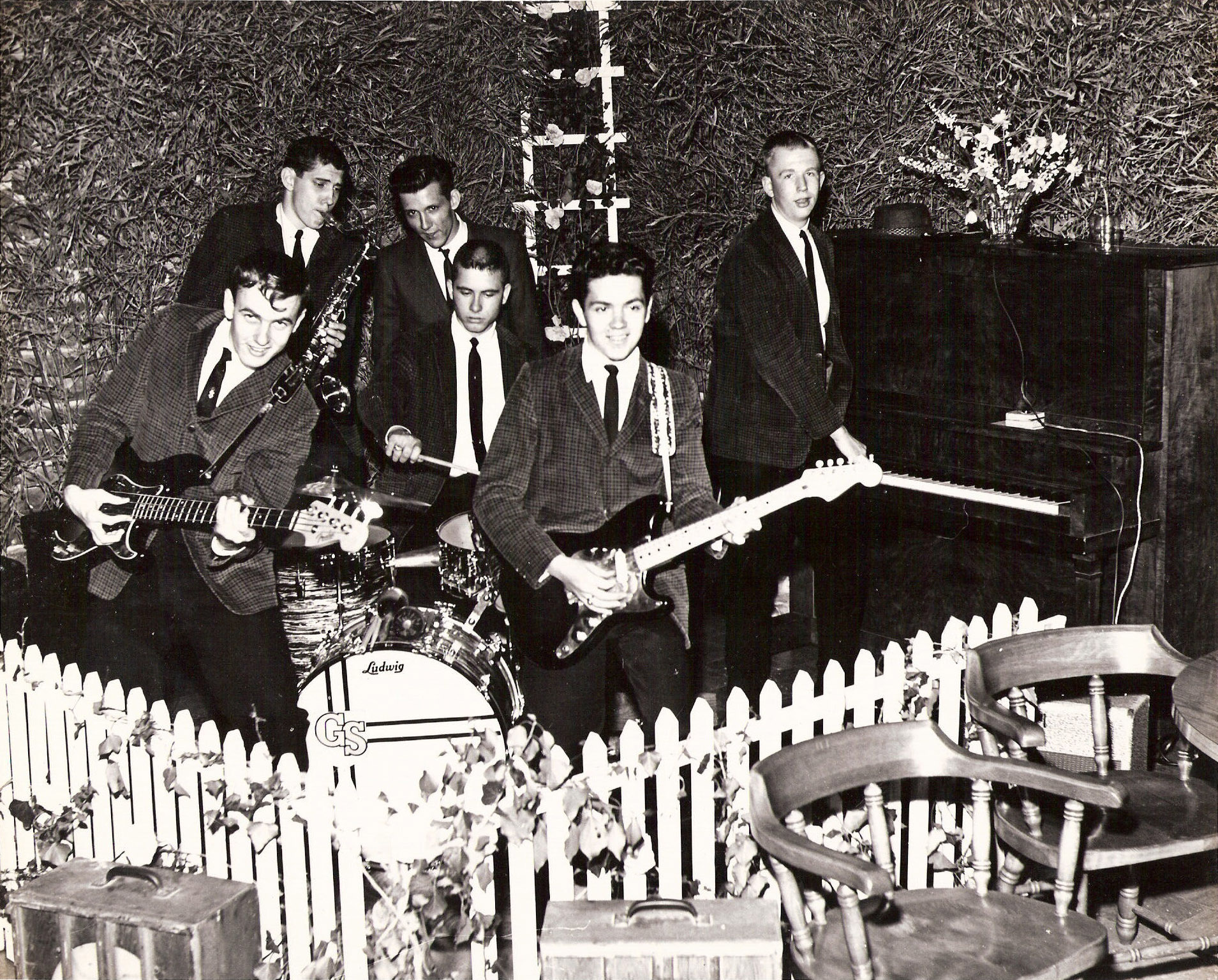
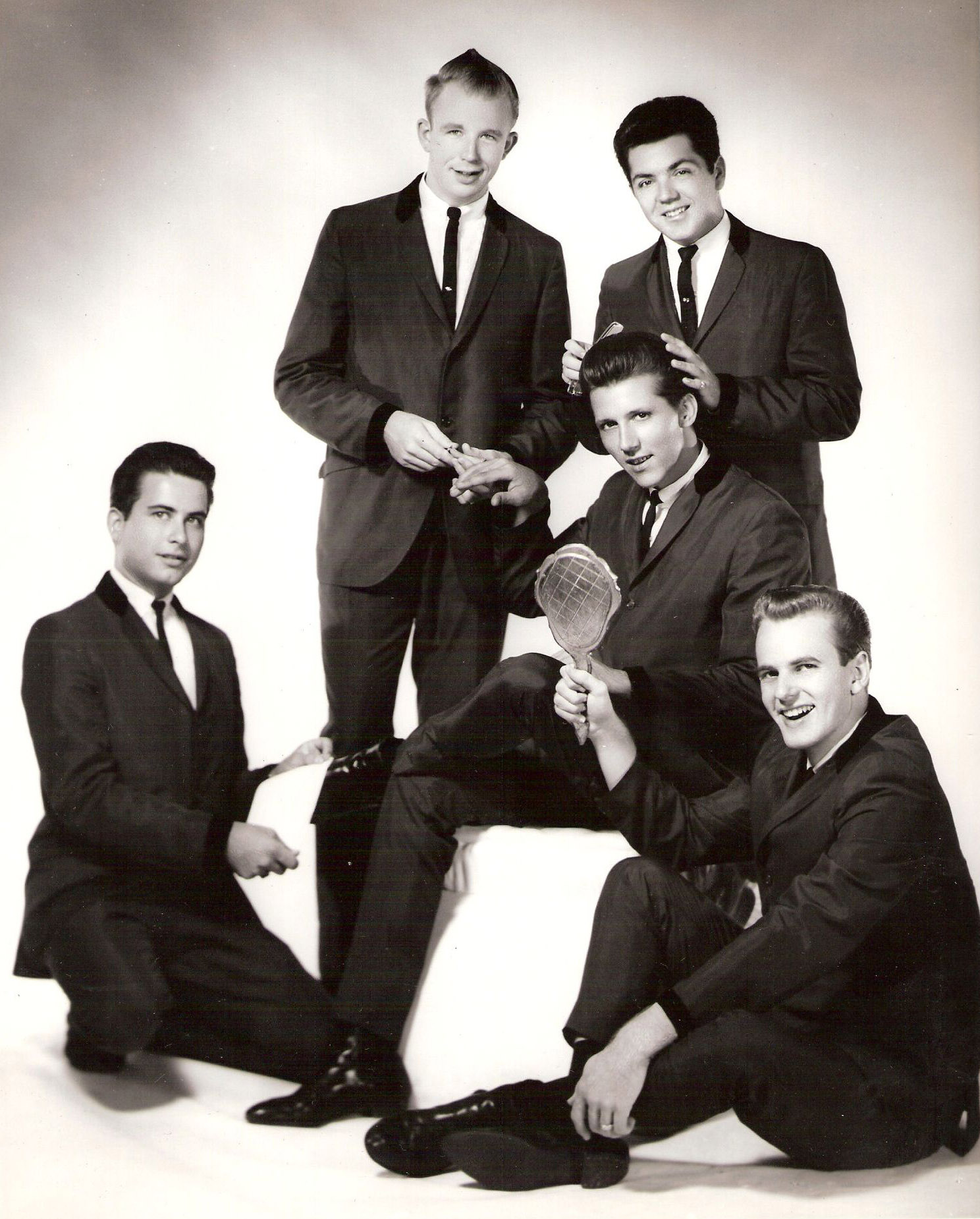
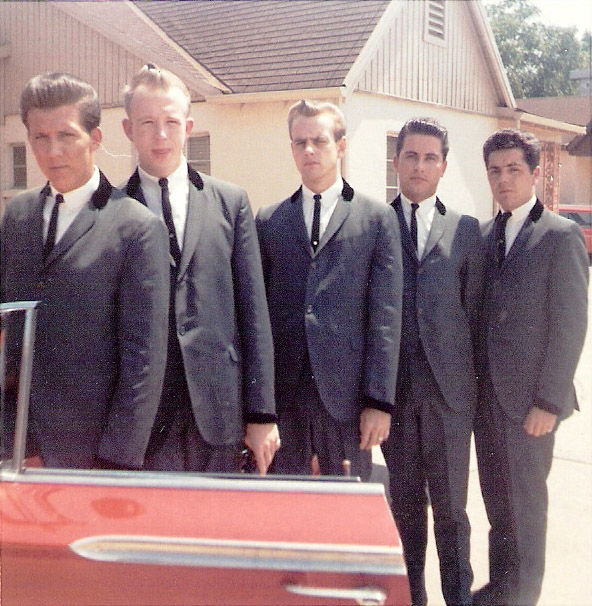
Bobby & The Denos at a country club gig in Arkansas, 1961. Left to right: George Lynn, Billy Wilfong, Billy Jack “Bobby” Rogers, Gary Stamps, Roy Rogers, Toney Thompson
Jeffrey Harvey interviewed Roy Rogers of Bobby and the Denos and wrote this article on the group. Roy has a fantastic collection of photos which he kindly shared with Garage Hangover.
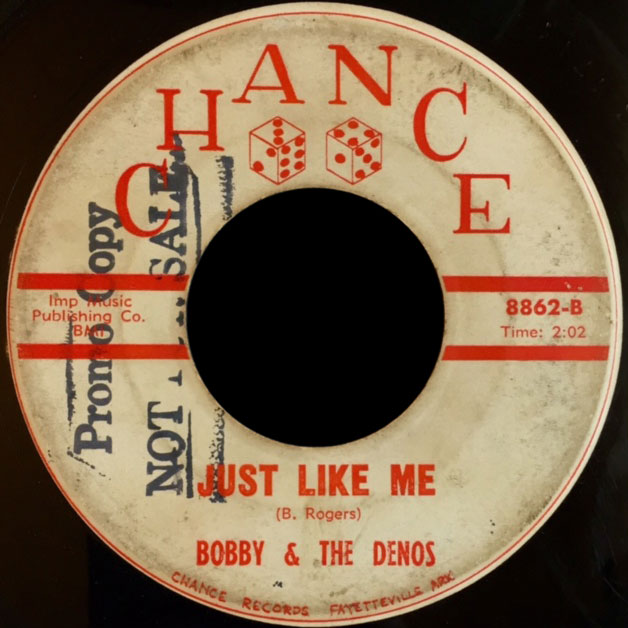
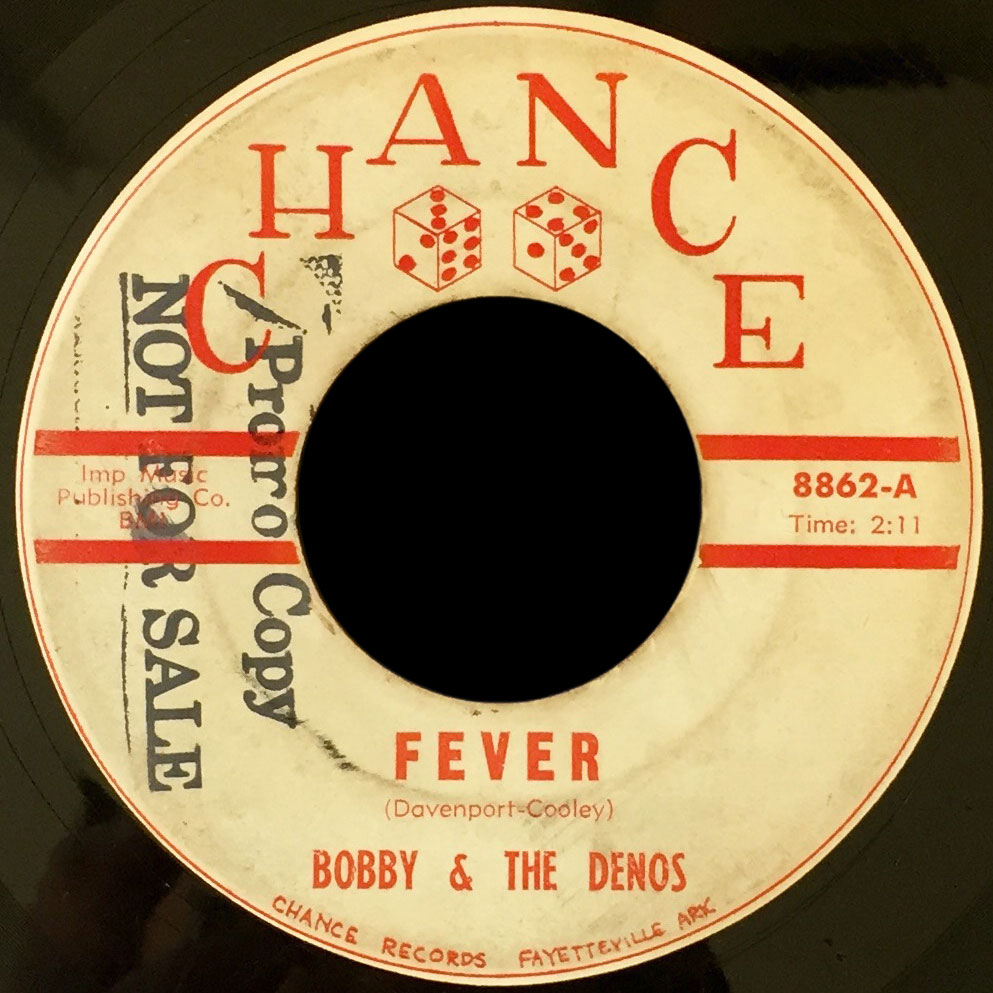
Bobby & The Denos were a Fort Smith, Arkansas based group that released just one 45 on Fayetteville’s Chance label in their five-plus years together.
“Just Like Me” is a super-tough outsider anthem penned by Billy Jack “Bobby” Rogers, lead singer of the group, and features lyrics such as:
I don’t want to be like Elvis Presley I don’t want to be like Jerry Lee I don’t want to be like Ricky Nelson Oh baby, I just want to be like me!
The flip is a solid take on Peggy Lee’s version of “Fever” that the boys didn’t even know how to play until they got to their recording session at Gene Sullivan’s studio outside of Oklahoma City.
I was able to track down Denos guitarist Roy Rogers (birth name), and speak with him about the band’s history.
GH: Can you tell me how the band was formed?
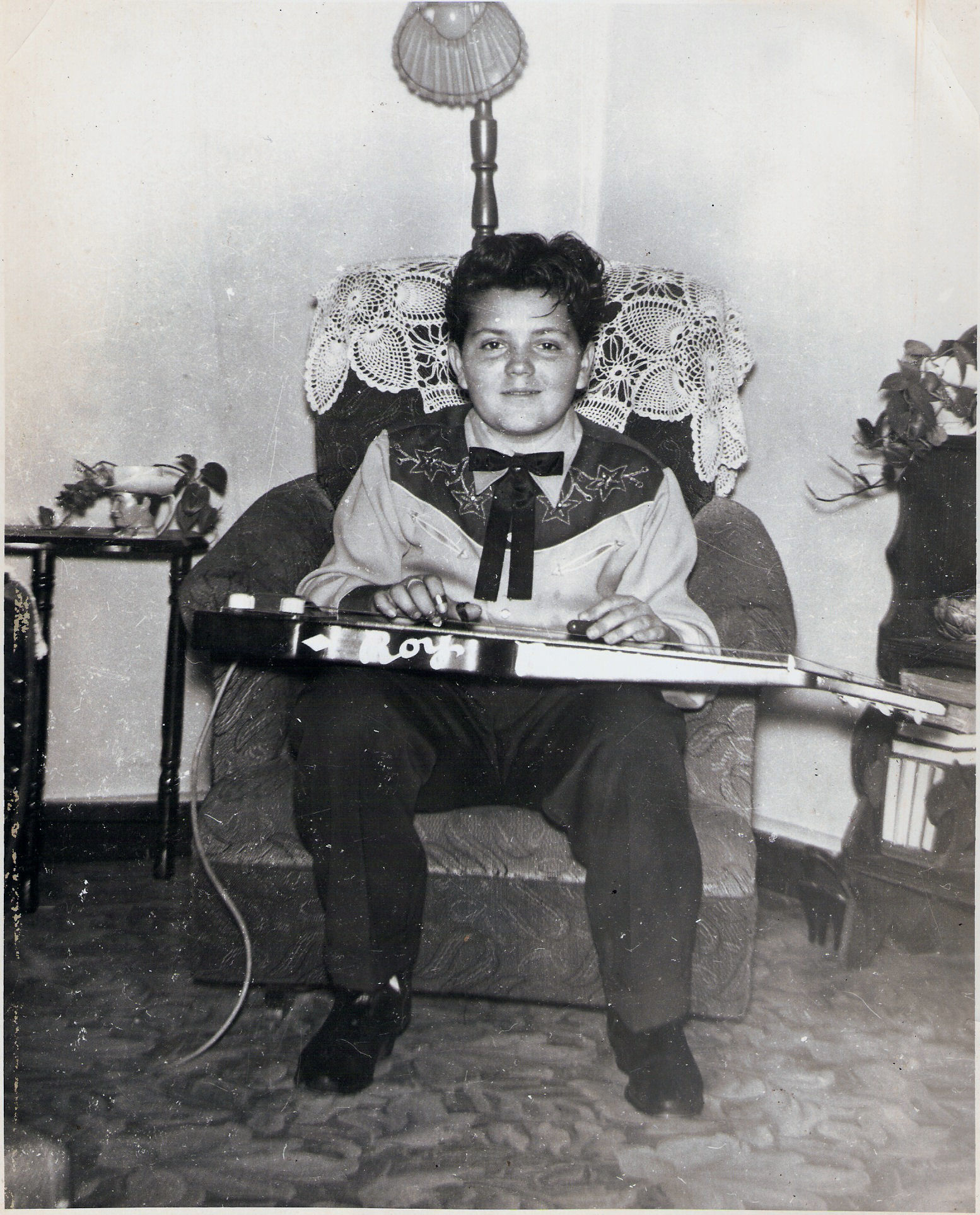
Roy Rogers, age 12 with custom lap steel guitar
RR: Well, I started playing lap steel guitar when I was 11 years old. After a couple years, a piano player (Tony) showed up at the music school where I took lessons. He had perfect pitch and total recall, and after a while the music school told his parents “Don’t bring him back, cause we can’t teach him anything he doesn’t already know!” We were 14 and 15 years old by then, and Elvis was jumping around and wiggling, and the girls were screaming, and I went; “Holy Hell, I gotta do that!” So I dug out an old Kay guitar my dad had in the closet and started asking around and learning chords. Well, pretty soon Tony and I were at a party, and we met a bunch of boys older than us who played. A few days later some of those boys came by my house to jam.
GH: What year would that have been?
RR: Probably ’58 or ’59. We just all started jamming out together and calling ourselves “The Satellites.” We added a bass player (George), drummer (Gary), and sax man (Billy), to round out the sound. Gary was our age and in the high-school jazz band, so he could really play the drums. We continued on until probably 1960, when we changed our name to “Bobby & The D-Notes.”
GH: What prompted the name change?
RR: Our original lead singer Gordon Jennings quit, and we had heard about this guy named Billy Jack Rogers – no kin to me – and we went out to the American Legion one night to listen to him sing. He was singing Elvis Presley’s “It’s Now Or Never” and he was just killing it! I was like “My God, you’re kidding me!” So we approached him on one of his breaks and told him that we needed a singer, and asked if he’d like to come over and jam with us. Well, he did, and he quit the other band real quick.
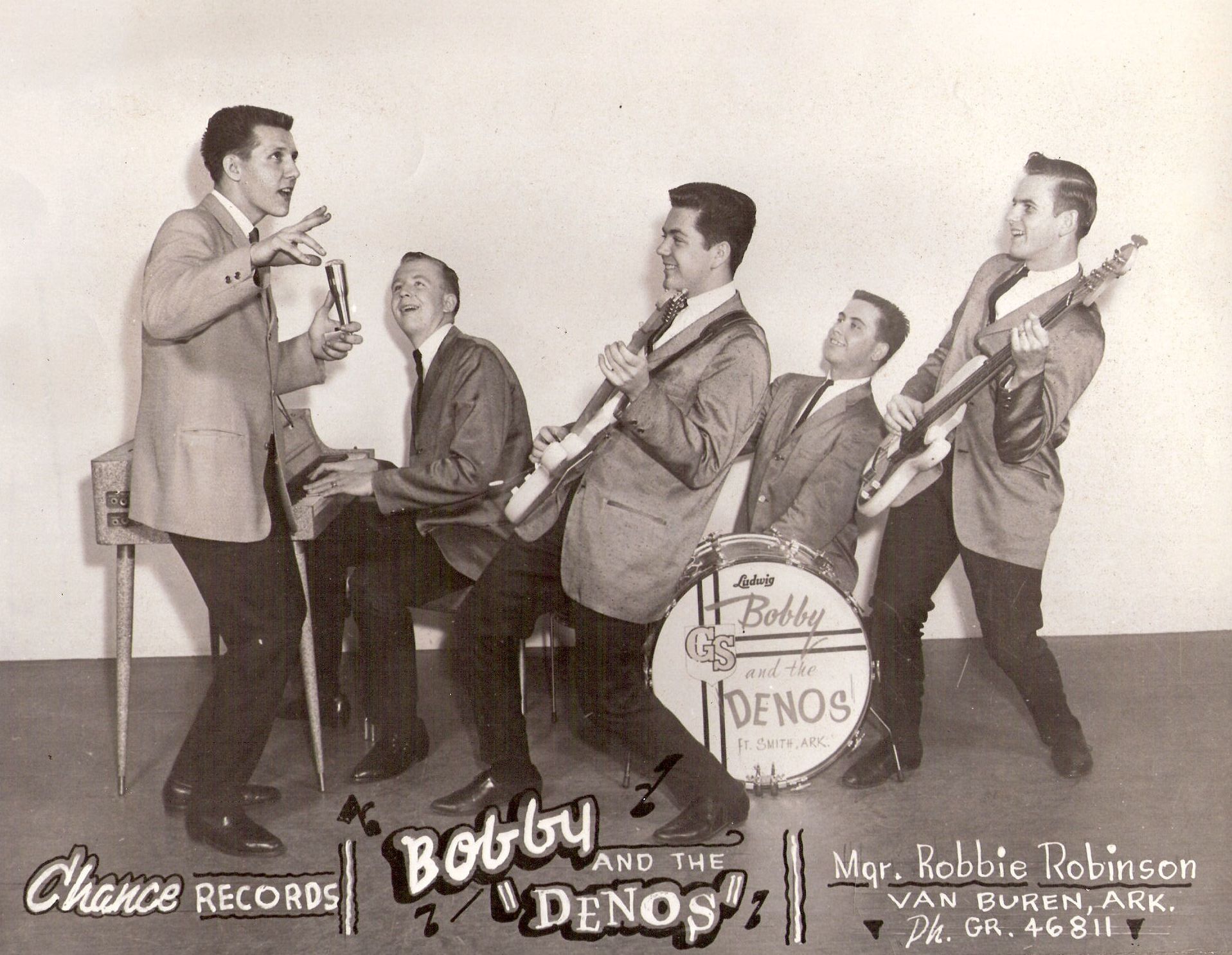
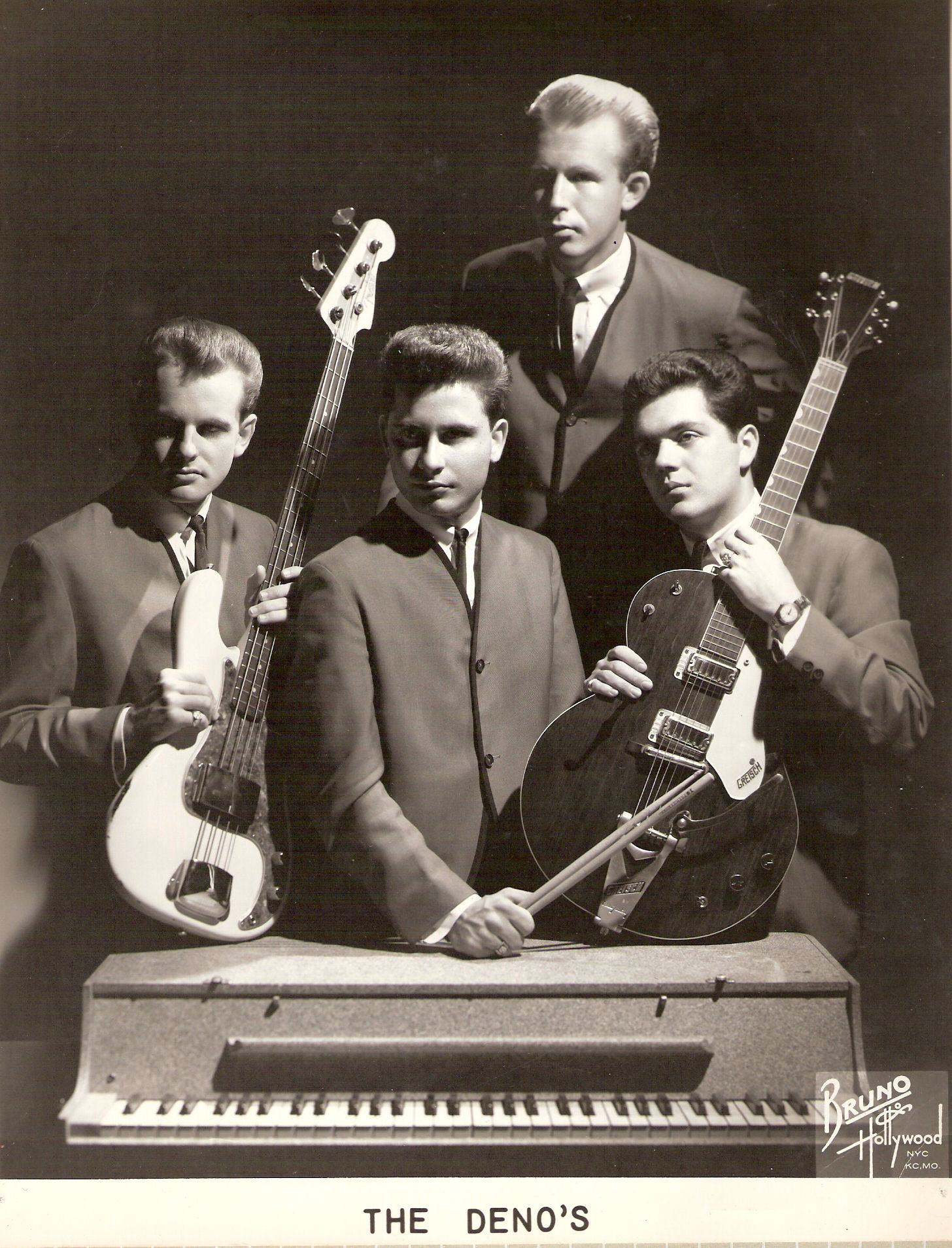
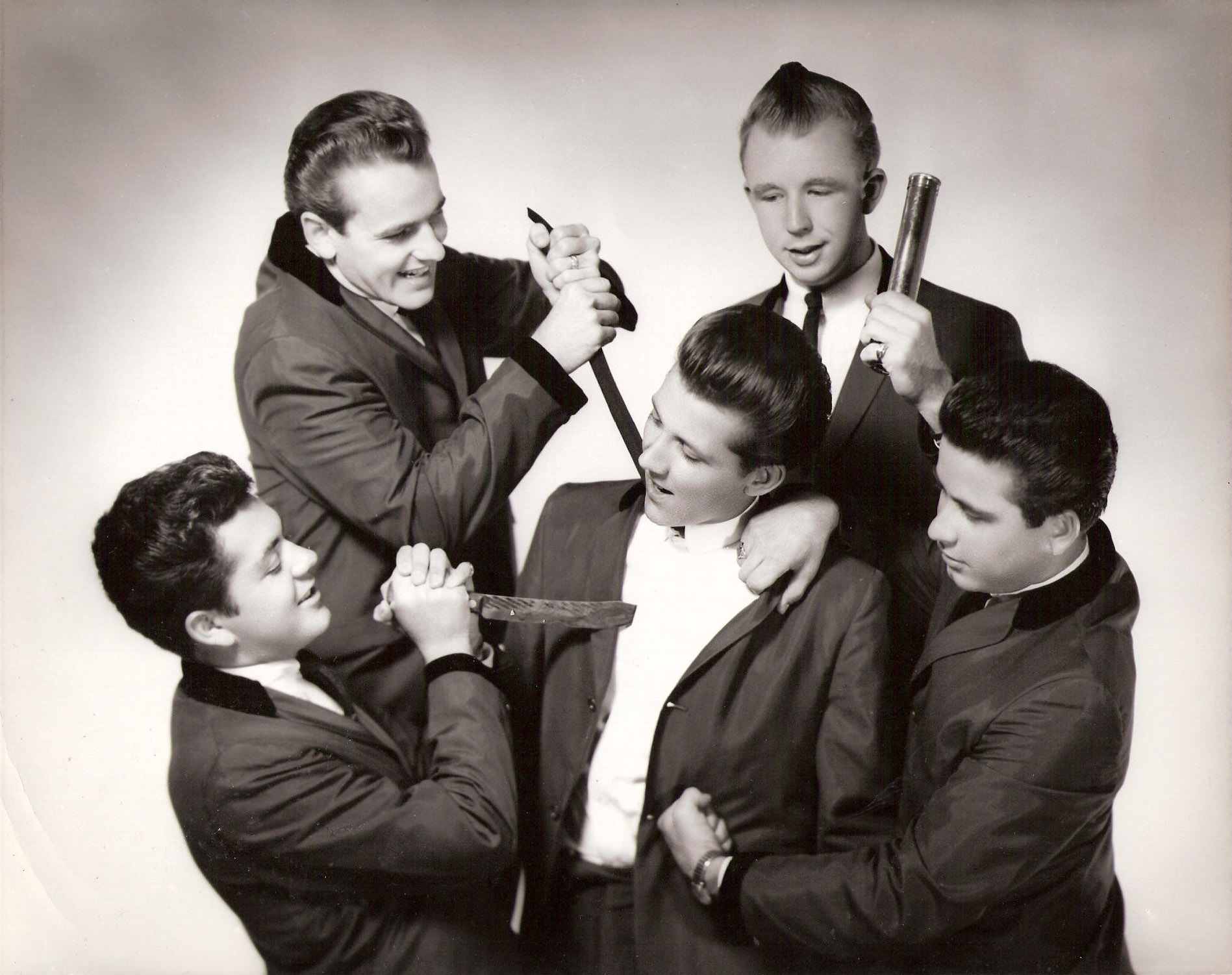
Bobby & the Denos: early 60’s promo photo
GH: How did the Denos name come to be?
RR: Well, just about six months after Billy Jack joined, someone told our sax man that “Denos” meant “well-liked” in Italian. I still don’t know if it’s true or not, but that’s the story we got from some guy, and it made for a pretty easy change!
GH: That is a great story! Where were you guys musically around this time?
RR: We were practicing all the time. I mean, we were playing so much that my damn fingers were bloody! We also started making real money playing dance halls and what not. My dad was an upholsterer who worked in a factory, and he kept telling me I was gonna be a bum if I didn’t learn how to upholster or something. By this time I was 15 or 16, and making more money in two nights than he was working a whole 40-hour week!
Bobby & the Denos: early 60’s promo photo
GH: What were your live shows like?
At the 2500 Club in Kansas City, MO
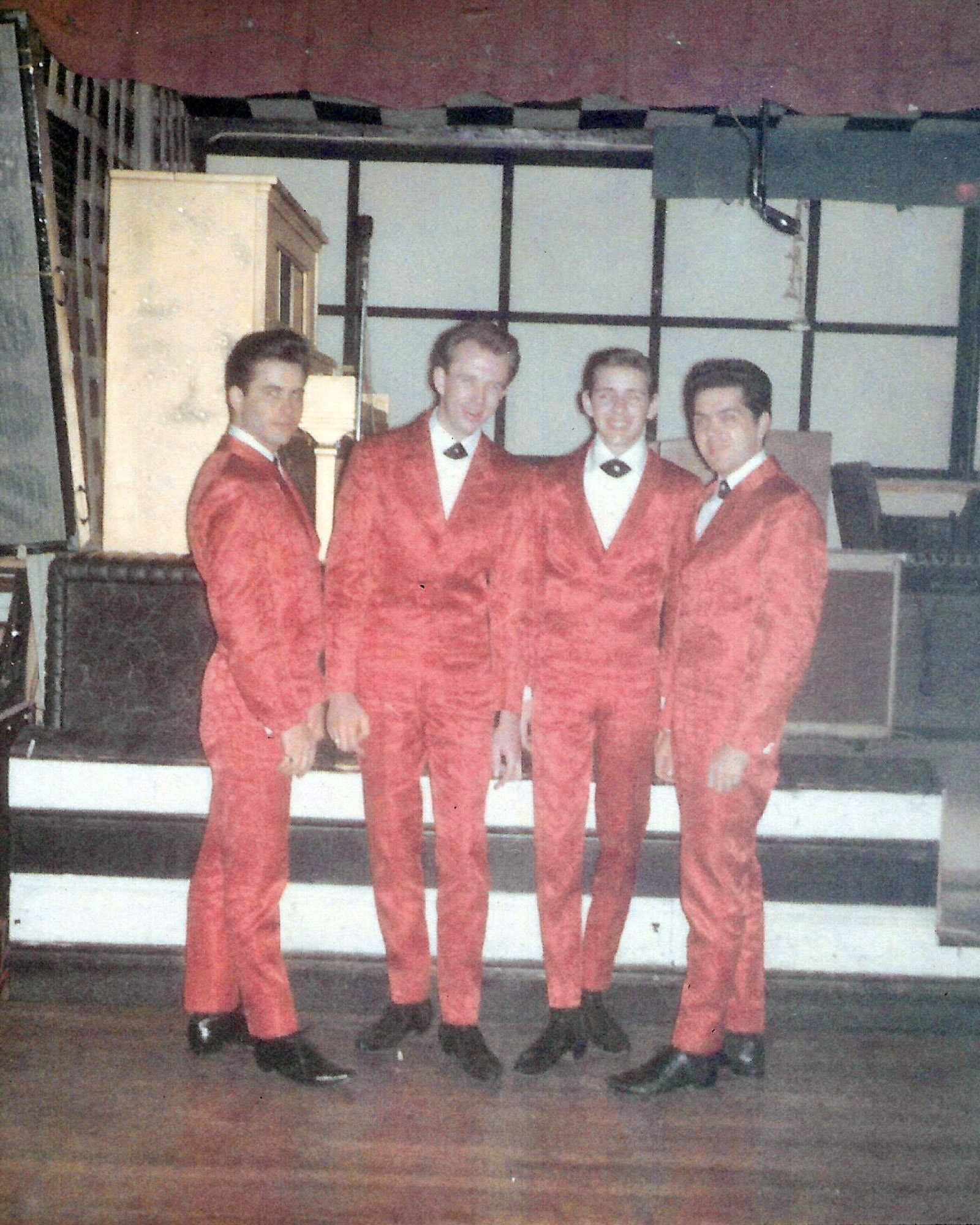
RR: We did choreography and all that stuff like The Temptations. Our piano man Tony would jack up the upright piano back in the day on two Coke cases, and he would stand up, play one-handed, and do the steps with us. We also really liked what the black artists were wearing. Very snug tailored jackets and pegged pants. We loved our “Beatle Boots,” and started having our jackets made out of red, blue and green, brocade material with the James West waistcoat look. Remember the Wild, Wild West series on TV? Maybe you’re too young for that. We were very sharp dressed. We didn’t think too much about politics because we were into being the coolest cats in town. Music and women… Typical band boy stuff, you know?
GH: What comprised your live set list?
RR: We were playing about 50% – 60% R&B and blues numbers that were popular at the time.
GH: Tell us about the recording of “Fever” b/w “Just Like Me”
RR: “Fever” and “Just Like Me” were recorded in Oklahoma City around 1961 in Gene Sullivan’s recording studio. A guy named Phil Eagle out of Fayetteville, Arkansas owned a small label called Chance. He was also a booker, promoter, and manager, and he approached us about recording. We said “Of course!!!” and did some demos before heading down to Sullivan’s to cut the record for real. The record actually got played on the radio in Oklahoma City, Dallas, Little Rock, and Fort Smith for a while.
GH: What was the music scene like in Fayetteville around that time?
RR: Oh boy, there were all kinds of bands going on. Ronnie Hawkins was on the scene around that time. He ended up marrying a girl out of Canada and moving there. His group went on to be The Band. We played in and around Fayetteville lots back then. We were playing sorority and fraternity parties, and this beautiful, two-story club called the Rockwell Club that looked like it just grew up out of a mountain! It looked like it was made out of all native stone, and we would open for Ronnie in there sometimes.
GH: What else do you remember about recording in Oklahoma City?
with keyboardist Toney Thompson’s 1959 Chevy at a motel in Bossier City, LA
RR: We were all 16 and 17 years old when we made that record. I remember we went down there, and realized that nobody in the band really knew the lyrics to “Fever.” We ended up going down to a drugstore and finding a Hit Parade magazine. Sure enough, the song “Fever” was in there, and that’s what we used to remember the lyrics! After that, we just went in the studio and did it. It was so dumb how we did it, but it was great!
GH: The lyrical content of “Just like Me” conjures up the image of an outsider essentially giving his girl an ultimatum that if she can’t take him for who he is, then don’t even bother. The anti-name dropping is also impressive for the time. Did you feel that you guys were making a social statement with that song?
RR: Right!!! That was it!!! When we played music, we did it our way. I didn’t learn the lead guitar parts exactly right for all the songs we covered or anything, we just jammed them out. I mean, of course we rehearsed them all and got it the way we wanted, but unless it had a really important lead part in it, Tony and I were, at that time, just good enough to play our own lead. We were playing a lot of black clubs back then too, and musically, we were kicking ass. Billy Jack (Bobby) was a lot older than most of the Denos, and he came to us and said “I wrote this song!” It was “Just Like Me” and it ended up perfectly fitting the way we played. We just did our own thing, you know?
Choreographed live show at the 2500 Club in Kansas City, MOwith unidentified bar patron at 2500 Club in Kansas City, MO
GH: Tell us more about the kinds of clubs you guys played back then.
RR: One of our first jobs was in Kansas City in September of 1962. We were all around 17 years old (except for Billy Jack), and had graduated high school earlier that May. We decided we were going out on the road, so we just took off. I had an aunt in Kansas City and I called her. She obliged us, and we slept on cots down in her basement. We got there on a Sunday, went out banging on doors on Monday, and landed our most lucrative job at the 2500 Club on 2500 Truman Road.
GH: What was that scene like?
RR: Oh man, it was your typical “knife & gun club!” You know, one of those places where you gotta give them your license in exchange for a knife or gun to go inside! (laughs). The crazy thing is that we ended up playing there, off and on, for the next three years!
The Denos with 2500 club owner Lee Webb
GH: Do any other clubs or acts that you shared a bill with at the time stand out in your mind?
RR: Well, we went down to Galveston, Texas – I think it was Pleasure Pier or somewhere – and just walked into a little club and told them we were good. There was a black band called Little Hot & The Volcanoes – or something like that – playing and Little Hot was a five-foot tall drummer who was a monster when he played. He would stand up and play the hell out of those drums! We worked there for a bit, and while we were down there, we got to open a show for Bobby “Blue” Bland out on the pier one night. We were just five white guys playing our damn hearts out, and they loved it!
GH: Wow!
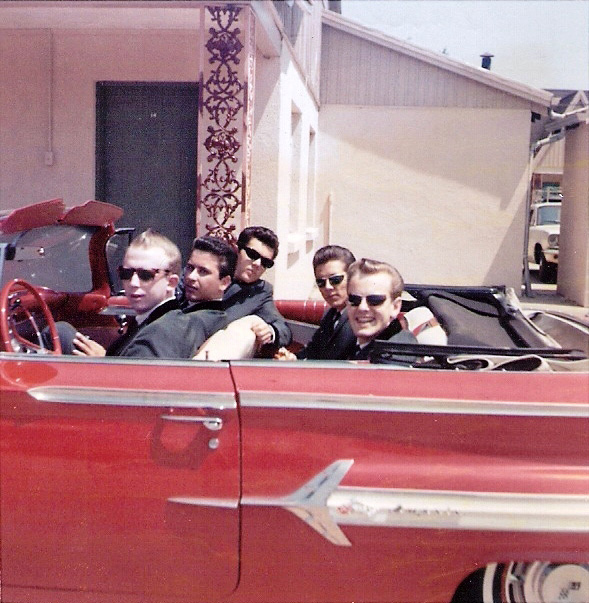
RR: Yeah, and after that we headed over to New Orleans, to 426 Bourbon Street at a place called “The Dream Room,” which was later called “Your Father’s Mustache.” Well, The Champs – from “Tequila” fame – were playing there, and we had met them in Kansas City, and they told us to go up to The Peppermint Lounge in Shreveport because the owner – Mr. Mike – needed a band. We said “Hell yeah we’ll do it,” and it was actually in Bossier City, Louisiana. At the time back then, Bossier City looked like Vegas. It had more neon than you’ve seen anywhere! Dale Hawkins – from “Suzie-Q” fame – and his band were already playing there, so we just set up on the floor of the club and kicked his ass!!!
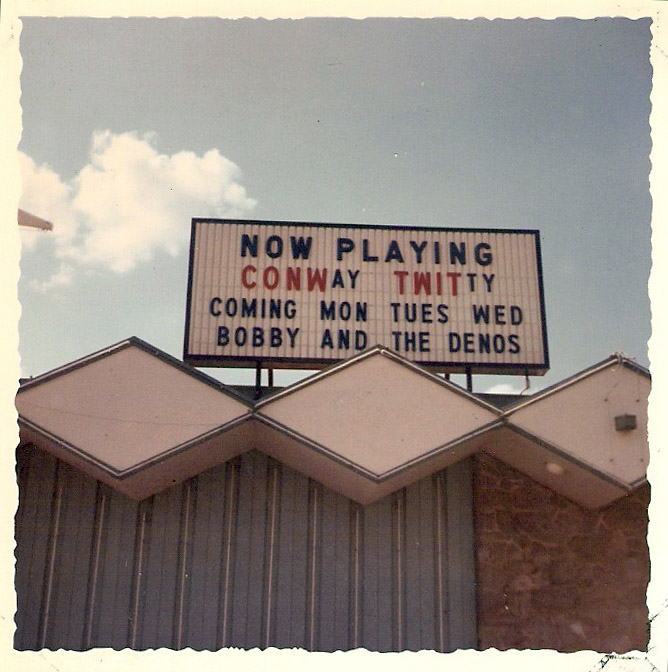
Bobby & The Denos with Conway Twitty & Band in Bossier City, LAwith keyboardist Toney Thompson’s 1959 Chevy at a motel in Bossier City, LA
GH: That’s a great story! Who were your main musical influences at the time?
RR: Bo Diddley, Bobby “Blue” Bland, Freddie King, B.B. King, The Ventures, Duane Eddy, Ronnie Hawkins, and Lonnie Mack.
GH: When did Bobby & The Denos finally go their separate ways?
Marquee at The Peppermint Lounge in Bossier City, LA
RR: Well, Billy Jack (Bobby) quit around 1964 after another run we had at The 2500 Club in Kansas City. We went back home and needed a singer. We found a guy named Jim White, who later changed his name to Jim Mundy. He went on to do commercials for Green Giant vegetables and some beer companies. He was married and only lasted a few weeks with the Denos. We were younger than him, and a lot wilder at the time. One night we were raising hell and Jim just said, “Boys, I can’t take this… I QUIT!!!” After that, we were still rehearsing at Tony’s house in Fort Smith and one day he said “I know all of Billy Jack’s (Bobby’s) songs. I said “Bullshit.” But man, he sang every damn song Billy Jack (Bobby) sang, and just as good too!!! We went back to The 2500 Club, and after the first week, had the place packed out. We were making $1200 a week at the height of our run, and they had to lock the doors on Friday and Saturday nights and do a one-in/one-out type thing! After our run at 2500 was up, we went back home to Fort Smith. The day we arrived, I found a letter in the mailbox that said: “Uncle Sam Wants You.” I called around and found out I wasn’t the only one. Two other Denos got the same letter on the same day, and that’s when we knew it was over.
GH: So essentially, by the time you guys were really up and running as a band, really hitting your musical stride, that’s the time the war put an end to things?
RR: Yeah, that’s right. We had picked up an agent – The Jackson Agency in Kansas City – and they were booking us around. The war ended all that, and we all went our separate ways.
Bobby & The Denos as a four piece in 1962
GH: What happened after Bobby & The Denos broke up?
RR: Well for one thing, I got married. This was around 1965 and I had been dating a girl for about a year. I also ended up flunking my physical for Uncle Sam. I had double-curvature of the spine, and they said “Get your ass out of here!”
GH: Did your music career end there too?
RR: Well, no. When everybody quit Bobby & the Denos, I just kind of took over. I had always done the majority of talking to the club owners and such, so when everybody left; I started up Roy Rogers & The Denos. I recruited some guys to play, and we continued traveling around. That lasted until about 1966 when my daughter was born. After that I joined a group out of Louisville, Kentucky called The Imitations. Can you believe that in early 1970 we toured the Far East? We were in Japan, Korea, Thailand, Okinawa, The Philippines, and Vietnam for six months. Dumbass me gets recruited for the Army, and ends up going over there anyway as a civilian without a gun! At some point The Imitations turned into Roy Rogers & The Internationally Famous Imitations, and that lasted until 1979.
GH: Are there any last words or memories you’d like to share about your time with the band?
RR: I’ve probably had one of the best lives of anyone you’ve ever met. I feel that we grew up in the best of times ever in the history of the United States – the late ‘50’s and early ‘60’s. When I got into music, it changed my life. All I ever wanted to do was play music, and whenever we got on the road I was just free, man. You know? We were five Arkansas hillbillies, and we would go into black clubs, play with the bands, and be welcomed. We could go wherever we wanted, and be accepted. It was just a great time to be alive. 1958 – 1965 were the best days of my life.
Bobby & the Denos: early 60’s promo photoBobby & the Denos: early 60’s promo photo
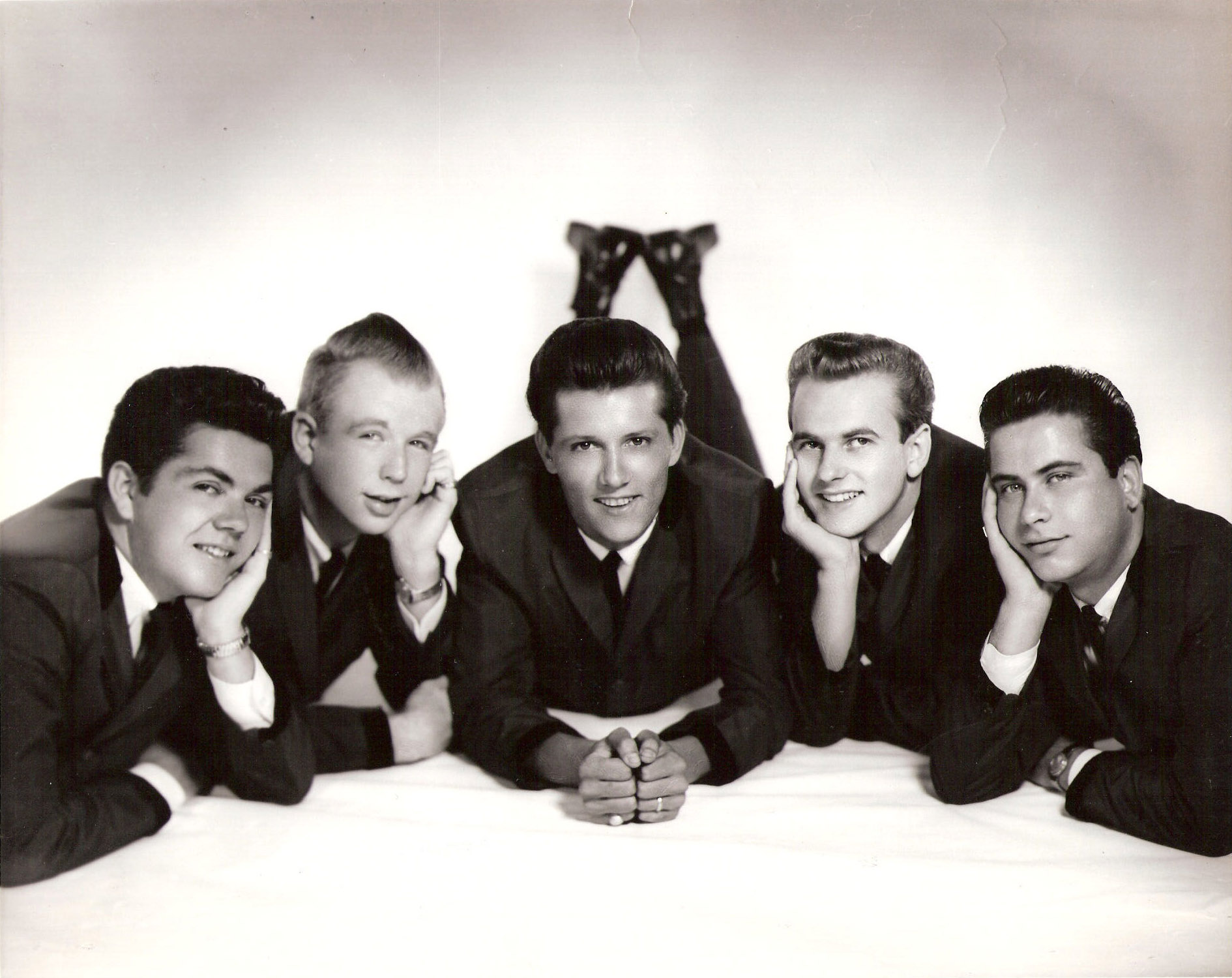
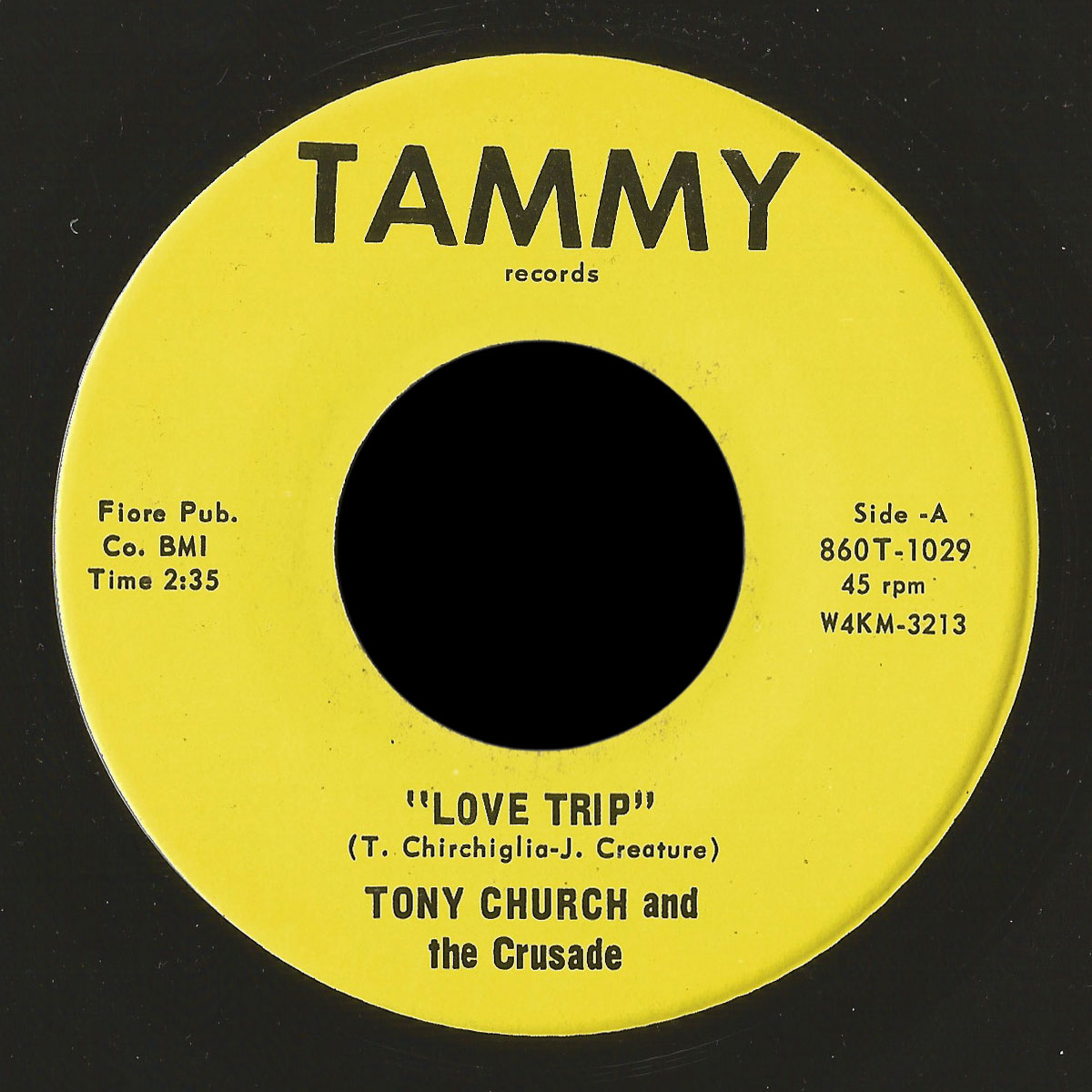
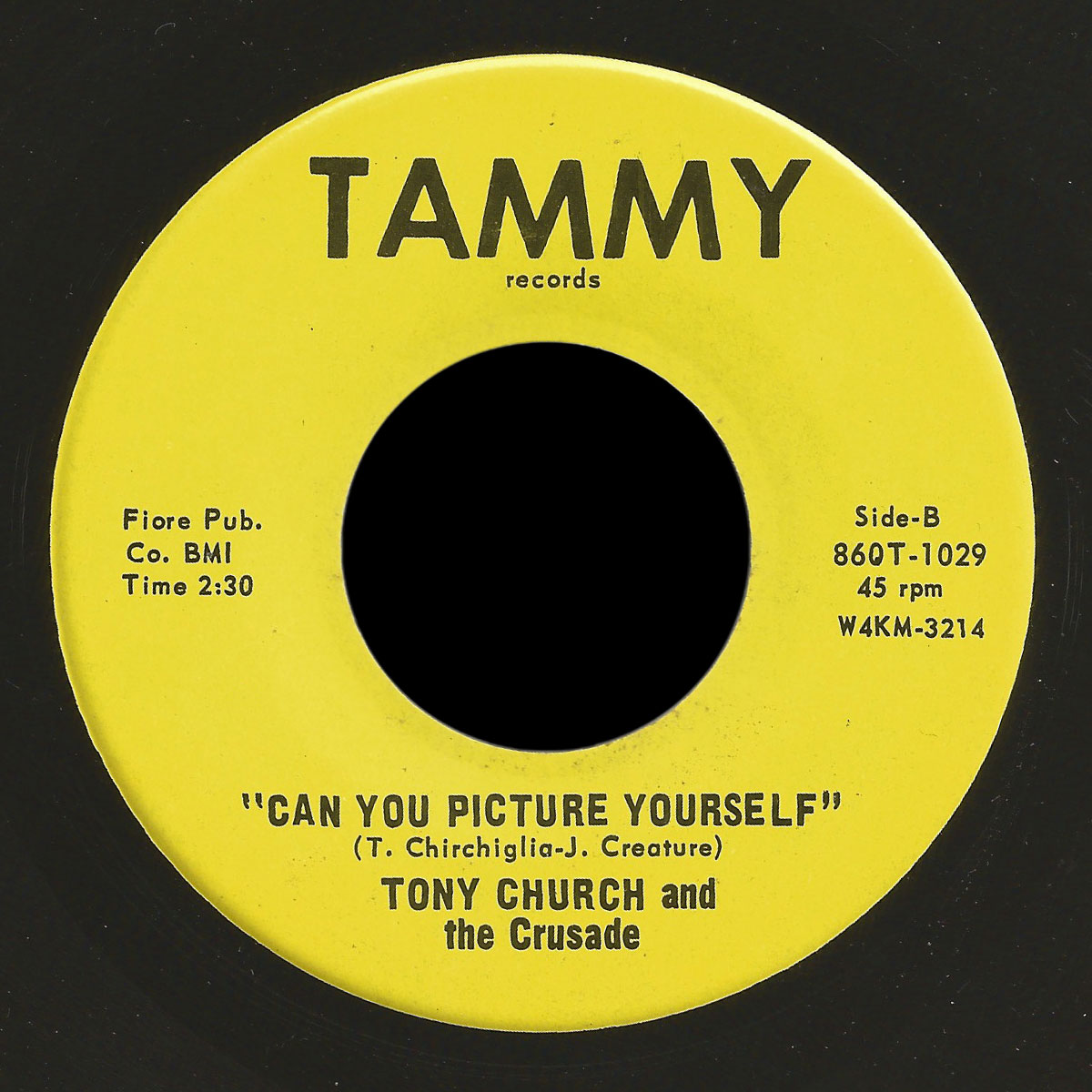
Tony Church and the Crusade came from Youngstown, Ohio; Church’s real name was Tony Chirchiglia.
Chirchiglia started as early as 1960 in a rockabilly style, recording two of his original songs, “A Car” / “Oh! By the Way” on Hy Joy, released as Tony Chick, and backed by his brother Rocky Chirchiglia’s group (hear both songs over at Rockin’ Country Style). “Rocky” Rocco Chirchiglia owned music stores in Ravenna and Youngstown.
In the ’60s Tony Chirchiglia had a group for live shows called the Imperials, who may be the ones backing him as the Crusade on this single on Tammy. He did a great job of keeping up with the times, as “Love Trip” has an eerie psychedelic vibe and “Can You Picture Yourself” is catchy late ’60s pop, though his vocals are deeper and more stylized than a typical teen sound. It’s too bad he only has two singles, eight years apart to his name. He was obviously a creative writer and arranger, I would like to hear more of his work.
Tony Chirchiglia and J. Creature wrote both songs for Fiore Pub. Co, BMI. The RCA pressing code W4KM-3213/4 indicates a release in the second half of 1968.
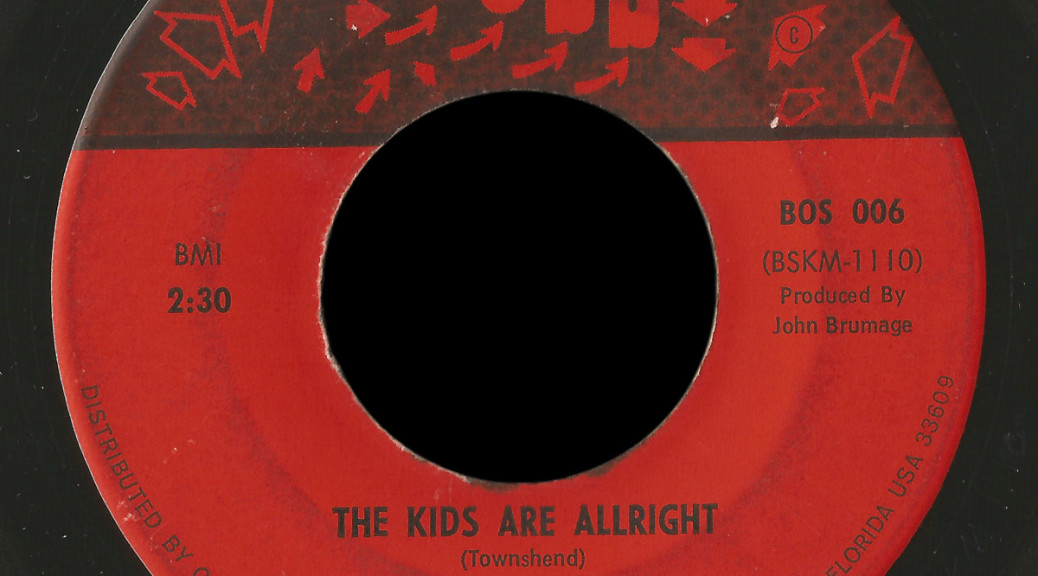
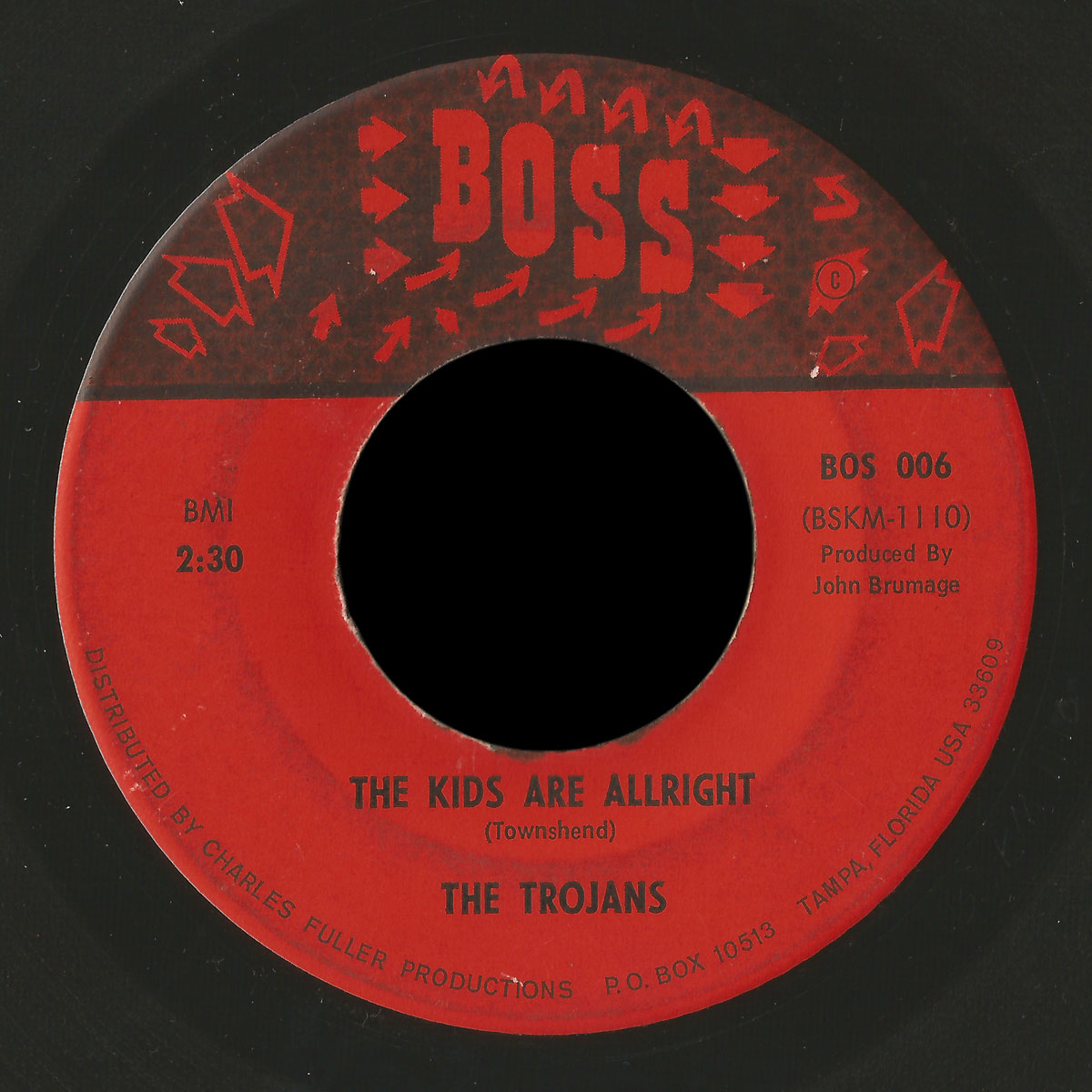
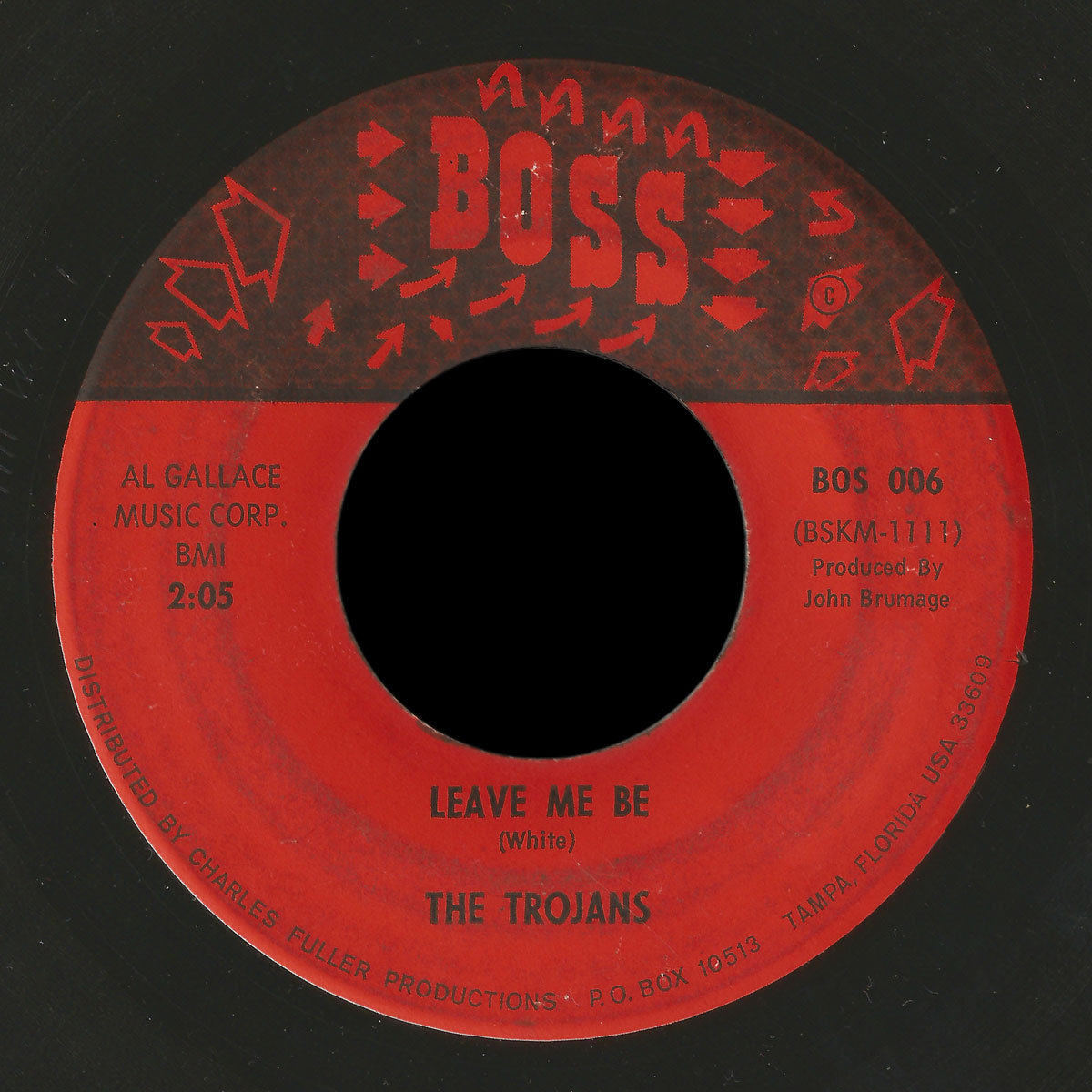
“The Kids Are Allright” / “Leave Me Be” by the Trojans is another of the lesser-known singles on Tampa’s Boss label. High school kids from the Harry B. Plant and Jesuit high schools, members were:
Mike Regar – lead vocals & keyboard David Lasswell – lead guitar & vocals Tom Saussy – rhythm guitar & vocals James Spoto – bass & vocals John Trujillo – drums
Released on Boss 006 in December 1966, the band do an excellent job with their harmony singing on the Who’s “The Kids Are Allright” (sic) and the Zombies’ “Leave Me Be”. I know bands in my high school never sounded this competent.
It was their only single. Mike Regar eventually joined a longer-lived Tampa band, Amanda Jones.
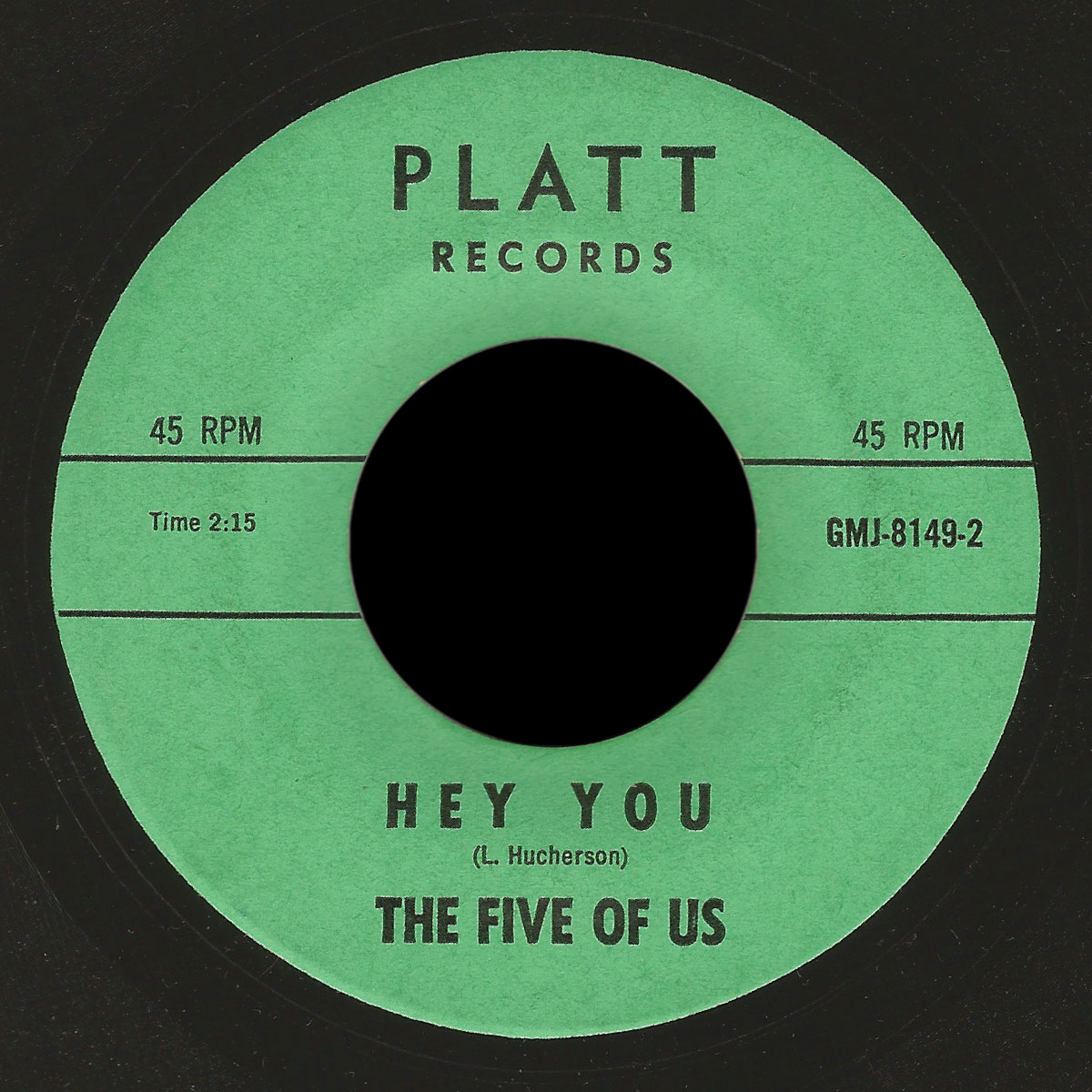
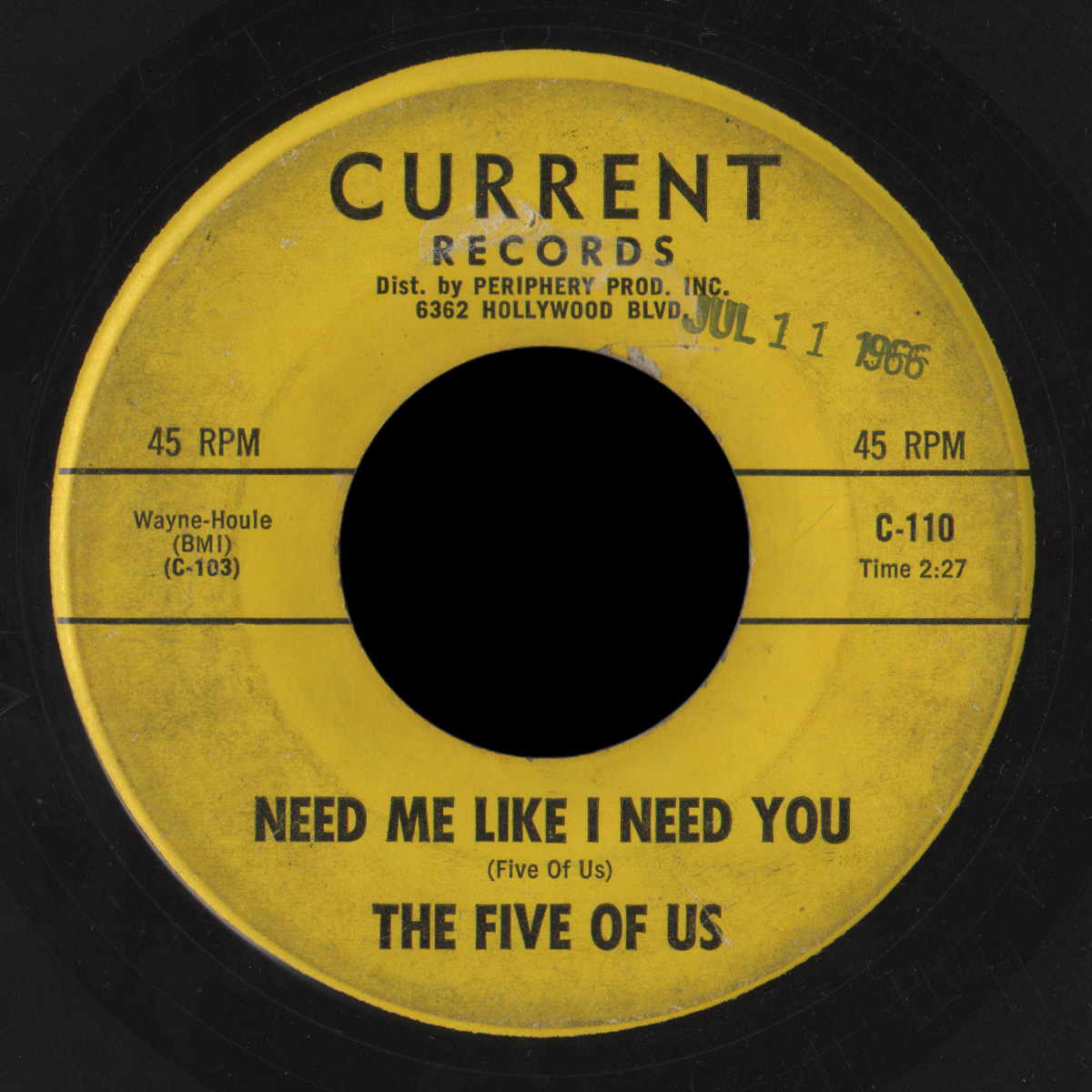
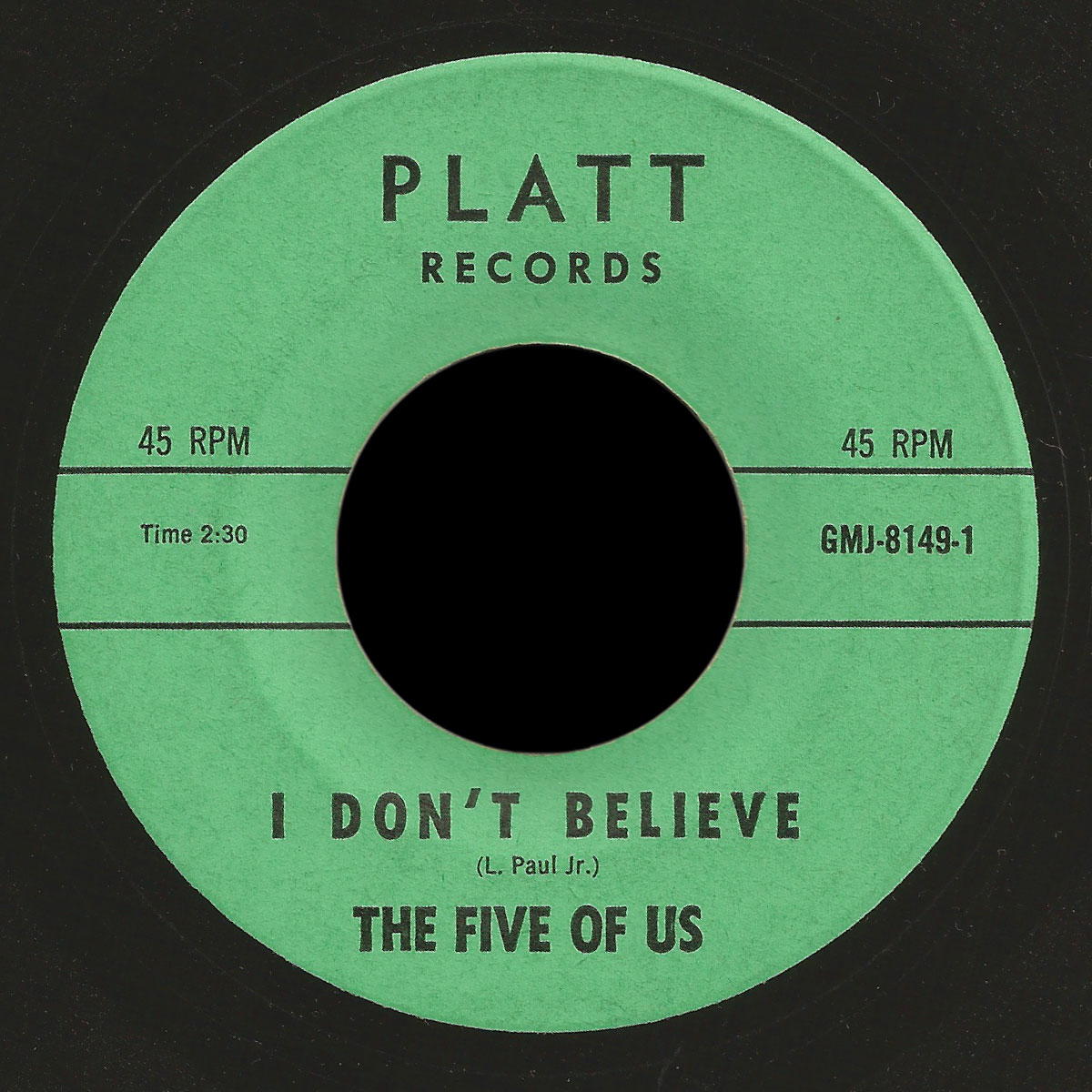
The Five of Us came from Tuscon, Arizona. Members included Paul Canella on lead guitar and George Maryville on bass (also sometimes spelled George Miraval), Alex Valdez on drums and vocals, Lee Stansrud on vocals and Richard Gomez on organ.
In 1965 they backed Tommy Gardner, a singer who sounds a lot like post-army Elvis on “Why Oh Why” / “Pretty Baby” on Keeson Recording Ltd KRL-125. The labels credit the single to Tommy Gardner and the 5 of Us. Both songs were Gardner originals, published by Keeson BMI and produced by E.M. Keener. This is the same Tommy Gardner who cut “Why” / “That Kind of Love” with the Versatiles on Rev Records.
Without Gardner the Five of Us cut an interesting single on Platt Records GMJ-8149 in May 1966, “Hey You” / “I Don’t Believe” – covering both sides of the Guilloteens first single on HBR 446 from June of the previous year. The Five of Us version of “Hey You” is almost as good as the Guilloteens, but the group is a little shaky on “I Don’t Believe”. The Platt label has no publishing info; deadwax has the Monarch delta # 61973 and CJM 8149. I can’t think of any other single that covers both sides of another artist’s release.
The next single would be their best, the band original “Need Me Like I Need You” published by Wayne-Houle BMI, with a repeat of “Hey You” from their Platt single. The Current Records label released it in July 1966.
Think of the Good Times: The Tucson Sound features the previously unreleased “Let Me Explain”, recorded in 1966. There’s another unreleased song titled “I Lied” that I haven’t heard yet.
When the Five of Us split, Paul Canella and Alex Valdez joined the Yellow Balloon, and would continue into The Popcorn Explosion.
This site is a work in progress on 1960s garage rock bands. All entries can be updated, corrected and expanded. If you have information on a band featured here, please let me know and I will update the site and credit you accordingly.
I am dedicated to making this site a center for research about '60s music scenes. Please consider donating archival materials such as photos, records, news clippings, scrapbooks or other material from the '60s. Please contact me at rchrisbishop@gmail.com if you can loan or donate original materials

 The Shadows came from Hazelwood, North Carolina, a small town about 30 miles west of Asheville. Members included Dennis Robbins and Ken James.
 Gold Standard released over 200 singles during the ’60s. There are a handful of garage or teen-beat records, which I’ll list below, though some of them I haven’t heard and I’m not positive they fit here. While some artists were local to Nashville, it wasn’t unusual for Gold Standard to feature artists from around the country. The Cavemen came from Birmingham, Alabama and had an earlier single as J.C. & Cavemen. The Incidentals were from Montgomery, Alabama.