Ray Ruff (Ray Ruffin) of Amarillo owned the Ruff label, and was also a partner in the Sully label, eventually taking it over from Gene Sullivan, who had started Sully Records in Oklahoma City in 1959.
Ruff also had the Storme label, with one release I know of “I’m Gonna Love You Too” / “Ummm Oh Yeah” as Storme #101 in 1964.
Any help with these discographies would be appreciated.
Ruff Records
The Ruff discography is fairly straightforward, though there are some weird jumps in the numbering after #1020, maybe because of distribution deals with Tower Records. Interestingly, Mop Top Mike pointed out that numbers 1010-1020 were all released between March and April, 1966.
1000 – Blue Things – Mary Lou / Your Turn To Cry (Feb. 1965) 1001 – Buddy Knox – Jo Ann / Don’t Make a Ripple (December 1964) 1002 – Blue Things – Pretty Thing, Oh / Just Two Days Ago (May 1965) 1003 – Checkmates – Hey Girl / All the Time Now 1004 – Henson Cargill – Joe, Jesse and I / Pickin’ White Gold 1005 – ? 1006 – Charming Checkmates – Just to Make Me Cry / So Hard To Find 1007 – Bob Finn – Existing In City Stone / Why 1008 – ? 1009 – Arcades – She’s My Girl / Stay Away (Kent Tooms) arr. by Ruff and Paul Mathis 1010 – Trolls – That’s The Way My Love Is (Fred Brescher) / Into My Arms 1011 – Finnicum – Come On Over / On the Road Again 1012 – ? 1013 – ? 1014 – Robin Hoods – My Love Has Gone Away / Love a Game (both by Robin Harris) 1015 – BC’s – Oh Yeow! / Comin’ On Home 1016 – Y’Alls – Please Come Back / Run For Your Life 1017 – Burch Ray – Love Question 1018 – Troy Watson & the Del Troys – Sherry / Girl I Love And Adore (both by Troy Watson & M. Boyking, April ’66) 1019 – Tiaras – Sticks And Stones / Southern Love 1020 – Page Boys – All I Want / Sweet Love — 1088 – Them – I Happen to Love You / Walking in the Queens Garden (1967) (with picture sleeve) 1098 – Rubber Maze – Mrs. Griffith / Won’t See Me Down (with picture sleeve)
Sully Records
Begun by Gene Sullivan in Oklahoma City, Sully also operated out of Amarillo, Texas under Ray Ruff’s supervision. The 100 and 200 series are Oklahoma City productions, while the 900 and 1000 series are Amarillo, TX productions.
Generally the 100 series have “Oklahoma City, Okla” under the logo, while all the ones in the 900s (along with #100), have “Checkmate Productions” under the logo, indicating Ruff’s production company.
Also, some records (#929, #931 and #933 for example) have the label name spelled “Sölly” instead of “Sully”, why I’m not sure.
100 – Ray Ruff and the Checkmates – Long Long Pony Tail / Pretty Blue Eyes 101 – The Serenaders – Hymn-Time with the Serenaders (EP)- Whispering Hope / Beyond The Sunset (Should You Go First) / What Will You Say / The Twenty – Third Psalm (Oklahoma City) 102 – Gene Sullivan – Sleepin At tHe foot Of The Bed / Paul Revere O’ Malley 103 – Danny Williams – All American Girl / Fidel Castro Rock (Al Good – Danny Williams) 104 – The Plainsmen Chorale – Dream / Herb Jimmerson- Poinciana 105 – The Plainsmen Chorale – September Song / Herb Jimmerson- Goofus 106 – Bob Starr – Blue Train / Walls of Love (July 1959) 107 – Wiley Walker & Gene Sullivan – When My Blue moon Turns To Gold Again / Live And Let Live 108 – Charles Jones and the Stardusters – Whoo-oee and Oh So Fine / Natalie (1959-60) 109 – Danny Williams – Deck Of Cards / If Jesus Came To Your House 110 – Hyatt Stamper – Life You’re Living Now / Wild Side Of Life 111 – Shadows Five – Gary’s Boogie (Gary Sullivan) / Dynamic Drums (1960) 112 – Bill Snow & Sonny Woodring – Cry For Me Darling / Timber Wolf 113 – Dub Snow – Greyhound Talkin Blues / Yuma Pen 114 – Jo Kiser – True Love Is Hard / Lovey Dovey 115 – Bill Snow & Sonny Woodring – Golden River / Hands You’re Holding 116 – ? 117 – ? 118 – ? 119 – ? 120 – Jim Fitzgerald – Day On The Highway Patrol / Cryin Time (1966) 121 – Decades – I’m Lovin’ You / Thinking of You (1966) (also issued as Sully 921) 122 – ? 123 – ? 124 – Those Ellis Bros. – That Girl / Heaven 125 – George Peterson – Time Will Change Everything / I Could Have Been A Doctor (both by Peterson) 126 – Terry Canady – Hollywood Hotel / Scotch and Soda (1968) 127 – Bobby Caldwell – This House / Bronc-Buster 128 – Jerry Abbott – Big River / It’s Better Than I Got At Home 129 – Bobby Kent – When You Hear Me Call / I Fell In Love With An Angel 130 – B Bros. – Call Me Anything / Just Blue Memories 131 – ? 132 – Jay Hamilton – Somebody Anybody / Walkin & Talkin
201 – Jody Bennett – Heartland U.S.A. / Katy Is Now a Lady
—– 910 – Techniques – Short ride / Can’t Be Wrong To Be In Love (1965) 911 – Fantom – Baby Come on Home / Time Seems to Fly 912 – Rising Suns – Land of a Thousand Dances / Concentration 913 – ? 914 – Dinks – Nina-Kocka-Nina / Penny a Tear Drop 915 – Burch Ray – Love Questions / Blues Stay Away From Me (Oct 1965) * “Note – different version of ‘Love Questions’ than the one recorded and released later on Ruff. Discog also shows it as Sully 913, but I think this is a mistake” – (MTM) 916 – Bob Baker – Short Fat Texan / Suzurak 917 – Drivin’ Dynamics – So Fine /Hurt Me 918 – ? 919 – Gaylen & Royce – I Can’t Stay / Modern Day Fools 920 – ? 921 – Lanny Madden – My Only Son / Pressure Pains 922 – ? 923 – Danny Ferguson – Revengers / Long Neck Bottle 924 – Mike – I’ll Set Her Free / You Won’t Have Nothing 925 – Dinks – Kocka-Mow-Mow / Ugly Girl 926 – Carolyn Bennett – So Bad So Bad / I Wonder 927 – J. Frank Wilson – Me and My Tear Drops / Unmarked and Uncovered with Sand 928 – Tracers – She Said Yeah / Watch Me (1966) 929 – Patti Seymour – The Silencer / This Feeling He Left (produced by Nick Yazbek) 930 – Rick West – Crackin Up / What I’m Lookin For 931 – Patti Jo – I’ll Sleep Tonight / Heading for A Heartbreak (Il Suffirait d’un Rien) 932 – Carolyn Bennett – You’ll Always Be A Part of Me / Give Me Your Love 933 – Knu Castles – Bulldog (George Tomsco) / Boy Blue (Mike Reinheart) both songs Dundee Music BMI
—– 1004 – Epic Five – Don’t Need Your Lovin’ (Richard Ramiraz) / “I’ve Got That Feeling” (John Gatica) (October 1967)
1021 – Them – Dirty Old Man / Square Room (August, 1967)
Mop Top Mike writes: “There is also a 200 Sully series starting at 201 which followed the 100 series. Looks to be mostly or all country-western sounds.”
LP: Al Good “A Good Time For Music” Sully S-SLP-100
This discography was compiled from many sources, of which Rhett Lake & Ted Blackwell’s Oklahoma Guide to 45rpm Records and Bands ~ 1955~1975., Rockin’ Country Style and members of the G45 Central forum were the most helpful. Thanks also to Rich Strauss, Patrick, Mop Top Mike, Jim, Bob Garrett, Lisa Wheeler, Pete Adams, Keith, and eleelandc for their help.
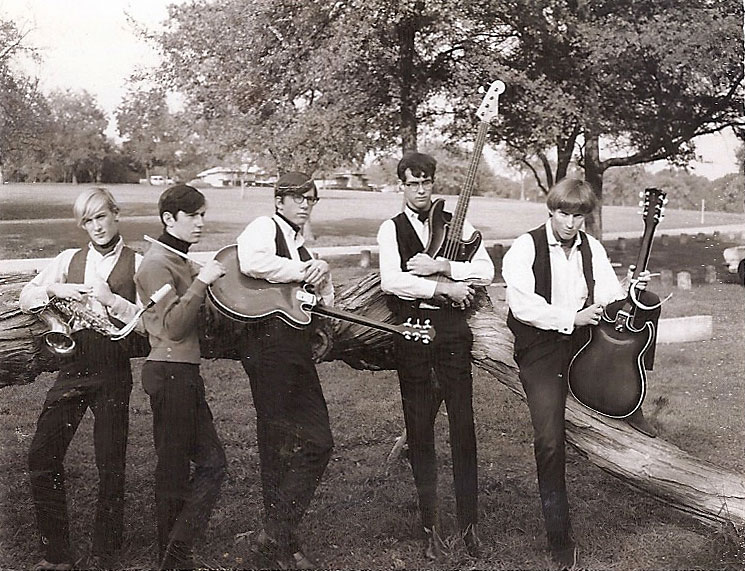
Five of a Kind, from left: Jay Vestal, Mike Magruder, Jimmy Reese, Phil Patterson and Wayne Taylor
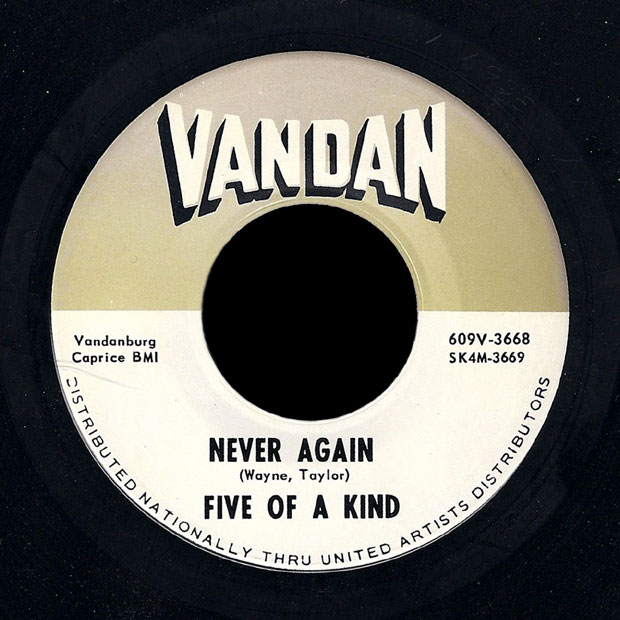
The Five of a Kind released one great double-sided 45: “Never Again” / “I Don’t Want to Find Another Girl”. For years collectors have listed the band as a Fort Worth group, but like their Vandan label-mates the Gentlemen, they were actually from Dallas, as their bassist Phil Patterson confirmed to me:
I was in Five of a Kind (1964-1967) in Dallas, Texas, I was the bass player.
The band members were:
Lead guitar and singer: Wayne Taylor (Rickenbacker 12 string and Vox 6 string) Rhythm guitar and singer: Jimmy Reese (Vox) Drums: Mike Magruder (Ludwig) Sax: Jay Vestal Bass: Phil Patterson (Fender Precision)
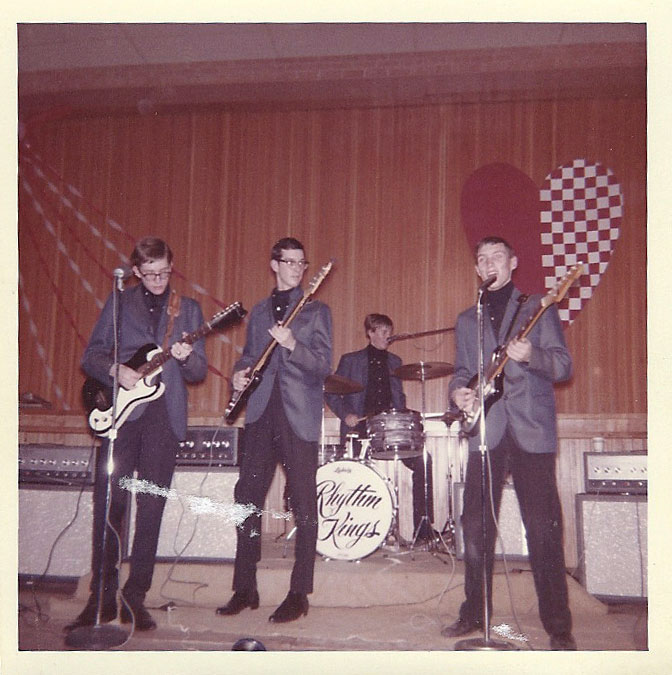
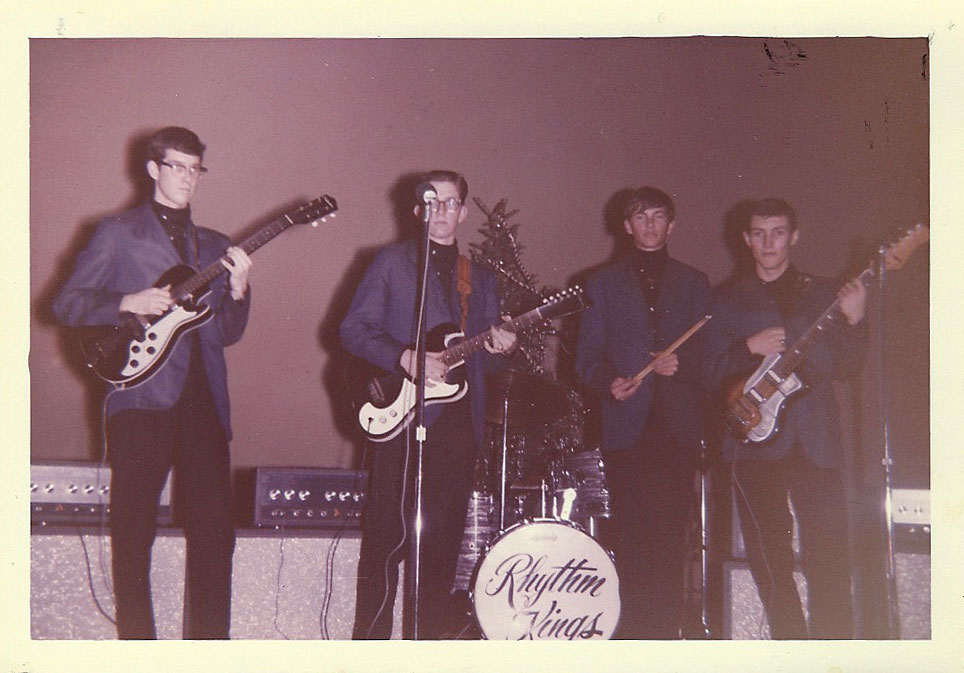
Rhythm Kings, from left: Jimmy Reese, Phil Patterson, James Parrish, and Wayne TaylorWe went to Bryan Adams High School in Dallas along with Kenny and the Kasuals and others you have listed. Our first band, ‘the Rhythm Kings’ with Wayne Taylor, Jim Reese, and Phil Patterson along with our first drummer, James Parrish, before Mike Magruder joined us. The Rhythm Kings never recorded, but became ‘5 of a Kind’ with the addition of Jay on sax and Mike on drums. James Parrish died in 1966 racing his Corvette at a local quarter mile track. He had left the band about two years before I believe.
Rhythm Kings, from left: Jimmy Reese, Phil Patterson, James Parrish, and Wayne TaylorThe music we played was probably typical of the period. We played mainly the popular British Invasion music – Beatles, Stones, Yardbirds, Animals, Dave Clark 5, etc. as well as Young Rascals, Beach Boys, and we did a great version of Sonny and Chers’ “I’ve Got You Babe” (sorta campy version really). Also some of the soul standards and rhythm and blues we needed to play depending on the crowd that night.
The Mystics beat us out for the record contract they received and I believe that would have been at Broadway Skateland in Mesquite, Texas. There were sixteen bands in that battle-of-the-bands. Ronnie Blocker was also a bass player for Ricky and the Royals who was the house band there, and his dad owned the place.
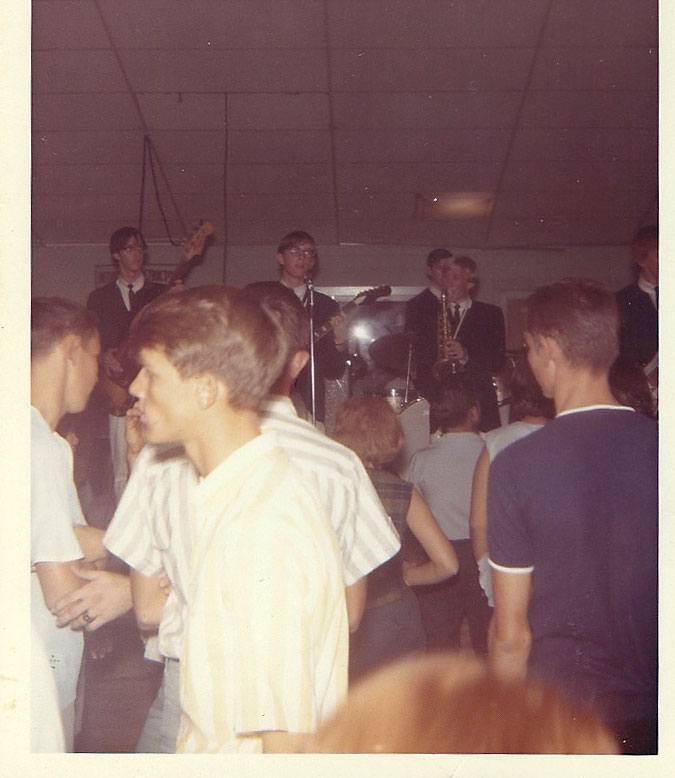
We also played at Louanns, the Sumpin’ Else television dance show (with Ron Chapman as host) and Panther a Go Go television show in Ft. Worth where also on the bill that night were the Bill Black Combo, Peter and Gordon from England, and Johnny Green and the Green Men. We also played at La Maison in Houston and Gilley’s as well, when they added rock type music. We also played at Dewey Groom’s Long Horn Ballroom in Dallas when they added rock music to their usual country schedule.
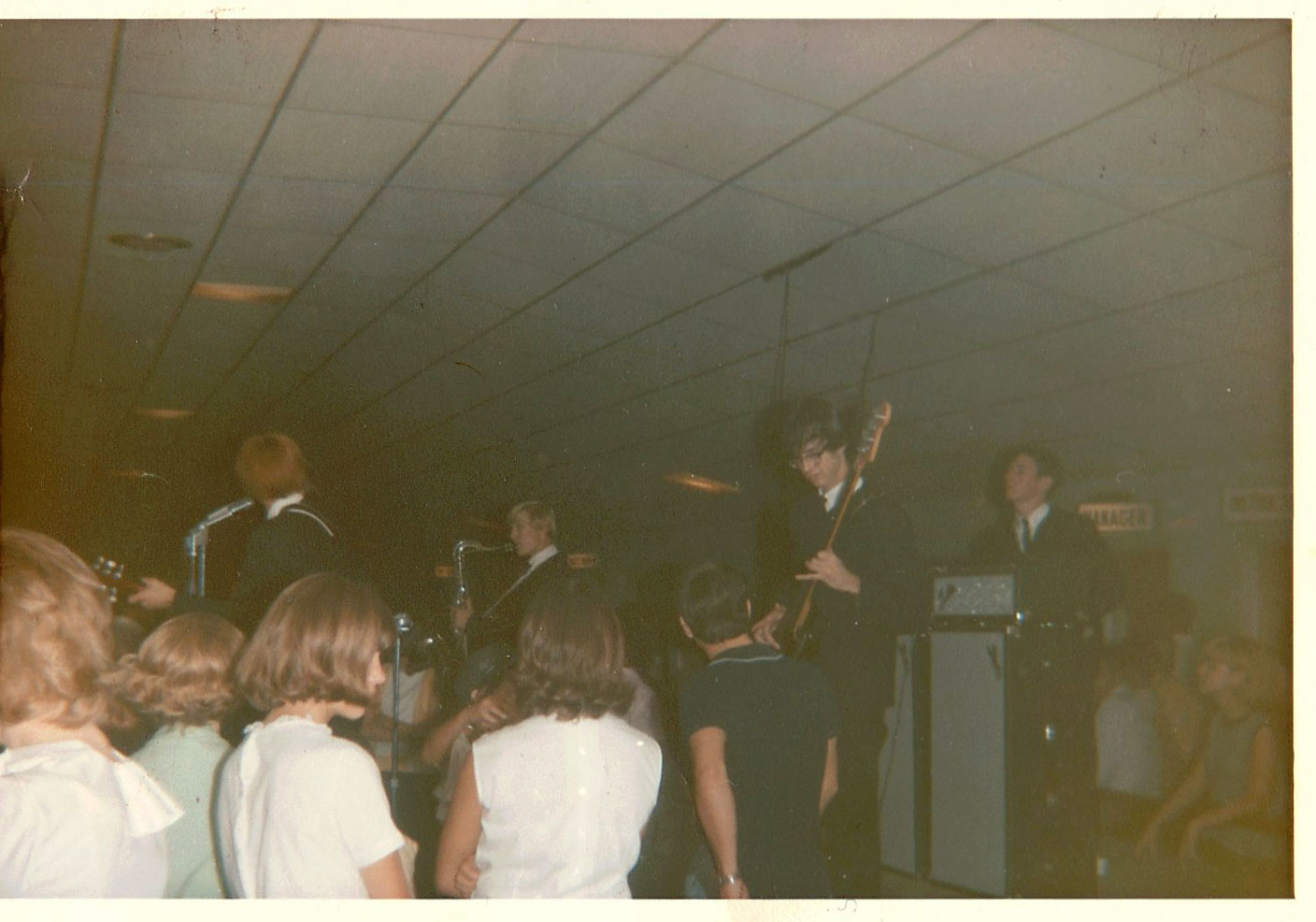
We played at all the usual skating rinks in the area (Twilighters in Oak Cliff and Broadway in Mesquite come to mind); the Vaughan brothers would have played at Twilighters. Also high school sock hops and graduation dances. Small clubs and private parties all over the metroplex. Bill Ware’s Pirates Nook, the Amber Room where Lady Wilde and the Warlocks also played (Frank Beard and Dusty Hill’s older brother Rocky Hill); we played with the Marksmen (Boz Skaggs and Steve Miller at my uncle’s airport in Garland with sponser KBOX and Scotty McKay I believe. Hate to call those guys a garage band but they probably were at one time. We played many times at White Rock Lakes’ Winfrey Point for private parties, etc.
Early photo of Five of a KindI remember the night we played La Maison in Houston and were playing the Rascals song “Good Lovin'” when we were surprised by the actual Rascals coming on stage and finishing the song and announcing they would be playing there the next night. That was a thrill for us.
Some nights were not so great such as the time we were booked into the NCO club at Ft. Hood. We were double booked with a soul band. The club manager said we could battle it out to see who played and would be paid for the gig and let the audience decide. We played to luke warm response and the soul band clinched it with some James Brown and the two sax players they had doing a front somersault off the stage. The crowd went wild and we packed up to head back to Dallas that night.
We played all the time and had a good local following. All the band members were good musicians but Wayne wrote the original songs. Wayne was a typical lead singer/guitarist with lots of ego going on, but I think you have to be that way. The girls all loved Jay’s blonde surfer locks. I, as the bass player had a good music following because I played my Precision bass by finger picking and could play fast Yardbirds riffs. Then there were the groupies (thanks Sandy and Sherri and all the others), they were probably the real reason we all became musicians in the first place.
We released one 45 on the Vandan label (Tom Brown manager, and recorded at Summit Studios [Sumet Sound]). The ‘A’ side was called “Never Again” and the ‘B’ side was “I Don’t Want to Find Another Girl” [both] written by Wayne Taylor.
We sold almost a thousand records at 10 cents per record going to the band. I remember one check for $16.00 for each of us. Wow…
At one time we had a booking manager who said his name was Andy Presley and was a cousin of Elvis. The guy had the pompadour and the look. We later found out he was a Mexican guy and may not have been Elvis’ relative after all. We dropped him as he was also not booking many gigs for us.
I have not heard from Wayne, Mike or Jay since not long after the band broke up in ’67. I do know that Mike Magruder became a successful local DJ in Denton, Texas. Jimmy Reese worked all his life at the JC Penney company and lives in San Antonio, now retired I believe.
I’m now practicing commercial real estate sales in Plano, and was formerly an owner of the San Francisco Rose restaurant (still open after 32 years) with Scott Fickling and Larry Smith.
Phil Patterson, December 2009
Thanks to Phil for sending me the history of his group, and for the photos and scan of the 45. Thanks to Jay Vestal for the two flyers and the photo at the bottom of the page.
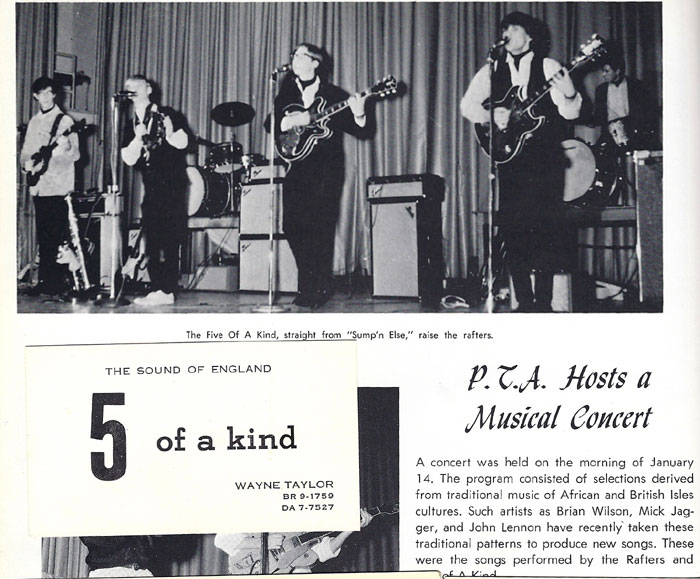
Yearbook photo for a show with the Rafters, with band business cardfrom left: Wayne Taylor lead guitar, Jay Vestal on sax and Phil Patterson on the bass guitar he wishes he still had, and Mike Magruder drums. (caption by Jay Vestal)
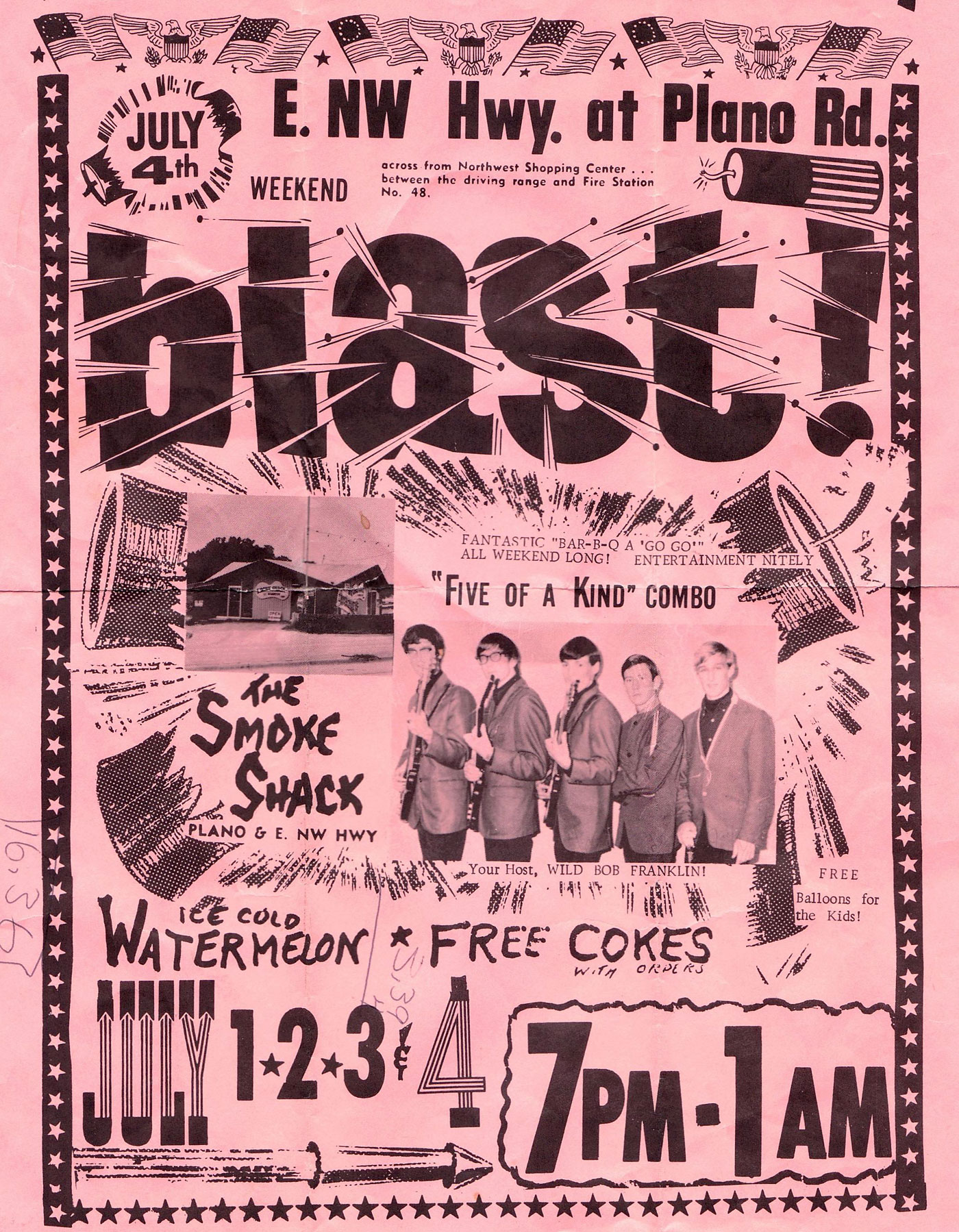
July 4, 1965 gig at a barbecue place in Dallas
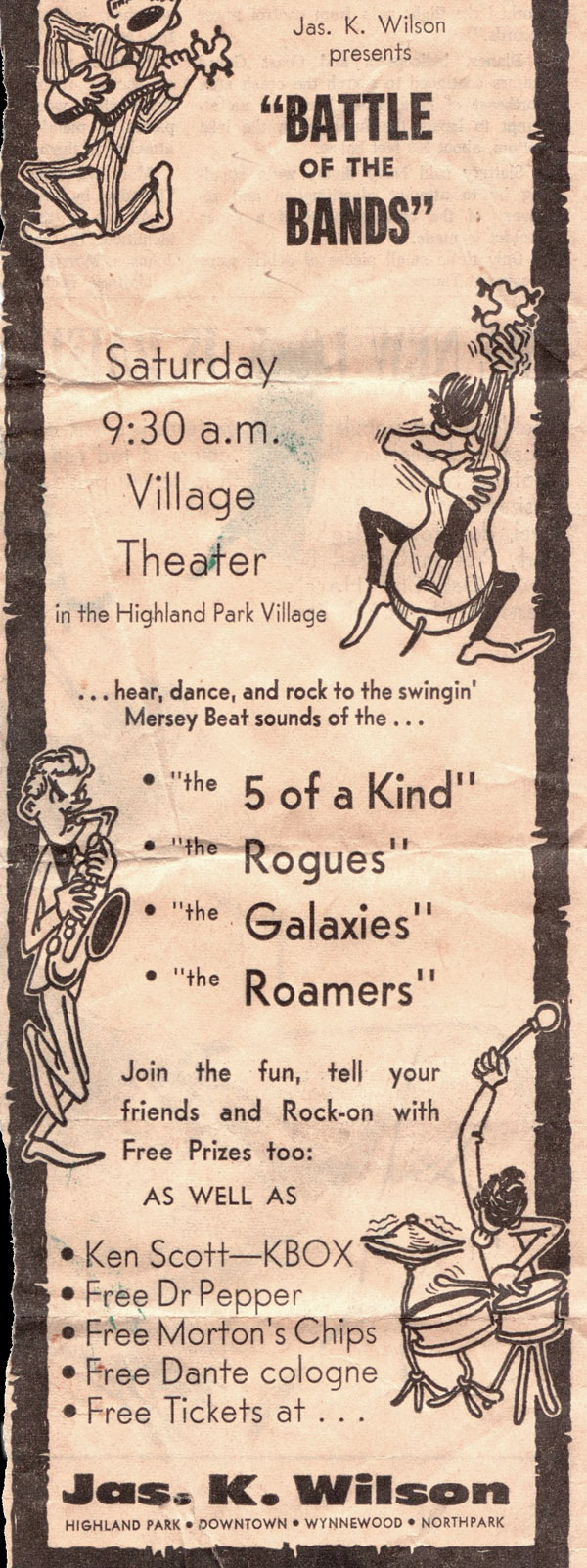
“I don’t remember, but I think we won. Anybody that was willing to play at 9:30 a.m. deserved to win!” – Jay Vestal
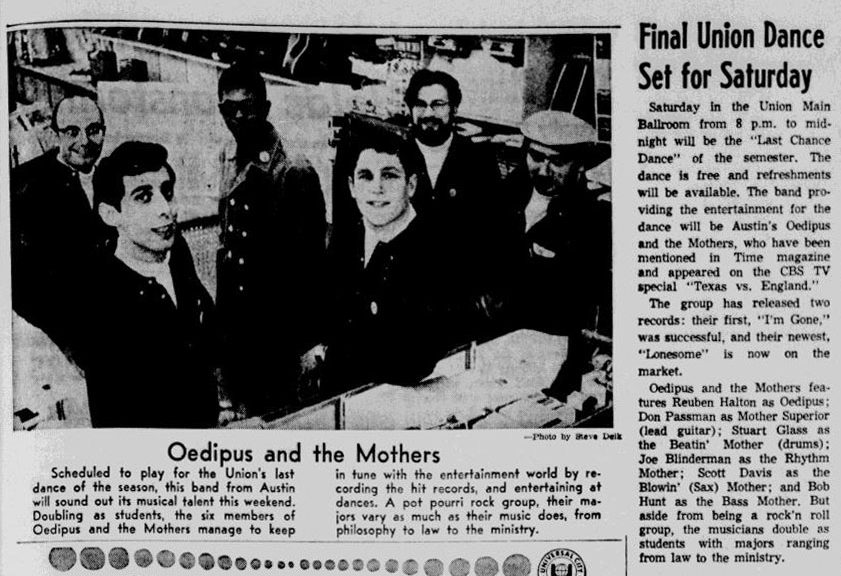
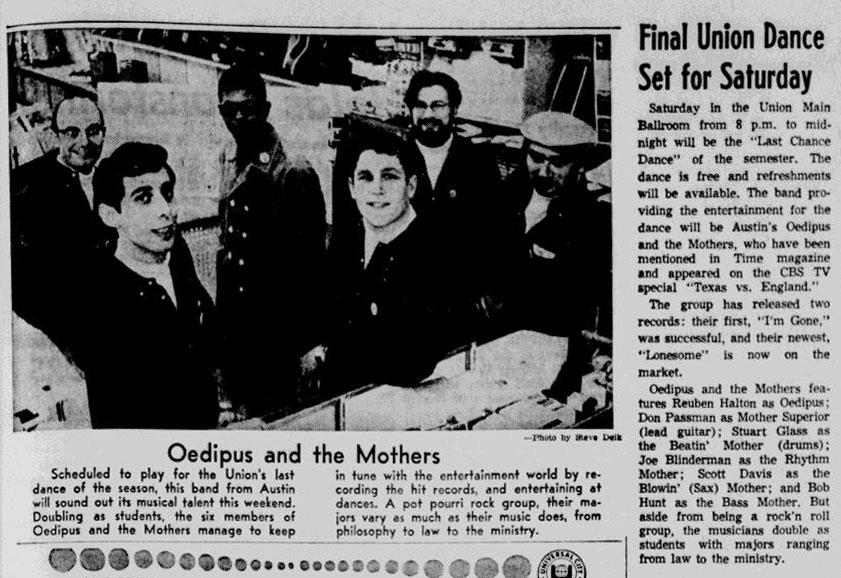
The only photo I’ve seen of Oedipus and the Mothers, taken by Steve Delk for the Daily Texan, May 13, 1967
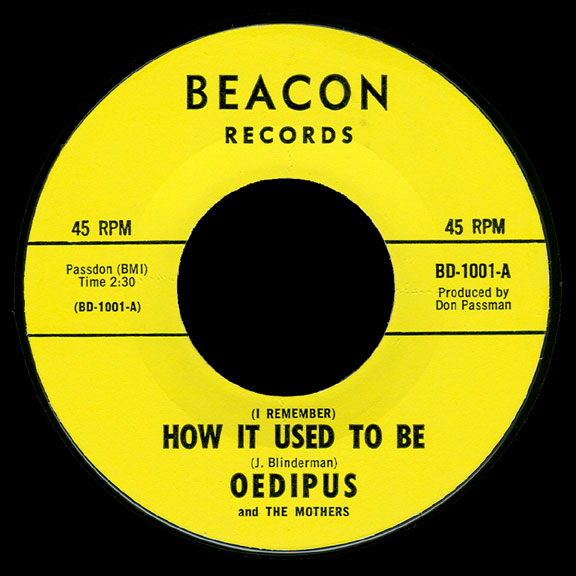
Oedipus and the Mothers made one fine record, “(I Remember) How It Used to Be”, with a great combination of distorted lead guitar and tremolo rhythm.
Andrew Brown did a long interview with rhythm guitarist Joe Blinderman in “Brown Paper Sack” back in ’97. The interview is a great read, and I recommend it if you can find a copy. The facts about the group are as follows:
The band formed at the University of Texas, Austin in 1965. Don Passman was lead guitarist, Joseph Blinderman rhythm guitarist, Scott Davis played sax, Bob Hunt bass and Stuart Glass was the drummer.
Oedipus and the Mothers featured two African-American vocalists: first Alvin Easter, then Reuben Halton who sings on the record.
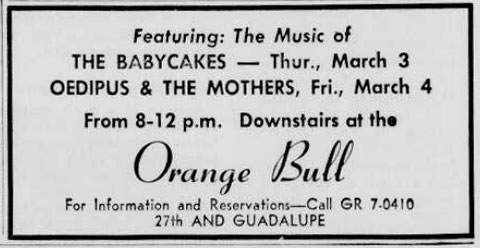
An early mention of the band in Jim Langdon’s Nightbeat column from February 25, 1966 lists Robi Bendorf on drums and Alvin Easter on vocals. The band played for 200 people at the opening of Ray Vines’ Orange Bull Club and continued to play there into March, alternating with the Baby Cakes.
Bob Burns was their equipment manager.
Oedipus and the Mother-Lovers, San Antonio Light, March 1967
Oedipus and the Mothers traveled to Dallas to record the 45, probably at Sumet Sound Studio. Joe Blinderman wrote “(I Remember) How It Used to Be”. Don Passman wrote “Lonesome”, which is a very mellow song and nothing like the flip. There may be a few unreleased tracks still in existence.
Don chose the shocking band name. An announcement in the San Antonio Light lists them as the even more scandalous name, “Oedipus and the Mother-Lovers”! Joe recalled to Andrew Brown that it didn’t hurt their getting gigs, and their 45 even received some local airplay.
The band broke up in May of ’67 when Don Passman graduated and left for Harvard Law School.
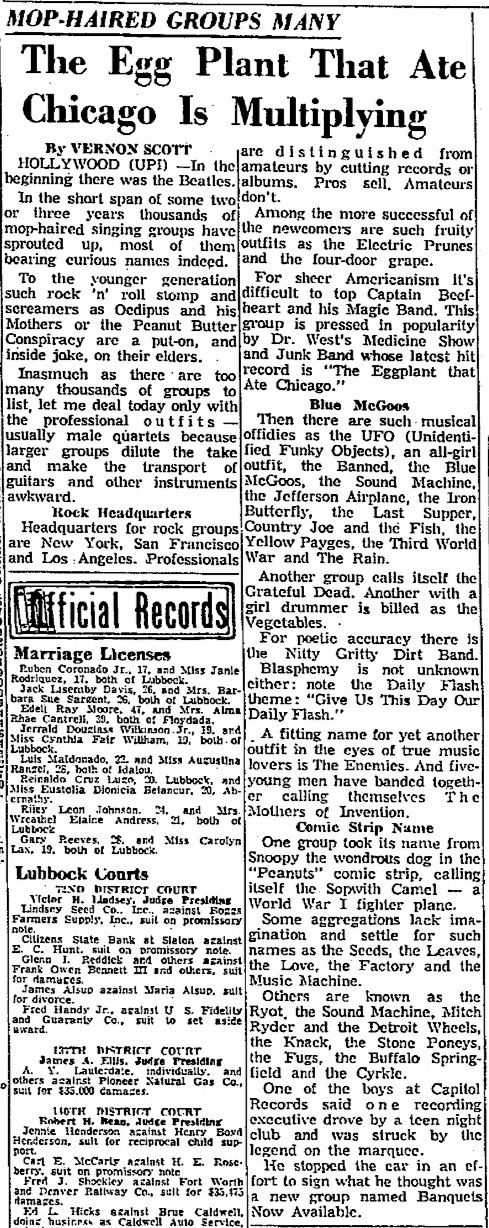
An article in the Daily Texas for one of their last shows on May 13 at the Union Main Ballroom has some interesting information, but I don’t think they ever released a record named “I’m Gone”: that may be an error by the writer. I haven’t seen the Time article mentioned, but a national UPI item listed Oedipus and His Mothers along with other odd band names, like the Peanut Butter Conspiracy, Iron Butterfly, etc..
Oedipus and the Mothers appear very briefly at a frat party in the CBS special “If You’re Appalled at My Texas, I’m Bewildered by Your England” hosted by Dan Rather and David Dimbleby (called “Texas vs. England” in the news item at top). The English part of the special does have good footage of the Who, plus short interviews with Mary Quant, Margaret Forster, Jean Shrimpton and publisher Gareth Powell.
Bob Hunt wrote to me:
Alvin was our first singer; Ruben was the second. They both sounded a lot alike and had that high range. Needless to say, our set lists included a lot of James Brown, Sam & Dave, etc. material. We also covered the Stones, Beatles, Jefferson Airplane, etc. We were a rock & roll band with five UT students including a black vocalist and a Seminary student … me.
Baby Cakes and Oedipus and the Mothers at the Orange Bull, Austin Daily Texan, March 3, 1966
One more note on the recording of the Beacon material. I direct inputed to the board and I think now in retrospect that I may have overdriven the desk, but the engineer didn’t know that. He was impressed that I had a real Fender ’58 P-Bass with the sunburst and the gold anodized pick guard! Live, I played through a 60 watt Fender head into two Bassman cabs, each loaded with two 15″ JBL 140s. I could fill up a room and make your pant legs flap!
Bob Burns, the equipment guy actually built the sound system for us since there weren’t too many options out there at the time. We had a Bogen 100 watt, four channel amp and four mics which all plugged into two huge homebuilt speaker cabs containing four 12″s apiece. No monitors in that era! I don’t know what kept us from setting venues on fire with that set-up. Don occasionally played a Farfisa keyboard too.
If anyone has a photo of the group, please contact me
Scan courtesy of Mark Taylor. Thank you to Jonas Carlsson for pointing out the Austin Daily Texan article with the band photo.
Either Oedipus & the Mothers were known as far away as Hollywood, or there was a California group with that name, ’cause it’s the first example given of weird group names. Lubbock Avalanche Journal, January 10, 1967
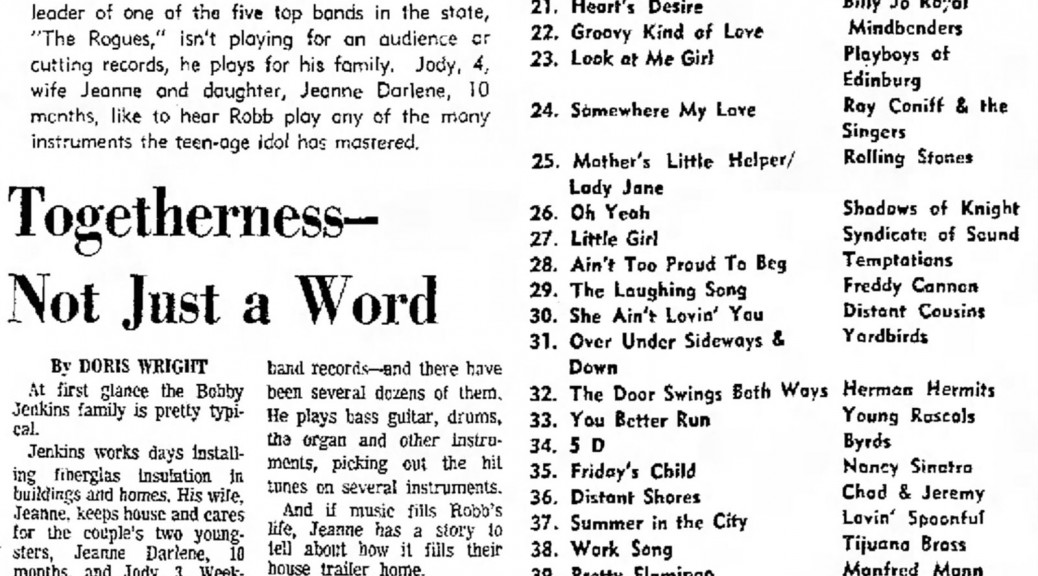
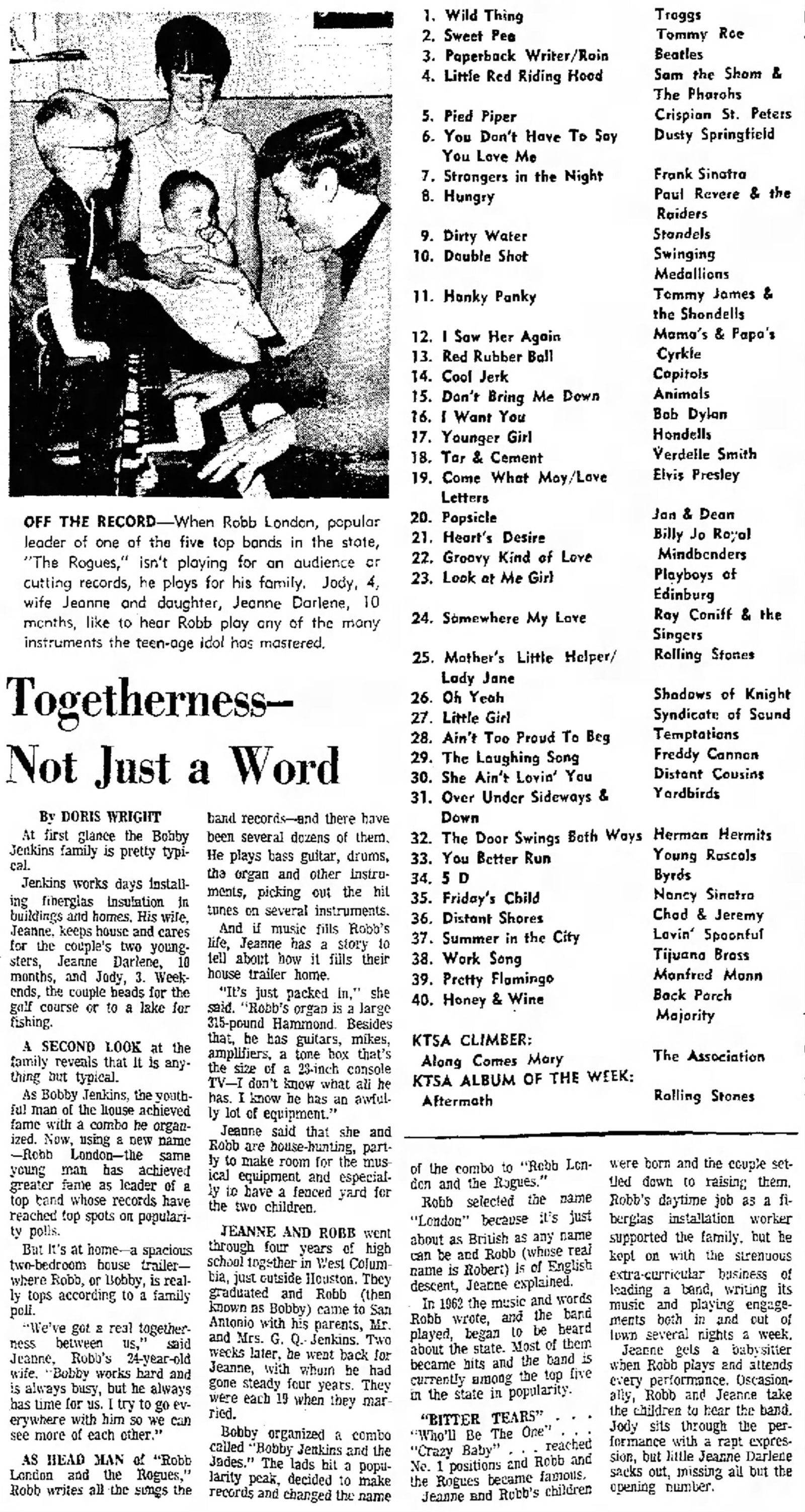
Robb London profile in the San Antonio Express and News, July 9, 1966
Bobby Jenkins and the Jades
This band started out as Bobby Jenkins and the Jades with a 45 from January 1964, “Jeanne Be Good” / “The Gods Were Angry With Me” on Astro followed by one on Beckingham 1080, “You Mean Everything To Me” / “Hey Man”. Other members included Danny Jenkins on bass and Jerry Tagel on guitar. I didn’t know the full lineup until someone with the email moniker “NT” wrote in with some more information:
The members of the Bobby Jenkins and the Jades band:
Bobby Jenkins – vocals, guitar, keys Danny Jenkins – drums Bubba Woods – bass Gerry Tagle – guitar Jesse James Adams – tenor sax Ben Fur – tenor sax
During the transition to Rob London and the Rogues, Danny Jenkins moved to the bass guitar seat.. don’t recall who took the drums position.
Note: Bobby was/is an accomplished guitarist but rarely played in live performance after bringing-in another lead guitarist. He then mostly played keyboard (Hammond).
By 1965 they had changed their name to Robb London and the Rogues, releasing three 45s in the next couple years:
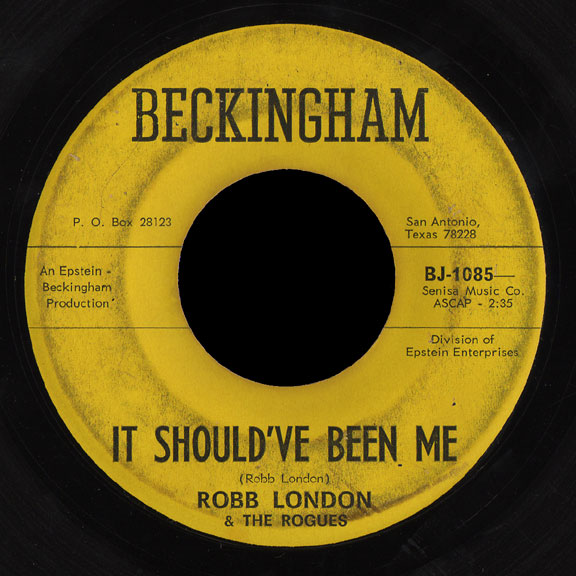
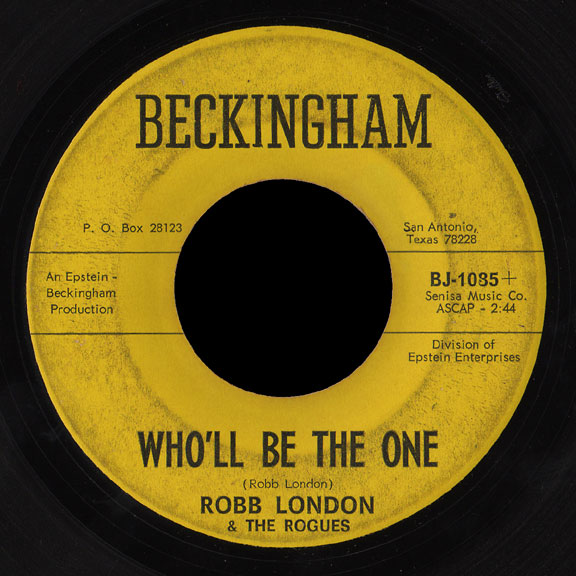
Standing Under Big Ben / Bitter Tears (Beckingham 1083) Who’ll Be the One / It Should’ve Been Me (Beckingham 1085) Crazy Baby / Mary Jane (Beckingham 1086)
Beckingham 1084 features soul vocalist Billy Sol with songs written by Robb London, “Have You Ever Told Her”, backed with “The Bells”.
“Standing Under Big Ben” is a droning ballad, full of echo, credited to London and Beckingham (the only time I see his name show up as a writer). More interesting to me is the folk-rock flip, “Bitter Tears”, a Robb London original with good vocals, nice edgy guitar work and just a tambourine for percussion.
The second on Beckingham is better still, with two upbeat numbers written by London. “Who’ll Be the One” on the top side alternates between the galloping intro and smoother verses and bridge. The bluesy “It Should Have Been Me” has farfisa reminiscent of “She’s About a Mover”. “Who’ll Be the One” hit the lower rungs of San Antonio AM station KTSA’s charts in December of 1965. I was surprised to see the song was covered by the Crossfires on Tower 278 in 1966.
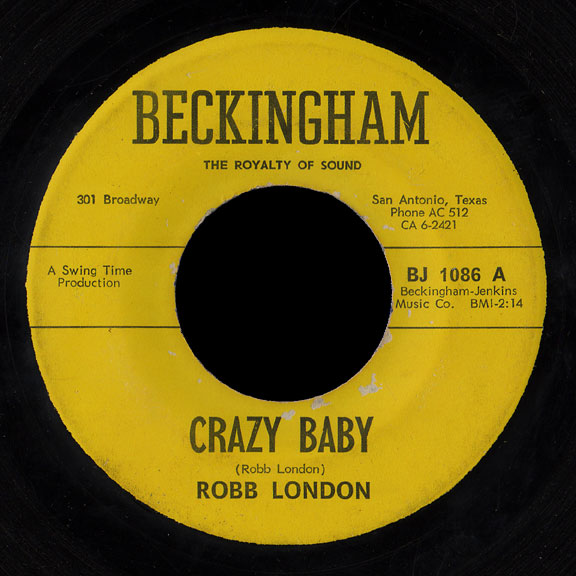
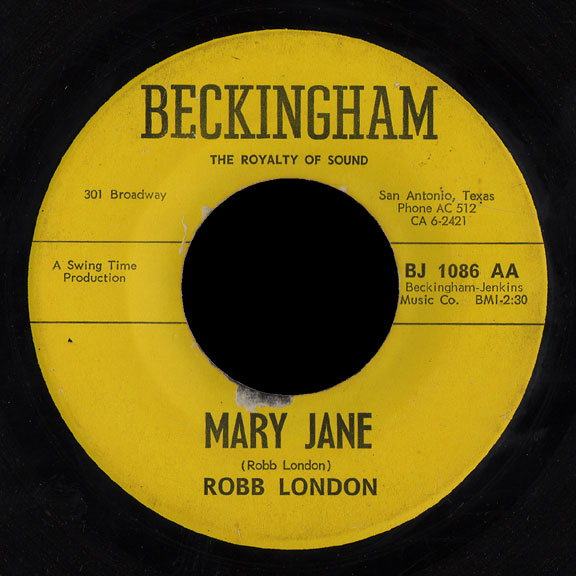
The third 45 has another two London originals, “Crazy Baby” / “Mary Jane”. “Crazy Baby” gets repetitious, but has a cool, brief second section that first kicks in around 50 seconds into the song. The flip “Mary Jane” is one of London’s best cuts, a tough rocker from start to finish about a girl “who’ll put you down”: “if you see her comin’, you better step aside, a lot of men didn’t, a lot of men died!”.
They recorded these at Abe Epstein’s tiny two-track studio on Gen. McMullen Drive. Epstein, who recorded as Al Epp, owned the Jox, Cobra and Dynamic labels, among others, and is a legend of San Antonio music. Among the hundreds of soul, latin and doo wop records he recorded are some fine garage releases, including the 12 A.M.’s “The Way I Feel” on his Groovy label, and the Argyles / the Minds Eye, the Sixth Edition and the Kings on Jox.
Robb London’s manager was Mel Adcock of Swingtime Productions (who also managed the Five Canadians and the Frantics). They played shows around San Antonio, including the Knights of Columbus Hall on the east side of the city, and had a reputation as both a soul cover group and for British Invasion sounds.
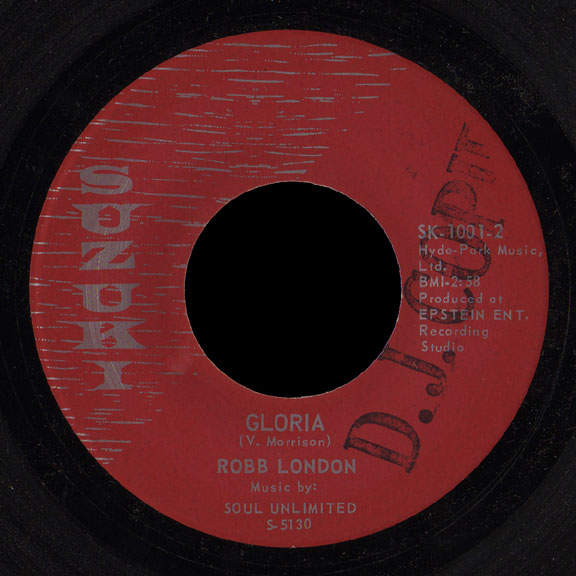
In 1967 the name of his backing band changed to Soul Unlimited, with one release, “Funny Situation” / “Gloria” on the Suzuki label, also produced by Epstein Enterprises:
“Funny Situation” has some interesting UK influences, the light psychedelia with hypnotic guitar lines on the verses segueing to full horn charts on the choruses. Despite good production the parts might be too different to make this song work on a commercial level. This time the songwriting credit goes to Robert Jenkins instead of his stage name.
The flip is a great, slow version of “Gloria” with Robb’s best vocal performance, the band encouraging him with shouts. Most remarkable is the arrangement that dispenses with the repetitive chords and syncopated build-up of Them’s version in favor of a relaxed pace that suits the lyrics. The opening guitar riff works well with the horns; it was probably a favorite live song for the group.
For the next couple years Robb London produced records for other groups, until about 1969 or ’70 when he came back with the Robb London Company, with a Ted Nugent cover “Good Natured Emma” on one side and a hippie-country tune “The Children” (AVI 1065). The story ends there, for now.
Billy Sol would have two 45s on the Domar label, DM-1122 “Doggin’ Around” / “Danger Signals”, and Domar DM-1124: “When You’re Alone” / “Time, Time” (written by Robert Merrill and P. Beckingham).
Does anyone know what the artist and titles on Beckingham 1081 and 1082 are?
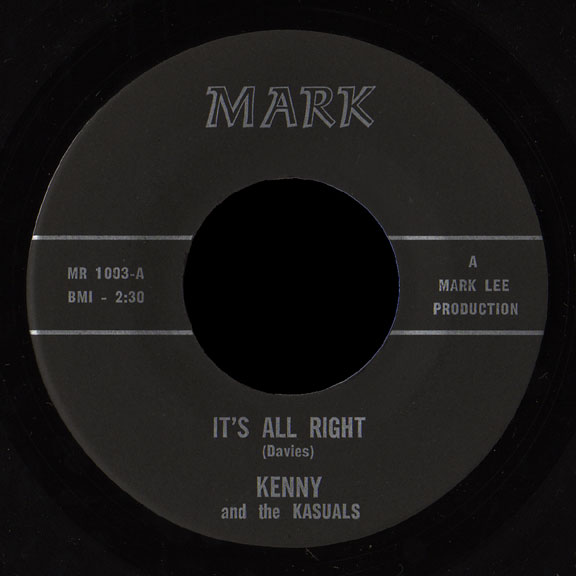
Kenny and the Kasuals – a great band from Dallas with a long and complicated history I won’t try to tell here. Instead I’m featuring one of their lesser-known releases, but well worth a listen. This is their third 45 on Mark Lee’s ‘Mark’ label, “It’s All Right”, from 1966. It features what I believe is the original group:
Kenny Daniel (vocals and guitar) Jerry Smith (lead guitar) Tommy Nichols (harmonica) Paul Roach (keyboards) Lee Lightfoot (bass) David Blackley (drums)
Richard Parker corrects this lineup in his comment below, which I’ll repeat here:
The first recording group (there were earlier members not featured on any recordings) was Kenny Daniel, Tommy Nichols (lead guitar) Paul Roach, David Blachley (with an “h” not a “k”) and Lee Lightfoot. The later recordings feature Jerry Smith on guitar, after Tommy Nichols went into the navy. I don’t think that Jerry is on this recording.
The top side is a hopped-up nugget of r&b, revving the Kinks song up a couple notches. With the early use of a fuzztone and Kenny’s accented vocals, you could say they Stones-ify the song. Backing it is the Zombies tune “You Make Me Feel Good”.
Like their first two records, this one wouldn’t make much headway on local charts, but their next two 45s, “Raindrops to Teardrops” and “Journey to Tyme” would change that.
Randy Fuller with New Buffalo Springfield, Spring 1969. Clockwise from top: Dewey Martin, Bob Jones, David Price and Randy FullerWhen Texan rock legend Bobby Fuller was found dead in his car on 18 July 1966 in suspicious circumstances, those nearest and dearest were devastated, not least his younger brother Randy, who had also been bass player in the aptly named, Bobby Fuller Four. From the early 1960s up until his brother’s untimely, and yet to be solved, death, Randy Fuller was Bobby’s closest collaborator and during those frenetic years of recording and touring witness to his brother’s extensive talents as a singer/songwriter, guitarist and skilled engineer and producer.
In the first few months following his brother’s death, Randy Fuller came close to jacking in the music career he had so cherished when Bobby was alive. “I came home to El Paso with no idea what I was going to do with my life,” says Fuller. “I felt like I was going to go insane because my mother was having such a hard time over Bobby.”
Later that autumn, however, Randy received a phone call from Bobby Fuller Four member DeWayne Bryant (aka Quirico) and Bob Keane, who ran Del-Fi studios, to return to Hollywood and form a new group with some musicians that Quirico had been playing gigs with in the intervening months. “Keane said that if I came back he could get us back in PJ’s nightclub,” remembers Fuller.
To stimulate some local interest in the new group, prior to it playing live, Keane financed some studio time to record a handful of tracks in late 1966. For these recordings, the studio band consisted of Randy Fuller on bass, rhythm guitar and lead vocals; DeWayne Quirico on drums; Howard Steele on bass; and Mike Ciccarelli on lead guitar and vocals.
“The musicians on all the songs were from El Paso, Texas but [they] never stayed together long enough to promote them [the singles],” explains Fuller, who points out the recordings were all laid down in the final days of the studio’s existence.
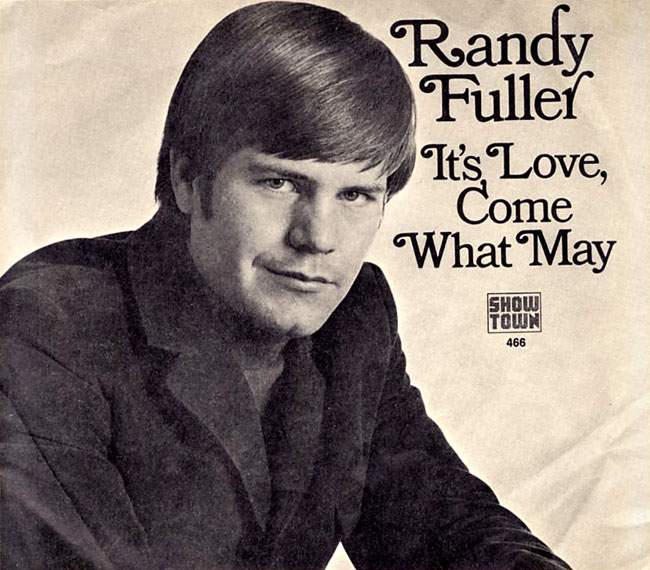
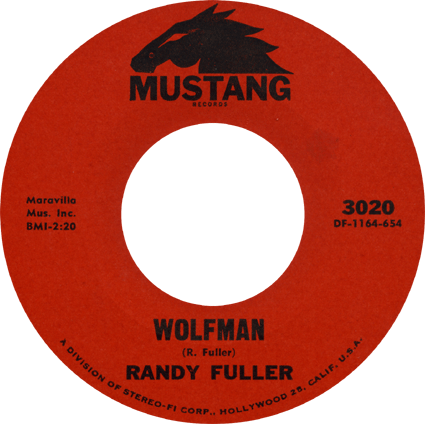
The first single to be released (under Randy’s name only on the obscure Mustang label) was the catchy “It’s Love, Come What May”. “[That] is the original track from Bobby Fuller Four recorded at Del-Fi,” says Fuller. “Bob Keane and I recorded my voice on a separate track and remixed it a little louder than Bobby’s in the final mix.”
An infectious folk-rocker, “It’s Love, Come What May” should have been a smash hit but mysteriously did not attract many sales. Unperturbed, Keane prepared a second single coupling Randy Fuller and Johnny Daniel’s “The Things You Do” with another collaboration “Now She’s Gone” but it appears the Mustang release never hit the shops.
Interestingly, Randy Fuller reveals that two of soul music’s heavy weights had a hand in the creative process. “[On] ‘The Things You Do’, Barry White and Dionne Warwick threw in a line or two.”
Events meanwhile were about to take a dark turn. When Del-Fi was forced to close in early 1967, Keane, unbeknown to Fuller, began to issue the recordings through the Show Town and President labels. “Del-Fi went under and Bob kept the masters in a vault,” explains Fuller. “I [later] found out he had been selling these [singles] over in the UK for years!”
Perhaps the most fascinating of these releases are the trippy, Buffalo Springfield-influenced, “1,000 Miles Into Space”, which features some tasty lead guitar work and superb lead vocal by Randy, and “Revelation”.
While Keane was busy releasing the tracks on the sly, Fuller and Quirico began working back at PJ’s joined by guitarists Jim Fonseca and Jimmy Smith. The line up played at the club for nearly two years and according to Fuller, “We probably would have had a hit or two, but as usual ego destroyed the band.”
Left without a band, Randy hooked up with Dewey Martin’s New Buffalo Springfield in February 1969 and toured with this group for the best part of the year, before it morphed into Blue Mountain Eagle. Fuller’s new band recorded an excellent album for Atco Records in 1970 with the bass player’s “Sweet Mama” providing one of the highlights.
Unlike Blue Mountain Eagle’s album, which has been released on CD, very few of The Randy Fuller Four recordings have reached a wider audience via compilation CDs. Perhaps now is the time to rediscover the magic of this material, especially “It’s Love, Come What May” and “1,000 Miles In Space”.
Blue Mountain Eagle, December 1969, Randy Fuller second from left.
Solo releases:
It’s Love, Come What May (actually Bobby Fuller Four with Randy’s overdubbed vocals) c/w Wolfman (Mustang 3020) 1966 US (credited to Randy Fuller) The Things You Do c/w Now She’s Gone (Mustang 3023) 1966 US (credited to Randy Fuller Four but not released) It’s Love, Come What May c/w Revelation (Show Town 466) 1967 US (credited to Randy Fuller) It’s Love, Come What May c/w The Things You Do (President PT 111) 1967 UK (credited to Randy Fuller) 1,000 Miles In Space c/w 1,000 Miles In Space (Show Town 482) 1967 US (credited to Randy Fuller)
Many thanks to Randy Fuller for his invaluable input into this story.
Transfer and scan of “1,000 Miles in Space” courtesy of Colin (Expo67), transfer of “Revelation” courtesy of Bård H., scan courtesy of Freddy Fortune. “Wolfman” scan and transfer courtesy of JP Coumans.
The great b-side “Wolfman”, a Bobby Fuller Four recording originally released as by the Shindigs on the flip of “Thunder Reef”, Mustang 3003 and used again on Randy Fuller’s first 45.
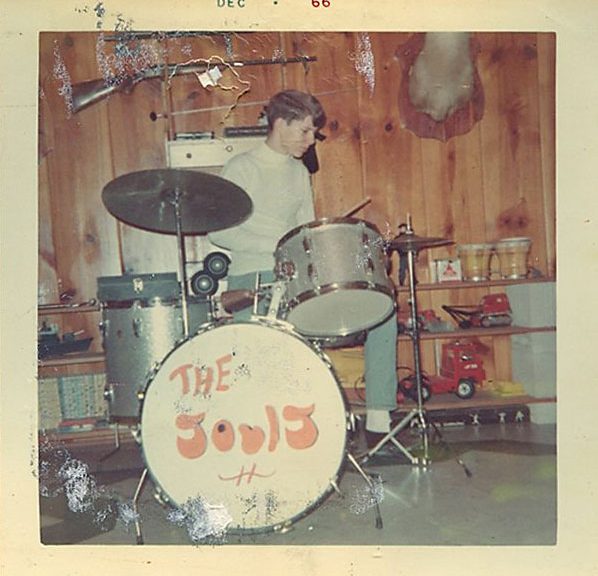
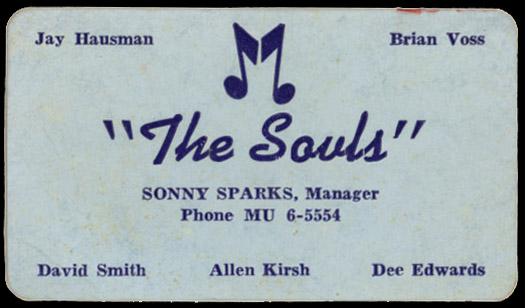
The Souls, 1966 l-r: David Smith, David C. Lott, Jay Hausman, Jerry Ebensberger. Not pictured: lead vocalist Allen KirshSouls business card with first lineup and manager Sonny Sparks listed
David C. Lott wrote this history of his band the Souls, known for their 45 on the Pharaoh label as Christopher & the Souls. David also contributed all the photos and newspaper scans included in this article.
Music has a strange way sometimes of transcending time and boundaries. It can seemingly take on a life of its own.
Such is the case of a young garage band from McAllen, Texas during the swingin’ mid-sixties. Nestled about as far down in south Texas as one can get — down in the Rio Grande Valley, right above the Mexican border – was a teen scene that produced some great rockin’ groups like The Headstones, The Cavaliers, The Playboys of Edinburgh and Arturo & Pat and The Invaders.
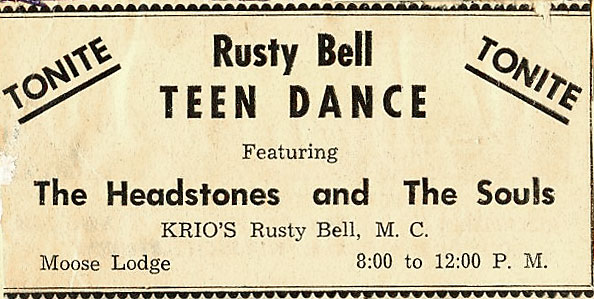
Souls and the Headstones at the Moose Lodge
In Andrew Brown’s “Brown Paper Sack – Music & Commentary No.1”, from the mid-90’s, he states “but not one of ’em can match the intense dementia of Christopher and the Souls’ “Diamonds, Rats, and Gum”, which is not only the wildest records ever made in the Texas Valley, but also very likely the ultimate antithesis of every sorry-ass love ballad that’s ever dribbled down the proverbial pike.”
A single copy of the 45 recently sold on e-bay for a whopping $1225.
The story of The Souls really begins back in late 1964 when Jay Hausman, a young student at McAllen High School, and classmate David Smith began a collaborative effort. Jay was teaching David new bar chords and David showing him some of the well-known guitar licks of the day (ie: surf music & early Beatles and Stones). David was only a year older than Jay, but had been playing the guitar for several years and was acknowledged as one of the more talented guitar players in town. Jay eventually began feeling confident enough as a guitarist to start making his way onto the local music scene. Jay met Allen Kirsh, who didn’t play an instrument but could sing a pretty good tune and perhaps maybe a little better most. After hearing Allen a couple of times, Jay began visualizing a rock ‘n’ roll band.
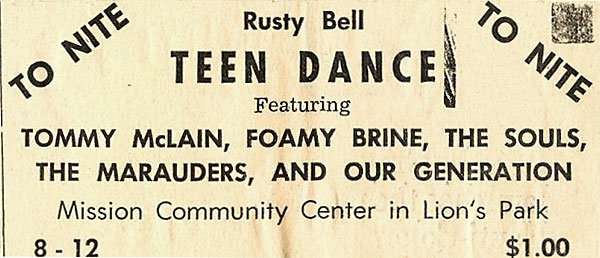
The Souls with Tommy McLain, Foamy Brine (featuring W. R. “Dub” Lynch), the Marauders and Our Generation at the Mission Community Center in Lion’s Park, 1966
Brian Voss, another one of Jay’s high school chums and his neighbor could play the bass and had a great voice, and Dee Edwards, a senior at McAllen High had a decent set of drums. Jay enlisted David Smith, his mentor, to join the band as lead guitarist. After a couple of months of practice during the early spring of 1965, the quintet had it down well enough to be thought of as a band. Somebody, nobody remembers quite who, christened the band as The Souls. The name “Souls” was probably a take-off on “Rubber Soul” by the Beatles.
The line-up lasted about six months. Brian Voss left the band for personal reasons. Dee Edwards graduated from high school that year and moved on. Jay, Allen, and David Smith stuck together and in late 1965 added two more classmates at McAllen High – Jerry Ebensberger on bass and David Lott on drums.
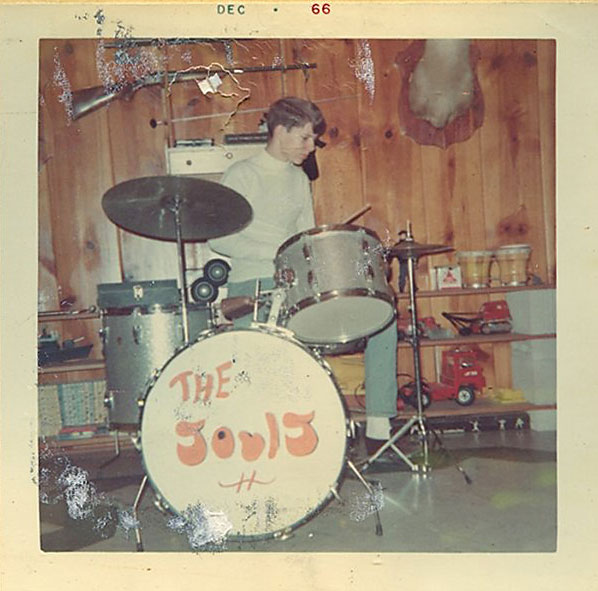
David Lott of the Souls
Lott and Ebensberger had been playing for a few months in a little trio along with a young eight grade guitar “prodigy-to-be” Mitch Watkins in a band they called “The Madhatters.” David Lott recalls Mitch having a $35 Silvertone guitar that had its amplifier in the guitar case – but that the guy was amazing. He could pick up most any musical instrument from piano to saxophone and within minutes have it almost mastered. (note: Mitch Watkins, now based in Austin, is still one the finest guitar players in the country www.mitchwatkins.com). The revamped Souls by the spring of ’66 were gigging frequently at church dances, private parties, the Hide-A-Way Club in Harlingen, the National Guard Armory in McAllen, the Moose Lodge and Valley Bowl & Skating Rink in Mission.
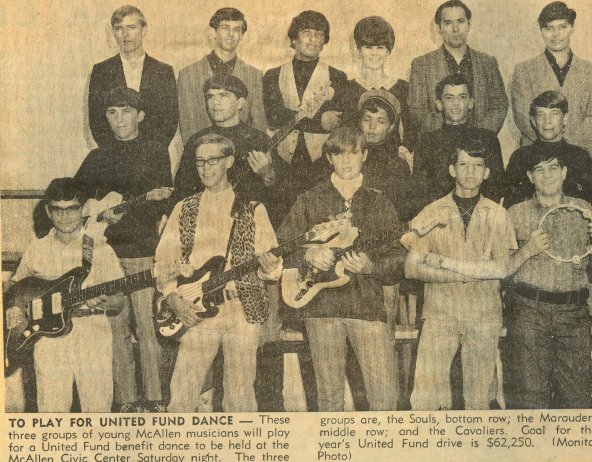
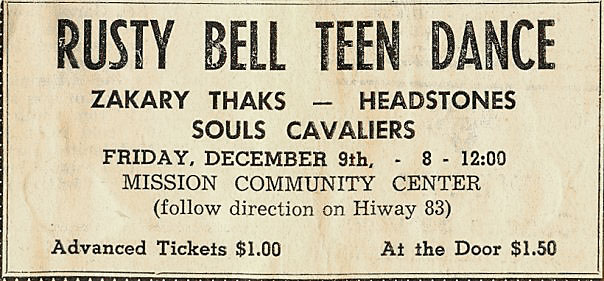
Three legendary Texas bands! The United Fund benefit dance in McAllen, 1965 Top row – The Cavaliers, l-r: Mike Dunn, Gary Vandiver, Javier Rios, Jenny Hatfield [Jeanne Hatfield?], (can’t remember), Richard Mancilla Middle row – l-r: The Marauders, with Mitch Watkins on lead guitar at left, Phil Veale, Eric Mancilla, Jimmy Parker, Lloyd Allen. Bottom row – The Souls, l-r: Murray Schlesinger, Jerry Ebensberger, David Smith, David Lott and Allen Kirsh.Surely one of the greatest show lineups of 1966 – The Zakary Thaks, Headstones, Souls and Cavaliers all for $1!
There were several “ages” of bands in the McAllen area music scene hierarchy. At the top end of the spectrum were the Playboys of Edinburg, who recorded several quality tunes, and a great little group who never recorded called The Invaders. Then the next level would’ve been The Headstones, and The Cavaliers – guys in their late teens or early twenties. And then the next age group down would’ve been The Souls, and a band called the Marauders. All ages 14, 15 and 16 years old.
Even though The Souls were like most of the other garage bands of the day – doin’ cover tunes – they felt like they were on the cutting edge of something. They just didn’t know exactly what – but they knew there was something special in the air with the music of ’65 and ’66. One has to remember, this was less than two years after the Beatles had hit America and the British Invasion lit a fire storm of musical creativity with the youth. Everything they did and tried was new and hadn’t been done before. The music of the mid-60’s was taking on a life of its own.
About the time the band was starting to take off – Jay Hausman’s family moved to Nashville, and unfortunately Jay had to go with them. It was hard for the fellas in the band to say “adios” to the guy who’d been the band’s main motivator. However, they soon found a good substitute for Jay in a very talented young kid named Murray Schlesinger, who had been playing rhythm guitar for the Marauders.
About the same time Murray came into the fold, a guy named Chris Voss felt the sudden inspiration to have a couple of song-poems he’d written set to music and committed to vinyl. His younger brother Brian had been the band’s first bass player.
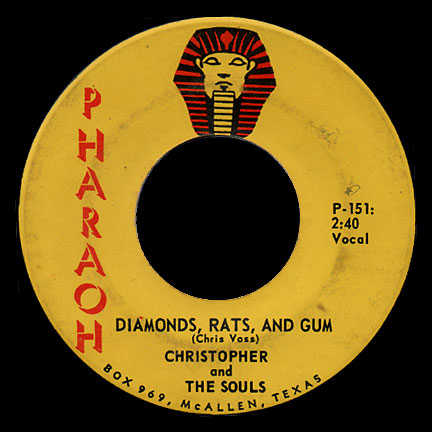
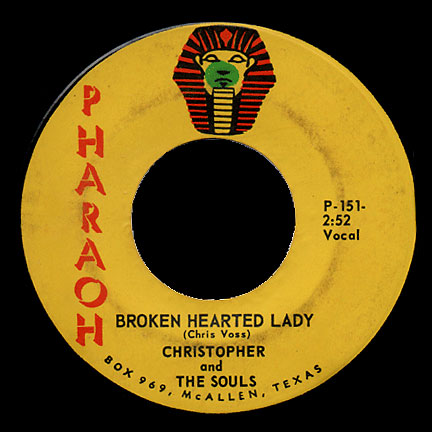
The two song-poems Chris had penned were titled “Diamonds, Rats, and Gum” and “Broken Hearted Lady”. He took them to David Smith and played the basic songs for him on acoustic guitar. David added the fuzztone riffs to “Diamonds, Rats, and Gum”, in the style of George Harrison’s “Think For Yourself” (from Rubber Soul). You can hear some similarities in the downward fuzz-bass progression playing between the verse & chorus. A few days later, David and Chris brought the songs to the band’s practice session at Allen’s house. Chris proposed that the band learn the songs and that they cut a record.
So, the band listened intently as Voss read his lyrics and David tried to get a handle on a melody. After a few hours, the basis of the song started to come together. Each young musician developing their role. A few weeks went by with the band honing and refining the songs in practice sessions until they felt they had it down and was as they all envisioned it.
The Souls showed up at the now legendary Jimmy Nicholls’ Pharaoh Studio one night in September of 1966. Nicholls’ studio had a quarter-inch tape, Ampex machine straight to two-track — mind you — live to two track, no overdubbing.
The band cut the two songs in less than two hours. Allen, the Souls’ regular lead singer, was not singing on the record, but was present for the session and moral support. He later said “If it hadn’t of been for Chris Voss, the Souls would’ve never recorded.”
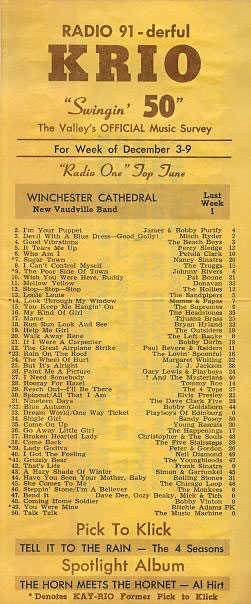
David Lott: “KRIO Radio, McAllen’s ‘Swingin’ 50′ of December 3 – 9, 1966. The Souls ‘B’ side song ‘Broken Hearted Lady’ was #37 on the chart – rising from #48 the week before. Our song hovered in the low 30’s for 5 weeks on the charts.” Note the Headstones at #16.
Andrew Brown in his “Brown Paper Sack – Music & Commentary No.1” said “Written, sung, and played in a style aggressively defiant to easily digestible pop music clichés, ‘Diamonds, Rats, and Gum’ is one of the most savage parodies of Top 40 idealism ever made, and while it certainly wasn’t intended to be that, just what the song was intended to be remains a mystery to all involved!” By contrast, the “Broken Hearted Lady” flip side is a serious take done as slow sappy ballad.
“Diamonds, Rats, and Gum” is bizarre and fantastic with lines like “I’ll give you rats and five pieces of gum and then you’ll know I’m not a bum”, whimpered over a grinding slurry of fiercely demented fuzz guitar, bass and drums.
Brown goes on to say “Chris Voss’ neurotic nursery rhyme about giving the object of his affections disease-ridden rodents and a prescribed amount of chewing gum as proof of his undying love, is sung in a slurred whine above the staggeringly PRIMAL accompaniment of four teenage punks only slightly taller than their guitars. It is the loudest, greatest insult to the stomach-churning moanings of ‘lite rock’ pigs like Elton and Phil (and their countless bastard offspring choking up the airwaves) ever recorded.”
He continues with “And for this, my friends, we owe the Souls nothing less than our eternal, everlasting gratitude.”
The record was released in a limited custom pressing the following month as a 45 under the Pharaoh label. “Diamonds, Rats, and Gum” as it turns out some 40+ years later is one of the rarest of the rare on a very rare label.
Oddly enough “Diamonds, Rats, and Gum” had been the song the band had intended to promote. However, local KIRO deejay Rusty Bell wanted to push the ballad “Broken Hearted Lady”, and it got a lot of local airplay due to Bell’s friendship with the band.
Sales allowed the record to enter on KRIO’s “Swingin’ 50” at #48 the first week it was out in late November ’66. It then climbed to #37, #35 then #32 by December 16th, 1966. The song ended up at #23 sometime in January 1967. Nobody in the band remembers now-a-days if the song climbed the charts a bit more or if it fell. None-the-less, the song had made the charts.
A few examples of other hits on the charts during those weeks were “Winchester Cathedral” by New Vaudeville Band at #1, “Devil With A Blue Dress” by Mitch Ryder, “96 Tears” by Question Mark and The Mysterians, ” Come on Up” by The Young Rascals, “Steppin’ Stone” by The Monkees, “Mellow Yellow” by Donovan, and “Have You Seen Your Mother Baby” by the Rolling Stones.
Chris Voss made an appearance with the Souls at an Edinburg High School pep rally shortly afterward … and wasn’t heard on stage again. Chris ended up going to college and becoming a successful businessman in McAllen.
KIRO deejay Rusty Bell continued to promote the band through his Teen Dances at the Mission Community Center in Mission, Texas. The Souls appeared frequently on the billing with The Headstones, The Cavaliers, The Playboys of Edinburgh, The Zachary Thaks from Corpus Christi and others and often served as “opening act” for notable groups routed through the area. Such groups were The Classics IV from Florida (with their hit “Spooky), The Five Americans from Dallas (with their hit “Western Union”), Tommy McClain from Louisiana (with his hit “Sweet Dreams of You”) and others.
Early in 1967, Jay Hausman moved back to McAllen and back to The Souls. Murray obliged by leaving and rejoining the Marauders. Unfortunately, Jay’s presence wasn’t enough to keep the band as enthused as they were the year before. The “psychedelic” music trend was in full bloom and the band just couldn’t get enthused. After one last show, opening for the Five Americans and the Cavaliers at the Mission Community Center, the Souls came to a quiet halt. There would be no revivals, no reunions.
Andrew Brown states: “yet the music they’d managed to preserve on vinyl will echo on far longer than they’d ever expected it to, or even wanted it to.”
In September of 2008, a single copy of Christopher and The Souls 45 that featured “Diamonds, Rats, and Gum” and “Broken Hearted Lady” (Pharaoh P-151) listed on the site as “a Texas Garage Band killer” sold on e-bay for a whopping $1225. Only a few copies of the record are known to exist. However, David Lott states that he still has a copy in excellent condition and so does David Smith.
As stated earlier – music “can sometimes seemingly take on a life of its own.”
The line-up and where are they now: (2009)
• David Smith – lead guitarist 1965 – 1967, is a software programmer living in Austin, Texas. He frequently plays guitar in a band called “33 1/3”.
• Murray Schlesinger – guitarist 1966 has an insurance agency in McAllen, Texas and frequently plays guitar in a band called “The Retrorockers” (www.retrorockers.com )
• Allen Kirsch – singer 1965 – 1967 owns Music Makers in Austin, Texas serving Texas musicians since 1988 (www.musicmakersaustin.com)
• David Lott – drummer 1965 – 1967 resides in Medicine Park, Oklahoma and is a freelance graphic designer, website developer, publisher, entrepreneur and concert promoter (www.lawtonka.com) and occasionally sits in during local jam sessions.
• Jerry Ebensberger – bass 1965 – 1967. Jerry owned/managed a newspaper in Mansfield, Texas for many years, and then a restaurant in Victoria, Texas. He and his wife (high school sweetheart) Beverly reside again McAllen, Texas
• Jay Hausman resides somewhere in Los Angeles, CA
• Chris Voss resides in Mission, Texas and is a pastor of Central Christian Church, in McAllen, Texas.
• Slaiman “Chunky” Showery, (equipment and road manager for Souls) resides in McAllen and was a successful car/home stereo entrepreneur in 70’s, 80’s 90’s. Now takes life easy. Works at Rio Radio, a historical audio and radio store in South Texas, the first to sell car stereos in the Valley.
– 2009, David C. Lott – dlott@lawtonka.com
with excerpts from Andrew Brown’s “Brown Paper Sack – Music & Commentary No.1”
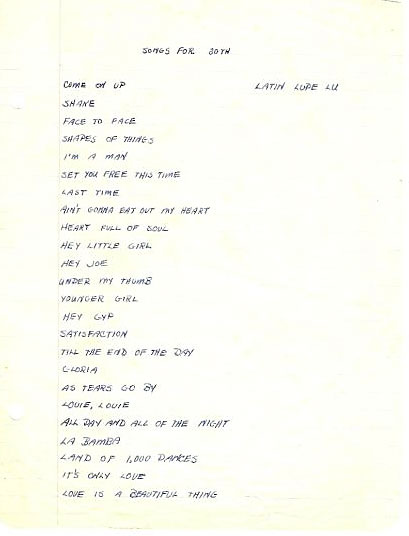
Set list from The Souls performance at Padre Island Pavilion for Easter Weekend
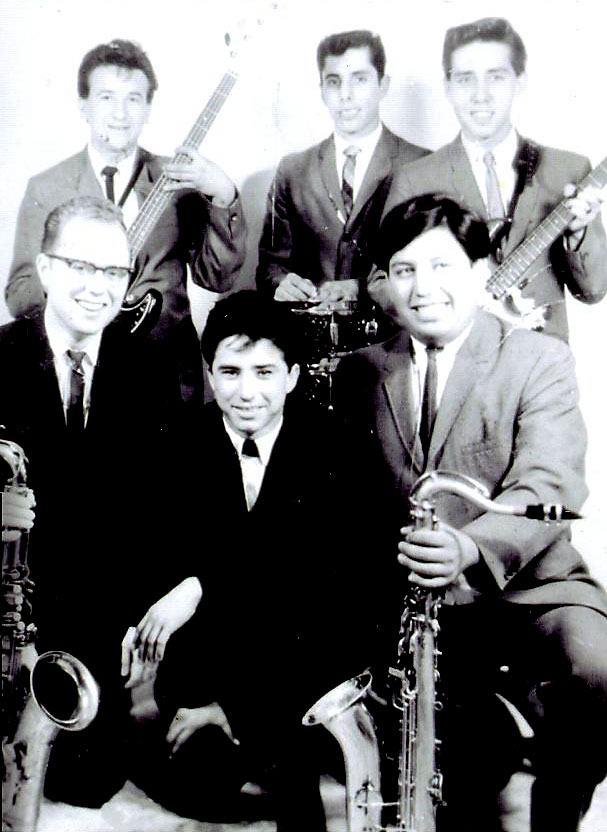
top row from left: Beto Perez (bass), Oscar Garza (drums) and Rolando Tanguma (guitar and keyboard) bottom row from left: A. Charles (sax) Simon Reyes (lead guitar and vocals) and ? Garcia (sax)
The Pharaoh label is famous for some great Texas garage 45s by the Cavaliers, the Headstones, the Playboys of Edinburgh, and Christopher & the Souls. Owning none of those pricey records at this time, I’m choosing to feature another side of Pharaoh: Simon Reyes.
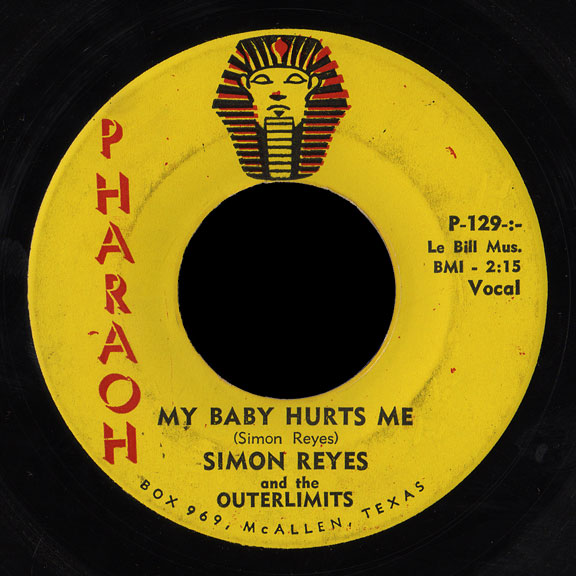
His first Pharoah 45 is bluesy pop number with a female backing group and an extended electric piano solo “My Baby Hurts Me”, with a ballad, “Mistake Number Three” on the flip. Simon Reyes wrote both songs and is backed by the Outerlimits.
I haven’t heard his second Pharaoh 45, “Broken Hearted Fool” / “What Now My Love” but I expect it covers similar ground to this one.
There’s not much info out there on Reyes, but he had at least a couple records on Huey Meaux’s various labels, including a very good version of “I’m a Hog (For You)” on Rival, and both English and Spanish versions of “Mama, Mama” on Tear Drop.
Simon’s brother Noe Reyes reports that Simon died in November, 1973.
Jimmy Nicholls owned the Pharaoh label and also a studio in McAllen, TX where many bands recorded, including the Zakary Thaks and Bad Seeds for their early singles. Simon Reyes wasn’t the only Mexican-American crossover artist on Pharaoh, there was also The Cruisers featuring E.J. and Bobby Ledesma.
See the list of releases of Pharaoh Records on this site for more info on the label.
Special thanks to Noe for providing the photos.
Simon and the Gypsies in New Orleans, Simon on the left.Simon Reyes
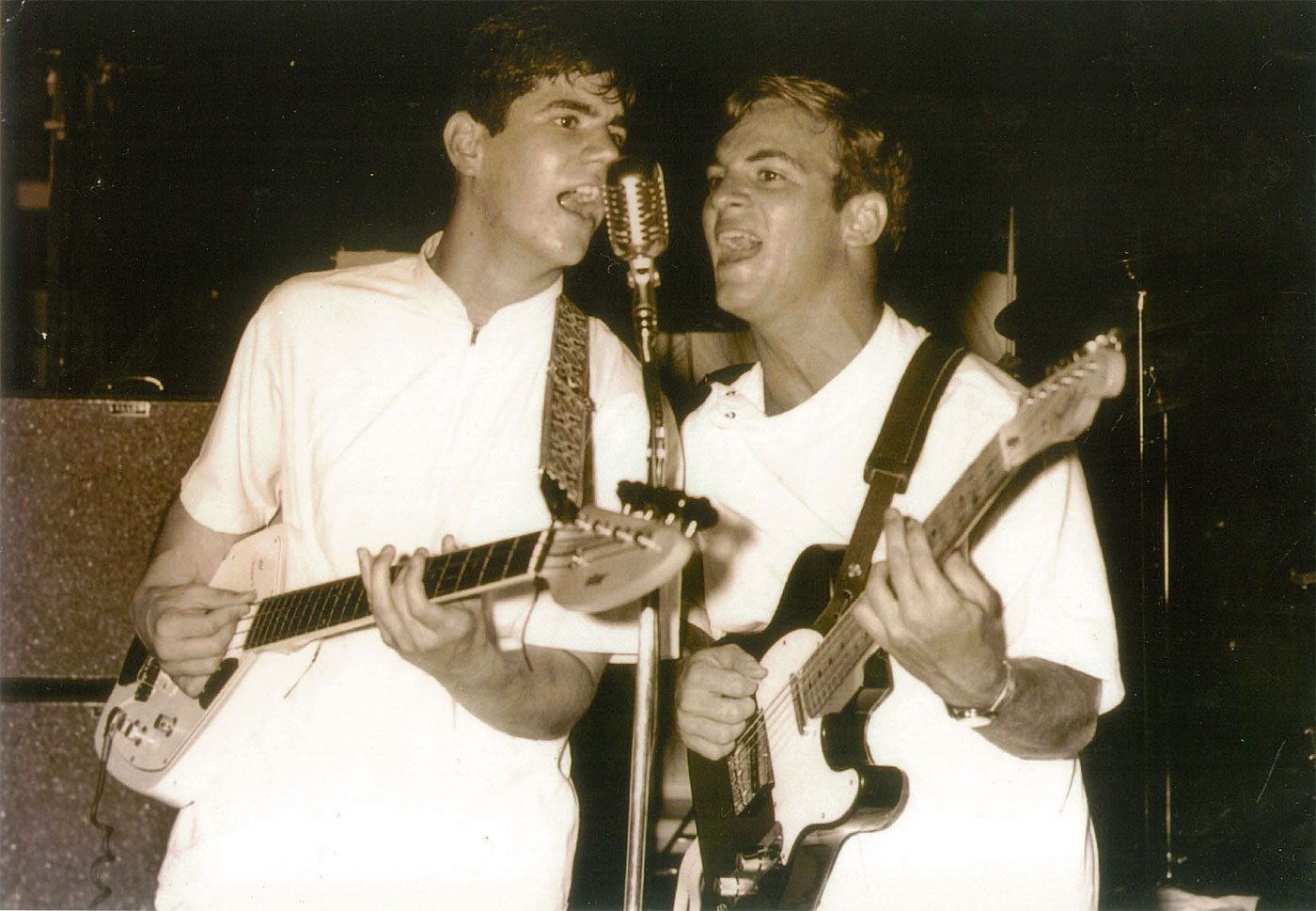
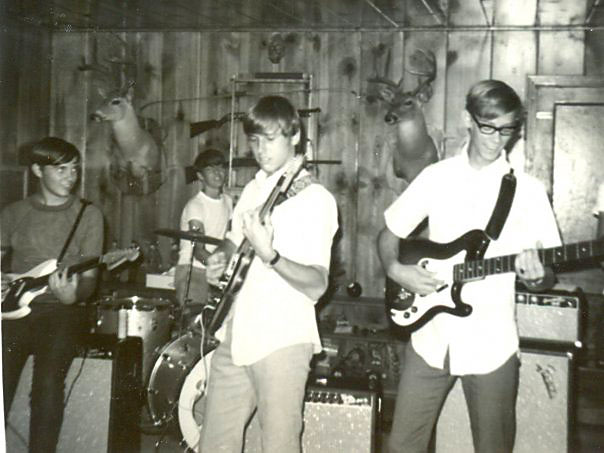
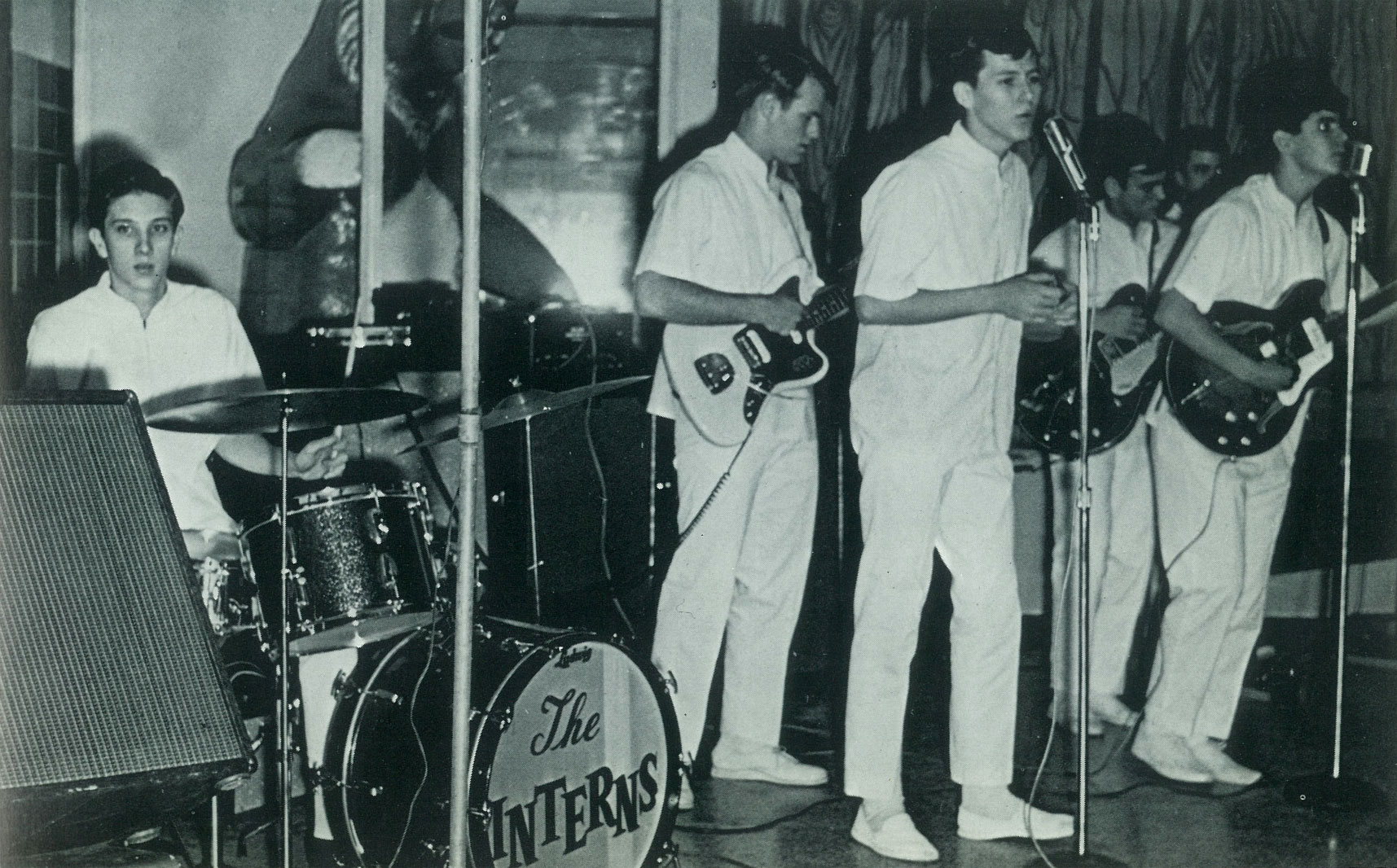
The Interns playing a dance at Spring Branch High School
Updated December 2009
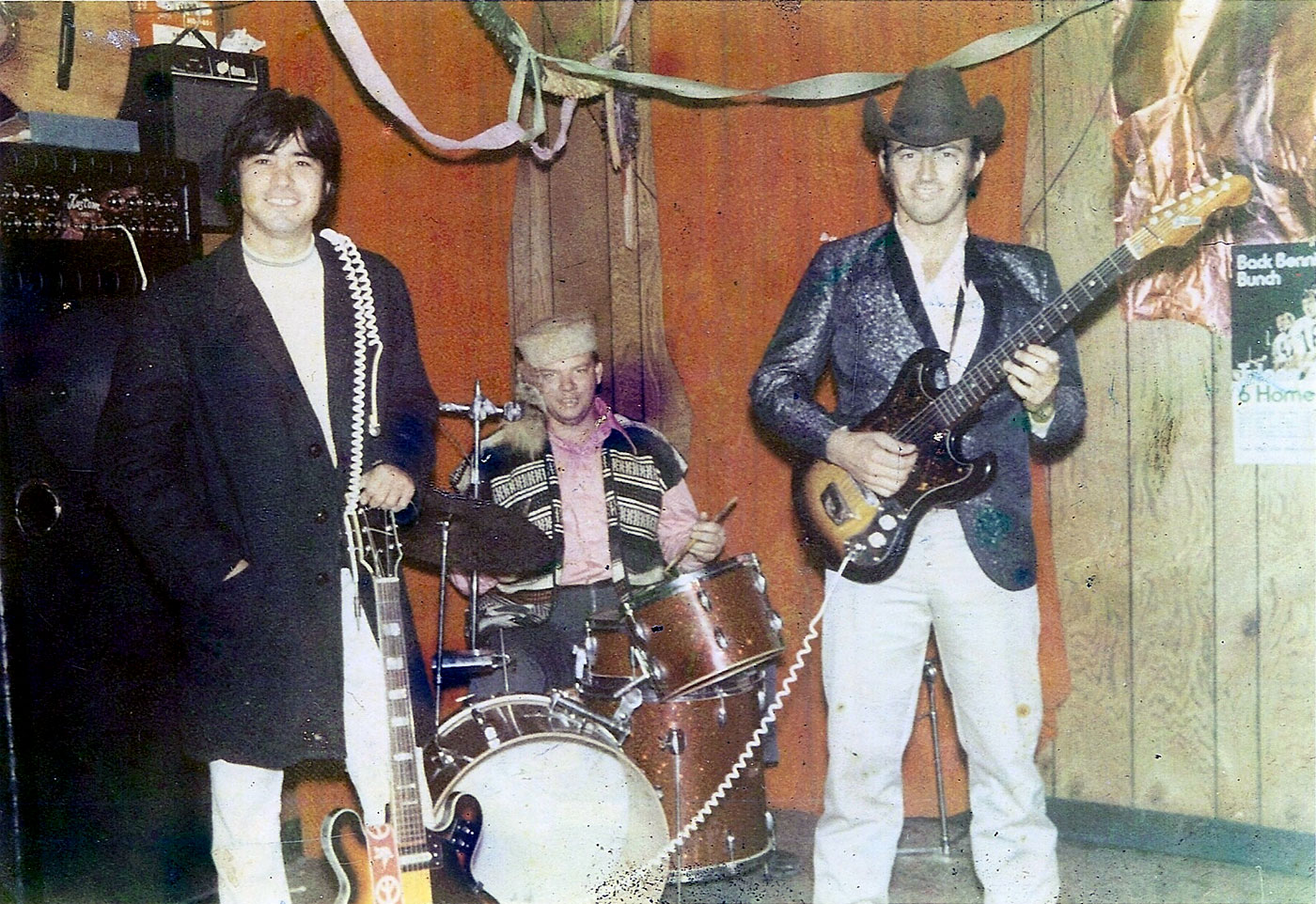
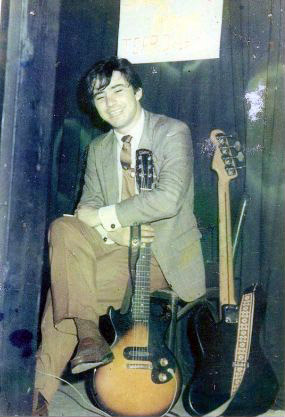
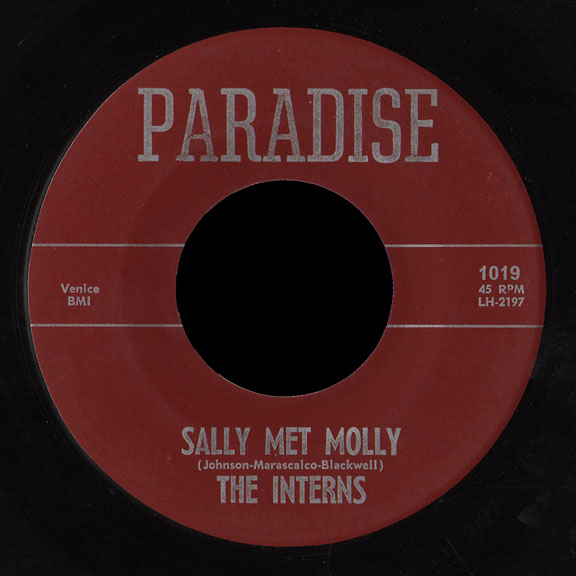
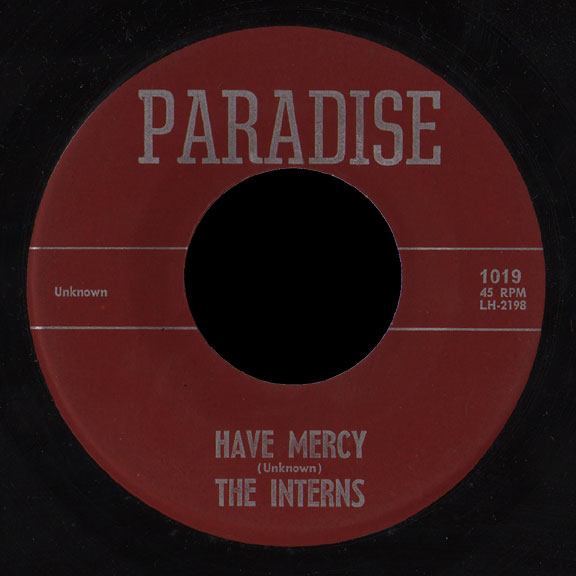
The Interns have two 45s on the Paradise label, both have A-sides of straight up rock n’ roll. “Sally Met Molly” is a cool medley of Long Tall Sally and Good Golly Miss Molly. The flip is a a good version of Don Covay’s “Have Mercy”. What’s that someone shouts during the fadeout at the end of the song? Anyway, it’s like they were doing a song the Beatles covered on one side, and one the Stones cut on the other.
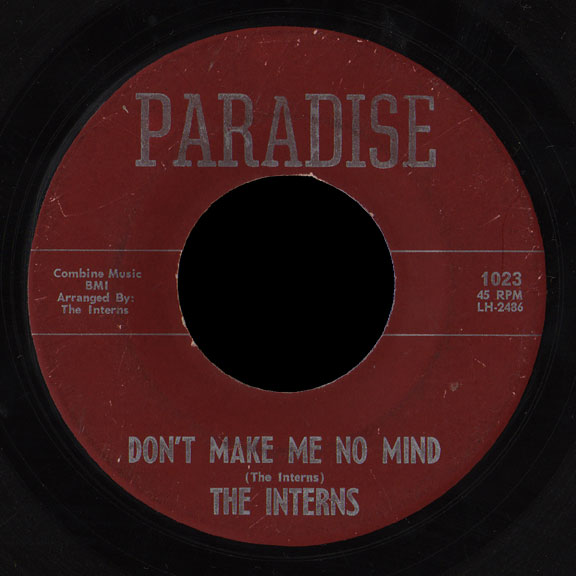
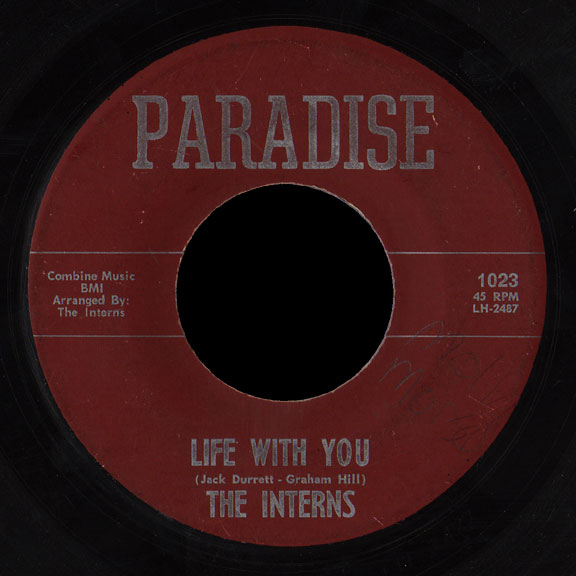
Their second 45 has “Don’t Make Me No Mind”, which sounds much like “Out of Sight”, backed with an original by Jack Durrett and Graham Hill, “Life With You”. With its harmonies and lighter sound “Life With You” is much different than their other material.
I knew nothing about the group until bassist and vocalist Graham Hill wrote in with info about the group (see comment below):
Lead singer- Jack Durrett, lead guitar- Reid Farrell, drummer- Rusty Dobson and I were the group’s main players. Ernie Graham from Kinkaid H.S. and Albert Dashiels from Lee H.S. played guitar and Tony Pryor and Johnny “The Rabbit” Bundrich [John Bundrick] from North Shore H.S. played organ at various times. We attended Memorial High School and graduated in 1967.
We primarily played private high school parties and after football game dances but we were the opening act for the Animals, Hermann’s Hermits, Neal Diamond, The Byrds, Sam the Sham and the Pharaohs and other groups at concerts at the old Houston Colliseum. We also played the Houston Club scene. The other bands of our time were the Coastliners, Neal Ford and the Fanatics, Thursday’s Children, and Fever Tree. Roy Head and BJ Thomas were a few years older than us. Billy Gibbons was a little younger and he would hang out at our practices-Reid still stays in touch with him.
The recording you have was on a 4 track machine at Gold Star Studios. We double tracked the lead vocals on Have Mercy and added the hand clapping and back up singing on Sally Met Molly. We did hit the KILT radio top 10 list and were on the Larry Kane TV show several times.
Johnny has been playing with “The Who” since the mid-70s. Reid toured with Archie Bell and the Drells after graduating from high school. Jackie, Reid, Rusty and I still play once or twice a year in Houston.
Thanks to Graham Hill for info and photos of the band and for sending me their second 45 to transfer and scan.
Graham Hill and Reid Farrell of the Interns, opening for the Animals and Herman’s Hermits at the Houston Coliseum
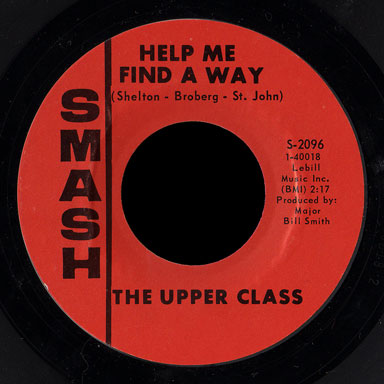
The Upper Class included bass player John Broberg, Randy Shelton and drummer Neal St. John. Major Bill Smith’s Charay label signed them to record their two originals, “Help Me Find a Way” and “Can’t Wait.” David Norfleet of the Chants told me he went into the studio with them to help them record these songs.
“Help Me Find a Way” had hit potential from the strong vocal harmonies and upbeat production. The Charay 45 was picked up for national release by the Smash label, but didn’t chart in any market.
Beginning in 1969, John Broberg and Neal St. John played in the group “Quest” along with Chants vocalist Darrel Howard and guitarist Michael St. Romain.
This site is a work in progress on 1960s garage rock bands. All entries can be updated, corrected and expanded. If you have information on a band featured here, please let me know and I will update the site and credit you accordingly.
I am dedicated to making this site a center for research about '60s music scenes. Please consider donating archival materials such as photos, records, news clippings, scrapbooks or other material from the '60s. Please contact me at rchrisbishop@gmail.com if you can loan or donate original materials

 Oedipus and the Mothers made one fine record, “(I Remember) How It Used to Be”, with a great combination of distorted lead guitar and tremolo rhythm.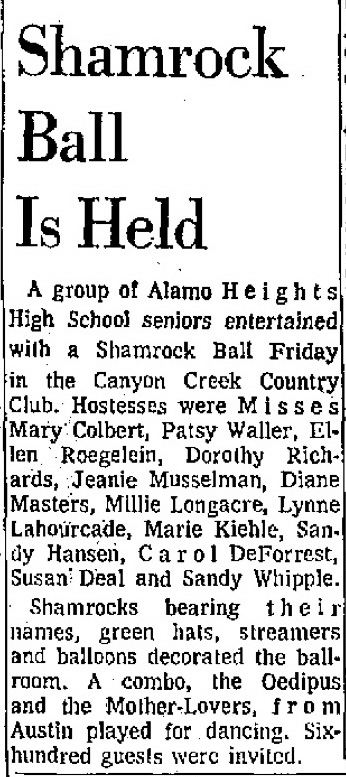
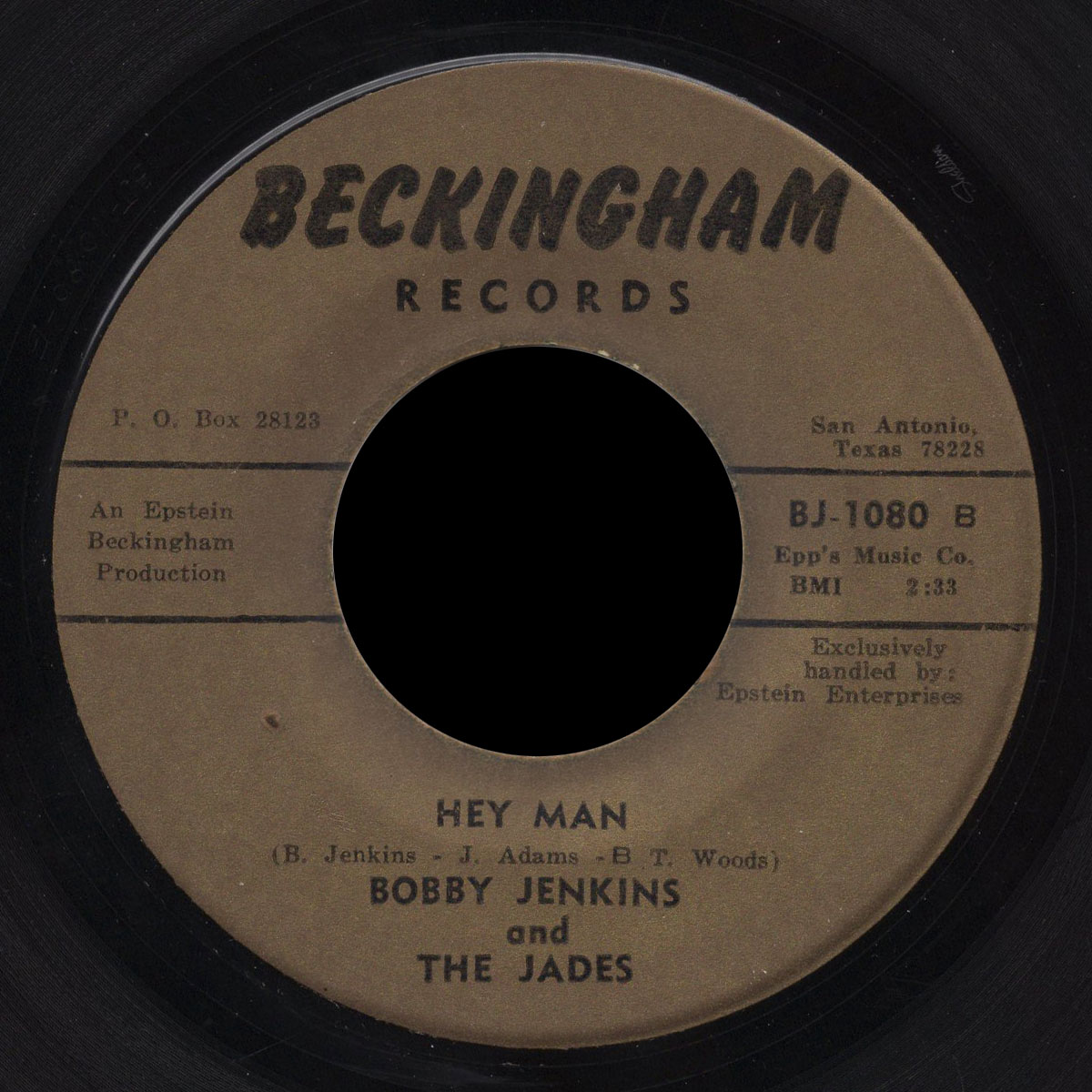
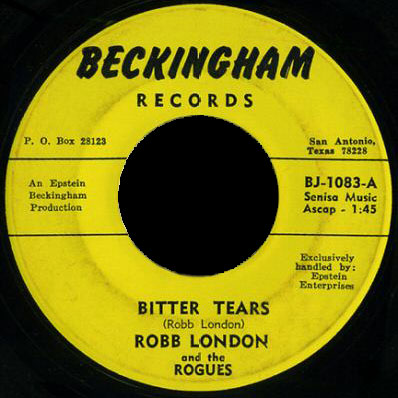 By 1965 they had changed their name to Robb London and the Rogues, releasing three 45s in the next couple years:
 Beckingham 1084 features soul vocalist Billy Sol with songs written by Robb London, “Have You Ever Told Her”, backed with “The Bells”.
 The third 45 has another two London originals, “Crazy Baby” / “Mary Jane”. “Crazy Baby” gets repetitious, but has a cool, brief second section that first kicks in around 50 seconds into the song. The flip “Mary Jane” is one of London’s best cuts, a tough rocker from start to finish about a girl “who’ll put you down”: “if you see her comin’, you better step aside, a lot of men didn’t, a lot of men died!”.
 Robb London’s manager was Mel Adcock of Swingtime Productions (who also managed the Five Canadians and the Frantics). They played shows around San Antonio, including the Knights of Columbus Hall on the east side of the city, and had a reputation as both a soul cover group and for British Invasion sounds.
 The flip is a great, slow version of “Gloria” with Robb’s best vocal performance, the band encouraging him with shouts. Most remarkable is the arrangement that dispenses with the repetitive chords and syncopated build-up of Them’s version in favor of a relaxed pace that suits the lyrics. The opening guitar riff works well with the horns; it was probably a favorite live song for the group.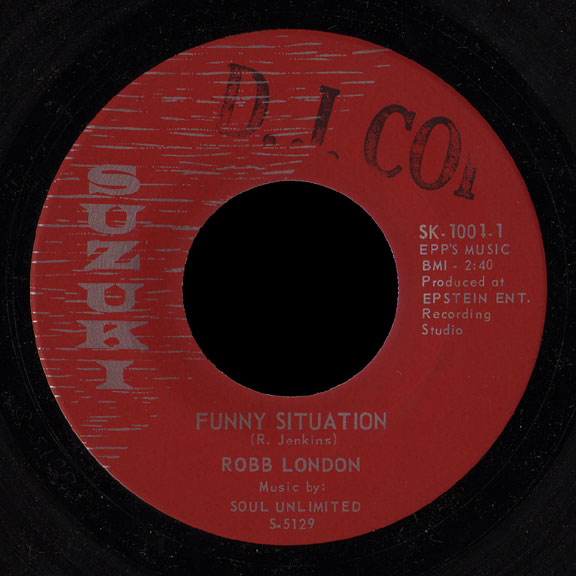


 Updated December 2009
 We primarily played private high school parties and after football game dances but we were the opening act for the Animals, Hermann’s Hermits, Neal Diamond, The Byrds, Sam the Sham and the Pharaohs and other groups at concerts at the old Houston Colliseum. We also played the Houston Club scene. The other bands of our time were the Coastliners, Neal Ford and the Fanatics, Thursday’s Children, and Fever Tree. Roy Head and BJ Thomas were a few years older than us. Billy Gibbons was a little younger and he would hang out at our practices-Reid still stays in touch with him.