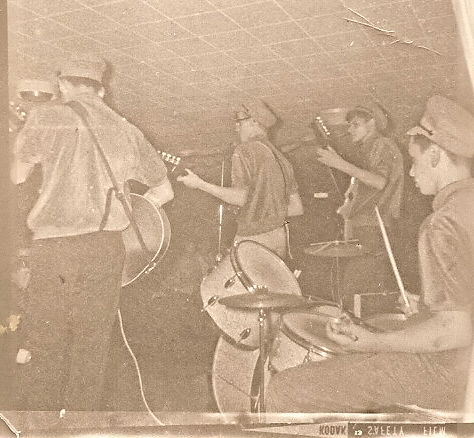
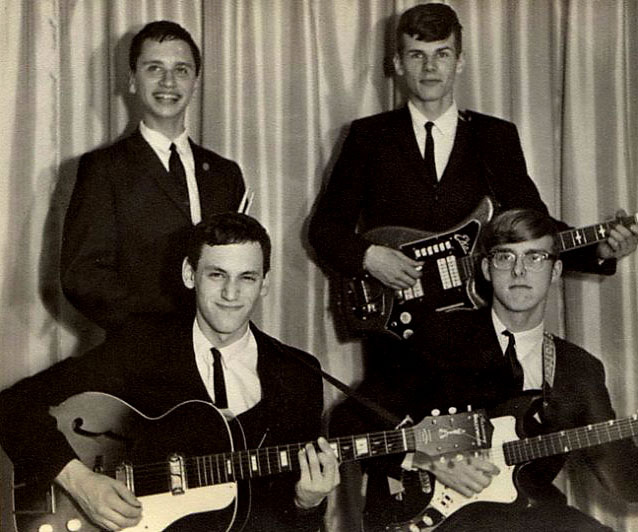
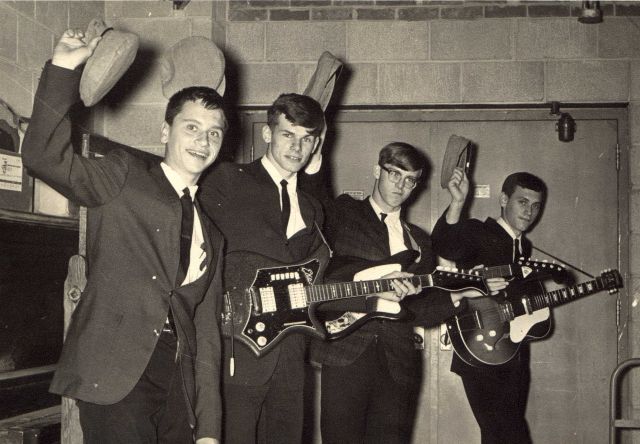
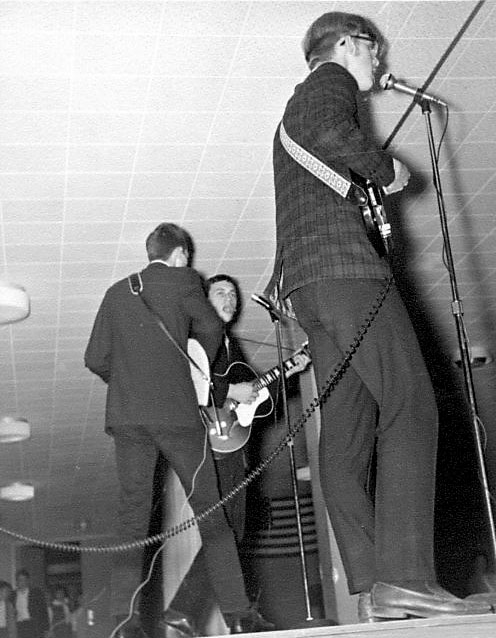
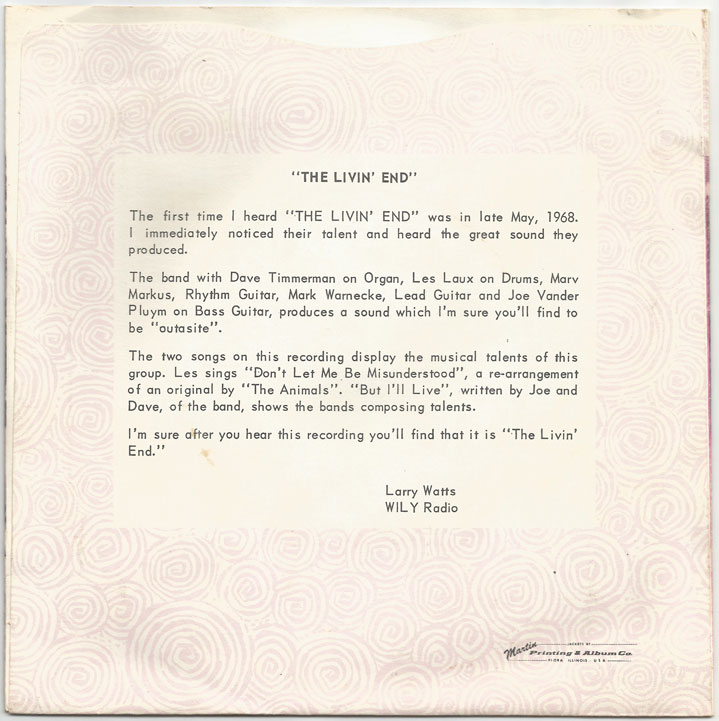
Centralia, Illinois, about 70 miles east of St. Louis was the base for KB Records. The label usually released country and show-band records. I’m not sure if the Livin’ End was also from that town, but the back of the sleeve has a blurb written by Larry Watts at AM station WILY, also in Centralia, and lists the band members as:
Dave Timmerman (organ) Mark Warnecke (lead guitar) Marv Markus (rhythm guitar) Joe Vander Pluym (bass) Les Loux (drums)
The A-side has a slow, sludgy cover of the Animals “Don’t Let Me Be Misunderstood”. Luckily the flip is a great original song, “But I’ll Live”.
The sound is sparse at first with drums in the background and a chugging bass line, while the organ carries the melody. I don’t hear any rhythm guitar on the track, but the lead guitar is fantastic, breaking in after verses with bluesy licks in a wailing, sustained sound. “But I’ll Live” is credited on the label to Dave Timmermann (sic), but the sleeve notes also say Joe Vander Pluym had a hand in it.
I have a copy of the record which is scarce enough, but the picture sleeve seems to be almost non-existent. Release date came after May, 1968.
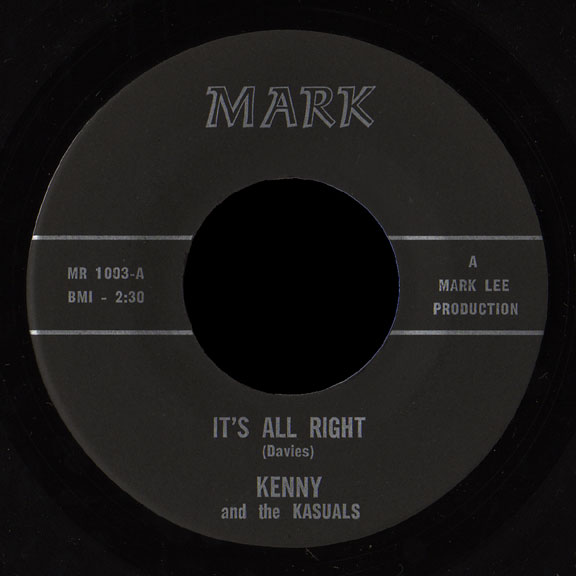
Kenny and the Kasuals – a great band from Dallas with a long and complicated history I won’t try to tell here. Instead I’m featuring one of their lesser-known releases, but well worth a listen. This is their third 45 on Mark Lee’s ‘Mark’ label, “It’s All Right”, from 1966. It features what I believe is the original group:
Kenny Daniel (vocals and guitar) Jerry Smith (lead guitar) Tommy Nichols (harmonica) Paul Roach (keyboards) Lee Lightfoot (bass) David Blackley (drums)
Richard Parker corrects this lineup in his comment below, which I’ll repeat here:
The first recording group (there were earlier members not featured on any recordings) was Kenny Daniel, Tommy Nichols (lead guitar) Paul Roach, David Blachley (with an “h” not a “k”) and Lee Lightfoot. The later recordings feature Jerry Smith on guitar, after Tommy Nichols went into the navy. I don’t think that Jerry is on this recording.
The top side is a hopped-up nugget of r&b, revving the Kinks song up a couple notches. With the early use of a fuzztone and Kenny’s accented vocals, you could say they Stones-ify the song. Backing it is the Zombies tune “You Make Me Feel Good”.
Like their first two records, this one wouldn’t make much headway on local charts, but their next two 45s, “Raindrops to Teardrops” and “Journey to Tyme” would change that.
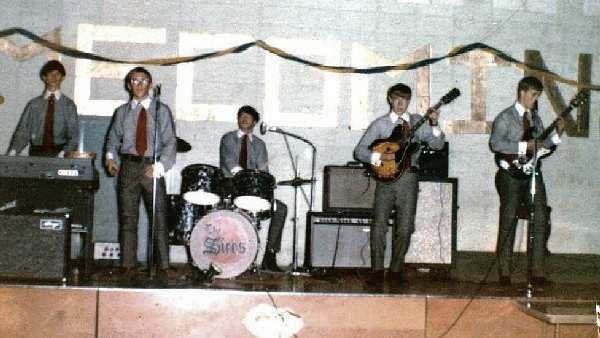
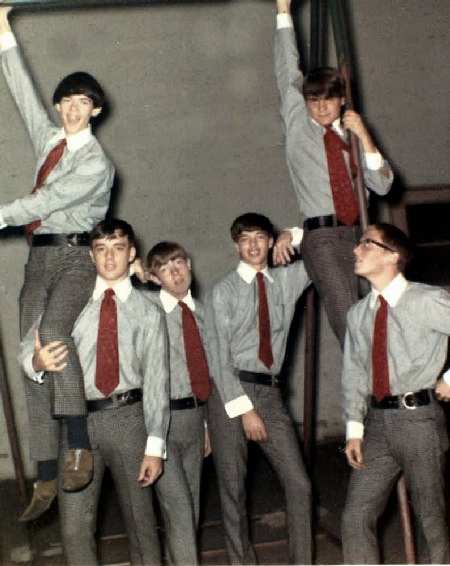
The Sires, 1965, from left: Rodger Koliece, Dean Loman, Robert Grebb, Ron Craig, Mike Briggs.
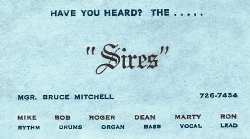
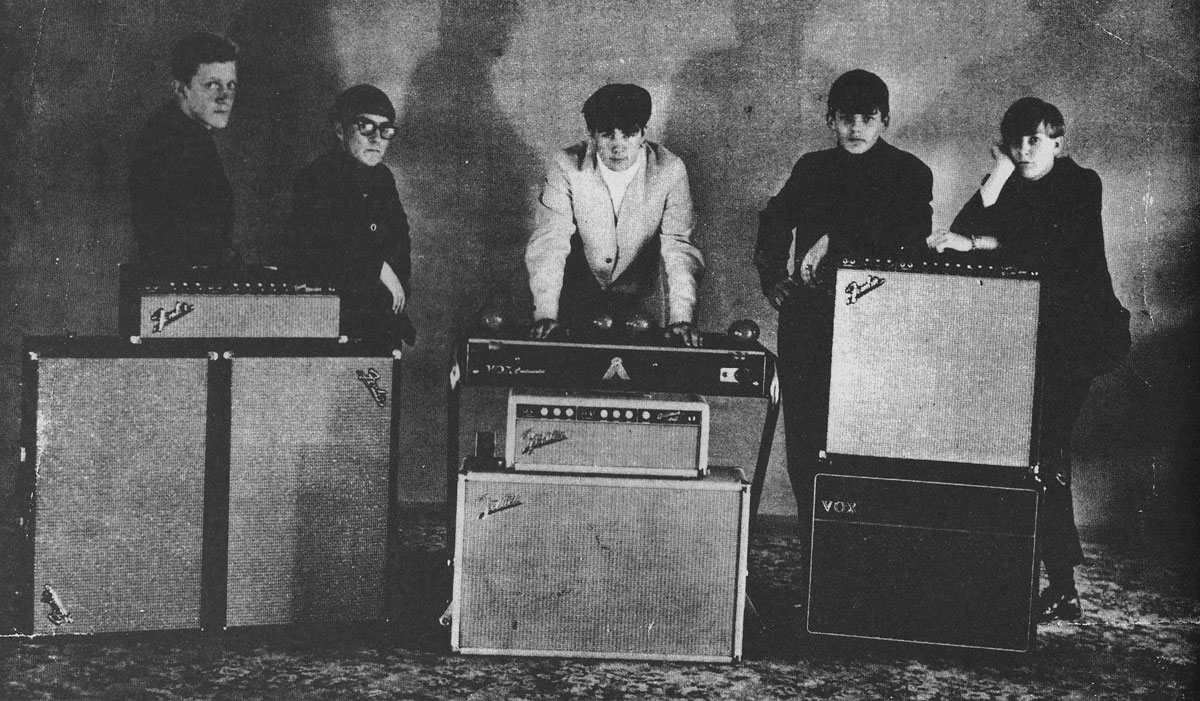
The Sires were teenagers from Eugene and nearby Springfield, Oregon, forming at Sheldon High School in 1964 and breaking up in 1969. Members were:
Marty Berg (vocals) Ron Craig (lead guitar) Mike Briggs (bass, rhythm guitar) Roger Koliece (keyboards) Dean Lowman (bass, vocals), replaced on bass by Warner (Doc) Swebke Robert Grebb (drums)
Ron Craig had been in the Tempters out of Springfield with Joe Crippen and Dave Rodakowski who were later in the Eugene-based group Truth. They played nightclubs in Florence, Oakridge and at a ballroom in Eugene. They won some battles of the bands and came in second to the Gentlemen Wild in a state-wide contest. Bruce Mitchell managed the band.
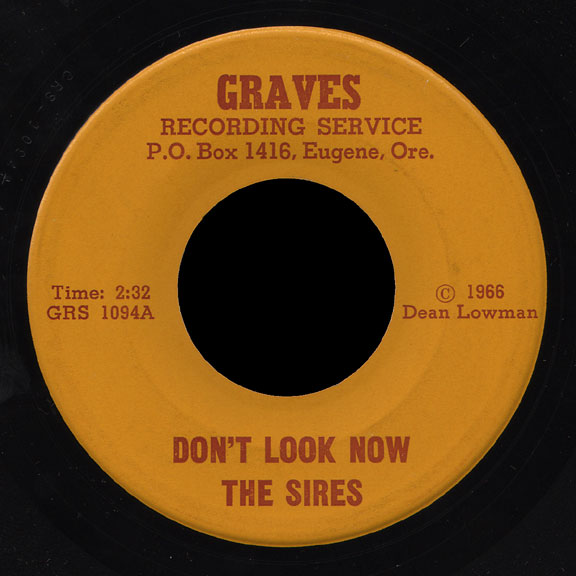
Bands like the Sires paid Alan Graves to record them in his basement home studio in Eugene, and he would have them pressed up on his own label. Alan was still cutting records here as of 2004.
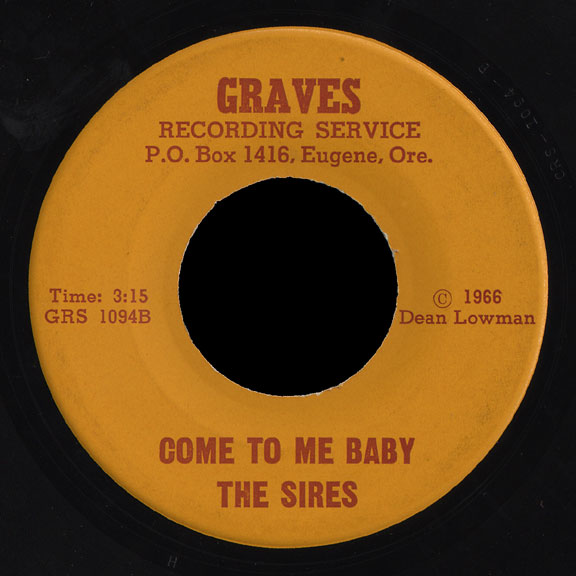
Their only 45 is definitely crude in recording quality and composition, and the sound is at odds with their neat image in their photos. Recorded in 1966, the members were about 15 years old at the time.
I really dig the A-side, “Don’t Look Now” for it’s menacing repetitiveness. Several members are singing in unison, which is unusual, and the lyrics are cool when you can make them out – “give back my ring, then I will see, just how it feels, to be alone and free”. The vocalists draw some lines out in a lower voice and then shout out the chorus for good dynamic effect.
“Come to Me Baby” has chord changes a la Louie Louie, and again the whole group shouts out the lyrics. Ron Craig plunks out a guitar solo lasting some 45 seconds, and there are some good shouts in the song.
Wild and primitive indeed, and hardly the kind of material that would win band competitions, which usually favored slicker pop songs. Dean Lowman is given copyright on both sides of the 45, so I assume he wrote both songs.
Sources include: photos and some info from the PNW Bands site.
The Journeymen, 1966, from left: Gary Clark, Rick Fonder, Bob Van Calster, Mike Bogart and Mark Paulick. None of these guys were in the band by the time of the 45!
Out of Green Bay, Wisconsin, this band went through many lineup changes before settling on the quintet that recorded their great 45 on Tee Pee Records.
The Journeymen came from the Misty Shadows, who formed in 1965 with a lineup of:
Steve Van Pay (lead vocals) Mark Paulick (lead guitar) Tobin Kraft (bass, rhythm guitar) Dan Gallagher (drums)
By 1966 the lineup had changed to the one pictured in the photo above, with only Mark Paulick remaining from the original group. This lineup changed the band name from the Misty Shadows to the Journeymen.
Mike Bogart (lead vocals) Mark Paulick (lead guitar) Rick Fonder (organ) Bob Van Calster (bass) Gary Clark (drums)
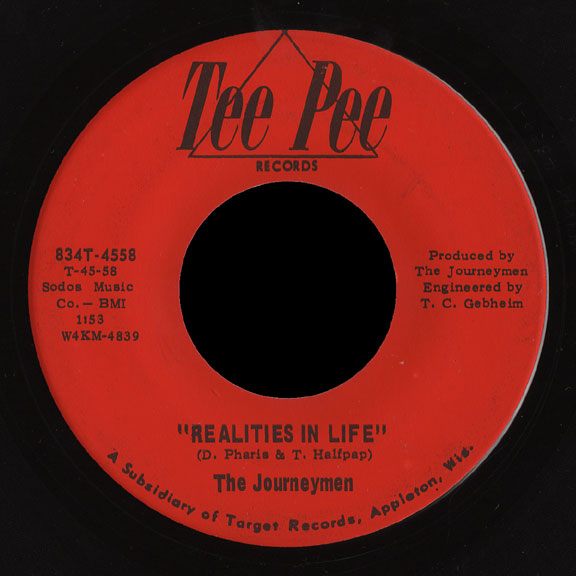
However, Paulick soon left to join first the Society for only one month and then the Invaders, who released several 45s on Cuca, USA and Capitol. Paulick recommended his friend Tom Halfpap, and within six months the lineup had completely changed to the group on the record:
Dennis Pharis (lead vocals) Tom Halfpap (lead guitar) Tobin Kraft (bass) Buzz Eastman (drums) Mike Giese (keyboards)
Toby Kraft’s father Bob started handle bookings for the band, namely at Premontre High School and the Prom Ballroom.
In the spring of ’68 the Journeymen won a battle of the bands sponsored by Henri’s Music, the prize being five hours of recording time at Appleton’s Target Studios. As usual with these kinds of “prizes”, the recording would be free but the band would be hit for the expense of mastering and pressing the records!
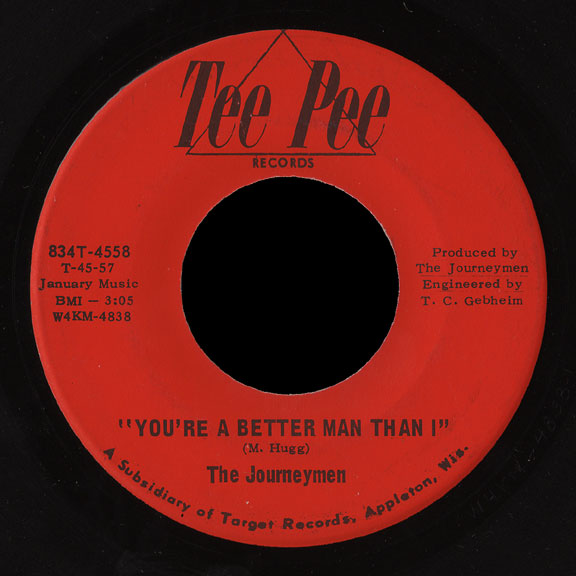
They went into the studio in June to cut their cover of the Yardbirds “You’re a Better Man Than I” for the A-side of their 45. They spent over four and a half hours getting that song down. Engineer Tom Gebheim overlapped Tom Halfpap’s two takes on the fuzzy lead to create a cool echo effect.
With the remaining twenty minutes they cut one take of “Realities in Life”, a song Tom Halfpap and Dennis Pharis sketched out during the ride from Green Bay. Lyrics for the final verse were provided by engineer Gebheim. “Realities in Life” blasts out with an unworldly guitar sound that seems to be shredding the tape it’s recorded on. Vibrant and spontaneous, it’s a rocking winner for all two minutes run time.
As it turned out local radio station WDUZ AM picked up the B-side original for play, so the band added “Realities in Life” to their set list. Most of the copies of the record were sold at gigs. However, Dennis Pharis refused to contribute towards the pressing costs, so Halfpap destroyed Pharis’ share of the 45s in his yard one night, contributing to the present-day rarity of this record!
That summer of ’68, Chicago’s USA Records approached the band about making an album – but the offer required the band to raise the money to cover recording costs, which they were unable to do.
Dale Evans filled in on drums when Buzz Eastman couldn’t make a show, including a few battle-of-the-bands, and joined the group full time when the Marines drafted Buzz after the record was out.
In 1969, Mike Cygan took over on drums. He wrote to me:
I was the last drummer for the Journeymen. I attended East High with Tobin Kraft, Bob Vancalster and Doug Cayer and they approached me in the fall of 1969. Buzz Eastman was still in the service and they really wanted someone who had the similar beat as Buzz. I was already in a band called the Backward Community and was a little hesitant at first but after a bit of prodding from Tobin agreed to step in. The band consisted of Tobin on lead, Bob on bass and Doug Cayer on the Wurlitzer with twin Leslies.
I remember we were playing in Sheboygan and it was one of those Friday & Saturday gigs so we were on our way home early Saturday morning and we were involved in a head on crash that nearly wiped us out. Luckily we swerved and only caused damage to the driver’s side. I think we got home at about 7:00 a.m.
We played for a couple years into the early part of ’71 and then I got drafted and left the band. Ironically when I got out, Doug called me and asked if I wanted to play with him and Tobin and go by the name of; Cayer, Kraft and Merlin. We played for nearly a year but then I got a job as a police officer with the Green Bay Police Department. As a matter of fact, Doug is still playing with a band he started after I left by the name of Rocker. I hope this helps in the story of the Journeymen, one of Green Bay’s finest.
Tom Halfpap left the group in early ’69 and was replaced by Jeff Hermice, but the Journeymen broke up that fall.
Source: Band photo and most of the info cribbed from Lost and Found #2.
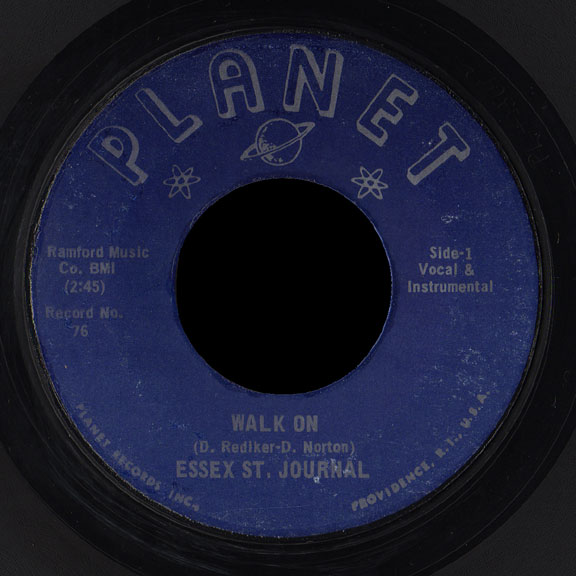
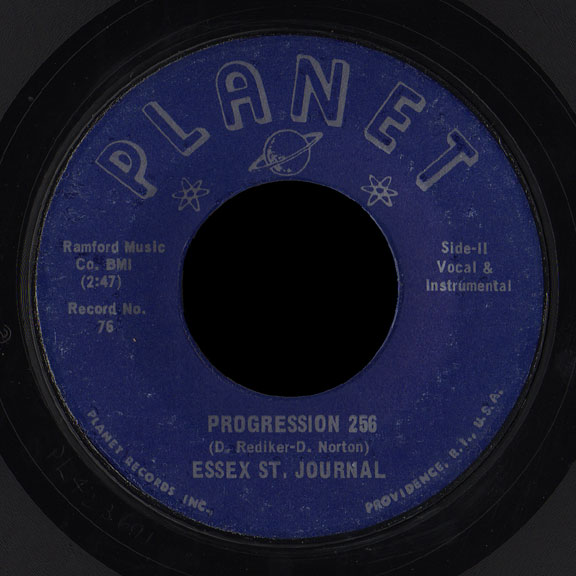
The Essex St. Journal were from Walpole, Massachusetts, a suburb of Boston but but this one 45 on the Planet label out of Providence, Rhode Island.
The A-side “Walk On” showcases a bleary vocal matched with the guitarist’s wah wah; it’s never been comped. I prefer the flip, “Progression 256” an adaption of “Money” with plenty of excellent sustained and occasionally out-of-tune lead guitar (not a bad thing in this case).
Both songs are by David Rediker and Dave Norton and published by Ramford Music (sic – I believe the company’s true name was Ranford Music).
I’ve read this is from 1967, but I’d say they recorded this in 1968, after many listens to Disraeli Gears and Wheels of Fire.
According to Barry Parquette in a comment below, other members included his brother Mark Parquette on lead guitar.
John Parker Compton talks to Nick Warburton about Appaloosa, Compton & Batteau and his early solo career.
Am I right that you are a native of Boston? Tell me about your early musical influences and what prompted you to take up the guitar and write such brilliantly observational songs?
I grew up in Cambridge, MA across the river from Boston. It was a ten-minute walk from my house to Harvard Square and the infamous Club 47. As a young and impressionable teenager I got to see many great performers like Joan Baez, Tim Hardin, Paul Butterfield Blues Band, Richard & Mimi Farina, and Jim Kweskin Jug Band. Club 47 was a small and intimate club and all these shows were mind blowing. Boston also had some fantastic folk clubs at the bottom of Beacon Hill, like the Sword in the Stone Coffeehouse and the Turk’s Head Coffeehouse and also two great jazz and blues clubs on Newbury Street called Paul’s Mall and the Jazz Workshop that featured acts like Chuck Berry, Pharoah Sanders, John Hammond and Mose Alison.
The Beatles’ “Michelle” was a worldwide hit in 1964 and it really made a huge impression on me and helped me to understand that the violin and guitar should be right next to the singer in the mix. Gordon Lightfoot’s “If You Could Read My Mind” and Donovan’s “Jennifer Juniper” really set the stage for the era of mellow folk rock. The two records that had the most influence on me at that time and still today are the amazing Tim Hardin I and Tim Hardin II recordings. The production is so beautiful and Tim’s poetry and vocal delivery are just too much. I used to listen to these records non-stop. I’ll never forget the first time I heard Tim Hardin’s “Misty Roses” on the radio late one night. It totally blew my mind. Tim Hardin I & II are un-like any other records except for George Moustaki’s French masterpiece recorded in 1969 that features his hit songs “Il Est Trop Tard” and “Ma Solitude” that my wife introduced me to.
What prompted me to take up the guitar was listening to the delicate double-octave guitar style of Peter, Paul & Mary, where one guitar is playing in C and the second guitar is playing in G with a capo on the 6th fret creating a rich harmonic symphony. After hearing their music I quickly ended my classical guitar lessons and moved over to folk music.
When I was sixteen I attended a small boarding school in farm country in upstate New York and was fortunate to have a great English teacher who taught poetry brilliantly. I wrote the lyrics to “Tulu Rogers” and “Pascal’s Paradox” first as poems for a poetry homework assignment and soon turned them into songs.
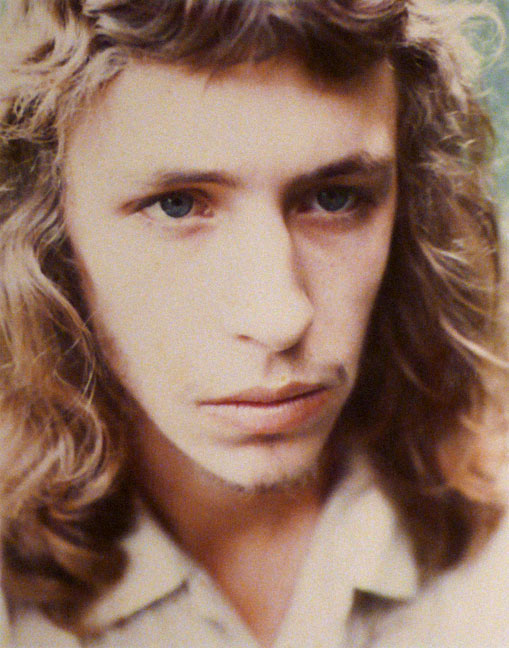
John Compton, 1972. Photo copyright Frank Siteman.
You began playing as a solo artist in folk clubs in Boston when you were only seventeen. I believe you ran into Van Morrison during 1968 when you were only a year older and he critiqued your early songs. That must have been quite an experience?
Paul McNeil who I will always think of as the “Gordon Lightfoot of New England” helped me get my first job at the Sword in the Stone Coffeehouse and from there at the tender age of seventeen I started playing the folk circuit as a solo performer.
I remember in 12th grade coming home for vacation from boarding school and hearing that Van Morrison had just moved to Cambridge. I didn’t believe it at first. Then I heard that my friend John Sheldon who was 16 at the time was playing lead guitar in Van’s new band! This was just too much and sounded like some unreal movie plot. I didn’t believe it until a second friend confirmed the story.
One evening I rode my bicycle over to John’s parents house and lo and behold, as I walked into John’s basement there was Van Morrison singing “Rosie” backed by an electric trio. The intensity and power of Van’s vocal delivery was incredible. It knocked me out. After attending Van’s rehearsals, I got up the courage to walk up to and talk to Van and ask him if I could play one of my songs for him sometime. Much to my amazement Van replied in his thick accent, “Sure, stop by his house sometime.”
Standing on Van’s porch a few weeks later, excited and nervous, I rang his doorbell. Van’s wife Janet Planet opened the door and invited me in and showed me into their kitchen as Van’s children ran around their small house. Van came downstairs and I handed him a reel-to-reel tape of my recordings and he threaded them onto a Wollensak tape recorder sitting on his kitchen table. He listened to my song “Subway” and a few others and then he replied, “I like your songs.” That was a meeting that I will always cherish.
In 1975, I tracked down Van’s production company in England and sent him an “Appaloosa” LP and the Compton & Batteau “In California” LP. A year later, Van played a concert at the Harvard Square Theater in Cambridge and I ran into him walking in front of the theater just before his concert. I asked Van if he ever received the LPs that I sent to him, to which he replied in his strong accent, “Yeah John, thanks, I put them on cassette.” I couldn’t believe it.
Soon after this encounter, you started working with David Batteau, who introduced you to his brother Robin, a violin virtuoso. What were your first impressions of your soon-to-be collaborator and what attracted you to him in terms of working together?
David Batteau and I were former schoolmates, so one day I invited David (who later wrote many hit songs like Robert Palmer’s “Addicted to Love” and a great song called “Tell Her She’s Lovely”) to play cello at one of my early gigs in Boston. One afternoon while practicing at David’s house his brother Robin walked in with his violin and it just clicked. Robin intuitively played each song perfectly the first time, after only listening to it for a minute.
One weekend I invited Robin to a gig that I played every Sunday afternoon at Christ Church’s Outdoor Concerts Series hosted by Bob Gordon on the Cambridge Common. We were the only acoustic folk act and people liked us. From that point on we performed there every weekend during the next two summers.
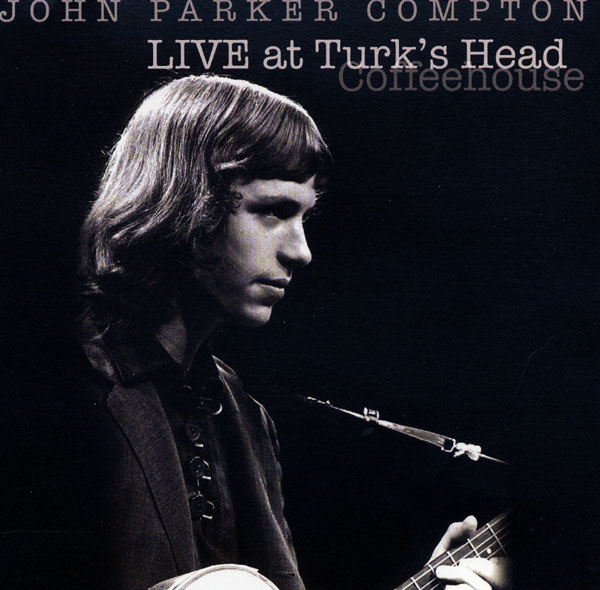
One of your shows as a duo – a gig at the Turk’s Head Coffeehouse – was captured on tape and released by MC Records in 2006. How did they stumble across the tapes?
I found the tapes a few years ago and sent them to Audio-Resorations.com – not knowing how many songs were on them. The tapes had been in storage for 35 years but amazingly they sounded fine. The recordings really highlight Robin’s unique violin live performance style. I released the songs on my VMC label. (I highly recommend Mark Lyons at Audio-Restorations.com. He does an incredible job restoring tapes and also transferring LPs to CD).
Among the seven tracks from this show are a couple of songs – “Subway” and “Green Brown Sound” – that were not used by your subsequent project, Appaloosa. How come?
When we first met Al Kooper, he booked a demo recording session at Columbia Studios and we recorded twenty-two songs. Al picked eleven of the twenty-two songs for our LP.
The remainder of the tracks on the VMC CD “John Parker Compton – Live at the Turk’s Head Coffeehouse” were sourced from a recording at WHRB studios in Cambridge and a home reel-to-reel tape machine. Tell me about these recordings because once again there are a handful of songs that you didn’t revisit such as “Loving Her Makes Today” and “We Can Forget.”
It was customary after playing a radio show in those days to get a reel-to-reel tape of the radio broadcast. The home recordings were done at boarding school and at Robin’s house on a Wollensak tape recorder.
It’s fascinating listening to these live recordings because the songs that turned up on the Appaloosa album sound pretty well formed and this was only months away from you demoing them for Al Kooper. Can you reveal some of the inspirations behind these songs?
Robin and I had played the songs at coffeehouses for about a year before we recorded “Appaloosa.” I wrote most of the songs for “Appaloosa” for my girlfriend at boarding school. The inspiration for “Pascal’s Paradox” came about in a chemistry class while having the theory of Pascal’s Paradox explained and drawn on the blackboard. I wrote “Thoughts of Polly” for my stepbrother’s girlfriend and soon to be wife Polly. The song is in open D tuning. ”Rosalie” is another girlfriend song and in open G tuning. The song “Glossolalia” came about in a funny way. We got a gig a Gordon College in a town north of Boston. We didn’t know until we arrived at the college that it was a religious institution. Our concert was held in the college chapel and while standing on the steps of the stone church waiting to go in, I noticed a service schedule on the side of the door that mentioned the word “Glossolalia.” I had never seen the word before but I liked the way it sounded and used it for a girl’s name.
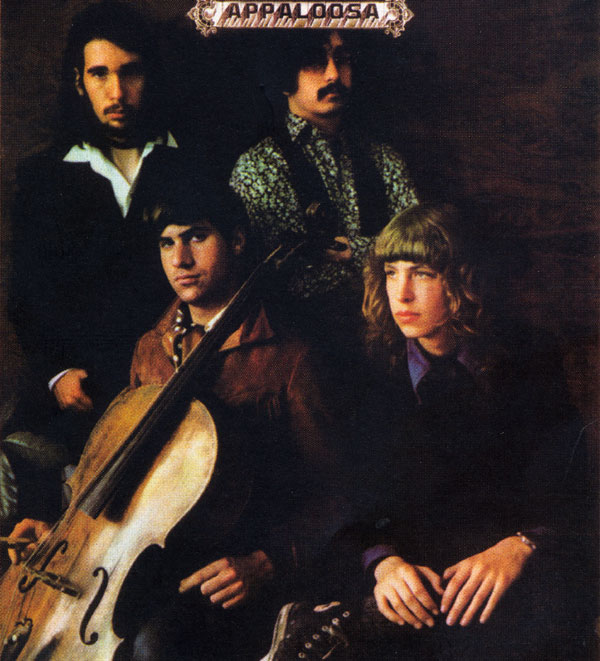
How did you meet the other musicians that made up Appaloosa and where did the name come from?
David Reiser and I were former schoolmates. Eugene Rosov was easy to find: he was living at the Batteau’s house and going to Harvard and rounded out our sound perfectly. Prior to recording our “Appaloosa” LP, Robin and I recorded two of my songs, “Rosalie” and “Downtown Row” at Intermedia Sound in Boston. It was a beautiful studio. We asked David to play Fender bass for the session. David was only 16 but a real pro bassist and played with several bands at many of Boston’s jazz clubs. The recording session went so well that the owner of the studio offered to print us a hundred 45s. I remember that we got them added to some jukeboxes at various locations around town. David suggested the name “Appaloosa” for the band.
Can you tell me about the recording of Appaloosa’s album? Did you record as a band and then Al Kooper brought in members of Blood, Sweat & Tears and other side players to complete the tracks or did you record together?
We recorded all of the songs as a live band, doing several takes and picking the best one. Bobby Columby (BS&T drummer) recorded with us on songs like “Feathers”, “Yesterday’s Roads”, “Rosalie” “Thoughts of Polly” and “Georgia Street.” It was such a thrill to watch Bobby play in his theatrical drumming style. Bobby’s timing was always perfect and he really put his heart and soul into each song. He was a super funny guy and also telling us jokes in between sessions and this really helped relax us since it was our first time in New York.
Fred Lipsius added the great saxophone part on “Thoughts of Polly” as an add-on track. He recorded it in the control as we all sat there and then Al said, “Let’s play the saxophone track backwards”. That’s why his part sounds so mysterious.
We recorded “Now That I Want You” and “Bi-Weekly” live in CBS’ larger studio in the center of Manhattan with a horn section. Al brought in Charlie Calello (Laura Nyro’s producer/arranger) to do the horn arrangements. Al also asked Laura Nyro’s guitar player to the session and he added the nice Glen Campbell-ish lead guitar on “Bi-Weekly.” Kooper was also super kind to us. I remember one evening he invited us to apartment to meet his wife and they both made us popcorn.
“Now That I Want You” screamed to be released as a single and I am sure would have been a hit. How well do you think the label promoted you as an act and got behind the album?
“Now That I Want You” was our signature song at live shows. Robin’s violin lead allows wowed the audience and me everytime. His double-string violin technique is really something else. I fondly remember how Clive Davis, Columbia’s president at the time, was such a gentleman to us and was super-friendly and supportive. Unfortunately, we didn’t have a manager so we had no one to talk to Columbia. We were just teenagers and so naive and amazed to be in a big city.
Are there any memorable live dates from this period that you performed as a group?
Playing the Filmore East was exciting. We opened for the Allman Brothers. I remember Gregg Allman saying to us when we walked past their dressing room, “Hey, where are your groupies?” and Eugene Rosov our cellist held up and pointed to a book by Francis Bacon that he was carrying from one of his courses at Harvard. I’d love to find a tape of that show. We also opened for the Young Rascals at Harvard Stadium on a beautiful autumn day and we opened for Van Morrison in Boston. Earlier, in 1968, Robin and I opened for Tim Hardin for his weeklong gig at the Jazz Workshop. I was scared to meet Tim Hardin in person, having personally seen him when I was younger throw a glass ashtray at someone in the audience after he asked everyone to be quiet. But Tim Hardin was a gentleman and invited us all out to dinner with him after the concerts.
Appaloosa performed on two television shows, one on PBS Television for Boston and also on “Steve Paul’s Scene” a music show in New York City. I tried unsuccessfully to find the tapes of the broadcasts.
You penned all of the songs for the Appaloosa album. Did the others see it as a democratic band or really your musical baby? What prompted Eugene Rosov and David Reiser to leave?
I came with the songs and Robin, Eugene and David added the arrangements. Eugene Rosov went back to Harvard University and David joined a jazz band.
With the group dead in the water, you and Robin decided to head for California. What made you decide to relocate to the West Coast?
Robin’s wife at the time was attending one of the Pomona College’s outside of Los Angeles so I convinced a friend of mine to drive out to California and visit them. As soon as we arrived, Robin and I drove into Hollywood and met an A&R guy at Columbia named Eddie Mathews and he signed us to do our second Columbia record.
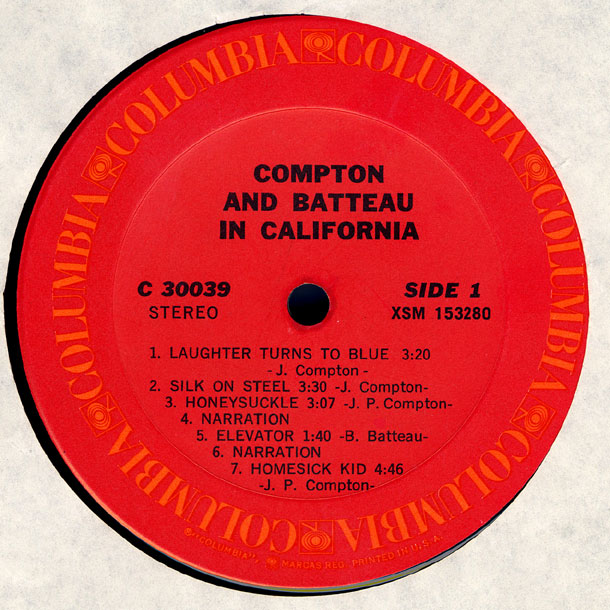
Like “Appaloosa” I am a huge fan of Compton and Batteau’s “In California”. Even though you dominate the songwriting, it seems to be more of a partnership with Robin now singing and writing a couple of tracks, one of which I believe was issued as a single.
Robin asked to add two songs. Robin’s song “California” is a great song and really has an AM radio vibe. The song was released as a single.
How did the “In California” album come about? Did you write the songs for it once you’d got out to Los Angeles or were some written prior to moving?
We got signed to Columbia the first week I arrived and we immediately started working with our producer Abner Spector (no relation to Phil Spector). I wrote some of the songs prior to the trip west and rest of the songs in California while living there.
The support group features keyboard player Bill Elliott who also turns up on your debut solo album. How did you find him?
Bill grew up in a town next to Cambridge where I lived. The first time I heard Bill play was with Lorin Rowan and I was knocked out. He’s like a modern day Mozart and really looked the part back then. So I called Bill and invited him out to record with us in California. Bill is one of the most gifted keyboard players I know. He’s right up there with Al Kooper. Like Robin, Bill only needs to hear a song once and he already knows it perfectly. Bill’s piano playing adds so much to my songs. I remember we went to a musical rental store and rented a harpsichord for my song “Essa Vanessa.” And of course the studio was well stocked with beautiful grand pianos and Hammond B3 organs. I miss those days when you had to spend an hour setting up the microphones around a piano. Now pianos are recorded using computer chips.
Who was responsible for bringing in Poco members Jim Messina and Rusty Young and Rick Nelson sidemen Randy Meisner and Pat Shanahan? What do you think these musicians added compared to the musicians that Al drafted in on the Appaloosa album?
Poco was recording in the studio across the hall from us at CBS in Hollywood. One day in between sessions I saw Jim Messina sitting playing electric guitar wearing bright red cowboy boots. What a thrill to have Jim offer to record with us. His lead guitar work on “Honeysuckle” is so upbeat. And having Randy and Pat record live with us on songs like “Homesick Kid” was a dream come true. We recorded the songs as a live band.
Did you go out and play any live gigs as a duo once you hit the West Coast? Any notable shows?
We played at the University of Ohio for a week and recorded all the shows. I had the tapes for years but one day they disappeared. We also performed at the Anti-Vietnam War Concert in Washington, D.C. in 1971 to a crowd of 50,000 people and the following day to a similar crowd at an outdoor concert in Boston at the Boston Commons.
Am I right that while you were recording “In California”, Sly & The Family Stone were recording next door?
Yes. Everyday we would see Sly arriving in his Winnebego mobile home wearing these knee-high fur boots. It was quite a sight. One of my all-time favorite records is Sly & the Family Stone’s masterpiece “Fresh.” What an amazing record.
There are some absolutely brilliant songs on this record like “Laughter Turns to Blue”, “Proposition” and “Homesick Kid” – what prompted you to write this new batch of material?
“Laughter Turns to Blue” was inspired by the great lyric imagery in the Christmas song “Good King Wenceslas.” I wrote “Propositions” as my response to the U.S. army draft and being ordered down the U.S. Army barracks in Boston to take a physical. Living through the days of the Vietnam War was so intense. I wrote the song because at least I lived. I wrote “Homesick Kid” for a girl that I met in Berkley, CA.
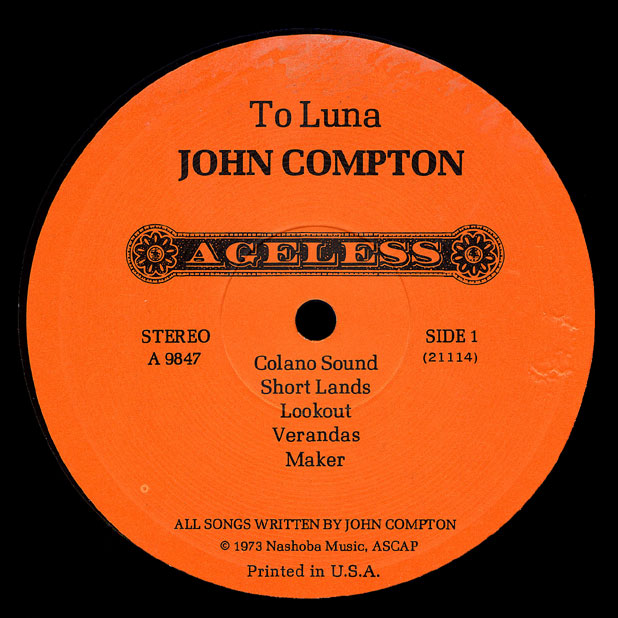
There was a three-year gap between “In California” and “To Luna”. How did you keep yourself busy?
I bought a farm built outside of Cambridge and played at various clubs in the area.
I always think your image on the cover of “To Luna” reminds me of Beck twenty years later. Where was that shot taken?
A photographer named Frank Siteman (www.franksiteman.com) who was a friend of Robin’s and mine offered to take the album cover for the “To Luna” LP. I showed up at Frank’s place having no idea what to expect for the photo session. We drove out to a nearby beach where Frank took the album cover photo with the lunar-looking landscape. The Muslim clothing that he brought for the session adds a unique look. Frank also took the B&W photos that I feature on my You Tube video for “Feathers” (Live at the Turk’s Head Coffeehouse) on www.youtube.com/appaloosa1969.
“Polinate The Blue” ventures into new territory for you – a sort of bluesy, funk stew. Did you feel as a solo artist you were freed up to experiment in a heavier material?
That song and also the songs “Lookout”, “Maker” and “Ona Find Me Home” are the result of me listening to a record that really influenced me: Dr. John’s Cajun-stew funk classic recording “Dr. John the Night Tripper.” Gris-Gris Gumbo Yah! (I later used the female back up singers influence on my second solo recording “Mother of Mercy” CD in 1995.) Dr. John’s grumbly lead vocal set against the female back up singers and wild percussion and lead guitar creates such an incredible atmosphere. I wonder if his classic song “Walk On Guilded Splinters” has ever been used as a movie picture soundtrack?
Harvey Brooks and Billy Mundi were regulars up in Bearsville but where did Roland Dufault, who adds some sparkingly lead guitar, David Mowry and Stu come from?
First, I want to say that recording with Harvey Brooks and Billy Mundi was an unbelievable experience. They were like a high performance engine in the studio. Roland Dufault went to my boarding school in upstate New York. I met David Mowry at the Cambridge Common concerts. David’s vocal delivery in those days sounded exactly like Richie Havens. When you were walking up to the concert from a distance you would swear that it was Richie Havens singing on stage. David plays guitar like an acoustic Carlos Santana and is an incredible live performer. Both Roland and David really added a great vibe to my “To Luna” LP.
How did you get to record up at Bearsville, most famous being the Band’s home patch?
It was a fluke. Robin and I were driving somewhere and Robin’s VW broke down just outside of Woodstock, NY on a cold winter night. I worked on the engine in the cold but there was one part that wouldn’t budge. We hitchhiked into Woodstock and we ended up at a bar named the Bear Cafe. We had our instruments with us and someone yelled out, “Hey, play us a song!” Peter Edminston was in the audience and called me a year later and offered to produce my “To Luna” LP.
What is the intriguingly titled “Leave My Casos in Laos” about?
It’s about the insane wars that America waged in Southeast Asia in the late 1960s and early 1970s. I wrote the song in the spirit of someone who had been drafted into the army and killed in action and who left a note saying that they would like to be buried in the foreign land.
My personal favorite on the album is the hypnotic “Shortlands” which features Bill Elliot, first heard on “In California” providing some heart rendering piano work. What inspired this song?
I wrote the song about my girlfriend at the time, as a way to say that we had plenty but in actually we had nothing. The guitar is a variation of an open D tuning. I was planning to record the song with just vocal and acoustic guitar.
After playing the song once in the studio, Bill Elliott said over the studio intercom system, “Hey John, I’d like to come in and try something.” Mark Harmon our engineer miked the grand piano with stereo microphones to get the full rich piano sound. We recorded the song in a few takes. Bill’s piano playing really is theatrical.
“Verandas” harks back to Appaloosa and Compton and Batteau in style. Was this an old song that you rediscovered? It has a really beautiful feel about it.
I play the song in regular tuning and made up the two opening chords to sound like the guitar is in open tuning. Bill Elliot’s piano playing is spectacular. I wrote the song inspired by the old farm that I bought and restored. Nick it’s been a pleasure talking with you.
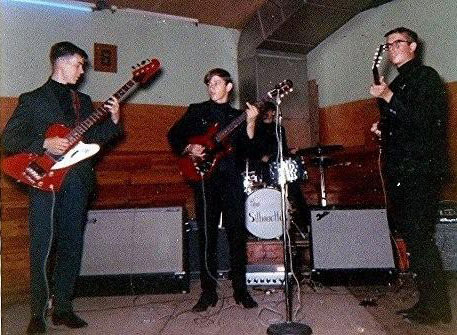
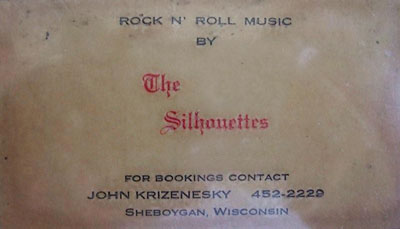
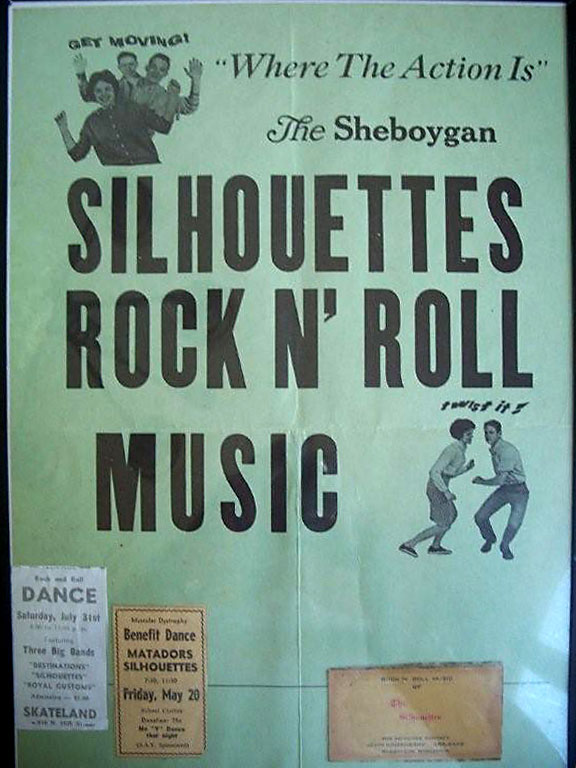
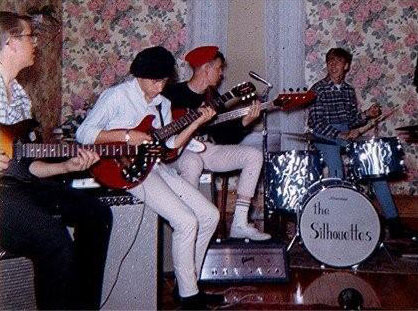
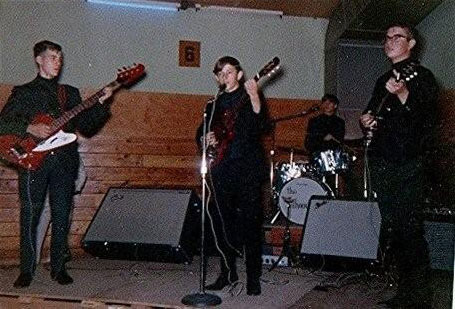
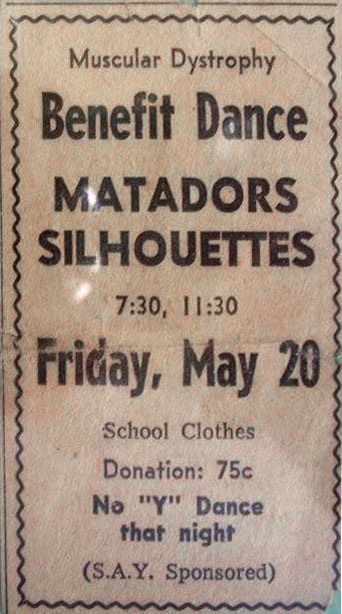
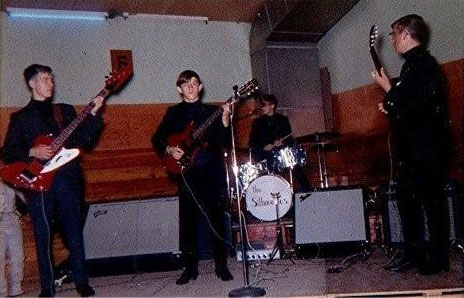
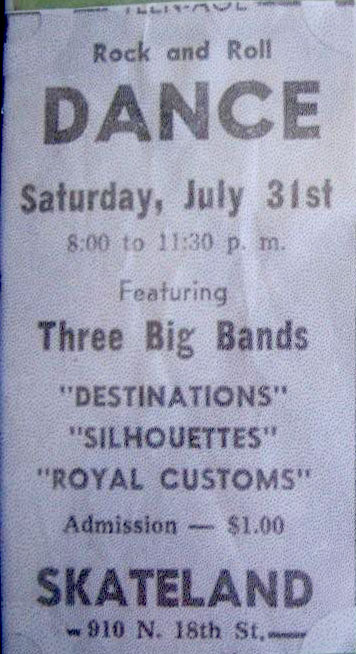
The Silhouettes were a garage rock band from the mid 60’s out of Sheboygan, Wisconsin. We played many small gigs throughout northeast Wisconsin.The original members were Bob Rutkowski lead guitar, Genyk Okolowitz rhythm, Tim Shimberg bass and John Krizenesky drums. We never cut a record, but had a great time playing as a fill in band for larger big town groups at the Sheboygan Armory gigs, and many battle of the bands and small town dances.
I have not seen Tim since High school, John still lives in Sheboygan as far as I know. Genyk was killed in an auto accident right after high school. I am now living in Shawano, Wisconsin, and still enjoy watching live groups.
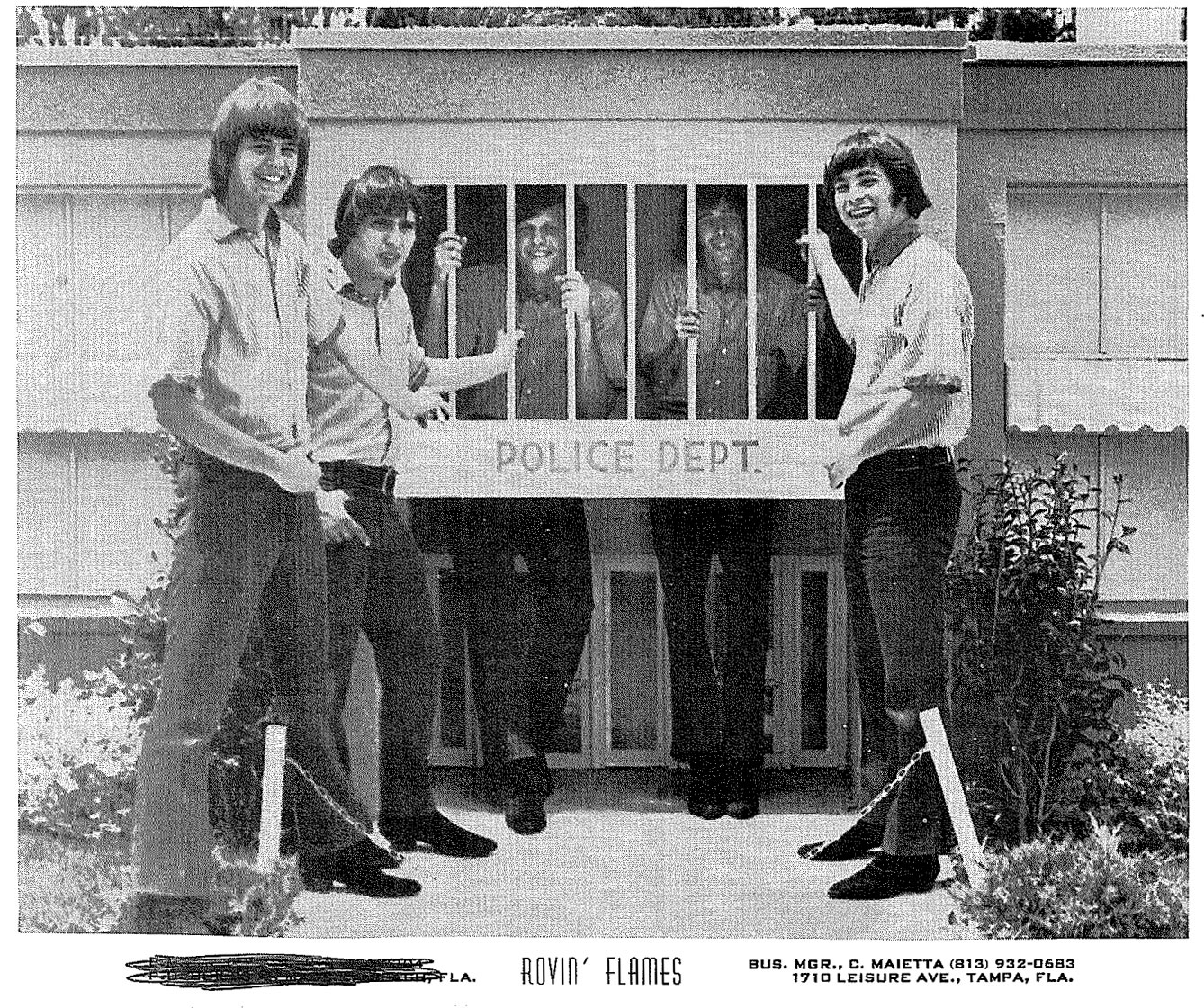
The Rovin’ Flames at “Safety Village” theme park, 1966
Revised November 2009
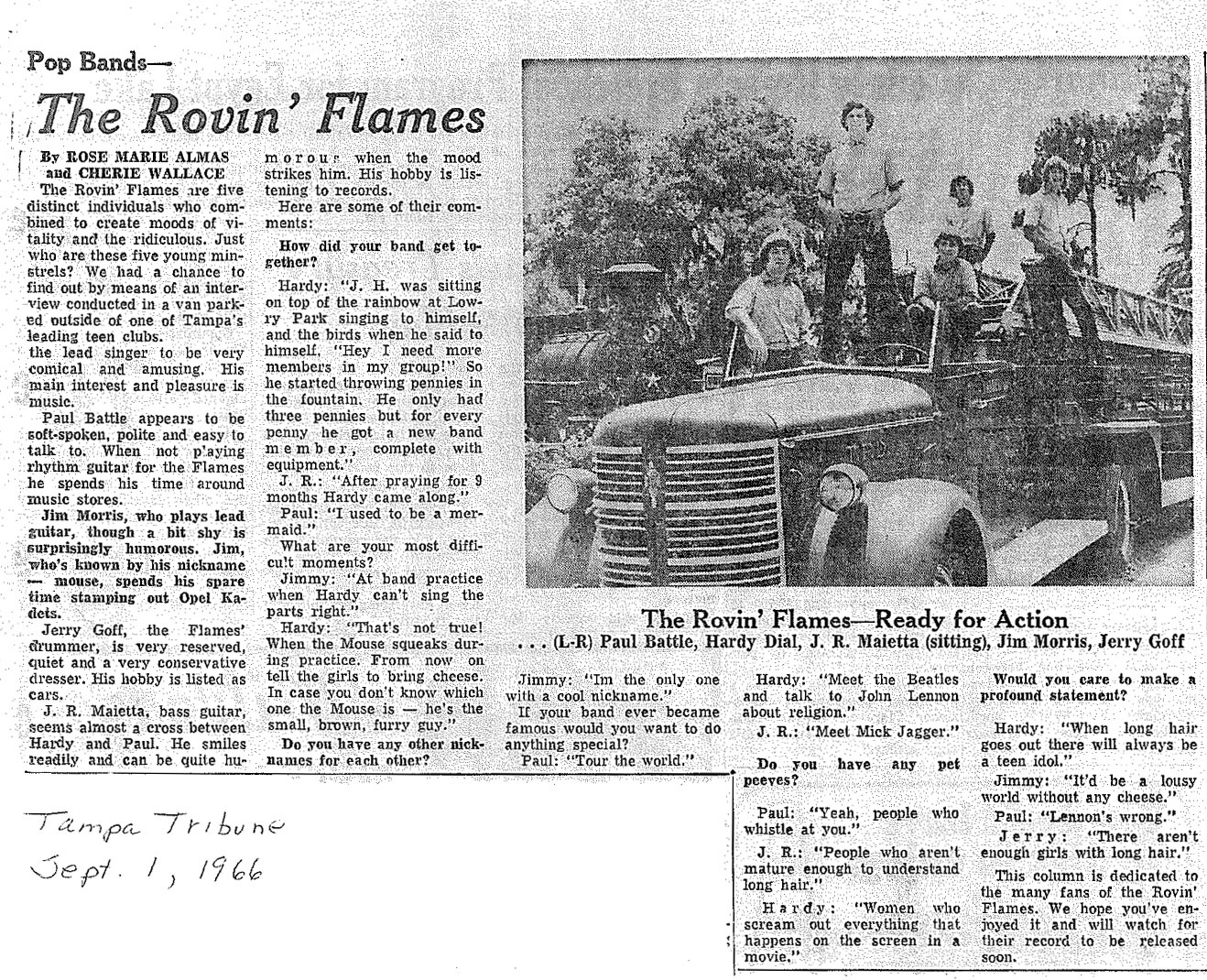
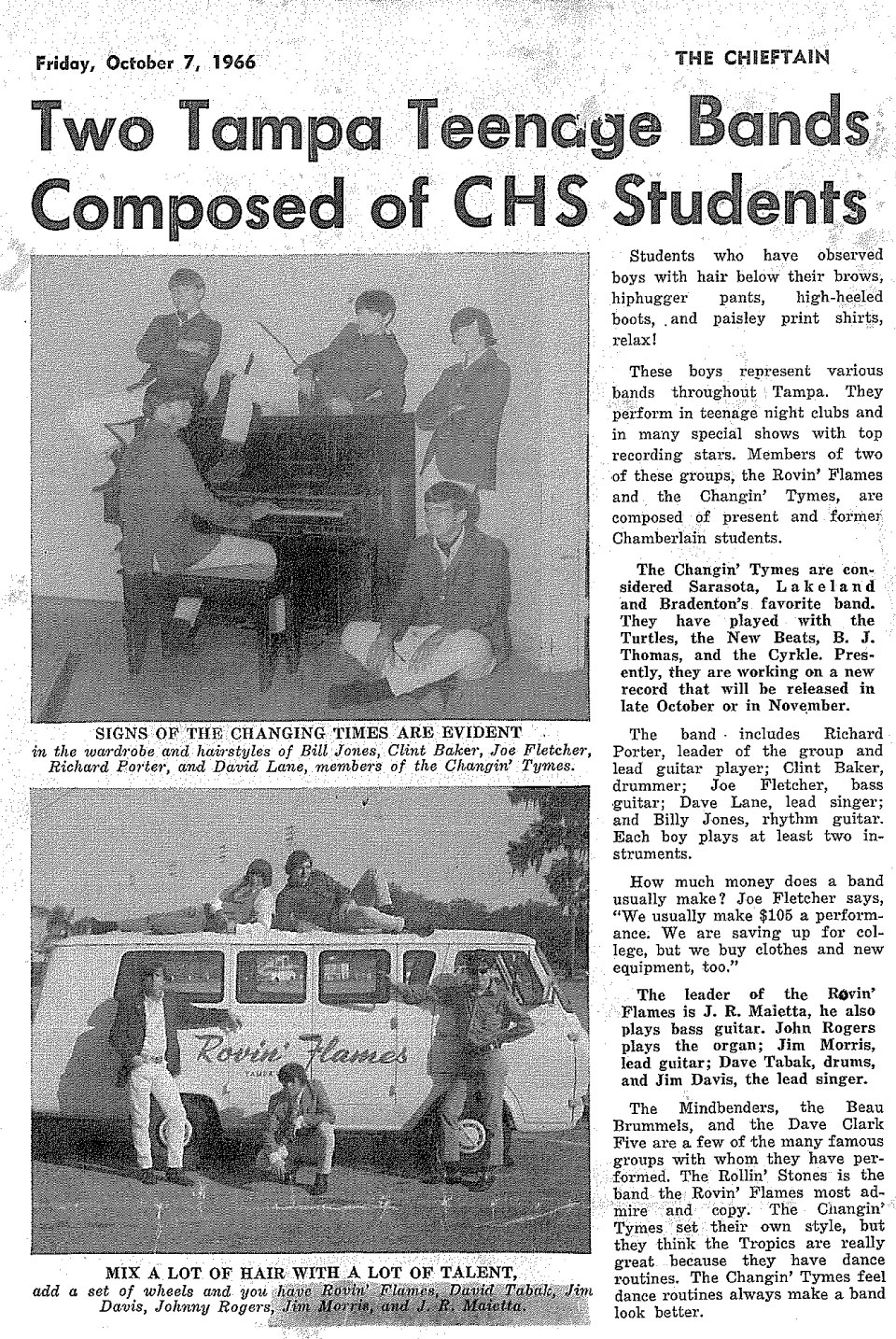
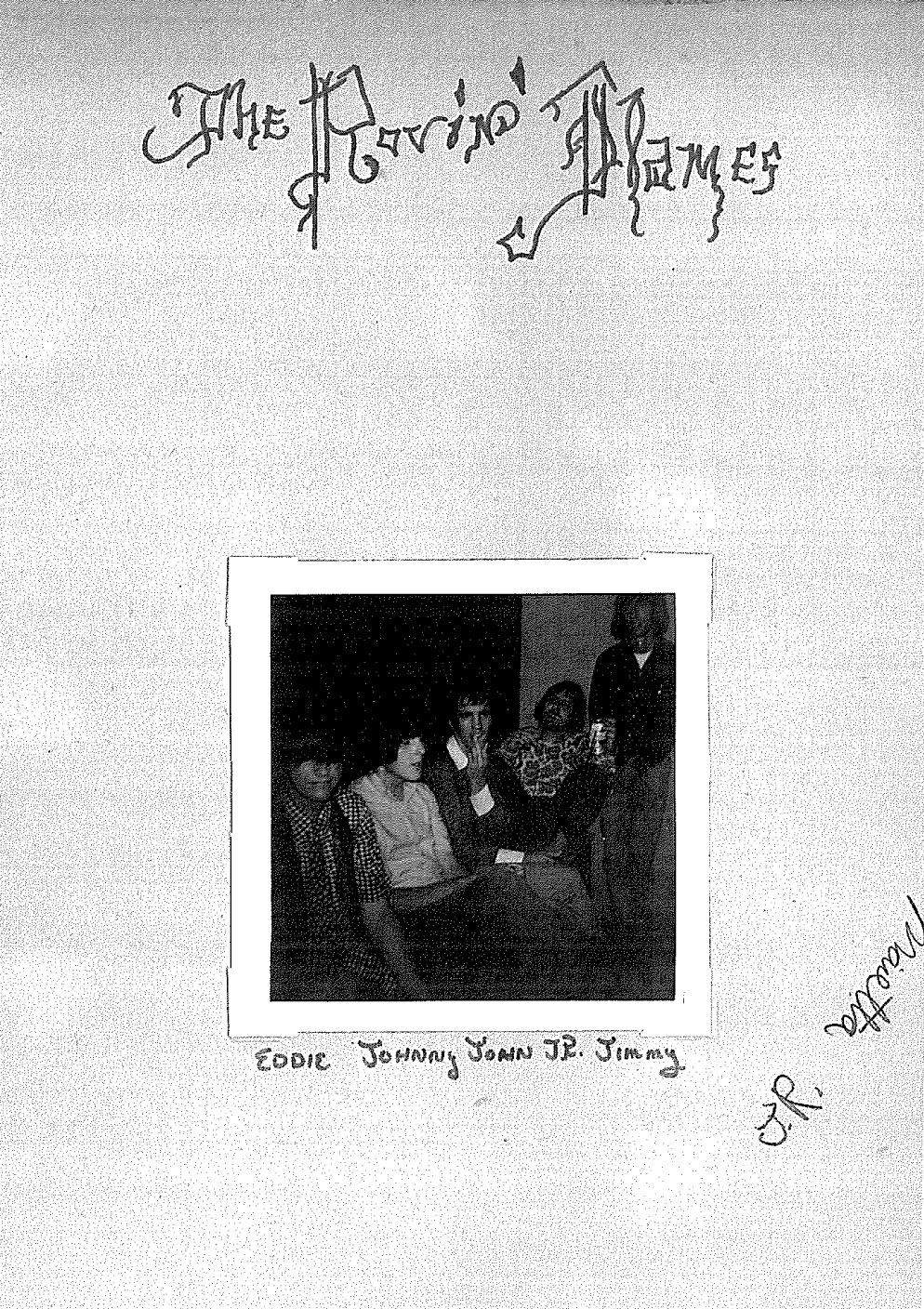
The Rovin’ Flames were a major group out of Tampa, Florida. They went through many lineup changes, and it’s only thanks to Dorothy Chapman, the former Secretary and later Vice President of the Rovin’ Flames Fan Club that I can give a detailed listing of lineup changes.
Original lineup, 1965 – spring or summer of 1966:
Paul Battle – rhythm guitar, vocals Jimmy “Mouse” Morris – lead guitar J. R. Maietta – bass Jerry Goff – drums
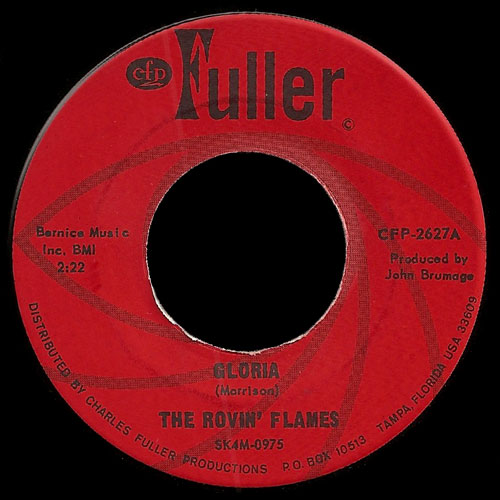
I don’t know how the band started, but at least some of the Rovin’ Flames were students at Chamberlain High. The Rovin’ Flames first record was “Gloria” / “J.J.J.P.” cut in September 1965 on the Fuller label owned by Charles Fuller who also ran the Boss and CFP (Charles Fuller Productions) labels. This 45 was produced by John Brumage, whose name crops up repeatedly on Rovin’ Flames records, usually as producer.
The group uses the guitar line to “Shakin’ All Over” to open “Gloria”. The singer’s voice on “all I have to do is call her on the phone, and … she’ll be … huggin’ me and kissin’ me” doesn’t make him sound like much of a lady killer – this Gloria might be too much to handle! Mop Top Mike pointed out that this was one of the earliest covers of the Them song, released about six months before the Shadows of Knight had a major national hit with their version.
“J.J.J.P.” is the band’s original, an instrumental take on the Louie Louie bass line and changes. Paul Battle handled the vocals for “Gloria”.
Early lineup with original band plus Hardy Dial
Spring or summer, 1966:
Hardy Dial – lead vocals Paul Battle – rhythm guitar, vocals Jim Morris – lead guitar J. R. Maietta – bass Jerry Goff – drums
Forvus (Brooke Chamberlain) with the Rovin’ Flames
Hardy Dial came from the Outsiders, another Tampa group that cut two great 45s for the Knight label, including “She’s Coming On Stronger”. Dial left the Outsiders before their second 45, a ripping take on “Summertime Blues” sung by John Delise. Interestingly, Delise would be behind the microphone with the Rovin’ Flames as well, but not until their last 45 in 1967.
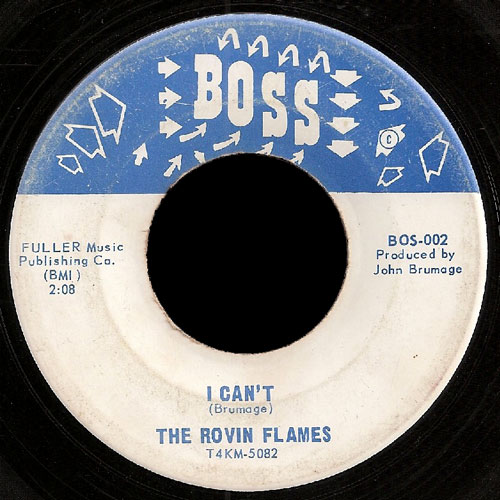
The Rovin’ Flames second record was the demented “I Can’t”, written by producer John Brumage and released on the Boss label in February or March of ’66. The short verse is followed by six bars where Dial (or is it Paul Battle?) simply chants “I Can’t” or sometimes just wails. After a short guitar solo it’s right back to more of the chant, a repetition of the verse and then a fadeout to those maniacal words.
For the flip they do the entirely more sedate “I’m Afraid to Go Home”, a cover of a Brian Hyland song. Despite the catchy rhythm of the guitar and bass this song drags, with rhymes of “what I’ll see” and “Tennessee”.
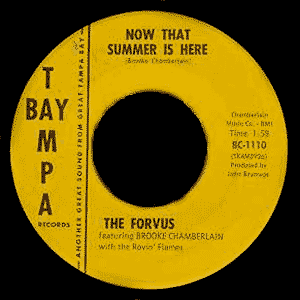
Next they provided the rhythm tracks for Brooke Chamberlain, a DJ who fancied himself a songwriter and singer. “Now That Summer Is Here” is nearly a parody of beach pop music, with lyrics like “‘watermelon so good” and a chant of “summertime, summertime” in the middle of the tune. Brooke tries holding the last word of each line, but he’s no Beach Boy. Interestingly there’s phasing on the backing tracks, I wonder if that was intentional or caused by some mishandling the tape.
Brooke’s taking himself even less seriously on the flip, “It’s Nothing New”. The awkward artist credits on the labels are another clue to the tongue-in-cheek nature of this 45, with “Now That Summer Is Here” billed to “The Forvus featuring Brooke Chamberlain with the Rovin’ Flames'”, while “It’s Nothing New”, is credited to “Brooke Chamberlain with the Forvus and the Rovin’ Flames and Harvey Swadnungle”. Chamberlain’s alias in BMI’s database is Frank Edmondson Jr.
Jeff Lemlich wrote to me “I think Tampa Bay was Brooke Chamberlain’s label. He was a disc jockey on WALT Radio in Tampa, and as such had a lot of influence. So when he wanted to cut a record, bands like the Rovin’ Flames and Four Letter Words obliged.”
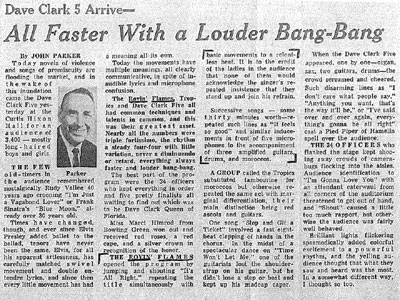
Rovin’ Flames opening for the Dave Clark Five, July 1966
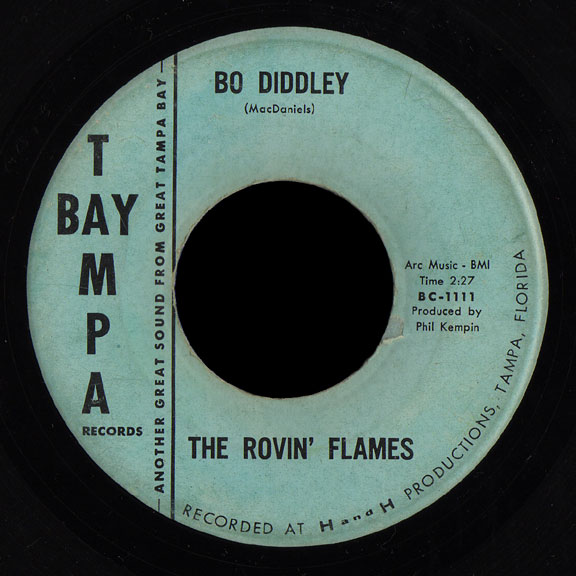
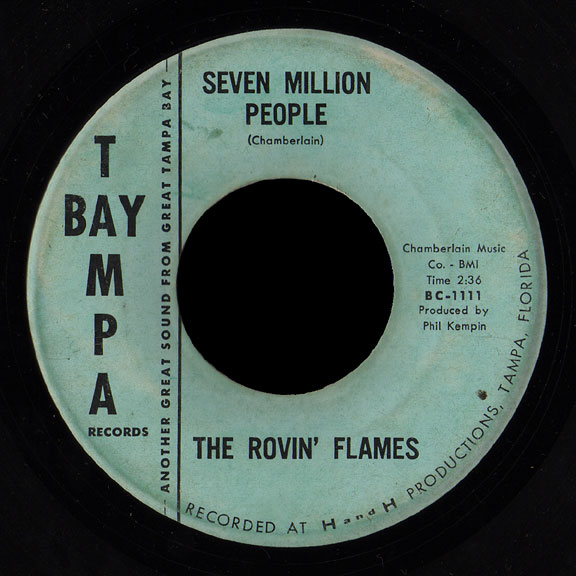
The Rovin’ Flames work with Chamberlain had some benefit to the band, as he contributed lyrics for a good ballad, “Seven Million People” for their next 45, released in June of ’66. The group runs the lyrics over an adaption of the Byrds “I’ll Feel a Whole Lot Better”. There’s more action on the other side, a good cover of “Bo Diddley”.
Like the Forvus single and the Outsiders 45s on Knight, this was recorded at H&H Productions in Tampa. The producer for this one is Phil Kempin, the only record they cut not produced by John Brumage.
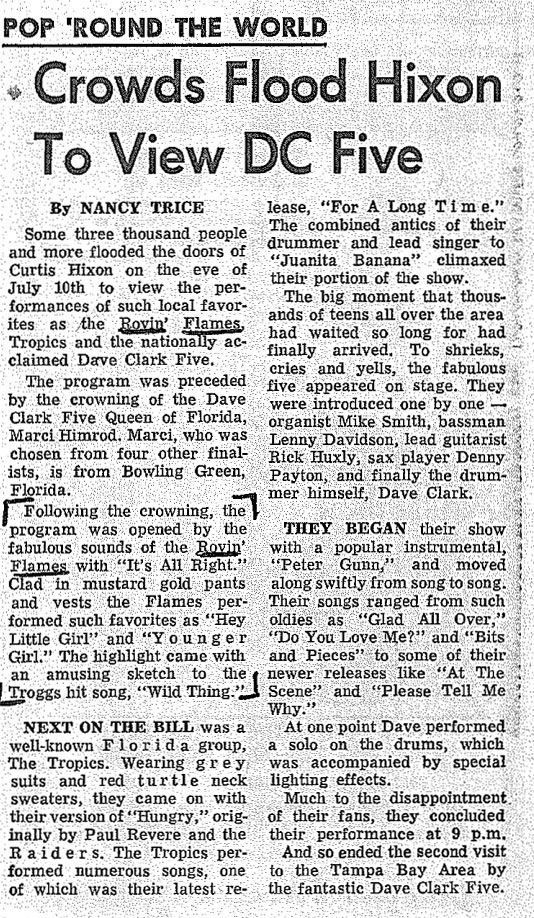
Rovin’ Flames at Curtis Hixon with the Tropics and the Dave Clark Five
Third lineup with Jim Davis, John Rogers and Dave Tabak joining.
September, 1966:
*Jim Davis – lead vocals Jimmy Morris – lead guitar *John Rogers – organ J. R. Maietta – bass *Dave Tabak – drums
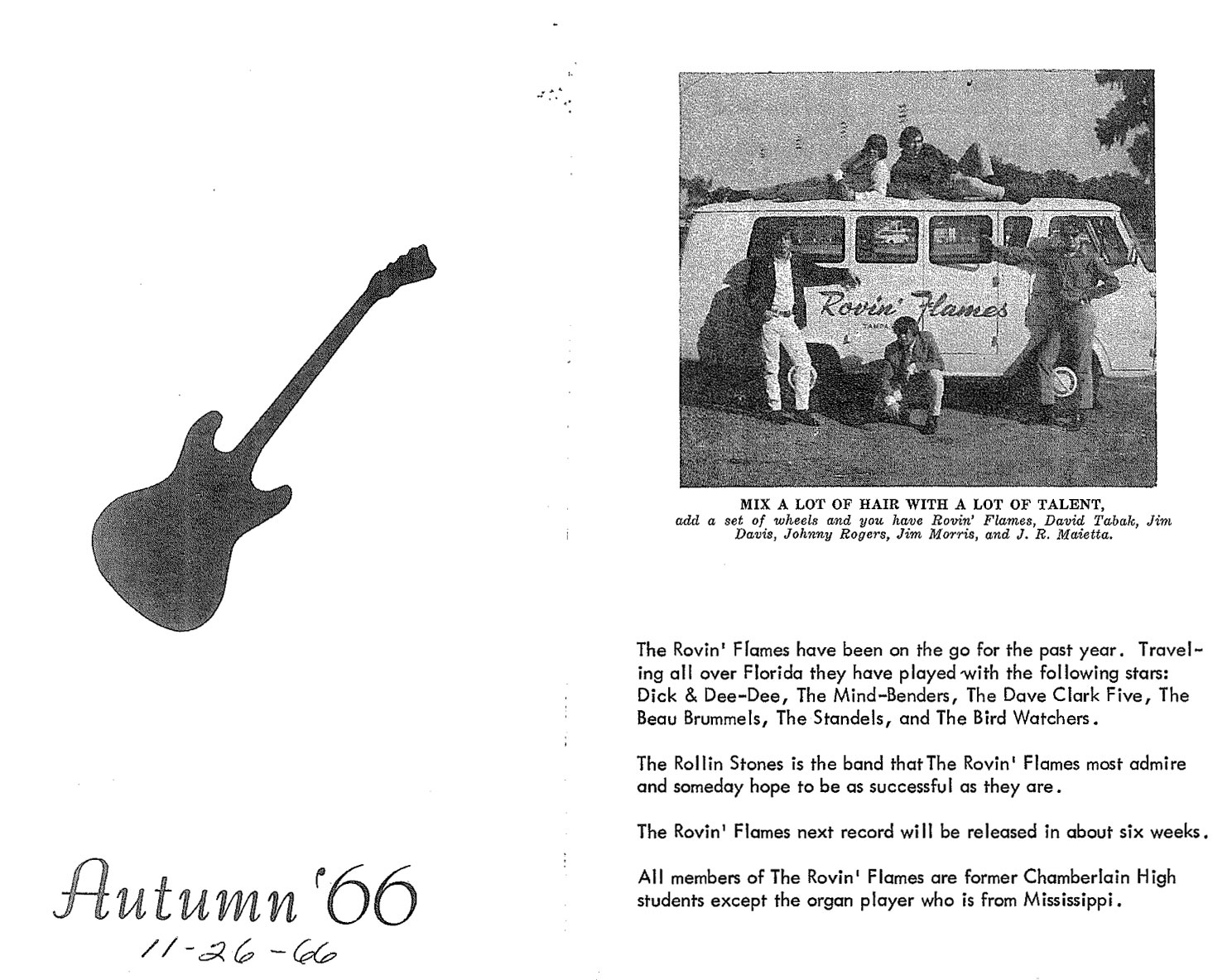
Paul Battle and Jerry Goff left the band for another project and about this time Hardy Dial left the group as well. By September of ’66 the band had added Jim Davis on lead vocals, Davy Tabak on drums, and for the first time they had an organ player, John Rogers, who came from Mississippi. This group would stay together for a few months but not record.
December, 1966:
*Paul Battle – lead vocals Jimmy Morris – lead guitar John Rogers – organ J. R. Maietta – bass Dave Tabak – drums
Jim Davis left the group in December of ’66 and Paul Battle returned for a very short time as lead vocalist. This lineup also would not record.
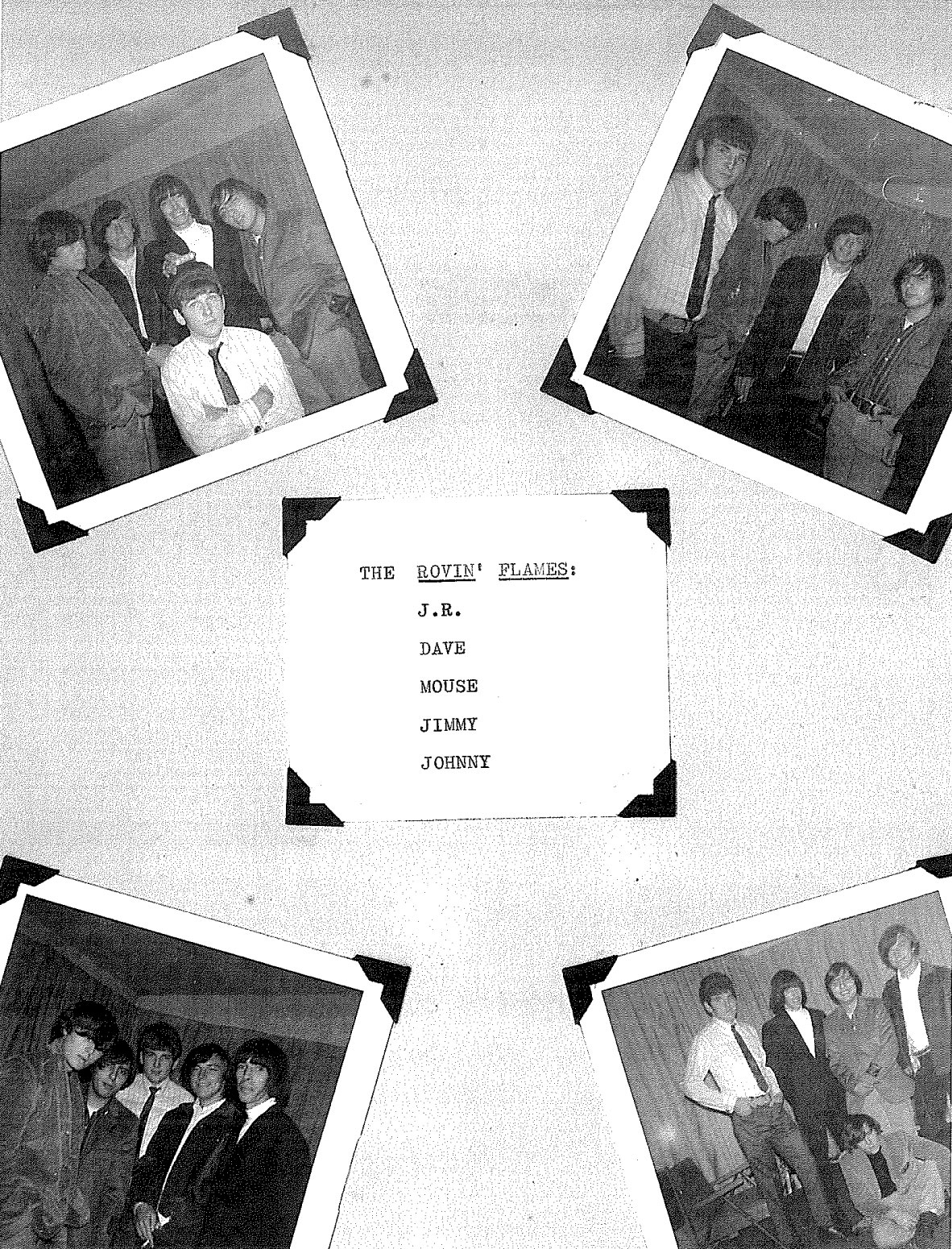
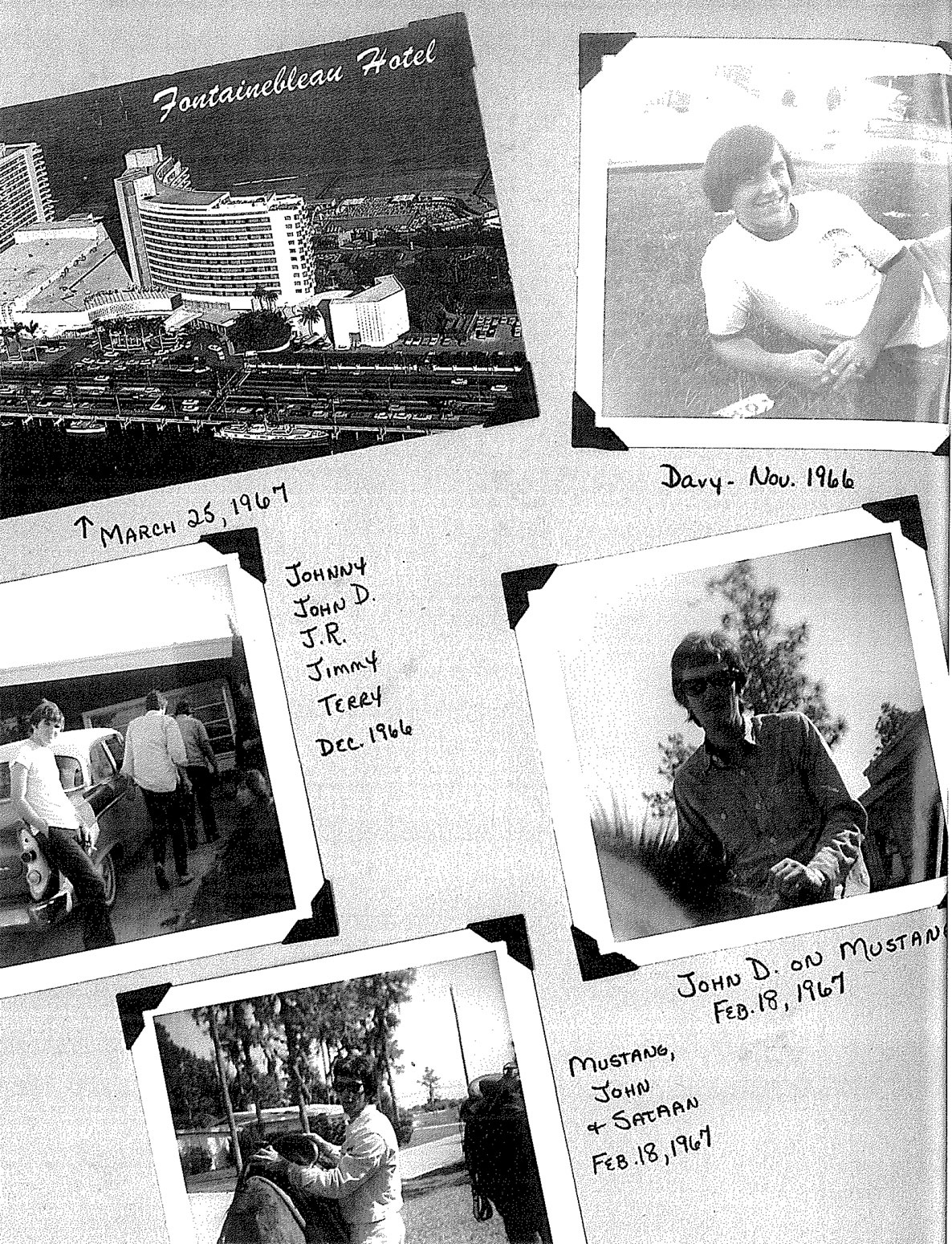
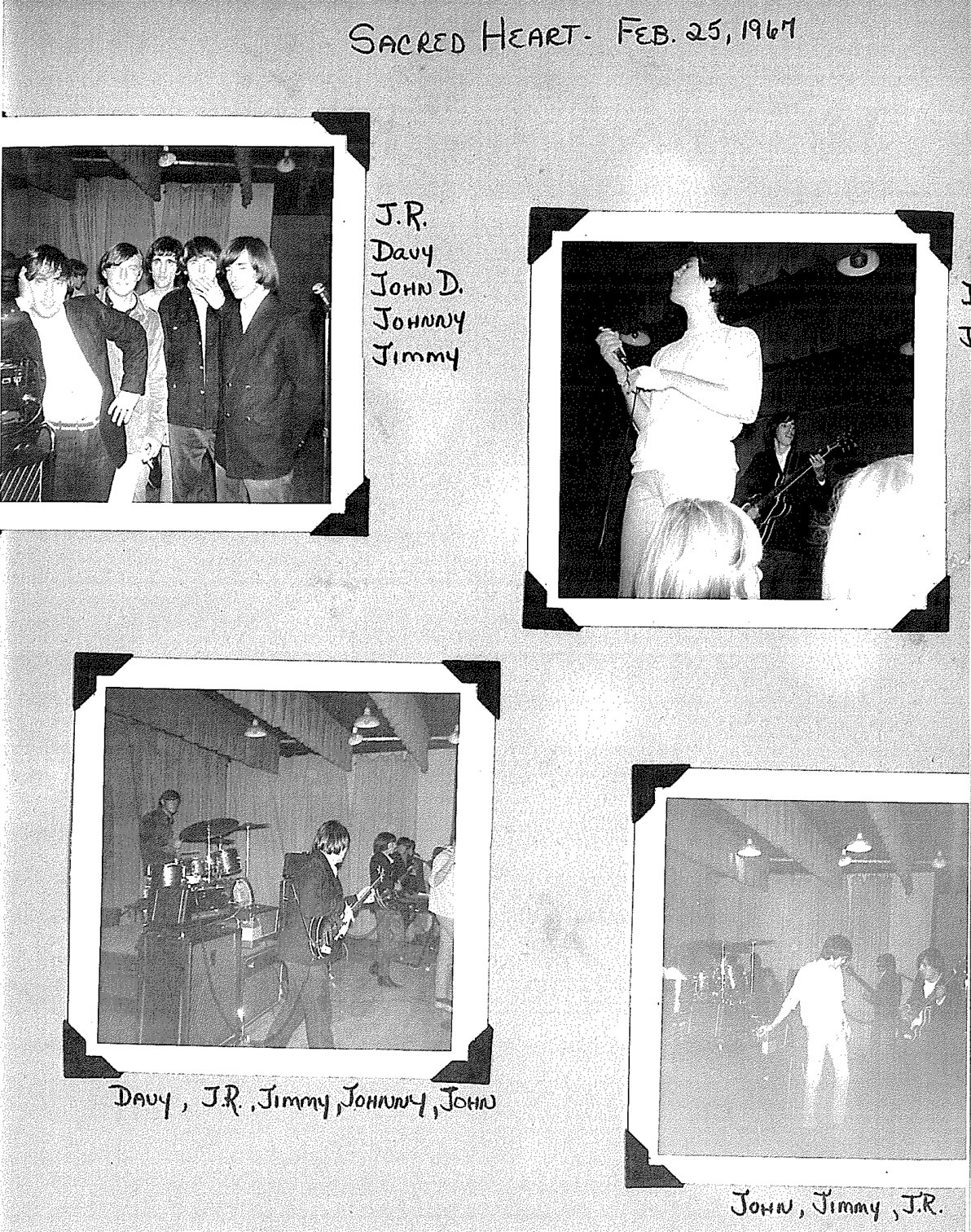
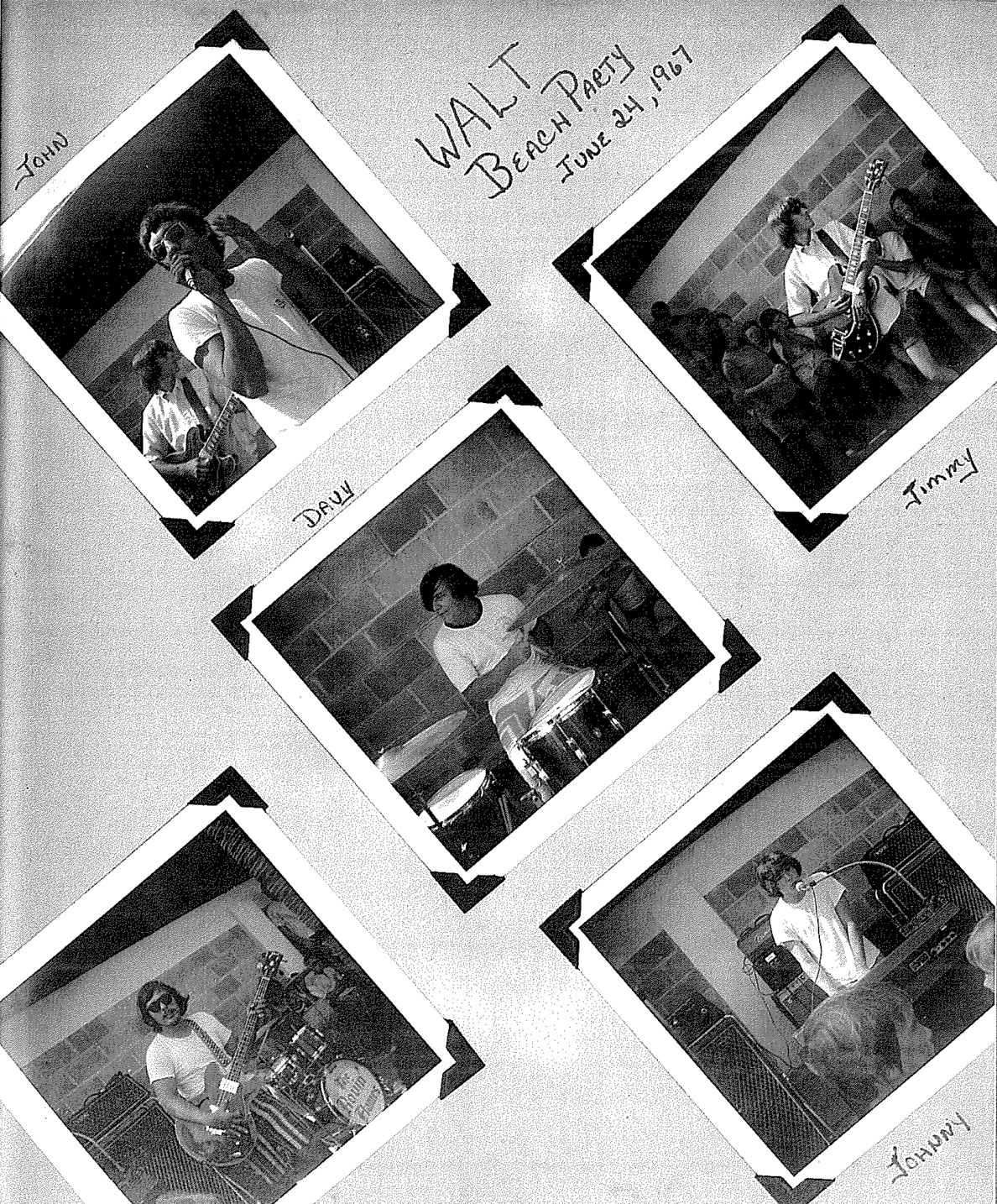
Article with the Changin’ TymesThe Rovin’ Flames, late 1966November ’66 – March ’67 photosSacred Heart Academy, February 25, 1967Summer of ’67, with John Delise and new drummer Eddie TaylorWALT beach party, June 24, 1967
February, 1967:
*John Delise – lead vocals Jimmy Morris – lead guitar John Rogers – organ J. R. Maietta – bass Dave Tabak – drums
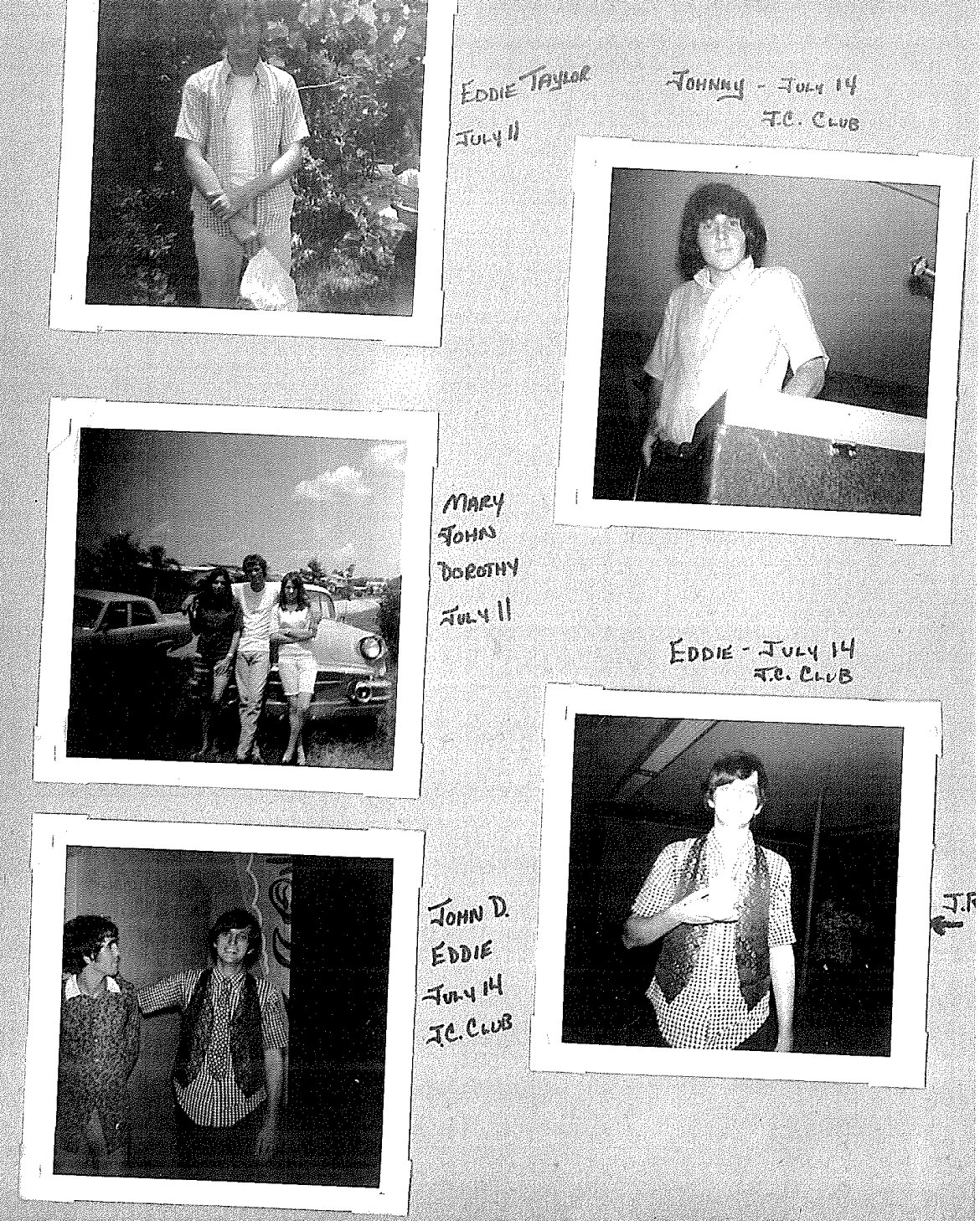
Rovin’ Flames July 1967 photos
July 1967:
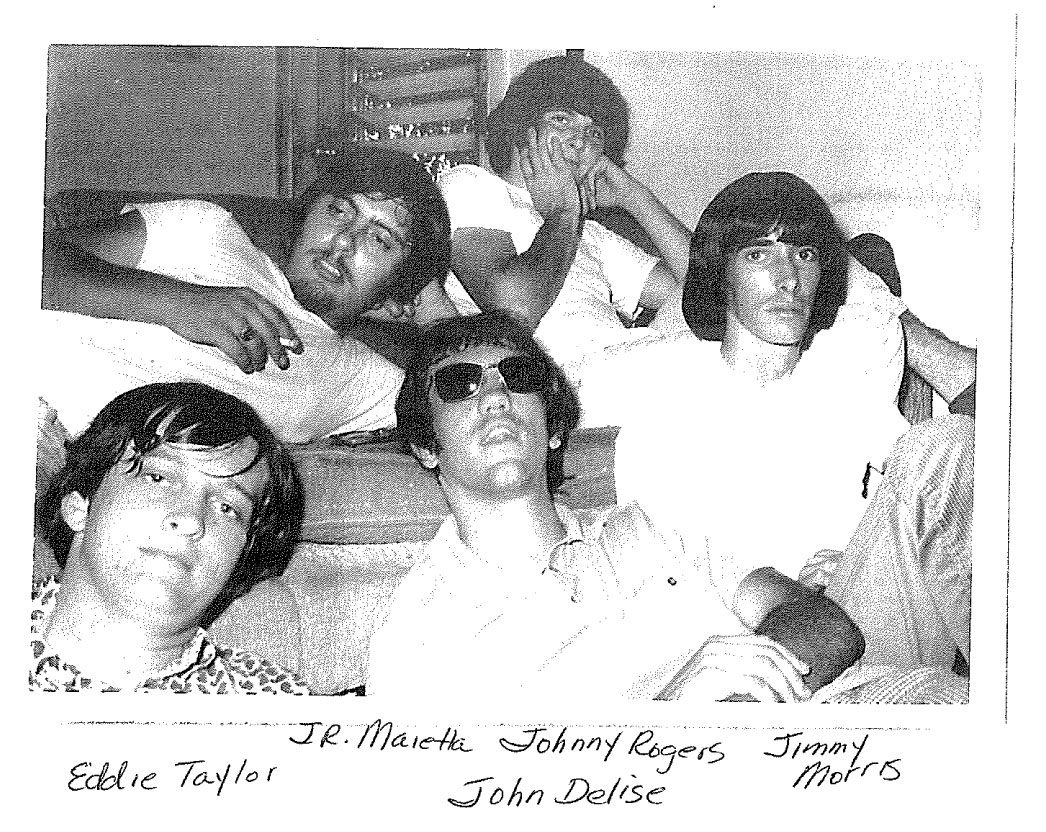
John Delise – lead vocals Jim Morris – lead guitar John Rogers – organ J. R. Maietta – bass *Eddie Taylor – drums
The next big change for the group was adding John Delise on lead vocals, the same singer who previously had replaced Hardy Dial in the Outsiders. Delise had a good run with the Outsiders. With their name changed to the Soul Trippers, a 45 of “I’m a King Bee” on the Laurie subsidiary label Providence was a minor sensation in the summer of ’66.
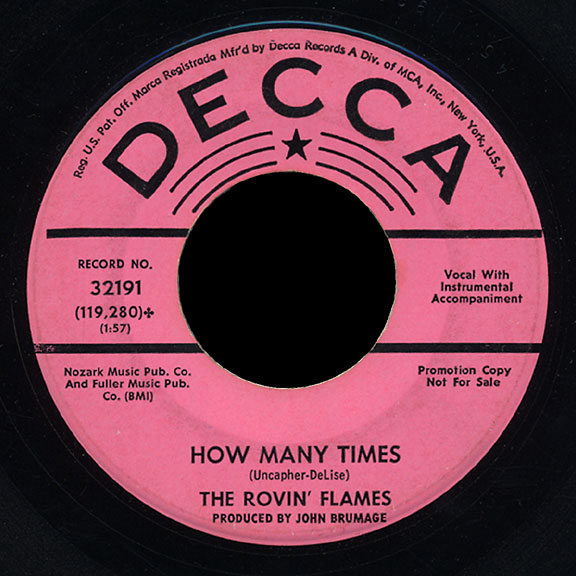
In fact, the Outsiders/Soul Trippers and Rovin’ Flames stories seem intertwined in ways that aren’t fully clear to me yet. With Delise moving on to the Rovin’ Flames, The Soul Trippers became Noah’s Ark, cutting two 45s for Decca, including a cleaned-up version of the Fugs “Group Grope” retitled “Love In” that the band credited to themselves. Ed Sanders could have sued over that one! One of the writers credited on “Love In” is Helen Uncapher who would co-wrote both sides of the Rovin’ Flames next release, “How Many Times” / “Love Song #6” with John Delise. As producer of these discs, John Brumage at H&H seems to have been responsible for placing both Noah’s Ark and the Rovin Flames with Decca in 1967.
“How Many Times” is one of the most memorable of all 60’s band 45s, with a swinging organ sound and Delise delivering the wild opening lyrics:
How many times can you put a gun up to your head, thinking about the pleasures of being dead
along with a lighter verse:
How many times have you pulled into a hamburger stand, waving your money in your hand, yelling and screaming like a hungry man, but the lazy waitress takes all of the day, but you don’t care she’s ugly anyway!
It was released a little late for its style, in September of 1967. The freewheeling flipside “Love Song #6” was also included on the 1968 Tener various-artists LP release Bee Jay Video Soundtrack.
John Delise went on to join Those Five, probably after their cool 45 “Sidewalks” was released on Paris Tower.
In July of ’67, Eddie Taylor replaced Dave Tabak on drums, though I believe Dave is playing on the Decca 45.
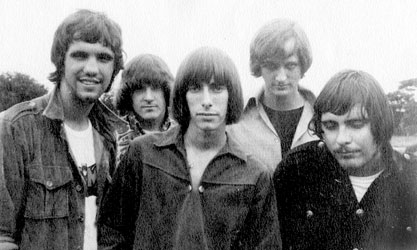
Autumn 1967, from left: John DeLise, Johnny Rogers, Jimmy Morris, Eddie Taylor and J.R. MaiettaThe Rovin’ Flames with new lead singer Bob Thompson, November 1967
November 1967:
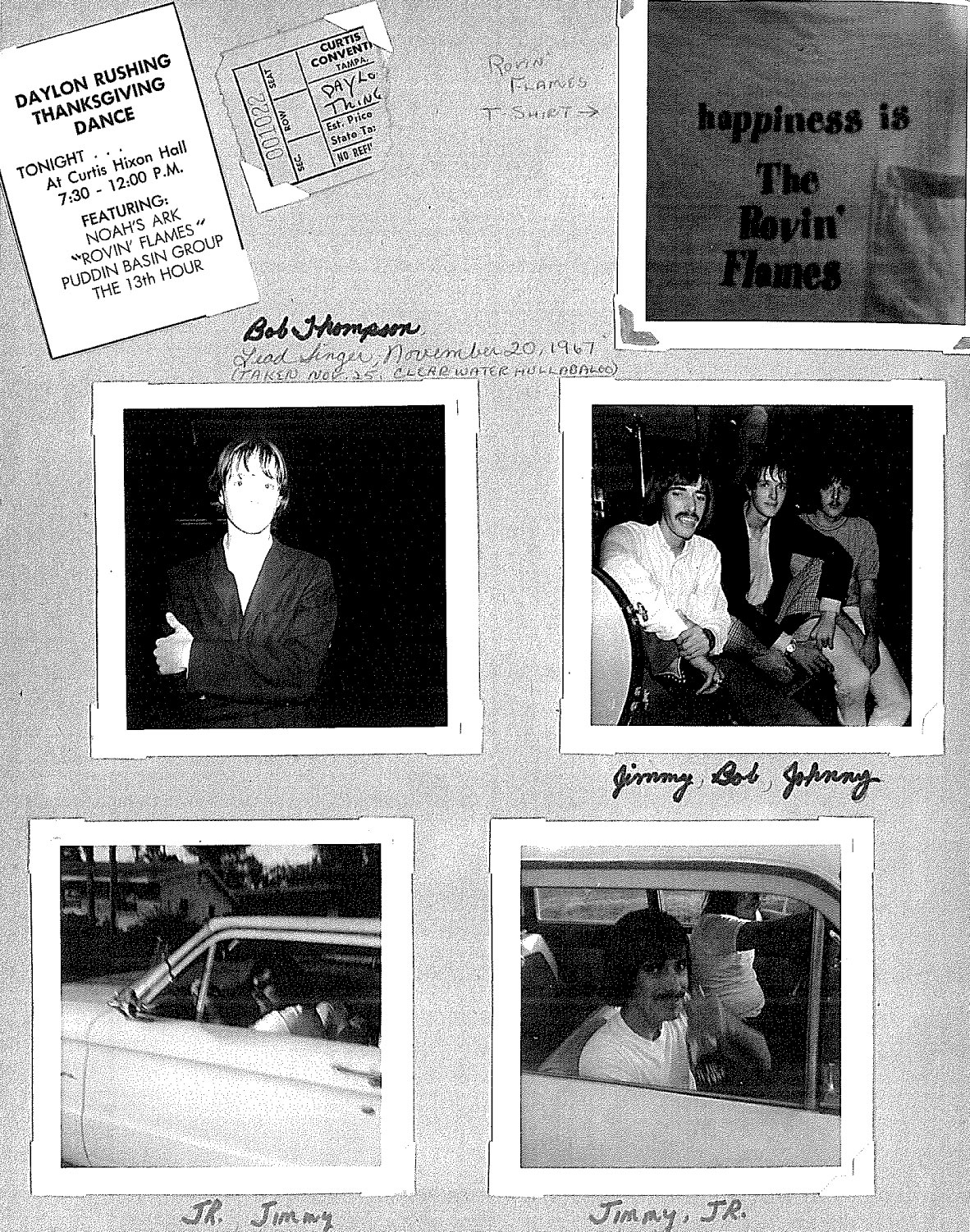
*Bob Thompson – lead vocals Jim Morris – lead guitar John Rogers – organ J. R. Maietta – bass Eddie Taylor – drums
July 1968:
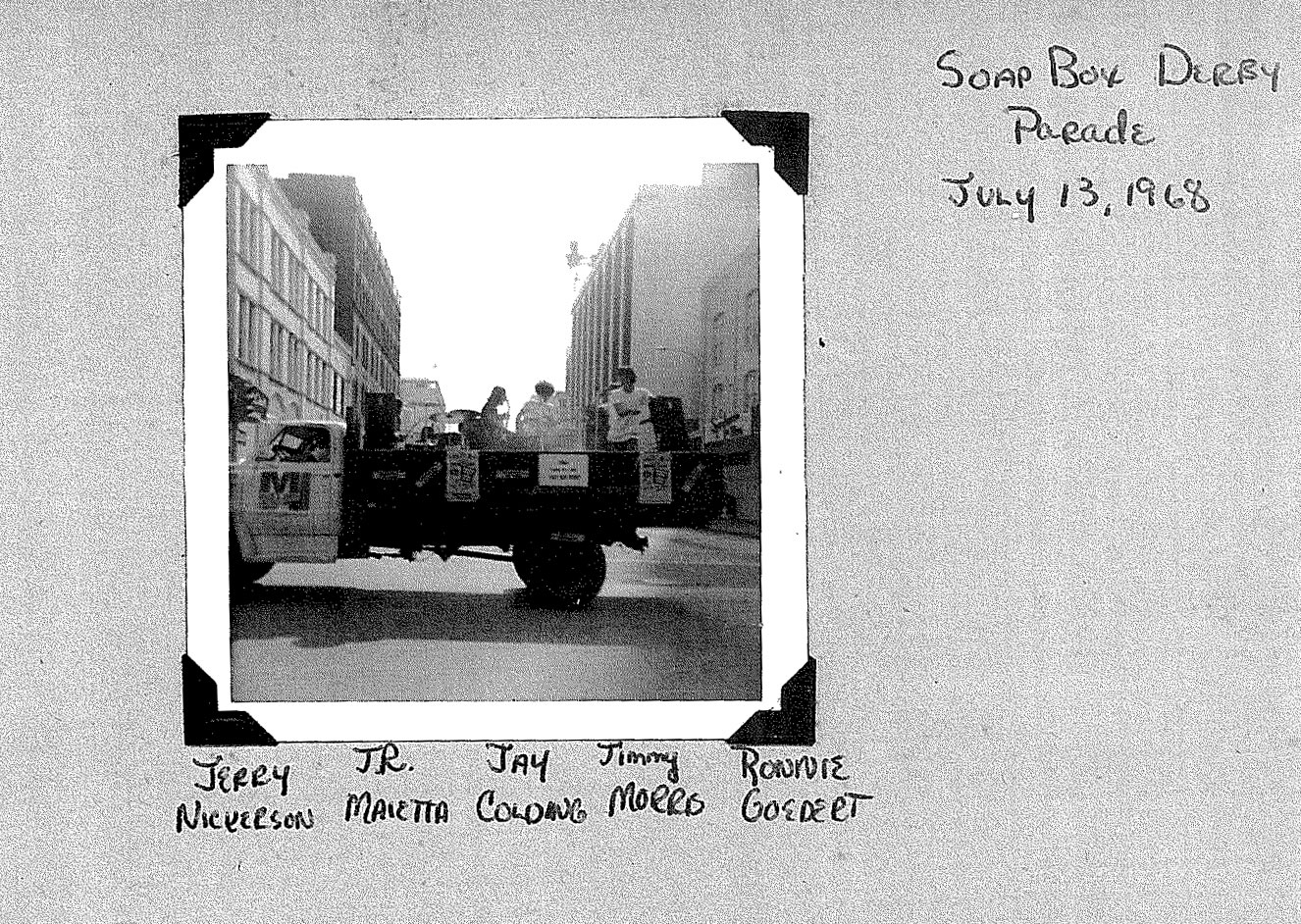
*Ronnie Goedert – lead vocals Jim Morris – lead guitar *Jay Colding – organ J. R. Maietta – bass *Jerry Nickerson – drums
Autumn 1968:
*Hobie O’Brien – lead vocals Jimmy Morris – lead guitar Jay Colding – organ J. R. Maietta – bass Jerry Nickerson – drums
John Delise lasted longer than most of the Rovin’ Flames lead singers, but still was with the group less than a year. Bob Thompson took over in November of ’67. Around this time the Flames started appearing with ‘Rovin’ Things’ emblazoned on Eddie Taylor’s drumhead, though I’m not sure if they really changed their name in their bookings.
Johnny Rogers died in March 1968 and Bob Thompson and Eddie Taylor left the band. Jim Morris and J.R. Maietta must have barely been able to hold the group together, but by July they had recruited three replacement musicians – Jay Colding on organ and Jerry Nickerson on drums, plus Ronnie Goedert on lead vocals. Ronnie didn’t stay long and was replaced by Hobie O’Brien in the fall of ’68. The band broke up for good in early 1969.
J.R. Maietta stopped performing and owned a record store for some years. He passed away in 1996. John Delise died on October 3, 2004, and the band’s last keyboard player Jay Colding passed away just this November 26, 2009. Ronnie Goedert later joined White Witch, and passed away in 2000.
Last known photo of the Rovin’ Flames, Soap Box Derby Parade, July 13, 1968
Much helpful information in writing this piece was found at The Limestone Lounge. Special thanks to Jeff Lemlich for providing additional info as well as scans of the Fuller, Boss and Forvus 45s, and transfers of “Gloria”, “J.J.J.P”. “Now That Summer’s Here” and “It’s Nothing New”.More information on John Delise is on the Tampa Bay Garage Bands site, where I also found the photo of the band from the autumn of ’67.
Very special thanks must go to Dorothy Chapman. Her scrapbook of photos and fan club letters provides the timeline and documentation for this article. Without her help I could not have given an accurate account of the band’s history.
Here are Dorothy’s comments on the Rovin’ Flames:
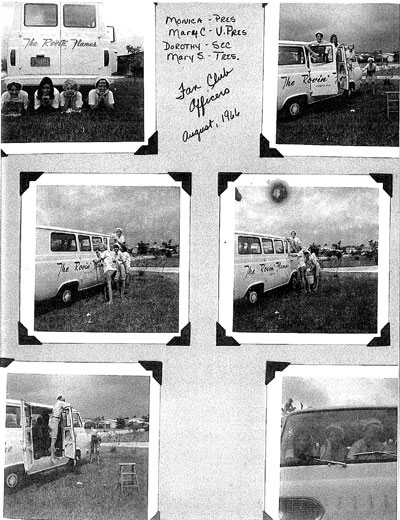
My sister and I met the Rovin’ Flames during the summer of 1966, just before I started 10th grade at Chamberlain High School, through friends who were next-door neighbors to Hardy Dial’s family in our subdivision – he had just joined the band. J.R. Maietta lived with his parents, also in our subdivision, and they practiced there in the screened porch. Shortly thereafter Paul and Jerry left the band, taking the current “official Fan Club officers” with them, and my sister and I took over as “President” and “Secretary” respectively from about August 1966 until the band broke up in early 1969.
The Rovin’ Flames van with Fan Club officers, August, 1966
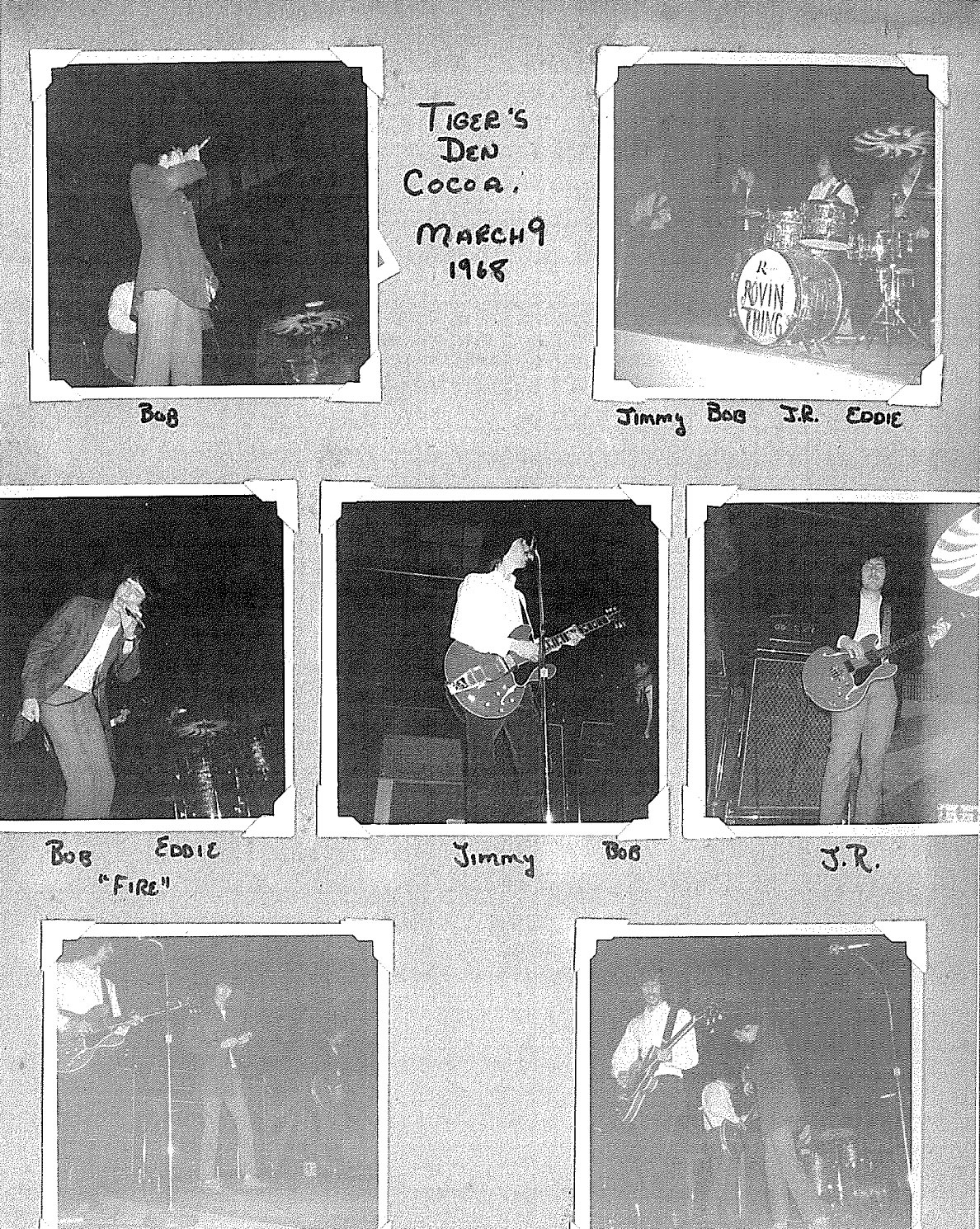
Every day after school we would either walk or ride our horses to J.R.’s parents’ house to listen to the band practice. While our school friends were going to football and basketball games, we spent our Friday and Saturday nights (and weeknights in the summers) traveling with J.R.’s parents (who were their managers) to their “gigs” all over Tampa, Clearwater and Sarasota. We even got to go to the Tiger’s Den in Cocoa Beach a couple times to cheer the band on and dance the night away! I kept a scrapbook containing photos, mementos, and some of the monthly newsletters that I laboriously typed on an old manual Underwood typewriter and mailed to our loyal Fan Club members, keeping them up-do-date on the band’s comings and goings. In addition to the newsletters, the members received a membership card and a copy of their latest record, all for $1.00 a year. We even had t-shirts with “Happiness is the Rovin’ Flames” printed on them.They performed some of their recorded songs live – Gloria and Bo Diddley were always favorites. They did play How Many Times regularly, but if I recall correctly they all hated Love Song #6 (which they called Love Song #69). It wasn’t theirs, but I remember that Mustang Sally was always the “dance contest” song. Among others, they performed with the Dave Clark 5, the Grass Roots, the Robbs and Mitch Ryder & the Detroit Wheels here in Tampa, and with ? and the Mysterians in Gainesville.
It’s hard to explain to people what it was like to run around with a local rock band in the late 60’s – they were truly local celebrities. There were so many places for kids to go for dancing, where they just sold cokes and pretzels and it was such fun to be a part of the scene! In the Tampa area we regularly went to the FCA Hall, Temple Terrace Rec Center, Sacred Heart Academy Auditorium, The Inn Crowd, Gandy Ballroom, Strawberry Patch, and the Hullabaloo Clubs in Clearwater and Sarasota, to name a few. The memories make me smile (well, most of them anyway).
When Johnny Rogers died it was a real shock – he was such a sweet guy, but obviously had problems we didn’t know about. Things were never quite the same after Johnny died although the band stayed together for about a year. They finally phased out in January or February 1969. Sadly, I’ve heard that a number of the guys have passed away.
Documented gigs and timeline:
August 1965 – first 45 “Gloria” / “J.J.J.P.” released (Fuller CFP2627).
1966:
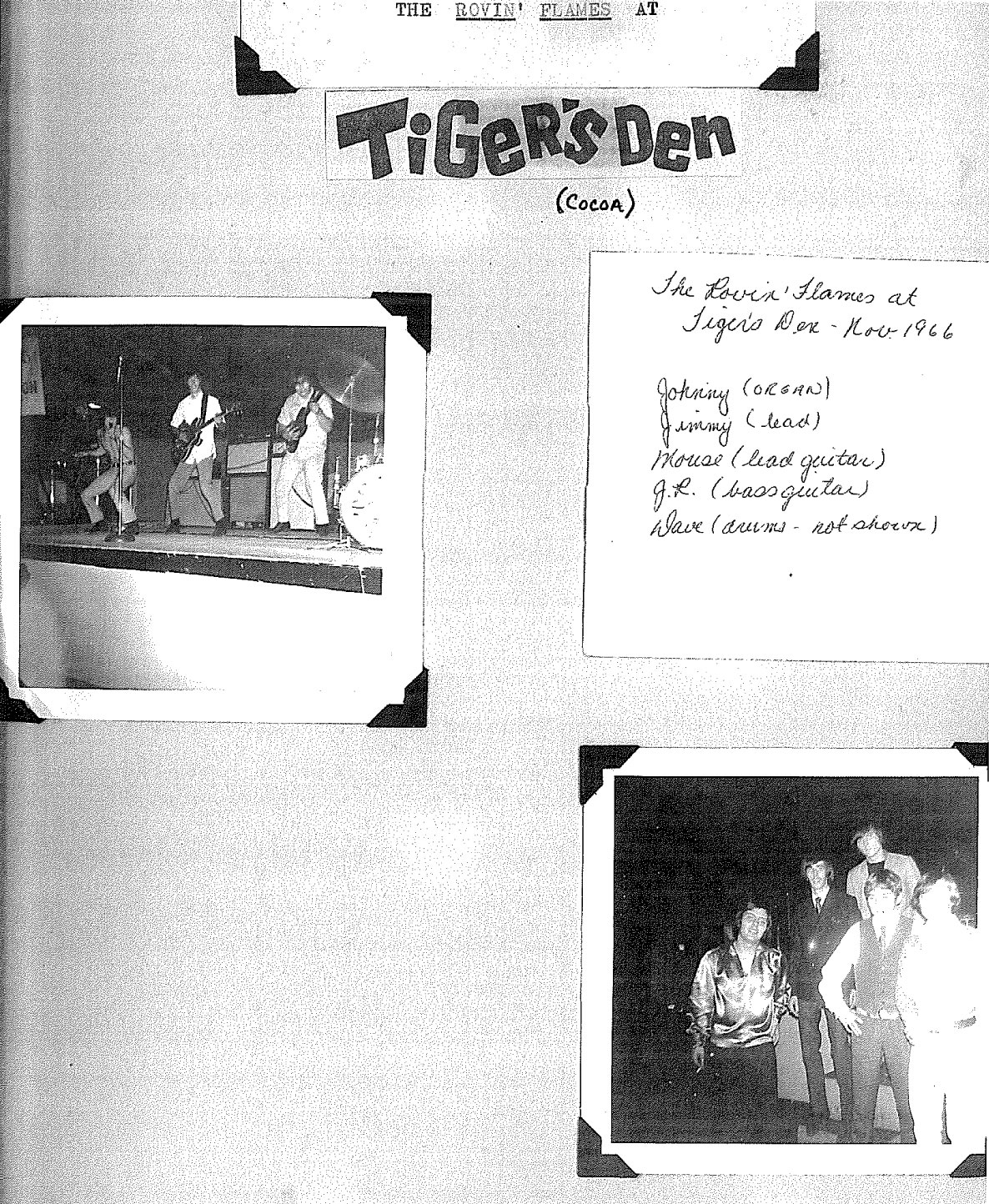
Feb. or March – second 45 “I Can’t” / “I’m Afraid to Go Home” released (Boss BOS-002) ? – Rovin Flames back the Forvus featuring Brooke Chamberlain on “Now That Summer Is Here” / “It’s Nothing New” (Tampa Bay BC-1110) June – third 45 “Seven Million People” / “Bo Diddley” released (Tampa Bay BC-1111). July – Hardy Dial joins on vocals July 10 – Curtis Hixon Hall, Tampa, with the Dave Clark Five and the Tropics, set list: “It’s All Right”, “Hey Little Girl”, “Younger Girl”, “Wild Thing”. July ? – Lakeland Shower of Stars July ? – Tiger Den, Cocoa, FL August 13 – Billboard predicts “Bo Diddley” likely to crack top 100 (it didn’t) Aug. 24 – Sacred Heart Academy September – Dave Tabak joins on drums, Jim Davis on vocals, followed shortly by John Rogers on keyboards Sept. 10 – Delta Sigma Phi, Gainsville, FL Sept. 17 – Tiger’s Den, Cocoa, FL – first show with lead singer Jim Davis Sept. 24 – Patricks Air Force Base Oct. 1 – Sacred Heart Academy Oct. 15 – Sacred Heart Academy/ “FCA” Oct. 29 – Sacred Heart Academy Oct. 31 – Lakeland Nov. 1, 2, 3 – Lakeland Nov. 4 – Umitilla Nov. 5 – Fla. Pres. College, St. Petersburg Nov. 11 – Daytona Beach Nov. 12 – Cocoa, FL Nov. 17 – Lakeland Nov. 18 – Fla. Pres. College, St. Petersburg Nov. 19 – Sacred Heart Academy Nov. 25 – Carrollwood Country Club Nov. 26 – Trowel Building, Tampa / Benefit for Robert McCord Oral School – with the Surfsiders December 1966 – Paul Battle rejoins as lead vocalist Dec. 25 – Sacred Heart Academy Dec. 31 – King Solomon’s Mine
1967:
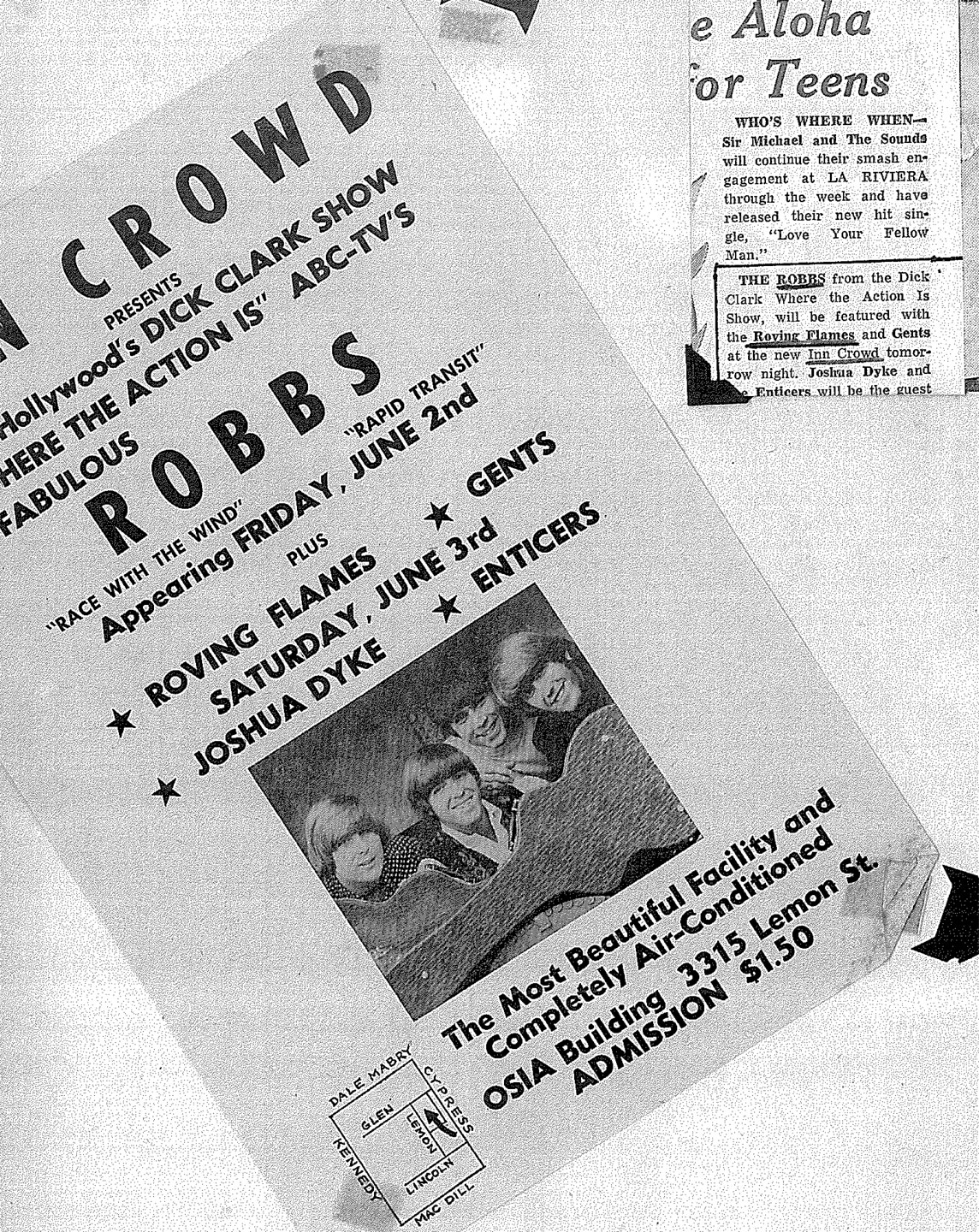
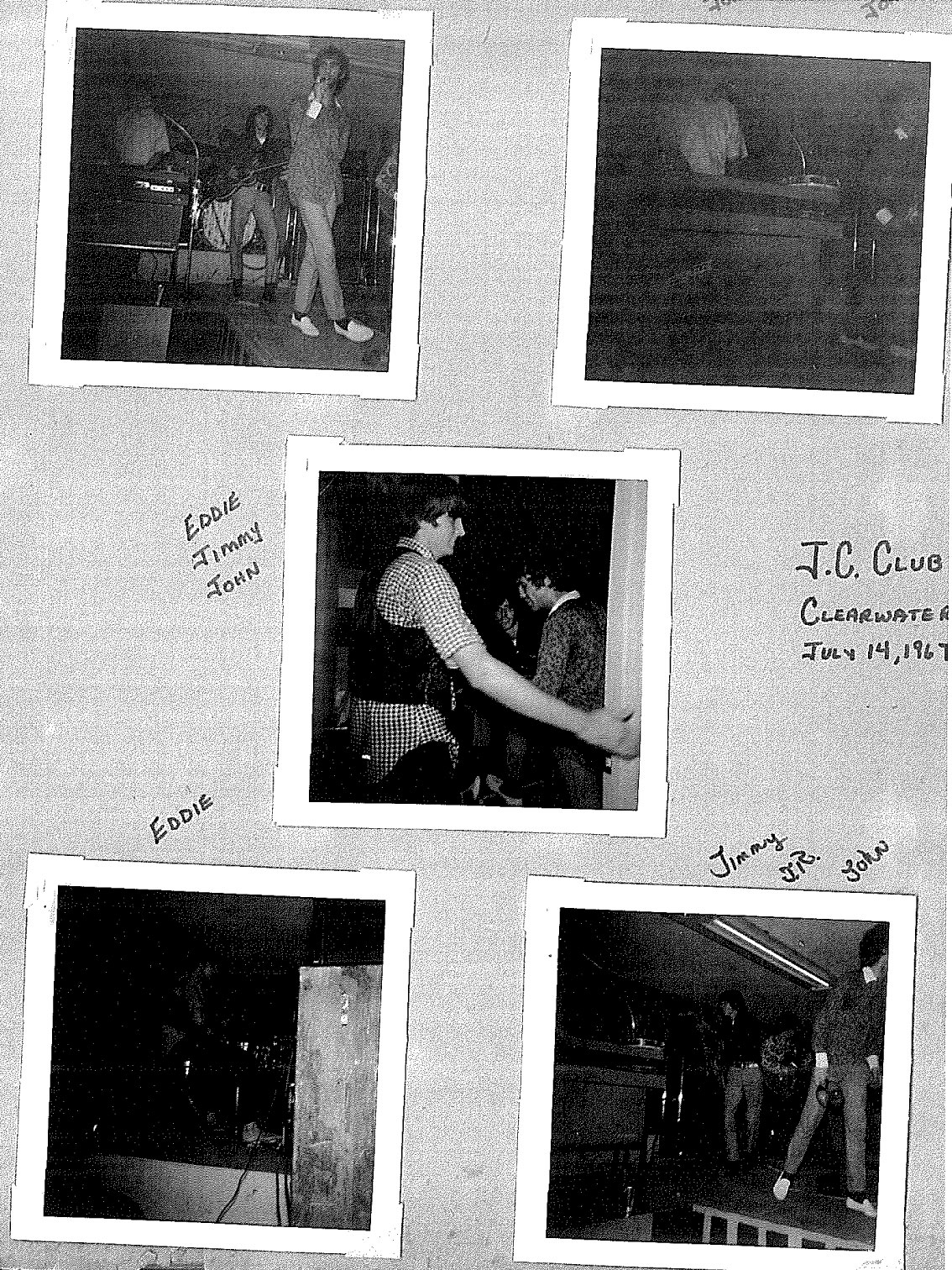
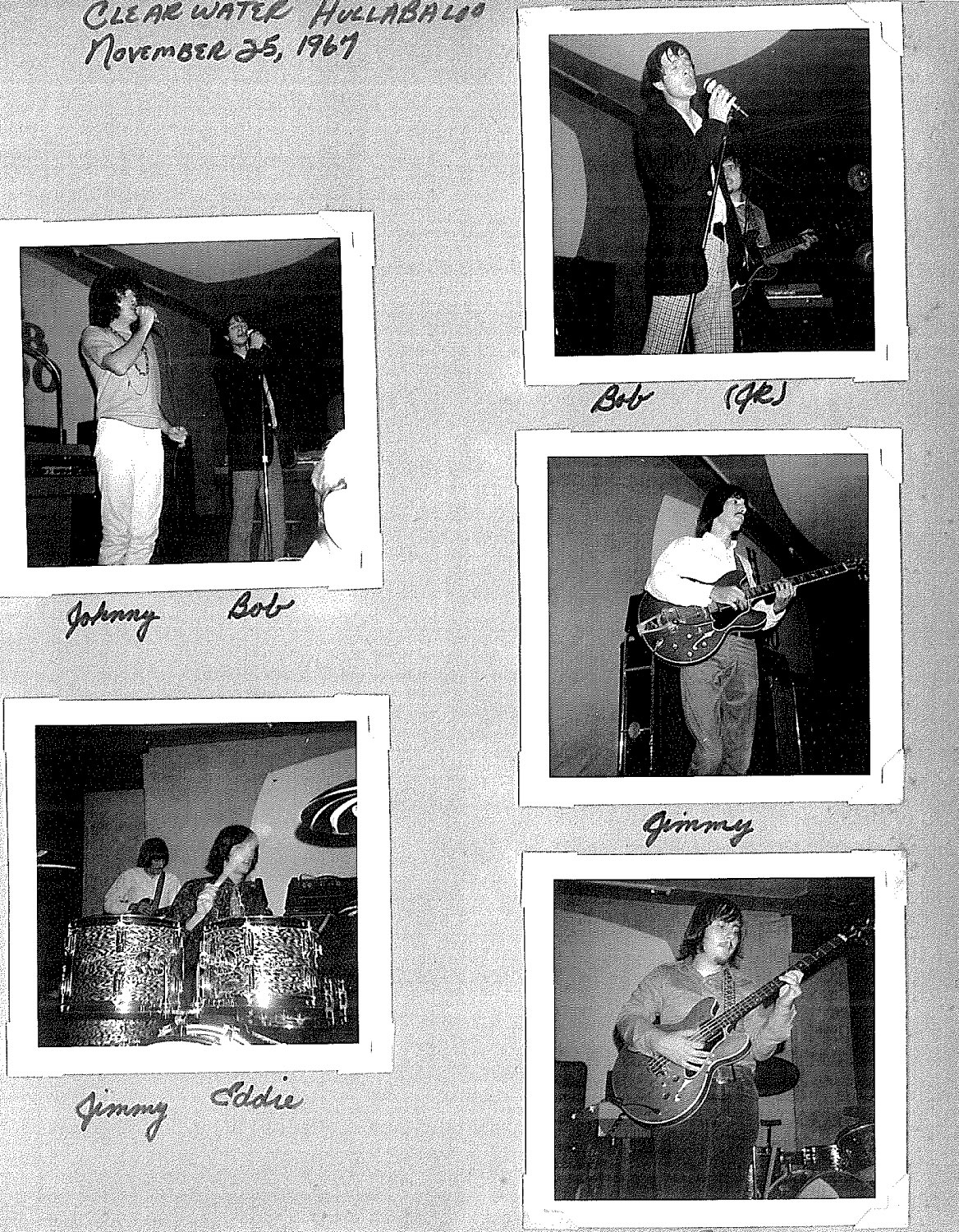
Jan. 16-22 and late January – Beachcomber Club, Jacksonville Jan. 20 – Sacred Heart Academy Jan. 21 – band starts using new Vox equipment Jan. 31 – Feb. 6 – Lakeland February – John Delise joins on lead vocals Feb. 17 – Temple Terrace Feb. 18 – Punta Gorda Feb. 25 – Sacred Heart Academy Late Feb. – early March – Lakeland March 7 – Largo Fair March 11 – Tiger’s Den, Cocoa, FL with the McCoys March 17 – Big Moose Showcase March 18 – Apopka Youth Center March 20 – April 3 – Fontainebleau Hotel, Miami April 7 – Big Moose’s Showcase, St. Petersburg Apr. 8 – Sarasota Armory Apr. 9 – Benefit in memory of Charlie Beecham of the Emotions Apr. 21 – Big Moose’s Showcase, St. Petersburg Apr. 28 – Tiger’s Den, Cocoa, FL / benefit for Crippled Children’s Home Apr. 29 – Sacred Heart Academy, Tampa May 6 – Lake City May 12 – Sebring May 13 – Umatilla May 19 – F.C.A. May 20 – Tiger’s Den, Cocoa, FL June 2 – Inn Crowd, with the Robbs and the Gents (“15-minute psychedelic version of ‘Summertime Blues'”) June 3 – Sacred Heart Academy June 7 – Melborne Civic Center June 9 – Aloha June 16 – Temple Terrace June 17 – Inn Crowd June 23 – Tiger’s Den, Cocoa, FL June 24 – Aloha / WALT Beach Party June 28 – Sacred Heart Academy June 30 – Sacred Heart Academy Luau (private) July – Eddie Taylor replaces Dave Tabak on drums July 1 – Sacred Heart Academy Semi-formal (private) July 10 – Tiger’s Den, Cocoa, FL July 14 – J.C. Club July 17 – Temple Terrace July 19 – Sacred Heart Academy September – fourth and last 45 “How Many Times” released (Decca 32191) November – Bob Thompson joins on lead vocals Nov. 25 – Clearwater Hullabaloo late Nov. – Curtis Hixon Hall, Tampa, with Noah’s Ark, the 13th Hour and the Puddin’ Basin Group
1968:
March – Johnny Rogers dies March 9 – Tiger’s Den, Cocoa July – Ronnie Goedert joins on lead vocals, Jay Colding on organ and Jerry Nickerson on drums July 13 – Soap Box Derby Parade Autumn – Hobie O’Brien joins on lead vocals
1969: Band breaks up in January or February
At the Tigers Den in Cocoa, March 9, 1968At the Tiger’s Den, Cocoa, November 1966At the Inn Crowd with the Robbs, June 2, 1967J.C. Club, Clearwater, July 14, 1967Clearwater Hullabaloo, November 25, 1967
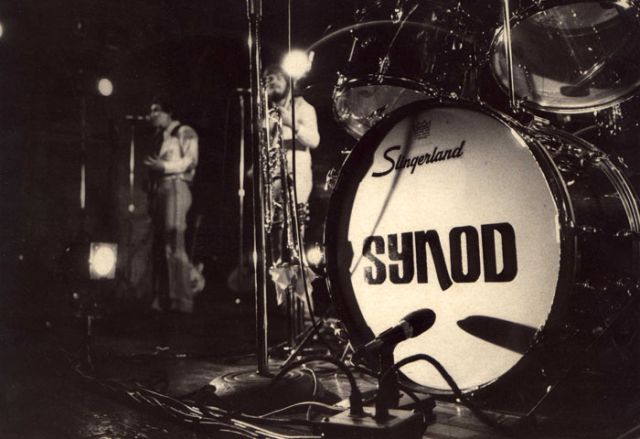
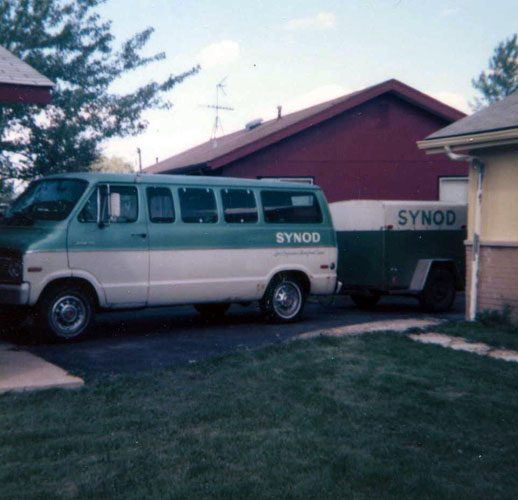
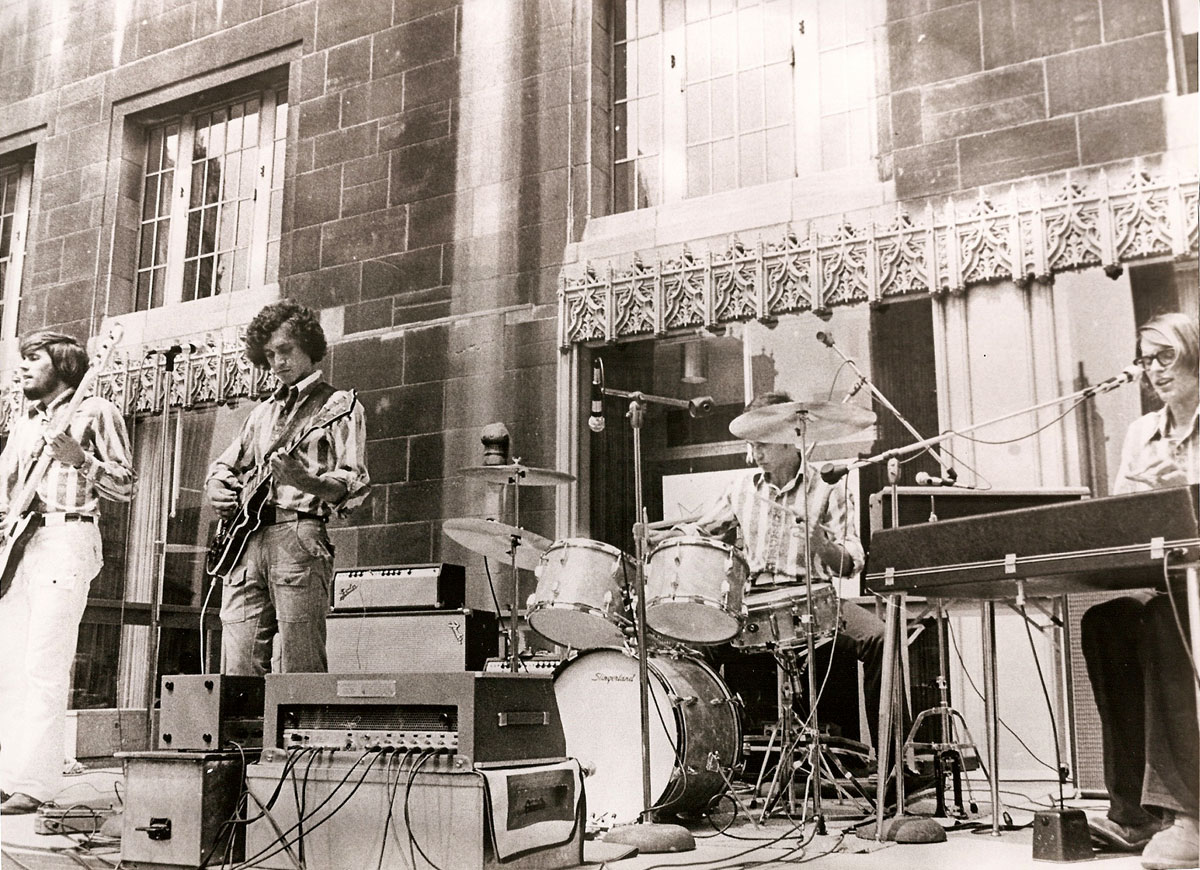
Craig Rutz wrote to me about his first group, Peter and the Wolves, which evolved into Synod:
My brother and I started Peter and the Wolves during my freshman year of high school (summer and fall of 1965) in Palatine, Illinois. We were one of the thousands of bands inspired by the Beatles. The members of Peter and the Wolves included Doug May (now the leader of Yard Fulla Cars), LeRoy (Buddy) Rogers, my brother Glenn Rutz and me.
My father worked for the Chicago Tribune and would take the train home every day from the city to Palatine. He often walked a mile and a half from the station. I was practicing my parts on my Harmony Hollywood guitar through my Kay 5-watt amplifier with one 6-inch speaker (I still have that amp) in the garage where our band sometimes practiced. My father walked through the garage on his way into the house and told me to “turn that thing down! I could hear you all the way from the train station!” I don’t think you could hear me playing that distance today using my Fender Twin or my Marshall, but I always remembered that little experience proudly. I felt like a rock star.
I used 3×5 cards to write down every practice and every performance we had, the dates, even what songs we did. And I still have those cards all these years later. I regret to say Peter and the Wolves never recorded anything. There are some rough tapes of us writing songs, and somewhere there’s at least one recording of us performing, but so far I haven’t been able to get my hands on anything that I could copy. Those were real garage band days.
As the band fizzled a couple of years later, my father actually co-signed a loan so I could buy my first professional guitar, a 1968 Gretsch Tennessean (which I also still have). In those days, the local music store (Olsen’s Music) would let a 14-year-old kid buy a top-of-the line guitar. Olsen’s kept a little box of note cards by the cash register and one would come in every week with some kind of payment, which was written down on the card, until the loan was paid. No interest, either. Just a promise to pay. In my case, I got a job at Burger King and I took in $10 or $20 each week for nearly a year.
When I went to college (Concordia University Chicago) I brought my Tennessean and Sears Silvertone amp with me. I played whenever I had the chance and even borrowed an acoustic guitar to play at a couple of protest rallies. In addition to the anti-Vietnam War movement, it was the time of the first real Jesus-movement of my era. There was a Wednesday night “folk service” at the college, and eventually I had an opportunity to play guitar with half a dozen other students. I didn’t own an acoustic guitar, so I brought my Tennessean and Silvertone. I started throwing in rock and roll lead guitar parts from Chuck Berry, the Beatles and The Beach Boys, and that made people laugh, so I did it more, and we suddenly became The Chapel Band.The Wednesday services got so big they had to move us to larger and larger spaces. At one point, they stopped the services because the couple hundred college kids were causing the floor of the cafeteria to bow. The services were popular and a lot of fun, and of course we wrote our own songs. Later that year the college sent us out for our Easter break to tour Midwest churches as ambassadors for the school. We had a great time, but people kept asking if we could also play for dances. That led us to start Synod, built around John Strege on keyboards, Paul Rogner as lead vocalist and me.
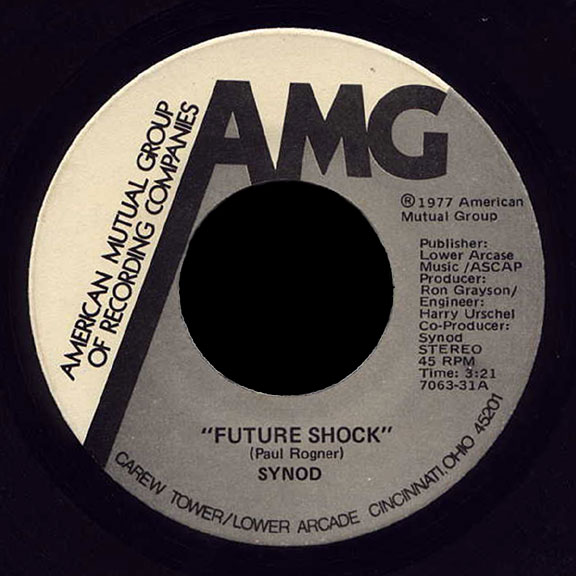
Synod’s first performance was at Concordia’s Spring Arts Festival on April 29, 1971. We’ve been together ever since. There were a few personnel changes, particularly in the first two years, but John, Paul and I have been in it the whole time. The first incarnation included Paul Sautter on guitar, Jack Giles on bass and Harv Mahavolic on drums. Scott King, later mayor of Gary, Indiana, became our bass player for the second performance, but less than a year later Sautter, King and Mahavolic left to start another band and we were joined by two other students, Brad Roche and Kim Kolander. We did some recording with that band, most notably a 9-song collection called “Sent to Reconcile.”
During the couple of years this 6-man version of the band was together we played constantly. We did some very long club dates in Clinton, Iowa and Branson, Missouri (before it became the Branson of today). We had great vocals, in part due to the influence of one of my favorite bands, The Association. One of our cover songs was a hit titled, “White Lies, Blue Eyes.” Along the way we auditioned for an agency called Gary Van Zeeland Talent from Little Chute, Wisconsin, not knowing they represented Bullet, the band that recorded “White Lies, Blue Eyes.” The A&R guy who auditioned us said we were the best band he’d ever seen and that we did “White Lies” much better than their flagship band, Bullet. They offered us a generous contract, and we thought we were on our way, but our drummer, Kim, announced several weeks later that he was quitting to get married. Because of that, Brad and Jack decided to call it quits. But John, Paul and I kept going.
I taught Paul to play bass, and we bought a Fender bass from our former bass player Scott King, and my brother, Glenn, joined us. We actually did some Peter and the Wolves songs, a few of which made it to recordings. Eventually, our part-time roadie, Bob Krueger, became a member of the band.
During the 1970s, Synod did a lot of writing and recording. We had a self-taught manager named Randy Schnack, who stayed with us about 15 years, and we went through a series of booking agents. We toured in 12 different states and performed at National Entertainment Conference showcases, Chicagofest, Summerfest, and dozens of universities, high schools, park districts and clubs.
We have always been primarily a dance band. That’s our preference, anyway. But on one tour of the college circuit we arrived in Houghton, Michigan to play a job and were surprised to see a stage the size of a lot of rooms we played. The university gym was set up with a thousand chairs, and we realized were about to do an unexpected concert. We’d done plenty of concerts before, but usually with some additional planning. The show went off alright, but during the intermission an organizer of the event came backstage to tell us how great we were, but couldn’t we turn up the volume and the lighting? We were on 10. When we got to the hotel that night we called our manager and said, “We’ll be home in 10 days. Buy us a truck.” When we got back, Randy had a new Chevy box truck, and we immediately filled it with gear. We eventually were traveling with two 16-channel sound boards (synched by the manufacturer, Acoustic Systems, for us) in stereo and bi-amped. We had 16 15-inch speakers and four splayed horns with an array of tweeters. We also put together a system of theater lighting using fresnels and ellipsoidal lamps, and even follow spots. At our level, nobody we ran into had the gear and show we had.
One of the agents we worked through, Ken Freeman, got us a record offer from Capitol. Around the same time we also had an offer from Mercury Records. It was a turning point for us, similar to the offer we had from Gary Van Zeeland. Both labels said they loved our original songs and our performance, both wanted to record our songs, but one said they wanted to use other singers (although it would be under our name and we’d still perform live) and another said they wanted to use studio instrumentalists on the records. That was and is a common practice, but it isn’t what we wanted, so we passed. Up until that time, we were working on the staff of Concordia University, but by 1982 I decided to take a job with the local police department.
We all took real jobs, but we kept Synod going. We travel less, and none of us are any good at booking so we play a lot less. But we practice all the time, perform whenever and wherever we can, and someday…. We’ve put together a little web site with a few sound samples at www.synodband.com
This site is a work in progress on 1960s garage rock bands. All entries can be updated, corrected and expanded. If you have information on a band featured here, please let me know and I will update the site and credit you accordingly.
I am dedicated to making this site a center for research about '60s music scenes. Please consider donating archival materials such as photos, records, news clippings, scrapbooks or other material from the '60s. Please contact me at rchrisbishop@gmail.com if you can loan or donate original materials

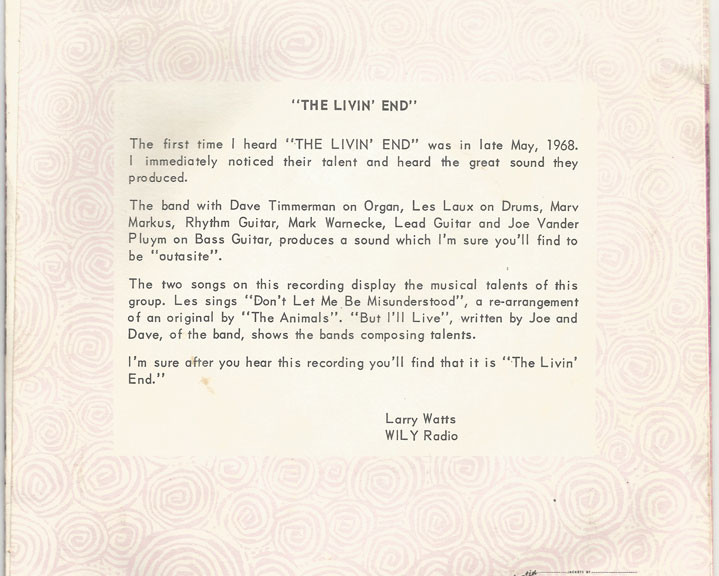
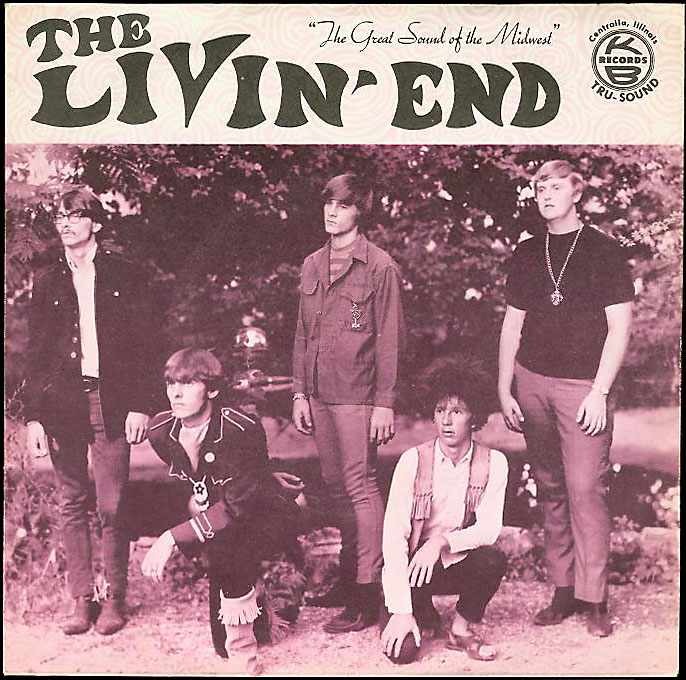
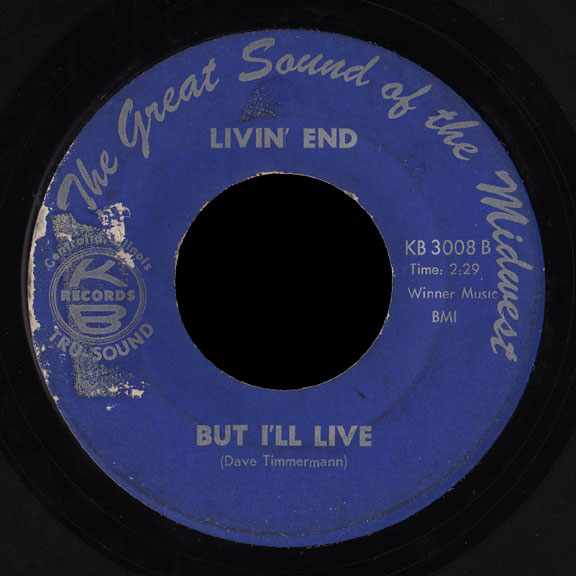 Centralia, Illinois, about 70 miles east of St. Louis was the base for KB Records. The label usually released country and show-band records. I’m not sure if the Livin’ End was also from that town, but the back of the sleeve has a blurb written by Larry Watts at AM station WILY, also in Centralia, and lists the band members as: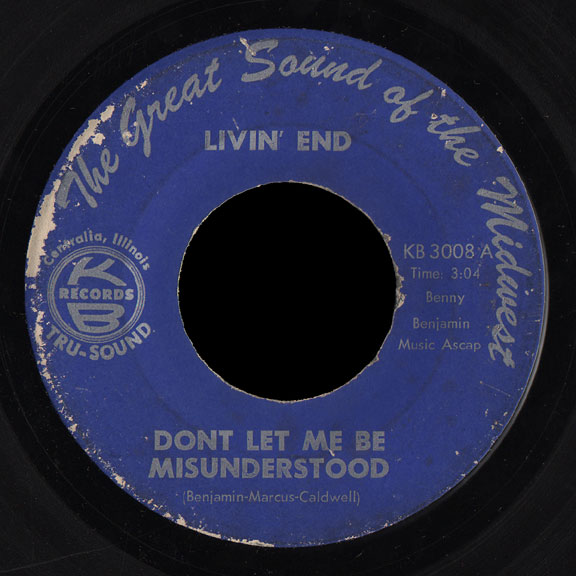
 However, Paulick soon left to join first the Society for only one month and then the Invaders, who released several 45s on Cuca, USA and Capitol. Paulick recommended his friend Tom Halfpap, and within six months the lineup had completely changed to the group on the record:
 With the remaining twenty minutes they cut one take of “Realities in Life”, a song Tom Halfpap and Dennis Pharis sketched out during the ride from Green Bay. Lyrics for the final verse were provided by engineer Gebheim. “Realities in Life” blasts out with an unworldly guitar sound that seems to be shredding the tape it’s recorded on. Vibrant and spontaneous, it’s a rocking winner for all two minutes run time.
 The Essex St. Journal were from Walpole, Massachusetts, a suburb of Boston but but this one 45 on the Planet label out of Providence, Rhode Island.