Category Archives: US

The Bondsmen “Our Time to Try” on AMH Records

I remember how knocked out I was by the Bondsmen’s version of “I See the Light”, which I played over and over after taping it off of WNYU’s Mod Monday radio show when I was in high school.

Compared to the Five Americans, the Bondsmen’s version of “I See the Light” is faster, with a fuller sound to the organ. “Our Time to Try” is an ambitious psychedelic track, with thick forbodeing fuzz, and good drum and organ work. The vocalist does a great job on both songs, and the guitarist has a particularly fine solo on “I See the Light”.

The sound and plea for open minds on “Our Time to Try” dates the release to about 1968. The record has a dense production to it which makes it hard to hear the lyrics, and is that a horn I hear at times during “Our Time to Try”?

The Bondsmen came out of Durham, North Carolina, but recorded at Justice Records in Winston-Salem (“I Love You, Yes I Do” / “Out of Sight” on Justice 1003) and AMH Productions out of Chapel Hill. I recently heard from Gene Galligan, who filled me in on some of their story. I had heard that their drummer was Phil Lee, so I asked him about that too.

I am Gene Galligan, keyboard (organ) player for the Bondsmen. This AMH 45 of Our Time To Try and I See the Light was the result of us winning a Battle of the Bands at the baseball stadium in Durham. We did another 45 before this as the Bondsmen, two James Brown songs, Outasight / I Love you Yes I Do. I do not have any copies, however, Ken Heywood told me recently in a phone conversation that he has a box of them somewhere, he just has to find it.

Vocals: Archie Thomas
Bass: Jim Bowen
Drums: Philip Pearson
Trumpet: Tim Hutchinson
Organ: Gene Galligan
Guitar: Ken Heywood

Just a tidbit about my part on I See the Light. I used to play a Vox Super Continental (Dual manual Black keys were white, white keys were black). But on that recording I used an organ that was in the studio … it was like an Allen Theatre organ which is why it has that skating rink sound!!

Yes that was trumpet on Our Time to Try.

Philip Pearson was our only drummer … I don’t know what Philip did later… I was told some 30 years ago that he was in California.. so I don’t know perhaps Phil Lee was a stage name.

John Santa just published a book.

Anyone have a photo of the group?

The Road Runners

Denver Cross of the Road Runners playing in Bakersfield in 1977.
Denver Cross playing in Bakersfield in 1977. Photo courtesy of Diane.

Updated 2014

The Road Runners were a great band from Fresno, California who released seven songs on four singles in a short period between August of 1965 and April of 1966.

Band members on the 45s were Denver Cross guitar, Dale Samuelian keyboards, Bob Trippell sax, Randy Hall lead vocals and bass, and Steve Heitkotter drums. Other members of the band at various times included Ozzie Georgener, Larry Karagozian, and Dave Mendoza and Bruce Conte on guitars.

Their first single is my favorite, “I’ll Make It Up to You” / “Take Me” on Miramar from August of 1965 (released nationally on Reprise in September).

Randy Hall’s original song “Goodbye” was released in Jan. 1966 with red labels on yellow vinyl with “Tell Her You Love Her” on the flip side. I’ve seen one copy with beautiful flaming yellow and red vinyl, also with red labels, and one with almost all red vinyl. Second pressings were on black vinyl.

Road Runners Morocco 45 Pretty Me“Pretty Me” was released twice in 1966, once with a slow, bluesy cover of “Baby Please Don’t Go”, and later as the b-side to another Randy Hall original, “Sleepy Friend”.

The Morocco label was located at 1415 W. Scott in Fresno, and judging by label numbers seems to have put out 20 or so records, but I don’t know of any other releases. Dig the different spelling of Morocco between the first release and the later!

Road Runners Morocco 45 Sleepy Friend“Pretty Me” was written by the band’s drummer, Steven Heitkotter, who a few years later recorded a free-form psychedelic jam LP that has been reissued first by Time-Lag and then by Now-Again. Steven was institutionalized by 1972 and remains so today. See Greg Youngman’s blog for the full story on Steve Heitkotter’s album.

There are also a few unreleased studio recordings, and a well-recorded live set. Randy Hall had a solo 45 on a purple Morocco Records label, his original song “Don’t Stop Now” b/w “Baby Please Don’t Go” also from 1966. Judging from the release numbers (M-124/M-121), “Baby Please Don’t Go” is probably the same take as the Road Runners release. If anyone has clips of this release please let me know.

Randy Hall performing at the West Hills Music Club Variety Show in 1977
Xian (who left a long comment below) sent this photo of Randy Hall taken in 1977 when Randy performed at the West Hills Music Club Variety Show.

Discography:

Randy Hall Morocco 45 Don't Stop NowMiramar 116 – “I’ll Make It Up to You” / “Take Me” (August 1965, also released on Reprise 0418 in September)

Morrocco 001/002 – “Goodbye” / “Tell Her You Love Her” (December 1965)

Morocco 120/121 – “Pretty Me” / “Baby Please Don’t Go” (1966, yellow labels)

Morocco 120/122 – “Pretty Me” / “Sleepy Friend” (April 1966, purple labels)

Morocco 121/124 – “Baby Please Don’t Go” / “Don’t Stop Now” (credited to Randy Hall, 1966, purple labels)

Poster for The Cindermen and the Road Runners with MAG Light Show, Rainbow Ballroom, Fresno, October 28, 1966. Photo courtesy of Thomas Barrett

Road Runners Morocco 45 Baby Please Don't Go

The Vi Dels

Lou Fargo started the Fargo label in 1957, recording doo-wop acts for the most part.

The last record released on the label was in 1964, which sounds about right as a date for “Walking Down the Street”, this frantic slice of r&b by the Vi Dels.

This was an unknown 45 up til now. No songwriting credits on either side of the 45, but as Euphonic points out in his comment below, Sebastian Zimmardo and Vito Ingoglia wrote the A-side, “Ya, Ya, Ya, Ya”, and Joseph A. DeAngelis and Zimmardo wrote “Walking Down The Street” for Instant Music Co. – Casgol Pub, BMI.

The Fargo label had offices on Broadway in New York City, but I don’t know where the Vi Dels came from.

I don’t know if there is any connection with an earlier vocal group called the Videls who released the doo wop single “Be My Girl” / “Place in My Heart” backed by the Frank Spino Orchestra on the Rhody Records label. M. Bouchard and P. Andreoli were the song writers for that disk, published by Starfire-Peer, BMI.

The Turfits

The Turfits
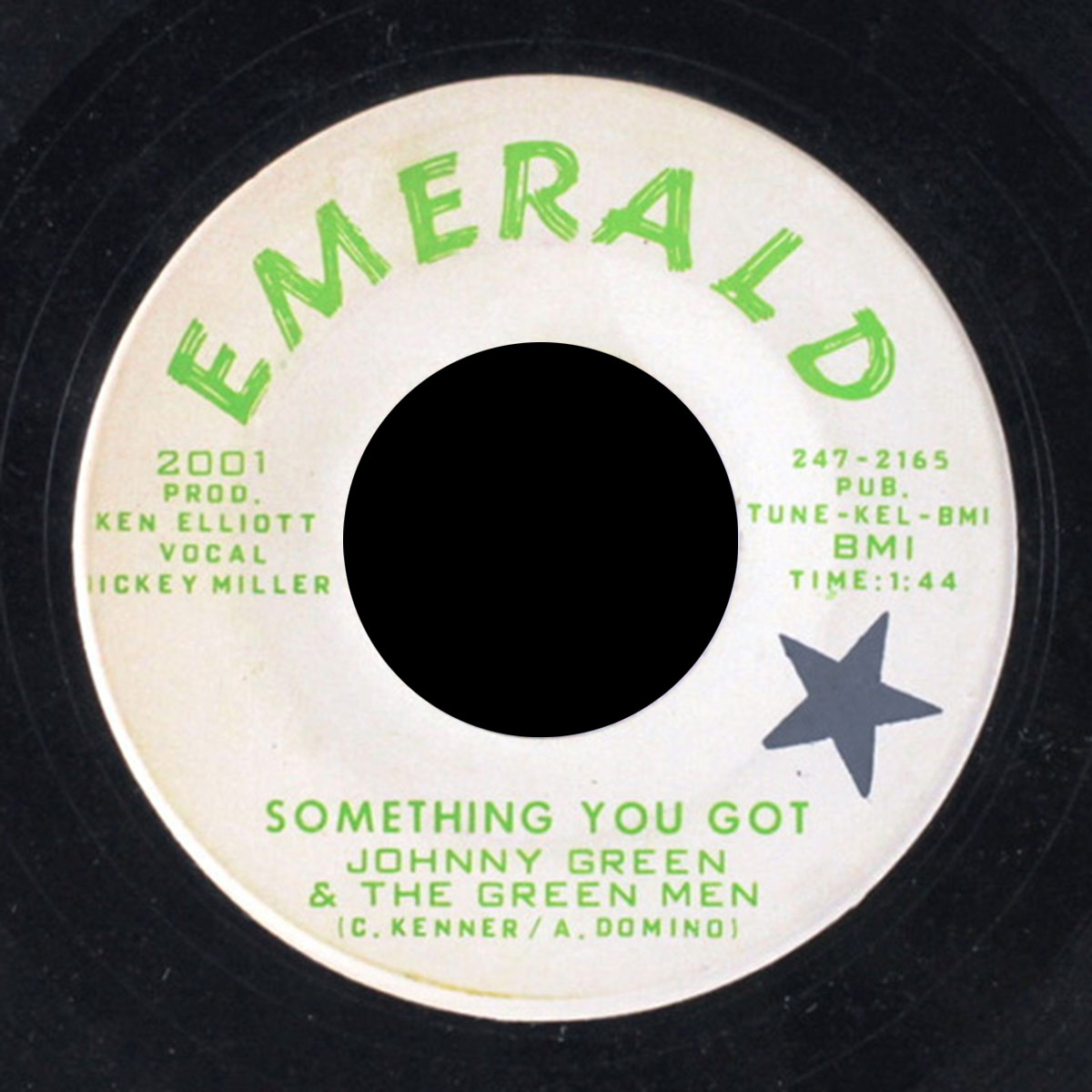
Robert “Whitey” Gwinup was guitarist in a group from Fremont, Ohio called the Vandaliers whose members included Wayne Van Doren on drums and Harry Kerr. The Vandaliers had been playing together since 1962, and recorded a demo, If “It’s Love You Want” on September 2, 1965 at Cleveland Recording.

Meanwhile in Findlay, Ohio was the American Way, with members Roger Hilty drums, Gary Reddick organ, Kenny Turner bass and Bob Peeler lead guitar. Whitey Gwinup left the Vandaliers on July 9, 1966 and took Bob Peeler’s place on lead guitar. This new lineup changed their name to the Other Ones, and later changed it again to the Turfits.

They based themselves in Xenia, at a nightclub the band half-owned called The Castaways. They also played often at a club called the Capitol in nearby Dayton.

Gwinup brought “If It’s Love You Want” with him when he joined the Turfits, who recorded their own version at Cleveland Recording in 1967. Although the original version was written by Gwinup and Harry Kerr of the Vandaliers, writing credits on the label list all the members of the Turfits.

Gwinup also wrote “Losin’ One”, but as with “If It’s Love You Want”, all the Turfits’ names were listed on the songwriting credits (with Gwinup’s name misspelled as Gwinep).

Capitol Records had done very well with the Cleveland band the Outsiders and Youngstown’s the Human Beinz, so Capitol were willing to take a chance on other local Ohio acts. The Turfits didn’t reach the charts like those other groups, but “Losin’ One” has a classic garage sound – mumbled self-pitying lyrics and a high-pitched organ behind a restrained garage solo.

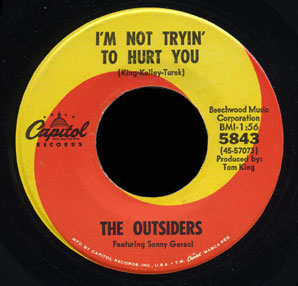
Production was by Don King – not, as I originally thought, the future boxing promoter (though that Don King was producing soul and gospel records in Cleveland at the same time as an investor in Way Out Records), but the brother of Tom King, singer for the Ohio group the Outsiders, who hit big with “Time Won’t Let Me” and cut the garage classic “I’m Not Trying to Hurt You”.

Thanks to BuckeyeBeat for some of the background information about the Turfits. Be sure to check out BuckeyeBeat’s site dedicated to Ohio garage. Additions and corrections were made from contact with Jaremy Hilty, son of Turfits drummer Roger Hilty, and by Wayne Van Doren and Whitey Gwinup.

The Chaen Reaction

A group out of Salem, Oregon, the Chaen Reaction recorded this one 45 around 1968.

Members were Larry Carroll guitar, Craig Gunter drums, Lee Gunter keyboards, Lane Weinberg bass and Jim Burris vocals. Earl Chipley seems to have been the maven behind this distinctly uncommercial venture, co-producing and releasing the 45 on his own Earl label, a “division of Royalty Records.”

“Sometimes I Think About” was written by the Blues Magoos and included on their first lp. A good song, but it’s a bit of a downer no matter who performs it. It was also covered by Delaware’s Fabulous Pharoahs who must have realized its lack of hit potential and threw it on the b-side of their great Reprize 45, “Hold Me Tight”.

The flip “Chain Reaction” is even less commercial but far cooler, featuring distorted guitar and a heavy organ and drum pounding over a collage of screams and crowd noise. The vocals are buried in the mix and almost unintelligible, but seem to have a very trippy bent. Hard to believe anyone but the band really wrote this ditty, but Chipley gives himself sole credit. It was produced by Earl E. Chipley, and Clayton Caughill was the engineer who put this all together.

Thanks to Lee for correcting the group lineup and to Bonnie W. for the photo.

Lawson and Four More

Lawson And Four More Ardent PS

Out of Memphis, Tennessee came Bobby Lawson with his group Bobby and the Originals, consisting of Joe Lee lead guitar, Joe Gaston bass, Bill Donati drums, a guy named Bernie on keyboards and Bobby playing rhythm guitar and singing.

They initially played r&b and soul, but by 1965 they added the Zombies “You Make Me Feel Good” for an appearance on the local TV show, Talent Party. Around this time, Terry Manning replaced Bernie on keyboards. Terry had played with Bobby Fuller in their hometown of El Paso. Terry wrote to me in 2007 about his early career in Texas:

The Wild Ones was a band I started with a couple of guys from my school, Austin High in El Paso. We played around at a few small parties and stuff, nothing very big or very good. Our big hero, as with all other local bands, was Buddy Holly. (Besides Bobby Fuller, the other best local guy was Rod Crosby.) I was on rhythm guitar and some vocals, but the best player was a guy named Jay Nye. Roy Moore was our resident tech genius and sort of a “manager,” meaning he had a back house and a tape recorder!

I did record an album as The Wild Ones there, but it was just me on acoustic gtr and singing, with Roy beating on a can or box in the background, and maybe one other guy on maracas or something. It was about 15 songs, all covers. I had it out the other day transferring it to digital for archiving, and considering whether or not I might release it. An album I recorded completely by myself of all originals in ’65-66, before the Home Sweet Home farce, is going to come out soon on Runt/DBK…no one else has ever even heard it before. But the Wild Ones, I don’t know…pretty raw and young!

When I left El Paso in ’63, The Wild Ones got a couple of new members, everyone everywhere matured a bit, and they started playing much more serious gigs there, as I did in Memphis. In fact, they got pretty good (without me, ha ha!) I have some recordings they sent me later on, some surf type instrumentals…pretty cool sounding! They then decided to try to make it in LA, and went out there, hooking up with Bobby Fuller and the other El Paso guys already there. In fact, they went to Bobby’s apartment house on the very day he was found dead, and actually saw the death scene, with police, etc. I was in Memphis by that time though.

The band came to the attention of John Fry, who was running a fledgling Ardent Studios out of a room in his parents’ house. Jim Dickinson contributed a song “Back For More”, and after an initial take was too mellow, took over as producer on a faster version of the song.

I’ve also read that Dickinson convinced Fry to restart his then-defunct Ardent label specifically to record Lawson & Four More. In any case, the first version, supposedly sounding like the Kinks, remains unreleased. Studio musicians were used for all the instruments, including Jimmy Crosswaite playing maracas on a cardboard box, Charlie Hull on lead guitar, and Dickinson on piano. Another song by Dickinson, “If You Want Me You can Find Me”, became the A side. Before the release, Dickinson renamed the band Lawson & 4 More and in a move to make him a “southern” Mick Jagger, told Bobby to stop playing guitar on stage. Around this time, Jim told Bobby “I’m gonna make you a star.”

The top side of their second record “Relax Your Mind” was recorded in Nashville in 1966 at the Fred Foster Studio because Ardent was constructing its new studios in a building on National Ave. Bobby describes it as “an old Leadbelly song redone in a “Lovin’ Spoonful” type style.”

This copy of their second 45 signed by Terry Manning.

This time the whole band played on the record except for John Lee; Dickinson took over the lead guitar parts. It received a lot of local airplay despite a lack of promotional support from Ardent. This record also seems to be the last one released on the old Ardent label.

According to Bobby “our competition was the Guillotines, the Group, and Flash & the Casuals (the Radiants and the Counts had faded from the scene, and the Gentry’s were on the road with their hit record).”

The b-side is the psychedelic “Halfway Down the Stairs”, another Dickinson song. Bobby Lawson considers it “by far the best thing we ever cut.” the melodic guitar riff is taken from Beethoven’s Ninth Symphony, which I find kind of weird, but the guitar sound and overall performance is excellent.

On the strength of this moderate hit, Lawson & Four More joined a Dick Clark package tour that included the Yardbirds. The band’s live performances became more psychedelic, characterized by destruction of equipment and stage lights. Bobby puts this down to Terry Manning’s growing influence within the group. Bobby states, “as we infused more psychedelic and non-commercial elements into our show, we became less marketable (danceable).”

The Avengers Ardent 45 BatarangIn between these two releases, the band cut a great 45 as the Avengers. One side is an instrumental “Batarang”, featuring Lee Baker on guitar and Terry Manning on keyboards along with Joe Gaston, Bill Donati and Bobby Lawson. The flip is “Batman” featuring the Robins on vocals with the Avengers backing, including Jim Dickinson on 12-string guitar. Production by Uncle John’s Gang, meaning John Fry’s team, including Jim Dickinson.

After a name change to the Goat Dancers, the band eventually split acrimoniously over musical direction.

Bobby Lawson was still interested in soul and r&b, but after Ardent moved from the University of Memphis area to its National Avenue studio, Fry and Dickinson shifted their focus from Lawson to Terry Manning. Manning didn’t have the voice of Lawson, but was more attuned to the new rock sound Ardent pursued when the label was relaunched again in 1970.

Terry Manning went on to a form Rock City with Chris Bell and Jody Stevens before those two formed Big Star with Alex Chilton and Andy Hummel. Manning then became a hugely successful engineer and producer for artists great and not-so-great. Part of his legacy is inscribing the Crowley maxim “Do What Thou Wilt” into the dead wax of Led Zeppelin III.

Bobby Lawson started Lawson’s Blues Bag and gigs around Memphis to this day. Much information for this post was taken from Bobby’s website – take a look for his detailed story about his career and Lawson & Four More.

Some specific info on Lawson & Four More’s recording sessions comes from an interview with Jim Dickinson at What a Nice Way to Turn 17.

The Rites “Things” / “Hour Girl” on Decca

The Rites, l-r: Pete Kerezman, Tom Fitzpatrick, Pete Feller, Bob Azzarello and Jimmy Cahn

The Rites Decca 45 Hour GirlThe Rites actually called themselves the Last Rites, and they made this one great double-sided 45 on Decca before changing their name and lineup. There’s more than a touch of psychedelia to both “Hour Girl” and “Things.” Peter Kerezman wrote both songs, and the 45 was produced by Stephen Hammer.Band members at the time of recording were Jimmy Cahn, organ, vocals; Bob Azzarello, drums; Tom Fitzpatrick, bass; Peter Feller, lead guitar, vocals; and Pete Kerezman, vocals, rhythm guitar.

A former band member I heard from writes: “I believe [the Rites] got the record deal as a result of a contest that included playing around the city with some sort of a thing sponsored by some cosmetics company [Clairol]. They were given a ton of Ampeg gear as well and met a ton of models, who used to hang with us.

“The band was re-named Thin Ice and we continued to play Things and The Hour Girl along with several other originals by Pete & Jimmy. Unfortunately the band only lasted about a year and we never quite got off the ground.

“Thin Ice did some demos (I think they’re lost now). We played a big club in Phillie, a bunch of resorts in Stowe VT, Yale, a street festival in Phillie, some other gigs around the city. Used to rehearse in a basement studio owned by the manager of Screamin’ Jay Hawkins. The guy wanted to sign us. I think the last gig we ever did was a Hell’s Angel’s benefit at the Electric Circus in NYC. Yet another manager hooked it up for us, but we were just too drugged out to deal.”

A sad ending to the band but it doesn’t diminish the beauty of this music.

The Rites with Patsy Sabline, Clairol Caravan, Time magazine, June 30, 1967
“Time magazine, June 30, 1967, taken during a dress rehearsal in Central Park. You can barely see me, all the way on the left there, and up front is Jimmy dancing with model Patsy Sabline.” – Pete

Click to see the inside of the program
Pete Kerezman wrote to me with his story and photos of the band and his music career:

I was a coffeehouse folk musician prior to doing the group thang. I guess my first “band” was with Rites guitarist Pete Feller in a folk duo, “The Candymen,” two guitars and vocals. We had been having a friendly competition in Rockland County coffeehouses and decided to join forces. I insisted that we wear striped shirts, like the Kingston Trio. We played the coffeehouses, and had a regular gig at the Fort Hamilton army base enlisted club. Then Pete went off to Oberlin College in Ohio.

Later that year (Or was it the following year? The memory’s dim), Pete’s younger brother, Phil, who was attending Columbia University, called me and said he was putting a band together, asked me if I wanted to play bass, which came as quite a shock because I’d never played a bass, except for washtub in a bluegrass wannabe outfit, and didn’t even own one. For some odd reason I agreed. That group was a quartet – Phil singing, me on bass, Tommy Fitzpatrick on guitar, and a cat from Westchester name of Wally Westphal on drums. It turned out that Phil wasn’t much of a singer, so we kicked him up to “manager” and Wally enlisted Jimmy Cahn and we became The Last Rites.

We played the Columbia University frat house circuit for a while, and the band outgrew the drummer, so we replaced him with another C.U. student, Rick Davis, who was a superb jazz drummer who could handle rock with ease.

Time passed. Pete Feller quit Oberlin and moved back to the New York area to join the band. We had a fairly serious competition with another C.U. frat band, The Walkers, who had a damn good lead guitarist, Billy something. They were numero uno and we were numero dos. Couldn’t dislodge ’em.

At some point in time we played a gig where Bob Prescott, our eventual manager, was quite taken with us, but Rick’s wife got to humpin’ the whole band so we lost his services when he went off to Africa on a geological dig to try and forget his sorrows.

I honestly can’t remember who put us on to Bob Azzerello, maybe it was Prescott, but Az was up to the task and came on board. I also can’t remember when I moved back to guitar and Tommy took over the bass chores, but it happened. Next thing we knew we had to lawyer up and read and sign contracts.

We passed an audition and became members of a traveling troupe of musicians and fashion models in a show called “The Clairol Caravan.” In addition to our own stuff we backed up a singer, Lamont Washington, who later died in a horrible fire, and played schlock music so the models could strut their stuff. The caravan and the record deal were parallel events, instigated by our manager, Bob Prescott, who was a sound effects expert for ABC radio and television and a founder of Audio Fidelity records.

We played some teen clubs in the New York area, signed with Decca and got that Clairol gig, all in a relatively short space of time. We were pretty much isolated and self-contained (arrogant and conceited). A fascinating sign of the times was that Decca thought that “The Last Rites” name was too controversial, so we morphed into “The Rites.”

The Rites with Jerry Blavet
The Rites with Jerry Blavet, l-r: Pete Feller, Bob Azzarello, Jerry Blavet, Tom Fitzpatrick, Jimmy Cahn, Pete Kerezman

We went into Decca’s studio A on 57th street. Recording legend Milt Gabler manned the board, with Steve Hammer hovering around being mostly useless. We were thrilled just to have a record out and we thought it turned out pretty good. Unfortunately the label didn’t do much for us in terms of promotion and the record went nowhere.

I think the one royalty check I saw was for about twelve bucks, and I had written both sides! Prescott did manage to get us on a Philly TV clone of American Bandstand, the Jerry Blavet show, where we lip-synched “Hour Girl,” but it didn’t help any. I’ve got a shot of Jerry and us standing outside our van in the snow.

After some time spent occasionally gigging, drugging and generally just spinning our wheels, Pete Feller and Tom Fitzpatrick realized what was happening, had the good sense to move on, and that was the end of The Rites.

 Thin Ice, l-r: Bernard Grobman, Jimmy Cahn and Pete Kerezman
Thin Ice, l-r: Bernard Grobman, Jimmy Cahn and Pete Kerezman

Thin Ice

Jimmy, Bob and I held auditions, and even though Bernard was quite a bit younger than us at the time he was already a monster guitar player and was obviously up to the gig. I don’t remember what name we performed under, maybe The Rites, maybe not, just don’t remember. When Bob had enough (we were a pretty rowdy bunch) we continued on as Thin Ice with a couple of other drummers passing through at various times.

Jimmy and Bob were still jamming, but I wasn’t really in their plans until I sat in with ’em one time, opened their ears, and we became “Feel.” We hooked up with a bottom-feeder agent and got a few gigs but eventually realized that Jimmy, who had switched from Farfisa to guitar, needed some help. That’s when we held guitarist auditions and hooked up with Bernard Grobman, eventually becoming “Thin Ice,” playing ski resorts in Vermont, and a few Westchester clubs.

We lost Bob’s services when he returned to college, and took up with another drummer, Andy Stone. That’s when we made the Philadelphia scene, playing The Second Fret and some street concerts. We then lost Andy and hooked up with yet another drummer, Gaspar Mirabele.

At that point Jimmy moved to Sausalito and Bernard and I formed up with a couple of crazy go-go dancers/vocalist wannabes in a group called “Your Mother.” Played some Westchester bars. Bob Azzerello was with us for a while but the girls didn’t care for him, fired him, and, partly because he was a friend and partly because he was a very good drummer, I quit the band.

Somehow, no recollection how, I got drafted by piano man Doug Konecky, and violinist Diana Halprin, who played for the American Philharmonic under Leopold Stokowski and the Metropolitan opera. Those two were monster musicians and very serious, so that’s when I *really* learned to play the bass. We were called J.S. Blue, played wine and cheese joints in Greenwich Village, and made some demos with a guy name of Jimmy Ienner, who handled Eric Carmen and Rasberries. When Doug and Diana realized just how obnoxious I really was they showed me the door.

That’s when I hooked up with piano man Jim Carling, who later did some time with Chubby Checker’s band, drummer Chris Jackson and guitarist Donny Siegel in a band called “Visions.” We were good, cut some demos at a twelve-track studio somewhere downtown but alas, nothing came of it. Jimmy and Chris moved to Newark, Delaware, Donny went back to college, and in 1976 I moved to Texas, where I gave up “the dream.” Came to visit, never left, which apparently makes me a “damn yankee,” (because I stayed).

I have reel-to-reel copies of the “J.S. Blue” and “Visions” demos, but no way of transferring them to more modern media. Sorry I don’t have the Feel demo which we made up in Decca Studio A again, and Thin Ice never did any recording. Decca 32218 was the only record The Rites ever made. I have no copy of the record so it’s a real treat to hear it again after all these years.

I must say, I’ve had more fun playing country music down here than I ever did pounding my head against the show-biz wall in The Apple. Had about a fifteen year run in outfits such as “Low Country,” “The Stardust Cowboys,” “Rough Cut,” and variety band “Flash Flood.” No pressure, just good music and mostly good times. Had guns pulled on me a couple or three times, almost got stabbed by a meth-crazed tattoo artist, but man, I *love* the honky tonks. You can have your country clubs, I’ll take the joints where the hoi polloi go to drink.

Texas Pete Kerezman
Kingsville, Texas

The Kickin’ Mustangs

The Kickin' Mustangs
Back row from left: Albert Richardson, Larry Creech, Larry Talerico, Buddy McCoy, Brad Rhodes; Front row from left: Danny Shortridge and Bruce France. Missing is Pat Loving.

Unlike the other 45s on the Plato label, the Kickin’ Mustangs record is not garage, but has a wild two-minute funk number “Kickin'” on the top side and a fine ballad “Take a Miracle” on the flip. It was recorded in Cincinnati, Ohio the same day as the Outcasts’ record, which shows the range of musical styles of the time.The band was from Ashland, Kentucky, original billed as simply the Mustangs. The original band included

Danny Shortridge – lead vocals
Larry Creech – sax
Darrel Tucker – trumpet
Rudy Hester – keyboards
Boots Shelton – bass, replaced by Larry ‘Frog’ Johnson
Dave Osborne – drums

By the time of the Kickin Mustangs single, Danny Shortridge and Larry Creech remained from the original group, but the rest of the members were new:

Danny Shortridge – lead vocals
Bruce France – lead vocals
Larry Creech – sax
Larry Talerico – trumpet
Pat Loving – lead guitar
Brad Rhodes – keyboards
Albert Richardson – bass
Buddy McCoy – drums

“Kickin'” was written by Parnell, Loving, & Minnefield. “Take a Miracle” on the flip is a nice ballad written by Bob Minnefield. This is also the most valuable record on the Plato label, by the way.

Keyboardist Brad Rhodes sent in the photo above and gave me some background on the group:

I was the keyboardist for the Kickin’ Mustangs when we recorded our 45 rpm disc in Cincinnati. At the time, the members were Larry Creech, Pat Loving, Danny Shortridge, Larry Talerico, Bruce France, Buddy McCoy and Albert Richardson.

Attached is a promotional photo of the Kickin’Mustangs from back in the day with Hal Scott Enterprises. The only person missing is Pat Loving, our guitar player. This photo may have been taken when Pat was laid up after a car accident.

I had joined the Mustangs around 1966-67 after playing in a band out of Flatwoods, KY. “Frog” Johnson was the bass player initially and the group always had an R&B / soul feel to it, but when Albert, Buddy and Bruce were added, it created a whole new sound that complimented the R&B scene during those days. Bruce, Buddy, Albert and Talerico were from Huntington and they were instrumental in taking the Mustangs to another level. Man, I miss the days of R&B!.

We played the usual Tri-State venues, but were also fortunate to have played with Cream, The Grass Roots, and performed in an event in Ashland with The Left Banke and Mitch Ryder and the Detroit Wheels.

I remember when Hal Scott came to us with the opportunity to cut a disc with Plato Records, because all the bands he booked received the same offer. Although I do not recall the date, I remember traveling to Cleveland, Ohio after cutting the record, and appearing on “Upbeat”, a syndicated T.V. show. I imagine it is lost in the archives!

Brad Rhodes, July 2010

Later members included Terry Sanders on drums and Mike Tolone. Pat Loving and Larry Creech have since passed away.

The Fabulous Plaids

The ’66 Mustang in the foreground of the sleeve dates this record from no earlier than September of 1965 but from the looks of the band you’d think this was early ’60’s frat rock. So what do you get?

Most garage fans will want to pass on “Let’s Learn About Love”, the designated top side. It’s an odd pop tune, catchy in its way, though I have a hard time imagining this being a real hit. The b-side is another story. “I’m Comin’ Home to You” is tough r&b with blasting horns and a good guitar solo. Never comped before, either!

The Dixie label, located at 1020 Central Ave. in Charlotte, North Carolina, is better known for rockabilly and country releases. As far as I know, this is the only release on the label that comes close to garage.

The back cover lists the Fabulous Plaids as Ken Carpenter on guitar and vocal harmony (he wrote both songs); Denny Allen able to play alto and tenor sax “simultaneously, in complete harmony”; Jessie Smith on vocals, piano and organ; Tommy Hoover lead vocals, trumpet and “showmanship”; Jerry Vassey bass; and Mike Mallonee on drums. It also lists Hymie Williams – the latest addition – as an “old veteran of the big time bands” and that he “adds polish.”

In case you were wondering, “the attractive young lady on the cover is Miss Jayne Tatum of Winston Night Club, Charlotte.”

As the sleeve says, “What could be more rewarding to a group of young Americans than a ‘hit record!'”

The Tigermen “Close That Door” and “Tiger Girl”

Tigermen photo
Only known photo of the Tigermen – anyone have more pics of the band?

Tigermen Buff Records 45 Close That DoorThe Tigermen were from Olean, New York, south of Buffalo, and started out in 1964.

Members were:

Tom Consedine – lead vocals
John Farrell
Jeff Todd
Tim Stavish – drums

The Tigermen recorded four songs in October 1965 at a studio in Buffalo, releasing two 45s in quick succession featuring a tough organ-driven sound. First released were two originals by Consedine and Farrell, the garage classic “Close That Door” backed with a moody ballad, “Love Me Girl”.

The second is a slow, spooky grinding rocker, “Tiger Girl”, with a cover of “Runaway” on the flip. “Close That Door” seems to be the rarer of the two 45s.

Production was by Art Dedrick who later created the Free Design around the singing and songwriting talents of his children.

The Tigermen had regular gigs around the Cuba Lake resorts and in northwestern Pennsylvania, but after the summer of 1966 the band split up as members went to college or were taken by the draft.

Does anyone have better photos of the Tigermen?
Tigermen Buff 45 Tiger Girl