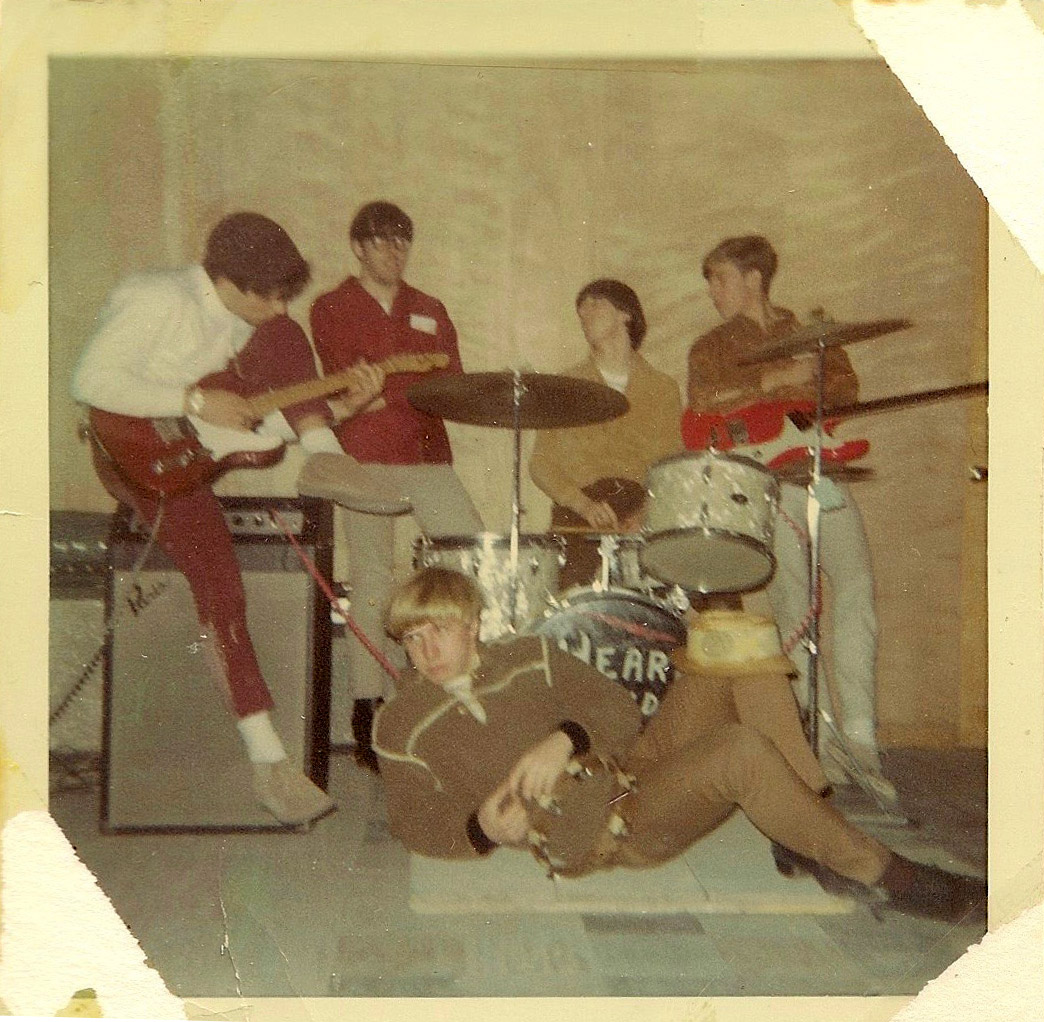
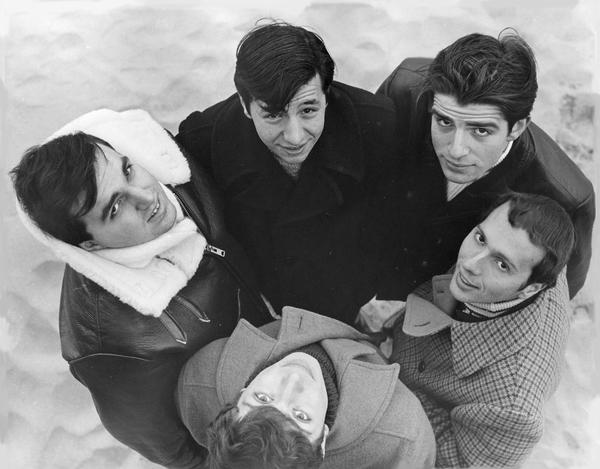
Heart and Soul early photo, from left: John Grower, Don Rumble, Jimmy Roland, and Kevin Swift, with Ezzie Post in front
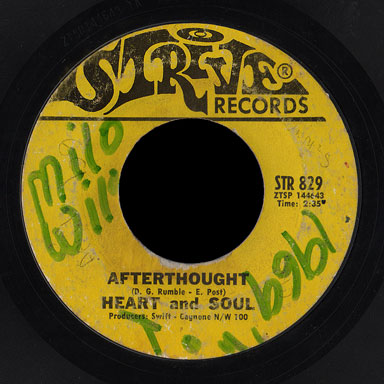
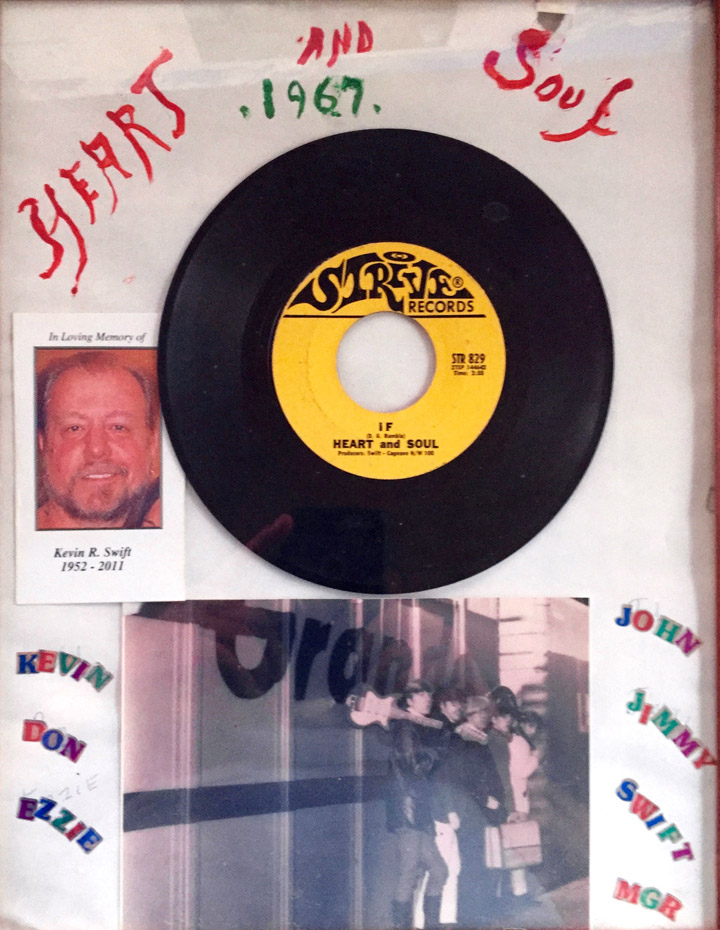
Heart and Soul formed in 1967, releasing this crude psych 45 with good harmonies and playing on the Strive label out of Poughkeepsie. Both songs have guitar breaks as well as more soloing on the outros. The band members came from Kingston and Saugerties in the Hudson Valley of New York, Members were:
Ezzie Post – lead vocals John Grower – guitar Don Rumble – organ Kevin Swift – bass Jimmy Rowland – drums
For garage heads like myself, “Afterthought” is the better of the two tunes, writing credits to D G. Rumble and E. Post. Don Rumble wrote “If”. Swift and Cagnone produced the single.
Thank you to John Grower, who sent in the photos seen here. Kevin Swift passed away in 2011.
The ZTSP prefix in the dead wax means this record was ordered out of Columbia’s New York custom press office. For more on Strive Records, see Ian’s comment below.
Heart and Soul at the Viking LoungeHeart and Soul 1967
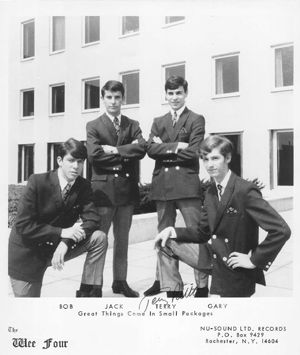
The Wee Four, from left: Bob Salerno, Jack Allocco, Terry Piliterre, and Dennis Drew
Terry Pilittere was the founder of the Rochester, NY group the Dimensions, in 1962. Members were Denny Drew lead guitar, Rob Salerno rhythm guitar, Ken Polizzi bass and vocals, and Terry on drums and vocals. In 1965 Jack Allocco joined and the band changed their name to the Wee Four, because none of the members was over 5′ 8″ tall.
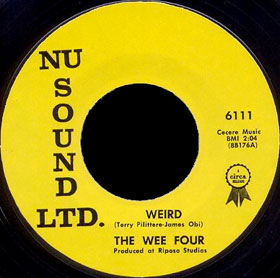
The Wee Four recorded an excellent garage punker, “Weird” in 1966, written by Terry with his friend Jim Obi, b/w Terry’s song “Give Me a Try”. The Wee Four recorded other songs, including “I Could Never”, but these weren’t released.
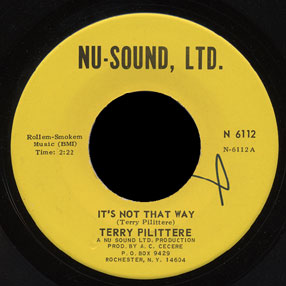
Members of the band had conflicts with manager Al Cecere, but Terry decided to leave the group and go with Al as his manager for a solo record of two beautiful original songs, “It’s Not That Way” and “You Wouldn’t Believe Me”.
Terry passed away in December, 2000.
Photo caption updated 2022.
Sources: Mike Dugo’s interview with Ken Polizzi of the Wee Four. Photos from Fuzz Acid and Flowers.
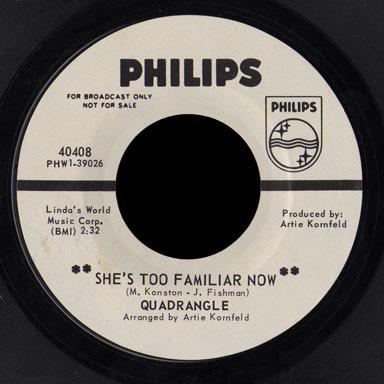
The Quadrangle were a New York group, and this is their only 45, released in October of 1966.
“She’s Too Familiar” now is a classic garage song. Every element is striking: the keyboard intro, the bass line and drums, the sharp guitar parts and the fantastic vocal, with a tambourine-led chorus that brings it all together.
The b-side, “No More Time” combines a New Orleans type beat with a bit of Donovan’s Mellow Yellow vocal delivery.
I had thought they were only a studio group until I found a mention in the April 30, 1966 issue of Billboard that states “Ray West’s group the Quadrangle closed at Arthur last week and will now record under the supervision of Artie Kornfeld.” Artie Kornfeld did produce them, using the songwriting team of Michael Konstan and Jay Fishman.
Kornfeld had a lot of experience writing classic songs as half of the Changin’ Times with Steve Duboff. Their original versions of “Pied Piper” and “How Is the Air Up There” were covered with more success by other bands. Kornfeld went on to work with many other acts as producer. Michael Konstan released a solo lp on RCA in ’73. I’d like to know more about the other members of Quadrangle, though.
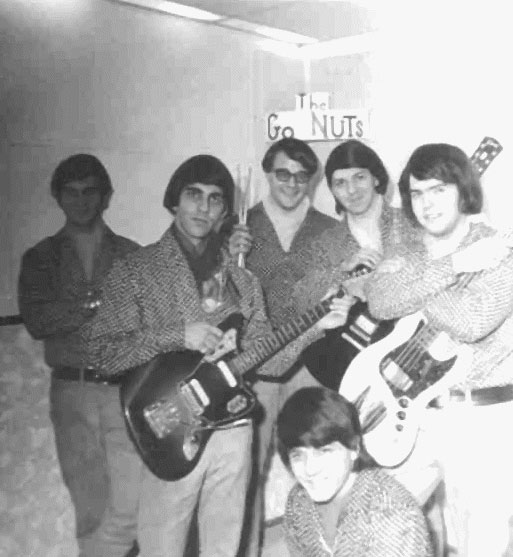
The Go Nuts, left to right: “Little Mike” Virzera, Vic Virzera lead singer and rhythm guitarist, holding a Fender Jaguar, Stan Kanopski holding the drumsticks, Bill Virzera (kneeling in the foreground), Mike Virzera, lead guitarist with a black Les Paul, Jimmy Gilmartin on bass guitar.
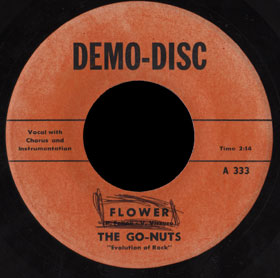
A couple months ago I wrote about the Go Nuts, a short-lived group from Brooklyn, NY. Their 45 “Flower” is an idealistic tribute to the Summer of Love youth that has been compared to the Seeds for its organ sound and vocals.
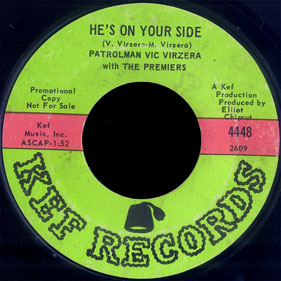
Soon afterwards, Jared K. sent me a scan and mp3 of a quite different record by Patrolman Vic Virzera with the Premiers. It seems that when they weren’t waxing eloquently about the flower children, the Virzera brothers were trying to convince the kids to trust the cops!
Jared wrote: “Sounds like he may have been the coolest cop of all time. ‘He’s On Your Side’ is the a-side and is another organ driven rocker (with none of the psych flourishes of ‘Flower’) about getting along with the police, because they’re here to help. Flip is a doo-woppy group vocal.
“Both sides have songwriting credits to brothers Vic and Michael Virzera with the b-side additionally crediting P. Drift. Michael produced the b-side (‘Two Hearts’) and Elliot Chiprut produced ‘He’s On Your Side’.”
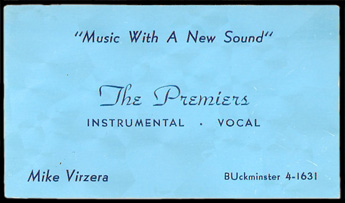
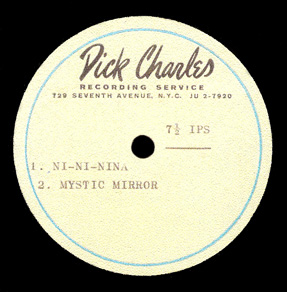
Recently I heard from Vic Virzera himself, who have me the history of his groups, and sent me two early song they cut, the 50’s rocker Nina that I’m featuring here, and a ballad called Mystic Mirror. In Vic’s own words:
In 1962, Nina and Mystic Mirror were local grass roots Flatbush hits….our demos were being played in quite a few juke boxes. At that time we were The Premiers with the sub theme “Music with a New Sound”.
Elvis’s early producers, Wally Gold and Araon Schroeder (they wrote Elvis’ 1960 #1 hit “It’s Now or Never”, and Wally Gold co-wrote “It’s My Party”) offered us a contract that had “power of attorney clauses” and we declined….in retrospect …I guess we should have signed it, but at the time we thought we were doing the smart thing. We knew of so many groups that were working their butts off, traveling around the country while the powers that be would make all the money (since they had the power to sign your name to spend the earnings), claiming the money went for promotions, expenses, etc. Another consideration was the fact that, my brother, Mike, would have to had given up his job in open heart research, where he was instrumental in designing a heart-lung machine apparatus.
The Go Nuts were formed as a rock show group in 1965 and lasted about two years. We did recordings and appearances, including a performance aired Christmas Day, 1966 on the Ted Mack Original Amateur Hour. It was at the CBS Ed Sullivan Theater. Our rock rendition of “Shortenin’ Bread” really went over well… …girls were screaming, people standing and rocking with the beat, lots of applause etc. Unfortunately, similar to what happened to the Beatles on the Ed Sullivan show, probably the same tech engineers had my lead voice as low as the background voices and what was aired sounded like all background. Still, we came in second and had a great time.
Regarding Patrolman Vic Virzera and the Premiers, in 1971 we were scheduled to perform the song on the cross country David Frost Show, a special on police. Being a live show they ran out of time but paid us for being there and the rehearsal.
I retired several years ago from the NYCPD but I’m still playing gigs with my brother, Mike, and my band, the Vic Vincent Group, in the New York Metro area.
Thank you Jared for contributing “He’s On Your Side”, and Steve Hogan for contributing the photo of the Go Nuts. Special thanks to Vic Virzera for sharing his acetate of “Nina”.
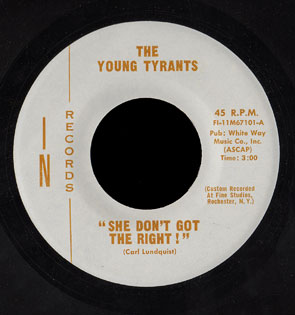
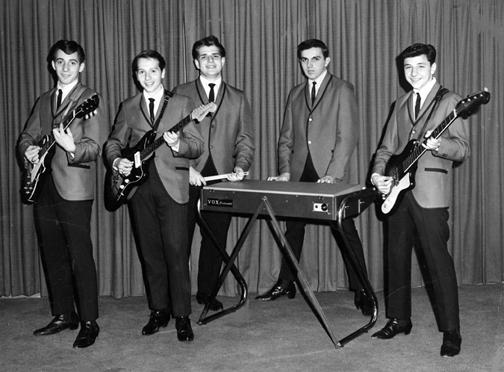
One of the leading bands in the Rochester, NY area, the Young Tyrants were Carl Lundquist lead guitar and vocals, Lou Grillo lead vocals, Julio Lora rhythm guitar, Mike Zazzaro bass and Mike Montoya drums. They were heavily influenced by the Young Rascals, even adding “Young” to their band name in imitation, but came up with a sound all their own by the time they recorded their only 45.
Fine Records Studio owner Vince Jans signed the band after hearing their live show over the phone. In September 1967, they recorded an album’s worth of songs at one session, mostly typical cover versions off the day along with two original songs and a couple instrumentals.
Jans let them release the two originals for their only 45. “I Try” starts off with Carl’s trilling guitar riff taken from the intro to the Buster’s surf classic, “Bust Out”, then turns into a fantastic rocker as the band kicks in. “She Don’t Got The Right” simmers with resentment: “She’s got the right to say/ she don’t want my kind/but she don’t got the right/ to take away my pride.”
Lou Grillo wrote “I Try”, although there are no credits on the label, while Carl Lundquist wrote “She Don’t Got the Right”. 500 copies were pressed on the In label and sold at their shows, at venues like the New Patriot Club in Hornell. The only radio play it received was on local Rochester station WSAY.
The band broke up in 1968, as Carl and Lou were heading to college. The masters from the Young Tyrant’s recording sessions have been saved, and supposedly include other takes of both sides of the 45 as well as a cover of “I Can Only Give You Everything”. Hopefully someday we’ll hear the whole session.
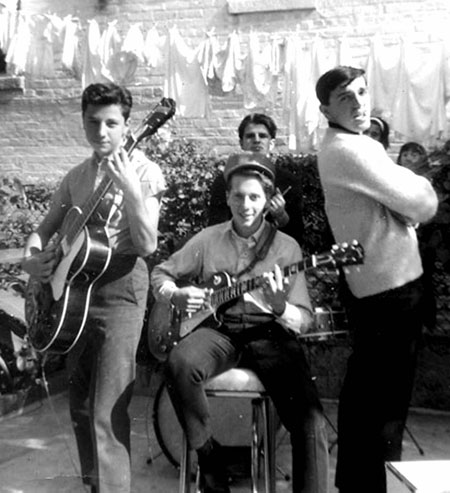
Jerry Scotti, Freddie DeRubeis, Joe Liotta and George Napolitano in Freddie’s backyard, 1964
Inspired by the Beatles’ performances on Ed Sullivan in 1964, four friends in Bensonhurst, Brooklyn decided to form a band they would call the Creations. George Napolitano, Jerry Scotti, Dominic Coppola and Fred DeRubeis began lessons with Pete Frias, guitarist for the Peppermint Lounge act Jimmy & the Jesters. Two other friends, Joey Sirico and Joe Liotta soon joined. Pete not only taught them music, but assigned each of them the instrument they should play for the band.
The Creations performed at local churches and halls including the Teenage Cabaret and the “No Name” club on 60th St and 14th Ave in Brooklyn. They attracted notice with their spot-on renditions of songs by the Animals and the Dave Clark 5. Joe Liotta’s increasing ability on the Vox Continental organ gave them a professional sound that other bands lacked.
First Creations promo photo: Dom, George, Freddie, Joe L. and Jerry
Their two big breaks, though, came one Saturday in March 1965, when their new manager Bob Herin booked the band on Murray the K matinee show at the Brooklyn Fox Theatre with the Chambers Brothers. The Creations played a longer set than usual to fill in for the Rascals, who couldn’t get their equipment off of the Barge in Long Island. The audience response was tremendous, reaching Beatlemania type proportions. Charged by this reaction, they then went and auditioned for Jack Spector, AM radio WMCA’s star DJ who was looking for a house band for the stations “Good Guys” shows.
Landing the job, they began playing Good Guy shows regularly on Fridays, playing their own sets and backing touring acts. Bob Herin turned management of the Creations over to Billy and Steve Jerome, who managed the Left Banke among others. The band would soon change their name to the Ox-Bow Incident and record two fine 45s for Smash and a third, with a somewhat different lineup, for Avco.
George and Joe Sirico at the Worlds Fair, 1964
Before the name change and these releases, they recorded a handful of demos that were never released, including “Get on My Train” and “I’ve Paid My Dues”. I asked guitarist George Napolitano about the band’s early days as the Creations:
Q: What were the circumstances behind the demo recordings?
George Napolitano: The demo “I’ve Paid My Dues” was recorded at the request of Billy and Steve Jerome. They asked us to put something down so that they could give a listen. We had recorded “I’ve Paid My Dues” about 6 months earlier and this version was our second recording of that song. We also did “Get on My Train” at the same session.
Q: Who wrote “Get On My Train” and “I’ve Paid My Dues”?
George Napolitano: I don’t remember who wrote “I’ve Paid My Dues”. It was given to us on sheet music and we were “told” to work on it. “Get on My Train” was written by a friend named Denver Ruggins. He gave us the song and we changed it a bit. The demo was recorded on a 4 track Ampeg Machine at Rossi Sound Studio in Brooklyn and transferred to acetate. I have the original acetate and from the acetate we made the CD copy.
Q: Where was Rossi Sound Studios?
George Napolitano: 2005 West 8th Street Brooklyn, 23 NY is the address on the record label. If I remember correctly that was between Avenues T and U on West 8th Street.
George Napolitano
Q: Was the band still called the Creations at that point?
George Napolitano: We were still the Creations when we recorded the demos but changed the name shortly afterwards to the Ox-Bow Incident. The lineup for the original session was myself on guitar, Joe Sirico bass, Fred DeRubeis drums, Joe Liotta Vox organ and vocals, Dominic Coppola guitar. When we re-recorded the song Jerry replaced Dominic Coppola on guitar. After we recorded “I’ve Paid My Dues” and “Get On My Train” we were signed to a production contract with Billy and Steve Jerome. At the time they also managed the Fifth Estate and were part of the team behind the Left Banke who had a hit with “Walk Away Rene”. They gave us the song “Beg, Borrow or Steal” to record and we had it mastered and ready to be released. However the Ohio Express version was released before ours and it never came out. In fact that was 2 years before Reach Out was released.
Jerry, Joe, George, Freddie, Joe onstage at a WMCA “Good Guy” show
Q: Were these songs part of your live set?
George Napolitano: Whenever we performed on a WMCA ”Good Guy” show we would play the songs as part of the “show” and then we would back up all of the other acts that needed musical accompaniment. Remember this was way before the days of singers singing over pre-recorded tracks. We provided the music for groups such as the Chiffons, Peaches and Herb, Chubby Checker, the Shangra-Las, Jimmy Jones, the Jive 5, Neil Sedaka and countless others. In fact just this past week I saw Neil Sedaka and I mentioned to him that my band use to back him up on the “Good Guy” shows. He smiled and said, “I remember those days fondly”. We never rehearsed with him. Whenever he arrived Jack Spector would immediately put him on stage and Sedaka would turn to us, snap his fingers and say “C- Am- F-G” and proceed to sing “Calendar Girl”, “Breaking Up Is Hard to Do”, “Oh Carol” and all the rest of his songs.
Q: How was the NY music ‘scene’ at the time? Did you get much chance to see other bands or only when you shared bills with other bands?
George Napolitano: We played a lot, practically every weekend so we really didn’t get much of a chance to see the other groups that were around at the time. When we weren’t playing our respective girlfriends expected us to spend time with them and not go listening to the other groups. We did go to see some of our friends groups such as Lurch & the Brats, The Intruders and others from time to time but when we were “off” we tried to stay away from the clubs and catch up on those things which we couldn’t do whenever we were playing. That being said whenever we could we did try to get to the Electric Circus or go to the Fillmore East to see The Jefferson Airplane, The Doors and whoever else was playing, but with our schedule that didn’t happen often.
The Ox-Bow Incident at Coney Island (l-r): Joe Liotta, Jerry Scotti, Fred DeRubeis, George Napolitano, Joe Sirico
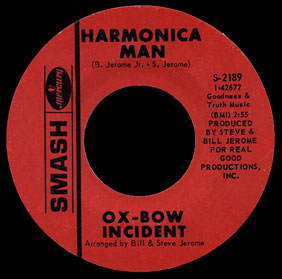
Signed to the Smash label, the Ox-Bow Incident didn’t release a record until 1968. By this time were heading in a more soulful direction, using a leslie speaker on the organ and adding lead singer Billy Sheehan from another local band, the Intruders. Unfortunately, Sheehan was drafted immediately after the band recorded a fine, somewhat psychedelicized version of the Four Top’s “Reach Out”. They recruited Al Tessitore to sing on the b-side, the garage song “Harmonica Man”. “Reach Out” made local radio charts as far away as Kentucky (WKLO) and Wisconsin (the first Instant Pick on WSPT), but missed the national charts despite good commercial potential.
They followed up with the catchy “You Can’t Make Love By Yourself”, sung by Al and “Lurch” Luis Pagan and featuring session player Vinny Bell on electric sitar. The flipside is “She’s Gone”, a heavy soul number written by Fred DeRubeis and George. Neither side caught on with radio or the public and the band disbanded in 1969. George and Joe Sirico found other musicians to record a final 45 for Avco, then reunited with most of the original members for live shows into 1973.
The Ox-Bow Incident is still performing and recording music to this day. Those who want to hear more of their music should check out their myspace page, which has a history of the band and many more photos than I could reproduce here. There’s also a long interview with George Napolitano and Joe Sirico from Mike Dugo’s 60sgaragebands.com site, archived here. Both of these were sources for this story, along with my own interview with George Napolitano. Special thanks to George and the other members of the Ox-Bow Incident for sharing these rarely heard songs.
Jerry, Joe S, Freddie, Joe L in studio during “Reach Out” session.
High schoolers reputedly from Yonkers, NY, they had this one 45 then disappeared. They may have been local competitors of the Chain Reaction who had a 45 on Date, “When I Needed You”.
The catchy “Lela” was produced by Ted Varnick, a veteran in the music biz who also produced the Forsaken, on MTA, a group I covered just a short while back.
Varnick co-wrote “Lela” with J. Lynch. Copyright registration from September 21, 1966 shows the title was supposed to be “Leila” with words and music by Jimmy Lynch & Ted Varnick.
Varnick also wrote the b-side, a flimsy piece of harmony pop called “Garden of Eden” with a certain paisley charm – prescient too, considering this was released in October of 1966. CBS picked it up for release in the UK, but I don’t know of this making the charts anywhere.
Yonkers and Westchester bands generally had very good coverage in Westchester newspapers at this time. However, I have not found any listings for the Descendants from the area, or for James Lynch / Jimmy Lynch in regards to bands or music at this time.
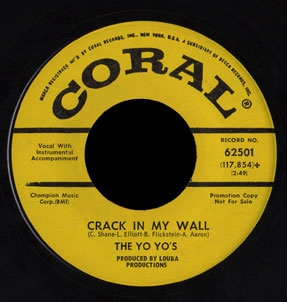
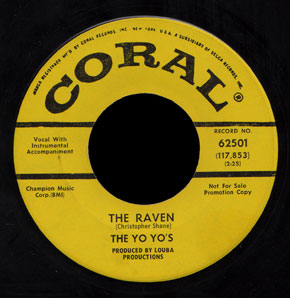
The Yo Yo’s were all from Brooklyn, NY, becoming one of the biggest groups in the city by 1967. They cut one great 45 on the Coral label, an original song “Crack in My Wall” and a fine adaption of Poe’s “The Raven” on the b-side. I love the thunderous opening chords and drum roll on “The Raven”, ominous and fantastic!
They began when bassist Alan Aaron formed a group called the Starfires. The original singer, Frankie Vee (Nick) brought in Larry Elliott on lead guitar and Tommy Zumba on rhythm in 1965. Tommy Zumba’s friend Jeff Miller became the drummer, and then Pepe Cardona took over from Frankie on vocals.
The band changed their name to the Yo Yo’s when Lou Sudano and Barry Flickstein became their managers, forming Louba Productions. They met the band through Lou’s son Bruce, who was a friend of Jeff Miller. Lou and Barry encouraged the band to replace Pepe with a better singer named Ray Sabatis, who took on the stage name “Christopher Shane”. Pepe remained friends with the band and went on to form Alive N’ Kickin’.
The band won a number of local battle-of-the-bands, played at clubs like Steve Paul’s the Scene, Joel Heller’s Eighth Wonder and the Cheetah, appeared on the John Zacherley TV show Disc-O-Teen, and even toured with the Lester Lanin Orchestra as the ‘rock’ portion of the act.
Larry Elliott and Alan composed the music for both “The Raven” and “Crack In My Wall” and Ray Sabatis (Shane) wrote the words to “Crack In My Wall”. Barry Flickstein’s name appears on the credits to “Crack in My Wall”, but Alan maintains Barry had nothing to do with the songwriting.
“Crack In My Wall” and “The Raven” both received “B+” ratings in Billboard, but Coral didn’t put any promotional effort behind the band.
The band broke up in 1969 due to a combination of having their equipment stolen and a general feeling that they wouldn’t find success. Sadly, Ray Sabatis (Christopher Shane) committed suicide shortly after the group broke up. Photos of the band were taken, but none have surfaced that I know of. Does anyone have a photo of the group?
These Yo Yo’s have nothing to do with the Memphis Yo Yo’s who recorded two 45s for Goldwax.
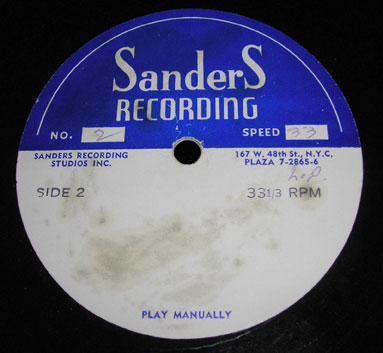
This is an unidentified 12″ Sanders Recording Studios acetate featuring a somewhat free jazz ensemble whose sound and instrumentation remind me of Sun Ra or Mingus. I’m hoping some listener will be able to help me identify the artist. If you have any friends who are into this kind of jazz, please have them give these samples a listen.
Neither side has any information on it other than the printed label with the studio’s address and phone number, at 167 West 48th St., off Times Square in New York City. I would guess this dates to about 1961 or 1962.
It’s a very low fidelity recording, but I think the music is interesting enough to make a listen worthwhile. It’s noir, well-composed but not totally straight either. Track 13 may be the most polished composition on the acetate, so you may want to start with that first.
Someone commented the trombone sounded like Bob Brookmeyer, though I didn’t hear it.
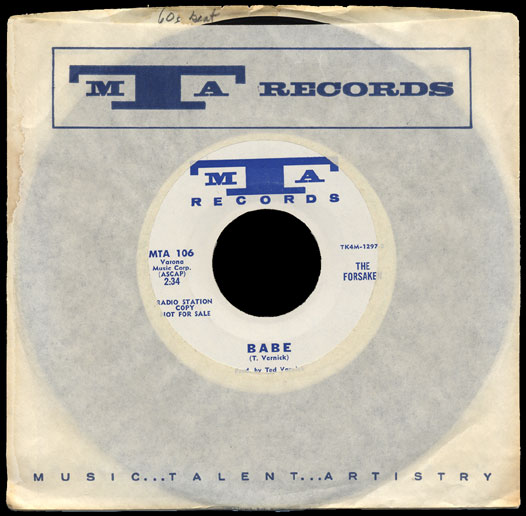
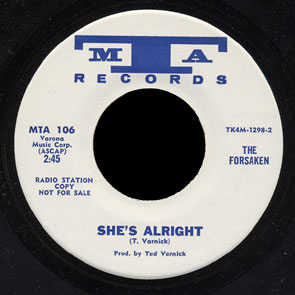
For the most part, the MTA label (Music – Talent – Artistry!) signed California bands, but there were a few east coast groups on MTA as well. The Forsaken put out two singles on MTA in the second half of 1966. I have no idea where the Forsaken came from or who was in the band, but I suspect they were from the New York area. Ted Varnick is listed as songwriter and producer on all their sides; he also produced and wrote songs for the the Descendants.
“She’s Alright” is an uptempo pop number, where the singer is defending his painted-up, long-haired girlfriend from slander. The flip, “Babe”, is pretty good despite a dirge-like tempo.
I haven’t heard the Forsaken’s second single on MTA 111, “Frantic” / “Gotta Get Movin'”. It also has Varnick’s name in the credits and Varona Music, BMI as publisher.
This site is a work in progress on 1960s garage rock bands. All entries can be updated, corrected and expanded. If you have information on a band featured here, please let me know and I will update the site and credit you accordingly.
I am dedicated to making this site a center for research about '60s music scenes. Please consider donating archival materials such as photos, records, news clippings, scrapbooks or other material from the '60s. Please contact me at rchrisbishop@gmail.com if you can loan or donate original materials

 Heart and Soul formed in 1967, releasing this crude psych 45 with good harmonies and playing on the Strive label out of Poughkeepsie. Both songs have guitar breaks as well as more soloing on the outros. The band members came from Kingston and Saugerties in the Hudson Valley of New York, Members were: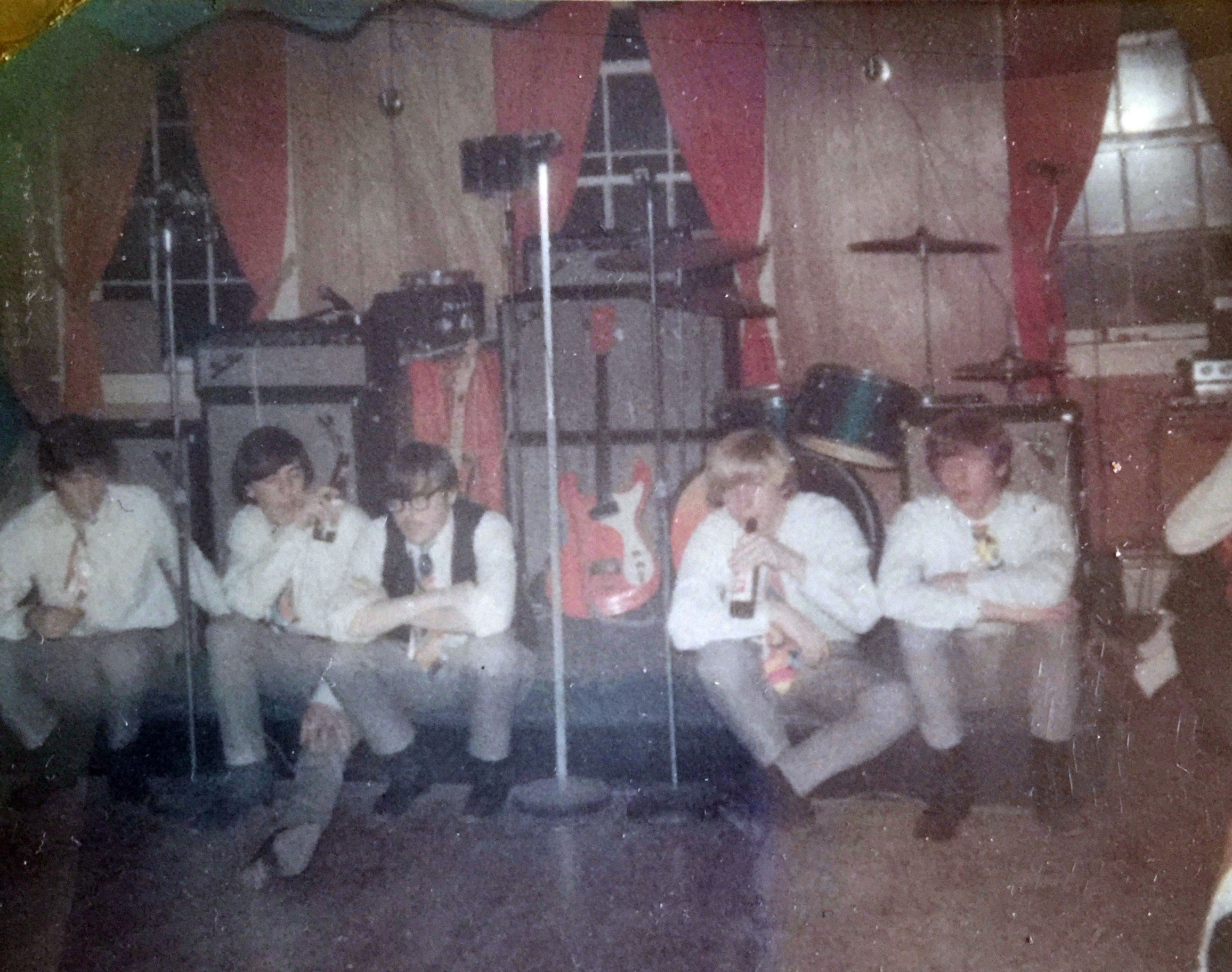
 Terry Pilittere was the founder of the Rochester, NY group the Dimensions, in 1962. Members were Denny Drew lead guitar, Rob Salerno rhythm guitar, Ken Polizzi bass and vocals, and Terry on drums and vocals. In 1965 Jack Allocco joined and the band changed their name to the Wee Four, because none of the members was over 5′ 8″ tall.
 Members of the band had conflicts with manager Al Cecere, but Terry decided to leave the group and go with Al as his manager for a solo record of two beautiful original songs, “It’s Not That Way” and “You Wouldn’t Believe Me”.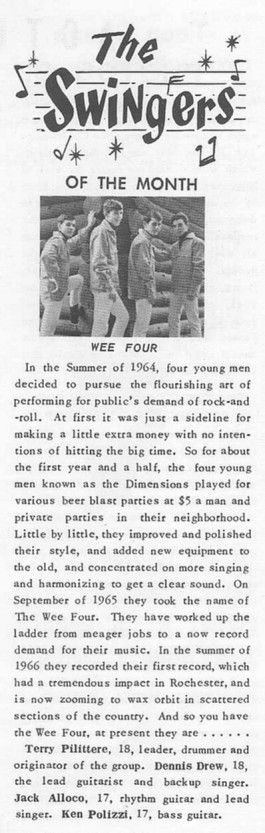
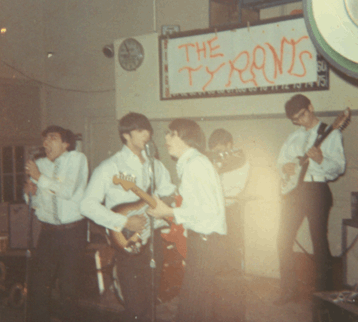
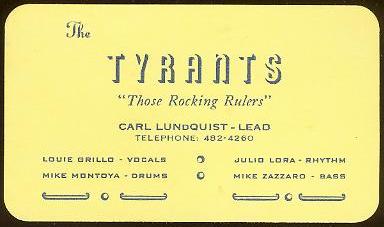 One of the leading bands in the Rochester, NY area, the Young Tyrants were Carl Lundquist lead guitar and vocals, Lou Grillo lead vocals, Julio Lora rhythm guitar, Mike Zazzaro bass and Mike Montoya drums. They were heavily influenced by the Young Rascals, even adding “Young” to their band name in imitation, but came up with a sound all their own by the time they recorded their only 45.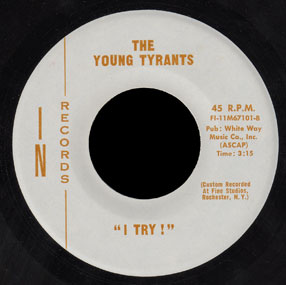
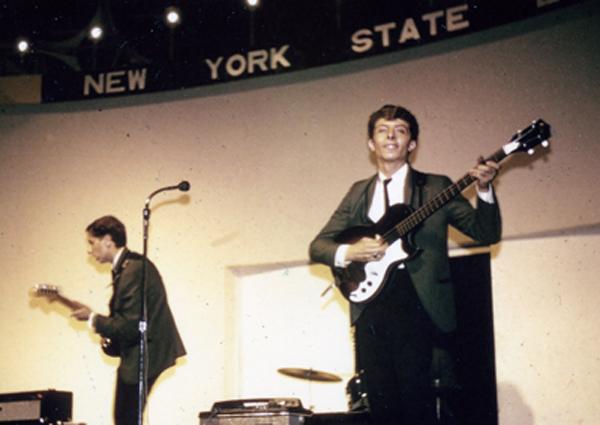
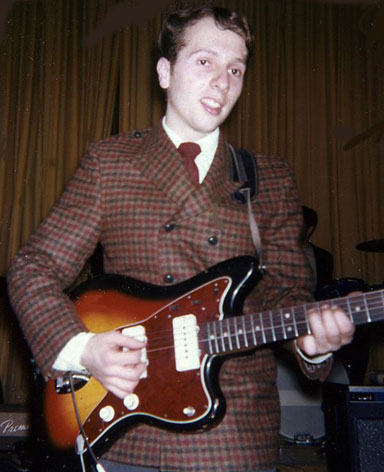
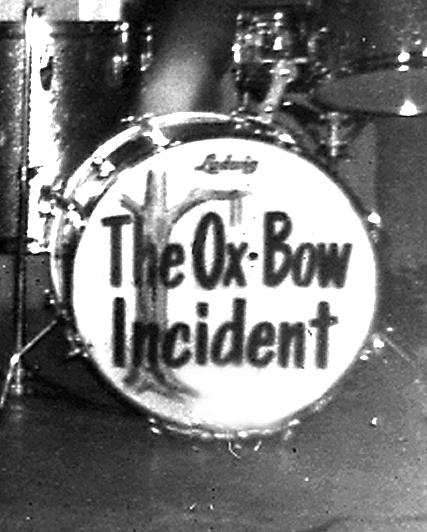 George Napolitano: We were still the Creations when we recorded the demos but changed the name shortly afterwards to the Ox-Bow Incident. The lineup for the original session was myself on guitar, Joe Sirico bass, Fred DeRubeis drums, Joe Liotta Vox organ and vocals, Dominic Coppola guitar. When we re-recorded the song Jerry replaced Dominic Coppola on guitar. After we recorded “I’ve Paid My Dues” and “Get On My Train” we were signed to a production contract with Billy and Steve Jerome. At the time they also managed the Fifth Estate and were part of the team behind the Left Banke who had a hit with “Walk Away Rene”. They gave us the song “Beg, Borrow or Steal” to record and we had it mastered and ready to be released. However the Ohio Express version was released before ours and it never came out. In fact that was 2 years before Reach Out was released.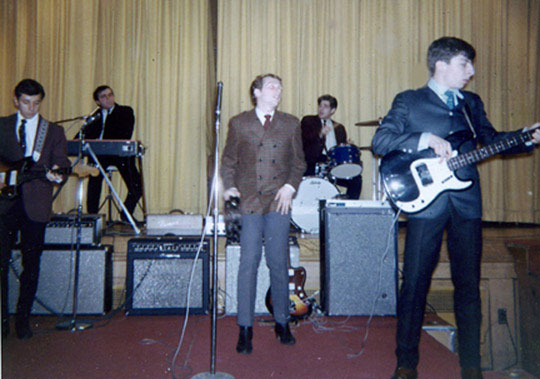
 Signed to the Smash label, the Ox-Bow Incident didn’t release a record until 1968. By this time were heading in a more soulful direction, using a leslie speaker on the organ and adding lead singer Billy Sheehan from another local band, the Intruders. Unfortunately, Sheehan was drafted immediately after the band recorded a fine, somewhat psychedelicized version of the Four Top’s “Reach Out”. They recruited Al Tessitore to sing on the b-side, the garage song “Harmonica Man”. “Reach Out” made local radio charts as far away as Kentucky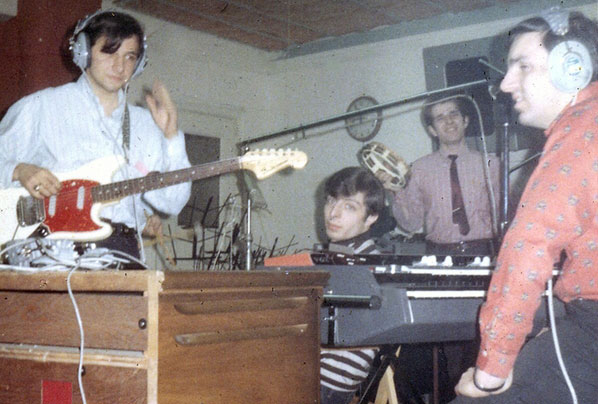

 For the most part, the MTA label (Music – Talent – Artistry!) signed California bands, but there were a few east coast groups on MTA as well. The Forsaken put out two singles on MTA in the second half of 1966. I have no idea where the Forsaken came from or who was in the band, but I suspect they were from the New York area. Ted Varnick is listed as songwriter and producer on all their sides; he also produced and wrote songs for the