John Parker Compton talks to Nick Warburton about Appaloosa, Compton & Batteau and his early solo career.
Am I right that you are a native of Boston? Tell me about your early musical influences and what prompted you to take up the guitar and write such brilliantly observational songs?
I grew up in Cambridge, MA across the river from Boston. It was a ten-minute walk from my house to Harvard Square and the infamous Club 47. As a young and impressionable teenager I got to see many great performers like Joan Baez, Tim Hardin, Paul Butterfield Blues Band, Richard & Mimi Farina, and Jim Kweskin Jug Band. Club 47 was a small and intimate club and all these shows were mind blowing. Boston also had some fantastic folk clubs at the bottom of Beacon Hill, like the Sword in the Stone Coffeehouse and the Turk’s Head Coffeehouse and also two great jazz and blues clubs on Newbury Street called Paul’s Mall and the Jazz Workshop that featured acts like Chuck Berry, Pharoah Sanders, John Hammond and Mose Alison.
The Beatles’ “Michelle” was a worldwide hit in 1964 and it really made a huge impression on me and helped me to understand that the violin and guitar should be right next to the singer in the mix. Gordon Lightfoot’s “If You Could Read My Mind” and Donovan’s “Jennifer Juniper” really set the stage for the era of mellow folk rock. The two records that had the most influence on me at that time and still today are the amazing Tim Hardin I and Tim Hardin II recordings. The production is so beautiful and Tim’s poetry and vocal delivery are just too much. I used to listen to these records non-stop. I’ll never forget the first time I heard Tim Hardin’s “Misty Roses” on the radio late one night. It totally blew my mind. Tim Hardin I & II are un-like any other records except for George Moustaki’s French masterpiece recorded in 1969 that features his hit songs “Il Est Trop Tard” and “Ma Solitude” that my wife introduced me to.
What prompted me to take up the guitar was listening to the delicate double-octave guitar style of Peter, Paul & Mary, where one guitar is playing in C and the second guitar is playing in G with a capo on the 6th fret creating a rich harmonic symphony. After hearing their music I quickly ended my classical guitar lessons and moved over to folk music.
When I was sixteen I attended a small boarding school in farm country in upstate New York and was fortunate to have a great English teacher who taught poetry brilliantly. I wrote the lyrics to “Tulu Rogers” and “Pascal’s Paradox” first as poems for a poetry homework assignment and soon turned them into songs.
You began playing as a solo artist in folk clubs in Boston when you were only seventeen. I believe you ran into Van Morrison during 1968 when you were only a year older and he critiqued your early songs. That must have been quite an experience?
Paul McNeil who I will always think of as the “Gordon Lightfoot of New England” helped me get my first job at the Sword in the Stone Coffeehouse and from there at the tender age of seventeen I started playing the folk circuit as a solo performer.
I remember in 12th grade coming home for vacation from boarding school and hearing that Van Morrison had just moved to Cambridge. I didn’t believe it at first. Then I heard that my friend John Sheldon who was 16 at the time was playing lead guitar in Van’s new band! This was just too much and sounded like some unreal movie plot. I didn’t believe it until a second friend confirmed the story.
One evening I rode my bicycle over to John’s parents house and lo and behold, as I walked into John’s basement there was Van Morrison singing “Rosie” backed by an electric trio. The intensity and power of Van’s vocal delivery was incredible. It knocked me out. After attending Van’s rehearsals, I got up the courage to walk up to and talk to Van and ask him if I could play one of my songs for him sometime. Much to my amazement Van replied in his thick accent, “Sure, stop by his house sometime.”
Standing on Van’s porch a few weeks later, excited and nervous, I rang his doorbell. Van’s wife Janet Planet opened the door and invited me in and showed me into their kitchen as Van’s children ran around their small house. Van came downstairs and I handed him a reel-to-reel tape of my recordings and he threaded them onto a Wollensak tape recorder sitting on his kitchen table. He listened to my song “Subway” and a few others and then he replied, “I like your songs.” That was a meeting that I will always cherish.
In 1975, I tracked down Van’s production company in England and sent him an “Appaloosa” LP and the Compton & Batteau “In California” LP. A year later, Van played a concert at the Harvard Square Theater in Cambridge and I ran into him walking in front of the theater just before his concert. I asked Van if he ever received the LPs that I sent to him, to which he replied in his strong accent, “Yeah John, thanks, I put them on cassette.” I couldn’t believe it.
Soon after this encounter, you started working with David Batteau, who introduced you to his brother Robin, a violin virtuoso. What were your first impressions of your soon-to-be collaborator and what attracted you to him in terms of working together?
David Batteau and I were former schoolmates, so one day I invited David (who later wrote many hit songs like Robert Palmer’s “Addicted to Love” and a great song called “Tell Her She’s Lovely”) to play cello at one of my early gigs in Boston. One afternoon while practicing at David’s house his brother Robin walked in with his violin and it just clicked. Robin intuitively played each song perfectly the first time, after only listening to it for a minute.
One weekend I invited Robin to a gig that I played every Sunday afternoon at Christ Church’s Outdoor Concerts Series hosted by Bob Gordon on the Cambridge Common. We were the only acoustic folk act and people liked us. From that point on we performed there every weekend during the next two summers.
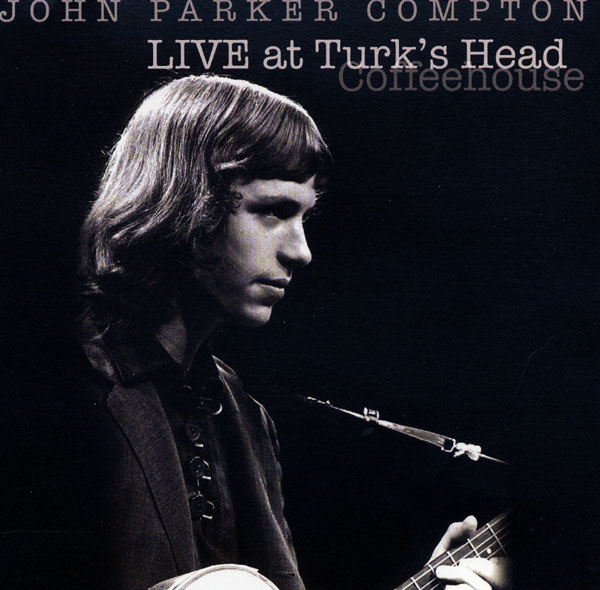
One of your shows as a duo – a gig at the Turk’s Head Coffeehouse – was captured on tape and released by MC Records in 2006. How did they stumble across the tapes?
I found the tapes a few years ago and sent them to Audio-Resorations.com – not knowing how many songs were on them. The tapes had been in storage for 35 years but amazingly they sounded fine. The recordings really highlight Robin’s unique violin live performance style. I released the songs on my VMC label. (I highly recommend Mark Lyons at Audio-Restorations.com. He does an incredible job restoring tapes and also transferring LPs to CD).
Among the seven tracks from this show are a couple of songs – “Subway” and “Green Brown Sound” – that were not used by your subsequent project, Appaloosa. How come?
When we first met Al Kooper, he booked a demo recording session at Columbia Studios and we recorded twenty-two songs. Al picked eleven of the twenty-two songs for our LP.
The remainder of the tracks on the VMC CD “John Parker Compton – Live at the Turk’s Head Coffeehouse” were sourced from a recording at WHRB studios in Cambridge and a home reel-to-reel tape machine. Tell me about these recordings because once again there are a handful of songs that you didn’t revisit such as “Loving Her Makes Today” and “We Can Forget.”
It was customary after playing a radio show in those days to get a reel-to-reel tape of the radio broadcast. The home recordings were done at boarding school and at Robin’s house on a Wollensak tape recorder.
It’s fascinating listening to these live recordings because the songs that turned up on the Appaloosa album sound pretty well formed and this was only months away from you demoing them for Al Kooper. Can you reveal some of the inspirations behind these songs?
Robin and I had played the songs at coffeehouses for about a year before we recorded “Appaloosa.” I wrote most of the songs for “Appaloosa” for my girlfriend at boarding school. The inspiration for “Pascal’s Paradox” came about in a chemistry class while having the theory of Pascal’s Paradox explained and drawn on the blackboard. I wrote “Thoughts of Polly” for my stepbrother’s girlfriend and soon to be wife Polly. The song is in open D tuning. ”Rosalie” is another girlfriend song and in open G tuning. The song “Glossolalia” came about in a funny way. We got a gig a Gordon College in a town north of Boston. We didn’t know until we arrived at the college that it was a religious institution. Our concert was held in the college chapel and while standing on the steps of the stone church waiting to go in, I noticed a service schedule on the side of the door that mentioned the word “Glossolalia.” I had never seen the word before but I liked the way it sounded and used it for a girl’s name.
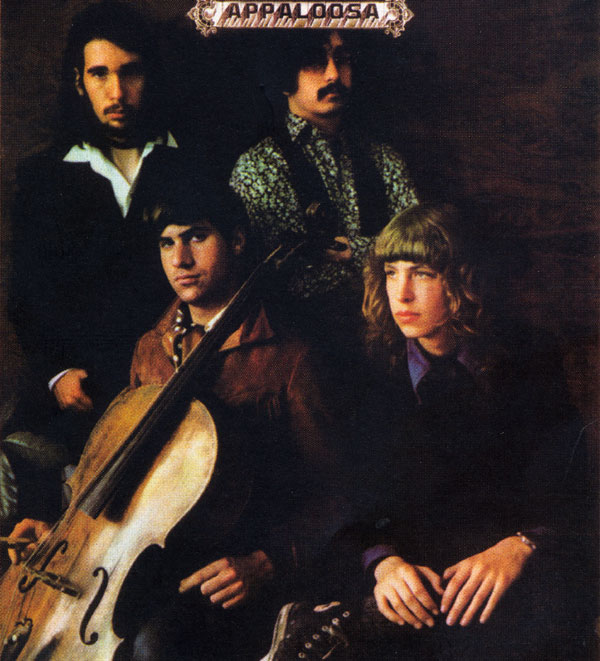
How did you meet the other musicians that made up Appaloosa and where did the name come from?
David Reiser and I were former schoolmates. Eugene Rosov was easy to find: he was living at the Batteau’s house and going to Harvard and rounded out our sound perfectly. Prior to recording our “Appaloosa” LP, Robin and I recorded two of my songs, “Rosalie” and “Downtown Row” at Intermedia Sound in Boston. It was a beautiful studio. We asked David to play Fender bass for the session. David was only 16 but a real pro bassist and played with several bands at many of Boston’s jazz clubs. The recording session went so well that the owner of the studio offered to print us a hundred 45s. I remember that we got them added to some jukeboxes at various locations around town. David suggested the name “Appaloosa” for the band.
Can you tell me about the recording of Appaloosa’s album? Did you record as a band and then Al Kooper brought in members of Blood, Sweat & Tears and other side players to complete the tracks or did you record together?
We recorded all of the songs as a live band, doing several takes and picking the best one. Bobby Columby (BS&T drummer) recorded with us on songs like “Feathers”, “Yesterday’s Roads”, “Rosalie” “Thoughts of Polly” and “Georgia Street.” It was such a thrill to watch Bobby play in his theatrical drumming style. Bobby’s timing was always perfect and he really put his heart and soul into each song. He was a super funny guy and also telling us jokes in between sessions and this really helped relax us since it was our first time in New York.
Fred Lipsius added the great saxophone part on “Thoughts of Polly” as an add-on track. He recorded it in the control as we all sat there and then Al said, “Let’s play the saxophone track backwards”. That’s why his part sounds so mysterious.
We recorded “Now That I Want You” and “Bi-Weekly” live in CBS’ larger studio in the center of Manhattan with a horn section. Al brought in Charlie Calello (Laura Nyro’s producer/arranger) to do the horn arrangements. Al also asked Laura Nyro’s guitar player to the session and he added the nice Glen Campbell-ish lead guitar on “Bi-Weekly.” Kooper was also super kind to us. I remember one evening he invited us to apartment to meet his wife and they both made us popcorn.
“Now That I Want You” screamed to be released as a single and I am sure would have been a hit. How well do you think the label promoted you as an act and got behind the album?
“Now That I Want You” was our signature song at live shows. Robin’s violin lead allows wowed the audience and me everytime. His double-string violin technique is really something else. I fondly remember how Clive Davis, Columbia’s president at the time, was such a gentleman to us and was super-friendly and supportive. Unfortunately, we didn’t have a manager so we had no one to talk to Columbia. We were just teenagers and so naive and amazed to be in a big city.
Are there any memorable live dates from this period that you performed as a group?
Playing the Filmore East was exciting. We opened for the Allman Brothers. I remember Gregg Allman saying to us when we walked past their dressing room, “Hey, where are your groupies?” and Eugene Rosov our cellist held up and pointed to a book by Francis Bacon that he was carrying from one of his courses at Harvard. I’d love to find a tape of that show. We also opened for the Young Rascals at Harvard Stadium on a beautiful autumn day and we opened for Van Morrison in Boston. Earlier, in 1968, Robin and I opened for Tim Hardin for his weeklong gig at the Jazz Workshop. I was scared to meet Tim Hardin in person, having personally seen him when I was younger throw a glass ashtray at someone in the audience after he asked everyone to be quiet. But Tim Hardin was a gentleman and invited us all out to dinner with him after the concerts.
Appaloosa performed on two television shows, one on PBS Television for Boston and also on “Steve Paul’s Scene” a music show in New York City. I tried unsuccessfully to find the tapes of the broadcasts.
You penned all of the songs for the Appaloosa album. Did the others see it as a democratic band or really your musical baby? What prompted Eugene Rosov and David Reiser to leave?
I came with the songs and Robin, Eugene and David added the arrangements. Eugene Rosov went back to Harvard University and David joined a jazz band.
With the group dead in the water, you and Robin decided to head for California. What made you decide to relocate to the West Coast?
Robin’s wife at the time was attending one of the Pomona College’s outside of Los Angeles so I convinced a friend of mine to drive out to California and visit them. As soon as we arrived, Robin and I drove into Hollywood and met an A&R guy at Columbia named Eddie Mathews and he signed us to do our second Columbia record.
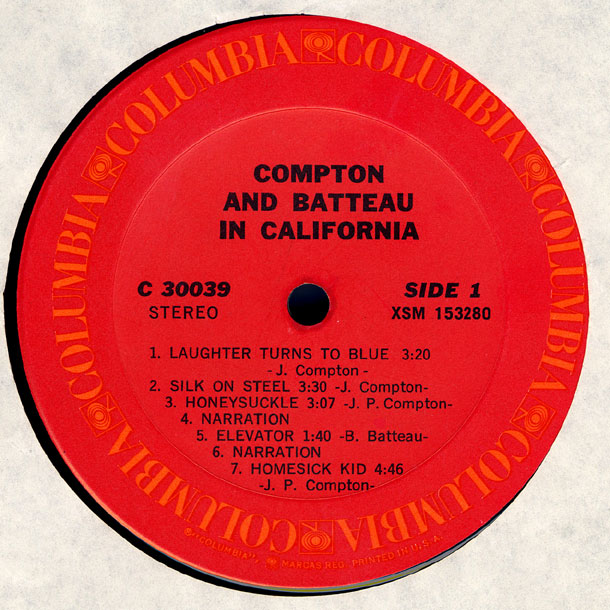
Like “Appaloosa” I am a huge fan of Compton and Batteau’s “In California”. Even though you dominate the songwriting, it seems to be more of a partnership with Robin now singing and writing a couple of tracks, one of which I believe was issued as a single.
Robin asked to add two songs. Robin’s song “California” is a great song and really has an AM radio vibe. The song was released as a single.
How did the “In California” album come about? Did you write the songs for it once you’d got out to Los Angeles or were some written prior to moving?
We got signed to Columbia the first week I arrived and we immediately started working with our producer Abner Spector (no relation to Phil Spector). I wrote some of the songs prior to the trip west and rest of the songs in California while living there.
The support group features keyboard player Bill Elliott who also turns up on your debut solo album. How did you find him?
Bill grew up in a town next to Cambridge where I lived. The first time I heard Bill play was with Lorin Rowan and I was knocked out. He’s like a modern day Mozart and really looked the part back then. So I called Bill and invited him out to record with us in California. Bill is one of the most gifted keyboard players I know. He’s right up there with Al Kooper. Like Robin, Bill only needs to hear a song once and he already knows it perfectly. Bill’s piano playing adds so much to my songs. I remember we went to a musical rental store and rented a harpsichord for my song “Essa Vanessa.” And of course the studio was well stocked with beautiful grand pianos and Hammond B3 organs. I miss those days when you had to spend an hour setting up the microphones around a piano. Now pianos are recorded using computer chips.
Who was responsible for bringing in Poco members Jim Messina and Rusty Young and Rick Nelson sidemen Randy Meisner and Pat Shanahan? What do you think these musicians added compared to the musicians that Al drafted in on the Appaloosa album?
Poco was recording in the studio across the hall from us at CBS in Hollywood. One day in between sessions I saw Jim Messina sitting playing electric guitar wearing bright red cowboy boots. What a thrill to have Jim offer to record with us. His lead guitar work on “Honeysuckle” is so upbeat. And having Randy and Pat record live with us on songs like “Homesick Kid” was a dream come true. We recorded the songs as a live band.
Did you go out and play any live gigs as a duo once you hit the West Coast? Any notable shows?
We played at the University of Ohio for a week and recorded all the shows. I had the tapes for years but one day they disappeared. We also performed at the Anti-Vietnam War Concert in Washington, D.C. in 1971 to a crowd of 50,000 people and the following day to a similar crowd at an outdoor concert in Boston at the Boston Commons.
Am I right that while you were recording “In California”, Sly & The Family Stone were recording next door?
Yes. Everyday we would see Sly arriving in his Winnebego mobile home wearing these knee-high fur boots. It was quite a sight. One of my all-time favorite records is Sly & the Family Stone’s masterpiece “Fresh.” What an amazing record.
There are some absolutely brilliant songs on this record like “Laughter Turns to Blue”, “Proposition” and “Homesick Kid” – what prompted you to write this new batch of material?
“Laughter Turns to Blue” was inspired by the great lyric imagery in the Christmas song “Good King Wenceslas.” I wrote “Propositions” as my response to the U.S. army draft and being ordered down the U.S. Army barracks in Boston to take a physical. Living through the days of the Vietnam War was so intense. I wrote the song because at least I lived. I wrote “Homesick Kid” for a girl that I met in Berkley, CA.
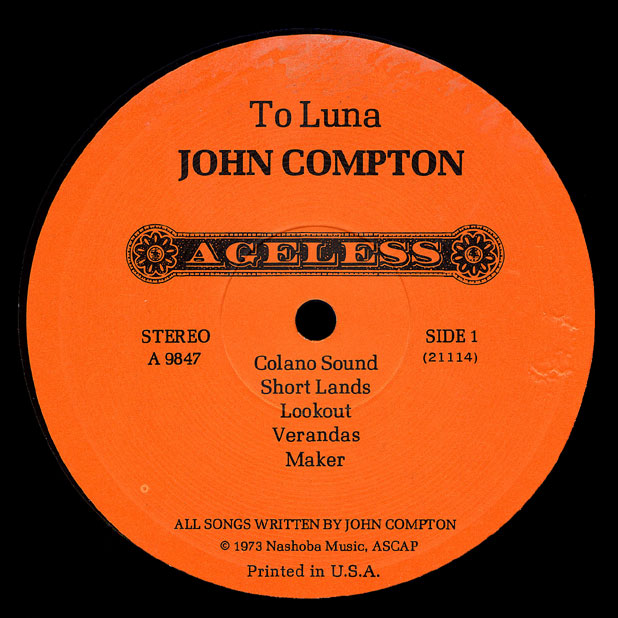 There was a three-year gap between “In California” and “To Luna”. How did you keep yourself busy?
I bought a farm built outside of Cambridge and played at various clubs in the area.
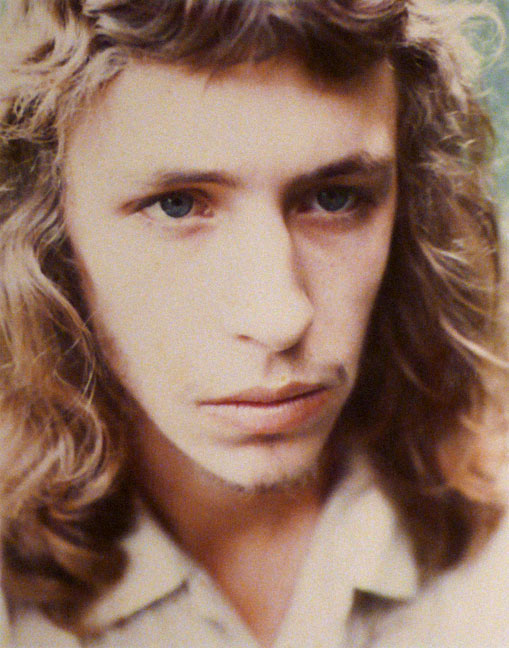
I always think your image on the cover of “To Luna” reminds me of Beck twenty years later. Where was that shot taken?
A photographer named Frank Siteman (www.franksiteman.com) who was a friend of Robin’s and mine offered to take the album cover for the “To Luna” LP. I showed up at Frank’s place having no idea what to expect for the photo session. We drove out to a nearby beach where Frank took the album cover photo with the lunar-looking landscape. The Muslim clothing that he brought for the session adds a unique look. Frank also took the B&W photos that I feature on my You Tube video for “Feathers” (Live at the Turk’s Head Coffeehouse) on www.youtube.com/appaloosa1969.
“Polinate The Blue” ventures into new territory for you – a sort of bluesy, funk stew. Did you feel as a solo artist you were freed up to experiment in a heavier material?
That song and also the songs “Lookout”, “Maker” and “Ona Find Me Home” are the result of me listening to a record that really influenced me: Dr. John’s Cajun-stew funk classic recording “Dr. John the Night Tripper.” Gris-Gris Gumbo Yah! (I later used the female back up singers influence on my second solo recording “Mother of Mercy” CD in 1995.) Dr. John’s grumbly lead vocal set against the female back up singers and wild percussion and lead guitar creates such an incredible atmosphere. I wonder if his classic song “Walk On Guilded Splinters” has ever been used as a movie picture soundtrack?
Harvey Brooks and Billy Mundi were regulars up in Bearsville but where did Roland Dufault, who adds some sparkingly lead guitar, David Mowry and Stu come from?
First, I want to say that recording with Harvey Brooks and Billy Mundi was an unbelievable experience. They were like a high performance engine in the studio. Roland Dufault went to my boarding school in upstate New York. I met David Mowry at the Cambridge Common concerts. David’s vocal delivery in those days sounded exactly like Richie Havens. When you were walking up to the concert from a distance you would swear that it was Richie Havens singing on stage. David plays guitar like an acoustic Carlos Santana and is an incredible live performer. Both Roland and David really added a great vibe to my “To Luna” LP.
How did you get to record up at Bearsville, most famous being the Band’s home patch?
It was a fluke. Robin and I were driving somewhere and Robin’s VW broke down just outside of Woodstock, NY on a cold winter night. I worked on the engine in the cold but there was one part that wouldn’t budge. We hitchhiked into Woodstock and we ended up at a bar named the Bear Cafe. We had our instruments with us and someone yelled out, “Hey, play us a song!” Peter Edminston was in the audience and called me a year later and offered to produce my “To Luna” LP.
What is the intriguingly titled “Leave My Casos in Laos” about?
It’s about the insane wars that America waged in Southeast Asia in the late 1960s and early 1970s. I wrote the song in the spirit of someone who had been drafted into the army and killed in action and who left a note saying that they would like to be buried in the foreign land.
My personal favorite on the album is the hypnotic “Shortlands” which features Bill Elliot, first heard on “In California” providing some heart rendering piano work. What inspired this song?
I wrote the song about my girlfriend at the time, as a way to say that we had plenty but in actually we had nothing. The guitar is a variation of an open D tuning. I was planning to record the song with just vocal and acoustic guitar.
After playing the song once in the studio, Bill Elliott said over the studio intercom system, “Hey John, I’d like to come in and try something.” Mark Harmon our engineer miked the grand piano with stereo microphones to get the full rich piano sound. We recorded the song in a few takes. Bill’s piano playing really is theatrical.
“Verandas” harks back to Appaloosa and Compton and Batteau in style. Was this an old song that you rediscovered? It has a really beautiful feel about it.
I play the song in regular tuning and made up the two opening chords to sound like the guitar is in open tuning. Bill Elliot’s piano playing is spectacular. I wrote the song inspired by the old farm that I bought and restored. Nick it’s been a pleasure talking with you.
Copyright © Nick Warburton and John Compton. All Rights Reserved. No part of this article may be reproduced or transmitted in any from or by any means, without prior permission from the author. Interview, July 2009.
To contact the author, email: Warchive@aol.com
Visit: www.nickwarburton.com
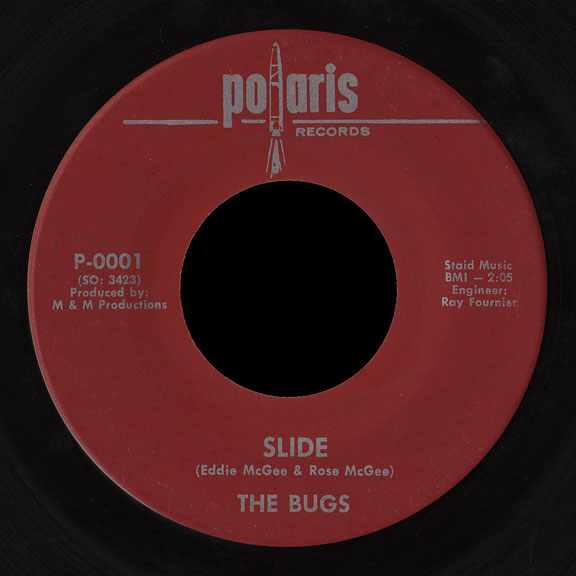 The Bugs had a reputation as jokers, but are solid professionals on their excellent first single. “Pretty Girl” is a fine British-influenced pop number that apparently hit the charts of local radio stations from Maine to Chicago to Florida. The flip is the raucous “Slide”, supposedly written in the studio but the band sounds too rehearsed for it to be a spontaneous performance. It must have been a staple of their live sets.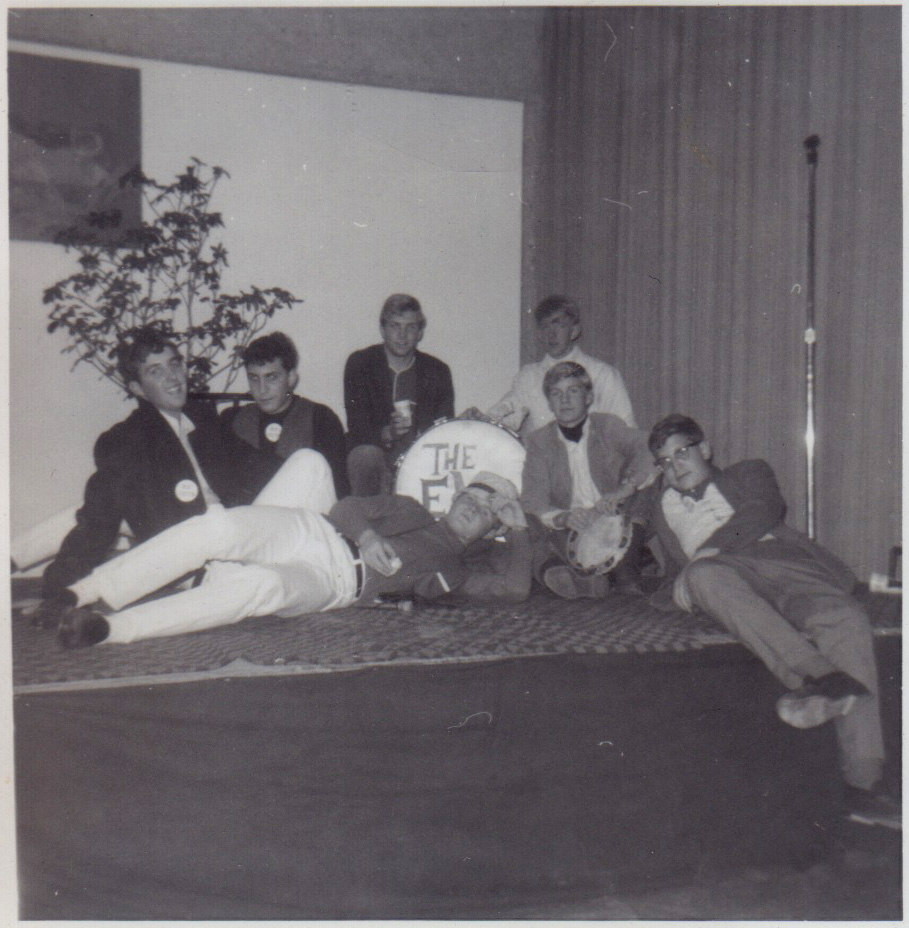
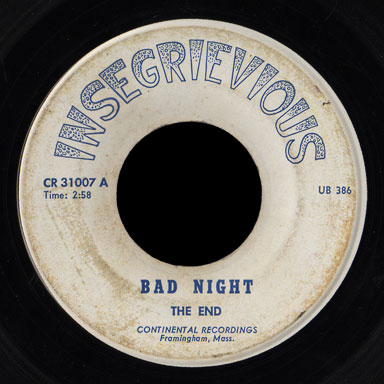
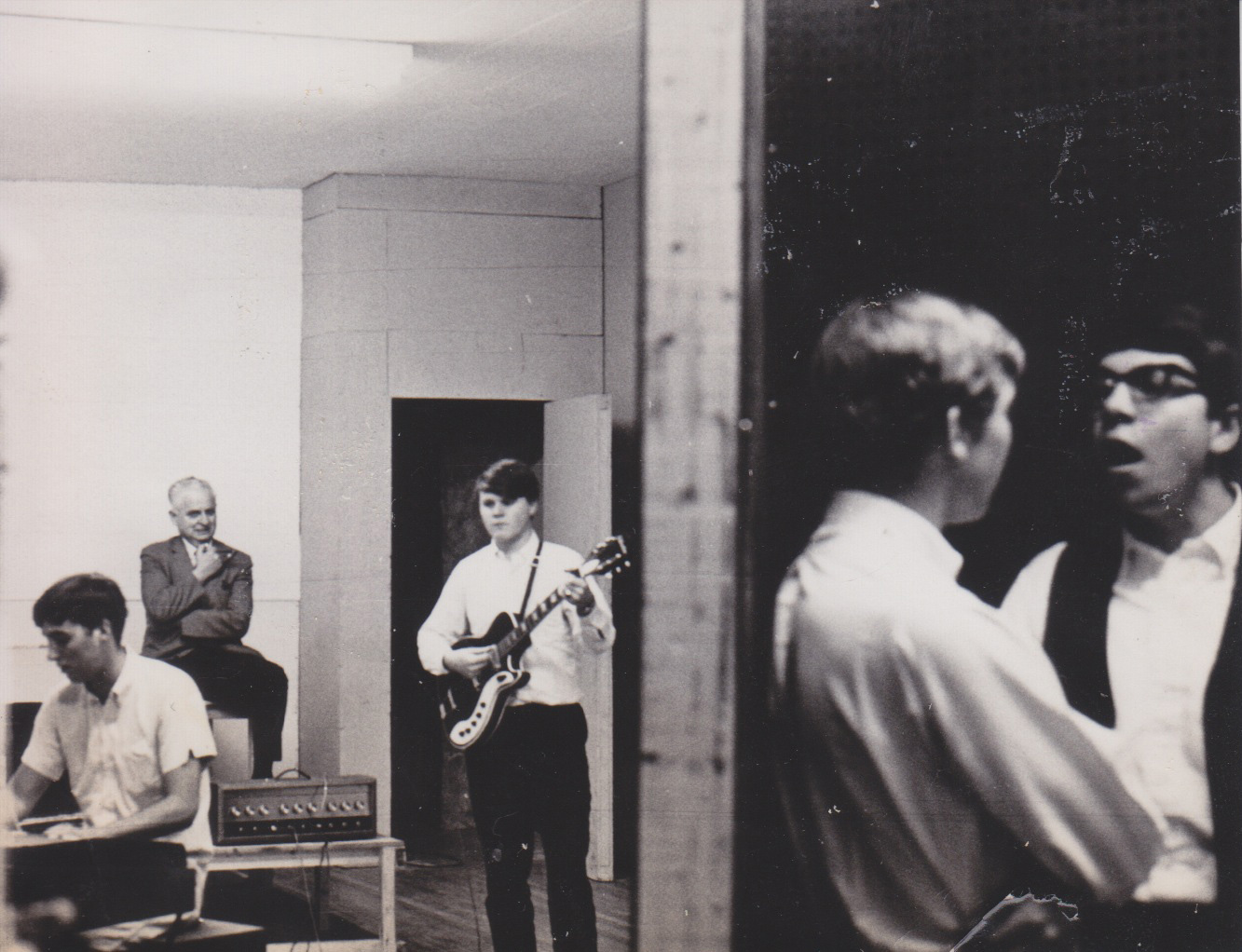
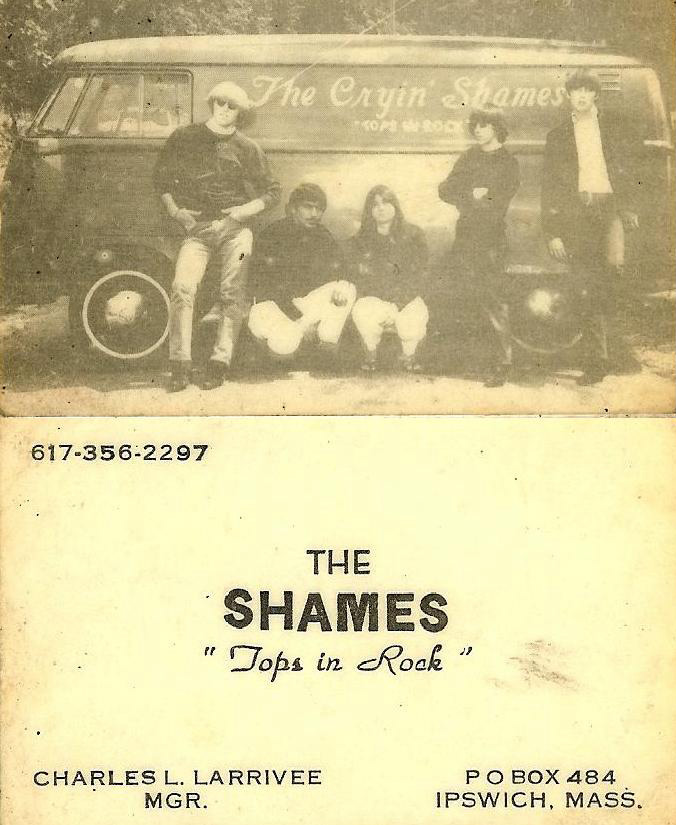
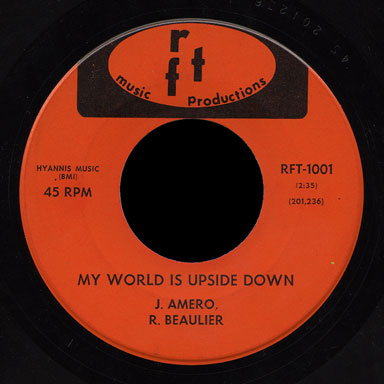 The Shames crank out both songs on this single like it’s the only shot they’d ever get. There’s no weak playing here, just guitars overloading the studios inputs, a drummer slamming out the beat and a vocalist cutting loose. On “The Special Ones” he complains about getting grief for having long hair! “My World Is Upside Down” may be the most distinctive of the two, if one had to choose a top side.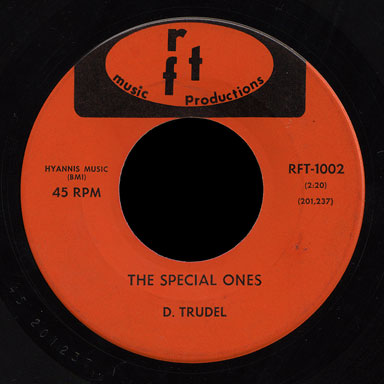
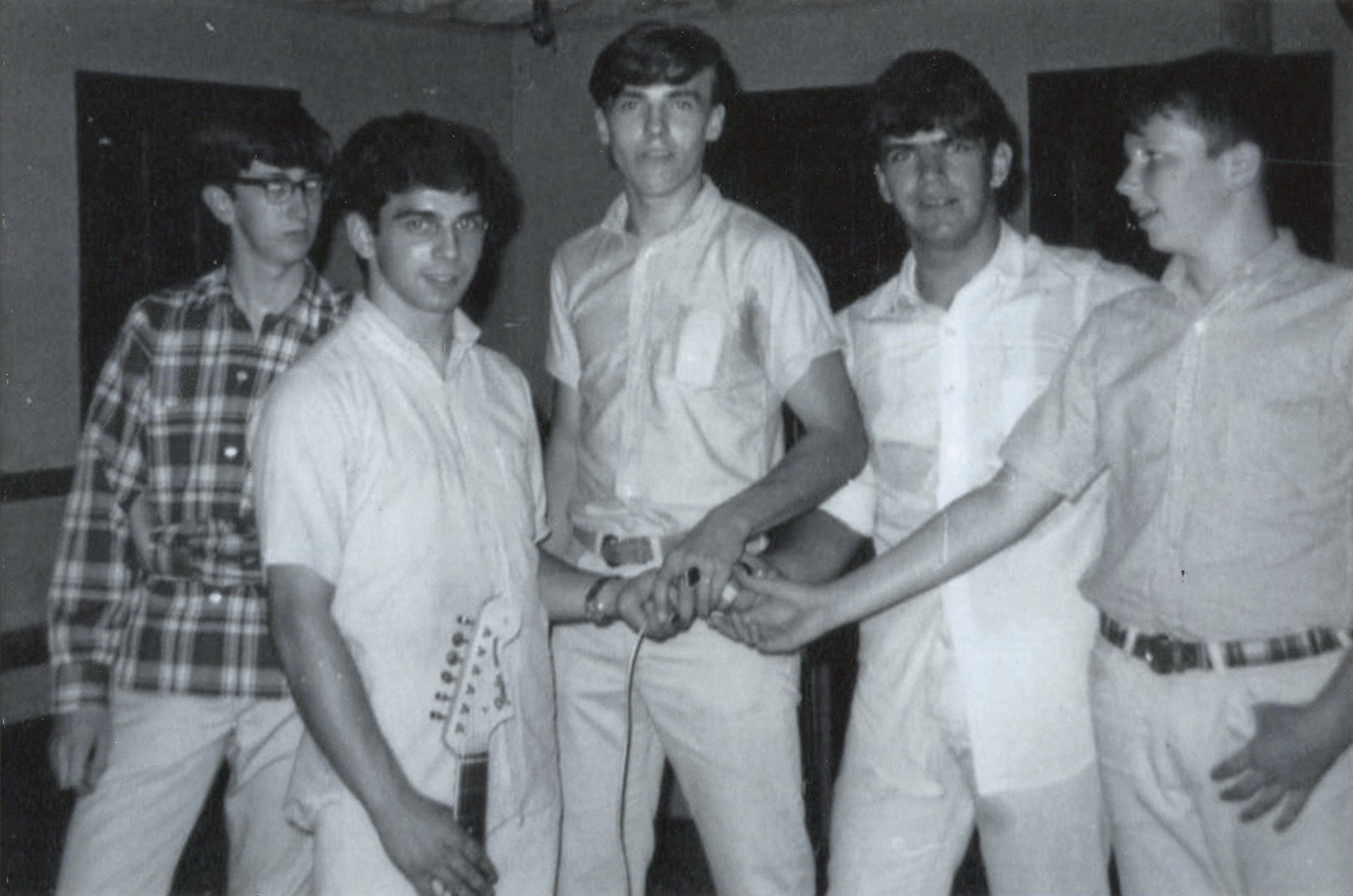
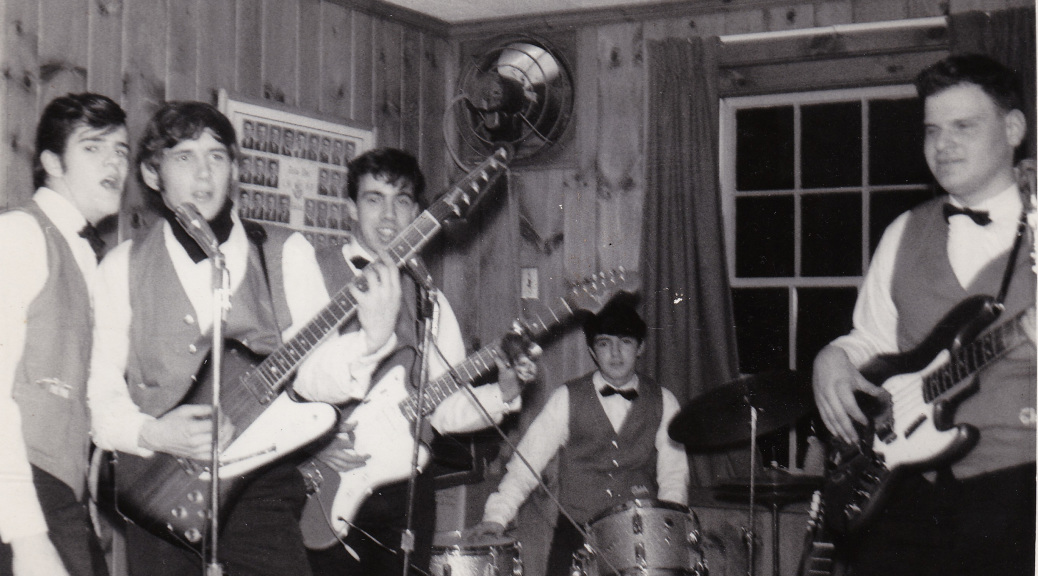
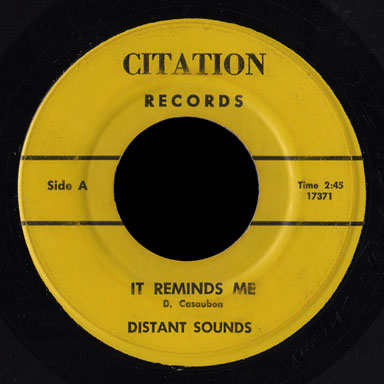 The Distant Sounds came out of Bartlett High School in Webster, Massachusetts, about 15 miles south of Worcester.