I tried to assemble a discography of Wickwire Records out of Long Beach, California. I quickly came up short until Bob pointed out that Cedwicke and Best were related labels.
Does anyone have scans of the Steve and the Emperors “The Breeze & I” on Best?
Best 101 The Pyramids – Pyramid’s Stomp / Paul (1962) Best 102 The Pyramids – Penetration (Steve Leonard) / Here Comes Marsha (prod. John Hodge, Nov. 1963) Best 103 Steve & The Emperors – The Breeze And I (Lecuona-Stillman) / Great Balls of Fire (1963)
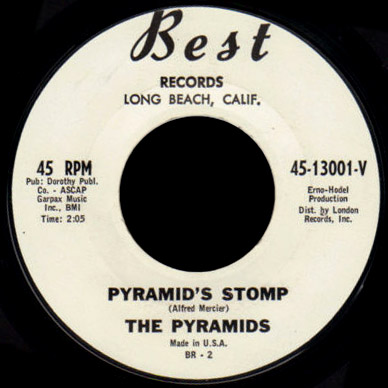
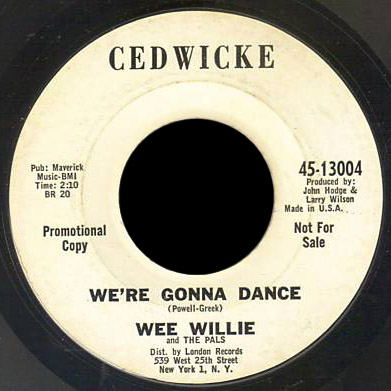
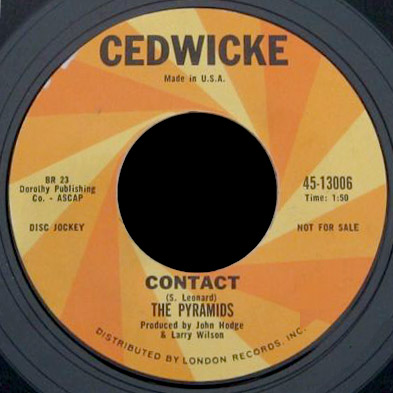
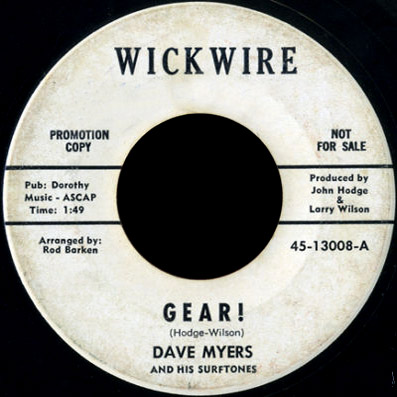
Best 13001 The Pyramids – Pyramid’s Stomp (Alfred Mercier) / Paul (Feb. 1964, re-release of Best 101 with London distribution) Best 13002 The Pyramids – Penetration / Here Comes Marsha (Feb. 1964, re-release of Best 102 with London distribution) Wickwire 13003 The Emperors – A Fool For You I’ve Been / Searchin’ Around the World (both written by Bill Hughes for Dorothy Music, ASCAP) Cedwicke 13004 Wee Willie & The Pals – We’re Gonna Dance (Powell-Greek) / Teardrop Strawberry Soda Cedwicke 13005 The Pyramids – Midnight Run (Usher-Berns-Christian) / Custom Caravan (April 1964) Cedwicke 13006 The Pyramids – Pressure (Hodge-Wilson) / Contact (Steve Leonard) (June 1964) Wickwire 13007 The Emperors – Blue Day / Laughin’ Linda (written by Cameron-Watts, arranged by William F. Williams) (with picture sleeve) Wickwire 13008 Dave Myers and His Surftones – Gear! / Let the Good Times Roll (arranged by Rodney Barken, pub. by Number One Music, BMI) Wickwire 13009 The Montclairs – It’s Gonna Work Out Fine / If You Need Me Wickwire 13010 The Lady Birds – To Know Him Is to Love Him / A Girl without a Boy
John Hodge & Larry Wilson produced most of these.
The Pyramids also had an LP The Pyramids Play The Original Penetration! on Best (LPM-1001, reissued with London distribution as BR-16501, BRS-36501).
The Cedwicke 45s also had distribution by London Records.
See the Emperors page for more info on their records.
I’ve seen two pressings of Wickwire 13008 by Dave Myers and His Surftones – most have Gary Usher as songwriter of “Gear!” but some have Hodge-Wilson listed as songwriter for that song.
Wickwire may have had a publishing connection to the Mod label which had a release by the Menn, “Things To Come” / “What Ever Happened To” (Mod 1013, pub. by Wickwire Music BMI). The Menn had a previous 45 on the Two + Two label, as did the Emperors (see the Whigs for a little more info).
Thanks to Bob and Max Myndblown for their help with this discography and to Wangdangdula.com for info on the Pyramids releases.
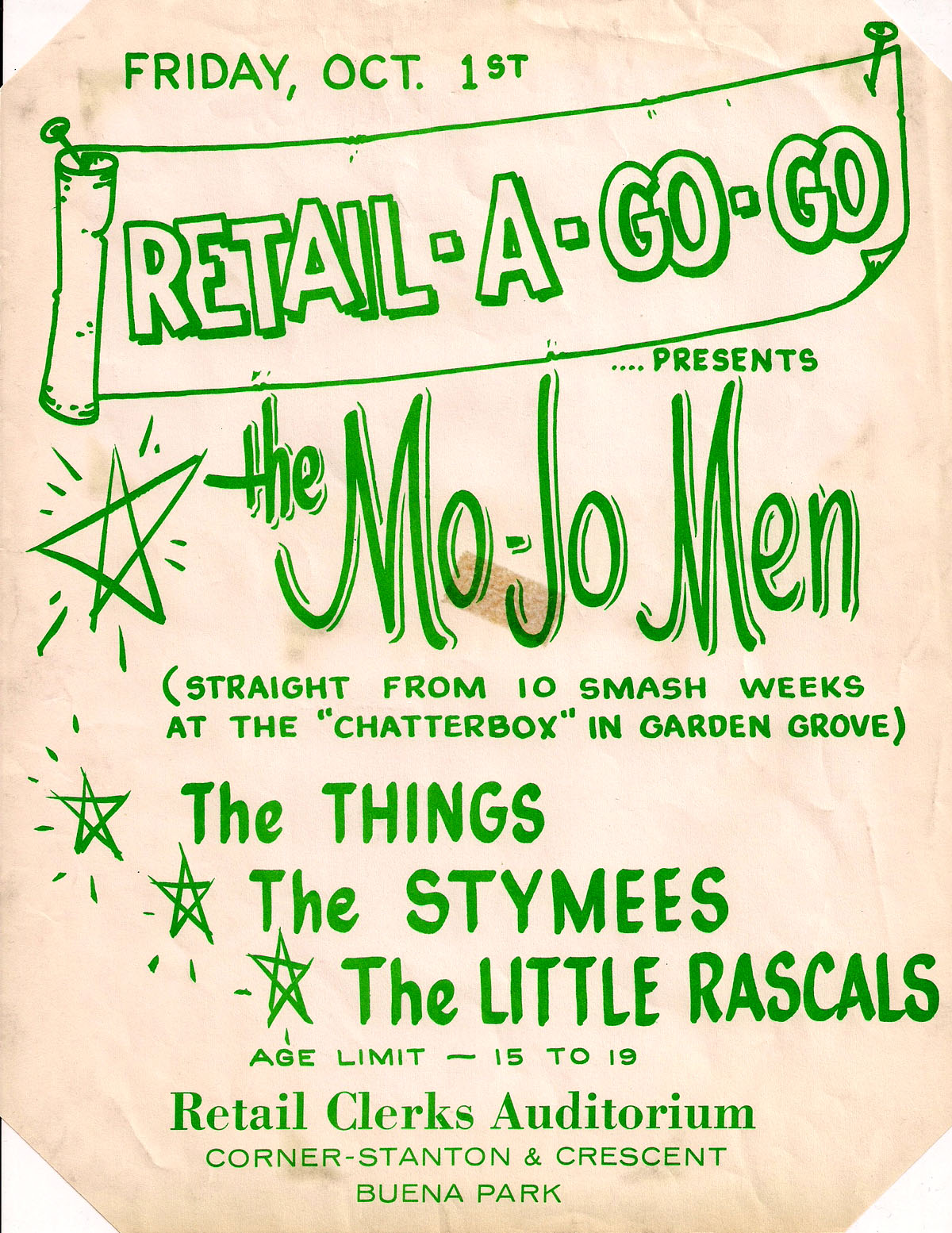
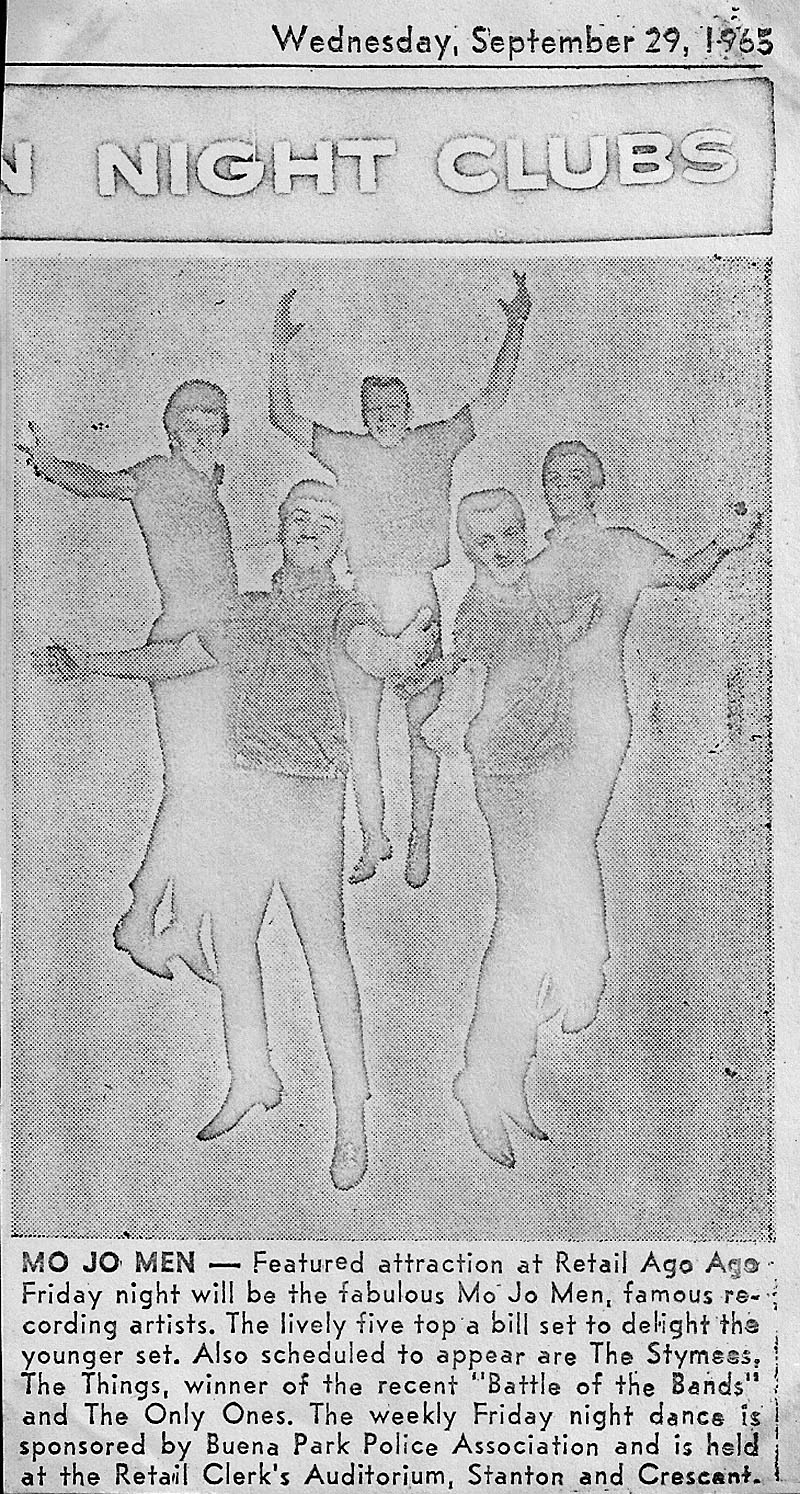
Gary Myers sent in this great poster of his band the Mojo Men playing the Retail Clerks Auditorium in a “Retail a Go Go” with the Things, the Stymees and the Little Rascals on October 1, 1965. A news clipping from Gary dated September 29 lists the Only Ones instead of the Little Rascals, and names the Things as winners of a recent Battle of the Bands.
These Mojo Men were not the San Francisco band that hit with “Dance With Me” and “She’s My Baby” on Autumn Records.
Gary and his group had some lineup changes, signed with Mike Curb in 1967 and became the Portraits. I don’t believe any of the other bands mentioned recorded – has anyone ever heard of these groups?
The Retail Clerks Auditorium in Buena Park, Los Angeles had been a famous venue for surf bands in the early ’60s. By 1965 this had changed, and beat groups such as the Heathens did shows there.
If anyone has more info or clippings about the Retail Clerks Auditorium, it would be appreciated!
Thanks again to Gary E. Myers for his help. For more on Gary’s career see his website www.music-gem.com.
Joey Newman (lead guitar, keyboards, vocals) Bob ‘B.J’ Jones (lead guitar, vocals) David Price (rhythm guitar, vocals) Randy Fuller (bass, guitar, vocals) Don Poncher (drums, vocals)
1968
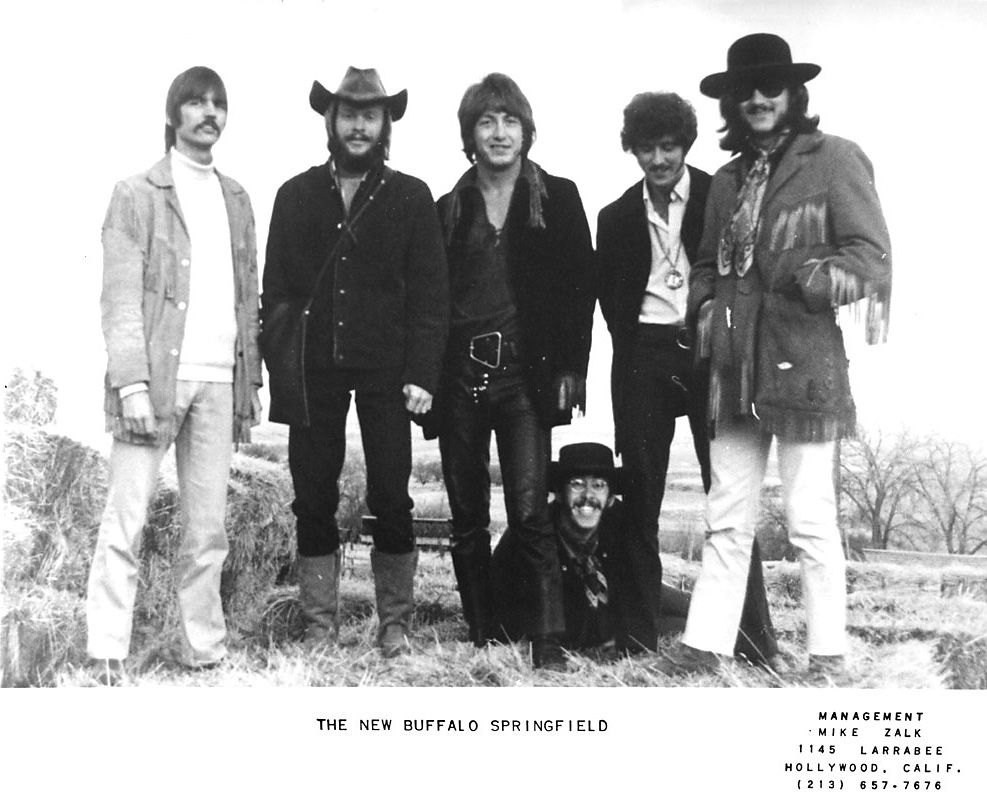
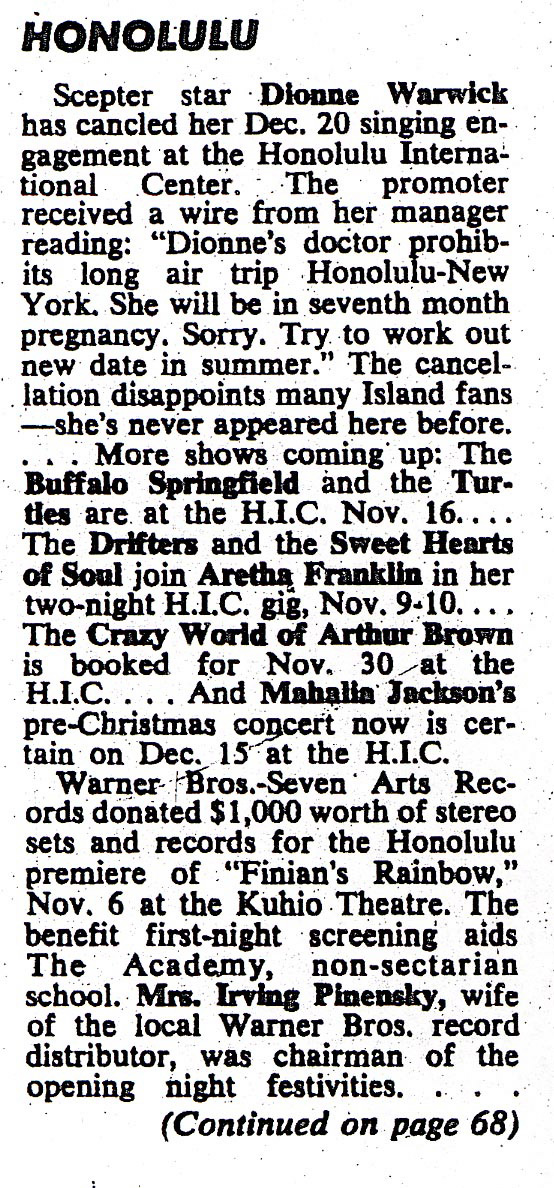
September Price (b. September 23, 1944, Ballinger, Texas, US) and Poncher (b. July 29, 1947, Chicago, Illinois, US) are recruited by former Buffalo Springfield drummer/vocalist Dewey Martin for his new group named The New Buffalo Springfield, alongside horn player Jim Price, bass player Bob Apperson and lead guitarist Gary Rowles. Apperson, Poncher, Jim Price and Rowles have been playing together in a club in Arizona, which is where Martin spots them, while David Price has previously worked with Austin blues group, The Chelsea, done TV work with the Monkees and played one gig with the L.A based-band, Armadillo. The band rehearses at a diner in Boulder, Colorado and performs at the club with The Everly Brothers for a week. November(16) The group makes its official public debut at the HIC, Honolulu, Hawaii with The Turtles. Shortly afterwards, the band returns to the mainland and performs a date at the Exhibit Hall, the Community Concourse in San Diego. (23) Billed as The Buffalo Springfield, Martin’s group plays at the Sound Factory in Sacramento, California with Mad River and Sanpaku. (30) Once again billed as The Buffalo Springfield, the band performs at the Terrace Ballroom, Salt Lake City, Utah with The Sir Douglas Quintet. The set list includes a song by Spirit.
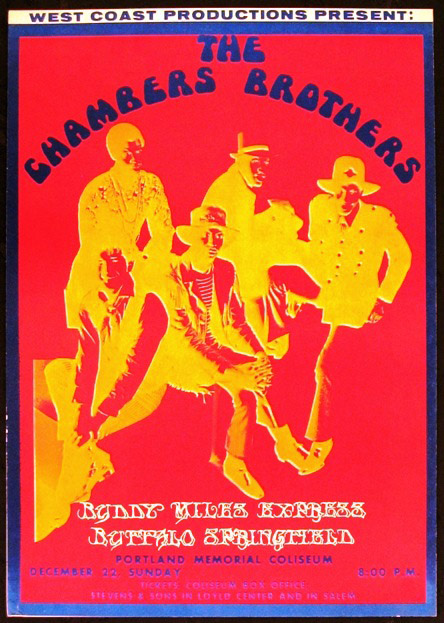
New Buffalo Springfield, late 1968, from left: Dave Price, Jim Price, Dewey Martin, Bob Apperson and Gary Rowles. Front: Don Poncher. Photo from Gary RowlesBuffalo Springfield, Portland, Dec. 22, 1968 Poster image thanks to Jerry Fuentes
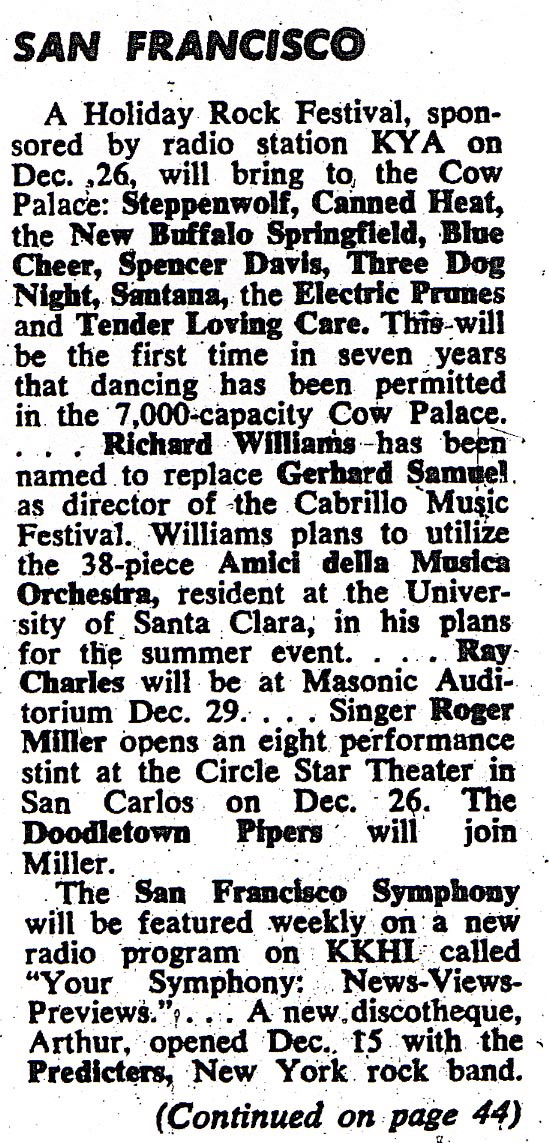
December(6) They play at the Swing Auditorium, San Bernardino, California with Eric Burdon & The Animals. (7) Martin’s new version of The Buffalo Springfield appears at the Earl Warren Showgrounds, Santa Barbara, California with Three Dog Night. (14) The band travels to Texas for a show at the Midwestern State University in Wichita Falls. (20) Billed as The Buffalo Springfield they play at the Civic Center in Bakersfield, California with Gary Lewis & The Playboys. (21) Travelling up to the Northwest, they appear at the Pacific Coliseum in Vancouver, British Columbia, Canada with The Chambers Brothers and The Buddy Miles Express. (22) Billed as The Buffalo Springfield, they play at the Memorial Coliseum in Portland, Oregon with The Chambers Brothers and The Buddy Miles Express. (23) Martin’s band is supported by White Hearts at the Evergreen Ballroom in Olympia, Washington, where it is billed as The Buffalo Springfield. (26) Billed as New Buffalo Springfield, Martin’s band makes its Bay area debut at the Holiday Rock Festival, Cow Palace, San Francisco alongside Canned Heat, Steppenwolf, The Electric Prunes and others. (27) Martin’s band appears at San Joaquin County Fairgrounds in Stockton, California. Gary Lewis & The Playboys cancel due to illness.
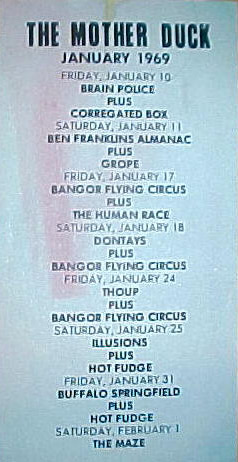
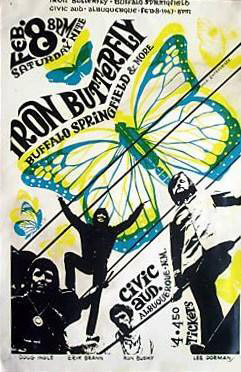
Listing in Billboard for the Buffalo Springfield, November 1968Now listed in Billboard as the New Buffalo Springfield, December 1968Buffalo Springfield show at Mother Duck in Chicago, January 31, 1969 Thanks to Dean GuyBuffalo Springfield with Iron Butterfly, Albuquerque Civic Auditorium, February 8, 1969. Poster image thanks to Jerry Fuentes
1969
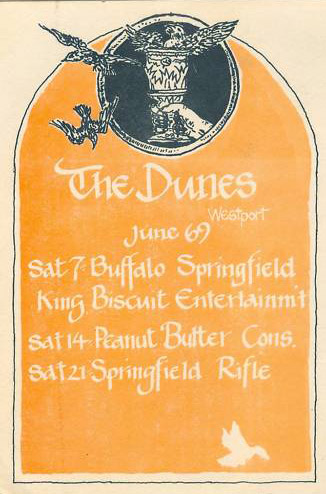
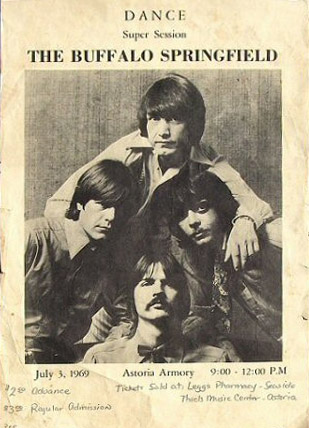
January(11) Martin’s band appears at the San Diego Sports Arena, San Diego, California billed as The Buffalo Springfield. (31) Billed again as The Buffalo Springfield, the band appears at the Mother Duck in Chicago with Hot Fudge in support. February(8) Martin’s version of The Buffalo Springfield plays at the Civic Auditorium in Albuquerque, New Mexico with Iron Butterfly and Lincoln Street Exit. (22)Billboard announces that an album is imminent on Atco but nothing transpires. Rowles leaves soon afterwards and takes some time out of playing before later in the year replacing Jay Donellan in Love, a position he was originally offered in September 1968. Apperson also departs for session work and is replaced by former Bobby Fuller Four member and solo artist Randy Fuller (b. January 29, 1944, Hobbs, New Mexico, US), while Jim Price quits to join Delaney & Bonnie. Don Poncher joins the exodus to do session work and Dewey Martin takes over the drum stool. Martin brings in lead guitarist Bob “B J” Jones (b. November 9, 1942, Woodbury, New Jersey) who has previously worked with Little Richard and the band Danny & The Saints. March The new line up records some tentative tracks in a Hollywood studio down the hall from Neil Young who is working with Crazy Horse, but they are never released. Producer Tom Dowd oversees one session. (31) – April(2) Martin returns with The New Buffalo Springfield name, and a line up now comprising Randy Fuller, Dave Price and Bob “B J” Jones is one of the headliners at the Teen Expo, Santa Clare Fairgrounds, San Jose with Santana, Iron Butterfly and others. The group then changes name briefly to Blue Buffalo. April(31) Martin’s group, billed as New Buffalo Springfield, plays at the Eureka Municipal Auditorium in Eureka, California with Mixed Company Coffee and Devine Madness. June The band is expanded with the addition of lead guitarist Joey Newman (b. Vern Kjellberg, August 29, 1947, Seattle, Washington), formerly a member of Don & The Goodtimes, The Liberty Party and Touch. (7) Billed as The Buffalo Springfield, they play at the Dunes in Westport in Washington. (21) Again billed as The Buffalo Springfield, the band appears at Chehalis Civic Auditorium, Chehalis, Washington with Slugg. (28) Billed as New Buffalo Springfield, they perform at Casey’s in Lewiston, Idaho. July(3) Billed as The Buffalo Springfield, they perform at the Armory in Astoria, Oregon. (5) Martin’s outfit appears at the Evergeen Ballroom, Olympia, Washington. (8-9) New Buffalo Springfield appear at the Seattle Center Arena with Paul Revere & The Raiders. (11) The band plays at the Breakthru, Tacoma, Washington. (19) The New Buffalo Springfield appear at the Happening, Seattle, Washington. While on the Northwest tour, the group drives along Highway 395 and comes across a town in Grant County, Oregon with a newspaper called The Blue Mountain Eagle. The band fires Dewey Martin and returns to Los Angeles to sign a deal with Atlantic Records subsidiary label, Atco Records. Ahmet Ertegun signs the band personally.
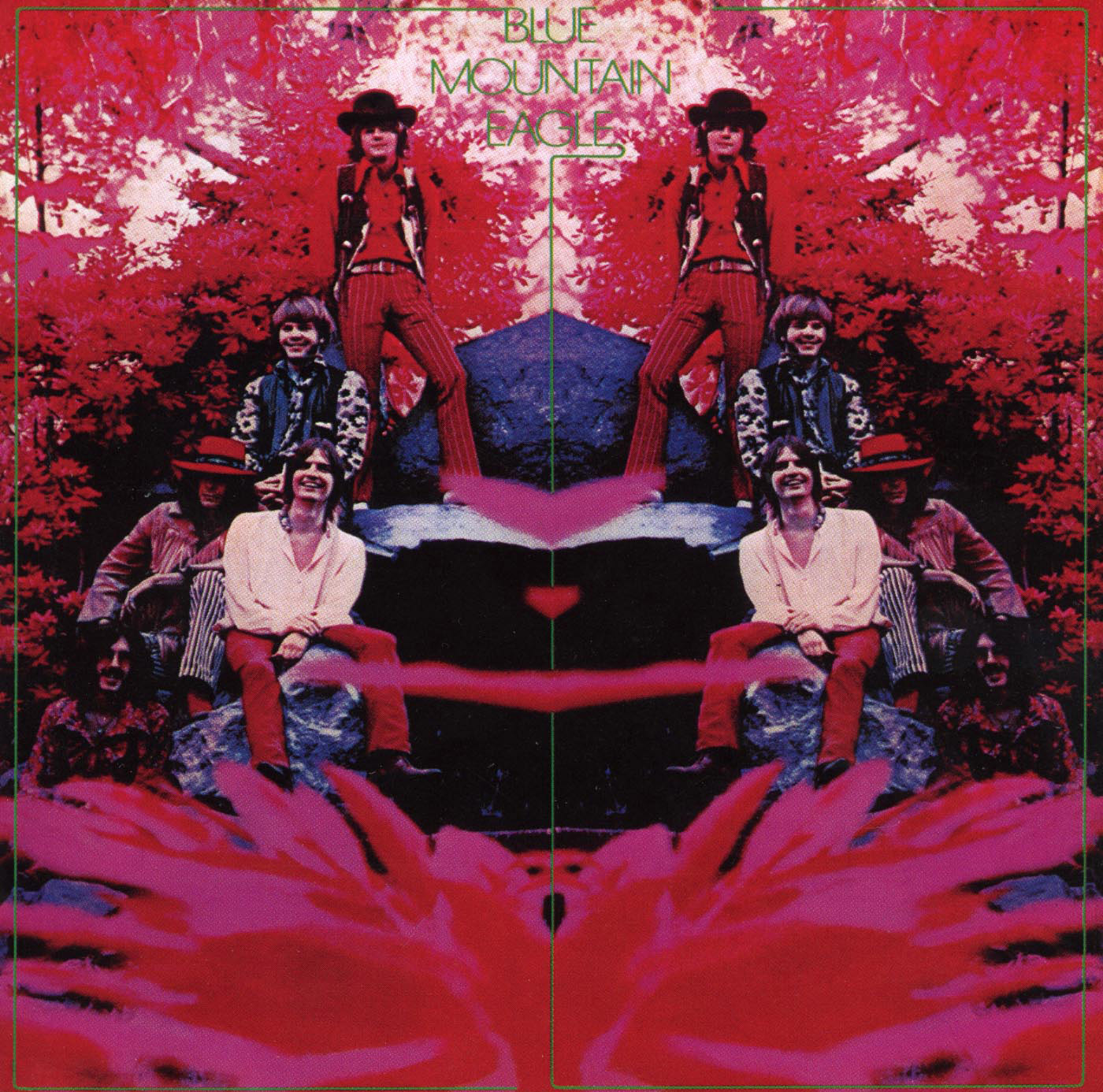
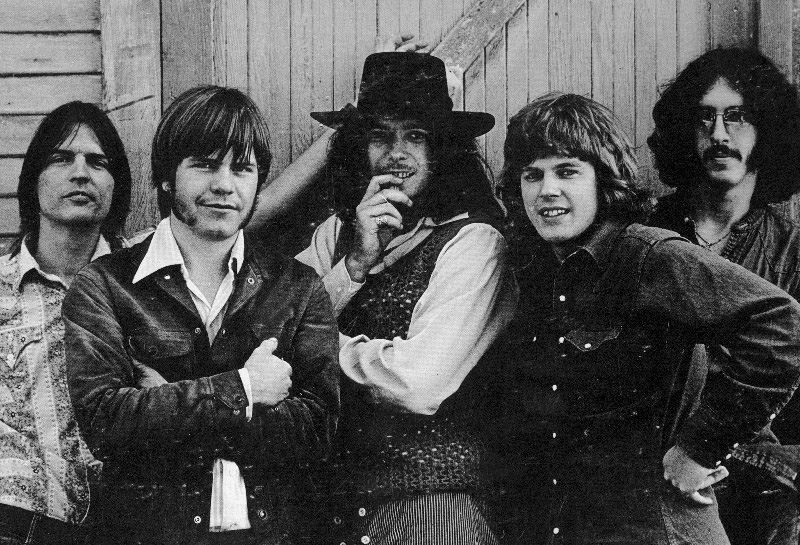
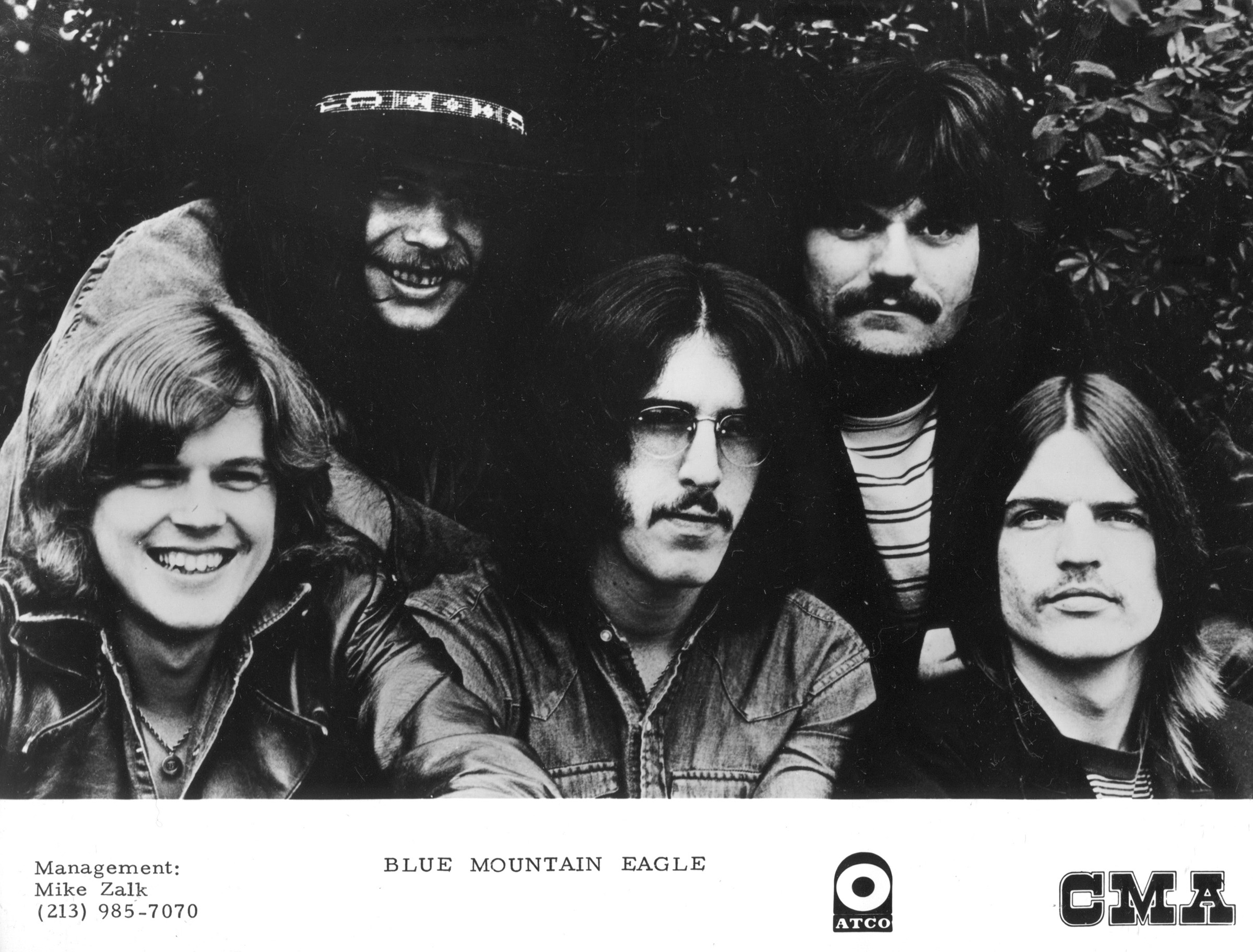
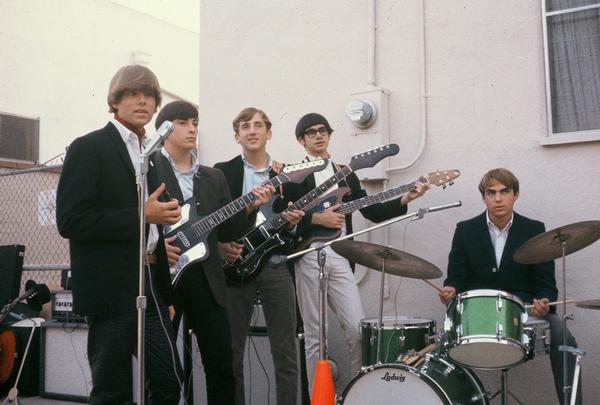
Buffalo Springfield at the Dunes, Westport, Washington, June 7, 1969. Poster image thanks to Jerry FuentesSpring 1969 lineup, clockwise from top: Dewey Martin, Bob Jones, Dave Price and Randy Fuller. Buffalo Springfield at the Astoria Armory, July 3, 1969. Poster image thanks to Jerry FuentesBlue Mountain Eagle, late 1969, from left: Dave Price, Randy Fuller, Bob Jones, Joey Newman and Don Poncher
August Back in Los Angeles, the group adds Don Poncher from the original New Buffalo Springfield line up on drums in place of Martin and takes on the name Blue Mountain Eagle after the newspaper the group has seen on the road. (24) Studio session logs suggest they record some demo tracks at Wally Heider’s studio in Los Angeles. The tracks include “Trivial Sum” (which the band will complete at a later date) and songs which may have been completed and later released under a different name. The tracks are: “Rock & Roll Please”, “Fourth Time Around”, “Road’s End”, “David’s Song”, “B.J. #1”, “¾ Thing” and “Joey’s Song”. September(13) Having debuted at the HIC in Honolulu (where it is billed by manager Mike Zalk as New Buffalo Springfield), Blue Mountain Eagle support Santana at the Memorial Auditorium in Sacramento, California. December(1) Blue Mountain Eagle record their debut album in one day at Wally Heider’s studio in Los Angeles. (27-29) The band appears at the Pozo, San Luis Obispo on a bill featuring The Byrds, Eric Mercury, Spirit, Vanilla Fudge and others.
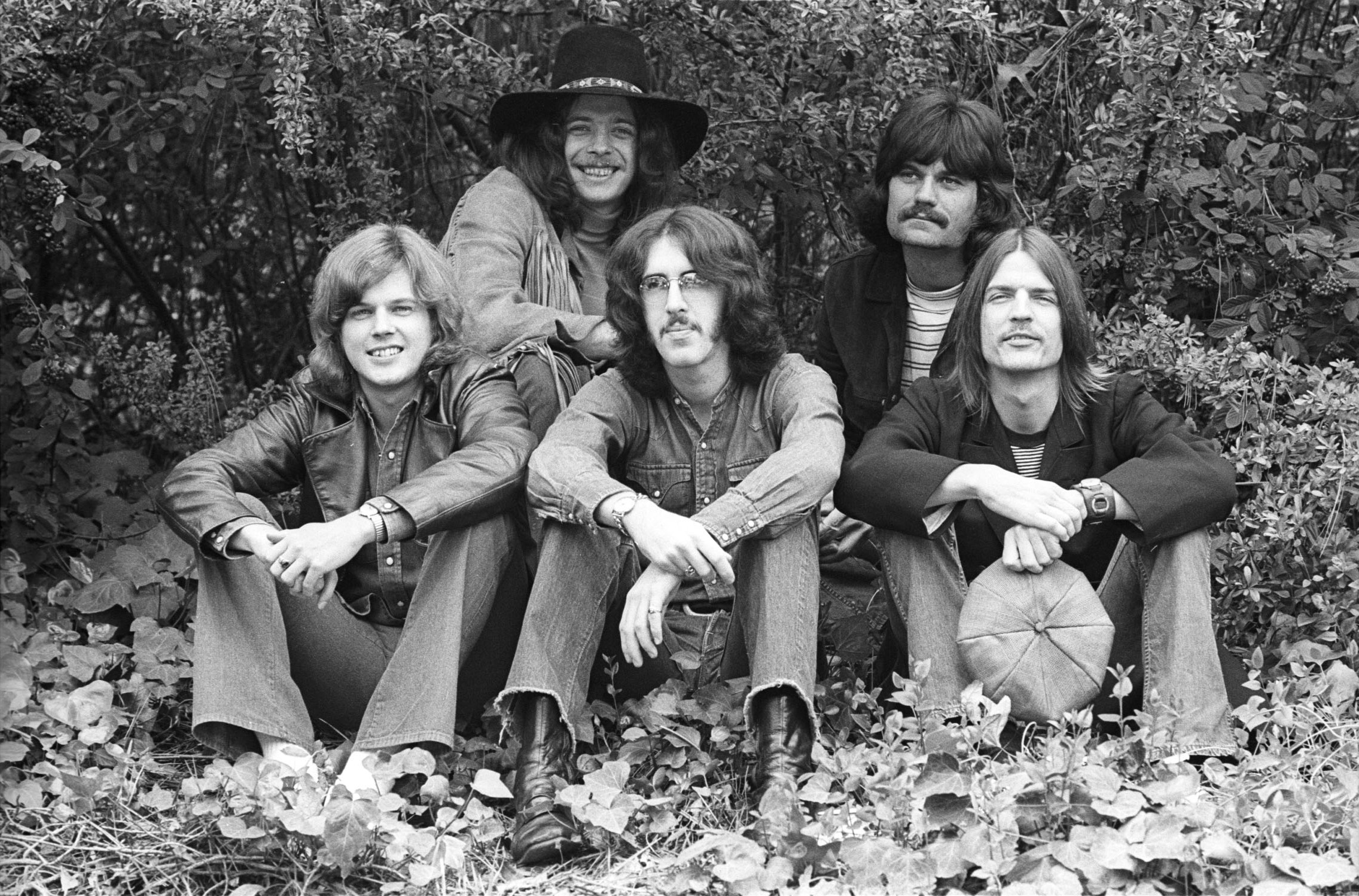
Clockwise from top left: Bob Jones, Dave Johnson, Dave Price, Don Poncher and Joey Newman. Photo courtesy Henry Diltz
1970
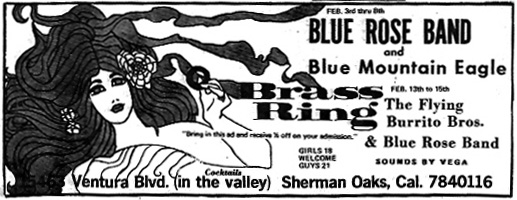
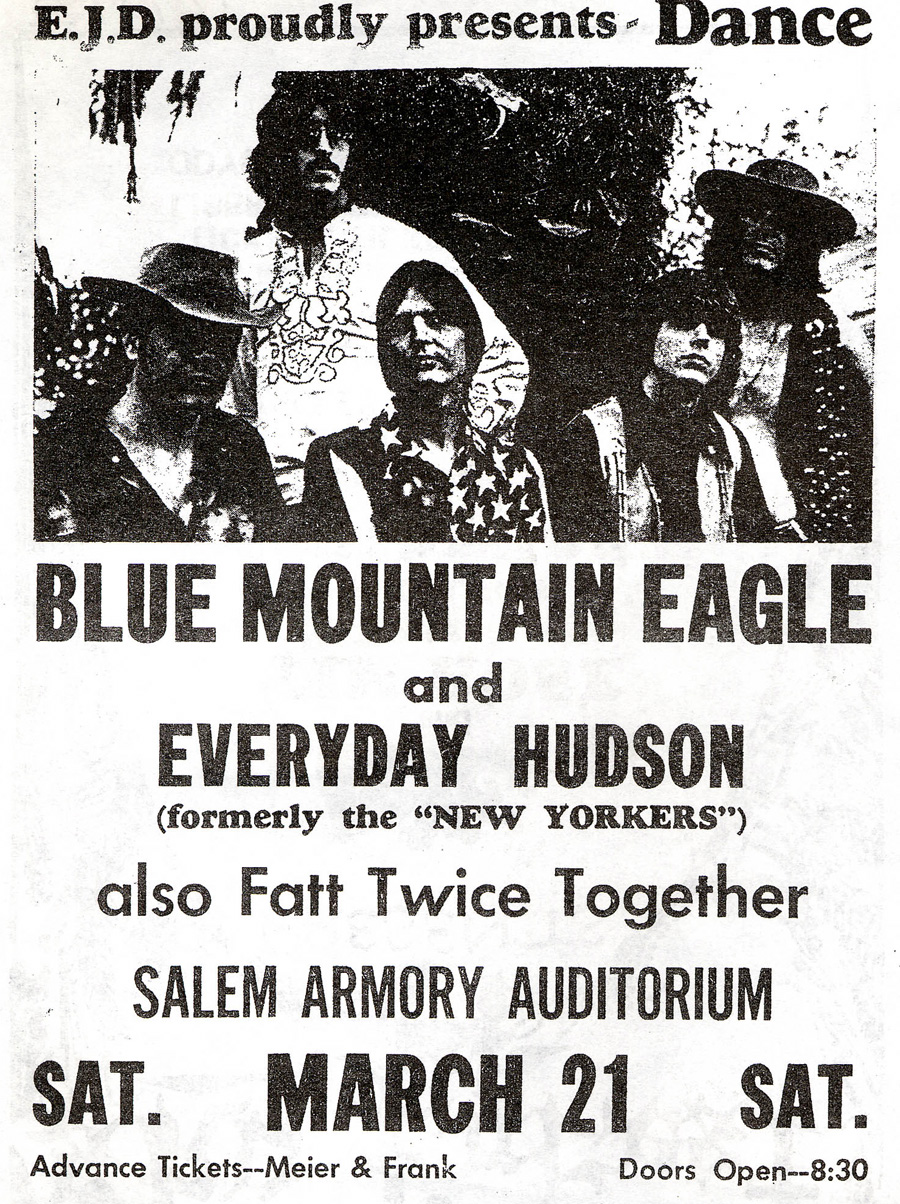
February The group supports Love and Eric Burdon & War at the Ice Palace, Las Vegas. (3-8) Blue Mountain Eagle play at the Brass Ring, Sherman Oaks, California with Blue Rose. (10-15) They return to the Brass Ring for a second set of shows with Blue Rose. March(21) The band performs at the Salem Armory Auditorium, Salem, Oregon. (26-28) The group participates in the Southwest ’70 Peace Festival near Lubbock, Texas, with Vanilla Fudge, Muddy Waters, Canned Heat, The Flock, Truth, Joe Kelley’s Blues Band, Johnny Winter and many others.
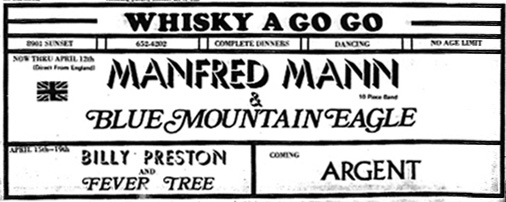
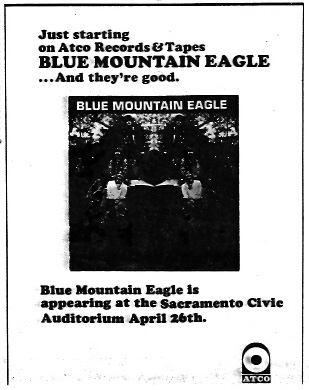
with the Blue Rose Band at the Brass Ring in Sherman Oaks. Los Angeles Free Press, February 1970At the Salem Armory with Everyday Hudson (formerly the New Yorkers) and Fatt Twice TogetherLeft to right: Joey Newman, Bob Jones, Don Poncher, Dave Johnson and Dave Price. Photo dated March 4, 1970, but it might be laterwith Manfred Mann at the Whisky a Go Go, April, 1970Atco ad in the LA Free Press, April 1970
April(8-12) Blue Mountain Eagle support Manfred Mann Chapter 3 at West Hollywood’s Whisky A Go Go. Randy Fuller leaves and joins Dewey Martin & Medicine Ball, appearing on its lone album. He is replaced by Dave Johnson (b. October 21, 1945, Burbank, California, US), who has previously worked with Dr John and Alice & The Wonderland Band alongside singer Joanne Vent and future Redbone guitarist Tony Bellamy. The group write and arrange material for a second album over the next few months but none of the tracks are recorded. (24) The new line up plays at the Pusi-Kat, San Antonio, Texas. (26) Blue Mountain Eagle support Jimi Hendrix and The Buddy Miles Express at the ‘Cal Expo’, Sacramento, California.
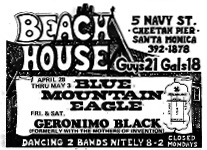
at the Beach House in Santa Monica, May 1970
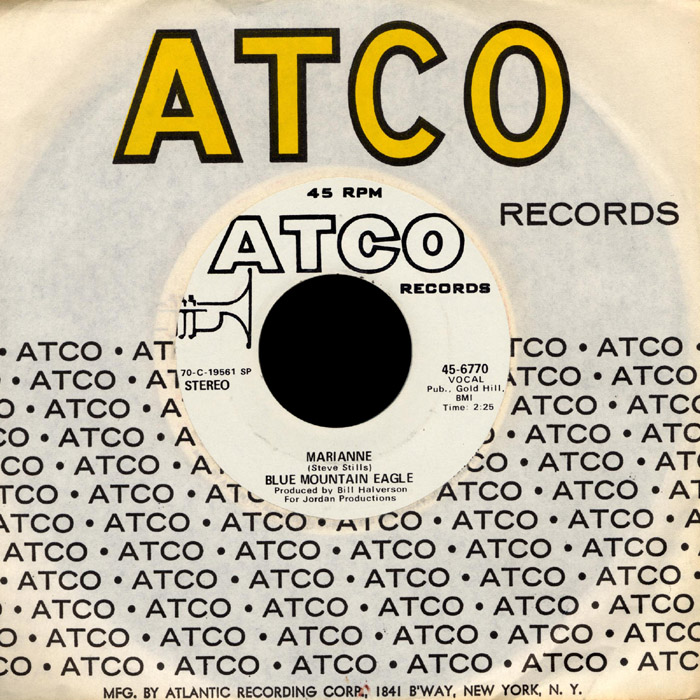
(28) – May(3) Blue Mountain Eagle plays at the Beach House, Cheetah Pier, Santa Monica. May Their eponymous debut album is released, highlighting a mixture of acoustic and hard rock styles that is reminiscent of The Buffalo Springfield. (2) Blue Mountain Eagle support Country Joe & The Fish and Spirit at San Diego Sports Arena, San Diego. (9) The band opens for Pink Floyd at the Terrace Ballroom, Salt Lake City, Utah. (15) Blue Mountain Eagle appear at Fresno Convention Hall, California with Canned Heat and Sweetwater. June(2-7) The group appears at the Beach House, Cheetah Pier, Santa Monica. (5) Billboard magazine reports that the band appears at the Olympic Auditorium in Los Angeles. (8) Blue Mountain Eagle record a lone track, a cover of Stephen Stills’s “Marianne”.
July (11) The band appears at Bullock’s Department Store in downtown L.A. with Poco, Blues Image and Southwind. (18) The group replaces Blue Cheer at Terrace Ballroom, Salt Lake City, Utah on a bill that also features Love and Fever Tree. August The band releases the double A-side single “Marianne”, which is given favourable reviews. Studio logs also suggest the group records a track called “Rest” but it is never released. October Blue Mountain Eagle’s final gig is at a ballroom in Dave Price’s hometown, San Antonio, Texas. NovemberPoncher leaves to join Love for live work and the band splinters. Johnson briefly works with Lee Michaels before reuniting with Jones in Sweathog, while Price does sessions for ex-Sir Douglas Quintet keyboard player Augie Meyer.
1972
January Sweathog’s eponymous debut album is released, but is not a success. Having appeared on sessions for a Love album that is eventually released in the 2000s by Sundazed as Love Lost, Poncher stays with Arthur Lee and his next project, Band Aid, helping him record the Vindicator album. Poncher then joins Blue Rose with Terry Furlong (who wrote songs for Blue Mountain Eagle) and ex-Illinois Speed Press member John Uribe. June Blue Rose’s sole eponymous album appears on Epic Records. Poncher continues to do session work throughout the ‘70s and ‘80s, working with people like Augie Meyer, Joe Cocker, Jim Price, Genya Raven and Chris Jagger. He currently plays with Balonius Bunk in the San Fernando Valley.
1975
September Newman emerges with new outfit, Bandit, who release an album for ABC Records. Having recorded a second album with Sweathog without Jones, Johnson puts together a new band with radio legend Jimmy Rabbit called Rabbit and Renegade, which records an album for Capitol Records, produced by Waylon Jennings.
1977
Newman forms Stepson, who release an album for ABC Records, before later recording two gospel albums. Newman later works with Michael Lloyd, the Osmonds, Bryan MacLean, Shaune Cassidy and with Jimmy Johnson on his Sheena Easton tour. Jones meanwhile, surfaces with The Demons, who issue an eponymous album on Mercury.
Sources:
Einarson, John and Furay, Richie. For What It’s Worth – The Story Of Buffalo Springfield, Quarry Press Inc, 1997, pages 279-280. Hounsome, Terry. Rock Record #6, Record Researchers Publications, 1994. Housden, David Peter. The Castle – Love #9, 1995, page86. Housden, David Peter. The Castle – Love #10, 1996, page 27. Joynson, Vernon. Fuzz, Acid & Flowers, Supplement, September 1997, page 419. Povey, Glen and Russell, Ian. Pink Floyd In The Flesh – A Complete Performance History, Bloomsbury, 1997, page 94. Ruppli, Michel. Atlantic Records – A Discgraphy, volume 2, Greenwood Press, 1979, pages 320 and 366 and volume 3, page 53. Shapiro, Harry and Glebbeek, Caesar. Electric Gypsy, Mandarin, 1995, page 738. Billboard, November 16, 1968, page 67; December 28, 1968, page 43; February 22, 1969, page 3 and August 15, 1970, page 28. Los Angeles Free Press, February 6, 1970; May 1, 1970; May 27, 1970 and June 5, 1970. Variety, August 19, 1970, page 46.
Thanks to Dave Price, Joey Newman, Bob Jones, Randy Fuller, Don Poncher and Dave Johnson for contributing to the band’s story. Thanks to Jerry Fuentes and Neil Skok for help with some of the New Buffalo Springfield dates. Huge thanks to Steve Finger at the LA Free Press for help with concert posters.
I have tried to ensure that this article is as accurate as possible, but some data is difficult to verify. If anyone is able to supply any additional information or correct any errors, please contact me at Warchive@aol.com
Early photo of the Sloths, from left: Hank Daniels, Michael Rummans, Jeff Briskin, Steve Dibner and Sam Kamarass
Hank Daniels – vocals Michael Rummans – rhythm guitar Jeff Briskin – lead guitar Don Silverman – lead guitar Steve Dibner – bass Mick Galper – bass Sam Kamarass – drums
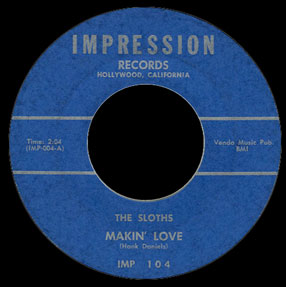
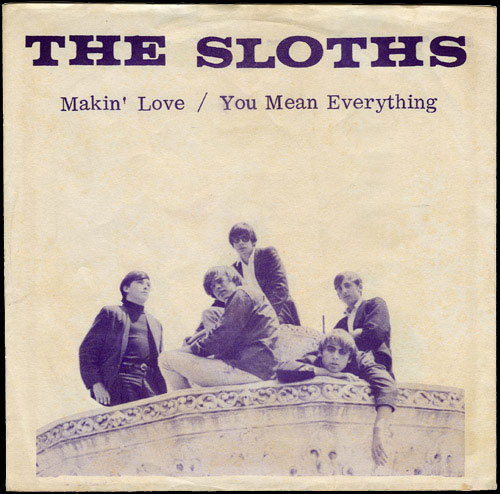
The Sloths cut the great “Makin’ Love” in September 1965. The sliding guitar rhythm doesn’t quite mesh with the other guitar part. The production is so muddled the drummer’s Bo Diddley beat on the toms produces a constant hum that drowns out most of the bass notes. The sound is a turgid, dense r&b, like the Stones’ take on “Not Fade Away” turned inside-out. Hank Daniels shouts his lyrics in a hoarse, slobbering voice: “I wanna be with you all night, makin’ love, good good good lovin’ baby, makin’ love”!
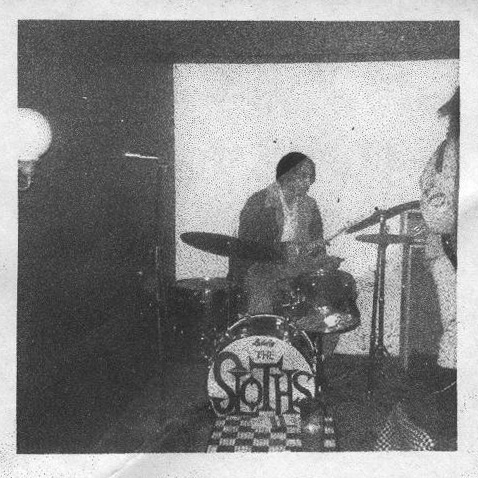
Sloths logo on drumhead hand painted by Hank Daniels
This was not commercial music, but Impression’s owners actually had another group re-record “Makin’ Love” in the hopes of a hit the second time around. Long before I’d heard the Sloths, I knew this song from the version by the Dirty Shames, cut a year later, also for Impression. The Shames’ singer doesn’t have Hank Daniels’ wild incoherence, but the band actually plays together and in tune. Both releases credit Hank with song writing, and publishing listed with Vendo (BMI) on the Sloths and Vendo-Ramhorn (BMI) on the Dirty Shames.
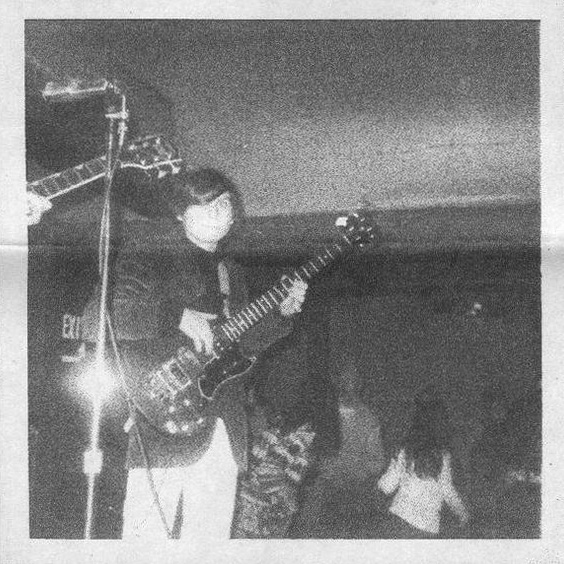
Mick Galper on Gibson EB3 bass
Marty Wons of the Dirty Shames told me there was no connection between his band and the Sloths, and Michael Rummans of the Sloths confirmed this: “I was the rhythm guitarist for the Sloths. Your information is correct – no shared members between Sloths and Dirty Shames.”
The flip, “You Mean Everything to Me” is much tamer but also very good, with twelve string guitar, accomplished playing and clear production. (Thank you to Mike D. and Freddy Fortune for sending clips of this in). It’s another original by Hank Daniels.
This was the first rock release on Al and Sonny Jones’ Impression label, just before they relaunched it with a new design (there had been two or three soul singles before the Sloths). It’s a rare 45 now, with one copy recently selling for over $2,200, and that was without the even rarer picture sleeve!
Sleeve to their Impression single, with original lineup of the Sloths From left: Michael Rummans, Hank Daniels, Steve Dibner, Sam Kamarass and Jeff BriskinMichael Rummans with his first Gibson, Hank Daniels with Electro Voice microphone
Michael Rummans wrote the following account of the band, aided by Steve Dibner’s recollections:
This was my first band and, like many other firsts, has its origins among my high school friends & associates. I attended Beverly Hills High School, ’62 to ’66. During that time, there were many creative individuals including Richard Dreyfuss, Albert Brooks and Michael Lloyd who contributed to an atmosphere of artistic creativity. I first started practicing with Jeff Briskin, a surfer and guitarist. Fun for awhile, but I wanted more – a full band.
Sam Kamarass on drums. Smaller b&w photos originally taken by Julie Olen
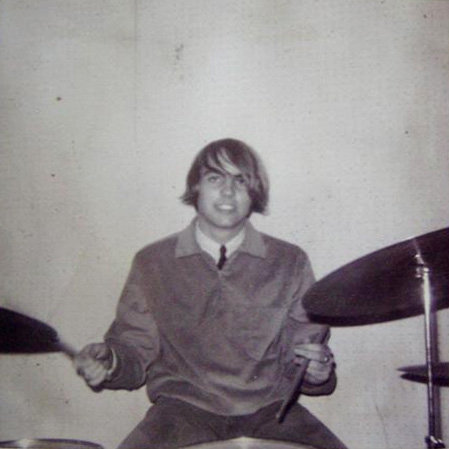
I saw my chance when I met Hank Daniels, a transfer student who was attracting a lot of attention. Hair too long, often barefoot with a 12 string Gibson acoustic strapped on his back, he was drawing a lot of attention, both good & bad (there were a lot of preppie types). We started hangin’ out, both of us now hiding from the boy’s Vice Principal and sharing a common interest in music. Soon we decided to start a band, and it wasn’t long before we found Steve Dibner to play bass and Sam Kamarass for drums. We found our name in an American history textbook from a 19th century political cartoon (as did another BHHS band, The Mugwumps).Once the band was formed, the next step was to learn songs and find somewhere to perform them. Even though the Sloths were by all definitions a garage band, we avoided that actual type of structure when one of Dibner’s parents foolishly agreed to let us rehearse in their living room. We also rehearsed in Hank’s pool house, grudgingly tolerated by his parents. Joking aside I must point out that the band was able to gain invaluable early momentum because most of our families supported and contributed to our effort (most, not all).
Early photo of the Sloths, from left: Hank Daniels, Jeff Briskin, Steve Dibner, Michael Rummans and Sam Kamarass
What we needed next was material. Hank had some background in acoustic folk music; me and Jeff with surf music but, just like most of the kids of that time, we were all enamored with the music of the British invasion. One of the things that distinguished our group from many others was a realization that we had to develop originality to have success.
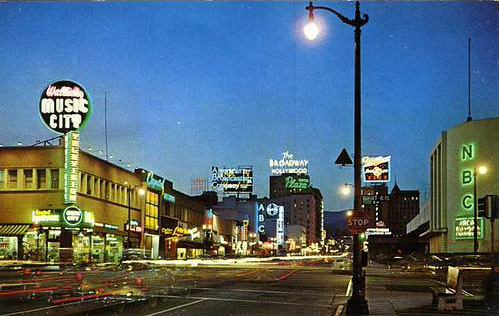
Wallach’s Music City
This was largely because of a chance meeting I had had with James Brown backstage at the TAMI show. I was with my dad, and when we met JB, he told him I was getting in to music & wanted to know if he had any advice. James said, “Don’t take any lessons, develop your own style – otherwise you’ll never be more than second rate”. That has stayed with me my whole life. So, instead of learning a set of cover songs, we would go to Wallach’s Music City on Sunset & Vine and spend hours in the listening booths looking for songs to cover that no one else was doing, and arrange them in our own style. One of my favorites was “Messin’ With The Kid” by Junior Wells (just stumbled on to it).
Michael Rummans at Pandora’s Box, 16 years oldBandmaster amp stood on side, Vox style
Hank also wrote originals, as exemplified by the record. Having an artistic background, he designed the logo as well (you can see it on Sam’s bass drum).
The Clubs
Don’t misunderstand me, playing for our friend’s pool parties was fun, but we wanted more. There was the Teenage Fair at the Palladium and all those cool clubs on the Sunset Strip. To this day it amazes me that we got hired – not that we weren’t entertaining, but we were all so obviously underage. The thing is, nobody had told us how impossible it would be, so we were undeterred.
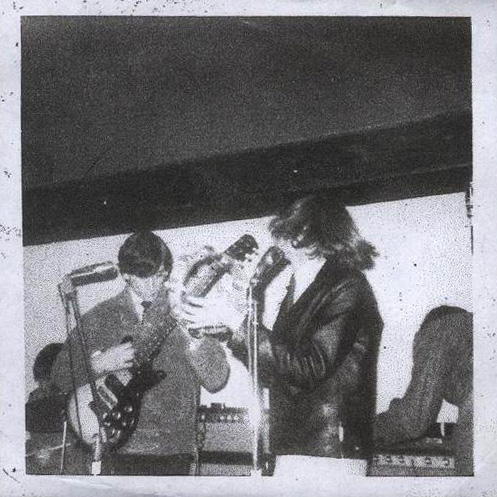
Michael Rummans, Hank Daniels and Don Silverman
One of the first venues we performed at was called Stratford on Sunset (now the House of Blues). The owner was Jerry Lambert and his nephew’s group, The East Side Kids, was the house band. At that time, they had another name, the Sound of the Seventh Son, I think (no wonder they changed it). They were older, very professional and served as mentors to us. Despite our lack of experience, I think Jerry must of liked our youthful enthusiasm and originality. Anyway, Stratford was great while it lasted (I also got picked up for the first time there). And it was Jerry Lambert again who got me the audition for the Yellow Payges a year later – small world.Other Strip clubs we played at: The Sea Witch, Pandora’s Box, Hullabaloo – but more about that later …
Michael will be adding more about the band at a later date. He left the Sloths and joined the Yellow Payges for a time in 1968. In the ’70s he played with the Hollywood Stars and then the King Bees, among other groups.Michael kindly responded to some of my questions about the Sloths and their record:
Hank Daniels with Don Silverman (?) to his left
Q. How did the record on Impression happen? Did the label sign the band?
We were approached by the brothers at one of our shows. At first I thought they were kidding. I don’t remember signing an official recording contract, but I’m pretty sure we signed an agreement. I do remember them bringing in a copyist to write down lyrics and melody.
Q. Do you remember specifics of the recording session?
Regarding the actual session, I remember the studio quite well. It was an old-fashioned large room, similar to the one used in “The Buddy Holly Story”. It was located on E. Sunset Blvd near Western. The brothers let us do pretty much what they heard on stage, with one exception. One of them suggested the repeating high E on the guitar near the end of the song. I asked why, and he referred to it as a “sensation note”. He was right – it works.
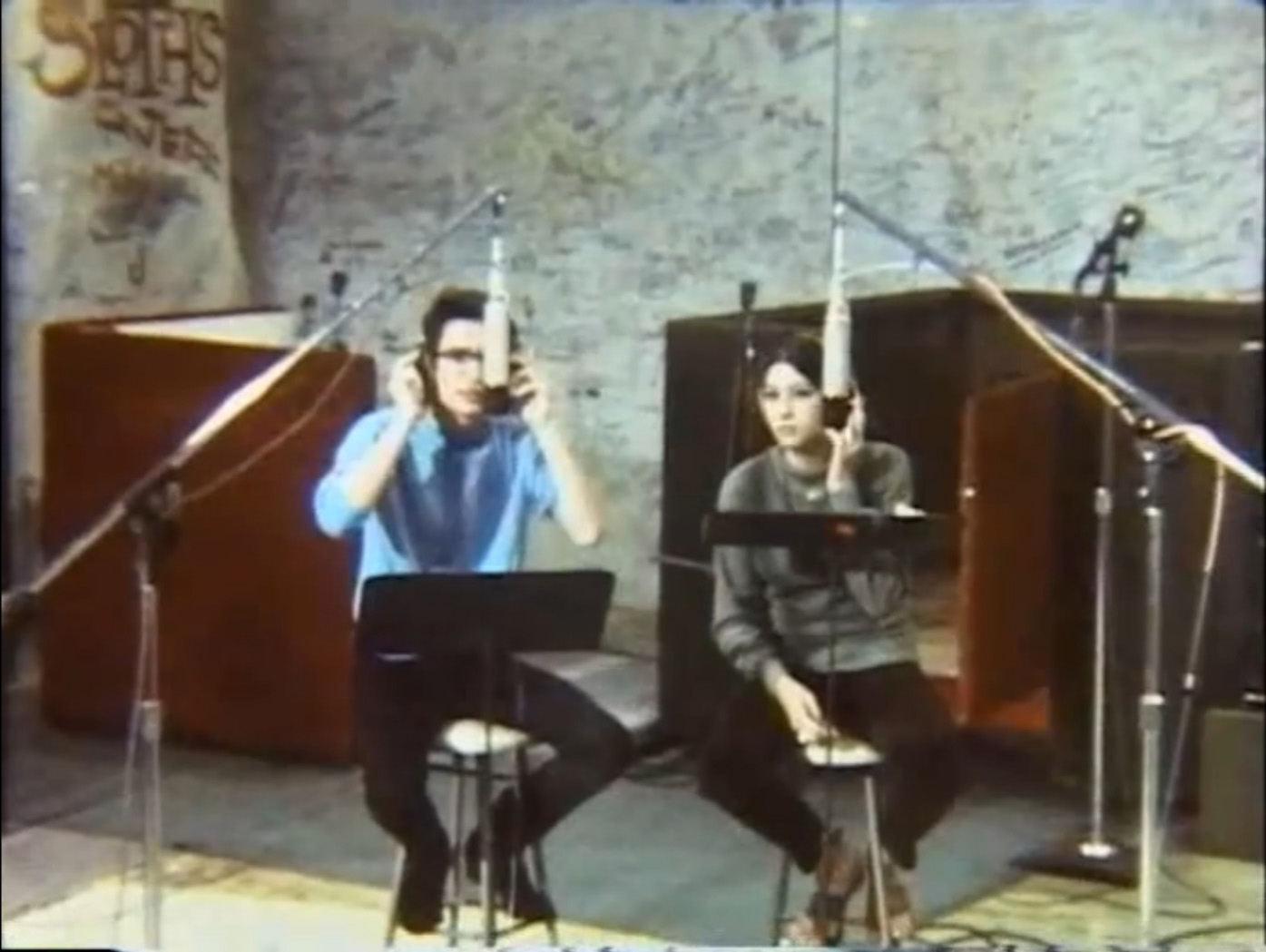
Q. I was watching a film on October Country in a studio in ’67, and noticed graffiti: “Sloths” and “Jeff”. The studio may have belonged to CBS Records at Sunset and Gower in Hollywood, California.
I see my name below Jeff’s as well. It may well be the one we recorded the single in.
Q. Did the label do any promotion for the record?
Don Silverman on Gretsch Country Gentleman, Mick Galper on bass
I don’t remember much promotion, other than what we did ourselves. One thing we accomplished was getting it played on KRLA and KFWB, just by having our friends call the station a lot. Some of us even went to KFWB on Argyle & Selma and banged on the door!
As for the record, I only know of three copies; mine, Steve Dibner’s (original bass player) and my sister’s (which she gave to Hank’s son). Jeff Briskin had a box of 100 records in his garage and threw them out a few years ago. However, he’s going to check and see if he can find any other memorabilia-pics, articles, etc. I must have given away most of mine for promotional purposes, which is what they were intended for. We’re going to collaborate and finish the story I started, so I’ll be able to give you more info on Impression and the recording.
Q. Any chance of a Kingbees reunion?
The Kingbees still get together and perform from time to time, but Jamie doesn’t want to hustle gigs any more. Maybe we can find an agent in the future, because the band still sounds great. Unlike the Sloths, I still have a large supply of Kingbees memorabilia.
Friends of the Sloths, the East Side Kids, from left: Joe Madrid, Jimmy Greenspoon, Dennis Lambert, Dave Doud, Mike Doud and Danny Belsky
Below, photos of the Sloths playing Hollywood au Go Go, October 28, 2011 This was their 3rd show since reuniting.
The Sloths playing Hollywood au Go Go, October 28, 2011,
Photos taken by Angel Jason Peralta. Thanks to Elva for sending the photos in.
October Country with Sloths graffiti in the background – is this CBS studios at Columbia Square?
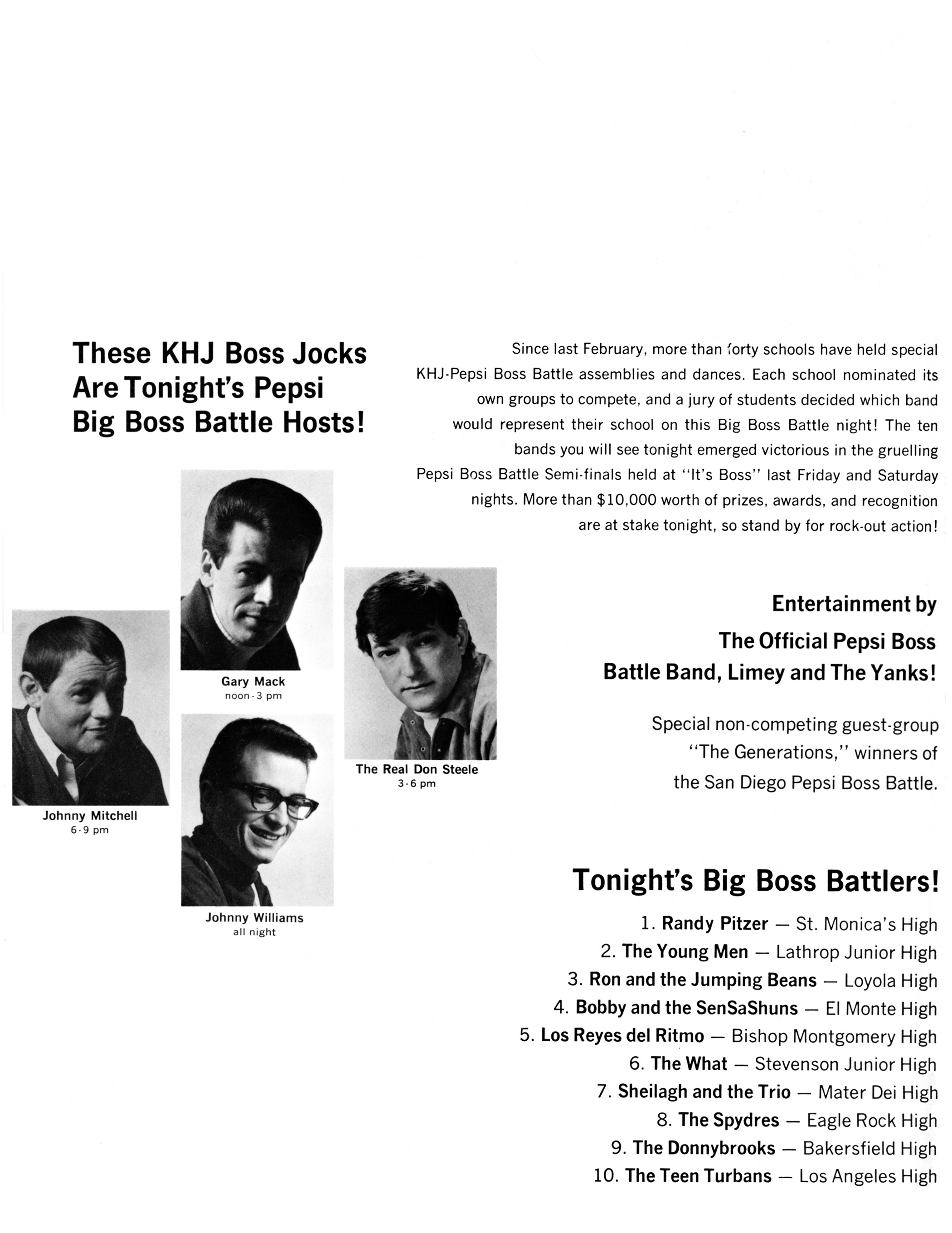
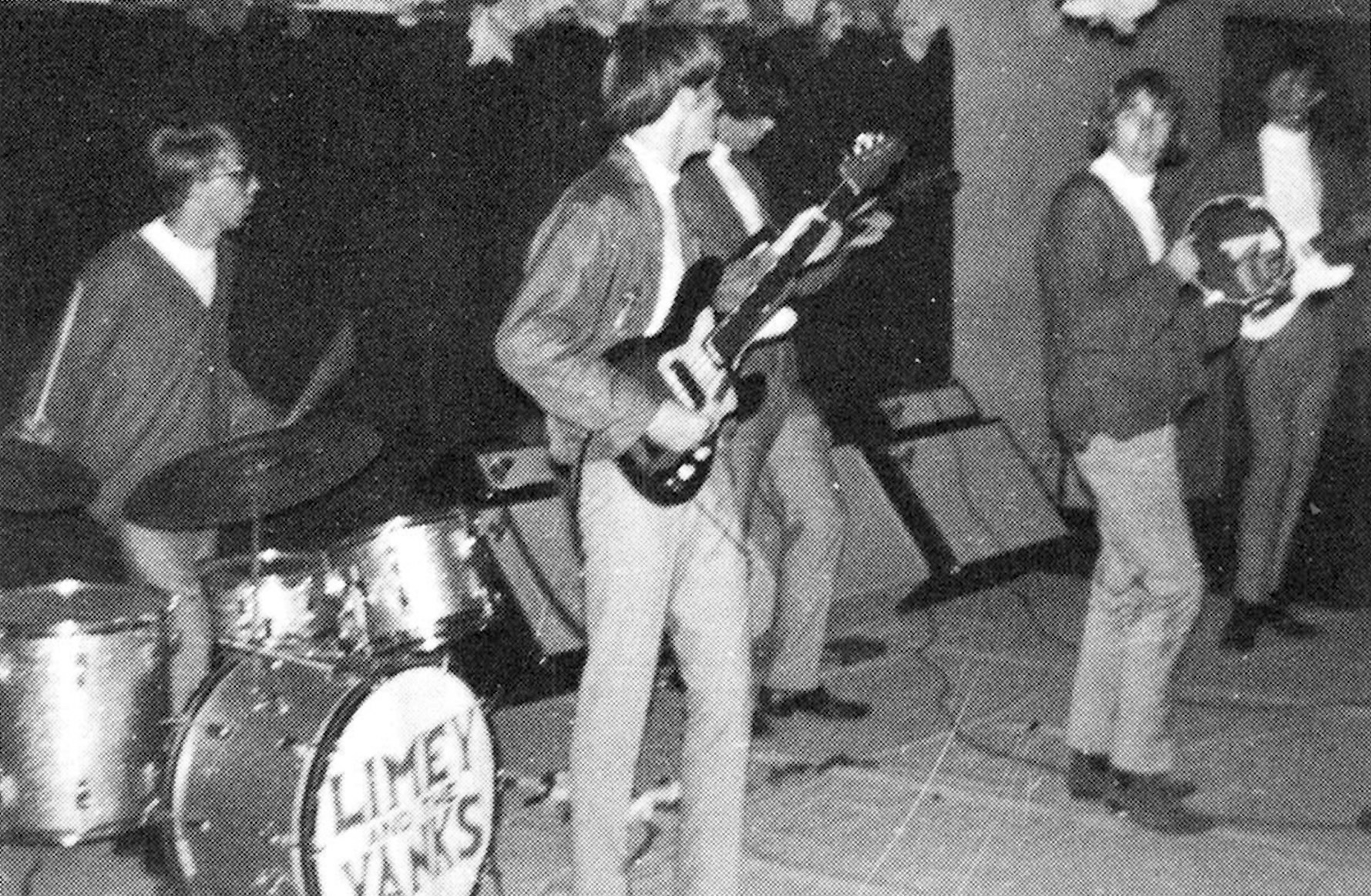
Starting in February, 1966, KHJ radio (930 AM) in Los Angeles hosted a battle-of-the-bands called the Big Boss Battle, sponsored by Pepsi. According to their program, over 100 bands competed, with semi-finals at the club It’s Boss, and the finals at the Hollywood Palladium on May 10. After I saw the front cover to the program on Ray Randolph’s excellent blog 93/KHJ Boss Radio: a Look Back, Ray sent me the inside of the program at my request.
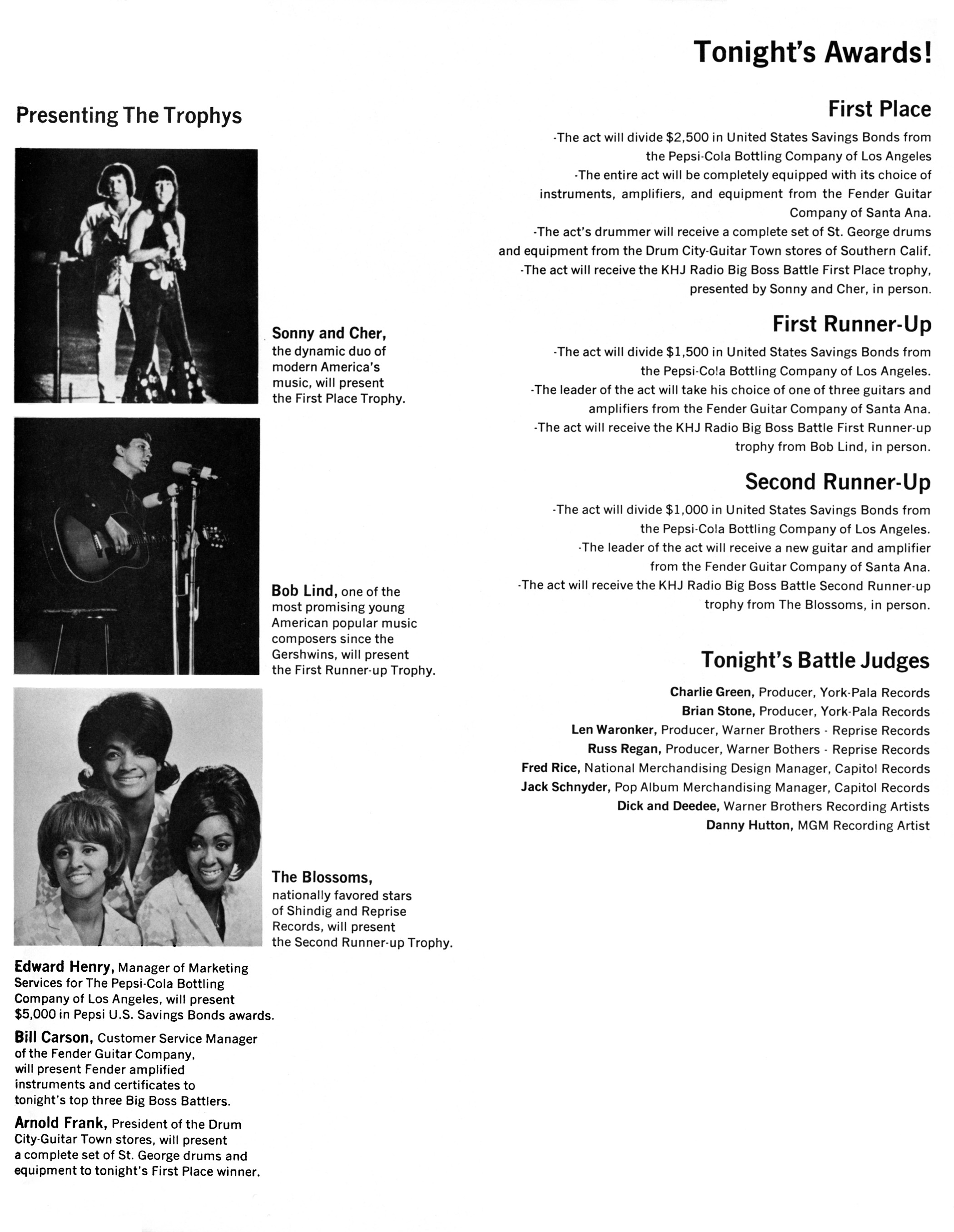
Judges included Charlie Green and Brian Stone of York-Pala just before they began managing the Buffalo Springfield, Len Waronker and Russ Regan from Warner-Reprise, Fred Rice and Jack Schnyder from Capitol, along with Danny Hutton and Dick and Dee Dee. The DJs included Gary Mack, Johnny Mitchell, the Real Don Steele and Johnny Williams.
Prizes were substantial and included cash, plus Fender guitars and amplifiers and St. George drums. Sonny & Cher, Bob Lind or the Blossoms did the trophy presentations. Unfortunately, recording time was not included, so I’m not sure how many of these groups cut records.
Are any of these bands familiar?
The competing bands were:
Randy Pitzer – St. Monica’s High The Young Men – Lathrop Junior High Ron and and the Jumping Beans – Loyola High Bobby and the SenSaShuns – El Monte High Los Reyes del Ritmo – Bishop Montgomery High The What – Stevenson Junior High Sheilagh and the Trio – Mater Dei High The Spydres – Eagle Rock High The Donnybrooks – Bakersfield High The Teen Turbans – Los Angeles High
plus the Generations, who won the San Diego Pepsi Boss Battle.
Check out this page on Ray’s site to see the front cover of the program and a ticket to the show. Does anyone have flyers or posters for the semi-finals at It’s Boss, or photos from any of the shows?
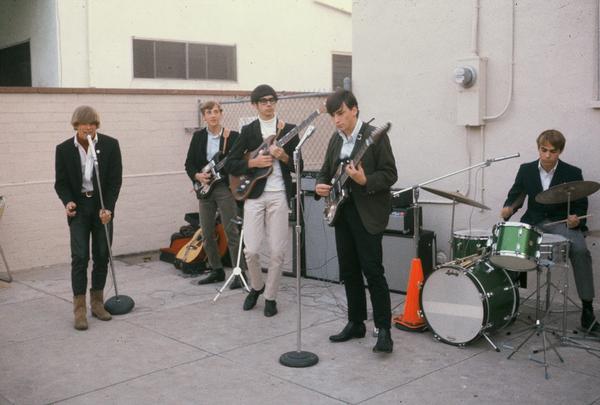
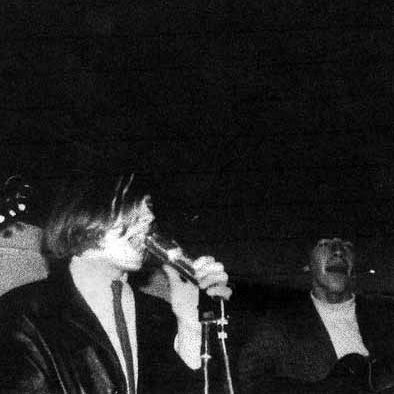
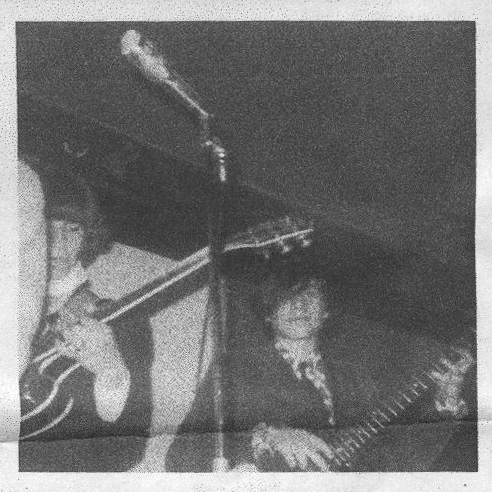
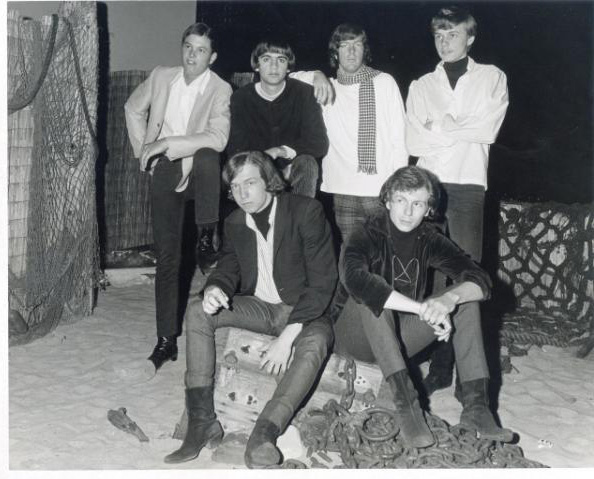
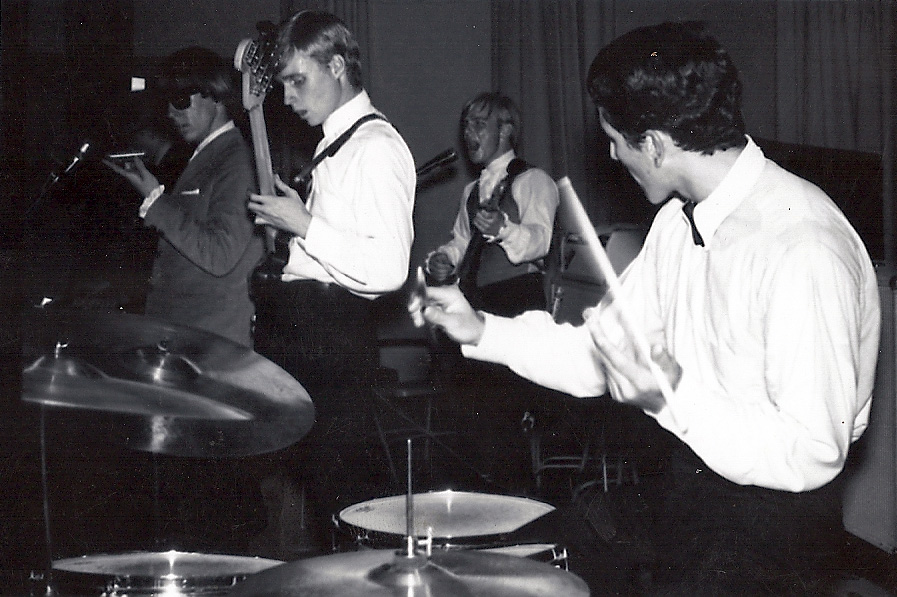
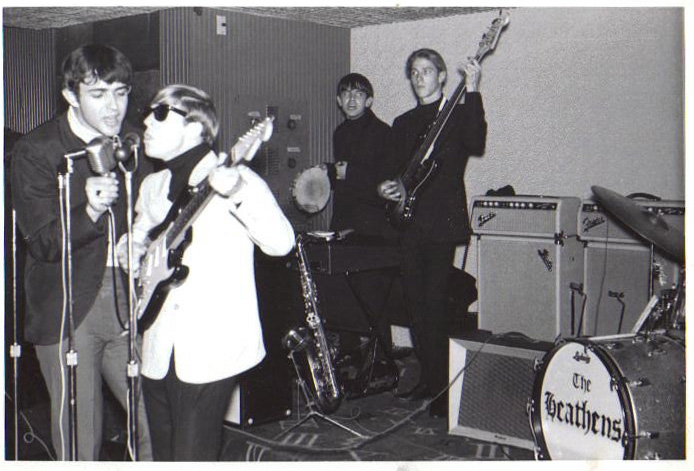
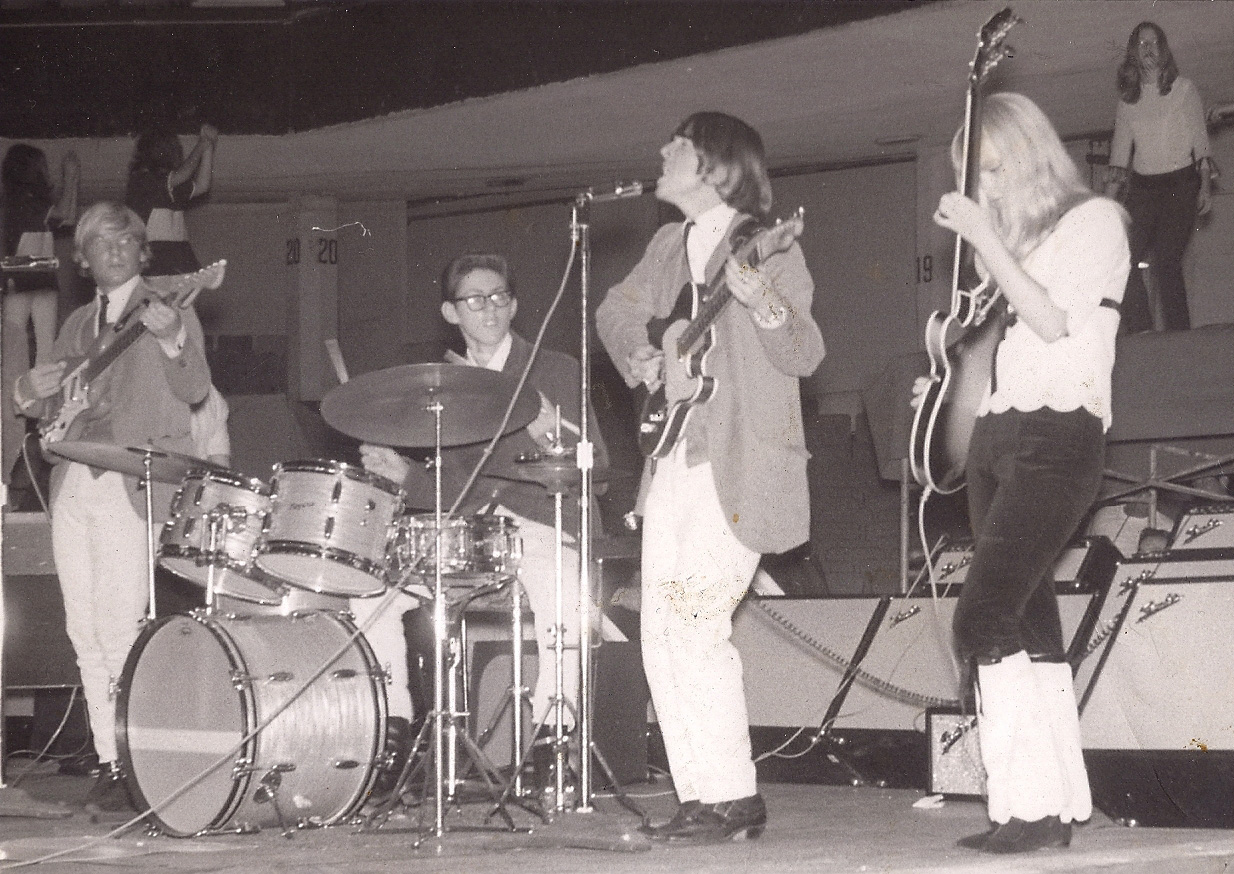
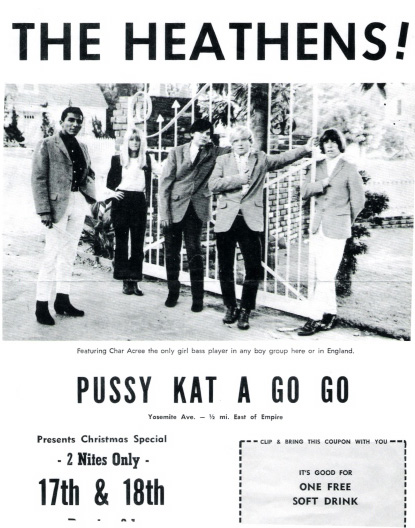
The Heathens, circa 1966. From left: Dirk Acree, unidentified bassist, Don Adey and unidentified drummer Photo courtesy Don Adey Any help in identifying people in this and the other photos would be much appreciated!
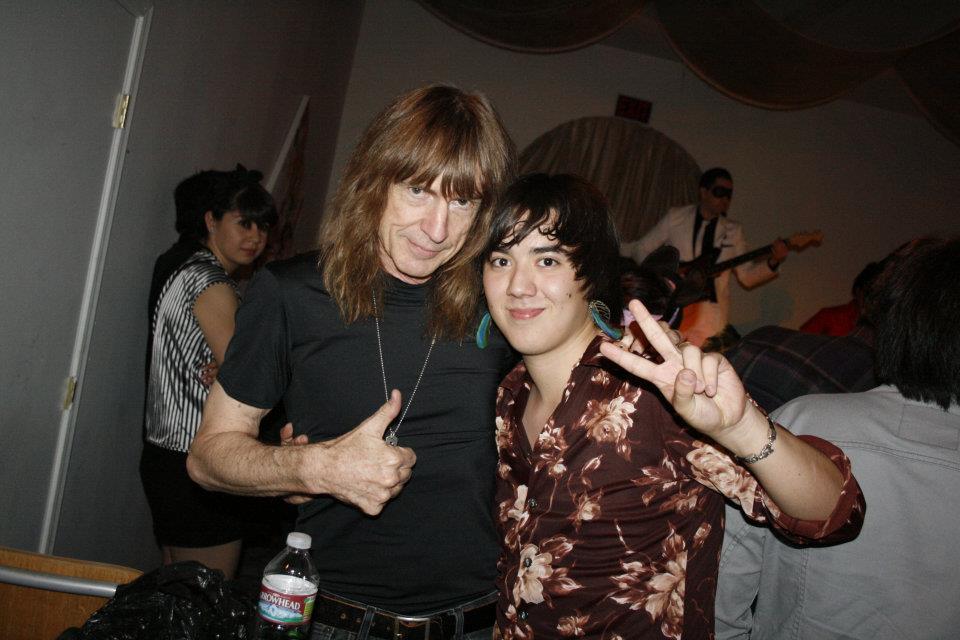
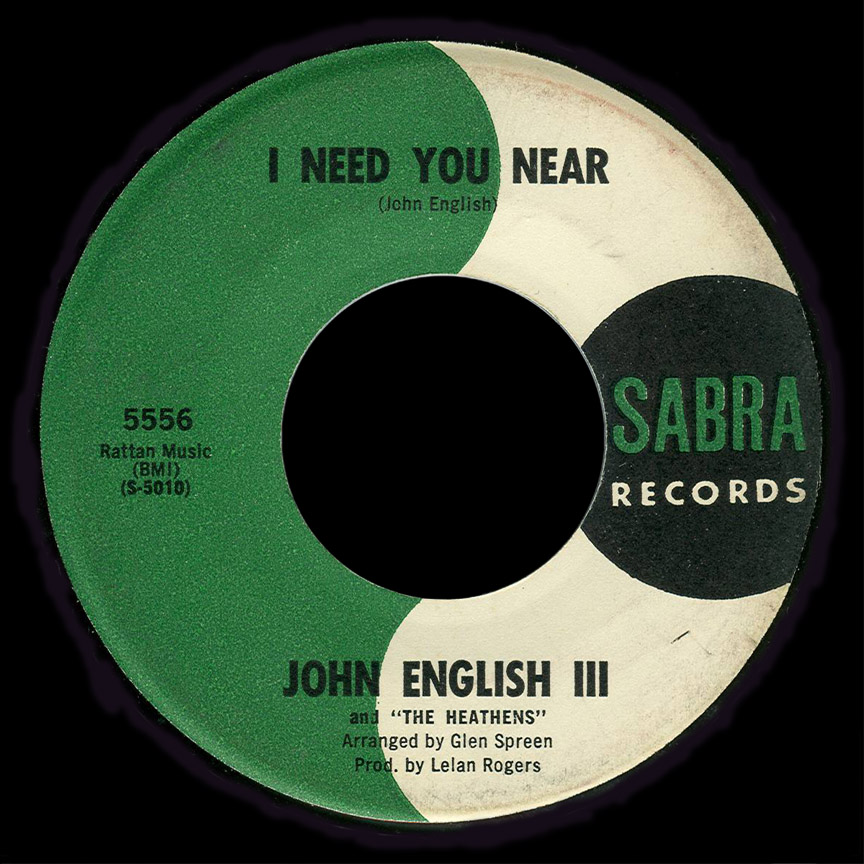
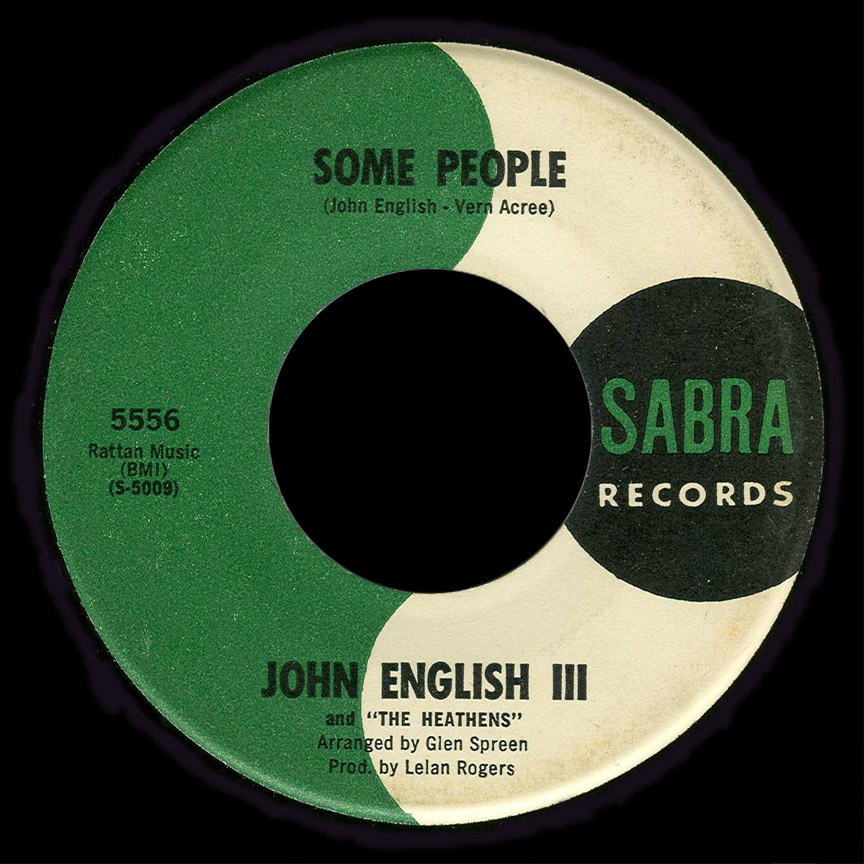
The John English III & the Heathens 45 on Sabra, “I Need You Near” is one of the rarest and most highly rated of any mid-60s rock releases. I’ve covered John English in some detail on my site, but now I’d like to give the Heathens their own page, as most of their history comes after English left the group.
Original members of the band seem to be Dirk Acree (aka Vern Acree, Jr., former guitarist for the Blazers of “Beaver Patrol” and “Bangalore” fame) and drummer Johnny Rogers. Vocalist John English joined them while he as a student at San Fernando Valley State College (now California State University, Northridge). Dirk’s sister Char Acree (Sharon Acree), who had her own group, the Lady Birds, would join on bass sometime in 1966.
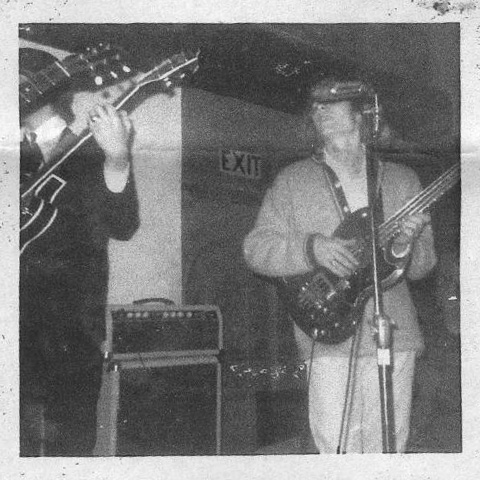
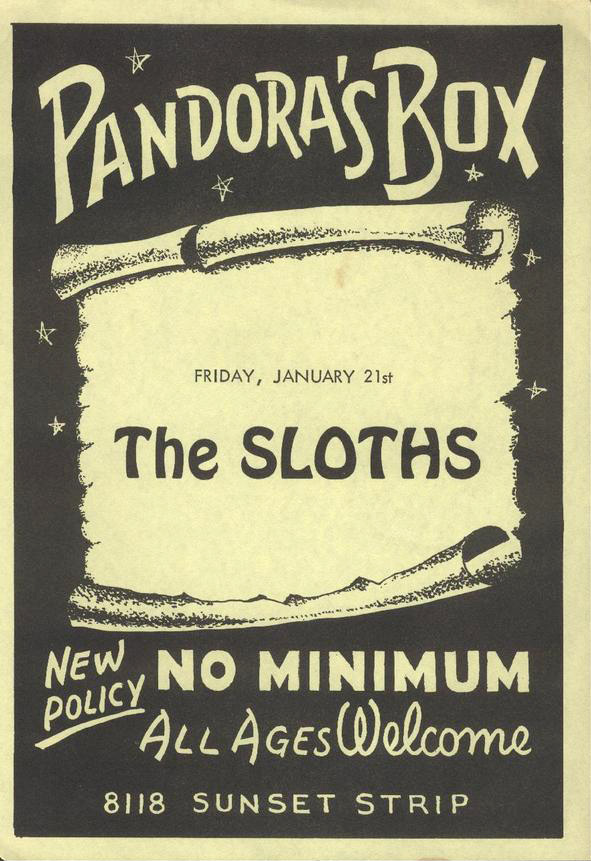
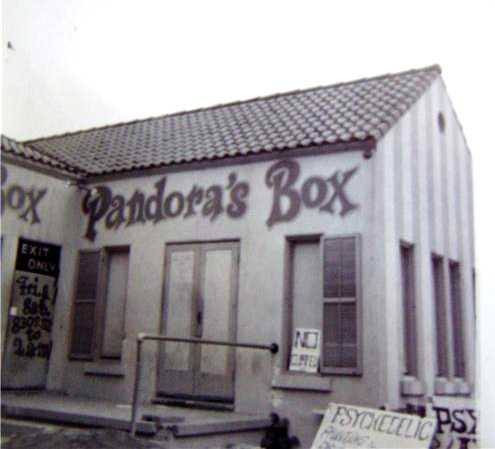
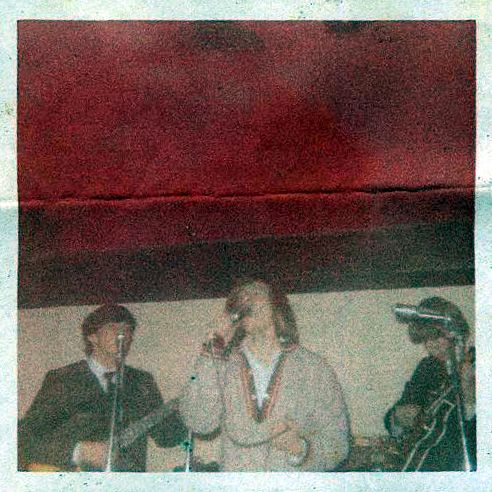
John English told me the Heathens performed at Pandora’s Box, around Orange County and at the legendary Retail Clerks Union Auditorium (8550 Stanton at Crescent in Buena Park) with the Crossfires.
English wasn’t with the band for long, as he doesn’t seem to appear in any photos of the group, at least not that I can tell.
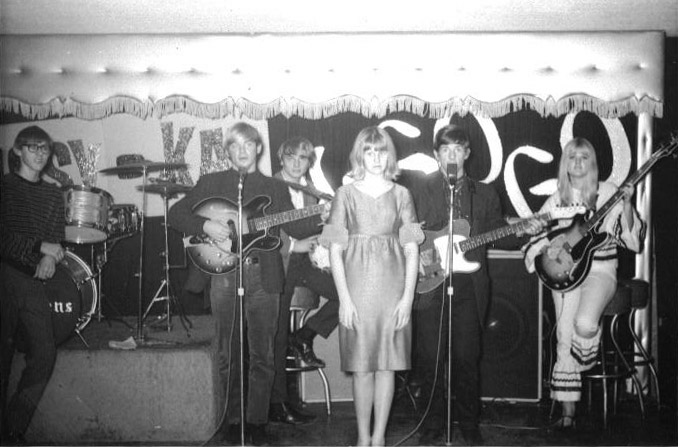
The Retail Clerks Auditorium, Buena Park Can anyone provide a better photo?The Heathens at the Pussy-Kat a Go Go, circa 1966. From left: Johnny Rogers (drummer), Don Adey, Colin Adey (with tambourine), unidentified girl in front, Dirk Acree, Char Acree.
The first mention they receive in the press is from the May 13, 1965 edition of the Valley News of Van Nuys, California:
Dance, Show Event at College
NORTHRIDGE — Zeta Beta Tau Fraternity will hold a dance and show, “A Go Go Continental,” on Saturday, May 22, from 8 p.m. to midnight in the college gymnasium at San Fernando Valley State College, 18111 Nordhoff St.
The entertainment will highlight nationally famous recording artists, including The Parlays, formerly with Round Robin who made the Slauson popular. Their records include “Dance to the Slauson” and “Kick Your Little Foot, Sally Ann.”
Also on the program will be Bobby Day who made “Little Bitty, Pretty One” and “Rockin’ Robin” which was once No. 1 all over the world.
Direct from England and the first time in Los Angeles, John English and the Heathens will perform and sing a number of songs soon to be released. Finally, a surprise group will be featured doing many of its million sellers, it was stated.
The dress is school dress and tennis shoes …
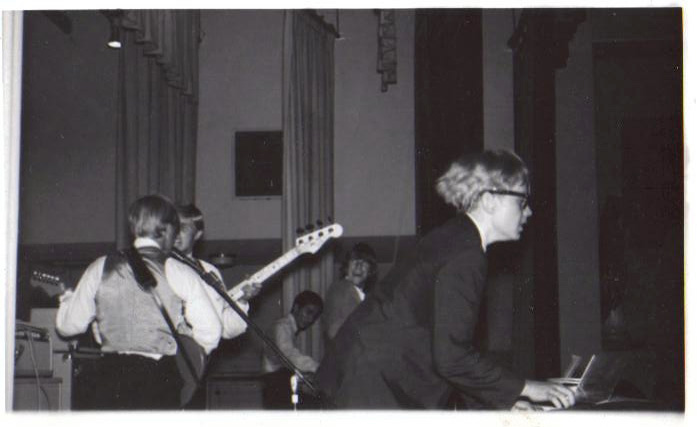
From left: Dirk Acree (?), Don Adey, unidentified keyboardist and unidentified bassist
As John related the story, someone named Brian who had done PR work for the Beatles brought Lelan Rogers to see the Heathens show at Pandora’s Box. According to John, Lelan had them record three or four sides, but only two were ever issued.
“I Need You Near” has a slashing rhythm from Acree, who takes an excellent solo early in the song. John’s singing is gravelly and cutting, and he has a great shouted bit, something like “alright Vern now step for me, c’mon give me that stroke (?) now!” “Some People” is much different, with a ringing acoustic guitar and an almost whispered vocal.
John’s singing on this record and his later ones shows not a trace of an English accent. I don’t believe the Heathens recorded anything besides this 45 and Don Adey does not recollect them doing any recording while he was with the group.
Both songs are English originals with “Some People” co-written with Vern Acree, publishing by Rattan Music, BMI. The record was produced by Lelan Rogers and arranged by Glen Spreen. Sabra released it in May, 1965, just after another disc produced by Rogers: “I Want My Woman” / “And Then” by the Emperors.
It’s hard to say why the single of “I Need You Near” is so rare now (literally only 4 or 5 copies are known!). Other 45s on the Sabra label, like the Emperors are not as difficult to find. The Heathens single (master numbers S-5009 and S-5010) was actually ready to release before the Emperor’s (S-5011 and S-5012) but was given the next catalog number (5556 compared to the Emperors 5555). I would guess Sabra thought the Emperors disc was stronger, and once it started making an impact, Lelan and Sabra put all their promotional efforts into that record and let the John English & the Heathens record wither on the vine. Another reason could be Lelan soon left Sabra and then returned to Texas.
John English told me the Sabra record received some good reviews, and the band was offered a deal to tour, but some of the Heathens were still in high school. John went out on a 1965 Shindig summer tour as a solo artist.
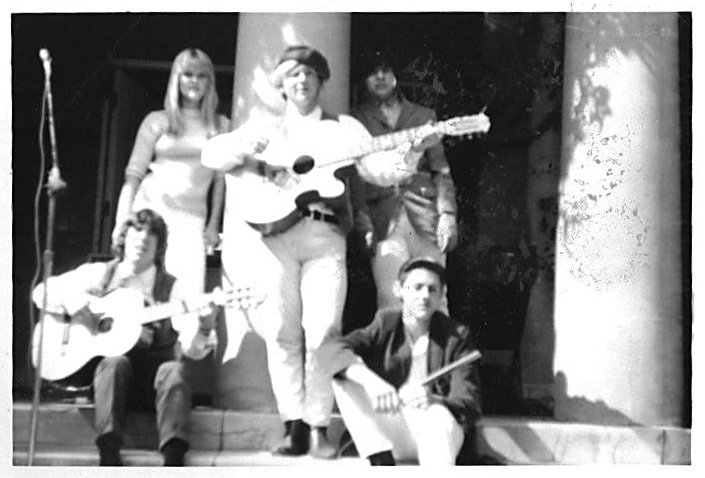
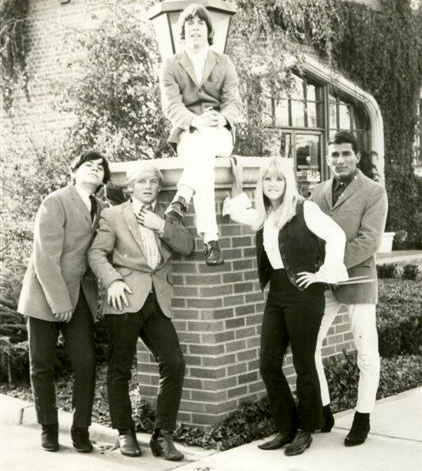
From left at top: Brian Wilson (?), unidentified woman, Dirk Acree, unidentified woman and Don Adey at bottom: Johnny Rogers, Char Acree and Colin AdeyFrom left: Don Adey, unidentified bassist, unidentified drummer, Dirk Acree and unidentified keyboardistThe Heathens, circa 1967, from left: Don Adey, Johnny Rogers, Dirk Acree and Char Acree Photo courtesy Don Adey
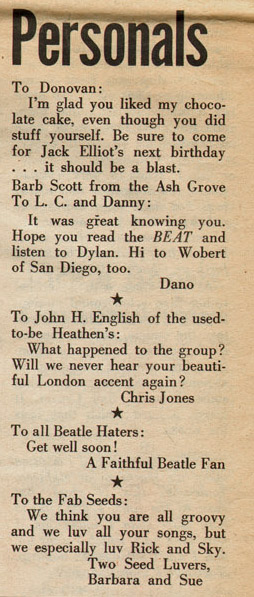
KRLA Beat, September 18, 1965The September 18, 1965 issue of KRLA’s Beat paper has an interesting “personals” letter from one Chris Jones asking: “To John H. English of the used-to-be Heathen’s: What happened to the group? Will we never heard your beautiful London accent again?”Well, they would hear John again, and the Heathens too. John English joined the Preachers in the fall of 1965: see this page where I’ve written about his career in more detail. The Heathens would continue, adding guitarist Donald Adey, who Dirk knew from Buena Park High School. In addition, the band featured other members I don’t have the names of. Though Colin Adey is in some of their photos, Don told me Colin wasn’t in the group: “my brother was fresh over from the UK just hanging with me.”
There are photos of this group playing live at Pandora’s Box and the Pussy Kat a Go Go, sometimes sharing the stage with the Lady Birds, which also featured Char Acree.
Don’s myspace page lists some of the venues they played:
The Pasadena Civic Auditorium and the Hollywood Palladium opening up for The Dave Clark 5 and Donovan, up and down the coast of California and Count Down 65 (battle of the bands), at the Sea Witch, the Galaxy, the Olympic Auditorium, the Ascot Raceway and the Johnson Theater in Palm Springs.
Don Adey left the Heathens to join a group called Posse. In 1967, Adey and Dirk Acree formed the Churchill Downs with Gary Dalton Stovall, Mick Newton and first Al Stigler, then Fred Darling on drums. The Churchill Downs recorded an album’s worth of fine material produced by Gary Paxton that was finally released on Shadoks in 2011.
Adey was also in Jamme who had an LP on Dunhill in 1970.
All photos from hollywoodagogo.com except those labeled as courtesy Don Adey.
Special thanks to Mark Taylor for scans and transfers of the Sabra 45.
The Heathens, circa 1967. Clockwise from bottom left: Dirk Acree, Char Acree, Don Adey, unidentified person, and Johnny Rogers Photo courtesy Don AdeyThe Heathens, circa 1968. From left: unidentified musician, Don Adey, Dirk Acree, Char Acree, unidentified musician with drum sticksThe Heathens ad for Pussy Kat a Go Go performances
Can anyone identify this band from the 1967 Estancia High School yearbook? They certainly look sharp. The Wooly Ones came from Costa Mesa, California, but their record “Put Her Down” / “Slings and Arrows” was cut a year or two prior to these photos.
Thank you to Barry Kazmer for sending in these photos. I’ll be posting more of Barry’s scans in the future.
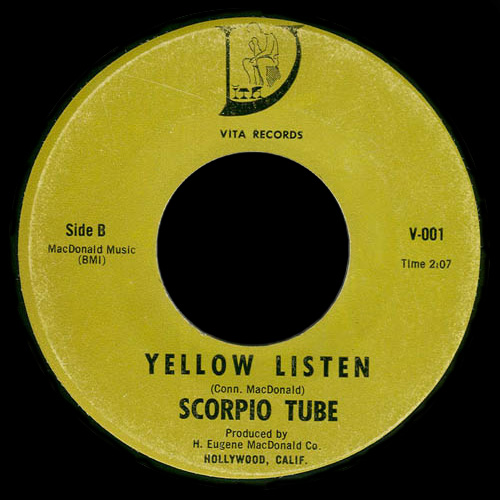
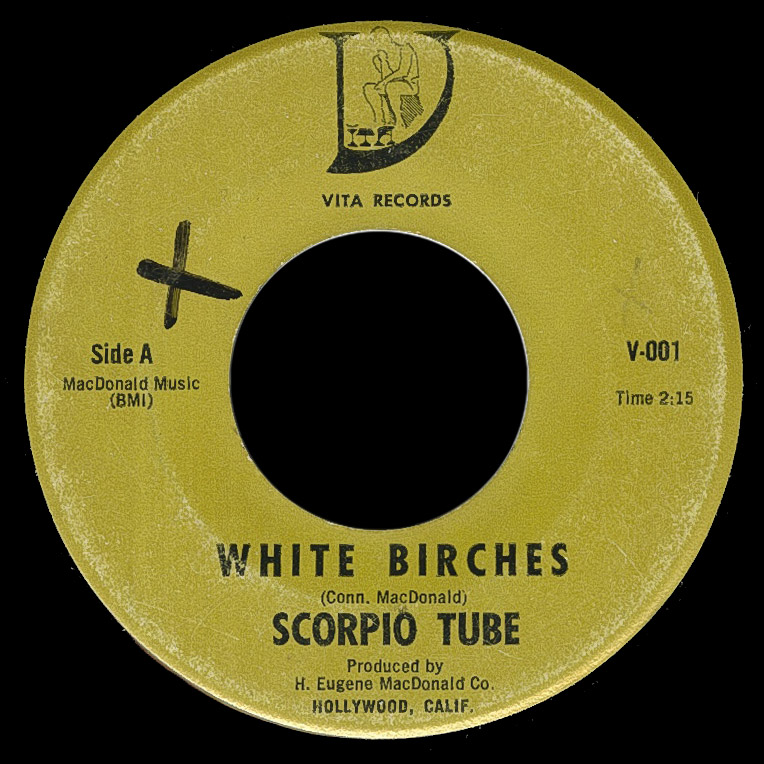
Dan Nielsén, who had conducted the interview with John Ford of the Index published here back in February, asked me to dig into the story of the Scorpio Tube, the group behind the incredible B-side “Yellow Listen”.
The lead guitar track dominates the sound with a piercing distortion and echo that breaks up with stroboscopic effect. You can hardly hear the piano in the background, though it provides much of the droning sound at the intro and becomes apparent towards the end as the lead guitar is mixed down.
The A-side, “White Birches” is more polished than “Yellow Listen”, with a progressive sound that would have done fine on radio at the time. The instrumental break is excellent too.
Conn. MacDonald (Connor MacDonald?) wrote both songs. Conn had been in a San Diego group the 50th Anniversary Zoo who recorded the original song “Love Man” (MacDonald – Cadena) for Vita in 1967.
Conn’s father, H. Eugene MacDonald produced the record for Vita Records, not the same Vita owned by Laurence Mead that released a good number of records in the 1950’s with a Pasadena address. This Vita Records had released an album in 1965 with a San Diego address, Dick Braun A Clarinet On The Trail Of A Wounded Bassoon, and two 1967 singles, all produced by H. Eugene MacDonald:
Vita V-005/V-006 – the Grapes Of Wrath “For Every Year” / “Cause it Was Her” both written by Ralph Sias, address of 301 S. Western Ave, San Pedro, CA Vita V-007/V-008 – 50th Anniversary Zoo “Love Man” (MacDonald – Cadena) / “Out of Sight” address 4121 Oak St., Burbank, CA
Vita V-003/V-004 seems to be a 45 by Freddie Kane “Love Is A Stranger”/ “Sidewalk Walkin’ Blues” but I need confirmation of this – anyone have a scan?
According to a profile in the San Pedro News-Pilot in March of 1966, H. Eugene MacDonald had been manager of a 300-room hotel in San Diego before taking over as manager of the Hacienda Hotel in San Pedro (at the same address as the one on the Grapes of Wrath label) and noted that he has two teen-age children.
Fred Cadena “The Yellow Listens” El Paso Times, October 1, 1967The Scorpio Tube, though given the catalog number Vita V-001 was released much later than the other Vita singles, and lists only Hollywood on the labels. “White Birches” may have been recorded as late as 1970, but “Yellow Listen” may date to the 1967 sessions for the 50th Anniversary Zoo.
An October, 1967 notice from the El Paso Times lists Fred Cadena as lead guitarist for 50th Anniversary Zoo and adds a further tie to the Scorpio Tube by suggesting “The Yellow Listens” [sic] was the flip of the 50th Anniversary Zoo’s “Love Man” instead of a cover of “Out of Sight”.
Thank you to bosshoss for the scan of “White Birches”, and to Mop Top Mike for initial info on the release. Thanks also to Max Waller. Special thank you to Achille Brunet for pointing out the news item on Fred Cadena.
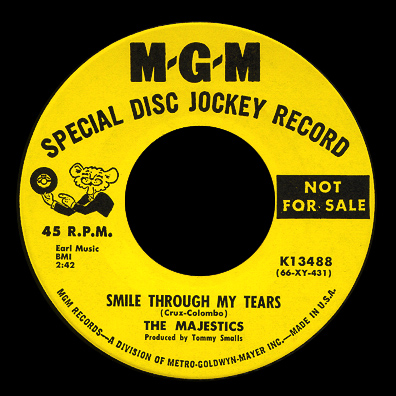
Mop Top Mike suggested I cover the Majestics, an unknown group who cut this one 45 for MGM in 1965. Hopefully we’ll be able to find some more info on this band.
The A-side is “Smile Through My Tears”, a ballad something in the style of the Beau Brummels, written by Cruz-Columbo. It’s backed with “Love Has Forgotten Me”, which I find less compelling.
Tommy Smalls produced the single independently. Mastered in late 1965, MGM purchased it for release in April, 1966. Tommy Smalls is possibly the same DJ known as “Dr. Jive” who was involved in the payola scandal in 1958. That Tommy Smalls relocated to Los Angeles, where he was an R&B DJ for KADY in 1964 then back to New York at WLIB in 1965. By 1968 he was Vice-President in charge of r&b for Jubilee Records.
The publishing was through Earl Music, BMI, though I can’t find any listing in BMI’s database for either song.
The MGM Labels: 1961-1982 by Michel Ruppli and Ed Novitsky indicates “Smile Through My Tears” and the flip as “purchased titles” and “this group was listed in files as “The Mysterians”.
Other groups called the Majestics
There were many other groups by the name Majestics. I don’t think any are related to this group, but I’ll list some of them here.
The one closest in time to this group recorded the soul classic “(I Love Her So Much) It Hurts Me” b/w “Girl Of My Dreams” on Linda 121, both songs written by Arthur Robles, produced for Faro Productions and released in the fall of 1965. The same songs (minus the horn intro on “It Hurts Me”) had a second release as by David and Ruben on Warner Bros 7316, this time listing production by Eddie Davis. A third release on Rampart in 1969 reused the original Linda stampers. David and Ruben were Art Robles’ brothers. Their group was generally known as ‘Art’s Majestics’.
Interestingly, there was another release by the Majestics on Linda 111, “Strange World” / “Everything Is Going to Be All Right” (by Chick Carlton, produced by Bobby Gross), but this is on the blue Linda label, distributed by Scepter, NY in 1963. Supposedly, this was another band entirely, black, not Hispanic.
Other Majestics include: a doo-wop group from Detroit who recorded for Contour, Chex and V.I.P.; a Miami, Florida group who cut “Cave Man Rock” on Marlin; a vocal group from Massachusetts who recorded for 20th Century Fox and other labels.
Background on unrelated Majestics groups from Soulsource and Doo-Wop.blogg.org. Thanks to Mike Markesich for the scan and transfers.
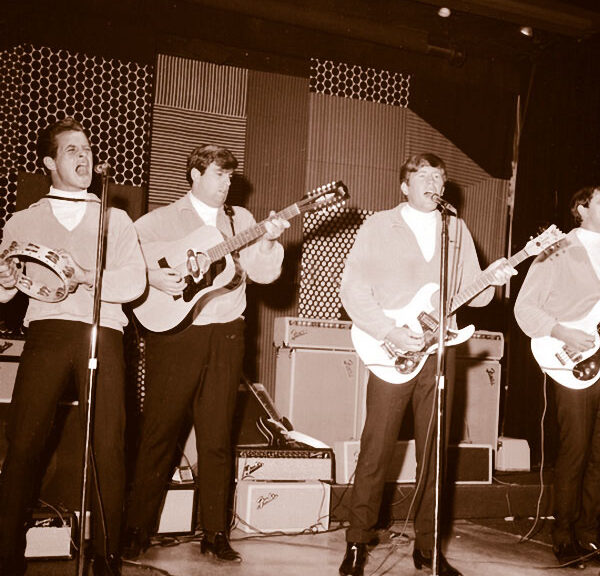
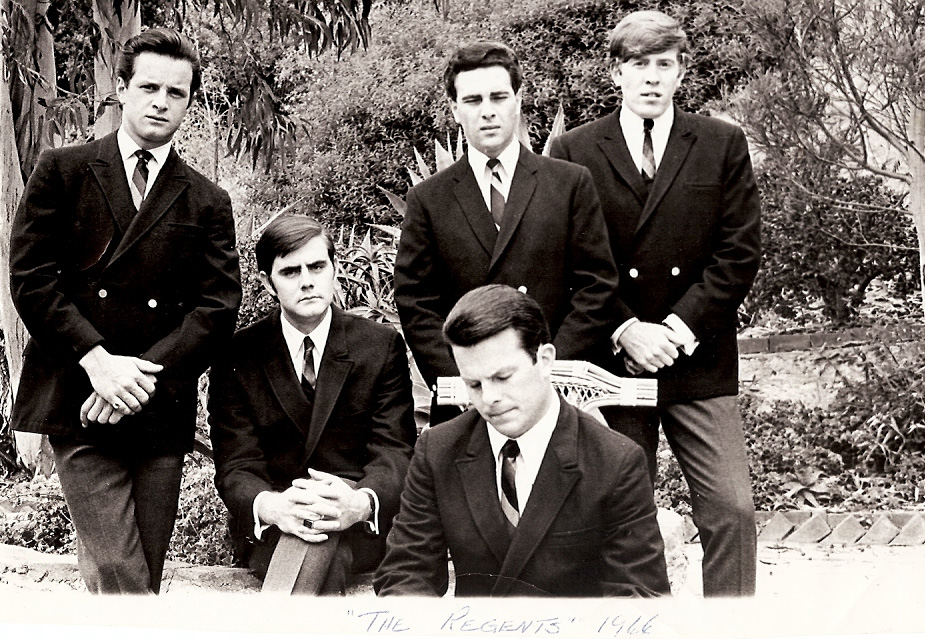
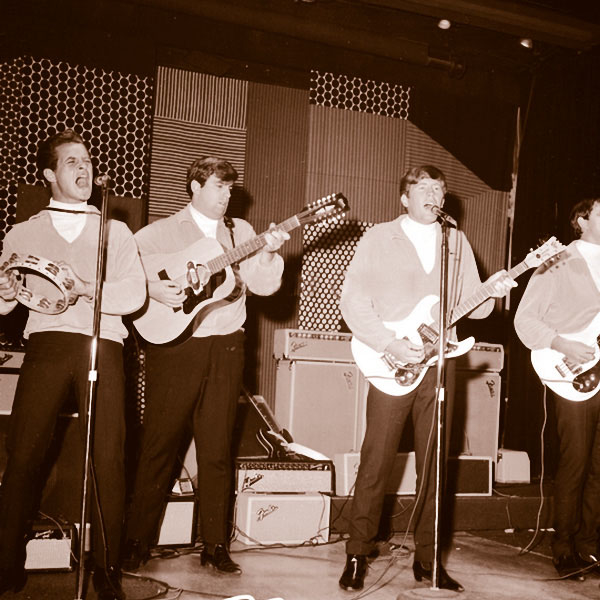
The Regents, 1966, from left: Jerry Rosa, John Harris (sitting, holding his knee), Craig Boyd (sitting in front looking down), Johnny Mann and Mike McDonald (far right) Scan courtesy of Joni Bartley
The Regents were house band at Jack Martin’s A.M-P.M. on La Cienega Blvd., one of the many discos that opened up to compete with the Whisky a Go Go.
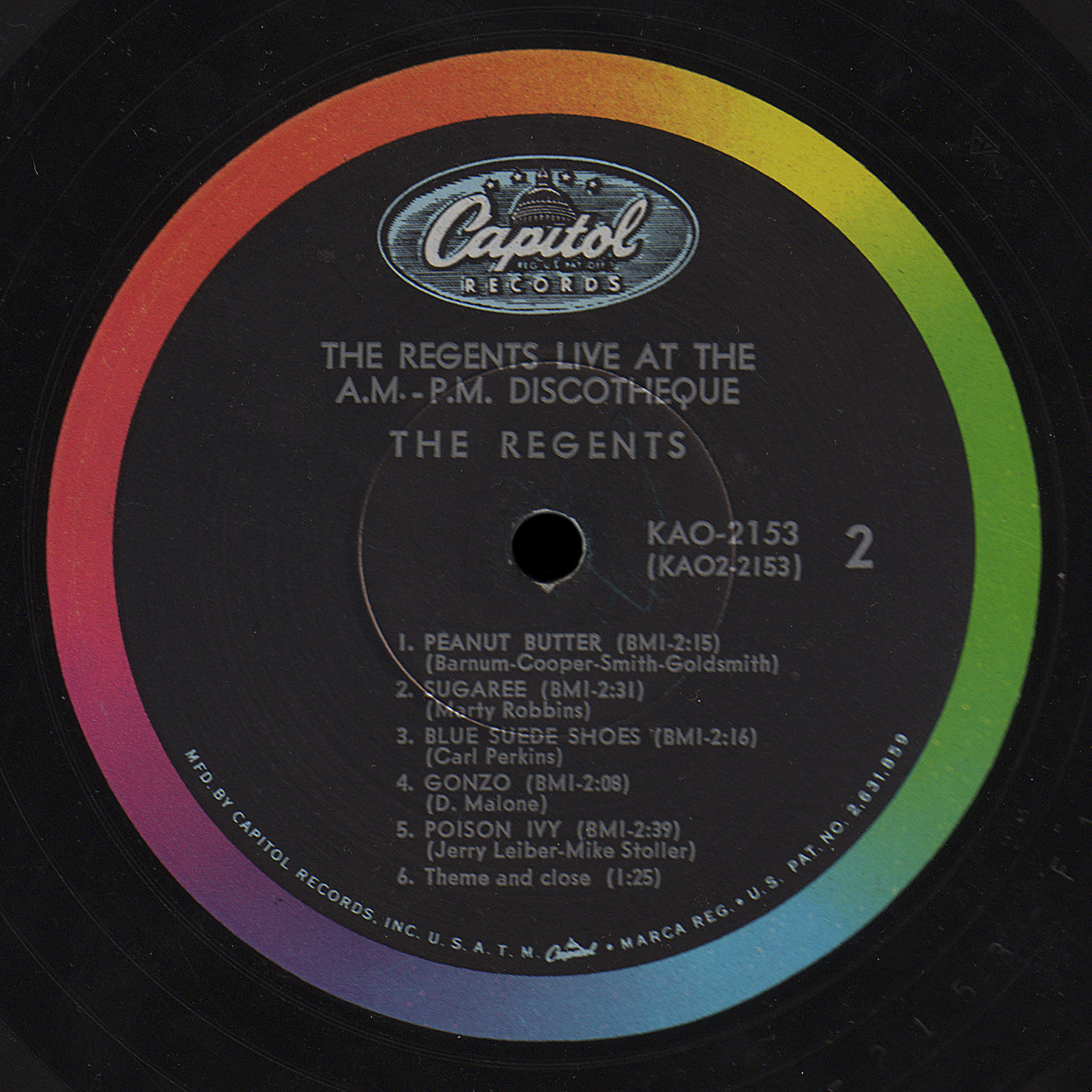
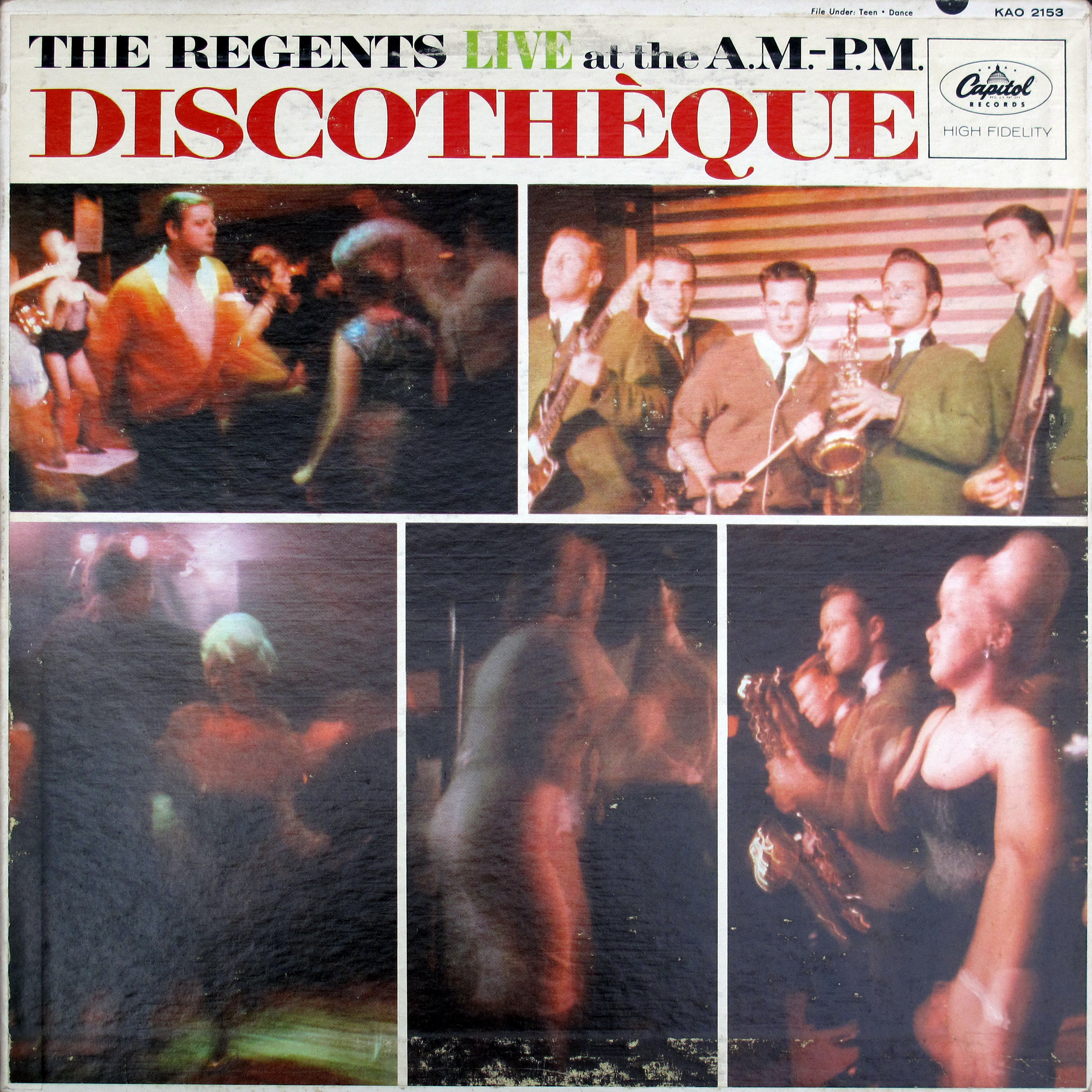
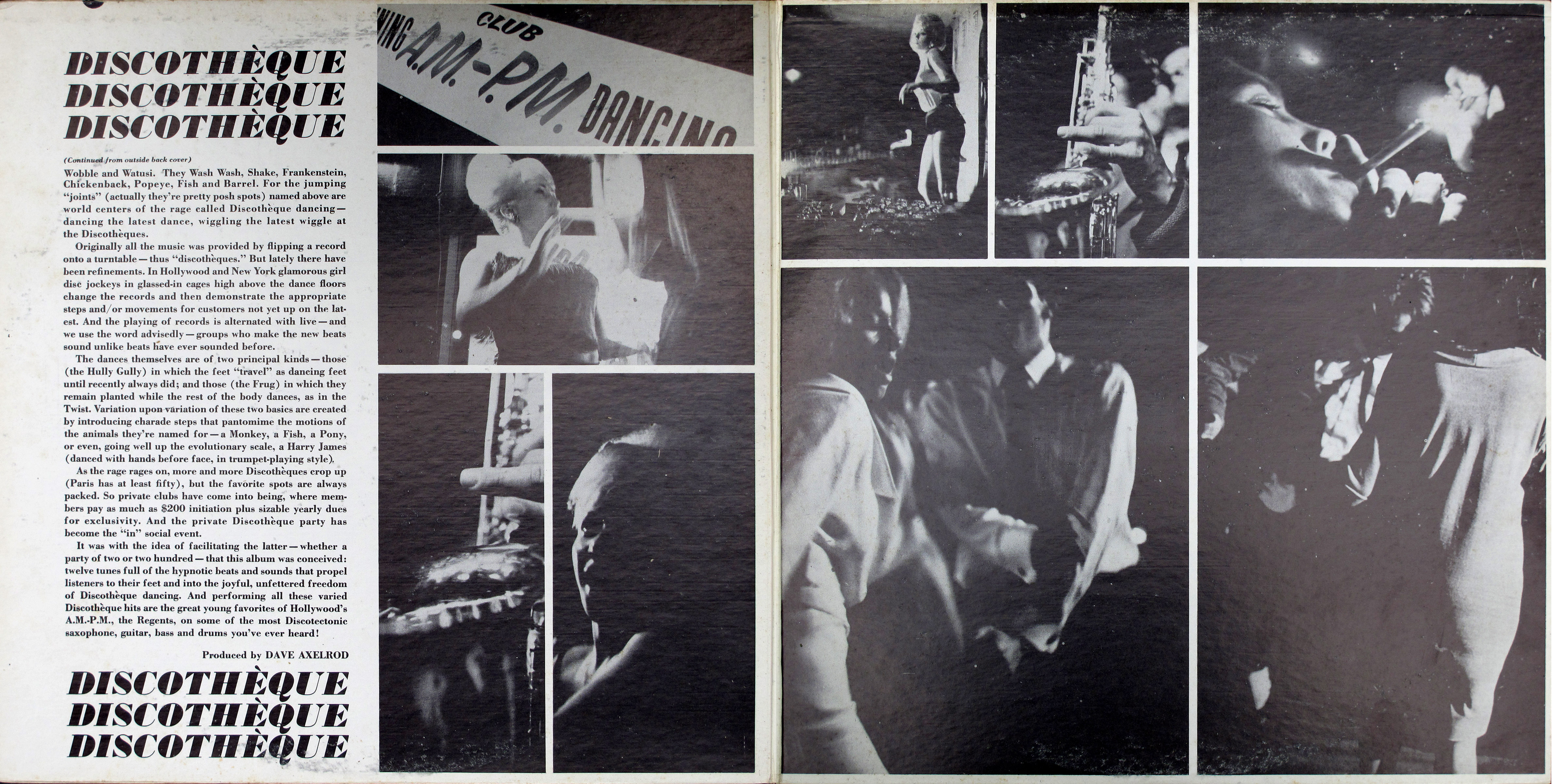
In 1964 Capitol recorded the band at the club for an LP of standard songs of the day. I really dig their cover of James Booker’s instrumental, “Gonzo”.
Despite having a gatefold cover to fill with photos and notes, Live at the A.M./P.M. Discotheque doesn’t bother to list a single member of the band. I’ve read some members were originally from Bakersfield. Craig Boyd and Tom Baker had started in a group called the Raiders, then Tom joined the Midnight Flyers. Jerry Rosa had been in a band called the Defiant Ones.
Band members were:
Jerry Rosa – vocals and tambourine Mike McDonald – vocals and lead guitar Tom Baker – 12-string and rhythm guitar, replaced by Johnny Mann, then Marilyn Read John Harris – bass Craig Boyd – drums
David Axelrod produced the album. Domenic Priore’s book Riot on the Sunset Strip quotes Axelrod saying “Jack Martin’s AM-PM was the kind of place where you could order steak sandwiches, and a fistfight would break out every ten minutes. A lot of tough guys went there, so it didn’t last long.” Two songs from the album, “Sugaree” / “Mojo Workout” were released in Germany.
After the A.M./P.M. club closed, the band became the house band at It’s Boss. Following the LP they cut four singles for four different labels. First up was “She’s Got Her Own Way of Lovin'”, a good original by Mike McDonald backed with “When I Die, Don’t You Cry”, released on Reprise 0430 in November, 1965 and produced by Jack Nitzsche.
Tom Baker left in 1965 and the band hired Johnny Mann to replace him.
Next came “Summer Time Blues” / “You Don’t Love Me” on Peoria 008 in March of 1966, produced by John Harris.
The Regents on stage 1965, from left: Jerry Rosa, Tom Baker, Mike McDonald and John Baker. Not pictured: Craig Boyd on drums.
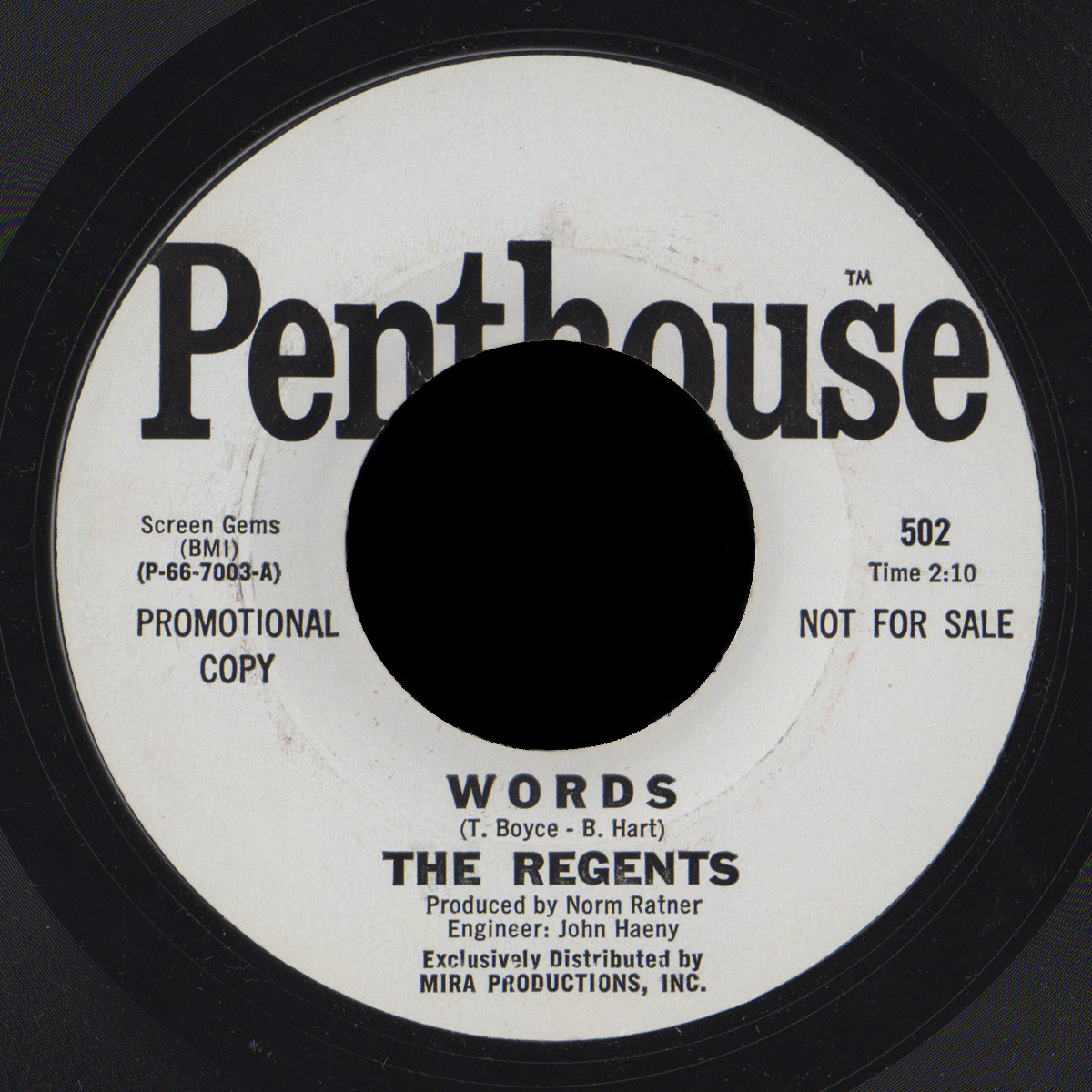
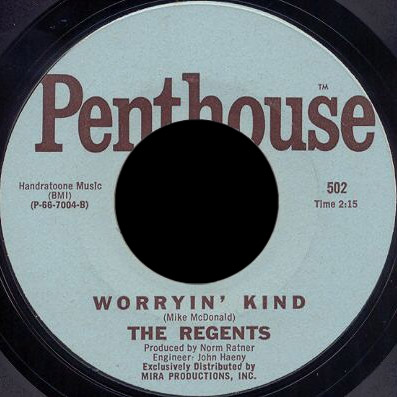
Their third single has the original version of the very catchy Boyce/Hart song “Words”, later done by the Leaves, the Boston Tea Party and the Monkees, usually with a slower opening tempo than the Regents arrangement. I have a promotional copy that has “Words” on both sides of the record, but stock copies have the excellent b-side, “Worryin’ Kind” another fine original by McDonald.
This disk was produced by Norm Ratner and engineered by John Haeny and released in July 1966 on Penthouse 502, distributed by Mira. It was also released in the UK on CBS.
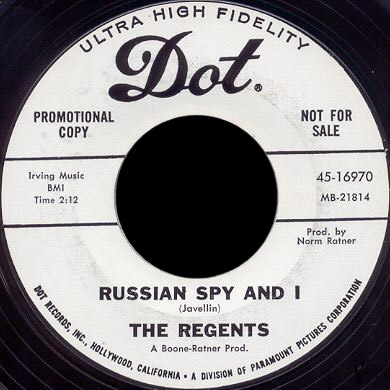
Their last 45 was “Russian Spy and I” written by Jackie Javellin (aka Casper Koelman) and originally done by the Dutch group the Hunters. The Regents version is probably the most well-known, at least here in the U.S. Though the Regents lift the opening riff directly from Hunters guitarist Jan Akkerman, the solo is much more intense, the tempo of the song quicker and the harmonies much more effective than the Hunters version. I bet they could have done a killer version of this live. Produced by Norm Ratner for Dot 16970 in November, 1966, the flip was a cover of “Bald Headed Woman”.
Marilyn Read joined on guitar at some point in 1966 and stayed about a year. She was also in the Ladybirds.
When the band ended, Craig Boyd joined The Hook after Dale Loyola and Dennis Provisor had left the band. Recording as a trio with Bobby Arlin and Buddy Sklar, Craig plays drums on The Hook’s second album Will Grab You. The Hook appeared on the Ironside episode “Trip to Hashbury” miming to both sides of their single “Son of Fantasy” / “Plug Your Head In”.
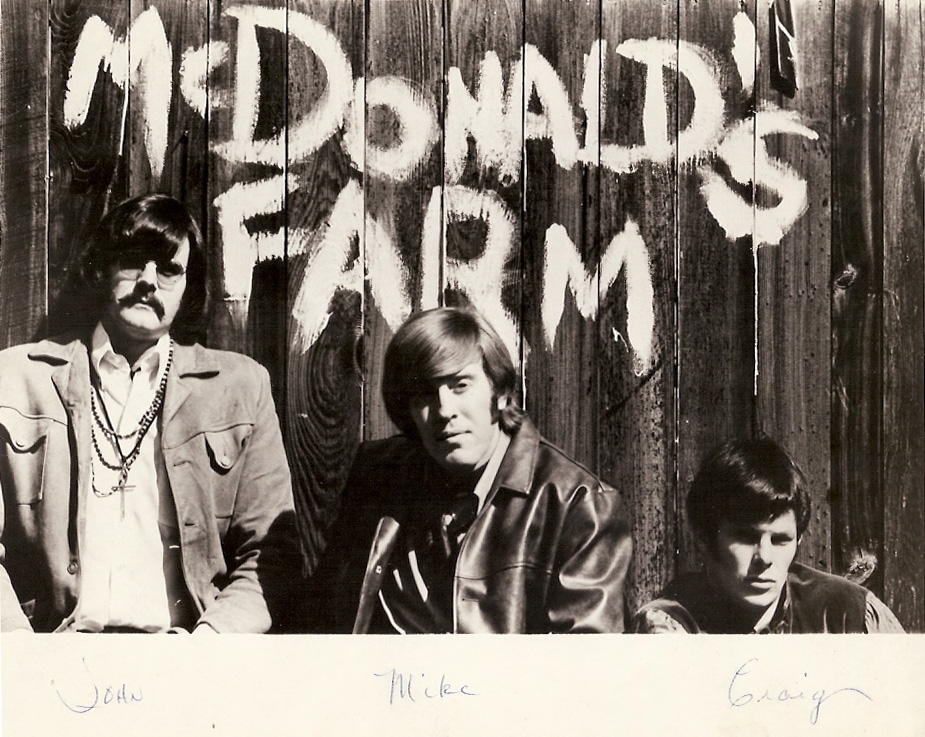
Michael McDonald, Craig Boyd and John Harris formed McDonald’s Farm, releasing “Excited” / “Deep Feeling” on Vital Records 2369, produced by Ron Shannon.
I’ve also read that they were the band for The Dating Game in the early seasons of that show. Tom Baker wrote to me last summer, but I haven’t had a response to the last two emails I sent. A friend of the band confirmed that they were on The Dating Game, and added that they were UCLA students who played often at Chuck Druet’s club Barnacle Bills on E. Huntington in Duarte.
There seems to be some confusion as to whether or not these are the same Regents who recorded the original version of “Barbara Ann”, but that was an entirely different band, whose members were Sal Cuomo, Chuck Fassert, Tony Gravagna, Don Jacobucci, and Guy Villari.
Nor is the Michael McDonald of this Regents the same guy who was in the Doobie Brothers (but see the Implicits entry on this site for Tom Johnston’s early band).
There are other records by groups called Regents that aren’t related to this group, including: “Cape Fear” (T. Foley) / “Summertime” (produced by J. Choate for the Ohio label Prix); and “No Hard Feelilngs” / “That’s What I Call a Good Time” on the Kayo label. The Regents with “Me and You” / “Playmates” on Blue Cat was a Canadian group who also recorded the LP Going Places with the Regents on Quality.
Some info from a phone interview with Craig Boyd.
Regents Capitol LP Live at the A.M.-P.M. Discotheque gatefoldThe Regents opening for the Lovin’ Spoonful at It’s Boss, 1965 Photo from the collection of Nancy KuehlMcDonald’s Farm: John Harris, Mike McDonald and Craig Boyd Scan courtesy of Joni Bartley
This site is a work in progress on 1960s garage rock bands. All entries can be updated, corrected and expanded. If you have information on a band featured here, please let me know and I will update the site and credit you accordingly.
I am dedicated to making this site a center for research about '60s music scenes. Please consider donating archival materials such as photos, records, news clippings, scrapbooks or other material from the '60s. Please contact me at rchrisbishop@gmail.com if you can loan or donate original materials

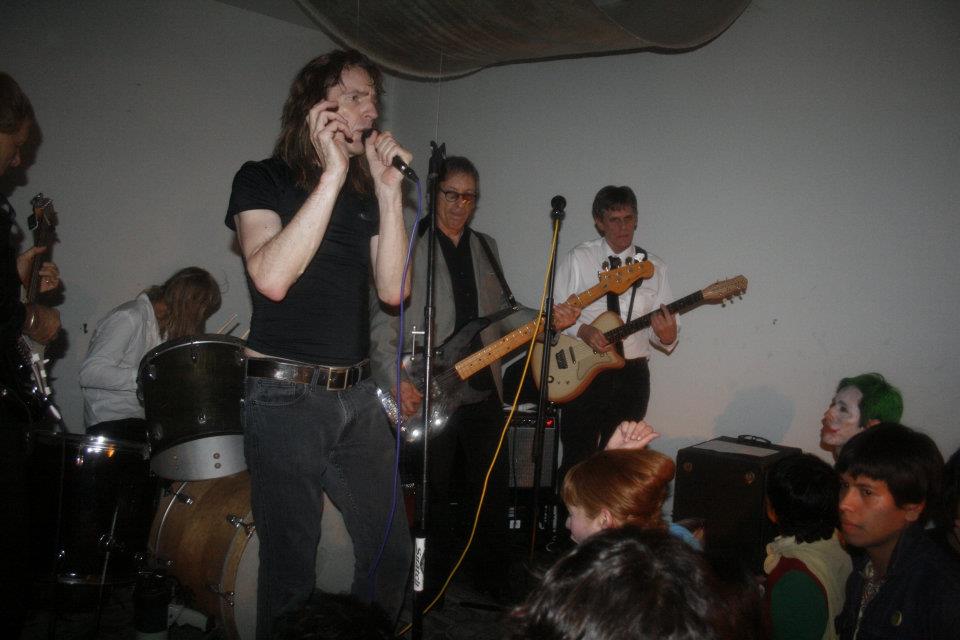
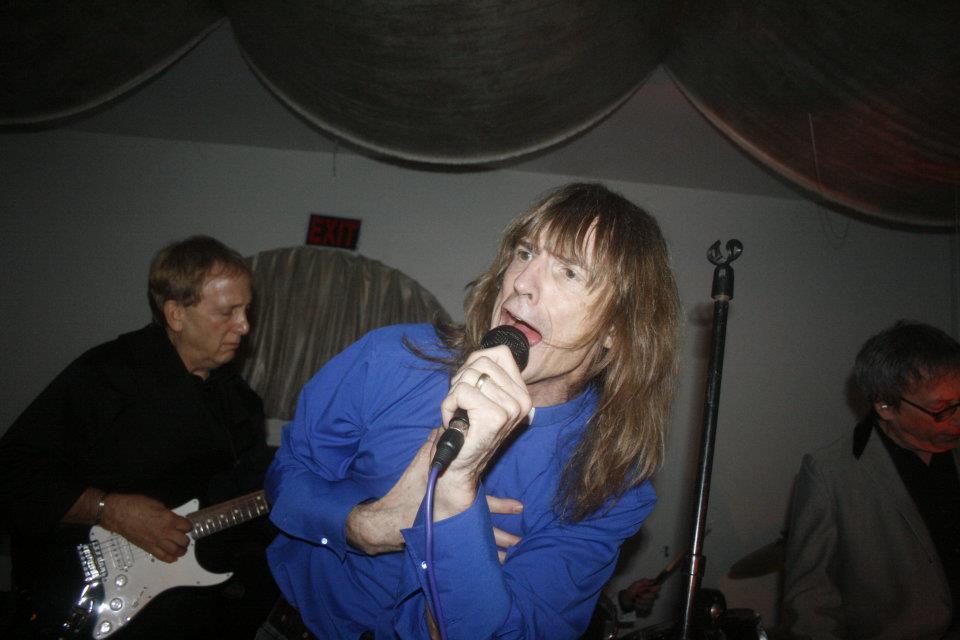
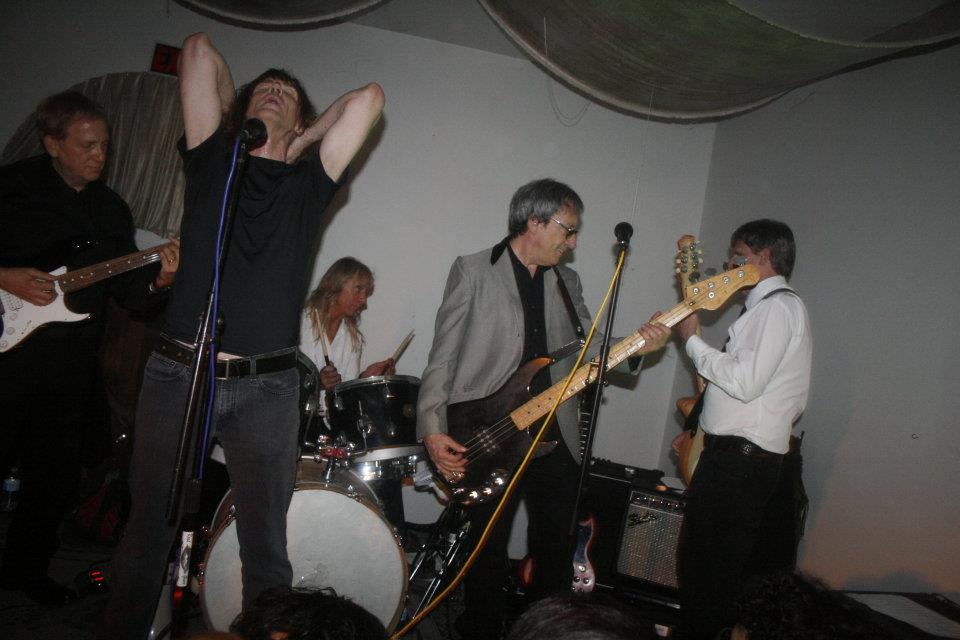
 The John English III & the Heathens 45 on Sabra, “I Need You Near” is one of the rarest and most highly rated of any mid-60s rock releases. I’ve covered John English in some detail on my site, but now I’d like to give the Heathens their own page, as most of their history comes after English left the group.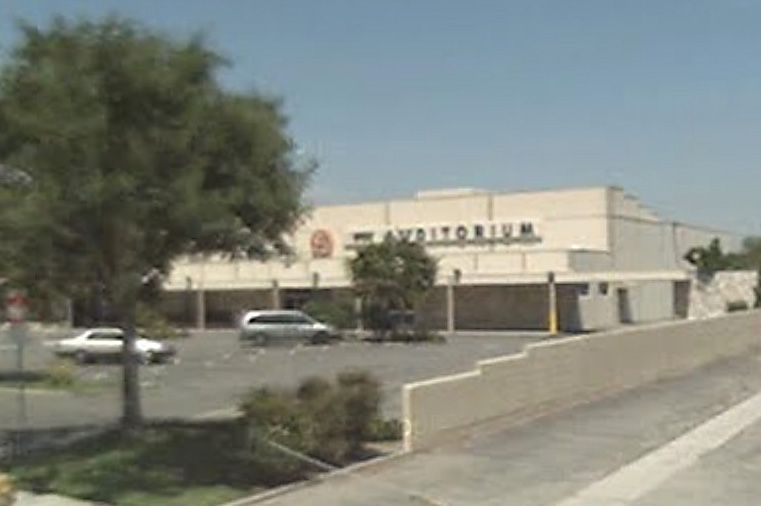
 As John related the story, someone named Brian who had done PR work for the Beatles brought Lelan Rogers to see the Heathens show at Pandora’s Box. According to John, Lelan had them record three or four sides, but only two were ever issued.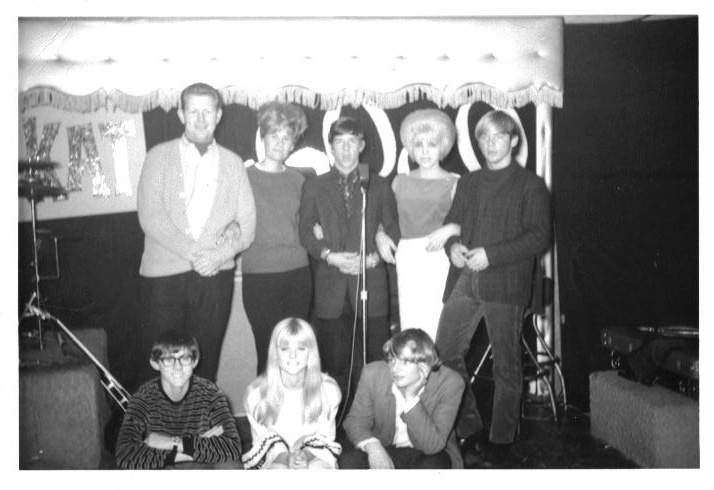
 Dan Nielsén, who had conducted the interview with John Ford of the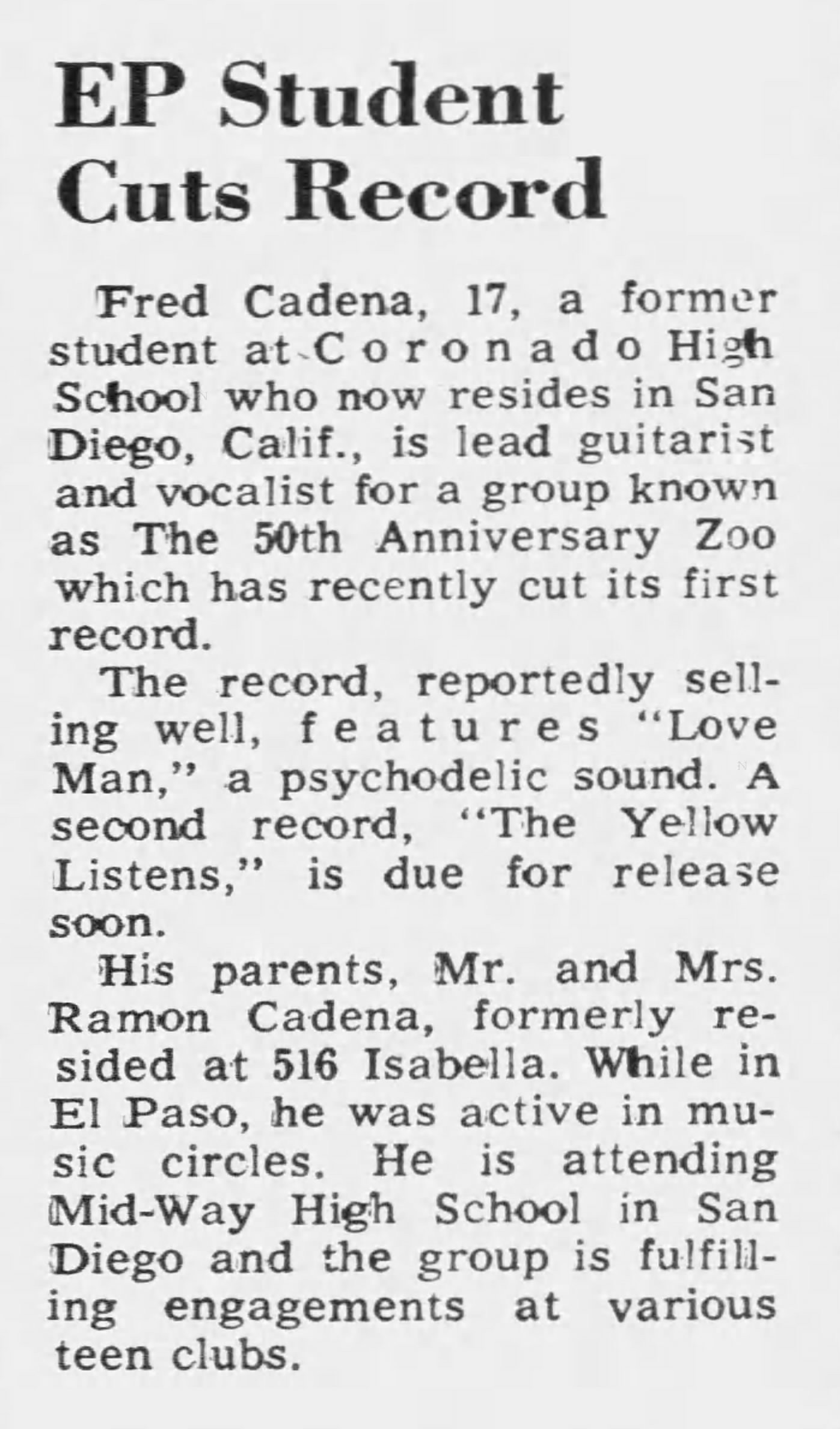
 Mop Top Mike suggested I cover the Majestics, an unknown group who cut this one 45 for MGM in 1965. Hopefully we’ll be able to find some more info on this band.