Category Archives: England

Jeff Curtis and The Flames

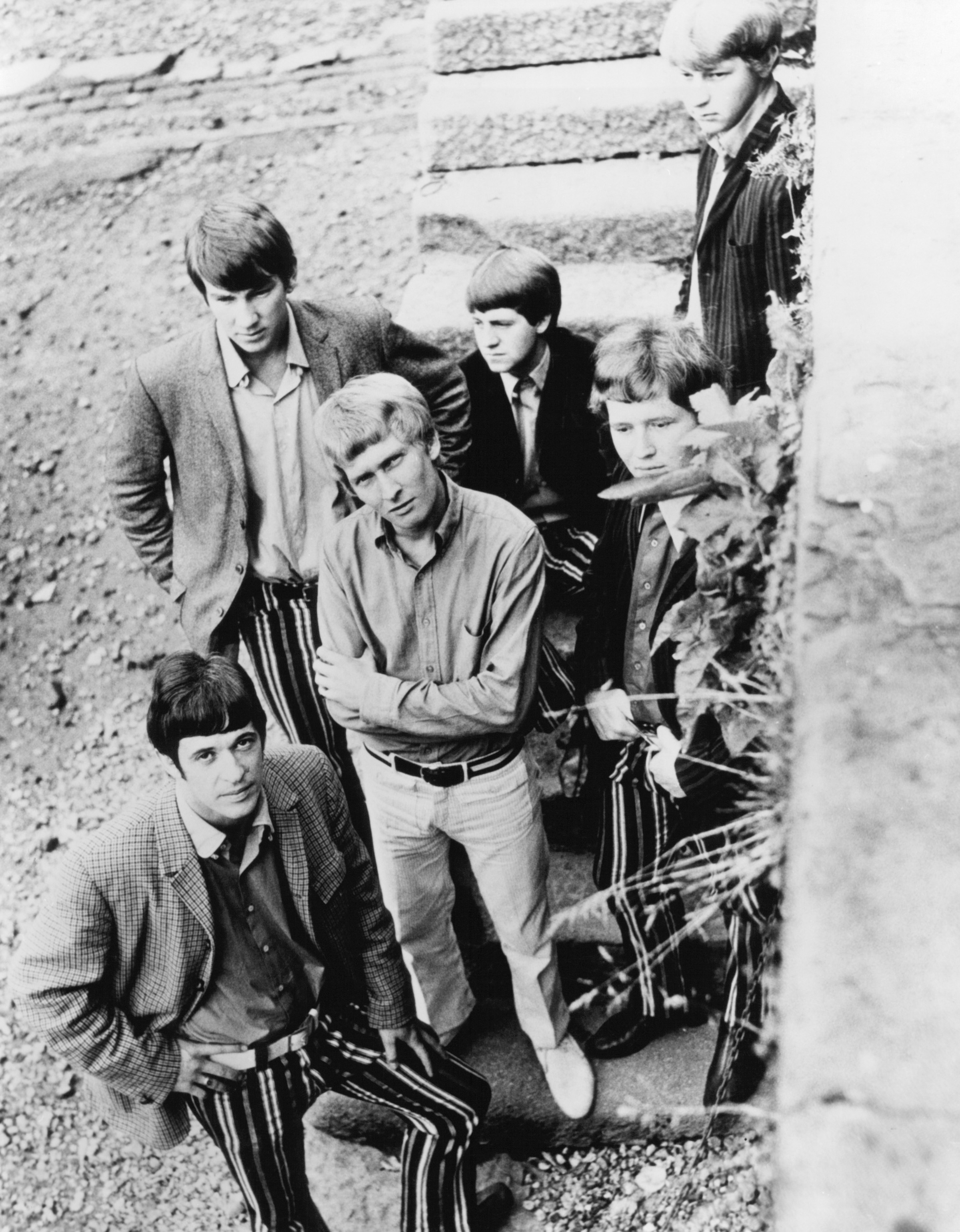
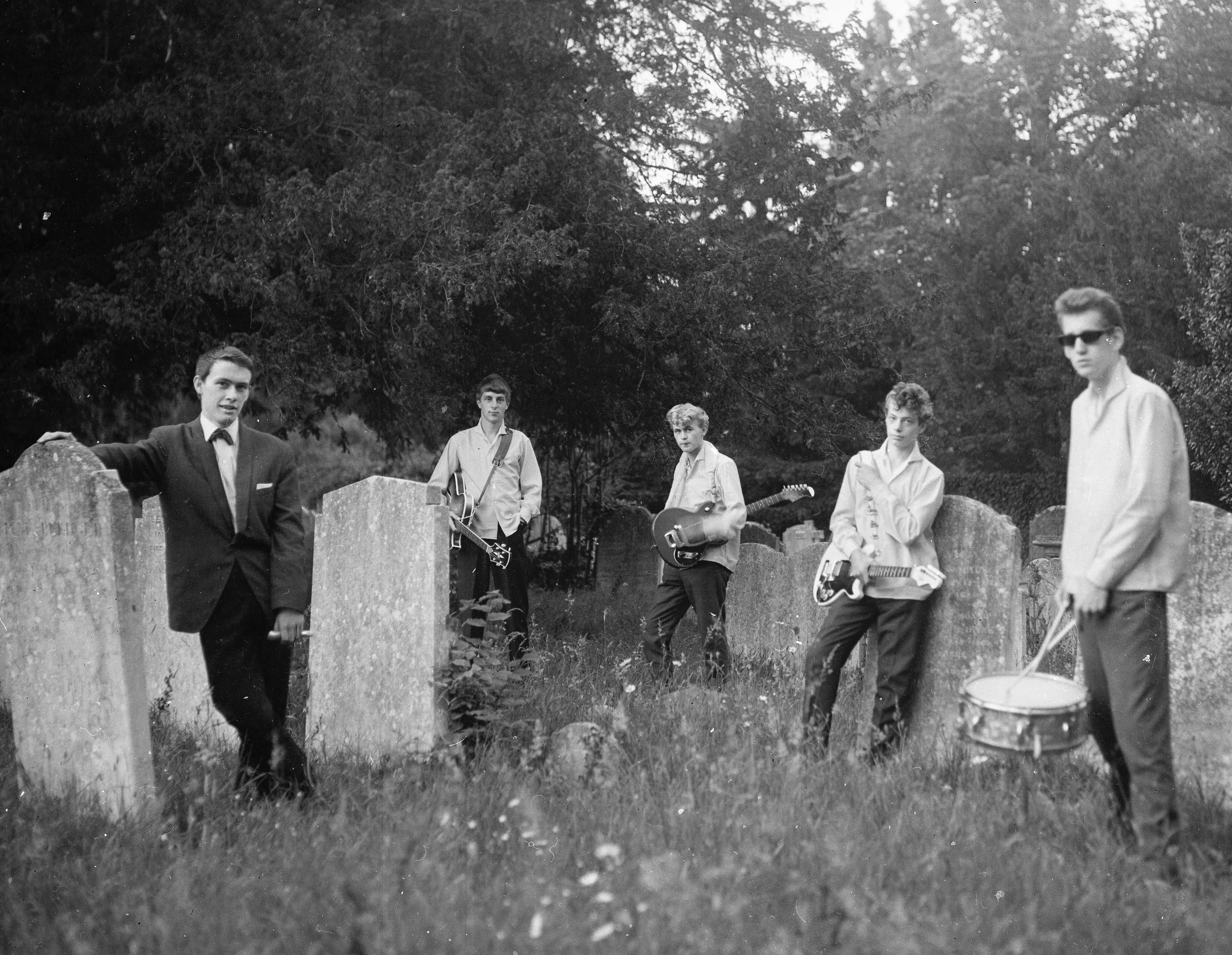
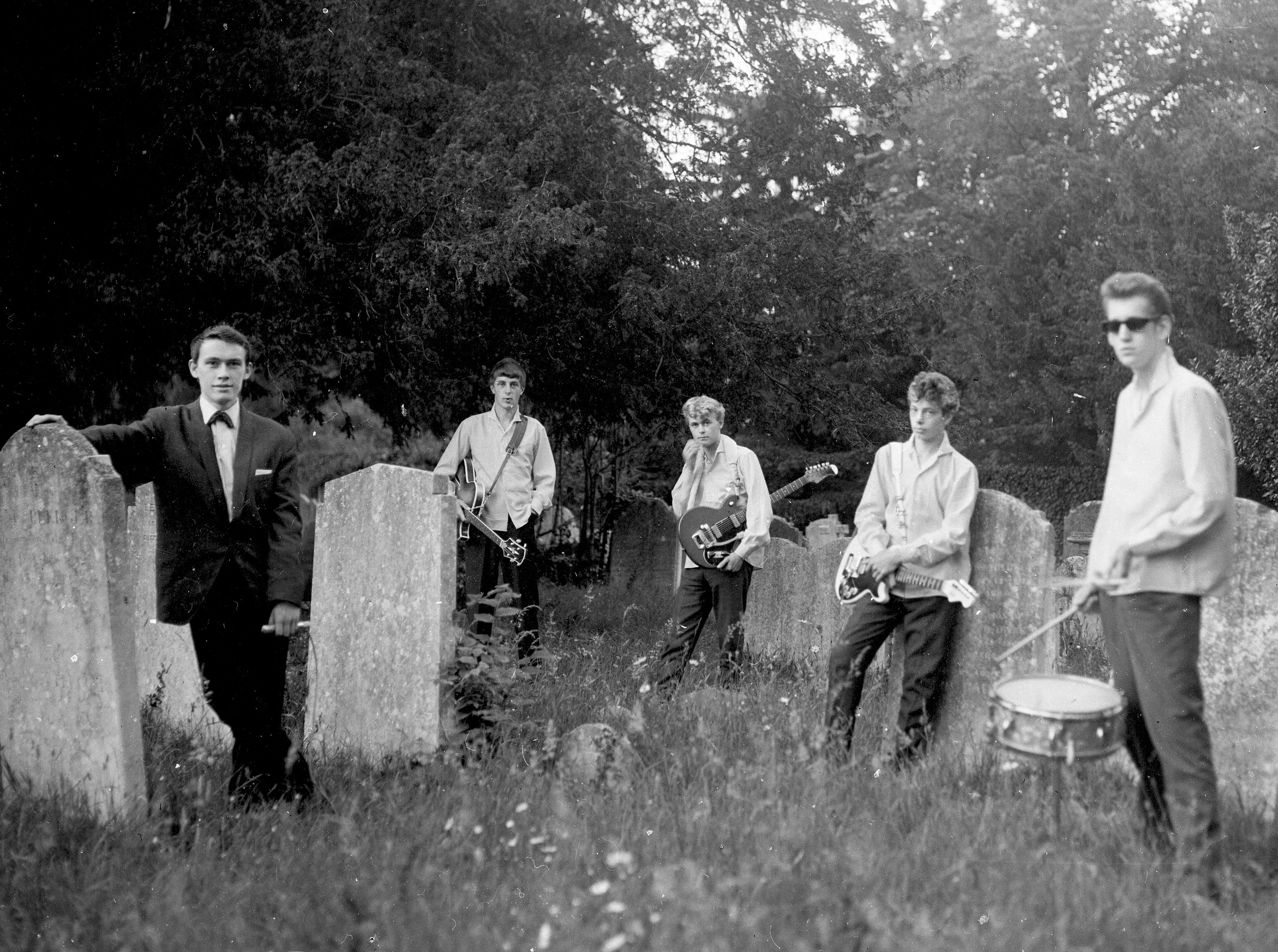
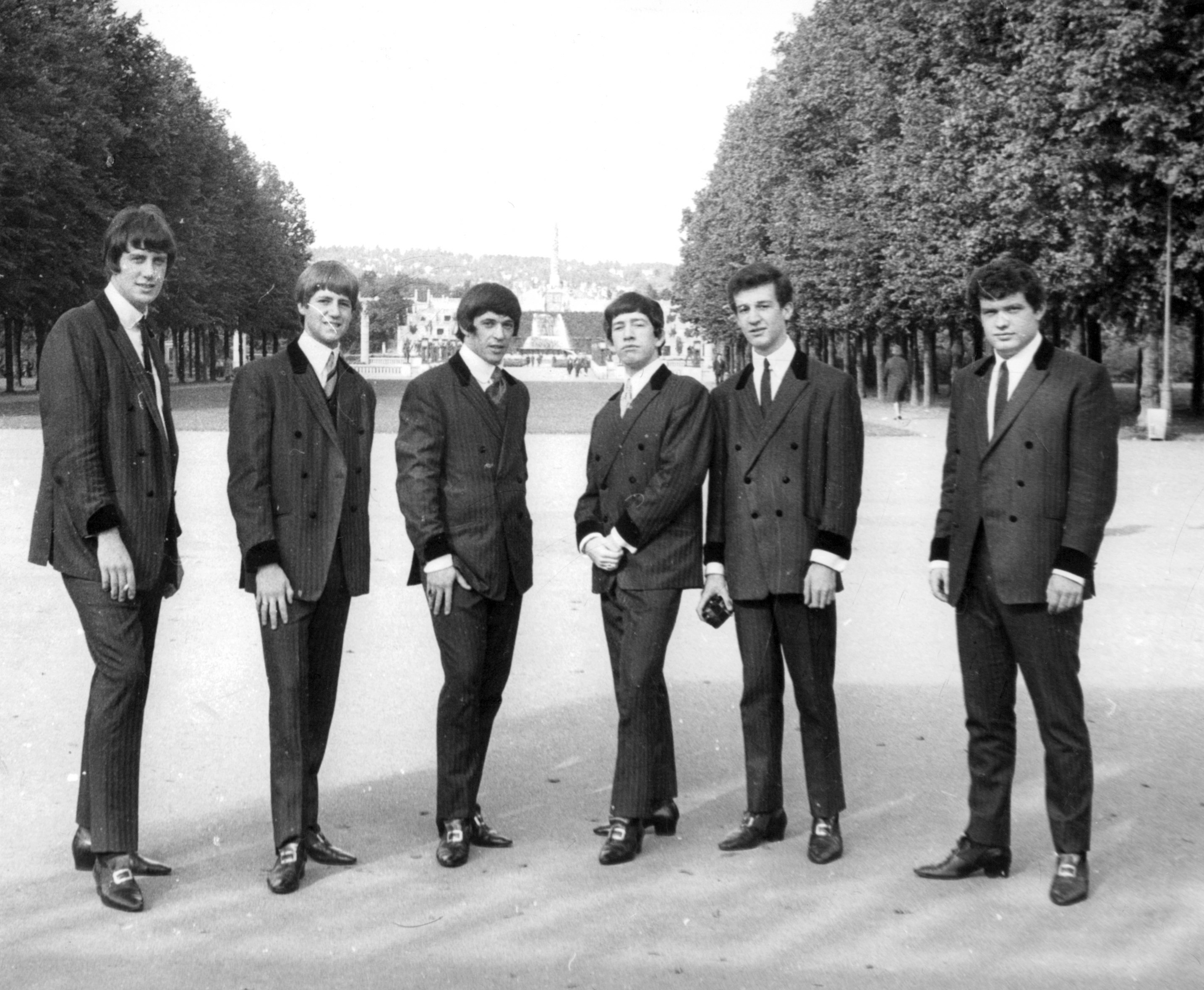
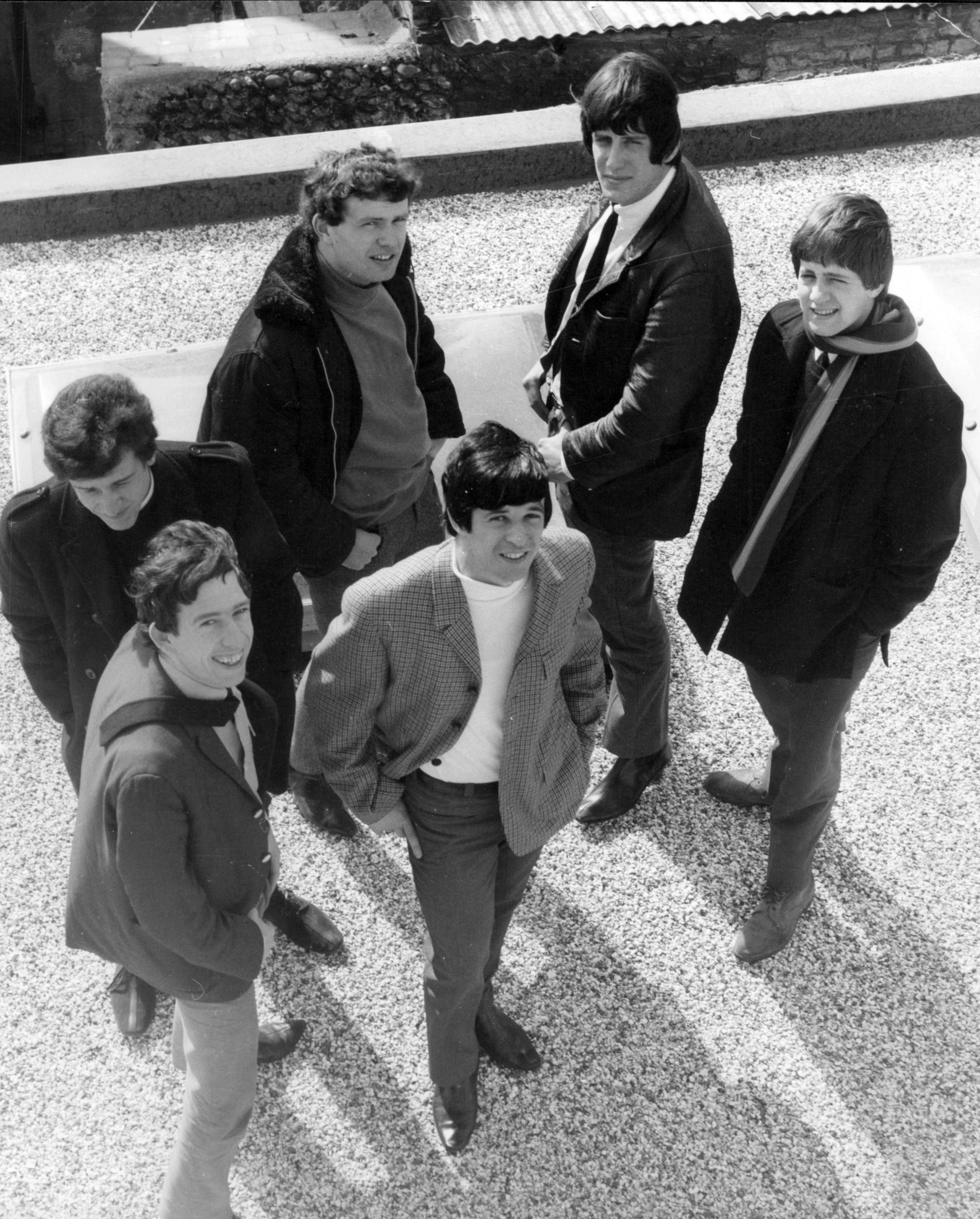
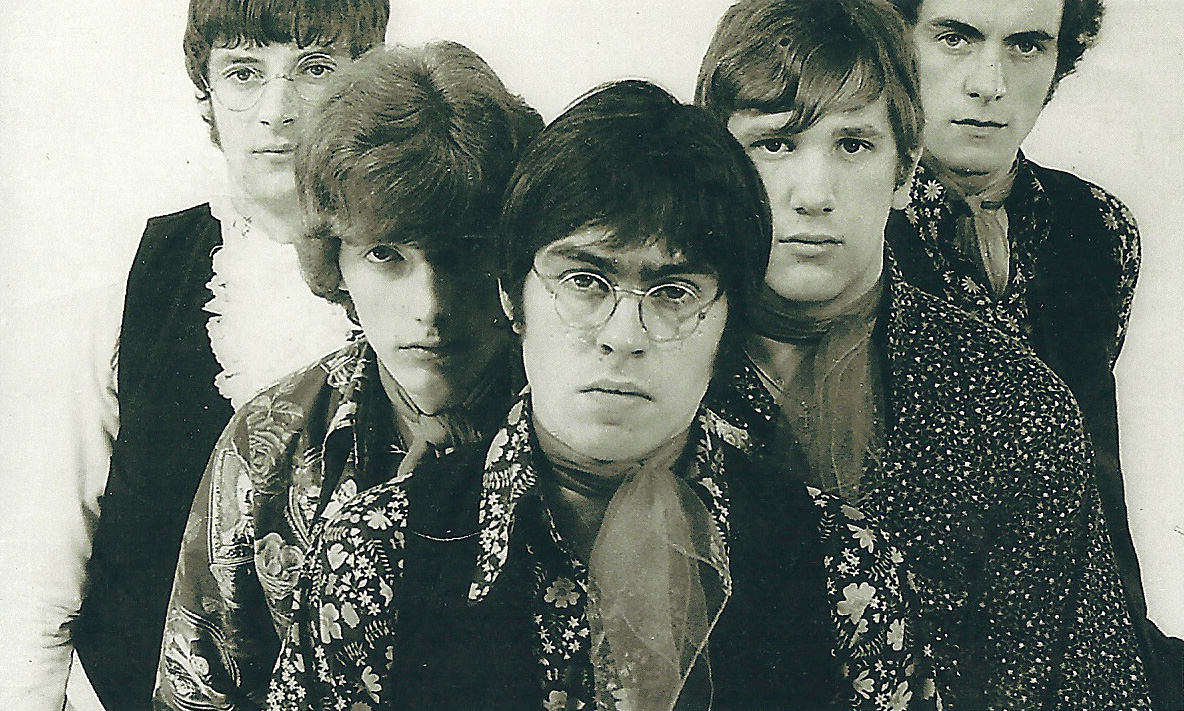
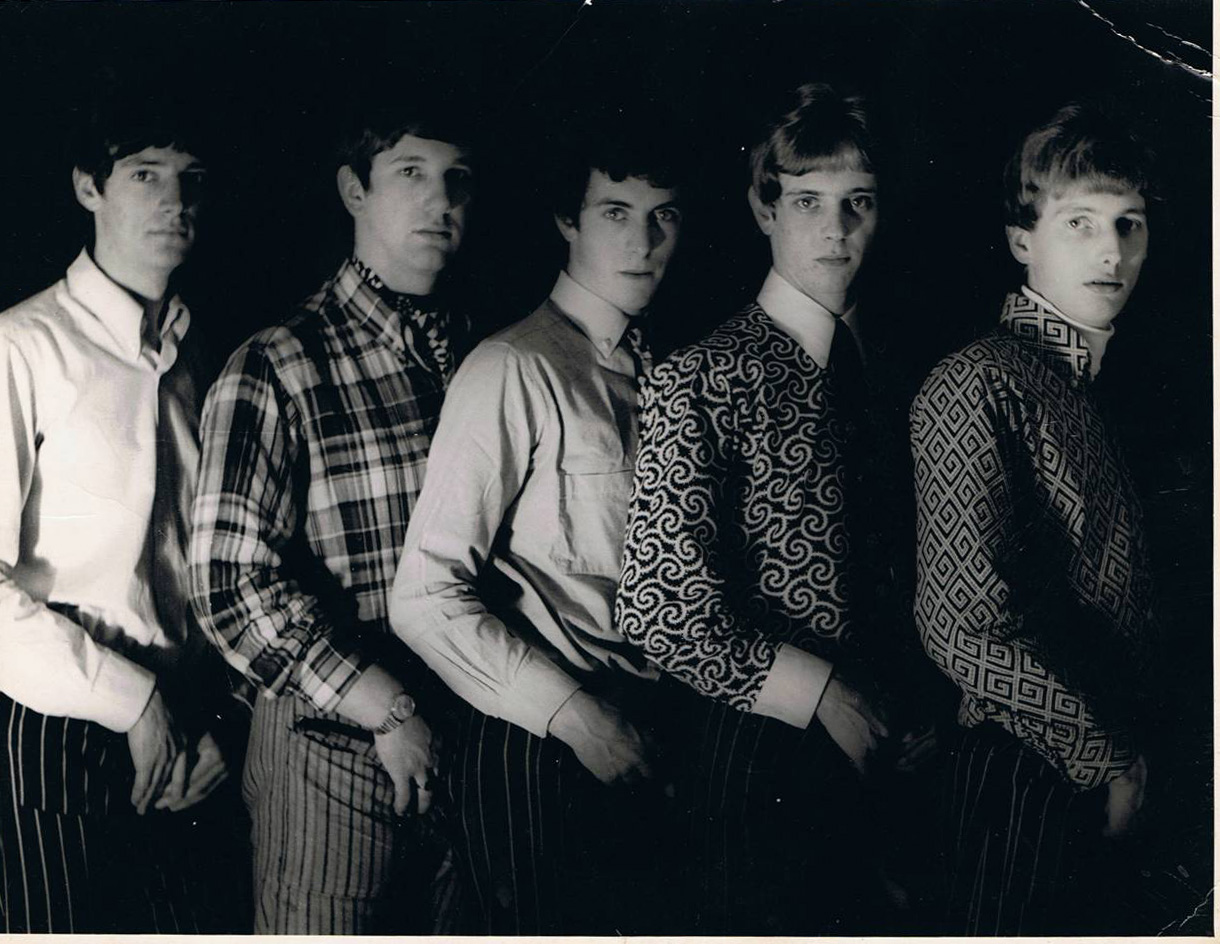
Jeff Curtis & the Flames, circa spring 1963. From left to right: Malcolm Randall, Louis McKelvey, Dave Wigginton, Keith Gardiner, Malcolm Tomlinson and Jeff Curtis

Revised February 2018

Jeff Curtis & The Flames #1 (circa May 1961-May 1962)

Jeff Curtis – lead vocals

Mick Cartwright – lead guitar

Robin “Jesse” James – rhythm guitar

Gary Wheeler – bass

Derek “Dell” Saville – drums

Twickenham born insurance salesman Jeff Curtis (born David Myers; 20 June 1940) had ambitions to be a singer/performer and reportedly put together the original Flames around mid-1961 after singing in a choir.

Little is known about the early Flames. However, according to drummer Dell Saville, Curtis approached him to join a version with three Whitton musicians in mid-1961. These comprised lead guitarist Mick Cartwright, rhythm guitarist Robin “Jesse” James and bass player Gary Wheeler. Curtis ran a short-lived club, the JC Rock Club in the New British Legion Hall on Long Lane, Hillingdon Circus and the musicians played there often, debuting on 26 July 1961. Around May 1962, however, the musicians went their separate ways and Saville joined Ray Dell & The Rocking Deacons. James joined The Downliners briefly.

Advert in Uxbridge Post, 8 November 1961

Curtis started to piece together a new version of The Flames in late 1962/early 1963, starting with Hounslow-based bass player Dave Wigginton (b. 25 February 1943, Isleworth, Middlesex), who held a senior position at an import/export warehouse at London (later Heathrow) Airport during the day, and was working with Twickenham outfit, Johnny & The Pursuers, who played at the JC Rock Club. Thanks to Wigginton’s connections, the new Flames would use the warehouse to rehearse in the evenings. The bass player quickly recommended fellow Pursuers’ guitarist Louis McKelvey (b. 31 October 1943, Killorglin, County Kerry, Eire).

Born above a pub Louis McKelvey came from an artistic background; his mother and father worked in theatre. After boarding at Silverlands House in Chertsey, he attended school in Twickenham, Middlesex, where he was classmates with Don Craine, later of The Downliners Sect fame. McKelvey’s first band was local outfit Johnny & The Pursuers.

Soon after, Curtis recruited rhythm guitarist Keith Gardiner (b. September 1942). In late 1957, when he was 15 years old, Gardiner had befriended 10-year-old drummer John “Mitch” Mitchell at Tudor Rose Youth Club in Southall, Middlesex and had formed a rudimentary band together with guitarist Pete Ross, who subsequently went on to Ealing band, The Flexmen. At the time, Mitchell was attending Jim Marshall’s shop in Hanwell, Middlesex where he was taking drum lessons while Gardiner was taking guitar lessons from top session player, the late Big Jim Sullivan among others.

Wiggington recommended Malcolm Tomlinson (b. 16 June 1946, Isleworth, Middlesex) on drums around December 1962 after seeing him at a local youth club playing with The Panthers. Tomlinson was brought up in Cranford, near London Airport, where his parents worked for British Airways.

A talented musician, who later became a multi-instrumentalist, Tomlinson had attended Spring Grove Grammar School in Isleworth where he was classmates with fellow drummer Mick Underwood, who went on to work with The Outlaws with Ritchie Blackmore among others, and guitarist Tony Bramwell (see later entry). Initially a guitarist, Tomlinson started playing drums in late 1962 and soon proved his natural ability on the kit.

The new formation debuted at Curtis’s Hillingdon club but it soon closed down.

Keith Gardiner says the band opened for The Rolling Stones a couple of times at the Station Hotel in Richmond during February-March 1963 before the club was renamed the Crawdaddy. They also played at the Ealing Club during this period a few times.

Louis McKelvey, Dave Wigginton, Malcolm Tomlinson (partially obscured), Keith Gardiner and Jeff Curtis. Photo: Dave Wigginton

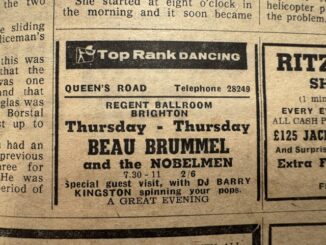
Around March 1963, the musicians completed the new formation with jazz enthusiast, Harrow-on-The-Hill-based sax player Malcolm Randall (b. October 1942, Hendon, Middlesex), who later earned the nickname C B (current bun). Randall’s debut was a gig in Brighton.

Competing with The Rolling Stones, another Ealing Club regular, for local area gigs, Curtis’s band started to travel further afield, including the Whisky A Go Go in Manchester.

During 1963, they backed singer Roly Daniels for a show in Catford in Southeast London.

Wigginton remembers playing a club on Jermyn Street in central London in the early days. He also says the band performed at Chiswick Polytechnic, Wandsworth Polytechnic and Chiswick Town Hall during this period.

After working with a manager who also looked after local group Pete Nelson & The Travellers, Jeff Curtis & The Flames signed to Bob Potter’s agency and started working around the Surrey/Hampshire area, including the Agincourt Ballroom in Camberley.

During this time, they opened for Freddie & The Dreamers at Botwell House in Hayes, Middlesex and Cliff Bennett & The Rebel Rousers at Kew Boathouse among others.

Jeff Curtis & The Flames #2 (Circa December 1962-December 1963)

Jeff Curtis – lead vocals

Louis McKelvey – lead guitar

Keith Gardiner – rhythm guitar, backing vocals

Malcolm Randall – saxophone (joined around March 1963)

Dave Wigginton – bass

Malcolm Tomlinson – drums/backing vocals

Jeff Curtis & The Flames, Walthamstow, north London, January 1963. Interestingly Jeff Curtis is playing the piano. This was before Malcolm Randall joined.

On 1 June 1963, Jeff Curtis & The Flames played their most high-profile gig to date, appearing with a number of local West London bands on the “Rock Twist Jive Channel Crossing”, a rock extravaganza that took place on-board the Channel ferry, the M V Royal Daffodil, which sailed from Southend, Essex to Boulogne. The billing included Tomlinson’s future band leader, Fulham-based singer Jimmy Marsh and his former Spring Grove class mate, Mick Underwood who was playing with The Outlaws and backing the show’s headline act, Jerry Lee Lewis.

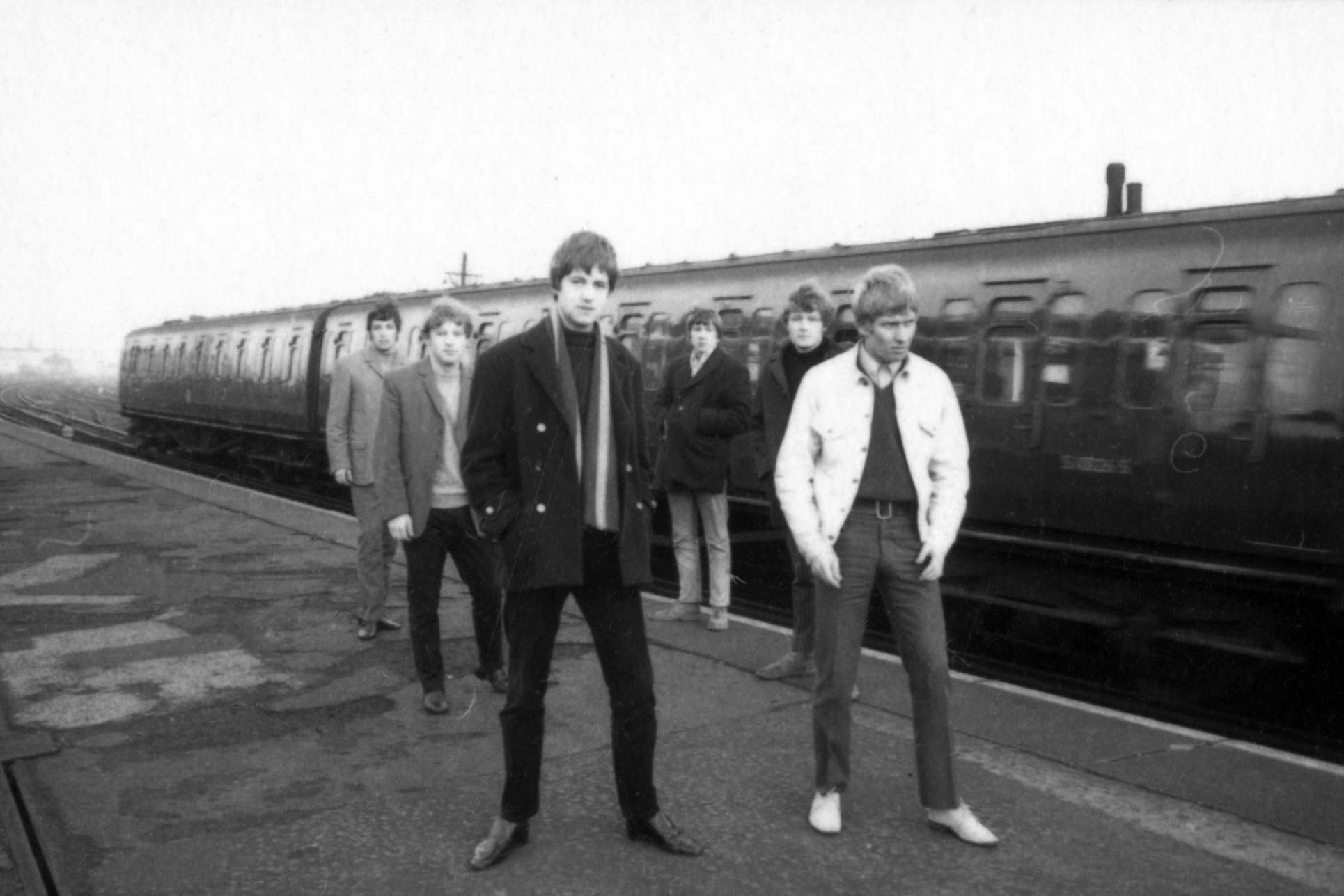
Jeff Curtis & the Flames, 1963. Photo courtesy of Keith Gardiner. Left to right: Louis McKelvey, Keith Gardiner, Jeff Curtis, Malcolm Tomlinson, Dave Wigginton and Malcolm Randall
Jeff Curtis & the Flames, 1963. From left: Keith Gardiner, Louis McKelvey, Malcolm Tomlinson, Malcolm Randall, Dave Wigginton and Jeff Curtis (front)
Poster for the Channel Crossing, 1 June 1963. Image courtesy of Keith Gardiner

On 4 October 1963, Jeff Curtis & The Flames were given the opportunity to record some demos. The band (minus Malcolm Randall) cut a four-track acetate at Lansdowne Recording Studios on Lansdowne Road in Holland Park, which comprised covers of Chuck Berry’s “Bye Bye Johnny” and “It Don’t Take But A Few Minutes” (with Lenny Hastings on drums); Robert Allen and Richard Adler’s “Everybody Loves a Lover”; and Bobby Troup’s “Route 66”.

Two tracks were allegedly readied for release as a single for HMV but when this did not happen, Gardiner departed and dropped out of the music scene, although he did briefly sub for Ken Lundgren in The Outlaws at a few gigs.

Years later he formed his own band The Keith Gardiner Band (KGB), which performed around the Shepperton, Middlesex area.

Acid Jazz Records subsequently used one of the recordings for its Rare Mod CD series.

Notable gigs:

Photo: Walthamstow Guardian
Photo: Dave Wigginton. The Flames at Walthamstow Assembly Hall, January 1963

19 January 1963 – Walthamstow Assembly Hall, Walthamstow with The Gallions and Paul & The Alpines (billed as The Flames)


9 March 1963 – Hillingdon Club, Sevenoaks, Kent

Photo: Harrow Observer

20 March 1963 – British Legion Hall, South Harrow, Middlesex

Photo: Surrey Comet

3 May 1963 – St Peter’s Hall, Kingston Upon Thames, Surrey with The Sinners (billed as The Flames) First time in Kingston

Photo: Woking Herald

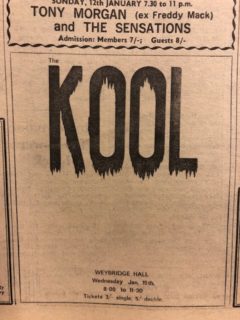
10 May 1963 – Weybridge Hall, Weybridge, Surrey


1 June 1963 – Rock Twist Jive Channel Crossing with Jerry Lee Lewis & The Outlaws, The Four Whirlwinds, The Del-Lormes, Johnny Angel, Nero & The Gladiators, Dane Robert, Vicki Rowe, Ricky Valance, The Fabulous Fleerekkers, Colin Chapman and Jimmy Marsh

Photo: Surrey Comet

14 June 1963 – St Peter’s Hall, Kingston Upon Thames, Surrey with Tony Clayton & The Impalas (billed as The Fabulous Flames with saxophone backing)

20 July 1963 – Walton Hop, Walton-on-Thames, Surrey

At Silver Blades Ice Rink, The Streatham News, August 2, 1963

2-3 August 1963 – Silver Blades, Streatham, London

28 September 1963 – Agincourt Ballroom, Camberley, Surrey with Allen & The Blue Diamonds (billed as The Flames) According to Keith Gardiner who is in touch with the guitarist from Tommy Bruce’s band, The Flames actually played on 29 September as the opening act

Photo: Walthamstow Guardian

12 October 1963 – Walthamstow Assembly Hall, Walthamstow with Mel James & The Meltones and Jimmy Ritchie Combo (billed erroneously as Jess Curtis & The Flames)

30 November 1963 – Walton Hop, Walton-on-Thames, Surrey

Jeff Curtis & The Flames #3 (December 1963-July 1964)

Jeff Curtis – lead vocals

Louis McKelvey – lead guitar

Ray Soper – organ

Malcolm Randall – saxophone

Dave Wigginton – bass

Malcolm Tomlinson – drums/backing vocals

Jeff Curtis replaced Keith Gardiner with Putney, Surrey-based organist Ray Soper (b. 9 May 1941, Battersea, London), who would play with The Flames on several occasions over the next two years, venturing off to perform with various other local groups. Soper had gone to Sir Walter St John Grammar School in Battersea, south London and started playing classical piano at six years of age. In 1959, when he was 18 years old, Soper began working with local rock groups in the Chelsea area.

Around February 1964, the band did a demo session with Decca Records in West Hampstead but nothing came from it.

After leaving Bob Potter’s agency, Jeff Curtis & The Flames got work with the Roy Tempest agency. The new line up continued to gig widely but Tomlinson started to get bored.

In mid-summer the drummer took up an offer from former Fairlanes lead singer Jimmy Marsh, who he’d met on the cross Channel gig the previous summer, to join his new band, The Del Mar Trio. Tomlinson subsequently went on to play with The Noblemen, The Motivation, The Penny Peeps and Gethsemane before immigrating to Canada in January 1969 and continuing his musical career there. He subsequently worked with the likes of Bill King and Rick James among others and cut two solo albums in the late Seventies.

Notable gigs:

1 February 1964 – Hermitage Ballroom, Hitchin, Herts with The League of Gentlemen and The Dyaks

Photo: Walthamstow Guardian

29 February 1964 – Walthamstow Assembly Hall, Walthamstow with Pat McQueen Combo and The Preachers

Opening for the Rattles, March 14, 1964

14 March 1964 – Starlight Ballroom, Boston Gliderdrome, Lincolnshire with The Rattles (billed as Geoff Curtis & The Flames)

26 March 1964 – Ealing Club, Ealing, Middlesex


2 April 1964 – Ealing Club, Ealing, Middlesex

4 April 1964 – King’s Hall, Aberystwyth, Wales

5 April 1964 – Southall Community Centre, Southall, Middlesex with The Rattles

9 April 1964 – Ealing Club, Ealing, Middlesex

16 April 1964 – Ealing Club, Ealing, Middlesex

23 April 1964 – Ealing Club, Ealing, Middlesex

30 April 1964 – Ealing Club, Ealing, Middlesex

14 May 1964 – Rocky Rivers Top 20 Club, Conservative Club, Bedford

31 May 1964 – Silver Blades, Streatham, London

18 June 1964  – Majestic Ballroom, Luton, Beds with Peter’s Faces

Jeff Curtis & The Flames #4 (July 1964-January 1965)

 Jeff Curtis – lead vocals

Louis McKelvey – lead guitar

Malcolm Randall – saxophone

Ray Soper – keyboards (left around September 1964)

Dave Wigginton – bass

Pete Burt – drums

+

Jeff Lake – saxophone (joined around September 1964)

The band’s new drummer was Pete Burt (b. 20 August 1946, Redhill, Surrey), younger brother of Mick Burt, sticks man with Cliff Bennett & The Rebel Rousers, who answered an advert in the music press. Brought up in South Harrow, Middlesex where he attended Roxeth Manor School, Burt had previously played with a non-professional band that started life at Botwell House, Hayes backing singer Robert (Bob) Chambers.

In an amazing twist of fate, the lead guitarist in the band was Tony Bramwell, Pete Burt’s predecessor Malcolm Tomlinson’s former class mate from Spring Grove Grammar School in Isleworth. The band played a couple of gigs before splitting up around mid-1964. Bramwell then went on to play with local bands, The Fantoms, The Fantom Creed, The Sheratons and The Hum Drum Band.

Sometime in August, the band auditioned for Joe Meek for the first time.

Clockwise from bottom left: Dave Wigginton (bass), Malcolm Randall (sax), Pete Burt (drums), Jeff Curtis (vocals), Jeff Lake (sax) and Louis McKelvey (guitar). Photo: Dave Wigginton

Around late September 1964, Ray Soper was sacked and Malcolm Randall introduced his friend, sax player Jeff Lake. Soper immediately found work with Buddy Britten & The Regents alongside future Deep Purple bass player Nick Simper. He would then work with Cyrano & The Bergeracs, where he reunited with Simper in 1965 but would remain on the fringes of The Flames.

Shortly after Jeff Lake’s arrival, the band returned to Lansdowne Recording Studios in October 1964 to record a two-track demo that included a cover of Solomon Burke and Bert Berns’ “Down In The Valley”.

McKelvey, however, was also growing restless and departed in early January 1965. On the afternoon of his wedding day (most likely in June 1965), he headed to Germany to reunite with former Jeff Curtis & The Flames drummer Malcolm Tomlinson, who was working with James Deane & The London Cats. The guitarist gigged with The London Cats for about a month before returning to London.

Then, around September 1965, McKelvey travelled to South Africa and ended up recording with The Upsetters and The A-Cads. In April 1966, The A-Cads moved to the UK to work with producer Mickie Most but when nothing happened, the guitarist moved to Montreal in September. Based in Canada, McKelvey recorded with Our Generation and Influence before returning to the UK in July 1968 briefly.

Back home he reunited with former Jeff Curtis & The Flames drummer Malcolm Tomlinson. The pair relocated to Toronto in January 1969 where they formed Milkwood and recorded an unreleased album with legendary producer, the late Jerry Ragavoy for Polydor Records. McKelvey would subsequently work with Toronto bands, Damage (alongside Tomlinson) and Powerhouse and record with Marble Hall. He currently lives in Toronto.

Notable gigs:

2 July 1964 – Majestic Ballroom, Luton, Beds with The All Stars

2 July 1964 – Winter Gardens Ballroom, Great Yarmouth, Norfolk with Malcolm & The Jetblacks

10 July 1964 – Berkhamsted Town Hall, Berkhamsted, Herts

11 July 1964 – Hermitage Ballroom, Hitchin, Herts with Clouds

18 July 1964 – Marcam Hall, March, Cambridgeshire


1 August 1964 – The Gaiety, Ramsey, Cambridgeshire with The Swinging Sounds

6 August 1964 – Rocky Rivers Top 20 Club, Conservative Club, Bedford, Bedfordshire

20 August 1964 – Winter Gardens Ballroom, Great Yarmouth, Norfolk with The E-Types

29 August 1964 – Hermitage Ballroom, Hitchin, Herts with Kit & The Saracens

8 October 1964  – Majestic Ballroom, Luton, Beds with The Roulettes

5 December 1964 – Hermitage Ballroom, Hitchin, Herts with The Midniters

8 December 1964 – Floral Hall, Gorleston-on-Sea, Norfolk

19 December 1964 – Ealing Club, Ealing, Middlesex with The Hobos


2 January 1965 – St George’s Hall, Exeter, Devon with Roger & The Sabres (billed as The Flames)

3 January 1965 – Majestic Ballroom, Luton, Beds with The Mojos

Jeff Curtis & the Flames, late ’64. From left: Louis McKelvey, Jeff Curtis, Dave Wigginton, Pete Burt (front on drums), Jeff Lake and Malcolm Randall.

Jeff Curtis & The Flames #5 (January-February 1965)

Jeff Curtis – lead vocals

Dave Caralambous (aka Dave Carol) – lead guitar

Jeff Lake – saxophone

Malcolm Randall – saxophone

Dave Wigginton – bass

Pete Burt – drums

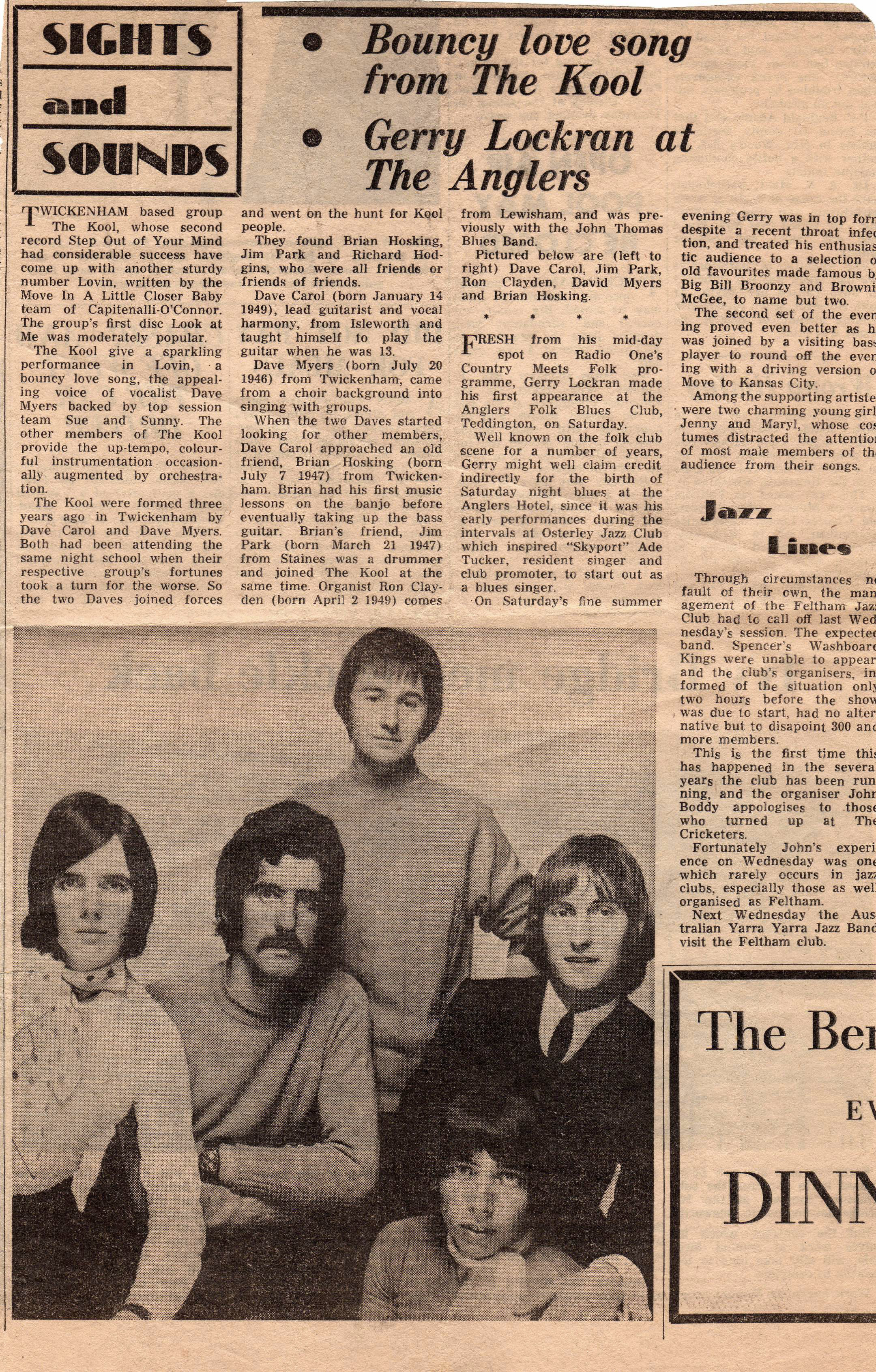
Dave Marcus Theos Michael Caralambous aka Dave Carol (b. Dave Charalambous, 14 January 1949, Isleworth, Middlesex) was brought up in nearby Twickenham. His first band was The Drovers, which he joined around 1962 and also included rhythm guitarist Richard Allen and drummer Geoff Coxon, who would feature in The Flames’ history in later years when they changed name to The Kool.

In late 1963, The Drovers changed name to The Smokestacks after lead singer Mike Smith joined and Brian Hosking from Twickenham band, The Legend, joined on bass. The Smokestacks became resident band at the 51 Club in central London. In the summer of 1964, Carol joined Hounslow band, The Valkeries and remained with them until January 1965 when he joined The Flames. He was also in the same class at school as McKelvey’s younger sister. Carol says he made his debut at the Locarno Ballroom in Swindon.

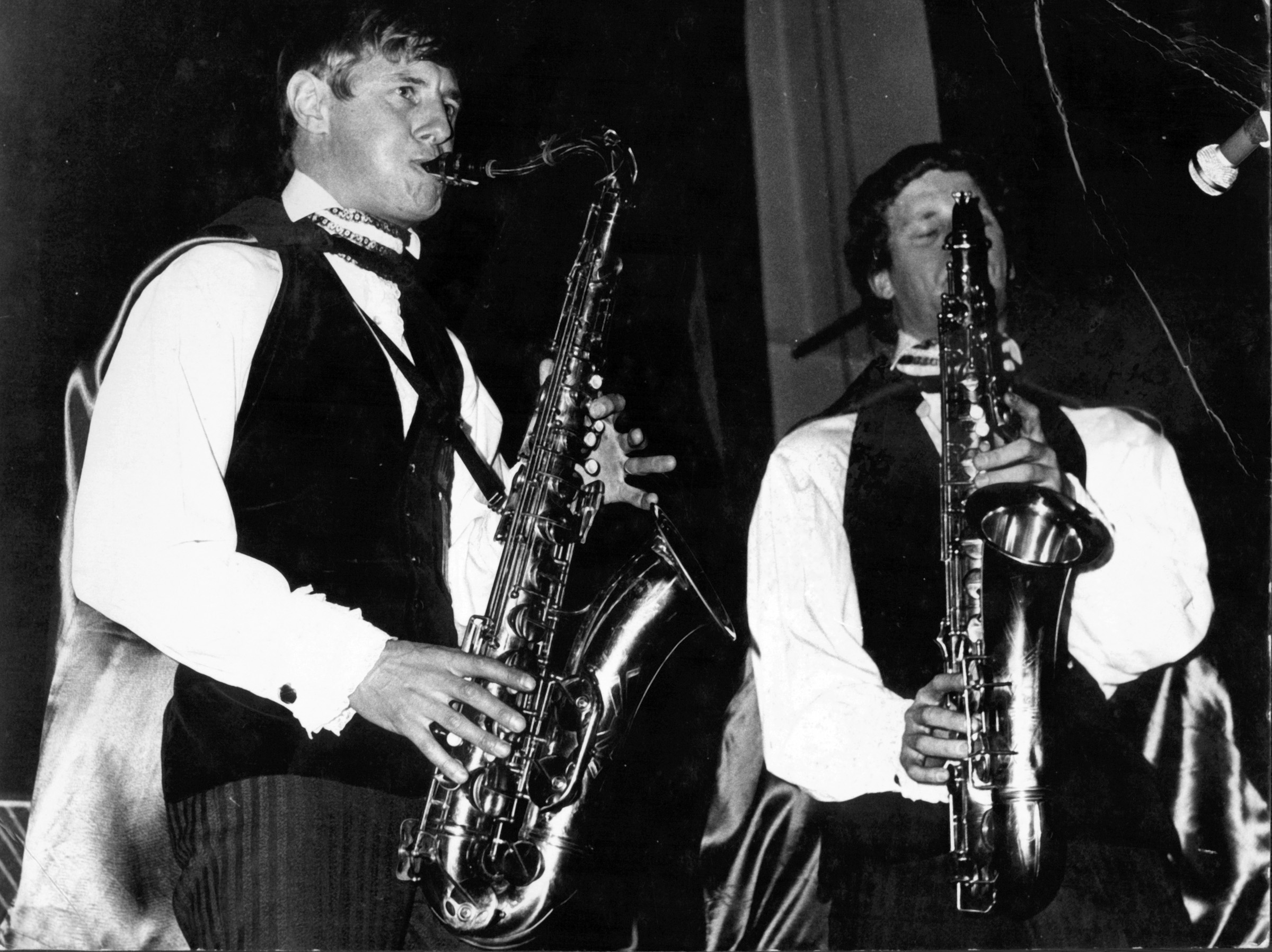
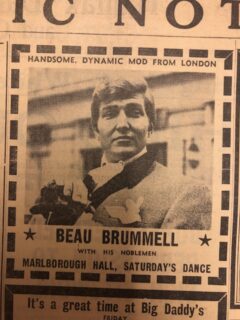
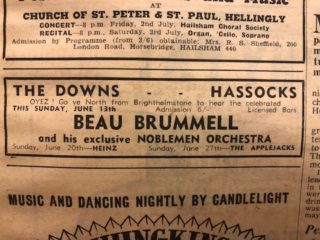
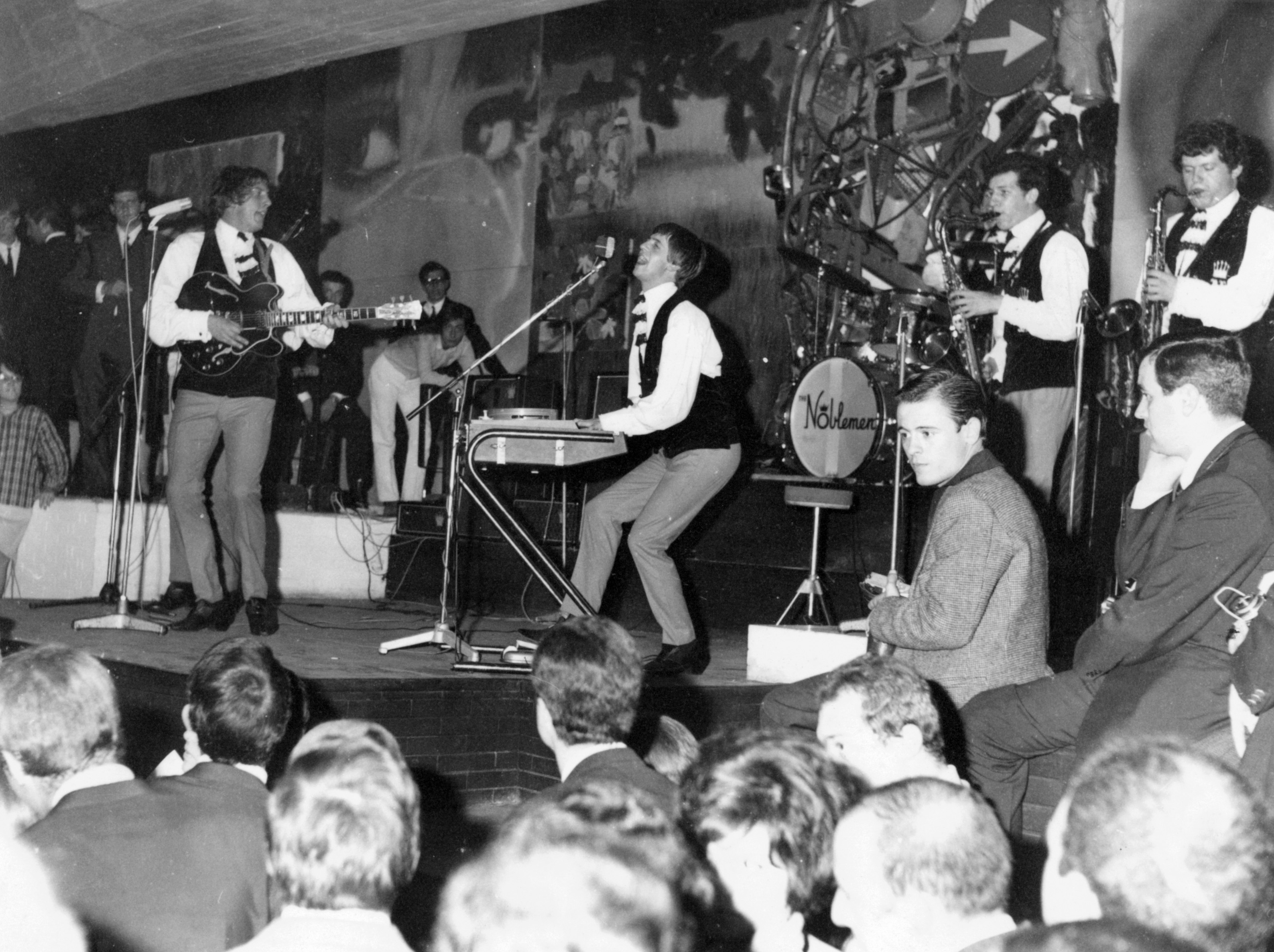
The changes, however, didn’t end there. Sax player Malcolm Randall left in early February and subsequently joined Bognor Regis band Beau Brummell & The Noblemen for about six months. In July 1965, he jumped ship to join Manchester’s Playboys.

While with that band, Randall appeared on an excellent soul single for Fontana – “I Feel So Good” c/w “I Close My Eyes”. In an incredible twist of fate, during late 1966, Malcolm Randall was playing with Manchester’s Playboys at Liverpool’s Cavern Club when he saw the latest version of The Noblemen on stage and was amazed to see his former Jeff Curtis & The Flames compatriot Malcolm Tomlinson playing drums!

After leaving Manchester’s Playboys in mid-1968, Malcolm Randall moved to Cambridgeshire and ended up working with Red Express during the 1970s, which later morphed (after Randall had left) into Shakatak. He then worked with Sindy & The Action Men among others.

In need of a replacement, Jeff Lake introduced his friend from Harrow – George Russell.

Notable gigs:

11 January 1965 – Locarno Ballroom, Swindon, Wiltshire with Sonny Childe & The Elders Consolidated

22 January 1965 – Majestic Ballroom, Newcastle upon Tyne, Tyne & Wear

23 January 1965 – Marcam Hall, March, Cambridgeshire with The Fourmost

28 January 1965 – Majestic Ballroom, Luton, Bedfordshire with Johnny Thunder & The Thunderbirds

30 January 1965 – St George’s Ballroom, Hinckley, Leicestershire with The Martyns


13 February 1965 – Starlight Ballroom, Boston Gliderdrome, Lincolnshire with The Searchers and Rodgers Lodgers (possibly one of George Russell’s first gigs)

Jeff Curtis & the Flames listed as one of the Roy Tempest Organisation’s Top 20 for 1965

Jeff Curtis & The Flames #6 (February-April 1965)

Jeff Curtis – lead vocals

Dave Caralambous (aka Dave Carol) – lead guitar, vocals

Jeff Lake – saxophone

George Russell – saxophone

Dave Wigginton – bass

Pete Burt – drums

With two of the early band members gone, including his former band mate from Johnny & The Pursuers, Louis McKelvey, Dave Wigginton handed in his notice and agreed to work until mid-April. His replacement was Ray Brown (b. 1944, Hayes, Middlesex), who ended up buying Wigginton’s pink Fender Precision bass. Having rehearsed with Jeff Curtis’s band since January, Brown made his debut with Jeff Curtis & The Flames at Walthamstow Assembly Hall on 24 April.

Photo: Walthamstow Guardian

Brown started with the Sky Blue Skiffle Group in 1956 and two years later appeared on BBC TV’s Carol Levis Junior Discoveries. In 1961-1962, he worked with Hayes band The Preachers and also spent a brief period in a short-lived group with Nick Simper. Soon after joining The Flames, Brown and his school friend Steve Reading from the Sky Blue Skiffle Group wrote and sang backing vocals on “Heart Full of Sorrow” by Heinz, which was released on Columbia in November 1965.

Notable gigs:

28 February 1965 – Olympia, Cromer, Norfolk with Circuit Five

5-6 March 1965 – Boulevard, Tadcaster, North Yorkshire with The McCoys

27 March 1965 – Locarno Ballroom, Swindon, Wiltshire with Shane & The Shane Gang
At the Starlight Room, Boston, April 3, 1965 with the Barron Knights

3 April 1965 – Starlight Ballroom, Boston Gliderdrome, Lincolnshire with The Barron Knights

9 April 1965 – California Ballroom, Dunstable, Bedfordshire with The Escorts and Beaux Maverix (billed as Geoff Curtis & The Flames)

10 April 1965 – Floral Hall, Gorleston-on-Sea, Norfolk with Confessors

17 April 1965 – The Gaiety, Ramsey, Cambridgeshire with The Sons of Adam

Jeff Curtis & The Flames #7 (April-July 1965)

Jeff Curtis – lead vocals

Dave Caralambous (aka Dave Carol) – lead guitar, vocals

Jeff Lake – saxophone

George Russell – saxophone

Ray Brown – bass

Pete Burt – drums

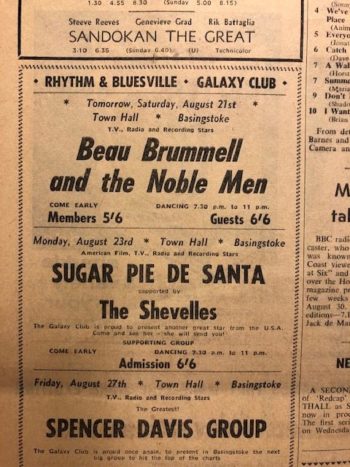
The new line up gigged around the country and on 9 May appeared on the same bill as Beau Brummell & The Noblemen (featuring former member Malcolm Randall) at the Majestic Ballroom in Luton.

A few days after a gig at Clacton Town Hall with Cops ‘N’ Robbers in late June, Jeff Lake and George Russell took a holiday (a trip to Frankfurt to visit former member Malcolm Randall who was playing with Beau Brummell & The Noblemen), which didn’t go down well with singer Jeff Curtis.

Curtis had a band rule that the musicians all had to take a two-week summer holiday at the same time, usually in August. On their return in July, the two sax players were told their services were no longer needed.

Lake subsequently played with a number of local bands before reuniting with former Jeff Curtis & The Flames member Malcolm Randall as road manager for Manchester’s Playboys, which included their Swedish trip in September 1967. On his return, he joined Tommy Bishop & The Rock ‘N’ Roll Revival Show and appeared on the 1968 Decca single “Midnight Train” c/w “Oh Boy”.

Russell joined Hayes, Middlesex band, The Satellites in mid-1966, who changed name to The Army later that year. The band also included future Sweet bass player Steve Priest and cut two recordings in 1967 – covers of the Joe Tex hit “Sugar” and Sam & Dave’s “You Don’t Know Like I Know”. Russell remained with The Army until late 1968/early 1969. He subsequently gigged with Orange Rainbow before moving to Australia. He later returned to live in Hertfordshire.

Notable gigs:

Ray Brown's first gig with the band, April 24, 1965
Ray Brown’s first gig with the band, April 24, 1965

24 April 1965 – Walthamstow Assembly Hall, Walthamstow, London

29 April 1965 – Rocky Rivers Top 20 Club, Conservative Club, Bedford (back by demand)

1 May 1965 – Carfax Ballroom, Oxford with The Gangbusters

3 May 1965 – Radlett (most likely Radlett Centre), Hertfordshire

7-8 May 1965 – Silver Blades, Streatham, London

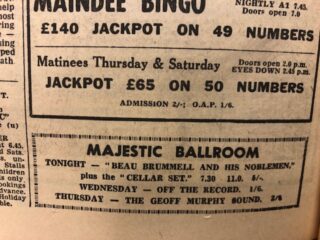
9 May 1965 – Majestic Ballroom, Luton with Beau Brummell & The Noblemen (former member Malcolm Randall on sax with The Noblemen)

15 May 1965 – Malvern Winter Gardens, Malvern, Worcestershire with Eric Benson & Orchestra

22 May 1965 – Manor Lounge, Stockport, Greater Manchester with The Thingumajigs (Stockport County Express) Gig cancelled

29 May 1965 – Starlight Ballroom, Boston Gliderdrome, Lincolnshire with The Hollies and The Red Squares


11 June 1965 – California Ballroom, Dunstable (replaced one of the billed acts)

12 June 1965 – Rivoli Ballroom, Brockley, London

18 June 1965 – USAF base, South Ruislip, London

25 June 1965 – USAF base, High Wycombe, Buckinghamshire

26 June 1965 – Clacton Town Hall, Clacton-on-Sea, Essex with Cops ‘N’ Robbers (last gig with Jeff Lake and George Russell)


1 July 1965 – Ealing Club, Ealing, London (reduced to four piece)

3 July 1965 – Hermitage Ballroom, Hitchin, Hertfordshire with Peter Fenton & The 3,000

4 July 1965 – Woodhall Community Centre, Welwyn Garden City, Hertfordshire

August 1965, from left: Jeff Curtis, Ray Soper, Dave Carol, Pete Burt and Ray Brown. Photo courtesy Ray Soper
When they were just being billed as The Flames. Photo courtesy Ray Soper. From left: Ray Soper, Dave Carol, Pete Burt, Ray Brown and Jeff Curtis

Jeff Curtis & The Flames #8 (July 1965-May 1966)

Jeff Curtis – lead vocals

Dave Caralambous (aka Dave Carol) – lead guitar, vocals

Ray Soper – keyboards

Ray Brown – bass

Pete Burt – drums

On 5 July, Jeff Curtis auditioned two sax players to replace Jeff Lake and George Russell but decided against keeping the horns and instead invited former member Ray Soper to re-join the band on keyboards. Soper had been playing with future Deep Purple bass player Nick Simper in Cyrano & The Bergeracs for several months and then a group formed by the lead singer of The Gobbledegooks but had helped out at the auditions in January 1965, which had brought in Carol and Brown.

Ray Brown had a prearranged week’s holiday from 10-17 July and his predecessor Dave Wigginton returned to honour engagements in his absence, which included a gig at the Ticky Rick Club in Basingstoke, Hants on 17 July. With Brown back from his holiday, the five-piece rehearsed on 21 July before playing their first gig together at Luton’s Majestic Ballroom where there was a bomb scare.

Often billed as simply “The Flames”, the new line up lasted nearly a year (although Soper left in November briefly to work with a Casino band on the Isle of Man, which lasted a week before he returned).

Pete Burt, who worked as a window cleaner when The Flames weren’t gigging, got a window cleaning job with British rock ‘n’ roll legend, Johnny Kidd, who had split from his longstanding backing band, The Pirates on 19 April 1966. Kidd offered The Flames some work to fulfil his outstanding dates.

During late April/early May 1966, The Flames spent about a week  backing the singer, including playing a gig at Chatham Dockyard Naval base (quite possibly the Pembroke Club on HMS Pembroke where Kidd had played the previous year with the original Pirates), but the arrangement did not suit either party.

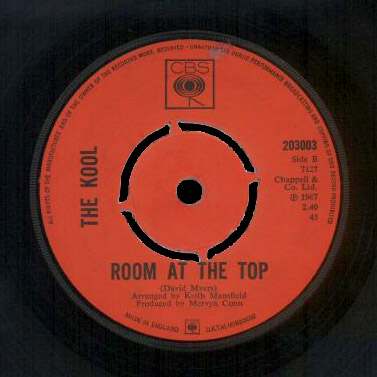
Around this time, The Flames returned to Lansdowne Studios to cut two original recordings – the David Myers/Ray Brown collaborations, “Room at the Top” and “I Ain’t The Fool”. The former was later cut by the band’s new identity, The Kool, in the summer of 1967. They also did a second audition with Joe Meek.

After Ray Soper was ousted from The Flames in May, he decided to stick with Kidd and formed a new version of The Pirates. The New Pirates (as they were called) supported Johnny Kidd throughout the summer but Soper stopped playing with the band in August. Two months later, he joined Bristol band, The Denims who were playing US bases in France. After working in Strasbourg for two months as The Headline News, he returned to the UK in April 1967.

Three months later, Soper found work playing in a band on the Cunard Cruise liner Carmania, which travelled between Southampton and Montreal on a six-week passage. Marrying a Canadian, he subsequently immigrated to Canada in 1970 and until recently played with The Dusty Roads Band from his home in Ontario. He also works as a film extra.

Notable gigs:

17 July 1965 – Ricky Tick Club, Carnival Hall, Basingstoke, Hants (Dave Wigginton fills in for Ray Brown)

22 July 1965 – Majestic Ballroom, Luton, Bedfordshire (RayBrown returns and Ray Soper’s first gig back with the band)

24 July 1965 – Locarno Ballroom, Swindon, Wiltshire with The Rising Sons

Photo: Leicester Mercury

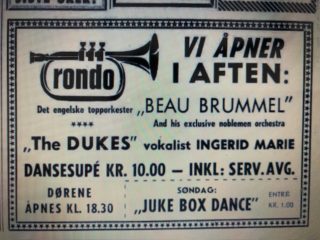
25 September 1965 – Il Rondo, Leicester

Photo: Windsor, Slough & Eton Express

2 October 1965 – Adelphi Ballroom, Slough, Berkshire

30 October 1965 – Woodhall Community Centre, Welwyn Garden City, Hertfordshire

Photo: Surrey Comet

11 November 1965 – Byron Hotel, Greenford, London with The Keystones (billed as The Flames)

Jeff Curtis & The Flames were featured in the Surrey Comet‘s 13 November 1965 issue but it was full of factual errors (above)

9 December 1965 – Byron Hotel, Greenford, London with the Harmonies

16 December 1965 – Ealing Club, Ealing, London

18 December 1965 – Adelphi Ballroom, Slough, Berkshire

24 December 1965 – Woodstock Roadhouse, North Cheam, London


1 January 1966 – Starlight Ballroom, Boston Gliderdrome, Lincolnshire with The Nashville Teens and The Game

13 January 1966 – Woodstock Roadhouse, North Cheam, London (billed as The Flames)

22 January 1966 – Locarno Ballroom, Swindon, Wiltshire with Plain and Fancy

12 February 1966 – California Ballroom, Dunstable, Bedfordshire with Goldie & Dave Antony’s Moods and The Game

17 February 1966 – Byron Roadhouse, Greenford, London with The Mode (billed as The Flames)


31 March 1966 – Byron Roadhouse, Greenford, London with The Legends (billed as The Flames)

Photo: Windsor, Slough & Eton Express

23 April 1966 – Adelphi Ballroom, Slough, Berkshire


7 May 1966 – Locarno Ballroom, Swindon, Wiltshire with The Ying Yongs and The Cotswold Stones (one of Ray Soper’s final gigs)

Publishing contract for “Room at the Top” and “I Aint the Fool”, May 1966 courtesy of Ray Brown
Headline News, circa late 1966. Ray Soper is second from left

Jeff Curtis & The Flames #9 (May 1966-August 1967)

 Jeff Curtis – lead vocals

Dave Carol – lead guitar, vocals

Jet Hodges (aka Richard Hodgins) – keyboards, vocals

Ray Brown – bass

Pete Burt – drums

The remaining members brought in Richard Hodgins, a keyboard player from Shepperton, Surrey, who used the stage name, Jet Hodges. Originally a bass player, Hodges had taken up music full time after training to be an architect.

Increasingly, the band moved away from using the name, Jeff Curtis & The Flames for live shows and often went by the name, The Jeff Curtis Set or just The Flames. One of the highlights from this period was opening for Ike & Tina Turner when they played at the California Ballroom in Dunstable.

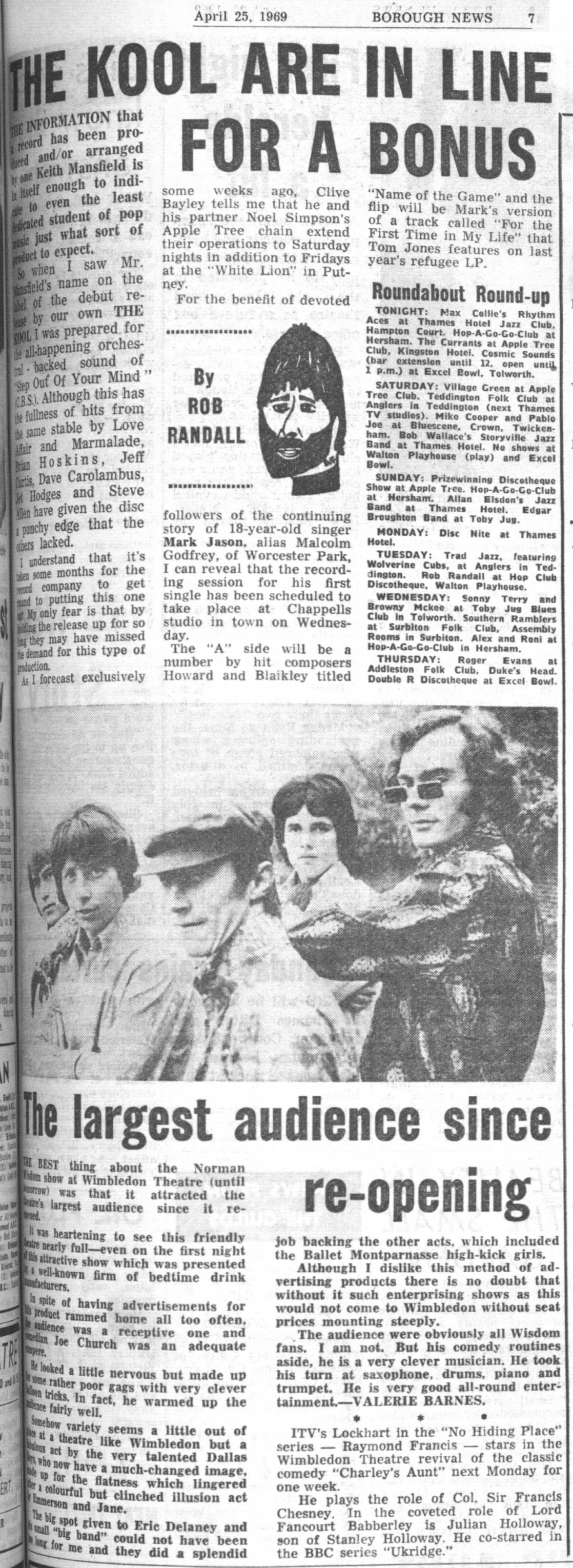
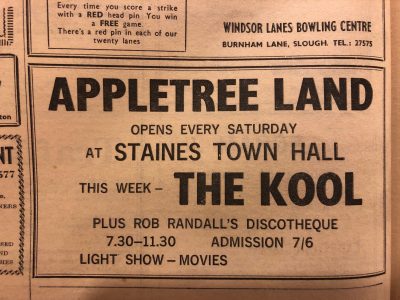
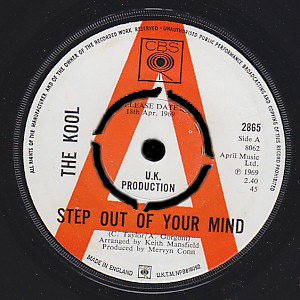
In late 1966, rock promoter and entrepreneur Mervyn Conn, started to represent the band. In December 1966, he added Jeff Curtis & The Flames to a Who concert in Sunderland and renamed the band The Kool for this one-off gig, although the group didn’t appear at the venue.

After signing to CBS Records, Conn decided that The Kool was more representative of the band’s evolving sound and renamed them as the band’s debut single hit the shops.

Notable gigs:

11 June 1966 – Corby Civic Centre, Corby, Northamptonshire with Two of Each (billed as The Flames)


20 August 1966 – Locarno Ballroom, Swindon, Wiltshire with The Showmen

Photo: Paul Quinton

2 September 1966 – Woodstock Roadhouse, North Cheam, London (billed as The Flames)

3 September 1966 – Maple Ballroom, Northampton with Sexion A (billed as The Flames)

18 September 1966 – White Lion, Edgware, London (billed as The Flames)

24 September 1966 – Drill Hall, North Cheam, London with The Fourtunes

Photo: Paul Quinton

2 October 1966 – Prince of Wales, Kinsbury, London

22 October 1966 – California Ballroom, Dunstable with Ike & Tina Turner Revue & The Ikettes (with others)

24 October 1966 – Tiles, Oxford Street, London with Edwin Starr

Photo: Paul Quinton

30 October 1966 – Woodstock Roadhouse, North Cheam, London (billed as The Flames)


5 November 1966 – Locarno Ballroom, Swindon, Wiltshire with The Undertakers and Some Other Guys. Billed as The London Flames (Jeff Curtis)

10 November 1966 – Byron Roadhouse, Greenford, London with The Boots (billed as The Flames)

Photo: Paul Quinton

12 November 1966 – Drill Hall, North Cheam, London with 5 Steps Beyond (billed as The Flames)

Photo: Windsor, Slough & Eton Express

13 November 1966 – Adelphi Ballroom, Slough, Berkshire

18 November 1966 – Woodstock Roadhouse, North Cheam, London (billed as The Flames)


10 December 1966 – Empire Theatre, Sunderland, County Durham with The Who, Dave Berry, She Trinity, The Slade Brothers and The Peddlers (billed as The Kool but band did not appear)

18 December 1966 – Woodstock Roadhouse, North Cheam, London (billed as The Flames)


15 January 1967 – White Lion, Edgware, London (billed as The Flames)

28 January 1967 – Queens Hall, Watton, Norfolk with The Eyes of Blond and The Bohemians


19 February 1967 – Kingsway Theatre, Hadleigh, Essex (billed as Flames)


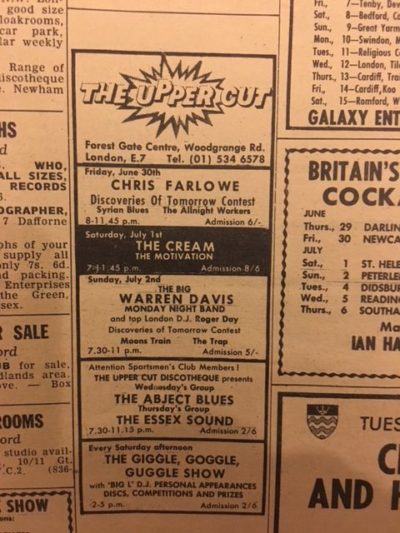
9 March 1967 – Upper Cut, Forest Gate, Essex with The Style (billed as Jeff Curtis Set)

27 March 1967 – Woodstock, North Cheam, London with The Starfires (billed as The Flames)


9 June 1967 – California Ballroom, Dunstable, Bedfordshire with Allen Bown Set (billed as Geoff Curtis Set)

The Keith Gardiner Band, July 2011

Many thanks to Dave Wigginton, Keith Gardiner, Louis McKelvey, Malcolm Tomlinson, Pete Burt, Dave Carol, Malcolm Randall, Ray Soper, Jeff Lake, Ray Brown, George Russell, Jimmy Marsh, Ian Hannah, Brian Hosking, Richard Bennett and Tony Bramwell.

Concert adverts taken from a number of newspapers including the Ampthill News & Weekly Record, Lincolnshire Standard, the Luton News, the Streatham News, the Surrey Comet, Walthamstow Guardian, Exeter Express & Echo, Cambridgeshire Times, Yarmouth Mercury, Middlesex County Times and West Middlesex Gazette, Hertfordshire Express, Hants & Berkshire Gazette, Hounslow Post, NME, Sevenoaks Chronicle, Westerham Courier and Kentish Advertiser, Swindon Advertiser and Melody Maker.

Huge thanks to Dave Wigginton, Keith Gardiner, Louis McKelvey, Malcolm Randall, Jeff Lake, Ray Brown and Ray Soper for photos.

Copyright © Nick Warburton. All Rights Reserved. No part of this article may be reproduced or transmitted in any from or by any means, without prior permission from the author.

I have tried to ensure the accuracy of this article but I appreciate that there are likely to be errors and omissions. I would appreciate any feedback from anyone who can provide any additions or corrections.

Email: Warchive@aol.com

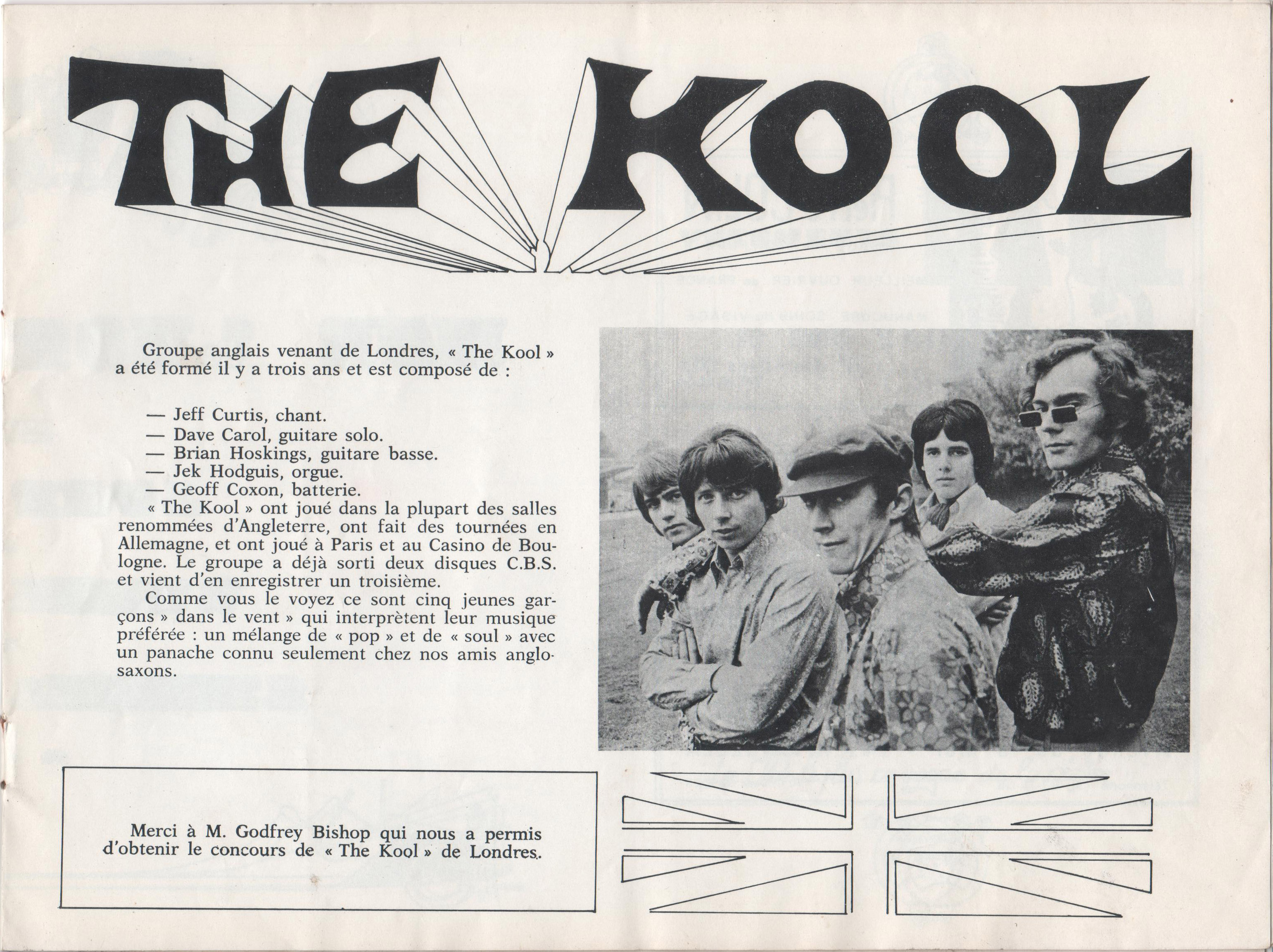
Page 3 of the Jerry Lee Lewis Channel Crossing Programme
Page 6 of the Jerry Lee Lewis Channel Crossing Programme
Page 7 of the Jerry Lee Lewis Channel Crossing Programme

Hedgehoppers (Anonymous)

Hedgehoppers in 1971, left to right: Alan Avon, Bill Honeyman, Colin Turner (and front) Mick Matthews

Tony Kaye (guitar, vocals)
John Askey (bass)
Dave Birkenhead (organ)
Bill Honeyman (drums)

1967

October Original Hedgehoppers Anonymous lead singer Mick Tinsley and drummer Glenn Martin (who has joined after the top five success of “It’s Good News Week”) have participated in a swansong tour of Sweden and Lapland with bass player Howard Livett and guitarist Ian Atkinson.

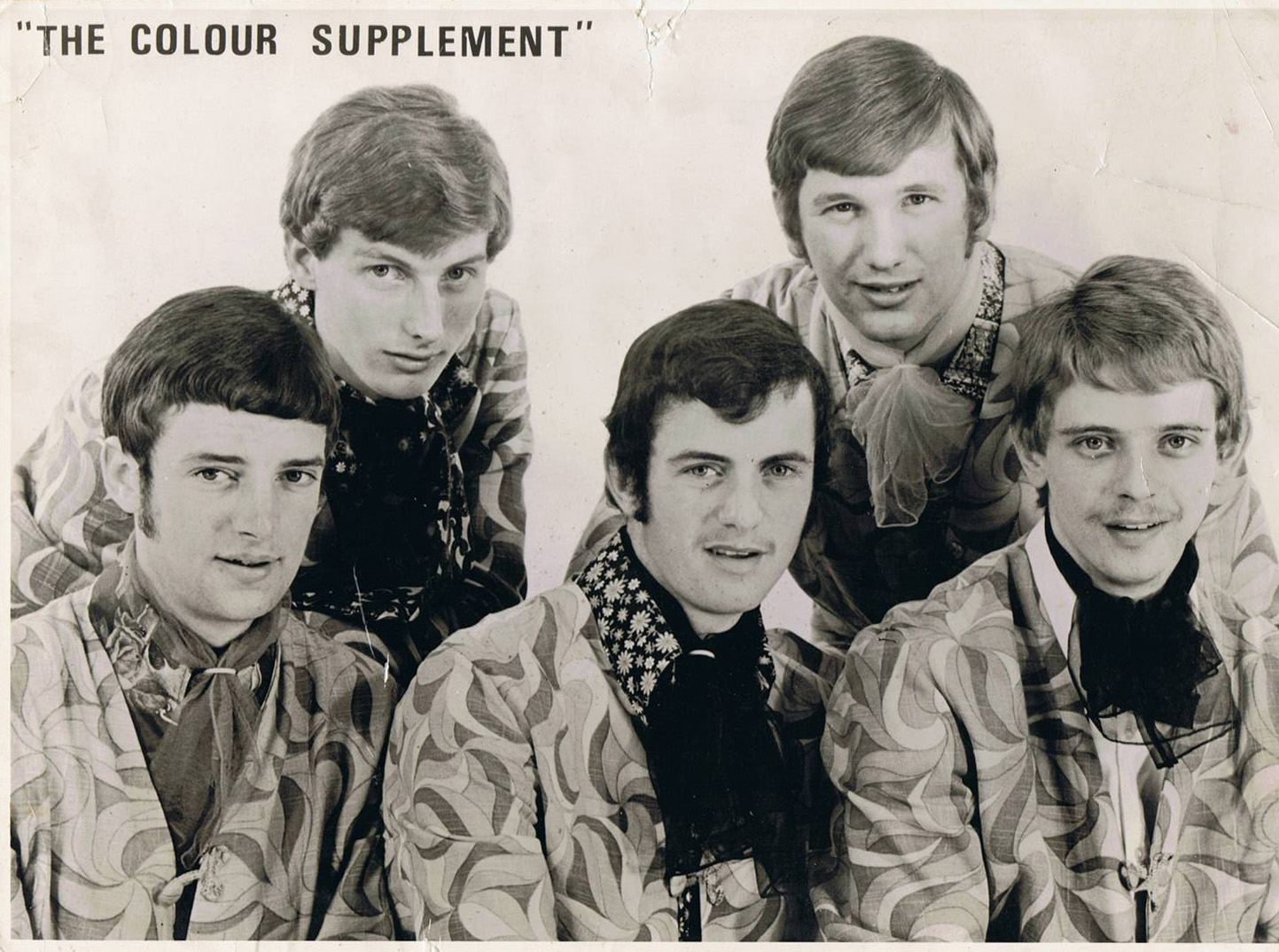
(6) During their Scandinavian trip, the quartet play at the Cue Club in Gothenburg on a bill that also features Stoke-on-Trent band, The Colour Supplement. Singer Phil Tunstall will join a new version of Hedgehoppers Anonymous in December 1968. Comprised of guitarist Mick Nixon, bass player Paul Stevenson, drummer Ricky Ballan and future Climax Blues Band keyboard player George Glover, The Colour Supplement play another Swedish date with Hedgehoppers Anonymous, and further shows with The Troggs, before returning to the UK later in the month.

November On their return to England, Tinsley and Martin disband Hedgehoppers Anonymous. Tinsley establishes a solo career while Martin replaces Bill Honeyman in Sandie Shaw’s backing band, The Streamliners, which also comprises lead guitarist/singer Tony Kaye, organist Dave Birkenhead and bass player John Askey. Kaye, who began as a frontman with early 1960s Stoke-on-Trent band, The Huckleberries forms The Shandykins Four in October 1965. The following month, The Shandykins Four were chosen as Sandie Shaw’s permanent backing band and become The Streamliners. Askey and Birkenhead, who has previously played with Chris Ryan & The Crescents, The Scorpions and The Times, join The Streamliners in 1966. The group, however, will also use The Hedgehoppers Anonymous name for gigs.

NME, November 26, 1965

December Phil Tunstall’s band, The Colour Supplement had travelled to Germany during November and spent about a month playing at the Star Club in Hamburg where they meet Ritchie Blackmore (soon to return to the UK and form Roundabout, which morphs into Deep Purple). The band then plays the Storyville Clubs in Cologne and Frankfurt for about a month before returning to Britain.

(30)  Hedgehoppers Anonymous perform at the Public Hall, Preston, Lancashire with The Atlantics, The Four Crestas and The Blue Notes.

The Colour Supplement, Phil Tunstall at top
The Colour Supplement, Phil Tunstall in front

1968

January Sandie Shaw & The Streamliners appear at the MIDEM Festival in Cannes, France.

February After Martin leaves Sandie Shaw’s band, The Streamliners, Tony Kaye brings in Roger Keay briefly before former member, Scots-born drummer Bill Honeyman rejoins. Honeyman is a veteran of popular Stoke-on-Trent R&B band, The Marauders having started out in Alan Avon & The Presidents with future Hedgehoppers’ singer Alan Avon, guitarist Peter Birch, bass player Brian Birch and sax player Tony Bennett.

March With the original Hedgehoppers Anonymous defunct, Kaye decides to take over the name and put together an entirely new version of the band. According to the Burton Daily Mail, the new version appears at the 76 Club, Burton upon Trent, Staffordshire on 10 March.

(3) Phil Tunstall’s band, The Colour Supplement appear at the Blue Ball, Risley, Staffordshire.

April (10) The Hedgehoppers Anonymous appears at the Bull’s Head, Hanford, Staffordshire.

(11) Hedgehoppers Anonymous play at the Crystal Ballroom in Stoke-on-Trent.

(12) The Colour Supplement begin a second Swedish tour.

Sandie Shaw & The Streamliners, 5 May 1968

May (12) After a disastrous tour, The Colour Supplement return to the UK and play their first show back on home soil at the Bull’s Head, Hanford.

(16) The Tony Kaye-led Hedgehoppers Anonymous appear at the Crystal Ballroom in Stoke-on-Trent.

(17) Hedgehoppers Anonymous play at the Freshwater East Club & Golden Sands Restaurant in  Freshwater East, Pembrokeshire, west Wales.

(22) The Colour Supplement play at the Bull’s Head, Hanford.

(30) Hedgehoppers Anonymous perform at Longlands College, James Finegan Hall, Eston, Middlesbrough with The Lemon Tree and The Georgian Quintet.

June (1) After playing the Northern club scene for a few months, Hedgehoppers Anonymous are billed to appear at the Union Rowing Club in Nottingham but are replaced at the last minute by Legacy after it’s announced the band has split up. In reality, John Askey has left to join future Hedgehoppers’ singer Alan Avon’s new band, The Toyshop with Roger Jones and Tony Todd. Colin Turner from The King Pins (who have been working as The Ivy League’s backing band) takes over on bass. Turner joined the Manchester band in late 1966 prior to its relocation to the Stoke-on-Trent area and its signing with the Keith Fisher agency. He also appeared on the band’s final single for Columbia in 1967, “Summer’s Come and Gone” c/w “Another Tear Falls”.

The King Pins with Colin Turner, Star Club promo, Germany, late 1966.

(3) The Colour Supplement appear at the Basford Coronation Club in Basford, Staffordshire.

(12) Tunstall’s group return to the Bull’s Head, Hanford, Staffordshire.

(17) The Colour Supplement play at the Filleybrooke Hotel in Stone, Staffordshire.

(19) Phil Tunstall’s band The Colour Supplement appear at the Bull’s Head, Hanford, Staffordshire.

(21) The new Hedgehoppers Anonymous line up with Colin Turner appears at Bradford University with Fleetwood Mac, Blossom Toes and The Amboy Jukes.

(23) The Colour Supplement appear at the Clayton Lodge in Newcastle Under Lyme, Staffordshire.

July (24) Phil Tunstall’s band The Colour Supplement play at the Bull’s Head, Hanford.

August (7) Alan Avon (who will replace Tunstall in Hedgehoppers in 1970) makes an appearance at Bucknall Workingmen’s club in Bucknall, Staffordshire with his band Toyshop.

(14) The Toyshop play at the Bull’s Head, Hanford, Staffordshire.

(21) The Colour Supplement perform at the Bull’s Head, Hanford.

(29) Alan Avon’s band, The Toyshop appear at the Bull’s Head in Hanford.

September (6) Hedgehoppers Anonymous play at the Bull’s Head, Hanford, Staffordshire.

(18) Alan Avon’s band The Toyshop appear at the Bull’s Head, Hanford.

(26) The Toyshop perform at the Steelman’s club in Stoke-on-Trent.

(29) Hedgehoppers Anonymous play at Mr Smith’s in Hanley, Staffordshire.

October (4) Hedgehoppers Anonymous play at the Forest Folk Hotel in Blidworth, Nottinghamshire. Immediately afterwards, lead guitarist/singer Mick Matthews (b. 18 December 1946, Knutton, Staffordshire) joins the line up after impressing the band with his song “My Friend John Carter The Kind Magician”. Matthews, who started out in The Telstars, has been playing with Harvey’s Team with singer Ian Riley and bass player Graeme Bates. The new Hedgehoppers Anonymous line up embarks on a four-week Scottish tour with Dave Berry & The Cruisers.

(9) Phil Tunstall’s band The Colour Supplement travel to the Birmingham area and play at the Mackadown, Kitts Green, West Midlands with The Passion Forest.

(11) Future Hedgehoppers’ singer Alan Avon’s band, The Toyshop appear at the Harold Clowes Hall in Bucknall, Staffordshire.

(23) The Colour Supplement perform at the Chesterfield Club in Castle Bromwich, West Midlands.

Hedgehoppers Anonymous Decca South Africa PS
South African sleeve from early 1969 showing a short-lived lineup, photo taken November 1968 Left to right: Bill Honeyman, Mick Matthews, Colin Turner and Dave Birkenhead

November Kaye, who wants to concentrate on a management role for the band, drops out and Matthews take over lead vocal duties briefly until Phil Tunstall joins from The Colour Supplement in December. Kaye’s sons will later write for Robbie Williams.

December Future Hedgehoppers’ singer Alan Avon’s band, The Toyshop record a lone single for Polydor Records – the Carter/Lewis penned “Say Goodbye To Yesterday” c/w guitarist Tony Todd’s “Send My Love To Lucy”. John Askey leaves after this recording and Maurice Cope takes over on bass.

(20)  Hedgehoppers Anonymous with Phil Tunstall appear at Walker Tech College, Wellington, Shropshire with St Louis Union and Justin Martyr.

After arriving in South Africa, March, 1969 Article from the Natal Mercury

1969

January Hedgehoppers Anonymous are invited to play a three-month residency at Tiles nightclub in Durban, South Africa but Dave Birkenhead is unable to participate in the South African tour and stays behind to join The Look Twice Band.

February Decca re-releases Hedgehoppers Anonymous’ second single “Don’t Push Me” in South Africa with a picture sleeve featuring the short-lived line up from November 1968 depicting Honeyman, Matthews, Turner and Birkenhead.

(26) Remaining members – Phil Tunstall, Mick Matthews, Bill Honeyman and Colin Turner arrive in Durban to be feted as rock royalty.

March Hedgehoppers Anonymous start a three-month residency at Tiles nightclub. After playing a huge concert at the Kingsmead Cricket Stadium, they are invited to extend the Tiles residency until August.

August Following their resounding success at Tiles, Hedgehoppers Anonymous move on to Johannesburg where they hold down a residency at the 19th Level nightclub. Hedgehoppers Anonymous play at the club for three months before embarking on a short tour of Rhodesia where they appear at the Stork Club in Bulawayo and the city’s town hall.

December Hedgehoppers Anonymous return to Johannesburg to play another residency at the 19th Level nightclub before working at the Underground club below the Hotel Continental.

Left to right: Bill, Mick, Phil and Colin in 1970, shortly before Phil Tunstall's tragic death. Photo by Barry Oliver
Left to right: Bill, Mick, Phil and Colin in 1970, shortly before Phil Tunstall’s tragic death. Photo by Barry Oliver


Hedgehoppers Anonymous Tomo 45 Man Downstairs

1970

January Hedgehoppers Anonymous sign a deal with the Highveld label to record three tracks.

March Linked with producer Tony Gibson, the group records Matthews’s “Mary Mary” backed by a beat version of Eric Morris’s “Humpty Dumpty”, which has been blended with an indigenous kwela sound, for their debut single. They also record the Matthews-Tunstall-Turner collaboration, “The Man Upstairs”.

April (10) Future Hedgehoppers’ singer Alan Avon’s band, The Toyshop play at the Cavern Club in Liverpool.

May (30) Hedgehoppers Anonymous are billed to appear at a huge rock festival to be held at Ellis Park Stadium in Johannesburg to mark Republic Day on Monday, 31 May alongside The Bats, Omega Limited, Sounds of Brass, The Rising Sons, The Peanut Butter Conspiracy, The First Acquaintance, Hawk and The Staccatos but Tunstall is killed in a road accident on the eve of the show.

June Devastated by their loss, Matthews, Honeyman and Turner return to the UK and go their separate ways. Over the next six months, Matthews works with a band in Germany before Honeyman contacts him about returning to South Africa where there is a demand for the band.

July In their absence, Highveld releases “Mary Mary” c/w “Humpty Dumpty” as a single, which peaks at #15 on the South African LM radio chart. Producer Tony Gibson has set up his own label Tojo with his wife Jo and in August issues “The Man Upstairs” backed by an instrumental version of the song entitled “The Man Downstairs” but it does not chart.

December The remaining members add singer Alan Dutton (aka Alan Avon), who has played with Honeyman during the early 1960s in Alan Avon & The Presidents and until recently was lead singer with Alan Avon & The Toyshop. Avon’s band has toured extensively throughout the UK and recorded the collectable single “These Are The Reasons” c/w “Night To Remember” for the Concord label.

Hedgehoppers CBS LP Hey!
1971, left to right: Mick, Colin, Alan and Bill
Hedgehoppers Tojo PS A Song for Pete
1971, left to right: Mick Matthews, Colin Turner, Alan Avon and Bill Honeyman

1971

January To avoid any potential legal problems with Jonathan King who still owns the name, they drop the Anonymous tag and become Hedgehoppers.

February (27) Billboard magazine announces that Hedgehoppers have returned to South Africa after a spell in London. The revised line up resumes gigging at the Underground nightclub where they are booked for three months. Producer Tony Gibson’s Tojo label records a lone single combining two strong Matthews numbers – “A Song For Pete”, inspired by English guitarist Pete Clifford from The Bats (and one-time guitarist with Dusty Springfield’s band, The Echoes), and “Here’s To The Morning Sun”.

April The band opens Samantha’s, a new nightclub in Johannesburg. While there, Gibson negotiates a deal with CBS which allows the band to record an album mixing Matthews’ originals with covers of Buffalo Springfield’s “Rock ‘N’ Roll Woman” and George Gershwin’s “Summertime”.
(4) “A Song For Pete” on Tojo peaks at #5 on the LM Radio hit parade.

June Having given the others notice that he’ll be returning to the UK after their six-month contract is up, Avon completes a nationwide tour taking in Durban, East London, Port Elizabeth, Kimberley, Cape Town, Upington and Windhoek.

July After Avon returns to the UK in late July, Hedgehoppers bring in new singer, the late Andy Ionnides from Suck, who joins the band for a three-month residency at the Coq D’Or in Salisbury, Rhodesia.

August (29) “Hey!” recorded with Avon on lead vocals, backed by the non-album “My Friend John Carter The King Magician”, featuring Matthews on lead vocals, hits #2 on the LM Radio hit parade and tops the Rhodesian charts.

September (17) “Hey” peaks at #9 on the Springbok Radio hit parade.

October (2) Billboard magazine reports that Hedgehoppers are touring Rhodesia. After the tour finishes this month, keyboard player and singer Rupert Mellor from The First Aquaintence takes over from Ionnides. Hedgehoppers return to Samantha’s and hold down a residency until the end of the year. While there, the band records three new Mick Matthews’s songs for Parlophone Records – “I’m On My Way Ma”, “Blue, Blue, Blue” and “Young Man On The Road”, all featuring Matthews on lead vocals.

November “Blue, Blue, Blue” backed by “I’m On My Way Ma” is released.

1972

March (4) Shortly after watching their beloved Stoke City beat Chelsea in the League Cup final at Wembley, Matthews leaves the band and returns to the UK. He later returns to South Africa and forms Ballyhoo, who will have significant success in the 1970s. Hedgehoppers carries on as a trio and back Wellington Count Judge on the Mojo single “Noma Kunjalo” c/w “Salani” as The Cool Cats. A few months later, Honeyman is killed in a road accident and the band splits with Turner returning to the UK.

Mick Matthews autobiography I Started Out to Write a Song
From left: Alan Avon, Bill Honeyman (in back with glasses), Mick Matthews and Colin Turner. Photo by Gavin Furlonger

Sources:

I Started Out To Write A Song, by Mick Matthews and Adrian English (awaiting publication).
Strange Brew – Eric Clapton & The British Blues Boom 1965-1970, by Christopher Hjort, Jawbone Press, 2007
Tapestry of Delights Revisited by Vernon Joynson, Borderline Productions, 2006.

Information on the King Pins from the Starclub Hamburg site. The photo montage is their copyright.

Live dates sourced from Melody Maker, Birmingham Evening Mail, The Evening Sentinel, Nottingham Evening Post, Middlesbrough Evening Gazette.

Many thanks to Mick Matthews, Alan Avon, George Glover, Tertius Louw, Marq Vas, Benjy Mudie and Gavin Furlonger. Thank you to George Glover, Mike Nixon and Paul Stevenson for passing on details about The Colour Supplement, to Joe Toriati for the photos of this band and to Marq Vas for 45 label scans.

Thank you to Mick Matthews and Benjy Mudie at Fresh for permission to use the Hedgehoppers’ tracks. Keep an eye on Fresh Music’s website for the forthcoming Hedgehoppers CD: www.freshmusic.co.za

Mick Matthews and Adrian English’s I Started Out To Write A Song is awaiting publication.

Copyright © Nick Warburton. All Rights Reserved. No part of this article may be reproduced or transmitted in any from or by any means, without prior permission from the author.

I have tried to ensure the accuracy of this article but I appreciate that there are likely to be errors and omissions. I would appreciate any feedback from anyone who can provide any additions or corrections. Email: Warchive@aol.com

Visit: www.nickwarburton.com

Hedgehoppers Anonymous

1965, from left: Mick Tinsley, Alan Laud, John Stewart, Ray Honeyball and Leslie Dash

Hedgehoppers Anonymous Regent Sound Ltd demo 45 Good News Week

Mike Tinsley (vocals)
John Stewart (lead guitar, vocals)
Tony Cockayne (rhythm guitar)
Ray Honeyball (bass)
Leslie Dash (drums)

1963

November Former Electrons lead singer Mike Tinsley (b. 16 December 1940, Portsmouth, Hants), guitarists John Stewart (b. 18 March 1941, Torphins, Kincardineshire, Scotland) and Tony Cockayne; bass player Ray Honeyball (b. 6 June 1941, Whickham, County Durham) and drummer Leslie Dash (b. 3 April 1943, Hillingdon, Middlesex) are all Royal Air Force ground crew based at RAF Wittering in Cambridgeshire, England. Captivated by the beat scene exploding in the UK, they decide to form a band, The Trendsetters. The quintet performs initially in the officers’ mess at RAF Wittering but then ventures out, debuting at the White Lion pub in Whittlesey, Cambridgeshire. After receiving a positive reception, they play at the Dorothy Ballroom and the Corn Exchange in Cambridge.

1964

The band changes its name to The Hedgehoppers; a nickname for the “V” bombers, which can fly a few hundred feet above the ground, under enemy radar to avoid detection and ground-to-air missiles. A local agent spots The Hedgehoppers playing the local pub scene and arranges live gigs to showcase the band at weekends. By June, The Hedgehoppers have opened for Unit Four Plus Two, The Hollies and The Kinks among others.

November (22) The Hedgehoppers make their first appearance in Cambridge, playing at the Alley.

December (26) The band performs at the Corn Exchange, Cambridge with The Cascades.

1965

February (7) The Hedgehoppers play at the Alley Club in Cambridge.

March (6) The Hedgehoppers appear at the Victoria Ballroom in Cambridge.

(14) The band returns to the Alley Club for another show.

April (1) The group performs at the Victoria Ballroom in Cambridge.

(17) The Hedgehoppers open for The Primitives at the Corn Exchange, Cambridge.

May  (8) The group plays at the Victoria Ballroom, Cambridge.

(22) The Hedgehoppers open for Brian Poole & The Tremeloes at the Corn Exchange, Cambridge.

July (3) The band returns for another show at the Victoria Ballroom in Cambridge.

(17) The Hedgehoppers appear at the Dorothy Ballroom in Cambridge with Bob Ludman and His Orchestra, The Seminoles and Ben Elliot and The Klan. Alan Laud (b. 13 March 1946, Whittlesey, Cambridgeshire), who is a civilian living near the RAF base takes over from Cockayne on rhythm guitar after meeting the musicians in a local pub.

August The Hedgehoppers are playing at the Corn Exchange in Cambridge when they are spotted by Trinity College student Kenneth King (aka Jonathan King), who is working as a producer for Decca Records through his own company “Jonathan King Enterprises”. The aspiring producer is about to release the single “Everyone’s Gone To The Moon” under his recording name Jonathan King and approaches The Hedgehoppers to see if they will record another of his songs – “It’s Good News Week”. King, who is keener on becoming a producer than a singer, suggests that they add the Anonymous tag so that they can keep their fan base but protect their anonymity from the RAF, which is unaware of the recording. The band records “It’s Good News Week” under the musical direction of Arthur Greenslade, who adds session players, including guitarist “Big” Jim Sullivan, to back Tinsley on the track.

(14) Still billed as The Hedgehoppers, they play at the Victoria Ballroom in Cambridge.

September King’s tongue-in-cheek protest song, “It’s Good News Week” backed by “Afraid of Love” is released. The single’s success generates a huge amount of publicity but also creates problems with the RAF, which has not given the musicians the proper authority to find employment outside the Armed Forces. Hedgehoppers Anonymous make their debut TV appearance on ITV’s Ready Steady Go! They also appear on BBC TV’s Top of The Pops to plug the single.

(11) Billed as The Hedgehoppers, they play at the Victoria Ballroom in Cambridge.

West End Promotion Ad, New Musical Express, October 1965

October Tinsley successfully submits an application to the RAF for a discharge.

(1) Still billed as The Hedgehoppers, they appear at Bassingbourn Village College, Bassingbourn, Cambridgeshire with The Hornets.

(15) NME reports that Dash, Honeyball and Stewart have applied to the RAF for a discharge but it is not known whether these will be accepted. Behind the scenes, London session musician Glenn Martin (b. 22 January 1946, Wembley Park, Middlesex), who is the resident drummer at the Ad-Lib club and has been playing with Ayshea Brough, takes over from Leslie Dash for live gigs while the drummer tries to gain a discharge.

Tour dates announced, New Musical Express, October 15, 1965

(29) With Martin onboard, the new line up plays at the YOR Club, Parr Hall, Warrington, Cheshire with The Boys in support . On the same day, NME reports that the future of Hedgehoppers Anonymous is still in the balance as it is uncertain whether Dash, Honeyball and Stewart’s applications will be accepted. Soon after, Stewart successfully gains a release from the RAF. Meanwhile, the group is forced to turn down an offer to join the Gene Pitney tour because of the travelling involved.

Opportunity to open for Gene Pitney lost New Musical Express, October 29, 1965

(30) Hedgehoppers Anonymous perform at Altrincham Stamford Hall in Altrincham, Greater Manchester.

(31) The group makes an appearance at Peter Stringfellow’s Sheffield Mojo club, Yorkshire.

November (2) The band performs on Rediffusion’s Five O’Clock Funfair.

(3) Hedgehoppers Anonymous play at the Kingston Cellar in Kingston-upon-Thames, Surrey.

(4) They perform at the Swindon Locarno Ballroom in Swindon, Wiltshire.

(5) Hedgehoppers Anonymous play at Leighton Baths, Leighton Buzzard, Bedfordshire.

(6) “It’s Good News Week” peaks at UK #5 and also reaches #48 in the US Billboard chart. On the same day, the band are billed to appear at Rawtenstall Astoria, Rawtenstall, Lancashire.

(7) Hedgehoppers Anonymous perform at the Carlton in Slough, Berkshire.

(8) The following day, the band plays at the Atalanta Ballroom in Woking, Surrey.

(10) Following a show at High Wycombe Town Hall the previous day, the group performs at the Stevenage Locarno in Stevenage, Hertfordshire.

(11) They perform at Wisbech Rose and Crown, Wisbech, Cambridgeshire.

(13) The Grantham Journal lists the band appearing at Drill Hall, Grantham, Lincolnshire with Them Dogs and The Scene.

(16) Hedgehoppers Anonymous appear at an All-nighter session at the Cavern in Liverpool with The Baskerville Hounds, The Verbs, The Drifting Sands, The Richmond Group, The Dresdens, The Almost Blues, The Harpos, The Masterminds and The Fourmost.

(18) The band plays at the 100 Club in Oxford Street, London.

Leslie and Ray go "part-time"New Musical Express, November 26, 1965
Leslie and Ray go “part-time”New Musical Express, November 26, 1965

(26) NME reports that Dash and Honeyball are likely to be temporarily replaced because their applications to buy themselves out of the RAF have been turned down a second time. The magazine goes on to say that Dash and Honeyball will return to RAF Wittering today and their availability for appearances – as close as next week – is still uncertain. The band’s agent Chris Peers tells NME that the two musicians will work on as many dates as possible, but for some bookings replacements will have to be brought in. Behind the scenes, however, Dash decides not to continue with the band and will later move out to South Africa where he currently resides. Glenn Martin takes over but will not be officially announced as Dash’s replacement until December. On the same day, the band appears Hillside Ballroom, Hereford with The Alan Walker Group .

1965, from left: Ray Honeyball, Alan Laud, Mick Tinsley, and John Stewart

December Decca rush releases a second single to capitalise on the success of “It’s Good News Week” but the Kenneth King written “Don’t Push Me” c/w “Please Don’t Hurt Your Heart for Me” sells poorly. Like Dash, Ray Honeyball cannot get a release from the RAF. Former Von Dykes bass player Lee Jackson is brought in and put on a retainer. The idea is that he will fill in for Honeyball whenever the bass player cannot honour an engagement. While on a retainer, Jackson plays some shows with John Mayall’s Bluesbreakers.

Lineup after late '65, from left: Tom Fox, Glenn Martin, Mike Tinsley, Alan Laud and John Stewart
Lineup after late ’65, from left: Tom Fox, Glenn Martin, Mike Tinsley, Alan Laud and John Stewart

(1) The band plays at Stourbridge Town Hall, Stourbridge, West Midlands.

(2) Hedgehoppers Anonymous perform at the Blue Moon club in Cheltenham, Gloucestershire with The Alan Walker Group.

(3) They appear at Trowbridge Town Hall in Trowbridge, Wiltshire.

(4) The group plays Redhill Market Hall in Redhill, Surrey.

Photo: Boyfriend, 4 December 1965

(6) Hedgehoppers Anonymous appear at Bridgewater Town Hall, Bridgewater, Somerset.

(8) They play at Kidderminster Town Hall, Kidderminster, Worcestershire.

(11) Hedgehoppers Anonymous appear at Nelson Imperial in Nelson, Lancashire.

(12) The group plays a show at Manchester Oasis club.

(16) The band appears at the Pier Pavilion in Worthing, West Sussex.

Keith Jackson and Glen Martin replace Ray Honeyball and Leslie Dash New Musical Express, December 17, 1965
Keith Jackson and Glen Martin replace Ray Honeyball and Leslie Dash, New Musical Express, December 17, 1965

(17) NME announces that Keith Jackson and Glenn Martin have formally replaced Ray Honeyball and Leslie Dash who have been unable to obtain discharges from the RAF.

(22) Record Mirror announces the new line up, introducing Lee Jackson. However, Jackson only appears in a few publicity photos before finding work elsewhere. He subsequently joins Gary Farr & The T-Bones and then The Nice. Londoner Tom Fox takes over on bass from The Beat Boys and Barry Edwards and The Semi-Tones.

(27) The group plays at Bath Pavilion, according to Western Scene.

1966

January Having signed up to Chris Peers Promotions the previous year, the new line up starts to pick up steady work around the country.

(15) Boyfriend magazine lists the group appearing at the George Ballroom, Hinckley, Leicestershire.

(21-26) Boyfriend magazine reports that the band is touring Scotland.

(29) Boyfriend magazine has the group playing at the Town Hall in Bishop’s Stortford, Herts.

April Martin suggests that Hedgehoppers Anonymous cut a version of Chip Taylor’s “Wild Thing”, which is recorded and prepared for release. However, according to Martin, Kenneth King is not convinced about the song’s merit and persuades the musicians to record “Baby (You’re My Everything)” (a Little Jerry Williams ballad that Jonathan King had the rights to) instead. Shortly afterwards, The Troggs top the charts with their own version of “Wild Thing”, allegedly after hearing Hedgehoppers Anonymous’ unreleased version. However, Jonathan King relates “the demo of Wild Thing was first played to me by the publishers; I loved the song and allowed the guys to play on it but their version wasn’t even as good as the demo so I passed and the song was given to Larry Page who produced it with the Troggs.”

(3) The Rhyl & Prestayn Gazette advertises the group appearing at the Royal Lido in Prestayn with The Raynes.

(22) The Southend Standard lists the band playing at the Cricketers Inn, Westcliff, Southend, Essex with Bubbles & Co.

Photo: Mirabelle, 23 April 1966 issue

May Having appeared on ITV’s Ready Steady Go! Hedgehoppers Anonymous return with a third single, “Baby (You’re My Everything)” c/w “Remember”. The band’s poppy sound, however, increasingly sounds dated, and the single does not chart.

June (10) Hedgehoppers Anonymous play at the California Ballroom, Dunstable with The Felders.

(11) Melody Maker reports that Mick Tinsley has been ordered to rest for a week after being injured by fans at the Star Rink Ballroom, West Hartlepool last weekend. The band appears on BBC Radio’s Saturday Club this weekend.

July (23) They appear at St Mary’s Hall in Bognor Regis, West Sussex with Listen.

Hedgehoppers Anonymous Decca PS Denmark Daytime That's the Time

August (26) The band moves towards a more harder-edge rock sound, which culminates in the mod/freakbeat classic “Daytime” which is backed by “That’s The Time”. Unfortunately, the single is not a chart success. “Daytime” is an adaption of Les 5 Gentlemen’s “Dis-Nous Dylan” (originally co-written by Jean Fredenucci of Les 5 Gentlemen and T. Saunders) with English lyrics by John Stewart. Les 5 Gentlemen also record “Daytime” with Stewart’s lyrics for a release on the Major Minor label as Darwin’s Theory.

September (10) Hedgehoppers Anonymous record for BBC Radio’s Saturday Club with Dave Dee, Dozy, Beaky, Mick and Tich, The Fortunes and Glen Dale.

Photo: Mirabelle, 15 October 1966 issue

October The band plays at the Lyceum Ballroom in London on a bill that includes Tom Jones.

(12) Hedgehoppers Anonymous appear at Tiles nightclub on Oxford Street in central London with The Excels.

(15) The band plays at Leyton Baths Hall, Leyton, east London with The Plague.

(22)  Hedgehoppers Anonymous play at Bedford Corn Exchange, Bedford with The Day-Stroms and The Tone Benders.

November (26) The band appears at Leas Cliff Hall, Folkestone, Kent with The Kingpins.

December (9) Final single Alan Laud’s “Stop Press” c/w “Little Memories” is another chart failure.

(17) Hedgehoppers Anoymous perform at Wilton Hall, Bletchley, Bucks with The Addix.

(23) The band appears Lewes Town Hall, Lewes, East Sussex with The Zombies and The Teen Team.

1967

January (6) The band plays at the Winter Gardens, Droitwich, Worcestershire.

(7) Hedgehoppers Anonymous appear at the Marine Ballroom, Morecambe Pier, Lancashire.

New Musical Express, January 14, 1967

(14) NME reports that the current Hedgehoppers Anonymous will split up on 11 February but that Martin and Fox are planning to form a new group, which will probably use the same name. On the same day, Mike Tinsley releases his debut solo single, “Let It Be Me”, produced by Kenneth King, on Decca. The publication also announces that Alan Laud and John Stewart will be forming a trio with ex-Overlanders’ member Terry Widlake but the collaboration never happens. Alan Laud later moves to Spain where he runs a bar in Torremolinos while John Stewart, who is intent on pursuing a career as a songwriter, subsequently relocates to the United States. He currently works in a recording studio in Tennessee. Rather than keep the Hedgehoppers Anonymous name going, Glenn Martin and Tom Fox get a job with blues singer Kenny Barnard, who is opening at the Bag O’Nails club after resident band The Peddlers have moved on.

(22) Martin (on his 21st birthday) and Fox back Kenny Barnard at the Bag O’Nails club. Soon after The Peddlers return to the Bag O’Nails and Barnard’s band finds itself without any work. The musicians go their separate ways. Tom Fox disappears from the music scene but allegedly commits suicide years later.

February (2) The band is advertised to play at the Embassy Suite, Thursday Club, Colchester, Essex with Hap and Unit 4.

(11) Hedgehoppers Anonymous officially disbands.

March Having moved to Halifax, West Yorkshire in February, Martin revives The Hedgehoppers Anonymous name and brings in lead guitarist Ian Atkinson from The Morton Fraser Harmonica Gang. Atkinson recommends his friend from Leeds, bass player Howard Livett. Keyboard player Vincent Crane joins for a few gigs but soon leaves to form The Crazy World of Arthur Brown. Atkinson contacts his friend organist/singer Chris Lazenby, who has previously worked with the guitarist in Bradford band, The Del Rio 4. They also recruit a second lead guitar player from Oldham. The new version mixes band originals – “It’s Good News Week”, “Don’t Push Me” and “Daytime” with covers material.

Hedgehoppers, summer 67 photo with Pete, Ian Atkinson, Glenn Martin, Chris Lazenby and Howard Livett

April The new line up embarks on a busy schedule of nation-wide gigs that takes in venues as far flung as Glasgow and Leicester.

May (29) The Rhyl & Prestayn Gazette lists the band playing at the Royal Lido in Prestayn with The Raynes.

June (23) The group performs at St Benedict’s Club, Sketty, Swansea, south Wales with The Outer Limits.

August Lazenby and the second lead guitarist depart when Martin convinces original singer Mick Tinsley to return to front the band. Lazenby joins the house band at Butlins in Minehead and reunites with Glenn Martin in 1970 when their band works the summer and winter seasons at the Butlins Hotels in Cliftonville near Margate, Kent.

(6) The band appears at New Las Vegas Discotheque in Dewsbury, West Yorkshire.

(18) With Tinsley back onboard, the group performs at the Carlton Club, Warrington, Cheshire with The Expressions.

(25) The  band plays at the Boogaloo, Castleford, West Yorkshire with The Move.

September (16) Hedgehoppers Anonymous appear the Top Spot Ballroom, Ross-on-Wye, Herefordshire with The Knack .

Hedgehoppers Anonymous photo Sweden 1967
Sweden, 1967, from left: Ian Atkinson, Mick Tinsley, Glenn Martin and Howard Livett

October Hedgehoppers Anonymous featuring Mick Tinsley, Glenn Martin, Howard Livett and Ian Atkinson embark on a short tour of Sweden and Lapland.

(6) While playing at the Cue Club in Gothenburg, Stoke-on-Trent band The Colour Supplement open the show. The band’s singer Phil Tunstall will join a new, completely unrelated, version of Hedgehoppers Anonymous in December 1968.

Swedish tour, 1967 photo
Swedish tour, 1967, from left: Mick Tinsley, Howard Livett, Glenn Martin and Ian Atkinson

(18) Liseberg Pop In Club in Gothenburg.
Hedgehoppers Anonymous Pop In Liseberg

November On their return to the UK, Tinsley resumes a solo career. He later becomes a co-writer for songs covered by Joe Dolan and Kelly Marie. In the late 1960s/early 1970s, Livett works on the Mecca scene with the band Huckleberry and spends over 10 years playing the Leeds City Varieties but passes away in August 2005. Martin joins Sandie Shaw’s backing group, The Streamliners, featuring Stoke-on-Trent musicians Tony Kaye (guitar), Dave Birkenhead (organ) and John Askey (bass). While with Sandie Shaw & The Streamliners, Martin will appear at the MIDEM Festival in Cannes in January 1968. When Martin leaves The Streamliners in February, Tony Kaye decides to use the Hedgehoppers Anonymous name for a new, completely unrelated, band, which with a modified line up will continue into the early 1970s, recording in South Africa as Hedgehoppers. Mick Tinsley sings “Wrap Me in Love” co-written with Peter Hawkins of Pickettywitch as a soloist for the UK at the Yamaha World Song Festival in Tokyo 1976. He co-writes songs with Peter Yellowstone for Joe Dolan and Kelly Marie.

2009

October Tinsley’s solo album My Surival is released on the British Academy Songwriters Composers Authors’ label. The album is produced by Tony Swain, who has previously worked with Spandau Ballet, Alison Moyet and Bananarma among others.

Mick Tinsley, May 2010

2010

June Prism Leisure Records re-release two CDs featuring Tinsley singing on the songs “Songs That Won The War” and “English Street Party” recorded in the 1990s. Glenn Martin, who has worked as a session drummer over the last 40 years is drum chair at the Surrey Jazz Orchestra.

December (4) Tinsley will be appearing at the Amersham Rock and Roll Club with Chris Farlowe, Vanity Fair, The Searchers and Honeybus.

Sources:

The Best of The Cellars – The Story of the Cavern Club by Phil Thompson, Tempus Publishing Limited, 2007.
New Musical Express, 1 October 1965 (page 9), 15 October 1965 (pages 9 and 13), 29 October 1965 (pages 6, 9 and 10), 26 November 1965 (page 9), 17 December 1965 (page 6), 14 January 1967 (page 8).

Many thanks to Mick Tinsley, Glenn Martin, Jonathan King, Chris Lazenby, Mick Cockayne, Lee Jackson, Jenni Livett, Christopher Hjort, Tertius Louw, Paul Green and Tony Walter for providing further details. Thank you to Paul Tinsley for the photo of Mick Tinsley in May 2010. Thanks also to Samuel Coomans for one of the sleeve scans and to Hans Olof Gottfridsson.

Mike Tinsley’s “My Survival” is available on the BASCA Academy Recording Digital label and can be purchased on Amazon.

Newspapers including Cambridge News, Dewsbury Reporter, the Warrington Guardian and the South Wales Evening Post.

Copyright © Nick Warburton. All Rights Reserved. No part of this article may be reproduced or transmitted in any from or by any means, without prior permission from the author.

I have tried to ensure the accuracy of this article but I appreciate that there are likely to be errors and omissions. I would appreciate any feedback from anyone who can provide any additions or corrections. Email: Warchive@aol.com


The Moody Blues

Moody Blues Decca

Denny Laine (guitar, vocals)
Michael Pinder (keyboards, vocals)
Ray Thomas (harmonica, saxophone, flute, vocals)
Clint Warwick (bass, vocals)
Graeme Edge (drums)

1964

April The nucleus of the band is formed by Laine (b. Brian Frederick Hines, 29 October 1944, Tyseley, Birmingham, W. Midlands, UK), who has just disbanded his group Denny And The Diplomats, with Thomas (b. 29 December 1942, Stourport-on-Severn, Hereford & Worcs, UK.) and Pinder (b. 27 December 1941, Birmingham, W. Midlands, UK), who have both been playing in local outfits El Riot & The Rebels and The Krewcats, and have just returned from a year’s residence at Hamburg’s Top Ten club.

May (4) Rehearsals begin with the addition of drummer Edge (b. 30 March 1942, Rochester, Staffs, UK), who has previously been a member of Gerry Levene & The Avengers and bass player Clint Warwick (b. Albert Eccles, 25 June 1940, Birmingham, W. Midlands, UK), formerly a member of The Rainbows. The group quickly gains a residency at the Carlton Ballroom in Erdington, West Midlands, initially billed as The M&B Five, apparently in the hope of gaining sponsorship from local brewers Mitchell and Butler. Laine, who has pushed the band’s sound towards the blues and jazz of London based groups, decides soon afterwards to re-name the band after a Slim Harpo song titled “Moody Blue” and The M&B Five becomes The Moody Blues Five.

August The band attracts the attention of London manager Tony Secunda, who secures The Moody Blues (as they now call themselves), a residency at London’s Marquee club on Monday nights, where they replace Manfred Mann. Through their prestigious “live” work at the club, the band quickly attracts the attention of Decca Records which signs the group. Shortly afterwards The Moody Blues record their debut single, the Pinder-Laine composition “Lose Your Money” which the band performs on ITV’s Ready Steady Go!.

September (3) The group plays its first show at the Marquee in London.

(11) The Moody Blues appear at Birmingham’s Town Hall alongside The Spencer Davis Group and headliners Alexis Korner Incorporated.

Photo: Woking Herald

(14) The Moody Blues open the Moonlighter Club, held at Weybridge Hall in Weybridge, Surrey.

(28) The band returns for another show at the Moonlighter Club, Weybridge Hall in Weybridge, Surrey.

October (4) The band plays at the Marquee in London.

(30) The Moody Blues appear at the Crawdaddy club in Richmond, Surrey.

November After “Lose Your Money” fails to chart, the group records a cover of Bessie Banks’s US R&B hit, “Go Now”, which has been given to the band by New York disc-jockey B. Mitchell Reed during a visit to the UK.

(2) The Moody Blues perform again at the Moonlighter Club, held at Weybridge Hall in Weybridge, Surrey.

December (7) The group appears at the Marquee in London.

1965

January (8) The group begins a 24-date, twice-nightly tour with Chuck Berry at the Odeon Theatre, London, which will end 31 January at the Regal Theatre, Edmonton, London.

(28) “Go Now”, produced by Alex Murray, tops the UK chart.

February The band quickly releases “I Don’t Want To Go On Without You”, a revival of a Drifters’ b-side as a follow up single, but it only reaches UK #33. Part of the single’s failure can be attributed to the simultaneous release of identical covers by The Searchers and The Escorts. (The group is unhappy with the recording because Thomas’s flute solo has been inexplicably erased from the final pressing.)

March (8) The Moody Blues make their first live broadcast on BBC Radio’s Joe Loss Pop Show.

April “Go Now” holds down anchor position in a unique US Top 10 in which 9 of the singles are from the UK.

(11) The group takes part in the annual New Musical Express poll winners concert at the Empire Pool, London, with The Beatles, The Rolling Stones, The Kinks and The Animals among others.

May The band releases an EP, which features both sides of the group’s debut single plus the a-sides of the previous two releases.

(24) The Moody Blues take part in the British Song Festival at the Dome, Brighton, East Sussex.

June (5) The band guests on ITV’s Thank Your Lucky Stars, where it introduces its new single, the Pinder-Laine collaboration “From The Bottom Of My Heart”.

(15) The Moody Blues join The Rolling Stones for a 4-date tour of Scotland alongside The Hollies, The Cannon Brothers and The Checkmates. The tour begins at the Odean Theatre, Glasgow.

(16) The group performs at the Usher Hall, Edinburgh.

(17) The Moody Blues appear at the Caird Hall, Dundee.

(18) The final date takes place at the Capitol Theatre, Aberdeen. (While the Stones prepare for a short tour of Scandinavia, The Moody Blues return to London in order to fly to New York for their debut US appearance.)

(19) The group makes its US debut with The Kinks at the Academy of Music in New York.

July “From The Bottom Of My Heart” is released and climbs to UK #22 and US #93. The Moody Blues’ debut album Magnificent Moodies, which has been produced by Denny Cordell is released to coincide with the single but fails to chart. In the US the album is released as Go Now and features a different track listing.

(24) The band performs at the Birdcage in Portsmouth, Hants.

August (1) The Moody Blues perform at the London Palladium with The Rolling Stones, The Fourmost, Steampacket and others.

(6) The group plays on the opening day of the fifth annual National Jazz & Blues Festival at the Richmond Athletic Ground, Richmond, Surrey.

(29) The Moody Blues play at the Downs, Hassocks, West Sussex.

September (6) The band signs a management contract with NEMS.

(21) The Moody Blues participate in Pop From Britain concert at the Royal Albert Hall, London, with Cliff Bennett & The Rebel Rousers, Georgie Fame & The Blue Flames and The Fourmost.

(25) The group appears at the Birdcage in Portsmouth, Hants with St Louis Checks.

(30) The Moody Blues replace Unit 4 Plus 2 for 3 dates on The Rolling Stones UK tour. The first date takes place at the Gaumont Theatre, Hanley, Staffs. Also on the tour are The Spencer Davis Group, The End and The Habits.

October (1) The band appears at the ABC Theatre, Chester, Cheshire.

(2) The group’s final appearance takes place at the ABC Theatre, Wigan, Lancashire. Unit 4 Plus 2 return to the tour immediately afterwards.

November The Laine-Pinder composition “Everyday” only reaches UK #44, despite becoming a turntable hit on pirate radio.

December (3) The group supports The Beatles on their final UK tour, a 9-date twice-nightly package, which opens at Glasgow’s Odeon cinema and ends on December 12 at the Capitol Cinema, Cardiff, Wales.

(19) The Moody Blues appear on CBS TV’s Ed Sullivan Show.

1966

March (8) The group appears at the Montreux Golden Rose TV festival.

April Another Laine-Pinder track “Stop!” is lifted from the UK album and released as a US single, where it spends a week on the Hot 100 at #98. (The song incidentally, is later covered by singer Julie Grant but is not a success). Secunda leaves at this point to work with The Move and is replaced by The Beatles’ manager Brian Epstein. However, he fails to lift the group’s flagging career and as a result The Moody Blues are forced to “drastically reduce their engagement fees.”


(2) The Moody Blues appear at the Club Continental, Eastbourne, East Sussex.

May (1) The band performs at the Oasis in Manchester.

(28) The Moody Blues appear at Hertford Ball, Hertford College, Oxford University with Kenny Ball’s Jazzmen, Alexis Korner, Scott, Gould & Wood, Clem and John.

(30) The group plays at the Pavilion in Bath, Avon.

June (4) Melody Maker announces that the group has undertaken a short tour of Belgium, including a TV appearance from the Casino at Knokke. The magazine also reports that the band is due to appear at the Paris Olympia on 12 June.

(15) The Moody Blues perform at the Bromel club, the Bromley Court Hotel, Kent.

(24) The group plays at the Ram Jam club in Brixton in south London. Warwick, who is disillusioned by the band’s drop in fortunes, leaves the group and quits the music business.

(29) The Moody Blues appear at the Pavilion, Hemel Hempstead, Herts.

The Moody Blues with Rod Clark (far right)

July (9) Pinder and Laine’s “This Is My House (But Nobody Calls)” (the intended b-side of the band’s forthcoming UK single) is issued in the US hitting #119.

(14) After Klaus Voorman decides not to join, Rod Clark, a bass player from Great Yarmouth, who has played with Les Garcons takes Warwick’s place, although Pinder and Thomas’s former El Riot & The Rebels cohort John Lodge (b. 20 July 1943, Birmingham, W. Midlands, UK) is rumoured to have been offered the original slot. Clark debuts at the Villa Marina in Coventry.

(30) The group appears at the Riverside Dance Club in Douglas, the Isle of Man.

August (6) The Moody Blues begin a 9-day tour of Denmark.

(20) The group appears at Town Hall, Clacton, Essex with Dave & The Strollers.

September (3) The band appears at the Black Prince in Tenbury Wells.

(10) Melody Maker reports that The Moody Blues fly to Holland for a TV show and then the next day perform in Brussels.

(15) The band plays at the Jaarbeurs in Utrecht, Holland.

(16) The Moody Blues perform at Midnight City in Birmingham with Cliff Bennett & The Rebel Rousers.

(23) The group appears at Cardiff Capitol Theatre on a bill that includes Cliff Bennett & The Rebel Rousers, The Scaffold and The Fourmost.

(28) The Moody Blues appear at the Flamingo in London in what is probably Denny Laine’s final show.

October Rod Clark leaves to join The Rockin’ Berries and John Lodge joins. Lodge, who has remained in higher education since the band’s split in February 1963, has subsequently played in local bands The Carpetbaggers and The John Bull Breed. Laine, meanwhile, anticipating Brian Wilson’s role in The Beach Boys decides to concentrate on writing and studio work.

Justin Hayward, Swindon Advertiser, September 1966

(8) Record Mirror reports that Laine has officially left The Moody Blues. He will quickly emerge with an amplified backing group The Electric String Band – a predecessor and major influence on The Electric Light Orchestra.

(12) Decca releases the group’s first single in over a year, the French-flavoured “Boulevard De La Madelaine”, written by Pinder and Laine but it isn’t a hit. On the same day, Melody Maker reports that the band appears at the Flamingo in London. To fill Laine’s position in the band, the group turns to Justin Hayward (b. David Justin Hayward, 14 October 1946, Swindon, Wilts, UK), who has played in a number of Swindon bands – The Riversiders, The Rebels, The Whispers, The Shots and All Things Bright before joining Marty Wilde’s Wildcats for two days. He then joins Marty Wilde and his wife in The Marty Wilde Three, who record the singles “Since You’ve Gone” and “I Cried” for Decca Records and on 8 April 1966 plays alongside Wilde at a charity show at the London Palladium. Hayward leaves to sign a solo deal with Pye A&R chief Alan Freeman and manager Lonnie Donegan. This results in a one-off single “London Is Behind Me”, before Hayward signs to Parlophone, which releases a second single “I Can’t Face The World Without You”. When both singles fail, Hayward writes to Eric Burdon to inquire about a position in his New Animals. Burdon, with his band already signed-up, passes Hayward’s name onto Mike Pinder. The Moody Blues move to Belgium in November to perform some gigs and to avoid the UK taxman. The band continues to perform its old R&B repertoire despite Laine’s departure and the recent changes in the UK “music scene”.

Possibly Justin Hayward and John Lodge’s debut show, 21 October 1966

December The group performs in France, where it’s still very popular.

1967

January (14) Decca releases another Pinder-Laine collaboration “Life’s Not Life”, which is withdrawn shortly afterwards.

Moody Blues Decca 45 Life's Not Life

February (18) The group appears at the Plaza Ballroom in Handsworth, West Midlands with The Traction and The Attack.

March (7) The Moody Blues play at Birmingham’s Ringway Club.

(18) The group performs at the Ritz Club, Skewen, south Wales with The King Bees and The Outer Limits.

(20) The band appears at the Broadway Club, Dudley Zoo.

(22) The Moody Blues play at Middle Earth in London.

(27) The band plays two shows in the West Midlands. The first is at the Mackadown, Kitts Green with The Monopoly. The second is at the Belfry, Wishaw with The Gods and Exception.

(30) The group drops the old repertoire (and suits) in favour of a new musical style. The band records Hayward’s “Fly Me High” and Pinder’s “Really Haven’t Got The Time” with new producer Tony Clarke as a prospective single.

April The band signs up (along with The Supremes and Ray Charles) to promote Coca-Cola in the teen market. The company’s $10 million campaign requires each artist to record a radio jingle in their own style but featuring the slogan Things Go Better With Coke. The band embarks on a gruelling tour of the Northern club circuit, including a spot at Newcastle’s Cavendish club.

(1) The band appears at the Royal Lido, Prestatyn, Clwyd, Wales with The Raynes.

(2) The Moody Blues play at the Cosmo in Carlisle, Cumbria with The Fix.

(14) Denny Laine releases his debut single with The Electric String Band “Say You Don’t Mind” which fails to chart; although ex-Zombies singer Colin Blunstone will later score a top 20 hit with it in 1972.

May (5) The Moody Blues release their first single with the new line-up, “Fly Me High” which is not a success despite being a popular radio hit. The band embarks on a brief tour of Scandinavia.

(19) The band shares a double bill with former group leader Denny Laine at London club, Tiles.

(27) Plans are unveiled for the group to appear on a US colour TV special as “Fly Me High” is given an American release.

(31) According to the Somerset County Gazette, the band performs at the TA Hall in Minehead, Somerset with The Witness Four.

June (10) They play the Fete and Donkey Derby in Sutton Coldfield, West Midlands with The Ugly’s and The Bobcats.

(12) The Moody Blues appear at Christ College, Cambridge with The Who and The Herd.

(22) The band appears at Middle Earth with Pink Floyd.

(29) The group records Hayward’s “Leave This Man Alone”.

July (9) The band plays at the Roundhouse with Pink Floyd and The Outer Limits.

(17) The Moody Blues record Pinder’s ambitious “Love & Beauty”, which is the first track to feature the band’s characteristic symphonic sound, created with the use of the mellotron. Shortly afterwards the band introduces its new style at the Glastonbury Festival and is an immediate success.

(28) The Moody Blues appear at the Clay Pigeon in Eastcote, northwest London.

(29) The group performs at the London club, the Upper Cut with The Maze.

August The Moody Blues embark on a “summer” tour of France. The group appears at the Midem Music Festival in Cannes performing most of the songs that will subsequently appear on its forthcoming album.

September (7) The group opens for The Pink Floyd at the Roundhouse, Chalk Farm, London.

(13) The band appears at the Catacombe in Eastbourne, East Sussex.

Moody Blues Decca 45 Love and Beauty

(22) The Moody Blues release Pinder’s “Love & Beauty” as a single, but it isn’t a hit.

October (8) Signed to Decca’s new progressive label, Deram, the band begins work on its first album in over two years, recording Hayward’s epic “Nights In White Satin”. The group were originally invited to record a stereo version of Dvorak’s New World Symphony with classical backing from The London Festival Orchestra, conducted by Peter Knight, but is allowed to record its stage show, loosely based around a day in the life of a fictional character, instead.

Moody Blues Antar PS Tuesday Afternoon

1968

January Extracted from the album, Hayward’s “Nights In White Satin” climbs to UK #19 as parent album reaches #27.

(12) Laine meanwhile, disbands The Electric String Band after his second solo single “Too Much In Love” and moves to Spain to study flamenco guitar.

(19) The Moody Blues play at the Punch Bowl, Lapworth, West Midlands.

(20) The group travels to France to appear at the Midem Music Festival in Cannes, later that week.

February (3) The Moody Blues begin a UK tour at the Nelson Imperial, Lancashire. The tour will conclude at Reading University on March 15.

(10) In the US “Nights In White Satin” only reaches #103.

March (13) The group appears at Birmingham Town Hall with The Spencer Davis Group, Manfred Mann, Don Partridge and Piccadilly Line.

(22) The Moody Blues perform at Middle Earth, Covent Garden, London.

May (4) Days Of Future Past enters the US chart at #3 and earns the group its first gold disk, during a chart run of 102 weeks.

June Hayward’s “Voices In The Sky” is lifted from the band’s forthcoming album and reaches UK #27.

(29) The Moody Blues make a rare concert appearance at London’s Queen Elizabeth Hall.

The Moody Blues appear near Canterbury on 1 August 1968

August The group’s third album, In Search Of The Lost Chord, another concept album, climbs to UK #5. (The band is performing in the former Czechoslovakia at the time and when the Russian army moves in are quickly asked to leave the country by the British Consulate.)

September Hayward’s “Tuesday Afternoon” is taken from Days Of Future Past and belatedly released as a US single, where it hits #24. In Search Of A Lost Chord, rises to US #23 and earns a second gold disk.

October (4) The Moody Blues play at the Corn Exchange, Braintree, Essex.

(11) The group records non-album track “A Simple Game”, written by Mike Pinder.

(21-24) The band is supported by Chicago at the Fillmore West, San Francisco.

(25-26) The group flies to New York City to appear at the Fillmore East with John Mayall’s Bluesbreakers and Rhinoceros.

November (1) Having supported Cream during their final US tour, the group appears at Madison Square Gardens, New York, for Cream’s final US date. “Ride My See Saw”, written by Lodge, is extracted from the new album and makes US #61.

December “Ride My See Saw” hits UK #42. The single’s b-side “A Simple Game” is later a UK #3 for The Four Tops with Clarke producing. (The Four Tops will also cover another Mike Pinder song, “So Deep Within You” from The Moody Blues’ next album). The band performs its last US dates in Vancouver, Canada.

1969

March (11) The group appears at the Grand Gala Du Disque, Amsterdam, Holland on a bill including Gladys Knight & The Pips.

April Hayward’s “Never Comes The Day” is released as a single but fails to chart.

May On The Threshold Of A Dream tops the UK chart for 2 weeks and climbs to US #20 during a 136-week chart run, the Moody Blues’ third gold disk.

(2) The band appears at Bridge Place Country Club, at Bridge near Canterbury, Kent.

July “Never Comes The Day” reaches US #91. Denny Laine meanwhile returns from Spain and joins ex-Move member Trevor Burton in Balls.

August (1) The band appears at Bridge Place Country Club, at Bridge near Canterbury, Kent.

(30) The Moody Blues play on the opening day of the Isle Of Wight Festival.

October Hayward and Thomas’s “Watching And Waiting” is the first single to be released on the group’s own Threshold label.

December The Moody Blues’ new album To Our Children’s Children’s Children hits UK #2 as the band moves to Cobham, Surrey to open the first Threshold record store.

(12) The band performs at the Royal Albert Hall, London, during a UK tour. The concert is recorded (and released as part of Caught Live Plus 5 in June 1977).

1970

January The group’s new album is released in the US and makes #14 becoming the band’s fourth gold disk

March (20-21) The band is supported by Argent and Lee Michaels at New York’s Fillmore East.

April (2/11)The Moody Blues are supported by Richie Havens at the Berkeley Community Theatre, California.

May Hayward’s dramatic “Question” hits UK #2, held from the top by the England World Cup Squad’s “Back Home”. Laine, who has recently joined Ginger Baker’s Airforce sings lead vocal on their cover of Bob Dylan’s “Man Of Constant Sorrow” which hits US #85 on 30 May.

June “Question” reaches US #21.

August The Moody Blues’ new album A Question Of Balance, written and recorded in 5 weeks, hits UK #1 for 3 weeks.
(30) The group plays on the final day of the second Isle Of Wight Festival.

September A Question Of Balance makes US #3 and earns the band its fifth gold disk.

October (30) The band performs at London’s Royal Festival Hall.

December (3) The Moody Blues embark on a US tour making their Carnegie Hall, New York debut on 14 December.

1971

August Laine joins Paul McCartney’s Wings.

1974

February After two further albums, Every Good Boy Deserves Favour (1971) and Seventh Sojourn (1972), which both earn a gold disk, and a 9-month world tour, The Moody Blues decide to split for the time being to concentrate on solo projects. (Hayward’s solo career will be the most enduring and successful).

1978

June The band re-unites for a new album, Octave which hits UK #6 and US #13, and becomes the Moody Blues’ first platinum disk. However, during the recording of the album, producer Tony Clarke leaves followed soon afterwards by Mike Pinder; both have been closely identified with the development of the band’s symphonic sound. Pinder is replaced by ex-Refugee member Patrick Moraz, who remains with The Moody Blues into the 1980s, and helps them to become one of the top selling bands of the decade. Pinder meanwhile, remains in the US and emerges in 1995 with second solo effort Among The Stars.

Sources:

Portsmouth’s Birdcage dates by Dave Allen.

Time Machine, August 1965, by Johnny Black, Mojo Magazine, August 1995.

Call Up The Groups – The Golden Age Of British Beat (1962-1967), by Alan Clayson, Blandford Press, 1985.

Denny Laine, by Alan Clayson, Record Collector, #191, July 1995.

Time Machine, October 1966, by Fred Dellar, Mojo Magazine October 1996.

Collectable 45s of the Swinging ‘60s, by Pete Dickerson and Mike Gordon, The Vintage Record Centre, 1984.

Art Of Rock – Posters From Presley To Punk, by Paul D Grushkin, Artabras, Cross River Press Ltd, 1987.

The Castle – Love #2, by David Peter Housden, 1993.

The Castle – Love #9, by David Peter Housden, 1995.

The Moody Blues UK Singles & UK Albums, by Tim Joseph, Record Collector, #81 & 82, April & May 1986.

Karnbach, James and Bernson, Carol. The Complete Recording Guide To The Rolling Stones. Aurum Press, 1997, pages 111, 112 and 115.
Pink Floyd In The Flesh book, page 43.

The Moody Blues, by John Reed, Record Collector, November 1996, #207, pages 64-71.

Book Of Rock Stars, 2nd Edition, by Dafydd Rees and Luke Crampton, Guinness Publishing Ltd, 1991.

Sleeve notes to album This Is The Moody Blues, by John Tracy, 1989.

Joel Whitburn’s Bubbling Under Hot 100 1959-1985, by Joel Whitburn, Billboard Record Research Inc, 1985.

Joel Whitburn’s Pop Annual 1955-1994, by Joel Whitburn, Billboard Record Research Inc, 1995.

Birmingham Evening Mail 1967-1968.
Disc, May 27, 1967, page 4.
Melody Maker, March 5, 1966, pages 5; April 2, 1966, page 13; June 4, 1966, page 5; June 11, 1966, page 13; June 25, 1966, page 13; May 20, 1967, page 5; July 29, 1967, page 12; January 6, 1968, page 3 and March 23, 1968, page 14.
NME, week ending January 20, 1968.

Thanks to Tony Brown for corrections.

Copyright © Nick Warburton. All Rights Reserved. No part of this article may be reproduced or transmitted in any from or by any means, without prior permission from the author.

Email: Warchive@aol.com


Eclection

Eclection Elektra LP front cover

Kerrilee Male (vocals)
Michael Rosen (guitar, vocals, trumpet)
Georg Hultgreen (guitar, vocals)
Trevor Lucas (bass, vocals)
Gerry Conway (drums)

1967

August Canadian singer/songwriter and guitarist Mike Rosen is living in London and meets Norwegian singer/songwriter and guitarist Georg Hultgreen (b. Prince Georg Johan Tchegodaieff, Trondheim, Norway) in a restaurant in Bayswater called Bangers, where he is playing Gordon Lightfoot songs on his 12-string guitar. Hultgreen is the son of Russian prince Pavel Tchegodaieff and Finnish sculptress Johanna Kajanus. They suggest forming a group and round up players from the folk-rock scene. Australian singer/guitarist Trevor Lucas (b. 25 December 1943, Melbourne, Australia; d. 4 February 1989) is recruited after the pair see him perform at the Cambridge Folk Festival and he recommends fellow Australian Kerrilee Male (Newsome) as a singer. Lucas has recorded several albums in Australia before moving the UK in 1965 while Male has previously been a member of Dave’s Place Group with Dave Guard from The Kingston Trio. The final piece in the jigsaw is English drummer Gerry Conway (b. 11 September 1947, King’s Lynn, Norfolk), who was previously a member of Alexis Korner’s backing group. Rosen’s friend, Joni Mitchell names the band, Eclection because in her words, they were such an eclectic bunch.
October (16) Band members, Trevor Lucas and Kerrilee Male appear at the Royal Festival Hall for a folk festival, which features a number of artists, including future Eclection singer Dorris Henderson.
December (1) Eclection appear at Middle Earth in London, opening for visiting US act, The Electric Prunes.

1968

April (30) Eclection appear on BBC Radio 1’s Top Gear performing Mark Time, In Her Mind, In The Early Days, Morning of Yesterday and Confusion, which is broadcast on 12 May.
June Eclection hold a press reception at London’s Revolution club.
(21) The group’s debut single, Rosen’s Nevertheless backed by the non-album single, Hultgreen’s Mark Time is released but does not chart. Around this time, Eclection appear at the Paradiso club in Amsterdam and appear on Dutch TV.
(28) Eclection perform seven songs from their forthcoming album on BBC 2’s Colour Me Pop, including In The Early Days, Morning of Yesterday, Nevertheless, Mark Time and Another Time, Another Place.
July (23) Eclection record a second John Peel session for BBC radio, recording Another Time, Another Place, Nevertheless, St Georg & The Dragon and Will You Be The Same? The show is broadcast on 28 July.
August (24) The band joins Ten Years After, Family, Peter Sarstedt, Fleetwood Mac, Stefan Grossman, Roy Harper, Fairport Convention and The Deviants for a show in Hyde Park, London.
(30) Eclection’s eponymous debut album, produced by Australian Ossie Byrne, is released in the UK to critical acclaim.
September (1) The group appears on John Peel’s Top Gear with Tim Hardin, Fairport Convention and Fleetwood Mac.
(4) The band makes its debut at the Marquee in London, supporting by Keef Hartley.
(11) The Eclection return the following week to the Marquee with Gordon Smith the opening act.
(15) The band plays at the Bird Cage, Harlow.
(25) They appear at Eel Pie Island, Twickenham, Middlesex with Village in support.
(29) The band performs at Fairfield Hall, Croydon, Surrey with Jethro Tull, David Ackles, The Alan Price Set, Spooky Tooth, The Nice and Julie Driscoll & The Brian Auger Trinity.
October (5) Eclection travel to Birmingham and appear at Mothers with Ron Greesin.
(11) The group’s second single, a cover of US folk-rock band, Kaleidoscope’s Please, which is another non-album track, is released but fails to chart. The group plays a show at the Factory in Birmingham.
(12) They appear at Brunel University, Uxbridge, Middlesex with Proteus.
(16) The band is guest group on BBC 1’s Friday Play where they perform their latest single. American singer Dorris Henderson (b. 1933, Lakeland, Florida; d. 3 March 2005) replaces Kerrilee Male, who leaves after recording their second single. Male holidays in Rome, Italy while trying to decide on her future plans and eventually returns to Australia.
(23) Eclection play at the Marquee in London supported by Pegasus.
November Eclection’s latest single Please is re-released with Dorris Henderson’s lead vocal replacing Male’s.
(6) The band appears at the Marquee in London, supported by East of Eden.
(8) The group performs at the Student’s Union, Battersea, London.
(19) Eclection record a John Peel session with producer Bernie Andrews at the BBC’s Piccadilly Studio 1, which comprises Please and three new songs: If I Love Her, Days Left Behind and Time For Love. The session log lists Kerry Male as female singer rather than Dorris Henderson and the show is broadcast on 18 December.
December (1) The Beach Boys kick off a 10-day UK tour at the London Palladium with Eclection in support.
(8) As part of the tour, they appear at the Astoria, Finsbury Park, London.
(14) Eclection appear at Mothers in Birmingham with Ron Greesin.
(28) The band plays at Leyton Baths Hall, Leyton, Essex.

1969

January (23) Eclection play at the Speakeasy in London.
(25) The group performs at Lanchester Arts Festival in Coventry with Family.
(28) The band is supported by Milkwood at Klook’s Kleek, West Hampstead.
February (7) Eclection play at Mothers in Birmingham.
(28) The band appears at the Fishmonger’s Arms, Wood Green.
April (6) After Eclection shares the bill with Fairport Convention at Mothers in Birmingham, Mike Rosen leaves. The remaining members recruit top jazz guitarist Gary Boyle (b. 24 November 1941, Patna, Behar, India) from The Brian Auger Trinity and vibes player John “Poli” Palmer (b. 25 May 1943, Evesham, Worcestershire), formely a member of Blossom Toes.
(21) Eclection’s new line up records another BBC John Peel session with producer Bernie Andrews at the Playhouse Theatre. The session comprises a cover of Joni Mitchell’s Both Sides Now, three new numbers written by Hultgreen: Earth, Restitution and Put On Your Face and the uncredited Charity. The show is broadcast on 27 April.
(23) The revised line up appears at the Pavilion in Hemel Hempstead.
(25) The group returns to Birmingham to play a show at Mothers.
(26) Eclection perform at Portsmouth College of Education with Harmony Grass.
May (11) Eclection play at Mothers in Birmingham with Fairport Convention.
(14) The band appears at East Ham Town Hall with The Gods.
(20) The group plays at the Speakeasy in London.
(29) Sharing the bill with Yes, King Crimson, Bridget St John and Principal Edwards, Eclection appear at the Van Dyke Club in Plymouth, Devon. When Julie Driscoll leaves his band, Brian Auger contacts Gary Boyle and asks him to rejoin. The guitarist leaves just before a prestigious show at the Albert Hall the following week.
June (5) Stripped down to a quintet, Eclection appear at the Albert Hall supporting American singer/songwriter Richie Havens. A third single, Rosen’s Confusion, taken from the band’s album is set for release and then delayed.
July (6) Eclection play at Mothers in Birmingham with Fairport Convention.
(7) The band returns to the Marquee in London supported by Grail.
(21) The group plays another show at the Marquee, once again supported by Grail.
(25) Eclection join Roy Harper and The Liverpool Scene for a show at the Lyceum on the Strand in London.
(26) The band appears alongside Family at the Dunstable Civic Hall.
August (3) The group plays at the Country Club in Belsize Park, London.
(4) The band performs at the Marquee in London, supported by Cressida.
(17) They play at the Nottingham Boat Club.
(24) Eclection appear at the Roundhouse, Chalk Farm, London with Quintessence, Stray and Mariupilami.
(25) The group performs another show at the Marquee in London.
(29-31) Eclection appear at the Isle of Wight Festival, which features The Pretty Things, Mighty Baby, Bonzo Dog Doo Dah Band, The Nice, Gypsy, Blonde on Blonde, Blodwyn Pig, Edgar Broughton Band, Aynsley Dunbar, Marsha Hunt and White Trash, Family, Free, The Who, Fat Matress, Joe Cocker, The Moody Blues, The Liverpool Scene, Third Ear Band, Indo Jazz Fusions, Gary Farr, Tom Paxton, Pentangle, Julie Felix, Richie Havens, The Band and Bob Dylan. Soon after their appearance, Hultgreen leaves the band. He subsequently adopts his mother’s maiden name Kajanus and forms the group, Sailor, which scores with a UK #2 hit with A Glass of Champagne in 1975 and a UK #7 hit with Girls, Girls, Girls in 1977, both penned by Kajanus.
September After getting married and visiting his wife’s parents in New York, sailing on the QE2, former member Mike Rosen returns to the UK and joins James Litherland’s Brotherhood, which later changes name to Mogul Thrash.
(6) Eclection make an appearance at the Dunstable Music Festival in Queensbury Hall, Dunstable, Bedfordshire with Fleetwood Mac, Junior Eyes and Eire Apparent.
(12) The band plays at the Fishmongers Arms, Wood Green, London.
(17) Eclection appear at the Railway Hotel, Bishop Stortford.
(20) They play at Dudley Town Hall, Dudley.
(23) The group performs at the Speakeasy in London.
(26) Travelling to Birmingham, they appear at Mothers.
(27) Eclection play at Philippa Fawcett College, Streatham, London.
(28) The group performs at Redcar Coatham Hotel with The Third Ear Band.
(29) The band makes its final Marquee appearance supported by Gypsy.
October (3) The group joins Blodwyn Pig and Aynsley Dunbar for a show at University College, London.
(4) Eclection play at St Mary’s College, Strawberry Hill, Twickenham.
(16) They appear at Green’s Playhouse, Glasgow with Fleetwood Mac and The Sleaz Band.
(25) The band plays Barking College in Dagenham, Essex.
November (2) Eclection appear at the Country Club, Belsize Park, London.
(8) The group performs at Essex University in Colchester with East of Eden also on the bill.
(9) Eclection play at the Wake Arms in Loughton.
(21) The band appears at King’s College on the Strand with Shape of The Rain.
(23) They are due to appear at the Nottingham Boat Club but the show is cancelled and Clouds take their place.
(29) Eclection, The John Dummer Blues Group and Gracious appear at Chelsea College, London.
December (5) The group plays one of its final shows at Goldsmith’s College in New Cross, London with Tech-Neek and The Night People. Palmer leaves to join Family while Lucas and Conway form Fotheringay with Lucas’s girlfriend, Sandy Denny from Fairport Convention. Henderson returns to a solo career but later revives the band’s name with new players.

Sources:

Down at the Boat: The bands that played at the Nottingham Boat Club by Keith and Juliet Atkinson and Tony James.
London Live by Tony Bacon, Balafron Press, 1999.
Mothers 1968-1971 by Kevin Duffy, Birmingham City Council, 1997.
Peel Sessions by Ken Gardner, BBC Books, 2007.
Revelation, Elektra Records’ newsletter
Strange Brew – Eric Clapton & The British Blues Boom 1965-1970, by Christopher Hjort, Jawbone Press, 2007
Time Out magazine, 1968-1969
Richie Unterberger’s liner notes to Eclection CD re-issue on Collector’s Choice Music
Valentine, 2 November 1968

Thank you to Georg Kajanus and Gary Boyle for their input in this article.

I would particularly like to acknowledge Mike Capewell’s exhaustive site for material:
www.marmalade-skies.co.uk/

The Family Bandstand also provided useful dates:
www.familybandstand.com

Copyright © Nick Warburton. All Rights Reserved. No part of this article may be reproduced or transmitted in any from or by any means, without prior permission from the author.

I have tried to ensure the accuracy of this article but I appreciate that there are likely to be errors and omissions. I would appreciate any feedback from anyone who can provide any additions or corrections. Email: Warchive@aol.com


John Compton interview by Nick Warburton

John Parker Compton talks to Nick Warburton about Appaloosa, Compton & Batteau and his early solo career.

Am I right that you are a native of Boston? Tell me about your early musical influences and what prompted you to take up the guitar and write such brilliantly observational songs?

I grew up in Cambridge, MA across the river from Boston. It was a ten-minute walk from my house to Harvard Square and the infamous Club 47. As a young and impressionable teenager I got to see many great performers like Joan Baez, Tim Hardin, Paul Butterfield Blues Band, Richard & Mimi Farina, and Jim Kweskin Jug Band. Club 47 was a small and intimate club and all these shows were mind blowing. Boston also had some fantastic folk clubs at the bottom of Beacon Hill, like the Sword in the Stone Coffeehouse and the Turk’s Head Coffeehouse and also two great jazz and blues clubs on Newbury Street called Paul’s Mall and the Jazz Workshop that featured acts like Chuck Berry, Pharoah Sanders, John Hammond and Mose Alison.

The Beatles’ “Michelle” was a worldwide hit in 1964 and it really made a huge impression on me and helped me to understand that the violin and guitar should be right next to the singer in the mix. Gordon Lightfoot’s “If You Could Read My Mind” and Donovan’s “Jennifer Juniper” really set the stage for the era of mellow folk rock. The two records that had the most influence on me at that time and still today are the amazing Tim Hardin I and Tim Hardin II recordings. The production is so beautiful and Tim’s poetry and vocal delivery are just too much. I used to listen to these records non-stop. I’ll never forget the first time I heard Tim Hardin’s “Misty Roses” on the radio late one night. It totally blew my mind. Tim Hardin I & II are un-like any other records except for George Moustaki’s French masterpiece recorded in 1969 that features his hit songs “Il Est Trop Tard” and “Ma Solitude” that my wife introduced me to.

What prompted me to take up the guitar was listening to the delicate double-octave guitar style of Peter, Paul & Mary, where one guitar is playing in C and the second guitar is playing in G with a capo on the 6th fret creating a rich harmonic symphony. After hearing their music I quickly ended my classical guitar lessons and moved over to folk music.

When I was sixteen I attended a small boarding school in farm country in upstate New York and was fortunate to have a great English teacher who taught poetry brilliantly. I wrote the lyrics to “Tulu Rogers” and “Pascal’s Paradox” first as poems for a poetry homework assignment and soon turned them into songs.

John Compton, 1972. Photo copyright Frank Siteman.

You began playing as a solo artist in folk clubs in Boston when you were only seventeen. I believe you ran into Van Morrison during 1968 when you were only a year older and he critiqued your early songs. That must have been quite an experience?

Paul McNeil who I will always think of as the “Gordon Lightfoot of New England” helped me get my first job at the Sword in the Stone Coffeehouse and from there at the tender age of seventeen I started playing the folk circuit as a solo performer.

I remember in 12th grade coming home for vacation from boarding school and hearing that Van Morrison had just moved to Cambridge. I didn’t believe it at first. Then I heard that my friend John Sheldon who was 16 at the time was playing lead guitar in Van’s new band! This was just too much and sounded like some unreal movie plot. I didn’t believe it until a second friend confirmed the story.

One evening I rode my bicycle over to John’s parents house and lo and behold, as I walked into John’s basement there was Van Morrison singing “Rosie” backed by an electric trio. The intensity and power of Van’s vocal delivery was incredible. It knocked me out. After attending Van’s rehearsals, I got up the courage to walk up to and talk to Van and ask him if I could play one of my songs for him sometime. Much to my amazement Van replied in his thick accent, “Sure, stop by his house sometime.”

Standing on Van’s porch a few weeks later, excited and nervous, I rang his doorbell. Van’s wife Janet Planet opened the door and invited me in and showed me into their kitchen as Van’s children ran around their small house. Van came downstairs and I handed him a reel-to-reel tape of my recordings and he threaded them onto a Wollensak tape recorder sitting on his kitchen table. He listened to my song “Subway” and a few others and then he replied, “I like your songs.” That was a meeting that I will always cherish.

In 1975, I tracked down Van’s production company in England and sent him an “Appaloosa” LP and the Compton & Batteau “In California” LP. A year later, Van played a concert at the Harvard Square Theater in Cambridge and I ran into him walking in front of the theater just before his concert. I asked Van if he ever received the LPs that I sent to him, to which he replied in his strong accent, “Yeah John, thanks, I put them on cassette.” I couldn’t believe it.

Soon after this encounter, you started working with David Batteau, who introduced you to his brother Robin, a violin virtuoso. What were your first impressions of your soon-to-be collaborator and what attracted you to him in terms of working together?

David Batteau and I were former schoolmates, so one day I invited David (who later wrote many hit songs like Robert Palmer’s “Addicted to Love” and a great song called “Tell Her She’s Lovely”) to play cello at one of my early gigs in Boston. One afternoon while practicing at David’s house his brother Robin walked in with his violin and it just clicked. Robin intuitively played each song perfectly the first time, after only listening to it for a minute.

One weekend I invited Robin to a gig that I played every Sunday afternoon at Christ Church’s Outdoor Concerts Series hosted by Bob Gordon on the Cambridge Common. We were the only acoustic folk act and people liked us. From that point on we performed there every weekend during the next two summers.

John Parker Compton - Live at Turk's Head Coffeehouse

One of your shows as a duo – a gig at the Turk’s Head Coffeehouse – was captured on tape and released by MC Records in 2006. How did they stumble across the tapes?

I found the tapes a few years ago and sent them to Audio-Resorations.com – not knowing how many songs were on them. The tapes had been in storage for 35 years but amazingly they sounded fine. The recordings really highlight Robin’s unique violin live performance style. I released the songs on my VMC label. (I highly recommend Mark Lyons at Audio-Restorations.com. He does an incredible job restoring tapes and also transferring LPs to CD).

Among the seven tracks from this show are a couple of songs – “Subway” and “Green Brown Sound” – that were not used by your subsequent project, Appaloosa. How come?

When we first met Al Kooper, he booked a demo recording session at Columbia Studios and we recorded twenty-two songs. Al picked eleven of the twenty-two songs for our LP.

The remainder of the tracks on the VMC CD “John Parker Compton – Live at the Turk’s Head Coffeehouse” were sourced from a recording at WHRB studios in Cambridge and a home reel-to-reel tape machine. Tell me about these recordings because once again there are a handful of songs that you didn’t revisit such as “Loving Her Makes Today” and “We Can Forget.”

It was customary after playing a radio show in those days to get a reel-to-reel tape of the radio broadcast. The home recordings were done at boarding school and at Robin’s house on a Wollensak tape recorder.

It’s fascinating listening to these live recordings because the songs that turned up on the Appaloosa album sound pretty well formed and this was only months away from you demoing them for Al Kooper. Can you reveal some of the inspirations behind these songs?

Robin and I had played the songs at coffeehouses for about a year before we recorded “Appaloosa.” I wrote most of the songs for “Appaloosa” for my girlfriend at boarding school. The inspiration for “Pascal’s Paradox” came about in a chemistry class while having the theory of Pascal’s Paradox explained and drawn on the blackboard. I wrote “Thoughts of Polly” for my stepbrother’s girlfriend and soon to be wife Polly. The song is in open D tuning. ”Rosalie” is another girlfriend song and in open G tuning. The song “Glossolalia” came about in a funny way. We got a gig a Gordon College in a town north of Boston. We didn’t know until we arrived at the college that it was a religious institution. Our concert was held in the college chapel and while standing on the steps of the stone church waiting to go in, I noticed a service schedule on the side of the door that mentioned the word “Glossolalia.” I had never seen the word before but I liked the way it sounded and used it for a girl’s name.

Appaloosa LP

How did you meet the other musicians that made up Appaloosa and where did the name come from?

David Reiser and I were former schoolmates. Eugene Rosov was easy to find: he was living at the Batteau’s house and going to Harvard and rounded out our sound perfectly. Prior to recording our “Appaloosa” LP, Robin and I recorded two of my songs, “Rosalie” and “Downtown Row” at Intermedia Sound in Boston. It was a beautiful studio. We asked David to play Fender bass for the session. David was only 16 but a real pro bassist and played with several bands at many of Boston’s jazz clubs. The recording session went so well that the owner of the studio offered to print us a hundred 45s. I remember that we got them added to some jukeboxes at various locations around town. David suggested the name “Appaloosa” for the band.

Can you tell me about the recording of Appaloosa’s album? Did you record as a band and then Al Kooper brought in members of Blood, Sweat & Tears and other side players to complete the tracks or did you record together?

We recorded all of the songs as a live band, doing several takes and picking the best one. Bobby Columby (BS&T drummer) recorded with us on songs like “Feathers”, “Yesterday’s Roads”, “Rosalie” “Thoughts of Polly” and “Georgia Street.” It was such a thrill to watch Bobby play in his theatrical drumming style. Bobby’s timing was always perfect and he really put his heart and soul into each song. He was a super funny guy and also telling us jokes in between sessions and this really helped relax us since it was our first time in New York.

Fred Lipsius added the great saxophone part on “Thoughts of Polly” as an add-on track. He recorded it in the control as we all sat there and then Al said, “Let’s play the saxophone track backwards”. That’s why his part sounds so mysterious.

We recorded “Now That I Want You” and “Bi-Weekly” live in CBS’ larger studio in the center of Manhattan with a horn section. Al brought in Charlie Calello (Laura Nyro’s producer/arranger) to do the horn arrangements. Al also asked Laura Nyro’s guitar player to the session and he added the nice Glen Campbell-ish lead guitar on “Bi-Weekly.” Kooper was also super kind to us. I remember one evening he invited us to apartment to meet his wife and they both made us popcorn.

“Now That I Want You” screamed to be released as a single and I am sure would have been a hit. How well do you think the label promoted you as an act and got behind the album?

“Now That I Want You” was our signature song at live shows. Robin’s violin lead allows wowed the audience and me everytime. His double-string violin technique is really something else. I fondly remember how Clive Davis, Columbia’s president at the time, was such a gentleman to us and was super-friendly and supportive. Unfortunately, we didn’t have a manager so we had no one to talk to Columbia. We were just teenagers and so naive and amazed to be in a big city.

Are there any memorable live dates from this period that you performed as a group?

Playing the Filmore East was exciting. We opened for the Allman Brothers. I remember Gregg Allman saying to us when we walked past their dressing room, “Hey, where are your groupies?” and Eugene Rosov our cellist held up and pointed to a book by Francis Bacon that he was carrying from one of his courses at Harvard. I’d love to find a tape of that show. We also opened for the Young Rascals at Harvard Stadium on a beautiful autumn day and we opened for Van Morrison in Boston. Earlier, in 1968, Robin and I opened for Tim Hardin for his weeklong gig at the Jazz Workshop. I was scared to meet Tim Hardin in person, having personally seen him when I was younger throw a glass ashtray at someone in the audience after he asked everyone to be quiet. But Tim Hardin was a gentleman and invited us all out to dinner with him after the concerts.

Appaloosa performed on two television shows, one on PBS Television for Boston and also on “Steve Paul’s Scene” a music show in New York City. I tried unsuccessfully to find the tapes of the broadcasts.

You penned all of the songs for the Appaloosa album. Did the others see it as a democratic band or really your musical baby? What prompted Eugene Rosov and David Reiser to leave?

I came with the songs and Robin, Eugene and David added the arrangements. Eugene Rosov went back to Harvard University and David joined a jazz band.

Compton and Batteau in California

With the group dead in the water, you and Robin decided to head for California. What made you decide to relocate to the West Coast?

Robin’s wife at the time was attending one of the Pomona College’s outside of Los Angeles so I convinced a friend of mine to drive out to California and visit them. As soon as we arrived, Robin and I drove into Hollywood and met an A&R guy at Columbia named Eddie Mathews and he signed us to do our second Columbia record.

Like “Appaloosa” I am a huge fan of Compton and Batteau’s “In California”. Even though you dominate the songwriting, it seems to be more of a partnership with Robin now singing and writing a couple of tracks, one of which I believe was issued as a single.

Robin asked to add two songs. Robin’s song “California” is a great song and really has an AM radio vibe. The song was released as a single.

How did the “In California” album come about? Did you write the songs for it once you’d got out to Los Angeles or were some written prior to moving?

We got signed to Columbia the first week I arrived and we immediately started working with our producer Abner Spector (no relation to Phil Spector). I wrote some of the songs prior to the trip west and rest of the songs in California while living there.

The support group features keyboard player Bill Elliott who also turns up on your debut solo album. How did you find him?

Bill grew up in a town next to Cambridge where I lived. The first time I heard Bill play was with Lorin Rowan and I was knocked out. He’s like a modern day Mozart and really looked the part back then. So I called Bill and invited him out to record with us in California. Bill is one of the most gifted keyboard players I know. He’s right up there with Al Kooper. Like Robin, Bill only needs to hear a song once and he already knows it perfectly. Bill’s piano playing adds so much to my songs. I remember we went to a musical rental store and rented a harpsichord for my song “Essa Vanessa.” And of course the studio was well stocked with beautiful grand pianos and Hammond B3 organs. I miss those days when you had to spend an hour setting up the microphones around a piano. Now pianos are recorded using computer chips.

Who was responsible for bringing in Poco members Jim Messina and Rusty Young and Rick Nelson sidemen Randy Meisner and Pat Shanahan? What do you think these musicians added compared to the musicians that Al drafted in on the Appaloosa album?

Poco was recording in the studio across the hall from us at CBS in Hollywood. One day in between sessions I saw Jim Messina sitting playing electric guitar wearing bright red cowboy boots. What a thrill to have Jim offer to record with us. His lead guitar work on “Honeysuckle” is so upbeat. And having Randy and Pat record live with us on songs like “Homesick Kid” was a dream come true. We recorded the songs as a live band.

Did you go out and play any live gigs as a duo once you hit the West Coast? Any notable shows?

We played at the University of Ohio for a week and recorded all the shows. I had the tapes for years but one day they disappeared. We also performed at the Anti-Vietnam War Concert in Washington, D.C. in 1971 to a crowd of 50,000 people and the following day to a similar crowd at an outdoor concert in Boston at the Boston Commons.

Am I right that while you were recording “In California”, Sly & The Family Stone were recording next door?

Yes. Everyday we would see Sly arriving in his Winnebego mobile home wearing these knee-high fur boots. It was quite a sight. One of my all-time favorite records is Sly & the Family Stone’s masterpiece “Fresh.” What an amazing record.

There are some absolutely brilliant songs on this record like “Laughter Turns to Blue”, “Proposition” and “Homesick Kid” – what prompted you to write this new batch of material?

“Laughter Turns to Blue” was inspired by the great lyric imagery in the Christmas song “Good King Wenceslas.” I wrote “Propositions” as my response to the U.S. army draft and being ordered down the U.S. Army barracks in Boston to take a physical. Living through the days of the Vietnam War was so intense. I wrote the song because at least I lived. I wrote “Homesick Kid” for a girl that I met in Berkley, CA.

John Compton Ageless LP To Luna Side 1There was a three-year gap between “In California” and “To Luna”. How did you keep yourself busy?

I bought a farm built outside of Cambridge and played at various clubs in the area.

I always think your image on the cover of “To Luna” reminds me of Beck twenty years later. Where was that shot taken?

A photographer named Frank Siteman (www.franksiteman.com) who was a friend of Robin’s and mine offered to take the album cover for the “To Luna” LP. I showed up at Frank’s place having no idea what to expect for the photo session. We drove out to a nearby beach where Frank took the album cover photo with the lunar-looking landscape. The Muslim clothing that he brought for the session adds a unique look. Frank also took the B&W photos that I feature on my You Tube video for “Feathers” (Live at the Turk’s Head Coffeehouse) on www.youtube.com/appaloosa1969.

“Polinate The Blue” ventures into new territory for you – a sort of bluesy, funk stew. Did you feel as a solo artist you were freed up to experiment in a heavier material?

That song and also the songs “Lookout”, “Maker” and “Ona Find Me Home” are the result of me listening to a record that really influenced me: Dr. John’s Cajun-stew funk classic recording “Dr. John the Night Tripper.” Gris-Gris Gumbo Yah! (I later used the female back up singers influence on my second solo recording “Mother of Mercy” CD in 1995.) Dr. John’s grumbly lead vocal set against the female back up singers and wild percussion and lead guitar creates such an incredible atmosphere. I wonder if his classic song “Walk On Guilded Splinters” has ever been used as a movie picture soundtrack?

Harvey Brooks and Billy Mundi were regulars up in Bearsville but where did Roland Dufault, who adds some sparkingly lead guitar, David Mowry and Stu come from?

First, I want to say that recording with Harvey Brooks and Billy Mundi was an unbelievable experience. They were like a high performance engine in the studio. Roland Dufault went to my boarding school in upstate New York. I met David Mowry at the Cambridge Common concerts. David’s vocal delivery in those days sounded exactly like Richie Havens. When you were walking up to the concert from a distance you would swear that it was Richie Havens singing on stage. David plays guitar like an acoustic Carlos Santana and is an incredible live performer. Both Roland and David really added a great vibe to my “To Luna” LP.

How did you get to record up at Bearsville, most famous being the Band’s home patch?

It was a fluke. Robin and I were driving somewhere and Robin’s VW broke down just outside of Woodstock, NY on a cold winter night. I worked on the engine in the cold but there was one part that wouldn’t budge. We hitchhiked into Woodstock and we ended up at a bar named the Bear Cafe. We had our instruments with us and someone yelled out, “Hey, play us a song!” Peter Edminston was in the audience and called me a year later and offered to produce my “To Luna” LP.

What is the intriguingly titled “Leave My Casos in Laos” about?

It’s about the insane wars that America waged in Southeast Asia in the late 1960s and early 1970s. I wrote the song in the spirit of someone who had been drafted into the army and killed in action and who left a note saying that they would like to be buried in the foreign land.

My personal favorite on the album is the hypnotic “Shortlands” which features Bill Elliot, first heard on “In California” providing some heart rendering piano work. What inspired this song?

I wrote the song about my girlfriend at the time, as a way to say that we had plenty but in actually we had nothing. The guitar is a variation of an open D tuning. I was planning to record the song with just vocal and acoustic guitar.

After playing the song once in the studio, Bill Elliott said over the studio intercom system, “Hey John, I’d like to come in and try something.” Mark Harmon our engineer miked the grand piano with stereo microphones to get the full rich piano sound. We recorded the song in a few takes. Bill’s piano playing really is theatrical.

“Verandas” harks back to Appaloosa and Compton and Batteau in style. Was this an old song that you rediscovered? It has a really beautiful feel about it.

I play the song in regular tuning and made up the two opening chords to sound like the guitar is in open tuning. Bill Elliot’s piano playing is spectacular. I wrote the song inspired by the old farm that I bought and restored. Nick it’s been a pleasure talking with you.

Copyright © Nick Warburton and John Compton. All Rights Reserved. No part of this article may be reproduced or transmitted in any from or by any means, without prior permission from the author. Interview, July 2009.

To contact the author, email: Warchive@aol.com

Visit: www.nickwarburton.com

Denny Laine’s Electric String Band

Denny Laine with the Moody Blues photo
Denny Laine with the Moody Blues

Denny Laine (lead guitar, vocals)
Binky McKenzie (bass)
Wilhelm Martin (violin)
John Stein (violin)
Clive Gillinson (cello)
Chris Van Campen (cello)
Viv Prince (drums)

1966

October (8) After recording the single Life’s Not Life, Laine (b. Brian Frederick Hines, 29 October 1944, Tyseley, Birmingham, England) leaves The Moody Blues to pursue a new musical project. He briefly forms a trio but the project fails to gel as the others don’t share his new musical ideas.

December Laine forms an amplified string quartet with classical musicians Gillinson, Martin, Stein and Van Campen (who are all ex-Royal Academy), and a backing band featuring ex-Pretty Things and Bunch Of Fives drummer Prince (b. 9 August 1944, Loughborough, Leicestershire, England) and bass player Binky McKenzie, who has worked with future Crazy World of Arthur Brown keyboard player Vincent Crane and blues legend, Alexis Korner.

Denny Laine early 1967
Denny Laine,  1967

1967

January (21) Melody Maker announces that Laine is recording for Decca’s new ‘progressive’ label Deram. Laine will continue to work under the guidance of producer Denny Cordell, who oversaw The Moody Blues’ recordings.

April (14) His debut single Say You Don’t Mind is released but fails to chart despite being aired on John Peel’s popular independent radio show Top Gear. The song’s advanced nature is confirmed when ex-Zombies lead vocalist Colin Blunstone takes a similar version to UK #15 in 1972. Disc magazine states that Laine has been commissioned to write an Italian film score and is expected in Milan in July for 10 days to supervise the recording. The project, however, is later shelved.

(29) Laine is a compere at the 14-hour Technicolour Dream concert at London’s Alexandra Palace.

Denny Laine Deram PS Say You Don't Mind
Dutch sleeve with b-side title missing the definite article.

May (3) Denny Laine’s Electric String Band is supported by Robert Plant’s Band of Joy at Cedar Club, Birmingham.

Photo: Birmingham Evening Mail

(6) The band plays two gigs in Nottingham at the Beachcomber Club and the Britannia Rowing Club.

(7) The group’s debut performance at London’s Saville Theatre (which was originally scheduled for 3 May) is cancelled when Laine pulls out one hour before the show. According to Melody Maker, bass player Binky McKenzie leaves three days before the show and Laine is unable to get a replacement fully rehearsed in time. Shortly afterwards, Laine reorganises the group, bringing in new bass player Cliff Barton, and Angus Anderson (violin) and Haflidi Halynisson (cello), who replace Martin and Van Campen.

(10) Denny Laine’s Electric String Band return to the Cedar Club for another show supported by Robert Plant’s Band of Joy

Photo: Melody Maker

(19) His new group makes its debut at London’s Tiles Club on a double bill with his former band, The Moody Blues. (Disc magazine announces that Laine is due to do a six-day promo tour of the US from 24-30 May, but it is subsequently cancelled.)

(26) Say You Don’t Mind is given an American release.

Photo: Mirabelle, 24 June 1967 issue

June (4) The band finally plays at London’s Saville Theatre alongside Procol Harum, The Jimi Hendrix Experience and others. (According to Melody Maker, the group performs in Paris on 7-8 June and then travels to Brussels for three days of concerts and TV performances. However, this seems unlikely as a later issue claims that the group begins work on a new single and a debut album on 7 June.)

Photo: Melody Maker

(8) The group plays at the Marquee with The Pyramid (featuring future Fairport Convention singer Ian Matthews and several soon-to-be Denny Laine collaborators).

(10) Laine’s band is booked to play at the Birdcage in Portsmouth, Hants but doesn’t show up.

Denny Laine in Mirabelle, June 1967

(19) Denny Laine’s Electric String Band makes its debut BBC radio appearance on the Light Programme.

Photo: Melody Maker

(23) The band appears the Electric Garden in Covent Garden, central London with Apostolic Intervention.

(24) Denny Laine’s Electric String Band appear at the Swan, Yardley with The Maddening Crowd

Photo: Birmingham Evening Mail

July Laine cuts the ambitious track Why Did You Come? with new bass player Andy Leigh, which producer Denny Cordell subsequently holds back because he feels that it is “too subtle”. (A Melody Maker article from this time, however, claims that the master tape goes missing.) Leigh has previously worked with Denny Cordell’s “Studio G” project, which has recorded two tracks for a promotional EP circulated in tiny quantities to British television and film production companies. The project also features organist/pianist Mike Lease who is brought in by Cordell to arrange strings for one of Laine’s tracks and drummer Peter Trout, who joins the Electric String Band later in the year.

Denny Laine's Electric String Band
Denny Laine rehearsing the string band

(13) The new line up with Leigh performs at Blaises, Kensington.

(14) Denny Laine’s Electric String Band make an appearance at London’s UFO club, where they perform Say You Don’t Mind, Ask The People, Why Did You Come?, Catherine’s Wheel and The Machine Song, which is never released.

(29) Laine’s group finally appears at the Birdcage in Portsmouth, Hants.

August (5) The outfit performs at Matlock Bath Pavilion, Matlock, Derbyshire with Soul Concern.

(13) The band plays at the Windsor Blues and Jazz Festival, held at Windsor racecourse alongside Cream, Pentangle, Blossom Toes, Jeff Beck and many others.

Photo: Mirabelle, 12 August 1967 issue

(26) Laine arrives at his manager Brian Epstein’s Belgravia home hoping to arrange further work; little does he know that Epstein is dead inside from a drug overdose.

(26-28) The group takes part in a three-day rock festival held at Woburn Abbey with Eric Burdon & The Animals, The Jeff Beck Group, The Small Faces and others.

(27) Denny Laine’s Electric String Band appears at Saville Theatre with The Jimi Hendrix Experience, Tomorrow, Georgie Fame, Eric Burdon & The Animals, The Crazy World of Arthur Brown, Dantalion’s Chariot and others.

Denny Laine, summer 1967, Fabulous 208

September (8) Denny Laine’s Electric String Band perform at the Marquee with The Gods.

(9) The band performs at the UFO at the Roundhouse, London alongside The Soft Machine, The Pink Floyd, Tomorrow and The Move.

(23) Laine’s group appear at the Middle Earth club, King Street, Covent Garden alongside T-Rex and Picadilly Line. Shortly afterwards, Viv Prince departs and forms the short-lived VAMP. Laine recruits new drummer Peter Trout, who has previously worked with Andy Leigh in the “Studio G” band and appeared on sessions for Pyramid’s single Summer of Last Year. The new line up rehearses but the string quartet (with the exception of John Stein) leaves for a tour of Russia. Laine adds new cello player Nigel Pinkett alongside Leigh, Proud and Stein.

October (4) Laine’s band records its debut John Peel radio session, recording Say You Don’t Mind, Why Did You Come?, Catherine’s Wheel, Ask The People, a cover of Tim Hardin’s Reason To Believe and a recent composition. The session is broadcast on 8 October. Peter Trout leaves and reunites with Denny Laine in 1971.

(6) The band, with a new drummer, performs at the UFO, the Roundhouse, London with Tim Rose.

(7) The group appears at the House of Happiness in Leicester.

Photo: Melody Maker

(15) Denny Laine’s Electric String Band return to the Middle Earth.

November Melody Maker announces that a Denny Laine album, containing three Laine compositions and a new single are scheduled for a Christmas release. (The former is subsequently cancelled.)

(17) Denny Laine’s Electric String Band appears at Nottingham Technical College, Nottingham with Deuce Coup.


(18) The group performs at the Middle Earth with Alexis Korner and Pegasus.

December (6) The band joins Fleetwood Mac and Warren Davies for a show at the Royal Hotel, Woburn Place, London.

(16) Laine’s band plays at the Britannia Boat Club, Nottingham.

Denny Laine Deram 45 Too Much in Love1968

January (12) Laine releases his second single, the equally adventurous Too Much In Love which also fails to chart. (Melody Maker states that an album featuring nine Laine compositions is scheduled for release in early February and that a 10-day tour of Sweden commencing on 25 January is imminent. However, neither transpires).

(24) Denny Laine’s Electric String Band make a second Peel session appearance, recording Catherine’s Wheel, The Machine Song, Too Much In Love, and two new songs, Masks and the folk standard, Sally Free and Easy. The session is broadcast on 28 January.

February Laine disbands the group and concentrates on solo work on London’s folk circuit. After a few months, he moves to Spain and lives a gypsy lifestyle. Leigh briefly joins Spooky Tooth (appearing on their Ceremony album), before releasing a solo album on Polydor in early 1970. He will then become an integral part of Ian Matthews’s Southern Comfort.

May Moving to Spain, Laine stops first in the Canary Islands where he meets American draft dodger, Charlie Jackson, a flute player who has come to Spain to learn flamenco guitar. The pair become friends and busk for six months before moving to Moron de La Frontera, a small town near Seville. While there, Laine learns flamenco guitar phrases from players from all over the world and is influenced by local star, Diego del Eastor.

October Returning to Britain, Laine jams with the ad-hoc outfit Balls, which features John Lennon and Rolling Stone Brian Jones. The band reportedly records a song titled Go To The Mountains for Apple but it is never released. Around this time, he reunites with Mike Lease, who is working with John Martyn’s wife, singer/songwriter, Beverly Kutner. Lease agrees to help Laine audition bass players and drummers for a new version of Balls but despite finding suitable musicians, including drummer Peter Phillips, the line up never settles.

1969

February Laine participates in an early Blind Faith session. He is, however, in the process of forming a new line-up of Balls with Trevor Burton of The Move and decides not to join the outfit. He will later join Ginger Baker in Airforce in the spring of the following year on an ad-hoc basis.

1970

August (5-6) Having contributed to Ginger Baker’s Airforce album and spent the last 18 months rehearsing material with Trevor Burton and ex-Plastic Ono drummer Alan White at a country house in Cholesbury, Bucks, Balls are scheduled to make their live debut at the ‘Popanalia’ festival in Nice, France. The group misses the concert, although their lone single, Burton’s Fight For My Country backed by Laine and White’s Janie Slow Down is rush released in France by Byg Records. (The group is rumoured to have recorded 12 tracks for an album, although they are currently without a record contract. The sessions include contributions from ex-Family member Ric Grech.)

October (18) Balls’ debut UK live performance at the Lyceum in London fails to materialise. (The group was planning to record the show for a possible live album, but internal problems result in a cancellation of the show.) White subsequently leaves and Laine and Burton perform an acoustic set at their next show, held at Trent Poly, Nottingham. Shortly afterwards ex-Spooky Tooth drummer Mike Kellie agrees to join while singer Steve Gibbons is also added. The new line-up vows to undertake a UK tour in January 1971, but by then the group has broken up. Fight For My Country is released by Wizzard Records but fails to chart.

1971

July Laine forms a new group with bass player Steve Thompson, guitarist John Moorshead and drummer Peter Trout, who worked with The Electric String Band and rehearses material. However, Laine abandons the project when Paul McCartney invites the singer to join Wings in August.

Sources:

Bacon, Tony. ‘London Live’, Balafon Books, 1999.
Black, Johnny. ‘Blind Faith’. Mojo Magazine, July 1996.
Clayson, Alan. ‘Denny Laine’. Record Collector, #191, July 1995.
Clayson, Alan. Call Up The Groups – The Golden Age Of British Beat 1962-67. Blandford Press, 1985.
Dellar, Fred. ‘Time Machine’. Mojo Magazine, August 1997.
Doggett, Peter and Reed, John. ‘Looking Back at June 1968’. Record Collector #166, June 1993.
Gardner, Ken. Peel Sessions. BBC Books, 2007.
Hounsome, Terry. Rock Record #6. Record Researcher Publications, 1994.
King, Michael. Wrong Movements – The Robert Wyatt Story. SAF Publishing, 1994.
Laine, Denny. Denny Laine’s Guitar Book, Whizzard Press, 1979.
Paytress, Mark. ‘Reading Festival’. Record Collector, #216, August 1997.
Reed, John and Pelletier, Paul. ‘Middle Earth’. Record Collector, April 1996.
Rees, Dafydd and Crampton, Luke. Guinness Book Of Rock Stars, 2nd Edition. Guinness Publishing Ltd, 1989.
Wells, David. ‘Going Underground’. Record Collector, #216, August 1997.

Disc, April 15, 1967, page 4, May 6, 1967, page 6 and June 17, 1967, page 13.

Melody Maker, January 21, 1967, page 5; April 22, 1967, page 5; April 29, 1967, page 4; May 13, 1967, page 4; May 20, 1967, page 5; July 1, 1967, page 7; July 8, 1967, page 4; July 15, 1967, page 4; September 23, 1967, page 28; October 7, 1967, page 6; November 4, 1967, page 4; November 18, 1967, page 20; December 2, 1967, page 24; January 6, 1968, page 3; August 1, 1970, page 4; August 8, 1970, page 29; September 26, 1970, page 5; October 24, 1970, page 4 and November 14, 1970, page 14.

The Birmingham Evening Mail.

Many thanks to Peter Trout and Mike Lease for their memories of working with Denny Laine. Thanks also to Dave Allen.

Copyright © Nick Warburton. All Rights Reserved. No part of this article may be reproduced or transmitted in any from or by any means, without prior permission from the author.

To contact the author, email: Warchive@aol.com

Special thanks to Jim Wynand for the scan of the Dutch sleeve and to MC for the rare Top Gear recordings.

Vanda and Young post-Easybeats: Paintbox, Moondance and Tramp

Tramp Young Blood PS Vietnam Rose, German release
German release

Paint Box Young Blood 45 Can I Get to Know You

Paintbox, top one from Melody Maker, June 20, 1970.
Top one from Melody Maker, June 20, 1970.

Moondance A&M 45 Lazy River

Tramp Egg 45 Vietnam Rose, French label
French label version
German 45 label
German 45 label

Harry Vanda, guitar and vocals
George Young, guitar and vocals
George Alexander, guitar
Ian Campbell, bass and vocals
Freddie Smith, drumsWhen The Easybeats broke up in late 1969, following a final Australian tour, songwriters Harry Vanda and George Young returned to the UK to join forces with Young’s older brother Alex (who had changed his name to George Alexander as leader of Grapefruit) and they recorded under various aliases, including Paintbox, Moondance and Tramp.

While it cannot be said with any certainty who else was involved in the recordings issued under the names Paintbox, Moondance and Tramp, it is likely that Scottish bass player and singer Ian Campbell and Scottish drummer Freddie Smith, both of whom had worked with George Alexander in Tony Sheridan & The Big Six in the mid-1960s, were the remaining musicians involved. Both definitely played on later recordings, released under other aliases, including Grapefruit, Haffy’s Whisky Sour and Marcus Hook Roll Band. Freddie Smith also recorded on some post-Shel Talmy Easybeats recordings in 1967.

Paintbox’s lone single, released in June 1970, was a Miki Dallon production and was a typical British commercial soul number. The ‘A’ side was written by George Alexander while Harry Vanda and George Young composed the ‘B’ side. Interestingly, some copies came in a picture sleeve depicting five black musicians.

The same week the Paintbox 45 came out on Young Blood, A&M Records released a second single by the group under the name Moondance. “Lazy River” is a catchy Vanda and Young song while “Anna St Claire” is by George Alexander. In Germany, the single came in a picture sleeve, depicting two men, who bare no resemblance to the band members! In 1971 ”Lazy River” was released in Australia under the name Vanda and Young for Albert Productions with a different ‘B’ side titled ”Free And Easy”, also written by Vanda and Young.

In July, a second Young Blood single came out under the name Tramp. “Vietnam Rose” is a Vanda and Young composition while “Each Day” is by George Alexander. The single was also released in Germany and France. After this release, the group left Young Blood and signed to Deram, releasing two singles under the Haffy’s Whisky Sour and Grapefruit aliases. The Paintbox single was re-released in 1971 with “Get Ready For Love” having a slightly longer intro.

Paintbox
45s:
Get Ready For Love/Can I Get To Know You (Young Blood YB 1015) 1970
Get Ready For Love/Can I Get To Know You (Young Blood YB 1029) 1971

Moondance
45: Lazy River/Anna St Claire (A&M AMS 792) 1970

Tramp
45: Vietnam Rose/Each Day (Young Blood 1014) 1970

Article by Mike Griffiths and Nick Warburton

Copyright © Mike Griffiths and Nick Warburton. All Rights Reserved. No part of this article may be reproduced or transmitted in any from or by any means, without prior permission from the author.

Tramp Vietnam Rose reviews
Top review from Disc & Music Echo, July 25, 1970; bottom review from Music Business Weekly, July 25, 1970

Copyright © Nick Warburton. All Rights Reserved. No part of this article may be reproduced or transmitted in any from or by any means, without prior permission from the author.

Floribunda Rose and Scrugg

Scrugg live, left to right: Chris Demetriou, Jack Russell, Henry Spinetti (hidden) and John Kongos

G-Men with Johnny Kongos news clipping

Johnny Kongos news clip October 1966

Buried in the welter of superlative singles issued in September 1967 was an intriguing release by an Anglo-South African group with a suitably ‘flower power’ name, Floribunda Rose. A forgotten gem, ‘One Way Street’ c/w ‘Linda Loves Linda’, should have been a resounding hit but despite being plugged incessantly by several notable radio stations, it barely made a ripple. Floribunda Rose may have been lost to a bygone age but its lead singer and principal songwriter remains one of South Africa’s most successful exports and would years later become synonymous with one of Brit Pop’s most enduring anthems, The Happy Monday’s ‘He’s Gonna Step On You Again’.

Johnny Kongos

Born in Jo’burg on 6 August 1945 to Greek parents, aspiring singer/songwriter and guitarist Johnny Kongos had formed his first group, The Dukes, when he was 15 years old and began carving out a local following playing at his mother’s club, the Fireplace in Boksburg.

Joined by former Mickie Most & The Playboys guitarist Hank Squires in 1962, the group morphed into Johnny Kongos & The G-Men and over the next three years released nearly twenty singles and half a dozen albums for the Teal and RCA labels.

In late 1963, Kongos made his first exploratory visit to the UK but despite auditioning for a couple of major labels, and running into Hank Squires’s former band leader, Mickie Most, now a fledgling producer, Kongos failed to make an impact.

Empty handed, he returned to Jo’burg and reformed The G-Men. Plans to consolidate his earlier successes, however, were soon thrown in the air when the singer was called up for national defence training in late 1964.

Returning to civilian life six months later, Kongos picked up where he’d left off and recorded a final single with The G-Men, ‘Until It’s Time For You To Go’, which secured a release on Teal, the South African distributor for the Pye label.

Record Express, July 1966

Thanks to these connections, Kongos elected to return to the UK in April 1966, where he befriended Pye’s manager/producer John Schroeder. Sufficiently impressed by Kongos’s audition tape, Schroeder secured a solo deal with Pye’s subsidiary label, Piccadilly.

The fruits of the ensuing sessions turned up on the singer’s debut UK single – the folky, self penned ‘I Love Mary’, backed with the poppy Kongos/Leroy number, ‘Good Time Party Companion’, released that September. Credited to John T Kongos, the single was well received but did nothing chart-wise.

004 in Personality, November 1965

Johnny Kongos, 004, Ian & Ritchie at Germiston City Hall

Chris Demetriou, 1967

004

Soon after the single’s release, Kongos was back in South Africa beginning work on a fresh clutch of songs with the intention of recording an album. One night in April 1967, he dropped into the 505 club in Jo’burg’s trendy Hillbrow district and caught British group, The 004 entertaining the crowds (see The 004 page for a closer inspection of this fascinating group). Suitably impressed, he approached the band members after they’d finished their set and asked them to help him cut the planned album as paid musicians.

A hugely popular live act, The 004 had arrived in South Africa by boat in July 1965 on the back of a contract offered to the group’s lead guitarist, Pete Clifford (b. 10 May 1943, Whetstone, London). A former member of Dusty Springfield’s backing group, The Echoes, Clifford had first visited South Africa during 1964 and participated in the singer’s infamous tour where she was deported for refusing to play to segregated audiences.

While the tour had been a PR disaster, Clifford had been promised some lucrative work by Trevor Boswell, husband of South African 1950s star, Eve Boswell, and co-owner of the Keleti Artist Agency, if he could return from London with a new group.

Clifford sought around for suitable musicians and quickly recruited Welsh rhythm guitarist and singer Brian Gibson from The Laurie Jay Combo, who in turn recommended fellow countryman, bass player and singer Jack Russell (b. 29 April 1944, Caerleon, Wales).

Gibson and Russell had known each other for years, having first worked together in The Victors, resident band at the Latin Quarter, one of London’s top theatre restaurants.

“I had a call on the Monday from Brian,” remembers Russell, who was working as a manager for Vox in Dartford at the time. “He asked me if I fancied joining him in a band that was going to South Africa. I said, ‘Yes’ and asked, ‘When do we go?’ He said, ‘Thursday!’”

With Londoner Peter Stember (today a successful US-based photographer) completing the line up on drums, The 004 sailed for Durban and soon shot to local fame as one of the top groups working the clubs, so much so that they landed jobs supporting Gene Vincent and The Ivy League.

During 1966, the band released a handful of singles for CBS, including ‘The In Crowd’ and a decent album, It’s Alright, before Stember returned to the UK in August.

In his place, The 004s recruited Dutch-born, South African raised drummer Nick ‘Doc’ Dokter (b. 24 July 1945, Kampen, Overijsel, The Netherlands), who possessed an impressive musical CV, including a stint with The Leemen Limited alongside South African guitar legend, the late Ken E Henson.

Originally a bass player, Dokter moved to drums early his career after the sticksman in the garage band he was playing in gave up music for a regular job. Working with future A-Cads singer Sammy Evans in a factory making boilers, the pair struck up a friendship and in an interesting turn of events both ended up joining Johnny Kongos’ group The G-Men after the singer was called up for military service.

“We all went and played at John’s place, the Fireplace,” recalls Dokter. “From there I met Kenny Henson, who needed a drummer, so I moved to Durban to join Leemen Limited.”

After two rare singles on the Continental label, including a great version of ‘In The Midnight Hour’ backed by John Mayall’s ‘Heartaches’, it was time to move on again.

“I was just hanging around and Pete Clifford approached me. Peter Stember was leaving The 004 and he just said, ‘Why don’t you just come out and play with us?’ I was really a young kid and I had no experience of playing big clubs. They kinda took me under their wing.”

With Dokter filling the vacant drum stool, The 004 spent the remainder of 1966 consolidating their live reputation. When Gibson handed in his notice in early 1967 (later joining progressive rock band, Abstract Truth, alongside Henson), The 004 briefly recruited guitarist Barry Mitchell from rival band, The In Crowd, but the line up never gelled and when Kongos dropped into the 505, the group had been stripped to a trio.

“John originally offered a job to Jack and Pete,” says Dokter. “I wasn’t included in this. Eve Boswell’s son was originally going to be the drummer. He did some demos with Pete and Jack but it didn’t work out. I happened to be in one of the sessions and just took over.”

As Kongos recalls, he always intended to employ a Farfisa organ sound on his album so when Clifford, Dokter and Russell took up the offer to record with him, they were joined in the studio by a fifth member, Chris Demetriou (more commonly known as Chris Dee).

Chris Demetriou

Former keyboard player with Johannesburg’s finest R&B group, John E Sharpe & The Squires (see the Chris Demetriou interview page for more information on this band), Cyprus-born Demetriou had appeared on all of The Squires’ classic singles, including covers of The Kinks’ ‘Stop Your Sobbing’ and Paul Simon’s ‘I Am A Rock’, as well as the highly sought after Maybelline album.

“John located me through the Jo’burg Greek club,” remembers Demetriou. “I was invited to his house and the next thing I knew we were planning to leave the country and seek fame and fortune in London.”

As Kongos relates, his plan had always been to return to the UK with a band as soon as possible and use the recordings to secure further work. Looking back on the sessions, he dismisses most of the material as forgettable.

“I had written a bunch of songs and I basically wanted to do demos. I went into the studio with all of the guys and wound up taking that ‘album’ of demos to the UK.”

As events panned out, the band got half way through the recording when Kongos made a proposition: rather than pay the musicians for the sessions, he would cover everyone’s fares to UK.

The as-yet unnamed Floribunda Rose in Jo'burg, May 1967. Left to right: Pete Clifford, Jack Russell, John Kongos, Chris Demetriou and Nick Dokter
The as-yet unnamed Floribunda Rose in Jo’burg, May 1967. Left to right: Pete Clifford, Jack Russell, John Kongos, Chris Demetriou and Nick Dokter

Floribunda Rose

According to Russell, it made sense to return home and crack the British market, especially when Kongos had connections in the music industry. “He would have been a fool not to do that,” he says. “He had a contract in his back pocket with Pye and a contract with Maurice King who ran the Walker Brothers among others; it was a stable worth getting into.”

Before setting off by boat in May 1967, the newly formed group posed for some publicity photos in Kongos’s Jo’burg house. Then, a few days’ later, set sail for England, writing and rehearsing material, including the Kongos-Russell collaboration, ‘Linda Loves Linda’, in preparing for the assault on the British market.

Throughout the long journey the group struggled to come up with a suitable name. “I wanted to call it Kongos’s Magic Dragon but [John] wouldn’t have it,” says Russell.

In fact, as the bass player explains, the musicians only agreed on Floribunda Rose on the way to their first gig! Having arrived at Maurice King’s office during their first week in London, the manager calmly informed the musicians that they had a gig the next day and studio time booked a few weeks later.

A second hand camper van was hastily purchased in Earl’s Court and the band set off for its debut gig – a small club in Castleford, West Yorkshire on 14 July, stopping off in central London on route to pick the elusive name.

“John and I walked across the street in Baker Street to a book shop, desperate to find a name for the band,” recalls Russell. “Flower power was at its zenith, so we plumped for Floribunda Rose. A bloody daft name but that was where people were at.”

After a handful of gigs in the north and the midlands, including shows in Tadcaster, Burnley and Tamworth, Floribunda Rose made their London debut at Tiles on Oxford Street on 19 August.

Around this time, the group also cut its debut single under Schroeder’s watchful eye – the poppy ‘Linda Loves Linda’ – supposedly a tale of female narcissism, backed by Kongos’s infectious, and rather Beatlesque, ‘One Way Street’. The plug side, with its ‘Everyone is Loving Everywhere’ lyric, ‘fairground’ organ and free-form ending, chimes perfectly with the ‘peace, love vibe’.

Released in September 1967 on Pye’s Piccadilly subsidiary and the same week that Radio 1 aired, ‘Linda Loves Linda’ benefited from its publicity and was heavily plugged by Tony Blackburn and Pete Murray.

“We were very lucky,” says Russell. “Maurice King was an operator. He knew his stuff and employed a plugger who would go round the BBC with new releases.”

“In those days you had to get on the BBC play-list. We were on the first week of Radio 1. Only three singles a week out of the 80 releases used to get on that, which was fantastic.”

To coincide with the station’s launch, the group recorded a BBC Radio 1 session with Brian Matthews on 25 September for a show that was replacing Saturday Club, cutting new versions of ‘Linda Loves Linda’ and ‘One Way Street’, along with covers of Paul Simon’s ‘Bright Green Pleasure Machine’ and ‘59th Bridge Street Song’. None of the tracks have been released and remain buried somewhere in the BBC archive.

Yet despite getting on to the new play list, recording a live session and having a Juke Box Jury appearance as ‘mystery band’ (on 8 September) and being voted a hit, the single stiffed.

The group returned to the daily grind of touring, often travelling hundreds of miles to play small clubs and sharing the bill with the likes of The Zombies, Dave Berry and Lonnie Donegan to name a few.

“Most of our gigs were up and down the M1 at less prestigious venues,” recalls Demetriou. “We did play some university events and supported more well known acts.”

“There are lots of little funny things that happened with Floribunda Rose,” adds Kongos. “It was really corny actually – attempting to jump on the ‘Flower Power’ bandwagon. We did dumb things like throw out flowers to the crowd at the end of a the gig [which] went down really well in Workingmen’s clubs (not!)

“I think the best thing about the band was that we did really intricate medleys of known songs – a little like Vanilla Fudge, in the sense that the versions were very different.”

Book-ending the year, Floribunda Rose spent a month playing at the Top Ten in Hamburg, grafting for six hours a night to a largely unappreciative crowd. While there, Dokter remembers rubbing shoulders with the musicians that would later go on to form the nucleus of heavy rock band, Deep Purple.

Exhausted, the group drove home non-stop, heading straight for the Scottish Highlands in the first week of January where the first cracks in the band’s precarious line up surfaced.

“We did one [10-day] tour of Scotland [and] that was the last thing I did with them,” remembers Clifford, who left after the final gig on 14 January. “I then flew out from the freezing cold to the humid heat of Durban and nearly died. I had a pair of leather jack boots and a Scottish hiking jacket!”

Pete Clifford returns to South Africa and joins the Bats

Back in South Africa, the guitarist joined The Bats, appearing on the highly sought after Image album (which includes the superb ‘Money Ain’t Worth a Dang’) and also playing numerous sessions, most notably providing bouzouki on Freedom Children’s debut album, Battle Hymn of The Broken Hearted Horde. During the late 1960s and 1970s, he became one of South Africa’s most respected guitarists and continues to tour with The Bats.

“[Pete] and John just butted like rams,” explains Russell on the guitarist’s dramatic exit. “Pete was very experienced. He had worked with some major people. He knew his stuff and was a good guitar player but basically John didn’t want a lead guitarist.”

“Pete Clifford was an incredible guitar player and so was John,” adds Dokter. “They were both very talented. It was good for Pete to actually go on his own and work with The Bats and John had the freedom to do what he wanted to do.”

Kongos has the last word: “Pete was not satisfied with the lack of progress in the band – it wasn’t easy travelling hundreds of miles to little gigs and winding up almost out of pocket at the end of the day. Musically too, it was not satisfying for us because we had different ideas. We got on each others’ nerves and could have been the model for Spinal Tap if we’d made it.”

Nick Dokter departs

With Clifford gone and Kongos assuming lead guitar duties, it wasn’t long before Dokter also bailed. “Nick was married and his wife was getting bored with the difficulties of not making money,” explains Kongos on the drummer’s departure in late February after a 10-day stand at the Nova club in Kensington, West London.

A qualified boilermaker, Dokter briefly returned to South Africa where he worked a day job while playing with various local groups. In the late 1960s, he moved to his country of birth, Holland, and returned to school to study engineering. Turning down an offer to join The Golden Earring, he subsequently emigrated to Canada in 1969.

During the early 1970s, he got back into playing and recorded an unreleased album with 5 Man Cargo, which later morphed in Cross Town Bus. Through this group he met promoter Bruce Allan and ended up working for his agency for nearly two decades, although Dokter did make occasion trips back to South Africa where he played with his old buddy Kenny Henson in his duo, Finch & Henson among other projects.

“Needless to say, being on the road for 20 years, six-to-nine months at a time, took its toll and I became a studio/session drummer,” says Dokter, who retired from playing full-time in 1989 and currently lives in Vancouver. In the summer of 2009, he plans to visit the UK and catch up with Jack Russell, who he hasn’t seen since early 1968.

Scrugg, 1968, left to right: Jack Russell, Chris Demetriou, John Kongos and Henry Spinetti

Monmouthshire's link with Scrugg article

Scrugg Pye 45 Lavender PopcornScrugg

With Dokter out of the picture, the remaining members returned to London where Russell and Demetriou found themselves caught up in a police raid at their shared flat. “Unbeknown to us, while we were away in Germany and Scotland our road manager had been renting our rooms out,” says Russell, recalling the tragic event.

“People had been using our place as a doss house and these guys had been dealing. We hadn’t a clue the police had been watching the place and we arrived back the morning they hit the place. We were fitted up and forced to plead guilty. We were fined £50 and got front page of The Sun.” (Ed. the incident was reported the Marylebone & Paddington Mercury on its 9 February 1968 issue, page 11).

Putting the loss of Dokter behind them, Russell returned to the Welsh valleys and brought back 16-year-old wonder kid, Henry Spinetti (b. 31 March 1951, Cwm, Wales), younger brother of Victor Spinetti and today Katie Melua’s drummer.

With two weeks’ work lined up at the Top Ten in Hamburg, kicking off on 1 March, the group headed for the continent bearing a new name – Scrugg. “I chose the name because we wanted a more earthy image and I was a fan of Earl Scruggs the banjo player,” admits Russell.

“That was a suggestion that we all made,” chips in Clifford, who believes the name was discussed while he was still a member. “We were all trying to think of a new image and I think I left on the verge of Scrugg because I’ve got a picture of Floribunda Rose and then in brackets it says ‘Scrugg’.”

Under its new guise, Scrugg returned to the studios with John Schroeder to work on the first of three classic singles, which, as David Wells rightly points out in the liners for the John Kongos’s compilation album, Lavender Popcorn, “remain exquisite examples of the psychedelic pop sound.”

Scrugg’s debut outing, released on Pye in April 1968, coupled two John Kongos numbers – ‘Everyone Can See’ backed with ‘I Wish I Was Five’. The latter is undoubtedly the stronger of the two and is notable for Lew Warburton’s stirring string arrangement (based directly on Russell’s bass line) and Demetriou’s moody organ playing, which heightens the tension, building to a dramatic climax. A yearning for the innocence and honesty of youth, ‘I Wish I Was Five’ should have been the side to plug and perhaps not surprisingly the single went nowhere.

Two months later, Pye rushed out a follow up, a cover of Scott English’s poppy ‘Lavender Popcorn’, backed by the Kongos penned ‘Sandwich Board Man’, which the singer says was inspired by said character who he used to see regularly on Oxford Street.

A noted songwriter, English, had serious pop credentials and had scored hits with covers of ‘Hi Ho Silver Lining’ and ‘Bend Me Shape Me’, but the group was uncomfortable recording such a blatant teeny-bopper, bubblegum track. The band’s producer, however, overruled any objections and even contributed to the recording by playing piano with a plectrum! “John Schroeder said, ‘You’re doing it’,” remembers Russell. “‘You’ve had two of your own and you’re doing one of mine now, so shut up!’”

Tailor-made for the pop market, ‘Lavender Popcorn’ should have been Scrugg’s commercial breakthrough but like its predecessors faded into obscurity.

Scrugg on stage, left to right: Chris, Henry (hidden on drums), Jack and John

Forced to make a living on the road, Scrugg resumed their busy touring schedule travelling the length and breadth of the country and taking in towns as far as field as Newcastle, Birmingham and Penzance. Debuting on 3 August 1968, the band also became regulars at London’s renowned nightclub, Scotch of St James, returning again for shows on 7 and 14 September and culminating with a two-night stand on 27-28 September. During this hectic period of touring, Scrugg participated in a historic moment in rock history, opening for a “mystery” band of superstars at a show at Sheffield University on 23 November.

“We opened for them and then watched their show,” says Kongos. “We all agreed that these guys would probably not make it because ‘who needed another Cream?’ so we gave them the thumbs down. They were called Led Zeppelin!”

With Zeppelin’s star in the ascent and Scrugg’s future looking bleak, the end was in sight.

John Kongos and Jack Russell on tour in Scotland
Clockwise from top left: John Kongos, Henry Spinetti, Chris Demetriou and Jack Russell

In early January, Scrugg’s final single was released and coupled the Kongos’s rave up, ‘Will The Real Geraldine Please Stand Up and Be Counted’ (a song originally recorded for the album session in Jo’burg in 1967), with the singer’s ‘Only George’, a kitchen sink tale about break-up and divorce, introduced by Russell’s freakily distorted vocal.DJ John Peel remained a huge fan and opened his show numerous times during its first week of release but despite the publicity, it failed to chart. Dispirited, the musicians decided to call it a day, bowing out with a two-night stand in Margate, Kent on 18-19 January.

In the aftermath of Scrugg’s split, Kongos went on to establish a successful solo career in the early Seventies, scoring hits with ‘He’s Gonna Step On You Again’ (co-written with Demetriou) and ‘Tokoloshe Man’. He currently resides in Arizona and is preparing material for a new album.

The others meanwhile maintained a less visible, albeit rewarding careers. Spinetti became a top session drummer, working with the likes of Roger Chapman, Bill Wyman and Eric Clapton while Demetriou co-wrote several songs for Kongos’s debut album, Confusions of a Goldfish, and later oversaw recordings for Mike D’Abo and Cat Stevens among others. He currently lives in Esher, Surrey and is a pastor in a local church.

Russell, who gave up playing music in 1969, later ran a successful specialist advertising agency before retiring in 2005. Aside from a brief reunion with Pete Clifford and Brian Gibson where they played at a theatre in Hampton Hill, Middlesex to celebrate Russell’s 6oth birthday, he currently plays solo sets at the Rising Sun pub in Twickenham.

Aficionados can expect to pay hefty prices for Floribunda Rose and Scrugg singles. Mercifully, Castle compiled an excellent CD in 2001 called Lavender Popcorn, pulling together all of the recordings, including the previously unreleased Scrugg track, ‘Patriotic’, although regrettably the BBC radio sessions were omitted.

Despite that small oversight, the CD is recommended to anyone who feels the urge to savour some of the most exquisitely recorded British psychedelic pop.

A huge thanks goes to Jack Russell for his generous assistance in pulling the story together and for offering the use of his private photo collection and live gig list. Thanks also to John Kongos for his insights into the group, Chris Demetriou, Nick Dokter, Pete Clifford and David Wells.

Copyright © Nick Warburton. All Rights Reserved. No part of this article may be reproduced or transmitted in any from or by any means, without prior permission from the author.

Releases:

Floribunda Rose:
Linda Loves Linda / One Way Street, Picadilly 7N.35408

Scrugg:
Everyone Can See / I Wish I Was Five, Pye 7N.17492
Lavender Popcorn / Sandwichboard Man, Pye 7N.17551
Will the Real Geraldine Please Stand Up and Be Counted / Only George, Pye 7N.17656


Floribunda Rose gigs (thanks to Jack Russell for diary dates):

14 July 1967 – Crystal Ballroom, Castleford , West Yorkshire

15 July 1967 – Boulevard, Tadcaster, North Yorkshire

18 July 1967 – Burnley, Lancashire (no venue listed)

22 July 1967 – Brierfield, Lancashire (no venue listed)

4 August 1967 – Crow’s Nest, Tamworth, Staffordshire

19 August 1967 – Tiles, Oxford Street, London

26 August 1967 – The Boogaloo, Crystal Ballroom, Castleford, West Yorkshire (according to the Sheffield Star and Wakefield Express this was with The Magic Lanterns)

29 August 1967 – Luton, Bedfordshire (no venue listed)


2 September 1967 – The Rover, Solihull, Warwickshire

3 September 1967 – Cromer, Norfolk (most likely Olympia Ballroom)

8 September 1967 – Clouds, Derby, Derbyshire

9 September 1967 – Cesar’s Club, Bedford, Bedfordshire (according to the Bedfordshire Times)

15 September 1967 – Tiles, Oxford Street, central London with Simon Dupree & The Big Sound

22 September 1967 – Crystal Ballroom, Castleford, West Yorkshire

23 September 1967 – Majestic Ballroom, Wellington, Shropshire with The Opp Art (Shropshire Journal)

24 September 1967 – Cosmo, Carlisle, Cumbria with Root and Jenny Jackson and The Hightimers

25 September 1967 – Radio 1 recording

29 September 1967 – Wigton Rugby Club, Wigton, Cumbria with Zora Floy’s Machine (Cumberland News)

30 September 1967 – Boulevard, Tadcaster, North Yorkshire (according to the Yorkshire Evening Post, this was with The Flowerpot Men)


1 October 1967 – Clayton Lodge Hotel, Newcastle-under-Lyme, Staffordshire with The Pink Variety

7 October 1967 – Cleveland Arms, Wolverhampton, West Midlands (according to Express & Star)

12 October 1967 – Penny Farthing, Hanley, Staffordshire

12 October 1967 – Crystal Ballroom, Newcastle Under Lyme, Staffordshire

13 October 1967 – St Helens, Lancashire (possibly The Co-Op)

14 October 1967 – Leicester University, Leicester, Leicestershire

20 October 1967 – Kendall Town Hall, Kendall, Cumbria

21 October 1967 – Royal Ballroom, Ripley, North Yorkshire

22 October 1967 – Cofton Country Club, Birmingham (listed in Fabulous 208 but not in Jack’s gig list)

28 October 1967 – Public Hall, Barrow, Cumbria (The Mail – Millom and South Copeland ed)

29 October 1967 – New Tredegar, Wales (no venue listed)


2 November 1967 – Nottingham (no venue listed)

5 November 1967 – Sutton in Ashfield, Nottinghamshire (possibly The Revolution)

7-13 November 1967 – Birmingham, West Midlands area gigs (booked through the Astra Agency) (see below)

9 November 1967 – Kingfisher Country Club, Wall Health, West Midlands with The Californians and The Barmy Barry Show (according to Express & Star)

10 November 1967 – Waggon and Horses, Wall Health, West Midlands (according to Express & Star)

15 November 1967 – Hucknall, Nottinghamshire (no venue listed)

18 November 1967 – Walton Playhouse, Walton-on-Thames, Surrey


December 1967 – Month in Hamburg, West Germany (Top Ten Club on Reeperbahn)


5-14 January 1968 – Ten-day trip to Scotland (see below)

12 January 1968 – Ballerina Ballroom, Nairn, Scotland with The Rebel Sounds

13 January 1968 – Victoria Hotel, Forres, Scotland (Forres Elgin & Nairn Gazette) This is missing from Jack Russell’s gigs

Peter Clifford left Floribunda Rose in Scotland after the final gig and flew to Durban, South Africa to join The Bats

27 January 1968 – Dreamland Ballroom, Margate, Kent with The Amboy Dukes (Russell has this as 20 January but must be mistake)

28 January 1968 – Rendezvous Club, Margate, Kent (Thanet Times) This is missing from Russell’s diary

3 February 1968 – Barrow Public Hall, Barrow, Cumbria with 4th Coming

16-25 February 1968 – Nova Club, Kensington, London

Nick Dokter left immediately afterwards and the musicians brought in Henry Spinetti. At some point the group changed name to Scrugg but did also continue to be billed as Floribunda Rose for some shows.

1-15 March 1968 – Top Ten, Hamburg, Germany

31 March 1968 – Sunderland, Tyne & Wear (no venue listed)


1-6 April 1968 – Sunderland, Tyne & Wear (possibly gigs at various clubs in the area)

7-13 April 1968 – Wolverhampton, West Midlands area gigs (see below)

The following are confirmed from the Express & Star newspaper (and billed as Floribunda Rose):

7 April 1968 – Albrighton WMC, Albrighton, West Midlands

8 April 1968 – Civic Hall, Wolverhampton, West Midlands with The News

11 April 1968 – Essington WMC, Essington, West Midlands

12 April 1968 – Oasis Club, Wolverhampton, West Midlands with The Dunes

13 April 1968 – 3 Men in a Boat, Walsall, West Midlands

20 April 1968 – Mr Smith’s Club, Winsford, Cheshire with T Bunkum Band and The Hideaways (billed as Floribunda Rose)

21 April 1968 – Coventry (no venue listed)

Around about now, they change name to Scrugg

3 May 1968 – ‘Tik Tok’ Discotheque, Grimsby (billed as Floribunda Rose) (according to Grimsby Evening Telegraph) There is another listing in this paper from 10 May that has the group returning to this venue on 12 July, which is missing from Russell’s diary

4 May 1968 – Dorothy Ballroom, Cambridge with Bob Kidman & His Band, The Break Thro’, Jubilee & The Sacremento “B”, Mildenberg Jazz Band (billed as Floribunda Rose)

10-19 May 1968 – Elgin area gigs in Scotland (see below)

10 May 1968 – Ballerina Ballroom, Nairn, Scotland (Forres Elgin & Nairn Gazette)

19 May 1968 – Red Shoes Theatre, Elgin, Scotland

24 May 1968 – Victoria Hall, Selkirk, Scotland

25 May 1968 – Miners Wallace Institute, Kirkonnell, Scotland

27 May 1968 – Wall City Jazz Club, Quaintways, Chester, Cheshire with Peter & The Alphabet, The Morockans and The Wall City Jazzmen (Chester Chronicle) This is not in Russell’s gig list

31 May 1968 – Ringway, Birmingham, West Midlands


1 June 1968 – Sheffield, South Yorkshire (no venue listed)

2 June 1968 – Club Cedar, Birmingham, West Midlands

14 June 1968 – Milnthorpe, Cumbria (no venue listed)

15 June 1968 – 400 Ballroom, Torquay, Devon (Herald Express)

16 June 1968 – Jack’s diary says Birmingham 6 Ways but confirmed as Queen’s Beat Club, Six Ways, Erdington, West Midlands (billed as Floribunda Rose; see below too)

21 June 1968 – Eastbourne, East Sussex (no venue listed)

25 June 1968 – Oxford (no venue listed)

29 June 1968 – Queen’s Beat Club, Six Ways, Erdington, West Midlands (billed as Floribunda Rose)

3 July 1968 – Olympia, Scarborough, North Yorkshire with The Minority Soul Sound and The Urge

26 July 1968 – Sunderland, Tyne & Wear (not sure this happened as I have found Scrugg billed to play Steering Wheel, Weymouth on this day)

27 July 1968 – Newcastle (no venue listed)


1 August 1968 – Cromwellian Club, Bolton, Lancashire (Bolton News)

2 August 1968 – Reading, Berkshire (no venue listed)

3 August 1968 – Scotch of St James, Mayfair, London

5 August 1968 – Club Cedar, Birmingham (Birmingham Evening Mail)

10 August 1968 – Sibyllas, Swallow Street, London

11 August 1968 – Abercarn, Wales (no venue listed)

16 August 1968 – Lon Crom (most likely Cromwellian, South Kensington, London)

17 August 1968 – 6 Ways (most likely Queen’s Beat Club, Erdington, West Midlands)

18 August 1968 – Sutton in Ashfield, Nottinghamshire (no venue listed)

24 August 1968 – Crom Lon (most likely Cromwellian, South Kensington, London)


7 September 1968 – Scotch of St James, Mayfair, London

8 September 1968 – Ilford, London (possibly The Angel)

14 September 1968 – Scotch of St James, Mayfair, London

15 September 1968 – Playboy, Hyde Park Corner, London

16-18 September 1968 – Wales gigs TBA

21 September 1968 – King’s Hall, Aberystwyth, Wales with The Shakedown Sounds (this is missing from Jack’s gigs and comes from the Cambrian Times but may not be the same band)

26 September 1968 – Cromwellian Club, Bolton, Lancashire with Barbed Wire Soup (Bolton News)

27-28 September 1968 – Scotch of St James, Mayfair, London

29-30 September 1968 – Wales gigs


1-4 October 1968 – Wales gigs

5 October 1968 – Sutton in Ashfield, Nottinghamshire (no venue listed)

10 October 1968 – Commall Hebton (not sure this is correct)

11 October 1968 – Penzance, Cornwall (possibly Winter Gardens)

12 October 1968 – 400 Ballroom, Torquay, Devon (Herald Express) It is missing from Jack’s diary but they also play here on 19 October 

21 October 1968 – Quaintways, Chester, Cheshire with The Pearlettes, The Elastic Band and Wall City Jazz Men


2 November 1968 – Ilford, London (possibly The Angel)

4 November 1968 – Sibs London (most likely Sibyllas, Swallow Street)

15-17 November 1968 – Scotland dates

23 November 1968 – Sheffield University, Sheffield, South Yorkshire with Led Zeppelin


7 December 1968 – Ilford, London (possibly The Angel)

14 December 1968 – Rotherham (no venue listed)

28 December 1968 – Stage Club, Oxford


18-19 January 1969 – Margate, Kent (most likely the Dreamland Ballroom)

The gig list cuts off here so not sure if there are any others


The Monotones and the Treetops

The Monotones in Holland, 1964: Brian Alexander, Gary Nichols, Jim Eaton and Pete Stanley
The Monotones in Holland, 1964
from left: Brian Alexander, Gary Nichols, Jim Eaton and Pete Stanley

If you’ve ever seen Michael Apted’s 1964 documentary Seven Up! you may have wondered what song the kids are dancing to during the party scene towards the end of the film. I learned from my friend Michael Lynch that the song was “What Would I Do” by the Monotones, a group from Southend-on Sea in Essex, about 45 miles directly east of London.

Monotones Pye 45 What Would I Do

Mark Lloyd and Jim Eaton singing the Everly's
Mark Lloyd and Jim Eaton singing the Everly’s
“What Would I Do” was the first of four singles they released on Pye in ’64 and ’65. To say this song has charm would be an understatement, even more so if you’ve seen Seven Up. The bridge is especially fine, with tremolo guitar behind the vocals “if I say that I love you, and you know that it’s true …”
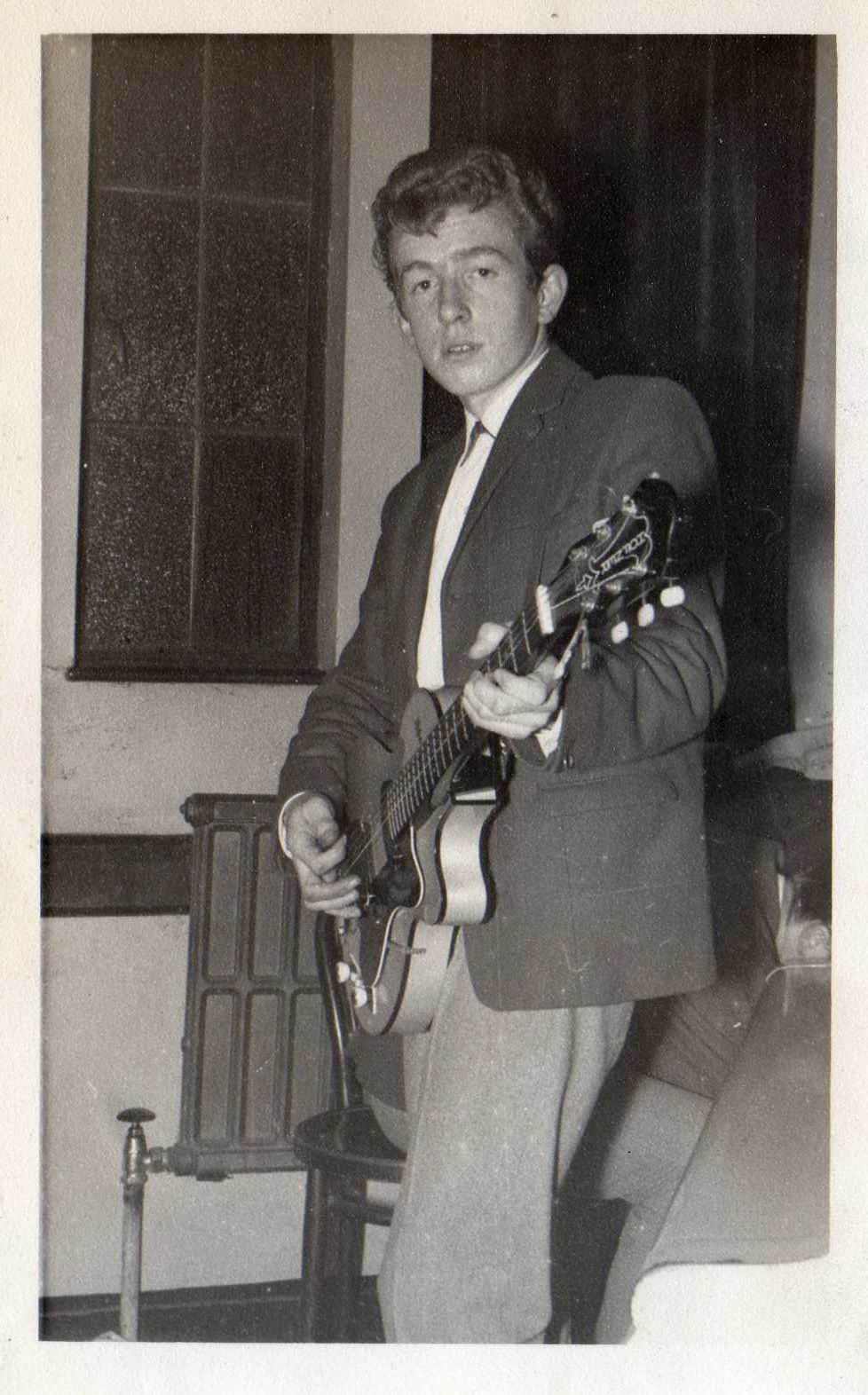
The band gives a sharp performance on the flip, “Is It Right” though the song is less distinctive than the top side. Both songs on their first 45 were written by ‘Stanley Alexander’, actually Brian Alexander and Stanley Peter Frederick according to the BMI database. I didn’t know anything else about the band until Phil T. contacted me with the newspaper clipping and the following info:

During their early years, the group line-up changed many times but by 1964, it comprised Brian Alexander (lead), Jim Eaton (vocals and rhythm), Pete Stanley (bass) and Gary Nichols (drums) and I believe that it was these four who made the recordings. Their original vocalist, Nigel Basham also performed separately under the name Mark Loyd and was backed from time to time at local gigs by another Southend band, The Mustangs, who also originated at Westcliff High.
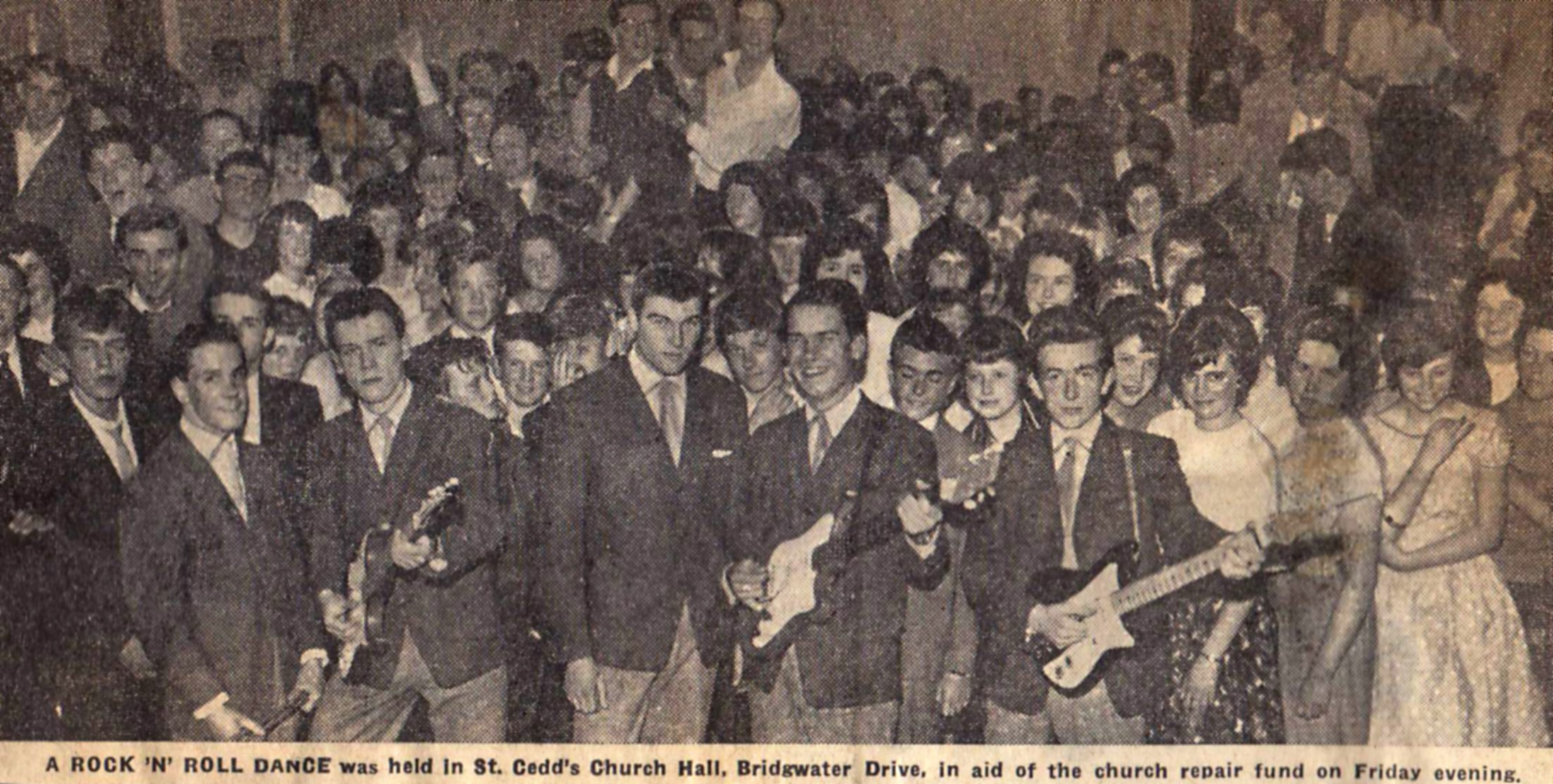
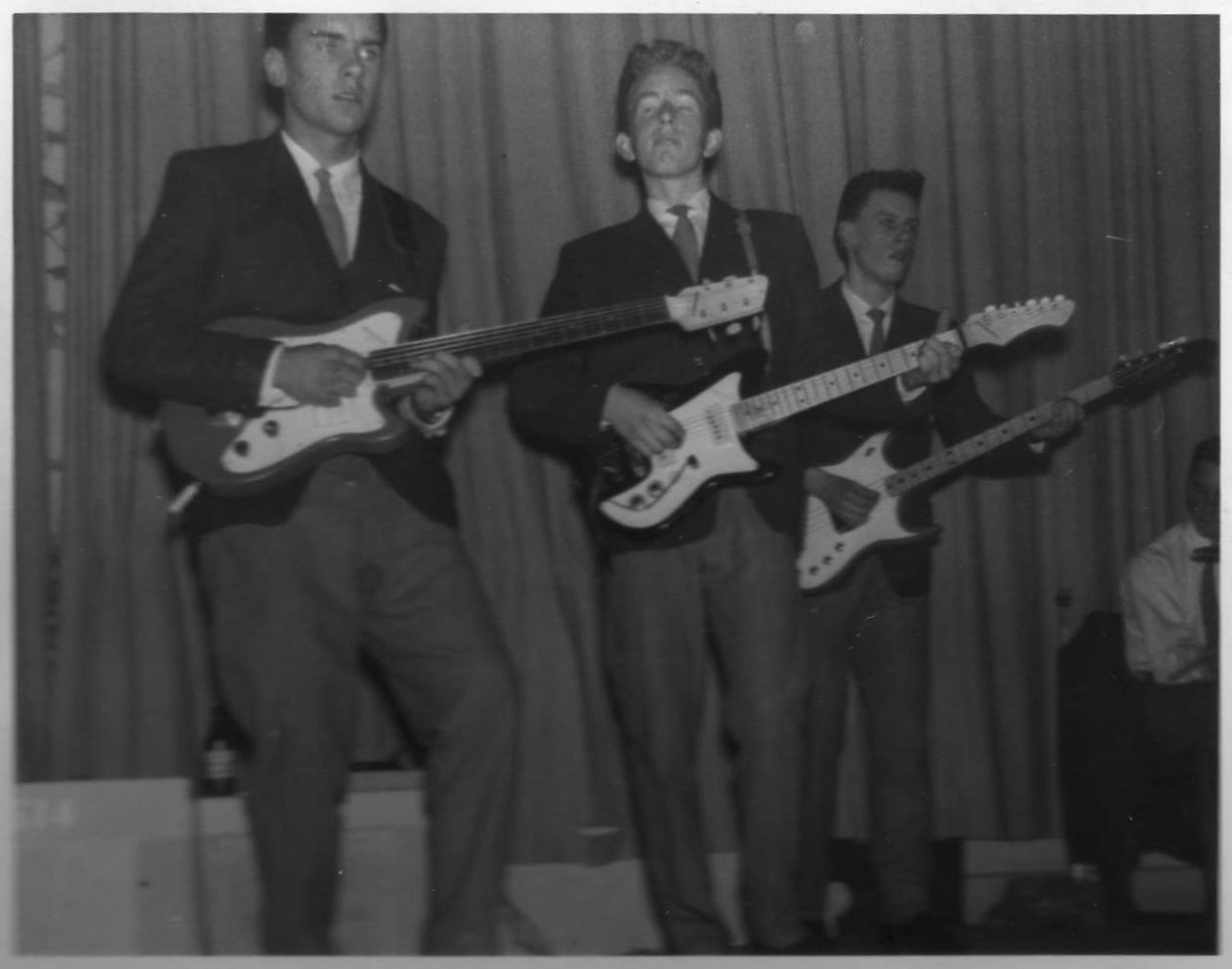
Sadly, I understand that The Monotones’ drummer, Gary Nichols, died in April 2007.

Photos of the band’s early years sent to me by guitarist Ian Middlemiss can be seen on this separate page.

Much more information about the band came when Jim Eaton and Peter Stanley left detailed comments about the band. To read the full history of the group and it’s change to the Treetops, read through the comments below. Jim also sent the photos seen here with this comment:

I have attached some photos of The Monotones in the early sixties and also some of The Treetops (our new name when we joined Mecca at the Wimbledon Tiffanys). You will note we added a female to our lineup, a great vocalist Martha Smith. We cut several records as The Treetops when the lineup comprised Brian Alexander (lead guitar and backing vocals), Jim Eaton (rhythm guitar and lead vocals), Pete Stanley (bass guitar and backing vocals), Mark Lloyd (lead vocals, vibes and harmonica), Martha Smith (lead vocals and piano) and Pete Trout our very fine drummer.

In the article about the band for The Southend Standard Jim Eaton also noted their appearance on Ready Steady Go, Thank Your Lucky Stars and Juke Box Jury, clips I’d love to see if they still survive.

The Monotones, 1962
The Monotones, 1962

Monotones Hickory 45 When Will I Be LovedThe Monotones had two U.S. releases on the Hickory label, one of which, “When Will I Be Loved” / “If You Can’t Give Me All” was not released in the UK. It turns out to be a demo recorded before their first Pye 45, released in the U.S. without the group’s knowledge!
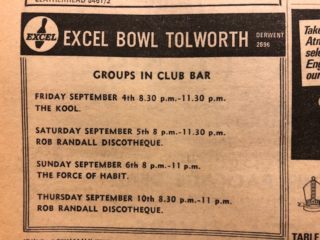
Monotones Hickory 45 If You Can't Give Me AllJim Eaton recently heard these songs again for the first time in about 47 years! He wrote to me:

I received and played the record yesterday and it is definitely us. I now recall cutting both sides as a demo in 1963 at the Regent Sound Studio in London’s famous Denmark St. (also known as Tin Pan Alley due to the large number of studios, record publishers and musical instrument shops.)

Monotones 45 releases:

UK:
Pye 7N 15608 – What Would I Do / Is It Right (February 14, 1964)
Pye 7N 15640 – It’s Great / Anymore (1964)
Pye 7N 15761 – No Waiting / Like A Lover Should (1965)
Pye 7N 15814 – Something’s Hurting Me / A Girl Like That (1965)

US:
Hickory 1250 – What Would I Do / Is It Right
Hickory 1306 – When Will I Be Loved / If You Can’t Give Me All

Monotones promo photo for "Now Waiting", from left: Jim Eaton, Brian Alexander, Gary Nichols and Pete Stanley
Promo shot for “Now Waiting”, from left: Jim Eaton, Brian Alexander, Gary Nichols and Pete Stanley
Mark Loyd backed by the Monotones with session musicians:

Parlophone R 5277 -I Keep Thinking About You / Will It Be the Same (1965)
Parlophone R 5332 – Everybody Tries / She Said No (1965)
Parlophone R 5423 – When Evening Falls / When I’m Gonna Find Her (March 1966)

Note that all his solo releases spell his last name “Loyd”

Treetops 45 releases:

Parlophone R 5628 – Don’t Worry Baby / I Remember (1967 – also released in the U.S. on Tower 388)
Parlophone R 5669 – California My Way / Carry On Living (Feb. 1968)

Columbia DB 8727 – Mississippi Valley / Man Is a Man (1970)
Columbia DB 8799 – Without the One You Love / So Here I Go Again (1971)
Columbia DB 8934 – Why Not Tonite / Funky Flop-Out (Oct. 13, 1972)
Columbia DB 9013 – Gypsy / Life Is Getting Better (Aug 3, 1973)

Mark Lloyd, 1964
Mark Loyd, 1964
Postscript, February 2011:

Jim Eaton: “I have just returned from Australia where I caught up with Mark Loyd who was for many years part of The Monotones before he pursued a solo career.

Update, April, 2012

I’m sorry to report that Mark Loyd (born Nigel Basham), the lead singer with the Monotones and Treetops passed away on April 4, 2012, after fighting cancer for seven years. Mark had been living in Sydney, Australia where he ran a successful event/management company. My condolences to his family, friends, and band mates.

Thanks to Phil for sending in the article from The Southend Standard, January 2006 and to Jim Eaton for his help with songs, photos and information for this page.

The Monotones at the Elms, 1964: Pete Stanley, Brian Alexander, Jim Eaton and Gary Nichols
The Monotones at the Elms, 1964
from left: Pete Stanley, Brian Alexander, Jim Eaton and Gary Nichols

Monotones Hickory 45 What Would I Do

Monotones at The Elms, l-r: Brian Alexander, Jim Eaton, Gary Nichols and Pete Stanley
At The Elms, l-r: Brian Alexander, Jim Eaton, Gary Nichols and Pete Stanley
The Treetops, 1966
The Treetops, 1966
The Treetops, 1967
The Treetops, 1967
The Treetops promo for "Don't Worry Baby"
The Treetops promo for “Don’t Worry Baby”
The Treetops, 1968
The Treetops, 1968