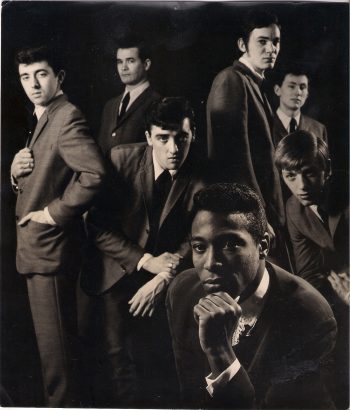
Jon was formed around October 1966 (possibly even early September) after Stuart Cowell left Gass. He’d previously worked with Ralph Denyer in The Rockhouse Band.
Tom Tierney had been a member of Lulu’s backing band, The Luvvers while Jim Toomey had been in The Arthur Brown Union and The Union (with Brown’s replacement Dave Terry) and finally The Uptown Band.
Image may be subject to copyright
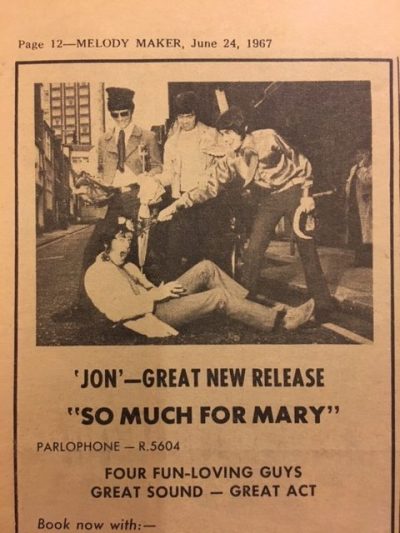
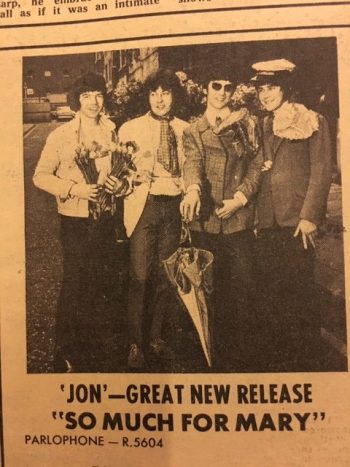
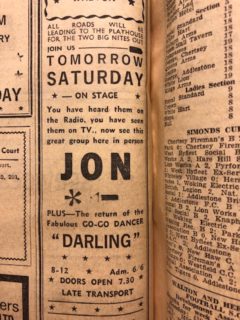
Chris Simmons was the band’s original lead singer but he’s not pictured in either of the adverts featured in Melody Maker, to promote the release of Jon’s debut 45, which was issued in June 1967.
A second 45 appeared in August before Simmons departed and Stuart Cowell assumed lead vocals.
Notable gigs:
19-20 September 1966 – Mick’s Flamenco, Folkestone, Kent (Kentish Express)
Image may be subject to copyright
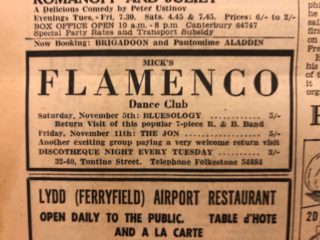
11 November 1966 – Mick’s Flamenco, Folkestone, Kent (Folkestone, Hythe & District Herald)
14 January 1967 – Flamingo, Wardour Street, Soho, London with The Amboy Dukes (Melody Maker)
27 January 1967 – Harvest Moon, Guildford, Surrey with The Great Expectations and Mood Indigo (West Surrey Advertiser)
23 February 1967 – Witchdoctor, Catford, southeast London (South East London Mercury)
Image may be subject to copyright
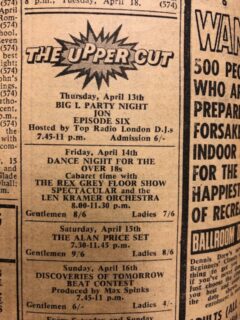
13 April 1967 – Upper Cut, Forest Gate, London with Episode Six (Melody Maker)
20 May 1967 – Marine Ballroom, Central Pier, Morecambe, Lancashire with backing group and Five of a Kind (Morecambe Visitor) Is this the same band?
2 June 1967 – Dolphin, Marine Court, St Leonards, East Sussex (Hastings & St Leonards Observer) Billed as John
10 June 1967 – Big ‘L’ Speakeasy, Ryde Pier Head, Ryde, Isle of Wight with The Action (Isle of Wight Country Press)
14 June 1967 – Disco Blue, Ryde, Isle of Wight with John Lee Hooker and Savoy Brown Blues Band (Isle of Wight County Press)
15 June 1967 – Disco Blue, Ryde, Isle of Wight (Isle of Wight County Press)
Image may be subject to copyright
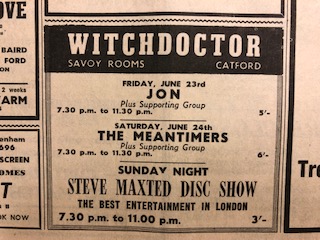
23 June 1967 – Witchdoctor, Catford, southeast London plus supporting group (South East London Mercury)
Advert in Melody Maker. Image may be subject to copyright
8 July 1967 – Central R&B Club, Central Hotel, Gillingham, Kent (Chatham, Rochester & Gillingham News)
An article in the Westminster & Pimlico News, dated 25 August 1967, says the group is nine months old and are residents at the Cafe des Artistes in Fulham
22 September 1967 – New Trades Club, Kettering, Northamptonshire (Northamptonshire Evening Telegraph)
Image may be subject to copyright
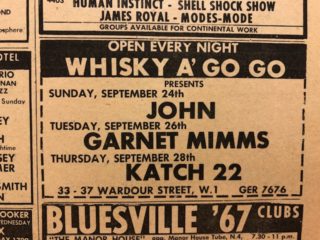
24 September 1967 – Whisky A Go Go, Wardour Street, Soho, central London (Melody Maker) Billed as John
Image may be subject to copyright
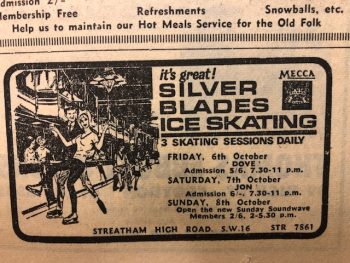
7 October 1967 – Silver Blades, Streatham, London (Coulson & Purley Advertiser)
Image may be subject to copyright
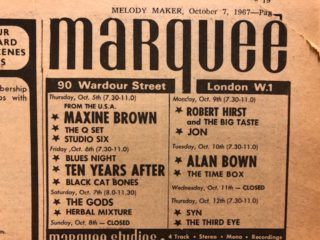
9 October 1967 – Marquee, Wardour Street, Soho, London with Robert Hirst & The Big Taste (Melody Maker)
Image may be subject to copyright
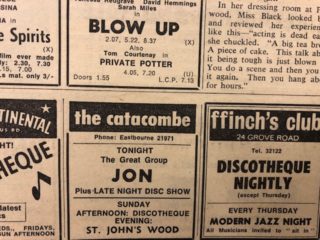
11 November 1967 – The Catacombe, Eastbourne, East Sussex (Eastbourne Herald Chronicle)
11 December 1967 – Marquee, Wardour Street, Soho, London with Simon Dupree & The Big Sound (Melody Maker)
6 January 1968 – Luton Boys Club, Luton, Bedfordshire with Canal Street Philharmonic (Luton News)
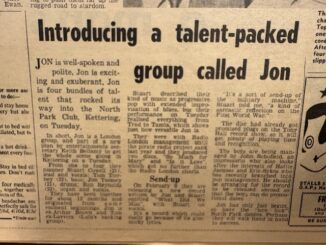
23 January 1968 – North Park Club, Kettering, Northamptonshire (Northamptonshire Evening Telegraph)
1 February 1968 – Marquee, Wardour Street, Soho, London with Marmalade (Melody Maker)
Jon featured in The Kettering Leader, 2 February 1968, page 4
10 February 1968 – Sixty Nine Club, Royal York Hotel, Ryde, Isle of Wight (Isle of Wight County Press) Billed as Still Life
Image may be subject to copyright
17 February 1968 – Walton Playhouse, Walton-on-Thames, Surrey (Woking Herald)
24 February 1968 – Luton Boys Club, Luton, Bedfordshire with The Favourite Sounds with Bruce Benson (Hemel Hempstead Evening Post)
Image may be subject to copyright
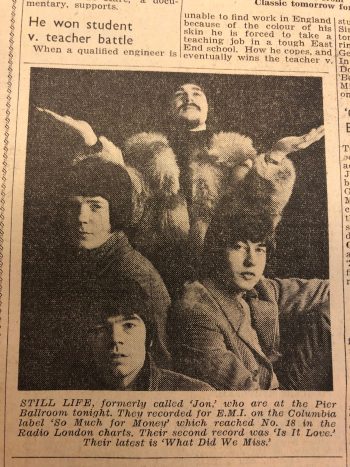
In late February, the band changed name to Still Life
After changing name, the group released a lone 45 as Still Life in February 1968 before Tierney switched over to rhythm guitar and Con Byrne joined on bass.
Image may be subject to copyright
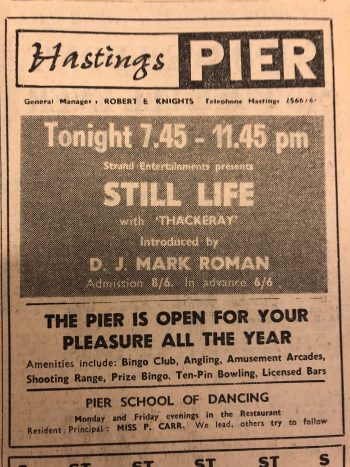
2 March 1968 – Hastings Pier, Hastings, East Sussex with Thackery (Hastings & St Leonards Observer)
9 March 1968 – Marquee, Wardour Street, Soho, London with The Open Mind (Melody Maker)
On 25 March, Still Life performed at the Marquee (supporting The Nice) where they were spotted by singer Warren Davis, who invited the band to joined forces with him in a new version of The Warren Davis Monday Band soon after.
1 April 1968 – Top Rank Suite, Watford, Herts with The Foundations (Harrow Observer & Gazette) This may have been under The Warren Davis Monday Band performing under this name
Although the gig below was billed as Still Life, this was in fact performed by The Warren Davis Monday Band.
Image may be subject to copyright
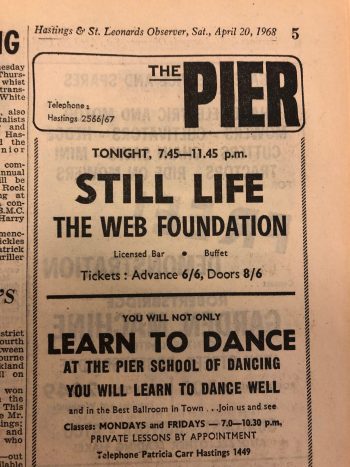
20 April 1968 – Hastings Pier, Hastings, East Sussex with Web Foundation (Hastings & St Leonards Observer)
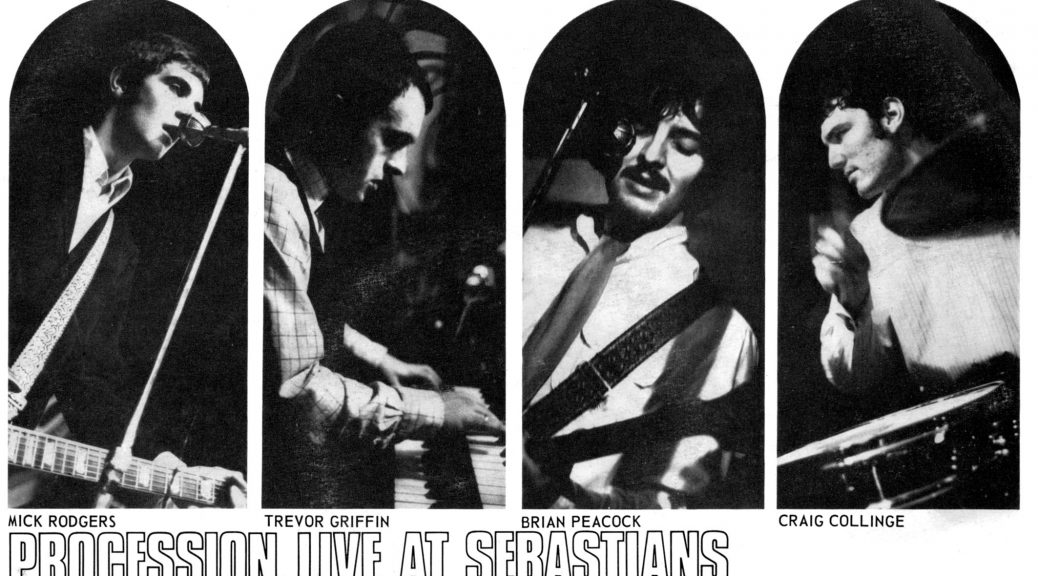
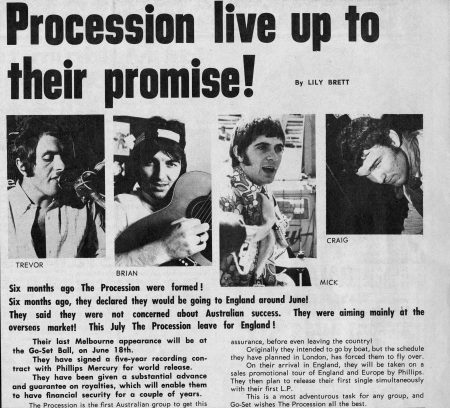
Playboys guitarist Mick Rogers, keyboard player Trevor Griffin and bass player Brian Peacock split with singer Normie Rowe in late October, according to Go-Set’s 25 October issue, page 3.
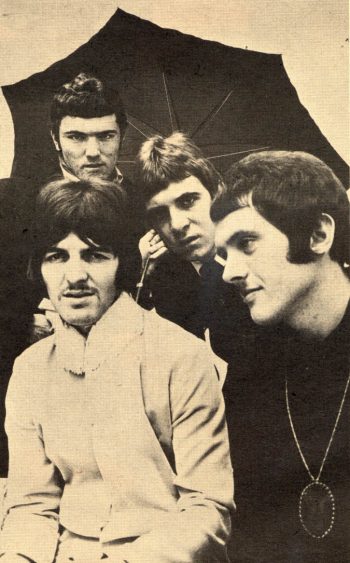
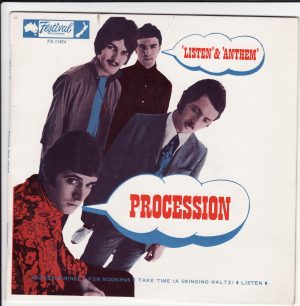
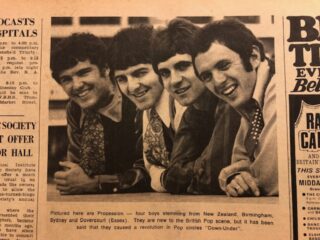
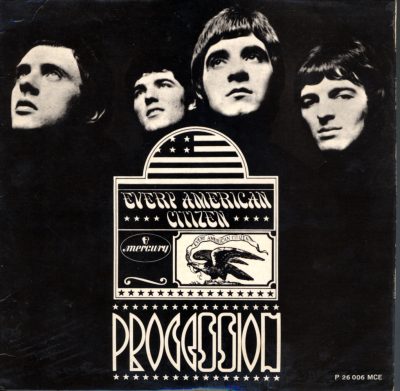
By mid-November, former Librettos drummer Craig Collinge completed the new group named Procession.
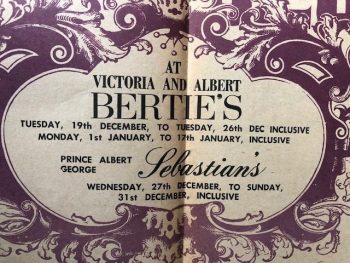
17 December 1967 – Sebastian’s, Victoria & Albert, Melbourne, Victoria, Australia (Go-Set) Debut performance
19-26 December 1967 – Berties, Victoria & Albert, Melbourne, Victoria, Australia (Go-Set)
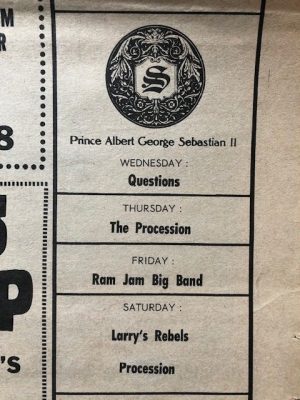
27-31 December 1967 – Sebastian’s, Victoria & Albert, Melbourne, Victoria, Australia (Go-Set)
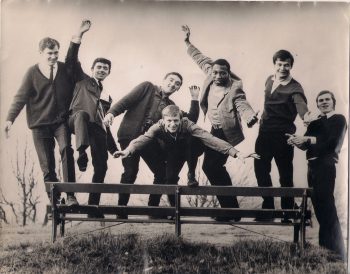
Clockwise from front: Brian Peacock, Craig Collinge, Mick Rogers and Trevor Griffin
1-17 January 1968 – Berties, Victoria & Albert, Melbourne, Victoria, Australia (Go-Set) Procession were supported by The Trap on 5 January
11 January 1968 – Thumpin’ Tum, Melbourne, Victoria, Australia (Go-Set)
12 January 1968 – Thumpin’ Tum, Melbourne, Victoria, Australia with The Valentines (Go-Set) Bon Scott was the lead singer with The Valentines
13 January 1968 – Opus, Ormond Hall, South Yarra, Melbourne, Victoria with The Groop, Phil Jones & The Unknown Blues, The Party Machine and Issy & Adrienne (Go-Set)
13 January 1968 – Tom Foolery, St John’s Hall, Camberwell, Melbourne, Victoria, Australia with The Running Jumping Standing Still (Go-Set)
13 January 1968 – Thumpin’ Tum, Melbourne, Victoria, Australia with The Andy James Asylum (Go-Set)
14 January 1968 – Thumpin’ Tum, Melbourne, Victoria, Australia (Go-Set)
19 January 1968 – Berties, Victoria & Albert, Melbourne, Victoria, Australia (Go-Set)
21 January 1968 – Sebastian’s, Victoria & Albert, Melbourne, Victoria, Australia (Go-Set)
25 January 1968 – Berties, Victoria & Albert, Melbourne, Victoria, Australia (Go-Set)
26 January 1968 – Berties, Victoria & Albert, Melbourne, Victoria, Australia with Max Merritt & The Meteors (Go-Set)
26 January 1968 – Sebastian’s, Victoria & Albert, Melbourne, Victoria, Australia with Christopher Nickelby Action and The Sounds of Silence (Go-Set)
27 January 1968 – Thumpin’ Tum, Melbourne, Victoria, Australia (Go-Set)
28 January 1968 – Berties, Victoria & Albert, Melbourne, Victoria, Australia (Go-Set)
1 February 1968 – Sebastian’s, Victoria & Albert, Melbourne, Victoria, Australia (Go-Set)
4 February 1968 – 3XY & Outdoor Happening III, Veldrome, Olympic Park, Melbourne, Victoria, Australia with Johnny Young & The Word, The Loved Ones, Somebody’s Image, The Masters Apprentices and The Ram Jam Big Band (Go-Set)
5 February 1968 – Berties, Victoria & Albert, Melbourne, Victoria, Australia (Go-Set)
8 February 1968 – Sebastian’s, Victoria & Albert, Melbourne, Victoria, Australia (Go-Set)
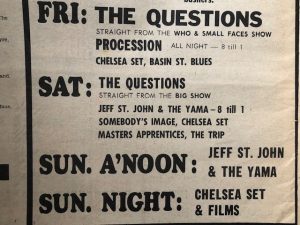
9 February 1968 – The Catcher, Melbourne, Victoria, Australia with The Questions, The Chelsea Set and The Basin St Blues Band (Go-Set)
10 February 1968 – Sebastian’s, Victoria & Albert and Berties, Victoria & Albert, Melbourne, Victoria, Australia with Larry’s Rebels (Go-Set)
13 February 1968 – Berties, Victoria & Albert, Melbourne, Victoria, Australia (Go-Set)
15 February 1968 – Thumpin’ Tum, Melbourne, Victoria, Australia with Ross De Wylie & The Uptight 5th Hour and The Sounds of Silence (Go-Set)
17 February 1968 – Berties, Victoria & Albert, Melbourne, Victoria, Australia with Jeff St John & The Yama (Go-Set)
17 February 1968 – Piccadilly, Ringwood Town Hall, Melbourne, Victoria, Australia with Nature’s Own and The Running Jumping Standing Still (Go-Set)
18 February 1968 – Thumpin’ Tum, Melbourne, Victoria, Australia (Go-Set)
23 February 1968 – 54321, St Mary’s Hall, Dandenong, Victoria, Australia with Jeff St John & The Yama and Chocolate (Go-Set)
24 February 1968 – Masonic Hall, St George’s Road Elsternwick, Victoria, Australia (Go-Set)
25 February 1968 – Opus, Ormond Hall, South Yarra, Melbourne, Victoria, Australia with The Vibrants and Larry’s Rebels (Go-Set)
1 March 1968 – Swing into Action, Lyndale Hall, Dandenong, Victoria, Australia with The Sounds of Silence and The Vibrants (Go-Set)
2 March 1968 – Opus, Ormond Hall, South Yarra, Melbourne, Victoria, Australia with Lynne Randell, Somebody’s Image and The Young Once (Go-Set)
3 March 1968 – Sebastian’s, Victoria & Albert, Melbourne, Victoria, Australia (Go-Set)
8 March 1968 – Sebastian’s, Victoria & Albert, Melbourne, Victoria, Australia (Go-Set)
9 March 1968 – Thumpin’ Tum, Melbourne, Victoria, Australia with Young Once and Gingerbreadmen (Go-Set)
9 March 1968 – Piccadilly, Ringwood Town Hall, Victoria, Australia with Dave McCallum Power Set, Carmel Chayne and Skippy La Roche (Go-Set)
10 March 1968 – Thumpin’ Tum, Melbourne, Victoria, Australia (Go-Set)
13 March 1968 – Thumpin’ Tum, Melbourne, Victoria, Australia (Go-Set)
14 March 1968 – Thumpin’ Tum, Melbourne, Victoria, Australia (Go-Set)
15 March 1968 – Catcher, Melbourne, Victoria Australia with Jeff St John & Yama and The Chelsea Set (Go-Set)
16 March 1968 – Penny Lane, Melbourne, Victoria, Australia with The Outlaws, Carmel Chayne and Tony Barber (Go-Set)
17 March 1968 – Opus, Ormond Hall, South Yarra, Melbourne, Victoria, Australia with Max Merritt & The Meteors and The Groove (Go-Set)
20 March 1968 – Berties, Victoria & Albert, Melbourne, Victoria, Australia (Go-Set)
21 March 1968 – Thumpin’ Tum, Melbourne, Victoria, Australia (Go-Set)
22 March 1968 – Catcher, Melbourne, Victoria Australia with The Chelsea Set (Go-Set)
23 March 1968 – Albury, Melbourne, Victoria (Go-Set)
27 March 1968 – Sebastian’s, Victoria & Albert, Melbourne, Victoria, Australia (Go-Set)
28 March 1968 – The Catcher Ball, Catcher, Melbourne, Victoria Australia with The Chelsea Set (Go-Set)
29 March 1968 – Catcher, Melbourne, Victoria Australia with The Wild Cherries and The Chelsea Set (Go-Set)
30 March 1968 – Shepperton Youth Centre, Shepperton, Melbourne, Victoria, Australia (Go-Set)
3 April 1968 – Berties, Victoria & Albert, Melbourne, Victoria, Australia (Go-Set)
4 April 1968 – Thumpin’ Tum, Melbourne, Victoria, Australia (Go-Set)
6 April 1968 – Stonehenge, Beaumaris Civic Centre, Beaumaris, Victoria, Australia with The Valentines, The Rondells and April Byron (Go-Set)
6 April 1968 – Catcher, Melbourne, Victoria, Australia with The Wild Cherries, The National Breakouts, Compulsion and The Chelsea Set (Go-Set)
7 April 1968 – Opus Central, St Kilda, Melbourne, Victoria, Australia with The James Taylor Move and The Wild Cherries (Go-Set)
8 April 1968 – Berties, Victoria & Albert, Melbourne, Victoria, Australia (Go-Set)
10 April 1968 – Thumpin’ Tum, Melbourne, Victoria, Australia (Go-Set)
13 April 1968 – Opus Central, St Kilda, Melbourne, Victoria, Australia with The Masters Apprentices, Compulsion and The Revolution (Go-Set)
13 April 1968 – Swinger, Coburg City Hall, Coburg, Victoria, Melbourne with The Bobby James Syndicate, April Byron Sensation, Gentle People (Go-Set)
14 April 1968 – Berties, Victoria & Albert, Melbourne, Victoria, Australia (Go-Set)
19 April 1968 – Catcher, Melbourne, Victoria, Australia with Dream and Ross D Wylie & The Uptight 5th Hour (Go-Set)
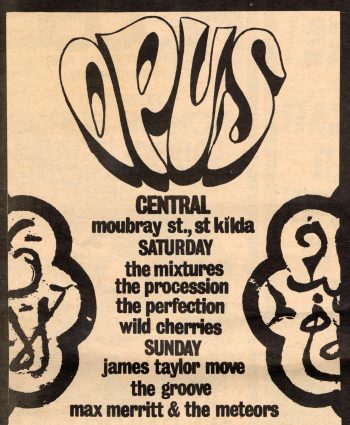
27 April 1968 – Opus Central, St Kilda, Melbourne, Victoria, Australia with The Mixtures, The Perfection and The Wild Cherries (Go-Set)
27 April 1968 – Thumpin’ Tum, Melbourne, Victoria, Australia with The System and Larry’s Rebels (Go-Set)
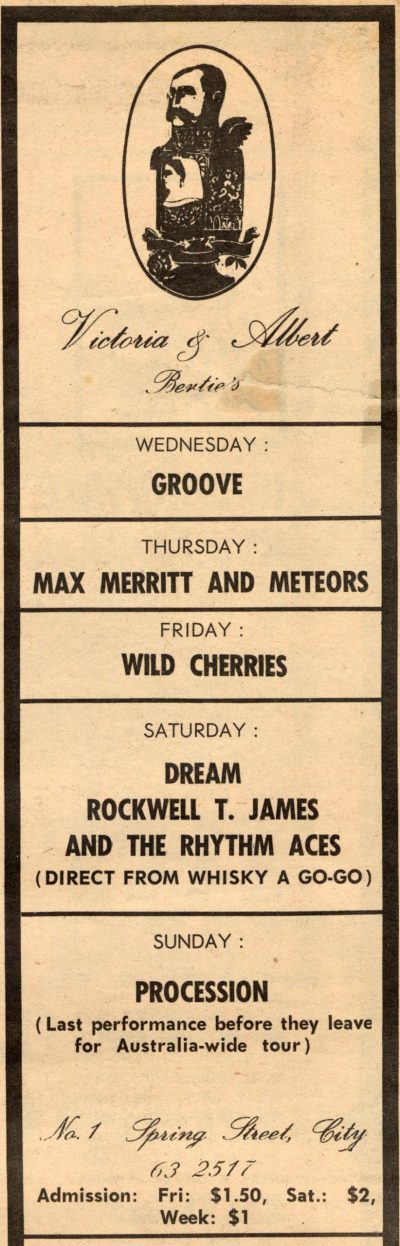
28 April 1968 – Berties, Victoria & Albert, Melbourne, Victoria, Australia (Go-Set) Says last performance before Australia-wide tour
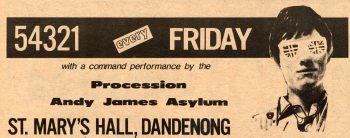
3 May 1968 – 54321 Club, St Mary’s Dandenong, Victoria, Australia with The Andy James Asylum (Go-Set)
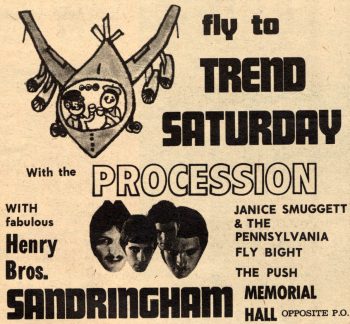
4 May 1968 – Sandringham Memorial Hall, Sandingham, Victoria, Australia with The Henry Brothers, Janice Smuggett & The Pennsylvania Fly Bight and The Push (Go-Set)
12 May 1968 – Festival Hall, Melbourne, Victoria, Australia with The Wild Cherries, The Masters Apprentices, Dream, Somebody’s Image, The Vibrants, Larry’s Rebels, The Mixtures and many others (Go-Set)
14 May 1968 – Thumpin’ Tum, Melbourne, Victoria, Australia and The Floor Show (Go-Set)
15 May 1968 – Berties, Victoria & Albert, Melbourne, Victoria, Australia (Go-Set)
21 May 1968 – Thumpin’ Tum, Melbourne, Victoria, Australia (Go-Set)
24 May 1968 – Berties, Victoria & Albert, Melbourne, Victoria, Australia with The La-De-Das (Go-Set)
24 May 1968 – Sebastian’s, Victoria & Albert, Melbourne, Victoria, Australia with La-De-Das (Go-Set)
25 May 1968 – Keepout, Melbourne, Victoria, Australia with others (Go-Set)
25 May 1968 – Penny Lane, Melbourne, Victoria, Australia with Dave McCallum Set and Henry Bros (Go-Set)
26 May 1968 – Opus Central, St Kilda, Melbourne, Victoria, Australia with The Ram Jam Big Band and The Compulsion (Go-Set)
28 May 1968 – Thumpin’ Tum, Melbourne, Victoria, Australia with others (Go-Set)
30 May 1968 – Thumpin’ Tum, Melbourne, Victoria, Australia (Go-Set)
2 June 1968 – Opus Central, St Kilda, Melbourne, Victoria, Australia with Larry Rebels, The City Stompers and Grantley Dee (Go-Set)
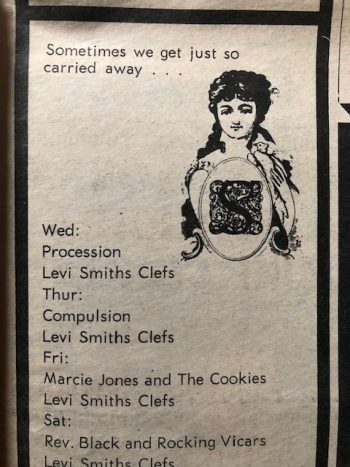
5 June 1968 – Sebastian’s, Victoria & Albert and Berties, Victoria & Albert, Melbourne, Victoria, Australia with Levi Smith’s Clefs (Go-Set)
5 June 1968 – Sebastian’s, Victoria & Albert, Melbourne, Victoria, Australia with Levi Smith’s Clefs (Go-Set)
12 June 1968 – Berties, Victoria & Albert, Melbourne, Victoria, Australia (Go-Set)
14 June 1968 – Thumpin’ Tum, Melbourne, Victoria, Australia with Iguana and Bazaar (Go-Set)
15 June 1968 – Berties, Victoria & Albert, Melbourne, Victoria, Australia with The David Bentley Trio (Go-Set)
15 June 1968 – Opus East, Camberwell Junction, Melbourne, Victoria, Australia with Robbie Snowden, Ross De Wylie & The Upright 5th Hour and The Rondells (Go-Set)
16 June 1968 – Sebastian’s, Victoria & Albert and Berties, Victoria & Albert, Melbourne, Victoria, Australia with The Ram Jam Big Band (Go-Set)
18 June 1968 – Thumpin’ Tum, Melbourne, Victoria, Australia with The Floor Show and The Joke Man (Go-Set)
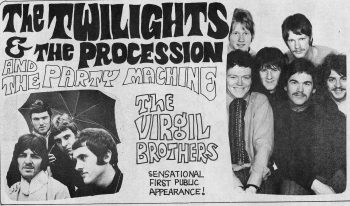
18 June 1968 – Royal Ballroom, Melbourne, Victoria, Australia with The Twilights, The Party Machine and The Virgil Brothers (Go-Set)
19 June 1968 – Berties, Victoria & Albert, Melbourne, Victoria, Australia (Go-Set) Final performance in Australia before leaving for the UK
During July, the band headed to the UK
Go-Set, 15 June 1968 issue
There is a photo of the band (and short story) in the Wakefield Express and its 14 September 1968 issue on page 22 (see below)
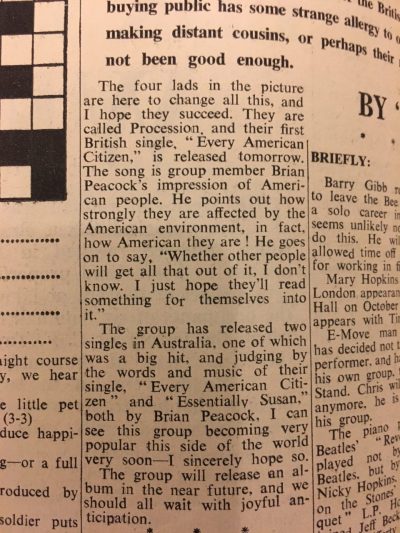
The Birmingham Evening Mail ran a spread (plus pic) on the recently arrived band in its 18 September 1968 issue on page 2 under the title ‘No place in the world like Brum’, which contains an interview with local lad Trevor Griffin.
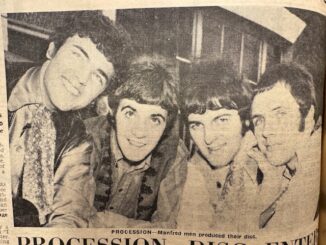
There is a great Procession article in Bracknell News, 19/9/68, page 2 (see below)
The Widnes Weekly News ran a short caption on the band plus a rare photo of the band in its 20 September 2020 issue on page 22
Procession featured in the Kettering Leader, 11 October 1968, page 8
12 November 1968 – Kirkcaldy Ice Rink, Kirkcaldy, Scotland with Dave Dee, Dozy, Beaky, Mick and Tich, Jimmy James & The Vagabonds and The Herd (Dundee Evening Telegraph)
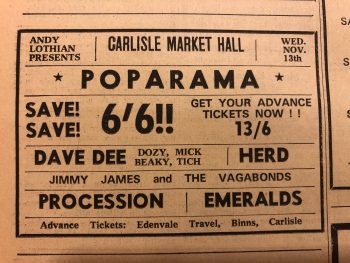
13 November 1968 – Market Hall, Carlisle, Cumbria, England with The Herd, Jimmy James & The Vagabonds, Love Affair and Susan Richards (Fabulous 208) Cumberland News has The Emeralds instead of Richards and also Dave Dee, Dozy, Beaky, Mick and Tich
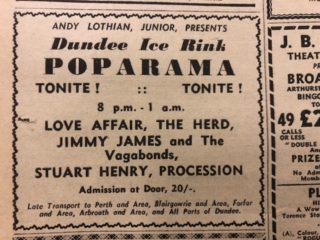
15 November 1968 – Dundee Ice Rink, Dundee, Scotland with The Herd, Jimmy James & The Vagabonds, Love Affair and Susan Richards (Fabulous 208)
15 November 1968 – Falkirk Town Hall, Falkirk, Scotland with Jimmy James & The Vagabonds, The Haze and Brian Marshall Foundation (Fabulous 208/Grangemouth Advertiser)
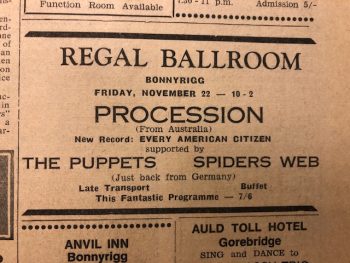
22 November 1968 – Regal Ballroom, Bonnyrigg, Scotland with The Puppets and Spiders Web (South Midlothian Advertiser)
15 January 1969 – Marquee, Wardour Street, Soho, central London, England with Yes (Tony Bacon’s book, London Live)
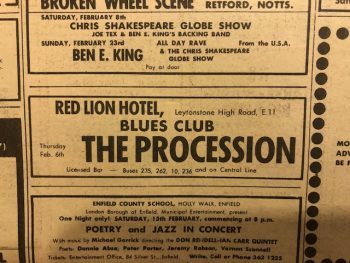
6 February 1969 – Red Lion Hotel Blues Club, Leytonstone, Essex, England (Melody Maker)
8 February 1969 – Marquee, Wardour Street, Soho, central London, England with Spice (Tony Bacon’s book, London Live)
22 February 1969 – Royal Links Pavilion Pavilion, Cromer, Norfolk, England with Kiss (Eastern Evening News)
During mid-March, Craig Collinge left to join Manfred Mann and Mike Hugg in Emanon, which became Manfred Mann Chapter 3. Chris Hunt joined on drums from Pendulum.
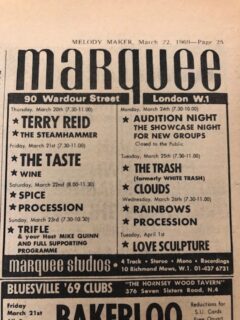
22 March 1969 – Marquee, Wardour Street, Soho, central London, England with Spice (Tony Bacon’s book, London Live)
Photo: Melody Maker
26 March 1969 – Marquee, Wardour Street, Soho, central London, England with The Rainbows (Tony Bacon’s book, London Live)
Ross Wilson (ex-Party Machine) arrived from Australia and assumed lead vocals.
Photo: Melody Maker
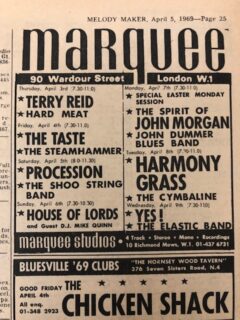
5 April 1969 – Marquee, Wardour Street, Soho, central London, England with The Shoo String Band (Tony Bacon’s book, London Live)
12 April 1969 – Marquee, Wardour Street, Soho, central London, England with Octopus (Tony Bacon’s book, London Live)
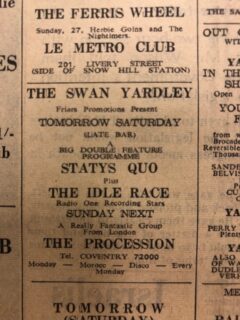
13 April 1969 – Swan, Yardley, West Midlands (Birmingham Evening Mail)
28 April 1969 – Cooks Ferry Inn, Edmonton, London, England (Melody Maker)
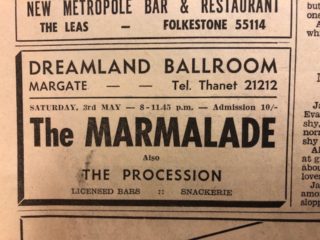
3 May 1969 – Dreamland Ballroom, Margate, Kent with Marmalade (Folkestone & Hythe District Herald)
Photo: Melody Maker
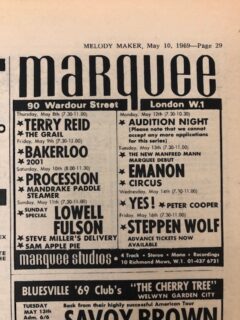
10 May 1969 – Marquee, Wardour Street, Soho, central London, England with Mandrake Paddlesteamer (Tony Bacon’s book, London Live)
17 May 1969 – Marquee, Wardour Street, Soho, central London, England with Pegasus (Melody Maker)
24 May 1969 – Marquee, Wardour Street, Soho, central London, England with The Maddening Crowd (Melody Maker)
26 May 1969 – Cooks Ferry Inn, Edmonton, London, England (Melody Maker)
31 May 1969 – Marquee, Wardour Street, Soho, central London, England with The Eyes of Blue (Melody Maker)
7 June 1969 – Marquee, Wardour Street, Soho, central London, England with Kippington Lodge (Tony Bacon’s book, London Live)
14 June 1969 – Marquee, Wardour Street, Soho, central London, England with Audience (Melody Maker)
16 June 1969 – Marquee, Wardour Street, Soho, central London, England with Audience (Tony Bacon’s book, London Live)
Photo: Melody Maker
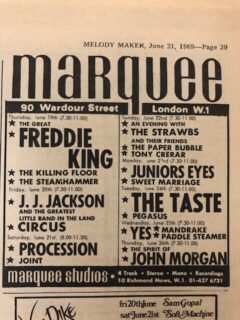
21 June 1969 – Marquee, Wardour Street, Soho, central London, England with Joint (Tony Bacon’s book, London Live)
28 June 1969 – Marquee, Wardour Street, Soho, central London, England with Octopus (Melody Maker)
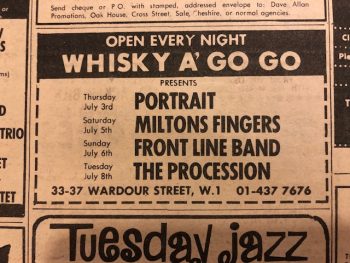
8 July 1969 – Whisky A Go Go, Wardour Street, Soho, central London, England (Melody Maker)
30 July 1969 – Speakeasy, Margaret Street, central London, England (Melody Maker)
It is unlikely the band played the following British gigs even though they were advertised. They left England on the Greek cruise ship, Aurelia, in early August bound for New York, returning later that month and breaking up.
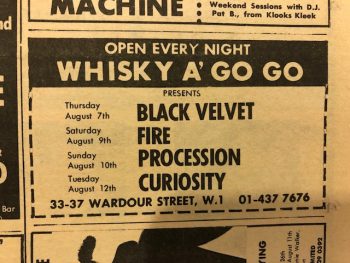
10 August 1969 – Whisky A Go Go, Wardour Street, Soho, central London, England (Melody Maker) Unlikely they played this
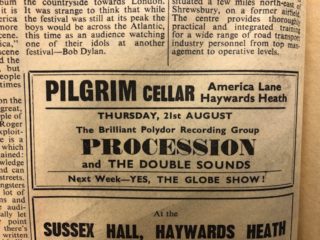
21 August 1969 – Pilgrim Cellar, Haywards Heath, West Sussex with The Double Sounds (Mid Sussex Times) Unlikely they played this
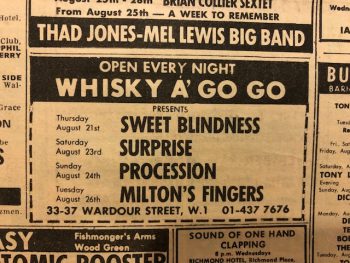
25 August 1969 – Whisky A Go Go, Wardour Street, Soho, central London, England (Melody Maker) Unlikely they played this
25 August 1969 – Blaises, Imperial Hotel, Queen’s Gate, Kensington, west London, England (Marylebone Mercury) Unlikely they played this
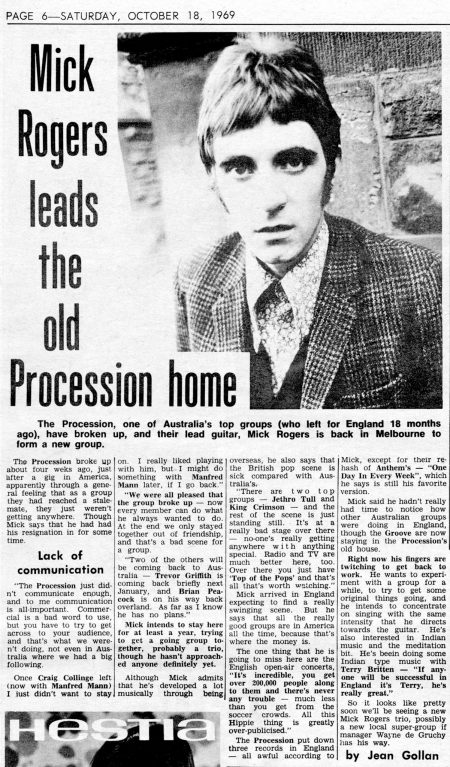
Procession split up in September 1969, according to Go-Set (see below)
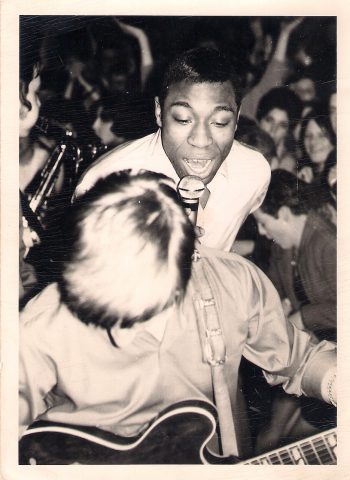
When Dexys Midnight Runners’ topped the UK charts in 1981 with their “Geno” tribute, a new generation of fans discovered American soul singer Geno Washington, who had fronted British R&B/soul outfit The Ram Jam Band from 1965-1970 and enjoyed moderate chart success.
Originally the brainchild of lead guitarist Pete Gage, who now lives in Australia, this period covers the original formation before Geno Washington restructured the group in April 1967.
I have tried to list all of the gig sources at the end of this article.
Geno Washington & Les Blues
24 October 1964 – Town Hall, Clacton, Essex with Georgie Fame & The Blue Flames and The Limelighters
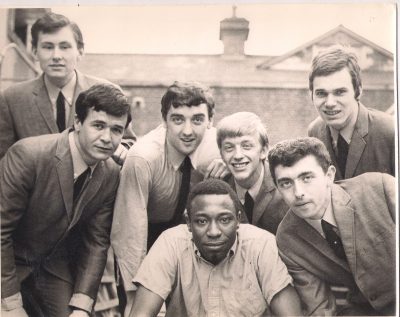
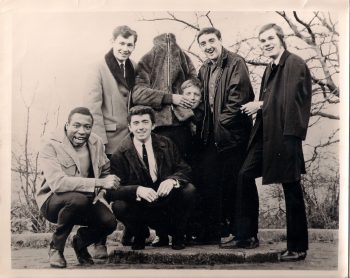
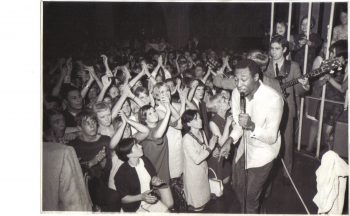
Photo courtesy of Buddy Beadle. Left to right: Geoff, Lionel, Herb, Geno, Pete, John and Buddy
Geno Washington & The Ram Jam Band #1
(March 1965-July 1966)
Geno Washington – lead vocals
Pete Gage – lead guitar, vocals
Geoff Pullum (aka Jeff Wright) – organ, vocals
John Roberts – bass
Lionel ‘Rocky’ Kingham – tenor saxophone
Buddy Beadle – baritone saxophone
Herb Prestidge – drums
Guitarist Pete Gage (b. 31 August 1947, Lewisham) had been playing with Dalston, London group, The Zephyrs in late 1964, and had penned the A-side of their single, “She’s Lost You” (released in February 1965), when he ran into Geno Washington in Southend while moonlighting with R&B outfit, The Fairies.
At the time Geno Washington was fronted Les Blues, a band that he had formed in 1963 while working as a US airman, based at USAF Bentwaters, near Woodbridge, Suffolk. The group comprised pianist Koll Patterson, bass player Tony Coe, guitarist Morton Lewis and drummer Gerry Gillings.
Pete Gage had met Washington at USAF Bentwaters on several occasions over the past year and encouraged the American to become a professional singer.
Together with his school friend Jeff Wright (b. Geoffrey Keith Pullum, 8 March 1945, Irving, Scotland), Gage considered the option of “buying” Washington out of the US Armed Forces and then constructing a backing group around the singer.
In early 1965, Pullum introduced Nuneaton-born drummer Herb Prestidge and his friend, Coventry-born bass player John Roberts, who’d both previously worked with the keyboardist in Germany in Sonny Stewart & The Dynamos.
Prestidge had started out with Nuneaton band, The Barracudas around 1961 before playing with Max Hollyman & The Demons for two years, where he met John Roberts. They both met Geoff Pullum while playing with Sonny Stewart & The Dynamos in 1964.
After extensive auditions, Gage and Pullum recruited tenor sax player, Calcutta, India-born Lionel ‘Rocky’ Kingham and baritone sax player Buddy Beadle (b. 27 March 1947, Clapham, south London) to complete their Ram Jam Band, named after an old coaching inn at Stretton near Oakham on the A1 in Rutland.
The idea was to create a UK-based Stax-style soul outfit (with an African-American singer and a backing group like Booker T & The MGs with an added horn section) that British audiences could experience live.
Geno Washington, however, remained unavailable in early 1965, and so The Ram Jam Band tried out singer Kenny Bernard (whom Gage had previously recorded with) but he was more pop that soul. The musicians next tried singer Kenrick Des Etages (aka Ebony Keyes) whose vocals were a perfect match for the band. However, Keyes was more Caribbean than Stax-soul and so the musicians next performed three gigs with singer John Holder before linking with Jamaican singer Errol Dixon.
Together with Dixon, the band cut a lone single “Shake Shake Senora” c/w “Akinia”. Also, through the Jamaican’s contacts with Rik and John Gunnell and their Soho club, the Flamingo on Wardour Street, the musicians landed their first gigs at the prestigious venue around March 1965.
By this point, Geno Washington had demobbed from the US Armed Forces and was due to return to Indiana in the United States. Gage bought the singer a return ticket to the UK on condition that he would come back and replace Errol Dixon as front man.
In the meantime, Gage approached the Gunnell brothers with the proposition that Washington would take over from Dixon. When the American returned in mid-April, the group auditioned for the siblings and were immediately booked to play at the Flamingo.
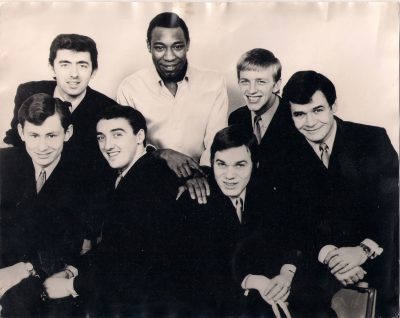
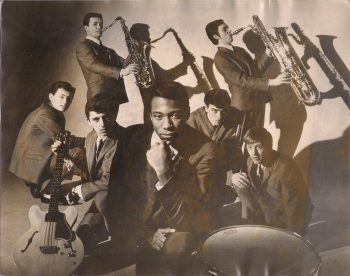
Photo courtesy of Buddy Beadle. Clockwise from top: Geno, Pete, Lionel, Buddy, Herb, Geoff and John
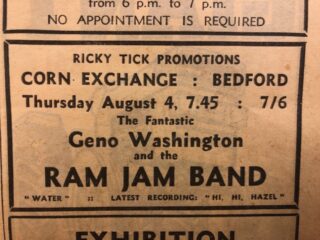
The original line up was responsible for recording three singles – “Water” c/w “Understanding” (Piccadilly 7N 35312) in April 1966 (the group’s biggest hit, climbing to #39 in the UK charts); “Hi! Hi! Hazel” c/w “Beach Bash” (Piccadilly 7N 35329) in July 1966 (a UK #45 hit) and “Que Sera Sera” c/w “All I Need” (Piccadilly 7N 35346) in September 1966 (a UK #43 hit).
Two tracks also appeared on an EP, “Hi!” (Piccadilly NEP 34054) released in January 1967 and comprising the A-sides of the first two singles plus later recordings.
Selected gigs:
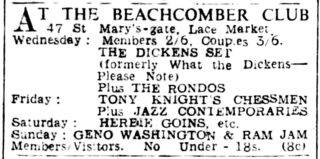
24 April 1965 – Flamingo, Wardour Street, Soho, central London with The Checkmates (first listing at Soho club)
25 April 1965 – Flamingo, Wardour Street, Soho, central London with Herbie Goins & The Night Timers
4 May 1965 – Flamingo, Wardour Street, Soho, central London with The Shevells
8 May 1965 – Flamingo, Wardour Street, Soho, central London with Tony Knight’s Chessmen
9 May 1965 – Riverside Club, Cricketers Hotel, Chertsey, Surrey
15 May 1965 – Flamingo, Wardour Street, Soho, central London with Georgie Fame & The Blue Flames
16 May 1965 – Flamingo, Wardour Street, Soho, central London with John Mayall’s Bluesbreakers
22 May 1965 – Witchdoctor Club, St Leonards-on-Sea, East Sussex
23 May 1965 – Royal Star Ballroom, Maidstone, Kent
28-29 May 1965 – Flamingo, Wardour Street, Soho, central London with The Soul Sisters and Brian Auger Trinity
30 May 1965 – Blue Moon, Hayes, west London
7 June 1965 – Flamingo, Wardour Street, Soho, central London with Chris Farlowe & The Thunderbirds
11-12 June 1965 – Flamingo, Wardour Street, Soho, central London with Doris Troy and Chris Farlowe & The Thunderbirds
13 June 1965 – Flamingo, Wardour Street, Soho, central London
15 June 1965 – Flamingo, Wardour Street, Soho, central London
18 June 1965 – Ricky Tick, Guildford Civic Hall, Guildford, Surrey (David Else says they replaced Errol Dixon)
18 June 1965 – Flamingo, Wardour Street, Soho, central London with Solomon Burke and The Mike Cotton Sound
19 June 1965 – Royal Star Ballroom, Maidstone, Kent with The Mark Leeman Five
19 June 1965 – Flamingo, Wardour Street, Soho, central London with Chris Farlowe & The Thunderbirds
20 June 1965 – Witchdoctor Club, St Leonards-on-Sea, East Sussex
23 June 1965 – Le Disque A Go Go, Bournemouth, Dorset
25 June 1965 – Flamingo, Wardour Street, Soho, central London with Herbie Goins & The Night Timers
27 June 1965 – Flamingo, Wardour Street, Soho, central London
3 July 1965 – Flamingo, Wardour Street, Soho, central London with Herbie Goins & The Night Timers
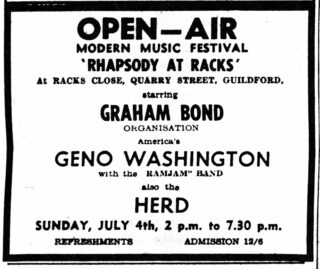
Photo from Ian Woodward. Source: Surrey Advertiser and County Times
4 July 1965 – ‘Rhapsody at Racks’, Guildford, Surrey with The Graham Bond Organisation and The Herd
6 July 1965 – Klook’s Kleek, West Hampstead, north London with Dedicated Men’s Jug Band
9 July 1965 – Flamingo, Wardour Street, Soho, central London with Inez & Charlie Foxx and Tony Knight’s Chessmen
12 July 1965 – The Cavern, Liverpool with Richmond Group and Exit
16 July 1965 – Flamingo, Wardour Street, Soho, central London with Inez & Charlie Foxx and John Mayall’s Bluesbreakers (billed without Geno)
18 July 1965 – Bromel Club, Bromley Court Hotel, Bromley, southeast London with Inez & Charlie Foxx (billed without Geno)
18 July 1965 – Flamingo, Wardour Street, Soho, central London with Inez & Charlie Foxx (billed without Geno)
21 July 1965 – Flamingo, Wardour Street, Soho, central London (billed without Geno)
Photo from Ian Woodward. Source: Port Talbot Guardian
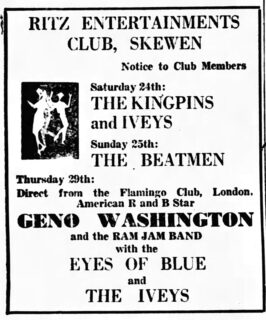
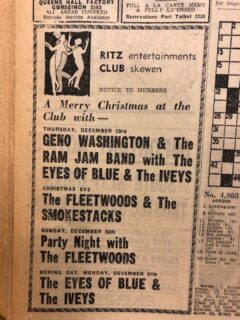
29 July 1965 – Ritz Club, Skewen, Wales with The Eyes of Blue and The Iveys
31 July 1965 – New Georgia, Uxbridge, west London
31 July 1965 – Flamingo, Wardour Street, Soho, central London with Tony Colton & Big Boss Band
1 August 1965 – Blue Moon, Hayes, west London
1 August 1965 – Flamingo, Wardour Street, Soho, central London
6 August 1965 – Flamingo, Wardour Street, Soho, central London with The Byrds
7 August 1965 – Royal Star Ballroom, Maidstone, Kent
8 August 1965 – Witchdoctor Club, St Leonards-on-Sea, East Sussex
11 August 1965 – Manor House, north London
20 August 1965 – Dungeon Club, Nottingham
25 August 1965 – Flamingo, Wardour Street, Soho, central London with Cliff Bennett & The Rebel Rousers
26 August 1965 – Klook’s Kleek, West Hampstead, north London
27 August 1965 – Flamingo, Wardour Street, Soho, central London with The Shevells
29 August 1965 – Flamingo, Wardour Street, Soho, central London
4 September 1965 – Flamingo, Wardour Street, Soho, central London with Chris Farlowe & The Thunderbirds
5 September 1965 – Flamingo, Wardour Street, Soho, central London
8 September 1965 – Flamingo, Wardour Street, Soho, central London
10 September 1965 – Flamingo, Wardour Street, Soho, central London with Lou Johnson
15 September 1965 – Manor House, north London
18 September 1965 – Flamingo, Wardour Street, Soho, central London with The Peddlers
19 September 1965 – Bromel Club, Bromley, southeast London (billed without Geno)
21 September 1965 – Gala Ballroom, Norwich, Norfolk
22 September 1965 – Manor House, north London
25 September 1965 – Flamingo, Wardour Street, Soho, central London with Zoot Money Big Roll Band
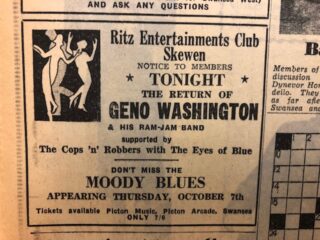
30 September 1965 – Ritz Club, Skewen, Wales with Cops ‘N’ Robbers and The Kingpins
3 October 1965 – Kirklevington Country Club, Kirklevington, North Yorkshire with Gary Farr & The T-Bones
Photo courtesy of Buddy Beadle
10 October 1965 – Nottingham Boat Club, Nottingham
Photo from Ian Woodward. Source: Aldershot News
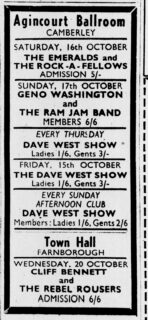
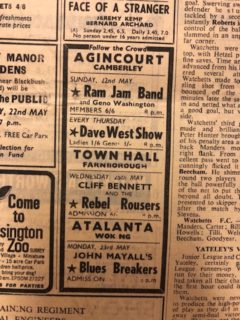
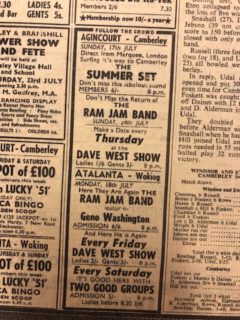
17 October 1965 – Agincourt Ballroom, Camberley, Surrey
23 October 1965 – Flamingo, Wardour Street, Soho, central London with Geno Washington & The Ram Jam Band with Beryl Marsden, Steve Aldo & The Crew Cats
24 October 1965 – Orford Cellar, Norwich, Norfolk
28 October 1965 – Klook’s Kleek, West Hampstead, north London
31 October 1965 – Ricky Tick, Plaza, Guildford, Surrey
4 November 1965 – Klook’s Kleek, West Hampstead, north London
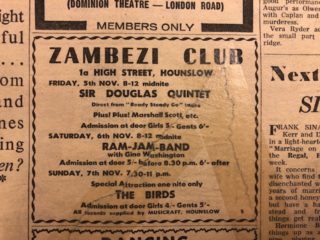
6 November 1965 – Zambesi Club, Hounslow, west London
8 November 1965 – Basingstoke Town Hall, Basingstoke, Hants
12 November 1965 – Orford Cellar, Norwich, Norfolk
18 November 1965 – Klook’s Kleek, West Hampstead, north London
21 November 1965 – Sunshine Floor, Tavern Club, Dereham, Norfolk with Beat Ltd
25 November 1965 – Klook’s Kleek, West Hampstead, north London
26 November 1965 – Club A Go Go, Newcastle Upon Tyne
28 November 1965 – The Dungeon, Nottingham
29 November 1965 – Cooks Ferry Inn, Edmonton, north London
2 December 1965 – Bird Cage, Eastney, Hants
Photo from Ian Woodward. Source: Nottingham Evening Post and News
12 December 1965 – Beachcomber, Nottingham (cancelled)
16 December 1965 – Klook’s Kleek, West Hampstead, north London
18 December 1965 – Orford Cellar, Norwich, Norfolk
18 December 1965 – Goldhawk Social Club, Shepherd’s Bush, west London
20 December 1965 – Atalanta Ballroom, Woking, Surrey
23 December 1965 – Ritz Club, Skewen, south Wales with The Eyes of Blue and The Iveys
29 December 1965 – Farnborough Town Hall, Farnborough, Hants with support
Photo courtesy of Buddy Beadle
1966
6 January 1966 – Klook’s Kleek, West Hampstead, north London
8 January 1966 – King Mojo, Sheffield, South Yorkshire
9 January 1966 – Tavern Club, Dereham, Norfolk with Little Mick’s Mode
13 January 1966 – Klook’s Kleek, West Hampstead, north London
15 January 1966 – Twisted Wheel, Manchester with The Drifters
27 January 1966 – Klook’s Kleek, West Hampstead, north London
30 January 1966 – Agincourt Ballroom, Camberley, Surrey
1 February 1966 – Bird Cage, Eastney, Hants
3 February 1966 – Klook’s Kleek, West Hampstead, north London
5 February 1966 – Mr McCoys, Middlesbrough
9 February 1966 – Orford Cellar, Norwich, Norfolk
10 February 1966 – Klook’s Kleek, West Hampstead, north London
11 February 1966 – Rialto, Derby
20 February 1966 – King Mojo, Sheffield, South Yorkshire
26 February 1966 – Club A Go Go, Newcastle Upon Tyne with The Downbeats
2 March 1966 – Farnborough Town Hall, Farnborough, Hants with The Emerlads
3 March 1966 – Blue Triangle, Ealing, west London (Billed as Ram Jam Band)
4 March 1966 – Bluesville, Ipswich, Suffolk
6 March 1966 – Nottingham Boat Club, Nottingham
12 March 1966 – Ram Jam, Brixton, south London with The Peter B’s
16 March 1966 – Orford Cellar, Norwich, Norfolk
2 April 1966 – Bird Cage, Eastney, Hants
4 April 1966 – Dereham Tavern, Dereham, Norfolk with The Sullivan James Band
7 April 1966 – Ricky Tick, Harvest Moon, Guildford, Surrey with The Mark Barry 5
8 April 1966 – Flamingo, Wardour Street, Soho, central London with The Peter B’s and Georgie Fame & The Blue Flames
8 April 1966 – Ram Jam, Brixton, south London
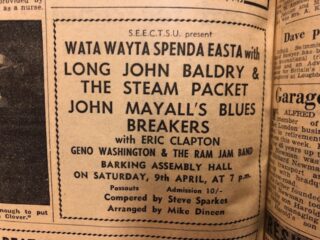
9 April 1966 – Assembly Hall, Barking, east London with Long John Baldry & The Steam Packet and John Mayall’s Bluesbreakers
14 April 1966 – Mister McCoys, Middlesbrough
17 April 1966 – Black Prince Hotel, Bexley, southeast London
19 April 1966 – Klook’s Kleek, West Hampstead, north London
20 April 1966 – Target Paul’s Row, High Wycombe, Bucks
21 April 1966 – Starlight Ballroom, Crawley, West Sussex with The Fleur De Lys
23 April 1966 – King Mojo, Sheffield, South Yorkshire with The Vibrations and Jackie Williams & The Excitements
27 April 1966 – Orford Cellar, Norwich, Norfolk
The band in 1965. Photo courtesy of Buddy Beadle
1 May 1966 – Bluesville, Ipswich, Suffolk
5 May 1966 – Ricky Tick, Southampton Guildhall, Hampshire
11 May 1966 – Tower Ballroom, (Great Yarmouth?) with Ye Highwaymen
16 May 1966 – Atlanta Ballroom, Woking, Surrey with support
17 May 1966 – Gala Ballroom, Norwich, Norfolk
21 May 1966 – Ricky Tick, Newbury Plaza, Berkshire (They may have played at Toft’s in Folkestone on this day)
22 May 1966 – Agincourt Ballroom, Camberley, Surrey
29 May 1966 – Central R&B Club, Central Hotel, Gillingham, Kent
29 May 1966 – Mister McCoys, Middlesbrough
30 May 1966 – Blues Festival, Quebec Park, East Dereham, Norfolk with Zoot Money & The Big Roll Band, Jimmy James & The Vagabonds, The Sullivan James Band and Sounds Reformed
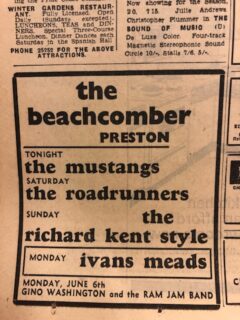
6 June 1966 – Beachcomber, Preston, Lancashire
7 June 1966 – Klook’s Kleek, West Hampstead, north London
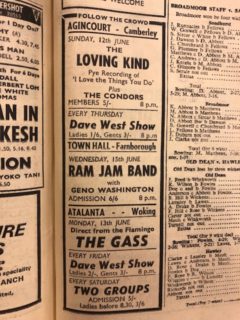
15 June 1966 – Farnborough Town Hall, Farnborough, Hampshire
16 June 1966 – The Beachcomber, Preston, Lancashire
20 June 1966 – Atlanta Ballroom, Woking, Surrey
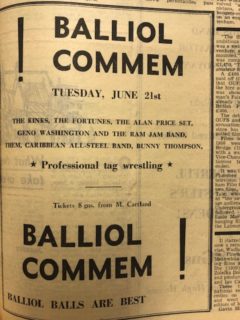
21 June 1966 – Balliol Commem, Balliol College, Oxford University with The Kinks, The Fortunes, The Alan Price Set, Them, Caribbean All-Steer Band and Bunny Thompson
25 June 1966 – Ram Jam, Brixton, south London
26 June 1966 – Beachcomber, Nottingham
27 June 1966 – The Hop, Woodhall Community Centre, Welwyn Garden City, Hertfordshire
28 June 1966 – Civic Hall, Grays, Essex
29 June 1966 – Orford Cellar, Norwich, Norfolk
30 June 1966 – Club a Go Go, Newcastle upon Tyne, Tyne & Wear
Photo courtesy of Buddy Beadle
1 July 1966 – Corn Exchange, Newbury, Berkshire
2 July 1966 – Marcam Hall, March, Cambridgeshire
3 July 1966 – Black Prince Hotel, Bexley, southeast London
5 July 1966 – Odeon Ballroom, Holywell Cross, Chesterfield
6 July 1966 – Corn Exchange, King’s Lynn, Norfolk
7 July 1966 – Civic Hall, Guildford, Surrey
8 July 1966 – Ram Jam, Brixton, south London and Flamingo, Wardour Street, Soho, central London
9 July 1966 – Burton’s, Uxbridge, west London
10 July 1966 – Iron Curtain, St Mary’s Cray, southeast London
11 July 1966 – Court Youth Centre, South Ockendon
12 July 1966 – Bristol University, Bristol
14 July 1966 – Ricky Tick, Windsor, Berkshire
15 July 1966 – California Ballroom, Dunstable, Bedfordshire with The Mark Barry Group
16 July 1966 – Flamingo, Wardour Street, Soho, central London with 5 Proud Walkers
17 July 1966 – Dereham Tavern Club, Dereham, Norfolk with The Style
Geno Washington & The Ram Jam Band #2
(July 1966-August 1966)
Geno Washington – lead vocals
Peter Gage – lead guitar, vocals
Geoff Pullum (aka Jeff Wright) – organ, vocals
Rick Parsons – bass
Lionel ‘Rocky’ Kingham – tenor saxophone
Buddy Beadle – baritone saxophone
Herb Prestidge – drums
The short-lived line-up with Rick Parsons (striped shirt), Fabulous 208, 20 August 1966 issue
John Roberts (aka Robbo to the group) had contracted TB earlier in the year and had spent six months in a clinic in Warwick. During his absence, Gage asked his friend John Baldwin (aka John Paul Jones) to cover initially on condition that Roberts would regain his place when he was better.
Melody Maker, 16 July 1966, page 4
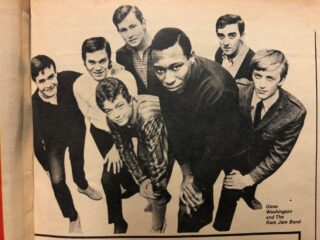
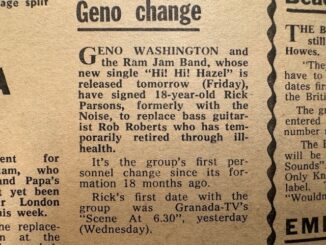
Rick Parsons, who had previously played with The Noise, was announced as the new bass player in the music press on 16 July but did not stay long. He joined after seeing an advert in Melody Maker and had also been a member of The Pitmen from West London.
When Parsons’s replacement Peter Carney (see later entry) proved to be an excellent bass player, it became clear that John Roberts would not re-join and he went on to play with Jimmy James & The Vagabonds where he reunited with Herb Prestidge and Lionel Kingham.
Selected gigs:
18 July 1966 – Atlanta Ballroom, Woking, Surrey (billed as Ram Jam Band)
19 July 1966 – Town Hall, High Wycombe, Bucks
21 July 1966 – Ricky Tick, Stoke Hotel, Guildford, Surrey
22 July 1966 – Youth Centre, Stanford-Le-Hope, Essex
23 July 1966 – Toft’s, Folkestone, Kent
24 July 1966 – Agincourt Ballroom, Camberley, Surrey (billed as Ram Jam Band)
26 July 1966 – Civic Hall, Grays, Essex
25 July 1966 – Majestic Ballroom, Reading, Berkshire
26 July 1966 – Klooks Kleek, West Hampstead, north London
28 July 1966 – Ricky Tick, Harpenden Town Hall, Herts
West Londoner Peter Carney had a long pedigree, having started out with Ealing band, The Krewsaders in 1962. After played with The Flexmen and touring Poland with The London Beats, he joined Tony Knight’s Chessmen in late 1965.
The new bass player remembers that his first outing with the band was a live radio session at BBC Radio 1 with Herman’s Hermits at the Playhouse Theatre in central London.
This line up was responsible for recording (albeit it with a studio bass player) a lone single, “Michael (The Lover)” backed by arguably the group’s best outing, the Pete Gage/Geno Washington co-write “(I Gotta) Hold On To My Love” (Piccadilly 7N 35359) in January 1967 (a UK #39 hit).
Geno Washington & The Ram Jam Band also cut two tracks – “Always” and Pete Gage’s “If I Knew”, which appeared on the EP “Hi!” (Piccadilly NEP 34054), also released in January 1967.
For the “If I Knew” session, Geno Washington learnt the song from a demo sung by Ebony Keyes (aka Kenrick Des Etages). Gage says that the group may have also cut “Never Like This Before” at the same session and that they definitely recorded two songs – “Tell It Like It Is” and “Girl I Want To Marry You”, which were held back and later released as a single (Piccadilly 7N 35403) during September 1967.
While producer John Schroeder preferred to use a session bass player for the studio sessions, Peter Carney did feature on the band’s live recordings and he appears on the debut LP Hand Clappin’, Foot Stompin’, Funky Butt…Live! recorded live at Pye’s Marble Arch Studios with an invited studio audience. The LP broke the UK Top 5 and stayed on the charts for 38 weeks.
Photo courtesy of Buddy Beadle
Selected gigs:
6 August 1966 – Ram Jam, Brixton, south London with The Gass
7 August 1966 – Winter Gardens, Bournemouth, Dorset with Georgie Fame & The Blue Flames, Chris Farlowe & The Thunderbirds, Zoot Money’s Big Roll Band, The Alan Price Set and The Train (Moon’s Train?)
8 August 1966 – The Hop, Woodhall Community Centre, Welwyn Garden City, Hertfordshire
12 August 1966 – Club A Go Go, Newcastle Upon Tyne
13 August 1966 – Elizabeth Club, Glasgow, Scotland
14 August 1966 – Carousel Club, 1 Camp Road, Farnborough, Hants. Beat Instrumental has the band in Scotland on this date
16 August 1966 – Blue Lagoon, Newquay, Cornwall
17 August 1966 – Falcon Hotel, Eltham, Kent
18 August 1966 – Ricky Tick, Stoke Hotel, Guildford, Surrey
21 August 1966 – Mojo Club, Sheffield, South Yorkshire
24 August 1966 – Carousel Club, Farnborough, Hants
25 August 1966 – Ricky Tick, Harpenden Town Hall, Harpenden, Hertfordshire
26 August 1966 – Ricky Tick, Hounslow, west London
26 August 1966 – Ram Jam, Brixton, south London (needs confirmation)
27 August 1966 – Ricky Tick, Windsor, Berkshire
28 August 1966 – Flamingo, Wardour Street, Soho, central London
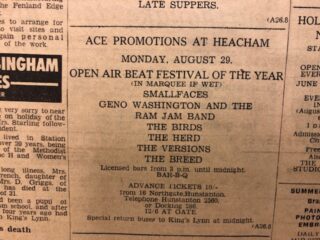
29 August 1966 – ABC Promotions, Heacham Festival, Norfolk with The Birds, The Small Faces, The Herd, The Versions and The Breed
29 August 1966 – Ram Jam, Brixton, south London (needs confirmation)
30 August 1966 – Burton’s, Uxbridge, west London
2 September 1966 – Il Rondo, Leicester
3 September 1966 – Sunshine Floor, Dereham Tavern, East Dereham, Norfolk
4 September 1966 – Country Club, Kirklevington, North Yorkshire
5 September 1966 – Majestic Ballroom, Reading, Berkshire
6 September 1966 – Civic Hall, Grays, Essex
7 September 1966 – Bromel Club, Bromley Court Hotel, Bromley, southeast London
8 September 1966 – Public Hall, Epping, Essex
9 September 1966 – Beat Festival, Scunthorpe United Football Ground, Scunthorpe, North Lincolnshire with Georgie Fame & The Blue Flames, Chris Farlowe & The Thunderbirds, Cliff Bennett & The Rebel Rousers, Billy J Kramer & The Dakotas, The Troggs, The Creation, The Mindbenders and The Fenmen
9 September 1966 – Tiles, Oxford Street, central London with The Equals
18 October 1966 – Public Hall, Harpenden, Hertfordshire
Image may be subject to copyright
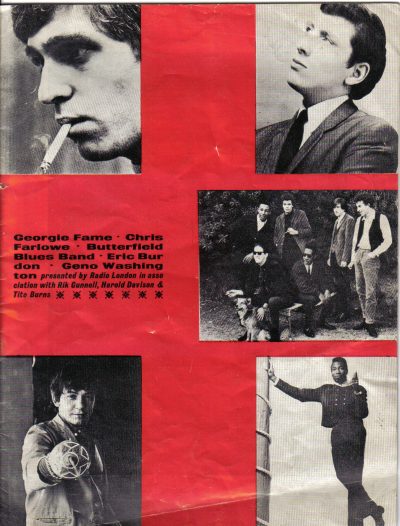
20 October 1966 – Finsbury Park, north London with The New Animals, Georgie Fame & The Blue Flames, Paul Butterfield Blues Band, Chris Farlowe & The Thunderbirds, Eyes of Blue
21 October 1966 – Odeon, Birmingham with The New Animals, Georgie Fame & The Blue Flames, Paul Butterfield Blues Band, Chris Farlowe & The Thunderbirds, Eyes of Blue
22 October 1966 – Odeon, Leeds, West Yorkshire with The New Animals, Georgie Fame & The Blue Flames, Paul Butterfield Blues Band, Chris Farlowe & The Thunderbirds, Eyes of Blue
23 October 1966 – Gaumont, Doncaster, South Yorkshire with The New Animals, Georgie Fame & The Blue Flames, Paul Butterfield Blues Band, Chris Farlowe & The Thunderbirds, Eyes of Blue
25 October 1966 – Odeon, Manchester with The New Animals, Georgie Fame & The Blue Flames, Paul Butterfield Blues Band, Chris Farlowe & The Thunderbirds, Eyes of Blue
26 October 1966 – Odeon, Liverpool with The New Animals, Georgie Fame & The Blue Flames, Paul Butterfield Blues Band, Chris Farlowe & The Thunderbirds, Eyes of Blue
27 October 1966 – Gaumont, Sheffield, South Yorkshire with The New Animals, Georgie Fame & The Blue Flames, Paul Butterfield Blues Band, Chris Farlowe & The Thunderbirds, Eyes of Blue
28 October 1966 – Colston Hall, Bristol with The New Animals, Georgie Fame & The Blue Flames, Paul Butterfield Blues Band, Chris Farlowe & The Thunderbirds, Eyes of Blue
29 October 1966 – Odeon, Cheltenham, Gloucestershire with The New Animals, Georgie Fame & The Blue Flames, Paul Butterfield Blues Band, Chris Farlowe & The Thunderbirds, Eyes of Blue
31 October 1966 – Gaumont, Southampton, Hants with The New Animals, Georgie Fame & The Blue Flames, Paul Butterfield Blues Band, Chris Farlowe & The Thunderbirds, Eyes of Blue
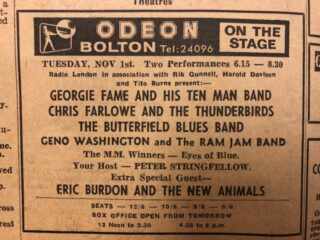
1 November 1966 – Odeon, Bolton, Greater Manchester with The New Animals, Georgie Fame & The Blue Flames, Paul Butterfield Blues Band, Chris Farlowe & The Thunderbirds, Eyes of Blue
2 November 1966 – ABC, Carlisle, Cumbria with The New Animals, Georgie Fame & The Blue Flames, Paul Butterfield Blues Band, Chris Farlowe & The Thunderbirds, Eyes of Blue
3 November 1966 – Odeon, Glasgow, Scotland with The New Animals, Georgie Fame & The Blue Flames, Paul Butterfield Blues Band, Chris Farlowe & The Thunderbirds, Eyes of Blue
4 November 1966 – Odeon, Newcastle upon Tyne with The New Animals, Georgie Fame & The Blue Flames, Paul Butterfield Blues Band, Chris Farlowe & The Thunderbirds, Eyes of Blue
5 November 1966 – Gaumont, Hanley, Staffordshire with The New Animals, Georgie Fame & The Blue Flames, Paul Butterfield Blues Band, Chris Farlowe & The Thunderbirds, Eyes of Blue
6 November 1966 – Odeon, Leicester with The New Animals, Georgie Fame & The Blue Flames, Paul Butterfield Blues Band, Chris Farlowe & The Thunderbirds, Eyes of Blue
10 November 1966 – New Yorker Discotheque, Swindon, Wiltshire
11 November 1966 – Ricky Tick, Windsor, Berkshire
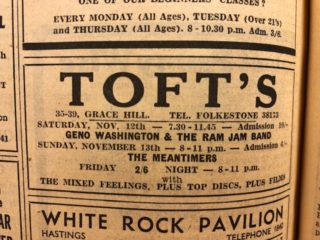
12 November 1966 – Toft’s, Folkestone, Kent
13 November 1966 – Starlite, Greenford, west London
18 November 1966 – Ricky Tick, Hounslow, west London
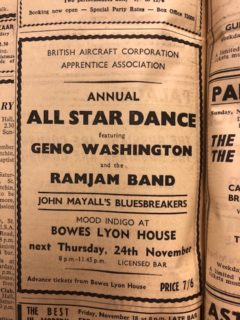
24 November 1966 – Bowes Lyon House, Stevenage, Herts with John Mayall’s Bluesbreakers and Mood Indigo
25 November 1966 – Ram Jam, Brixton, south London
26 November 1966 – Personal appearance by the band at Record Wise, Windsor, Berkshire
26 November 1966 – College of Technology, Loughborough
26-27 November 1966 – King Mojo, Sheffield, South Yorkshire
30 November 1966 – Orford Cellar, Norwich, Norfolk
1 December 1966 – Links International Club, Maxwell Park Youth Centre, Borehamwood, Herts (Simon Gee research)
2 December 1966 – Clouds, Derby with Cassie, Sandy & Sindy and The Makin’ Sounds
4 December 1966 – Ram Jam, Brixton, south London
6 December 1966 – College of Technology, Headington, Oxfordshire
7 December 1966 – ABC Promotions, Public Hall, Heacham, Norfolk with The Versions
8 December 1966 – Club A-Go-Go, Newcastle Upon Tyne
9 December 1966 – Dunhelm House, Durham University, Durham with Jimmy James & The Vagabonds (also billed to play Chelmsford this day)
9 December 1966 – Chelmsford Corn Exchange, Chelmsford, Essex with The Mooch
10 December 1966 – Ricky Tick, Windsor, Berkshire
12 December 1966 – Majestic Ballroom, Reading, Berkshire
13 December 1966 – Top Rank, Watford, Hertfordshire
14 December 1966 – Farnborough Town Hall, Farnborough, Hants
15 December 1966 – Reading University, Reading, Berkshire with Zoot Money’s Big Roll Band
16 December 1966 – Tiles, Oxford Street, central London
17 December 1966 – Ricky Tick, Hounslow, west London
Image may be subject to copyright
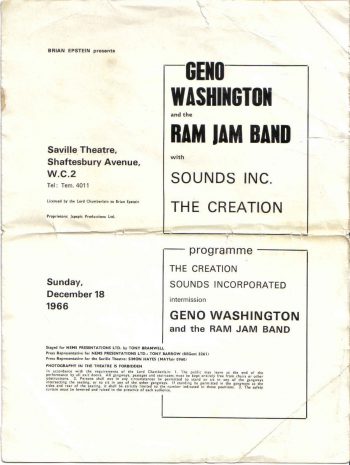
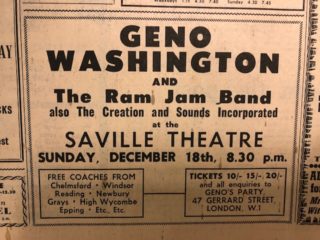
18 December 1966 – Saville Theatre, Shaftsbury Avenue, central London with Creation and Sounds Incorporated
20 December 1966 – Burton’s, Uxbridge, west London
21 December 1966 – Town Hall, High Wycombe, Bucks
22 December 1966 – Ricky Tick, Guildhall, Southampton, Hants with Jimmy James & The Vagabonds
23 December 1966 – Flamingo, Wardour Street, Soho, central London
24 December 1966 – Ricky Tick, Newbury Plaza, Berkshire
26 December 1966 – Tavern Club, Dereham, Norfolk with The Summer Set and The Eyes of Blonde
30 December 1966 – Ricky Rick, Windsor, Berkshire
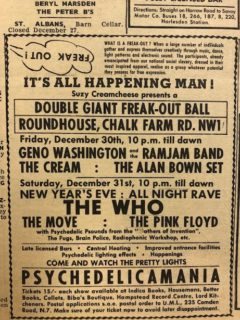
30 December 1966 – Roundhouse, Chalk Farm, north London with Cream and The Alan Bown Set
31 December 1966 – Glenlyn Ballroom, Forest Hill, southeast London
1 January 1967 – Ritz, Bournemouth, Dorset
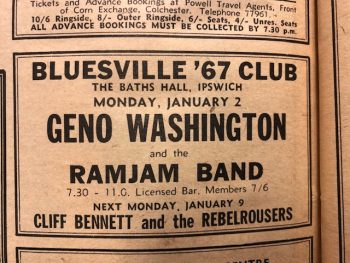
2 January 1967 – Bluesville, Ipswich, Suffolk
3 January 1967 – Ricky Tick, Bedford, Bedfordshire
4 January 1967 – Club Cedar, Birmingham
6 January 1967 – Bluesville ’67, Manor House, north London
7 January 1967 – Burton’s, Uxbridge, west London
14 January 1967 – Starlight Ballroom, Boston Gliderdrome, Boston, Lincolnshire with The Symbols, The Nightbeats, Ray Bones and Frank & Keith
17 January 1967 – Winter Gardens, Malvern, Worcestershire
19 January 1967 – Birdcage, Eastney, Portsmouth, Hants
20 January 1967 – California Ballroom, Dunstable, Bedfordshire with Force Four
21 January 1967 – Twisted Wheel, Manchester
24 January 1967 – Aberystwyth University, Aberystwyth, Wales
25 January 1967 – Ricky Tick, Newbury, Berks (also have Borough Assembly Hall, Aylesbury, Bucks today)
26 January 1967 – Ricky Tick, Guildhall, Southampton, Hants
27 January 1967 – Ram Jam, Brixton, south London
28 January 1967 – Gaeity, Ramsey, Cambridgeshire with The Sect and The Legal Matter
29 January 1967 – Ricky Tick, Hounslow, west London
3 February 1967 – Leicester University, Leicester
4 February 1967 – Winter Gardens, Weston-Super-Mare, Somerset
5 February 1967 – Starlite Ballroom, Greenford, west London
5 February 1967 – Ram Jam, Brixton, south London
6 February 1967 – St Andrew’s Hall, Norwich, Norfolk
7 February 1967 – Town Hall, High Wycombe, Bucks
10 February 1967 – Dancing Slipper, Nottingham
10 February 1967 – Orford Cellar, Norwich, Norfolk
11 February 1967 – Ricky Tick, Thames Hotel, Windsor, Berkshire
12 February 1967 – Blue Moon, Hayes, west London
14 February 1967 – Ritz Ballroom, Bournemouth, Dorset with The Living Trust
16 February 1967 – Ricky Tick, Newbury Plaza, Berkshire
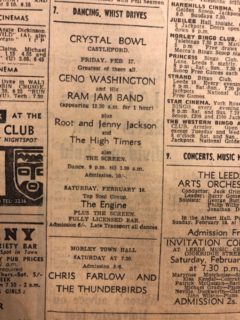
17 February 1967 – Crystal Bowl Ballroom, Castleford, West Yorkshire with Root & Jenny Jackson & The High Timers and The Screen
17 February 1967 – Boulevard, Tadcaster, North Yorkshire with Ellisons Hog Line and The Screen
18 February 1967 – Twisted Wheel, Manchester
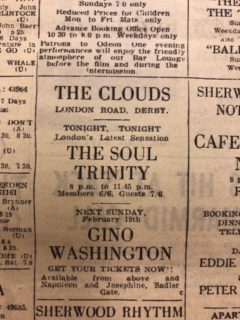
19 February 1967 – Clouds, Derby, Derbyshire
20 February 1967 – New Cellar Club, South Shields, Tyne & Wear
23 February 1967 – New Yorker Discotheque, Swindon, Wiltshire
24 February 1967 – Ram Jam, Brixton, south London
25 February 1967 – University College, Gower Street, central London
26 February 1967 – Dereham Tavern, Dereham, Norfolk with The Rubber Band
1 March 1967 – Blue Moon, Cheltenham, Gloucestershire
3 March 1967 – Bluesville ’67, Manor House, north London
4 March 1967 – Ricky Tick, Hounslow, west London
5 March 1967 – Starlite Ballroom, Greenford, west London
Geno Washington & The Ram Jam Band #4
(March 1967-April 1967)
Geno Washington – lead vocals
Peter Gage – lead guitar, vocals
Geoff Pullum (aka Jeff Wright) – organ, vocals
Peter Carney – bass, vocals
Lionel ‘Rocky’ Kingham – tenor saxophone
Clive Burrows – baritone saxophone
Herb Prestidge – drums
Pete Gage had been looking to improve the band and had started discussions with Eddie Thornton from Georgie Fame & The Blue Flames about getting a really punchy brass section together. He also planned to use Clive Burrows from The Alan Price Set to arrange the songs instead of writing all of the arrangements himself.
Unhappy about the current situation, Buddy Beadle left to join The Amboy Dukes but would return in June 1968.
Clive Burrows (b. 14 July 1939; d. 7 January 2005), who’d started out with The Wes Minister Five, and had gone to work with Zoot Money’s Big Roll Band before joining The Alan Price Set in 1965, came on-board after a show at Klooks Kleek on 7 March.
The new line up started to cut some live recordings, which appeared on the band’s second LP, Hipsters, Flipsters, Finger-Poppin’ Daddies! (Piccadilly NPL/NSPL 38032). Released in September 1967, the album also featured live tracks by the next version of The Ram Jam Band, and peaked at #8 on the UK charts.
Selected gigs:
9 March 1967 – Winter Gardens, Weston-Super-Mare, Somerset
10 March 1967 – Albany Institute, Deptford, Kent with The Bonzo Dog Doo Dah Band and The Lee Hawkins Group
10 March 1967 – Goldsmith College, New Cross, south east London
11 March 1967 – Toft’s, Folkestone, Kent
11 March 1967 – ‘Beat Club’ German TV with The Smoke, The Jimi Hendrix Experience, The Who and Cliff Bennett & The Rebel Rousers. This must have been recorded earlier than this date
12 March 1967 – Ricky Tick, Hounslow, west London
14 March 1967 – Burton’s, Uxbridge, west London
Photo: Hillingdon Mirror
The Hillingdon Mirror ran a pull out spread with photos in its 14 March 1967 issue
16 March 1967 – Community Centre, Southall, west London
16 March 1967 – Ealing Tech at Seymour Hall, Marble Arch, central London
17 March 1967 – Ricky Tick, Newbury, Berks
21 March 1967 – Burton’s, Uxbridge, west London
21 March 1967 – Goldsmiths College, New Cross, southeast London with The Bonzo Dog Doo Dah Band and The Drovers (possibly the Tuesday evening)
22 March 1967 – Bromel Club, Downham, southeast London
23 March 1967 – Sutton Baths, Sutton-in-Ashfield, Nottinghamshire
23 March 1967 – Chelmsford Corn Exchange, Chelmsford, Essex and The Coletrane Union
24 March 1967 – Night Owl, Leicestershire
25 March 1967 – Chelmsford Corn Exchange, Chelmsford, Essex
26 March 1967 – Ram Jam, Brixton, south London
27 March 1967 – Baths Hall, Ipswich, Suffolk
28 March 1967 – The Marquee, Wardour Street, Soho, central London with The Amboy Dukes
31 March 1967 – Gaeity Ballroom, Grimsby
1 April 1967 – Dreamland, Margate, Kent with Waygood Ellis Zone
2 April 1967 – Bretts Sunday Club, Bretts, Russell Acotts Taphouse, Oxford
3 April 1967 – Majestic Ballroom, Reading, Berkshire (According to Reading Evening Post, this was cancelled as Geno collapsed on stage at the Dreamland)
5 April 1967 – Locarno, Stevenage, Hertfordshire
6 April 1967 – Club A Go Go, Newcastle Upon Tyne
7 April 1967 – California Ballroom, Dunstable, Bedfordshire with Stacey’s Circle
8 April 1967 – Bird Cage, Eastney, Hants
11 April 1967 – Town Hall, High Wycombe, Bucks (billed to be in Paris this same day)
11 April 1967 – Paris Olympia, Paris, France with The Rolling Stones, The Move and The Clan
13 April 1967 – Ricky Tick, Windsor, Berkshire
14 April 1967 – Brighton Arts Festival, Brighton, West Sussex with Paul Jones, The Move, Cliff Bennett & The Rebel Rousers, Jimmy James & The Vagabonds, Mike Stuart Span and others
15 April 1967 – King Mojo, Sheffield, South Yorkshire
16 April 1967 – Daily Express Record Star Show, Empire Pool, Wembley, west London with Cream, The Move, The Alan Price Set, The Kinks, Chris Farlowe & The Thunderbirds, The Troggs, Cliff Bennett & The Rebel Rousers and many others
Unhappy about the way the Gunnell brothers were treating the band, Pete Gage challenged the group’s management.
Rik Gunnell took Geno Washington to Paris (most likely on the weekend of 15-16 April) where he encouraged the singer to recruit new musicians to replace the guitarist, Geoff Pullum and Herb Prestidge.
The 16 April gig was most likely Gage, Pullum and Prestidge’s final show (although Disc & Music Echo’s 22 April issue does talk about the band being in France and Georgie Fame coming out to watch).
Gage and Pullum saw a lawyer to see how they could keep The Ram Jam Band name that they had created. However, they soon realised that they could not afford legal representation, especially one that could hope to match the Gunnells’ financial clout.
Herb Prestidge reunited with John Roberts in Jimmy James & The Vagabonds. Geoff Pullum moved into academia and is currently professor of general linguistics and head of linguistics and English language at Edinburgh University.
Pete Gage did production work (including Joe E Young & The Tonicks) initially before playing with Jimmy James & The Vagabonds in 1969. The following year, he formed and ran Dada and then formed and ran Vinegar Joe, recording with both acts.
After doing sessions for artists as diverse as Joan Armatrading, Elkie Brooks and Keef Hartley, he put another version of The Ram Jam Band together in the 1980s before moving into production. He currently resides in Australia.
Sources:
South East London Mercury, Bucks Free Press, Derby Evening Telegraph, Eastern Evening News, Evening Star (Ipswich), Guildford Advertiser, Hayes Gazette, Kent Messenger, Melody Maker, NME, Middlesbrough Evening Gazette, Newcastle Evening Chronicle, Nottingham Evening Post, Dave Allen (Bird Cage gigs), Spencer Leigh (The Cavern, Liverpool), Fabulous 208, Wood Green and Southgate Weekly Herald, Lincolnshire Standard, Essex Chronicle, Crawley Advertiser and Newham, West Ham & East Ham, Barking and Stratford Express, Lynn News, Oxford Mail, Windsor, Slough & Eton Express, Record Retailer, Newcastle University paper The Courier and Durham University paper Palatine.
Huge thanks to Pete Gage, Geoff Pullum, Peter Carney and Tony Coe for helping with the band history. Thanks to Buddy Beadle for the amazing photos.
This is a much updated version of the original article which appeared on Strange Brew. Thank you so much Jason for first publishing the article on your site.
Guitarist Mick Abrahams formed Blodwyn Pig in his home town Luton, Bedfordshire in the first few weeks of January 1969 after leaving Jethro Tull in early December 1968.
Bass player Andy Pyle had previously been a member of Abrahams’ pre-Jethro Tull group, McGregor’s Engine while sax/flute player Jack Lancaster was from Manchester and was working with the group Sponge when he got the call.
The trio advertised for a drummer and Ron Berg who’d been working with White Rabbit (singer Linda Lewis fronted them at one point) answered and got the job.
In his autobiography, What is a Wommett?, Mick Abrahams says that Blodwyn Pig rehearsed for a week before making their debut at the Cooks Ferry Inn in Edmonton, north London.
Melody Maker lists this as 27 January and notes that the quartet was billed as The Mick Abrahams Blues Band. In fact, Abrahams’ new group was billed under his own name rather than Blodwyn Pig for its first few gigs.
The following is an incomplete gig list of Blodwyn Pig 1969 gigs which are all listed in Melody Maker unless otherwise noted.
I’d welcome any additions. The band is billed as Blodwyn Pig unless noted.
Notable gigs:
27 January 1969 – Cooks Ferry Inn, Edmonton, north London (debut) Billed as Mick Abrahams Blues Band
Melody Maker’s 1 February issue, page 4, reports the new band and name under its news extra section
1 February 1969 – Van Dike, Plymouth, Devon (Jonathan Hill’s book, Van Dike – The Life & Times of a Plymouth Club 1968-1972). Billed as Mick Abrahams Band
7 February 1969 – Bedford College, Regent’s Park, central London with Chicken Shack. Billed as Mick Abrahams Band
13 February 1969 – Red Lion, Leytonstone, east London. Billed as Mick Abrahams
Image may be subject to copyright
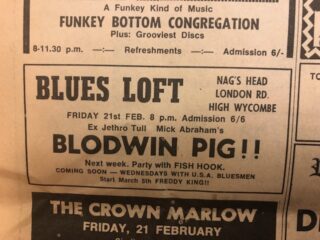
21 February 1969 – Blues Loft, Nag’s Head, High Wycombe, Bucks (Bucks Free Press)
Melody Maker’s 22 February issue, page 6, says the band made its Marquee debut last week but I have not found a listing elsewhere. Monday night (17 February) was audition night so this is the possible date
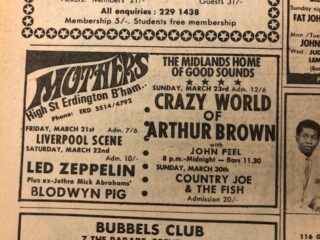
22 February 1969 – Mothers, Erdington, West Midlands with Keef Hartley
3 March 1969 – Cooks Ferry Inn, Edmonton, north London. Billed as Mick Abrahams
Image may be subject to copyright
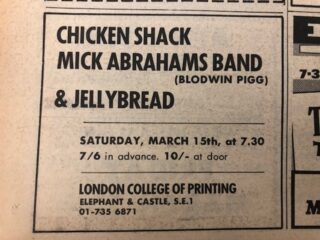
15 March 1969 – London College of Printing, Elephant & Castle, south London with Chicken Shack and Jellybread. Billed as Mick Abrahams Band
22 March 1969 – Mothers, Erdginton, West Midlands with Led Zeppelin
28 March 1969 – Hornsey Wood Tavern, Hornsey Wood, north London. Billed as Mick Abrahams Blodwyn Pigg
29 March 1969 – The Village, Dagenham, east London with Killing Floor and Yellow Dog. Billed as Mick Abrahams
2 April 1969 – Rambling Jack’s Blues Club, the Railway Hotel, Bishop’s Stortford, Herts (Steve Ingless’ book The Day Before Yesterday – Rock, Rhythm and Jazz in the Bishop’s Stortford area from 1957 to 1969)
15 April 1969 – Fishmonger’s Arms, Wood Green, north London. Billed as Mick Abrahams Blodwyn Pig
18 April 1969 – The Marquee, Wardour Street, Soho, central London with Circus (Tony Bacon’s book, London Live/Melody Maker)
19 April 1969 – London College of Printing, Elephant & Castle, south London with Climax Chicago Blues Band and Smiley
20 April 1969 – Mothers, Erdington, West Midlands with Dr K’s Blues Band
22 April 1969 – Bluesville ’69 Club’s Cherry Tree, Welwyn Garden City, Herts
23 April 1969 – Blues Loft, Nag’s Head, High Wycombe, Bucks (Bucks Free Press)
25 April 1969 – Northern Poly, Holloway Road, north London with Elmer Gantry
28 April 1969 – Wall City Jazz Club, Quaintways, Chester, Cheshire with Frankie & The Countdowns and Shady Lane (Liverpool Echo) Billed as Mick Abrahams Blues Band
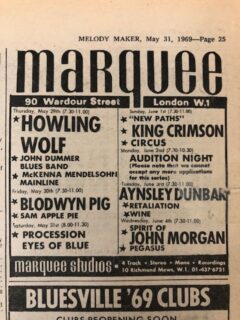
29 April 1969 – The Marquee, Wardour Street, Soho, central London (Tony Bacon’s book, London Live/Melody Maker)
Image may be subject to copyright
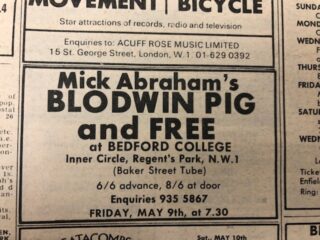
9 May 1969 – Bedford College, Regent’s Park, central London with Free
10 May 1969 – Luton College of Technology Students’ Union, Luton, Beds with The Spirit of John Morgan and Mechanical Bird (Blodwyn Pig concert Wiki site)
20 May 1969 – The Marquee, Wardour Street, Soho, central London with Grail (Tony Bacon’s book, London Live/Melody Maker)
Image may be subject to copyright
30 May 1969 – The Marquee, Wardour Street, Soho, central London with Sam Apple Pie (Tony Bacon’s book, London Live/Melody Maker)
2 June 1969 – Cooks Ferry Inn, Edmonton, north London
16 June 1969 – The Pavilion, Bath (Poster) Billed as Mick Abraham’s Blodwyn Pig
20 June 1969 – City Hall, Newcastle upon Tyne, Tyne & Wear with Led Zeppelin and Liverpool Scene (Blodwyn Pig concert Wiki site)
22 June 1969 – Mothers, Erdington, West Midlands with The Taste
25 June 1969 – Derwent College, York, North Yorkshire with Bonzo Dog Band, John Mayall, Ronnie Scott & His Band, Eclection and Alexis Korner & Invaders Steel Band (Blodwyn Pig concert Wiki site)
26 June 1969– Guildhall, Portsmouth, Hants with Led Zeppelin and The Liverpool Scene (Blodwyn Pig concert Wiki site)
27 June 1969 – The Marquee, Wardour Street, Soho, central London with Groundhogs (Tony Bacon’s book, London Live/Melody Maker)
28 June 1969 – Bath Festival of Blues, Recreation Ground, Bath with Fleetwood Mac, Led Zeppelin, John Mayall, Chicken Shack, Nice, Ten Years After and many, many others. Billed as Mick Abraham’s Blodwyn Pig
29 June 1969 – Albert Hall, Knightsbridge, central London with Led Zeppelin and The Liverpool Scene. Billed as Mick Abraham’s Blodwyn Pig
30 June 1969 – Cooks Ferry Inn, Edmonton, north London
6 July 1969 – Farx, the Northcote Arms, Southall, west London. Billed as Mick Abraham’s Blodwyn Pig
11 July 1969 – The Marquee, Wardour Street, Soho, central London with Andromeda (Tony Bacon’s book, London Live/Melody Maker)
Image may be subject to copyright
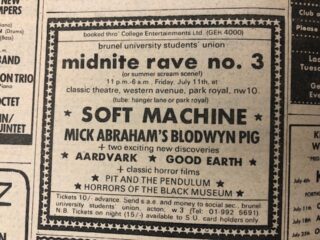
11 July 1969 – Brunel University Students’ Union, Brunel University, London with The Soft Machine, Aaardvark and Good Earth. Billed as Mick Abraham’s Blodwyn Pig
14 July 1969 – Friars, Aylesbury, Bucks (Bucks Free Press)
25 July 1969 – The Marquee, Wardour Street, Soho, central London with Circus (Tony Bacon’s book, London Live/Melody Maker)
2 August 1969 – Torquay Town Hall, Torquay, Devon (Torbay Express and South Devon Echo) Billed as Mick Abraham’s Blodwyn Pig
5 August 1969 – Klooks Kleek, West Hampstead, north London with Wine
Melody Maker’s 9 August issue, p12, has a good write up entitled ‘Blodwyn Pig continue with the heavy sound’.
Photo: Possibly Gloucester Citizen. Image may be subject to copyright
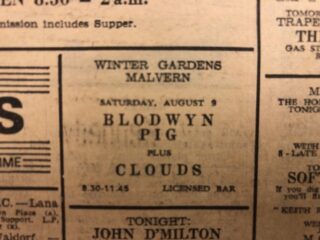
9 August 1969 – Malvern Winter Gardens, Malvern, Worcestershire with Clouds (Poster)
10 August 1969 – 9th National Jazz, Pop, Ballads & Blues Festival, West Drayton, west London with The Nice, Family, Keef Hartley, Steamhammer and many others. Billed as Mick Abraham’s Blodwyn Pig
15 August 1969 – The Marquee, Wardour Street, Soho, central London with Grail (Tony Bacon’s book, London Live/Melody Maker)
20 August 1969 – Rambling Jack’s Blues Club, the Railway Hotel, Bishop’s Stortford, Herts (Steve Ingless’ book The Day Before Yesterday – Rock, Rhythm and Jazz in the Bishop’s Stortford area from 1957 to 1969) Concert was cancelled due to summer recess
22 August 1969 – Blues Loft, Nag’s Head, High Wycombe, Bucks (Bucks Free Press)
25 August 1969 – King’s Hall, Romford Market, Romford, east London
29 August 1969 – The Marquee, Wardour Street, Soho, central London with Samson (Tony Bacon’s book, London Live/Melody Maker)
Melody Maker’s 30 August issue, page 24 notes that the band missed some dates because Ron Berg was ill
1 September 1969 – Queen’s Hall, Narbeth, west Wales with Roundabout (Pembroke & West Wales Guardian)
16 September 1969 – Mothers, Erdington, West Midlands with King Crimson
18 September 1969 – Social Club, Aylesbury, Bucks
21 September 1969 – Farx, the Northcote Arms, Southall, west London. Billed as Mick Abrahams Blodwyn Pig
22 September 1969 – The Village of the Damned Blues Club, Aurora Ballroom, Brompton, Gillingham, Kent with support (Poster)
26 September 1969 – King’s Hall, Romford, east London with Stone The Crows
Image may be subject to copyright
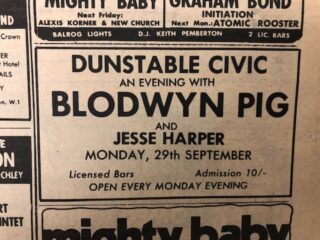
29 September 1969 – Dunstable Civic Hall, Dunstable, Beds with Jesse Harper
30 September 1969 – The Marquee, Wardour Street, Soho, central London with Ground (Tony Bacon’s book, London Live/Melody Maker)
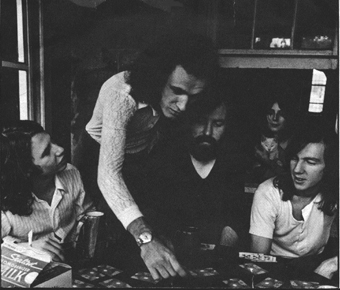
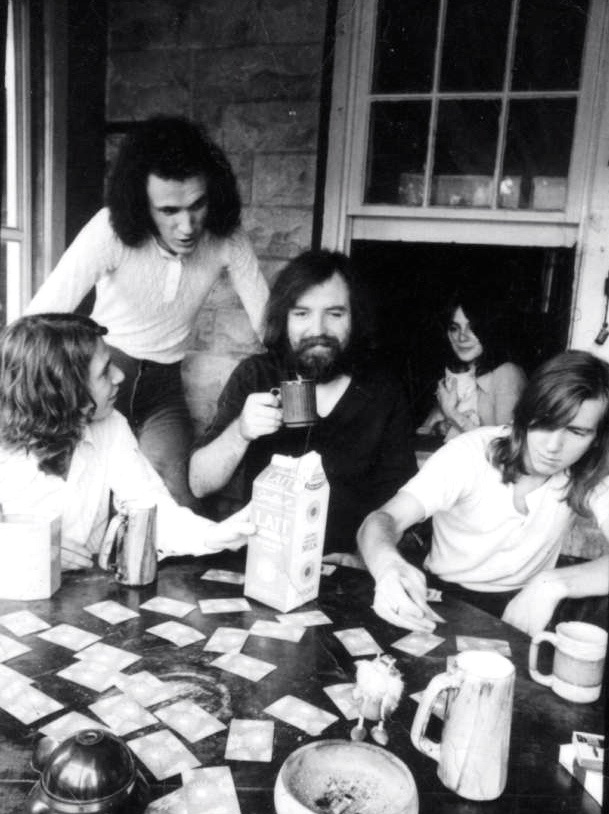
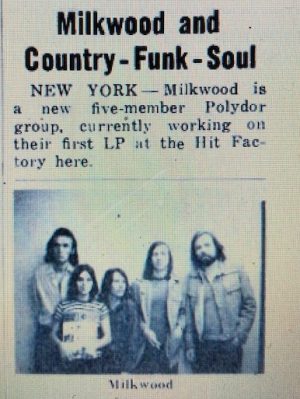
Milkwood, summer 1969. Left to right: Ron Frankel, Jack Geisinger, Louis McKelvey, Mary Lou Gauthier and Malcolm Tomlinson. Photo: Rosemary White
Mary Lou Gauthier (Lead vocals)
Louis McKelvey (Guitar, Vocals)
Malcolm Tomlinson (Guitar, Flute, Drums, Lead vocals)
Ron Frankel (Drums)
Ronnie Blackwell (Bass)
+
Jack Geisinger (Bass, Vocals)
This fascinating Anglo-Canadian group was put together by former Influence and Our Generation member Louis McKelvey (b. 31 October 1943, Killorglin, County Kerry, Republic of Ireland) with ex-King Curtis sideman Ron Frankel (b. April 1947, Montreal, Canada).
Frankel had previously played in The Soul Mates (and with his wife Mary Lou Gauthier) in the lounge band, Five of a Kind, who also featured Brian Wray, Brian Edwards and Freddie Gilbert. According to the Montreal Star‘s 7 November 1967 issue, page 4, Five of a Kind played at the King’s Inn in Freeport, the Bahamas that week.
They then joined King Curtis & The King Pins in 1968. (Ed: McKelvey may have met Frankel at the Hawk’s Nest on 23 July 1968 when King Curtis & The King Pins played there).
McKelvey approached Frankel and Gauthier about putting a new band together in September 1968 after leaving Influence, but the group didn’t form properly until early March 1969.
During the interim, McKelvey returned to England for around five months and reunited with his old friend Malcolm Tomlinson (b. 16 June 1946, Isleworth, Middlesex, England), from the early 1960s west London band Jeff Curtis & The Flames.
Jeff Curtis & The Flames, London, 1963. Louis McKelvey (far left) and Malcolm Tomlinson (drums). Photo: Dave Wigginton
Tomlinson was currently playing with Gethsemane (featuring future Jethro Tull guitarist Martin Barre), and had done a BBC radio session with Elton John in October 1968.
McKelvey and Tomlinson both auditioned for the guitar position in Jethro Tull, but when Barre was offered the place and Gethsemane split up, Tomlinson returned to Toronto with McKelvey around March 1969 to put together Milkwood.
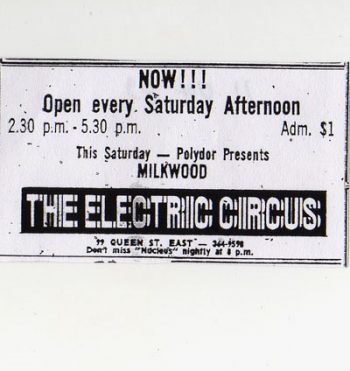
Adding ex-Five Bells bass player Ron Blackwell (b. 27 July 1948, Montreal, Canada), the band played at the Penny Farthing in Toronto in early May. They also played regularly at the Electric Circus.
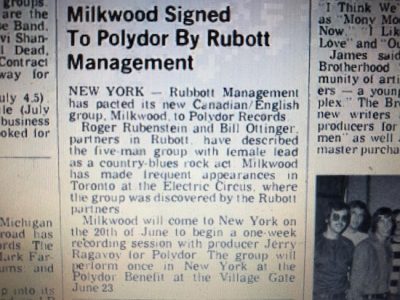
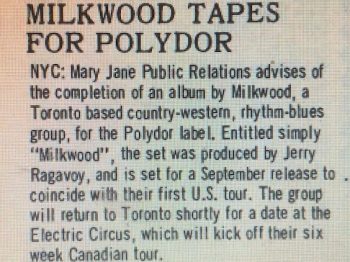
The band sent a four-track demo to Polydor Records around this time and, according to Billboard, the label signed the band before it had played a single show.
Left to right: Ron Frankel, Jack Geisinger, Louis McKelvey, Mary Lou Gauthier and Malcolm Tomlinson
In mid-June 1969, former Influence member Jack Geisinger (b. March 1945, Czech Republic) joined replacing Ronnie Blackwell in time for sessions at the Hit Factory in New York.
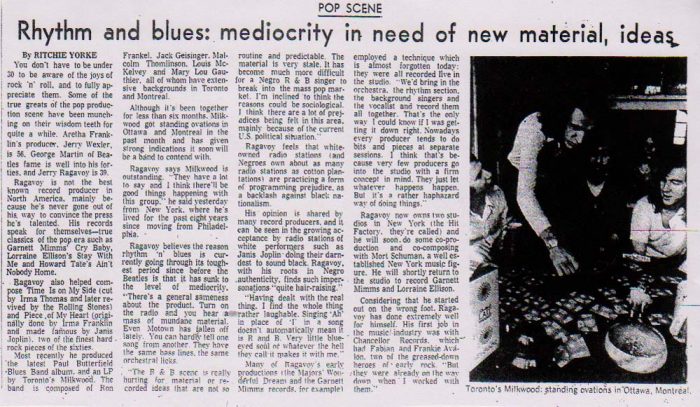
Kicking off on 20 June, the week-long sessions were overseen by famous producer and song-writer Jerry Ragavoy who produced the LP and also played piano on some tracks.
Cashbox, 28 June 1969
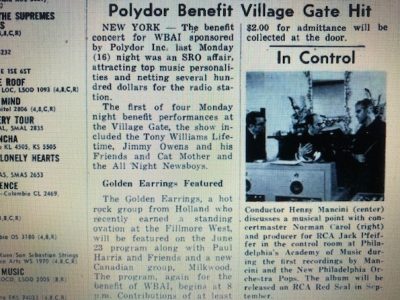
While in New York, the band took part in the Polydor Benefit gig at the Village Gate with Dutch band, The Golden Earring on 23 June.
Sessions were completed in July. Members of The Band were at the Hit Factory when the group cut “There’s A Man” and complimented Mary Lou Gauthier on her vocals.
RPM Weekly, 28 July 1969
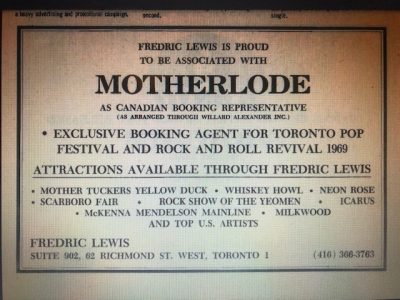
Back in Toronto, the band signed to the Frederick Lewis booking agency and embarked on Canadian dates.
Meanwhile, the LP was slated for release in September to coincide with an American tour, which never happened.
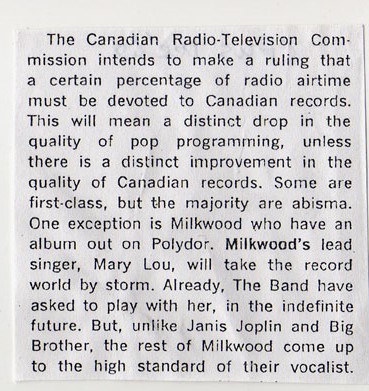
A disagreement between Milkwood’s manager and Polydor resulted in the LP being shelved. In November 1969 the group split up.
The band’s greatest claim to fame is that it appeared at Toronto’s Rock ‘N’ Roll Revival concert on 13 September. Although the group wasn’t billed, they performed just before John Lennon & The Plastic Ono Band, according to roadie Dave Mandel.
McKelvey and Tomlinson (and later Geisinger) stuck together to work in Damage during 1969-1970.
McKelvey also briefly worked with Powerhouse in late 1970, before retiring from the music business.
Tomlinson later recorded with Rick James and Bearfoot and issued two solo LPs. Geisinger played with Charlee and Moonquake among others.
Frankel later did sessions for Jesse Winchester while Mary Lou Gauthier recorded a solo single, “In The Summertime” c/w “Come Run” for Polydor and later sang with Celine Dion at Caesar’s Palace in Las Vegas. Blackwell is a computer consultant and lives in Las Vegas.
Thanks to Carny Corbett for the supplying the image
Malcolm Tomlinson died in April 2016. Louis McKelvey died in November 2017 and Jack Geisinger has also passed away.
Advertised gigs
3 May 1969 – Penny Farthing, Toronto (possibly when Jimi Hendrix dropped in to listen)
25 May 1969 – Rock Pile, Toronto with Kensington Market, Grand Funk Railroad and Leather
June 1969 – Electric Circus, Toronto (this is where Rubbott Management spotted them)
21 June 1969 – Rock Pile, Toronto with Brother Brent
Record World, 28 June 1969
23 June 1969 – Village Gate, New York with The Golden Earring
18 August 1969 – Penny Farthing, Toronto (Led Zeppelin played this night at the Rock Pile and Robert Plant and John Bonham dropped in at the club afterwards)
13 September 1969 – Toronto Rock ‘N’ Roll Revival, Varsity Stadium with John Lennon & The Plastic Ono Band, Gene Vincent, Alice Cooper and many others
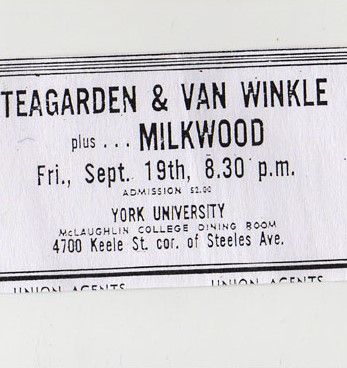
19 September 1969 – York University, Toronto with Teegarden and Vanwinkle
11 October 1969 – Electric Circus, Toronto
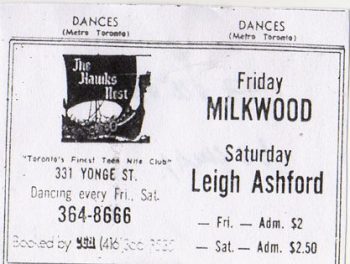
17 October 1969 – The Hawk’s Nest, Toronto
21 October 1969 – Van Morrison at Le Hibou This may be evening that Mary Lou and Malcolm jumped up on stage
14-29 November 1969 – Laugh-In, Montreal, Canada
Many thanks to Louis McKelvey, Mary Lou Gauthier, Ron Frankel, Ronnie Blackwell, David Mandel, Malcolm Tomlinson and Jack Geisinger for information.
Toronto gigs were taken from the After Four section of the Toronto Telegram. Also Ottawa Citizen and Montreal Star
RPM Weekly, 19 August 1967. Thanks to Ivan Amirault for providing
James Houston (Guitar, Vocals)
Al Palmquist (Guitar, Vocals)
Al Spencer (Bass)
Roz Parks (Drums)
+
Colin Walker (Drums)
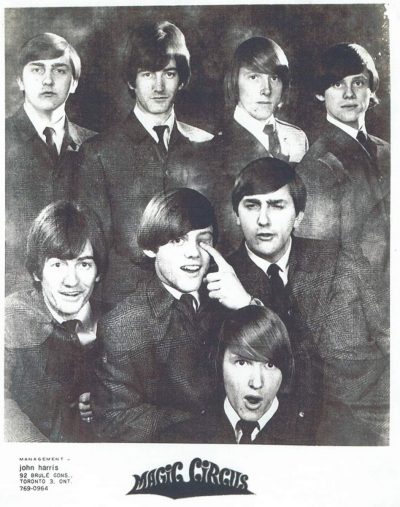
The Magic Circus were best known for containing future Paupers’ members Roz Parks (b. 15 April 1945, Picton, Ontario) and James Houston (b. 25 May 1946, Belfast, Northern Ireland).
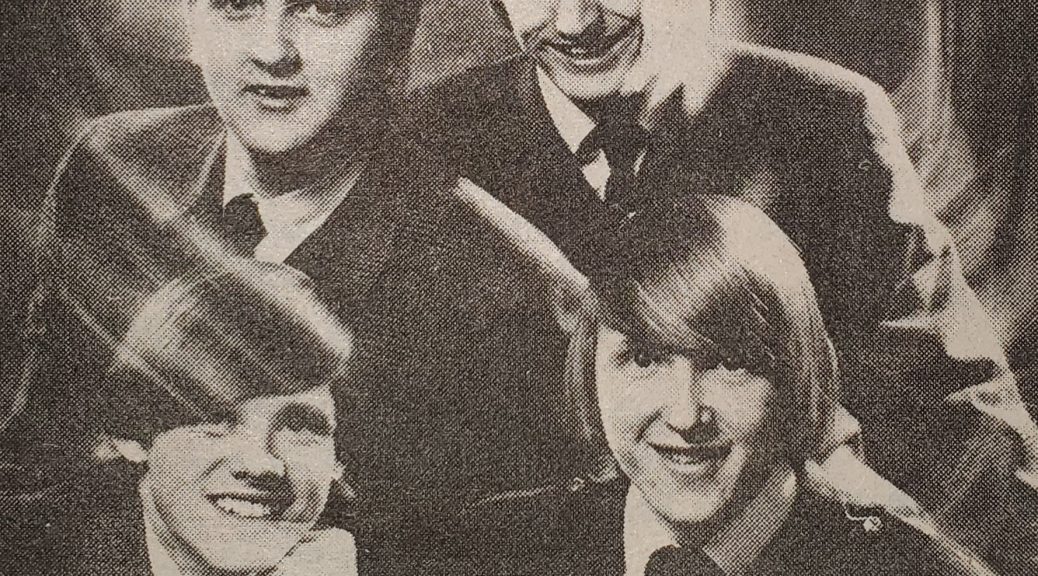
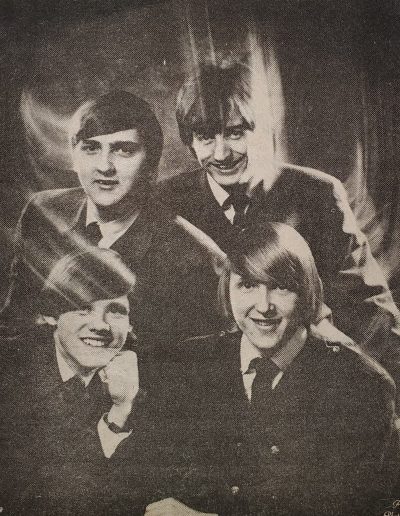
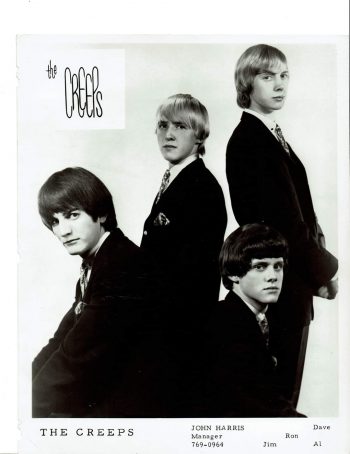
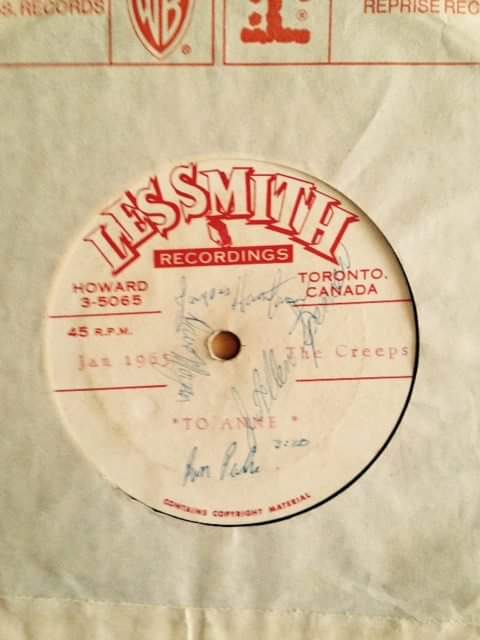
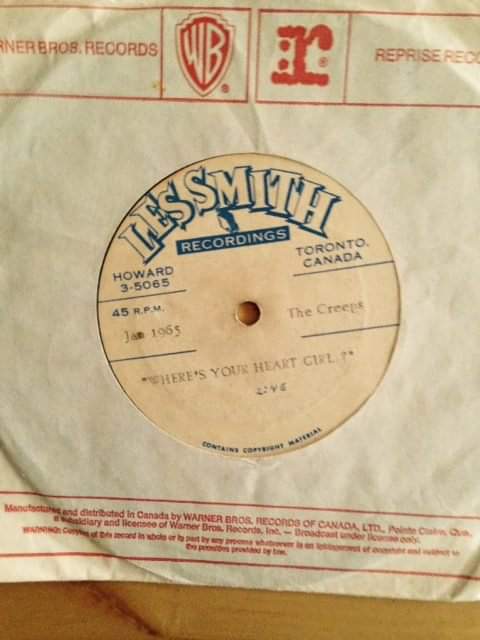
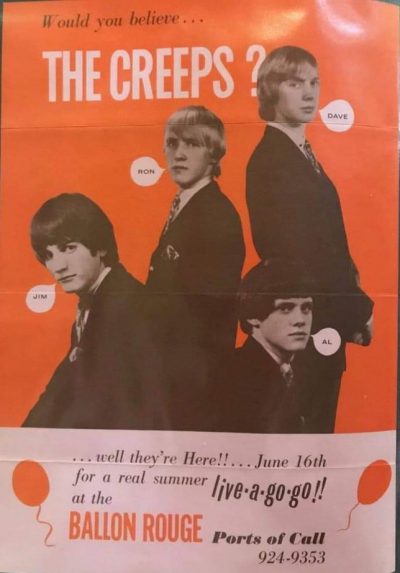
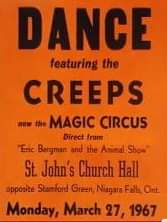
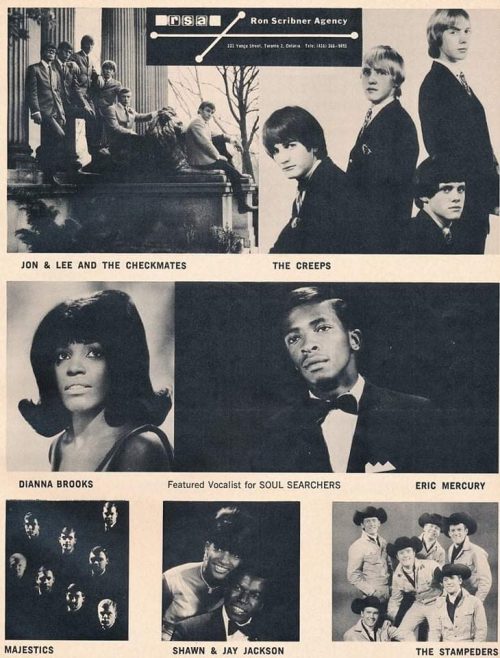
Houston, Parks and Spencer (b. 7 March 1947, London, England), had previously been members of The Creeps but changed name in early 1967 when guitarist Al Palmquist replaced Dave Morgan.
Thanks to Ivan Amirault for the photo
The band was best known for the 50-minute rock symphony, ‘March of The Mushroom’, written largely by Houston. Aside from playing other original material, the group also played Beatles, Beach Boys, Association and Mamas & The Papas covers.
The band was popular on Toronto’s club scene and opened for many of the top artists of the day, including Del Shannon, Wilson Pickett, The Turtles, Mitch Ryder, Eric Burdon & The Animals, Paul Revere & The Raiders, Ronnie Hawkins and The Left Banke. They also toured widely throughout Ontario playing high schools and dance halls.
Parks left in July 1968 to play with Edward Bear briefly before replacing Skip Prokop in The Paupers in October.
Australian Colin Walker from the Australian band, The Flying Circus joined in his place. The band then played as The Carnival (apart from a couple of shows, including the ‘Time Being’ held at the Canadian National Exhibition in Toronto in September where they played as The Magic Circus).
Houston also joined The Paupers in April 1969 after turning an offer down from Skip Prokop to play bass in Lighthouse (he may also have fronted Wizard’s Hand for a while).
Palmquist and Spencer carried on as The Carnival on TV shows and then resumed the Magic Circus name.
Photo from Ivan AmiraultPhoto from Ivan Amirault
Thanks to Ivan Amirault
Advertised gigs
18 March 1967 – Lakeshore Lions Arena, Toronto with The Strays
24 March 1967 – Queen’s Park, London, Ontario
25 March 1967 – Hidden Valley, Huntsville, Ontario with The Left Banke
Thanks to Ivan Amirault
27 March 1967 – St John’s Church, Niagara Falls, Ontario
28 March 1967 – The Night Owl, Toronto
29 March 1967 – The Castle, St Catherine’s, Ontario
30 March 1967 – Brant Inn, Burlington, Ontario
31 March 1967 – Royal Plaza, Clarkson, Ontario
1 April 1967 – Huntingdon Park Commercial Centre, Hamilton, Ontario
3 June 1967 – The Flick, Toronto
10 June 1967 – Scarborough Arena Gardens, Scarborough, Ontario with Eddie Spencer & The Mission, Roy Kenner & The Associates, The Tripp, Bobby Kris & The Imperials, The Lords of London and others
5 July 1967 – Muskoka Pavillion, Bala, Ontario
21 July 1967 – Huron Park Recreation Centre, Cooksville, Ontario
9 August 1967 – Cobourg Pavilion, Cobourg, Ontario
27 August 1967 – Summer Gardens, Port Dover, Ontario with The Federations
1 October 1967 – Paradise Gardens, Guelph, Ontario with Three to One
16-18 October 1967 – The Flick, Toronto
19 October 1967 – The Flick, Toronto
2 November 1967 – Stratford College Institute, Stratford, Ontario
3 November 1967 – Crosby High School, Forthill, Ontario
4 November 1967 – Belleville Arena, Belleville, Ontario
5 November 1967 – Club Shingaling, Welland, Ontario
21 December 1967 – Annandale High School, Ontario
22 December 1967 – Brampton High School, Brampton, Ontario
23 December 1967 – Pelham District High, Fenwick, Ontario
26 December 1967 – St Nick’s Church, Hamilton, Ontario
27 December 1967 – Kitchener College Institute, Kitchener, Ontario
28 December 1967 – The Night Owl, Toronto
29 December 1967 – St Martin’s Church, Niagara, Ontario
30 December 1967 – Haileybury High School, Haileybury, Ontario
31 December 1967 – Kirkland Lake, Ontario
6 January 1968 – Broom and Stone, Scarborough, Ontario
12 January 1968 – York University, Toronto with The Paupers and The Last Words
12 January 1968 – Brantford Collegiate Institute, Brantford, Ontario
1 February 1968 – University of Waterloo, Waterloo, Ontario
2 February 1968 – Forrest Hills Collegiate, Forest Hills, Ontario
3 February 1968 – Forest Hills CI, Kitchener, Ontario
4 February 1968 – St Martin In The Field Church, Toronto
6 February 1968 – St John’s Church, Niagara Falls, Ontario
5 April 1968 – Cayuga High School, Cayuga, Ontario
6 April 1968 – Barton High School, Hamilton, Ontario
11 April 1968 – Port Dover Composite School, Port Dover, Ontario
12 April 1968 – Club Shade Blue, Toronto
13 April 1968 – Wallaceberg Teen Club, Wallaceberg, Ontario
18 May 1968 – Sauble Beach Pavilion, Sauble Beach, Ontario
13 June 1968 – Waterford Arena, Waterford, Ontario
14 June 1968 – Elmiria District HS, Elmiria, Ontario
15 June 1968 – Crystal Beach Pavilion, Crystal Beach, Ontario
16 June 1968 – St Gabriel’s Church, Burlington, Ontario
18 June 1968 – Glenbriar Arena, Kitchener, Ontario
20 June 1968 – East Hamilton Kiwanis Club, Hamilton, Ontario
21 June 1968 – Brantford Collegiate Institute, Brantford, Ontario
22 June 1968 – Rideau Ferry Inn, Smith Falls, Ontario
25 June 1968 – Dundas Arena, Dundas, Ontario
26 June 1968 – Georgetown Arena, Georgetown, Ontario
27 June 1968 – Stratford Arena, Straford, Ontario
28 June 1968 – Cobourg Pavilion, Cobourg, Ontario
29 June 1968 – The Gette, Oshawa, Ontario
Thanks to Ivan Amirault for the photo
2 July 1968 – Toronto City Hall, Toronto
3 July 1968 – Wallaceburg Arena, Wallaceburg, Ontario
5 July 1968 – Pav-Orillia, Orillia, Ontario
6 July 1968 – Kee-to-Bala, Bala, Ontario (Roz Parks’ last gig?)
10 August 1968 – Sauble Beach Pavilion, Sauble Beach, Ontario
1-2 September 1968 – ‘Time Being’ at CNE, Toronto
14 February 1970 – The Get (O’Neill Collegiate), Toronto
7 March 1970 – The Hawk’s Nest, Toronto
16 May 1970 – Hidden Valley, Huntsville, Ontario with Beadree
17 May 1970 – Hidden Valley, Huntsville, Ontario
5 June 1970 – Jubilee Auditorium, Oshawa, Onatario with The Poor Souls (billed as Majic Circus)
Most of these gigs were taken from the After Four section of the Toronto Telegram. Thanks to Roz Parks, James Houston and Al Spencer for their input.
Left to right: Gord Fleming, Frank De Felice, Fred Keeler and Denny Gerrard. Photo may be subject to copyright.
Fred Keeler (Guitar, Vocals)
Gord Fleming (Keyboards, Accordion, Vocals)
Denny Gerrard (Bass, Vocals)
Frank Di Felice (Drums)
+
Scott Cushnie (Keyboards)
Danny Marks (Guitar, Vocals)
Bob Yeomans (Drums)
This musically interesting band was formed in March 1970 by former Paupers member (turned manager) Chuck Beal, who teamed Fleming and Keeler, both of whom had worked together in the mid-1960s with The Shays with former Paupers’ bass player Gerrard and ex-Grant Smith & The Power drummer Di Felice.
Between The Shays and Jericho, Fleming had played with Ronnie Hawkins & The Hawks, John Hammond and Gord’s Custom R&B Sound, while Keeler had been in The Majestics. Gerrard had done stints with McKenna Mendelson Mainline and Luke & The Apostles.
The group recorded an album, produced by Todd Rundgren, at The Band’s Bearsville Studios. Rundgren incidentally also worked with The Band around this time and is also featured on guitar.
The sound not surprisingly then is reminiscent of The Band’s Stage Fright period and is thoroughly recommended. Rundgren’s production is top notch, particularly on tracks “Make It Better” and “Lonely As Me”.
“Make It Better” reached #80 on the Canadian RPM chart in July 1971 by which point Fleming and Keeler had lost interest and left. Gerrard left too to join Heaven and Earth.
Di Felice quickly reformed the group with ex-Tundra member Scott Cushnie and former Edward Bear and Mama Lion member Danny Marks.
Bob Yeomans replaced Di Felice in late 1971 but the band broke up soon afterwards. Cushnie subsequently played with Mudlark (and also worked with Aerosmith) while Yeomans was one half of Jackson Hawk.
Fleming subsequently joined Great Speckled Bird and also did stints with Cat Stevens and the McGarrigle sisters. He died in February 1996.
Gerrard played with Heaven and Earth and recorded two singles for RCA Victor before forming Great White Cane (both groups were fronted by Rick James).
Marks subsequently joined Rick James & The Stone City Band after a brief stint with Zig Zag.
Recordings
45 True Fine Girl/Back Track (Ampex 1303) 1971 (Canada)
45 Make It Better/Cheater Man (Bearsville X31003) 1971 (US)
LP front cover. Left to right: Gerrard, Fleming, De Felice and Keeler
When singers John Finley and Lee Jackson left The Jon-Lee Group (aka Jon & Lee and The Checkmates) in mid-September 1967, Toronto singer David Clayton-Thomas picked up their backing band, renamed it The Phoenix and moved to New York.
After a month’s rehearsals, the group debuted at the Bitter End and then briefly played at the East Scene in October before working as the house-band at Steve Paul’s The Scene.
The band’s career, however, was cut short during early November when Clayton-Thomas was deported for being an illegal alien.
Leishman also returned to Toronto at this point and played with several groups, including The Power Project and Bobby Kris & The Imperials before joining The Duke Edwards Cycle in late 1968.
Hodgson meanwhile was offered a place in Project Supergroup (later Rhinoceros) in December and flew out to Los Angeles to audition.
After being passed over for the group in early 1968, he briefly rejoined David Clayton-Thomas in his group, David Clayton-Thomas Combine. When that split in mid-1968, Hodgson moved back to the US and became a member of the Paxton Ranch Band, playing on Jackson Browne’s early recordings (aka Baby Browning).
Cutler stayed in New York and worked with an embryonic version of Hot Tuna and then did a stint drumming and managing The Crazy World of Arthur Brown during the band’s summer ’68 North American tour. He later worked as a manager for The Holy Modal Rounders.
When Clayton-Thomas had previously worked in New York in March 1967, he had shared a flat with former Bob Dylan bass player Harvey Brooks, who was in the process of putting The Electric Flag together.
Apparently Brooks had offered Thomas the original vocal slot in the group, but he declined.
Fonfara however, did accept an invitation from the Flag’s drummer Buddy Miles to replace Barry Goldberg when the latter got busted in November 1967.
Fonfara duly appeared on the group’s debut album, before becoming a member of Project Supergroup the following month, which soon changed name to Rhinoceros.
Hodgson and Leishman both rejoined Fonfara in Rhinoceros in 1969.
David Clayton-Thomas joined Blood, Sweat & Tears in June 1968.
Advertised gigs
19-22 October 1967 – Steve Paul’s The Scene, New York with The Carnival Connection
David Clayton-Thomas formed this band in Toronto in February 1968 with former Bossmen guitarist Jack Mowbray, who had been playing in Italy for six months backing pop singer Nicola di Barri.
He also brought in former Jon-Lee Group (aka Jon & Lee and The Checkmates) bass player Peter Hodgson for his new band and drummer Pat Patterson who was quickly replaced by ex-Luke & The Apostles and Edward Bear drummer Pat Little.
The group recorded the original versions of “Spinning Wheel” and “Father Dear Father” for Arc Records, which were pressed for a single but it’s not clear if any copies were released.
In June, Clayton-Thomas was asked to be Al Kooper’s replacement in Blood, Sweat & Tears and the band split up. Hodgson moved out to LA and joined Jackson Browne’s band (recording an unreleased album) and later Rhinoceros.
Little and Mowbray joined another ex-Bossmen, Tony Collacott in The Georgian People, which soon changed name to Chimo!
Advertised gigs
2 March 1968 – LC Dance in Kingston, Ontario with Soul Mine (Kingston Whig-Standard newspaper)
16-24 March 1968 – El Patio, Toronto, Ontario (After Four section of Toronto Telegram)
24 March 1968 – Carls A Goo Goo, Hamilton, Ontario with Them (Hamilton Spectator)
19 April 1968 –BCI, Brantford, Ontario (The Expositor)
Thanks to Pat Little and Peter Hodgson for help with the entry
This site is a work in progress on 1960s garage rock bands. All entries can be updated, corrected and expanded. If you have information on a band featured here, please let me know and I will update the site and credit you accordingly.
I am dedicated to making this site a center for research about '60s music scenes. Please consider donating archival materials such as photos, records, news clippings, scrapbooks or other material from the '60s. Please contact me at rchrisbishop@gmail.com if you can loan or donate original materials