How many groups have a plug from a Filipino dictator on the back cover of their album?
“‘Your theme and vision are identical with mine. The future of Asia is in your hands. Go out and give it to the continent.’ – Fernand [sic] Marcos, President of the Phillipines”.
Up With People’s “Sing-Out 65” tour of Asia inspired the creation of Sing-Out Asia. The Sing-Out Asia group seems to be primarily Japanese with a number of Filipinos.
This album is credited to the United Sound, though only musical director Takao Nanri is named. In 1966 Nanri had a light pop group called the Village Singers. The liner notes say he resigned from the group to direct Sing-Out Asia.
Not surprisingly, this record repeats the Up With People formula of cheery, vacant songs sung in chorus, though the stiff accented English provides a twist. It would be forgettable, even offensive to people with any musical sense, except for one track, “Isn’t There Something”, which throws a good rock backing behind the chipper harmonies.
Sing-Out Asia actually made a lengthy tour of the U.S. in 1968, probably in conjunction with the release of this record, which is almost certainly a U.S. pressing [deadwax: stamped “H”, stamped “1001” etched “(stereo)”]. Some photos and recollections of the tour were at soa1968.multiply.com (website defunct as of 2013).
As an organization it seems to be still active, with recent tours of Indonesia and Japan.
The only mention I could find of Takao’s later career is production work with Kitaro on his LP “Ten Kai / Astral Trip” and the Manhunter soundtrack, though that name is sometimes listed as Taka Nanri – so is it the same person?
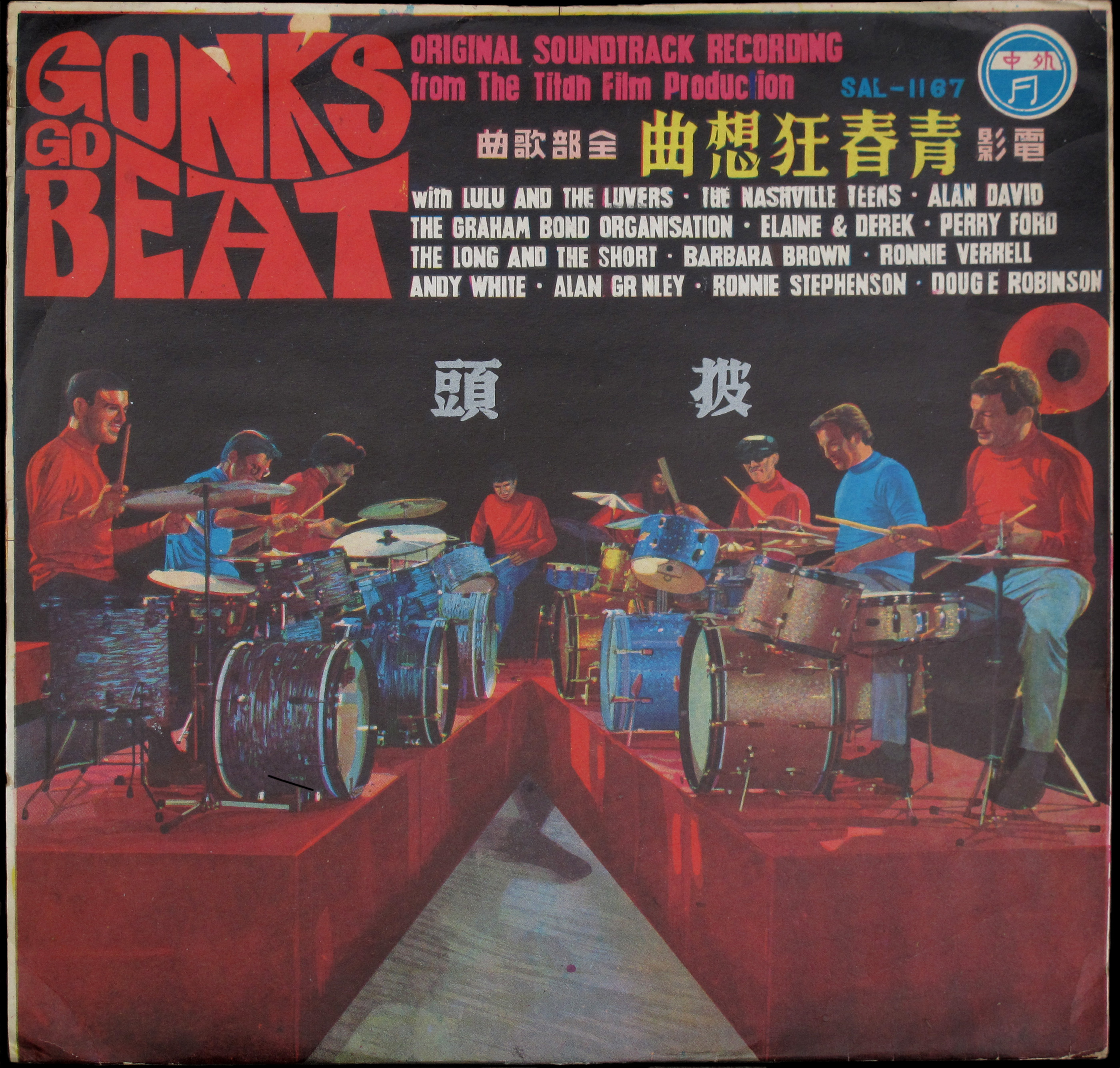
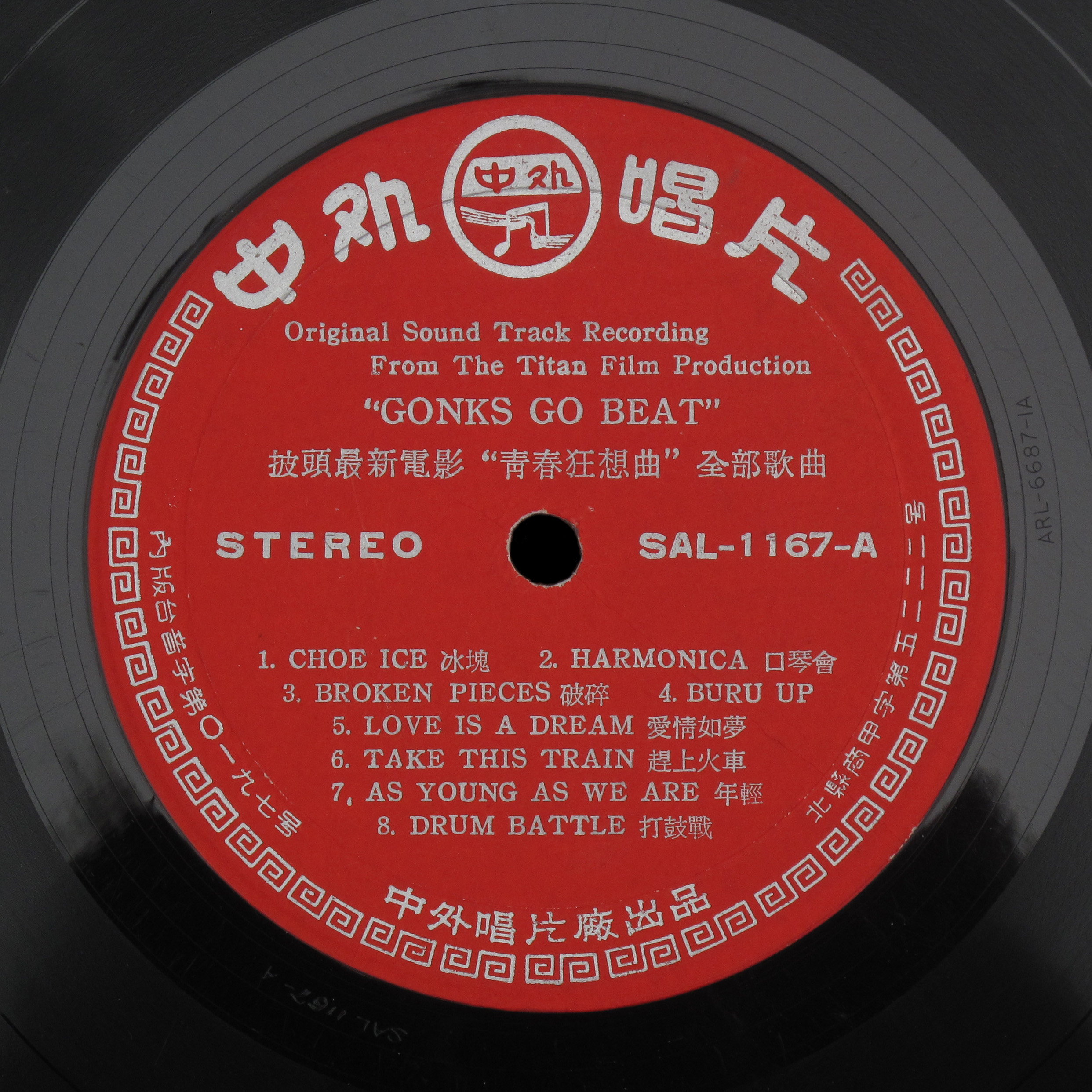
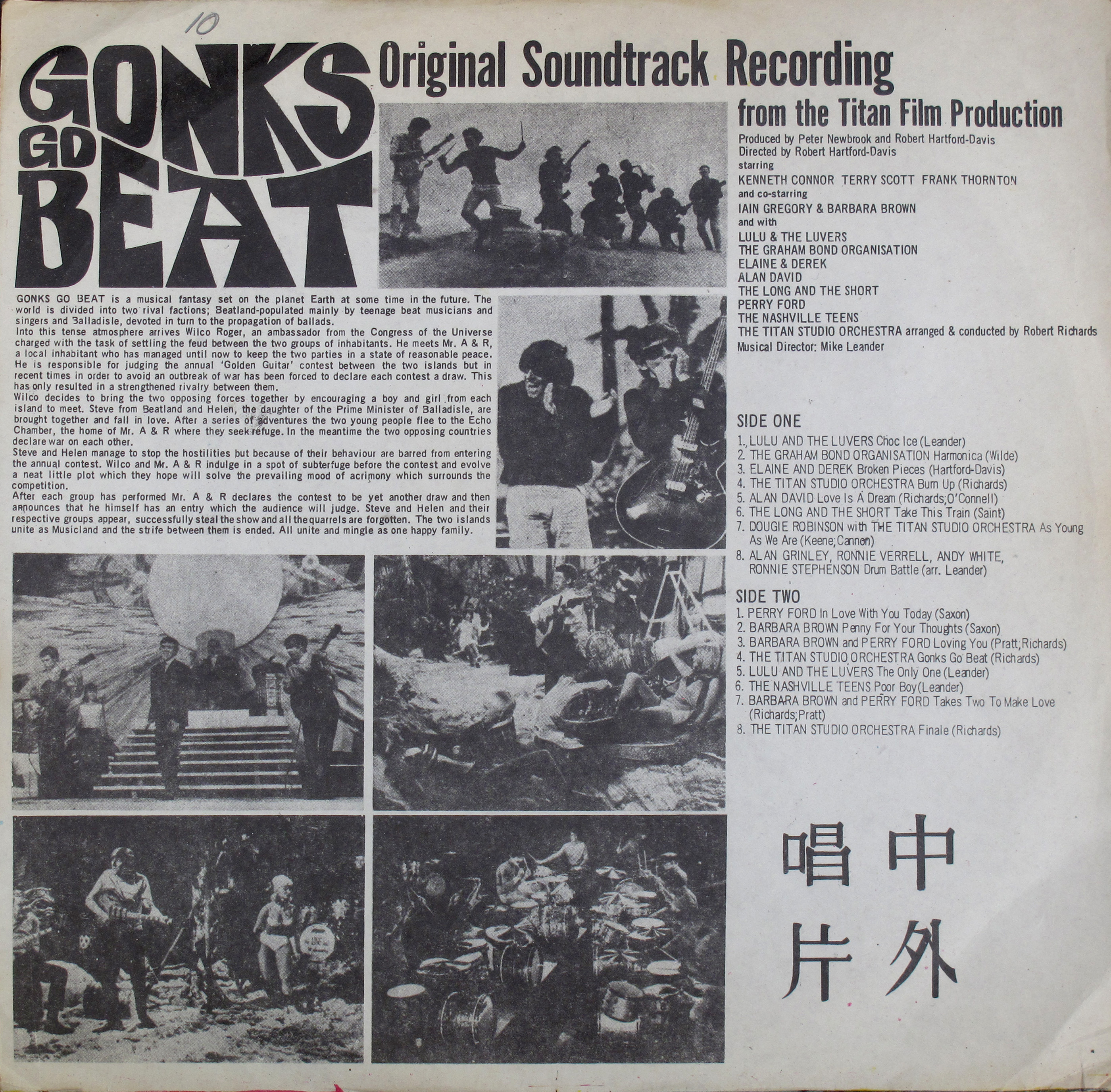
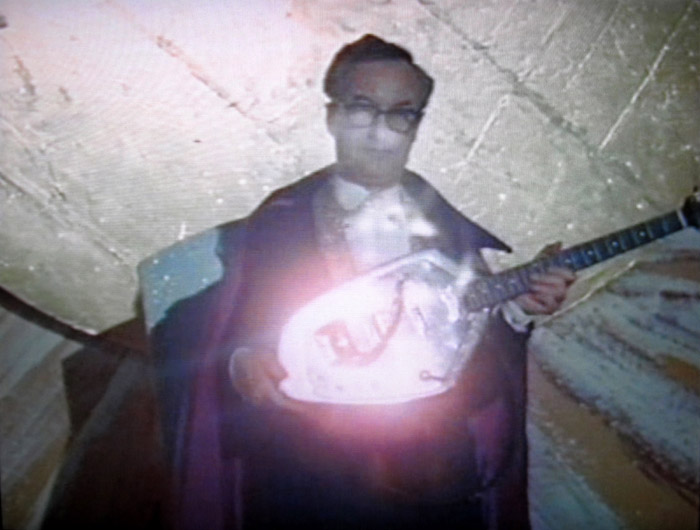
I haven’t been able to afford an original Decca pressing of the soundtrack LP to Gonk’s Go Beat, so I’m making do with this weird Taiwan (I think) issue instead. Condition isn’t the best, so you’ll have to put up with one couple skip and some surface noise. It’s worth any trouble to hear the Graham Bond Organisation’s “Harmonica”. If you watch the film you’ll see Jack Bruce, Ginger Baker and even John McLaughlin in that scene besides Bond.
The album is only half good. The first side is almost solid, but the second side is weak, and I’m not going to put all the tracks up here, they’re just not worth your time. There are too many light pop songs by Alan David, Barbara Brown, Perry Ford and Dougie Robinson. The ‘Titan Studio Orchestra’ under Robert Richards transcends ordinary big-band material only on the excellent “Burn Up”.
Lulu and the Luvers have a couple good songs, especially “Choc Ice”.
The Long and the Short’s “Take This Train” is also excellent – that was a band I wanted to know more about and Michael Lynch filled me in:
Bob McKinlay: vocals, guitar Bob Taylor: bass Les Saint Stuart: guitar Gerry Watt: piano Alan Grindley: drums…and one of the drummers in the big drumming scene.
They were from Ashton and had two minor UK hits (like the 30s or 40s) in 1964: “The Letter” (obviously not the Box Tops song) and “Choc Ice” (the song Lulu does in the film). But they’re probably best know for having Bob McKinlay who later made a name for himself as a British country singer.
The “Drum Battle” is crucial. In the movie there are nine players, (eight of which shown on the cover here), but for some reason this studio recording only seems to credit Alan Grinley, Ronnie Verrell (later drummed as Animal in the Muppets), Andy White (session drummer on “Love Me Do”), and Ronnie Stephenson (pop and jazz drummer). The others were Ginger Baker, Bobby Graham (top UK session drummer), John Kearns (“drummer of the Vaqueros of Lancaster – they had an instrumental single called ‘Echo’ in I think 1964” – Michael Lynch), and Bobby Richards plus one other I don’t have a name for yet. Besides the two groups of four drummers that are facing each other, there’s a ninth in the background in some of the shots in the clip from the film.
I mistakenly thought Arthur Mullard was the ninth drummer, but reader Geoff S. pointed out to me that “he was a comic actor renowned for playing dumb heavies and he is the guy wearing the uniform and white headphones who is giving the orders in this scene”.
Drum Battle Musical Director for the soundtrack is Mike Leander. I kind of like the country-folk song “Broken Pieces” by Elaine and Derek (written by the film’s director, Robert Hartford-Davis). This duo were twins, Elaine and Derek Thompson.
Overall I liked the movie despite the inane plot. The musical finale at the end was visually cool but sonically disappointing except for the Nashville Teens doing “Poor Boy”.
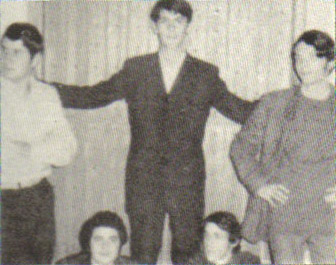
Photo from Greek Garage Bands of the 60sIlias Asvestopoulos – vocals Yannis (John) Spathas – lead guitar Antonis Tourkogiortis – rhythm guitar (and bass after 1966) Antonis Pitsolantis – bass (only for the first single?) Ilias Boukouvalas – drums
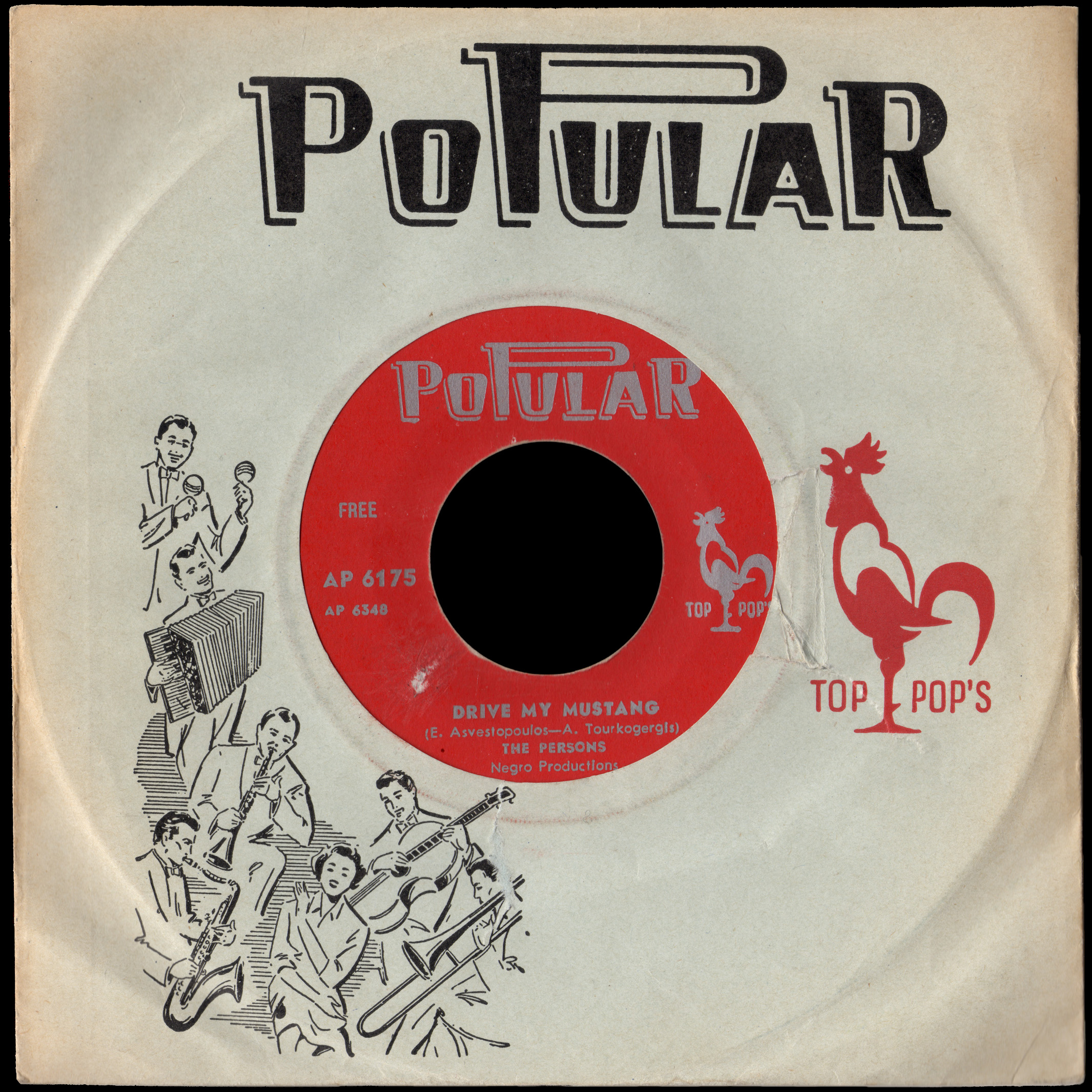
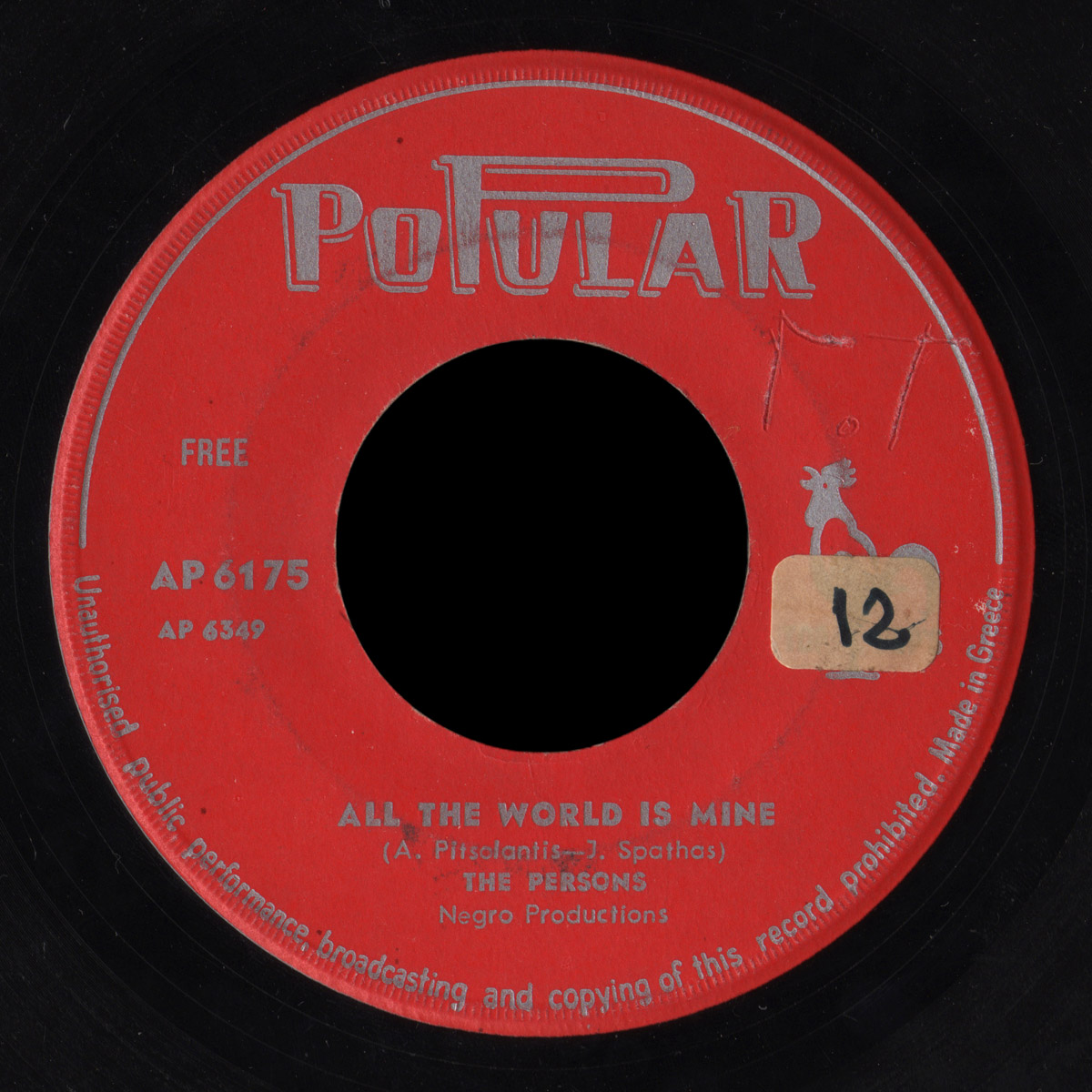
The Persons formed in Piraeus, a port city by Athens in 1966. They released three singles, but I’ve only ever heard this, their first, from 1966.
“Drive My Mustang” is a kind of incoherent take on Wilson Pickett. Some listeners consider “Drive My Mustang” to be the best or among the best of all Greek garage singles. I don’t disagree with that assessment, but I prefer the flip side even more.
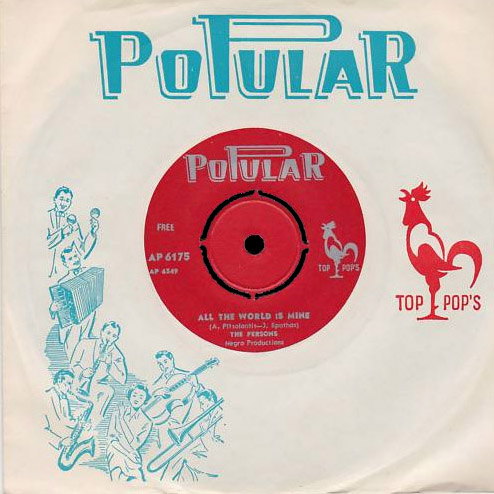
“All the World Is Mine” would make my top ten of all garage songs from any country, any year. From the moment the chiming distorted guitar begins this song is perfect to me. The jumping bass line and fleet drum work, falsetto background vocals and nasal lead vocal are all great, but most of all I love the dissonance of the slightly out of tune lead guitar against the bass and rhythm guitars. The high mark comes during the excellent guitar break after singer Ilias Asvestopoulos shouts “all the world is mine” a couple times when the band really hits a groove.
“Drive My Mustang” was written by Ilias Asvestopoulous and rhythm guitarist Antonis Tourkogiortis (rendered on the label as E. Asvestopoulos and A. Tourkogeorgis). “All the World Is Mine” was written by bassist Antonis Pitsolantis and lead guitarist John Spathas.
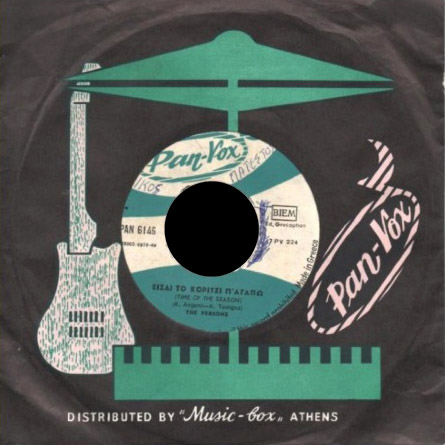
Last 45, a cover of “Time of the Season”Their second release, in 1968, has “John’s Flight” / “Young Girl” (Olympic OE74 004), while their last record covered two Zombies’ songs: “Time of the Season” (titled “Eisai to koritsi p’agapo”) and “Friends of Mine” titled (“Mono mia fora”) (PAN VOX 6146), released in 1969. Anyone have good scans of these 45s?
After their third single, the Persons evolved into Socrates Drank the Conium, one of the major Greek progressive bands of the ’70s.
Sources include: Greek listing of members from Music Heaven.
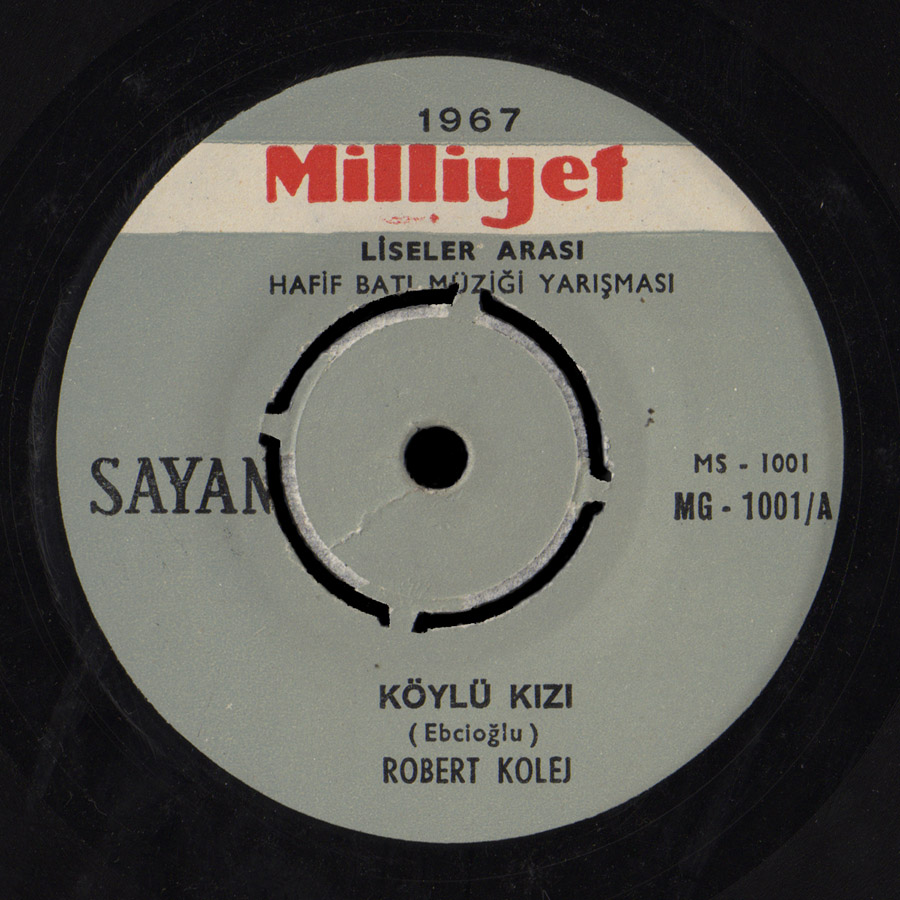
Was there an original pressing with a center piece, or is this a reissue?
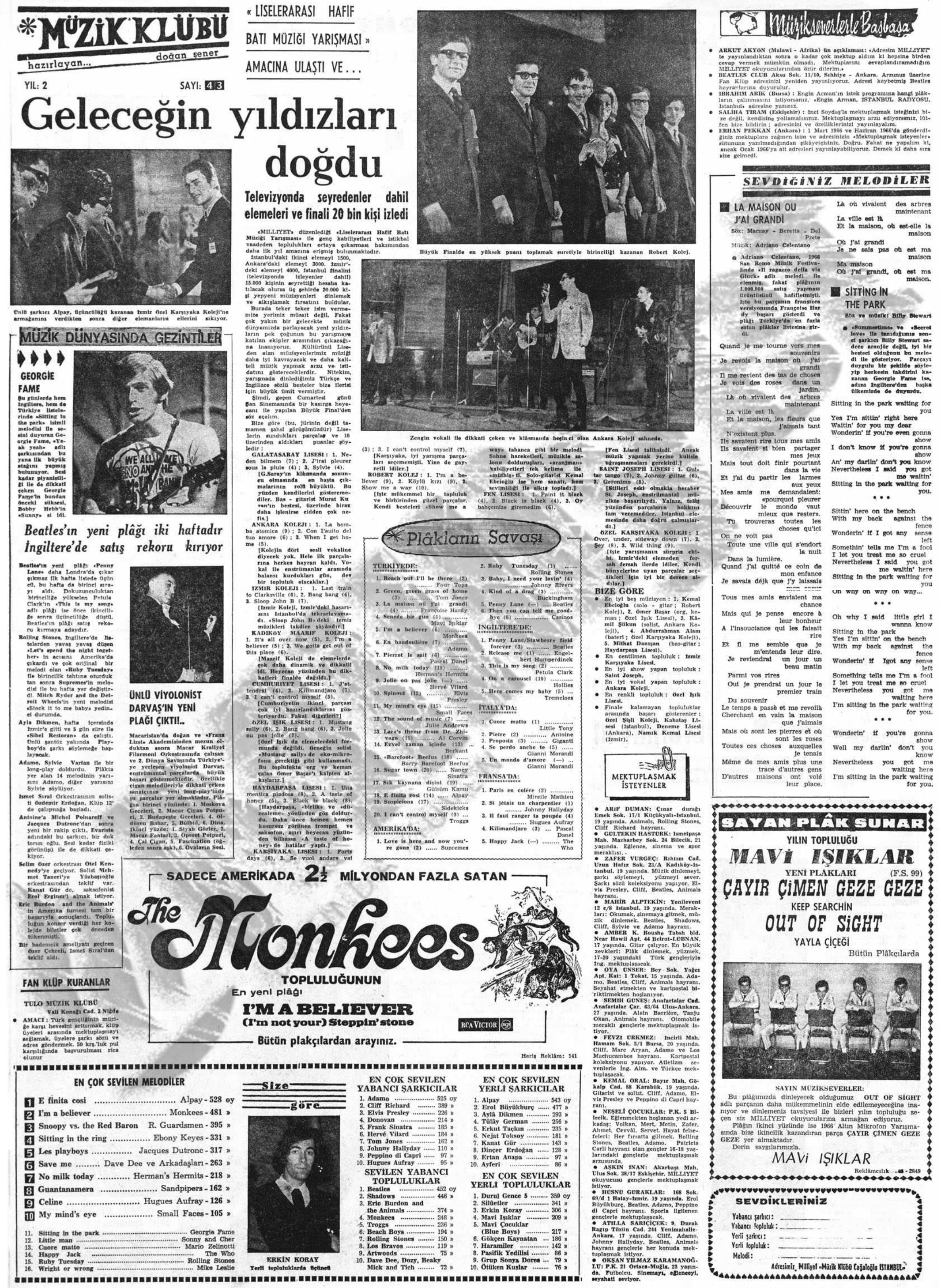
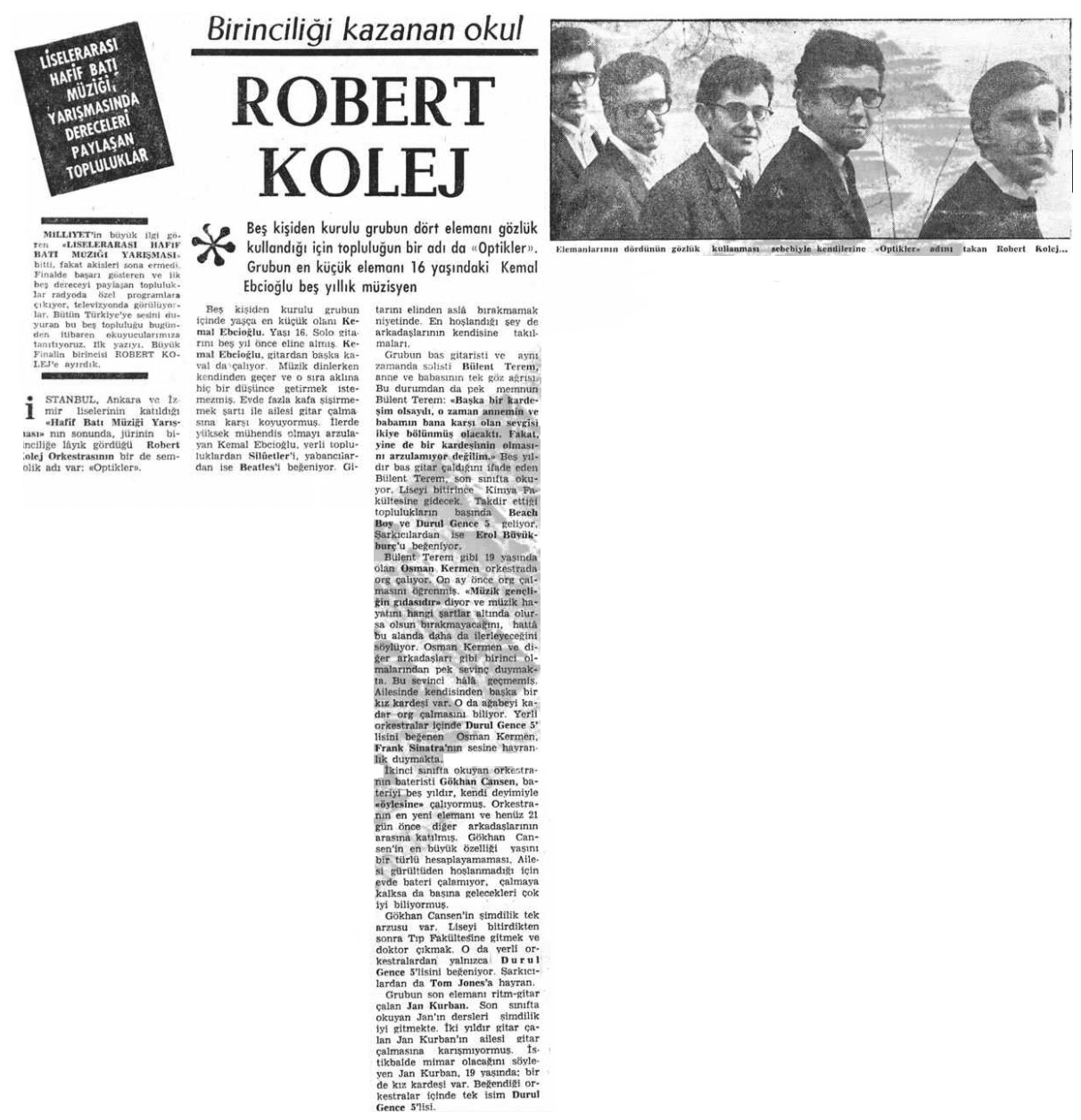
Optikler announced as winners of the 1967 Milliyet pop music contest, March 12, 1967 From left: Gökhan Cansen, Jan Kurban, Kemal Ebcioğlu, Rüçhan Çamay (one of the judges), Bülent Terem, and Osman Kermen Click to see full article
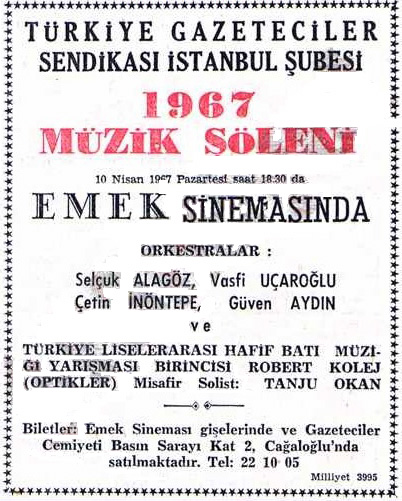
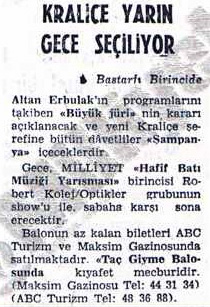
Optikler with Selcuk Alagoz and Vasfi Ucaroglu Milliyet, April 5, 1967Kemal Ebcioğlu – lead guitar Jan Kurban – rhythm guitar Osman Kermen – organ Bülent Terem – bass guitar Gökhan Cansen – drums
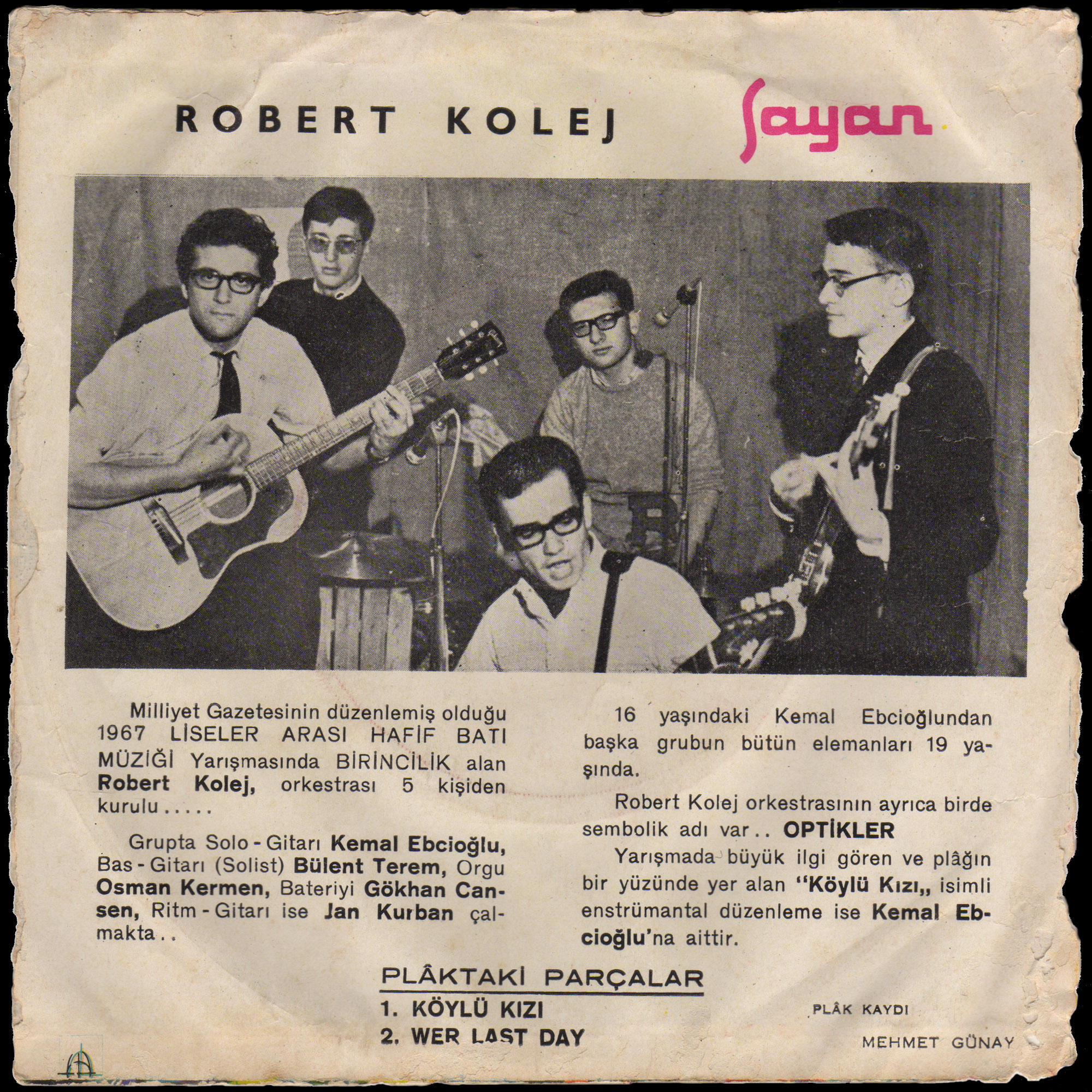
The band is Optikler. Although the 45 labels list the artist as Robert Kolej, that was their school, not the band name. “Robert Kolej” refers to the Robert Academy in Istanbul, more of a high school than a college. Lead guitarist Kemal Ebcioğlu was 16 while the rest of the group was 19 years old. Optikler translates as The Optics, a reference to the glasses all the band wore.
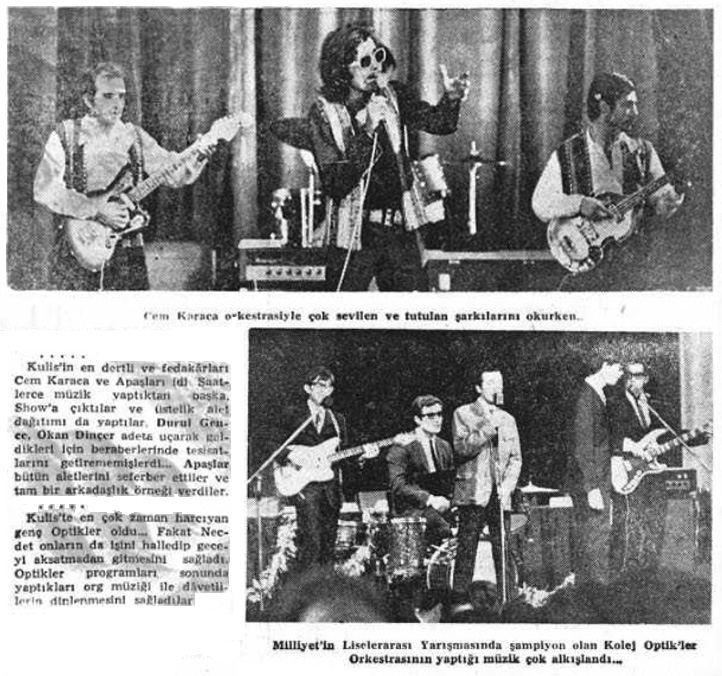
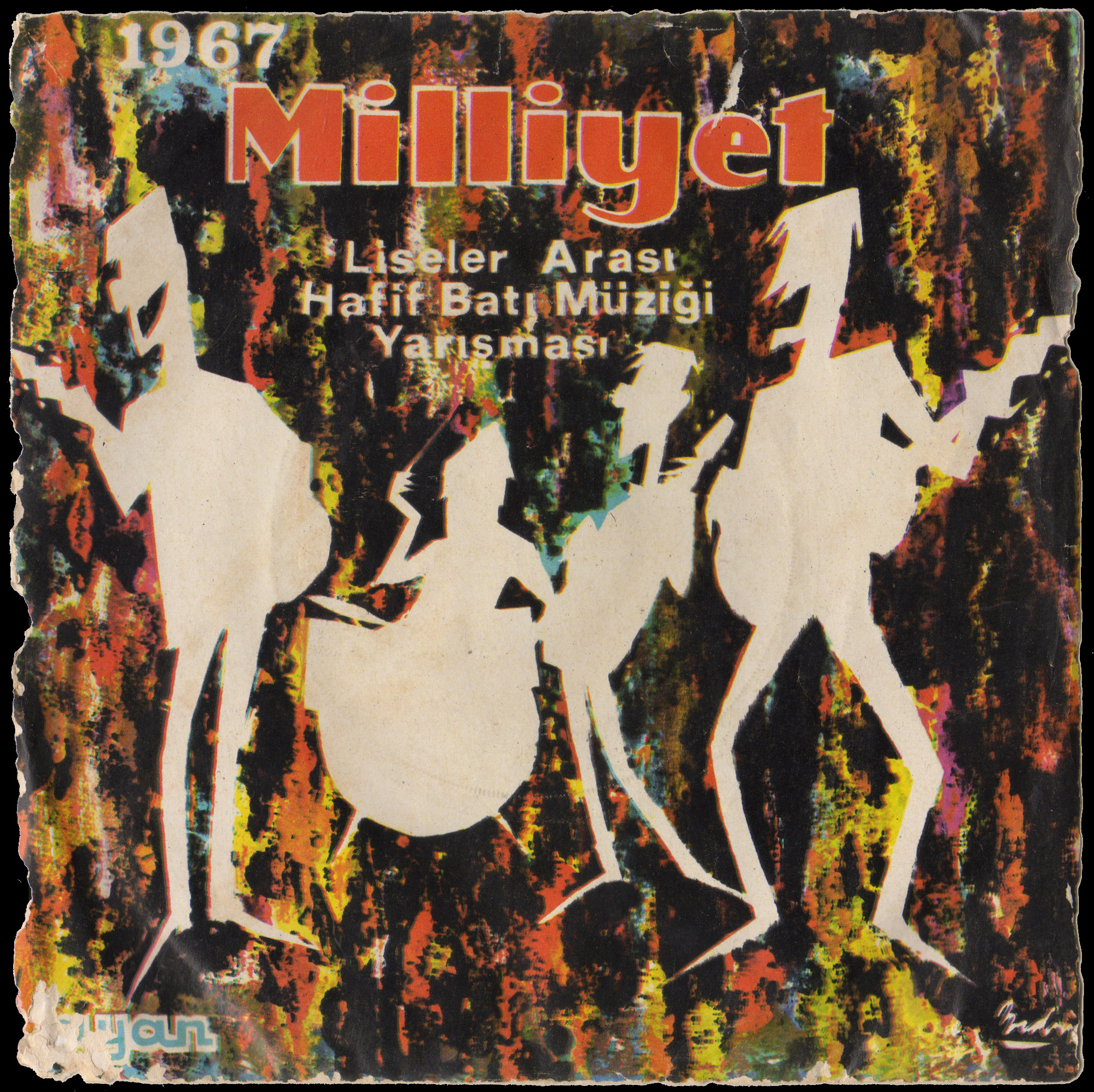
Optikler won the Milliyet newspaper’s second annual contest of high school pop bands in March, 1967, an event that was televised to an audience of over 20,000. and announced in the paper under the headline “future stars are born”. Their set list at the finals consisted of “I’m a Believer” and two originals, “Köylü Kizi” and “Show Me A Way”.
Picture sleeve for their only single From left: Jan Kurban, Osman Kermen, Bülent Terem, Gökhan Cansen and Kemal Ebcioğlu
One of the prizes for winning was this recording, released on the Sayan label. The A-side was Kemal’s composition “Köylü Kizi” (translates to “Country Girl” or “Farmer’s Daughter”), a great instrumental with baroque influences to the hypnotic introduction.The flip is a cover of Peter Paul & Mary’s “Very Last Day” (though possibly known through the Hollies version), and for the most part it’s instrumental and also pretty good.
Hafta Sonu Ilavesi, April 16, 1967
October 20, 1967After the contest the band played occasional live shows and did some radio and TV work, with the last mention I can find announcing their performance during the 1968 contest festivities. After Optikler, Kemal Ebcioğlu started composing classical music, then worked in computer science in the U.S.
Mr. Ebcioğlu wrote to me about his career in Turkish pop music:
Thanks for noticing the fugal introduction to “Köylü Kizi”. I had just started studying counterpoint and harmony books at the time. The instrumental version of “Very Last Day” on the B side was adapted from the Peter-Paul-Mary version, if I remember correctly.
Speaking of Turkish popular music in the 60’s and 70’s, FYI, in 1974, I composed the song “Seninle Bir Dakika” (“A Minute With You”) that represented Turkey in the 1975 Eurovision Contest.
My late father Hikmet Munir Ebcioglu wrote the lyrics. Turkey came last in that contest! It was a difficult year for Turkey politically, right after the Cyprus events in 1974; and in hindsight, our song was slow and not sufficiently catchy for Eurovision (the Netherlands song won the Eurovision competition that year). However, “Seninle Bir Dakika” has remained popular in Turkey and is considered a classic nostalgic song now.
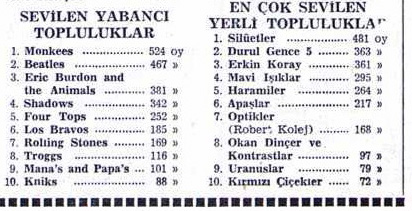
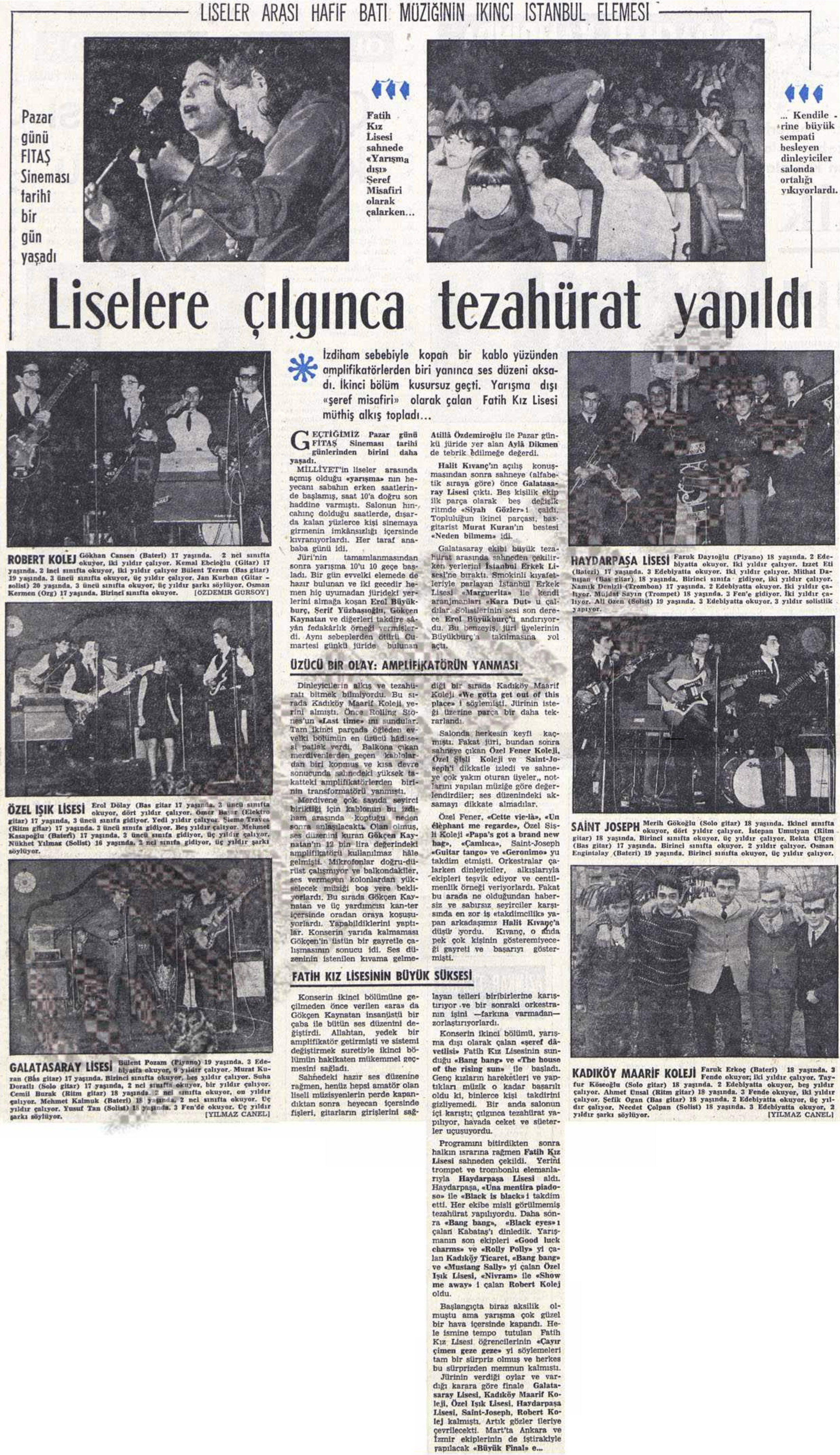
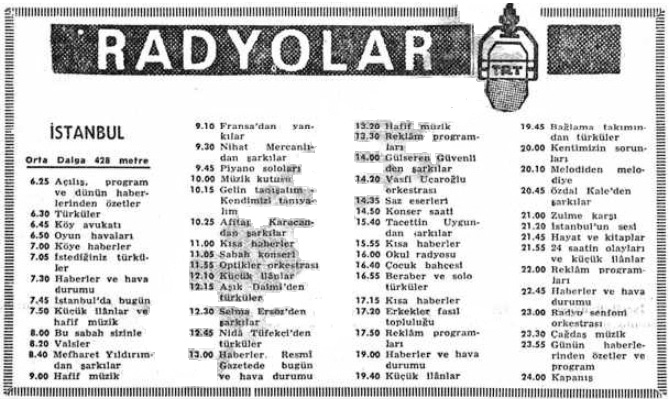
The fans go wild… Milliyet, February 22, 1967Optikler on Radyolar at 11:55 Milliyet, June 6, 1967Cem Karaca, Apaslar and Optikler in Milliyet, October 23, 1967Article in Milliyet, November 3, 1967Flip of the record sleeve
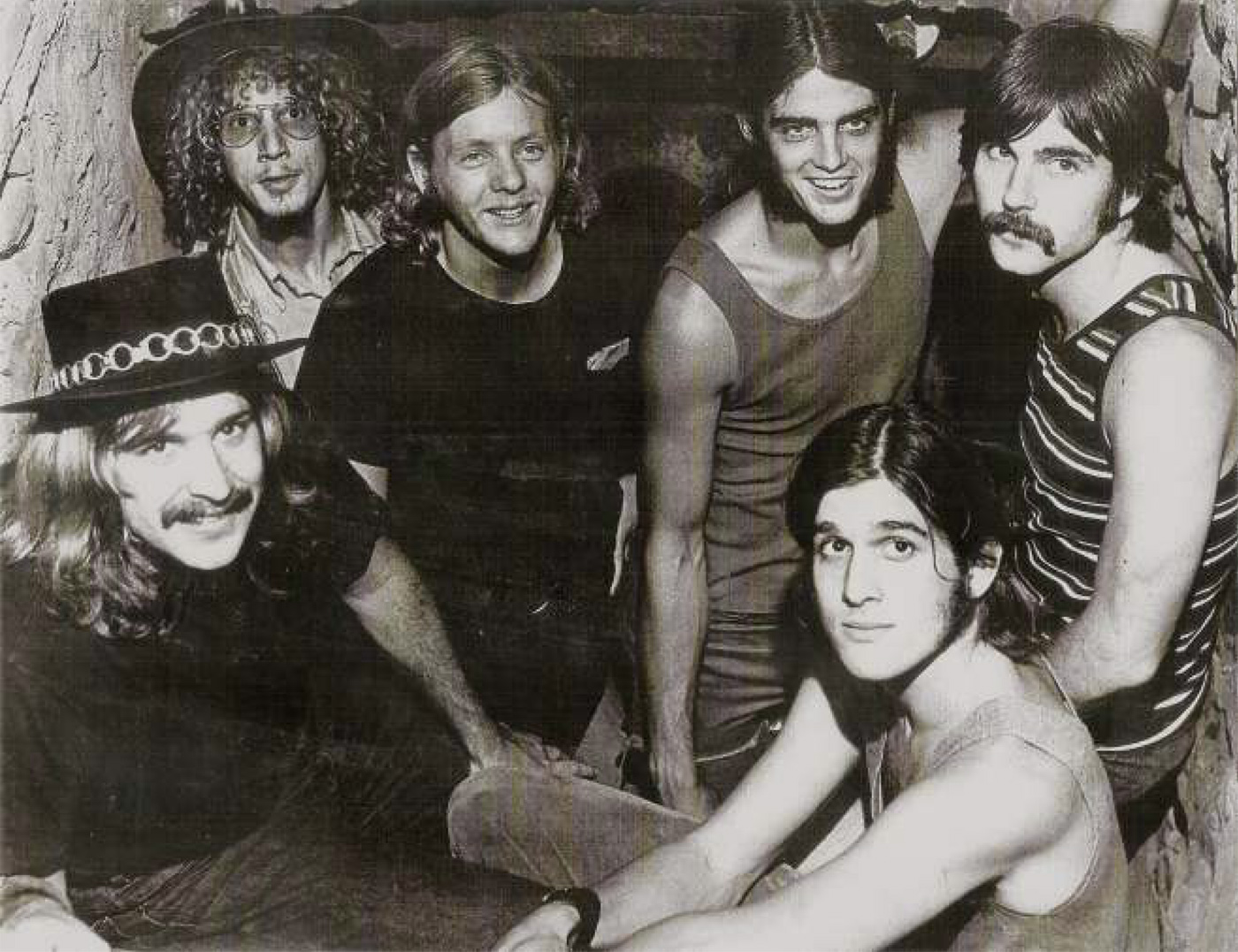
Love’s Alchemy, clockwise from lower left: Damon Hyde, Rick Dannely, Nelson Bogart, Myron Grant, Ray Love and Rob Martens
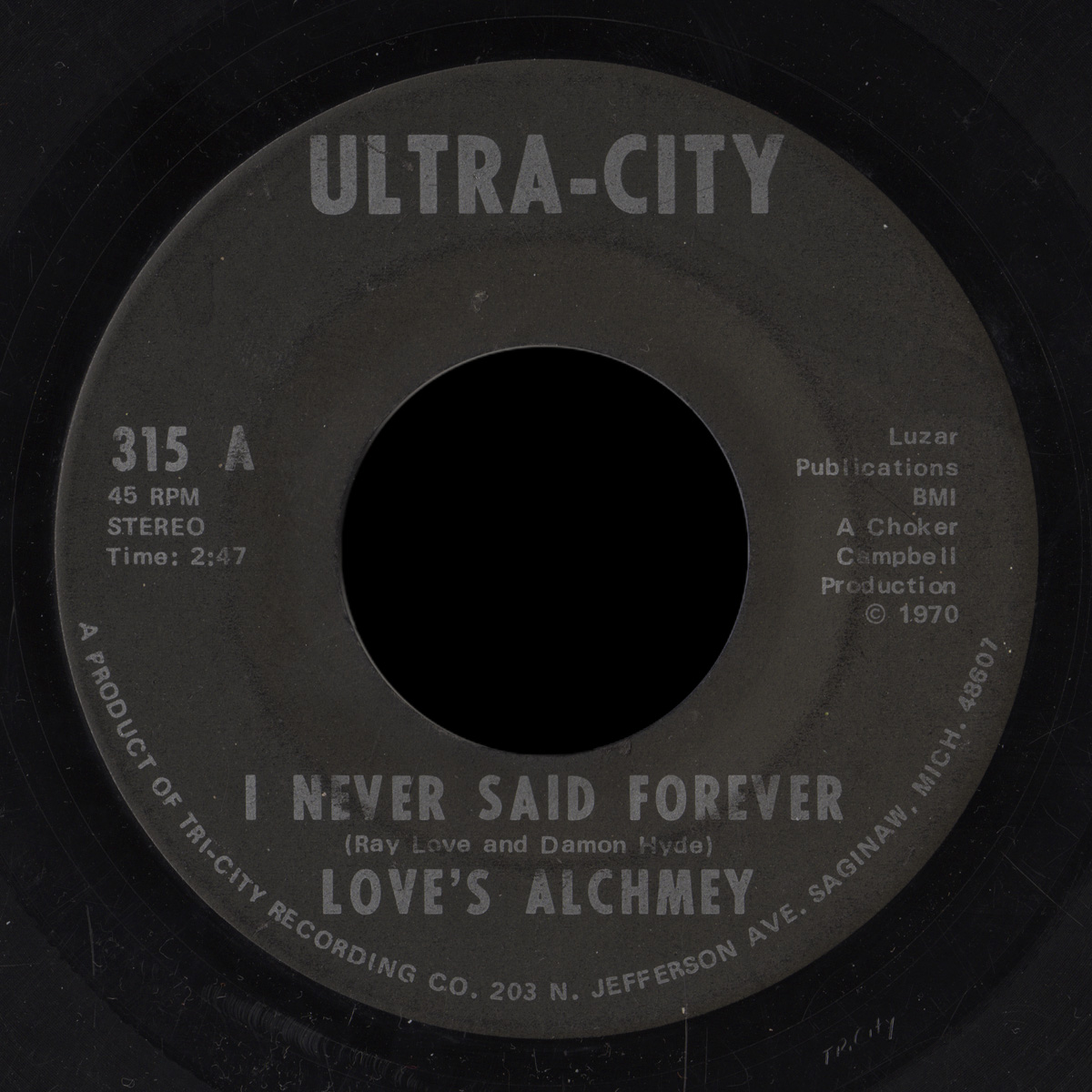
Love’s Alchemy had this one release on Ultra-City out of Saginaw, Michigan in 1970. The band named themselves after the poem by John Donne – the label spelling “Love’s Alchmey” is a simple typo.
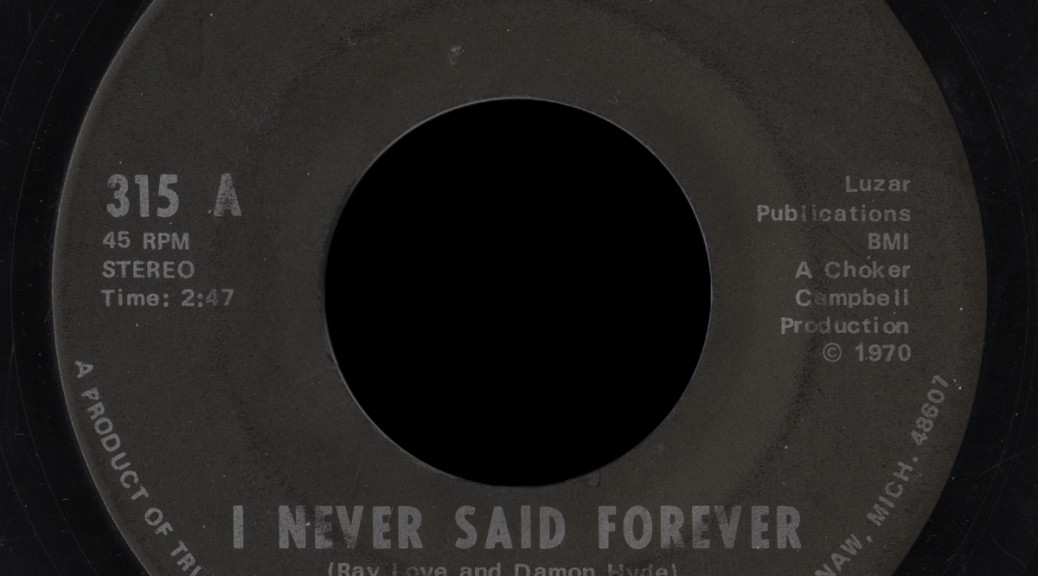
“I Never Said Forever” is a Doors-influenced song written by Ray Love and Damon Hyde. The lyrics include “Jesus” at least twice.
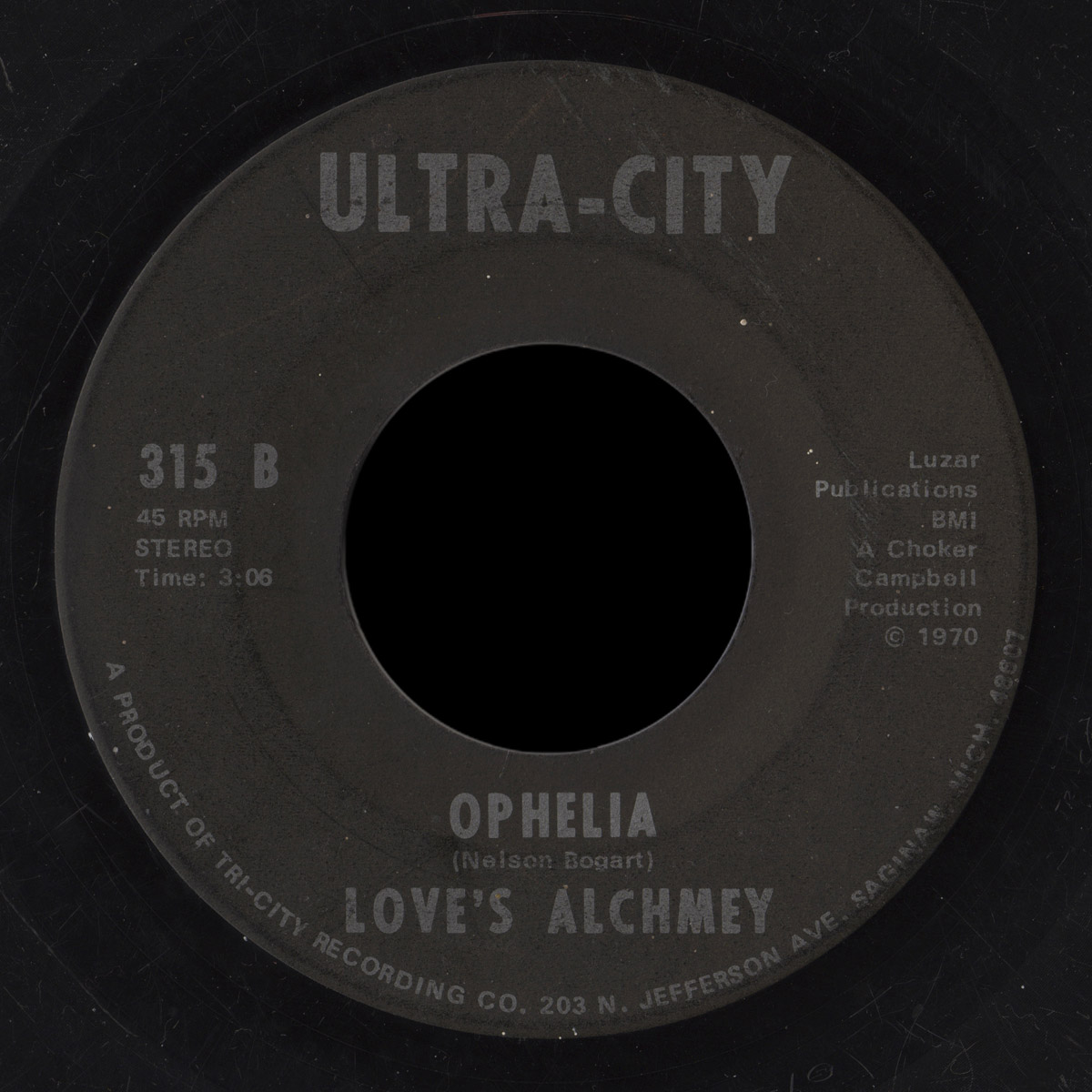
I’m not as much a fan of “Ophelia” written by Nelson Bogart, though the guitar solo has a fine, sludgy distortion to it. My copy is very scratchy. Both were published through Luzar Publications, BMI. Song writing credits list Ray Love, Damon Hyde, and Nelson Bogart.
I couldn’t find much specific on the band until Charlie, a friend of the band wrote to me:
I went to high school with a couple of the guys in the band. They went to the University of Michigan and ended up as fraternity brothers and formed the band in the late ’60s in Ann Arbor. The members were Nelson Bogart on guitar and occasional trumpet, Myron Grant doing lead vocals, Damon Hyde on keyboards, mostly Hammond B3, Rob Martens on bass and Ray Love on drums.
I was at the recording sessions in Saginaw for the record. When we met Choker Chapbell, he had to tell us that he was the guy on Stevie Wonder’s “Fingertips Part 2” that shouts out “What key, what key?” about 3/4 of the way through the tune when Stevie starts ad-libbing and changes the key!
They are all still playing music, to the best of my knowledge.
Damon Hyde’s wife Pamela sent in the photos seen here and wrote:
Damon passed away in 1999 from a high fever after 9 days in the hospital. He graduated from the University of Michigan in 1971 with a B.A. in Literature.
Damon was a honey-voiced singr who travelled extensively before settling down with his wife Pamela in 1978. He turned his musical talent into a lifelong career as a pop/rock singer and published songwriter. His band backed up Lou Rawls, The Drifters in Puerto Rico, Tiny Tim in Miami, Chief James Billie of the Seminole tribe of Florida and many others.
Damon’s unique ability to sing and play a wide spectrum of music made him a sought after musician for many of South Florida’s most popular bands. A double CD was released in his honor by his wife, Pamela called Unfinished Business.
Pamela added these notes from Myron:
The studio that did that recording was Tri City Recording, which I think was in Saginaw, although it might have been Midland. The marketing guy was “Bill McCune, Man from the Moon,” and one of the owners was a previous member of the Motown horn section.
Actually, all three of us [Damon, Nelson & Myron] played trumpet (I played coronet), depending on the tune and arrangement. Nelson and Damon played solos, I played as part of the horn section in tunes such as “Hold on I’m Comin'”. I don’t recall ever having all three horns on the same tune.
[The photos] were taken shortly after Rick joined the group. We later changed the name to Ramblecrow. There was another band in A2 at the same time who’s name came from literature, Leaves of Grass.
Walter “Choker” Campbell owned or worked with a number of labels in Saginaw including Tri-City, Moonville USA, Gospel Train and Ultra-City, with releases around 1970-’71. Almost all of these were soul sides, making this 45 by Love’s Alchmey a big exception. Choker was a tenor saxophonist who started recording in 1950 for the Lucky-7, Fortune and Atlantic labels, among others. He hired on at Motown in 1960 to form the live band for their revue shows and had a 1964 album on Motown with his band playing the label’s hits. He produced records by Carla Whitney and Albert Jones in Toronto, Canada during the 1970s, and passed away in 1993.
Background on Choker Campbell from the Soulful Detroit forum. Thank you to Pamela Hyde for the photos and quote from Myron Grant.
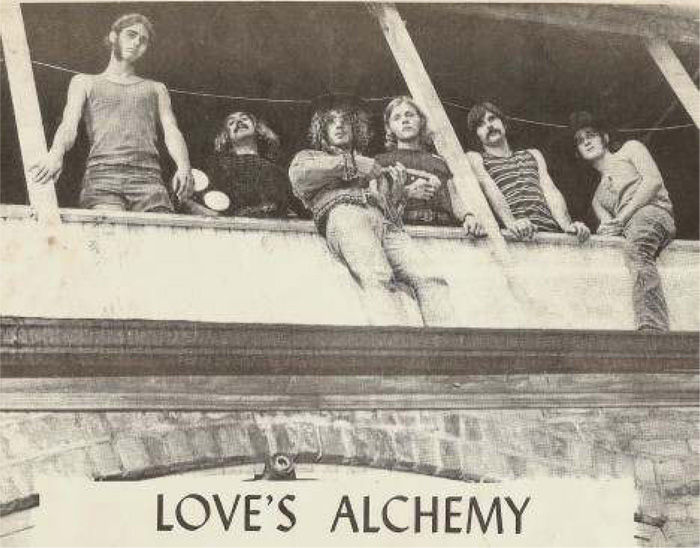
from left: Myron Grant, Damon Hyde, Rick Dannely, Nelson Bogart, Ray Love and Rob Martens
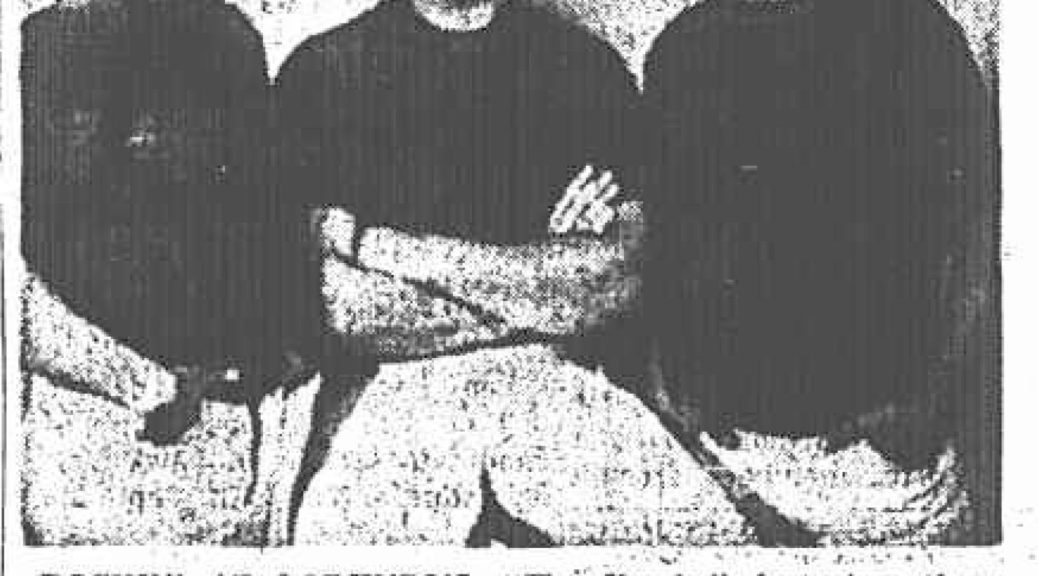
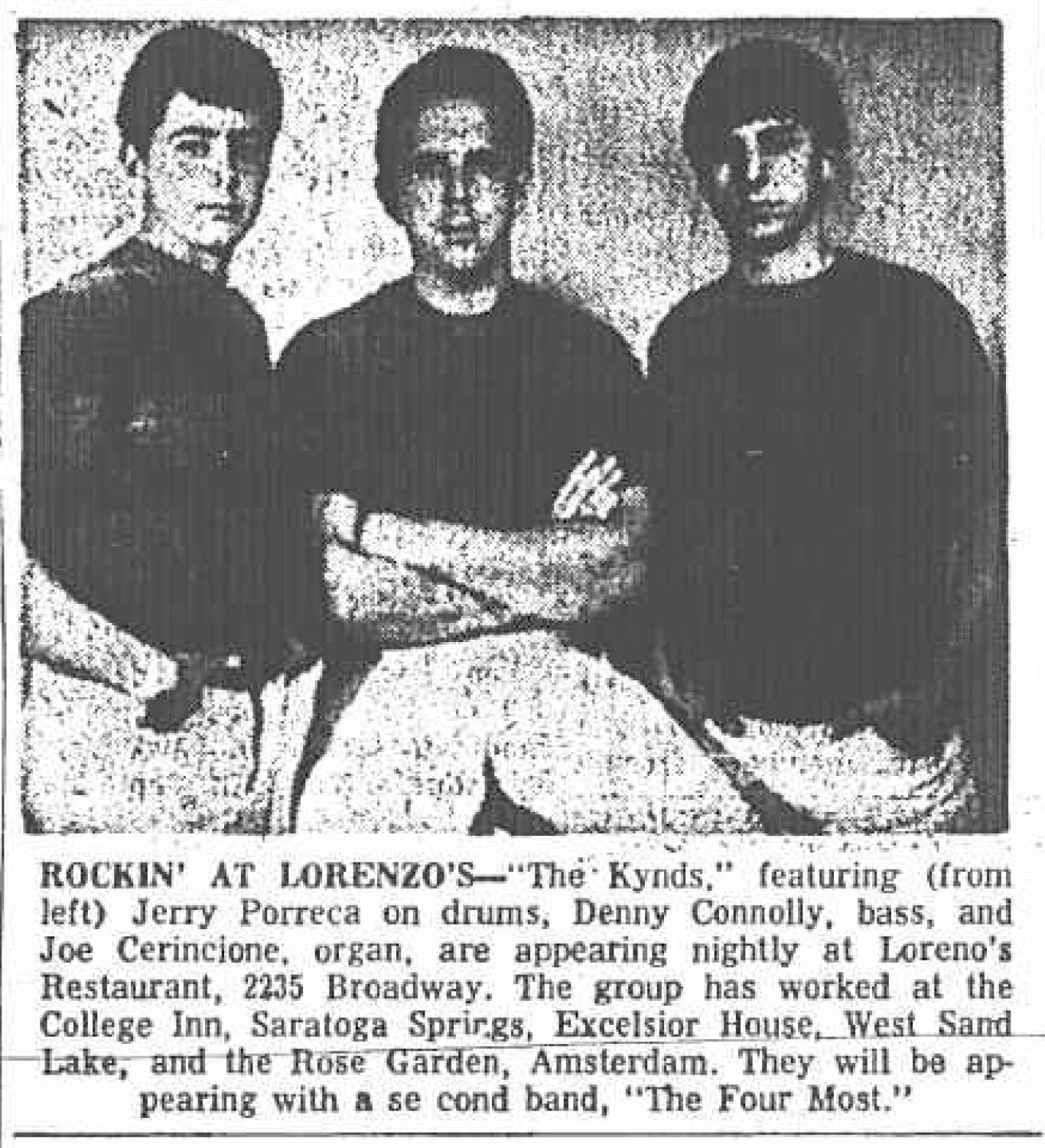
The Kynds, from the Schenectady Gazette, September 16, 1966
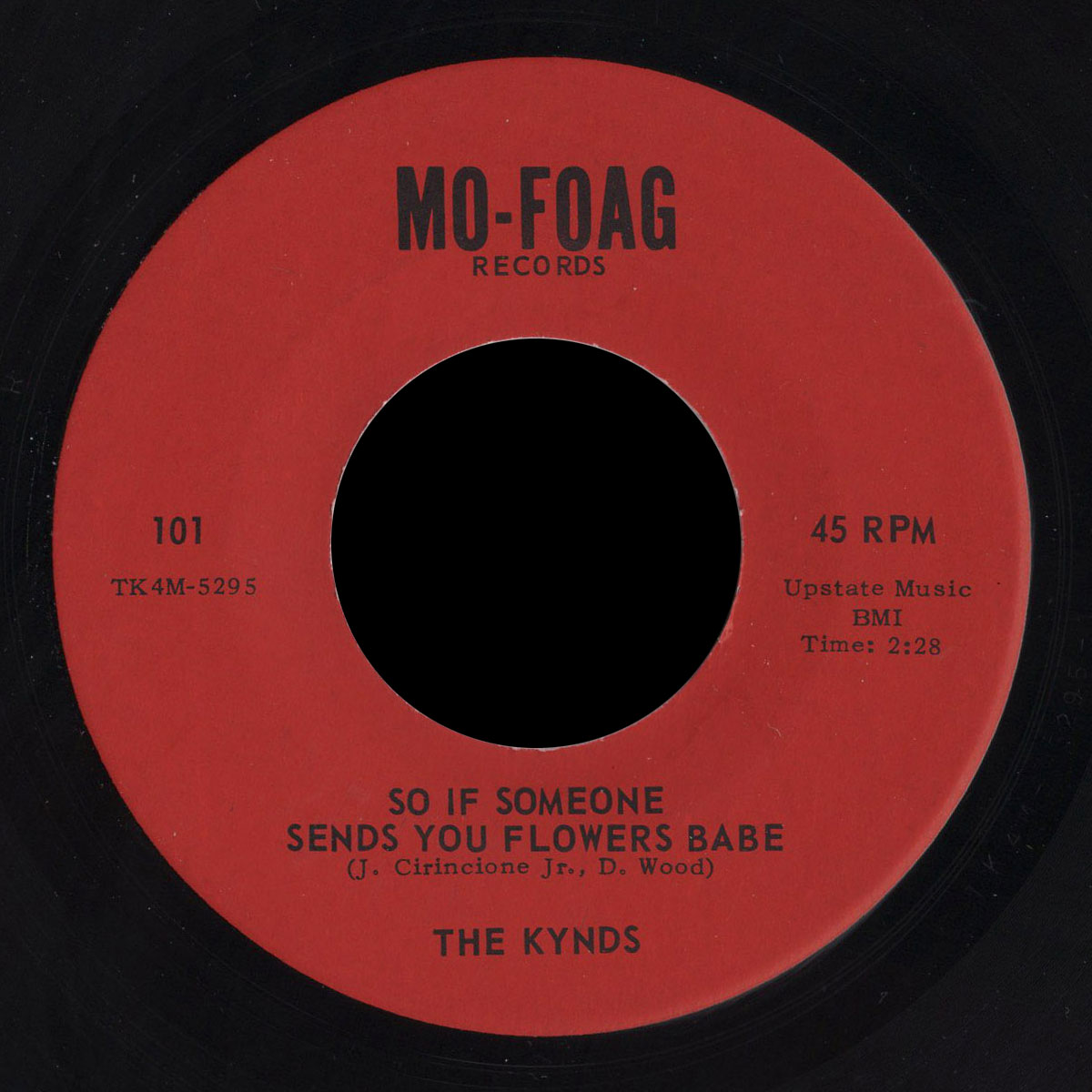
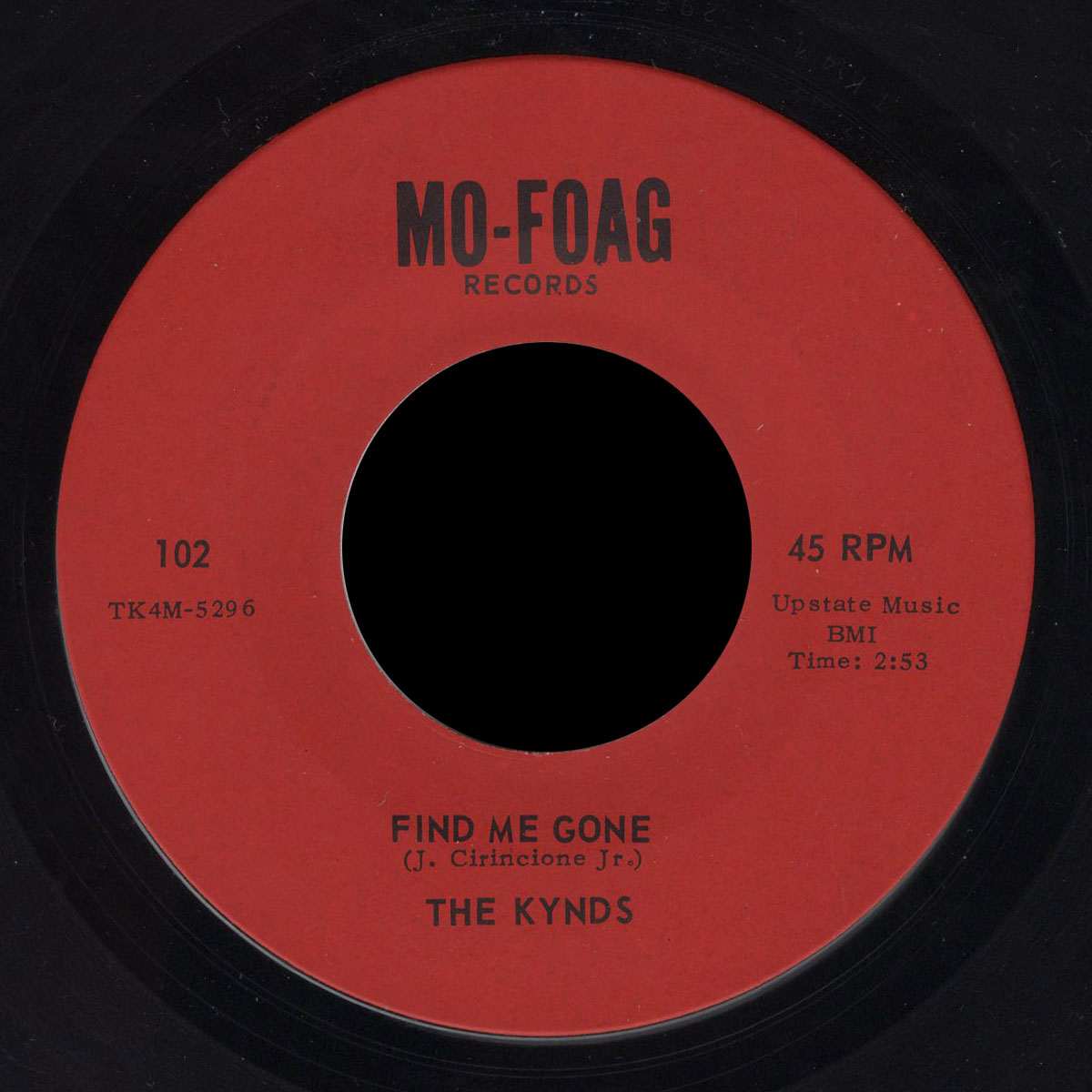
The Kynds were a Capital region trio with members from Hudson, Troy and Schenectady, New York, and bookings throughout the area. They recorded their only single “So If Someone Sends You Flowers Babe” / “Find Me Gone” at Kennett Sound Studio in Kinderhook, NY.
Members included Joseph Cirincione, Jerry Porreca and Dan Wood. They were a trio of organ, bass and drums, which may explain why the organ is loud in the mix on both of these songs.
Jerry Porreca wrote to me “the band actually formed in Hudson. It evolved from the Del Tones to the Kynds and then Bits & Pieces.”
A short article in the September 16, 1966 Schenectady Gazette promoted one of their engagements. It gave a different bass player’s name, along with a different spelling of Joe Cirincione’s name:
The Kynds, featuring (from left) Jerry Porreca on drums, Denny Connolly, bass and Joe Cerincione, organ, are appearing nightly at Loreno’s Restaurant, 2235 Broadway. The group has worked at the College Inn, Saratoga Srpings, Excelsior House, West Sand Lake, and the Rose Garden, Amsterdam. They will be appearing with a second band, “The Four Most.”
In a comment below, Rick Piester states that he “was the original bass player in The Kynds. Had worked with Jerry Porreca earlier in the Del-Tones”.
The Kynds released this great 45 on what must be their own Mo-Foag label in the second half of 1966 (RCA custom pressing number TK4M-5296).
“So, If Someone Sends You Flowers, Babe” has become a favorite of mine, with its repetitive organ lick and quiet vocals. As far as I can make out, some of the lyrics are:
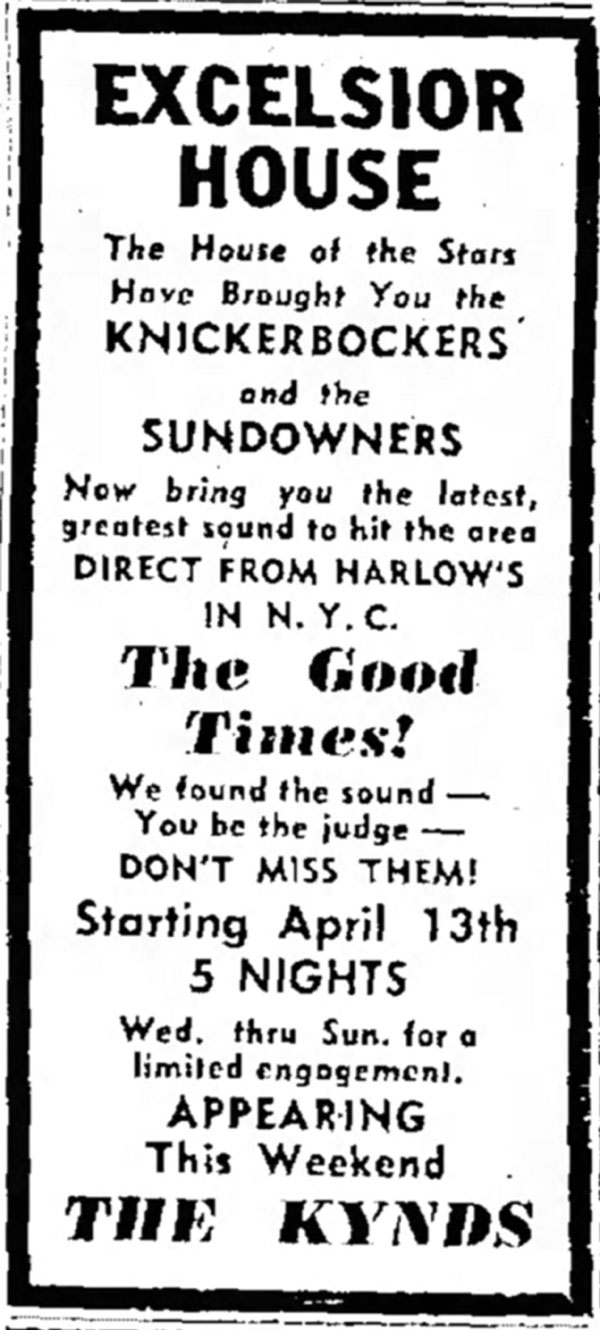
The Kynds at the Excelsior House, ad from the Troy Record, April 9, 1966
It really makes no difference if you like what you see in me Not a chance babe, ‘Cause I’m happy, That we are free (?) What you say girl, It don’t have no effect on me So, if someone sends you flowers, babe, You know it wasn’t me.
It was written by Dan Wood and Joe Cirincione, Jr.
The b-side is the fast “Find Me Gone”, with its famous shout near the end of the song, written by Joseph Cirincione, published by Upstate Music BMI.
Thanks to Brian Kirschenbaum, and to Jonas Carlsson for help finding the clipping from the Gazette.
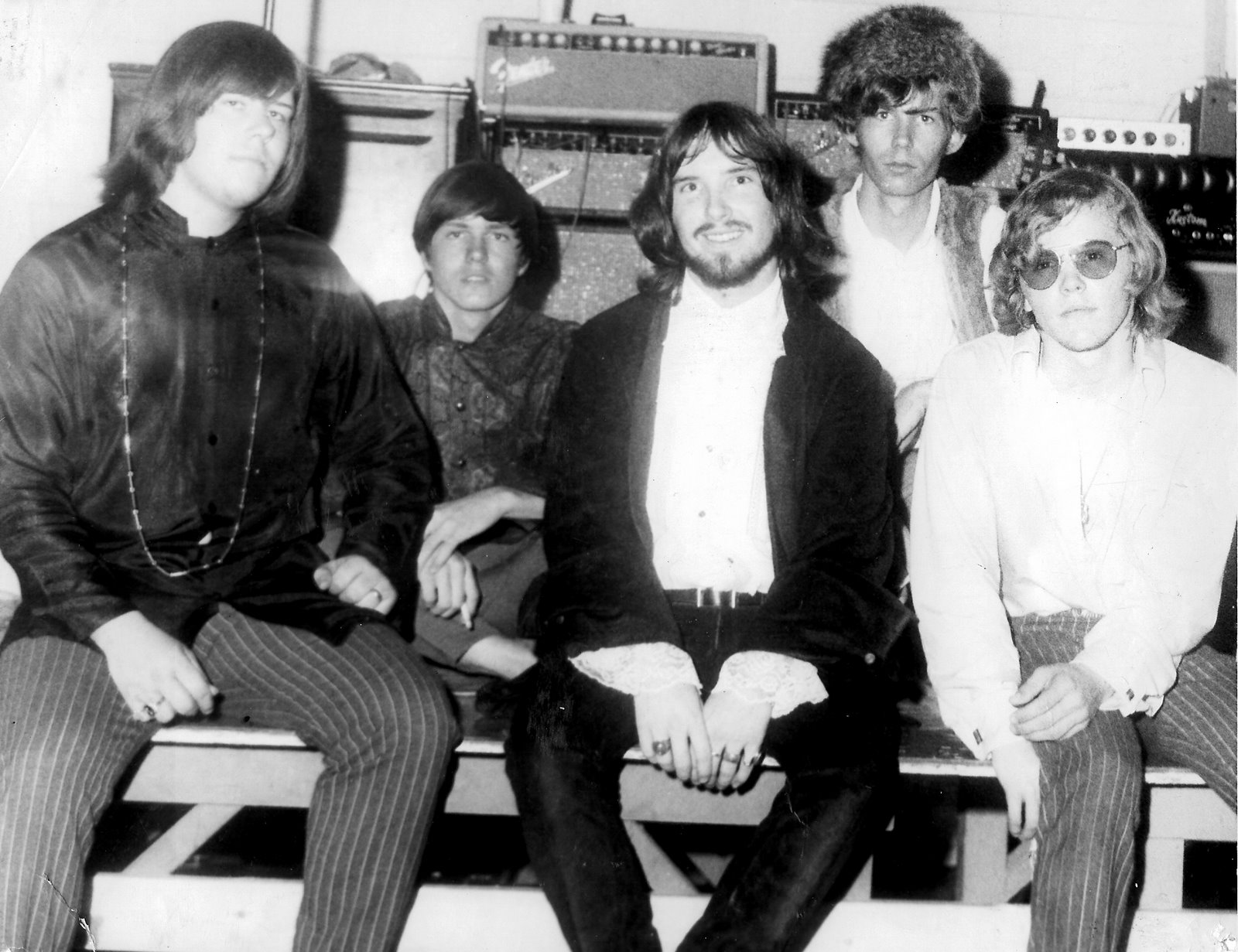
The Stereo Shoestring, from left: John Coco, James Noe, Richard Lalor, Steve Schultz and Jim Howard Photo from Not Fade Away #3
John Coco (vocals) Jim Howard (lead guitar) Richard Lalor (guitar) James Noe (bass) Steve Schultz (drums)
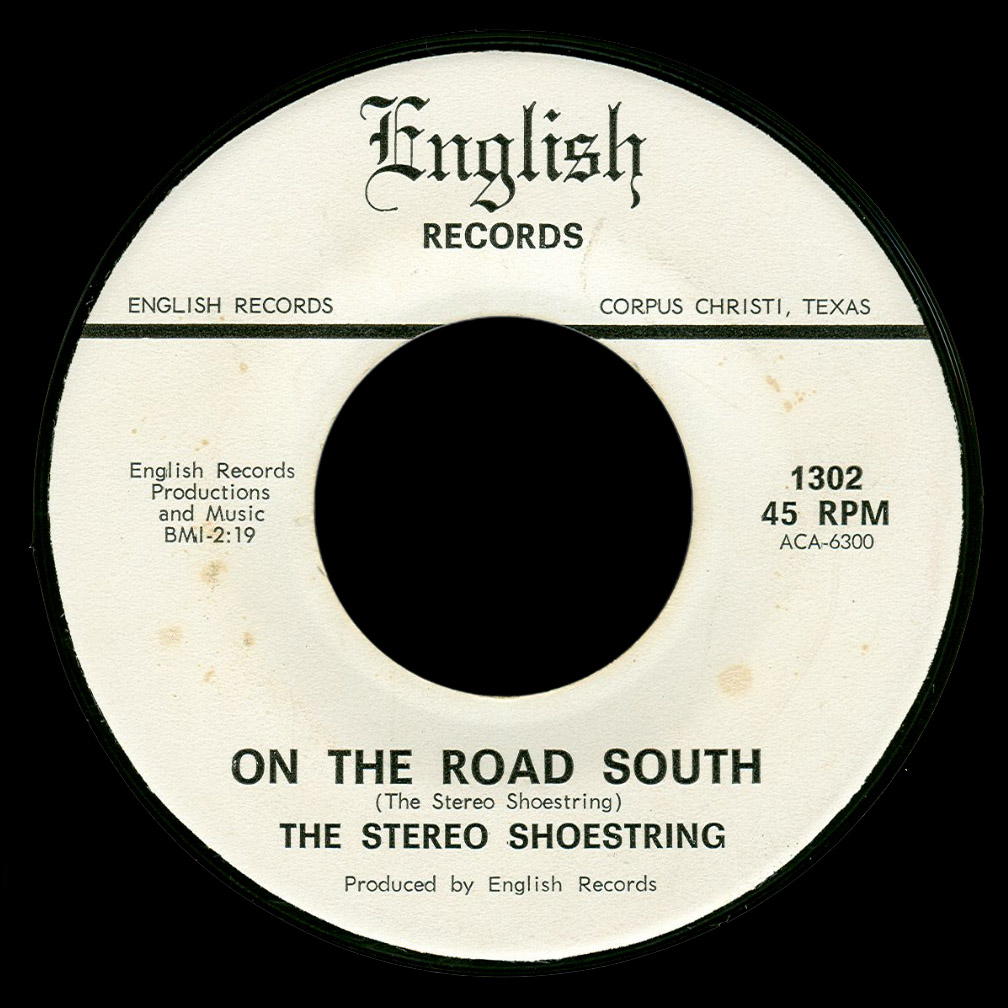
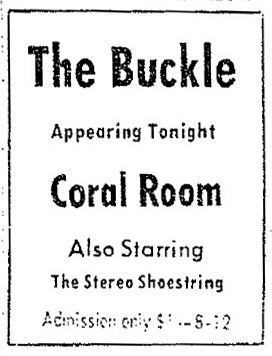
with the Buckle at the Coral Room, January 12, 1968The Stereo Shoestring were a Corpus Christi band, apparently only together for a short time during 1968. They cut one of the monster singles out of Texas in April of that year, a total reworking of the Pretty Things’ “Defecting Grey” titled “On the Road South”. On the other side was a version of the Zombies “Tell Her No”. The “English Records” labels give the band credit for writing both songs. They recorded in Houston, possibly at Doyle Jones’ studio.
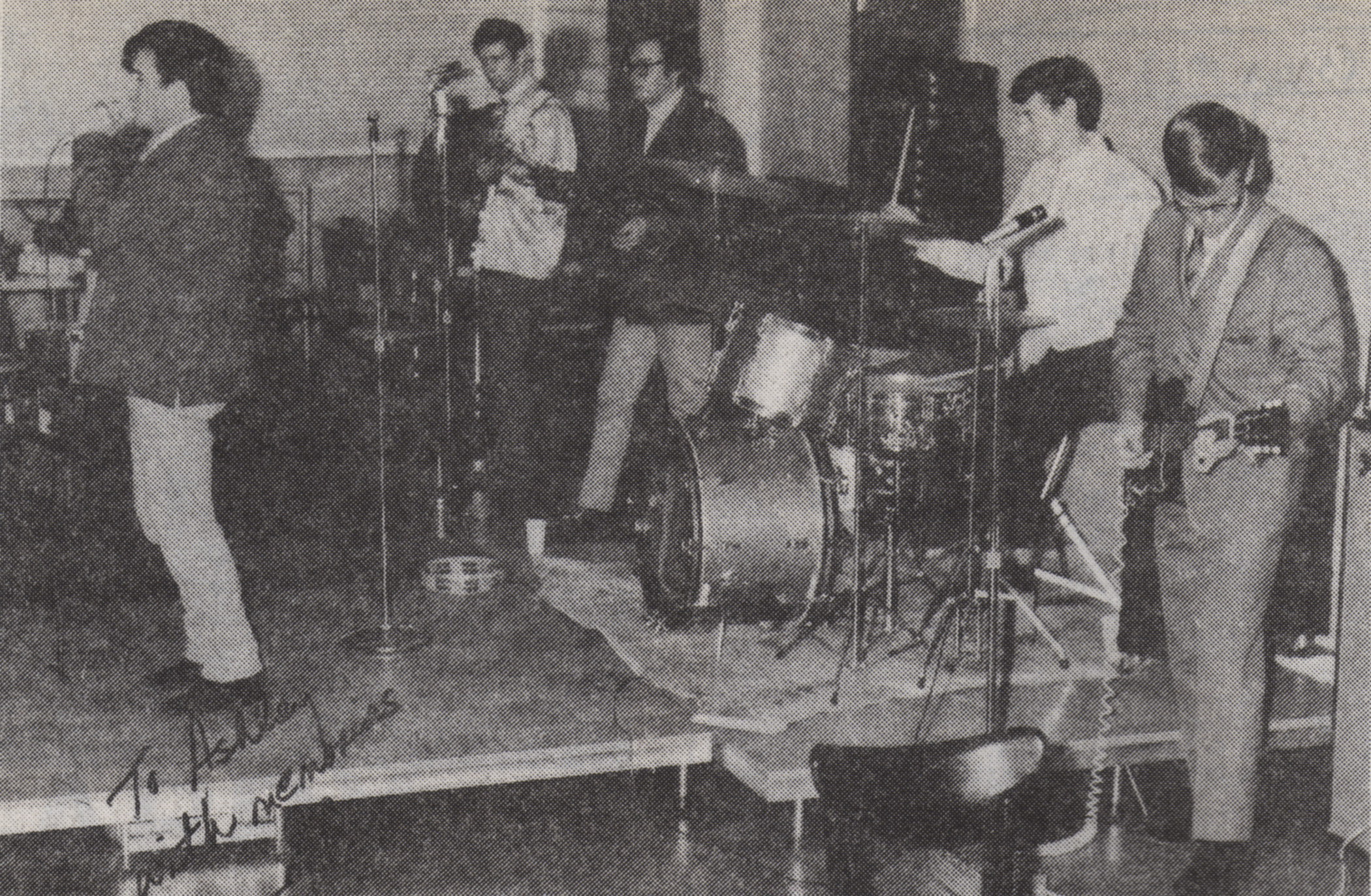
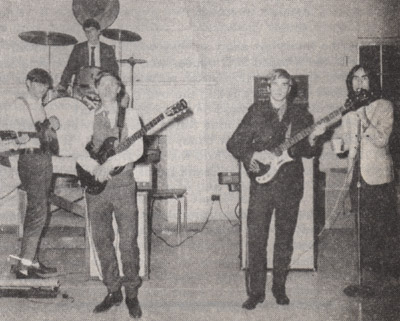
The Clockwork Orange, Richard Lalor at far left, Ashley Johnson on bass. Photo from Not Fade Away #3[/caption]
Rich Lalor had played in the Clockwork Orange with Ashley Johnson, a hip record collector who owned the original of “Defecting Grey”. The fact that this song was covered by a Texas band is all the more remarkable, as it was one of the more obscure Pretty Things records of the ’60s.
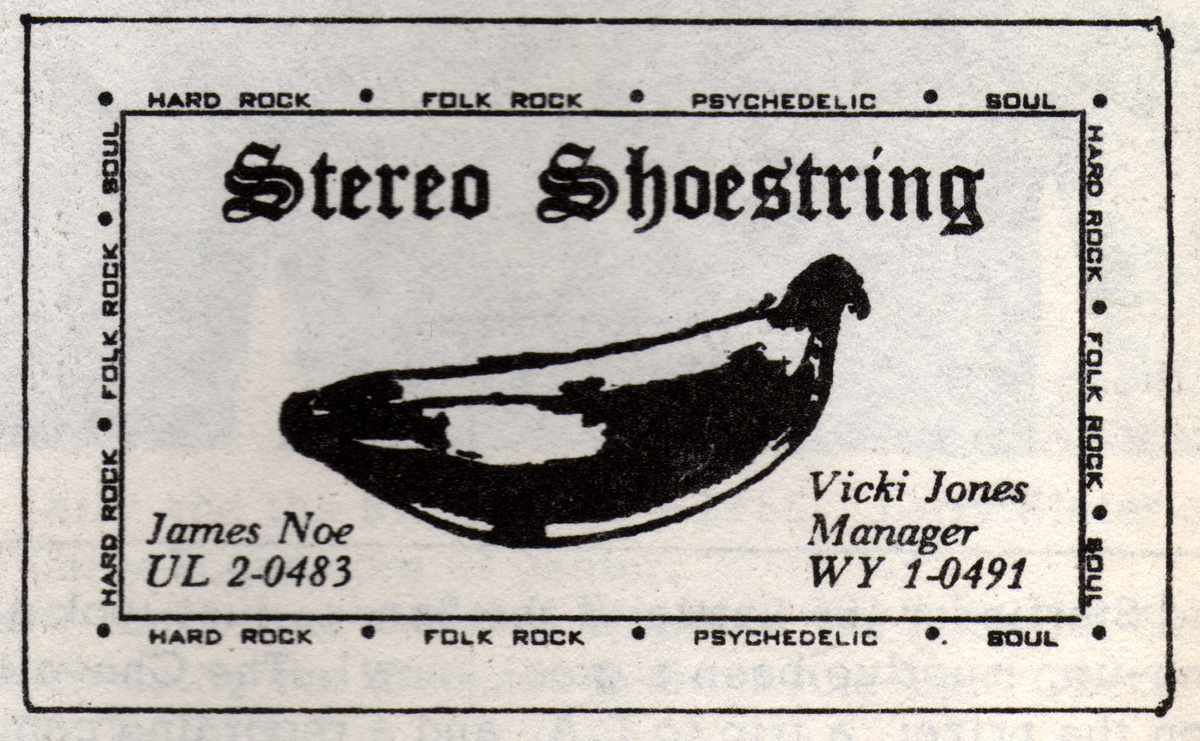
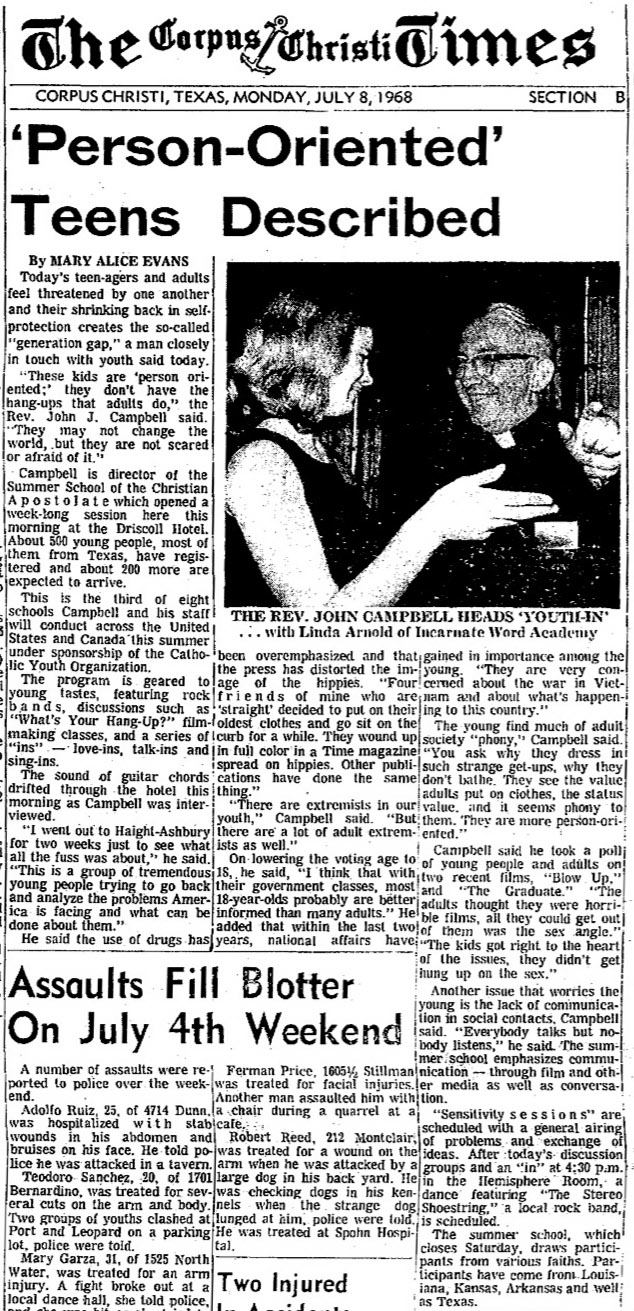
Management by Vicki Jones Scanned from Not Fade Away #3They are mentioned in an article from the Corpus Christi Times in July, 1968:
“Sensitivity sessions” are scheduled with a general airing of problems and exchange of ideas. After today’s discussion groups and an “in” at 4:30 p.m. in the Hemisphere Room, a dance featuring “The Stereo Shoestring,” a local rock band, is scheduled.
For some reason, Lalor left the band, followed by Schultz and Howard. Coco and Noe found new musicians and reformed the Shoestring in 1969, but soon changed the name to the Hendrix-inspired The Red House.
Thank you to bosshoss and Gyro1966 for the 45 transfers.
Two songs by the reformed Shoestring, 1969 These would be released as by The Red House Scan from the collection of Andrew Brown
Update: I’ve changed references to James Coco to John Coco, as more than one person who knew him has commented that is his correct name.
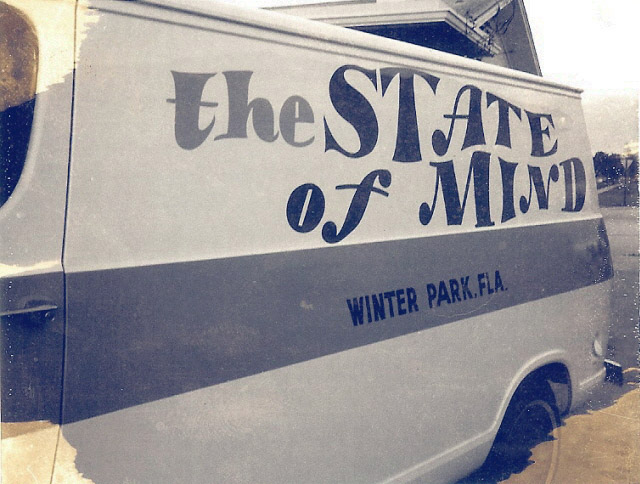
The State of Mind, from left: Tommy Devor, Gary Redwine, Mike Darby, Glenn Coleman and Bobby Corley This photo and the one of the band van from Bobby’s blog Diary of a Drummer
Last year Bobby Corley of the State of Mind sent me a copy of their cool single for the Tener label. I sent him a couple emails to thank him and ask for more information on the band, but haven’t heard back yet. Bobby has a blog Diary of a Drummer with many good photos, but he hasn’t updated it in a couple years.
The members of the State of Mind were Tom Devor (vocals), Glenn Coleman (lead guitar), Mike Darby (rhythm guitar), John Dumas (bass) and Bob Corley (drums). Their original drummer was Leo Gates, replaced by Corley in 1967 when Gates went to college. Gary Redwine also played bass with the group, though I’m not sure if he came before or after John Dumas.
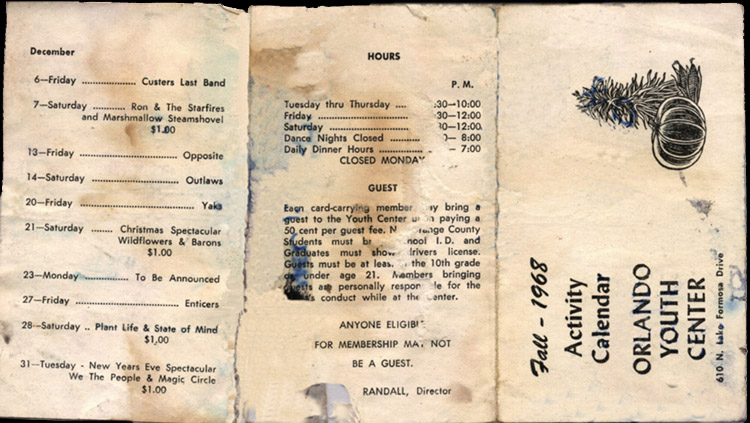
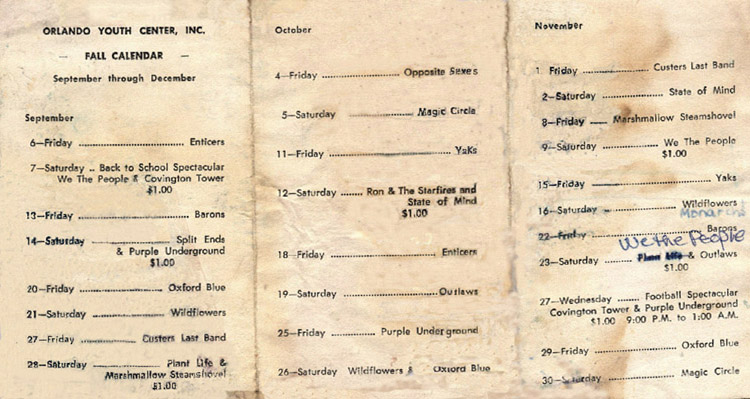
The band was from Winter Park, by Orlando, often appearing on bills at the Orlando Youth Center and The Place, but other than that I don’t know much about them.
Their first release was probably this very fine version of “My Back Pages” on the Bee Jay Demo Volume II compilation from 1967 (Tener TC 1014).
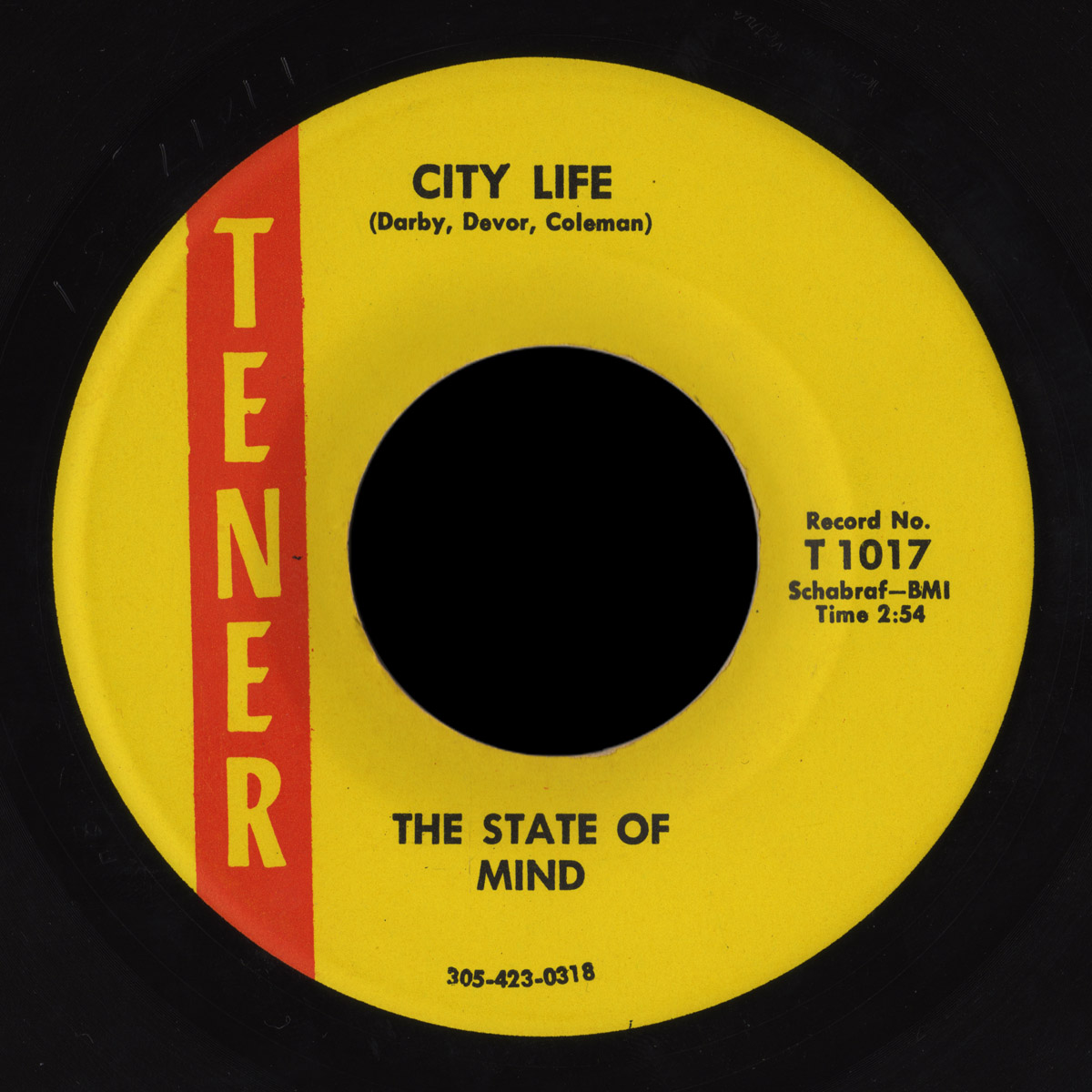
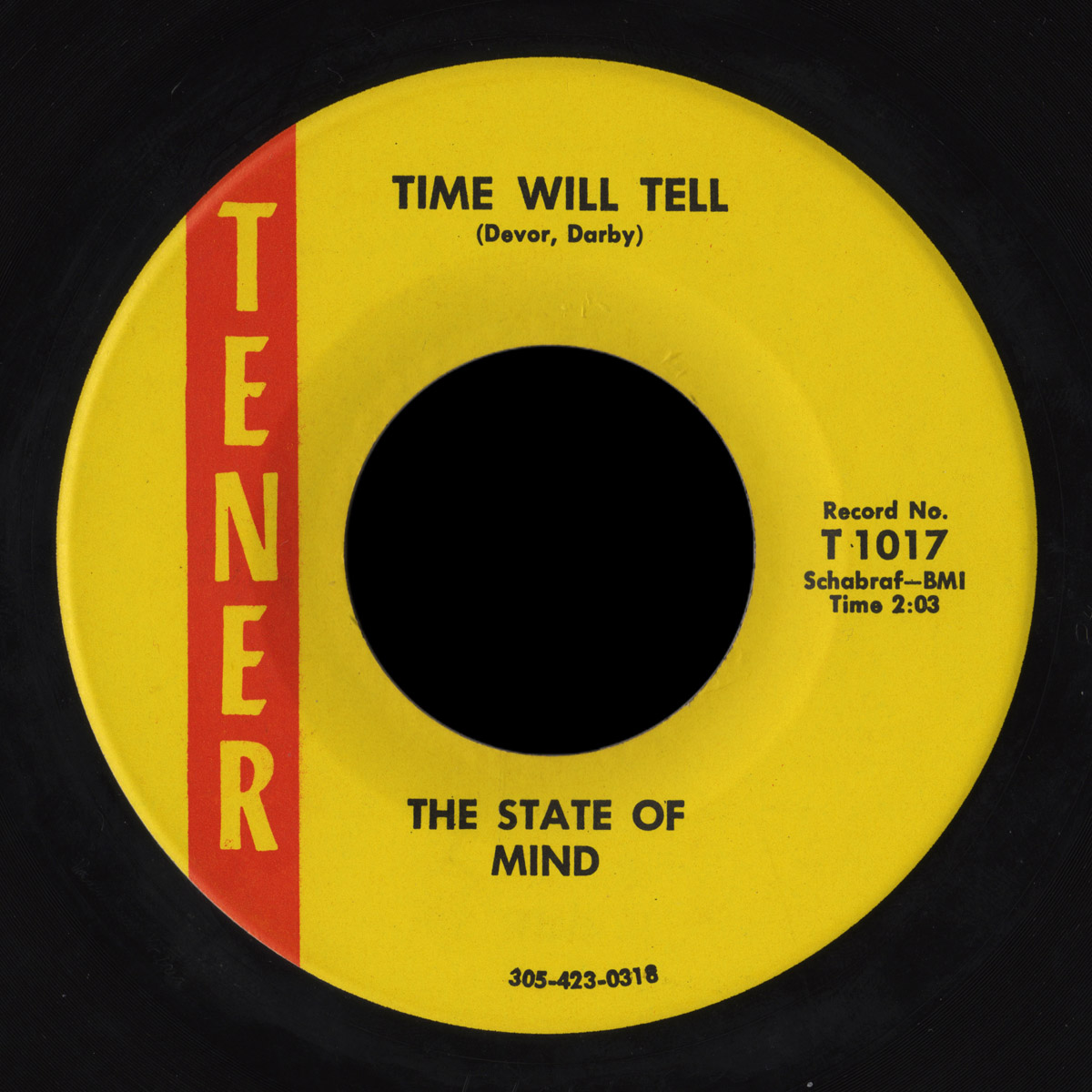
Their single came out in late ’67 or ’68. “City Life” is really unusual, with static noise layered over the music throughout the song, giving it an apocalyptic feel. It was written by Mike Darby, Tom Devor and Glenn Coleman. The flip “Time Will Tell” is also good, written by Devor and Darby.
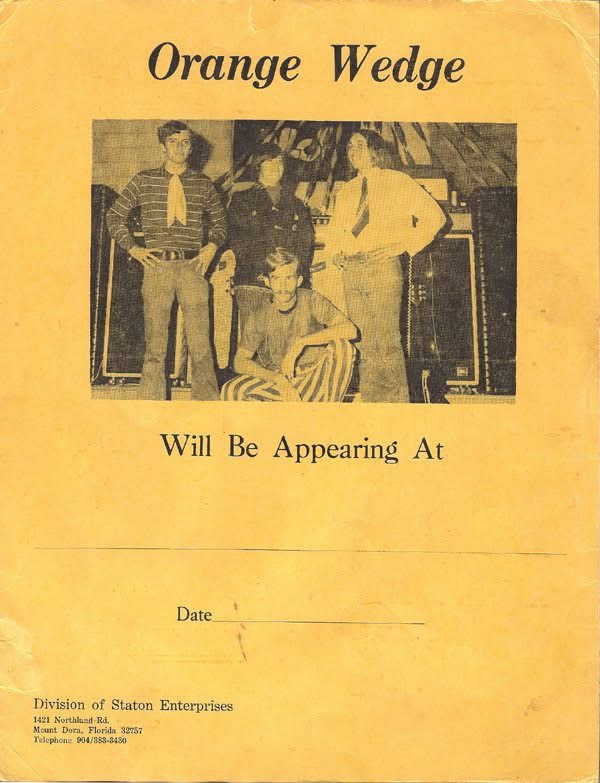
Glenn Coleman and Tom Devor and later Mark Darby, played with a later group called the Orange Wedge with Clark Staton and a bassist, Buzz (?) and Tim Gordon. This was not the Michigan group called Orange Wedge who recorded “From the Tomb to the Womb” or the Baltimore group with two LPs in the ’70s.
Thomas Devor had another group, Angelo Toad in the 1970s, and as of July 2026 lives in Alabama, still singing.
Thank you to Jeff Lemlich for the transfer of “My Back Pages”.
Orlando Youth Center, Fall 1968 schedule, featuring the State of Mind, Ron & the Starfires, the Marshmellow Steamshovel, Plant Life, Magic Circle and more.Orlando Youth Center, Fall 1968 schedule From the collection of Rootbound at the Limestone Lounge.Orange Wedge that came out of State of Mind. I’m not sure who is who in this photo.
Joey B. and the Silhouettes, January, 1963, from left: “Peewee” Lavoisier (only played with us for one or two gigs), Joe Barron (Joey B), Gonzalo Gonzales, Felipe Garza, Luis Maza, Joe “Papucho” Garcia and Jesse Guerrero
My name is Gonzalo Gonzales (GG for short) and I was a band member with Noe Pro and the Semitones together with Jesse Salinas during the early 60’s. Another band from the area that I had played with. This would be Joey B and the Silhouettes. Let me lay out a bit of history that maybe ties some things together.I had played in my high school band and had always been interested in playing with or forming a group. After graduating in 1961, I left Brownsville to attend college close to Dallas. After one semester, I returned to Brownsville and attended a junior college here. A friend of mine, another band member from high school, informed me that there was a group looking to expand their sound with horns (both of us played clarinet and saxophone). He introduced me to the group and I joined up. This group was called the Blue Valiants – this is the same group that Noe Pro joined as a drummer later on. The Blue Valiants were led by a guitar player named Marcos Rodriguez.
After playing with the Blue Valiants for about a year, the group broke up and several of the members, including myself, left to form a new group. This new group was called Joey B and the Silhouettes. This group consisted of the following members: Joe Barron (Joey B) (lead singer and rhythm guitar), Joe Garcia (nicknamed Papucho and who happened to be a cousin of Marcos Rodriguez – bass guitar), Jesse Guerrero (drums), Luis Maza (my friend from high school – alto sax), and myself (tenor sax). Later on we added a lead guitar player who also sang from time to time – Felipe Garza.
We played gigs all over for high school dances, birthdays, weddings, etc. but we also put on our own dances from time to time. We would rent a salon, hire a cop for security, and then put up posters all over town. We then had our girl friends or family members charge admission at the front door. Other local bands started doing this same thing.
The Silhouettes did make an unreleased tape but I don’t remember with who or what ever happened to it. I wish I did – would be great to dig that up.
Eventually, of course, group members started leaving for different reasons and the group disbanded. Luis Maza left and joined another group that was getting popular during this period – Lenny and the Bellaires. Lenny was the stage name for Leo Silva. I hooked up with a couple of brothers that had started a group. This group was called The Staffs. This is the same group that Jesse played with later on after he played with Noe.
Meanwhile, Marcos Rodriguez brought on new members to the Blue Valiants including Noe Pro as a drummer. Noe tells me that he only lasted with the Blue Valiants for about 6 months or so before he decided to leave and form his own band which, of course, would be the Semitones.
Noe Pro and the Semitones started to make a big splash in Brownsville and, really, all over the Rio Grande Valley. The gigs that the Staffs were getting were getting less and less. So I got dissuaded with them and decided to join up with Noe. I then played with Noe and the core group until I had to leave for the service in mid 1966. I played with the Staffs way before they ever made that recording on the Pa-Go-Go label. In fact, I was surprised that they had recorded – I kind of lost track of them once I went into the service.
When I joined the Air Force, I ended up in San Antonio based at Lackland AFB. While there, I looked around for a band to play with. I got a hold of Rudy “Tee” Gonzales (from Rudy and the Reno Bops) and his brother to see if they could hook me up with someone and they did. They introduced me to Danny Martinez from Danny & the Tejanos and I ended up playing with them for a couple of years. In fact, I was on the recording of “Mustard Greens” which was recorded with Tear Drop.
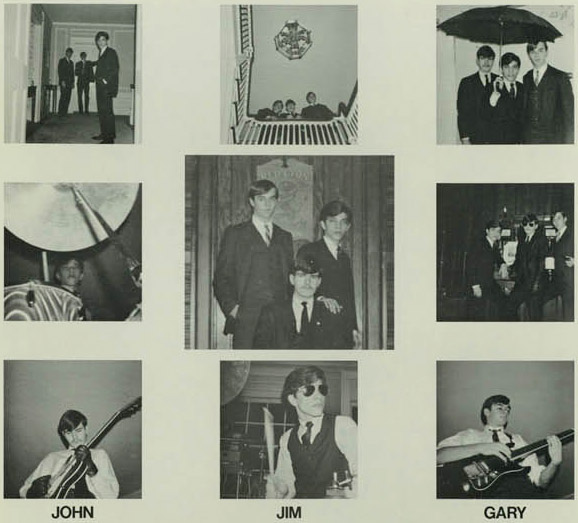
John B. Ford – lead guitar, lead and background vocals Gary Francis – bass (“black” album) and rhythm guitar (“red album”) Tomm Ballew – bass (only on the “red” album) Jim Valice – drums and backing vocals
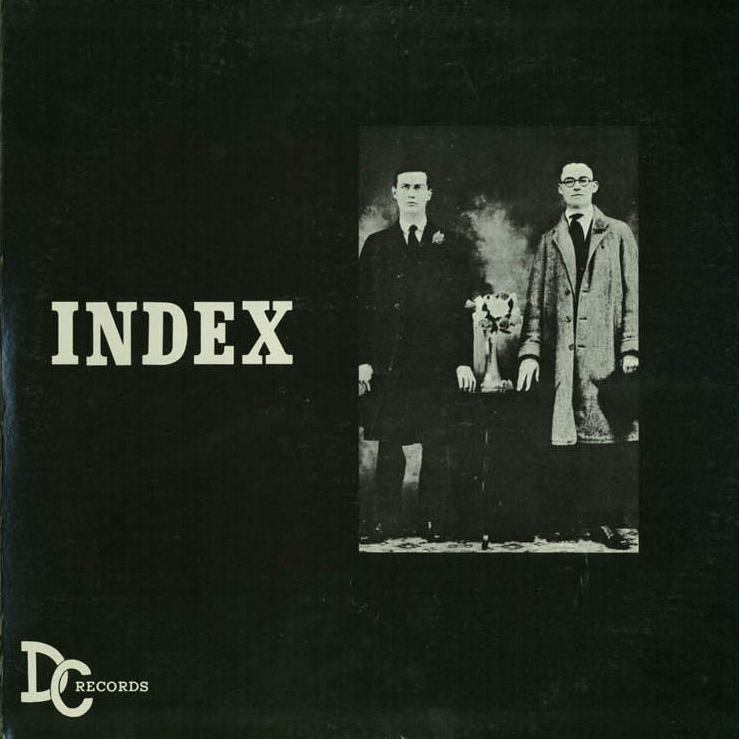
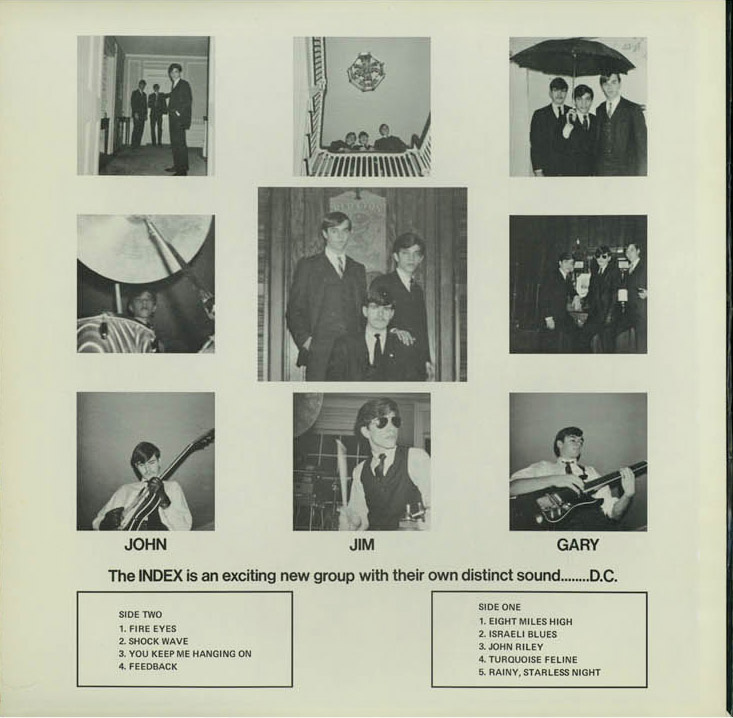
First LP, the “black” albumFrom the Grosse Pointe suburb east of Detroit, Michigan, the Index released two of the rarest LPs of the late ’60s on their own DC Records label, the “black” and “red” albums (so named because of their black and red labels as neither had a title).1967’s “black” album is a murky recording drowned in natural reverb, but that doesn’t blunt the impact of the playing: if anything it enhances it. While one reviewer I’ve read prefers the cover songs like “Eight Miles High”, “John Riley” and “You Keep Me Hanging On”, I like the original vocals “Fire Eyes” and “Rainy Starless Night” and the incredible instrumentals: “Feedback”, “Shock Wave”, “Israeli Blues” and “Turquoise Feline”. This record has recently been issued on vinyl on DC/Valor records, I’m not positive if that’s a legitimate reissue or not.
In 1968 they made a cleaner recording for their second LP, the “red” album. In 1997 it was issued on CD with some tracks from the first LP and some 1969 recordings, titled Index Anthology 1967-68.
As Index broke up due to members going to college, Jim Valice and John Ford formed Just Us, recording another rare LP from 1969 on the Valord label, The U.S.A. from the Air. That album, more tracks from their first and a 1969 live recording were released on CD on Index Anthology II.
Lion Productions put out a comprehensive reissue of both albums and additional recordings on a 2 CD set in 2010. Lion should be reissuing both LPs on vinyl in 2015-2016.
If anyone has quality photos or scans of the second album covers or labels or either record, please get in touch.
Dan Nielsén conducted this interview with John Ford about the band:
Q. Can you give us some background information: where were you born and how did you start playing the guitar? Was there any time in your life when you thought, “Music is what I’m going to the for the rest of my life” or has it always been a hobby?
Back of first LPJohn Ford: I was born in Detroit, Michigan on May 25, 1949. I learned to play the guitar in 1960 from my uncle who was a skilled guitarist. He was a fan of folk music, and I learned playing the songs of the Kingston Trio, Peter, Paul and Mary, and The New Christy Minstrels.
Q. Was INDEX the first band that you was in? Also, how did you all meet? Was it through school, mutual friends or just by coincidence?
John Ford: I put together my first band in 1964. It was more of a Beatles type of group with vocals and guitars, but no real drummer or bass player. That band evolved into a group called TRB (“The Rubber Band”), which was more of a summer band that played up in Northern Michigan for the summers. The sounds was based heavily on Beatles, Stones, Animals, Yardbirds and the Who. The Index band was established when Gary Francis and I got together and asked one of Gary’s friends, a drummer named Jim Valice to join us. The music that influenced me most at that time was Buffalo Springfield, Yardbirds (with Jeff Beck and not Eric Clapton) and the Rolling Stones. The three of us were Index and started playing at gigs in the area in 1965. We later added the bass player, Tom Ballew, who was a great addition. On the black album I had played bass and lead guitar and sang lead vocals and backing vocals, Gary had played rhythm guitar and Jim played drums and sang backing vocals. Gary and I went to the same high school, and Jim was a friend of Gary’s. Tom was a friend of Jim’s. The four of us were on the Red Album, and after we disbanded (since we were all at different colleges), Jim and I recorded as Just Us and played all of the instruments and backing vocals ourselves.
Q. Could you tell something about the recording process, the album has a unique sound, which i think many bands have tried to re-create, but haven’t been able to, so what are the “secrets”?
1983 Voxx reissue of the first LPJohn Ford: The first album was recorded in my parents’ basement where we would rehearse. The sound was created due to the stark condition of the basement with tiled floors and concrete walls. We recorded on a Sony reel-to-reel recorder that belonged to my father, and we recorded at 3 ¾ speed. It was a unique sound, and on the first album we had it engineered by a specialist at GM Records in Detroit. We had only a small number of albums pressed (150-200), and we passed them to friends as we started, but later we sold them all through the Harmony House music store in Grosse Point Woods, Michigan.
Q. What gear (guitar, pedals, and amps) were you using back in the late ’60s? What gear were you using on the albums (I haven’t heard “The Red Album” and the Just Us album)? Moreover on the first album who’s on the cover? It looks like an old picture, not like anything you’ve staged, gives an kinda feeling, but it fits in just perfectly with the music.
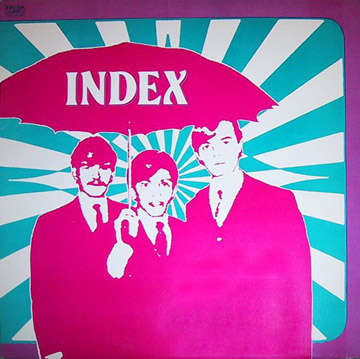
John Ford: I played two electrics and an electrified Martin acoustic D-45 (built in 1945 with a terrific mellow sound). The electrics were a Gibson six-string red body 1965 ES-335, and my favorite was a 1966 Gibson black Les Paul that had humbucking pickups. I used a fuzz pedal for some of the effects and a wahwah pedal for others. The amps that we used were Fender, and the microphones were Shure. Gary used a black Gretsch guitar, and Tom Ballew played a Fender bass. Jim had a great set of black Ludwig drums. The picture for the black album cover was one that Jim found in an old magazine. The red album featured a drawing of us by Jim on the cover.
Q. Do think you have any particular moment on the album? Any song that you feel strong about? My personal favorites are “Shock Wave” and “Fire Eyes”, could you give some background on them? “Shock Wave” is an instrumental, but I think you express feeling through your playing in that song.
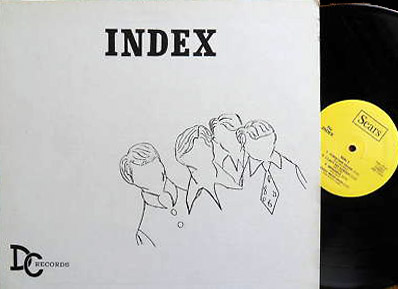
Unlicensed reissue of the second LP on the bootleg Sears label, 1991. Originals have a black cover with white lettering and drawing.John Ford: “Shock Wave” was our tribute to Jimmy Hendrix, and it featured particularly my Les Paul with the fuzz pedal. These pieces came out of jam sessions that really reflected original contributions from the three of us that fit together, but Jim and I were the creative directors of the music. “Fire Eyes” reflected personal issues that I had faced, and I wrote the song.
Q. How about the live INDEX? Did you perform much or was you just and studio band? I’ve know that one of the anthology albums has some live cuts on it, but i seems to be covers mostly. Did you ever play “Shock Wave”, “Feedback” etc, on stage or was it too difficult?
John Ford: We played all of our music including our original works and the covers. We played at many high school dances and college parties and neighborhood parties throughout Detroit. We played in some of the same venues as Mitch Ryder and the Detroit Wheels who had just released “Devil with the Blue Dress”. It was a dynamic time for music in Detroit as groups like SRC (Scot Richard Case), Bob Seger and the Silver Bullet Band, the Underdogs, the Pleasure Seekers and Alice Cooper were all playing regularly in the area. The live sessions featured our album prominently so “Fire Eyes” and “Shockwave” were regularly performed along with “Rainy Starless Night” and “Israeli Blues” and other originals. One of the best gigs that we had was playing for the farewell party for the Detroit Piston Basketball player, Dave Debuscher who was leaving to go to the New York Knicks. We played for many of the pro athletes from the Pistons and the Detroit Lions. Mostly we were asked to play covers of Stones songs and Cream and the Who and the Beatles, but they liked our original music as well.
Q. Of the three albums; which one to you feel most is connected to you? How was the album taken? Was there many who likes it, etc. Also, how do you feel about the album selling on eBay for such big bucks now? Could you ever imagine that when you recorded it?
John Ford: We did it for the fun of it and to have a permanent record of our songs. The best album from a recording standpoint was the red album as we had the ability to use better vocal controls and we could double and triple track the guitars and voices for greater effect. Many of those songs were recorded in my parent’s den with vocal amplification and reverb, and with carpeting and drapes, the sound was cleaner and clearer. We never expected the albums to become so popular, but we have heard that they were somewhat influential for other artists that were getting started in the Detroit area after us.
Q. Was there any main reason that you guys called it quits?
John Ford: Our schedules and workloads became difficult to balance when we went to college. I was at Yale, Jim was at University of Detroit, and Tom was still in high school. We played for mixers at Yale and schools in the Detroit area, but it was hard to do other than in the summers when we were all back home again.
Q. What have you been doing are you layed the music carrer aside? Do you still have any contact with the others from the band? Do you still play?
John Ford: I still play and sing, but I am more focused on classical solo vocal work in the Norfolk, Virginia area as I have lived there since 1985 as a professor at Old Dominion University. Music is still very much a hobby with me, and I love to sing, but my guitar work has suffered a bit over the years. Jim and I were still in contact up until a few years ago, but he changed jobs, and I have not heard from him for some time. He was located in Beverly Hills, California, and he was working for a TV station there selling advertising time slots. He also was involved with a radio station, but I am not sure where he is these days.
Q. Some fun story or anecdote from the time in INDEX?
John Ford: The most ridiculous thing was me playing lead licks with gloves, which was a challenge! The album cover from the black album showed us wearing three piece suits and me playing with the gloves and wearing a ridiculous mustache, which was not what we normally looked like. I was heavily influenced by Steve Stills and Neil Young, and I wore boots and buckskin jackets often when we played. I loved the sound of Buffalo Springfield and Crosby, Stills and Nash and the intricate harmonies and tried to bring them in when I could into our music. In the beginning we wore Nehru jackets and head bands from the mid 1960s and played a lot of the Doors music. Ridiculous appearances, but right in style at the time.
This site is a work in progress on 1960s garage rock bands. All entries can be updated, corrected and expanded. If you have information on a band featured here, please let me know and I will update the site and credit you accordingly.
I am dedicated to making this site a center for research about '60s music scenes. Please consider donating archival materials such as photos, records, news clippings, scrapbooks or other material from the '60s. Please contact me at rchrisbishop@gmail.com if you can loan or donate original materials

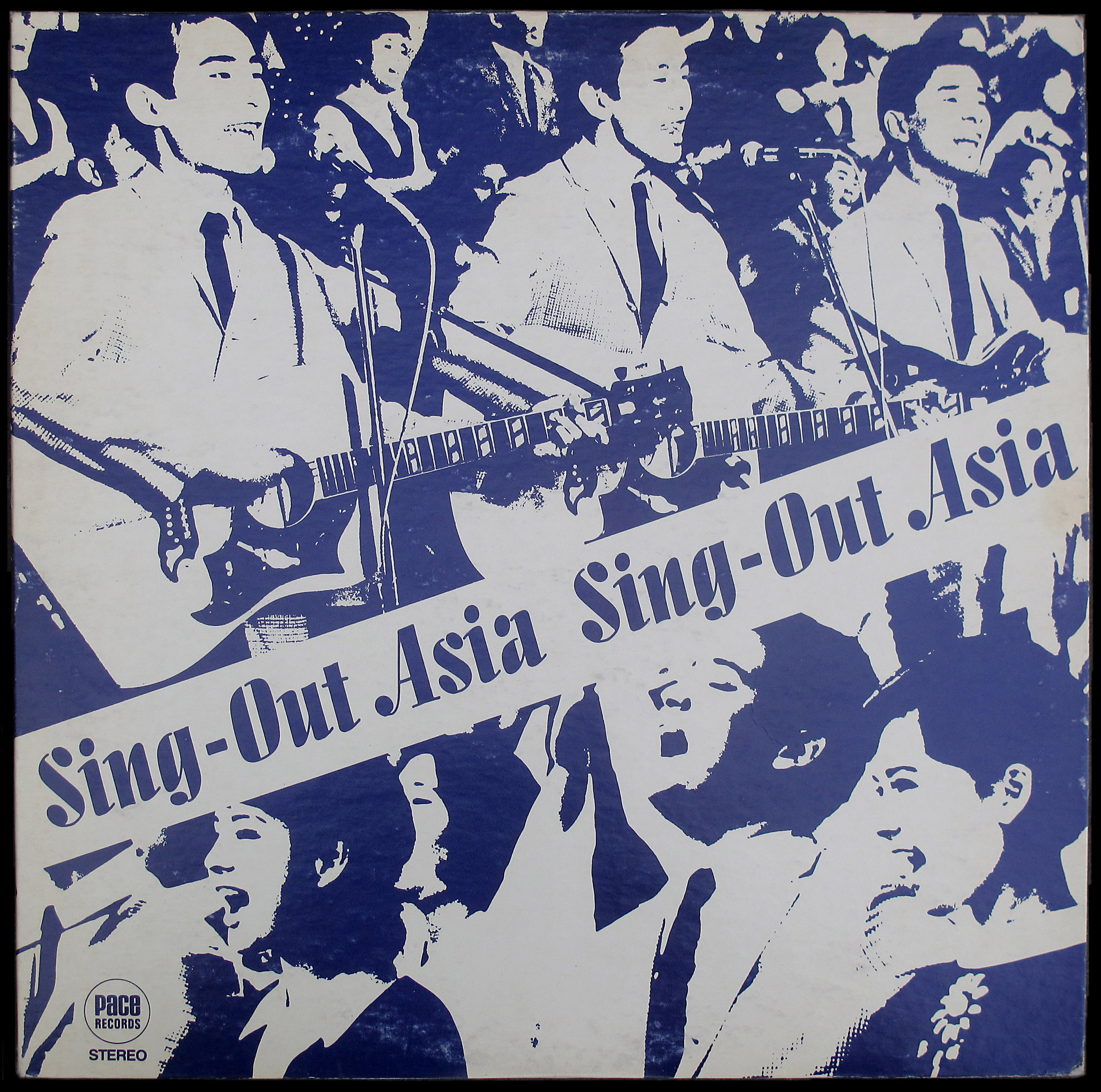
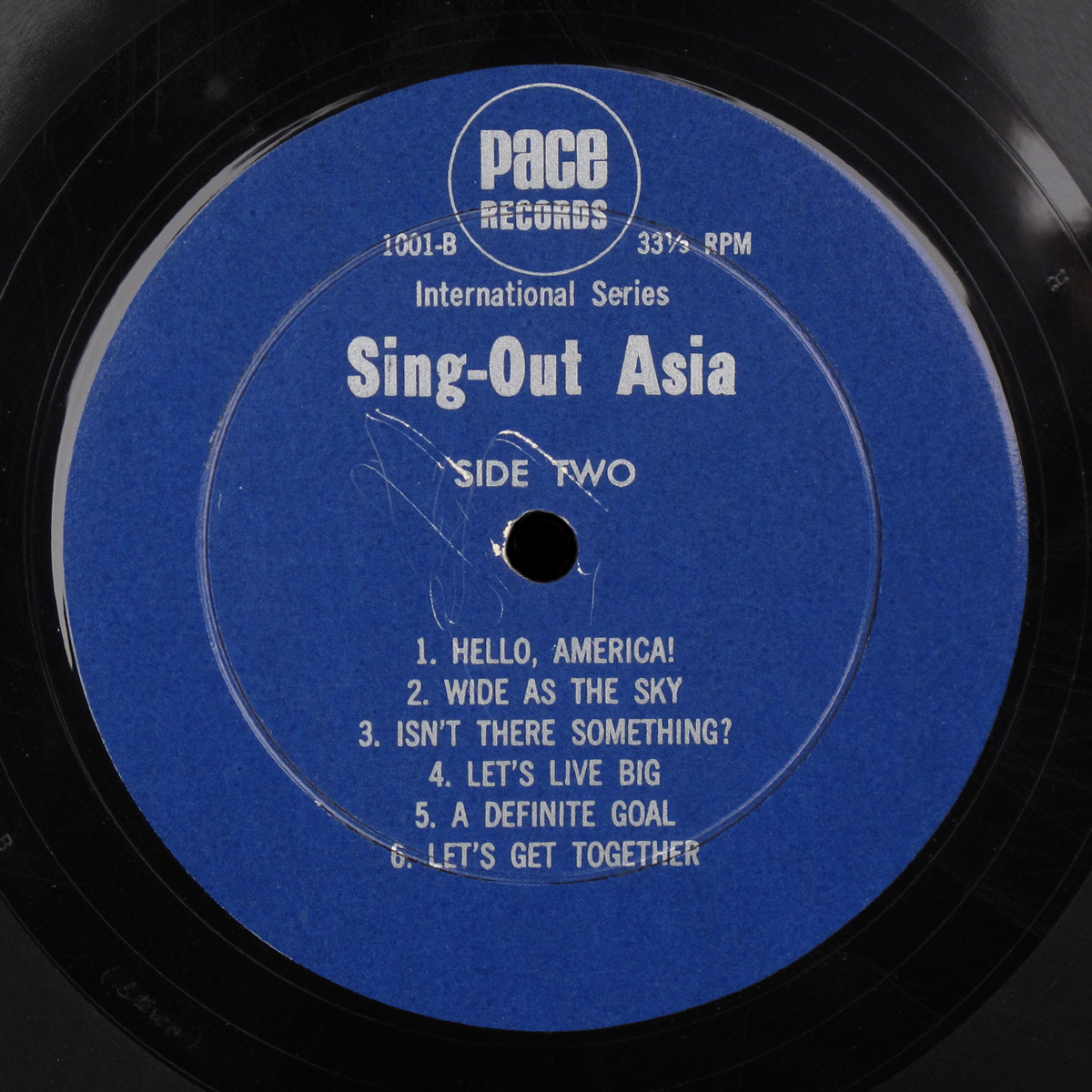 Up With People’s “Sing-Out 65” tour of Asia inspired the creation of Sing-Out Asia. The Sing-Out Asia group seems to be primarily Japanese with a number of Filipinos.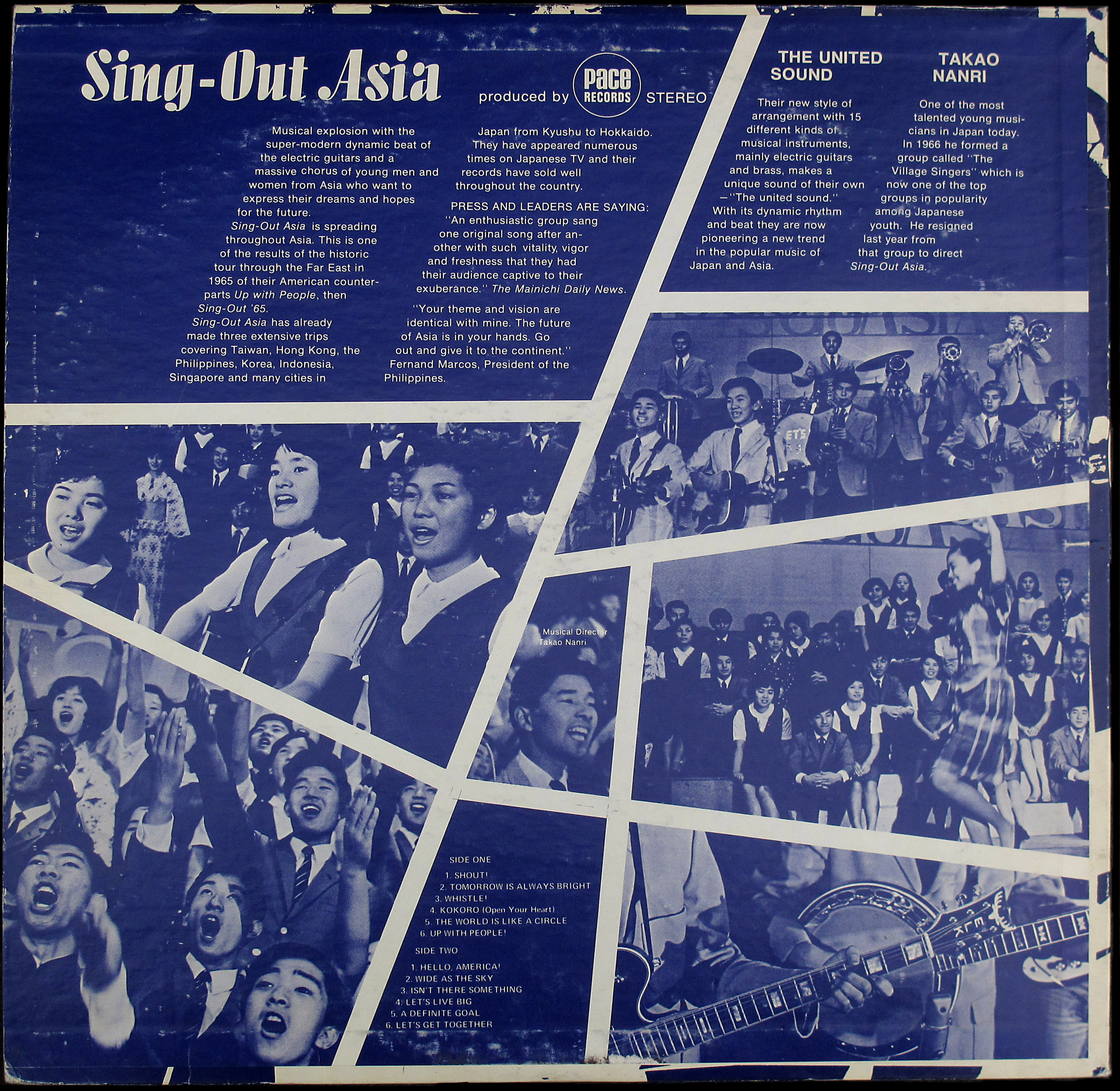
 The Clockwork Orange, Richard Lalor at far left, Ashley Johnson on bass. Photo from Not Fade Away #3[/caption]