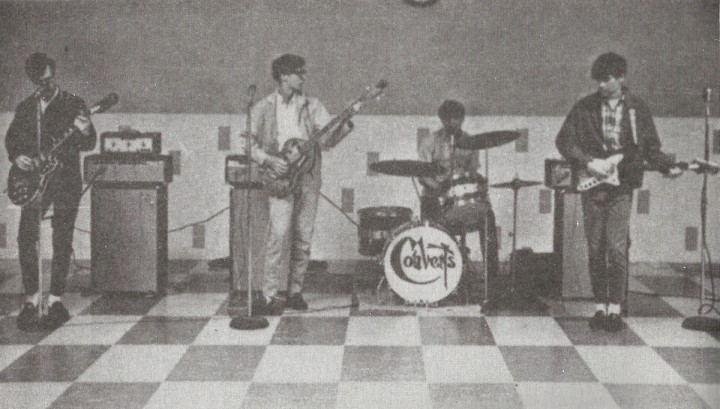
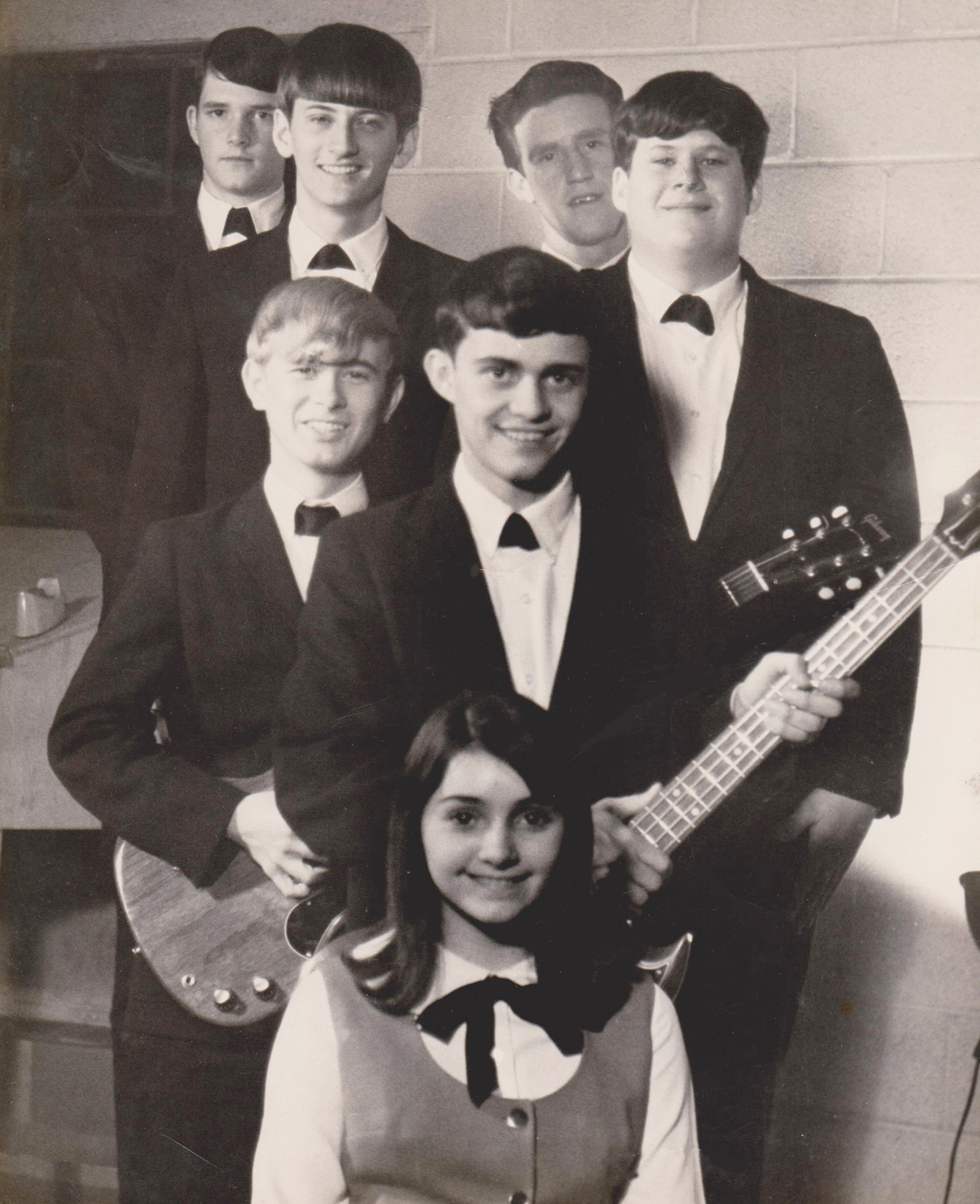
The Converts were seminary students, I believe at the Holy Name Seminary in Madison, Wisconsin, though two sources (Lost and Found & Teen Beat Mayhem) give Beloit, Wisconsin as their base. Beloit is a town of 35,000 just across the Illinois state line, just south of Janesville where Ken Adamany ran the Rampro and Feature labels, and an hour southeast of Madison.
According to Gary E. Myers’ On That Wisconsin Beat, the band consisted of Bob Henneman (lead guitar); Duane Millard (guitar, keyboard and bass); Charles Millard (bass and guitar), replaced by Terry Johnson (bass); and Robert Fixmer on drums. Gary writes “None of the converts joined the ministry”!
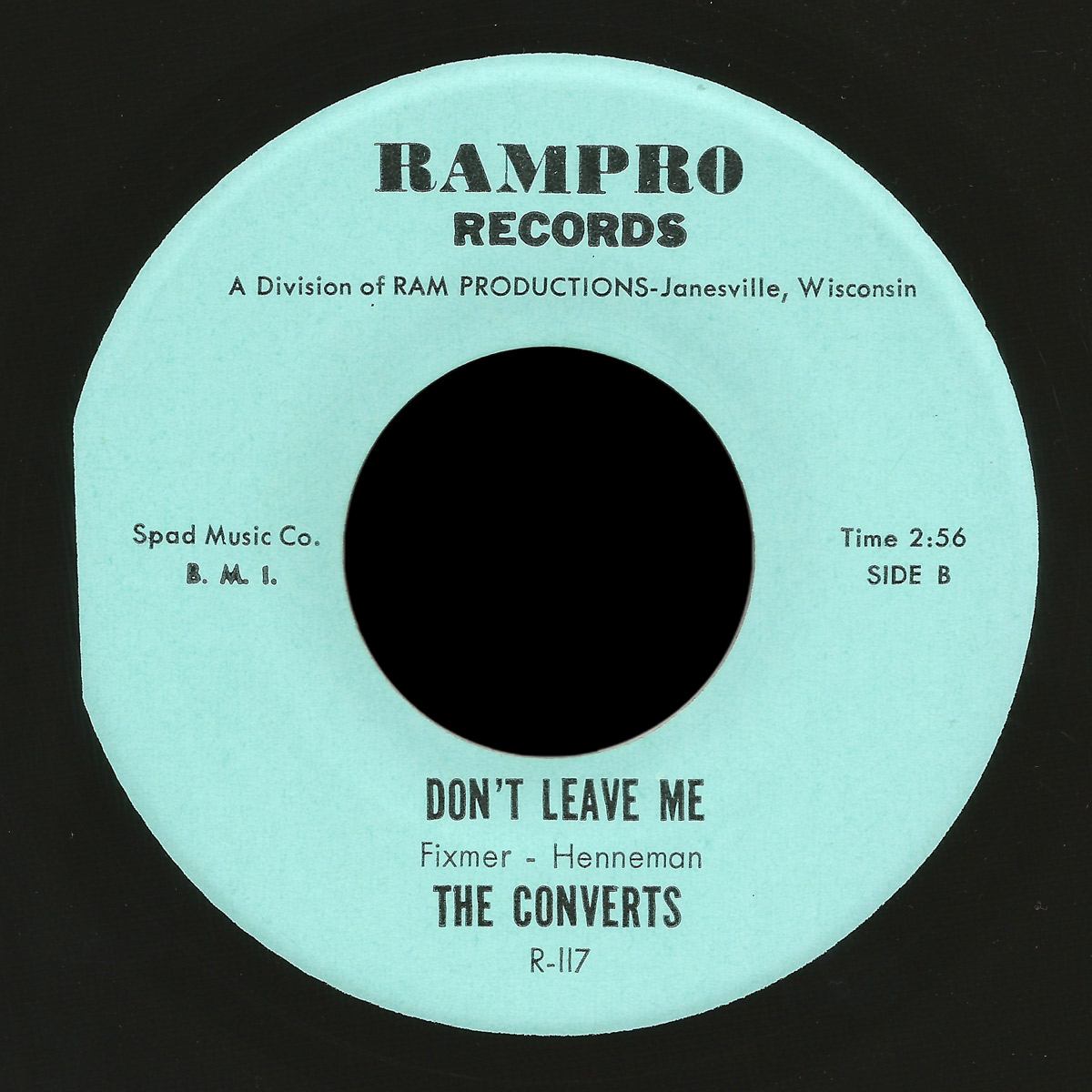
In early 1967 the band released their only 45, the ballad “A Guy Without a Girl”. Listeners these days prefer the b-side, the excellent “Don’t Leave Me”. Hear it on Teenage Shutdown Vol. 15, She’s a Pest. The singer tries to convince his girl not to go by saying she’s “not so hot”, and threatening she’ll never “get another man” or “hold another hand”. Both songs were written by Fixmer & Hanneman for Spad Music, BMI.
Rob Fixmer played percussion with Jim Spencer for his albums previous to the Major Arcana LP, Landscape (1973, on Thoth) and 2nd Look (1974, on Akashic). Fixmer became a journalist whose credits include publishing an interesting interview with Frank Zappa in Milwaukee’s alternative newspaper, the Bugle American.
Terry Johnson was in the Southbound Band, who released an LP in 1985.
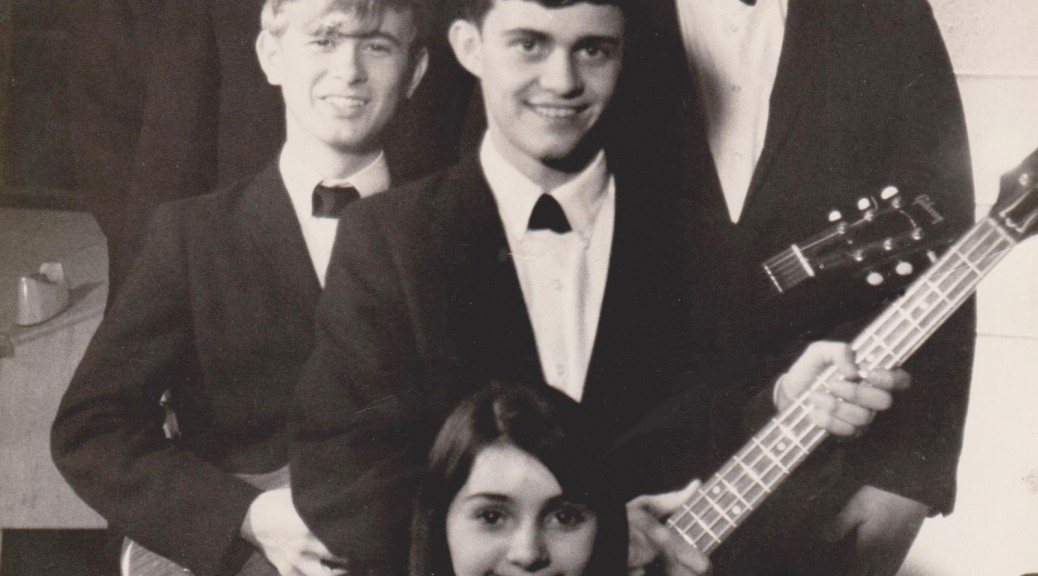
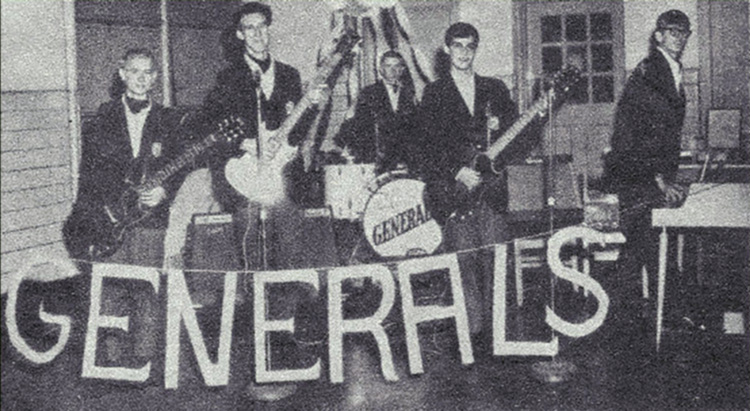
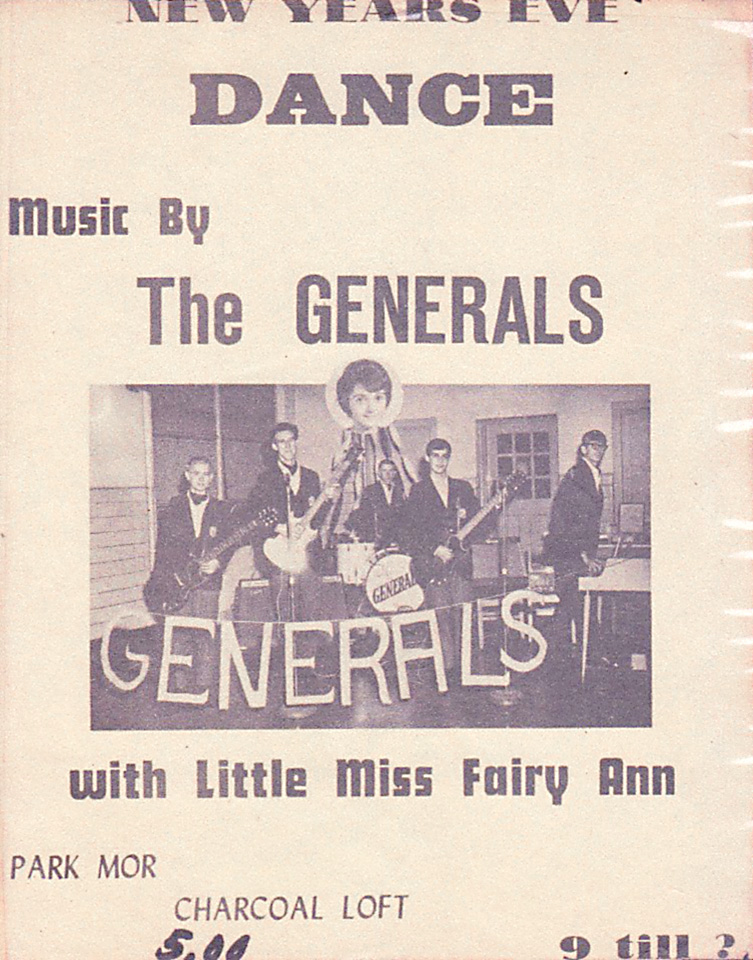
The Fabulous Generals, 1966, back row: David Daniel, Bobby Henderson, Joe Merriman, Lee Moore; middle row: Mack Davidson, Ronnie Ashworth (holding Bobby’s bass); in front: Fairy Ashworth
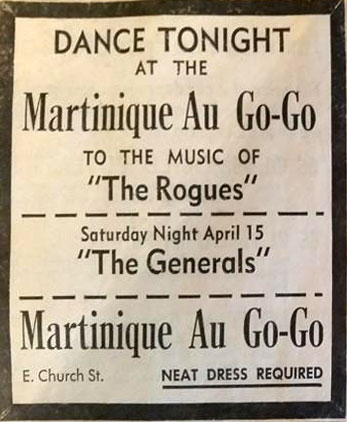
The economic landscape in Martinsville and Henry County is far different today than was the case a half-century ago. In the sixties, the area was the manufacturing hub of Southside Virginia and was home to textile giants DuPont and Tultex, and furniture makers including American of Martinsville, Hooker and Stanley. The boom era provided teens with disposable income and the British Invasion gave rise to a number of excellent bands, including Gene and the Team Beats, the Rogues and the Generals, also known as the Fabulous Generals.
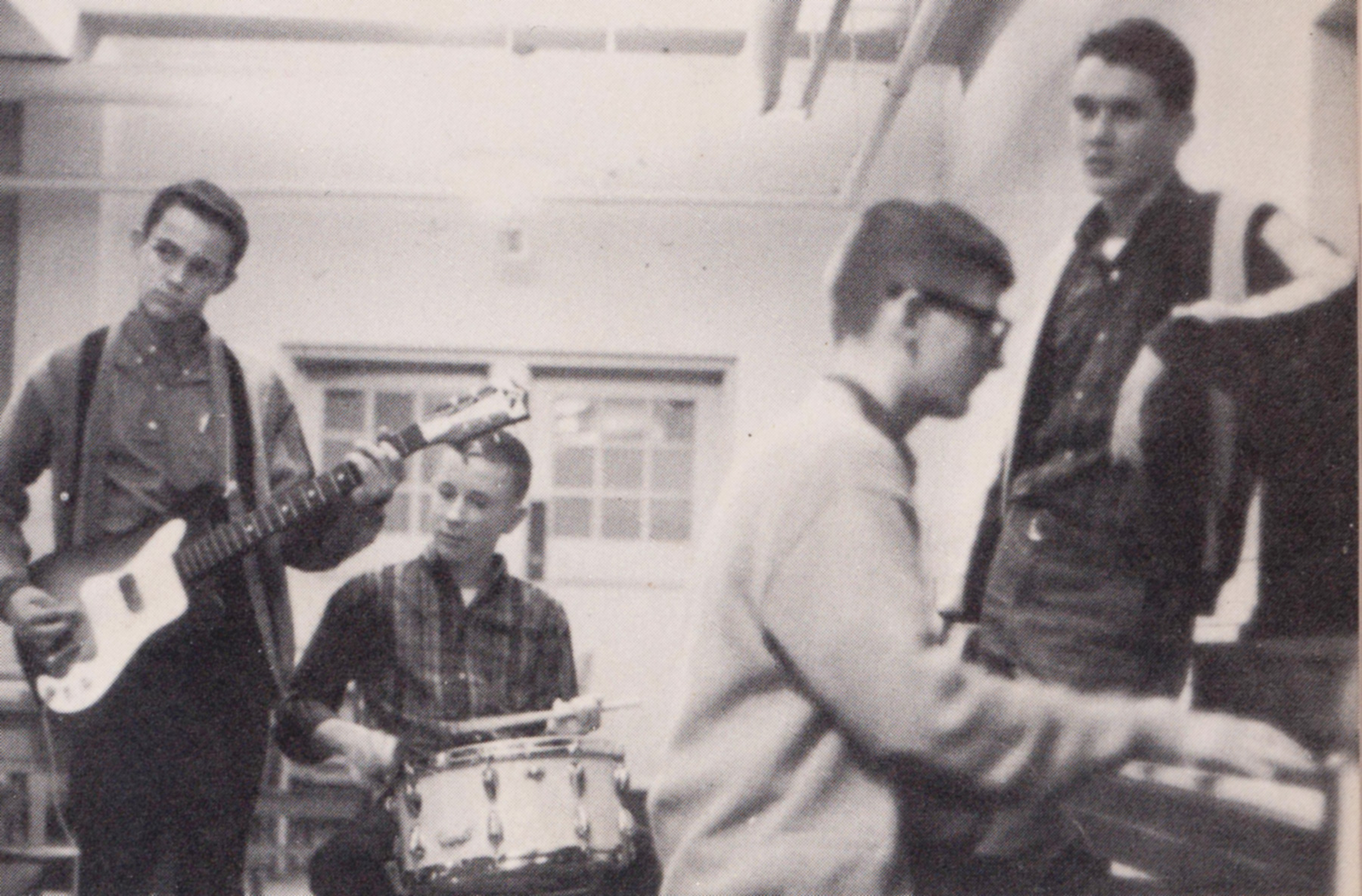
The Generals were based in Martinsville and nearby Collinsville and came together in the spring of 1964 during a school election of senior class officers at Drewry Mason High School in Ridgeway, VA. Guitarist Ronnie Ashworth was an eighth grader and had been playing music with pianist Joe Merriman. The two rehearsed in the cafeteria after school during football practice and knew they had something going when other students stopped by to listen. Drummer Frankie Divers was one of those who heard the duo and asked if he could sit in with them. He soon convinced Joe and Ronnie to play on behalf of one of the election parties.
The Generals’ first drummer Frankie Divers
The rival political factions in the school election were dubbed the “Generals” and the “Beatles” parties, in homage to the Beatles recent appearance on the Ed Sullivan Show. Ashworth recalls that “We were representing the Generals party and so we took that name for the trio.” He says the band didn’t have a name and the “Generals” moniker stuck. He doesn’t recall which party won the election but says the Generals “made a hit as a band.”
The trio played the Surfaris’ instrumental “Wipe Out” for the class election, with Ashworth on a Kay electric guitar and a small, Silvertone amp; Merriman on the school’s stand-up piano; and Divers pounding out the rim shots on a white snare drum.
Divers played with the Generals briefly, but left the group to join the football team. Ashworth’s uncle, Bobby Henderson, was asked to play bass in the spring of 1964 and Lee Moore joined shortly thereafter as drummer, along with Mack Davidson on rhythm guitar.
Ted Hatcher watches as the yet-unnamed Generals practice in the Drewry Mason HS cafeteria in early 1964. Left to right: Ronnie Ashworth, Frankie Divers, and Joe Merriman.
Henderson recalls that Ashworth and his sister, Fairy, both attended Drewry Mason High School in Ridgeway, along with Merriman and Davidson. Ronnie and Fairy would share the lead vocal chores.
The Ashworth family has always been musically inclined. Ronnie admits “most of the musical talent is from my mom’s side.” When his mother was growing up, she sang bluegrass and gospel in a small group in the mountains of Southwest Virginia, around Saltville and Marion. She taught Ronnie a few chords on his first guitar and he took it from there, learning from records. Ronnie and his sister sang together as young children. He took up the guitar and Fairy was soon to be part of the group. Their younger brother, Dennis, sang and became an accomplished drummer, joining his older siblings on stage in the late seventies in the group Eastwinds.
Ronnie’s introduction to the stage came in 1962 when the pre-teen played at a talent contest at the Fieldale Community Center. He “was about 12 years old” and was just learning to play the guitar. He performed Ricky Nelson’s “They’ll Never Be Anyone Else But You” and the Cascades’ song, “Rhythm of the Falling Rain.” He won the competition and used the $50 prize to purchase his first electric guitar.
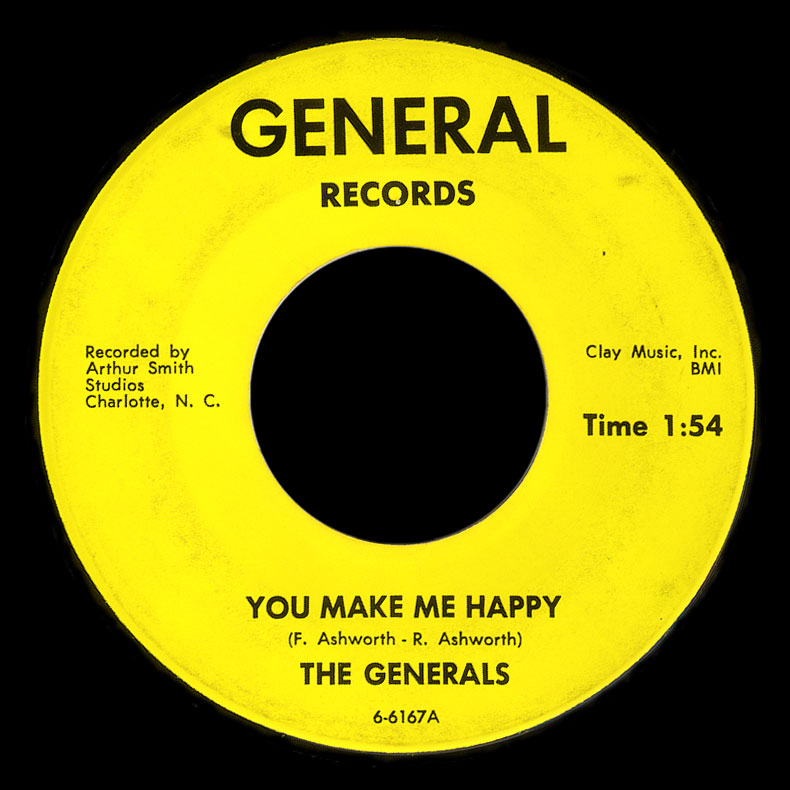
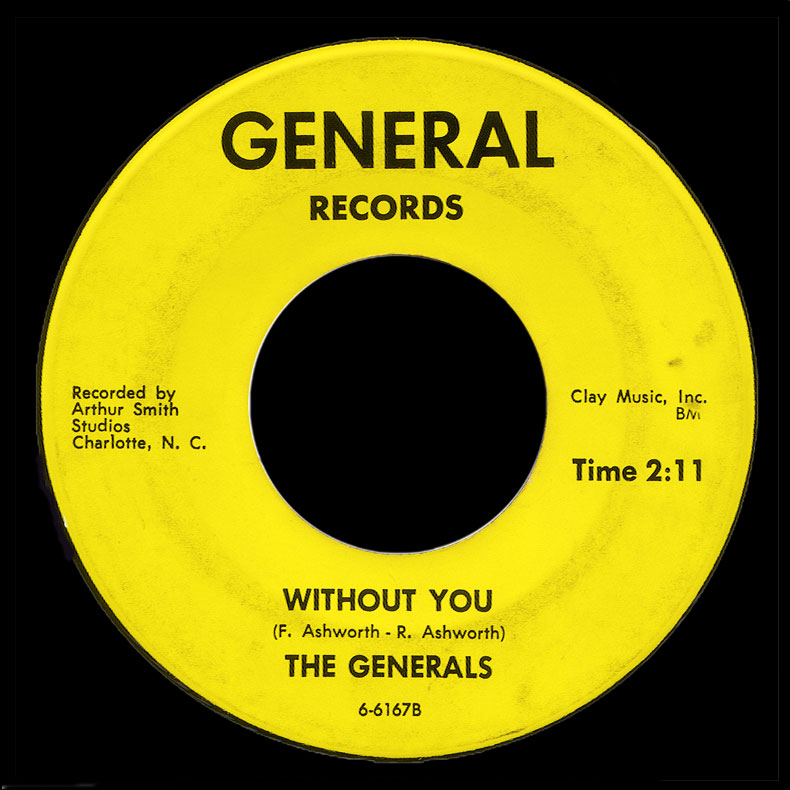
Ronnie said he “always felt like we were supposed to play music” and forming a group seemed to be “the next phase: to get together with a few people and just play some.” The Ashworth siblings were budding songwriters and penned both sides of the group’s first single: “You Make Me Happy” b/w “Without You.”
Ronnie recalls that their first session was held at Arthur Smith Studios in Charlotte, N.C. in 1966 and says “You Make Me Happy” was the first song they worked on, the consensus being that the number had the best shot at being played on the radio.
He doesn’t recall Smith participating in the session, but says “they had a really good studio engineer there who seemed to know his stuff.” The Generals did their first take of “You Make Me Happy” and “then he played it back through these big Altec Lansing speakers, and it was just amazing!” Ashworth explains that the band “never really heard ourselves play, but we could hear everything through those speakers. That’s what I remember, just how good it sounded.”
One of the most interesting aspects of the b-side, “Without You,” is its unusual bass line, which starts the number and runs throughout the song. Ronnie says the bass intro was his idea; he made it up on the guitar and showed it to Bobby. He recalls that it “seemed like an unusual way to start the song and it gave us a solid heads up as to when to start playing.”
Henderson believes Arthur Smith was present for the recordings, describing him as a hands-on producer who supervised the production, mastering and pressing of their initial offering, which was released on General Records. This was the first time that he had been in a recording studio and Henderson concedes he was “scared to death” and “surprised that actually we were able to play music and listen to it.”
The line-up on the first sessions (and for the second single on Pyramid Records) featured Ronnie Ashworth on lead vocals and guitar; Fairy Ashworth on harmonies; Joe Merriman on organ; Bobby Henderson, bass; rhythm guitarist Mack Davidson; drummer Lee Moore; and David Daniel on saxophone. While barely noticeable on the first recordings, Daniel’s sax was featured prominently on the follow-up, “Life’s Not Worth It.” Ronnie says Daniel was from Collinsville and played with the band “for about a year.”
The influence of the Beatles and the Dave Clark Five is apparent on both sides of the single, with its infectious harmonies and strong hooks.
According to Henderson, the recording session and the 45s were the grand prize for winning a battle of the bands in Danville, Va. The two-day marathon featured dozens of rock and soul bands performing on flatbed trucks in the parking lot of the then new Ballou Park Shopping Center.
Ronnie doesn’t recall the prize for the competition, but believes both singles were recorded prior to the band marathon in Danville, which was held in the summer of 1967. Fairy was with the band for both recordings but had left the band by that time, rejoining the Generals in 1968.
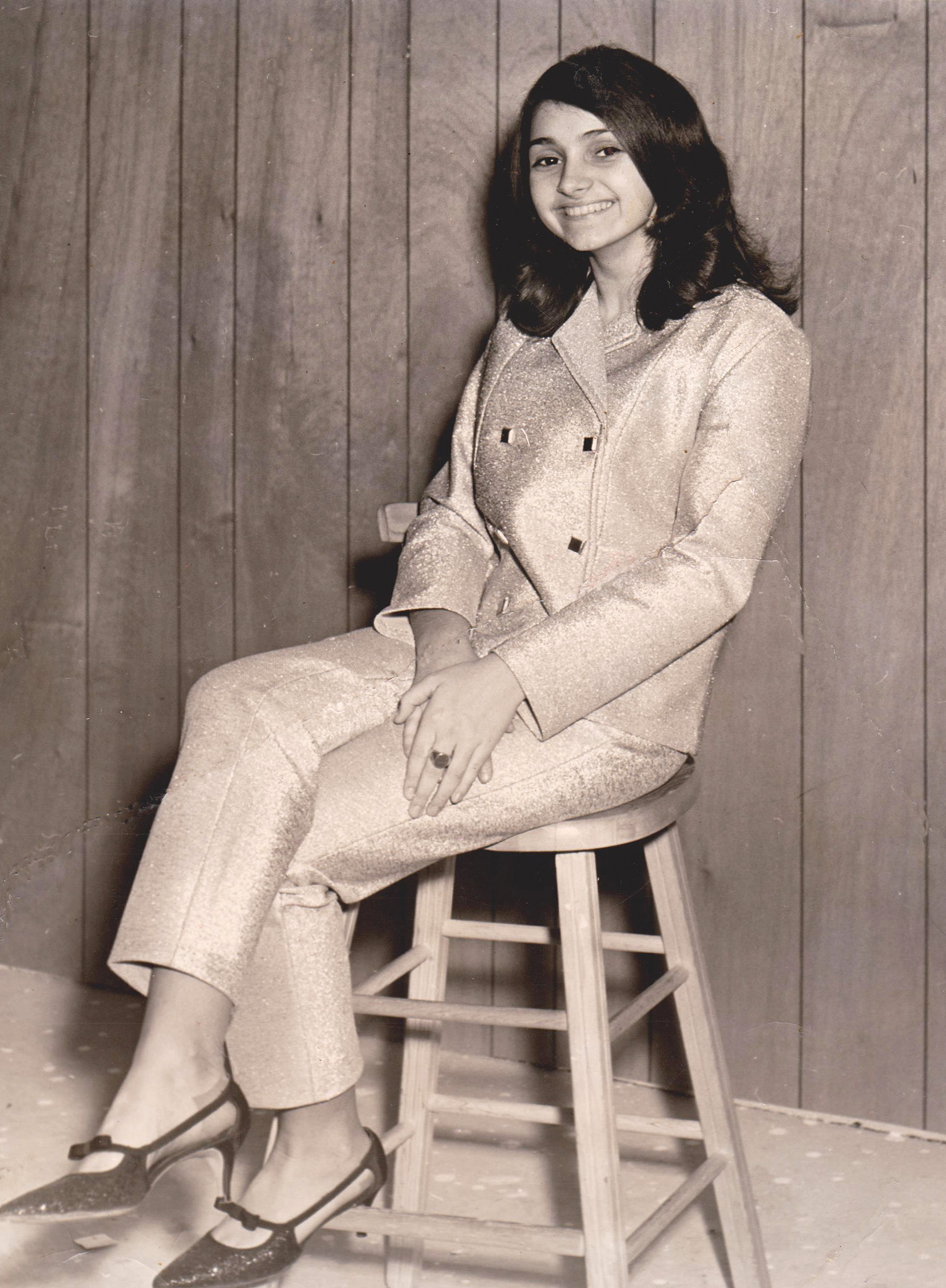
Fairy Ashworth, 1966, at Theta Chi Fraternity at UVA
In his detailed history of 1960s garage bands, Teenbeat Mayhem!, author Mike Markesich painstakingly traces the timeline for all recordings produced through Arthur Smith Studios, including both releases by the Generals. In an interview for this article, Markesich notes that all of the discs produced by the studio were made by Kaybank, and all “Kaybank pressings handled accounts in sequential order.” The matrix numbers indicate the first single on General Records (“You Make Me Happy”) was recorded in January of 1966, with the follow-up on Pyramid Records (“Life’s Not Worth It”) recorded in the same studio in September of that same year.
Markesich adds that Amos Heilcher put the pressing account number on the actual record from these custom client accounts and “there is no arguing to the contrary; neither Generals 45 was recorded or released in 1967. Given the absence of paperwork from the era, these pressing plant codes yield a firm time frame, almost down to a couple of weeks (and) within a month.” That substantiates this writer’s memory that the first 45 was offered for sale for $1 at the conclusion of the Danville performance in 1967.
The competition at the Ballou Park Battle of the Bands was stiff, with Ruffin’s VI Pak winning the preliminary round on Friday and the prize of a one-off recording (“Whatzit?” b/w “Boot-Leg” on Hippie Records) at the House of Sound Studios on the Piney Forest Road in Danville.
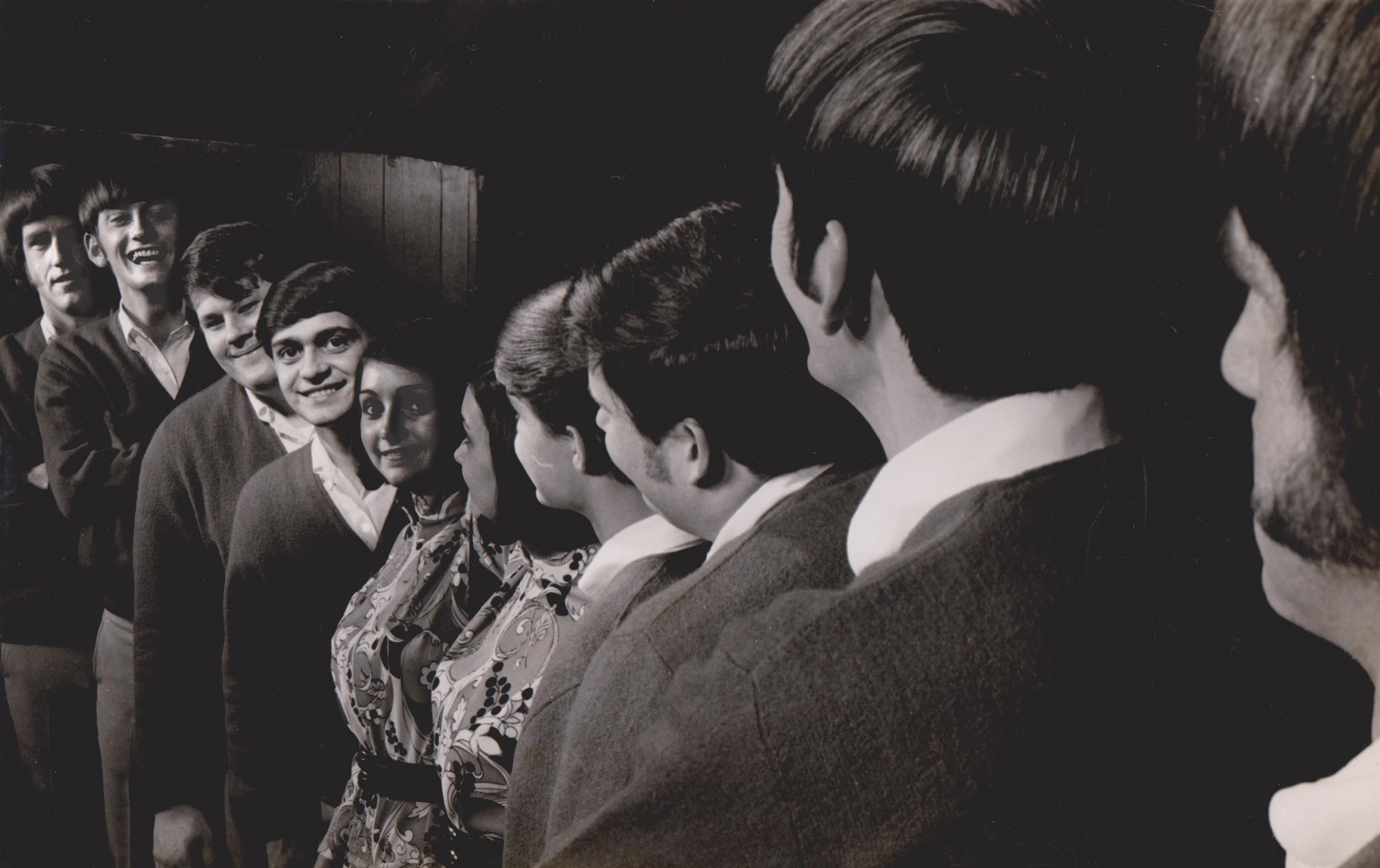
The Generals circa early 1968. In the mirror image is, from left, Bobby Henderson, Joe Merriman, Lee Moore, Ronnie Ashworth and Fairy Ashworth. Mack Davidson is not present for some reason.
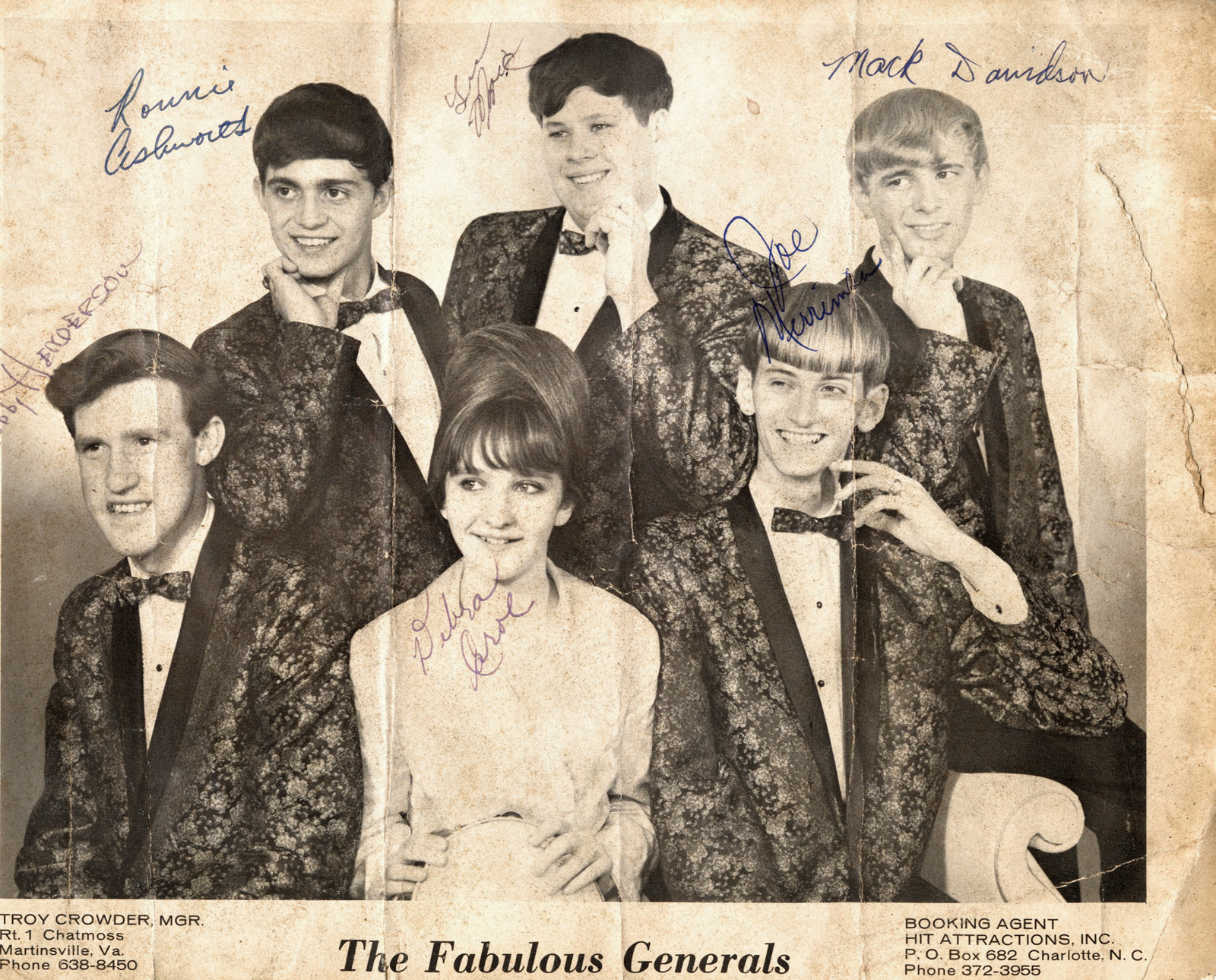
The Generals captured the top prize and were the last band to take the stage Saturday afternoon. Dressed in matching suits, the band at this point was fronted by vocalist Debra Carol Crowder. Ronnie explains that his sister left the group in the fall of 1966 to be a cheerleader, although Fairy would rejoin the Generals several times over the six years the band was together. Another female vocalist was needed and the band decided on Debra, who was the daughter of band manager Troy Crowder. While she had not been a singer prior to that time, Ronnie says she had talent, “so we put her as the lead girl singer and that seemed to work out for a year or two.”
This writer was present for the Danville Battle of the Bands and crowd response was tremendous, especially when Crowder did her interpretation of the Jefferson Airplane’s “Somebody to Love.” The band finished its set and autographed 8x10s for fans before WYPR emcee Glenn Scott announced that the Generals had won the competition.
Henderson admits he was “surprised because there was some good talent over the weekend.”
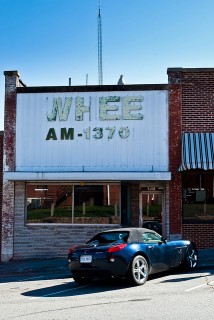
WHEE Radio 1370 AM, Martinsville
He remembers that their first 45 had an initial run of 500 copies, but believes the band ordered another 500 at some point.
The band sold their new single at concerts and to friends, but did little to promote the 45 outside Southside Virginia. Ronnie remembers taking a copy to Hank Hedgecock at WHEE Radio in Martinsville and said the deejay “just loved them” and he “played them quite a bit, actually.”
Ecstatic to have one his songs on the airwaves, Ronnie was deflated when he went back to school and no one said anything about it. He asked a group of friends if they ever listened to radio and one replied: “Yea, we heard it, just don’t let it go to your head.”
The song was also played “quite a bit” on another Martinsville station, WMVA, by DJ Paul Miller, host of the popular “Night Train” program.
Henderson has a slightly different recollection, saying the single “received minimal airplay” in the Martinsville area, but fared better in other regions of Virginia and North Carolina. The band sold “quite a few of them” and Ronnie believes they moved the initial run, although he admits the band never promoted the single “in a big way.”
The Fabulous Generals 1967 promo photo with vocalist Debra Carol Crowder
By this point, the Generals were playing extensively throughout Virginia, North Carolina, South Carolina and East Tennessee. Ronnie notes the band “was very popular,” playing country clubs and fraternities at UVA, Hampton-Sydney, Duke, Wake Forest, UNC Chapel Hill and the University of Tennessee.
Henderson remembers the band playing “whatever was available” and booking larger clubs in Atlanta, Raleigh, Charlotte, and even traveling as far south as Florida.
Hit Attractions in Charlotte booked the band exclusively and many of their engagements were for fraternity parties along the East Coast.
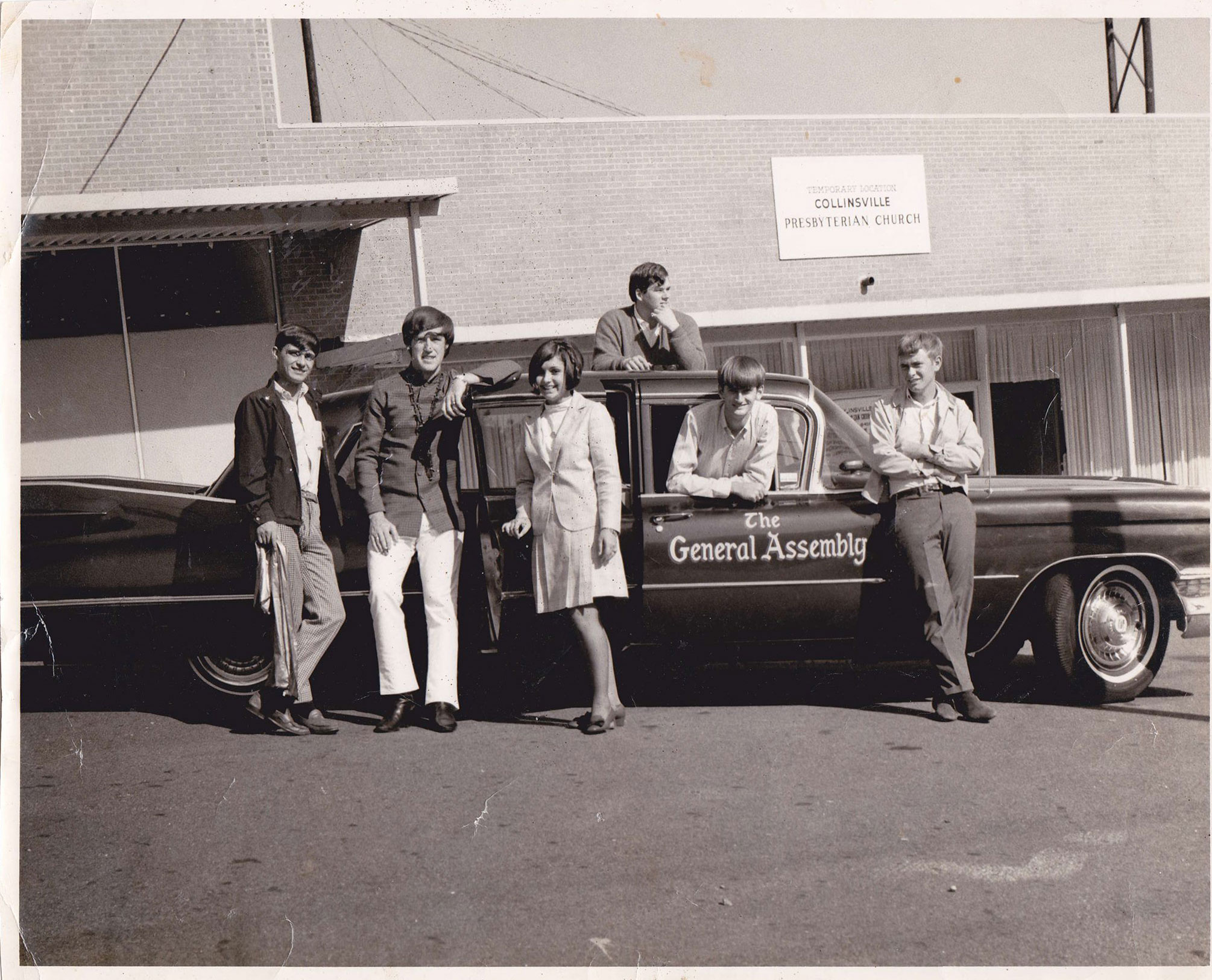
The Generals next to their Cadillac limo, 1968, from left: Ronnie Ashworth, Bobby Henderson, Fairy Ashworth, Lee Moore, Joe Merriman, Mack Davidson
Weekends meant long road trips and little time for football games and other high school activities. To ease life on the road, the band purchased a huge Cadillac limousine, stowing their gear in a band trailer hauled to their gigs. With its huge fins and “The General Assembly” painted on the doors, the ride was quite a sight to behold. Ronnie recalls that “people always looked,” although most members were asleep on the return trips.
Local engagements included the Martin Riding Stables, where the Generals “played maybe every Wednesday night for a couple of years.” Truxton Fulton (keyboard player with the Stones Unturned of Danville and Sammy Hawks and the Satisfactions of Farmville) recalls hearing the group there, describing it as “a strange venue, like a horse farm, but it was packed.” He says the Generals were “a really good group,” adding: “My whole band was there and they were real nice to let us sit in. I think he (Joe Merriman) had a (Farfisa) Combo-Compact (organ), a step up from what I had.”
Ronnie admits the riding stable was an unlikely night spot but says it “had an upper loft that made a great place for a dance (and) was packed out on many occasions.” He remembers performing the Lovin’ Spoonful’s, “Summer in the City” and “playing Wooly Bully to death” in 1965-66.
As requests for the band increased, Troy Crowder was brought on to manage the group after the Generals had been together for about a year. Ronnie explains that “we just felt we needed a manager, somebody who would go out and kinda talk up the group and help book us some jobs.” Crowder was a friend of Mack Davidson’s father, B.J., and they worked together at Continental Can Company. B.J. recommended Crowder, who was brought on board and immediately began finding work for the band. Ronnie says “we all went out booking jobs one day… and drove toward Danville (and) booked the group into a VFW Post.”
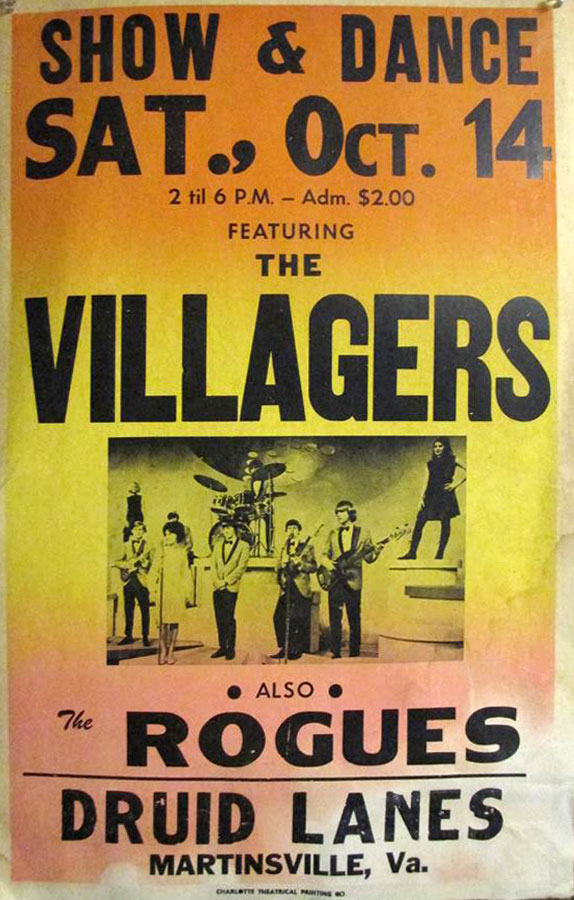
The Villagers
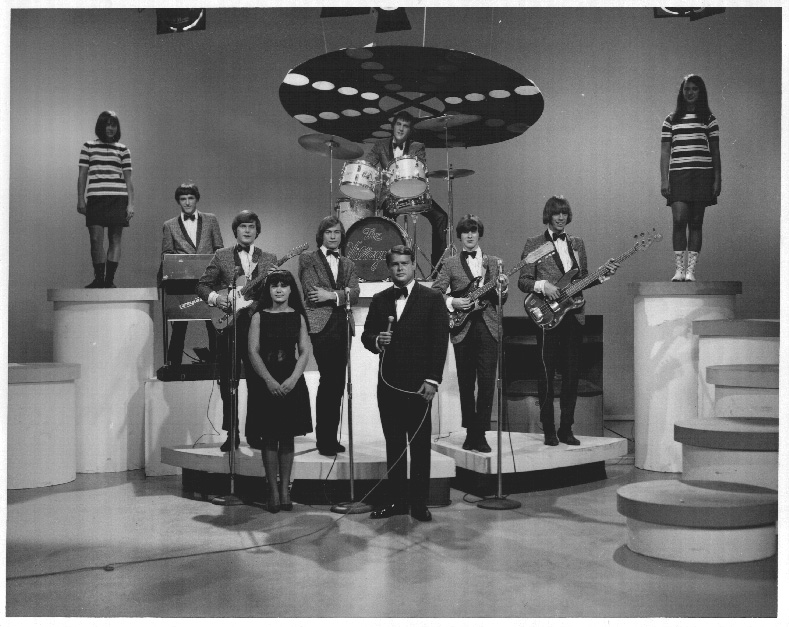
The band was heavily influenced by a South Carolina group, the Villagers. The Villagers were fronted by lead singer Dana Douglas and were regulars on the nationally syndicated television series “The Village Square,” which showcased regional and national talent and ran from 1964-1968. Ashworth says the Generals “basically idolized the group and copied them as much as possible,” and credits the Villagers with contributing to the band’s “style and sound.” The Generals traveled to South Carolina in 1965 and again in 1966 to hear the group perform at the Myrtle Beach Pavilion. Their paths would cross three years later when Ronnie was in college in Georgia.
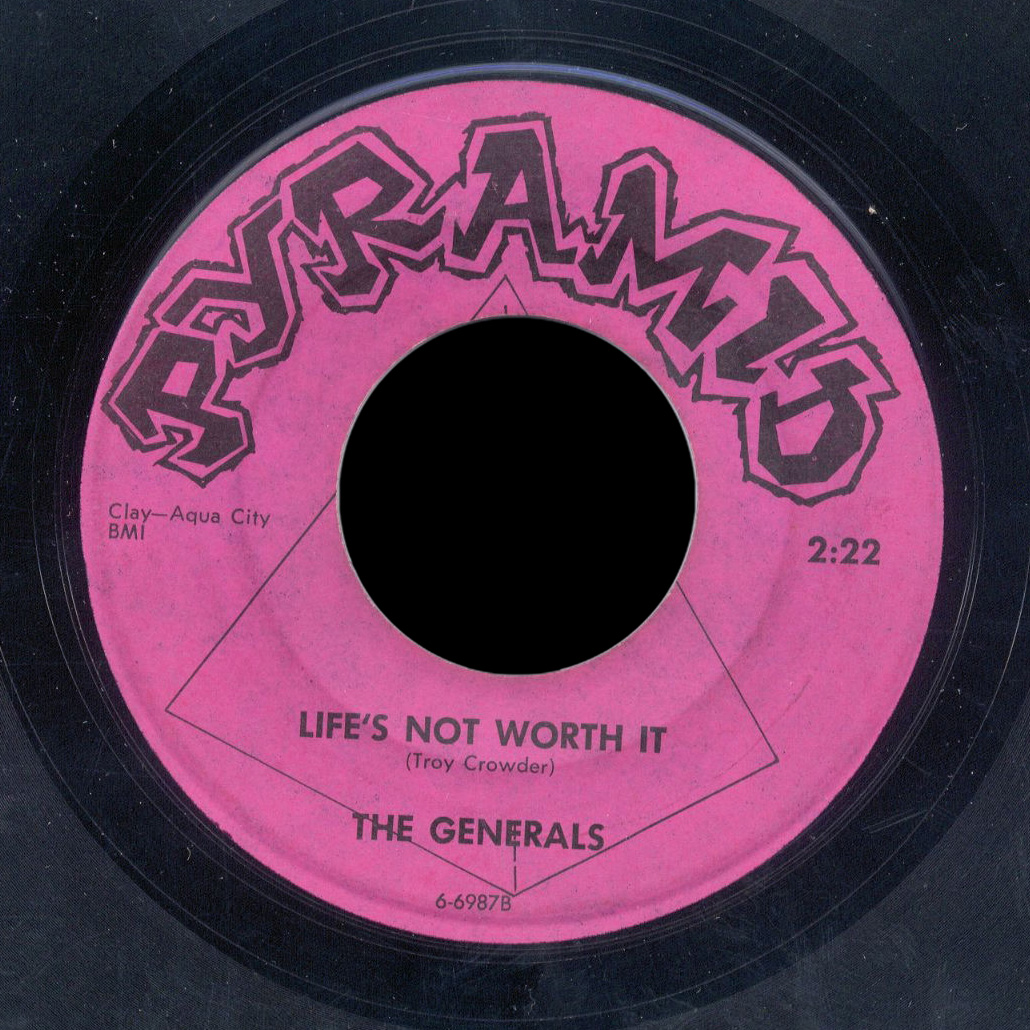
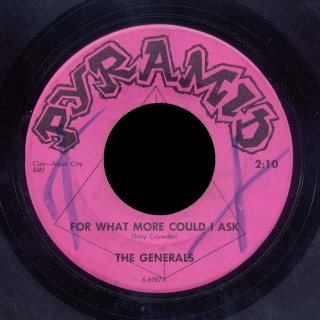
While their second 45 was pressed on Charlotte’s Pyramid Records, both sides were recorded at Arthur Smith. For their return trip, Henderson says the band again decided to tap the songwriting talents of their lead vocalists. “Life’s Not Worth It” and “For What More Could I Ask” feature guitarist Ronnie Ashworth and his sister, Fairy, on lead vocals, respectively.
While credited to manager Troy Crowder, Ronnie says he wrote both sides. Ashworth said his parents weren’t with him to sign the studio paperwork, which included verification of songwriters. And since he was under 18, authorship was credited to an adult “to avoid copyright infringement issues.”
Henderson believes that soul great Otis Redding was also at Arthur Smith’s that day, which is possible, given the fact that James Brown also used the studio on occasion.
The group financed this release and Henderson says members again made a conscious decision to record original material, pointing out that their band “wrote a lot of the music we did in our live shows (some of which was never recorded) and even the covers that we did took on a personal flavor.”
Ronnie concurs, pointing out that they “had some original songs and that just seemed to be the way to do it.” He notes the Beatles “were big and it was a new sound and everybody was getting on the bandwagon,” adding: “It was easy to write music back in those days, so why do somebody else’s stuff when you can write your own?” According to Henderson, their second 45 fared much better. He says while “Life’s Not Worth It” was the “plug” side, both songs received considerable airplay.
With the music scene changing, the band “tapped into the California/West Coast music scene” and psychedelia.
In 1968, the group landed a regular gig at the Park Mor Restaurant in Martinsville, attracting a loyal following for their Sunday night performances.
The Generals drove to Tennessee (Ronnie believes it was Johnson City) in late 1968 to provide backup for singer B. J. Thomas. The group set up, rehearsed “Hooked on a Feeling,” and went through a sound check before being informed that Thomas had been detained and would not be appearing.
A little known chapter in the Generals history followed in 1969, when Bobby, Fairy and Ronnie moved to Atlanta, where Ronnie attended school. The trio kept the Generals name alive for another year or so, playing jobs booked previously at colleges throughout Virginia and North Carolina.
Dana Douglas of the Villagers (no pictures of Dana with the Generals exist)
Dana Douglas (of the Villagers fame) was also living in Atlanta at the time and became the group’s lead singer. His friend, Wes Braxton, was a proficient sax and flute player and also joined the line-up. Blake Coverstone — originally with the Divots of Roanoke — was recruited on drums and the six created what Ashworth describes as an “intense” sound. This was late in the psychedelic era and Ashworth says the revamped Generals leaned heavily to the California sound. Douglas “could dance just like James Brown” and was also an accomplished musician, playing keyboards, guitar and other instruments.
At the time, Ronnie was attending a Bell and Howell electronics school with Coverstone. While the original Generals hadn’t broken up as such, the others “had gone off to college because we had graduated from high school and so everybody was kind of going their separate ways.” The core of the original group remained constant, as Fairy was also living in Atlanta and Henderson and his wife and young family had also relocated there. Ronnie explains that “Bobby knew that Dana Douglas lived there, so we had gone by and seen him” and asked Douglas about fronting the Generals.
Technically, the Generals had not broken up. According to Ronnie, they “still had jobs booked, but really the group wasn’t together in the sense that it had been before… the name was still there; the jobs were still there; and the three of us were still playing together. So we just added a few folks and just kept the name, just reorganized the band.”
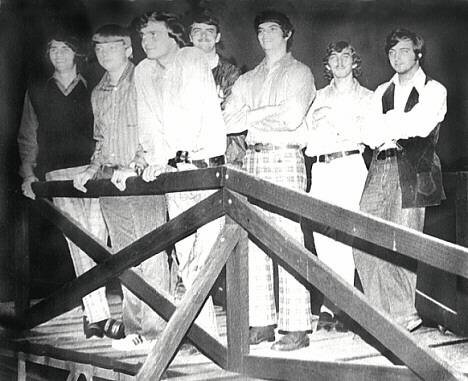
The Rogues on Lake Lanier Bridge, Martinsville, circa 1970, just before changing their name to Truth and going on the road. From left: Jim Stone, Mark Anthony, Ronnie Ashworth, Terry Chitwood, Art Kramer, Ronnie Stone and Mike Arnold.
The group never entered the studio again, but continued performing through 1969, when the Generals disbanded and Ronnie Ashworth joined another Martinsville band, the Rogues, just as the group was expanding and adding horns.
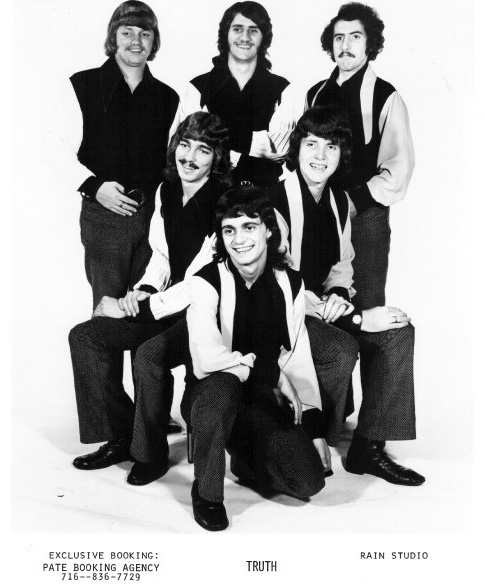
Ashworth, Mark Anthony, Ron Stone, Jim Stone, Mike Arnold and Art Kramer joined forces with former Soulmasters Doug Hyler and George Parrish as the Rogues evolved into the band Truth, touring extensively and recording one single. The line-up featured four horn players: Hyler and Kramer on sax and Parrish and Ron Stone on trumpet. Arnold was the original drummer, later replaced by Paul Mitchell. Stone was the band’s bassist; Ashworth handled vocals and guitar; and Anthony was Truth’s keyboard player.
The Truth (Ronnie Ashworth on the left) doing an Everly Bros. medley in Atlanta, ca. 1972In 1971, Truth opened for Blood Sweat and Tears and Bill Withers at the Memorial Auditorium in Buffalo, N.Y., and also played as the support act for James Brown in Rochester.
After leaving Truth and coming off the road in 1974, Ronnie played guitar in Dallas “Moon” Mullins’ house band at Moon’s Danceland in Madison, N.C. Moon Mullins and his band — the Night Raiders — are best remembered for their 1958 recording on Profile Records, “Bip Bop Boom,” which featured rockabilly vocalist Mickey Hawks. The 45 sold well in the Chicago area, but failed to catch on nationally. Ronnie played in Moon’s band for about three years, ending “probably in late 1977.”
East Winds, circa 1978, from left: Jerry Davis- keyboard, Dennis Ashworth-Drums, Ronnie Ashworth-Guitar, Jim Stone-Bass, and Fairy Ashworth in front.
East Winds followed (with Fairy and Dennis) and the band played the Martinsville/Collinsville area in the late seventies, including regular performances at the local Holiday Inn. From a musical standpoint, Ronnie says East Winds “was probably the best (band) I was ever with” featuring “strong three- and four-part harmony, and really good musicianship.” Ronnie and Fairy were the band’s lead vocalists and guitarists (Fairy on acoustic); brother Dennis was the drummer; Jim Stone handled the bass; and Jerry Davis was their keyboard player. The group ran about two years, from mid-1977 until ‘79.
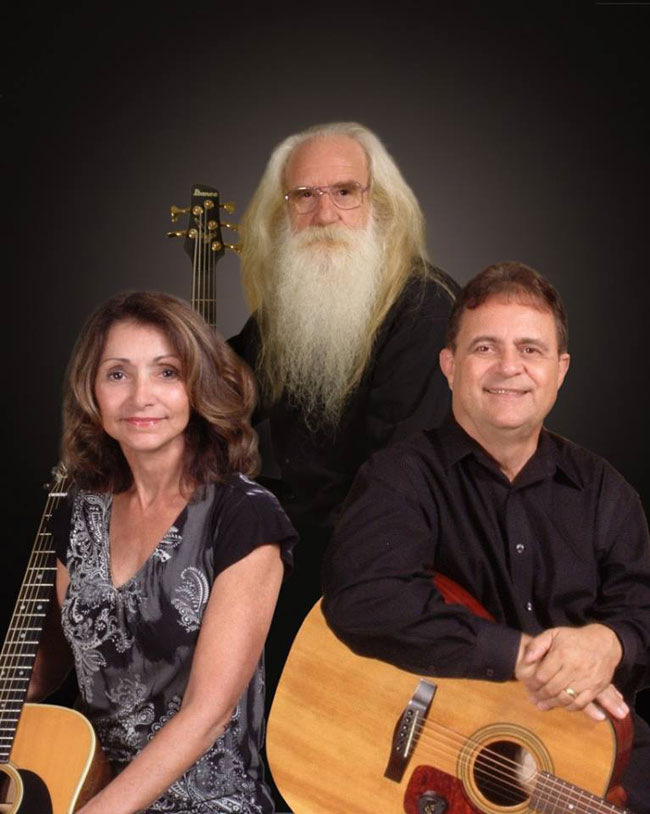
Over Easy. L-F: Fairy Ashworth Coleman, Bobby Henderson, Ronnie Ashworth
Ronnie Ashworth remains active in the music ministry at his church and still plays with band mates Fairy Ashworth Coleman and Bobby Henderson as Over Easy, a trio that specializes in classic rock by artists like James Taylor, CSN&Y and the Beatles.
After the Generals, Henderson played with various touring bands throughout the Midwest and Southwest. He later returned to Southside Virginia, where he now plays in several groups and operates his own sound production company.
Keyboardist Joe Merriman died recently, but all of the surviving band members remain friends and still see each other on occasion. David Daniel’s whereabouts are unknown.
As for their recordings, Henderson says he has no favorites and “enjoyed doing all of them” and is pleased that the band is still remembered more than 45 years after their last performance.
Looking back on his six years with the Generals, Ronnie says the band had a powerful impact on his life, allowing each member “to stand out in the crowd” and teaching him that he “could accomplish what (he) set out to do.”
Music was something they all took seriously, with endless rehearsals and long road trips that could start early on a Saturday and take 12 to 16 hours to complete, with packing, driving, set-up, performing and then breaking down the gear for the trip home. They had fun along the way but Ronnie admits “you had to love it or you wouldn’t do it.”
While there was anxiety over the war in Vietnam and social conflict in America, he says the band allowed them to all be part of “an exciting musical revolution” the likes of which the world has not seen since the sixties.
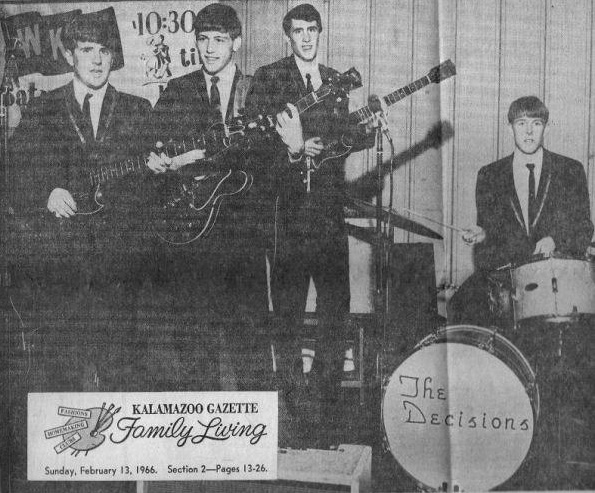
from left: Terry DeMoor, Greg Mauchmar, Alan Birdsall, and Bob Moffitt
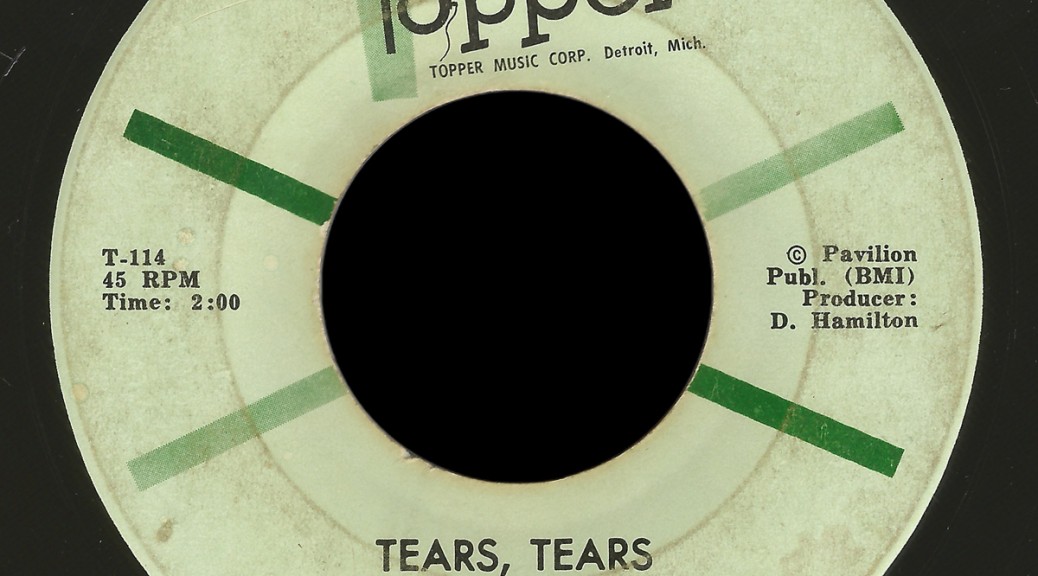
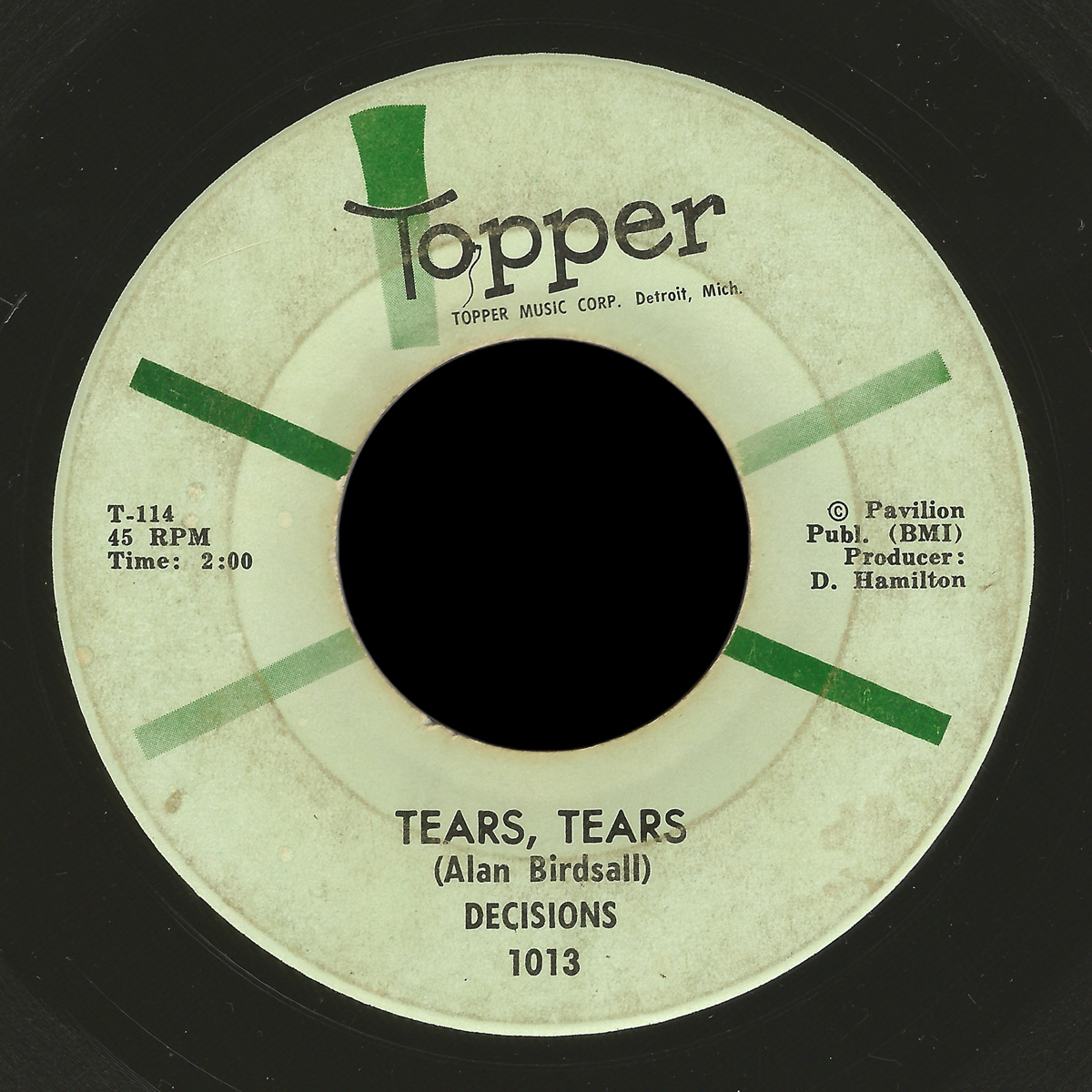
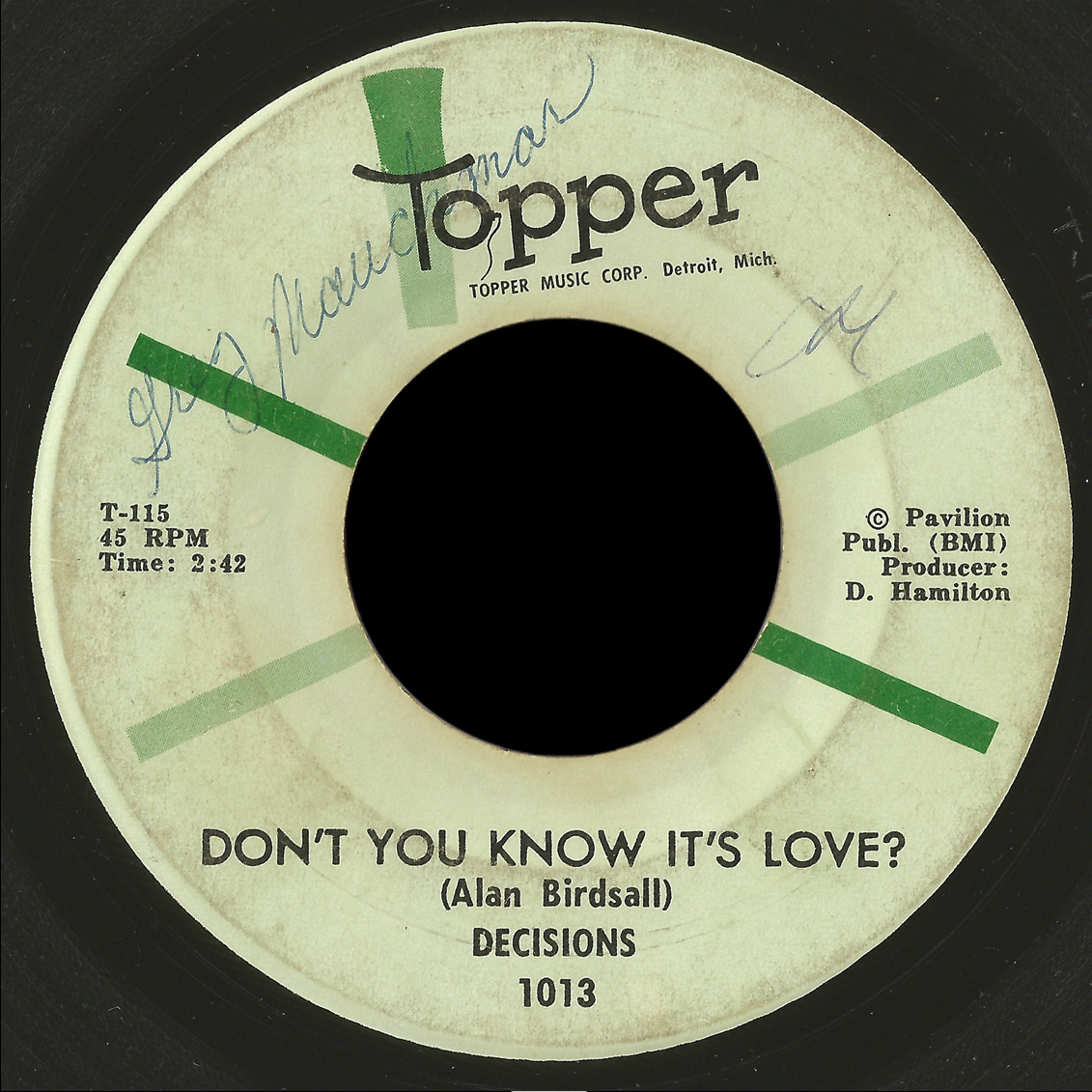
“Tears, Tears” is a great pop number, one of better Beatles-inspired songs of the mid-’60s. If you want to hear it dig out Highs in the Mid Sixties, Michigan volume 3! The flip is “Don’t You Know It’s Love?” for fans of moody ballads.
The band was from Kalamazoo, Michigan, 140 miles distant from Detroit where the single was recorded. Alan Birdsall wrote both sides of the single, published by Pavilion Music, BMI. It was released on the Topper label in March, 1966.
Someone who know the band wrote to me:
The band members were students at Kalamazoo Central High School:
Alan Birdsall, Junior, Rhythm Guitar Greg Mauchmar, Junior, Lead Guitar Terry De Moor, Senior, Bass Robert Moffitt, Junior, Drums
All Gibson guitars… I think it would be illegal to live in Kalamazoo and not play one! The record was made in Spring 1966 in Detroit. Earlier that year, they had won a “Battle of the Bands” contest in Kalamazoo, and appeared in the Kalamazoo Gazette. They recorded (I think) 4 songs that day, but only one record was made, so the best two songs were used. One of them was named “Don’t You Know It’s Love”, but that song did not appear on the record. The recorded B-side song was really called “Because I Love You” (makes sense, since that’s the lyric), but someone screwed up the label. Greg Mauchmar wrote that song, but for whatever reason, Birdsall was given credit (probably because it was Birdsall’s band, or it was another screw up).
Topper had about a half-dozen releases of soul artists such as Priscilla Page, Dottie & Millie, and Tobi Lark, all in demand on by collectors. The Decisions was the only garage or rock type single on the label that I know of. Like most of those singles, the producer on the Decisions is the legendary Dave Hamilton.
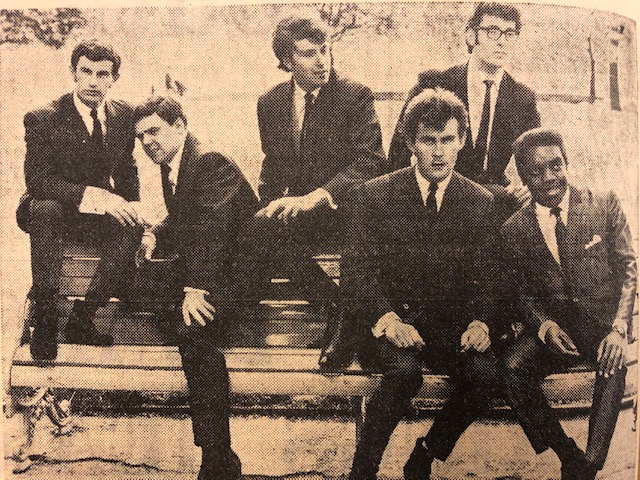
The Wranglers were a Southeast London band formed around 1963. Judging by early photos they were a four-piece outfit before joining forces with singer Kenny Bernard, who was from Trinidad, in 1965.
Prior to the link up, The Wranglers had released a lone single for Parlophone in 1964. After they became Kenny Bernard & The Wranglers, the group cut two singles for Parlophone before drummer Glenn Martin from Wembley joined them.
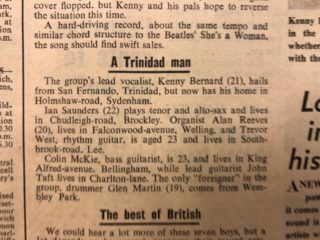
An article in the South East London Mercury newspaper, dated 13 August 1965 (see above), lists the line up as:
Kenny Bernard – vocals John Taft – lead guitar Trevor West – rhythm guitar Colin McKie – bass Ian Saunders – saxophone Alan Reeves – organ Glenn Martin – drums
Reeves had previously been a member of another local band, The Showtimers.
This line up cut the group’s third single with Bernard, “The Tracker” c/w “You Gotta Give” on Pye, released in August. The A-side was a cover of The Sir Douglas Quintet’s “She’s About a Mover”.
This line up became the house band at the Ad-Lib Club and live recordings by the band have been released by Acid Jazz Records.
Around September Glenn Martin left to work with singer Ayshea Brough and then a few months later landed a job with Hedgehoppers Anonymous.
Judging by a later article in the South East London Mercury, Martin’s replacement was drummer John Aldrich, who together with guitarist Trevor Brown (possibly the same person as Trevor West above) joined Alan Reeves’s former band The Showtimers in early 1966.
Bernard later went solo.
If anyone can add or correct any information above, please leave a comment.
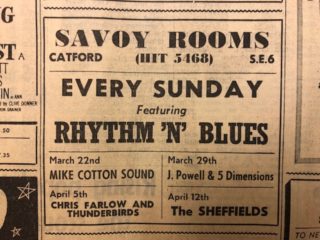
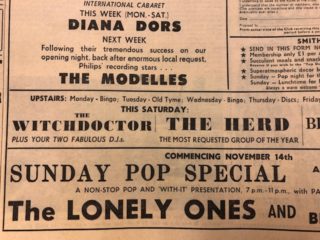
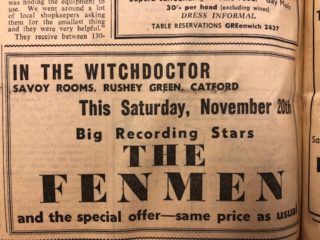
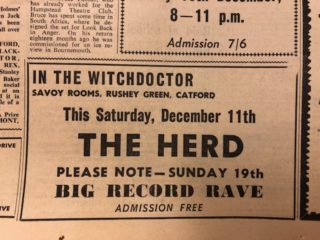
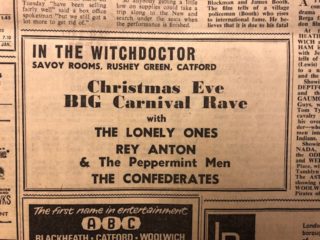
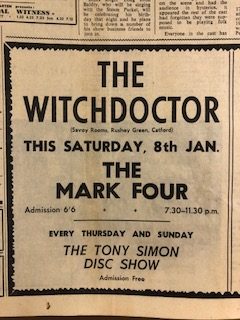
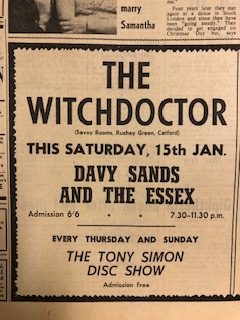
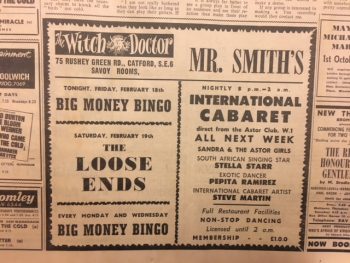
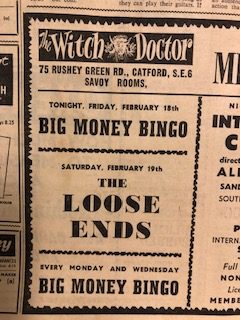
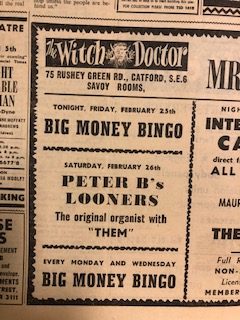
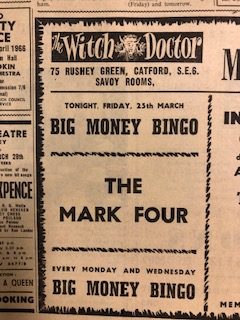
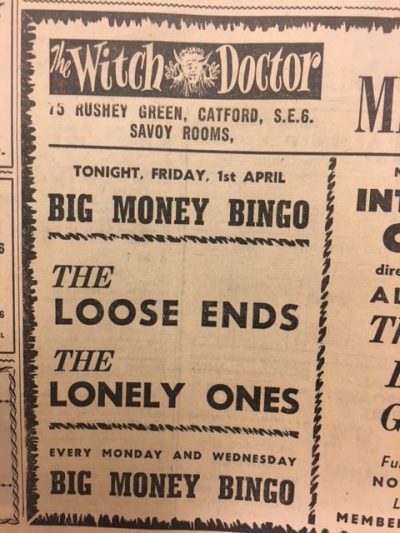
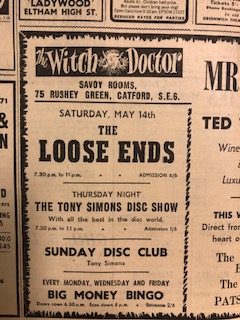
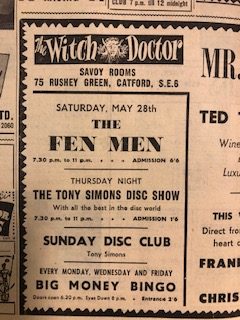
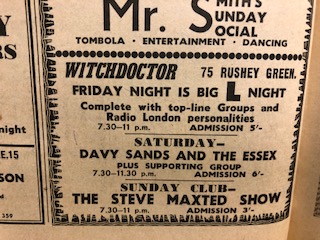
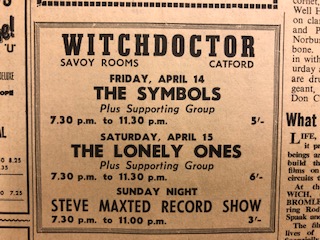
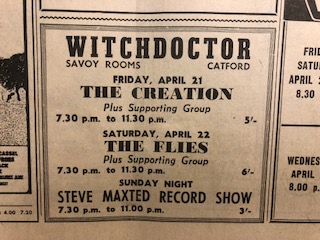
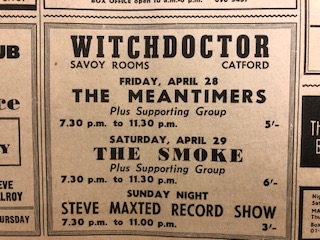
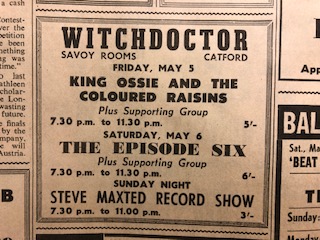
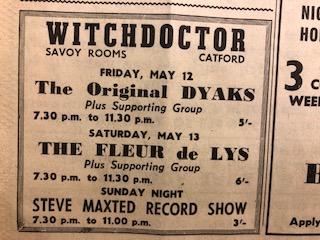
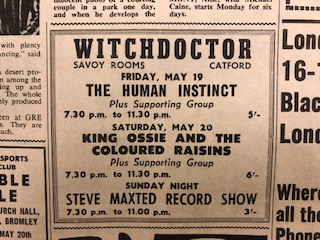
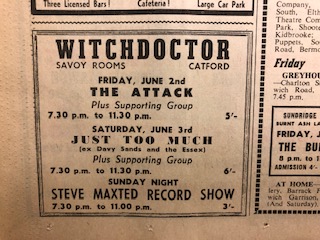
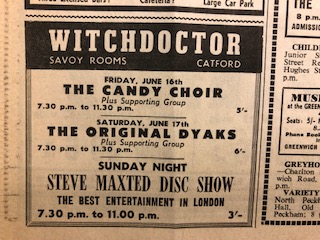
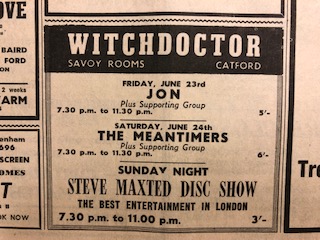
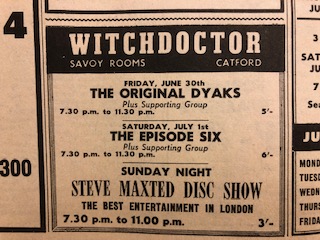
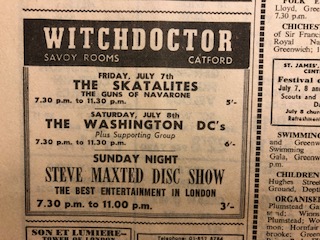
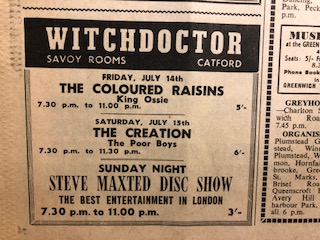
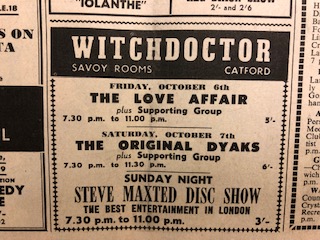
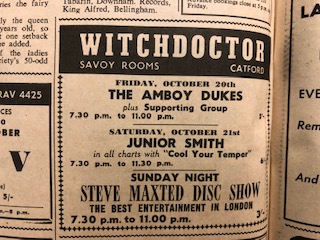
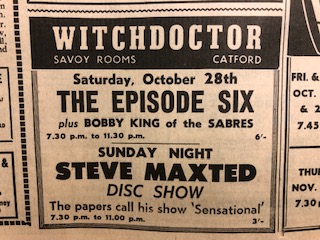
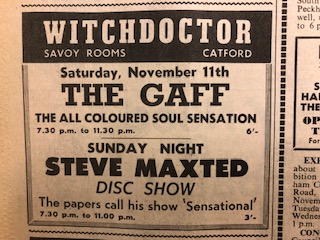
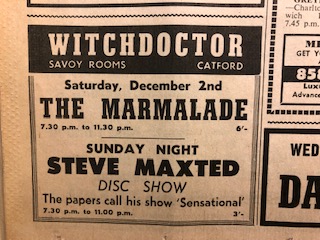
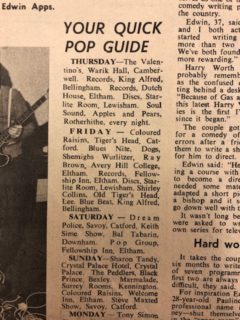
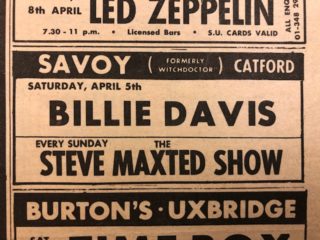
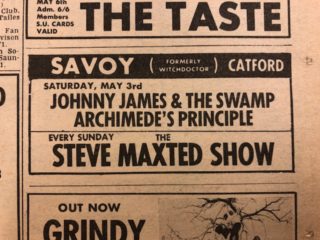
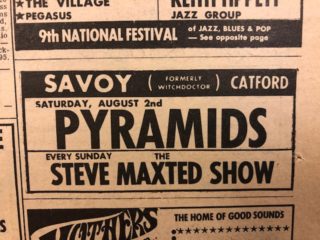
The Witch Doctor in Catford was a notable rock venue in southeast London and was located above the Savoy Rooms. It opened in October 1965 and mainly hosted bands on Saturday nights (the other nights of the week are noted).
I’ve started a list of artists that were advertised to play at the venue. I would welcome any additions and any memories from anyone that attended the club. All of the entries are from the South East London Mercury unless otherwise noted.
Savoy Rooms’ gigs from March 1964. Photo: South East London Mercury
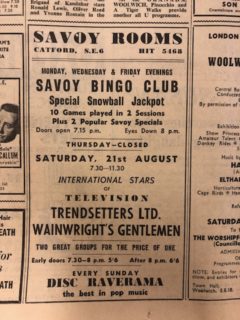
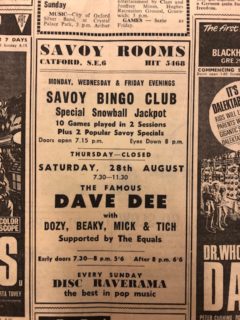
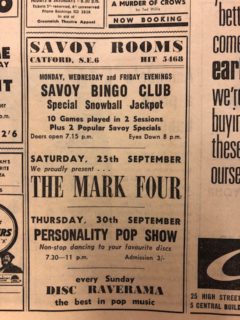
The gigs listed below from early August to mid-October were held at the Savoy Rooms before the Witch Doctor opened at the end of October 1965:
7 August 1965 – Johnny Cannon & The Shades with The Lonely Ones
14 August 1965 – The Gobbledegooks with Dave & The Strollers
21 August 1965 – The Trendsetters Ltd with Wainwright’s Gentlemen
28 August 1965 – Dave Dee, Dozy, Beaky, Mick and Tich with The Equals
4 September 1965 – The Bo Street Runners
11 September 1965 – The Bretheren
18 September 1965 – Bubbles & Company
25 September 1965 – The Mark Four
2 October 1965 – The Crowd with The Epics
9 October 1965 – Just Four Men
16 October 1965 – The Symbols
23 October 1965 – missing entry
The following gigs were held at the Witch Doctor, above the Savoy Rooms:
31 October 1965 – The Mighty Avengers
6 November 1965 – The Herd
13 November 1965 – Tony Rivers & The Castaways
14 November 1965 – The Lonely Ones (says every Sunday night)
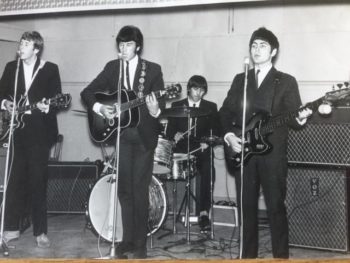
20 November 1965 – The Fenmen
21 November 1965 – The Lonely Ones (Sunday night)
27 November 1965 – The Objects
28 November 1965 – Alan Haren with Tony Crombie and The Lonely Ones (Sunday night)
4 December 1965 – Rey Anton & The Peppermint Men
5 December 1965 – The Lonely Ones (Sunday night)
11 December 1965 – The Herd
12 December 1965 – The Washington DCs (Sunday night)
19 December 1965 – The Washington DCs (Sunday night)
24 December 1965 – The Lonely Ones, Rey Anton & The Peppermint Men and The Confederates (Friday night)
31 December 1965 – The Majority, The Beat Syndicate and The High Jackers (Friday night)
8 January 1966 – The Mark Four
15 January 1966 – Davey Sands & The Essex
22 January 1966 – The Carnaby
29 January 1966 – Tony Rivers & The Castaways
5 February 1966 – The Washington DCs
12 February 1966 – The Mark Four (advert says Mark VI’s)
19 February 1966 – The Loose Ends
26 February 1966 – Peter B’s Looners
In March gigs were advertised for Friday. Not sure if that means gigs also happened on Saturdays and they are missing
4 March 1966 – Big beat group (Friday night)
11 March 1966 – Davey Sands & The Essex (Friday night)
18 March 1966 – The Carnaby (Friday night)
25 March 1966 – The Mark Four (Friday night)
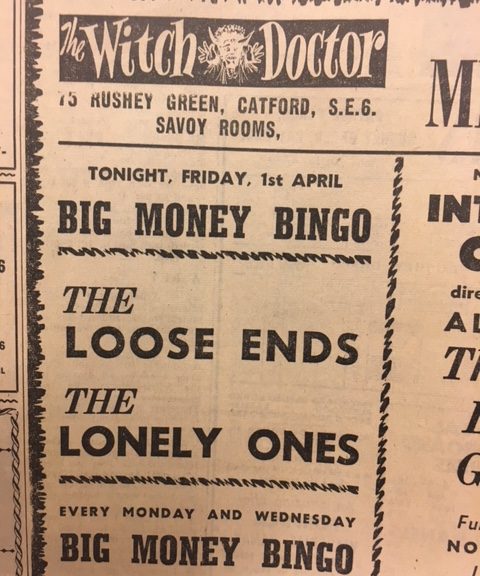
1 April 1966 – The Loose Ends and The Lonely Ones (Friday night)
8 April 1966 – missing entry (if band due to play on Friday night)
9 April 1966 – missing entry (if band due to play on Saturday night)
10 April 1966 – The Loose Ends and The Lonely Ones (Sunday night)
15 April 1966 – The Majority (Friday night)
16 April 1966 – missing entry (if band due to play Saturday night)
23 April 1966 – The Washington DCs
28 April 1966 – The Who (Thursday night)
30 April 1966 – The Mark Four
7 May 1966 – Johnny B Great & The Quotations
14 May 1966 – The Loose Ends
21 May 1966 – The Plus Four
28 May 1966 – The Fenmen
4 June 1966 – The Gaylords
11 June 1966 – Washington DCs
18 June 1966 – The Majority
25 June 1966 – Tony Rivers & The Castaways
2 July 1966 – The Riot Squad
7 July 1966 – Guy Darrell (Thursday night)
9 July 1966 – Davey Sands & The Essex
16 July 1966 – missing entry
23 July 1966 – missing entry
30 July 1966 – missing entry
6 August 1966 – Tony Knight’s Chessmen (Sunday night) (Fabulous 208)
13 August 1966 – missing entry
20 August 1966 – Dave Anthony’s Moods
27 August 1966 – The Herd
3 September 1966 – Davey Sands & The Essex
10 September 1966 – missing entry
17 September 1966 – The Loose Ends
24 September 1966 – The Gaylords (changed name to Marmalade soon after)
1 October 1966 – The Herd
7 October 1966 – The Tea-Set (Friday night)
8 October 1966 – David Bowie
12 October 1966 – Davey Sands & The Essex (Wednesday night)
14 October 1966 – Kenny Everett (Friday night)
15 October 1966 – The Creation
22 October 1966 – The Quiet Five
28 October 1966 – Episode Six (Radio London night) (Brian Long’s research)
29 October 1966 – The Gaylords (aka Marmalade)
4 November 1966 – Pop group (Friday night)
5 November 1966 – Tony Jackson & The Vibrations
9 November 1966 – The Clockwork Oranges (Wednesday night)
10 November 1966 – Steve Darbyshire & The Yum Yum Band (Thursday night)
11 November 1966 – Episode Six (Radio London night) (Brian Long’s research)
12 November 1966 – The Epics
19 November 1966 – The Fleur De Lyes with The Clockwork Oranges (Keith Guster’s diary)
23 November 1966 – The Clockwork Oranges (Wednesday night)
26 November 1966 – Davey Sands & The Essex
Clive Chase who played bass with Bobby King & The Sabres says that his group played on 26 November 1966 with Marmalade (see comments section below where he also lists Bobby King & The Sabres’ gigs at the Savoy Rooms for the years 1963-1965).
30 November 1966 – The Clockwork Oranges (Wednesday night)
2 December 1966 – Radio London night
3 December 1966 – The Gaylords (aka Marmalade)
10 December 1966 – missing entry
16 December 1966 – Radio London night
17 December 1966 – Bobby King & The Sabres (Clive Chase’s diary –see comments section below)
23 December 1966 – Radio London night
24 December 1966 – The Mark Barry Groove and The Clockwork Oranges
30 December 1966 – Radio London night
31 December 1966 – Davey Sands & The Essex
The following are all Saturdays, unless otherwise noted. Most of the gigs had support but I did not list who they were.
7 January 1967 – missing entry
14 January 1967 – missing entry
21 January 1967 – The Lonely Ones
28 January 1967 – missing entry
4 February 1967 – The Stormsville Shakers
11 February 1967 – The Stormsville Shakers, The Coloured Raisins and The Heads
18 February 1967 – Guy Darrell and The Gnomes of Zurich
25 February 1967 – Dianne Ferris (aka Ferraz) and Nicky Scott & The New Images
4 March 1967 – Davey Sands & The Essex with supporting band
11 March 1967 – Davey Sands & The Essex
18 March 1967 – missing entry
25 March 1967 – missing entry
31 March 1967 – Davey Sands & The Essex (Friday night)
1 April 1967 – The Stormsville Shakers
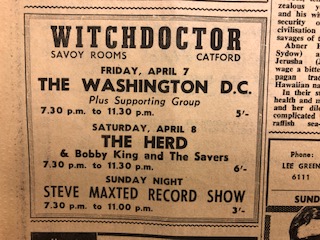
7 April 1967 – The Washington DCs with supporting band (Friday night)
8 April 1967 – The Herd and Bobby King & The Sabres
Clive Chase, the bass player with Bobby King & The Sabres, confirms this gig from his diary – see comments section below.
14 April 1967 – The Symbols and The New Breed (Friday night)
15 April 1967 – The Lonely Ones with supporting band
21 April 1967 – The Creation with supporting band (Friday night)
22 April 1967 – The Flies with supporting band
28 April 1967 – (Simon K &) The Meantimers and The Groove (Friday night)
29 April 1967 – The Smoke with supporting band
5 May 1967 – The Coloured Raisins with King Ossie with supporting band (Friday night)
6 May 1967 – Episode Six with supporting band
12 May 1967 – The Next Issue and The Original Dyaks (Friday night)
13 May 1967 – The Fleur De Lyes with supporting band (Keith Guster’s diary)
19 May 1967 – The Human Instinct and The Jet Set (Friday night)
20 May 1967 – King Ossie and The Coloured Raisins with supporting band
26 May 1967 – John Watson & The Web and The Decision (recently The Showtimers but changed name) (Friday night)
27 May 1967 – The Fancy Bred
Clive Chase, the bass player with Bobby King & The Sabres, says that his group also played on 27 May – see comments section below.
2 June 1967 – The Attack with supporting band (Friday night)
3 June 1967 – Just Too Much (ex-members of Davey Sands & The Essex) with supporting band
9 June 1967 – The Knack (Friday night)
10 June 1967 – The H T
16 June 1967 – The Decision (formerly The Showtimers) and The Candy Choir (Friday night)
17 June 1967 – The Original Dyaks with supporting band
Clive Chase, the bass player with Bobby King & The Sabres, says that his group also played on 17 June – see comments section below.
23 June 1967 – The Fireballs and Jon (Friday night)
24 June 1967 – (Simon K &) The Meantimers with supporting band
30 June 1967 – The Power and The Original Dyaks (Friday night)
1 July 1967 – Episode Six with supporting band
7 July 1967 – The Skatellites and The Guns of Navarone (Friday night)
8 July 1967 – Washington DCs with supporting band
14 July 1967 – Coloured Raisins and King Ossie (Friday night)
15 July 1967 – The Creation and The Poor Boys
21 July 1967 – The Original Dyaks (Friday night)
22 July 1967 – Tony Jackson & The Garden (the ex-Searcher?)
28 July 1967 – The Stax (formerly The Heads) and Ruby James (Friday night)
29 July 1967 – The Robb Storme Group and The Amboy Dukes
4 August 1967 – The Iveys (Friday night)
5 August 1967 – Heinz & The Wild Boys
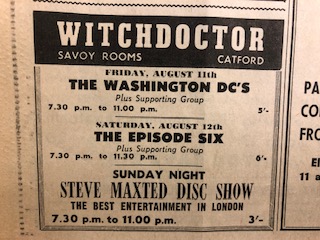
11 August 1967 – Washington DCs with supporting band (Friday night)
12 August 1967 – Episode Six with supporting band
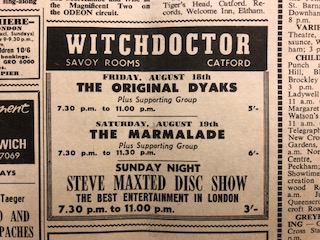
18 August 1967 – The Original Dyaks with supporting band (Friday night)
19 August 1967 – The Marmalade with supporting band
25 August 1967 – (Simon K &) The Meantimers (Friday night)
26 August 1967 – Skip Bisserty (Skip Bifferty?)
Clive Chase, the bass player with Bobby King & The Sabres, says that his group also played on 26 August – see comments section below.
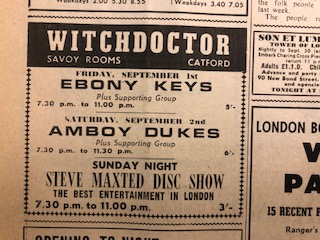
1 September 1967 – The Ebony Keys with supporting band (Friday night)
2 September 1967 – The Amboy Dukes with supporting band
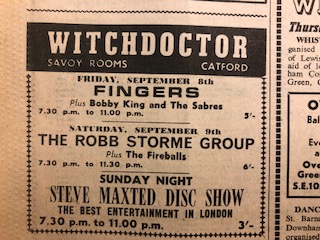
8 September 1967 – The Fingers and Bobby King & The Sabres (Friday night)
Clive Chase, the bass player with Bobby King & The Sabres, says that his group also played on 8 September – see comments section below.
9 September 1967 – Robb Storme Group and The Fireballs
15 September 1967 – The Original Dyaks (Friday night)
16 September 1967 – The Skatallites
22 September 1967 – The Riot Squad and The New Breed (Friday night)
23 September 1967 – The Coloured Raisins
29 September 1967 – Robb Storme Group and Outrage (Friday night)
30 September 1967 – The Stormsville Shakers and The Soul Kings
6 October 1967 – The Love Affair with supporting band(Friday night)
Clive Chase, the bass player with Bobby King & The Sabres, says that his group also played on 6 October – see comments section below.
7 October 1967 – The Original Dyaks with supporting band
13 October 1967 – missing entry
14 October 1967 – missing entry
20 October 1967 – The Amboy Dukes with supporting band (Friday night)
21 October 1967 – Junior Smith
27 October 1967 – missing entry
28 October 1967 – Episode Six with Bobby King & The Sabres
Clive Chase, the bass player with Bobby King & The Sabres, says that his group also played on 28 October – see comments section below.
4 November 1967 – Tony Rivers & The Castaways
11 November 1967 – The Gaff and The All Coloured Soul Sensation
18 November 1967 – The Love Affair
25 November 1967 – The Skatallites
Clive Chase, the bass player with Bobby King & The Sabres, says that his group also played on 25 November – see comments section below.
2 December 1967 – Marmalade
9 December 1967 – missing entry
16 December 1967 – missing entry
23 December 1967 – missing entry
30 December 1967 – Bobby King & The Sabres (Clive Chase’s diary)
I am missing most of 1968’s entries so would welcome any additions/corrections
17 February 1968 – Marmalade
24 February 1968 – The Amboy Dukes
1 March 1968 – Coloured Raisins
2 March 1968 – Bobby King & The Sabres (Clive Chase’s diary)
16 March 1968 – The Gass
20 April 1968 – Bobby King & The Sabres (Clive Chase’s diary)
1 June 1968 – Bobby King & The Sabres (Clive Chase’s diary)
29 June 1968 – Sweet Rain
Clive Chase, the bass player with Bobby King & The Sabres, says that his group also played on 29 June – see comments section below. It is the debut gig for the band’s new drummer Geoff Britton who will later go on to join Wings.
6 July 1968 – The Coloured Raisins
17 August 1968 – Funky Fever
14 September 1968 – The Amboy Dukes (Savoy, Catford)
9 November 1968 – The Fleur De Lys (Keith Guster’s diary)
7 December 1968 – The Amboy Dukes (Savoy, Catford)
1969
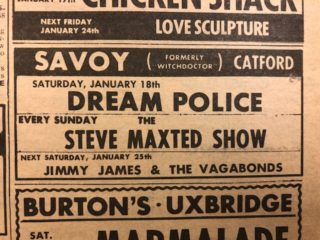
11 January 1969 – The Dream Police (Savoy, Catford) Melody Maker entry says this was formerly the Witch Doctor
Photo: Melody Maker
25 January 1969 – Jimmy James & The Vagabonds and Justin Tyme
1 February 1969 – Amboy Dukes
8 February 1969 – The Skatelites
15 February 1969 – The Coloured Raisins and The Electric Sun
22 February 1969 – Justin Tyme
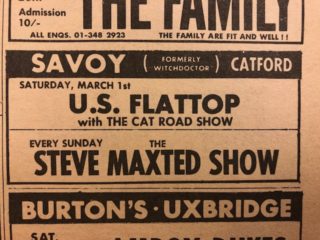
1 March 1969 – US Flattop with The Cat Road Show (Savoy, Catford) (Melody Maker)
Photo: Melody Maker
8 March 1969 – The Skatelites
22 March 1969 – Desmond Dekker & The Aces
4 April 1969 – Bandwagon
Photo: Melody Maker
5 April 1969 –Billie Davis (Savoy, Catford) (Melody Maker)
12 April 1969 – The Carnival
19 April 1969 – The Globe Show
26 April 1969 – Simon K & The Meantimers and Lee Hawkins (Savoy, Catford)
Photo: Melody Maker
3 May 1969 – Johnny James & The Swamp and Archimede’s Principle (Savoy, Catford) (Melody Maker)
10 May 1969 – The Greatest Show on Earth
17 May 1969 – The Pyramids and The Soft Sensation
31 May 1969 – Prince Buster
7 June 1969 – The Globe Show
14 June 1969 – The Cats
28 June 1969 – Purple Globe and The Skatelites
Photo: Melody Maker
2 August 1969 – The Pyramids (Savoy, Catford) (Melody Maker)
9 August 1969 – Simon K & The Meantimers (Savoy, Catford)
23 August 1969 – Bobby King & The Sabres (Clive Chase’s diary)
30 August 1969 – Purple Globe
6 September 1969 – Dave Amboy Big Band (Amboy Dukes) (Savoy, Catford)
13 September 1969 – The Amboy Dukes (Savoy, Catford)
20 September 1969 – Bobby King & The Sabres (Clive Chase’s diary)
4 October 1969 – Simon K & The Meantimers (Savoy, Catford)
This site is a work in progress on 1960s garage rock bands. All entries can be updated, corrected and expanded. If you have information on a band featured here, please let me know and I will update the site and credit you accordingly.
I am dedicated to making this site a center for research about '60s music scenes. Please consider donating archival materials such as photos, records, news clippings, scrapbooks or other material from the '60s. Please contact me at rchrisbishop@gmail.com if you can loan or donate original materials

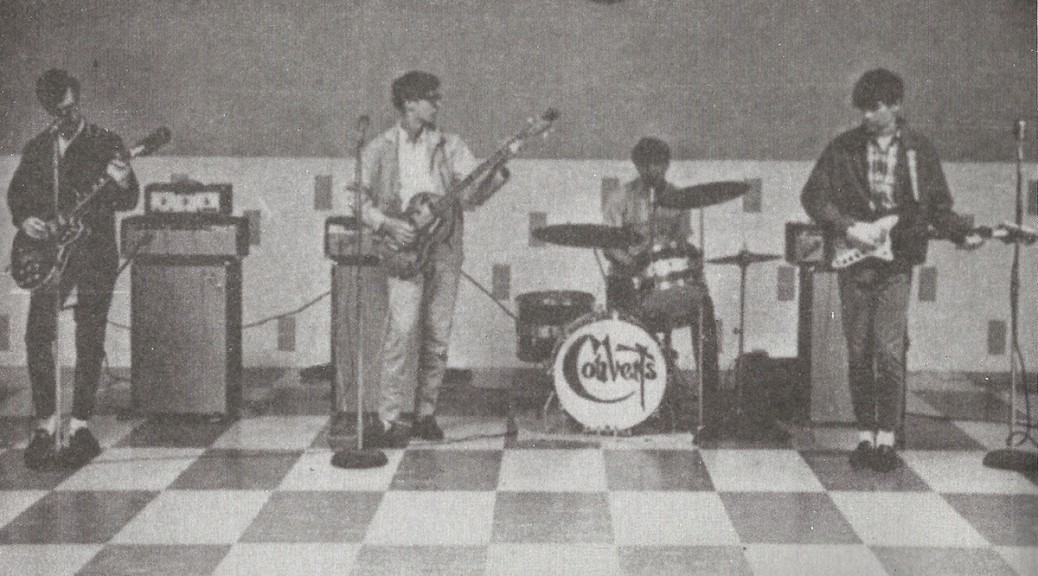
 The Converts were seminary students, I believe at the Holy Name Seminary in Madison, Wisconsin, though two sources (Lost and Found & Teen Beat Mayhem) give Beloit, Wisconsin as their base. Beloit is a town of 35,000 just across the Illinois state line, just south of Janesville where Ken Adamany ran the Rampro and Feature labels, and an hour southeast of Madison.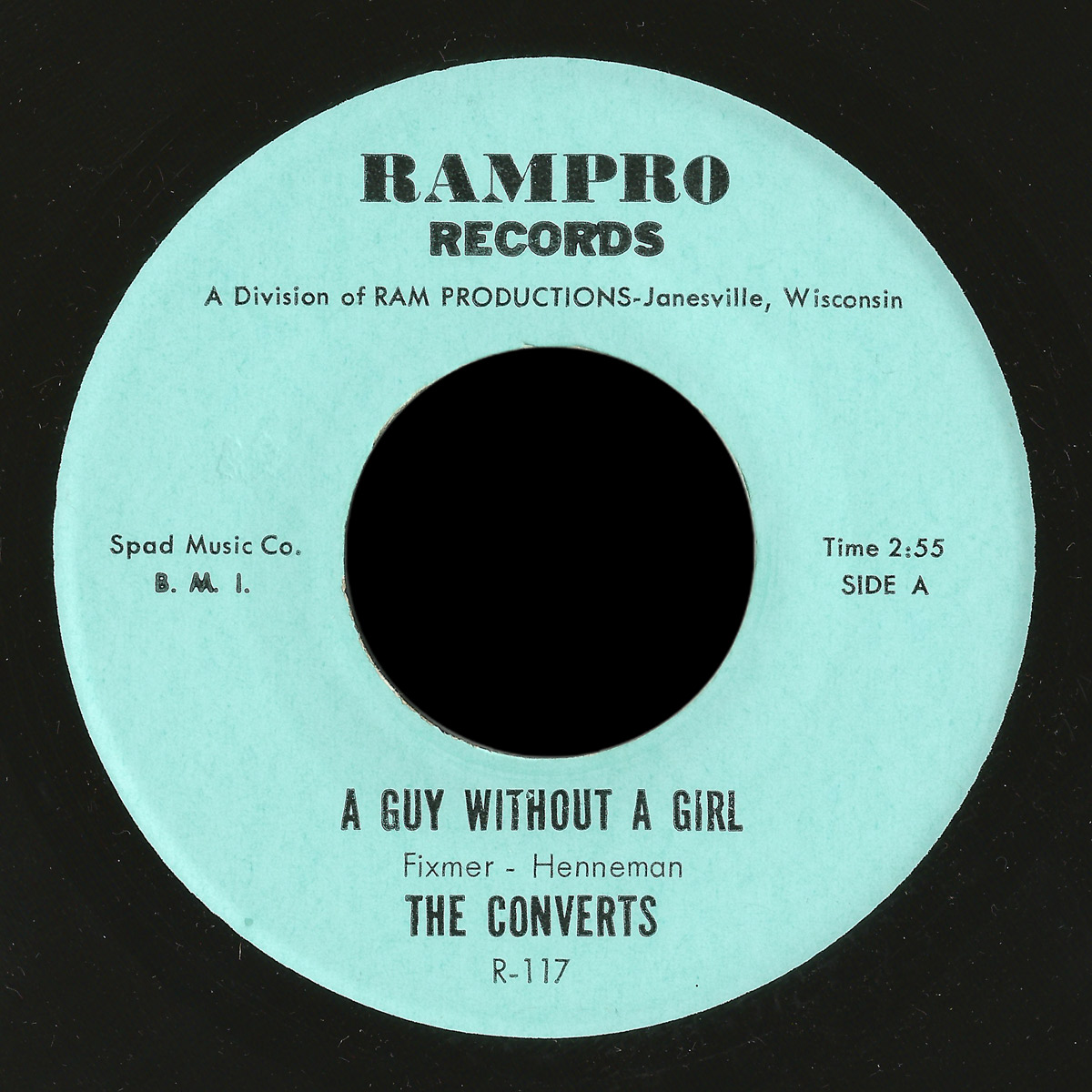
 The group financed this release and Henderson says members again made a conscious decision to record original material, pointing out that their band “wrote a lot of the music we did in our live shows (some of which was never recorded) and even the covers that we did took on a personal flavor.”